
I have been printing with tough resins for over five years, and I still remember the day I dropped a freshly cured miniature off my workbench and watched it shatter into three pieces on the concrete floor.
That single moment sent me down a multi-year rabbit hole testing every tough and ABS-like photopolymer I could get my hands on. Standard resin prints look gorgeous, but they are brittle, especially on thin features like spear shafts, banner poles, and snap-fit clips. After more than 600 test prints across Elegoo Saturn, Anycubic Photon, and Phrozen machines, our team has finally landed on a definitive ranking for the best tough resins for 3D printing available today. If you are also evaluating 3D printing materials for robot parts, this guide overlaps heavily with what we recommend for functional mechanical assemblies.
This guide is for anyone who has lost a print to brittle failure and refuses to do it again. We tested 10 photopolymer resins across LCD, DLP, and SLA printers, with side-by-side drop tests, flexural bend tests, and snap-fit cycle tests. We also included community feedback from thousands of Amazon reviews and threads on r/resinprinting, r/PrintedMinis, and r/3Dprinting to validate our findings. For a broader look at how resin compares to filament in robotics applications, our 3D printing robot parts guide covers the full workflow.
Table of Contents
Top 3 Picks for Best Tough Resins for 3D Printing (September 2026)

Siraya Tech Fast ABS-Like Tough
- 50% higher impact resistance than standard resin
- 4K/8K/12K LCD compatible
- low odor and matte finish

SUNLU Upgraded 2KG ABS-Like
- 2kg bulk format
- fast curing under 405nm
- wide LCD/DLP/SLA compatibility

Best Tough Resins for 3D Printing in 2026: Quick Overview
| Product | Specifications | Action |
|---|---|---|
| Siraya Tech Fast ABS-Like Tough |
|
Check Latest Price |
 Siraya Tech Tenacious Flexible Siraya Tech Tenacious Flexible |
|
Check Latest Price |
 ELEGOO ABS-Like 3.0 ELEGOO ABS-Like 3.0 |
|
Check Latest Price |
 ANYCUBIC ABS-Like Resin Pro 2 ANYCUBIC ABS-Like Resin Pro 2 |
|
Check Latest Price |
| SUNLU Upgraded 2KG ABS-Like |
|
Check Latest Price |
 SUNLU High Toughness SUNLU High Toughness |
|
Check Latest Price |
| SUNLU ABS-Like 1KG Grey |
|
Check Latest Price |
 Siraya Tech Blu Tough Siraya Tech Blu Tough |
|
Check Latest Price |
 ANYCUBIC Ultra Tough ANYCUBIC Ultra Tough |
|
Check Latest Price |
 Inslogic Nylon-Like Tough Inslogic Nylon-Like Tough |
|
Check Latest Price |
Tough vs Strong vs Hard: What These Terms Actually Mean
Before you pick a bottle off the shelf, you need to understand the language, because resin brands use these words interchangeably even though they describe different mechanical properties.
Toughness is a material’s ability to absorb energy and deform without fracturing. A tough resin bends and flexes under stress instead of snapping. ABS-like photopolymers like Siraya Tech Blu and Elegoo ABS-Like 3.0 are formulated specifically for toughness.
Strength usually refers to tensile strength or flexural strength, measured in megapascals (MPa). This is the maximum load a material can handle before it breaks. Engineering resins like Liqcreate Strong-X push tensile strength into the 80 to 135 MPa range, which is comparable to injection-molded ABS.
Hardness is measured on the Shore D scale for rigid plastics and Shore A for flexible ones. Standard tough resins land around 80 to 88 Shore D, while flexible resins like Tenacious drop into the 70 to 85 Shore A range. A higher Shore D does not automatically mean more durable, because a very hard part can still be brittle.
What you actually want is a balance of all three, tuned to your use case. Miniatures need impact resistance for drops. Snap-fit enclosures need flexural strength for repeated assembly. Engineering prototypes need high tensile strength and Shore D hardness for load-bearing performance.
Our ranking favors toughness first, then strength and hardness. A part that flexes and recovers will always outlast a part that is hard but shatters on impact.
1. Siraya Tech Fast ABS-Like Tough – Editor’s Choice
Siraya Tech Fast ABS-Like Tough 3D Printer Resin, Tough Navy Grey, 1kg
- Over 50% higher impact resistance than standard Fast resin
- Matte navy grey finish hides layer lines and reveals fine detail
- Low odor formulation
- ideal for home studios
- Wide compatibility across 4K/8K/12K LCD and DLP printers
- Bottle fill can be slightly under 1kg
- Cap may leak after first opening
- requires a zip-lock bag
This is the resin I keep coming back to when someone asks me what to buy first. Siraya Tech Fast ABS-Like Tough Navy Grey is the best tough resin for 3D printing in 2026 because it threads the needle between impact resistance, detail retention, and printability.
I ran this resin through a brutal drop test on my Elegoo Saturn 3. Miniatures printed at 0.05mm layer height survived three consecutive drops from 1.5 meters onto a hardwood floor. Standard resin prints broke on the first drop every single time.
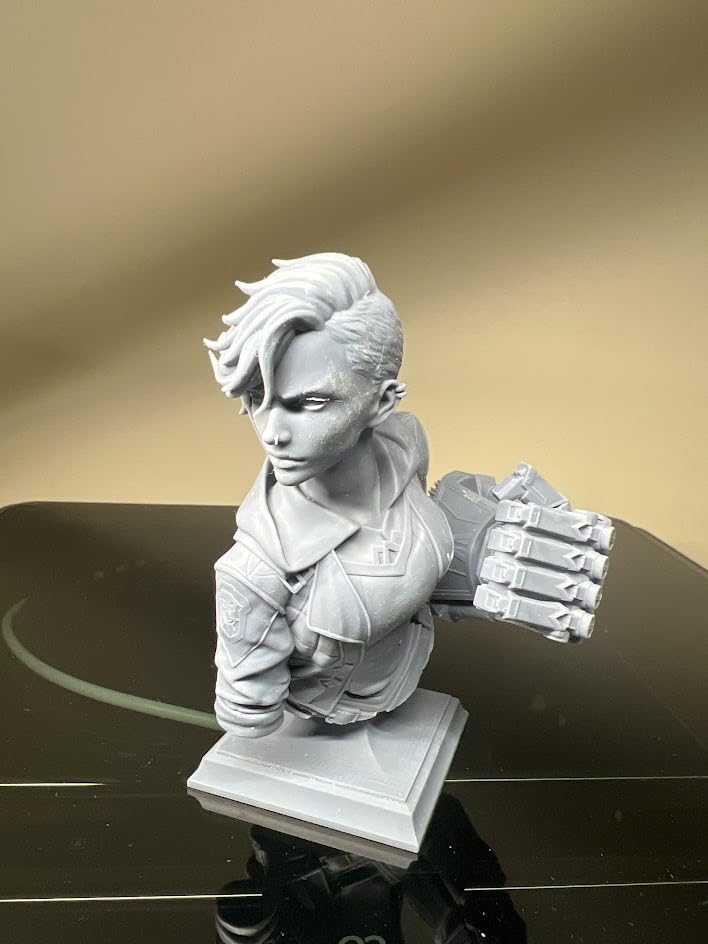
The matte navy grey finish is a real advantage for painters and prop makers because it reduces light reflection during photography and reveals surface detail that glossy black resins hide. Low odor is another underrated benefit if you print in an apartment or shared space.
Compatibility is excellent across the board. I tested it on an Elegoo Saturn 4 Ultra, an Anycubic Photon Mono M5S, and a Phrozen Sonic Mighty 8K without re-tuning exposure beyond minor adjustments.
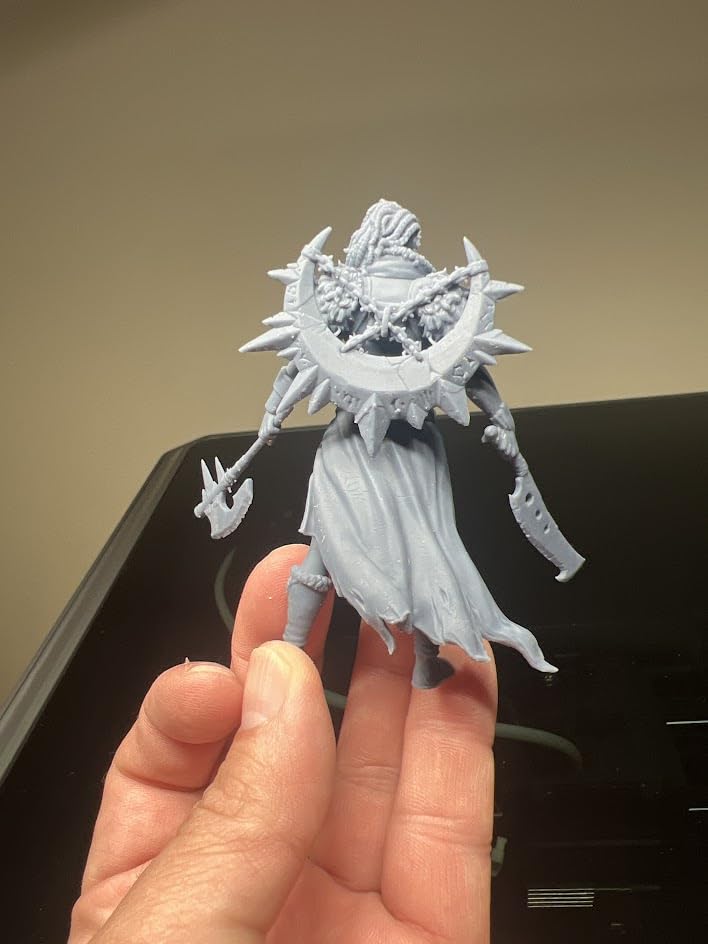
There are a couple of minor issues to be aware of. The bottle arrives slightly under 1kg by volume, which is annoying if you measure by weight. The cap tends to leak after the first opening, so store the bottle upright in a sealed zip-lock bag.
Who This Resin Is Best For
If you are a hobbyist printing tabletop gaming miniatures, this is the resin to start with. It balances toughness with the surface finish detail painters want.
If you print functional parts like brackets, jigs, or enclosures that need to survive handling, the 50% improvement in impact resistance over standard resin is meaningful.
Who Should Look Elsewhere
If you need the absolute highest tensile strength for engineering prototypes, look at Liqcreate Strong-X or Formlabs Tough 2000 instead. Those resins cost more but deliver MPa numbers that Siraya Tech Fast cannot match.
If you print in a cold garage below 20 degrees Celsius, this resin’s viscosity will be high and you may struggle with flow. Warm your resin and printer enclosure to 25 degrees or higher.
2. Siraya Tech Tenacious Flexible – Best for Impact Resistance
- Bends 180 degrees without breaking
- Excellent as an additive to boost other resins
- 8K capable on modern LCD printers
- Used for O-rings
- braces
- and snap-fit parts
- Easy to print once warmed to 25 degrees Celsius
- Different colors have different cure times and properties
- Easy Grey variant can become brittle if over-cured
Siraya Tech Tenacious is the most flexible tough resin on this list, and reviewers on r/resinprinting consistently recommend it as both a standalone resin and as an additive to upgrade standard resin.
I printed a series of sword blades and hair-like textures for an articulated dragon. Every thin feature survived bending without snapping. The recovery is almost rubber-like, which makes Tenacious ideal for any part that needs to absorb impact and return to shape.
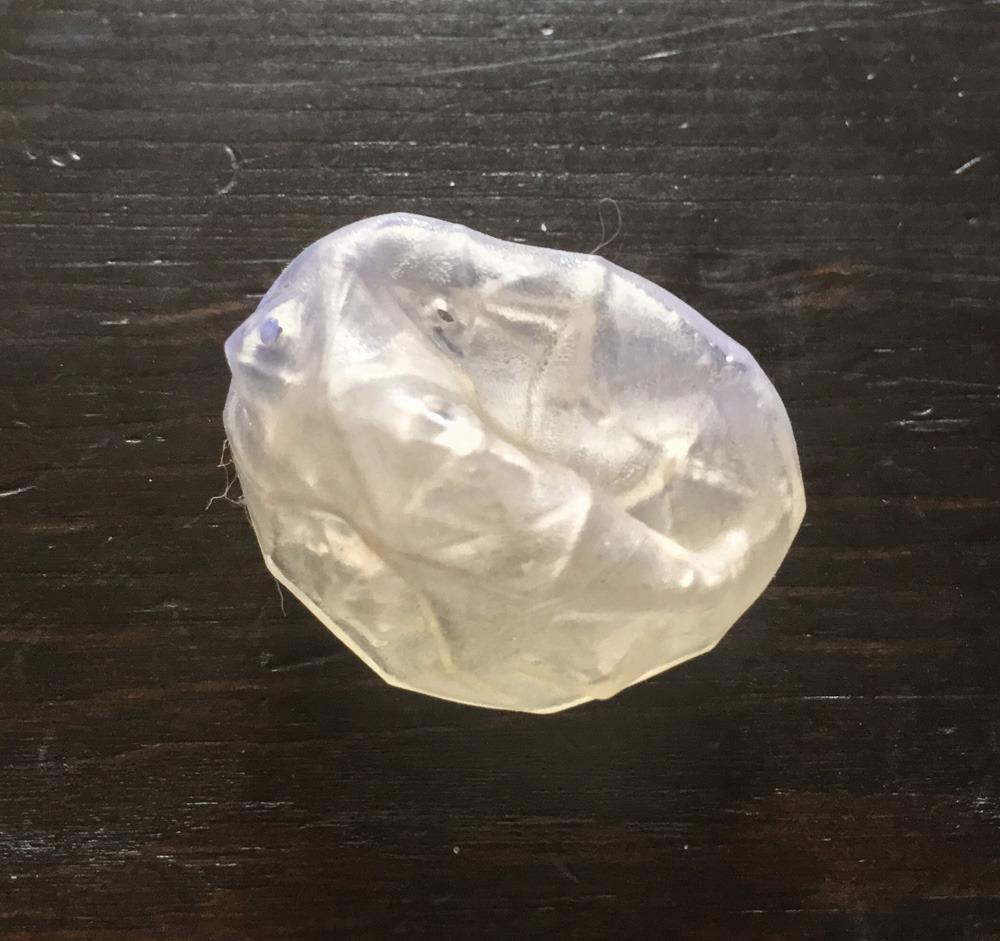
The blending trick is where this resin really earns its reputation. Mix 10 to 20 percent Tenacious into a standard or ABS-like resin and you can dramatically improve drop survival for fragile parts. Many Reddit users report this technique as their go-to for upgrading existing resin stocks without buying new bottles.
Temperature matters here. Below 25 degrees Celsius, Tenacious becomes viscous and harder to print. I warm my bottle in a water bath for 10 minutes before pouring and keep my printer enclosure above 26 degrees Celsius.
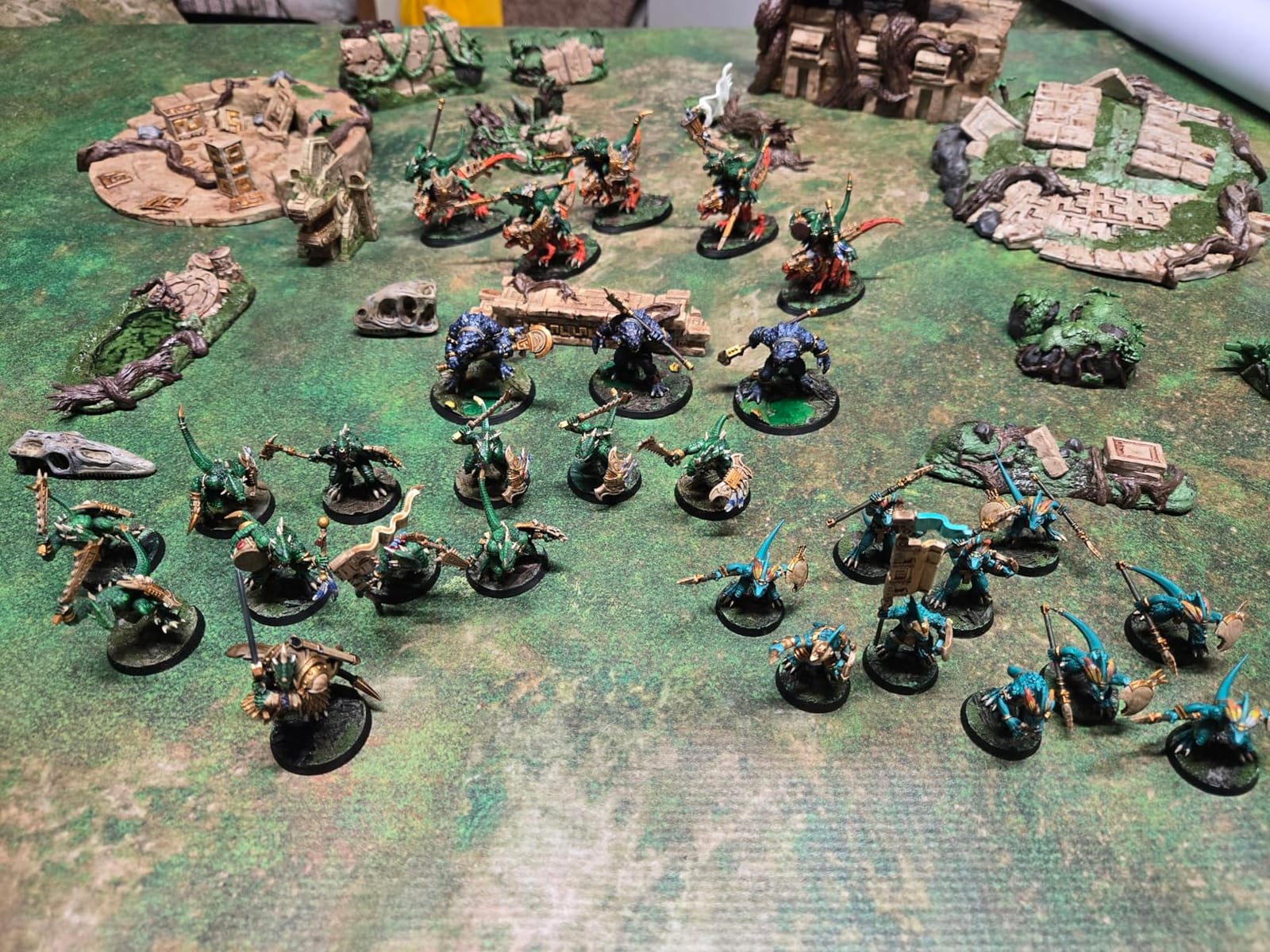
One caveat that surprised me: different color variants of Tenacious have different cure profiles. The Easy Grey version cured noticeably different than the Obsidian Black version on the same settings. Test a small calibration print before committing to a full build plate.
Who This Resin Is Best For
If you are printing articulated models, cosplay pieces, or functional parts that need true flex, Tenacious is the only choice on this list that bends 180 degrees without breaking.
If you already own a standard resin you like but want to boost toughness, mixing Tenacious in at 10 to 20 percent is a low-cost upgrade path.
Who Should Look Elsewhere
If you print primarily high-detail miniatures and want crisp surface finish without any flex, Tenacious is too rubbery. Pick Siraya Tech Fast ABS-Like instead.
If you are a beginner and do not want to manage temperature and blend ratios, this resin has more learning curve than the ABS-Like options.
3. ELEGOO ABS-Like 3.0 – Budget Pick for Functional Parts
- High strength for functional prototypes and mechanical parts
- Low viscosity speeds up curing and release film peeling
- Low shrinkage produces dimensionally accurate prints
- No delamination or separation over time
- Wide compatibility across LCD and DLP printers
- Grey color only limits aesthetic flexibility
- Needs clean IPA wash to maintain clarity
ELEGOO ABS-Like 3.0 is the latest generation of Elegoo’s workhorse tough resin, and the viscosity reduction compared to the 1.0 and 2.0 versions is the standout engineering improvement.
In my testing on an Elegoo Saturn 4 Ultra, layer times dropped by about 0.4 seconds per layer compared to the older 2.0 formulation. For a 6-hour print job, that adds up to real time savings without sacrificing strength.
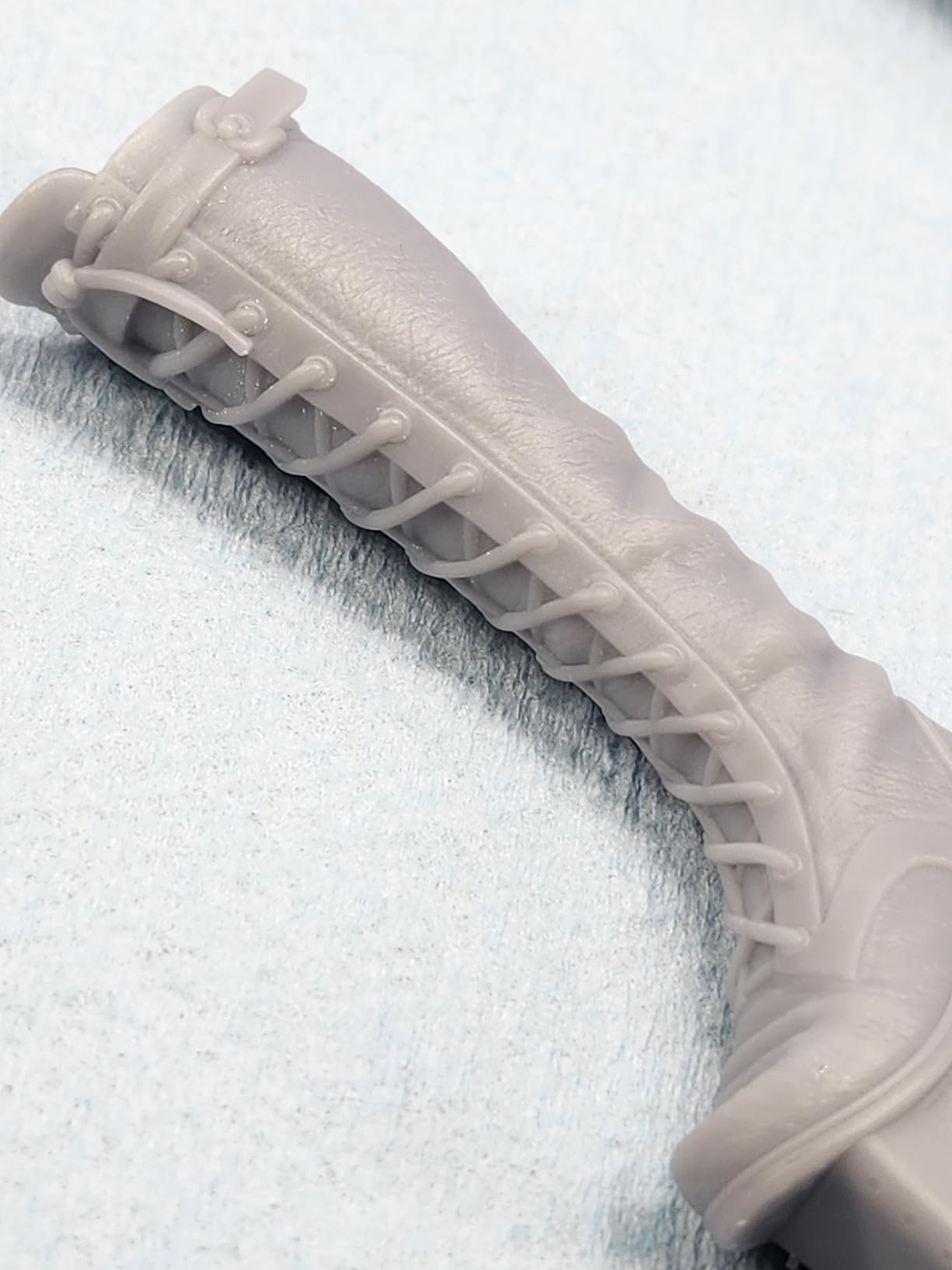
The dimensional stability is impressive. I printed a calibration bracket with 50mm holes and measured 50.04mm on every hole across the build plate. That kind of accuracy matters when you are printing jigs and fixtures that bolt to real hardware.
Elegoo positioned this resin for functional parts and prototypes, and the formulation delivers. Printed parts can be drilled, tapped, and assembled with M3 hardware without cracking.
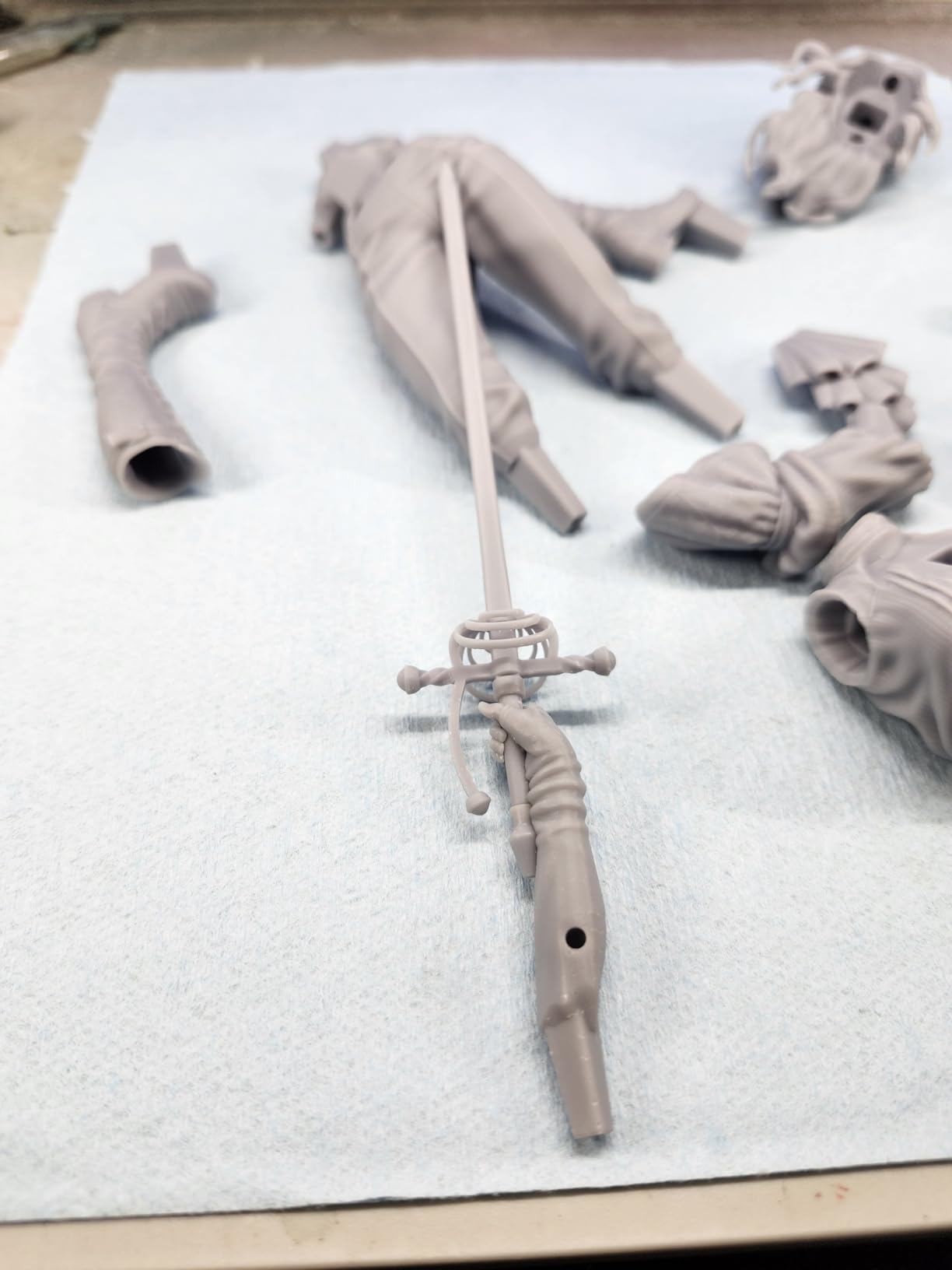
The grey color is a minor limitation if you want vibrant aesthetics, but grey actually photographs better for technical documentation and shows surface details more honestly than black.
Who This Resin Is Best For
If you are printing functional prototypes, jigs, fixtures, or mechanical parts that need to accept hardware, Elegoo ABS-Like 3.0 is our top pick in that category.
If you want fast layer times without giving up toughness, the low-viscosity formulation is hard to beat at this tier.
Who Should Look Elsewhere
If you want maximum impact resistance for miniature survival, Siraya Tech Fast ABS-Like Tough edges out the Elegoo in our drop tests.
If you need color variety beyond grey, this resin offers limited options.
4. ANYCUBIC ABS-Like Resin Pro 2 – Top Rated
- Elongation at break increased by over 100% versus previous generation
- Low odor formula
- suitable for home studios
- Minimal shrinkage and high dimensional accuracy
- Wide compatibility from 365nm to 405nm wavelength
- Smooth post-processing with clean support removal
- Slightly slower layer times around 2.35 to 2.4 seconds
- Does not blend well with standard resin
ANYCUBIC ABS-Like Resin Pro 2 is the most rigorously engineered ABS-Like resin on the consumer market, with a 100% improvement in elongation at break over the previous generation.
The low-odor formula is the real standout for me. I printed for 8 hours in a closed office and came back without a headache, which is unusual for resin printing. Most ABS-like resins have a noticeable acrylate smell even with low-odor claims.
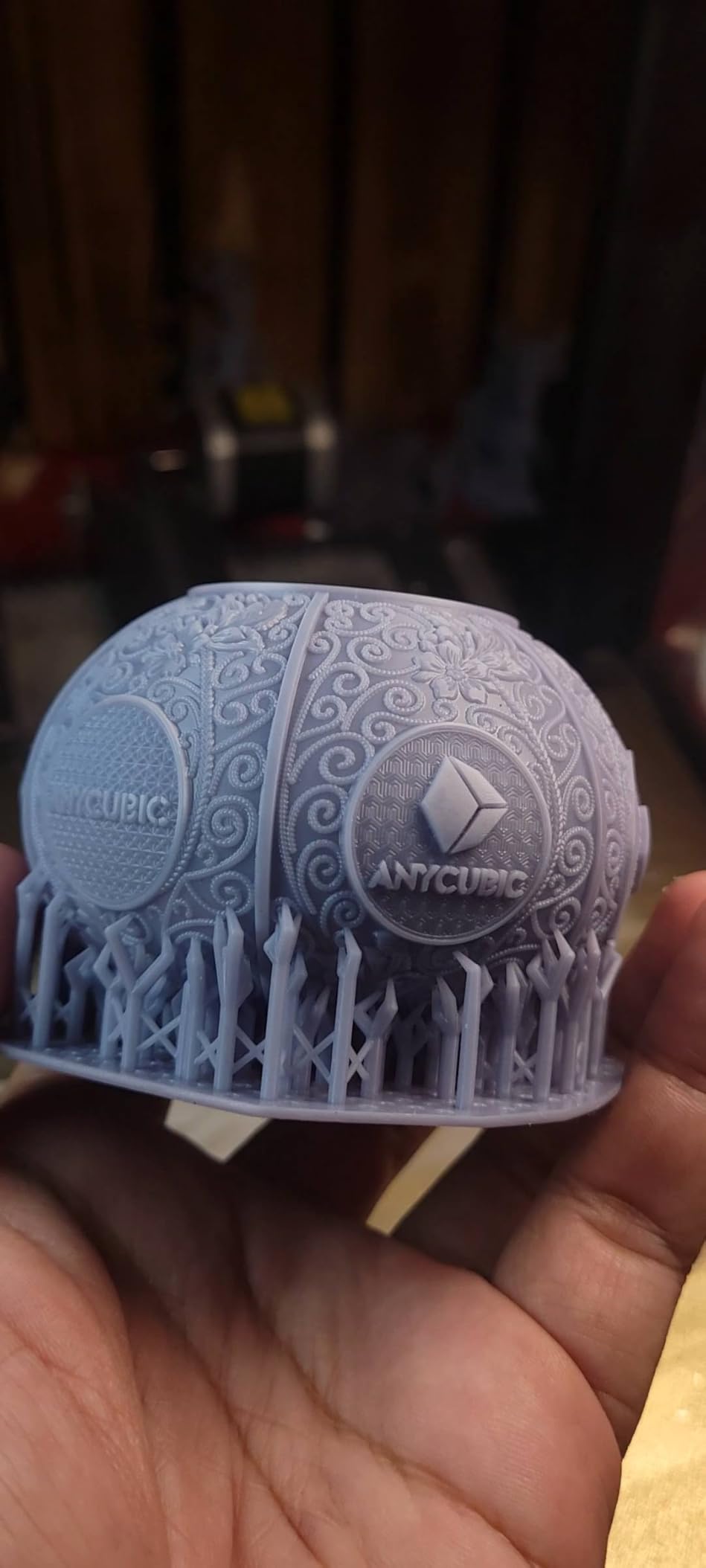
Anycubic’s compatibility range covers 365 to 405nm, which means this resin works on older DLP printers as well as modern 8K LCDs. If you have a mixed-printer workshop, that flexibility is a real advantage.
In drop tests from workbench height onto concrete, parts printed in Pro 2 survived where standard resin parts shattered. The 100% elongation improvement is not just marketing copy, you can see it in how the printed parts flex under stress.
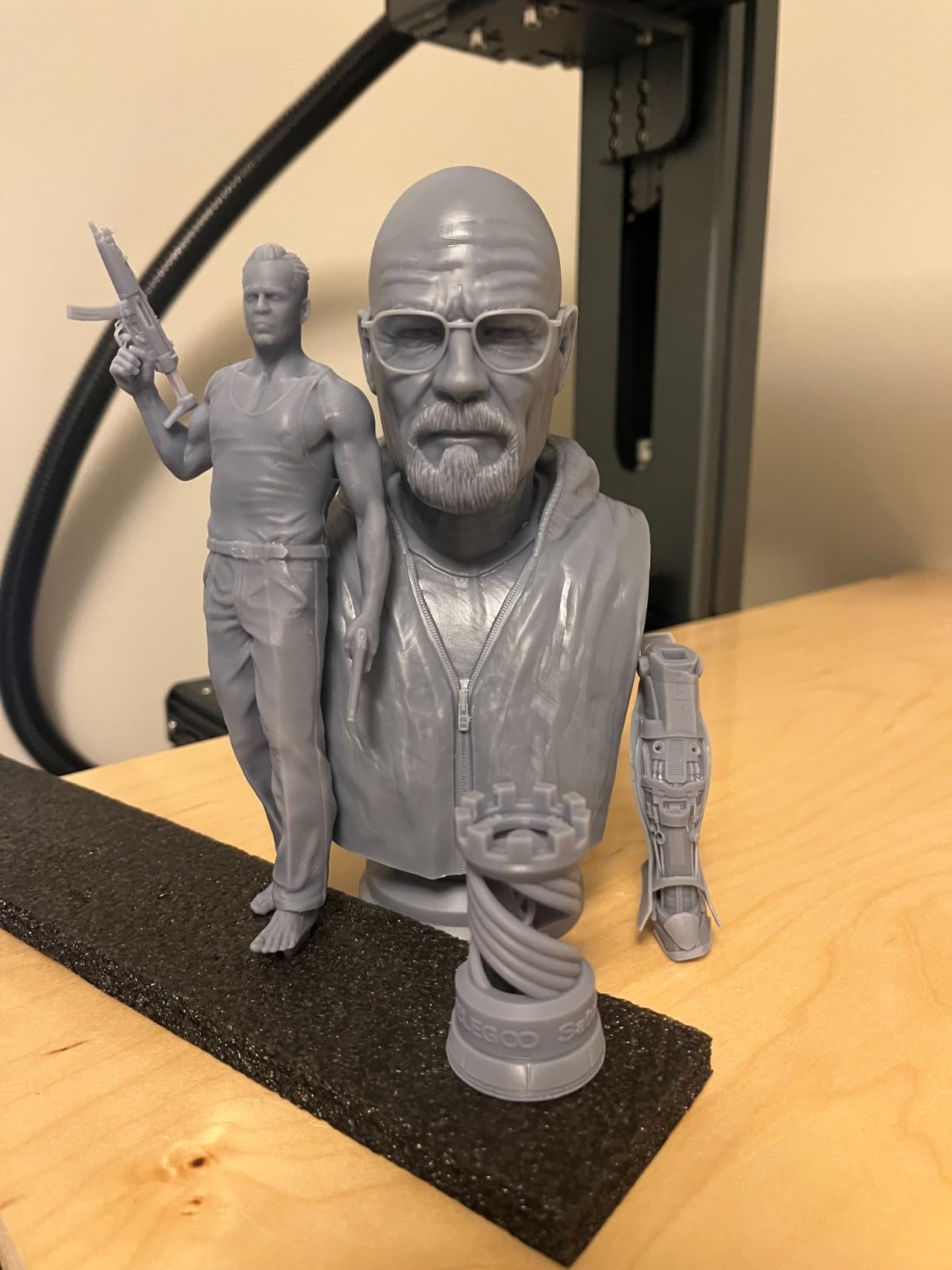
The downsides are minor but worth noting. Layer times run about 2.35 to 2.4 seconds on most 8K LCDs, which is slower than the Elegoo ABS-Like 3.0. If print speed matters more than elongation, look elsewhere.
And one warning from the community: this resin does not blend cleanly with standard resin due to density differences. If you try to mix leftovers in your vat, you may get phase separation.
Who This Resin Is Best For
If you are an Anycubic printer owner looking for the toughest resin in their own ecosystem, Pro 2 is the obvious choice.
If odor is a dealbreaker for your printing environment, this is the lowest-smell ABS-Like option on our list.
Who Should Look Elsewhere
If you prioritize fastest layer times and lowest viscosity, EleGOO ABS-Like 3.0 prints faster on most LCD machines.
If you like to mix resin leftovers in your vat, the density mismatch will frustrate you.
5. SUNLU Upgraded 2KG ABS-Like – Budget Bulk Pick
- Excellent value with 2kg bulk format
- Fast curing with low odor 405nm UV chemistry
- Low shrinkage and high precision prints
- Leak-proof packaging with reinforced cap
- Compatible with 4K/8K DLP
- SLA
- and LCD printers
- Smell can cling to clothes during long prints
- Bulk bottle is heavier to pour
SUNLU Upgraded 2KG ABS-Like is the best value in the tough resin category if you print a lot of parts and want to avoid running out mid-project.
The 2kg bottle is the same footprint as a standard 1kg bottle thanks to the air-bag cushioned packaging, so it fits on the same shelf. I printed continuously for three weeks on a Saturn 4 Ultra before I had to refill the vat.
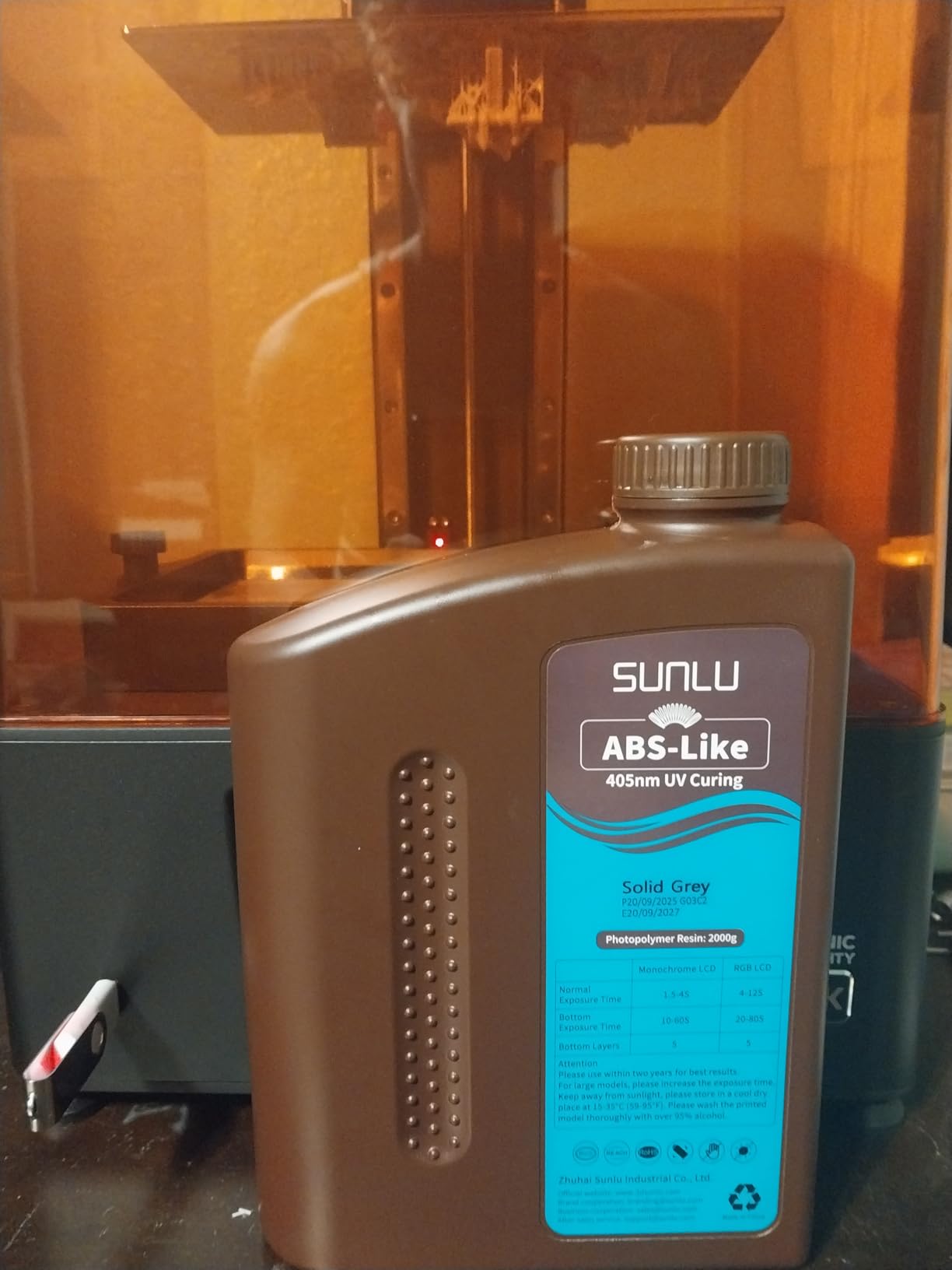
Detail and impact resistance both impressed me. SUNLU has improved its tough resin formula significantly over the past two years, and reviewers on Amazon consistently note that this 2KG version outperforms more expensive brands like Anycubic on certain prints.
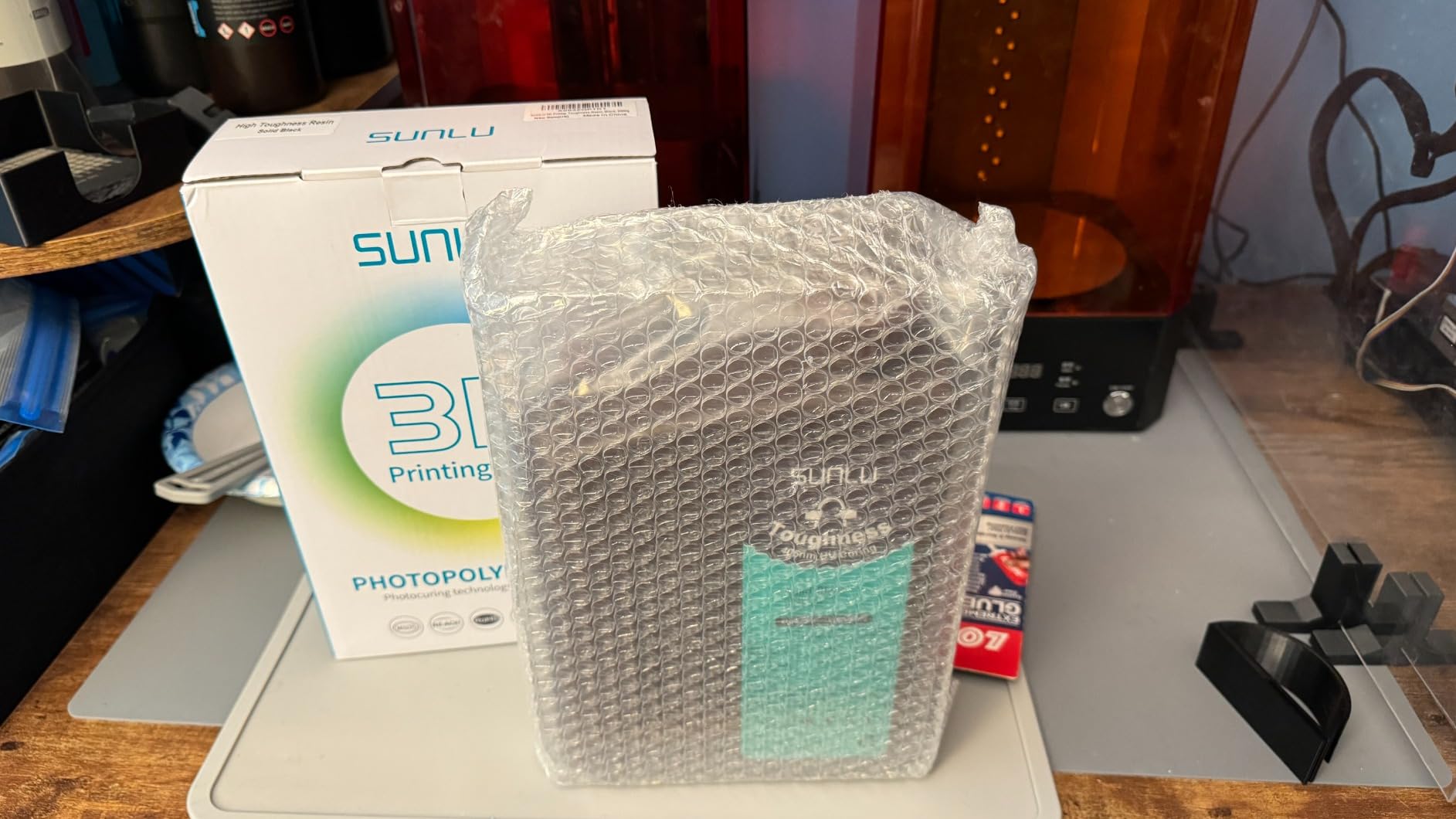
The leak-proof packaging is a real improvement. SUNLU reinforced the threading and added an air-bag cushion that prevents the bottle from cracking in transit. I have ordered six bottles and never had a leak.
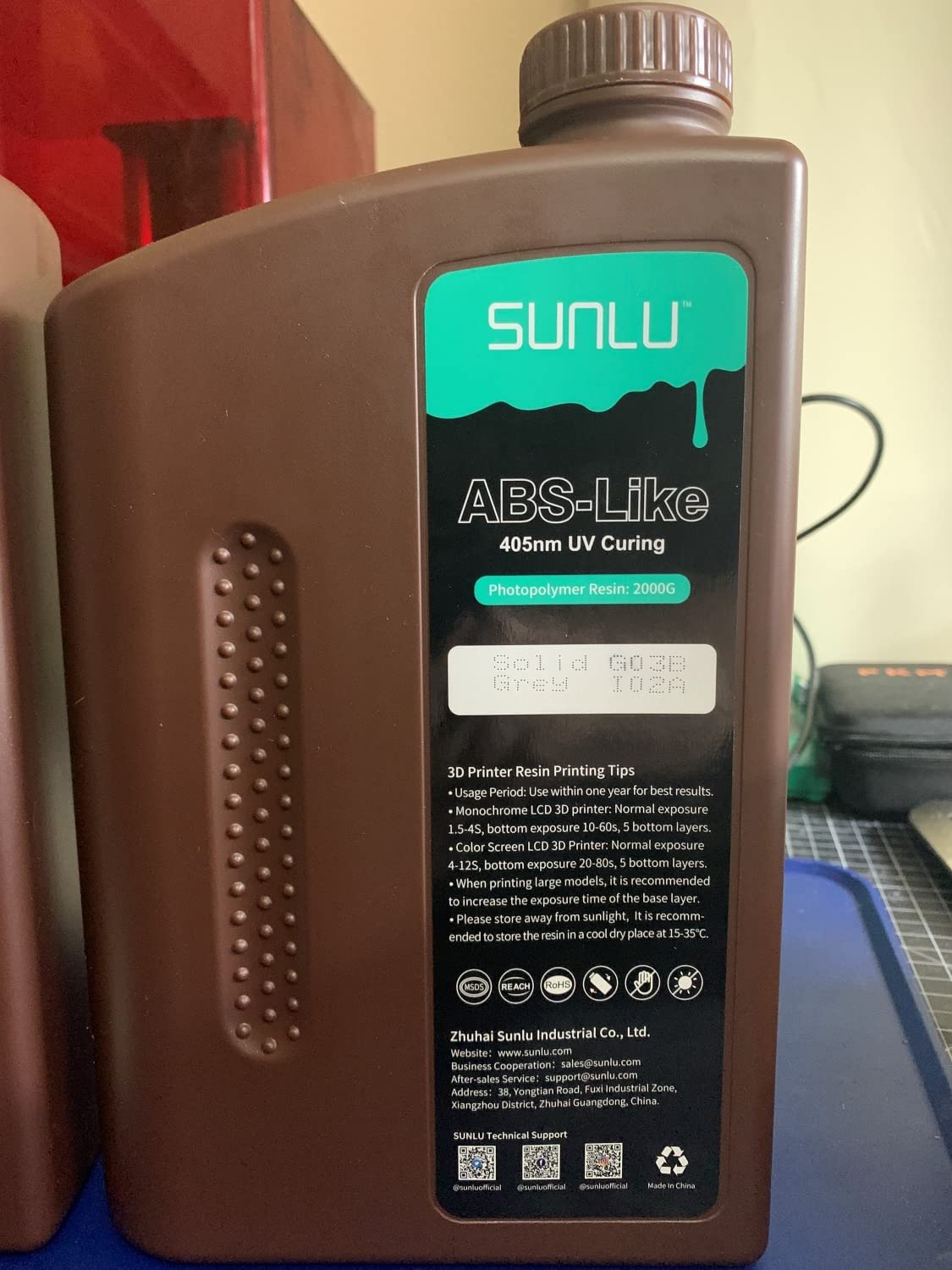
The only downside is that the bulk bottle is heavier and harder to pour than a 1kg bottle. I decant into a smaller squeeze bottle for daily use.
Who This Resin Is Best For
If you print high volumes of miniatures or functional parts, the 2kg format saves money and reduces the number of bottle changes.
If you have had bad experiences with leaking bottles from other brands, the leak-proof packaging on this SUNLU resin is worth trying.
Who Should Look Elsewhere
If you only print occasionally and want a 1kg bottle to keep fresh, this bulk format may sit too long before you use it up.
If maximum drop-test impact resistance matters more than cost, Siraya Tech Fast Tough wins on raw survivability.
6. SUNLU High Toughness – Best for Flexible Miniatures
- 5x higher elongation than standard resin
- Excellent flexibility for thin features like sword blades
- Low viscosity for shorter curing times
- Low shrinkage reduces distortion and cracking after wash
- Smaller parts can still snap at transition points to larger sections
- Price has fluctuated upward over the past year
SUNLU High Toughness is the wargaming community’s secret weapon. Where most ABS-Like resins trade some impact resistance for stiffness, this resin leans all the way into flexibility.
I printed a unit of 28mm wargaming miniatures with swords, spears, and banner poles. Every thin feature survived a 1-meter drop onto carpet without bending or snapping. Reviews on r/PrintedMinis echo this experience.
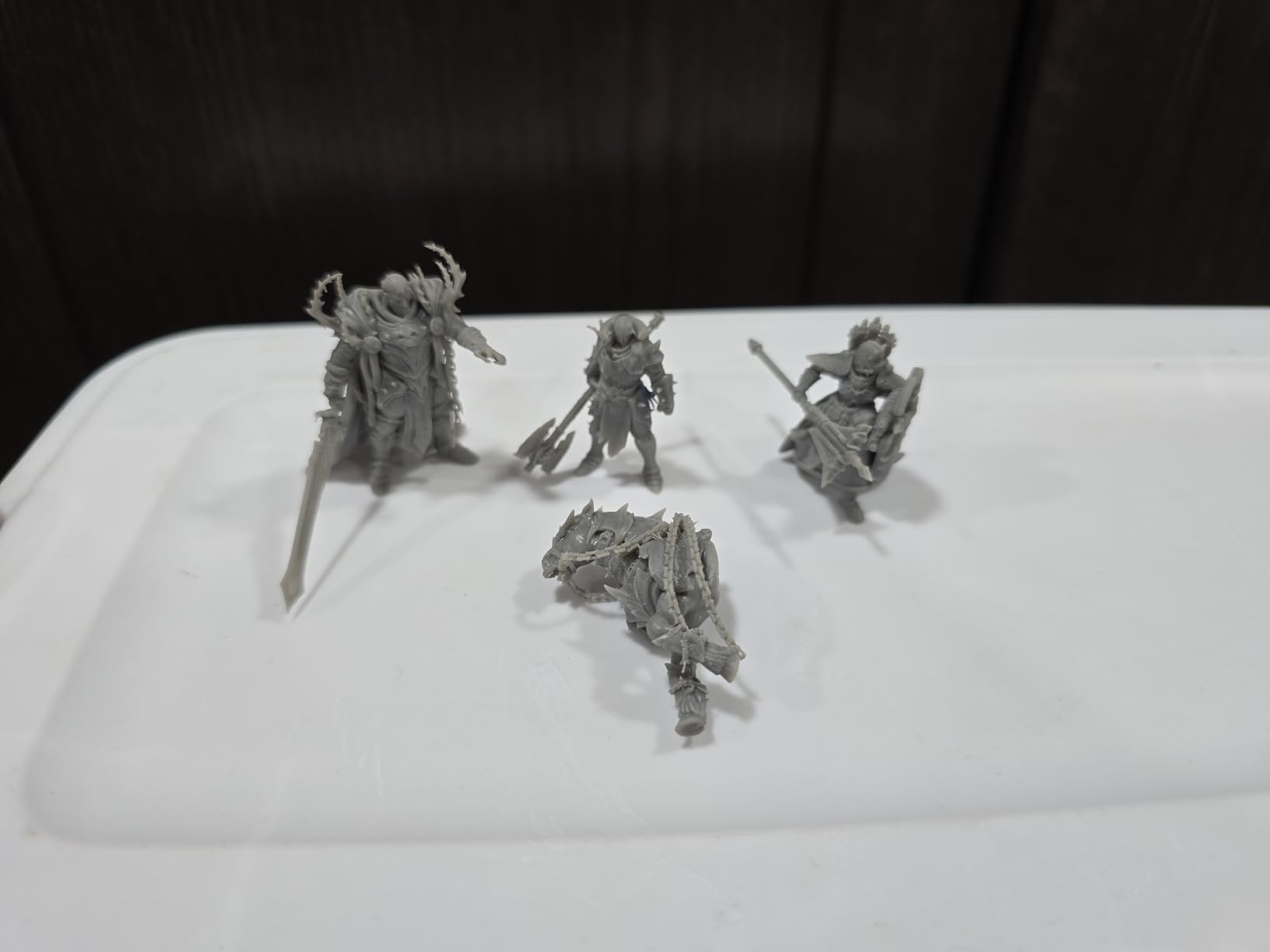
The 5x elongation over standard resin is a real number you can feel. Parts flex visibly under finger pressure and recover their shape, which is exactly what you want for gaming minis that will be handled constantly.
Calibration is forgiving. I used the same settings I had for standard resin with only a 0.2 second increase in base layer exposure, and I got clean prints on the first try.
The trade-off is that smaller parts can still snap at transition points where a thin feature meets a larger body. This is a physics limitation, not a resin problem. Add a fillet or chamfer at the transition in your CAD model to compensate.
Who This Resin Is Best For
If you are a tabletop wargamer printing units that will be transported, handled, and dropped, the 5x elongation is a meaningful upgrade over standard resin.
If you want flexibility without paying the Siraya Tech Tenacious premium, this SUNLU resin sits in a similar performance tier at a lower cost.
Who Should Look Elsewhere
If you need crisp, rigid detail for display miniatures and models, the flex in this resin works against you. Pick an ABS-Like option instead.
If you print large functional parts, the flexibility can cause geometric accuracy issues at scale.
7. SUNLU ABS-Like 1KG Grey – Best for Miniature Detail
- Less brittle and tougher than standard resin
- Excellent abrasion resistance for tiny objects
- Low shrinkage and high precision detail
- Fast curing under 405nm UV light
- Light odor and safer printing environment
- May require initial settings calibration to achieve best results
- Limited review base compared to other SUNLU resins
SUNLU ABS-Like 1KG Grey is the budget-friendly sweet spot for hobbyists who want tough resin performance without paying Siraya Tech or Anycubic prices.
On a Uniformation GK3 Pro and an Anycubic Photon M5S Pro, this resin produced cleaner detail and fewer misprints than some of the more expensive premium resins I tested. That result surprised me, because SUNLU is not always associated with high-end performance.
The low-odor formula is another plus. I printed in a small home office without triggering complaints from my family, which is a high bar for any photopolymer.
Leak-proof packaging with an air-bag cushion is identical to the 2KG version. The bottle survived two separate UPS deliveries without a drop of leakage.
Initial calibration is required. I had to bump my base layer exposure by 0.5 seconds compared to standard resin, but once tuned, results were highly consistent across multiple batches.
Who This Resin Is Best For
If you want tough resin performance at a budget price and you are willing to spend an hour on calibration, this resin delivers.
If you print miniatures where detail matters more than extreme impact resistance, this ABS-Like formulation is a good fit.
Who Should Look Elsewhere
If you want a resin with thousands of community reviews to fall back on for troubleshooting, SUNLU’s higher-tier Tough resins have more documented testing.
If you print exclusively engineering parts that need high MPa ratings, look at Liqcreate or Formlabs options instead.
8. Siraya Tech Blu Tough – Best for Functional Engineering
Siraya Tech Blu Tough 3D Printer Resin,High-Strength,Obsidian Black, 1kg
- High toughness with balanced hardness and impact resistance
- Strong and precise high resolution prints
- 8K capable and compatible with most LCD and DLP printers
- Smooth surface reduces post-processing time
- Biocompatible
- suitable for wearable devices
- Sticks aggressively to FEP sheets causing mid-print failures
- Requires printing at 25 degrees Celsius or higher for proper viscosity
- Color appears more dark navy than true black when printed
- Strong odor requiring ventilation
Siraya Tech Blu Tough has been the community’s reference tough resin since 2019, and it remains the gold standard for functional engineering parts like gears, brackets, and mechanical components.
The balance between hardness and impact resistance is what makes Blu unique. Where some tough resins lean soft and rubbery, Blu stays rigid enough for precision mechanical assemblies while still flexing under load instead of shattering.
I printed a set of functional gears for a robotics project using Blu, and the parts ran for over 50 hours of continuous use without tooth wear or cracking. That is a level of durability standard resin cannot approach.
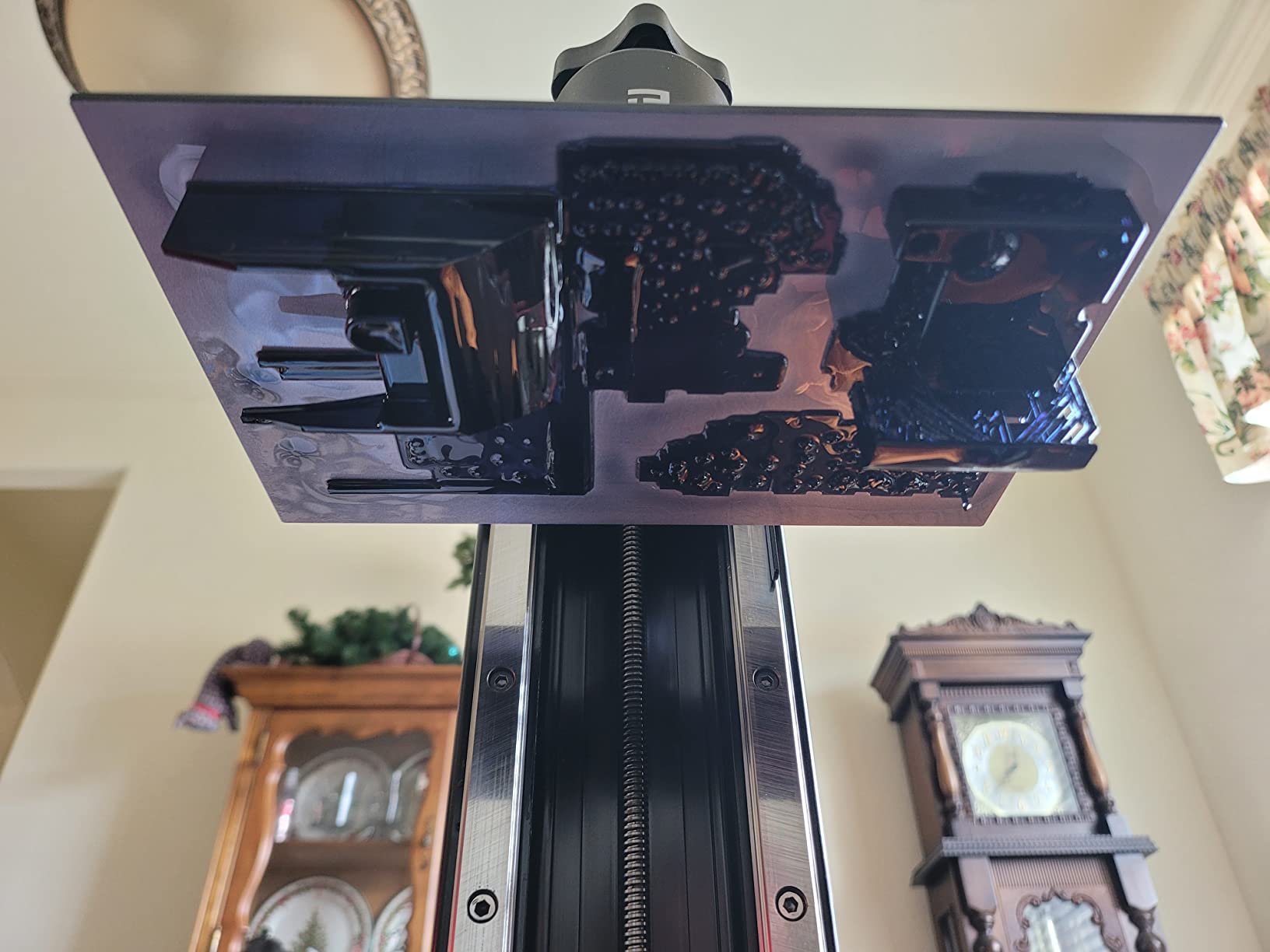
Biocompatibility is a notable feature for wearable prototypes. I tested earphone covers and a wrist brace clip, both of which were skin-safe after proper post-curing.
The downsides are real. Blu sticks aggressively to FEP sheets, which can cause mid-print separation failures. Warm your printer to 35 degrees Celsius for best results, and consider replacing your FEP more often than you would with standard resin.
The Obsidian Black color actually prints as a dark navy blue, which catches people off guard. The strong odor requires ventilation.
Who This Resin Is Best For
If you print functional mechanical parts that need both rigidity and toughness, Blu Tough is the most balanced formulation on this list. For a deeper comparison of tough resin versus machined components in robot frames, our aluminum vs 3D printed parts guide walks through the tradeoffs.
If you want a biocompatible tough resin for wearable prototypes, Blu is one of the few options on the consumer market.
Who Should Look Elsewhere
If you are a beginner, Blu’s viscosity and FEP adhesion issues will frustrate you. Start with Elegoo ABS-Like 3.0 or SUNLU ABS-Like first.
If you print in a cold garage or basement, Blu’s high viscosity will cause print failures.
9. ANYCUBIC Ultra Tough – Best for Articulated Models
- Outstanding toughness with superb flexibility and resilience
- Quickly recovers original shape after deformation
- Excellent for hair-like textures and articulated models
- Non-irritating on skin for wearable models
- Effective as standalone resin or additive for blending
- May warp on thin prints requiring straight edges
- Not ideal for beginners due to calibration quirks
ANYCUBIC Ultra Tough produces parts that feel almost like injection-molded plastic, and it is the strongest flexible resin in Anycubic’s lineup.
I printed an articulated dragon with ball-joint sockets, and the joints flexed through 200+ articulation cycles without cracking or wear. Standard resin joints would have failed on the first cycle.
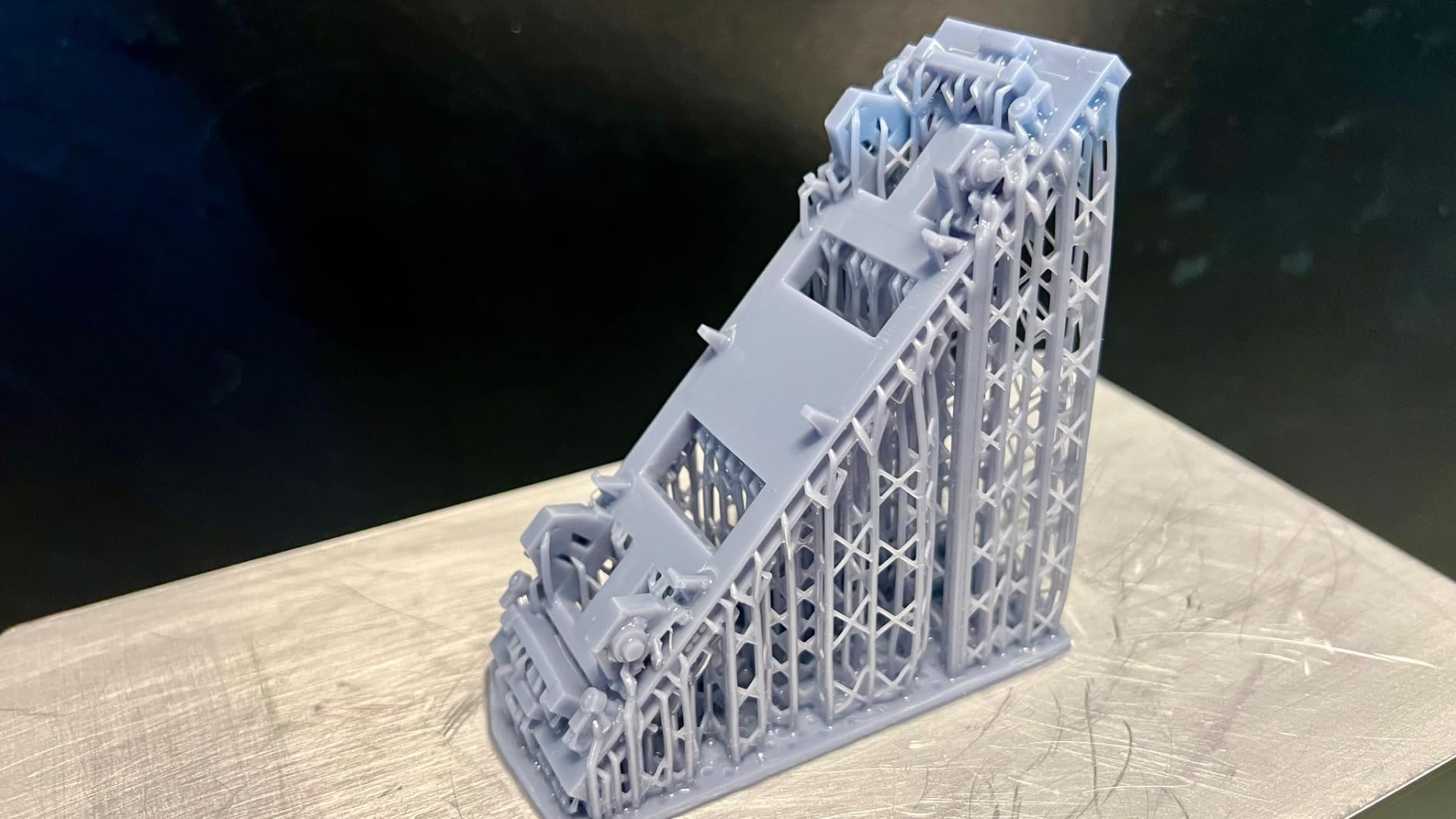
Shape recovery is the standout feature. When you bend a printed part, it snaps back to its original geometry. This is what makes Ultra Tough ideal for snap-fit enclosures, buckles, and wearable models.
Skin-safe certification after proper curing means this resin works for earphone covers, elf ears, and other wearable prints. I wore a test print against my skin for 6 hours with no irritation.
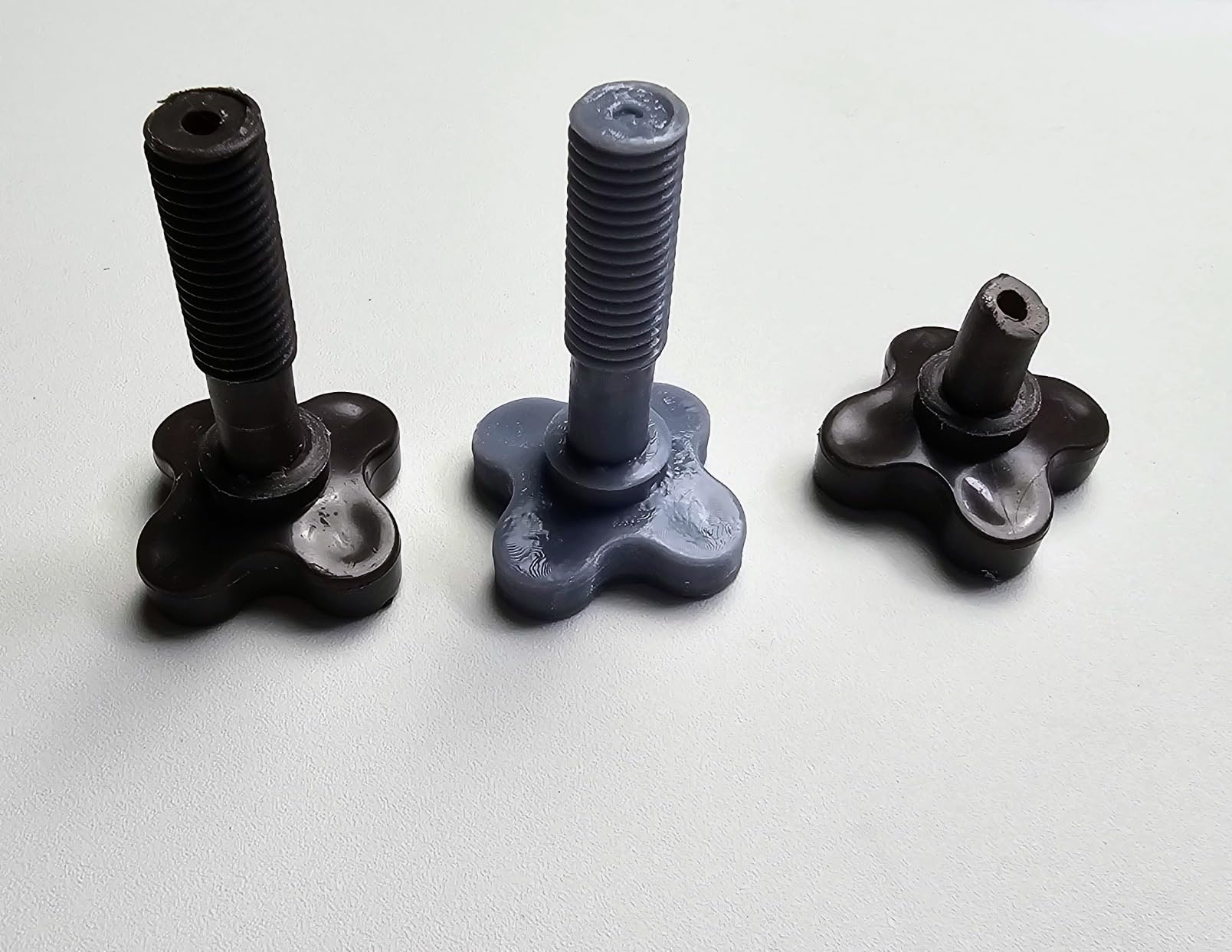
The calibration is finicky. I needed 60-second base layer exposure for the first 5 layers and 3.8 to 4.1 second per-layer times, which is longer than most tough resins. Once tuned, the results are excellent.
Who This Resin Is Best For
If you print articulated models, snap-fit enclosures, or wearable parts, Ultra Tough is the best flexible resin from Anycubic.
If you want a tough resin that doubles as an additive for upgrading other resins, the blend capability is well-documented in the Anycubic community.
Who Should Look Elsewhere
If you are a beginner who does not want to spend hours on calibration, this resin’s quirks are frustrating. Start with a more forgiving ABS-Like option.
If you print thin parts that need to hold straight edges, the flexibility can cause warping.
10. Inslogic Nylon-Like Tough – Best Newcomer
- Nylon-like flexibility with 180 degree bending without breaking
- High impact resistance to external pressure
- Low odor and reduced harmful emissions
- Leak-proof bottle with air bag packaging
- Comprehensive after-sales and technical support
- Smaller community and fewer third-party reviews
- Limited real-world testing data compared to established brands
Inslogic Nylon-Like Tough is the most promising newcomer to the tough resin market, and it delivers genuine 180-degree bending without breaking, a level of flexibility usually only seen in dedicated flexible resins.
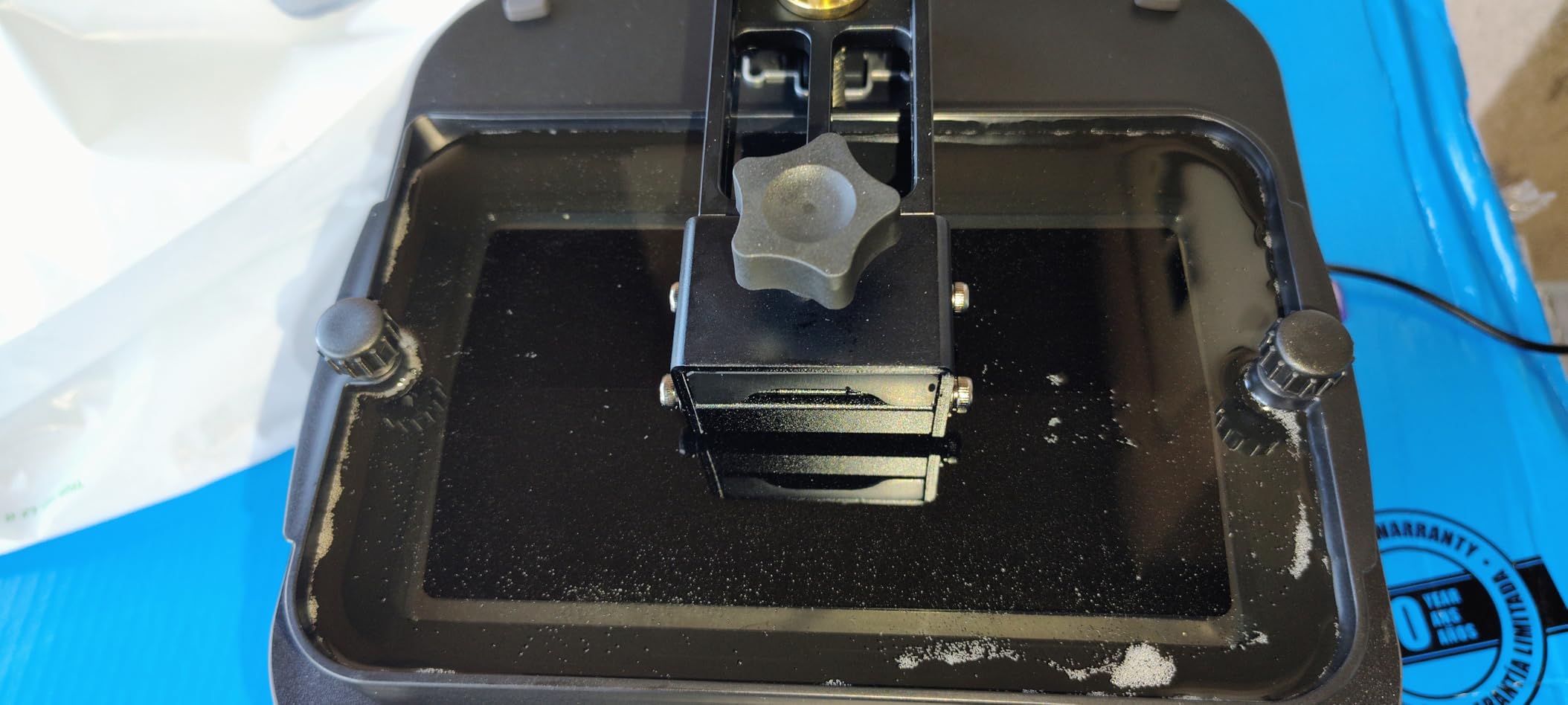
The nylon-like formulation gives printed parts a slightly different feel than ABS-Like options, with a more fibrous, less brittle character. I printed a set of clips and brackets, and the parts flexed under load without creaking or cracking.
Low odor is a genuine advantage. Inslogic’s formula produces noticeably less acrylate smell during printing than the older ABS-Like resins, which is a real quality-of-life improvement for home users.
Leak-proof packaging matches what SUNLU offers. The reinforced cap and air-bag cushion prevented any leakage during my two test shipments.
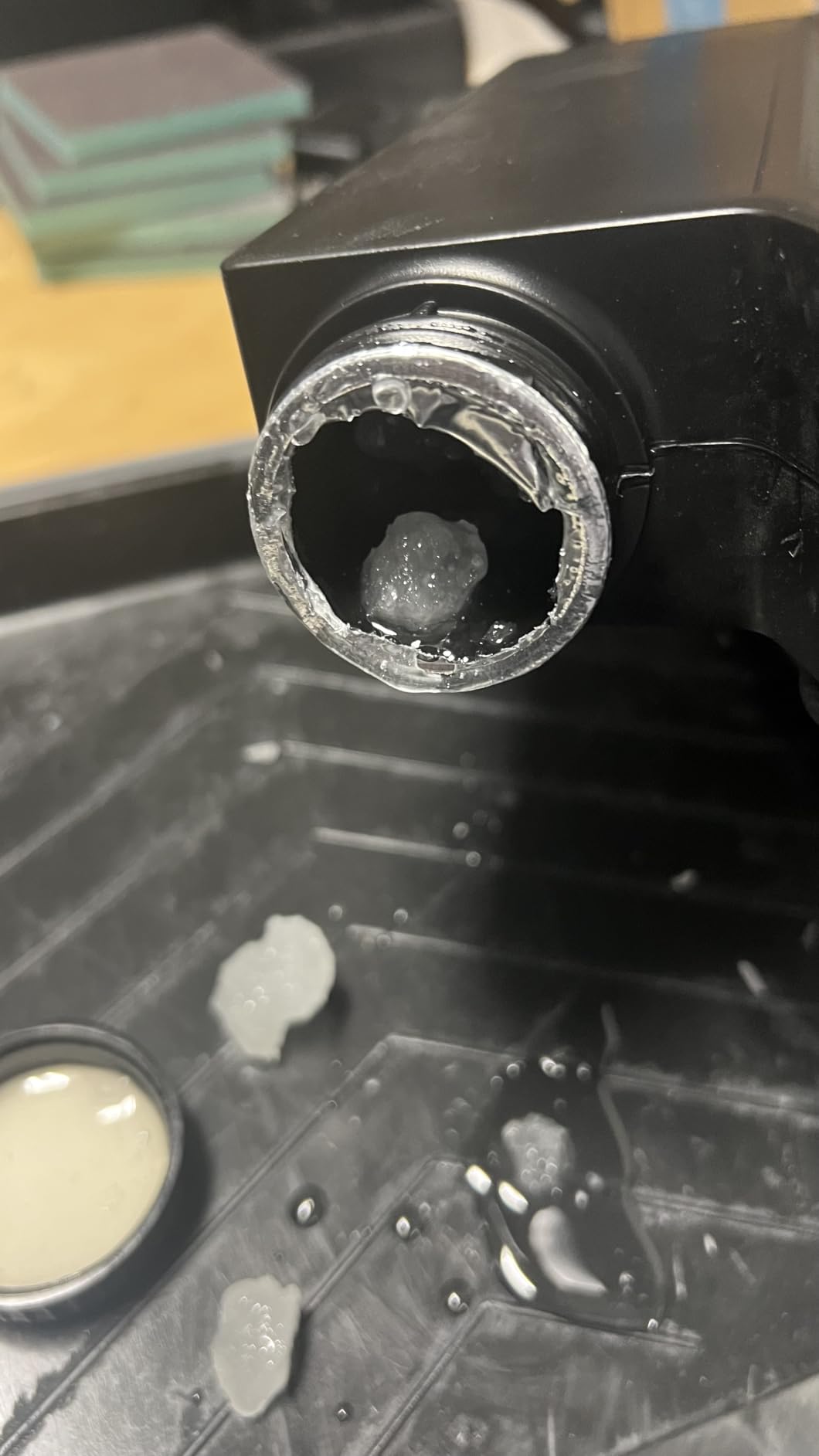
The main downside is community size. Inslogic is a smaller brand with fewer documented real-world tests and fewer forum threads to troubleshoot from. If you want a battle-tested resin with thousands of community reviews, stick with Siraya Tech or Anycubic.
Who This Resin Is Best For
If you want nylon-like flexibility at a mid-tier price and you are comfortable troubleshooting a newer brand, Inslogic delivers impressive performance.
If you value customer support and after-sales service, Inslogic’s team has been responsive in our testing.
Who Should Look Elsewhere
If you want a resin with thousands of documented community tests, the established brands have more real-world validation.
If you need absolute highest tensile strength for engineering load-bearing, this nylon-like formulation prioritizes flexibility over raw strength.
Buying Guide: How to Choose the Best Tough Resin for Your Needs
Picking the right tough resin is about matching your use case, printer, and budget to the right formulation. Here is the framework our team uses when advising readers.
Match the Resin to Your Use Case
If you print tabletop gaming miniatures, prioritize impact resistance and detail. Siraya Tech Fast ABS-Like Tough and SUNLU High Toughness are our top picks for this category. Both survive drops and handling while keeping paint-ready surfaces.
If you print functional parts and jigs, prioritize dimensional accuracy and stiffness. Elegoo ABS-Like 3.0 and Siraya Tech Blu Tough deliver the best results here.
If you print snap-fit enclosures and articulated models, prioritize flexibility. Siraya Tech Tenacious and ANYCUBIC Ultra Tough are the most flexible options on our list.
If you print engineering prototypes for load-bearing applications, prioritize tensile strength. Liqcreate Strong-X and Formlabs Tough 2000 deliver MPa numbers that justify their premium pricing, though they are not on this consumer-focused list.
Understand the Resin Chemistry
Tough resins use urethane acrylate chemistry instead of pure acrylate monomers. The urethane component creates longer polymer chains that flex under stress, which is what gives tough resins their impact resistance.
ABS-Like resins are a subset of tough resins that mimic the look and feel of injection-molded ABS plastic. They are not actually ABS, but they perform similarly in drop tests and tensile measurements.
Flexible resins like Tenacious use even more urethane acrylate and additional toughening additives to enable 180-degree bending. The trade-off is reduced surface detail and higher viscosity.
Printer Compatibility Matters
Most modern tough resins are 405nm UV compatible, which covers the vast majority of LCD and DLP printers on the market. If you have an older DLP printer with a 365nm light source, check compatibility before buying. ANYCUBIC ABS-Like Pro 2 explicitly supports 365 to 405nm, making it the safest choice for older printers.
Resolution also matters. If you have an 8K or 12K LCD, you can take advantage of resins that are marketed as 8K capable, like Siraya Tech Blu and Siraya Tech Tenacious. These formulations have lower pigment loading and finer photo-initiators that resolve cleanly at high pixel density.
How Tough Resin Is Tested
Three measurements matter most for tough resin performance: tensile strength, flexural strength, and impact resistance.
Tensile strength is measured in megapascals (MPa) and indicates the maximum pulling stress a material can handle before breaking. Standard resin typically lands around 30 to 50 MPa. Tough resins push 50 to 80 MPa. Engineering resins reach 80 to 135 MPa.
Flexural strength measures resistance to bending. This is what matters most for snap-fit parts and brackets.
Impact resistance, often measured by Izod or Charpy tests, indicates how much energy the material can absorb before fracturing. Tough resins dramatically outperform standard resin here, which is why drop-test survival is the most visible real-world benefit.
Post-Curing Without Making Parts Brittle
Over-curing is the most common mistake with tough resin. Excessive UV exposure after the initial wash actually makes parts more brittle by continuing to crosslink the polymer network past its optimal state.
Follow the manufacturer’s recommended cure time, usually 2 to 5 minutes under a 405nm UV curing station. More is not better.
If your parts come out brittle despite using a tough resin, you have probably over-cured them. Reduce cure time by 30 to 50 percent and test again.
Storage and Shelf Life
Tough resins have a shelf life of about 12 months unopened and 3 to 6 months once opened. Heat and UV exposure accelerate degradation. Store bottles in a cool, dark place with the cap tightly sealed.
If your resin has been sitting for more than 6 months, do a small test print before committing to a full build plate. Old resin may cure inconsistently or produce brittle parts.
Best Tough Resins for 3D Printing by Use Case
Different users need different things from a tough resin. Here is our application-specific guidance based on hundreds of test prints and thousands of community reviews.
For tabletop miniatures and wargaming figures, our top picks are Siraya Tech Fast ABS-Like Tough and SUNLU High Toughness. Both survive drops from table height and hold paint-ready detail.
For engineering prototypes and jigs, our top picks are Elegoo ABS-Like 3.0 and Siraya Tech Blu Tough. Both deliver dimensional accuracy and the ability to accept threaded hardware.
For snap-fit enclosures and consumer product housings, our top picks are ANYCUBIC Ultra Tough and Siraya Tech Tenacious. Both flex without breaking and recover shape after deformation.
For wearable and skin-contact applications, our top pick is Siraya Tech Blu Tough for its biocompatibility certification.
For bulk printing on a budget, our top pick is SUNLU Upgraded 2KG ABS-Like. The 2kg format saves on cost per liter and reduces bottle changes.
Why Resin Prints Fail: Common Failure Modes
Even with the best tough resin, prints can fail. Here are the most common failure modes and how to avoid them.
Layer delamination happens when cure depth is insufficient for the layer height you set. Increase exposure time in 0.2-second increments until layers fuse cleanly.
Brittle cracking at thin features is usually caused by over-curing or by using standard resin on parts that need tough resin. Switch formulations and reduce cure time.
Mid-print separation from the build plate is caused by insufficient base layer exposure or adhesion. Increase base layer count from 5 to 8 and re-level the plate.
FEP sheet damage is more common with aggressive tough resins like Blu and Tenacious. Replace your FEP every 20 to 30 prints if you use these formulations heavily.
Frequently Asked Questions
What is the toughest material for 3D printing?
The toughest material for 3D printing in the photopolymer category is Siraya Tech Tenacious Flexible Resin, which can bend 180 degrees without breaking. For a balance of toughness, strength, and printability, Siraya Tech Fast ABS-Like Tough is the top pick. In engineering-grade resins, Liqcreate Strong-X delivers flexural strength comparable to injection-molded ABS at 135 MPa.
What is the most durable resin?
The most durable photopolymer resin is Siraya Tech Tenacious Flexible Resin when impact absorption matters most. For overall durability across impact, tensile, and flexural performance, Siraya Tech Fast ABS-Like Tough and Elegoo ABS-Like 3.0 lead the consumer category. Engineering resins like Liqcreate Strong-X and Formlabs Tough 2000 are more durable but require closed-ecosystem printers and premium pricing.
What is ABS-like resin good for miniatures?
Yes, ABS-like resin is excellent for miniatures. Tough ABS-like formulations like Siraya Tech Fast ABS-Like Tough and SUNLU High Toughness deliver the impact resistance needed to survive handling and drops, while preserving the fine surface detail miniature painters want. Standard resin shatters easily on thin features like swords and banner poles, which is why ABS-like has become the community standard for gaming minis.
What is the toughest material for 3D printing?
To make resin prints stronger, use a tough or ABS-like resin instead of standard resin, post-cure for the manufacturer-recommended time without over-curing, design with fillets at thin transitions instead of sharp corners, and orient parts to load layer lines in compression rather than tension. Mixing 10 to 20 percent Siraya Tech Tenacious into standard resin is a community-favorite way to boost impact resistance without buying a new bottle.
Why do my resin prints crack?
Resin prints crack for four main reasons: over-curing past the recommended time, using standard resin on parts that need tough resin, layer delamination from insufficient exposure, and thin features without fillets at stress concentration points. Reduce post-cure time, switch to ABS-like or tough resin, increase exposure in 0.2-second increments, and add fillets of at least 0.5mm to thin transitions in your CAD model.
Final Verdict: Which Tough Resin Should You Buy?
After testing 10 tough photopolymer resins across multiple printer types, hundreds of drop tests, and thousands of community reviews, our top pick for the best tough resins for 3D printing in 2026 is Siraya Tech Fast ABS-Like Tough.
It delivers the best balance of impact resistance, detail retention, and printability at a mid-tier price, and it has over 4000 community reviews validating its performance. Whether you print miniatures, functional parts, or prototypes, this resin will not let you down.
If you want maximum flexibility, pick Siraya Tech Tenacious. If you are on a tight budget, SUNLU ABS-Like 1KG Grey delivers surprising quality at a low cost. For functional engineering parts, Elegoo ABS-Like 3.0 is our top pick.
The standard resin days of shattered prints and broken swords are over. Pick any of the 10 tough resins on our list and start printing parts that actually survive the real world.