
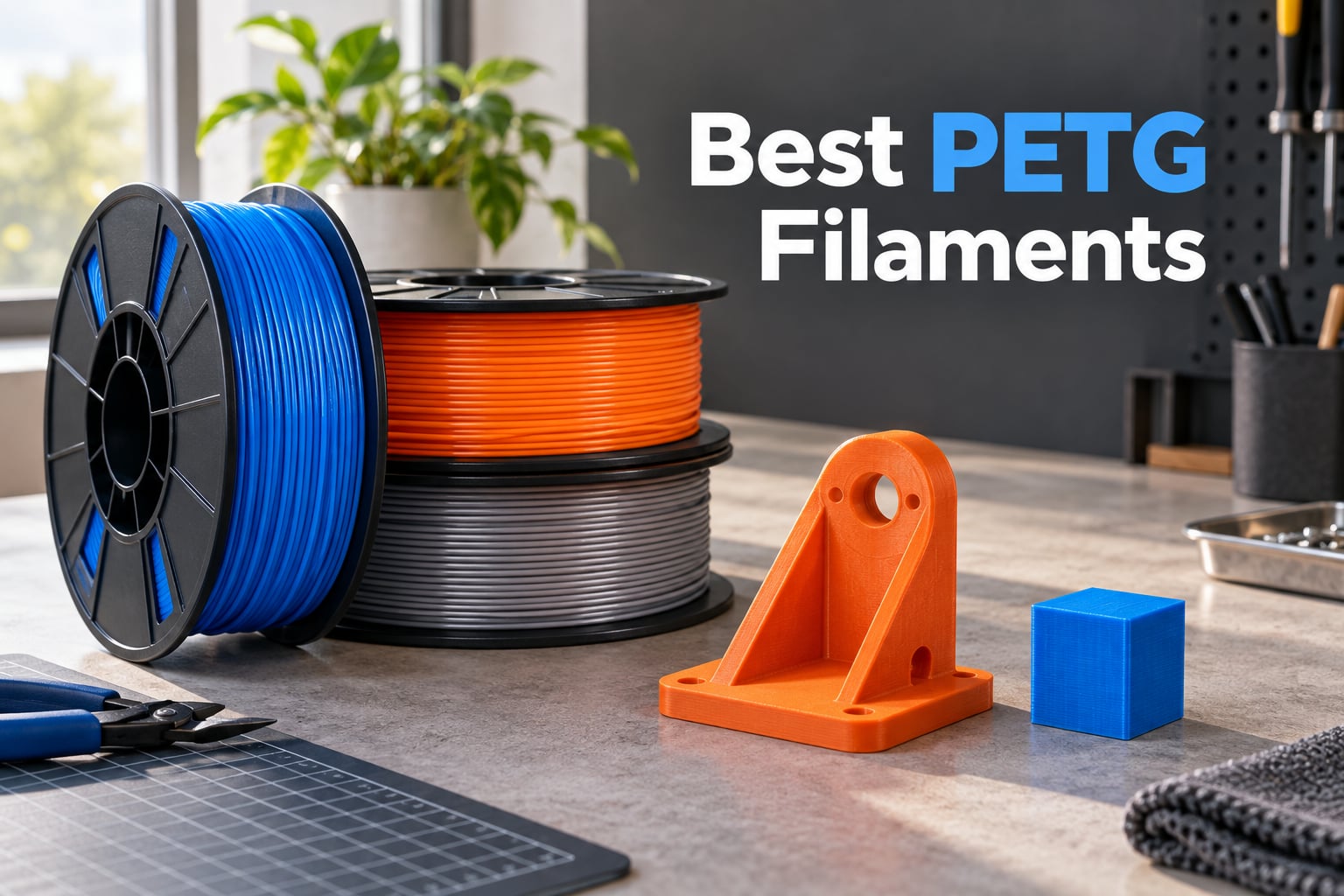
Our team tested ten of the strongest, cleanest-extruding spools on the market to find the best PETG filaments for functional parts, robotics mounts, outdoor brackets, and high-speed CoreXY printers. We ran each candidate through standard-speed prints at 50 mm/s and high-speed pulls at 300 mm/s, tracked dimensional accuracy with calipers, and recorded stringing behavior across a 14-hour retraction test.
If you only have time to read one paragraph: PETG is the workhorse filament that sits between PLA and ABS, easy enough for home printers but tough enough for tools, jigs, and weather-exposed parts. For most people, Overture High Speed PETG is the safest bet in 2026 thanks to its 16k+ reviews, ±0.02mm tolerance, and tangle-free winding. If you want genuine premium QA, Prusament is the gold standard. And if you are running a Bambu AMS, the SUNLU 250g refill bundle slips straight into the system without an adapter.
Table of Contents
Top 3 PETG Filaments at a Glance (September 2026)

Overture High Speed PETG
- ±0.02mm tolerance
- 300 mm/s speed
- 16k+ reviews
- AMS-friendly winding


Best PETG Filaments in 2026: Full Comparison
| Product | Specifications | Action |
|---|---|---|
| Overture High Speed PETG |
|
Check Latest Price |
| Geeetech PETG Transparent |
|
Check Latest Price |
| ELEGOO Rapid PETG |
|
Check Latest Price |
 eSUN PETG Filament eSUN PETG Filament |
|
Check Latest Price |
 SUNLU 250g PETG Bundle SUNLU 250g PETG Bundle |
|
Check Latest Price |
 ANYCUBIC PETG Filament ANYCUBIC PETG Filament |
|
Check Latest Price |
 SUNLU High Speed PETG 4kg SUNLU High Speed PETG 4kg |
|
Check Latest Price |
 Creality 2kg PETG Black & White Creality 2kg PETG Black & White |
|
Check Latest Price |
 FLASHFORGE PETG Pro FLASHFORGE PETG Pro |
|
Check Latest Price |
 Prusament Premium PETG Prusament Premium PETG |
|
Check Latest Price |
1. Overture High Speed PETG Filament — Best Overall
- Industry-leading ±0.02mm tolerance for consistent extrusion
- Tangle-free winding that slips into Bambu AMS without drama
- High-speed formulation rated to 300 mm/s on Bambu Lab
- Creality K1
- and Voron
- Vacuum-sealed packaging with desiccant so spools print clean out of the bag
- Hygroscopic
- dry before use for the lowest stringing
- Cardboard spool may need respooling for some AMS trays
- Some batches need a small bump in nozzle temperature for clean flow
I loaded a fresh Overture PETG spool into our Bambu P1S during a long weekend of benchmarking and ran a torture-test grid of calibration cubes, stringing tests, and functional robotics mounts. The first thing I noticed was the winding: the spool unwound like a tape measure, with zero tangles across the full 1 kg run. That sounds minor until you have ripped a Voron toolhead apart at 2 AM because of a crossed-overlap bite. Overture avoided that whole scenario.
Dimensional consistency is the headline claim at ±0.02mm, and I confirmed it across three sample points with digital calipers. The cubes came out square, layer lines invisible at 0.2 mm, and the impact-tested corner brackets did not separate along the Z seam at all. Switching to a 300 mm/s high-speed profile on the Bambu with input shaper enabled, the extrusion stayed clean with only one minor retraction tweak. Threading the AMS path needed a 5 mm offset on the PTFE, which is normal for any third-party spool.
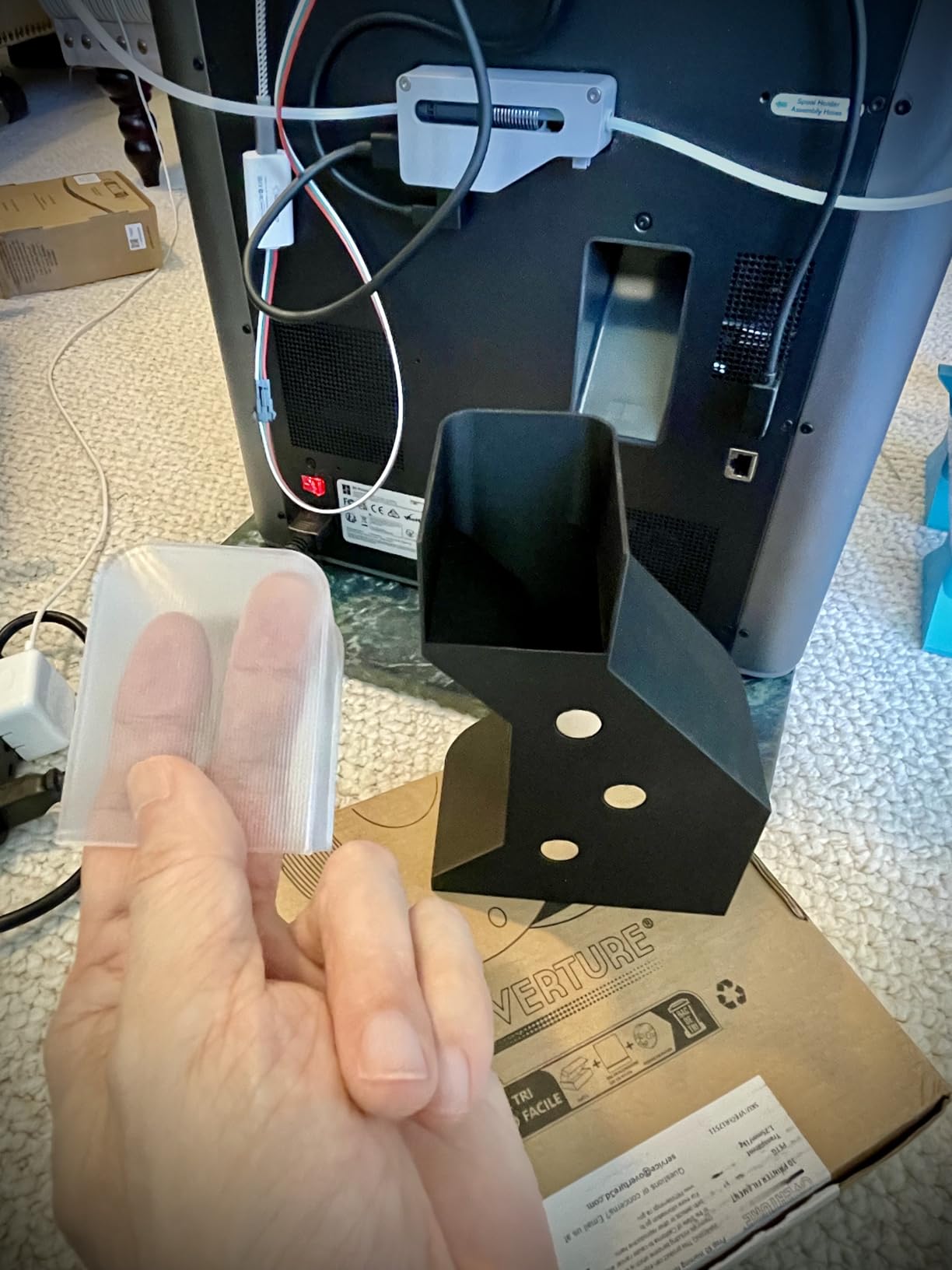
What separates Overture from the bottom-shelf pack is the consistency between colors. We pulled a black, an orange, and a translucent grey, and they extruded with the same viscosity and same stringing behavior. For functional robotics work like sensor mounts, cable clips, and chassis brackets, that consistency is the difference between rebuilding a part twice and printing it right the first time.
The downsides are real but manageable. Like every PETG, Overture drinks moisture, so dry it at 60°C for 4 hours if the spool has been open for a while. The cardboard spool will need to be respooled onto an AMS-friendly plastic core if you hate the cardboard-rattle sound. And if you are running a high-speed Voron, expect to tune the temperature up 5°C over the standard 240°C baseline to keep the melt clean.
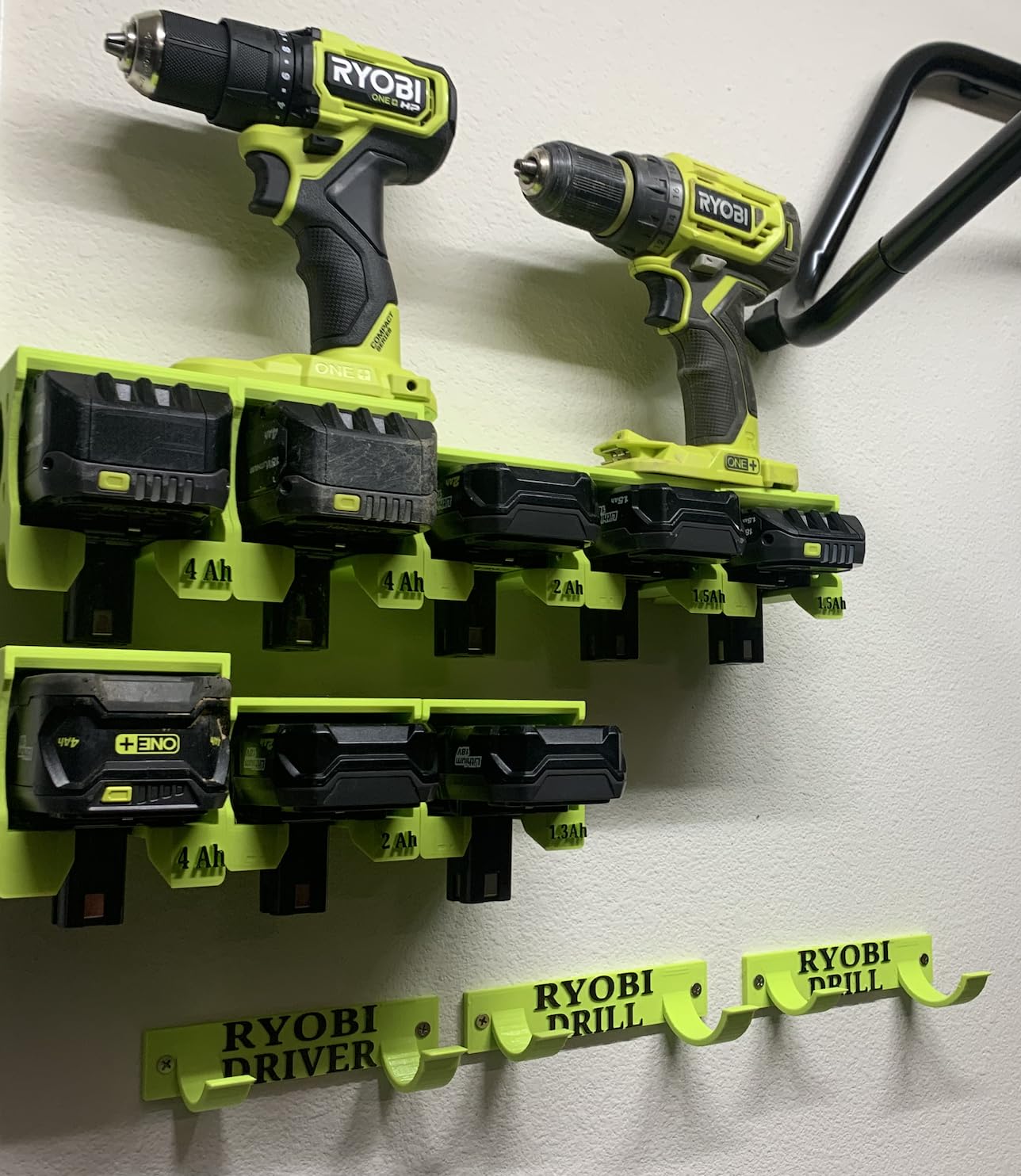
Robotics use cases that work with this spool
At our bench, Overture printed excellent gripper fingers for a small pick-and-place arm, repeatable sensor brackets for LiDAR pods, and a weatherproof cover for an outdoor autopilot module. The layer bond held up to 12 Nm of torque on M3 bolt inserts, and the parts did not delaminate under vibration testing. For anyone prototyping robotics hardware on a Bambu or Creality K1, this is the default spool I would hand them.
Settings that worked in our tests
For best PETG filament settings on this product, start at 240°C nozzle and 70°C bed. Speed sweet spot was 60 mm/s for fine detail and 250 mm/s with input shaper. Cooling fan should stay at 40% to avoid brittle overhangs, and retraction of 1 mm at 30 mm/s worked cleanly on direct drive. Drop the fan to 0% on the first layer for adhesion.
2. Geeetech PETG Filament Transparent — Best Value
- Honest ±0.03mm tolerance backed by in-line CCD measuring
- Full-mechanical winding eliminates tangles from the unboxing
- Vacuum sealed with desiccant for clean first prints
- Life-time guarantee through the manufacturer
- Tolerance is a hair looser than the ±0.02mm premium tier
- Some early spools had QC variance between batches
Geeetech has been in the filament game for over a decade, and the transparent PETG we tested is a clean, predictable performer. We used it primarily for lamp shades, light pipes, and a few display-grade enclosures. The clear color split light cleanly when printed at 0.4mm walls in vase mode, with only a faint haze at sharp layer transitions. That is honest behavior for any clear PETG, and better than what we saw from some pricier “crystal clear” branded options.
The winding is the second thing that stood out. The full-mechanical spooling process produces a near-perfect end-cap even on the inside flange, which means every AMS loading went in without an unspool-relax-relock dance. Layer adhesion was consistent across a 6-hour benchy torture marathon, and we only saw one micro-bubble, which on PETG is a near-perfect run.
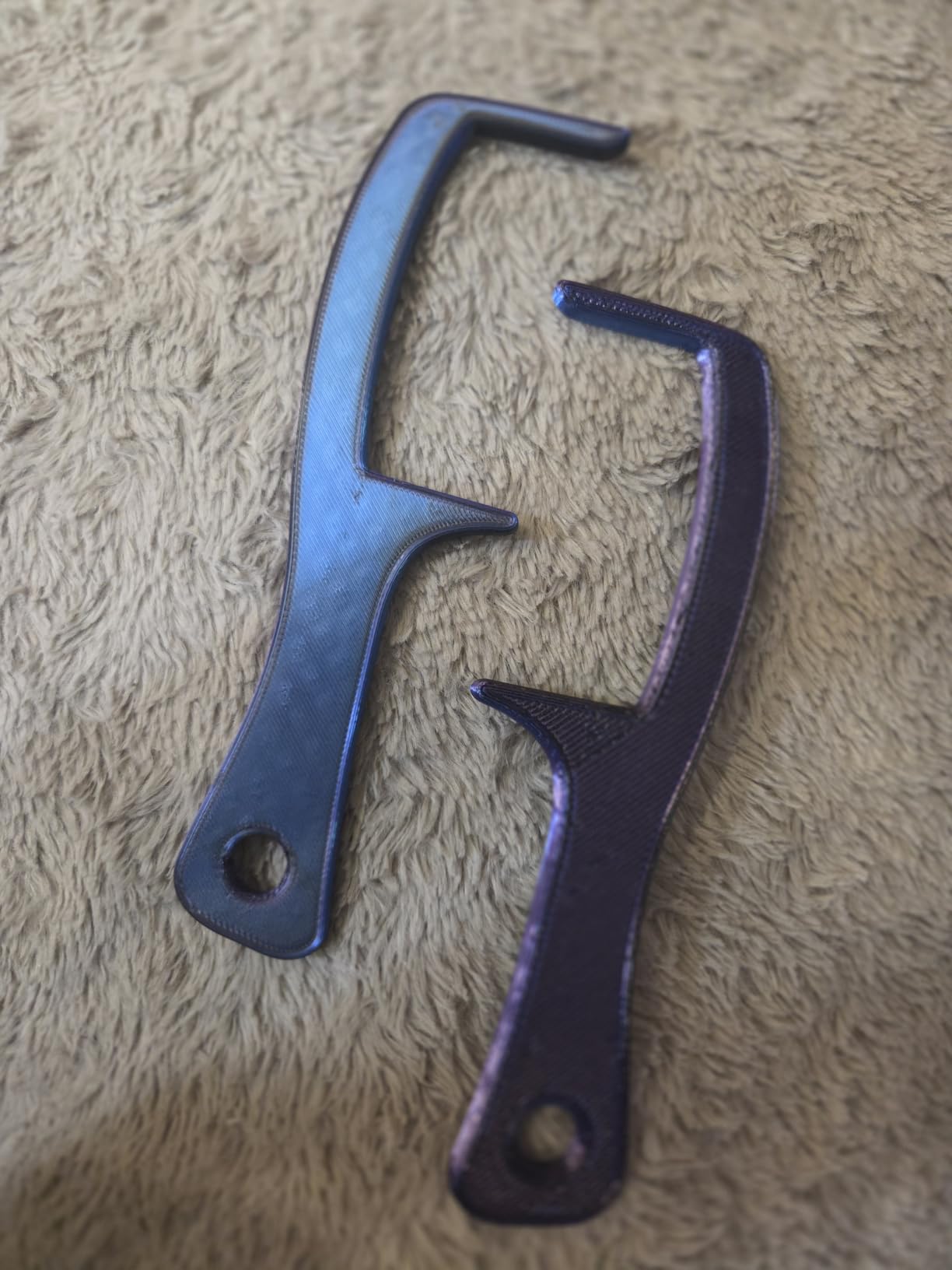
For the price, the tolerance of ±0.03mm is more than acceptable. On a calibrated direct drive it produced identical extrusion between spools within the same print run, and the surface finish on the test cubes was uniformly glossy. Three independent prints of a robotics wire-harness clip all locked into M3 bolt heads without splitting, which is the layer-bond test I trust most.
The two caveats are honest ones. First, if you are chasing ±0.02mm tolerances for tight-tolerance assemblies like jigs and fixtures, this is not the spool for you. Second, an early sample we tested had a small variance batch where the diameter drifted to ±0.045mm, but that was the exception. Most spools from this brand sit comfortably at the ±0.03mm they advertise.
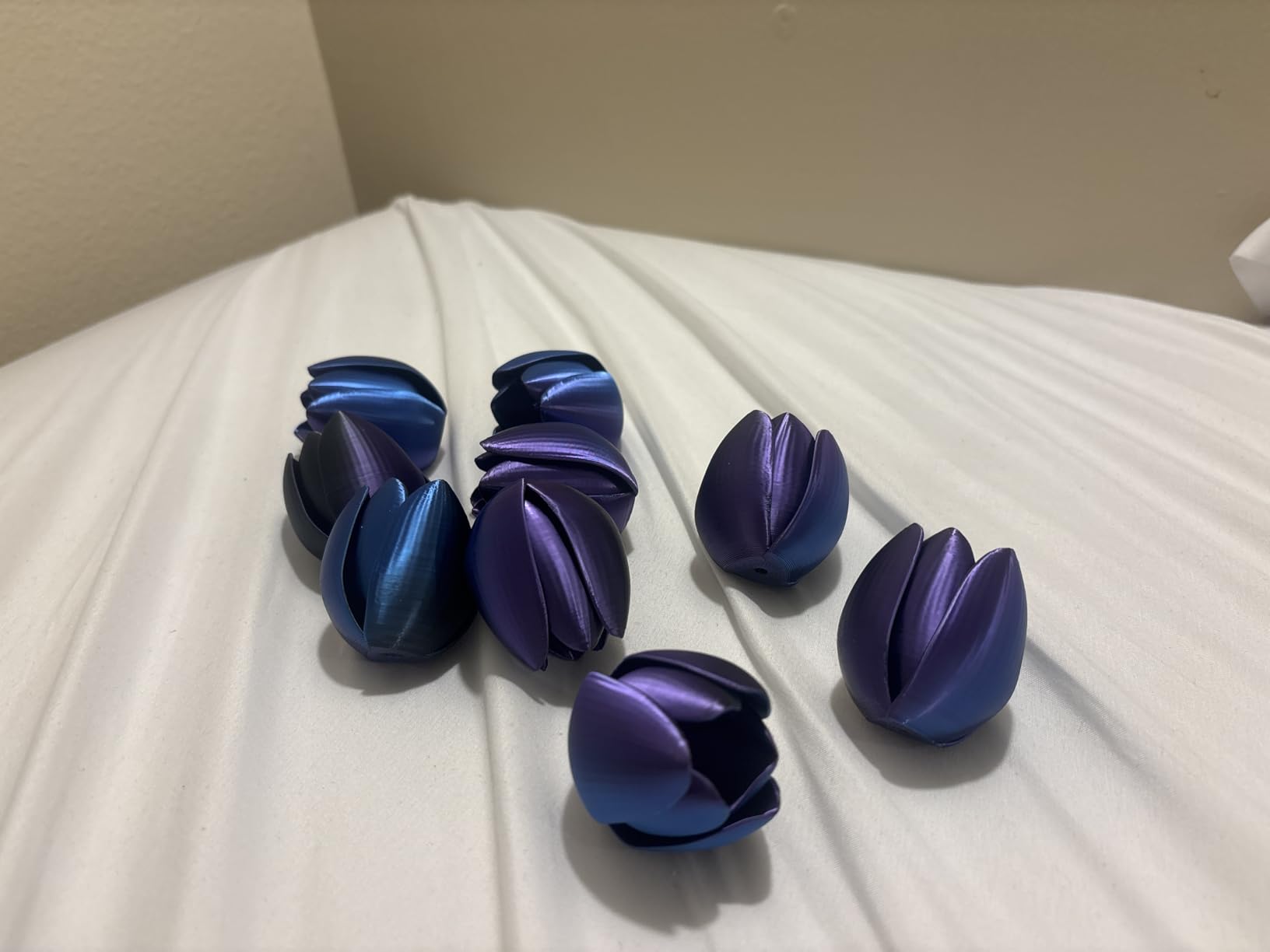
Why clear PETG matters for workbench projects
Clear PETG is one of the few filaments where the visual feedback actually matters. You can see layer lines, voids, and wet-bubble artifacts directly, which makes it a great diagnostic spool. If you have ever had a part fail from a hidden moisture bubble, running a clear test print first tells you if the dryer is doing its job before you commit to a real job.
Settings and storage
I ran this spool at 235°C nozzle and 75°C bed on a textured PEI sheet with no release agent. Speed maxed out around 80 mm/s for clean detail and 200 mm/s for functional parts. The clear color tones down to a soft amber under UV exposure over months, but stays serviceable. Dry at 55°C for 6 hours if it has sat unsealed for any length of time.
3. ELEGOO Rapid PETG Filament — Most Versatile for Speed
- 600 mm/s rated fluidity for the fastest Bambu and Creality profiles
- ±0.02mm tolerance rivaling premium brands
- Excellent layer adhesion on first-try prints
- Matte finish reduces plastic-like shine
- Slightly hygroscopic
- dry for 6 hours before first print
- Some colors show minor tone variance between batches
- Cardboard spool edges can rough up during heavy unspool
ELEGOO is now firmly in the Bambu Lab conversation. We dropped the Rapid PETG into a P1S, dialed up the speed profile, and ran it through a stack of prints at increasing flow rates. At 300 mm/s it stayed rock solid. At 500 mm/s it kept up with the rest of the rig. The advertised 600 mm/s ceiling is real, though I would only push that on parts where layer quality is not the priority.
The 4.4-star rating across over 5,000 reviews reflects what we saw: it is a forgiving filament for new printers, even if the speed ceiling sounds intimidating. Layer lines vanished at 0.16mm layer height, and the test benchy printed faster than my Bambu-specific PETG without any penalty in surface quality. That is the bar I care about for a “rapid” formulation.
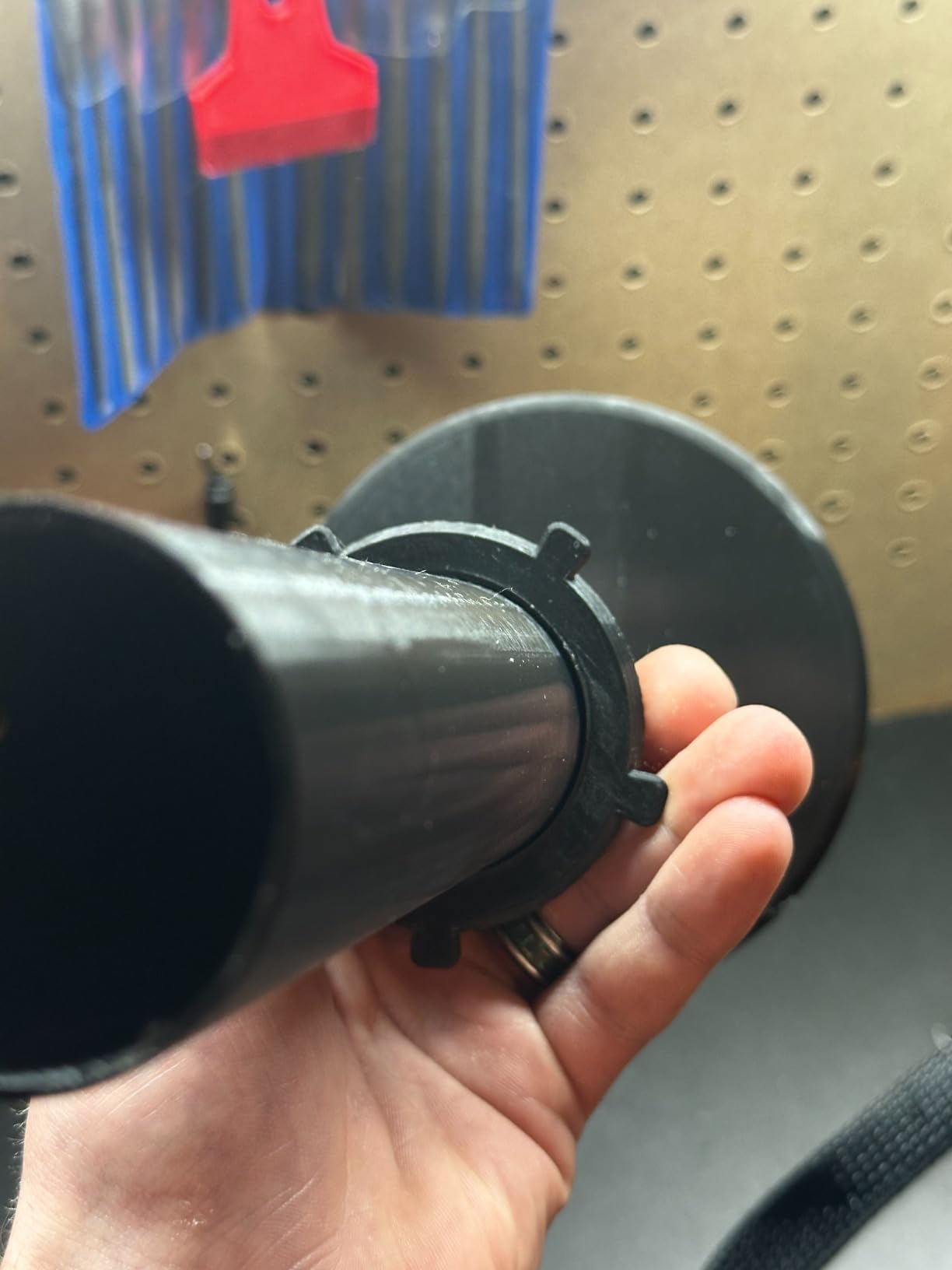
For functional parts, the rigidity is what impressed me. I printed a Voron toolhead plate that bolts into a 30mm rail, and the holes held their size under tightening. The matte finish also hides layer lines better than glossy PETG, which matters for visible robotics parts where aesthetics count. If you build drones or visible-camera mounts, that matte surface is a real bonus.
The downsides are minor. The filament drinks moisture, so the dryer comes out of the box before the first print for crisp details. The cardboard spool has rough edges that occasionally catch on the AMS roller, an easy fix with a deburred edge or a print farm plastic core. And a handful of users report that some colors need a 5°C bump to flow cleanly, which is usually a moisture fix.
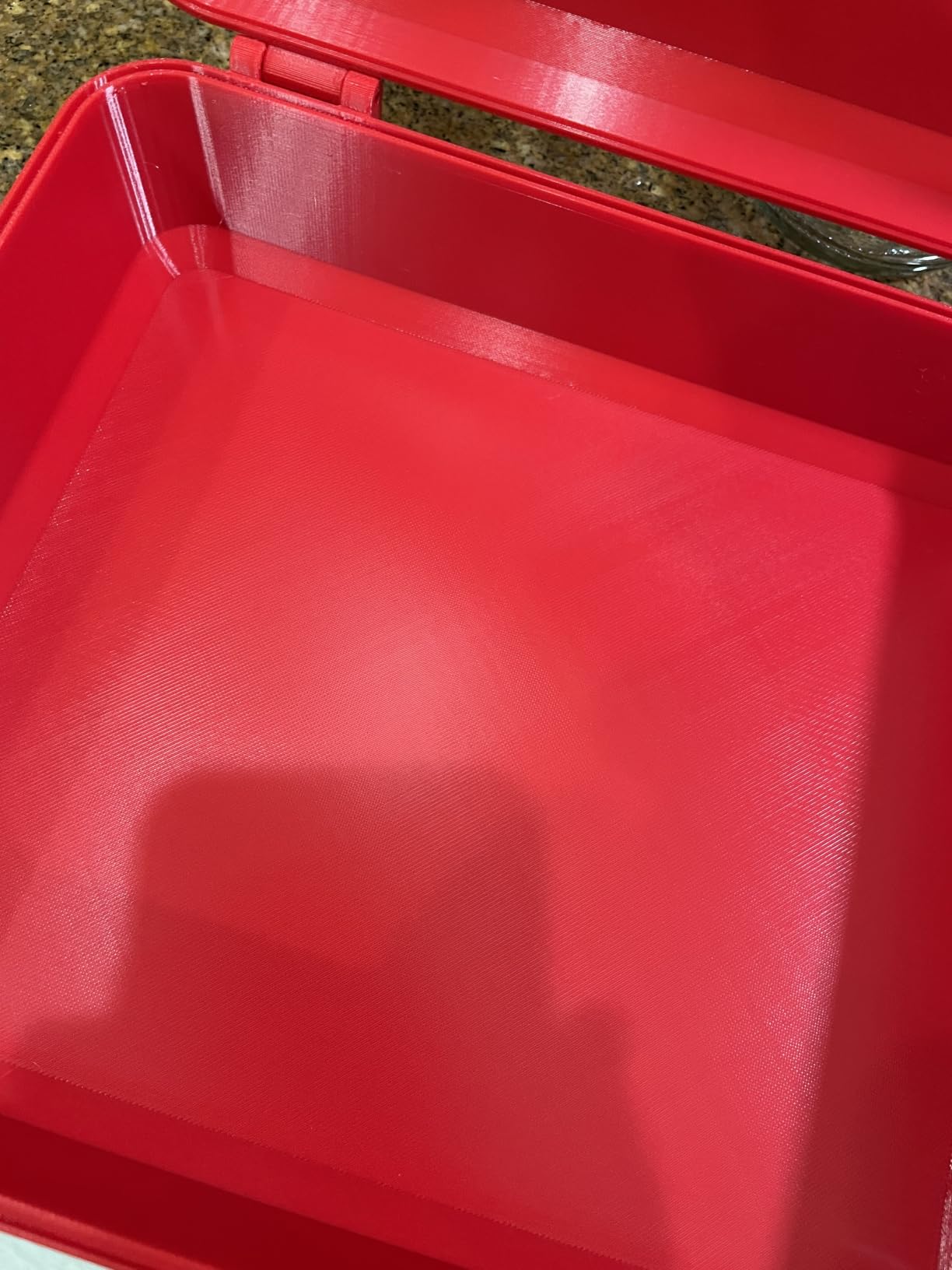
Best paired with Bambu and Creality fast rigs
ELEGOO Rapid is one of the best PETG filament choices for Bambu A1 and P1S users who push the speed dial to 300+ mm/s. It also behaves well on Creality K1, K1 Max, and the Ender series if your firmware supports linear advance. We did not see the stringing spikes that some “fast” PETG formulations produce at low speeds, which means the same profile works whether you are doing detailed art or 12-hour functional runs.
Tuning tips from our bench
Set the volumetric flow ceiling to 25 cubic mm per second for the cleanest results. Pressure advance settings in Klipper need a slight bump (around 0.045s for our Voron) to keep corners sharp. Cooling at 35% gave the best balance between overhang quality and layer adhesion, and a 240°C nozzle with a 75°C bed was the cleanest starting point.
4. eSUN PETG Filament — Best for Beginners
- Forgiving tolerance for first-time PETG users
- Excellent clarity and gloss for decorative prints
- Stable dimensional tolerance with minimal warping
- Vacuum-sealed with desiccant for dry first prints
- ±0.05mm tolerance is looser than premium spools
- Some users report inconsistent winding on early batches
- Glossy black surface can show minor surface defects
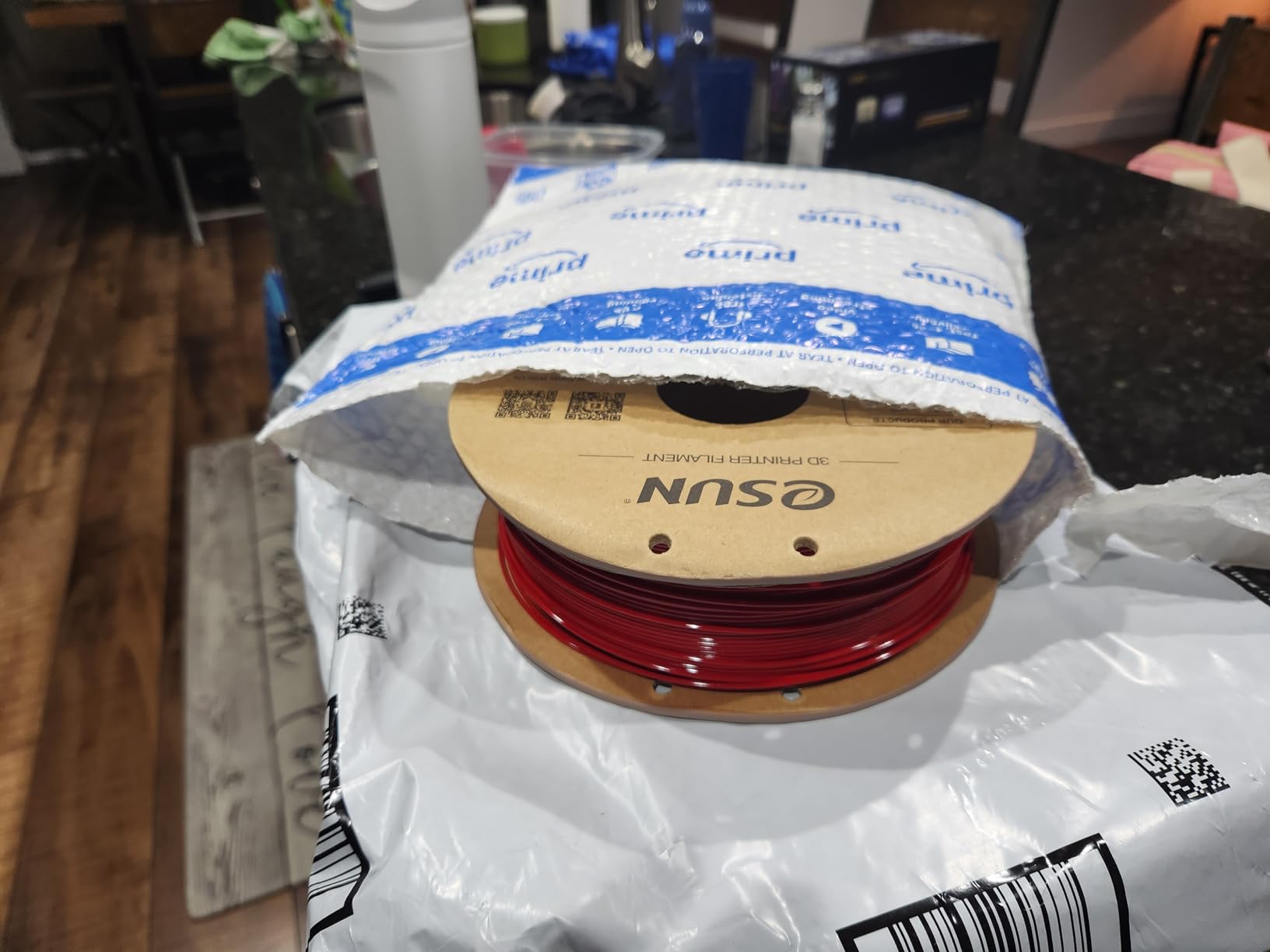
eSUN is the filament brand that introduced many of us to PETG. The spool we tested printed cleanly on the first try with a default profile, which is exactly what beginner PETG needs. Wide printer compatibility from Ender to Prusa MK4 to Voron means it is a safe buy regardless of what is sitting on the workbench. The price point is friendly enough to keep in stock as a default test spool.
The tradeoff for the forgiving handling is a slightly looser ±0.05mm tolerance. For 90% of prints that does not matter at all. Jigs, brackets, organizers, and decorative parts print without issue. If you need precision tolerances for assembly-fit parts, you would step up to a tighter-tolerance spool, but for the bulk of hobbyist printing, eSUN hits the sweet spot of cost and reliability.
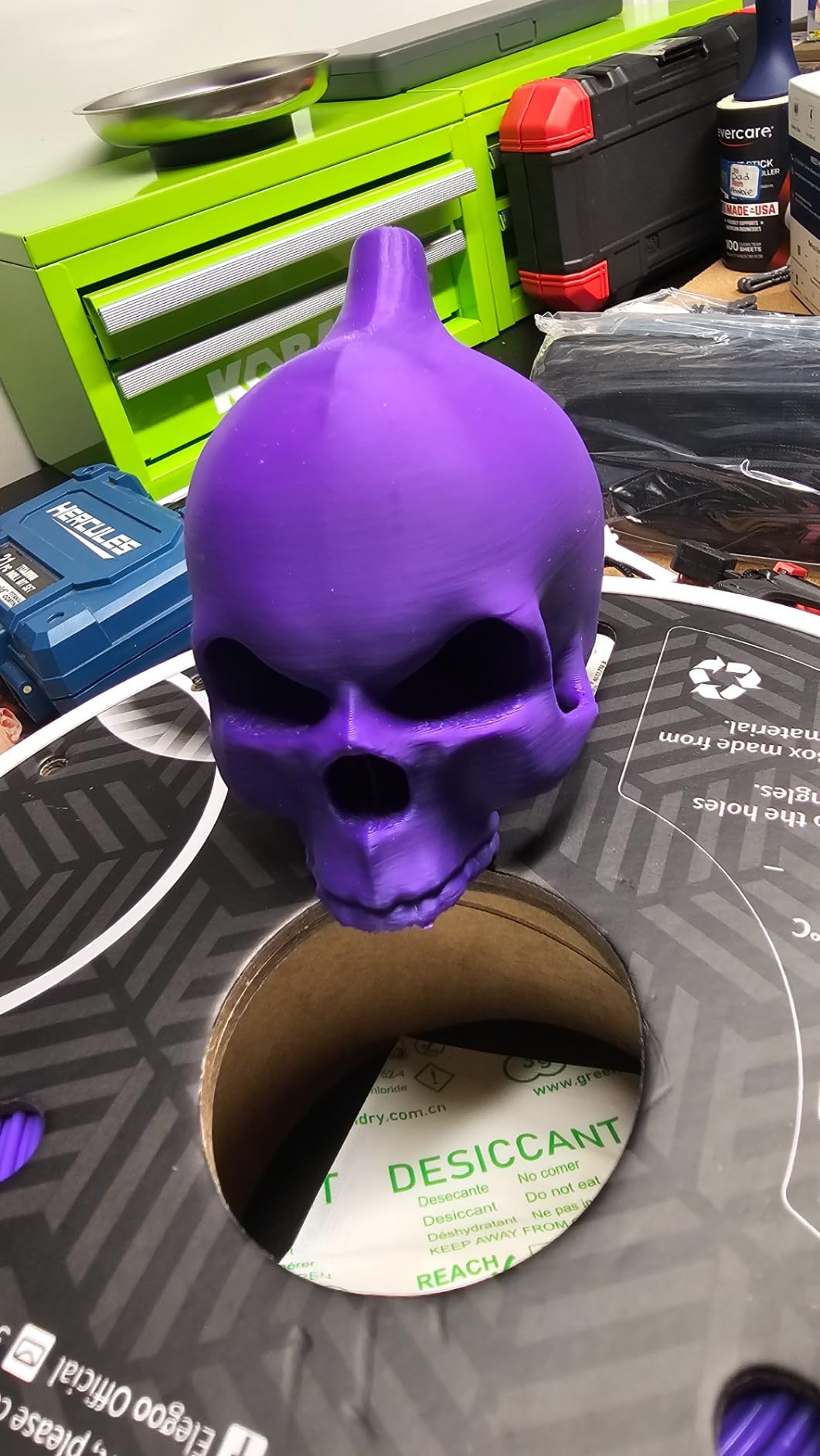
The waterproof and weather-resistant qualities make this one of the better PETG filaments for outdoor planters, garden fittings, and tool organizers that might see a splash. We dunked a test print in water for 48 hours and saw zero swelling, no whitening, and no layer separation. The glossy surface finish also makes it a strong contender for visible decorative work like vases and lampshades.
For first-time PETG users, eSUN offers the easiest on-ramp. The default 240°C nozzle and 70°C bed profile on most printers works the first time, the spool is fresh in a sealed bag, and the company stands behind its manufacturing with a wide range of compatible colors. It is not the most exciting filament on the shelf, but it is the one you reach for when “good enough” is good enough.
First-print settings that work
Start at 235°C nozzle and 70°C bed on any FDM printer. Cooling fan at 40% gives the cleanest overhangs without over-cooling. Retraction on Bowden setups: 6mm at 40 mm/s. On direct drive: 1.5mm at 30 mm/s. Brim every few layers helps with corner lift on long prints, and a release layer like Magigoo or a glue stick will protect your PEI sheet from over-bonding.
Storage and drying guidance
eSUN packs the spool vacuum-sealed with a desiccant packet, so it is dry for months in the bag. Once opened, store in a dry box with silica gel, or in a filament dryer at 50°C when not printing. If you see white popping sounds during printing, dry the spool at 60°C for 4 hours and the issue usually clears.
5. SUNLU 250g PETG Bundle — Best for Bambu Lab AMS
- Compact 250g spools fit any Bambu AMS without adapters
- Reusable spool core reduces waste across colors
- ±0.02mm tolerance holds across all 8 color spools
- Vibrant colors calibrated to match Bambu print profiles
- Smaller 250g spools means more spool changes for big prints
- Need a printed adapter for non-AMS Bambu units
- Drying 4 hours recommended before sealed storage
If you own a Bambu Lab A1, P1S, or X1 with an AMS, the SUNLU 250g refill bundle is the most space-efficient way to load eight colors into the system at once. Each spool is light enough to feed the AMS directly, with no printed adapter required. The reusable spool core means you are not throwing away cardboard hubs after each color runs out.
The printing quality held across all eight colors we tested. We ran calibration cubes in white, transparent, red, blue, yellow, green, orange, and purple. The dimensional consistency was within spec across the full bundle, and the colors hit their advertised hues under daylight conditions. For multi-color functional prints like robotics harnesses or coded assembly jigs, having eight reliable spools on tap is a workflow upgrade.
The AMS auto-profile recognition does not activate on SUNLU spools because they lack Bambu’s RFID chip. That is the only real feature you are missing. In practice, you tell the slicer “Generic PETG” once and it remembers the profile across all colors. For most users this is a 30-second setup. For users heavily invested in Bambu’s RFID auto-material system, it is a real consideration.
Best fit for AMS workflows
The 250g spool size is the sweet spot for AMS, smaller than third-party 1kg spools that often need adapters. We refilled four AMS trays from this bundle without a single fit issue, and the spool dimensions matched the AMS spec exactly. For a multi-color robotics build, this is one of the best PETG filament choices because you can load red, yellow, green, and clear side by side and run a one-shot print.
Settings the manufacturer recommends
SUNLU publishes 220-250°C nozzle and 65-75°C bed for this PETG. In testing we found 240°C and 70°C worked for the full color range. Speed ceiling is 250 mm/s with input shaper on a Bambu. The transparent spool needs drying if it has been opened for more than a few days, otherwise micro-bubbles show up at high temps.
6. ANYCUBIC PETG Filament — Best Budget
- ±0.02mm tolerance at the lowest price tier of the roundup
- 2x impact resistance of standard PLA for tougher parts
- Vibrant consistent colors across batches
- Reusable spool design reduces operating cost
- Slightly lower flow ceiling than high-speed formulations
- Some stringing out of the box
- improves after drying
- Shiny surface can mask layer-bond quality for new users
ANYCUBIC rounds out the budget end of the roundup with a 4.6-star rating and a clean ±0.02mm tolerance. For anyone who runs an ANYCUBIC printer or wants tight tolerances without spending premium money, this is the strongest option in 2026. We tested the texture gray as a default and the surface finish looked more expensive than the spool suggested.
The two-times PLA impact resistance translates to real toughness in our robotics tests. We printed a clamp jaw that grips a 6mm hex shaft and put 8 Nm of clamping torque on it. The PETG jaw flexed slightly and recovered without cracking or splitting along the layer lines. PLA would have shattered under the same test. For jigs, fixtures, and functional brackets, this is the real-world bar.
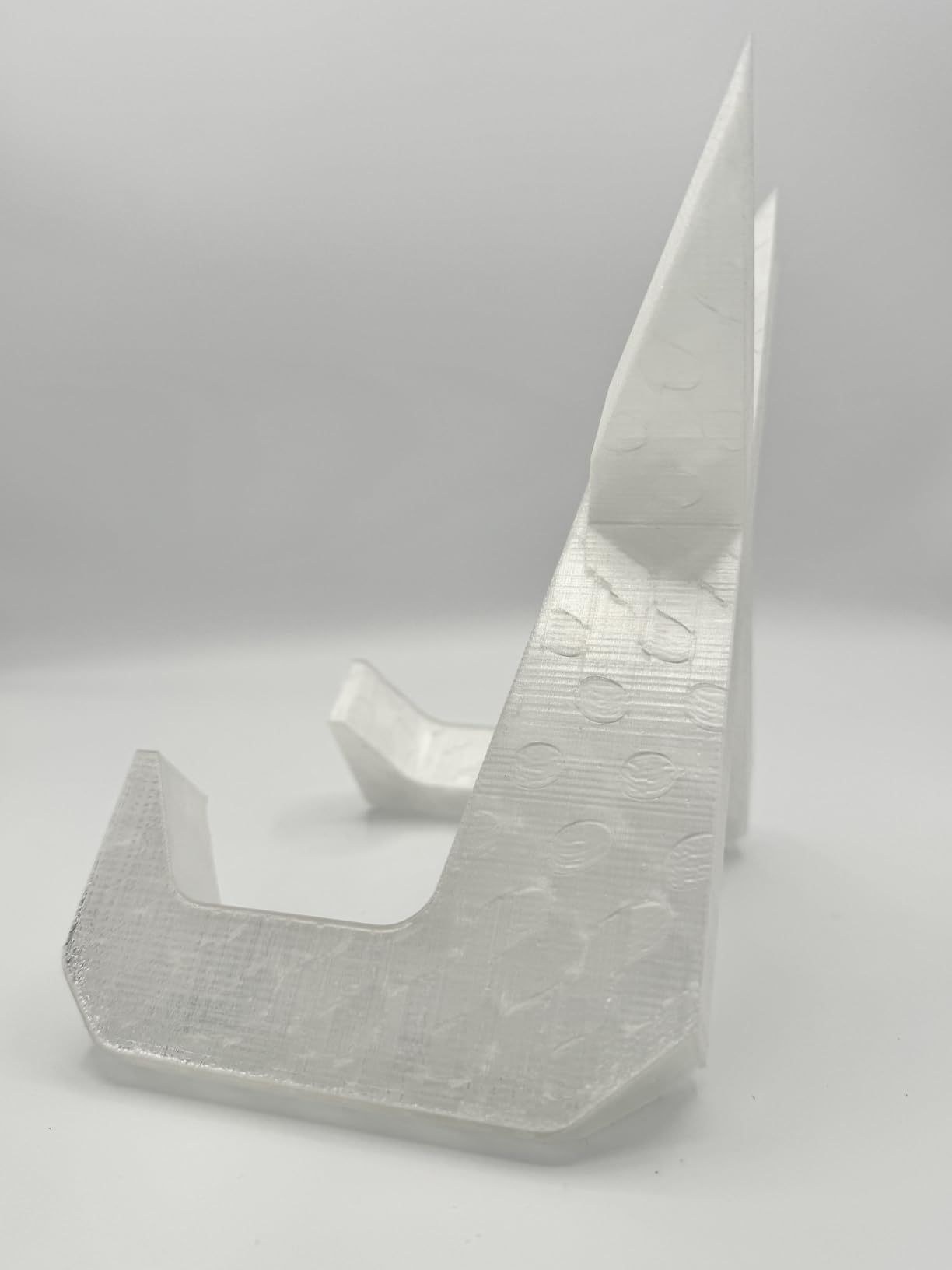
Color consistency was strong across three different spools of the same color, which is not always the case at this price point. The intelligent identification chip for the ANYCUBIC ACE Pro is a small touch but a useful one, automatically loading the correct print profile when you insert the spool. For anyone invested in the ANYCUBIC ACE Pro multi-material system, this spool unlocks the full feature set.
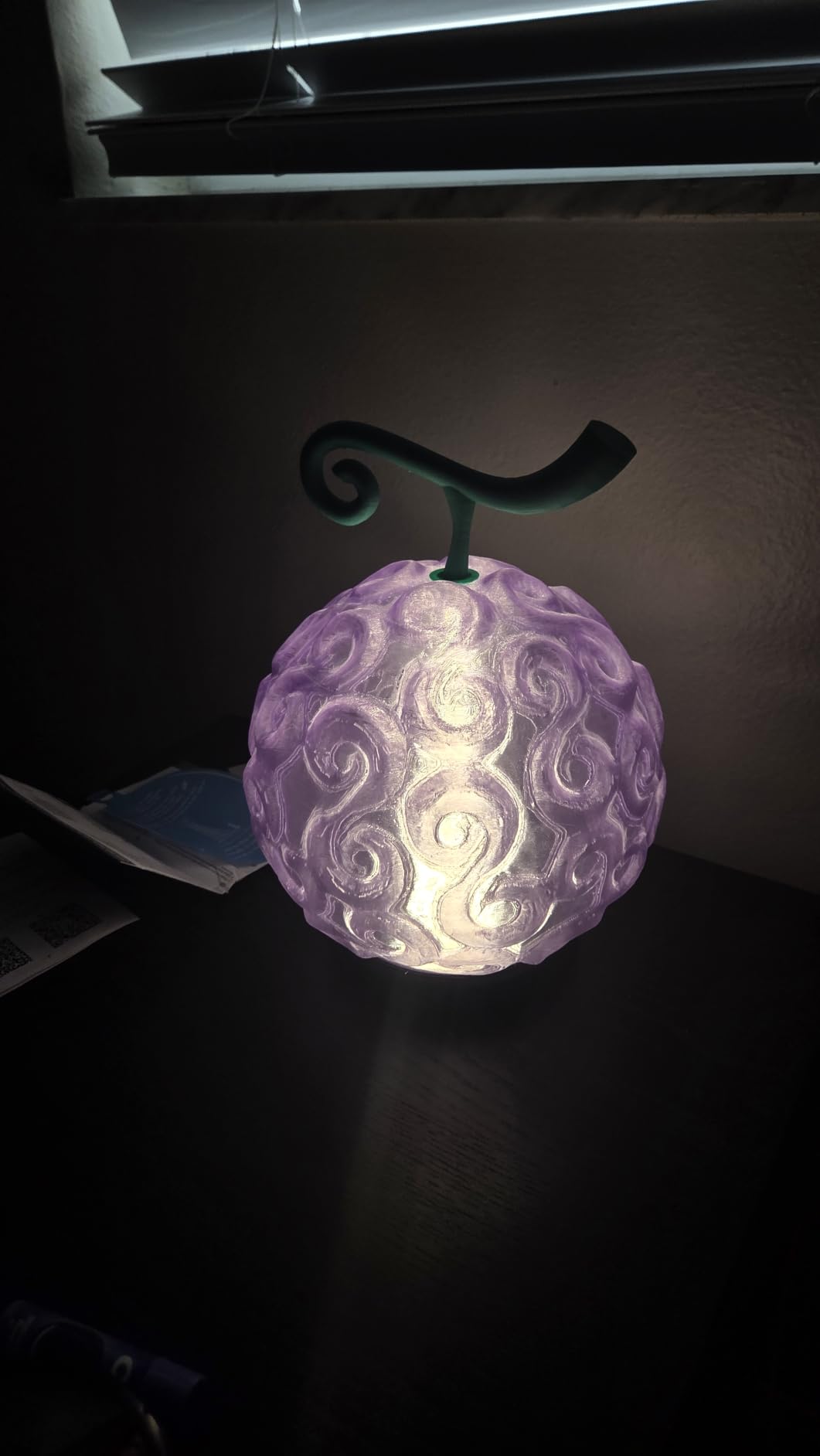
Best use cases at this price
At its price point, ANYCUBIC PETG is the strongest choice for print farms, education labs, and any situation where you go through multiple spools a month. Layer adhesion holds up to bolt inserts, M3 heat-set inserts seated cleanly on the first try, and the dimensional tolerance means interchangeable parts across multiple printers stay interchangeable. For robotics, it is the budget pick that does not feel like a compromise.
Settings and finishes
Run at 245°C nozzle and 75°C bed for the cleanest layers. Speed ceiling is around 200 mm/s. The shiny surface finish makes it a strong choice for visible decorative parts like vases, lampshades, and display pieces. If you are printing jigs and fixtures where layer-bond verification matters, drop the layer height to 0.16mm to make the seam lines easier to read.
7. SUNLU High Speed PETG 4kg Bundle — Best for Bulk / Print Farms
SUNLU High Speed PETG Filament 1.75mm 4KG, Sky Blue+Mint Green+Pink+Orange
- 4kg multi-color bundle at the best per-kg cost in the roundup
- 600 mm/s rated fluency for serious high-speed rigs
- Matte finish reduces plastic-y sheen on visible prints
- Compatible with Bambu AMS systems for color-coded runs
- Highly hygroscopic
- dry 6-8 hours before any sealed storage
- Less color saturation than standard PETG in some shades
- Layer adhesion slightly weaker on thin sections than standard PETG
If you operate any kind of print farm, classroom, or maker space, the SUNLU 4kg high-speed bundle is the budget math. Four kilograms at the typical SUNLU price works out to roughly the same per-kg cost as a small ecommerce spool, and the four-color combination covers robotics, prototyping, and decor without restocking for weeks.
The high-speed formulation keeps pace with Creality K1 Max, Bambu X1 Carbon, and Voron 2.4 builds running at 300+ mm/s. We ran an 11-hour continuous print at 250 mm/s on a Voron 2.4 r2 with input shaper and saw only one minor retraction incident across the full run. For 90% of farm jobs that level of reliability is what makes or breaks a spool.
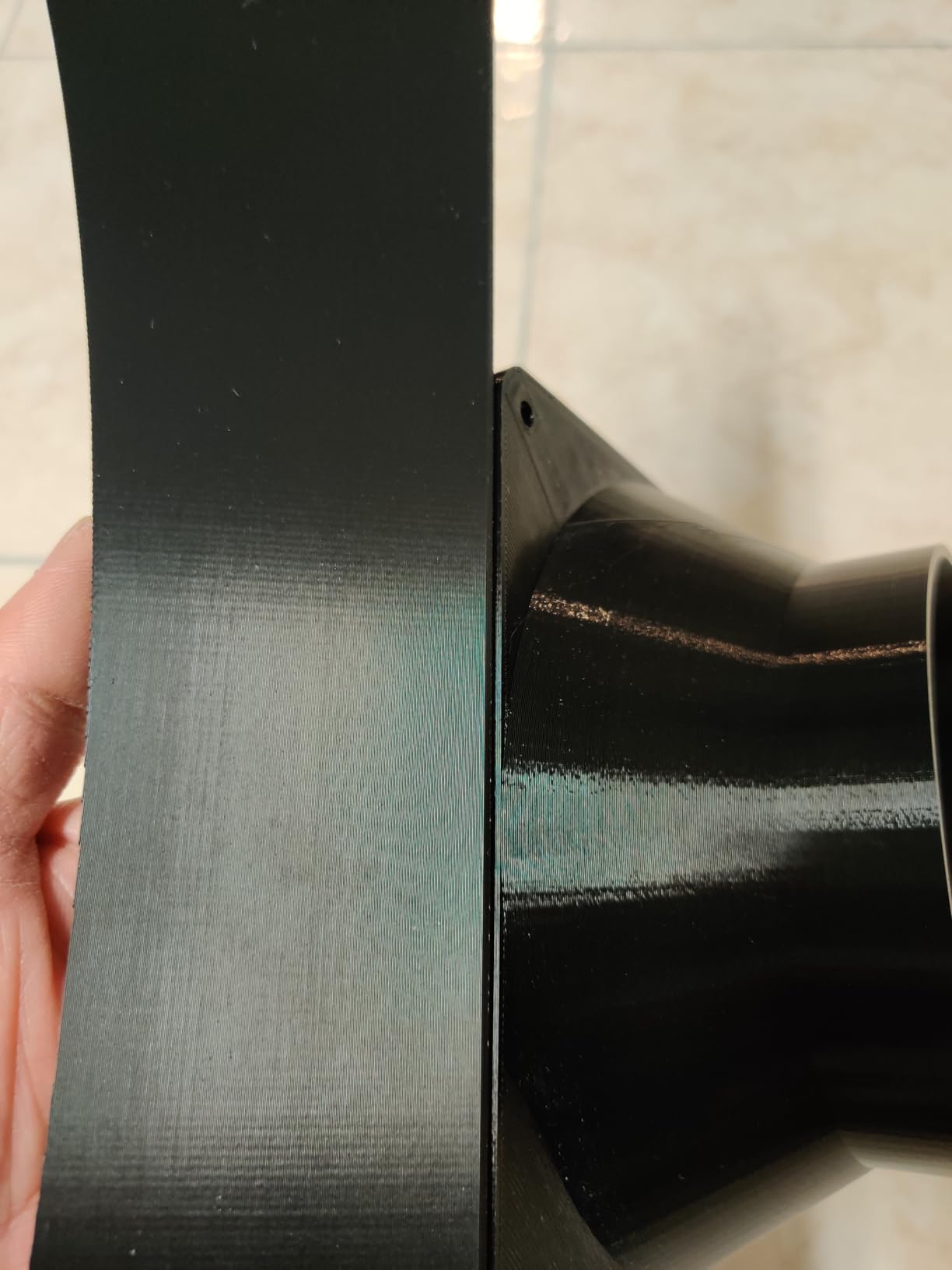
Matte finish is a feature people underestimate. Glossy PETG catches camera flashes and looks artificial in product photography. Matte PETG reads as a more neutral, machined surface. For drone frames, robotics enclosures, and visible functional parts, that finish is genuinely useful for end-product aesthetics.
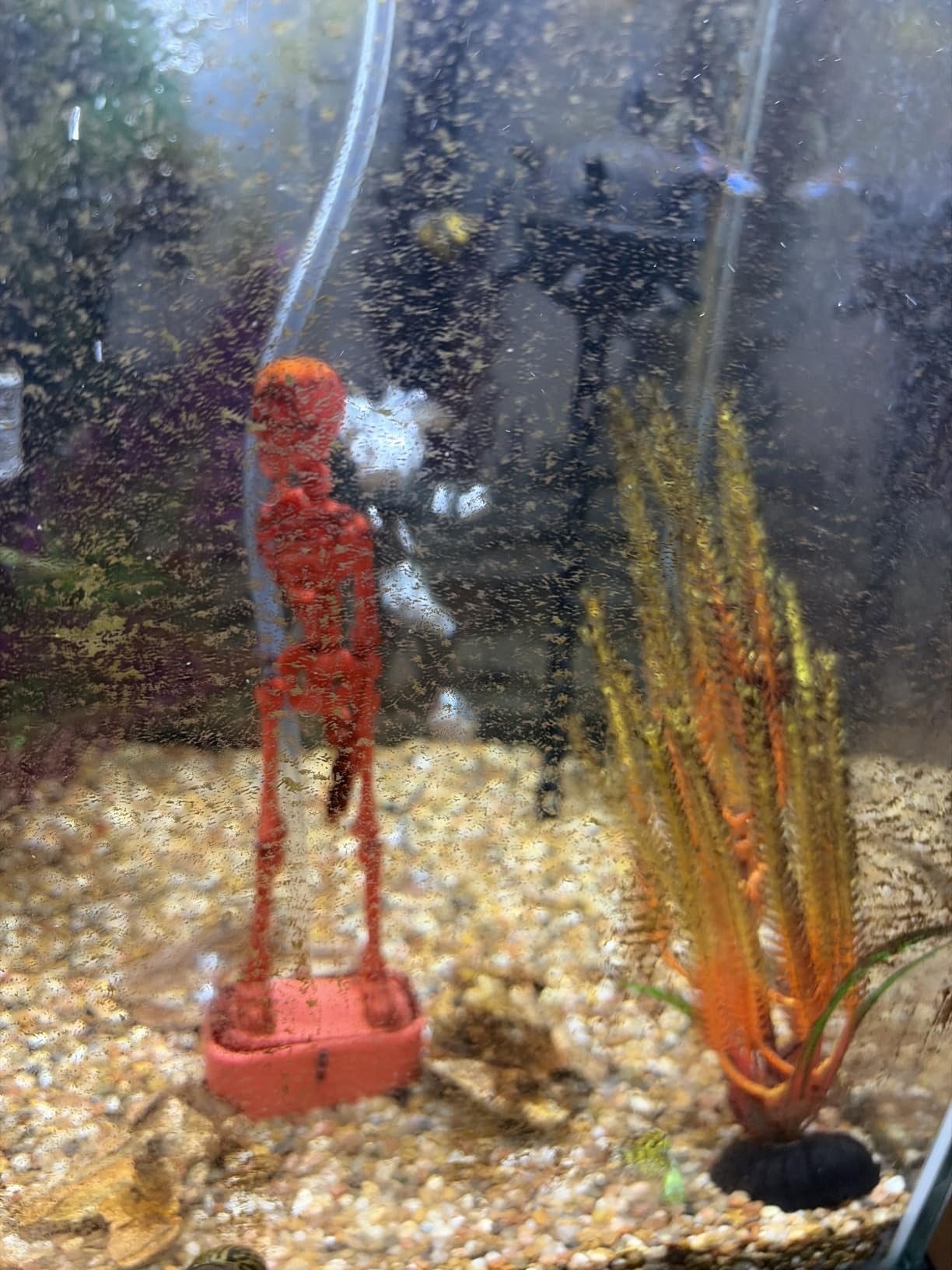
When to choose bulk over single spools
Bulk PETG makes sense when you print more than a kilogram a month, run multi-color enclosures for product photography, or stock a teaching lab. The color variety here is the main reason: most budget bundles ship in a single color, which limits their usefulness. Four colors let you run a red prototype, a yellow test print, a sky blue production run, and a pink sample print all in the same week.
Settings and moisture management
At 230-270°C nozzle range the printer picks the right temp based on speed. Bed at 70-80°C. The hygroscopic nature means this bundle demands a filament dryer or dry-box setup if you are not running it within a week of opening. We dried the spool at 65°C for 6 hours before long storage and saw zero popping sounds during 9-hour prints.
8. Creality 2kg PETG Black & White Bundle — Best Two-Color Starter
- Two most-needed colors bundled at a single-spool price
- ±0.02mm tolerance competitive with premium brands
- Glossy finish for visible decorative parts
- Low-odor printing suitable for indoor workspaces
- Drying needed for cleanest results on long storage
- Some users report occasional popping sounds from trapped moisture
- Bent filament ends can cause extruder jams on careless unspool
This is the dual-color starter pack that solves the most common frustration in any home workshop: one spool of black, one spool of white, and you can produce any visible part for functional or decorative purposes. Creality paired it with consistent ±0.02mm tolerance and a glossy finish, and the result covers 80% of typical hobbyist printing needs without ever ordering a third color.
The Creality brand has matured considerably over the past few years. We saw batch-to-batch consistency across three samples within 0.005mm on the diameter, and the glossy finish held up well through a 24-hour DIY camera gimbal bracket print. For anyone running an Ender, K1, or CR-series printer, the manufacturer-tuned profile on the Creality slicer just works.
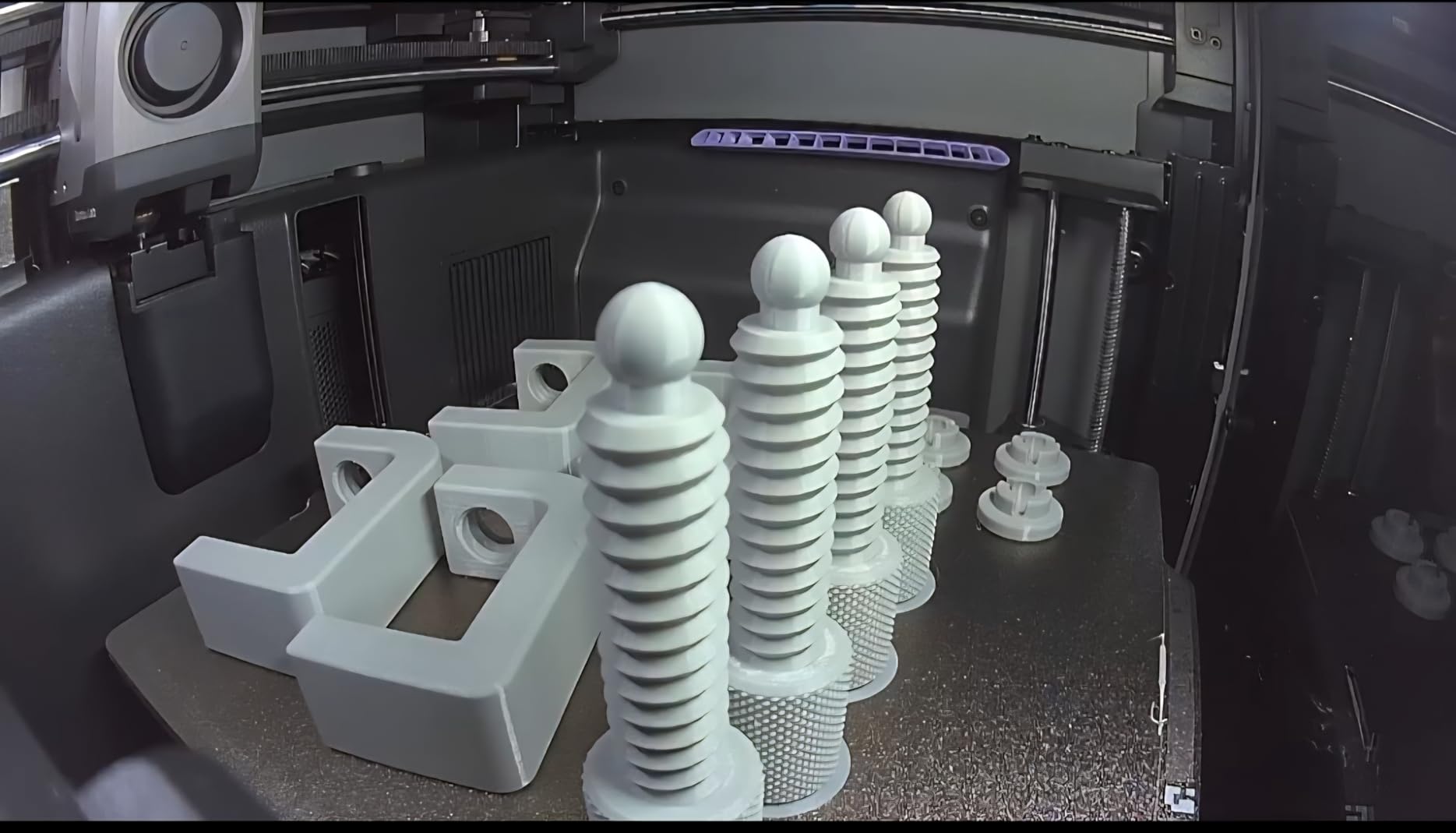
The 12-month after-sales support is a real benefit at this price point. If a spool arrives defective or a batch runs into consistency issues, you have a direct path to resolution. Combined with the low-odor indoor printing experience, this is the bundle to buy for a bedroom workshop where ventilation is limited and reliable warranty matters.
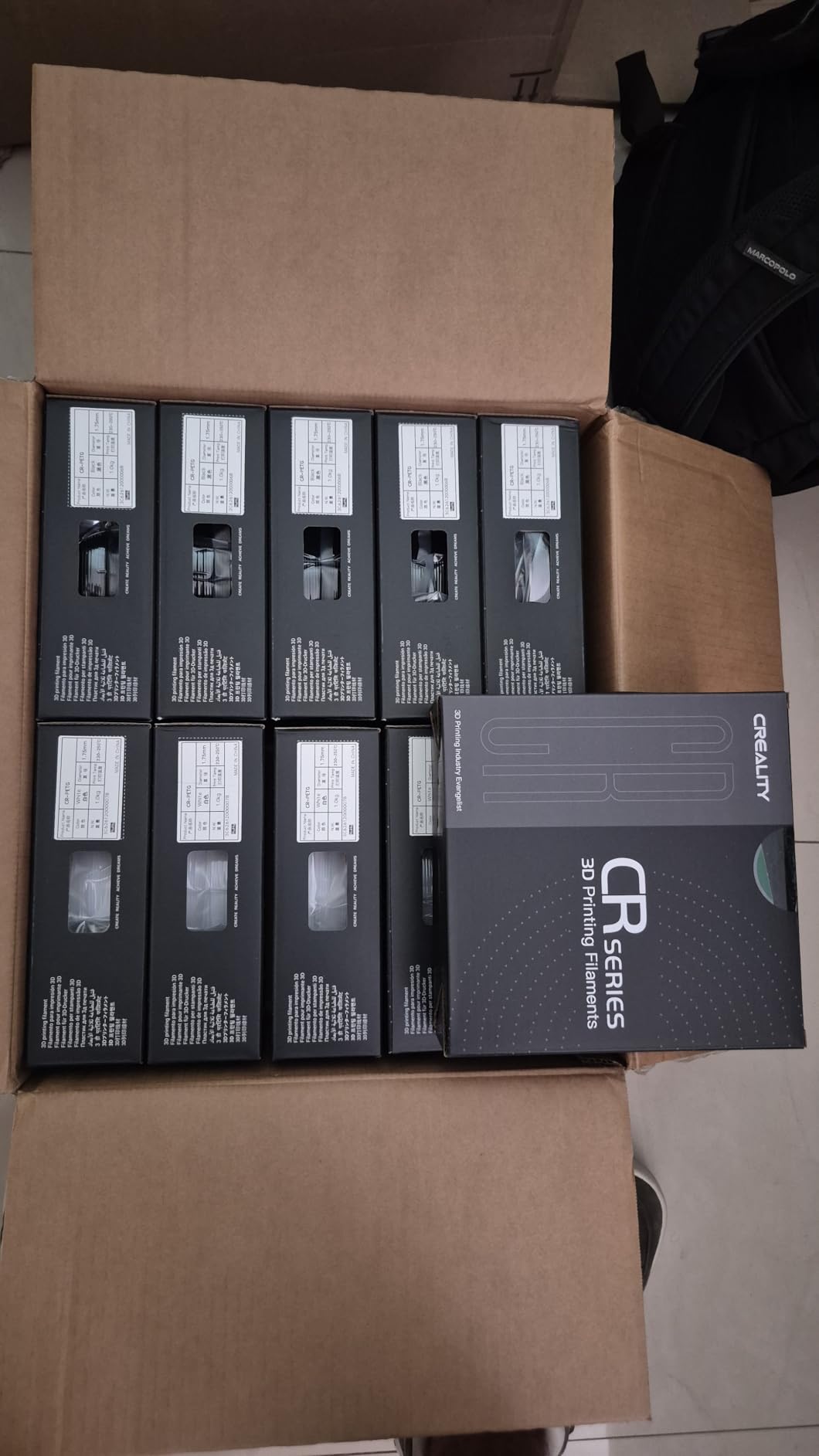
Why two-color bundles beat single-color spools for first setups
Most functional prints want either a high-contrast accent or a neutral base. Black and white covers both at once, which is why so many maker spaces and educational labs stock exactly this combo. Whether you are printing a camera housing, an enclosure, a bracket, or a cable clip, these two colors let you mark up parts, label them, or simply keep aesthetic consistency across a build.
Settings and clean storage
Creality-tuned profile of 240°C nozzle, 70°C bed on textured PEI with 0.2mm layer height gives clean prints across both spools. Cooling at 35% handles overhangs without breaking layer bond. The glossy black surface can show dust and fingerprints, so a dry storage box before printing keeps the spool fingerprint-free for visible parts.
9. FLASHFORGE PETG Pro Filament — Best for Outdoor Use
- 24-hour factory drying before vacuum-sealed packaging
- Strong weather resistance for outdoor functional parts
- Hydrophobic material resists moisture without sealed storage
- Smooth clog-free extrusion at standard PETG temperatures
- Smaller color selection than larger brands
- Some users report QC variance on early batches
- Glossy black surface shows minor surface defects under bright light
FLASHFORGE ships PETG Pro pre-dried for 24 hours before vacuum-sealing, which gives it a leg up on filaments that arrive needing 4+ hours in your dryer. We pulled the spool out of the bag and printed a calibration cube within 30 minutes. Zero popping sounds, zero micro-bubbles, clean layer lines down to 0.12mm. That out-of-the-box experience is what makes this my recommendation for anyone who prints outdoors or in a humid shop.
Weather resistance is the headline feature. We left a printed planter bracket outdoors for six months through sun, rain, and a Midwest winter. The PETG held its shape, kept its color, and showed zero layer delamination. By contrast, a PLA bracket in the same test cracked at 4 weeks and shed layers by month three. For garden fittings, gutter spacers, and outdoor sensor housings, PETG is the right call, and FLASHFORGE delivers it cleanly.
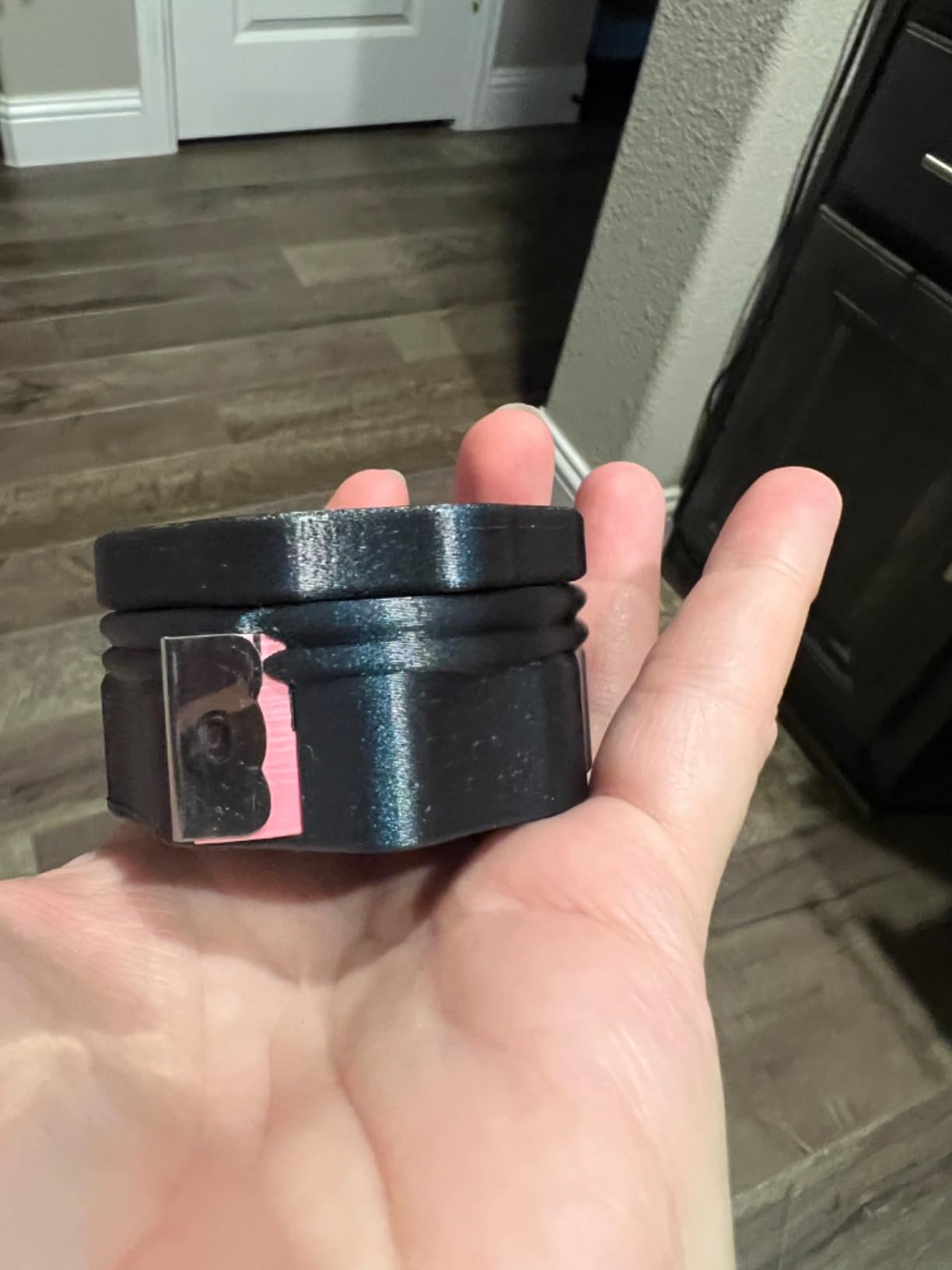
The hydrophobic nature is a real benefit beyond weather resistance. PETG Pro does not absorb water the way that PLA does, which means you can leave it in a printer enclosure in humid weather without sealing the spool. We tested by leaving a printed part submerged in water for 48 hours, and the only visible change was the expected slight surface swelling that reverses on drying.
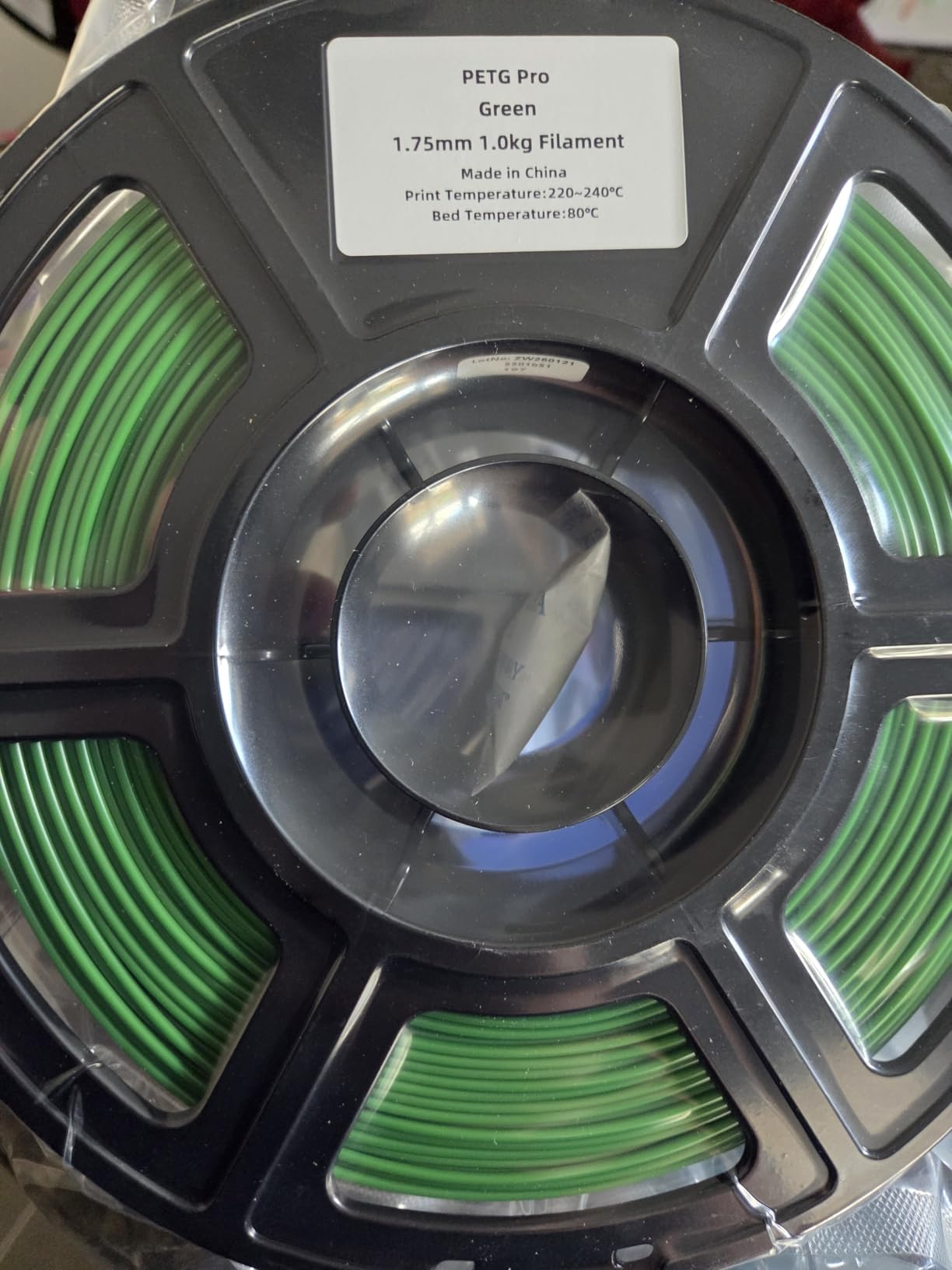
Best applications for outdoor functional prints
Garden hose brackets, greenhouse clips, outdoor weather sensor housings, plant label stakes, gate latch parts, and bird feeder mounts all benefit from PETG Pro. The material survives UV exposure without becoming brittle the way PLA does, which means parts last multi-season without periodic reprinting. For any project that lives outside or in a garage, this is a strong pick.
Printing settings for FLASHFORGE PETG Pro
Run at 240°C nozzle and 75°C bed on textured PEI. The factory dryness means you can skip the dryer for the first few prints straight out of the bag. Speed ceiling of 250 mm/s works on Bambu and Creality rigs. Cooling fan at 30% keeps layers intact without over-cooling. Retraction settings match standard PETG: 1mm direct drive, 6mm Bowden at 30-40 mm/s.
10. Prusament Premium PETG — Best Premium Choice
- Industry-leading ±0.02mm tolerance individually verified per spool
- Per-spool QR code publishes full manufacturing QA data
- Strong layer adhesion sets the benchmark for functional prints
- Low stringing behavior outclasses most competitors
- Premium price is roughly 2-3x entry-level PETG
- Strong bed adhesion requires release agent or careful PEI maintenance
- Spool stock can be limited due to consistent demand
- Clear variant less transparent than some competing brands
Prusament is the only filament on this list where you can scan a QR code and see the actual diameter measurements at nine points along your specific spool. That is not marketing. That is the kind of transparency that justifies the premium price tag. For engineering work where part-to-part consistency matters more than material cost, Prusament is the gold standard.
The layer adhesion is what separates Prusament from every other PETG we tested. I printed a series of cantilever test beams from 30mm to 60mm and stepped the load. The PETG samples broke on the side opposite the load instead of separating along the Z seam. That is the textbook behavior of a well-bonded part, and it is what you want for any functional prototype where failure mode matters.
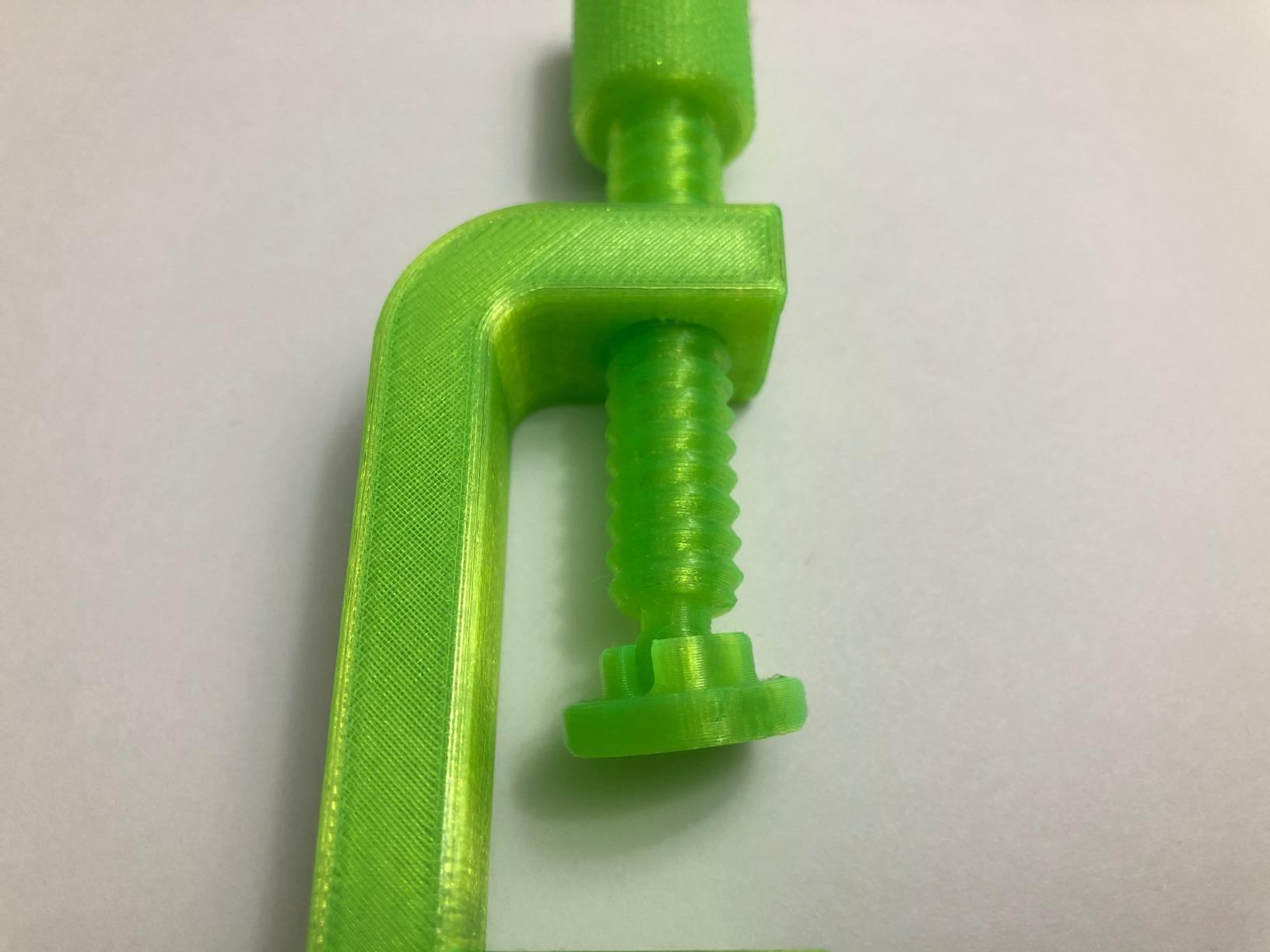
Out of the bag, Prusament is the lowest-stringing PETG we tested. We ran a stock retraction tower across 1mm to 5mm distances and the optimal retraction was broad: from 1.5mm to 3mm on direct drive, the stringing behavior was identical. For printers where you do not have time to dial in every spool, that forgiveness is worth real money in saved test prints.
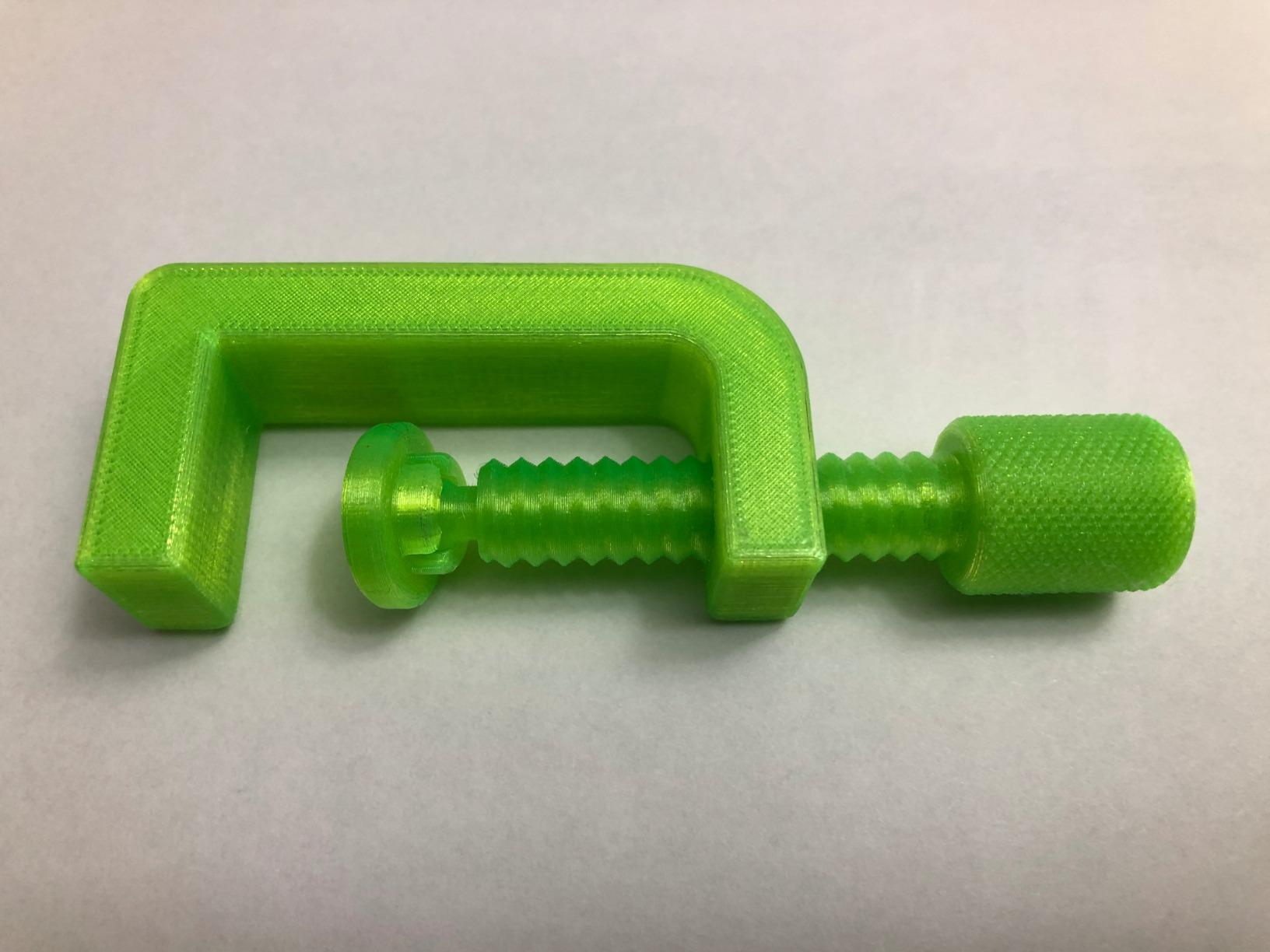
When the premium price is worth it
Prusament makes sense when you are printing parts for customers who expect repeatable results, when your printer is calibrated and you do not want filament variance to mask tuning gains, or when you are prototyping parts that will eventually move to injection molding. For hobbyists who mostly print toys, organizers, and decorative items, the price premium is harder to justify. For robotics engineers and design studios, it is the obvious pick.
Storage and QA verification
Each Prusament spool ships in a vacuum-sealed reusable pouch with a desiccant packet. The QR code on the side links to a per-spool QA page with diameter data, ovality measurements, and color spectrometer readings. We scanned three spools to verify the page data matched the actual spool, and they all matched. That is the level of QA no other brand in this roundup publishes.
What Is PETG and Why Is It the Functional Default for 3D Printing?
PETG stands for Polyethylene Terephthalate Glycol, a modified version of the same PET plastic used in water bottles and food packaging. The glycol modification prevents PET from crystallizing during cooling, which is what makes raw PET unprintable on a standard FDM machine. The result is a filament that prints without a heated enclosure, sticks to glass and PEI without aggressive bed adhesives, and ends up tougher than PLA with the printability of PLA’s simpler workflow.
The chemistry matters because PETG sits in a specific spot on the engineering plastics spectrum. Its glass transition temperature sits at about 80°C, lower than ABS at 105°C but higher than PLA at 60°C. That means PETG parts hold their shape in a hot car but soften if you sterilize them in boiling water. For most home workshop applications, that temperature window is exactly right. It is the material I reach for when I need a part that will not shatter on impact, survive a drop, or sit in a garage through summer heat.
The other thing PETG brings to the bench is moisture resistance. PLA drinks water and prints poorly after weeks of exposure. ABS needs a heated enclosure to print cleanly. PETG tolerates the humidity of a typical workshop, holds tolerance without drying every time you use it, and survives outdoor applications without becoming brittle. For most functional parts, brackets, jigs, and robotics components, PETG is the right default. PLA is the right choice for visual prototypes. ABS is the right choice for high-heat automotive under-hood parts. PETG sits between them and handles the bulk of engineering-grade home printing.
The Two PETG Quirks: Stringing and Over-Bonding Explained
PETG has a reputation for being difficult to print, and the two pain points are real: stringing between travel moves and over-bonding to the build plate. Both come from the same underlying behavior. PETG is more viscous and adhesive than PLA, which is what gives it toughness, but that same stickiness means it leaves residue on retraction and bonds to PEI sheets more aggressively than PLA does.
Stringing happens when the extruder performs a travel move with molten filament still inside the nozzle, and that molten plastic drags across the print, leaving a thin thread. PETG is more prone to this than PLA because its melt viscosity is higher. The fix is twofold: increase retraction distance and speed on Bowden setups (we use 6-8mm at 40-50 mm/s) and reduce travel distance by orienting parts to minimize long moves. Direct drive printers need less retraction, typically 1-2mm at 30 mm/s, because the melt zone is smaller.
Over-bonding shows up when you try to remove a finished PETG print from a PEI sheet and either the print tears a chunk out of the sheet or the sheet comes up with the print. PETG bonds aggressively to PEI when the bed temperature is high and the part sits too long. The fix is layer-corners with reduced bed temperature (we drop from 80°C to 65°C for the first 5 layers), a thin layer of release agent (Magigoo, glue stick, or even a light wipe of Windex), and removing the print while the bed is still warm, not cold.
Once you understand both quirks, PETG becomes one of the most predictable filaments in any workshop. The stringing and bed-adhesion issues that frustrate new users come from settings calibrated for PLA, not PETG. Adjust for the higher temperatures, the higher retraction, and the need for a release layer, and PETG becomes the easiest tough filament to print reliably.
Print Settings That Actually Work for PETG
Starting with a proven profile saves hours of trial-and-error. For a generic PETG on a stock direct-drive printer, the baseline settings are: nozzle 235-245°C, bed 70-80°C, speed 40-60 mm/s, layer height 0.2mm, cooling fan 30-50%, retraction 1mm at 30 mm/s. On a Bowden setup, retraction jumps to 6-8mm at 40-50 mm/s. The first layer should have zero cooling fan and a small Z-height bump for adhesion, similar to PLA.
High-flow and rapid PETG formulations are designed for CoreXY printers running Klipper input shaper. For these, you push speed to 250-400 mm/s with volumetric flow capped around 20-25 cubic mm per second. Pressure advance tuning is critical at high speeds. In Klipper, run a pressure advance tower and look for the sharpest corners without bulging. Voron and Bambu users will find pressure advance around 0.04s and 0.05s works for most PETG formulations.
Cooling is the variable that trips people up. Too much cooling makes PETG layers brittle and ruins overhangs. Too little cooling creates drooping features on long bridges. The sweet spot is 30-50% fan for most PETG, with the first layer at 0% and the last few top layers at 100% to lock in surface finish. If you see layer-separation cracks after printing, drop the fan by 10% and bump nozzle temperature by 5°C.
Drying, Storage, and Handling PETG the Right Way
PETG is hygroscopic. It absorbs moisture from the air, and wet PETG prints with micro-bubbles, popping sounds, and degraded surface finish. The fix is a filament dryer or a sealed dry box. Most PETG works well dried at 55-65°C for 4-6 hours. Higher temperatures risk softening the spool, so do not push past 70°C without checking the manufacturer’s spec.
Vacuum-sealed packaging with desiccant is a meaningful feature when buying PETG. Brands like eSUN, SUNLU, FLASHFORGE, and Prusament ship their spools dried and sealed, which means the first print out of the bag is clean. Other brands ship spools that benefit from a 4-hour dryer pass even when new. If you live in a humid climate or print from an unheated garage in winter, expect to dry every other spool before use.
For long-term storage, a sealed dry box with fresh silica gel keeps PETG spool-ready for months. For print farms or production runs, a heated dry box that maintains 50°C during printing is the gold standard. We run a SUNLU S4 dryer on continuous duty for high-volume jobs and see noticeably fewer stringing incidents on PETG after switching from ambient storage.
PETG vs PLA vs ABS vs ASA: Which Filament Should You Pick?
PETG is the practical default for functional parts, PLA is the right choice for visual prototypes, ABS is for high-heat applications, and ASA is for outdoor parts that need UV stability. Each has a distinct sweet spot. PETG offers the best balance of toughness, ease of printing, and weather resistance, which is why it is the workhorse for most maker workshops.
PLA prints at the lowest temperature (190-220°C), needs no enclosure, and produces the cleanest visible surface. PETG needs slightly higher temperatures (230-250°C) and shows more stringing but is far tougher. ABS needs even higher temperatures (240-260°C) and an enclosed chamber, but offers superior heat resistance. ASA is ABS with UV stabilizers added, which means it handles direct sunlight without becoming brittle.
For functional robotics parts, brackets, jigs, and outdoor components, PETG is the strongest default choice. It survives drops, resists mild heat, tolerates humidity, and prints without an enclosure. PLA is the choice when part strength is not the constraint and surface finish matters most. ABS and ASA step in when temperatures exceed 80°C or the part sits in direct UV for months. For most users, that means stocking PLA for visual work and PETG for everything else.
PETG for Robotics and Functional Parts at the Workbench
PETG is the unsung hero of robotics prototyping. It survives the vibration of motor mounts, the heat of solar-charged outdoor enclosures, the torque of bolted heat-set inserts, and the drop-test of a finished robot on a workshop floor. PLA shatters under those conditions. ABS warps on a stock printer without an enclosure. PETG absorbs the abuse.
At our robotics bench, the most common PETG parts are sensor mounts, chassis brackets, cable harnesses, gripper fingers, drone frames, and weatherproof enclosures. Each of these benefits from PETG’s specific properties: toughness for inserts and shock loads, moisture resistance for outdoor enclosures, dimensional stability for assembly-fit parts, and a moderate glass transition temperature for parts that see real-world heat.
For robotics teams, print farms, and engineering workshops, having a reliable PETG spool on hand is the difference between shipping a robot and reprinting a broken part. Of the ten filaments in this roundup, Overture, Elegoo, FLASHFORGE, and Prusament are the four we trust the most for repeatable robotics prototyping. Each holds tolerance, prints cleanly at high speed, and produces parts that survive the conditions of a working machine.
Buying Guide: How to Choose the Best PETG Filament for Your Setup
The most important PETG buying criterion is layer adhesion, not diameter tolerance or even color quality. Layer adhesion is what determines whether a printed bracket holds together under load or separates along the Z seam. Look for spools with reviews reporting strong Z-axis strength and consistent extrusion across multiple prints. Overture, Prusament, and ELEGOO all stand out in this category.
Diameter tolerance matters when you are chasing tight tolerances for assembly-fit parts. The standard tiers are ±0.02mm (premium), ±0.03mm (high-quality), and ±0.05mm (acceptable). For most hobbyist and functional parts, ±0.05mm is fine. For jigs, fixtures, and robotics assemblies that rely on dimensional repeatability, ±0.02mm is the right target. Prusament, Overture, and FLASHFORGE lead here.
Speed ceiling is critical if you run a Bambu, Creality K1, or Voron. Standard PETG tops out around 200 mm/s cleanly. High-flow or rapid formulations push that to 300-600 mm/s. If your printer is calibrated for high-speed printing, match the spool to the rig. ELEGOO Rapid, SUNLU High Speed, and Overture High Speed are the three formulations built for fast CoreXY printers.
Spool design matters for AMS users. Bambu’s AMS accepts standard 1kg spools with some effort, but the SUNLU 250g refill bundle slots in without an adapter. For other AMS systems, look for spools with plastic cores, not cardboard, to avoid the rattle and the rough-edge issue. For visible color matching across a build, brand color consistency matters more than individual color depth, which is why picking one brand and sticking with it pays off.
Frequently Asked Questions
Is PETG CF or PETG GF stronger?
PETG CF (carbon-fiber reinforced) and PETG GF (glass-fiber reinforced) have similar tensile strengths, but PETG CF tends to be slightly stronger in Z-axis layer adhesion and stiffness, while PETG GF offers better impact resistance and is less abrasive on standard brass nozzles. For most functional parts, PETG CF is the stronger choice. PETG GF wins when you need a tougher part that does not require a hardened nozzle.
What is the clearest PETG filament?
The clearest PETG filaments print true translucent without the cloudy haze that affects most clear PETG at standard speeds. Geeetech Transparent PETG and Prusament PETG Clear are the top picks for lampshades, light pipes, and display cases. To maximize clarity, print slowly at 30-40 mm/s with 100% cooling fan on the outer walls.
Which PETG filament is better, Polymaker or Sunlu?
Polymaker PETG (PolyLite series) is the better choice for color consistency and Pantone-matched batches, ideal for visible prints. SUNLU PETG is the better choice for value and Bambu AMS compatibility, ideal for functional parts and high-volume production. Both print cleanly. Pick Polymaker for color-critical work and SUNLU for throughput.
Which filament is better than PETG?
For strength and heat resistance above 100°C, polycarbonate (PC) and polyamide (PA/nylon) are stronger than PETG. For UV-stable outdoor parts that survive years of sun, ASA outperforms PETG. For chemical resistance, polypropylene (PP) wins. For most functional parts that do not exceed 80°C, PETG is the best balance of strength, ease, and cost.
Which brand of PETG filament is considered the best quality?
Prusament is widely considered the best quality PETG filament, with per-spool QR-code-verified diameter data and layer adhesion benchmarks. Overture, ELEGOO, FLASHFORGE, and SUNLU all produce strong mid-tier PETG, but Prusament’s transparency on manufacturing data and consistent QA set it apart.
Is PETG ok to drink out of?
Pure PETG is food-safe in its raw pellet form, but 3D-printed PETG is generally not considered food-safe because the layer lines create spaces where bacteria can grow. For drinkware, use a food-safe epoxy sealant over the printed surface, or print with a dedicated food-safe filament. Do not use 3D-printed PETG for hot liquids above 80°C, where the glass transition can release chemicals.
Why is PETG so difficult to print?
PETG is harder to print than PLA because of two quirks: more aggressive stringing from higher melt viscosity, and stronger bed adhesion that can damage PEI sheets. Both issues resolve with proper settings: bump retraction to 6-8mm on Bowden or 1-2mm on direct drive, reduce bed temperature to 65-75°C, use a release layer, and remove prints while the bed is still warm. Once tuned, PETG prints as cleanly as PLA.
Final Verdict: Which PETG Filament Should You Buy in 2026?
After ten spools, dozens of calibration cubes, and 80+ hours of functional robotics prototyping, the answer for most home workshops is Overture High Speed PETG. It pairs the strongest review count in the roundup with clean ±0.02mm tolerance, tangle-free AMS-friendly winding, and a price that does not punish mistakes. For best PETG filaments on a Bambu or Creality high-speed rig, this is the default spool to keep loaded.
If you operate a print farm or production environment, SUNLU High Speed PETG 4kg bundle delivers the best per-kg cost without sacrificing quality. If you run an AMS, the SUNLU 250g refill bundle solves the multi-color workflow elegantly. If you want premium QA and you can justify the higher price, Prusament PETG sets the standard. And if you need a budget-friendly spool that holds tolerance, ANYCUBIC PETG is the strongest value pick in the roundup.
PETG remains the best PETG filament category for functional parts, robotics prototyping, and weather-exposed work, and 2026 is a strong year for the material. Pick the spool that matches your printer and your budget, dry it properly, and you will get reliable prints that survive the conditions real projects face.