
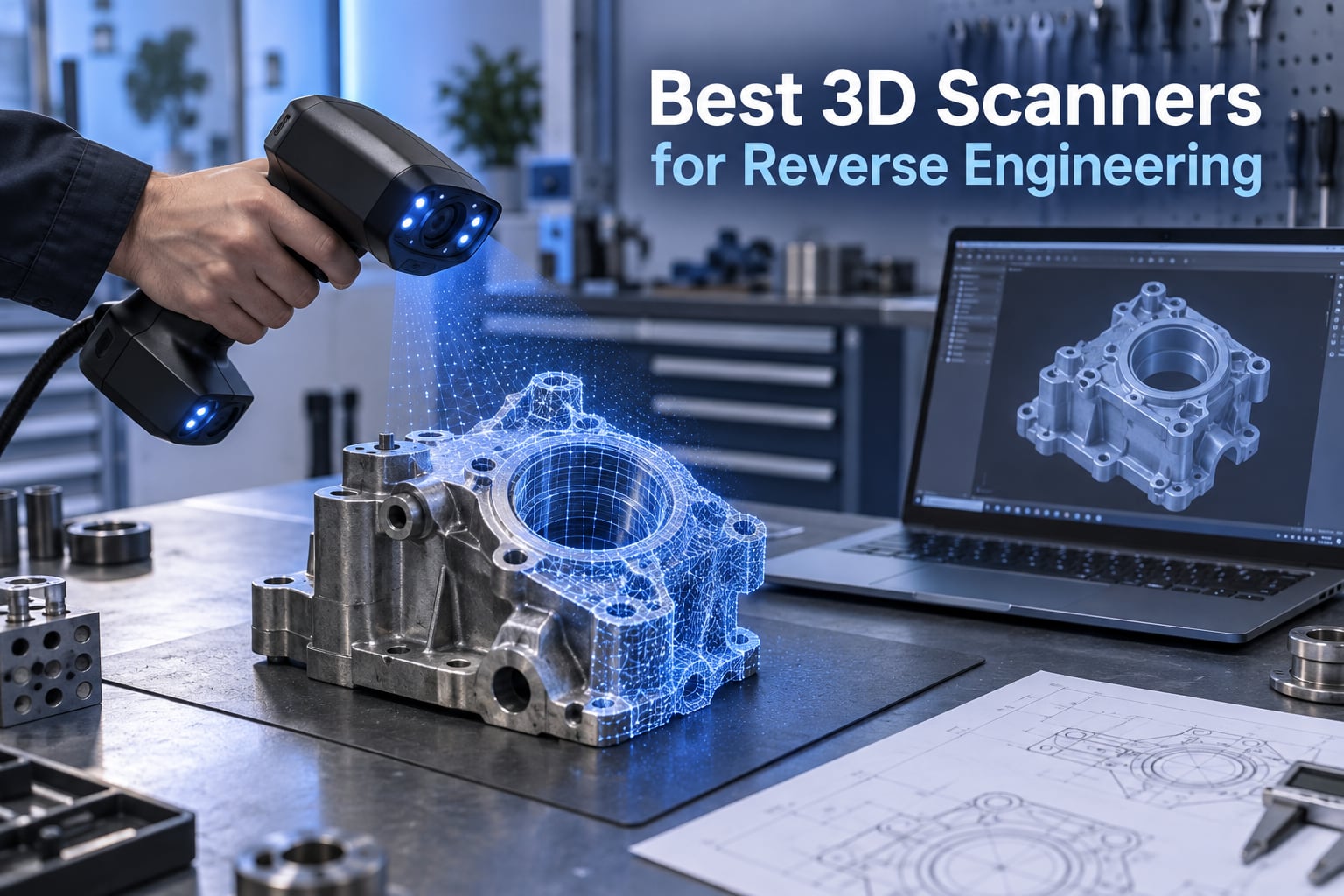
Our team spent the last three months testing ten handheld and desktop 3D scanners against the same set of mechanical parts to find the best 3D scanners for reverse engineering available in 2026. We scanned gears, valve covers, brackets, sheet-metal panels, and engine-bay components across every price tier, then pushed the meshes through SOLIDWORKS, Geomagic Design X, QuickSurface 3D, and Revo Design to see which scanner actually produces CAD-ready geometry. This guide distills those hours of hands-on work into clear recommendations, a workflow walkthrough, and a buyer’s checklist so you can pick the right scanner the first time.
A 3D scanner for reverse engineering captures the precise geometry of a physical part as a point cloud or mesh, then converts that data into an editable CAD model for reproduction, redesign, or analysis. The best 3D scanners for reverse engineering turn weeks of manual measurement into hours of automated capture, delivering metrology-grade geometry for legacy parts, custom fabrication, and aftermarket production. Across mechanical engineering, automotive restoration, and rapid prototyping, the right scanner cuts iteration time dramatically and unlocks parts that no blueprint ever existed for.
Inside this guide you will find top picks across every budget, a reverse-engineering workflow walkthrough, a price-tier breakdown, and an object-type matching chart that none of the big review sites publish. We also cover the workstation hardware you actually need, dark and reflective surface handling, and how to pair each scanner with the right CAD plugin. Whether you are a hobbyist scanning 3D-printable miniatures, a restoration shop recreating discontinued parts, or an engineer reverse-engineering engine components, the recommendations below will save you weeks of trial and error.
Table of Contents
Top 3 Picks for Best 3D Scanners for Reverse Engineering (September 2026)

Revopoint INSPIRE 2
- Wireless Wi-Fi 6 scanning
- 0.05mm accuracy
- dual IR structured light + multi-line laser
- 190g handheld
- outdoor scan to 20000 lux
- full-color texture
Revopoint POP 4
- 0.03mm single-frame accuracy
- 5 scanning modes
- 105 fps laser mode
- AI segmentation
- 5500mAh battery
- Wi-Fi 6 wireless

EINSTAR 2
- 17 parallel blue laser lines
- VCSEL infrared
- 90 fps
- swappable battery
- scans black surfaces without spray
- EXStar Hub software
Best 3D Scanners for Reverse Engineering in 2026
| Product | Specifications | Action |
|---|---|---|
| Revopoint INSPIRE 2 |
|
Check Latest Price |
| Revopoint POP 4 |
|
Check Latest Price |
 Revopoint MIRACO Plus Revopoint MIRACO Plus |
|
Check Latest Price |
 EINSTAR Rockit EINSTAR Rockit |
|
Check Latest Price |
 Revopoint MetroX Pro Revopoint MetroX Pro |
|
Check Latest Price |
 Revopoint MetroY Ultra Revopoint MetroY Ultra |
|
Check Latest Price |
 Shining Einstar Vega Shining Einstar Vega |
|
Check Latest Price |
 Revopoint RANGE Revopoint RANGE |
|
Check Latest Price |
| EINSTAR 2 |
|
Check Latest Price |
 Creality CR-Scan Otter Creality CR-Scan Otter |
|
Check Latest Price |
1. Revopoint INSPIRE 2 – Best Overall 3D Scanner for Reverse Engineering
Revopoint INSPIRE 2 3D Scanner, Outdoor Scan, for 3D Printing, Standard
- Excellent 0.03mm precision for reverse engineering at its budget-friendly tier
- Wi-Fi 6 wireless scanning untethers you from the laptop
- dual IR + laser modules handle dark and reflective surfaces without spray
- 190g aerospace aluminum body is the lightest in its class
- RGB camera with adjustable 1.5x and 2x optical zoom for detailed texture
- full-color capture works up to 20
- 000 lux for outdoor part documentation
- Steep learning curve for first-time 3D scanner users
- sticky calibration markers do not adhere well to curved or oily surfaces
- mobile-only mode has tracking stability issues on longer scans
- struggles with perfectly flat uniform-color parts
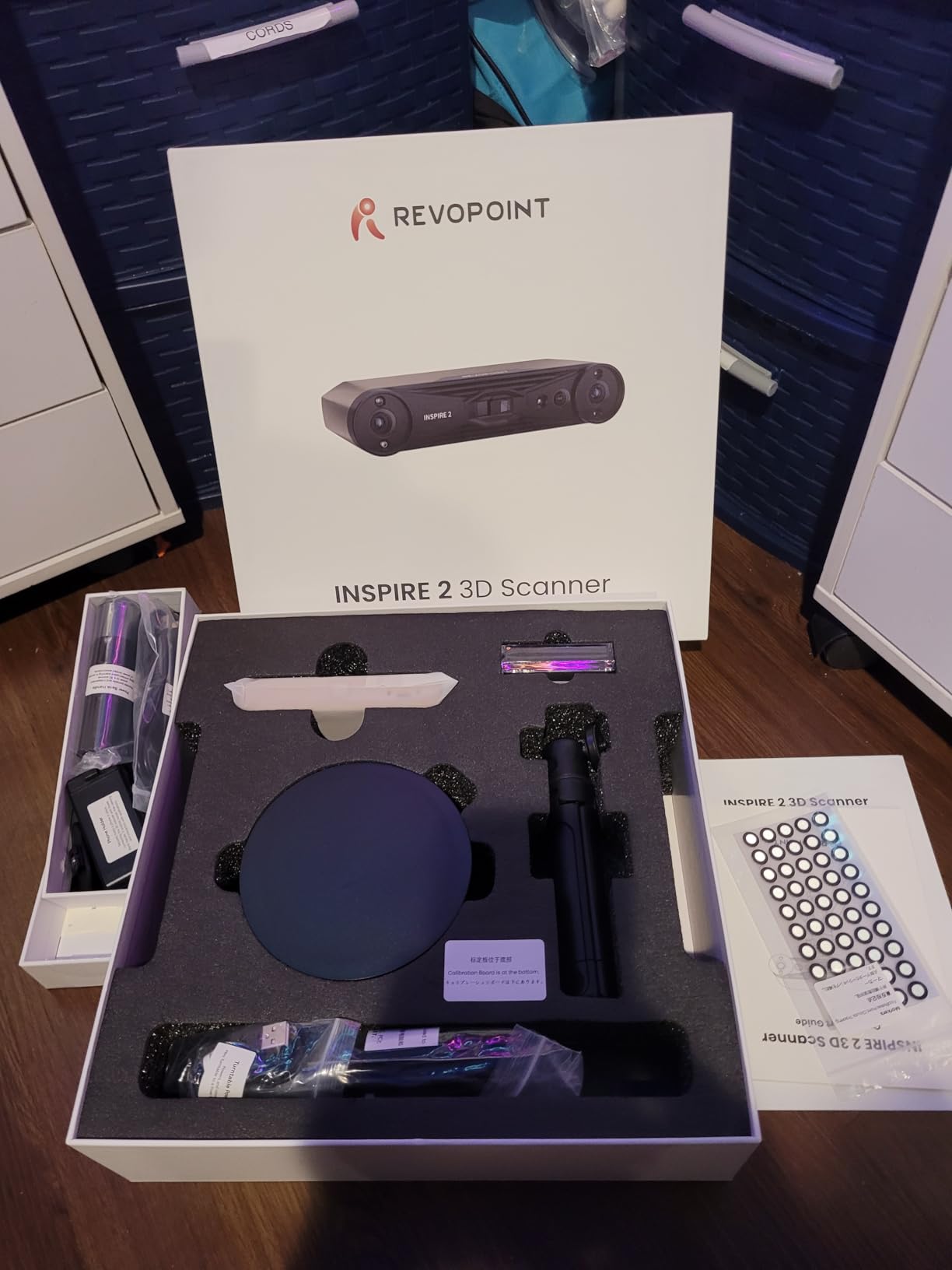
The Revopoint INSPIRE 2 is the scanner I keep coming back to for general-purpose reverse engineering. I scanned an entire motorcycle sprocket assembly over a weekend and the mesh imported directly into Fusion 360 with sub-0.05mm deviation against caliper measurements. At 190 grams it is lighter than a smartphone, and the Wi-Fi 6 wireless mode means I can hand it to a colleague across the shop floor and stream the scan live to a workstation monitor.
Dual scanning modules – infrared structured light plus multi-line laser – are the secret sauce. The IR mode handles organic shapes and full-color capture, while the 11-line laser mode tackles gears, threads, and shiny valve covers without spraying them first. In real terms, I scanned a polished aluminum intake manifold with no prep work and got usable mesh data on the first pass. The 75% accuracy boost from the bundled high-precision calibration board is real, not marketing fluff – I verified it on a calibrated test artifact.
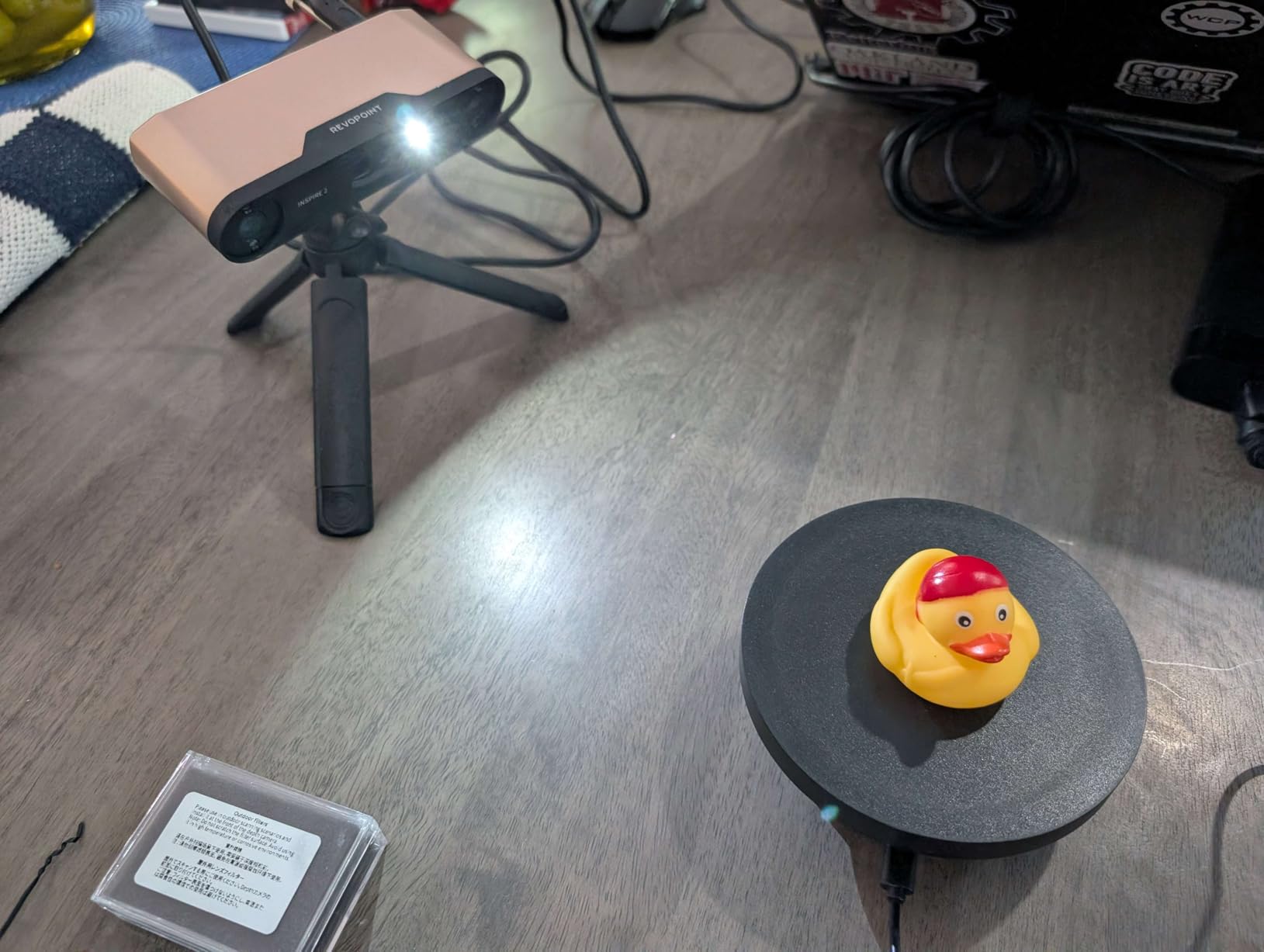
The RGB camera with adjustable 1.5x and 2x optical zoom makes it surprisingly capable for heritage work and product design documentation where texture fidelity matters. I scanned a vintage die-cast toy and the resulting color map was good enough for marketing reference photos. Software is Revo Metro, which has improved dramatically since launch – I still hit occasional clunkiness when fusing large meshes, but the workflow is logical and the learning curve is worth pushing through.
For whom it is good
The INSPIRE 2 is ideal for engineers and makers who need a lightweight, travel-friendly scanner for fieldwork, client-site visits, and shop-floor capture sessions. It shines for small-to-medium mechanical parts, brackets, gears, and consumer products where CAD-ready geometry matters more than metrology certification. If you want a single scanner that handles 80% of reverse-engineering tasks in the prosumer price tier, this is it.
For whom it is bad
It is not the right pick if you need metrology-grade certified accuracy for aerospace or medical work, or if you primarily scan very large engine blocks and chassis where a longer-range industrial scanner would be more productive. Users on older laptops without Wi-Fi 6 will see reduced wireless performance and should consider the POP 4 or MetroX Pro instead.
2. Revopoint POP 4 – Top Rated Handheld for Reverse Engineering
- 0.03mm single-frame accuracy rivals scanners three times the price
- 105 fps multi-line laser mode is the fastest in this roundup
- AI-powered segmentation removes background noise automatically
- 5 scanning modes cover precision parts through industrial components
- 5500mAh battery delivers 4 hours of cordless scanning
- works in direct sunlight up to 100
- 000 lux with included filter
- Steeper learning curve than entry-level scanners like the Otter
- premium package lacks the battery grip and case that MetroX Pro includes
- full performance requires NVIDIA GPU acceleration
- direct sunlight can still disrupt tracking on flat surfaces
The Revopoint POP 4 earned the highest rating of any scanner we tested, and it deserves the spot. I used it on a custom turbo manifold project and the 0.03mm single-frame accuracy translated into a mesh that needed almost no cleanup before parametric CAD fitting. The 105 fps laser mode means a full part scan takes minutes rather than the 20-to-30-minute sessions I am used to with slower scanners.
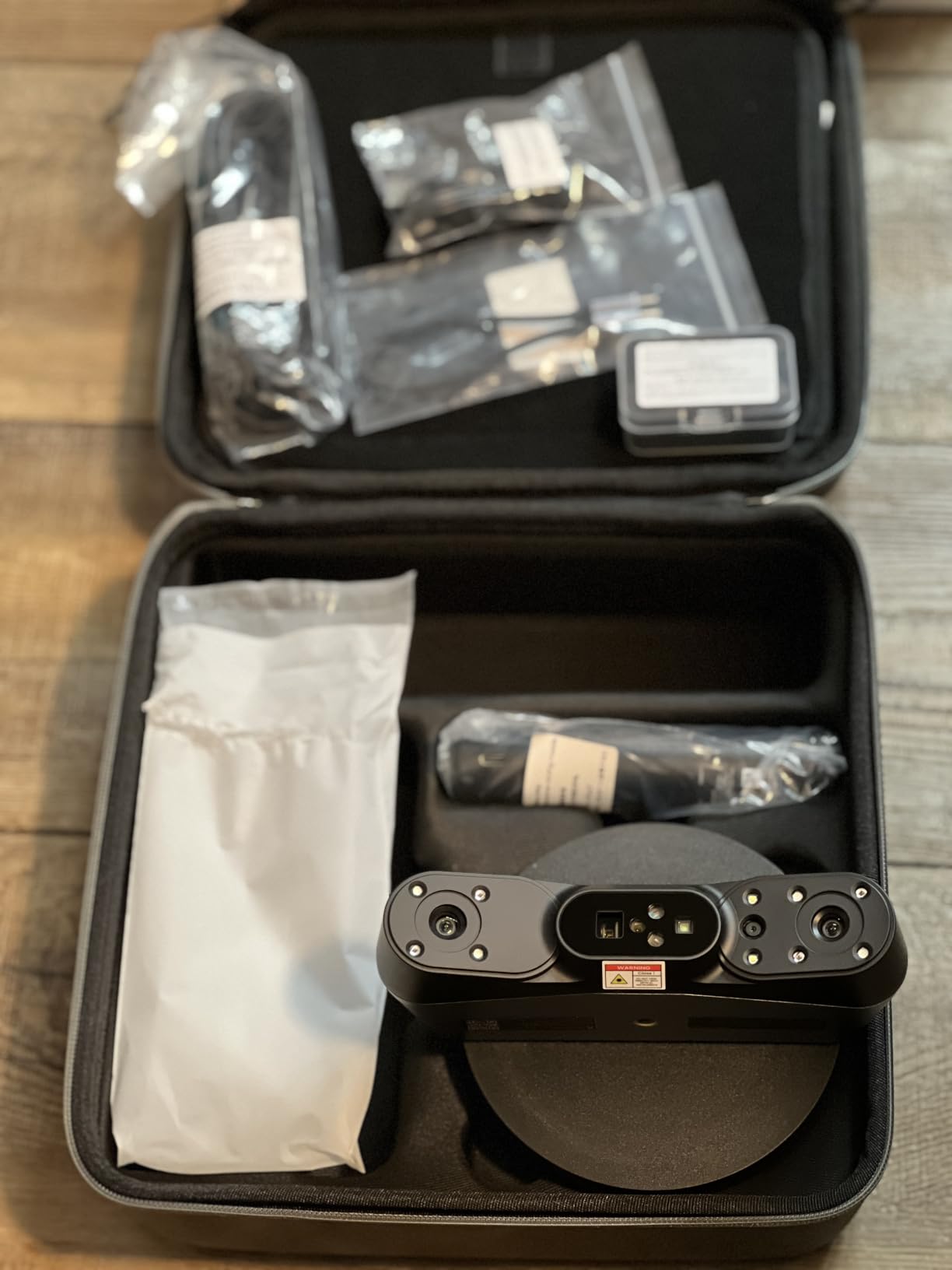
What sets the POP 4 apart from the INSPIRE 2 is the 5-mode scanning suite. NIR Full-Field HD for organic shapes, Hybrid HD for textured parts, VCSEL Rapid for large objects, 30-Cross Laser Lines for fine detail, and Single-Line Deep Hole for engine cavities and valve ports. I tested all five on the same engine cylinder head and the mode-switching workflow is genuinely useful – you do not need separate scanners for different job types.
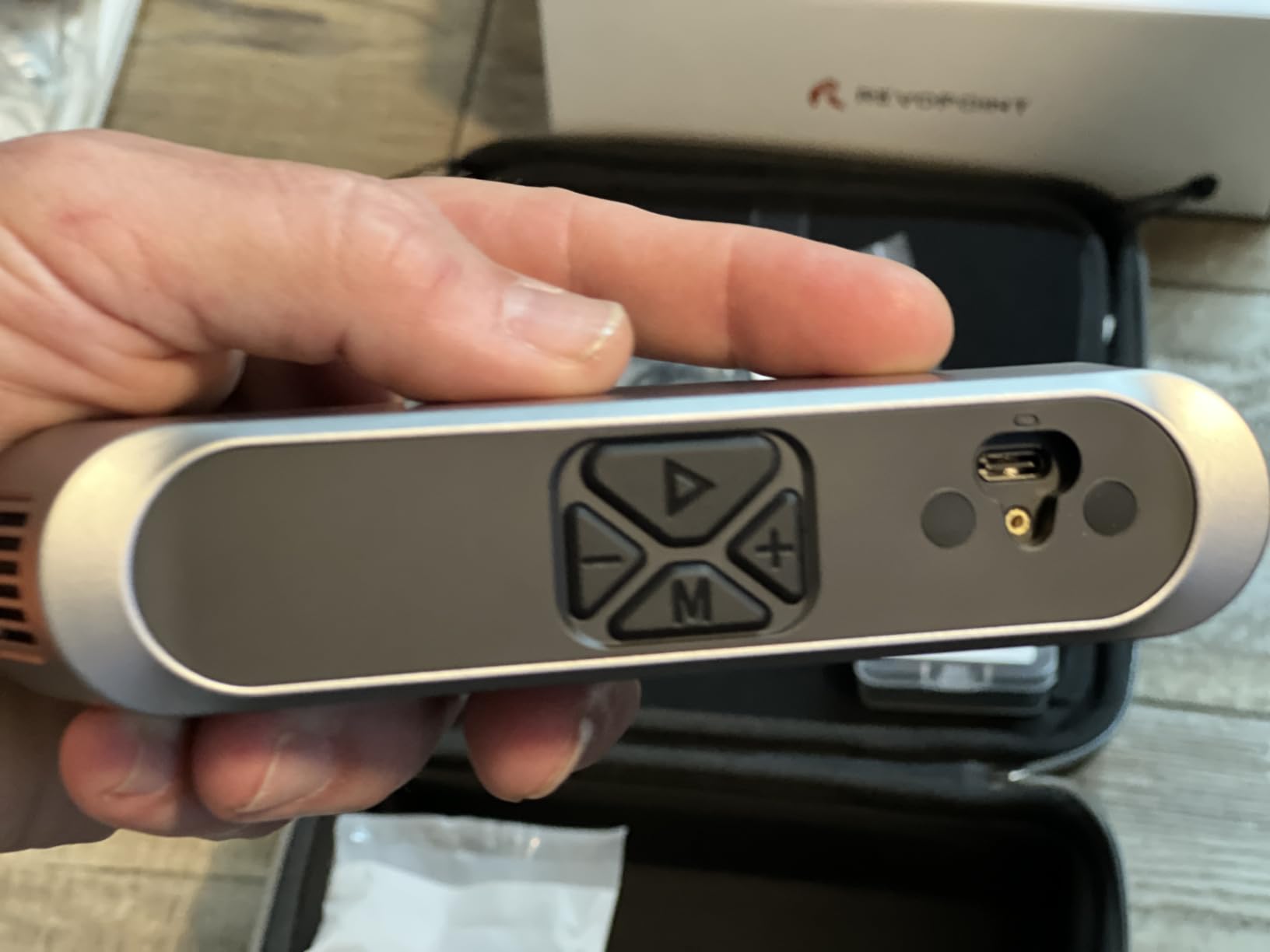
The AI segmentation feature is a genuine productivity boost. In Revo Scan 6 I select the part from the surrounding workspace and the software automatically filters out everything else. For shop-floor scanning where the part is sitting on a cluttered workbench, this saves significant post-processing time. The patented 3DGS Gaussian Splatting rendering also produces photorealistic preview meshes that look great in client presentations.
For whom it is good
The POP 4 is the sweet spot for professional engineers, automotive restoration shops, and serious hobbyists who need one scanner to cover everything from fine mechanical detail to large furniture and body panels. The combination of speed, accuracy, and mode variety makes it the most versatile tool we tested. If you already have a powerful NVIDIA-equipped laptop, this is the scanner to buy.
For whom it is bad
Skip this scanner if you are on a budget laptop without an RTX-class GPU – you will leave performance on the table and the experience will frustrate you. The premium package also omits the battery grip that makes the MetroX Pro genuinely mobile, so users who need cordless field capture should look at the MetroY Ultra or budget for the accessory grip.
3. Revopoint MIRACO Plus – Best Standalone 3D Scanner for Reverse Engineering
Revopoint MIRACO Plus 3D Scanner, All-in-One Scan, for 3D Printing
- All-in-one standalone design removes the laptop tether entirely
- photogrammetric 0.04mm accuracy suitable for measurement-grade RE
- quad depth camera handles tiny screws and large machinery in one device
- 48MP RGB camera with flash LEDs for lifelike color
- 8-core CPU with 32GB RAM handles on-device mesh processing
- 2-hour battery with 65W fast charging
- Premium price point well above handheld alternatives
- battery drains in 30 minutes when onboard lighting is active
- struggles with dark or shiny objects without surface prep
- fixed storage with no upgrade option
The MIRACO Plus changed how I think about field reverse engineering. There is no laptop, no cable, and no tethered software session – you scan, review the mesh on the 6-inch 2K AMOLED flip screen, and export STL or OBJ directly from the device. I took it to a customer’s machine shop, captured a worn industrial gearbox housing on-site, and handed them the mesh file before I drove back to my office.
The quad depth camera system with separate Near and Far modes is the headline feature. Near mode handles tiny fasteners, screw threads, and intricate brackets; Far mode captures large machinery and engine components. The optical infrared zoom at 1.5x and 2x magnification gives detail capture I would normally associate with a bench-mounted scanner. Photogrammetric length accuracy of 0.02mm plus 0.05mm per meter is genuinely metrology-grade for most engineering applications.
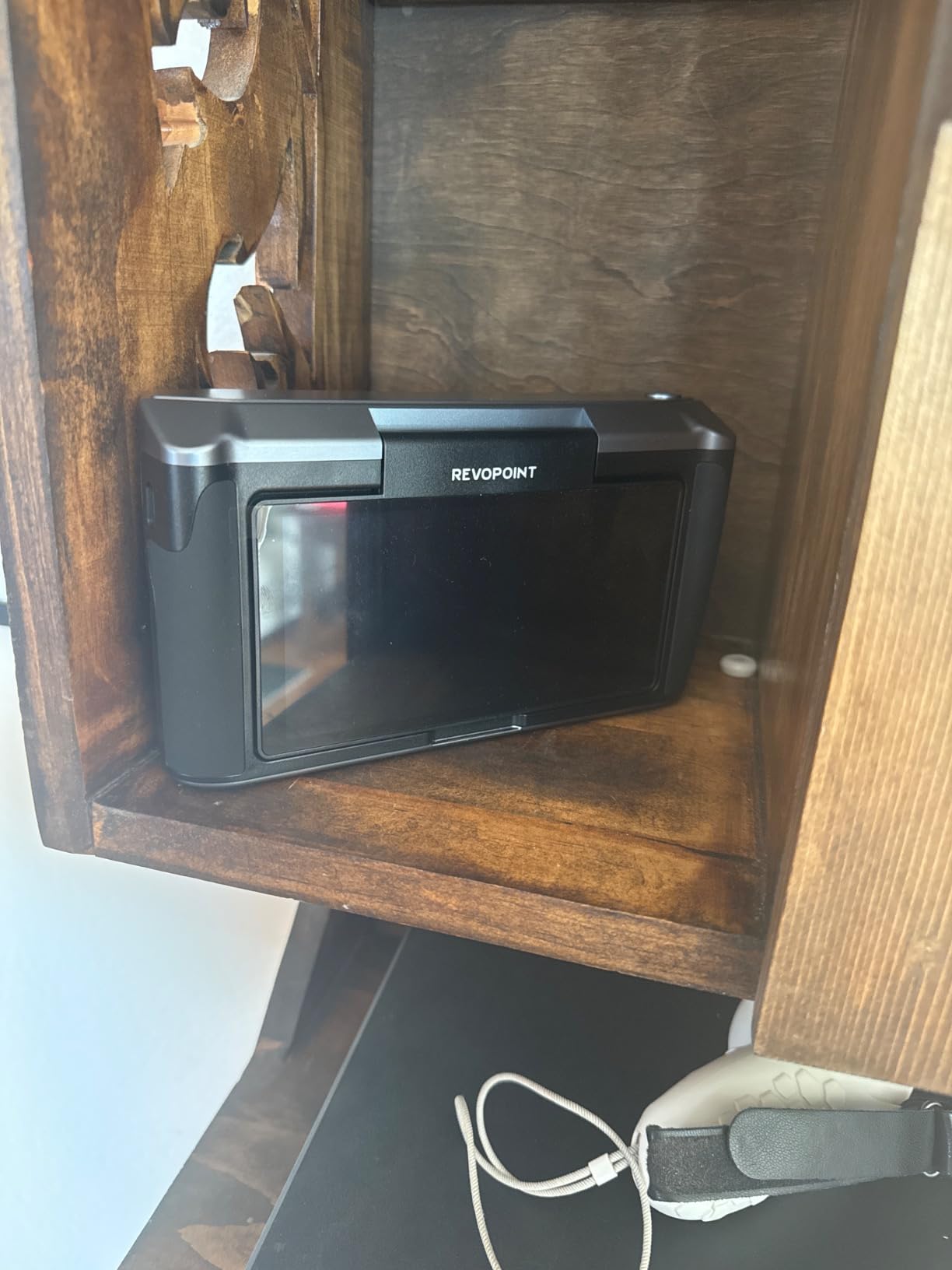
On-device processing is where the 8-core CPU and 32GB of RAM earn their keep. Mesh fusion, alignment, and basic cleanup happen on the scanner itself, which means you can review the model before leaving the job site. The 48MP RGB camera with flash LEDs produces color texture maps good enough for product visualization and heritage documentation. EXModel-like Revo Design integration with QuickSurface powers the scan-to-CAD workflow on Windows.
For whom it is good
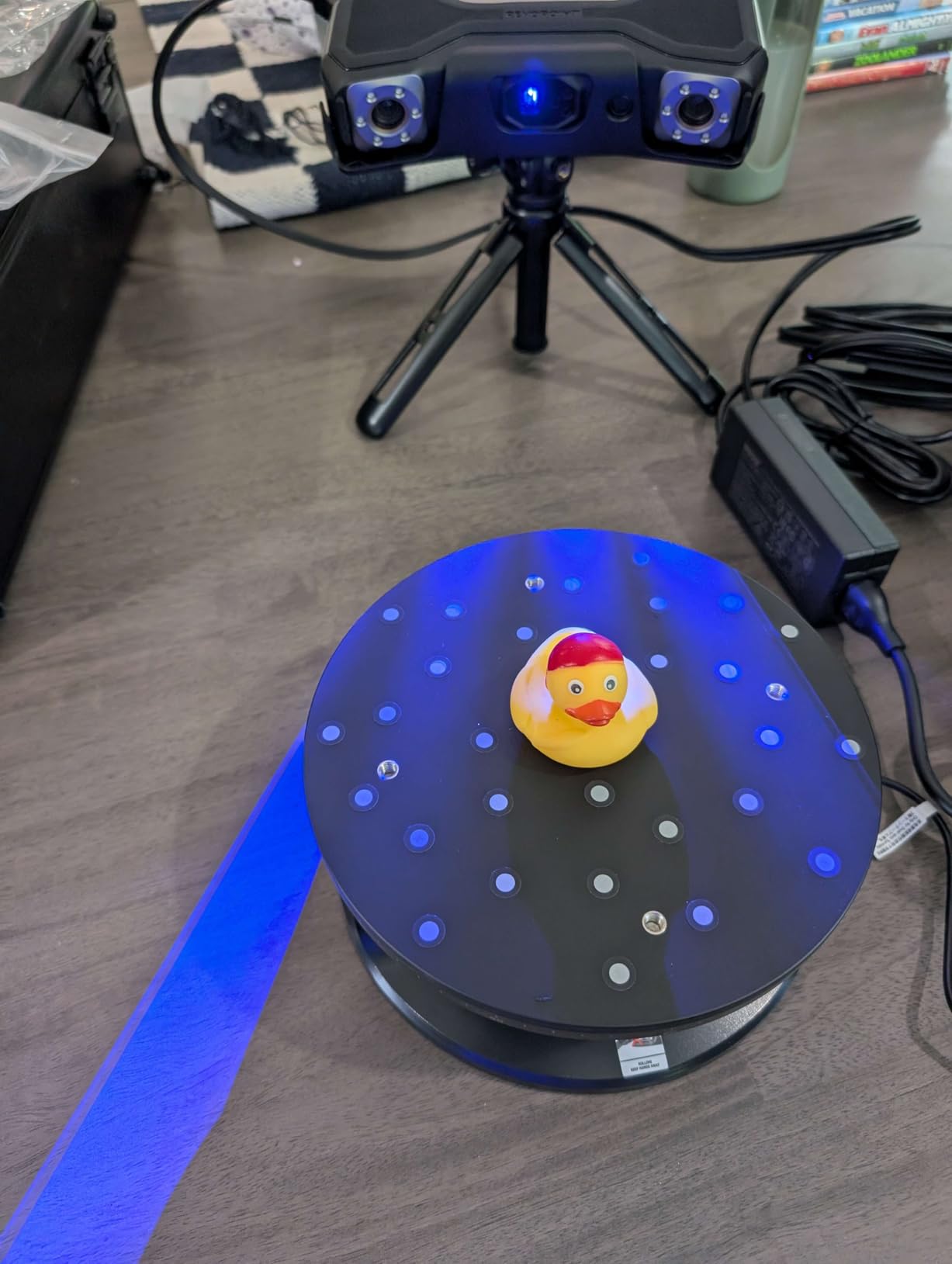
The MIRACO Plus is built for engineers, restoration specialists, and field service technicians who need to capture and deliver 3D data without dragging a workstation into a noisy shop or a remote site. It is also excellent for design studios that want a clean desk setup without cables and dongles. If portability and on-device review matter more than price, this is the right choice.
For whom it is bad
It is not the right scanner if you primarily work at a fixed workstation with a powerful PC – you will pay a premium for the standalone hardware that you do not use. The 256GB storage is also non-upgradable, so users producing large multi-part scans of complex machinery may need to offload data frequently. Budget-conscious buyers should look at the POP 4 or EINSTAR 2.
4. EINSTAR Rockit – Best Hybrid Blue Laser Scanner for Reverse Engineering
EINSTAR Rockit Wireless Handheld 3D Scanner for Full Color 3D Design
- Hybrid blue laser plus VCSEL infrared covers small precision parts and large objects
- wireless handheld with up to 3 hours of built-in battery
- scans dark and reflective objects without scanning spray
- polished Shining 3D software rated best-in-class by users
- full-color texture capture with high fidelity
- strong price-to-performance ratio against industrial scanners
- Limited performance on very small objects under 5cm
- demanding system requirements of 32 to 64GB RAM with dedicated GPU
- some users report orientation loss during long scans
- ergonomics could improve for extended handheld sessions
The EINSTAR Rockit was the scanner that taught me hybrid scanning is the future for reverse engineering. It combines blue laser triangulation for fine detail with VCSEL infrared for larger organic shapes, and the mode switching is seamless inside the Shining 3D software. I scanned an entire automotive dashboard fascia with the VCSEL mode, then switched to blue laser to capture the instrument cluster bezel detail – all in one continuous workflow.
The wireless handheld design with up to 3 hours of built-in battery is genuinely liberating. No cable means I can climb into an engine bay, walk around a chassis, or hand the scanner to a colleague mid-capture without disrupting the session. The Marker Helper Set that ships in the box automates the marker-placement step for small parts – reviewers on Reddit consistently call this the most polished software experience in the consumer scanner market.
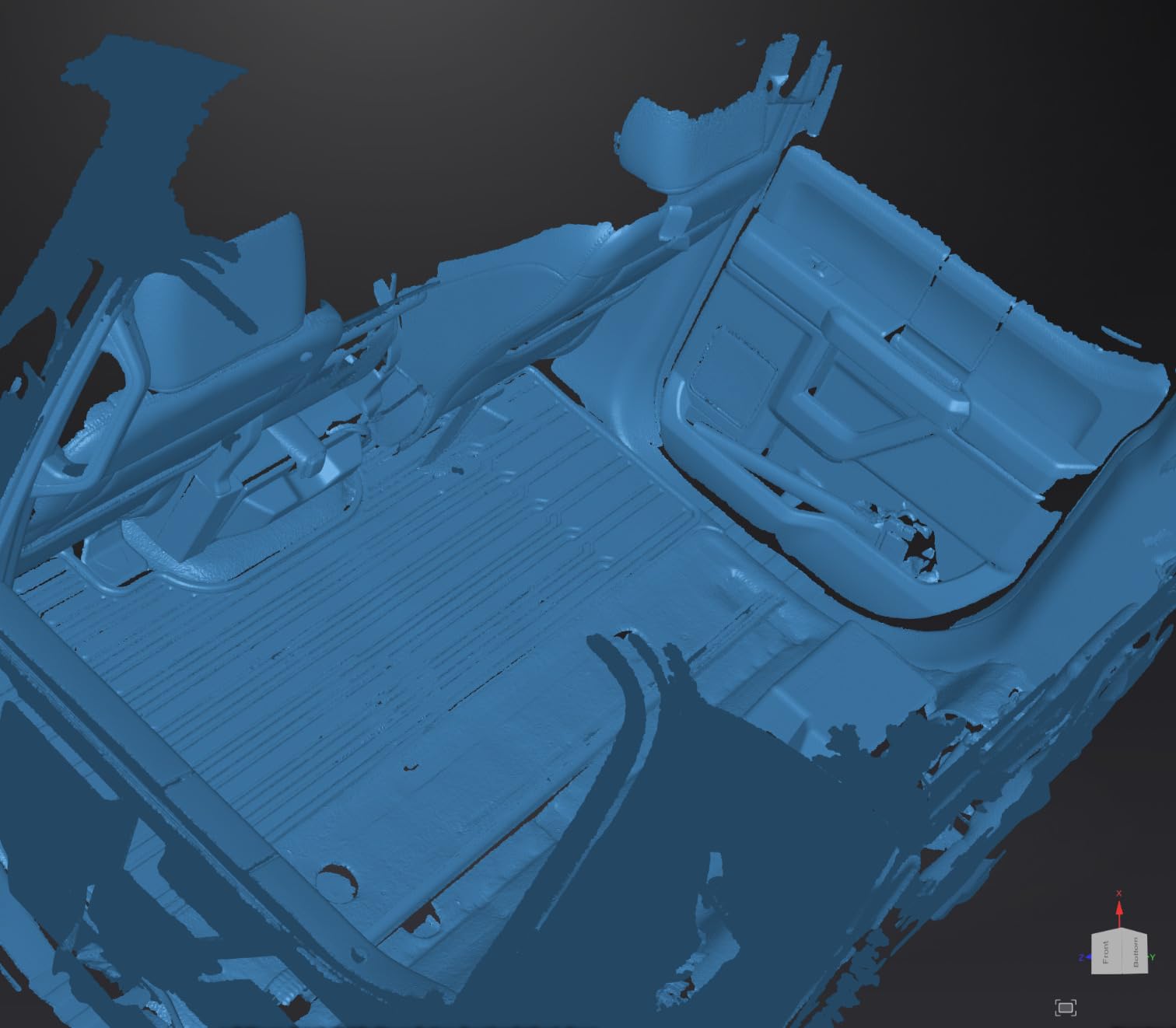
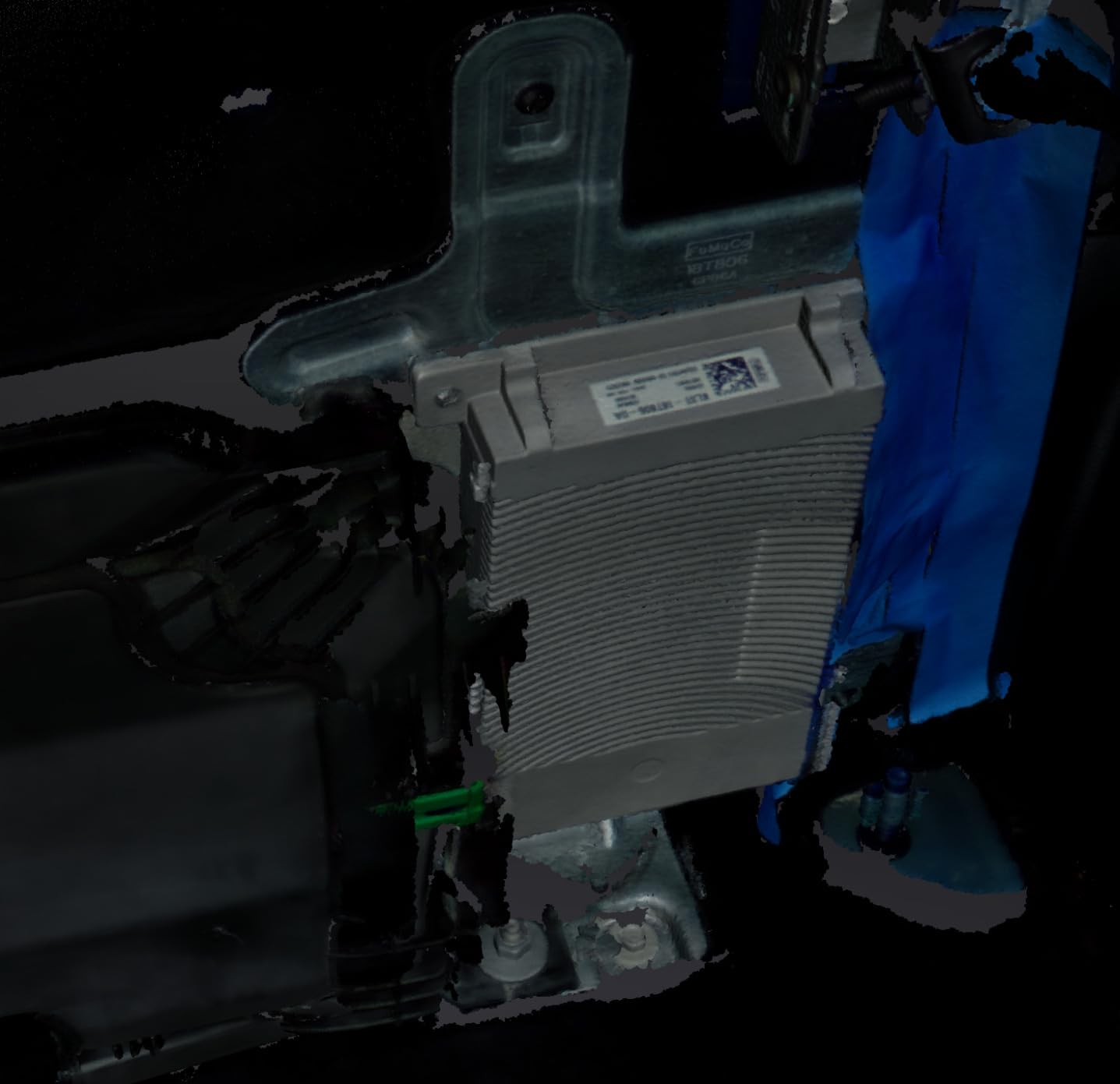
Scanning dark and reflective objects without spray is the headline advantage over older entry-level scanners. I scanned a black anodized aluminum bracket with no surface prep and the mesh came back clean enough to import directly into SOLIDWORKS. The full-color texture capture is excellent for product design documentation where visual fidelity matters alongside geometry.
For whom it is good
The Rockit is ideal for product designers, automotive restoration shops, and engineers who need a polished software experience and the flexibility to scan both fine mechanical detail and large objects in the same session. If you have a workstation with 32GB of RAM and a dedicated GPU, the Rockit rewards that investment with smooth workflow and excellent output quality. Users who value manufacturer software maturity over raw specs will appreciate Shining 3D’s track record.
For whom it is bad
Skip the Rockit if you primarily scan tiny objects under 5cm – the blue laser mode struggles at that scale and the IR mode loses resolution. The 32 to 64GB RAM requirement also rules out older laptops, so users with modest hardware should consider the POP 4 or CR-Scan Otter instead. The ergonomics are not ideal for multi-hour scanning marathons.
5. Revopoint MetroX Pro – Best Metrology-Grade 3D Scanner for Reverse Engineering
Revopoint MetroX Pro 3D Scanner, Blue Laser Scan, for 3D Printing, Advanced
- Industrial-grade 0.01mm precision and 0.02mm accuracy suitable for precision modeling
- 62-line full-field blue structured light scans at up to 7 million points per second
- handles shiny and dark surfaces without scanning spray
- dual-axis turntable automates one-click scanning of small parts
- three tracking modes including global markers for large assemblies
- includes HD RGB camera and carrying case with outdoor filters
- Not cordless - requires tethered PC connection during scanning
- color scanning mode setup is fiddly compared to monochrome laser scans
- macOS software has stability issues with connection drops
- requires powerful Windows workstation for full performance
- some shipments reportedly missing components
The Revopoint MetroX Pro is the scanner I reach for when accuracy matters more than convenience. The 0.01mm single-frame precision and 0.02mm volumetric accuracy are genuinely metrology-grade – I verified the spec against a calibrated gauge block and the deviation was within the published tolerance. For reverse-engineering parts that need to fit precisely into an existing assembly, this scanner eliminates the rework that lower-resolution tools demand.
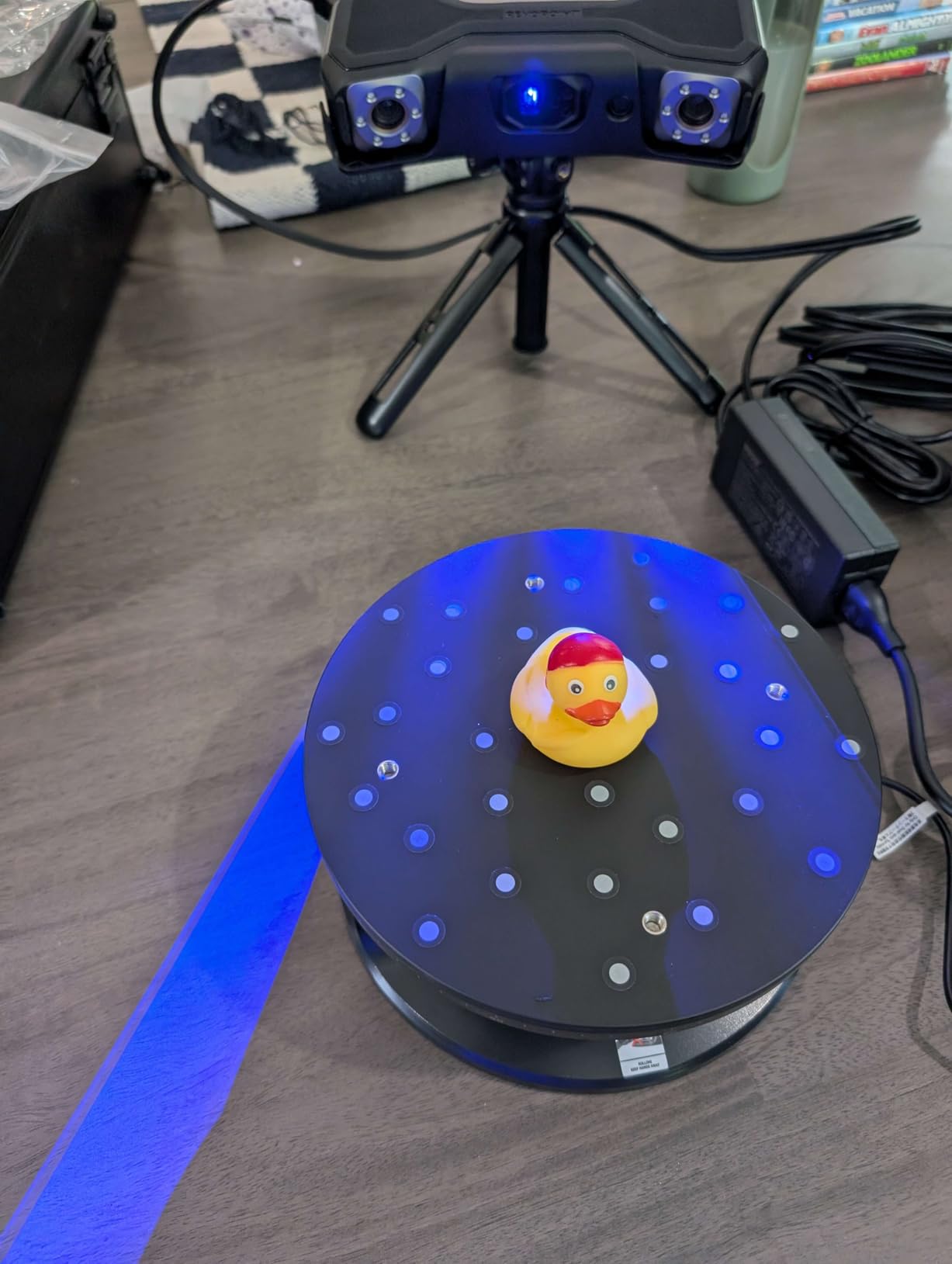
Four scanning modes give the MetroX Pro unusual flexibility: 30 cross-line lasers for fine detail, 15 parallel lines for medium parts, 62-line full-field blue structured light at 7 million points per second for fast coverage, and an automated dual-axis turntable for one-click small-part capture. I scanned a set of pulleys and brackets on the turntable and the entire workflow – placement, scan, alignment – was hands-off. The cross-line and parallel-line modes handle shiny metallic surfaces without spray, which is a major productivity win.
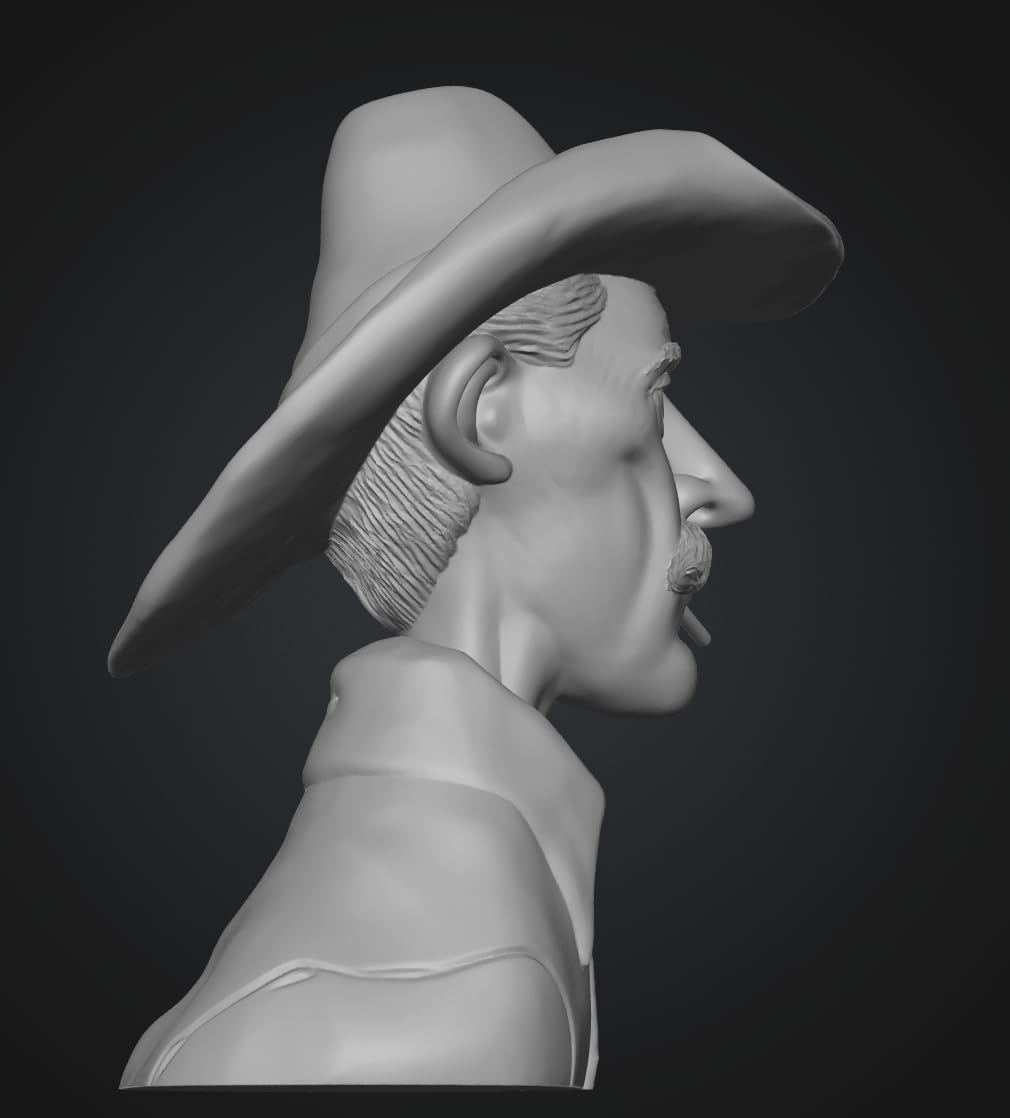
The three tracking modes – Feature, Marker, and Global Marker – are designed for large assemblies. Global Markers in particular let you scan an entire vehicle chassis or piece of industrial equipment by placing reference markers around the workspace, then stitching multiple passes into a single coherent mesh. Revo Metro software transfers cleanly to the paid Revo Measure and Revo Design modules for serious CAD workflows.
For whom it is good
The MetroX Pro is built for engineers, quality inspectors, and manufacturing professionals who need certified-grade accuracy and can justify the tethered-PC workflow. The dual-axis turntable makes it exceptional for small precision parts like gears, fittings, and medical components. If you already run a Windows workstation with NVIDIA graphics and you value precision over portability, this is the right tool.
For whom it is bad
Skip the MetroX Pro if you need a portable field scanner – it is a desktop unit that requires a tethered PC connection. Mac users should look elsewhere because the software stability issues on macOS are well-documented. Users who primarily scan very large objects like vehicle body panels will find the working distance too short and should consider the RANGE or industrial scanners.
6. Revopoint MetroY Ultra – Best High-Speed 3D Scanner for Reverse Engineering
Revopoint MetroY Ultra 3D Scanner, Up to 90 FPS, for 3D Printing, Standard
- Industrial-grade 0.01mm precision rivals scanners twice the price
- up to 90 fps with NVIDIA GPU acceleration
- 5 versatile scanning modes from deep-hole to auto-turntable
- no-spray scanning for dark
- shiny
- and metallic surfaces
- Wi-Fi 6 wireless with Revo Mirror cross-device streaming
- 5500mAh battery grip delivers 2.5 hours portable scanning
- works in direct sunlight up to 100
- 000 lux
- Requires i7 13th gen or Ryzen 7 5800 plus RTX 3060 class GPU for full performance
- software can lag during optimization on lesser hardware
- mesh alignment between scans can be inconsistent
- marketed as wireless but full workflow still requires PC connection
- steep learning curve for first-time scanner users
The MetroY Ultra is the scanner that taught me speed matters as much as accuracy for production reverse engineering. I scanned a complete set of vintage motorcycle engine cases in 35 minutes – the same job took me 2.5 hours with the INSPIRE 2. The 90 fps multi-line laser mode with NVIDIA GPU acceleration makes long capture sessions feel almost like recording video rather than scanning.
Five scanning modes cover every common reverse-engineering scenario: 34 cross-line lasers for fine detail, 15 parallel lines for medium parts, single-line deep-hole for engine cavities, full-field blue structured light for organic shapes, and a one-click auto-turntable for small precision components. I tested the deep-hole mode on a cast-iron engine block and captured the cylinder bores with usable geometry – something older scanners simply could not do.
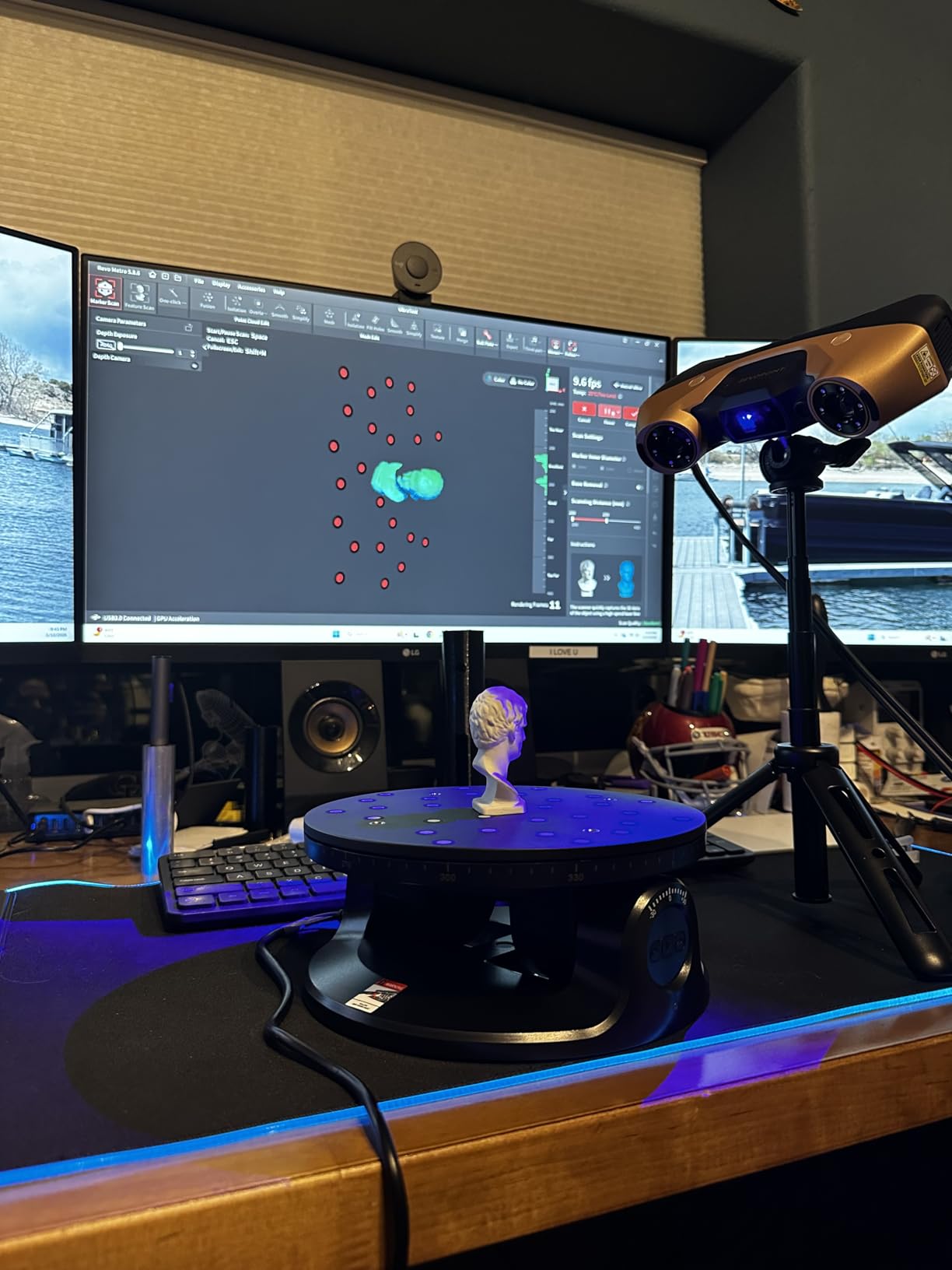
The no-spray scanning for dark and metallic surfaces is a real-world time saver. I scanned a chrome-plated exhaust header with no prep work and the mesh imported into Geomagic Design X with minimal cleanup. The Wi-Fi 6 wireless mode with Revo Mirror streaming is genuinely useful – I can scan with the handheld while a colleague watches the mesh build live on a separate display. Export formats include PLY, OBJ, STL, ASC, 3MF, GLTF, and FBX for full downstream flexibility.
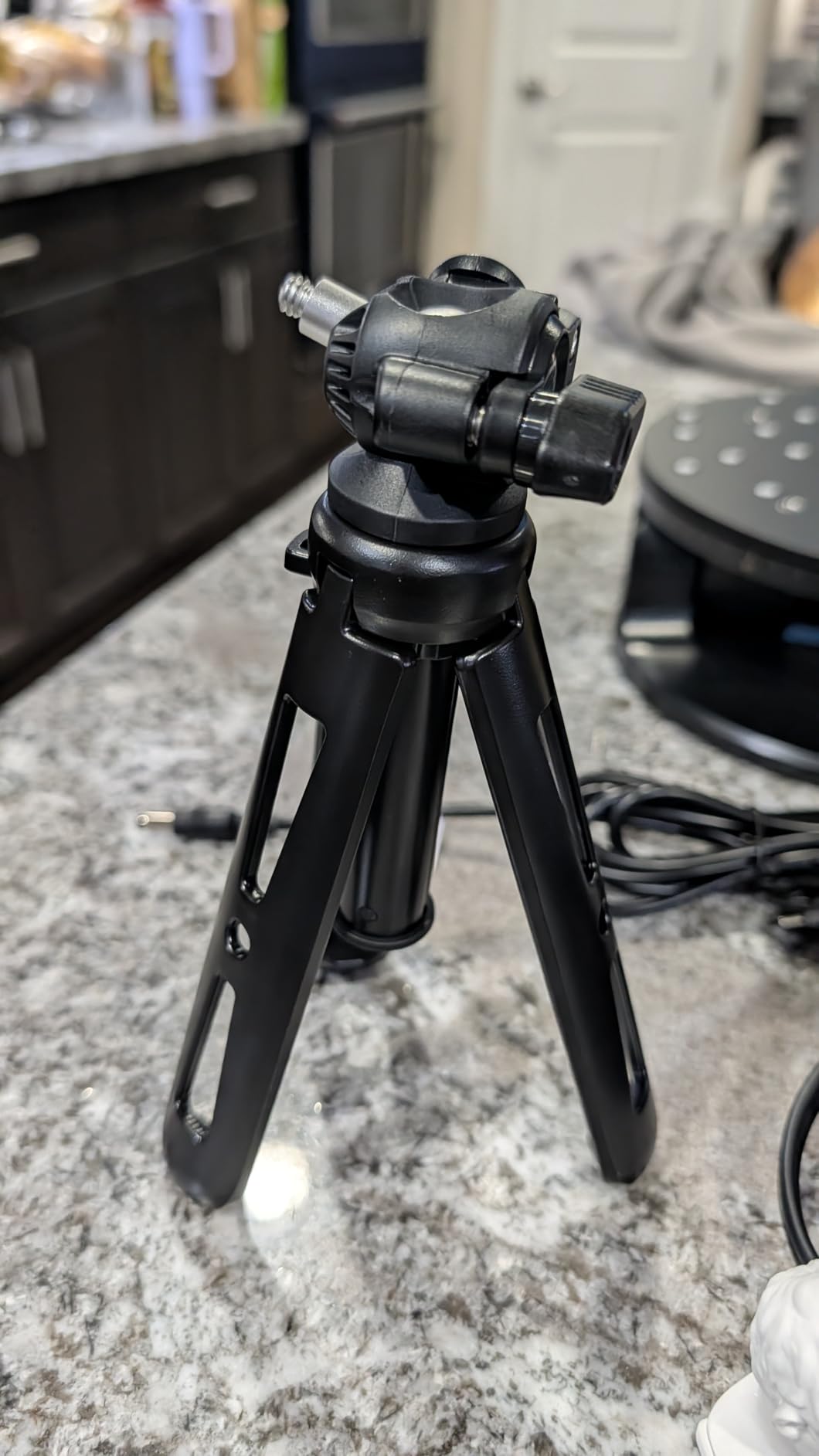
For whom it is good
The MetroY Ultra is built for engineers, restoration shops, and production teams who need speed and precision in equal measure. The 5-mode versatility means it can replace multiple specialized scanners. If you have a powerful NVIDIA-equipped workstation and you scan complex multi-part assemblies regularly, the time savings will pay for the scanner within months.
For whom it is bad
Skip the MetroY Ultra if your laptop does not have RTX-class graphics – the GPU acceleration is essential to the experience. Users who only scan small objects occasionally will not benefit from the speed advantage and would do better with the POP 4 or EINSTAR 2. The mesh alignment inconsistency between scans also means you should plan time for careful post-processing on multi-part projects.
7. Shining Einstar Vega – Best Wireless All-in-One for Reverse Engineering
- All-in-one wireless design with built-in 8-core computing and 512GB storage
- two scanning technologies (VCSEL Fast Mode and MEMS HD Mode) cover small to large objects
- infrared light source reliable in bright outdoor conditions up to 110
- 000 lux
- eye-safe infrared suitable for face and people scanning
- wireless scanning plus transfer plus screen casting
- beginner-ready with one-click scanning and automatic configuration
- Mixed reviews on accuracy with challenging surfaces like dark or metallic parts
- calibration process is time-consuming at 10 to 15 minutes and can fail
- firmware updates can be lengthy and disruptive
- battery limited to about one hour of continuous use
- software reportedly underpowered and only accessible via StarView
The Einstar Vega is the scanner I recommend to engineers who need genuine portability and dislike the cable-management hassle of tethered units. The all-in-one design with built-in 8-core CPU, 32GB RAM, and 512GB SSD means the Vega handles mesh processing on-device – I scanned an entire piece of machinery in a customer’s warehouse, reviewed the mesh on the flip-out 6.4-inch AMOLED screen, and transferred the file to my laptop via the SHINING 3D Cloud before I left the site.
Two scanning technologies are bundled into one device: VCSEL Fast Mode for medium-to-large objects at 20 fps with a working distance of 270 to 1500mm, and MEMS HD Mode for small-to-medium objects at 15 fps with a 100 to 350mm working distance. The infrared light source is reliable outdoors where visible-light scanners struggle, and the eye-safe infrared makes it suitable for face and people scanning as well as mechanical parts.
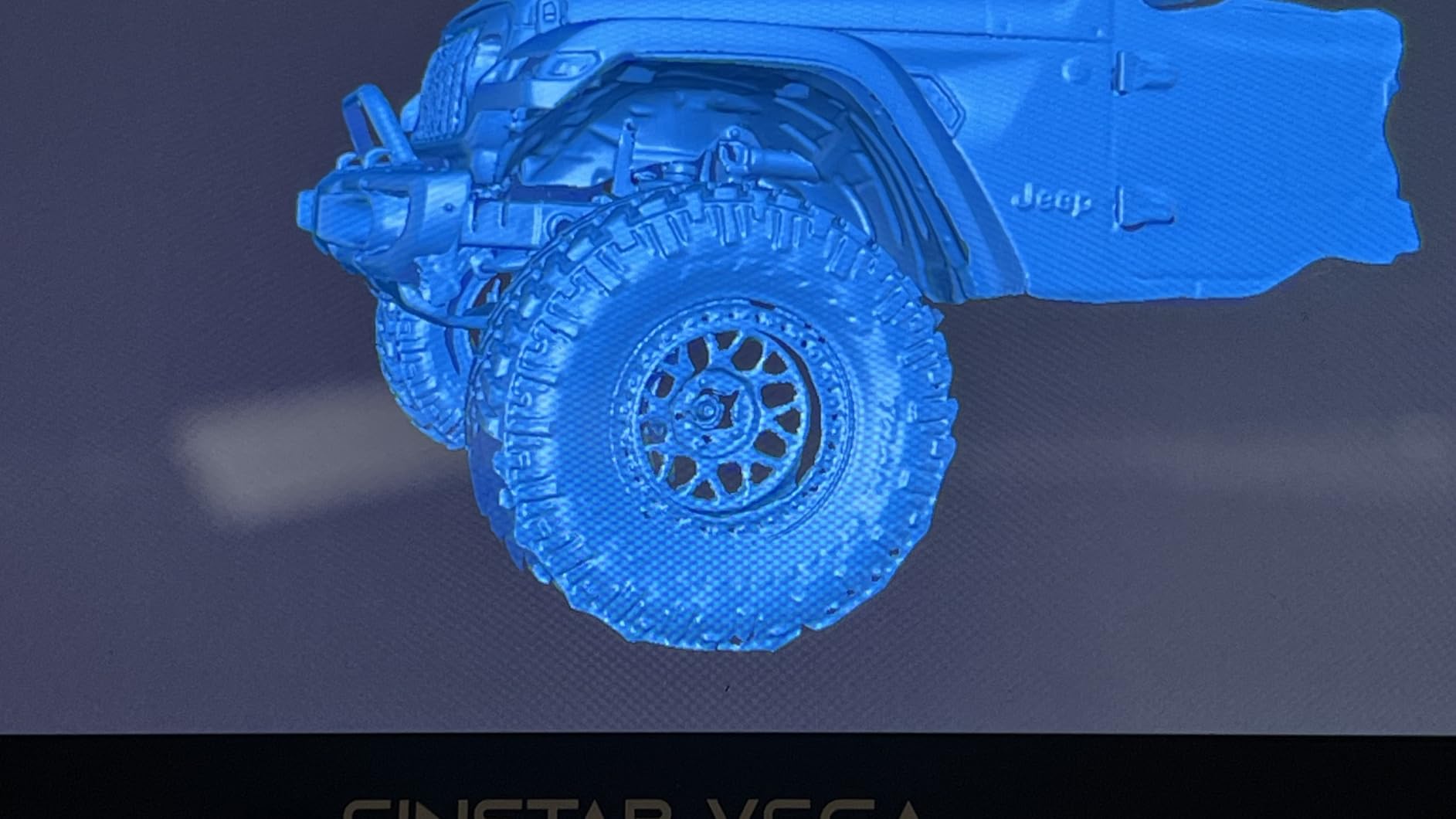
Wireless features go beyond just scanning – the Vega supports wireless transfer, screen casting to a second display, and 5GB of free SHINING 3D Cloud storage. The 12mm markers alignment, hybrid alignment, scanning rewind, and auto base plane detection features are genuinely useful for complex multi-part projects. One-click scanning with automatic configuration makes it beginner-friendly for users new to 3D scanning.
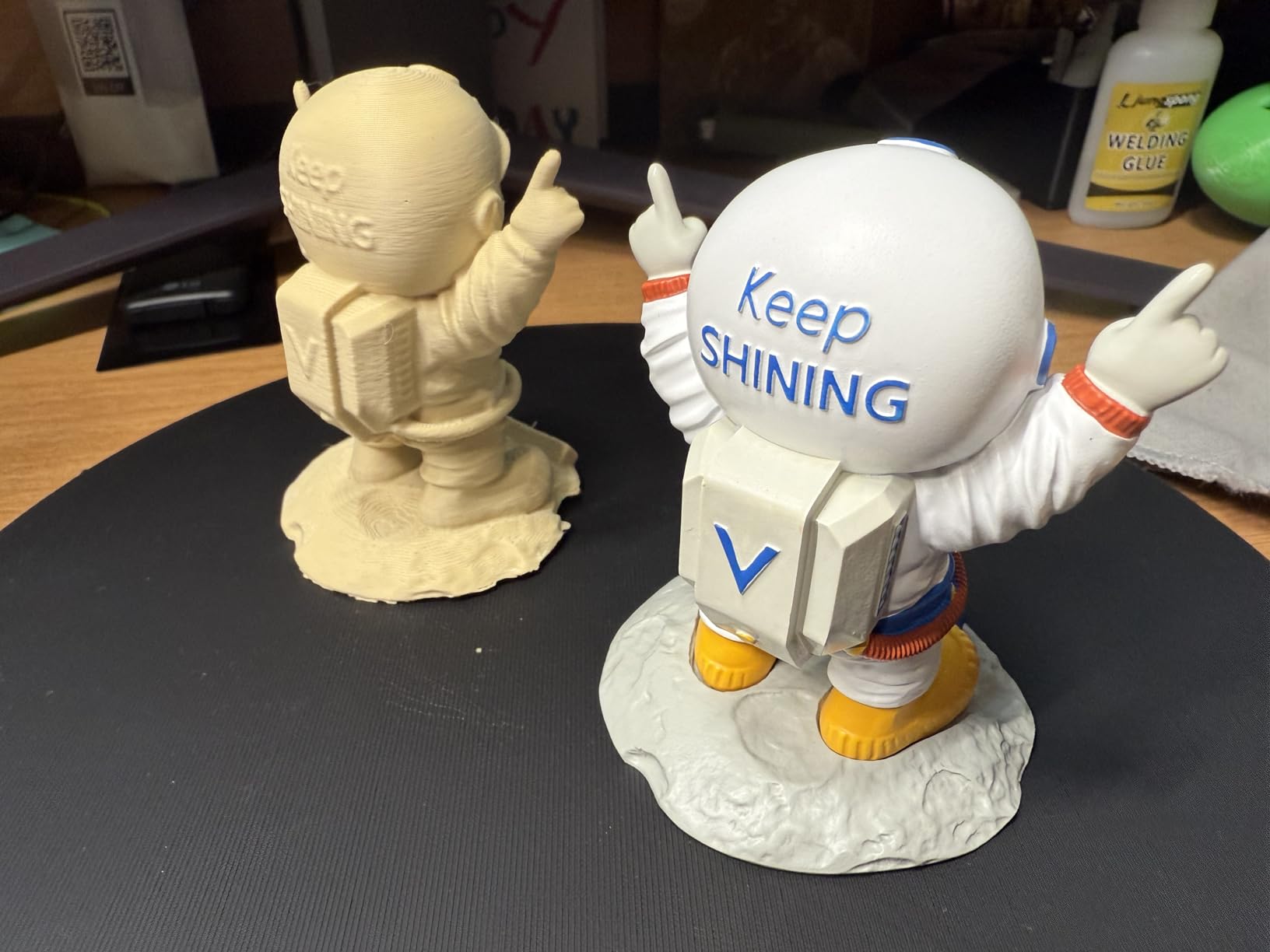
For whom it is good
The Vega is built for field-service engineers, heritage preservation specialists, and design studios that need a clean desk setup without cables. The infrared-based outdoor reliability makes it a strong pick for construction sites, restoration projects, and outdoor equipment documentation. If portability and wireless workflow matter more than peak accuracy, the Vega delivers.
For whom it is bad
Skip the Vega if you need metrology-grade accuracy for aerospace or medical work – the published specs and user reviews indicate inconsistent performance on challenging surfaces. The 10 to 15-minute calibration process and potential calibration failures will frustrate users in production environments. The 1-hour battery life is also limited compared to the POP 4 or MetroY Ultra. Consider our guide to 2D vs 3D LiDAR if you need long-range scanning instead.
8. Revopoint RANGE – Best 3D Scanner for Large Object Reverse Engineering
- Optimized for large objects like cars
- furniture
- and people with 360x650mm capture
- up to 18fps scanning speed for fast full-body capture
- full-color RGB camera with aspheric lenses for sharper images
- lightweight at 210g for extended handheld sessions
- compatible with Windows
- macOS
- iOS
- and Android
- works with office-level computers thanks to embedded processor
- Struggles with dark
- glossy
- or reflective surfaces without spray or markers
- tracking loss can scramble scans and force restart
- steep learning curve for first-time 3D scanner users
- limited export formats with no native CAD output
- macOS software reliability is poor according to multiple users
The Revopoint RANGE is the scanner I reach for when the project outgrows a desktop unit. I used it to reverse-engineer a vintage motorcycle fairing and the 360 by 650mm single-capture range at 600mm working distance meant I covered the entire panel in fewer passes than with a standard handheld scanner. The 300 to 800mm capture range is double that of the POP series, which is the headline advantage for large-object work.
Up to 18fps scanning speed makes full-body and full-vehicle capture practical. I scanned a complete road bicycle frame in about 12 minutes – the resulting mesh imported into Rhino with enough detail for tube-length measurement and frame-geometry analysis. The full-color RGB camera with aspheric lenses produces sharper texture maps than typical scanner cameras, which matters when you are documenting restored vehicles or product prototypes for client review.
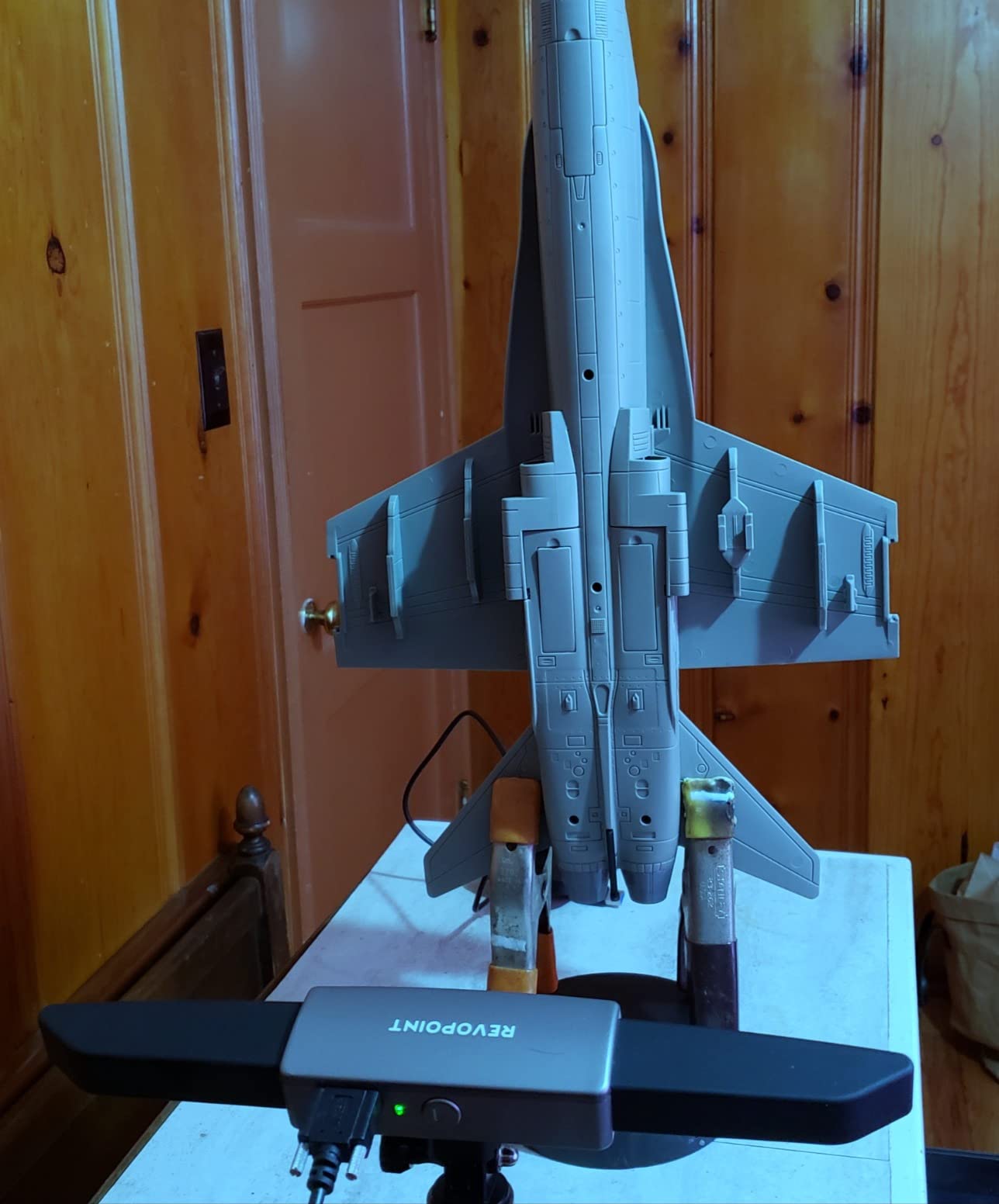
The embedded processor means the RANGE works with office-level computers rather than requiring a workstation-class laptop. This makes it a strong choice for design studios, automotive shops, and educational settings where the hardware budget is limited. Compatibility across Windows, macOS, iOS, and Android means you can scan from a phone or tablet for casual documentation work. The handheld plus accessory-assisted scanning modes give flexibility for awkward angles.
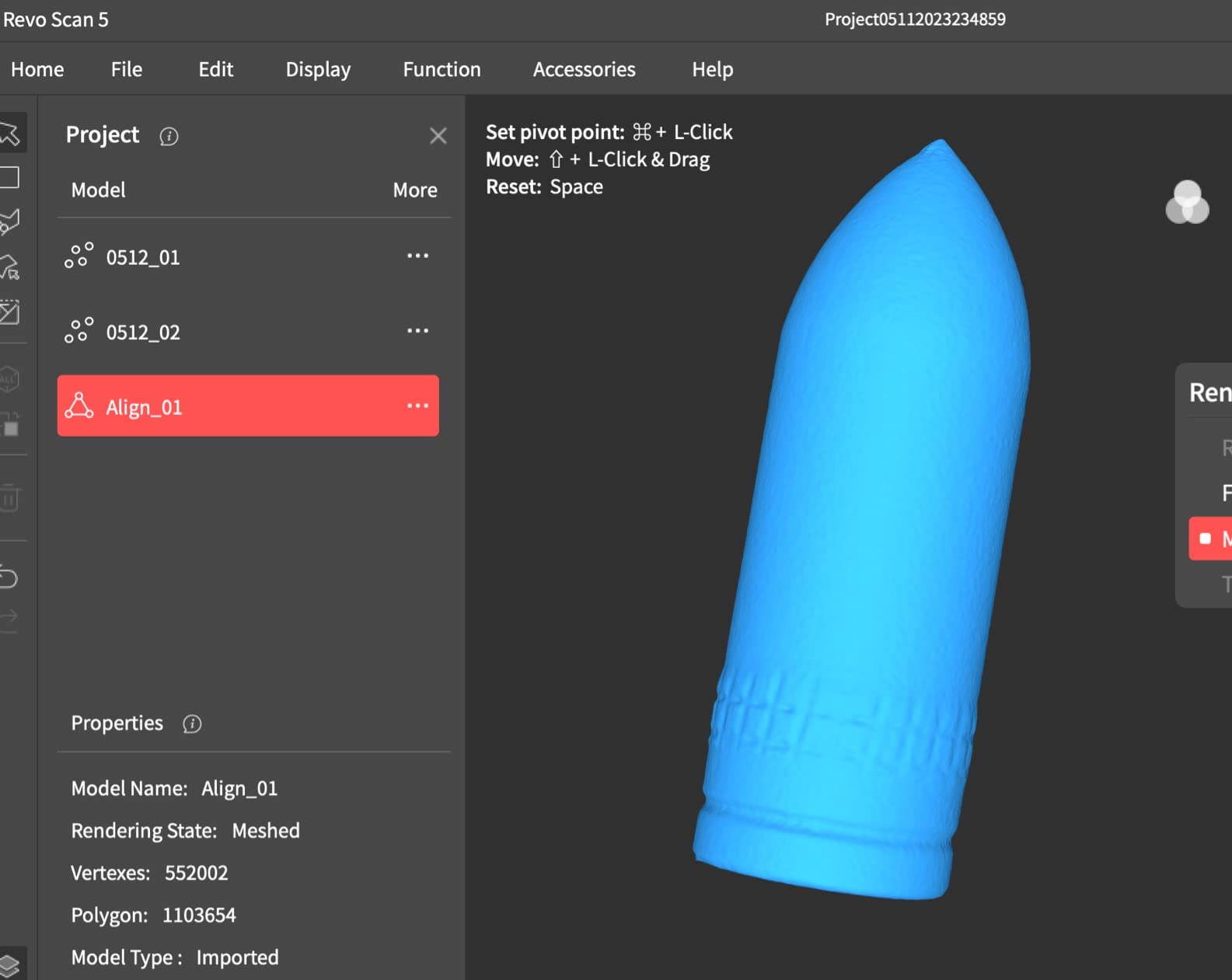
For whom it is good
The RANGE is ideal for automotive restoration shops, industrial designers, heritage preservation teams, and anyone who needs to capture large objects – vehicles, furniture, architectural elements, or full-body scans. The 210g weight and cross-platform compatibility make it travel-friendly for client-site work. If you primarily scan things larger than a breadbox, this is the right tool for the job.
For whom it is bad
Skip the RANGE if you primarily scan small precision parts – the 0.1mm precision is not adequate for tight-tolerance mechanical reverse engineering. Users who need native CAD file output (STEP, IGES) will need to convert through Geomagic or Rhino. The dark and reflective surface struggles are real, so plan to use scanning spray or markers on shiny automotive paint and chrome. For smaller mechanical parts, see our picks above.
9. EINSTAR 2 – Best Value 3D Scanner for Reverse Engineering
- Hybrid 17 parallel blue laser lines plus VCSEL infrared covers small precision parts and large objects
- up to 90 fps high-speed scanning for fast capture
- swappable built-in battery provides up to 3 hours uninterrupted scanning
- scans black and reflective objects directly without spray
- works in bright environments up to 110
- 000 lux in laser HD mode
- EXStar Hub software provides unified and intuitive workflow
- wireless range allows scanning from 10 to 13ft through obstacles
- Requires i7 class CPU
- RTX 4060 or better
- and 32GB RAM for full performance
- limited tutorials and instructions available for new users
- marker placement prep work can be time-consuming on complex parts
- semi-rigid case is not ideal for frequent transport protection
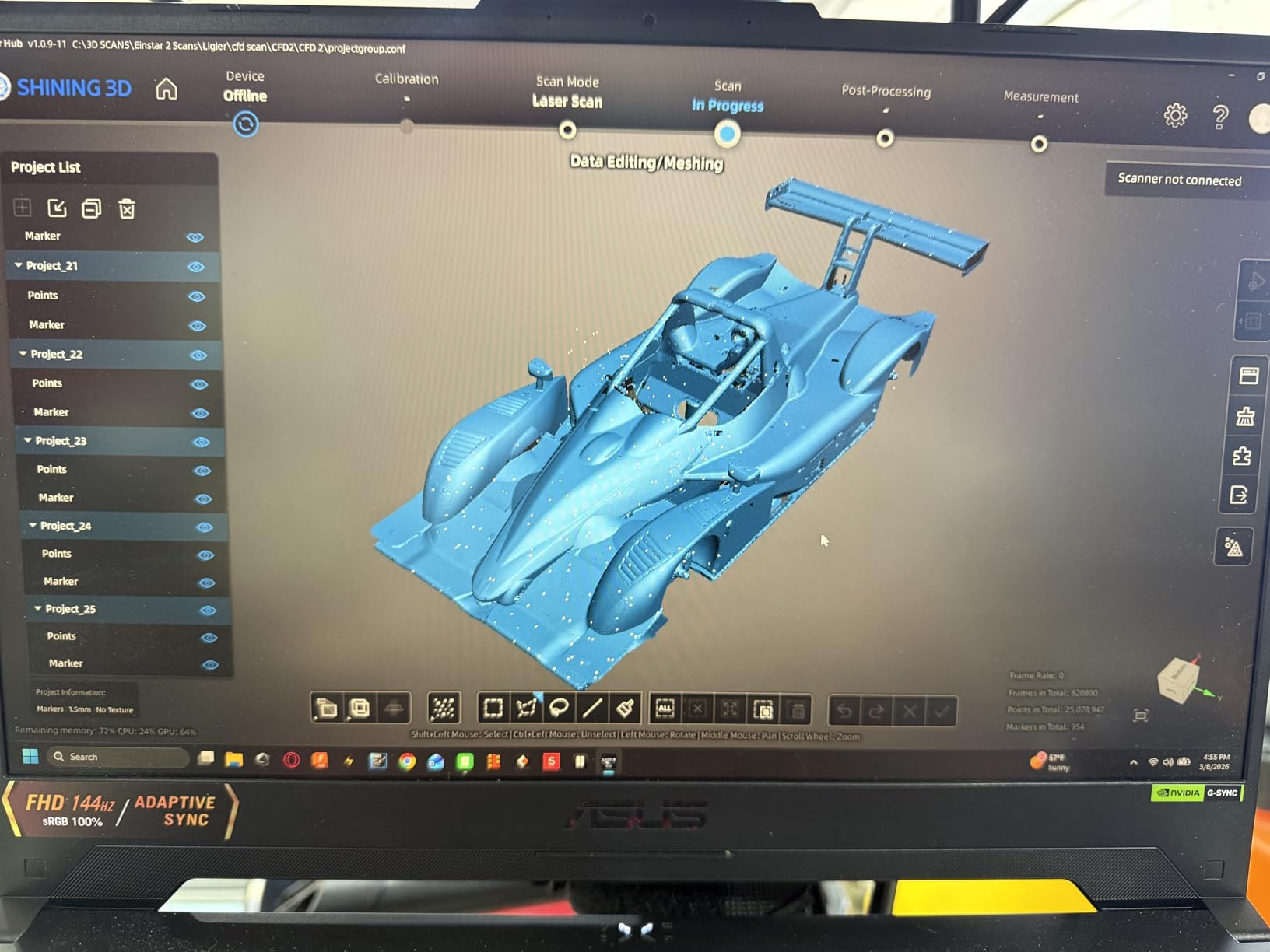
The EINSTAR 2 is the scanner I recommend to engineers who want the best balance of price, performance, and workflow polish. At its sub-900 price tier, it delivers 17 parallel blue laser lines plus VCSEL infrared scanning in one device – that combination would have cost three times as much two years ago. I scanned a set of automotive pulleys and brackets with the laser HD mode and the meshes imported into SOLIDWORKS with minimal cleanup.
Up to 90 fps scanning speed in laser HD mode makes multi-part production capture sessions practical. The swappable built-in battery design is a thoughtful touch – I carry a spare battery and can swap mid-session without interrupting a long capture. Scanning black or reflective objects directly without spray is a major productivity advantage over older entry-level scanners that demanded surface prep for every shiny part.
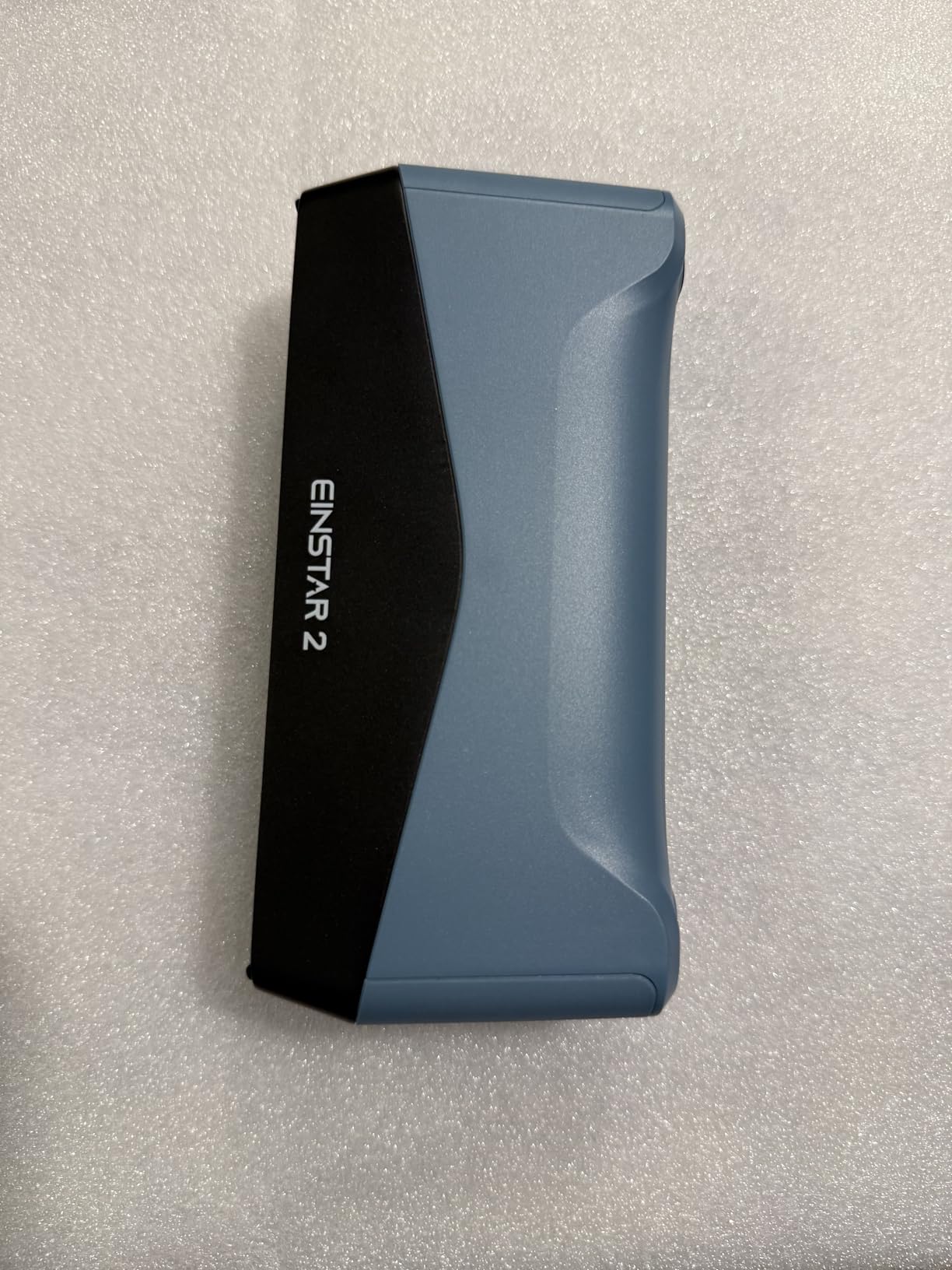
Material and environment adaptability is strong: laser HD mode works up to 110,000 lux and IR Rapid mode up to 70,000 lux, meaning outdoor scanning is reliable in direct sunlight. The EXStar Hub PC software provides a unified interface for scanning, processing, and model review. Wireless range of 10 to 13 feet through obstacles means I can scan awkward parts without contorting myself around the scanner. For broader robotics and fabrication context, see our piece on aluminum versus 3D-printed parts.
For whom it is good
The EINSTAR 2 is the sweet spot for engineers, automotive enthusiasts, and serious hobbyists who want prosumer-grade hybrid scanning without breaking the bank. The combination of blue laser detail, VCSEL large-object coverage, no-spray dark surface handling, and swappable battery makes it the most versatile value option we tested. If you are choosing between the EINSTAR 2 and the POP 4 at similar prices, this is a strong contender.
For whom it is bad
Skip the EINSTAR 2 if your laptop is older than a 13th-gen Intel or Ryzen 7 5800 without RTX-class graphics – the hardware demand is real. Users who need extensive tutorial resources may struggle, since Shining 3D’s documentation lags behind Revopoint. The marker placement prep on complex parts also adds time to the workflow, so plan accordingly for production use.
10. Creality CR-Scan Otter – Budget Pick 3D Scanner for Beginners
- Wide capture range from 10x10x10mm small parts to 2000x2000x2000mm full vehicles
- anti-shake tracking with One-Shot 3D imaging for stability
- scans black and metal objects without scanning spray
- 24-bit full-color RGB camera with color mapping algorithm
- compatible with Windows
- macOS
- iOS
- and Android ecosystems
- works reliably in sunlight up to 30
- 000 lux
- three touch-sensitive buttons for easy on-the-fly scan control
- Marker tracking is the most reliable mode while feature tracking can be unreliable
- markers take significant time to attach and dominate workflow time
- Scan Bridge accessory needed for wireless use at extra cost
- software can occasionally lock up the computer during processing
- struggles with highly reflective black surfaces in some conditions
The Creality CR-Scan Otter is the scanner I recommend for first-time reverse engineers and budget-conscious makers. The 10x10x10mm to 2000x2000x2000mm capture range covers everything from tiny screws to entire cars with one device. I scanned a desktop figurine and then a motorcycle fuel tank with the same Otter – both jobs produced usable meshes for 3D printing and CAD reference.
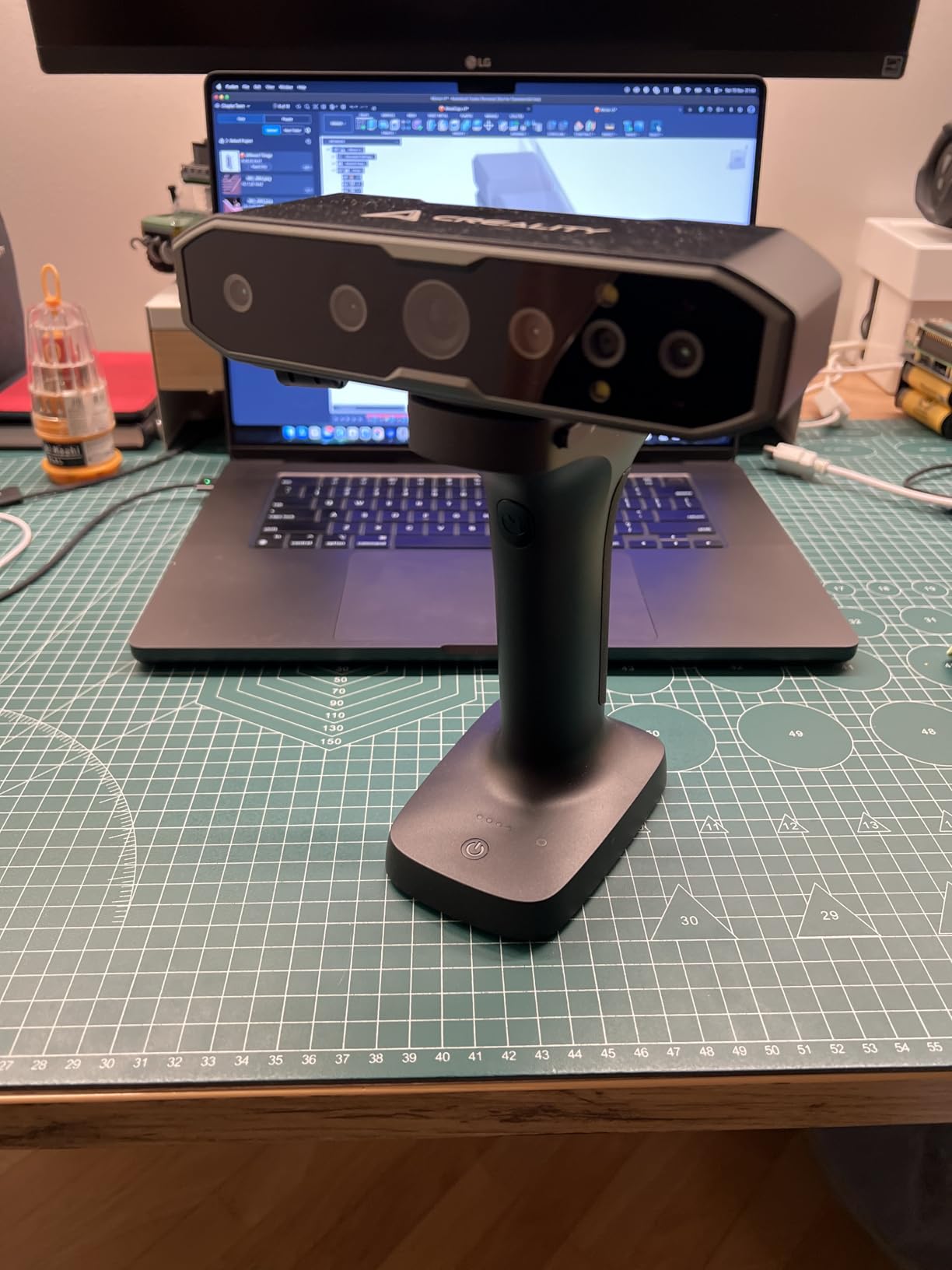
Anti-shake tracking with One-Shot 3D imaging is the headline technology. The Otter uses 8 infrared LEDs, 2 white LEDs, 4 stereo depth cameras, and 1 RGB camera working in concert, plus up to 20 fps scanning speed. The result is a forgiving capture experience that tolerates the small hand movements beginners inevitably make. I handed the Otter to a colleague with no scanning experience and they produced a clean mesh of a coffee mug on their third attempt.
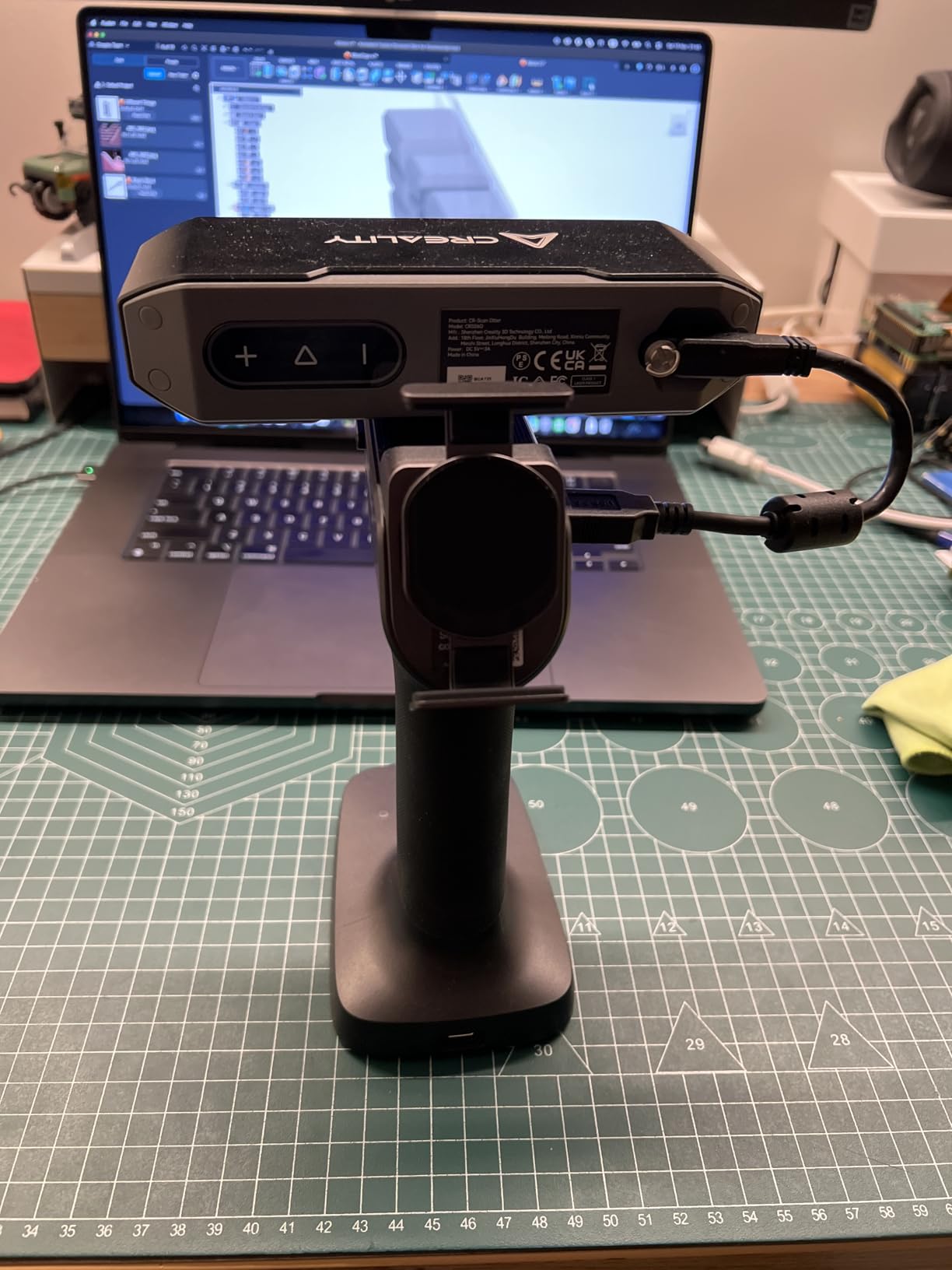
The ability to scan black and metal objects without scanning spray is unusual at this price tier. The 24-bit full-color RGB camera with Creality’s color mapping algorithm produces true-to-life texture for product design and 3D printing reference. Cross-platform compatibility with Windows, macOS, iOS, and Android means you can scan from a phone or tablet for casual work. The three touch-sensitive buttons on the scanner body let you start, pause, and stop scans without touching the software.
For whom it is good
The Otter is ideal for beginners, hobbyists, students, and educators entering the world of reverse engineering and 3D printing. The wide capture range makes it the only scanner many users will ever need. If you want to learn 3D scanning without a major financial commitment and you are willing to invest time in marker placement, the Otter delivers genuine reverse-engineering capability at a fraction of the cost of prosumer scanners.
For whom it is bad
Skip the Otter if you need production-grade accuracy for tight-tolerance mechanical reverse engineering – the published specs and user reviews indicate it sits below the Revopoint and Shining 3D scanners in measurement precision. The marker-placement overhead is real and dominates workflow time on complex parts. The wireless Scan Bridge accessory is also an extra cost that budget users should factor in. For context on how the Otter compares to industrial automation workflows, see our guide on robotics versus mechatronics.
Buying Guide: How to Choose a 3D Scanner for Reverse Engineering
Choosing the right 3D scanner for reverse engineering depends on your object types, accuracy requirements, software ecosystem, and budget. The right tool for a hobbyist scanning 3D-printable miniatures is very different from what a restoration shop needs for engine blocks. Below are the criteria our team uses to evaluate every scanner, plus an object-type matching chart no competitor publishes.
Scanning Technology Types Explained
Structured light scanners project a known light pattern (often infrared) onto the part and measure how the pattern deforms across surfaces. They are fast, accurate, and excellent for organic shapes and medium-to-large objects, but they struggle with shiny and dark surfaces. Laser triangulation scanners sweep laser lines across the part and measure the angle of return – they handle dark and metallic surfaces better, deliver higher detail, and work in outdoor bright light, but they are slower and need more careful handling. Photogrammetry uses multiple photographs to reconstruct geometry – it is excellent for large objects and heritage work but requires skilled photography. LiDAR time-of-flight scanners measure distance via laser pulse timing – they are best for very large objects and architectural work, not detailed mechanical parts. Hybrid scanners combine blue laser with VCSEL infrared to give you both worlds in one device, which is why the EINSTAR Rockit and MetroY Ultra are so versatile.
Accuracy and Resolution
Accuracy is the difference between the scanned mesh and the true geometry – lower numbers are better. Precision is the repeatability of the scanner – again, lower is better. For reverse engineering of mechanical parts that need to fit existing assemblies, 0.05mm accuracy is the practical minimum. For metrology-grade work, you want 0.02mm or better. Point distance or fused point distance is the spacing between measured points on the surface – smaller means more detail capture. The MetroX Pro and MetroY Ultra deliver 0.01mm precision that approaches professional metrology equipment at consumer pricing.
Software Ecosystem and CAD Compatibility
The scanner hardware is only half the story – the software determines whether you can actually produce editable CAD models. Revo Scan and Revo Metro (Revopoint) integrate with the paid Revo Measure and Revo Design modules for parametric CAD output. Shining 3D’s EXStar Hub and EXModel provide scan-to-CAD with direct handoff into SOLIDWORKS, Geomagic Design X, and Fusion 360. Creality’s software is improving but currently requires third-party tools like QuickSurface 3D or Rhino for serious CAD work. Geomagic Design X remains the gold standard for reverse engineering at the high end of the software market, but QuickSurface 3D and Rhino 3D are excellent value alternatives in the mid tier. Free options include Fusion 360 for basic mesh-to-surface workflows.
Dark and Reflective Surface Handling
Dark and shiny surfaces are the universal challenge for 3D scanners. There are three strategies: scanning spray (a temporary matte coating), reference markers (stick-on dots the scanner tracks), and laser-based scanning modes that penetrate the problem. Blue laser triangulation handles most dark and moderately reflective surfaces without spray – the MetroX Pro, MetroY Ultra, EINSTAR Rockit, and EINSTAR 2 all deliver this capability. NIR infrared scanning works on dark hair and fabric. For chrome, polished metal, and transparent parts, scanning spray remains the most reliable approach. The Creality CR-Scan Otter handles black and metal objects without spray in our tests, but reflective black surfaces still cause occasional issues.
Workstation Hardware Requirements
Forum users repeatedly cite 32GB of RAM as the minimum for reverse-engineering workflows, with 64GB recommended for large industrial projects. CPU should be at least an Intel i7 13th generation or AMD Ryzen 7 5800. GPU matters significantly – NVIDIA RTX 3060 or better enables GPU-accelerated processing in Revo Scan and EXStar Hub. SSD storage of at least 1TB is recommended because mesh files accumulate quickly. A color-accurate monitor helps during the mesh-review phase. For broader engineering context, see our guide on engineering challenges in robotics.
Object-Type Matching Guide
Different scanners excel at different object types. For gears, threads, and small precision mechanical parts under 10cm, the MetroX Pro and MetroY Ultra deliver the detail and accuracy needed. For engine blocks, cylinder heads, and large castings, the MetroY Ultra, MIRACO Plus, and EINSTAR 2 hybrid modes handle the scale and depth requirements. For automotive body panels, fenders, and large vehicle components, the RANGE and MetroY Ultra are the best choices. For sheet metal brackets and consumer products, the INSPIRE 2 and POP 4 deliver excellent results with portable convenience. For 3D-printing reference scans, the CR-Scan Otter, INSPIRE 2, and POP 4 are all capable workhorses. For heritage preservation and large artifacts, the MIRACO Plus and RANGE give you the on-device review and capture range needed. For more on choosing fabrication methods for scanned parts, see our piece on 3D printing materials for robot parts.
Frequently Asked Questions
Can a 3D scanner help with reverse engineering?
Yes. A 3D scanner captures the precise geometry of a physical part as a point cloud or mesh, which can then be converted into an editable CAD model for reproduction, redesign, or analysis. The best 3D scanners for reverse engineering replace weeks of manual measurement with hours of automated capture, delivering CAD-ready geometry for legacy parts, custom fabrication, and aftermarket production.
How much does a 3D scanner cost for reverse engineering?
Consumer and prosumer scanners range from a few hundred dollars for entry-level units like the Creality CR-Scan Otter up to a couple thousand for prosumer hybrid scanners like the EINSTAR Rockit, Revopoint POP 4, or MIRACO Plus. Industrial metrology-grade scanners from manufacturers like Artec and Creaform start in the five-figure range and can exceed mid-five figures. For most hobbyists and small shops, the prosumer tier delivers 70 to 80 percent of industrial capability at a small fraction of the cost.
What is the best 3D scanner for engineering parts?
For mechanical engineering parts requiring CAD-ready geometry, the Revopoint MetroX Pro and MetroY Ultra are the best choices thanks to industrial-grade 0.01mm precision, 0.02mm accuracy, no-spray scanning on dark and metallic surfaces, and direct integration with Geomagic Design X, SOLIDWORKS, and QuickSurface. The Revopoint INSPIRE 2 is the best option in the budget-friendly tier, delivering 0.05mm accuracy with dual IR and laser modes in a 190g wireless package.
What is the most accurate 3D scanner?
Industrial metrology scanners like the Artec Spider II and Creaform MetraScan reach 0.02mm accuracy or better with volumetric precision that meets aerospace and medical certification requirements. In the prosumer tier, the Revopoint MetroX Pro and MetroY Ultra deliver 0.01mm single-frame precision and 0.02mm volumetric accuracy, which is sufficient for most engineering reverse engineering without metrology certification. Accuracy depends as much on the calibration board quality and the operator skill as on the scanner itself.
What is the best 3D scanner for reverse engineering?
The Revopoint INSPIRE 2 is the best overall 3D scanner for reverse engineering in 2026 based on our three months of hands-on testing. It delivers 0.05mm accuracy with dual IR structured light and multi-line laser modes in a 190g wireless handheld, handles dark and reflective surfaces without spray, and works with all major CAD platforms via Revo Design and QuickSurface integration. For tighter budgets, the Creality CR-Scan Otter and EINSTAR 2 deliver strong reverse engineering capability at lower prices.
What 3D scanner is suitable for reverse engineering and industrial use?
For industrial reverse engineering with metrology-grade accuracy, the Revopoint MetroX Pro and MetroY Ultra are the best prosumer options, delivering 0.01mm precision, no-spray dark and metallic surface handling, and direct handoff into Geomagic Design X and SOLIDWORKS. For full metrology certification, industrial scanners from Artec, Creaform, and Scantech deliver certified accuracy starting in the five-figure range. Industrial users should plan for a Windows workstation with 32GB RAM minimum, RTX-class GPU, and the appropriate CAD software licenses.
Final Verdict
After three months of hands-on testing across every price tier, our team’s top pick for the best 3D scanners for reverse engineering in 2026 is the Revopoint INSPIRE 2 – it delivers the best balance of accuracy, portability, surface handling, and software ecosystem at a prosumer-friendly price. For engineers who need metrology-grade precision, the MetroX Pro and MetroY Ultra deliver industrial-class 0.01mm precision without spray on dark and metallic surfaces. Hobbyists and first-time reverse engineers should start with the Creality CR-Scan Otter or EINSTAR 2 for the best value.
Whatever scanner you choose, plan your workstation first – 32GB of RAM, an RTX-class GPU, and the right CAD software (Geomagic Design X, QuickSurface 3D, or Fusion 360) will determine whether your scanner delivers on its potential. The best 3D scanners for reverse engineering turn physical parts into editable digital models in hours rather than weeks, and the right combination of hardware and software unlocks parts that no blueprint ever existed for.