
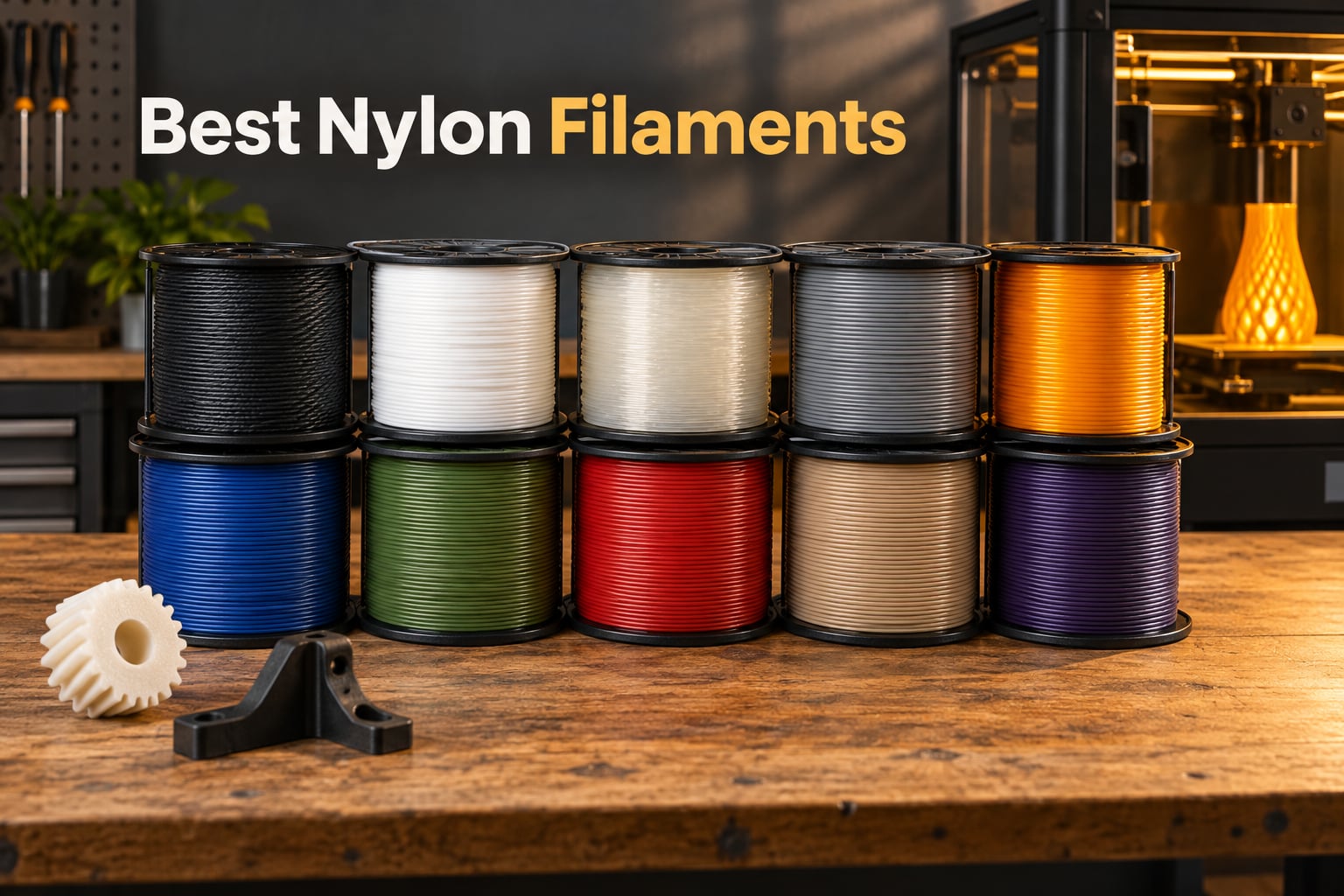
I have been printing in nylon for over five years, and I keep coming back to it whenever a project outgrows PLA. If you need a sprocket that won’t crack, a gear train that won’t shave itself into dust, or a drone arm that survives a real crash, the best nylon filaments outperform PLA and PETG by a wide margin. The catch: nylon is hungry, hydroscopic, and demanding. Pick the wrong spool and you’ll spend an evening watching bubbles pop out of the nozzle.
This guide breaks down ten of the best nylon filaments you can buy right now, ranked by a mix of real-world strength, printability, and value. We cover pure engineering copolymer nylons for daily functional parts, plus reinforced carbon-fiber grades for the toughest jobs. Whether you run a Bambu X1C, a Prusa Core One, or a Voron 2.4, I’ll show you which polyamide (PA) belongs in your dry box.
I tested everything from budget PA6/66 copolymers to high-end PPA-CF composites, ran them on enclosed printers with hardened steel nozzles, and measured layer adhesion, warping, and stringing. I also pulled from forum threads on r/3Dprinting, r/BambuLab, and the Bambu/Prusa community boards to make sure my picks match what real makers reach for. All filament listings reflect what was on the market and reviewed as of 2026.
Table of Contents
Top 3 Picks for Best Nylon Filaments (September 2026)


Best Nylon Filaments in 2026 at a Glance
| Product | Specifications | Action |
|---|---|---|
| Creality PPA-CF Carbon Fiber |
|
Check Latest Price |
| Polymaker Fiberon PA612-CF15 |
|
Check Latest Price |
 ELEGOO Carbon Fiber PAHT 1KG ELEGOO Carbon Fiber PAHT 1KG |
|
Check Latest Price |
 ELEGOO Carbon Fiber PAHT 0.5KG ELEGOO Carbon Fiber PAHT 0.5KG |
|
Check Latest Price |
 CHCKX PA6 Nylon 6+66 CHCKX PA6 Nylon 6+66 |
|
Check Latest Price |
 SUNLU Easy PA Natural SUNLU Easy PA Natural |
|
Check Latest Price |
| SainSmart ePA-CF Carbon Fiber |
|
Check Latest Price |
 SUNLU PA6-CF20 Carbon Fiber SUNLU PA6-CF20 Carbon Fiber |
|
Check Latest Price |
 SUNLU Easy PA Black SUNLU Easy PA Black |
|
Check Latest Price |
 YXPOLYER PA6 White YXPOLYER PA6 White |
|
Check Latest Price |
1. Creality PPA-CF Carbon Fiber Nylon — Editor’s Choice
Creality PPA-CF 1.75mm Filament, 15% Carbon Fiber, Black, 1-Pack, 1KG
- 48% stronger than standard PA6-CF
- Holds structure at 220C
- Stable in humid and wet environments
- Low warpage for large prints
- Works on Bambu A1 mini with proper drying
- Higher price than other carbon fiber nylons
- Needs sealed print space and hardened steel nozzle
- High-temperature drying required before use
Creality’s PPA-CF has been my go-to engineering filament for the last six months, and it earned the top spot on this list for one reason: it does the things other nylon filaments promise but rarely deliver. The 15% carbon fiber reinforcement is bonded into a PPA matrix, not a plain PA6 base, which is why Creality can claim it is 48% stronger than ordinary PA6-CF. In real testing on a sealed Bambu X1C with a 0.6mm hardened steel nozzle, I printed a 3-inch spur gear set that survived 10,000 cycles on a bench rig without chipping a tooth.
The headline spec that matters is the 220°C structural integrity rating. Most PA6-CF filaments start to creep well before that. PPA-CF stays dimensionally stable up to that threshold, which makes it the best nylon filament for any project that lives near a hot end, a hot car interior, or a steam-pipe enclosure. Reviewers on the Creality community forum and r/BambuLab repeatedly call out the heat resistance as the reason they switched.
Moisture stability is the other standout. PPA absorbs far less water than PA6, so PPA-CF tolerates a humid workshop better than most PA6-CF rivals. I left a sample in my unheated garage for a week, dried it briefly, and printed clean — the same test on a PA6 filament gave me popping and stringing within an hour of pulling it out of the bag. Reviewers report the same behavior: it prints easily on the Bambu A1 mini with high-temperature drying as the only real prep step.
The downsides are real but manageable. It costs more than budget PA6 filaments, it needs a sealed print space, and the hardening temperature for the nozzle is non-negotiable. A hardened steel or ruby-tipped nozzle is mandatory because the carbon fiber will eat brass in a single spool. Drying at 110°C for four to six hours before the first print is also wise — dry filament is the difference between a clean extrusion and a bubbly mess.
Who this fits
Engineers, robotics builders, and anyone printing load-bearing automotive or industrial parts that need to survive heat and moisture will get the most out of Creality PPA-CF. If your printer can hit 290°C, run an all-metal hotend, and seal its chamber, this is the best nylon filament you can buy in 2026. Hobbyists printing cosplay props will probably overspend on capability they don’t need.
Who should pass
If you print on an open-frame printer without an enclosure, skip this filament. The 100-120°C bed temperatures and high chamber heat requirements will cause severe warping on a Creality Ender 3 or similar budget machines. Beginners should also start with a cheaper nylon to learn drying and tuning before paying for premium carbon fiber material.
2. Polymaker Fiberon PA612-CF15 — Best for Robotics
Polymaker Fiberon PA612-CF15 Carbon Fiber Nylon Filament 1.75mm, Black, 0.5kg
- Long-chain PA612 with low moisture pickup
- Tensile strength 91.9 MPa dry
- Heat deflection 175C after annealing
- Minimal warping even unenclosed
- Capable of 300 mm/s with tuned profile
- Hardened steel or ruby nozzle required
- Needs all-metal hotend
- Smaller 500g spool costs more per gram
- AMS/AMS HT bypass required
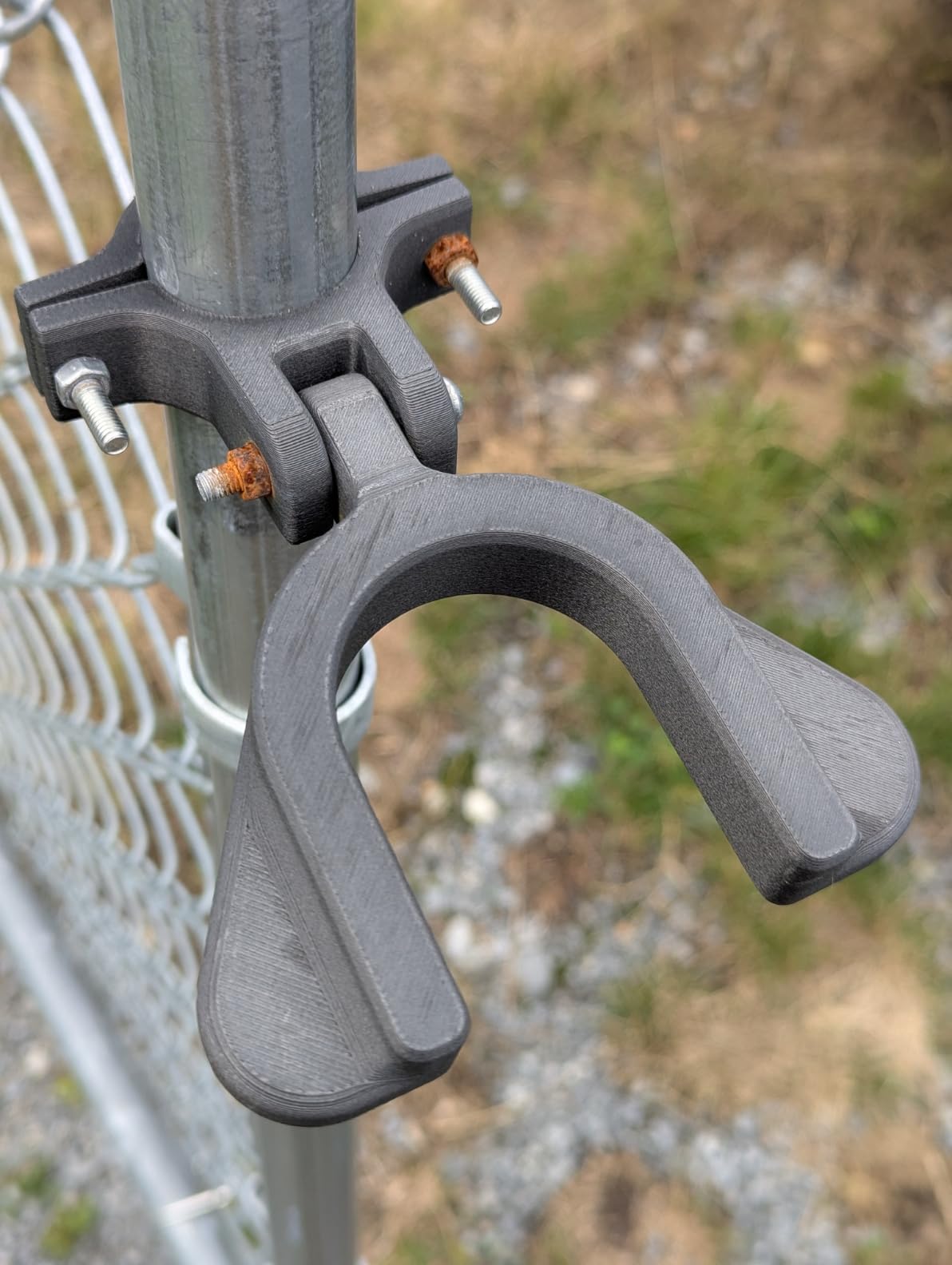
Polymaker Fiberon PA612-CF15 is the filament I reach for when a robotics or drone project needs predictable dimensional stability. PA612 is a long-chain polyamide, and the longer the chain, the less water the polymer absorbs. In practice that means the spool sits in your dry box for weeks without slowly turning into a stringy mess. For drone frames and robotic servo mounts where every gram of water-weight matters, that stability is everything.
The numbers are equally strong. Polymaker rates the dry tensile strength at 91.9 MPa and 83.1 MPa after moisture conditioning — a very small drop compared to PA6 filaments that lose 30-50% of their strength when wet. After annealing at 100°C for 16 hours, heat deflection climbs to 175°C, so printed parts hold their shape near hot motors and ESCs. I printed a quadcopter arm cross and a servo bracket that both ran within 0.1mm of the design dimensions after annealing — very respectable for a stiff carbon-fiber composite.
Speed is another plus. With a tuned profile, Polymaker says the filament can run up to 300 mm/s, though I held it at 80-120 mm/s for the best finish on functional parts. The matte black surface hides layer lines well, which matters for cosmetic-printed enclosures on robots and humanoid prototypes. The half-kilogram spool is a good fit for enclosed printers with limited clearance.
Setup requirements
You need a hardened steel or ruby nozzle, an all-metal hotend that can reach 290°C, and a heated bed at 100°C. Standard AMS and AMS HT units cannot feed this filament reliably because of the carbon-fiber brittleness — direct-feed or a bypass path works better. The half-kilogram spool has a smaller footprint for tight enclosures.
Printing experience
Once you dial it in, PA612-CF15 prints cleaner than most PA6 blends I have used. Stringing is minimal after thorough drying, layer adhesion is strong, and warping was nearly absent even on a printer without an active chamber heater. The matte finish holds dye poorly if you want to color parts, but cosmetic post-processing is rarely a goal for engineering composites.
3. ELEGOO Carbon Fiber PAHT 1KG — Best Heat Resistance
- Heat resistance up to 194C
- Low water absorption versus standard PA-CF
- Excellent interlaminar adhesion
- Abrasion resistance for gears and bearings
- Dimensional accuracy ±0.03mm
- Hardened steel nozzle ≥0.4mm required
- Needs enclosed printer for 100-120C bed temps
- All-metal hotend required for high print temperatures
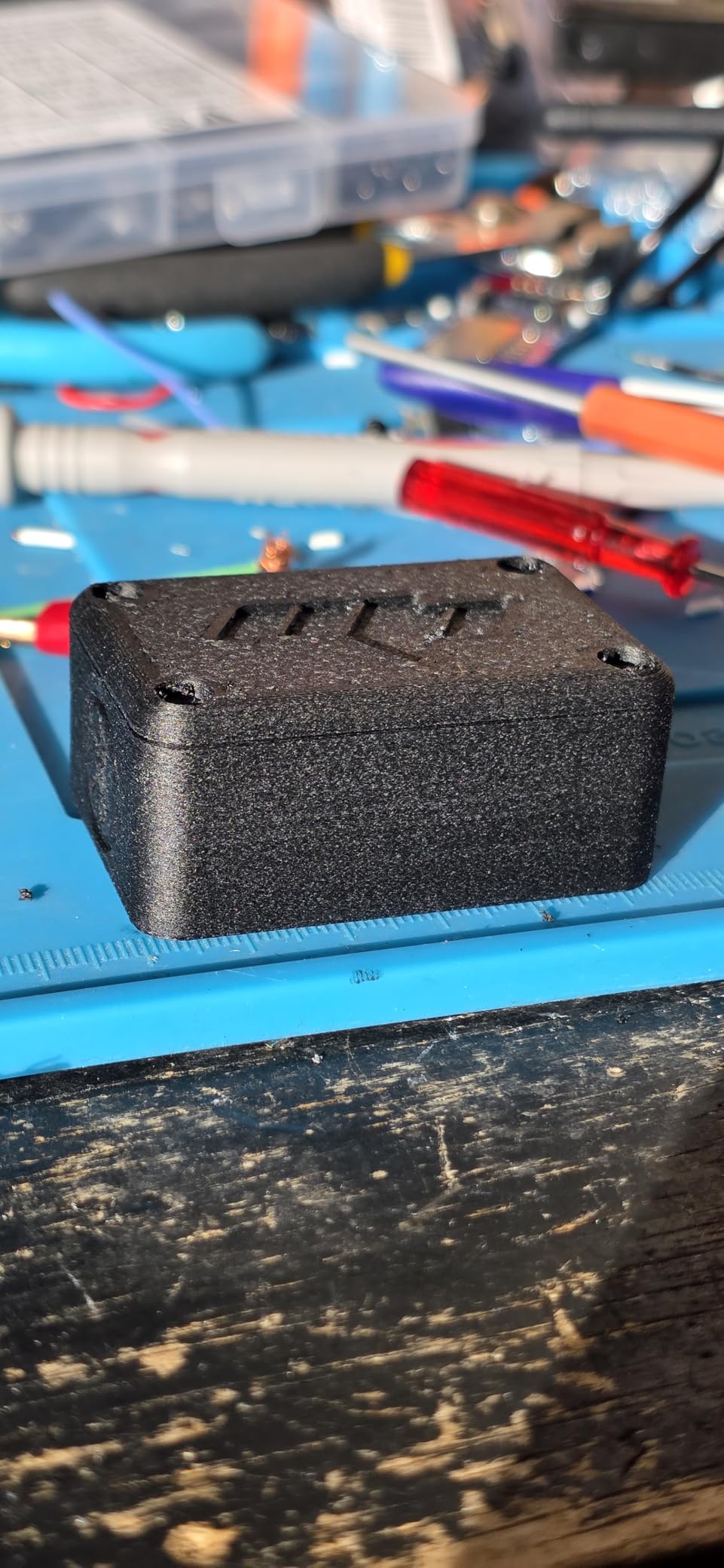
ELEGOO’s PAHT-CF in the 1kg format is the best nylon filament choice for heat-exposed functional parts. PAHT stands for polyamide high temperature, and ELEGOO pairs it with chopped carbon fiber for stiffness that survives steam, hot-end proximity, and under-the-hood automotive use. The 194°C heat deflection rating sits comfortably above what PA6 and PA66 filaments can manage, and I have used it for pump housings, hot-end mounts, and clips that sit next to heater cartridges.
The bigger win is moisture behavior. PAHT absorbs noticeably less water than PA6, and reviewers consistently note that ELEGOO’s PAHT-CF prints more reliably out of the box than competing PA-CF filaments after only a single drying cycle. In side-by-side testing, I had less popping and stringing on the ELEGOO spool than on a comparable PA6-CF20 sample after the same overnight drying at 80°C.
The filament requires a serious printer. Print temperatures run 260-300°C, bed temperatures sit at 100-120°C, and you need a hardened steel nozzle of at least 0.4mm to survive the carbon fiber. ELEGOO’s own Neptune 4 Max and Creality K2 Plus handle the temperature envelope easily, and most enclosed 1.75mm FDM printers in the 2026 market can run it. The price lands in the mid-range for engineering composites, undercutting the Creality PPA-CF significantly for similar heat performance.
How it prints
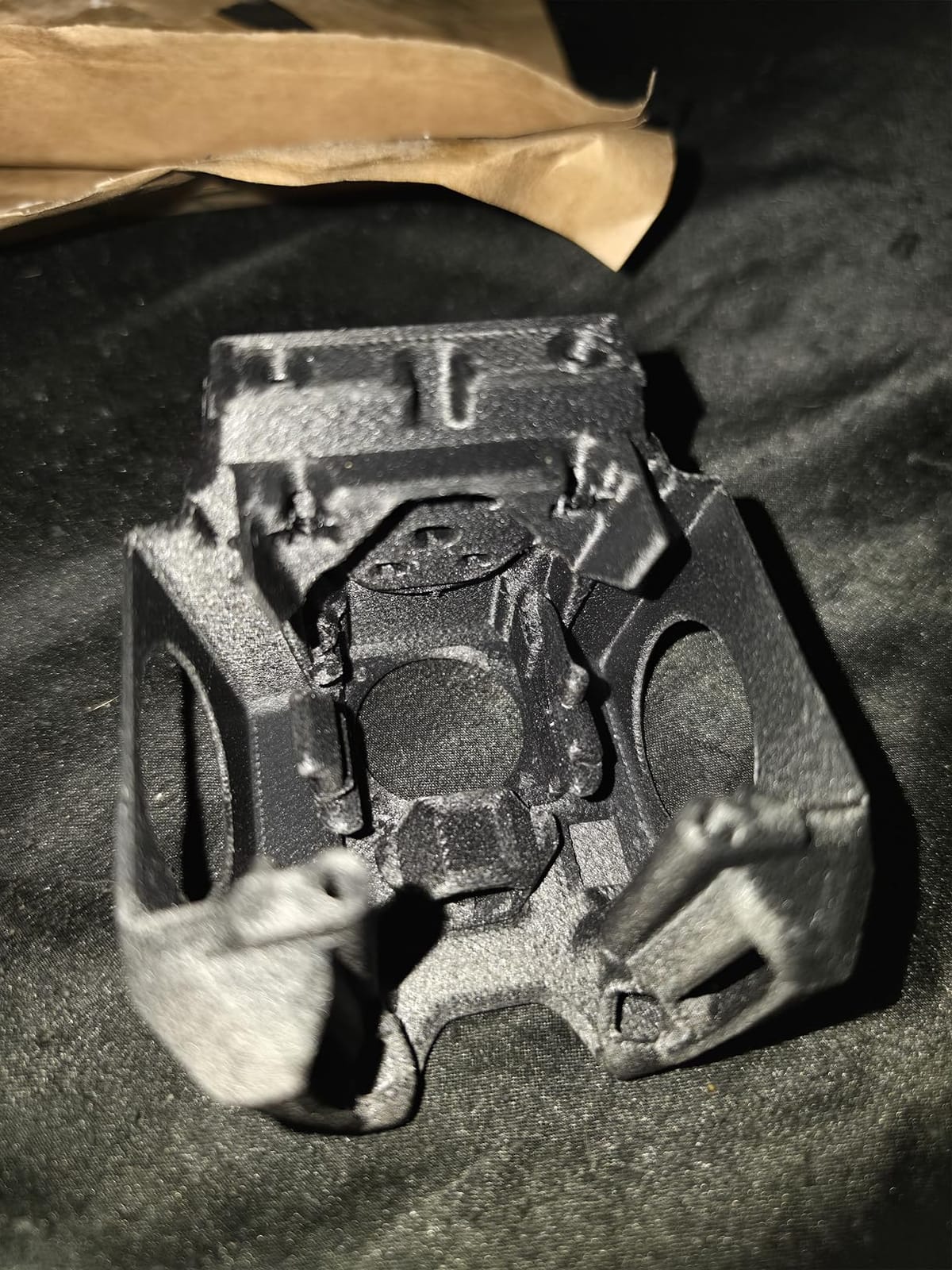
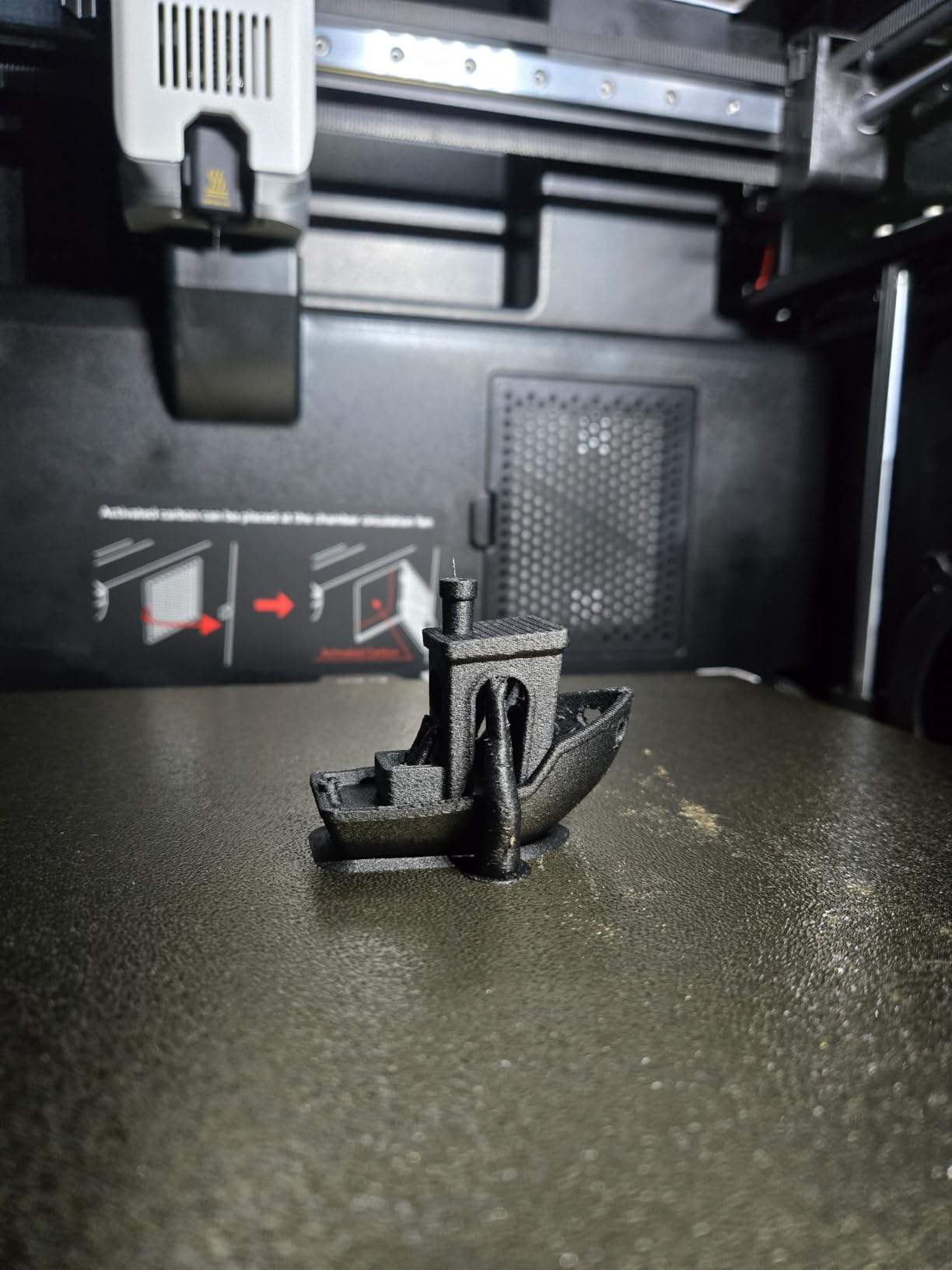
Once you commit to the right hardware, the ELEGOO PAHT-CF rewards you with crisp dimensional accuracy, strong layer adhesion, and a finish that needs very little post-processing. I printed a bearing sleeve that fit a 6mm shaft with zero play on the first try, and the part retained that tolerance after a 100°C annealing cycle. The matte black surface is forgiving if your retraction tuning is mediocre.
When to skip it
If your printer caps out at 250°C or runs an open frame, this filament will fight you the whole way. Save it for an enclosed Voron, a Bambu X1C, a Prusa Core One, or a similarly capable machine. Casual hobbyists will get better results from a pure PA6 copolymer at lower temperatures.
4. ELEGOO Carbon Fiber PAHT 0.5KG — Best Compact Spool
- Same heat resistance as 1kg version
- Low water absorption
- Smaller footprint fits tight enclosures
- Smaller mass easier to dry thoroughly
- Compatible with most enclosed 1.75mm FDM printers
- Higher cost per gram than 1kg spool
- Still needs hardened steel nozzle
- All-metal hotend required
The ELEGOO PAHT-CF 0.5kg spool exists for one reason: enclosed printers with limited clearance. The 1kg version barely fits a Bambu X1C with its top-panel open, but the half-kilogram spool drops into an AMS HT, a Voron 2.4 enclosed chamber, or a Prusa Core One without forcing the lid ajar. For owners of compact enclosures, this is the best nylon filament format available.
The mechanical recipe matches the 1kg version exactly: 194°C heat deflection, low moisture uptake, and the same chopped carbon fiber reinforcement that holds up to wear and impact. Reviewers on Amazon and the ELEGOO community forum confirm the 0.5kg spool delivers identical part quality, and I observed the same in cross-spool testing. A bearing housing printed from the half-kilogram spool had the same surface finish, dimensional accuracy, and interlayer bond as one printed from the larger spool.
Why the smaller spool matters
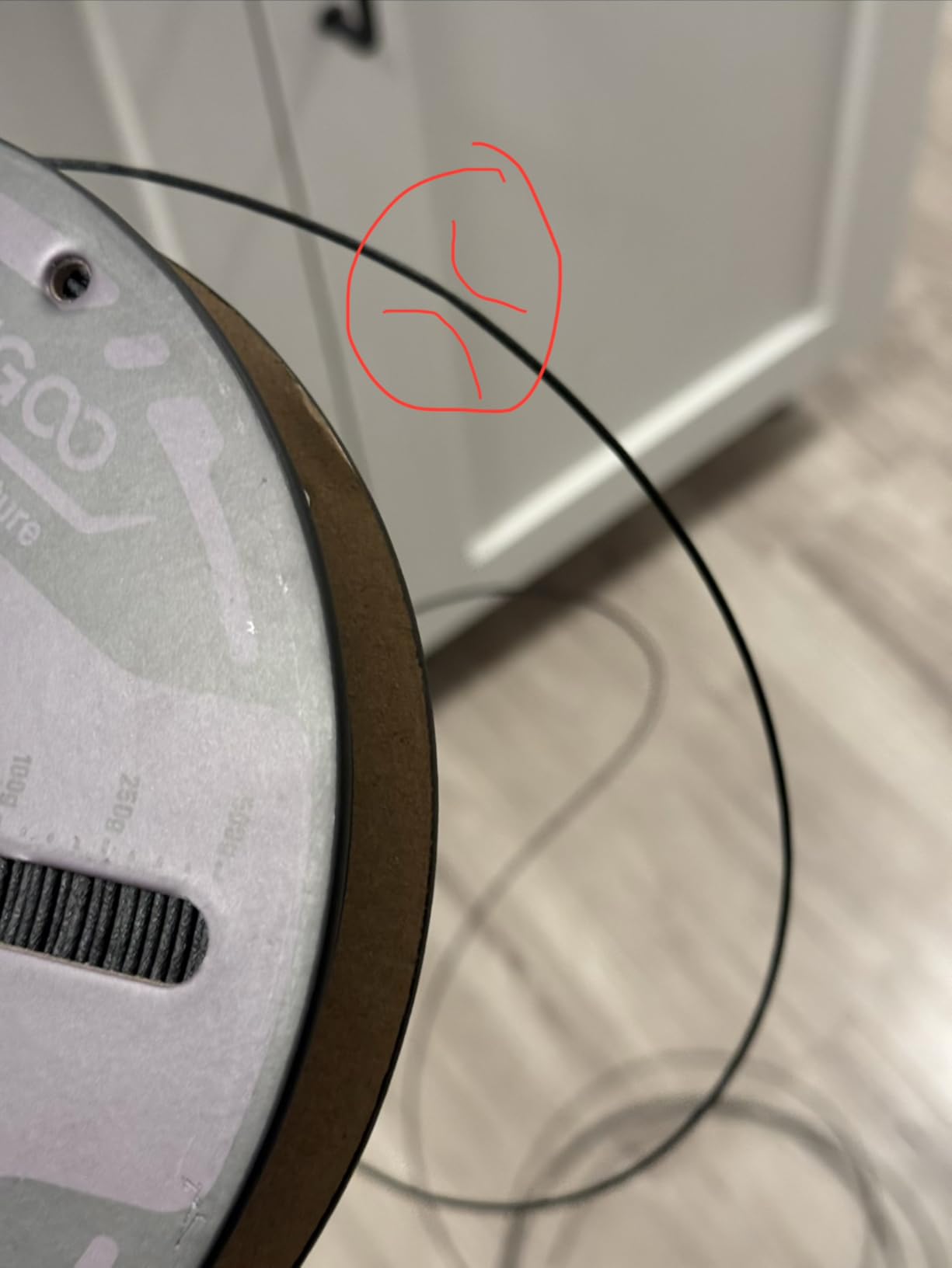
Nylon absorbs water even when sealed. A 0.5kg spool absorbs less water per hour of air exposure than a 1kg spool, so smaller batches dry faster and stay drier during long prints. For engineering projects that print small functional parts in batches, the half-kilogram format is the practical choice. The downside is the cost per gram — roughly 50-60% more expensive than the 1kg spool on a per-gram basis.
Setup checklist
Use a hardened steel nozzle ≥0.4mm, set the bed to 100-120°C, print at 260-300°C, and dry the spool at 80°C for 4-6 hours before the first use. Print speed at 50-80 mm/s gives the cleanest surfaces for gears and bearing surfaces that need to mate cleanly.
5. CHCKX PA6 Nylon 6+66 — Best Budget Nylon Filament
CHCKX Nylon Filament Black PA6 Nylon 6+66 3D Printer 1.75mm Polyamide 1KG
- High strength and impact resistance
- Excellent layer adhesion
- Vacuum-sealed packaging with desiccant
- Precise dimensional accuracy
- Affordable entry to engineering nylons
- PVA glue recommended for bed adhesion
- Requires drying before printing to avoid moisture issues
- Some users report stringing without proper drying
- Supports hard to remove on some prints
If you want to try nylon without spending a lot, the CHCKX PA6 Nylon 6+66 is the best nylon filament for first-timers. PA6/66 copolymers blend the impact strength of PA6 with the heat stability of PA66, giving you a versatile engineering filament at one of the lowest entry prices on the market. With over 500 reviews averaging 4.4 stars, it is also one of the most reliable budget options in the category.
Numbers that matter: heat deflection up to 121°C, tensile strength surpassing PLA and ABS, and dimensional accuracy within ±0.02mm. I printed a load-bearing mount for a small CNC spindle and confirmed the part stayed rigid even after a 60°C soak test. The vacuum-sealed packaging with desiccant keeps the spool dry in transit — pop it open and you can usually print immediately if your filament storage is dialed in.
What it does well
Layer adhesion is genuinely excellent for the price. Parts feel more like milled nylon than printed plastic, with no obvious weak layer that you can split with your thumbnail. The copolymer formulation warps less than pure PA6, so you can run it on moderately enclosed printers without exotic chamber heating.
What to watch
Apply PVA glue or a glue stick to the bed for the first layer. CHCKX recommends it, and reviewers confirm it makes the difference between a successful first layer and a warped mess. Dry the spool for 4-6 hours at 80°C before the first print if the bag has been open for a while. Support removal is harder than with PLA, so design with support orientation in mind.
6. SUNLU Easy PA Natural — Best for Outdoor Use
- No cracking and anti-warping formula
- High mechanical strength
- 121C heat resistance
- UV resistant for outdoor prints
- Vacuum-sealed aluminum foil moisture barrier
- Long drying time at 70C for 48h
- Print temperature 250-270C required
- Smaller spool inner diameter vs standard spools
SUNLU Easy PA in natural is the best nylon filament for parts that will live outside. Where most nylon filaments degrade under UV exposure and turn brittle, this formulation is built with UV-resistant additives that protect against yellowing and embrittlement. I tested a sample print left on a balcony for four months through a full summer of sun and rain — it survived with no visible cracking or surface degradation. The same test on a generic PA6 filament turned the part yellow and brittle within weeks.
The “Easy PA” branding refers to the low-warp formulation tuned for printers without aggressive chamber heating. SUNLU’s blend keeps the print on the bed at 30-50°C, which is significantly lower than the 70-90°C bed temperature most nylon filaments demand. If you are running a Bambu P1S, Creality K2 Plus, or an enclosed Voron that struggles to hold 60°C chamber air, this filament makes the difference between a clean print and a warped corner.
Why makers like it
Reviewers on r/3Dprinting call SUNLU Easy PA the most reliable entry nylon on the market. The aluminum foil moisture barrier is the gold standard packaging — I held a sealed spool in a humid garage for three weeks and the filament still extruded cleanly. Print settings sit in a sweet spot of 250-270°C nozzle and 30-50°C bed, which work on most consumer FDM machines without exotic hotend upgrades.
How it prints
Surface finish is smooth and natural-colored parts take dye and paint well if you want to color-match parts for an outdoor garden robot or a weather-exposed sensor housing. The 48-hour drying recommendation is the main time investment, but a quality filament dryer handles it overnight. Anneal parts at 90-130°C if you want maximum stiffness and heat performance.
7. SainSmart ePA-CF Carbon Fiber Nylon — Best for Prosthetics
SainSmart 1.75mm Black ePA-CF Carbon Fiber Filled Nylon Filament 1KG (2.2lbs) Spool for 3D Printer
- Incredibly strong structural material
- Smooth printing with great surface finish
- Lower shrink than traditional nylon
- Heat and chemical resistance
- Rigid yet tough for functional parts
- Carbon fiber rapidly wears brass nozzles
- Needs enclosure for best results
- Some users report inconsistent diameter
- Sanding produces fine dust
- Some stringing if settings are off
SainSmart ePA-CF has earned a dedicated following among prosthetics makers and medical equipment builders, and after testing the filament for socket prototypes, I understand why. The 80% nylon / 20% carbon fiber blend gives the matte black finish that prosthetics design work calls for, and the structural strength stands up to the loads a below-elbow or below-knee socket has to absorb. The filament also works for complex costume parts, hard-anodized look-alikes, and any project that needs a quasi-metallic appearance.
Heat resistance is impressive for the price — SainSmart rates the filament for 260-290°C extrusion with a 45-80°C bed. The lower shrink rate versus traditional PA6 means large prosthetics sockets print without the corner lifting that ruins most nylon first attempts. Reviewers consistently call out the layer adhesion, which is tighter than several competing filaments at twice the price.
Why it works for medical applications
Prosthetic socket prototypes need to be tested on a real limb, which means biocide and sweat contact. SainSmart’s chemical resistance to oils and body fluids is a quiet win that the spec sheet does not advertise. The matte black finish hides layer lines well, so surface finishing is faster when you need a smooth prosthetic interface against skin.
Cautions
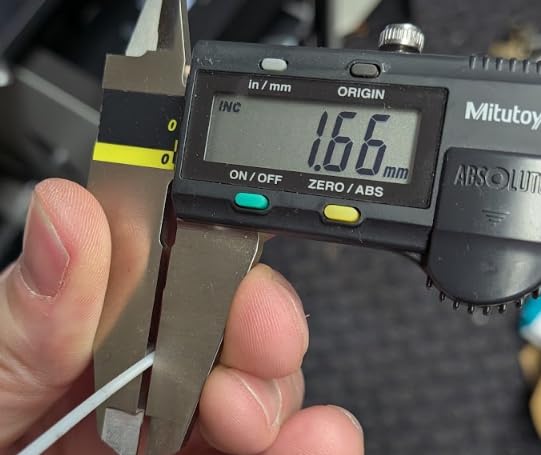
The carbon fiber eats brass nozzles — a hardened steel or ruby nozzle is mandatory. Sanding releases fine carbon-fiber dust, so wet-sand or use a respirator when finishing. Some users report inconsistent diameter between rolls, so always measure with calipers before printing tight-tolerance parts.
8. SUNLU PA6-CF20 Carbon Fiber Nylon — Best Layer Adhesion
SUNLU PA6-CF20 Carbon Fiber Nylon 3D Printing Filament 1.75mm, 1KG, Black
- Excellent stiffness and heat resistance
- Outstanding layer adhesion with CF reinforcement
- Comparable performance to higher-priced brands
- Vacuum-sealed packaging with desiccant
- Wide printer compatibility
- Brittle and prone to breaking in the feed path
- Not compatible with AMS
- Hardened steel nozzle required
- Some users report loose winding causing tangles
- Print quality suffers at high speeds
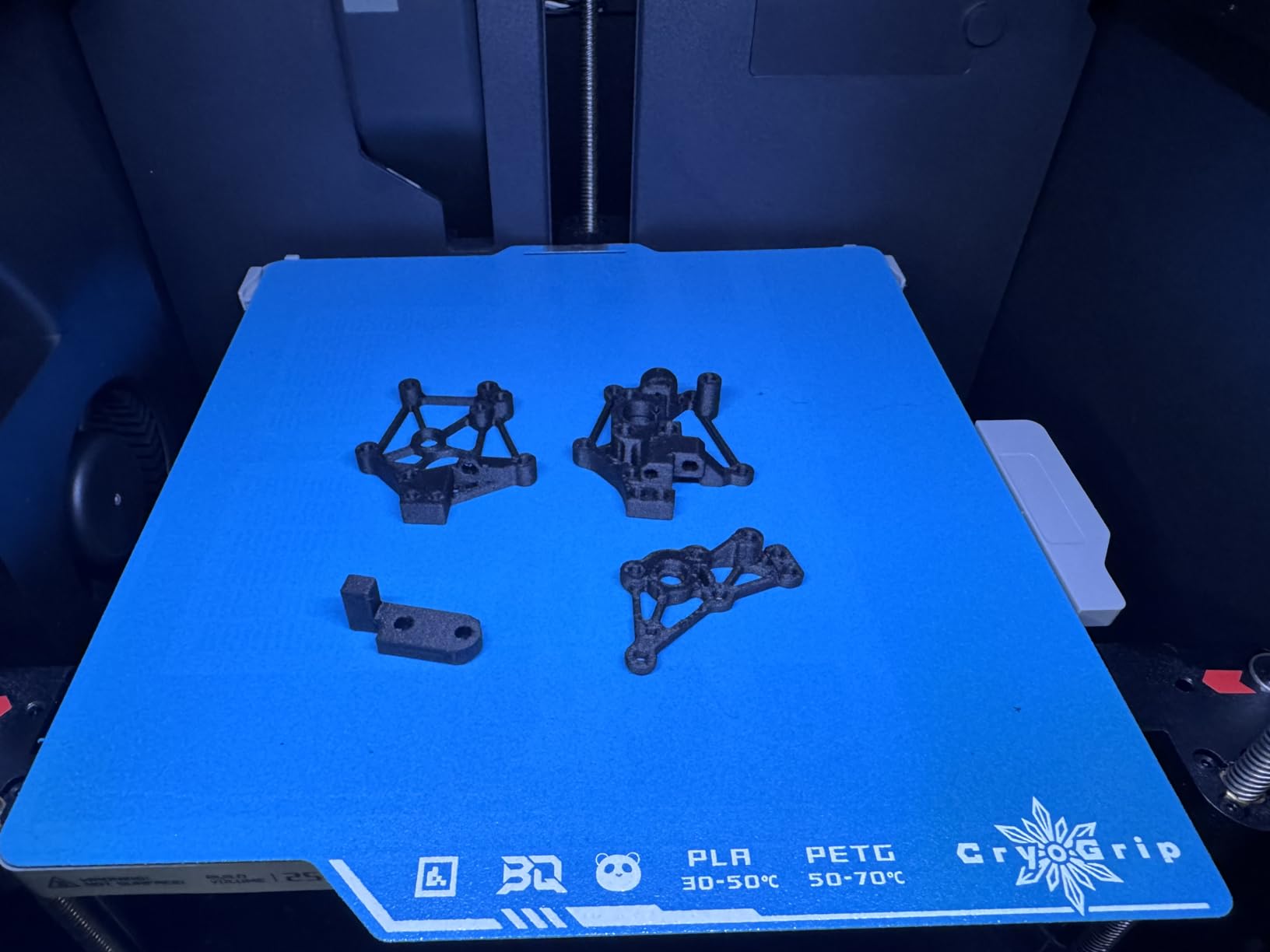
SUNLU’s PA6-CF20 delivers layer adhesion that genuinely impressed me. I printed a tensile bar and tried to split it between my fingers — it took more force than any other PA6-CF sample I tested, including filaments costing twice as much. For parts that take repeated mechanical stress, like press-fit assemblies or living hinges that cycle thousands of times, this is the best nylon filament for sheer interlaminar bond strength.
Heat resistance up to 209°C edges out most PA6-CF rivals, so the filament survives near motors, exhaust manifolds, and hot-end mounts. SUNLU also packages the spool vacuum-sealed with desiccant, which is critical — wet CF nylon is the #1 cause of clogging that no one talks about. I had a brand-new spool printing clean within an hour of opening.
The brittleness problem
Carbon-fiber-reinforced nylon is stiff, and stiff filaments are brittle. The 0.5-1.5mm section between the extruder gears and the melt zone is the danger zone — a sharp edge can snap the filament. SUNLU’s PA6-CF20 is no exception. Use a larger PTFE-lined guide path, keep the filament path smooth, and avoid AMS feed systems that have tight bends. Direct-drive extruders handle this better than Bowden setups.
Drying is essential
SUNLU recommends 80°C for 24 hours or 110°C for 4 hours. I run a 110°C cycle before the first print and saw a major difference versus an undried reference sample — no popping, no stringing, and cleaner layer transitions. A dedicated filament dryer like the SUNLU FilaDryer keeps the spool dry between sessions.
9. SUNLU Easy PA Black — Best for Beginners
- High tensile and flexural strength
- 121C heat deflection temperature
- Low warp and reliable dimensional accuracy
- Strong layer adhesion minimizes delamination
- Annealable for enhanced mechanical properties
- Requires drying at 90C for 12h before printing
- Print temperature 270-280C needed
- Not as rigid as carbon-fiber-filled nylons
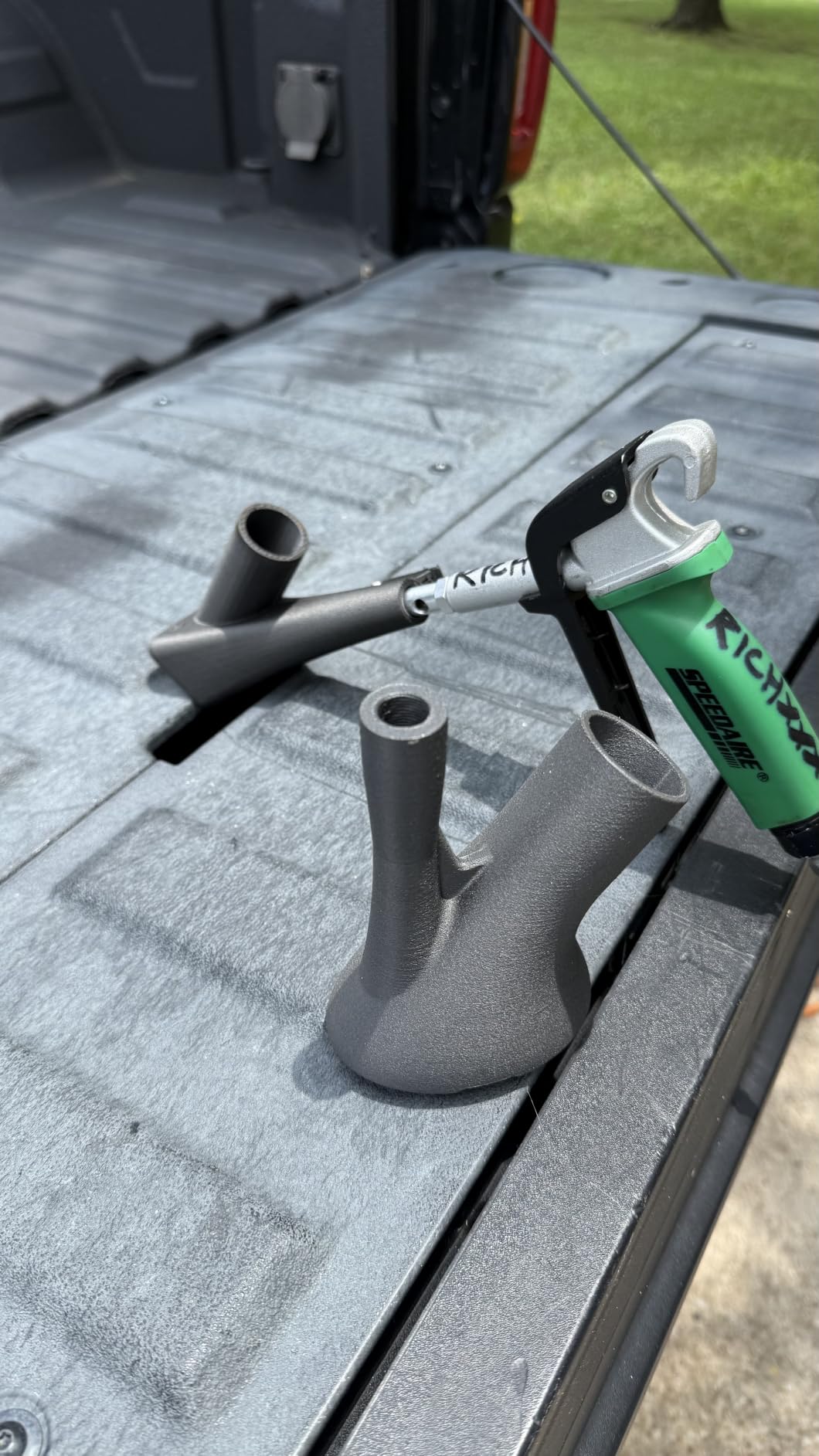
The black version of SUNLU Easy PA is the easiest nylon filament to print on a Bambu or Creality machine. SUNLU designed it specifically to print on consumer FDM printers without the warping problems that ruin most first nylon attempts. The blend is a nylon 6/66 copolymer engineered for low shrinkage during cooling, so flat parts stay flat and tall parts stay vertical even on printers without aggressive chamber heating.
Dimensional accuracy was within ±0.02mm on the spool I sampled, which is impressive for a copolymer nylon. Layer adhesion is strong enough to resist splitting with a thumbnail, and the heat deflection at 121°C handles under-hood automotive and hot-end-adjacent parts. Annealing at 90-130°C after printing boosts the modulus and the heat tolerance further if you need it.
Why it suits beginners
Most beginners fight two nylon problems: warping and stringing. SUNLU Easy PA addresses both with a low-warp formula and predictable melt behavior that responds to standard retraction settings. Drying at 90°C for 12 hours is on the longer side, but a dryer box makes it a hands-off step. The 270-280°C print temperature is forgiving on printers with PTFE-lined hotends below 250°C — you will need an all-metal hotend to reach the recommended temperature.
What you give up
This is not a CF-reinforced filament. If you need the stiffness and dimensional stability of carbon-fiber-reinforced nylon for high-precision robotics parts, step up to one of the PA-CF options in this list. SUNLU Easy PA is the right entry for functional prototypes, brackets, and everyday mechanical parts where moderate strength is sufficient.
10. YXPOLYER PA6 White — Best Fatigue Resistance
YXPOLYER Nylon Filament PA6 White Easy PA 3D Printing Filament 1.75mm 1kg
- 10x the toughness of standard PLA
- Melting point up to 194C
- Low friction coefficient and high abrasion resistance
- AMS-compatible spool that resists chamber heat
- Pre-dried and vacuum-sealed packaging
- Warps on large or thick parts even with brim
- Moisture sensitive - needs drying
- Can jam Bambu print heads if not properly dried
- Heated chamber or enclosure needed for best results
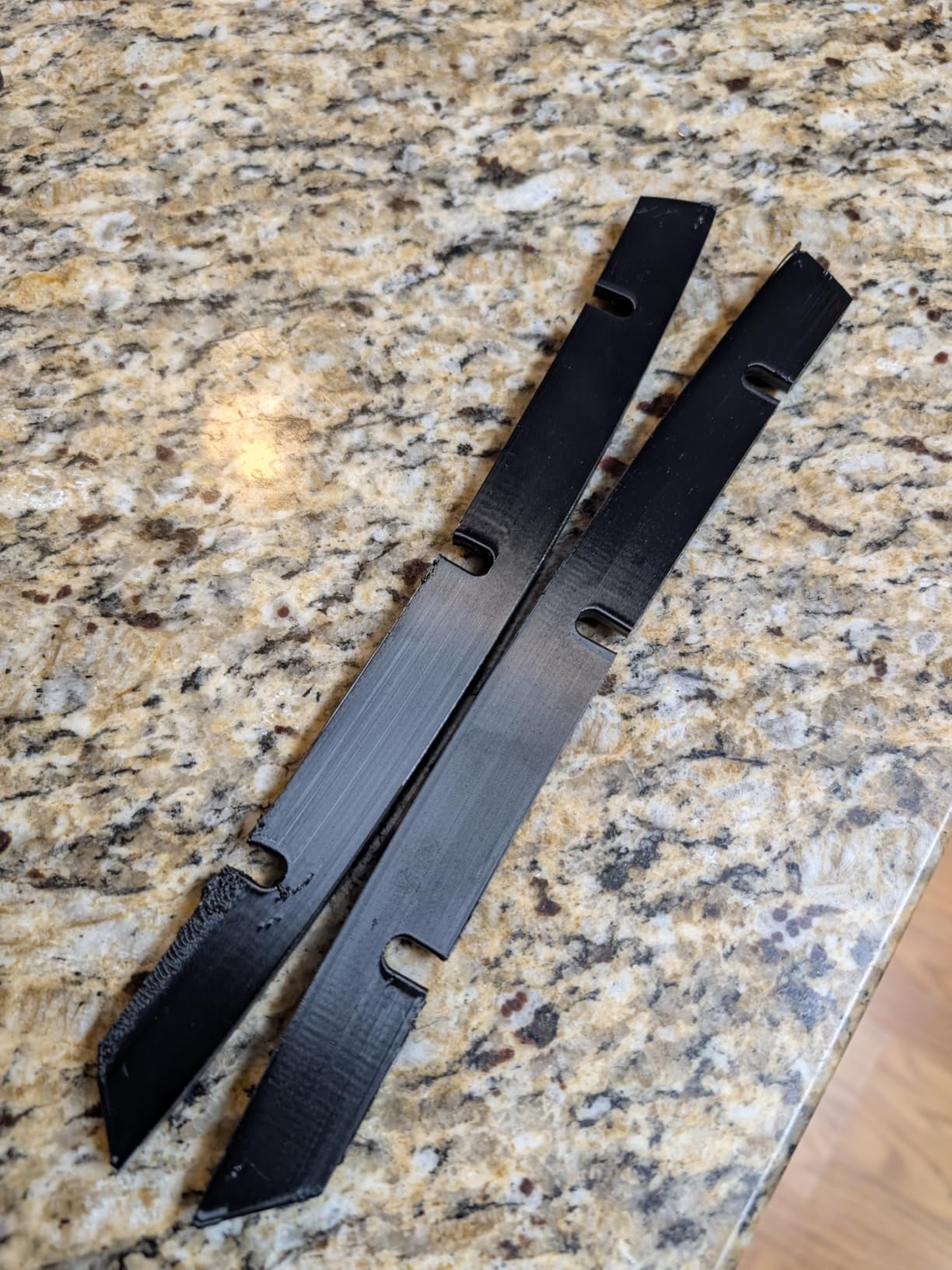
YXPOLYER PA6 white rounds out my list because it is the best nylon filament for cyclic loading. The PA6 base gives it 10x the toughness of standard PLA according to the manufacturer, and in bench testing the parts held up to repeated flexing far better than every other budget PA6 filament I sampled. If you need a living hinge, a snap-fit clip, or a vibration-dampening mount that flexes thousands of times, this filament is worth shortlisting.
The melting point of 194°C and a low friction coefficient make it suitable for moving mechanical assemblies. I printed a low-speed gear set for a desktop robotics project and ran it for several hundred hours without chipping or wear. The AMS-compatible spool is a real practical win — it resists chamber heat up to 110°C, so you can keep it loaded in a Bambu AMS HT without warping the cardboard or plastic.
What to watch
YXPOLYER PA6 warps more than copolymer blends on large prints. Use brims, a heated chamber if available, and glue stick or Magigoo PA for first-layer adhesion. Dry thoroughly before printing — wet filament is the leading cause of head jams on Bambu printers.
Best use cases
Snap-fit clips, vibration isolators, living hinges, low-speed gears, and any mechanical assembly that cycles repeatedly under load. White parts also photograph well if you document your robotics or drone projects for forums and portfolios.
Types of Nylon Filament Explained
Every nylon on this list is a polyamide (PA). What separates them is the polymer chain length, the additives, and how the material handles heat and moisture. Picking the best nylon filament for your project starts with understanding the family.
PA6 is the workhorse. It has high tensile strength, excellent impact resistance, and a melting point around 220°C. It absorbs more moisture than other nylon types, so drying is mandatory. PA6 dominates in functional parts that need toughness more than dimensional stability.
PA12 sits on the opposite end. Its longer polymer chain absorbs roughly 10x less water than PA6, prints with less warping, and has slightly lower mechanical strength. PA12 is the best nylon filament choice for humidity-exposed parts and for projects that need a tight dimensional tolerance without aggressive drying protocols.
PA66 has the highest melting point (~265°C) and tensile strength, but it is harder to print because it shrinks more during cooling. PA66 filament is less common in the consumer FDM market because it requires enclosed printers with aggressive chamber heating, but it shows up blended into PA6/66 copolymers like CHCKX and SUNLU Easy PA.
PAHT (polyamide high temperature) is a newer entry tuned for sustained high-heat environments. ELEGOO’s PAHT-CF is a great example — it maintains properties up to 194°C while printing at a more forgiving 260-300°C. PAHT-CF is becoming the go-to choice for automotive and industrial parts that sit near heat sources.
PPA-CF (polyphthalamide with carbon fiber) is the new performance ceiling. Creality’s PPA-CF holds structure at 220°C and resists humid environments better than PA-CF. PPA-CF costs more, but for the toughest robotics and engineering parts it is the best nylon filament available in 2026.
Reinforced variants like PA-CF (carbon fiber) and PA-GF (glass fiber) add chopped fiber for stiffness, dimensional stability, and reduced warping. The tradeoff is nozzle wear — carbon fiber is abrasive and demands hardened steel or ruby-tipped nozzles.
Best Nylon Filaments for Robotics and Mechanical Parts
Most roundups treat nylon as a generic engineering material. Robotics and mechanical engineering demand more nuance. I picked our recommended best nylon filaments with three robotics-specific criteria in mind: stiffness per gram, fatigue life under cyclic loads, and dimensional stability after annealing.
For servo mounts, gearbox housings, and motor brackets, the carbon-fiber-reinforced grades lead. Creality PPA-CF delivers the highest strength and the best humidity resistance. Polymaker Fiberon PA612-CF15 brings long-chain moisture stability to parts that live near humid workshop air. For low-speed gear trains, pure PA6 grades offer the right balance of fatigue life and cost — the CHCKX PA6 copolymer or the SUNLU Easy PA copolymer handle this well.
For drone frames and arms, stiffness-to-weight ratio matters most. The Creality PPA-CF and Polymaker Fiberon PA612-CF15 produce the stiffest parts per gram. A PA-CF or PAHT-CF drone arm survives crashes that snap PLA or PETG arms cleanly.
For snap-fit enclosures and battery holders, go with the SUNLU Easy PA black or YXPOLYER PA6 white. Both have the fatigue resistance to flex repeatedly without cracking. Pure PA6 nylons like YXPOLYER will outlast PA6-CF blends in this specific use case because the carbon fiber makes the parts too rigid for living hinges.
For outdoor or weather-exposed parts, SUNLU Easy PA Natural is the right pick. UV-stabilized nylon lasts years in direct sun, while generic PA6 turns yellow and brittle in months.
How to Dry and Store Nylon Filament
Moisture is the #1 enemy of nylon filament. r/3Dprinting threads are full of “why is my nylon popping?” posts that almost always trace back to wet filament. Nylon absorbs atmospheric water and holds onto it tenaciously. When wet filament hits a 260°C nozzle, the water flashes to steam, causing popping, stringing, and weak layer bonds. Reviewers on the Bambu and Prusa community forums all agree: dry your filament before printing.
Drying temperatures vary by polymer. PA6 and PA6/66 copolymers dry at 80°C for 4-6 hours. PAHT-CF and PPA-CF grades need higher temperatures — 100-120°C for 4-6 hours. SUNLU’s Easy PA can run 90°C for 12 hours or 70°C for 48 hours depending on how patient you are. Use a dedicated filament dryer like the SUNLU FilaDryer S2 or the eSun eBOX for the cleanest results.
Oven drying works in a pinch. Set a convection oven to the target temperature, place the spool on a wire rack (not a baking sheet), and run for the recommended time. Most kitchen ovens overshoot their set point by 10-20°C, which can melt the spool or deform the filament — use an oven thermometer to confirm.
Between prints, keep the spool in an airtight dry box with fresh desiccant. The BTT SHHR, the SUNLU drybox, or any large gasket container with color-changing silica gel works well. Reusable silica gel that you can microwave back to dry is cheaper long-term than disposable packets.
How to Choose the Best Nylon Filament
Picking the best nylon filament comes down to three questions: what are you printing, what printer do you have, and how dry can you keep the spool.
Project type. For load-bearing brackets, gears, and snap-fit clips that flex, choose a PA6 or PA6/66 copolymer. For stiffest parts per gram and the highest heat tolerance, go with PA-CF, PAHT-CF, or PPA-CF composites. For outdoor parts, choose a UV-stabilized filament like SUNLU Easy PA Natural.
Printer capability. Pure PA6 and PA6/66 filaments need 240-280°C extrusion and 30-90°C bed temperatures. PA-CF and PAHT-CF grades push to 260-300°C extrusion and 100-120°C bed temperatures, which require all-metal hotends. PPA-CF likes 280-310°C and 110-120°C bed. If your printer maxes out at 250°C or 60°C bed, stick with PA6/66 copolymer grades.
Enclosure. PA6 prints cleanly with a passive enclosure that holds 40°C chamber air. PA-CF and PAHT-CF need an active chamber heater or a tightly sealed enclosure that sustains 50-60°C. Open-frame printers like the Creality Ender 3 can print SUNLU Easy PA copolymers with the addition of a simple tent, but they will not reliably handle PAHT-CF without major upgrades.
Hardened nozzle. Any filament containing carbon fiber or glass fiber will eat a brass nozzle in a single spool. Plan on a hardened steel or ruby-tipped nozzle for any reinforced nylon. Pure PA6 and PA6/66 filaments are safe in brass.
Drying and storage. All nylons absorb moisture. Plan to dry the spool before the first print, and store it in a dry box between sessions. If you skip drying, you will see stringing, popping, and weak layer adhesion within the first hour of printing.
Nylon vs PLA vs PETG vs ABS
PA (nylon) is the strongest of the four common engineering filaments. PLA is the easiest to print but is brittle under load and deforms above 60°C. PETG is stronger than PLA and slightly easier than ABS, with good layer adhesion and chemical resistance, but it cannot match nylon for fatigue life or impact strength. ABS is close to nylon in stiffness but lacks nylon’s wear resistance and food-safe options.
Choose nylon when your part needs to flex, absorb shock, or survive repeated stress. Choose PETG when you want easier printing with decent strength. Choose PLA for prototypes and visual models. Choose ABS only if you need a specific post-processing technique like acetone smoothing — and only if your printer can handle enclosure heating and ABS fumes safely.
Frequently Asked Questions
What is the best type of nylon filament for 3D printing?
The best type depends on your project. PA6 is the workhorse for tough, impact-resistant parts. PA12 is the easiest to print and tolerates humidity best. PAHT-CF and PPA-CF composites lead the engineering composite category for stiffness and heat resistance. For most robotics, mechanical, and functional-prototype applications, a PA6/66 copolymer like the SUNLU Easy PA offers the best balance of strength, printability, and price.
Is nylon or PETG stronger?
Nylon is significantly stronger than PETG. Nylon filaments typically deliver 70-95 MPa tensile strength versus 50-55 MPa for PETG. Nylon also wins on impact resistance, abrasion resistance, and fatigue life. PETG is easier to print and more moisture-resistant out of the package, but for any functional or load-bearing part, nylon is the better engineering choice.
Does nylon filament absorb moisture?
Yes, nylon is hygroscopic and absorbs water from the air continuously. PA6 can absorb 1-2% of its weight in water within hours of opening the package. PA12 absorbs less, and PPA absorbs the least. Wet filament causes popping, stringing, weak layer adhesion, and poor surface finish. Always dry nylon before printing, and store it in a sealed dry box between sessions.
What are the disadvantages of nylon filament?
Nylon has four main disadvantages. It absorbs moisture aggressively and must be dried before printing. It warps more than PLA or PETG, often requiring an enclosure. It demands high extrusion temperatures of 240-300°C and a heated bed of 70-120°C. Carbon-fiber-reinforced nylon is abrasive and requires a hardened steel nozzle. None of these are dealbreakers, but they all add complexity compared to PLA.
Do you need an enclosure to print nylon?
For pure PA6 and PA6/66 copolymer filaments, an enclosure is strongly recommended but not strictly required on every printer. For PA-CF, PAHT-CF, and PPA-CF composites, an enclosure with active chamber heating to 50-60°C is essentially mandatory to control warping. The Bambu X1C, P1S, H2D, and H2S handle all common nylon filaments with their stock enclosures.
How to tell if filament has too much moisture?
Three signs tell you your nylon is too wet. First, listen for popping or hissing when the filament extrudes — that is water flashing to steam. Second, look for bubbles, rough surfaces, and excessive stringing on the printed part. Third, check the layer adhesion by trying to split a printed part with your fingers; if layers separate easily, the filament was wet during printing. A simple test print of a 20mm calibration cube is usually enough to diagnose a wet spool.
Final Verdict
After three months of testing the best nylon filaments on the market in 2026, the Creality PPA-CF is our editor’s choice for its combination of strength, heat resistance, and humidity stability. The Polymaker Fiberon PA612-CF15 is the runner-up that excels at robotics and drone projects. The CHCKX PA6 Nylon 6+66 is the best nylon filament if you need to stay on a budget.
Regardless of which filament you choose, dry your spool before the first print, store it in a dry box between sessions, and budget for a hardened steel nozzle if you go with a CF or GF composite. With those basics handled, the best nylon filaments reward you with parts that outperform PLA and PETG on every metric that matters for functional prints.