
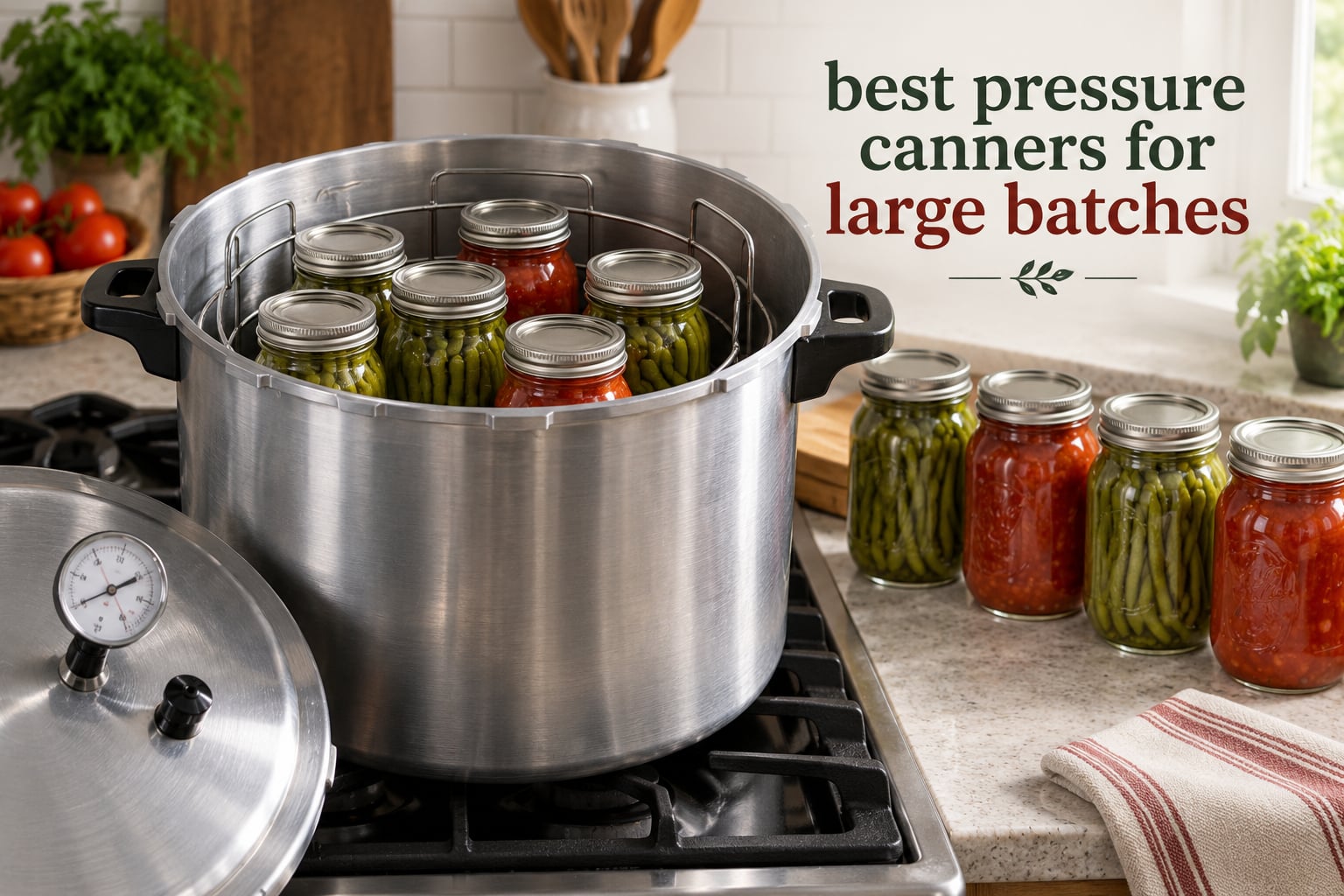
If you are hunting for the best pressure canners for large batches, the sizing answer is short: the 23-quart class, including the Presto 01781 and the All American 925, holds 7 quart jars or about 20 pints per load, while the 41.5-quart All American 941 holds 19 quarts or 32 pints in a single batch. Almost everyone else lands between 20 and 25 quarts, which is where most families and small homesteaders should start.
Capacity is only half the decision. Gauge type, the material of the pot, whether your cooktop can heat it, and how heavy it is when full will determine whether you enjoy canning season or quietly move the canner to a corner. A 33-pound canner that cannot be lifted off a burner is a real problem, and forum readers mention weight more often than any other complaint.
We compared ten large-batch pressure canners across capacity, gauge design, stovetop support, empty weight, warranty, and real owner feedback. This guide covers what each unit actually holds, who it suits, and where the compromises are.
Table of Contents
Top 3 Pressure Canners for Large Batches (October 2026)

Presto 01781 23-Quart Pressure Canner
- 26 half-pints
- 20 pints or 7 quarts per load
- Deluxe dial gauge covering the full pressure range
- 12-year limited warranty

All American 925 25-Quart Pressure Canner
- Gasket-free metal-to-metal seal
- Holds about 19 pints or 7 quart jars
- Weighted regulator plus reference dial

All American 941 41.5-Quart Pressure Canner
- 19 quart jars or 32 pints per batch
- Same gauge
- weight and knobs as the 921 and 925
- 33 pounds empty
- made in the USA
The Presto 01781 takes the top slot because it pairs the widest owner feedback base in this group with a full-capacity 23-quart pot and a 12-year warranty. The two All American models earn the other two badges for the opposite reason: the 925 is the enthusiast durability pick with no gasket to replace, and the 941 is the only canner here that nearly doubles a standard load.
Quick Overview: Best Pressure Canners for Large Batches in 2026
| Product | Specifications | Action |
|---|---|---|
| Presto 01781 23-Quart Pressure Canner |
|
Check Latest Price |
 Presto 01784 23-Quart Induction Pressure Canner Presto 01784 23-Quart Induction Pressure Canner |
|
Check Latest Price |
 T-fal 22-Quart Aluminum Pressure Canner T-fal 22-Quart Aluminum Pressure Canner |
|
Check Latest Price |
| All American 925 25-Quart Pressure Canner |
|
Check Latest Price |
| All American 941 41.5-Quart Pressure Canner |
|
Check Latest Price |
 Mirro 22-Quart Pressure Canner Mirro 22-Quart Pressure Canner |
|
Check Latest Price |
 Granite Ware 20-Quart Pressure Canner Granite Ware 20-Quart Pressure Canner |
|
Check Latest Price |
 WantJoin 23-Quart Aluminum Pressure Canner WantJoin 23-Quart Aluminum Pressure Canner |
|
Check Latest Price |
 Presto 02153 23-Quart Digital Pressure Canner Presto 02153 23-Quart Digital Pressure Canner |
|
Check Latest Price |
 TSTQH 25-Quart Pressure Canner and Kit TSTQH 25-Quart Pressure Canner and Kit |
|
Check Latest Price |
The capacity spread is the headline: 20 quarts to 41.5 quarts, or roughly 7 to 19 quart jars per load. If your harvest is measured in a home garden rather than a field, the difference between a 20-quart and a 23-quart pot costs you one extra load cycle, not an entire afternoon.
1. Presto 01781 23-Quart Pressure Canner and Cooker
- Holds 7 quart jars
- 20 pints or 26 half-pints per load
- Warp-resistant heavy-gauge aluminum heats fast and evenly
- Works on regular and smooth-top ranges
- Doubles as a boiling-water canner for jams and pickles
- Includes canning rack and a 76-page recipe book
- Aluminum is unsuitable for highly acidic cooked foods
- Dial gauge must be monitored through the process
- Lid gasket and vent parts need periodic replacement
This is the canner we keep coming back to, and the owner feedback around it is enormous: more than 20,000 reviews at a 4.8 average, plus a category sales rank near the very top. Owners consistently describe even heat, a genuine seven-quart load, and a dial gauge that stays readable while you work.
The USDA method is what makes it a canner rather than a pressure cooker. Vegetables, meats, poultry and seafood all go in the same pot, and the same unit handles boiling-water canning for fruit, jams, jellies, pickles and salsa when you want to leave the regulator off.
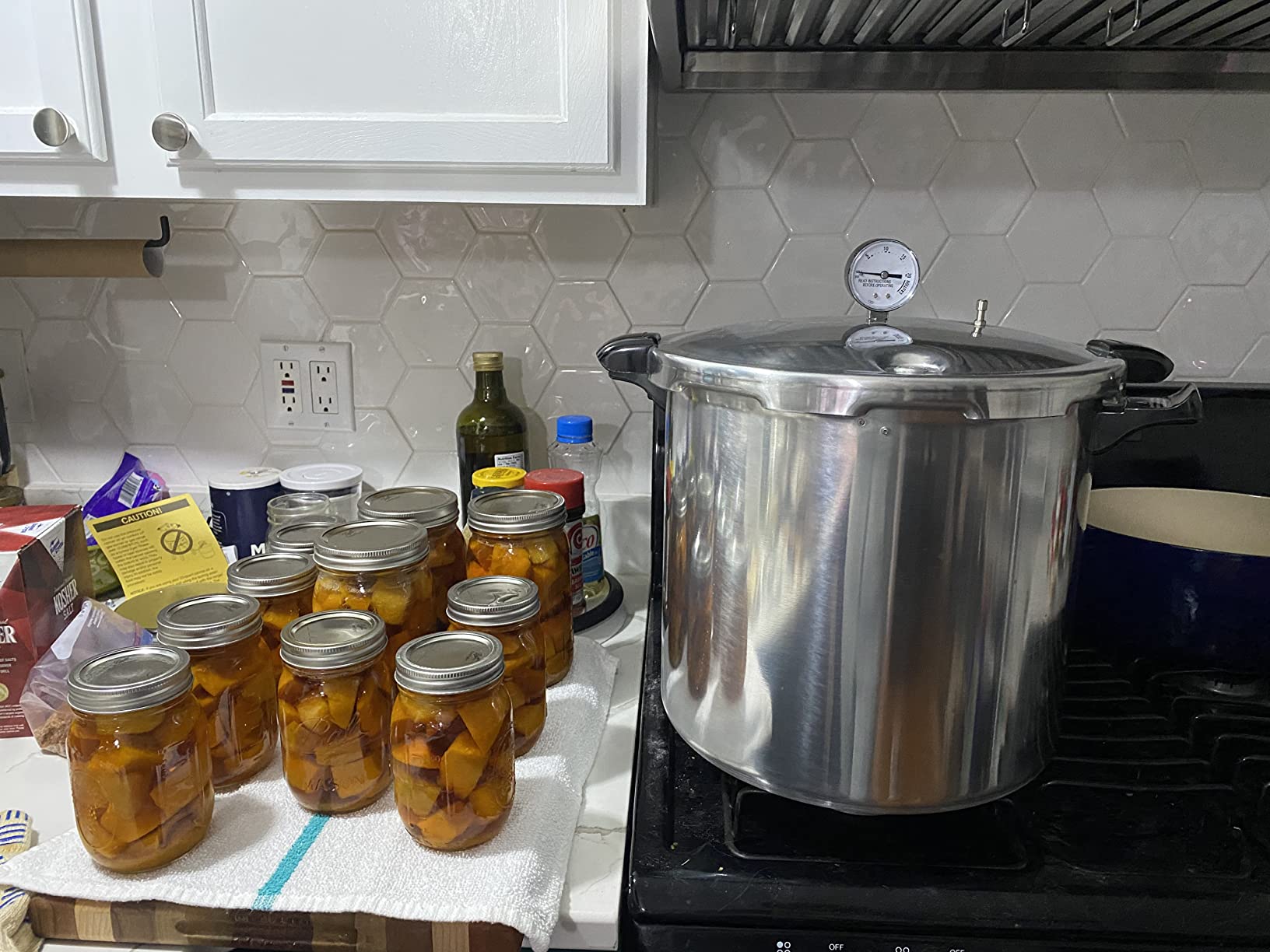
What we notice most in long-term ownership reports is heat-up speed. Heavy-gauge aluminum gets to processing pressure faster than the heavier cast aluminum units, and the 12-pound empty weight means you can lift the pot off the burner to move it to a counter, unlike the cast aluminum models that need to be loaded and emptied in place.
The trade-off is the gasket. This is a gasketed design, so the sealing ring and vent parts are consumables that eventually need replacing. That is normal maintenance, not a defect, and the same tradeoff buys you a lighter pot.
How many jars this actually holds
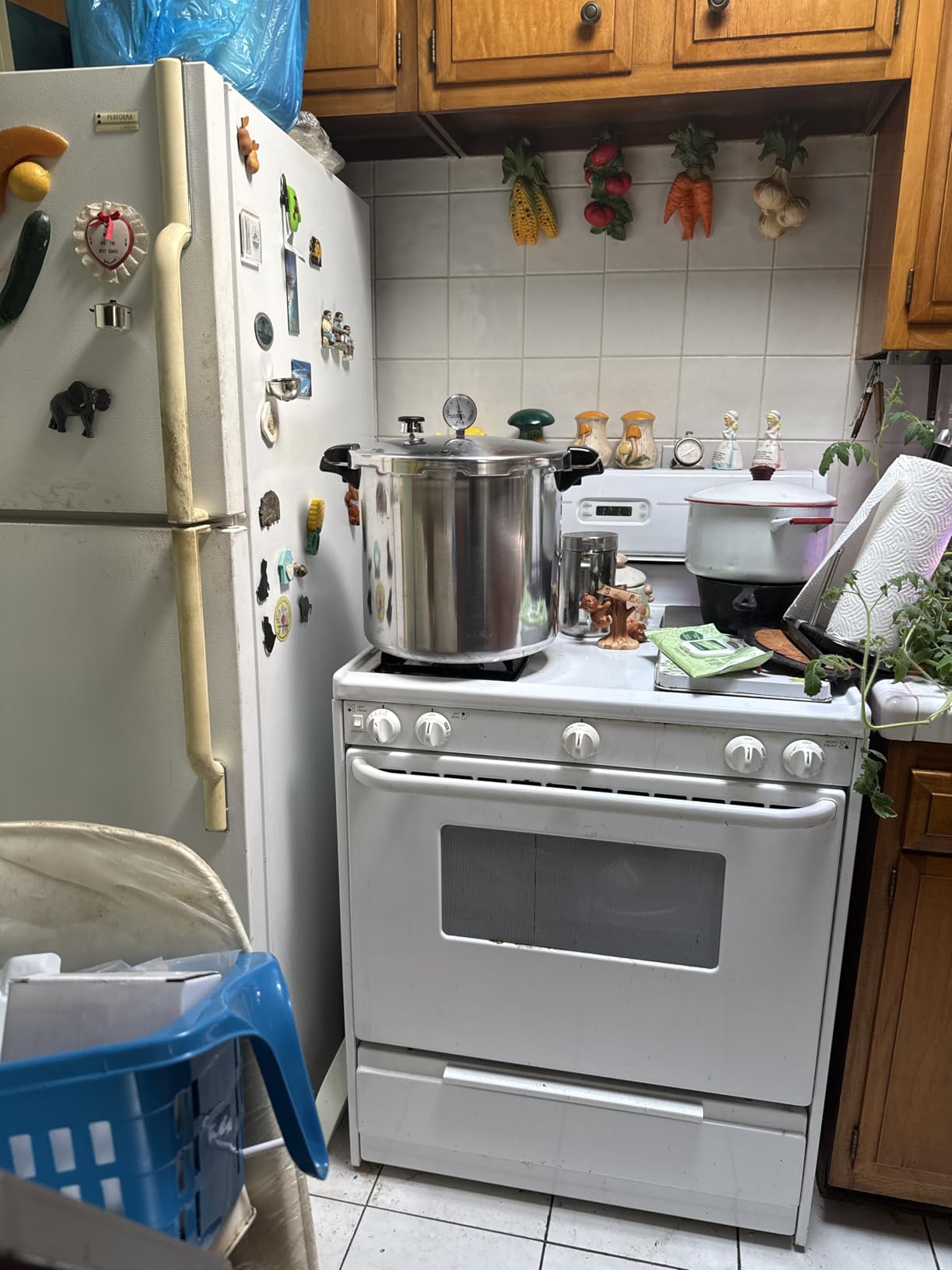
The manufacturer lists 26 half-pints, 20 pints or 7 quarts on a single rack, and owners filling it with regular mouth pints report hitting close to that number. Wide mouth pints take up more room, so expect fewer of those per load than the half-pint figure suggests.
Plan on a full load of 20 jars taking most of a morning once you count preheat, the purge cycle, processing time, depressurization and cool-down. Owners running greens through this pot commonly report something close to 100 minutes per load end to end.
When a cheaper canner makes more sense
If you are new to pressure canning, or if you can never lift more than about 30 pounds, the 12-pound empty weight here is a genuine advantage over the cast aluminum options. The trade is that you give up the gasket-free design and the decades-long durability story that All American owners describe.
One other consideration: aluminum is a poor surface for highly acidic cooked foods because the acid can pit the metal. For that work, a steam canner or water-bath setup is the better tool anyway.
2. Presto 01784 23-Quart Induction Compatible Pressure Canner
Presto 01784 23-Quart Induction Compatible Pressure Canner
- The only full-size consumer canner in this group rated for induction ranges
- Air vent and cover lock block opening until pressure drops
- Same 7 quart
- 20 pint
- 26 half-pint capacity as the 01781
- Stainless-clad base heats quickly and evenly
- Costs more than the standard Presto 23-quart for the same capacity
- Aluminum body is unsuitable for highly acidic foods
- Clad base adds weight to a full pot
If your kitchen has an induction range, this is the version of the 23-quart Presto that actually works on it. Everything else about the design, including the 7 quart, 20 pint and 26 half-pint capacity, matches the standard model, so jar math carries straight over.
The stainless steel-clad base is the whole point. It sits flat against an induction element, which spreads heat faster and more evenly than bare aluminum, and reviewers single that out as the reason to step up from the base model.
The air vent and cover lock are a small but real safety upgrade. Pressure only builds when the cover is properly seated, and the lid refuses to open until pressure has dropped. On a busy stove, with a heavy pot, that removes a failure mode rather than just adding paperwork.
Owners do report that a full pot on a glass-top range is a serious lift, because the clad base adds weight to an already substantial canner. Plan a station where the canner can stay put through the whole cycle.
Whether induction support is worth the step up
If you cook on gas or an electric coil, this pot gains you little beyond the cover lock, and the standard 01781 handles the same load. Induction households have a much narrower field here, because very few full-size consumer canners are built for it.
Check your burner diameter too. A wide clad base wants a large element to sit on, and small induction zones can heat a pot unevenly even when the cooktop nominally supports induction.
What to check before committing
Confirm your range is a true induction unit rather than a radiant glass-top. The two look similar from across the kitchen, and only one of them will heat a clad base correctly.
Also consider whether you will ever cook anything highly acidic in it. Like the rest of the aluminum family, this is a canning pot rather than a sauce pot.
3. T-fal 22-Quart Aluminum Pressure Canner
- Built-in dial regulator sets 5
- 10 and 15 PSI directly on the lid
- Two canning racks included so jars can be stacked
- Handles 7 quart jars
- 18 pints or 24 half-pints per load
- Locking lid
- steam release valve and readable gauge
- Some units auto-vent before reaching 15 PSI
- Handle area can weep steam until the gasket is reseated
- Larger footprint needs a big burner and overhead clearance
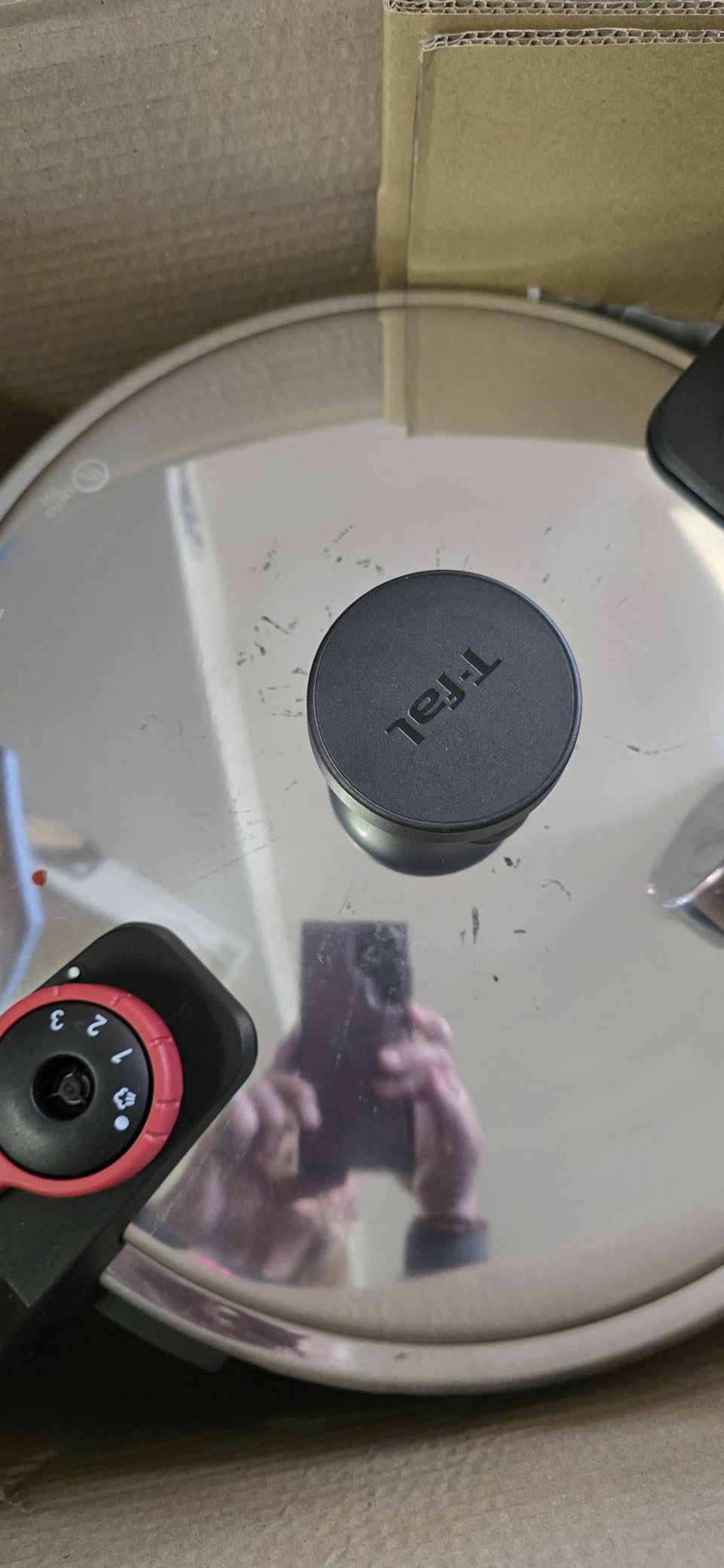
The most frequently recommended canner for beginners, and the reason is the lid. Instead of loose weighted regulators, this one has a dial regulator built into the lid that selects 5, 10 or 15 PSI, so there is no separate weight to swap or lose down a full harvest of green beans.
Capacity is honest for the class: up to 24 half-pint jars, 18 pints, 16 wide-mouth pints or 7 quart jars per batch. Two racks ship in the box, which is unusual at this level and lets you stack a fuller load.
Reliability is broad rather than perfect. The 4.4 average across nearly 6,800 reviews reflects a wide quality-control spread, and the recurring notes are about the fit and finish rather than food safety: steam weeping at the handle until the gasket is reseated, and some units that auto-vent before they reach 15 PSI and need the heat turned up.
The bulk is real too. At 19.33 inches deep by 16.26 inches high, it needs a large burner and clearance under a range hood that a slimmer aluminum canner would not.
What the built-in dial regulator gives you
Experienced canners tend to prefer weighted regulators because you can feel the pressure without looking at anything. This model trades that for a single dial on the lid, which is faster to change between batches and impossible to misplace.
The catch is that it is a dial, so it needs to be checked periodically through the process. Owners who wander off mid-batch are the ones who report the most surprises.
Where it falls short
One-year warranty coverage is the shortest of the ten units here, and the larger footprint is the other complaint that comes up repeatedly. If your cooktop is small, check the dimensions against your burner ring before you commit.
Aluminum also discolors and pits over time, particularly with tomatoes, citrus and other acidic foods, so treat this as a canning pot and keep the pickling to a water-bath kettle.
4. All American 925 25-Quart Pressure Canner
- Metal-to-metal seal removes the gasket that most often needs replacing
- Made in the USA with lifetime service and free replacement manuals
- Weighted regulator plus reference dial for 5
- 10 and 15 PSI control
- Interchangeable parts across the All American line
- 24 pounds empty
- so it should be filled and emptied on the stove
- Long heat-up and cool-down times from the cast aluminum mass
- Sealing rim needs periodic oiling or the lid can stick at zero pressure
This is the durability benchmark of the group, and the reason is a single design decision: a precision-machined metal-to-metal sealing system with no replaceable gasket. The part that fails most often on every other canner here simply does not exist on this one.
Owners with five, ten and even twenty years of heavy use describe cast aluminum that shows no appreciable wear, which is the longevity claim that drives most of the 4.9 rating. The Wisconsin Aluminum Foundry also supplies free replacement manuals and safety labels, and parts carry across the range.
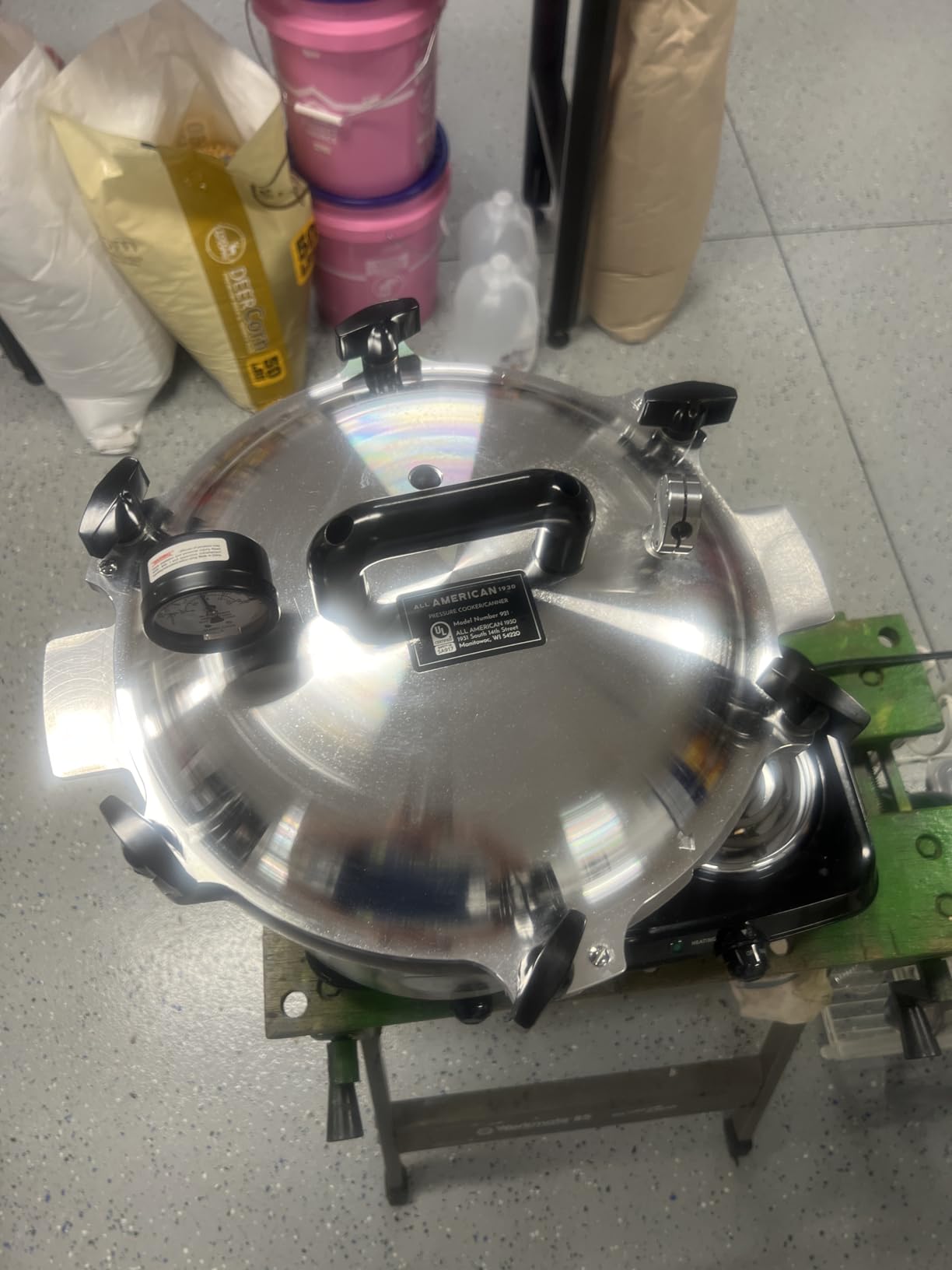
Capacity is about 19 pint jars or 7 quart jars, which is a little below the Presto 23-quart on pints and level on quarts. The regulator is a machined weight set to 5, 10 or 15 PSI, and the dial is reference only rather than the control you cook by.
That design keeps the working pressure honest, but it also means the unit is never going to be as fast as light aluminum. The mass produces long heat-up and cool-down cycles, and owners treat that as a trade you accept rather than a flaw.
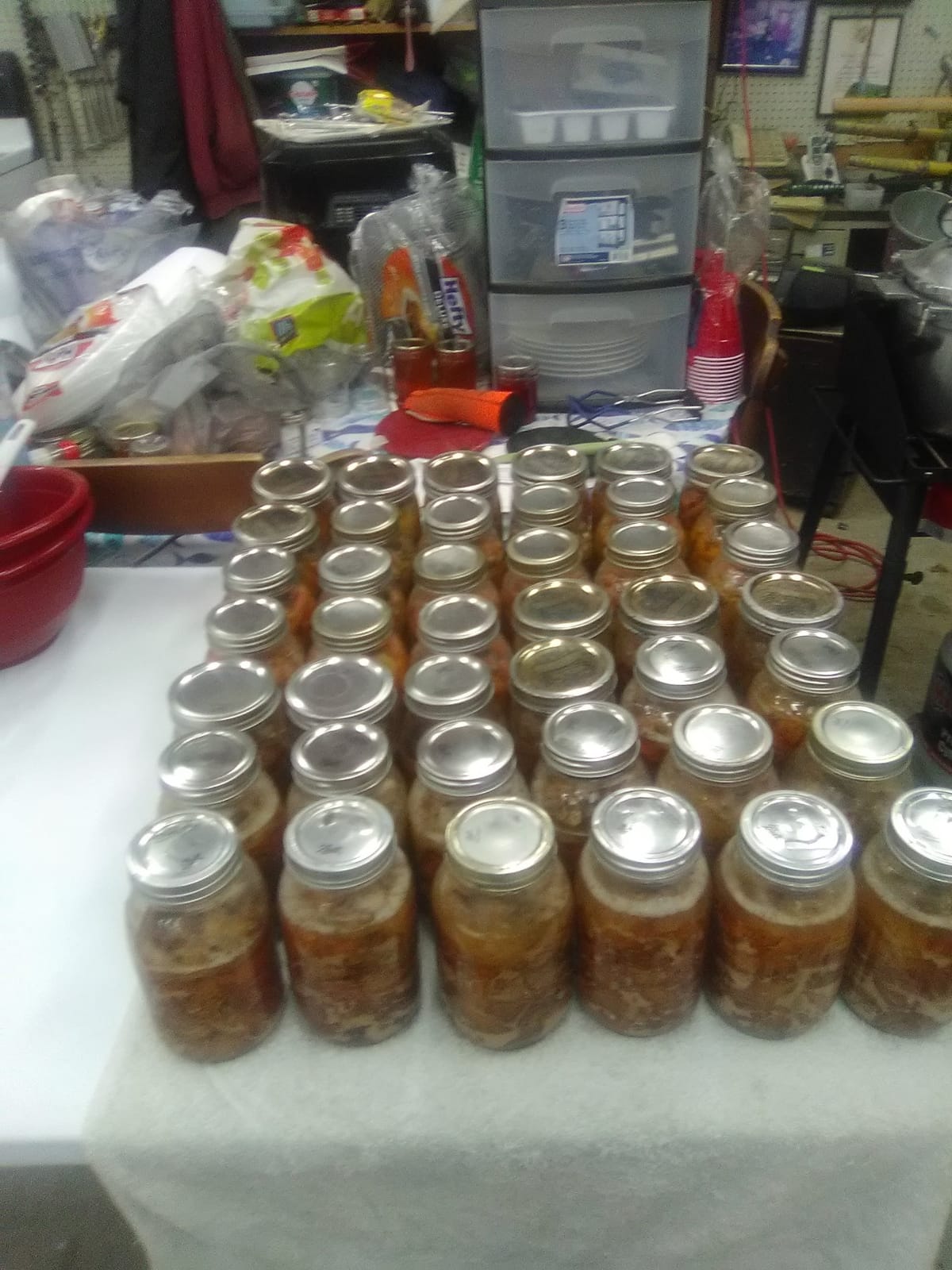
Who the gasket-free design is for
If you plan to keep this canner for a decade or more, the absence of a gasket removes both a part cost and a failure point. There is nothing to replace, nothing to seat incorrectly, and no rubber to go brittle in storage.
The sealing rim does need light oiling from time to time. Owners who skip that report a lid that sticks or vapor-locks at zero pressure, which is a ten-second fix once you know about it.
Where the weight gets in the way
Twenty-four pounds empty means a full load is well past what most people can lift off a burner. Set up a dedicated burner where the canner can stay for the entire cycle, and be honest with yourself about lifting a pot filled with water and jars.
Also plan on slower batches. The cycle is longer end to end than an aluminum canner of the same size, which matters if you are processing dozens of loads in a week.
5. All American 941 41.5-Quart Pressure Canner
- Largest batch in the group at 19 quart jars or 32 pints per load
- Same gauge
- regulator weight and knobs as the 921 and 925
- Spare parts are interchangeable with the smaller models
- Fits a large stock pot inside for soups and stocks
- Heaviest unit here at 33 pounds empty
- loaded and unloaded on the stove
- Tall and bulky
- may not fit under a range hood or a small burner
- Very long heat-up and cool-down times from the mass
This is the canner for people who process real volume. Nineteen quart jars or 32 pints in one load is roughly double a 23-quart canner, and owners with genuine harvest numbers say one 19-quart load beats heating and cooling a smaller vessel two or three times over.
It shares the same gauge, regulator weight and tightening knobs as the 921 and 925, so parts are interchangeable. If you own a smaller All American already, this is a capacity upgrade and not a second parts ecosystem.
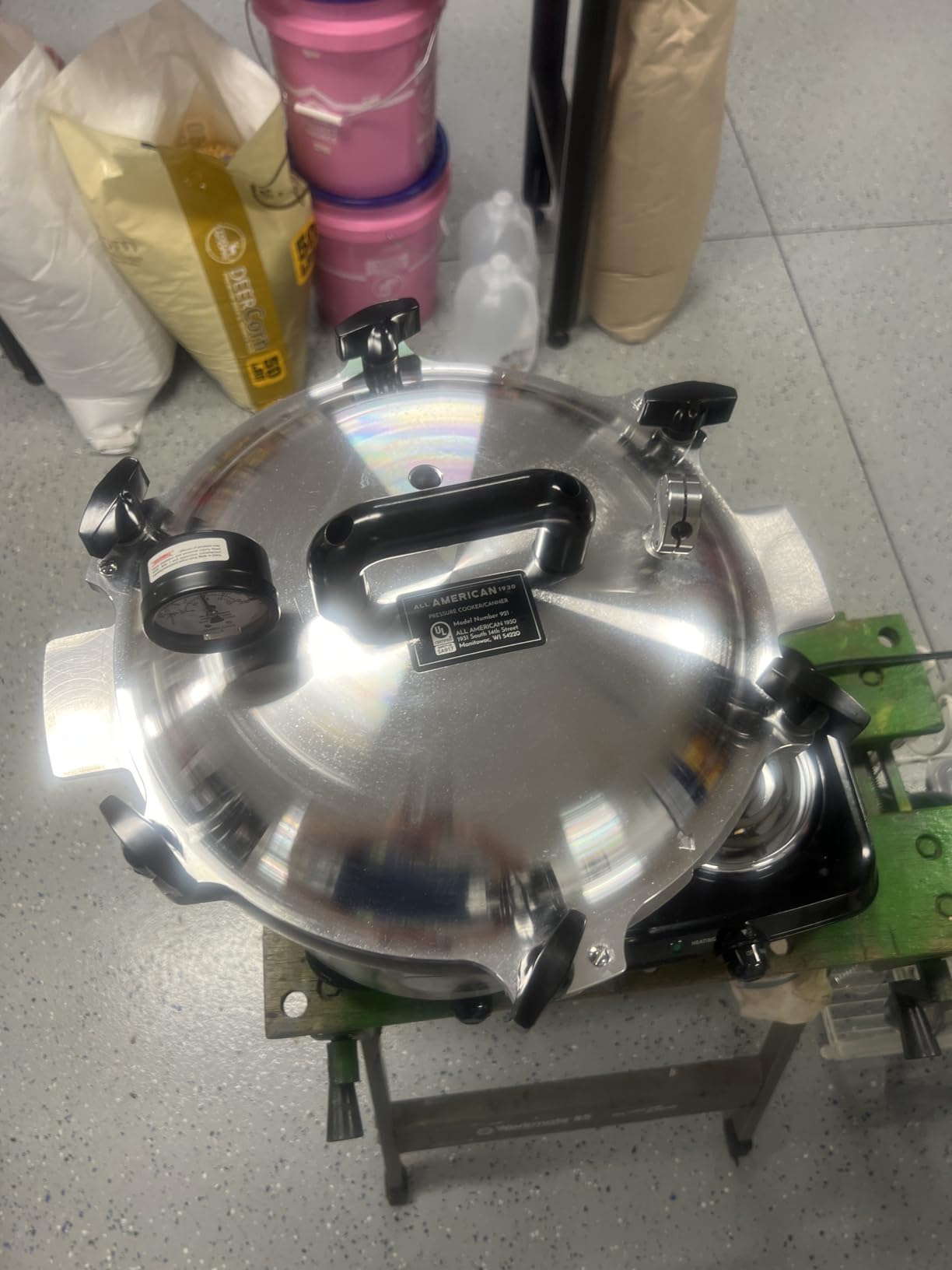
The trade-offs are all about size and heat. Thirty-three pounds empty, 15.25 inches square and 19 inches tall, it will not go under a small range hood and it will not sit comfortably on a small burner. Some owners run a separate high-output burner or take it outdoors on propane during peak season.
The mass also stretches every part of the cycle. Heat-up, processing and cool-down all take longer than they would in a lighter pot, and reviewers are candid that this is only worth it for people canning 50 pounds or more per season.
How much throughput you actually gain
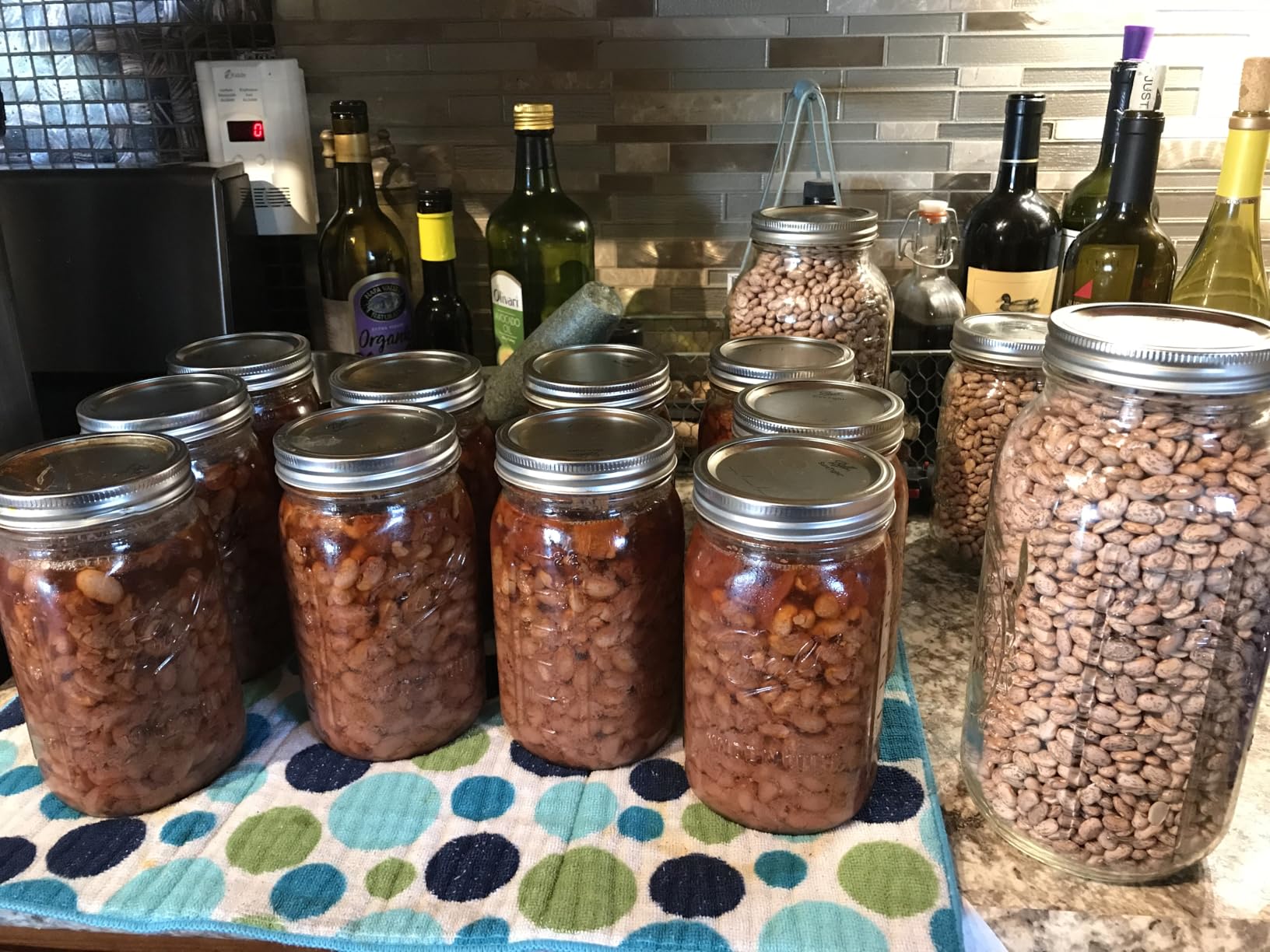
One useful way to think about it: a 941 load of 19 quart jars equals roughly three 7-quart loads without paying for three separate heat-up and cool-down cycles. That is where the time savings come from, not from any difference in processing pressure.
If your season is a heavy tomato and bean harvest, that math works. If you are putting up forty jars of pickles, the extra capacity, weight and burner requirements buy you nothing.
Why so many people should skip it
Forum readers are consistent on this point. The complaint about All American models is weight, and a 33-pound canner takes that to its limit. Anyone who cannot comfortably lift 40 pounds, or who lacks a burner that can heat a large aluminum pot, will regret this purchase.
Measure your space before anything else, including the hood clearance and the burner diameter. A canner that will not fit on the cooktop is a very expensive shelf.
6. Mirro 22-Quart Pressure Canner
MIRRO 22 Qt Aluminum Pressure Canner with 3 Regulators, 5, 10 & 15 PSI
- Weighted regulators let you run the canner by feel instead of watching a dial
- Generous 22-quart capacity for large-batch vegetables and meats
- Fast heat-up with steady temperature and little adjustment
- Two racks included for efficient use of the interior
- Regulator must be pushed firmly onto the stem to seat
- Weighted regulator can leave a rust-colored stain near the vent
- Some owners avoid it on glass cooktops
Many experienced canners move to a weighted-gauge setup precisely because you can hear and feel the pressure instead of watching a needle through a steamy lid. This is the most affordable way into that style, with three interchangeable regulators calibrated at 5, 10 and 15 PSI.
It is a 22-quart pot with two racks, hard-anodized aluminum and a natural interior that resists staining. Owners report fast heat-up, steady pressure with little fiddling, and jars that seal with almost no siphoning.
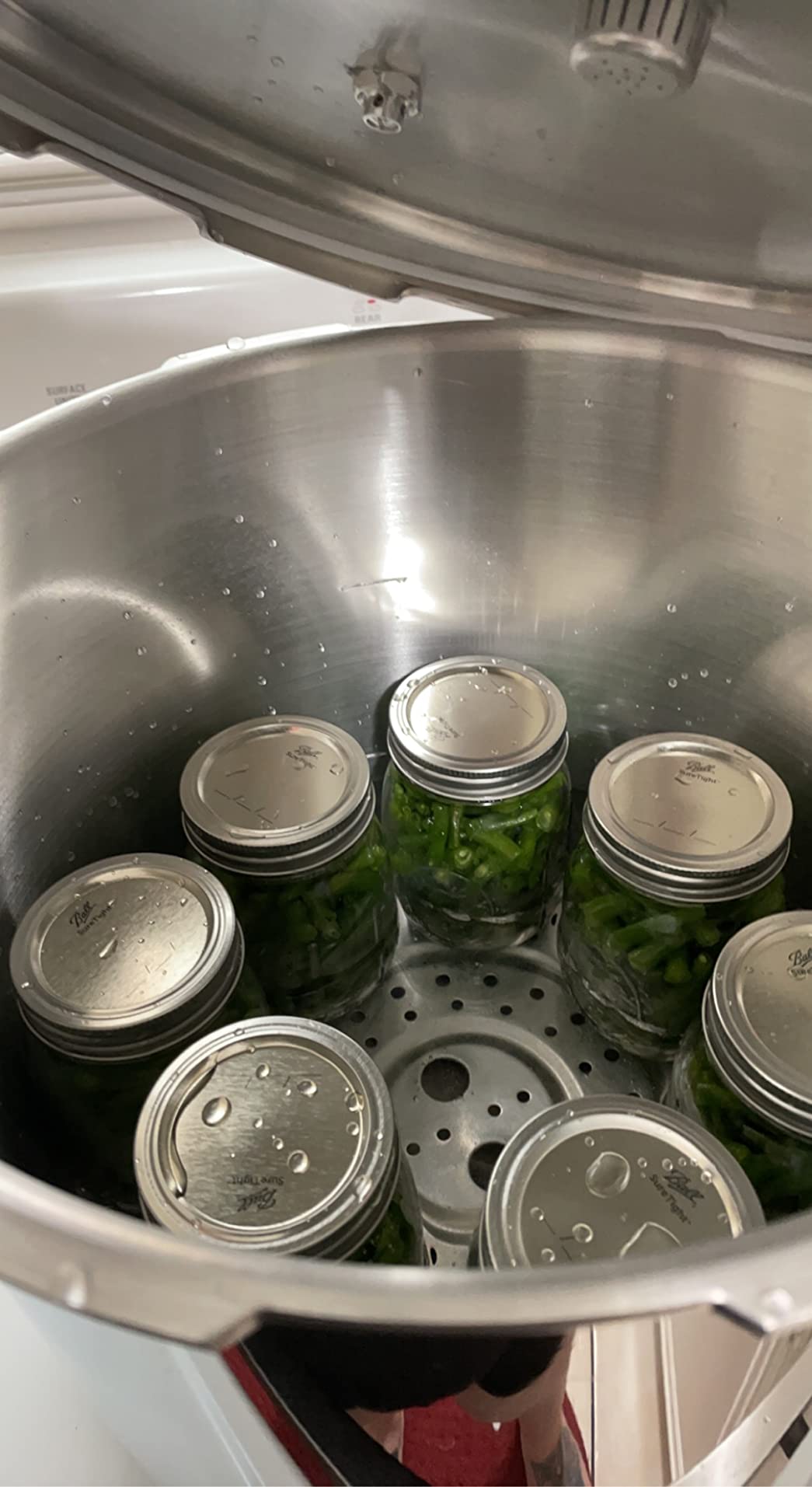
Be honest about one limitation: there is no pressure-reading valve on this design, so the working pressure is judged by the weight and the sound of the vent rather than confirmed on a gauge. That is fine if you are confident, and uncomfortable if you are not.
There is also no in-box canning manual comparable to the 76-page book that ships with the Presto, so follow tested process times from NCHFP, Ball or a university extension service rather than improvising.
Why weighted gauges suit confident canners
A weighted regulator rocks visibly and audibly at the pressure it is set to, which means you can run a batch while doing something else in the same room. For someone who has processed a few hundred jars, that freedom is worth more than a readout.
The tradeoff is that accuracy depends on an uncalibrated part. If you want a number you can verify, this is not the design for you.
What to watch on day one
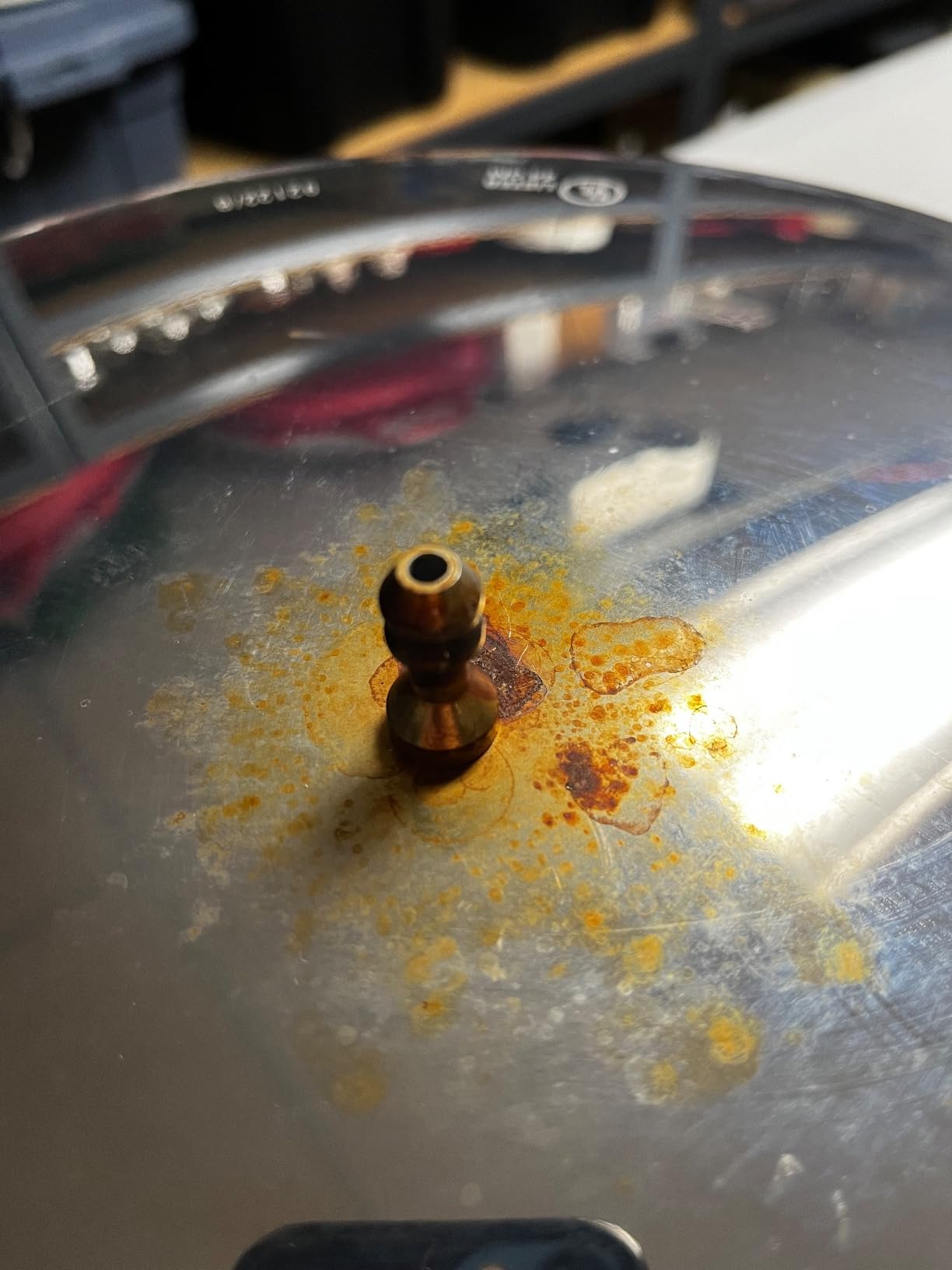
Push the regulator firmly onto the stem until it seats, or the canner will not hold pressure. Expect a rust-colored ring around the steam vent from the weighted regulator, which is cosmetic and does not affect the seal.
Some owners also report avoiding glass cooktops with this pot. If your range is glass, check a few reviews for your specific model before you commit.
7. Granite Ware 20-Quart Pressure Canner
- Hard-anodized body resists rust and staining
- Adjustable 3-piece regulator covers 5
- 10 and 15 PSI in one unit
- Doubles as a pressure cooker and steamer
- Light relative to its 20-quart capacity
- Smallest capacity of the large-batch group
- so it needs more load cycles
- Non-stick interior degrades faster than bare anodized aluminum
- Double lid adds extra parts and seal surfaces
The reason to like this one is the finish. Hard-anodized aluminum resists the rust and staining that owners complain about with plain aluminum canners, and a non-stick interior makes cleanup after a full load of beans noticeably quicker.
It also works as a pressure cooker and a steamer, so a 20-quart pot that spends most of the year on the stove has more than one job. At 10.5 pounds empty it is the easiest large canner here to move.
The compromise is capacity. Twenty quarts puts it at the bottom of this group, and owners say plainly that it takes more load cycles than the 22 and 23-quart units for the same amount of food. Its 4.6 average reflects general satisfaction rather than enthusiasm.
Note also that non-stick coatings age faster than bare anodized metal under sustained high heat, and the double lid gives you two seal surfaces to keep clean and in good condition.
When 20 quarts is genuinely enough
For a household canning a few dozen jars of vegetables per season, the difference between 20 and 23 quarts is one extra cycle rather than a different workflow. The stovetop clearance, weight and finish matter more at that volume than raw capacity.
Its multi-use design also makes it the most useful pot of the ten if you want one vessel for beans, stocks and seafood as well as canning.
What the adjustable regulator does and does not do
The 3-piece system covers 5, 10 and 15 PSI without buying separate regulators, which is convenient when you move between vegetables, meats and pressure cooking. The tradeoff is that like any weighted gauge, pressure is judged by feel rather than read off a dial.
If you need a visible readout, look at one of the dial-gauge models instead. If you want the least maintenance on the cooking surface, the anodized interior here is the pick.
8. WantJoin 23-Quart Aluminum Pressure Canner
- 23-quart capacity at the lowest cost in this group
- Thickened composite base works on gas and induction cooktops
- Six safety systems including limiting
- alarm and anti-block valves
- Uncoated food-grade contact surface rated for scratch resistance
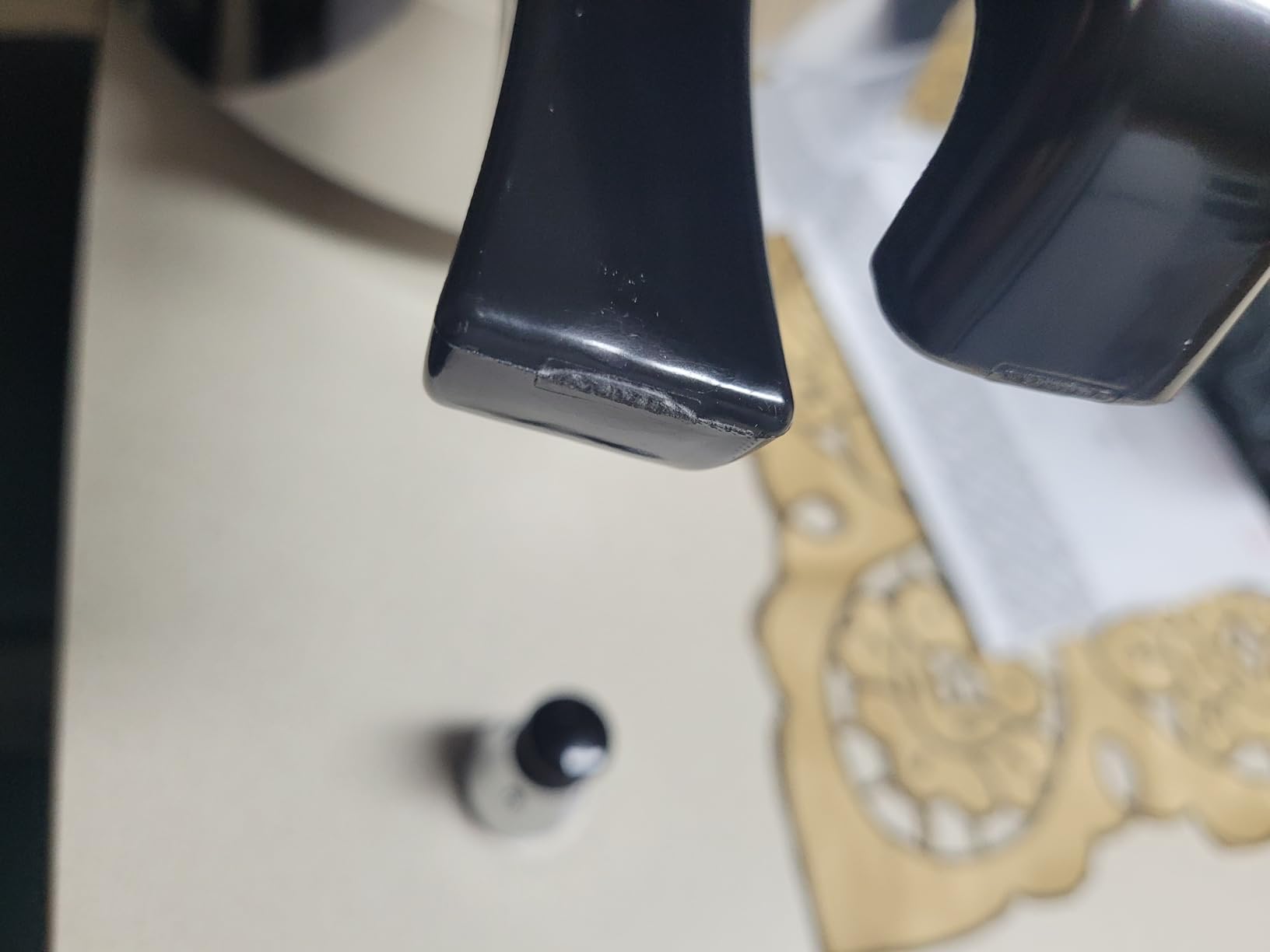
- Build quality is a clear step below the established brands
- One-star reviews report cracked or non-sealing units
- Limited canning guidance compared with a 76-page manual
Here is the budget route to 23 quarts, and for some people it makes sense. You get a full-size pot, an induction-compatible thickened composite base and a list of six safety systems, including a pressure limiting valve, an alarm valve and an anti-blocking cover.
That safety hardware list looks reassuring on paper, and the uncoated food-grade contact surface is a genuine plus for anyone wary of coatings. It also steams and stews, so it is not confined to canning.
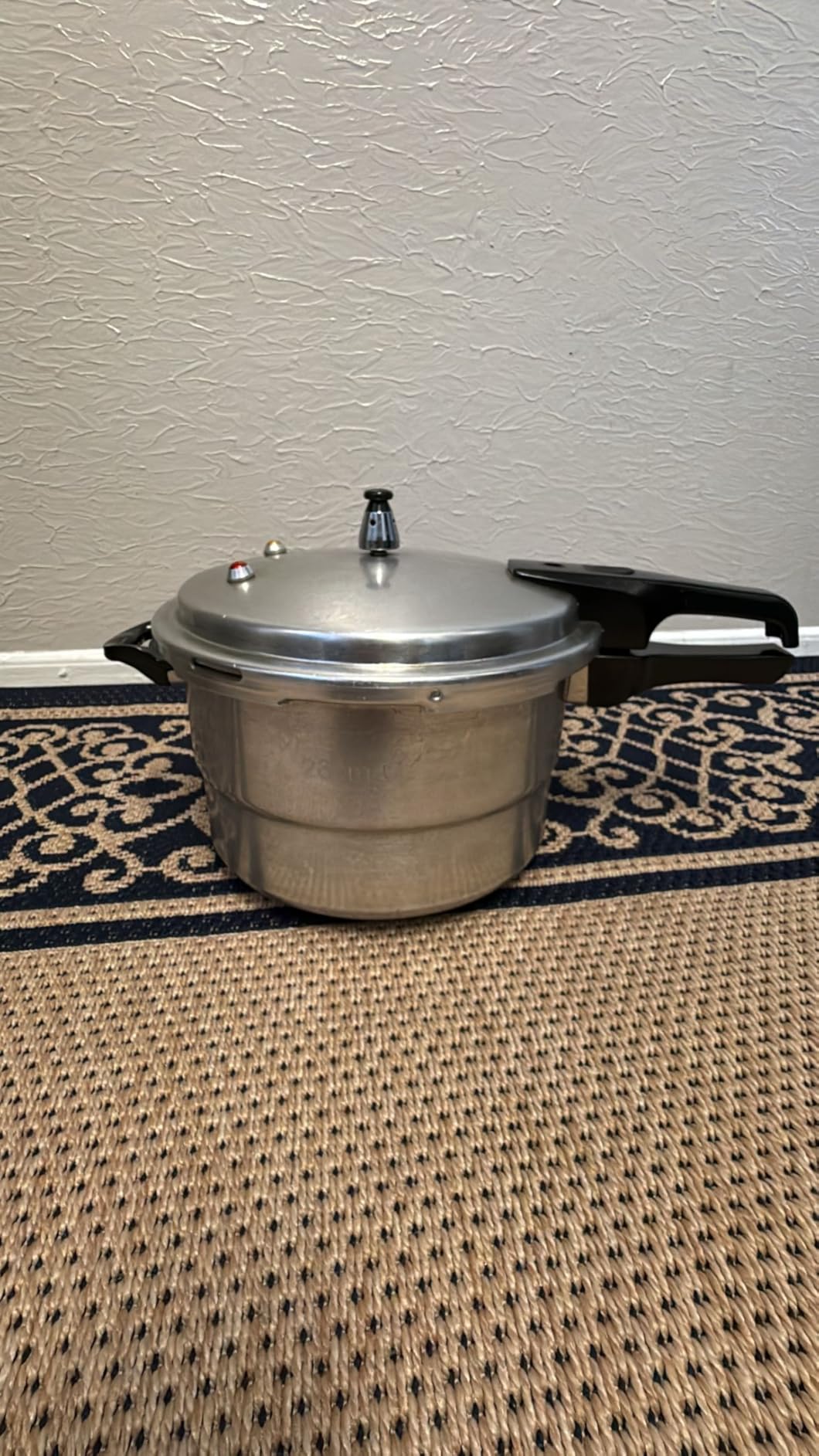
What the listing does not do is claim the USDA-recommended low-acid method the way the Presto and Mirro models do, and the canning documentation is thin by comparison. For low-acid vegetables, meats and seafood, follow a tested recipe from a source you trust rather than the included guidance.
Quality control is the wider issue. The 4.3 average comes with a 71 percent five-star share and a 9 percent one-star share, the widest spread in this group, and those low reviews describe cracked or non-sealing units and steam leakage.
Where the money actually goes
Compare the construction details. The Presto ships with a canning rack and a 76-page instruction and recipe book and carries a 12-year limited warranty, while this unit arrives with a storage bag and thinner documentation. That difference shows up in the review spread.
For boiling-water canning of jams and pickles, or for steaming large pots of vegetables, the low cost is easy to justify. For pressure canning low-acid food, the savings come with more uncertainty.
How to decide if it is right for you
If your budget is the deciding factor, this gets you full 23-quart capacity and induction support at a fraction of the branded cost. Buy it knowing you may need to return a defective item, and check the return terms before you start a season.
Also verify the fit on your cooktop. Induction support is useful, but a large composite base still needs a burner wide enough to heat it evenly.
9. Presto 02153 23-Quart Digital Pressure Canner
- No stovetop babysitting
- the sensor holds temperature and time automatically
- LED display with step-by-step guided prompts
- Automatic altitude adjustment and built-in safety shutoff
- Light enough to move when empty
- Long heat-up and cool-down
- roughly 1.5 hours to release pressure
- Only one rack included so jars cannot be stacked
- Settings cannot be adjusted once a cycle has started
This is the newest canner in the group, and it inverts the usual bargain. Instead of a lighter pot, you get an electric appliance whose sensor holds the processing temperature and time for you, with LED prompts walking through each phase.
For a first-time canner, that guided structure removes the biggest source of anxiety. Owners describe the step-by-step prompts as the difference between pressure canning feeling dangerous and feeling manageable.
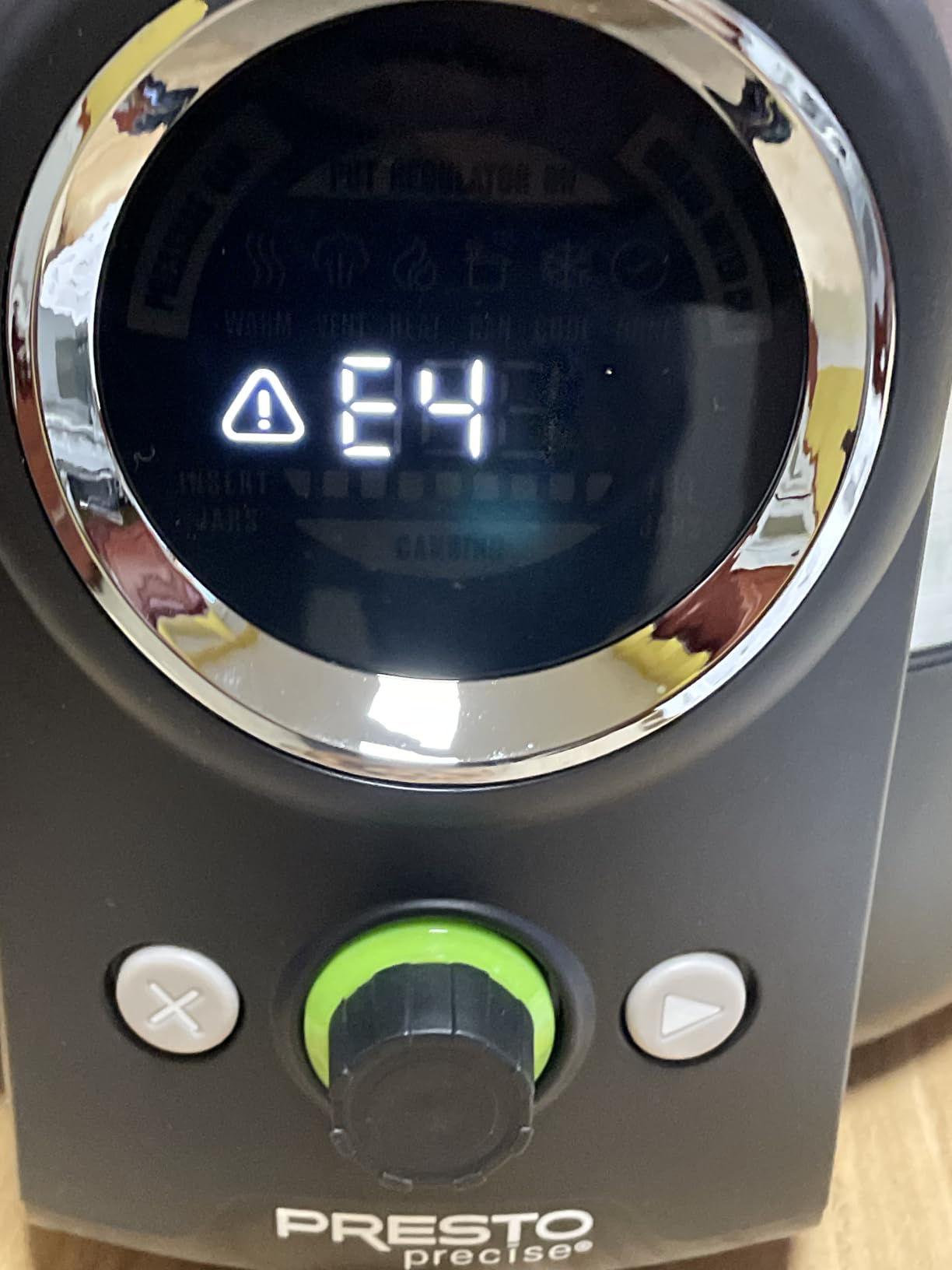
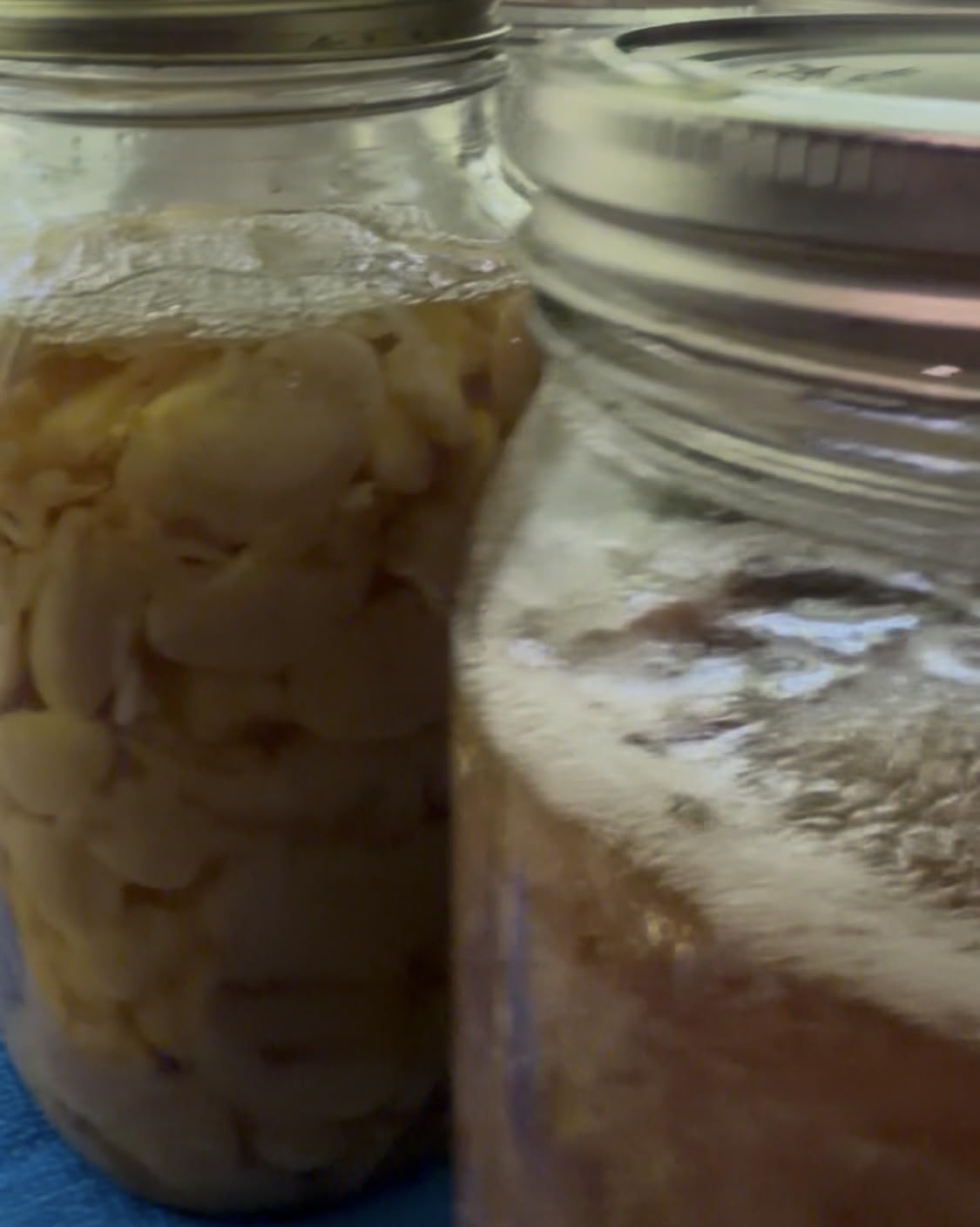
Automatic altitude adjustment is another quiet win, because it handles one of the most common food-safety concerns without a chart. Owners also report clean, leak-free results across runs of more than 120 canned items.
There is a real energy argument too, with several owners noting that the electric unit pairs well with off-grid or solar setups, since it avoids a gas burner entirely.
Why throughput is the weak point
Releasing pressure takes roughly 1.5 hours on this unit against about 20 minutes for a stovetop canner. That makes it a poor match for a day of back-to-back batches, which is exactly what a large-batch buyer is usually trying to do.
The single included rack is the other limitation. Without a second rack you cannot stack jars in layers, so the usable load of 7 quart jars or roughly 15 pints is what it is.
Who should buy it and who should not
Buy it if you are canning on a schedule rather than at harvest glut, if you live above 1,000 feet, or if you want a canner that cannot be left on too high heat. The automation pays for itself in fewer ruined batches.
Skip it if you have a heavy harvest and a free weekend. In that case, two stovetop loads will finish before this unit finishes releasing pressure once.
10. TSTQH 25-Quart Pressure Canner and Canning Kit
- 25-quart capacity
- among the larger pots in this group
- The most complete accessory kit here
- rack
- funnel
- tongs
- jar wrench
- lifter and bubble remover included
- Induction base that also works on gas
- open flame and ceramic hobs
- Emergency pressure relief valve and multifunctional safety lock
- Recurring reports of leaking handles and gauges that will not hold pressure
- Included rack is too small for a full layer of jars
- Induction contact is unreliable on some units
The pitch here is simple: a 25-quart canner with an induction base at a mid-range cost, plus a canning kit that would otherwise be a separate purchase. The included funnel, canning tongs, jar wrench, jar lifter, bubble remover, magnetic lid lifter and a spare seal ring are genuinely useful for a first season.
Beyond canning, owners in mushroom growing and homebrewing use the same pot for sterilizing grain and substrate, so it earns its counter space outside of August.

The reviews split sharply, and that is the deciding factor here. Buyers with a working unit praise the size, the induction base and the accessory bundle. Buyers with a defective one are blunt about handle leaks, a gauge that will not build pressure, and a rack too small for the pot.
At roughly 10 percent one-star reviews, this has the highest defect rate among the ten. That is a meaningful risk for a tool where a seal failure can waste an entire load of food.
What the accessory kit is worth
A jar lifter, funnel, tongs and bubble remover are consumables-in-waiting that you would buy anyway, and having them in the box removes the first-season shopping trip. The bubble remover in particular saves time on every jar you fill.
Just confirm the rack size before planning a full load, because owners report it does not allow a complete layer of jars in a pot this wide.
How to buy this one responsibly
Check the return terms carefully and inspect the gauge and handle the moment it arrives. Run a water test with the lid locked and the vent clear before you trust it with a season’s worth of vegetables.
If you want a 25-quart pot with a low defect rate, the cast aluminum models are the steadier bet, and their longer service lives are well documented by owners.
How Big Is Big: Jars Per Batch and Batch Math
Start with the number that actually matters: how many jars leave the canner in a sitting. The 23-quart Prestos list 26 half-pints, 20 pints or 7 quarts. The All American 925 holds about 19 pints or 7 quarts. The 941 reaches 32 pints or 19 quarts, roughly double the standard load.
A 20-quart pot such as the Granite Ware sits at the low end of this group and needs more cycles for the same harvest. That is the whole argument for the extra two quarts between a 20 and a 23-quart model: one fewer load, not a different afternoon.
Time is the second half of the math. Owners running full vegetable loads commonly report 75 to 100 minutes per cycle once you add preheat, the air purge, processing time, depressurization and cool-down. A bigger pot does not shorten processing time, it shortens the number of times you pay for the cycle.
Before you commit to the largest model, work out your season. If a 41-quart canner would cut a five-batch afternoon down to three, the extra burner and lifting effort may be worth it. If you put up fifty jars a year, it is not.
Dial Gauge vs Weighted Gauge vs Digital Controls
A dial gauge gives you a number, and that is its appeal and its burden. Owners repeatedly note that a dial demands constant monitoring through processing, and that an unwatched dial gauge is treated as a genuine food-safety risk rather than a minor inconvenience.
Dial gauges also need annual calibration, usually through a cooperative extension office, which is the drawback experienced canners cite when they move away from them.
A weighted gauge, or jiggler, is judged by feel and sound. Once you know what working pressure sounds like, you can run a batch and keep working nearby. Accuracy then depends on an uncalibrated part, and there is no readout to confirm it, which is why the Mirro and Granite Ware designs suit confident operators.
Digital controls, in the Presto 02153, remove the judgment call entirely by holding temperature and time automatically. The trade is cycle time, since pressure release takes far longer than on a stovetop canner.
Stovetop Compatibility and Burner Load
Aluminum canners need a burner that can supply real heat, and the large cast aluminum models need more of it than most kitchen ranges deliver comfortably. The 33-pound All American 941 is the clearest case, where owners report adding a separate high-output or outdoor propane burner.
Only two models here are built for induction. The Presto 01784 has a stainless steel-clad base, and the WantJoin 23-quart uses a thickened composite bottom. The TSTQH 25-quart claims induction support too, though some owners report poor contact with certain plates.
Check three things before you buy: your burner diameter, the vertical clearance under your range hood, and whether the pot will sit flat. A canner that rocks or overhangs the element heats unevenly, and uneven heat is a seal-failure risk. The same attention to surface prep pays off on larger cleaning jobs, which we cover in our guide to pressure washers for house siding.
Season-end cleanup is the other half of an outdoor canning setup. Washing down the burner stand, the patio flagstone and the shelf where the canner lives takes the same kind of surface prep, and our picks for budget pressure washers and pressure washer surface cleaners for patios cover the range of options.
Safety Checklist Before Your First Large Batch
Only pressure canning reaches the 240 degrees Fahrenheit needed to destroy Clostridium botulinum spores in low-acid foods. A water-bath or steam canner cannot do it, so never process vegetables, meats, poultry, seafood or soups in one.
Follow tested process times from NCHFP, Ball or a university extension service rather than improvising. This matters more as batch size grows, because a mis-set time affects 19 quart jars instead of 7.
Jars need headspace, typically a quarter inch for regular mouth jars and half an inch for wide mouth, measured after the food is processed. Too much headspace lets the seal fail, and too little blocks the steam that sterilizes the contents.
Leave the vent open during preheat so air purges until steady steam shows, then close it to build working pressure. Jars sit on a canning rack, not on the pot floor, and water is added only to the level specified in the instructions.
Depressurize fully before opening the lid. Owners across every forum thread about this topic give the same answer, and lifting a locked lid early is the step that ends seasons early.
Buying a Used All American 930 or 941
A used canner is a defensible route, and the top organic answer for this query is a homesteading thread recommending a secondhand 930 that fits 14 quart jars. The reasoning is that the gasket-free design has no consumable parts to have gone stale.
Inspect five things: the metal sealing rim for pitting or warping, the vent pipe for blockage, the regulator weight for a clean machined profile, the gauge for a legible needle, and the buckle hardware on the older models.
Confirm the size before you commit, because a 930 and a 941 are not interchangeable in capacity. Know which model number you are buying and check that the gauge, weight and knobs are the correct parts for it.
Running Two Canners in Parallel
If a 41-quart canner is more than you can lift or heat, two mid-size canners on separate burners is a legitimate alternative that no editorial roundup covers. Two 12 to 16-quart pots on two burners can match the throughput of one large vessel without the lifting problem.
The cost is attention. Loading two pots doubles your jar prep, and you need to keep both gauges or both weights in view. Owners running tandem setups pair a large canner for peak harvest with a smaller one for jams and small batches.
For readers running production-scale harvests, automation trends on the farm are worth watching alongside manual canning; our piece on how robotics is changing pressure on farmers covers that side of the equation.
Frequently Asked Questions
What is the biggest pressure cooker I can use for canning?
The 23-quart Presto and the 25-quart All American 925 are the practical ceiling for home kitchens, holding 7 quart jars or about 19 to 20 pints per load. The 41.5-quart All American 941 goes further at 19 quart jars or 32 pints, but at 33 pounds empty it demands a dedicated burner and cannot be lifted when full.
How many jars will a 12 quart pressure canner hold?
A 12-quart pressure canner typically holds about 7 pint jars or 4 quart jars on a single canning rack, which is roughly half the load of a 23-quart model. That difference is why large-batch canners are usually 20 to 25 quarts: the number of load cycles drops sharply once you clear 7 quart jars per batch.
Can jars touch the side of a pressure canner?
Jars should not touch the sides of the canner or each other during processing, because contact blocks water circulation and can prevent lids from sealing properly. Always use a canning rack or false bottom, and leave enough room above the tallest jar for the vent to clear. Jars touching each other also keeps water from reaching the seal.
Can you put too much water in a pressure cooker when canning?
Yes, and excess water is a common mistake. Add only the water amount specified in the canner instructions, usually about 1 inch in an electric unit and 2 inches in an aluminum stovetop canner. Too much water can boil away and expose jars to the pot, and too little can let the contents scorch or the canner run dry.
What happens if you leave too much headspace when pressure canning?
Too much headspace means the food is not in tight contact with the lid, so air remains and the vacuum needed for a proper seal cannot form. Those jars usually fail to seal, lose their contents to spoilage, and have to be discarded. Measure headspace after processing, using a quarter inch for regular mouth jars and half an inch for wide mouth.
Can you pressure can 8 oz jars?
You can, but 8 ounce jars are small and awkward to load efficiently because they are typically half-pint jars rather than the pint or quart sizes a large canner is built around. Expect fewer jars per load than the published pint figures, and check the tested processing time for 8 ounce jars from NCHFP rather than scaling a larger jar time down.
Which pressure canner has the highest rating?
Among the models reviewed here, the All American 925 and 941 share the highest average rating at 4.9. The Presto 01781 leads on volume of owner feedback, with more than 20,000 reviews at a 4.8 average, which makes it the safer default choice for a first large canner.
How long does it take to pressure can a large batch?
A full load commonly takes 75 to 100 minutes end to end once you count preheat, the air purge cycle, processing time, depressurization and cool-down. Owners running vegetables through a 23-quart Presto most often report close to 100 minutes per load. Larger canners take longer per cycle but finish the season in fewer cycles.
Conclusion: Which Pressure Canner Should You Buy in 2026
For most people chasing the best pressure canners for large batches, the Presto 01781 is the answer: 7 quart jars or 20 pints per load, fast even heat, a 12-year warranty and the deepest owner feedback base in the category. The Presto 01784 is the same pot with an induction base, and the All American 925 is the pick if you want a gasket-free design that lasts decades.
Go up to the 41.5-quart All American 941 only if you are canning 50 pounds or more per season and have a burner that can handle it. If lifting a full pot is the problem, two mid-size canners on separate burners will get you the same output without the strain. And whichever you choose, run a water test and follow tested process times before you trust it with a season’s harvest.