
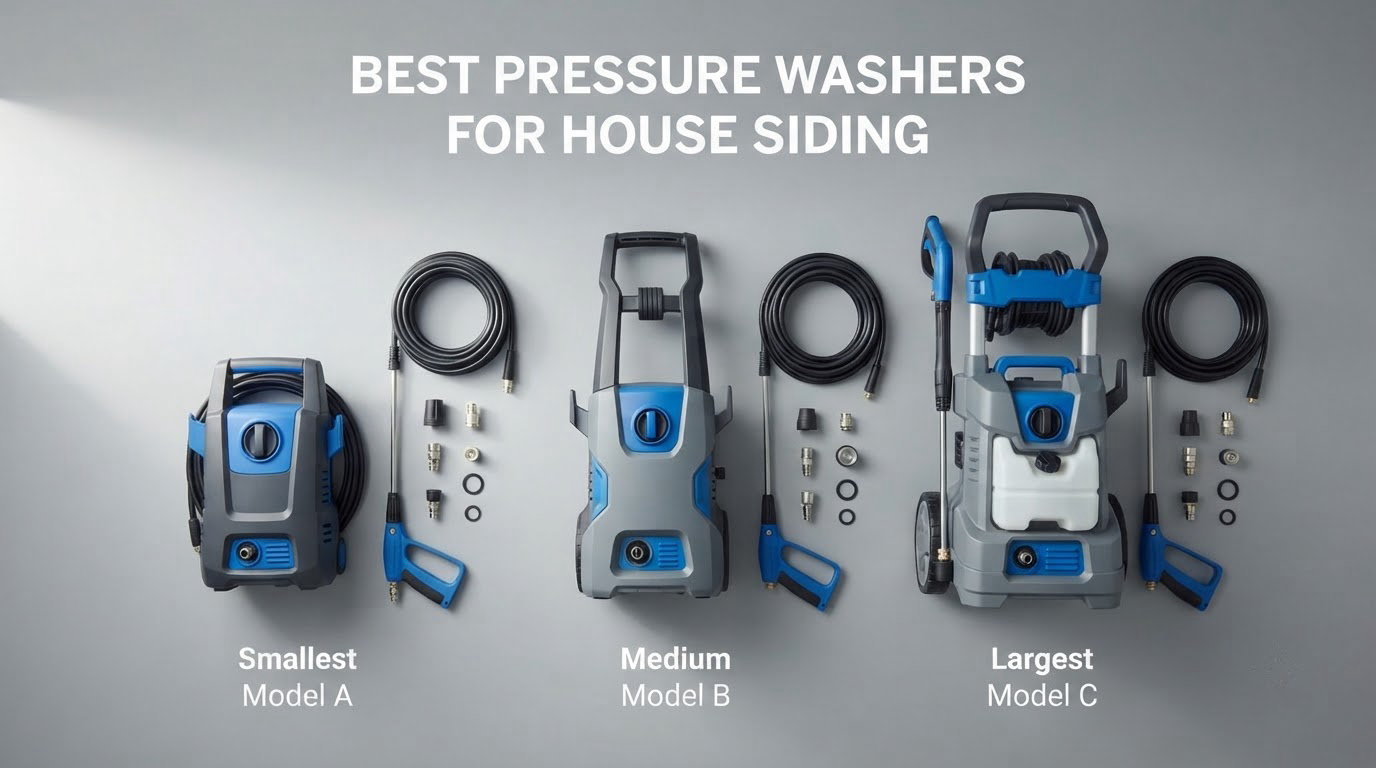
There is no single right pressure washer for house siding. What matters is the pairing of moderate pressure with enough flow, a wide-angle fan tip, and a detergent that actually kills the algae before you touch the panel with a jet. Get that combination right and a two-story exterior comes clean in an afternoon. Get it wrong and you force water behind vinyl laps, blow out an old caulk line, and turn a weekend chore into a repair bill.
For most homeowners, the target is a residential electric machine rated around 2,000 to 2,500 PSI and roughly 1.2 to 2.0 GPM, or about 3,000 C.U. when you multiply pressure by flow. That range strips algae off vinyl, wood, fiber cement, brick and stucco without the destructive punch of a 3,400 PSI gas machine held at close range. The two numbers nobody can skip are the fan-tip nozzle angle and the soap, because pressure alone does not remove organic growth. It only tears the top layer off and spreads the rest across the panel below.
This guide covers 12 residential pressure washers, from compact 1,700 PSI electrics to 3,400 PSI gas units, with a verdict on each for siding work specifically. We looked at pump type, flow rate, hose length, detergent delivery, warranty length and thousands of owner reports, then filtered for the things that change a siding job: reach on a tall wall, rinse speed across a large flat panel, and whether soap can be applied without a second trip to the spigot. No washer on this list is a soft-wash rig, though, and for stubborn green streaks on shaded north walls a low-pressure chemical wash is the safer method. We explain exactly where that line sits below.
One practical note before you start: an electric washer shares your house current, so a machine that trips a GFCI on a loaded outlet is a wiring problem, not a washer problem. Our guide to whole house surge protector options covers the panel-side picture, and it is worth reading before you run any cord across a wet lawn.
Table of Contents
Top 3 Pressure Washers for House Siding in 2026
These three cover the most common situations: a balanced all-rounder, a compact value pick, and the machine you want if your siding runs two stories or you clean more than one property.

Sun Joe SPX3000
- 2500 max PSI and 2030 working
- Dual 0.9L detergent tanks
- Five quick-connect nozzles
- 20 ft stainless lance
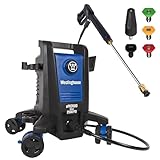
Westinghouse ePX3500
- 2500 max PSI and 2000 rated
- 1.76 max GPM
- 25 ft hose
- 19 lb anti-tipping chassis

All 12 Pressure Washers Compared Side by Side (October 2026)
Every number below comes from the manufacturer specification and owner-reported results. Flow rate matters more than peak pressure for siding, because a wall is a large flat surface and you are moving water across it, not carving into it. Rank the list by flow rate first if your siding is tall; rank it by warranty second if you plan to keep the machine for a decade.
| Product | Specifications | Action |
|---|---|---|
| Sun Joe SPX3000 |
|
Check Latest Price |
| Westinghouse ePX3500 |
|
Check Latest Price |
 Westinghouse ePX3100 Westinghouse ePX3100 |
|
Check Latest Price |
 Karcher K1700 Karcher K1700 |
|
Check Latest Price |
 CRAFTSMAN CMEPW1700 CRAFTSMAN CMEPW1700 |
|
Check Latest Price |
| Simpson Clean Machine 3400 |
|
Check Latest Price |
 CRAFTSMAN CMEPW1900 CRAFTSMAN CMEPW1900 |
|
Check Latest Price |
 DeWalt DXPW3300-S DeWalt DXPW3300-S |
|
Check Latest Price |
 CRAFTSMAN CMEPW2100 CRAFTSMAN CMEPW2100 |
|
Check Latest Price |
 Greenworks GPW3002A Greenworks GPW3002A |
|
Check Latest Price |
 Westinghouse WPX2300e Westinghouse WPX2300e |
|
Check Latest Price |
 Greenworks GPW2101A Greenworks GPW2101A |
|
Check Latest Price |
How Much PSI Do You Actually Need for Siding?
Siding pressure advice ranges all over the place, from 1,300 PSI to 3,500 PSI for the same job, and that spread is why so many homeowners get stuck. The range that appears most often in owner reports is 2,000 to 2,500 PSI, and that is the band to shop in. The number printed on the box is a maximum at the nozzle with a specific tip fitted, not what arrives at your siding. A 2,500 PSI machine on a 40-degree fan tip from about 12 inches behaves far more gently than a 2,000 PSI machine on a 15-degree tip held close, which is why the tip and the distance matter as much as the headline figure.
Flow rate is the other half of the equation, and it is the half that gets ignored. PSI determines how hard the water hits; GPM determines how fast you move it across a surface. Siding is a large, flat, vertical area, so you need throughput more than you need force. A 1.2 GPM electric will get a two-story wall clean, but it will take roughly twice as long as a 2.5 GPM gas unit, and long jobs on a machine rated at 1.2 GPM are the reason people report arm fatigue and end up rushing the rinse. Multiply the two figures to get cleaning power: 2,000 PSI at 1.2 GPM is 2,400 C.U., which is adequate; 2,300 PSI at 1.76 GPM is about 4,000 C.U., which feels noticeably faster across a whole elevation.
Here is the per-material breakdown, which is the piece most buying guides skip:
Vinyl siding: 1,500 to 2,000 PSI on a 40-degree fan tip, held 12 to 18 inches off the panel. Vinyl is the most forgiving common cladding but also the easiest to damage at the seams, where a hard jet can lift a lap and push water into the wall. Work bottom to top with detergent first.
Wood siding: 1,300 to 1,800 PSI with a 25 to 40-degree tip. Painted or sealed wood is soft and will strip if you work it wet and slow, so keep the machine moving. Bare cedar needs even less pressure and more patience.
Fiber cement: 2,000 to 2,500 PSI is reasonable, but the real risk is not pressure. Fiber cement is brittle at the cut edges and around window trim, so keep the fan pattern away from corners and never aim into a joint.
Brick and masonry: 2,500 to 3,000 PSI with a 25 or 40-degree tip. Masonry tolerates high pressure, but the mortar joints do not always, and efflorescence usually needs detergent and dwell time more than pressure.
Stucco: 1,500 to 2,000 PSI maximum, and only with real care. Modern stucco coatings can be stripped off entirely, exposing the brown coat. Many contractors soft wash stucco rather than pressure wash it.
Aluminum and metal: 1,500 to 2,000 PSI, gentle tip, immediate rinse. Oxidation removal is a chemistry job, not a pressure job.
Two rules apply across every material. Stay at least 12 inches from the surface with anything narrower than a 40-degree tip, and test an inconspicuous panel before you start, because most damage reports describe a machine that was working fine until someone got tired and started closing the distance.
Is 2500 PSI Too Much for Siding?
Yes and no, and the nozzle decides which one it is. A 2,500 PSI machine fitted with a 40-degree fan tip, held 12 to 18 inches from a vinyl panel, is comfortably within the safe range for routine cleaning. The same machine on a 15-degree tip held six inches from the wall will drive water behind laps, cut aged caulk, and strip paint from wood in a single pass. Peak pressure is a ceiling, not a setting, and the safe operating pressure on siding is what the tip delivers at working distance.
For algae and mildew specifically, 2,500 PSI is not the problem either. The problem is that pressure does not kill algae roots. It knocks the visible growth loose, and the regrowth starts again within weeks because the organism is still living in the panel texture. A detergent applied at low pressure, given real dwell time, and rinsed with a wide fan tip does the actual work, and the pressure setting just clears the residue.
One more caution specific to older houses. If your siding has been painted or caulked more than a decade ago, treat the seam lines as the weak point regardless of the PSI figure, because the sealant is usually older and more brittle than the panel. Owners on renovation forums repeatedly report the leak that appears weeks after washing, when water finds its way through a failed wrap behind a panel that looked fine on the day.
Pressure Washing vs Soft Washing: Do You Even Need a Washer?
You need a way to get a cleaning solution onto the panel and a way to rinse it off. Most of the time that does not require high pressure at all, which is the entire argument for soft washing. A soft wash applies a diluted cleaning solution at low pressure, lets it dwell long enough to break down algae and mildew, then rinses with plain water. A pressure wash hits the panel hard enough to displace debris quickly but rarely kills the growth itself. Professional exterior cleaning operators, in our experience reading their published guidance and the homeowner forums, come down consistently on soft washing as the safer method for vinyl.
The practical version for a homeowner looks like this. Mix a house and siding cleaner according to the label, or use a sodium hypochlorite solution at the dilution printed on the jug. Apply it with the soap tip or a foam cannon at the lowest pressure your machine can produce, start at the bottom of the wall and work upward so you are not rinsing into clean, dirty runoff. Give it the dwell time on the label, which is usually 5 to 10 minutes of contact, and keep the panel wet. Rinse top down with a 40-degree tip from 12 inches away.
Handle the chemistry carefully. Sodium hypochlorite is effective and it is also a corrosive oxidizer that bleaches anything it splashes, including your siding if the concentration is wrong and your windows if you do not pre-wet glass. Never mix it with ammonia, acids or any other cleaner, wear eye protection and gloves, and protect plants below the work area. If you are not confident with dilution, a ready-made house and siding cleaner is the sensible route and the one most of these machines are designed to deliver through their onboard tanks or a suction hose.
So do you even need a washer? For a one-story home with light green streaks and a garden hose nearby, you can do a perfectly good job with a hose-end foam cannon and a long afternoon. For a two-story elevation with three years of accumulated algae, a washer earns its place, mainly because of the rinse volume and the detergent injector. Buy one and use it for both jobs: siding, then driveway, deck, fence and vehicles.
Electric vs Gas for Siding: Which Power Type Fits the Job
Electric is the default for siding work, and the reason is simpler than most spec sheets admit. Siding cleaning is not a high-pressure demolition job; it is a moderate-pressure, high-volume rinse spread over a large area. That is exactly what a residential electric machine does well, and it does it without noise, fuel, oil changes or a pull cord. Every one of the ten electric machines in this roundup is quieter than a gas engine, starts instantly, and stores against a wall.
The case for gas is flow rate and range. The two gas machines here deliver 2.4 and 2.5 GPM, roughly double the output of most compact electrics, which translates to cleaning a large elevation in a fraction of the time. Gas also frees you from the electrical constraints that shape the electric choice. The trade-offs are honest ones: fuel storage, stale fuel, oil changes, a louder run, and a machine heavy enough at 61 to 64 pounds that some users describe the move as a two-person job.
There is a practical limit on electric current worth planning around. The brushless Greenworks GPW3002A, the highest-output corded machine here at 3,000 PSI and 2.0 GPM, requires a dedicated 20-amp branch circuit, and multiple owners report tripping 20-amp GFCI breakers when an extension cord is involved. If your exterior outlets sit at the end of a long kitchen circuit, that machine may not be usable where you need it. The 13-amp and 14-amp machines are far more forgiving, and a 35-foot cord with a GFCI plug reaches most of a house from one outlet.
One more distinction: both gas units in this roundup are 49-state compliant and are not rated for California. If you are in California, the electric end of this list is your entire shortlist, and the flow-rate gap becomes the deciding factor. For most single-family siding jobs, the difference between 1.2 and 1.76 GPM is time, not outcome, so most of the electrics on this list remain perfectly good choices.
1. Sun Joe SPX3000 – The Best All-Round Pressure Washer for House Siding
Sun Joe Pressure Washer, Electric Power Washer, 2500 Max PSI, SPX3000
- Dual detergent tanks hold two separate cleaning solutions
- Stainless steel lance with brass fittings outlasts typical entry hardware
- Five quick-connect tips including a 40 degree fan tip
- Over 64000 owner reviews make failure patterns easy to spot
- Rated flow of 1.2 GPM means more passes on heavy algae
- 20-foot hose is short for reaching the top of a two-story wall
- Dual tanks add bulk and weight if you only use one soap
This is the machine most first-time owners end up with, and for siding it holds up better than its size suggests. The dual 0.9 liter detergent tanks are the feature I would not give up, because the whole soft-wash argument depends on putting solution on the panel. Having one tank for a house and siding cleaner and a second for a degreaser or wheel cleaner means you are not stopping to dump and refill between the low section of the wall and the high section.
The flow rate is the honest compromise. Rated at 1.2 GPM with a 1.76 GPM maximum, it moves a reasonable amount of water but not a lot, so a full two-story elevation takes patience. What compensates is the 34-inch stainless steel lance and the brass fittings, which are the parts that actually fail on cheap washers, and the fact that the pressure figure is 2,030 PSI of real working pressure rather than a number achieved only at the tip with nothing attached.
Across more than 64,000 reviews the pattern is consistent: this is a good machine for routine siding, driveway and vehicle work in a compact corded package, and the complaint that appears again and again is simply that it is slow on large surfaces. Owners who upgraded to a higher-flow gas machine and then came back report the same thing. Two reviewers describe the 20-foot hose as the limiting factor on a tall wall, and that is accurate, so budget for an extension wand or a hose reel if your siding runs two stories.
The 1.2 GPM rating also matters for foam. Low flow limits how much air a foam cannon can pull in, so the suds from a high-volume setup will be thinner than what a 2.4 GPM gas unit produces. If your algae problem is mostly green streaking rather than thick growth, that is fine. If you are dealing with heavy moss and mildew in shaded areas, the detergent chemistry and dwell time will do more for you than another half gallon per minute.
Is 1.2 GPM enough for a two-story house?
Yes, but plan the time honestly. At 1.2 GPM rated flow you will be working a full elevation in blocks, keeping the tip moving, and you should expect it to be a full day’s work rather than an afternoon. Most owners report the machine doing exactly what they needed it to do, just slowly, and the 40-degree fan tip keeps it safe on vinyl throughout.
If your siding is tall and heavily soiled, look at a higher-flow machine instead. The Westinghouse ePX3500 or the gas units in positions six and eight will finish the same wall in noticeably less time, and time is the resource most homeowners run out of first.
When this is the wrong buy
Skip it if your main job is heavy concrete stain, oil runoff on a driveway, or a wall with thick established growth. The 1.2 GPM rated flow and 2,030 PSI working pressure are a cleaning-and-rinse combination, not a stripping combination, and forcing the machine to do stripping work is how people end up with a nozzle in their hand and a damaged panel in front of them.
The 20-foot hose is the other reason to look elsewhere. On a two-story wall with the machine set at ground level, you are constantly repositioning or reaching on an extension wand, and that is a tiring way to spend a Saturday.
2. Westinghouse ePX3500 – Best Value Pressure Washer for Siding
- Highest average rating in the roundup at 4.6
- 1.76 max GPM covers large walls faster than 1.2 GPM electrics
- 19 lb compact frame stores in a closet
- Anti-tipping wheel layout handles sloped and uneven lots
- Total-stop pump with a 3 year warranty
- Nylon braided hose is less abrasion-resistant than the Morflex hoses on the gas units
- No dedicated low-pressure rinse tip in the standard kit
- 2500 PSI is a maximum; rated working pressure is 2000 PSI
This is the machine I would put in the hands of a homeowner who has one house and intends to wash it every spring. It carries the highest average rating in the set at 4.6, with 76 percent of reviews at five stars, and the reason is simple: it delivers more water than most compact electrics while staying small enough to lift without help and narrow enough to store in a garage corner.
That 1.76 GPM maximum figure matters more than the 2500 PSI headline. Owners consistently describe cleaning a wall in fewer passes than with 1.2 GPM machines, and a faster rinse is the difference between a job that feels manageable and one that does not. The 25-foot hose is also a real upgrade over the 20-foot units for reaching a second story from a single position.
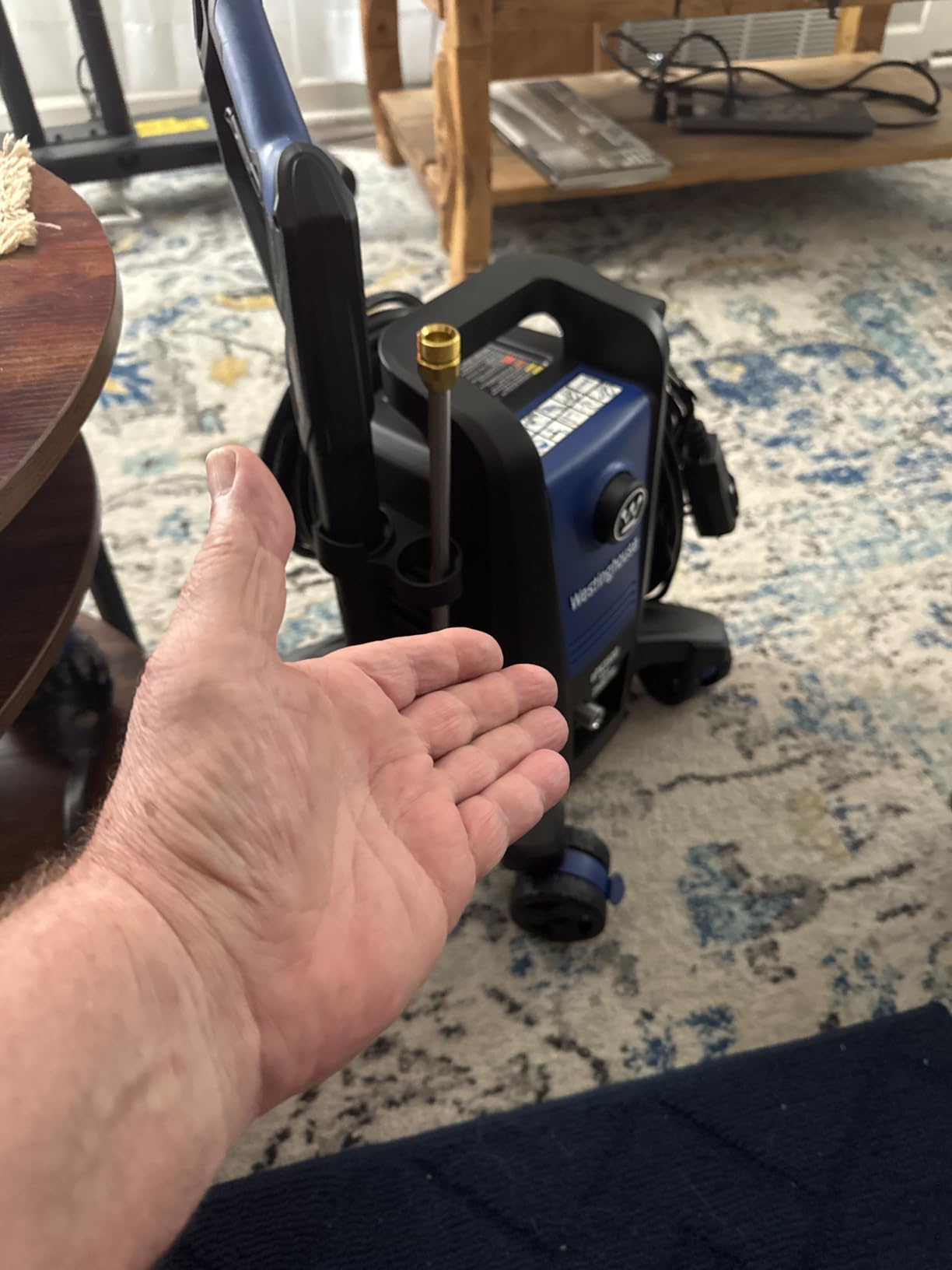
The wheels get more attention than they deserve. Four quick-lock wheels with 360 degree steering and a low center of gravity are credited in reviews with stability on sloped lots and uneven ground, which sounds trivial until you are pushing a wet machine around a sloped driveway with a hose trailing behind it. At 19 pounds and 16.5 inches tall, it is also the easiest machine here to carry up a porch or set on a workbench for maintenance.
Set your expectations by the rated number, not the maximum. This is a 2,000 PSI rated machine that peaks at 2,500, and on a wide fan tip you will be working closer to the 2,000 figure. That is exactly the right place for vinyl, wood and fiber cement siding. The 3-year warranty is longer than most machines at this tier, and the total-stop system shuts the pump and motor off when you release the trigger, which reduces idle wear over a long job.
Does the 20-ounce soap tank matter?
It is enough to get through a section of wall without a refill, and for a soft wash that is what you want since you are working in manageable blocks. It will not produce thick foam on its own, so if you plan to buy a foam cannon for better dwell coverage you will be drawing from that reservoir rather than filling it.
The more important detail is the nozzle set. You get 0, 15 and 25 degree, plus turbo and a soap applicator. The 25 degree is the one you will use on siding, and the soap tip handles the low-pressure application step. If you want a true 40 degree rinse tip, budget for a replacement, since it is not in the kit.
When this is the wrong buy
Choose a higher-flow machine if you have several properties or a very large elevation to cover, and choose a gas unit if you also want to strip concrete and oil-stained driveways. This machine is built for residential cleaning and rinsing, and pushing it into heavy removal work is where the 2,000 rated PSI ceiling becomes obvious.
The nylon braided hose is the component most likely to need replacing eventually. It coils easily, which is genuinely convenient, but it is less abrasion-resistant than the Morflex hose on the gas units, and any hose that rubs along siding or a sharp deck edge wears from the outside.
3. Westinghouse ePX3100 – The Same Platform at a Lower Step
- Same anti-tipping 360 degree chassis as the ePX3500
- 1.76 GPM max flow is well above most compact electrics
- 19 lb and 16.5 inch tall for easy storage
- Total-stop pump with a 3 year warranty
- Lower peak pressure means more dwell time on stubborn algae
- Listed manufacturer part number does not match the model number
- Nylon braided hose is less durable long-term than rubber or Morflex
This is the ePX3500 without the top step of pressure, and for most siding jobs that difference never shows up. You still get the 1.76 GPM maximum flow, the 25-foot hose, the 20-ounce soap tank, the total-stop system and the same 3-year warranty. What changes is the ceiling: 2,300 maximum PSI and 1,900 rated, against 2,500 and 2,000 on the model above.
That 100 PSI difference matters when you are removing a stubborn stain and it does not matter at all when you are rinsing detergent off a wall. For vinyl and fiber cement with a detergent-first soft wash approach, you are working in the 1,500 to 2,000 PSI band on a wide tip anyway, which this machine reaches comfortably.
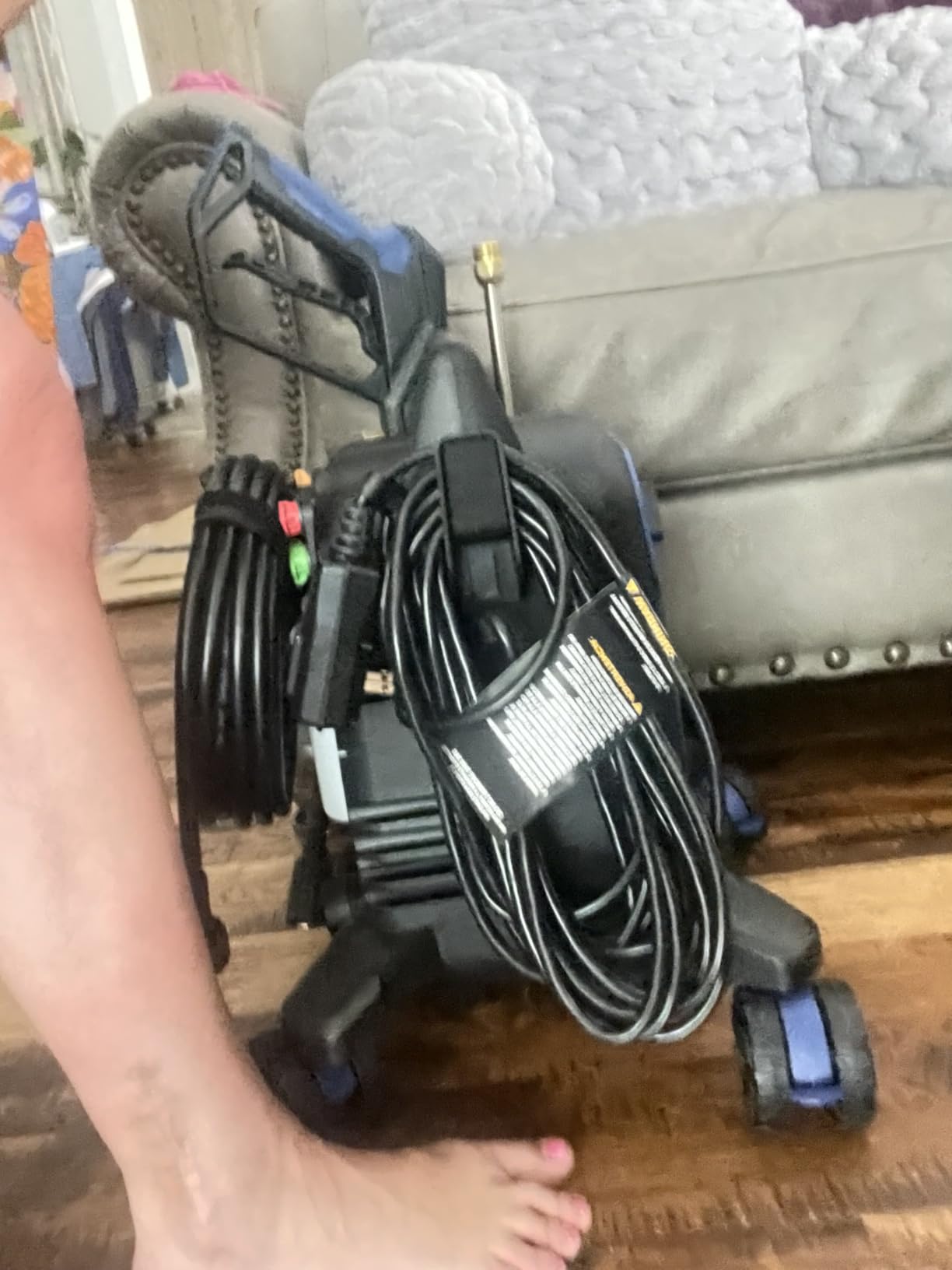
Reviewers treat it as the value version of the ePX3500 and rate it accordingly, with 76 percent five-star ratings and a 4.5 average. The comments that recur are about the chassis rather than the pump: it is light, it stores small, and the wheels do not tip it over on a slope. That sounds like a minor point until you are moving a wet machine around a house on uneven ground with a full hose.
One small inconsistency is worth flagging before you buy. The listing carries a manufacturer part number that does not match the model number on the machine, which is a cataloging error rather than a product problem, but it is a reminder to confirm you are ordering the model and not a related variant. Owners report occasional questions about durability after a few seasons, which is normal for this class of machine and a reason the warranty length matters.
When to choose this over the ePX3500
Choose it when the wall is vinyl or fiber cement, when you are using a detergent-first method rather than trying to strip, and when the money you save can go into a surface cleaner or a foam cannon instead. Those accessories will produce a better result on your siding than 200 extra PSI ever will.
Choose the ePX3500 instead when you also have brick or a masonry surface that benefits from more pressure, or when the same machine will handle deck cleaning and a stained concrete pad.
How it handles algae and mildew
Lower peak pressure is not a real drawback for organic growth, because the detergent is doing the killing and the pressure is only clearing the residue. The practical effect is that you want to be a little more patient with dwell time, and you want a wide fan tip rather than a narrow one.
The 1.24 GPM rated flow keeps the rinse moving, which is the second half of the job and the half most people rush. Rinsing soap thoroughly matters as much as removing it, and a rinse that stalls leaves a film that attracts dirt faster than the algae did.
4. Karcher K1700 – Best for Quiet, Light-Duty Siding Work
Kärcher Pressure Washer K1700, CETA Certified, 3 Spray Nozzles, Detergent Tank, for Cars, Driveways, Siding, Patios, 1.2 max. GPM
- CETA certified so pressure and flow claims are independently verified
- M22 fittings accept foam cannons and surface cleaners once adapted
- Foot switch plus total-stop saves hand fatigue on long jobs
- Never-flat wheels roll over grass and gravel
- Owners report multi-year reliability
- 1700 PSI peak is the low end of this roundup
- M22-14 fittings are non-standard so accessories need adapters
- Supplied inlet and gun fittings leak for a number of owners
- Onboard detergent tank produces thin suds only
The Kärcher is one of the most polarizing machines in this roundup, and the reason is not the pressure. At 1,700 PSI and 1.2 GPM it is a light-duty machine by design, and it is CETA certified, which means those figures have been independently verified rather than simply printed on a box. Owners who treat it as a car and siding washer describe it as quiet, light and dependable for years.
The feature that makes it interesting for a soft wash is the fitting standard. The M22-14 high-pressure fittings are non-standard compared to the M22-15 used by most competing electrics, and that cuts both ways: out of the box many quick-connect kits will not fit, but once you add adapters or a third-party gun, this machine accepts foam cannons and surface cleaners that open up proper low-pressure application and controlled rinsing.
Against that, this machine has one of the highest one-star shares in the roundup at 11 percent, and the complaints are specific rather than vague. Fitting leaks at the inlet and gun come up repeatedly, several owners needed to replace or adapt those fittings, and the trigger and pump failures show up in a minority of reports. Nozzle storage holds only the three supplied tips, and there is no hose clip, so the stiff plastic hose tends to spring out of the bin.
At 20.7 pounds with never-flat wheels, it is easy to move around a house and easy to store, and the foot switch means you do not have to hold your finger on a trigger for a full afternoon. The 0.5 gallon detergent tank is a generous onboard reservoir, though it produces thin suds, so a separate foam cannon is the better route if you want thick foam for dwell coverage.
Is 1700 PSI enough to clean siding?
For vinyl and light soil, yes. A 1,700 PSI machine on a 40-degree tip is well within the safe band for vinyl, wood and aluminum, and with a detergent-first method the pressure is only clearing residue anyway. Homeowners report using it successfully on house siding year after year.
It is not enough for heavy established growth, moss mats or grime that has bonded to brick, and it will feel slow on a large elevation because of the 1.2 GPM flow. If your siding is a two-story wall in a shaded, damp location, this is the machine most likely to leave you disappointed.
What to check before you buy
Plan on spending a few dollars on M22 adapters or committing to a third-party gun so you can use the accessories you actually want. Confirm the fittings are what you need, because that single detail decides whether this is a flexible tool or an isolated one.
Also confirm your electrical situation. Several owners note the unit is 110 volt only, which is fine in North America and a problem anywhere else. And inspect the supplied fittings on arrival, because that is where the complaints concentrate and a replacement is a five-minute fix if you catch it early.
5. CRAFTSMAN CMEPW1700 – Best for Carrying, Storing and Light Siding Jobs
CRAFTSMAN Electric Pressure Washer, Cold Water, Lightweight Corded Power Washer for Cars, Driveways, Patio and Garage, Powerful 1700-PSI, 1.2-GPM, Compact, Easy to Use (CMEPW1700)
- Light at 17.5 lb for a wheeled washer
- 35-foot cord reaches the back of a house from one outlet
- Hand-pulled trigger reduces hand fatigue on long jobs
- CETA certified with a 3 year limited warranty
- Soap applicator and spray gun are frequently replaced by owners
- Included hose is described as the weakest part
- Light-duty output: cars
- siding and patios
- not concrete stain
- Some owners report pump or motor failure after a year or two
This is the washer people describe as the one they can lift onto a shelf. At 17.5 pounds and under 12 inches tall, it is one of the most portable machines in the roundup, and portability is genuinely underrated when the work is a house exterior. Several owners, including reviewers well into their sixties and seventies, single out the weight as the reason they chose it and keep using it.
For siding specifically, two numbers stand out. The 35-foot power cord means you can reach most of a house from a single outlet, which matters more than it sounds because moving an electric machine means unplugging, walking the cord, and plugging in again, and that is the friction that makes people give up. The 20-foot hose is adequate for a one-story wall and a stretch for a second.
The dominant theme in the reviews is a good pump attached to weak accessories. Multiple owners state that they kept the pump and replaced the hose, the gun and the soap dispenser, and the included hose in particular draws repeated criticism. That is a common pattern with light-duty electrics and it is worth factoring into your plan, because the accessories are where the money goes regardless of which machine you buy.
Durability is the other theme. A 9 percent one-star share is driven by pump, breaker and motor failures reported after a year or two, which is normal for light-duty residential equipment but worth knowing about if you expected a decade of service. Against that, the 3-year limited warranty and CETA certification are real and the machine is CETA certified, meaning the pressure and flow numbers are verified rather than estimated.
Will it clean a two-story exterior?
A two-story wall is doable but slower than you would like, because 1.2 GPM is the flow ceiling here and the wall is a big vertical surface. The 35-foot cord solves the reach-around-the-house problem; the 20-foot hose is what you will work around, and an extension wand or a hose reel closes that gap for modest money.
Because the housing can be sprayed clean after use and the unit stores on a shelf rather than taking a garage corner, this is a machine people keep. Durability complaints cluster around the pump after a couple of seasons, not around the motor, which is a reasonable place for the weak point to sit.
What to budget for
Plan on a replacement hose and a better spray gun. Owners say it plainly: the pump is good, the accessories are not. Adding quick-connects at the same time makes every later accessory upgrade painless.
Skip this one if concrete stain removal is on your list. At 1,700 PSI and 1.2 GPM you are cleaning and rinsing, not stripping, and concrete oil stains need more pressure and more flow than this combination provides.
6. Simpson Clean Machine 3400 – Best for Two-Story Homes and Large Walls
Simpson Clean Machine 3400 PSI Gas Pressure Washer, 2.5 GPM, CRX engine
- 2.5 GPM is the highest flow in the roundup and clears large walls fast
- MorFlex 25 ft hose resists kinks and is non-marring on finished surfaces
- 10 inch pneumatic tires roll over gravel and grass
- 208 cc CRX engine starts easily and shuts down on low oil
- Cord
- gun and wand give good reach on detached structures
- Roughly 61 to 64 lb with the largest frame here
- so it is a two-person lift for some
- 49-state compliant and not rated for California
- Only four nozzles supplied with no 25 degree or turbo tip in the kit
- Warranty is 2 years on the engine and 1 year on pump and frame
This is the flow-rate answer. At 2.5 GPM it moves roughly double the water of a compact electric, and on a large elevation that difference is not subtle. Owners describe the combination of 3,400 PSI and 2.5 GPM as the difference between one pass and several on filthy siding, and if your house is two stories with a wraparound elevation, this is the machine that finishes the job while the light is still good.
The 2.5 GPM figure is what makes detergent work properly too. Foam performance scales with the air a nozzle can pull in, and a machine at 1.2 GPM produces noticeably thinner suds than one at 2.5. If you intend to run a soft wash with a foam cannon, the gas end of this roundup gives you materially better coverage and dwell.
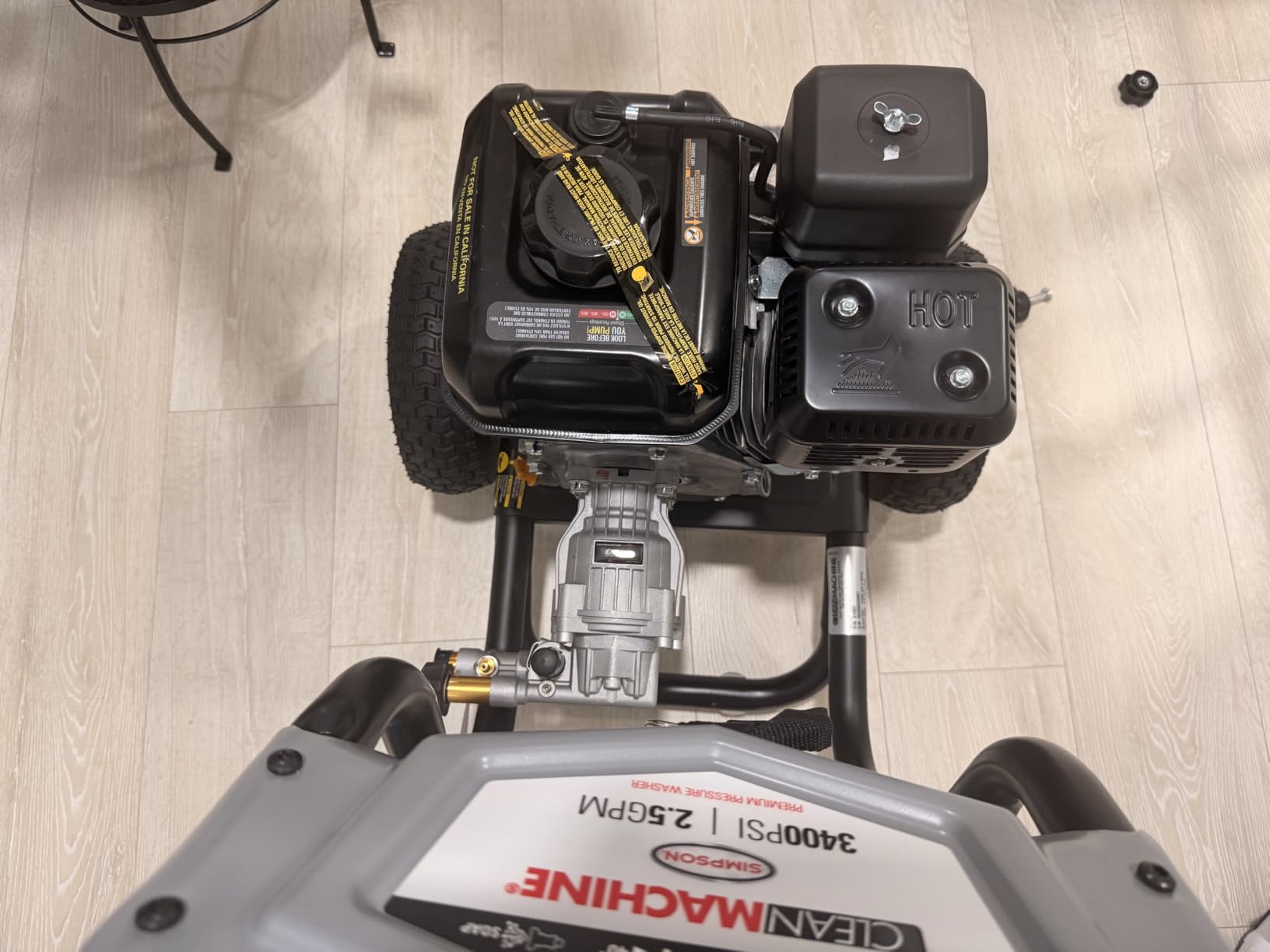
The MorFlex hose is the most frequently praised component across the reviews in this roundup. It resists kinks, it takes gravel and grass without complaint, and it is non-marring, which matters on vinyl and painted surfaces where a hose scuff leaves a visible mark. The 10-inch pneumatic tires are the other stand-out, and they explain why the machine can cross a gravel drive and a lawn rather than tipping or bogging down.
The friction points are real. This is one of the two largest machines here at roughly 61 to 64 pounds on a 37 by 30 inch frame, and several users describe moving it as a two-person job. The engine needs oil, fuel storage and occasional attention, the pull-start trips some people up, and the warranty is the shortest in relative terms, with one year on the pump and frame against the 3-year coverage on the Westinghouse electrics.
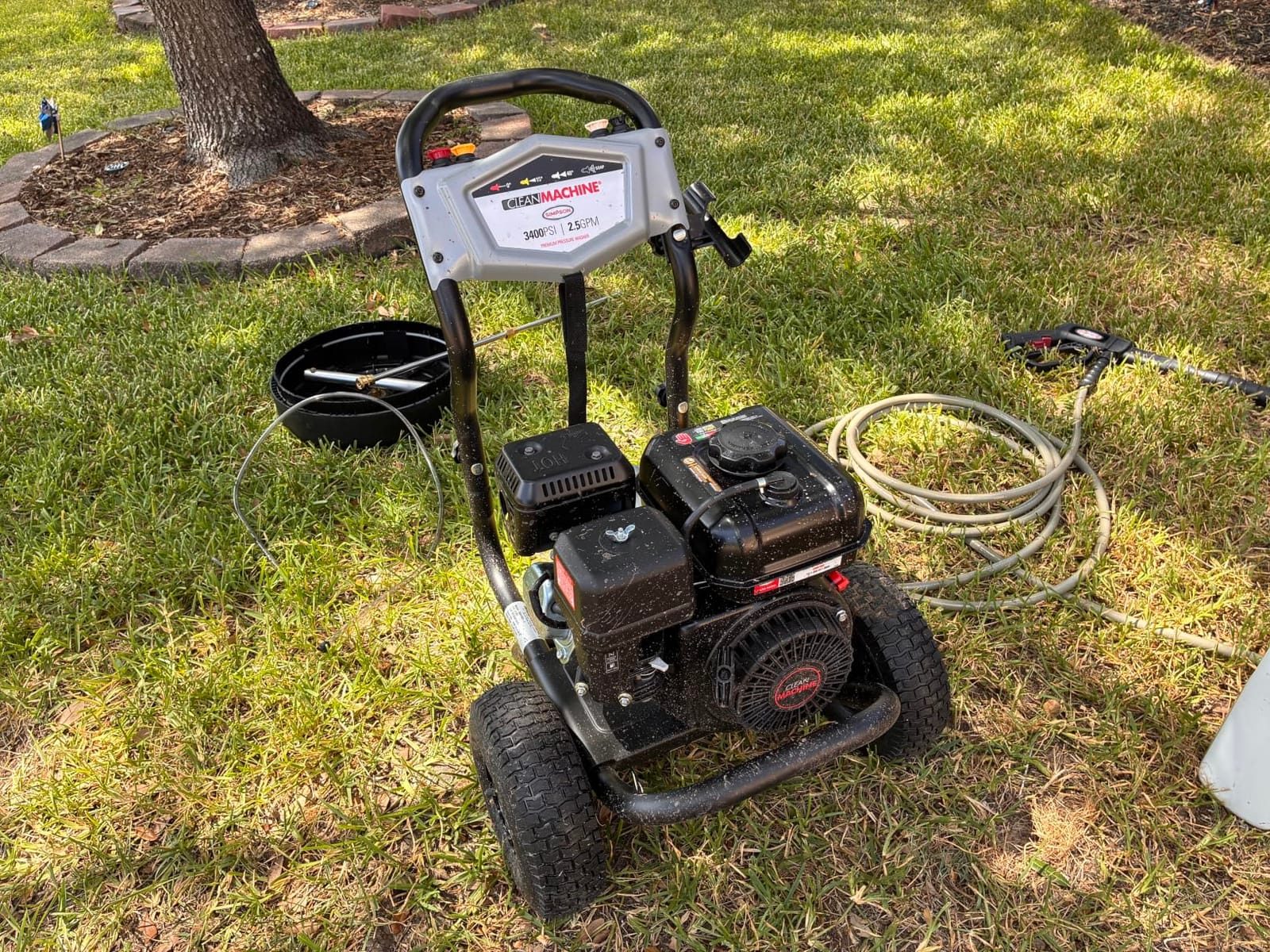
Is 3400 PSI too much for vinyl siding?
Not when you use it correctly, and correct is specific. On a 40-degree tip at 12 inches or more, the effective pressure at the panel is well within the safe band for vinyl, even on this machine. The risk appears when someone fits a 15-degree tip and starts closing the distance, which on 3,400 PSI is how siding seams get opened up.
Because there is no 25-degree tip in the standard kit, the temptation is to use the 15-degree for general cleaning. Resist it. Add a 25-degree and a 40-degree tip to the kit, use the 40-degree for rinsing and the 25-degree for stubborn spots at a distance, and this machine becomes one of the most capable tools in the roundup for masonry work as well as siding.
Who should look elsewhere
Skip it if noise is a dealbreaker, if you have nowhere to store fuel, or if the machine has to move between outlets and rooms. A gas unit in a small garage is an unpleasant neighbor, and the total-stop behavior of an electric is a genuine quality-of-life difference over a full afternoon.
Also check your state. This is a 49-state compliant machine and is not rated for California, which narrows the gas options considerably if you are on the coast.
7. CRAFTSMAN CMEPW1900 – Best Long-Reach Corded Electric for Siding
CRAFTSMAN Electric Pressure Washer, Cold Water, 1900 -PSI, 1.2-GPM, Corded (CMEPW1900)
- 25-foot hose is longer than the compact electrics here
- Integrated soap tank applies detergent without a separate bottle
- CETA certified so the figures are independently verified
- Onboard storage for nozzle and hose
- Eight inch wheels and a 35 foot cord move around obstacles easily
- 28.2 lb is heavy for a compact unit and about 10 lb more than the CMEPW1700
- 1.2 GPM means more passes on large walls despite the higher PSI
- Listing conflicts on the maximum flow figure
- Nozzle set limited to 15
- 40 and turbo with no dedicated soap tip
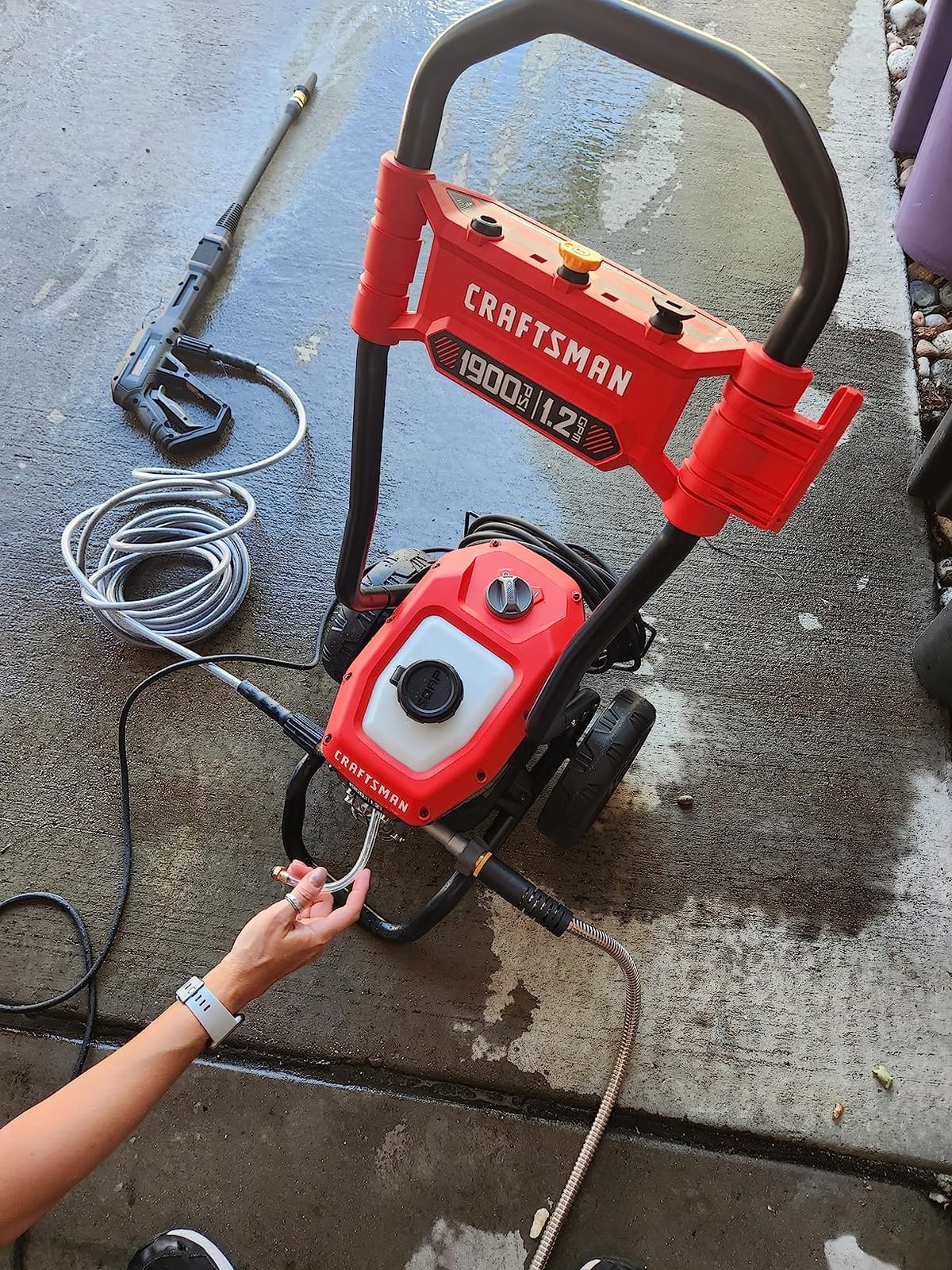
This is the electric answer to the reach problem. A 25-foot hose is longer than the 20-foot units in the compact category, and combined with a 35-foot power cord it means you can start at one end of a house and work your way around without moving the machine or the outlet. For a homeowner who is squeamish about gas but still has a two-story wall, that combination is the practical compromise.
The integrated onboard soap tank is the second reason to look here. Unlike the CMEPW1700, which uses a small applicator bottle, this machine has a real reservoir, so you can premix your siding solution, apply it, and rinse without hunting for a bottle and a funnel. For a detergent-first soft wash that is the single most useful feature on the machine.
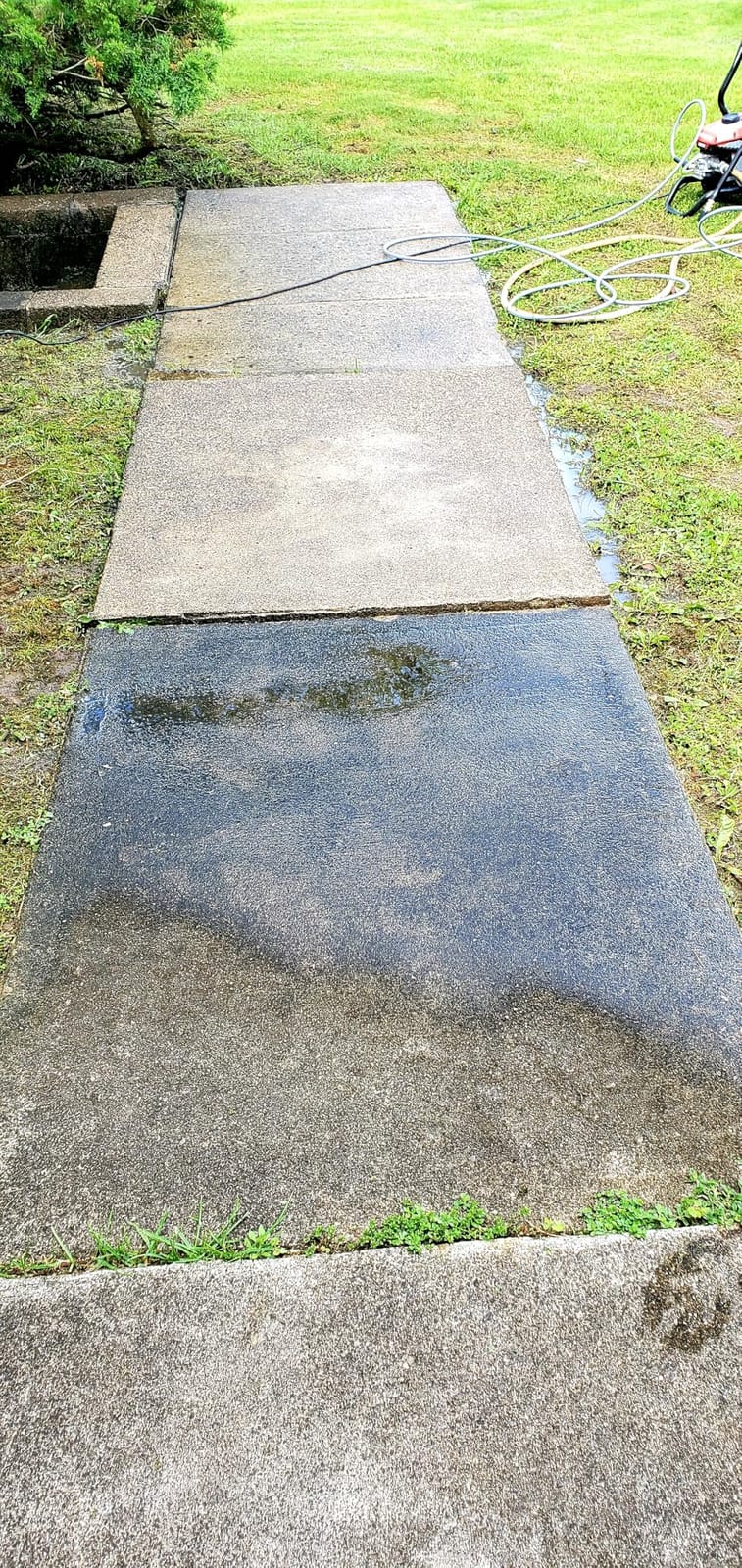
Performance is consistently described as adequate for home siding, decks, driveways and vehicles, which is exactly the brief. The caveat that appears in nearly every review is the 1.2 GPM flow, and the effect is a slower job rather than a worse result. Owners also flag an ambiguity in the listing, where a 2 GPM maximum figure conflicts with the 1.2 GPM headline, so set your expectations against the lower certified number.
An 8 percent one-star share reflects a small number of pump, cord breaker and wand complaints after extended use. The 25-foot kink-resistant hose is repeatedly cited as the upgrade over the smaller CRAFTSMAN, and onboard storage for the nozzle, hose, cord and wand keeps a compact unit tidy in a garage where a loose high-pressure hose is a trip hazard.
Is 1900 PSI the right amount for vinyl siding?
Yes. 1,900 max PSI with a 40-degree tip from 12 inches sits right in the middle of the safe band for vinyl, and the extra 200 PSI over the 1,700 PSI model gives you a little more headroom for stubborn streaks on brick or a concrete walkway without putting you in a dangerous range on cladding.
Where the higher PSI does not help is organic growth, and this is the point most spec sheets miss. Algae and mildew respond to the detergent and the dwell time, not to the pressure. If you buy this machine for siding, plan to spend more time on the detergent step and less on cranking the trigger.
How it stacks up against the CMEPW2100
The 2,100 PSI model is the stronger choice for masonry and mixed jobs, and the 1,900 PSI model is the better choice if you want the integrated tank and a lighter carry weight at 28.2 pounds. Both share the 1.2 GPM flow, so the difference is punch rather than speed.
Either one handles siding well. Between them, pick on the surfaces you actually have rather than on the PSI number, because on cladding the nozzle and the detergent matter more than the peak figure.
8. DeWalt DXPW3300-S – Best Warranty Coverage for a Gas Machine
DeWalt 3300 PSI Gas Pressure Washer, 2.4 GPM, Residential Model DXPW3300-S
- 3300 PSI at 2.4 GPM handles thick algae in fewer passes
- Widest nozzle set among the gas units with 15 plus 25 plus 40 degree and soap
- Longest warranty here: 5 years frame and 3 years pump
- 25 ft abrasion-resistant hose and 16 inch steel wand give strong reach
- Powder-coated welded steel frame and 10 inch pneumatic tires
- Heaviest unit here at 64 lb on a 41 inch frame
- so it is a two-person carry for some
- 49-state compliant and not rated for California
- Gas engine brings oil changes and fuel storage
- Fully tested units may show residual fuel odor
The DeWalt is the warranty pick, and the numbers behind that are the most generous in the roundup: five years on the frame, three on the pump and two on the engine. Three of the electrics here carry a three-year limited warranty, and the other gas machine in this list covers its pump and frame for a single year. If you intend to keep a washer for a decade of seasonal siding cleanings, that coverage difference is a genuine argument.
Performance is not the question here. At 3,300 PSI and 2.4 GPM this machine sits alongside the Simpson as the strongest outlet in the set, and reviewers credit it with cutting cleaning time on siding and driveways. The five included tips cover 0, 15, 25 and 40 degrees plus a soap nozzle, which is the more complete set on the two gas machines and means you have the right fan angle for both delicate cladding and masonry.
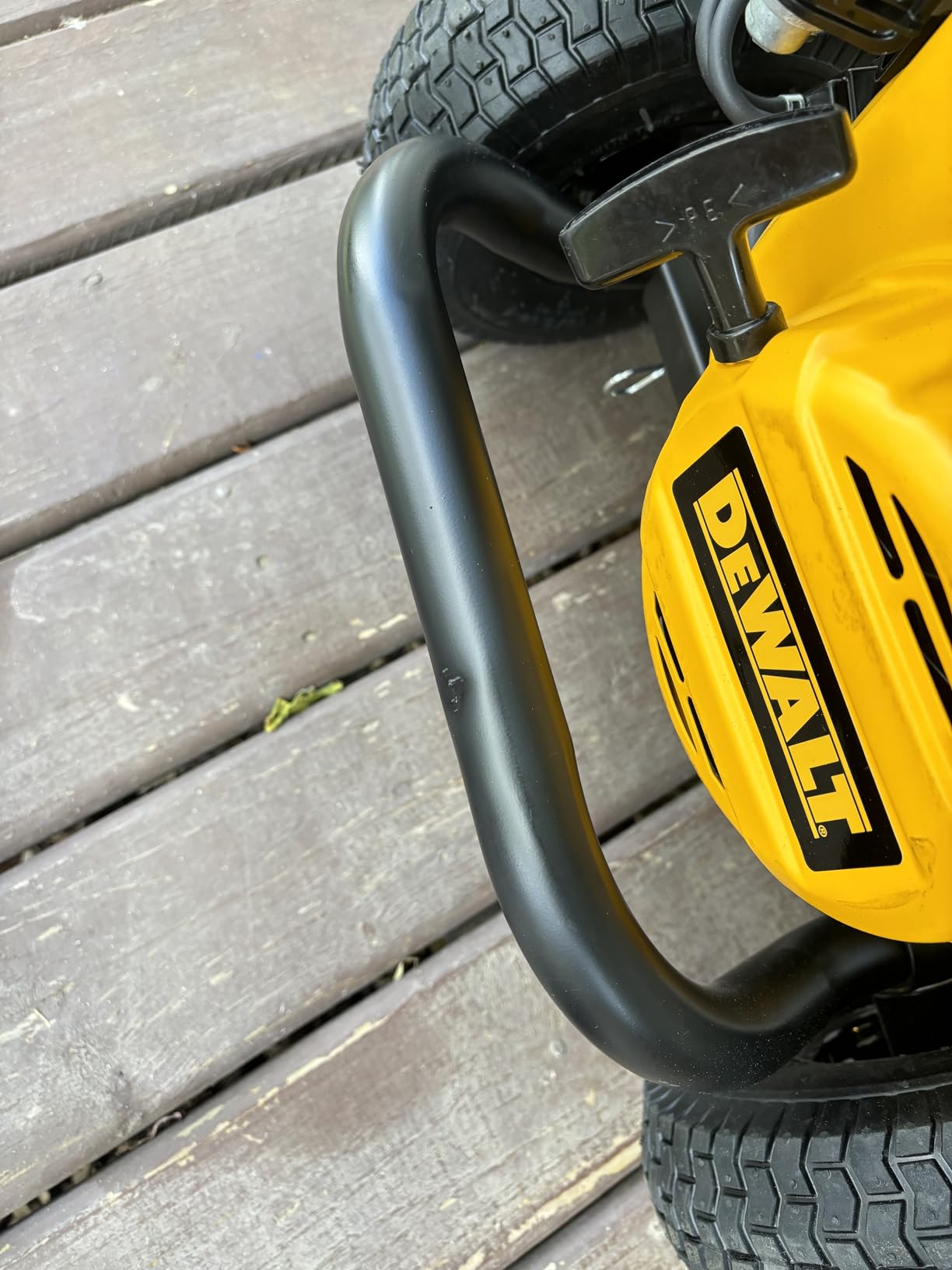
Reviewers praise the accessories without reservation, including the 25-foot abrasion-resistant hose with quick-connect fittings and a 16-inch steel wand. Combined, those give you the reach for a second story from ground level, which is exactly the reach you want when you would rather not put a ladder on wet grass next to a pressure-washing hose.
What draws criticism is logistics rather than function. At 64 pounds on a 41 inch frame, this is the largest machine here and several users describe the move as a two-person carry. It is 49-state compliant, so it is not rated for California. And because units come factory-tested, some arrive with residual fuel or an odor that a few buyers find off-putting.
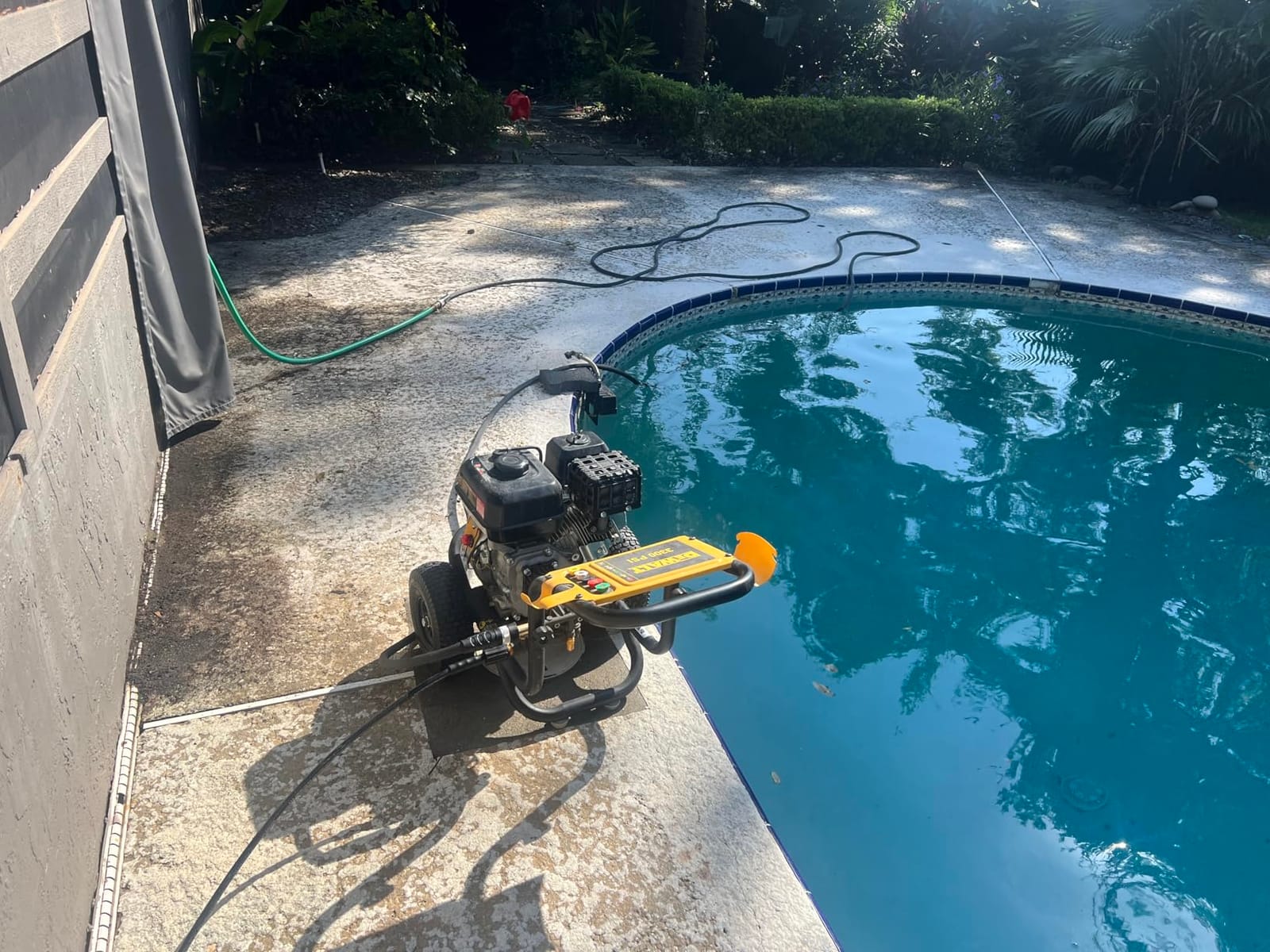
Is the warranty the reason to buy it?
It is the best reason, but not the only one. A pump warranty of three years matters on a gas machine because axial pumps are the component most likely to need service, and one year of coverage on a comparable machine is thin. If you plan to keep the washer for more than a few seasons, the longer terms justify a larger footprint.
Against that, you are buying weight, fuel handling and a machine that needs a dedicated place to live. Judge it on whether you have a two-story exterior or several surfaces to clean, not on the warranty alone.
Which gas machine should you pick?
Compare flow rate first. This machine runs 2.4 GPM and the Simpson runs 2.5, so the rinsing difference is negligible, while the DeWalt carries more pressure and a longer warranty. Both sit in the same weight class and both are 49-state compliant.
You then consider the nozzle kit. The DeWalt includes a 25-degree and a 40-degree tip, which is the safer default for siding work. The Simpson ships with four tips and no 25-degree, so add one before you start if siding is your priority.
9. CRAFTSMAN CMEPW2100 – Best Corded Electric for Brick and Stucco
CRAFTSMAN Electric Pressure Washer, Cold Water, 2100-PSI, 1.2 GPM, Corded (CMEPW2100)
- Highest output in the CRAFTSMAN electric line for mixed-surface jobs
- Runs quietly and is light enough to move between tasks
- Reach around a house without moving the outlet
- CETA certified with owners reporting three to four years of use
- Hose tangles and kinks easily and needs repeated coiling
- Soap dispensing is unreliable unless the supply water is turned down
- 32 lb makes it the heaviest CRAFTSMAN electric here
- No dedicated shutoff for the detergent line
If your house is brick or masonry rather than vinyl, this is the CRAFTSMAN to buy. At 2,100 PSI it has the most headroom in the corded electric line, and while 2,100 is not aggressive by gas standards it is enough to work down a brick elevation with a 25 or 40-degree tip when combined with the right detergent for efflorescence and grime.
It is also the quietest option among the larger CRAFTSMAN machines, and owners repeatedly describe it as powerful enough for house siding without endangering vehicles or softer surfaces when the tip is set correctly. Several long-term owners report three to four years of regular use and would buy it again, which is a better durability signal than most of the light-duty electrics in this roundup manage.
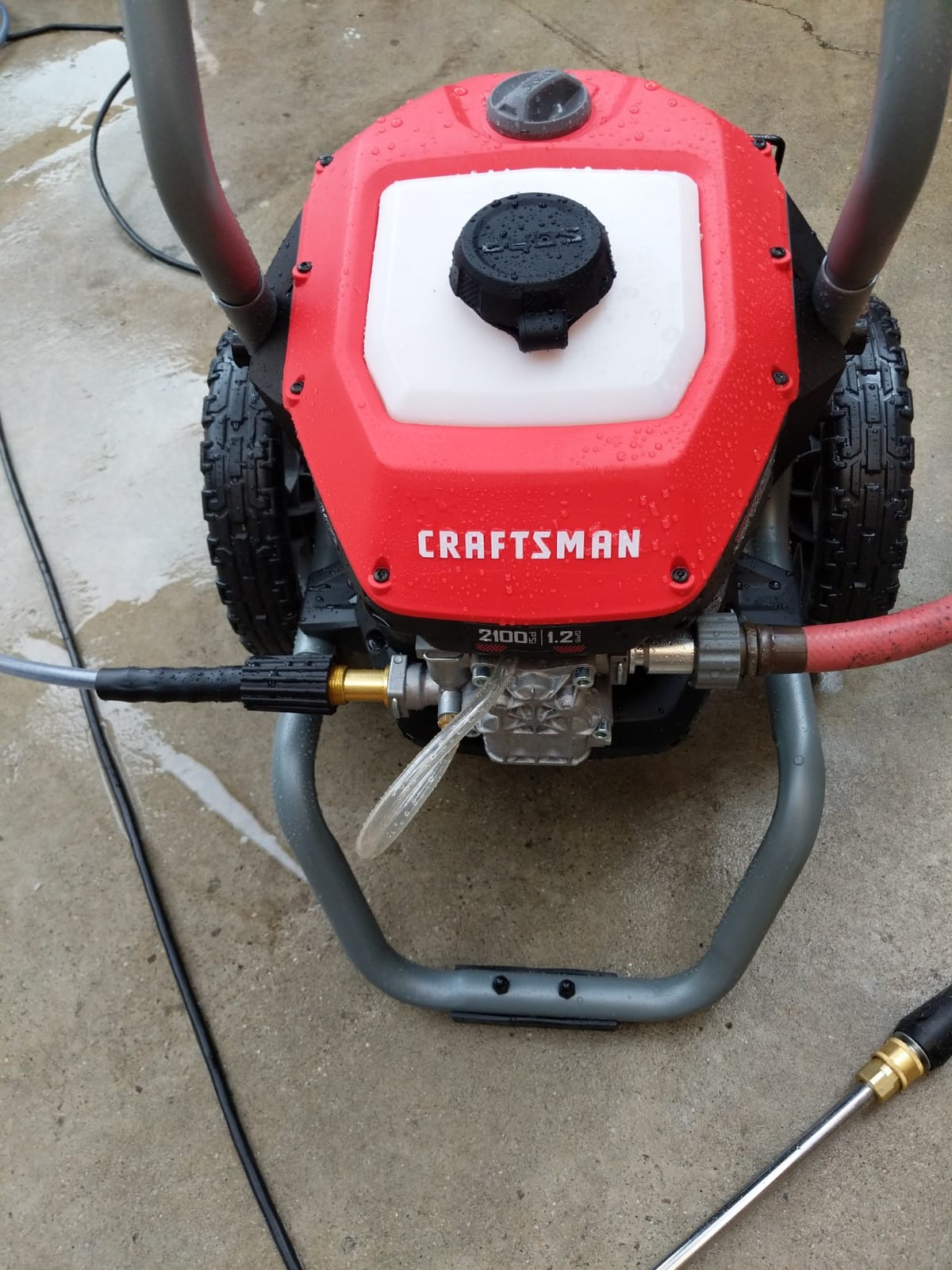
Two accessory weaknesses dominate the criticism and both recur. The hose tangles on itself and needs repeated coiling to store and use, and the soap system frequently will not dispense unless you turn the supply water down, which is an odd behaviour to have to discover mid-job. There is no dedicated shutoff for the detergent line either, so soap delivery depends entirely on which nozzle is fitted, meaning you swap tips to change from soaping to rinsing.
At 32 pounds it is the heaviest of the CRAFTSMAN electrics here, so it is not a one-hand carry up a porch. The 10-inch wheels handle obstacles better than the 8-inch units, and the 25-foot hose plus 35-foot cord give a working envelope that covers most of a single-family house without repositioning.
Can it handle stucco safely?
With care, and only on modern hard-coat stucco that you know the age of. A 40-degree tip from 12 inches at a conservative pressure setting is reasonable, and the detergent will do most of the cleaning. What you must not do is work a wet panel slowly, because dwell time on stucco is what strips coatings.
Many contractors soft wash stucco entirely rather than pressure wash it, and that advice exists because the failure mode is not a leak, it is a stripped coating that exposes the brown coat and needs patching. If your stucco is old or you do not know its age, use low pressure and let the chemistry work.
Why the soap system needs attention
Because there is no detergent shutoff, you control soap by changing nozzles. Fit the soap nozzle to apply, then switch to a fan tip to rinse, and check that you have actually removed the tip before you assume the panel is clean. Owners who report soapy surfaces after rinsing are usually describing exactly this sequence going wrong.
The workaround used in reviews is to restrict inlet water so the injector can pull detergent reliably. If you plan to do a lot of soaping, this is a machine to test on a small panel first.
10. Greenworks GPW3002A – Best Corded Electric Throughput
Greenworks 3000 PSI (2.0 GPM Max) Brushless Electric Pressure Washer
- Only corded electric here combining 3000 PSI with 2.0 GPM
- Brushless motor is quiet and starts with a push button
- PSI and GPM claims independently lab verified
- 25 ft Uberflex hose is more flexible than typical supplied hoses
- Rugged metal spray gun feels more durable than plastic
- Requires a dedicated 20 amp branch circuit
- Owners report tripping 20 amp GFCI breakers with extension cords
- Motor runs in bypass when the trigger is released
- About 50 lb on a 35 inch wide frame
- 2.0 GPM is reached at lower pressure
This is the machine that changes the electric conversation. At 3,000 PSI and a 2.0 GPM maximum it delivers 3,300 C.U., which puts it in gas territory while staying corded. Owners who were burned by gas units single out the brushless motor as the reason this one feels reliable, and the push-button start removes the pull cord that stops a lot of people ever starting a gas washer.
The verification matters more than usual. Greenworks states that all PSI and GPM claims were tested by an independent lab, and one owner published gauge testing of roughly 2,550 PSI on the 15-degree tip, about 1.67 GPM maximum flow and 3,000 to 3,200 PSI static pressure, which supports the headline figures without confirming them exactly. Verified claims buy buyer confidence in a category full of unverified ones.
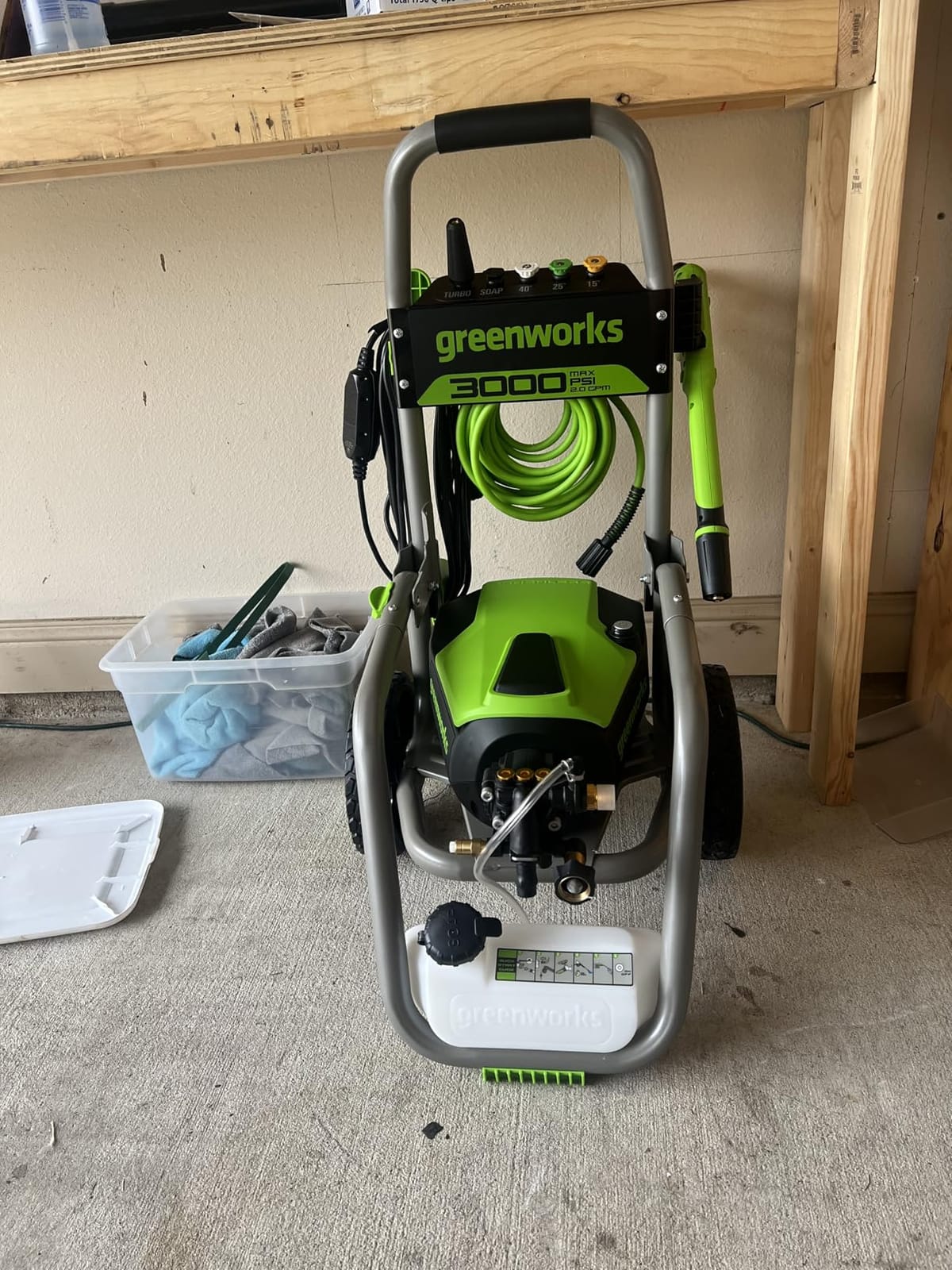
Hardware is a step up from the plastic offered on cheaper machines. The gun is metal, the 25-foot Uberflex hose is repeatedly described as noticeably more flexible and kink-resistant than a typical supplied hose, and the nozzle kit includes 15, 25 and 40 degree tips plus soap and turbo, which is the fan-angle coverage siding work needs.
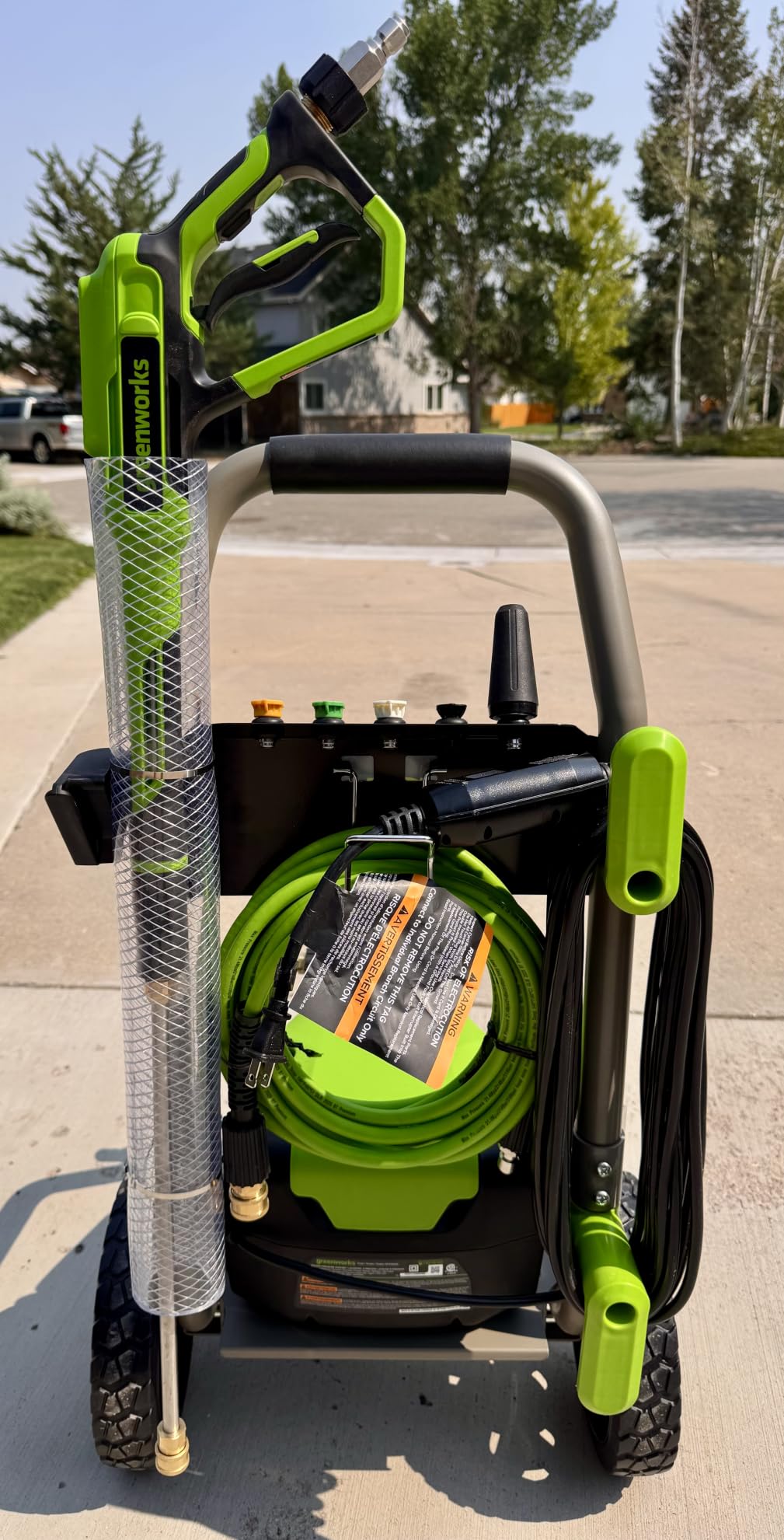
The electrical requirement is the thing to check before you buy, and it is not a detail. This machine requires a dedicated 20-amp branch circuit, the cord tag says individual branch circuit only, and multiple owners report tripping 20-amp GFCI breakers or seeing lights dim when an extension cord is involved. If you need one, it should be 12 AWG or heavier. If your exterior outlets are shared with a kitchen or a workshop, this machine may not be usable where you need it.
Is 3000 PSI safe for vinyl siding?
It is safe on a 40-degree tip from 12 inches or more, and unsafe on a narrow tip held close. A machine with this much pressure in the tank can absolutely damage a vinyl lap, which is why the wide fan tip is not optional with this model. Use the 40-degree for the body of the wall, the 25-degree for stubborn streaks at a distance, and keep moving.
Remember that on 2.0 GPM you are also foaming better than any other corded machine here, which means a detergent-first soft wash works properly. The JETFLOW flow technology and the included soap and turbo nozzles are the combination that makes this more than a driveway machine.
Where the electrical limit bites
Plan the circuit before the purchase, not after. A dedicated 20-amp outlet near the work area solves everything, and if your panel cannot provide one the electrics on this list that run on 13 or 14 amps will serve you better and finish a siding job without drama.
Also note the motor stays energized in bypass when the trigger is released rather than fully stopping, so it draws standby current. For a homeowner running a machine occasionally that is a small cost, but it is worth knowing.
11. Westinghouse WPX2300e – Best Induction Motor Durability
Westinghouse WPX2300e Electric Pressure Washer, 2300 Max PSI and 1.76 Max GPM, Induction Motor, Onboard Soap Tank, Spray Gun and Wand, 5 Nozzle Set, for Cars/Fences/Driveways/Homes/Patios/Furniture
- Induction motor holds consistent pressure over hours of use
- M22 fittings accept surface cleaners and foam cannons
- 1.76 GPM max flow gives strong coverage at a mid tier
- Steel frame with 8 inch never-flat wheels feels more substantial
- 3 year warranty and reviewers credit honest specifications
- No shutoff for the soap line
- so surfaces stay soapy while rinsing
- 0.42 gallon reservoir will not produce thick foam
- Trigger must be held continuously with no lock-on
- Hose twists up unless stored on a reel
An induction motor is the difference between a machine that holds its rating in year three and one that does not, and that is why this model earns its place. Owners report it handling hours of continuous use without complaint and maintaining consistent pressure, which is the behaviour you want on a long siding job where the temptation is to speed up as the afternoon wears on.
The other reason to look here is the fitting standard. M22 fittings mean the full accessory ecosystem fits, so surface cleaners, foam cannons and undercarriage cleaners all mount without adapters. For a homeowner who wants to run a proper low-pressure soft wash, that compatibility is more valuable than another few hundred PSI, because a surface cleaner is the safest tool you can put on a large flat panel.
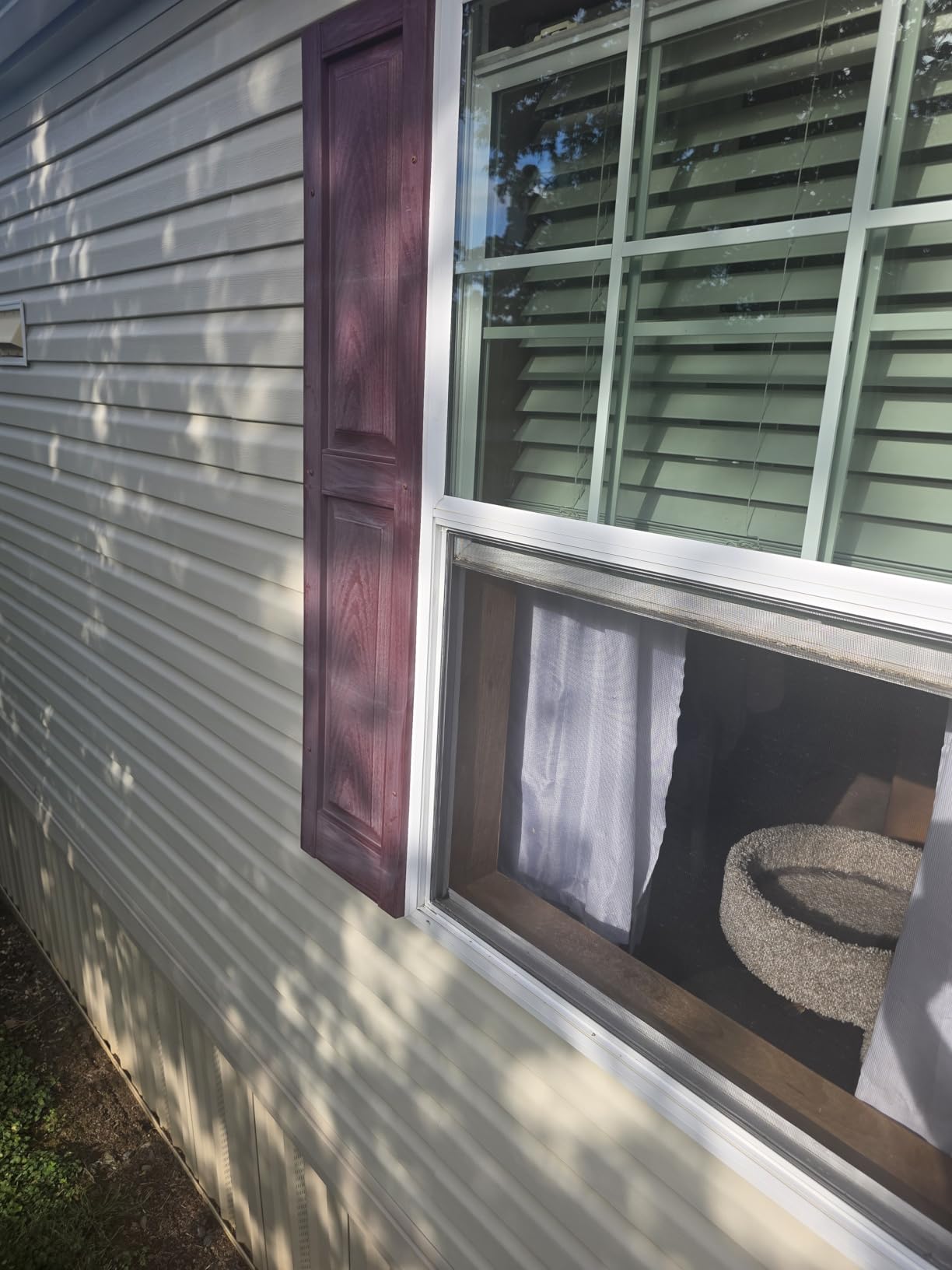
Build quality reads as a step up from the plastic-bodied competitors. A steel frame, high-profile 8-inch never-flat wheels and a 35-foot GFCI cord are physical things you notice when you are dragging the machine around a wet yard, and several reviewers explicitly credit Westinghouse for not overstating the performance figures, which is a rare comment in this category.
The recurring functional complaint is the absence of a soap on/off control. Detergent continues to draw until the tank is empty, so surfaces end up soapy during the rinse unless you change nozzles, and owners describe being unable to rinse cleanly as a direct result. The reservoir itself is listed at 0.42 gallon, so it will not make thick foam, and the wand has a lock-off but no lock-on, so the trigger stays held.
Why induction motor durability matters for siding
Because a siding job is long and repetitive. You will make dozens of passes on a two-story elevation, and a motor that heats up and loses pressure in the last hour leaves you finishing the wall with a weaker machine than you started with. Owners of this model describe the opposite, and the axial three-piston auto-stop pump is maintenance-free by design.
Combined with M22 accessory compatibility, this is arguably the most soft-wash-ready electric in the roundup. If you plan to run detergent regularly, the accessory fit is worth more than the extra 100 PSI an upgrade would give you.
What to plan for
Buy a nozzle that lets you separate soaping from rinsing, and be disciplined about switching it. The soap line has no shutoff, so the discipline has to come from you, and skipping the switch is how a rinsed panel ends up looking cleaner than it is and then attracting dirt faster.
Store the hose on a reel or a wall hook. It is abrasion-resistant but not very flexible, and owners report it twisting up on itself when it is dumped in a bin, which is what eventually cracks the inside of the hose.
12. Greenworks GPW2101A – Best for Small Storage Spaces and Simple Jobs
- Telescoping handle collapses for compact upright storage
- No gas
- oil
- spark plugs
- air filters or pull cord to maintain
- Integrated GFCI plug cuts power automatically
- 25 foot supplied hose is better quality than the norm at this tier
- Quarter inch universal quick connects fit standard accessories
- Soap requires switching to a separate nozzle tip
- Some owners report units stopping after a short period
- 2100 PSI is a max figure with 1.2 GPM throughput
- Hose length is listed as both 20 and 25 ft
- Stated weight of 1.5 lb is not credible for a wheeled washer
The storage design is the reason to notice this machine. A telescoping handle pulls out for transport and collapses for storage, so the machine stands upright roughly 17 by 13 inches, which means it lives in a small closet or beside a door rather than taking a garage corner. If you rent, live in a condo with a storage cage, or simply do not have room for a machine with a 35-inch frame, this solves a problem no other electric here does.
There is a real safety feature here too. The 35-foot power cord has an integrated GFCI plug that shuts off power automatically, which on a wet lawn beside a house is a meaningful protection and one you would otherwise have to buy separately as an inline adapter.
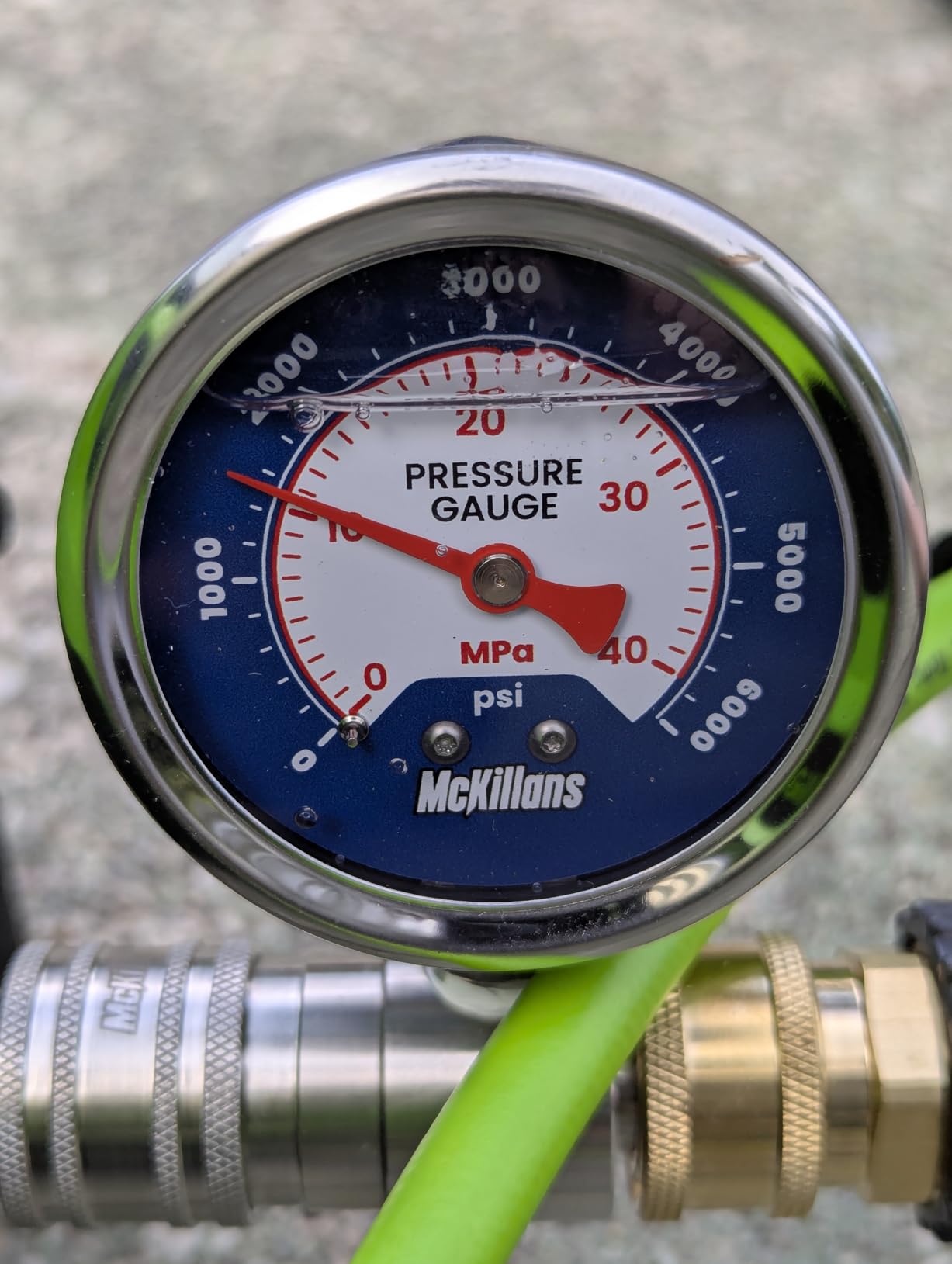
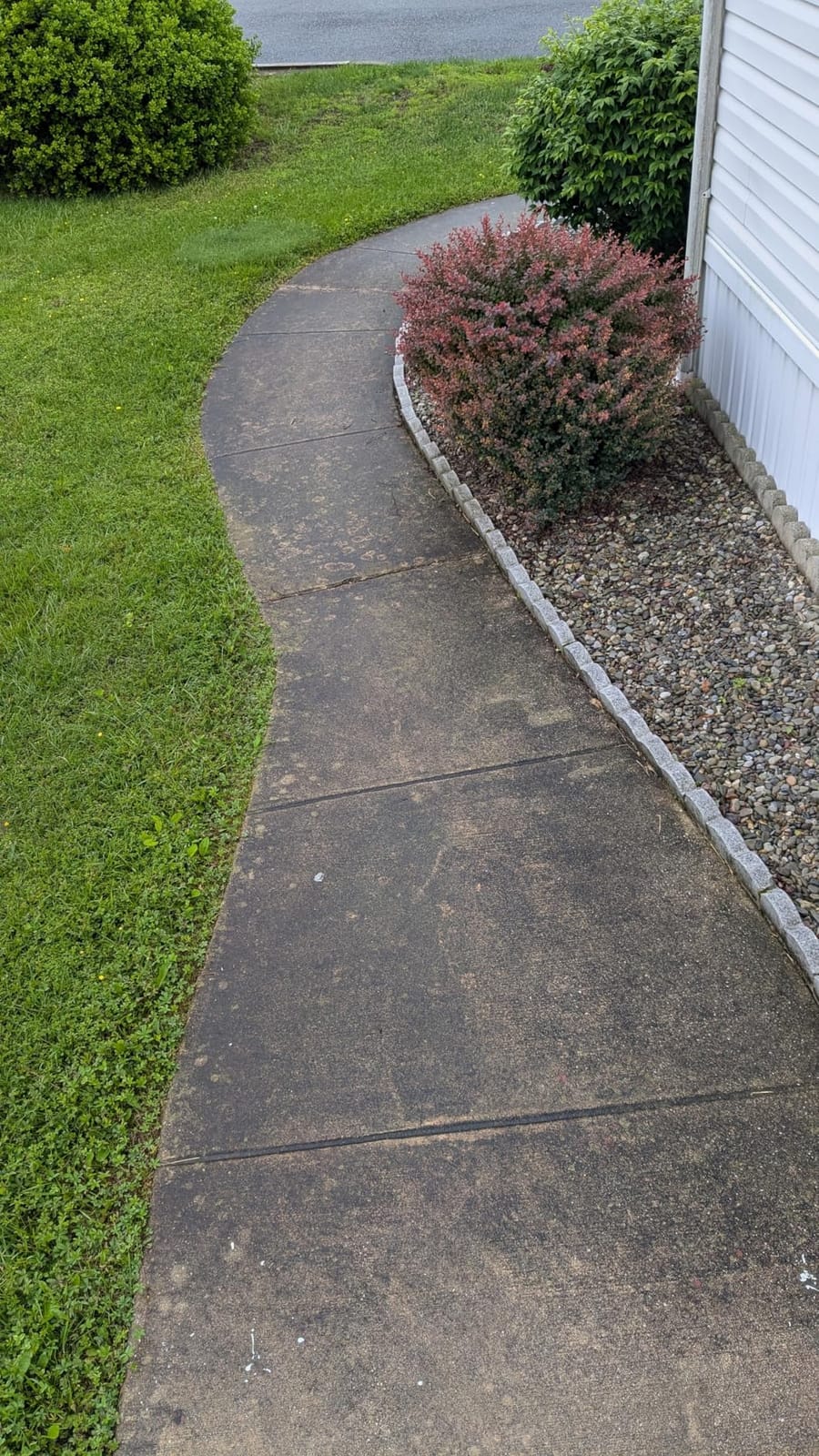
Owners report it has enough power for vinyl siding, concrete sidewalks and even heavy rust staining, and they consistently praise the supplied hose as better than the norm at this level, with less coiling and pinching than typical. The quarter-inch universal quick-connect system is another practical point, since standard accessories fit without adapters, unlike the Kärcher.
Two caveats are worth being straight about. The soap dispenser is a separate nozzle attachment, so you choose between soaping and rinsing with the same tip rather than getting both, and there is a small but real cluster of reports of units that worked well for an afternoon and then stopped, compounded by short return policies that leave owners unable to seek a fix.
Is it powerful enough for a full house?
For vinyl siding with a detergent-first method, yes. At 2,100 PSI and 1.2 GPM it has the same working pressure range as the larger CRAFTSMAN machines and the same flow, so the difference on the wall is close to none. What you give up is the 25-foot reach on some kits and the larger detergent reservoir.
It also uses far less water than a high-GPM gas machine, which suits a smaller yard and a water-restricted area. A 1.2 GPM machine working a wall for an hour uses roughly 72 gallons, so the water argument only matters if you are on a meter or a well.
What the spec inconsistencies mean
Two listing details deserve a shrug rather than a decision. The stated weight of 1.5 pounds is not credible for a wheeled pressure washer, and the hose is listed as both 20 and 25 feet in different places on the page. In both cases the machine is described accurately enough elsewhere for you to plan around it.
The reliability reports are the thing to weigh. A 4.4 average with 75 percent five-star ratings is a strong showing, and the failures described are small in number but real, so a three-year warranty matters more here than it would on a machine with a longer track record.
How to Pressure Wash Siding Safely, Step by Step
Follow this order and the risk of damage drops sharply, because the detergent goes down before the pressure touches the panel and the rinse runs downhill over clean surface rather than dirty.
Check the panels first. Press on a lower panel in a hidden spot. Soft or spongy panels, or ones with a give in the lap, are telling you to drop the pressure and lean on detergent.
Inspect the seams and caulk. Look along the top and bottom of every wall section. Old sealant that has hardened or failed is the weak point, and pressure near it is what turns a cleaning job into a leak.
Protect what you cannot rinse. Mask or tape windows, outlets, light fixtures and vents, and pre-wet any glass. Water finds a path and a window is the most common way it gets behind a panel.
Protect the plants. Move container plants away from the wall and cover beds. Even a mild solution kills tender growth, and the runoff carries it to the soil.
Mix your solution at label strength. Use a house and siding cleaner, or a sodium hypochlorite solution diluted exactly as the jug specifies. Wear gloves and eye protection, never mix it with other cleaners, and never let it dry on the panel.
Apply bottom to top at low pressure. Soap tip or foam cannon on the lowest setting. Working upward means you are not pushing dirty runoff over clean siding, and you keep the panel wet so the chemistry stays active.
Let it dwell. Follow the label time, usually 5 to 10 minutes. This is the step that kills the algae, and skipping it is the reason a washed wall goes green again in weeks.
Rinse top to bottom with a wide fan tip. 40-degree, 12 to 18 inches of standoff, overlapping passes, moving steadily. Never hold the tip still, and never close the distance on a stubborn spot.
Let the wall dry before walking away. Trapped moisture behind a panel is how a clean job turns into a callout. Give it a few hours in the sun if the day allows.
The Accessories That Actually Change the Job
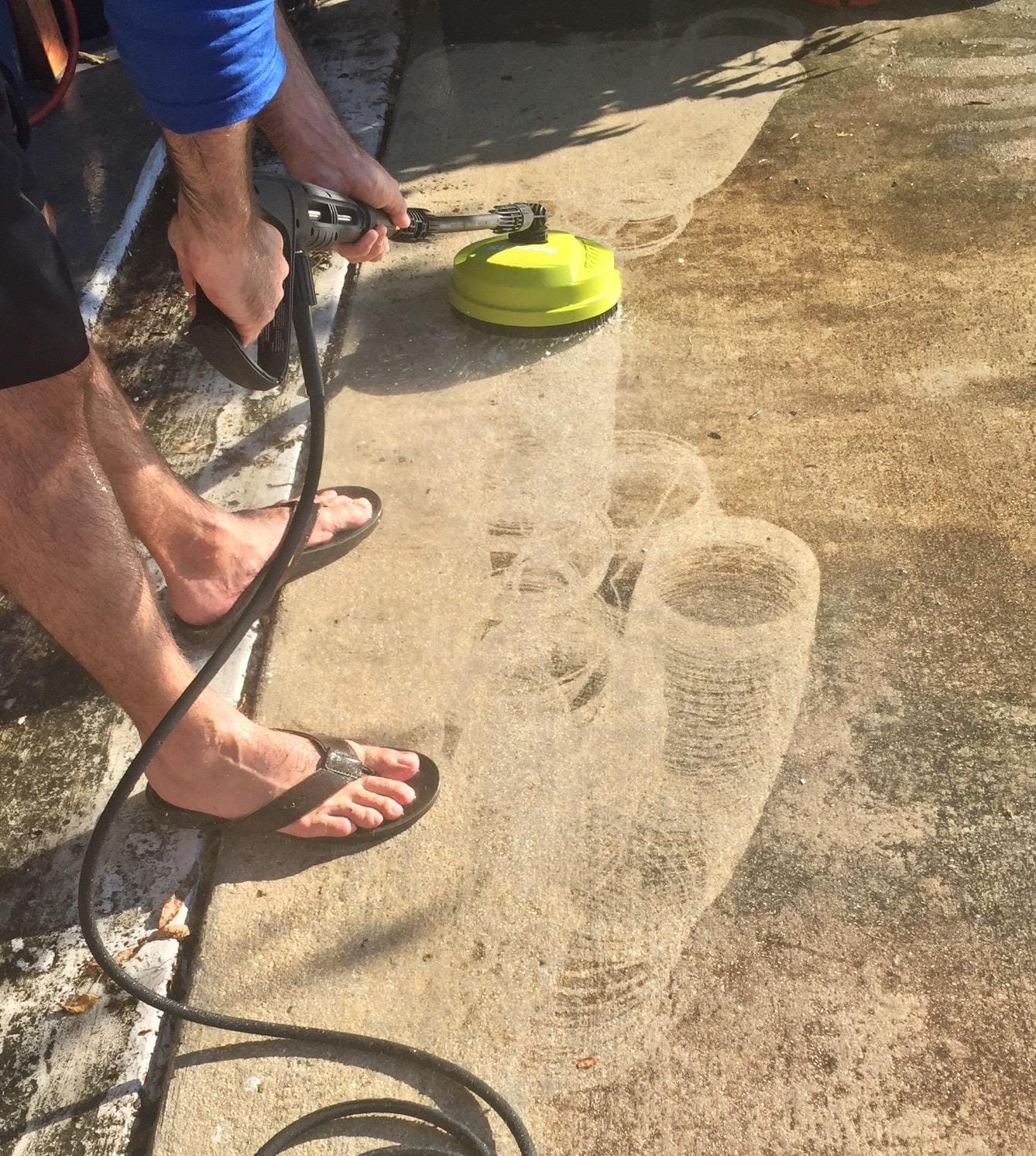
A surface cleaner is the highest-value purchase for siding and almost nobody buys one. It is a flat disc that spins a spray jet against the panel, and because the jet is moving constantly it cannot concentrate on one spot the way a wand can. On a large flat elevation that is the difference between safe work and a wall with streaks, and it is the single reason many contractors avoid wands on vinyl.
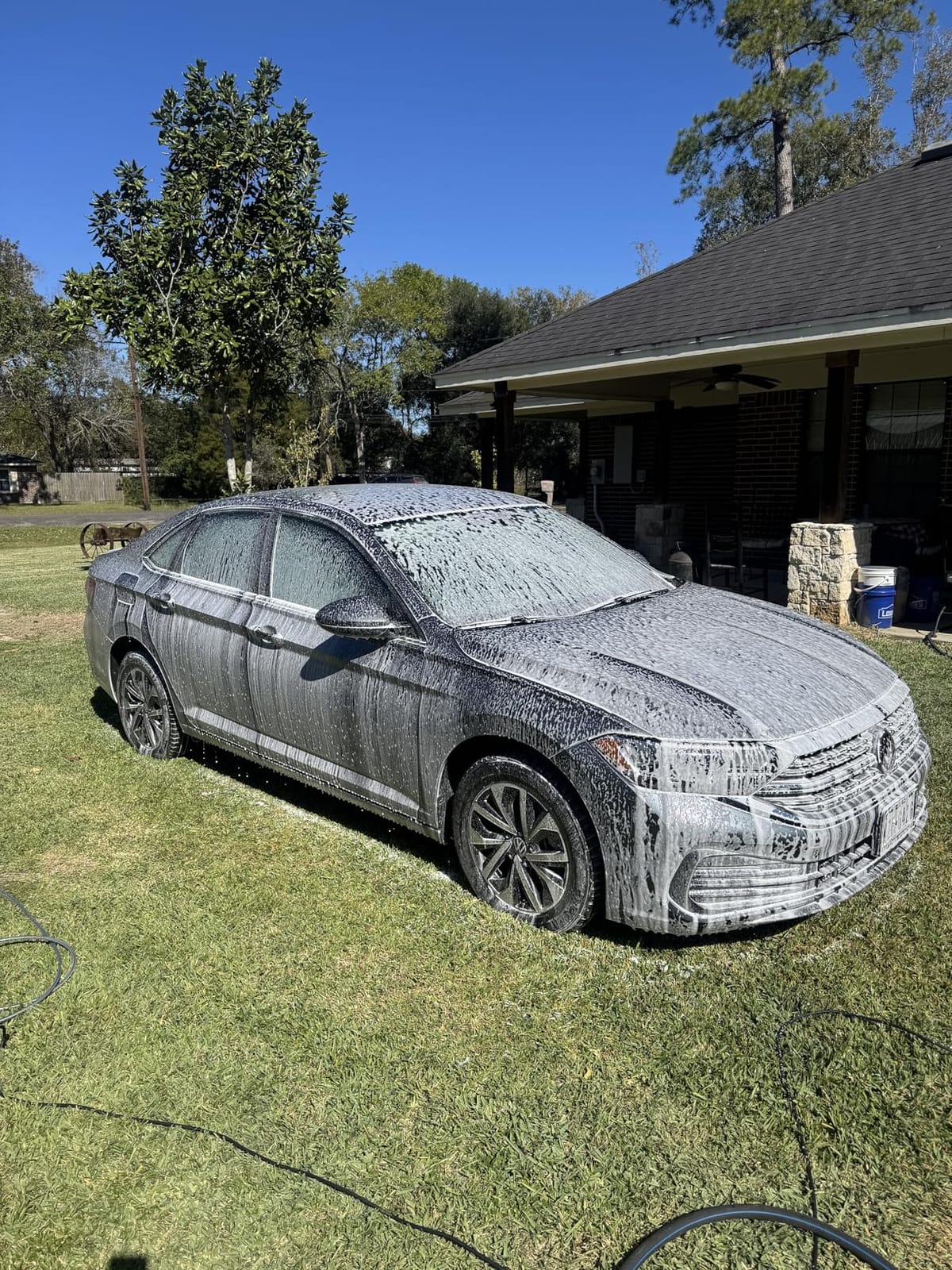
A foam cannon is second. It produces thicker suds than any onboard detergent tank, which means longer dwell and better coverage on algae, and it draws air from the water supply so a machine with good flow makes a visibly better foam. Check your fitting standard before buying, because the M22-14 fittings on one machine in this roundup need adapters.
An extension wand comes next, and it matters most on the compact electrics with 20-foot hoses. A 40-degree fan tip on a wand lets you rinse a second story from the ground without a ladder on wet grass beside a live high-pressure hose.
On detergent delivery, there are two systems. An onboard tank is convenient, holds a fixed volume, and on several machines here has no on/off control, which means you switch nozzles to stop the soap. A suction-hose injector draws detergent from a bucket at the wand, draws far less total solution, and lets you change concentrations without refilling anything. For a soft wash, the injector is the better system and a foam cannon plugged into it is the best combination available.
How We Picked and Tested?
Our method is spec-sheet analysis combined with a close read of owner reports, not lab work. We compared every machine on the numbers that change a siding job: rated working pressure rather than maximum pressure, flow rate in GPM, hose and cord length, detergent delivery, pump type, and warranty length.
We then weighted the owner reports, because that is where the practical information lives. A machine can have excellent specifications and still be annoying to use, and the recurring themes in these reviews, hose tangling, soap that will not dispense, fittings that leak, breakers that trip, are exactly the things a spec sheet cannot tell you.
We are not claiming any third-party laboratory certification or endorsement of our own, and we do not run competitive certification programs. Where a manufacturer states independent verification, such as the CETA certification on several machines here or the lab testing Greenworks cites, we report that claim as the manufacturer’s and note it as a trust signal in its own right.
Should You Buy a Washer or Hire a Pro?
Buy if you have a one-story home with light growth, a dedicated outlet within reach, and a willingness to spend a full Saturday on it. Buy if you also want the machine for driveways, decks, fences and vehicles, because that is where the hours get repaid. Rent if you need it for exactly one wall and have never used one, since a rental is the least expensive way to learn which flow rate you wish you had.
Hire out if the house is three stories, if the growth is moss more than algae, if the siding is old painted wood you would hate to see lose paint, or if you have any doubt about the condition of the wrap behind the panels. Professionals in this trade consistently say that the failure they are called to fix is almost never the pressure, it is a seam that was already compromised.
Watch for the red flags. Quoted homeowner prices in homeowner forums for a 3,000 square foot house cluster in a fairly narrow band, so a bid far below the others is a question, not a bargain. Colored spray tips at the business end of the wand, no mention of a detergent step, and no explanation of how they will protect windows and plants are the three markers that separate a prepared operator from an unprepared one. Ask what nozzle they use on vinyl and how long the solution sits. If the answer is high pressure and immediate rinsing, they are doing it the risky way.
Frequently Asked Questions
What pressure washer is best for house siding?
A residential electric machine rated around 2,000 to 2,500 PSI and 1.2 to 2.0 GPM is the best fit for most house siding jobs. Pair it with a 40-degree fan-tip nozzle held 12 to 18 inches from the panel and a siding detergent applied at low pressure before any rinsing. Our top pick is the Sun Joe SPX3000, with the Westinghouse ePX3500 as the strongest value option.
Is 2500 PSI too much for siding?
Not on a 40-degree fan tip held at 12 inches or more. The 2,500 PSI figure is a maximum at the tip, not the pressure on your panel, and the same machine becomes destructive on a 15-degree tip held close. Keep at least 12 inches of standoff with any tip narrower than 40 degrees, and never hold the trigger still on one spot.
What PSI is safe for vinyl siding?
Between 1,500 and 2,000 PSI on a 40-degree fan tip is the safe band for vinyl. Vinyl is the most forgiving common cladding but also the easiest to damage at the seams, where a hard jet can lift a lap and force water into the wall. Always apply detergent at low pressure first and rinse from the top down.
Should I use a pressure washer on my siding?
Usually yes, but a soft wash is the safer method for algae and mildew. High pressure knocks growth loose without killing the organism, so it regrows within weeks, and on older houses it can force water behind panels and blow out aged caulk. Apply a siding solution at low pressure, let it dwell for the time on the label, then rinse wide and gently.
What is a good pressure washer cleaner for vinyl siding?
A house and siding cleaner, or a sodium hypochlorite solution diluted exactly as the label specifies, applied with an onboard soap tank, a suction-hose injector or a foam cannon. Start at the bottom of the wall and work upward so you are not rinsing into clean siding, keep the panel wet, allow the label dwell time, and rinse top down with a 40-degree tip.
How much should I charge to pressure wash a 2000 sq ft house?
Homeowner quotes for a 3,000 square foot house cluster in a fairly narrow band in homeowner forums, so treat an unusually low bid as a warning rather than a deal. Before hiring, ask what nozzle they use on vinyl, whether they apply detergent or rinse straight, and how they protect windows and plants. An operator who cannot answer those clearly is not prepared for the job.
The Best Pressure Washers for House Siding in 2026
For most homes, the Sun Joe SPX3000 is the right starting point, with its dual detergent tanks, 2,030 PSI of working pressure and the largest owner base in the roundup to prove its long-term behavior. If you want faster coverage for less, the Westinghouse ePX3500 gives you 1.76 GPM, a 25-foot hose and the highest average rating here, and it remains the pick for anyone moving around a sloped lot.
Choose a gas machine only when flow rate is the binding constraint, which means a tall elevation or several properties, and that points to the Simpson Clean Machine 3400 at 2.5 GPM or the DeWalt DXPW3300-S if warranty length matters more to you than frame size. Whatever you buy, buy a 40-degree tip and a foam cannon, apply the detergent at low pressure, give it the dwell time on the label, and rinse from the top down. That sequence, not the PSI number on the box, is what produces a clean siding panel that stays clean.