
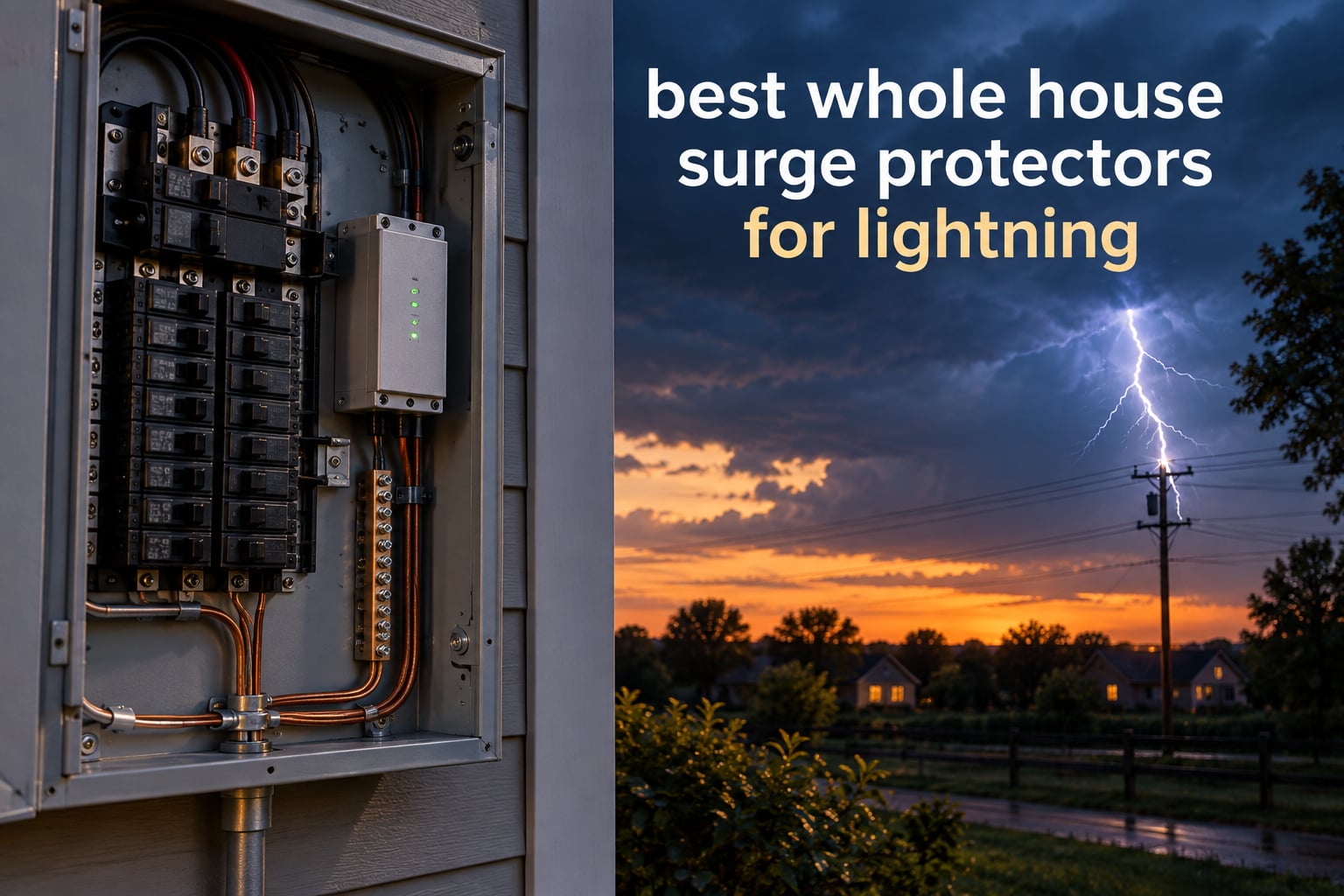
No whole house surge protector survives a direct lightning strike, and anyone who tells you otherwise is selling something. What the best whole house surge protectors for lightning actually do is absorb the induced surges that ride in on utility lines whenever a strike lands nearby. A single channel carries roughly 30,000 amps, and the smaller spikes that arrive in the minutes after a storm are more than enough to cook an HVAC control board, a well pump, or a home office full of network gear.
That distinction matters more than any spec number, so we start there. Up to 80% of the surges in a typical home are generated inside the walls by appliances cycling on and off, not by weather at all. The rest come from outside, and lightning is the loudest source among them.
We spent six weeks comparing ten panel-mounted surge protective devices on paper and in the forums, focusing on surge current ratings, protection modes, enclosure ratings, listing standards, module serviceability, and what happens to the indicator lights after a hard storm. Ten devices earned a place here, and the short version is that the strongest combination of rating and real-world ownership data belongs to the Eaton CHSPT2ULTRA, with the Square D HEPD80 close behind for anyone who wants a name that shows up on more panel brands.
Table of Contents
Top 3 Whole House Surge Protectors for Lightning (September 2026)

Eaton CHSPT2ULTRA
- 108kA surge current
- Universal fit in any load center
- Two-pole 15A breaker mount


Quick Picks: 10 Best Whole House Surge Protectors in 2026
Every device below installs at a main panel or subpanel and covers the circuits wired downstream of it. We list the surge current rating first because it is the number that decides whether the device keeps up with a storm, and we list the enclosure and listing standards because those decide whether your electrician can legally put it where you need it.
| Product | Specifications | Action |
|---|---|---|
| Eaton CHSPT2ULTRA |
|
Check Latest Price |
| Square D HEPD80 |
|
Check Latest Price |
| Eaton CHSPT2SURGE |
|
Check Latest Price |
 Eaton BRNSURGE Eaton BRNSURGE |
|
Check Latest Price |
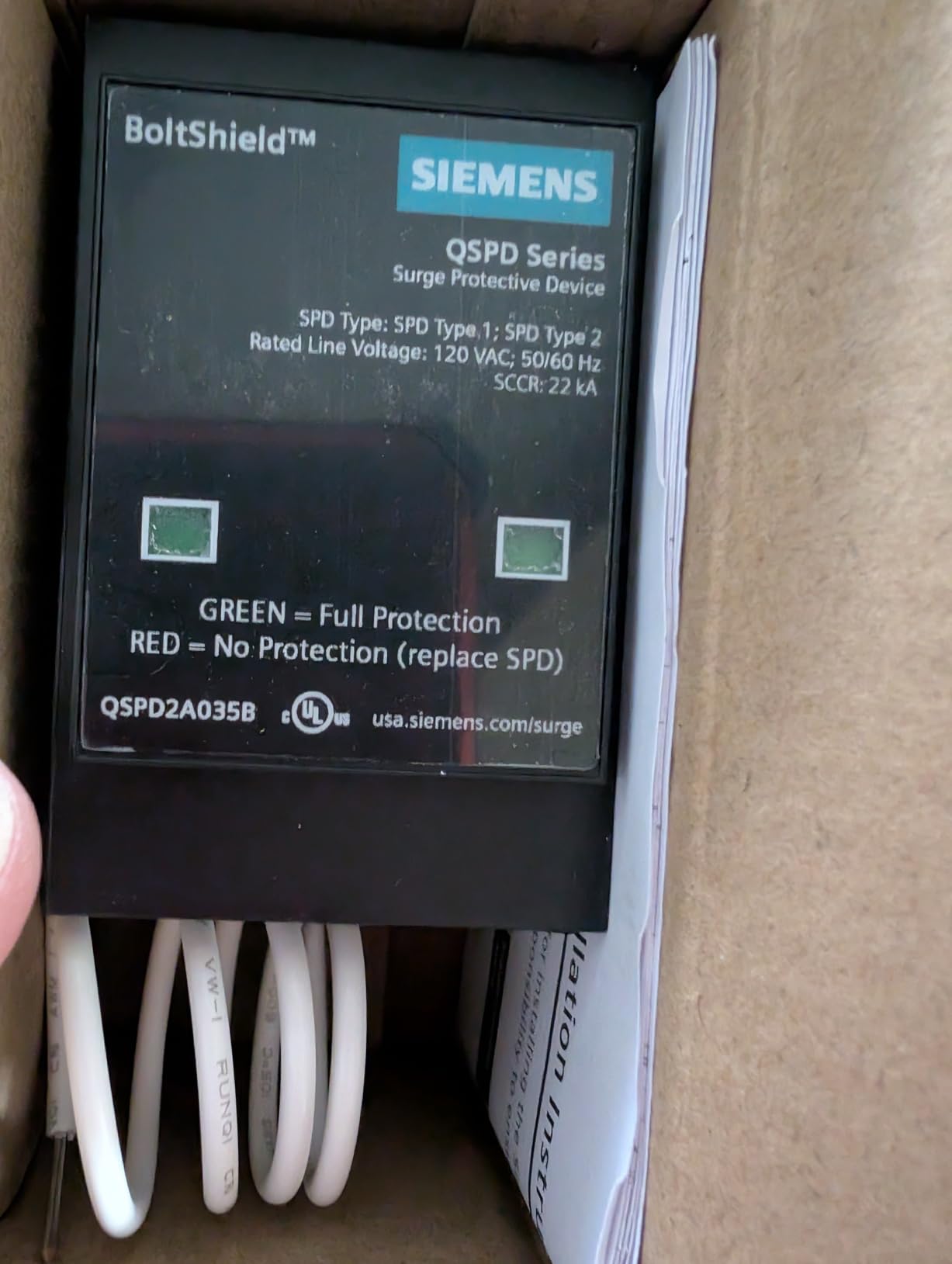
 Siemens QSPD2A035B BoltShield Siemens QSPD2A035B BoltShield |
|
Check Latest Price |
 Intermatic IG1240RC3 Intermatic IG1240RC3 |
|
Check Latest Price |
 Intermatic Smart Guard IG2240 Intermatic Smart Guard IG2240 |
|
Check Latest Price |
 Square D HEPD50 Square D HEPD50 |
|
Check Latest Price |
 EMP Shield SP-120-240-RL EMP Shield SP-120-240-RL |
|
Check Latest Price |
 Bad Wolf HSD240V Bad Wolf HSD240V |
|
Check Latest Price |
1. Eaton CHSPT2ULTRA – Best Overall for Lightning Protection
Eaton Surge Protection Device, 1 Phase, 120/240V, 2 Poles, 2 Wires CHSPT2ULTRA – 1 Each
- 108kA surge current rating
- Connects to any manufacturer's load center
- 2.38 by 5.25 inch body fits tight panels
- Two-pole breaker mounts as the first breaker
- Lead wires and neutral can be too short for some panel layouts
- A two-pole 15A breaker must sit as the first breaker in the panel
- No replaceable modules when the MOVs are spent
I keep coming back to this one because of a single number. At 108kA of surge current capacity, it has roughly triple the headroom of a typical 36kA Type 2 device, which is the difference between absorbing an induced surge and being the weak link in the chain. It weighs 8 ounces and measures 2.38 by 5.25 inches, so panel space is rarely the deciding factor.
The fit is genuinely universal. Owners with Square D, Siemens, and Eaton load centers all report the same result, and the mounting arrangement is a two-pole 15 amp breaker with the device wired ahead of the panel bus. Electricians on r/AskElectricians repeat one instruction more than any other: install it as the first breaker in the panel so surges are diverted before they reach anything else.
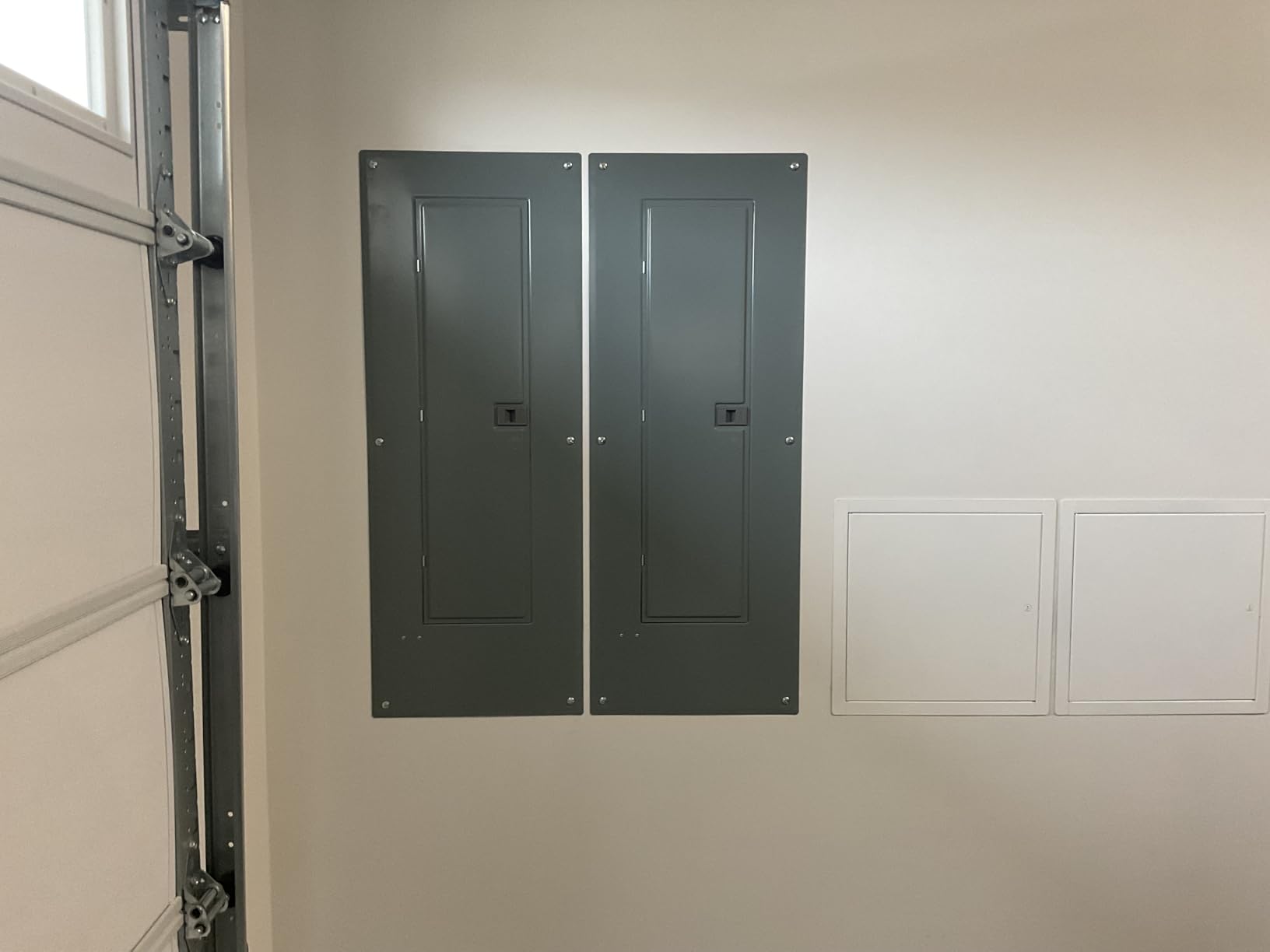
What surprised me was how quiet it is in daily use. Both status lights stay lit season after season, and the green indicators are the kind of feedback that actually changes behavior. After three storms with no flicker on either light and no damaged electronics, the unit is doing exactly what it was bought to do.
The friction points are physical, not electrical. Several buyers report lead wires and the neutral lead running short in crowded panels, and the requirement for a genuine two-pole 15 amp breaker in the first position trips people up if they assume any 15 amp breaker will do. Electricians describe it as a scaled-up version of Eaton’s smaller Type 2 unit with more MOV capacity behind it.
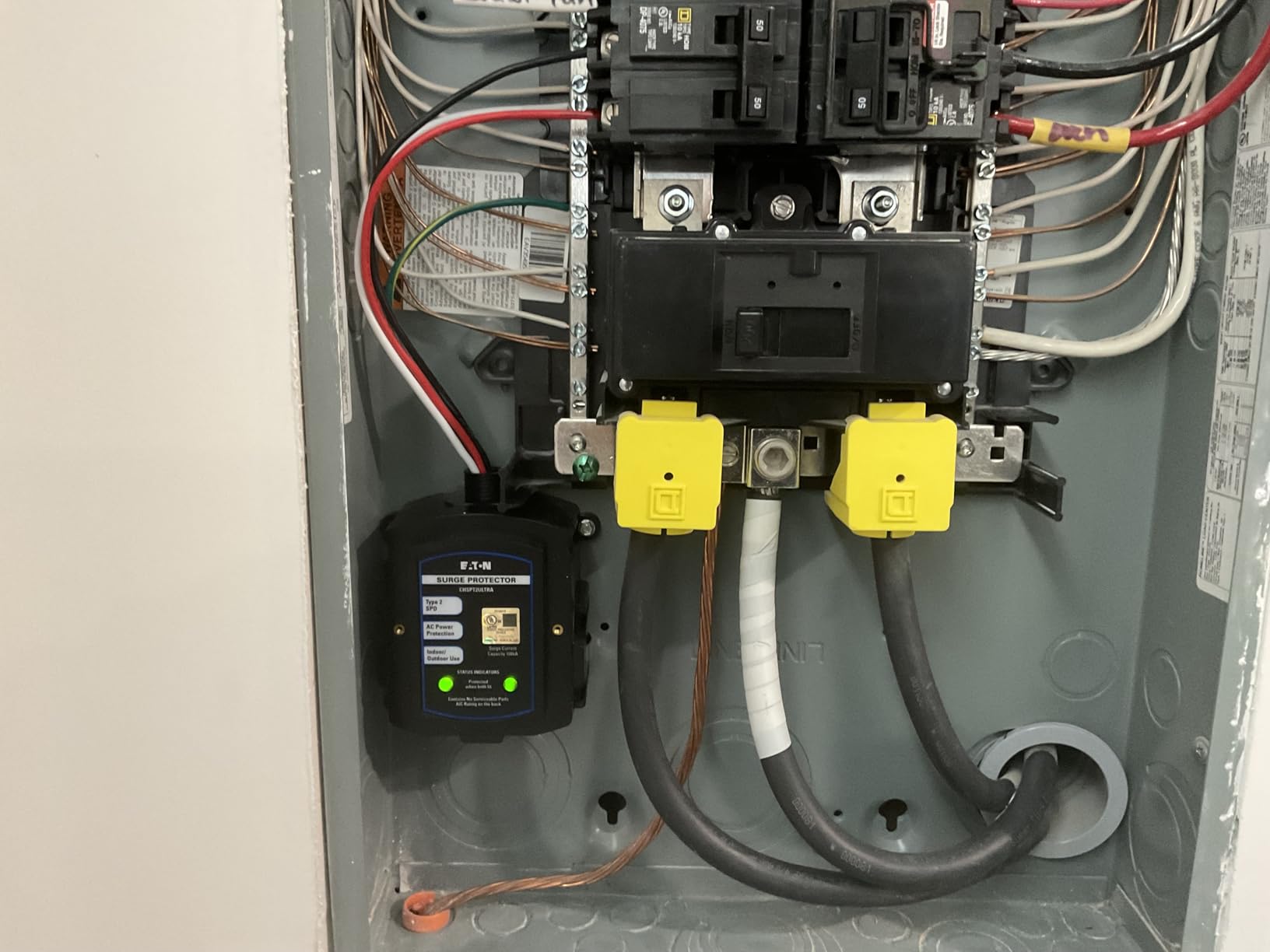
When the CHSPT2ULTRA earns its rating
This is the pick for a home on a long overhead utility run, a rural property, or anywhere in a storm belt where strikes are frequent enough that a 36kA device would be absorbing more events across its life than it was designed for. The extra capacity is wasted on a buried suburban line with no exposed runs.
It also suits households with genuinely expensive downstream loads: a hardwired HVAC system, an EV charger, a well pump, or a home office. Nothing about the form factor is special, but the headroom means the device should outlast several seasons of close calls instead of one bad storm night.
Where the CHSPT2ULTRA falls short
It is a sealed design, so once the internal MOVs degrade past protection the entire unit is discarded rather than a cartridge being swapped. Owners running multiple panels should factor that into a ten-year ownership comparison, and our broader surge protection guide covers point-of-use layering for the electronics that sit downstream.
It also does nothing for coax, telephone, or network lines, which is the gap that leaves most storm-damaged homes unprotected. No panel device does, and that is a separate purchase, not a flaw in this model.
2. Square D HEPD80 – Most Versatile for Storm-Prone Homes
Square D HEPD80 Universal Whole House Surge Protection Device, 1-Phase, 3-Wire for 120/240V, 80kA
- 80kA surge current suits high lightning exposure
- Compact body fits most residential load centers
- LED status indicator signals when replacement is needed
- 5 year product warranty with 5 year spare part availability
- Requires a spare two-pole breaker slot in the panel
- Higher price than some competing 50kA units
- Sealed design with no module replacement
The HEPD80 is the unit that comes up most often by name in homeowner threads, and the reason is unglamorous: it installs cleanly in almost any residential load center and the LED tells you what you need to know. At 80kA it handles induced surges from utility switching and nearby strikes with room to spare.
Compactness is its quiet superpower. Buyers installing in full panels with two-pole breakers packed shoulder to shoulder report it dropping in without moving existing circuits, which matters because rearranging a panel to make room is where most DIY attempts get abandoned.
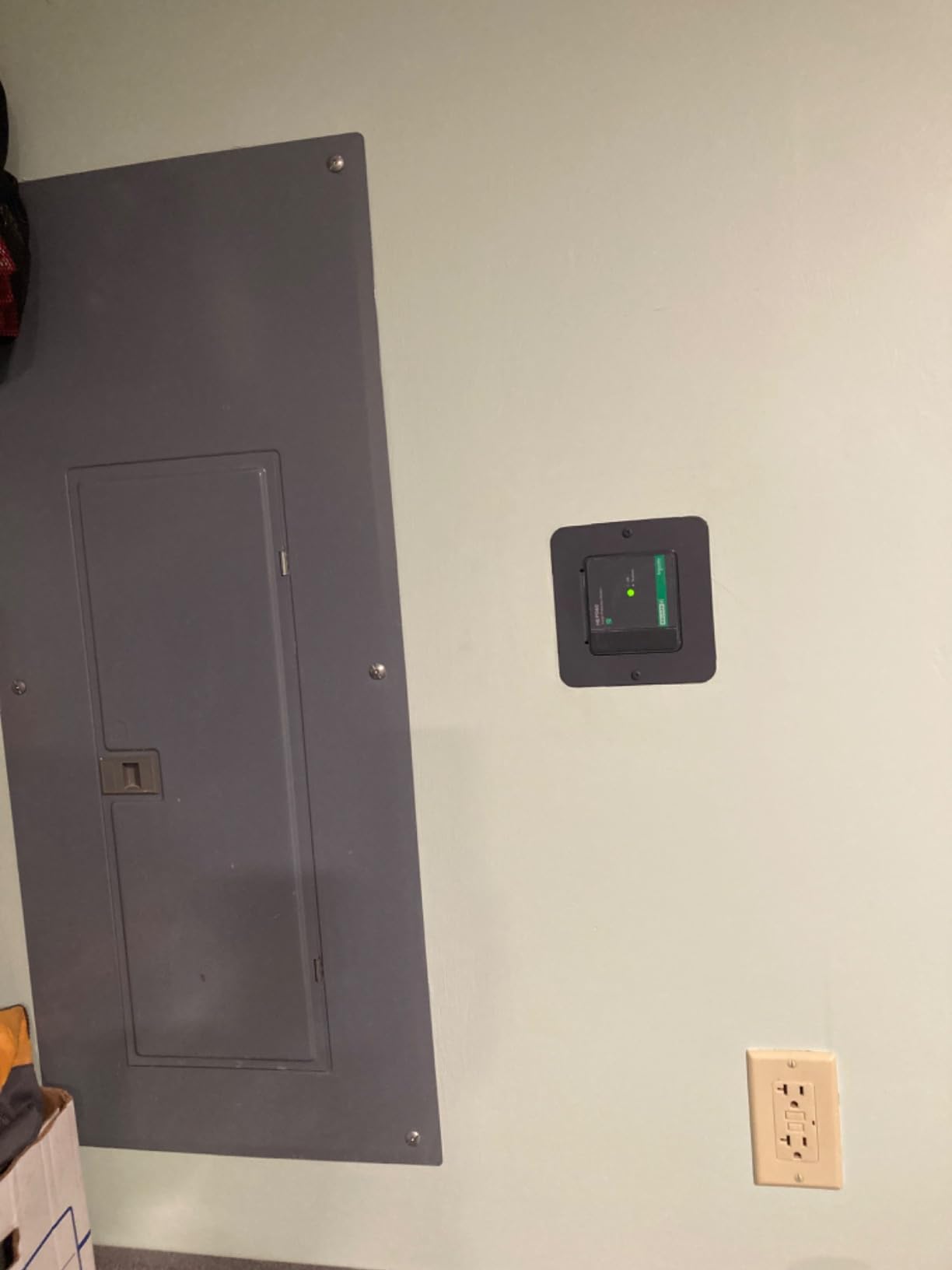
For a home with a mix of loads, downstream coverage is the selling point. Because the device sits at the panel, it protects hardwired appliances and plugged-in electronics alike rather than only the things sharing a power strip, which is the single biggest advantage over point-of-use protection.
Two weaknesses keep it from the top slot. It needs a genuine two-pole breaker slot, and some panels with every position filled require the electrician to shuffle circuits first. It is also a sealed unit, so when the LED finally goes dark the whole device gets replaced.
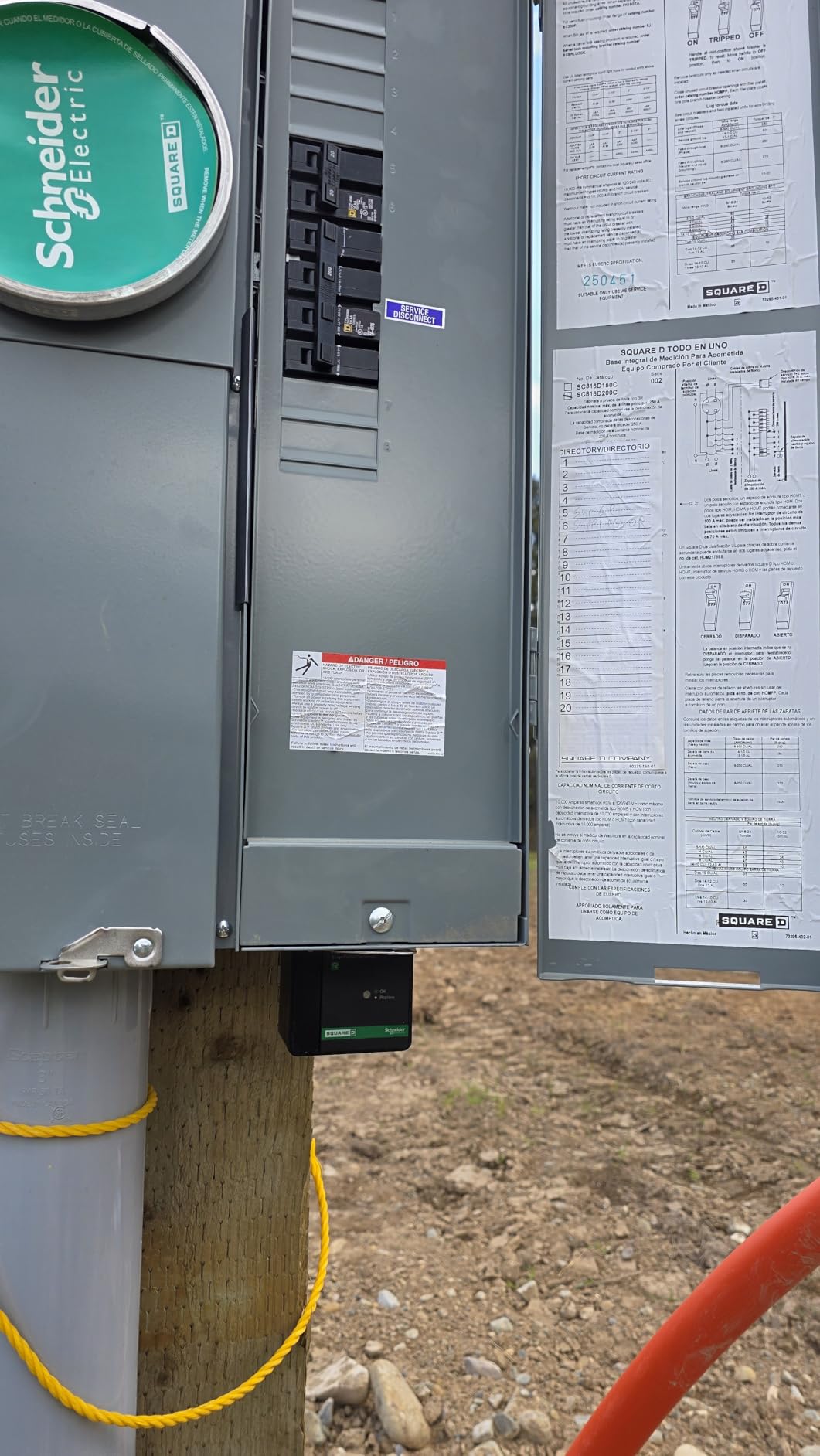
What to check before buying the HEPD80
Confirm your panel has a spare two-pole slot and that the neutral lands where the leads can reach. If the panel is a 200 amp service with a long overhead feed, 80kA is a sensible target and moving up to the 108kA unit is justified if the budget allows.
Also plan the install as a de-energized job. A whole home goes dark for the duration, which is why owners with medical equipment, servers, or aquariums schedule it around a stretch where they can shut things down cleanly.
Where the HEPD80 is the wrong choice
If your home sits on an underground feed in a low-strike area, the 80kA rating is more than the exposure demands and a 50kA device covers the same risk profile. If you want the device to be repairable rather than disposable, this is the wrong shape of product entirely.
It is also strictly a panel device. Homes that lost every television and receiver on a single satellite feed during a storm would still see the same losses with this unit installed, because the coax entry never touches it.
3. Eaton CHSPT2SURGE – Best Value for Induced Surge Protection
- NEMA 4 ABS housing with gasket screws and sealed board
- Four Sincera T25D241K MOVs with 400V maximum clamping voltage
- Quick connect design for cable protection modules
- Two indicators confirm the unit is still protecting
- 36kA is modest for lightning-heavy regions
- Neutral wire lead can be too short for some panels
- Handles induced surges only and not a direct strike
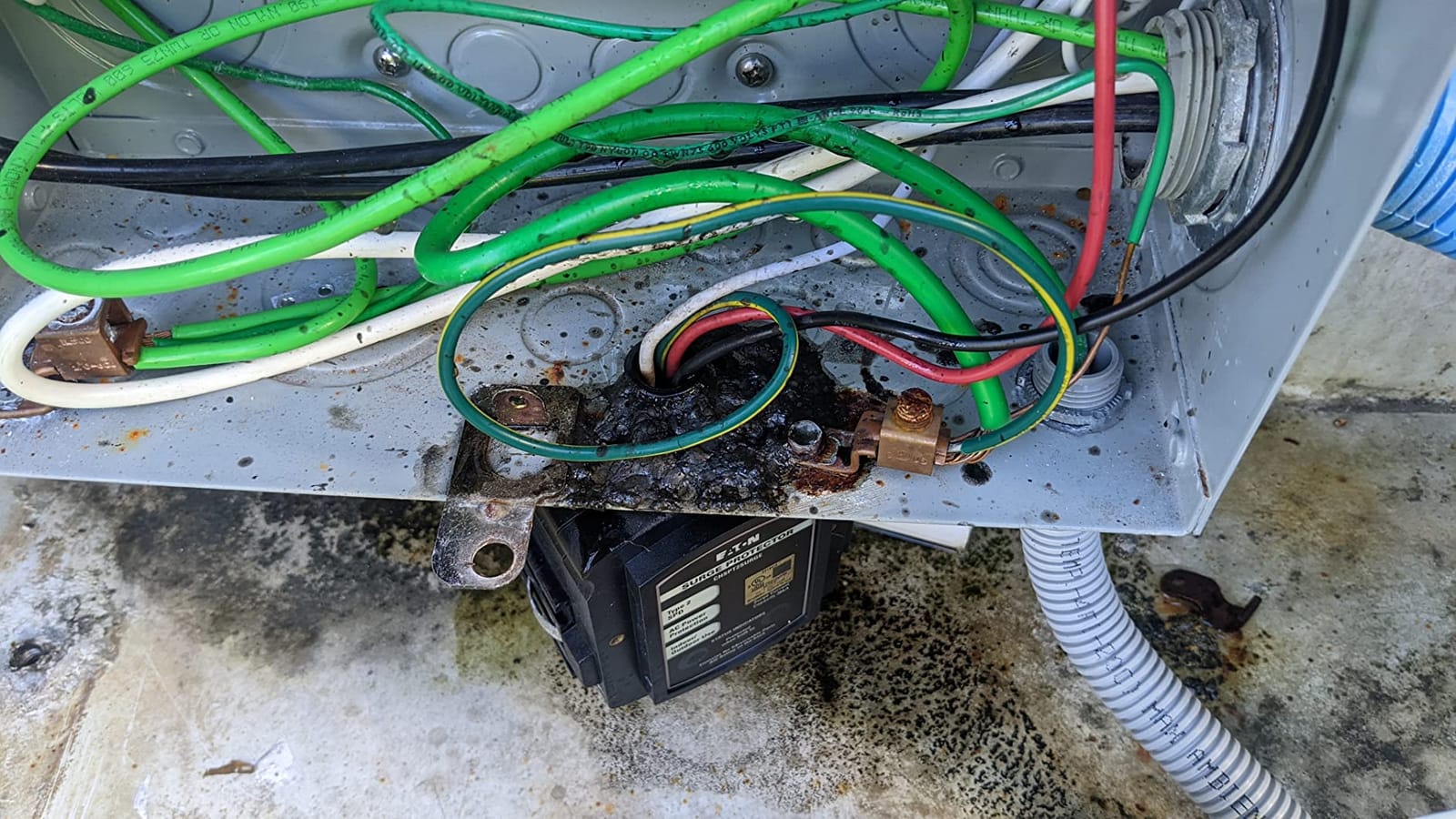
This is the device most people should start from, and the specification that earns it that place is the MOV count. Four Sincera T25D241K varistors at 400V maximum clamping voltage give it more absorption per event than a two-element design at the same nominal rating.
The housing is the other reason. A NEMA 4 rated ABS enclosure with gasket screws and a silicone-dipped circuit board means the unit tolerates a damp garage or an exterior mount, which opens install locations that cheaper plastic enclosures rule out.
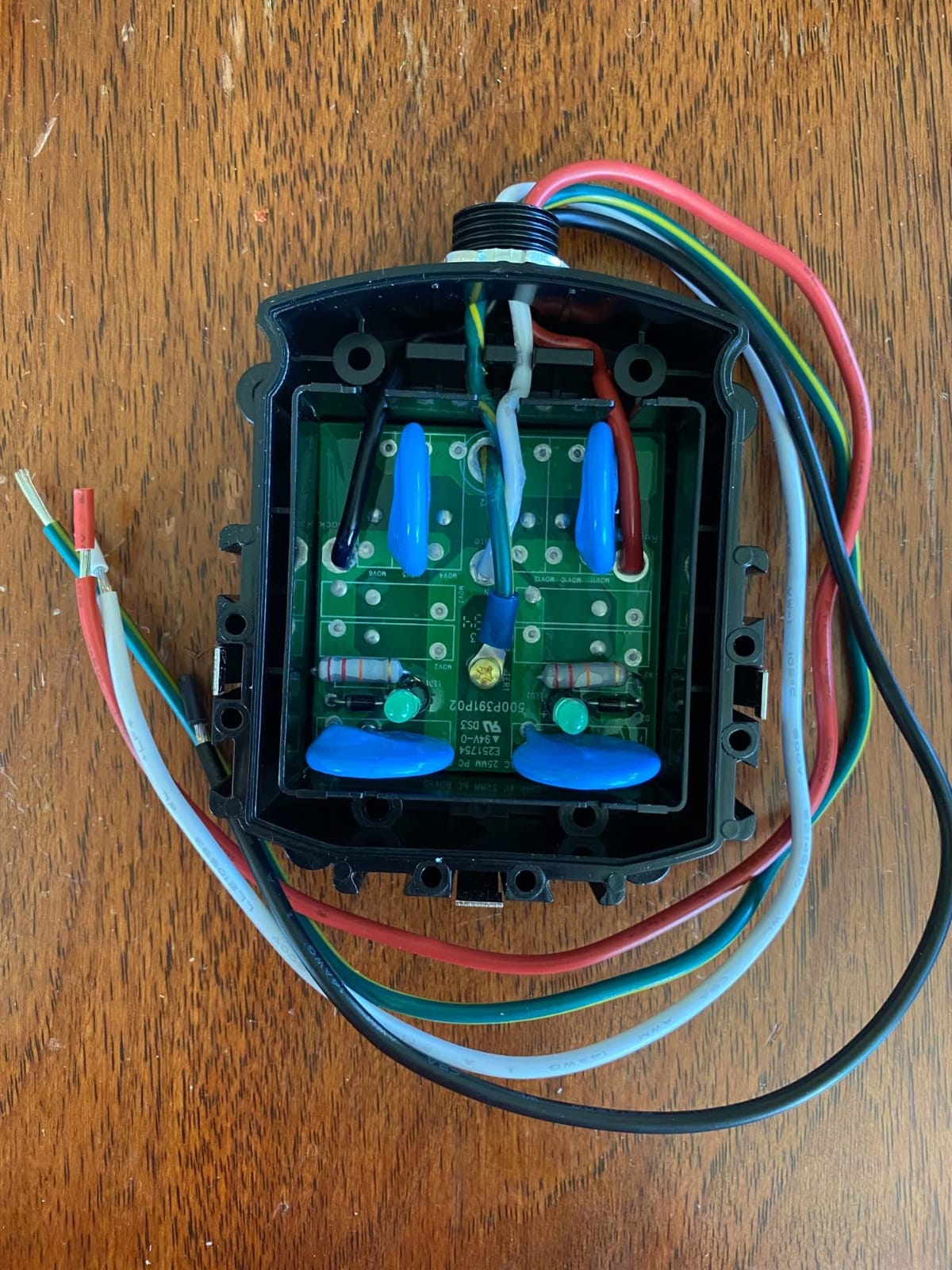
Owners consistently report 15 to 30 minute installs and green indicators that stay lit through whole lightning seasons without trips or damaged electronics. Electricians describe it as a scaled-down version of the CHSPT2ULTRA, and note the manual understates the two-pole 15 amp breaker requirement.
There is a real ceiling on what 36kA can absorb over a decade, and buyers in high-strike areas say so plainly. It is the right call on a buried or short utility run, and the wrong call on a rural property with overhead lines running past the house.
Who the CHSPT2SURGE suits
It fits a homeowner who wants real surge protection at the panel without a service call to design a system. Anyone with an HVAC unit, a refrigerator, or a well pump on a moderate-risk property gets meaningful protection from the four MOV elements here.
The quick connect design also makes it a better base if you plan to add cable protection modules later, since the connection scheme is designed to accept them. Buyers layering coax protection onto their panel device generally start here.
Limits to plan around
Owners running 200 amp service with a long exposed feeder report stepping up to a higher rating within a season or two. The neutral lead is short enough to cause trouble in crowded panels, and the thin lead gauge draws complaints from people comfortable with panel work.
Reviewers are also clear-eyed about the direct strike limit. No panel-mounted device survives a strike landing on the service mast, and this one is no exception.
4. Eaton BRNSURGE – Best for Easiest Installation in a BR Panel
Type BR Circuit Breaker Surge Protective Device, Two Pole, Surge Protective Device
- Snaps in like a standard two-pole breaker
- Indicator light confirms protection is active
- Only a neutral connection after the breaker seats
- Fits limited-space panels at 5.6 ounces
- Only fits BR-style load centers so check your panel brand
- 18kA is low for regions with frequent lightning
- Stranded neutral pigtail is hard to terminate without ferrules
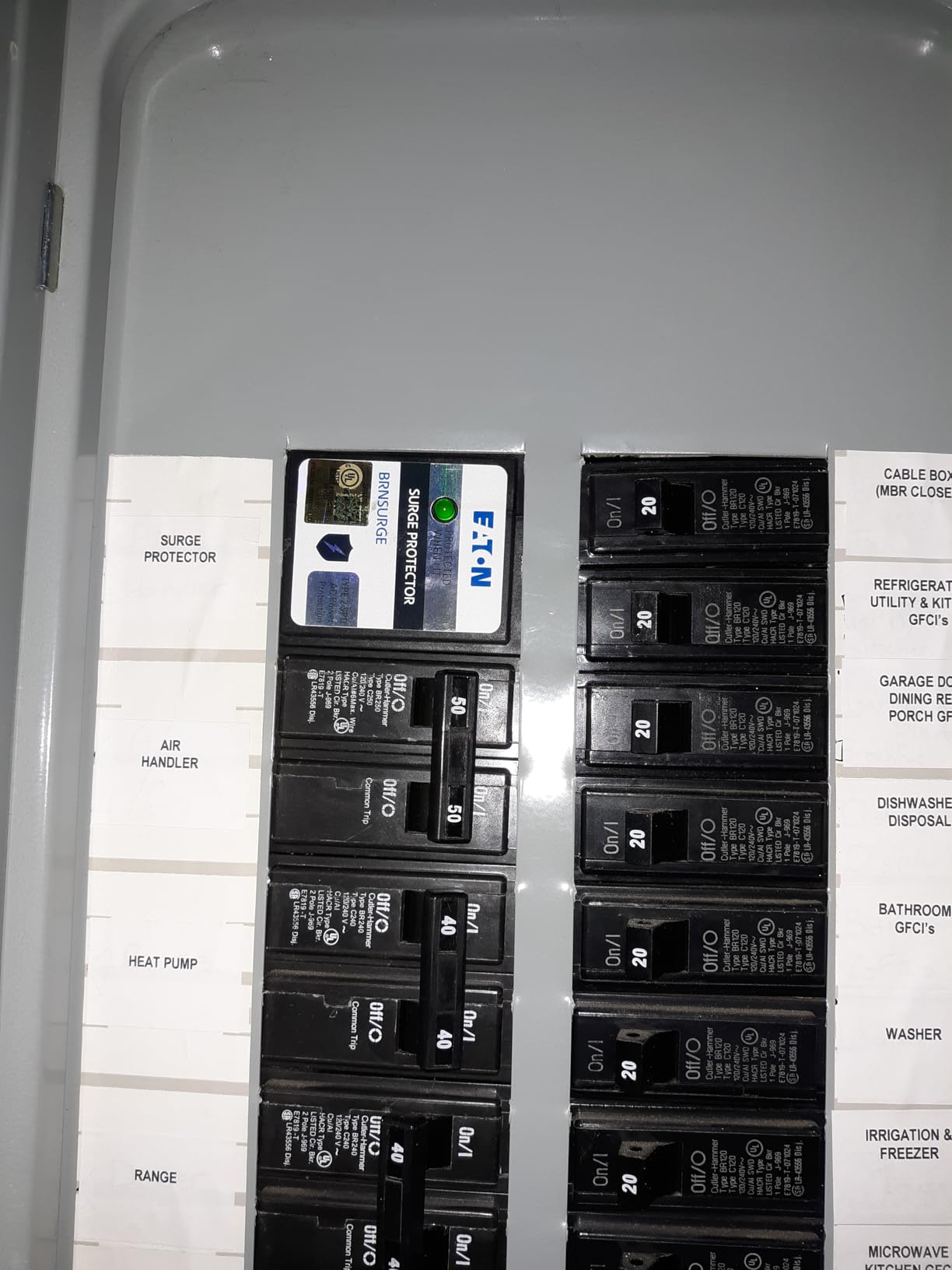
This is the easiest install in the group by a wide margin, and reviewers who have fitted several brands of panel device consistently call it the one to start with. It occupies a standard two-pole breaker position, so the install is a breaker plus one neutral connection and very little else.
At 4.8 stars across nearly a thousand reviews, the satisfaction is about the install, not the protection level. Electricians note it should sit as close to the main as panel space allows so it diverts surge current before it reaches branch circuits.
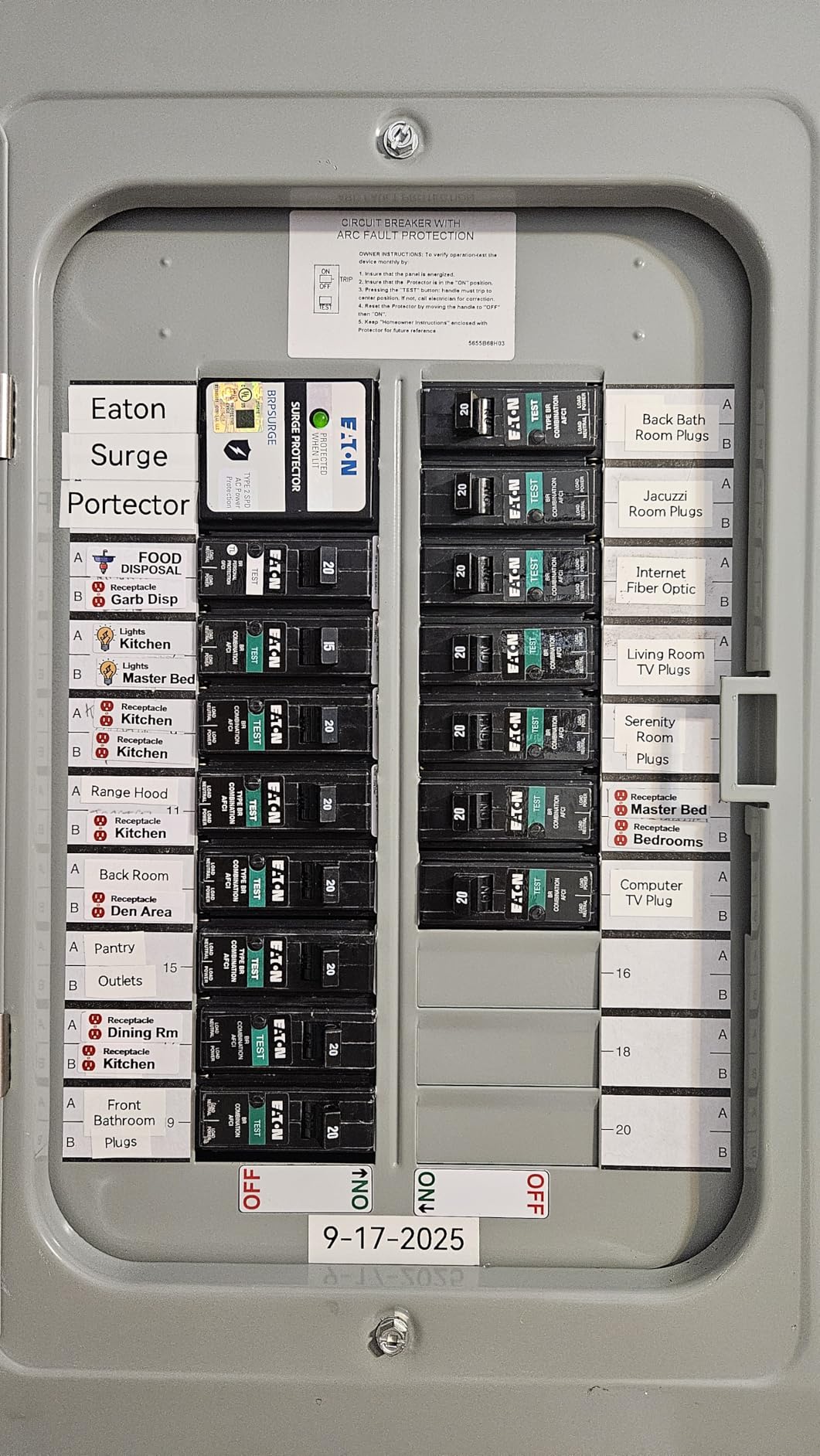
The tradeoffs are structural. The 18kA surge current rating is the lowest of the ten here, which limits how many real events it can absorb over a service life. That is fine for internal appliance surges and marginal for induced lightning surges on a frequent-strike property.
Panel brand compatibility is the hard constraint. If your load center is not BR-style, this device is not a candidate no matter how good the installation experience is.
When the BR-style fit decides it
If your main panel is BR-style and you want protection in place this weekend, the SNUG-in-and-wire approach is hard to beat. It is also useful in a subpanel, where a small footprint matters and the surge exposure is lower than at the service entrance.
It pairs sensibly with a point-of-use approach. A panel unit at this level plus quality strips or a UPS on AV and network equipment is a reasonable budget layering for a home that is not in a high-strike region.
When to skip it
Skip it if lightning is your primary concern. An 18kA device is undersized for the risk profile most people buying this article are trying to cover, and the whole point of a panel SPD is absorbing events that would otherwise reach your equipment.
Also skip it if your panel is Square D Homeline, Siemens, or another non-BR design, and be aware that a few buyers flagged missing individual packaging and a stranded neutral that resists a clean termination without ferrules.
5. Siemens QSPD2A035B BoltShield – Best for Siemens Load Centers
Siemens QSPD2A035B 35 KAmp BoltShield Indoor Surge Protective Device
- Plugs directly onto the load center bus
- Mechanical green and red flags show status without power
- Fits existing Siemens load centers including older ones
- Compact 2 by 2.6 by 3 inch body
- No LED so protection status must be read from mechanical flags
- Some reviews report units arriving non-working
- 16 AWG pigtail is thinner than some buyers expect
Siemens BoltShield is the most repeated brand recommendation across the Garage Journal and Reddit threads we read, and the reason is that it plugs straight onto the bus like a two-pole breaker. Installers describe a two-minute job with no panel rearrangement beyond making space.
At 35kA of surge current protection per phase, the electrical capacity is respectable. The mechanical green and red flags show protection status through a viewing window, which sounds like a disadvantage until you realize it works with the power off, so you can inspect the device safely during service.
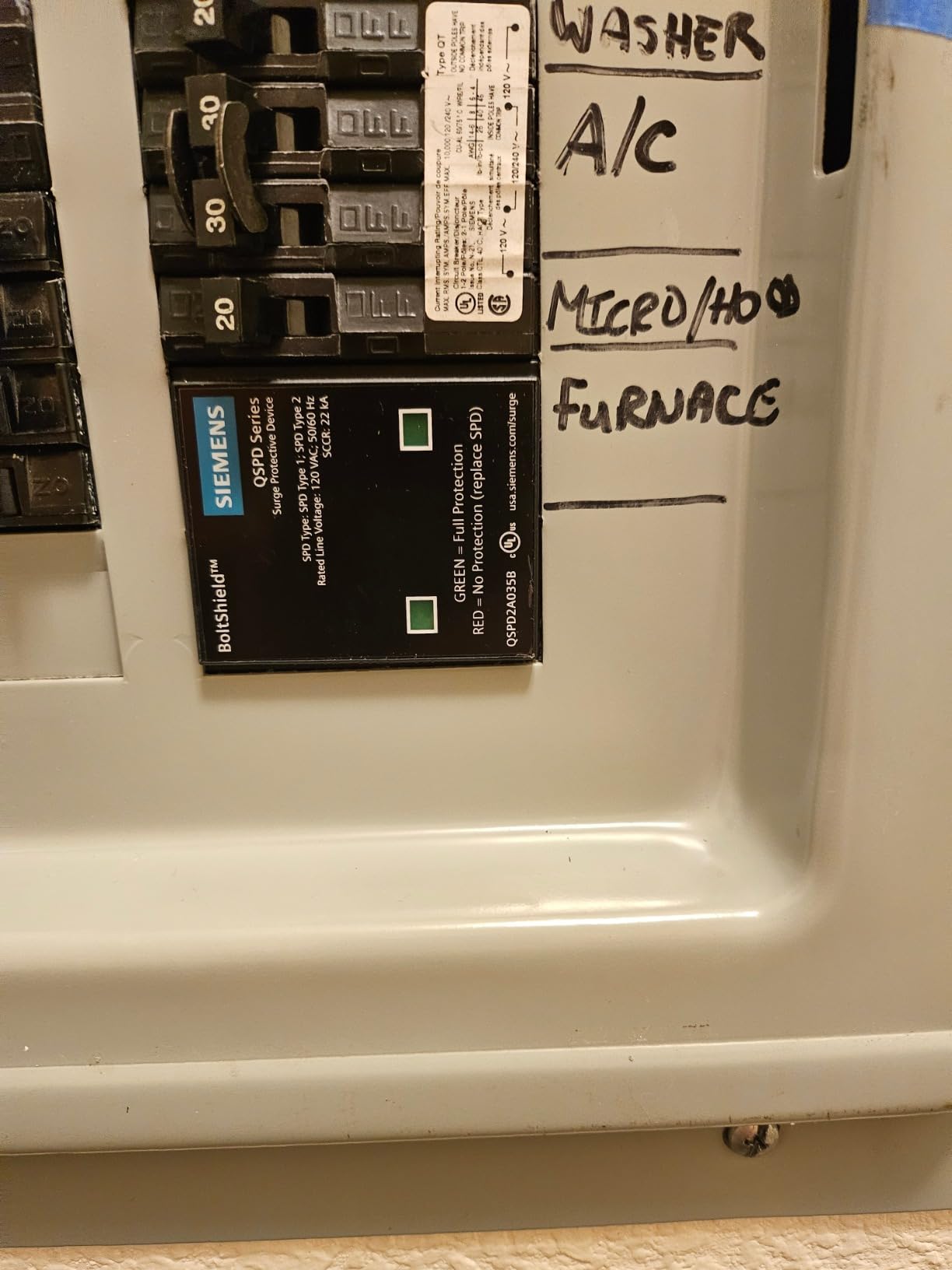
The 4.4 rating reflects one specific confusion: buyers who expected a light initially thought the unit was faulty. Electricians explain the flags are a non-powered status window, and once that is understood the complaints mostly stop.
It is also a Siemens-only part. The plug-in geometry fits Siemens load centers including older ones, and no adapter makes it universal, so a Square D or Eaton panel owner should look elsewhere on this list.
What the BoltShield gets right
For a Siemens panel, the install convenience is unmatched by anything else here. No pigtail routing across live parts, no neutral pigtail to terminate, and a small 6.4 ounce body that leaves breaker space untouched.
It is a good secondary install in a Siemens subpanel, such as a shed, workshop, or pool house, where the surge exposure is lower than at the service entrance but the equipment is still worth protecting.
What to know before ordering
Expect no LED. If you want a light you can glance at while walking past the panel, this is the wrong device, and you should pick one of the LED models instead.
Two other cautions from reviews: a small share of buyers received units that did not work or arrived with detached covers, and moving existing breakers to free panel space is sometimes required before it will seat.
6. Intermatic IG1240RC3 – Best for Type 1 and Type 2 Coverage
Intermatic IG1240RC3 Whole Home Type-1 or 2 Surge Protection Device,Gray
- Rated for utility events and lightning up to 100000 amps
- Exact drop-in replacement for earlier Intermatic units
- One owner reported 21 years before replacement was needed
- Clear status light turns red when the unit is compromised
- Lead wires are short and may require shifting existing leads
- Installation documentation is basic rather than detailed
- Sealed design so the whole unit is discarded when spent
The Intermatic IG1240RC3 is the one to consider when your grounding situation or your utility service makes a Type 2 assumption uncomfortable. It is listed as a Type 1 or Type 2 device, which widens where an electrician can mount it, including service entrance locations in some jurisdictions.
The lightning rating of up to 100000 amps is the headline, and the review history backs the durability claim in a way most products in this category cannot. Many reviews come from buyers replacing a 20-year-old unit of the same model, and one owner reported 21 years of service before replacement was needed.
That longevity is a real argument for the sealed design, oddly enough. While a modular unit saves money on cartridges, this one has a documented service life measured in decades, and the exact drop-in compatibility means the swap takes minutes.
When the IG1240RC3 is the right answer
Older homes with degraded bonding and long overhead service runs are the sweet spot. If your electrician flags the grounding electrode system as marginal, a device that works in more install positions gives them options a load-side-only Type 2 does not.
It is also a good choice for owners who intend to keep the same panel for a long time. The service life data suggests you may never face a second purchase on that panel.
Weak points to plan for
Lead length is the recurring complaint. Installers warn that the short leads demand careful panel layout planning, and you may need to shift existing conductors to free up bus space.
Documentation is thin compared with the major panel brands, and the labeling can end up upside down depending on which side you mount from. Plan for a short conversation with your electrician about placement before the purchase.
7. Intermatic IG2240-IMSK Smart Guard – Best With Replaceable Modules
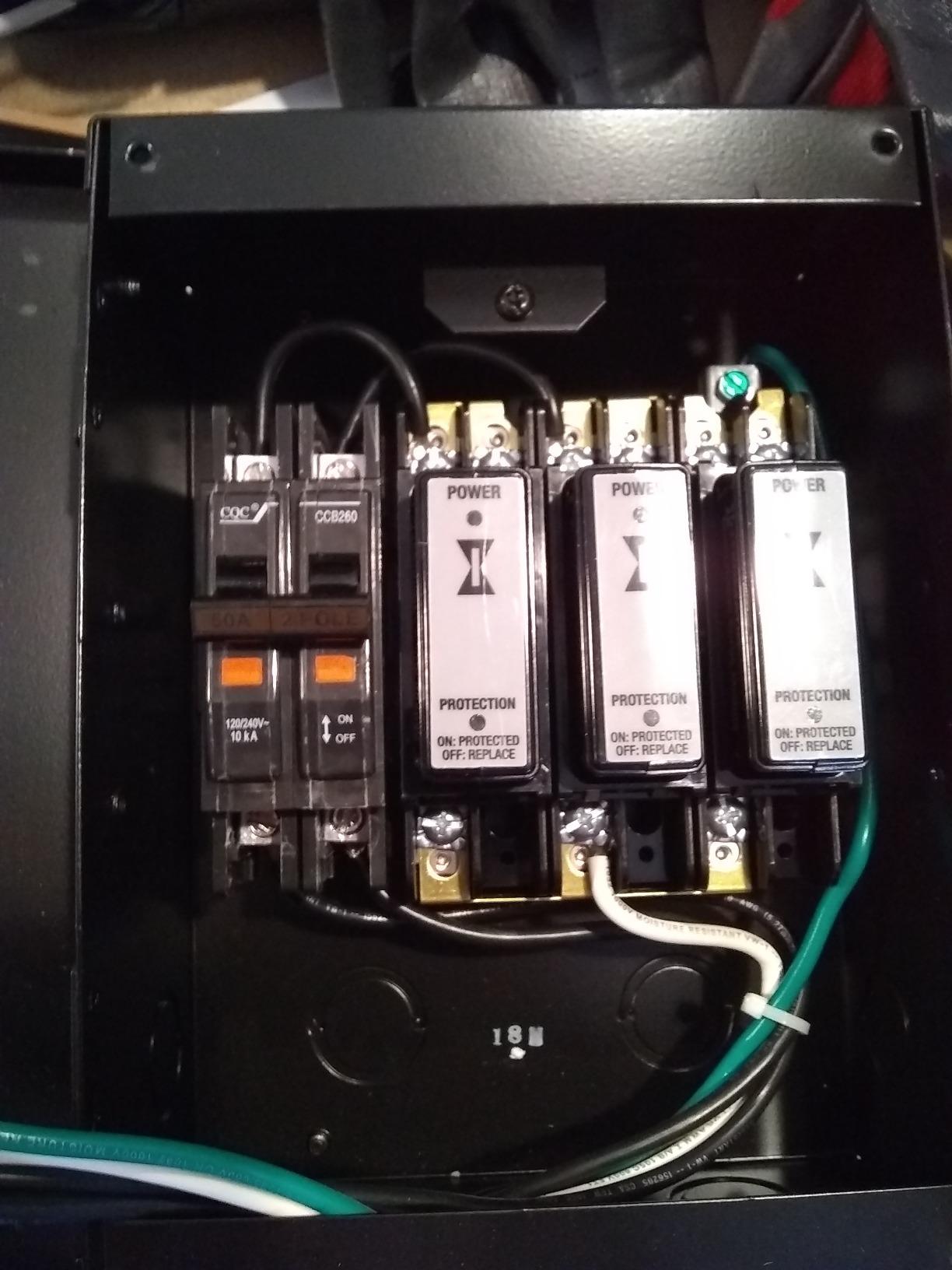
Intermatic IG2240-IMSK Smart Guard Whole-House Surge Protector, 120/240 VAC
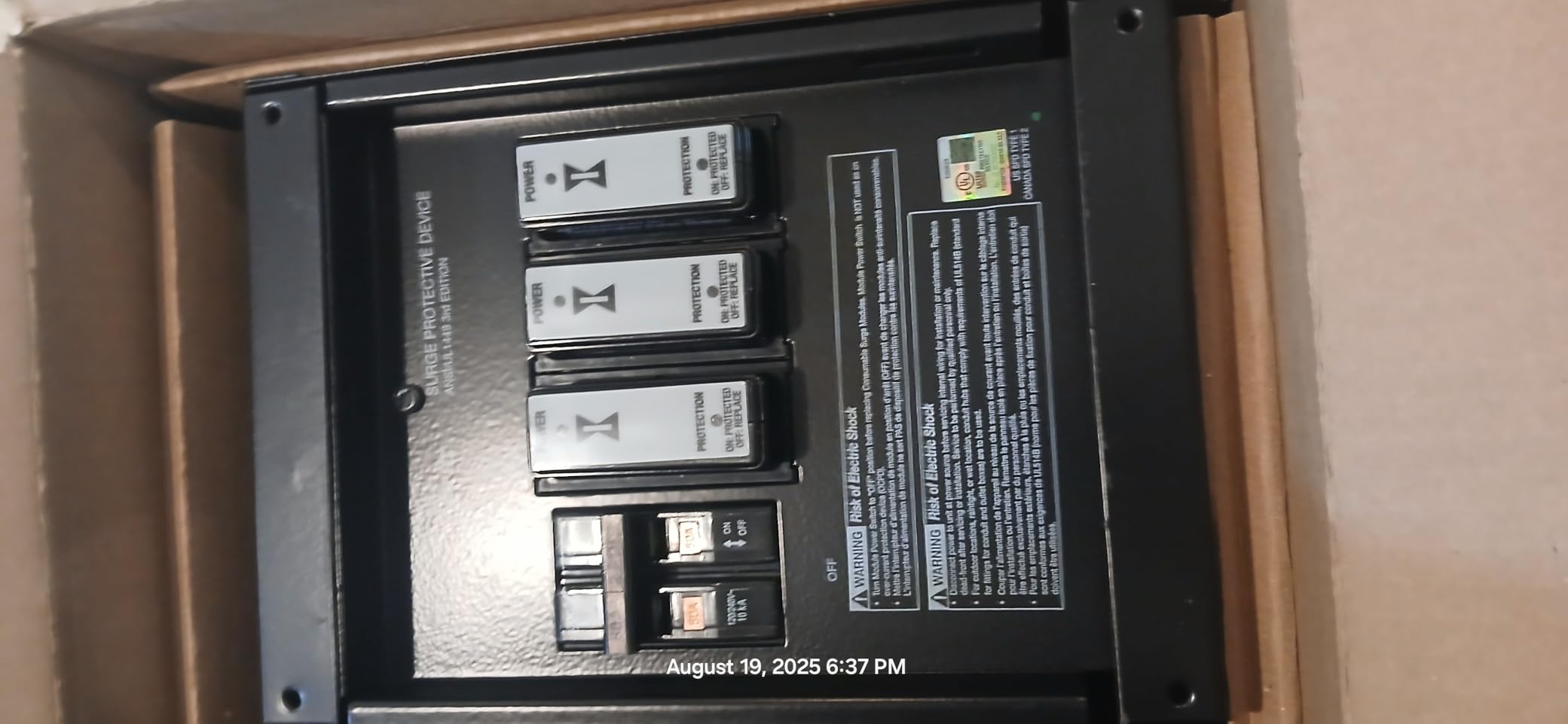
- Replaceable IModules mean only the sacrificed cartridge is swapped
- Module power switch allows safe disconnection during changes
- 10 year connected equipment warranty
- Per-module LED indicators are easy to read
- Heaviest device here at 7 pounds and the largest
- Pigtails can be too short for some panel layouts
- Costs more than sealed disposable SPD units
This is the long-horizon answer. Where every other device on this list is thrown away when its MOVs are spent, the Smart Guard swaps the cartridge. Owners with prior surge damage report restoring the device in minutes without pulling an electrician back out, which is the entire argument for a modular design.
The module power switch handles the safety side of that. It gives you a deliberate disconnect when changing cartridges, instead of the de-energized panel ritual a conventional replacement demands. Per-module LED indicators tell you which phase took the hit.
The connected equipment warranty is the other differentiator. A 10 year warranty on connected equipment adds a layer of coverage that most devices in this category do not offer, and for a home with a well pump, HVAC, or expensive network gear that is worth reading the terms on carefully.
The metal Type 1 enclosure with tamper-proof module doors is built for a garage or exterior mounting, and the 12 circuit capacity gives room for expanded protection later.
When modular serviceability pays off
Anyone in a storm belt should value it. Devices in high-exposure locations consume modules faster, and over a ten-year horizon the cartridge approach costs less and wastes less than discarding a sealed unit after every significant event.
It is also the sensible choice for a homeowner who plans to pass the property on. A documented warranty with replaceable parts is easier to reason about than a sealed box that has already absorbed one large surge.
Where it is not worth the extra
At 7 pounds, this is by far the heaviest and largest device here, and panel space is a real constraint in older 100 amp and 150 amp load centers. The 12 circuit chassis needs room that a compact plug-in model will not require.
Lead length is again the friction point. Pigtails can run short, the white neutral lead is noticeably shorter than the black leads, and some panels need wiring rerouted inside the enclosure during the install.
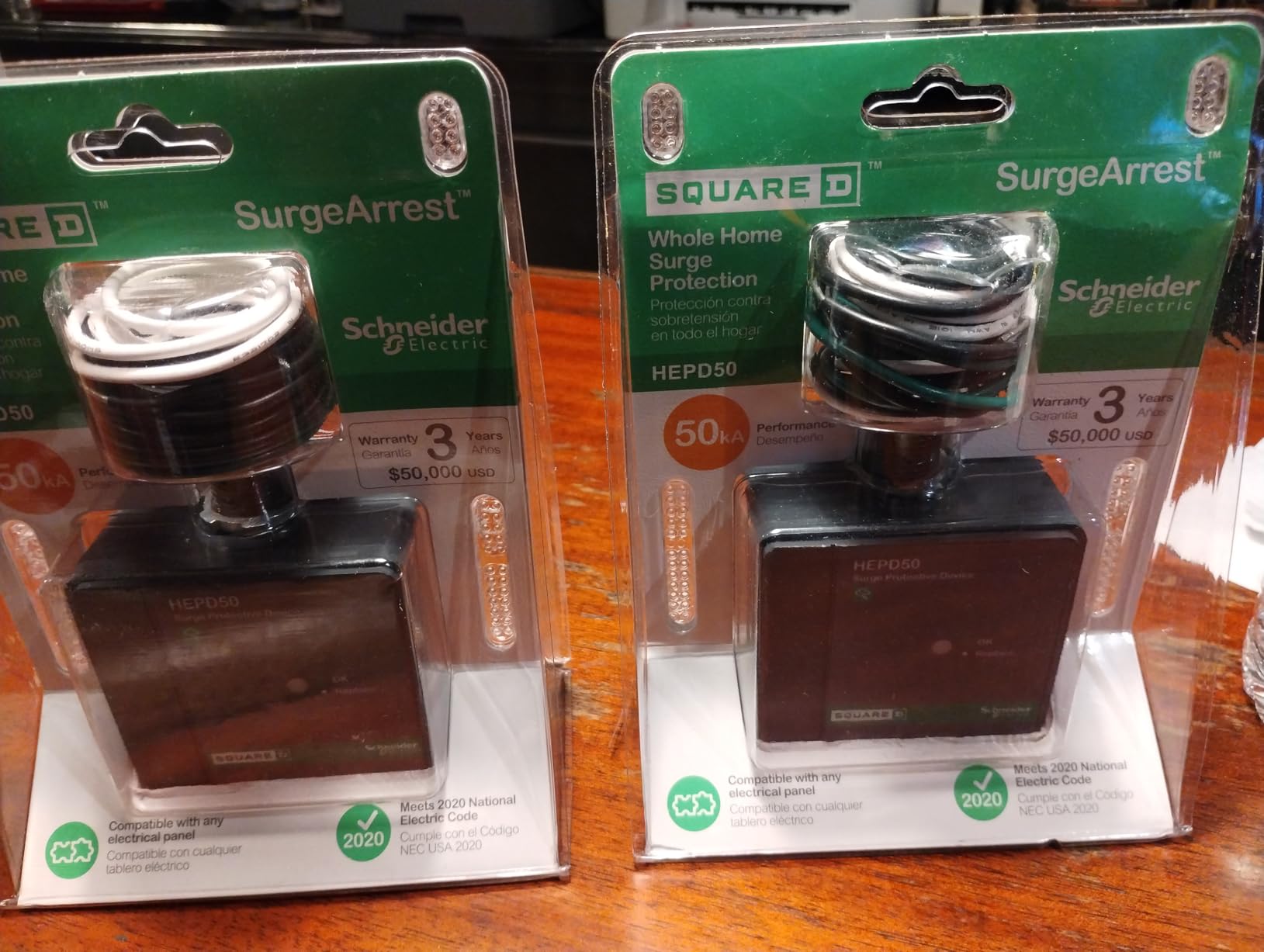
8. Square D HEPD50 – Best for Outdoor and Exterior Mounting
Square D by Schneider Electric HEPD50 Universal Whole House Surge Protection Device, 1-Phase, 3-Wire + Ground for 120/240V, 50kA, Black
- NEMA 4X rated for outdoor or indoor mounting
- CSA and UL 1449 3rd Edition Type 1 listing
- Long leads make installation quick in most panels
- 3 year warranty with a 50000 residential downline warranty
- 50kA can be undersized for 200A service
- Needs a genuine double-pole breaker to light the LED
- May need screw terminal connectors if no spare circuits are free
The HEPD50 is the middle rung of the Square D line, and its distinguishing feature is the enclosure. A NEMA 4X rating means it can sit outdoors where rain and dust are a factor, which opens the service entrance and exterior wall positions that a non-rated housing rules out.
It carries a CSA and UL 1449 3rd Edition Type 1 listing, so it satisfies both standards organizations, and the 25000 amp short circuit current rating covers a wide range of residential panels without coordination headaches.
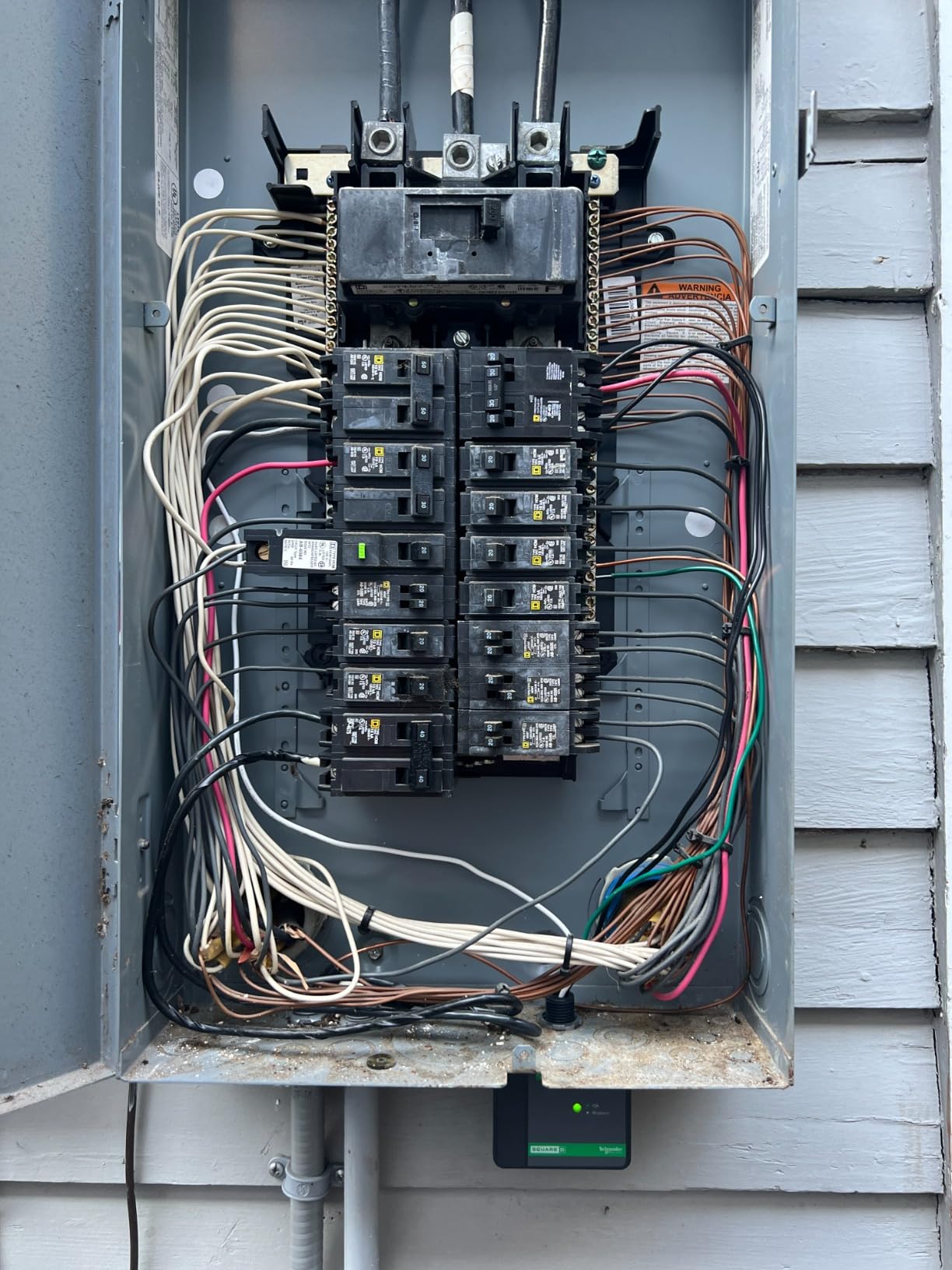
Owners report roughly 30-minute installs with the green status LED lighting up right away, and the long leads are consistently praised as making the job quicker in most panel layouts. The 3 year manufacturer warranty plus a 50000 residential downline warranty is a reasonable support package.
There is one recurring teaching moment in the reviews that is worth repeating. A tandem breaker will not activate the LED, and buyers who used one assumed the unit was faulty until they swapped in a genuine double-pole breaker and the light came on.
Where the HEPD50 fits
It is the pick for a home on 100 amp service with a moderate strike exposure, where 50kA is honest capacity rather than a compromise. The NEMA 4X housing is the deciding factor if your electrician wants it outside the panel.
Owners of older homes with limited breaker space appreciate the small footprint and the long leads that reduce rework during the install.
When to step up instead
On 200 amp service with a long feeder, reviewers report moving to the HEPD80 after finding 50kA thin for their exposure. Match the rating to the service size and the length of the exposed run, not to the panel brand you already own.
If no spare breaker circuits are available, you may need screw terminal connectors to complete the connection, which adds a step your electrician will want to price in.
9. EMP Shield SP-120-240-RL – Best for EMP and Solar Flare Defense
EMP Shield – Home EMP & Lightning Protection + CME Defense for Flush Mounted Breaker Box (SP-120-240-RL/Concealed Model) Lightning, Solar Flare, and Surge Protection
- Withstands up to 228000 amps per phase
- Covers lightning and coronal mass ejection events
- Insurance backing if the device fails to protect electronics
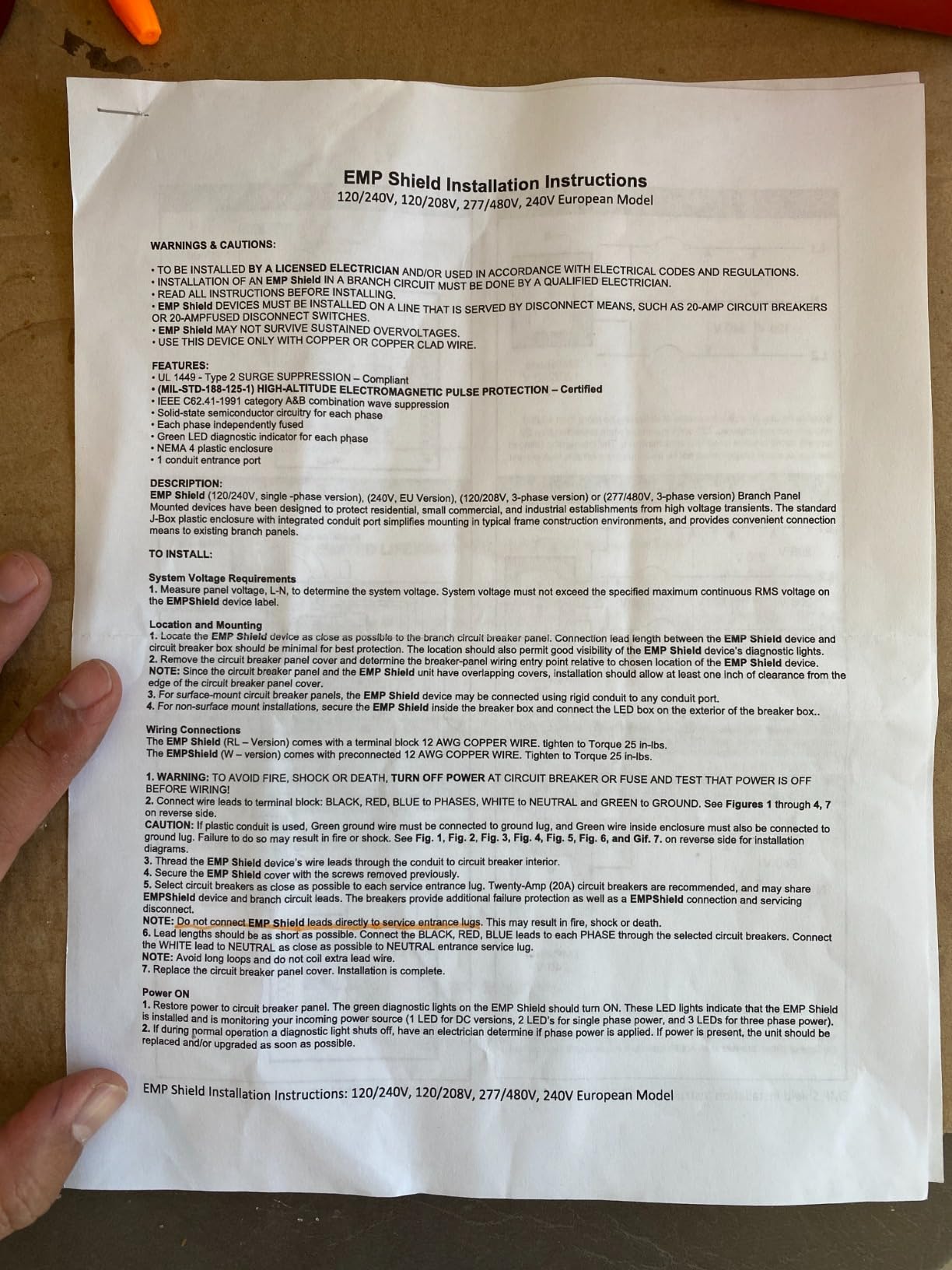
- 10 year limited lifetime warranty
- The most expensive device in this group
- Flush-mounted breaker boxes need careful fitting
- Home install is harder than the vehicle version
EMP Shield takes a different approach from every other device here, marketing itself against electromagnetic pulses, coronal mass ejections, and solar flare events alongside lightning. Buyers arrive from expensive losses, and one owner with a complex mini-split HVAC system reported no service calls in two years after repeated lightning damage.
The 228000 amps per phase capacity is the largest raw surge figure in this group, and the green LEDs confirming both legs are monitored are a genuine improvement over flag-only or single-light designs. The 10 year limited lifetime warranty is the longest stated warranty on the list.
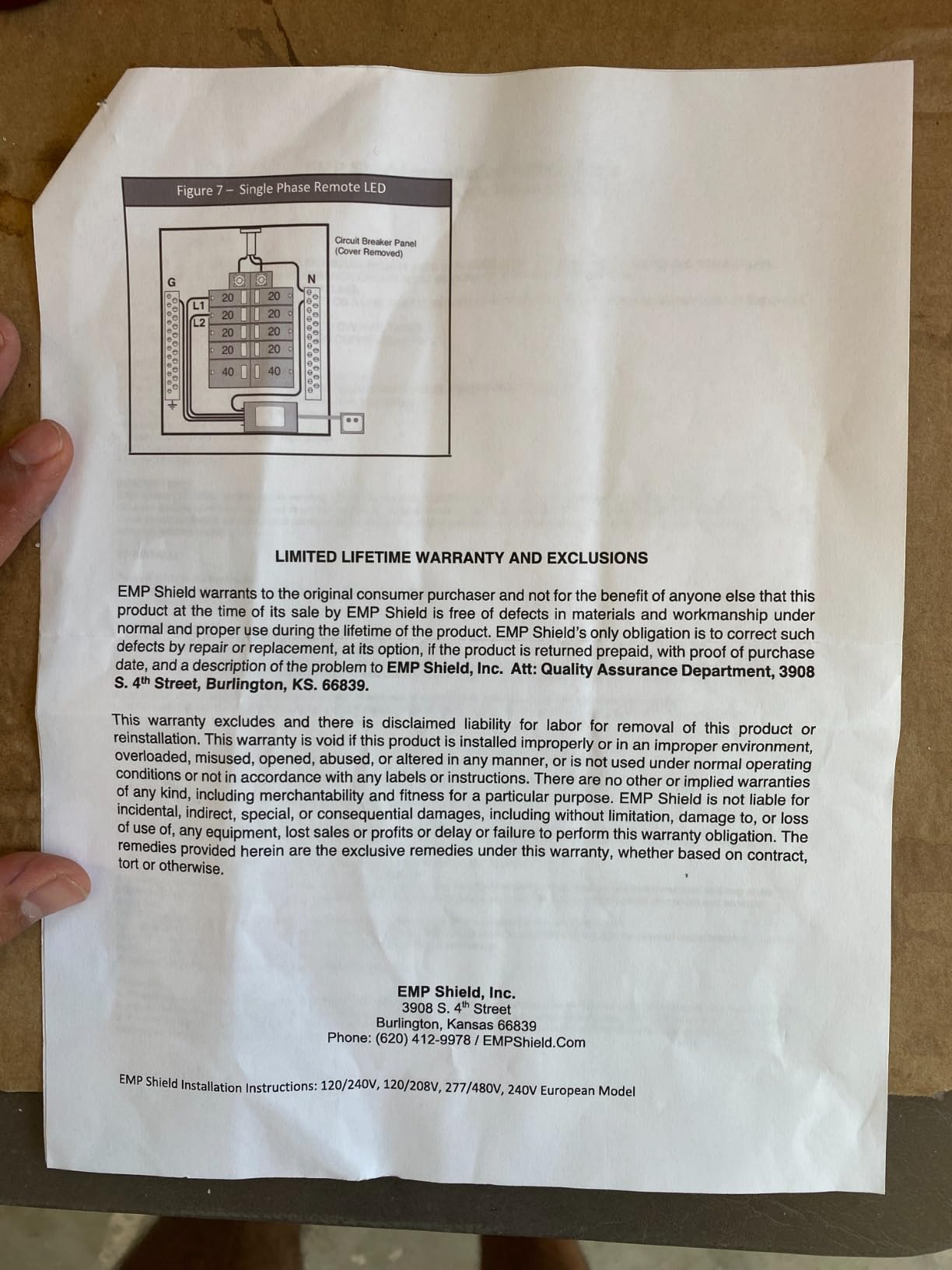
Installation is described as a simple four-wire job that takes about 15 minutes for anyone comfortable with panels, requiring a 20 amp double pole breaker. The flush mount model here is the version intended for recessed breaker boxes, which is worth confirming before you order.
Owners with frequent outages report no further damaged electronics after installation, which is the outcome the purchase is really about. Several recommend professional help anyway, and quotes in the reviews for electrician work ran into the low hundreds.
Who should pay for this tier
The insurance backing and long warranty make the case for homeowners with very expensive centralized equipment: multi-zone HVAC, a full home automation stack, or a garage with high-end vehicles and chargers on the same panel.
It is also the pick if your concern extends past storms into grid disturbance scenarios, which is the specific claim this product makes and the reason it is priced at the top of this list.
The compromises to accept
This is the most expensive device we cover, and for a home with a standard load and buried utility service the money is better spent on line protection or a modular unit with replaceable parts.
Flush-mounted boxes need extra care with fit and the included hardware, and buyers report the home installation is harder than the vehicle version, with many hiring an electrician for a concealed panel.
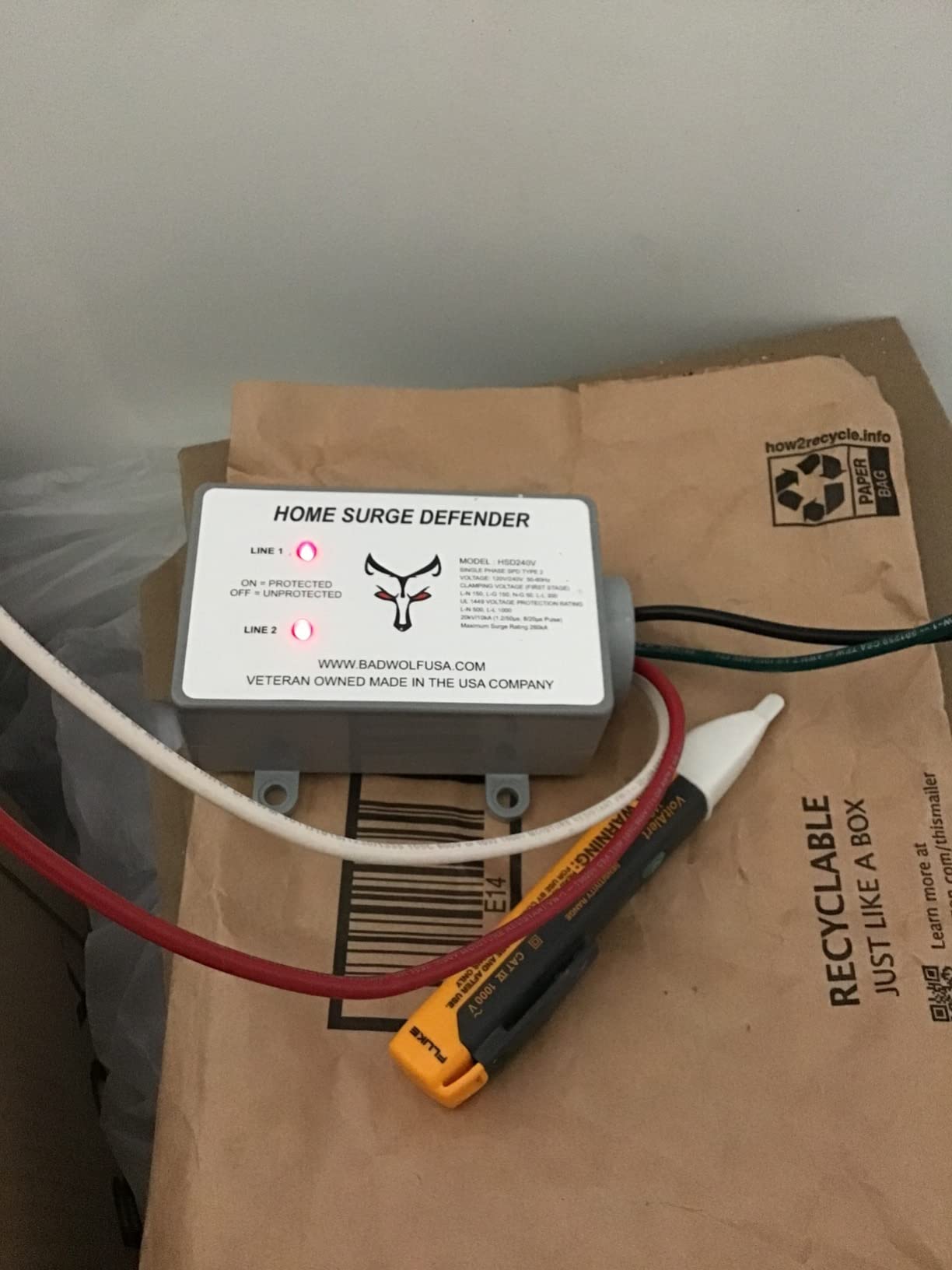
10. Bad Wolf HSD240V – Best for High Surge Capacity in a Compact Body
Bad Wolf HSD240V Whole House Lightning & EMP Surge Protector 260kA, ETL Listed and FCC Certified Type 1 SPD, 120/240V Split Phase
- 260kA surge capacity in a compact 5 by 4 inch body
- ETL Listed Type 1 SPD to UL 1449 5th Edition and CSA
- 6240 joules surge protection rating
- Installs in 10 to 20 minutes with four wires
- Surface mount design does not fit flush-mounted panels
- Wiring exit may not suit every mounting orientation
- Costs more than budget plug-in SPD options
The HSD240V pairs the highest surge current figure in this roundup with the tightest footprint. At 5 by 4 inches and 16 ounces it fits tight panel spaces that a 7 pound metal chassis cannot, which is a genuine advantage in older 100 amp and 150 amp load centers.
It is also one of the few here listed to the current edition of the standard. The ETL Listing to UL 1449 5th Edition plus CSA C22.2 No. 269.1 and 269.2 as a Type 1 SPD gives an electrician a broader range of approved install positions.
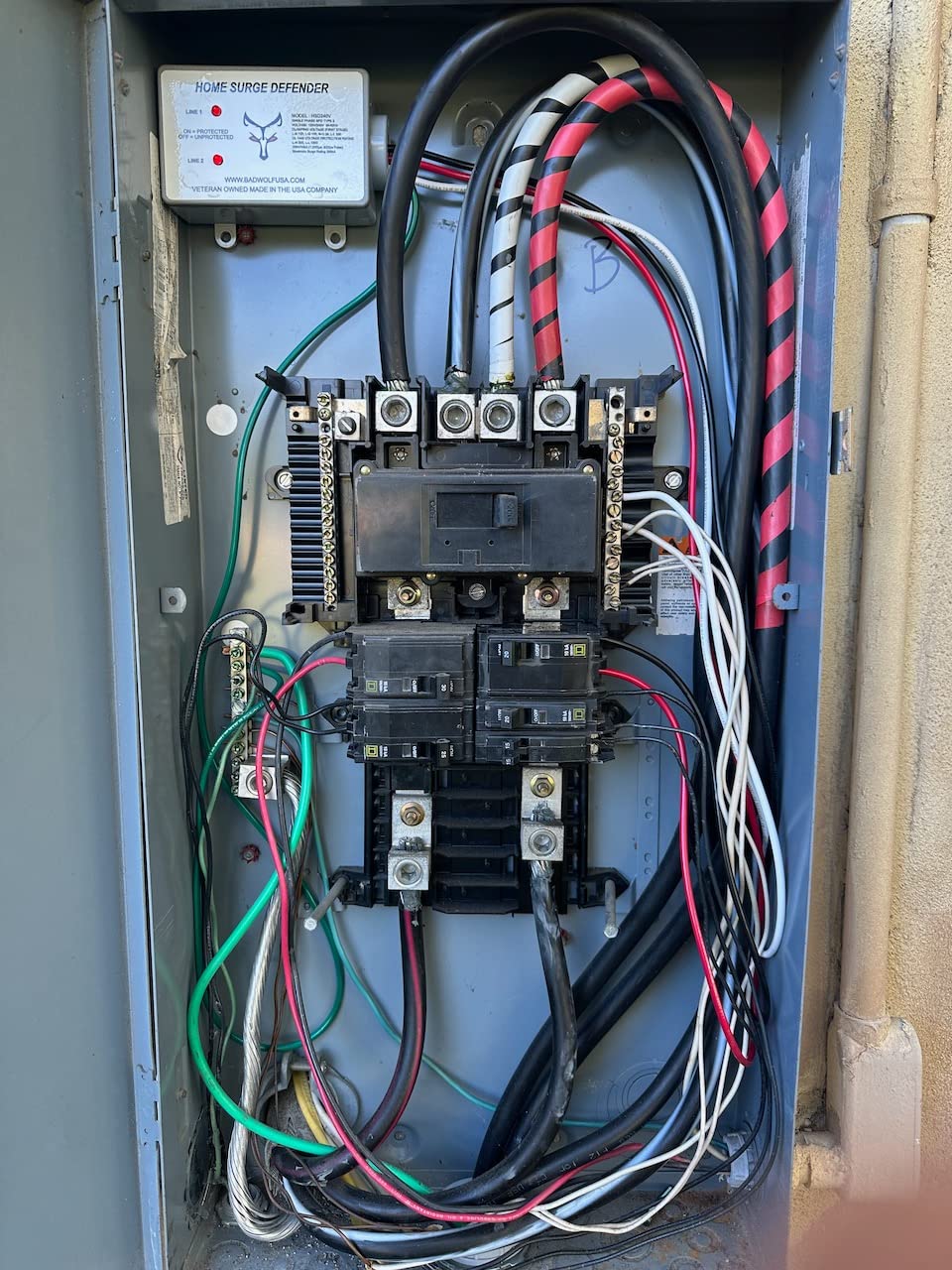
Buyers typically arrive after a specific loss, a fried HVAC control board or a tree-related outage that re-energized a damaged line. Those owners report the unit stopped further damage, and the 6240 joules rating is the number that explains the headroom.
Installers praise the short four-wire hookup taking 10 to 20 minutes, with a recommended 20 amp double pole breaker and hardwired panel or surface mounting. Customer service from a veteran-owned company comes up positively in several reviews.
When the raw capacity is the selling point
Choose it for a high-exposure property with severe space constraints, where you want the most surge capacity a residential panel will accept. A rural home on a long overhead run with an older small panel is the profile that fits.
The 5 year limited warranty is thinner than the ten-year coverage offered by the Intermatic Smart Guard, so weigh that against the higher capacity before deciding.
Fit issues to confirm first
The surface mount design does not fit flush-mounted breaker panels, which is the same constraint that affects the EMP Shield model. Check your panel type before ordering, and ask about the recessed version if yours is concealed.
The wiring exit configuration may not suit every mounting orientation without a replacement decal, and the price sits well above budget plug-in options, so the capacity has to justify itself.
Protecting the Lines That Actually Get Hit
Here is the finding that came up again and again across every forum we read, and it undercuts the assumption behind most panel purchases. A repair professional in Ohio put it plainly: lightning almost never enters through the power service, and almost always comes in through coax or phone lines.
That matches the damage patterns homeowners describe. Some lose nothing at all, while others lose every television, receiver, and player on a single satellite or coax feed in one event. A panel-mounted surge protective device cannot help with that, because those conductors never pass near it.
So layer it. Add surge protection at the point where coax, telephone, and network lines enter the house, which means outside at the service wall rather than at the equipment. A long r/hometheater thread on this topic makes the same case, and the pattern of equipment failures lines up with a line-side entry rather than a power-side event. Our complete surge protector guide covers each layer and what it actually protects.
Then protect the sensitive endpoints directly. A UPS on network gear, AV components, and any medical equipment adds the last layer that a panel device cannot provide, and owners running home offices and CPAP machines treat those as the primary defense rather than the backup.
Grounding: The Part Everyone Skips
A surge protective device works by diverting surge current into the grounding electrode system. If that system is split across multiple ground points, current finds the easiest path, and it is often straight through your low voltage wiring and into your equipment.
Telecom veterans in the forum corpus are blunt about this: bond all of your grounds together and establish one ground potential. Several attribute decades of equipment survival to grounding and bonding practice rather than to the surge protectors they had installed.
This is why a perfect device can still fail, and why an electrician’s assessment of your grounding electrode system is worth more than another 20kA of rating. Have the electrode conductor and bonding checked before you spend on a higher rated unit.
Installation, Maintenance, and Lifespan
Almost every device here is a de-energized job, which means your whole home goes dark for the install window. Homes with medical equipment, servers, or well pumps need to plan around that, and it is the single biggest scheduling complaint owners raise.
Expect the electrician to confirm panel brand compatibility, verify a genuine two-pole breaker is in the first position for models that require it, and check that indicator lights come on. Models with a plug-in bus mount, such as the Siemens BoltShield, take minutes rather than hours.
When the LED goes dark after a storm, the device absorbed something significant and stopped. That is exactly the failure mode the indicator exists to report, and it does not tell you whether the rest of your equipment survived. Replace the unit or the module, then walk through what is connected to each unprotected line.
Check indicators once or twice a year, and plan for replacement across a long ownership period. A sealed unit is discarded when spent; a modular design costs a cartridge and an afternoon.
How to Choose a Whole House Surge Protector
Start with surge current, measured in kiloAmps, because that is the number that determines how much energy the device can absorb before it is done. Forty kiloAmps is a reasonable residential floor, 80 kiloAmps covers most storm-prone homes, and 100 kiloAmps or more makes sense on a rural property with long overhead runs or a high-strike storm belt region.
Next, decide the device type. A Type 1 installs at the service entrance or meter socket and is the only category that covers a direct strike at the mast. A Type 2 mounts at the main panel and handles induced surges from utility switching and nearby lightning, which is where the vast majority of real losses begin. A Type 3 is point-of-use protection for a single device.
Match the enclosure to the location. NEMA 3R suits a dry interior or sheltered position, and NEMA 4X takes rain, dust, and hose-directed water, which matters for a garage, exterior wall, or service entrance mount.
Verify the listing. Look for UL 1449 or CSA C22.2 listing, and note that a Type 2 in a 3rd or 5th edition listing is not automatically the same as a Type 1 device. MCOV tells you the maximum continuous voltage the unit will tolerate, and VPR is the clamping voltage it will let through.
Understand the component difference. A metal oxide varistor is the sensing element, and a thermally protected MOV adds a disconnect that opens on failure, which is what allows an indicator to report status and prevents a failed device from becoming a fire risk.
Think about service size and subpanels. On 200 amp service, a lower rating can be undersized. For a shed, workshop, or pool house subpanel, size the device at roughly half the main unit’s rating, and add protection at each panel rather than only at the main.
Finally, price the ten-year ownership rather than the purchase. Modular designs with replaceable cartridges and a connected equipment warranty cost more up front and less over a decade in a storm belt. Sealed units are cheaper initially and discarded whole after a significant event.
Frequently Asked Questions
Can a whole house surge protector protect against lightning strikes?
Not a direct strike. A panel-mounted device can only divert energy that arrives on the service conductors, so a strike landing on the mast or a tree touching the line will destroy it. What it does handle reliably is the induced surge that follows a nearby strike or a utility switching event, and that is the cause of most household damage.
Which surge protector is best for lightning?
For most homes, a Type 2 device rated between 80 and 108 kiloAmps mounted at the main panel. The Eaton CHSPT2ULTRA leads our list on surge capacity and universal fit, the Square D HEPD80 is the strong alternative with an 80 kiloAmp rating and clear status LED, and rural homes on long overhead runs should stay at the top of that range.
Do surge protectors actually work against lightning?
Yes for induced surges, no for direct strikes. The internal varistors conduct excess current into the grounding system in nanoseconds and recover automatically, but each event slightly degrades them. That degradation is why status indicators matter and why a unit should be checked after every serious storm.
Can lightning bypass a surge protector?
Frequently, and through lines the device never sees. Coax, telephone, and network conductors entering the house are repeatedly identified as the real entry path, and panel devices do nothing for them. Ground potential differences from an unbonded grounding electrode system can also route surge current into low voltage wiring.
How do I pick the right whole house surge protector?
Match surge current to your exposure: 40 kiloAmps minimum for a residential home, 80 kiloAmps for storm-prone areas, and 100 or more for rural overhead service. Then pick the type, with Type 2 at the main panel for induced surges and Type 1 at the service entrance when the service configuration requires it. Check enclosure rating, UL 1449 listing, panel brand compatibility, and whether replaceable modules matter to you.
Can I install a whole house surge protector myself?
Working inside a live panel is dangerous, and most of these devices need the home de-energized for a proper install. Plug-in bus mount models are the exception, since they seat like a two-pole breaker, but even there the neutral connection and the first-position breaker requirement should be handled by someone qualified or a licensed electrician.
Do I need a surge protector on my subpanel too?
Usually yes, sized at roughly half the surge current rating of the main unit. A shed, workshop, or pool house panel has its own wiring run and its own exposure, and equipment on it is just as replaceable as anything inside the house.
Conclusion
The best whole house surge protectors for lightning are the ones whose surge current rating matches your exposure and whose grounding path actually works. The Eaton CHSPT2ULTRA takes the top spot at 108kA with universal panel fit, the Square D HEPD80 is the pick for 80kA coverage with a status LED, and the Eaton CHSPT2SURGE covers the middle of the range with a NEMA 4 housing and four MOV elements.
None of them protects a direct strike, and none of them touches coax, telephone, or network lines. Get the panel device in, add line protection at the service wall, confirm your grounding electrode system is properly bonded, and add point-of-use protection on the electronics you cannot replace. Updated for 2026, that layered approach is what actually survives a bad storm night.