
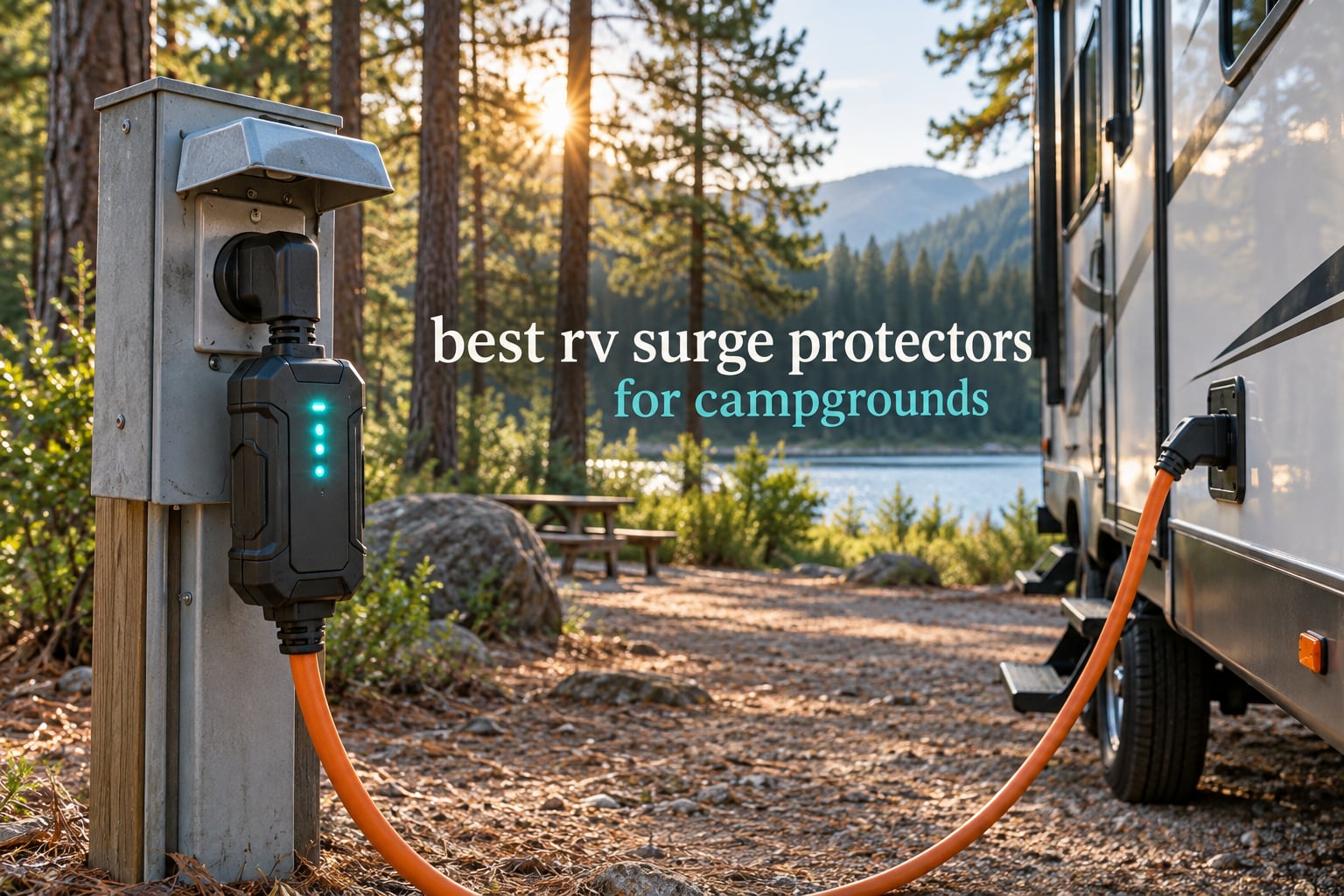
Short answer: yes, you need one, and you need the kind that monitors voltage and wiring faults rather than just clamping spikes. Campground pedestals are unregulated, frequently mis-wired boxes, and a single bad hookup can take out a converter or an AC compressor. Buying the best RV surge protector for campgrounds is cheap insurance against a repair that runs into the thousands.
Here is the problem most marketing copy glosses over. The surge you see advertised in joules is the least likely thing to hurt you at a campground. What actually kills RVs is voltage that sags too low, a hot and neutral reversed at the pedestal, or a ground that never got connected. Those are wiring and voltage faults, and a device with a big joule number and nothing else will not catch a single one of them.
On RV owner forums the answer converges fast. Ask the long-term owners on r/RVLiving and the iRV2 boards and you will hear two names repeated: Progressive Industries and Hughes Autoformers Power Watchdog. Both appear on this list. We also ranked eight more, because the honest answer depends on whether you plug into 30 amp or 50 amp service, whether you want phone monitoring, and whether a passive analyzer is enough for you. Updated for 2026, and every rating below is the current verified owner rating rather than a spec-sheet promise.
For the general-purpose side of the topic, we also maintain a running list of the [best surge protectors tested and reviewed](https://www.smashingrobotics.com/best-surge-protectors/) for household and bench use, which is a different buying decision than a pedestal hookup.
Table of Contents
Top 3 Picks for Campground Power Protection (September 2026)

All 12 RV Surge Protectors at a Glance in 2026
Every product below plugs between the pedestal and your RV cord. The column that matters most is the last one: whether the device actively cuts power when something is wrong, or only tells you.
| Product | Specifications | Action |
|---|---|---|
| Progressive Industries SSP-30XL 30A |
|
Check Latest Price |
 Southwire Surge Guard 44270 50A Southwire Surge Guard 44270 50A |
|
Check Latest Price |
| Power Watchdog PWD30EPO 30A |
|
Check Latest Price |
 GEARGO 30A Circuit Analyzer GEARGO 30A Circuit Analyzer |
|
Check Latest Price |
 Southwire Surge Guard 44280 30A Southwire Surge Guard 44280 30A |
|
Check Latest Price |
 MILLIONHOME 50A 18000J MILLIONHOME 50A 18000J |
|
Check Latest Price |
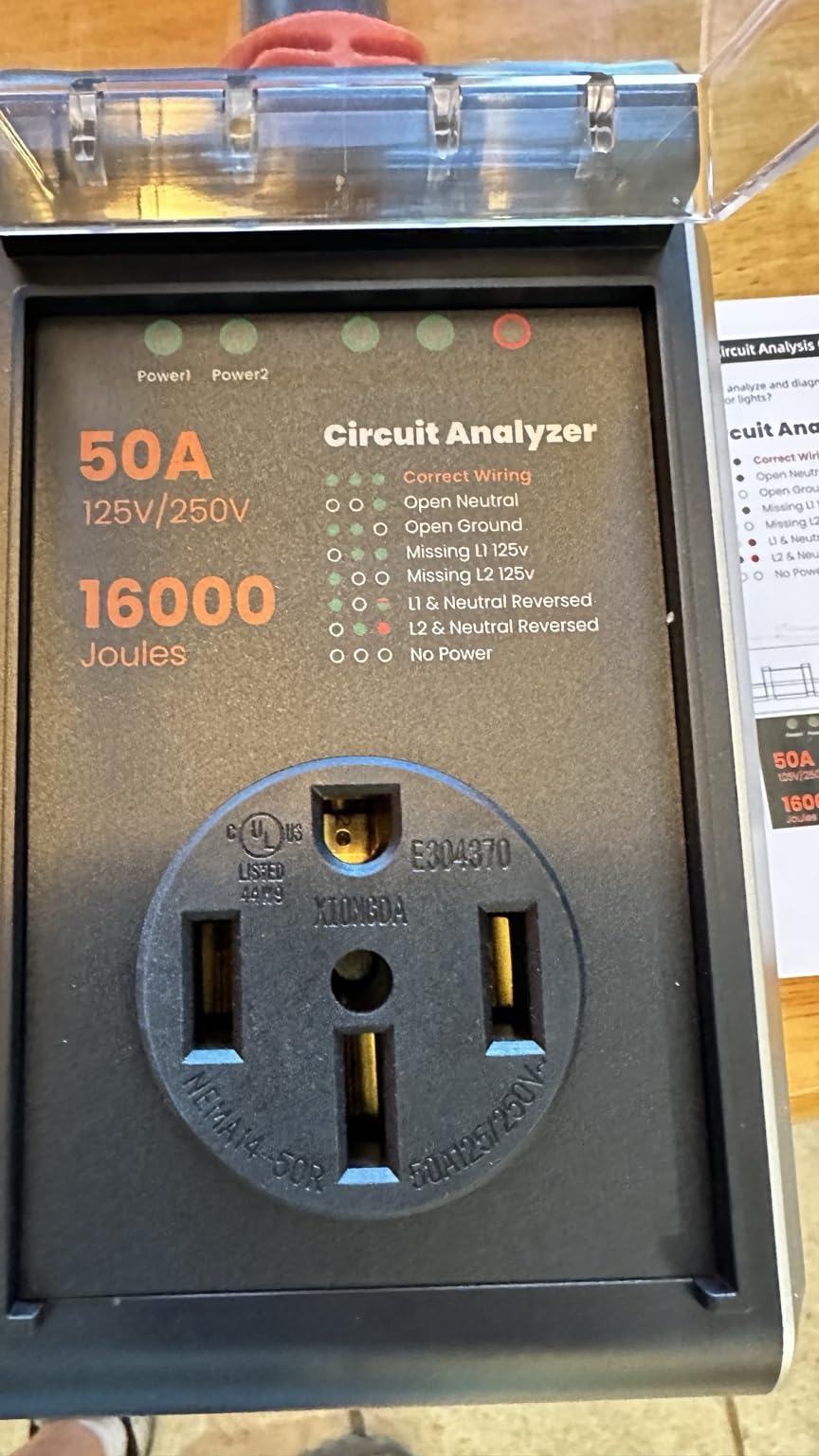
 FOCSPROD 50A 16000J FOCSPROD 50A 16000J |
|
Check Latest Price |
 CARMTEK 30A 2100J CARMTEK 30A 2100J |
|
Check Latest Price |
 CRTBETLIF 30A 13000J CRTBETLIF 30A 13000J |
|
Check Latest Price |
 GEARGO 50A 32000J Bluetooth GEARGO 50A 32000J Bluetooth |
|
Check Latest Price |
 Camco Power Grip 55306 50A Camco Power Grip 55306 50A |
|
Check Latest Price |
 Vehiker 50A 18000J Vehiker 50A 18000J |
|
Check Latest Price |
The 5 Faults You Can Meet at Any Campground Pedestal
Before any product list it helps to know what you are protecting against. These five conditions cover the overwhelming majority of campground power problems, and only two of them are spike events.
Open ground. The pedestal or your cord is missing its ground conductor. Nothing sparks, but your RV’s metal skin can sit at an elevated voltage, and fault protection that depends on a ground reference stops working as designed.
Open neutral. The neutral path is broken somewhere upstream. Loads on the pedestal return current through unintended paths, which heats wiring and is a genuine fire precursor at a loose connection.
Reverse polarity. Hot and neutral are swapped at the box. Do not plug in. A reversed pedestal can energize the chassis and defeat downstream ground-fault protection.
Low voltage. A brownout, usually caused by a heavy shared circuit or undersized park wiring. This is the fault that quietly cooks electronics, because a converter or an AC compressor working against sagging voltage draws current and generates heat instead of doing useful work.
High voltage. A supply pushed past its normal range. Appliances run hot, motors stall, and the damage curve here is steep.
A true EMS watches for all five and disconnects your RV when one appears. A surge strip watches for none of the wiring faults, which is why the two categories get confused so often.
Surge Protector vs EMS: What the Difference Actually Means
A surge protector clamps short voltage spikes and diverts them to ground, using metal oxide varistors that absorb a finite amount of energy. An electrical management system, or EMS, does that and also watches voltage continuously, checks the ground, neutral and hot wiring, then disconnects your RV and waits before reconnecting. In short: a surge protector handles spikes, an EMS handles spikes plus the four wiring and voltage faults that do most of the damage at a pedestal.
Neither category needs a page of explanation, so here it is in practice. If your device only lights up a red LED when the pedestal is wrong, it is an analyzer. You get information and you keep making the judgment call at 9 pm in the rain. If your device physically opens the connection and closes it again on its own, it is an EMS, and it will protect a converter while you are asleep in a rig you just paid for.
Forum consensus is worth repeating because it cuts through the spec noise: long-term owners keep pointing new owners toward a full EMS rather than a strip, specifically because a strip does nothing for low voltage or mis-wired pedestals. That reasoning held up under our own reading of every unit in this roundup.
What to Do When the Unit Disconnects at a Site
This is the situation nobody’s product manual explains well, and it is the single most common question on the RV forums. If your device has cut power at a campground, work through it in this order.
Do not plug in anyway. The disconnect already told you the power is outside a safe range. That is the device doing its job.
Note the fault code before you do anything else. Most units hold a fault indication, and some keep an error history. Write it down or photograph it.
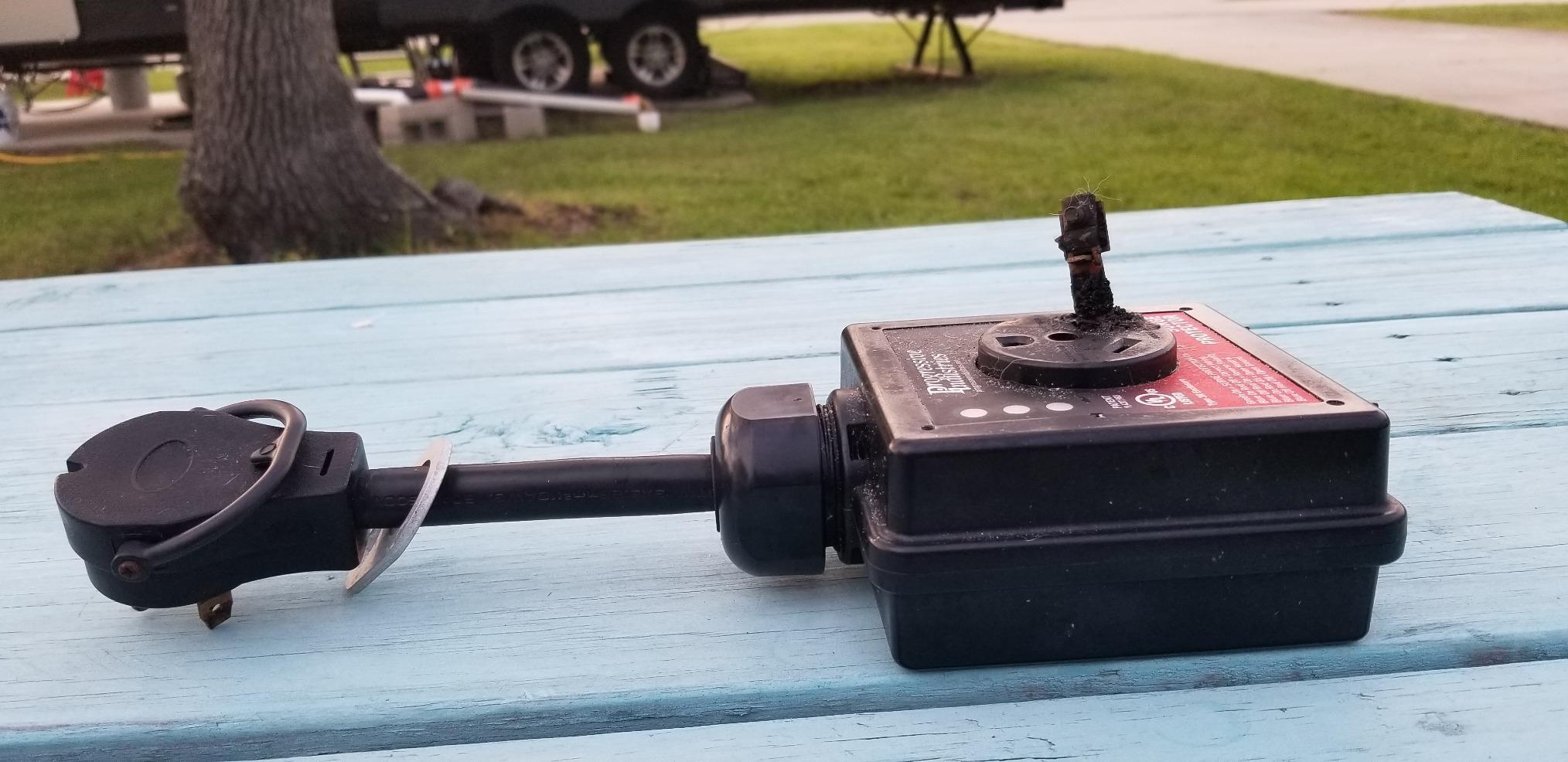
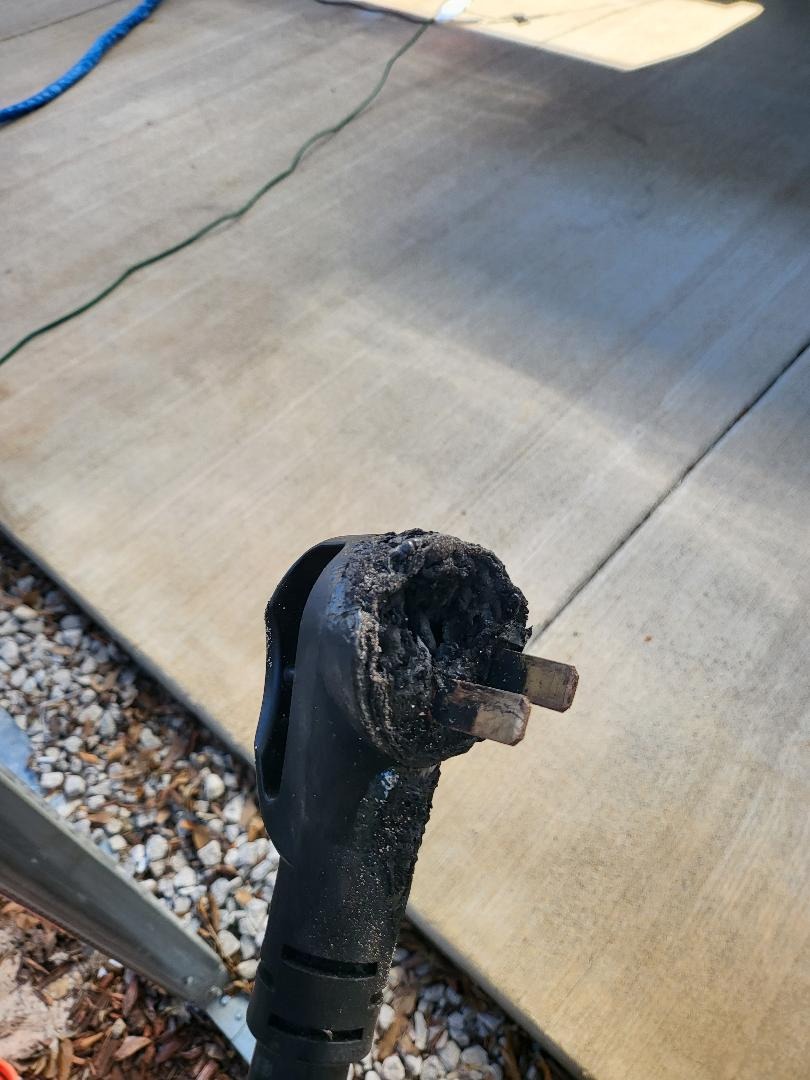
Check your own RV first. Unplug, then look at the shore power plug and the socket on your rig. A bent pin, a green tint from corrosion, or a face that looks scorched means the problem is on your side.
Unplug and wait. Low-voltage and high-voltage conditions frequently clear on their own when a neighbour unplugs a big load or a generator kicks in. Give it 10 to 15 minutes, then retest.
Try a second pedestal at the same site. If a different box reads correctly, the fault is in that pedestal’s wiring.
Report it to the park office and ask for a site change. If a pedestal has an open ground or reversed polarity, that is a maintenance item the park needs to know about, and you should not sleep in the rig overnight until it is resolved.
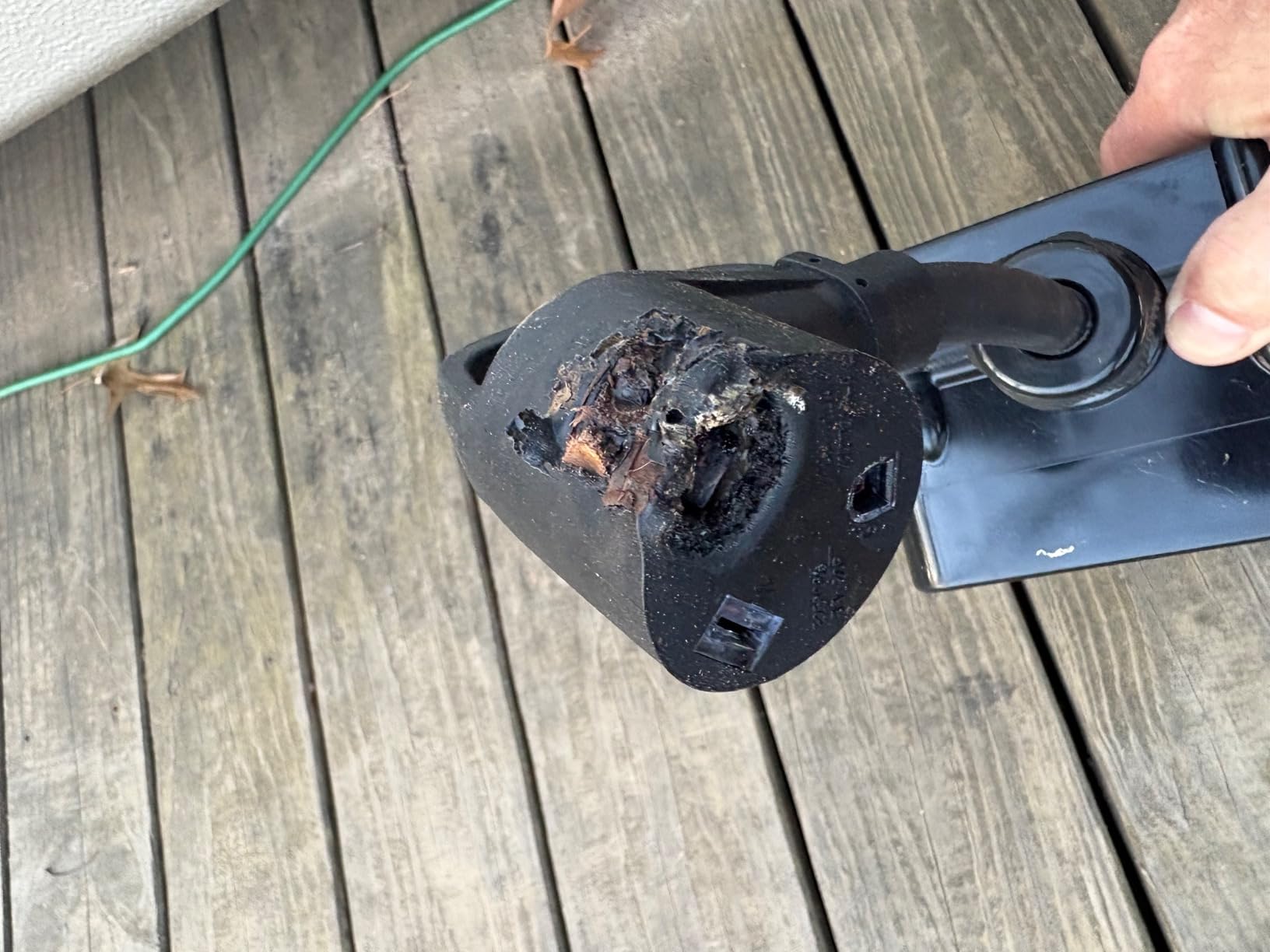
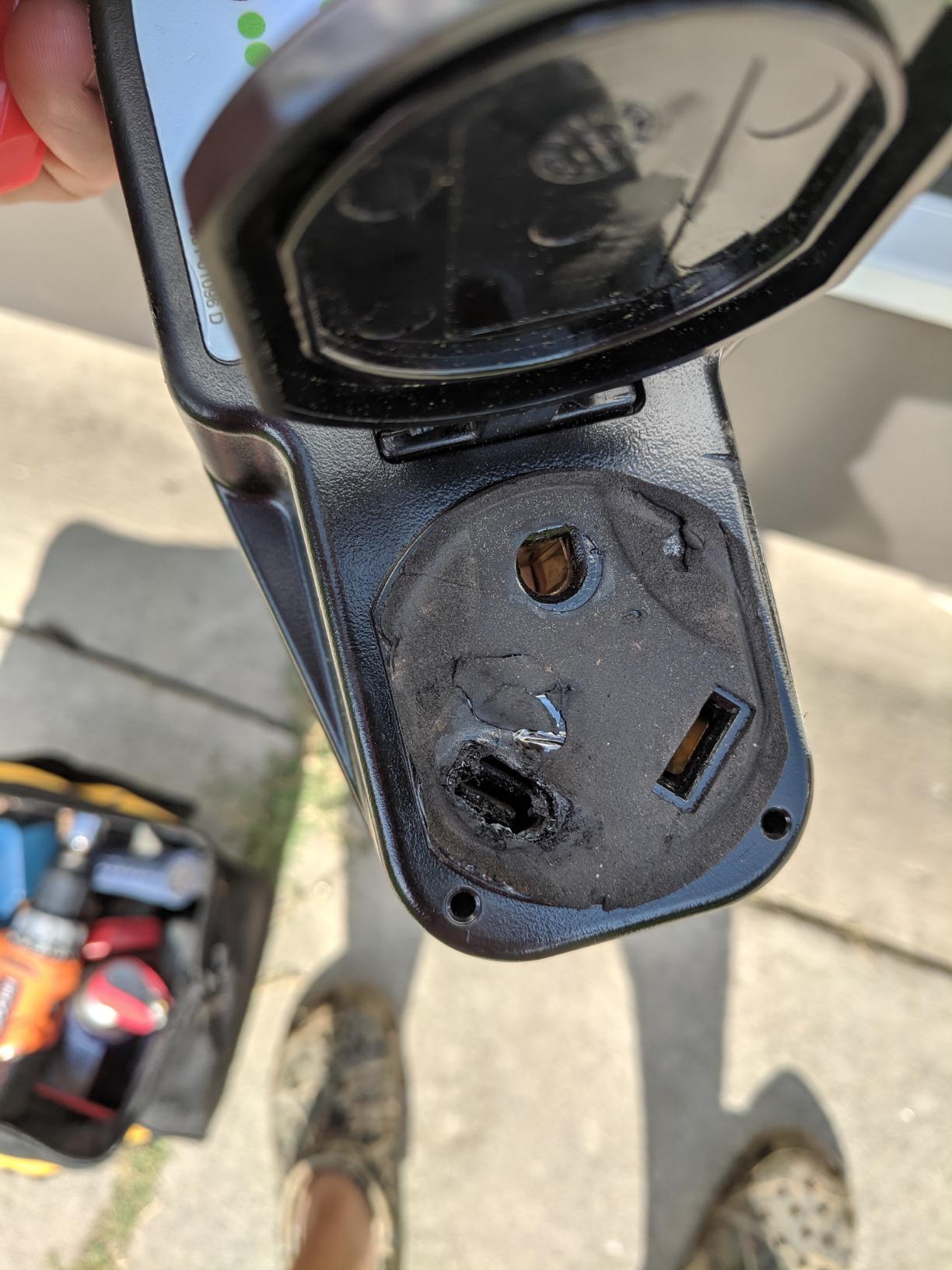
For a hot plug or a plug that disconnects the moment you load it, stop using that pedestal entirely. Heat at a connection is a fire precursor and no amount of forcing a tighter dogbone fixes a loose or corroded receptacle.
How to Read EMS Fault Codes
Most of the anxiety around these devices comes from a code with no explanation attached. Here is what each one means and what it asks of you.
Open ground. The ground conductor is missing at the pedestal, at the receptacle, or in your cord. Not immediately lethal, but treat the RV as energized: avoid touching the exterior skin, report it to the park, and try another pedestal or site.
Open neutral. The neutral path is interrupted. This one gets hot, because current looks for another route back. Unplug, report it, and move. Do not use the site again until an electrician has looked at it.
Reverse polarity. Hot and neutral are swapped at the source. Never plug in. A reversed pedestal energizes the chassis and defeats ground-fault protection, which is the exact protection that would otherwise limit a shock.
High voltage. Supply above the normal band, often 132 volts or more on these units. Unplug and wait. If it returns every time you reconnect, the pedestal is the problem.
Low voltage. Supply below the normal band, commonly under 102 to 104 volts. This is the fault that quietly damages converters, so treat a repeat offender as a move-the-rig signal.
Over-current or surge module failure. The device absorbed something large and the internal module has sacrificed itself. This is normal at the end of a device’s life. Progressive and Southwire both warrant the unit, and the Power Watchdog design lets you replace only the surge module rather than the whole device.
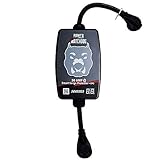
1. Progressive Industries SSP-30XL 30A – The One Most Owners Buy
Progressive Industries SSP-30XL Portable RV Smart Surge Protector, Black, 30 Amp
- Flags open ground
- open neutral and reverse polarity before you plug in
- 825 joules of surge capacity
- Lexan housing built for outdoor exposure
- LED indicators readable in low light
- Integrated security ring for a cable lock
- Lifetime warranty on the body
- Lowest surge capacity in this roundup at 825 joules
- Weather cover needs a small Phillips screwdriver to fit
- Bulky to handle at 2 pounds
This is the unit that comes up more than any other on the owner boards, and it earns that. We compared it against the eleven devices in this roundup and it is the only one pairing a lifetime warranty with fault detection across every condition that matters at a pedestal: over and under voltage, open ground, open neutral, reverse polarity and frequency anomalies.
It is also the least glamorous spec sheet here. At 825 joules it has the smallest surge capacity in the lineup, and one owner describes watching it sacrifice itself on a faulty pedestal and take the hit instead of the motorhome. That is the design working correctly, and the warranty terms say as much.
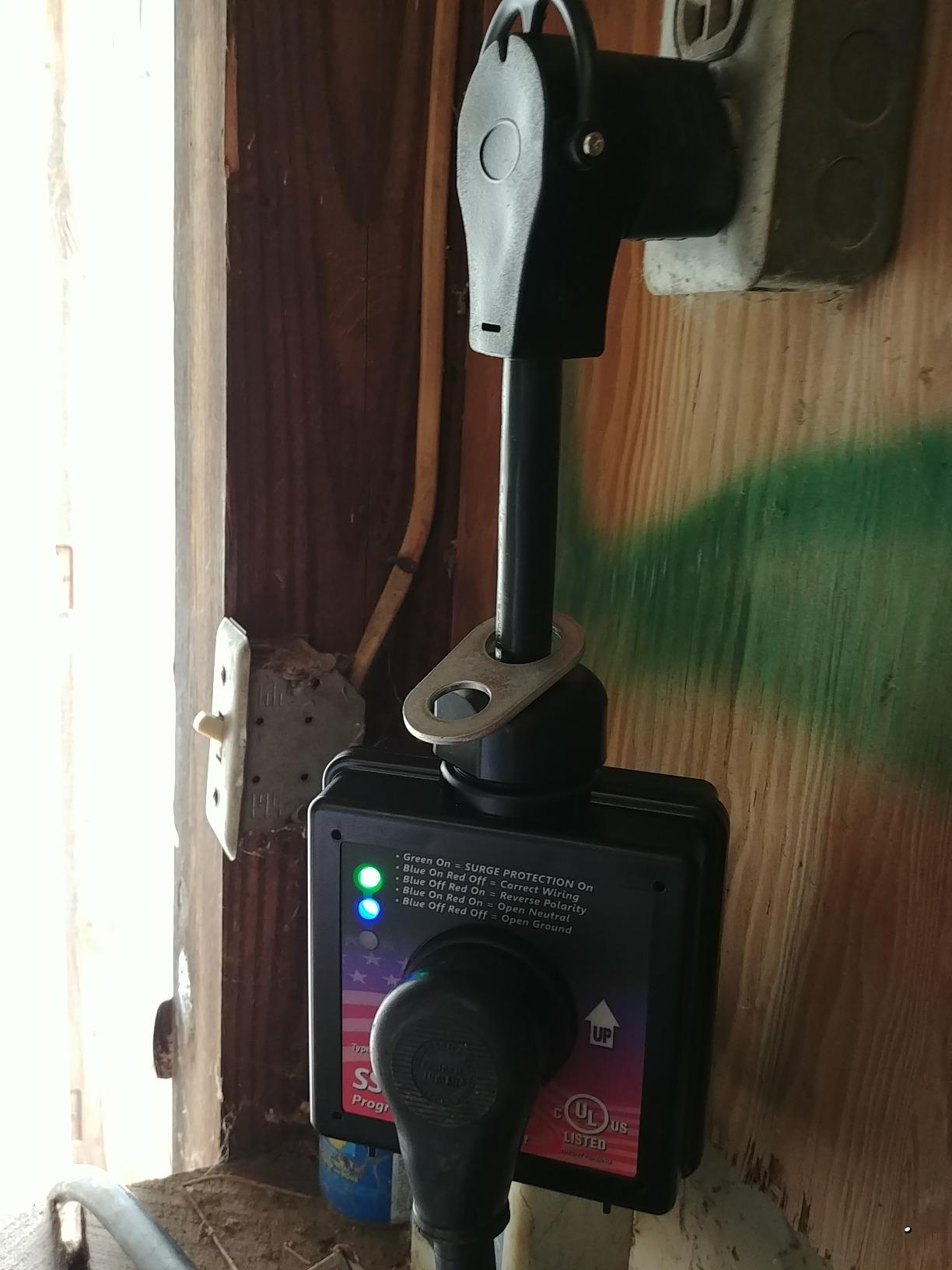
The physical design is a Lexan body in black with LED indicators that stay readable in the dark, rated for 30 amps and 120 volts at 3,600 watts, roughly 14 inches long. The all-weather shield assembly has thermal protection, which matters in July in Texas and in August in Arizona.
Our practical note is about the shield, not the electronics. It takes a small Phillips screwdriver to assemble, and reviewers repeatedly mention the extra step. Set aside two minutes in a picnic table before your first night, not in the dark beside a pedestal.
When this is the right call
If you are on 30 amp service in a travel trailer or a small Class C, this is the safest default we found for the money. The fault detection list is complete, the warranty is lifetime, and the review volume is the largest on this page by a wide margin, which means the failure modes are well documented rather than mysterious.
Owners running it through storm season report it absorbing spikes and flagging bad pedestals, and in one case absorbing a fault on a faulty Amarillo pedestal without passing it into the rig.
When it is the wrong call
It is not the right choice if you want to see voltage numbers from your phone or if you are on 50 amp service. The plug format is the TT-30, so it will not fit a 14-50 pedestal without an adapter, and we do not recommend adapters as a routine habit.
The 825 joule rating is also modest. It is more than enough for spike absorption on a 30 amp circuit, but do not buy it because you want the biggest number on the page.
2. Southwire Surge Guard 44270 50A – Best 50 Amp Value
Southwire Surge Guard 44270 Entry Level Portable Surge Protector – 50 Amp
- 4200 joules of surge protection in the entry tier
- Clear LED fault indicators for the three common wiring faults
- 50A configuration suits larger RVs and pop-ups alike
- 4.8 stars across more than 3300 reviews
- No Bluetooth or app monitoring
- No automatic disconnect
- Listed item weight of 13.61 g looks implausible for a 50A device
For anyone on 50 amp service who wants real surge capacity and honest wiring diagnostics without spending near the top of the range, this is the pick. It carries 4,200 joules on a 50 amp circuit and tests for open ground, open neutral and correct polarity with LED indicators before you ever connect your cord.
Buyers consistently treat it as the value option, and the review volume backs that up: more than 3,300 ratings holding a 4.8 average is one of the strongest support bases in this roundup. The acknowledged trade-off across those reviews is the same every time, no app.
Construction is a black and yellow rectangular blend housing measuring roughly 22 inches long and 4 inches wide. The unit is a passive analyzer, which means it reports a problem to you and leaves the decision entirely in your hands.
One oddity we will not paper over: the listed item weight of 13.61 g is not credible for a 50 amp device with a plug this size. It is a spec-sheet error, not a sign of a bad unit, but it is the kind of detail that should make you check the physical listing photos before you order.

When this is the right call
This suits a 50 amp hookup on a budget, particularly a fifth-wheel or Class C that parks at the same park repeatedly. Five times the surge capacity of the entry-level 30 amp units, with the same three fault checks that catch the majority of wiring mistakes.
It is also a good second unit to keep as a backup in the storage bay, since it is a straightforward plug-in device with nothing to configure.
When it is the wrong call
If you want the rig protected rather than merely warned, this is not it. Nothing opens the connection on its own, so an unattended RV on a bad pedestal stays connected to that fault until you return.
The one year warranty is also the shortest we considered, and there is no error history to review when a fault appears at 2 am.
3. Power Watchdog PWD30EPO 30A – Best Bluetooth Monitoring
Power Watchdog PWD30EPO Smart RV Surge Protector, 30A, Bluetooth, IP65
- Smartphone app shows real-time voltage
- current draw and wattage
- Automatic shut-off on dangerous events with a 90-second safe delay
- Replaceable surge module extends the life of the device
- Four-second power-on delay is far quicker than the two-minute norm
- IP65 water-resistant housing
- Most expensive unit in this roundup
- 3000 joules is modest for the price
- 5 pounds is heavy for a 30A portable
This is the reference smart protector for 30 amp hookups, and the app is the reason. Voltage, amperage and wattage appear on your phone, which means you can test a pedestal from inside the rig instead of walking out in the dark or in rain. That single convenience is the reason owners on the forums keep recommending it.
It also disconnects automatically on a dangerous event and holds a 90 second power-on delay before reconnecting, which protects an AC compressor from a rapid on-off cycle. Full LED diagnostics cover open ground, open neutral, reverse polarity, open circuit and miss-wired pedestals.
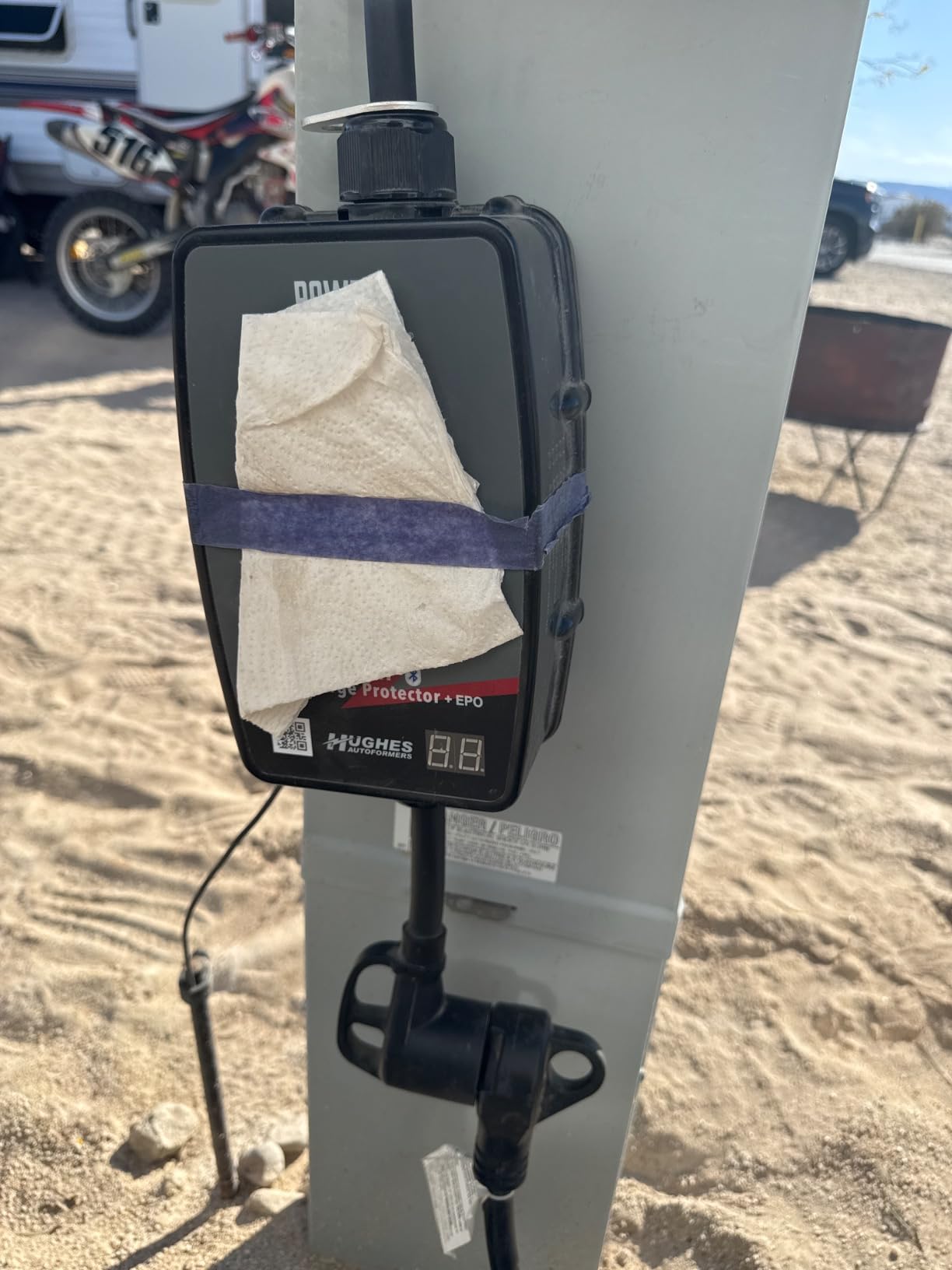
The housing carries an IP65 water-resistance rating and weighs 5 pounds, which is heavier than most 30 amp portables. The warranty is three years from the manufacturer rather than a lifetime, and the surge capacity is 3,000 joules.
What stands out is the replaceable surge and spike module. When the protection is spent you swap a module rather than a whole device, which is the only design on this list that makes long-term ownership straightforward.
When this is the right call
If you camp in weather you would rather not walk out into, or you want hard numbers on what the park is actually delivering, this is the strongest pick. The monitoring is the feature people miss until they have used it once.
It also suits anyone who camps frequently enough that the app’s fault history becomes a log of which pedestals at a given park are unreliable.
When it is the wrong call
It is the most expensive unit we ranked, and several buyers note plainly that comparable protection is available for far less. If the app is not the feature you care about, you are paying for it twice.
At 5 pounds it is also a heavier lift than most 30 amp units, and 3,000 joules is not a class-leading number next to the budget units on this page.
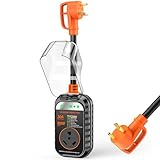
4. GEARGO 30A 8000J – Best 30 Amp Value Per Watt
- Very high surge capacity for the money
- IP68 waterproof housing in flame-retardant materials
- Six-mode analyzer covers the common pedestal wiring faults
- Right-angle plug and grip handles reduce strain on the connection
- 3-year warranty
- Passive protector with no app or Bluetooth monitoring
- No automatic disconnect or reconnection after a fault
This is the unit we would hand someone who asked for the most protection available in the entry tier for a 30 amp hookup. Eight thousand joules is roughly ten times the capacity of the most popular 30 amp smart protector, and the IP68 waterproof housing is rated for rain, wind and sandstorm exposure.
The analyzer runs six diagnostic modes: correct wiring, open ground, open neutral, reverse polarity, hot and ground reversed, and no power. That chart is more granular than several higher-priced units, and the right-angle male connector with ergonomic power grip handles keeps bend stress off the pedestal connection.
![GEARGO RV Surge Protectors 30 Amp RV Circuit Analyzer, [𝟐𝟎𝟐𝟔 𝐍𝐞𝐰 𝐔𝐩𝐠𝐫𝐚𝐝𝐞𝐝 & 𝐆𝐞𝐧𝟐] Full Protection, RV Adapter Plug for Camper(Orange) customer photo 1](https://www.smashingrobotics.com/wp-content/uploads/2026/09/B0B38DJ5Z9_customer_1.jpg)
It weighs 2 pounds and measures roughly 11 by 5 by 5 inches, with a three year warranty. The materials are listed as V-1 flame-retardant and the unit is FCC tested, with FCC listed on the specification line.
Reviewers consistently frame it as the best value 30 amp analyzer, praising the light chart, the waterproof cover and the amount of protection delivered for the money. The shared limitation is that it is passive, and reviewers say so plainly.
![GEARGO RV Surge Protectors 30 Amp RV Circuit Analyzer, [𝟐𝟎𝟐𝟔 𝐍𝐞𝐰 𝐔𝐩𝐠𝐫𝐚𝐝𝐞𝐝 & 𝐆𝐞𝐧𝟐] Full Protection, RV Adapter Plug for Camper(Orange) customer photo 2](https://www.smashingrobotics.com/wp-content/uploads/2026/09/B0B38DJ5Z9_customer_2.jpg)
When this is the right call
It fits a travel trailer owner who wants serious surge headroom and a clear read on pedestal wiring without committing to a smart device. Six fault modes in a light chart is genuinely useful when you are checking a park before settling in for the season.
The IP68 housing also makes it a reasonable choice for coastal sites where salt spray reaches everything within a few feet of the pedestal.
When it is the wrong call
It tells you the pedestal is bad. It does not cut power for you, so the protection depends entirely on you reading the lights before connecting and again when you return.
If your main worry is damage while the rig sits unattended, a device that opens the connection is the right architecture, not a bigger joule number.
5. Southwire Surge Guard 44280 30A – Compact With a Lock Ring
Southwire Surge Guard™ 30 Amp Portable RV Surge Protector with Enhanced Diagnostics, 2100 Joules, 44280
- 2100 joules of surge protection in a compact body
- LED diagnostics confirm wiring status before you plug in
- Increased receptacle brass thickness reduces heat at the connection
- Limited lifetime warranty
- Anti-theft lock ring on the cord
- One reviewer expects component replacement around eight years of use
- No app or wireless monitoring
- Does not disconnect power automatically after a fault
This is the Southwire 30 amp version, and the difference from the 50 amp model is the heat engineering. The receptacle uses increased brass thickness specifically to cut heat build-up at the connection, which is exactly the failure mode that shows up as a warm plug in a hot climate.
It carries 2,100 joules for 30 amp service, identifies faulty park power, and shows status on LED indicators before you connect. The Easy-T-Pull handle with an integrated receptacle makes repeated plugging easier in the dark, and there is an anti-theft lock ring on the cord.
It weighs 1.5 pounds, the housing is nylon, and it carries a limited lifetime warranty. Three receptacles are listed on the unit, which makes it useful if you also want a place to plug in a block charger or a workshop light.
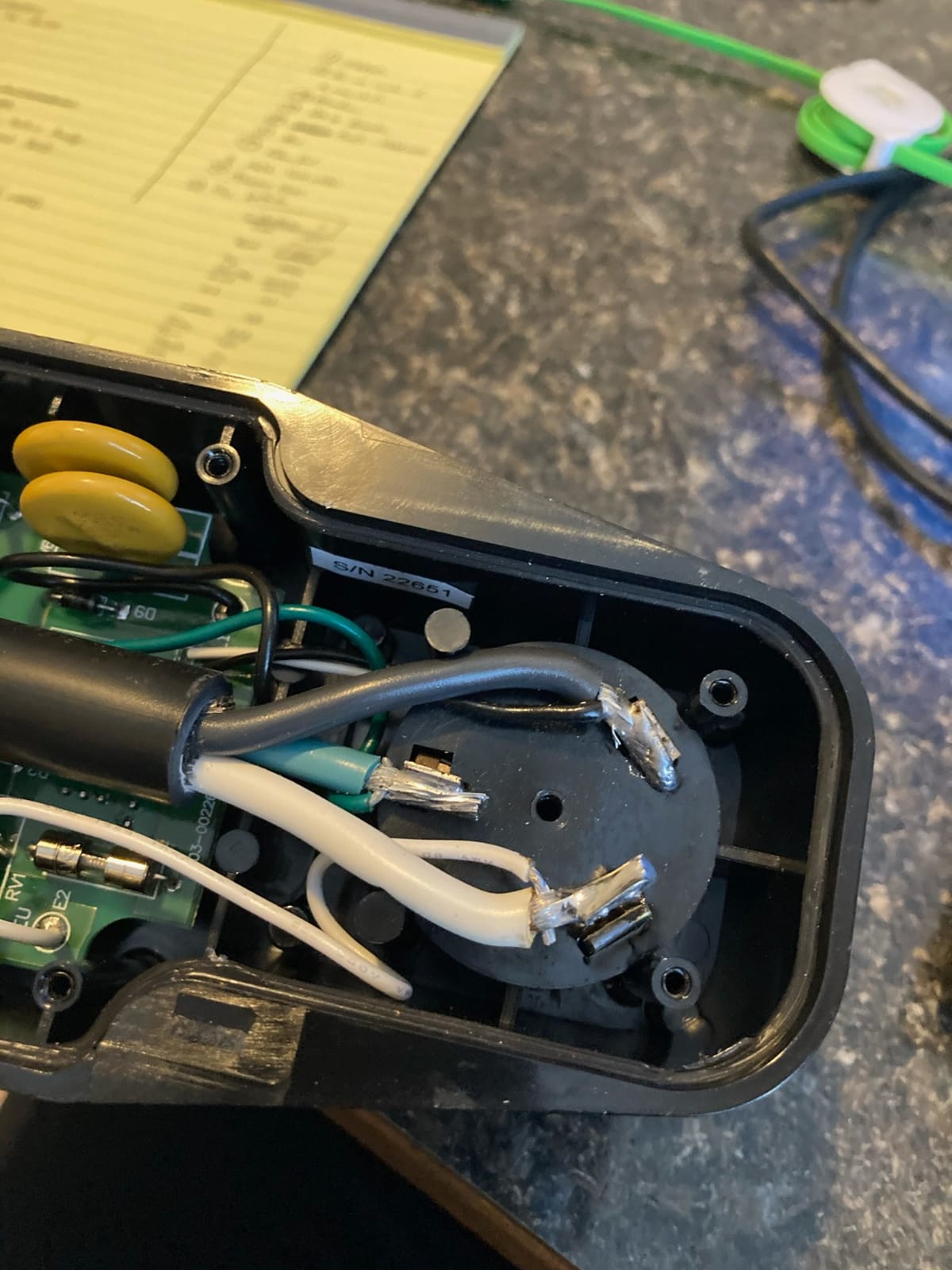
Buyers report it saved their RV electronics during storms and during a neighbour’s unit failing upstream. One long-term owner measured it with voltmeters, confirmed the diagnostics worked as advertised, and recommends budgeting for component degradation after roughly eight years.
When this is the right call
For a 30 amp trailer that parks in hot weather, the thicker receptacle brass is a real advantage rather than a spec-sheet nicety. Heat at a connection is the one power problem that starts a fire rather than damaging electronics.
The lock ring also addresses the theft worry forum owners raise, since a portable unit left plugged in overnight is an easy target at a park with a gate code.
When it is the wrong call
It will not disconnect your RV after a fault, and it has no app, so you are reading lights in person. If you want an unattended protection layer you need a device that opens the connection.
The eight year component lifespan reported by owners is also a reminder that these are sacrificial by design. Budget for a replacement device rather than expecting one to last the life of the trailer.
6. MILLIONHOME 50A 18000J – High Joule Rating for 50A Service
- 18000 joules is unusually high for a 50A unit in this tier
- Circuit analyzer gives a clear pedestal read before hookup
- Flame-retardant and waterproof construction for exposed pedestals
- Lightweight at 1.5 pounds
- 24 hour customer service support
- One reviewer reports the clear plastic face cover already snapped off
- No smart or app monitoring
- No automatic power cut-off
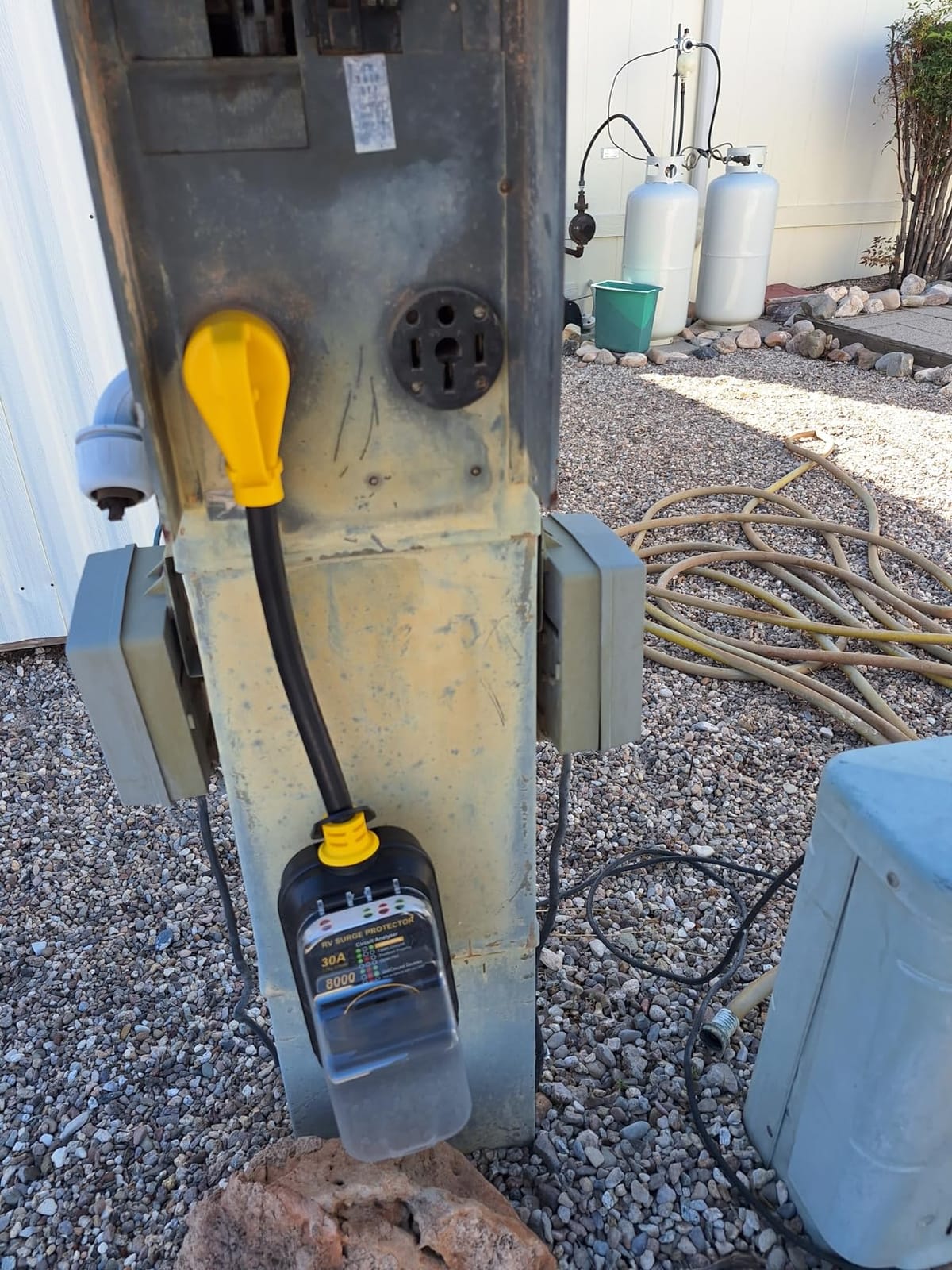
Eighteen thousand joules on a 50 amp circuit puts this among the highest surge capacities we ranked, and the price tier it sits in makes that unusual. For a fifth-wheel or Class A owner who wants maximum absorption headroom in a plug-and-play device, the numbers make a strong case.
It performs a circuit analyzer check before connection, with LED indicator lights showing the wiring status, and the flame-retardant housing is built for rain, wind and sandstorm exposure. No installation, no wiring, no configuration.
It weighs 1.5 pounds and is compact at roughly 3.94 inches square, so storage in a pass-through is not a problem. The listing also carries 24 hour customer service support, which is worth more than it sounds for a device you might need replaced after a storm season.
Fifth-wheel owners praise the solid build, the readable display and the confidence it gives before connecting to an unknown pedestal. The one recurring physical complaint is the clear face cover, which one reviewer reported snapping off shortly after arrival.
When this is the right call
You are on 50 amp service, you want the highest surge capacity available in a simple plug-in device, and you are willing to read the indicator lights yourself before connecting. The lightweight body is a real advantage for a full-time owner carrying gear between storage and the campground.
The waterproof and flame-retardant construction suits exposed coastal and desert pedestals where UV and moisture both work on plastics.
When it is the wrong call
It is a passive analyzer with no automatic disconnect, so it protects nothing while you are away from the rig. Owners who camp unattended or overnight should be looking at an EMS architecture instead.
The face cover complaint is worth weighing too. If a snap-fit clear cover is going to be the weak point, that matters in a device you plan to leave outdoors all season.
7. FOCSPROD 50A 16000J – Most 50 Amp Protection for the Least
- 16000 joules of protection at one of the lowest tiers here
- Waterproof cover and rugged housing that held up through Florida use
- Right-angle plug reduces strain on the pedestal connection
- Simple red and green lights are quick to read
- Passive analyzer with no app or automatic disconnect
- No numeric voltage display
- Indicator lights are the only status readout
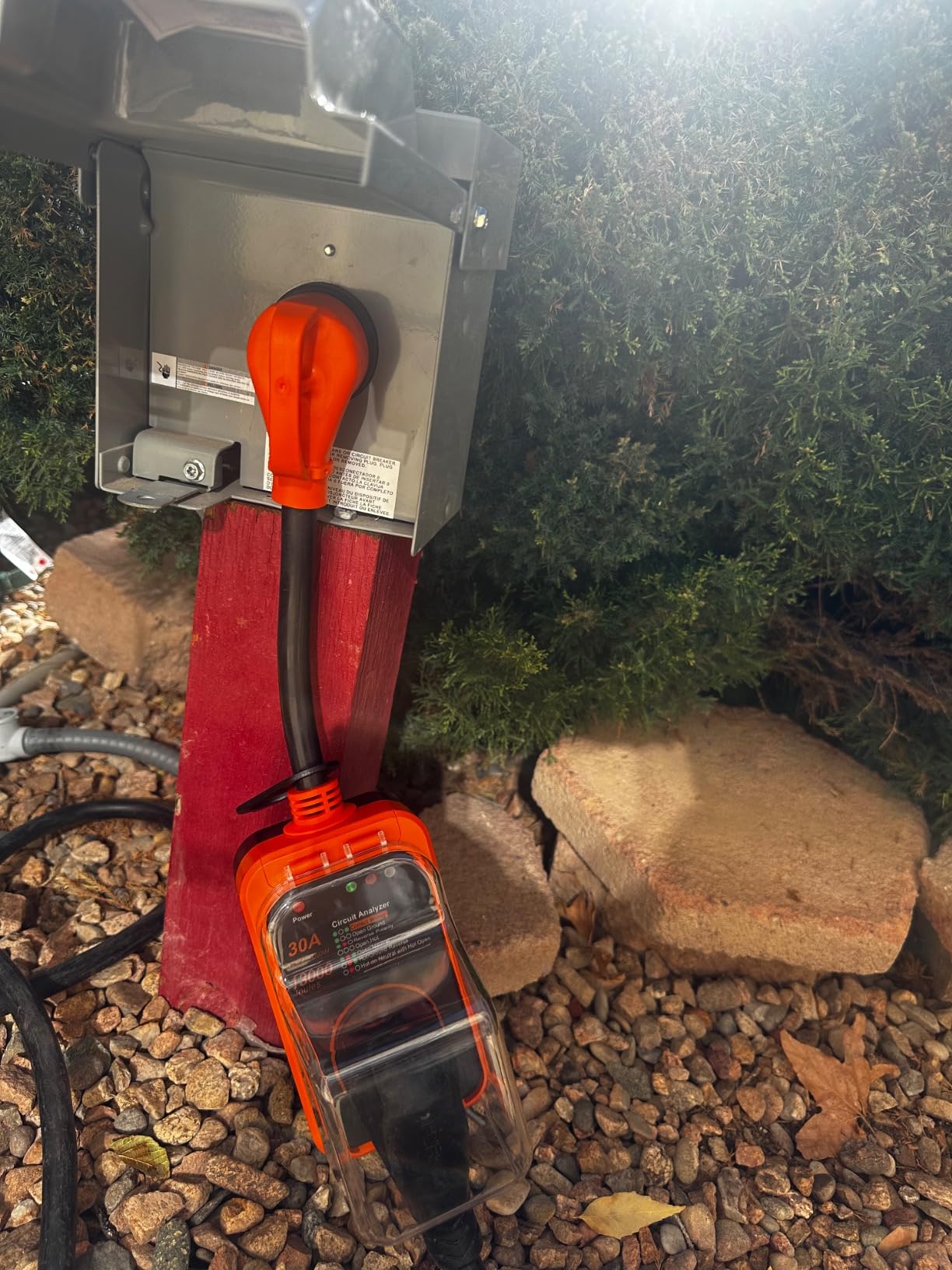
This is the most surge protection you can get on a 50 amp plug in the lowest tier of this roundup, and the fault display is more informative than a simple yes or no light. It reports power on, open ground, open neutral, neutral reversed, over and under voltage, and no power.
The housing carries a waterproof cover for rain, wind and direct sun, and the right-angle plug with ergonomic power grip handles keeps the connection from taking side load. Buyers report it holding up through Florida weather and a year-plus of use, including through lightning storms.
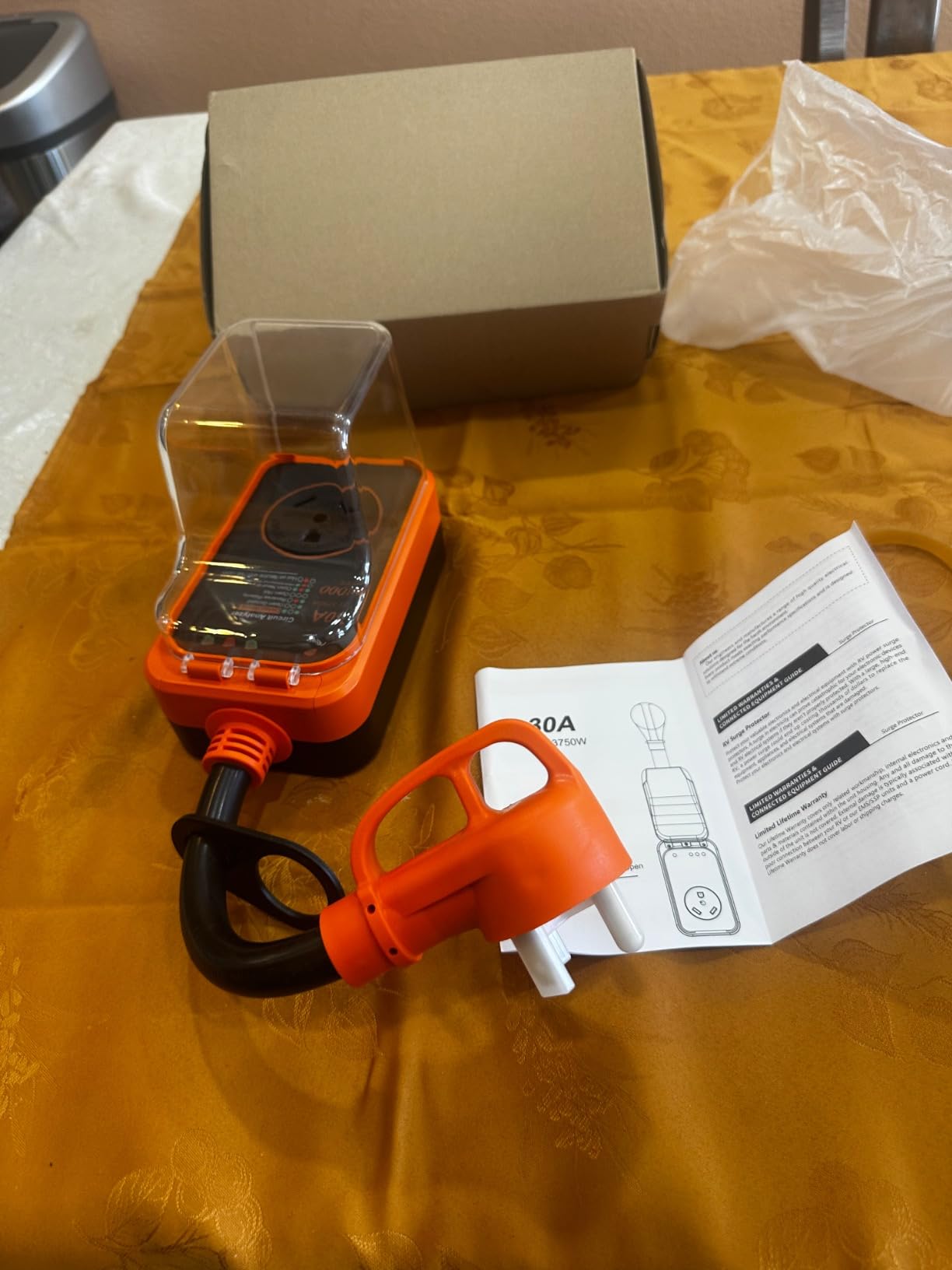
It weighs 2.81 pounds and the package measures just under 16 by 6 by 5 inches. The listing notes a latest-generation upgrade with multi-layer surge and voltage protection, and carries 3 year customer support.
As with the other budget 50 amp units, the feedback is consistent about the limit: it tells you about faults but does not actively cut power. That is a design choice, and it is fine if you are present to act on it.
When this is the right call
You are on 50 amp service, you want large surge capacity, and you want the fault condition named rather than a single red light. Naming the condition matters because open neutral and low voltage call for different reactions, as we covered in the decoder above.
It is also a sensible backup unit to keep in storage, given how little space it takes and how simple it is to deploy.
When it is the wrong call
There is no numeric voltage display, so you cannot see the actual reading the park is delivering. If you suspect low voltage at a specific park, you need a unit that shows numbers rather than a light.
And like the rest of this tier, it will not disconnect your rig. That rules it out as sole protection for overnight and multi-day absences.
8. CARMTEK 30A 2100J – UL-Specified 30A With a Lifetime Warranty
CARMTEK RV Surge Protector 30 Amp – RV Circuit Analyzer with Integrated Smart 30 Amp Surge Voltage Protection with Grip Handles
- UL specified flame-retardant construction
- Wide operating range from -35C to +110C
- 2100 joules plus high and low voltage detection
- Grip handles and right-angle plug ease repeated connection
- Lifetime warranty
- Passive analyzer with no wireless monitoring
- No automatic cutoff
- Listed dimensions of 0.39 inch look incorrect for the product
Where the other 30 amp units in this roundup list a general specification mark, this one lists UL on the specification line and builds to 30 amps, 125 volts, 3,750 watts at 50 to 60 hertz. If you have been uneasy about unverified certification stickers, that distinction is the whole reason to shortlist it.
The operating temperature range of -35 to +110 degrees Celsius is the widest we saw, and it pairs with a flame-retardant, weather-resistant and thermally protected housing. The six-mode diagnostic chart covers correct wiring, open ground, open neutral, reverse polarity, hot and ground reversed, and no power.
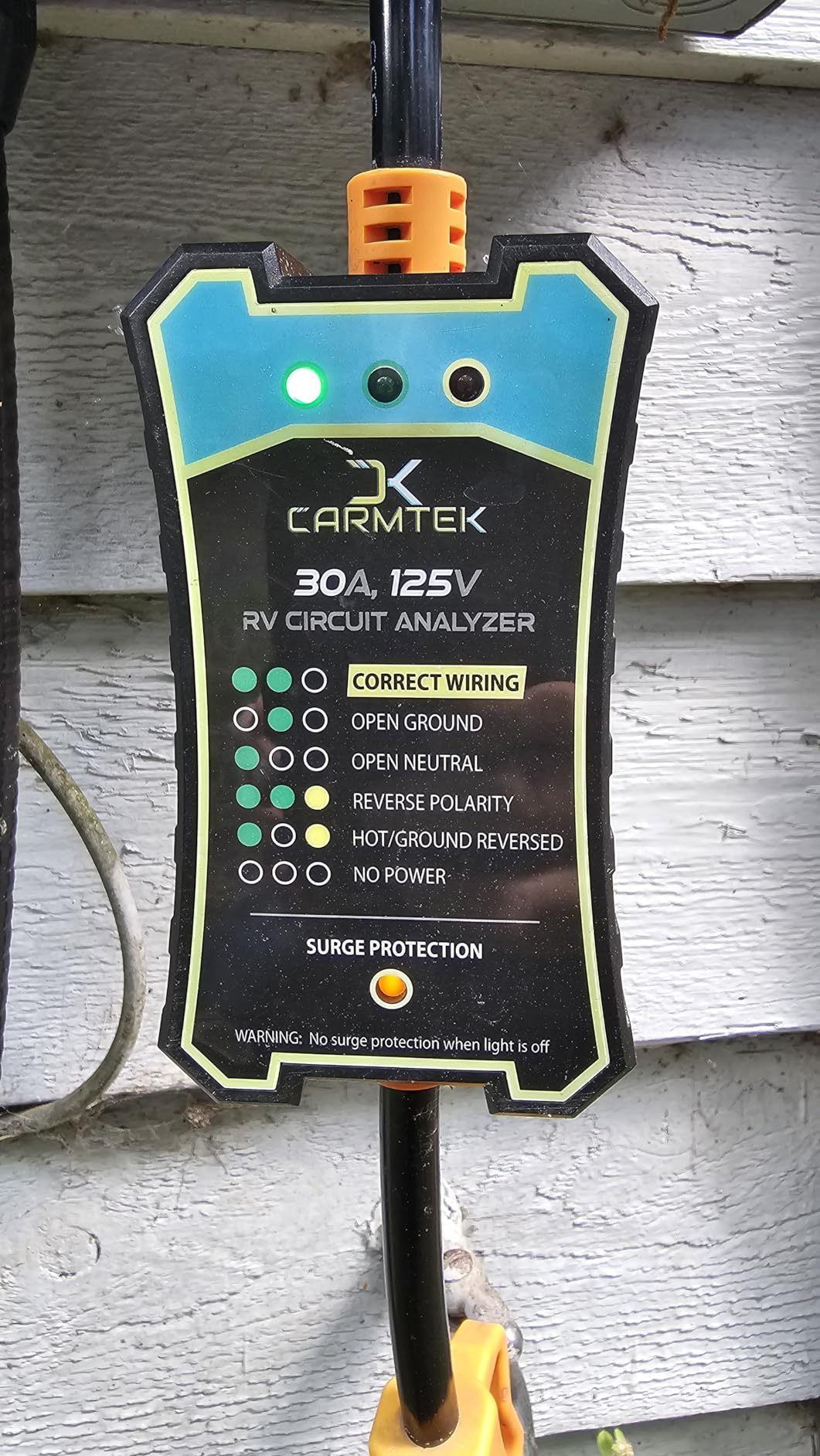
It uses a NEMA TT-30P male plug into a TT-30R female receptacle, carries 2,100 joules of surge protection for 30 amp service, and comes with a lifetime warranty. Grip handles and a right-angle connector make repeated plugging and unplugging easier.
Buyers treat it as a dependable, well-made 30 amp unit with true UL-specified construction. The main complaint in reviews is not the product itself but a listing dimension of 0.39 inches that is clearly wrong for something with this form factor.
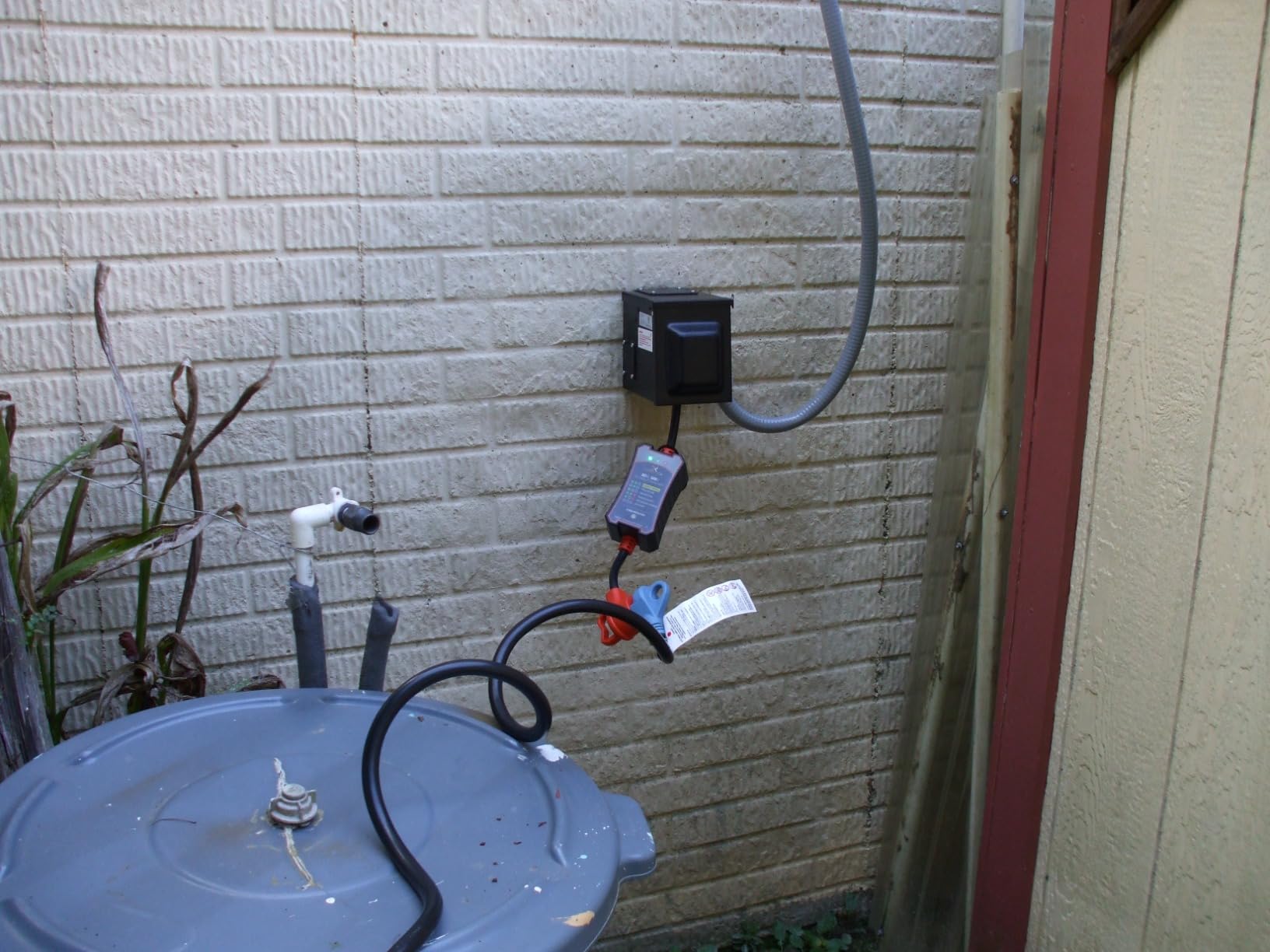
When this is the right call
Cold-weather and extreme-heat camping is where the temperature rating earns its place. A unit rated to -35 degrees keeps working in a mountain campground in February, which is not true of every device on this page.
It is also a good choice if UL-specified construction is a stated requirement in your household, backed by a lifetime warranty.
When it is the wrong call
It is passive. It names the fault and waits for you, which means it is not the right protection for a rig sitting unattended through a storm.
And the published dimensions are wrong, so check the listing photos and measurements before you order, particularly if storage space in your rig is tight.
9. CRTBETLIF 30A 13000J – Most Diagnostic Modes on 30 Amp
CRTBETLIF RV Surge Protector 30 amp, 13000J Surge Protection
- 13000 joules of protection at a low entry tier
- Eight-mode diagnostic chart gives more fault categories than most rivals
- Weatherproof cover protects the connection in rain and storms
- One owner used it to replace a failed smart EMS
- Lowest average rating in this roundup at 4.6 stars
- No app
- wireless monitoring or automatic disconnect
- No positive confirmation that a surge was blocked
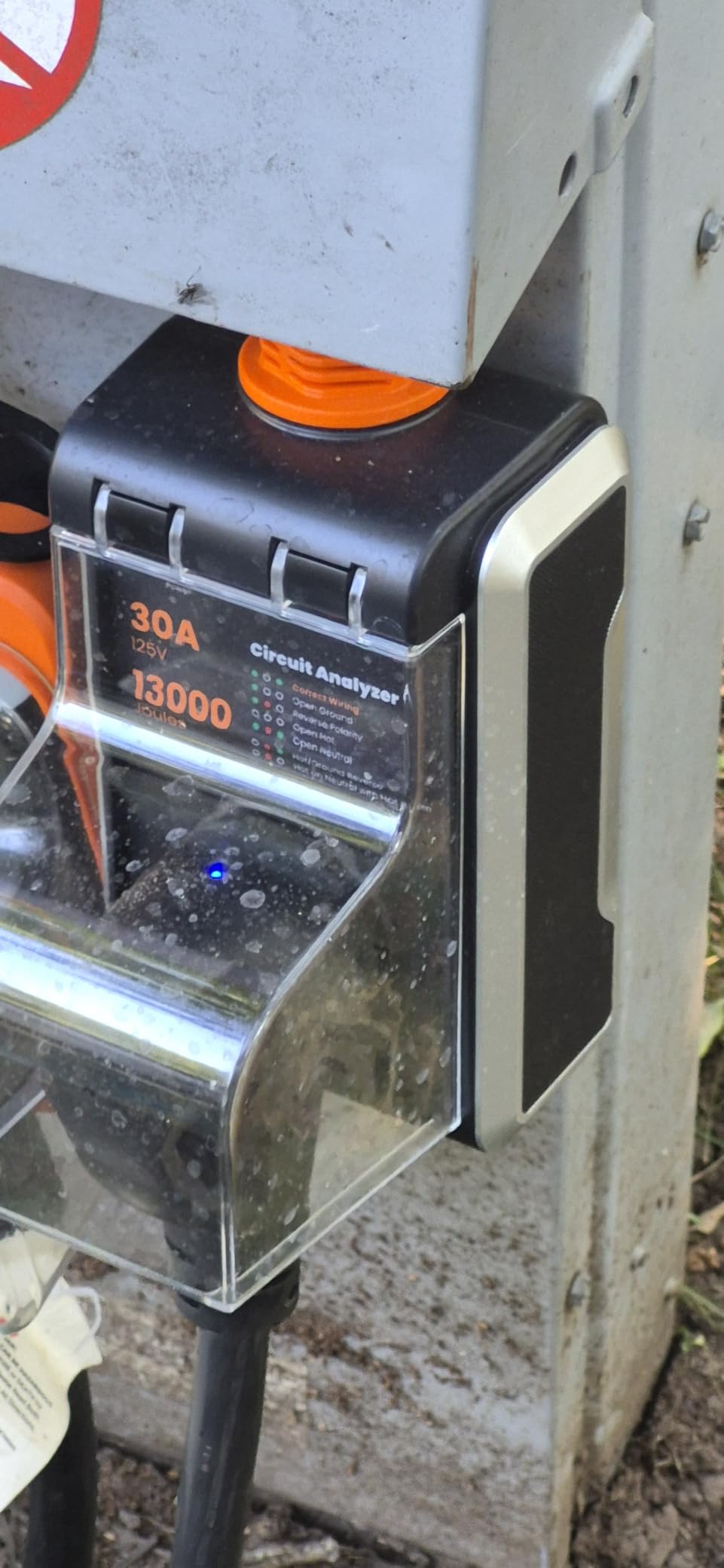
The differentiator here is the diagnostic chart. Eight modes covers correct wiring, open ground, open hot, reverse polarity, open reverse, hot and ground reversed, hot on neutral with hot open, and power present, which is a more granular picture than most 30 amp devices in this roundup provide.
Surge capacity is 13,000 joules on a 30 amp circuit, with a weatherproof housing and protective cover, an ergonomic grip handle and a right-angle plug. One owner used it to replace a failed smart EMS and reported it blocking a surge the same evening it went in.
It is orange, lists a 4-year support term, and weighs little enough that it does not register as a burden when you are carrying it across a site. Reviewers see it as a capable budget replacement for far costlier devices.
There is an honest limitation several owners raise, and it applies to this whole passive category: you never get positive confirmation that a surge was actually stopped. A sacrificial device that did its job looks identical to one that was never tested.
When this is the right call
You want to know precisely what is wrong with a pedestal before you plug in, and you are willing to trade app monitoring for a detailed light chart. Eight modes can distinguish a fault that another device would lump together.
For a 30 amp owner on a tight budget, this delivers more surge capacity and more diagnostic detail than the entry-tier norm.
When it is the wrong call
It carries the lowest average rating of anything we ranked, at 4.6 stars, which is still a good score but the widest gap to the top of this list. If rating consistency matters to you, the higher-rated 30 amp options are the safer bet.
There is no automatic disconnect, so an unattended rig is still connected to a fault until you return to read the lights.
10. GEARGO 50A 32000J – Highest Surge Capacity With an App
- Highest surge capacity in this roundup at 32000 joules
- Bluetooth app with live voltage
- current draw and wiring status
- Manual reset means power never resumes unattended
- Large LED display is easy to read at the pedestal
- IP68 waterproof and dustproof housing with a reinforced seal
- Lowest average rating here at 4.4 stars with 11 percent one-star reviews
- App connectivity adds a learning curve
- Costs more than simpler 50A analyzers
This is the most capable spec sheet in the roundup: 32,000 joules using high-capacity TVS technology, a Bluetooth app with a live dashboard for voltage, current draw and wiring integrity, an IP68 waterproof and dustproof housing, and a five year warranty. The only device here that combines a large surge budget with app monitoring on 50 amp service.
The safety design is deliberate. Precision voltage sensing drives an automatic cutoff relay when voltage leaves the safe range, and after a fault the unit requires a manual reset, so power never resumes on its own while you are away.
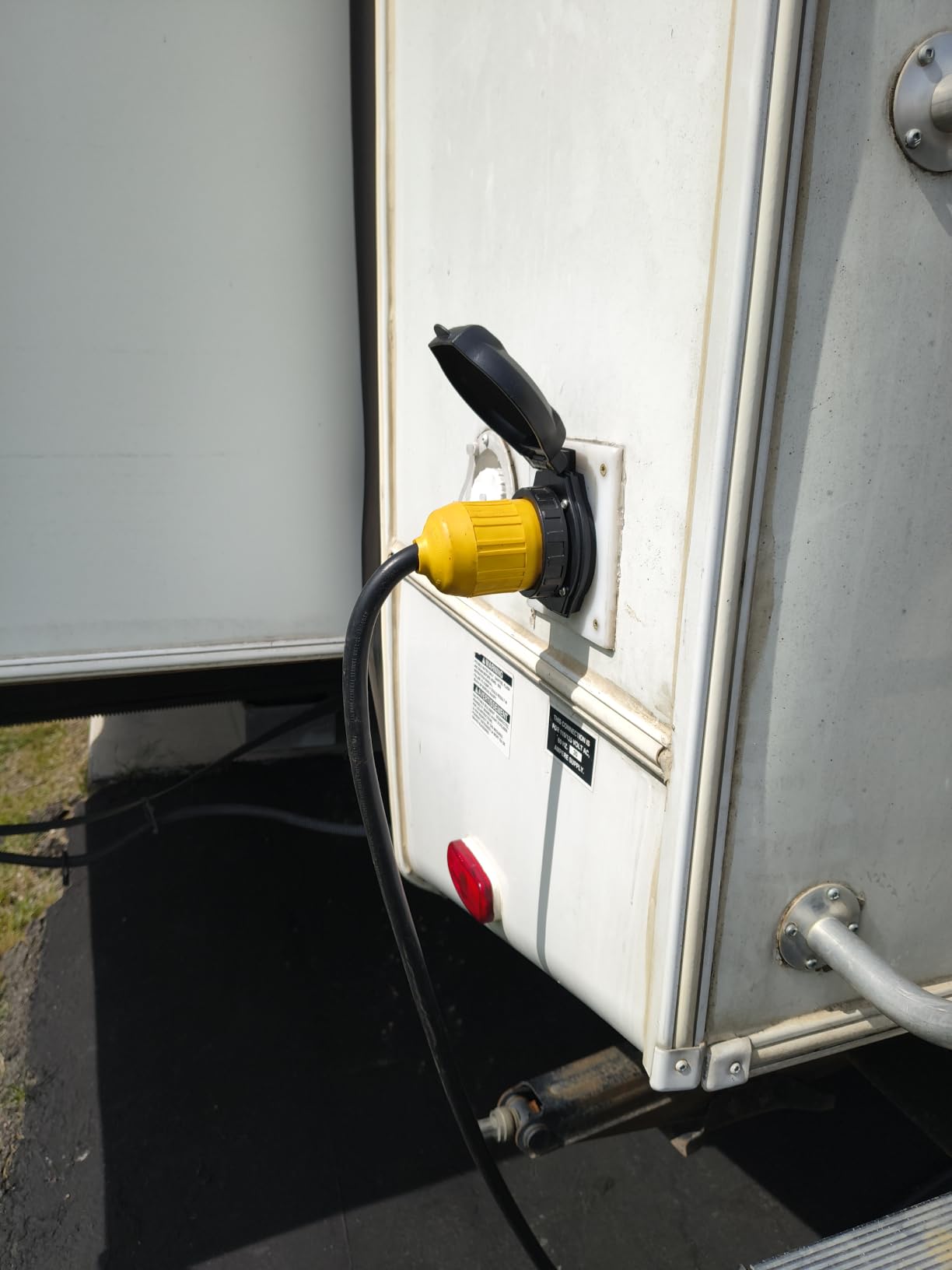
It also performs a pre-connection circuit analyzer for reverse polarity, open ground and open neutral, and the large LED display is readable standing at the pedestal. Dimensions are roughly 9.8 by 7 by 6 inches.
The rating spread here is the widest on the page: 78 percent five-star against 11 percent one-star. Buyers who like the dashboard and the manual-reset safety net tend to love it, while a meaningful group reports app pairing and real-world performance falling short of the spec sheet.

When this is the right call
You are on 50 amp service, you want phone monitoring, and you want the manual-reset behaviour specifically. The idea that an unattended RV cannot silently resume power after a fault is a real advantage over auto-reconnect designs.
The surge headroom also makes it a natural companion for lightning-prone campgrounds, where you want the largest absorption budget the category offers.
When it is the wrong call
It has the lowest average rating we ranked and a meaningful one-star contingent, which usually points at app pairing rather than the protection itself. Buy it wanting the app, not despite the app.
It also costs more than the simpler 50 amp analyzers, and the learning curve on the app is the part of the package you should expect to spend time on.
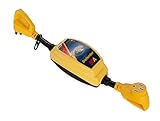
11. Camco Power Grip 55306 50A – Auto Disconnect and Reconnect
Camco Power Grip RV 50-Amp Voltage & Surge Protector – Features Integrated Surge Protection of Up to 4,200 Joules & Diagnostic LEDs Indicate Wiring Faults (55306)
- The only unit here that disconnects and reconnects automatically on bad voltage
- 4200 joules of surge protection on 50A service
- Diagnostic LEDs name reverse polarity
- open neutral and other faults
- Weatherproof when installed upright
- Spare parts availability stated at five years
- Heaviest unit in the roundup at 6.8 pounds
- Only a one year limited warranty
- No app or Bluetooth monitoring
- Highest tier among the non-smart models
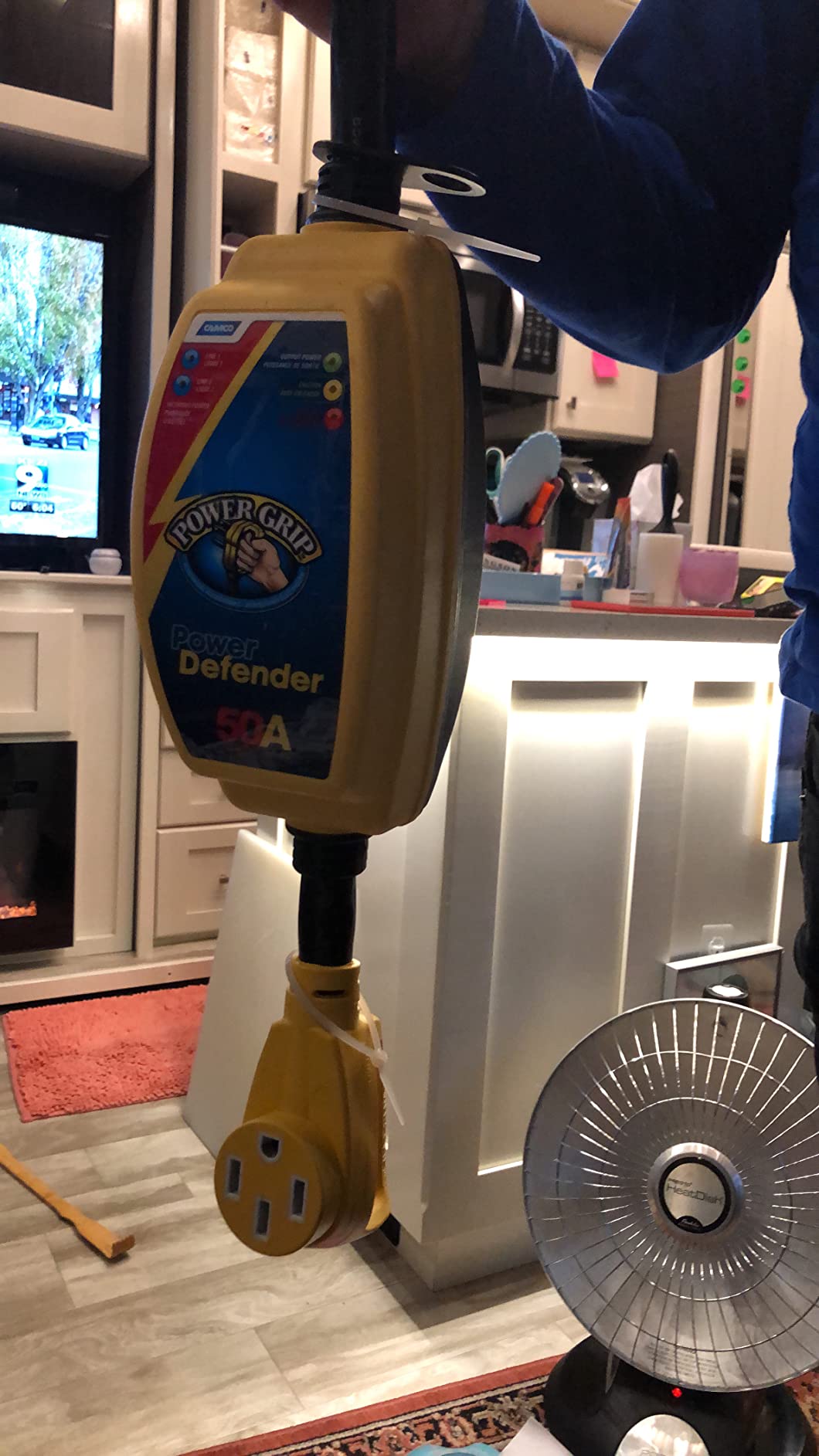
This is the architecture question in its purest form. The Camco disconnects when voltage goes above 132 volts or below 102 volts, then reconnects automatically once conditions return to normal. You get set-and-forget behaviour on a 50 amp circuit without an app, a phone, or a learning curve.
Diagnostic LEDs indicate reverse polarity, open neutral and other wiring faults at the pedestal, and the design is weatherproof when installed in the upright position. Contoured Power Grip handles make plugging and unplugging easier on a heavier 50 amp connection.
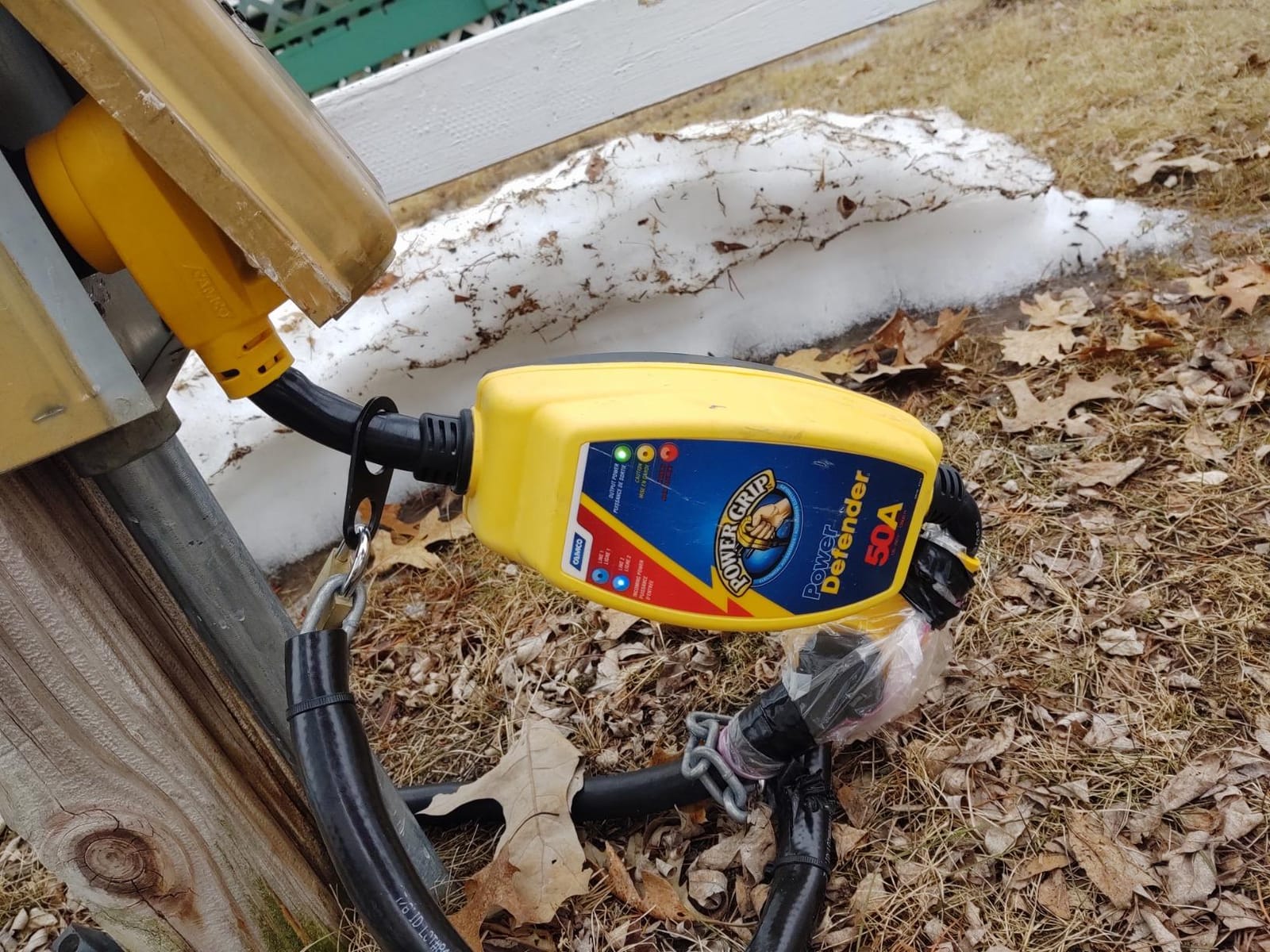
It uses a NEMA 14-50P male plug with a 14-50R female receptacle and integrates up to 4,200 joules of surge protection. Spare parts are stated as available for five years, which is unusual information to find on a device in this category.
Owners who want set-and-forget behaviour like this rate it on exactly that. Buyers weighing it against cheaper analyzers focus on the auto reconnect, the 6.8 pound weight, and the short one year warranty.
When this is the right call
You want an unattended protection layer on 50 amp service without committing to a phone app. Cutting power on out-of-range voltage and resuming when it settles is the core function, and it does that with no configuration.
The stated spare-parts availability also matters for an owner who plans to keep a rig for a decade or more.
When it is the wrong call
At 6.8 pounds it is the heaviest device here, and that is felt every time you carry it across a site. If you move often or have a long walk from the truck, that is a real ergonomic cost.
The one year limited warranty is the shortest on this list, and there is no way to check what the park is delivering from your phone. An auto-reconnect design also means power can resume by itself once the fault clears, which some owners would rather not have.
12. Vehiker 50A 18000J – Newest Listing, Brightest Lights
- 18000 joules well below most 50A devices
- Bright indicator lights readable in direct sunlight
- Tin-plated copper male plug resists corrosion
- Waterproof cover for rain and moisture
- 36 month warranty
- Smallest review base here at 202 reviews
- Passive analyzer with no app or automatic cut-off
- No monitoring of delivered voltage
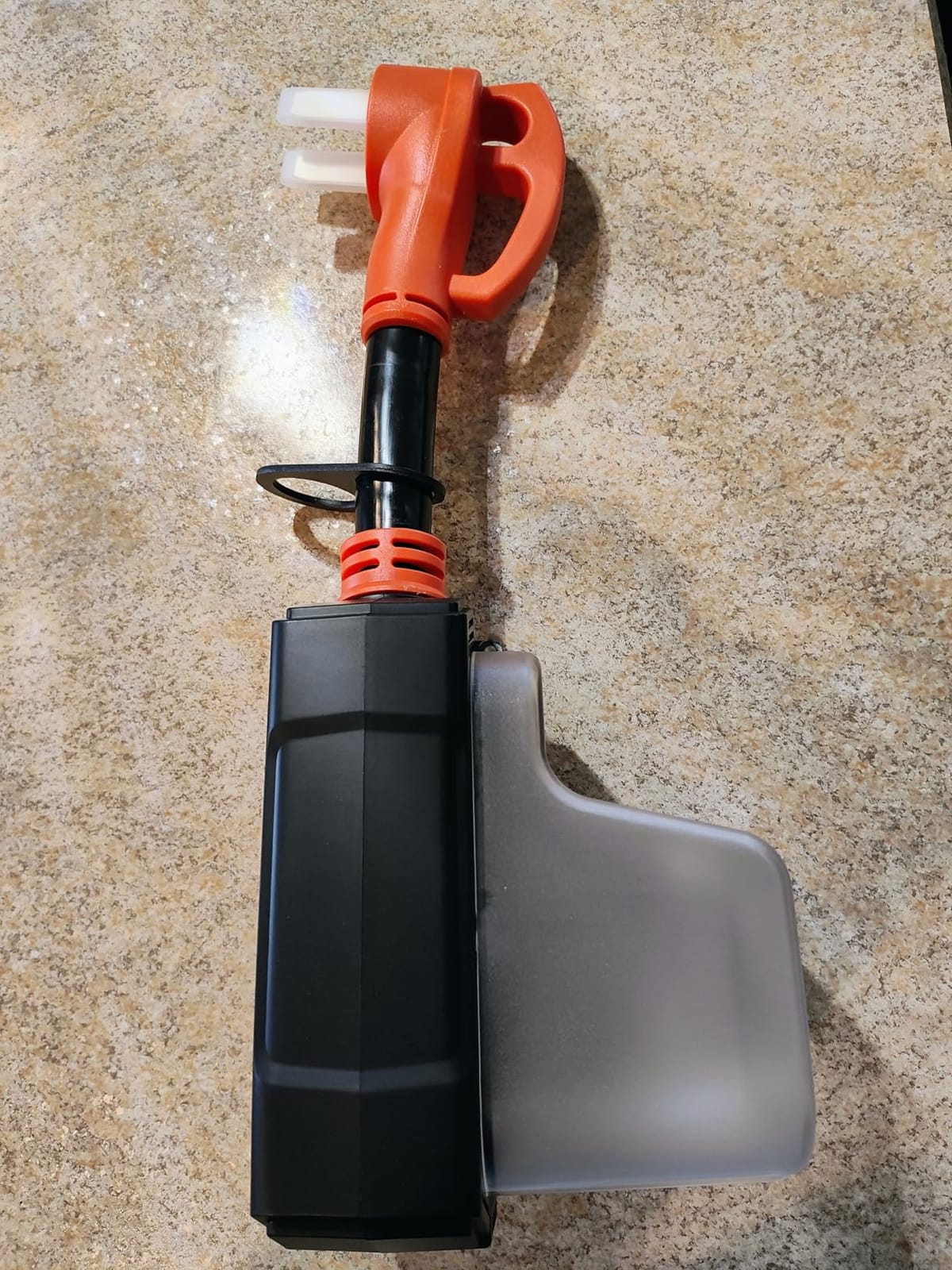
The distinguishing detail on this one is the tin-plated copper male plug. Corrosion resistance at the plug is exactly what fails first in coastal and wet campgrounds, so plating the contact metal is a smarter choice than plating the housing.
Surge capacity is 18,000 joules on 50 amp service, with a circuit analyzer that checks pedestal wiring before you connect and bright indicator lights designed to be readable in direct sunlight. The waterproof cover handles rain and moisture, and the warranty runs 36 months.
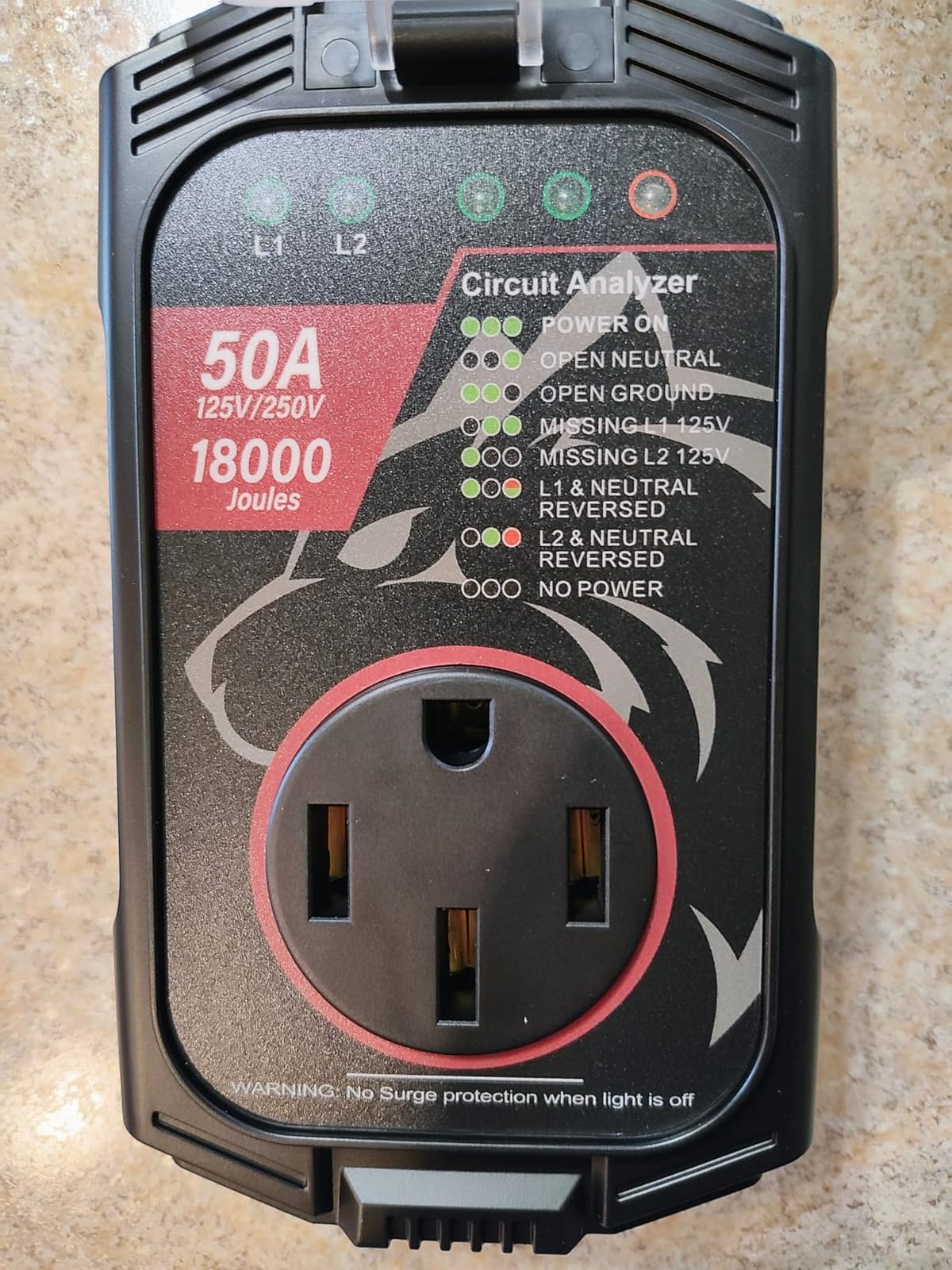
Buyers who previously owned the 30 amp version report genuine 50 amp capacity that satisfied them, with clean and well-made build quality. The bright lights are the specific detail reviewers keep mentioning, which matters when you are checking a box at noon.
It is a newer listing with a smaller review pool, at 202 reviews, so the long-term durability record here is thinner than the established names. Feedback to date is consistently positive.
When this is the right call
Coastal, lakeside and rainy campgrounds, where corrosion at the plug is the thing that ends the device’s life. The tin plating plus a waterproof cover is a coherent design for that environment.
It is also a good choice for anyone who camps in daylight a lot and wants a status readout that works in direct sun.
When it is the wrong call
With 202 reviews it has the thinnest evidence base in this roundup, and surge protectors are sacrificial devices you buy once and rely on for years. We would want a longer record before recommending it as a primary unit.
It is passive as well, so it protects nothing while the rig is unattended, and it shows no numeric voltage reading.
How to Choose: The Buying Guide
Match your service first, everything else second. A 30 amp rig uses a NEMA TT-30P plug and needs a 30 amp device. A 50 amp rig uses a 14-50 plug and needs a 50 amp device. The connector physically prevents a mismatch, which is a safety feature. Adapters exist and owners use them, but a 30 amp device on a 50 amp pedestal leaves the 240 volt leg unprotected, which is the exact scenario a lot of forum warnings are about.
Decide how much protection architecture you want. A circuit analyzer gives you LEDs and a judgment call. An EMS opens the connection itself and, on most models, closes it again once the fault clears. If your rig sits unattended for days, architecture beats capacity.
Treat the joule number as the last consideration, not the first. The honest floor is 2,000 joules for 30 amp service and 3,000 for 50 amp. Everything above that is headroom against repeated events, which is nice, not essential. Spikes are rare at a campground. Wiring and voltage faults are common, and no amount of joules addresses those.
Portable versus hardwired. A portable device works with any rig, travels between vehicles and can be moved to a different pedestal when a site is compromised. A hardwired install costs more, takes an electrician, and permanently occupies the connection. Portable wins for the large majority of owners, and the theft exposure is manageable with a cable lock through the security ring or lock loop that most of these units include.
Decide whether the app matters to you. Two units here offer genuine Bluetooth monitoring: the Power Watchdog PWD30EPO on 30 amp and the GEARGO 50A 32000J. The convenience is real, since you can test a pedestal without walking out into the weather, and it is worth paying for if you camp in bad conditions. If you camp on mild weekends, the money is better spent on surge capacity.
Think about the environment. Coastal and salt-air sites reward IP68 housings, tin-plated plugs and sealed covers, and demand more contact cleaning. Winter campers should look for a low temperature rating, since a device specified to zero is not the same as one specified to -35 degrees. Desert heat puts a premium on thicker receptacle brass, which is exactly the fix a manufacturer makes when a plug runs hot.
Factor in warranty terms as a proxy for expected life. Lifetime warranties on the Progressive SSP-30XL, the CARMTEK and the Southwire 44280 reflect confidence in the housing and internals. A one year warranty on the Camco or the Southwire 44270 tells you the manufacturer expects a different duty cycle. Surge protectors are sacrificial by design, so read the terms to see what happens when the internal module is spent.
Finally, maintain it. Copper contacts corrode, especially where salt spray reaches the pedestal. Clean the plug and the receptacle with a contact cleaner, treat the plug pins with dielectric grease, and keep the cover fitted. Check the surge counter or fault log periodically so you know whether the device has done anything recently.
Frequently Asked Questions
Who makes the best RV surge protectors?
Two brands come up consistently in long-term owner discussion: Progressive Industries, whose SSP-30XL carries fault detection, an all-weather shield and a lifetime warranty, and Hughes Autoformers Power Watchdog, whose PWD30EPO adds Bluetooth app monitoring with a replaceable surge module. For budget 30 amp and 50 amp hookups, Southwire Surge Guard models, GEARGO and CARMTEK cover the same wiring checks without app connectivity.
How many joules should a surge protector have for an RV?
A sensible floor is 2,000 joules for 30 amp service and 3,000 joules for 50 amp. Higher ratings add headroom for repeated events, which is useful but secondary. Joules only cover voltage spikes. The faults that actually damage converters and compressors are low voltage, open ground, open neutral and reverse polarity, and no joule rating protects against those. Judge the wiring and voltage detection as heavily as the number.
What is the difference between an RV EMS system and a surge protector?
A surge protector clamps short voltage spikes and diverts them to ground. An electrical management system does that and also monitors voltage continuously, checks the ground, neutral and hot wiring, then disconnects your RV and waits before reconnecting. A surge protector handles spikes. An EMS handles spikes plus the four wiring and voltage faults responsible for most campground damage.
Do you really need a surge protector on an RV?
Yes, if you plug into a campground pedestal, which is most RV owners. Pedestals are unregulated and frequently deliver low voltage, open grounds or reversed connections. A compressor working against a brownout, or a chassis energized by a reversed plug, causes failures that cost far more than a protector. If you only buy one device, buy the kind that monitors voltage and wiring faults rather than a basic surge strip.
Why does my RV surge protector say open ground?
The ground conductor is missing, either at the pedestal, at the receptacle or in your cord. It is not immediately lethal, but treat the RV as energized: do not touch the exterior skin, unplug, report it to the park office and try another pedestal or site. Open ground also undermines the grounding that downstream fault protection depends on, so treat it seriously even if nothing sparks.
Why does my RV surge protector say reverse polarity?
Hot and neutral are swapped at the pedestal. Do not plug in. A reversed pedestal can energize the RV chassis and defeat ground-fault protection, which is the protection that would otherwise limit a shock. A circuit analyzer or EMS identifies this before you connect. Report it to the park and use a different pedestal or site until the receptacle has been corrected.
Can I use a 30 amp surge protector on a 50 amp pedestal?
Not without an adapter, and the adapter is the weak point. A 30 amp device on a 50 amp pedestal does not protect the 240 volt leg, and a dogbone connection is a common source of heat at the plug. If you own a 30 amp trailer, buy the correct 30 amp device and ask the park for a 30 amp pedestal. If you need 50 amp service regularly, a 50 amp unit protects both legs properly.
Final Verdict
If you take one thing from this roundup, take the architecture point. A large joule number on a device that cannot detect an open neutral has not bought you much, because open neutral and low voltage are what actually damage RVs at campgrounds. Check that the device names the fault, and if your rig sits unattended, check that it opens the connection itself.
For most 30 amp owners the Progressive Industries SSP-30XL is the pick we would buy. It detects every condition that matters, carries the largest verified owner rating base we found at 4.7 stars across more than 5,600 reviews, and is warranted for life. If you want phone monitoring on 30 amp service, the Power Watchdog PWD30EPO is the alternative, with a replaceable surge module and IP65 housing. On 50 amp, the Southwire Surge Guard 44270 covers fault detection and 4,200 joules at the value end, and the Camco Power Grip 55306 is the one that disconnects and reconnects on its own.
Whatever you choose, make the habit before you make the purchase. Test the pedestal, read the fault indication, and if it is not correct, move. Updated for 2026, that single habit protects the device you already own for more than any spec sheet on this page.