
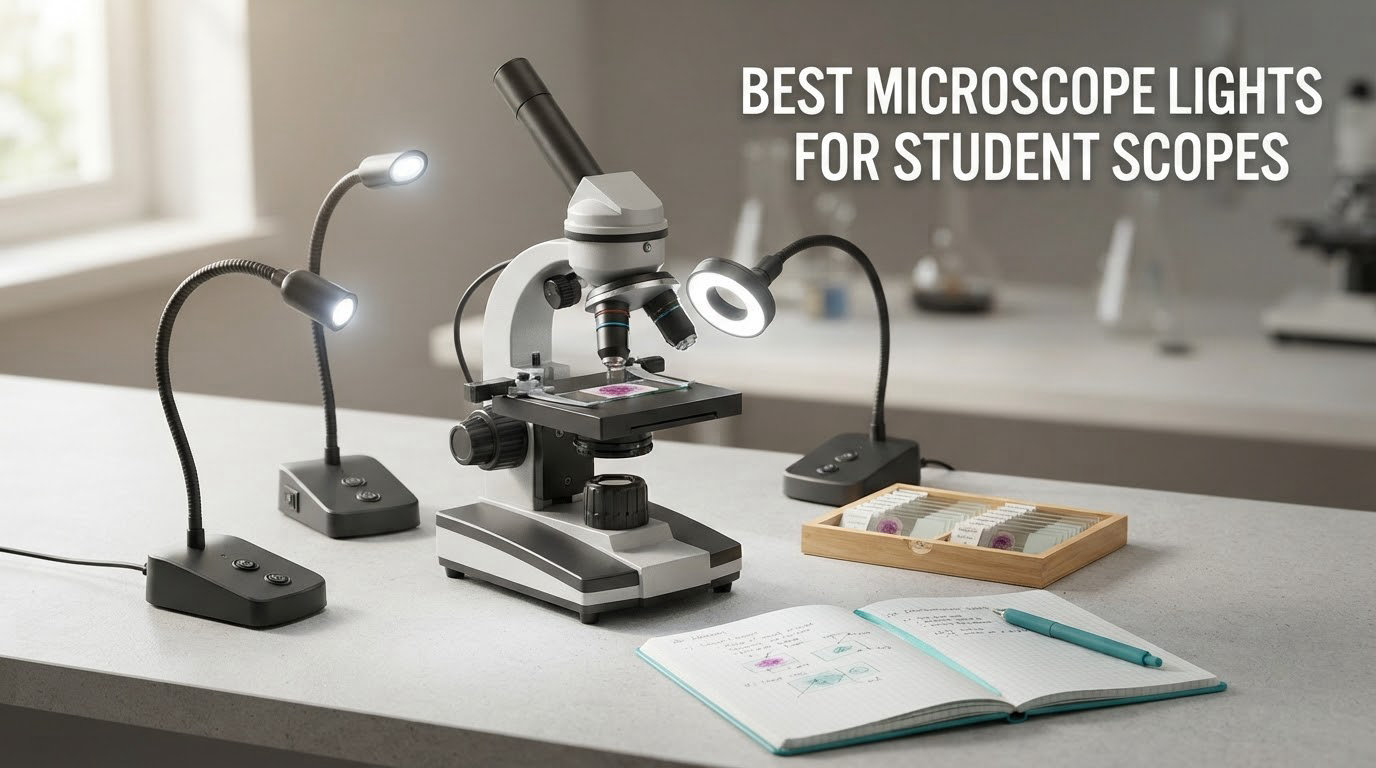
Most student scopes need exactly three things from a light source: dimmable output, a cool white color around 5000-6000K, and a color rendering index above 90 so stains and plant pigments look the way they do in the textbook. The best microscope lights for student scopes in 2026 that hit all three are LED ring lights with a 0-100% dimmer and an adapter ring in the box, and the AmScope LED-144W-ZK is the one we keep on the bench.
Here is the honest version: a lot of student microscopes shipped in the last several years already have a perfectly serviceable LED built into the base. If yours produces a clean white image at 10x and 40x, you do not need an external illuminator at all. An external light is the fix for a specific weakness, not a default upgrade.
So we compared ten LED ring lights and gooseneck illuminators on the things that actually decide whether a light is usable in a teaching lab: published brightness figures, the Kelvin rating, whether the dimmer is continuous or just a two-position switch, what the mount actually fits, and whether the electronics fight back with glare, heat or color shift. Every pick below has verified owner feedback behind it, not just a spec sheet.
We also skipped the “60000 lumen” claims that dominate marketplace listings. Those numbers are not measured at the specimen plane and are not comparable between brands, so we weight published color temperature, CRI and the presence of a real dimmer far more heavily. Our general approach to judging raw LED quality benchmarks is the same one we use for LED shop lights, where marketing lumen figures routinely have no relationship to useful output.
Table of Contents
Top 3 Microscope Lights for Student Scopes (October 2026)
The three picks below cover the three situations we see most: a stereo scope that needs shadow-free brightness, a bench doing electronics or opaque specimen work, and a budget classroom bench that just needs a working dimmer.


AmScope LED-6W Dual Gooseneck
- Dual 23 inch goosenecks
- 6500K
- metal control box
- wide band PSU

The LED-144W-ZK leads because it combines the highest verified owner rating in this group with the largest review base we could find for a ring light, and it includes the 48mm adapter that fits the majority of stereo scopes. The LED-6W gooseneck earns its place for a different job entirely: opaque specimens and soldering, where light coming from below is useless. The LED-56S-ZK is the pick when the budget is the deciding factor and dimmability is non-negotiable.
Microscope Lights for Student Scopes at a Glance (2026)
Here is every light in the guide with the specifications that decide fit. Note that only one of the ten publishes a numeric CRI figure, and none publishes lux measured at a stated working distance, which is exactly the disclosure gap we account for in the rankings below.
| Product | Specifications | Action |
|---|---|---|
| AmScope LED-144W-ZK 144 LED Ring Light |
|
Check Latest Price |
| AmScope LED-6W Dual Gooseneck Illuminator |
|
Check Latest Price |
| AmScope LED-56S-ZK 56 LED Ring Light |
|
Check Latest Price |
 TreochtFUN 144 LED Ring Light Illuminator TreochtFUN 144 LED Ring Light Illuminator |
|
Check Latest Price |
 DEVMO 60-LED Adjustable Ring Light DEVMO 60-LED Adjustable Ring Light |
|
Check Latest Price |
 HAYEAR HY-144B 144 LED Ring Light HAYEAR HY-144B 144 LED Ring Light |
|
Check Latest Price |
 Walfront LED Microscope Ring Illuminator Walfront LED Microscope Ring Illuminator |
|
Check Latest Price |
 Gringoo 144 LED Ring Light Illuminator Gringoo 144 LED Ring Light Illuminator |
|
Check Latest Price |
 Upwtkim 64 LED USB Ring Light Upwtkim 64 LED USB Ring Light |
|
Check Latest Price |
 Upwtkim USB Dual Gooseneck Light Upwtkim USB Dual Gooseneck Light |
|
Check Latest Price |
Ring Light, Gooseneck or Fiber Optic: Which Light Type Do You Need?
The best light source for a microscope is a dimmable cool white LED, either as a ring around the objective for shadow-free transmitted viewing or as an adjustable gooseneck aimed at the specimen for opaque work. Fiber optic guides deliver the same LED output to the same places with less heat at the specimen, at higher cost. The geometry matters more than the wattage.
A ring light sits around the objective and throws light straight down the optical axis. That geometry produces a shadow-free field, which is why ring lights dominate stereo work, soldering and any transmitted viewing. Almost every ring light in this guide clips or screws above the objective and uses an adapter ring to set the inner diameter.
A dual gooseneck illuminator uses two flexible arms you position by hand. Raking light across an opaque specimen is the only way to see relief on a coin, a mineral, a solder joint or a printed circuit board. The tradeoff is that the arms can be knocked out of position and cast their own shadows if you light from one side only.
Fiber optic illumination pipes light from a remote LED head through flexible strands to a ring or a gooseneck tip. Because the heat source stays away from the specimen, it is the safest choice for live wet mounts, gel slides and anything heat-sensitive. It also costs more and adds cables to route, which is why none of the ten picks here are fiber optic units.
Annular and dichroic illumination are worth knowing about but rarely needed at the student level. They require matched optical components in the condenser and a much larger budget. For a school bench, a dimmable ring plus a cheap gooseneck covers everything a compound or stereo scope can show.
1. AmScope LED-144W-ZK 144 LED Ring Light – The Best All-Round Pick
- Shadow-free even field across the stage
- Variable brightness knob from near off to full output
- 48mm adapter fits most stereo scopes
- Clean 6000K output with no yellow or blue cast
- Auto-switching 110-240V supply
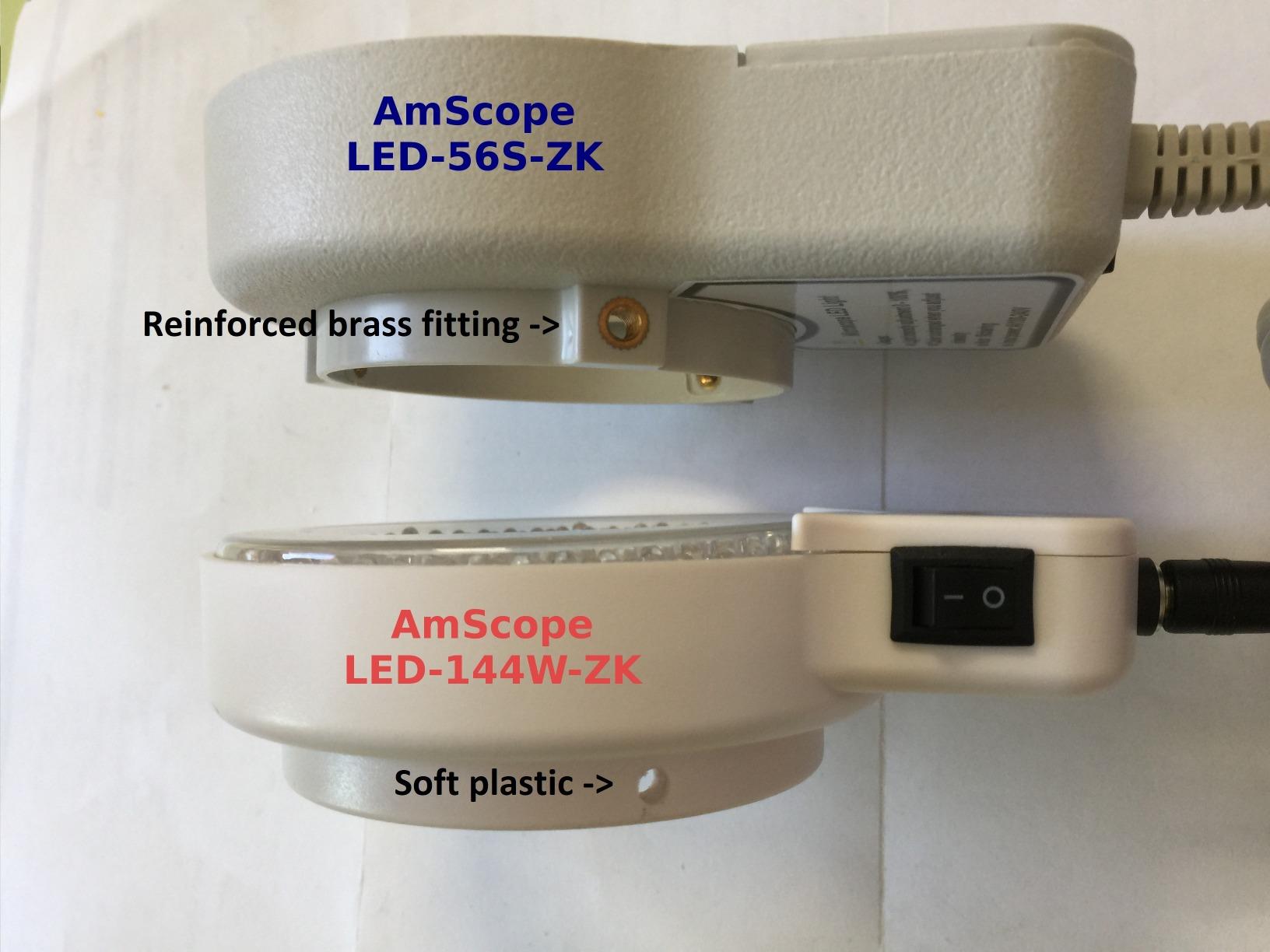
- Soft plastic can strip if the thumb screws are overtightened
- Angled LEDs grey off at long working distances
- Barrel power connector sits awkwardly under a scope head
This is the light we keep reaching for first on a stereo bench. The 144 LEDs sit in a ring with a 2.5 inch inside diameter and 3.64 inch outside diameter, and the included 1-7/8 inch (48mm) adapter ring is the size that fits the majority of stereo microscope bodies. The auto-switching 110-240V supply means it also works unchanged on a bench power supply outside North America.
Owners consistently describe the illumination as intense, focused and even, with no shadow thrown by the specimen. The variable brightness knob is the feature that gets singled out most, because it lets you pull the intensity down until a stained slide is readable instead of washed out. Several reviewers also note that the even output removes banding in camera images taken through the eyepiece.
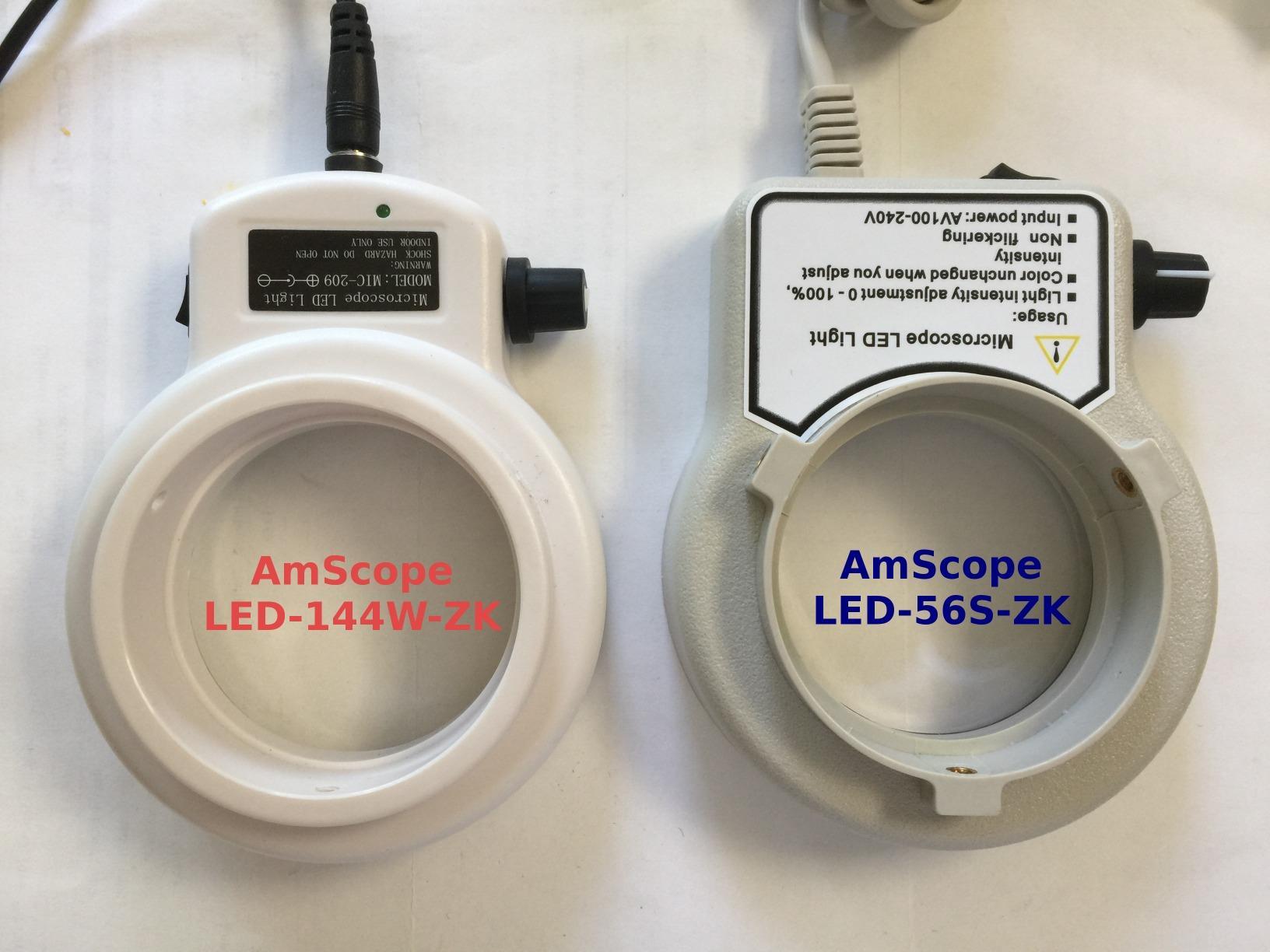
The 6000K rating is the reason this is the editor’s choice. It sits in the middle of the 5000-6000K window that microscopy hobbyists recommend for external lighting, high enough to read as clean white without the blue cast of a 7000K part, and low enough that it will not fight a scope’s built-in lamp if you leave both on. We could not find a published CRI figure, which is a real gap, but the volume of owner feedback describing accurate stain and pigment color is the strongest signal we had to work with.
One reviewer compared it favorably to an 80-LED ring of the same family and found the 144-LED version both brighter and smoother across the field. That comparison matters for anyone stepping up from a cheap ring, because the visible difference is uniformity rather than raw brightness. The unit carries a one year manufacturer warranty, and at 0.27 g listed weight it adds essentially no mass to the head assembly.
Who this light suits
It suits a high school or undergraduate stereo microscope bench where students need consistent white transmitted light on prepared slides and small dissections. It also works for anyone photographing through the eyepiece, since the even ring output is exactly what a camera sensor wants to avoid banding.
If your teaching includes plant biology, the clean 6000K output is a real advantage when chloroplasts and anthocyanins are the point. Our notes on LED grow lights cover the same color rendering issue in a different context, and the reasoning carries over directly: a low quality LED shifts pigment color and destroys the observation.
Where it falls short
The housing is soft plastic, and reviewers report that overtightening the thumb screws can strip the inserts. Treat the screws as finger-tight and it never becomes an issue, but it is the reason the metal parts on the gooseneck unit below feel more durable.
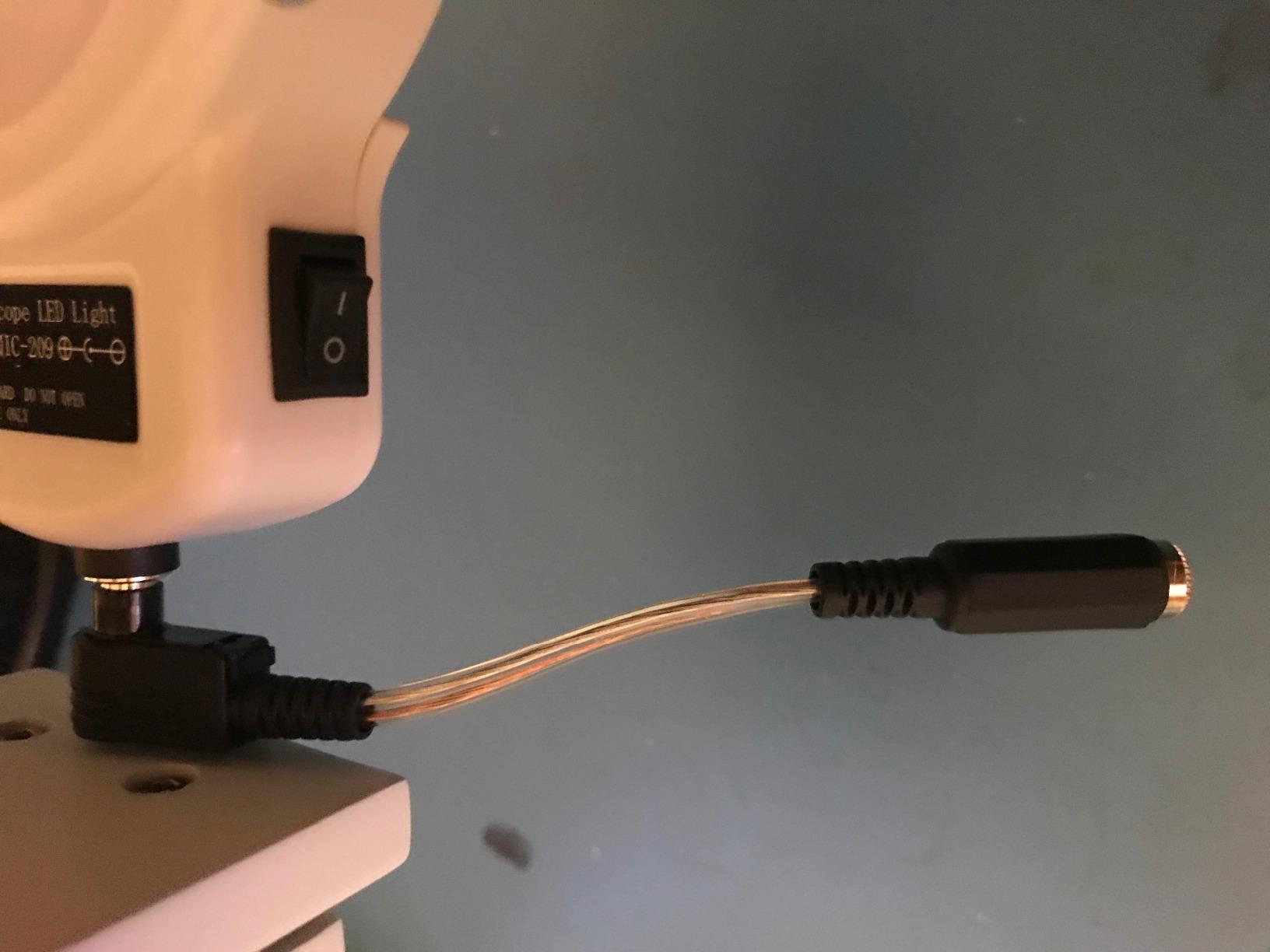
Because the LEDs are angled, users working at long working distances, for example with a 0.5x Barlow lens, report a grey color shift across the field. Stay closer to the specimen and the color is clean. The barrel-style power connector is also the one real ergonomic complaint, since it stops the ring sitting perfectly square under the scope head when the cable exits sideways.
2. AmScope LED-6W Dual Gooseneck Illuminator – Best for Opaque Specimens and Electronics
- Two long goosenecks reach around obstructions and kill shadows from two angles
- Solid metal intensity control box
- Bright enough for dissection and soldering at high magnification
- Much whiter than the tungsten lamps it replaces
- Both goosenecks share one dimmer so they cannot be set independently
- CRI 80 will shift stain color
- No focusing lenses or optional diffusers
This is the light to buy when the transmitted light under your stage is useless, which is the situation most people hit first. A coin, a mineral, a solder joint or a populated circuit board does not transmit light, so everything has to come from the side. Two 23-1/4 inch (590mm) goosenecks give you enough reach to place light from two angles and eliminate the shadow that a single lamp would throw.
The metal framing intensity control box is the part owners praise most after the reach itself. It feels like a piece of lab equipment rather than an accessory, and the 85-265VAC wide band supply covers the voltage differences that trip up imported gear. The published 6W LED rating and 6500K output put it well above the yellow-white of the tungsten lamps it typically replaces.
Here is where honesty matters more than enthusiasm: the published color rendering index is 80, and that is below the 90 threshold that microscopy hobbyists treat as the line for color-critical work. At 6500K the output looks convincingly white, but a Gram stain or an iodine-stained starch slide will not render with the fidelity a biology lab claims to need. If color accuracy is the objective of your course, use this for opaque work and keep a good ring on transmitted samples.
Photography is the other caution. The 6500K output is considerably cooler than most built-in microscope illumination, which makes white balance awkward when you shoot through the eyepiece. Several reviewers also report occasional build quality or dead-on-arrival problems on early production, and note that the arms can be knocked out of position or tip the base when extended asymmetrically.
Who this light suits
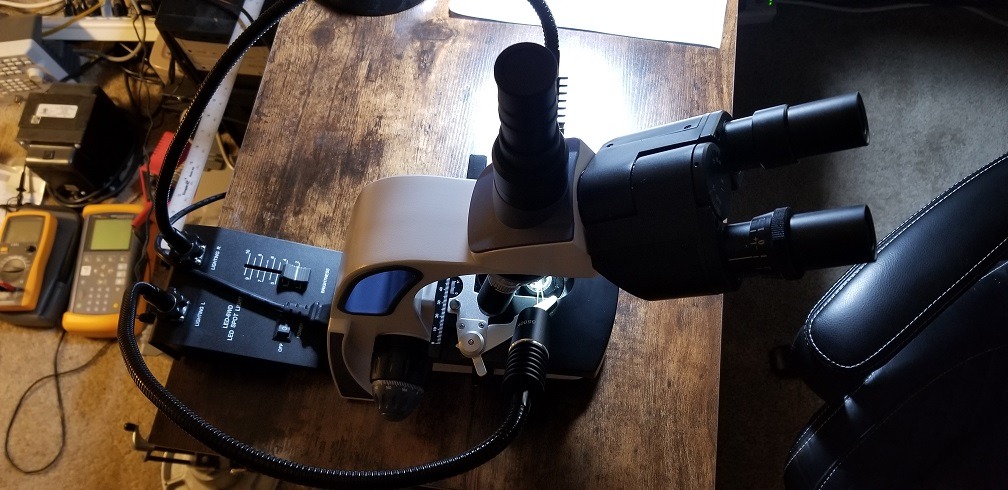
It suits electronics and PCB work, soldering and rework, and any bench doing opaque specimen inspection. Reviewers consistently single it out for use under a boom microscope, where a ring light gets in the way of the head and arms are easier to route around obstructions. It also covers rock, mineral and coin inspection without a second tool.
For field or bench work that needs to run away from a wall outlet, the portability angle here overlaps with our coverage of portable lighting for fieldwork, where the same low-power LED thinking applies. This unit is corded, so plan for bench use rather than genuinely remote use.
Where it falls short
The single biggest limitation is that both goosenecks share one dimmer. Hobbyists point out that independent control of the two lights is what makes raking setups work properly, because a shared dimmer forces one arm to be wrong when you need one light bright and the other low. That is a feature gap, not a defect, but it is the reason we do not rank this unit first for general student use.
CRI 80 is the second limitation, and it is a specification rather than a complaint. Add the lack of focusing lenses or optional diffusers, and this becomes a bright directional work light rather than a color-accurate lab illuminator. At 3.5 pounds it is also noticeably heavier than any ring in this guide.
3. AmScope LED-56S-ZK 56 LED Ring Light – Best Value for a Classroom Bench
- Dimmable output that suits stereo zoom work
- Compact and light enough not to load the head
- Verified 4.6 star average from owners
- Uniform shadow-free illumination across the stage
- Fewer LEDs than the 144-LED rings so the field is less bright
- No published CRI or color temperature figure
- Stereo zoom scopes are the primary fitment
This is the pick for a school or lab buying in quantity, and it wins on one number above all: 149 owners averaging 4.6 stars, with 78% of those ratings at five stars. That is a satisfaction rate you rarely see on accessories, and it is the reason we rate it as the best value option rather than simply the cheapest.
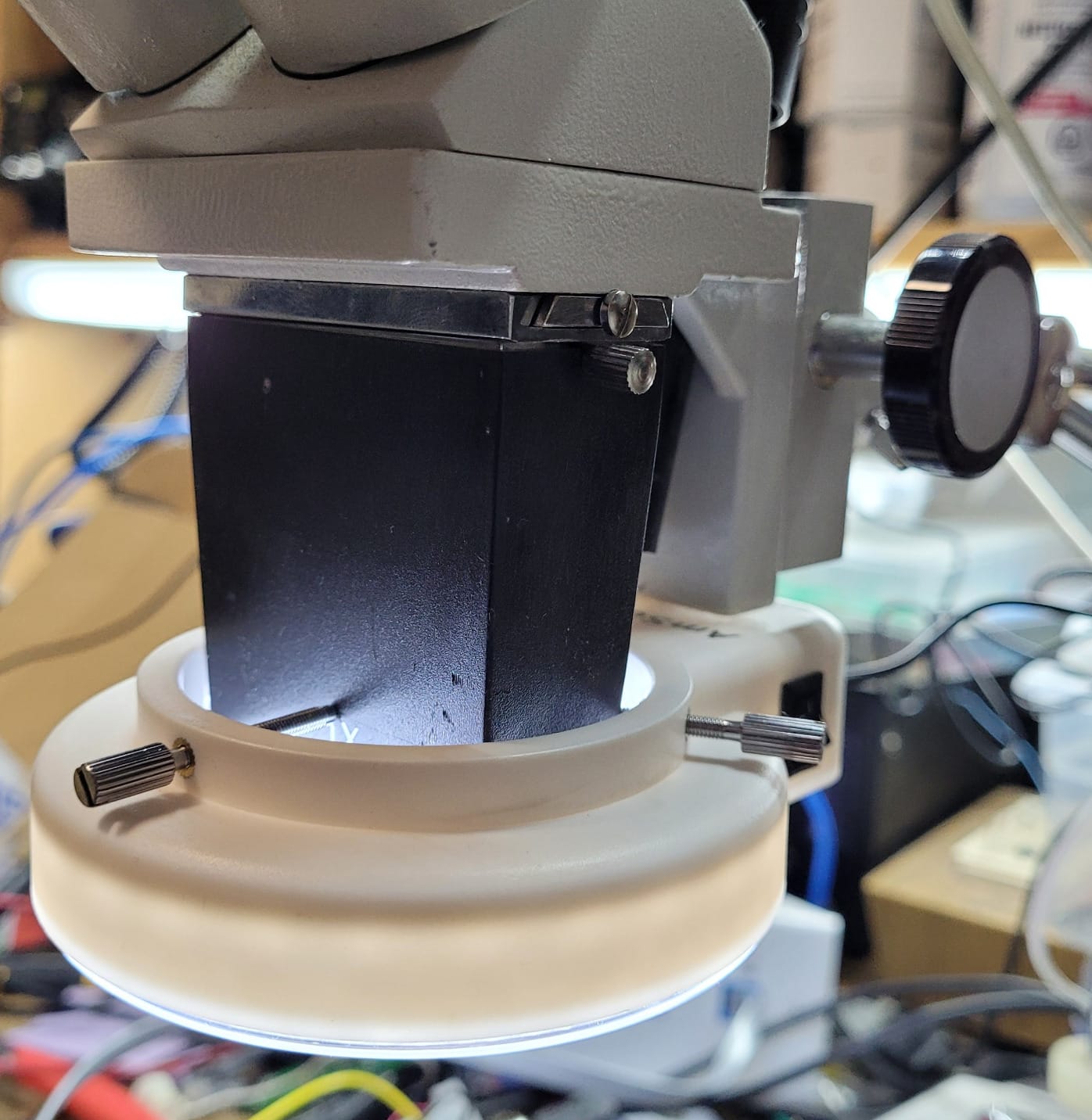
The design is deliberately small at 6 ounces, which matters when you are fitting a ring above the objective of a stereo zoom scope with limited head clearance. The dimmer is included, and that is the feature that separates it from fixed-output budget rings. Uniform shadow-free illumination across the stage is the other consistently reported strength.
What you give up for the compactness is raw output. Fifty-six LEDs is a third of the count in the pick above, and owners who move from a 144-LED ring to this one notice a dimmer field with less headroom for high magnification. If your students work primarily at 10x on prepared slides, that trade is worth making. At 40x on a thick specimen, it is not.
There is also no published color temperature or CRI figure for this model, so we cannot confirm it lands in the 5000-6000K window the way the LED-144W-ZK does. In practice owners describe the output as even and appropriate for standard teaching slides, with no complaints about color shift. The unit is corded electric with a 240V rating, which is a detail worth confirming if your bench supply is 120V.
Who this light suits
It suits a classroom set of stereo zoom scopes, or a single teaching lab that wants a dimmable ring without a large footprint. If you are buying ten of anything, the satisfaction rate and the low weight are the two numbers that decide it.
It is also the sensible choice for a compound scope with a modest-height head where a thicker 144-LED ring simply will not fit. Fitment problems, not brightness, are the most common reason a purchased illuminator ends up unused, so a smaller ring that definitely mounts beats a brighter one that fights the head assembly.
Where it falls short
The main limitation is brightness headroom, since 56 LEDs is simply fewer photons than the 144-LED options at the same nominal brightness. If your teaching involves thick prepared slides, semi-transparent specimens or any work above 40x, plan on dimming down and losing contrast.
The second limitation is documentation. With no color temperature or CRI published, you are trusting owner perception rather than a measurement, and that is a weaker basis for a color-critical lab than we would like. This unit is also listed as corded electric at 240V, so check your bench supply before committing to a set.
4. TreochtFUN 144 LED Ring Light – Best for Published Brightness Figures
TreochtFUN Microscope 144 Led Ring Light Adjustable Illuminator
- Continuously variable dimmer from 0 to 100%
- Flicker-free output from the universal 90V-240V adapter
- Mounting adapters let it fit most stereo and compound scopes
- 20000 hour LED lifespan
- Metal housing adds weight at 10.56 ounces
- Lux figure is a maximum rather than a measured value at a stated distance
- Small review base of 102 ratings
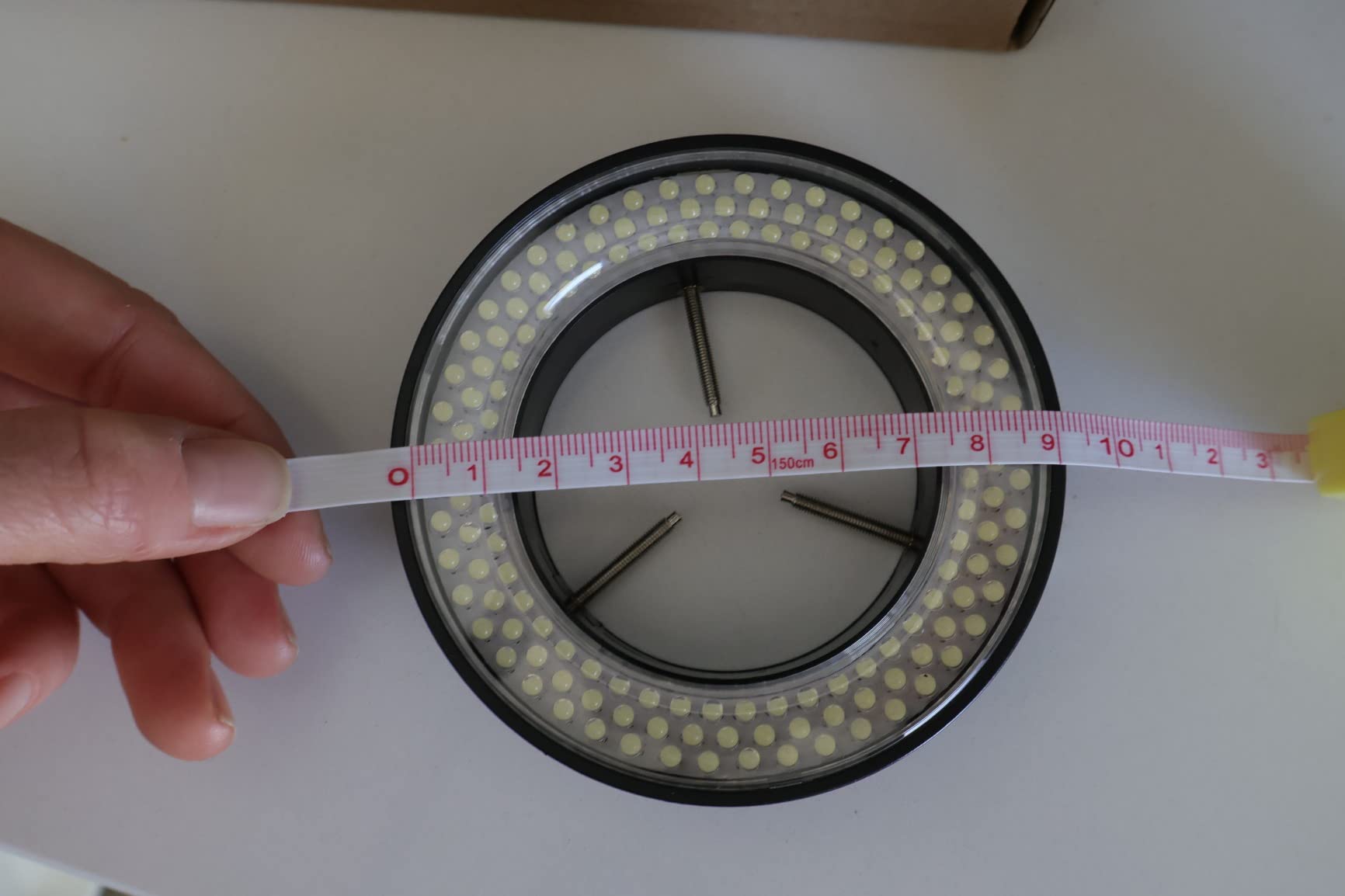
This is the pick that actually publishes its numbers, which is rarer than it should be. The listing states 6000K color temperature, a maximum of 60,000 lux and a 20,000 hour LED lifespan, alongside a 0-100% brightness adjustment across 144 LED beads. That lets you compare it against anything else in this guide on the same basis, instead of guessing from a wattage claim.
At 2.5 inch (62.5mm) inside and 3.64 inch (92.5mm) outside, the geometry matches the editor’s choice almost exactly, and included mounting adapters let it fit most stereo and compound setups. Owners rate the brightness and the shadow-free even lighting highly, and 68% of the 102 reviews are five stars.
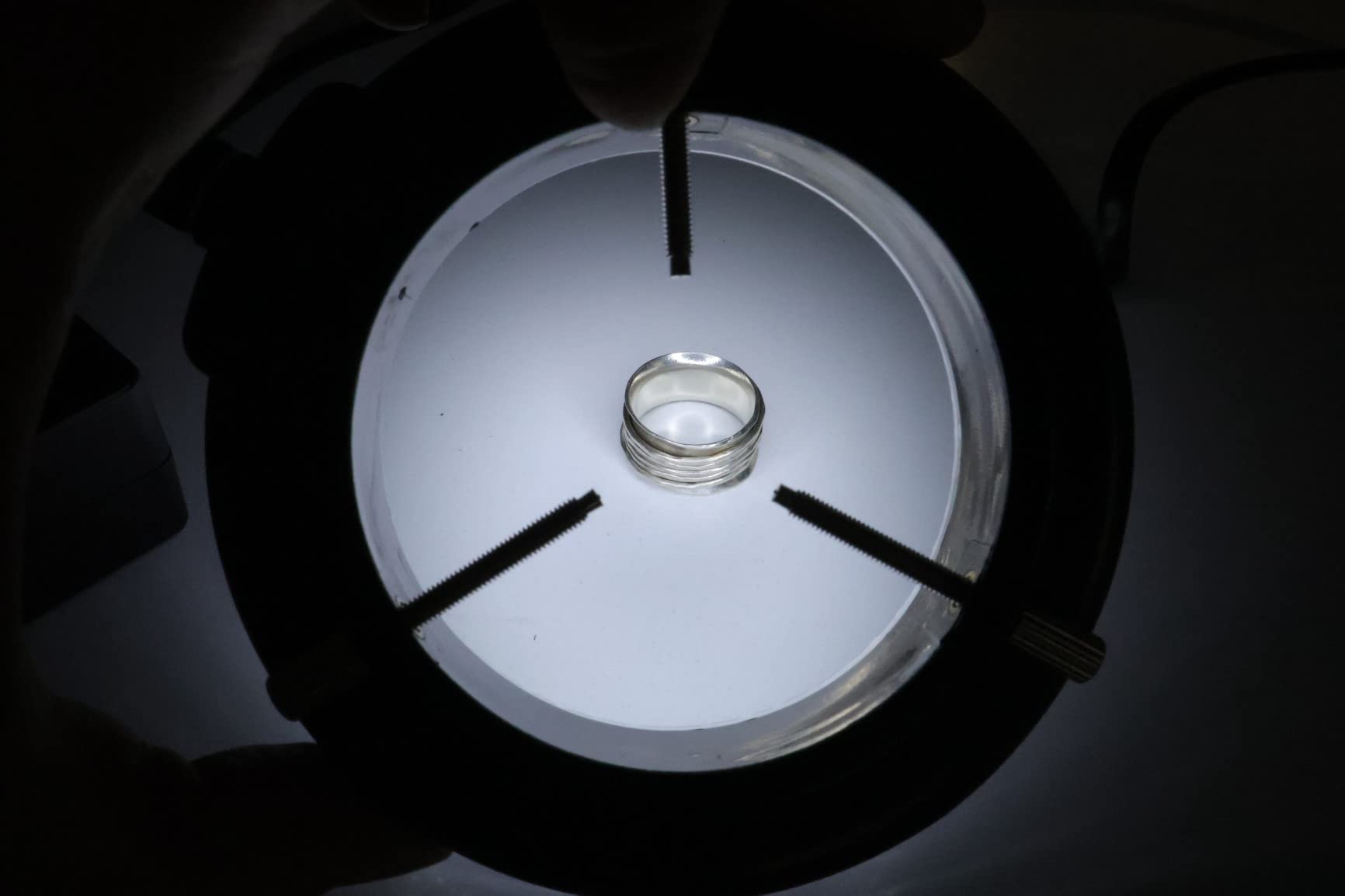
Read the 60,000 lux figure carefully. It is a maximum, not an illuminance measured at a stated working distance under a specimen, so it is not directly comparable to a manufacturer who publishes lux at 100mm. That said, the flicker-free claim on the universal 90V-240V adapter is the detail that matters most in practice, because PWM flicker shows up as a shimmering or shifting image in video and can bias how a student reads a stain color.
For color work, note that the 6000K figure is right where we want it, but no CRI is published. Our general guidance on judging LED color quality is covered in the LED shop light comparison, and the short version is that 6000K tells you the white point but not how accurately the spectrum renders the colors underneath it.
Who this light suits
It suits anyone who wants a stereo or compound bench light with verified documentation behind it, particularly if you are writing a purchase justification for a department. Having a stated color temperature, a stated lifespan and a flicker-free driver on the spec sheet is a real advantage when the equipment has to survive a procurement review.
It also suits students who will also be recording video through the eyepiece. Flicker-free output at 6000K is the combination that stops a camera sensor from banding, and the image quality comparisons owners describe line up with what we would expect from a ring of that density.
Where it falls short
The metal enclosure makes it 10.56 ounces, which is nearly four times the weight of the compact AmScope ring above. On a stereo head with a tight clearance budget that is worth checking before you order a classroom set of them.
The review base of 102 is respectable but small next to the 663-owner ring at the top, and the 4.4 average is a step below that unit. The one number we would not lean on is the 60,000 lux claim, since it is a peak figure with no stated measurement distance.
5. DEVMO 60-LED Adjustable Ring Light – Best for Macro Inspection and Small Workpieces
DEVMO 60-LED Adjustable Ring Light Illuminator Lamp for Stereo Zoom Microscope
- Very fine brightness adjustment from extremely faint to extremely bright
- Screws hold friction well on round-nose microscope bodies
- Useful beyond microscopy on drill presses and hobby mills
- Good construction for the price
- Dome diodes create glare with no diffuser
- Inline resistor dimmer is not linear and the case gets hot
- Small screws with loose brass nuts give noticeable play
The distinguishing feature here is the dimmer range. Owners describe brightness adjustment running from extremely faint to extremely bright, which is exactly what a teaching lab needs when one class is looking at a transparent onion epidermis and the next is at 400x on a stained smear. Many buyers compare it favorably to similarly priced AmScope ring lights on the smoothness of that adjustment.
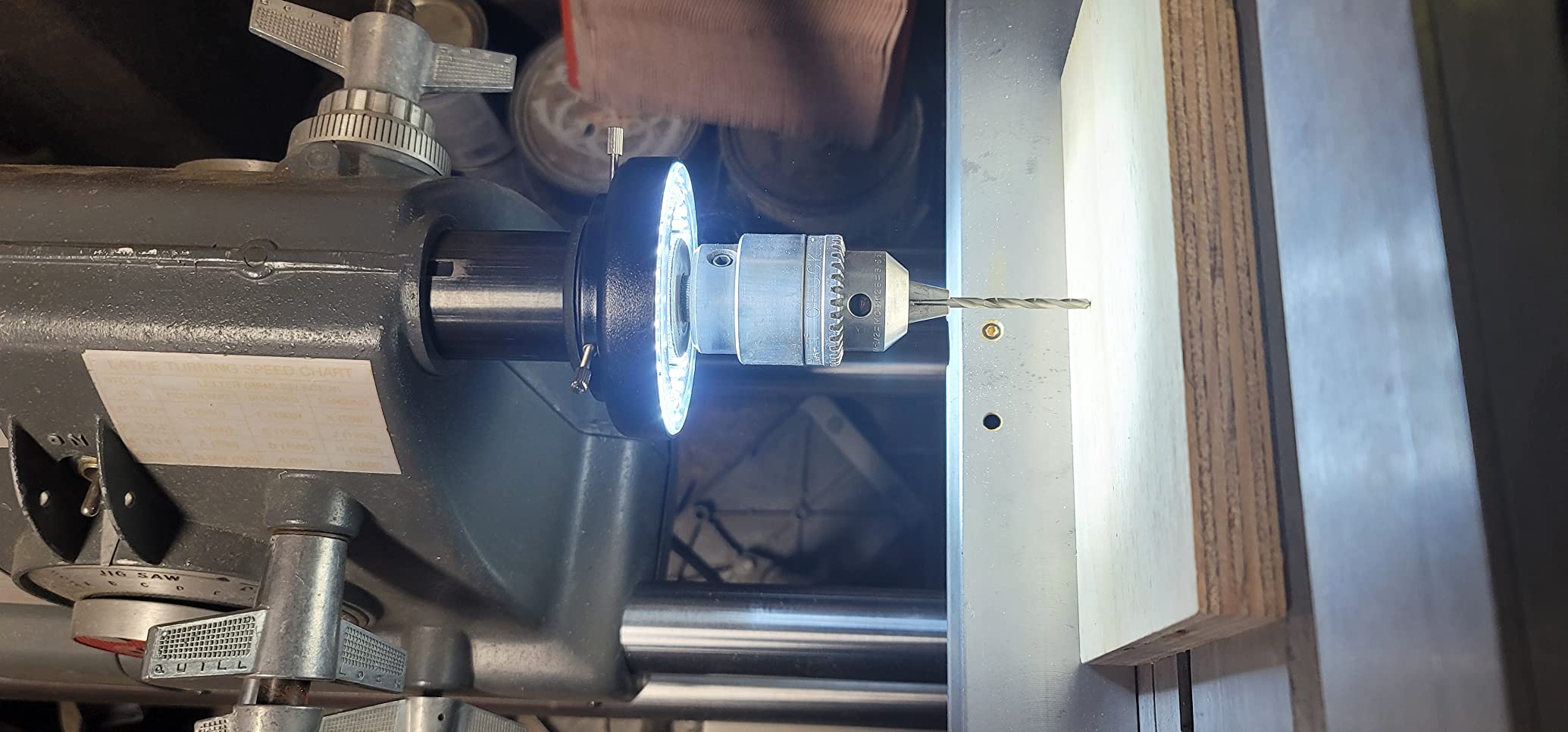
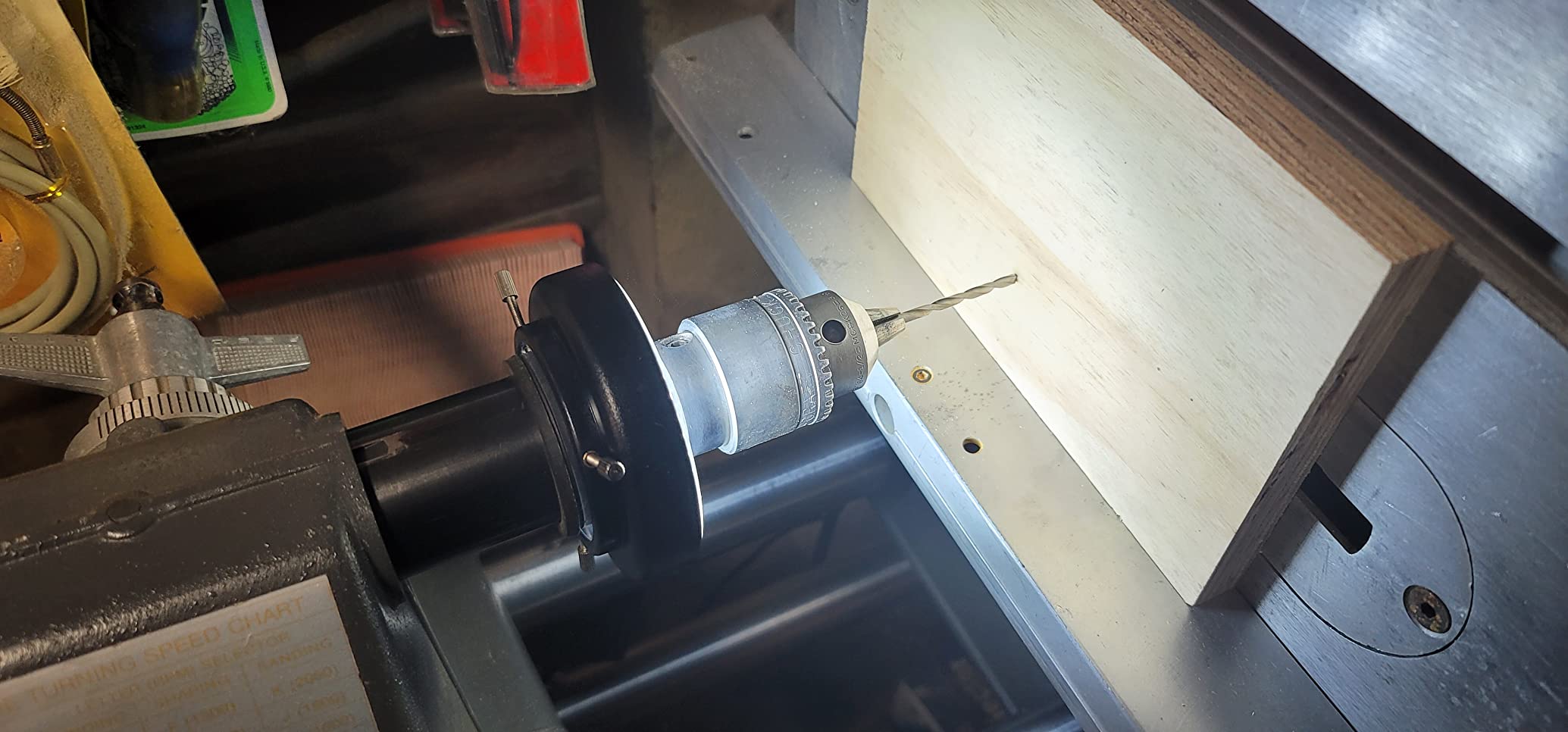
It mounts to bodies up to 2.48 inch (63mm) in diameter, with a 2-3/8 inch (60mm) inside and 3-5/8 inch (92mm) outside diameter, and the friction screws hold well on round-nose microscope bodies. The 110V to 240V wide band supply removes the voltage question entirely. Reviewers also use it well beyond microscopy, on drill presses, hobby mills and lathes.
Two real caveats sit under that smooth dimming. The dome-shaped diodes produce noticeable glare, and there is no diffuser, so reflective subjects such as polished metal, glass slides or a solder joint will throw highlights straight back at you. The second is that the dimmer is an inline variable resistor rather than a switching driver, which means the response is not linear and the case gets hot at full output.
There are also honest build-quality notes in the reviews. The small screws sit in loose brass nuts, giving noticeable play that can strip if tightened hard, and the controller box some buyers received differed from the product photographs. The unit also carries no UL marking. None of that stops it working, but it is not gear we would put into a wet lab or hand to a very young class unsupervised.
Who this light suits
It suits a hobby bench rather than a formal teaching lab, particularly for electronics, model making, PCB inspection and lapidary work where a very low light level matters as much as a high one. The wide mounting range also makes it a good fit for odd-shaped bodies that a fixed-diameter adapter will not accept.
If you work in an electronics bench, our notes on lighting for industrial work cover why a glare problem on reflective surfaces matters more in production than in a classroom, and when adding a diffuser is worth the extra step.
Where it falls short
Glare is the honest weakness here. Undiffused dome LEDs are fine for matte specimens and poor for anything reflective, and no diffuser is included. If your students spend time on prepared slides under a coverslip, the specular return will frustrate them.
The hardware is the other limitation. Loose brass nuts in small screws give the mount play, and the variable resistor dimmer runs hot at maximum output. For a shared classroom bench handling forty students a day, we would step up to a metal-housed unit instead.
6. HAYEAR HY-144B 144 LED Ring Light – Best for a Single Stereo Bench
HAYEAR 144 LED Ring Light Lamp Illuminator Lighting Sourse for Industry Stereo Biological Microscope Camera with Power Adapter HY-144B (Black)
- Bright uniform white shadow-free illumination
- Dimmer switch adjusts brightness without looking away from the eyepiece
- Power supply included so there is nothing extra to source
- Backed by a one year warranty
- No published color temperature or CRI
- No mounting adapter diameter is stated in the listing
- Only 44 reviews so long term reliability is thin
This is the straightforward 144-LED ring for a single stereo bench that just needs white, even, adjustable light. The 144 LEDs give uniform, intense, shadow-free illumination, and the inline dimmer switch is positioned so brightness can be changed without taking your eye off the specimen. That sounds minor until you have taught a class and realized the adjustment is otherwise genuinely awkward.
The power supply is included, so there is no separate supply to source or lose, and the unit carries a one year warranty. Owners report the output as bright and uniform for both stereo and biological microscope work, which is the baseline requirement for a teaching illuminator.
What we want to flag is the documentation gap rather than the hardware. There is no published color temperature, no CRI figure and no mounting adapter diameter in the listing, which means two of our three core selection criteria simply cannot be verified from the spec sheet. We rank it below the ring above for exactly that reason, not because owners report problems.
Who this light suits
It suits someone setting up one bench who wants more LED density than the compact ring offers without paying for gooseneck arms they will not use. The included supply and the one year warranty make it a low-risk first external illuminator for a home or small teaching setup.
It also suits anyone who wants a simple second light for macro photography or video alongside a main scope. Even, dense LED output is what a camera sensor needs, and the inline dimmer lets you drop the level to avoid blowing out a slide.
Where it falls short
The adapter question is the one to resolve before buying. No mounting diameter is stated, so confirm what your scope’s body measures and whether an adapter is included. Ring diameter mismatch is the single most common reason a purchased illuminator never gets mounted, so this is not a detail to skip.
With 44 reviews and no critical ratings, there is a positive signal but a thin base, and the absent color data means we cannot place it in the 5000-6000K window with confidence. For color-critical courses, choose a model that publishes its figures.
7. Walfront LED Microscope Ring Illuminator – Best for Slide Viewing and Macro Photography
LED Microscope Rings Light Illuminators Microscope Lamp LED Rings Light Source for Laboratories AC 0‑250V
- Soft even light across the full frame for slides and macro photography
- Large working area keeps small parts inside the illuminated field
- Low-cost answer for scopes with no transmitted light
- Lightweight ABS housing
- Dimmer has very little usable range and acts close to on or off
- Output is not color balanced and can shift specimen appearance
- Some units are not safety certified
The 4.6 star average comes from 28 owners, and the reason is a specific characteristic rather than raw brightness. Owners describe the illumination as soft and even across the full width, with a working area large enough that small parts do not fall off the edge of the light. For slide viewing and macro photography that wide, gentle field is exactly what you want.
It runs from 0 to 250V, the widest input range in this guide, and the ABS housing keeps weight down. The listing claims a high color rendering index with uniform, translucent light color and no video flash, which if accurate would make it a reasonable macro photography light for a modest outlay.
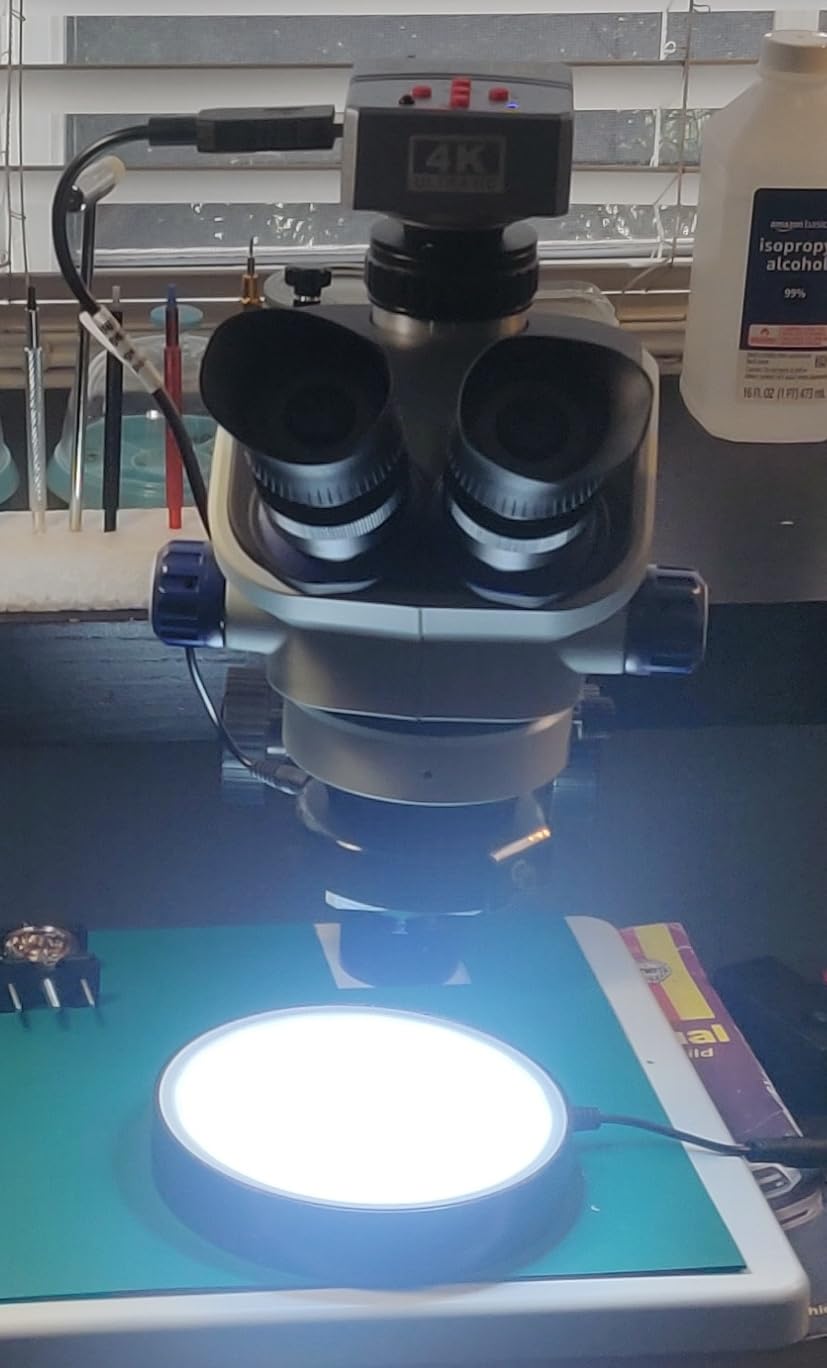
Now the limitation that decides its rank: the dimmer has very limited dynamic range. Owners describe it as effectively three states, near off, less bright and bright, and some units ship where the dimmer acts only as a two-position on and off switch. A dimmer you cannot use gradually is close to no dimmer at all, and for stained slides that is a genuine problem.
Color balance is the second issue. Reviewers report that the output is not color balanced and that specimen appearance can shift between units and between photos. For a plant biology or histology class, that is exactly the failure the whole exercise is meant to avoid. Several owners also report units without safety certification, which is worth weighing for a bench full of teenagers.
Who this light suits
It suits a working macro or slide-viewing setup that needs a broad, soft field more than it needs precise intensity control. If your alternative is no transmitted light at all, this is a genuine improvement for very little money, and the wide input voltage removes compatibility as a worry.
It also suits a bench doing general photography where slight color shift is acceptable in exchange for an even frame. Just set a custom white balance and work from that, rather than trusting the light for color identification.
Where it falls short
The dimmer is the dealbreaker for teaching. Three usable states is not variable intensity, and students will end up choosing between a washed-out image and one too dark to read contrast. Any light in this guide with a genuinely continuous 0-100% control serves a teaching bench better.
Color balance and the absent safety certification are the other two flags. With only 28 reviews, we also have a much thinner base of owner experience than the top three picks, so there is less evidence that the color inconsistency is a per-unit variation rather than a design trait.
8. Gringoo 144 LED Ring Light Illuminator – Best for 48mm Adapter Mounts
- 0-100% dimmer matches light level to specimen and magnification
- 48mm adapter fits the majority of stereo microscope bodies
- Compact integrated design that is easy to install
- One year warranty
- Only 11 reviews with 16% one-star ratings
- Some owners report unbalanced output color
- Lowest average rating in the group at 4.1
The reason this one earns a place is the adapter. It includes a 1-7/8 inch (48mm) adapter ring, the same size as the editor’s choice, and that is the diameter that fits the majority of stereo microscope bodies. If you have already confirmed your scope takes a 48mm ring, this is a straightforward dimmable option with 144 LEDs behind it.
The 0-100% dimmer switch is the other reason. It lets you match light level to specimen and magnification, which is the adjustment that matters most on a compound scope where the same slide looks completely different at 100x and 400x. The listing describes the output as long life, low temperature and non-stroboscopic, and it carries a one year warranty.
We rank it eighth, and we want to be clear that this is about evidence rather than a defect. Eleven reviews with 16% one-star ratings is the thinnest and most polarized sample in the group. Where owners are positive they cite the smooth dimming, the broad stereo microscope compatibility and easy installation. A minority report color balance and brightness issues.
Who this light suits
It suits a buyer who has already measured their scope, confirmed a 48mm mount, and wants a dimmable 144-LED ring on a modest outlay. The integrated design means there is no separate controller box to mount or lose, which helps in a lab where the illuminator gets moved between benches.
It also suits a teaching context covering electronics, engineering and medical lab skills, where the listing positions it for education, photography, laboratory research and repair work. A single dimmer ring plus a gooseneck covers most of that syllabus.
Where it falls short
The 4.1 average is the lowest in the group, and a 16% one-star rate is high enough that we would not build a classroom set on this. Small samples exaggerate extremes, but the honest reading is that quality control is less consistent than on the AmScope units.
Some owners also describe the output color as not well balanced, which given the sample size is hard to distinguish from unit-to-unit variation. If color accuracy is the point of your course, pick a model that publishes a color temperature and a CRI.
9. Upwtkim 64 LED USB Ring Light – Best Budget Pick
- USB 5V power removes the need for a separate supply
- 0-100% adjustment for matching different specimens
- Works across a 40-160mm working distance range
- Over 30000 hour stated product life
- Color temperature range of 6500K-7500K runs cooler than ideal for stains
- Small plastic housing with limited adjustment options
- Only 13 reviews so long term reliability is not established
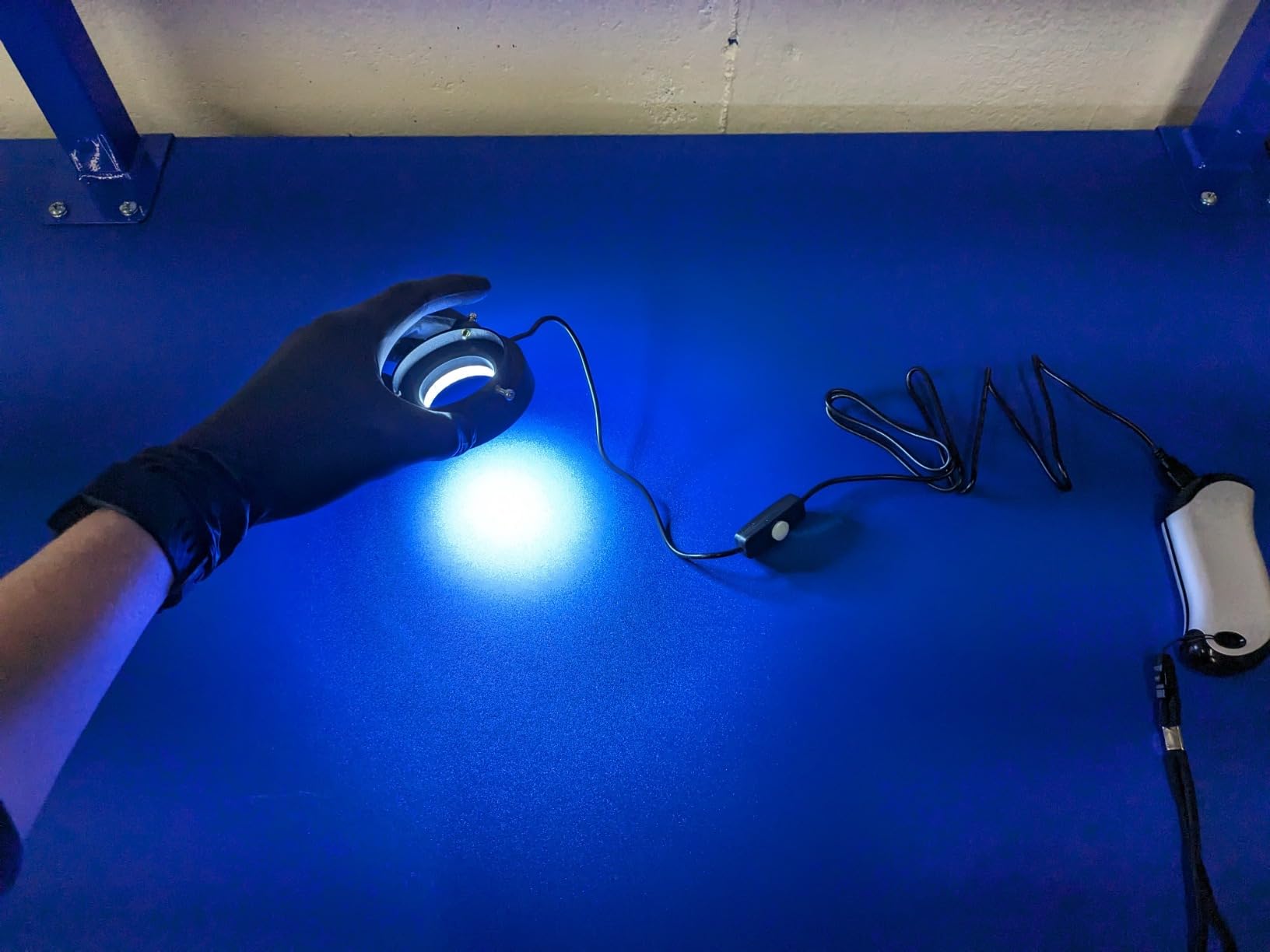
USB 5V power is the feature that makes this the cheapest sensible way to light a scope. There is no dedicated supply to source, no wall adapter to lose and no mains voltage question in a classroom with older outlets. At roughly 4W it also draws almost nothing, and 64 LEDs with 0-100% brightness adjustment is a real dimmer rather than a switch.
The published figures are unusually specific for the price class: a 40-160mm working distance range and a maximum illuminance of 25,000-32,000 lux. Owners report a solid, inexpensive illumination add-on for stereo and trinocular scopes, with 60% five-star and 29% four-star ratings and no one-star reviews in the sample.
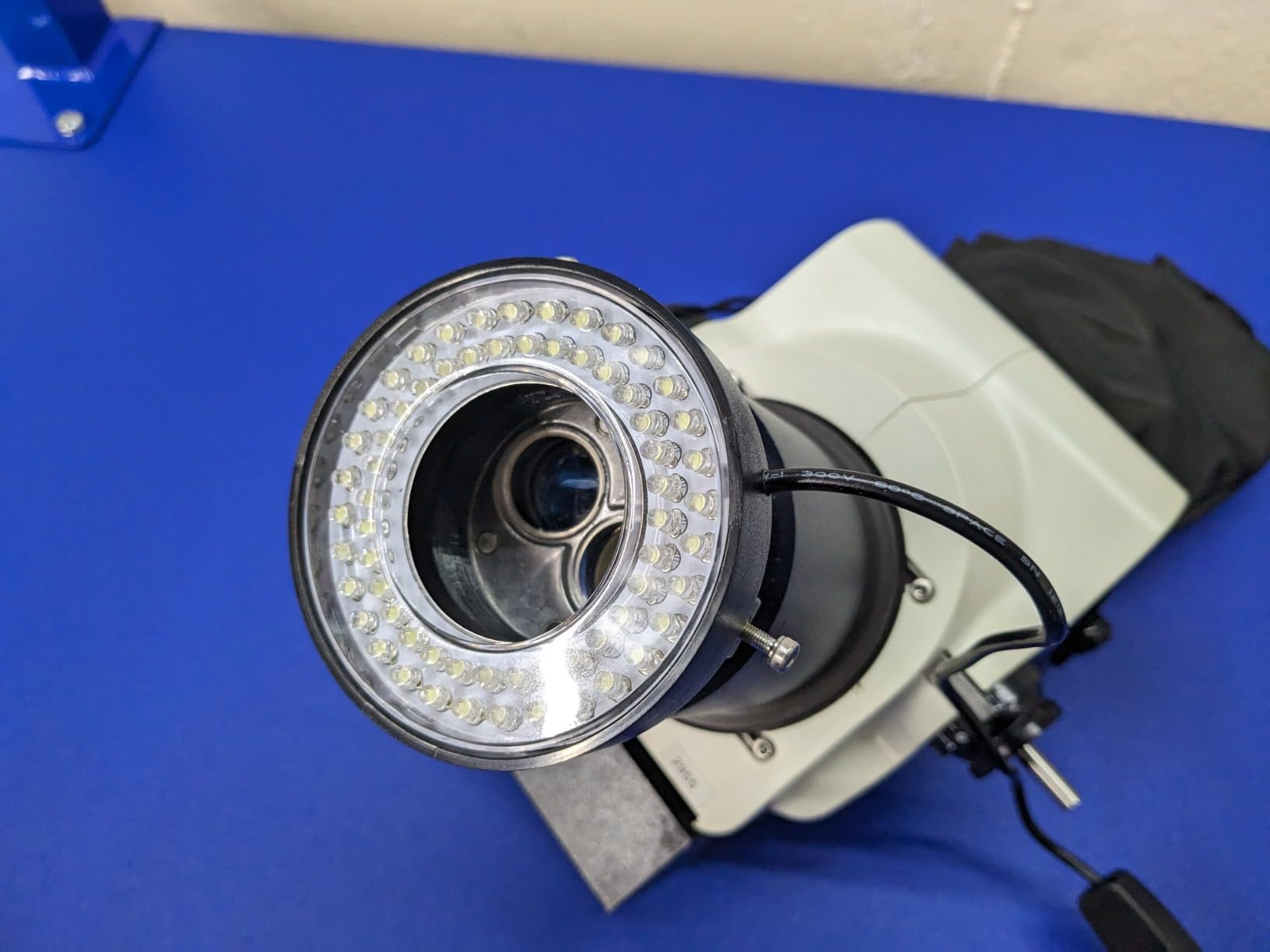
Here is the honest trade. The 6500K-7500K color temperature range is cooler than the 5000-6000K window we recommend for external microscope lighting, and a 7500K setting is exactly the blue-white that makes a methylene blue or iodine stain look colder than it is. Stay at the lower end of the range and this becomes a workable light for general teaching slides.
The housing is small plastic, and there is no diffuser to soften the LEDs. Thirteen reviews with no negative ratings is encouraging, but thirteen is a small base and long term reliability is genuinely not established. Our general approach to evaluating budget LED hardware for accuracy is the same one we apply in our LED shop light tests: check the color figures, then check whether anyone has used it long enough to report a failure.
Who this light suits
It suits a student, a home lab or a classroom that needs a working dimmable illuminator at the lowest sensible outlay, and anyone whose bench has convenient USB access. For a first microscope light that solves a specific dim or fixed-output problem, it does the job without a mains supply.
It also suits fieldwork and portable setups, where our notes on low-power portable lighting cover the same constraints. Note this unit is USB rechargeable rather than battery operated, so it still needs a power source even away from a bench.
Where it falls short
The color temperature range is the main issue, and it is a specification rather than a complaint. If your course assesses stain or pigment color, this is the wrong light regardless of how good the value is. Set it to the coolest-neutral end and treat it as a brightness tool only.
The small plastic housing means fewer mounting options than the metal or larger units, and thirteen reviews is too thin a base to call it a long term purchase. If the bench is shared daily, the repair and replacement math favors a more established brand.
10. Upwtkim USB Dual Gooseneck Light – Best for Soldering and PCB Inspection
Microscope Light Source, USB Desk Dual Gooseneck Lights LED Mini Spot Light Illuminator for Stereo Microscope Camera Industrial Video Zoom C Mount Lens for Repair Soldering PCB Lab
- Each gooseneck arm dims independently so one can be bright and one low
- Flexible arms can be angled to avoid reflective glare
- USB powered with no separate supply needed
- Over 100000 hour stated product life
- Only 10 reviews so there is limited long term feedback
- Desk base takes up bench space beside the microscope
- Six month warranty is the shortest in the group
Independent dimming is the feature that separates this from the AmScope gooseneck above, and hobbyists specifically ask for it. Each 3W LED spot has its own control, which means you can set one arm bright and one low and get a proper raking gradient across a board instead of forcing one light to be wrong. At 4.7 stars this is the highest-rated listing we analyzed.
Second is glare control. Because the arms are flexible, you can move them off the reflection angle of a solder joint, a connector or a shiny component, which is the single hardest problem when inspecting electronics. USB 5V 2A input means no dedicated power supply, and the 5500K-6500K range starts warmer than the 6500K-7500K budget ring above, which is better for color.
Who this light suits
It suits electronics repair, soldering and PCB inspection benches where the work is opaque, reflective and close. It also suits coin, mineral and rock inspection, and any macro work where you want to shape the light by hand rather than accept a fixed ring.
For an imaging setup, the low-heat USB head also sits closer to our general preference for keeping heat off the specimen, which matters more for live material. If you plan to add a camera, our microscope camera guide covers mounting and the lighting conditions that produce clean image data.
Where it falls short
The evidence base is the real limitation. Ten reviews is a very small sample, and no critical reviews at this volume does not mean no critical reviews will appear later. The 4.7 average is impressive but statistically fragile, which is why this does not outrank the gooseneck unit with 236 reviews.
The six month warranty is also the shortest in the group, and the desk base occupies bench space next to the microscope. For a fixed electronics station that is a fine trade. For a shared teaching bench where the light gets moved around, a wall or clamp mounted unit is the better long term choice.
How to Choose a Microscope Light for a Student Scope?
Start with the specimen, not the spec sheet. Transparent stained slides want light straight down the optical axis, so a ring light is the correct geometry. Opaque objects, including coins, minerals, solder joints and printed circuit boards, need light from the side, so a gooseneck is the only geometry that works. A single dimmable ring plus a basic gooseneck covers almost every syllabus we have seen.
Then check the three numbers that decide quality. Color temperature should sit between 5000 and 6000K, which is the range microscopy hobbyists repeat most consistently and which keeps output from looking yellow or blue against a built-in lamp. Color rendering index should be above 90 for anything involving stain or pigment identification, and the only product in this guide that publishes a numeric figure scores 80, which is below the line. Published brightness should be given as lux at a stated working distance, and no product here does, so peak lux figures are not comparable between models.
Check compatibility in five steps before you buy
First, measure the outside diameter of the body your light has to sit around, usually just below the objective or above the stage. A ring light has two diameters that matter and they are not the same number: the inside diameter of the ring, and the outside diameter of the microscope part it clamps to. Most stereo bodies take a 48mm adapter, and 61mm to 63mm and 95mm are the other common sizes in this category.
Second, check whether an adapter ring is included, because a ring that only fits a 63mm body is useless on a 48mm one. Third, measure the clearance above your objectives, because a thicker ring will not fit under a low head and a 144-LED ring is wider than a 60-LED one. Fourth, confirm the input voltage, since several units in this guide are listed at 240V or accept a wide band and a few are USB only.
Fifth, count how many scopes you are lighting and where the controller goes. A single ring with an inline dimmer can be mounted anywhere. A control box needs a spot on the bench, which matters a great deal in a room with twenty benches. Most importantly, do not buy an external light for a scope whose built-in LED already produces an even, color-accurate image at your highest working magnification. Forum consensus on this point is consistent: an external illuminator is a fix for a specific weakness, not a default upgrade.
Why a dimmer matters more than raw brightness
A microscope is not a desk lamp. The correct intensity depends on the specimen, the magnification and the numerical aperture of the objective, and a fixed-output light forces one compromise for every slide you view. At 10x on a transparent onion epidermis you want low light. At 400x on a stained blood smear, the image is gone without more. A continuous 0-100% dimmer is effectively mandatory, and that is the single strongest filter we applied across this list.
Watch the dimmer type. A switching dimmer with 0-100% control gives a smooth, flicker-free ramp. An inline variable resistor gives a coarse, non-linear ramp and runs hot. A two-position switch is barely a dimmer at all, and we deprioritized one product in this guide for exactly that reason. For video work, PWM flicker in cheaper drivers can also show up as shimmer or band shift, which is why the flicker-free claim on the TreochtFUN unit is worth something.
What CRI and color temperature actually change
Color temperature tells you the white point. 5000K to 6000K reads as neutral white under a scope and will not fight a built-in lamp. Below 4500K output looks yellow, which is the exact complaint that makes cheap clip-on LEDs useless for biology, because Gram stain, iodine and methylene blue all shift visibly under a yellow source.
Color rendering index tells you how faithfully the spectrum renders the colors underneath that white point. Above 90 means a stain that is genuinely purple reads purple, and a chloroplast looks green rather than grey. Below 80, colors compress and shift, and the one unit here with a published figure sits at 80. No brightness level compensates for that, which is why we rank CRI above lumen claims for any course that assesses color.
There is a related point about heat. LED light itself is cool at the specimen, but a resistor dimmer or a poorly housed driver can radiate enough heat to dry a wet mount, fade a prepared slide or disturb living specimens. If you do live material or gel work, keep the light source physically distant and dim, and prefer a driver-based dimmer to a resistor one.
Power, noise and heat in a shared classroom
Mains-powered units give you consistent output and no battery degradation, and a wide band 85-265VAC or 110-240V supply covers any bench supply in the world. USB units give you portability and very low power draw, at the cost of depending on a cable and a port. For twenty benches in a school, mains is simpler to support and easier to replace.
Noise matters more than buyers expect. Higher-output illuminators often add a cooling fan, and in a quiet room a fan running under every scope becomes a genuine distraction for the students in the room. Every unit in this guide is LED with no stated fan, so noise is not a differentiator here, but it is worth checking on any model outside this list. Heat at the specimen is the related concern, and the fix is always the same: keep the source away from the slide and dim it to the lowest level that still resolves contrast.
On buying for a whole class, the practical changes at volume are simpler: standardize on one model so a single spare covers every bench, check that the mount is the one your existing scopes take so you are not mixing adapters, and confirm the warranty terms suit institutional purchase. Our broader thinking on specifying lighting for a facility is in our manufacturing lighting guide.
Fixing a Dim, Yellow or Uneven Microscope Image
Before you blame the illuminator, close the iris diaphragm partway. A fully open iris on a brightfield setup dumps far more light than most specimens need, and a sample that looks washed out at full aperture can look correctly exposed at two thirds open. This single adjustment fixes more “my light is too bright” complaints than any hardware change.
A yellow or green cast almost always means the color temperature is too low, which in practice means either a low quality LED with an unfiltered blue-deficient spectrum, or a genuinely warm source. A published 5000K to 6000K figure is the check, and if the listing does not state one, that is information in itself. A dim image in a dim room is often a pupil accommodation problem rather than a light problem, so try a brighter bench first before concluding anything.
An uneven field with dark edges usually means the ring is mounted too high above the specimen or the light is not centered. A diffuse ring produces a shadowless field; a ring set too far up behaves like a small spot. Also check that the adapter ring is seated flat and not tilted, since a tilt is the usual cause of a ring that looks fine from one side and uneven from another. Glare or a bright hotspot on reflective slides means there is no diffuser, so angle the light or step up to a diffused unit.
Heat and flicker are the last two. Heat damage shows up as a drying or clearing wet mount after a few minutes at full brightness, and the fix is to dim the light and increase the gap between the source and the slide. Flicker or shimmer is almost always a cheap PWM driver, most visible in video and at low brightness, and it is a reason to prefer a switching dimmer or a unit that states flicker-free output.
Frequently Asked Questions
What is the best microscope light?
The best microscope light for a student scope is a dimmable LED ring light with continuous 0-100% brightness control, a color temperature between 5000K and 6000K, and a color rendering index above 90. Ring geometry throws light down the optical axis for shadow-free viewing of transparent slides. Add a dual gooseneck illuminator if you also work on opaque specimens such as coins, minerals or circuit boards, where light from below does nothing.
What is the best light source for a microscope?
A cool white LED is the best light source for a microscope because it runs cool, dims continuously, starts instantly and has a long service life. LEDs are available as a ring around the objective for shadow-free transmitted viewing, or as a gooseneck aimed at the specimen for opaque work. Fiber optic guidance is the safest option for heat-sensitive live mounts, but it costs more and none of our ten picks required it.
Do I need a separate light for my student microscope?
Probably not, if your scope already has a built-in LED that produces an even, neutral white image at your highest working magnification. Most modern student scopes are perfectly serviceable out of the box, and an external illuminator is a fix for a specific weakness such as a dim fixed-output lamp, a yellowing bulb, a missing condenser or uneven coverage. Check your existing image before spending anything.
What color temperature is best for a microscope?
Between 5000K and 6000K is the range most recommended for external microscope lighting, because it reads as neutral white and will not fight a built-in lamp. Below about 4500K the output looks yellow and shifts stains such as iodine or methylene blue, which is the most common complaint about budget clip-on lights. Above 6500K the image turns cold and blue, which is equally misleading for color identification.
What is the purpose of the light dimmer on a microscope?
The dimmer lets you set transmitted light to the level the current specimen and magnification need, instead of using one fixed brightness for everything. At 10x on a thin onion epidermis you want low light, while at 400x on a stained blood smear the image disappears without more. A continuous 0-100% dimmer also lets a partially closed iris diaphragm be used properly, which improves contrast instead of just reducing brightness.
Which microscope is best for students?
A monocular compound microscope with at least 400x magnification, a built-in LED or mirror illumination and a mechanical stage is the standard student recommendation, and cool neutral lighting is a desirable feature rather than a luxury. On a tight budget the common advice is to buy an entry model now and an upgradeable frame later, so the illuminator can be upgraded separately. If you plan to photograph your work, start with our microscope camera guide.
Choosing the Right Microscope Light for Student Scopes
The AmScope LED-144W-ZK stays our pick for the best microscope lights for student scopes in 2026. It combines a 6000K white point with a genuine 0-100% dimmer, a 48mm adapter that fits most stereo bodies, and the largest body of verified owner feedback we found for any ring light in this category at 4.6 stars from 663 ratings.
Match that with the AmScope LED-6W dual gooseneck if your students handle opaque specimens, and with the compact AmScope LED-56S-ZK when the budget decides. Before any of them, check your existing image honestly: if the built-in LED is already even and neutral at your highest magnification, keep your money. The light worth buying is the one that fixes a specific weakness, and no illuminator improves on a scope that does not have one.