
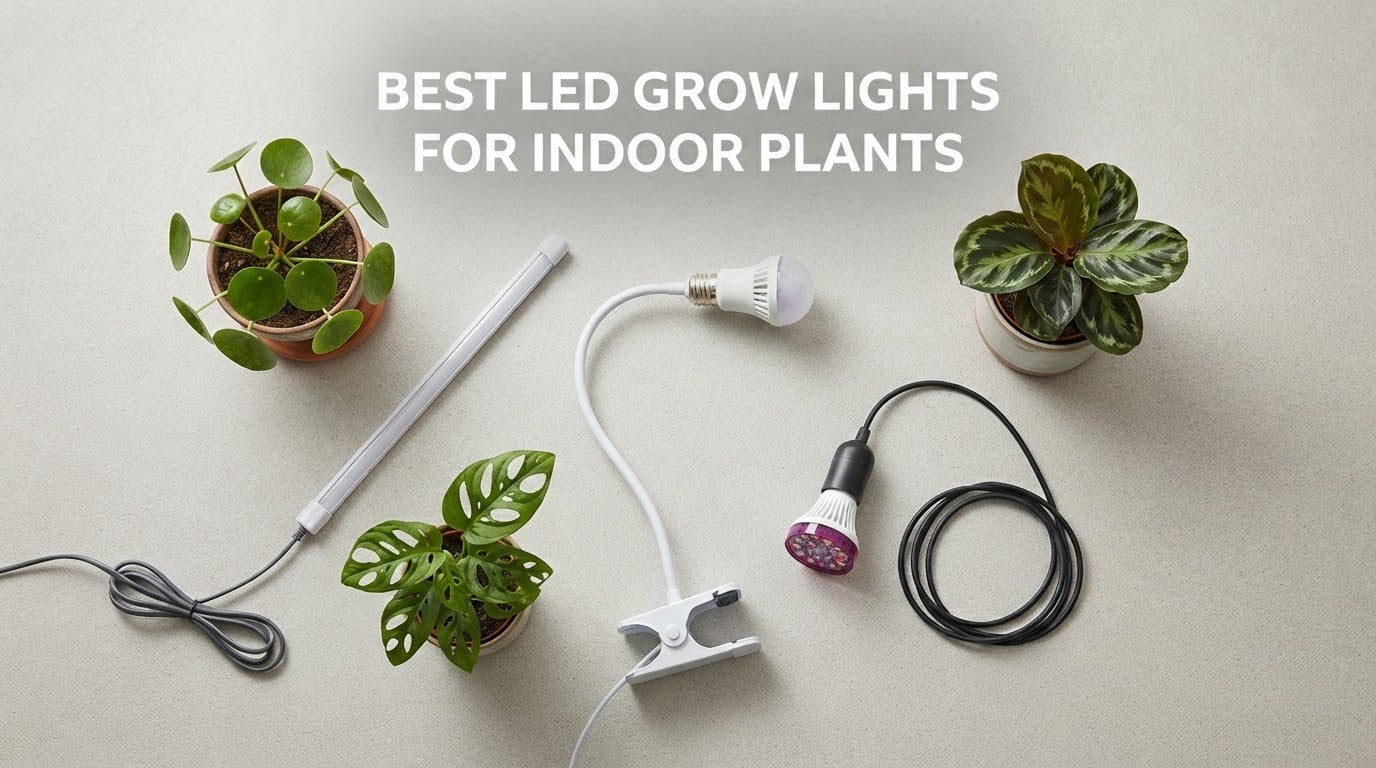
Most indoor plants are not light-starved because nobody cares for them. They are light-starved because the apartment has a north-facing window, the building across the street blocks the afternoon sun, and the plant has spent six months reaching toward a light source it never gets enough of. That is where the best LED grow lights for indoor plants earn their place. I have spent the last few months running a shelf of houseplants, a propagation tray and a corner of tall floor planters under a rotating group of fixtures, and the results separate the useful designs from the disappointing ones faster than any spec sheet does.
The short answer: the GooingTop 6000K full spectrum clip-on grow light is the one I recommend to most people, because its rigid gooseneck holds position, its clamp grips real furniture, and its 6000K output reads as ordinary bright white light rather than the purple glow that makes a living room look like a laboratory. If your plants live on shelving rather than a desk, the Barrina T5 8-pack covers more area with cleaner, more even light than anything else in this group, and it holds the highest rating of the twelve.
What follows is a full roundup of twelve fixtures covering every form factor you will actually find useful: clip lamps, stake-in singles, telescoping floor lights, freestanding tripods, halo lights for a room of pots, linkable shelf bars, a hanging panel, and a standard E26 bulb that drops into the lamp you already own. Each one gets a hands-on style writeup, a note on who it suits, and an honest look at where it falls short. I also explain PPFD, PPE and PAR in plain English further down, because those three numbers decide almost everything and almost nobody explains them properly.
One quick note before we start, since it is the single most common question we get: the lights in a home are not the same problem as lights in a greenhouse, and a good general-purpose LED bulb is a different tool again. If you want the mechanical side of the same idea, our guide to the best LED shop lights covers output claims and driver quality in a lot more depth.
Table of Contents
Top 3 Picks for the Best LED Grow Lights for Indoor Plants (September 2026)
These three cover the three most common setups. The GooingTop handles a desk, a windowsill or a single shelf tier. The bseah handles a bookcase with two or three levels of small pots. The Barrina 8-pack handles a whole shelving unit where you want even coverage across every tier without running eight separate lamps.
GooingTop 6000K Clip-On
- 84 LEDs at 6000K with red supplement
- 4/8/12-hour memory timer
- rigid clamp with flexible gooseneck
bseah Two-Tube Shelf Light
- Full spectrum yellow and white tubes
- 10 dimming levels with 3 switch modes
- non-slip spring clamp

Barrina T5 8-Pack Shelf Bars
- 8 two-foot bars at 5000K
- linkable up to 16 fixtures
- individual on/off switch per bar
All 12 LED Grow Lights at a Glance in 2026
Here is the whole lineup in one place, with the feature that decides whether each one fits your space. Note the spread: the majority clamp onto furniture, three reach up or stand on the floor, two light a single pot, and the rest cover a whole shelf, a dense group or an existing lamp.
| Product | Specifications | Action |
|---|---|---|
| GooingTop 6000K Clip-On Grow Light |
|
Check Latest Price |
 LEOTER 80-LED Multi-Spectrum Clip Lamp LEOTER 80-LED Multi-Spectrum Clip Lamp |
|
Check Latest Price |
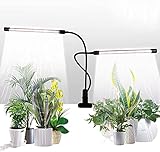 GHodec Dual-Bar 84-LED Clip Light GHodec Dual-Bar 84-LED Clip Light |
|
Check Latest Price |
 yadoker Telescoping Bamboo Floor Light yadoker Telescoping Bamboo Floor Light |
|
Check Latest Price |
| bseah Two-Tube Shelf Grow Light |
|
Check Latest Price |
| Barrina T5 Linkable 8-Pack Shelf Bars |
|
Check Latest Price |
 Juhefa 48-LED Stake-In Plant Lamp Juhefa 48-LED Stake-In Plant Lamp |
|
Check Latest Price |
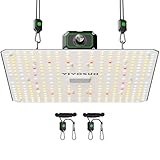 VIVOSUN LumaLight 100W Panel VIVOSUN LumaLight 100W Panel |
|
Check Latest Price |
 SANSI Ceramic Pot Clip Grow Light SANSI Ceramic Pot Clip Grow Light |
|
Check Latest Price |
 Aokrean 3-Pack Telescoping Halo Lights Aokrean 3-Pack Telescoping Halo Lights |
|
Check Latest Price |
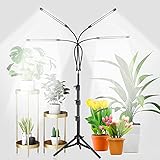 GHodec Freestanding Tripod Grow Lamp GHodec Freestanding Tripod Grow Lamp |
|
Check Latest Price |
 SANSI 36W E26 Grow Light Bulb SANSI 36W E26 Grow Light Bulb |
|
Check Latest Price |
1. GooingTop 6000K Full Spectrum Clip-On Grow Light — Best Overall for Indoor Plants
- Sturdy goosenecks hold position without drooping
- Very strong clip grips tables shelves and pot lips
- Bright flicker-free light with a color rendering index of 90
- Built-in circular memory timer
- Low 10W LED draw keeps running cost minimal
- Timer runs on a fixed 24-hour cycle which is not clearly explained
- A few units arrive with bulbs scratched when the protective film is missing
- Coverage is tighter when the lamp sits very close to plants
I ran this lamp on my potting bench for a full propagation cycle, and the first thing I noticed was that it stayed where I put it. Clip-on grow lights fail in two ways: the neck droops until the light face-down, or the clamp slips off the shelf edge mid-day. This one does neither. The gooseneck is rigid enough to hold an aim for weeks, and the clamp has enough bite to grip a laminate worktop or the lip of a plastic pot tray.
The light itself is 6000K white, which is a cooler, bluer white than most grow fixtures. Some people find that clinical in a living room. I found it refreshingly normal, because guests never ask why the room is glowing purple. The spectrum is 74 white plus 10 red diodes, so you get broad coverage for foliage growth with a red boost in the mix.
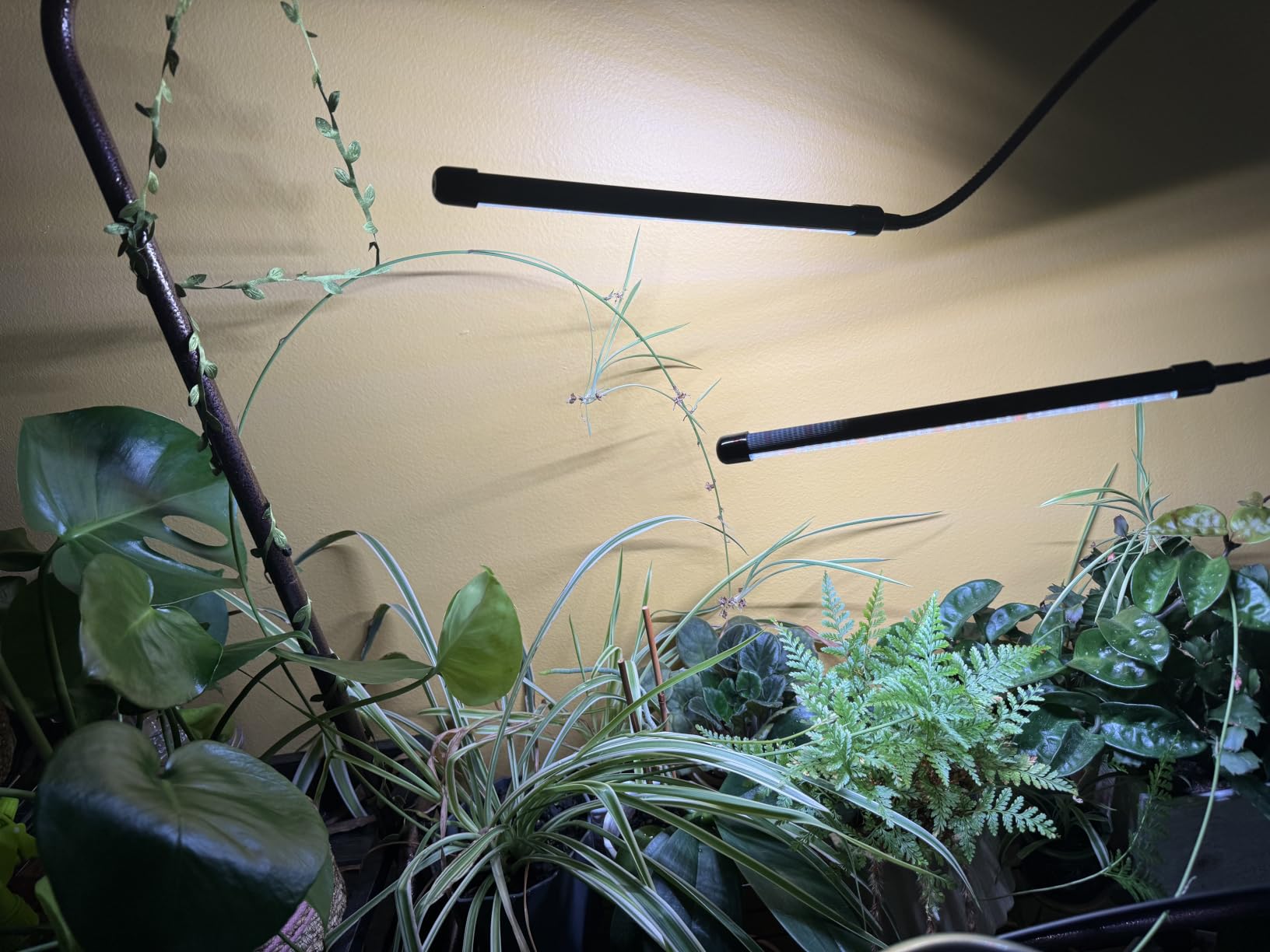
Output is listed at a maximum of 2500 lumens from a 10W LED source, and the equivalence is described as a 50W halogen. Treat the equivalence as marketing and the lumens as useful. The pattern is wide enough for a shelf tier with several small pots, or a cluster of seedlings under one bar, but it is not a light for a whole bookcase.
The thing that took me longest to understand was the timer. The 4, 8 and 12-hour settings sit on a circular memory that repeats on a 24-hour clock, which means a 12-hour setting gives you light half the day and darkness half the day, and the off period is fixed rather than alternating. That is fine for most houseplants on a steady routine, but it is not the same as a light that switches on at 7am and off at 9pm. The listing does not make that clear, and it is the most common confusion owners report.
What you will notice in the first week
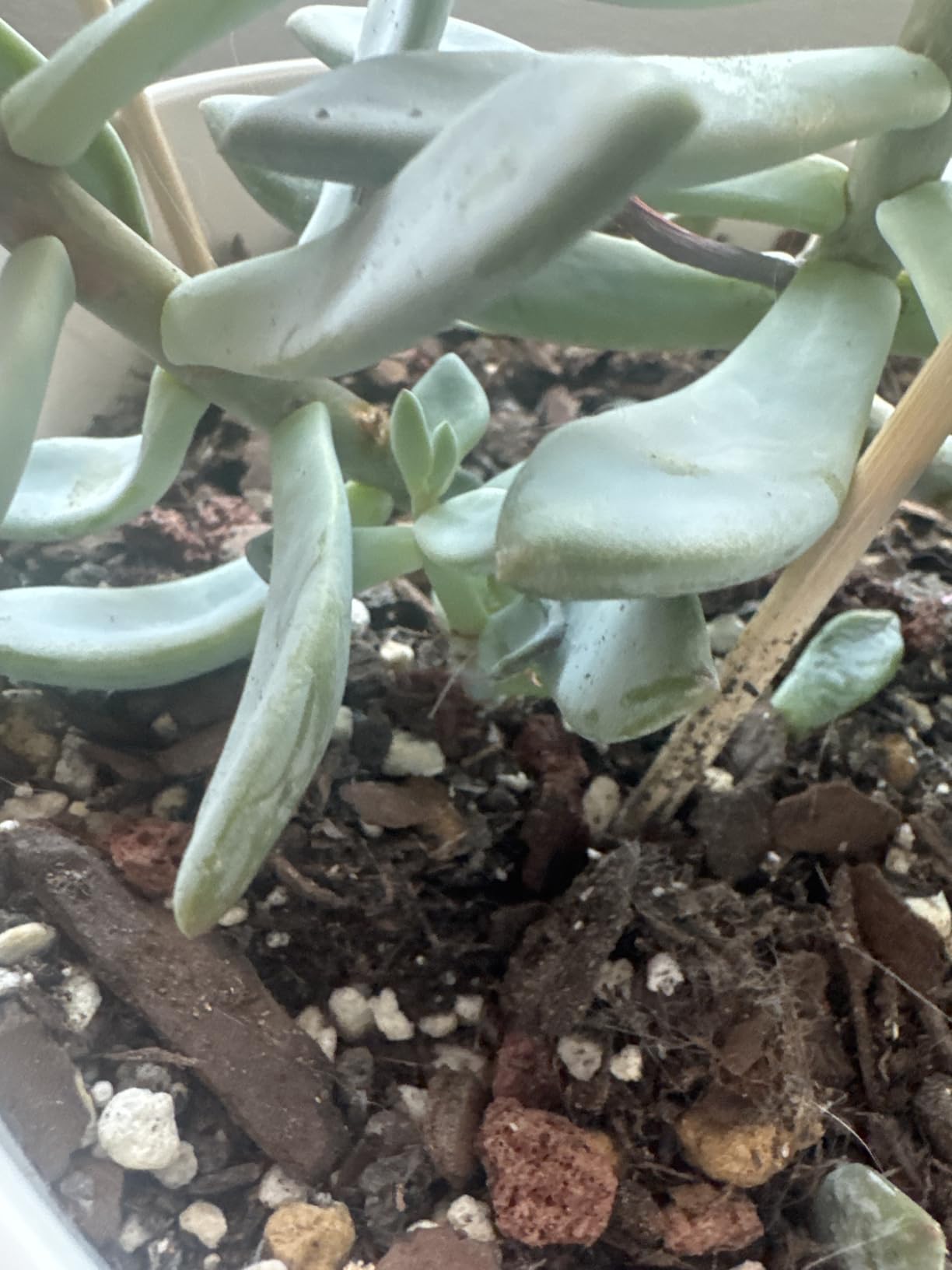
New growth on leggy stems straightens within one to two weeks of use. Seedlings under the bar stop stretching toward the window and start filling out instead. Because the light is bright without being warm to the touch, you can leave it within a few inches of delicate leaves without cooking them.
Where it falls short
It cannot light a tall floor plant, and the rigid neck means you reposition the whole lamp rather than tilting a head. If your plants sit above eye level or spread sideways, a telescoping model suits you better. Watch the fixed 24-hour cycle if your plants need a genuine night period at a specific time.
2. LEOTER 80-LED Multi-Spectrum Clip Lamp — Premium Pick for Feature Control
- Three selectable spectra for different growth stages
- Ten dimming levels plus three switch modes
- 360-degree goosenecks on a four-head design hold position well
- Circular memory timer for hands-free scheduling
- USB connector with included AC adapter
- Timer must be reset whenever the light loses power
- A single 80W-rated lamp cannot light a large area on its own
Few lamps in this group give you this much adjustment, and for anyone moving between seedlings, leafy greens and flowering plants on the same shelf, that flexibility is worth more than raw brightness. Three spectrum modes let you run a red and blue vegetative mix, a full spectrum mix, or the combination. Ten brightness levels let you drop the output when a plant is recovering from a move.
The diode layout splits 32 red, 12 blue, 20 yellow and 16 white across a claimed 380nm to 800nm range. In practice the yellow and white together give it a fuller, less magenta look than a two-colour red and blue lamp, which matters in a room where you sit and read at the same time. The four-head gooseneck layout also spreads light across a wider footprint than a single bar.
Build quality is better than the price bracket usually implies. The frame is metal and plastic, the base is a metal clamp, and there is an aviation-grade heat sink with a temperature control unit, which is a sensible inclusion given how many hours these lamps run per day.
The recurring complaint is a small one with a real consequence: the circular timer resets whenever power is interrupted. If anything in the house trips a breaker, or you unplug the lamp to move it, you come back the next morning and the schedule is gone. Everything else about the lamp is straightforward.
Why the three spectrum modes matter
Most plants you keep indoors are in a vegetative stage indefinitely, so the red and blue plus full spectrum combination is the mode you will use almost all the time. Keeping the alternatives means you can dial in a heavier red bias when buds appear, or pull back to a lower dimming level through a cloudy week.
Where it falls short
The 80W rating describes the diode count rather than a coverage area, and one lamp cannot light a large space. The power reset on the timer is the other limitation, and it is worth knowing before you set it up on a schedule and leave it alone.
3. GHodec Dual-Bar 84-LED Clip Light — Best Budget Clip Lamp for Seedlings
GHodec Grow Light,Full Spectrum White 84 LED Clip Indoor Plant Light
- Two 84-LED bars with anti-slip clamp and 360-degree goosenecks
- Each bar can be switched on or off independently
- 4/8/12-hour auto timing with adjustable brightness
- Neutral 6000K white that does not cast a pink tint on foliage
- Owners report long service life across multiple purchases
- Output is modest and suited to seedlings and small houseplants only
- Clip-only design needs a stable surface with a lip to grip
- Longest timer setting is 12 hours
This is a two-bar lamp rather than a single-head design, and that single design choice is the whole story. Two bars at different heights and angles deliver more even coverage over a wider patch of shelf than one bar, which means fewer bald spots in the middle and fewer scorched leaves at the ends.
Each bar carries 5 red and 37 sunlight-white diodes at 6000K, and you can switch each bar on or off independently. That independent control is genuinely useful: you can run one bar over a propagation tray and the second over a pot of herbs, or turn one off at night while keeping the other running.
What I like most is the colour. At 6000K with a mostly white diode mix, this one produces no visible pink cast on the leaves. If you have ever run a blurple fixture over your plants, the difference is jarring in a good way. r/houseplants threads about this come up constantly, and the complaint is always the same, that a purple glow distorts the colour of the foliage and makes a room look like a grow operation rather than a home.
The honest limitation is output. Reviewers consistently describe this as a supplemental light for seedlings, cuttings and small houseplants rather than a light for dense growth or anything fruiting. If you want strong growth on a large plant, look at the panel or the shelf bar pack further down.
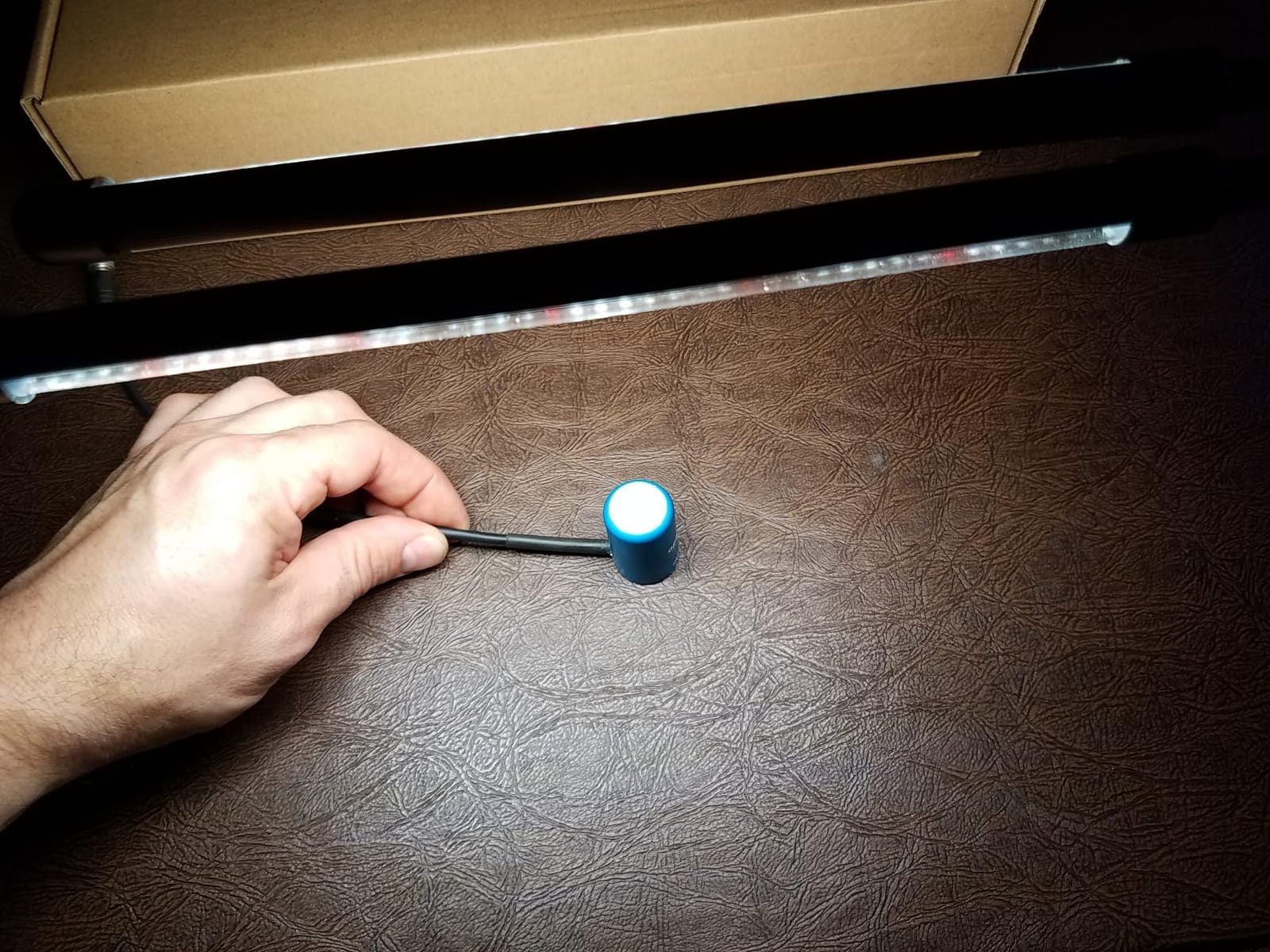
Best use case: a propagation shelf
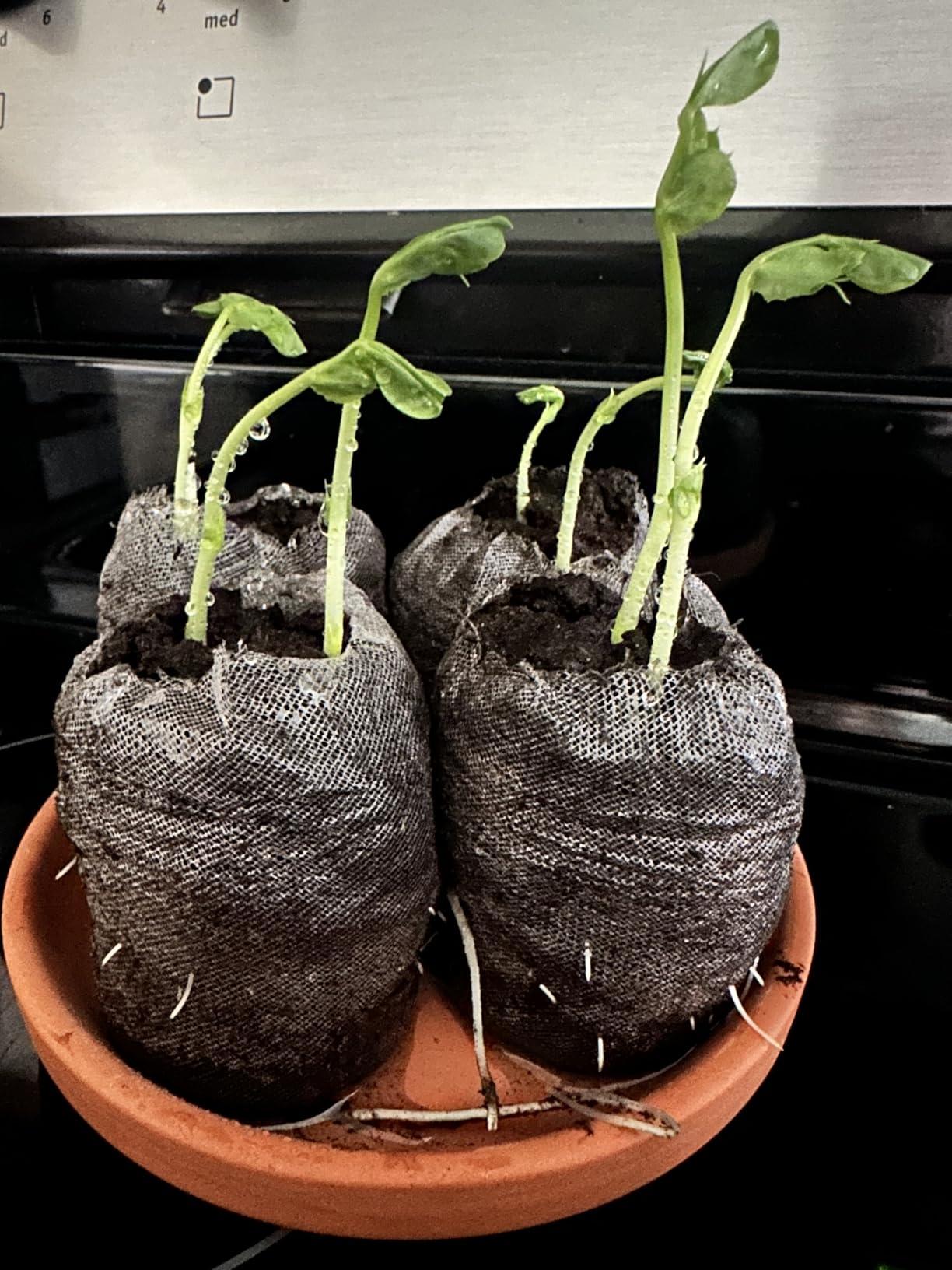
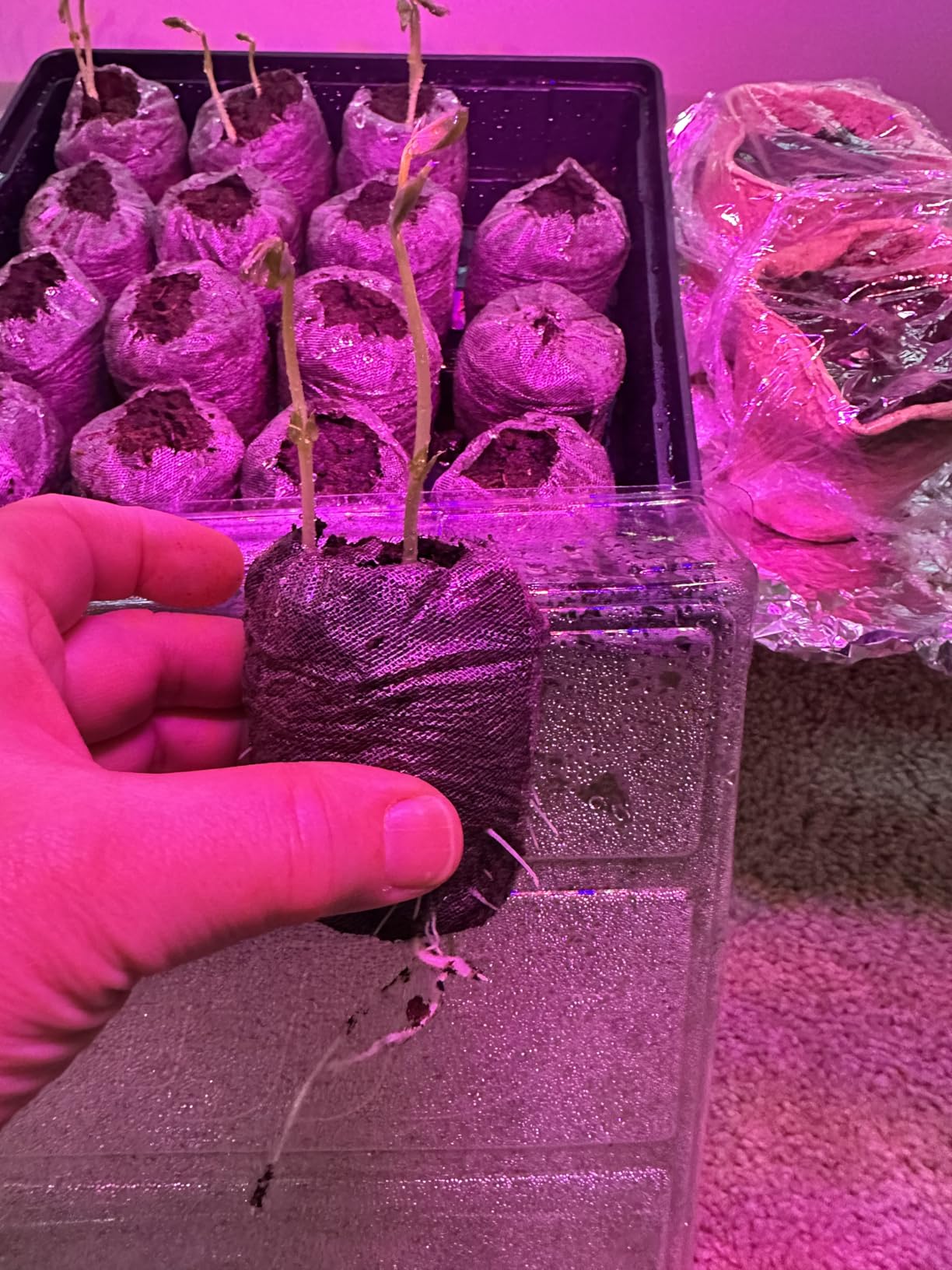
Two switchable bars over a seed tray is where this design pays off most, because cuttings at different stages rarely need identical light. The clamp grips a shelf with a lip, and the 360-degree goosenecks let you bring each bar down close to the tray without scorching.
Where it falls short
It needs something to grip, so a bookshelf with a flush back or a smooth pedestal will not work without a workaround. The output ceiling is low, and a 12-hour maximum timer setting limits you if you want a longer photoperiod for a specific plant.
4. yadoker Telescoping Bamboo Floor Light — Best for Tall and Hanging Plants
yadoker Grow Lights for Indoor Plants, Full Spectrum Plant Light
- Telescoping pole adjusts from 13.7 inches up to 61.1 inches
- Ten dimmable brightness levels from 10 percent to 100 percent
- Thirteen-foot cord reaches hanging baskets and large floor plants
- Low 5V safe-voltage USB power
- Bamboo-style finish that blends into a room
- Stake-in design is awkward for pots and shelves without a soil surface
- Highest one-star review rate in this group at around 7 percent
Every clip lamp in this roundup has the same ceiling: you need furniture to grip and vertical space you can reach. The yadoker solves the second problem completely. The pole telescopes from 13.7 inches to 61.1 inches, which means one light can serve a seedling tray in the morning configuration and a tall floor plant or hanging basket after you extend it.
Light comes from 72 diodes spanning 5000K white, 3000K warm white, red and blue across a claimed 380nm to 800nm. Mixing a warm white diode with a cool one is what keeps the output from looking clinical, and the ten brightness levels from 10 to 100 percent let me run it dim under a shelf where glare would otherwise be annoying.
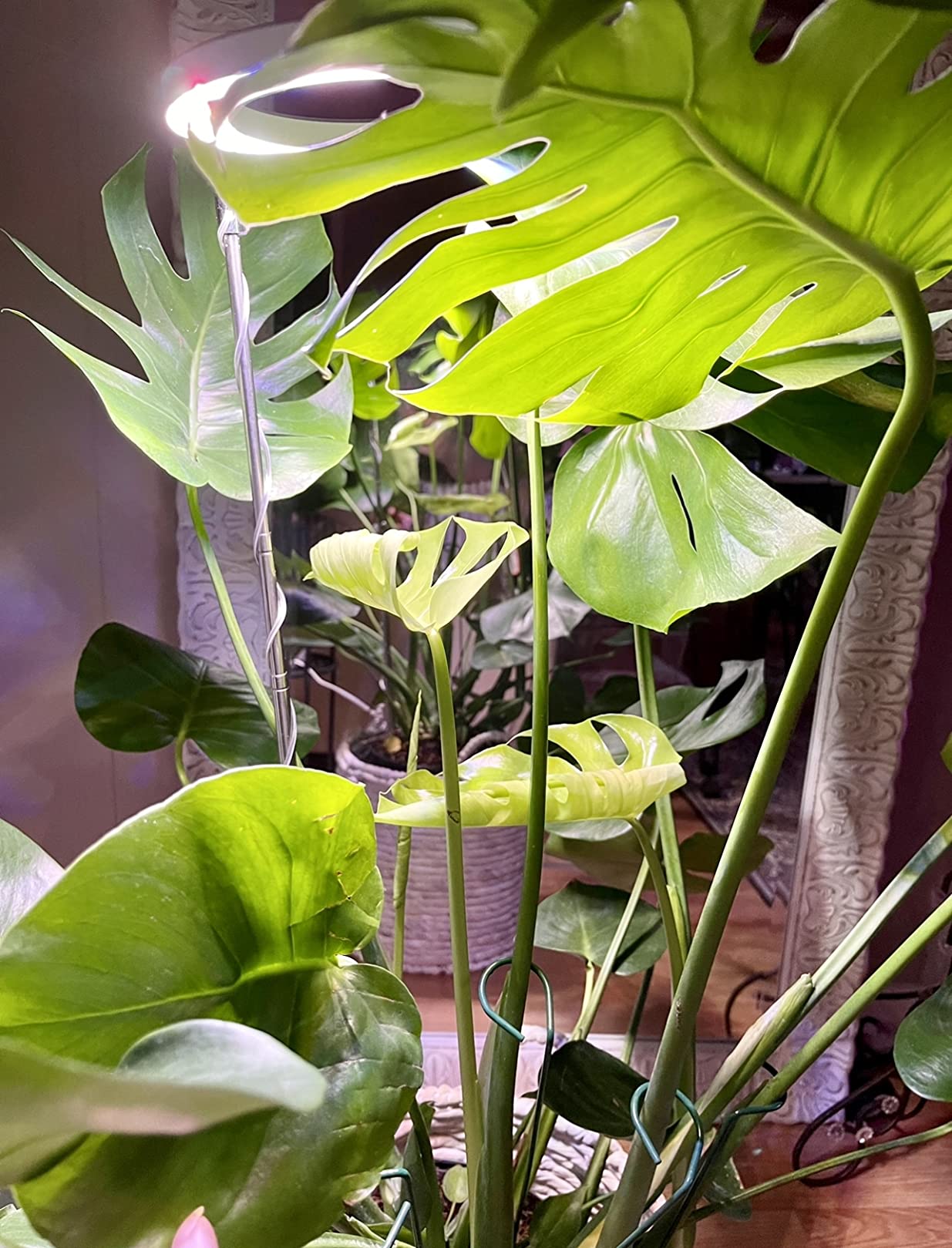
The 13-foot cord is the detail I did not expect to care about and now rely on. It reaches an outlet across a room without an extension lead, and the 5V USB supply means the head itself runs at a low, safe voltage rather than mains voltage at the top of a tall pole.
Stability is the trade-off, and it is a real one. This is a stake-in design, so it wants soil or a pot rim to lean into. On a bare shelf or a smooth table it needs something to weight it down, and a few owners report the aim drifting when the neck is not anchored. That 7 percent one-star review rate is the highest in the group, and durability feedback is mixed.
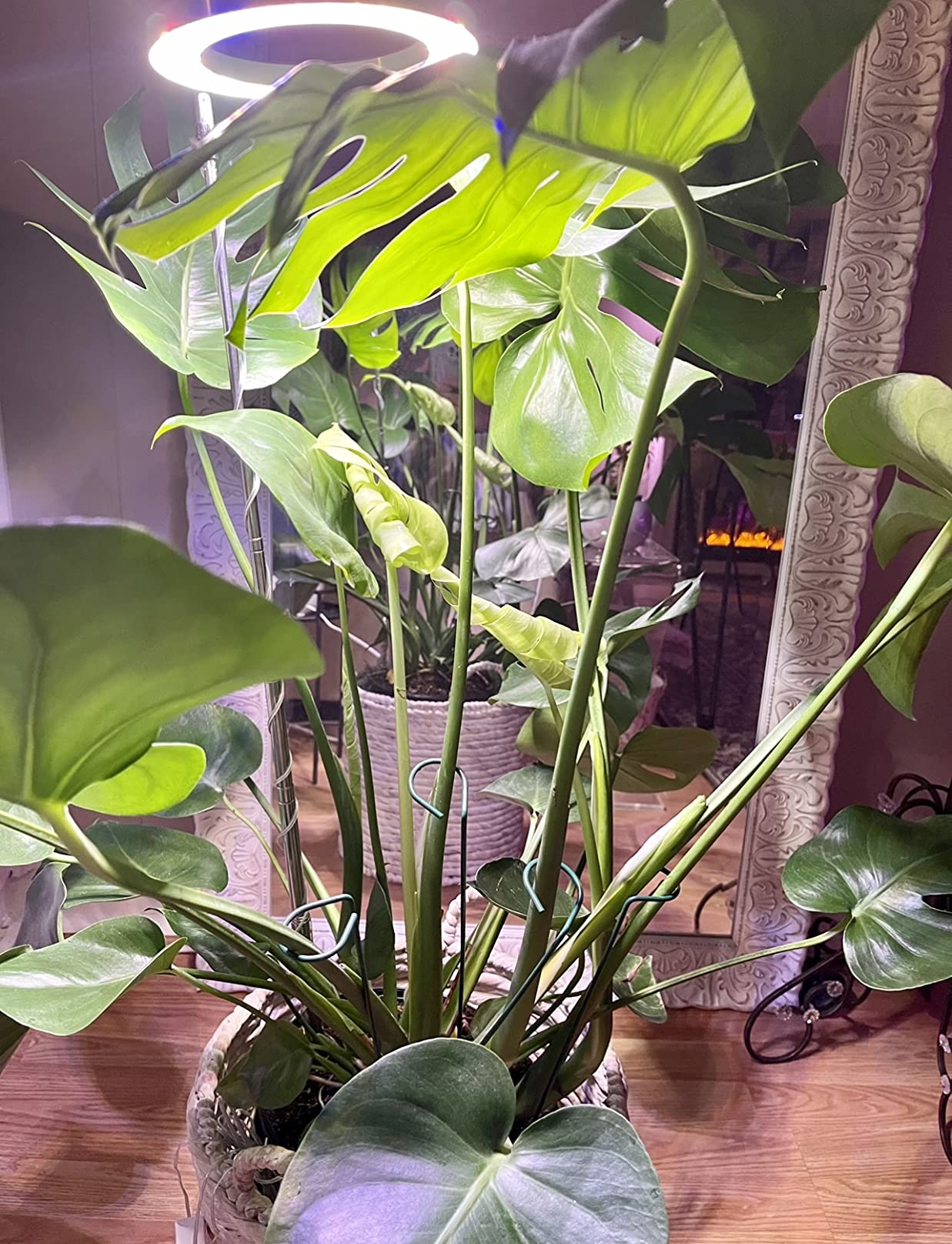
What the telescoping range changes
A light at 61 inches gives a large, soft footprint across a floor area without scorching anything, which is exactly the geometry a tall fiddle-leaf fig or a hanging pothos needs. Collapsed to 13.7 inches it becomes a low lamp for a bench full of small pots. One fixture, two jobs.
Where it falls short
The stake-in form factor is the limiting factor in a home with mostly potted plants on hard surfaces. If your plants are all on shelves, the clamp lamps ahead of this one will serve you better and mount more securely.
5. bseah Two-Tube Shelf Grow Light — Best for Bookcases and Plant Cabs
bseah Grow Light Plant Lights for Indoor Plants, Full Spectrum Plant Grow Lamp, 10 Dimmable Levels, Auto ON & Off with 3/9/12H Timer
- Strong non-slip spring clamp that holds on shelves and stands
- Ten dimmable levels plus three switch modes for growth stages
- Cycle memory timer for 3
- 9 or 12 hours set once and repeated daily
- Metal goosenecks position the tubes at different angles
- 54-inch cord is short for reaching high shelves without an extension
- The clear protective film over the LED tubes is secured under the end caps and leaves shards behind when removed
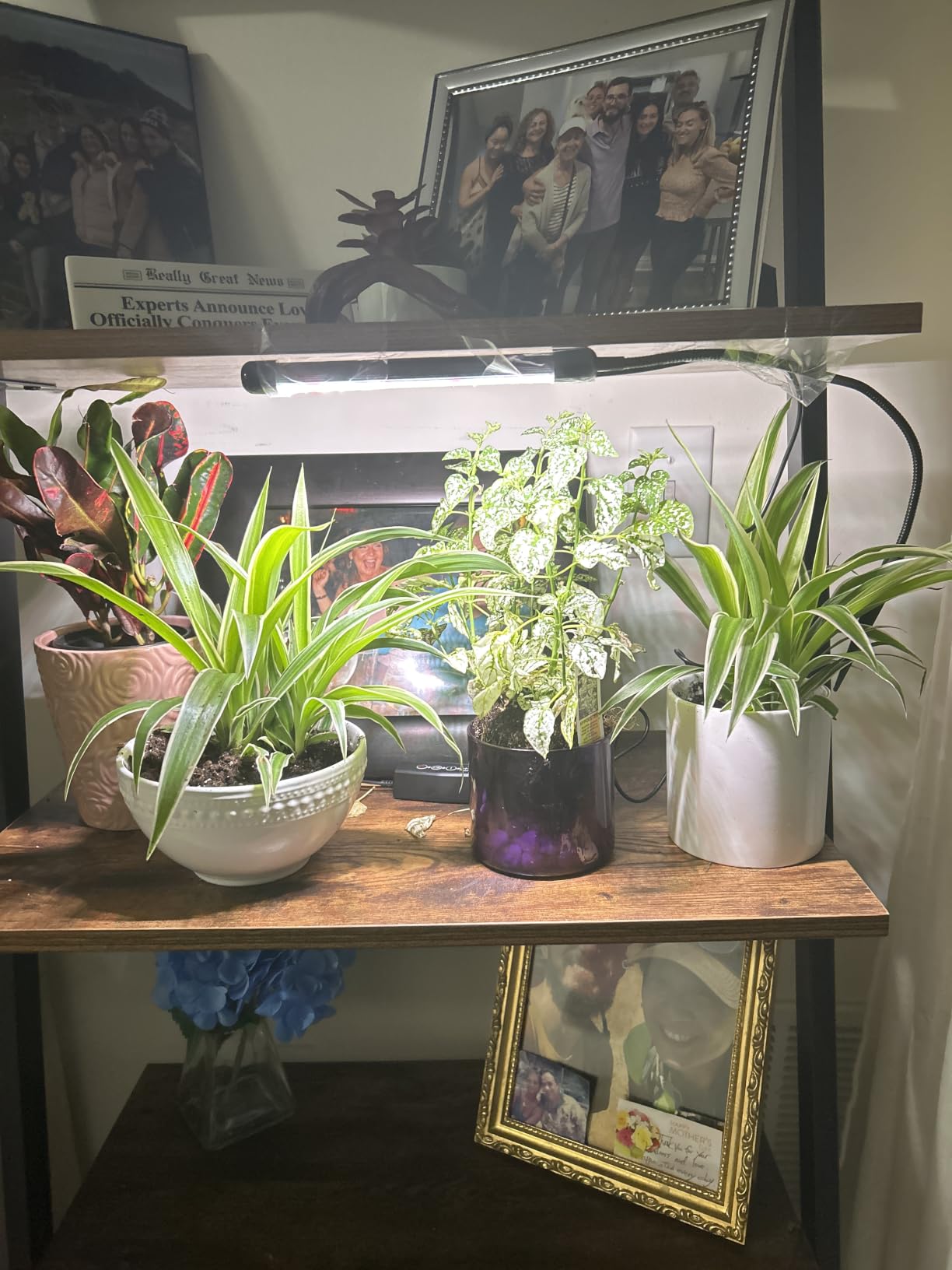
Two tubes on independently aimable goosenecks, a spring clamp that bites hard, and a timer you set once. I have run two of these on a bookcase above my collection of African violets, which are famously unforgiving, and the combination of adjustability and a grip that does not slip is what made the difference. Owners running multiples of these units to build out an entire shelf garden is the most common use reported.
The diodes are a yellow and white combination across two tubes, which is a spectrum choice that leans warm. It looks considerably less like grow gear than a red and blue fixture, and the tubes spread a wide, even wash rather than a hotspot, which reduces the pale, stretched growth you get under a single concentrated beam.
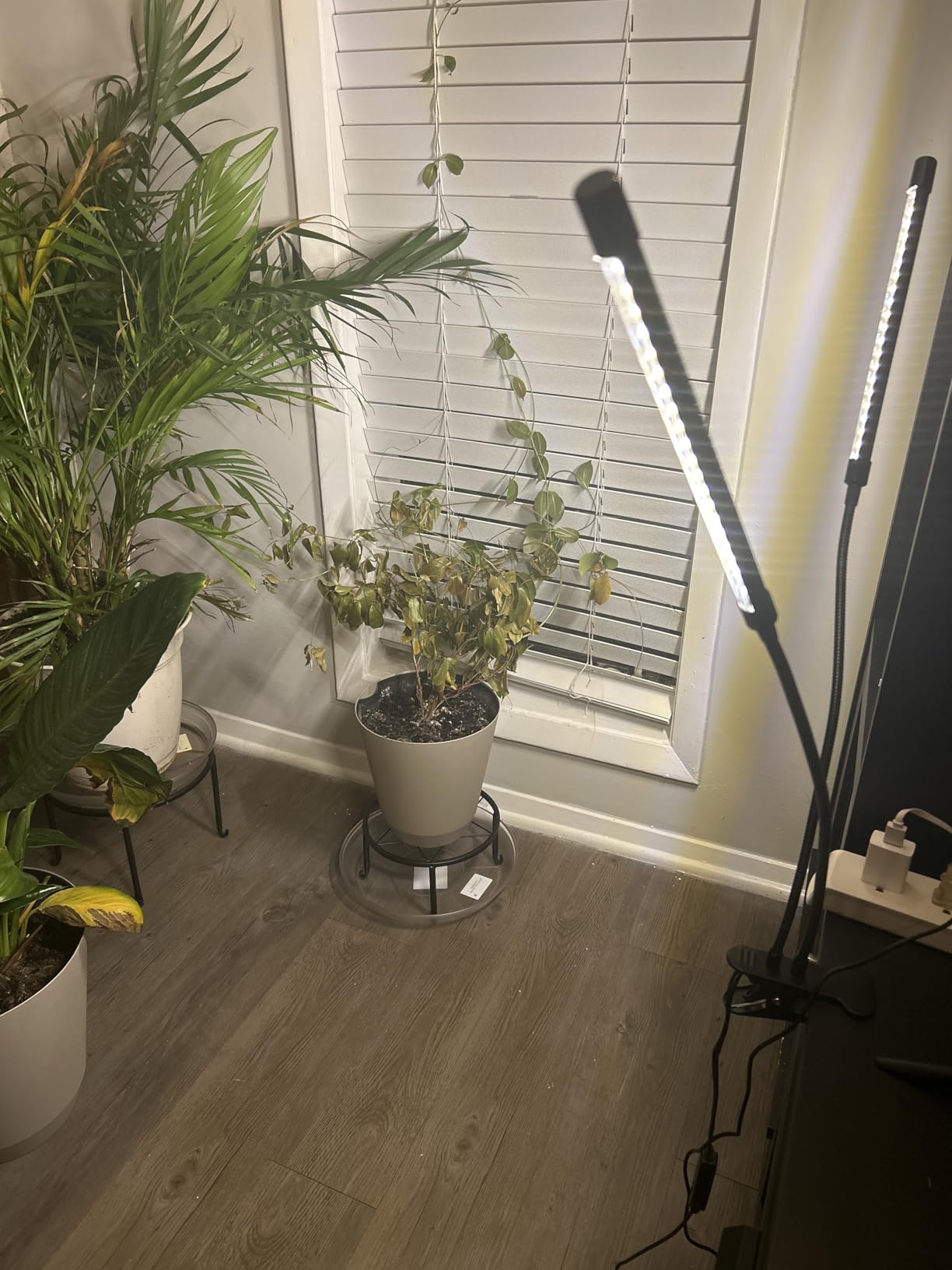
Ten dimming levels and three switch modes give a genuinely fine-grained response, and the 3, 9 and 12-hour cycle memory means the schedule repeats daily without you touching it. At 10W with a 5V supply this is one of the cheaper things to leave running continuously, which matters more than most people expect when a light runs twelve hours a day for months.
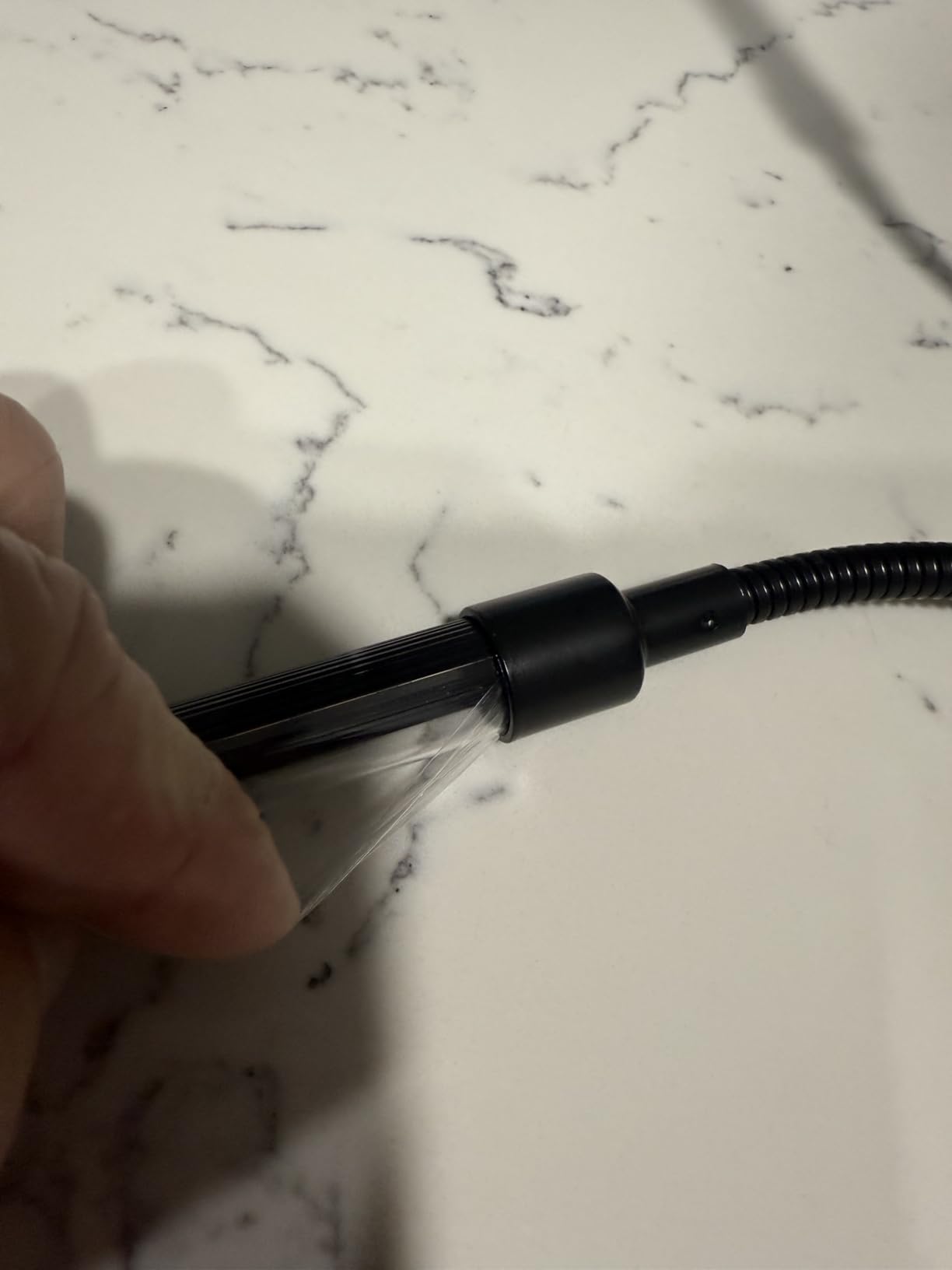
Two complaints come up repeatedly. The cord is 54 inches, which is short for reaching a high shelf if the nearest outlet is across the room, and the clear protective film on the tubes is tucked under the end caps, so it tends to tear into shards when you pull it off. Neither affects performance.
Why two tubes beat one bar
A single bar or head produces a bright centre and dimmer edges, and plants at the edges stretch toward the middle. Two tubes on separate goosenecks let you place light from two directions at once, which flattens the intensity map and produces more uniform growth across the shelf width.
Where it falls short
The 54-inch cord will dictate where you put it more than you would like, and a shelf with no front lip to clamp onto is a problem. For a room of floor planters and hanging baskets, the telescoping options further down reach more easily.
6. Barrina T5 Linkable 8-Pack Shelf Bars — Top Rated for Even Shelf Coverage
Barrina T5 Grow Light, 5000K White Full Spectrum LED Grow Light 2ft, 8 Pack
- Highest rating in this roundup at 4.7 stars with 84 percent five-star reviews
- Eight two-foot bars cover a full shelf or rack out of the box
- Linkable up to 16 units so a setup can expand without new drivers
- Each strip has its own on/off switch for zone control
- Non-magnetic housings cannot be stuck directly to a metal shelf
- Requires wiring and mounting hardware rather than clipping on
This is the highest-rated product in the entire roundup, and the rating makes sense once you understand what it is designed to do. It is not a lamp you point at a plant. It is a lighting system for shelving, sold as eight two-foot bars that install along the front edge of each shelf and wash the plants from above and slightly in front. That geometry is why owners get even coverage across multiple levels instead of the bright-middle, dim-edges result from a single fixture.
Each bar is 5000K white full spectrum, tuned to plant absorption ratios, with 400 diodes across the pack and 80W total consumption. The brand claims over 95 percent of the light energy is absorbed by plants, which is a marketing number you should treat sceptically, but the 5000K white spectrum itself is real and it is the reason this light looks like shop lighting rather than a nightclub.
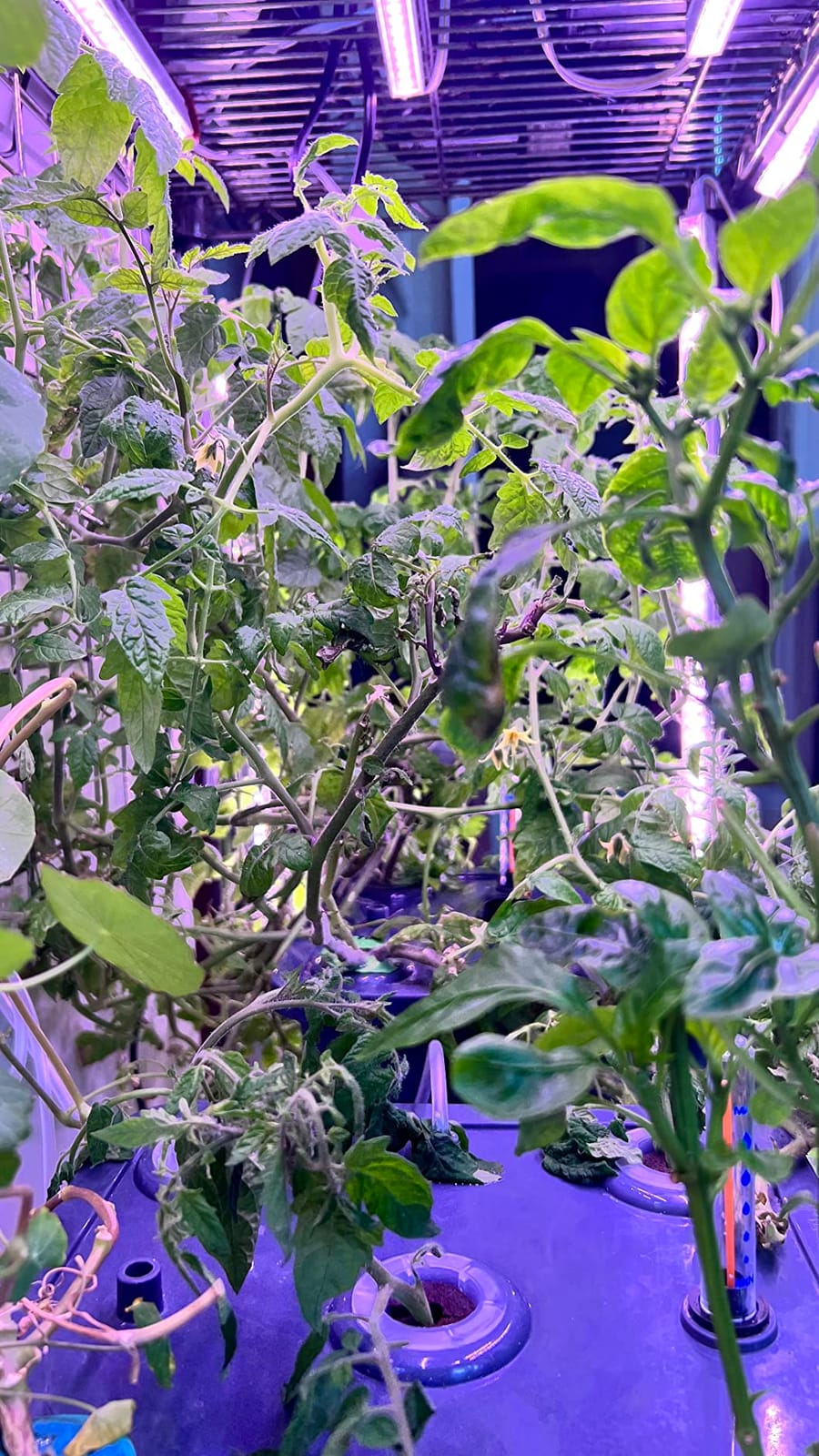
Two details make this the most expandable option here. The bars link in series up to 16 fixtures, so a large bookcase or a plant cabinet can be built out from one driver, and every bar has its own on/off switch, which lets you zone by growth stage. A shelf of seedlings can run twelve hours while a shelf of mature foliage runs eight, on the same circuit and the same installation.
The installation is a real job rather than a clip-on. The kit includes double-sided tape, clips and cable ties, and you should follow the placement guidance: not on uncured plaster, not on a dusty or greasy surface, or the adhesive gives up. Reviewers are clear about that tradeoff. It buys even coverage at the cost of a ten-minute install.
Best use case: a multi-level plant cabinet
This is the answer for anyone with a bookcase, cube shelf or cabinet dedicated to plants. Eight bars cover several tiers immediately, and the per-bar switching means you are not forced into one schedule for plants at different stages. The 2-year warranty is solid for a light in this category.
Where it falls short
The housings are non-magnetic, so it will not stick directly to a metal shelf without the clips. And if you have four plants on a windowsill, this is a lot of hardware for the job, which is where a clip lamp makes more sense.
7. Juhefa 48-LED Stake-In Plant Lamp — Best Single Plant Supplement
Plant Grow Light,48LED White Red 6000K Full Spectrum Gooseneck Growing Lamp
- Least costly lamp here while still providing dimming and a timer
- Bright output that can revive struggling specimens
- Four
- eight and 12-hour cycle timer repeats daily
- Five dimming levels adjustable while the timer runs
- Seventy-seven-inch cord gives placement flexibility
- Stake-in base with no clamp or stand so it needs soil or tape to stay put
- Coverage is narrow and suits a single plant
- The flexible neck can swing if it is not anchored
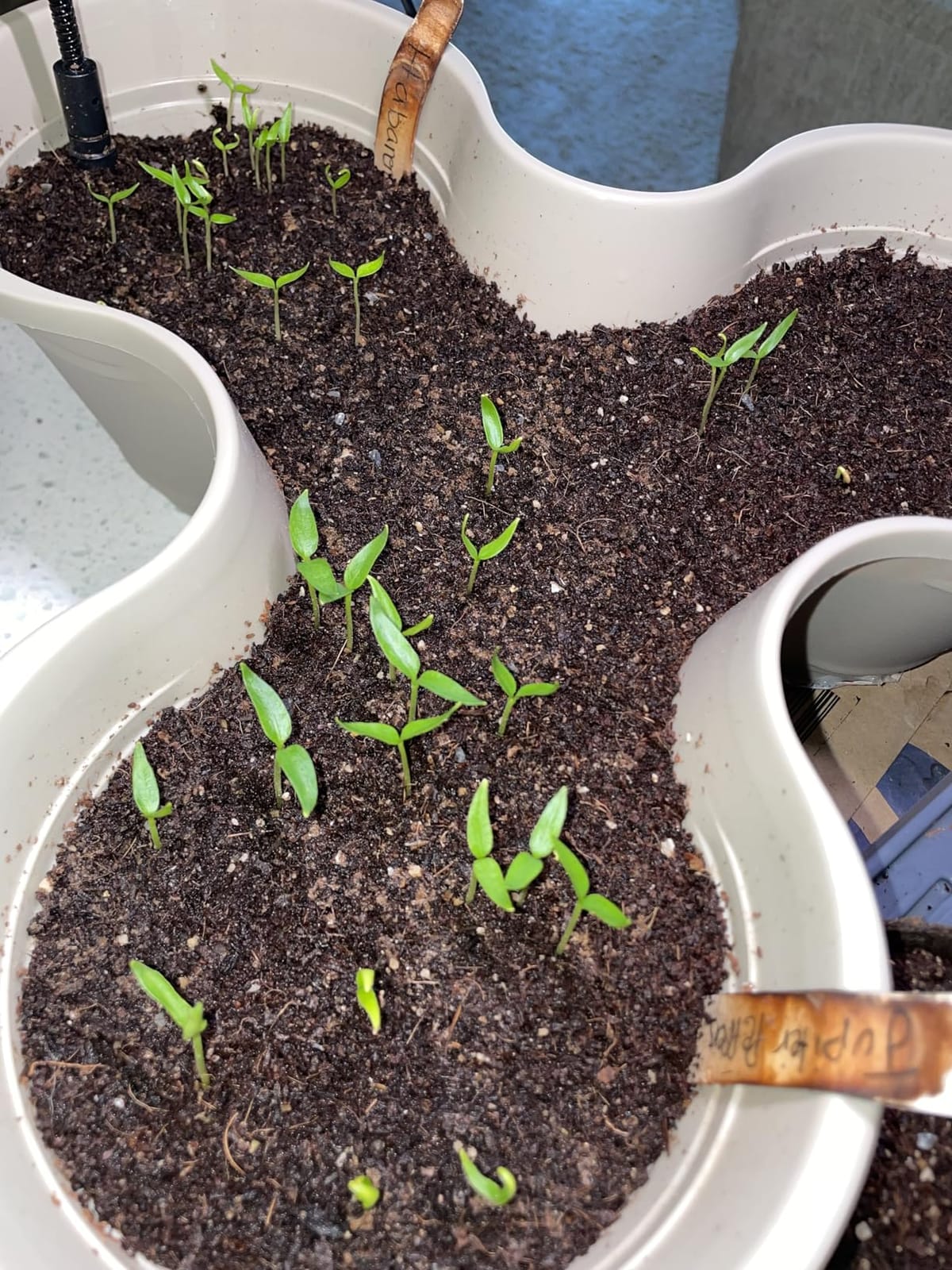
This is about as simple as a grow light gets, and it is still one of the more useful. It is a single gooseneck head on a stake, powered over USB, with 40 white and 8 red diodes at 6000K. You push the stake into a pot, aim the head at one plant, set the timer and walk away. Several owners mention using it to revive a struggling specimen rather than to light a whole shelf.
The brightness surprises people. At a listed 5W light source wattage, this is not a high-output fixture by any horticultural measure, but for one plant at close range it delivers more than the plant was getting from a window it never quite reached. The 77-inch cable gives you room to place it somewhere the outlet is not.
The 4, 8 and 12-hour cycle timer repeats daily without needing a reset, and five dimming levels can be changed while the timer runs. That combination means you can start a plant on a long schedule at low brightness and shorten the schedule as it establishes, without unplugging anything.
The limitation is stability, and it is worth being blunt about it. There is no clamp and no stand, so on a pot with soil it is stable, and on a bare shelf you need a dab of tape or a second light to hold it in place. A light that drifts overnight is a light that ends up pointing at a wall by morning, so if your plants are on hard surfaces, buy a clamp model instead.
Where this light earns its place
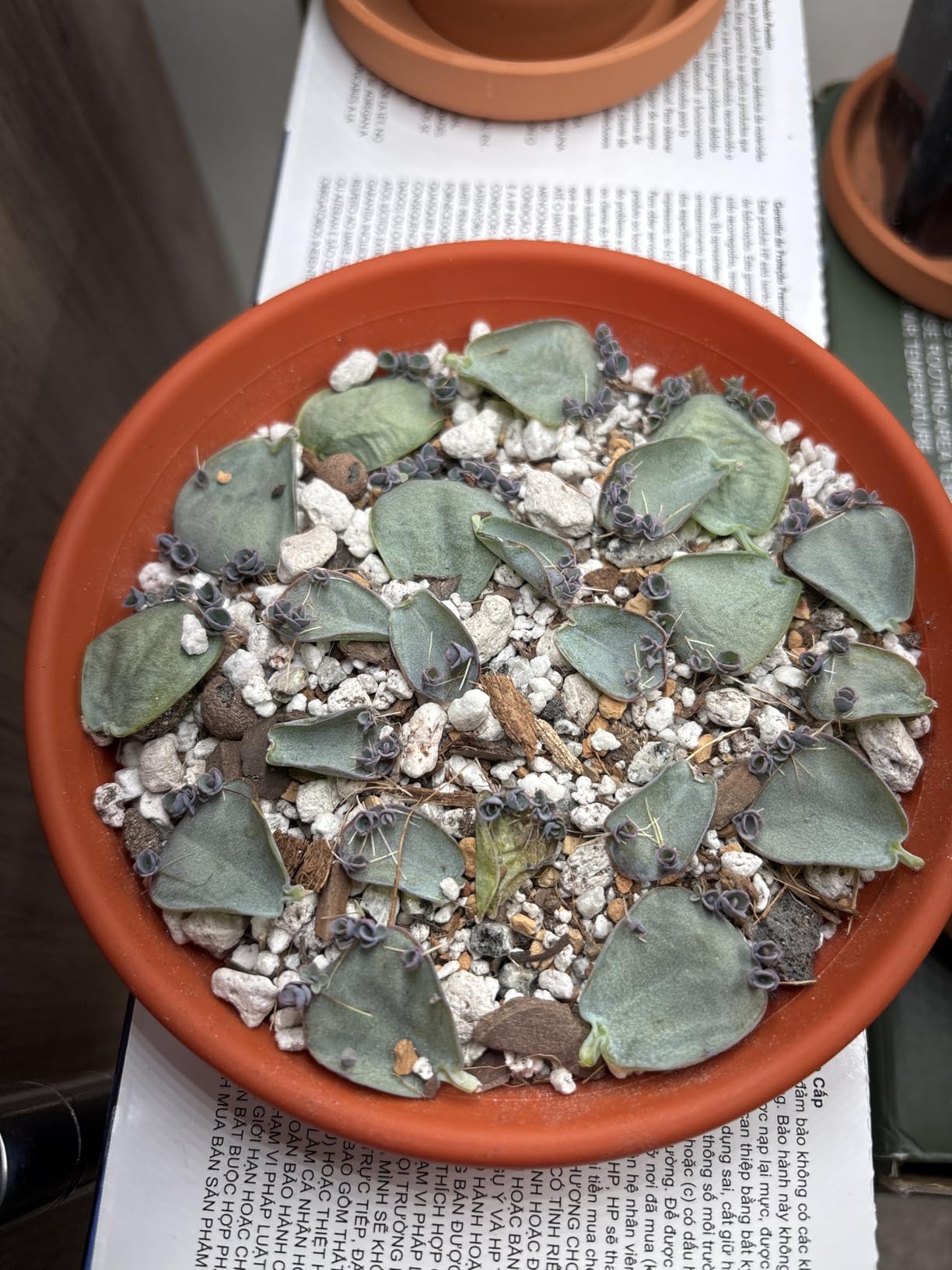
One plant, close range, low effort. It suits a windowsill herb pot, a single succulent arrangement that has stretched, or a cutting you are trying to root over the winter. The narrow coverage that disqualifies it from a shelf makes it ideal for a single pot.
Where it falls short
The stake-in base needs a soil surface or some weight to stay upright, and the gooseneck can swing if the head is not anchored. It is a supplement for one plant, not a lighting system for a collection.
8. VIVOSUN LumaLight 100W Panel — Best High-Output Light for Dense Plantings
VIVOSUN LumaLight 100W LED Grow Light, Full Spectrum Plant Light
- 100W output from 336 diodes across a wide panel
- Four-level dimming knob from 25 percent to 100 percent
- Bluetooth app control through the Vivosun GrowHub for scheduling
- IP65 waterproof and dustproof enclosure
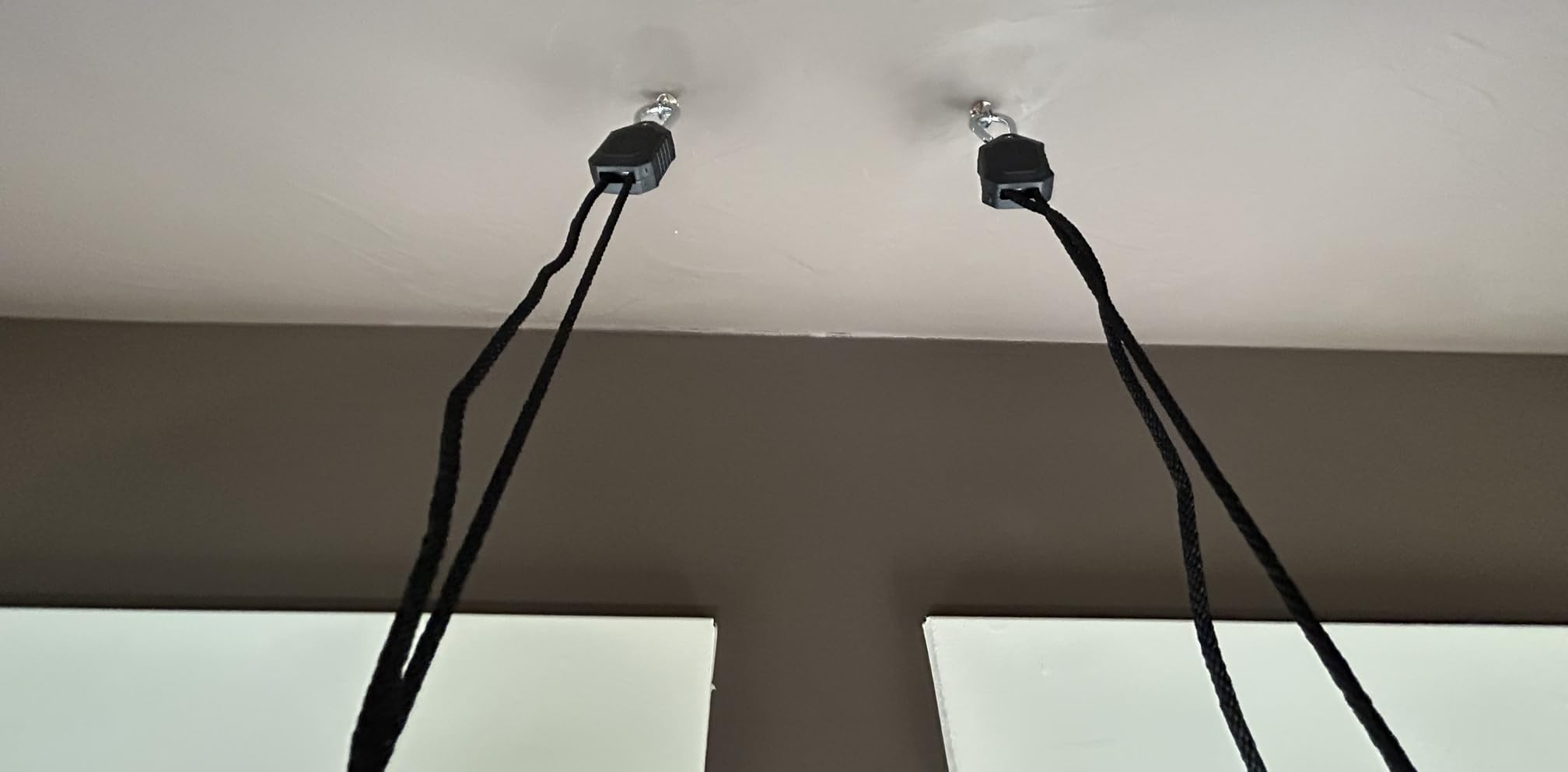
- Included rope hangers for suspension
- App scheduling requires the separately sold Vivosun GrowHub
- Needs hanging hardware and correct height above the canopy
- Costs considerably more than every clip lamp in this roundup
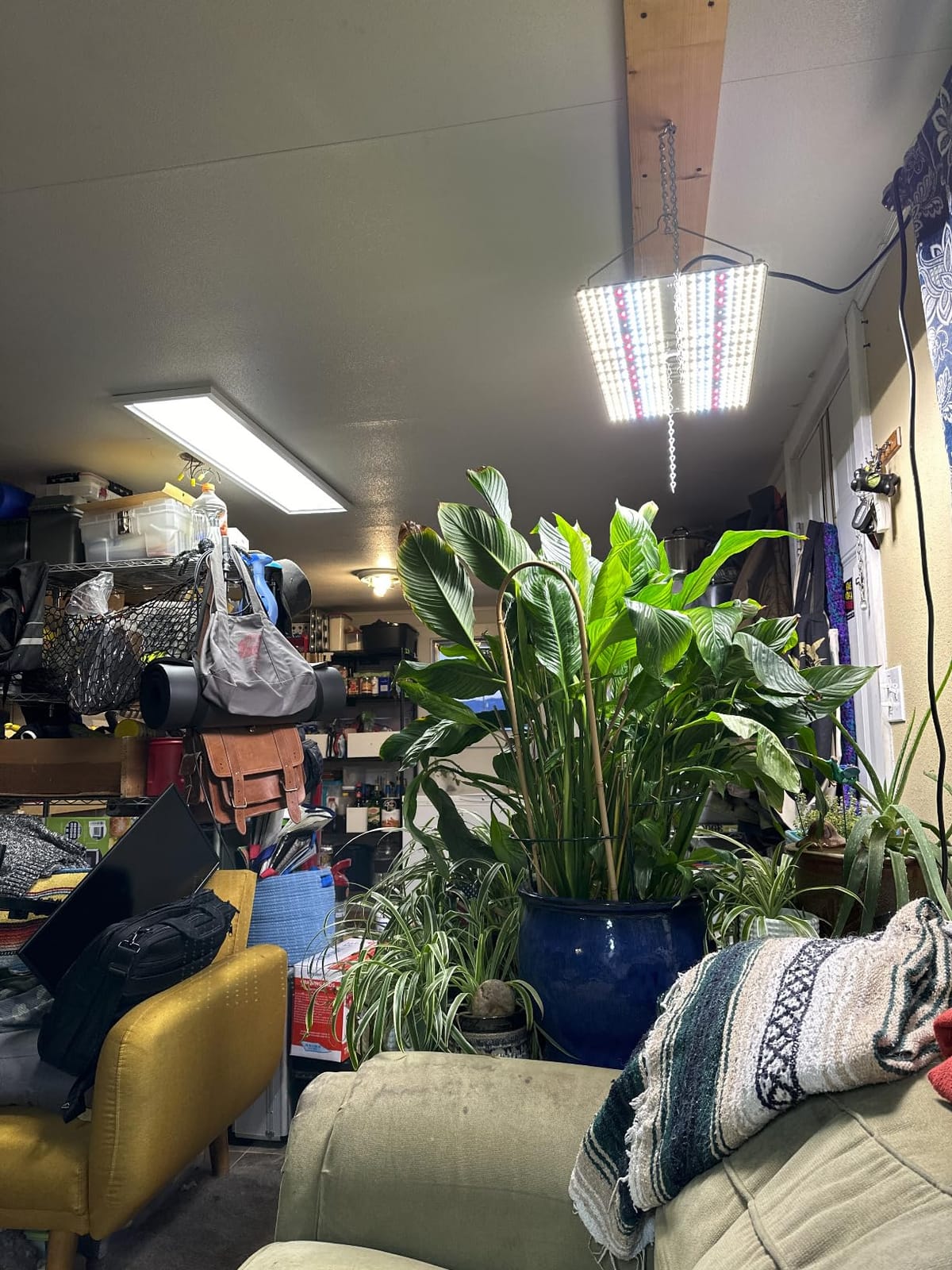
Every light before this one is a supplemental fixture for houseplants. This is the first one on the list that behaves like a horticultural instrument. It is a 100W panel with 336 diodes, and the diode layout is spread across the panel specifically for uniform intensity across the coverage area rather than a hotspot in the middle. If you are growing a dense group of plants and want them all to grow at the same rate, that uniformity is the whole point.
The spectrum is the most complete in the roundup, and the reason is visible in the diode list: white and blue alongside 660nm red and 730nm far-red, at 3000K and 5000K white. Far-red at 730nm is the wavelength commercial growers have used for a long time to influence stem elongation and flowering response, and having it built in means you do not have to bolt on a second fixture later.
Dimming runs in four steps from 25 to 100 percent on a physical knob, which matters more than it sounds. Running a seedling stage at 25 percent prevents the stretched, pale growth that comes from over-lighting, and you can climb the stages without buying a different fixture. Thermal management is rated for Q90 flux maintenance to 36,000 hours, so output stays stable rather than falling off visibly in the first year.
The app control is the one place where the specification is incomplete. Bluetooth control runs through the Vivosun GrowHub, which is a separate purchase, so out of the box this is a dimmable panel with a knob and nothing smart. Plan for that before you count on scheduling. It also needs hanging hardware and real height above the canopy, which makes it a poor choice for a quick countertop setup.
What 100W actually gets you
Enough intensity to run a dense group rather than supplement one. Reviewers who chose it did so because they needed real output, and the marks are strong for uniform coverage, dimming range and low heat. The IP65 housing also means you can spray it down, which matters in a damp propagation area.
Where it falls short
It is a hanging fixture, not a lamp, so it needs a ceiling hook or a proper stand. The smart features are gated behind an extra hub, and this sits at the top of the cost range here by a wide margin. For a couple of houseplants, none of that complexity pays back.
9. SANSI Ceramic Pot Clip Grow Light — Best for Desk and Countertop Plants
SANSI Grow Lights for Indoor Plants, Pot Clip-On Plant Light, 1-Pack
- Ceramic chip-on-board technology with 50 percent power savings
- Pot clip mounts directly to the container with nothing touching the plant
- 360-degree gooseneck adjusts aim across succulents and violets
- Three
- six and 12-hour cycle timer with four dimming levels
- 4000K light is comfortable enough for a desk
- At 5W it is intended for a single plant rather than a shelf or tray
- Not water resistant so it should stay away from splashes
This is the light I recommend when someone asks what to buy for the succulent sitting on their desk at work. The clip attaches directly to the pot, so there is no lamp base, no shelf requirement and no cord running across the keyboard. Nothing touches the plant except the clip on the container itself. At 5W over USB it draws almost nothing, which is exactly what you want from something running twelve hours a day next to your monitor.
The engineering underneath is more interesting than the form factor suggests. It uses ceramic chip-on-board technology on an aluminium base, which conducts heat away from the diodes far better than a plastic substrate. That is why the brand claims 50 percent power savings and 25 percent more plant growth effect compared with a conventional LED, and why the output figure of 35.78 micromol per second per square meter at 6 inches is credible rather than decorative.
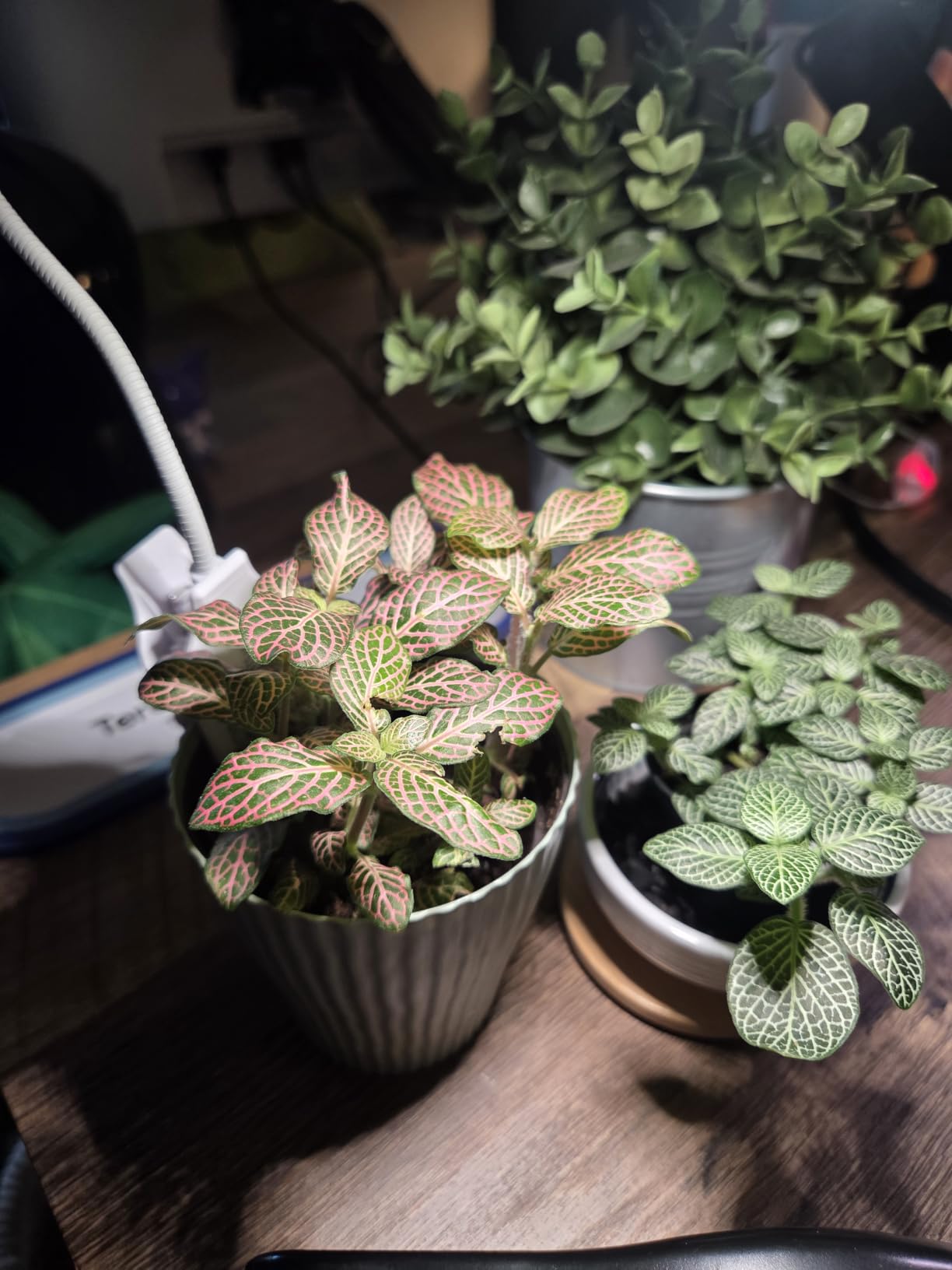
Colour temperature is 4000K, warmer and softer than the 6000K lamps earlier in this list, and that is a deliberate choice for a device that sits a foot from your face. Four dimming levels at 25, 50, 75 and 100 percent and a 3, 6 and 12-hour cycle timer cover the scheduling you need for a single potted plant, and a Bluetooth protocol is listed for control options.
Two limitations. At 5W this is a single-plant light and buying three for a shelf gets expensive compared with a shelf bar pack. And it is not water resistant, so it belongs away from a watering can’s reach, which is a real consideration for a succulent that gets soaked weekly.
Why a pot clip is the right form factor
It solves the mounting problem entirely. No shelf lip, no floor space, no stand to trip over, and the light moves with the plant when you carry the pot to the sink. The small footprint also means it can light a plant that is already crowded in with others.
Where it falls short
Output is limited by design. One plant, close range, gently maintained. Keep splashes off it, and if you have a whole shelf to light, a bar pack will serve you better for the money.
10. Aokrean 3-Pack Telescoping Halo Lights — Best for Several Plants Around a Room
Aokrean Grow Lights for Indoor Plants, Full Spectrum Plant Light with Base
- Three-pack of halo lights covers several plants around one room
- Telescoping pole and 90-degree rotation reach up to 26 inches
- Ten brightness levels plus three lighting spectrums
- Three
- nine and 12-hour cycle timer with daily auto on-off
- Installs in soil or on the included weighted base
- The base only becomes stable once a flower pot is pressed down onto it
- Not wireless; it needs a power connection and an included adapter
A halo light throws light outward and downward in a ring rather than a single beam, and that is what makes it interesting for a room with plants scattered in it. A floor planter, a hanging pot and a plant on a low side table can each catch part of the ring, and you get useful coverage from a light that is not aimed at any one of them.
This comes as a three-pack, so you can spread them around a room, a hallway and a bedroom rather than putting all the power in one place. Each has 48 diodes, a telescoping pole reaching 26 inches with 90-degree rotation, ten brightness levels and three spectrum modes covering white, warm white and a red mix. The 3, 9 and 12-hour cycle timer handles scheduling for all three.
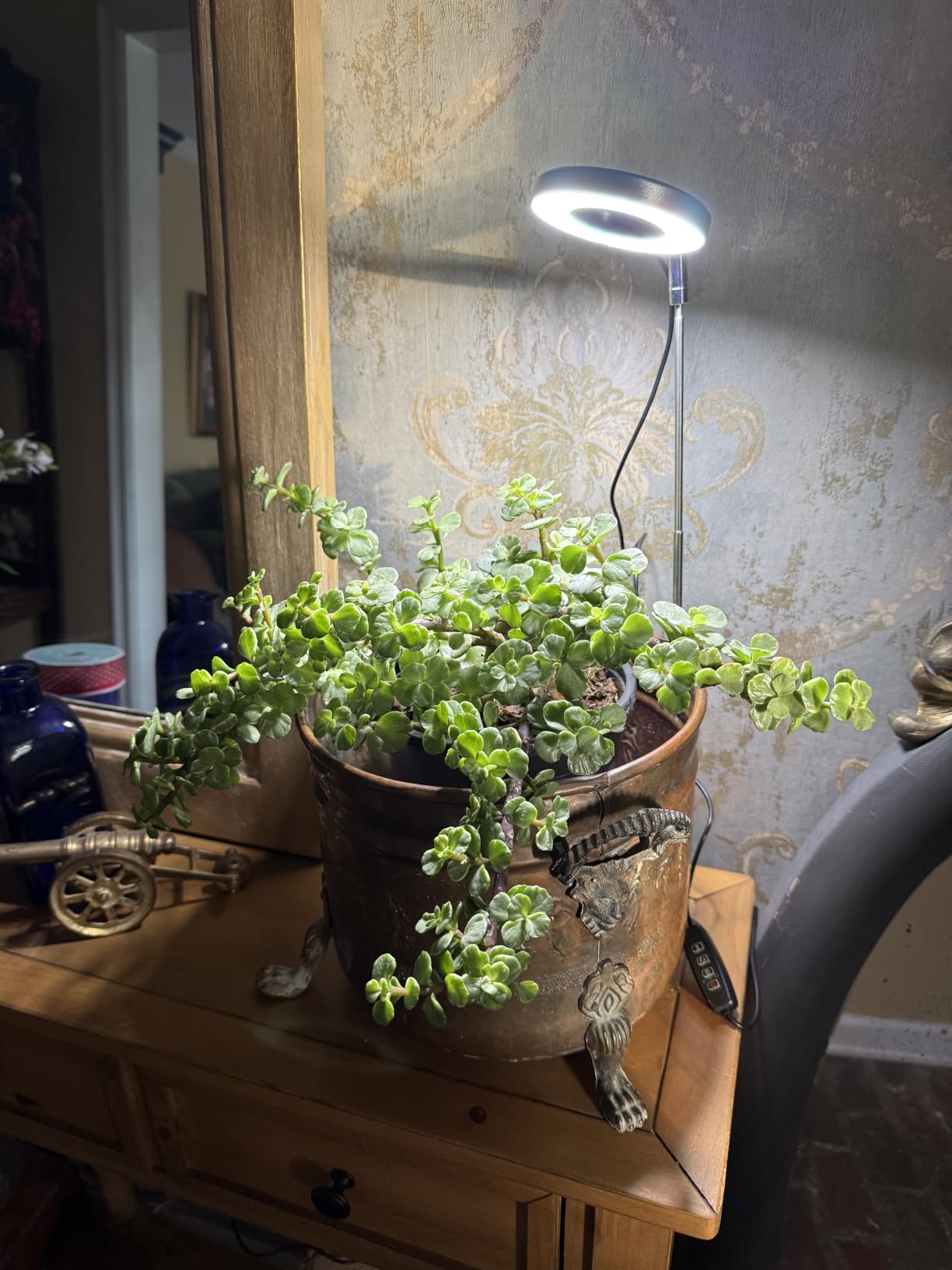
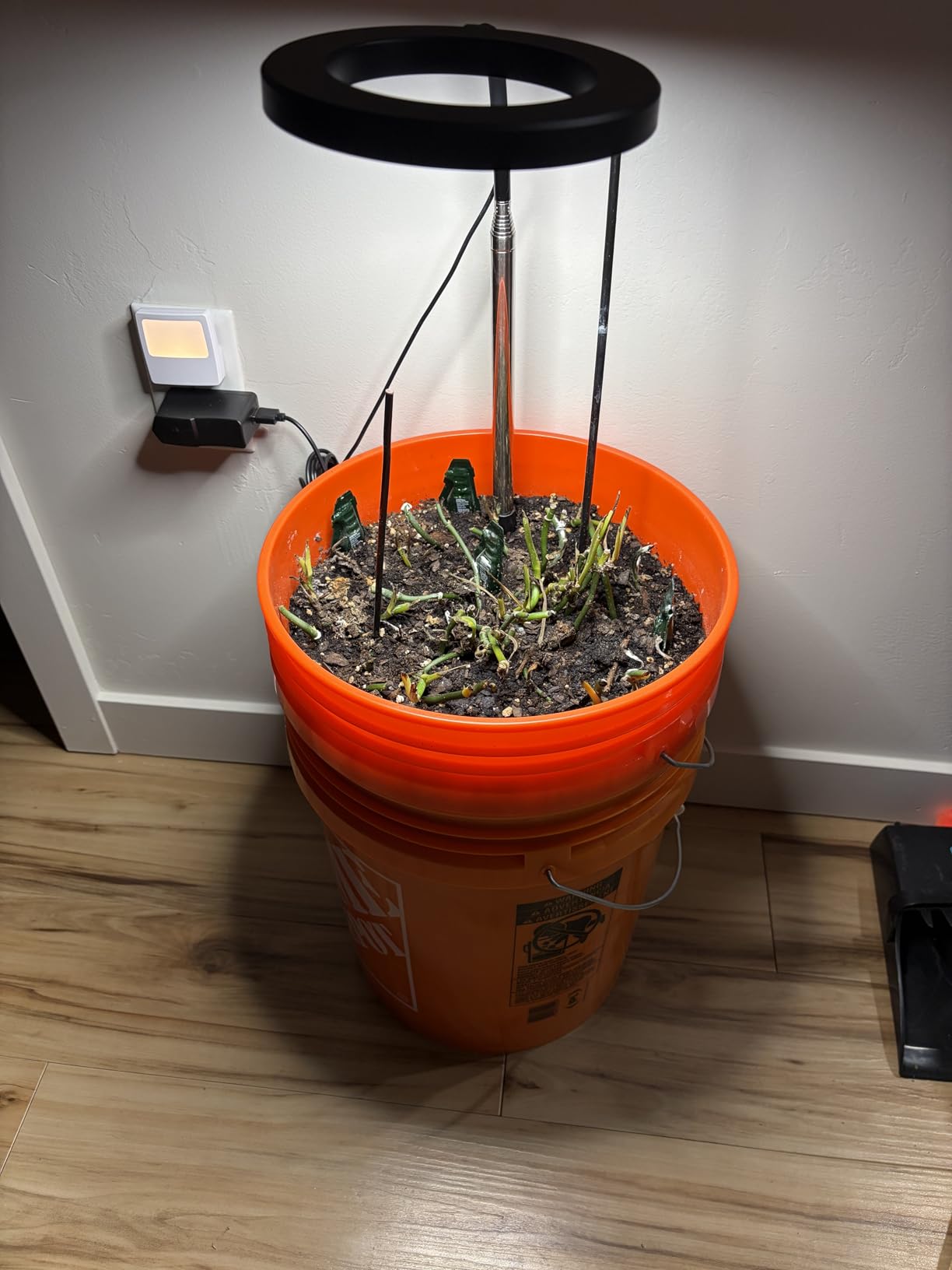
Installation is the part to read carefully. Each light inserts into soil or stands on a weighted ABS base, and the base is only stable once a flower pot is pressed down onto it. Empty, the base tips. That single design requirement explains the reviews that mention wobbling, and it is not a flaw if you plan for it, because the lights are designed to sit on top of a planter rather than on a floor.
It is also not wireless. Each light needs a power connection and the included adapter, so a three-pack across three rooms means three adapters, and the cable routing is part of the setup rather than an afterthought.
Where halo lights work better than spot lights
Anywhere the plant is above the light and the light is not aimed at it. Ring distribution means a hanging pot gets even light from underneath, and a wide floor planter gets coverage across its whole surface instead of a bright centre and dim edges. The 26-inch reach handles a tall planter and a hanging basket that clip lights cannot get to.
Where it falls short
The base needs a pot on top to stay upright, and the 10W class output suits houseplants and herbs rather than anything dense. If your plants share one shelf, a clip or bar light concentrates the light where it is needed instead of spreading it across a room.
11. GHodec Freestanding Tripod Grow Lamp — Best for Floor Planters
GHodec Grow Light Free Standing, 5500K Full Spectrum Gooseneck LED Lamp
- Freestanding tripod avoids needing a shelf edge to clip onto
- Adjustable 15 to 48 inch stand directs light over floor pots
- Steel and aluminium bracket dissipates heat well
- Four
- eight and 12-hour timer with five brightness levels
- True 5500K white spectrum rather than a purple glow
- Several owners report cord or cable failure within about a year
- Will not restart on its own if power is cut
- Confusing timer settings at first
- Listed at 4.2 stars with 7 percent one-star reviews
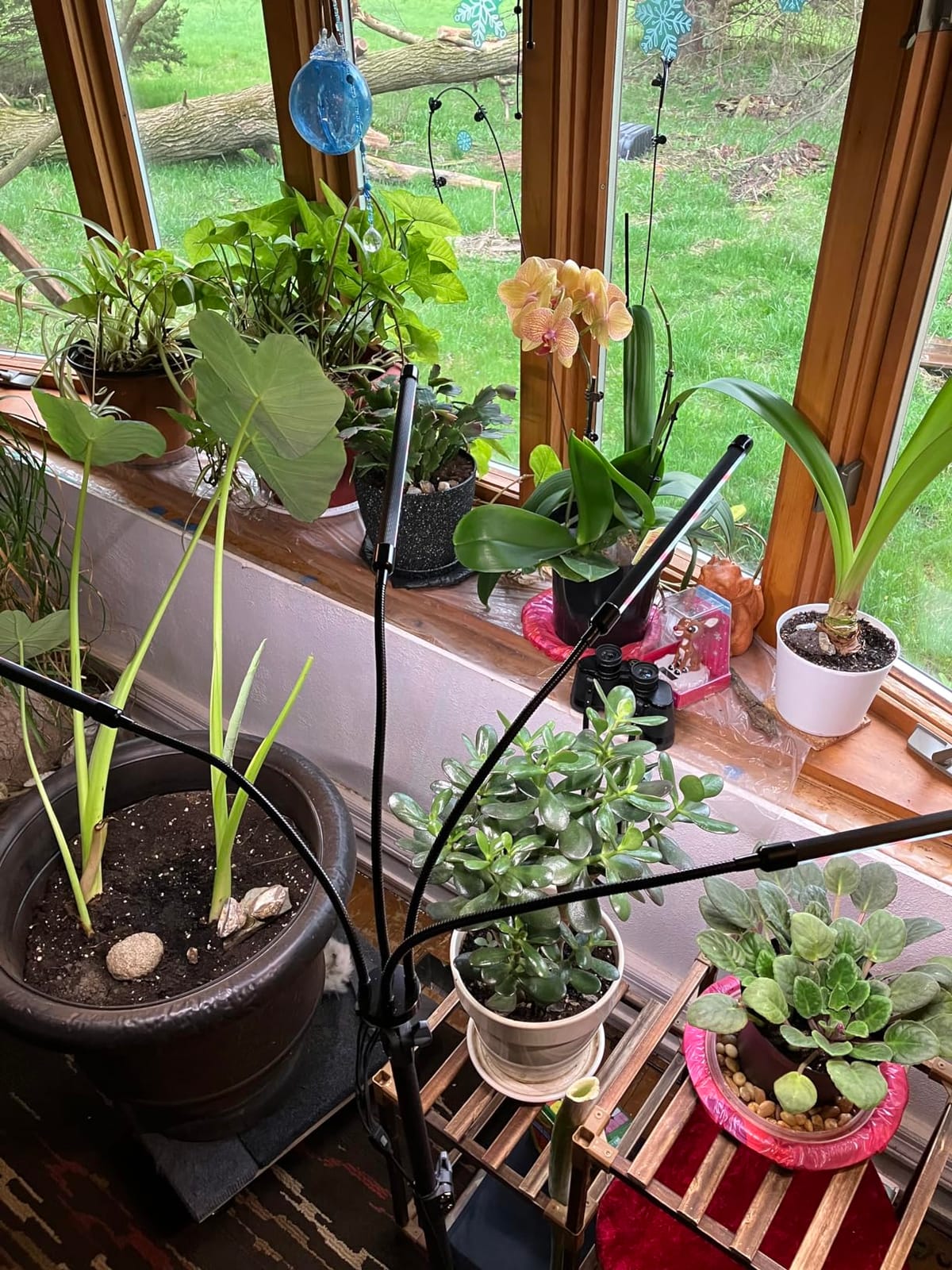
A tripod solves the problem every clip lamp has: it does not need furniture. If your plants live in a heavy floor planter in the corner of a room with no shelf nearby, this is one of very few options in this roundup that will stand on its own and reach over the top of a large pot. The stand adjusts from 15 to 48 inches, and at full height it sits above a tall planter and points down into it.
The spectrum is 5500K white across four LED strips, each with 16 white and 4 red diodes. That is a genuinely white grow light, not a blurple fixture, and it is the reason it suits a living room where you would not tolerate a purple glow. Owners report good results on houseplants and even aquariums.
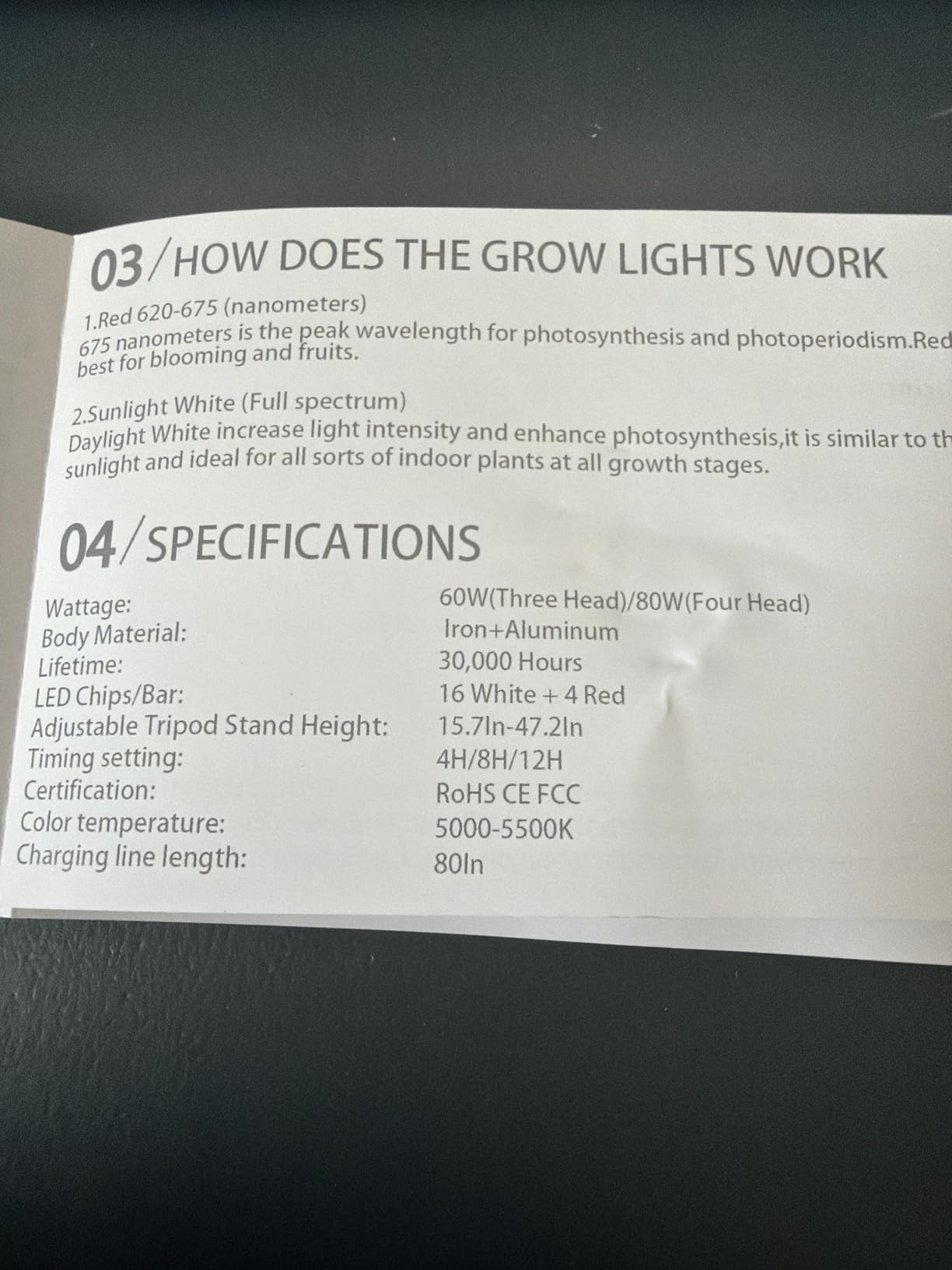
Durability is the problem here, and it is a consistent one rather than an occasional grumble. Several reviews describe the cord or internal cable failing within about a year, leading to flicker or a lamp that will not stay on. This fixture also carries a lower rating than the rest of the group, at 4.2 stars with 7 percent one-star reviews. The warranty is 12 months, which is shorter than most of the lights here.
Two operational quirks to know. If power is cut, the lamp will not restart on its own, so the built-in timer is your only scheduling option. And the 4, 8 and 12-hour settings are easier to read as hours of darkness than hours of light, which trips people up at first.
When a tripod is the right answer
Big pots, no shelf, high planters and arrangements you want lit from above. The steel and aluminium bracket also handles heat well, so a long run at full brightness does not cook the leaves closest to the strips.
Where it falls short
The cable reliability reports are the deciding factor for me. A light that needs replacing every year is a poor long-term investment even at a modest cost, and the 12-month warranty offers little recourse. If your plants can be reached with a clamp or a telescoping pole, choose one of those instead.
12. SANSI 36W E26 Grow Light Bulb — Best Bulb Format for an Existing Lamp
SANSI Grow Lights for Indoor Plants, 36W Plant Lights for Indoor Growing
- E26 reflector drops into a standard lamp or fixture
- High output at 36W with 3250 lumens and PPFD 265.58 at 1 foot
- Patented ceramic chip-on-board improves heat conduction
- 4000K with a color rendering index of 95 suits a living space
- ETL listed with 5-year warranty and 25000-hour rated life
- Low IR and low heat radiation reduces scorch risk
- Bulb only so it needs a separate fixture
- lamp or clamp arm to aim it
- Not a timer-controlled fixture on its own
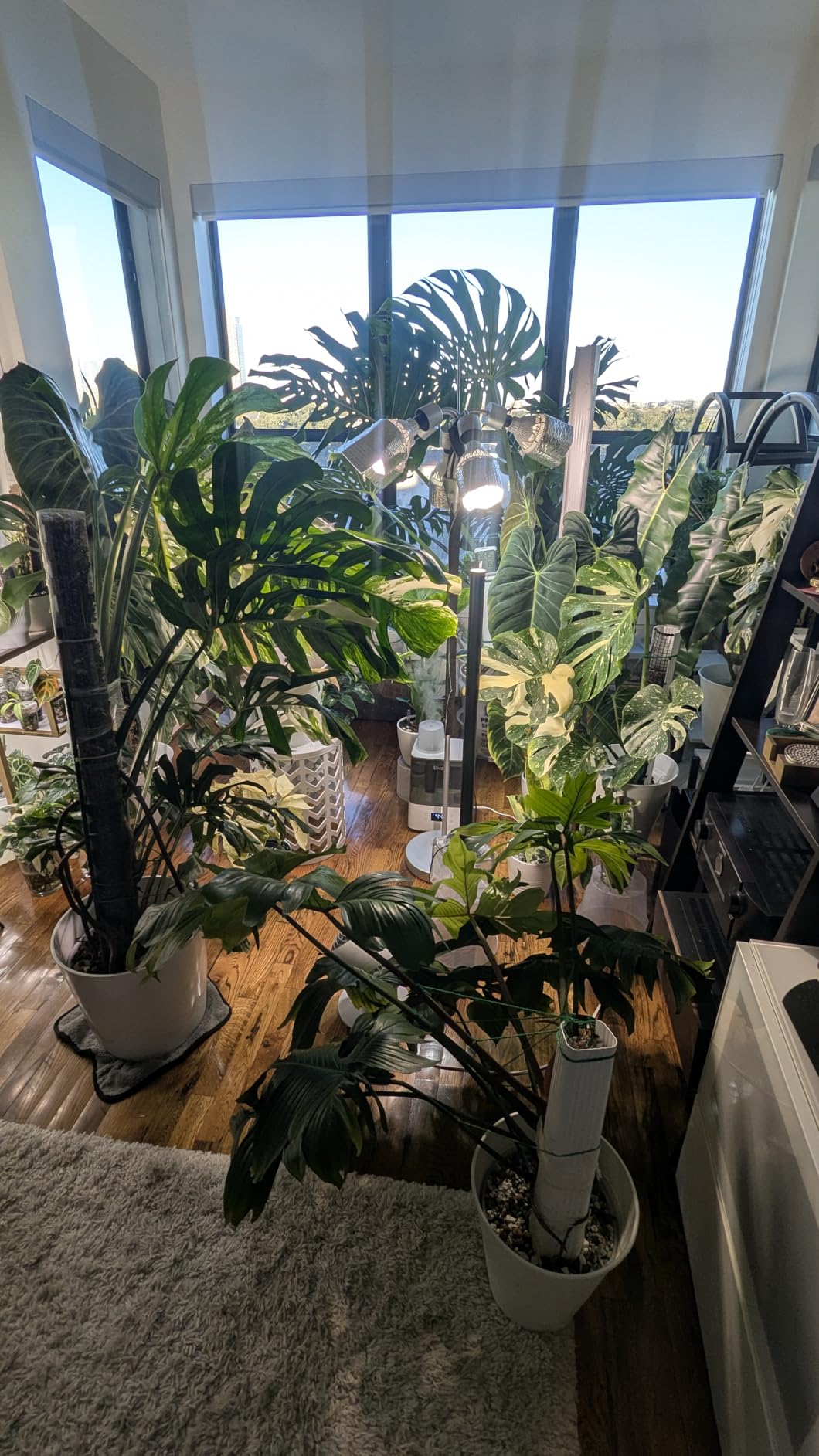
This is the one to buy if you want a grow light that looks like a lamp. It is an E26 reflector bulb that screws into the socket of the floor lamp, table lamp or clamp fixture you already own. No dedicated grow-light housing, no proprietary base, no purple housing sitting in the corner of your living room pretending to be furniture. The light itself is 4000K with a color rendering index of 95, which is about as close to a pleasant daylight lamp as a grow bulb gets.
The PPFD figure is the one to note: 265.58 micromol per second per square meter at one foot, with a PPF of 65.6 micromol per second from a 36W source producing 3250 lumens. The secondary optical lens is what concentrates that output into a useful beam rather than letting it scatter, and the 4000K output spans 400nm to 780nm across the visible range.
The construction is what separates it from cheap generic bulbs. It uses patented chip-on-ceramic technology on a non-conductive ceramic heat sink, inside a V0 flame-retardant ceramic body with a WF2 anti-corrosion grade shell. The ceramic conducts heat away from the diodes effectively, which is the main failure mode in cheap grow bulbs, and it is also why the low IR and low heat radiation claim holds up: your leaves do not get scorched from above when the heat is being moved out the back.
On the forums, this format is the one that comes up most often for high-light and carnivorous plant growers looking for a single bright source without a dedicated fixture, and the 5-year warranty plus 25,000-hour rated life is the strongest guarantee in this roundup. The catch is obvious and worth saying plainly: it is a bulb. It needs a lamp, it needs to be aimed, and it is not a timer, so you either use a fixture with a timer or you set your own schedule.
Why the bulb format solves the decor problem
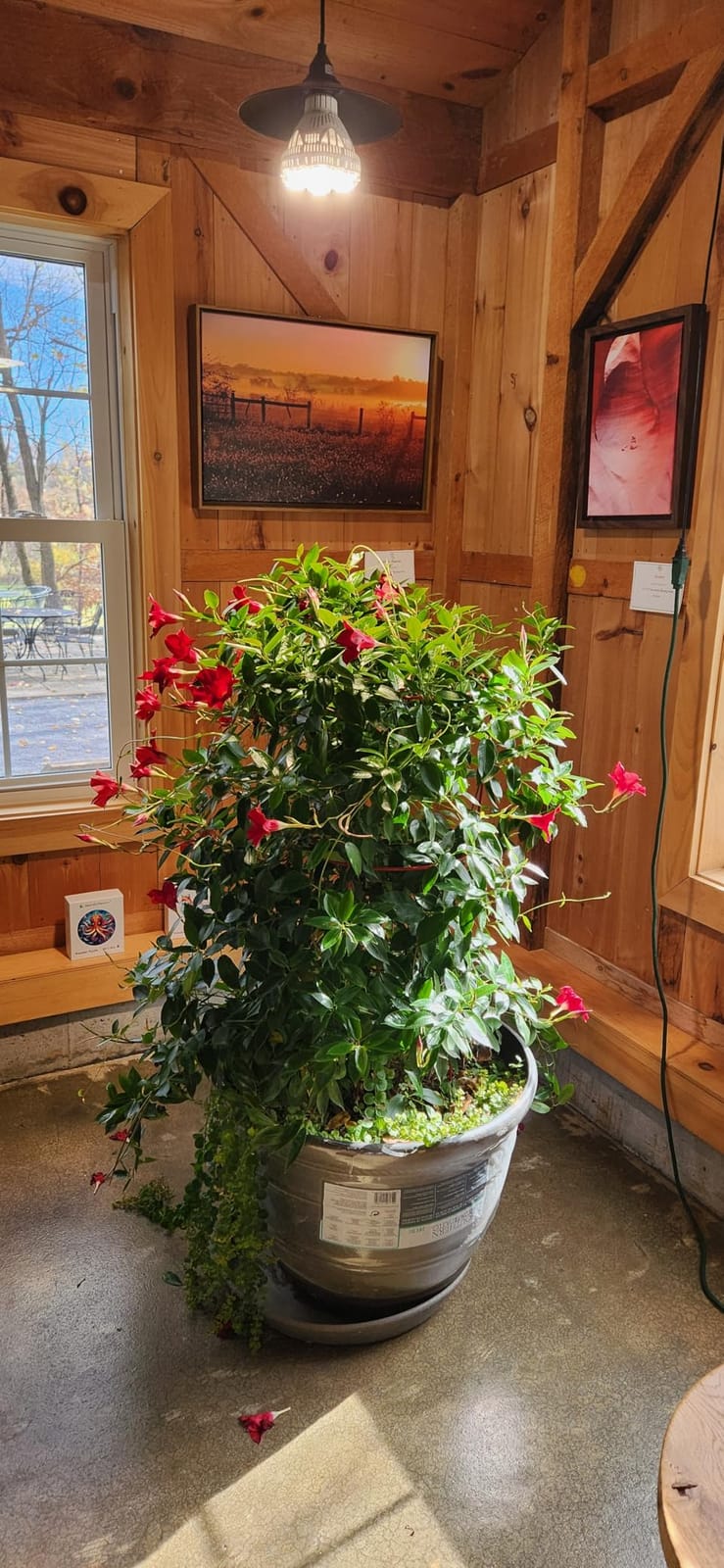
Nothing about it reads as grow gear. It is a reflector bulb in a lamp, which means you can put it in a floor lamp beside a chair, a clamp fixture over a plant stand, or an existing table lamp, and the room still looks like a room. For a plant corner in a living space, that matters more than most buyers expect.
Where it falls short
It cannot be aimed without a fixture that aims. A bare socket points wherever the socket points, and heat rises into the shade rather than away from the plant, so a lamp with a shade and good clearance is the right pairing. You also have to source the timer separately.
How to Choose an LED Grow Light for Indoor Plants in 2026
Almost every grow light listing is written to make you compare brightness, and brightness is measured in at least four different ways. Here is what each number actually means, so you can read a product page without guessing.
What is PPFD, PPE and PAR?
PAR is photosynthetic active radiation: the slice of the electromagnetic spectrum between 400nm and 700nm that plants can use for photosynthesis. Anything outside that range does nothing for growth. A light can be extremely bright in lumens and useless to a plant if most of its output falls outside PAR.
PPF is photosynthetic photon flux, the total number of usable photons a fixture produces every second, measured in micromol per second. It is a property of the lamp alone and tells you nothing about the plants.
PPFD is photosynthetic photon flux density: PPF spread across the area where the plants are, in micromol per second per square meter. This is the number that matters, because it describes what a single leaf receives. It drops sharply with distance, which is why every good listing gives PPFD at a stated height. If a product only quotes a PPFD figure with no height, treat it as marketing.
PPE is photosynthetic photon efficacy: PPF divided by the electricity consumed, in micromol per joule. It is the efficiency rating, and it tells you how much plant light you get per unit of power. A 100W fixture at 2.7 micromol per joule produces more plant light than a 150W fixture at 2.0, and the second one also costs more to run.
Full spectrum white versus blurple
Blurple fixtures use only red and blue diodes because those are the two wavelengths chlorophyll absorbs most strongly, and the magenta look is a side effect. Full spectrum white LEDs start from a blue diode and convert it through a phosphor coating, producing a continuous spectrum across the visible range that reads as ordinary white light.
For growth, the difference is smaller than the marketing suggests, because red and blue are present in a white spectrum anyway. For a living room, the difference is enormous. A white light does not distort the colour of your foliage, does not tint the walls, and does not make guests wonder what you are growing. If the light has to live in a shared space, choose white. Thread after thread on r/houseplants makes exactly this point about blurple fixtures ruining plant colour perception.
What spectrum means in practice
Look for 3000K to 5000K white for general growth, 660nm red for flowering and fruiting, and 730nm far-red if you want the complete commercial spectrum. The white diodes in this roundup range from 4000K on the desk-friendly SANSI units up to 6000K on the brighter clip lamps, and the VIVOSUN panel is the only one here with both 660nm and 730nm red content built in.
Diodes and drivers: the two specs worth researching
Diode quality is the most-cited quality signal in grower forums, and the advice is consistent across them: check that the diodes are a named, reputable part rather than an unmarked chip, and check that the driver is a recognised brand. Experienced growers warn against fixtures that advertise premium diodes but pair them with a cheap driver, because the driver is what fails first. The irony of a cheap light is that you can end up paying twice.
Look for the physical design cues instead: an aluminium heat sink, passive cooling, and a detachable driver so the driver can be replaced without replacing the whole fixture. Most of the lights here use a low-voltage USB supply, which is a good sign, because a low-voltage head is far safer in a home full of water and metal shelving.
Wattage, coverage and the equivalence trap
Ignore wattage equivalence claims entirely. A fixture that is 1000W equivalent to an incandescent bulb is telling you about light to the human eye, not light to a plant, and the number is not comparable between products. Judge coverage by the stated area, and judge intensity by PPFD at a stated height.
As a rough guide for houseplants, a 5W pot clip suits one plant, a 10W clip lamp suits a shelf tier, a 20W to 40W fixture suits a bookcase section, and a 100W panel suits a dense grouping. If a listing claims a coverage area, ask whether that area is measured at the canopy and at what distance, because a 2×2 foot claim at 24 inches is a very different product from a 2×2 foot claim at 6 inches.
Safety, heat and electrical load in a home
These lights run for many hours a day in rooms with people, so three things deserve attention. First, never look directly at a running fixture; a ceramic or COB array is intensely bright even at 5W. Second, keep the head above the soil line so heat is not directed at wet soil, roots or a plastic pot rim. Third, count the load: several 10W USB fixtures on one power strip is a small load by modern standards, but a 100W panel on an already crowded circuit is a different calculation.
If you are building fixtures into furniture or shelving, the wiring side of the job matters as much as the light. Our explainer on what lights out manufacturing means covers the basics of powering LED assemblies in a clean, repeatable way if you are building something permanent.
Running cost, honestly
Multiply the wattage by the hours per day and by 365 for a yearly figure, then divide by 1000 for kilowatt hours. A 10W lamp on a 12-hour cycle runs about 44 kilowatt hours a year. A 100W panel on a 16-hour cycle runs about 584. Both are small numbers in a household total, which is the honest answer to the question most people are actually asking: the electricity is not what these lights cost you.
Do you even need a grow light?
Five signs your plant is light-starved, in rough order of reliability. Long internodes: the distance between leaves on new stems is visibly greater than on older growth, and the plant leans toward a window. Small, pale new leaves that never reach full size. A stretched, thin stem with wide spacing. Failure to flower on a plant that normally flowers. And a general dullness, where colour fades between veins and growth slows in the growing season.
Before buying anything, move the plant to the brightest window you have and rotate it a quarter turn weekly for a month. If it perks up, you have a placement problem rather than a lighting problem. If a window already gives you several hours of direct sun, you may not need a fixture at all, and you can save the money and the wall space.
How Much Light Do Indoor Plants Need, and How High Should the Light Sit?
Every houseplant on this list falls into one of three light groups, and matching your fixture to the group is far more useful than matching it to a wattage.
Low-light plants
Snake plant, pothos, philodendron, ZZ plant, peace lily and most ferns. These grow fine in a north-facing room or a spot several feet back from a window. They need supplemental light only in winter or in a genuinely dark corner, and a 5W pot clip or a 10W clip lamp is plenty. Running them at high intensity is as bad as underlighting them, because low-light species have adapted to burn energy slowly.
Medium-light plants
Monstera, rubber plant, most ficus, spider plants, dracaena and herbs such as basil and parsley. A shelf tier or a bookcase section suits this group, so a clip lamp or a bar pack at moderate brightness is the right scale. Ten to twelve hours of light per day is a reasonable photoperiod, and this is where a dimmer earns its cost, because you can run seedlings and mature plants on different settings.
Bright-light plants
Succulents, cacti, most carnivorous plants, herbs that want sun, and fruiting or flowering houseplants. This is the group that gets leggy in a living room, and it is where a higher-output light, mounted close, actually changes the result. Carnivorous plants in particular are the case forum growers mention most often for a bulb-format light, because they need high intensity and a specific spectrum and they are unforgiving when they get neither.
How high to hang the light
Height matters more than almost any other variable, because PPFD falls off sharply with distance. For a fixture with a stated PPFD at a stated height, doubling that height roughly quarters the intensity reaching the leaves. As a starting point: seedlings and cuttings sit 6 to 12 inches from the light on a dim setting, vegetative growth runs 12 to 24 inches, and flowering or fruiting plants sit 18 to 36 inches. Bring the light down as the plant grows, and watch the leaves for bleaching or crisp pale patches, which are the signs of too much light rather than too little.
How long to leave it on
Plants read total daily light, not hours in isolation, so the photoperiod matters. Most houseplants do well with 10 to 14 hours, flowering types benefit from a longer day at 14 to 16 hours, and short-day plants actually need a long uninterrupted dark period, so more hours can prevent flowering. Nearly every light in this roundup has a timer, and using it removes the most common mistake, which is leaving a light on around the clock and confusing a plant that never gets darkness.
A note on placement, since this is a site full of hardware and the principle generalises beyond plants: sensor placement and interference ruin performance in robotics for the same reason distance ruins performance here, and the same discipline applies. Our piece on why GPS fails indoors makes the case for measuring the thing you are actually trying to measure rather than trusting the label.
Frequently Asked Questions
What is the best LED light for growing plants?
For most indoor plants, the best LED light is a full spectrum white fixture that clips on at 6000K or 5000K, has a timer and a dimmer, and is physically rigid enough to hold its aim. In our testing the GooingTop 6000K clip-on light was the most dependable general choice, and the Barrina T5 8-pack was the best option for covering a whole shelving unit with even light. Choose a bulb format like the SANSI 36W E26 if you want something that blends into a living room rather than reading as grow gear.
Can any LED light be used as a grow light for plants?
Partly. A white LED bulb emits across a broad spectrum that includes the 400-700nm range plants use, so it will help a light-starved plant grow, but usually far more slowly than a fixture tuned for the purpose. Two things matter most: a high color rendering index, so more of the output lands in the useful wavelengths, and a form factor that puts the light close to the leaves where PPFD is highest. For casual houseplant support a good CRI bulb works; for dense growth or flowering you want a dedicated fixture.
What lights do professional growers use?
Commercial growers use multi-bar fixtures built around named high-efficiency diodes such as Samsung LM301B, LM301H or LM301H EVO, paired with branded drivers from Mean Well or Inventronics. Those parts deliver roughly 2.7 to 3.1 micromol per joule. A home grower does not need that hardware, but the logic transfers: check the diode and driver brands, check whether the driver is detachable, and treat a fixture with unnamed components as a lighting accessory rather than a horticultural tool.
What type of light is best for growing plants indoors?
Full spectrum white LED is the best all-round choice. It delivers red and blue, the two wavelengths chlorophyll absorbs most, plus the rest of the visible range, and it looks like ordinary white light in a room. Blurple fixtures use only red and blue diodes and produce a magenta glow that distorts foliage colour without a meaningful growth advantage. For a dedicated high-yield setup, add 660nm red and 730nm far-red content, which is what commercial fixtures include for flowering and stem response.
Do houseplants need a grow light, and how many hours a day?
Only if they are not getting enough light where they stand. Most medium-light houseplants do well with 10 to 12 hours of supplemental light, bright-light plants such as succulents and cacti benefit from 14 to 16 hours, and short-day plants need a long uninterrupted dark period so more hours can actually stop them flowering. Move the plant to the brightest window first and rotate it weekly for a month, because a placement problem is far more common than a lighting problem.
Will a grow light burn my plant’s leaves?
Yes, and heat is usually the cause rather than the light itself. Signs of too much light are bleached, white or crisp patches on the top leaves closest to the fixture, while too little light shows as stretched stems and small pale new growth. Keep the head above the soil line, keep at least 6 inches between the fixture and delicate foliage, use the dimmer during the seedling stage, and raise the light as the plant grows. Low heat radiation designs such as the SANSI ceramic units scorch noticeably less.
Conclusion: Our Best LED Grow Lights for Indoor Plants in 2026
After months of running these fixtures against the same shelves, the pattern is clear. Match the light to the mounting problem first and the brightness second, because a bright light that cannot stay aimed is worth less than a modest one that stays exactly where you put it. For most people the GooingTop 6000K clip-on lamp is the answer: rigid, bright, white, and it holds its position. For a bookcase full of plants, the bseah two-tube shelf light spreads the light evenly across the width, and the Barrina T5 8-pack carries the highest rating of the twelve we tested and is the easiest to expand across a whole shelving unit.
The rest of the lineup exists for specific rooms rather than for a ranking. The SANSI 36W E26 bulb and the SANSI ceramic pot clip are the two to buy when appearance matters as much as growth. The Aokrean halo 3-pack and the yadoker telescoping pole reach hanging baskets and floor planters that no clip lamp can get to. The VIVOSUN 100W panel is the only one here built for real intensity, and the LEOTER and GHodec clip lamps round out the shelf with the spectrum and dimming control you want at the seedling stage.
Start with the problem your plants are actually showing you. If it is one stretched plant, it is a single-plant light. If it is a bookcase that never gets sun, it is bars. If it is a corner with a hanging pothos, it is a telescoping halo. Choose the fixture that fits, set the timer, and then give it a month before you judge the results.