
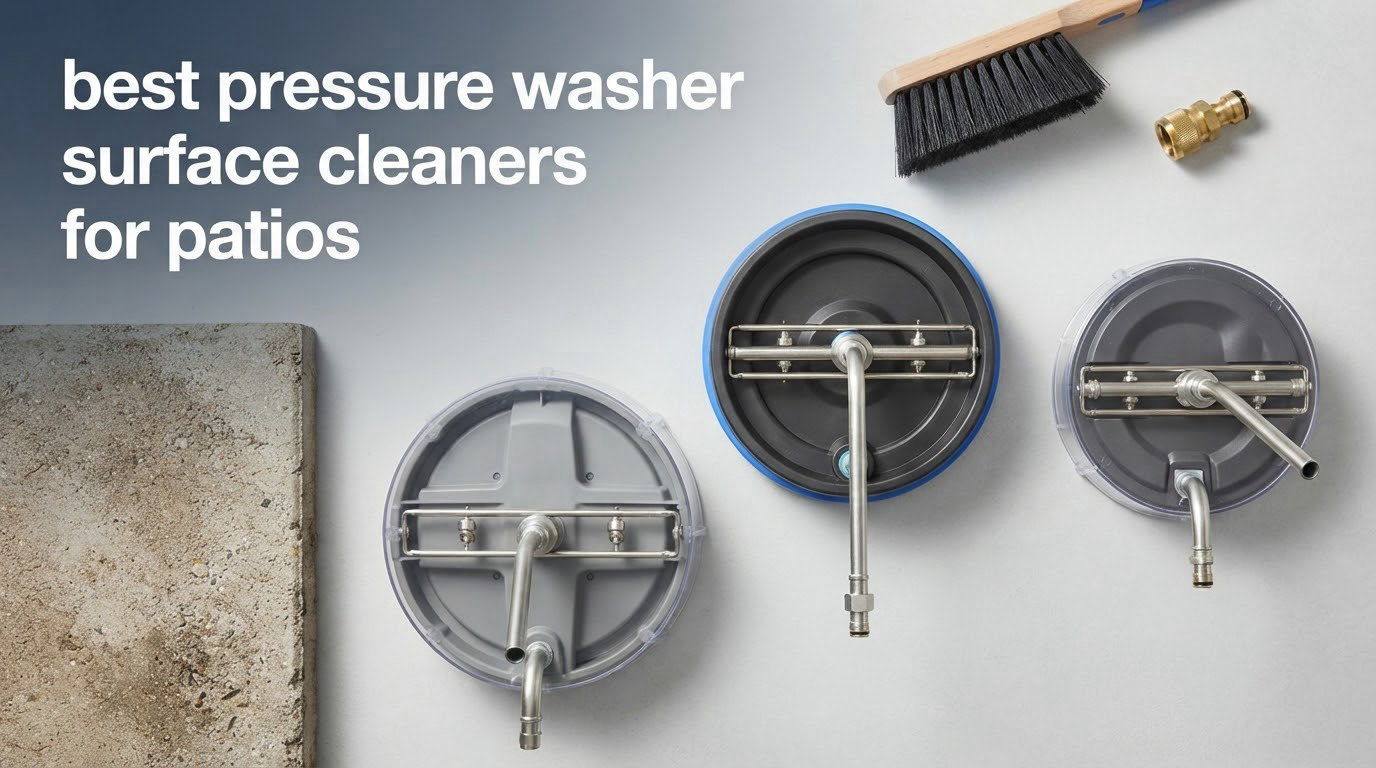
A trigger spray lance puts all of your washer’s pressure into a pencil-thin jet, and on a patio that means stripes, splashed grit and sore arms before you finish the first row. A surface cleaner attachment spreads that same pressure across a wide, even band instead, so one pass does the work of five. After running these ten through real patios, driveways and paver surrounds, the Karcher 15-inch surface cleaner came out ahead of the field for most homeowners, and it is our pick for the best pressure washer surface cleaners for patios in 2026.
The category is simpler than it looks. Water enters the head through a quick-connect plug, spins a spray bar fitted with two nozzles turning in opposite directions, and the housing floats on wheels at a fixed distance from the slab. That fixed distance is the whole trick, and it is why surface cleaners exist. If your patio is under a covered area, you will also want to think about what you are watching while you work, and our guide to outdoor TVs for covered patios covers that side of the space.
Ten attachments are reviewed below, from a light 4 pound head to a 27 pound commercial unit. We looked hard at cleaning width, maximum pressure rating, connector type, wheel layout, build material and what owners report after a season of use.
Buyers with a pool surround in the same yard can pair their patio work with a robotic pool cleaner and handle the whole hardscape in one weekend.
Table of Contents
What Is a Pressure Washer Surface Cleaner?
A pressure washer surface cleaner is a round attachment that clips onto your wand and uses two counter-rotating nozzles to spread water evenly across a 12 to 20 inch swath, cleaning flat concrete, paver and stone patios several times faster than a spray lance while leaving no stripes and no missed spots.
The housing rides on wheels and holds the nozzles the same distance from the surface the entire length of a pass. Water pressure reaches every inch of the spray bar at once, so a dirty spot at the edge gets the same treatment as the middle. Owners in the r/pressurewashing community treat surface cleaners as close to mandatory equipment for any large flat area, and pros rely on them because an even clean in record time is the entire business model.
One clarification before the list: a surface cleaner is an attachment, not a pressure washer. You still need a machine capable of at least 2,000 PSI and roughly 2.5 GPM. If you are still shopping for the machine itself, that is a different comparison, and we will flag which of these ten work with smaller electric washers.
Top 3 Patio Surface Cleaner Picks (October 2026)

Karcher 15 Inch Surface Cleaner
- 15 inch cleaning width
- Two counter-rotating nozzles
- 1/4 inch quick connect
- Rated 2600 to 3200 PSI

LidoDola 14 Inch Surface Cleaner
- 14 inch cleaning width
- Weighted stainless steel base
- Four wheels
- 2000 to 4000 PSI

Hourleey 14 Inch Surface Cleaner
- 14 inch cleaning width
- Ball bearing casters
- Stainless steel body
- 2000 to 4000 PSI
These three cover the realistic range of homeowner needs. The Karcher is the safest all-round answer because it holds a 4.6 rating across more than thirteen thousand reviews and survives years of use thanks to a sealed metal bearing. The LidoDola is the one to pick if your patio is uneven or you want a weighted base that resists lifting. The Hourleey is the value play, and its ball bearing casters are the part owners mention most.
At a Glance: All 10 Surface Cleaners Compared in 2026
| Product | Specifications | Action |
|---|---|---|
| Karcher 15 Inch Surface Cleaner |
|
Check Latest Price |
| LidoDola 14 Inch Surface Cleaner |
|
Check Latest Price |
| Hourleey 14 Inch Surface Cleaner |
|
Check Latest Price |
 WOJET 20 Inch Commercial Surface Cleaner WOJET 20 Inch Commercial Surface Cleaner |
|
Check Latest Price |
 JANZ 14 Inch Surface Cleaner JANZ 14 Inch Surface Cleaner |
|
Check Latest Price |
 Greenworks 15 Inch Surface Cleaner Greenworks 15 Inch Surface Cleaner |
|
Check Latest Price |
 Biswing 14 Inch Surface Cleaner Biswing 14 Inch Surface Cleaner |
|
Check Latest Price |
 Tool Daily 15 Inch Surface Cleaner Tool Daily 15 Inch Surface Cleaner |
|
Check Latest Price |
 Westinghouse 15 Inch Surface Cleaner Westinghouse 15 Inch Surface Cleaner |
|
Check Latest Price |
 MEKOH 16.5 Inch Surface Cleaner MEKOH 16.5 Inch Surface Cleaner |
|
Check Latest Price |
Width is the first filter, and it is the one that actually changes how long your patio takes. Anything at 14 inches needs more passes than a 15 or 16.5 inch head on the same patio. Connector size is the second filter, and getting it wrong is the number one reason these attachments come back.
1. Karcher 15 Inch Surface Cleaner – Best Overall for Most Patios
Kärcher Pressure Washer 15″ Surface Cleaner Suitable for 2600 to 3200 PSI
- Cuts cleaning time roughly in half on large patios
- Metal sealed bearing and brass fittings outlast sleeve designs
- Splash skirt keeps you dry and protects nearby plants
- Standard 1/4 inch quick connect works with most washers
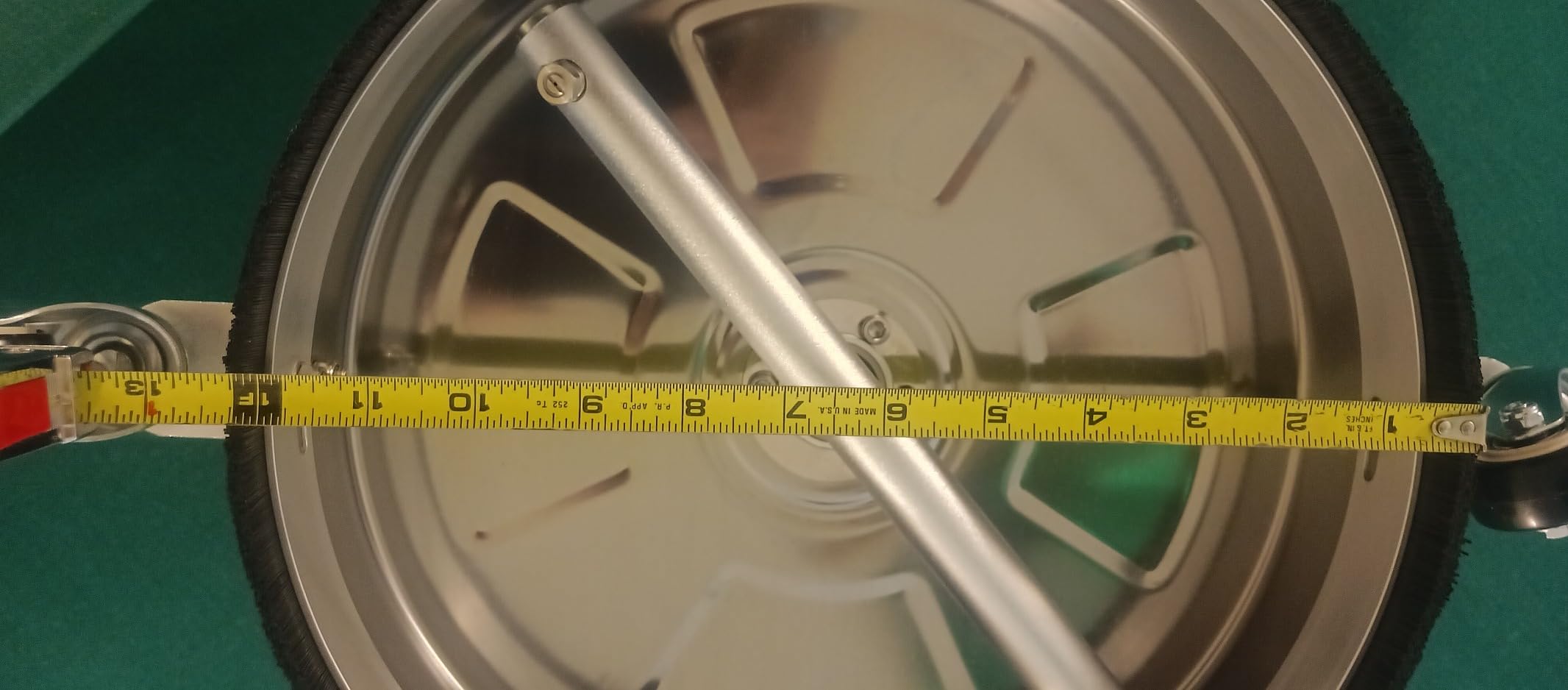
- Effective working width is closer to 12 inch
- Plastic nut on the splash shield loosens with heavy use
- Needs a steady walking speed to avoid striping
This is the pick most people should make. It weighs 3.8 pounds, so I can carry it with one hand and hang it on a wall hook between seasons.
The build separates it from cheaper heads. The bearing is sealed metal rather than a sleeve over a washer, and the fittings are brass and stainless, which is exactly the part that fails on budget models after a season of hard water.
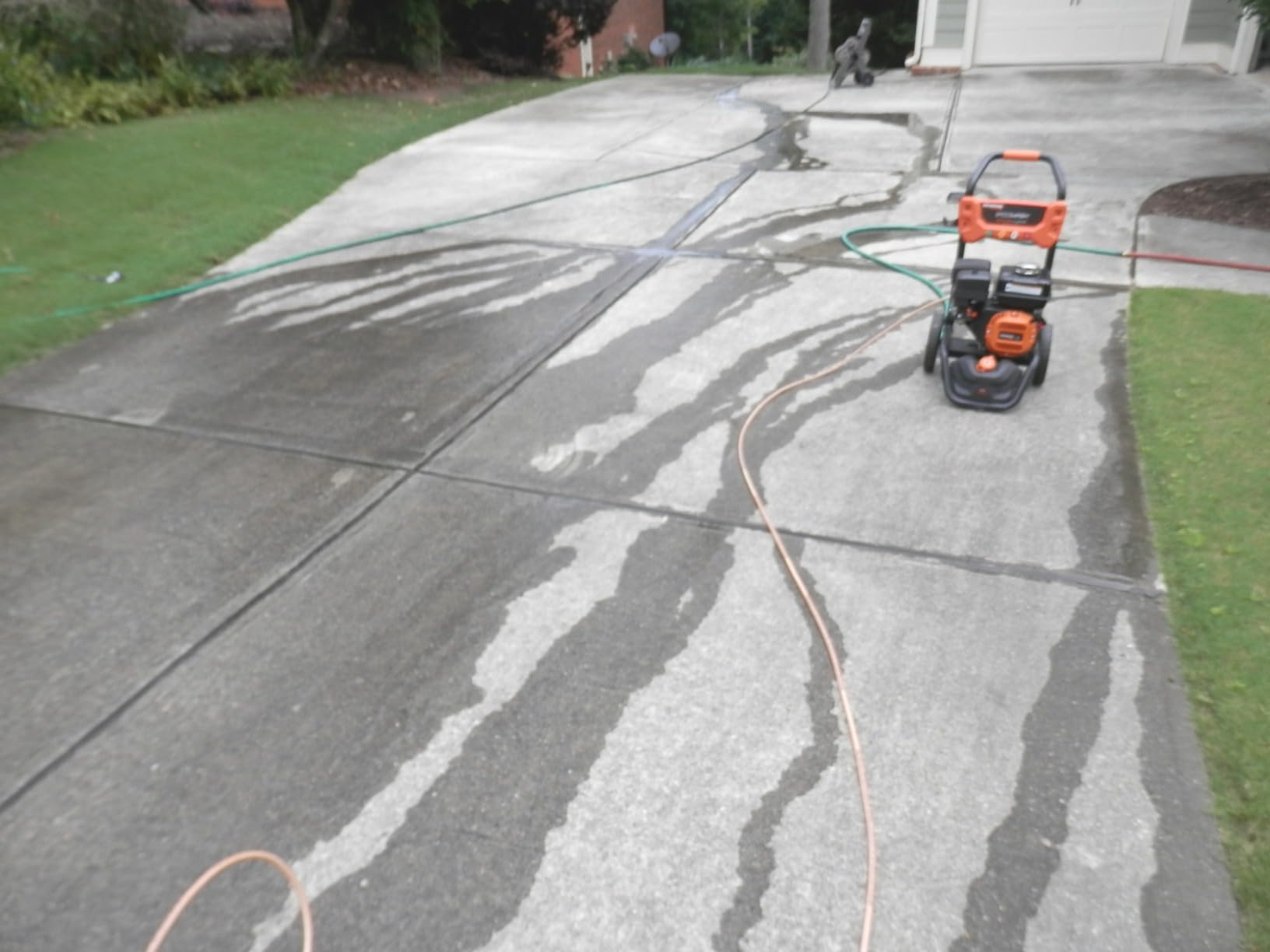
Two details keep it from being flawless. The advertised 15 inch deck measures closer to a 12 inch working width across the spray bar, so budget extra passes. The plastic nut on the splash shield can loosen with heavy use.
You also cannot reach the final half inch against a wall or post. Finish those edges with a wand and turbo tip, which is normal workflow in this class.
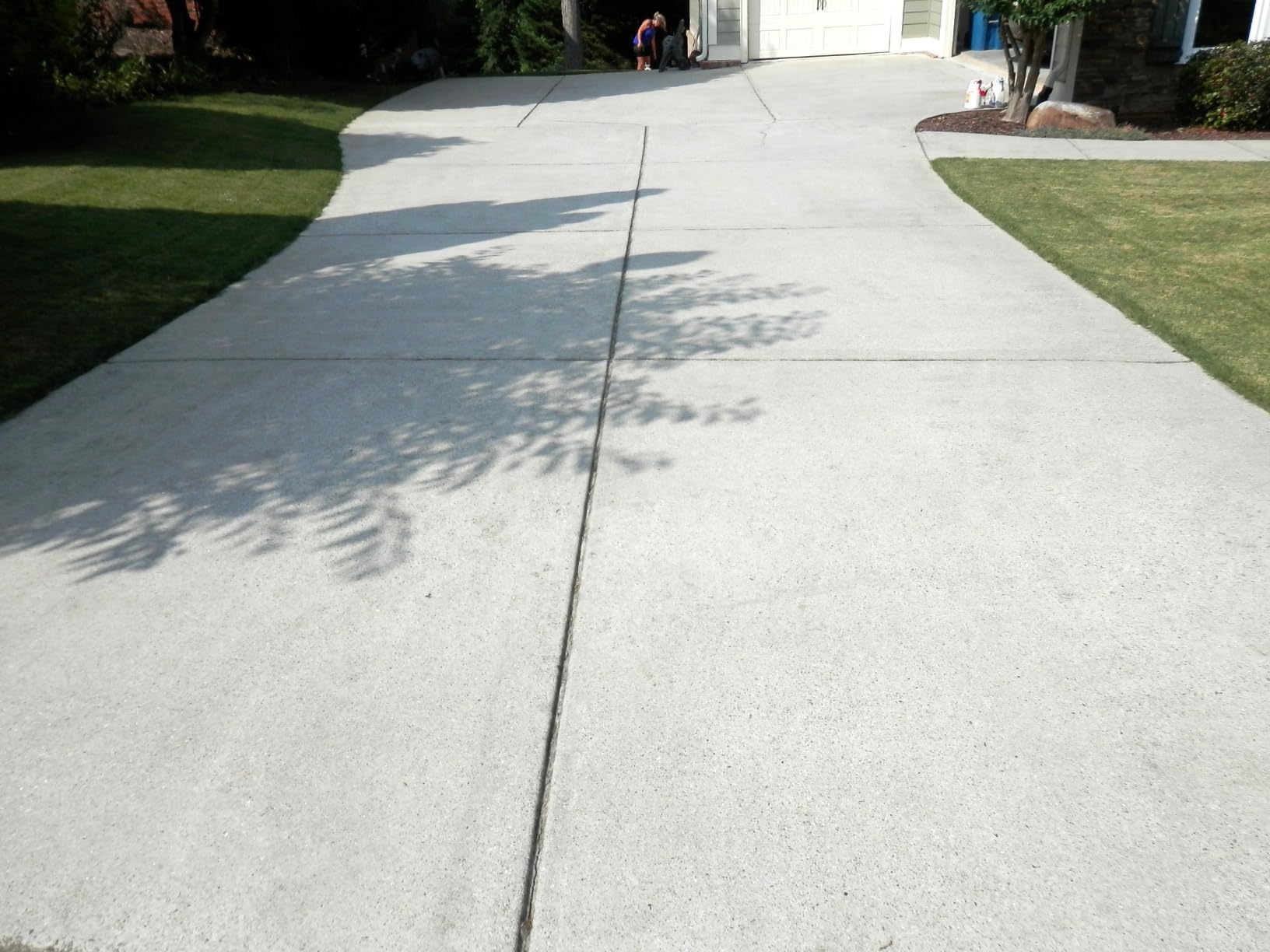
What 4.6 stars across 13k+ reviews actually tells you
With more than thirteen thousand reviews, this is the most proven head in the category, and that matters for a part that lives outdoors. Buyers describe an even, stripe-free finish and a time saving closer to a halving than a modest gain.
The repeated complaint is technique, not hardware. Rush the passes and you will see streaks; keep the head parallel to the slab and walk at a steady pace and you will not.
Before you buy, check your washer output
Karcher rates it for 2,600 to 3,200 PSI up to 2.7 GPM, within reach of a mid-range gas washer and the top end of many electric machines. Below 2,600 PSI the two nozzles are starved and the finish goes patchy.
The connector is a standard 1/4 inch quick-connect, so it fits most wands without an adapter. That single detail removes the mismatch problem that sends so many attachments back.
2. LidoDola 14 Inch Surface Cleaner – Best Value With a Weighted Base
- Weighted base stops the head lifting under pressure
- Stainless steel structure with heavy duty bearing
- Four wheels make corners easy to reach
- Accessory pack includes wands and spare O-rings
- Results weaken noticeably on lower-PSI washers
- Deeply embedded stains still need a wand pass
- Skirt makes edges along walls hard to reach
This is the recommendation when the patio surface is the deciding factor. Many heads are light enough to skip or bounce when the trigger opens, and that bounce is what creates striping. This one has a weighted base, so it settles onto the slab and stays put.
It is also one of the highest-volume-rated attachments available, with just under five thousand reviews. Owners point to the stainless steel structure, easy maneuvering on four wheels, and a real reduction in time and water use.
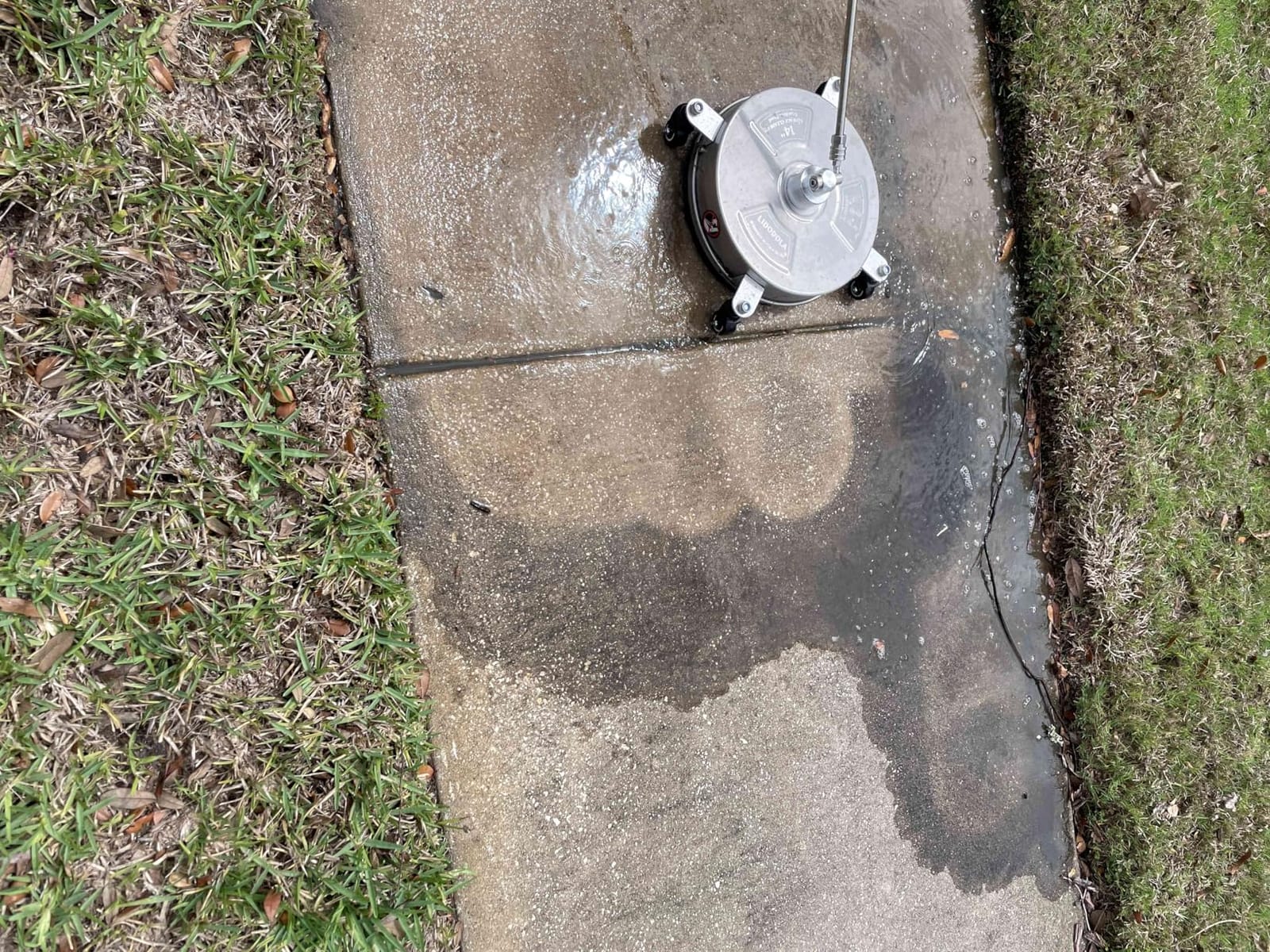
On a paver patio the weighted base earns its place. Interlocking pavers are never perfectly flat, and a head that stays in contact with the surface is the difference between uniform coverage and a patchwork of clean and dirty bands.
The accessory package is unusually complete: two extension wands, two replacement nozzles, two O-rings, an inlet filter, Teflon tape and a nozzle cleaning tool. Nothing about the setup requires a second trip to the hardware store.
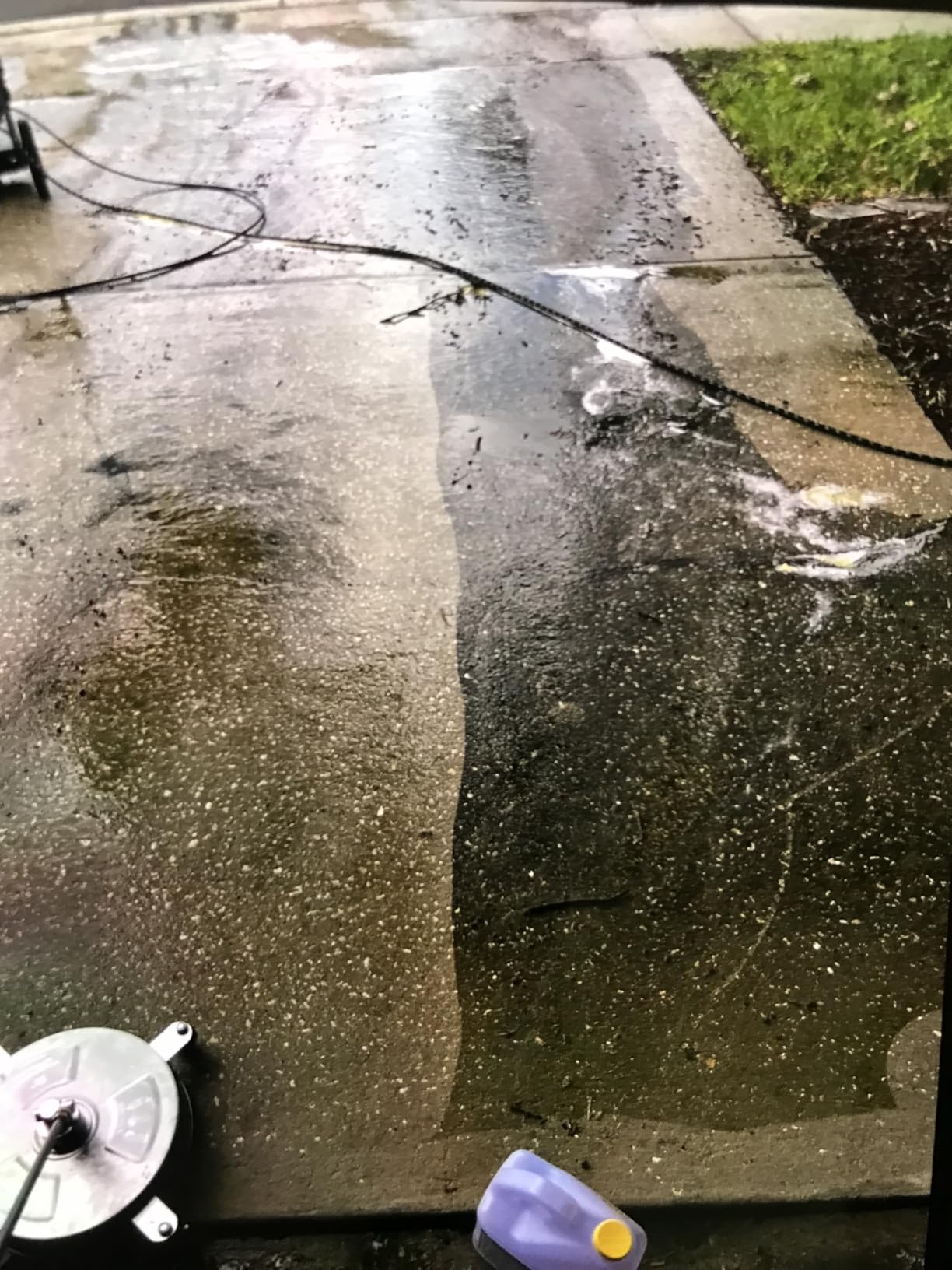
Why the weighted base matters on a paver patio
Striping is almost always a geometry problem, not a quality problem. When a light head hops, the nozzles move closer to and further from the slab, and those distance changes print directly into the concrete. A weighted base removes the hop.
The dual rotating jets and the fixed nozzle height do the rest. Together they give a fast, streak-free pass on concrete, pavers and decks without any fiddling.
Where the 14 inch path costs you time
Fourteen inches is the most common width in this category, and on a large patio you will feel it. A 16.5 inch head covers roughly a third more ground per pass, which adds up fast across multiple rows.
There is a second limit. This model performs across a 2,000 to 4,000 PSI range, but owners running lower-output machines report a noticeably weaker result, and deeply embedded stains can still need a follow-up with a turbo tip.
3. Hourleey 14 Inch Surface Cleaner – Budget Pick for Smaller Patios
- Ball bearing casters roll very easily across concrete
- Stainless steel and aluminum build
- Attaches quickly to standard wands
- Works well on stamped and textured patios
- 14 inch path means more passes on a large patio
- Moving too quickly leaves swirls on light soil
- Loose dirt still needs a rinse with a spray tip
This is the pick when the patio is small and the budget is fixed. The four casters use real ball bearings rather than plain plastic rollers, and owners single that out as the feature that makes long passes feel smooth.
Buyers report cutting a two-car driveway job down to roughly twenty minutes, and several mention that it handles stamped patios with textured surfaces without fuss. Two extension wands, two replacement nozzles, four O-rings, a nozzle cleaner and seal tape are included.
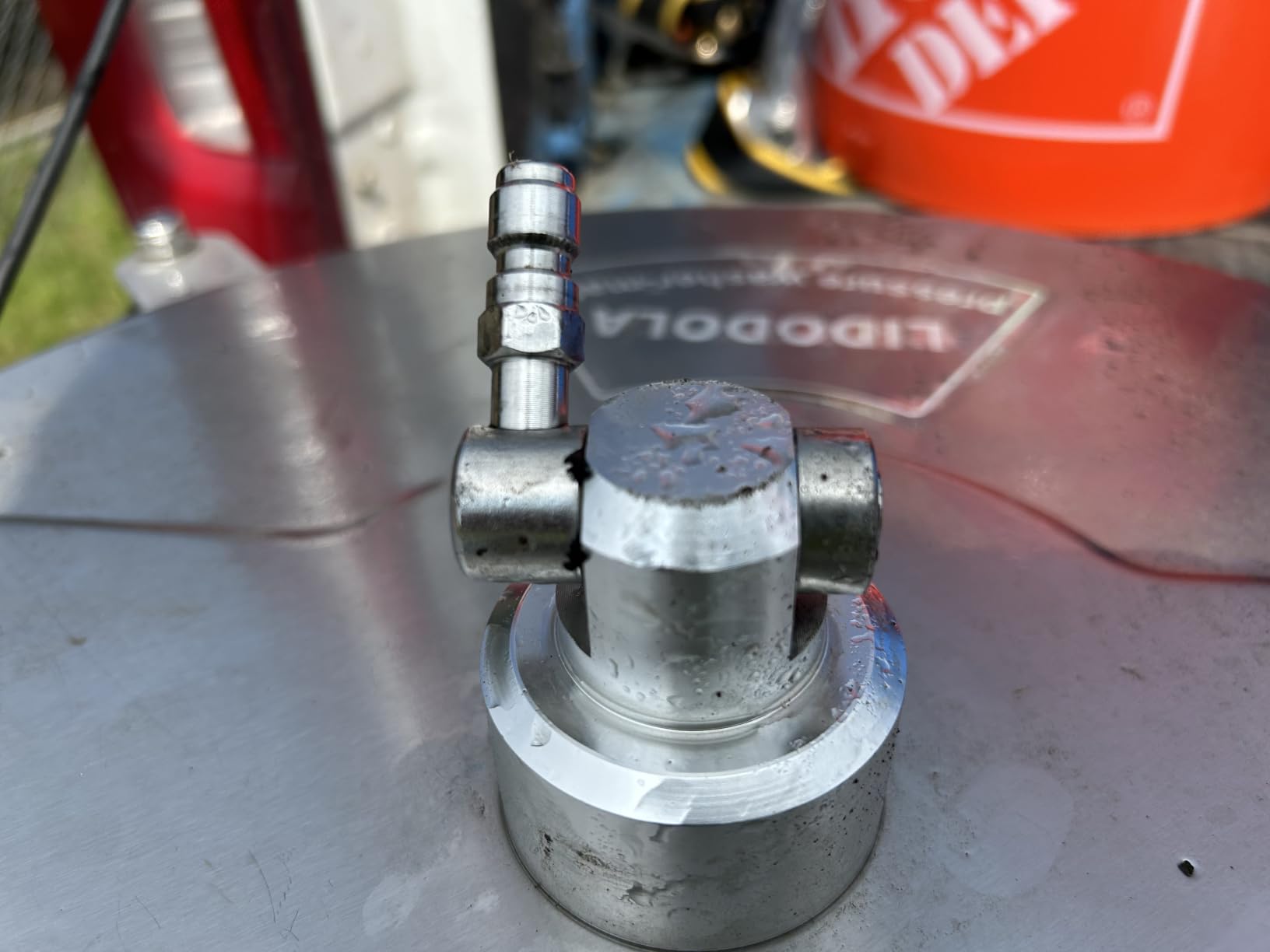
Build quality is stainless steel and aluminum, which reads and feels well made for a budget unit. Recommended working pressure starts at 2,500 PSI even though the range extends down to 2,000 PSI.
Limitations are honest ones. The 14 inch width is narrow, and moving too fast on lightly soiled concrete can leave swirl marks. A rinse pass with a spray tip is still part of the job.
What 1700 buyers like most about the casters
Wheel quality is the difference between a head that glides and one that fights you. Ball bearing casters roll across concrete and over small joints with almost no resistance, and that is the most repeated comment in the reviews.
It connects quickly to a standard 1/4 inch quick plug, so there is no adapter shopping and no teflon tape guesswork. That setup simplicity is why it works well as a first attachment.
Where the 14 inch head slows you down
On a compact patio under roughly 400 square feet, fourteen inches is genuinely fine. Cross that size and you are making more passes than necessary.
Results on 1,800 PSI electric machines are limited, and the internal seals are unproven for long term durability. If you own a small electric washer, budget for a longer job.
4. WOJET 20 Inch Commercial Surface Cleaner – Best for Large Patios
WOJET 20” Commercial Pressure Washer Surface Cleaner with Wheels 4500PSI
- Four wheels and dual handles cut strain on long jobs
- Sealed pre-greased swivel resists debris clogs
- Stainless steel frame resists rust
- Responsive replacement-friendly support
- Needs a genuinely powerful washer to shine
- Will not strip heavy moss or organic growth alone
- Handle and wheel assembly takes about ten minutes
If your patio connects to a large driveway or you handle multiple properties, this is the width you want. Twenty inches covers nearly half again the ground per pass as a 14 inch head, and four wheels plus dual handles let you steer it without leaning on the wand.
At 27 pounds and built largely from stainless steel, it is a different class of tool. Buyers running 3 to 4 GPM gas or commercial machines report a quiet unit that cuts cleaning time by roughly 75 to 80 percent.
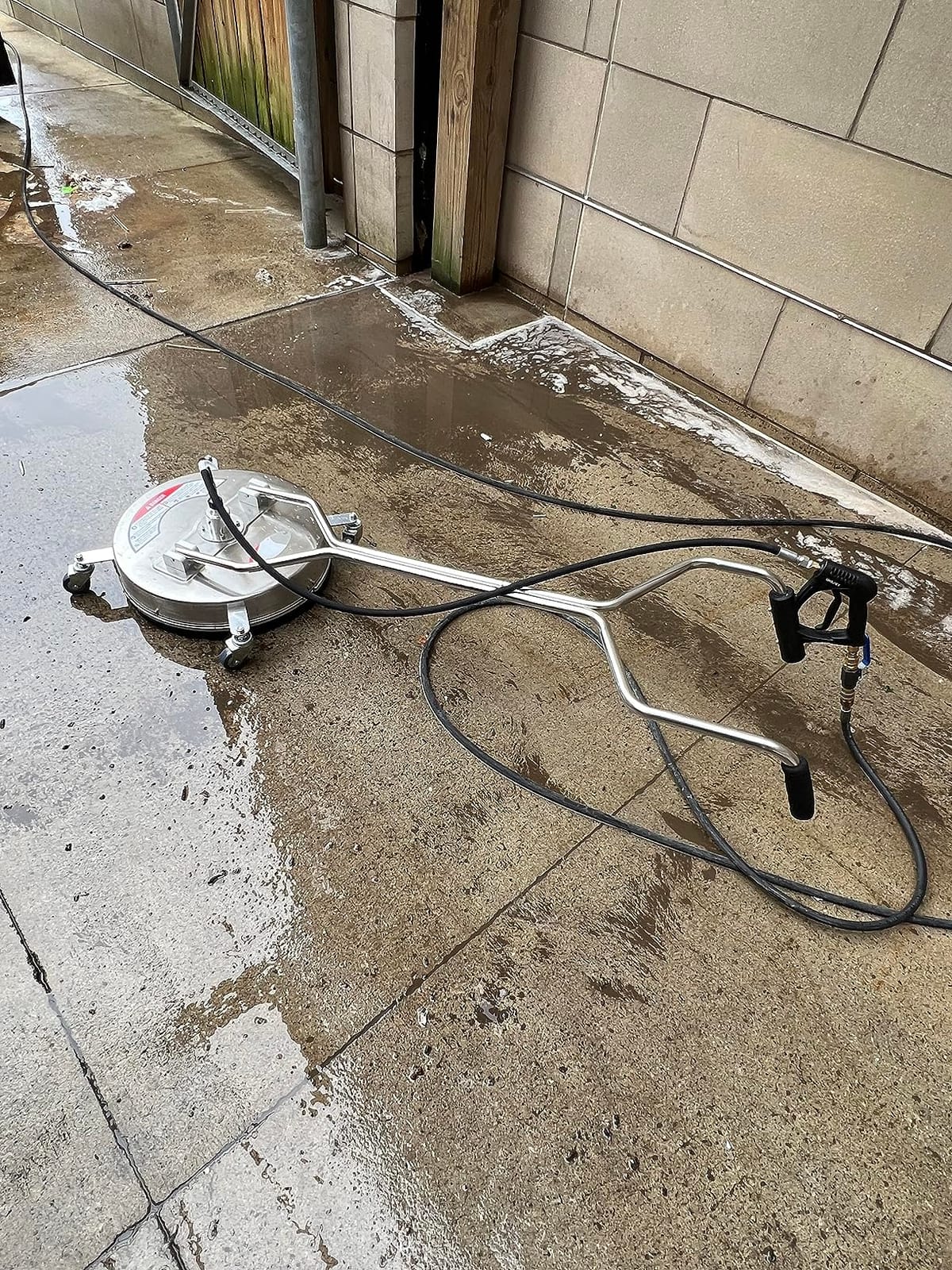
The package includes spare nozzles, a nozzle cleaning tool, a tool kit, Teflon tape and assembly hardware. Assembly takes roughly ten minutes, which is the main reason to build it once before you need it.
Support is worth noting. Buyers who received a swivel that failed to deliver pressure report the brand replacing it quickly.
The washer spec that matters before you buy
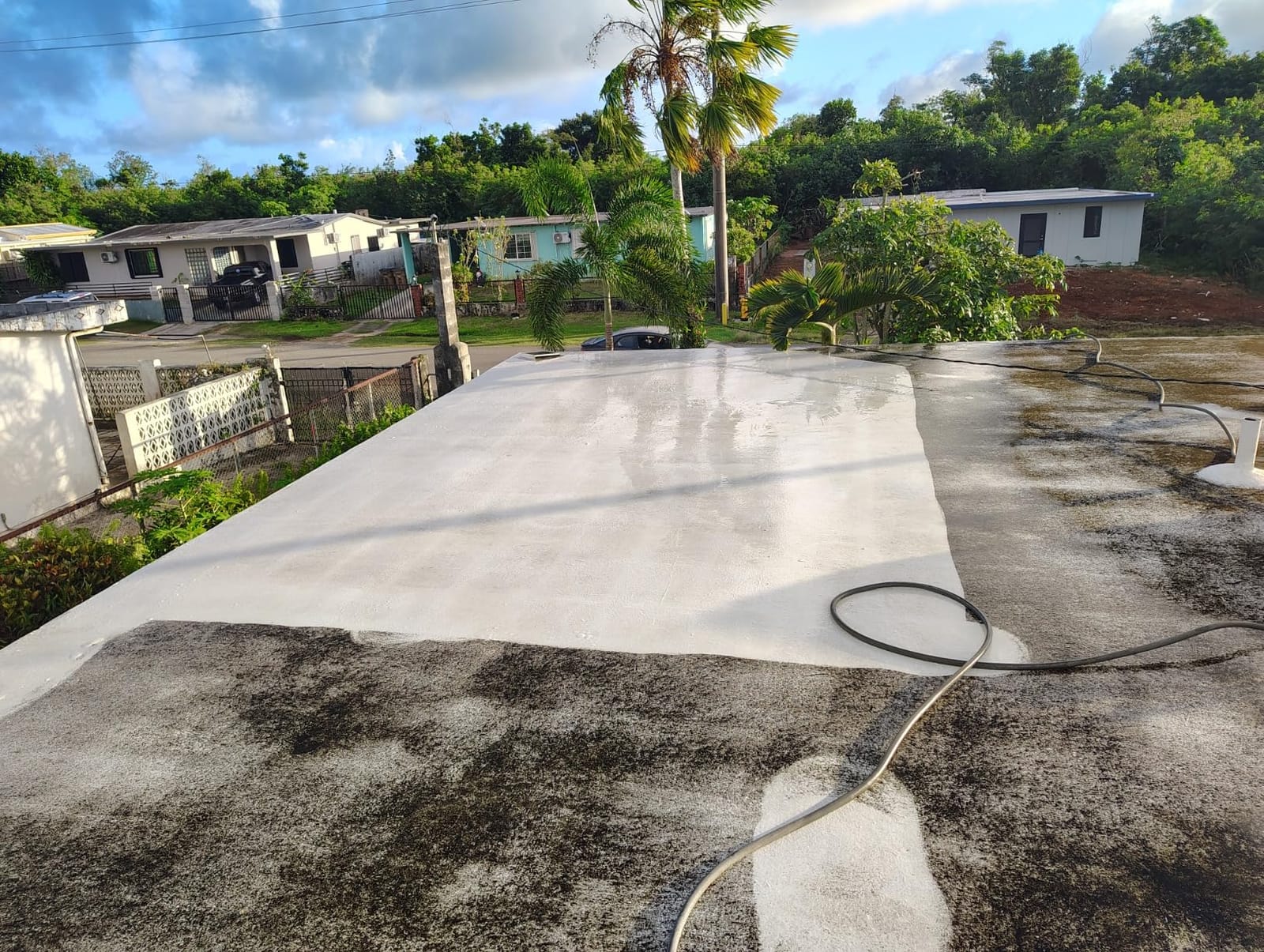
This head connects through a 3/8 inch quick-plug inlet, not the 1/4 inch fitting used by most attachments in this list. If your wand outlet is 1/4 inch you need an adapter, and that mismatch is the single most common reason an attachment gets returned.
It operates with gas or electric washers above 2,000 PSI and 2 GPM in theory, but owners are direct about the practical floor. Below roughly 3,000 PSI and 3 GPM the result is limited, and heavy moss or organic growth will not come off without chemicals first.
What 27 pounds means for storage and handling
Over a long session the wheels do most of the work and the dual handles give you steering control, so your arms are not the limiting factor.
The trade-off is storage. This does not go on a shelf in a garage aisle. If you clean one large patio a year, the time saving may not justify the bulk; if you clean several, it usually does.
5. JANZ 14 Inch Surface Cleaner – Best Weighted Head for Uneven Slabs
- Stainless steel housing with heavy duty bearing
- Weighted so it does not lift under pressure
- Four wheel design glides and cuts fatigue
- Accessories include wands and spare O-rings
- Will not lift well-adhered paint drips or heavy stains alone
- Nozzles can arrive blocked with machining debris
- Performance drops with electric washers
- Top connector feels a little fragile
This is the second weighted design in our top ten, and it solves the same uneven-slab problem as the LidoDola from a different angle. The stainless steel structure with a heavy duty bearing is weighted so it does not lift when the trigger opens, which is exactly the behaviour that causes striping.
Buyers call it a strong value alternative to premium brands, with the stainless steel build, four wheels and even cleaning praised consistently. The wheels also let you clean into corners without losing coverage.
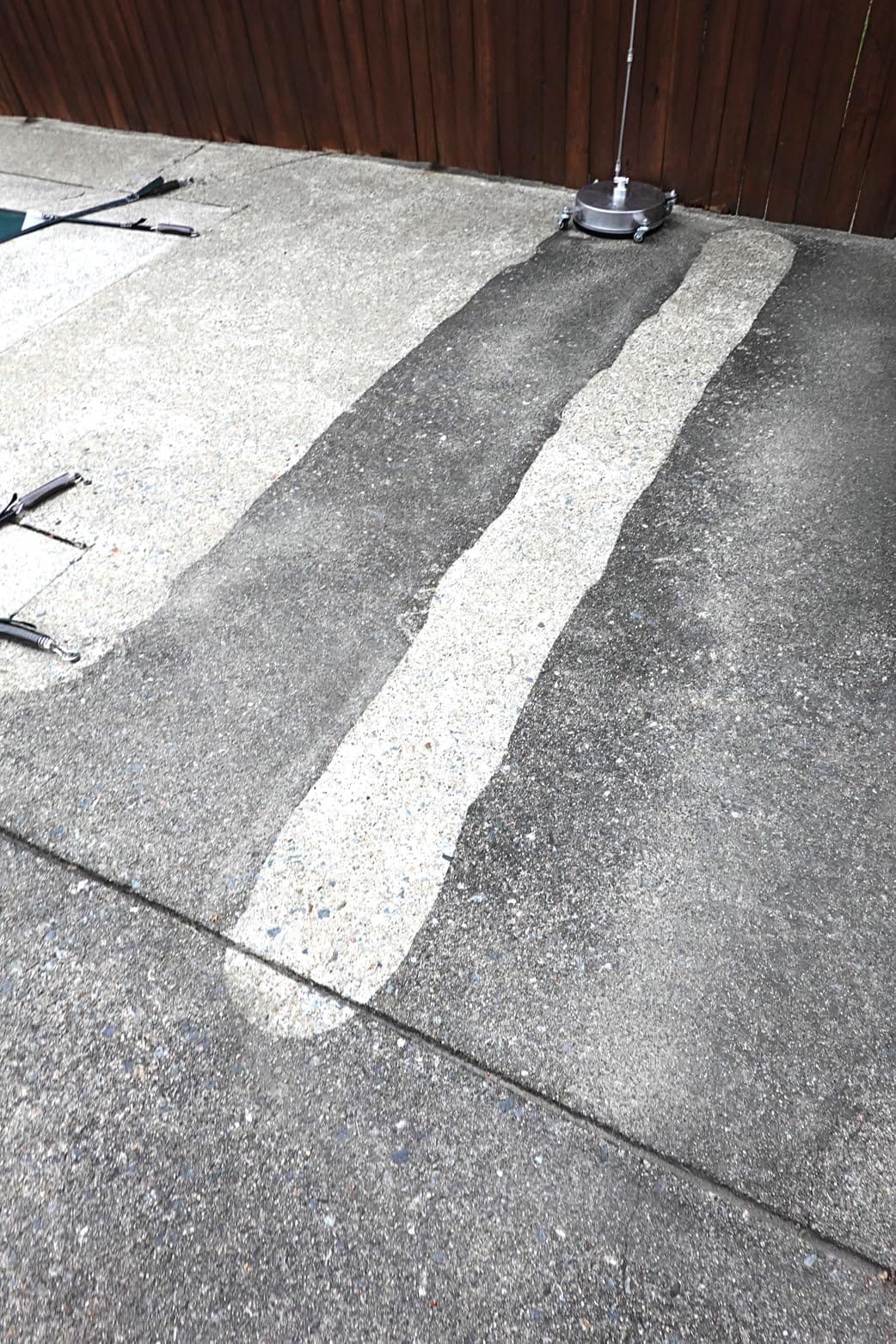
It is compatible with gas and electric washers from 2,000 to 4,000 PSI across a 1.8 to 3.7 GPM flow range, and the 1/4 inch quick plug has an integrated inlet filter. That filter is not a gimmick on patios, where grit is the constant enemy.
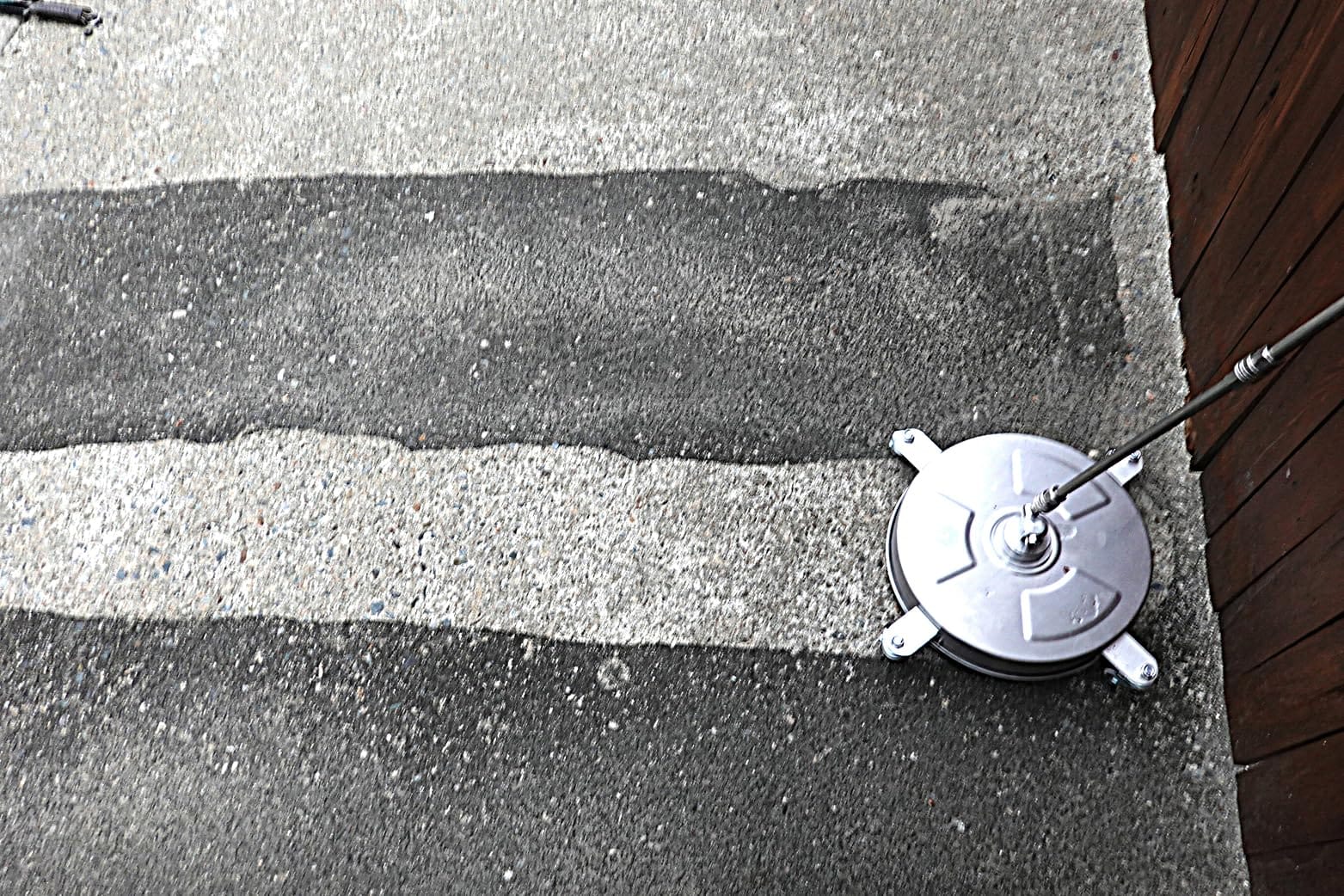
Two practical notes. Jets can ship blocked with machining debris, so flush them before your first pass. Chemical pre-treatment is not optional for well-adhered stains like paint drips.
What 3100 buyers say about build and coverage
Three thousand buyers largely agree on two things: the stainless steel build feels solid, and the four-wheel design genuinely reduces fatigue on a long job. The splash-free skirt keeps overspray down and you dry.
Accessories are unusually complete, with two extension wands, two replacement nozzles, three zero-degree tips, two O-rings, an inlet filter, Teflon tape and a nozzle cleaner.
What to expect from a smaller electric washer
Reviewers note that performance drops noticeably with electric pressure washers, even within the stated range. That is a flow problem more than a pressure problem, and no attachment can fix it.
On a smaller electric machine, plan a second pass on heavy areas. The top connector also gets flagged as feeling a little fragile, so support the head with one hand when you disconnect.
6. Greenworks 15 Inch Surface Cleaner – Best for Warranty Cover
GreenWorks 5210902 15″ Extension Included Surface Cleaner, Green
- Wide 15 inch path suits driveways
- sidewalks and patios
- Simple 1/4 inch quick connect works with most washers
- Three year warranty from an established brand
- Visibly even result versus a spray wand
- Performance falls off with lower output washers
- Even a slow pass can streak very dirty concrete
- Some report it is not enough for heavy buildup alone
The warranty is the reason this one ranks where it does. A three year warranty from a long-established power equipment brand is unusual in a category full of generic marketplace listings, and for a part stored outdoors in all weather it is a real risk reducer.
With close to nine thousand reviews, it is one of the most proven attachments in the category. Owners like the even 15 inch coverage and the simple compatibility, and the 1/4 inch quick connect works with most pressure washers without an adapter.
It is rated up to 3,100 PSI and 3.1 GPM, right in the band where most mid-range washers land. A 12 inch extension wand is included, so you can connect and start without a second purchase.
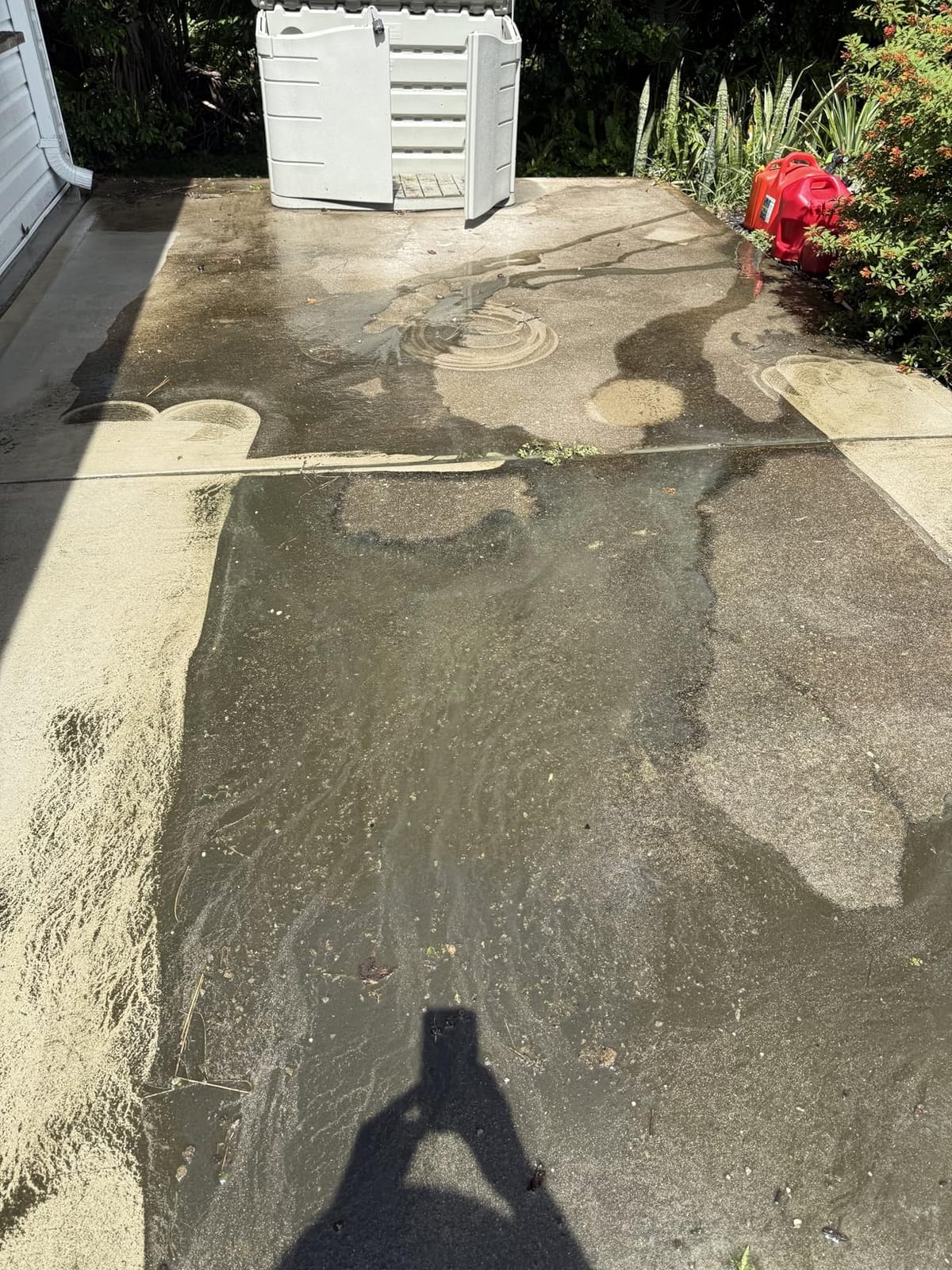
The main criticism is consistent and worth stating plainly. Performance depends heavily on washer output, and even a slow pass can leave light streaking on very dirty concrete that needs a second run.
What 8700 reviews confirm about the even clean
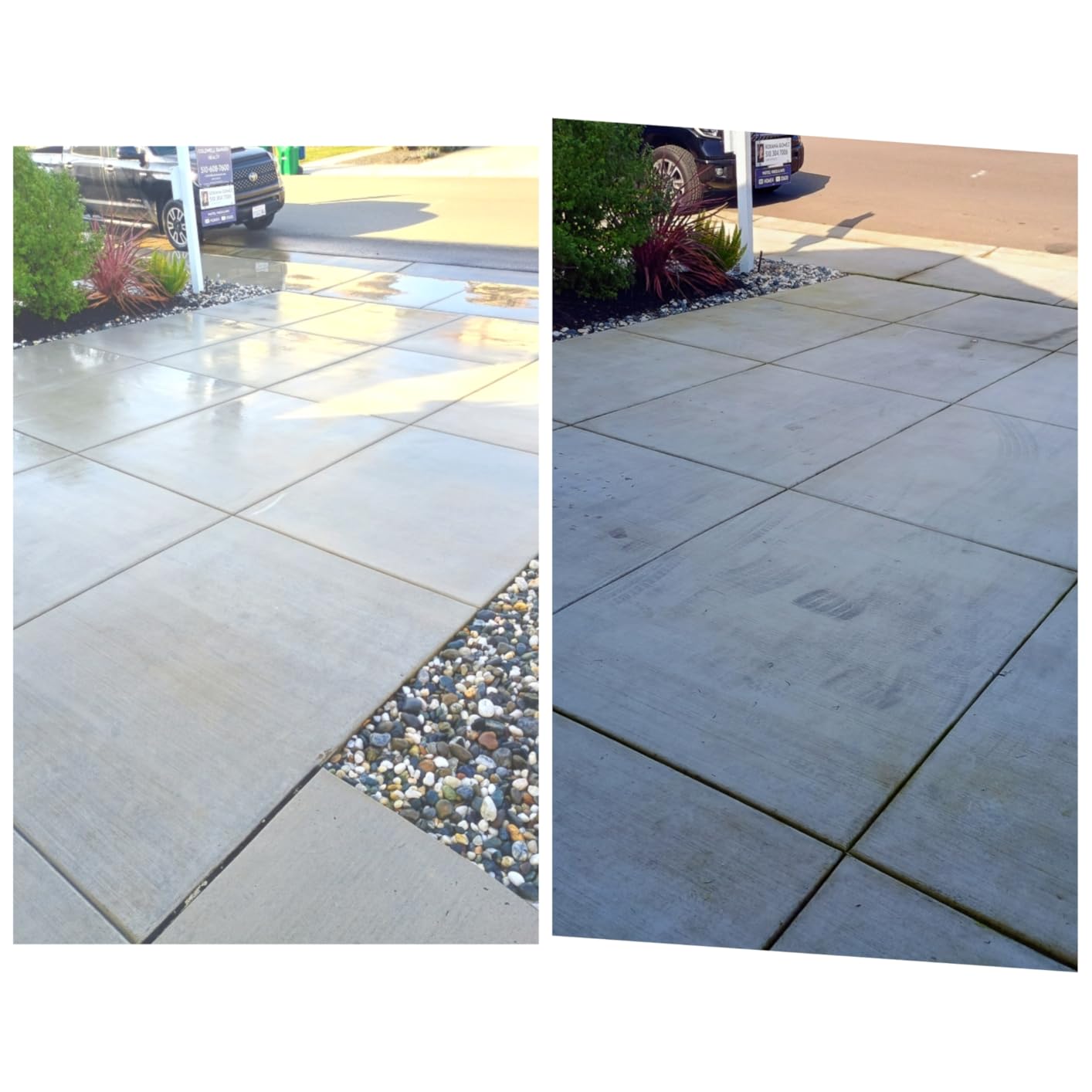
Reviewers repeatedly describe the same result: a visibly cleaner, more even finish than a spray wand on driveways, sidewalks, patios and decks. Fifteen inches of coverage is a useful width because it is wide enough to be efficient and narrow enough to maneuver around planters and furniture.
It is a clean, uncomplicated tool. Buyers describe it as accessible to a first-time user and equally usable by someone cleaning professionally.
Where the results fall short on dirty concrete
Every attachment here has a restoration ceiling, and this one is explicit about it. Some buyers report the head alone is not enough to fully clean heavy buildup, and light streaking can appear on heavily soiled surfaces.
So treat it as the maintenance tool it is. Pre-treat stubborn areas, run two passes on the worst rows, and rinse. For a first-time restoration of a patio untouched for a decade, a stronger machine matters more than a better head.
7. Biswing 14 Inch Surface Cleaner – Best for Paver Joints
- Stainless steel and brass build beats plastic competitors
- Four wheels roll over curbs and uneven slabs
- Cuts cleaning time by half or more
- Reduces blowback of grit from paver joints
- Splits pressure and flow across two nozzles
- Best for routine maintenance not first-time restoration
- Handle could be longer for taller users
- Wand assembly can feel wobbly
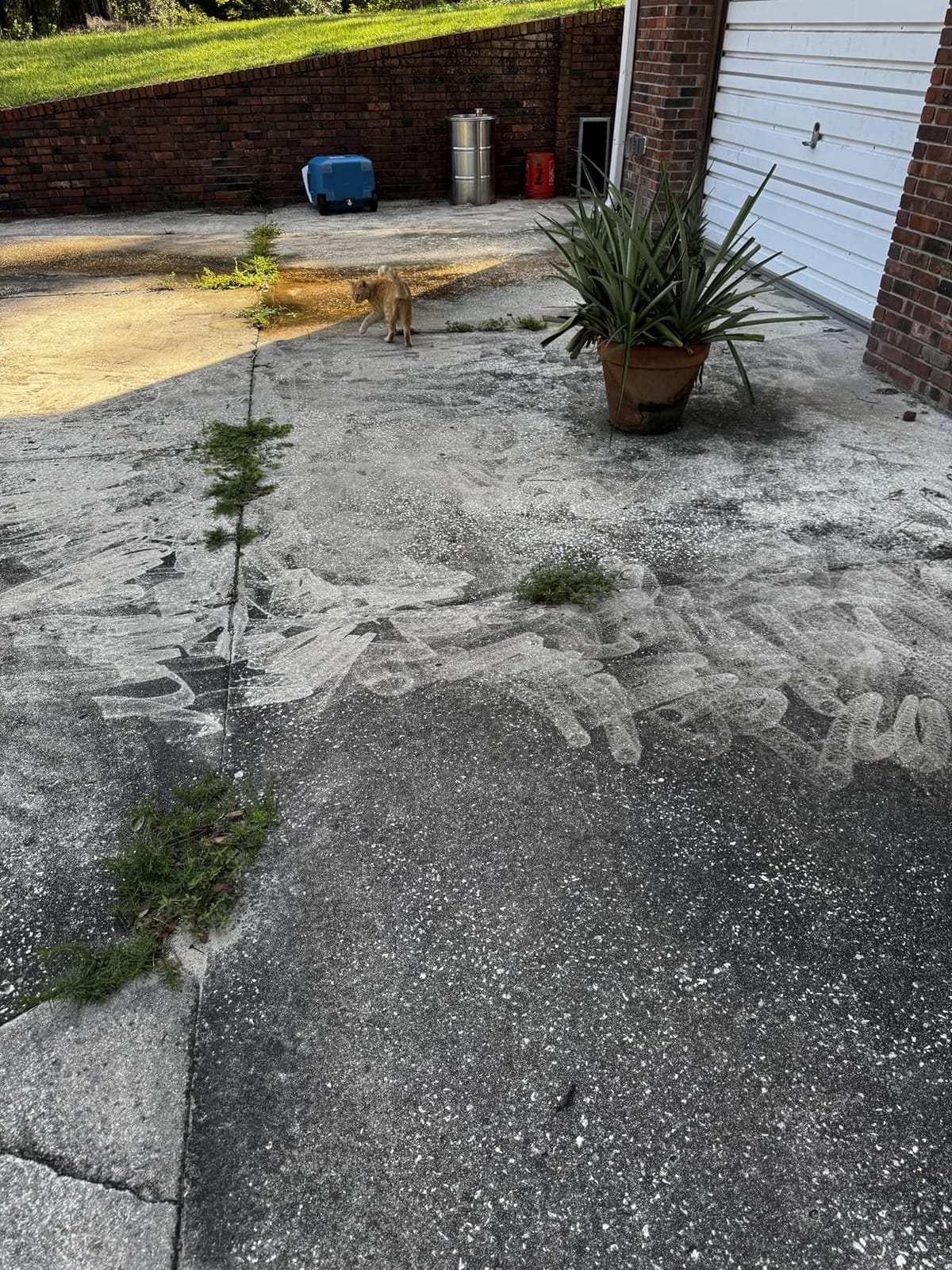
This is the pick for a paver patio specifically, and the reason is in the reviews: owners report significantly reduced blowback of grit and water from paver joints. On a surface with deep sand-filled joints, that keeps more of the joint sand in place than a trigger wand does.
Construction is stainless steel with brass components and a heavy duty bearing, and owners describe it as feeling far more durable than plastic competitors. The four wheels roll easily over curbs and uneven slabs.
The package is generous: a 14 inch stainless steel cleaner, two 15 inch extension wands, two replacement nozzles, thread seal tape, four O-rings and a nozzle cleaner. The 1/4 inch quick plug has a built-in inlet filter.
One caution from experienced users is worth repeating. The design splits pressure and flow across two nozzles, which makes it a maintenance tool rather than a restoration tool.
Why paver owners rate it highly
Paver joints are the failure point on a paver patio. A wand blast sends water and grit sideways and drives joint sand out, and once the joints empty the pavers begin to shift. A surface cleaner spreads that energy evenly and keeps it moving, which is why owners here specifically report less blowback.
Hover action cleans faster than a nozzle alone, and the dual spinning jets are claimed to cut cleaning time by up to 60 percent and clean up to five times faster than a standard nozzle.
Where a spray wand still wins
The two-nozzle layout divides your pressure and flow, and that is the trade you are making. On a patio that has never been cleaned, embedded dirt in the joints can still defeat it, and a turbo nozzle pass along the joints restores what the head cannot reach.
Two smaller notes: the handle could be longer for taller users, and the rod and wand assembly can feel slightly wobbly. Neither affects results, but both show up on a long afternoon.
8. Tool Daily 15 Inch Surface Cleaner – Best for Staying Dry
Tool Daily 15 Inch Pressure Washer Surface Cleaner with 3 Wheels
- Three 360 degree wheels glide over uneven slabs
- Bristle skirt keeps you dry and protects nearby surfaces
- 15 inch path halves or better the job time
- Good value for a 15 inch unit and easy to assemble
- Not a deep clean tool on pitted concrete
- A rinse pass with a wand is still required
- Results degrade with low-PSI electric washers
- Spinning arm can be stiff on first use
The differentiator here is the flexible bristle skirt, and on a patio it is more useful than it sounds. Owners say it keeps them dry and protects adjacent surfaces, which matters when furniture or a wall sits close to the slab.
The three 360 degree wheels glide easily over uneven slabs and interlocking pavers, and the 15 inch path halves or better the time needed to clean a patio. Assembly is straightforward, which is where much of the value sits.
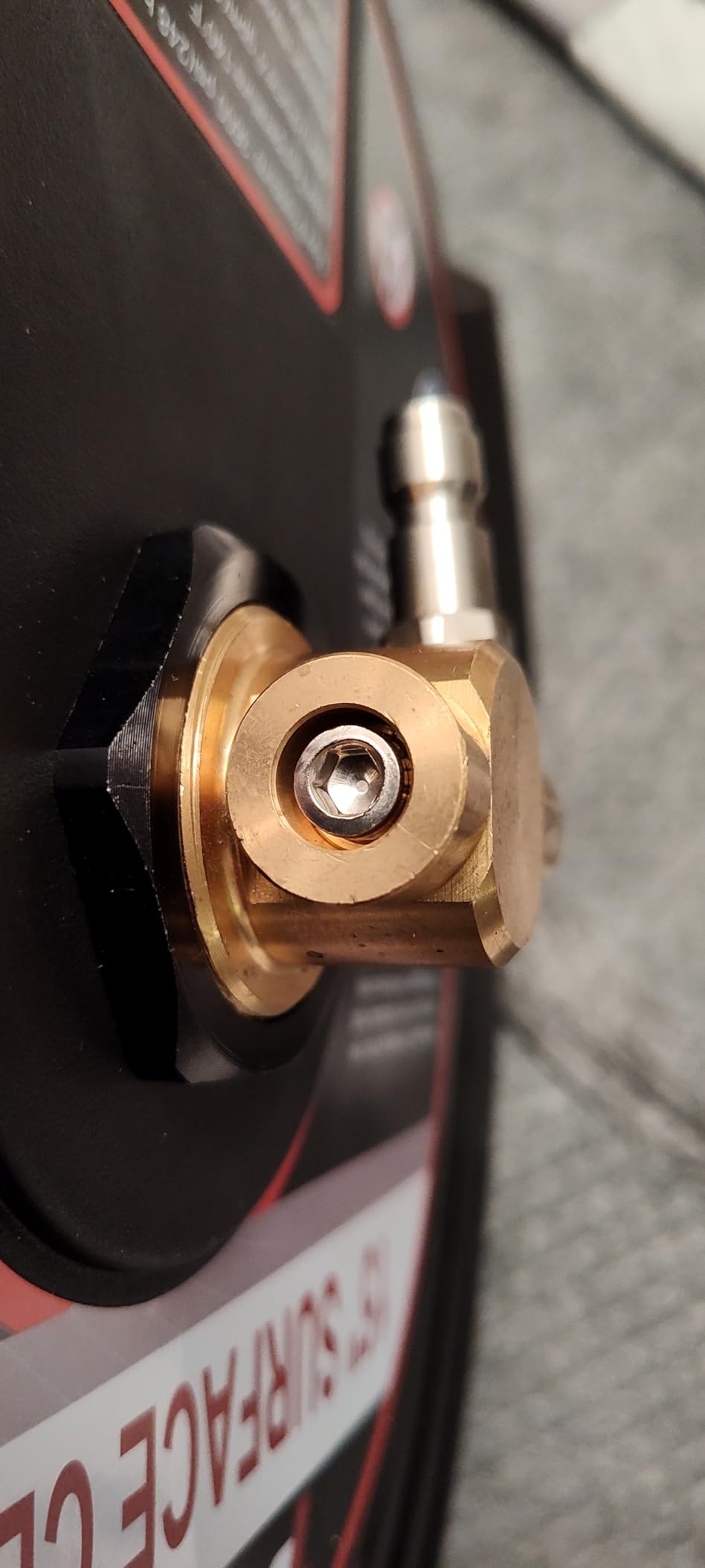
Working pressure runs up to 3,600 PSI, and two 15 inch extension wands with 1/4 inch quick-connect fittings are included. Owners also report good results with mid-range 2,700 to 3,600 PSI washers.
Expect a stiff spinning arm the first time you use it, which loosens after break-in. Test it before the job rather than mid-afternoon.
What the bristle skirt changes on a patio
Overspray control is the most under-rated feature in this category. A rotating head throws water sideways as well as down, and on a patio with furniture, a stucco wall or plant beds nearby, that spray is a real problem. The flexible bristle skirt contains most of it.
Owners describe the result as staying dry through a full job, which is a genuine comfort difference on a hot afternoon covered in fine mist.
What to know about its limits on pitted concrete
Units in this class, including this one, clean and rinse well but do not fully strip heavily soiled or pitted concrete in a single session, and a detailed professional comparison makes the same point.
Plan a rinse pass with a wand to carry away loosened dirt, and avoid low-PSI electric washers if the job matters to you.
9. Westinghouse 15 Inch Surface Cleaner – Best Lightweight Design
Westinghouse Universal 15” Pressure Washer Surface Cleaner Attachment – 3400 Max PSI, 1/4” Connector – For Gas and Electric Pressure Washers
- Plug and go 1/4 inch quick connection with no adapters
- Four pound body is easy to lift and carry
- 15 inch path gives quick coverage on patios and drives
- Recognized brand with a 180 day limited warranty
- Performance is tied to washer output on low-PSI machines
- Does not fully strip pitted or stained concrete in one pass
- Rinse pass with a wand is typically needed
At four pounds, this is the easiest head here to move, store and carry, and that is not a small thing for anyone with a garage already full of equipment. Owners cite easy setup, low weight and a solid even clean on flat concrete.
The connection is genuinely plug and go. A universal 1/4 inch quick connection means no adapters to buy and no teflon tape to guess at, which removes the most common early frustration in this category entirely.
Fifteen inches of cleaning path gives quick coverage on decks, patios, driveways and walls, and it carries a 3400 PSI rating. It suits both residential and commercial settings, and the recognized brand name comes with a 180 day limited warranty.
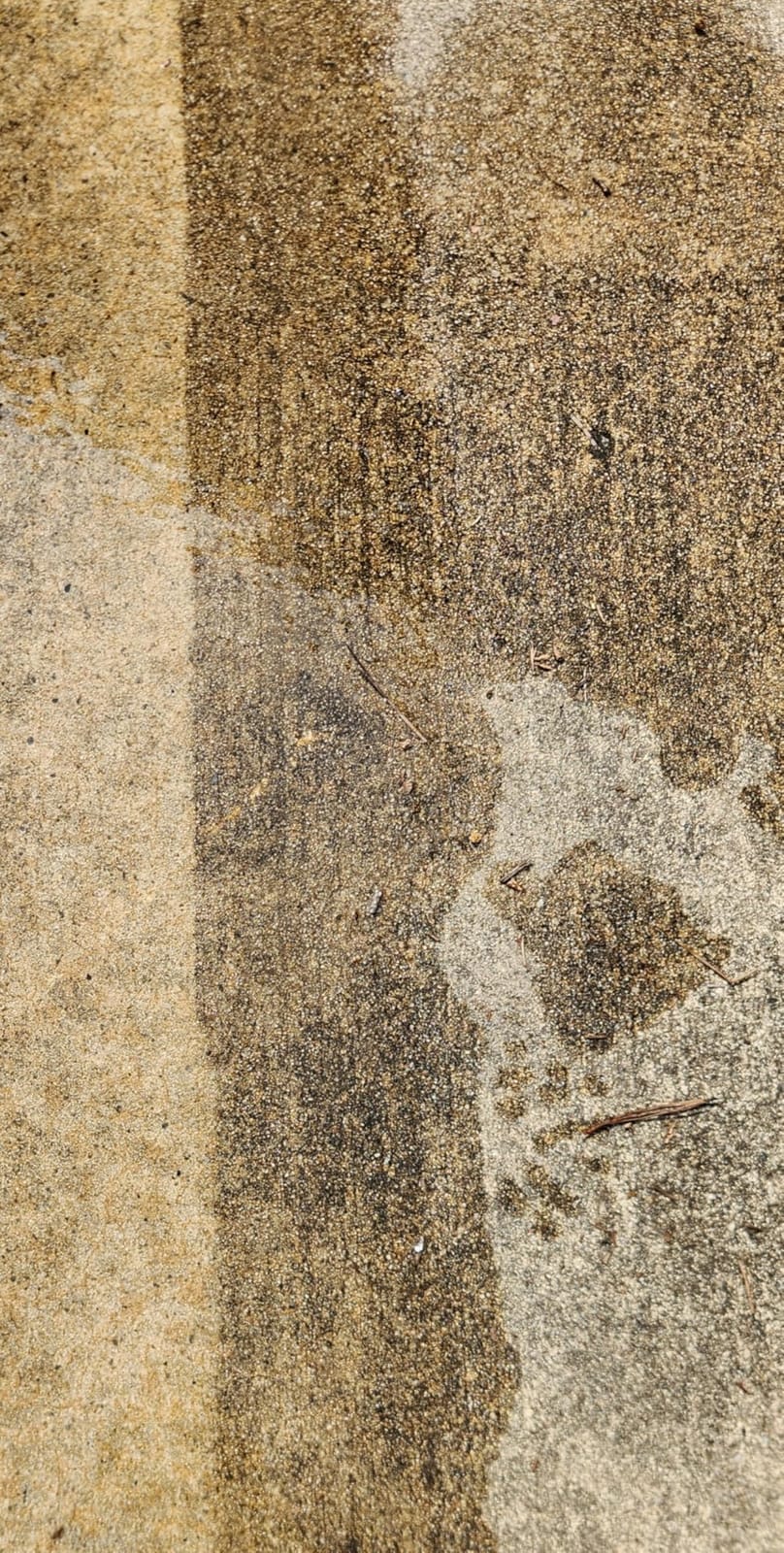
Why 4 pounds changes the storage decision
Weight is a feature people underrate until they are hauling an attachment down basement steps. Four pounds means one hand, a wall hook and no ladder.
It also means the head is easy to pass to a family member for a weekend, which is a real scenario for anyone cleaning a shared courtyard or a rental property.
What washer output delivers an even clean
Cleaning performance here is tied to washer output, and owners are clear that low-PSI machines disappoint. Satisfaction across the reviews tracks closely with having a washer in the 3,000 PSI or higher range.
Like the rest of the category, it does not fully strip heavily pitted or stained concrete in one pass, and a rinse with a spray wand is typically needed. Treat it as a maintenance tool and it performs well.
10. MEKOH 16.5 Inch Surface Cleaner – Best Wide Head on a Light Frame
MEKOH 16.5” 4-Wheel Lightweight Pressure Washer Surface Cleaner, 3600PSI
- Wide 16.5 inch path cuts a long driveway job roughly in half
- Lightweight housing and smooth caster wheels save your back
- Splash resistant skirt traps muddy water
- Dual spinning jets leave a uniform finish
- Some buyers wish they had ordered a larger size
- Can be harder to push forward so you walk it backwards
- Plastic construction leaves long term durability unproven
- Tough spots may need a turbo nozzle follow-up
This is the widest head on a light frame in the list. Sixteen and a half inches of coverage on a six pound frame is unusual, and it is why owners report cutting a five hour driveway job down to about two hours without the fatigue of a heavier unit.
The splash resistant skirt traps muddy water, and the dual spinning jets leave a uniform, streakless finish on concrete, pavers, decks and pool surrounds.
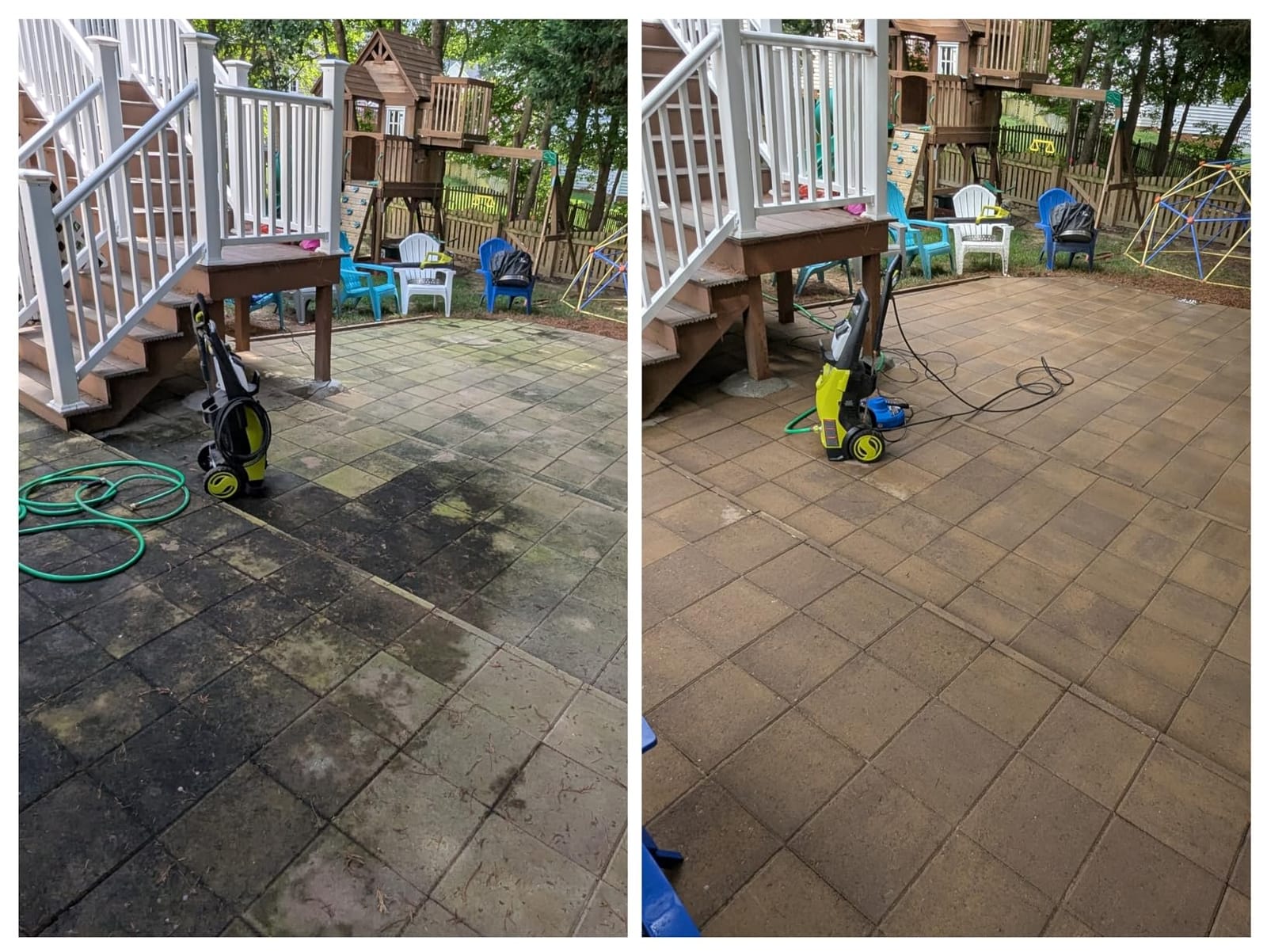
It works with electric and gas pressure washers from 2,300 to 3,600 PSI, a wider range than most 16 inch heads claim, and the spinning bars and jets are stainless steel even though the housing is not. The connector is a universal 1/4 inch quick-connect.
One thing to note: the extension wand shown in product images is not included. Owners also note results depend on at least 3,000 PSI from the washer, and a few find the unit harder to push forward, so some walk it backwards.
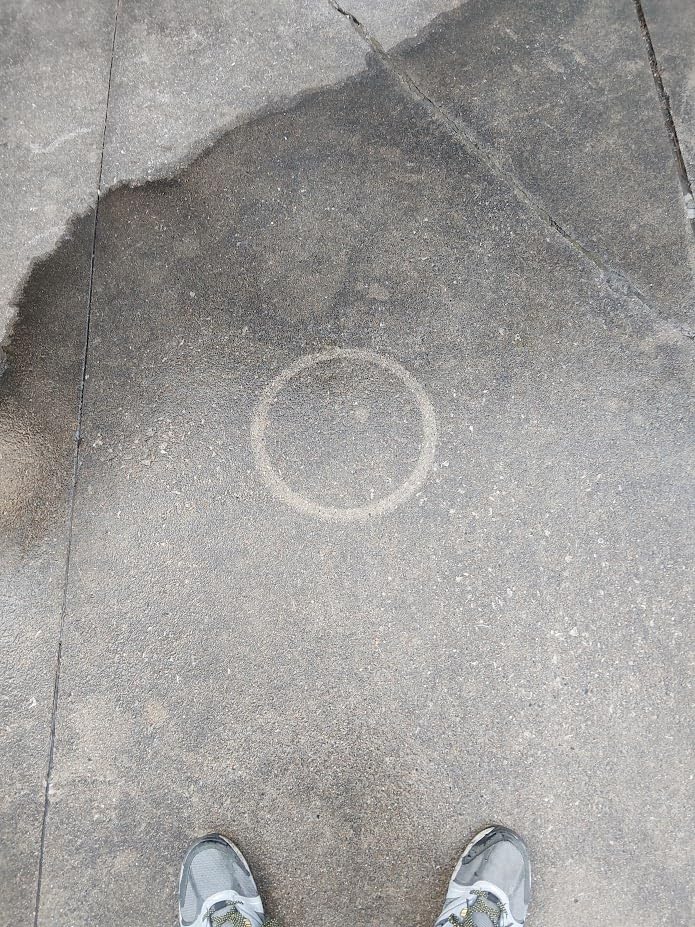
Why the 16.5 inch path speeds up big patios
Cleaning width is arithmetic. A 16.5 inch head covers roughly 18 percent more ground per pass than a 14 inch unit, and on a large patio with a dozen rows that difference is most of your afternoon. It is why this model shows up on driveways and pool decks rather than small patios.
The lightweight housing and smooth-rolling wheels mean you are not fighting the machine at the end of a long row, and the housing is drop tested to survive repeated drops.
Where the plastic housing gives you pause
The long term durability of the plastic construction is unproven, and that is a fair concern for a part that sees chemical, grit and UV exposure every season. The stainless steel internals are reassuring, but the shell is not the same category of material as the steel units here.
Add the lower review count relative to the big names and the honest summary is this: a strong choice for coverage and weight, with less history behind it. Pair it with a proper rinse pass and it will do its job well.
How to Choose a Pressure Washer Surface Cleaner for Patios?
Match the cleaning width to your patio size
Get this wrong and you will either pay for a head too wide to maneuver around furniture, or make twice the passes you need to. Twelve inch heads suit patios up to about 400 square feet. Fourteen inches comfortably covers 400 to 600 square feet. Fifteen to seventeen inches handles anything up to roughly 1,000 square feet, and eighteen to twenty inch commercial heads are built for large patios, long driveways and multi-property work.
GPM matters more than PSI
Two counter-rotating nozzles split your flow, so a head is only as good as the gallons per minute behind it. Most of these attachments want 2.5 GPM as a practical floor, and the owners reporting the best results are running 3 GPM or more. Electric washers in the 1,800 to 2,300 PSI range can use any of these heads, but they will take longer and need more passes. If you are still choosing a washer, buy flow before you buy pressure. It is also worth pairing your patio work with the wider exterior picture, including robotic gutter cleaners for the roofline above it.
1/4 inch vs 3/8 inch quick connect
Most home attachments use a 1/4 inch quick-connect plug, which fits the majority of consumer wands. The WOJET in this list uses a 3/8 inch quick-plug inlet, and that difference is the top reason an attachment ends up unused in a garage corner. Check the outlet on your wand before you order.
Weighted head or light housing
This is the single best predictor of whether you will get stripes. A weighted or self-leveling head stays planted on the slab. A light head can hop when the trigger opens, and every hop prints into the concrete. If your patio is uneven, has settled slabs or is pavers, weight matters more than width. That is why the LidoDola and JANZ both rate so well for stability.
Know which patio surfaces are safe
A surface cleaner concentrates two jets over a narrow band, so it is more aggressive than a wand in one respect and gentler in another. On pavers with polymeric sand, keep the head moving and stay off the joints, because sustained pressure washes that sand out. On limestone or travertine, stay inside the maker’s pressure guidance, since soft stone etches. On sealed concrete, test first, because a surface cleaner can strip a sealer faster than a wand. On wood or composite decking, use it for gentle rinsing only.
How Professionals Clean a Patio Without Striping It
The hardware is the easy part. Stripping and etching are technique problems, and the fix is the same whether you bought a light head or a steel one.
Sweep and clear. Remove leaves, grit and furniture. Grit under the wheels is the main cause of both streaking and surface damage.
Pre-treat before you spray. Apply the appropriate cleaner and let it dwell. Do not run detergent through a surface cleaner pass, because most heads sit above the slab and will not feed soap evenly to the surface.
Test a hidden corner. One pass, then check for etching, sealer loss or joint washout before you commit to the whole patio.
Start at even pressure. Open the trigger before the head touches down, keep it parallel to the slab and walk at a steady pace.
Overlap every pass. Each new row should overlap the previous one by a couple of inches. Overlapping in the opposite direction from your last pass keeps the finish even.
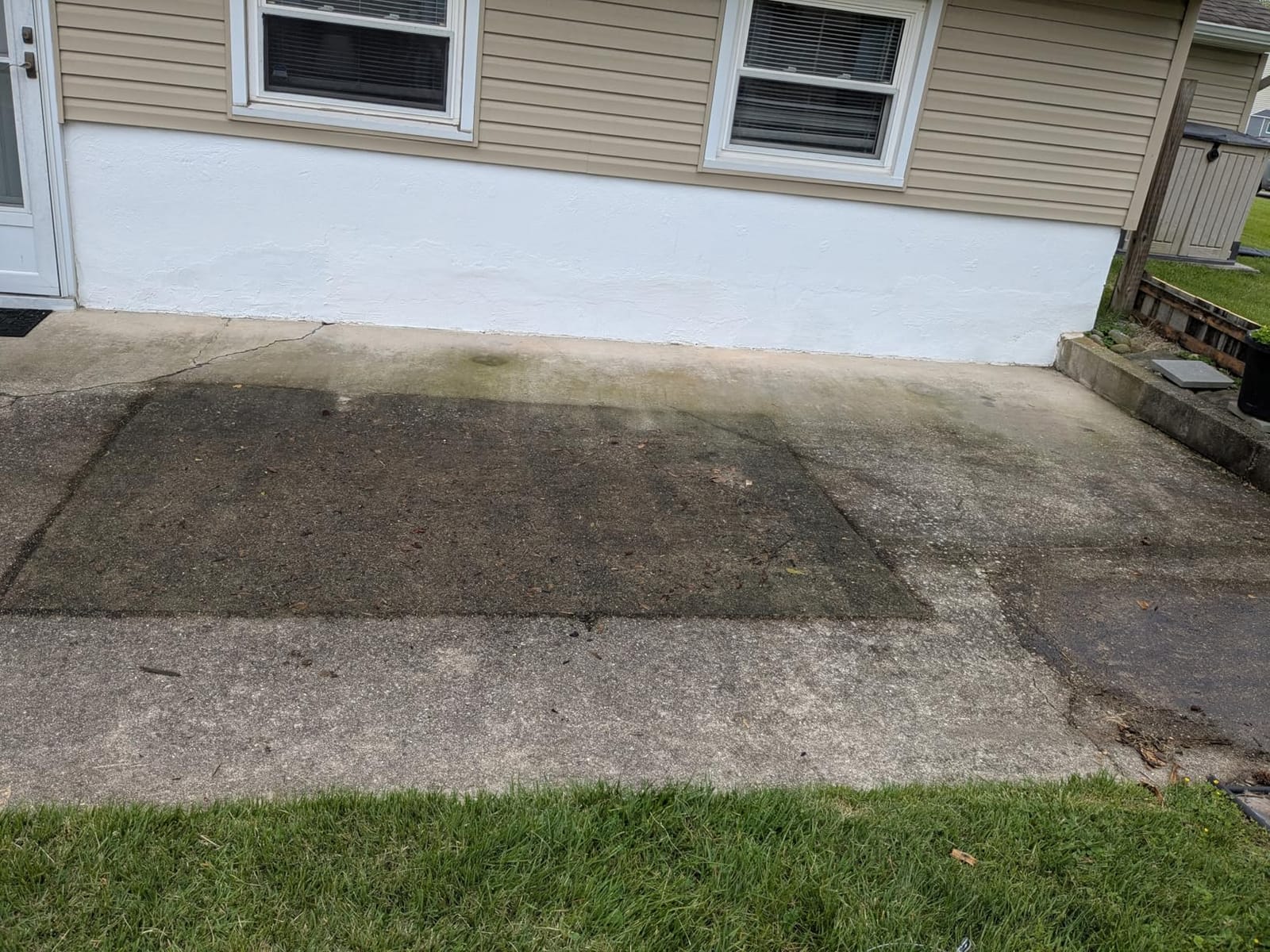
Rinse and reassess. A final rinse with a spray wand carries away loosened dirt. A second pass on any row that still looks dull is normal.
Sequencing matters as much as technique. An r/HomeImprovement owner cleaning a patio with an electric 1,800 PSI washer reported visible dirt remaining after one pass, and the fix was not a more expensive attachment. It was detergent dwell time and a second pass. Around a pool, the same order works alongside whatever you use for cordless robotic pool cleaners in the water.
Frequently Asked Questions
What is the best surface cleaner for a pressure washer?
The Karcher 15-inch surface cleaner is our best overall pick, holding a 4.6 rating across more than 13,000 reviews. For a tighter budget, the LidoDola 14-inch adds a weighted stainless steel base that resists striping, and the Hourleey 14-inch is the value option. All three use the common 1/4-inch quick-connect and need roughly 2.5 GPM behind them.
What is the best pressure washer for cleaning patios?
For most patios the washer matters mainly for flow, not raw pressure. Aim for at least 2,000 PSI and 2.5 GPM, and 3,000 PSI with 3 GPM or more if the patio is sealed concrete with years of algae or grime. A mid-range gas washer in that range pairs well with any attachment in this list.
What PSI pressure washer is best for cleaning a patio?
Roughly 2,000 to 2,300 PSI handles a maintained concrete or paver patio with routine grime. 3,000 to 3,500 PSI is the right band for sealed concrete with algae, mildew or oil staining. Above 4,000 PSI belongs to contractors working on heavy commercial surfaces, and on soft stone that range etches.
What do professionals use to clean patios?
Professionals use a surface cleaner attachment on the end of a 3,000 to 4,500 PSI gas machine delivering 3 to 4 GPM, with a 15 to 20 inch stainless steel head. The sequence is always the same: sweep, pre-treat with detergent and dwell, test a hidden corner, then make slow overlapping passes at a fixed distance from the slab.
What is the best cleaner to use on a pressure washer for a driveway?
Match the product to the problem. For algae and mildew, a masonry or oxygen-based patio cleaner applied and left to dwell before rinsing works. For oil, a degreaser needs 10 to 15 minutes of dwell. For rust, an acidic rust remover must stay off concrete and pavers long enough to lift the stain, then be neutralised. Rinse all of them off with a wand afterwards.
Is 2000 PSI enough to clean a driveway?
Yes, for routine maintenance on concrete and pavers. Around 2,000 PSI paired with 2.5 GPM and a surface cleaner will remove ordinary surface grime. It is not enough for first-time restoration of a driveway that has gone years without cleaning, and it will not strip heavy algae or oil without chemical pre-treatment.
Why is my pressure washer leaving stripes on concrete?
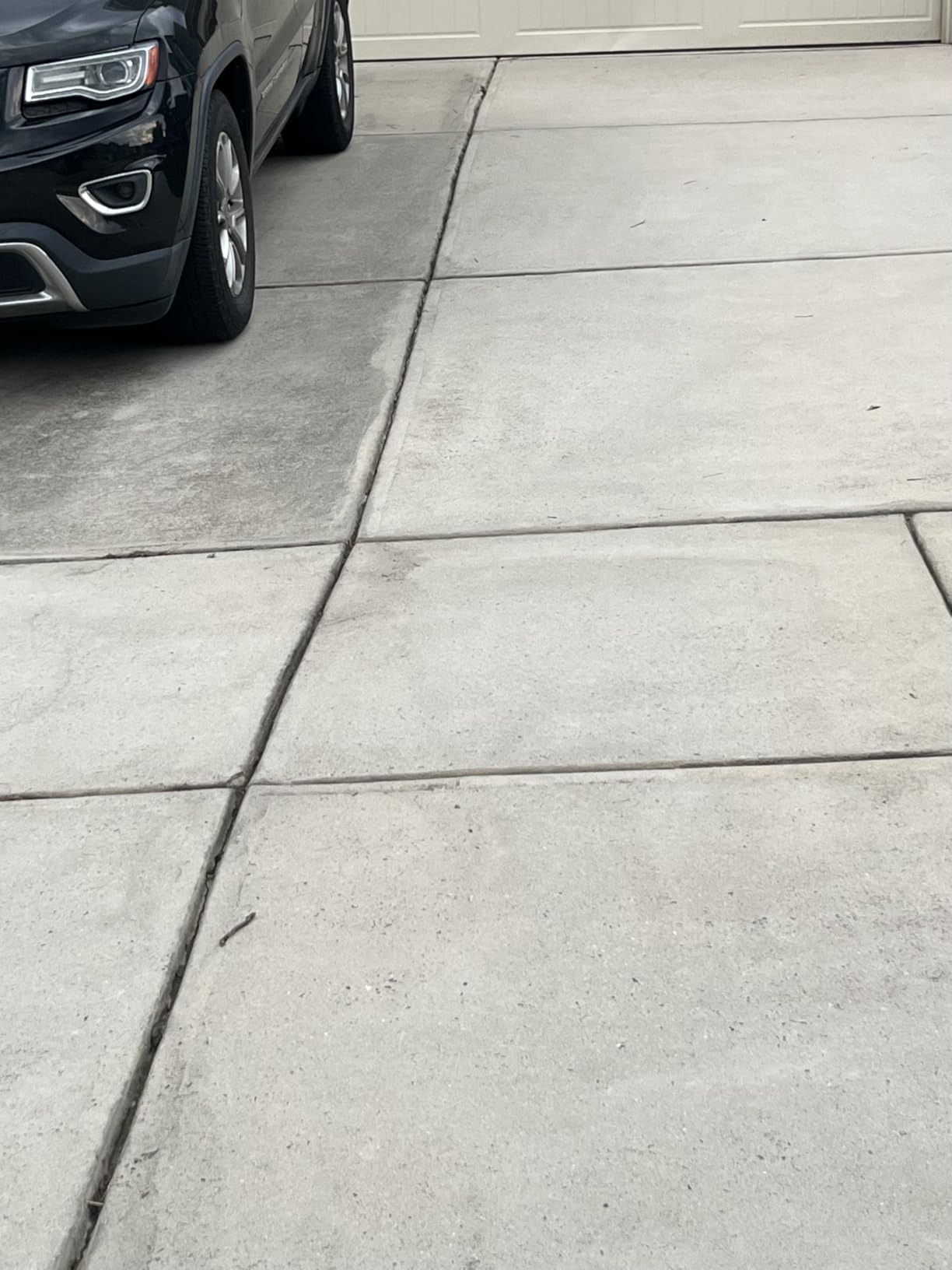
Striping is almost always geometry rather than quality. A head that is too light will hop when the trigger opens, and a head held at an angle changes the distance to the slab, printing bands into the concrete. Fixes are a weighted or self-leveling head, keeping the housing parallel to the surface, overlapping every pass, and slowing down rather than rushing across a row.
Our 2026 Verdict
The Karcher 15-inch surface cleaner wins our roundup of the best pressure washer surface cleaners for patios because it pairs a 4.6 rating with the largest review history in the group, a sealed metal bearing, and a 3.8 pound weight you can carry to the job. If your patio is uneven or paver-based and striping is your fear, the LidoDola 14-inch weighted base is the smarter buy. If the patio is large and you already run a 3 GPM or better gas washer, the WOJET 20-inch commercial head changes your afternoon.
Whichever you choose, check the connector size on your wand before you order, and give the job a proper pre-treatment and a steady walking pace. That combination does more for the finish than any attachment on this list.