
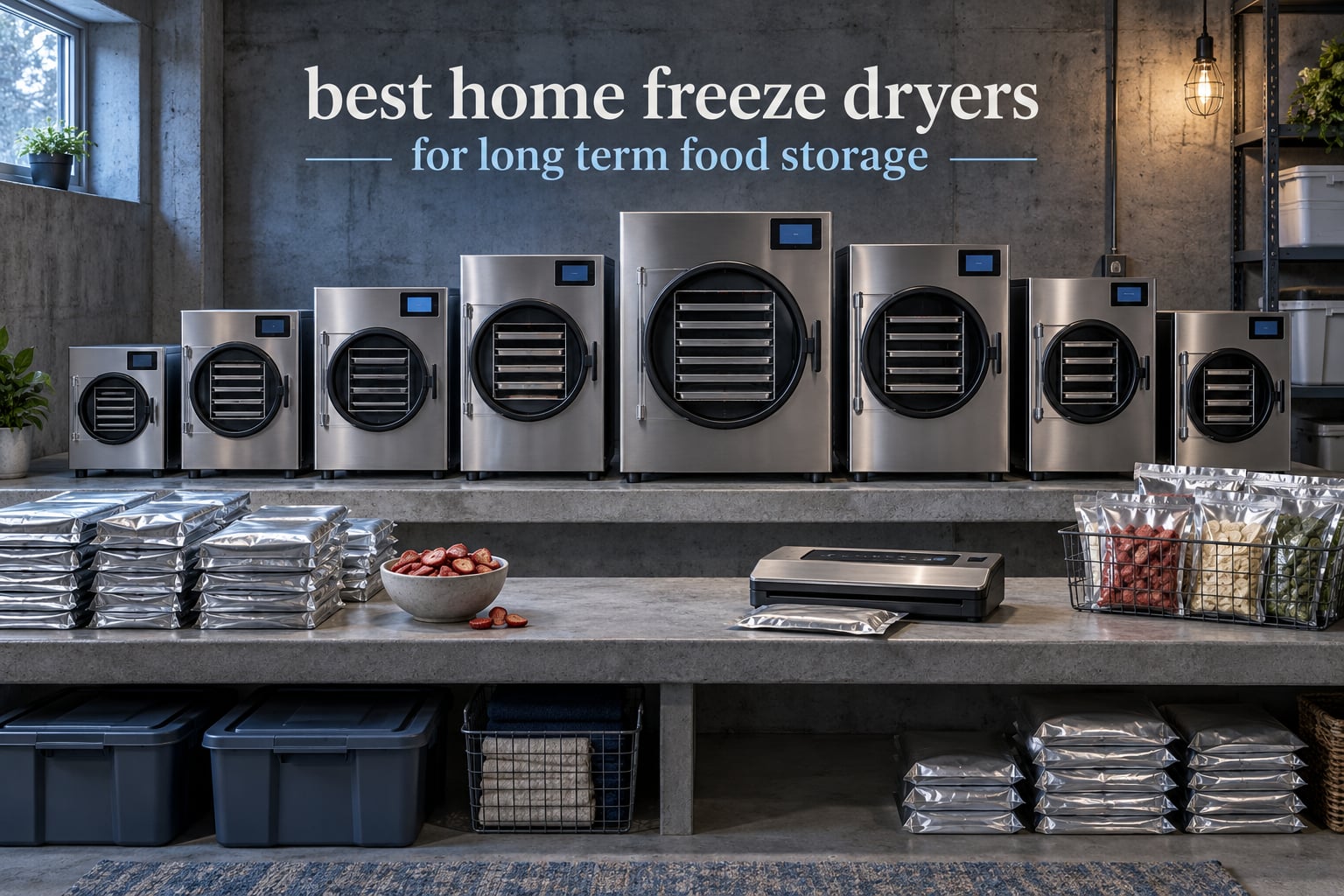
Most of what people call long-term food storage is really medium-term food storage. A vacuum sealed bucket of rice is fine, and so is a jar of pickles. Freeze-dried food is the one category where a home machine changes the math, because it strips nearly all the water out of a batch of food and leaves behind something that weighs a fraction of the fresh weight and keeps for decades on a pantry shelf.
That is why the search for the best home freeze dryers for long term food storage keeps coming back to the same short list of machines.
We spent weeks reading spec sheets, then working through what actually changes your results after the machine is unboxed: tray area versus ice capacity, the difference between a cold trap that pulls to -40C and one that pulls to -60C, and how much counter space and circuit capacity you are really committing to.
We also weighed the ownership side carefully. A machine that dries well but arrives with no compressor oil or a manual nobody can read is a poor long-term investment no matter how good the numbers look.
Below you will find eight machines, ranked on the things that matter for long-term storage: capacity per batch, chamber build, instrumentation, pump specification, weight and placement, warranty length, and how much buyer feedback actually exists.
One important caveat before we start. Seven of these eight listings have little or no verified buyer history, so we have marked every manufacturer performance figure as a claim and leaned hard on what is verifiable.
Use the Check Latest Price buttons on each machine to see current figures for your region.
Table of Contents
Top 3 Home Freeze Dryers for Long-Term Food Storage (October 2026)
If you want our short answer before the details: the VEVOR 4-layer machine is the pick, the Blue Alpine Medium Select is the one to buy if you want a complete storage kit in the box, and the HNZXIB ZZKD is the one to buy if cold trap temperature is the spec you care about most.
All three sit in the middle of the field on capacity and run on standard household voltage, which is the practical sweet spot for a home kitchen or basement.

VEVOR 4-Layer Freeze Dryer
- 8.8-13.2 lb batch on 4 stainless trays
- -35C cold trap at 1550W
- 304 stainless body with acrylic door
- Swivel casters and 60dB or below

Blue Alpine Medium Select
- 10-15 lb batch on 5 trays
- Built in Idaho USA
- Vacuum pump mats bags and sealer included
- 1 year manufacturer warranty
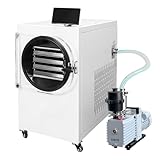
HNZXIB ZZKD
- Cold trap to -60C in 40 minutes
- 4.5CFM rotary vane pump
- 15 minute automatic defrost
- 8.8-13.2 lb on 0.46 sq m
Best Home Freeze Dryers at a Glance in 2026
Here is the whole field in one place. The table covers every machine in this roundup with its batch capacity, chamber specification and the detail that most affects long-term storage results.
| Product | Specifications | Action |
|---|---|---|
| VEVOR 4-Layer Freeze Dryer |
|
Check Latest Price |
| Blue Alpine Medium Select |
|
Check Latest Price |
| HNZXIB ZZKD |
|
Check Latest Price |
 EQCOTWEA 4-Tray Freeze Dryer EQCOTWEA 4-Tray Freeze Dryer |
|
Check Latest Price |
 Camellia River Large Freeze Dryer Camellia River Large Freeze Dryer |
|
Check Latest Price |
 HNZXIB FD-05H-40 HNZXIB FD-05H-40 |
|
Check Latest Price |
 BEILOCKERY Four-Layer Dryer BEILOCKERY Four-Layer Dryer |
|
Check Latest Price |
 Banfluxion Lab Lyophilizer Banfluxion Lab Lyophilizer |
|
Check Latest Price |
1. VEVOR 4-Layer Freeze Dryer: Best Overall Pick for Long-Term Food Storage
- Only machine here with meaningful buyer review history
- 8.8-13.2 lb batch spread across four tray layers
- 304 stainless steel chamber and trays with a see-through acrylic door
- Swivel casters let you move it for cleaning
- 60dB or below suits a kitchen or basement
- Manual and documentation widely criticized
- Some machines arrived without compressor oil
- Oil leaks reported after setup
- Several buyers needed adjustment before a batch finished
This is the machine I recommend to most people, and the reason is not its spec sheet. It is that 48 buyers have already filed feedback on it, which means every weakness below is documented rather than guessed at.
That transparency is worth a lot on a purchase this size, where the machine will live in your basement for years.
The build is straightforward: 304 stainless steel throughout, four tray layers, and an acrylic door that lets you watch the batch instead of guessing. The compressor pulls the cold trap to -35C, which is lower than you need for most vegetables and higher than the -40C and -60C models in this field.
The practical difference between -35C and -60C shows up in cycle length on wet foods rather than in the finished product.
At 245.8 pounds and 29.92 by 21.65 by 35.04 inches, this is not a countertop appliance. What it does have, and what several rivals lack, is swivel casters, so you can roll it out to clean behind it or move it to a garage when a batch is running.
Operating noise is listed at 60dB or below, which is a realistic figure for a compressor cycling in a quiet room.
What works in your favor with this machine
The 3.7 average rating is dragged down almost entirely by setup and service, not by drying performance. Buyers who get past first-run report good air circulation, a spacious chamber, and steady results on jerky, seafood, vegetables and fruit.
The stainless trays are a real upgrade over plastic, and the programmable temperature control with freeze-drying curves means you can repeat a recipe rather than guessing at settings each time.
For long-term storage specifically, the four-layer layout gives you roughly 8.8 to 13.2 pounds per batch depending on how wet the food is. That covers a family weekend of meals plus a batch of single-serve fruit or a cooked protein portion for the pantry.
What you need to handle before the first batch
Several buyers report units arriving without compressor oil, and others report oil leaks after setup. Check the oil level before the first run and re-check after the initial cycle settles. The manual is also widely criticized, so budget an evening of research or find a written walkthrough from a freeze-drying community before you load trays.
Support and documentation came up often as unresponsive in reviews. That is the single biggest reason this machine sits where it does rather than higher, and it is worth weighing against your own tolerance for troubleshooting a heavy appliance with limited hand-holding.
2. Blue Alpine Medium Select: Best Starter Kit for New Owners
Blue Alpine Medium Select Freeze Dryer – Home Freeze-Drying Machine for Food Preservation & Long-Term Storage
- Bundled kit includes vacuum pump trays mats bags and an impulse sealer
- 10-15 lb per batch across five trays
- Built in Idaho USA with a one year manufacturer warranty
- Food grade stainless steel with silicone rubber seals
- No customer reviews yet so nothing is verified by buyers
- Front-heavy 108 pound chassis is hard to reposition
- Five trays in a compact footprint means less loading area per layer
The Blue Alpine Medium Select is the pick if your real concern is the entire pipeline rather than the machine alone. The box includes a vacuum pump, trays, silicone mats, mylar bags and an impulse sealer, which means you can go from a raw tomato to a sealed, dated package in the same afternoon without a second shopping trip.
Specs are competitive for the class: five trays, 10 to 15 pounds per batch, food grade stainless steel with an aluminum chassis, and 120V power at 60 hertz.
The unit is 21 by 20 by 30 inches and weighs 108 pounds, which makes it the lightest and most manageable machine in this roundup by a wide margin.
Owners in freeze-drying forums describe the machines themselves as good, while also noting that the brand’s marketing is loud. That combination, solid hardware plus heavy promotion, is worth weighing before you order.
The one claim to treat carefully is the 30-year shelf life figure on freeze-dried output. That is a manufacturer statement about properly packaged food, not a measured result from this machine, and the listing carries no customer reviews to back it up.
Why this is the easiest first machine to own
Everything that trips up first-time buyers is in the box. Most people who build a home freeze dryer end up buying a separate impulse sealer and a stack of mylar bags in their first month anyway, so the effective cost of ownership starts lower with a bundled kit. The silicone mats also keep food from welding itself to the stainless trays during a long cycle.
The 108-pound weight is a genuine practical advantage. At that size one person can reposition it, and it will fit on a sturdy shelf or a dedicated basement bench where a 250-pound machine would need floor space.
What you give up compared with the bigger machines
With five trays in a 21 by 20 inch footprint, the per-layer loading area is smaller than some larger four-tray models with wider chamber doors. If you routinely process whole chickens or large fish, check the tray dimensions against your largest typical cut before committing.
There is no verified buyer history on this listing. That is not a dealbreaker for a first machine, but it means you are buying on build weight and included accessories rather than on evidence, so confirm the warranty terms and the return window with the seller before you order.
3. HNZXIB ZZKD: Best Cold Trap Temperature in the Field
- Coldest claimed cold trap here at -60C reaching temperature in 40 minutes
- 4.5CFM rotary vane vacuum pump rated for 800 plus hours of continuous operation
- 15 minute automatic defrost with wastewater discharge
- Seven inch touchscreen with one-touch presets
- Vacuum pump hose clips and four trays included
- Heaviest machine here at 304.2 pounds needing a permanent position
- Four trays over 0.46 sq m means less loading flexibility than five tray models
- No customer reviews to confirm the deep freeze claims
The ZZKD is built around the most aggressive published specification in this roundup. It claims a -60C cold trap that reaches temperature in 40 minutes, driven by a 4.5CFM rotary vane vacuum pump rated by the manufacturer for more than 800 hours of continuous operation.
Why cold trap temperature matters: the trap is where water vapor coming off the food gets frozen out of the system. A colder trap captures more of that vapor before it can overwhelm the pump, which is what keeps vacuum strength stable through a long cycle.
That stability is the number we would watch most closely if you plan to run wet, high-moisture foods like garden greens or full meals with sauces.
Batch capacity is 8.8 to 13.2 pounds across a 0.46 square meter drying area on four stainless trays. The chamber is food grade stainless steel, the interface is a 7-inch touchscreen with one-touch presets for fruits, vegetables and pet treats, and power draw is 1500W on 110V.
Where this machine pulls ahead
The 15-minute automatic defrost with mess-free wastewater discharge is a feature most of this field leaves out. Between batches you will drain the chamber constantly, and shaving that chore down makes a much higher weekly batch rate realistic.
Presets for fruits, vegetables and pet treats also shorten the learning curve. New owners tend to abandon freeze drying during the first month of manual curve tuning, and one-touch programs remove that excuse.
What the weight and tray count cost you
At 304.2 pounds and 31.89 by 17.72 by 31.1 inches, this is a floor machine. Plan a permanent location with ventilation and enough clearance for the drain, because you will not be sliding this one out from a cabinet every week.
Four trays over 0.46 square meters is slightly less total area than a five-tray configuration of similar footprint. If your priority is pounds per day rather than cold trap temperature, this is not the machine for you.
4. EQCOTWEA 4-Tray Freeze Dryer: Best Live Monitoring and Readout
- Seven inch LCD reports separator cold trap sample temperature and vacuum in real time
- Rotary vane pump with a pure copper motor and anti-return oil design
- Transparent organic glass door for full process observation
- Automatic frosting function with fast defrost
- Handles fruits vegetables meats herbs yogurt and pet treats
- No customer reviews to confirm real world cycle times
- 0.4 sq m is among the smallest tray areas in this group
- 254 pound chassis needs a permanent counter position
- Manual frost removal can still be required despite auto defrost
Instrumentation is where this machine separates itself. The 7-inch LCD touch screen reports separator temperature, cold trap temperature, sample temperature and vacuum level in real time, and displays curves for each.
Most owners never look at those curves. The ones who do can tell exactly when a batch has plateaued instead of running a fixed cycle and hoping.
Underneath, the specification is solid rather than headline-grabbing: a -40C cold trap driven by a high quality compressor, a rotary vane vacuum pump with a pure copper motor and an anti-return oil design, four stainless trays covering 0.4 square meters, and 11 pounds per batch on 110V power at 1550 watt-hours.
The chamber door is colorless transparent organic glass, which is better than the common tinted acrylic for judging color change in fruit. Automatic frosting detection with fast defrost handles the ice buildup between runs, though reviewers of this class of machine note that a pass with a scraper is still sometimes needed.
Why the readout matters for long-term food
Long-term storage quality comes down to residual moisture. Food that leaves the chamber slightly wet will rehydrate inconsistently and will not hold its texture the way properly dried fruit or meat should. Watching the sample temperature and vacuum curves gives you the only real signal that a batch finished properly.
The anti-return oil design on the pump is worth noting for owners who do not want to think about oil migration into the chamber. It is a design choice, not a guarantee, but it points in the right direction for food work.
What to check before you order
The 0.4 square meter tray area is among the smallest here. If your plan leans on meals with multiple components, the small area means more cycles for the same weekly food volume.
There are no customer reviews on this listing, and at 254 pounds with a 28.74 by 19.69 by 35.24 inch footprint it is a fixed-installation machine. Treat the -40C figure and the 11-pound rating as manufacturer claims until you have run it yourself.
5. Camellia River Large Freeze Dryer: Best for Large Single Batches
Camellia River Freeze Dryer Machine with Vacuum Pump, Large Capacity for Home Food Preservation
- One of the larger stated batch claims here at up to 25 pounds per cycle
- Five stainless steel trays in a front load chamber
- Full accessory kit includes vacuum pump impulse sealer silicone mats bags and absorbers
- Fully automated cycles with intuitive digital controls
- Front load design simplifies tray loading
- No customer reviews to verify the 25 lb capacity claim
- Listing height figure of 314 inch appears to be a data error and should be confirmed
- 220 pounds makes it a fixed installation
- Item count value in the listing data is inconsistent
This is the machine in the roundup with the largest claimed batch at 25 pounds of processed food per cycle across five stainless trays. If your storage project is measured in bulk batches rather than weekly cooking portions, that headline number changes how quickly you can fill a pantry.
Everything else about the machine is deliberately simple: standard 120V household power, fully automated freeze-drying cycles, intuitive digital controls, and a front-load chamber that makes tray loading straightforward.
The kit is the most complete in this roundup, including the vacuum pump, an impulse sealer, silicone mats, mylar bags and oxygen absorbers. Nothing else needs to be purchased before the first package is sealed.
At 220 pounds, with a 25.5 by 24 inch footprint, it is still a dedicated machine rather than a countertop appliance. The one thing you must do before ordering is confirm the physical dimensions.
Where the 25-pound claim helps
Large single batches matter when you are preserving a garden surplus or cooking a big quantity of one thing. A batch of cooked beans, a tray of sliced peppers or a full round of strawberries becomes a meaningful pantry addition in one cycle rather than four.
The included absorbers and sealer are the detail most buyers of competing machines leave out. For long-term storage, packaging supplies are not optional, so having them in the box removes the most common early mistake.
What the listing data does not tell you cleanly
The published height figure of 314 inches is almost certainly a data entry error, and the item count value is inconsistent with a single-machine listing. Neither issue means the machine is bad, but both mean the physical specifications should be confirmed with the manufacturer before you plan your bench space.
There are no customer reviews, so the 25-pound capacity is a manufacturer claim rather than a measured result. Ask the seller for a real batch weight photo if that number is what is driving your decision.
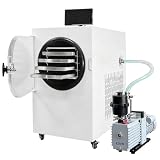
6. HNZXIB FD-05H-40: Best for Repositioning the Machine
- 10-15 lb per batch on four layers of 304 stainless trays
- Programmable 7 inch touch panel with freeze drying curve display
- Acrylic viewing door for full process observation
- Built-in swivel casters make it easier to reposition
- Electric defrost simplifies routine cleaning
- 60dB or below suits a kitchen
- No customer reviews to confirm drying times or reliability
- -40C cold trap is a step below the deeper rated model
- Weight and dimensions are not published in the listing data
- The dryer unit is supplied without the listed trays and sealing accessories
The FD-05H-40 solves a real problem that most of this roundup ignores: where the machine lives. Built-in swivel casters mean you can move it to a laundry room, garage or basement for a run and roll it back to the kitchen bench when the batch is done.
That matters in a house where an appliance on casters is the difference between a permanent installation and a shared space.
Everything else is a competent mid-range configuration. The batch claim is 10 to 15 pounds on four layers of 304 stainless trays, and the cold trap pulls to -40C.
The 7-inch touch panel is programmable with a freeze-drying curve display, so you can save and repeat profiles. Noise is listed at 60dB or below, and electric defrost handles the between-batch cleanup.
The high-transparency acrylic door lets you monitor the chamber, which is genuinely useful on longer cycles where you do not want to open the door and disturb the vacuum.
Why mobility is worth paying for
If your storage shelf, pantry or prep room is not climate controlled, moving the machine to where the temperature is stable matters. Home freeze dryers perform best in a room that is not hot and not humid, and casters give you the option to chase that room rather than live with it.
They also make cleaning practical. Nobody wants to shove a fixed appliance away from the wall to sweep under it, and casters turn a chore into a two-second job.
What to verify before buying
Weight and dimensions are not published in this listing, which is a problem for a machine you plan to roll around. Ask for the packaged dimensions and confirm the final floor clearance before you commit to a room.
Also note what is not included: the listing covers the dryer unit only, with no trays, bags or sealing accessories specified. Budget for trays and packaging supplies separately, which is the same line item that bundled machines absorb into the box.
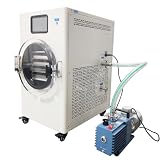
7. BEILOCKERY Four-Layer Dryer: Best Setup Simplicity
- 2 L per second pumping speed reaches vacuum state quickly for faster cycle starts
- High definition LCD touch screen with multi-scene preset programs
- Plexiglass viewing door with baffle plate design promotes even drying
- Automatic defrosting with a colorless door for real time observation
- Soft vacuum sublimation process restores color and taste after rehydration
- No customer reviews to verify drying consistency
- Weight and dimensions are not published
- Needs 40cm wall clearance and 10 to 32C ambient temperature
- Four tray layers over 11 lbs is a smaller batch than several rivals
The BEILOCKERY is the pick if your concern is how quickly a new owner can get a clean batch out of it. The listing leads with multi-scene preset programs on a high definition LCD touch screen, so instead of learning a freeze-drying curve from scratch you select a scene and start the cycle.
The pump is the other headline. At 2 L per second pumping speed with a cold trap that goes as low as -40C, the machine is specified to reach vacuum state faster than most of its peers, which shortens the front end of every cycle.
The 1550W motor runs on 110V, and the batch claim is 11 pounds across four tray layers.
Its chamber design is thoughtful. A colorless plexiglass viewing door combined with a baffle plate lets you watch the food without glare and helps distribute airflow evenly across the trays. Automatic defrosting handles the between-batch ice.
Where this machine saves you time
Preset programs and fast vacuum pull are both cycle-time advantages, and cycle time is the real constraint on how much food you can store. A machine that spends less time pulling down before drying begins, and less time on the learning curve, produces more food in the first month.
The soft vacuum sublimation approach also tends to preserve color and flavor better on fruit, which matters if the food is destined for a shelf you will look at for the next decade.
What the installation requirements mean for your room
The listing is unusually honest about placement, requiring horizontal positioning, at least 40cm of clearance from walls, and an ambient temperature between 10C and 32C. Those are real constraints, and in a warm garage you will need a room with better temperature control.
Weight and dimensions are not published, so measure your intended space before ordering. At 11 pounds per batch this one runs on the smaller side, which means more cycles for the same monthly food volume.
8. Banfluxion Lab Lyophilizer: Best Commercial Components
- Tecumseh Secop compressor with an anti-oil return rotary vane pump
- 13.2 lb load across 0.4 square meters of tray area
- 2 L per second pumping speed with an 11 lb single batch rating
- Seven inch touchscreen with temperature curve visualization
- Supports continuous operation without heating
- A single review is too thin a sample to judge reliability
- Top of the range on cost with no established review history
- Weight and dimensions are not published in the listing data
- Continuous operation is not documented for unattended overnight runs
Component sourcing is what separates this machine. It specifies a Tecumseh or Secop professional compressor and an anti-oil return rotary vane vacuum pump running at 1700 rpm, and those are commercial-grade parts that most consumer freeze dryer listings never name.
Compressor and pump failure are the two most common reasons an appliance of this type stops working, so component quality is a reasonable proxy for longevity.
The chamber is 4 layers of food grade stainless steel trays with 0.4 square meters of total area and a stated load capacity of 13.2 pounds, alongside an 11-pound single-batch rating.
The chamber door is transparent organic glass with automatic defrost and an optimized deflector plate for even drying. The 7-inch touchscreen uses an intelligent temperature control algorithm with curve visualization and one-key automatic operation.
It also supports continuous operation without heating, which is a lab-oriented feature that could matter if you plan to run a commercial drying schedule.
What the component choice buys you
A named compressor brand is a meaningful signal because it is the part you cannot replace cheaply. Rotary vane pumps rated for continuous duty generally outlast light consumer pumps, and the anti-oil return design reduces the risk of oil migrating into the food chamber.
The 0.4 square meter tray area with a 13.2-pound load is a strong load-to-area ratio, which is worth tracking if you care about output per tray rather than per machine.
What the feedback record does not tell you
There is exactly one customer review on this listing, a five out of five from a buyer who said they would buy again. That is encouraging and statistically meaningless for an appliance of this size.
We would want to see a review history covering a full year of cycles before treating it as proven.
Weight and dimensions are also unpublished, so plan the location carefully. While the machine supports continuous operation, the listing does not document it for unattended overnight runs, so do not assume you can start a batch before bed and check it in the morning.
What Freeze Drying Actually Does to Your Food
Freeze drying is called lyophilization, and the process has three stages. First the food is frozen solid in an ordinary freezer. Then it goes into a vacuum chamber where the pump lowers the pressure far below the point where water can exist as a liquid, and the ice turns straight into vapor.
That phase change is called sublimation, and it is why freeze-dried food comes out porous rather than chewy. A final stage of desorption pulls off the last bound moisture.
The results are what make this worth a dedicated appliance. Food comes out roughly a tenth of its fresh weight, retains the large majority of its nutrients, and rehydrates in minutes rather than hours.
Properly packaged, it stays edible at room temperature for decades. Dehydrating leaves more moisture and a shorter shelf life, while canning requires a pressure canner for low acid foods and still yields a much heavier package.
There is a safety point most roundup pages skip. University extension guidance notes that freeze drying does not sterilize food. Microorganisms including bacteria survive the process and remain dormant but viable, then reactivate when the food is rehydrated.
Raw meat, seafood and eggs still need to be cooked before eating, and vacuum packaging on its own is not a safety step.
Some foods are poor candidates as well. High fat and high sugar items such as butter, mayonnaise, honey and bread either melt rather than sublime, or they trap moisture in a way that shortens shelf life.
Meat, fish, eggs, most vegetables, berries, herbs, cooked meals and candy are the reliable choices.
One more practical note on time. A typical home batch runs 20 to 40 hours, and high sugar produce like fresh pineapple can run 48 hours or longer. Plan your schedule around that before you commit, because a machine you cannot cycle regularly is an expensive shelf.
How to Choose a Home Freeze Dryer for Long-Term Storage
Start with the number that matters most for storage, which is batch capacity, and then check the one that matters most for cycle length. Those two, plus weight and placement, decide almost everything else.
Tray area versus ice capacity. Tray area is how much food you can spread out in one load, and ice capacity is how much frozen water the chamber can handle.
Watermelon, strawberries and full cooked meals are mostly water, so they load the chamber hard and will not finish in a small chamber no matter how many trays it has. Buy tray area for vegetables and meals, and ice capacity for fruit and anything watery.
Cold trap temperature. Anything below -40C is adequate for most home work. The gap between -40C and -60C shows up as shorter cycles on wet foods, so treat it as a refinement rather than a requirement.
Pump specification. Look for a named rotary vane pump and a published CFM or L per second figure. A manufacturer willing to publish pump runtime in hours, as the ZZKD does, is telling you something about how the pump was specified.
Wattage and circuit. The machines in this roundup run between 1500W and 1550W on 110V or 120V, which fits a standard household outlet on its own. Larger commercial machines need a dedicated 20A circuit and sometimes an electrician. If you are mapping the rest of the room’s electrical load, our guide to robot vacuum battery runtimes covers how quickly other always-on household gear cycles its charge.
Weight and placement. These machines weigh between 108 and just over 300 pounds. Choose a room between 45 and 80F with ventilation and drainage access.
If you also run humidity-sensitive equipment, a dry storage setup like the one we covered in our filament dryer guide is a good model for how much air circulation actually matters in a workshop.
Noise. Anything at 60dB or below is workable in a basement or outbuilding. Above that, plan to keep the machine away from living space.
Warranty and brand longevity. This is the criterion buyers skip and then regret. Home freeze dryers are heavy appliances with a wear-out list: compressor, door gasket, control board, heater.
A brand that disappears leaves you with an expensive metal box. One forum account of a previously popular freeze dryer brand describes owners who could no longer source parts or service after the company exited.
Confirm that the manufacturer still exists, ships parts, and answers support requests before you buy.
Two more things to plan for. Your storage shelf will need to handle the weight of finished food, which is light. The machine bench, on the other hand, needs to handle the machine, which is not.
Packaging Freeze-Dried Food for Long-Term Storage
The machine does about half the work. The other half is packaging, and this is where most lost batches come from.
Mylar bags are the standard storage container for freeze-dried food, paired with oxygen absorbers sized to the bag volume. Place one absorber per bag at the correct rating for that size, and never more.
Too many absorbers in one bag can interfere with the finished texture, so count them rather than doubling up out of caution.
Seal twice. Use an impulse sealer or a vacuum sealer on the mylar bag, then seal the top edge again with a heat sealer. Double sealing costs nothing and protects against the most common failure, which is a slow leak that lets oxygen back in over years.
If part of the plan is travel or camping meals, these bags pack well and weigh almost nothing next to wet food. Our long range drone field kit guide covers the same kind of weight-and-volume thinking for gear that goes into the field.
Watch out for punctures. Forum accounts of lost investments trace back to sharp food, such as freeze-dried fish or strawberry edges, puncturing a bag during vacuum sealing. Double-bag high-edged items and keep hard pieces away from the seal area.
Label everything with the contents, the batch date and the estimated weight. In five years, an unlabeled jar of grey flakes is a waste of shelf space.
Frequently Asked Questions
Is a home freeze dryer worth it?
A home freeze dryer is worth it if you regularly have surplus garden produce, cooked meals or meat you want to store for years without refrigeration. It is not worth it for a typical two-week emergency kit, because the machine is a major purchase, a batch runs 20 to 40 hours, and you also pay for mylar bags and absorbers. Buy one for food preservation volume, not for a small stockpile.
How much does a decent freeze dryer cost?
Home freeze dryers fall into three practical tiers: entry units with four trays and roughly 10 pounds per batch, mid-size five-tray units handling 10 to 15 pounds, and large machines claiming 20 to 25 pounds per cycle. Cost shifts constantly by seller and region, so use the Check Latest Price buttons on each product above for current figures, then budget separately for bags and pump oil.
What are the drawbacks of using a food freeze dryer?
The real drawbacks are time, money and space. Cycles run 20 to 40 hours and much longer for sugary produce, machines weigh 108 to over 300 pounds and need ventilation plus drainage, and running expenses include electricity, pump oil, mylar bags and oxygen absorbers. Freeze drying also does not kill bacteria, so raw meat and seafood must still be cooked before eating.
What is the best home freeze dryer on the market?
Among the eight machines we reviewed, the VEVOR 4-layer model is the best overall pick for long-term food storage because it combines 8.8 to 13.2 pound batches, a 304 stainless chamber, casters for moving it and the only meaningful buyer review record in the group. The Blue Alpine Medium Select is the easiest first machine because the kit includes bags and a sealer.
What are the most common freeze drying mistakes?
The most common mistakes are skipping or shortening the pre-freeze, overloading trays so air cannot circulate, drying food that still contains surface moisture, and sealing a single layer of mylar without a second heat seal. Forgetting oxygen absorbers is the other big one. Allow trays to freeze solid first, keep layers thin, and double-seal every bag.
The Verdict for 2026
For long-term food storage, the VEVOR 4-layer freeze dryer is the one we would put in a kitchen or basement. It is the only machine in this roundup with real buyer feedback behind it, and the documented complaints are fixable rather than fatal.
Check the oil level before the first run, read a proper walkthrough, and give the acrylic door a look every few hours.
If you want everything needed to store food in the same box, choose the Blue Alpine Medium Select. If cold trap temperature and fast automatic defrost matter most, the HNZXIB ZZKD leads the field.
Whichever you pick, budget for trays, mylar bags, oxygen absorbers and pump oil, and check that the manufacturer you are buying from will still be there for parts in five years.