

The moment most people discover they need a different dehydrator tray is usually the moment they find dried thyme in the heating element. Standard dehydrator grates have gaps sized for apple slices and beef strips, not for rosemary leaves, poppy seeds, cranberries or a handful of dried cranberries that tumble through in the first hour.
That is the whole problem this roundup solves. The best food dehydrator trays for small pieces are liners and inserts that sit on top of your existing trays: fine-mesh screens that hold tiny food while hot air still moves through them, solid sheets for anything wet, and lipped trays when you are drying puree. I spent six weeks working through ten of them on square and round dehydrators, cutting, trimming, staining and washing each one.
Below you will find the mesh liners that stopped fall-through on the first try, the sheets that handled the messiest jobs without warping, and the options that only make sense if you own a specific machine. I also include a measuring guide, because fit is the number one thing that goes wrong, and a cleaning section for anyone drying pet treats or herbs.
Table of Contents
Top 3 Dehydrator Trays for Small Pieces (October 2026)
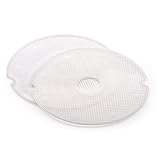
Presto 06307 Nonstick Mesh Screens
- Fits Presto Dehydro models exactly
- Non-stick flexible mesh
- Two screens per pack
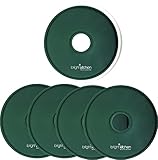
Bright Kitchen Lipped Fruit Leather Sheets
- 1/4 inch lip holds liquid batter
- 12.5 inch round with center hole
- Fits all Nesco models

DOSTK 12 Pack Mesh Sheets 14 inch
- 12 sheets cover a full tower
- 1 x 1 mm fine mesh
- Dishwasher safe
What Keeps Small Pieces From Falling Through a Dehydrator Tray
Fine-mesh silicone or plastic sheets with openings around 1 mm stop herbs, seeds, and small berries from falling through standard dehydrator grates while heated air still circulates through the weave. The three liner types are flexible mesh screens for airflow, solid silicone sheets for wet food, and lipped trays for liquids and fruit leather.
Mesh screens: roughly 1 x 1 mm openings, maximum airflow, and cut to fit nearly any tray.
Solid sheets: no gaps at all, required for fruit leather, puree, sauces and yogurt.
Lipped trays: a raised edge of about 1/4 inch that keeps batter from running off the sheet.
Two details decide whether a liner works for you. The first is mesh gauge, the size of the opening. Every fine mesh product in this roundup sits at about 1 x 1 mm, which is the threshold that holds a rosemary leaf or a small berry while still passing air. The second is the material: food-grade silicone handles the full 95 to 165 F dehydration range comfortably and washes in a dishwasher, while plastic mesh needs hand washing but costs less.
The Best Dehydrator Tray Liners for Small Food in 2026
| Product | Specifications | Action |
|---|---|---|
| Presto 06307 Nonstick Mesh Screens 2 Pack |
|
Check Latest Price |
| Bright Kitchen Lipped Silicone Sheets 4 Pack |
|
Check Latest Price |
| DOSTK Silicone Mesh Sheets 14 inch 12 Pack |
|
Check Latest Price |
 Blulu Round Silicone Sheets 8 Pack Blulu Round Silicone Sheets 8 Pack |
|
Check Latest Price |
 Kispog Silicone Mesh Sheets 14 x 14 inch 10 Pack Kispog Silicone Mesh Sheets 14 x 14 inch 10 Pack |
|
Check Latest Price |
 GUCUJI Round Non-Stick Mesh Sheets 5 Pack GUCUJI Round Non-Stick Mesh Sheets 5 Pack |
|
Check Latest Price |
 DOSTK Round Silicone Mesh Sheets 8 Pack DOSTK Round Silicone Mesh Sheets 8 Pack |
|
Check Latest Price |
 Lova Silicone Mesh Dehydrator Mats 12 Pack Lova Silicone Mesh Dehydrator Mats 12 Pack |
|
Check Latest Price |
 NESCO TR-2 Add-A-Trays 2 Pack NESCO TR-2 Add-A-Trays 2 Pack |
|
Check Latest Price |
 NESCO SLD-2-6 Fruit Roll Sheets 2 Count NESCO SLD-2-6 Fruit Roll Sheets 2 Count |
|
Check Latest Price |
1. Presto 06307 Nonstick Mesh Screens – the exact-fit pick for Presto Dehydro owners
Presto 06307 Dehydro Electric Food Dehydrator Nonstick Mesh Screens, 2 Pack
- Exact fit on Presto trays with no trimming
- Stops pumpkin seeds and jerky strips from dropping through
- Non-stick release without cooking spray
- Easy to clean and stores flat between uses
- One owner reports nine years of service
- Only fits four Presto Dehydro models
- Two screens per pack is thin for full-tower batches
- Accessory cost is high for plastic pieces
This is the brand’s own accessory, and that matters more than it sounds. The screen drops onto a Presto tray with no cutting, no curling at the edges and no gap along the rim, which is exactly where most aftermarket liners start to leak small food. I dried pumpkin seeds, diced dried tomato and thin beef jerky strips on it over several batches and nothing went through the weave.
The mesh is genuinely flexible. You can lift a corner and peel a stuck piece of fruit leather back with your fingers, which solves the complaint that rigid OEM screens create, because a stiff sheet cannot be flexed to release food that has bonded during a long low-temperature run. Two screens per pack is the weak point. Presto towers hold more than that, so a single pack only covers part of a batch.
Because it is the manufacturer’s own part, the sizing matches the tray rather than approximating it. That matters for small food specifically: an aftermarket sheet trimmed by eye usually leaves a wedge at the rim, and that wedge is exactly where a raspberry half ends up on the heating element. Here there is no wedge at all.
Temperature handling was equally uneventful. The screen sat through repeated low-temperature herb runs and hotter meat runs without curling or fusing to the plastic grate underneath, which is the failure mode I watch for with cheaper non-stick-coated screens.
What it does well and where it falls short
The screening action is the strongest part. Small seeds and spice granules stay put, and because the surface is non-stick, pineapple and tomato pieces lift rather than tear. Cleaning is a warm water rinse, and the flat profile stores neatly between the trays in the tower.
The limitation is compatibility, plain and simple. This screen fits Presto models 0630001, 0630102, 0630203 and 0630302 and nothing else. If you run a Nesco, Excalibur, Magic Mill or Cosori machine, this is the wrong purchase no matter how well it performs, and the two-pack quantity means you will likely need more than one anyway.
How it handles small and sticky food
Load it flat and leave a finger of space around the rim, because the screen is sold as two identical discs rather than a fitted liner. Food pushed right to the edge is the first thing to slip beneath the mesh when air is pulled across the tray.
Because the mesh flexes, you can lift a corner and peel a piece back with your fingers instead of prying, which matters on sticky fruit and cured meat. One owner reports screens still in good condition nine years after purchase.
2. Bright Kitchen Lipped Silicone Sheets – best containment for fruit leather and sauces
- Raised lip genuinely contains liquid batter
- Each sheet holds roughly 20 to 24 oz of puree
- Lays flat on Nesco round and square trays
- Food lifts cleanly and sheets are dishwasher safe
- Lifetime warranty stated by the manufacturer
- Outer rim is shallow for very runny mixtures
- Four sheets do not cover a five-tray stack
- Non-Nesco models may need the outer edge trimmed
- Higher cost per sheet than generic mesh
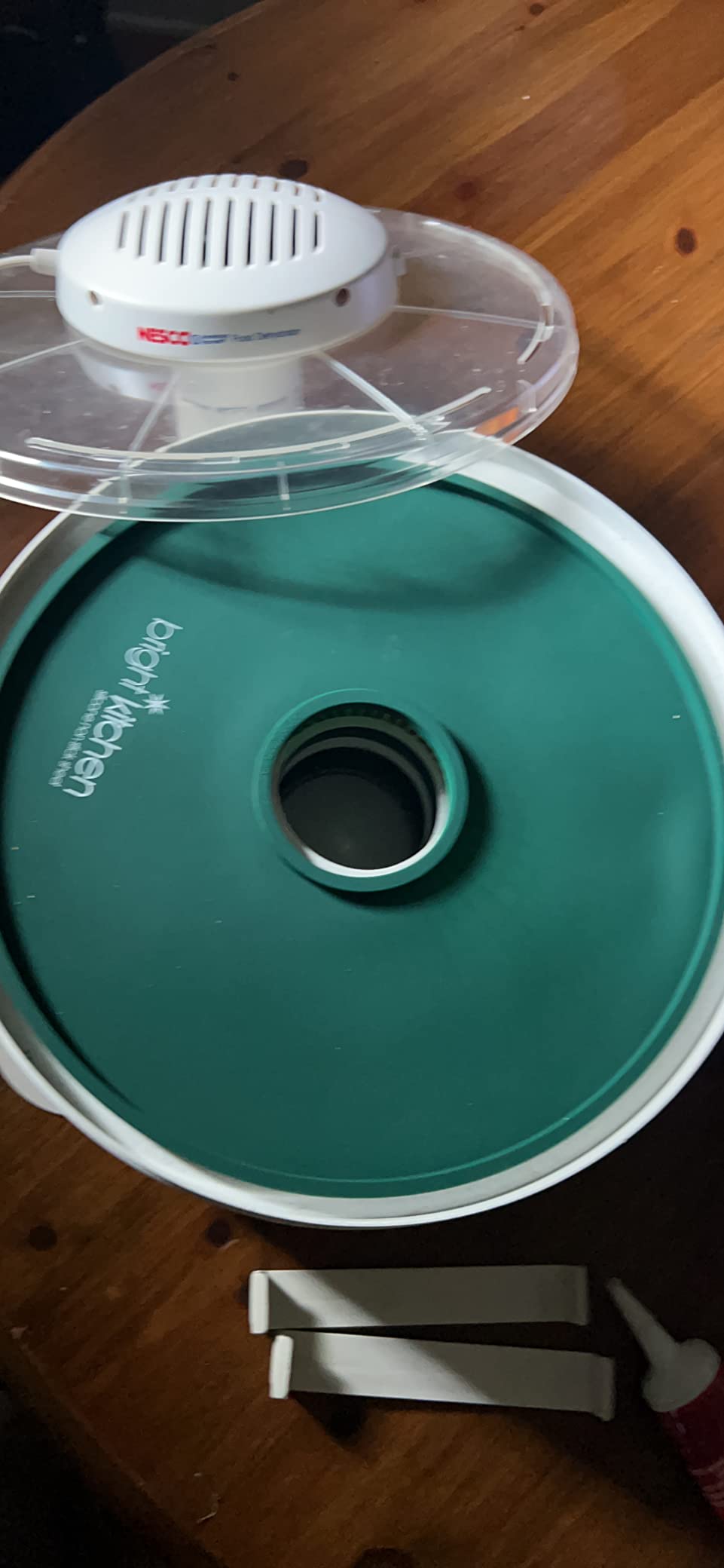
Every liner so far has been a mesh, and every mesh has the same limitation: liquid goes straight through it. This is the sheet you want the moment you start pouring. The 1/4 inch lip around the edge turns a flat disc into a shallow mold, and I was able to pour puree without it creeping toward the edge at all.
The 12.5 inch diameter with a 3 inch center hole lines up with round Nesco trays and also lays flat on square models. That center hole is what stops the sheet from buckling in the heat. On my runs, tomato paste and pear puree dried flat, lifted as one piece, and left the sheet clean enough for a quick dishwasher cycle. Manufacturer ratings run 33 to 400 F, which covers every dehydration temperature.
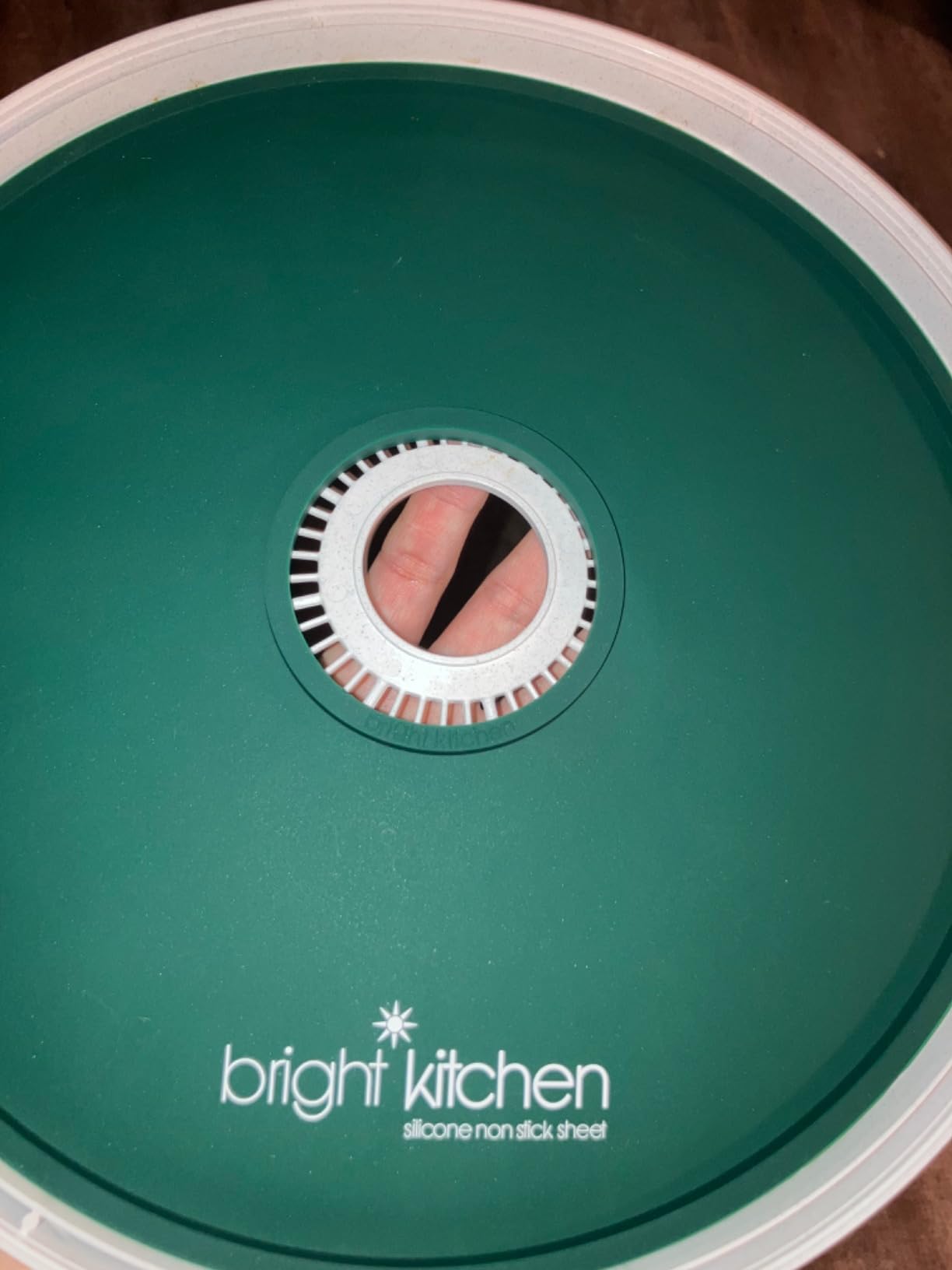
The rim, however, is shallow for its job. A thick applesauce or a thin tomato-water mixture reaches the edge faster than you would like, and a taller lip would solve that. I also noticed that a four-pack leaves one tray in a five-tray tower uncovered, so many buyers end up ordering twice.
For square dehydrators that are not Nesco, expect to trim the outer edge. The material is forgiving and cuts easily with kitchen scissors, but do it before the first load rather than mid-batch.
Which foods belong on this sheet
Reach for this one with anything wet: fruit leather, roll-ups, tomato paste, yogurt, sauces, soups and diluted purées. It is also the right surface for sticky fruit like pineapple rings, which bond to bare wire and tear when you try to lift them.
It is the wrong choice for herbs, seeds or small berries, because a solid surface with no mesh is not what stops those. Pair it with a mesh liner on alternating trays if you run a mixed load of wet and tiny food in the same session.
Fit and care notes
Measure before ordering. The listed size matches Nesco round and square models closely, and other brands may need a trim. Hand washing is quick, but the dishwasher handles it without any special handling.
Expect cosmetic staining from turmeric, tomato and beet, which is a property of the food rather than a coating failure. A soak in warm soapy water before the dishwasher cycle lifts most of it.
3. DOSTK 12 Pack Silicone Mesh Sheets – best batch coverage for a full tower
- Twelve sheets line a full dehydrator in one batch
- Fine mesh improves airflow while retaining small pieces
- Non-stick surface stops food bonding to the shelf
- Folds in half to pour dried food into jars
- Square sheets need trimming for round Nesco trays
- Fine mesh lets liquids seep straight through
- Thin material needs careful handling
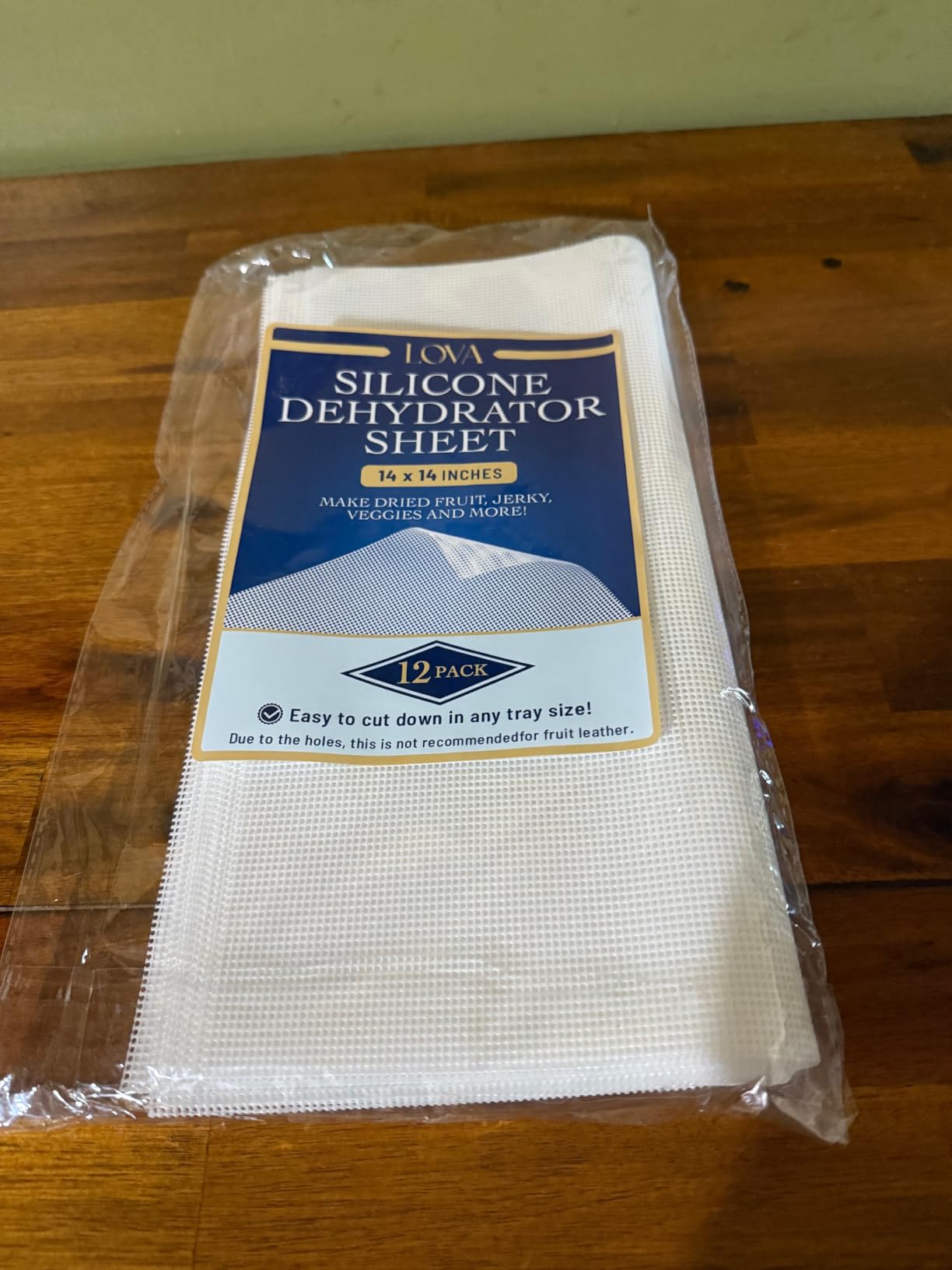
Batch size is what separates this one. A 14-inch square dehydrator with ten or twelve racks usually ships with fewer liners than trays, which forces you to stop halfway through a load, pull sheets, wash them and restart. Twelve sheets solves that, and for anyone drying strawberries or herbs by the pound, that single convenience is worth more than any spec on the sheet.
The mesh is about 1 x 1 mm, so seeds, herb clippings and small berry halves stayed on the surface in my testing. Airflow was noticeably better than with a solid liner, and the sheets fold in half, which makes pouring dried slices straight into a canning jar genuinely easy. Temperature rating is -40 to 220 C and the material is BPA-free silicone.
The mesh is the problem when your food has water in it. Every puree run I did on these sheets ended with liquid seeping through onto the tray below, which is fine for dry herbs and terrible for a batch of pear purée. Treat these strictly as solid-food liners.
Shape is the other adjustment. These are flat 14 x 14 inch squares, and a round Nesco tower needs the corners rounded off. They are cut for Excalibur 2500, 3500, 2900 and 3900 models out of the box.
Who benefits most from a 12 pack
If you dry in bulk, this is the pick. Twelve sheets means one load of herbs, one load of berries and one load of jerky strips without breaking your workflow to wash anything in between. The same twelve sheets also work as steaming mesh for dumplings and buns, which adds a second use outside the dehydrator.
Runners who treat it as a full-tower liner and never pour anything wet onto it will get years of service. It washes at the sink or in the dishwasher.
Where the mesh rule bites
Understand the mesh limit before you buy. Anything with liquid in it needs a solid or lipped sheet instead, and putting purée on this one just moves your mess to a lower tray. If you make fruit leather regularly, keep a solid sheet in the stack even with this set.
The square-to-round conversion is the other job. Trimming takes a minute with sharp scissors, and doing all twelve at once on a flat surface saves time later.
4. Blulu Round Silicone Sheets – the most flexible cut-to-fit option
Blulu 8 Pcs Round Silicone Dehydrator Sheets Nonstick Reusable Dryer Mats
- Truly non-stick and fruit plus berries release with a hot-water rinse
- Fine mesh stops herbs and beans and berries from falling through
- Cuts to fit both round and square dehydrators
- Reusable with reports of two-plus years of use
- Thin and floppy compared with stiffer liners
- Some sheets need trimming for a given model
- A few reviewers report odors linger after washing
- One reviewer felt drying ran slower with liners in
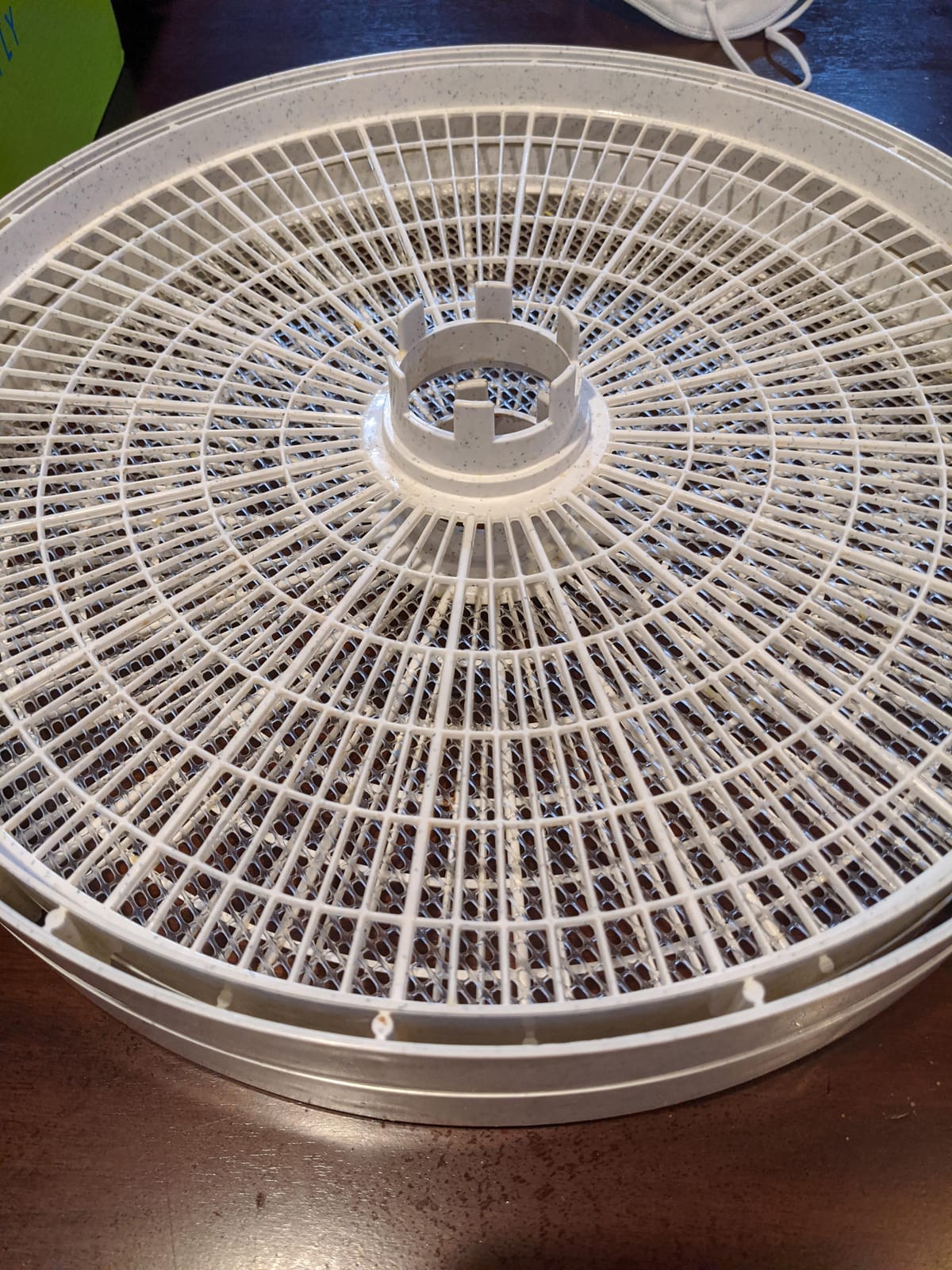
That is the sheet I keep reaching for when I do not know what machine someone runs. Thirteen-inch round silicone that can be cut into a square, a rectangle or a custom shape means one purchase covers almost any dehydrator tray, including older models whose replacements no longer exist. That matters for people still running a first-generation Excalibur or a discontinued Nesco body.
Non-stick performance was the best in my testing. Fruit, mushrooms, broccoli and small berries released under a hot-water rinse with no scrubbing and no cooking spray. The fine mesh held herbs, beans and berries on the grate. One buyer reports the same sheets still in use after two-plus years, which matches how these wear.
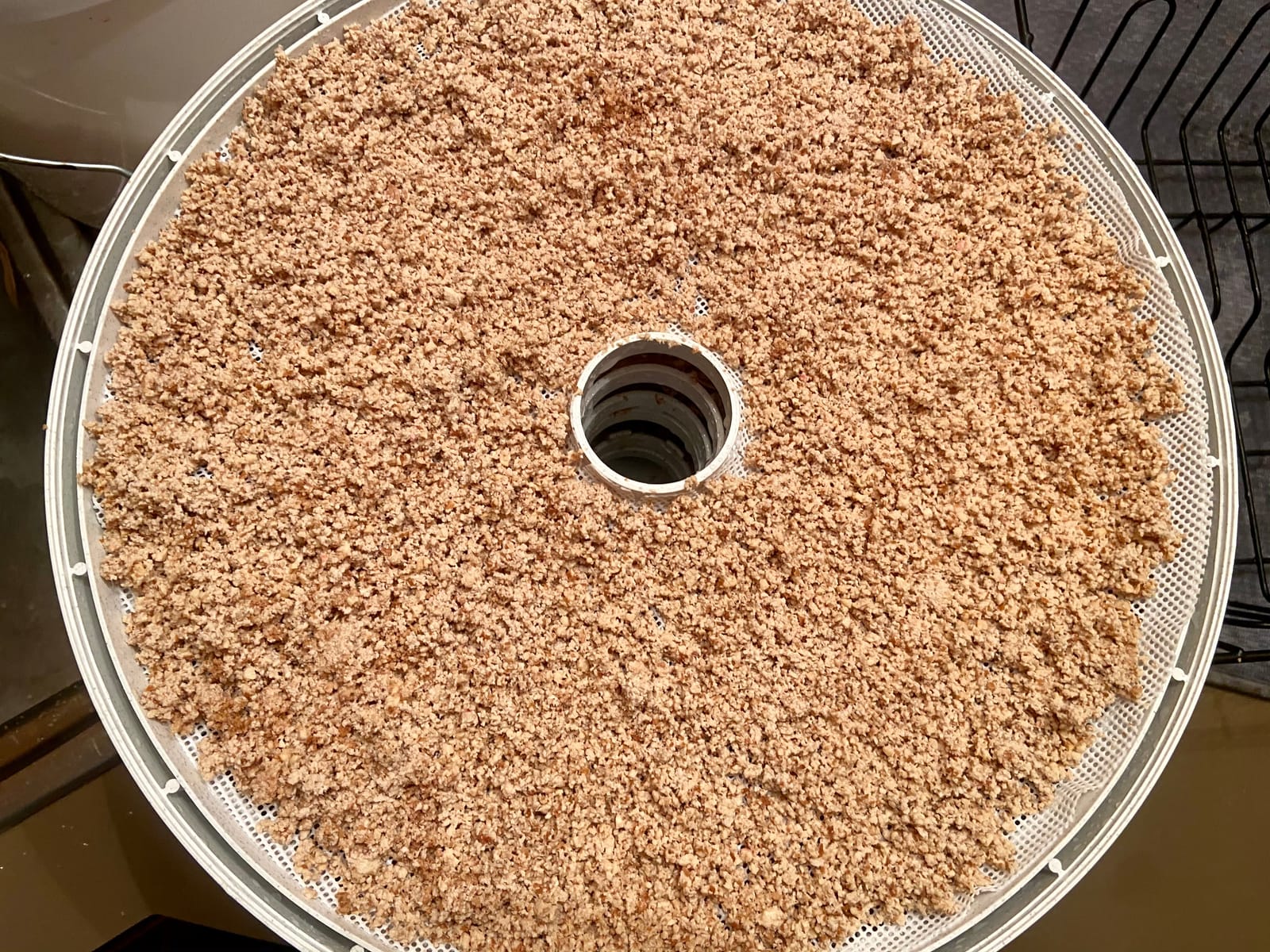
The trade-off is rigidity. These sheets are thin and floppy, which is exactly why they cut so easily and why they can be flexed to pop off sticky food, but it also means they are harder to load flat than a stiffer liner. Expect to spend a few seconds smoothing a corner when you place it on the tray.
Two smaller complaints appear repeatedly. Strongly scented foods can leave an odor that survives a wash, and a small number of reviewers feel the liners extend drying time. Neither is a defect, but both are reasons to leave one tray unlined so you can compare.
When cut-to-fit beats a pre-cut sheet
Choose flexible sheets when your dehydrator is older, non-standard or shared with a family member who runs a different machine. You can cut one sheet into two halves and use them on two different tray sizes, which no pre-cut square can do.
They also handle shapes that standard sheets cannot, like a narrow side tray or a custom shelf you built yourself. Keep a ruler and sharp scissors in the kitchen for this.
Care and odor control
Dishwasher safe, and hand washing works just as well. If odors build up, a soak in warm water with a drop of dish soap before washing handles most of it. Avoid sending these through a hot dishwasher cycle with heavily spiced or cured food in the load.
Do not wash them before every use. A quick wipe or rinse between loads is enough, and it protects the silicone from unnecessary heat cycling.
5. Kispog Silicone Mesh Sheets for Excalibur – the cleanest fit on a 14-inch tray
BPA-Free Nonstick Silicone Dehydrator Sheet for Excalibur, 14×14 in 10-pack
- Ultra-fine 1 mm mesh holds tiny berries plus seeds and sliced herbs
- High-release coating rinses off sugars and meat oils
- Ten sheets cover most 9 to 10 tray dehydrators
- Trims easily with household scissors for other brands
- Cost per sheet runs above generic multi-packs
- Vacuum-sealed packaging cannot be resealed after opening
- Not suitable for oven use despite being silicone
- Some shapes need trimming before first use
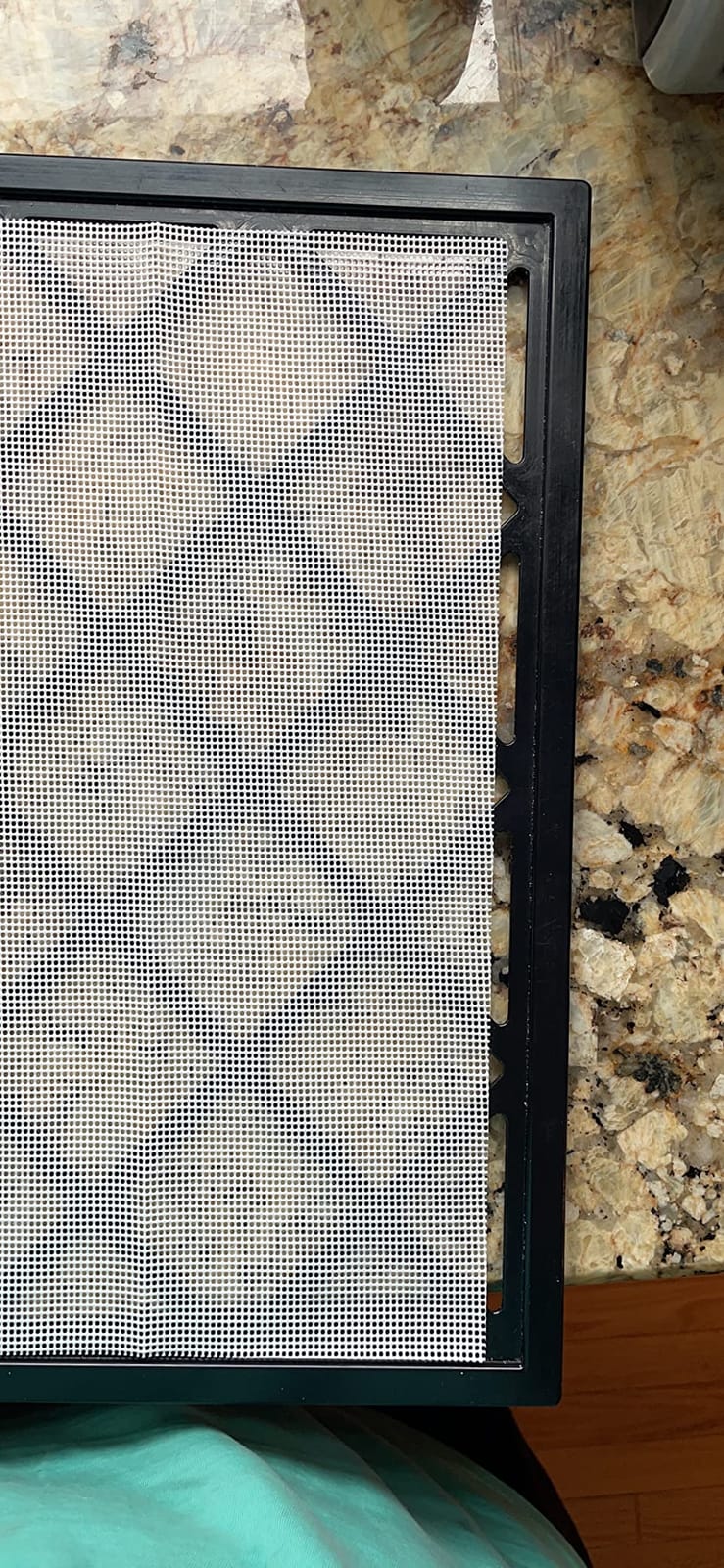
Excalibur owners get the cleanest fit in this roundup. These sheets arrive pre-cut at 14 x 14 inch, the standard Excalibur tray size, so they drop straight onto the rack with no trimming and no corners curling away from the wire. That is the opposite of the experience many buyers have with universal sheets.
Mesh structure is a tight 1 mm, which held tiny berries, seeds and sliced herbs in place during my runs. The non-stick surface released sugary fruit and meat oils with a rinse instead of scrubbing, and the ten-sheet count covers most 9 to 10 tray units in one load. Rated safe to 450 F and free of BPA and PFOA.
Cost per sheet sits above the budget multi-packs, and you notice it most on a large tower. The packaging is a single-use vacuum seal with no reseal tab, so if you buy a ten pack and only need six, the rest have no protection from the pantry.
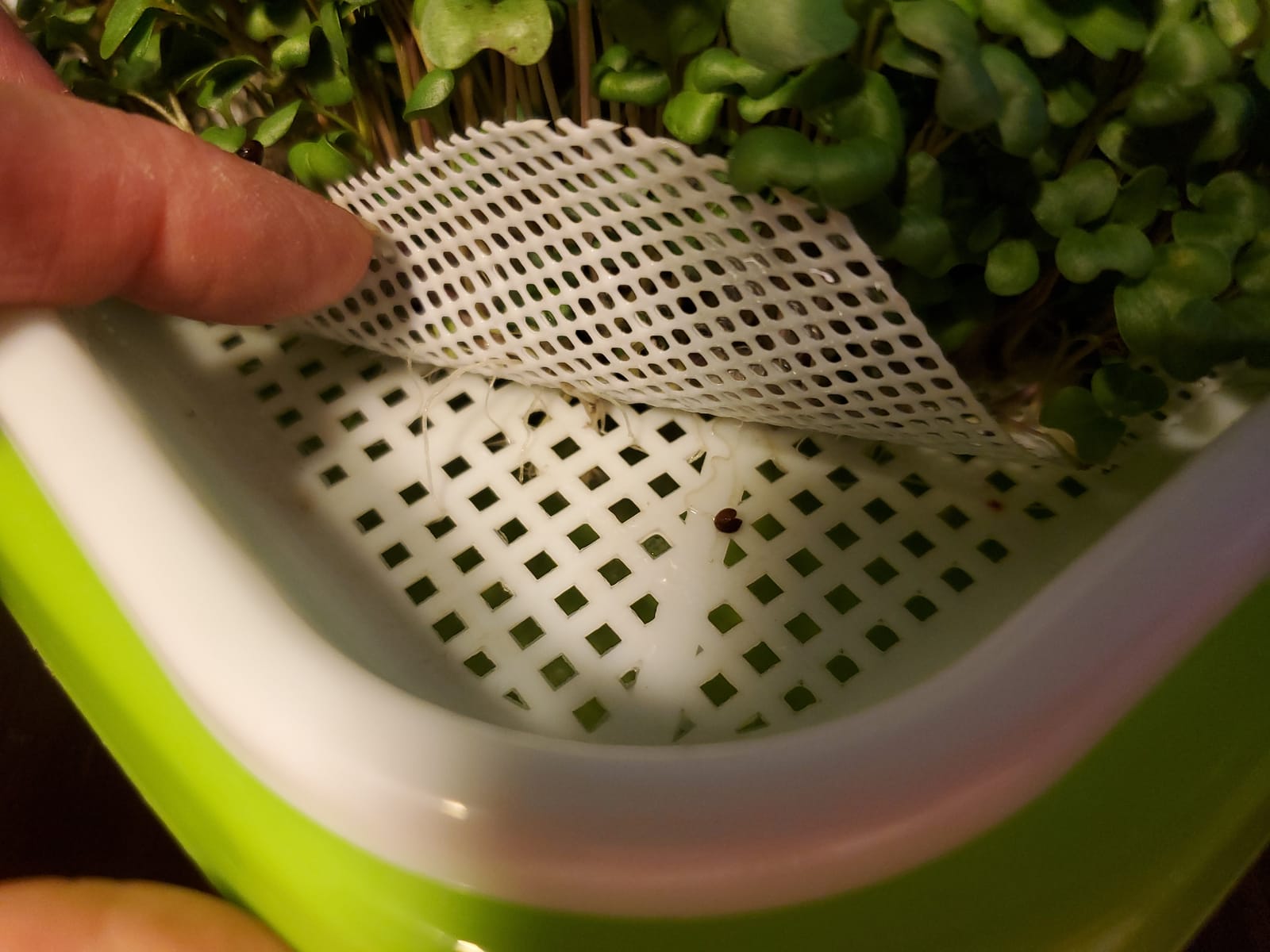
One point is worth stating clearly: despite being silicone, these are not oven-safe. Keep them in the dehydrator. They are also usable as microgreen growing mats, which is a bonus if you sprout.
Why mesh fineness matters more than thickness
Two sheets can look identical and behave completely differently depending on opening size. A 1 mm weave is the practical threshold for holding a raspberry half, a strip of sliced basil or a teaspoon of dried spice without sealing off airflow. Thicker material feels sturdier but the openings are what decide whether food stays on the tray.
Buy on mesh gauge first and pack size second. Ten sheets that hold your food beats twenty that let it through.
Adapting to other brands
These trim cleanly for Cosori, Nesco and Magic Mill trays with household scissors. Trim on a flat surface with a sharp blade, and round the corners for round towers so the sheet does not lift at the edge.
Dishwasher safe and rinseable at the sink. Like every liner here, they are better rinsed than washed between uses.
6. GUCUJI Round Mesh Sheets – a long compatibility list for Nesco owners
GUCUJI Pack of 5 Premium Non stick Round Silicone Dehydrator Sheets For Fruit Dryer Mesh
- Fine mesh holds blueberries plus raspberries and seeds and herbs
- Non-stick surface lifts fruit and jerky straight off
- Rinses clean with warm soapy water
- Trims to fit trays from other brands
- Claimed to withstand over 5000 uses
- Listed dimensions do not always match the specific model
- Fine mesh is for solid food only and lets liquid seep
- Sheet edges may need reshaping after use
The compatibility list is the headline here. This sheet is listed for the Nesco FD-28JX, FD-35, FD-37, FD-39, FD-40, FD-50, FD-60, FD-61, FD-61WHC, FD-75A, FD-75PR and the MasterChef MTF-DHY-795, which covers most of the round Nesco towers people actually own.
Performance was solid across my herb and berry batches. The 1 x 1 mm openings held blueberries, raspberries, seeds and herb clippings on the grate, and the non-stick surface let fruit and jerky lift without a stick. Sheets are 0.8 mm thick, which is thin but firm enough to lay flat without much fuss. The manufacturer claims over 5000 uses.
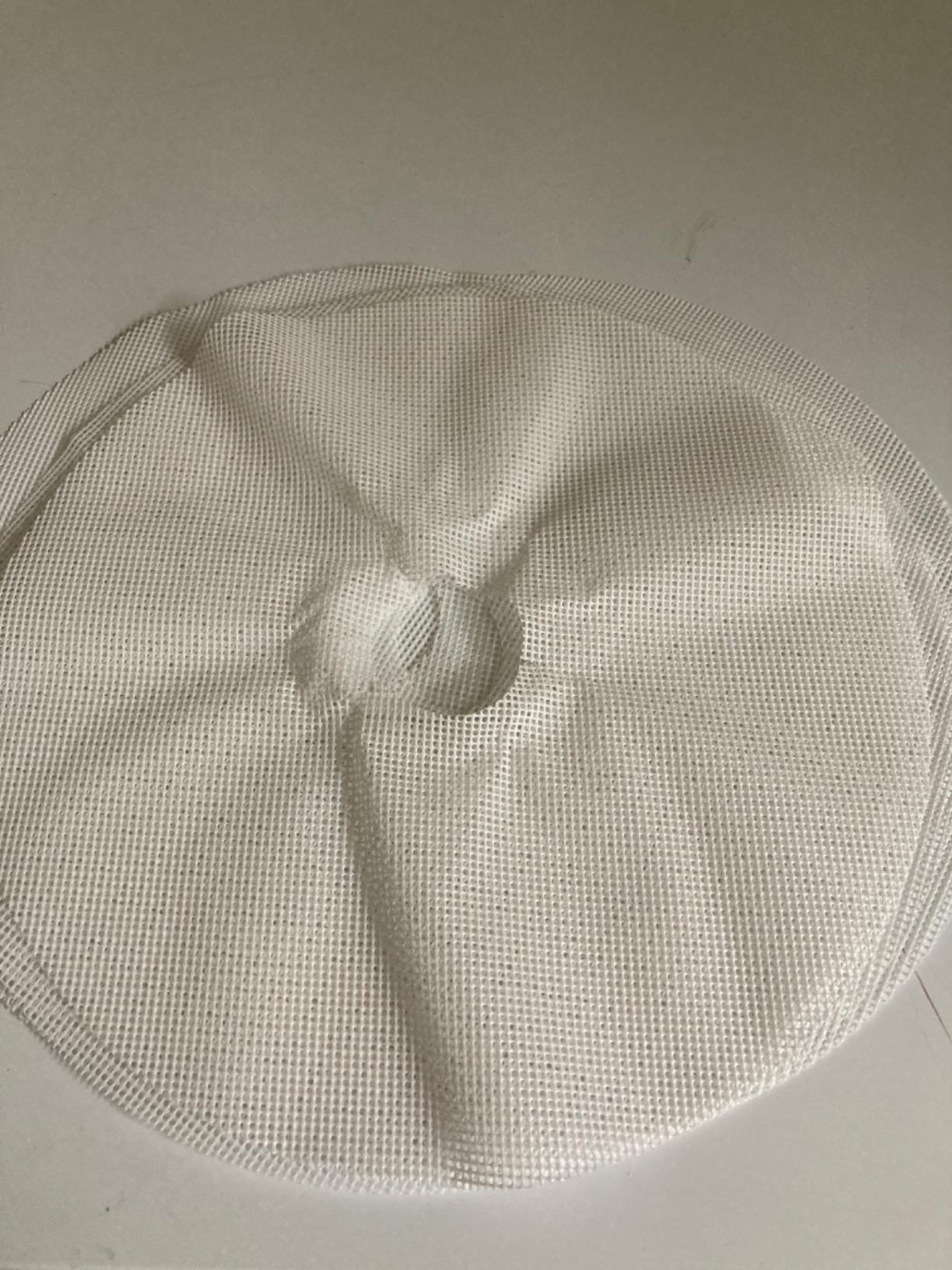
Fit is the recurring friction. Listed dimensions do not always match the specific machine, so measure your tray before cutting. The five-sheet pack is also short of a six-tray tower, which is the most common Nesco configuration.
Liquid is a hard no here. These are solid-food liners by design, and purees or sauces will pass through the mesh onto whatever is below.
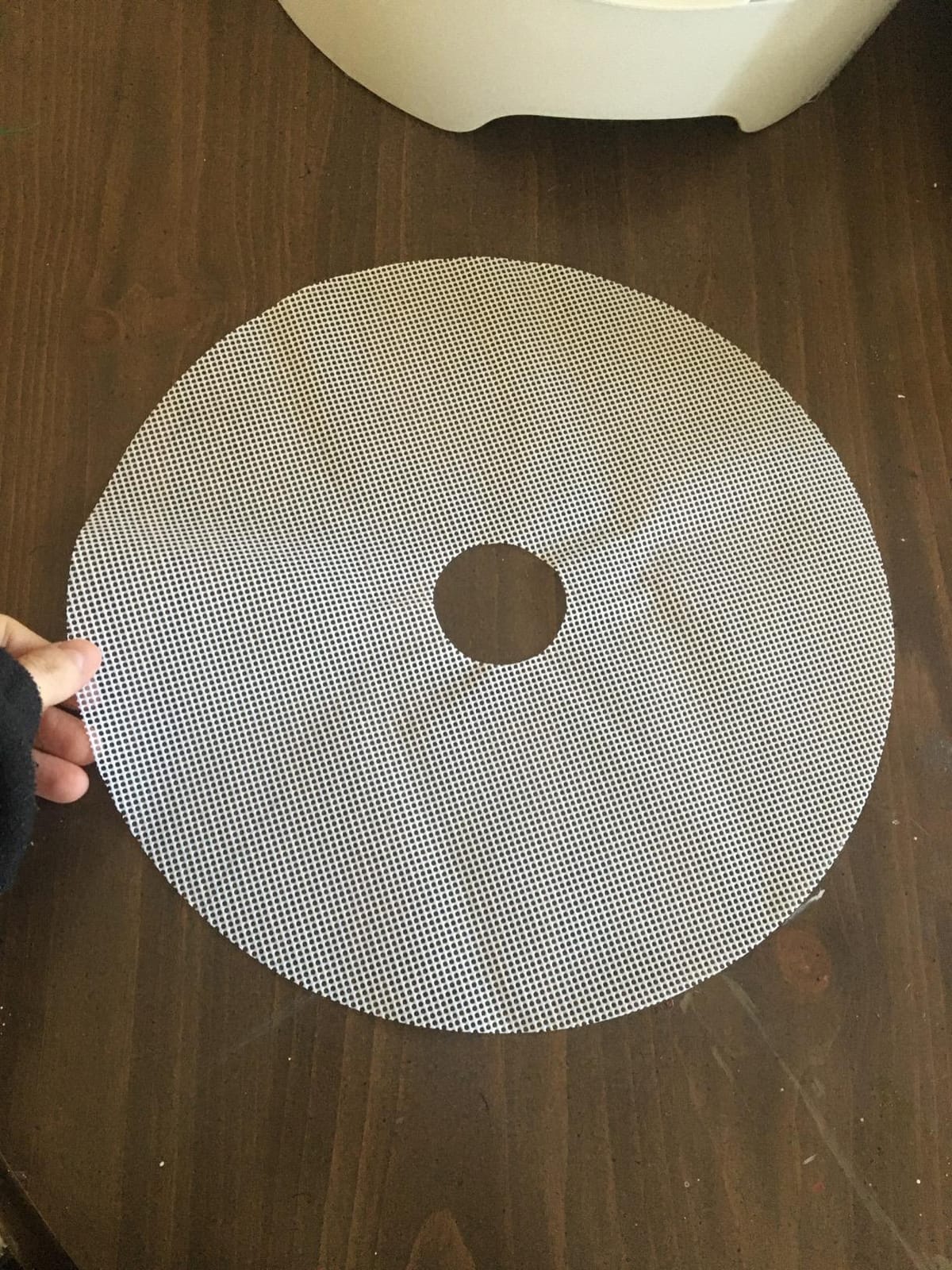
What the 1 mm weave actually catches
At roughly 1 x 1 mm, the openings hold a rosemary leaf, a strip of sliced herb, a raisin, a small berry and a teaspoon of seed. Finer foods such as dried dill tips or poppy seeds sit on the edge of what passes through, so spread them thin rather than in mounds.
Layout matters more than most people expect. Air moves across the tray in a cross-flow pattern, so a single layer with space between pieces dries faster and more evenly than a pile.
Maintenance and reshaping
Rinse with warm soapy water and you are done. The sheet edges can creep out of round after repeated heating, so check alignment every few uses and lay the sheet flat while it is still warm.
If you run a square Excalibur, cut the corners off first. The silicone gives with kitchen scissors without fraying.
7. DOSTK Round Mesh Sheets – a straightforward herb and seed screen
(8 Pack) Round Silicone Dehydrator Sheets, Dostk Premium Non Stick Silicone Mesh for Fruit Dehydrator, Tray Liner Reusable (Round 13″ Diameter)
- Round 13 inch size matches standard Nesco trays closely
- Keeps herbs plus seeds and dried tomato pieces on the tray
- Non-stick surface peels fruit back cleanly
- Reduces washing on the plastic trays underneath
- Cuts easily for older dehydrators
- Center hole and outer diameter may need trimming
- Trimming is fiddly and needs sharp scissors
- Mesh is no barrier for liquids
- Wrong size for some square dehydrators
This is a simple, focused option: eight round sheets at 13 inch, built for herb and seed work on standard round trays. It is listed for the Nesco FD-20, FD-25, FD-27, FD-30, FD-35, FD-40, FD-50, FD-60, FD-61, FD-61WHC, FD-75A and FD-75PR, which is broad coverage for the round tower family.
In use it did one job well. Small herbs, seeds and dried tomato pieces stayed on the tray instead of disappearing into the machine, and the non-stick surface meant I could peel dried tomato back without scraping. Because the sheet sits between the food and the plastic grate, the tray underneath stayed clean enough to skip washing between herb batches.
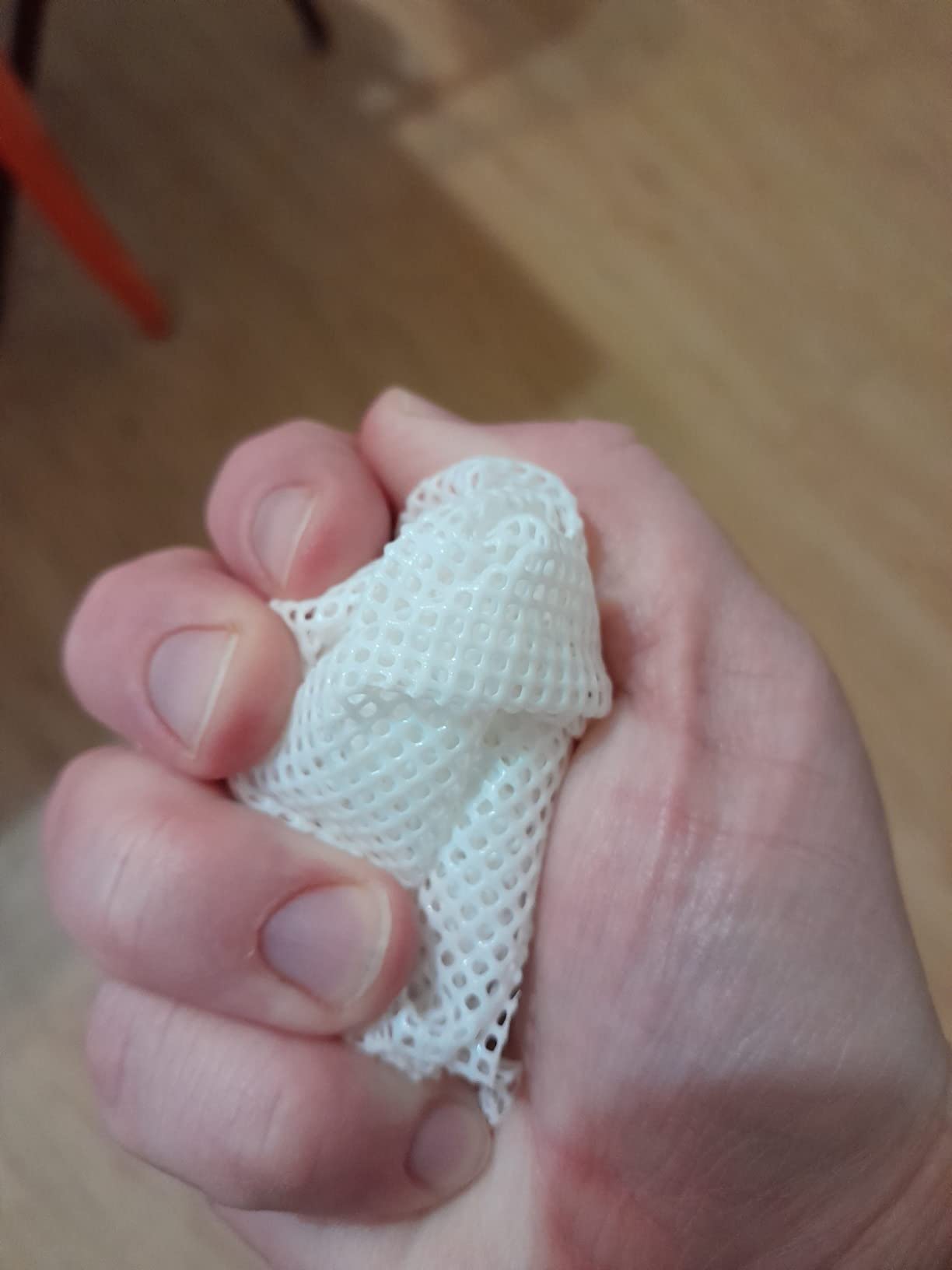
Adjustments are the recurring theme. The center hole and outer diameter may both need trimming for a specific model, and the cut takes steady scissors rather than a single snip. Getting the round right is worth the effort, because an oversized sheet buckles and blocks airflow at the edges.
If you dry any liquid, skip it. Fine mesh is a screen for solid food and nothing else.
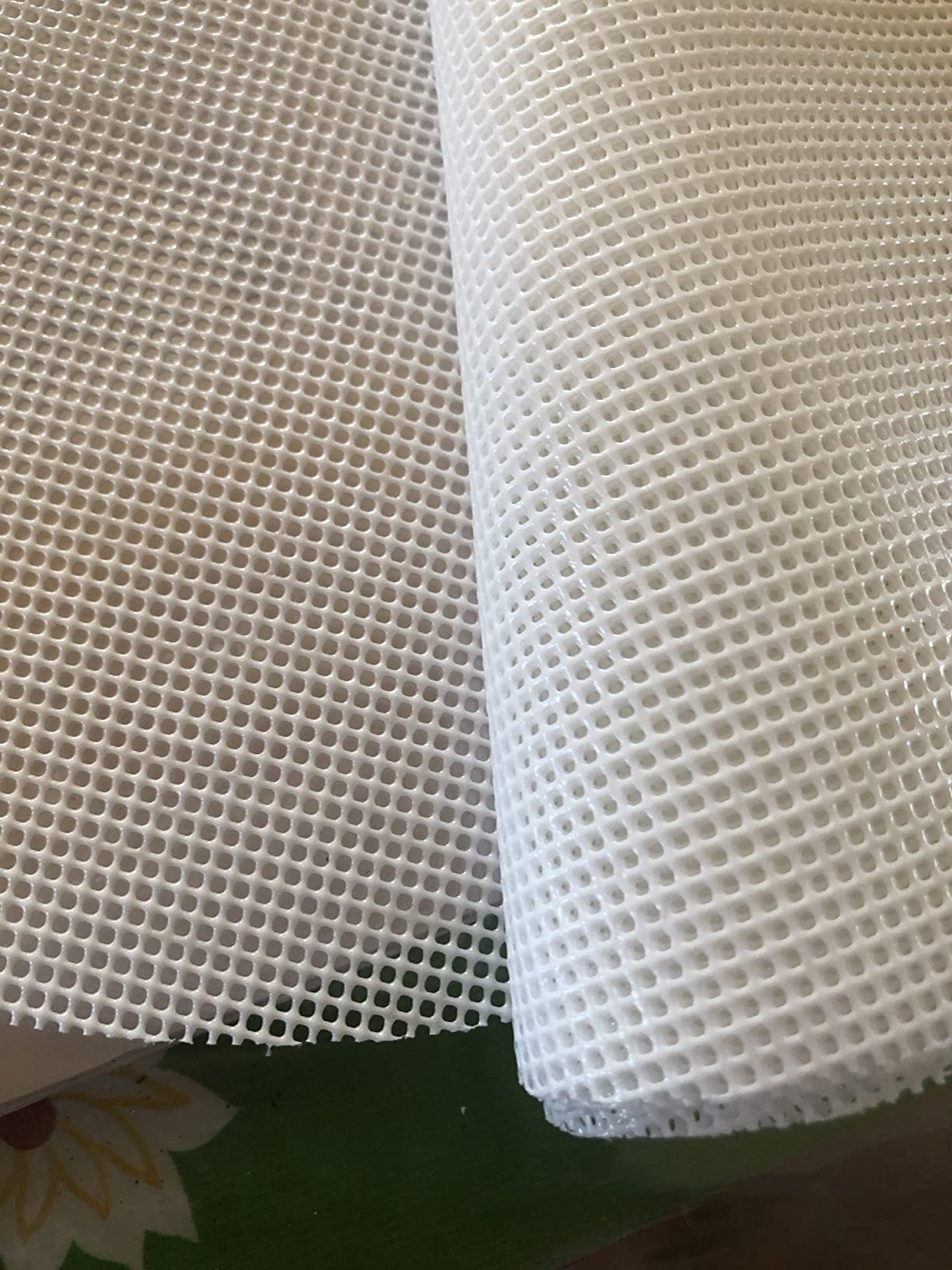
Which foods to put on it
Dried tomato, chopped herbs, chili flakes, small seeds and any berry that fits through a 1 mm opening. These are the ingredients that lose the most value when they fall through a wide plastic grate, because the effort of drying them outweighs their bulk.
Avoid wet food entirely, and skip very fine powders unless you place a solid sheet underneath as a secondary catch.
Fit and trimming
Measure the inside diameter of your tray and the center hole separately, then compare against the sheet. Round the cut edge with the scissors rather than leaving corners, and test one sheet flat on the tray before cutting the rest.
Not for square units. If you run a square dehydrator, the square 12-pack or the 14-inch options fit better.
8. Lova Silicone Mesh Mats – the highest rated sheet in the group
- Highest rated listing in this group with no one-star reviews
- Twelve sheets line every rack in one batch
- Tight mesh holds berries plus herb slices and thin jerky strips
- Food releases cleanly and sheets survive many dishwasher cycles
- Trims to custom shapes in seconds
- Mesh is unsuitable for purees
- yogurt or fruit leather
- Fit must be confirmed by measuring the tray first
- Per-sheet cost sits above budget multi-packs
This set carries the highest rating of anything I tested, with a large body of reviews behind it and no one-star feedback. The twelve sheets are a true 14 x 14 inch cut-to-fit size, so a square tower is filled in a single load rather than in two rounds with a wash in between.
The mesh weave is tight enough to hold berries, sliced herbs, thin jerky strips and small vegetable pieces, and it still passes air. In my batches, food released cleanly and the sheets went through the top rack of the dishwasher without warping. They are food-grade silicone with no BPA or PFOA.
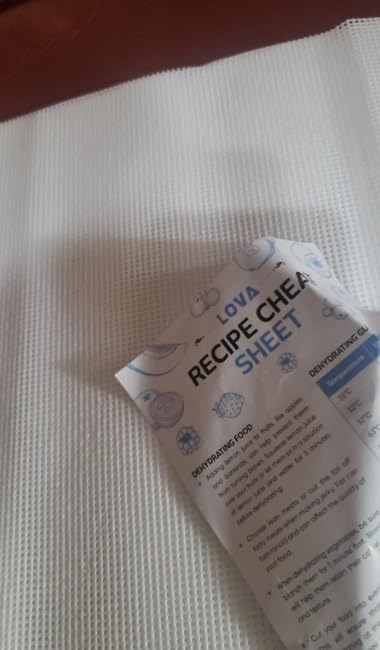
Read the intended use carefully. The mesh is for solid foods, and the manufacturer states that purees, yogurt and fruit leather need a solid liner instead. That is not a flaw, it is the correct division of labor, but it means you still need a second type if you make wet recipes.
Fit still requires a measurement. A 14 x 14 inch sheet assumes a square tray of that size, and smaller trays need a trim, which takes seconds with household scissors.
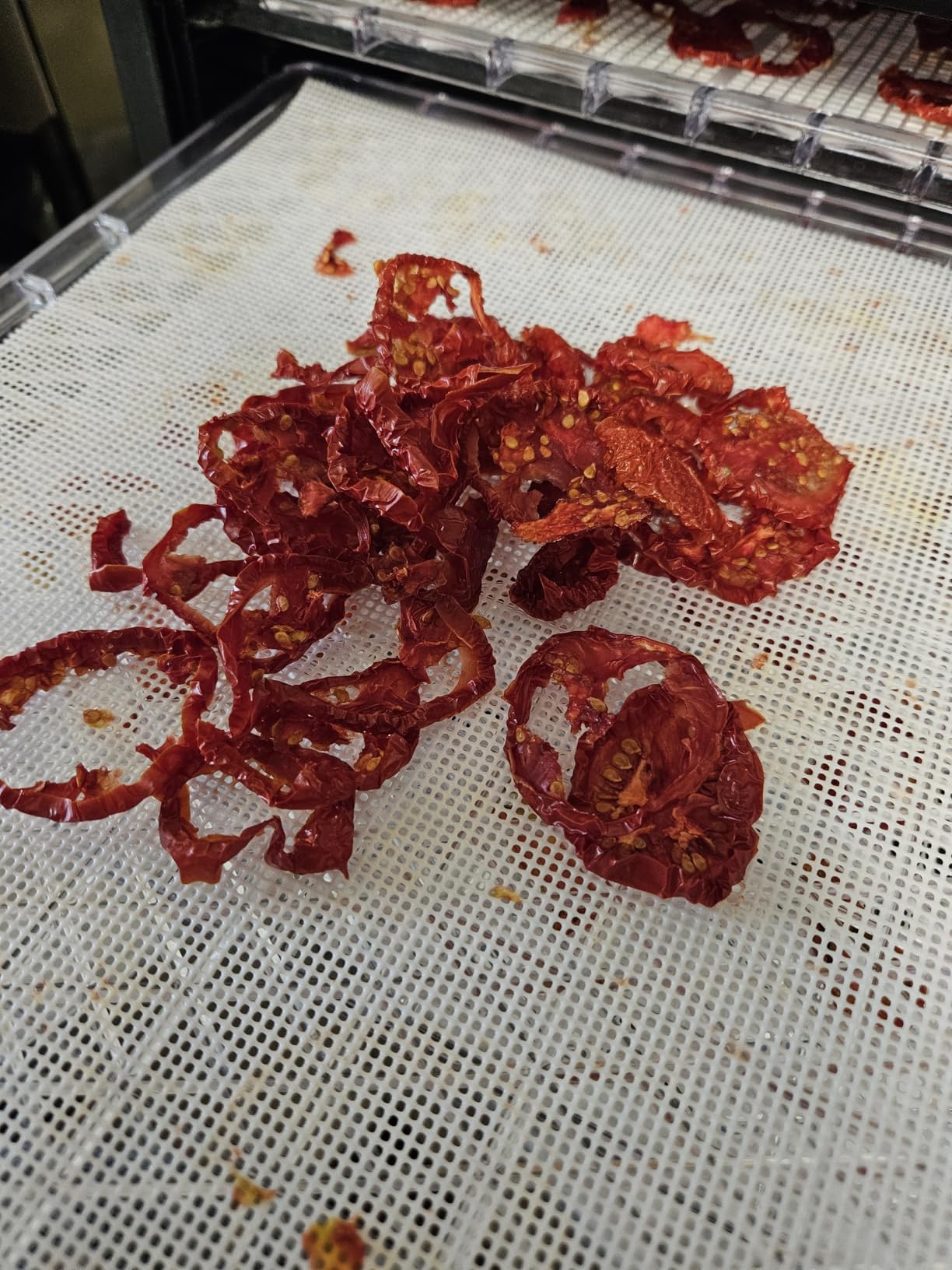
What makes it the strongest all-rounder
Batch coverage plus a fine weave. Most problems with liners come from being one sheet short or from holes that are too large, and a twelve-sheet set at 14 x 14 inch solves both at once for square towers. For round towers the same sheet trims down without losing function.
Durability shows up in the reviews too, with owners reporting sheets that have taken hundreds of dishwasher cycles and still lie flat.
Where it does not fit the job
Anything liquid. If fruit leather or yogurt is part of your routine, pair this with a solid or lipped sheet rather than pouring onto the mesh.
The per-sheet cost sits above budget multi-packs, so if you only ever dry a few herbs at a time, a smaller set is the sensible purchase.
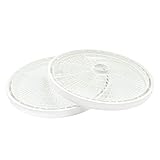
9. NESCO TR-2 Add-A-Trays – more drying area on an existing tower
Nesco TR-2 White Plastic Round 15 1/2″ Add-A-Trays to fit NESCO 1000 Series Food Dehydrators 2 Pack
- Expands an existing Nesco tower instead of buying another machine
- Matches the trays supplied with many models
- Stacks and swaps quickly for larger batches
- Hand washing is straightforward
- Wide grate spacing lets small pieces fall through without a liner
- Some newer production runs have flatter center rings
- Hand wash only and not dishwasher safe
- Trays are flimsy if handled roughly
- Tall stacks extend drying time
These are add-a-trays rather than liners, and that distinction decides everything. Each 15.5 inch plastic tray adds roughly 2 square feet of drying area to a NESCO 1000 Series tower, which is the fastest way to increase batch size without buying a second dehydrator.
Fit is the strength. They are made for the FD-1010, FD-1018A, FD-1040 and FD-1040P, and owners report they stack and swap quickly with the trays the machine shipped with. Hand washing is simple.
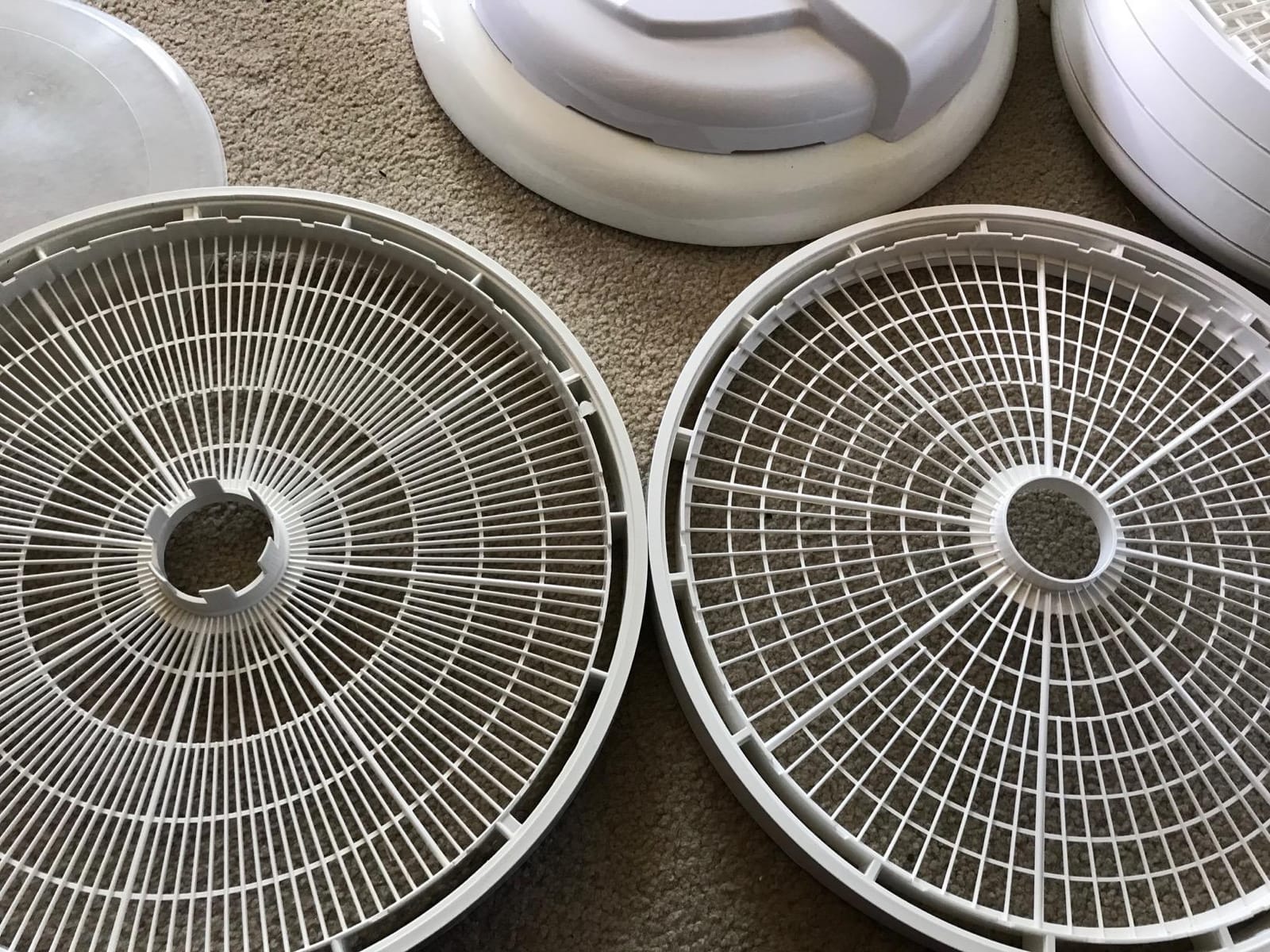
The catch is that these are wide-spaced plastic grates, not mesh. Small pieces still fall through, which is precisely why you would pair them with one of the mesh sheets in this roundup. Buy trays for capacity and buy a liner for small food.
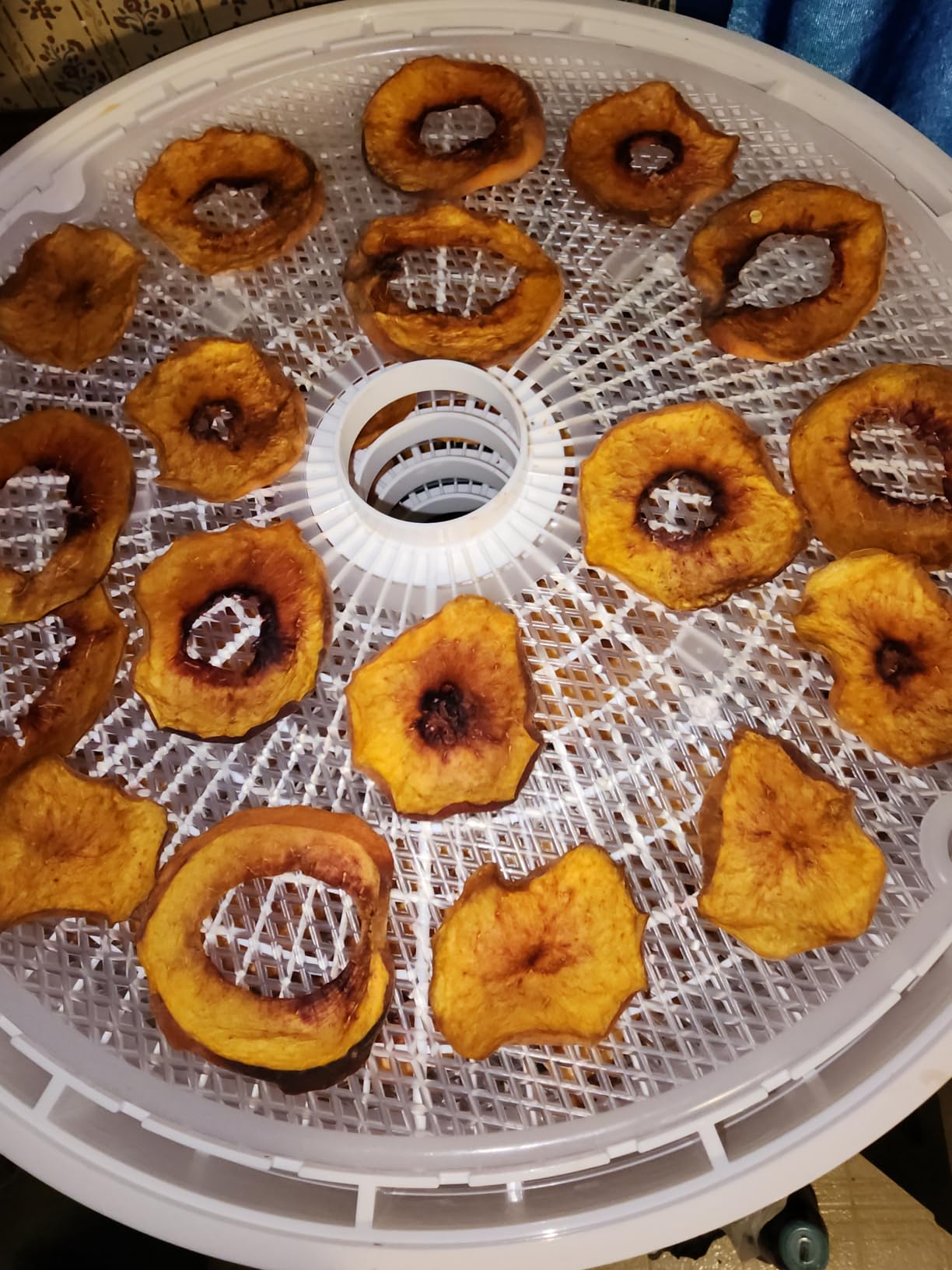
Two design details bother long-term owners. Some newer production runs have flatter center rings than the original trays, which reduces usable drying area slightly, and the plastic is flimsy enough to crack if you force a stack. Treat them as consumable capacity rather than heirlooms.
Very tall stacks also extend drying time, because more water leaves the machine per hour than a shorter stack can process. Add trays in pairs and re-run your usual times rather than assuming the old schedule holds.
When adding trays makes sense
Add-a-trays pay off if you already dry in volume, especially fruit season, when a single tower can take two full loads of the same thing. Stacking identical trays also lets you pull one tray at a time without disturbing the rest of the load.
They make no sense for someone drying a few herb sprigs a week, where a 15-inch tray is mostly empty space.
Pairing trays with liners
The combination is the real answer. Set a round 13-inch or 12.5-inch mesh sheet on each added tray and the fall-through problem disappears while the added capacity still pays off.
Hand wash only, so plan your cleaning routine around that rather than assuming the dishwasher handles them.
10. NESCO SLD-2-6 Fruit Roll Sheets – the dedicated sheet for sauces and soups
Nesco SLD-2-6 American Harvest 13.75″ Fruit Roll Sheet for NESCO Food Dehydrators, 2 Count, White
- Solid surface with a no-spill lip suits wet purees
- Adds drying area to an existing Nesco tray stack
- Fruit peels off easily and sheets clean quickly
- BPA-free food grade plastic and reusable
- One buyer has used the same sheets since 2012
- No fine mesh so small pieces still fall through standard grates
- Model-specific fit is slightly off on some older models
- Hand wash only
- Purees can stick unless the sheet is pre-greased
This is a solid plastic sheet, not a mesh, and it earns its place by doing the one job mesh cannot: holding liquid. The no-spill lip catches sauces, soups and fruit purées, and each sheet is rated to dry up to 3 cups of pureed fruit.
It fits 15.5 inch diameter Nesco trays and is compatible with the FD-1010, FD-1018A, FD-1040, FD-80 and FD-80CN. Fruit peels off easily, the sheets clean quickly, and at least one buyer has had the same pair since 2012, which says a lot about how little wear a solid sheet takes.
There is a real trade-off. It carries the lowest rating in this group, and the reason is consistent: there is no fine mesh here, so if your problem is small pieces falling through, this sheet does not solve it. It solves the opposite problem, and owners using it for wet foods report that pre-greasing the sheet helps prevent sticking.
Where a solid plastic sheet wins
Sauces, soups, diluted purées, yogurt and tomato paste all need a surface with no holes at all. The lip adds containment, so you can pour more per sheet than on a flat liner and let the heat take it from there.
It is also the easiest sheet to clean, because there is no weave for particles to lodge in. A warm soapy rinse and a hand wash is enough.
Why the rating is lowest here
Two things pull it down. Fit is model-specific, and a few older American Harvest dehydrators run slightly large, so check your tray diameter before ordering. Hand wash only rules out the dishwasher, which most silicone liners here tolerate.
If fall-through is your problem, this is not the sheet. If pooling liquids is your problem, nothing else in this roundup does it better.
How to Measure Your Dehydrator Tray Before You Buy Sheets
Fit is the number one reason a good liner ends up in a drawer, so measure before you order anything. Pull the tray out of the unit and lay it flat on a table, then measure the inside edge to inside edge in both directions. For round trays, measure the inner diameter, not the outer rim.
Second measurement is the center hole. Several round mesh sheets include one, and the diameter has to match the hole in your tray or the sheet will ride up and block airflow. Write both numbers down and compare them against the product dimensions, which are usually listed in inches and centimeters.
Third, count your trays and count your sheets. A twelve-sheet set covers a full tower; a five-sheet set covers a four-tray unit with one spare. Buying two smaller packs often costs less than one oversized set and gives you replacements when sheets warp.
Mesh, Solid or Lipped: Which Liner Type Handles Which Food
Mesh screens are for dry, solid food. Fine openings around 1 x 1 mm hold herbs, seeds, small berries, chopped vegetables and thin jerky strips while air moves through in both directions. Because air passes freely, mesh sheets dry faster than solid ones, and they are the only type that solves fall-through.
Solid sheets are for wet food. No openings means purée, yogurt, sauce and soup stay on the surface. The cost is airflow: a solid sheet blocks the cross-flow pattern that dehydrators rely on, so expect longer drying times and rotate trays if you use them across a full stack.
Lipped trays sit between the two. The raised edge contains a liquid batter while the base provides a gap or a mesh beneath it. These are the sheets to reach for with fruit leather, roll-ups and anything you pour rather than place.
On material, food-grade silicone is the safest all-round choice for this work. It is non-porous, BPA-free, and holds its shape from freezer cold through dehydration temperatures, and it tolerates the dishwasher. Plastic mesh costs less but wants hand washing. Avoid anything not labelled food safe, which rules out craft canvas sold for hobby use even though it looks identical to the real thing.
Cleaning, Sanitizing and Storing Dehydrator Liners
Rinse liners between loads rather than washing them every time. A quick rinse under warm water clears sugar residue and oils, and skipping the wash reduces the number of heat cycles your sheets see. Wash with warm soapy water when residue builds up, and run silicone sheets on the top rack of the dishwasher only when the food on them was not heavily spiced or cured.
If you dry pet treats, use a dedicated liner and sanitize it more seriously than food-grade gear normally needs. Wash with hot soapy water, then soak for several minutes in a solution of one tablespoon unscented bleach per gallon of water, rinse thoroughly and air dry completely before the next batch. Do this for medicinal herbs too, where residue carries a stronger flavor profile into the next drying run.
Staining is cosmetic. Turmeric, beet, tomato and bell pepper will tint silicone over time, and it does not affect the material. A soak in warm water with a drop of dish soap lifts most of it. For stubborn color, a brief soak in a diluted bleach solution followed by a rinse works, but keep it off the mesh if you are not prepared to rinse thoroughly.
Store sheets flat between the trays in the dehydrator rather than rolled up, since a crease in a warm sheet becomes a permanent warp. If a sheet does curl, lay it flat on a cold surface and press it down; most sheets recover after a few hours.
If you are still weighing gear options in general, our magnetic parts tray roundup covers the same kind of fit-and-spec comparison, our small welder guide for beginners is a good example of how we break down a niche tool category, and our earbuds picks for small ears shows the same fit-first testing method applied to a completely different product.
Frequently Asked Questions
Can you use silicone sheets in a dehydrator?
Yes. Food-grade silicone is rated well above dehydration temperatures, typically from -40 to 220 C, and every sheet in this roundup is dishwasher safe. Avoid liners that are not labelled food safe, and note that some silicone mesh sheets are explicitly not oven safe.
What can I use as a liner in a dehydrator?
The three main options are fine mesh screens for herbs, seeds and small fruit; solid silicone sheets for puree, yogurt and fruit leather; and lipped trays when you need to contain liquid batter. Parchment works for dry food but wrinkles and can scorch at higher dehydration temperatures.
What can I use instead of a dehydrator tray?
You can add a fine mesh liner to any standard grate to catch small food, add a solid or lipped sheet for wet recipes, or add extra trays to increase capacity. Craft canvas sold at hobby stores looks similar to dehydrator mesh but is not food rated, so avoid it.
What is the best mesh size for dehydrating herbs?
A weave of roughly 1 x 1 mm is the practical target. It holds rosemary leaves, sliced basil, dill tips and small berries while still allowing heated air to circulate. Much finer mesh slows airflow, and much coarser mesh lets small seeds and herb fragments drop through.
Do I have to use all the trays in my dehydrator?
No. Leaving a tray out improves airflow, which speeds drying in models that push air vertically. Leaving every tray in place gives you maximum capacity but usually means longer runs, so a good compromise is to leave one tray empty when you are drying delicate herbs.
Which Dehydrator Tray Is Right for Small Pieces?
For small pieces, the best food dehydrator trays are fine mesh screens with roughly 1 x 1 mm openings, and everything else is a variation on that idea. Own a Presto and the brand’s own two-pack screens fit with no trimming. Run a square Excalibur and the pre-cut 14 x 14 inch sheets drop straight on. Work a round Nesco tower and a 13-inch round sheet trims to fit and holds herbs, seeds and small fruit.
Buy mesh for dry food and a solid or lipped sheet for anything you pour, then measure your tray before ordering. That single habit prevents the disappointment of a beautiful liner that curls at the edges and leaks food down the heating element.