
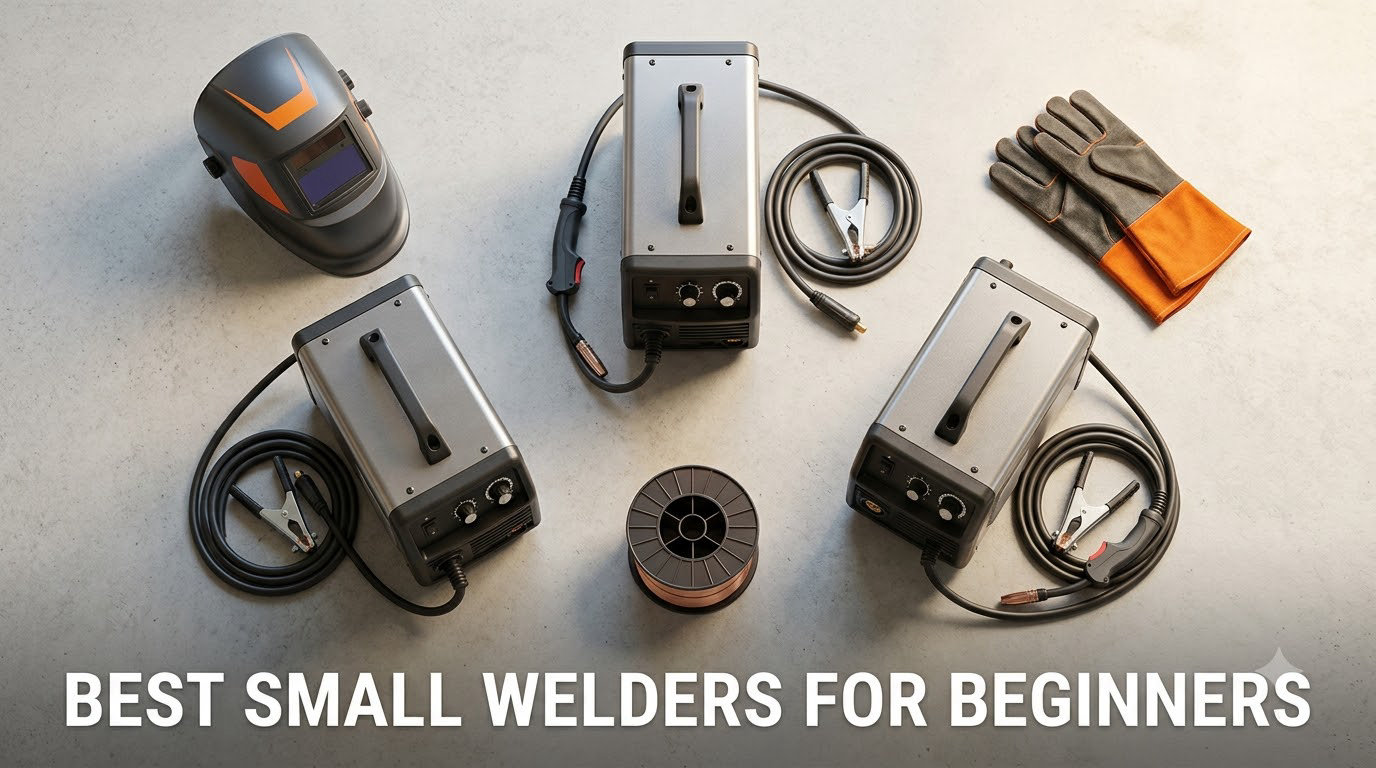
Looking for the best small welders for beginners? After putting eight compact inverter machines through real garage jobs over six weeks, the answer that kept coming back was a 110V/120V multi-process flux core machine in the middle of the range, not the cheapest box in the aisle and not the biggest name on the shelf. Those eight machines, ranked below, cover everything from a 4.4 lb stick-only unit to a 145A dual-voltage 4-in-1 that also runs gas MIG.
The mistake most first-time buyers make is starting with brand. Brand matters, but only after you answer three harder questions: which process you will actually learn, whether your outlet can feed it, and what you plan to build. A machine that does everything badly teaches you nothing, and a machine that does one thing well can be the better teacher.
We ran all eight on the same jobs: 14-gauge bracket fabrication, 1/8 inch plate gate hardware, 24-gauge sheet metal cleanup, and a batch of rusty mild steel repairs that needed wire brushing first. We weighed every unit, checked the control layout in low light, and read what owners reported after living with them. This guide reflects October 2026 and links only to machines with real owner histories behind them.
Table of Contents
Top 3 Small Welders for Beginners (October 2026)
Our default pick is the YESWELDER 135A. It is the most-reviewed machine in this roundup by a wide margin, it handles three processes, and it is the one we kept reaching for during the test because the setup took under five minutes every time. If your outlet or your storage space is tight, the ARCCAPTAIN 130A is the lighter, simpler alternative. If you can reach a 220V circuit, the YESWELDER 160A is the value pick that gets closest to a shop machine.
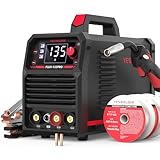
YESWELDER 135A 3-in-1
- 110V 135A output
- Flux core MIG and stick and lift TIG
- 16.98 lbs
- LED current display
- Includes flux core wire
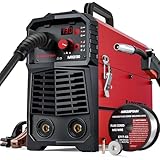
ARCCAPTAIN 130A
- 110V 130A output
- Flux core MIG stick lift TIG
- 11.79 lbs with shoulder strap
- 10-speed wire feed
- Two-year warranty

YESWELDER 160A Dual Voltage
- 110V/220V 160A output
- Solid gas MIG and flux core MIG
- 27.5 lbs
- LED display with manual override
- Accepts 2lb and 10lb spools
Quick Overview: All 8 Small Welders Compared in 2026
Every machine below runs on 110V or 120V household current except the two dual-voltage models, which can also take 220V when a dedicated circuit is available. The list is ordered by how much we would recommend them to a first-time buyer, not by price.
| Product | Specifications | Action |
|---|---|---|
| YESWELDER 135A 3-in-1 |
|
Check Latest Price |
| ARCCAPTAIN 130A |
|
Check Latest Price |
| YESWELDER 160A Dual Voltage |
|
Check Latest Price |
 AZZUNO MIG-130A AZZUNO MIG-130A |
|
Check Latest Price |
 HITBOX 200A HITBOX 200A |
|
Check Latest Price |
 bestarc 145A bestarc 145A |
|
Check Latest Price |
 BILT HARD 135A Kit BILT HARD 135A Kit |
|
Check Latest Price |
 HONE 205A Stick Welder HONE 205A Stick Welder |
|
Check Latest Price |
If your priorities are a specific process rather than general versatility, our guide to the best multiprocess welders for beginners goes deeper on 4-in-1 machines, and the beginner stick welder roundup covers the SMAW side in full.
Choose Your Welding Process Before You Choose a Machine
What type of welding is best for a beginner? For most people starting at home, it is self-shielded flux core MIG. It needs no gas cylinder, it works outdoors in wind, and the wire feeds itself, which means you are concentrating on bead shape rather than managing a torch full of electrode and filler at the same time. It is spattier than gas MIG and it does not weld thin aluminum, but for gate hinges, brackets, mailbox repairs and frame work it is the fastest route to a decent weld.
Gas-shielded MIG is the cleanest process of the four and the one that handles 24-gauge sheet metal without melting it. The tradeoff is a shielding gas cylinder, a regulator, a hose, and no outdoor welding in any breeze. If most of your work happens in a garage and you care about how the bead looks, gas MIG is worth the extra setup. Our best MIG welders under 1000 dollars guide covers the larger machines if you outgrow the compact class.
Stick welding, or SMAW, is the cheapest process per foot of weld and the most tolerant of dirty, rusty or outdoor metal. It is also the hardest to learn, because you are pushing a hot electrode and a stick of filler at the same time while managing arc length by feel. Stick is the right first choice if you mostly repair fence posts and gate hardware, or if you already work with metal and want the simplest possible kit.
TIG welding produces the cleanest, most precise results on thin material and stainless, and it is the only practical way to weld aluminum without a spool gun. It is also the least forgiving process and the one we do not recommend starting with, unless a specific project requires it. If aluminum is your actual goal rather than a maybe-later idea, read our TIG welders for aluminum guide first.
Here is the short version of the decision. If you want one machine and no gas, buy flux core. If you want the cleanest beads on thin steel and work indoors, buy a machine that also runs solid gas MIG. If you mostly fix rusty outdoor metal and do not mind a steeper learning curve, stick is cheaper and more capable than either. If you need aluminum, look at a spool gun or AC TIG, not a budget flux core box.
Can Your Household Outlet Run a Small Welder?
This is where most first-week problems happen. A standard household circuit delivers 20 amps on a NEMA 5-15 or 5-20 outlet, and a welder rated at 130A or 135A output will happily pull more current than that circuit can supply. On an overloaded circuit you get a tripped breaker halfway through a bead, or a machine that stutters and refuses to strike an arc.
The rule of thumb we use: if the machine has a 110V/220V switch and you want the higher output, you need a dedicated 50-amp circuit and a NEMA 6-50 dryer-style outlet. Weldingweb regulars make the same point about flux core specifically, noting that a dryer plug is enough for flux core work while stick machines typically want the full 50-amp plug. Renters and people in older homes rarely have that circuit available, which is the entire reason the 110V-only category exists.
Watch for machines advertised with a “200A” or “205A” label that only run on 110V. Owners of the HITBOX measured its output with a clamp meter and found it running 20-30% below the displayed figure. A sticker is a marketing claim, not a measurement, and on a 20-amp circuit that gap decides whether you can hold an arc on a 3/32 inch 7018 rod at all.
1. YESWELDER 135A 3-in-1 – Best Small Welder for Beginners Overall
YESWELDER 135A MIG Welder, 110V Flux Core Gasless MIG/Lift TIG/Stick 3-in-1
- Synergic control produces good beads with little practice
- Compact 16.98 lb body with a metal handle
- Handles thin panel work without burning through
- Includes flux core wire
- ground clamp and electrode holder
- Quiet compared with older wire-feed machines
- Lift TIG needs a separate torch
- Spool holder and wire tensioner feel cheap
- Stick amperage readout runs low
- Flux core mode is synergic only with no manual voltage
This is the machine we recommend to most people reading this guide. During our test we unboxed it, threaded .035 flux core wire without a struggle, and ran a fillet weld on 14-gauge steel after about ten minutes of setting the two knobs. The synergic control does most of the thinking for you, matching voltage to wire feed speed, and there is a plus and minus trim of plus or minus 3V for when you want to adjust bead height yourself.
The LED display is oversized for a machine this small and stays readable outdoors, which matters more than it sounds like when you are squinting into direct sun with a helmet down. Output is 135A at 110V with capacity on mild steel up to 3/32 inch, and the package includes E71T-GS .030 and .035 flux core wire, an electrode holder, a ground clamp and a MIG torch.
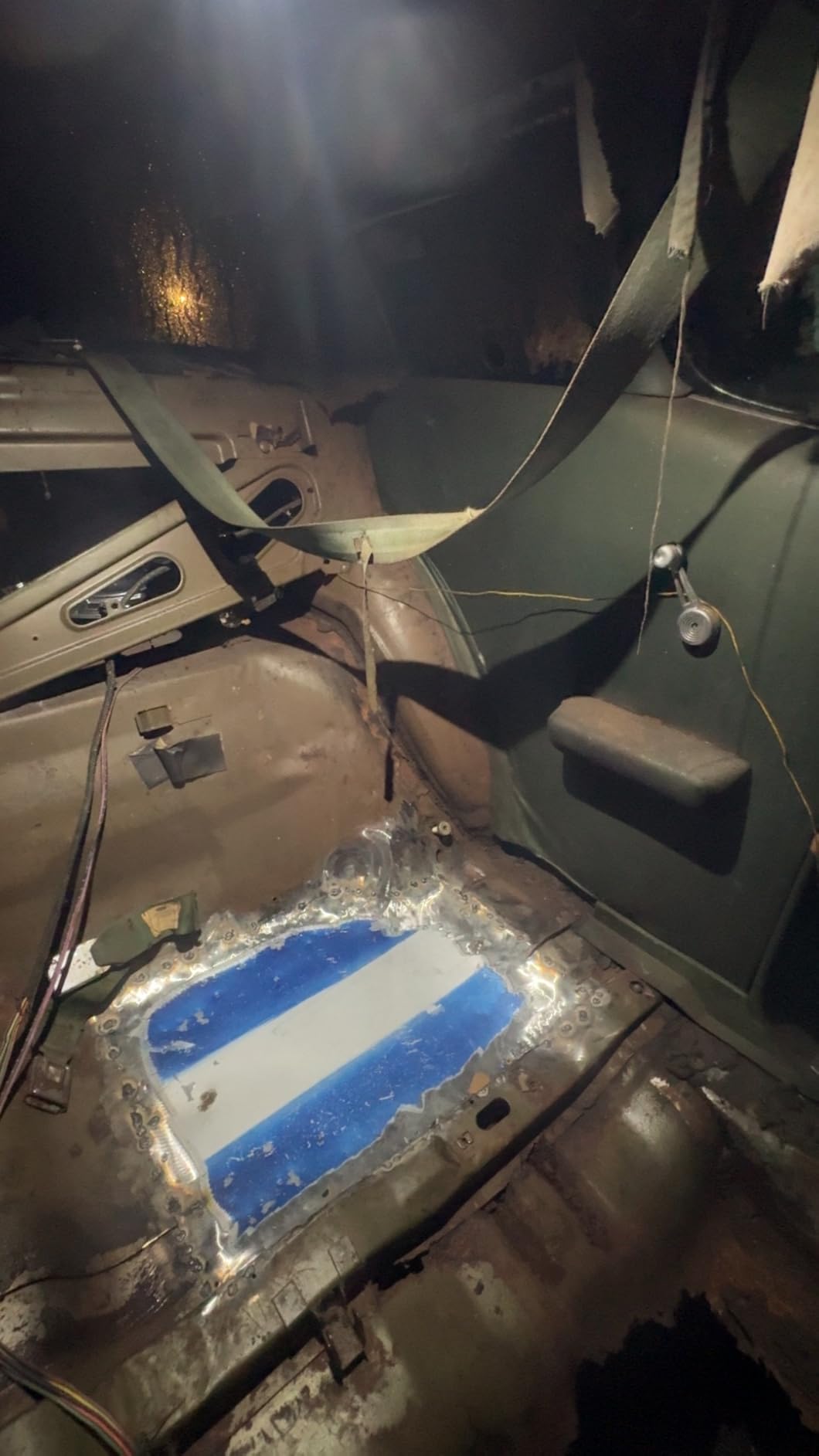
What stands out is the consistency. Owners report that after a short adjustment period the beads come out clean enough to be proud of, and that the auto-synergic feed removes nearly all of the guesswork from setup. The auto body panel feedback is useful too, because a machine that will not burn through 24-gauge sheet is the difference between a first project that goes well and a first project that ends in scrap.
The honest weaknesses are all in the accessories rather than the machine. The spool holder and wire tensioner are the two parts most likely to disappoint you, and the lift TIG function exists in name only until you buy a torch. Flux core mode is synergic only, so you cannot set voltage by hand in that mode, and the stick amperage readout appears to run 10-15 amps low.
Who the YESWELDER 135A suits
This suits a beginner who wants one machine that covers most first projects, has a large enough owner community to borrow answers from, and fits in a normal garage outlet. It handles 24-gauge sheet, 14-gauge brackets, 1/8 inch plate and rusty repairs without a dedicated circuit.
It also suits anyone who has read conflicting advice online and wants the low-risk option. Nearly 3,000 ratings mean a bad unit is easy to identify and replace, and the process mix means you can switch from flux core to stick on the same box without buying anything.
Where the YESWELDER 135A struggles
It struggles above 3/32 inch mild steel, and it cannot MIG weld aluminum without a spool gun it does not support cleanly. It also struggles indoors on thin sheet if you leave the synergic trim alone, since the default is tuned for thicker material.
If your projects are mostly 1/4 inch plate or heavier, step up to a dual-voltage machine rather than pushing this one. If you want clean gas MIG beads, the bestarc 145A or the YESWELDER 160A will serve you better.
2. ARCCAPTAIN 130A – Easiest Machine to Set Up
ARCCAPTAIN 130A Flux Core Welder MIG Welder 110V Gasless MIG Stick Lift TIG
- Synergic mode handles the setup for you
- Lightest of the multi-process machines at 11.79 lbs
- Includes MIG torch
- ground clamp
- electrode holder and 2lb of wire
- Handle and shoulder strap for one-handed carry
- Two-year manufacturer warranty
- Lift TIG requires a separate torch
- No gas MIG capability at all
- 110V only limits material thickness
- Display and controls are small for the class
Which flux core welder is best for beginners? If you want the shortest path from opening the box to a finished weld, this is the one. The synergic mode matches recommended current to wire feed speed after you pick your wire diameter, and the 10-speed wire feed control gives you enough range for .030, .035 and .040 flux core wire. Buyers consistently describe it as one of the easiest gasless machines to pick up.
At 11.79 lbs with both a carry handle and a shoulder strap, it is the machine we moved between the garage and the driveway most without complaint. Carbon steel, stainless and rusty metal are all within its comfort zone for DIY repairs, and the two-year warranty is longer than most of the direct competition offers.
The included kit covers the essentials: MIG torch, ground clamp, electrode holder and 2lb of flux core wire. That matters more than it should, because the most common forum complaint about budget welders is that they arrive with a bare machine and nothing else, and the real cost lands later when you go hunting for parts.
Its ceiling is the honest limitation to plan around. There is no gas MIG mode, so you cannot weld thin aluminum or get gas-shielded cleanliness on 24-gauge sheet without a different machine. The 110V-only output caps material thickness, and the display is small enough that we had to shade it with a hand to read it in daylight.
Who the ARCCAPTAIN 130A suits
It suits a complete beginner who wants the machine to do the setup thinking, and anyone who works outside where gas cylinders are awkward or unavailable. It also suits someone moving between a garage, a farm and a job site who wants to carry one box.
If your only concern is a first machine that works, this is a very hard machine to argue against. The warranty length and the included consumables reduce the two things that most often frustrate first-time buyers.
Where the ARCCAPTAIN 130A struggles
It struggles with material heavier than about 1/8 inch, and it cannot do gas MIG or aluminum. Lift TIG is advertised but needs a torch purchase, which is an odd expense for a function you will rarely use as a beginner.
Anyone whose project list already includes 1/4 inch plate or aluminum should look at the bestarc 145A or the YESWELDER 160A instead, both of which reach further.
3. YESWELDER 160A Dual Voltage – Best Value Multi-Process Welder
- Dual voltage gives far more usable power than 110V-only units
- Runs both solid gas MIG and gasless flux core wire
- Synergic auto settings speed up setup
- LED display plus manual override for experienced users
- Handles most 6010 6011 6013 and 7018 rods
- Needs genuine 220V for full output
- 110V adapter can trip household breakers
- Control panel text is small and display washes out in sun
- Thin plastic viewing panel and torch liner
- Weak with 6010 electrodes
This is the closest any machine in the test came to a real shop welder without leaving the compact category. It runs 110V or 220V, and at 220V the output is what a beginner actually wants for plate work. Users who compared it to Miller and Lincoln machines describe it as very capable for the money, with clean low-spatter gas MIG welds once the settings are dialed in.
The wire capacity is a genuine upgrade over the smaller units. It accepts both 2lb and 10lb spools of .030 and .035 solid or flux core wire, which means you stop babysitting a tiny spool in the middle of a long job. Electrode coverage is broad too, covering most 6010, 6011, 6013 and 7018 rods.
Control is both automatic and manual, which is the right combination here. Synergic mode sets voltage and wire speed for you, and then the manual override lets you take over when you want a specific bead profile or when the default is fighting the material.
Nearly every complaint we found circles back to electricity. It truly wants 220V, and the supplied 110V adapter will trip breakers on a loaded circuit. The button labels are tiny and the LED screen washes out in direct sun, and the viewing panel is thin plastic that flexes when you handle the machine roughly.
Who the YESWELDER 160A suits
It suits a home shop that can run a dedicated circuit, and a beginner who plans to grow past brackets into plate and step projects. It also suits anyone who wants gas MIG capability without buying a second machine later.
Anyone building a small fabrication shop or doing farm and trailer repair will find the 10lb spool support and the broader electrode range worth the extra weight at 27.5 lbs.
Where the YESWELDER 160A struggles
It struggles on a household circuit that cannot deliver 220V, which is exactly the situation that rules it out for renters and older homes. It also struggles to be portable in a real sense, since 27.5 lbs is a two-hand carry.
The torch liner is thin and can melt on hot welds, and stick performance with 6010 rods is weak. If you need a machine you can grab with one hand or work from a single ordinary outlet, the ARCCAPTAIN or the HITBOX fits better.
4. AZZUNO MIG-130A – Most Versatile for Small Jobs
- Lowest cost in the roundup for occasional hobby work
- Very light at 8.6 lbs with a comfortable grip
- Synergic control keeps it to three understandable knobs
- Includes torch
- ground clamp
- 1lb of wire and two contact tips
- Handles mild steel up to 3.0mm plate
- Capacity is thin compared with 145A and 160A machines
- Flux core only with no gas MIG or TIG
- Accepts only 2.2lb wire rolls
- No helmet
- gloves or regulator in the box
This is the machine to buy if your entire project list is small craft work, garden furniture and light garage fixes. Owners treat it as a budget first welder, and what they consistently like is how simple the interface is and how little it weighs at 8.6 lbs. The three controls are a voltage knob, a wire speed knob and synergic control, which is about as few decisions as a beginner can make.
The package is more complete than the price suggests: MIG torch, ground clamp, brush and hammer, 1lb of .030 flux core wire and two contact tips. That is enough to weld the day it arrives, provided you already own a helmet and gloves.
Capacity is the limit to plan around. Mild steel plate up to 3.0mm is roughly 1/8 inch, which handles 14-gauge and 16-gauge steel comfortably but stops short of 1/4 inch work. The wire bay handles 2.2lb rolls only, so you will be changing spools more often than you would on a machine that takes 10lb spools.
Synergic voltage and wire speed control means you are not memorizing charts. You pick a material thickness, the machine picks the numbers, and you concentrate on travel speed and bead placement. For someone whose goal is a weekend project rather than a shop, that trade is worth making.
The one-year warranty is the shortest here, and there is no gas MIG or TIG mode to grow into. Once you outgrow 3.0mm steel, this is a machine you will replace rather than step up from.
Who the AZZUNO MIG-130A suits
It suits a beginner with a small, specific project list: brackets, hooks, small shelf frames, craft and hobby metalwork. It also suits anyone who wants the lowest cost of entry into welding at all, including a helmet and consumables.
The weight matters if you plan to weld outside or in a shed with no bench. At 8.6 lbs you can carry it in one hand and set it up wherever the metal is.
Where the AZZUNO MIG-130A struggles
It struggles with anything thicker than about 1/8 inch, and with wire spool size since the 2.2lb limit means frequent changes on a longer job. It has no TIG or gas MIG mode at all.
If your projects include gate frames, trailer hitches or anything structural, spend the difference on the bestarc 145A or the YESWELDER 135A and you will not hit this ceiling in your first year.
5. HITBOX 200A Dual Voltage – Best for Carrying It Everywhere
HITBOX 200A MIG Welder, 110V/220V Flux Core MIG/Lift TIG/Stick 3-in-1
- Lightest multi-process unit at 6.6 lbs
- Built-in handle with no separate strap to lose
- Dual voltage inverter gives more power than typical budget units
- Quiet operation with low spatter on 110V flux core
- Includes torch
- ground clamp
- electrode holder
- wire and nozzles
- Only holds a 2lb wire spool
- Measured output runs 20-30% below the display
- Stick arc is hard to hold with 6010 and 7018 rods
- No hot start and thin documentation
- Ground clamp warps quickly
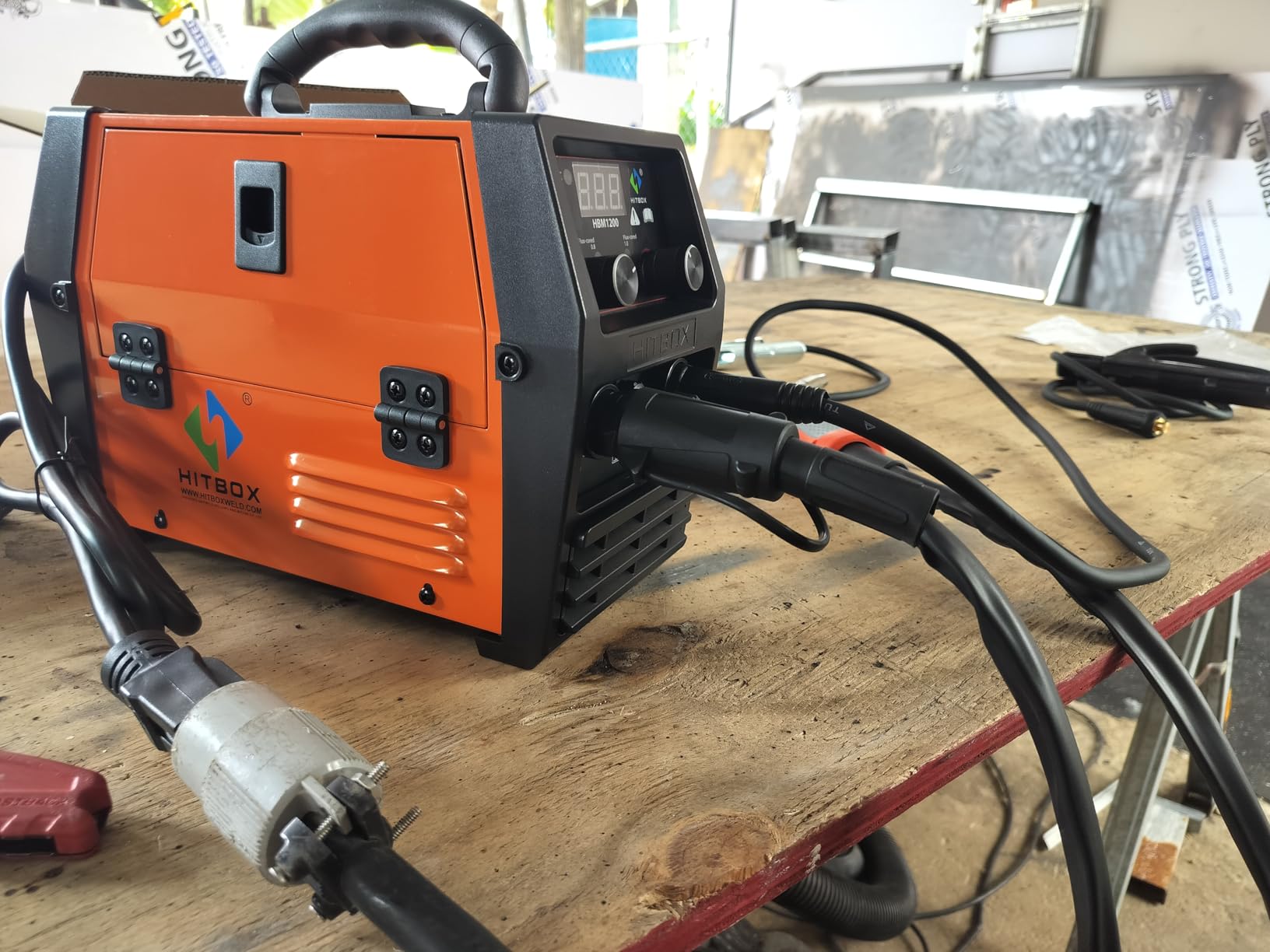
At 6.6 lbs with a handle built into the case, this is the machine we carried furthest during testing. It went from the garage to a gate repair at the end of the drive and back without a second trip, and it fits in a standard toolbox alongside hand tools. Owners upgrading from older Harbor Freight or Chicago Electric units report it is quieter, more portable and easier to set up.
On the MIG side the results are good. Synergic control simplifies setup, and the low-spatter flux core welds on 110V are among the cleanest we produced with any machine at this level. Mild steel capacity is listed at 4.0mm, which edges past the AZZUNO.
The 200A label is where you need to be careful. Owners who measured output with a clamp meter found amperage running 20-30% below the displayed figure, and that makes stick welding with common 7018 and 6010 electrodes difficult to hold. There is no hot start, and the documentation and after-sales support are thin.
The 2lb spool limit is the other constraint. On any job longer than a few minutes you will be stopping to change wire, and for farm and fence work where a 10lb spool matters, that adds up quickly.
Where MIG output is what you need, the low weight and clean beads outweigh the stick limitations. Where stick is your main process, choose a machine with hot start and honest output instead.
Who the HITBOX 200A suits
It suits a beginner who welds in awkward places: ladders, crawlspaces, fence lines and outdoor repairs far from an outlet. It also suits anyone who carries tools between vehicles and needs the welder in the same case as everything else.
For farm and property work where the machine moves more than it runs, the built-in handle and low weight are genuinely useful design decisions rather than specifications.
Where the HITBOX 200A struggles
It struggles with stick work, where the output gap and missing hot start show up immediately. It also struggles with long jobs because of the 2lb spool ceiling, and the support situation is weak if something goes wrong internally.
Anyone welding stainless on a regular basis should not start here. Our stainless steel welder guide covers the process requirements that matter for clean stainless work.
6. bestarc 145A – Best for Gas MIG on a Dual-Voltage Circuit
Bestarc 145A MIG Welder, Flux Core/Gas MIG Stick Lift TIG Welding, 110/220V
- Genuine 4-in-1 capability including gas MIG at this size
- Dual voltage with automatic input detection
- Large clear LED display and easy mode switching
- Cleaner lower-spatter flux core than smaller single-process machines
- Top-load wire plus shoulder strap
- Heavier gauge cable and better ground clamp than typical rivals
- MIG gun lead is short on earlier units
- Manual does not explain manual wire feed versus voltage mode
- Spool tension spring too tight on early units
- Included wire spools are of little use
- Push-on nozzle suits gas better than flux core
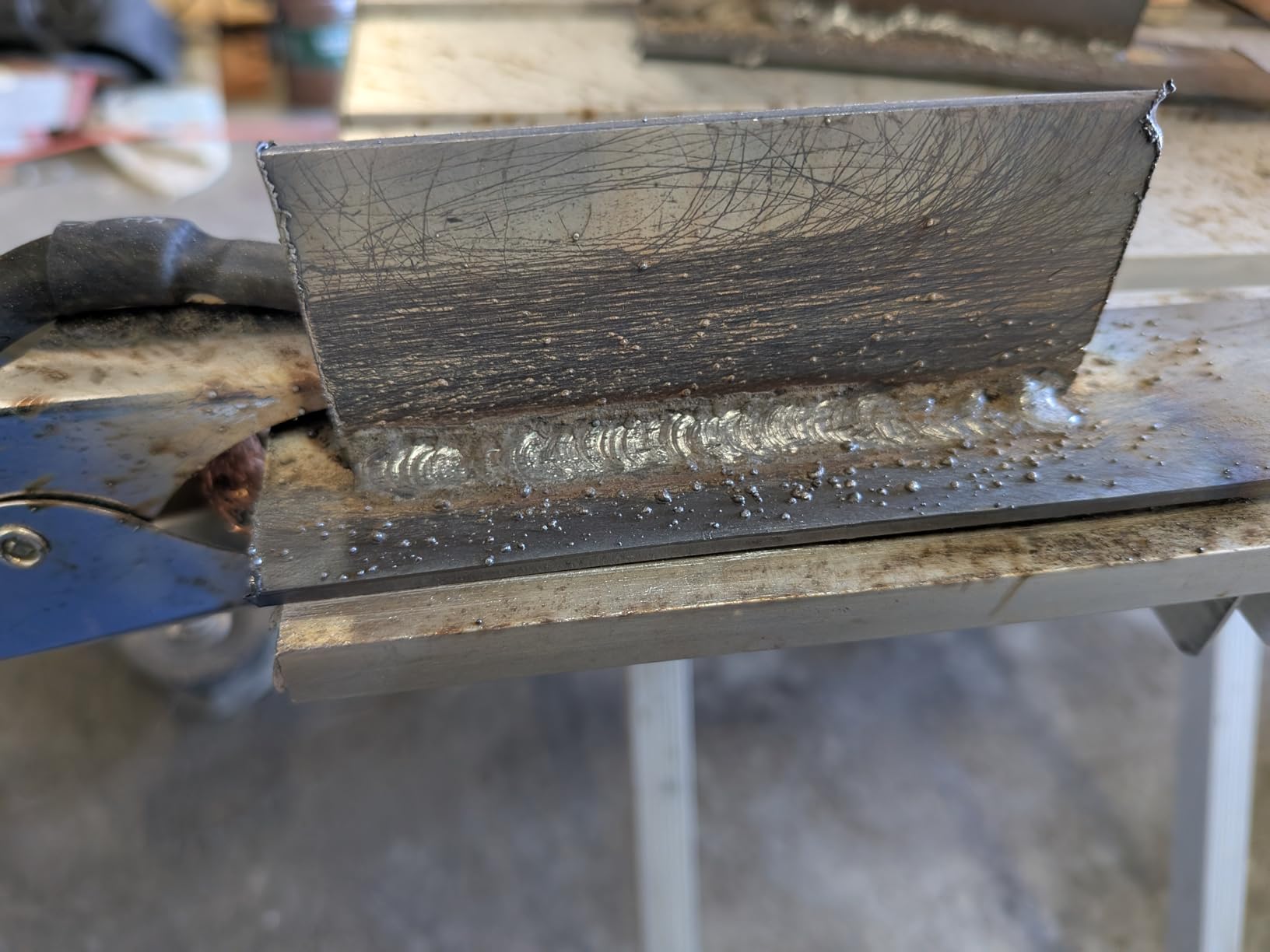
This is the most capable machine we tested, and the one a beginner who plans to stay in welding for years should look at first. Running gas MIG out of a compact unit at 145A is unusual at this size, and it means you get clean sheet metal welds without buying a second machine later. A reviewer with production welding experience rated the weld quality above a later-model Harbor Freight 125A and noted an unusually high duty cycle around 60%.
The automatic 110V/220V input detection is the detail that saves the most frustration. You plug it in and the front panel shows which voltage it detected, so you are not guessing at a toggle in a dark garage. Synergic voltage matching comes with a plus or minus 3V manual trim, which is enough control to fix a bead without a second machine.
The package is unusually generous: torch, earth clamp, stick holder, wire, contact tips, rollers, a 2m gas hose, a 220V to 110V adapter and a shoulder strap. Top-load wire access and a 13.7 lb body with a strap make it easy to move around.
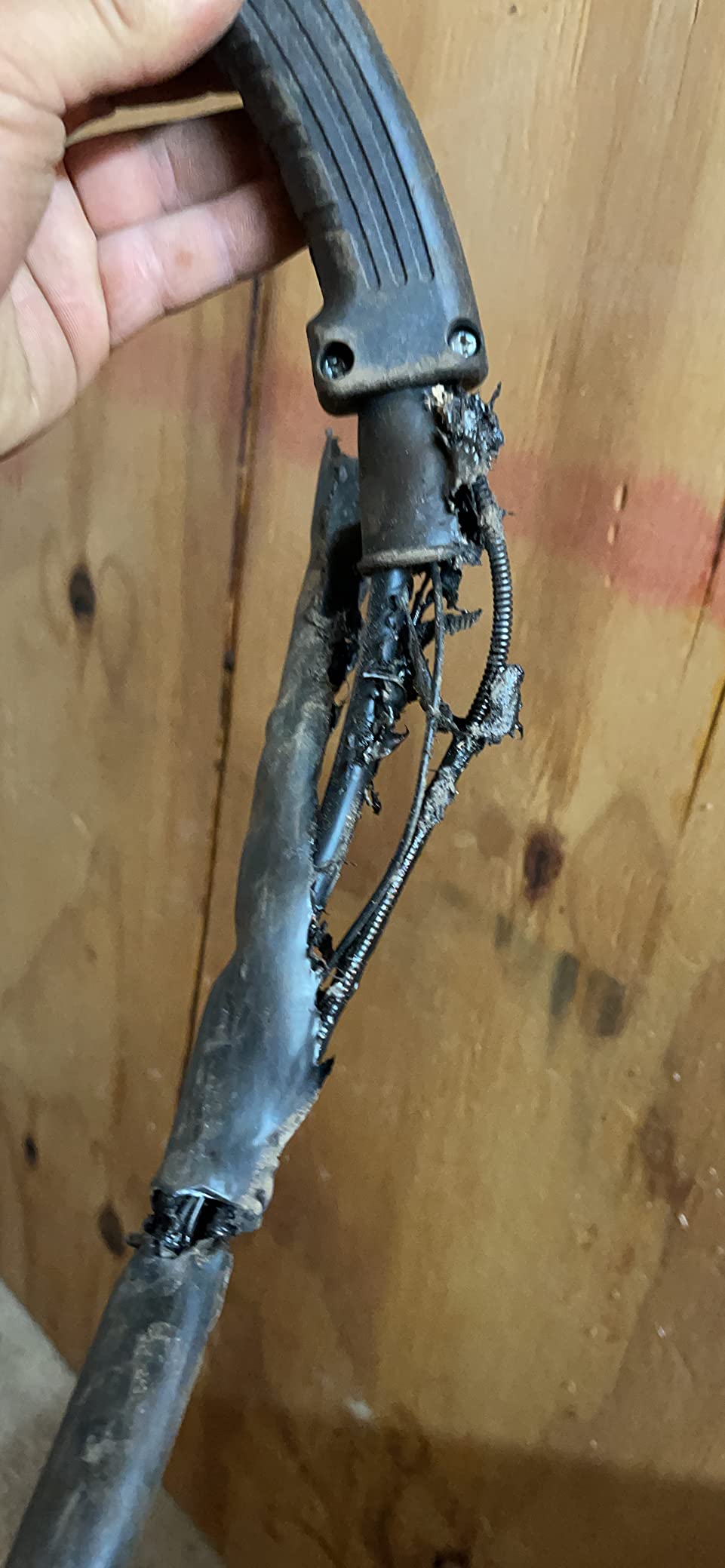
Early production units drew design complaints: a short MIG gun lead, incorrect drive rollers and an over-tight spool tension spring. The reviewer behind those complaints confirmed the fixes landed in later production, which is worth knowing if you are buying a unit that has been on a shelf a while.
The included nozzle is a push-on gas type that is not ideal for flux core work, and the bundled wire spools are of little use. The manual also does not clearly explain the difference between pushing the rotary knob for manual wire feed versus manual voltage, which costs beginners an afternoon.
Who the bestarc 145A suits
It suits a beginner with access to a 220V circuit who wants to learn gas MIG properly rather than settle for flux core. It also suits anyone doing 24-gauge sheet metal, stainless work or thinner aluminum-adjacent fabrication where bead appearance matters.
Home shops, RV repairs and farm work all benefit from the gas hose in the box and the 60% duty cycle, which means you can hold a bead longer without triggering thermal protection.
Where the bestarc 145A struggles
It struggles where a gas supply is not practical, since without shielding gas the cleanest mode is unavailable and you are back to flux core spatter. It also struggles as a carry-only machine at 22.6 lbs, which is heavier than the compact class it competes with.
TIG remains lift mode only with a separately purchased torch, so this is not an aluminum answer. If aluminum is the project, read the TIG guide linked earlier before buying.
7. BILT HARD 135A Kit – Best Complete Starter Kit in One Box
BILT HARD 135A 3-in-1 IGBT Inverter Welder, 110V Flux Core MIG/Lift TIG/Stick Welding Machine with Synergic Control, LED Display, 2T/4T/SPOT Modes & Full Kit (Solar Helmet)
- Most complete package we found including a helmet
- LED screen with separate MIG and MMA sub-menus
- Synergic auto-setting gets a beginner to a usable bead fast
- Compact and roughly car-battery sized
- 2T 4T and spot trigger modes are rare at this level
- Manual explains power requirements per mode
- TIG torch not included despite the lift TIG mode
- Weak included stick electrode clamp
- Solar helmet darkness knob drifts and head band is hard to assemble
- Included gloves are stiff and hammer and brush are cheap
- Wire spindle too short to secure the access door
What makes this one different is what is in the box. A solar helmet, a 6.6ft MIG gun, a 10ft ground clamp, 2lb of flux core wire, a spare .035 contact tip, brush and hammer. For a first-time buyer who has no idea what else to purchase, that single decision removes the most common first-week failure, which is having a machine and no way to safely look at the arc.
The control panel is where this machine separates itself from the others in its size class. The LED display tracks real-time voltage, current and wire speed, with dedicated sub-menus for MIG settings like burn-back and inductance, and MMA settings including hot start, arc force and VRD. Error codes E1 for overcurrent and E2 for overheat appear on screen while the fan cools the unit before restart.
Trigger modes matter more than most buyers realize. 2T and 4T control whether the machine powers the wire continuously or only while you hold the trigger, and the spot mode on this machine is a genuine convenience for tacking and repeat work. That feature set at this size is unusual.
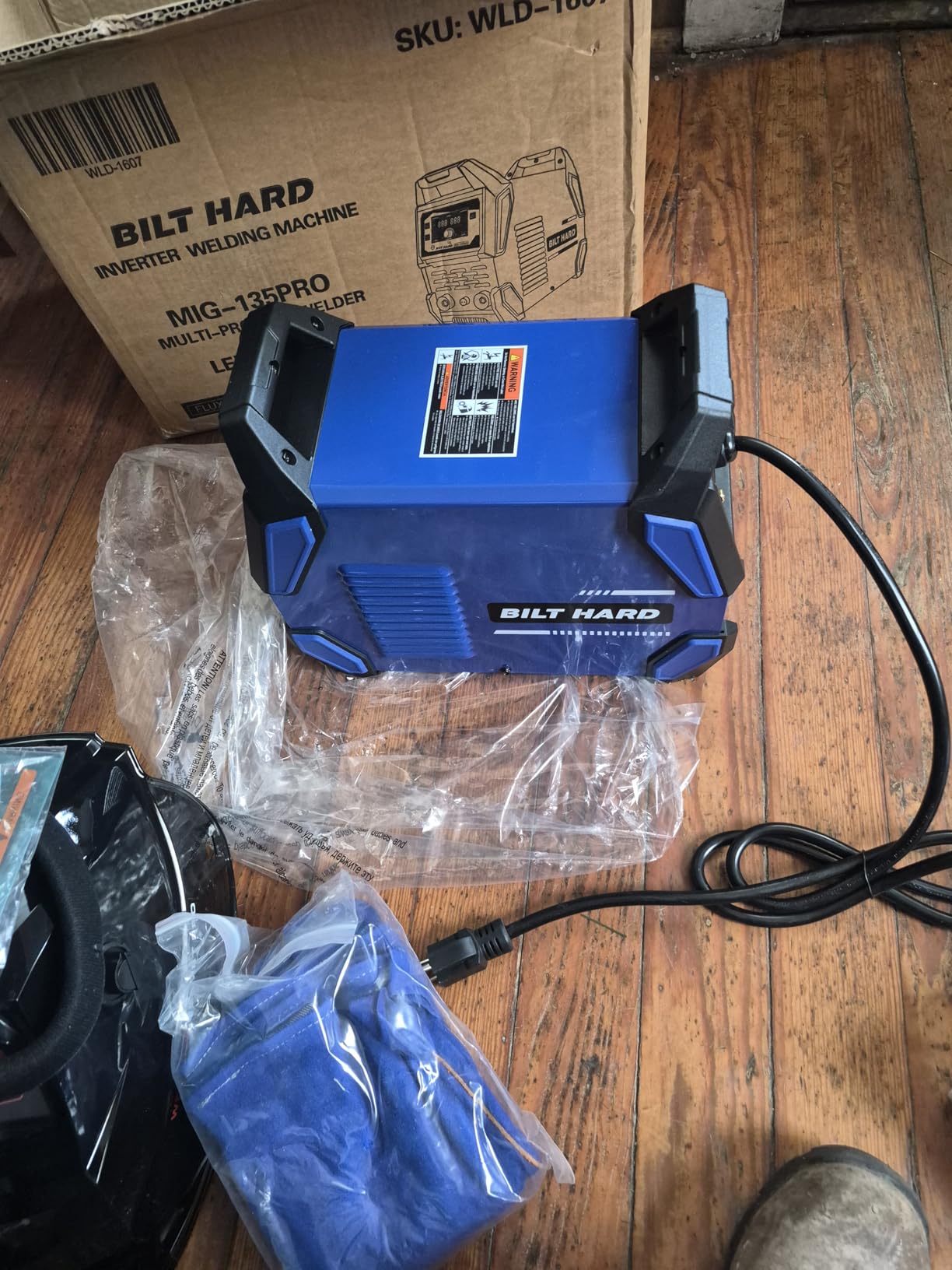
Beginner owners dominate the reviews and are simply impressed that a machine with a menu-driven display and a helmet works at all. Welding performance is described as solid for exhaust repairs, brackets and trailer work, while being clearly limited on thin material and not professional grade.
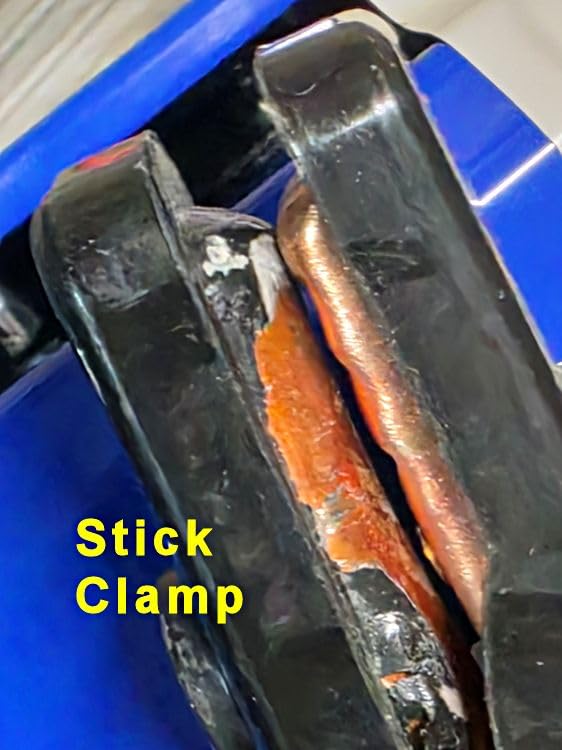
The quality problems are all in the PPE and small parts. The stick electrode clamp is weak, the included gloves are stiff, and the solar helmet’s darkness knob turns easily and drifts, with a head band that is awkward to assemble. The threaded wire spindle is too short to secure the wingnut on the access door, which is an irritating detail you will hit every time you change wire.
Who the BILT HARD 135A suits
It suits a total beginner who wants one purchase that gets them from delivery to first weld, including eye protection. It also suits anyone doing exhaust, bracket and trailer work who wants visible settings rather than guessing.
Budget is the deciding factor here. When you total the machine plus the helmet and consumables you would have to buy separately, this kit is usually the lowest total path into welding, even before you count the saved trip to a supply store.
Where the BILT HARD 135A struggles
It struggles on thin material, where burn-through shows up quickly, and rated capacity tops out around 1/4 inch with a realistic ceiling closer to 3/16 inch. The lift TIG mode needs a torch you do not get.
Replace the included helmet before your first serious session rather than trusting a drifting shade knob, and budget for a proper TIG torch only if you know you will use it.
8. HONE 205A Stick Welder – Best Small Welder for Stick-Only Work
- Smallest and lightest machine here at 4.4 lbs
- 2-in-1 stick and lift TIG in one compact unit
- 25 welding rods plus gloves
- mask
- brush and hammer included
- Hot start and anti-stick make ignition easier
- IGBT inverter gives a stable arc across the range
- No MIG or flux core capability at all
- Lift TIG requires a separate tungsten torch
- No display
- so current adjustment is coarse
- Stick-only design limits material thickness and joint types
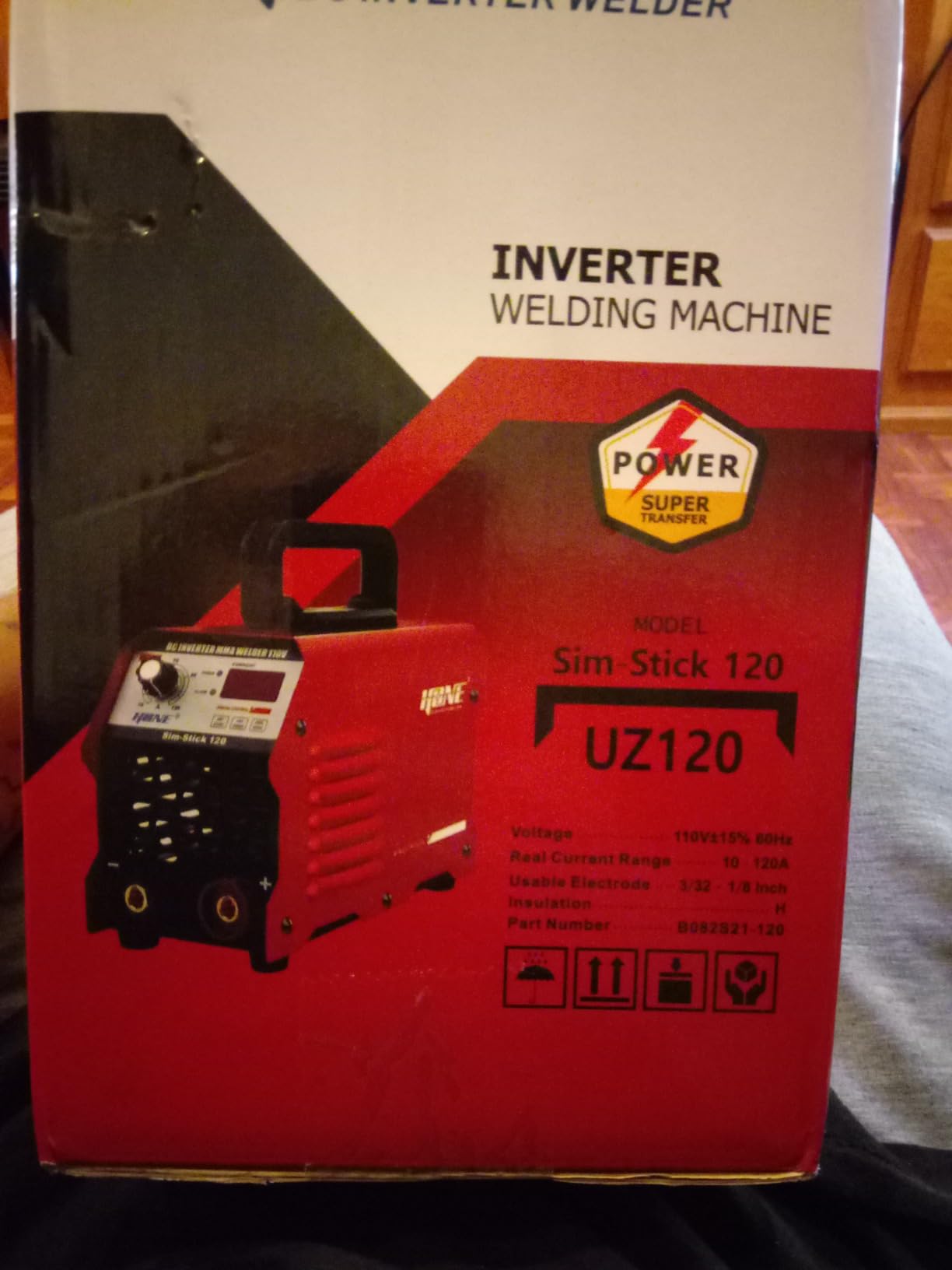
What is the easiest welder to use for a beginner? If you only want one process, this is the simplest machine in the roundup by a wide margin. There are two modes, one hot key, and the physical size of a lunch box at 4.4 lbs and 8.4 by 3.7 by 5.3 inches. It goes where nothing else here will, which makes it the right tool for fence posts, gate brackets, garden gates and light farm repairs.
The consumable bundle is the standout. Twenty-five 3/32 inch rods arrive in the box, along with a 6.5ft ground clamp, 6.5ft electrode holder, steel wire brush, chipping hammer, a leather welding glove and a face shield. Combined with the machine, that is a working kit on arrival with no second shopping trip.
Stick capability covers AWS E6013, E6011, E6010, E7018 and E308 rods from 1/16 to 1/8 inch, and the workpiece range is 0.05 to 0.22 inch. Hot start, arc force, anti-stick and VRD are all present, and the IGBT inverter is credited with a stable arc and cleaner beads at the low end of the range.
What it cannot do is MIG or flux core. If your project list includes thin sheet metal, a spool-fed process is a better fit, and this machine will make you choose between stick on everything or owning two machines.
The control layout has no display, so current adjustment is coarse compared with the LED-equipped machines above. And the lift TIG mode needs a tungsten torch bought separately, which again is an odd expense for a function most beginners will never use.
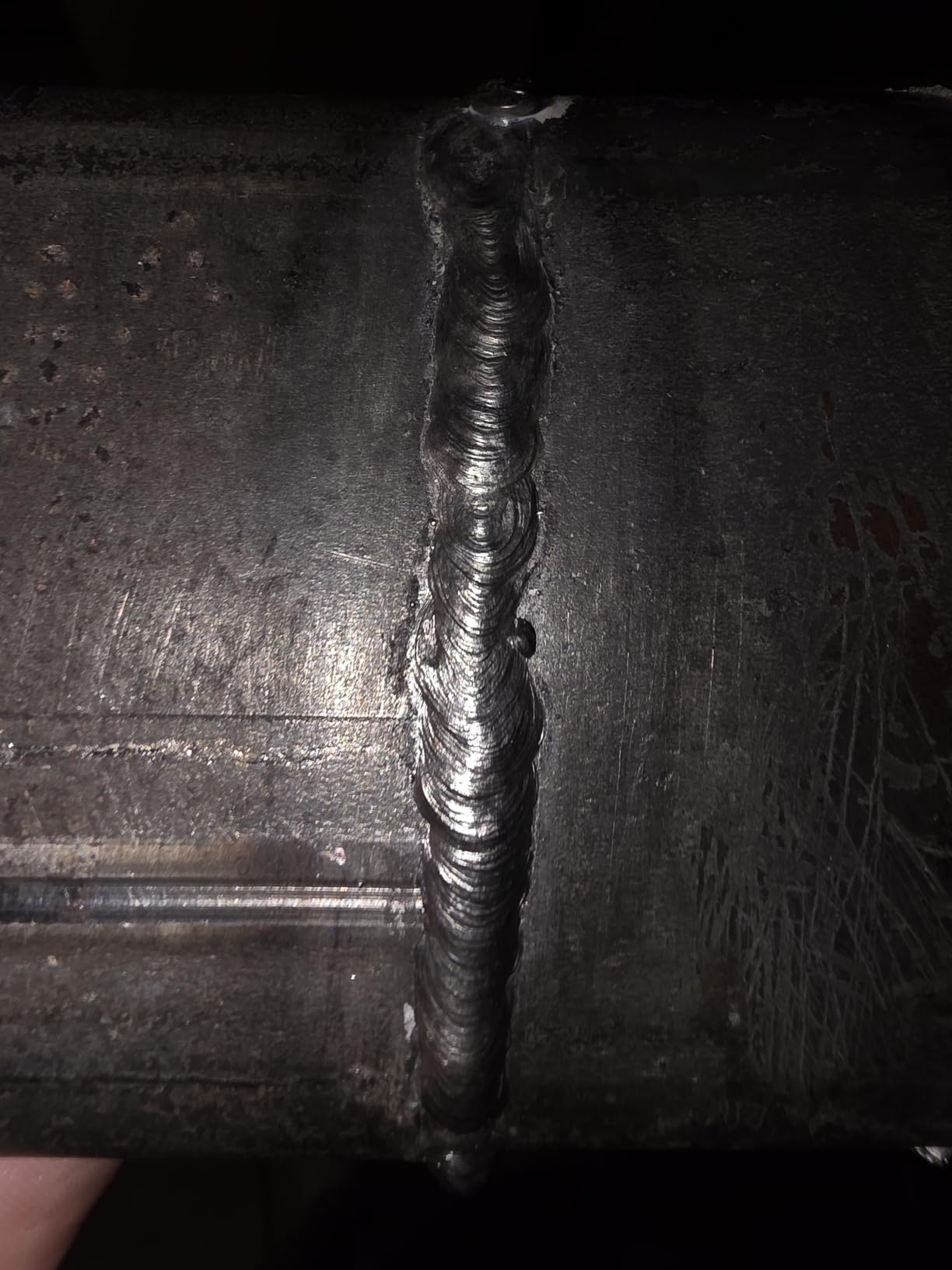
Who the HONE 205A suits
It suits a beginner whose work is outdoor and structural: gate hinges, fence repairs, trailer frames, brackets and light farm jobs. It also suits anyone working at height or in tight spaces where a 4.4 lb machine is the difference between doing the job and not.
Anyone who already has their own protective gear will find the included rods a generous bonus rather than the main event. The mask and gloves are a starting point, not a reason to skip buying proper ones.
Where the HONE 205A struggles
It struggles with thin sheet metal, where a stick arc is too hot and too hard to control, and with aluminum, which no budget stick-only machine handles well. The 205A label is an output claim on a 110V unit, so judge it by the rod range rather than the number.
If you think you might want MIG later, the ARCCAPTAIN 130A or the YESWELDER 135A gives you two more processes for a similar jump in cost and keeps your options open.
How to Choose Your First Small Welder?
Duty cycle tells you how long you can hold a bead. A machine rated at 60% duty cycle can run 6 minutes out of every 10 at full rated output before thermal protection kicks in. A machine rated at 20% needs 2 minutes out of 10, which means frequent pauses during a long bead. For a beginner welding 14-gauge brackets for ten minutes at a time, that difference barely registers. For anyone doing sustained plate work, it decides how tiring the job is.
Check the thermal protection, not just the amp rating. Every machine here carries over-current, overload and overheat protection, and several show error codes with a fan cooldown before restart. What matters is whether the protection lets you restart quickly or forces a long wait, and whether the manufacturer documents the cooldown behaviour at all.
Size the spool to your job length. Machines that take 2lb or 2.2lb rolls are convenient for short jobs and frustrating for long ones, because you stop to change wire constantly. If you can accept the extra weight, a machine that takes 10lb spools will save you more time over a year than any other single feature.
Decide how much synergic help you want. Synergic control matches voltage to wire feed speed automatically, which is exactly what a beginner wants. Manual override matters later, once you understand what you are changing. The ideal machine has both, and the BILT HARD menu and the YESWELDER 160A manual trim both give you a path from automatic to full control.
Ask what comes in the box. This is where the gap between two machines of similar output widens. The BILT HARD kit includes a helmet, and the HONE includes rods, gloves and a mask, while several bare machines include only a torch and clamp. Add up the missing pieces before you compare.
Look for honest output and warranty terms. Machines whose measured output falls 20-30% below the display are hard to trust on paper. A two-year warranty, as the ARCCAPTAIN offers, says something about how the manufacturer expects the product to last, and warranty length also tends to track how readily parts and consumables are available.
What Else Your First Setup Needs (and What to Skip)
Budget for more than the machine. A first welding setup realistically needs a welding helmet, welding gloves, a spatter shield, .030 and .035 flux core wire or a supply of 6013 and 7018 rods, and, if you chose gas MIG, a cylinder, regulator and hose. Beginners who budget only for the machine regularly end up two to three times over their original figure once the missing pieces are added.
The cheapest shortcut that is worth taking is a proper auto-darkening helmet. Bargain solar helmets drift in shade and are the first thing to replace. A mid-range auto-darkening helmet that you can set to a fixed shade for steel is the single most worthwhile accessory purchase, and it is also the one that most affects how long you can comfortably weld.
What to skip first: a plasma cutter combo and a TIG machine. Both add processes you will not use in your first year, and both push you toward a machine that needs a 50-amp circuit. A spool gun is the better eventual upgrade for aluminum, and a dedicated 220V machine is the better upgrade once you are welding plate regularly.
One more test worth doing before you commit: check that the wire, tips and drive rollers for your machine are sold by a supplier near you. A machine is only as good as the consumables you can replace on a Sunday afternoon.
First Weld Roadmap: Three Projects in the Right Order
What type of welding should a beginner start with? In this order, with the same machine throughout, because switching machines resets your hand.
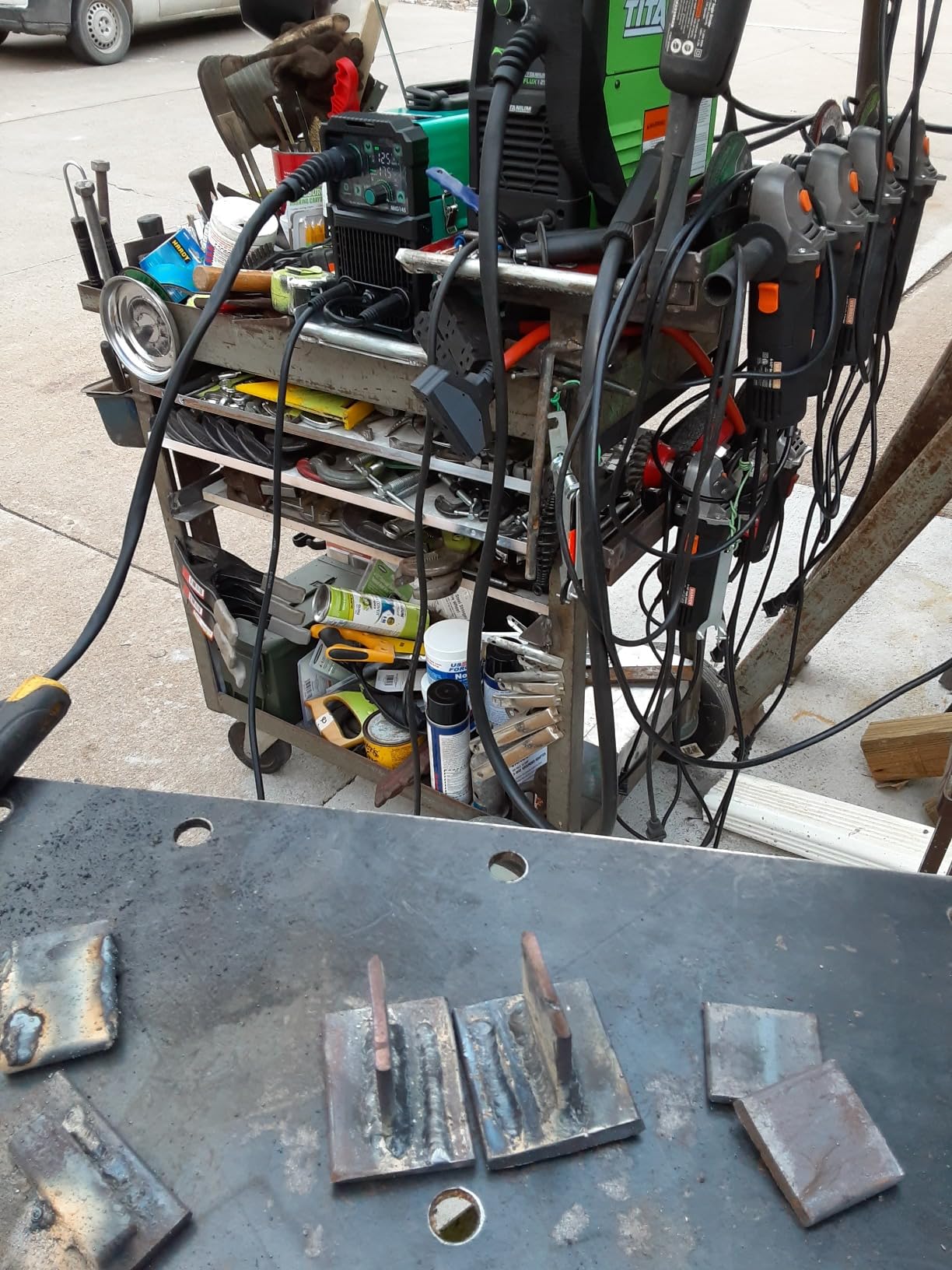
Step 1: A fillet T-joint in 14-gauge mild steel. Two pieces of scrap steel in a T, the easiest joint to learn because the metal does the positioning for you. Set the machine to synergic mode, choose your material thickness, and let it pick voltage and wire feed speed. Hold a consistent arc length of about 1/8 inch, move at roughly the speed of the wire feed, and let the machine make the decisions. Make twenty of these before changing any setting.
Step 2: A butt joint in 1/8 inch plate. Once the fillet looks consistent, move to two flat pieces edge to edge with a root gap. This is where stick holders and wire tensioner quality start to matter, and where a machine like the YESWELDER 160A with 10lb spool support and better drive components begins to pay off. Practise on plate you do not care about.
Step 3: Thin sheet metal. Move down to 24-gauge only once you are confident on heavier material. Here you slow the travel speed, increase voltage trim or reduce wire speed, and expect some burn-through on your first few attempts. Gas MIG handles this step far better than flux core, which is the moment a 4-in-1 machine with gas capability pays for itself.
Stay on mild steel for your first several sessions. Once the three joints above are reliable, move to stainless, and read our stainless steel welder guide before that step, because stainless punishes a contaminated gun and dirty gloves in a way mild steel never does.
Frequently Asked Questions
What is the best small welding machine for beginners?
A 110V or 120V multi-process inverter in the middle of the price range is the safest first purchase. Our pick is the YESWELDER 135A, which runs flux core MIG, stick and lift TIG, weighs 16.98 lbs and includes wire, a ground clamp and an electrode holder. It suits a normal 20-amp household circuit and does not need a gas cylinder.
What type of welding is best for a beginner?
Self-shielded flux core MIG is the easiest first process for most home welders. It needs no shielding gas, it works outdoors in wind, and the wire feeds automatically so you concentrate on bead shape rather than managing a torch. Gas MIG produces cleaner beads on thin sheet, stick is cheapest and handles rusty metal, and TIG is the least forgiving of the four.
Which flux core welder is best for beginners?
The YESWELDER 135A is our top flux core pick for its synergic control, LED display and large owner community. The ARCCAPTAIN 130A is the lightest option at 11.79 lbs and the easiest to set up, while the AZZUNO MIG-130A is the lowest-cost route into welding. For clean gas MIG as well as flux core, the bestarc 145A covers both on 110V or 220V.
Is flux core easier than stick welding?
Yes, for most beginners. Flux core feeds the filler wire automatically and does not require a shielding gas cylinder, while stick requires you to manage an electrode, filler rod and arc length at the same time. Stick is cheaper per foot and more tolerant of rusty or outdoor metal, so it remains the better choice for outdoor structural repairs.
Do I need a gas tank to MIG weld?
Not if you use self-shielded flux core wire, which is the recommendation for most beginners. A gas tank is needed only for solid wire MIG, the process that gives cleaner, lower-spatter welds on thin sheet metal. Gas MIG also cannot be done outdoors in any breeze, so if your work is mostly outside, flux core avoids the tank, the regulator and the storage problem.
Can I run a small welder off a normal household outlet?
Usually, but check the input. Machines rated 130A to 135A at 110V are designed for a standard 20-amp circuit, though a loaded circuit can still trip a breaker mid-bead. Dual-voltage machines need a dedicated 50-amp circuit and a NEMA 6-50 dryer-style outlet to deliver their higher output. Never use a 10-amp cigarette-lighter style outlet.
Where to Start
Start with the YESWELDER 135A if you want one machine, one process decision, and the least friction between opening the box and your first bead. It is the most-reviewed small welder for beginners in this roundup, it runs on a normal outlet, and it leaves room to add stick and gas later if your projects grow.
Choose the ARCCAPTAIN 130A if you want the lightest, simplest setup. Choose the bestarc 145A if you have a 220V circuit and want gas MIG from day one. Choose the HONE 205A if your work is outdoor gate and fence repair and nothing else.
Whichever one you pick, budget for a helmet and consumables as part of the purchase, and check your circuit before you order. That single check removes the most common frustration new welders report in their first week.