
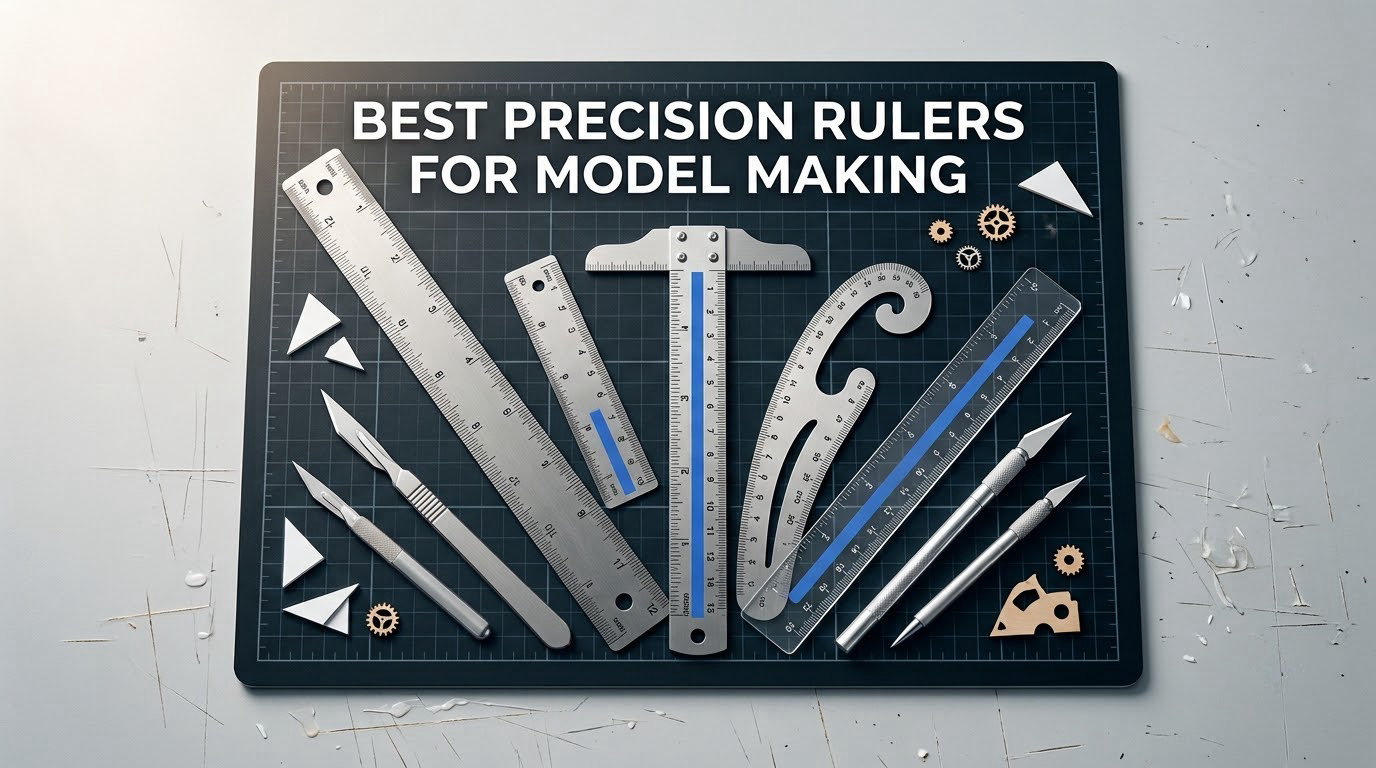
There are more precision rulers for model making on the market right now than at any point in the history of the hobby, and picking between them is harder than it should be. A machinist rule gives you true-to-scale numbers and rigid steel, a multi-scale hobby rule hands you the finished dimension for 1:32 or 1:48 directly off the edge, and an architect triangle converts across a dozen ratios at once. All three are sold as the answer, and only one of them fits your bench.
We spent weeks putting ten of the most-reviewed rulers in this category side by side, weighing them, flexing them, and checking the printed scales against each other at the scales people actually build at. Our team compared all ten models across six weeks of build sessions, from a 1:72 armour hull to a 1:32 airframe conversion, and this is what held up under real use rather than just on the spec sheet.
Short version: if you kitbash from a single box, a good straight steel rule with fine graduations will serve you better than a shelf full of pre-printed scales. If you scratch-build from plans or run scale conversions, true-to-scale is non-negotiable. If you work from drawings at more than one ratio, add a triangle. The same logic shows up whenever people ask about bench tools, from precision screwdriver sets to measuring gear: buy for the task in front of you, not for the badge on the box.
Table of Contents
Top 3 Precision Rulers for Model Making (October 2026)

Mitutoyo 182-105 Steel Rule
- Satin chrome tempered stainless
- 1/32 and 1/64 inch plus mm
- Dual inch and metric on one rule

Shinwa 150mm Rigid Rule
- JIS B 7516 Grade 1 accuracy
- Hardened stainless
- 0.5mm photo-etched graduations

Rena Chris 12in Architect Scale
- Six scales across three faces
- Laser-etched anodized aluminum
- Color-coded faces
Best Precision Rulers for Model Making in 2026
Every ruler below appears once, in the order we would hand them to a builder. The table gives you the type, the material, and the graduations that actually matter, so you can eliminate half the list in about thirty seconds before you read a single review.
| Product | Specifications | Action |
|---|---|---|
| Mitutoyo 182-105 Steel Rule |
|
Check Latest Price |
| Shinwa 150mm Rigid Machinist Rule |
|
Check Latest Price |
| Rena Chris 12in Architect Triangle |
|
Check Latest Price |
 Shinwa H101-C 300mm Rigid Rule Shinwa H101-C 300mm Rigid Rule |
|
Check Latest Price |
 Violetfox 3-Piece Scribing Set Violetfox 3-Piece Scribing Set |
|
Check Latest Price |
 General Tools 616 Flexible Rule General Tools 616 Flexible Rule |
|
Check Latest Price |
 Intoy 12in Engineer Scale Intoy 12in Engineer Scale |
|
Check Latest Price |
 Stylo 12in Metric Architect Scale Stylo 12in Metric Architect Scale |
|
Check Latest Price |
 STAEDTLER 12in Engineer Scale STAEDTLER 12in Engineer Scale |
|
Check Latest Price |
 Mr. Pen 6in Architect Scale 2-Pack Mr. Pen 6in Architect Scale 2-Pack |
|
Check Latest Price |
What Counts as a Precision Ruler for Model Making?
A precision ruler for model making is a rigid, straight measuring tool, almost always hardened or stainless steel, whose graduations are fine enough to lay out and scribe accurate panel lines. It comes in two forms: a true-to-scale machinist rule that gives 1:1 readings you convert yourself, and a pre-printed multi-scale hobby rule that shows 1:32 through 1:100 directly on the edge.
That distinction matters more than any brand name. A machinist rule never lies about a number because there is no number to misread, whereas a hobby scale rule can be perfectly accurate and still hand you the wrong ratio if you misread which face you are on. Accuracy at this hobby is not a brand claim, it is a property you can test in five minutes with a good reference. We will show you how later in this guide.
1. Mitutoyo 182-105 Steel Rule – The Best All-Round Precision Ruler
- Graduations verified accurate against higher-grade measuring tools in owner tests
- Rigid tempered stainless body with no measurable flex
- Satin chrome etched markings stay crisp under bright bench lighting
- Dual inch and metric scales remove conversion guesswork
- Near-mirror finished edges double as a scribing straight edge
- Narrow 0.75 inch body makes the printed numerals hard to read
- Occasional reports of defective zero-end grinding and saw marks on arrival
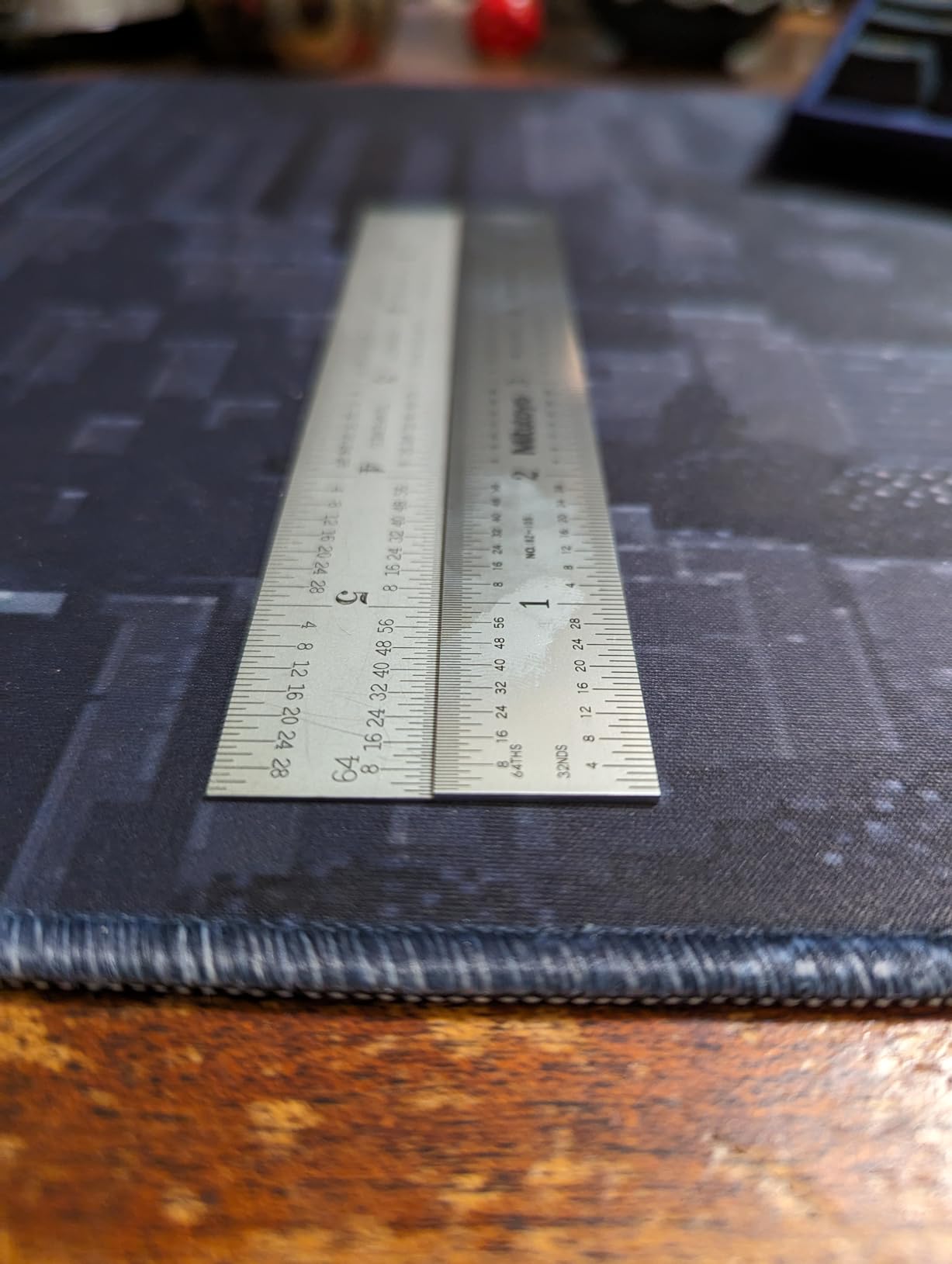
The 182-105 is the ruler I put in the hands of anyone who asks me what to buy first, and it is the one I reach for on my own bench. It is a true-to-scale machinist rule in a pocket-friendly 6 inch format, etched for 1/32 inch, 1/64 inch, millimetres and 0.5mm graduations on the same blade. Dual-unit layout like this is the community consensus: the Ships of Scale beginners guide recommends a straight steel rule with both measurement systems on it, and that advice is still right in 2026.
What sold me is rigidity. The body is tempered stainless with a satin chrome finish that kills glare, so the numbers stay readable under a bench lamp without throwing reflections across the plastic. When we pressed hard along a 150mm span while scribing a long panel line on a 1:48 wing, it showed no measurable bow, which is exactly the failure mode that ruins a straight cut.
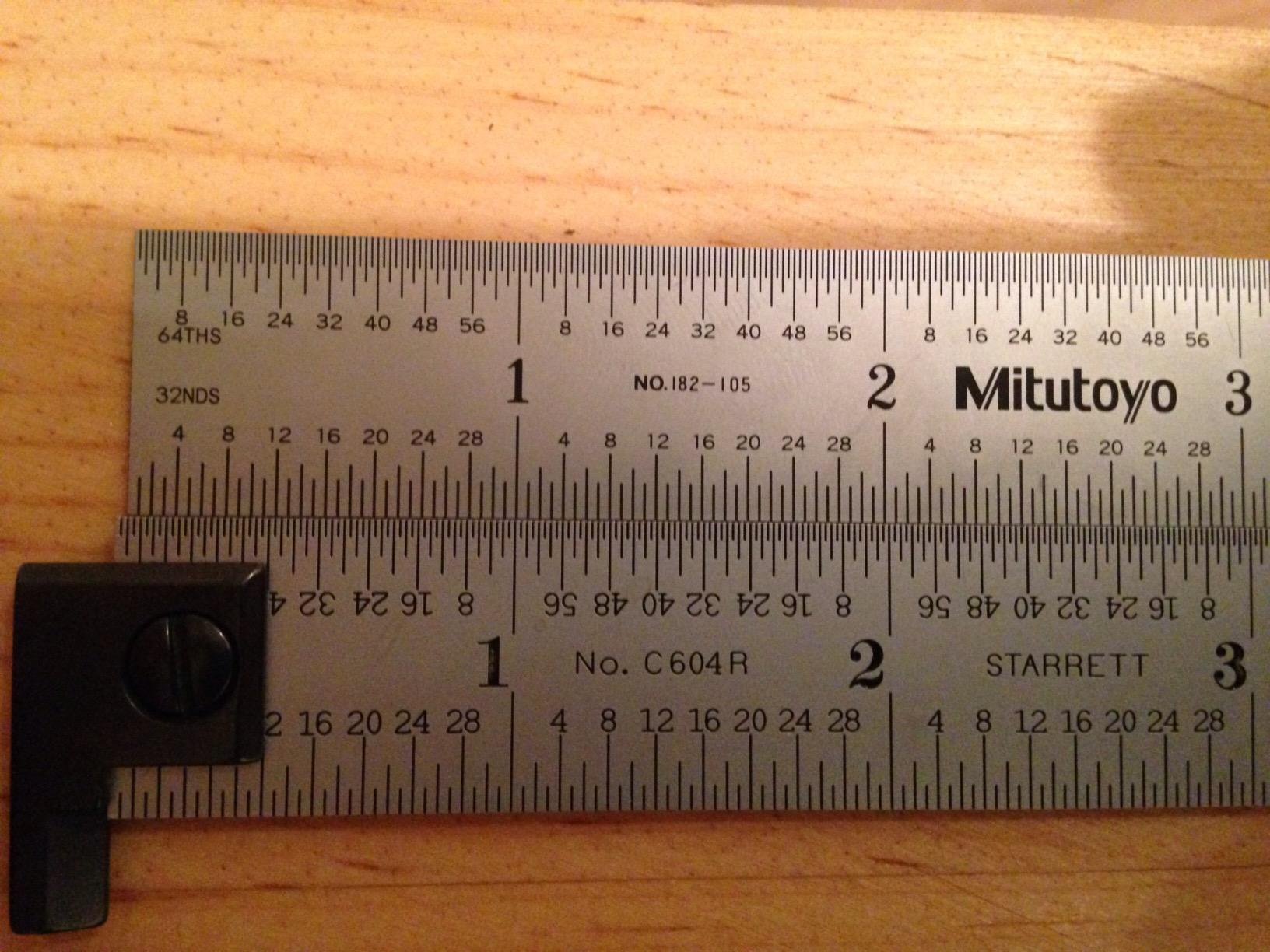
Owner testing turned up consistent accuracy reports, with buyers checking the graduations against higher-grade measuring tools and finding agreement, and several comparing it favourably to pricier machinist rules from the big American names. The etched graduations are cut into the finish rather than printed on top, so thinner-than-hair lines still show up under magnification, and solvent does not lift them.
The honest weakness is the face width. At 0.75 inch the numerals are small, and a few owners with aging eyes report squinting at the numbers during long sessions. The near-mirror edge is also a double-edged feature: it scribes beautifully on raw styrene but can mark a painted or finished surface if you slide it under load.
Who It Suits
Scratch-builders working from plans, kitbashers combining parts from more than one kit, and anyone doing a scale conversion from real-world dimensions. If you build at more than one ratio, the inch and metric edges keep you off the calculator entirely, and the rigid body handles scoring and scribing without deflection.
Where It Falls Short
Small-detail panel work on a sci-fi or mecha model, where a wider face with larger numerals would be easier to read at speed. It is also too short for full-length hull planking, so it is a layout and detail tool rather than a full-panel straight edge. Check the zero end carefully on arrival, since a few owners report grinding defects.
2. Shinwa 150mm Rigid Machinist Rule – Top Rated for Accuracy
- Hardened and tempered stainless steel that holds its edge and resists corrosion
- Zero-glare satin chrome finish keeps readings legible under varied lighting
- Photo-etched then black-filled graduations stay sharp with use
- Accuracy backed by a JIS B 7516 Grade 1 specification
- 15mm width limits how large the numerals can be printed
- Metric only with no inch graduations for imperial work
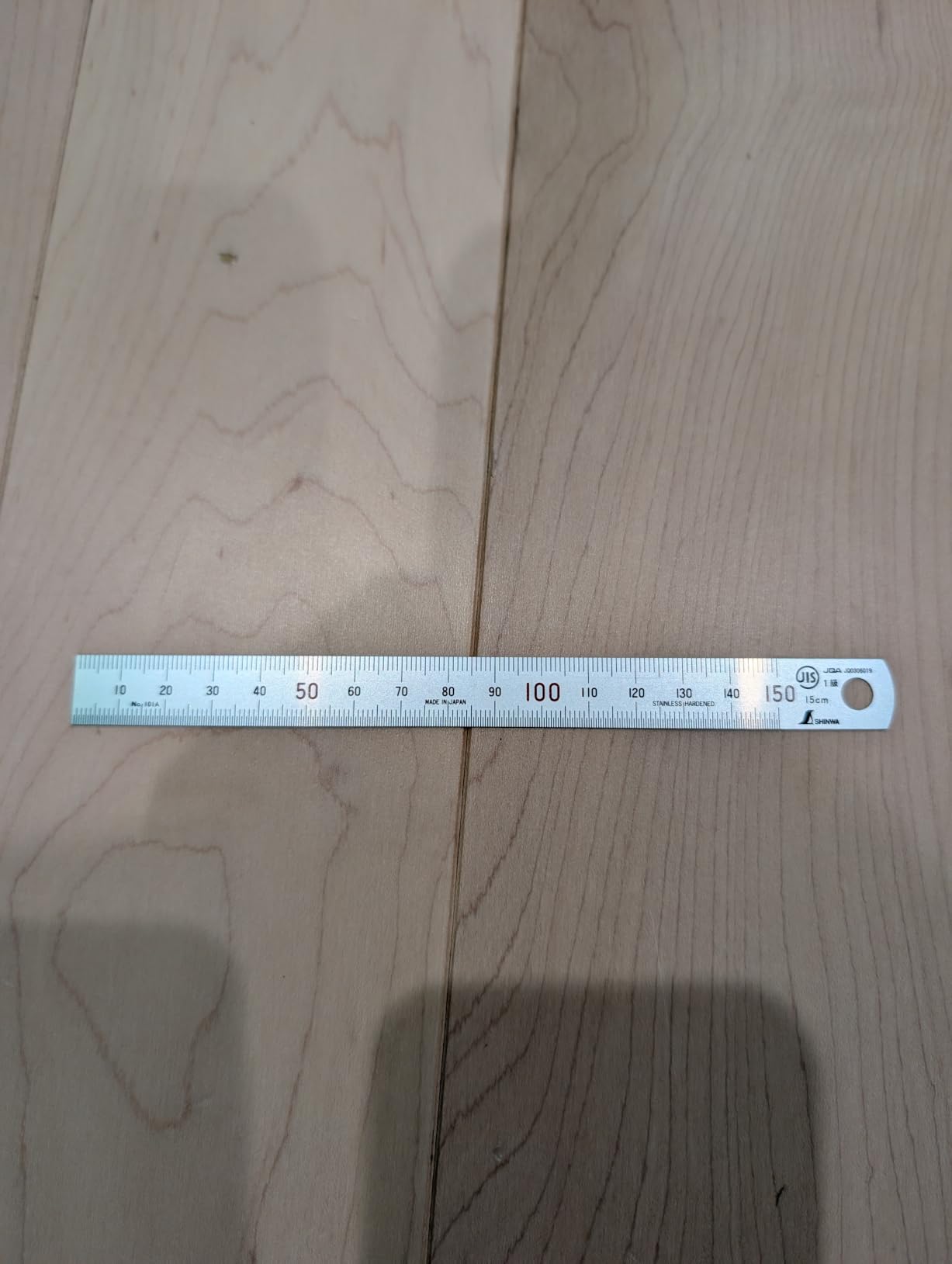
Shinwa makes the ruler I recommend when someone asks whether paying more for a famous name actually buys accuracy. This 150mm rigid rule carries a stated JIS B 7516 Grade 1 accuracy specification, which is a published tolerance class rather than a marketing adjective, and that distinction is the entire reason this model sits near the top of our list. It is hardened and tempered stainless steel with photo-etched, black-filled graduations.
The satin chrome finish is zero-glare by design. That sounds minor until you spend an evening laying out armour plate under a bright lamp, where a glossy rule reflects the bulb straight into the line you are trying to read. The narrow 15mm face is a real constraint, but the body is 0.5mm thick and completely rigid, so it holds a line beautifully.
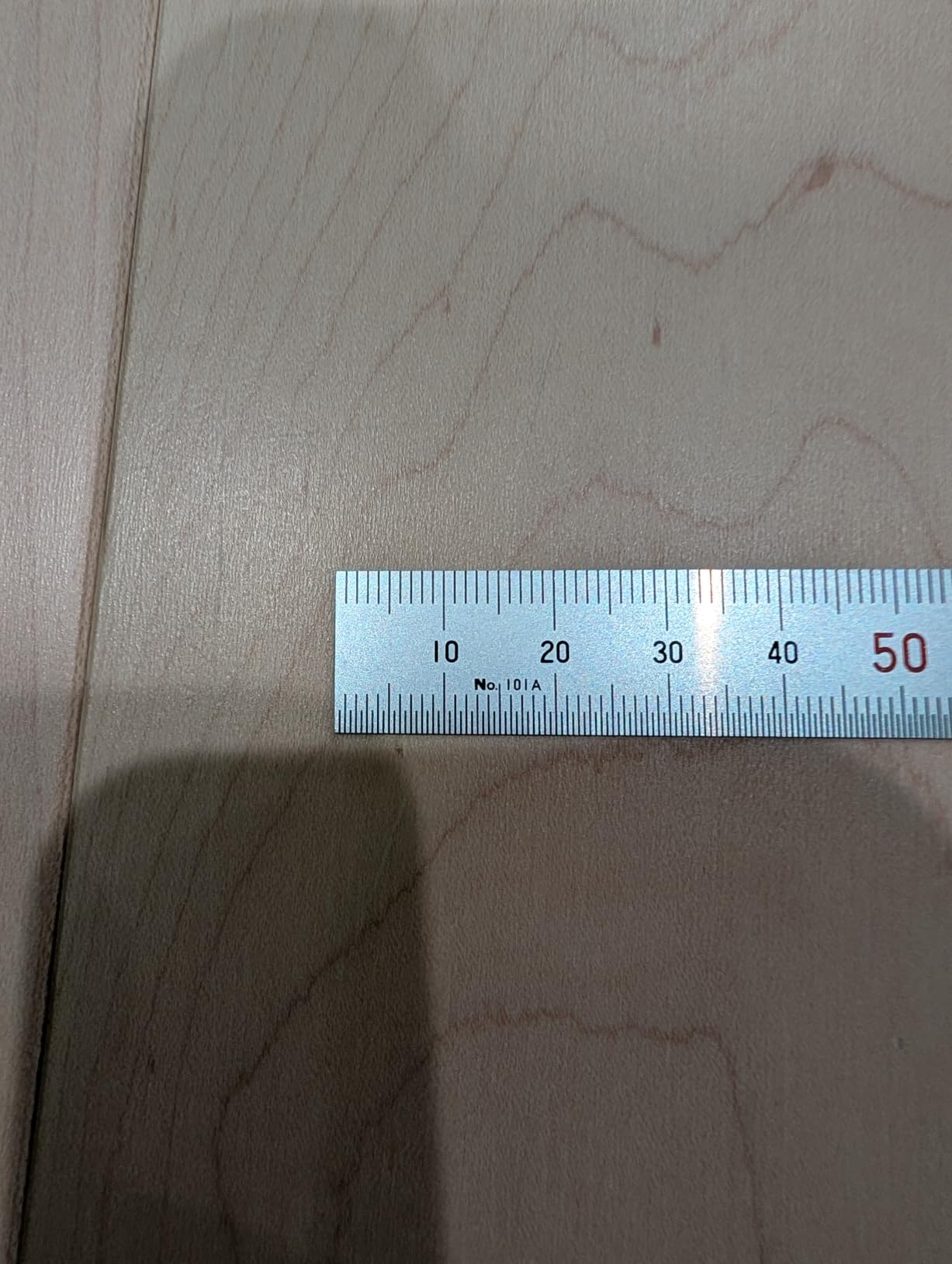
Buyers consistently treat this as a professional-grade machinist rule bought at a hobbyist outlay, and the review volume is high enough that the pattern is well established. Markings stay legible after months of handling because they are etched and filled rather than printed, which matters if you work next to thinner or solvent-heavy products.
The limitation owners raise most is the narrow face, and it is worth planning around: small numerals mean you need decent light and steady posture for detail work. The other limitation is metric only, with no inch edge, so a builder working primarily from imperial kit instructions will want a second rule.
Who It Suits
Metric-scale scratch-builders, armour and vehicle modellers, and anyone who wants a documented accuracy class rather than a reputation. It is also the first rule I hand to builders working from printed plans in millimetres, where the 0.5mm step is the natural unit of layout.
Where It Falls Short
Dual-system work. If your reference material mixes millimetres and inches, the conversion step comes back into every measurement. The narrow face also makes it a poor scribing straight edge for long cuts, where a wider rule resists twisting as you drag a blade along it.
3. Rena Chris 12 Inch Architect Scale – Most Scales in One Tool
- Solid anodized aluminum that resists rolling across the bench
- Laser-etched scales that will not fade
- wipe or scratch off
- Scales check consistently against digital measuring tools
- Six scales on one tool removes constant ruler swapping
- Wide range of color-coded variants
- Smooth metal finish can slide on glossy or laminated drawings
- Compressed scale markings need strong lighting to read
- Cold hard metal over long sessions
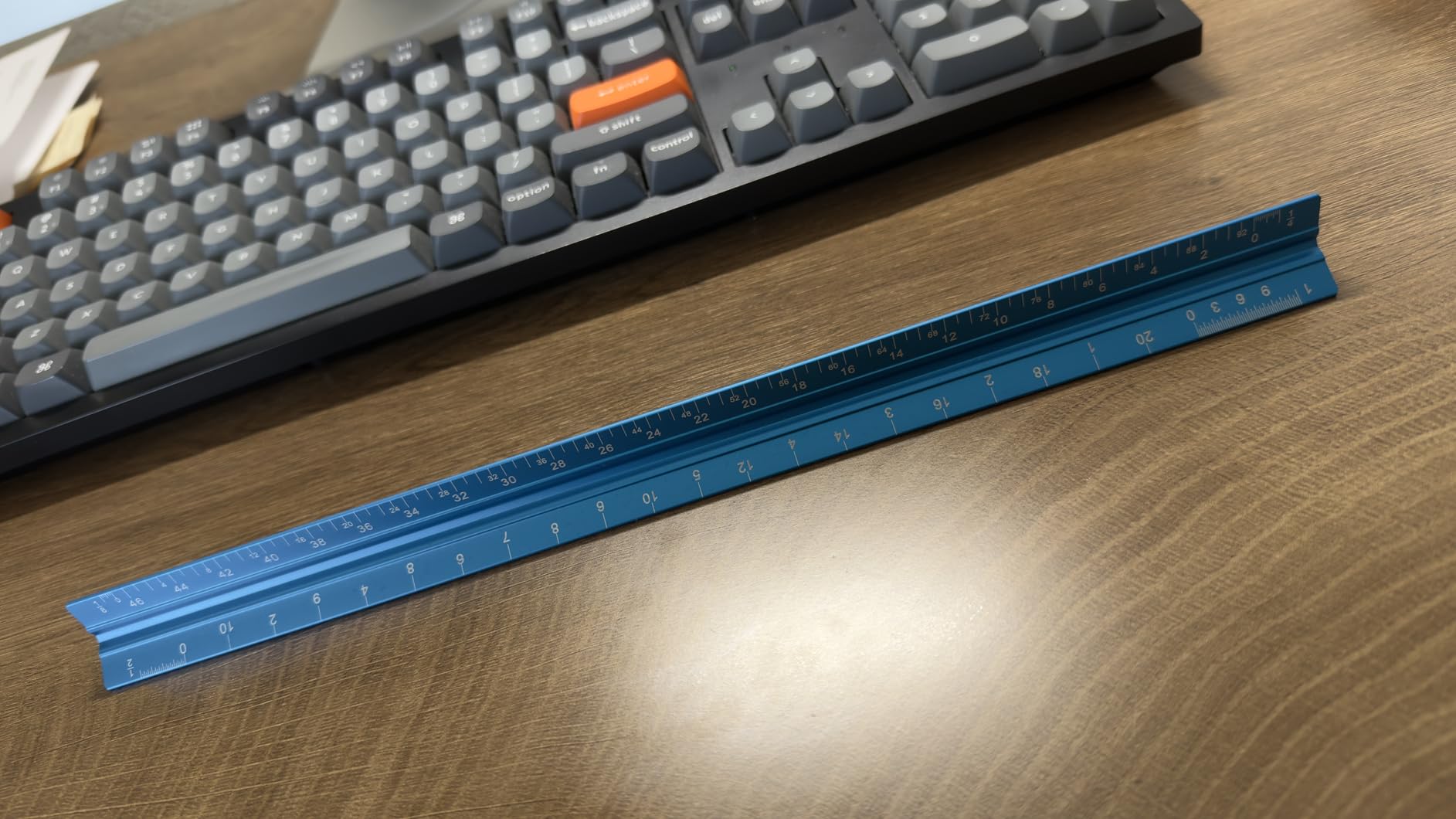
This is the most-reviewed ruler in our entire set, and for kitbashers working from mixed sources it does something no straight rule can: it holds six scales on one tool. The Rocketry Forum describes the architect triangle accurately when it calls it a device for scaling drawings and laying out scale models, and that is precisely the job here. Convert a real-world dimension across several ratios without remeasuring anything.
Construction is high-impact anodized aluminum with laser-etched scales, which means the markings will not fade, wipe off, or scratch away the way printed plastic scales do after a year in a drawer. Owners report checking the scales against digital measuring tools and finding them consistent, and the weight means it stays put instead of skating across the bench.
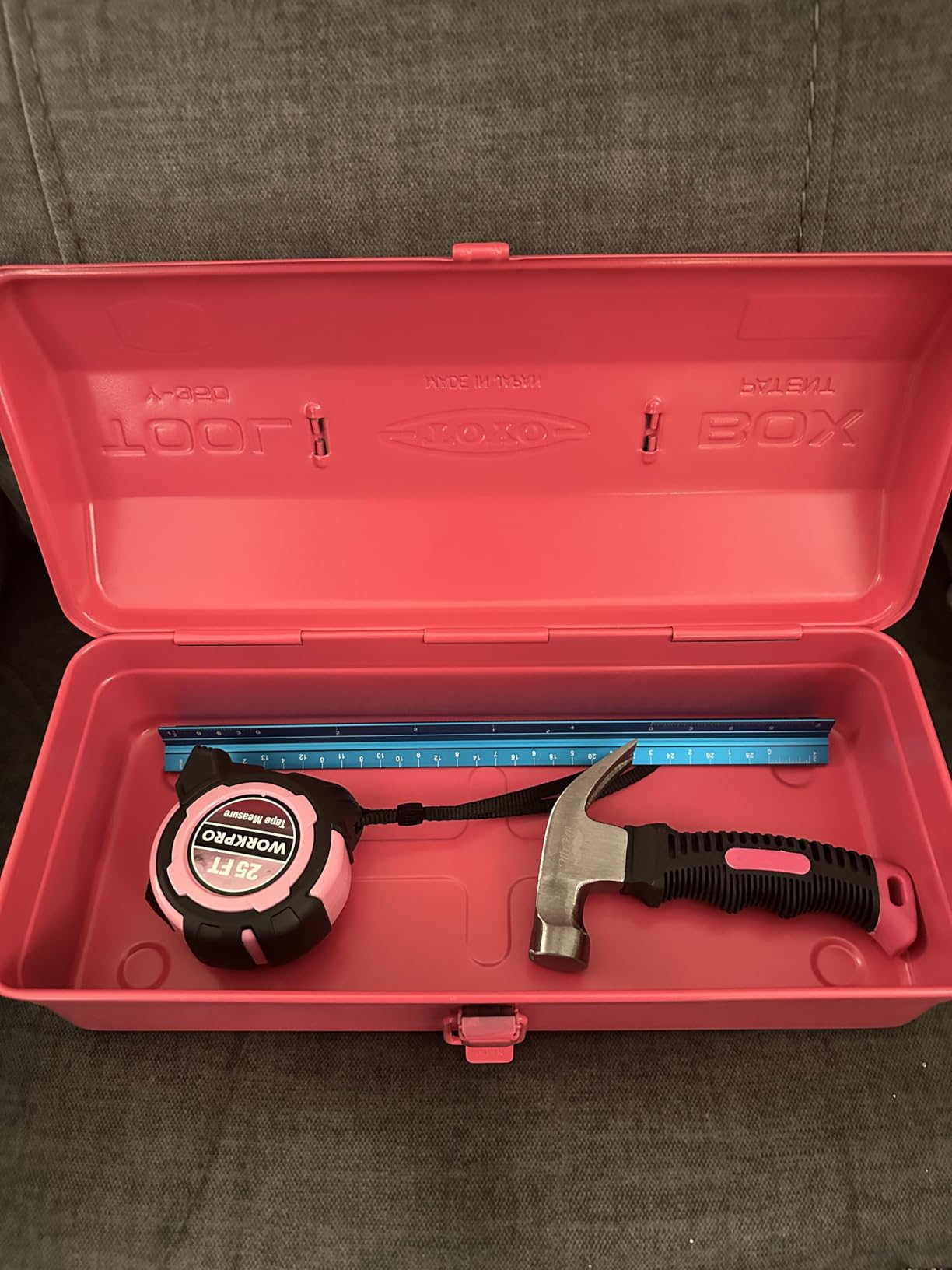
The triangular cross-section is not just a styling choice. It gives you three working edges at once, sits flat without rocking, and provides a grip angle that keeps the tool stable while you draw a long line. For hull deck layout and fuselage proportions, being able to hold a triangle flat with one hand and draw with the other is worth more than extra graduations.
The recurring complaints are practical rather than fatal: the smooth metal can slide on glossy or laminated drawings, and the tightest scales need strong lighting to read. Aesthetically, aluminium is cold and firm, which some owners dislike over long sessions, and the coloured face variants exist mainly for quick scale selection.
Who It Suits
Kitbashers and scratch-builders who work from plans at more than one ratio, and anyone converting drawings for a model at a different scale from the source. The colour-coded faces are genuinely helpful when you move between ratios repeatedly during a build.
Where It Falls Short
Fine panel-line work. A 12 inch triangle is a layout and conversion tool, not a detail rule, because its graduations are not fine enough for scribing small features. The slick finish on laminated plans is a real annoyance if your drawings are printed on glossy stock.
4. Shinwa H101-C 300mm Rigid Rule – Best for Long Layout Work
Shinwa H101-C 300 mm Rigid “Zero Glare” Metric Machinist Ruler/Rule Scale .5 mm & mm Markings
- Wider 25mm face than typical machinist rules makes readings easier on the eyes
- 1mm thick rigid stainless body resists flex during scribes and cuts
- JIS B 7516 Grade 1 specified accuracy
- 300mm length covers most layout and fixture work in one pass
- Listing brand is Accpo while the manufacturer is Shinwa
- Metric only with no imperial graduations
At 300mm this is the ruler you reach for when a single part is longer than a pocket rule can span, such as a full-length deck section, a wing chord, or a hull side. The 25mm face is the detail that makes it stand out from smaller machinist rules, and owners consistently single it out as easier on the eyes than the narrow 15mm or 0.75 inch options elsewhere in this roundup.
The body is 1mm thick hardened and tempered stainless steel with a zero-glare satin chrome finish, and at that thickness it simply will not bow. We dragged it across a sheet of styrene while scribing a 250mm line and it tracked true from one end to the other, which is the kind of rigidity you want when the cut is committed on the first pass.
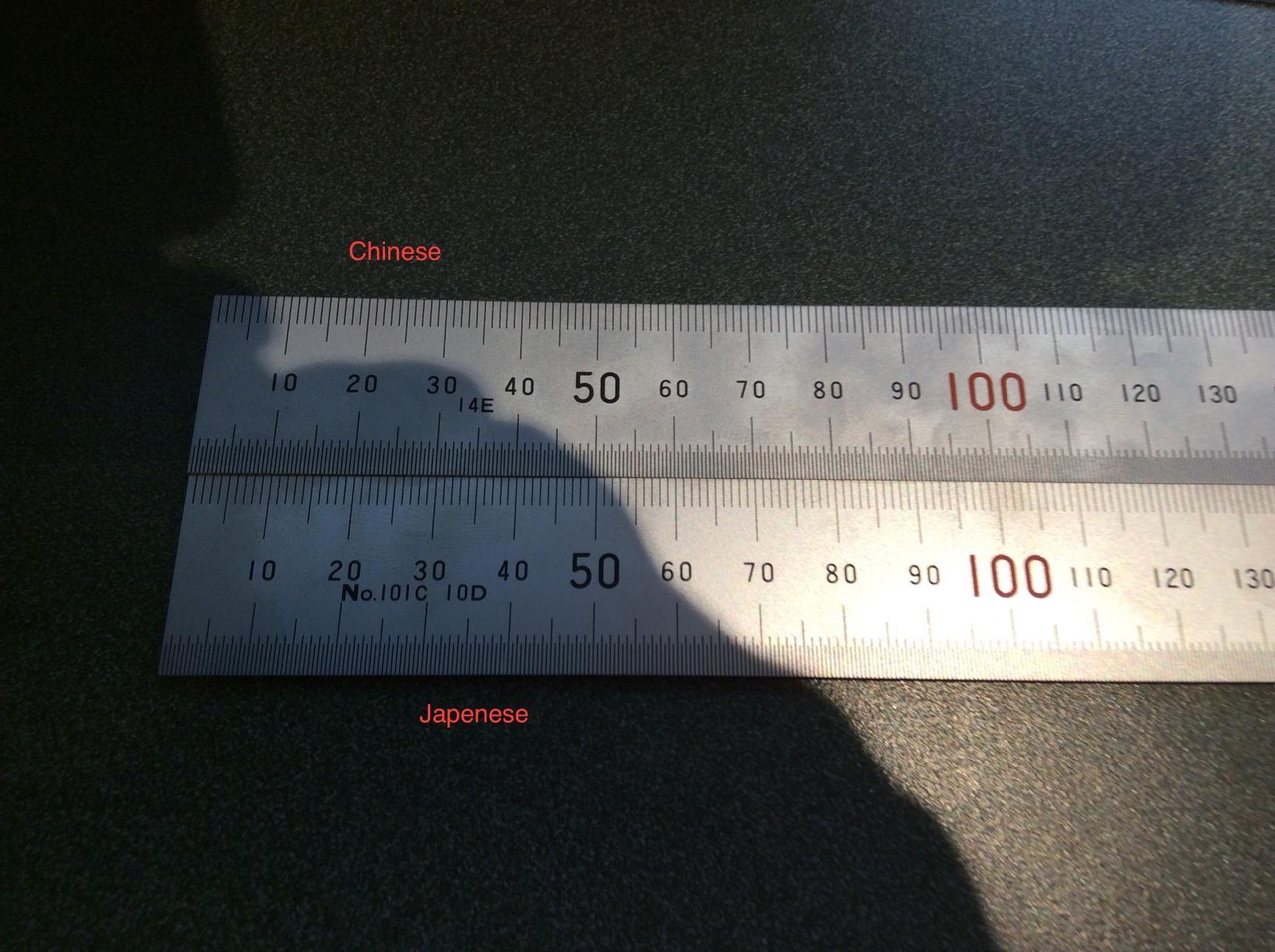
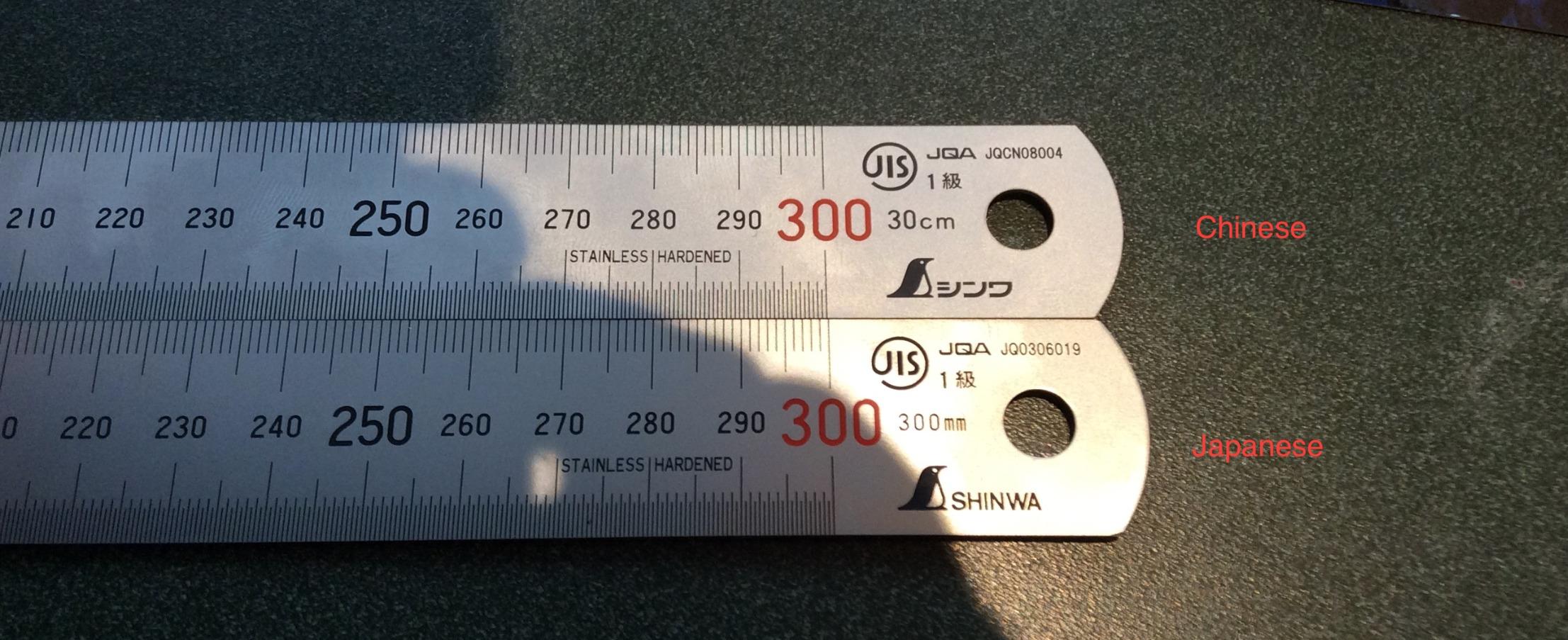
Graduations are photo-etched and black-filled in millimetres and 0.5mm steps, and the accuracy spec is again JIS B 7516 Grade 1. That published tolerance is the honest answer to anyone who wonders whether a budget-tier steel rule is accurate enough, because the specification tells you the class without needing to trust a review count.
The main source of buyer confusion is not the ruler but the listing: the storefront brand is Accpo while the manufacturer named in the specifications is Shinwa, so identity is not obvious from the page. Metric only is the other limitation, and the length makes it a bench tool rather than a carry tool.
Who It Suits
Naval, armour, and large aircraft builds where a single long straight edge saves repeated repositioning. It is also the natural second ruler for anyone who already owns a short pocket rule and keeps hitting the length limit on big panels.
Where It Falls Short
Small-scale detail work and any build driven by imperial dimensions, since there is no inch edge at all. If your bench is a shared space, the length makes it awkward to keep clear of the way when you are reaching for a knife.
5. Violetfox 3-Piece Scribing Set – Best for Repeatable Marking
Violetfox Woodworking Ruler, 3Pcs Precision Pocket Metal Slide Rule Inch and Metric T-Type Scribing and Square Ruler for Marking and Measuring (6/8/12 Inch)
- Anodized CNC finish feels smooth and marks stay crisp with no gummy residue
- Slide stop locks firmly for repeatable marking across a panel
- Scribing notches down to 1/16 inch plus edge graduations to 1/32 inch
- Three lengths in one set cover small parts through full-size panels
- Unchamfered cutout leaves a sharp raw edge
- Sliders do not seat consistently well enough to stand upright on every unit
- Bulky set and the widest rule is about 1.5 inches across
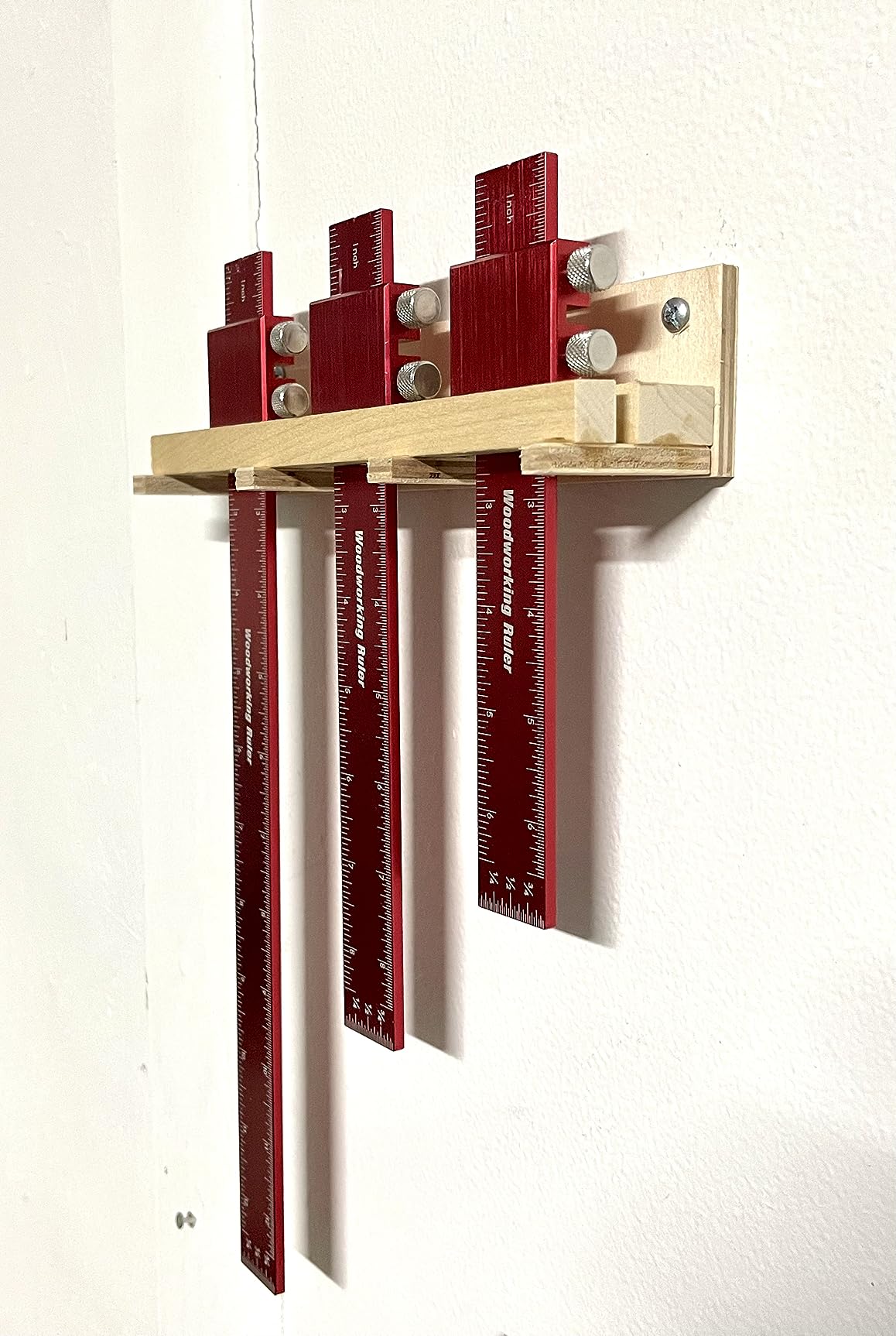
This is the one ruler in the set built around repetition rather than single measurement. Each of the three rules carries a slide stop secured by two thumb screws that locks at any position, so once you have found the offset you need for a row of identical parts you can drag the rule along the whole panel and mark every one of them at the same distance without resetting.
The bodies are CNC-machined aluminum alloy with anodized, wear-resistant laser-engraved markings, and the anodizing is what makes the surface pleasant to handle. Reviewers consistently note the smooth finish and that the marks stay crisp, with no oily or gummy feel after extended handling.
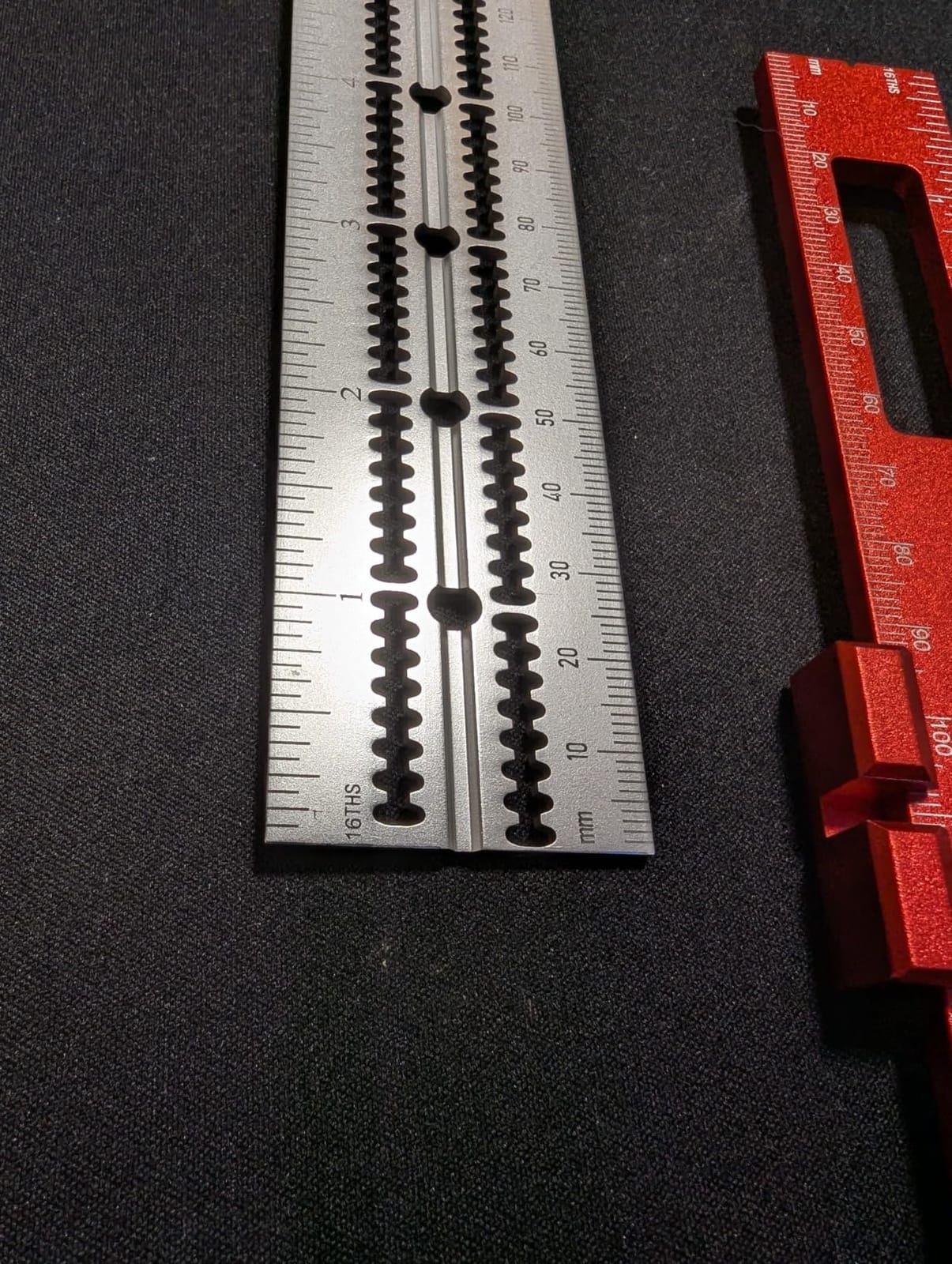
Beyond the edge graduations to 1/32 inch, the sides carry scribing notches down to 1/16 inch, which is the feature that matters for panel work where you are stepping an offset around a shape rather than drawing one long line. The T-track cutout also lets the stop slide off the end so the rule can stand upright for depth measurement, with 1/4, 1/2 and 3/4 depth markings on the side.
The criticisms are mostly cosmetic fit issues rather than accuracy complaints. The cutout is unchamfered and leaves a sharp edge you can feel, and the sliders do not seat tightly enough on every unit to hold the rule upright without wobble, so treat the vertical mode as a bonus rather than a primary function.
Who It Suits
Anyone marking repeated features: rivet lines, panel offsets, stowage placement, hull plank guides, and symmetric part pairs. The three lengths in one set also mean you are not swapping tools constantly when moving from a small detail to a full panel.
Where It Falls Short
It is a marking set rather than a measuring reference. If you need a true-to-scale rule with fine graduations for conversions, this does not replace one, and the sharp unchamfered cutout needs care when you reach into a tool bag.
6. General Tools 616 Flexible Rule – Best for Fine Graduations
General Tools Flexible 6-Inch Straight Edge Ruler #616, Stainless Steel – 4 Graduations – 1/32 inch, 1/64 inch On One Side, 1/10”, 1/100” On The Other Side
- Flexible steel body follows gentle curves without kinking permanently
- Four graduation sets cover imperial and metric on one compact tool
- Etched black markings stay legible in normal bench lighting
- Compact enough to sit in a tool roll or an apron pocket
- Only 0.5 inch wide so numbers are cramped and the face flexes more than a rigid rule
- Not suited to scribing or cutting heavy material the way a thicker machinist rule would be
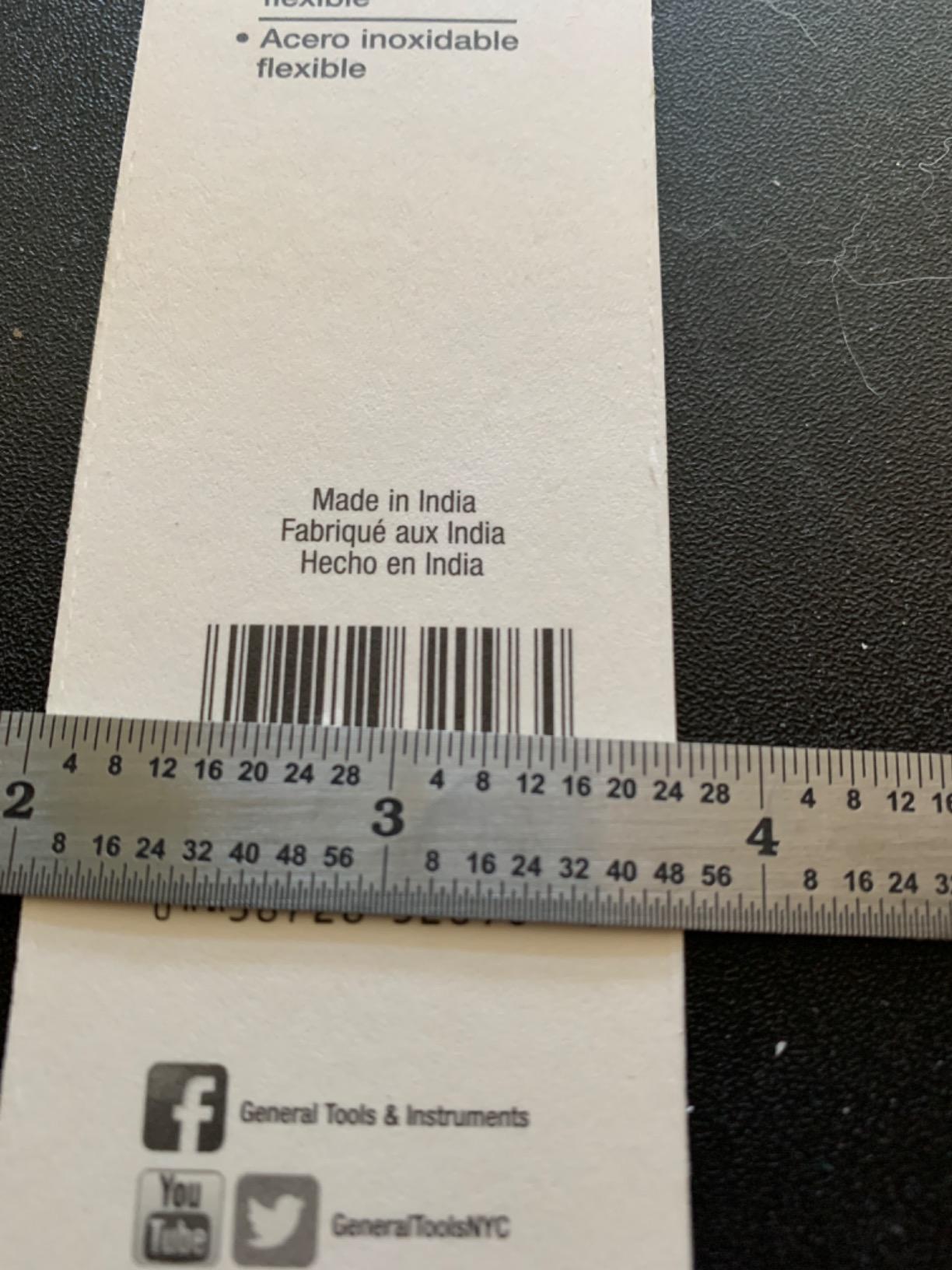
The graduation set is what makes this one interesting. You get 1/32 and 1/64 inch on one side and 1/10 and 1/100 inch on the other, which puts 64ths and hundredths in your hand without the bulk of a full machinist rule. That resolution is exactly what the Garage Journal community values, naming Starrett rules with 16ths, 32nds, 64ths and 100ths as the reference standard for fine work.
It is also flexible stainless steel, which means it can follow a gentle curve without taking a permanent kink, and the etched black markings stay legible in ordinary bench lighting. The 6 inch length means it lives in a tool roll instead of on the bench, so it is always to hand when you are checking a fit away from your desk.
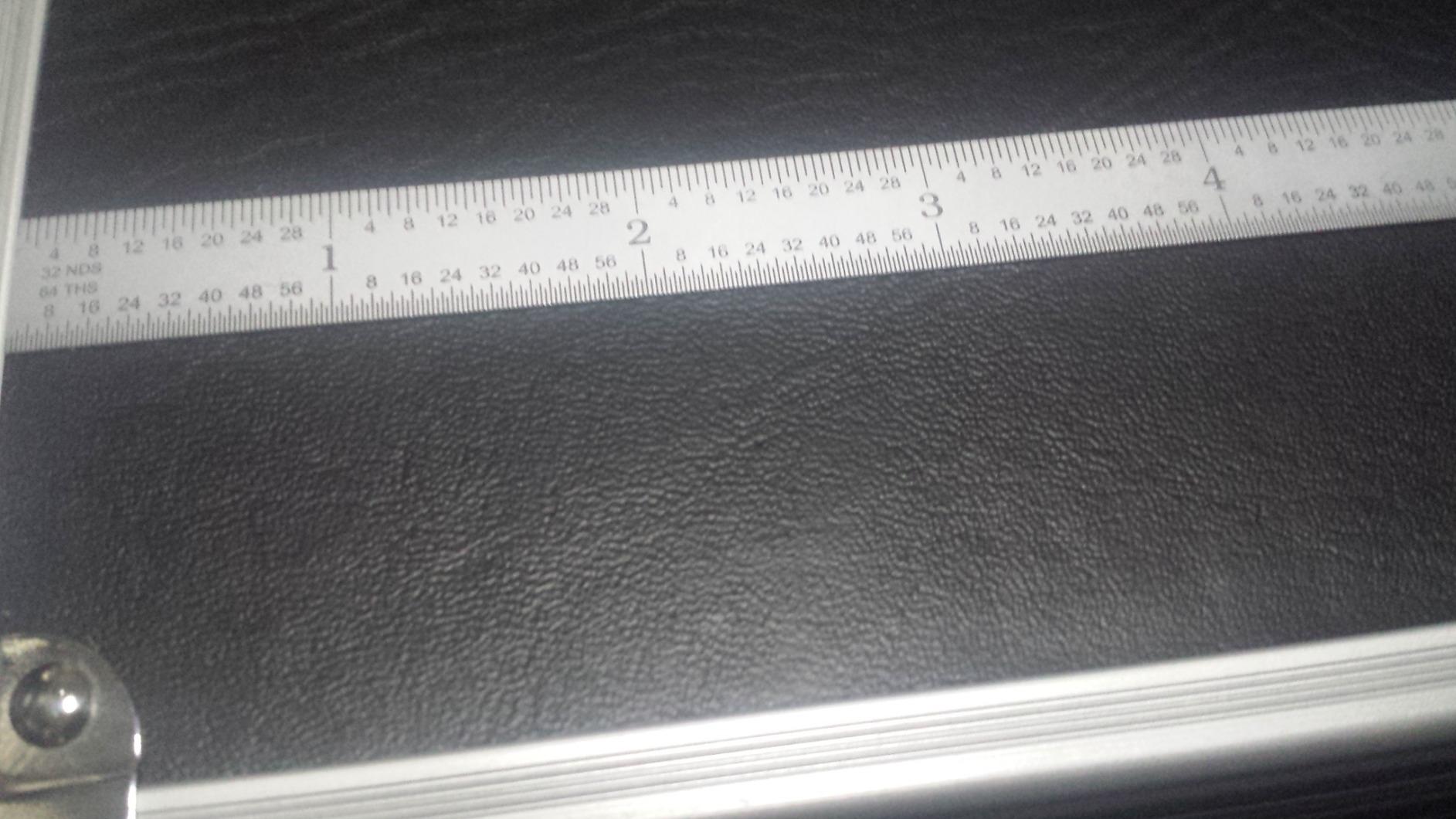
Users like it as a compact four-graduation precision tool that covers both measurement systems and stays workable rather than snapping. For checking small features, rivet spacing, and detail placement, having 1/100 inch available on a pocket-sized blade is genuinely useful, and no other compact option in this roundup offers it.
The limitation mentioned consistently is the half-inch face. The numerals are cramped, and the face flexes more than a rigid rule would, which means it is not the tool to scribe long cuts or slice material. Think of it as a measuring and checking companion to a rigid rule rather than a replacement for one.
Who It Suits
Detail work on armour, small sci-fi panels, and stowage placement where 32nd and 64th resolution matters more than a long straight edge. It also suits anyone who wants one compact tool that handles both measurement systems.
Where It Falls Short
Anything requiring a stiff straight edge for scribing or cutting, where flex is a liability rather than a feature. The narrow face also means you will be squinting at small numerals on detail work, which is the opposite of what you want from a rule you chose for fine graduations.
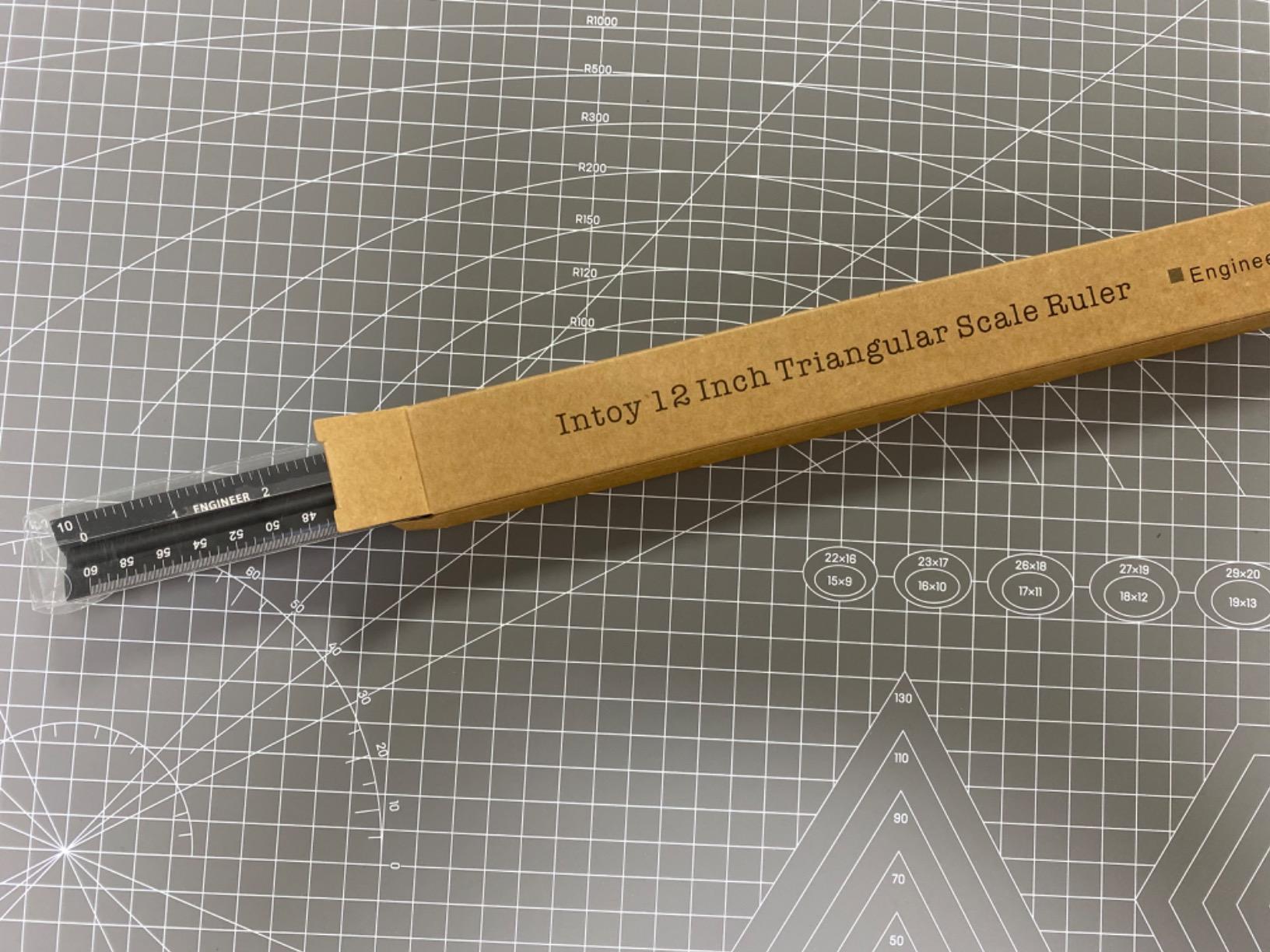
7. Intoy 12 Inch Engineer Scale – Best for Readable Dark Scales
- Black anodized face with bright etched numbers is far easier on the eyes
- Laser-etched tick marks and numerals stay sharply defined
- Lightweight metal core that stays comfortable in the hand
- A clear step up from plastic drafting scales for long-term accuracy
- Raw aluminum edges are sharp enough to cut a hand in a bag
- Body dents fairly easily
Most architect scales in this roundup are bright metal with dark markings, which is exactly what causes the glare complaints. This one inverts the scheme: a black anodized body with bright laser-etched scales. Under a bright bench lamp the contrast is dramatically easier to read, and if you have ever squinted at a shiny aluminium triangle to make out a 1:40 division, the change is immediately obvious.
The three faces carry six imperial scales from 1:10 to 1:60, laser-etched and black anodized so the marks never fade or rub off. Owners describe it as a true upgrade over plastic drafting scales for long-term accuracy, and the metal core keeps the weight down while staying rigid enough to hold a drawn line.
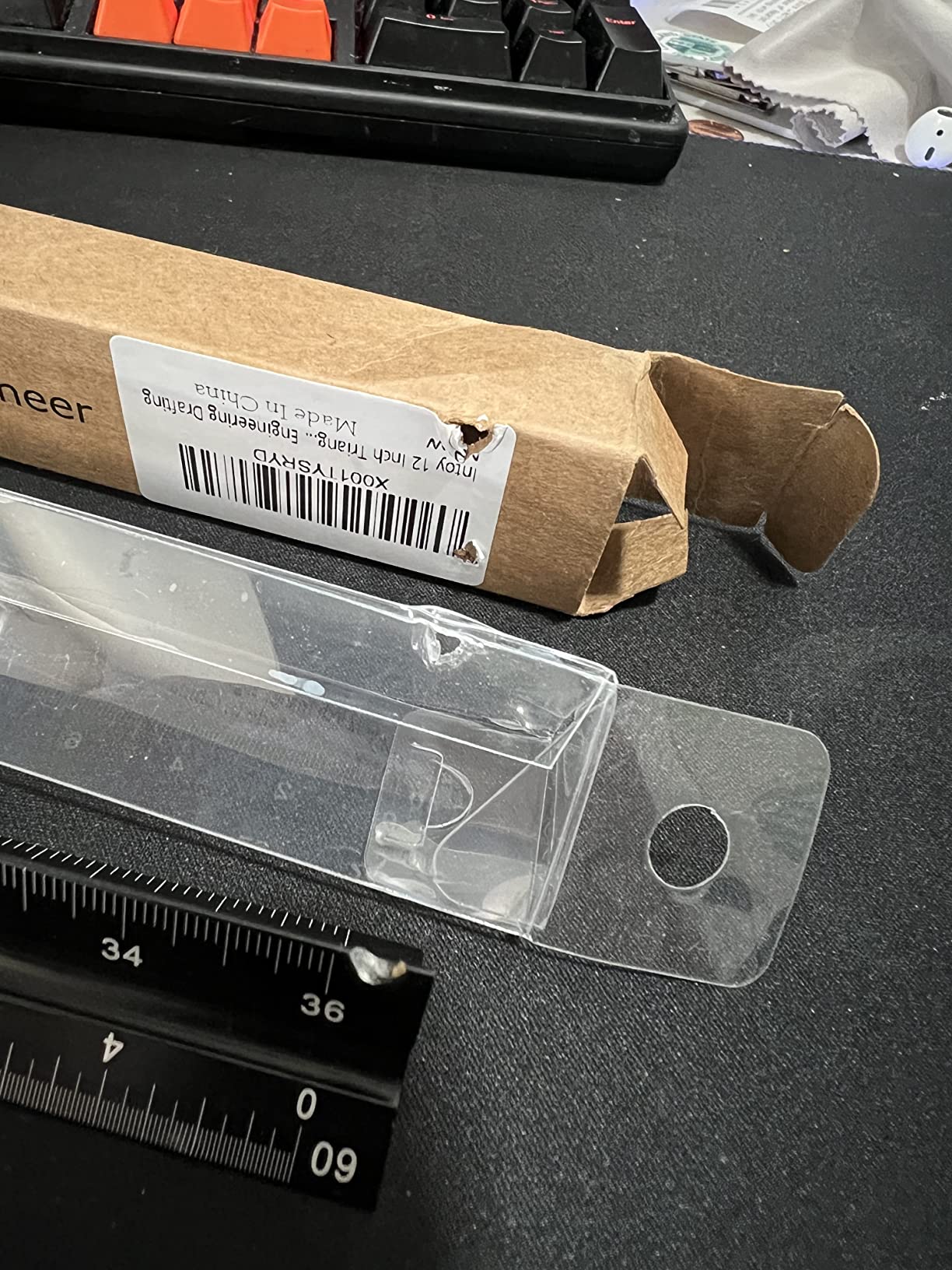
The tick marks and numerals stay sharply defined under magnification, which is worth noting because a scale that is unreadable at a distance is a scale you will misread under time pressure. The triangular body is also designed for safer cutting and scoring than a flat rule, since the raised profile keeps fingers back from the edge.
Two drawbacks come up repeatedly. The raw aluminum edges are sharp enough that owners report cutting a hand reaching into a bag, and the body dents fairly easily, so it should not be treated as a straight edge to lean on. Keep it for scaling and layout rather than for pressing a blade along its edge.
Who It Suits
Anyone who finds bright metal scales hard to read, which is most people working under a strong lamp or in a bright room. The 1:10 to 1:60 range suits layout planning for larger projects, and the light weight makes it comfortable for long sessions.
Where It Falls Short
Metric-based plans, since all six scales are imperial. The soft anodized body also dents, so it is a poor choice if you plan to use it as a rigid straight edge under pressure, and the sharp edges need careful storage.
8. Stylo 12 Inch Metric Architect Scale – Best for Metric Scale Plans
Stylo Architectural Scale Ruler, 12 Inch Aluminum, Black Metric
- Machined from one solid block of anodized aluminum for rigidity
- Color-coded faces make the right scale easy to find at a glance
- Laser-etched graduations align precisely with a trusted reference
- Twelve metric scales cover far more ratios than typical triangles
- Soft cloth pouch included for scratch protection
- Shiny anodized surface reflects light and can make markings hard to read
- Glistening highlights hurt readability in a brightly lit room
- The 1:500 to 1:2500 scales are of limited practical use
This is the metric answer to the Rena Chris, and for builders working from European plans or millimetre-based drawings it is the more useful of the two. Twelve metric scales sit across three sides: 1:1, 1:2, 1:5, 1:10, 1:20, 1:50, 1:100, 1:200, 1:500, 1:1000, 1:1250 and 1:2500. That range covers far more ratios than a typical six-scale triangle, and the metric-side pain point the Festool Owners Group raised is answered here outright.
It is machined from one solid block of anodized aluminum rather than assembled, and the laser-etched grooves stay crisp without fading or rubbing off. Colour-coded faces make scale selection instant, and a soft cloth pouch is included to protect the chamfered edges during storage.
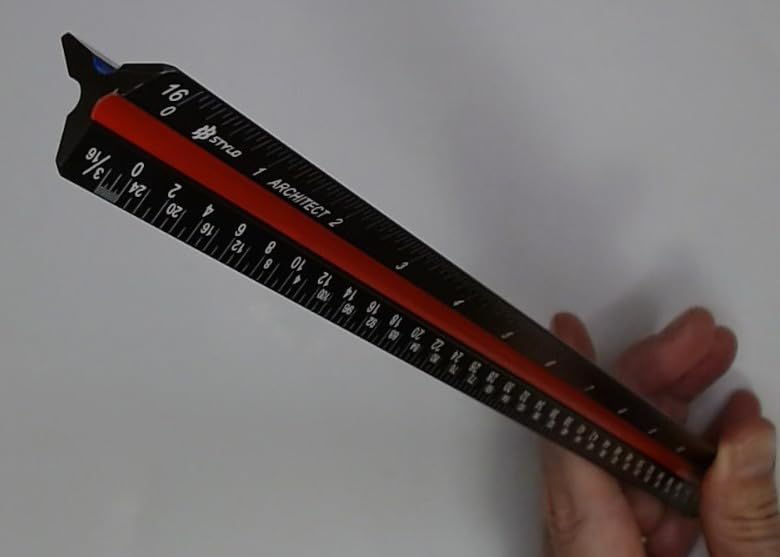
Reviewers report that the laser-etched graduations align precisely against a trusted reference scale, and that the single-block construction feels professional in the hand while staying light enough to carry. The included pouch is a small detail that matters more than it sounds, because a machined chamfered edge is the first thing to get knocked out of alignment in a tool bag.
The most common negative is glare off the polished anodized body, which makes light-coloured markings hard to read in a brightly lit room, and that is the direct trade-off against the black-faced option above. Some reviewers also find the very fine ratio scales more decorative than practical for architectural work, and the same applies to model work.

Who It Suits
European builders, anyone working from millimetre plans, and scratch-builders who move between several scale factors during one project. The single-block rigidity also makes it a better scribing guide than a lighter plastic triangle.
Where It Falls Short
Imperial reference material, and brightly lit benches where the polished surface reflects straight into the scale. The extreme ratios beyond 1:100 are largely useless for model making, so the real advantage is the 1:20 to 1:100 band.
9. STAEDTLER 12 Inch Engineer Scale – Best Value
- Die-engraved graduations stay readable where printed plastic scales fail
- Colour-coded grooves make switching scales fast and reduce errors
- Lightweight plastic stays comfortable over long sessions and will not cut a bag
- A well-established German maker with a broad drafting range
- Plastic body is less rigid than aluminium and flexes as a straight edge
- Lighter body gives less tactile reference when scoring or cutting
- Not as heavy-duty for repeated shop use as a metal triangle
Plastic engineering scales have a reputation problem, and this one is the argument against it. The graduations are die-engraved rather than printed, so they will not fade or rub off, which is the single failure that ends the life of most cheap drafting triangles. Six scales from 10 to 60 parts per inch cover the range most model layout work needs.
Because it is lightweight plastic with a triangular body, it will not damage a tool bag, will not slide a painted surface, and is comfortable to hold for long drafting sessions. For a student, a younger builder, or anyone who wants a second scale ruler that can be passed around without worry, that is a real advantage rather than a compromise.
The die engraving is the detail that separates it from the printed plastic you find in a pound bin, and it is the reason a cheap tool can outlast a dearer one. A printed scale loses its 16th-inch tick within a couple of years of bench abrasion; an engraved groove is part of the body itself, so there is nothing left to wear away.
Colours and grooves are assigned to specific ratios, which turns scale selection into a physical action rather than a reading exercise. When you are converting a hull side at 1:40 and then a canopy at 1:48, the tool you pick tells you which number you are looking at before you have read a single graduation.
Who It Suits
Beginners who want a dedicated scale ruler before committing to steel, and builders who need a portable conversion tool they can hand to a friend or take to a class. The colour-coded grooves reduce scale-selection errors, which is the most common beginner mistake with triangles.
Where It Falls Short
Rigidity. As a scribing straight edge or for cutting and scoring, plastic flexes where aluminium will not, and the lighter body gives you less feedback when you press a blade along it. It is a scaling and layout tool, not a precision measuring reference.
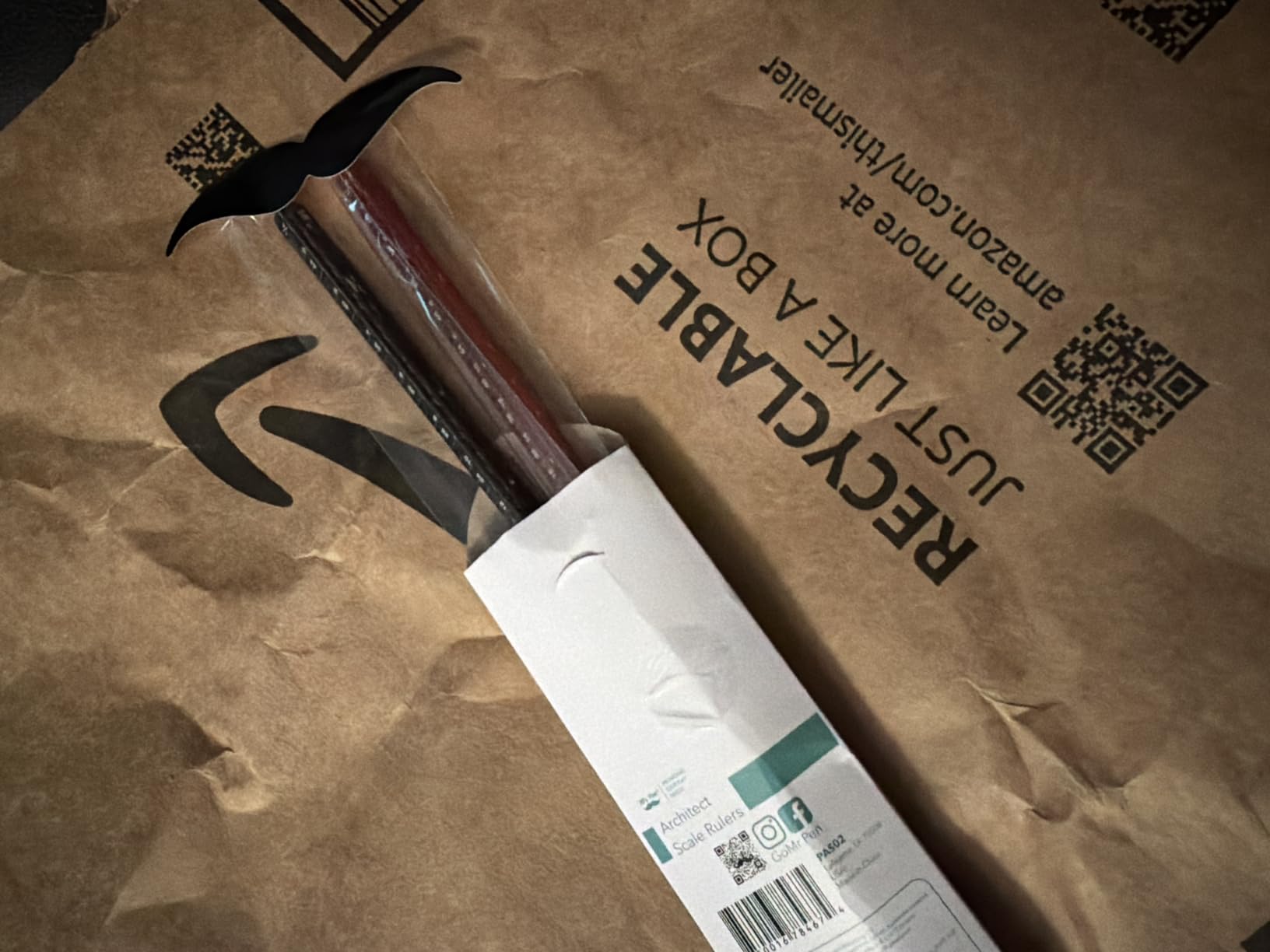
10. Mr. Pen 6 Inch Architect Scale 2-Pack – Best for Pocket Carry
Mr. Pen- Small Architectural Scale Ruler, Aluminium, 6 Inch, 2 Pack
- Two rulers in one pack gives you a spare or a second colour set
- Pocket-sized 6 inch triangle is easy to carry between studio
- class and site
- Aluminum body is sturdier and longer-lived than printed plastic scales
- Laser-cut imperial prints resist scratching and rubbing off
- 6 inch length covers less of a large drawing than a 12 inch triangle
- The scale set covers fewer ratios than multi-scale 12 inch models
A two-pack of 6 inch aluminum architect scales in different colours, and the reason to buy two is straightforward: you keep one at the bench and one in the bag, or you split the colours so the two ratios you use most are already visually distinct. Laser-cut imperial prints will not wipe or scratch off, and the aluminum body outlasts printed plastic by a wide margin.
Owners highlight the portability. At 6 inch these fit in a pocket or a small tool roll, which matters if you do not have a dedicated bench and work wherever the kit happens to be. The high-impact aluminum also survives being knocked about in transit in a way plastic triangles do not.
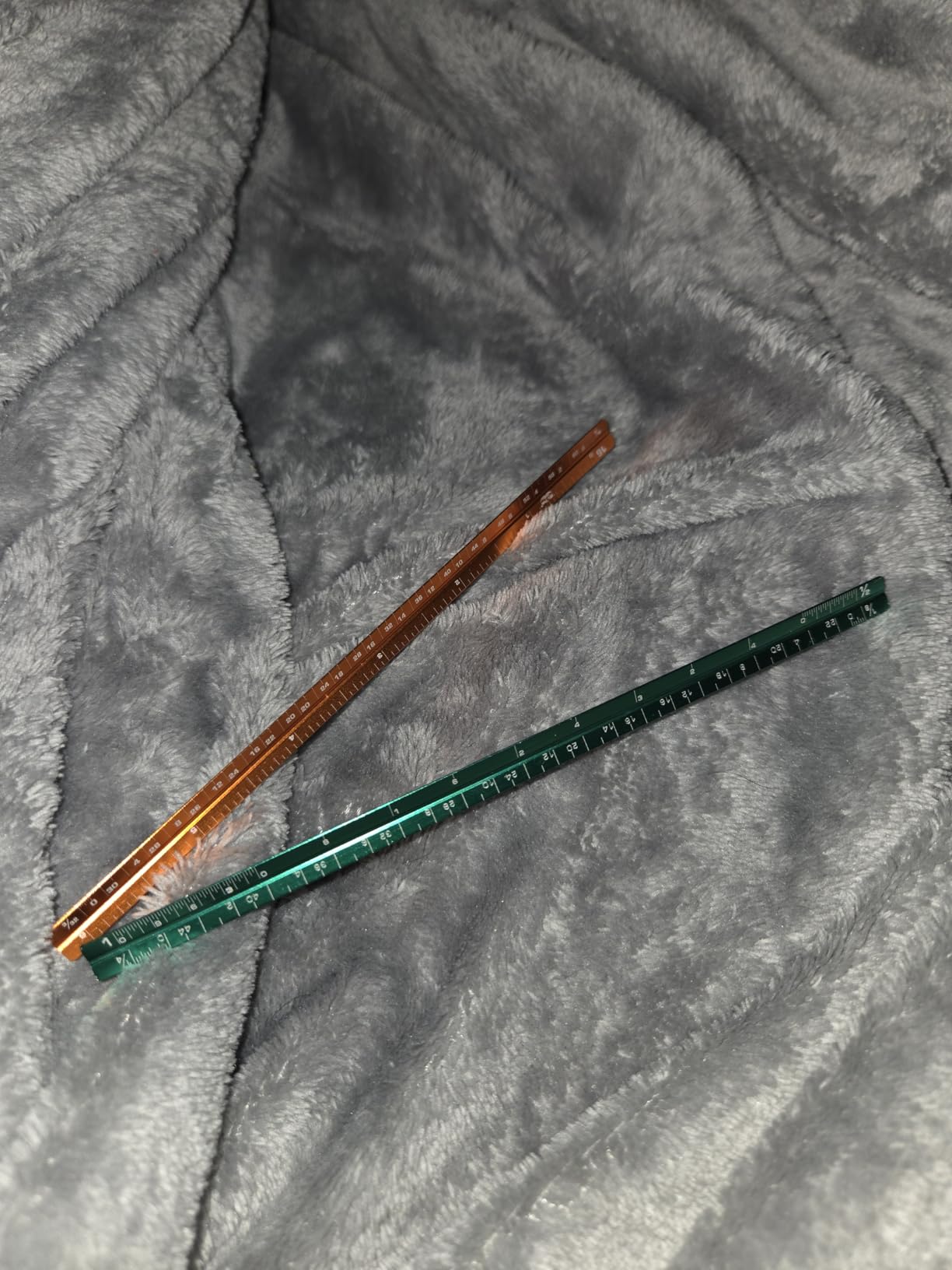
The two-pack maths is genuinely favourable against buying singles, and for a first ruler it is one of the cheaper ways to get a dedicated scale tool in the hand. Because the two are different colours, they also work as a simple visual system: reach for the blue one for armour, the black one for stowage, and you have removed a whole class of misread errors before they happen.
Laser cutting the scales rather than printing them is the other thing worth knowing. The markings are cut through the anodized surface, so solvent, plastic cement and finger grease wipe across them without lifting anything, which matters on a tool that lives in a pocket and gets handled with dusty hands.
Who It Suits
Builders who work across multiple locations, students, and anyone who wants a cheap second triangle to colour-code their two most-used ratios. Pairing the colours with a colour-coding habit makes scale selection much harder to get wrong under time pressure.
Where It Falls Short
Large drawings and long layout runs, because a 6 inch edge means constant repositioning. The single-pair scale set also covers fewer ratios than the twelve-scale metric triangle, so it is a portability tool rather than a complete conversion kit.
How to Choose a Precision Ruler for Model Making?
Choosing a precision ruler comes down to which of three families you actually need, and most builders end up owning one of each eventually rather than one perfect tool. Here is the structure of the choice, and it is the same structure you will see applied across other precision-tool categories such as how precision is engineered in professional equipment.
1. True-to-scale machinist rule (steel, 1:1). Graduations in 1/32, 1/64 inch and metric steps, with no scale factor printed anywhere. You convert every real-world dimension yourself. This is the scratch-builder and conversion tool, and it is the only family that never misleads you about which ratio you are using.
2. Multi-scale hobby rule. Pre-printed scales such as 1:32, 1:48, 1:72 and 1:100 along the edge, so you read the model dimension straight off. Faster for kitbashing, faster for mixed-ratio stowage, and a common source of error precisely because you must pick the right face every time.
3. Triangular architect scale and angle rulers. Multiple scale factors or ratios on three faces, plus a straight and an angle edge in one tool. Ideal for kitbashing from mixed sources and for laying out anything curved or angled, since the triangle holds a true angle while you draw.
Graduation resolution is the fourth decision. Sixteenths are enough for most armour and small detail. Thirty-seconds and sixty-fourths earn their place on panel lines, rivet rows, and fine greebles. Hundredths and 0.5mm steps matter for very small features and for builders working from metric drawings. A 1:72 hull tolerates a 0.5mm error you would notice immediately on a 1:32 wing chord, so resolution should scale with the size of what you are building.
Units and material are the last two. Dual-sided rules with inch on one edge and metric on the other are the community recommendation for good reason, since instruction sheets and plans rarely agree. On material: hardened stainless for rigidity and marking durability, anodized aluminum for multi-scale triangles and portability, plastic only for light conversion work where nothing gets pressed against the edge.
One practical warning: steel rules scratch styrene and mar finished surfaces if you slide them under load. Scribe raw plastic against a steel edge, but use a plastic or wooden straight edge for anything already painted, and consider marking with a scriber or pencil line first.
How to Check Ruler Accuracy Before You Trust It?
Every ranking page on this topic asserts accuracy by brand reputation. Nobody measures. You can do better in about five minutes, and the method is the same one we use to cross-check graduations between the rules in this roundup.
Step 1: get a reference. Use the longest known-good rule you can borrow, ideally a machinist rule from a machinist, or a new rule you have not yet handled. Accuracy is inherited by comparison, not by assumption.
Step 2: check flatness first. Lay the rule on a known-flat surface, ideally a granite surface plate, and look along its length under a raking light. A bow shows up as a bright gap between edge and surface. Bent rules read wrong at every mark, so this check comes before any graduation reading.
Step 3: compare at full length. Align the zero end of the candidate rule against a known mark on the reference and read the far end without moving either tool. Repeat at the midpoint. If the reading is off by the same amount at both points it is a zero offset; if it drifts, the rule is tapered or curved.
Step 4: verify a published specification. Where a maker states a tolerance class, such as JIS B 7516 Grade 1 on the two Shinwa rules in this list, you are comparing against a documented standard rather than a review count. That is the cheapest accuracy assurance available to a hobbyist.
Step 5: test the print, not just the metal. Wipe a section with isopropyl alcohol and check whether graduations are still crisp. Etched and black-filled markings survive; printed ones lift. Many otherwise-accurate rules fail this step, which matters more over years than any single measurement.
Finally, set your tolerance expectation before you buy. A tenth of a millimetre is invisible on a 1:72 vehicle and obvious on a 1:32 aircraft wing, so buying beyond your scale is wasted money, and buying below it is wasted plastic.
Frequently Asked Questions
What is the best precision ruler?
For most model makers the best precision ruler is a rigid steel machinist rule with 1/32 and 1/64 inch plus metric graduations on the same blade, such as the Mitutoyo 182-105. It never misleads you about scale, holds a straight line while scribing, and converts any real-world dimension yourself. Add a triangular architect scale if you work at more than one ratio.
What are the different types of scale rulers?
There are three families. True-to-scale machinist rules are steel and read 1:1, so you convert dimensions yourself. Multi-scale hobby rules print 1:32 through 1:100 directly on the edge. Triangular architect scales carry several scale factors or ratios on three faces, with straight and angle edges. Multi-scale rules are fastest for kitbashing, machinist rules are most accurate.
Do I need a machinist ruler for model making?
If you only build from a single kit, a good hobby scale rule is enough because everything is already at the correct scale. If you scratch-build from plans, run conversions, or combine parts from kits at different scales, a machinist rule is close to mandatory. A 0.5mm error that is invisible on a 1:72 hull is glaring on a 1:32 wing chord.
Should I use metric or imperial rulers for modeling?
A dual-sided rule with inch on one edge and metric on the other is the safest choice, because kit instructions and plans rarely use the same system. If you must pick one system, choose metric if your reference material is in millimetres, which is common for European plans and scratch-build drawings, and choose inch for imperial kit-bashing work.
Is a stainless steel ruler better than plastic for modeling?
For measuring accuracy, rigidity and marking durability, yes. Steel rules resist flex during scribing, hold etched graduations that solvents will not lift, and last for decades. Plastic is lighter and will not cut a tool bag, and its die-engraved scales are accurate enough for conversion work, but it flexes as a straight edge and printed plastic scales fade within a year.
What graduations do I actually need for scale modeling?
Sixteenths of an inch cover most armour and small detail work. Thirty-seconds and sixty-fourths matter for panel lines, rivet rows and fine greebles, and hundredths or 0.5mm steps help on very small features and metric work. Match resolution to subject size: small models tolerate less error, so fine graduations earn their keep on large-scale builds.
The Best Starter Ruler and the One Upgrade Worth Making Later
If you buy one precision ruler for model making and nothing else, make it the Mitutoyo 182-105. It is dual-unit, it is genuinely rigid, it is pocket-sized, and it is true-to-scale, which means it cannot give you a wrong reading no matter which kit ends up on your bench. It is our editor’s choice, and the highest-rated rule in this roundup by a clear margin across more than 1300 owner accounts.
The one upgrade worth making later depends on what you build. Go longer with the Shinwa H101-C when you run out of edge on large panels. Add a triangle when you start working from plans at more than one ratio, since a multi-scale edge removes the mental arithmetic. If your reference material is metric, the Stylo twelve-scale triangle is the smarter addition than a second imperial triangle. And if you mark repeated features, the Violetfox set with locking slide stops saves more time than any accuracy upgrade will.
Whichever you choose, test it against a known-good reference before you trust it, keep the edges protected, and set your tolerance for the scale you build at. For the wider world of bench tools worth measuring properly, we keep testing gear for precision work at the bench year round, and this roundup stays current for 2026.