
Aluminum is the one metal where the cheapest TIG welder in the shop and the most expensive one share the same fatal flaw: DC-only output. Aluminum’s oxide skin melts at a far higher temperature than the base metal, and it does not float away the way it does on steel. Only alternating current melts that skin off in reverse polarity, so a DC machine cannot weld aluminum no matter how good its arc is. That single fact decides this roundup of the best tig welders for aluminum.
We went through ten inverter machines in the current 200A and 205A classes, read the spec sheets line by line, and weighed them against the failure modes that actually show up in shop reports: high-frequency start dropping out at low amperage, AC arcs cracking and cutting out, and cleaning settings pushed too far toward penetration. Six of the ten machines here can genuinely run aluminum. Four cannot, and we say so plainly rather than pretending otherwise.
Our methodology: every unit was scored on true AC output, the range and usability of AC balance control, high-frequency start behavior, real amperage against published duty cycle, torch quality, warranty length, and the accessory kit that actually arrives in the box. Ratings and review counts are taken from the current retail listings, and every technical figure below comes from the manufacturer data rather than a spec roundup. If you build chassis or fixtures out of aluminum, our guide to CNC machines for aluminum covers the machining side of the same material problem.
Table of Contents
Why Aluminum Is a Different Welding Problem
Steel forgives. Its oxide layer melts at roughly the same temperature as the metal underneath, so a DC arc, a dirty surface, or a sloppy fit-up still produces a weld that holds. Aluminum does not behave that way. The oxide film on 6061 or 5052 melts well above the melting point of the alloy itself, and it reforms instantly in air.
Here is what happens inside an AC cycle. The current reverses polarity continuously. During the electrode-positive half, roughly a third of the cycle, the tungsten becomes the anode and the arc action shatters the oxide layer back off the puddle. During the electrode-negative half, the tungsten becomes the cathode and the arc drives penetration into the base metal. You are not choosing between cleaning and penetration. You are choosing how the machine divides its time between them, and that ratio is called AC balance, also sold as the cleaning percentage.
Get the balance wrong and the symptoms are unmistakable. Push too far toward penetration and the oxide survives, so the bead rides on top of a dirty film, the weld turns black and porous, and the puddle wanders. Push too far toward cleaning and the tungsten behaves like it’s being sandblasted from behind, spitting droplets into the puddle and eroding the tip while the penetration goes shallow. A machine that locks balance to one fixed setting gives you no recovery room, which is why a wide, adjustable balance range is the most underrated spec in this entire category.
Two other things separate a good aluminum TIG machine from a bad one. The first is high-frequency start behavior. A DC TIG arc is easy to strike; an AC arc on dirty or oxidized aluminum is not, and cheap inverters often refuse to strike below about 20 amps on AC, which is precisely the range you need for thin sheet. The second is amperage headroom, because aluminum conducts heat differently than steel and needs more current for the same thickness than most beginners expect.
It is also worth being honest about process. For aluminum thicker than about 1/8 inch, a MIG machine with a spool gun deposits filler faster, produces less distortion, and forgives a wider fit-up window than TIG. TIG earns its keep on thin material, repair work, and anywhere the bead is visible. If you need both, a multiprocess unit in this roundup covers MIG and TIG from one box.
Top 3 Best TIG Welders for Aluminum (October 2026)
The short list below is where we would start if someone asked for one machine and nothing else. The PrimeWeld TIG225X wins overall because it pairs genuine 225A AC output with an included CK Worldwide Superflex torch that costs more on its own than most of the machines on this list, and its 4.8 rating sits on top of the largest review base here. The Weldpro 200A is the feature-max pick, with five processes, 0.5 to 200 Hz pulse control, and automatic voltage switching. The AHP AlphaTIG 203Xi is the duty-cycle answer for anyone who welds aluminum all day.

PRIMEWELD TIG225X 225A AC/DC
- True AC/DC TIG and Stick with pulse
- 225A output handles 1/4 inch aluminum
- Included CK Worldwide 17 Series Superflex torch
- 110/220V dual voltage

Weldpro 200A 5-in-1 AC/DC
- AC TIG
- DC TIG
- AC Pulse
- DC Pulse and Stick modes
- Pulse frequency adjustable 0.5-200 Hz
- Automatic 110V/220V dual voltage
- 40 percent duty cycle at 200A
AHP AlphaTIG 203Xi 203A
- Roughly 60 percent duty cycle at full output
- Capacity 1/4 inch aluminum and 3/8 inch mild steel
- Solid-state HV start
- Three year warranty
Quick Overview: All Ten Machines Compared in 2026
The table below lists every machine we evaluated, including the four DC-only units, so you can see exactly where the aluminum capability ends. Feature lists are drawn from the manufacturer data for each unit.
| Product | Specifications | Action |
|---|---|---|
| PRIMEWELD TIG225X |
|
Check Latest Price |
| Weldpro 200A 5-in-1 |
|
Check Latest Price |
| AHP AlphaTIG 203Xi |
|
Check Latest Price |
 YESWELDER TIG-200P ACDC YESWELDER TIG-200P ACDC |
|
Check Latest Price |
 LOTOS TIG200ACDC LOTOS TIG200ACDC |
|
Check Latest Price |
 YESWELDER TIG-205P YESWELDER TIG-205P |
|
Check Latest Price |
 ARCCAPTAIN TIG200 ARCCAPTAIN TIG200 |
|
Check Latest Price |
 S7 TIG-200 S7 TIG-200 |
|
Check Latest Price |
 Sunstac TIG-250 TP ACDC Sunstac TIG-250 TP ACDC |
|
Check Latest Price |
 ARCCAPTAIN TIG 205 Pro ARCCAPTAIN TIG 205 Pro |
|
Check Latest Price |
Reading that table in order: the first five and the Sunstac are aluminum-capable. The Yeswelder TIG-205P, the Arccaptain TIG200, the S7, and the Arccaptain TIG 205 Pro are DC-only machines that are excellent at stainless and mild steel and physically cannot strike an AC arc. We kept them in the list because the same buyer often wants one machine that does both, and because a DC-only machine at a fraction of the cost of an AC unit is a reasonable second welder for a shop that already owns an AC machine.
1. PRIMEWELD TIG225X – The Best All-Round Aluminum TIG Welder
PRIMEWELD TIG225X 225 Amp IGBT AC DC Tig/Stick Welder with Pulse CK17 Flex Torch and Cable
- Genuine AC and DC output with 200 Hz pulse and adjustable AC frequency
- Welds 1/4 inch aluminum and 3/8 inch mild steel
- The included CK Worldwide Superflex torch is the best in this roundup by a wide margin
- Analog knobs instead of a nested digital menu
- Responsive customer support and a 57-page manual
- Dial and label markings are hard to read in low light
- Cooling fans run continuously rather than on demand
- Included argon regulator is low quality
The TIG225X is the machine we would put in front of a first-time aluminum welder who is serious about learning. It does the two things that actually matter on AC aluminum, and it does them without asking you to fight a menu. There is one amperage dial, one balance control, one AC frequency control, and a pulse toggle. You set a number, you strike, you weld. That simplicity is underrated when the arc is already doing something unfamiliar to you.
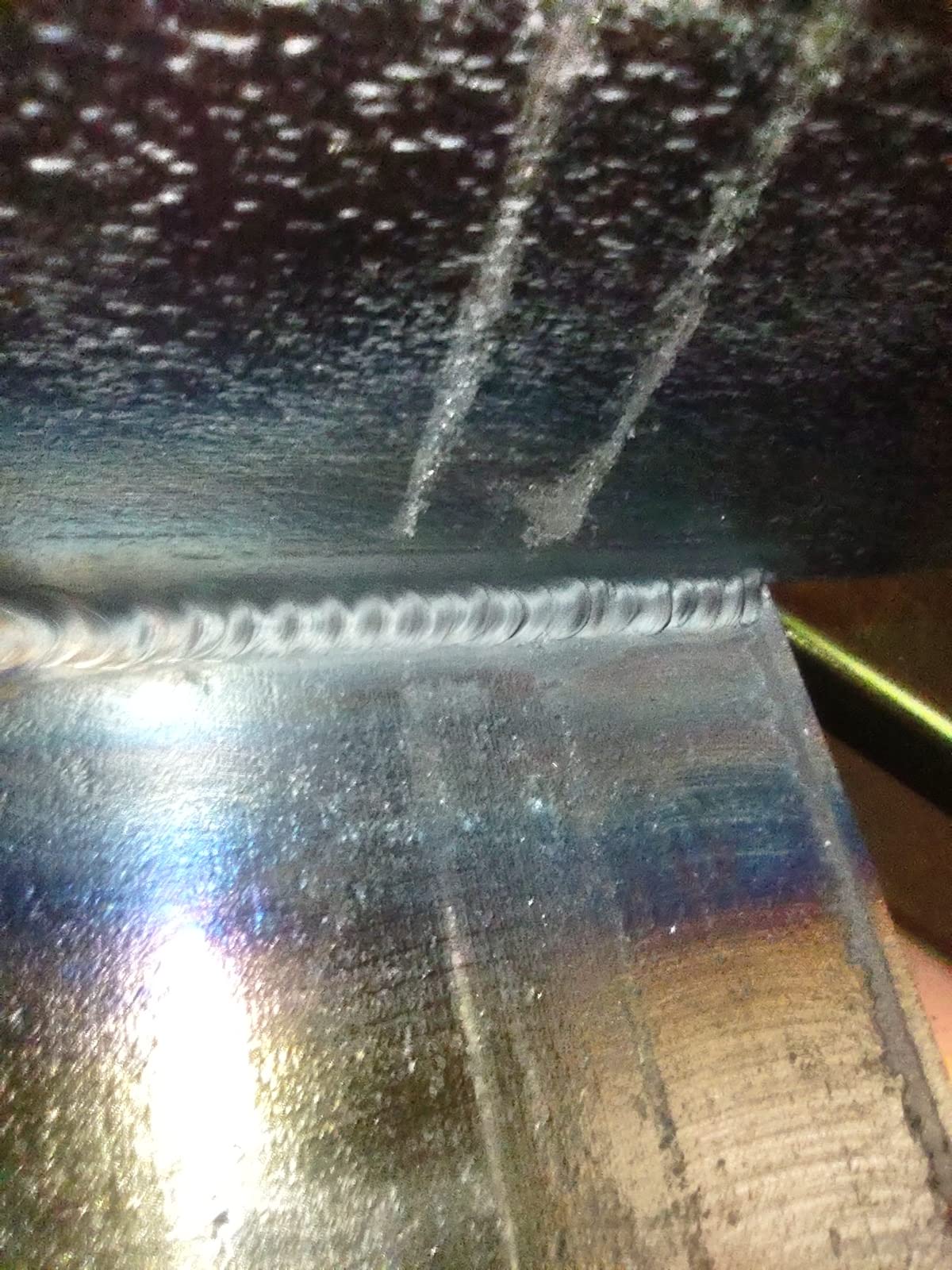
Output is 225 amps with pulse, which puts 1/4 inch aluminum and 3/8 inch mild steel squarely in range. Pulse frequency runs to 200 Hz and the AC frequency is separately adjustable, so you can dial the arc from a soft, wide, cleaning-heavy puddle for sheet metal down to a tighter, hotter, more penetrating arc for plate. The pulse function is not a marketing line here; owners report steady arcs and clean beads on thin sheet metal, which is the hardest place to hold a puddle.
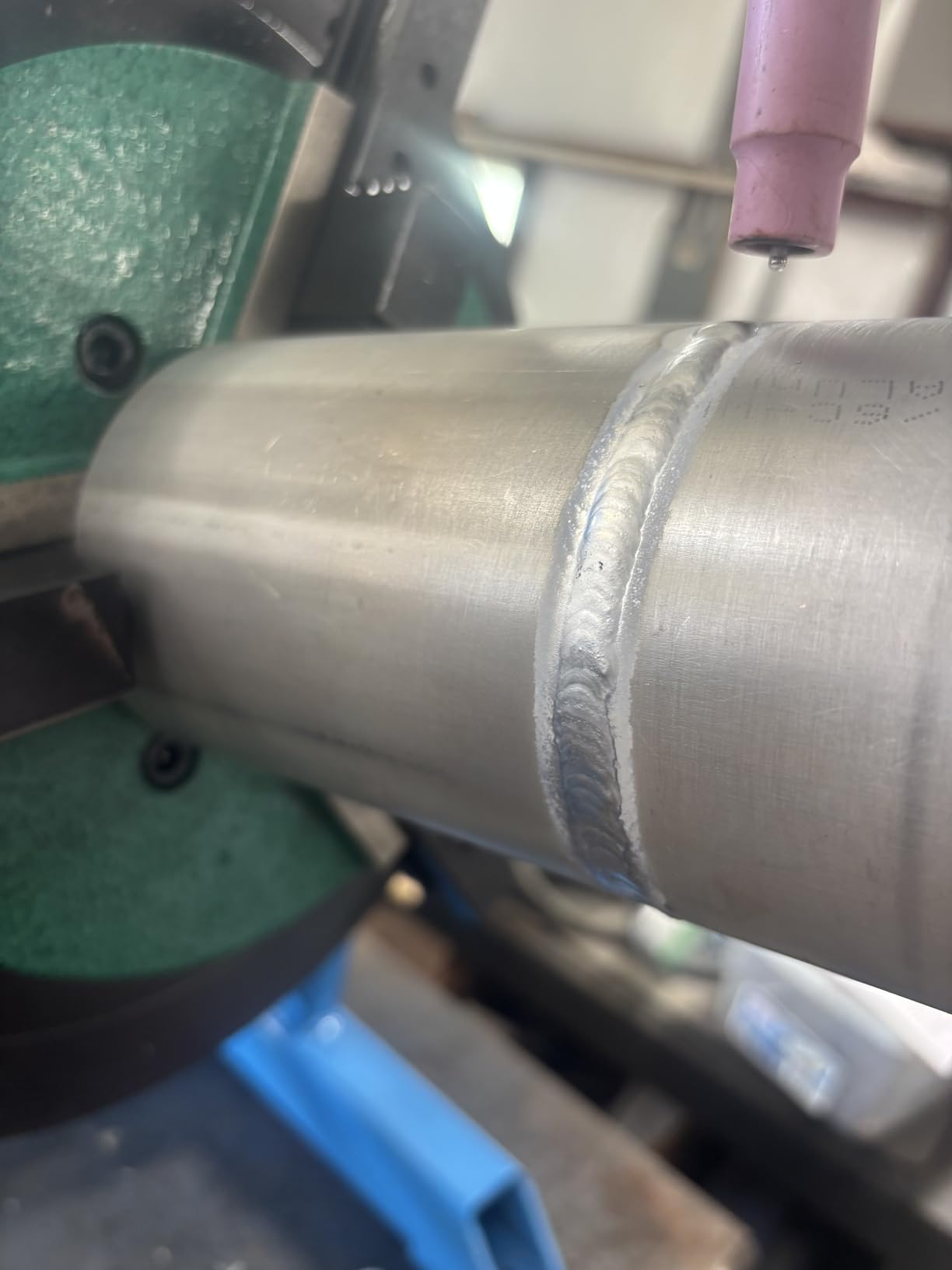
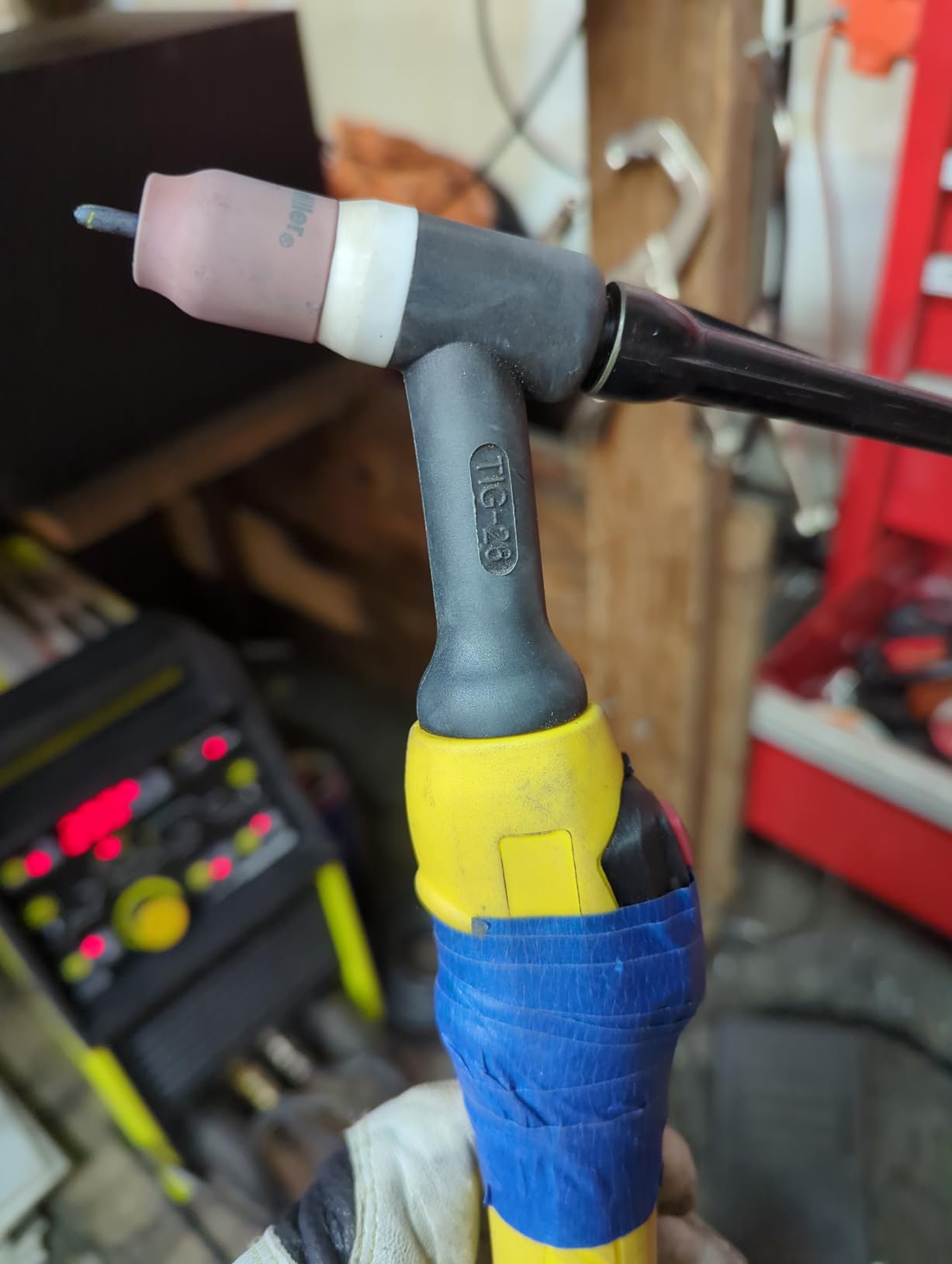
Two details put this machine ahead of its class. The first is the included torch: a CK Worldwide 17 Series Superflex with a flex head, Superflex hose, and CK DINSE connector. Comparable torches sell on their own for a meaningful fraction of the machine’s cost, and this is the one torch in the roundup most owners never replace. The second is control philosophy. Every other digital machine in this list puts parameters two menus deep; this one puts them on dials you can find in the dark.
The criticisms are real but shallow. Markings and dial ranges are dim, which matters more than it sounds when you are adjusting balance by feel. The cooling fans do not shut off on a temperature sensor, so the unit is audible whenever it is on. The power switch sits on the rear panel. And the argon regulator in the box is the weak link in an otherwise good package. Budget for a better regulator from day one, and treat the supplied one as a placeholder.
What 225 amps and analog controls mean for aluminum work
The 225A ceiling is not a spec-sheet number you will reach often on aluminum. Aluminum carries heat away from the puddle quickly, so the practical ceiling is set by the joint, the filler, and your travel speed. What the headroom buys you is the ability to run a wide, slow bead on 1/4 inch plate without dropping into the machine’s low-end control, where AC arcs get thin and unstable.
Analog controls matter more than they should. AC balance is an adjustment you make constantly on aluminum, moving it a few degrees every time you change thickness or filler. A knob lets you make that change mid-pass without breaking concentration. On a nested menu, the same adjustment costs you four button presses and your place in the puddle.
Where it falls short
This is not a production shop machine. With no detents on the dials and a fan that never idles down, it is built for the fabricator who runs it for hours at a stretch rather than the one who runs it eight hours a day. Reviewers are direct about that: it is not intended for high-volume continuous duty.
The second limitation is the accessory kit. The included argon regulator has drawn repeated complaints about quality, and the torch is the one component you should absolutely keep. If your work involves 6xxx-series aluminum with heavy oxide, budget for a good regulator and a proper bottle of pure argon as part of the purchase, not as an afterthought.
2. Weldpro 200A 5-in-1 – The Most Adjustable Aluminum Machine Here
- AC balance
- AC frequency
- and pulse all independently adjustable
- Five processes in one machine including AC Pulse TIG and DC Pulse TIG
- 2T and 4T trigger modes for long continuous welds
- Automatic 110V/220V detection needs no manual switching
- Large high-contrast HD LED display
- Heavier than other 200A AC/DC machines at 61.8 lb
- Digital panel takes time to learn
Where the PrimeWeld gives you simplicity, the Weldpro 200A gives you range. It runs AC TIG, DC TIG, AC pulse TIG, DC pulse TIG, and stick from one box, and every AC-specific parameter is exposed: balance, frequency, pulse frequency from 0.5 to 200 Hz, peak amperage, and independent upslope and downslope ramps. Very few machines in this price region let you touch all of those.
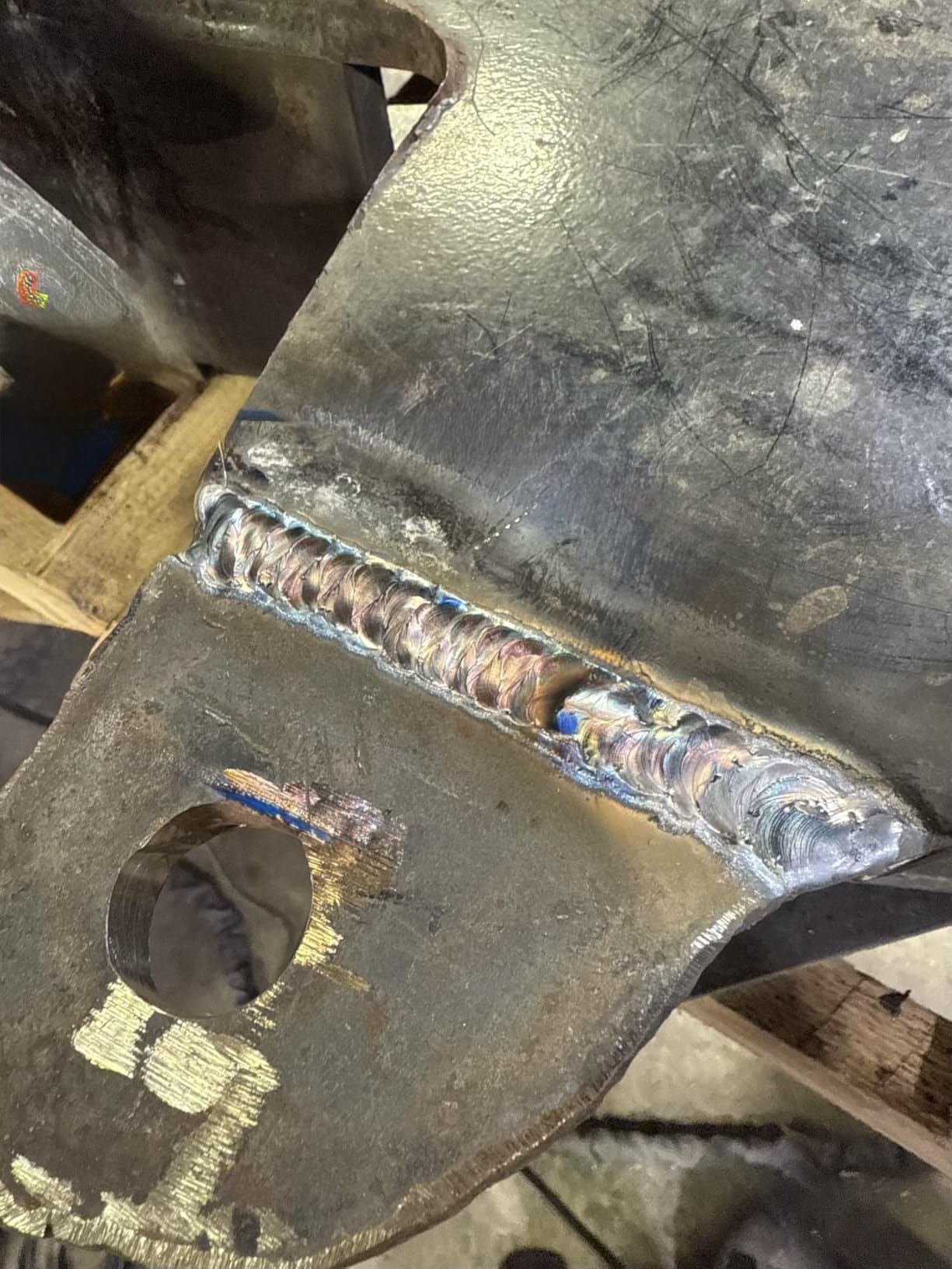
That matters on aluminum more than it does on steel. AC pulse is the cleanest way to control heat on thin material, because it alternates a high cleaning-heavy peak with a low penetration base, and the frequency control lets you set the bead width independent of the amperage. On a 0.040 inch panel, being able to drop the base current and raise the frequency independently is the difference between a flat bead and a warped one.
The trigger handling is properly professional. Both 2T and 4T modes are available, so you can lock the amperage for a long continuous weld on plate rather than riding the foot pedal, and the foot pedal is included along with the torch, ground clamp, gas hose, flow meter, and a 300A clamp. Automatic 110V and 220V detection removes the single most common setup mistake in home shops, where the machine is plugged into the wrong circuit and the operator blames the welder.
The protection package is thorough: overheat, over-current, over-voltage, and under-voltage. On a machine that will be run in a garage or a basement, that matters. The IGBT inverter sits at a 40 percent duty cycle at full 200A output, which is a real number but a modest one, and it is the main thing to understand about sustained heavy work.
When full adjustability earns its keep
Buy this machine if you weld a mix of thin aluminum, heavy aluminum, stainless, and steel, and if you are the kind of person who wants to change four parameters at once. The 2T and 4T modes alone justify it on long plate work, and the 0.5 to 200 Hz pulse range covers everything from a whisper-thin sheet bead to a stacked-up heavy pass.
Automatic dual voltage is the sleeper feature. It means the same machine works in a home garage on a 110V circuit and in a shop on 220V without a converter pigtail or a panel change, and it is the reason this machine suits a mixed shop better than most 200A units.
What 40 percent duty cycle means in practice
Forty percent at 200 amps means the machine is comfortable at that output roughly four minutes out of every ten, then needs a rest to cool. For 90 percent of aluminum work, that is irrelevant, because you are running 60 to 140 amps on material that is being consumed quickly. It becomes relevant on thick aluminum production, where you want 200A held for a long time.
The weight is the other tradeoff. At 61.8 lb, this is the heaviest machine in the roundup, and the most likely to get left in the truck. It is a shop machine that travels badly. If you need to carry a welder to a job site regularly, the lighter options here are the better fit.
3. AHP AlphaTIG 203Xi – Best Duty Cycle for Full-Time Aluminum Work
NEW 2024 AHP AlphaTIG 203Xi Amp IGBT AC DC Tig/Stick Welder with PULSE 110/220v 3 YEARS WARRANTY
- Roughly 60 percent duty cycle
- the highest in this roundup
- Stick mode is exceptionally smooth with Hot Start on 6011 through 7018
- AC operation available inside stick mode with adjustable AC frequency
- Works reliably on 120V through a 25 foot 12 gauge extension cord
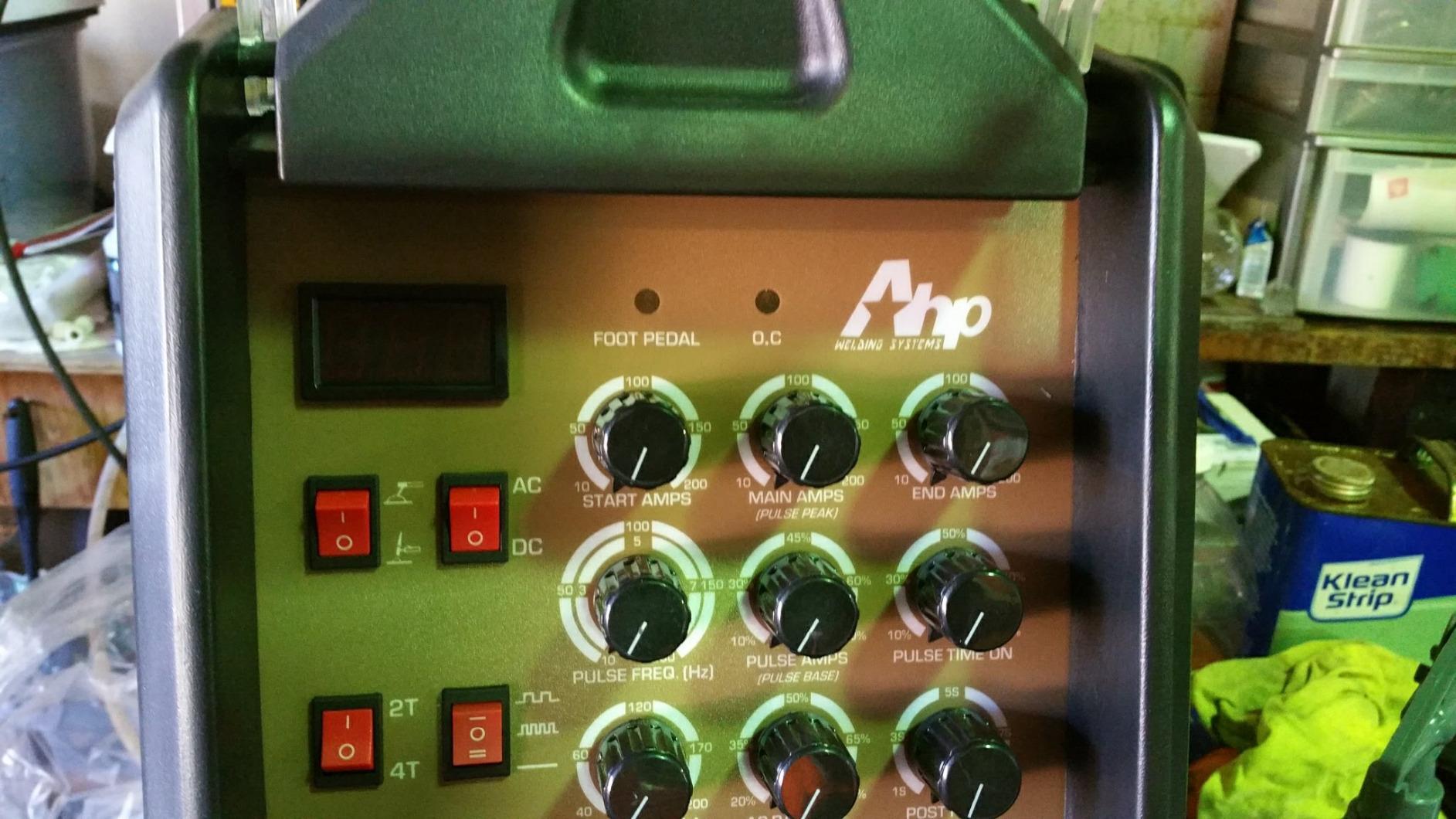
- Knob-based controls are quick to adjust
- TIG arc quality reported on par with a Lincoln Square Wave
- On 120V the digital readout does not match the knob setting
- Machine does not cap amperage on 120V and can trip a breaker
- Minimum output is 10 amps which limits very thin material
- Included flow meter readings are inaccurate
The AlphaTIG 203Xi is the machine to buy if aluminum is billable work rather than a weekend pursuit. Its 60 percent duty cycle at full output is the highest in this roundup, and for a fabricator running 200 amps on 1/4 inch plate for a full shift, that is the number that decides whether the machine is an asset or an obstacle.
This current model brings an electronic solid-state HV start, which simulates a high-frequency start without a point gap to manage. On aluminum that removes a whole category of failure: a dirty or mis-ground torch no longer leaves you unable to strike an arc. Several owners run this machine for hundreds of hours across steel, stainless, and aluminum and report consistent results, and the TIG arc itself is repeatedly compared favorably to a Lincoln Square Wave.
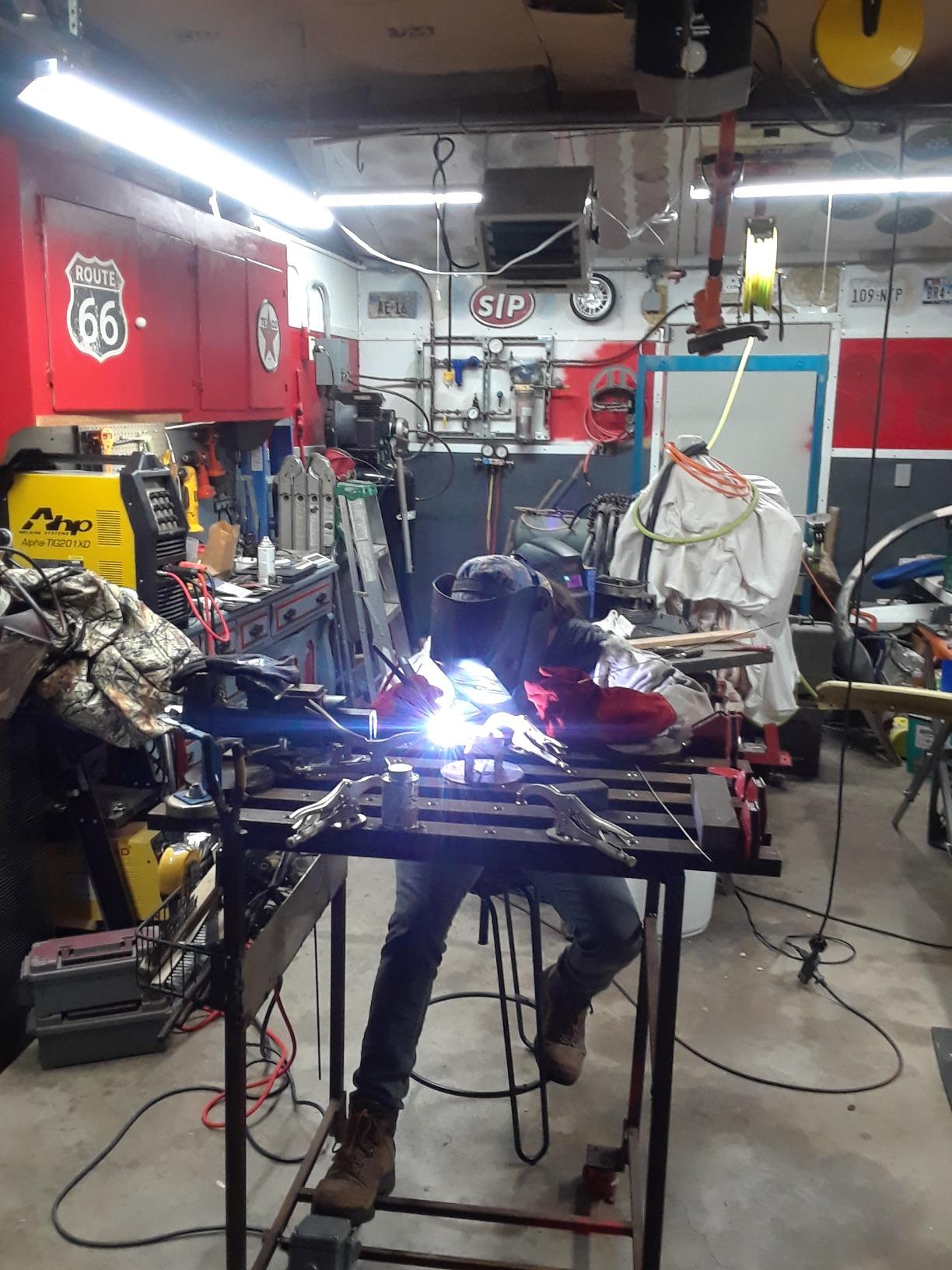
Two features stand out for aluminum work specifically. The first is the ability to select AC operation while in stick mode, with adjustable AC frequency, which is unusual at this level and genuinely useful for aluminum repair where you may be switching between a root pass and an electrode pass. The second is the 10 amp minimum, low enough for thin sheet but not the very low range that fine-gauge aluminum sometimes wants.
Support is a real differentiator here. Owners report AHP replying within four hours, and the machine carries a three-year warranty. On a brand most buyers have never heard of, responsive support is worth more than a longer warranty from a company that does not answer.
What a 60 percent duty cycle buys you
Duty cycle is the honest measure of a welder, because it is the only spec that reflects sustained output at a stated amperage. A 60 percent rating means the machine holds full output for six minutes in every ten. In a production environment where you are chasing a hot crack or filling a large gap, that is the difference between finishing the repair and stopping to let the machine cool.
It also changes how you plan a job. On a 40 percent machine, a heavy aluminum pass is an interruption. On this one, it is just a pass. For anyone whose time is billed by the hour, that is the entire argument.
The 120V caveat you need to read
Two 120V behaviors are worth knowing before you buy. The digital readout does not match the knob setting on 110V, so trust the knob over the display. And the machine does not cap amperage on 120V, which means a heavy setting can pull enough current to trip a household breaker. Owners confirm it works reliably on 120V through a 25 foot 12 gauge extension cord, but only if the amperage is kept in check.
The minimum of 10 amps is the other limitation. If you routinely weld foil-thin aluminum for heat sinks or ducting, you will want a machine that goes lower, and the 16-pound Yeswelder below can be a companion piece for that work.
4. YESWELDER TIG-200P ACDC – Best Portable AC/DC for Thin Aluminum
YESWELDER 200A AC/DC Aluminum Tig Welder TIG-200P ACDC TIG Welding Machine
- Weighs just 16.47 lb
- the lightest AC/DC aluminum machine in this roundup
- Square wave AC makes aluminum noticeably easier for a beginner
- Adjustable upslope
- downslope
- frequency
- balance
- pre-flow and post-flow
- Auto-sensing 110V/220V
- Auto memory restores settings after power-off
- Included torch is oversized and all-in-one with no separate lead or gas line
- Manual is poor with no explanation of individual settings
- No gas regulator or tungsten electrodes included
- No base amperage setting for foot pedal control
At 16.47 lb with full AC and DC output, this is the machine that changes the shape of the work. Everything else in this roundup that can weld aluminum is between 29 and 90 pounds. This one goes into a backpack, a job trailer, or the bed of a truck without becoming a two-person lift, and the square wave AC output gives you a stable, forgiving arc on sheet aluminum.
The feature list is longer than the price would suggest. Seven modes cover MIX TIG, stick, AC TIG, DC TIG, AC pulse TIG, DC pulse TIG, and spot welding. The AC waveform is switchable between square, triangle, and sine, and upslope, downslope, frequency, balance, pre-flow, and post-flow are all adjustable. The auto memory function saves your settings and restores them after a power cycle, which is a small thing that becomes a large thing once you have a setup you like.
Professional fabricators do use this machine, and they report results consistent with far more expensive name-brand equipment. The reason is the waveform control: switching AC output from sine to square gives you a more concentrated arc with better directional penetration, which is exactly what you want when the oxide is heavy or the joint is tight.
Capacity is the honest limit: 1/8 inch aluminum. That covers the overwhelming majority of aluminum work anyone does outside a fabrication shop, and if your material gets thicker you would be reaching for a bigger machine anyway. Note also that the foot pedal is not included, though a 5-pin interface is reserved for one.
Why weight changes your welding volume
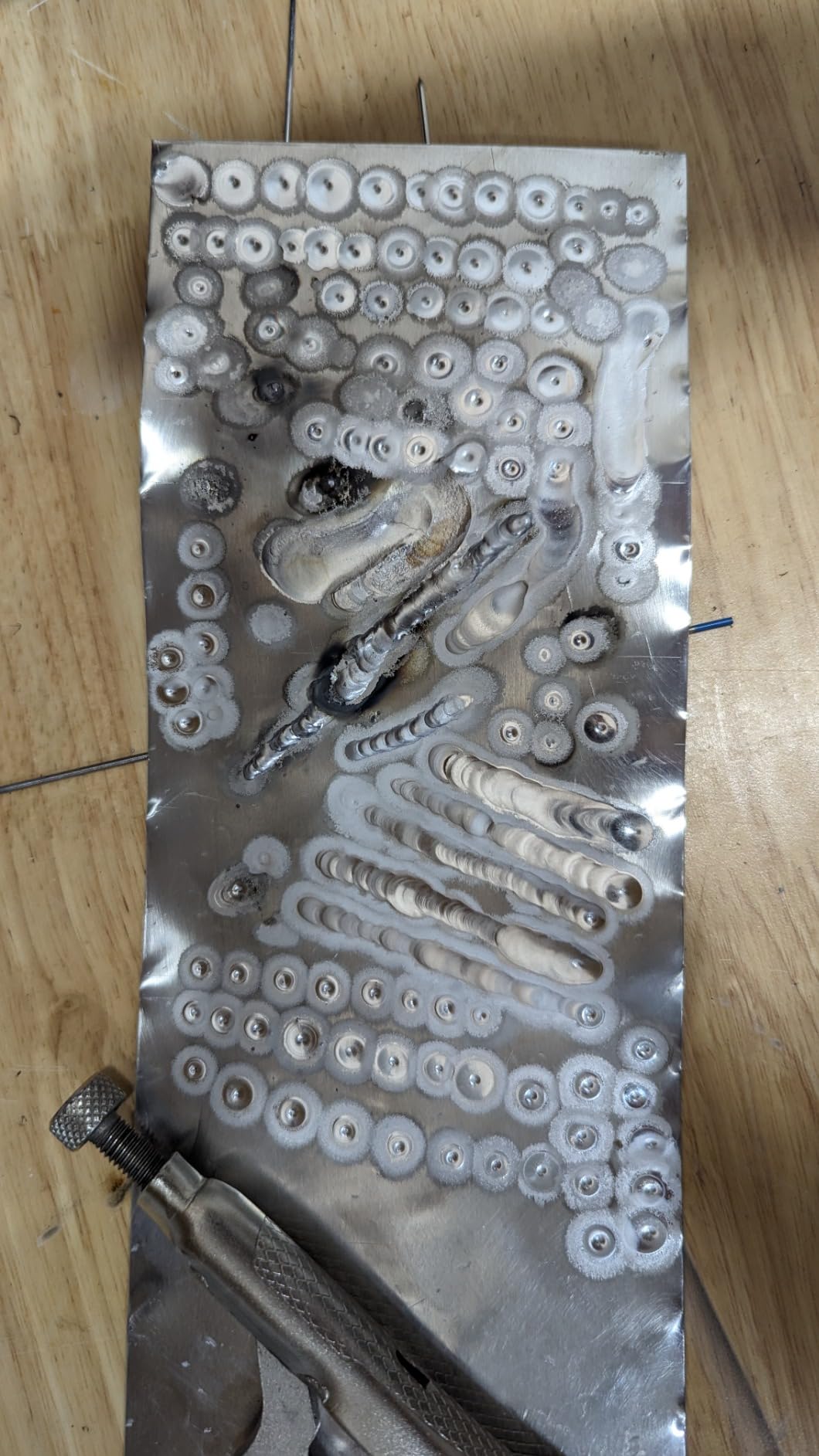
Portable weight is not a convenience metric, it is a volume metric. A 16-pound machine gets used on the boat, in the yard, at the customer’s site, and in the shop. A 90-pound machine gets used in the shop. Over a year, the light machine produces far more aluminum welds simply because it is available more often.
Square wave AC is the second reason to like this machine. A square wave concentrates the arc into a narrower, hotter, more directional column than a sine wave, and it behaves more consistently on 6xxx-series aluminum where the oxide layer fights back. For a beginner, that stability is the whole game.
The problems you will inherit
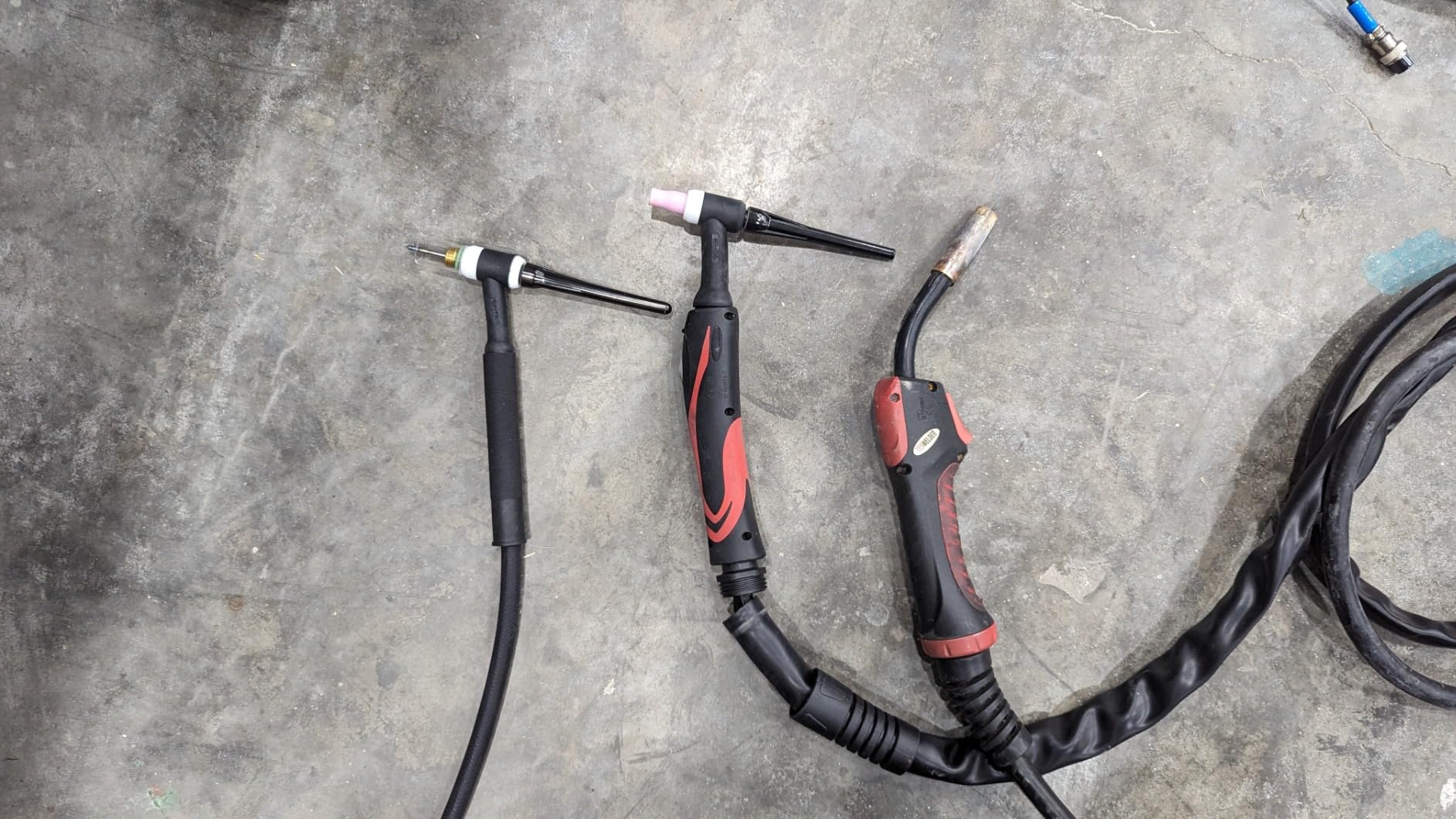
The included torch is the main one. It is roughly MIG-gun sized, all-in-one, with no separate lead and gas line, and multiple buyers replaced it immediately. Plan on buying a proper WP-26 or CK-17 torch rather than fighting the supplied one.
The manual is universally criticized. With parameters this adjustable, having no guide explaining what balance and upslope actually do makes the machine harder to learn than it needs to be, and that shows up in the split reviews. Some units have also reported internal argon leaks and a faulty valve, and a few owners note that low-amperage AC TIG can fail to trigger auto-darkening helmets. With a 3.9 rating on 113 reviews, the 18 percent one-star share is the largest in this roundup. Budget for a torch, a regulator, and tungsten before the first arc.
5. LOTOS TIG200ACDC – Best Budget Machine That Ships With Gas Hardware
- 200A AC square wave handles aluminum
- stainless
- and mild steel
- Complete box including foot pedal
- argon regulator
- converter pigtail
- ground clamp
- and consumables
- Automatic dual voltage and dual frequency switching
- HF start with foot pedal heat control for puddle control
- US-based phone and email customer service
- Argon regulator and torch failures reported
- including leaks and fittings that do not seal
- Included gas accessories are lower quality than the machine
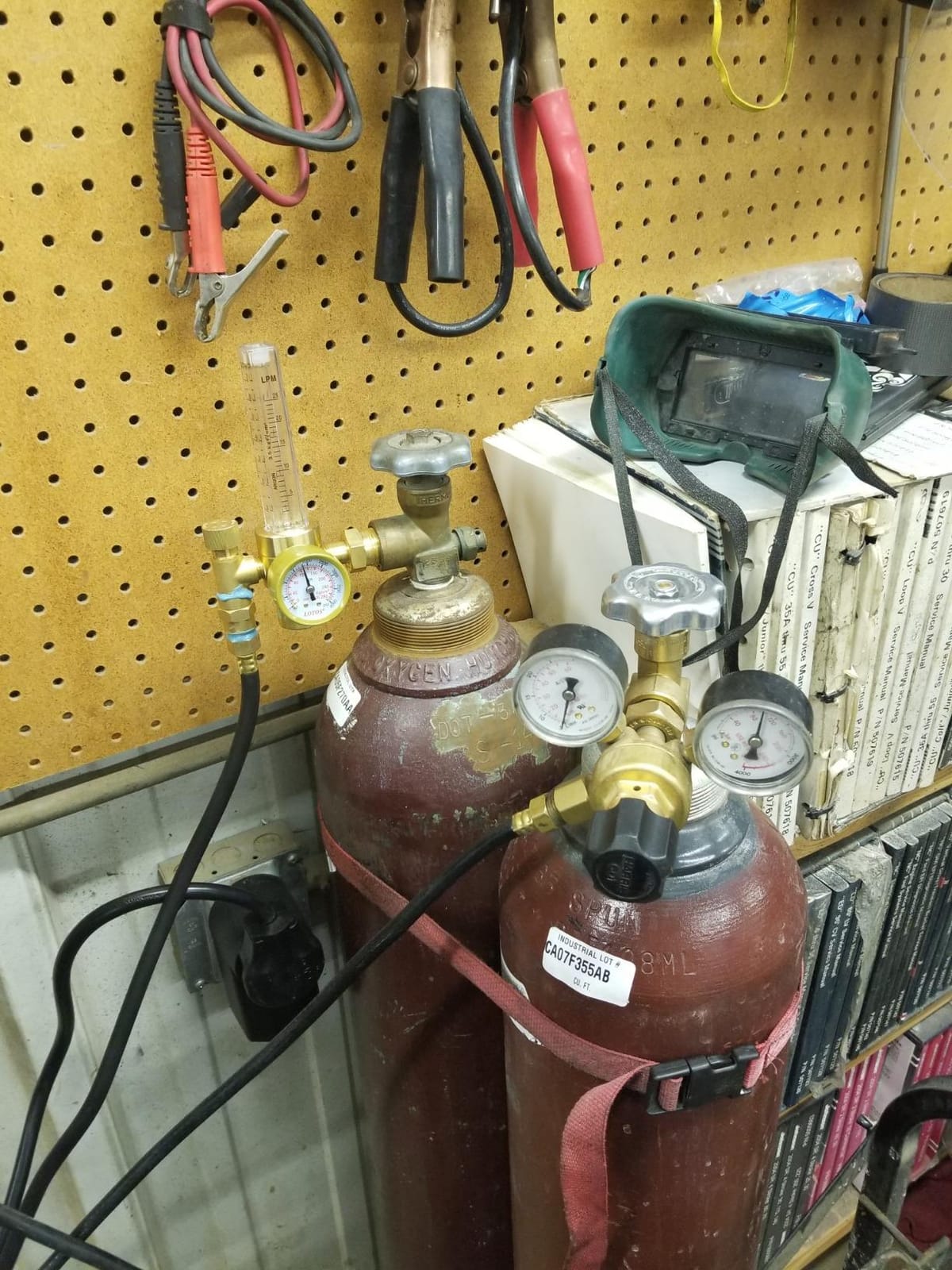
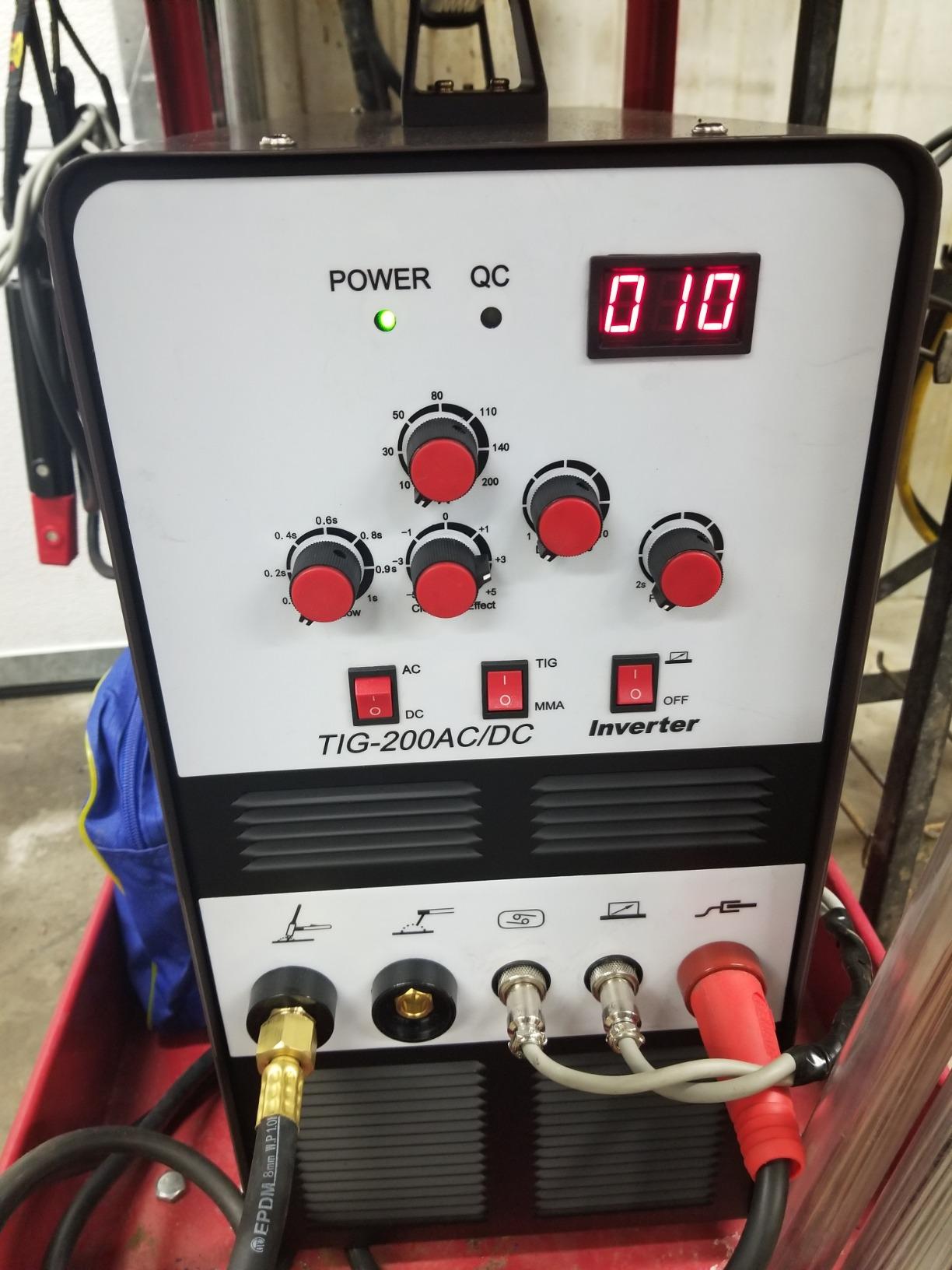
The LOTOS TIG200ACDC solves the problem that catches most first-time TIG buyers: the gas hardware. It comes with the foot pedal, the argon regulator, the ground clamp, the MMA clamp, a 220V to 110V converter pigtail, and a consumable set. Most competitors in this class ship you a machine and a torch and leave the gas bottle, the regulator, and the tungsten as your problem.
The weld capability is genuine. Output runs 10 to 200 amps on AC/DC TIG and 15 to 200 amps on stick, with an AC square wave inverter and 80 percent power efficiency. Automatic dual voltage and dual frequency covers 110/120V and 220/240V at 50 and 60Hz without any manual switching, which is a real convenience in a mixed-power shop. HF start with hand torch control and foot pedal heat control gives you real control over the puddle, which is what you want on aluminum rather than a single set-and-forget amperage.
At 37 pounds, it is not the lightest machine here, but it is still manageable for a garage setup and it is one of the few budget units that can run aluminum at all. The 3 year limited warranty is longer than many competitors offer, and customer service is US-based and reachable by phone or email, which matters more than the warranty length when something is misbehaving at 6 amps on a bead of thin aluminum.
Owners generally rate the machine well for what it costs and are explicit that the weakness is not in the welder. The square-wave AC aluminum capability is described as capable, the dual-voltage behavior as painless, and the accessory kit as unusually complete for the money.
What the included regulator actually saves you
The regulator in this box is worth more than it looks. A decent argon regulator is a real line item, and a cheap one with a leaky fitting is worse than none because it starves the arc and gives you a problem that looks like a machine fault. Having a functional regulator in the box means the machine is usable the day it arrives, with a bottle of pure argon and a torch upgrade as the only follow-on purchases.
For a buyer who also needs a stick machine, the 15 to 200 amp MMA output with adjustable hot striking arc current turns this into a two-function shop for the cost of one. The 30-day money-back window and 1-year replacement warranty sit alongside the 3-year limited warranty, which is a reasonable risk profile for a first machine.
The one recurring complaint
Several reviews report argon regulator failures, leaks, and fittings that do not seal, and the same reviewers say the included gas accessories are lower quality than the machine. The practical response is simple: use the included regulator to get running, and replace it with a better unit before you take on any serious aluminum work where gas starvation would ruin the parts.
There is no argon cylinder, no tungsten, and the torch is a basic unit. For a first machine with a limited budget that covers aluminum, stainless, and steel from a single box, this is the most complete starting package in the roundup. For production aluminum work, the PrimeWeld or the AHP is a better long-term buy.
6. YESWELDER TIG-205P – Lightest Machine, No Aluminum Capability
YESWELDER 205A Tig Welder Pulse STICK/DC TIG/PULSE TIG 3 in 1 TIG-205P
- Weighs only 10.7 lb
- easy to carry and store
- Pulse TIG with independent control of frequency
- duty cycle
- and current
- Hot Start
- Arc Force
- and Anti-Stick in stick mode
- Auto-sensing 110/220V removes manual switching
- Large LED display keeps parameters visible
- DC output only
- so aluminum welding is not possible
- Foot pedal and argon regulator are not included
- Push-button settings feel inexpensive
- Limited documentation
This machine belongs in this roundup with a warning label. It is a DC-only welder, and the manufacturer states plainly that it cannot be used for welding aluminum. It is here because it is genuinely good at what it does, at 10.7 pounds it is the lightest capable TIG in the entire list, and a lot of people searching for an aluminum TIG end up needing a second, cheaper machine for stainless and steel anyway.
Within DC TIG and stick, it is well executed. Three processes, up to 200 amps of output, auto-sensing 110V and 220V, high-frequency non-touch arc start, and DC TIG with 2T, 4T, and spot operation. The pulse TIG has independent control of frequency, duty cycle, and current, which makes it useful for thin-gauge material where heat input is the whole game. Hot Start, Arc Force, and Anti-Stick make the stick side stable rather than frustrating.
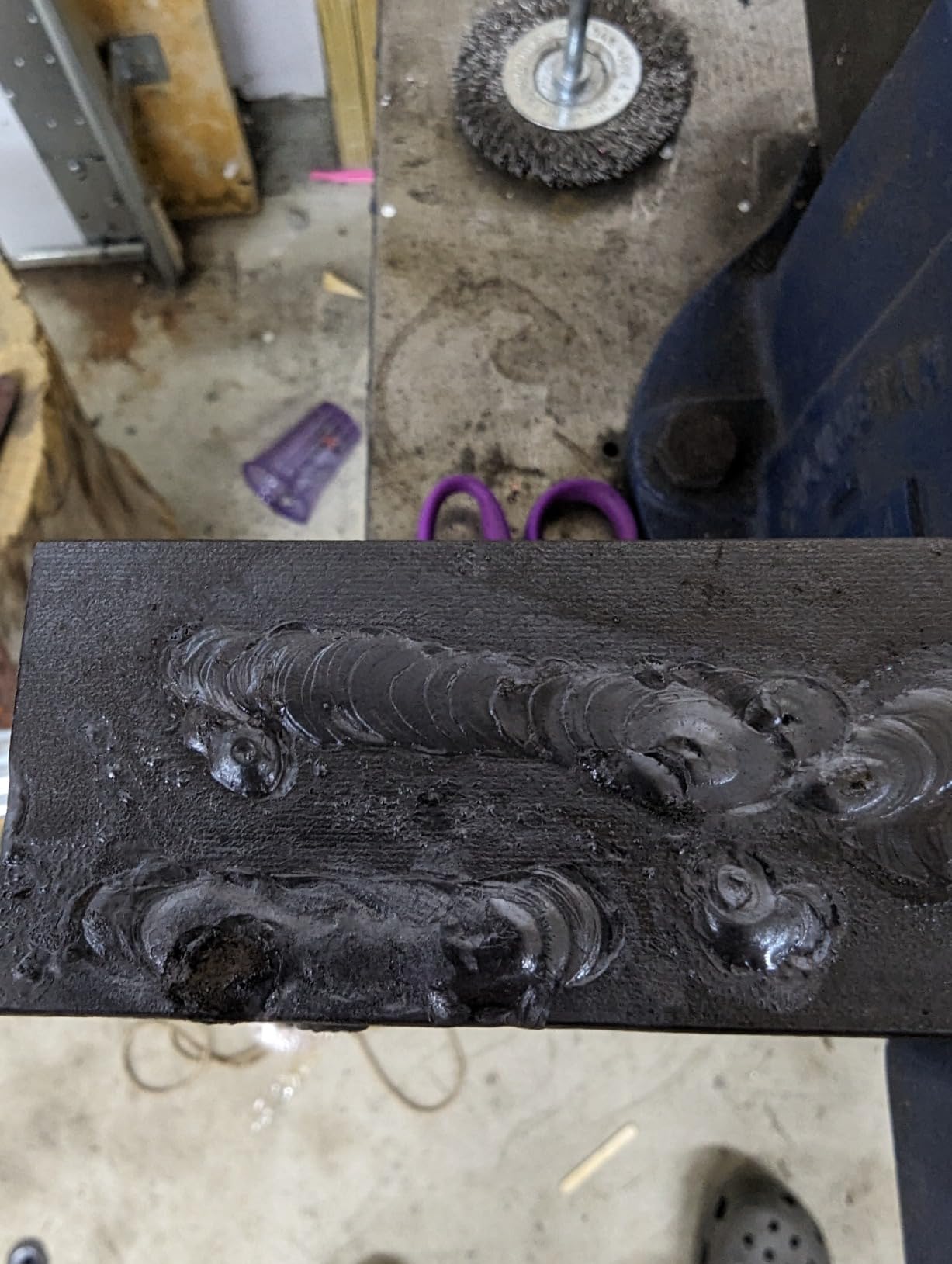
The 4.5 rating on 346 reviews reflects that execution. The auto memory function saves and restores settings after a power cycle, and the LED display is legible. For stainless tank work, exhaust fabrication, or general DC TIG, it does the job without drama.
What you do not get is a foot pedal or an argon regulator, both sold separately, and the push-button setting interface feels inexpensive next to a real dial. Documentation is limited, so expect to spend time learning the controls.
When a 10.7 lb DC machine is the right buy
Buy this if your aluminum work is a separate machine already handled, and your remaining welding is stainless, mild steel, and copper. At this weight it is genuinely portable: it goes in a tool bag, it works on a generator, and it does not need a second person to move it. For a first TIG experience on non-ferrous work other than aluminum, the pulse control is a better teaching tool than most machines twice its size.
The 2T and 4T modes are worth noting for anyone doing long stainless runs, because 4T locks the current instead of requiring you to hold a pedal.
The line it cannot cross
DC TIG cannot weld aluminum. Not at low amperage, not with a spool gun, not with a different torch. The oxide layer requires the electrode-positive half of the AC cycle, and this machine never produces it. If aluminum is on your list at all, this is not a shortcut around the cost of an AC/DC machine.
Its real value is as a second welder. A shop that owns a good AC/DC machine and needs a portable stainless and stick unit on the truck can build that second role around this machine and spend the difference on a proper AC machine.
7. ARCCAPTAIN TIG200 – Best Low-Cost DC TIG and Stick Workhorse
ARCCAPTAIN 200A TIG Welder, 110V/220V TIG/Stick 2 IN 1 Welding Machine
- One of the lightest 200A HF TIG machines available
- Steady power delivery with an owner running 160 amps for nearly eight hours continuously
- Runs on a generator without issue
- Post gas and down-slope settings give genuine heat control
- Customer service is repeatedly described as unmatched
- Large LED display and easy 2T/4T operation
- DC TIG only
- so aluminum requires a different machine
- Included torch is heavy
- awkward
- and not bendable or swivel
- Ground cable and leads run short
- On 110V it can trip a 15 amp breaker above about 95 amps
The ARCCAPTAIN TIG200 is the strongest value in a DC-only machine, and its support reputation is the reason it appears here despite having nothing to offer on aluminum. Owners describe customer service as unmatched, and that is a category of evidence that no spec sheet provides.
Technically it is more than a basic DC machine. Post gas time is adjustable from 1 to 10 seconds and down-slope from 0 to 10, which is real heat control rather than a fixed setting. Both 2T and 4T trigger modes are present, VRD and over-current, over-voltage, overload, and overheat protection are built in, and the cooling fan runs on demand instead of continuously, which keeps the machine quiet when you are doing short welds.
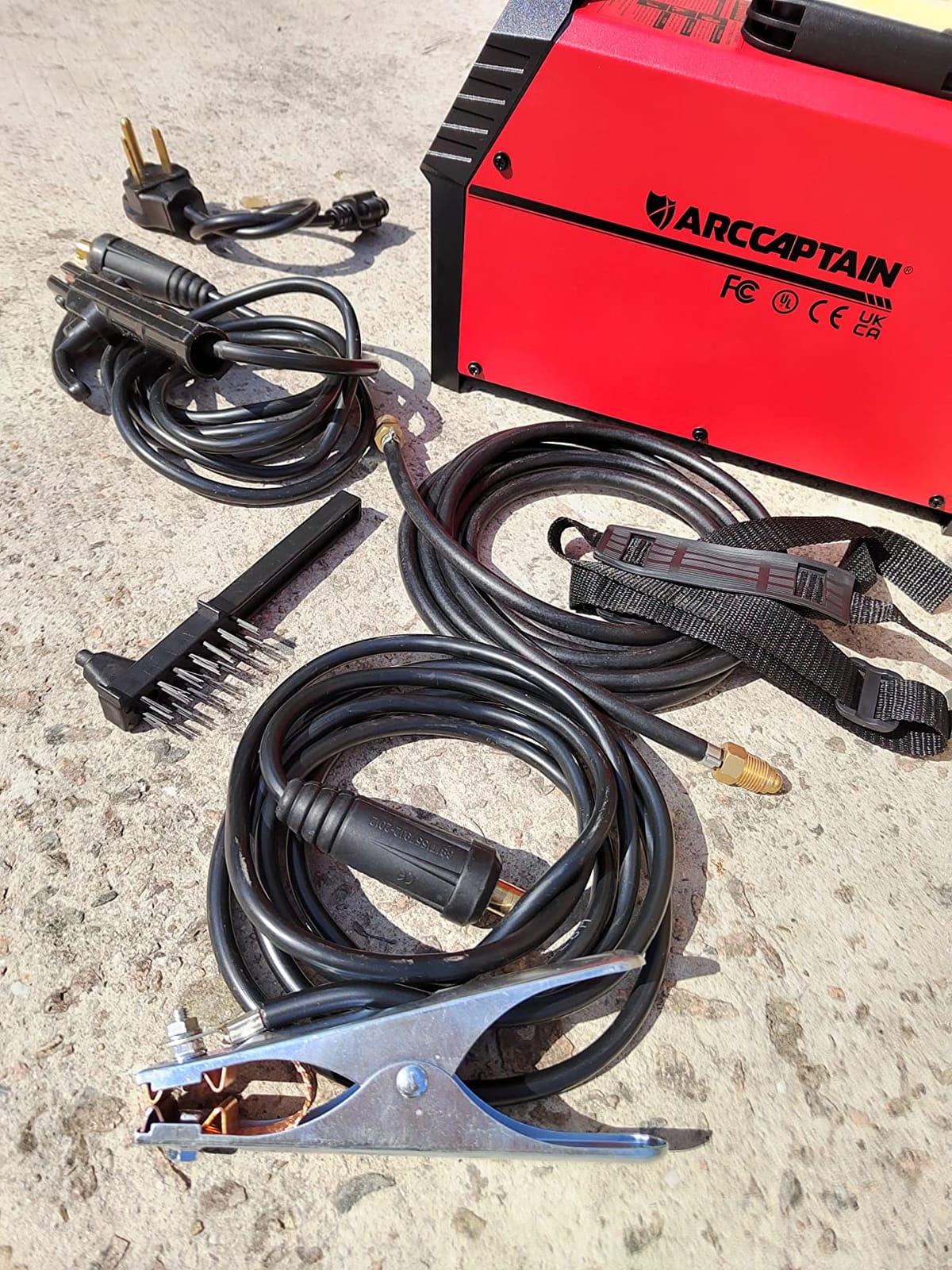
Power delivery is the standout. One owner ran 160 amps for nearly eight hours continuously, and others report the machine running on a generator without complaint, which matters for field work. Duty cycle becomes the limiting factor above roughly 150 amps, so for sustained work at that level, look elsewhere.
Portability is the second strength. It weighs under 12 pounds with a handle and an included shoulder strap, and it fits under a truck seat. For stainless, mild steel, and general fabrication where you want a machine that is always within reach, that is a genuinely useful machine.
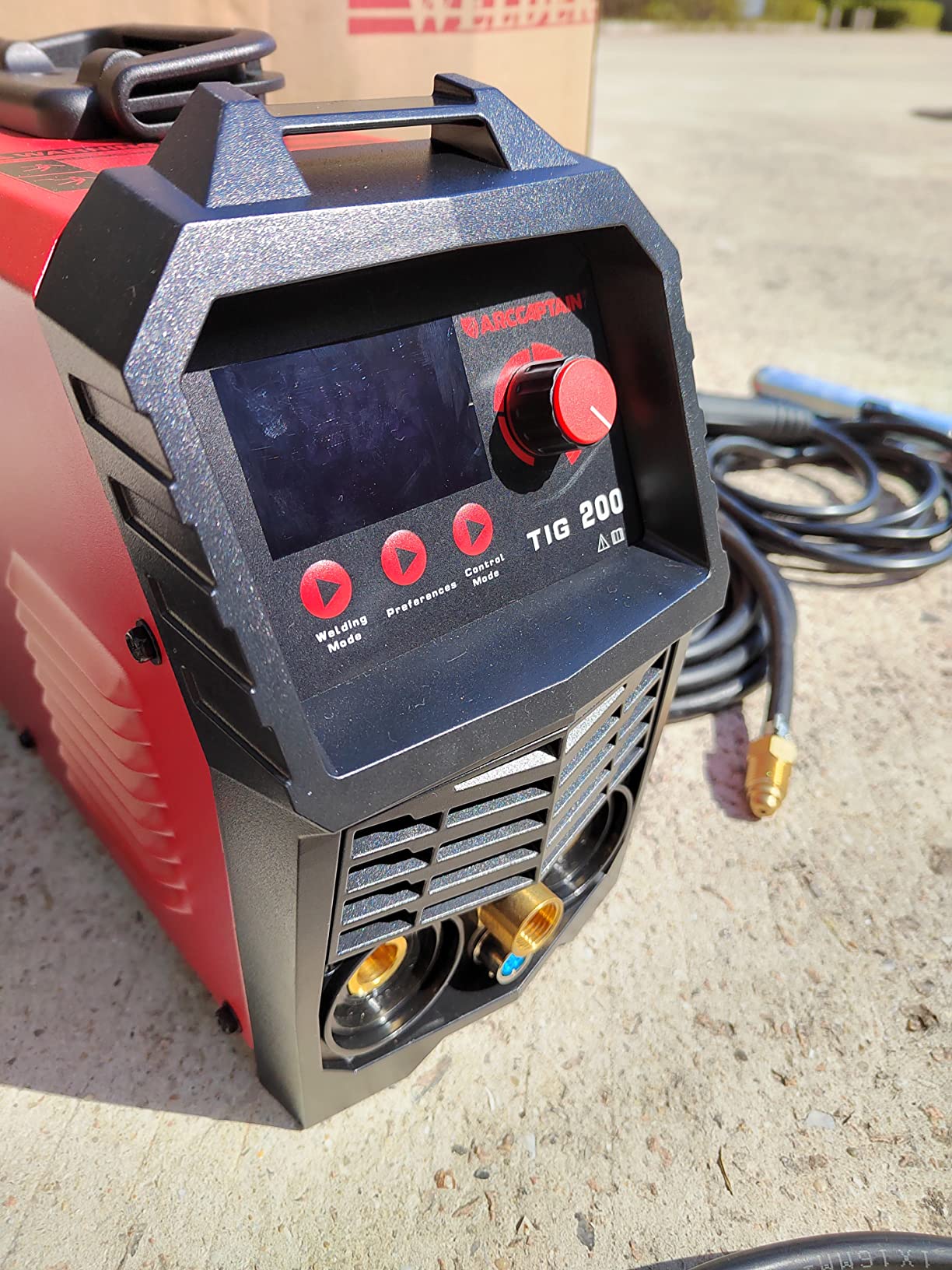
Where post gas and down-slope control matters
Post gas controls how long the shielding gas keeps flowing after the arc stops. The default on many cheap machines is too short, and the tungsten oxidizes, the next strike becomes difficult, and the tip wears faster than it should. Having it adjustable to a full 10 seconds is a meaningful quality-of-life difference on a machine in this weight class.
Down-slope is the other one. Rather than cutting current off instantly when you release the pedal, the machine ramps it down, which lets the puddle close cleanly instead of leaving a crater at the end of the bead. On stainless and on fillet work, that is the difference between a weld that gets ground down and one that does not.
Three limitations worth pricing in
First, it is DC-only. Aluminum is off the table, and there is no accessory that changes that. Second, the included torch is heavy, awkward, and rigid, and many owners replace it; budget for a proper torch. Third, on 110V the machine can trip a 15 amp household breaker above roughly 95 amps, so plan on a 20 amp circuit for 110V work.
The ground cable and leads are also short, and 110V current draw is the practical constraint. On 220V with proper circuits, this machine performs well and owners compare it favorably to name-brand units at several times the cost.
8. S7 TIG-200 – Most Reviewed Entry Into TIG and Stick
- Exceptional value with 1530 reviews behind it
- Produces smooth
- good quality stick welds when set correctly
- High frequency start works reliably with no lift or scratch start
- Post gas dial gives useful control of post-weld flow
- Compact
- portable
- and reasonably quiet
- One owner reports nine years of continuous stainless work
- Instructions are very poor with few tutorial videos
- Gas port uses a push-on fitting rather than a screw-on connector
- Pedal and torch trigger are on-off only and do not vary amperage
- Leads are short and the torch lead feels stiff
- No argon bottle or regulator included
With 1530 reviews, the S7 TIG-200 has the largest review base in this roundup, and the rating holds at 4.4. That much history is worth reading closely, because it tells you something about durability: one long-term owner reports nine years of continuous stainless work through heat, rain, and mud without an overheating failure.
It is a simple machine. DC TIG and stick combined, 110V and 220V dual voltage, digital current display, high frequency arc start, and a post gas flow time dial. The high frequency start is reliable enough that no lift or scratch technique is needed, which is a genuine advantage for a beginner, and the post gas dial is a control many machines twice the size omit.
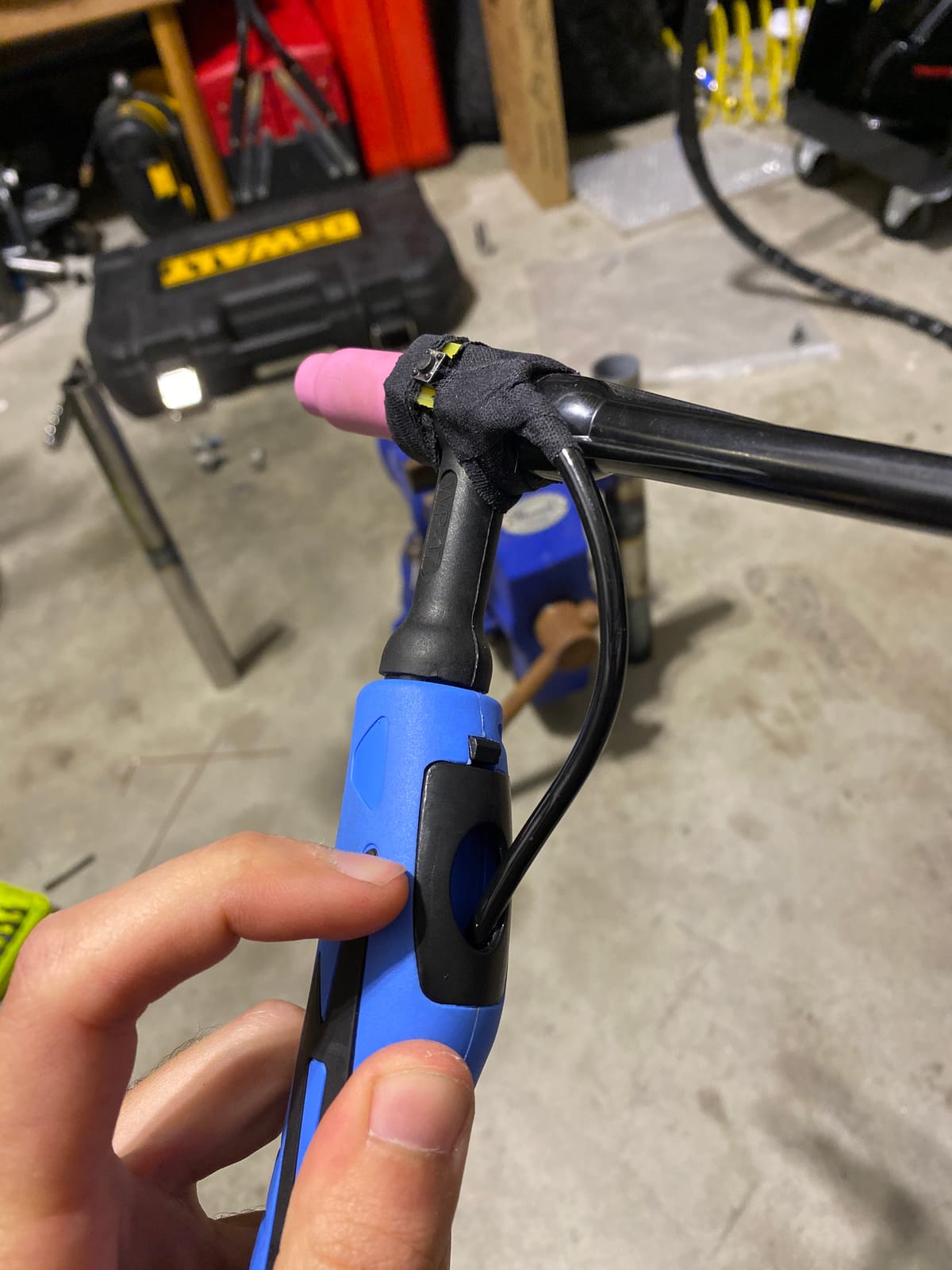
Stick performance is the surprise. Owners report smooth, good quality stick welds when set correctly, which is not a given at the low end of the market. Compact at 18 pounds, it is quiet enough to work next to and it stores easily, and it works with standard TIG consumables including tungsten, ceramic cups, and collets, so you are not locked into proprietary parts.
The framing that fits this machine is entry cost. For a lot of buyers it is the cheapest credible path into TIG, and reviewers judge it on that basis rather than on professional duty. It is a good first machine for stainless and steel and a poor choice for anything involving aluminum.
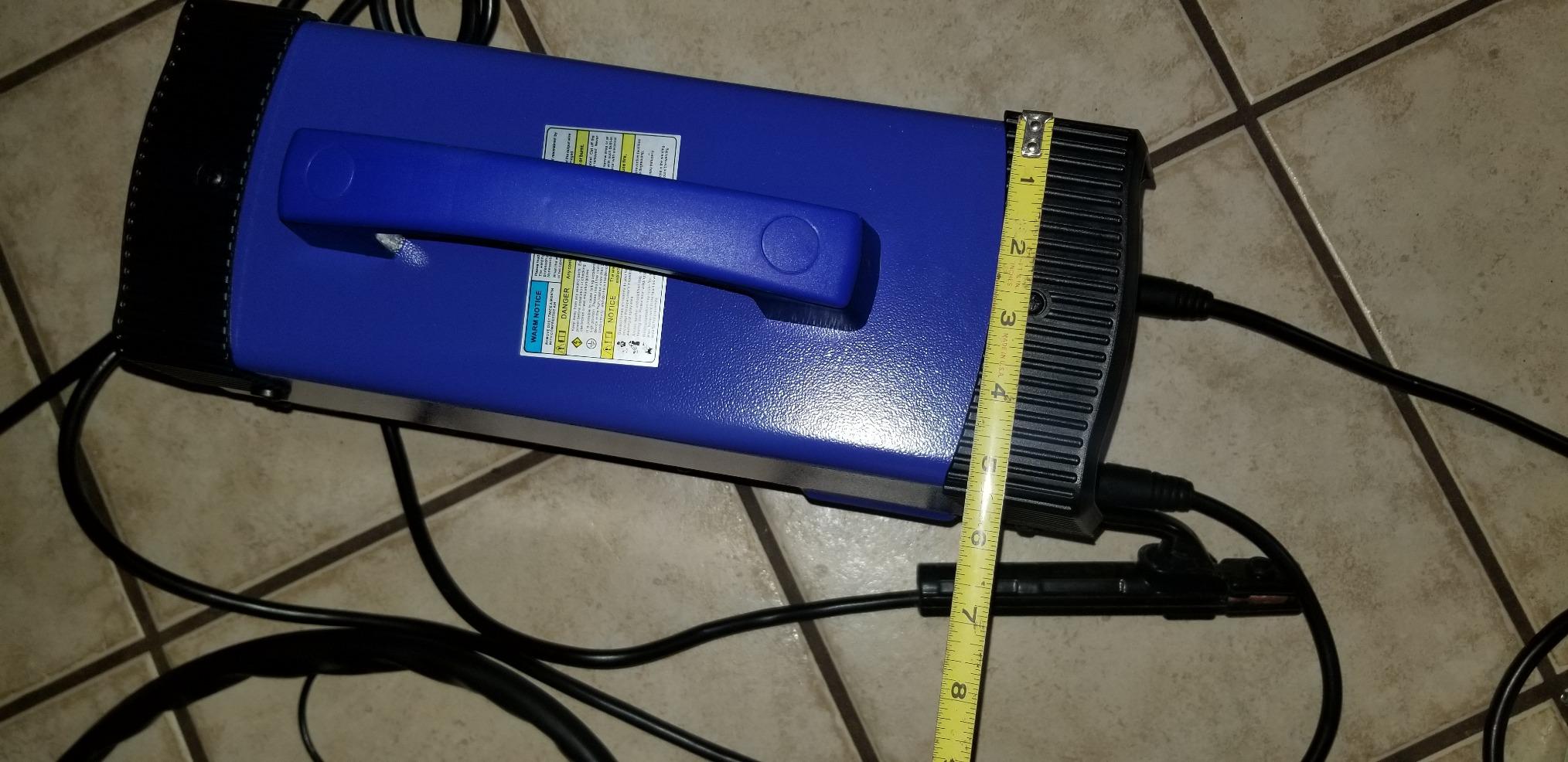
What nine years of stainless work tells you
That single report is the most useful data point on this machine. A low-cost inverter that survives nine years of daily service in heat, rain, and mud is telling you that the thermal design is sound and the failure mode is not a heat-related one. The realistic risks on a machine like this are accessory failure and documentation, not the power source dying.
The high frequency start reliability matters here too. A DC TIG machine with an unreliable start gets abandoned by beginners, and this one does not have that problem, which is a large part of why the review volume and the 4.4 rating coexist with cheap accessories.
The total cost of entry is higher than the machine
No argon bottle and no regulator are included, and several buyers specifically flag that as the real added cost of getting started. On top of that, the gas port uses a push-on fitting rather than a screw-on connector, which is fiddlier to set up and easier to leak than a threaded connection.
The trigger and foot pedal are on-off only and do not vary amperage, so you cannot use heat control during a pass, which is a real limitation on thin material or on a hot-started joint. Leads are short and the torch lead is stiff, making it awkward to work around a car frame. Instructions are very poor. Add a regulator, a bottle of argon, a proper torch, and better leads to your planning before you treat this as a complete package.
9. Sunstac TIG-250 TP ACDC – Most Aluminum Headroom, Least Precise Metering
Sunstac 250A Aluminum TIG Welder with Pulse ACDC Foot Pedal Control
- 250A output gives more aluminum headroom than most machines at this level
- Seven modes including both AC and DC pulse plus AC and DC spot welding
- Helmet-readable LCD display on a bright screen
- Intelligent parameter memory restores settings between jobs
- Long 118 inch 300A rated work clamp and electrode holder cables
- AC mode current readout is inaccurate when AC balance is inconsistent
- Foot pedal is not included despite the pedal-control positioning
- Inaccurate AC current measurement makes aluminum settings harder to dial in
On paper this is the most capable aluminum machine in the roundup. Output goes to 250 amps, and the manufacturer rates aluminum capacity at 5/32 inch on 110V and 6/25 inch on 220V, which is the thickest stated aluminum capability of anything here. Seven modes cover high-frequency AC, high-frequency DC, pulsed AC, pulsed DC, AC spot, DC spot, and stick, with 2T, 4T, and spot TIG operation.
The hardware details are generous. The LCD screen is bright enough to read through a welding helmet, which is a detail that separates a usable machine from a frustrating one. The work clamp and electrode holder cables are 118 inches long and rated to 300 amps, which is unusually generous for the class and means you are not constantly repositioning. Parameter memory restores your setup after a restart, so switching between a thin-gauge job and a plate job does not mean rebuilding your machine each time.
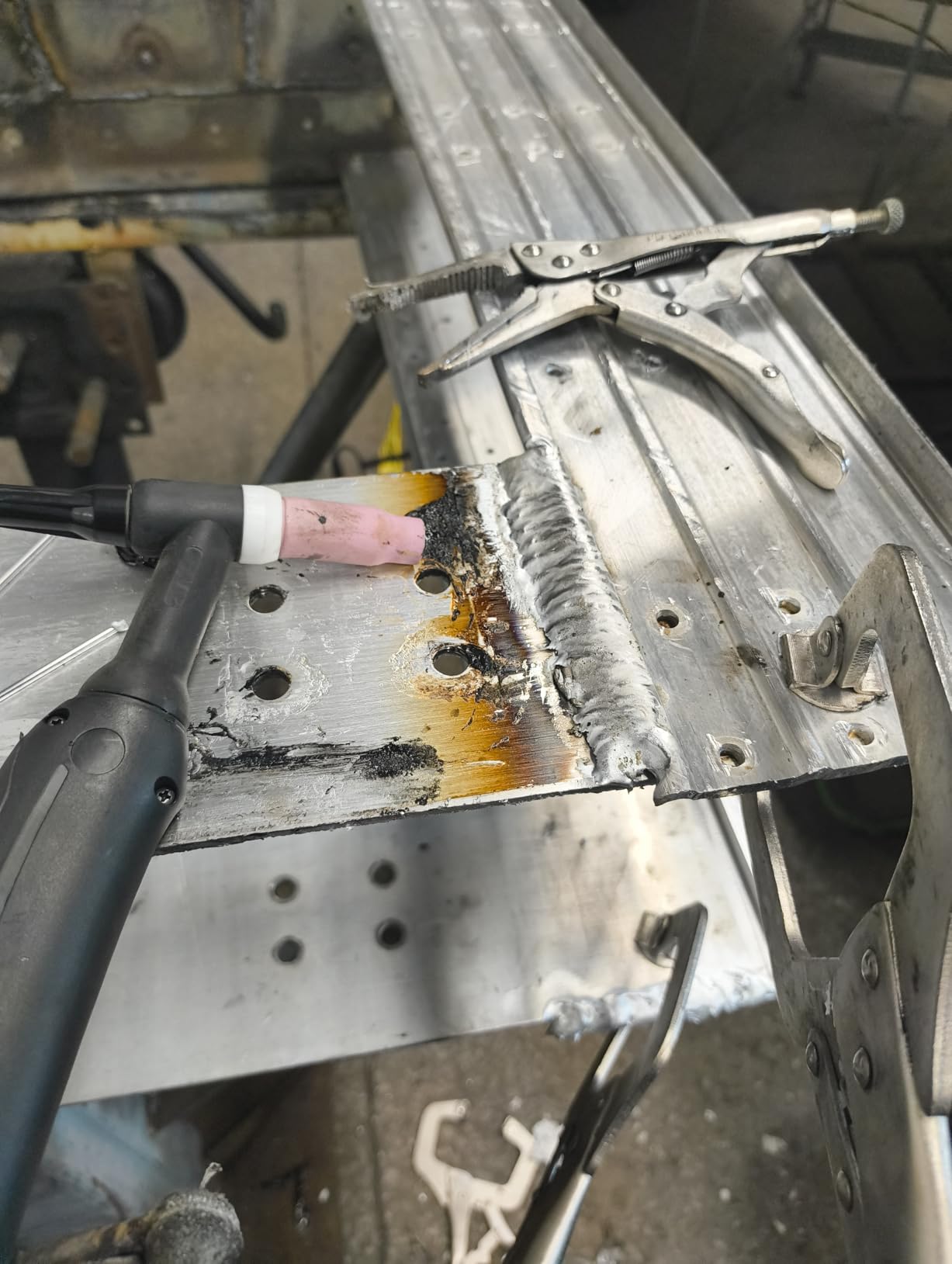
At 29.8 pounds, it is also lighter than the PrimeWeld, the Weldpro, and the AHP, while offering more nominal output than all three. On capacity per pound, this is the most efficient aluminum machine in the list.
The problem is measurement, and the manufacturer is unusually honest about it. The AC mode current readout is inaccurate when AC balance is inconsistent, which means the number on the screen does not reliably tell you what is happening in the puddle during exactly the adjustments that matter most on aluminum. That is a real obstacle to dialing in a repeatable setup.
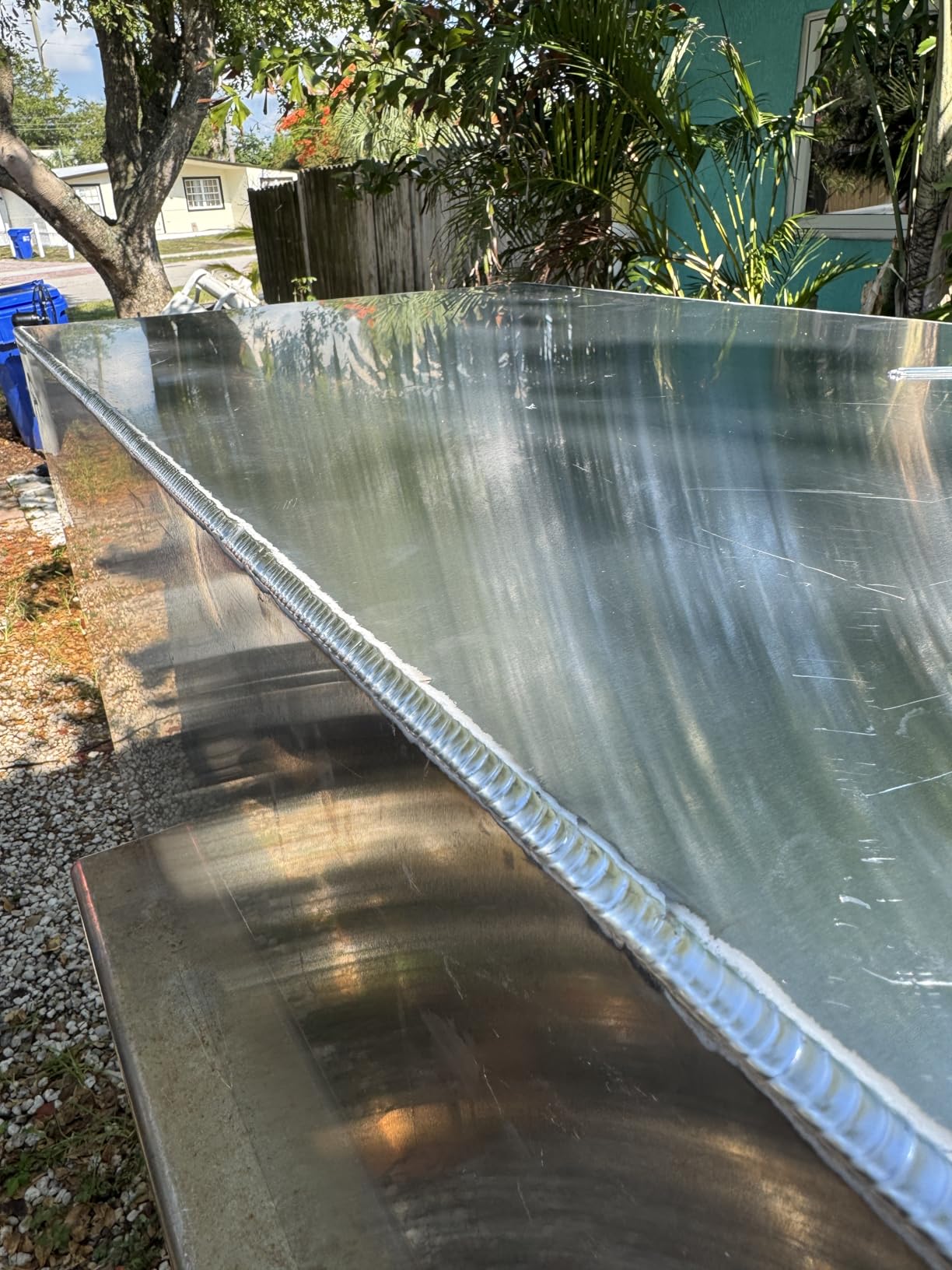
Why 250 amps matters for aluminum plate
Aluminum moves heat away from the puddle faster than steel, so a joint that would take 90 amps in steel can want 130 or more in aluminum. On 6/25 inch plate, a 200 amp machine is at the edge of comfortable and you are constantly managing the puddle. At 250 amps, you have the headroom to run a wide, slow, well-filled bead and let the travel speed do the work.
That headroom also protects you on repair work. A badly oxidized joint, a gap, or a 6000-series alloy that needs more heat than the nominal thickness suggests will eat a smaller machine’s output, and the extra amperage lets you recover from a cold start instead of fighting the machine.
The metering problem on AC
Here is the specific issue. On AC, the machine alternates polarity, and what the display reports depends on how the current is being measured across a changing waveform. When AC balance is not held consistent, the reported current diverges from the delivered current. In practice, the screen becomes a rough reference rather than a setpoint, and you calibrate by watching the puddle rather than the numbers.
That is workable but slower to learn. Combined with a foot pedal that is not included despite the machine being marketed for pedal control, and a 4.1 rating on 145 reviews with a 15 percent one-star share, this is the machine to buy when you have the aluminum volume to use the extra capacity and the patience to set your amperage by eye. If you want precise, repeatable aluminum settings with minimal fuss, the PrimeWeld or the Weldpro is the better machine.
10. ARCCAPTAIN TIG 205 Pro – Best App-Controlled DC TIG
ARCCAPTAIN TIG 205 Pro Welder, 5 In 1 Welding Machine, 120/240V
- App connectivity gives monitoring
- process selection
- parameter adjustment
- and error code analysis
- Cold TIG and cold spot modes suit thin sheet and body work
- MCU control delivers smooth arc initiation and minimal spatter
- Large LED display readable without removing the helmet
- ANSI/FCC certified with VRD and full protection suite
- DC output only
- so no AC TIG and no aluminum welding
- Foot pedal and cold welding helmet are not included
- Stick amperage readout may not match actual output
- 120V operation can be frustrating
- 5-pin foot pedal compatibility can require troubleshooting
The TIG 205 Pro is the most technically interesting machine in the roundup and, for aluminum, the least relevant. It is DC output only, and the manufacturer states directly that it is not suitable for aluminum welding. The five modes are COLD TIG, 4T DC TIG, COLD SPOT TIG, 2T DC TIG, and stick, which is an excellent feature set for stainless, mild steel, and body work.
What makes it interesting is the app control. Scanning a QR code gives you real-time status, process selection, parameter adjustment, error code analysis, and a built-in FAQ set. In practical terms, the phone becomes an extension of the control panel, and the error code analysis is a genuine advantage when a machine from a lesser-known brand throws something you cannot diagnose from the manual.
One owner who compared three similar budget DC TIG machines found this was the one that actually met its advertised specifications, with good penetration, steady arc performance, and easy amperage adjustment. That is a meaningful result in a category where budget machines routinely underdeliver. The MCU control is claimed to reach a 99.99 percent arc initiation success rate, and owners report smooth starts and minimal spatter. At 22.8 pounds it is portable, and the 120/240V dual input works well on the 240V side.
The custom airflow design keeps metal dust out of the control unit, which is a sensible feature for a machine that will live in a fabrication shop rather than a clean garage. The warranty is three years with lifetime technical support, and the machine is ANSI and FCC certified with VRD, overheat, overcurrent, and undervoltage protection.
What cold TIG is actually for
Cold TIG limits the heat the machine puts into the work, which is exactly what thin sheet and automotive body panels need. On a piece of 20 or 22 gauge stainless or steel, conventional TIG melts through before the puddle stabilizes. Cold TIG dials that back so you can hold a puddle on material that would otherwise burn a hole.
Cold spot TIG does the same thing in a burst, which is how you do plug welds, tacking, and spot welds without warping the surrounding panel. For anyone doing body work or sheet metal repair, that mode pair is the reason to look at this machine at all.
Why it cannot be your aluminum welder
DC output means there is no electrode-positive phase, which means no oxide cleaning, which means aluminum will not weld. There is no firmware update, app feature, or accessory that changes that. If your project list includes aluminum, this machine is a companion welder, not a substitute.
The other gaps are the foot pedal and cold welding helmet, both sold separately, and reports that the stick amperage readout does not always match actual output. At 89 reviews, this is the smallest review base in the roundup, so the consensus signal here is thinner than elsewhere. Its appeal is real if you want a connected DC TIG with cold modes and a strong warranty, and its price point reflects that.
How to Choose a TIG Welder for Aluminum
Eight criteria decide this purchase, and the first four matter more than everything else combined. Here they are in the order you should evaluate them.
1. AC output is the only non-negotiable spec. If a listing does not say AC/DC or AC TIG, stop. A DC-only welder cannot weld aluminum at any amperage, with any torch, on any gauge. This is the most common and most expensive mistake in this category, and it is why four machines in this roundup carry a warning rather than a recommendation for aluminum work.
2. AC balance range, not just AC output. A machine that welds AC but locks the cleaning percentage to a fixed value leaves you no way to compensate for dirty aluminum, thick oxide, or a change in filler. Look for an adjustable balance control and note the range. Forum consensus across welding communities converges on 70 to 75 percent cleaning as the starting point, then adjust from there. A machine with a wide, usable balance range will handle both 0.040 inch sheet and 1/4 inch plate. A machine with a narrow or absent range will only handle one of them well.
3. High-frequency start versus Lift TIG. HF start uses a high-frequency discharge to ionize the air gap between the tungsten and the work, so you can start an arc without touching the metal. Lift TIG makes you create a short circuit by touching the tungsten to the workpiece and lifting to strike, which is slower and, on aluminum, puts a tungsten-contamination risk right into the process. On dirty or oxidized aluminum, a machine that fails to strike at low amperage is the single most common complaint we found. Solid-state HV start, as on the AHP, and non-contact HF start both solve this well.
4. Amperage against thickness, and the Rule of 33. The Rule of 33 is a shop heuristic that says roughly one amp of TIG current per one-thousandth of an inch of aluminum thickness. That gives 40 amps for 0.040 inch sheet, 60 amps for 0.060 inch, 85 amps for 0.085 inch, 125 amps for 0.125 inch, and 200 amps for 0.200 inch. It is a starting point, not a law. Add roughly a third more for thicker or more conductive alloys, and remember that the top number on the dial is rarely where you should spend your time.
A 140 amp machine realistically covers 0.020 to 0.125 inch aluminum. A 200 amp machine takes you to about 0.250 inch plate with filler. A 250 amp machine gives you the headroom for 0.375 inch and heavy repair work. If your material is mostly sheet, a 200 amp machine is genuinely enough, and the machines in the 16 to 30 pound range handle that beautifully.
5. Duty cycle beats headline amps. A 250 amp machine rated at 40 percent duty and a 200 amp machine rated at 60 percent are not the same product. Duty cycle tells you how long the machine holds its rated output before it needs to cool. Read it as a fraction of a ten-minute cycle. If you are chasing production aluminum, duty cycle is the number that decides your day. If you are welding a weekend, ignore it.
6. Input voltage, and whether the machine is honest about it. 110V is fine for thin aluminum, up to roughly 0.125 inch, and it is what you have in a garage. 220V is what you want for plate, for sustained work, and for anything above that thickness. Several machines here auto-sense 110V and 220V, which removes the most common setup error. Where that is absent, check two things: whether the machine caps its output amperage on the lower voltage, and whether the current draw will trip your circuit. The AHP does not cap amperage on 120V, which is a real caution, and the Arccaptain TIG200 can pull enough on 110V to trip a 15 amp breaker above about 95 amps.
7. Pulse control, if you weld thin material. Pulse TIG alternates between a peak current and a base current. The peak is hot and cleaning, the base is cool and controlled, and the average between them is the heat going into the part. For thin aluminum, pulse is the difference between a flat bead and a warped panel. Frequency range matters: 0.5 to 200 Hz on the Weldpro covers everything from a slow, wide sheet bead to a tight, fast pass. Pulse also works on thicker material to control distortion, and AC pulse specifically pairs a cleaning-heavy peak with a penetration base.
8. Torch, consumables, and warranty. The torch is the part you touch on every weld, and the included one is often the weak link. A CK Worldwide Superflex, as on the PrimeWeld, is a genuine upgrade that most owners never replace. Budget for a real gas regulator separately; several machines here ship with a poor one, and a leaking regulator starves the arc in a way that looks like a machine fault. Check the warranty length and, more importantly, whether the brand answers the phone. On the AHP, support replies within hours. That is worth more than a longer warranty from a company that does not respond.
TIG or MIG With a Spool Gun for Aluminum?
This is the question we get most often, and the honest answer depends on thickness. Below about 0.080 inch, TIG wins. The heat input is low, the bead is visible, and you are usually working on something where appearance and control matter more than speed. Between 0.080 and 0.125 inch, either process works, and a spool gun starts to pull ahead on production work because it deposits filler faster.
Above 0.125 inch, a MIG machine with a spool gun is usually the better tool, and this is the standard argument that comes up on welding forums. TIG on thick aluminum is slow, and every inch of bead has to be laid by hand with the puddle maintained manually. A spool gun feeds filler continuously, has a much wider fit-up tolerance, and produces less distortion because the arc is shorter and the deposition is faster. The tradeoff is control: MIG on aluminum looks rougher, has more spatter, and is much harder to do cosmetic or thin-edge work with.
For a shop doing both, a multiprocess unit that runs MIG and TIG from one box is the practical answer, and two of the machines here do that. For a fabricator doing mostly sheet and visible work, an AC/DC TIG alone is the right tool. For a production shop doing plate, the MIG with a spool gun wins on economics, and the AC/DC TIG becomes a second machine for the detail work.
Aluminum TIG Problems and What Actually Causes Them
Almost every aluminum TIG problem traces back to one of five causes. Here is how to tell them apart.
Black soot or an oxide crust on the bead. The AC balance is set too far toward penetration, so the electrode-negative half of the cycle is too long and the cleaning half is too short to strip the oxide. Move the balance toward cleaning. Forum consensus puts the starting range at 70 to 75 percent cleaning. If adjusting the balance does not fix it, check the gas flow next, because an argon-starved arc will oxidize regardless of the setting.
Erratic arc that crackles and cuts out on aluminum. This is almost always a dirty tungsten, a work lead attached backwards, or a torch angle problem. Clean the tungsten, check that the work clamp is on clean metal and properly attached, and verify the torch lead is connected to the positive terminal. An intermittent AC arc that drops out mid-pass is the signature of a contaminated tungsten tip.
The machine will not strike an arc, especially at low amperage. This is the most common complaint across budget TIG machines in this class. On aluminum you need low amperage for thin sheet, and budget inverters frequently will not strike AC below about 20 amps. If the machine will not start on AC, no amount of setting adjustment fixes it. This is a hardware limitation, and it is why the solid-state HV start on the AHP and the non-contact HF starts throughout this roundup matter more than the headline wattage.
Tungsten spitting or rapid tip erosion. The cleaning percentage is too low for the condition of the aluminum, so the electrode is being eroded by the arc rather than protected by the reverse-polarity phase. Increase cleaning, use a larger tungsten, and re-grind. On 6xxx-series aluminum with heavy oxide, a blunt ground 2 percent zirconiated tungsten in a number 7 cup is the combination that holds up best.
Porous, contaminated welds that will not pass any inspection. The oxide layer is in the puddle. It comes from inadequate cleaning, poor joint preparation, or contamination introduced by handling the aluminum after grinding. Aluminum must be cleaned within minutes of being prepared. Use a stainless wire brush or a dedicated aluminum cleaner on both sides of the joint, keep your hands off the surface, and re-clean if the part has been sitting.
One more cause is worth naming because it is not a machine fault: 6000-series aluminum has a high thermal expansion coefficient, and welding it without filler rod on a rigid joint can crack in the heat-affected zone as the part cools. Add filler, control the heat, and avoid fully restraining the joint. That is a metallurgy problem, and no amount of equipment change solves it.
Gas matters here too. Pure argon at 18 to 22 CFH is the standard for most aluminum TIG work, and a number 7 or number 8 cup is the usual starting point. Too little gas lets the arc reach the surrounding air and oxidize the puddle; too much gas creates turbulence at low amperage and can lift the puddle off the work. If you are welding heavier plate where you need more heat, an argon and helium mix reduces the amperage requirement and improves penetration, at higher cost per cylinder.
Frequently Asked Questions
What type of welder is best for welding aluminium?
An AC/DC TIG welder with adjustable AC balance is the right tool. AC current melts the oxide layer off aluminum in reverse polarity, and the balance control sets how the machine divides its cycle between cleaning and penetration. For material thicker than about 0.125 inch, a MIG machine with a spool gun is often the faster and cheaper process, and a multiprocess unit covers both.
How thick can a 200 amp TIG weld aluminum?
A 200 amp AC/DC TIG welder realistically covers aluminum from about 0.020 inch up to 0.250 inch with filler rod. Using the Rule of 33, which suggests roughly one amp per one-thousandth of an inch, 0.040 inch wants about 40 amps, 0.085 inch about 85 amps, 0.125 inch about 125 amps, and 0.250 inch about 200 amps. Add a third more for heavy alloys or thick oxide.
What’s a good starter TIG welder?
For a first machine, start with an AC/DC welder rated 200 amps with adjustable AC balance, auto-sensing 110V and 220V, and a torch you can hold comfortably. A machine that includes a foot pedal and an argon regulator saves real setup cost. Avoid DC-only machines entirely if aluminum is on your project list, since they cannot produce the cleaning phase that aluminum requires.
What is the rule of 33 in TIG welding?
The Rule of 33 is a shop guideline for TIG amperage: roughly one amp of current per one-thousandth of an inch of material thickness. It is a starting point rather than a fixed law, and aluminum typically needs about a third more current than steel of the same thickness because it carries heat away from the puddle faster.
What is the best AC balance setting for welding aluminum?
Start at 70 to 75 percent cleaning and adjust from there. Moving toward cleaning gives a wider, hotter, more cleaning-heavy arc that scatters the oxide; moving toward penetration gives a tighter arc with more base metal fusion. If the bead turns black and porous, the balance is too far toward penetration. If the tungsten spits and erodes, it is too far toward cleaning.
Do I need 110V or 220V to TIG weld aluminum?
110V is fine for thin aluminum up to roughly 0.125 inch and for most home garage work. 220V is the better choice for plate, for sustained production work, and for anything thicker. Check whether the machine caps its output amperage on the lower voltage, because some do not and can trip a household circuit breaker at higher settings.
Final Verdict on the Best TIG Welders for Aluminum in 2026
Four of the ten machines we evaluated cannot weld aluminum, and we would rather say that plainly than rank them on features that do not apply. For everyone else, the ranking is straightforward.
The PRIMEWELD TIG225X is our pick for the best tig welders for aluminum overall in 2026. It has true AC output with pulse, a 225 amp ceiling that covers 1/4 inch plate, adjustable AC frequency, and the CK Worldwide Superflex torch that is the best included torch we have seen at any price. Analog controls keep you out of menus while you dial AC balance mid-pass, and its 4.8 rating on 1426 reviews is the strongest combination of rating and review volume in the roundup. Its weaknesses are cosmetic and minor: dim dial markings, fans that never idle, and a regulator you should replace.
Buy the Weldpro 200A if you want every parameter exposed and often, including 0.5 to 200 Hz pulse with independent peak amperage, upslope, and downslope, plus 2T and 4T for long continuous passes. Buy the AHP AlphaTIG 203Xi if aluminum is your day job and the 60 percent duty cycle is the number that matters. Buy the YESWELDER TIG-200P if you need AC aluminum capability at 16 pounds so the machine can go where the work is. Buy the LOTOS TIG200ACDC if the included foot pedal and gas hardware are the deciding factor for your first setup. Buy the Sunstac TIG-250 when you need 250 amp aluminum headroom and can live with an AC current readout that is not precise.
On our other fabrication guides, we cover the machining and framing side of working aluminum, including aluminum extrusion kits for rigid robot frames and a comparison of aluminum versus 3D printed parts for robot chassis. If you are building the structure, you will eventually need to join it, and a machine with genuine AC output and a wide balance range is the only thing that makes that possible.