
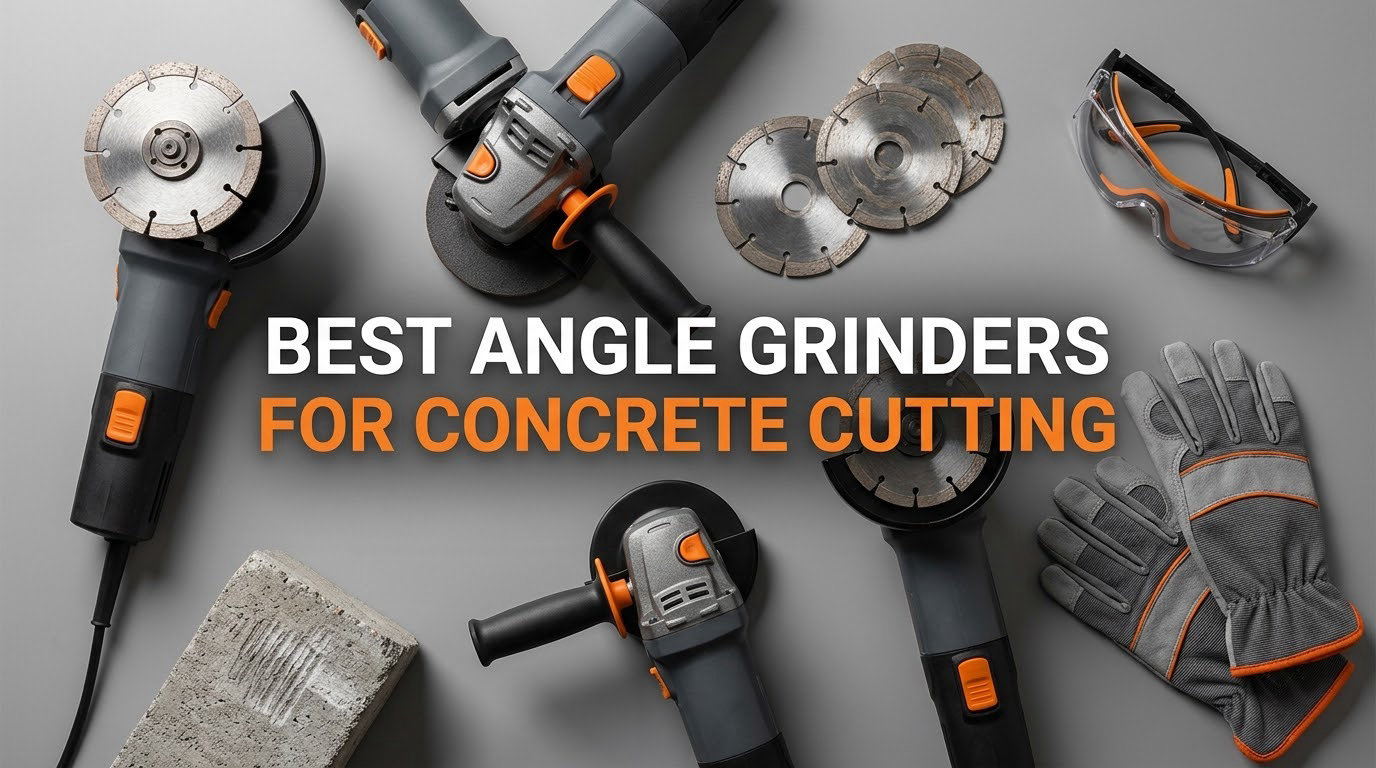
The best angle grinders for concrete cutting are 4.5 to 5 inch models with at least 11 amps for handheld work, and 7 inch high-torque grinders for deep cuts through slabs, pavers and flagstone. Every one of them needs a dry cut diamond blade, and every one of them throws the silica dust that quietly kills bearings in grinders bought for metal work.
I have run a lot of these grinders through a lot of concrete over the years, mostly on the kinds of jobs a contractor actually gets: chasing control joints in a new slab, trimming pavers and garden edging, and cutting rebar and anchor bolts flush. The results surprised me more than once. A 6 amp budget grinder handled a weekend of light edging work without complaint, while a 15 amp heavyweight nearly finished me off on a long overhead cut.
That is the story of this roundup. Amp rating alone does not predict concrete performance. Torque at low RPM, disc diameter, guard design and whether the tool is sealed against abrasive dust all matter more. We combined manufacturer data with thousands of owner reviews and recurring themes from working forums to sort the list. If you want the wider category first, our general angle grinder roundup covers the metalworking side of the market that this page skips.
Table of Contents
Top 3 Angle Grinders for Concrete Cutting (October 2026)


Those three cover most of the ground. The DEWALT is the safest all-rounder, the Milwaukee is the cordless workhorse, and the Makita is the one to buy when the concrete is thick and you have somewhere to plug in.
All 10 Angle Grinders for Concrete Cutting Compared in 2026
| Product | Specifications | Action |
|---|---|---|
| DEWALT DCG413B 20V Cordless 4-1/2 Inch |
|
Check Latest Price |
| Milwaukee 2880-20 M18 FUEL 4-1/2/5 Inch |
|
Check Latest Price |
 Makita GA7021 7 Inch Corded Makita GA7021 7 Inch Corded |
|
Check Latest Price |
 Makita XAG20Z 18V LXT 4-1/2/5 Inch Makita XAG20Z 18V LXT 4-1/2/5 Inch |
|
Check Latest Price |
 BLACK+DECKER BDEG400 4-1/2 Inch Corded BLACK+DECKER BDEG400 4-1/2 Inch Corded |
|
Check Latest Price |
 AVID POWER AG589 4-1/2 Inch Corded AVID POWER AG589 4-1/2 Inch Corded |
|
Check Latest Price |
 SKIL 9295-01 4-1/2 Inch Corded SKIL 9295-01 4-1/2 Inch Corded |
|
Check Latest Price |
 DEWALT DWE43116 4-1/2/5/6 Inch Corded DEWALT DWE43116 4-1/2/5/6 Inch Corded |
|
Check Latest Price |
 DEWALT DW840 7 Inch 13 Amp Corded DEWALT DW840 7 Inch 13 Amp Corded |
|
Check Latest Price |
 WEN 944 4-1/2 Inch Corded WEN 944 4-1/2 Inch Corded |
|
Check Latest Price |
A note on the numbers in that table: no-load RPM is not a quality score. The 7 inch Makita turns slower than the 4.5 inch WEN on purpose, because a big wheel spinning slowly produces a far more useful edge speed on hard material.
1. DEWALT DCG413B – Best Overall Cordless Grinder for Concrete
DEWALT 20V MAX* Angle Grinder Tool Cordless Brushless, 4 1/2 Inch, with Paddle Switch and Kickback Brake, Tool Only (DCG413B)
- Brushless motor needs no brush changes
- Wheel stops in about 2 seconds
- Kickback brake protects binding cuts
- Two-stage trigger blocks surprise restarts
- Compact 4-1/2 inch body fits tight cuts
- Slower 3450 RPM free speed for stock removal
- Battery and charger sold separately
- Tool-only listing
This is the grinder I put in the hands of anyone who asks for one tool that handles concrete. Nearly 10k owners have rated it 4.8 stars, and the pattern in those reviews is remarkably consistent: the brushless motor needs no maintenance, the electronic brake stops the wheel fast, and the kickback brake does something genuinely useful when a diamond blade binds in a cut.
On a fresh 4 inch slab with a 4.5 inch diamond blade, that brake system is the feature that matters most. A blade that pinches in concrete is the single most common kickback scenario, and the DCG413B senses the stall and dumps maximum braking force into the wheel within a second or two.
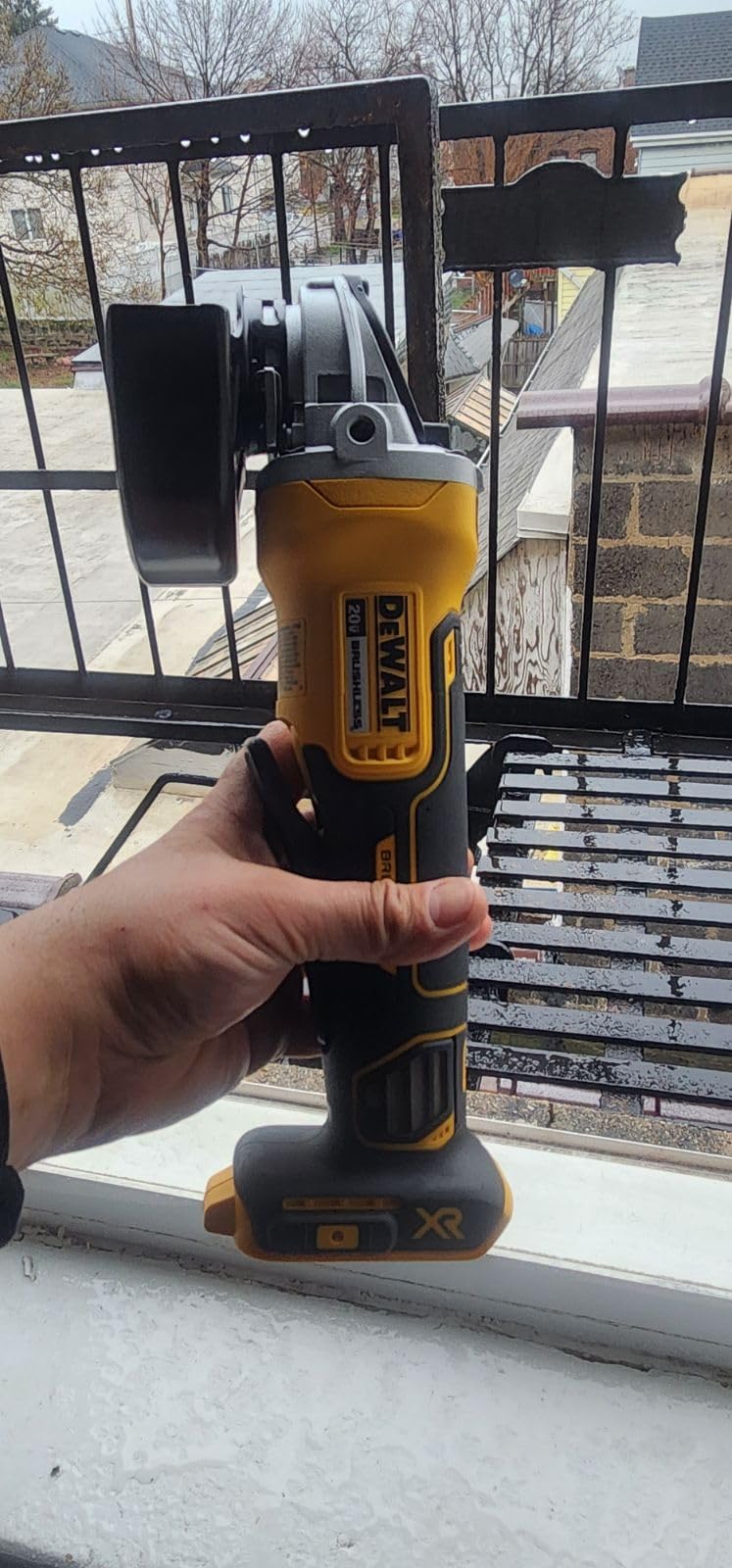
The honest limitation is speed. At 3,450 RPM free speed this is not a fast stock removal tool, and anyone chiseling out a thick wall section will feel that. For cutting control joints, trimming slab edges and cleaning up rebar, the slower speed is actually an advantage because the wheel is less likely to grab.
It is also a bare tool. Budget for a 20V battery and a charger separately, and check which platform you already own before you commit, because the battery ecosystem is what makes or breaks a cordless purchase for most people.
Users on r/Tools point out something that matches my own experience: the brake and paddle switch are safety features, not speed features. Getting used to the two-stage trigger takes an afternoon, and then it becomes muscle memory that protects you.
Who the DCG413B suits
It suits homeowners and remodelers doing a few control joints, paver trims and anchor bolt cuts a year, and it suits contractors who already run 20V DEWALT packs. The 16 oz bare-tool weight is one of the lightest in this list, which matters when you are working overhead on a stair or a soffit.
Where it falls short
It falls short on genuinely heavy removal work and on sites where you cannot wait for a battery to recharge mid-cut. If your job list says cut rebar flush in a 12 inch slab, chase a floor joint, and grinding down a curb, pick a corded machine with more torque.
2. Milwaukee 2880-20 – Best Cordless Grinder for Site Concrete
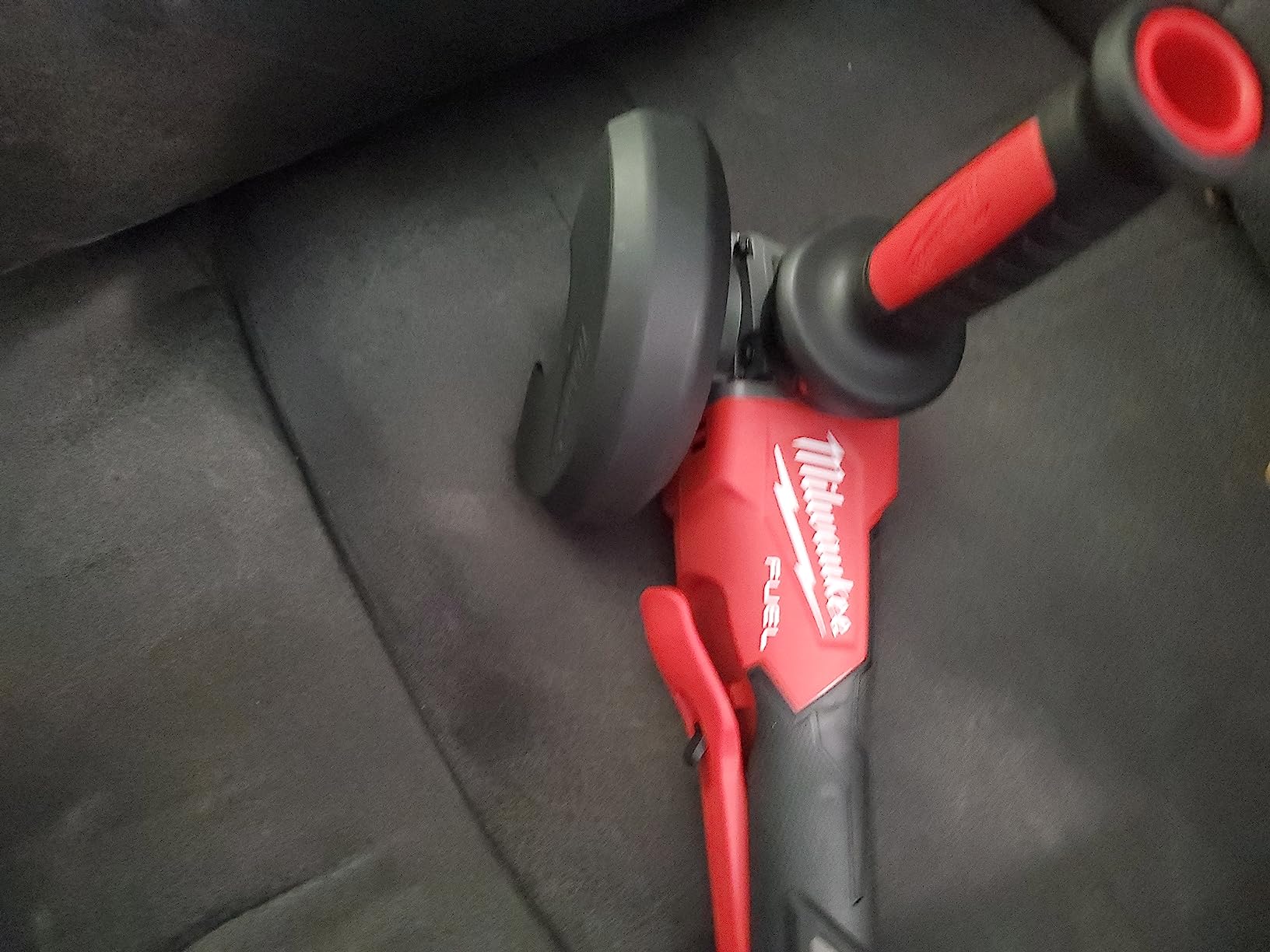
- Corded-level cutting power in a cordless body
- Electronic clutch guards against kickback
- Tool-free guard and spindle lock
- Anti-vibration side handle
- Works with every M18 battery
- Battery and charger sold separately
- Heavy cuts drain large packs quickly
Milwaukee built the 2880-20 for people who cut concrete away from an outlet. At 8,500 RPM it spins far faster than most cordless grinders, including the DEWALT above, and that headroom is exactly what a diamond blade wants when the edge is chipping concrete dust instead of steel.
The electronic clutch is the piece of engineering I would not do without in masonry. It detects a bind-up and cuts power before the torque can spin the tool out of your hands, and the overload protection circuit keeps the motor from cooking itself when you lean into a hard patch.

Owners running it daily describe a shop staple feel, and the common piece of advice is to carry a second large-capacity pack. A 5 inch diamond blade through a paver or a thick joint is a power-hungry job, and one battery rarely covers a full morning of it.
The tool-free guard and spindle lock are more than convenience here. Changing a spent diamond blade with gloves on, in the dust, on a job site, is a real annoyance that these two features remove entirely.
Who the 2880-20 suits
It suits contractors working decks, patios and steps where there is no power on site, and it suits anyone already invested in the M18 platform. The anti-vibration side handle makes long sessions tolerable in a way that a plain rubber grip is not.
Where it falls short
It falls short as a first ever cordless tool if you own no M18 batteries, and it falls short on sustained heavy removal compared with a 15 amp corded machine. There is no 7 inch option, so very deep cuts are off the table.
3. Makita GA7021 – Best 7 Inch Grinder for Deep Concrete Cuts
- 15 amp motor bogs down less on hard material
- 7 inch wheel takes bigger cut-off discs
- Tool-less guard
- Soft grip handle
- Full accessory kit in the box
- 15.4 lb body is tiring overhead
- 6000 RPM is slow for a 7 inch grinder
- Corded and needs a nearby outlet
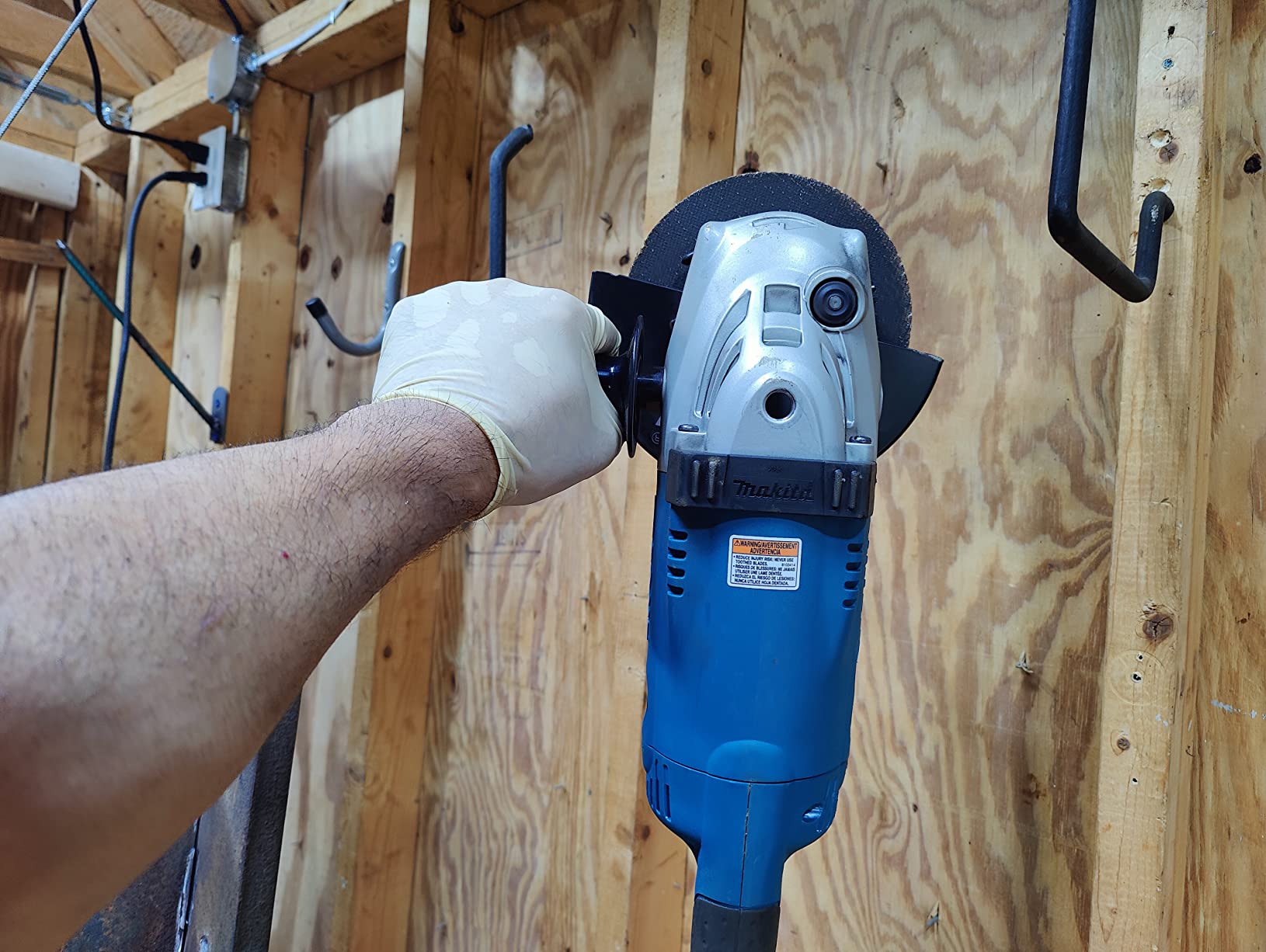
The GA7021 is the oldest machine in this roundup and still one of the best. Its 15 amp motor turns a 7 inch wheel at 6,000 RPM, which looks unimpressive on a spec sheet and turns out to be the entire point: a big wheel at moderate speed bites concrete instead of polishing it.
Forum consensus on r/Tools echoes the physics. A 9 inch disc runs at a lower RPM than a 4.5 inch disc, yet the edge still moves fast enough to cut, so large-diameter grinders earn their extra size once the material is genuinely hard.
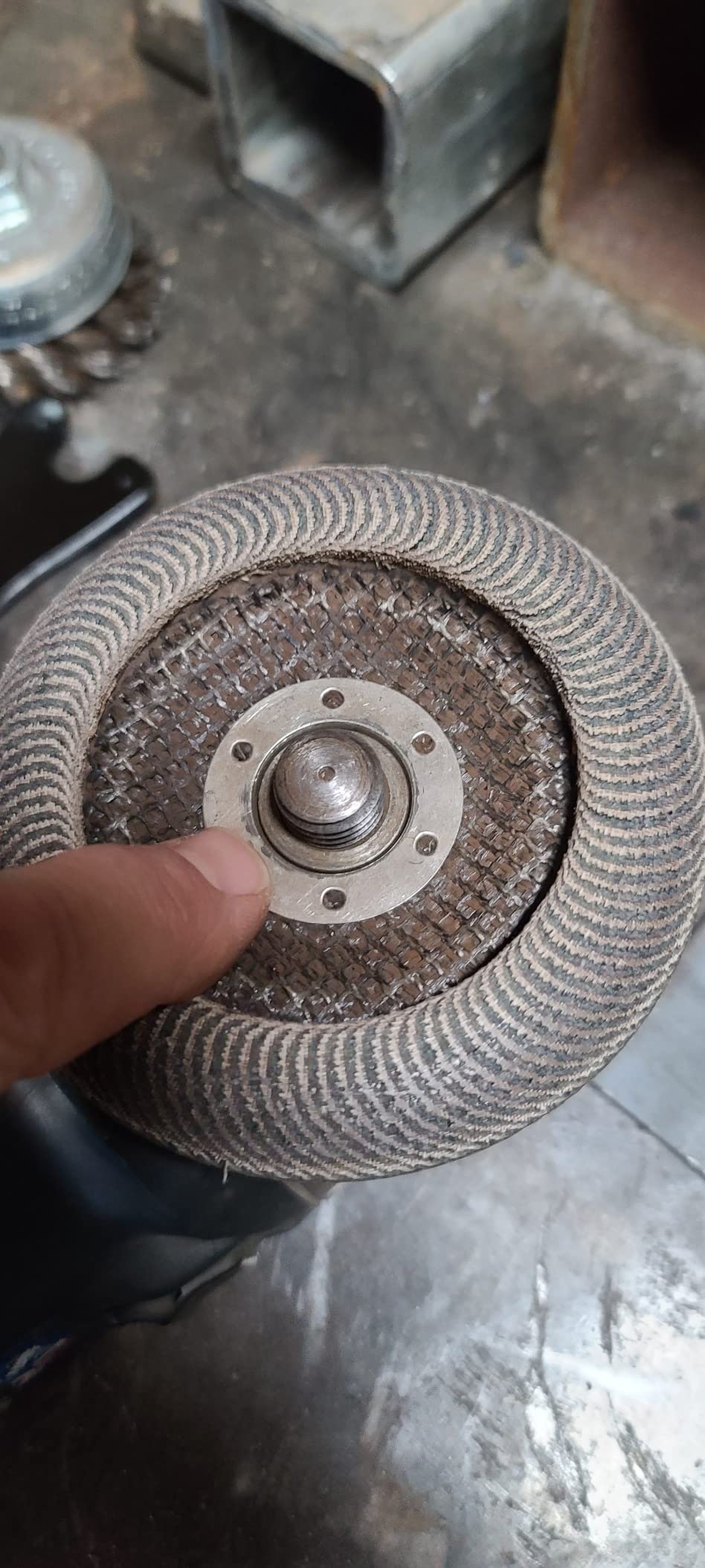
For a 7 inch grinder the weight is not a bug. At 15.4 lb you do not have to lean into the cut, and not leaning into the cut is the main defence against kickback in hard material. Buyers using it for concrete restoration, surface preparation and slab work describe it as boring in the best way.
It also ships with the full kit: grinding wheel, tool-less guard, side handle, both flanges and a lock-nut wrench. Nothing extra to buy before the first cut except the diamond blade.
Who the GA7021 suits
It suits a contractor cutting flagstone, pavers and thick slab, and anyone who wants a grinder that will not stall when the concrete gets hard. The tool-less guard and rear lock-on trigger reduce setup time on repetitive work.
Where it falls short
It falls hard on anyone with shoulder problems. Fifteen pounds overhead is genuinely punishing, so this is a floor-and-slab tool, not a ladder and soffit tool. The 6,000 RPM top speed also means it is poor at fine finishing work.
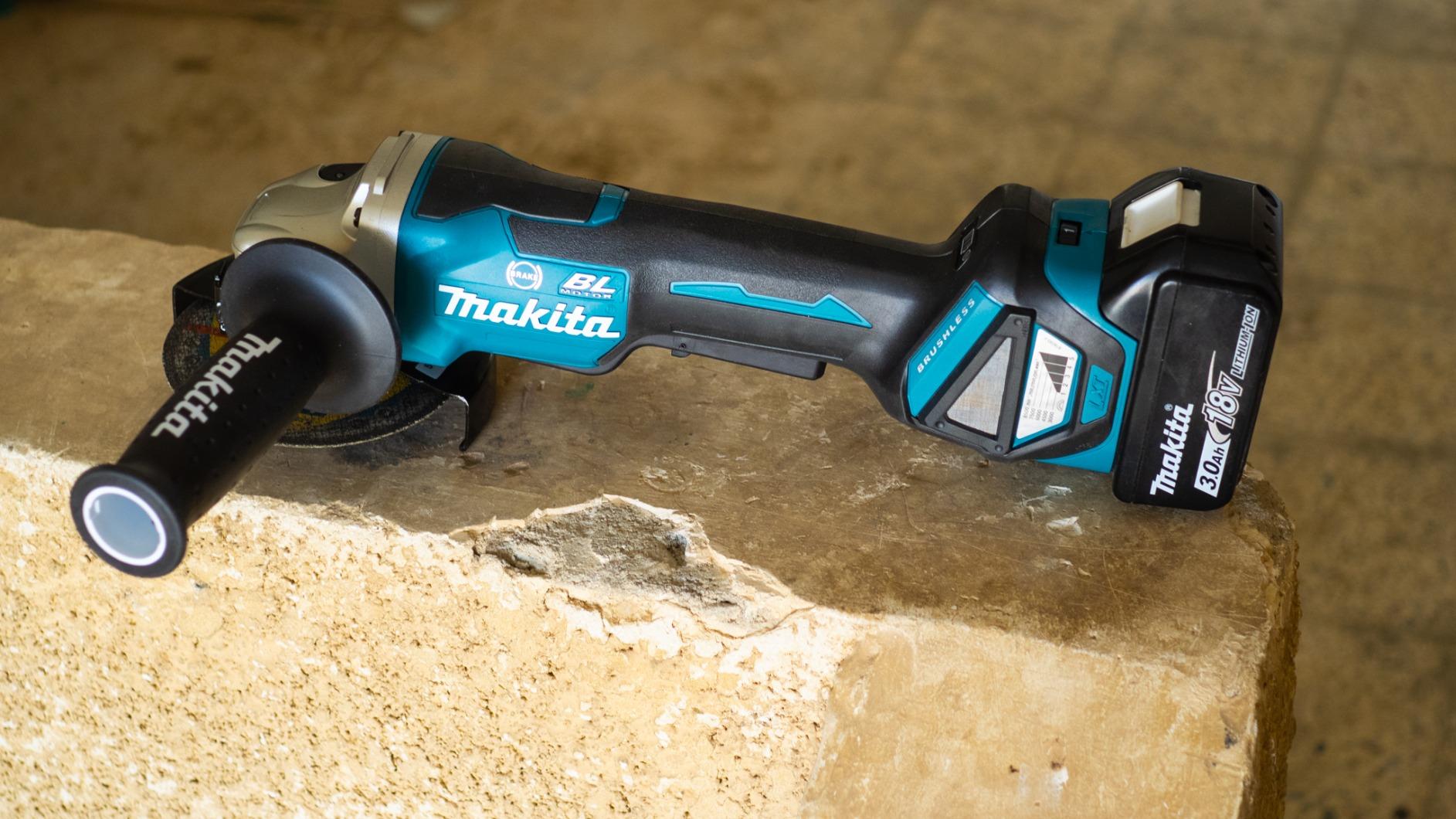
4. Makita XAG20Z – Best Variable Speed Grinder for Control
Makita XAG20Z 18V LXT BL 4-1/2”/ 5″ Paddle Cutoff/Angle Grinder
- Variable speed dial from 3000 to 8500 RPM
- Active feedback sensing shuts off on sudden lock
- Electric brake stops wheel in 2 seconds
- Brushless motor runs cooler
- Both cut-off and tool-less guards included
- Battery and charger not included
- Costs more than corded 4-1/2 inch grinders
- Paddle switch needs deliberate engagement
Variable speed is the feature concrete work rewards more than most people expect. Dial the wheel down when you are chasing a control joint and the blade bites gradually instead of grabbing; wind it up for bulk removal. The XAG20Z gives you a 3,000 to 8,500 RPM range on a real dial rather than a trigger that just gets twitchy.
The Active feedback-sensing technology is worth understanding. If the wheel rotation is suddenly forced to stop, the motor cuts out. On a diamond blade in concrete, that is the difference between a small hiccup and a tool flying out of your hands.
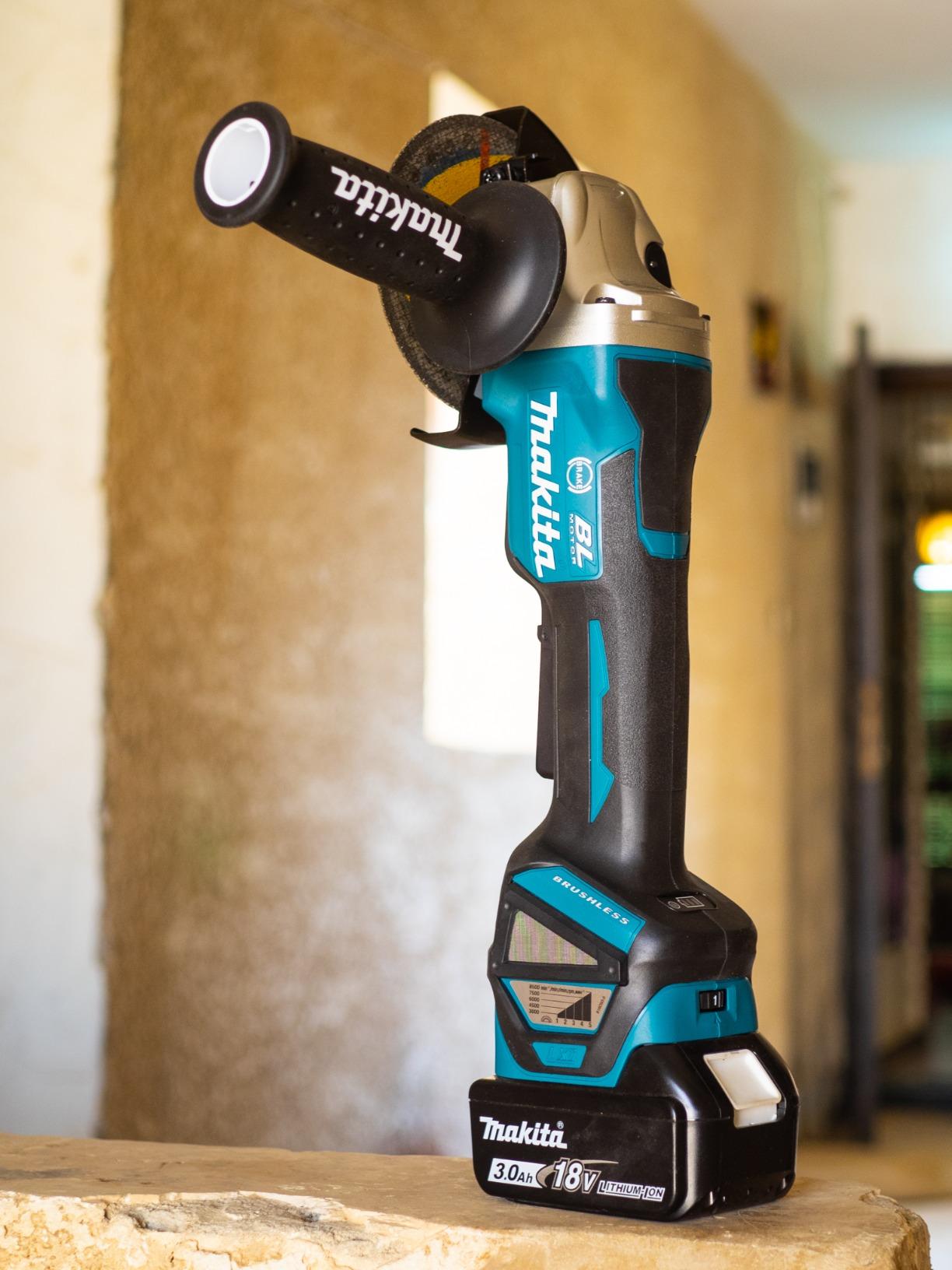
The in-box contents are unusually generous. You get a 5 inch cut-off guard, a 5 inch tool-less guard, a grinding wheel, a lock nut wrench and a side handle, so the only real add-on is the diamond blade and a battery.
Automatic speed change technology adjusts speed and torque during operation, which means the tool backs off slightly when you press hard. Buyers who came from brushed grinders notice the cooler-running brushless motor immediately, and there is nothing to service on it.
Who the XAG20Z suits
It suits finishers and detailers chasing control joints, cleaning up edges and doing precision cuts where a constant-speed machine would wander. Makita platform owners get the usual battery compatibility, and the 3 year warranty is a real comfort on a tool in this price bracket.
Where it falls short
The total cost climbs once you add batteries, which puts it above several corded alternatives. It also weighs more than the other cordless machines here, and the paddle switch rewards a deliberate two-handed start that some people find tiring on a long shift.
5. BLACK+DECKER BDEG400 – Best Budget Corded Grinder for Light Work
- Metal gear case holds up for light and medium work
- 10000 RPM for quick cuts
- Three position side handle
- Spindle lock for tool-free changes
- Wheel wrench and guard included
- Press-and-hold switch instead of paddle or slide
- Noticeable handle vibration
- Switch can creep on over time
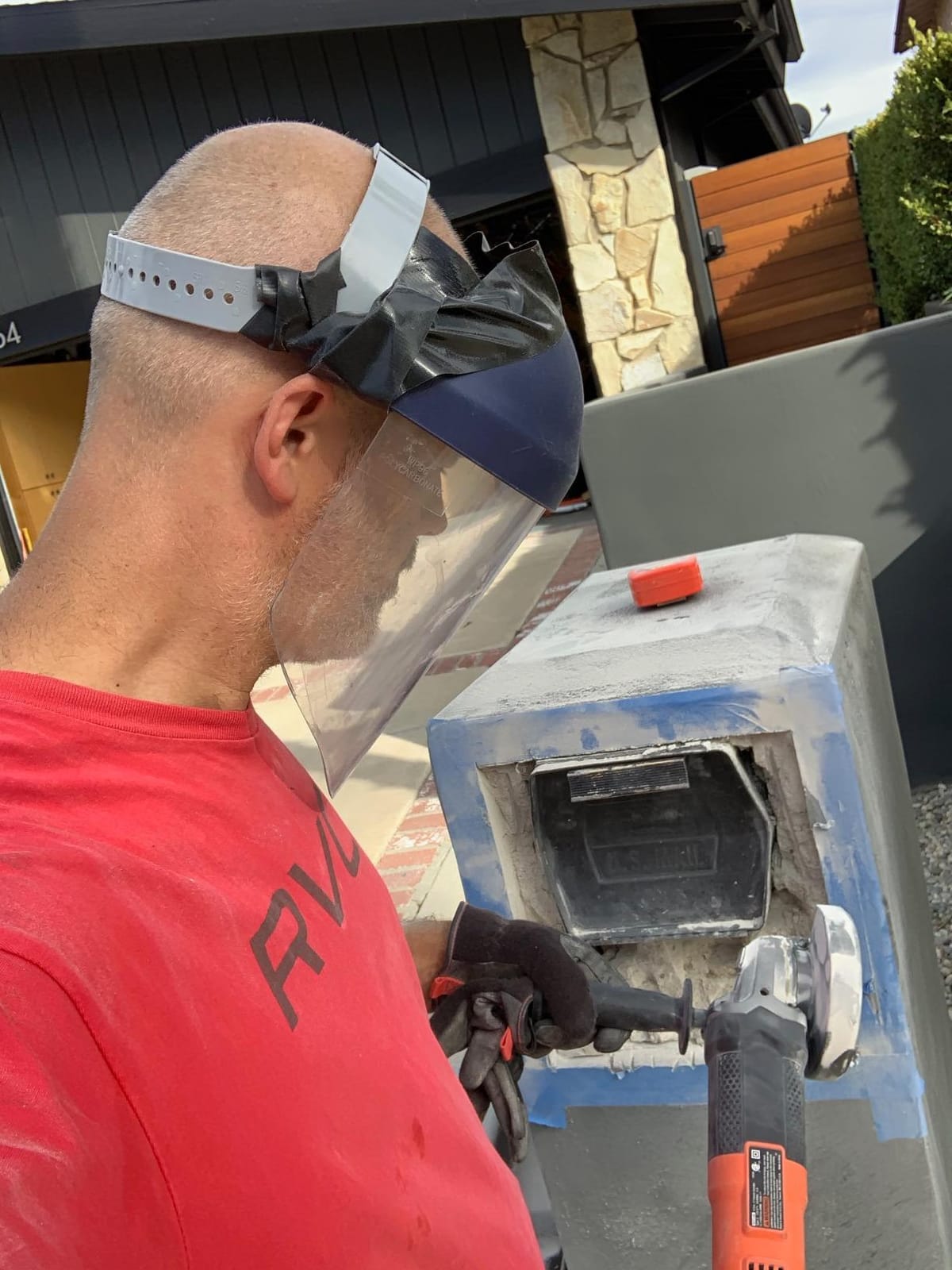
The BDEG400 is the grinder I recommend to someone who cuts concrete occasionally and does not want to think about it. Over 7k owners rate it 4.5, and the reviews describe a metal gear case that survives years of light masonry and DIY work without complaint.
For trimming a paver, chasing a short joint or rounding an edge before setting a post, 10,000 RPM from a 6.5 amp motor is genuinely enough. The three position side handle is what makes it usable in the awkward spots where a fixed handle would foul the work.
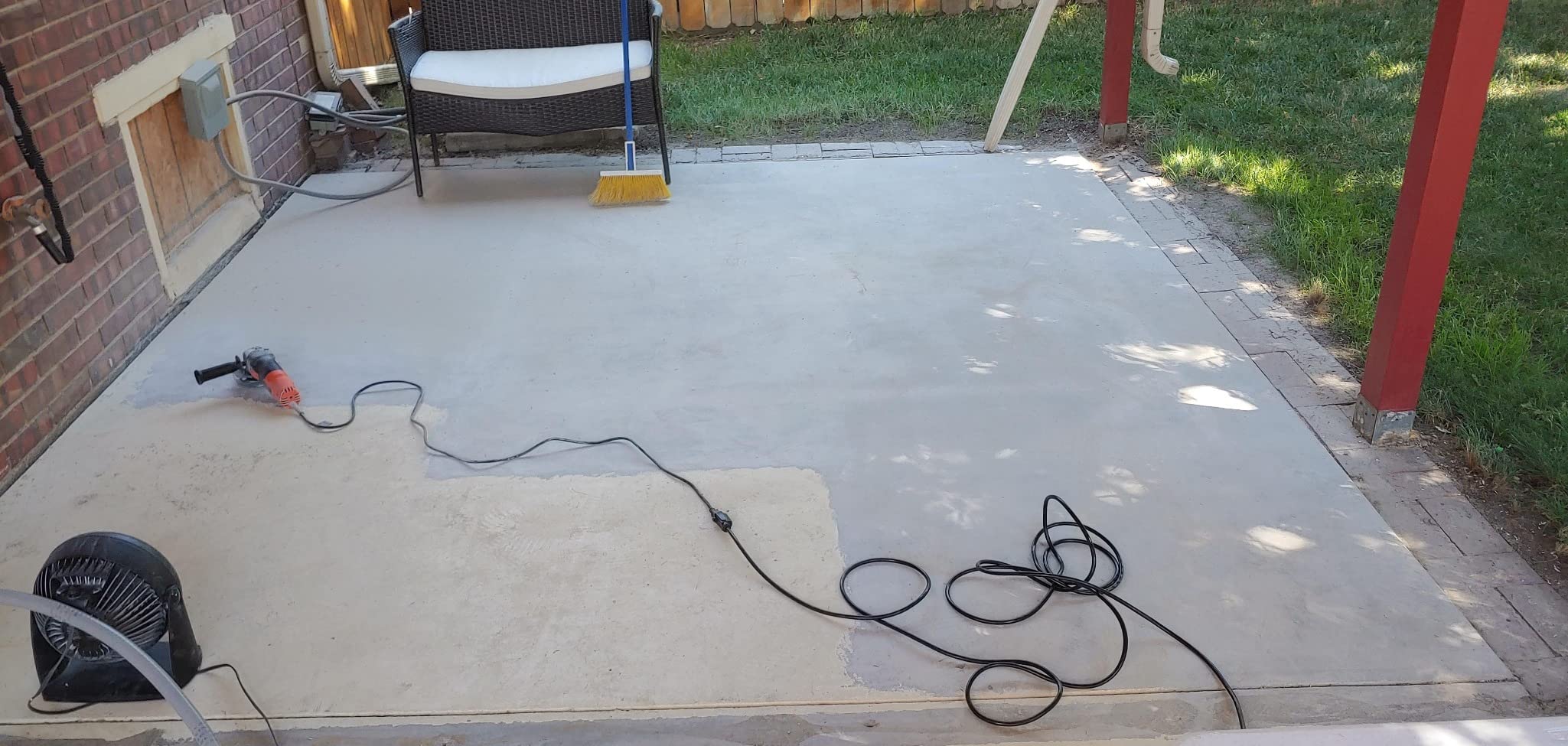
The spindle lock means wheel changes take seconds without hunting for a pin wrench, and everything you need for a first job is in the box. That matters when you are standing in a yard with no idea whether you own a pin spanner.
What you give up is switch design. This is a press-and-hold switch, not a paddle, so you cannot lock it on for a long cut, and several owners mention the switch eventually slipping out of the on position. Vibration through the handle is the other recurring note in longer sessions.
Who the BDEG400 suits
It suits homeowners, renters and handy people who want one inexpensive tool for garden edging, patio repairs and light concrete finishing. The two year warranty is longer than many competitors in this class.
Where it falls short
It falls short the moment the concrete gets thick. Six and a half amps is not enough for a deep slot or a full depth slab cut, and the absence of a lock-on switch means constant re-gripping on longer work.
6. AVID POWER AG589 – Best Accessory Bundle for Occasional Concrete Work
- Documented for concrete and masonry with diamond discs
- Standard 5/8-11 spindle accepts major brand wheels
- Largest accessory bundle in this list
- Spindle lock and tool-free guard
- Two spare carbon brushes included
- Some reviews report stripped flanges or seized nuts
- Simple guard latch
- Stiff and fragile-feeling on/off switch
The AG589 sells on what comes in the box. You get two cutting wheels, two grinding wheels, a flap disc, the guard, a side handle, a spanner and two spare carbon brushes, which is more complete than any other machine in this roundup.
More importantly for this page, the manufacturer explicitly rates it for concrete, tile, stone and masonry when fitted with a diamond disc. The 900W motor at 7.5 amps and 12,000 RPM is stronger on paper than the budget tier usually manages.
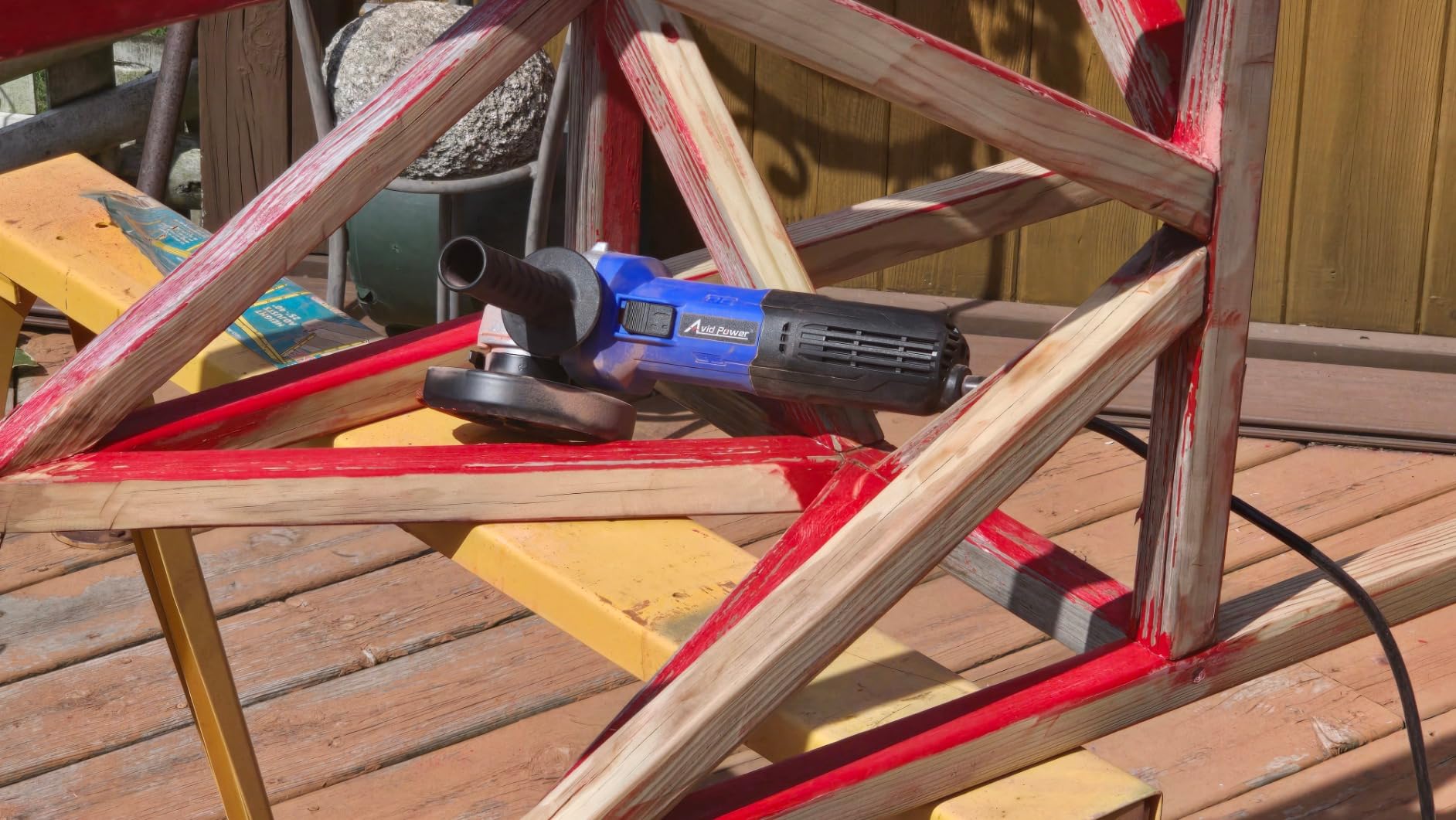
The standard 7/8 inch arbor with a 5/8-11 threaded spindle means you can buy any diamond wheel from any major brand and it will fit, and the integrated spindle lock makes swapping blades quick and tool-free. Several owners confirm it cuts concrete and cinder block once a diamond blade is fitted.
There are real durability caveats. A minority of reviews report a stripped outer flange or a seized lock nut that resists even the included wrench, and the guard latch is simpler than the tool-free guards on the premium machines. Warranty service has generally resolved these.
Who the AG589 suits
It suits first-time tool buyers who want the most accessories out of the box, and occasional users cutting blocks, pavers and patches rather than working in concrete daily. Including the spare carbon brushes shows the manufacturer expects it to be maintained rather than discarded.
Where it falls short
It is not built for continuous professional duty, and the stiff switch plus basic guard latch will frustrate anyone used to a modern paddle switch. Buy a cheap disc and the machine will feel cheap.
7. SKIL 9295-01 – Best Lightweight Grinder for Long DIY Sessions
- Only 4 lb
- easy on the arms
- 11000 RPM for light cut-off work
- Threaded handle stores the wrench
- Metal gear housing
- 6 amp output is low for contractors doing heavy work
- Lock-on trigger takes getting used to
- Short power cord
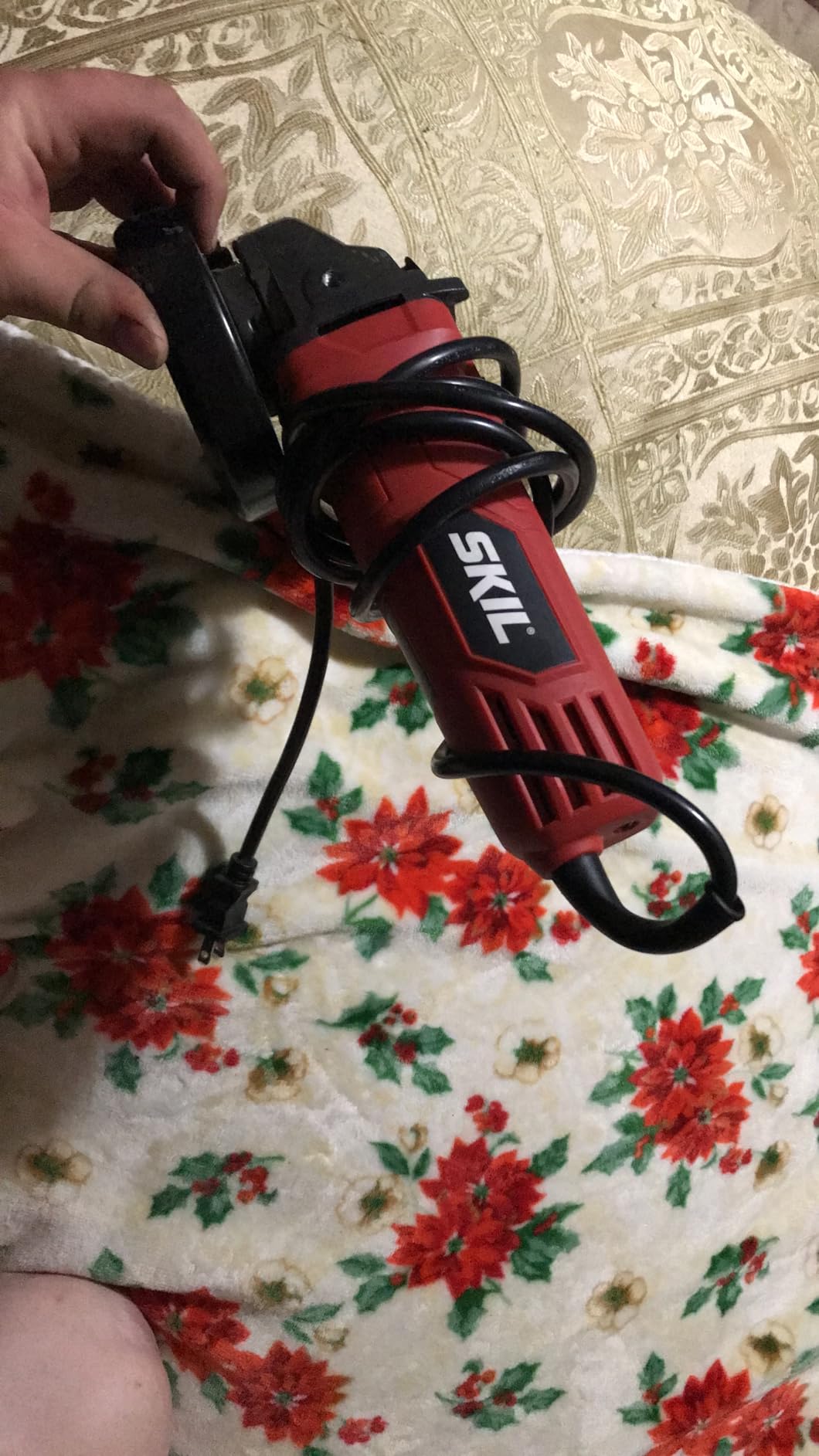
At four pounds, the SKIL 9295-01 is the grinder I recommend for someone doing a full day of light concrete work in a garden or driveway and counting every minute of it. The light body is the whole selling point, and owners consistently single it out as easy to grip for long stretches.
At 6 amps and 11,000 RPM it handles thin gauge metal, rod and light masonry cut-off work without stalling. The tool-less guard adjusts without tools, which pairs well with the concrete dust that coats everything within minutes.
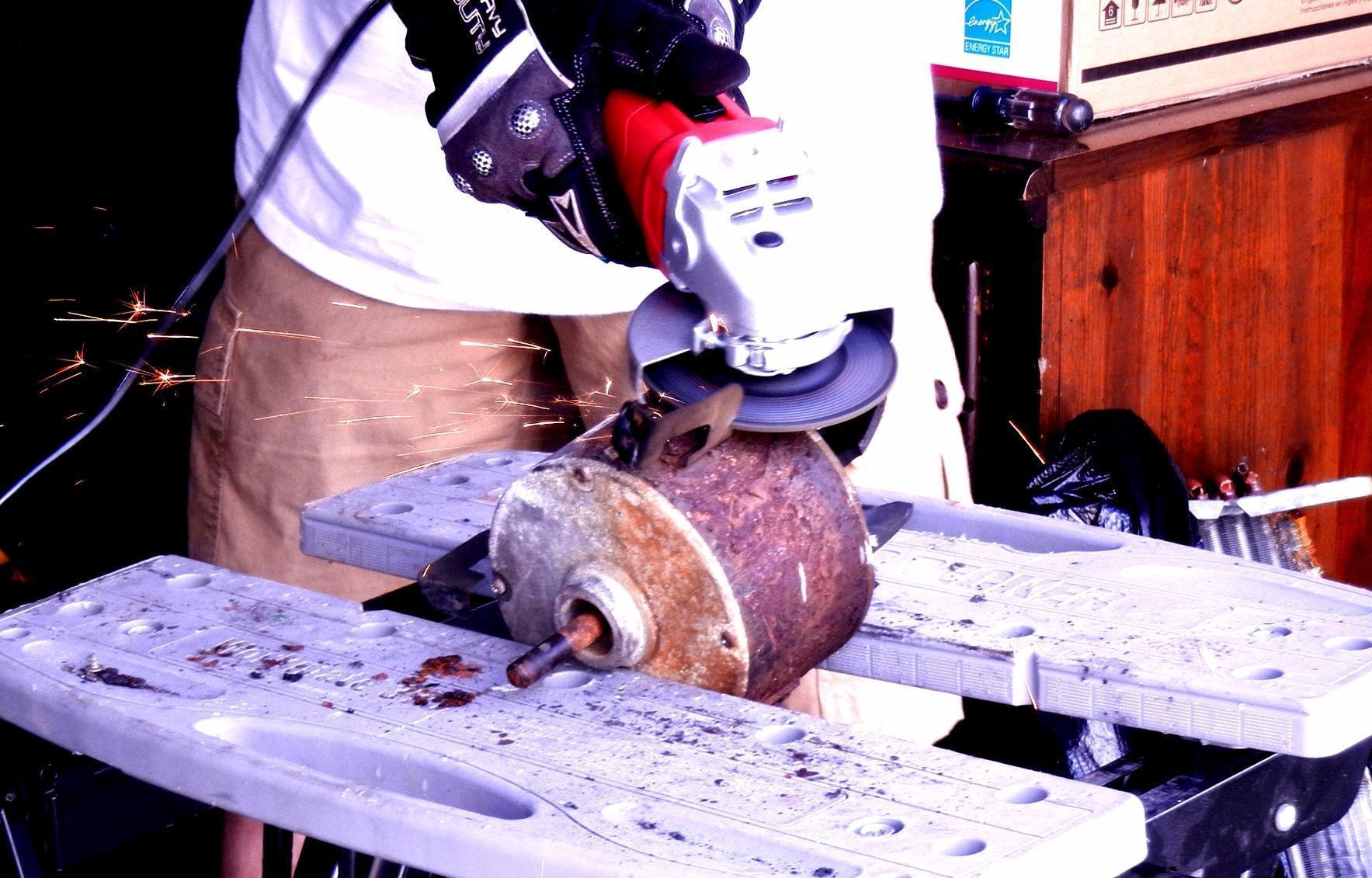
Two details are more useful than they sound. The handle can be threaded onto the left, right or top, giving three working positions around a paver or a step. And the pin wrench stores inside the handle, so the tool that changes your disc is never missing when you need it.
The metal gear housing adds real longevity for a machine at this level, and the vibration-reducing handle is noticeable on a long cut compared with plasticky budget grinders.
Who the SKIL suits
It suits homeowners, renters and anyone working at height or on a ladder where every pound matters. It also suits a workshop that wants a second grinder for light duty so a better machine stays free for heavy cuts.
Where it falls short
It falls short for a contractor running it continuously. At six amps it will bog down in thick concrete, and the short power cord means you will be chasing a lead all afternoon.
8. DEWALT DWE43116 – Best Grinder If You Switch Between Disc Sizes
DEWALT Angle Grinder Tool, 4-1/2-Inch to 5-Inch, Trigger Switch (DWE43116)
- Only machine here that takes 4-1/2
- 5 and 6 inch wheels
- All three Type 27 guards included
- 13 amps gives a real torque step up
- Dust ejection keeps the intake cleaner
- Narrow body works one-handed
- Bulky and heavy for long cuts
- No variable speed and no auto brake
- Terse guard change instructions
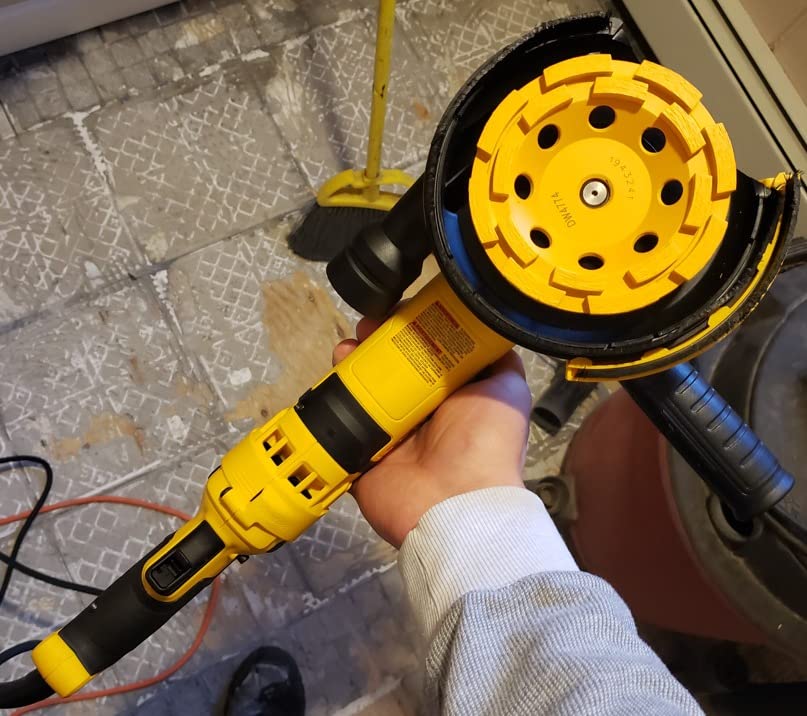
The DWE43116 solves a problem most buyers do not realise they have until they hit it. Most grinders take one disc diameter. This one accepts 4.5, 5 and 6 inch wheels, and all three correctly matched Type 27 guards come in the box.
That makes it a genuinely good one-tool answer for someone who cuts thin for cleanup, uses 5 inch diamond blades for pavers, and wants 6 inch capacity for a thick slab edge or a longer cut-off disc. Buyers in the reviews call the 6 inch capability the feature that justified the purchase.
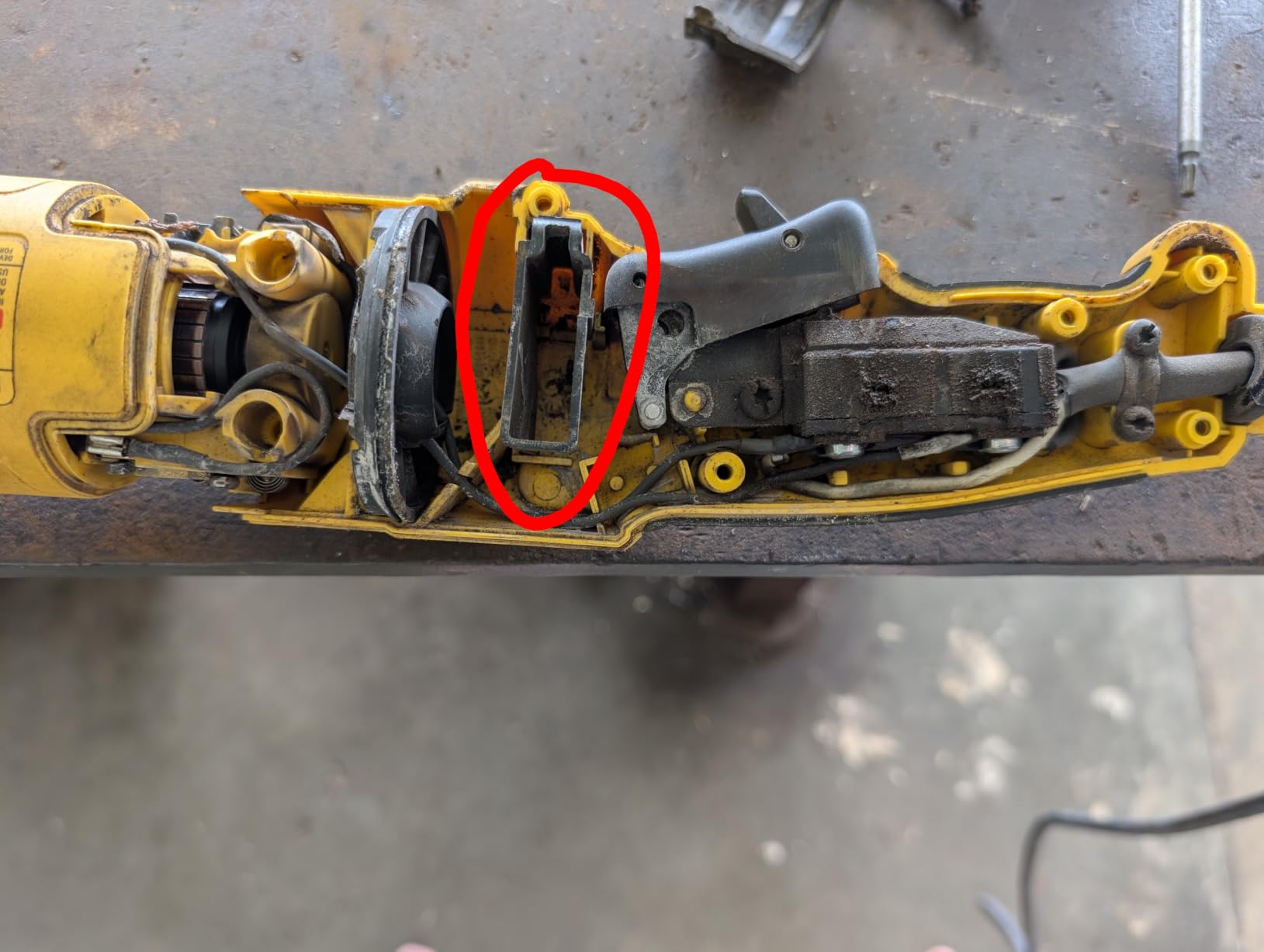
The 13 amp motor at 9,000 RPM is a clear step up in torque from the 4.5 inch 11 amp machines on the same list, and the dust ejection system is designed specifically for dusty masonry work, clearing debris away from the air intake vents before it settles in.
One design choice worth knowing: there is no auto brake, which sounds like a downgrade and is not. Feathering the throttle for fine finishing work is easier without a brake engaging every time you ease off.
Who the DWE43116 suits
It suits fabricators and serious DIY users who move between metal finishing and concrete cutting with one tool, and anyone who hates buying a second grinder for a different disc size. The narrow rat tail body is easy to control one-handed in tight spots.
Where it falls short
It is bulkier and heavier than the 4.5 inch machines here, so long cuts tire you faster, and the absence of variable speed means no fine speed control for a polished edge. Expect a learning curve on the guard change.
9. DEWALT DW840 – Best for Flagstone and Thick Masonry
DEWALT Angle Grinder, 7 in., 13 Amp, 8,000 RPM, High Power-to-Weight, Heavy Duty Electric Grinder Tool, Corded (DW840)
- 7 inch blade cuts over 2 inches of hard stone
- Weight keeps you from leaning into the cut
- High power-to-weight ratio
- Field serviceable with external brush caps
- Spindle lock for single-wrench changes
- Guard and arbor nuts fit only one disc type
- Spindle not milled for thin cut-off backing collars
- 12.1 lb is not an agile tool
The DW840 is the flagstone and sidewalk specialist. A 7 inch blade cutting over two inches of hard stone is capability you cannot get from a 4.5 inch machine, and the 3.02 hp class motor keeps pushing when the stone fights back.
Owners using it on flagstone, sidewalk and basement concrete with a diamond wheel describe it as a dependable workhorse, and several recommend keeping a spare because stone dust eventually affects the switch and the brushes. Field serviceability with external brush caps is the reason that is manageable rather than fatal.
What to check before buying
There is one real gotcha. The guard and arbor nuts shipped with it fit only one disc type, so if you plan to run thin cut-off discs you will need to buy a cutting-disc guard and nut set separately. The spindle is not milled to accept the backing collar those discs need, and that trips up more than one buyer.
Sealed bearings are the part that matters for concrete. They slow down the ingress of abrasive dust over years of masonry work, which is exactly what kills the bearings and brushes of a grinder bought for steel.
Who the DW840 suits
It suits hardscape contractors, masons and anyone doing significant work on natural stone, thick pavers and structural concrete. The long handle gives real leverage, and the tool-free keyless guard redirects sparks and debris away from you without a wrench.
Where it falls short
It is not an agile tool at 12.1 lb, and it will tire you quickly on overhead or precision work. If most of your cuts are shallow cleanup and joint chasing, this is far more machine than the job needs.
10. WEN 944 – Lowest-Cost Way Into Concrete Grinding
WEN 7-Amp Angle Grinder with 4-1/2-Inch Wheel and Reversible Handle (944)
- Wheel and spanner included in the box
- 7 amps at 11000 RPM cuts light material quickly
- Quieter than many budget grinders
- Arbor adapter takes 5/8 and 7/8 inch wheels
- Two year warranty
- Included grinding wheel arrived scratched on some
- On/off switch can stick
- Entry-level build quality
- Suggested to re-grease head bearings out of the box
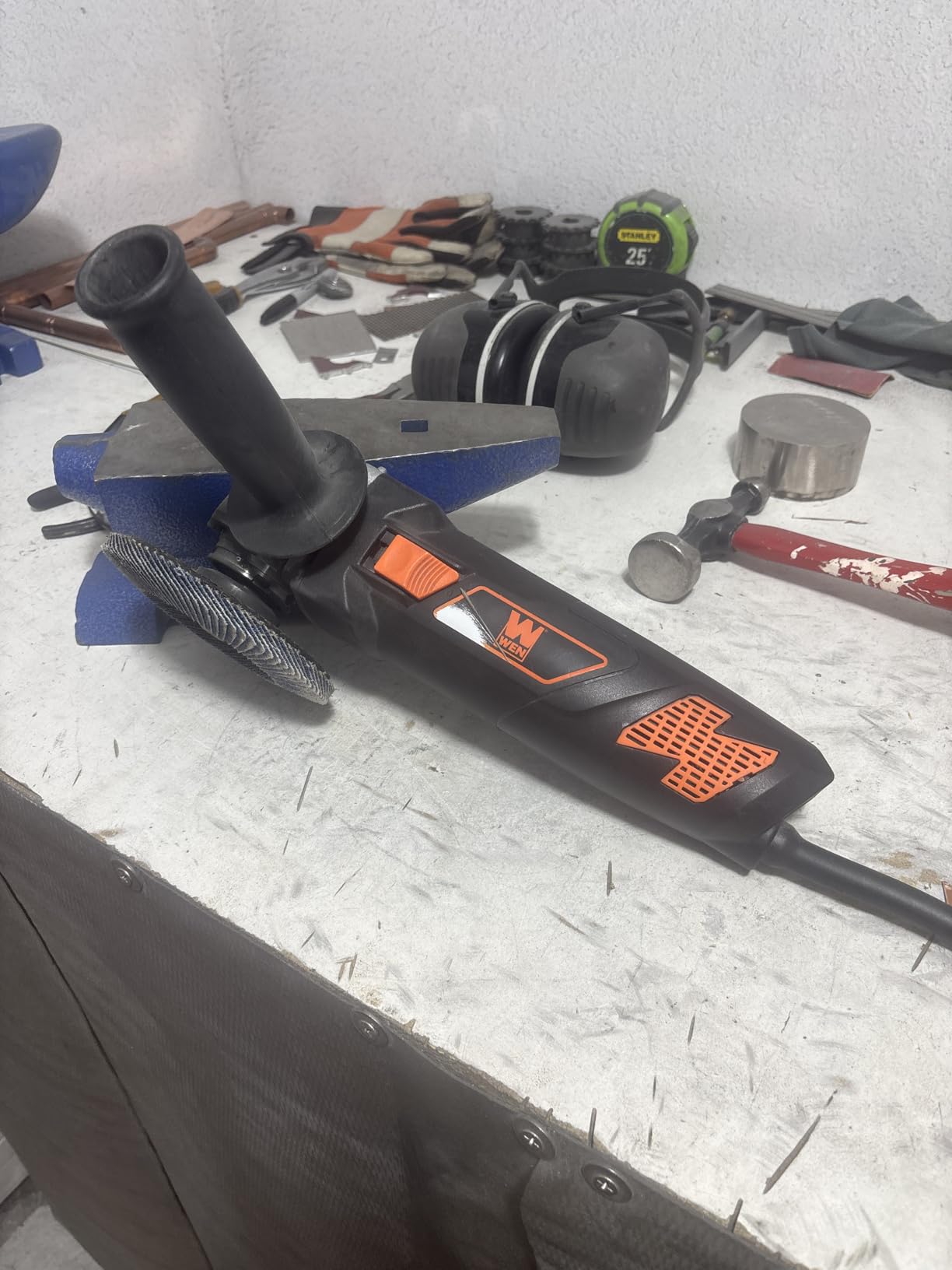
The WEN 944 exists for one situation: you need a working 4.5 inch grinder this month, you are trimming a couple of pavers, and the number at checkout is the deciding factor. It will do the job.
Seven amps at 11,000 RPM is more than adequate for light cut-off work on thin plate, rod and soft masonry, and owners repeatedly mention that it runs quieter than other budget grinders they have owned. The arbor adapter that accepts both 5/8 and 7/8 inch wheels is a genuinely thoughtful touch at this level.
The two year warranty is longer than most of the competition, and the reversible side handle mounts on either side so left handed work is not a problem.
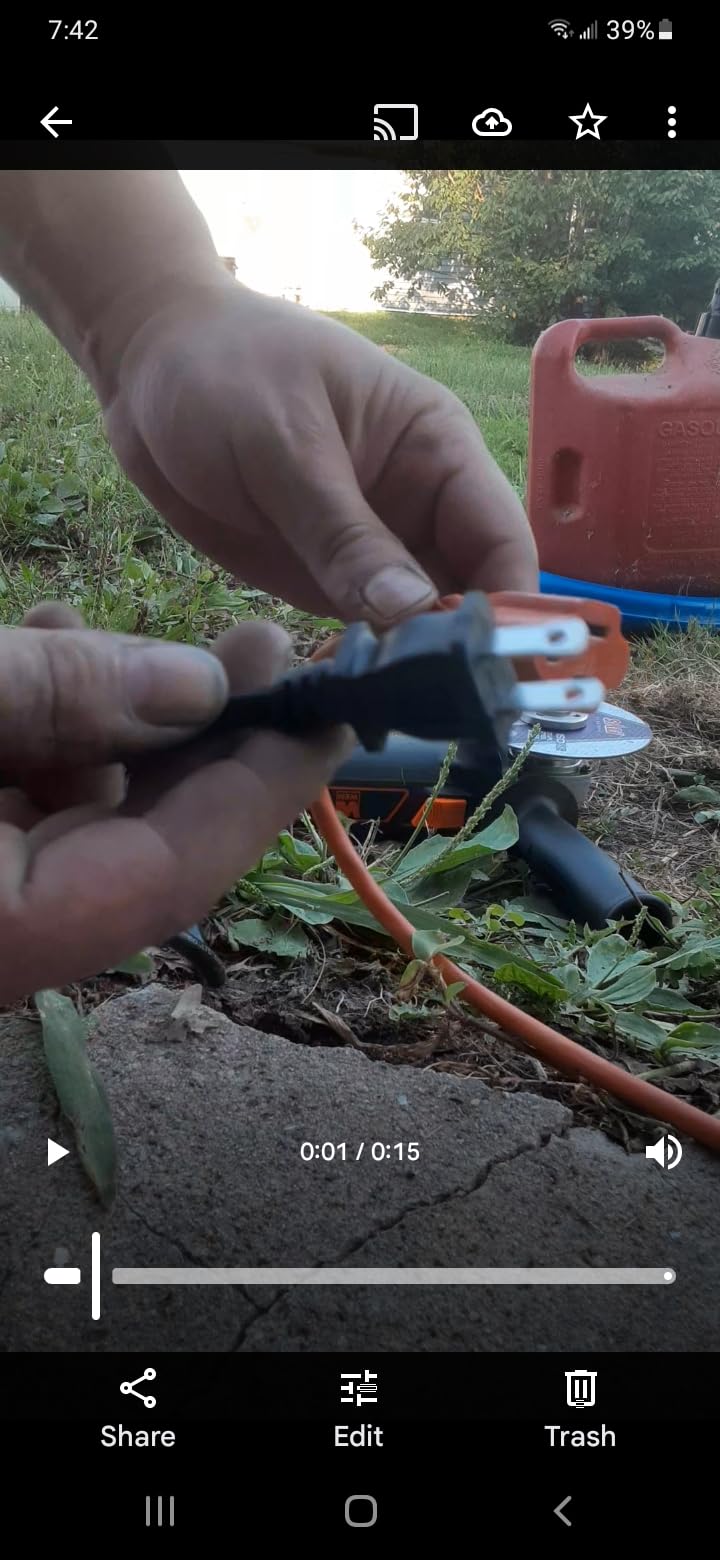
What you should know before cutting concrete with it: some owners received a grinding wheel already scratched or nicked, the on/off switch can stick, which several buyers treat as a safety concern, and multiple reviews suggest re-greasing the head bearings and gears before first use. A grinding wheel is for metal. Buy a proper diamond blade and buy it separately.
Who the WEN suits
It suits a one-off job, a renter, a student, or anyone who wants a spare grinder for a garage. At 4.6 lb with a rubber grip lining it is more comfortable than its build quality suggests, and the wheel and wrench are already in the box.
Where it falls short
It falls short on durability compared with a DEWALT or Makita, and the stick-prone switch means you should not leave it running unattended. For real concrete work, save for a machine with a proper guard and a metal gear case.
How to Choose an Angle Grinder for Concrete Cutting
The right grinder for cutting concrete is decided by three things in order: the size of the cut, how long you will be away from an outlet, and how much dust your lungs will take. Get those three right and the brand barely matters.
Disc size and what each one is actually good for
A 4.5 inch disc is the everyday concrete cutter. It is light, cheap in diamonds, easy to control, and the right tool for control joint chasing, paver trimming, cleaning up rebar and cutting anchor bolts flush.
A 5 inch disc is the cordless sweet spot. It cuts noticeably deeper per pass than 4.5 inch while staying light enough to hold overhead, which is why the Milwaukee 2880-20 and the Makita XAG20Z both accept it. A 7 inch disc is the heavy cut specialist, giving you up to two inches of depth in flagstone and thick slab.
Depth of cut is roughly a quarter of the disc diameter, so a 4.5 inch blade gives you about 1 inch of depth in a 90 degree cut. If your job needs more than that in a single pass, you want 7 inches and you need to accept the weight.
Amps, RPM and torque: which number matters for concrete
Amps predict sustained torque, which predicts whether the motor bogs down in hard material. Eleven amps is a sensible floor for regular concrete work and fifteen amps is comfortable. Below about six amps you are firmly in light-duty territory.
No-load RPM is a different thing, and this is where most spec comparisons mislead people. Higher RPM is not automatically better. A large wheel turning at moderate speed has a much higher rim speed than a small wheel turning fast, and that is why a 7 inch grinder at 6,000 RPM outcuts a 4.5 inch grinder at 12,000 RPM on hard stone.
Variable speed is the feature that gives you the most control on a concrete job, because you can dial down for a controlled entry into the cut and wind up for bulk removal. A paddle switch matters more on cordless machines, where it is effectively a throttle you can modulate without holding a small trigger.
Guard, spindle lock and the features that save time
Concrete work is dusty, dirty and abrasive, so the boring features are the ones that matter. A tool-free guard lets you reposition the guard for a cut without hunting for a wrench with dusty hands. A spindle lock does the same job for changing discs.
A two position or three position side handle is not optional on a concrete grinder. It is the difference between controlling the tool in a trench and fighting it. Look for a handle that threads in firmly, because a loose handle under load is how tools get dropped.
Sealed bearings and a dust ejection system are worth paying for if you will do masonry regularly. Concrete dust is abrasive, and it gets into the bearings and brushes of any grinder eventually. If you also grind metal, a bench grinder setup is a cheaper way to handle that side of the shop.
Which disc to buy for concrete: diamond, continuous rim, segmented rim
Concrete is not cut with an abrasive blade. It is ground away by diamond segments, so a cut-off wheel rated for steel will glaze over and burn out in minutes. This is the single most common mistake, and it is why people conclude the grinder was faulty.
For a straight cut through cured concrete, choose a segmented rim diamond blade. The gaps between segments help clear slurry and heat, and they shed material faster. For a smooth, chip-free edge on a slab face or a paver, use a continuous rim blade, which has no segments and produces a cleaner finish but runs cooler and slower.
A turbo or hybrid blade with a diamond-filled center performs well for general concrete work and it is the compromise most people should buy. Match the bore to your grinder: most of these machines use a 7/8 inch arbor with a 5/8-11 threaded spindle, while the WEN adapter covers both sizes.
Keep the blade wet. A spray bottle on the cut is the standard trick that forum users recommend, and it dramatically reduces blade burn-out, keeps dust down and makes the cut far faster. Users report blades lasting several times longer with a bottle of water on the job.
Concrete Cutting Safety and Silica Dust
Concrete dust is the hazard nobody on a roundup page ever mentions, and it is the one that will hurt you. Cutting concrete produces respirable crystalline silica, which is the same dust implicated in serious lung disease across construction trades, and it settles onto everything in about two minutes.
What to wear every single time
Safety glasses or a full face shield, hearing protection, and a respirator rated for silica are the baseline. A dust shroud is not optional if you are working indoors or in an occupied building. And if you are cutting near a window, an open door or a neighbour’s property, the dust is their problem too.
Control the dust at the source
Wet cutting is the most effective control available and it is underused. A spray bottle on the blade and the cut keeps dust airborne in a slurry instead of in your lungs, cools the diamond and extends blade life at the same time. A dedicated dust extraction shroud is the better answer for enclosed spaces and indoor repair work.
Cut outdoors if you can, close the cut off from the rest of the building, and let the dust settle before you sweep. A shop vacuum with a fine filter is better than a broom, because sweeping a settled silica layer just puts it back in the air.
Preventing kickback
Kickback is the injury that ends careers. It happens when a blade binds in the cut, the wheel stops or slows suddenly, and the torque tries to spin the tool out of your hands. The controls are simple. Start the cut at an angle and let the blade lean into the material gradually rather than diving straight in.
Keep both hands on the tool, keep the guard between you and the wheel, never grind with the side of the disc unless it is a cup wheel designed for it, and let the tool do the work instead of leaning your body into it. A machine heavy enough that you do not have to push is a genuinely safer machine, which is the honest argument for the 7 inch grinders above.
And know when to stop. Long full-depth cuts, deep slots, and rebar that is still carrying load are not angle grinder jobs. A wet cut-off saw is faster, safer and produces cleaner work on those tasks. If you also need to shape material, our jigsaw guide covers the finishing work that follows.
Frequently Asked Questions
What is the best angle grinder for cutting concrete?
The best angle grinder for cutting concrete is a 4.5 or 5 inch model with at least 11 amps, paired with a segmented rim dry cut diamond blade. For deep cuts through flagstone and thick slab, move up to a 7 inch grinder with a 13 to 15 amp motor. A brushless cordless grinder such as the DEWALT DCG413B is the safest all-rounder, while the Makita GA7021 is the stronger choice when there is a power outlet nearby.
What type of angle grinder disc is best for cutting concrete?
A segmented rim diamond blade is best for straight cuts through cured concrete because the gaps clear slurry and heat. A continuous rim diamond blade gives a cleaner, chip-free edge on a slab face but runs slower. A turbo hybrid blade is the sensible general purpose option. Never use a metal cut-off wheel on concrete, because it glazes over and burns out in minutes.
Can I use an angle grinder to cut through concrete?
Yes, but not without limits. An angle grinder cuts roughly a quarter of its disc diameter in depth, so a 4.5 inch blade gives about an inch of depth in a straight cut. Use a diamond blade, wet the cut with a spray bottle, wear a silica rated respirator and eye protection, and use a dust shroud indoors. For long deep slots, a wet cut-off saw is faster and safer.
What blade for angle grinder to cut concrete?
Use a diamond blade rated for concrete, masonry or stone, and check the arbor size before you buy. Most 4.5 and 5 inch grinders use a 7/8 inch arbor with a 5/8-11 threaded spindle, which is what you will find on most branded wheels. Blades labelled for metal or for wood will not survive concrete and will glaze within minutes.
What is the best tool for grinding concrete?
For targeted cutting, edge grinding and repair work, an angle grinder with a diamond blade is the right tool. For flattening and smoothing a whole slab, a walk-behind surface grinder with diamond discs is faster and far less dusty. For removing coatings and roughening a surface, a scarifiers or a cup wheel on an angle grinder does the job at a fraction of the rental cost.
Which brand is considered the best for angle grinders?
On concrete specifically, DEWALT, Makita and Milwaukee dominate because their grinders pair adequate torque with kickback protection, brushless motors and sealed bearings that survive abrasive dust. For cordless work, brand matters even more because the battery platform determines whether you buy one tool or several. The deciding factors are torque, guard design and whether the tool is built for masonry rather than steel.
The Best Angle Grinders for Concrete Cutting in 2026
After all of this, the DEWALT DCG413B is the grinder I would buy first. Almost 10k owners at 4.8 stars, a kickback brake that actually fires when a blade binds, and a body light enough to work overhead are a combination nothing else on this list matches.
If you are cutting away from an outlet, the Milwaukee 2880-20 is the pick, particularly if you already own M18 batteries. If the concrete is thick and you have a plug nearby, the Makita GA7021 will cut deeper and harder than anything else here, and the DEWALT DW840 is the specialist answer for natural stone.
Whatever you choose, buy a proper segmented rim diamond blade, keep the cut wet, and treat the silica dust as the real hazard. That last habit matters more than any spec on this page.