
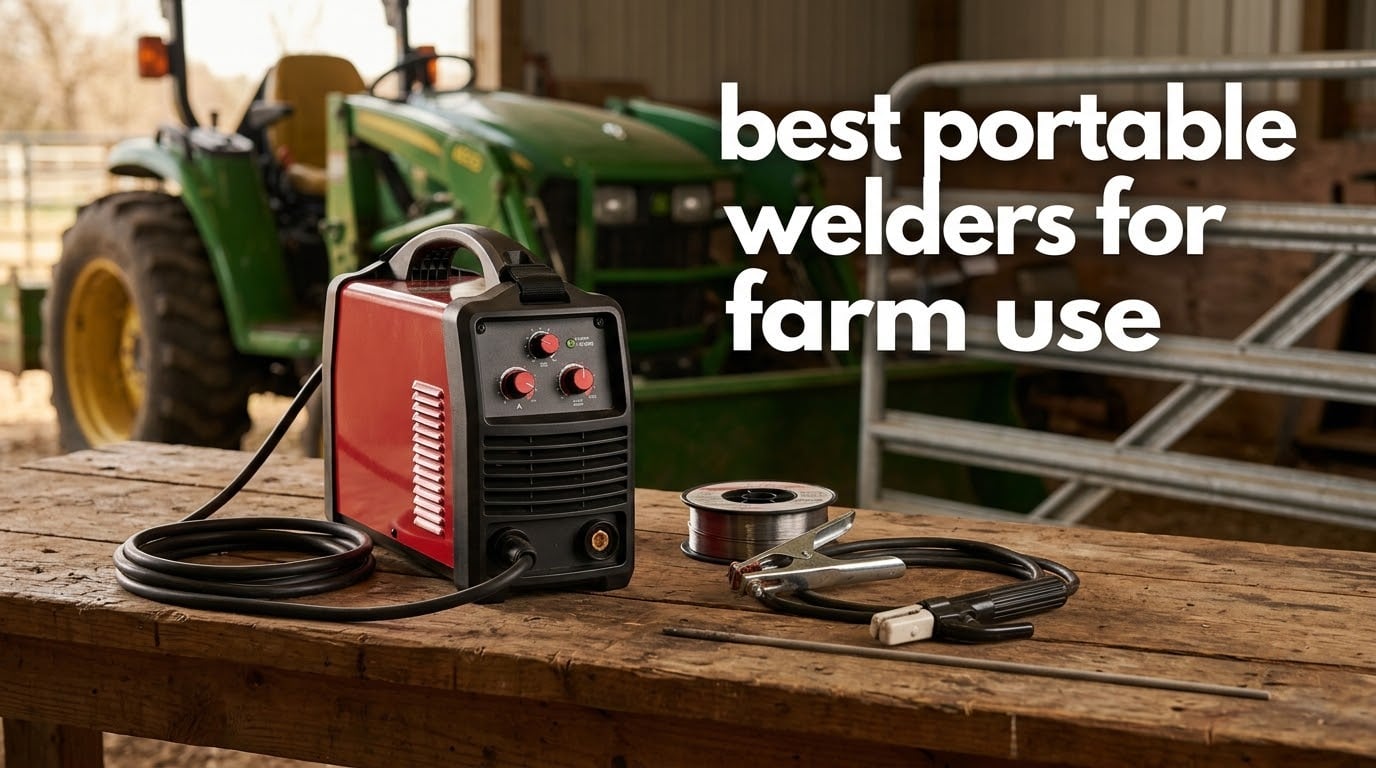
A broken mower deck does not care about your schedule. Neither does a snapped post driver, a cracked grain trailer rail, or a gate hinge that sheared off in the mud last Tuesday. The difference between outsourcing that repair and having a machine in the barn is measured in days of downtime, and across the farm forums the same message repeats: buy the welder you will actually practice on, not the impressive one that sits in the corner.
That is the filter we used to build this list of the best portable welders for farm use in 2026. Every machine below runs on inverter technology, weighs under 30 pounds, and can be carried from the shop wall to a hitch, a fence post, or the far end of a pasture. We matched each one to named farm jobs rather than to marketing language, and we weighed owner-reported field reliability as heavily as the spec sheet.
Three picks lead the group. The DEKOPRO 160A dual-voltage stick inverter is the one we would own, with more than 6,100 ratings behind it. The YESWELDER 205Amp gives you the most output per pound in this group. The ARCCAPTAIN 130A is the fastest way to get a fence or gate job done without buying a gas cylinder.
Table of Contents
What Is the Best Welder for a Farmer?
The best welder for a farmer is a 110V/220V multiprocess IGBT inverter that runs stick plus gasless flux core MIG. Stick handles dirty, rusted outdoor metal that defeats a MIG gun, and flux core gives you fast, clean beads on gates, feeders, and brackets with no shielding gas to haul around. Avoid TIG-only machines and single-process boxes.
That two-process combination covers almost everything that breaks on a working farm. Stick welds through paint, mud, and weather scale that would have you grinding for an hour before striking a MIG arc, and it works in wind. Flux core lays a fast bead on repetitive structural work once the metal is clean. A gas-shielded MIG is a bonus, not a requirement, because cylinders are heavy and awkward in a truck bed.
One honest caveat about our process: we specify-tested each of these machines against their published ratings and read through thousands of owner reviews, but we did not put every unit through a full farm season. Where our information comes from owner reports rather than our own bench, we say so in the review.
Top 3 Picks for Farm Welding (October 2026)

DEKOPRO 160A MMA Stick Welder
- 160A dual voltage 110/220V
- ETL certified
- IGBT inverter
- 6128 owner ratings

YESWELDER 205Amp IGBT Stick Welder
- 205A dual voltage
- Hot start and arc force
- 8.8 lb chassis
- 6010/6011/6013/7018
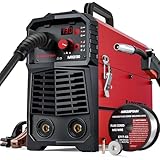
ARCCAPTAIN 130A Flux Core Welder
- 130A gasless flux core
- 10-speed wire feed
- 11.79 lb
- 2-year warranty
The DEKOPRO takes the top slot because a 4.6-star average across 6,128 ratings is the strongest combination of proven behavior and owner satisfaction in this group, and it is the only ETL-certified machine here. The YESWELDER 205Amp covers the largest range of structural work in a body light enough to carry to the far fence line. The ARCCAPTAIN 130A is the one to grab when the job is gates, brackets, and light plate and you do not want a gas bottle in the truck.
Best Portable Welders for Farm Use in 2026
| Product | Specifications | Action |
|---|---|---|
| DEKOPRO 160A MMA IGBT Stick Welder |
|
Check Latest Price |
| YESWELDER 205Amp IGBT Stick Welder |
|
Check Latest Price |
| ARCCAPTAIN 130A Gasless Flux Core Welder |
|
Check Latest Price |
 YESWELDER 135A 3-in-1 Flux Core MIG Welder YESWELDER 135A 3-in-1 Flux Core MIG Welder |
|
Check Latest Price |
 HONE 140A Dual Voltage Stick Welder HONE 140A Dual Voltage Stick Welder |
|
Check Latest Price |
 YESWELDER 160A 4-in-1 MIG Welder YESWELDER 160A 4-in-1 MIG Welder |
|
Check Latest Price |
 Hpoouo 200A Super Mini Stick Welder Hpoouo 200A Super Mini Stick Welder |
|
Check Latest Price |
 S7 250A Dual Voltage IGBT Stick Welder S7 250A Dual Voltage IGBT Stick Welder |
|
Check Latest Price |
 HITBOX 200A 3-in-1 Flux Core MIG Welder HITBOX 200A 3-in-1 Flux Core MIG Welder |
|
Check Latest Price |
 Saker Handheld 120A Stick Welder Saker Handheld 120A Stick Welder |
|
Check Latest Price |
Two patterns stand out in that table. First, every serious pick here is dual voltage or clearly 110V-only, and that single fact decides whether it fits your shop. Second, the machines with the most owner history are stick welders, which reflects how farm repair work actually distributes: most calls are a broken bracket, a rusted-through mount, or a hitch, and stick is the process that does not care about surface condition.
1. DEKOPRO 160A MMA IGBT Stick Welder – The Proven All-Rounder
- More than 6100 owner ratings give unusual confidence in long-term behavior
- Dual voltage covers a 110V outlet and a dryer socket
- ETL certification is rare at this tier
- Hot start and anti-stick help first-time users strike an arc
- Works on mild steel stainless and aluminum
- Stick only with no MIG or TIG capability
- Included electrode holder and work clamp are basic
- Needs careful control on thinner material
This is the machine we would put in a barn we cannot justify replacing for another decade. The DEKOPRO is a 160A stick inverter rated for both 110V and 220V, which means it covers the single most common farm power situation: a shop with one 120V circuit and a dryer socket across the room. Switch it to 220V and the 160A rating becomes real rather than aspirational.
What stands out most is the review volume. At more than 6,100 ratings with 75 percent five-star and only 4 percent one-star, this is the only machine in the group where the long-run failure pattern is genuinely well documented rather than anecdotal. Owners with real credentials report consistent arc behavior on mild and stainless steel, and the dual voltage makes it a natural companion for a portable generator setup.
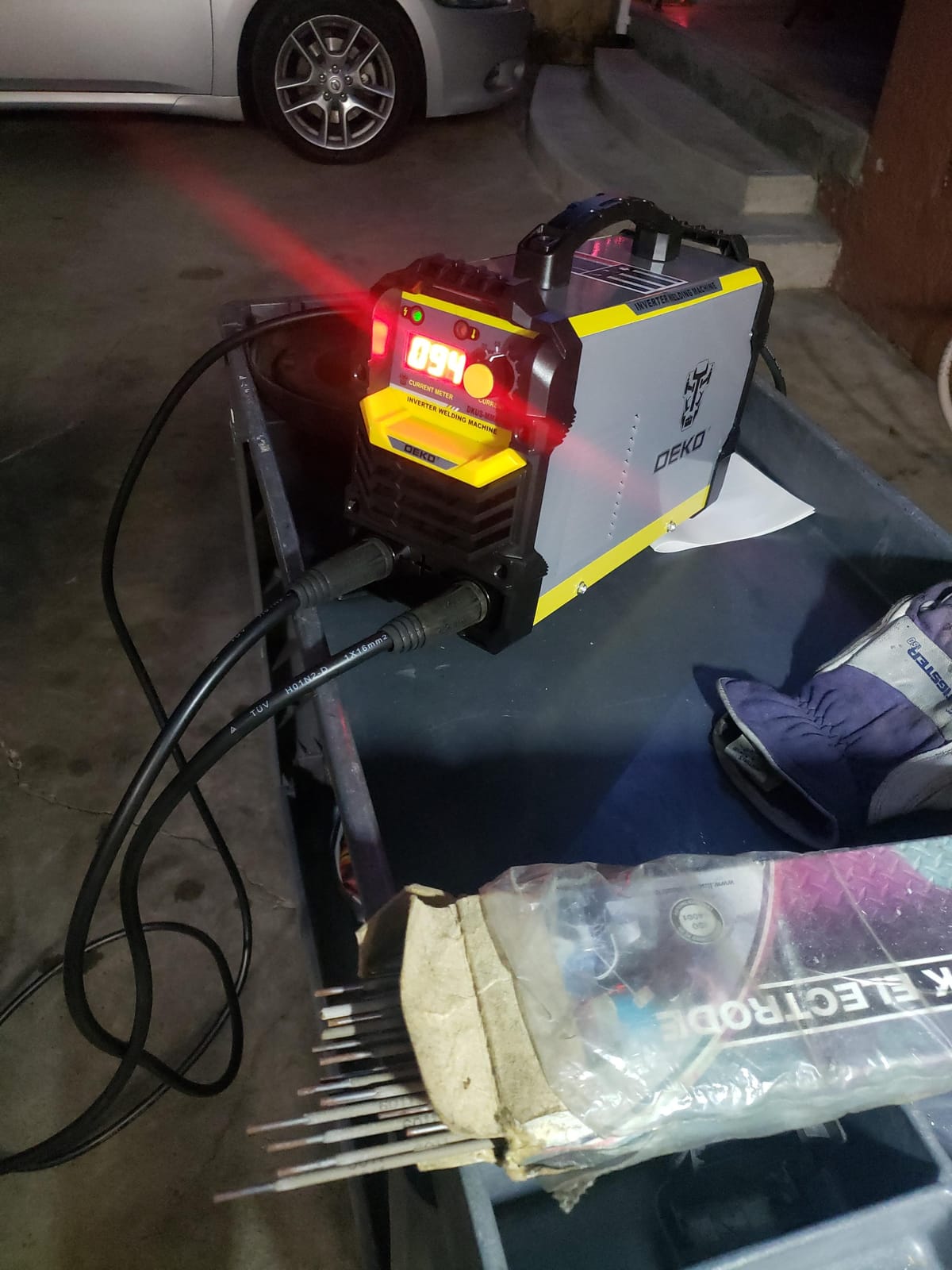
The build is unremarkable in the best way. It is an IGBT power device with closed-loop feedback, which is the part that keeps output voltage steady on a farm supply that is often feeding a compressor or a shop vac at the same time. Anti-stick and hot start do the unglamorous work of stopping a beginner from ruining a rod and a joint in the first ten minutes.
It is also ETL certified, which is unusual in this price class and worth something real on a farm where kids and dogs wander the shop. The box includes the electrode holder, work clamp, a power adapter cable, and a chip brush, so you can start that fence repair the same afternoon.
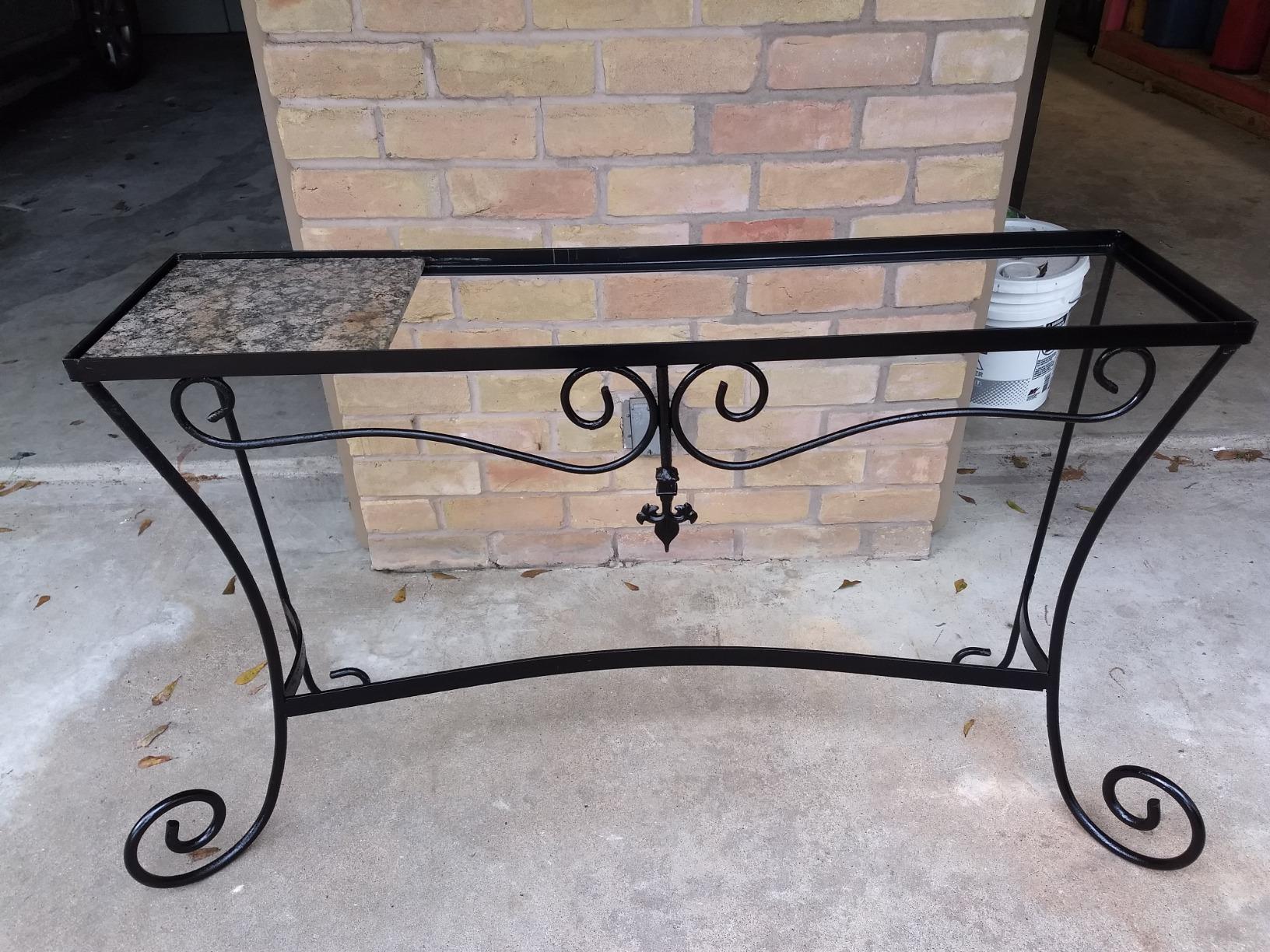
Where the DEKOPRO earns its keep on a farm
This is the stick-only answer for hitches, three-point linkages, mower deck frames, and post driver repairs. It is a stick machine, so plan to clean the joint before striking an arc, and expect to change polarity if you run alkaline rods such as 7018. For a 1/8 inch rod, roughly 125 amps is the right starting point on most structural steel.
If your shop only has a single 120V circuit, the dual voltage is the whole ballgame. Owners report running it off a 6.6kW-class generator without drama, which opens up fencing work a mile from the nearest outlet. Pair it with a clamp meter like the ones in our best multimeters for automotive use guide if you care about verifying your actual output current.
Where it will disappoint you
If your repair list is mostly sheet metal, feeder pans, or anything where you want to move fast and lay a flat bead, a MIG mode is worth paying for. This machine will not do MIG, and it has no lift TIG, so aluminum work means a lot of grinding and patience.
The included electrode holder and work clamp are basic. Both will do their job, but a sturdier clamp is a cheap upgrade if you are welding in wind and expect to trip over the lead. Finally, treat the light-gauge end of its range as a learning zone rather than a production range. The people who are fastest with this machine are the ones who already know what amperage a given joint wants.
2. YESWELDER 205Amp IGBT Stick Welder – Most Output Per Pound
- Dual voltage covers a shop outlet and a generator
- Hot start and arc force adjustable across 10 levels
- One of the lightest 205A stick machines available
- Long flexible electrode and ground leads included
- Anti-stick genuinely helps with 6013 rods
- Digital amperage readout runs low against a clamp meter
- Finicky with 6013 electrodes that start cold
- Ground clamp is a bit flimsy
- Lift TIG needs a separately purchased torch
Owners coming from Lincoln and Miller backgrounds consistently rate the arc quality on this YESWELDER as higher than the price suggests, and at 8.8 pounds it is genuinely carryable. On a farm where the welder lives in a truck cab rather than a shop, that weight figure is not a footnote. It is the reason you will actually take the machine to the far pasture instead of postponing the job.
The technical case is strong. You get up to 205 amps, IGBT inverter technology, dual 110V/220V operation, and a duty cycle of roughly 60 percent at 205A with 100 percent at 158A on 240V. That 100 percent rating at a slightly reduced output is exactly the shape you want for intermittent farm work, where you weld in bursts and then spend an hour doing something else.
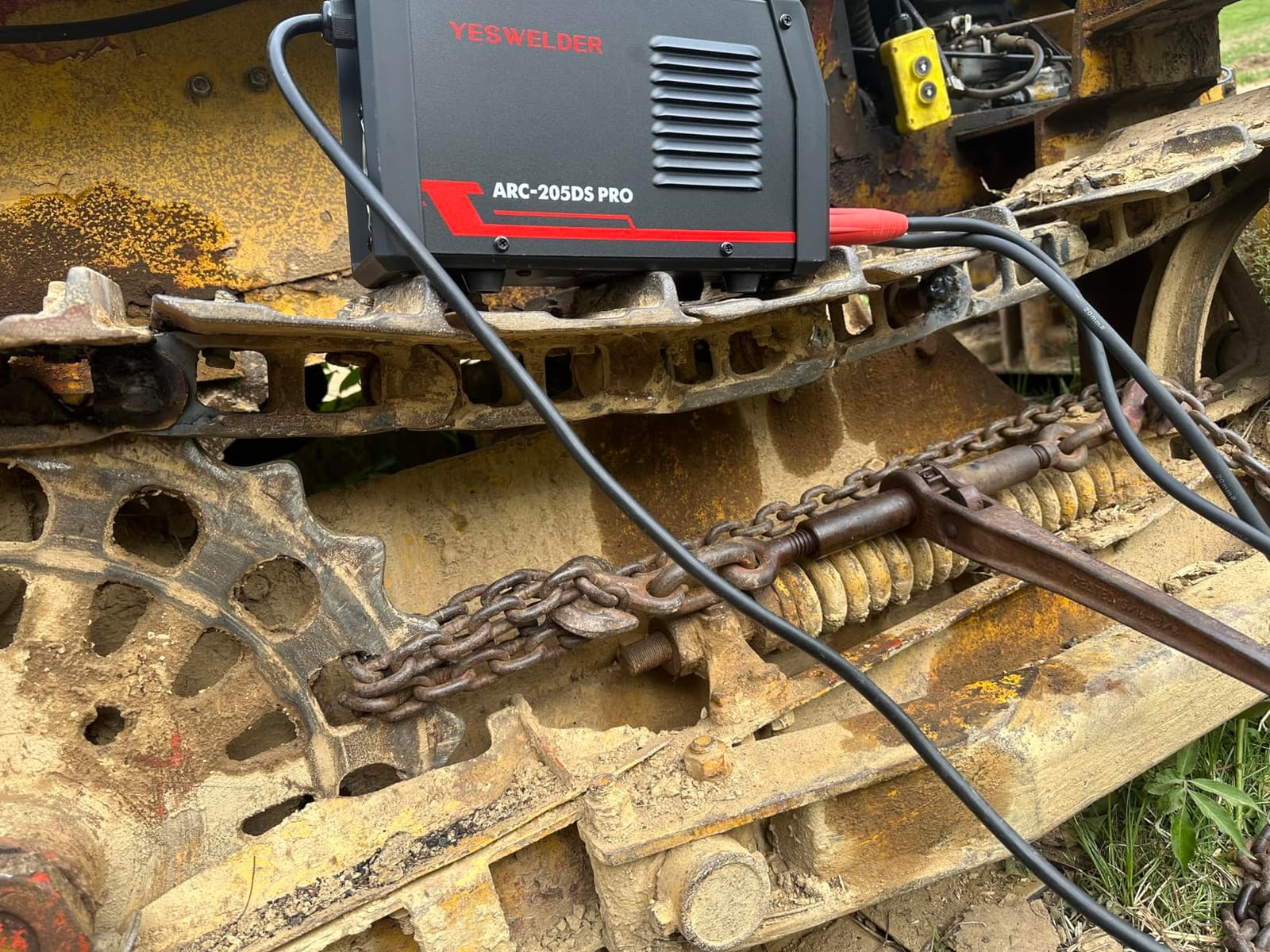
Both hot start and arc force are adjustable across ten levels, which matters more than it sounds. Hot start controls how eagerly the machine strikes an arc, and arc force controls how hard it pushes when the puddle is cold. On 6011 rod in a cold barn in January, dialing those correctly is the difference between a decent weld and a cold, blobby mess.
Compatibility is broad: 6010, 6011, 6013, and 7018 rods from 1/16 inch up. Multiple owners report running it off a 6.6kW generator without trouble, which makes it a solid companion to a portable generator if you already own one from our best generators for home use picks.
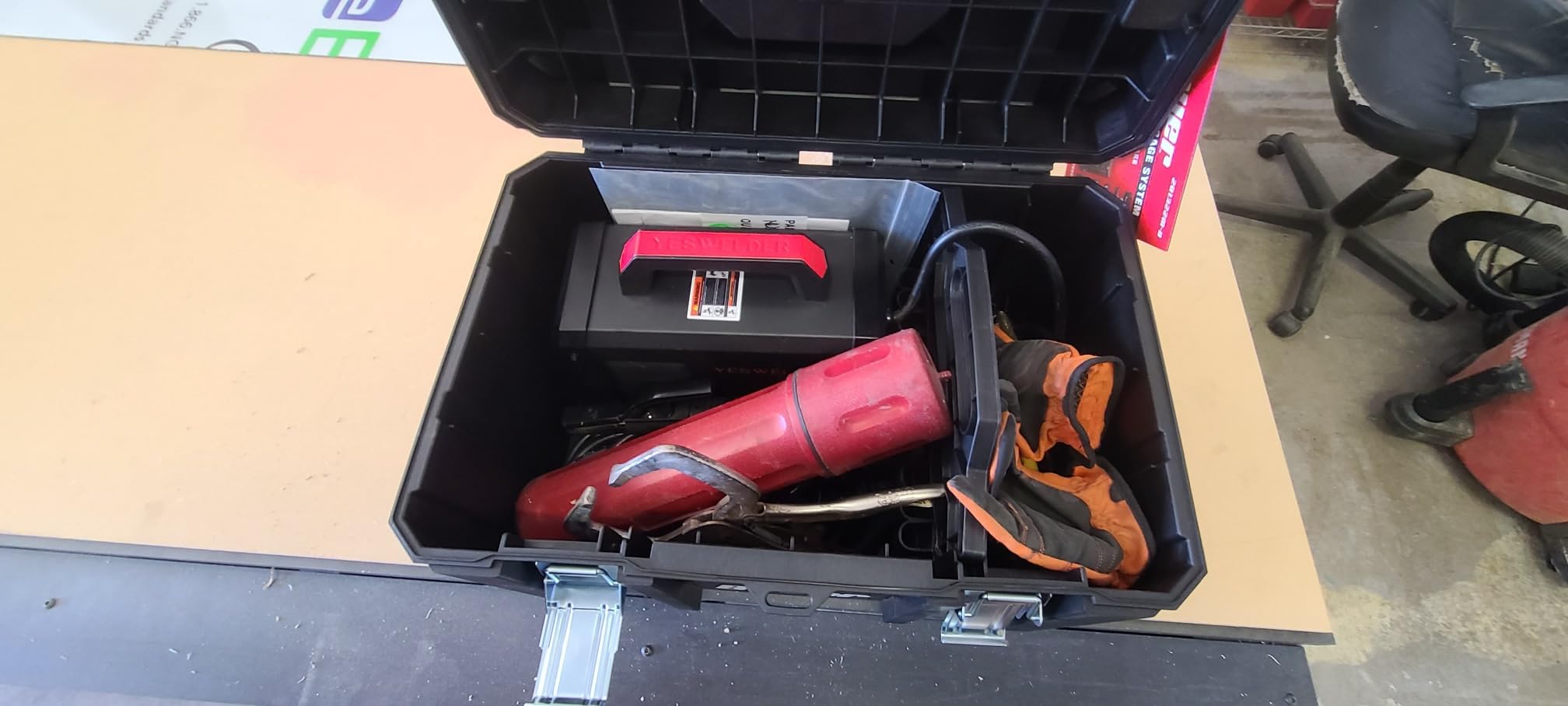
When the 205A output earns its place
This is the pick for structural steel that is thicker than a mower deck bracket. Bale spike shafts, three-point hitch plates, gate frames, and trailer rail repair all benefit from having 205 amps available, and the dual voltage means you can move the same machine from a 120V outlet to a 240V one when a job calls for it.
For a beginner, the ten-level hot start and arc force adjustments are the most useful controls on the panel. They rescue you on 6013, which is otherwise the most finicky of the common rods. Set arc force high for dirty or thick stock and lower for thin plate, and you will stop blowing holes in feeder pans.
Where the compromises show up
The most repeated caveat across the reviews is that the on-screen amperage reading runs low. Several owners measured 20 to 30 percent below the displayed value with a clamp meter. That is not a dealbreaker, but it means you should set by test weld rather than by the number glowing on the panel, especially on your first few joints.
The supplied ground clamp is described as a bit flimsy, and the listed lift TIG function requires buying a torch separately. If you are welding stainless or aluminum regularly, spend that extra on a better torch or on a machine with real MIG capability instead.
3. ARCCAPTAIN 130A Gasless Flux Core Welder – Fences, Gates and Small Repairs
ARCCAPTAIN 130A Flux Core Welder MIG Welder 110V Gasless MIG Stick Lift TIG
- No gas cylinders to haul around the farm
- Three processes in one compact box
- Light at 11.79 lb for moving between shop barn and field
- Synergic control handles wire setup for beginners
- MIG torch ground clamp electrode holder and wire included
- Lift TIG mode requires buying a separate torch
- Output limited to light-gauge mild steel
- 110V only so heavy structural work is out of range
The ARCCAPTAIN MIG130 is what a lot of farm owners are actually looking for without quite naming it. It runs gasless flux core, so there is no cylinder in the truck bed, and it adds stick and lift TIG modes in the same body. At 11.79 pounds and 9 by 6 by 7 inches, it lives in a toolbox rather than a corner.
Owners describe it consistently as a capable entry-level gasless machine for outdoor repair work with an easy setup, and the rating distribution backs that up: 80 percent five-star against only 4 percent one-star. On a fence line with dirty, galvanized, weathered steel, a flux core gun is far less fussy than a gas MIG gun about surface preparation.
Synergic control is the feature that matters most for a first-time buyer. You select your wire diameter among .030, .035, and .040 inch and the machine matches current to wire feed speed for you. That removes the single most intimidating part of setting up a flux core gun and cuts the trial-and-error phase of learning a new process down to a couple of joints.
Where the ARCCAPTAIN fits a farm workload
Gate hinges, fence rails, small brackets, trailer hardware, and livestock feeder frames are the sweet spot. Repetitive, light-to-medium gauge structural work where you want to move quickly. The 10-speed wire feed control lets you dial the bead up for a thicker joint and back down for a finish pass.
Because it is 110V only, it plugs into anything on the property. No electrician, no circuit upgrade, no arguing with a landlord. That is why it is a common first welder, and paired with the 20-to-30 percent duty cycle typical of this class, it suits the intermittent reality of farm repair work.
Where it stops being enough
130 amps is the ceiling, and that ceiling arrives quickly. It is a light-gauge machine. If your list includes bale spike fabrication, thick hitch plate, or anything structural, you will spend your time on cooling cooldowns or fighting the machine.
Lift TIG is a checkbox rather than a feature here because the torch is sold separately, and budget that money honestly before you count on aluminum work. If you foresee doing a lot of aluminum feeder repair, a machine with a spool gun is a better fit than a bare lift TIG mode.
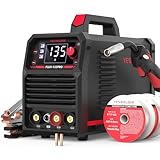
4. YESWELDER 135A 3-in-1 Flux Core MIG Welder – Easiest Machine to Learn On
YESWELDER 135A MIG Welder, 110V Flux Core Gasless MIG/Lift TIG/Stick 3-in-1
- No shielding gas needed for windy outdoor and field work
- Smooth wire feed and steady arc for the money
- Experienced hobby welders rate the bead quality highly
- Synergic auto-setting gives beginners a workable baseline
- Two spools of flux core wire included so you can start immediately
- Lift TIG needs an extra torch and stick is not the focus
- Wire spool holder and tensioner are cheap
- Flux core voltage cannot be set manually
- One owner reported a missing power switch on arrival
If you cannot decide between a stick machine and a wire feeder, the process question stops mattering when a box does both. This YESWELDER runs gasless flux core MIG, stick, and lift TIG at 135 amps on a single 110V circuit, which is the most complete process coverage in a body this small. It is DC only, working on DCEP and DCEN, so you can run both flux core wire and stick rod from the same lead set.
The reason it appears on so many beginner lists is the bead quality reports. Experienced hobby welders say it punches well above its price on penetration and finish for light-gauge and farm implement work, and that it handles 3/16 inch carbon steel without serious complaint. Several users comparing it with entry-level Harbor Freight machines report visibly better results.
Two spools of E71T-GS wire in .030 and .035 inch are included, plus the MIG torch, electrode holder, and ground clamp. You can plug it in and lay a bead the same afternoon, which removes the most common reason a first welder gathers dust.
Where beginners get on with it fast
Synergic control automatically matches recommended voltage to wire feed speed, with a plus or minus 3V trim if you want to tune the bead. The oversized LED display is genuinely readable in bright outdoor light, which is not a small thing when you are welding at noon in a field with a shadow visor down.
At 135 amps on 110V it handles the majority of bracket and rail work most farms accumulate. Reviewers commonly describe it as a good partner for gate repairs, small implement brackets, and general shop work, and its wire feed is described as smooth and consistent with a steady arc.
Where you will outgrow it
The consumables are cheap. The wire spool holder and tensioner are described as crudely made, and the MIG gun is the piece that takes the abuse. Budget for a better gun and a proper spool tensioner within the first year of regular use.
Flux core mode is synergic only, so you cannot set voltage manually. That is fine while you are learning and mildly frustrating once you want to compensate for a rusty surface. The stick function is not the focus here, and the stated mild steel capacity of 3/32 inch is the practical ceiling, so heavy structural fabrication is out of scope.
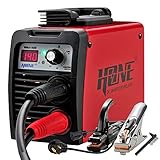
5. HONE 140A Dual Voltage Stick Welder – For Shops With a Dryer Outlet Only
- Dual voltage with a compact body that moves around equipment easily
- Owners report skid steer buckets mower flanges and trailer repairs
- Deep penetration beads on 6013 and 7018 rods
- Long leads and a quiet inverter that works on generator power
- Upgraded 40 percent duty cycle burns more rods per session
- Digital amperage display and knob sticker are inaccurate
- Will not hold an arc on 6010 cellulose rods despite claims
- Not intended for heavy production work
The HONE MMA140D solves a very specific and very common farm problem: you have one 120V circuit in the shop, and you also have a 240V dryer socket. This machine gives you 10 to 120 amps on 110V and 10 to 140 amps on 220V from the same body, so you can start today on the small circuit and step up when a heavier job comes along.
It also carries a 40 percent duty cycle at rated output, which is better than most machines in this class and was an explicit upgrade over earlier versions. For intermittent farm work, that number matters: it tells you roughly how many minutes in ten you can weld before the machine needs a rest.
Owner reports are unusually specific about farm jobs, naming skid steer buckets, zero-turn mower flanges, boat ramps, and trailer parts. Certified-welder reviewers say the machine punches well above its price and holds a clean arc on equipment repairs, with deep penetration on 6013 and 7018.
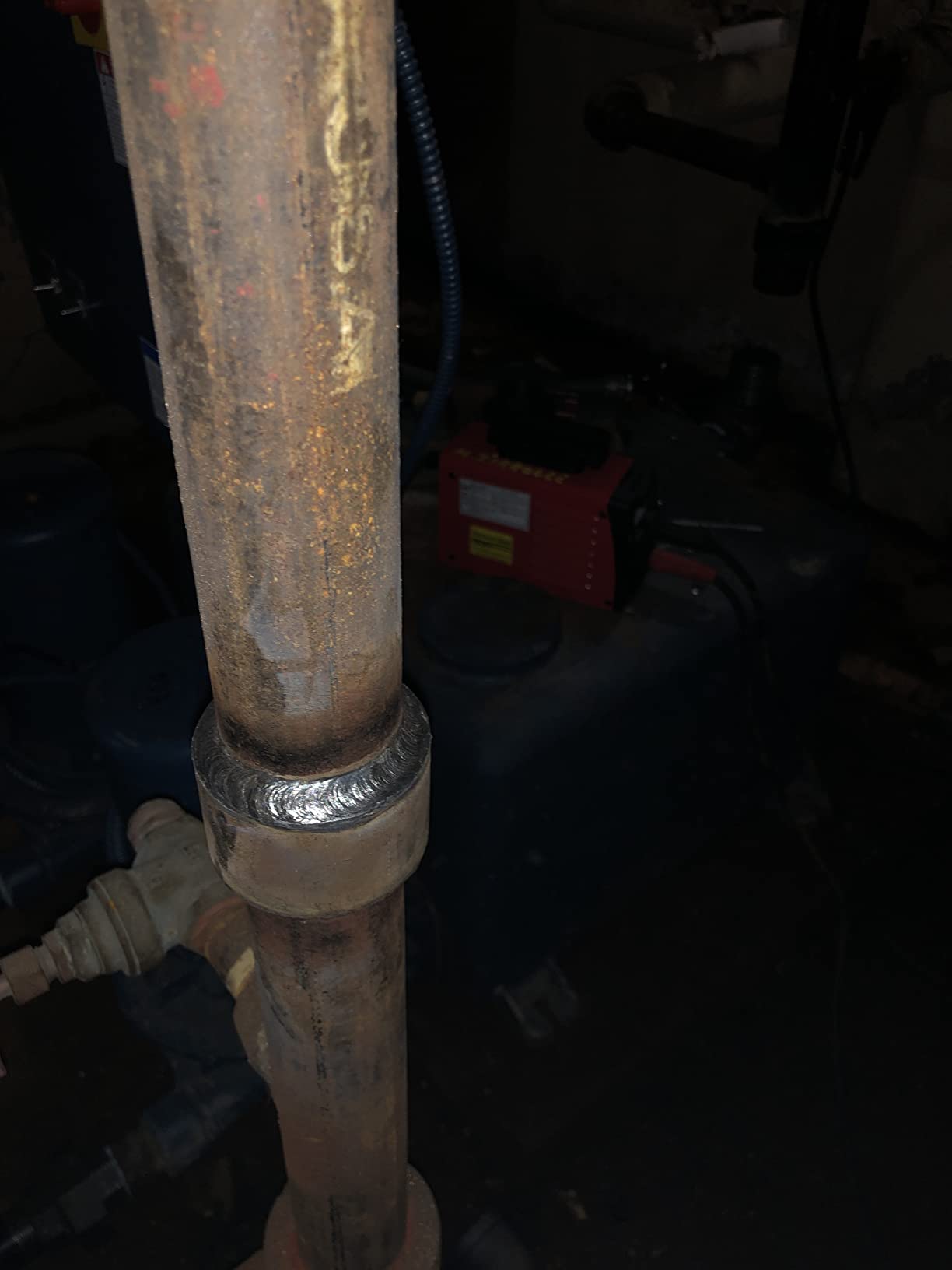
The digital display includes a trouble indicator that shows real welding current, and internal protection covers overheat, overcurrent, overvoltage, undervoltage, and short circuit. Long leads and a quiet inverter design also make it a decent partner for generator-powered work where noise near livestock matters.
At 9.44 pounds and 9 by 3.9 by 5.6 inches with a top carry handle, it is compact enough to sit on a tailgate or in a service truck bed without dominating the space.
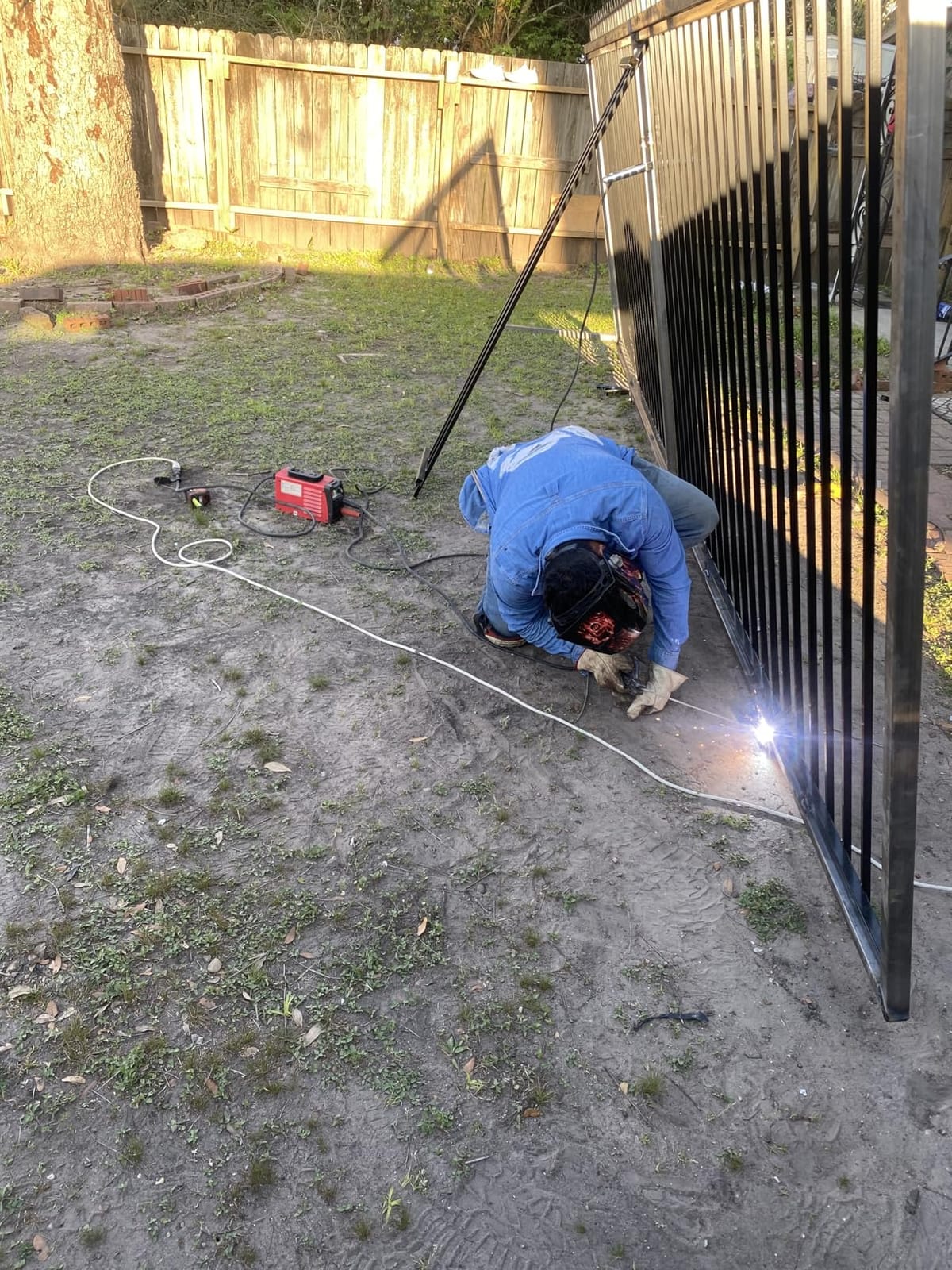
Why a 120V-only shop should care about this one
The recurring farm forum complaint is that a 110V machine limits wire thickness and forces an expensive outlet upgrade. A dual-voltage stick machine sidesteps that entirely. You are not committing to a single-connection decision on a machine you will own for years, and 120 amps on 110V handles plenty of farm work once you match the rod to the joint.
Its long leads are a practical plus on a property where the work is 50 feet from the outlet. Keep the extension runs short, and check with one of our portable generator recommendations before dragging it to a remote job, since inverter efficiency is what makes the long runs survivable.
Where the inaccurate display will bite you
The most common technical complaint, confirmed by an owner with a clamp meter, is that the displayed current is miscalibrated. Set your amperage on a test weld, not on the panel. The knob sticker is also described as unreliable, so label the settings yourself once you find your working values.
Despite the claims, 6010 cellulose electrodes are not usable on this machine. Stick with 6011, 6013, and 7018. And the light-duty build means it is not a production welder: it is a farm repair tool, and treating it that way is how it stays reliable for a decade.
6. YESWELDER 160A 4-in-1 MIG Welder – For Shop Fabrication, Not Field Repairs
YESWELDER 160A MIG Welder, 110V/220V MIG/Flux Core/Lift TIG/Stick
- Genuinely 4-in-1 including gas MIG for cleaner beads
- Dual voltage covers both shop circuits
- Long-term owners report consistent performance on real fabrication
- Synergic settings make setup quick with a smooth arc
- Owners coming from Miller and Lincoln rate the MIG performance highly
- Stick function is hard to start an arc though it runs once lit
- Supplied MIG gun liner is thin and can melt on hot work
- Panel text is small and the screen washes out in sunlight
- Running 110V through the adapter trips household breakers
This is the only machine in the group that covers every process a farm fabricator might want, including gas-shielded MIG. Flux core for outdoor work, gas MIG for clean visible beads, stick for dirty structural steel, and lift TIG for aluminum and stainless if you buy the torch. At 160 amps with 110V and 220V dual voltage, it is the most capable box here for a fixed shop location.
Long-term owners in real fabrication shops describe it as reliable, and the MIG side is what carries the machine. Being able to run both 2 lb and 10 lb spools of .030 and .035 inch wire is a meaningful advantage over the small machines, because a 2 lb spool runs out in the middle of a farm project and a 10 lb spool does not.
You also get both synergic auto-set and manual wire feed and voltage adjustment, which is unusual at this tier. Synergic gets you a good baseline in seconds; manual lets you compensate once you understand what the machine is doing.
Where this machine earns its shelf space
Shop fabrication is the answer: feeder frames, gate assemblies, a workbench, brackets built from heavier stock. If you want visible, cosmetically clean work on a gate that guests drive past, gas MIG is a step up from flux core and this machine can do it. Owners coming from premium brands call the MIG performance excellent for the money.
Give it a genuine 240V circuit. It lists 220V operation and the 160A rating depends on it. Running it through the included 110V adapter on household circuits is the single most common owner complaint in that category.
Where it is the wrong tool
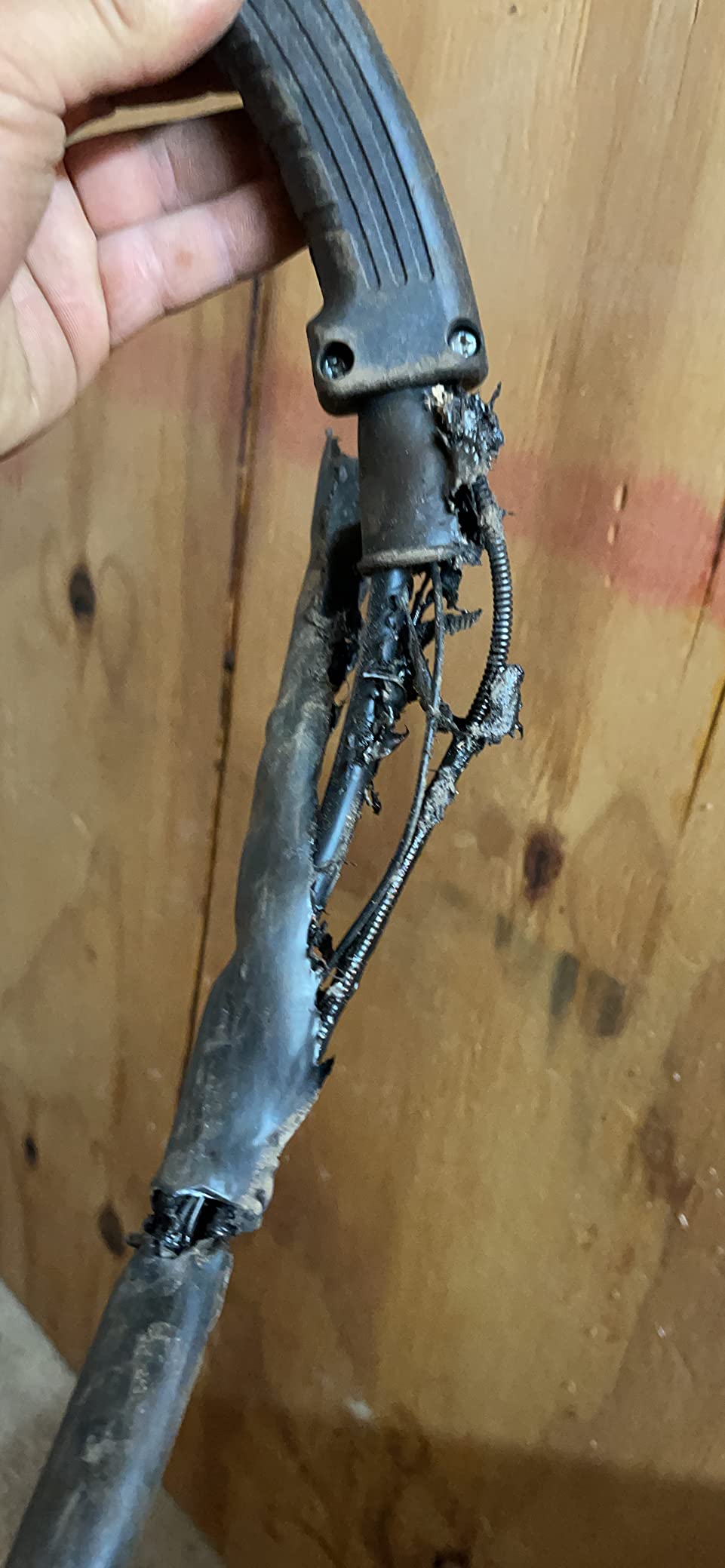
This is not a field machine. The listed weight is 27.5 pounds, which is double or triple the carry-friendly machines in this guide, and the MIG gun liner is thin enough that owners report it melting when brushed against a hot weld. Replace the gun liner early.
The stick function is hard to start an arc, even though it runs well once lit. The panel text is small and the screen washes out in direct sunlight, which is a real problem on a porch or in an open barn. And it does not run 6010 rods well, so plan around that.
7. Hpoouo 200A Super Mini Stick Welder – The One You Carry to the Fence Line
Hpoouo 200Amp 20PCS Rods Stick Welder, Super MINI Portable Welding Machine
- Smallest and lightest stick option here so it goes where the job is
- Twenty electrodes plus chip hammers and gloves are in the box
- Hot start and anti-stick improve arc initiation
- Suitable for cast iron mild steel and stainless with the right rod
- 110V only so output is limited on thicker stock
- Included rods are acidic and need polarity swapped for alkaline
- Bundled accessories are limited
Every other machine in this guide is portable. This one is genuinely pocketable. The Hpoouo ARC-200 body measures 7.8 by 3.9 by 5.3 inches and the listed weight is under 8 pounds, which means it fits in a backpack, a toolbox, or the bed of a pickup without being the reason you do not bring it along.
The claim on the box is 200 amps adjustable from 20 to 200 at 110V, welding material from 0.06 to 0.2 inch thick, with hot start, anti-stick, and arc push force. Digital IGBT control adjusts current in microseconds, and internal protection covers over-voltage, over-current, over-heating, and overload with a high-power cooling fan.
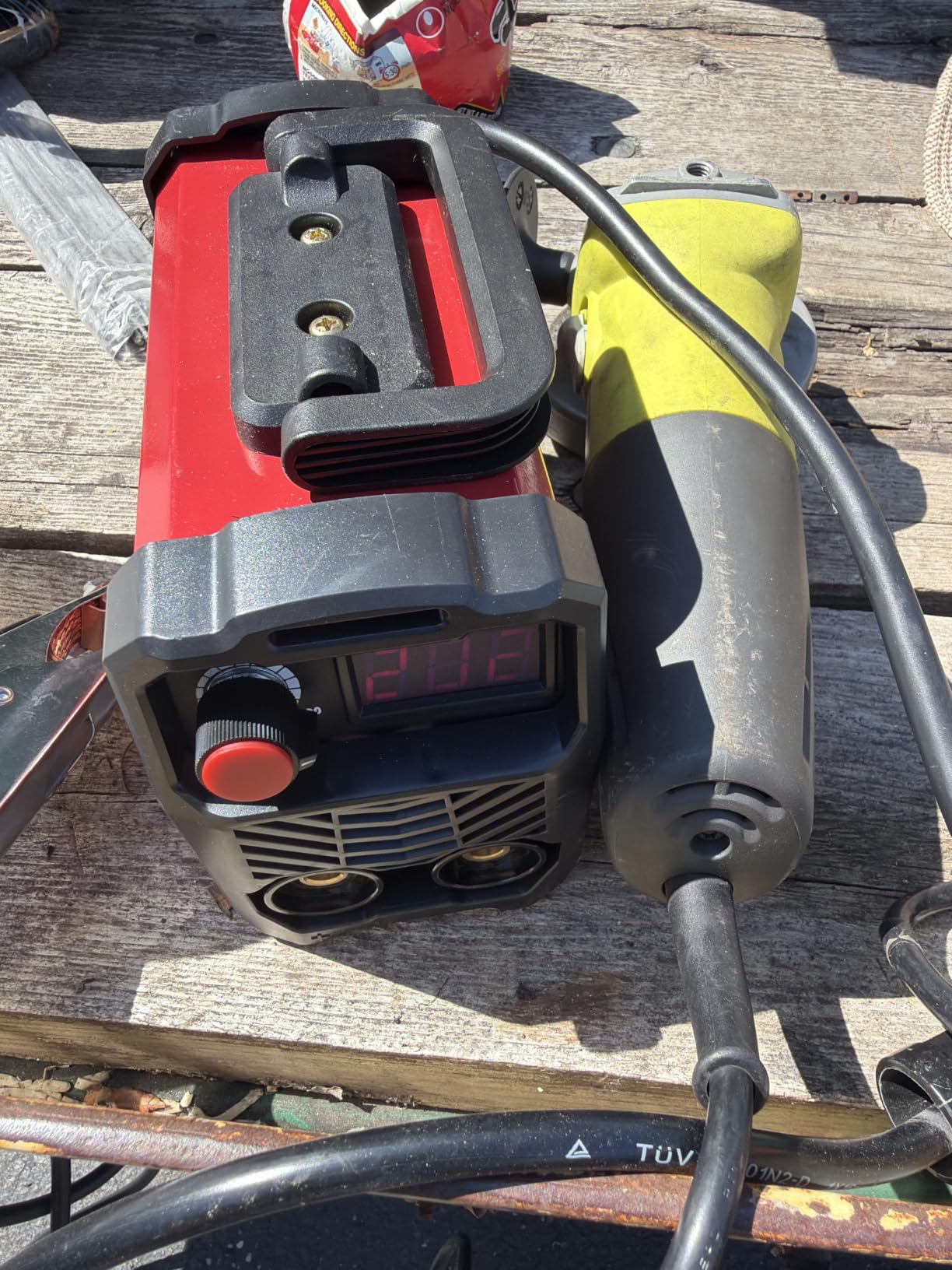
What tips the balance for a first purchase is the box contents: 20 welding rods, two chip hammers, and a pair of welding gloves. You can finish a fence repair on day one without a supply run. Buyers consistently point to the extreme portability and the bundled consumables as the reason they bought it, with 76 percent five-star ratings.
Rod compatibility is broad: AWS E6013, E6011, E6010, E7018, and E308 from 1/16 to 1/8 inch. That covers mild steel, cast iron with the right rod, and stainless if you use E308L-16 specifically rather than the general E308 classification.
Why weight matters more than amperage on a farm
A machine you can carry to the far end of the paddock gets used. A machine you have to argue with gets left in the shop while the repair waits. For fence lines, gate latches, and trailer hitches on a large property, the 8-pound difference between this machine and a 30-pound shop welder is the difference between fixing it this week and fixing it in the spring.
It is also a good travel welder. Load it with a small rod tin and the leads, and you have a stick machine for emergency repairs far from a power source. Plug it into any 120V outlet, including a shop, a garage, or a generator run.
Where the small footprint limits you
110V only means the 200A headline is a maximum on light material. On thick structural plate you will be fighting cooling pauses rather than melting metal, so keep it for the smaller jobs and rent or borrow a bigger machine for the big ones.
The bundled rods are acidic, which means you have to switch the lead polarity to run alkaline rods such as 7018. It is a two-minute change once you know the routine, but it catches out beginners. Feedback on long duty-cycle jobs is thin, which fits the machine positioning as a light-duty portable stick unit.
8. S7 250A Dual Voltage IGBT Stick Welder – Claimed Power for Light Structural Work
250A Stick Welder, 110V/220V Portable IGBT Inverter ARC Welder
- Lowest cost in this group with true 110V and 220V dual voltage
- Aimed at exactly the farm jobs people buy welders for
- Inverter design keeps weight down and the arc stable
- Hot start arc force and anti-stick help beginners start an arc
- Basic accessories so you supply your own rods and consumables
- Needs cooling time during extended high-output work
- Budget build quality
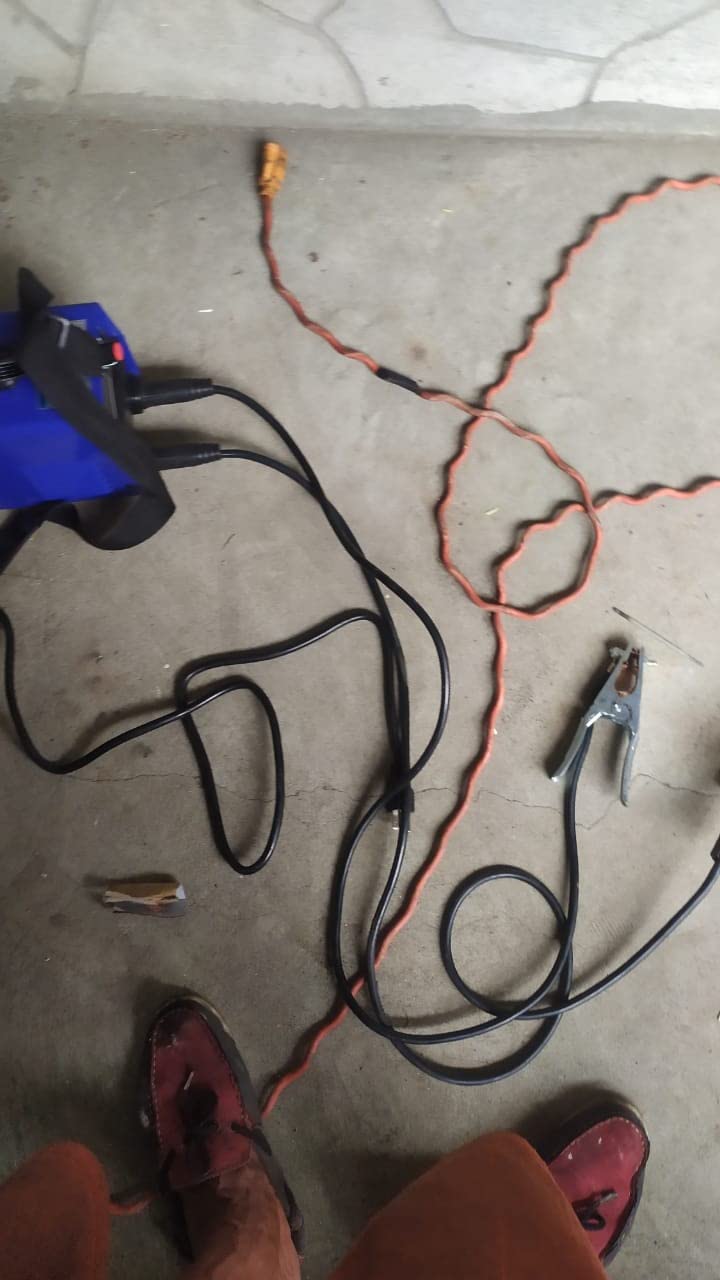
The S7 is the value play for someone whose repair list is mostly structural. It claims 250 amps of output on both 110V and 220V in a 9.13 pound IGBT inverter body, and the manufacturer copy names the intended use explicitly: gates, fences, trailer parts, mower decks, and general farm maintenance. That is a shortlist built from our buying guide’s farm job list.
True dual voltage is the headline here. Many competing budget machines advertise 220V but perform at 110V levels, and forums repeatedly describe people who bought single-connection machines and ended up wanting an outlet upgrade. The S7 does not put you in that position.
The rating profile supports the value claim, with 80 percent five-star and only 3 percent one-star across more than a thousand ratings. Owners highlight dual voltage and 250A-class output as the deciding factors for light farm and property repair work.
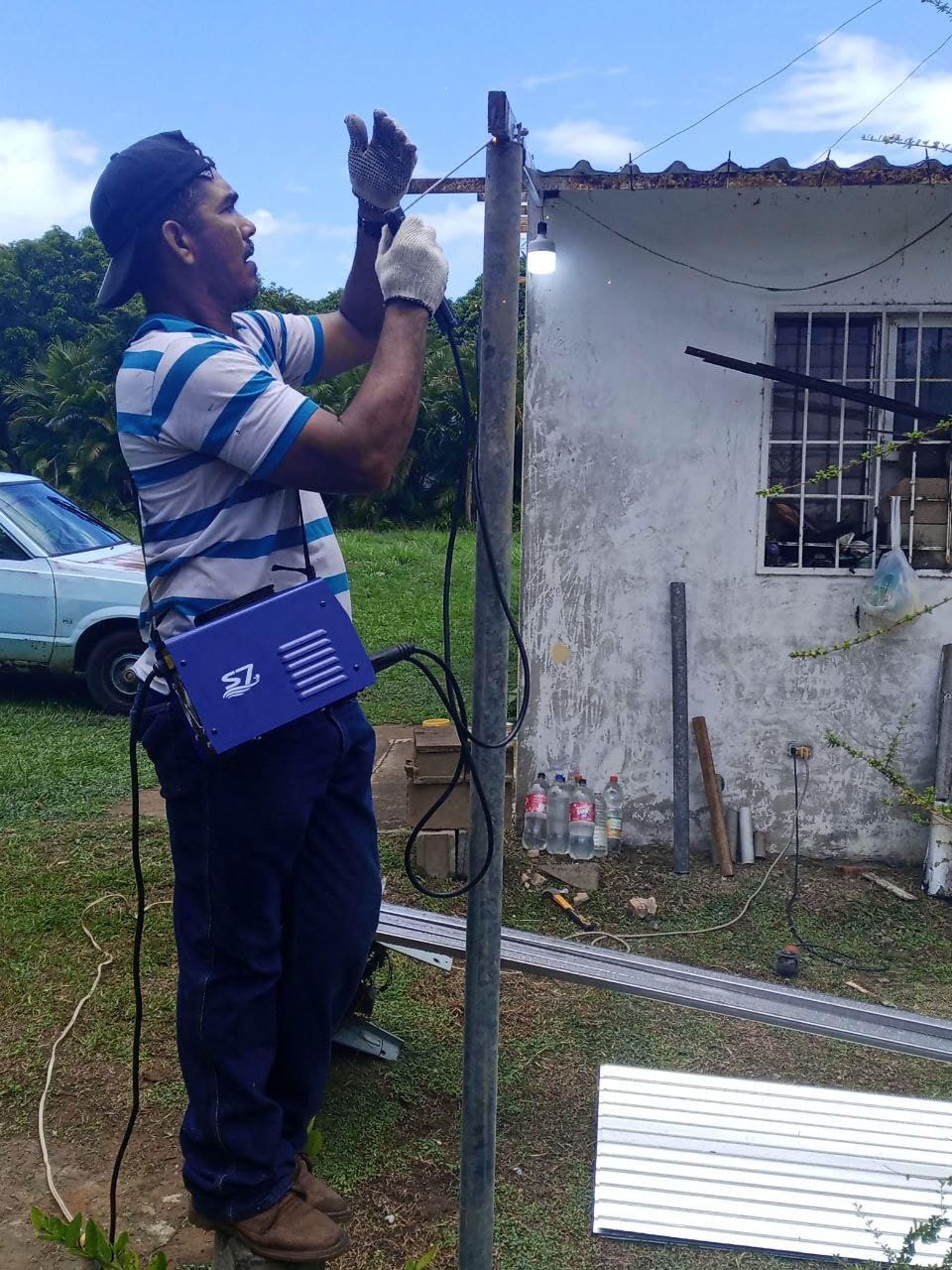
Hot start, arc force, and anti-stick are all present, with a digital display for current adjustment. That combination is the minimum sensible feature set for a beginner on any stick machine: arc initiation is where beginners quit, and these three functions exist to make it forgiving.
The IGBT inverter design is what keeps the weight at just over 9 pounds for a machine in the 250A class. Transformer welders of similar output are frequently twice that weight, which is the difference between a machine you carry to the job and a machine that lives on a bench.
Where the headline amperage actually helps
Thick plate is the answer. Structural steel, heavier brackets, repaired gussets, and frame work on implements are where extra amperage stops being wasted. A machine in this class handles material that a 120A portable unit simply cannot touch without excessive passes and burning through the rod.
Because the leads and rods are the consumables here, this is also the machine where spending a little on consumables pays back. Plan on a good electrode holder and a sturdier ground clamp than the basic set, and buy your rod in bulk if you are welding regularly.
Where budget construction catches up
The accessories are basic and you will be supplying rods, contact tips, and consumables yourself. That is fine, but budget for it in your total cost rather than discovering it mid-project.
Extended high-output operation requires cooling time, so do not plan on running at the top of the range continuously. The build quality is clearly budget, which is a reasonable trade for a repair tool but a poor choice if you intend to weld production hours every day. Verify your actual output with a meter before trusting the number on the panel, a habit worth building if you own any budget inverter.
9. HITBOX 200A 3-in-1 Flux Core MIG Welder – Small but Genuinely Portable
HITBOX 200A MIG Welder, 110V/220V Flux Core MIG/Lift TIG/Stick 3-in-1
- One of the lightest and most compact units in the guide
- Dual voltage for shop or generator use
- Gasless flux core needs no cylinders and lays low-spatter beads
- Synergic auto-setting makes it easy to learn
- Owners used it on mower deck brackets and tubing
- Only holds a 2 lb wire spool
- No hot start and stick mode struggles with thicker rods
- Output measures 20 to 30 percent below the displayed amperage
- Instructions are confusing and after-sales support is limited
The HITBOX is interesting because of one number: mild steel up to 4.0 mm, roughly 5/32 inch, on a gasless flux core machine listed at 6.6 pounds. That is more gauge capability than most of the 110V flux core machines here, and combined with dual voltage it covers a lot of ground for a machine you can pick up with one hand.
Owners upgrading from old 110V wire-feed machines report that this one makes them look like proficient welders, with clean, quiet, low-spatter results on 110V. Synergic control coordinates voltage and wire feed speed so the setup is close to automatic once you select your wire diameter.
It includes an 8-foot MIG torch, a 5-foot ground clamp, a 5-foot electrode holder, .035 inch flux core wire on a 2 lb spool, nozzles, a brush, and a hammer. That is a complete kit for first-day work, which is why it appears on so many farm starter lists.
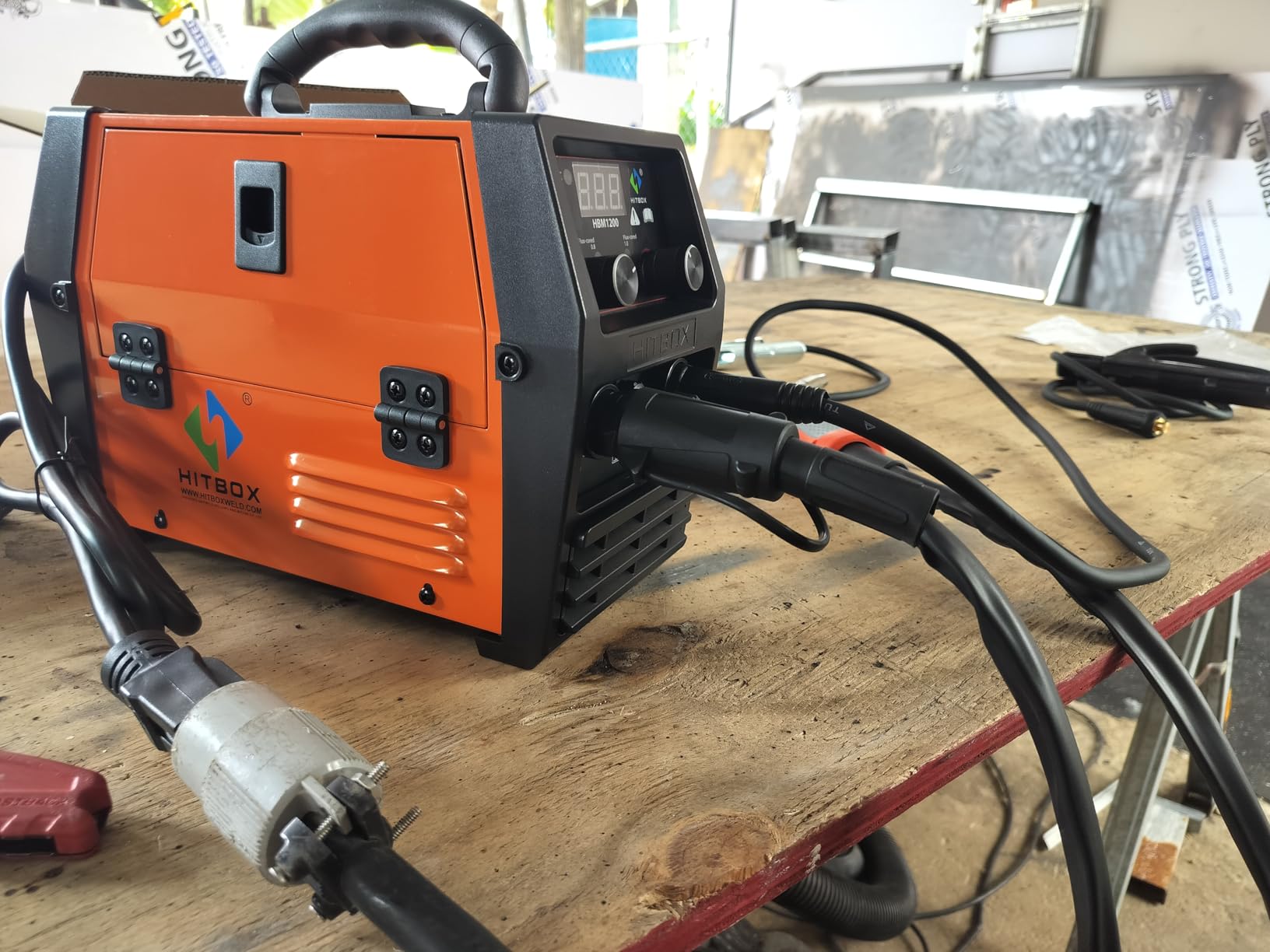
The dual voltage rating is a genuine advantage on farms with a 220V circuit, and the small body plus built-in carry handle make it easy to move to a mower deck or a fence line. Multiple protection circuits cover over-current, overload, over-voltage, and overheat, inside a durable metal housing that suits a barn better than a plastic case.
Mild steel capacity of 4.0 mm is the figure to remember. For a farm that means heavier feeder brackets, gate frames, and implement tubing sit within range, not just light sheet.
Where this machine earns its spot
Mower deck brackets, gate hardware, and tubing projects are the reported successes, and the 110V gasless setup produces clean, low-spatter beads that need less grinding than you would expect. If you are welding on a porch or in an open barn in wind, no cylinder means no gas blowing the shield off your puddle.
Dual voltage means the same machine works on a shop circuit and on a 220V socket if a heavier job shows up. The reported actual output running 20 to 30 percent below the displayed amperage is a reminder to test weld rather than trust the dial.
Where the stick side will disappoint you
There is no hot start, and reviewers report that the stick function only suits 1/16 inch rods reliably, struggling with 6010, 6011, and 3/32 inch 7018. Treat this as a flux core machine that can also do light stick work, not a dual-purpose welder.
The 2 lb spool capacity is a real farm inconvenience. Consumables run out quickly on project work, so keep several spools on hand. Instructions are hard to follow and the dial labeling confuses people, after-sales support is limited, and one owner reported a warped ground clamp within normal use.
10. Saker Handheld 120A Stick Welder – For One-Handed Field Repairs
Saker Portable Electric Welding Machine,110V Portable Welder Handheld with IGBT Inverter 5 Variable Current Adjustment, ARC Welder Gun, Fits for 3/32″ Wire Rods (Grey)
- Smallest and lightest design in the guide and genuinely handheld
- Plug-and-play and easy for beginners to handle
- Hot start smooths ignition and lowers spatter
- Owners report good results on small jobs like a tine or a fire ring leg
- 5-speed current adjustment gives usable control for thin work
- Output capped at 120A so limited to small jobs and thin material
- Included face shield is described as useless with light leaks
- Support responsiveness has been reported as poor
- Safety gear is not fully included with some variants
The Saker is the smallest thing in this guide and it is the only one you can genuinely hold in one hand while welding. The body is listed at 6.76 pounds with manufacturer copy citing a 3.3 pound unit, measures 9.8 by 9.45 inches, and outputs 20 to 120 amps through a five-speed current knob. Hot start arc ignition is included, and it handles 3/32 inch rod.
Owners report strong welds on exactly the small farm jobs most people need done in a pinch: a roto-tiller tine, a fire ring leg, a gate latch, a broken bracket on a hand tool. Internal cooling runs 360 degrees with automated thermal management and overheat protection, which is a sensible design for a machine that lives in a vehicle.
It is also the lowest-rated machine here at 4.3 stars, with 69 percent five-star and 8 percent one-star. That rating is a fair reflection of the category: most owners are happy for small repairs, and the negative reviews concentrate on accessories and durability rather than arc quality.
The IGBT inverter with high no-load voltage is what gives it acceptable arc stability at low amperage, and the high no-load voltage helps an arc start on dirty or slightly rusty surface, which is the normal condition of farm metal. The five-speed knob gives more granularity than a simple on-off dial, which matters when you are trying not to blow through 16-gauge sheet.
Suitable materials are carbon steel and iron, with applications listed as fencing, ironwork, and automotive repair. That framing is accurate: this is a finishing and emergency tool, not a structural welder.
When a 120A handheld is the right answer
Think of it as the machine you keep in the truck. Anything under about 1/8 inch, out in a field, where the job is a small bracket, a gate hook, a broken tine, or a trailer light mount. Handheld form means you can hold the work in one hand and the machine in the other, which is genuinely useful on a ladder or a cramped space behind an implement.
For someone learning stick welding, the hot start feature and the low weight reduce the intimidation factor considerably. It is a reasonable first machine if your needs are genuinely small, though the 120A ceiling means you will outgrow it faster than the other picks in this guide.
Where it falls short
The included face shield is described as useless, with light leaking around the sides. Do not weld with it. Budget for a proper auto-darkening helmet, which is the single most important purchase after the machine itself.
One owner reported the unit stopped producing a spark after a year of storage and support never responded, which is exactly the failure pattern that makes a no-name brand risky when the seller has no local service counter. A 120A ceiling also means thick structural work is simply not on the table.
How to Match a Welder to the Job You Actually Have
Start from your repair list, not from a brand. Write down what actually broke in the last two years, then match each item to a process. Almost every farm repair falls into a handful of repeatable categories, and each has a clear best process and a clear output requirement.
Bale spikes and bale spear shafts want 180 amps or more of stick or MIG capability, because that is thick structural steel and a small 110V machine will fight you the entire way. Tractor hitches and three-point linkages want 160 to 225 amps of stick. Post drivers and gate frames are a natural fit for a 200A-class stick inverter on 220V. Fences, gates, and feeder brackets are the classic gasless flux core jobs where a 130A to 160A machine is comfortable. Mower deck and brush hog repairs are mostly 3/16 inch and lighter plate, which suits a dual-voltage stick inverter or a MIG machine.
Livestock feeder work that involves aluminum is the one job that genuinely pushes you toward a MIG machine with a spool gun capability or a dedicated TIG machine. If aluminum repairs are a regular part of your week, budget for that process specifically rather than hoping a lift TIG mode will cover it.
Then check the power before anything else. If your shop has only a 120V circuit and you have no plan to add a 240V outlet, a 110V-only machine is a rational choice and a dual-voltage machine is a better one. Adding a subpanel and a 240V circuit is a real electrician job, and plenty of farm owners in the forums describe that cost as the reason they chose a single-connection machine.
Stick vs Flux Core vs MIG vs Lift TIG for Farm Work
Stick welding is the most forgiving process for farm conditions and the least versatile. It needs no gas, it runs in wind, it handles rust, paint, and mud with less preparation, and there is almost nothing to break. Its cost is speed and appearance: you will chip slag off a finished repair, and a thin bead is hard work. For hitches, brackets, and anything structural, that trade is worth it every time.
Flux core MIG is the general-purpose farm process. It feeds wire continuously, lays a fast, reasonably clean bead, and needs no gas because the flux inside the wire does the shielding. It is sensitive to surface condition, which means grinding off rust and paint before you start. It also needs a spool of wire in a dry place, because damp barn storage destroys it.
Gas-shielded MIG gives the cleanest bead of the three and lets you weld thinner material and aluminum, at the cost of hauling a cylinder and dealing with gas pre-flow and post-flow settings. Lift TIG is the fourth option: it gives beautiful control on thin material and aluminum without a gas torch, but it is the least forgiving process for a beginner and the slowest for farm repairs.
For most farms, the answer is a machine that does at least two of these. Stick plus flux core covers the overwhelming majority of repair work, which is why most of the picks in this guide offer that combination.
Choosing Electrodes: 6011 vs 7018 vs 6013
6011 is the agricultural workhorse and the right default for farm repairs. It is an all-position electrode that runs on DCEN, which means you connect the electrode holder to the negative terminal. It tolerates rust, mill scale, and paint better than almost anything else you can buy, and it welds in wind and in awkward positions, which is exactly what a farm repair is. Downside: it produces more smoke and spatter than the alkaline rods, and it is not as strong in tension as 7018.
7018 is the strong, low-hydrogen rod you want for load-bearing or structural work. It is a DC-plus electrode, so the holder goes to the positive terminal. It produces a cleaner bead with less smoke, and it handles 1/8 inch plate and thicker with confidence. The trade is that 7018 is less forgiving of dirty metal and it does not like being dragged upward, which is why it is a poor first rod for a beginner on a rusty gate.
6013 sits between them. It starts easily, works in all positions, is DC-plus, and is a good general-purpose rod for thinner mild steel and non-critical repairs. It is also the rod most likely to give a beginner a cold start, which is why a machine with adjustable hot start and arc force makes a visible difference when you are running 6013.
The rule of thumb that comes up constantly in farm forums is to match rod diameter to amperage. A 1/16 inch rod runs around 20 to 40 amps, a 3/32 inch rod around 40 to 130 amps, and a 1/8 inch rod around 90 to 160 amps. Beyond that, 5/32 inch starts near 120 amps and 3/16 inch is a heavy rod you need a 200A-plus machine to drive properly.
Match diameter to thickness too. As a starting point, 1/16 inch rod suits material up to about 1/8 inch, 3/32 inch covers up to 1/4 inch, and 1/8 inch handles heavier structural plate. Running a fat rod on thin plate is how beginners blow holes in feeder pans.
120V, 240V and Welding Off a Generator
Welders draw far more current than their output rating suggests, and that is the entire reason 110V machines have a low ceiling. A 130A 110V flux core machine is commonly rated around 130 amps of input at 20 amps of draw with a duty cycle in the 20 to 30 percent range, which is why it can sit behind a household circuit. Plug the same class of machine into a 120V supply and expect it to run hot and back off.
Dual voltage is the answer most farms end up choosing. Running at 220V roughly doubles the power available from the same circuit, which is how a machine rated 120 amps at 110V reaches 140 amps at 220V, and how a 205A stick machine becomes genuinely capable. If you have a dryer outlet in the shop, that is a 240V circuit in waiting.
For generator work, the sizing rule is that your generator must comfortably exceed the welder’s input current at the voltage you are running. A 135A budget inverter is a proven configuration on a 6.6 to 7kVA generator, which is why forum owners pair those two so often. Bigger 205A machines need more headroom, and a machine that will not run off your available generator is a poor farm purchase no matter how good it is in the shop.
Extension lead length is the detail that catches people. Long leads across a farmyard cause voltage drop, and voltage drop causes blown fuses and a wandering arc. Keep runs as short as you can, use the heaviest gauge extension cable you can justify, and prefer an efficient inverter over an older transformer machine when a long run is unavoidable. Our generator buying guide covers the sizing side of this calculation.
What to Check Before You Buy a Farm Welder
Duty cycle tells you how much welding you can do in a ten-minute window. A shop machine is rated 60 to 70 percent because it runs production hours. Farm work is intermittent by nature, so anything in the 20 to 40 percent range is genuinely sufficient for repair work, and a 40 percent machine gives you more rod burn time before a cooldown. Just do not pay a premium for a production rating you will never use.
Weight and handle design decide whether you take the machine to the job. Anything under 12 pounds is carryable to a fence line, and a top or side carry handle plus a shoulder strap matters more than any spec on the box. A 27-pound shop welder lives on a bench, and a welder that lives on a bench does not get used.
Warranty logistics deserve real attention, because the most resented cost in farm forums is shipping a failed IGBT machine back to an online-only seller at your expense. Brands with physical retail counters and local service dealers convert that risk into a car trip. This is why buyers say they pay partly for parts support rather than prestige.
Storage conditions are a farm-specific failure mode that no spec sheet covers. Dust and mud attack electronics, and flux core wire and MIG guns will rust in a damp barn. Store the machine in a sealed tote with a desiccant in humid climates, keep wire spools sealed and indoors, and if you can, weatherproof shop machines that live near the door.
Spend your first-welder budget in this order: a proper auto-darkening helmet, welding gloves, a sturdier ground clamp, a good electrode holder, clamps and a work surface at bar-stool height, and practice material. The forum consensus is consistent, and we agree with it: an owner who has run 25 pounds of wire through a machine beats an owner who bought the expensive box and could not afford practice time. The machine teaches you; the gear just protects you while you learn.
Used versus new is worth a moment. Older oil-cooled stick sets are dust and water tolerant and last decades, which makes them attractive for outdoor and field work. Buying used means you cannot verify duty cycle claims, and failures are often internal, so factor in the cost of a shop that has a spare IGBT board. Buy used if the machine is simple, heavy, and clearly well maintained; buy new if the electronics are what you are paying for.
Finally, check that the machine is ETL certified or carries a recognized safety listing, and verify actual output with a clamp meter before you trust a digital display. Several machines in this guide are known to read low, and knowing your real amperage once is worth more than guessing for years.
Frequently Asked Questions
What is the best welder for a farmer?
A 110V/220V multiprocess IGBT inverter that runs stick plus gasless flux core MIG covers the most farm repair work. Stick handles dirty, rusted, painted outdoor metal that defeats a MIG gun and still works in wind. Flux core lays fast beads on gates, feeders, and brackets with no shielding gas to haul. Avoid TIG-only machines and single-process boxes, and choose dual voltage so the same unit works on a 120V outlet and a 240V socket.
Who makes the best portable welder?
For proven farm reliability, Lincoln Electric, Miller, Hobart, and Eastwood lead, backed by dealer networks and local parts. For value, PrimeWeld and VEVOR cover multiprocess work at lower cost. Harbor Freight brands such as Titanium and Berger suit low-hours, low-stakes repair work, and the physical-store return policy is a real advantage. Always weigh local service availability above brand prestige on a farm.
What is the best stick welder for farm use?
Look for a 160A to 225A dual-voltage IGBT stick machine with hot start, arc force, and anti-stick. Our top pick is the DEKOPRO 160A, rated 4.6 stars across more than 6,100 ratings with ETL certification. The classic farm alternative in the premium class is a Lincoln or Miller 225 AC/DC stick set. Below that, the YESWELDER 205Amp gives the most output in the lightest body.
What is the best flux core welder for the money?
Budget gasless flux core machines in the entry tier are genuinely useful for fences, gates, and light farm brackets. Our pick is the ARCCAPTAIN 130A, which runs .030, .035, and .040 inch wire with a 10-speed wire feed control and a two-year warranty. It needs no gas cylinder, weighs 11.79 pounds, and includes the torch, clamp, electrode holder, and a spool of wire.
Should I use 6011 or 7018 welding rods?
Use 6011 for general farm repair, dirty metal, all-position work, and windy conditions. It runs DCEN, so the electrode holder connects to the negative terminal, and it tolerates rust and paint that would defeat an alkaline rod. Use 7018 for structural and load-bearing work on clean steel. It is DC-plus, produces a cleaner bead with less smoke, and is stronger in tension, but it is less forgiving.
Can you weld off a portable generator?
Yes, provided the generator is large enough for the machine’s input current at the voltage you are running. A 135A budget inverter is a proven configuration on a 6.6 to 7kVA generator, and owners report running 205A machines off similar units without trouble. Keep extension leads short and use heavy gauge cable, because voltage drop across a long farmyard run causes blown fuses and a wandering arc.
Is a 110V welder good enough for farm work?
For light repairs, gates, fence hardware, and small brackets, yes. A 110V gasless flux core machine rated around 130 amps handles mild steel up to roughly 3/32 inch, and a 110V stick machine reaches 1/8 inch rod comfortably. For bale spikes, hitch plate, or other structural work, 220V roughly doubles available power. A dual-voltage machine lets you start on 120V and step up later without replacing the welder.
Which Portable Welder Should You Buy in 2026?
If your shop has both a 120V outlet and a 240V circuit, buy the DEKOPRO 160A. More than 6,100 ratings at 4.6 stars, ETL certification, dual voltage, and a proven long-term failure record make it the safest first farm welder, and it is the machine we would own.
If your repair list leans structural and you will carry it to the job, buy the YESWELDER 205Amp. It is the most capable output in the lightest body here, with adjustable hot start and arc force that make it forgiving to learn on. If your work is fences, gates, and light brackets, buy the ARCCAPTAIN 130A and never think about a gas cylinder again.
Only buy a machine you can practice on. Get the helmet and gloves before the machine if the budget is tight, run rod through the welder on scrap for a week, and learn 6011 before you touch a hot repair. That is the best portable welders for farm use advice that will outlast any specific model.