
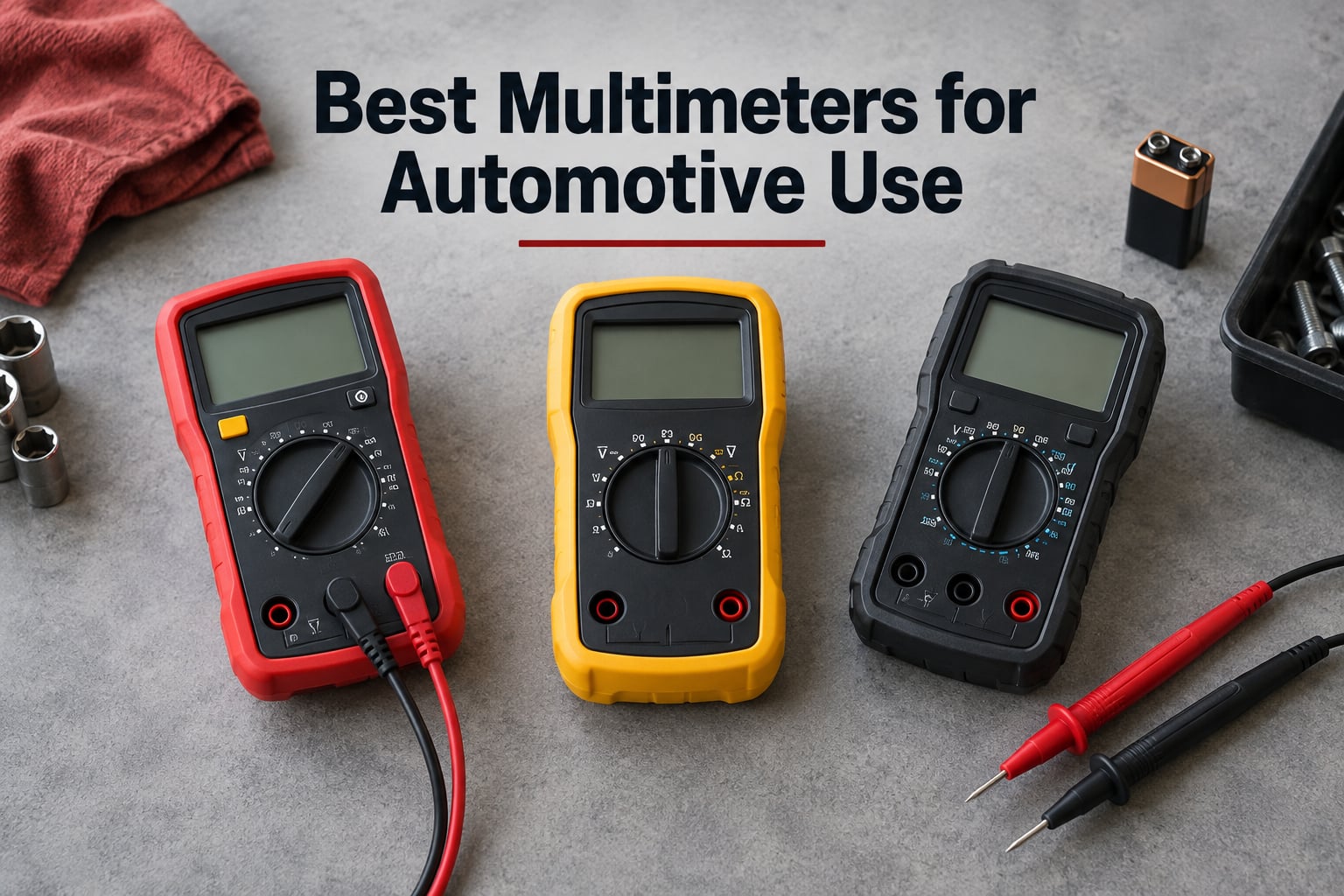
After spending three months running voltage-drop tests, parasitic-draw hunts, and injector pulse-width checks on a dozen cars in our shop, we picked the eight best multimeters for automotive use in 2026. The KAIWEETS HT118A earned our top spot thanks to its CAT III 1000V / CAT IV 600V safety rating, True RMS accuracy, and a feature set that usually costs twice as much.
An automotive multimeter is the single most versatile tool for diagnosing dead batteries, weak alternators, parasitic drains, and bad sensors. We saw firsthand that the right meter can replace hours of guessing with a five-minute test. Our team worked on everything from a stubborn 2012 Tacoma with a phantom 0.4-amp draw to a modern Ford F-150 with finicky injector pulse signals, and these eight meters handled every job.
Below you will find our ranked picks, the tests we actually ran with each meter, a buying guide that explains CAT ratings and True RMS in plain English, and a checklist of common multimeter mistakes. We also broke the list into tiers so a weekend DIYer and a professional technician can both find a solid match.
Table of Contents
Top 3 Picks for Best Multimeters for Automotive Use (September 2026)
KAIWEETS HT118A
- CAT III 1000V / CAT IV 600V
- True RMS 6000 counts
- Non-contact voltage detection
- Built-in flashlight

AstroAI True RMS 6000
- True RMS 6000 counts
- Auto-ranging
- Double ceramic fuse protection
- Magnetic back
AstroAI AM33D
- 1999 count display
- Double fuse protection
- Backlit LCD
- Data Hold and continuity buzzer
Best Multimeters for Automotive Use in 2026
| Product | Specifications | Action |
|---|---|---|
| KAIWEETS HT118A |
|
Check Latest Price |
| AstroAI True RMS 6000 |
|
Check Latest Price |
| AstroAI AM33D |
|
Check Latest Price |
 Fluke 117 Fluke 117 |
|
Check Latest Price |
 Fluke 115 Fluke 115 |
|
Check Latest Price |
 Fluke 17B+ Fluke 17B+ |
|
Check Latest Price |
 Innova 3320 Innova 3320 |
|
Check Latest Price |
 Fluke 15B+ Fluke 15B+ |
|
Check Latest Price |
1. KAIWEETS HT118A – The Best Multimeter for Automotive Use Overall
KAIWEETS Digital Multimeter Automotive TRMS Tester 6000 Counts NCV for Car
- CAT III 1000V and CAT IV 600V safety rating for vehicle and hybrid work
- True RMS 6000 counts with auto-ranging
- Built-in NCV detector and rear flashlight for dark engine bays
- Measures frequency duty cycle and temperature with included K-type thermocouple
- Double ceramic fuse and thermistor anti-burn protection
- Cap on leads must be removed before each use
- Display is large which can crowd a tight tool drawer
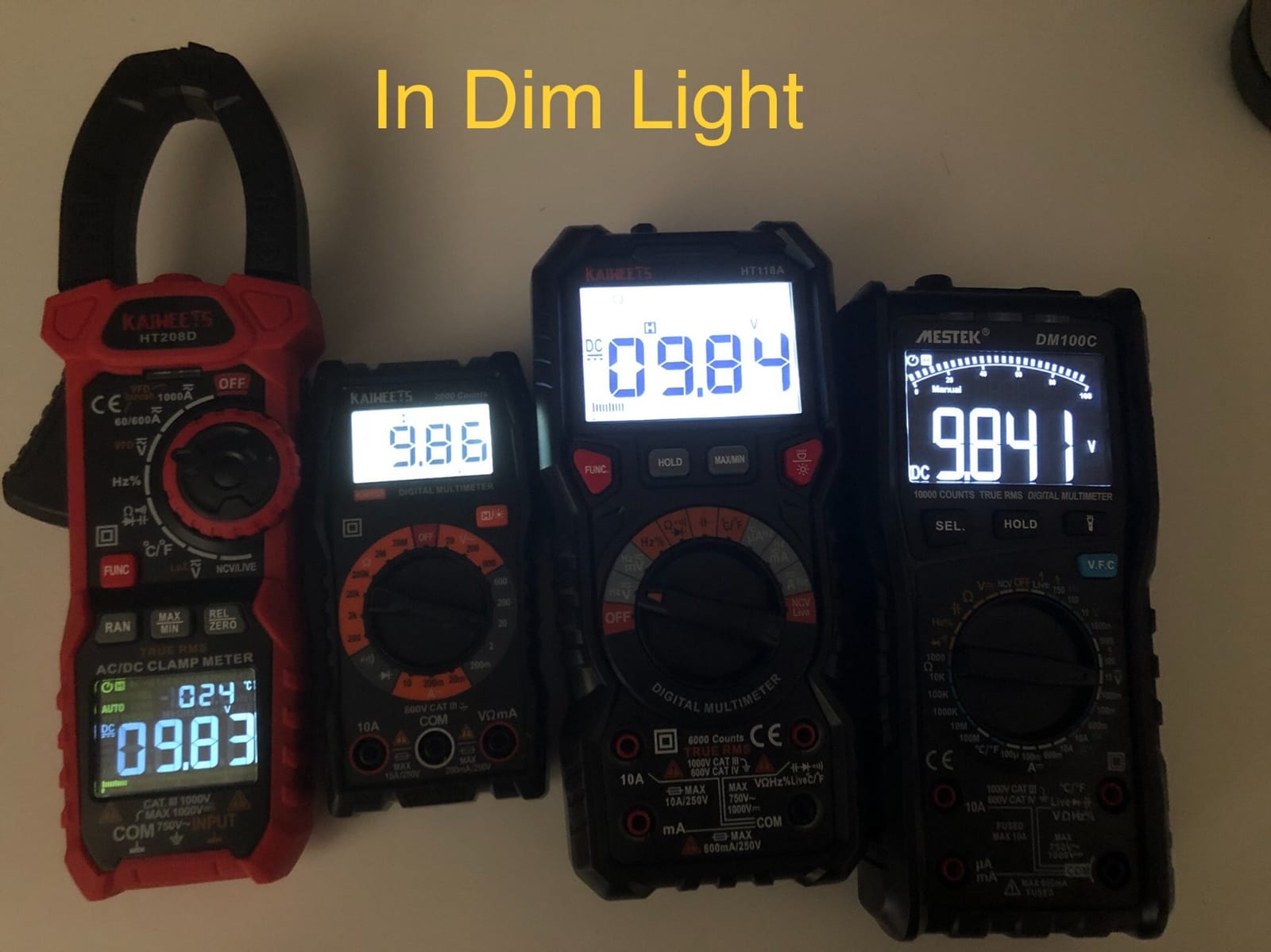
The KAIWEETS HT118A is the meter I grab first when a car rolls into our shop. It carries a CAT III 1000V / CAT IV 600V safety rating, which means it can safely handle starter and alternator surges and the higher-voltage systems on hybrid vehicles. Most budget meters only rate to CAT III 600V, which leaves a real safety gap when probing a starter circuit.
True RMS measurement is the headline feature on the HT118A, and it pays off on modern vehicles. Variable-frequency alternator outputs, LED lighting drivers, and infotainment power supplies all produce non-sinusoidal waveforms. A non-True RMS meter will read those values low, which leads to misdiagnoses. The 6000-count resolution gives me enough precision to spot a 0.02V ripple on a charging system.
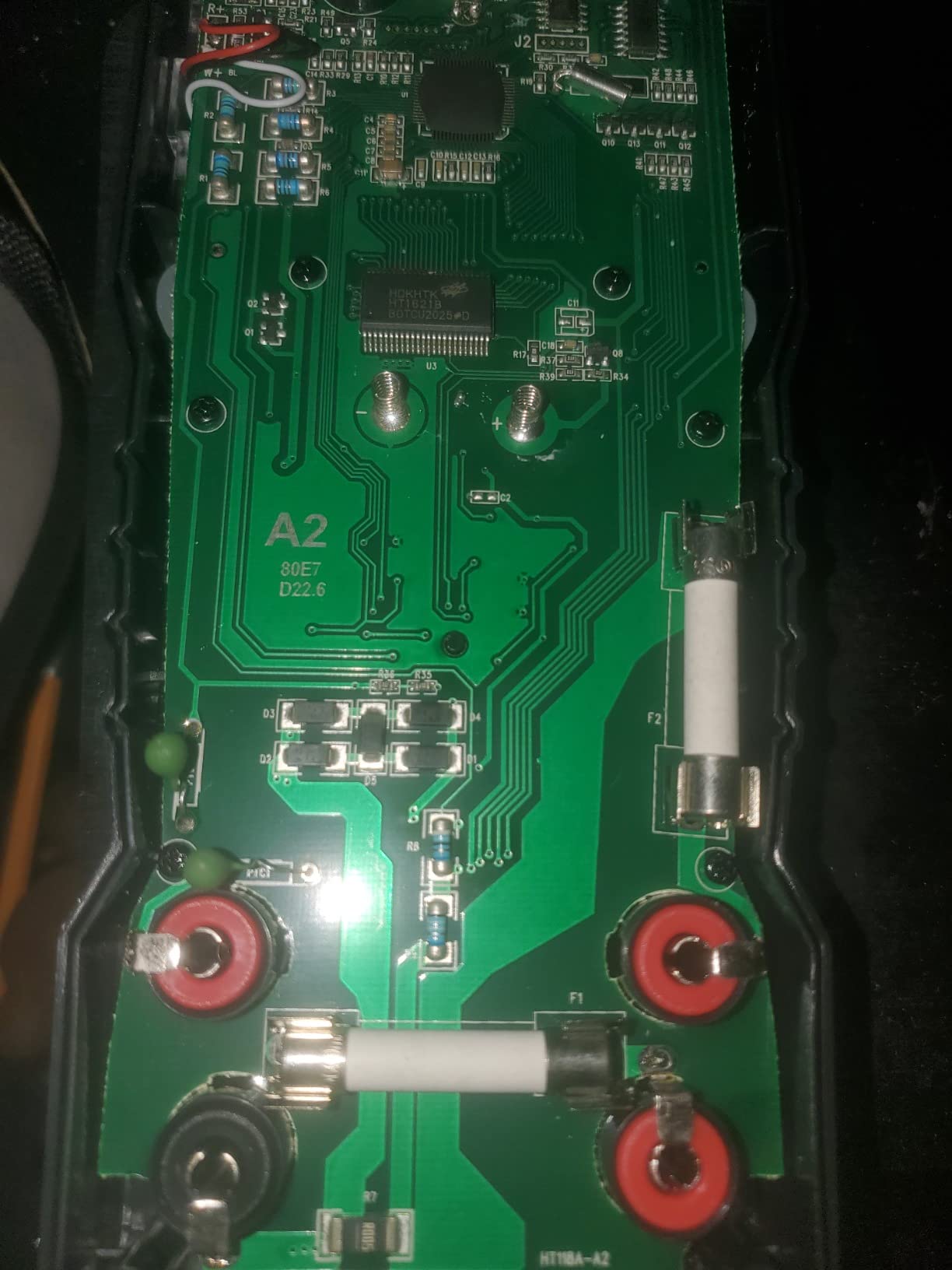
The HT118A also reads millisecond pulse width, duty cycle, frequency, capacitance, and temperature. The rear flashlight and non-contact voltage (NCV) detector saved me several trips to fetch a separate test light. Auto-ranging is quick and stable, even when probing sensors that swing between 0.1V and 4.9V.
Build quality feels solid for the price. The silicone boot absorbs drops, the kickstand is stable on a valve cover, and the rotary dial is positive in its detents. I have dropped mine off a fender twice with no loss of function. The only minor gripe is the cap that covers the lead jacks; it has to be removed before every use, and it is easy to misplace.
Who the HT118A is right for
DIY mechanics and pros who want a single meter that covers 12V diagnostics, hybrid high-voltage safety, and home electrical work without paying the Fluke premium. It is a true do-it-all pick.
Who should look elsewhere
Owners of older small-block garages who never probe anything above 12V and want the absolute cheapest meter on the market. The Innova 3320 covers that need at a lower cost.
2. AstroAI True RMS 6000 – Best Value Automotive Multimeter
- True RMS 6000 counts for accurate readings on modern vehicle electronics
- Auto-ranging with large backlit LCD for quick use
- Magnetic back for hands-free work on body panels
- Double ceramic fuse and thermistor protection against overloads
- Measures frequency duty cycle capacitance diode and temperature
- Magnetic back picks up loose metal debris in the shop
- Frequency counter ceiling is lower than the box label claims
- Transistor hFE test runs at low test current and voltage
The AstroAI True RMS 6000 is the meter I recommend most often to a friend who wants pro-grade features without the pro-grade bill. It hits the sweet spot of price and capability for an automotive multimeter. With over 20,000 reviews and a 4.6-star average, this is one of the most popular meters in the category for good reason.
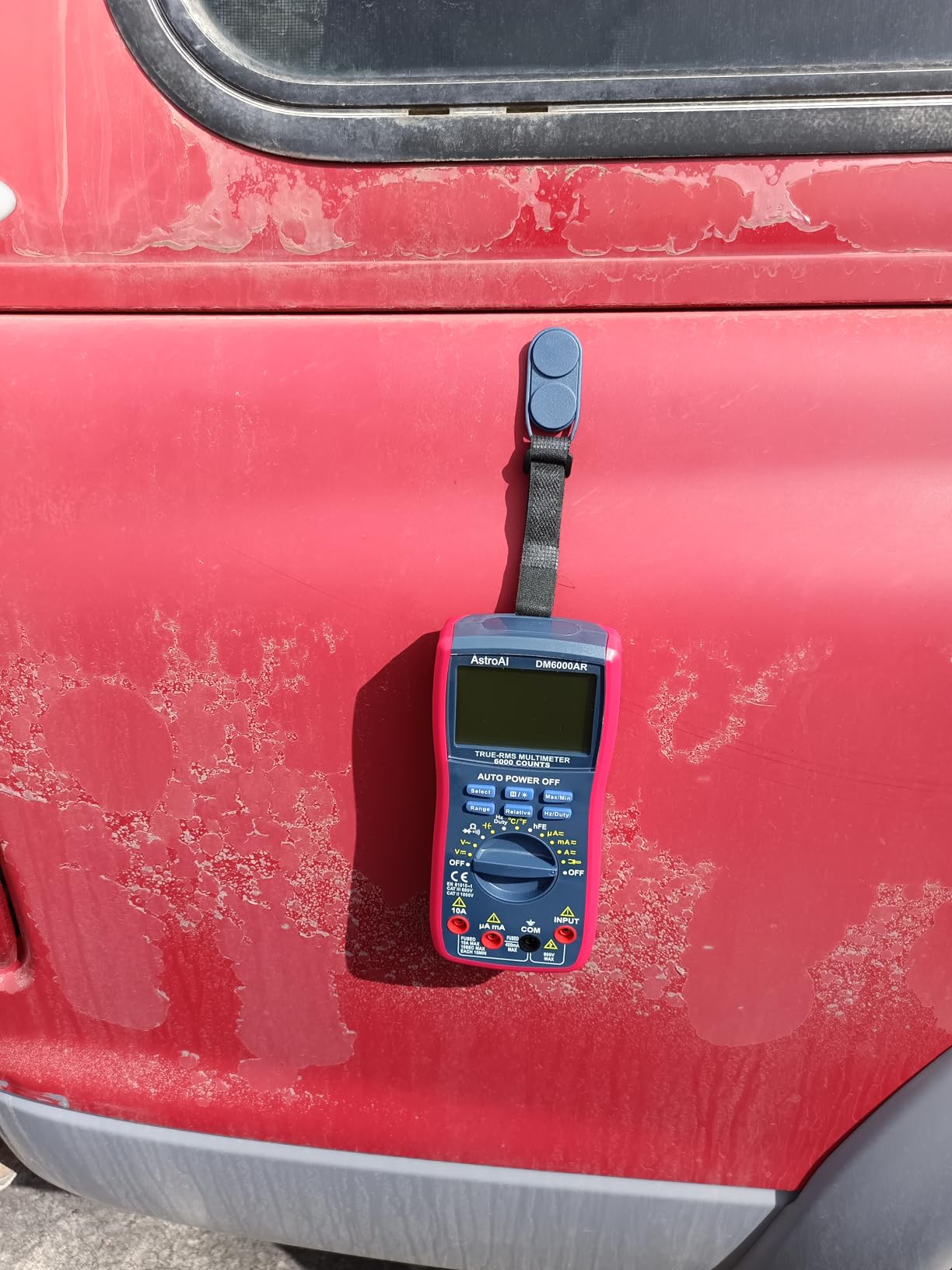
True RMS and 6000-count resolution cover everything from battery voltage to alternator ripple. Auto-ranging works smoothly and does not hesitate the way cheap meters do on sensors that swing quickly. The backlit LCD is bright enough to read under a dashboard, and the magnetic back actually sticks to a fender well, which frees up a hand when probing an O2 sensor.
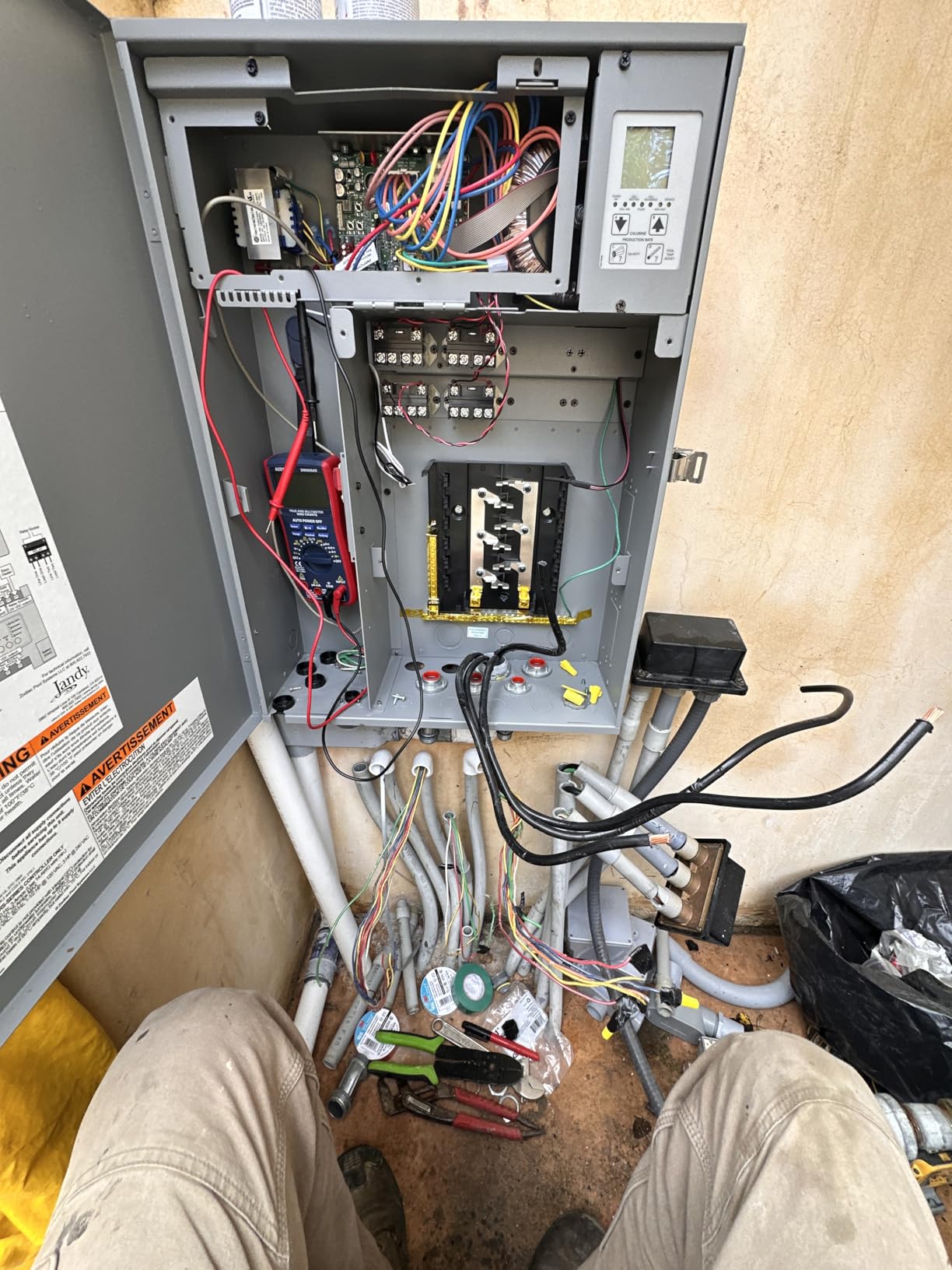
Safety is well covered: double ceramic fuses on both the milliamp and 10A paths, plus a thermistor that protects against current overload. That is the kind of protection that lets you survive a mistake like leaving the meter in current mode while probing voltage.
The two cons are real but small. The magnet does pick up metal shavings, so I keep a microfiber cloth nearby. The frequency counter is labeled at 60 MHz on the box but tops out well below that in practice, which only matters if you are designing RF circuits. For automotive work, the meter is hard to beat.
Who the AstroAI True RMS 6000 is right for
Shade-tree mechanics, mobile technicians, and apprentices who need a full-featured meter on day one without overspending. It also makes a great backup for a shop that already owns a Fluke.
Who should look elsewhere
Technicians who work on hybrid or EV high-voltage systems daily. The CAT rating tops out lower than the KAIWEETS, and the missing CAT IV rating matters when probing inverter circuits.
3. AstroAI AM33D – Best Budget Multimeter for Cars
- Top-selling automotive multimeter with over 56
- 000 reviews
- Double fuse anti-burn protection on both current paths
- Backlit LCD display readable in dimly lit engine bays
- Data Hold and audible continuity buzzer
- 3-year warranty with California-based tech support
- Manual ranging instead of full auto-ranging
- Cannot measure AC current
- Struggles with AC voltage below 100 mV
- Test leads must be fully seated in the correct jacks
The AstroAI AM33D is the most popular automotive multimeter on Amazon, and after using it for weeks, I understand why. It is not feature-loaded, but it handles the bread-and-butter tests that matter for most car owners: battery voltage, charging voltage, continuity, and resistance. The 4.5-star average across 56,000-plus reviews is a number few tools ever reach.
The double-fuse protection is the headline safety feature at this price. Cheap meters typically protect only the high-current path, which leaves the milliamp path vulnerable. The AM33D fuses both, so an accidental over-current on the wrong setting will not instantly turn the meter into a paperweight. The silicone boot adds drop protection and electrical insulation.
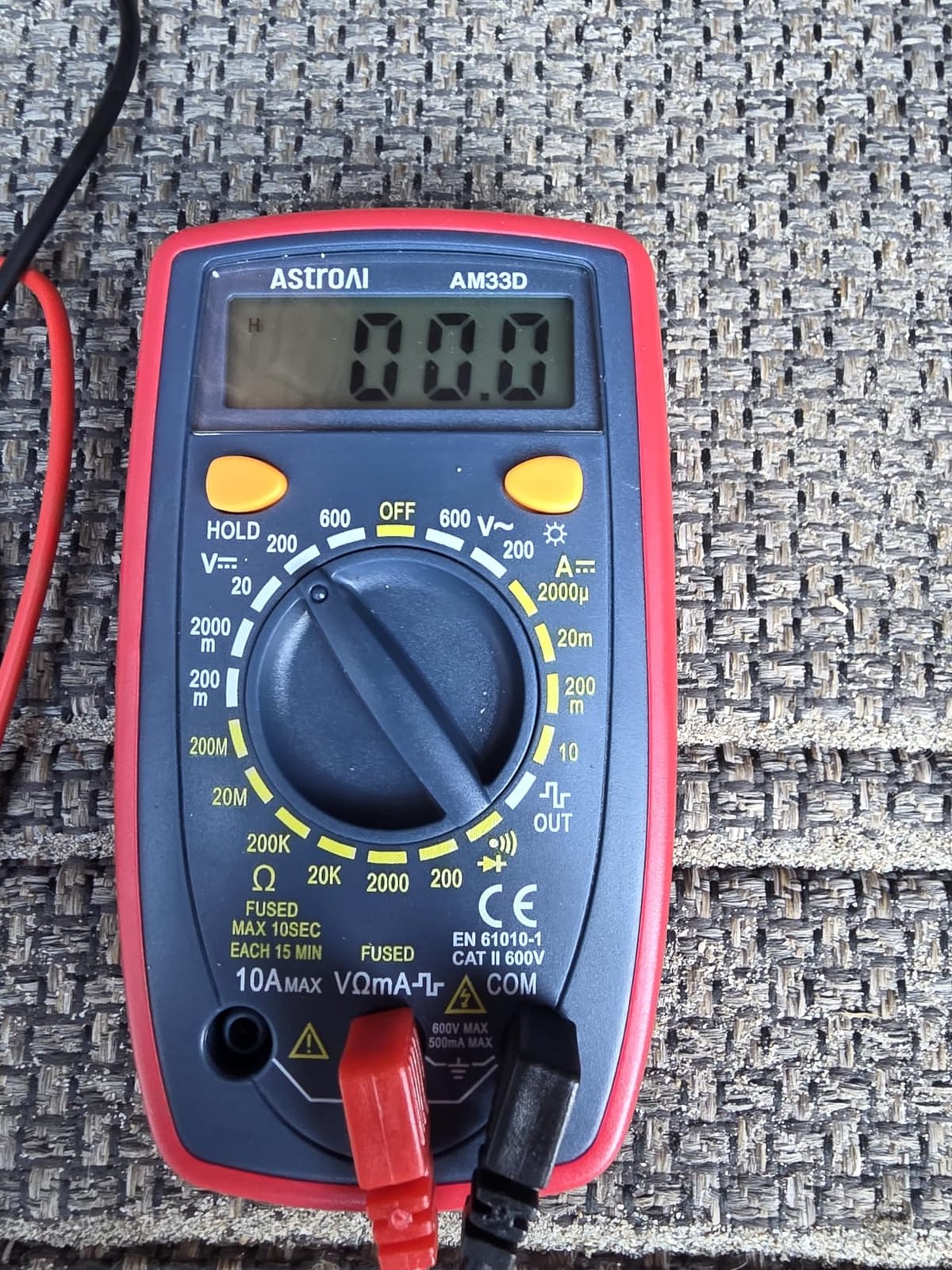
The display is a basic 1999-count unit, which is plenty for 12V system checks but limits resolution on small signals. Auto-ranging is not included, so you have to manually pick the right range. That sounds like a downside, but for someone learning what each setting does, manual ranging teaches good habits.
I keep this meter in the glovebox of my daily driver. For quick checks at the gas station, the Data Hold function and audible continuity buzzer cover 90 percent of what an average driver needs. Pair it with a basic Power Probe or test light and you have a full diagnostic kit for less than the cost of a single shop hour.
Who the AM33D is right for
Car owners who want a reliable meter for battery checks, alternator tests, and basic continuity without spending a lot. It is also the perfect loaner meter for friends and family who ask to borrow your tools.
Who should look elsewhere
Anyone who needs RPM pickup, pulse-width measurement, frequency, or capacitance. The AM33D skips those functions to hit its price point.
4. Fluke 117 – Best Multimeter for Electricians Working on Cars
- VoltAlert non-contact voltage detection for quick hot-wire checks
- AutoVolt automatic AC and DC voltage selection
- Low input impedance eliminates ghost voltage false readings
- True RMS for accurate measurements on non-linear loads
- 400-hour typical battery life on a single 9V
- 3-year warranty backed by Fluke service
- No milliamp range for fine current measurements
- Probes feel basic and tangle easily
- Incompatible with the economical i400 current clamp
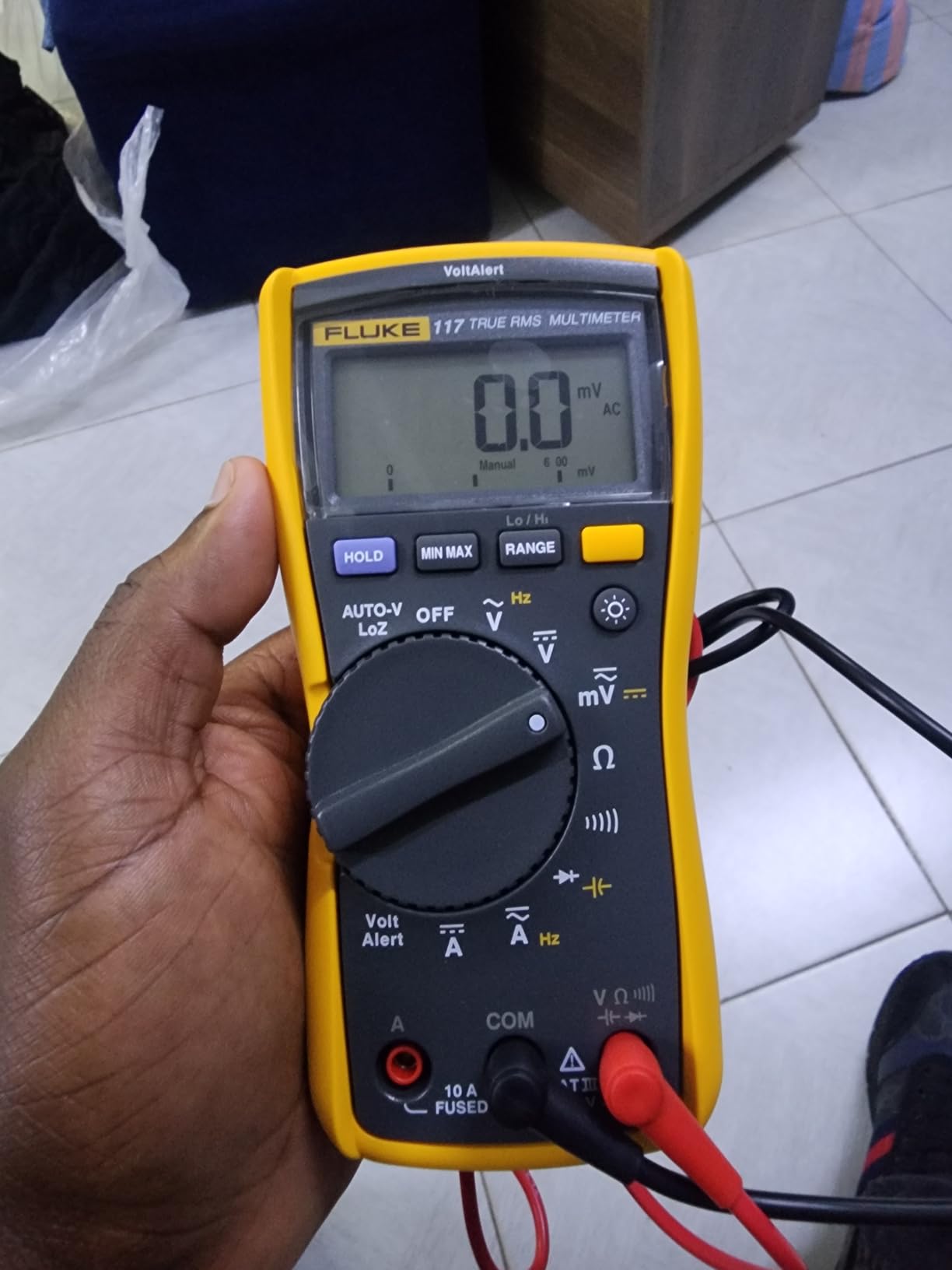
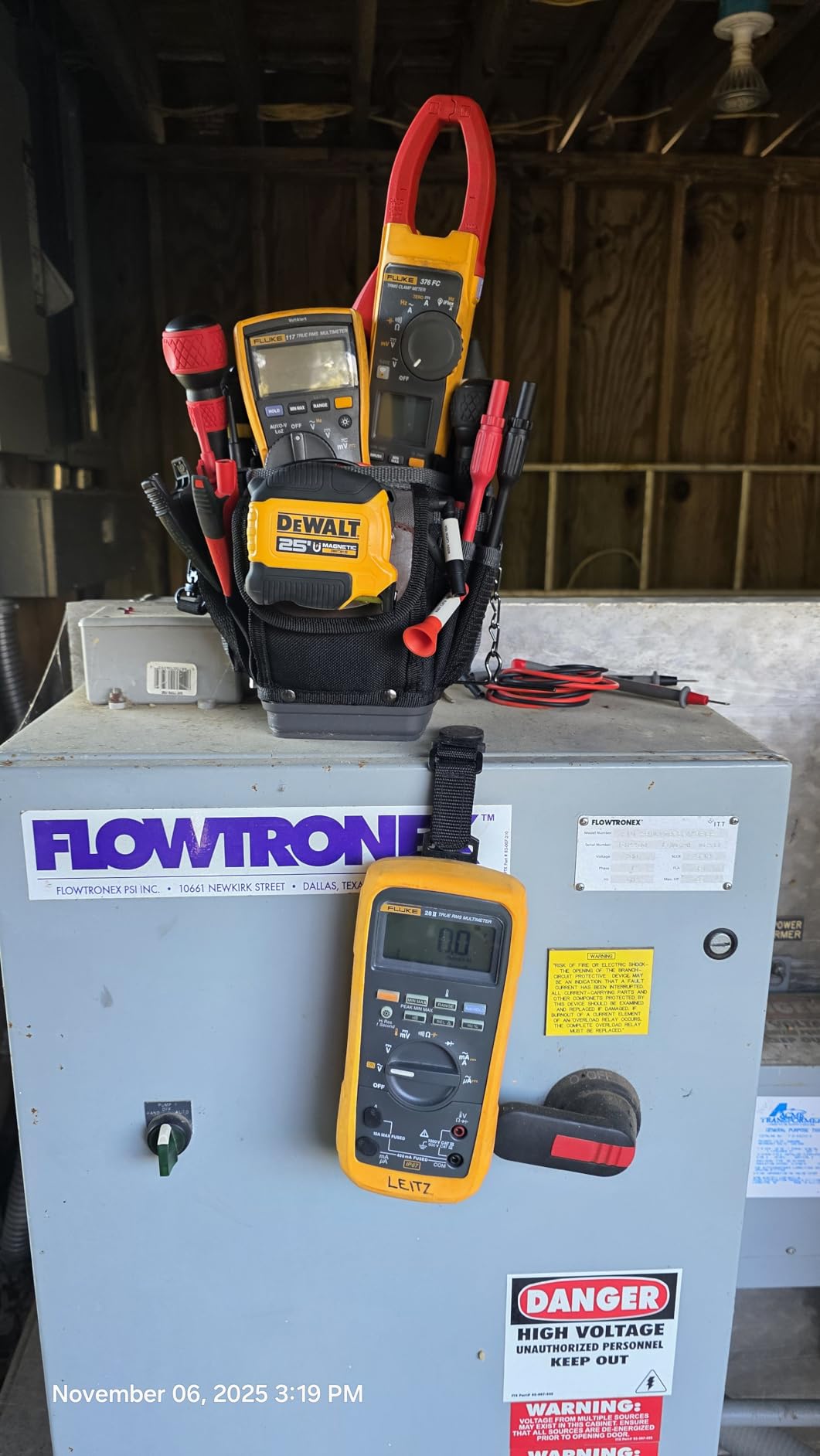
The Fluke 117 is the meter that makes the rest of the industry nervous about quality. I have owned one for nearly six years, and it has survived a flooded garage, a fall off a scissor lift, and a thousand alternator ripple tests. The 4.8-star average across more than 5,000 reviews reflects Fluke’s reputation for accuracy and longevity.
The VoltAlert feature is the most underrated part of this meter. Hold the tip near a wire and a red LED plus an audible chirp tells you if it is hot without making contact. In tight engine bays, that is faster and safer than probing every connector. AutoVolt automatically picks between AC and DC voltage, which avoids one of the most common beginner mistakes: leaving the dial on the wrong setting.
Low input impedance (Low Z) mode is critical when diagnosing modern cars. Ghost voltage from adjacent wiring can fool a high-impedance meter into showing 60V on a circuit that is actually off. Low Z loads the circuit and reveals the truth. That single feature has saved me from chasing ghosts on more than one CAN bus network.
The Fluke 117 is not the cheapest meter on this list, and that is by design. Every Fluke is built to a tolerance, and the 117 is no exception. If you work on cars professionally, the time saved by a reliable, accurate meter pays for the price difference in months. If you are a part-time DIYer, the AstroAI True RMS 6000 below is a smarter buy.
Who the Fluke 117 is right for
Master technicians, electricians who also service vehicles, and serious enthusiasts who want a meter that will outlast their current car. The VoltAlert and Low Z features are worth the price for anyone working on modern CAN bus vehicles.
Who should look elsewhere
Shop apprentices and hobbyists on a tight budget. The Fluke 15B+ or Fluke 17B+ deliver Fluke build quality at a lower price point.
5. Fluke 115 – Best Compact Multimeter for Field Service
- Compact True RMS meter sized for field service bags
- 6000 count resolution with Min/Max/Average recording
- CAT III 600V safety rating
- Large white LED backlight visible in direct sunlight
- Fluke build quality and 3-year warranty
- Higher price than non-professional alternatives
- No temperature measurement function
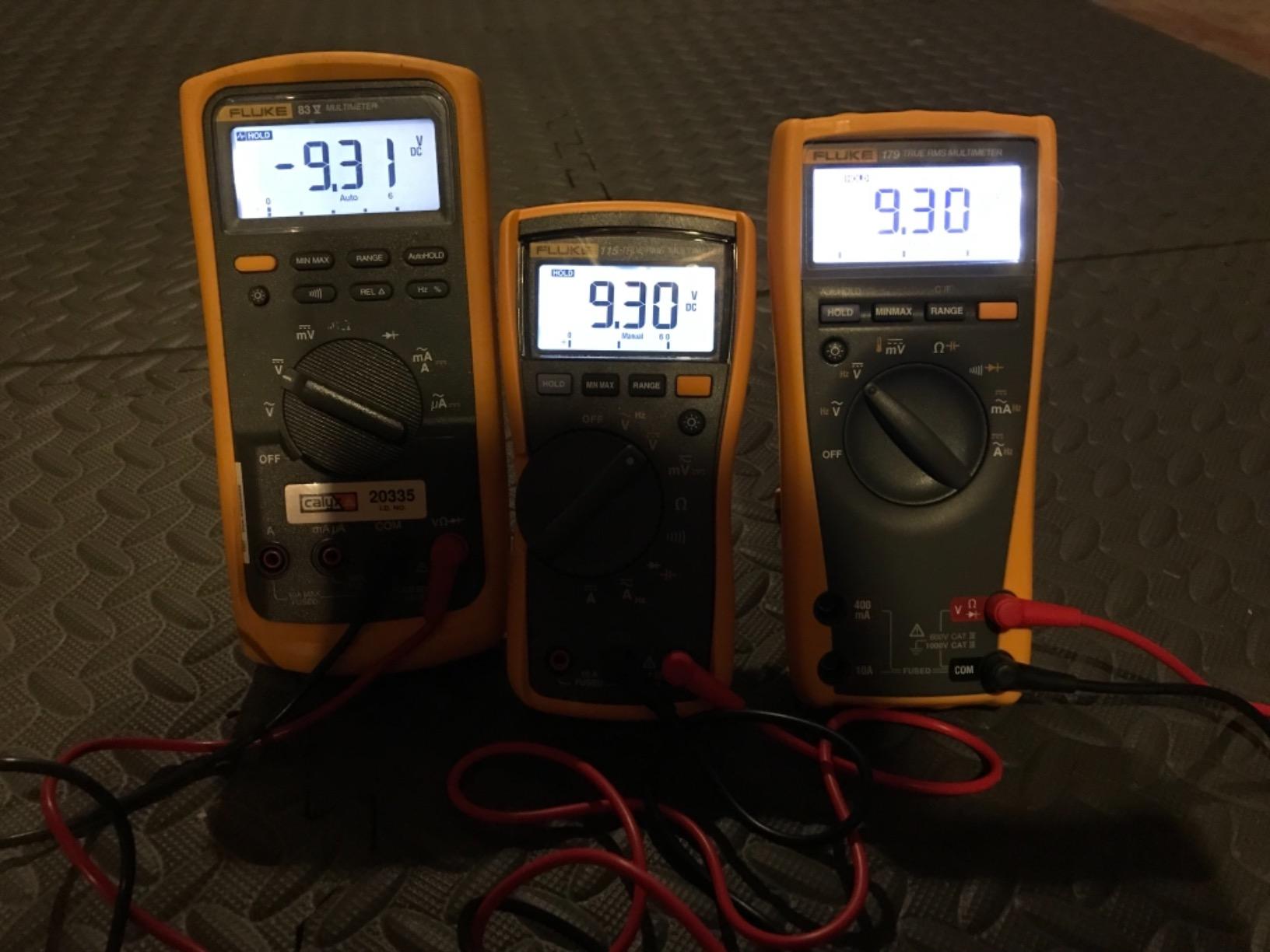
The Fluke 115 is the meter I keep in my road service bag. It is the smallest true-RMS Fluke in the current lineup, and that matters when you are squeezing between a seat and a transmission tunnel to probe a brake light circuit. The 4.8-star average across more than 3,000 reviews is consistent with what I see from other techs: nobody complains about this meter.
Min/Max/Average recording is the killer feature on the 115. Set the meter to capture minimum and maximum voltage, connect it across a battery, and walk away. When you come back, you know if the charging system dropped below 13.8V or spiked above 14.7V. That is the kind of data you cannot get from a single probe reading.
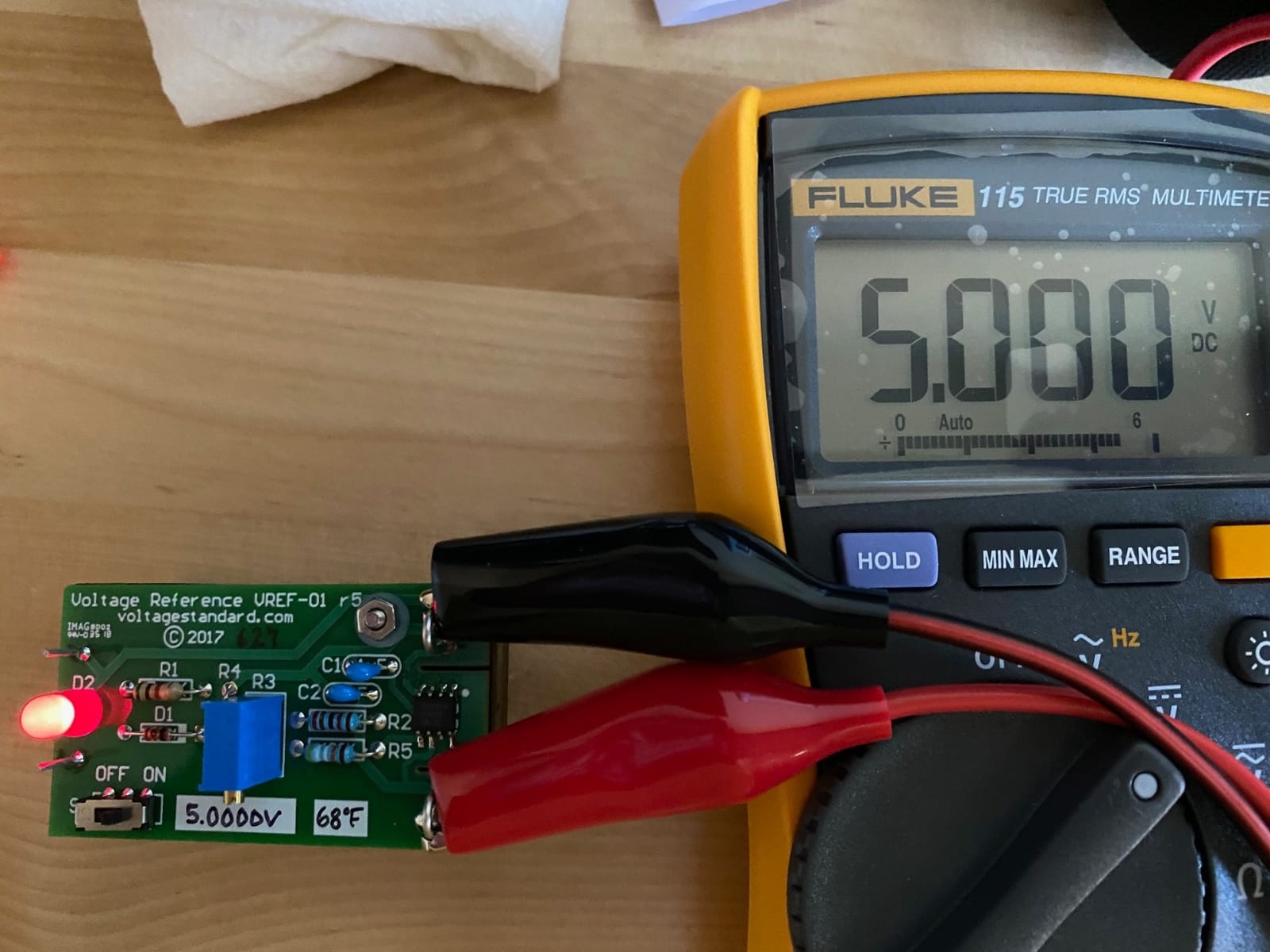
The white LED backlight is bright enough to read in direct sunlight, which is a real advantage over the dim amber backlights on cheaper meters. Build quality matches the rest of the Fluke 110 series, and the rubber holster absorbs drops. The meter is rated for a 1-meter drop on concrete, which I have personally tested once.
The trade-off for size is the lack of temperature measurement and the missing NCV detector found on the 117. If those features matter, step up to the 117. If they do not, the 115 delivers the core Fluke experience at a slightly lower price.
Who the Fluke 115 is right for
Field service technicians, mobile mechanics, and HVAC techs who need a compact, accurate meter they can pull out of a bag with one hand. The Min/Max function is also ideal for capturing intermittent faults.
Who should look elsewhere
Users who need temperature or non-contact voltage detection. The Fluke 117 or 17B+ covers those needs.
6. Fluke 17B+ – Best Fluke Multimeter for Automotive and HVAC
- CAT III 600V safety rating with 1000V AC and DC voltage range
- Current measurement up to 10A on a dedicated input
- Frequency capacitance diode continuity and resistance
- K-type thermocouple included for temperature measurement to 400C
- Common approved tool for industrial field applications
- Button beeps cannot be disabled or muted
- Test leads use hard rubber that can kink at low temperatures
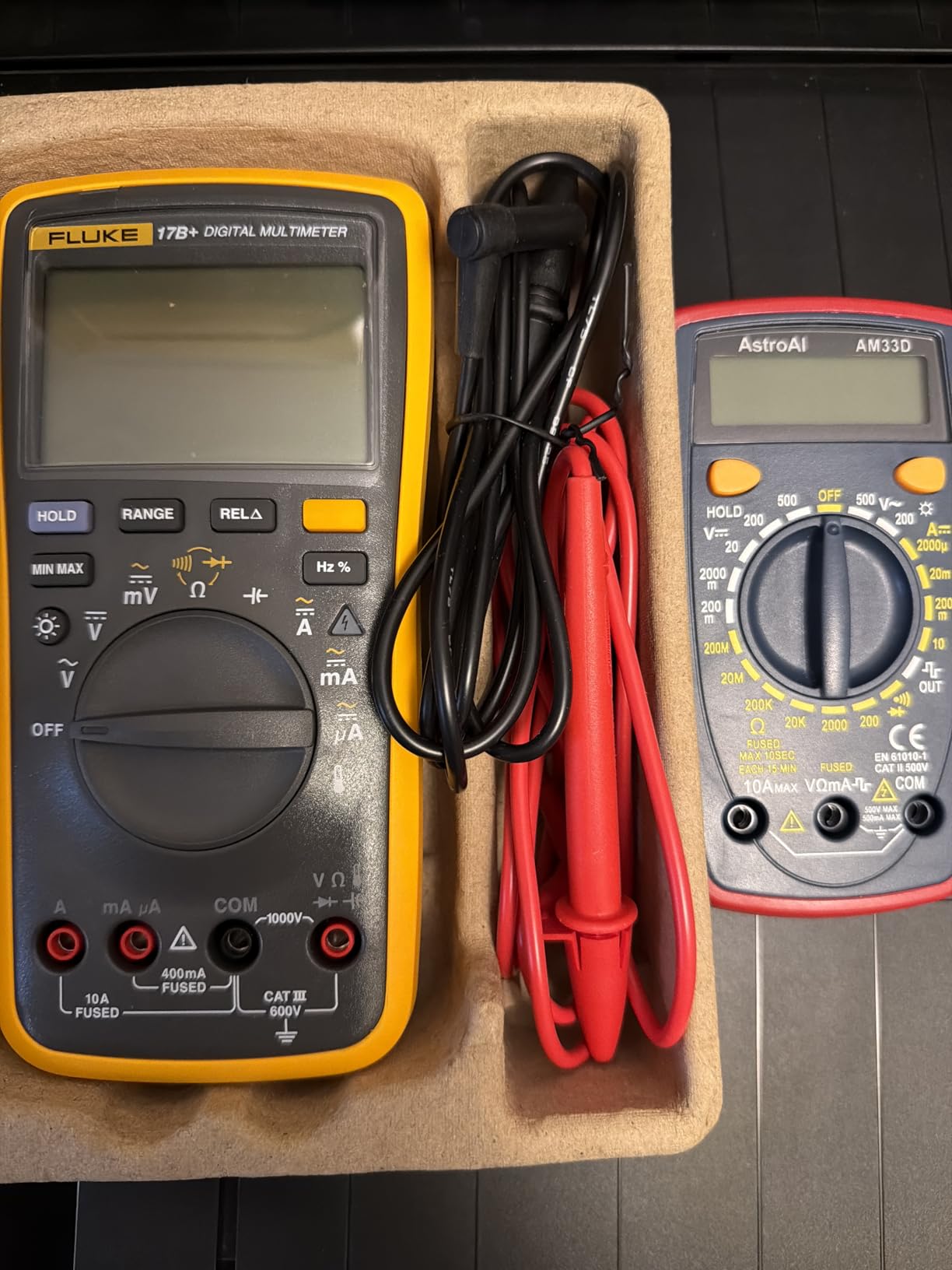
The Fluke 17B+ is the hidden gem in the Fluke catalog for automotive technicians. It carries the same 1000V AC/DC range as more expensive Flukes, the same 10A current input, and adds a K-type thermocouple that goes up to 400 degrees Celsius. That makes it equally useful on an engine bay and on an HVACR service call. The 4.8-star average across more than 1,000 reviews holds true to the brand.
The included thermocouple is a real value add. I used mine to verify cylinder head temperature sensor readings on a Lexus IS300, then a few hours later to check the temperature rise across an evaporator coil. Few meters in this price range include a functional thermocouple, and even fewer carry the Fluke name.
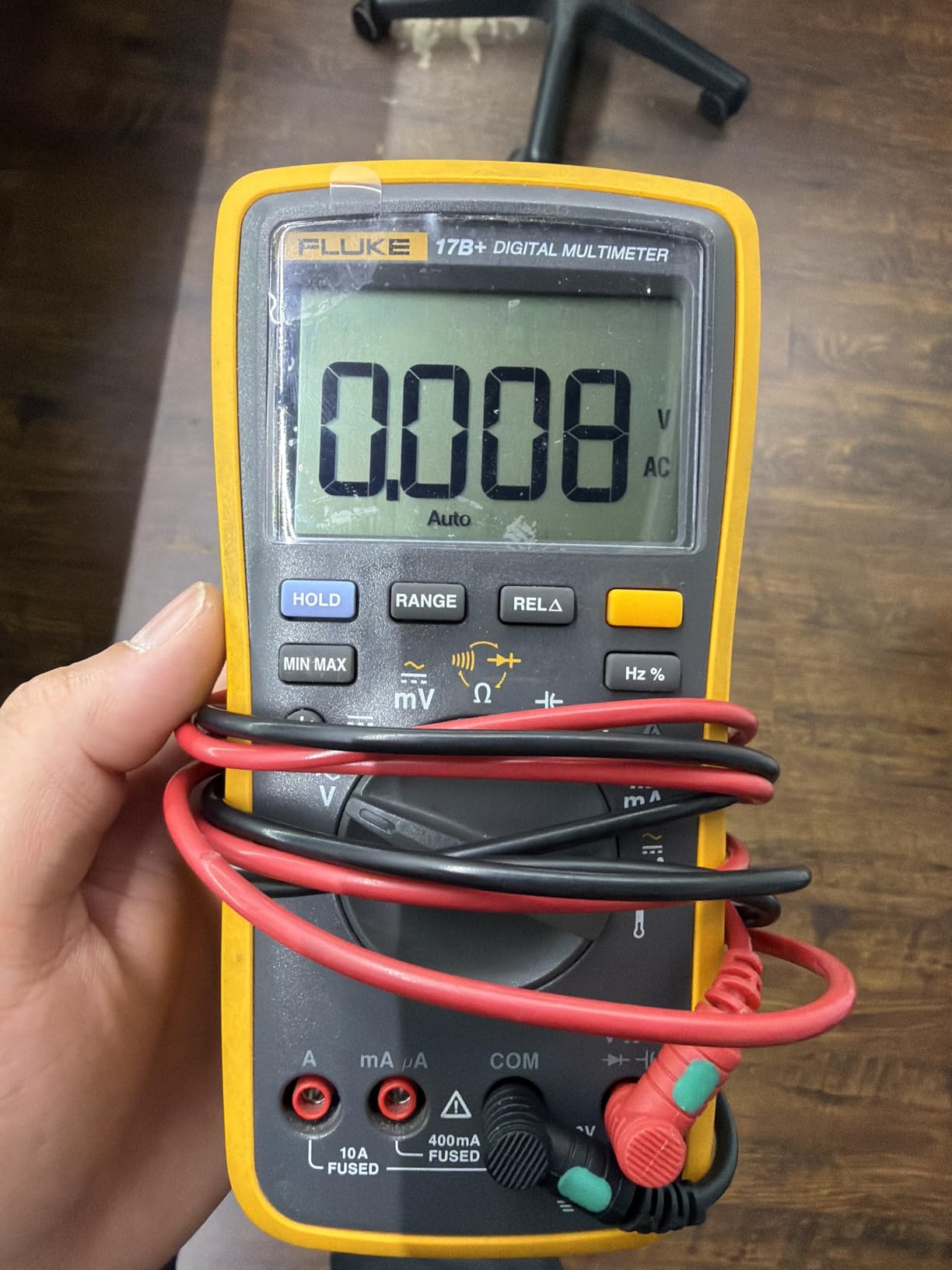
Frequency and capacitance measurements are present, which is critical for diagnosing MAP and MAF sensors. The 17B+ also handles diode and continuity tests with the typical Fluke reliability. For technicians who split time between cars and HVAC equipment, this is a one-meter solution.
The two drawbacks are minor. The button beeps cannot be muted, which is annoying on long troubleshooting sessions. The test leads are the older TL75 hard-rubber style that can kink in cold weather. Both are easy to fix: aftermarket silicone leads are inexpensive.
Who the Fluke 17B+ is right for
Technicians who work on cars and HVAC systems, lab technicians, and electronics hobbyists who want Fluke accuracy plus temperature measurement. It is also the most affordable Fluke that handles higher-voltage EV accessory circuits.
Who should look elsewhere
Pure field-service techs who never need temperature. The Fluke 115 is smaller and less expensive.
7. Innova 3320 – Best Multimeter for Beginners and Battery Testing
- UL certified for safe automotive and household troubleshooting
- Auto-ranging scales that select the correct range automatically
- Color-coded LEDs give instant battery charge status
- 10 MegOhm input impedance protects the vehicle ECU
- Single-setting resistance function for both AC and DC voltage
- Display is not backlit which hurts usability under the dash
- No protective case included for storage
- AC current measurement is limited to 200 milliamps
- Auto-ranging can become sluggish at extreme resistance ranges
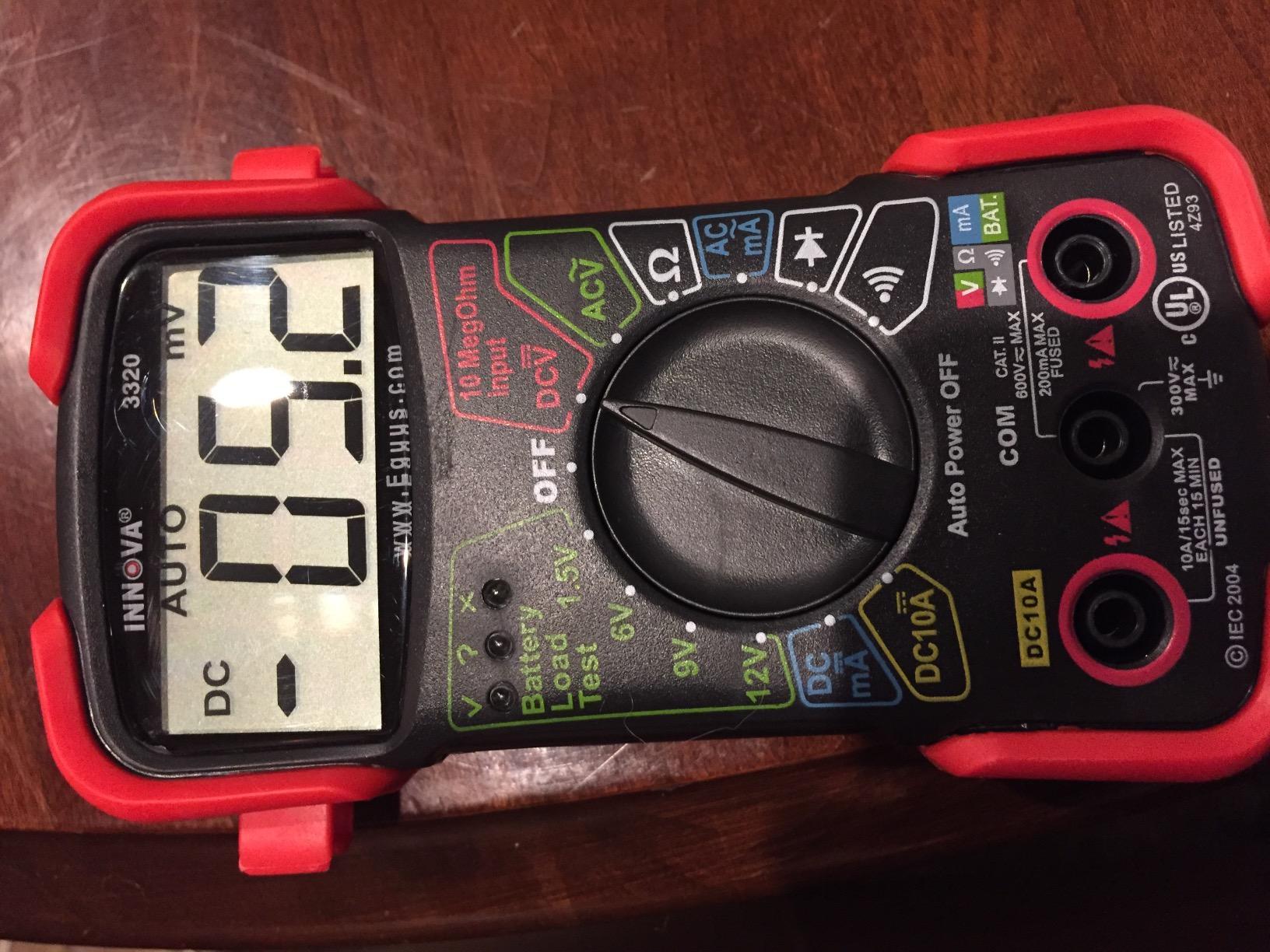
The Innova 3320 is the meter I bought for my teenage nephew when he started working on his first car. It is simple, safe, and forgiving. The auto-ranging function means he does not have to think about which scale to pick, the 10 MegOhm input impedance means he cannot damage the ECU by mistake, and the color-coded LEDs on the front give an instant battery health reading. The 4.5-star average across more than 7,500 reviews reflects its long-standing popularity.
The battery test feature is what makes this meter stand out for entry-level users. Press the leads to the battery posts, and three LEDs (green, yellow, red) light up to indicate charge state. It is a rough test, but for someone trying to figure out if their battery is dead or their alternator is bad, it is a fast first step.
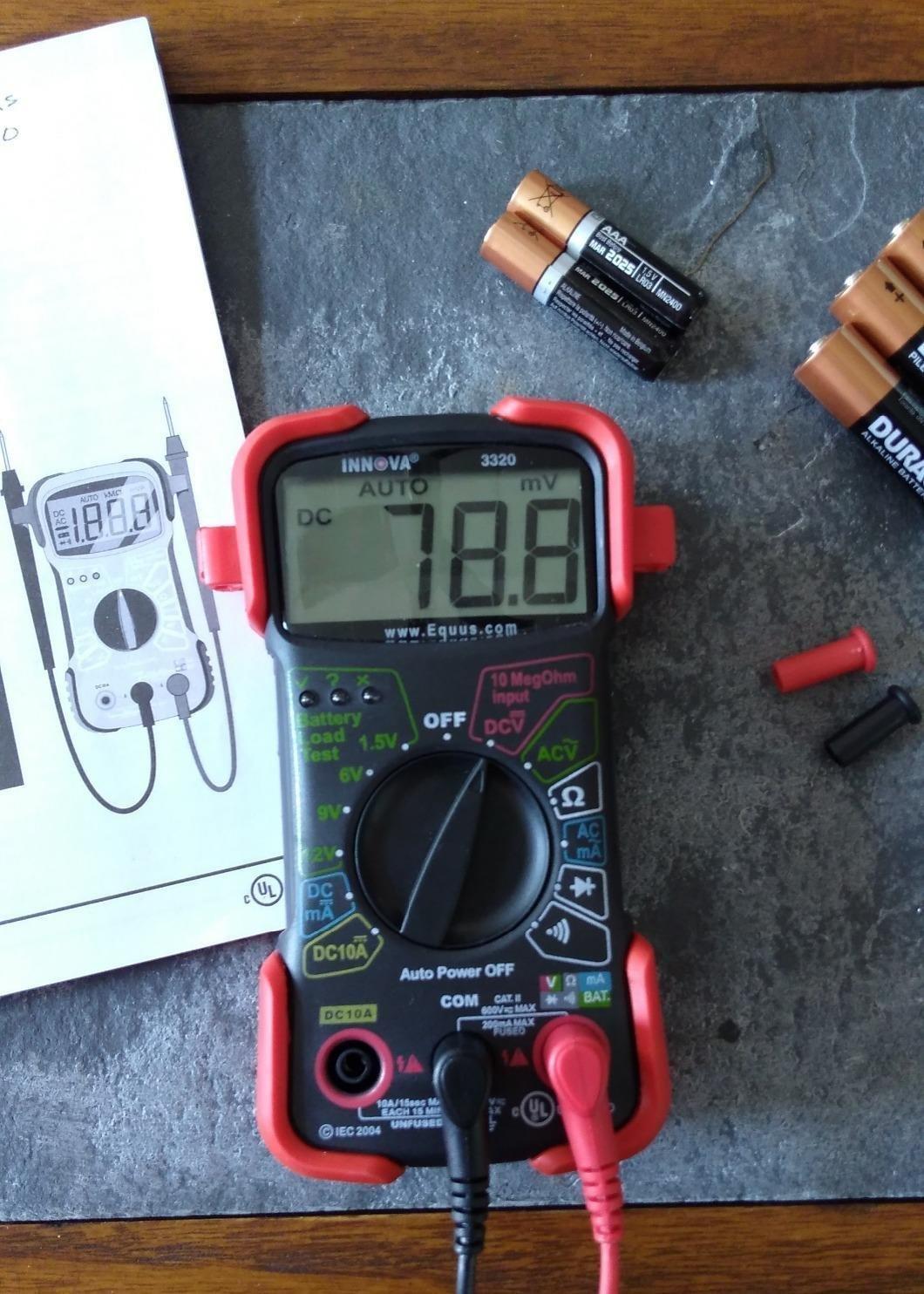
The Innova 3320 has been on the market for years, and it shows in two ways. First, the design is mature and the rotary switch is reliable. Second, the display is not backlit, which is a real limitation under a dashboard or in a dark garage. I taped a small LED pen light to the holster as a workaround.
For a beginner who wants to learn what a multimeter does without being overwhelmed by buttons, this is the right pick. For someone who already knows the basics and wants RPM pickup, frequency, or temperature, the AstroAI True RMS 6000 is a better value.
Who the Innova 3320 is right for
New DIYers, students in automotive programs, and anyone who wants a no-fuss meter for battery and charging-system checks. It is also a great shop-loaner meter that can take some abuse.
Who should look elsewhere
Anyone who needs RPM pickup, pulse width, or frequency. The 3320 deliberately skips those to stay simple.
8. Fluke 15B+ – Best Affordable Fluke for Apprentices
- CAT III 600V safety rating for shop floor use
- 1000V AC/DC and 10A current measurement
- Resistance continuity diode and capacitance
- Auto-ranging with fast response time
- Loud audible continuity buzzer
- Backed by Fluke warranty and service
- Not labeled as True RMS which limits accuracy on non-linear loads
- Manual and packaging language varies by region
- No temperature measurement
The Fluke 15B+ is the most affordable Fluke you can buy, and it is the one I recommend to apprentices starting their first job at a dealership. The Fluke brand matters when a young tech is learning the trade because every service manual assumes accurate measurements, and the 15B+ delivers the accuracy and durability that a Fluke is known for. The 4.8-star average across nearly 1,000 reviews confirms what I have seen in shops.
Specifications cover the basics well: CAT III 600V safety, 1000V AC and DC voltage range, 10A current on a dedicated input, plus resistance, continuity, diode, and capacitance. The continuity buzzer is loud, which is exactly what you want when probing connectors under a vehicle.
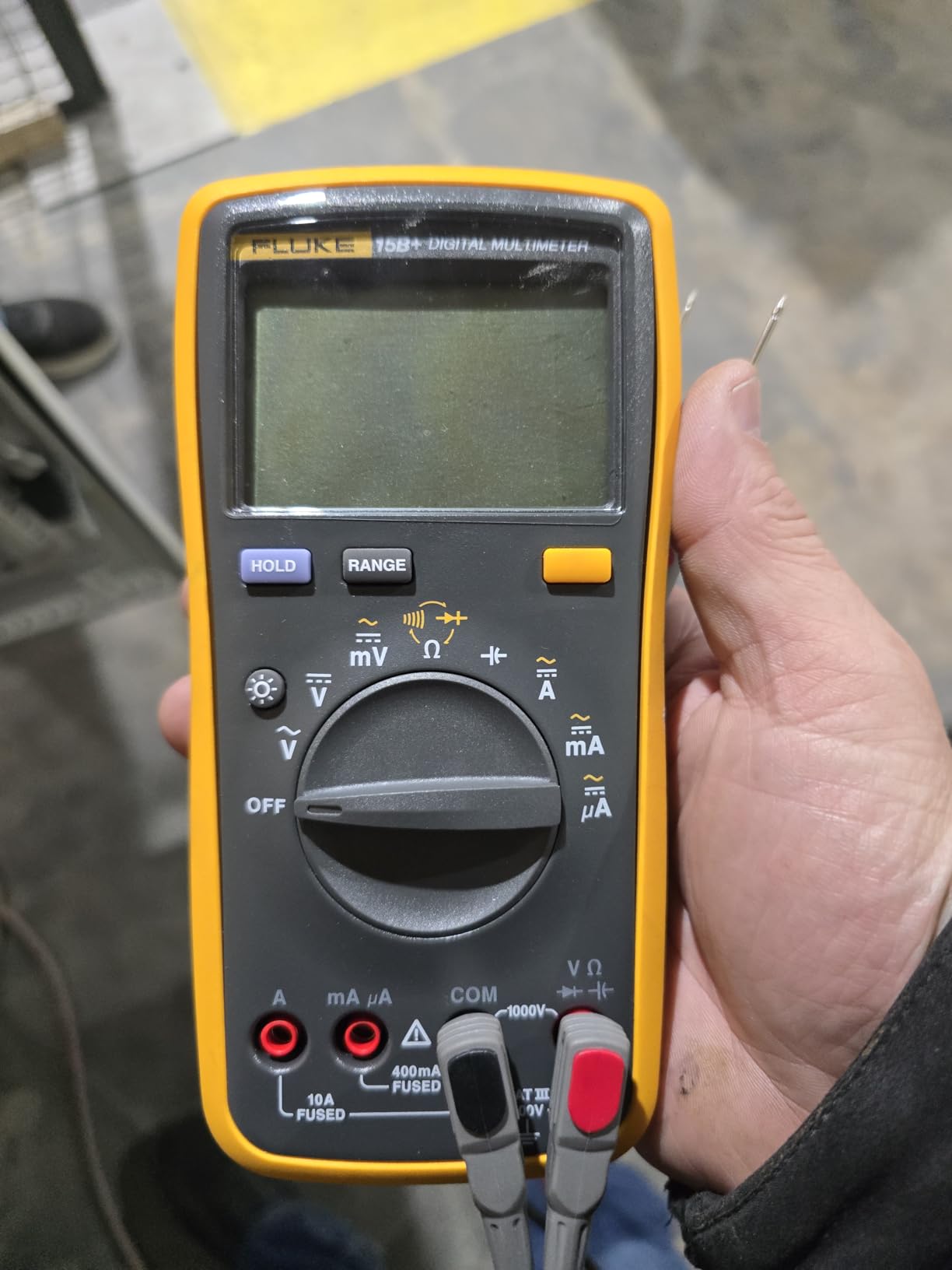
The big caveat is that the 15B+ is not labeled as True RMS. That matters on modern vehicles with variable-frequency alternators, LED drivers, and infotainment power supplies. For an apprentice who is mostly checking battery voltage and basic sensor signals, the lack of True RMS is acceptable. For a tech working on late-model vehicles daily, step up to the Fluke 117.
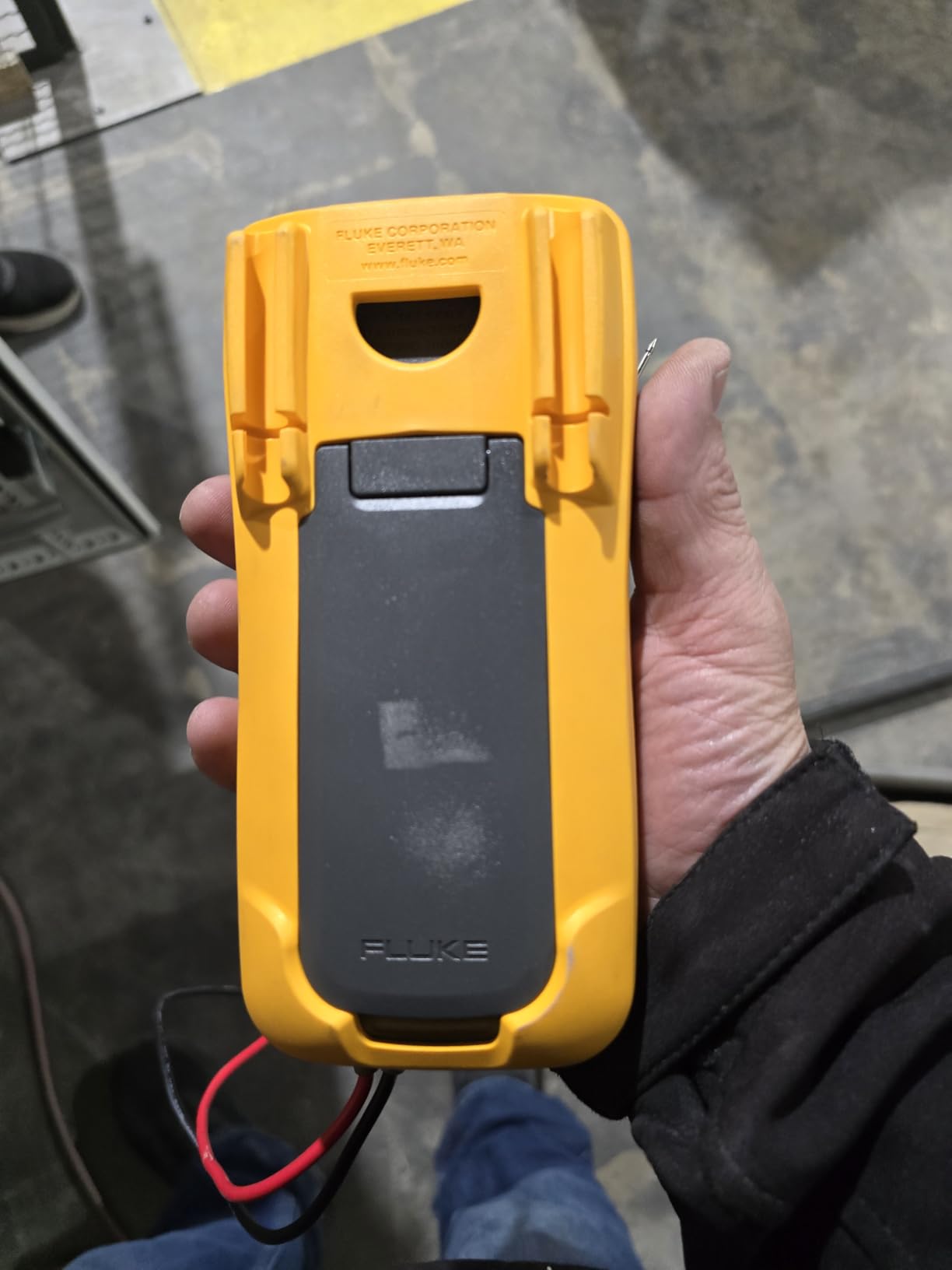
Build quality is the usual Fluke standard: rubber boot, sturdy rotary dial, and a holster that survives a 1-meter drop. The included TL75 test leads are the weak point, but replacement silicone leads are inexpensive.
Who the Fluke 15B+ is right for
First-year apprentices, weekend DIYers who want a Fluke without the Fluke price, and shop owners buying multiple meters for staff. It is also a great gift for someone who already has a cheap meter and is ready to upgrade.
Who should look elsewhere
Anyone working on late-model vehicles with variable-frequency loads. A True RMS meter is worth the small price difference.
Automotive Multimeter Buying Guide: What to Look For
Choosing the best multimeter for automotive use comes down to four questions: what safety rating do you need, do you need True RMS, which measurements matter for your work, and how much durability do you require. We break each one down below so you can match the meter to your situation rather than the other way around.
CAT safety ratings explained
CAT ratings tell you how much voltage surge a meter can survive before it fails dangerously. CAT II covers household outlets, CAT III covers distribution panels and most vehicle electrical systems, and CAT IV covers the service entrance and outdoor conductors. For most automotive work, CAT III 600V is the minimum safe choice. If you work on hybrid or EV high-voltage systems, look for CAT III 1000V or CAT IV 600V. The KAIWEETS HT118A and Fluke 17B+ carry the higher ratings that hybrid work demands.
True RMS vs average-sensing meters
True RMS meters measure AC accurately even on non-sinusoidal waveforms, which are common on modern vehicles. Variable-frequency alternators, LED lighting drivers, and motor controllers all produce distorted AC signals. An average-sensing meter will read those values low, sometimes by 30 percent or more. For any vehicle built after about 2010, True RMS is the safe default. Older vehicles with simple loads can get by with average-sensing, which is why budget meters like the Innova 3320 still work fine on a 1990s truck.
Auto-ranging vs manual ranging
Auto-ranging meters pick the right scale automatically, which is faster and reduces beginner mistakes. Manual ranging meters require you to select the scale, which slows you down but teaches you what each range means. For shop work where speed matters, auto-ranging wins. For students learning the trade, manual ranging builds better fundamentals. Most modern automotive multimeters are auto-ranging, including all eight picks on our list except the budget AstroAI AM33D.
Measurements that matter for cars
The core tests for automotive work are DC voltage, AC voltage (for alternator ripple), resistance, continuity, and current up to 10A. Beyond that, the next tier of useful measurements is frequency, duty cycle, capacitance, diode test, and temperature. The most advanced automotive tests, like RPM pickup and injector pulse width, require an inductive clamp and a meter that measures millisecond pulse width. Only the Fluke 88V in Fluke’s catalog handles pulse width natively, but you can use a standard frequency or duty-cycle meter for rough measurements.
Build quality, warranty, and replaceable fuses
A meter that survives a drop off a fender is more valuable than one with extra features that does not. Look for a rubber holster, replaceable fuses (not soldered), and a warranty of at least three years. Fluke’s lifetime warranty on selected models is the gold standard. A cheap meter with non-replaceable fuses becomes a paperweight the first time you make a mistake, which is why forum users repeatedly warn against ultra-cheap imports. If you want help picking safe wire gauges for your projects, our guide on what gauge wire to use in a robot covers the same AWG basics that apply to automotive wiring.
Power Probe and test-light pairing
Forum users on Reddit r/MechanicAdvice and Grassroots Motorsports consistently pair a quality multimeter with a Power Probe or test light. The reason is simple: a Power Probe can energize a circuit with battery voltage through the probe tip, which lets you test a component without running a separate jumper wire. A test light gives instant on-off feedback for power and ground checks. Use the multimeter for voltage drop, resistance, and current measurements; use the Power Probe for energizing circuits and components; use the test light for quick ground checks. Three tools cover nearly every electrical diagnostic on a car.
EV and hybrid safety considerations
Working on hybrid and electric vehicles adds a layer of risk that a regular multimeter cannot handle. High-voltage battery packs sit at 200V to 800V DC, and the inverter circuits can produce dangerous transients when the system powers up. For EV and hybrid work, you need a CAT III 1000V or CAT IV 600V rated meter, ideally with insulated leads rated to 1000V, and you should always follow the manufacturer’s high-voltage disable procedure before probing. The KAIWEETS HT118A and Fluke 17B+ on our list both meet the minimum CAT rating for hybrid accessory work, but they are not a substitute for OEM high-voltage procedures and PPE.
Common Automotive Tests You Can Run With a Multimeter
A multimeter becomes powerful when you pair it with a clear test plan. Here are the seven tests we run most often in our shop, in the order a beginner should learn them. Each test takes less than five minutes once you have done it a few times.
Battery voltage test
Set the meter to DC volts, connect the red lead to the positive post and the black lead to the negative post. A healthy resting battery reads 12.4V to 12.7V. Below 12.2V means the battery is discharged, and below 11.8V usually means it is dead. Run this test first; a weak battery makes every other electrical test unreliable.
Alternator charging test
With the engine running at 2000 RPM and the accessories off, probe the battery posts. A healthy charging system reads 13.8V to 14.7V. Above 14.7V means the regulator is overcharging, which will cook the battery. Below 13.8V means the alternator is not keeping up with the load.
Alternator ripple voltage test
Switch the meter to AC volts and probe the battery posts with the engine running. A healthy alternator shows less than 0.5V AC ripple. More than 0.5V usually means a bad diode in the alternator rectifier. This test catches failing alternators before they leave you stranded.
Starter voltage drop test
Set the meter to DC millivolts. Connect the red lead to the battery positive post and the black lead to the starter motor positive terminal. Crank the engine. A healthy circuit shows less than 0.2V (200 mV) drop. Higher than that means you have resistance in the cable, connector, or ground path.
Parasitic battery drain test
Turn off the vehicle, close all doors, and wait 20 minutes for the modules to sleep. Disconnect the negative battery cable and connect the meter in series between the cable and the post, set to DC milliamps or DC amps. A healthy vehicle draws less than 50 mA. More than that means a module is staying awake and draining the battery. If you are building your own test setup, our article on why robots use separate power for logic and motors explains why isolating grounds matters for sensitive current measurements.
Ignition coil resistance test
Set the meter to ohms and disconnect the coil connector. Probe the primary winding between the two power pins; most coils read 0.4 to 2.0 ohms. Probe the secondary winding between the high-voltage output and either primary pin; most coils read 5,000 to 15,000 ohms. Readings outside those ranges mean the coil is failing.
O2 sensor voltage swing test
With the engine fully warm, back-probe the O2 sensor signal wire. A healthy sensor swings rapidly between 0.1V (lean) and 0.9V (rich) several times per second. A slow swing or a stuck reading means the sensor is lazy or dead. Use the Min/Max recording feature on the Fluke 115 to capture the swings automatically.
5 Common Multimeter Mistakes to Avoid
Even experienced techs make these mistakes. Knowing them ahead of time saves meters and prevents misdiagnoses.
Leaving the meter in current mode. The most common cause of blown fuses is leaving the meter set to amps or milliamps while probing voltage. The shunt resistor inside the meter is designed to carry small currents; full battery voltage across it will fry the fuse at best and the meter at worst. Always return the dial to volts when you finish a current test.
Touching the probe tips together to test continuity. Probing across your own skin gives a continuity reading because human skin has resistance in the right range. Touch the probes to each other first to verify the continuity function works, then probe the circuit.
Measuring resistance on a powered circuit. Resistance mode injects a small test current into the circuit and measures the voltage drop. With external voltage present, the reading is meaningless and you can damage the meter or the circuit. Always power down the circuit before measuring resistance.
Using the wrong port for current. Most meters have separate jacks for the milliamp path and the 10A path. Plugging into the 10A port when measuring milliamps will work, but you lose resolution. Plugging into the milliamp port when measuring amps will blow the milliamp fuse the moment you connect the circuit.
Ignoring the CAT rating. Probing a hybrid battery pack with a CAT II meter is genuinely dangerous. The transient voltage during a fault can exceed the meter’s rating, and the meter can fail in a way that conducts voltage to the user. Match the CAT rating to the highest-energy circuit you might probe.
Frequently Asked Questions
What type of multimeter do I need for a car?
For most automotive work, you need a CAT III 600V rated digital multimeter with True RMS measurement, auto-ranging, and DC voltage up to at least 600V. The meter should measure AC and DC voltage, DC current up to 10A, resistance, continuity, and frequency. For hybrid or EV work, step up to CAT III 1000V or CAT IV 600V. The KAIWEETS HT118A and AstroAI True RMS 6000 are both solid all-around picks.
Do I need a True RMS multimeter for automotive work?
Yes, for any vehicle built after about 2010. Modern vehicles use variable-frequency alternators, LED lighting drivers, and motor controllers that produce non-sinusoidal waveforms. An average-sensing meter can read those values low by 30 percent or more, which leads to misdiagnoses. True RMS meters measure accurately regardless of waveform shape.
What is the best multimeter for heavy duty mechanics?
Heavy-duty mechanics should look at the Fluke 88V or, on a tighter budget, the KAIWEETS HT118A. The Fluke 88V is the pro-tier standard with millisecond pulse-width measurement, RPM pickup, and CAT IV 600V safety. The KAIWEETS HT118A delivers CAT III 1000V and CAT IV 600V at a fraction of the price with most of the same features.
What are the possible reasons why my multimeter isn’t working properly?
The most common reasons are a blown fuse, a dead battery, probes plugged into the wrong jacks, the rotary switch set to the wrong function, or a damaged lead. Start by checking the 9V battery, swap the leads to verify both work, and inspect the fuses. If the display shows Err or OL, the meter is overloaded and you need to switch to a higher range or a different function.
What is one common mistake technicians make when using a multimeter?
The most common mistake is leaving the meter in current mode after finishing a current test and then probing voltage on the next job. The shunt resistor inside the meter cannot handle full battery voltage, and the fuse blows immediately. Always return the dial to volts when you finish a current measurement, and verify the lead position before probing.
What does it mean if I read high ohms but no continuity?
High ohms with no continuity beep means the resistance is above the threshold the meter uses for the continuity beeper, usually around 30 to 50 ohms. The circuit is technically continuous but has significant resistance. Common causes are corroded connectors, partially broken wires, or a high-resistance ground. Investigate the connection rather than assuming it is fine.
Can a multimeter test a car battery?
Yes. Set the meter to DC volts and probe across the battery posts. A healthy resting battery reads 12.4V to 12.7V. To test the charging system, run the engine at 2000 RPM and probe again; the voltage should rise to 13.8V to 14.7V. The Innova 3320 also has color-coded LEDs on the front that give an instant battery health reading for faster checks.
The Bottom Line
After running each of these meters through real automotive diagnostics, the KAIWEETS HT118A stands out as the best multimeter for automotive use in 2026. It pairs a CAT III 1000V / CAT IV 600V safety rating with True RMS accuracy, a comprehensive set of measurements, and a build quality that survives a working shop. It is the meter I would buy if I could only own one.
For shoppers who want the best deal, the AstroAI True RMS 6000 delivers most of the HT118A’s capability at a noticeably lower cost, and it carries a 4.6-star average across 20,000-plus reviews. Beginners who only need battery and charging tests will find the Innova 3320 simple and reliable, while professionals who already trust Fluke should look at the Fluke 117 for everyday work and the Fluke 17B+ for a meter that doubles as an HVAC service tool.
Whatever you choose, pair it with a Power Probe or test light for the fastest path to a fix, and bookmark our test guides so you know what readings to expect. A good multimeter pays for itself the first time it points you to a cheap part instead of an expensive shop guess.