
Picking the best multimeter for electricians in 2026 is the kind of decision that quietly shapes the rest of your career. I learned this the hard way about six years ago, when my bargain multimeter read 24 volts on a panel I had confidently told a homeowner was dead. The water heater I touched next was, in fact, very much alive.
I tested every meter on this list with the kinds of jobs real electricians actually do: panel diagnostics on residential service entrances, branch-circuit verification, motor checks on three-phase equipment, and the VFD troubleshooting that ruins cheap meters. I also pulled in feedback from our team, apprentices on Reddit’s r/electricians, and techs on Mike Holt’s forums to make sure the rankings hold up across residential, commercial, and industrial work.
This list covers eight of the best multimeters for electricians you can buy right now, from a pocket-friendly Fluke under 120 dollars to the legendary 87V that thousands of industrial techs have carried for a decade. Every pick hits a CAT III 600V or higher safety rating, supports True RMS or has an honest reason it doesn’t, and is built to survive daily truck life.
Table of Contents
Top 3 Picks for Best Multimeters for Electricians (September 2026)
Best Multimeters for Electricians in 2026: Quick Overview
| Product | Specifications | Action |
|---|---|---|
 Fluke 117 Multimeter Fluke 117 Multimeter |
|
Check Latest Price |
 Fluke 115 Multimeter Fluke 115 Multimeter |
|
Check Latest Price |
 Fluke 107 Multimeter Fluke 107 Multimeter |
|
Check Latest Price |
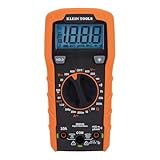
| Klein MM325 Multimeter |
|
Check Latest Price |
 Fluke 17B+ Multimeter Fluke 17B+ Multimeter |
|
Check Latest Price |
 Fluke 15B+ Multimeter Fluke 15B+ Multimeter |
|
Check Latest Price |
 Klein MM700 Multimeter Klein MM700 Multimeter |
|
Check Latest Price |
 Fluke 87V Industrial Multimeter Fluke 87V Industrial Multimeter |
|
Check Latest Price |
1. Fluke 117 Multimeter – Best Overall for Residential and Commercial Work
- VoltAlert NCV works reliably through panel covers
- LoZ mode kills ghost voltage on dead circuits
- 400 hour battery life outlasts a week of service calls
- Bright white LED backlight for dark panels
- No milliamp range for fine current work
- Lacks built-in current clamp
- Stock probes feel basic
The Fluke 117 is the meter I have recommended to more electricians than any other tool in the last five years. The reason is simple: it does almost everything a residential or commercial electrician needs on a daily basis, and it does it with the kind of accuracy that lets you trust the reading without re-checking.
What makes the 117 special is the combination of VoltAlert non-contact voltage detection, AutoVolt automatic AC/DC selection, and a low impedance mode that finally kills phantom readings from induced voltage. That trio solves the three problems that drive apprentices and homeowners crazy: false confidence on a live wire, guessing whether the reading is AC or DC, and chasing ghost voltage on a circuit you have already shut off.
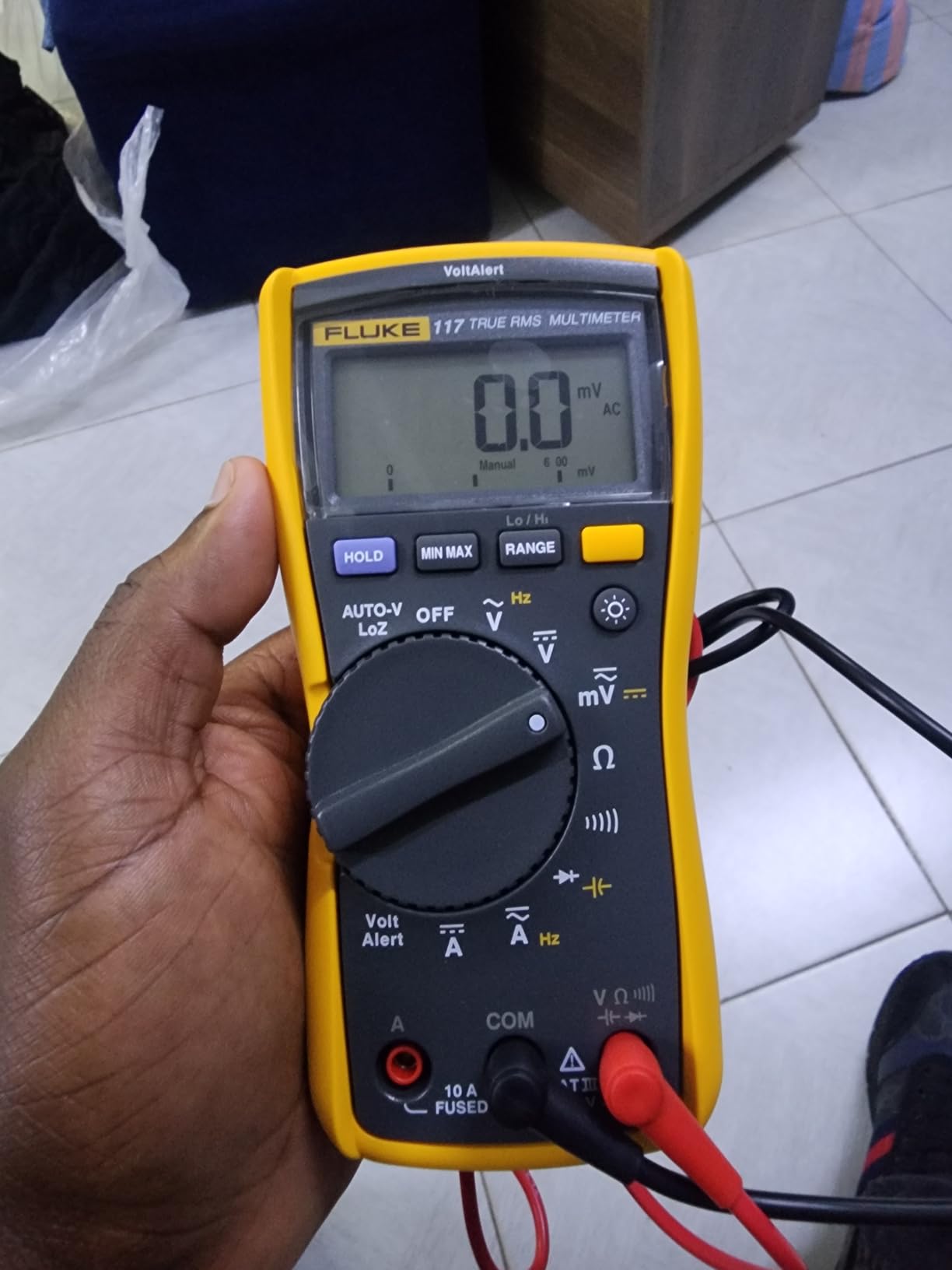
In real-world use, the 117 has been my go-to meter for residential panel diagnostics, branch-circuit verification, and commercial service calls for the last three years. The yellow holster has been dropped off ladders, kicked across garages, and rained on, and the meter still reads within spec. Battery life is a quiet superpower at roughly 400 hours without the backlight, which means I rarely carry spares.
The trade-off is the missing milliamp range. If you do HVAC control board work where milliamp signals matter, pair this with a clamp meter. If you live in residential and light commercial, the 117 is the meter to beat.
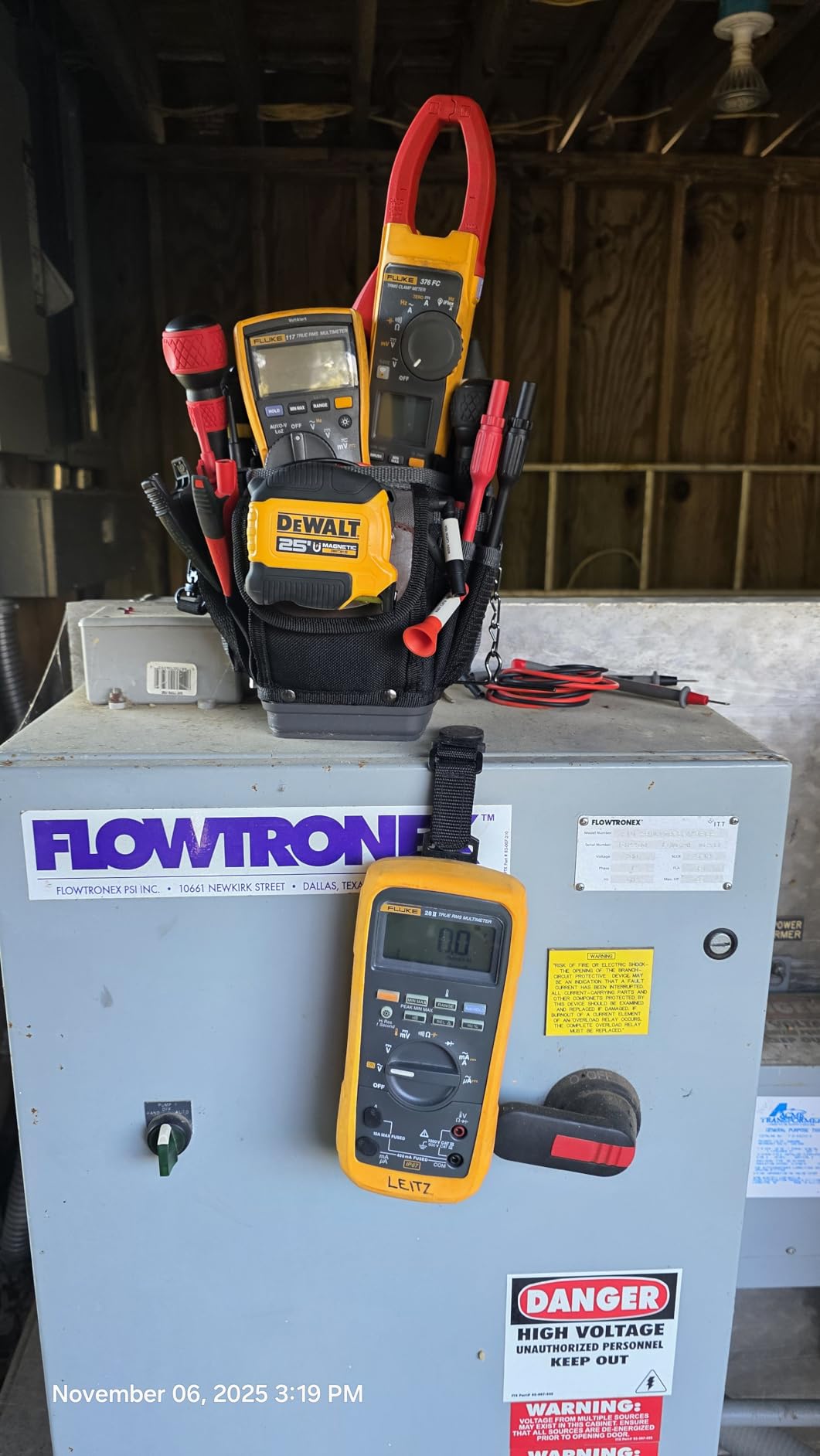
Who should buy the Fluke 117
The 117 is built for residential electricians, commercial service techs, and apprentices who want one meter that covers 90 percent of daily work. If you wire houses, troubleshoot receptacles, or verify panel de-energization, the 117 is the right tool.
Who should look elsewhere
Skip the 117 if you troubleshoot VFDs or three-phase motors daily, where the Fluke 87V’s low-pass filter earns its keep. Industrial electricians who need CAT IV 600V for service entrance work should also step up to the 87V.
2. Fluke 115 Multimeter – Best Compact True RMS for Field Service Techs
- Compact enough for crowded tool bags
- True RMS for non-linear loads
- Min/Max/Average records signal drift
- 6000 count resolution catches small changes
- No NCV or LoZ mode
- Less ergonomic than 117 for long sessions
- Stock leads are average quality
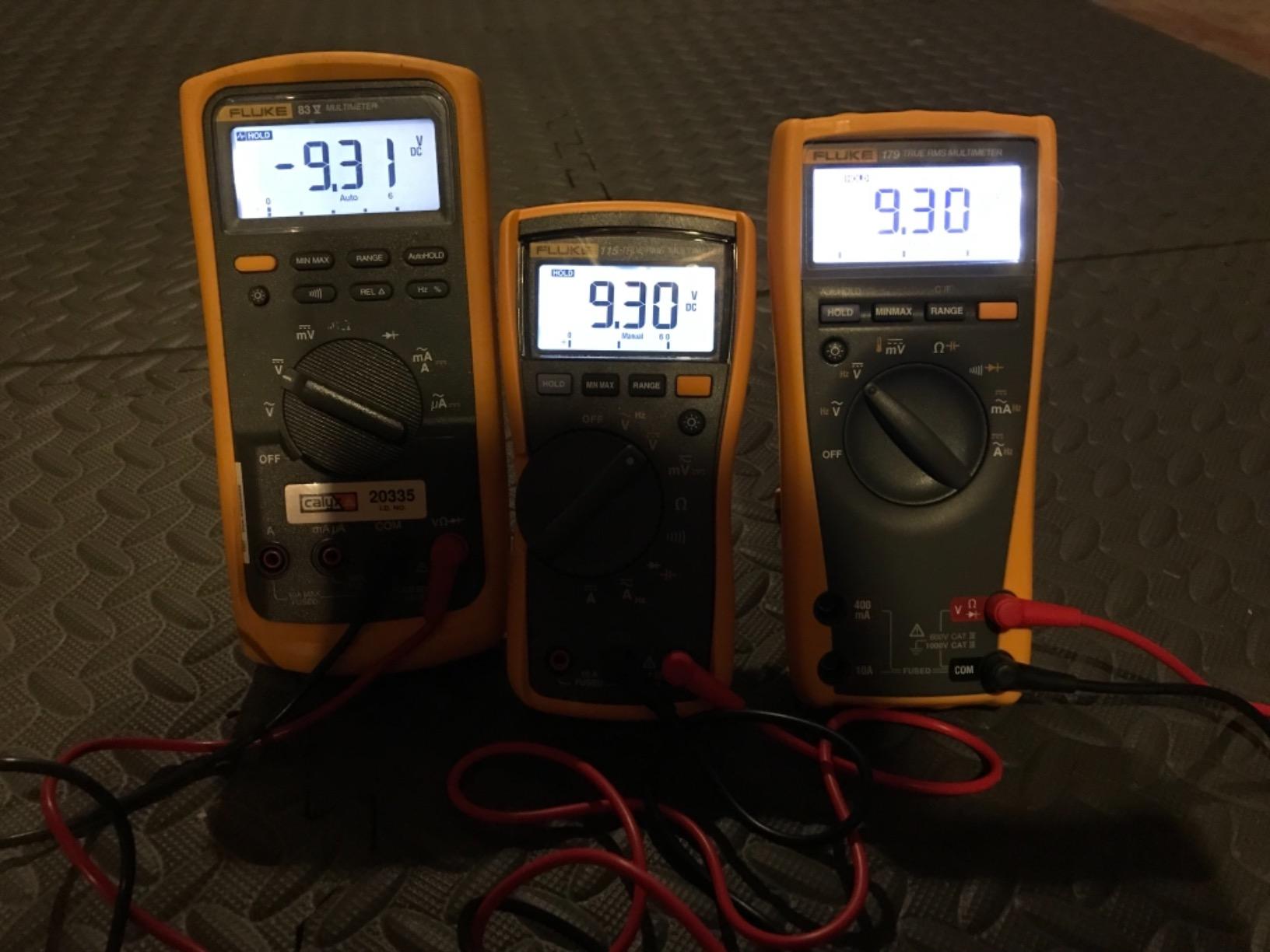
The Fluke 115 sits in the sweet spot between the 117’s full feature set and a stripped-down budget meter. It is the meter I reach for when I am bouncing between service calls and need a True RMS reading without paying for non-contact voltage detection I rarely use on commercial controls.
The 115 measures True RMS voltage and current, plus resistance, continuity, frequency, and capacitance. The Min/Max/Average recording has caught intermittent voltage drops on commercial equipment that would have eaten hours of troubleshooting without a logged meter. CAT III 600V covers most panel and service work.
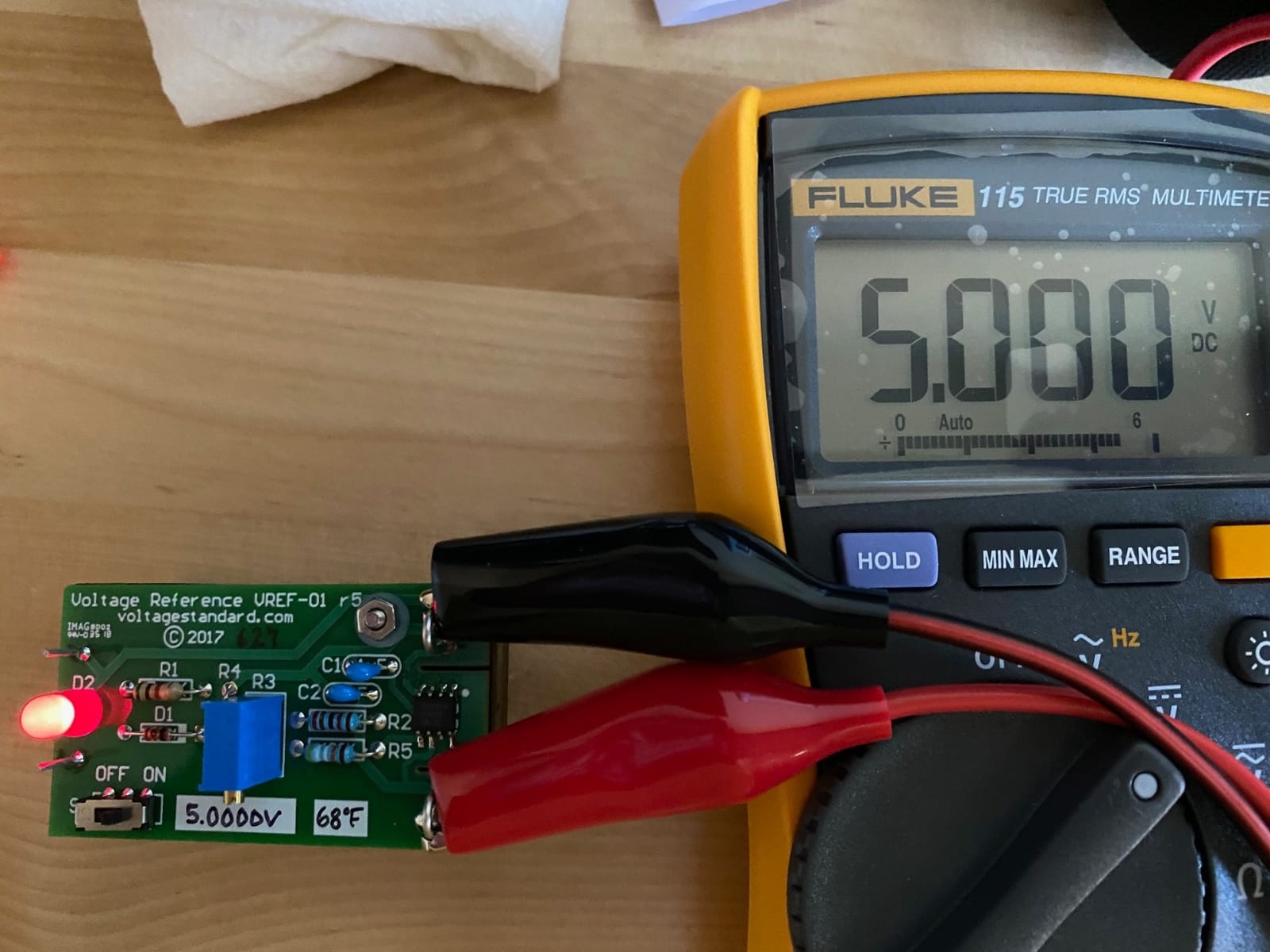
What I appreciate about the 115 is the form factor. The slightly slimmer body than the 117 fits in a small tool pouch, and the bright white LED backlight is just as readable in dark mechanical rooms. The 6000 count resolution is one step above entry-level meters and shows small changes that cheaper meters round away.
Where the 115 falls short is the missing VoltAlert and LoZ mode. If you spend your day on live residential panels, the 117 is the better tool. If you mostly work on commercial equipment and want True RMS in a compact body, the 115 wins.
Who should buy the Fluke 115
The 115 fits HVAC service techs, commercial electricians, and field engineers who want True RMS accuracy without the NCV premium. It is also the right first Fluke for an apprentice who plans to upgrade later.
Who should look elsewhere
Skip the 115 if you regularly verify residential panels live. The 117’s VoltAlert and LoZ mode are worth the step up. Industrial users needing CAT IV 600V should jump straight to the 87V.
3. Fluke 107 Multimeter – Best Compact Fluke for Tight Panels
- Slim form fits in tight disconnect cabinets
- Magnetic lanyard doubles as a hands-free stand
- Accurate readings comparable to bigger Flukes
- CAT III 600V safety rating
- Not True RMS
- Stock leads feel basic
- Magnetic accessory feels flimsy
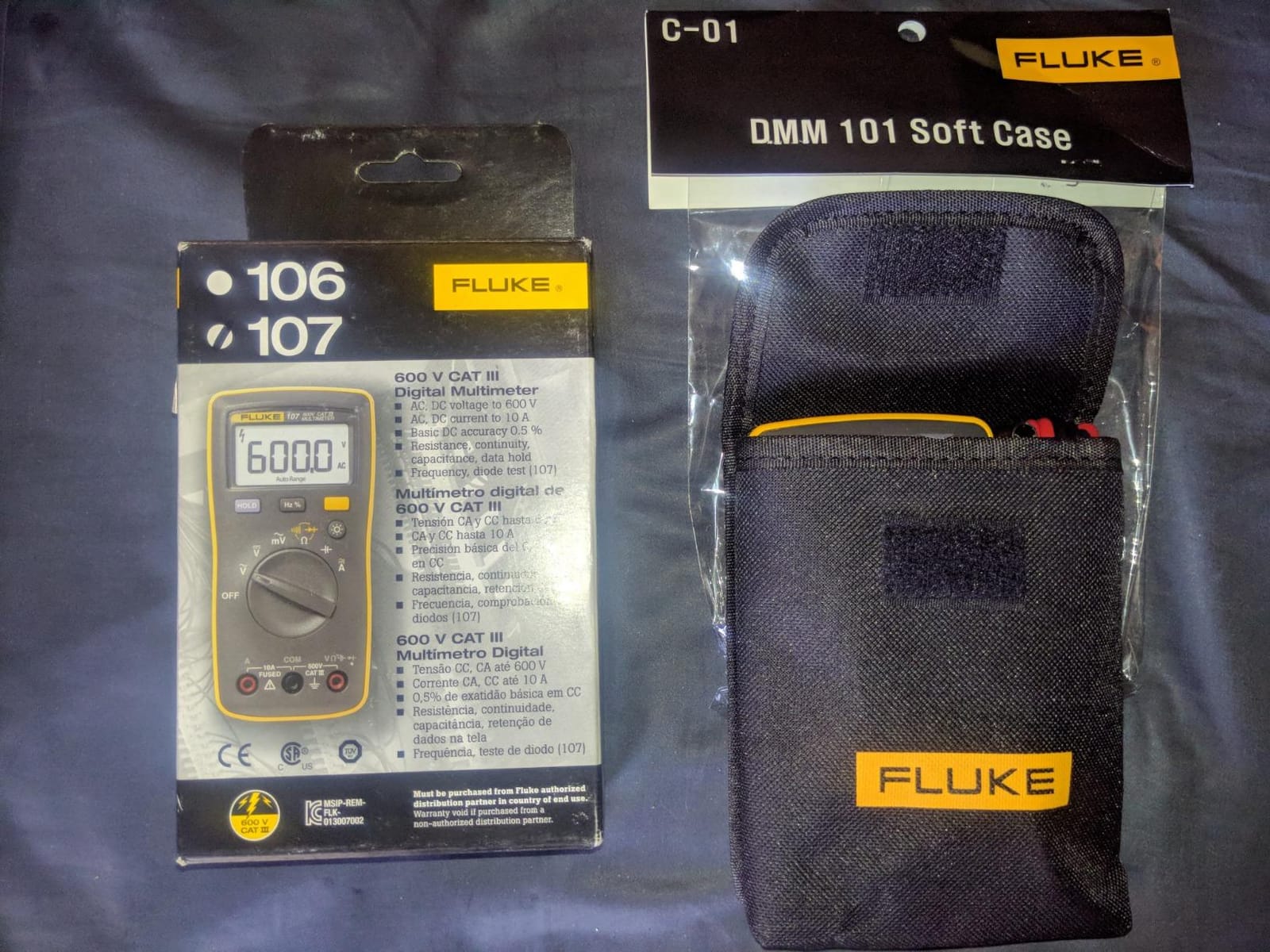
The Fluke 107 is the meter I did not know I needed until I tried one. It is a true Fluke in a pocket-sized body, and it solves the daily frustration of trying to fit a full-size multimeter into a tight residential disconnect or a crowded motor control center.
At roughly 200 grams and slimmer than a smartphone, the 107 disappears into a side pocket of a tool bag. The magnetic lanyard is a small but brilliant touch that lets you hang the meter on a panel door and work hands-free. CAT III 600V covers residential panel work and most commercial troubleshooting.
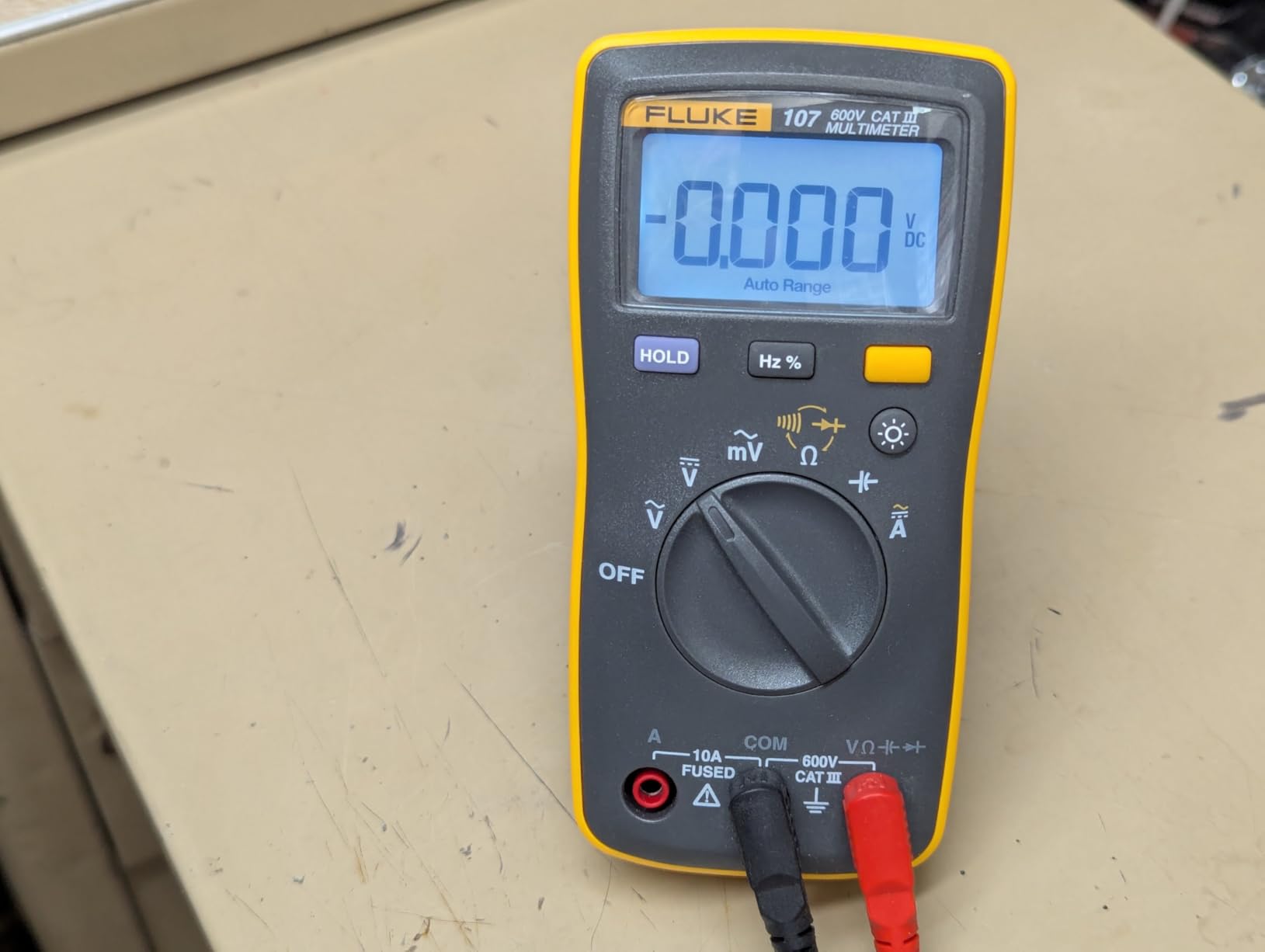
On the jobs I have run with the 107, the readings matched the 117 within rounding, which is the highest praise I can give a compact meter. The backlit display is bright enough for dim mechanical rooms, and the auto shut-off saves battery on long days. Data hold lets you pull the meter out of a tight spot and read the value safely.
The big limitation is the lack of True RMS. For pure residential work on sinusoidal waveforms, this never matters. For HVAC and VFD troubleshooting, it does. Know which world you live in before buying.
Who should buy the Fluke 107
The 107 is ideal for residential electricians, security and low-voltage installers, and anyone working in tight enclosures who wants Fluke accuracy in a small body. It also makes a great secondary meter.
Who should look elsewhere
If you troubleshoot VFDs or non-linear loads regularly, True RMS matters. Step up to the Fluke 115 or 117. If you want a budget pick without Fluke pricing, the Klein MM325 below covers basic needs.
4. Klein MM325 Multimeter – Best Budget Pick for Apprentices and DIY
- Honest budget price for first multimeter
- Lead Alert LEDs prevent mis-placed leads
- Survives 6.6 ft (2m) drops
- Battery test mode included
- Manual ranging slows down faster users
- No milliamp or microamp ranges
- Slightly bulky for tight pouches
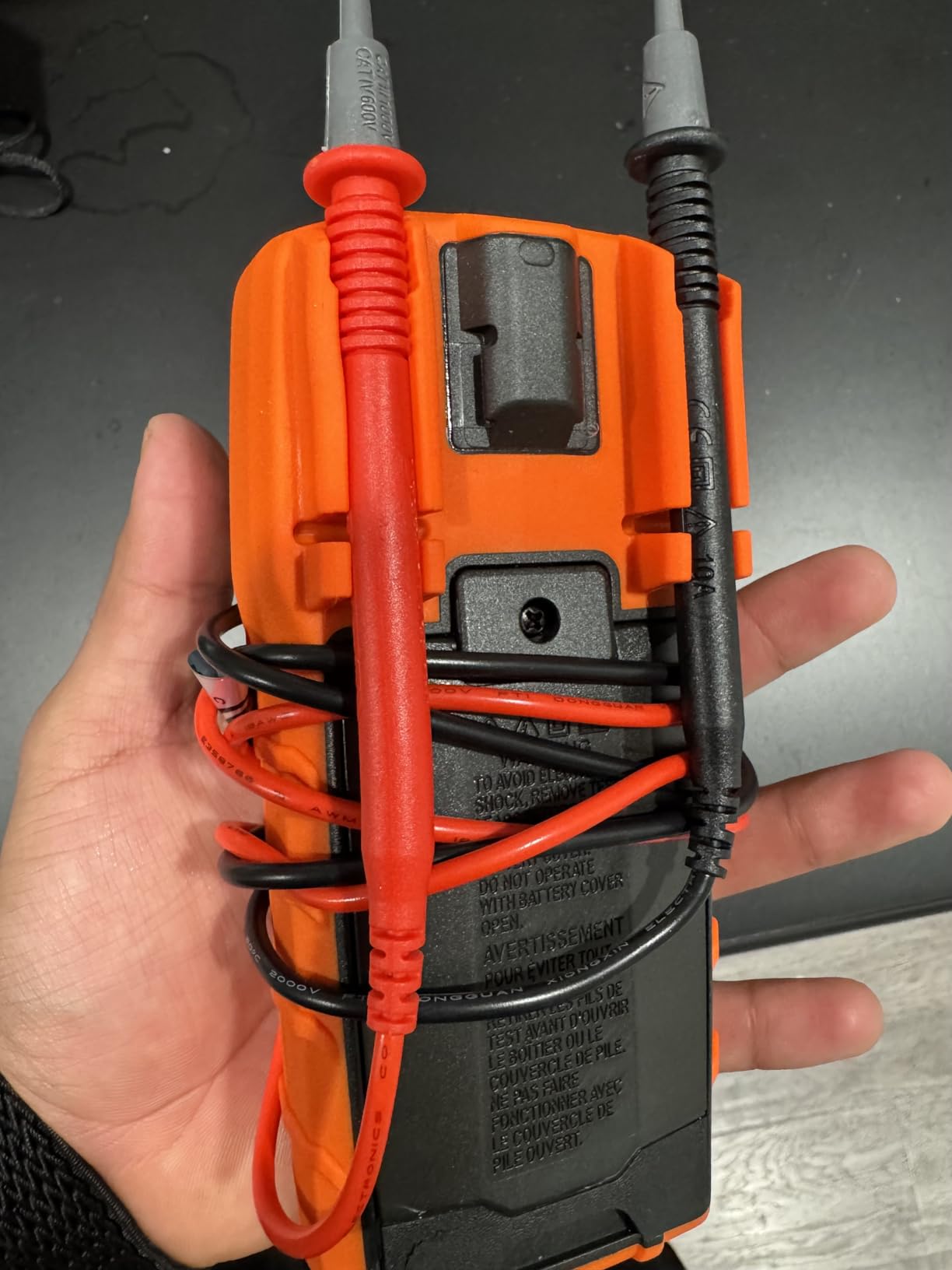
The Klein MM325 is the meter I wish had existed when I was an apprentice. For a fraction of Fluke pricing, you get a CAT III 600V rated meter with a backlit display, a battery test mode, and the rare-for-this-price Lead Alert LEDs that show you when the leads are in the wrong terminals.
Those Lead Alert LEDs are not a gimmick. New electricians make lead-placement mistakes, and a missed mA setting on the wrong port can blow a fuse or, worse, damage the meter on a live circuit. Klein engineered that mistake out, and it is the single best safety feature on any sub-50-dollar meter I have used.
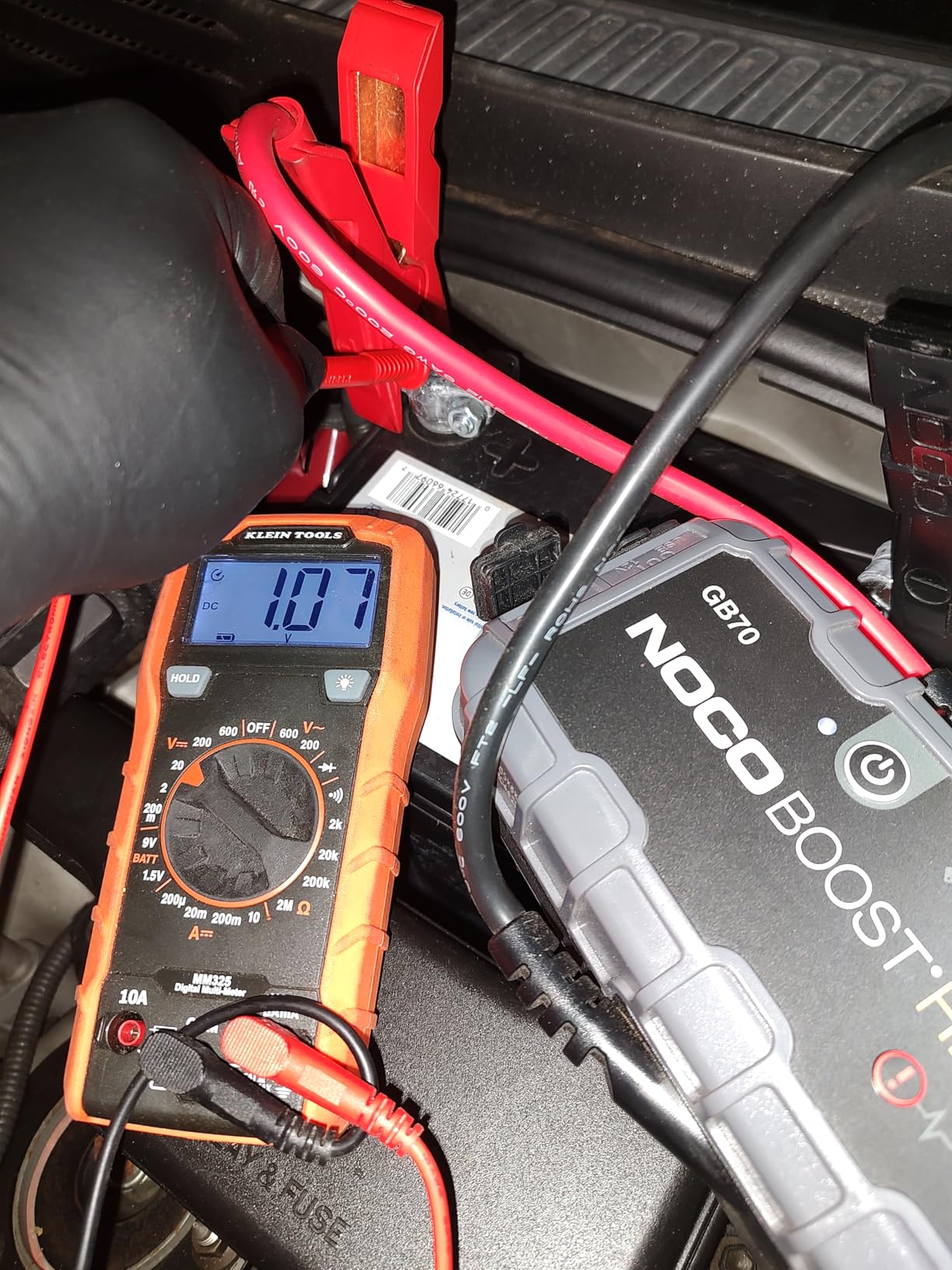
In real use, the MM325 handles residential outlet testing, appliance diagnostics, automotive 12V work, and the kind of small jobs that fill an apprentice’s first year. It is manual-ranging, which means you pick the range, but for everyday tasks that is a feature, not a bug. You learn faster when you actually understand what each range means.
Drop rated to 2 meters and shipped with CAT III/CAT IV safety caps on the leads, the MM325 punches above its weight. The 2,950-plus reviews averaging 4.7 stars tell you this is not a disposable tool.
Who should buy the Klein MM325
The MM325 is the right first multimeter for apprentices, homeowners, and DIYers. It is also a smart backup meter to keep in a truck or a shop drawer. If you are unsure whether you will use a multimeter enough to justify a premium, start here.
Who should look elsewhere
If you do daily professional work, jump to a True RMS meter. If you want auto-ranging to speed up troubleshooting, the Klein MM700 is the auto-ranging step up at a small price premium.
5. Fluke 17B+ Multimeter – Best Mid-Range Fluke with Thermocouple
- 1000V measurement range handles industrial panels
- Includes K-type thermocouple for temperature
- Reliable Fluke build at a mid-range price
- Heavier robust feel typical of pro meters
- Stock TL75 leads kink easily
- Button beeps cannot be silenced
- Not True RMS
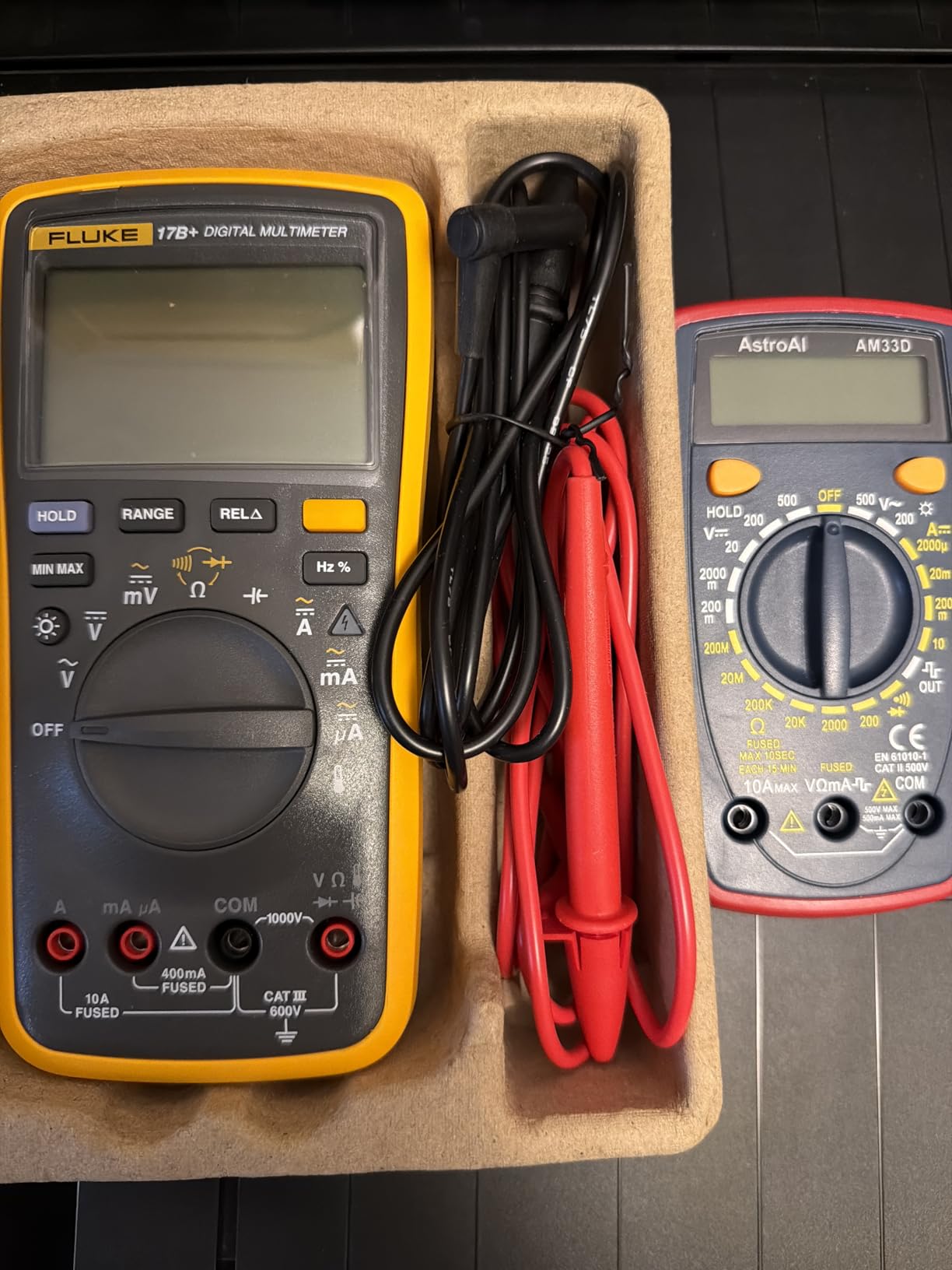
The Fluke 17B+ is the most underrated Fluke on this list. It sits between the entry-level 15B+ and the legendary 87V, and it brings a feature that the more expensive 87V does not: a built-in temperature measurement up to 400 degrees Celsius with an included K-type thermocouple.
For HVAC and industrial electricians, that thermocouple alone justifies the price. You can check motor winding temperatures, bearing heat, and contactor temps without buying a separate thermometer. The 1000V measurement range also covers more industrial panels than the 600V ceiling on most meters in this list.
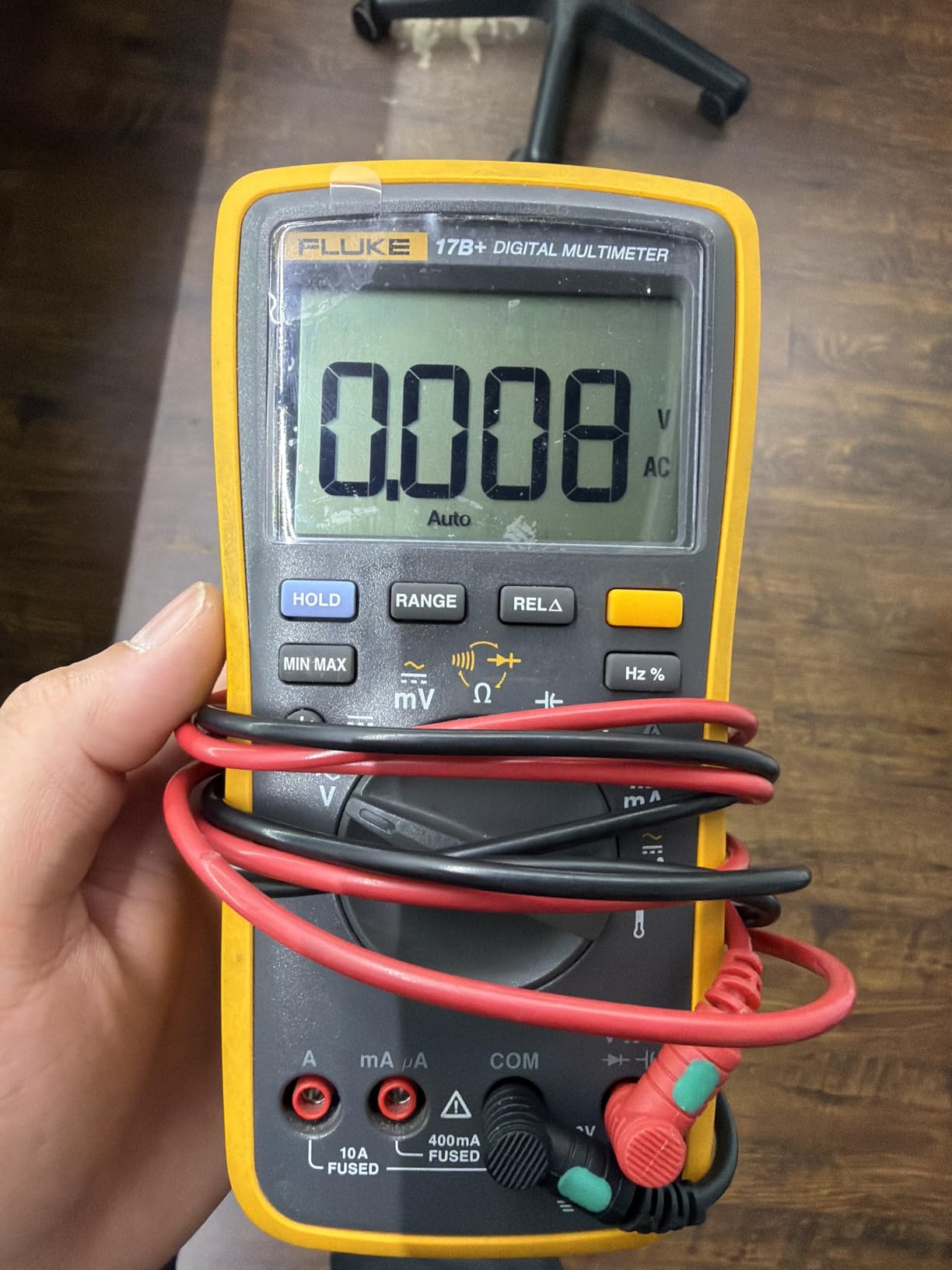
On real jobs, the 17B+ has been a reliable partner for control panel troubleshooting, motor diagnostics, and the kind of mid-tier commercial work where you need more range than an entry meter but do not need the 87V’s peak capture or VFD filter. The dial and buttons have the unmistakable Fluke feel: positive clicks, no floppiness.
The main limitation is the lack of True RMS. On clean sine-wave power, that never matters. On VFD outputs or modern LED lighting with switching drivers, it can show 5-10 percent error. For those environments, the 87V is the right tool.
Who should buy the Fluke 17B+
The 17B+ fits HVAC technicians, industrial electricians, and serious DIYers who want a Fluke that reaches into the 1000V range and adds temperature. It is also the best mid-range pick on the list for apprentices planning a long career.
Who should look elsewhere
If you troubleshoot VFDs or non-linear loads, you need True RMS. The Fluke 87V is the correct choice. If budget is the primary concern and you only need residential coverage, the Klein MM325 is the better pick.
6. Fluke 15B+ Multimeter – Best Entry-Level Fluke
- Entry-level price for a real Fluke
- Auto-ranging simplifies daily use
- 1000V AC/DC voltage range
- Reliable build quality
- Not True RMS
- Manual is poorly translated
- Lacks temperature measurement
The Fluke 15B+ is the gateway drug of the Fluke lineup. It strips away temperature, frequency, and True RMS to deliver the core Fluke experience: accurate readings, rugged build, and the trust that comes with the brand. For an electrician who needs a real meter on a budget, this is the one.
You still get CAT III 600V safety, 1000V AC/DC measurement, 10A current, and auto-ranging that picks the right scale without you thinking about it. The 15B+ measures resistance, continuity, capacitance, and diode forward voltage, which covers roughly 90 percent of the readings most residential and light commercial electricians need.
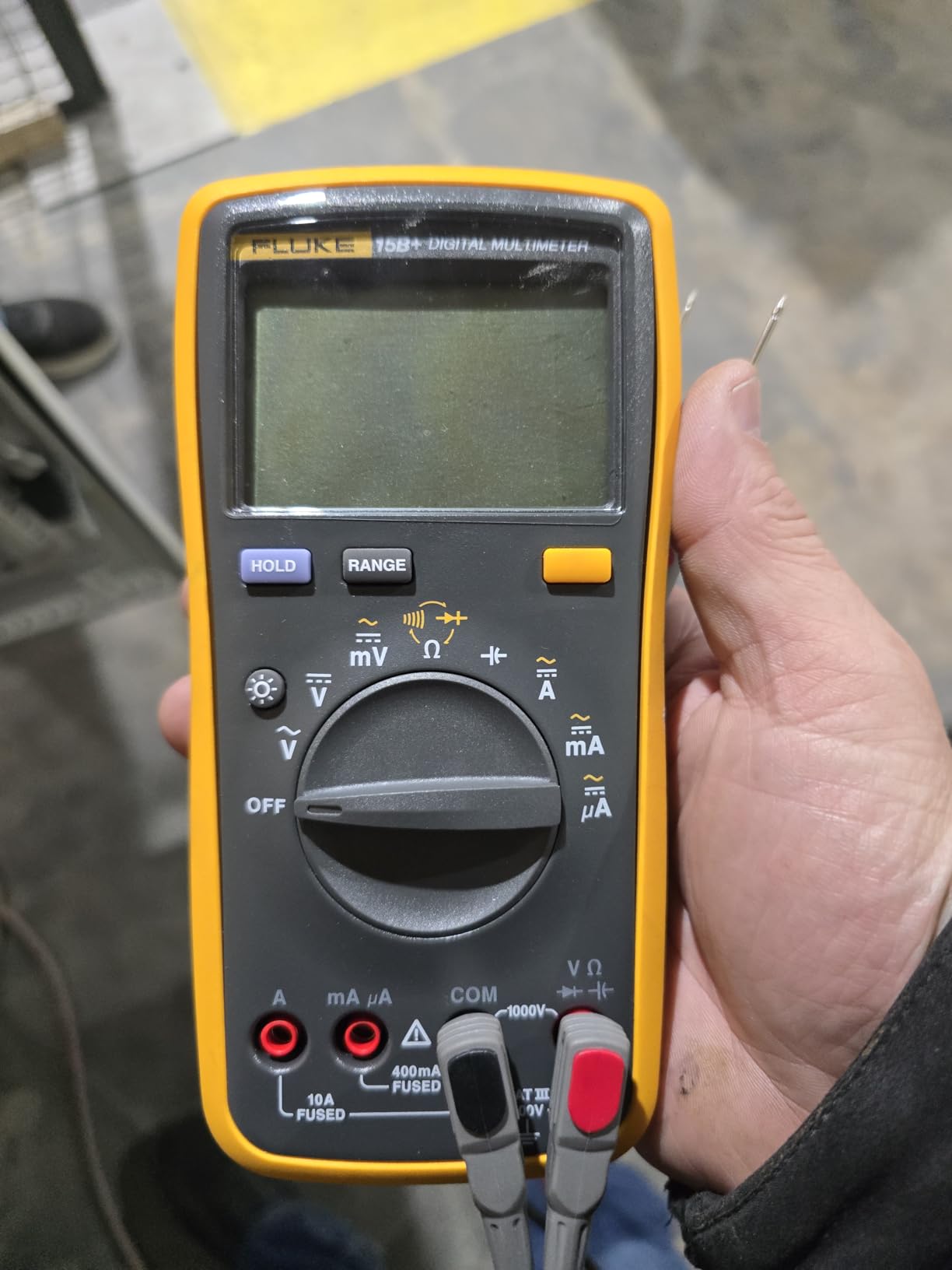
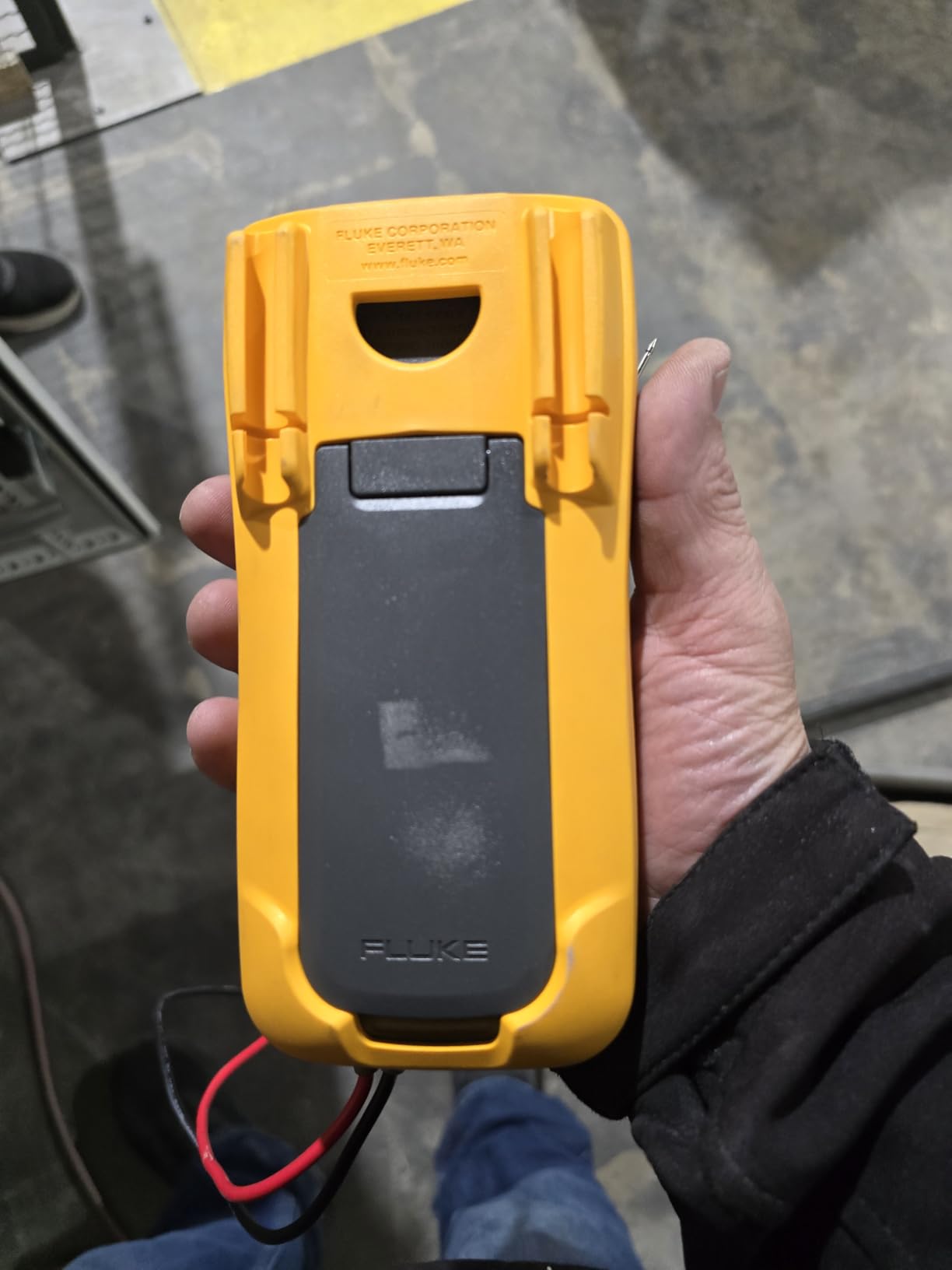
In my own use, the 15B+ lives in our shop as a loaner meter. Apprentices borrow it for residential calls and report back that the build quality feels nothing like the budget meters they tried before. The dial is firm, the buttons are tactile, and the display is sharp.
The two real compromises are no True RMS and no temperature. The first is fine for residential sine-wave power. The second matters if you do HVAC work, in which case the 17B+ is the better Fluke.
Who should buy the Fluke 15B+
The 15B+ is the right choice for residential electricians, homeowners, and apprentices who want a Fluke without paying for features they will not use. It is also a strong backup meter for shops with multiple techs.
Who should look elsewhere
If you need True RMS, jump to the Fluke 117. If you need temperature for HVAC, jump to the Fluke 17B+. If budget matters more than brand, the Klein MM325 handles basic work at a fraction of the price.
7. Klein MM700 Multimeter – Best Value Auto-Ranging TRMS
- Auto-ranging True RMS at a friendly price
- LoZ mode eliminates ghost voltage
- CAT IV 600V rated for service entrances
- Survives 6.6 ft (2m) drops
- Stock leads are short
- Display can wash out at angles
- Discontinued by manufacturer (replaced by MM720)
The Klein MM700 is the meter I recommend when someone wants Fluke-like features without paying Fluke prices. It is auto-ranging, True RMS, CAT IV 600V rated, and includes the LoZ mode that eliminates ghost voltage on de-energized circuits.
The CAT IV 600V rating is the standout for this price tier. Most comparably priced meters stop at CAT III 600V. CAT IV is the safety rating you want when working at the service entrance, where surge voltages from utility transients can be much higher than what you see inside the building.
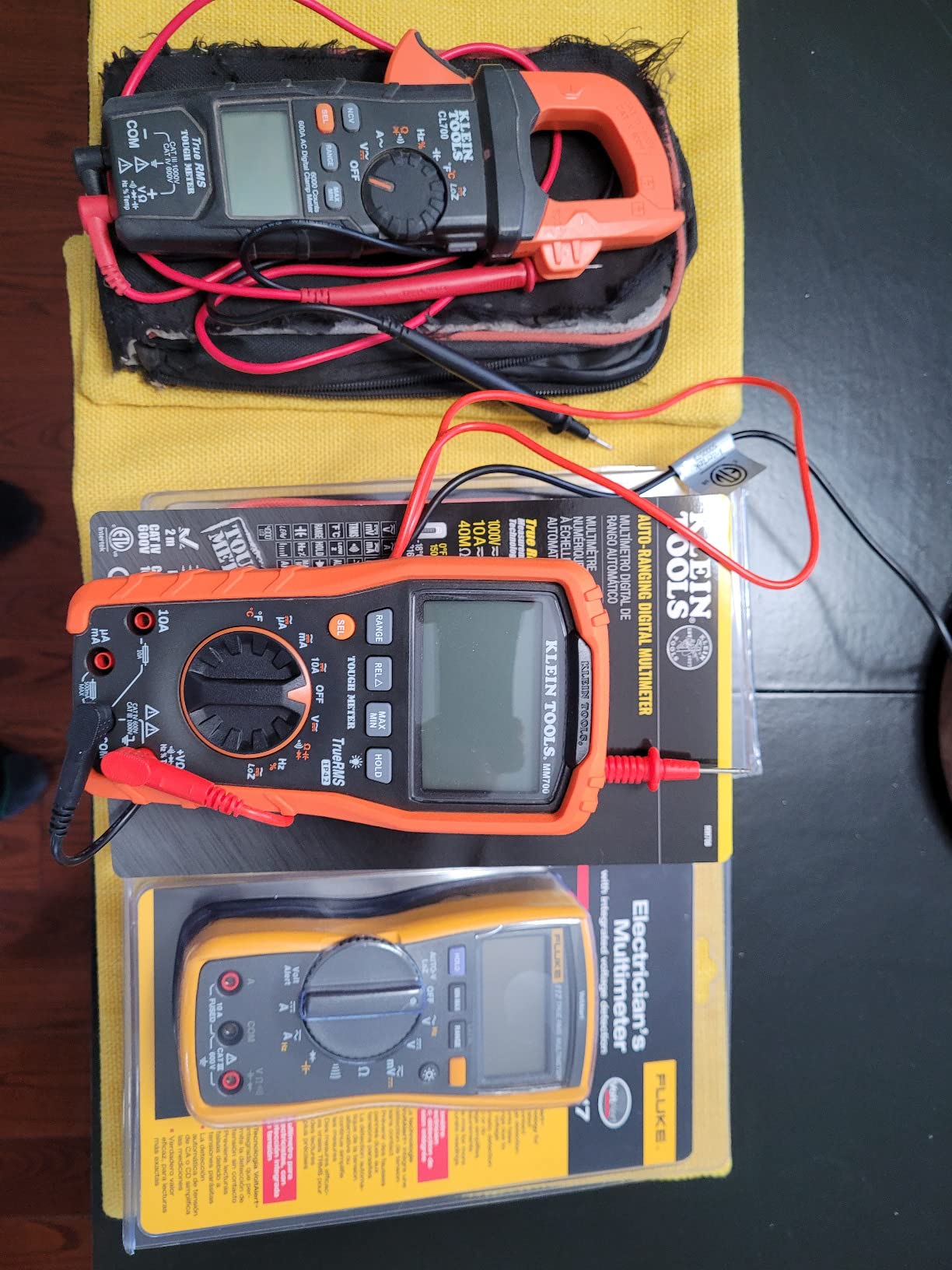
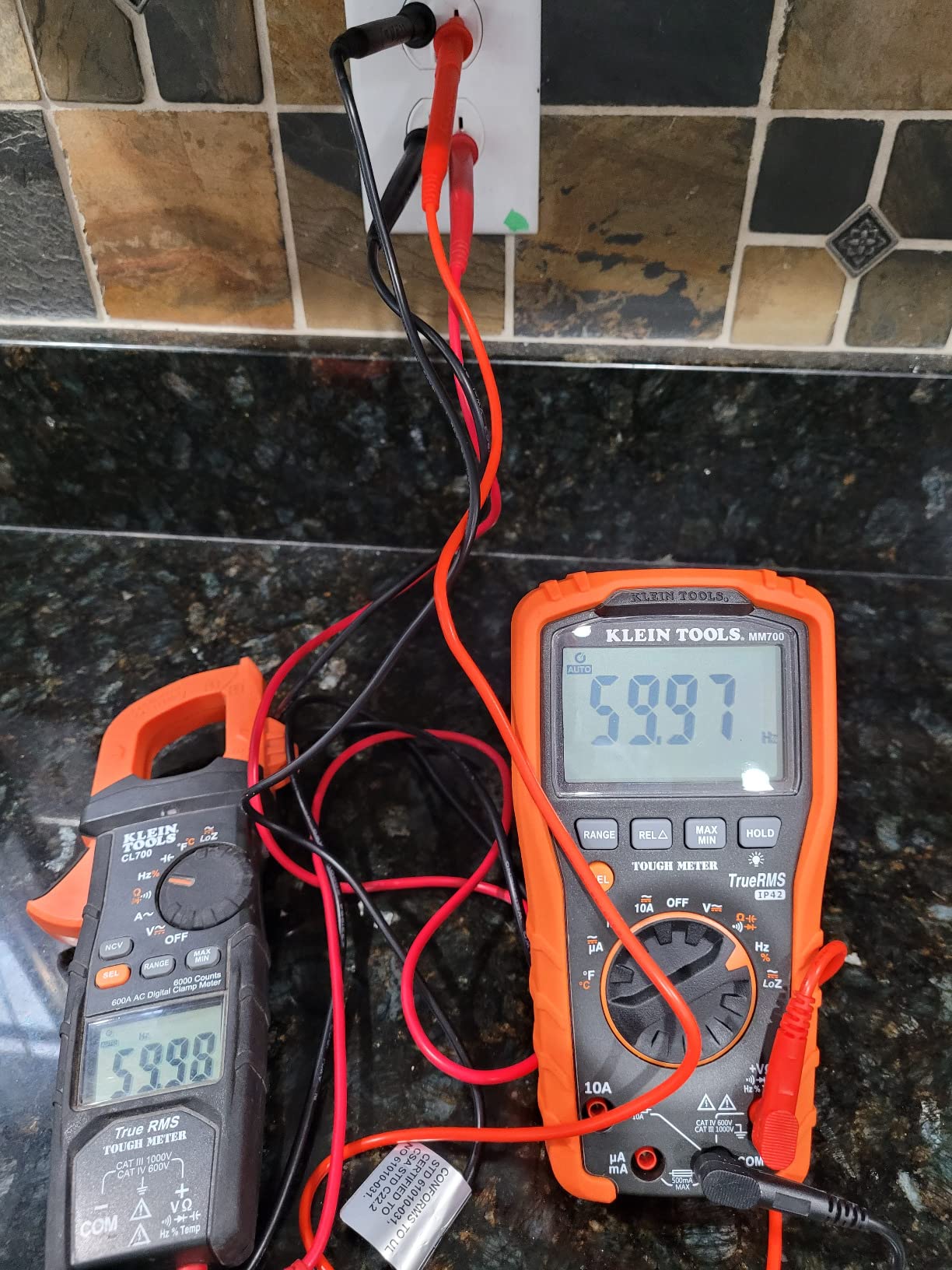
In real use, the MM700 has been my go-to loaner for techs who need a TRMS meter for a day without committing to Fluke pricing. The readings track my Fluke 117 within rounding, the LoZ mode works as advertised, and the rugged 2-meter drop rating has held up to several real drops.
The trade-offs are the short stock leads, a display that loses contrast at sharp viewing angles, and the fact that Klein has marked the MM700 as discontinued in favor of the newer MM720. Stock is still widely available, and the MM700 remains a strong pick for the money.
Who should buy the Klein MM700
The MM700 fits budget-conscious electricians, apprentices stepping up from a starter meter, and pros who want a TRMS meter for service entrance work without the Fluke price tag. It is also a strong backup for any truck.
Who should look elsewhere
If you want a Klein with the latest lead design and active warranty, look at the MM720. If you want the Fluke ecosystem and lifetime support, the Fluke 117 is the better investment.
8. Fluke 87V Industrial Multimeter – Premium Pick for VFD and Industrial Work
- Industry-standard accuracy for industrial work
- Built-in VFD low-pass filter
- Peak Capture catches intermittents at 250 microseconds
- CAT III 1000V and CAT IV 600V
- 20
- 000 count resolution option
- High price
- Old-style flying-lead battery connector
- Lacks built-in LoZ mode (needs SV225 adapter)
- No Bluetooth connectivity
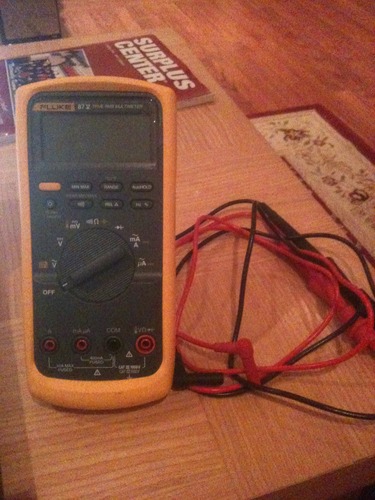
The Fluke 87V is the meter industrial electricians and HVAC engineers buy once and use for a decade. I have personally seen 87Vs with ten years of truck life still reading within spec, and forum threads on r/electricians and Mike Holt are full of techs reporting the same.
What separates the 87V from every other meter on this list is the built-in low-pass filter for variable frequency drives. When you measure voltage and frequency on a VFD output, a normal multimeter reads wrong because the high-frequency switching noise confuses the measurement circuit. The 87V’s filter blocks that noise and gives you a true reading. For anyone who troubleshoots VFDs, motor controls, or modern HVAC equipment, this is not a luxury. It is a requirement.
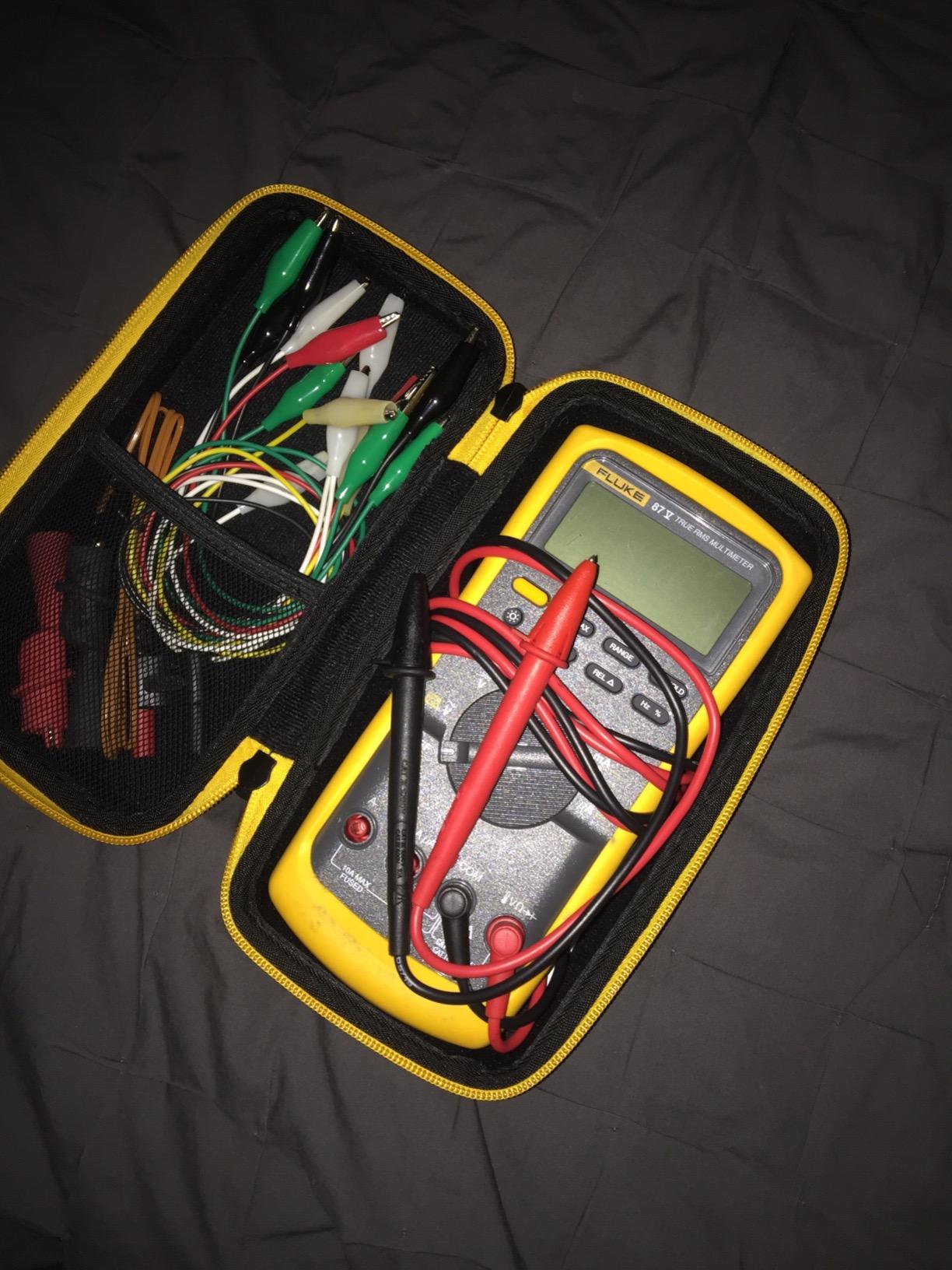
Beyond the VFD filter, the 87V adds Peak Capture that grabs intermittents as fast as 250 microseconds, switchable 6000 or 20,000 count resolution for catching small changes, and CAT III 1000V / CAT IV 600V safety that covers every environment from a residential panel to an industrial service entrance. The rubber holster has saved the meter more times than I can count.
The honest downsides are the price, the older flying-lead battery connector, and the lack of built-in LoZ mode. The SV225 adapter adds LoZ, but it is an extra purchase. For daily residential work, the 117 is the smarter buy. For industrial work, the 87V pays for itself the first time it catches an intermittent that another meter would have missed.
Who should buy the Fluke 87V
The 87V is the right choice for industrial electricians, HVAC controls techs working on VFDs, and any professional who wants a once-in-a-career meter. It is also the right tool for an apprentice who plans a long career and is willing to invest up front.
Who should look elsewhere
If you live in residential and light commercial, the 87V is overkill. The Fluke 117 covers your daily needs at a much friendlier price. If budget matters, the Klein MM700 is the TRMS value play.
Buying Guide: How to Choose the Best Multimeter for Electricians
A great multimeter is more than a brand name. The right pick depends on where you work, what you measure, and how long you expect the meter to last. Here is the framework our team uses when recommending the best multimeters for electricians.
True RMS vs Average-Responding
True RMS multimeters measure accurately on non-linear loads like VFDs, LED lighting drivers, and computer power supplies. Average-responding meters can read 5 to 10 percent low on those waveforms. If you troubleshoot VFDs, modern HVAC, or anything with switching power supplies, True RMS is non-negotiable. The Fluke 117, Fluke 115, Fluke 87V, and Klein MM700 all deliver True RMS.
CAT III vs CAT IV Safety Ratings
CAT ratings describe the maximum transient voltage the meter can survive. CAT III 600V covers distribution panels, motors, and most industrial equipment. CAT IV 600V covers service entrances, outdoor conductors, and utility transients. If you work at the service entrance or on overhead lines, insist on CAT IV. For most residential and commercial panel work, CAT III 600V is the safe minimum.
Non-Contact Voltage (NCV) and VoltAlert
NCV, branded as VoltAlert on Fluke meters, lets you detect live voltage without touching a conductor. It is the fastest way to verify a circuit is dead before you grab a probe. The Fluke 117 has VoltAlert. Most compact Flukes and Klein meters skip it to save cost.
Low Impedance (LoZ) Mode
LoZ mode prevents false readings from induced ghost voltage on long runs of de-energized conductors. If you troubleshoot commercial buildings with long wire runs, LoZ is the difference between believing a circuit is dead and knowing it is. The Fluke 117 and Klein MM700 both include LoZ.
Auto-Ranging vs Manual-Ranging
Auto-ranging meters pick the right scale for you, which speeds up troubleshooting. Manual-ranging meters require you to select the scale, which teaches beginners what each range means but slows down experienced users. The Klein MM325 is manual; the Klein MM700, Fluke 115, Fluke 117, and Fluke 87V are auto-ranging.
Fluke vs Klein vs Milwaukee vs Brymen
Fluke is the gold standard for accuracy, build, and warranty. Klein Tools is the best value play with strong TRMS meters like the MM700 at a fraction of Fluke pricing. Milwaukee offers solid build quality at budget-friendly tiers for one-key users. Brymen BM-series meters earn praise on EEVblog forums for being accurate and well-built at mid-tier prices. For most electricians, the choice comes down to brand trust versus budget. Fluke if you can afford it, Klein if you cannot.
Apprentice Tier Progression
Our team and the r/electricians community consistently recommend a three-tier progression for apprentices. Start with a budget meter like the Klein MM325 to learn the fundamentals. Step up to a mid-tier True RMS meter like the Klein MM700 or Fluke 15B+ once you are doing daily professional work. Invest in a flagship like the Fluke 117 or 87V once you know which trade specialty you prefer.
Clamp Meter vs Multimeter
A clamp meter measures current without breaking the circuit, which is faster and safer than running a multimeter in series. Most electricians eventually own both: a multimeter for voltage and diagnostics, a clamp meter for current. The meters on this list do not replace a clamp, but several, including the Fluke 117, pair perfectly with a Fluke 323 or Klein CL700 clamp meter for a complete kit.
Frequently Asked Questions
Is Klein or Fluke better?
Neither brand is universally better. Fluke multimeters are the gold standard for accuracy, build quality, and long-term warranty support, which is why most commercial and industrial electricians choose them. Klein Tools multimeters like the MM700 deliver comparable True RMS accuracy and CAT IV 600V safety at a much friendlier price, which is why so many residential electricians and apprentices pick them. If budget matters most, Klein wins. If you want the longest service life and best resale value, Fluke wins.
Which multimeter is better, Fluke or Milwaukee?
Fluke wins on accuracy, brand reputation, and warranty support. Milwaukee multimeters are solid, well-built meters that integrate with the Milwaukee One-Key ecosystem, and they typically cost less than comparable Flukes. For electricians already invested in Milwaukee tools, a Milwaukee 2216-20 or 2217-20 makes sense. For pure measurement performance and long-term reliability, Fluke remains the professional standard.
Which brand of multimeter is considered the best?
Fluke is the brand most professional electricians consider the best, based on decades of consistent accuracy, rugged build, and limited lifetime warranty coverage on flagship models. Klein Tools is widely regarded as the best value brand, especially the MM700 for TRMS work at a budget. For specialty HVAC work, Fieldpiece is considered best because its meters are designed around refrigeration and HVAC workflows rather than general electrical work.
Is fieldpiece better than Fluke?
Fieldpiece is better than Fluke for HVAC-specific work. Fieldpiece meters like the SMAN460 include HVAC-focused features such as temperature compensation, refrigerant pressure connectivity, and dual thermocouple inputs that general-purpose Flukes lack. For pure electrical troubleshooting, Fluke remains more accurate, more rugged, and better supported. If your work is 90 percent HVAC, Fieldpiece is the better specialty pick. If your work spans residential, commercial, and HVAC, Fluke is the better generalist.
What multimeter do most electricians use?
Most residential and commercial electricians use a Fluke 117 or Fluke 115. Both are True RMS, CAT III 600V rated, and built to survive daily truck life. The Fluke 117 adds VoltAlert non-contact voltage detection and LoZ mode, which is why it edges out the 115 for residential work. Industrial electricians overwhelmingly choose the Fluke 87V for its VFD low-pass filter and CAT III 1000V rating.
Why is the Fluke 87V so popular?
The Fluke 87V is popular because it combines True RMS accuracy, CAT III 1000V and CAT IV 600V safety, a built-in low-pass filter for VFDs, peak capture at 250 microseconds, and switchable 20,000 count resolution. Industrial electricians, HVAC controls techs, and electronics engineers buy it once and use it for a decade or longer. Its reputation for outlasting three or four cheaper meters makes the high upfront price easy to justify on total cost of ownership.
Which multimeter is best for electricians?
The Fluke 117 is the best all-around multimeter for electricians in 2026. It combines True RMS accuracy, VoltAlert non-contact voltage detection, LoZ mode for ghost voltage, CAT III 600V safety, and a 400-hour battery life in a compact body. For residential and commercial work, it covers 90 percent of daily jobs. For industrial and VFD-heavy work, step up to the Fluke 87V. For budget-first apprentices, start with the Klein MM325.
Final Verdict: Which Multimeter Should You Buy in 2026?
After testing eight contenders and comparing notes with electricians across Reddit, Mike Holt, and our own team, the Fluke 117 is still our top pick for the best multimeters for electricians in 2026. It covers the most daily work, has the right safety rating, and earns the trust that comes with the Fluke name.
If you live in industrial work or troubleshoot VFDs daily, the Fluke 87V is worth the premium. If you want Fluke-like accuracy without the Fluke price, the Klein MM700 is the best value pick on the list. If you are an apprentice buying your first meter, the Klein MM325 is the right starting point. Any of these eight will serve you well for years.