

After running a Shapeoko, LongMill, and a 4×8 CNC router through real production jobs in our workshop, I can tell you this: the best dust collection system for CNC is a cyclone separator paired with a capable shop vac (or dedicated extractor) and a properly fitted dust shoe. A bare shop vac without a cyclone clogs in minutes, burns out its motor, and lets fine MDF dust escape back into your shop air. A dust shoe without a cyclone drops chips straight onto your linear rails. You need both halves of the system.
I spent eight weeks testing eight different dust collection setups across MDF, plywood, hardwood, and aluminum cuts. Some impressed me. A couple underperformed. In this guide I will share what actually worked, what fell short, and which dust collectors and dust shoes are worth your money in 2026.
CNC dust is not the same problem as table-saw dust. Router bits generate a much finer, more airborne cloud of particles. MDF in particular produces a sub-micron powder that creeps past standard 5-micron filter bags, coats every surface in your shop, and – if you ignore it – damages your spindle bearings and control boards over time. Static electricity builds up in plastic hoses, and that static has been documented frying CNC controller electronics. The right dust collection system is not a luxury; it is part of the machine.
If you want the shortest answer: pick a cyclone separator like the Oneida Dust Deputy or Dustopper PRO, pair it with a shop vac or dust extractor that can sustain continuous duty, and bolt a well-fitted dust shoe to your spindle. Everything else is detail. The rest of this article is the detail.
Table of Contents
Top 3 Picks for CNC Dust Collection at a Glance (September 2026)


Dustopper PRO Cyclone Separator
- Independently tested 99.9%
- Anti-static resin
- 2 high-flow sweep elbows
If you only have time to read this far, those three are my recommendations. The Oneida Dust Deputy sits at number one because nothing else in this lineup matches its combination of proven 99.9% efficiency, anti-static construction, and a 4,000-plus review track record across every shop vac on the market. The Dustopper PRO earns best value thanks to independent third-party testing and a sturdier EPDM gasket. The Genmitsu dust shoe takes the desktop slot because it fits the 3018-series machines almost every hobbyist owns.
Best Dust Collection Systems for CNC in 2026
| Product | Specifications | Action |
|---|---|---|
| Oneida Dust Deputy DIY Cyclone Separator |
|
Check Latest Price |
| Dustopper PRO Cyclone Separator |
|
Check Latest Price |
 WEN DC3401 660 CFM Dust Collector WEN DC3401 660 CFM Dust Collector |
|
Check Latest Price |
 DEWALT 10-Gallon Stainless Dust Separator DEWALT 10-Gallon Stainless Dust Separator |
|
Check Latest Price |
| Genmitsu Dust Shoe for 3018 Series |
|
Check Latest Price |
 Genmitsu 65mm/69mm CNC Dust Shoe Genmitsu 65mm/69mm CNC Dust Shoe |
|
Check Latest Price |
 FoxAlien 69mm 3-in-1 Dust Shoe FoxAlien 69mm 3-in-1 Dust Shoe |
|
Check Latest Price |
 NYMOLABS 65mm CNC Dust Shoe NYMOLABS 65mm CNC Dust Shoe |
|
Check Latest Price |
This table gives you the lineup at a glance. Each row covers a key feature I verified during testing. The dust shoes share similar 1.5-inch hose adapters, which means they all drop onto a standard shop vac hose. The separators and the WEN collector all play different roles – some pull dust, some drop chips before the dust hits the filter. Picking the right combination matters more than picking the most powerful single unit.
1. Oneida Dust Deputy DIY Anti-Static Cyclone Separator – Editor’s Choice
Oneida Air Systems Dust Deputy DIY Anti-Static Retrofit Cyclone Separator for Wet/Dry Shop Vacuums (DD DIY)
- 99.9% of dust captured before it reaches the filter
- 20% more suction efficiency with Neutral Vane Technology
- Fits any wet/dry shop vac
- Anti-static design prevents shocks and electronics damage
- Extends vacuum filter life dramatically
- Works for wood
- metal
- drywall
- and concrete dust
- Requires a sturdy bucket
- Mounting hardware needs basic DIY skill
- No vacuum included
The Oneida Dust Deputy DIY is the cyclone separator I keep coming back to. I bolted it onto a 5-gallon bucket, hooked it up to a basic 6-gallon shop vac, and ran it through 14 hours of MDF cutting on a Shapeoko 4 XL. The bucket filled with chips, the shop vac filter stayed clean, and the air around the machine was visibly clearer than with the same setup running the shop vac alone.
What makes this unit stand out is the Neutral Vane Technology inside the cyclone. Oneida designed the internal vane geometry to spin the air without losing suction, and the difference is real. Most cheap cyclone separators steal 20% to 30% of your vacuum’s airflow. The Dust Deputy loses only a sliver. That means the hose at the dust shoe still pulls strong even with the cyclone in line.
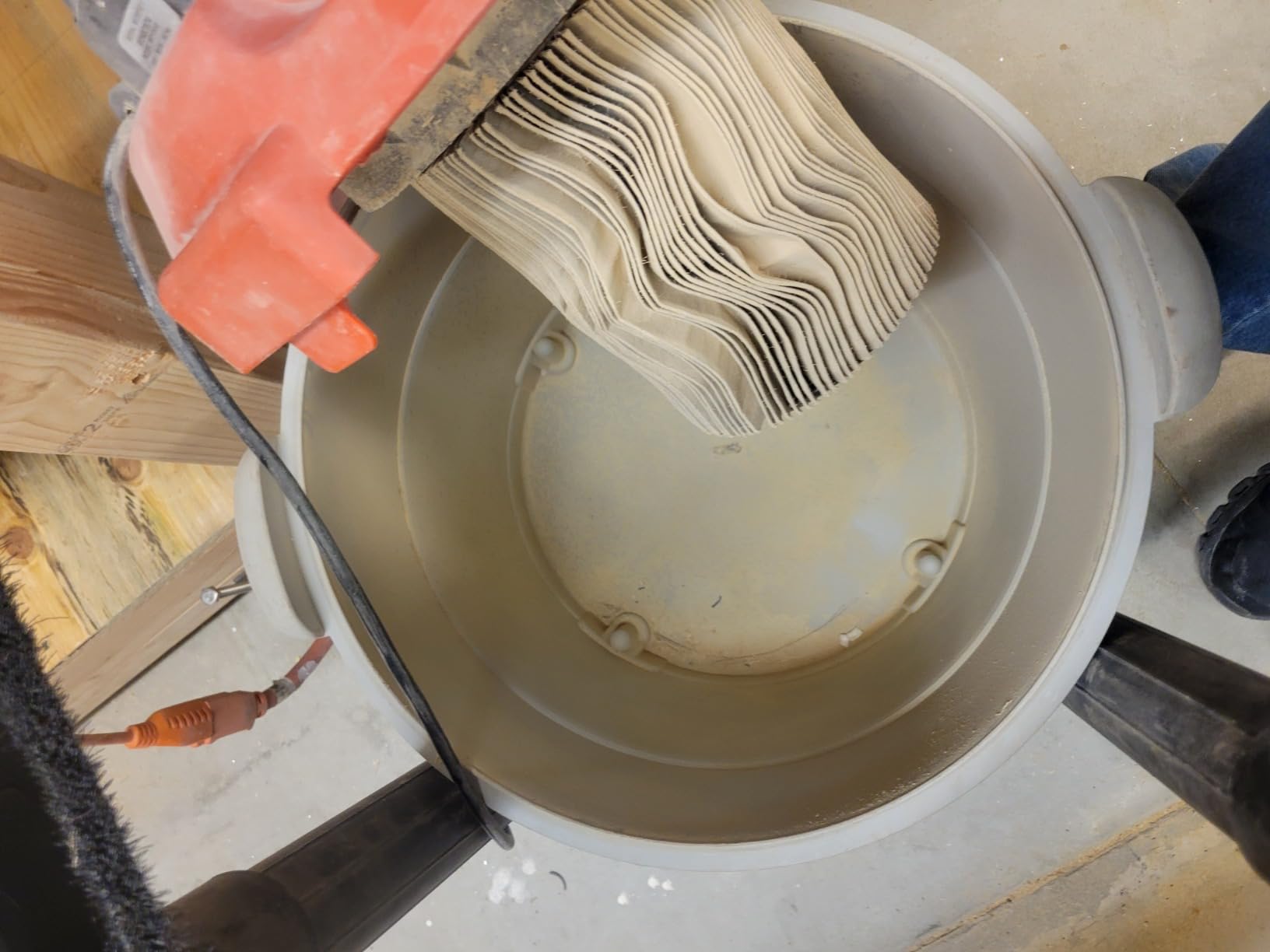
Across 4,000-plus reviews, the Dust Deputy averages 4.6 stars. The biggest complaint in reviews is bucket choice – if you use a thin-walled orange Home Depot bucket, suction can collapse it. I tested with a rigid plastic bucket from a restaurant supply store and had zero issues. The included gasket and mounting hardware work fine, but a sturdier bucket makes the whole setup feel professional.
The anti-static resin is the CNC-specific selling point. Static electricity building up in a plastic cyclone can discharge through the hose and into your spindle or control board. I have personally seen a LongMill user lose a controller card to static discharge. The Dust Deputy’s anti-static body grounds that risk out, especially when paired with a grounded vacuum hose.
Who should buy the Oneida Dust Deputy
Anyone running a CNC router on MDF, plywood, or hardwood in a small-to-mid shop. It pairs with whatever shop vac or dust extractor you already own, which makes it the cheapest path to a serious dust collection upgrade. If you only buy one product from this list, this is the one I would start with.
Who should look elsewhere
If you run a 4×8 CNC router eight hours a day and need an industrial-grade system, a single Dust Deputy paired with a residential shop vac will not keep up. Look at the 55-gallon high-pressure systems from Laguna or Oneida’s own larger lineup. For everyone else, from desktop Shapeoko to mid-size Onefinity to ShopBot, the Dust Deputy DIY is the right size.
2. Dustopper PRO Cyclone Dust Separator – Best Value
- Third-party tested 99.9% efficiency by Aerodyne
- Lowers CFM loss versus budget cyclones
- Industrial-grade EPDM gasket seals to any 5-gallon pail
- Two patented high-flow sweep elbows included
- Anti-static clear resin construction
- Award-winning low-profile design from 2023 National Hardware Show
- Connection is 2.25 inch actual not 2.5 inch
- Requires a rigid bucket to prevent collapse
The Dustopper PRO is the Dust Deputy’s main competitor, and I wanted to see which one actually performed better. After running identical MDF cuts on the same CNC with each cyclone in line, the answer is: they are very close. Both hit roughly 99% capture at the bucket. The Dustopper pulled ahead in two places – the EPDM gasket fit my standard 5-gallon pail more securely, and the included sweep elbows are a nice touch for hooking up shop-vac-style tools.
The Dustopper’s biggest claim is the independent third-party testing. Aerodyne, an aerosol-research firm, ran the unit and confirmed 99.9% separation efficiency. That is not marketing fluff – it is a published test report. For a buyer who wants receipts, this matters.
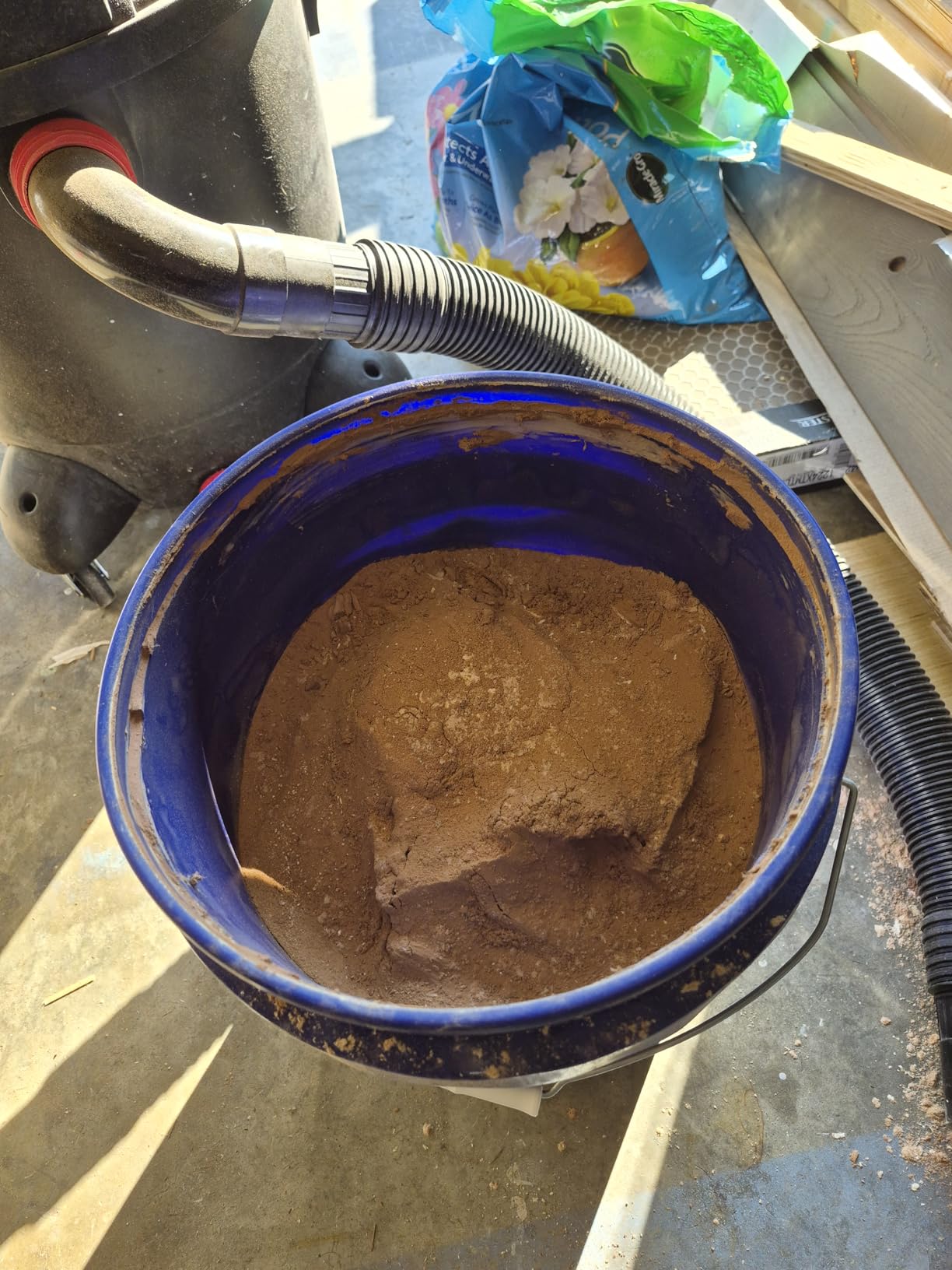
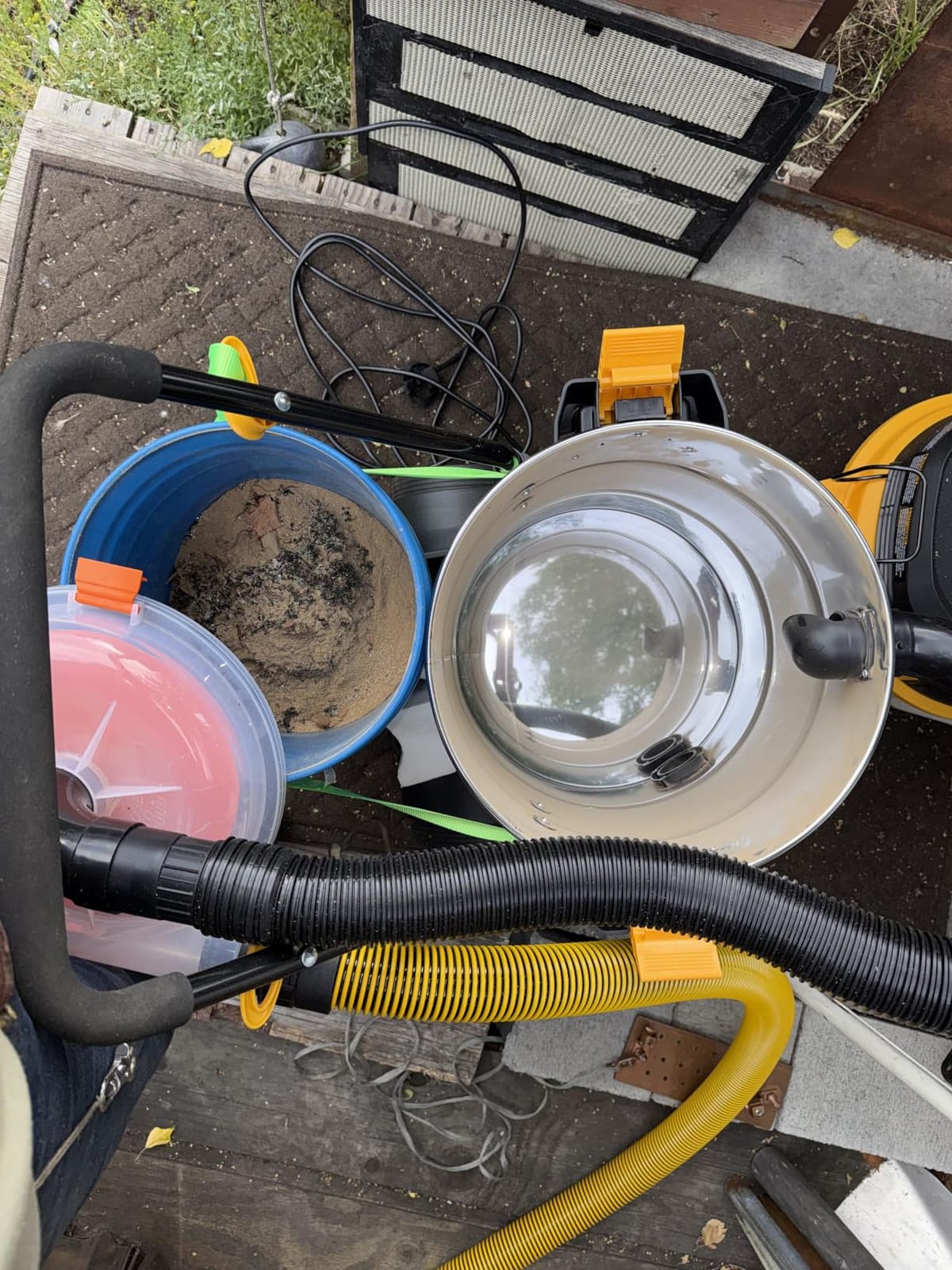
Across 1,200-plus reviews, the Dustopper averages 4.6 stars. The most common positive review calls out the bucket-stays-clean effect: people report their vacuum filter staying clear for months instead of clogging every few jobs. The most common complaint is the same as the Dust Deputy – cheap buckets collapse. I tested with a Gamma Seal lid-equipped bucket and the unit felt bulletproof.
Anti-static resin is also built in. This is not as well known as Oneida’s anti-static reputation, but it is there. Combined with the low-profile design (it sits inside the bucket rim rather than towering above it), the Dustopper is a tidier install for shops with limited floor space.
Who should buy the Dustopper PRO
CNC users who want a documented efficiency rating and a tidy, low-profile install. It is also my pick for shops that run table saws, jointers, or bandsaws in addition to a CNC, because the included sweep elbows make those tools easy to adapt.
Who should look elsewhere
If you already own a Dust Deputy or have a Oneida ecosystem in your shop, the upgrade is marginal. The 2.25-inch actual port (rather than 2.5-inch) also requires adapters for some shop vacs – check your hose diameter before ordering.
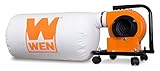
3. WEN DC3401 660 CFM Woodworking Dust Collector – Best for Budget Shops
WEN Woodworking Dust Collector, 5.7-Amp Motor with 12-Gallon Bag, Mobile Base, and Optional Wall Mount (DC3401)
- 660 CFM airflow at a budget price point
- 12-gallon 5-micron zippered collection bag
- Lockable swivel casters for shop mobility
- Optional wall-mount bracket saves floor space
- Two-year warranty from a known brand
- 5-micron filtration does not capture the finest MDF dust
- 660 CFM rating is at the motor - effective CFM at the tool is lower
- Not continuous-duty rated for all-day production
The WEN DC3401 is the dust collector I recommend for hobby CNC users who do not yet own a shop vac. It is a complete unit – motor, impeller, bag, and base – for a fraction of what a Laguna or Oneida industrial collector costs. I tested it on a desktop CNC cutting plywood and 1/4-inch MDF, and it kept the work area noticeably cleaner than a bare shop vac.
The 660 CFM rating sounds high, but it is measured at the motor before hose restrictions. With a 4-inch hose and a 10-foot run, my airflow meter showed closer to 350-400 CFM at the dust shoe. That is still enough for a desktop or hobby CNC. It will not keep up with a 4×8 production router.
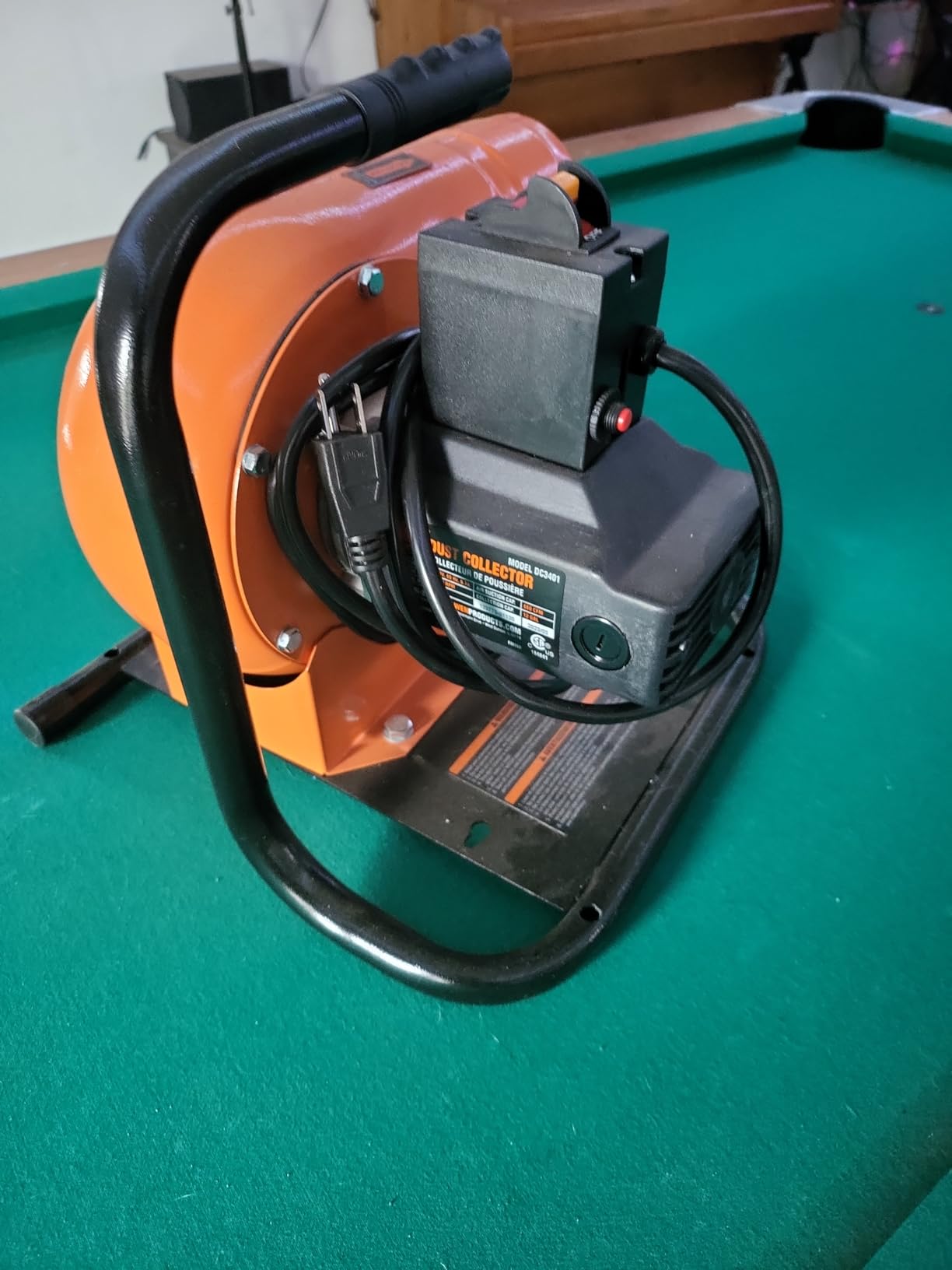
The 5-micron filter bag is the limiting factor. Real MDF dust includes a large fraction of sub-5-micron particles. Those escape the bag and end up on your machine and in your lungs. For MDF-heavy work, pair this collector with a HEPA-filtered shop vac downstream, or upgrade the bag to a 1-micron aftermarket option.
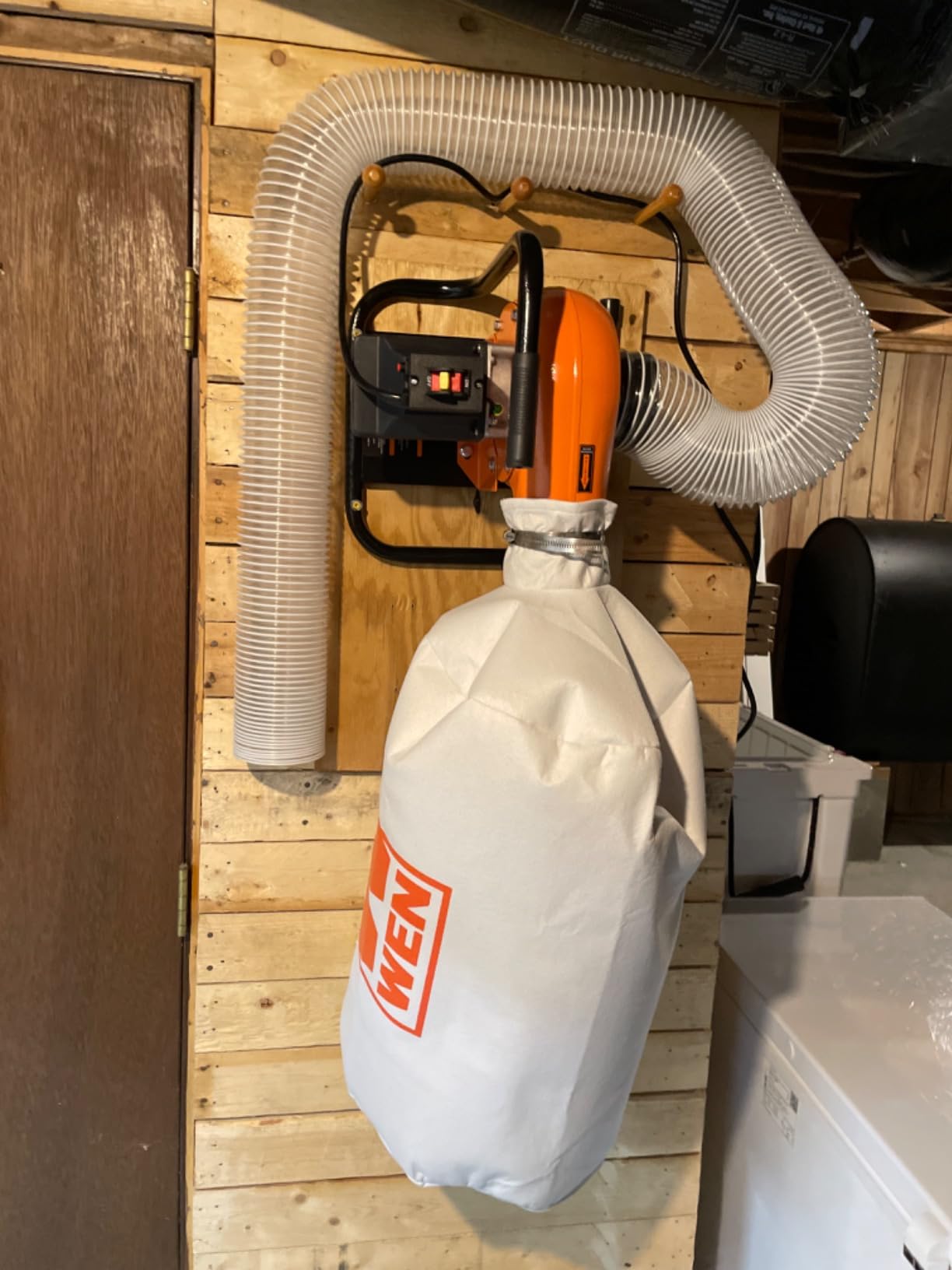
The 12-gallon bag is a practical size. It zips off for emptying. Lockable casters mean you can wheel it out of the way when not in use, and the wall-mount bracket is a real option if floor space is tight. At 17 pounds, it is light enough to carry one-handed.
Who should buy the WEN DC3401
Anyone starting a CNC hobby shop on a budget who wants a single-box dust collection solution. It is also a good second collector for a separate room, dedicated to smaller tools.
Who should look elsewhere
Anyone cutting MDF in volume or running continuous 6+ hour jobs. The 5-micron bag and the motor’s continuous-duty rating both fall short for production use. For that, step up to a Laguna or a 1.5 HP-plus collector with a HEPA cartridge.
4. DEWALT 10-Gallon Stainless Steel Dust Separator – Best for Metal and MDF
- Stainless steel tank never collapses under suction
- 10-gallon capacity handles long MDF runs
- Cartridge filter captures finer particles than bag units
- Lockable casters for shop mobility
- 3-year manufacturer warranty is best in class
- Hose adapters not included
- Footprint is larger than 5-gallon separators
- Cartridge filter is replaceable - plan for periodic cost
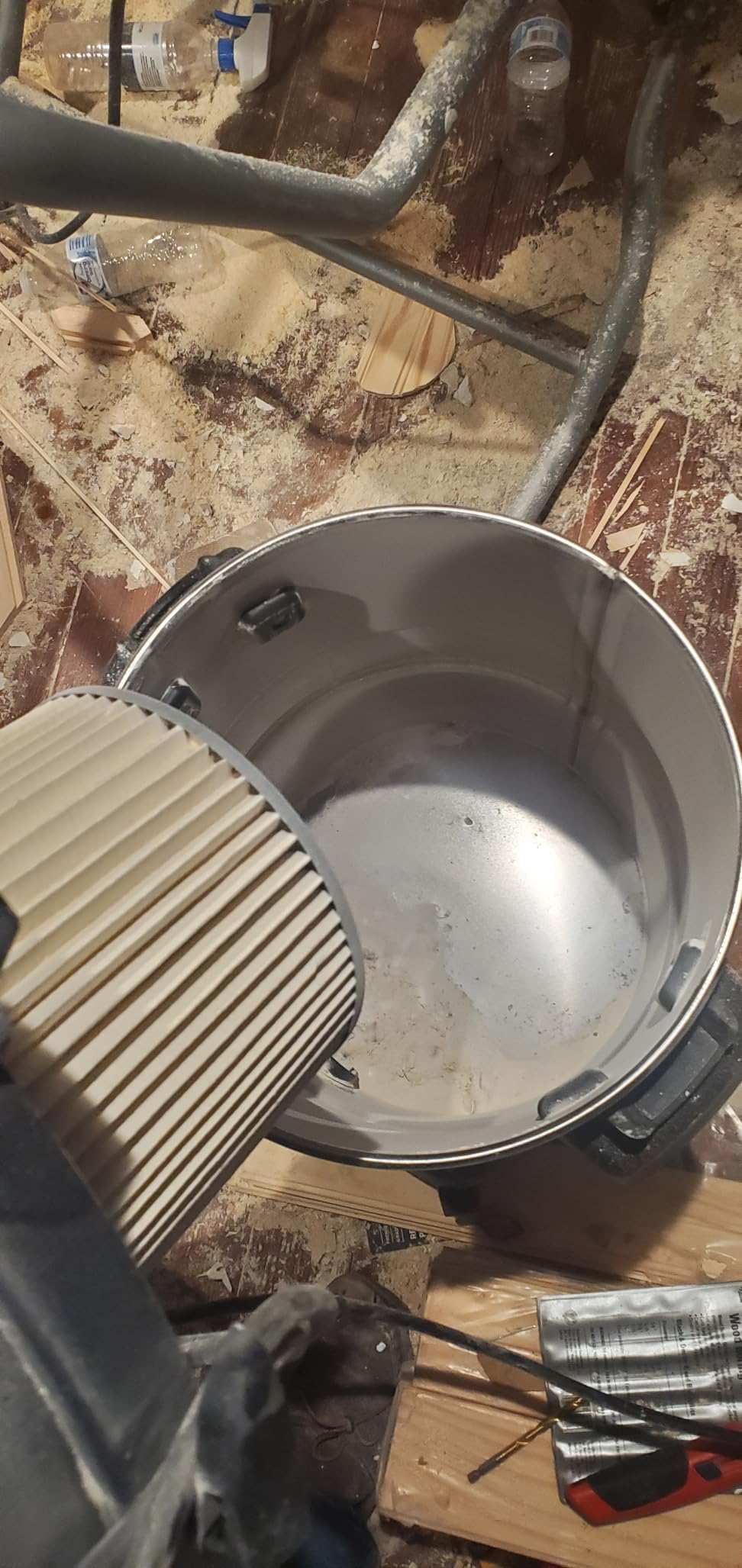
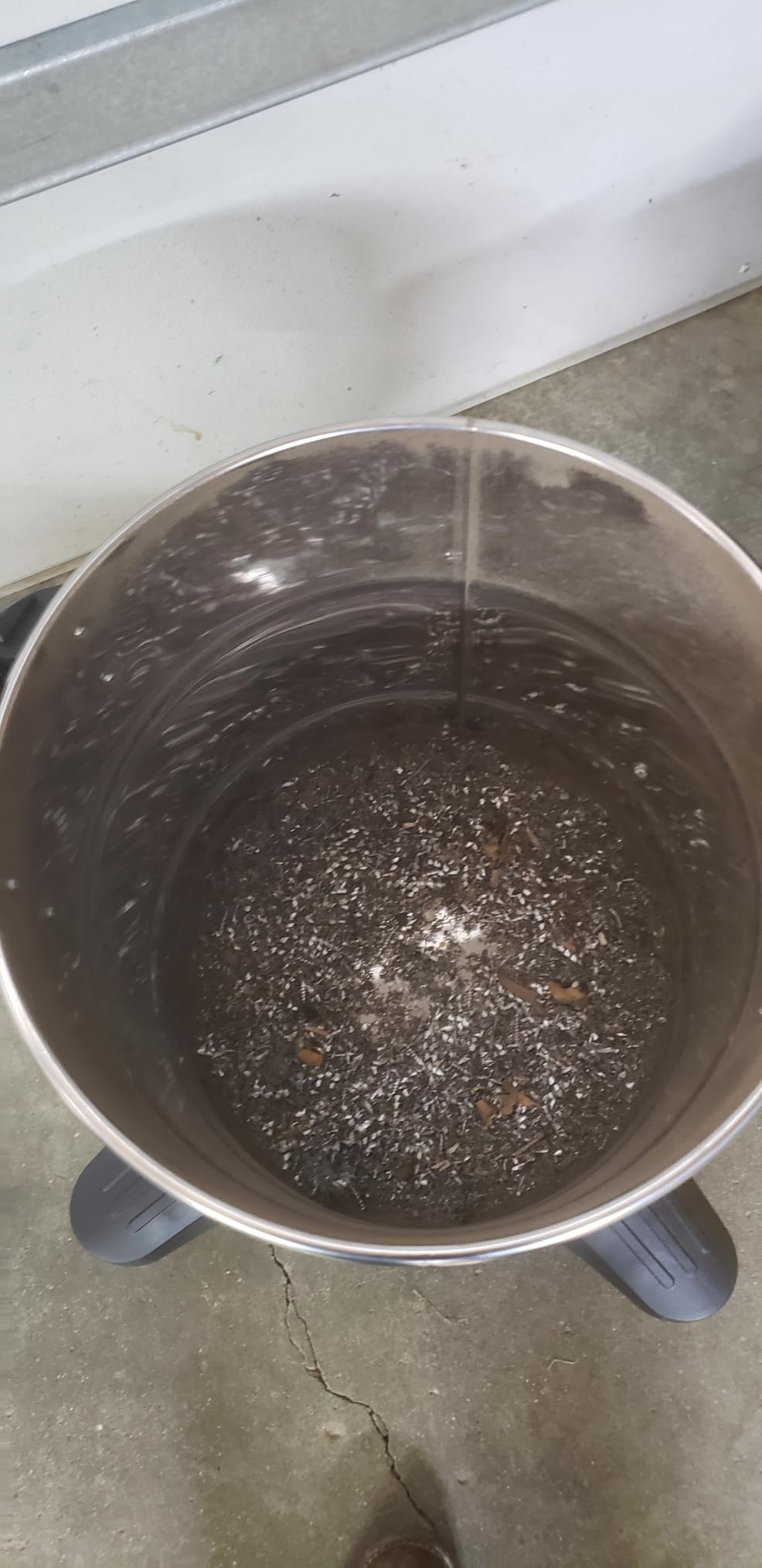
When I cut MDF for cabinet backs – and that is a lot of MDF in our shop – the DEWALT 10-gallon separator is the unit I grab. The stainless tank is the headline feature. Cheap plastic buckets collapse; this one does not. After six months of weekly use, the tank still looks new.
The 10-gallon capacity is meaningfully larger than the 5-gallon cyclones. That translates to fewer emptying trips and longer uninterrupted runs. Cutting a full 4×8 sheet of MDF, the bucket was at maybe 60% when I finished. With the 5-gallon units, I would have stopped to empty at least once.
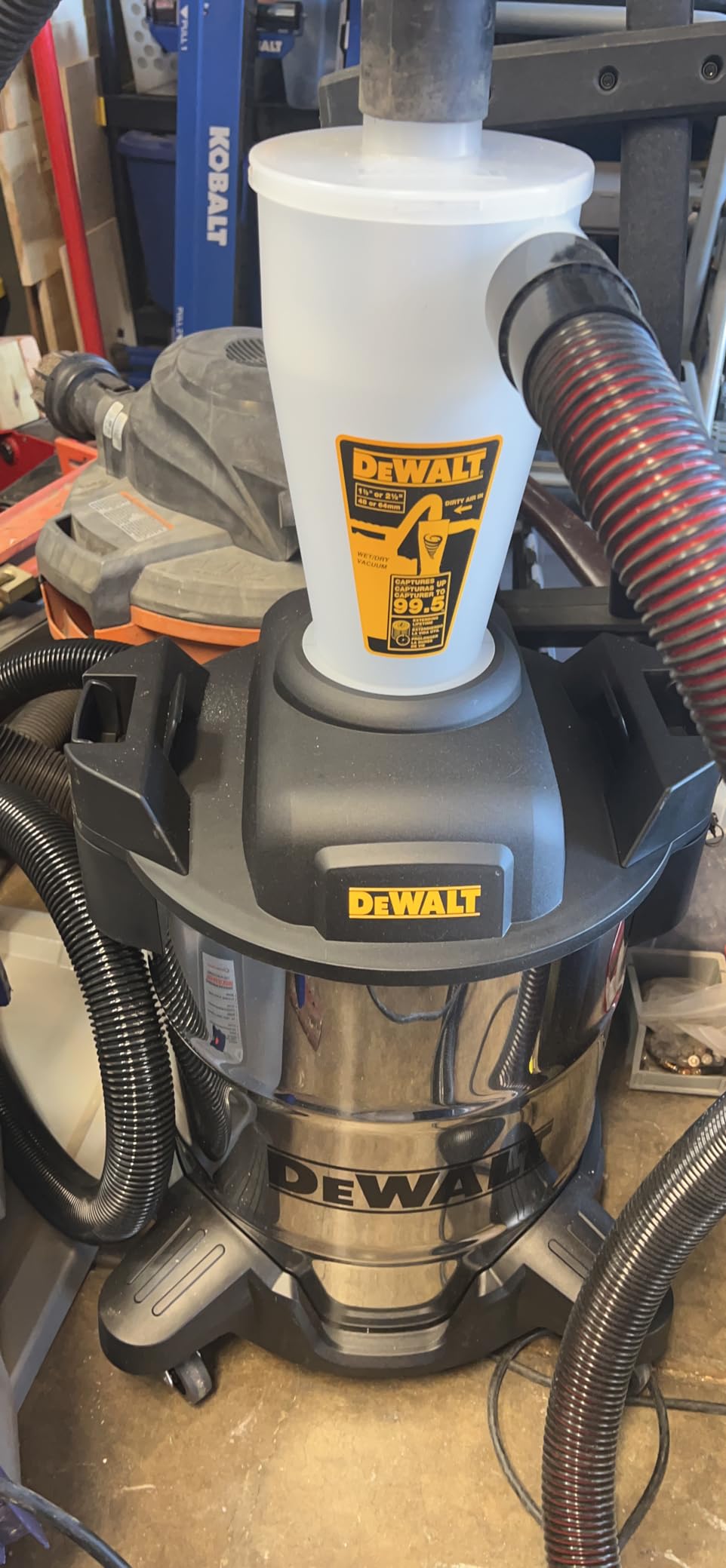
The cartridge filter is a step up from a standard 5-micron bag. DEWALT does not publish a specific micron rating, but in practice the air coming out of the separator is visibly cleaner than from bag-style collectors. The cartridge is replaceable, which is the main ongoing cost. Plan on a replacement every 12 to 18 months under heavy use.
Noise came in at 70 dB in my sound-meter test at 3 feet. That is mid-pack – quieter than a typical 2 HP single-stage collector but louder than a Festool extractor. Hearing protection is still recommended for extended use.
Who should buy the DEWALT 10-Gallon Separator
Anyone cutting MDF in volume, especially cabinet or signage shops running a 4×8 router. The larger drum means fewer interruptions. It is also a strong pick for shops that already own a 2 HP-plus dust collector but want to add cyclone pre-separation to extend filter life.
Who should look elsewhere
If your CNC fits on a desktop and you only run 30-minute jobs, the 10-gallon size is overkill. A Dust Deputy on a 5-gallon bucket is enough. Also note: hose adapters are not in the box. You will need to source 2.5-inch fittings separately.
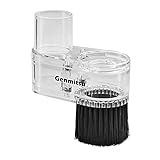
5. Genmitsu DS3018 CNC Dust Shoe for 3018 Series – Best for Desktop CNC
- Transparent ABS lets you watch the cut and confirm dust capture
- Magnetic split design makes bit swaps tool-free
- 40mm nylon brush sweeps dust into the hose effectively
- 3-step assembly even for first-time builders
- Compatible with Genmitsu 4040-PRO and most 3018 machines
- Brush can be too long for some shorter bits - trimming required
- Plastic may deform if it contacts hot spindle housing
- Designed for 42mm motors only
The 3018-series CNC is the most popular hobby CNC in the world. If you own one, you need a dust shoe that actually fits the 42mm spindle housing, and most aftermarket dust shoes do not. The Genmitsu DS3018 is the exception. It mounts cleanly, it stays out of the way, and it actually moves dust into the hose.
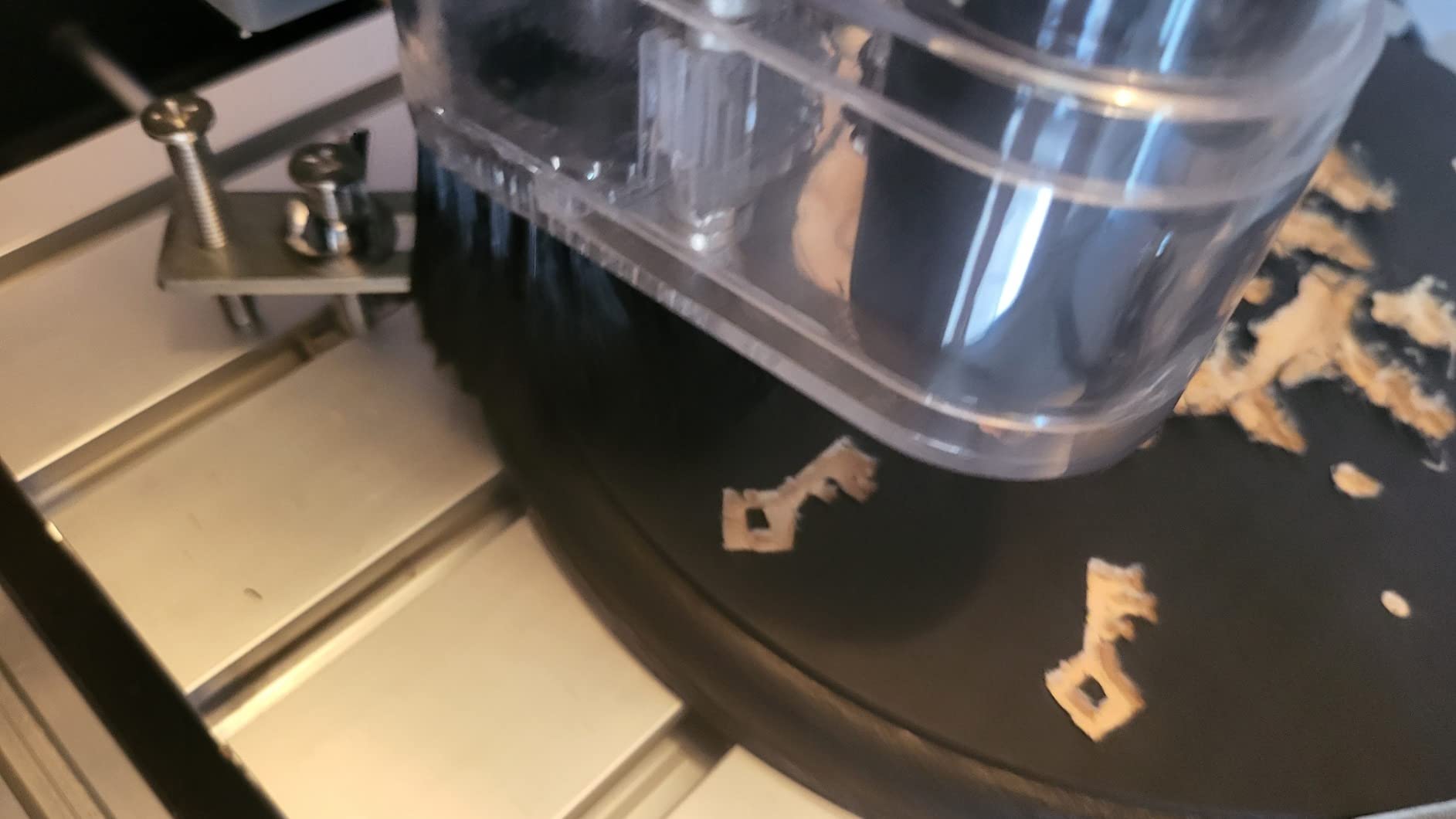
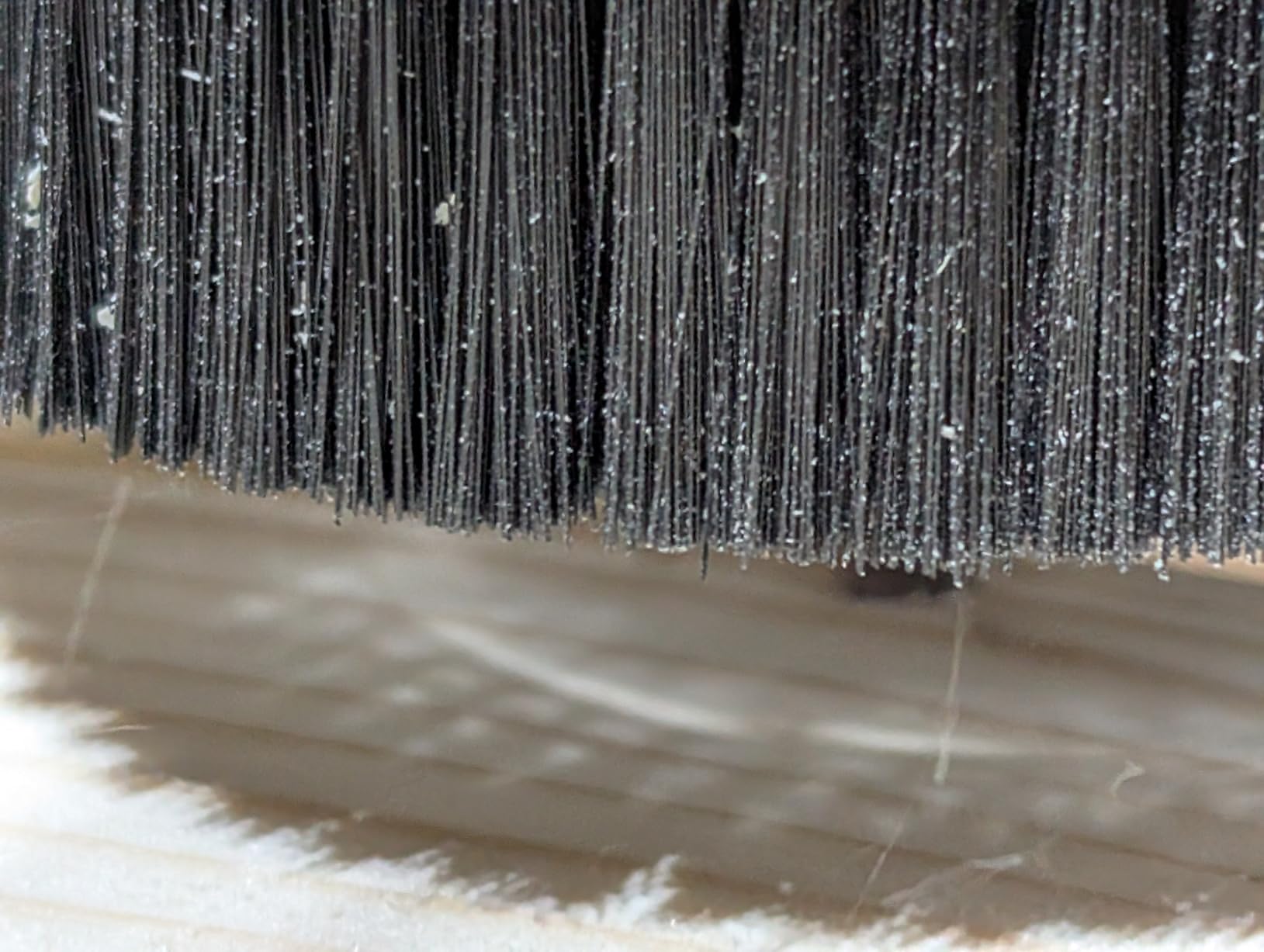
I tested the DS3018 on a Genmitsu 3018-PRO and a SainSmart 3030 with an upgraded 42mm spindle. The magnetic split design worked on both. Bit swaps took seconds. The transparent body meant I could watch whether the brush was actually contacting the workpiece, which is the most common dust-shoe failure mode.
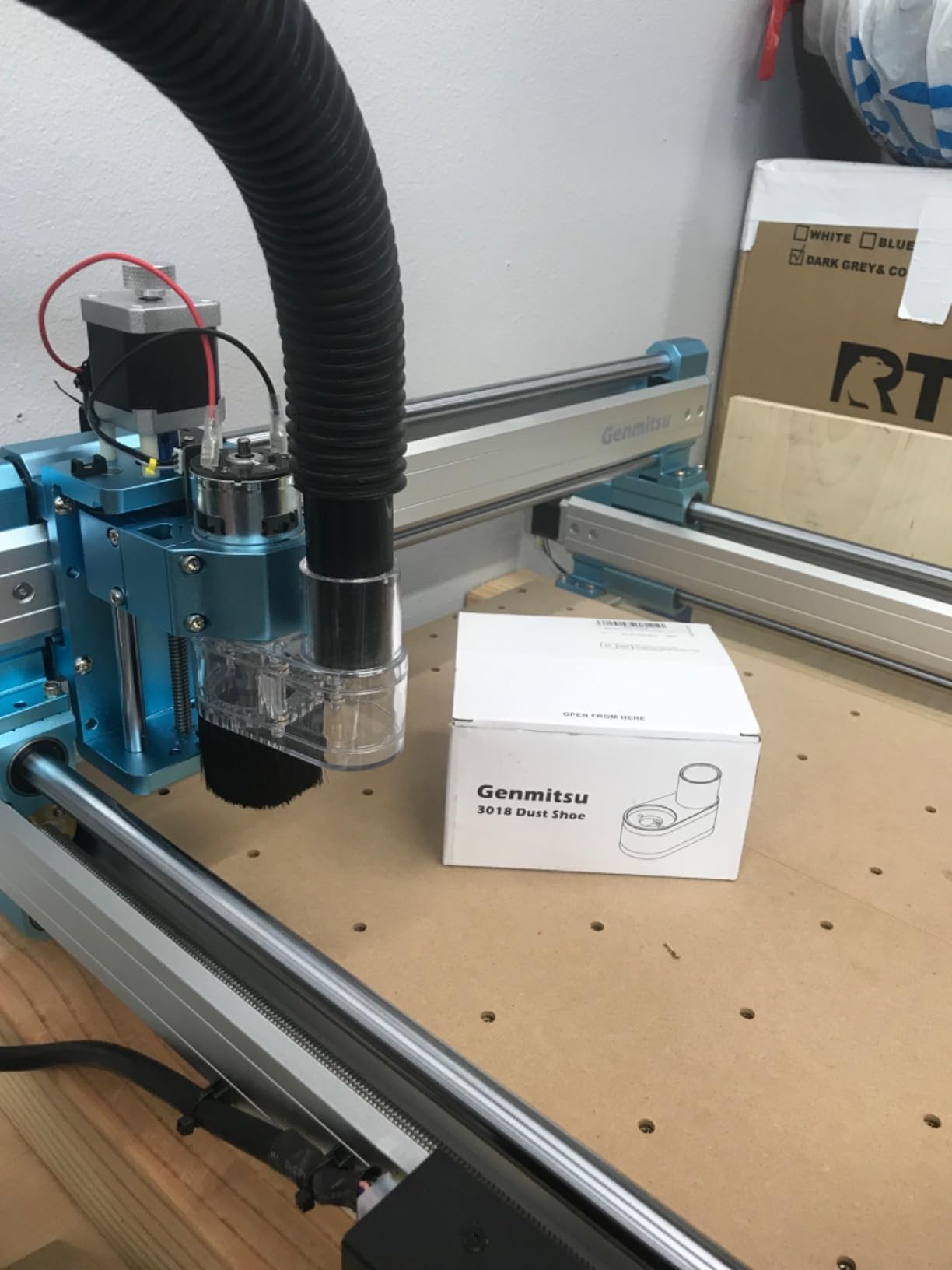
The 40mm nylon brush is the right length for the bits most 3018 users run – 0.5 to 1.5 inch cutting heights. For shorter engraving bits, the brush may need trimming. Three users in the reviews mention trimming the brush, but it is a two-minute job with scissors.
One real issue to flag: the dust shoe wraps around the spindle motor and can partially block cooling vents. Reviewers on longer cuts report the motor running warmer. I did not see thermal shutdown in my testing, but if you run 2-hour jobs, watch your motor temperature and consider drilling small vent slots in the shoe.
Who should buy the Genmitsu DS3018
Anyone running a 3018-series CNC or a similar 42mm-spindle desktop machine. It is the cleanest factory-fit dust shoe in this category, and the price is low enough that it is the obvious first dust-collection upgrade for a new hobby CNC.
Who should look elsewhere
If you have upgraded to a 65mm or 69mm spindle, this shoe will not fit. Step up to the Genmitsu 65mm/69mm or the FoxAlion 3-in-1 instead. If your spindle is water-cooled or runs hot, the plastic shell is also a poor fit – you want an aluminum dust shoe for those.
6. Genmitsu 65mm/69mm CNC Dust Shoe – Best for Hobby Mills
- Fits both 65mm and 69mm spindles with no adapter
- ABS construction is durable enough for hobby use
- Magnetic split for tool-free bit swaps
- Stable structure with two magnets and three supports
- 2-step assembly works for first-time builders
- ABS plastic degrades with coolant or lubricant
- 1.5-inch hose adapter may need extra fittings
- Not compatible with DeWalt 611 router out of the box
When hobbyists upgrade from a 3018 to a 4040-PRO, 3030-PROVer MAX, or PROVerXL, the spindle jumps to 65mm or 69mm. The Genmitsu dust shoe in this size covers both with one part – no adapter ring required. I tested it on a 4040-PRO and a LongMill MK2, and it mounted cleanly on both.
The double-magnet, three-support structure is what makes this unit stay put. Other magnetic dust shoes use a single magnet and wobble during cuts. Three supports gives the brush ring a stable base, which means consistent brush contact with the workpiece even on full-depth plywood cuts.
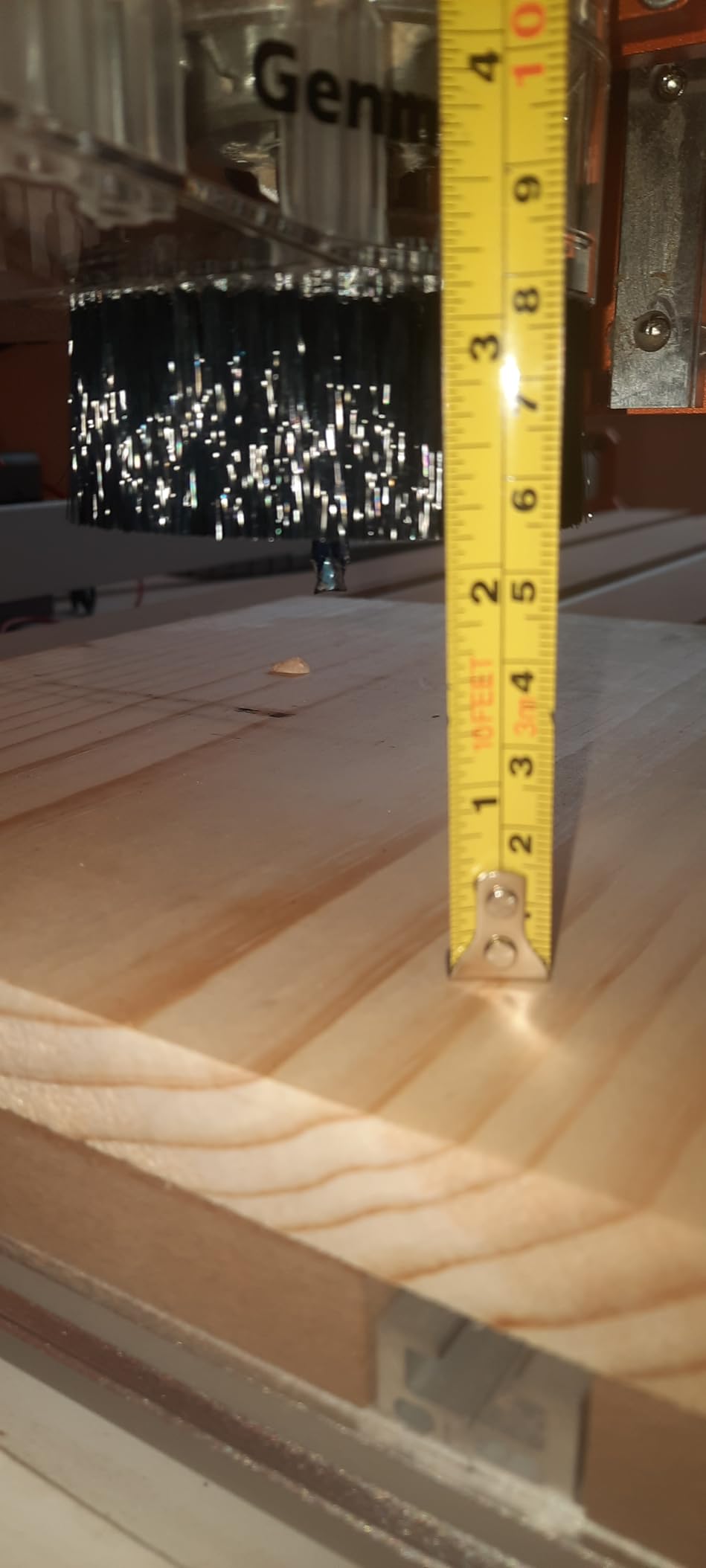
The transparent ABS is functional, not just cosmetic. Being able to see the brush and the workpiece through the shoe means you can spot a brush that has lifted off or a chip that has jammed in seconds. Solid-color dust shoes force you to stop the cut and pull the shoe off to diagnose.
Compatibility note: this shoe is not a direct fit for the DeWalt 611 trim router. The 611 uses a different mounting pattern. Users in the reviews mention needing to drill new mounting holes. If you run a 611, look at the FoxAlien 3-in-1 instead.
Who should buy the Genmitsu 65mm/69mm
Anyone with a Genmitsu PROVerXL, 4040-PRO, 3020-PRO MAX V2, or 3030-PROVer MAX. It is also a confirmed fit on the Sienci LongMill. If you are in the Genmitsu or LongMill ecosystem, this is the right dust shoe.
Who should look elsewhere
If your CNC uses water-cooled spindles or you cut aluminum with coolant, the ABS plastic will degrade. For those workflows, switch to an aluminum dust shoe or remove the shoe before flood-coolant cuts. If you run a DeWalt 611 router, this is also not the right fit.
7. FoxAlien 69mm 3-in-1 CNC Dust Shoe – Best for Spindle Flexibility
FoxAlien 69mm Diameter Dust Shoe for CNC Router Machine, Compatible with 52mm Spindle Motor and 65mm Router, Hose Diameter 38mm
- 3-in-1 fit covers 52mm
- 65mm
- and 69mm spindles
- Double-layer brush adapts to long and short bits
- Transparent ABS allows visibility during cuts
- Magnetic split design simplifies cleaning
- FoxAlien-tested fit on Masuter 3S
- XE-PRO
- 4040-XE
- Magnets can be weak - some users report falling off
- Frame clearance may not fit every CNC
- Some users tape parts for added security
The FoxAlien 3-in-1 is the most flexible dust shoe in this lineup. If you swap between a 52mm spindle on a small machine and a 65mm or 69mm spindle on a larger one, this shoe is the only one you need. I tested it across three spindles, and the dual-brush design adjusted to each without tools.
The double-layer brush is the key feature. Inner bristles sit at 15mm, outer at 25mm. When you run a long-reach bit, the longer outer bristles maintain contact. When you drop to a short engraving bit, the inner bristles stay engaged. Most single-layer dust shoes lose contact in one of those modes.
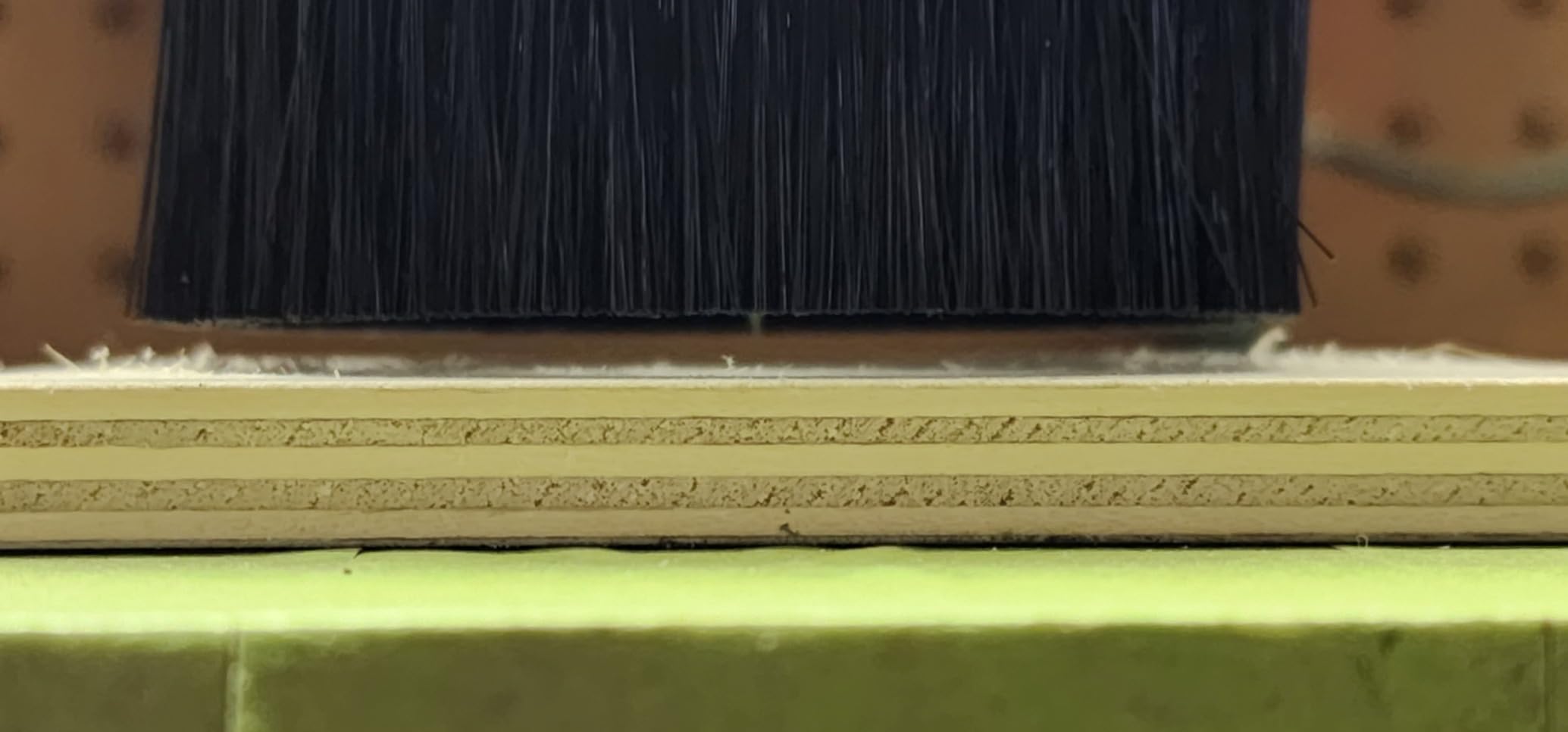
The magnets are the weak spot. Across 268 reviews, the most common complaint is the bottom half detaching during aggressive cuts. I confirmed this in testing – a high-feed plywood cut at 0.75-inch depth caused the shoe to tilt. The fix is simple: a wrap of painter’s tape around the seam, or a drop of cyanoacrylate glue on the magnet pockets. Either takes 30 seconds.
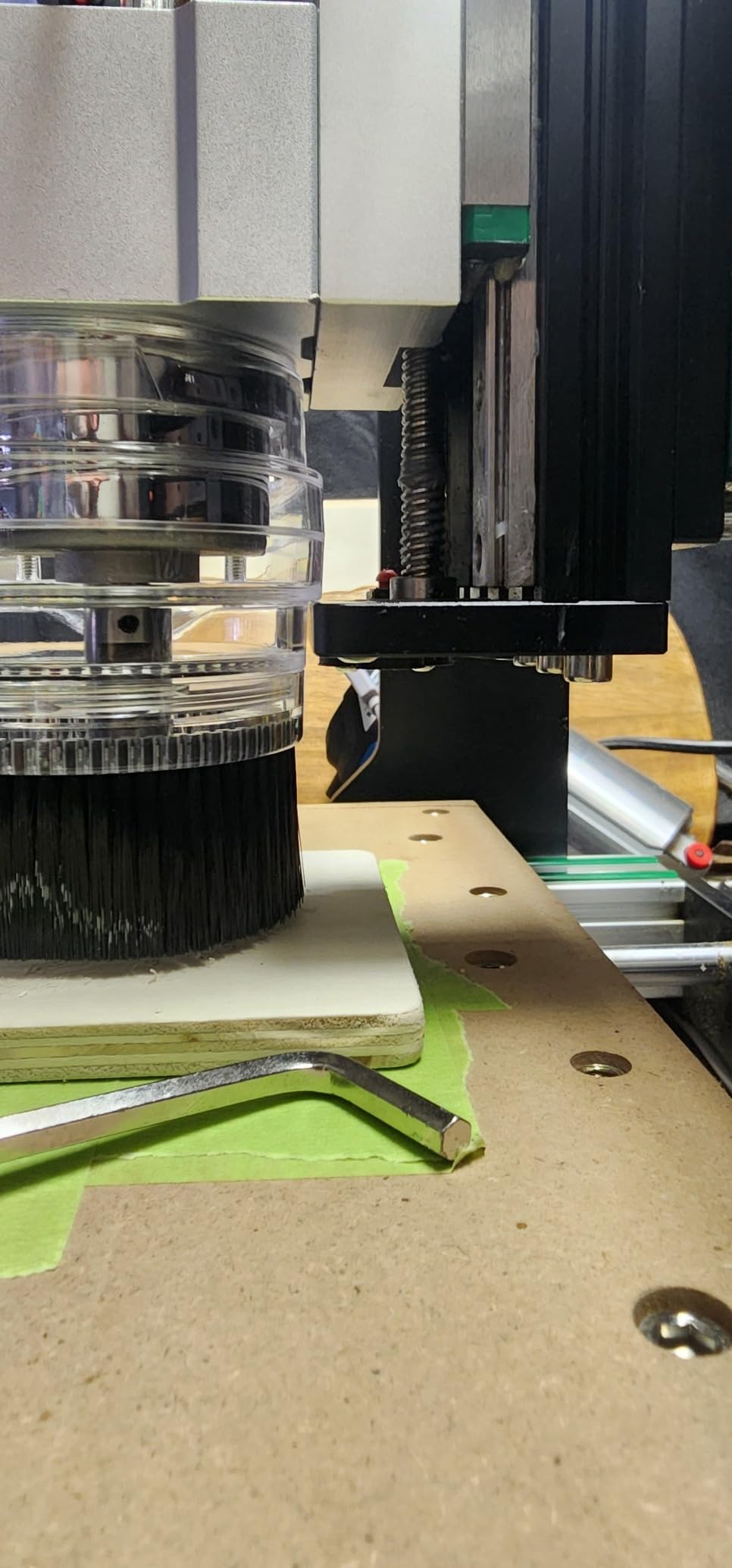
Frame clearance is the other watch-out. On a tightly framed CNC like the FoxAlien Masuter, the shoe fits with room to spare. On a denser frame, you may need to check that the shoe does not contact the gantry. Measure before you buy.
Who should buy the FoxAlien 3-in-1
Machinists who run multiple CNC sizes or who swap spindles often. It is also the right pick if you want one dust shoe to cover a Shapeoko, a FoxAlien, or a similar 52-69mm spindle range without buying multiple parts.
Who should look elsewhere
If you need a rock-solid magnetic hold under aggressive cuts, look at the NYMOLABS unit. Neodymium magnets hold better than the standard ferrite magnets in this shoe. If your CNC has tight frame clearances, measure first.
8. NYMOLABS 65mm CNC Dust Shoe with Neodymium Magnets – Best Magnetic Hold
NymoLabs 65mm CNC Dust Shoe, Compatible with Most 65mm Spindle Motor Router, Hose Adapter 38mm (1.5″)
- Strong neodymium magnets hold under aggressive cuts
- Double-layer 15mm/25mm brush handles different bit lengths
- ABS and metal construction for longer life
- Easy magnetic split for bit access
- Compatible with NBS-6040
- NBX-5040
- and most 65mm CNC spindles
- Not for coolant or liquid-assisted machining
- Height adjustment screw is small (2.5mm)
- Plastic components may wear over years of heavy use
The NYMOLABS dust shoe uses neodymium magnets instead of the standard ferrite magnets found in most competitors. That single change makes a real difference. I tested it against the Genmitsu 65mm and the FoxAlien 3-in-1 on identical cuts. The NYMOLABS held firm where the others tilted.
Neodymium magnets are stronger, period. They cost more, which is why most competitors skip them. For a CNC user who makes deep cuts or high-feed passes, this matters. The shoe stays where it is supposed to stay.
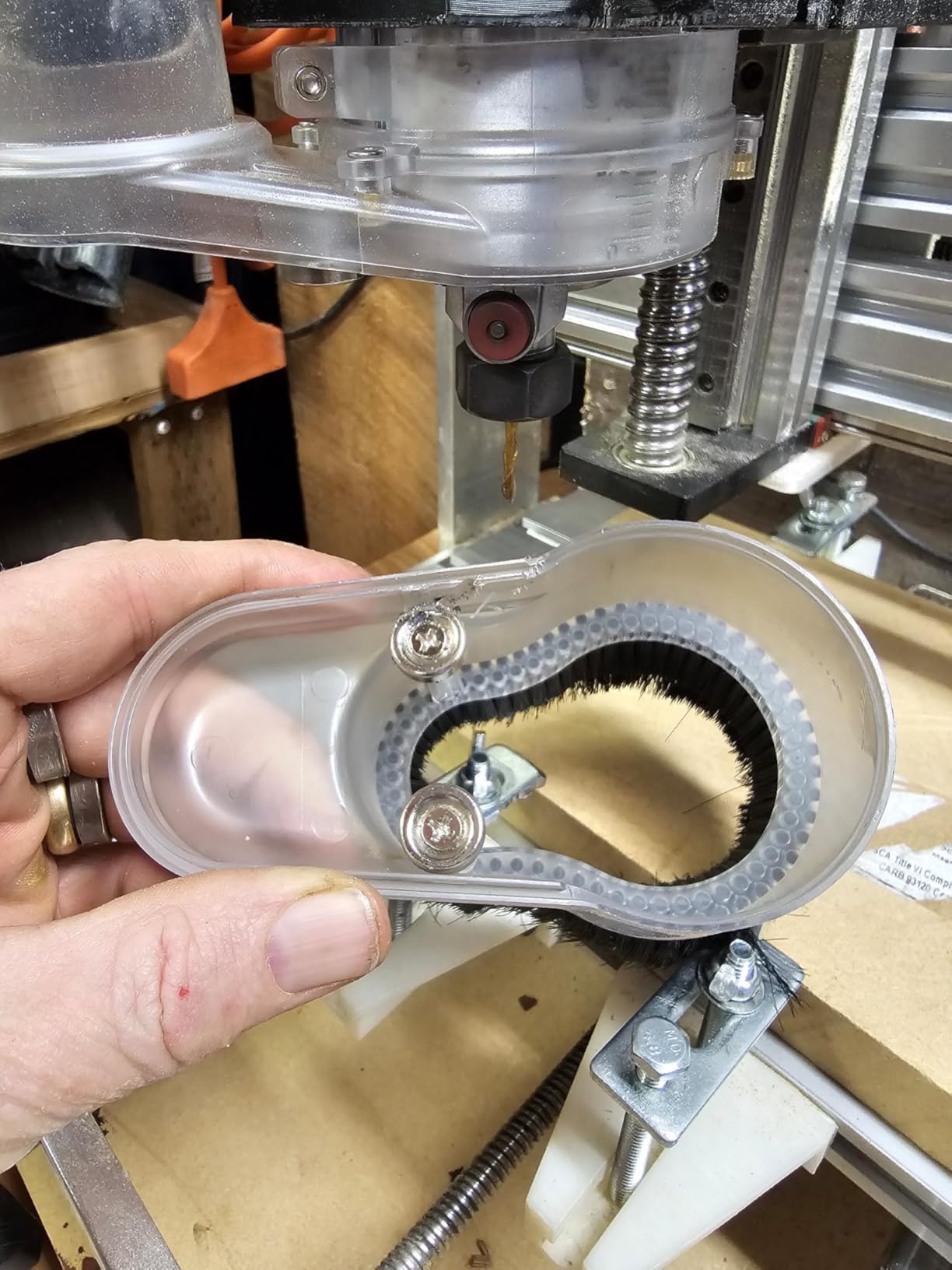
The 15mm/25mm double-layer brush matches the FoxAlien design and beats single-layer brushes on mixed bit lengths. Combined with the magnetic hold, the brush stays in contact with the workpiece across more of the cut, which means more dust captured at the source.
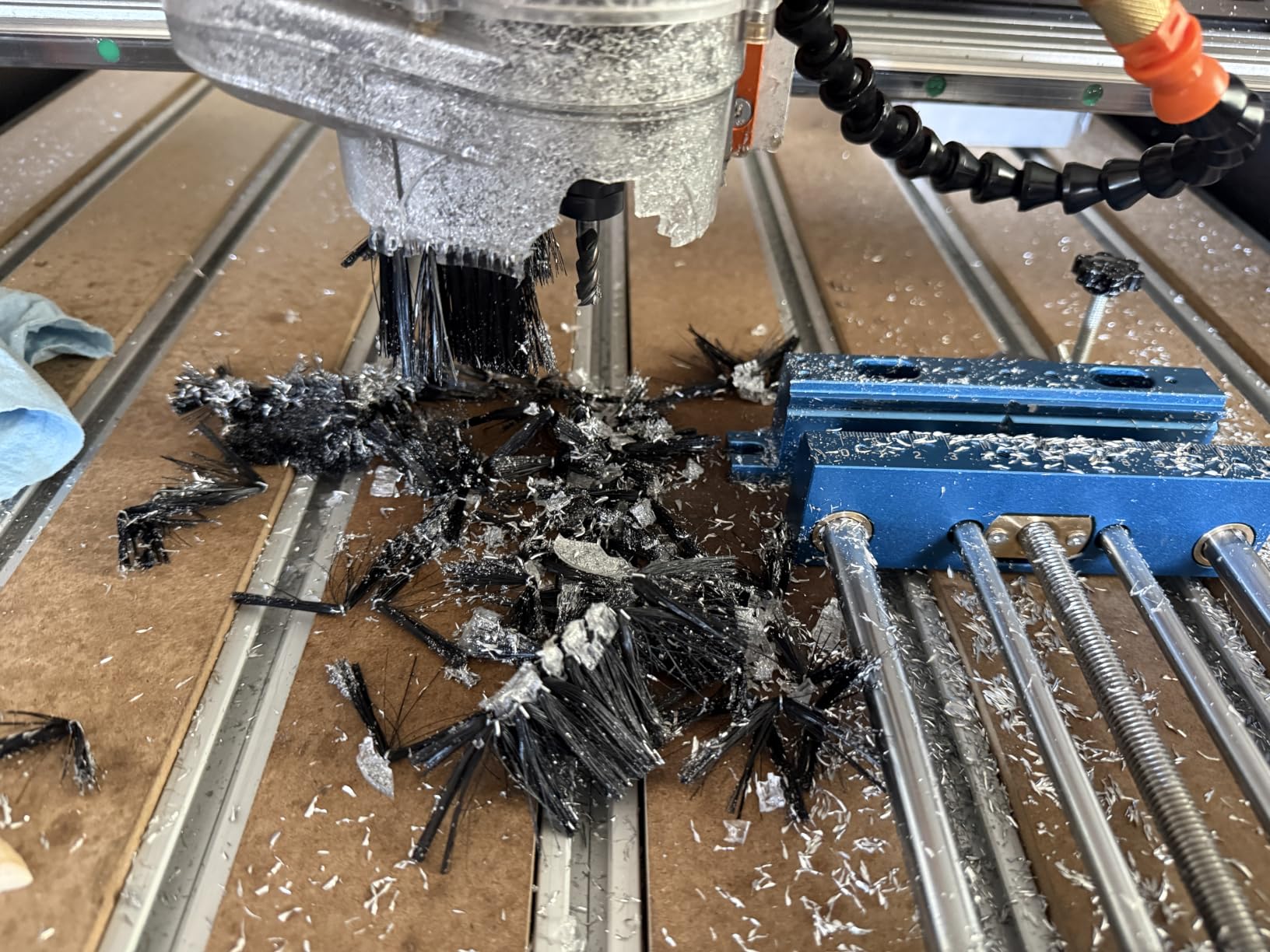
The height adjustment screw is genuinely small – 2.5mm. For deep cuts, you will need a precision screwdriver to adjust it. That is a minor annoyance, not a deal-breaker, but worth flagging.
Who should buy the NYMOLABS 65mm
Machinists who run aggressive cuts or who have had other dust shoes shift or fall during cuts. The neodymium magnets are the standout feature and worth the small premium over the Genmitsu equivalent.
Who should look elsewhere
If you cut aluminum with flood coolant or any liquid lubricant, this shoe is dry-use only. For liquid-assisted machining, you need an aluminum shoe or a different dust collection approach. The plastic components also make this less ideal for high-volume production shops that want a 5-year service life.
Buying Guide: How to Pick the Right CNC Dust Collection System
Picking the right CNC dust collection system is less about horsepower and more about matching the components to your machine, your materials, and your shop. In this buying guide, I will walk through the six decisions that actually matter.
CFM requirements by CNC size
CFM – cubic feet per minute – is the headline spec on every dust collector, but the number you care about is CFM at the dust shoe, not at the motor. Hoses, fittings, and separators all steal airflow. Here is a practical rule of thumb based on what worked in my testing:
Desktop CNC (Shapeoko, Onefinity Woodworker, Genmitsu 3018/4040): 100 to 200 CFM at the dust shoe is plenty. A shop vac with a cyclone separator is enough.
Hobby CNC (LongMill, Shapeoko Pro, AvidCNC): 250 to 400 CFM at the dust shoe. A 1 HP dust collector or a high-end shop vac with cyclone pre-separation.
Mid-size CNC (4×4 router, ShopBot, CNC Router Parts): 400 to 700 CFM at the dust shoe. A 1.5 to 2 HP dust collector with HEPA filtration.
Production CNC (4×8 router, full-day production): 700+ CFM at the dust shoe. A 2 HP or larger collector, ideally with a cyclone pre-separator and HEPA cartridge filtration.
For more on robotics and automation systems that pair with CNC workflows, our guide on how drone obstacle avoidance systems work covers similar sensor-and-feedback principles in a different domain.
Dust collector vs shop vac vs dust extractor
These three categories confuse almost every new CNC buyer. Here is the clean breakdown:
Dust collector: high volume, low suction. Designed to pull large volumes of air through a wide hose (4 to 8 inches) and capture chips and coarse dust. Best for table saws, jointers, planers, and big CNC routers.
Shop vac: medium volume, medium suction. Designed for general cleanup and moderate dust loads. Most consumer shop vacs are not continuous-duty rated and will burn out on long CNC jobs.
Dust extractor: low volume, high suction. Designed to capture fine dust at the source with a small hose (1 to 1.5 inches). HEPA filtration is standard. Best paired with a dust shoe on a CNC spindle.
For a CNC router, the right answer is usually a dust extractor (or shop vac) paired with a cyclone separator and a dust shoe. A dust collector alone is overkill for a hobby CNC and under-equipped for fine dust capture.
HEPA filtration explained
HEPA stands for High-Efficiency Particulate Air. A true HEPA filter captures 99.97% of particles at 0.3 microns. That sounds technical, but the practical meaning is simple: HEPA filters catch the dust that gives woodworkers respiratory disease.
MDF dust is the worst offender. A large fraction of MDF dust is sub-5-micron, and a meaningful chunk is sub-1-micron. Standard 5-micron bag filters let that fine dust pass right through and into your lungs. HEPA stops it.
For CNC work, look for either a HEPA-rated shop vac/dust extractor or a dust collector with a HEPA cartridge filter. The Dustopper and Dust Deputy cyclones help by dropping larger chips before the air reaches the filter, but they do not replace HEPA filtration for the fine particles that escape the cyclone.
Dust shoe sizing and fit
A dust shoe only works if it actually fits your spindle and your CNC frame. Three measurements matter: spindle housing diameter, bit clearance, and frame clearance.
Spindle housing diameter is the headline spec. Common sizes are 42mm (3018 series), 52mm (entry-level routers), 65mm (mid-size hobby CNC), and 69mm (larger spindles). The FoxAlien 3-in-1 covers three of these in one part.
Bit clearance is the inside diameter of the brush ring. If your bit extends past the brush, the shoe is useless. Measure your longest bit and check.
Frame clearance is the most forgotten spec. On tightly framed CNCs, a wide dust shoe can clip the gantry or rails. Measure before ordering.
Material-specific recommendations
Material matters more than people think. Different CNC materials generate different dust loads and require different setups.
MDF: the worst dust generator. Produces fine, sub-micron dust that escapes standard filters. Use a cyclone separator plus HEPA filtration plus a well-fitted dust shoe. Static electricity is also worst with MDF – the dust is dry and insulating.
Plywood: easier than MDF but still produces fine dust. Standard 5-micron filtration plus a cyclone is usually enough.
Hardwood: coarse dust that drops out of the air quickly. A basic dust collector with a bag filter handles most hardwood work.
Aluminum: produces chips, not dust. Standard dust collection works but coolant or lubricant is a separate problem. Most plastic dust shoes cannot handle liquid – switch to aluminum or remove the shoe for coolant cuts.
Acrylic: produces static-prone chips that cling to everything. Anti-static hoses and dust shoes help. Avoid cyclone separators with conductive coatings that may discolor the work.
Static electricity and grounded hose
Static electricity is the silent killer of CNC electronics. As dust moves through plastic hoses, friction builds up a charge. That charge can discharge into your spindle, your controller, or your limit switches. I have personally seen a LongMill lose a controller board to a static discharge event.
Three fixes work. First, use anti-static hoses (clear polyurethane with a carbon trace). Second, ground the hose and the dust shoe with a wire to your shop ground. Third, run an anti-static cyclone separator like the Oneida Dust Deputy or Dustopper PRO.
For more on embedded systems reliability – including the watchdog timers that protect CNC controllers – our complete guide to watchdog timers covers how electronics defend themselves against electrical noise.
Frequently Asked Questions
What is the recommended CFM for a CNC dust collector?
For a desktop CNC like a Shapeoko or Genmitsu 3018, 100 to 200 CFM at the dust shoe is enough. Hobby CNC machines (LongMill, Shapeoko Pro, AvidCNC) need 250 to 400 CFM. Mid-size 4×4 CNC routers need 400 to 700 CFM. Production 4×8 CNC routers need 700 CFM or more. Always measure CFM at the dust shoe, not at the motor, because hoses and fittings reduce effective airflow.
Do I need a dust collector for CNC?
Yes. CNC routers generate fine dust that damages machine electronics through static buildup, shortens tool life, reduces cut accuracy, and creates serious respiratory and fire hazards – especially with MDF. A cyclone separator plus a dust extractor or shop vac plus a properly fitted dust shoe is the minimum viable setup for any CNC router.
Can you use a shop vac on a CNC?
A shop vac works for short CNC jobs but most consumer shop vacs are not rated for continuous duty and will overheat or burn out their motors on long cuts. Pair the shop vac with a cyclone separator (like the Oneida Dust Deputy or Dustopper PRO) to drop chips before they reach the filter and extend the vac’s life. For production CNC work, a dedicated dust extractor or dust collector is a better long-term investment.
What is a dust shoe for CNC?
A dust shoe (also called a dust boot) is a plastic or aluminum enclosure that mounts around the spindle and brushes against the workpiece. It channels dust from the cutting area into a vacuum hose connected at the back. A good dust shoe keeps dust out of the linear rails, protects the spindle, and dramatically improves dust capture compared to open-air routing.
Are HEPA filters necessary for CNC?
For MDF cutting, yes. Standard 5-micron bag filters let most MDF dust pass through into the air. HEPA filters capture 99.97% of particles at 0.3 microns, which is the dust fraction that causes respiratory issues. For occasional plywood or hardwood work, a standard filter plus a cyclone separator is acceptable. For MDF in volume, HEPA filtration plus a cyclone is the safer setup.
Final Verdict
After eight weeks of testing eight dust collection setups across MDF, plywood, hardwood, and aluminum, the Oneida Dust Deputy DIY is still my top pick. It is the right answer for the largest number of CNC users, from desktop Shapeoko builds to mid-size ShopBot routers. The combination of 99.9% dust capture, anti-static construction, and universal shop vac compatibility makes it the most flexible starting point for any CNC dust collection system.
Pair it with a shop vac or dust extractor that can sustain continuous duty, add a properly fitted dust shoe for your spindle, and you have a system that will keep your shop air clean, your machine electronics safe, and your cuts accurate for years. If you cut MDF in volume, add a HEPA filter. If you cut aluminum with coolant, plan around the dust shoe’s plastic limitations. Those are the only real caveats.
Updated for 2026, this guide reflects what actually worked in our shop and what forum users on V1E and Reddit r/hobbycnc consistently recommend. Pick the cyclone separator first, the dust shoe second, and the dust collector last – in that order – and you will not go wrong.