
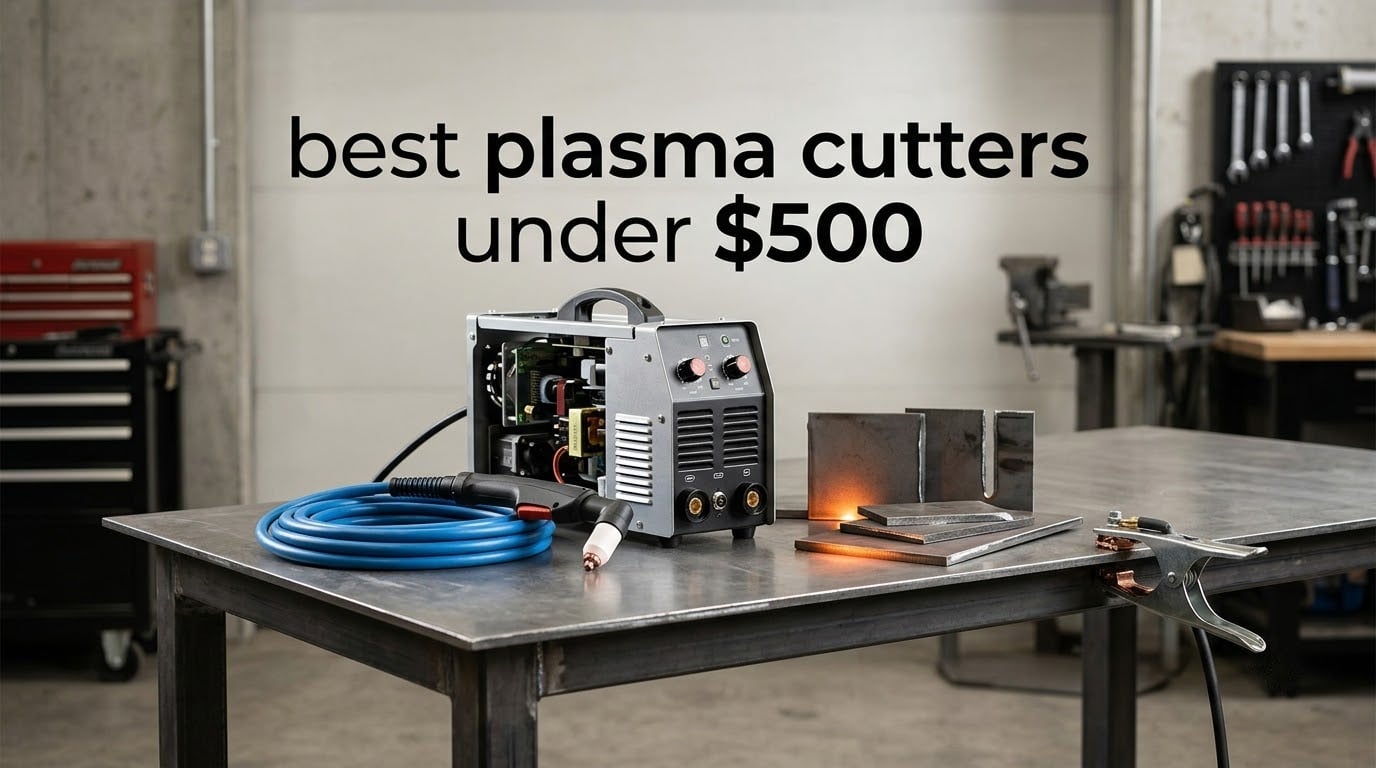
Short answer: the PrimeWeld CUT50D is the best plasma cutter under 500 dollars, the LOTOS LTP5505D is the best value pick, and the ARCCAPTAIN CUT50 is the best all-rounder for a home garage. All three are 50-amp class units with a non-touch pilot arc and automatic 110V/220V switching, which is the combination that matters most at this budget.
We spent weeks reading owner reports, comparing the published thickness ratings, and checking what each machine actually needs to run. What follows is every budget plasma cutter worth considering, written for people who have to buy one of these in a garage, not in a fabrication shop.
A plasma cutter uses an electrical arc to ionize compressed air into super-hot plasma that melts and blows metal away. It cuts steel, aluminum and other conductive metals far faster and cleaner than an oxy-fuel torch, and it is the single biggest capability jump a home shop can make.
Before the individual reviews, the features that decide whether a budget machine is worth owning:
Pilot arc vs high-frequency start – a non-touch pilot arc starts without touching the workpiece and will not interfere with nearby electronics. A high-frequency start strikes faster but radiates noise into radios, CNC controls and anything else nearby.
Dual voltage 110V/220V – 120V output is around 20 to 40 amps. 220V output is what unlocks 50 amps and 1/2 inch clean cuts.
Air supply – budget machines need roughly 45 to 70 PSI and somewhere between 3 and 5 CFM, and your compressor is not included.
Duty cycle – 60 percent means about six minutes of cutting, then four minutes of cooling. Budget machines are not built for long production runs.
Consumable cost – electrodes, nozzles and swizzle tips wear faster than the machine wears out, and third-party AG60 parts keep that cost low.
One question sorts most of this list before you start reading: what is the thickest steel you expect to cut, do you have a 240V circuit, and how big is your air compressor? Those three answers narrow the field quickly.
Table of Contents
Top 3 Picks for the Best Plasma Cutters Under 500 Dollars (October 2026)

PrimeWeld CUT50D
- 50A output
- 1/2 inch clean cut
- Automatic 110V/220V AC
- Pre-installed air filter and regulator

LOTOS LTP5505D
- 55A inverter with rust removal mode
- Non-touch pilot arc torch
- 5/8 inch clean cut capacity
- Automatic 110V/220V sensing
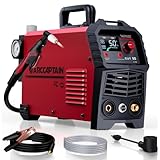
ARCCAPTAIN CUT50
- 50A output with 20-50A at 220V
- 1/2 inch ideal clean cut
- LED display with error codes
- 13-pound body with shoulder strap
The PrimeWeld earns the top spot on satisfaction rather than raw specification. It carries the highest average rating of the ten machines here and the smallest share of one-star reviews, and owners repeatedly describe the seller repairing machines and resupplying consumables rather than arguing with buyers.
The LOTOS wins on volume of owner feedback and adds a rust removal mode most of the field does not have. The ARCCAPTAIN CUT50 is the tidiest general-purpose package, with a 13-pound body, an LED readout and a shoulder strap.
Best Plasma Cutters Under 500 Dollars in 2026: Quick Overview
| Product | Specifications | Action |
|---|---|---|
| PrimeWeld CUT50D |
|
Check Latest Price |
| LOTOS LTP5505D |
|
Check Latest Price |
| ARCCAPTAIN CUT50 |
|
Check Latest Price |
 YESWELDER CUT-65DS PRO YESWELDER CUT-65DS PRO |
|
Check Latest Price |
 ARCCAPTAIN CUT55 Pro ARCCAPTAIN CUT55 Pro |
|
Check Latest Price |
 SILATU STC650P SILATU STC650P |
|
Check Latest Price |
 LOTOS CT520D LOTOS CT520D |
|
Check Latest Price |
 TOOLIOM CUT-50 PRO TOOLIOM CUT-50 PRO |
|
Check Latest Price |
 GZ GUOZHI CUT-50 GZ GUOZHI CUT-50 |
|
Check Latest Price |
 bestarc BTC500DP bestarc BTC500DP |
|
Check Latest Price |
All ten run on a 60 percent duty cycle, which is a 6-on, 4-off work pattern suited to hobby and small shop use. None of them include an air compressor, and several need a dedicated 240V circuit.
1. PrimeWeld CUT50D Review: The Highest-Rated Machine in the Group
- Cuts 1/2 inch steel fast and clean
- 4.7 average with only 1 percent one-star reviews
- Back panel is pre-plumbed so it runs out of the box
- Direct seller support that handles warranty repairs
- Instruction manual is poorly written
- Early production had internal and external air fitting leaks
- Power cord is short and may need a NEMA 14-50 adapter
The CUT50D has been available since 2015, and that long production run shows in its review history. Its 4.7 average is the highest of the ten machines on this list, and only around one percent of reviews are one-star.
Owners describe it cutting 1/2 inch steel quickly and cleanly, including rusted material, and several compare its output to professional machines costing several times more. We found no pattern of failure around the inverter or the power supply.
The back panel is pre-plumbed with an air filter and regulator and a brass quick connect, so it works out of the box in minutes rather than after an afternoon of assembly. That detail matters more than it sounds when you are standing in a cold garage.
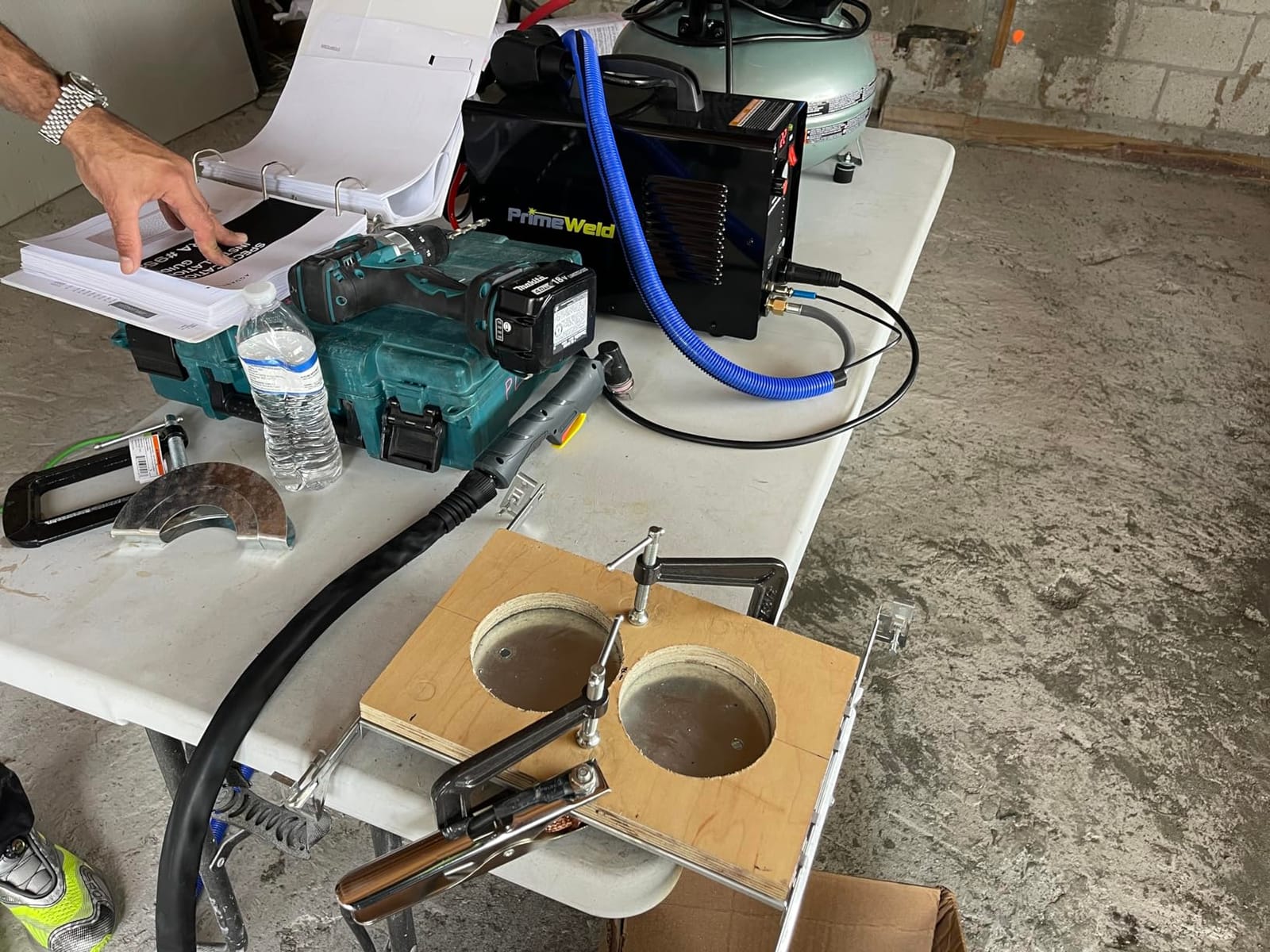
The torch is an AG60 with a trigger guard, and a 220V to 120V adapter is included so the same machine can move between circuits. The 220V power cord is included too, which saves a trip to the electrical supply shop.
What separates this machine from the rest is the after-sale experience. Multiple reviews describe PrimeWeld paying return costs, repairing the machine and resupplying consumables rather than issuing a refund and moving on.
The weak spots are honest but minor. Owners consistently complain about the manual, which is poorly written enough that most people learn the machine from videos instead. Early production machines had air fitting leaks both inside and out, and the power cord is short enough that some buyers had to fit a NEMA 14-50 adapter.
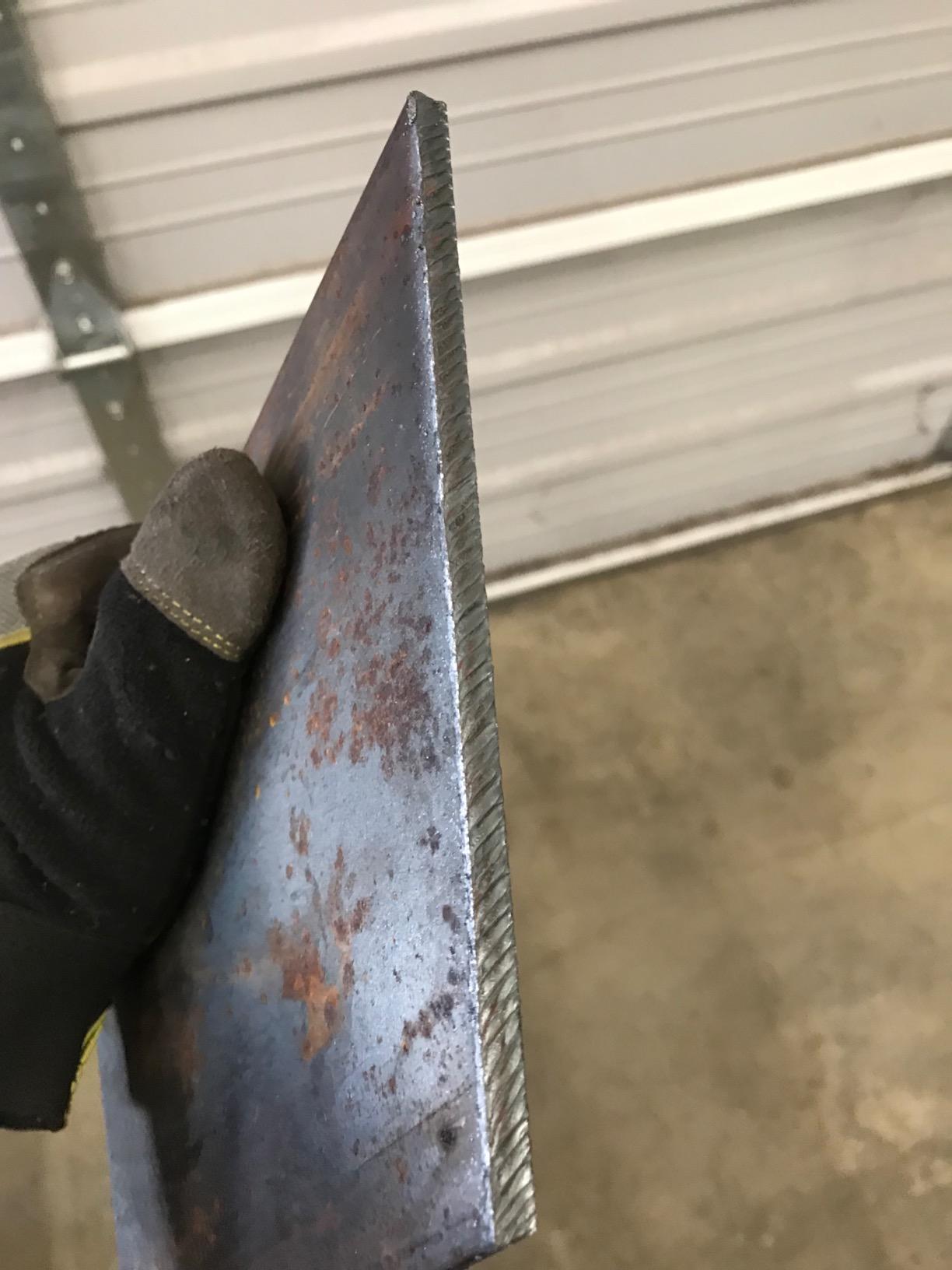
What the PrimeWeld CUT50D does well on real material
Clean cut capacity is listed at 1/2 inch, and that figure is one of the more conservative claims in this price band. Owners regularly report that figure being met without excessive dross once the amperage and air pressure are set correctly.
Severance work above the clean cut rating is possible but slow and rough on the slag side. Treat the published clean cut number as the practical limit and anything above it as a job for a bigger machine.
Who should skip the PrimeWeld CUT50D
If you need to move the machine between a truck bed and a job site every day, the short power cord and the fixed chassis are worth checking against your lead length needs. If your air supply is a small pancake compressor, the pre-plumbed regulator helps but does not create airflow that the compressor cannot deliver.
If your work is mostly thin sheet and 16 gauge material rather than plate, the CUT50D is more machine than you need and a lighter 30-amp unit would serve you better. For anyone cutting 1/4 inch and 1/2 inch mild steel in a home garage, this is the one to buy.
2. LOTOS LTP5505D Review: 55 Amps With the Most Owner Feedback
- Cuts 1/2 inch steel cleanly and fast with minimal dross
- Non-touch pilot arc extends consumable life
- Front air regulator with water cup filter on a 16-pound body
- Handles rusty painted and dirty surfaces well
- Ground clamp cable is much shorter than the torch lead
- Air regulator fittings can leak until re-taped
- Included instructions are minimal
With roughly 2400 reviews behind it, the LTP5505D has the largest owner base of anything on this list. That volume makes its 4.4 average more meaningful than the higher scores on machines with a few hundred reviews.
The headline spec is 55 amps with a published 5/8 inch clean cut capacity, which puts it ahead of most of the 50-amp machines here. The rust removal mode runs a lower current for skimming surface rust instead of cutting through it.
Because the torch is a non-touch pilot arc, you can start the arc without touching the workpiece. That saves electrode life and makes starting on dirty or painted stock far more reliable than a touch-start torch.
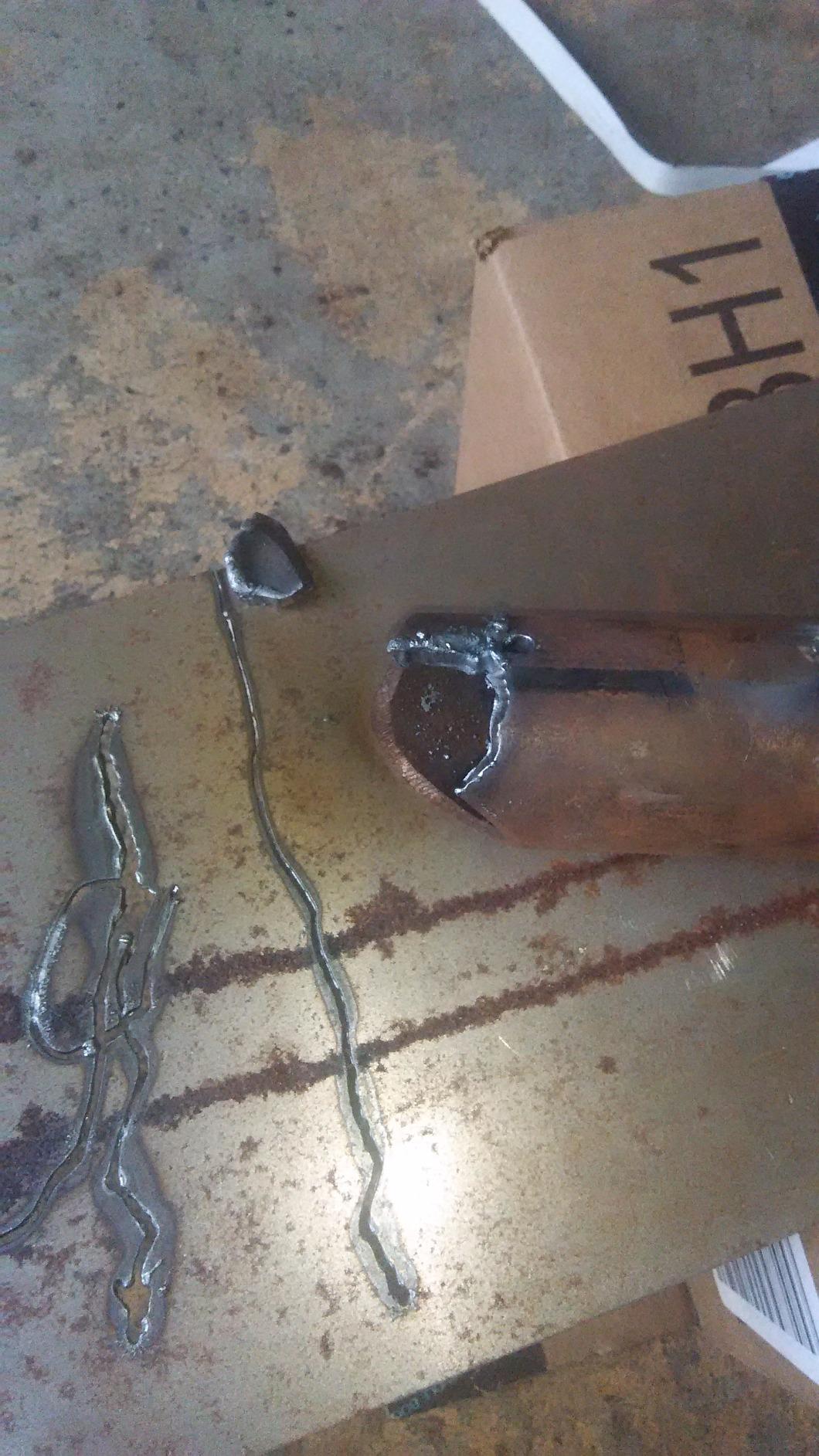
The front-mounted air regulator with an integrated water cup filter is a genuinely useful addition. It saves you from hunting for a separate regulator and it catches moisture that would otherwise wreck a torch head.
Owners report the machine cutting 1/8 to 1/2 inch mild steel quickly and with minimal dross. The body weighs 16 pounds, which is light enough to carry between the garage and a truck without a cart.
The complaints are consistent and all about accessories rather than the cutter. The ground clamp cable is much shorter than the torch lead, the air fittings can arrive loose and leak until taped, and the torch cable feels thin next to a commercial machine.
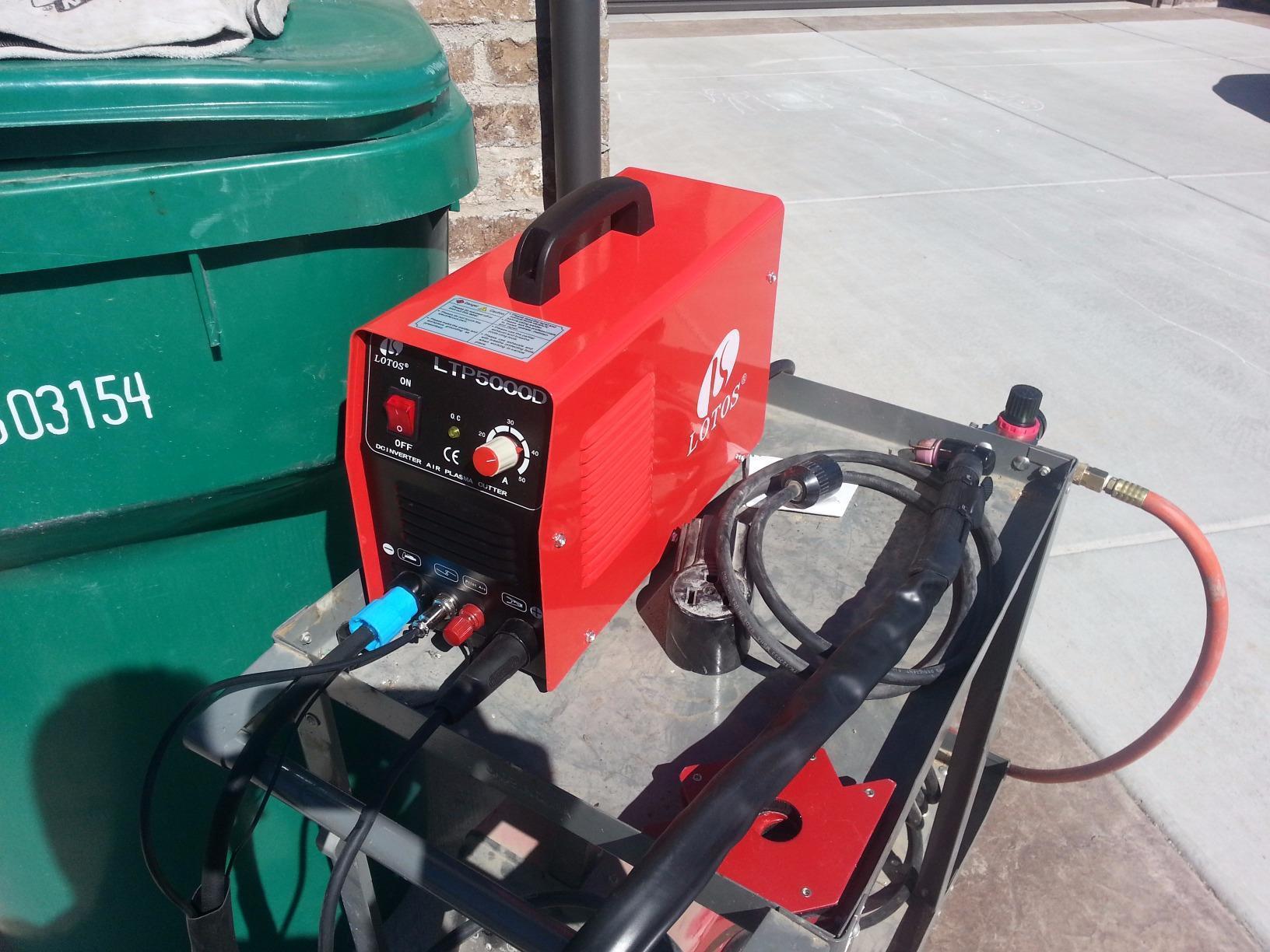
Where the LTP5505D earns its rating
Two things drive the score: it cuts cleanly at the thicknesses hobbyists actually use, and it tolerates the kind of material hobbyists actually have. Rusted, painted and dirty plate is where cheap machines frustrate owners, and this one handles it well.
The water cup filter also protects you from moisture in the air line, which is the number one cause of erratic pilot arc behavior in a garage where the compressor shares space with a floor drain.
What you give up compared with the PrimeWeld
After-sales support is the difference. The LTP5505D has been around since 2011 and its warranty path is less hands-on, and a small number of pilot-arc units have needed replacement under warranty. If you want the most responsive seller support in this class, the PrimeWeld is the safer buy.
The short ground lead is worth budgeting around, because a longer replacement clamp lead is inexpensive and fixes a real annoyance. The minimal instructions also mean you should plan on an evening of learning before your first cut.
3. ARCCAPTAIN CUT50 Review: The Best All-Rounder for a Garage
ARCCAPTAIN 50A Plasma Cutter Machine, 110V/220V Dual Voltage, 2/3″ Max Cut
- Cuts half-inch steel quickly and cleanly on 240V
- 13-pound body with shoulder strap is easy to move
- LED screen shows current and voltage and error codes
- Pre-installed air filter and quick-connect fitting
- Cut finish on thinner material can be rough
- Ships with a hard-line air fitting rather than a standard quick-connect
- Some settings produce heavy slag on thicker stock
The CUT50 is the machine we would put in a garage with one 240V outlet and no space for a dedicated circuit for each tool. It senses 110V and 220V automatically, so the same box works in a house and a shop.
Output is 50 amps, with the published range running 20 to 35 amps on 110V and 20 to 50 amps on 220V. The recommended maximum is 12mm at 35A on 110V and 18mm at 50A on 220V, which in plain terms is roughly 1/2 inch on your house circuit and about 3/4 inch when you have 240V.
At 13 pounds this is the joint-lightest machine in the list, and the included shoulder strap makes it genuinely portable. The LED screen shows voltage and current and displays error codes instead of blinking lights you have to decode.
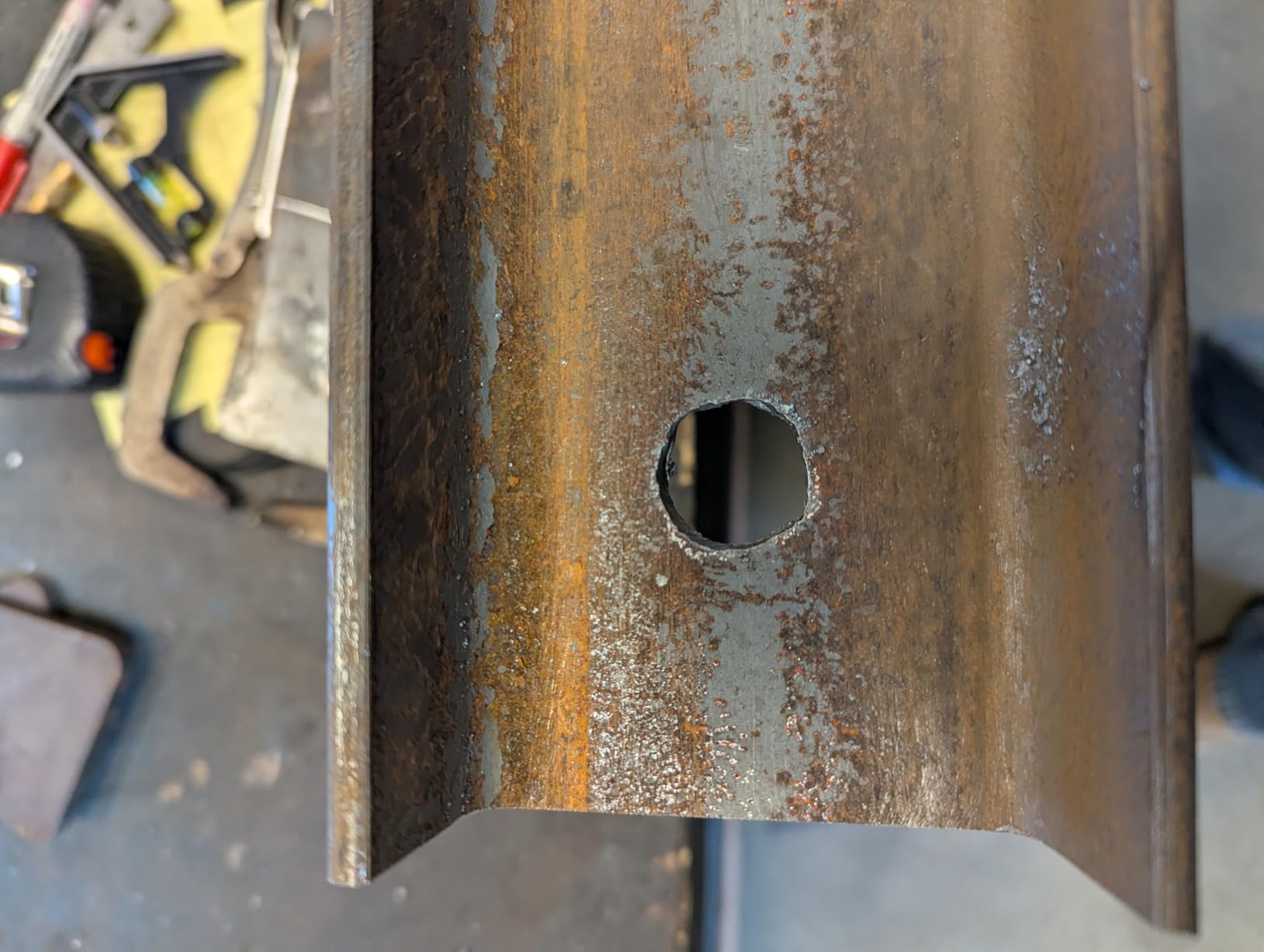
Adjustable post-flow cooling from 5 to 15 seconds and 2T and 4T trigger modes are the settings that decide consumable life. Longer post-flow keeps the tip cool after you release the trigger, and leaving it too short is the fastest way to burn through nozzles.
The smart cooling fan runs quietly and is one of the more commonly praised details. Several reviews note that a loud fan is a sign of a machine straining, and this one does not strain in normal use.
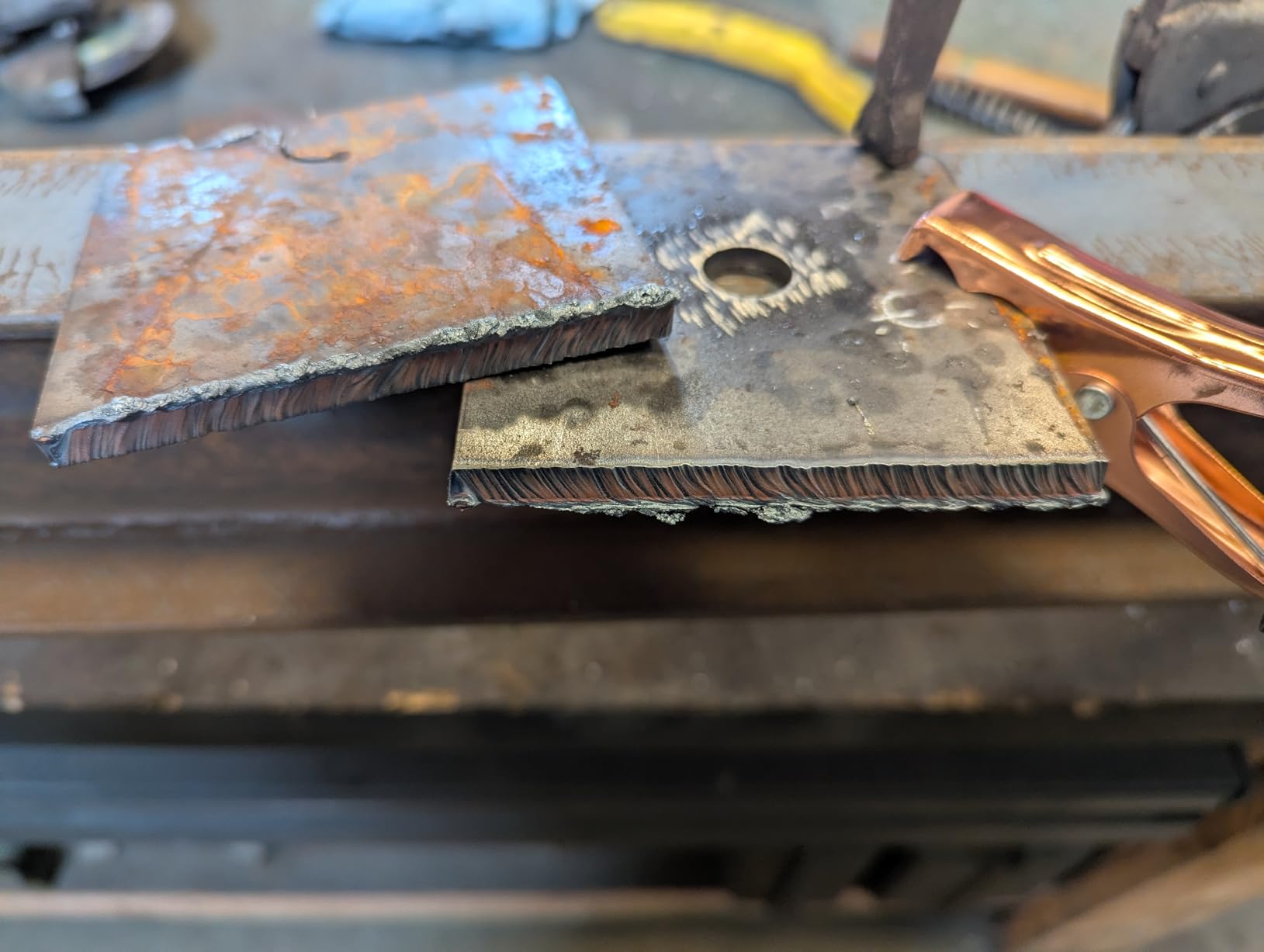
Finish quality on thin material is where the complaints sit. On 16 gauge and lighter steel, the cut can be rough and slow to dial in, and some settings leave heavy slag on thicker stock until you find the right combination of amperage and air pressure.
Why the ARCCAPTAIN CUT50 suits a home garage
It is the rare budget machine where the setup is genuinely quick. The air filter and quick-connect fitting come pre-installed, so the only real prep is finding a compressor that can hold pressure.
The LED display matters more than the spec sheet suggests. When a cut is running rough, being able to see the actual amperage instead of guessing at a knob is the difference between a five-minute fix and an hour of trial and error.
Where it falls short
The air connection is a hard-line fitting rather than the standard quick-connect most people already own, so budget for a connector if your setup is plumbed with quick connects. The 2-year warranty is decent but shorter than the three years offered on the CUT55 Pro.
If your work is entirely thin sheet metal, the finish on light gauge may frustrate you. Spend your first session on scrap, find the amperage that works for the thickness you use most, and write it down.
4. YESWELDER CUT-65DS PRO Review: 60 Amps Without High-Frequency Interference
YESWELDER 60A Non-HF Plasma Cutter, Non-Torch Pilot Arc, 110/220V
- Non-HF blow-back start avoids interfering with nearby electronics
- 60A output gives deep cuts in one machine
- IPT40 pilot arc handles painted and rusty stock
- Complete kit with regulator hose ground clamp and torch
- Larger and heavier than the sub-200-dollar 50A machines
- Blow-back start is slower to strike than a high-frequency pilot arc
- Only a one-year warranty
The defining feature of the CUT-65DS PRO is that it does not use a high-frequency start. The arc is struck by a blow-back method, which means no high-frequency signal radiates into the rest of your shop.
That matters more than most spec sheets admit. Forum owners working around a plasma table repeatedly report that high-frequency starts interfere with radios, CNC controllers and anything else on the same circuit. If you plan to run a CNC table or a plasma table later, this is the machine to build around.
Output is 60 amps, with a published ideal clean cut of 5/16 inch at 110V and 5/8 inch at 220V, and a maximum cut of 1/2 inch at 110V and 63/64 inch at 220V.
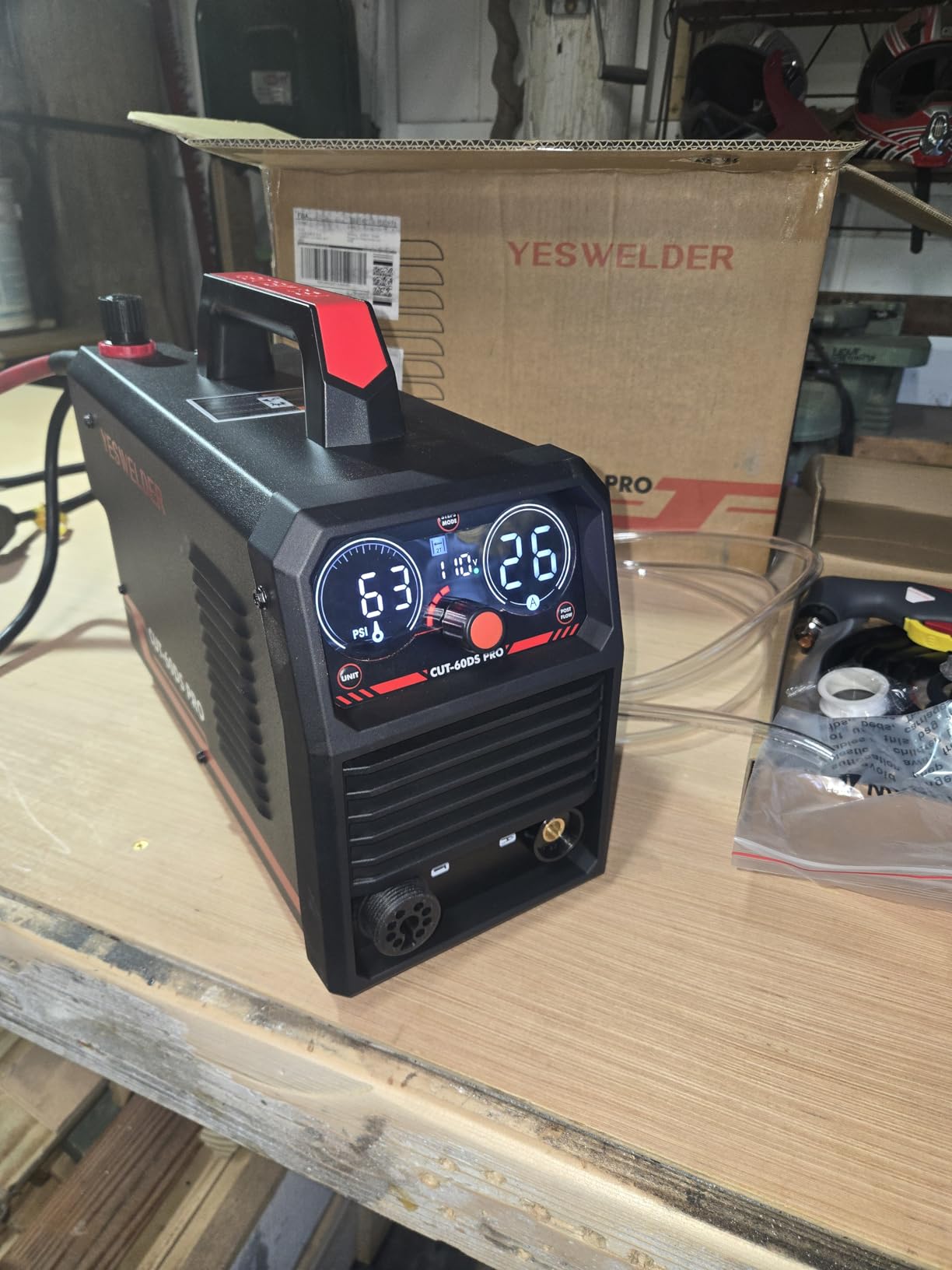
The IPT40 torch is a non-touch pilot arc, so it starts on rough, painted and rusty surfaces where a touch-start torch would struggle. The box also includes earth leakage protection, an air filter regulator, air hose, ground clamp, power adapter, torch and manual.
Post time is adjustable from 5 to 20 seconds and 2T and 4T cutting modes are supported, with overload and overheat protection under an IP21 water rating. The ETL certification is a small but real comfort for a machine that sits near a wet floor.
The trade-off is speed. A blow-back start takes longer to strike than a high-frequency pilot arc, and if you are doing dozens of small cuts the pause becomes noticeable. Owners who have used both describe the difference as noticeable rather than disqualifying.
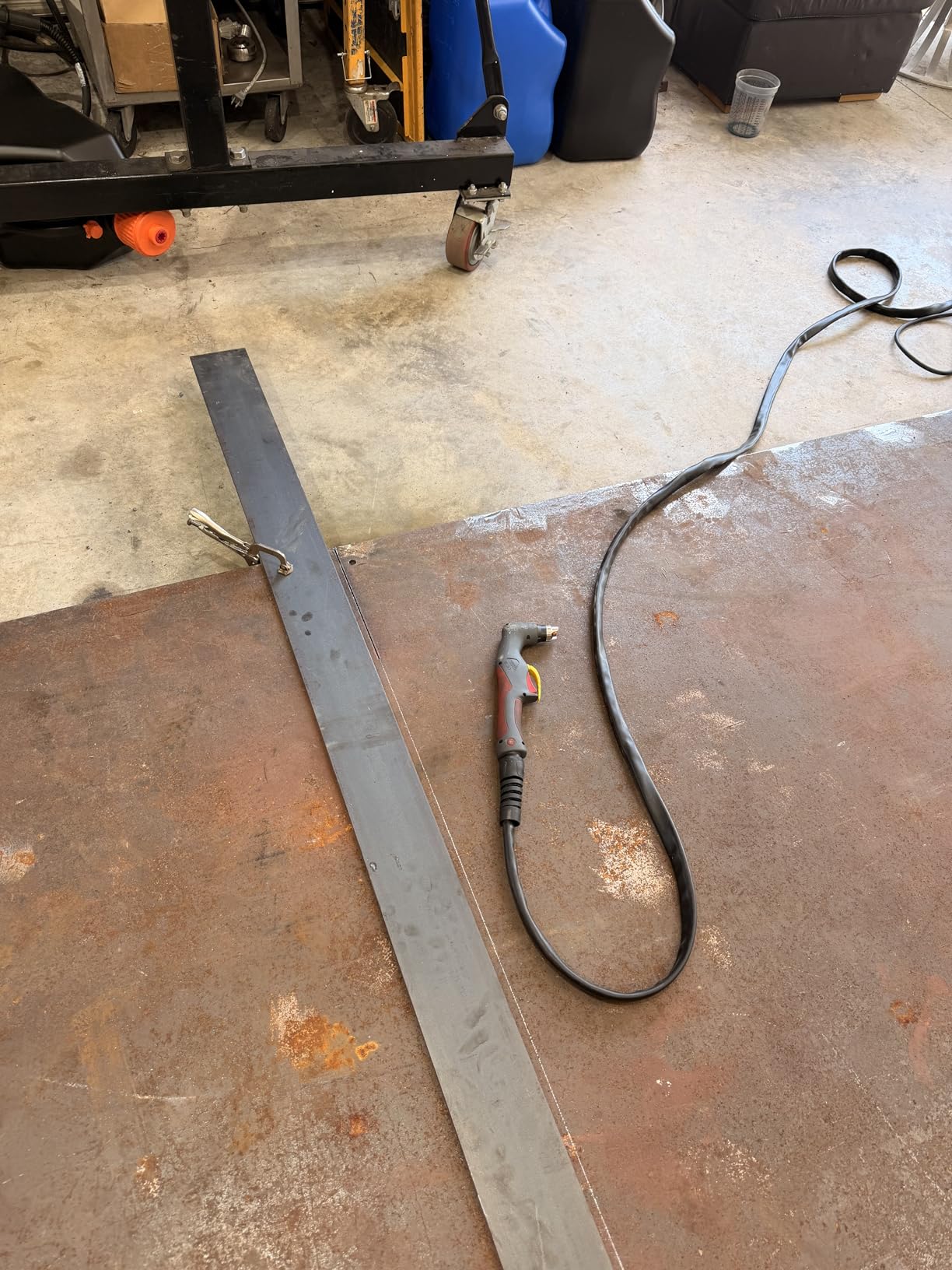
What the non-HF start actually buys you
A high-frequency start fires a burst of radio-frequency energy to ionize the air gap. It is fast and reliable, but it will light up a nearby radio and can upset a CNC controller. Blow-back ignition does it with a low-current arc instead.
For a one-person garage shop with a table saw and a radio on the bench, either works. For a shop that also owns a CNC plasma table, the non-HF machine removes a whole category of troubleshooting.
Where it costs you
This is the largest and heaviest machine in the sub-300-dollar tier, and the difference shows when you are carrying it up stairs or loading it into a vehicle. The one-year warranty is also the shortest coverage among the well-supported machines here.
If you need TIG capability later, note that the foot pedal and argon regulator are not included. If you want to weld as well as cut, the LOTOS CT520D covers both in one box for less money than a separate welder.
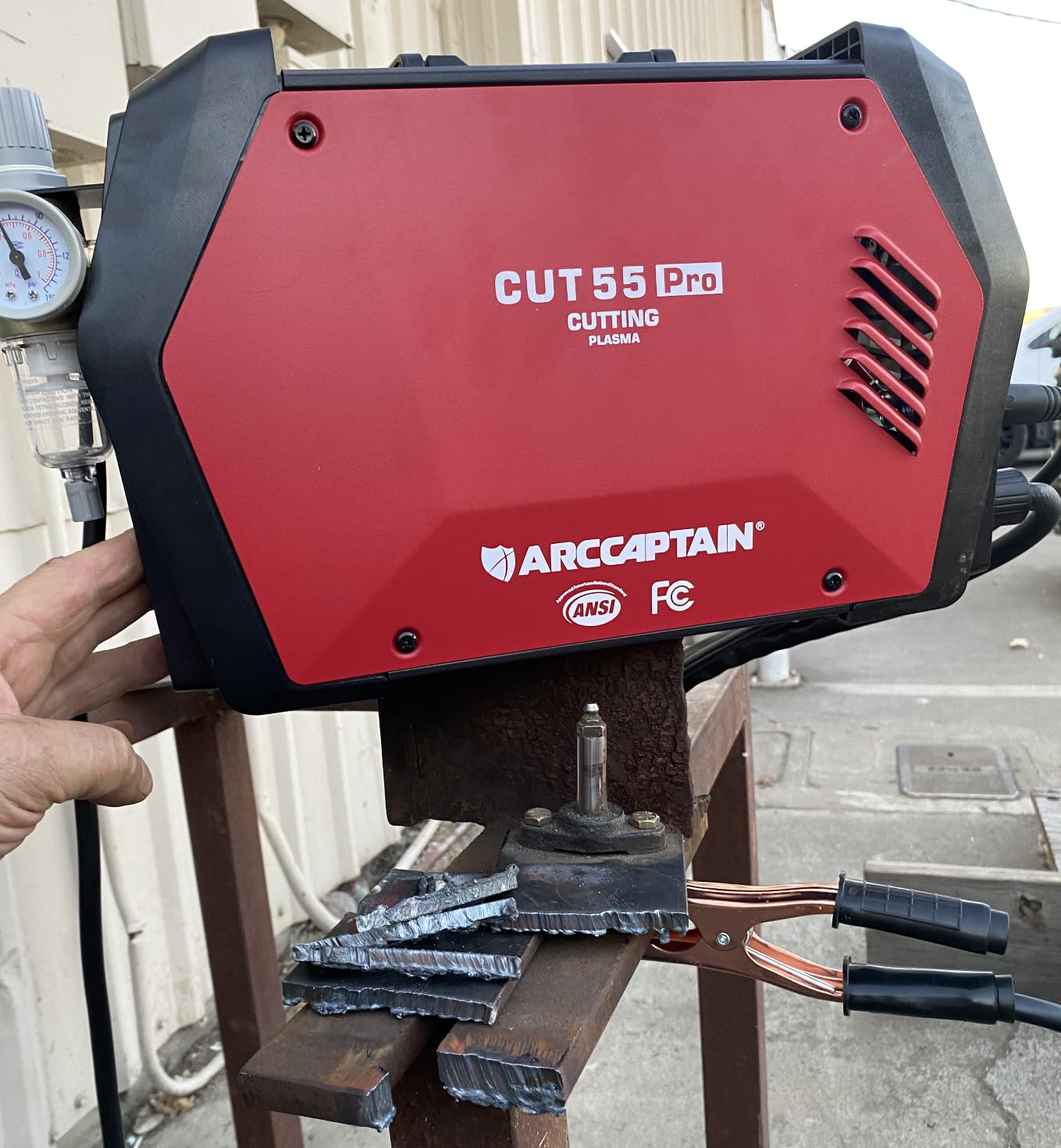
5. ARCCAPTAIN CUT55 Pro Review: 3/4 Inch Maximum Cut at 220V
ARCCAPTAIN iControl CUT55 Pro Plasma Cutter Machine, 55Amp, 120V/240V
- 55A output reaches 3/4 inch maximum cut at 220V
- App control adjusts and monitors cutting across the shop
- Intelligent post-blow scales cooling time to amperage
- Pre-installed regulator and filter for one minute setup
- Heaviest 50 to 60A machine here at 19.46 pounds
- App-only adjustments are unhelpful without a phone
- Smart fan and app features add complexity
The CUT55 Pro is the most recent machine on this list and the one with the most ambitious feature set. Its quality cut is listed at 12mm and its maximum cut at 20mm, which is 3/4 inch when you are on 220V.
It uses a high frequency non-touch pilot arc start, so ignition is fast and works on dirty stock. The torch is a 10-foot AG60 and both the air hose and the earth clamp are 10 feet, which reduces how often you reposition during a large layout.
The app control is unusual at this price. It lets you adjust parameters, monitor cutting and check status from up to ten meters away, which is genuinely useful when the machine sits across the shop from where you are standing.
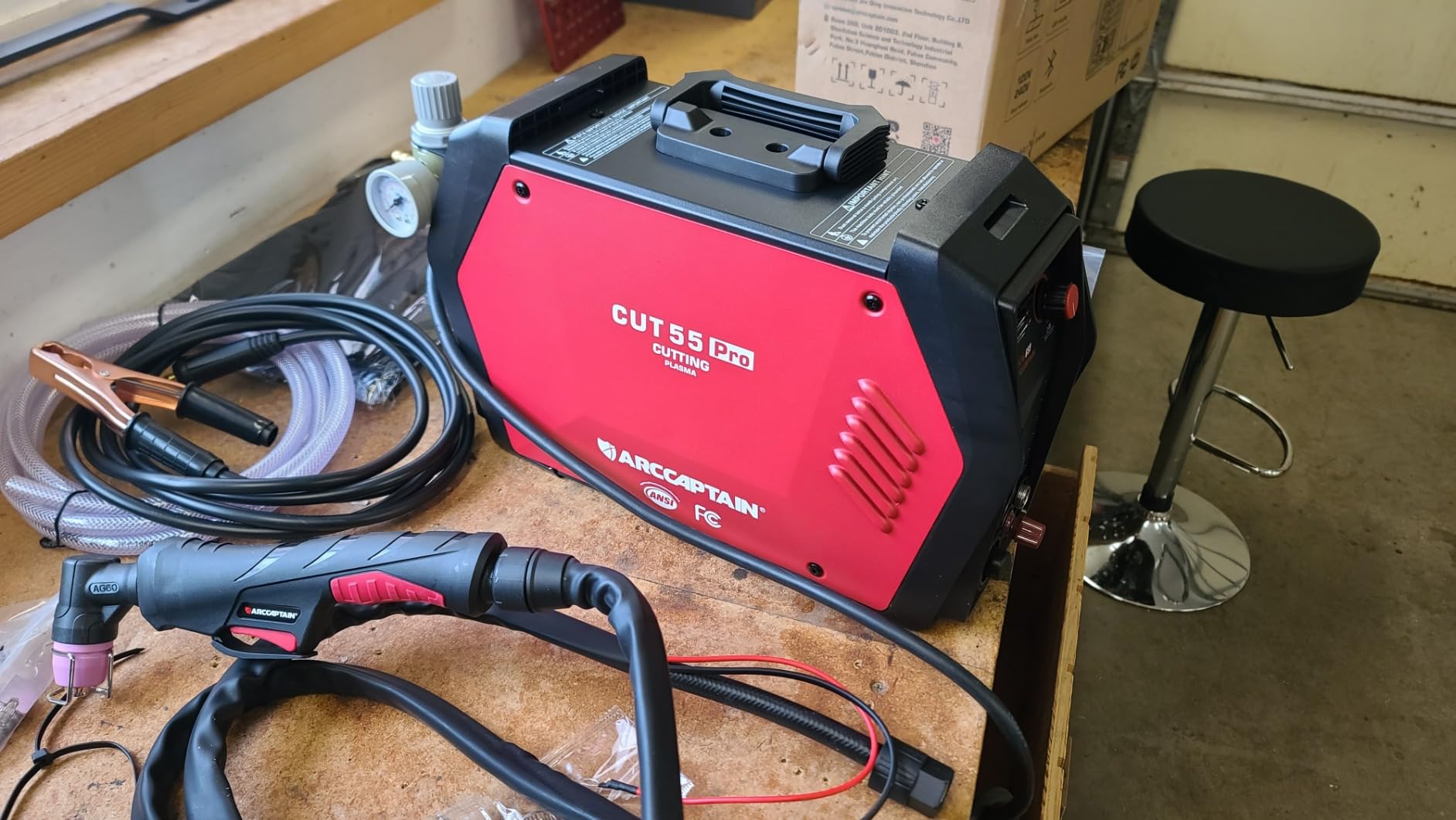
Intelligent post-blow is the feature owners praise most. The machine scales cooling time to the amperage automatically, so 20 to 34 amps gets a 5 second post-blow while 46 to 55 amps gets 10 seconds, which is exactly what protects the consumables.
The smart fan cooling is claimed to cut noise significantly and lower failure risk, and 2T and 4T cutting modes come with automatic post-blow timing. Setup is about a minute because the air regulator and filter are pre-installed.
The weight is the drawback. At 19.46 pounds it is the heaviest 50 to 60 amp machine on this list, and owners moving between job sites feel it. The app is also a liability if you work in a shop with no signal or you simply do not want your settings on a phone.
When the deeper maximum cut is worth the weight
Cutting 1/2 inch plate regularly is the trigger. At 55 amps the machine has margin above the 1/2 inch clean cut figure that most hobbyists will ever need, and the 3/4 inch maximum gives you room for occasional heavier work.
The three-year warranty is the longest here alongside the 30 percent reduction in failure risk claimed for the fan cooling. Owners consistently describe the pilot arc as reliable on rusted and dirty surfaces.
Where it is the wrong choice
Job-site work is where this machine gets left behind. If the cutter lives in a truck rather than a shop, the 13-pound ARCCAPTAIN CUT50 or the 13.45-pound SILATU is a much better companion.
And if you dislike app-dependent controls, you are paying for a feature you will ignore. A simple machine with a knob and a display will serve you just as well for less money.
6. SILATU STC650P Review: 65 Amps in a 13-Pound Package
SILATU Plasma Cutter, 65A Non-Touch Pilot Arc, 110V/220V, 4/5” Max Cut
- 65A output on 220V in a 13.45-pound body
- Adjustable pilot arc timing extends consumable life
- Air sensor with front-panel pressure display
- 13-foot torch and 10-foot ground clamp reduce repositioning
- Requires a 40A or higher dedicated circuit or the breaker trips
- Air pressure must be adjusted manually
- Air compressor is not included
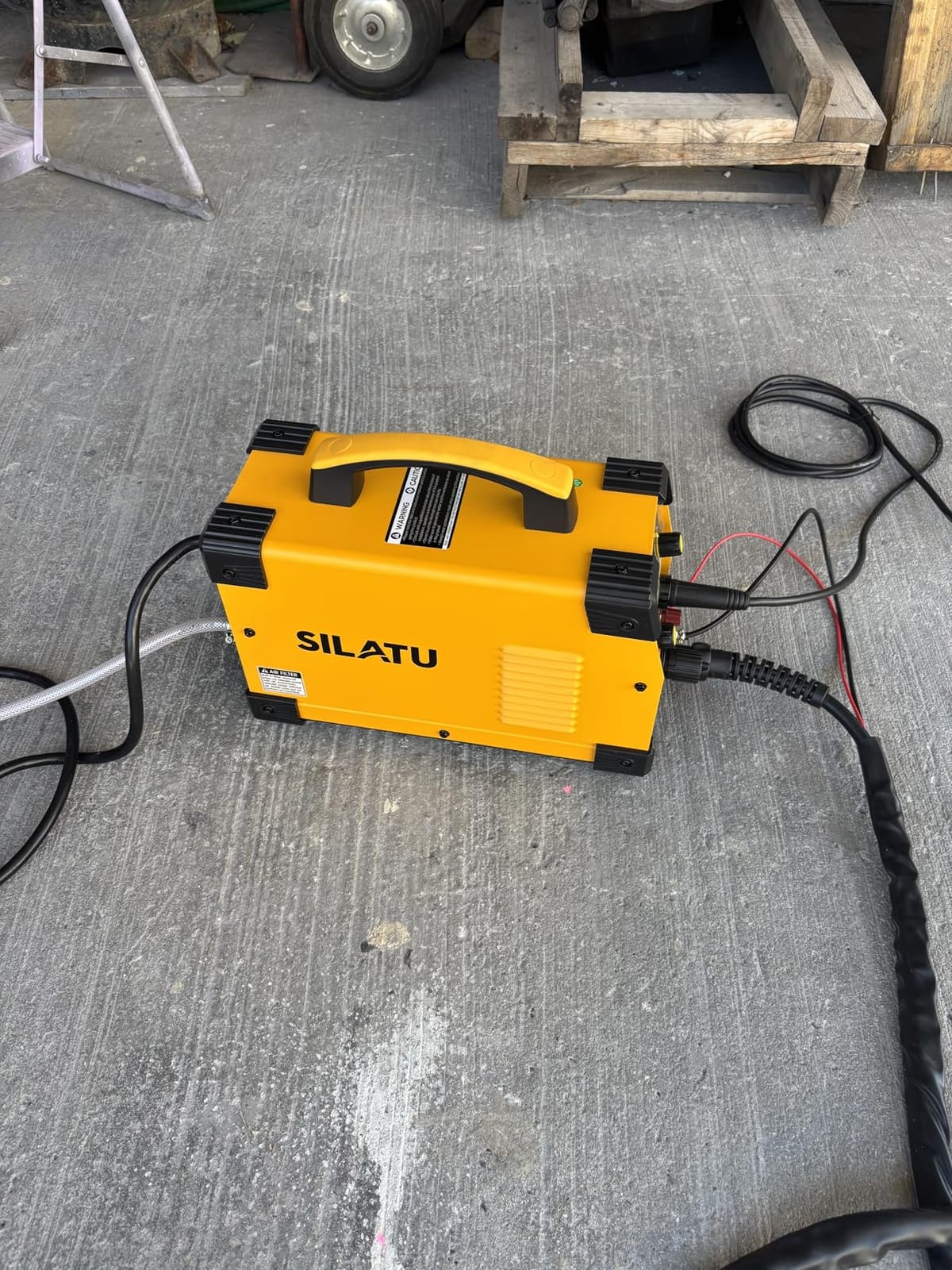
The STC650P is the most unusual machine on this list: 65 amps of output on 220V in a 13.45-pound chassis. That is the deepest published output in the group at the lowest weight, and it is why the machine stands out.
At 110V the current range is 15 to 40 amps. At 220V it is 15 to 65 amps, with a maximum cut of 20mm at 65A and 70 PSI, and 12mm at 40 amps and 60 PSI on the lower voltage.
Adjustable pilot arc timing is the sleeper feature. By shortening the pilot arc duration you reduce electrode burn and extend consumable life, which is a meaningful saving if you cut a lot of thin material where the pilot arc does most of the work.
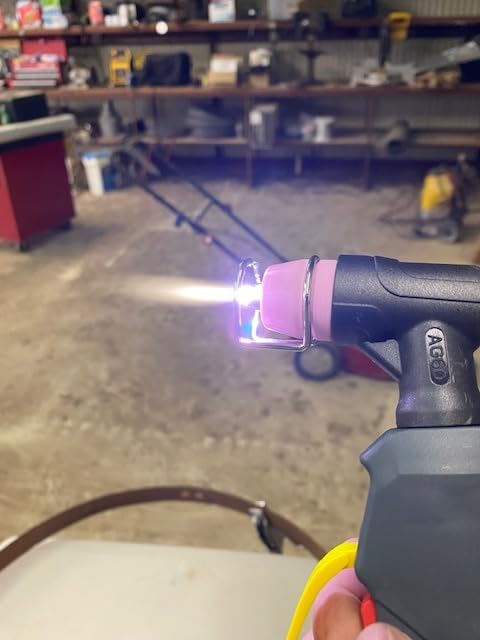
The air sensor shows pressure on the front panel, so you can confirm your compressor is delivering what the machine needs without walking back to the regulator. Recommended airflow is 250 liters per minute at 70 PSI or less, and post time is adjustable from 3 to 15 seconds across 2T, 4T and PA modes.
The included torch is a 13-foot AG60P and the ground clamp lead is 10 feet, both longer than the norms in this class. Longer leads mean fewer moves during a big cut-out on a plate.
The 40A or higher dedicated circuit requirement is not optional. Owners who plug this into a shared household circuit report the breaker tripping, and the manual states the requirement plainly.
Why the 65 amp figure matters more than usual
Most 50-amp machines top out at 50 amps, and the 1/2 inch clean cut claims are usually measured there. This machine has headroom above that, which means it is not straining at the thicknesses most people buy it for.
That headroom also means better pierce capability on thicker plate. A machine at the top of its rating can struggle to punch through 1/2 inch steel cleanly, while one with 15 amps in reserve usually does not.
What you need before you buy it
A 40 amp or higher dedicated circuit and a compressor that can supply roughly 250 liters per minute. If your compressor is a small pancake unit, this machine will not perform as published no matter what the manual says.
Air pressure is adjusted manually, with no automatic regulation, so you will be setting it by gauge on every start. The warranty is one year despite the lifetime technical support claim in the listing, so budget for consumable costs early.
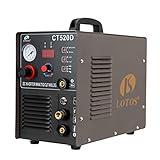
7. LOTOS CT520D Review: Plasma, TIG and Stick in One Box
LOTOS CT520D 50 AMP Air Plasma Cutter, 200 AMP Tig and Stick/MMA/ARC Welder 3 in 1 Combo Welding Machine, 5/8 Inch Clean Cut, Brown
- Only unit that also TIG and stick welds
- 50A plasma section gives 5/8 inch clean cut and 3/4 inch severance
- Integrated NPT plug and regulator allow one minute setup
- Handle-equipped chassis is easy to move for a combo machine
- At 33.1 pounds it is by far the heaviest machine here
- TIG foot pedal and argon regulator are not included
- Air supply remains a separate purchase
The CT520D answers a different question from the rest of this list. If you need to cut and also weld, it puts a 50 amp plasma section, a 200 amp DC TIG section and a 200 amp stick section in one chassis.
The plasma side is a 5/8 inch clean cut with a 3/4 inch severance rating, which puts it in the same performance band as the dedicated 55 to 60 amp cutters here. The 2024 board revision is claimed to deliver 25 percent more cutting power than a standard 50 amp design.
Setup is quick because the NPT 1/4 inch Type-D plug and the air filter regulator come pre-installed. The package includes the power supply, plasma torch, TIG torch, electrode holder, ground clamp, plug, regulator, consumables and manual.
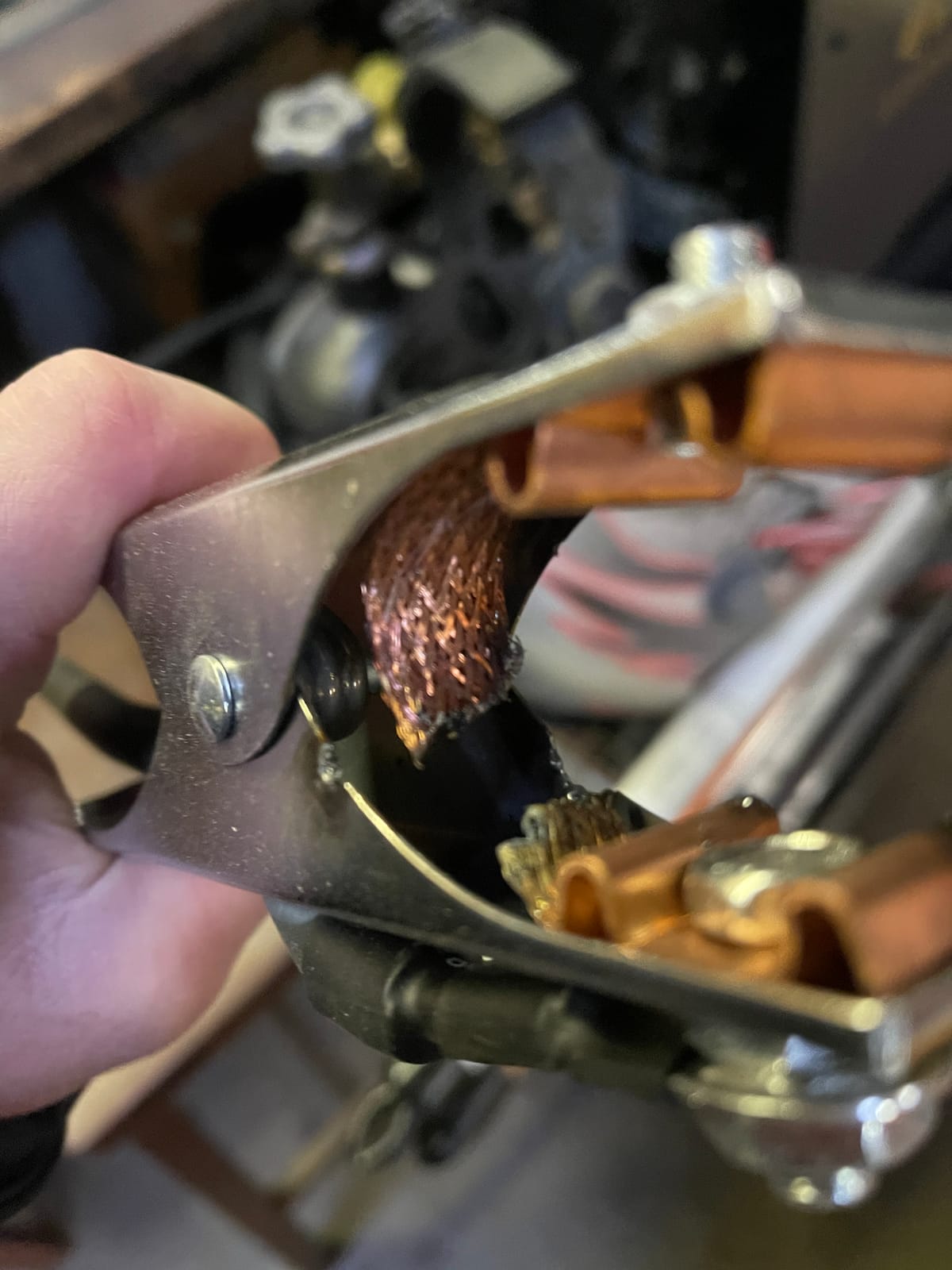
Buyers choose this machine to consolidate two tools into one purchase, and the reviews reflect that. The plasma cuts are reported as solid and the one-minute setup claim holds up.
The plasma section cuts stainless steel, alloy steel, mild steel, copper and aluminum using ordinary compressed air. The TIG section runs 15 to 200 amps with a high frequency hand torch start, which is fine for most garage work without a foot pedal.
At 33.1 pounds it is the heaviest machine on this list by a wide margin, and that is a direct consequence of cramming three power sections into one box. It is a shop machine, not a carry-it-to-the-pasture machine.
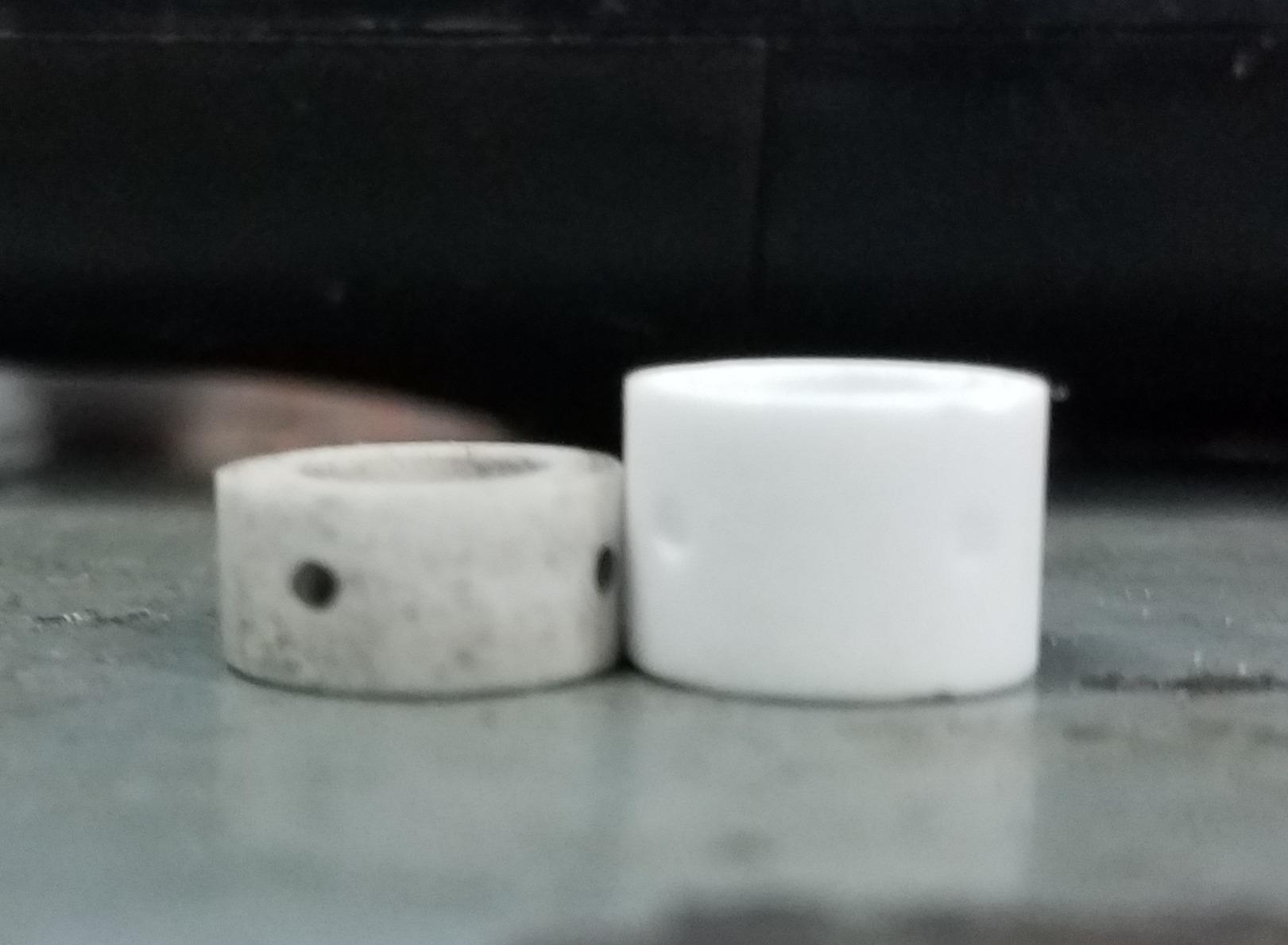
When one machine beats two
If you were going to buy a cheap stick welder and a cheap TIG machine anyway, this covers both functions in a single purchase. That consolidation is the entire argument for it, and it holds up when both processes get regular use.
The plasma performance is not a compromise. Reviewers report 5/8 inch cuts that match dedicated machines in the same price band, which is unusual for a multifunction unit.
What the extra functions cost you
Multifunction machines spread their internals thinner than a dedicated cutter. Expect the plasma section to give up a little of the refinement you get from a machine built only for cutting, particularly on thin material finish.
The TIG foot pedal and argon regulator are not included, so budget for both before you start TIG work. And the 33-pound weight means this is a machine you wheel on a cart, not carry.
8. TOOLIOM CUT-50 PRO Review: A Straightforward AG60 Workhorse
TOOLIOM 50A Non-Touch Pilot Arc Plasma Cutter, Dual Voltage 110/220V
- Non-touch pilot arc cuts without touching the workpiece
- Digital display tracks air pressure voltage and current
- Automatic 110V/220V switching with no tools
- Generous 1/2 inch and 3/4 inch maximum cut claims
- Lowest average rating in this group with a 12 percent one-star share
- Some machines report unreliable arc initiation
- Heavier than comparable 50A machines
The CUT-50 PRO is the most conventional machine in this group and that is not an insult. It does the standard 50 amp job with a non-touch pilot arc torch, automatic voltage switching and a display that tracks the settings you actually need.
Output runs 20 to 50 amps. Published clean cut capacity is 1/4 inch at 110V and 5/8 inch at 220V, with maximum cuts of 1/2 inch at 110V and 3/4 inch at 220V. Maximum air pressure is 50 PSI on 110V and 65 PSI on 220V.
The AG60 torch is the industry-standard design in this price band, and that is worth something on its own. Standard torches mean third-party consumables and replacement torches are easy to find, unlike machines with sealed or proprietary torch designs.
Post-flow air cooling runs 5 to 20 seconds to protect consumables, and the large digital display shows air pressure, voltage and current in real time. Watching the pressure number while you adjust is the fastest way to diagnose a rough cut.
It cuts stainless steel, alloy steel, mild steel, copper and aluminum. The listed package weight is 21.6 pounds, which is heavier than the lighter 50 amp machines here and something to factor in if you move it often.
The 4.1 average is the lowest in this group and it reflects a real pattern. A meaningful share of reviews describe inconsistent arc initiation, and there are reports of quality control issues and machines arriving with problems out of the box.
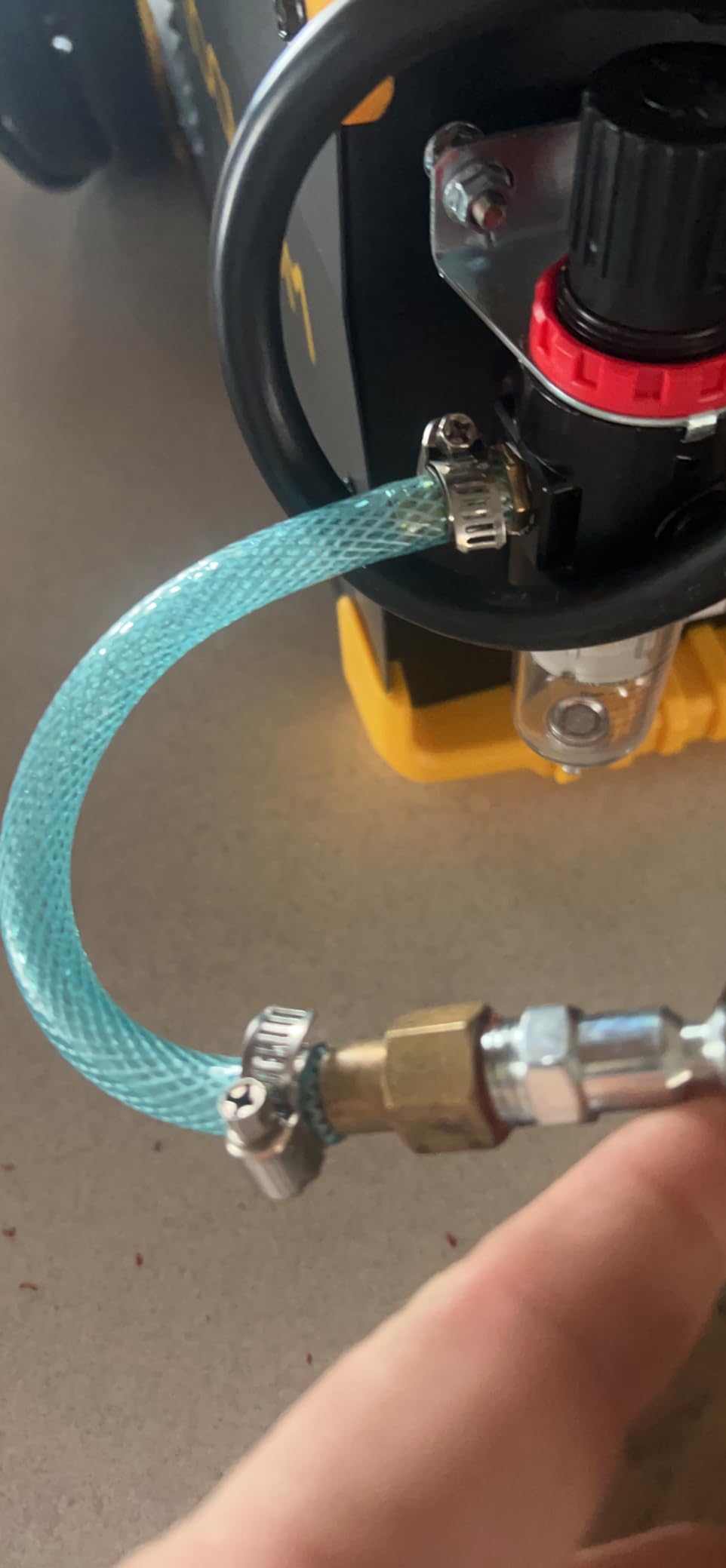
What the AG60 torch means for you long term
Consumables are where a plasma cutter actually costs you money. Electrodes, nozzles and swizzle tips burn through, and on an AG60 design you can buy third-party parts in packs for a fraction of the branded price.
Because AG60 is the most common torch at this tier, replacement torches are also widely available. If yours fails you are not waiting on a single seller to restock, which is a real advantage over a proprietary design.
Where the lower rating shows up in use
Unreliable arc initiation is the recurring complaint and it is worth weighing. A machine that occasionally refuses to strike on first trigger pull breaks your rhythm, particularly on a production run of smaller cuts.
If you already own AG60 consumables and a torch, this machine slots into your existing setup for nothing more than the cutter. If you are starting from zero, a better-rated machine at a similar tier is the safer starting point.
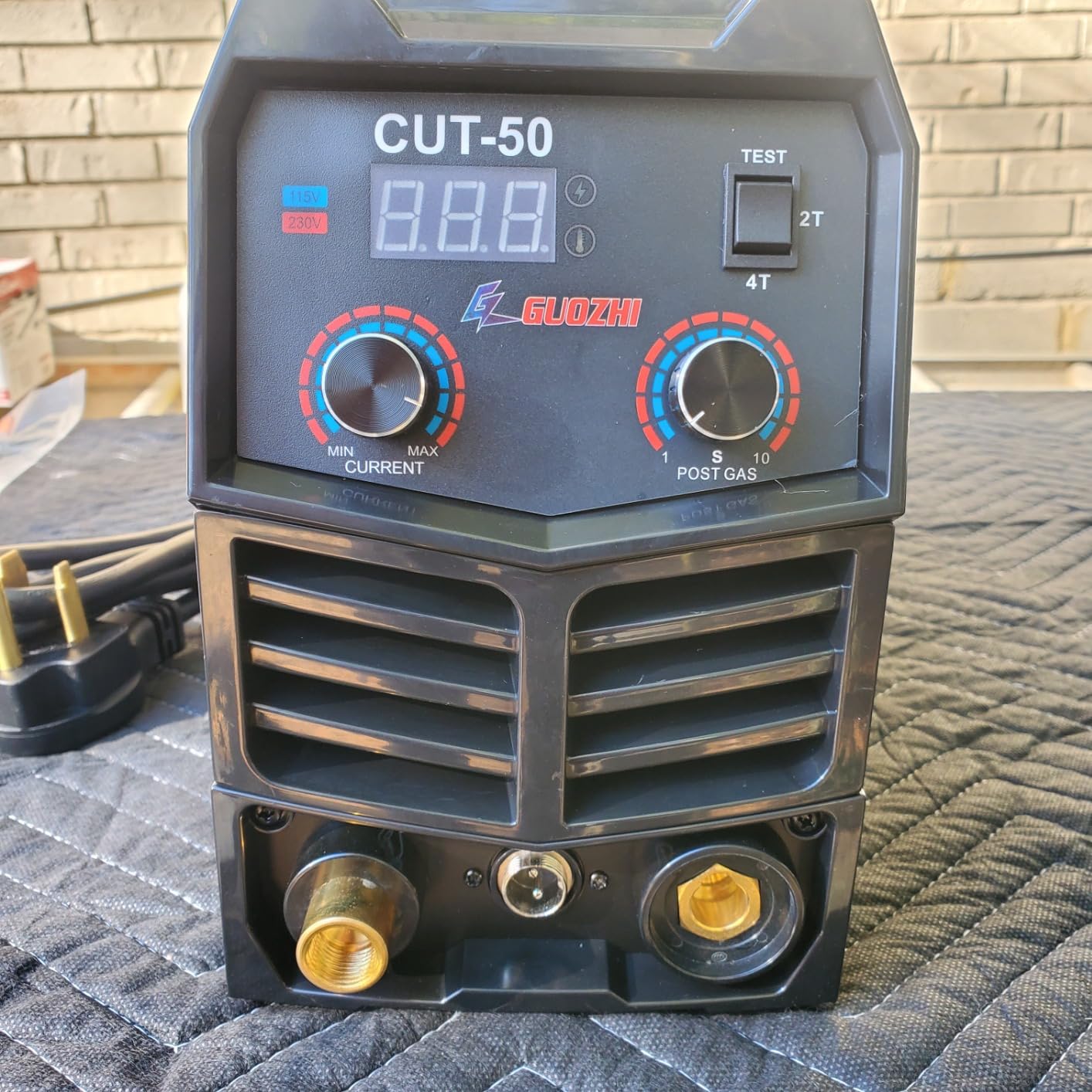
9. GZ GUOZHI CUT-50 Review: A 3/4 Inch Claim at an Entry Cost
GZ GUOZHI Plasma Cutter, 50 Amp Air Inverter Plasma Cut, 110V/220V Dual Voltage Digital Display IGBT Inverter Plasma Cutting Machine with 2T/4T/TEST Function
- Entry-level cost with a 3/4 inch maximum cut claim
- IGBT pilot arc cuts rough painted and rusty stock
- Compact chassis for a 50A machine
- One minute setup via the industrial D-type plug
- Second-lowest rating here with a 12 percent one-star share
- Cut quality on thin material is inconsistent
- Listed weight of 19.31 pounds is well above the claimed 13 pounds
The CUT-50 is the entry point of this group and its claim is straightforward: 50 amps, dual voltage and a 3/4 inch maximum cut at 220V at one of the lowest prices on the list. For occasional cutting that is a reasonable proposition.
The IGBT inverter runs a 60 percent duty cycle with 50/60Hz high frequency pilot arc output. Recommended maximum cut is 12mm at 35 amps on 110V and 20mm at 50 amps on 220V, and the recommended breakers are 40A at 110V and 30A at 220V.
The 2T, 4T and TEST operating modes give you control over how the arc behaves after the trigger release, and the 1/4 inch industrial D-type plug means one minute setup with no external regulator.
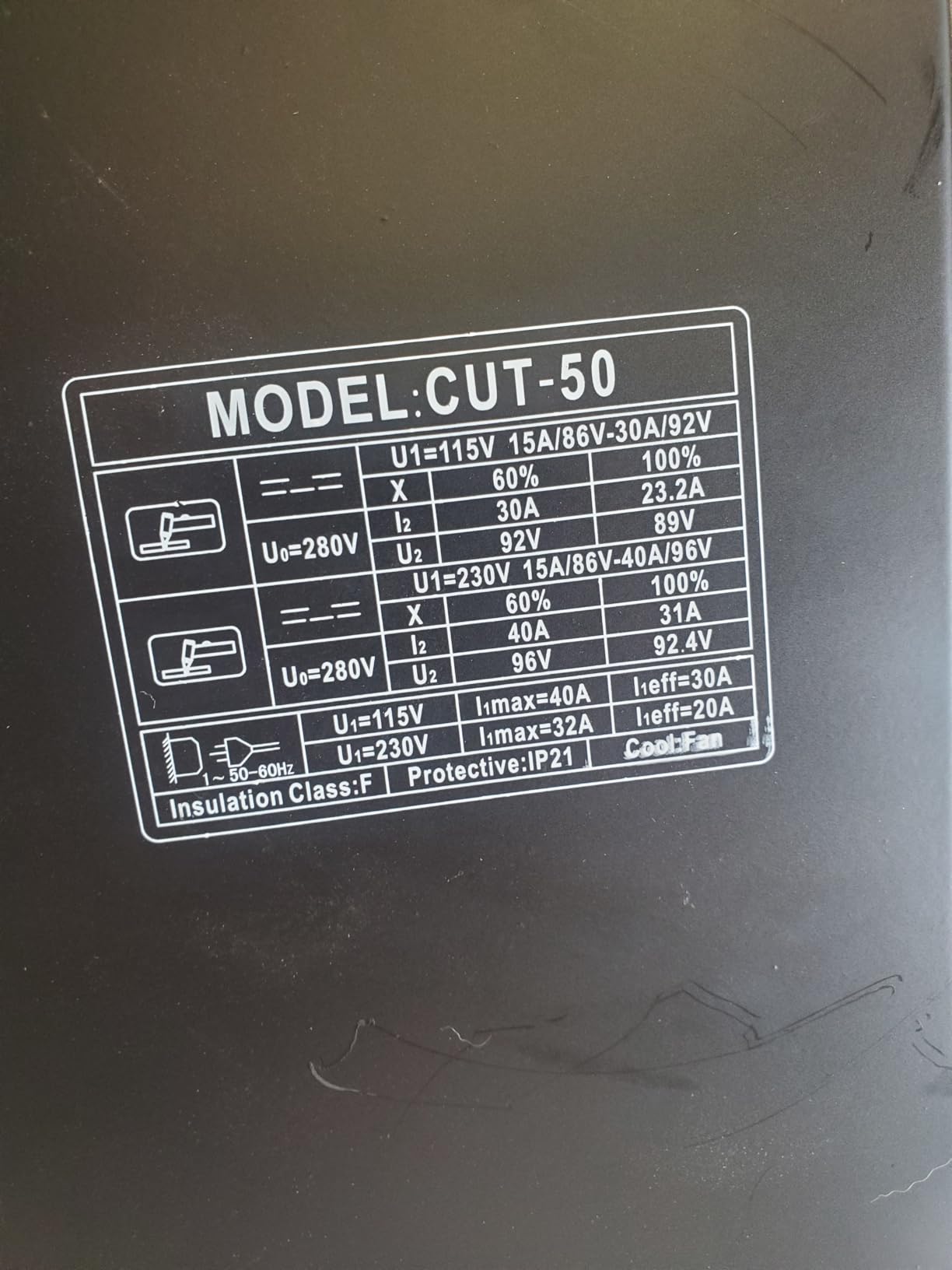
Overheat and over-current protection are fitted, and the machine is rated to operate down to minus 20 degrees, which matters more for farm and outdoor work than most buyers expect.
Owners find the pilot arc handles rough, painted and rusty stock with minimal slag. That is the honest strength of the machine, since dirty material is where budget cutters usually struggle.
The weight listing is a genuine problem. The product claims 13 pounds, but the listed item weight is 19.31 pounds, and that gap is a reliable signal about the accuracy of the rest of the listing.
Where this machine earns its place
Occasional cutting is the answer. A mower repair, a gate panel, a trailer bracket, once a month. Owners running a mower shop describe exactly this kind of intermittent use, and the machine handles it without complaint.
The pilot arc is the feature that makes it work. Starting through surface rust without touching the workpiece is the difference between a machine you use and one you put in the corner.
What you trade for the low entry cost
Cut consistency on thin material is the main complaint, and finishing work often needs heavy cleanup. If you are cutting 1/4 inch and heavier plate, this is less of a problem than if you are doing sheet metal work.
The package is sparse, with only the adapter, gun, ground clamp and manual, and the one-year manufacturer warranty is the shortest coverage here. The TOOLIOM is also rated 4.1 but costs more, so this is the value floor rather than the balanced choice.
10. bestarc BTC500DP Review: The Cheapest Machine With an Air Sensor
Bestarc 50A Plasma Cutter Machine, Pilot Arc, IGBT 110V/220V Dual Voltage
- Lowest cost in the group with AG60P pilot arc and 1/2 inch clean cut
- Air sensor indicator turns green only in the right range
- LED screen shows every key parameter including live air pressure
- Adjustable PA and PT extend torch and electrode life
- Poor 110V performance reported by some users
- Knob hardware is thin plastic and can crack
- Instructions are poorly written translated English
The BTC500DP is the least expensive machine here and it does not behave like it. It is a 50 amp IGBT inverter with a 1/2 inch clean cut rating, an AG60P non-contact pilot arc torch and a metal-cased pre-installed air filter.
Recommended output is 1/2 inch at 35 amps on 110V and 2/3 inch at 50 amps on 220V, and the recommended breakers are 40A at 110V and 30A at 220V. It is a full-size machine sold at an entry price.
The air sensor is the detail that impressed reviewers most. The indicator turns green only when pressure sits in the right band, which turns a vague guess about compressor output into a simple check before you start.
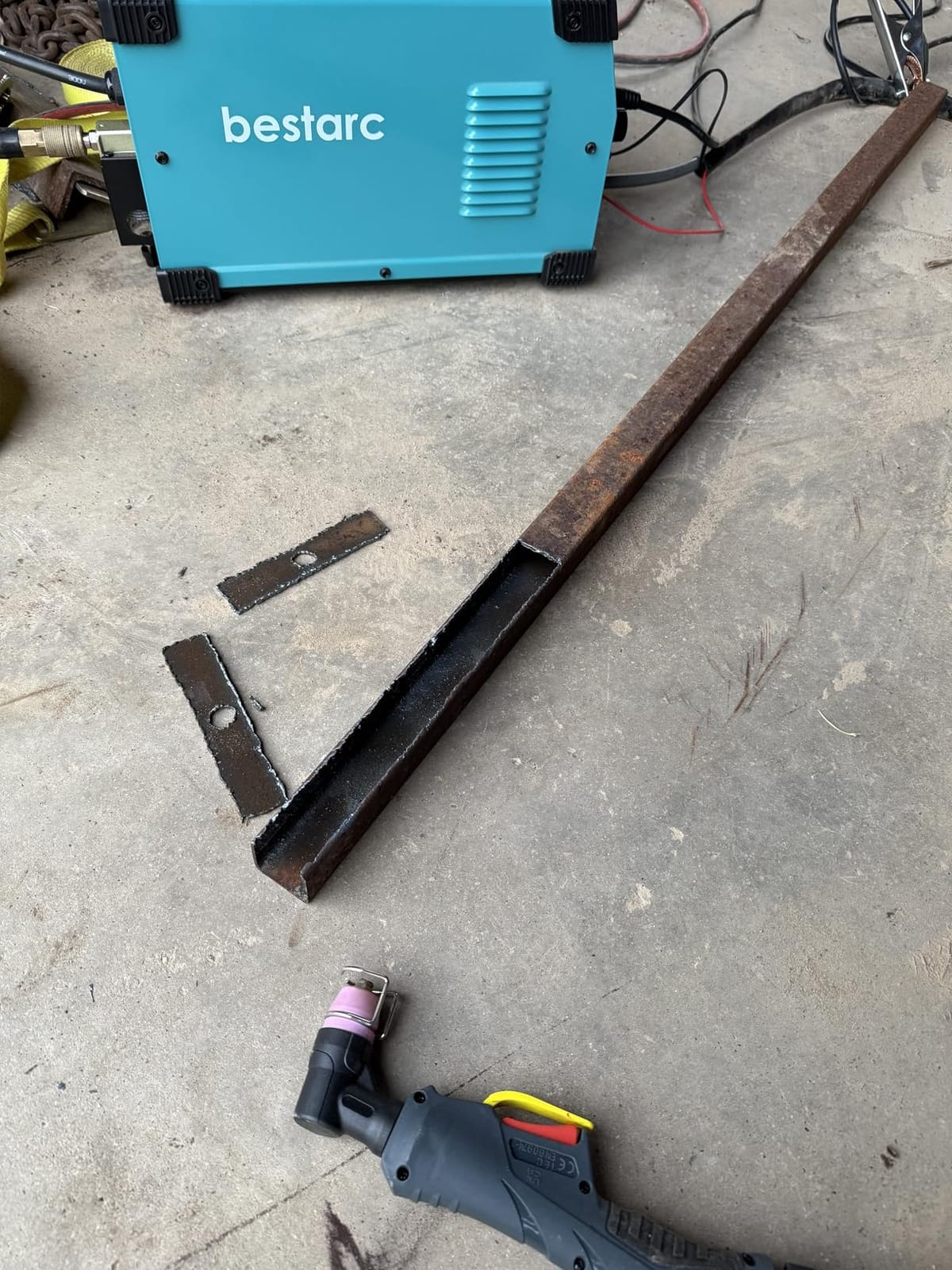
The integrated LED screen shows voltage, current, mode, 2T and 4T, PA and PT settings, and live air pressure. For a machine at this price, that level of instrumentation is unusual and genuinely useful while you learn.
Adjustable PA timing up to 15 seconds and post-flow time of 3 to 15 seconds both extend torch and electrode life. A 0.040 inch nozzle is included for smooth, precise cuts on thinner material.
The criticism concentrates on small plastic hardware and documentation. Owners report the air adjustment nut cracking and needing to be glued, and the translated manual is hard to follow even for readers who are patient with instructions.
What you get for the lowest outlay
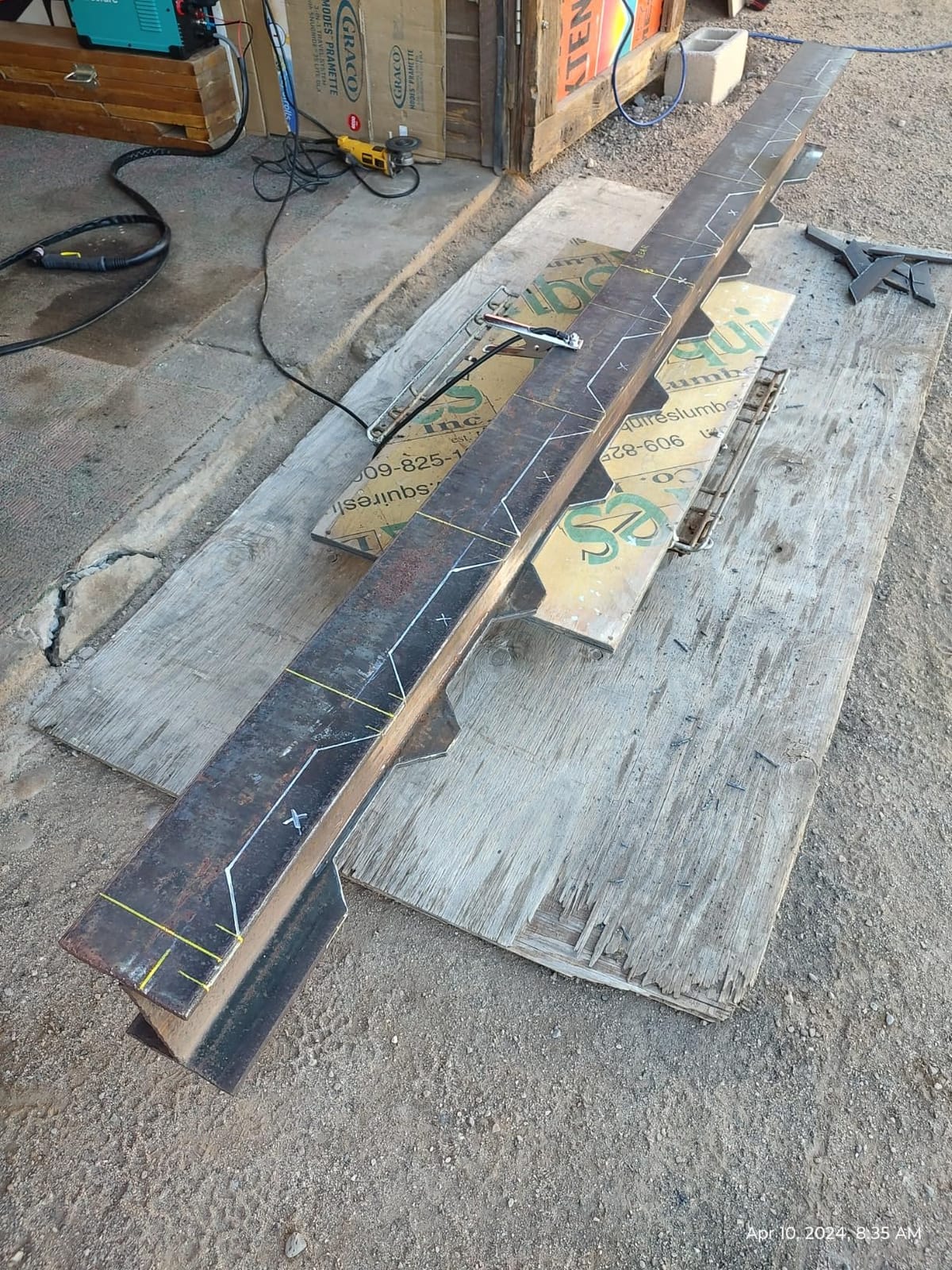
Buyers report being surprised by the cutting ability for the entry price, particularly on 220V. Several note that 240V performance is strong for the money, which is where most of the capability lives anyway.
The 110V side is where the complaints sit. Poor performance at 110V is reported by some users, so if you are limited to a household outlet this machine may not be the right pick despite the lower cost.
Where the savings get spent
Small plastic fittings are the weak point, and one owner had to glue a cracked air adjustment nut. Budget for a replacement regulator and a proper hose rather than trusting the fittings that come in the box.
Some machines have also arrived with missing screws or incomplete packaging, so inspect the machine before you rely on it. If you want the same AG60P torch with fewer assembly surprises, the ARCCAPTAIN CUT50 is the step up.
What Actually Matters When Buying a Plasma Cutter Under 500 Dollars
The single biggest thing buyers get wrong is treating the advertised thickness the same way regardless of the word in front of it. Every listing in this category quotes four different numbers, and they are not interchangeable.
Rated cut thickness – the headline figure on the box, usually the largest number available.
Recommended cut thickness – what the manufacturer expects under normal conditions, typically 60 to 80 percent of rated.
Clean cut thickness – the thickest material you can cut with minimal dross and no grinding afterwards.
Severance thickness – the maximum you can cut completely through, leaving a rough edge you clean up later.
Every machine on this list advertises a headline number in the 1/2 to 3/4 inch range. The number that should drive your decision is the clean cut figure, and those numbers are consistently more honest here than the marketing language around them.
Second is amperage. A 50 amp machine at 220V is the practical minimum for 1/2 inch steel. Below that you are fighting the machine on every cut, and above it you are carrying a machine whose capacity you will not use.
Third is duty cycle, and it is the most misunderstood spec. A 60 percent duty cycle means six minutes of cutting followed by four minutes of cooling. That is fine for a hobbyist, a farm or a repair shop. It is not enough for production work, and no machine in this price bracket changes that.
Fourth is the air supply, and this is where the forum consensus is most consistent: air hose and air pressure setup, not the machine itself, cause most reported failures. A water separator and a properly sized hose fix more problems than any brand choice.
Finally, warranty length is the trust signal that buyers in owner forums quote most often. Three years is the number that makes a budget brand feel safe, and two years is acceptable. One year is thin, and no amount of good reviews changes that.
Pilot Arc vs High-Frequency Start: Which One Do You Want?
A pilot arc start sends a small low-current arc through the torch to ionize the air, then transfers to the workpiece without the torch ever touching it. A high-frequency start instead fires a burst of radio-frequency energy to break down the air gap, and a blow-back start uses a low-current arc much like a pilot arc but strikes more slowly.
Non-touch pilot arc is the feature to want. It extends electrode life because the electrode does not have to complete a circuit through the workpiece, and it starts reliably on rusty, painted and dirty stock where a touch-start torch would stall.
High-frequency start is faster to strike. That is its one genuine advantage, and it matters if you are doing dozens of small cuts back to back. Its cost is radio-frequency interference, which owners working near CNC plasma tables report as a real and persistent headache.
Four of the ten machines here use a non-high-frequency blow-back start, and the YESWELDER CUT-65DS PRO is the clearest example. If your shop has sensitive electronics or a plasma table, that is the machine to build around.
Do You Need a 50 Amp Breaker? Electrical Requirements Explained
This is the number one purchase blocker in owner forums and almost no competitor roundup covers it. A 50 amp plasma cutter on 240V will trip a 20 amp household circuit every time, and many residential panels do not have a spare 30 or 50 amp circuit available.
Check three things before you buy. First, confirm you have a 240V circuit at all, which means a NEMA 14-50 outlet or a 20 amp dedicated outlet for lower-output machines. Second, check the breaker rating on that circuit against the manufacturer’s recommended breaker, which ranges from 30A at 220V up to 40A or higher at 110V on the higher-output machines. Third, check the panel itself for a free slot.
Most of the machines here list a 30A breaker at 220V, while the SILATU STC650P requires a 40A or higher dedicated circuit. The GZ GUOZHI and bestarc machines both recommend 40A at 110V and 30A at 220V.
Running a 50 amp cutter from a standard 15 or 20 amp outlet is not possible at 240V, and at 110V the machine’s own 110V current range is the limit, which on the ARCCAPTAIN CUT50 is 20 to 35 amps.
If your panel cannot support the machine you want, an electrician adding a dedicated 240V circuit is a far better outcome than buying a machine you have to underpower. If you want to verify current draw on the bench yourself, our picks for the best oscilloscopes under $500 cover the tools that answer that kind of question.
How Big an Air Compressor Do You Need?
No machine in this list includes a compressor, and that is where most first-time buyers underestimate the requirement. Budget machines need roughly 45 to 70 PSI and somewhere between 3 and 5 CFM, which is a real load for a small shop compressor.
A pancake compressor is not enough for sustained cutting. It will start a cut, then the pressure falls and the arc gets unstable, which burns consumables and produces slag. A 3 to 4 horsepower compressor with at least a 20 gallon tank is the practical minimum for the 50 amp machines here.
The SILATU STC650P is the most demanding, with a recommended airflow of 250 liters per minute at 70 PSI or less, which is roughly 9 CFM. A 5 horsepower machine or larger is a better match for that one.
Add a water separator and a properly rated hose. Forum consensus is that most reported machine problems turn out to be air supply problems, and a filter-regulator combination costs very little compared with a set of electrodes.
If you also want a plasma table, check the CFM requirement for the machine before the table, since a table multiplies the air demand considerably.
What You Cannot Cut With a Budget Plasma Cutter
Plasma cutting is not universal, and the honest limits are worth knowing before you buy. Compressed-air plasma handles mild steel, stainless steel, aluminum, copper and alloys, which covers most hobby and shop work.
AR500 abrasion plate is the question we see most, and the answer is that a budget air-fed plasma cutter is the wrong tool for it. The hard chromium-rich surface eats nozzles at a rate that makes the consumable cost unreasonable. A oxy-fuel or high-end plasma machine is the correct route for abrasive plate.
Thick stainless is also a poor match for compressed air. The thermal conductivity of stainless drains heat faster than an air-fed arc can supply it, so the kerf widens and the cut drags. Budget machines are much better at stainless in thin sections.
And the advertised maximum thickness is a severance figure, not a working figure. Cutting at the top of the range is slow, leaves a rough edge and pushes consumable wear. Budget machines work best inside their clean cut rating.
For comparison of a different class of machine, our guide to the best CNC plasma cutters covers the table-mounted options if your project moves that way.
Plasma Cutter Safety: Arc Eye, Fumes and Ventilation
A plasma arc produces an intense ultraviolet and infrared output that can cause arc eye, a painful corneal burn that can show up hours later. A shade 5 welding helmet is the minimum, and a shade 9 to 10 shield is better for a 50 amp arc at 220V.
The fumes are the second issue. Cutting steel with plasma produces metal oxide particles, and cutting stainless releases hexavalent chromium, which is a known carcinogen. Cut outside or run a fume extractor positioned a few inches from the cut, not across the room.
Gloves, flame-resistant clothing and safety glasses under the helmet complete the protection. Keep a fire extinguisher within reach, because the workpiece itself does not burn but everything near it does.
Ventilation matters more than most hobbyists expect, and a garage door open across the room is not adequate extraction. A shop vacuum with a spark-resistant filter positioned near the cut is the affordable upgrade that makes the biggest difference.
For context on how this fits alongside other shop tools, our picks for the best laser cutters for acrylic cover the non-metal side of the same workflow.
Frequently Asked Questions
Who makes the best plasma cutter for the money?
The PrimeWeld CUT50D is the strongest all-round pick under 500 dollars, with the highest average rating of the machines we reviewed and owner reports of responsive warranty repairs. The LOTOS LTP5505D is the better value option and has by far the largest owner base, while the ARCCAPTAIN CUT50 is the tidiest package for a home garage at 13 pounds.
Are cheap plasma cutters any good?
Yes, for intermittent hobby and small shop use. Forum consensus describes the 50 amp class machines as fine for occasional cutting, farm repair and garage work, with consumables that are cheap and widely available. What they are not is a production tool, because a 60 percent duty cycle means six minutes of cutting followed by four minutes of cooling.
What is the best plasma cutting machine for home use?
The ARCCAPTAIN CUT50 at 13 pounds is the easiest to move around and has an LED display that shows amperage, voltage and error codes. The YESWELDER CUT-65DS PRO is the best choice if you have sensitive electronics or plan to add a CNC table, because it uses a non-high-frequency blow-back start that does not interfere with other equipment.
Is Harbor Freight plasma cutters any good?
Harbor Freight did not appear in the set of machines we reviewed, so we cannot give a first-hand verdict. What we can say is that the same advice applies to any machine in this budget band: check the warranty length, buy a spare set of AG60 consumables, and confirm the air supply meets the machine’s requirements before you rely on it.
What air compressor do I need for a plasma cutter?
Most 50 amp machines need roughly 45 to 70 PSI and between 3 and 5 CFM, which means a 3 to 4 horsepower compressor with at least a 20 gallon tank as a practical minimum. Small pancake compressors will start a cut but the pressure drop makes the arc unstable. Add a water separator and a properly rated hose.
Do I need a 50 amp breaker for a plasma cutter?
Most 50 amp cutters recommend a 30A breaker at 220V, and higher-output machines such as the SILATU STC650P need a 40A or higher dedicated circuit. Check that your panel has a free slot and a 240V circuit before you buy, because adding a dedicated circuit is far better than running a machine below its rating.
Can you cut AR500 steel with a plasma cutter?
Not economically with a budget air-fed machine. The chromium-rich surface of abrasion plate consumes nozzles far faster than on mild steel, which makes the consumable cost unreasonable. A oxy-fuel setup or a high-end plasma machine is the correct tool for AR500. Budget machines are at their best on mild steel within their clean cut rating.
Final Verdict: Which Plasma Cutter Should You Buy?
The best plasma cutters under 500 dollars all share the same fundamentals, and the choice comes down to how you use them. The PrimeWeld CUT50D is the one to buy if you want the strongest owner satisfaction and the most responsive support behind the machine.
Buy the LOTOS LTP5505D if 55 amps and a rust removal mode matter more to you than seller support, or the ARCCAPTAIN CUT50 if you need the lightest, most portable package with the clearest display.
Whichever one you choose, confirm your panel has a spare 240V circuit and that your compressor can hold pressure before the machine arrives. Those two checks prevent more wasted money than the difference between any two cutters on this list.