
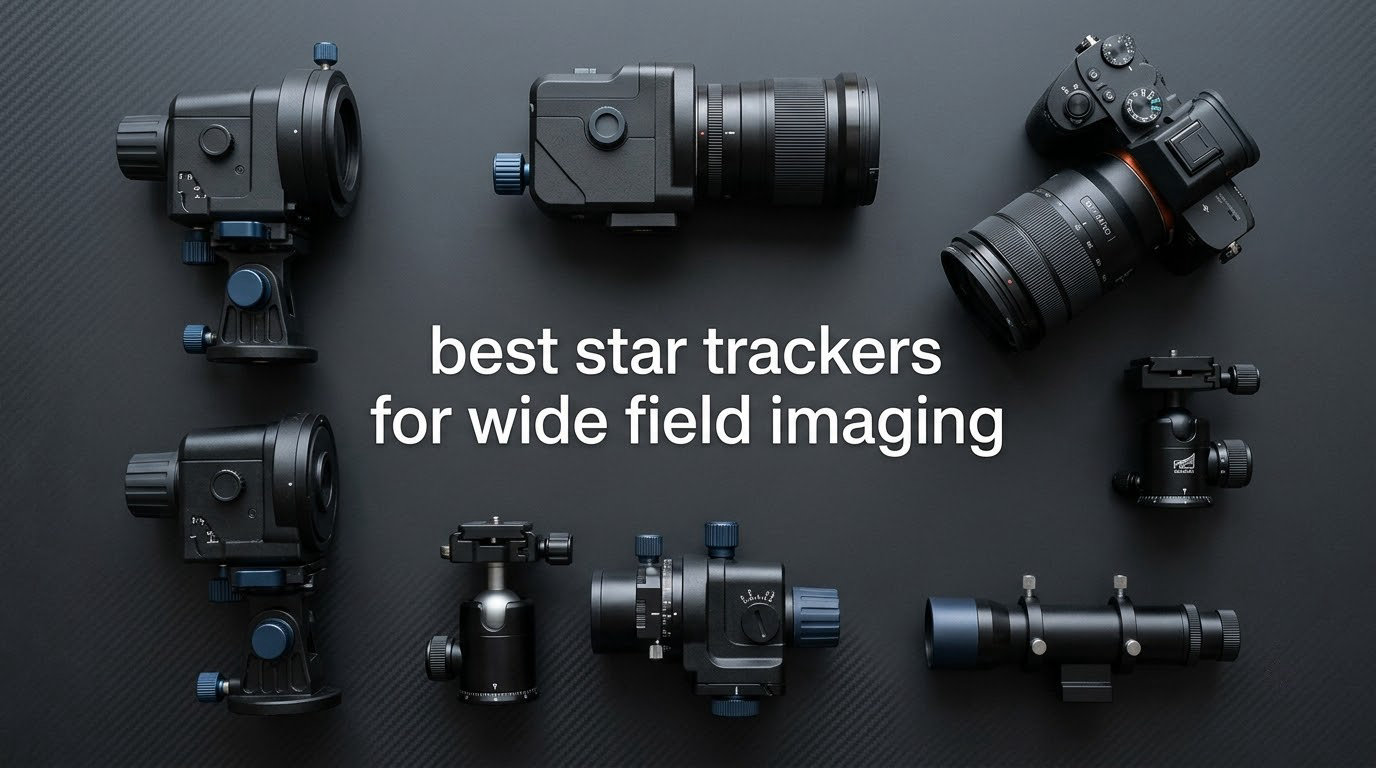
The best star trackers for wide field imaging are the ones that stay rock steady at 14mm to 50mm, carry a camera and lens without flexing, and let you run two or three minute exposures before stars start to trail. That is a narrower brief than the general “best star tracker” question, and it changes the answer. A tracker that shines on deep nebula work with a 1000mm telescope can still be the wrong tool for a nightscape with a fast prime.
We pulled ten current trackers together, from the Sky-Watcher Star Adventurer 2i Pro Pack to the Benro Polaris Astro Edition, and judged them on the things that decide a wide field night: payload, tracking behaviour at short focal lengths, how fast you can get polar aligned in the dark, and whether the power survives a cold session. If you want the broad version of this topic first, our general star tracker roundup for astrophotography covers the full range of use cases.
Wide field is where trackers earn their keep. A tripod alone gives you roughly 20 seconds before stars elongate at 20mm on a modern high-resolution body, and modern sensors punish that quickly. Add tracking and the same scene opens up: longer subs, cleaner star colours, faint nebulosity that was invisible before, and a foreground that stays sharp instead of smearing. Everything below was chosen and written around that specific payoff.
Updated for October 2026, and every rating, weight and payload figure quoted here comes straight from the manufacturer data and the aggregated owner reviews rather than from a spec sheet written by us.
Table of Contents
Top 3 Star Tracker Picks for Wide Field Imaging (October 2026)
Three trackers stood well above the rest once we weighed rating strength, review volume and how forgiving they are at short focal lengths. The Star Adventurer 2i Pro Pack wins overall because it has the deepest owner-review base in the group and consistently produces pinpoint stars at multi-minute exposures. The iOptron SkyGuider Pro edges it on pure mechanics, with an all-metal body and a 5kg payload. The Star Adventurer GTi kit is the pick if you want GoTo pointing and everything in one box.

Sky-Watcher Star Adventurer 2i Pro Pack
- Modular wide-field tracking platform
- WiFi control via SAM Console app
- Deluxe equatorial wedge base
- 7 lb total package weight

iOptron SkyGuider Pro
- All-metal machined body
- 11 lb payload when balanced
- Integrated AccuAlign illuminated polar scope
- 2.2 lb mount head

Sky-Watcher Star Adventurer GTi Kit
- Full GoTo tracking head
- Bundled tripod and pier extension
- 5 lb counterweight included
- Built-in polar scope and illuminator
Each of those three gets a full review below, and the other seven cover the budget, travel, guiding and video angles. The full ten sit in the comparison table underneath so you can scan the differences before reading any single review.
All 10 Star Trackers Compared in 2026
Every tracker below was selected for its relevance to wide field work. Read this table for the headline specs, then jump to the numbered reviews for the detail that the table cannot carry, including tracking behaviour in real conditions.
| Product | Specifications | Action |
|---|---|---|
| Sky-Watcher Star Adventurer 2i Pro Pack |
|
Check Latest Price |
| iOptron SkyGuider Pro |
|
Check Latest Price |
| Sky-Watcher Star Adventurer GTi Kit |
|
Check Latest Price |
 Explore Scientific iEXOS-100-2 PMC-Eight Explore Scientific iEXOS-100-2 PMC-Eight |
|
Check Latest Price |
 iOptron SkyTracker Pro iOptron SkyTracker Pro |
|
Check Latest Price |
 Sky-Watcher Star Adventurer Mini Sky-Watcher Star Adventurer Mini |
|
Check Latest Price |
 Vixen POLARIE U Vixen POLARIE U |
|
Check Latest Price |
 Benro Polaris Astro Edition Benro Polaris Astro Edition |
|
Check Latest Price |
 Kenko Astro Tracker SKYMEMO T Kenko Astro Tracker SKYMEMO T |
|
Check Latest Price |
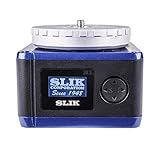 SLIK ECH-630 Compact Star Tracker SLIK ECH-630 Compact Star Tracker |
|
Check Latest Price |
1. Sky-Watcher Star Adventurer 2i Pro Pack for Reliable Multi Minute Exposures
- Easy polar alignment with solid pinpoint stars at 2-3 minute exposures
- Compact and light for travel
- Built-in WiFi and autoguider port
- One owner reports about 40 hours on a single set of AA batteries
- Needs a genuinely sturdy tripod
- Counterweight kit sold separately for long telephotos
- Battery cover and power switch feel fragile
This is the tracker we keep coming back to for wide field work, and the reason is the 610 owner reviews behind it. That is far more real-world data than any other head in this list, and the pattern in those reviews is consistent: align it properly and a fast prime on a mirrorless body or DSLR holds round stars at two to three minutes.
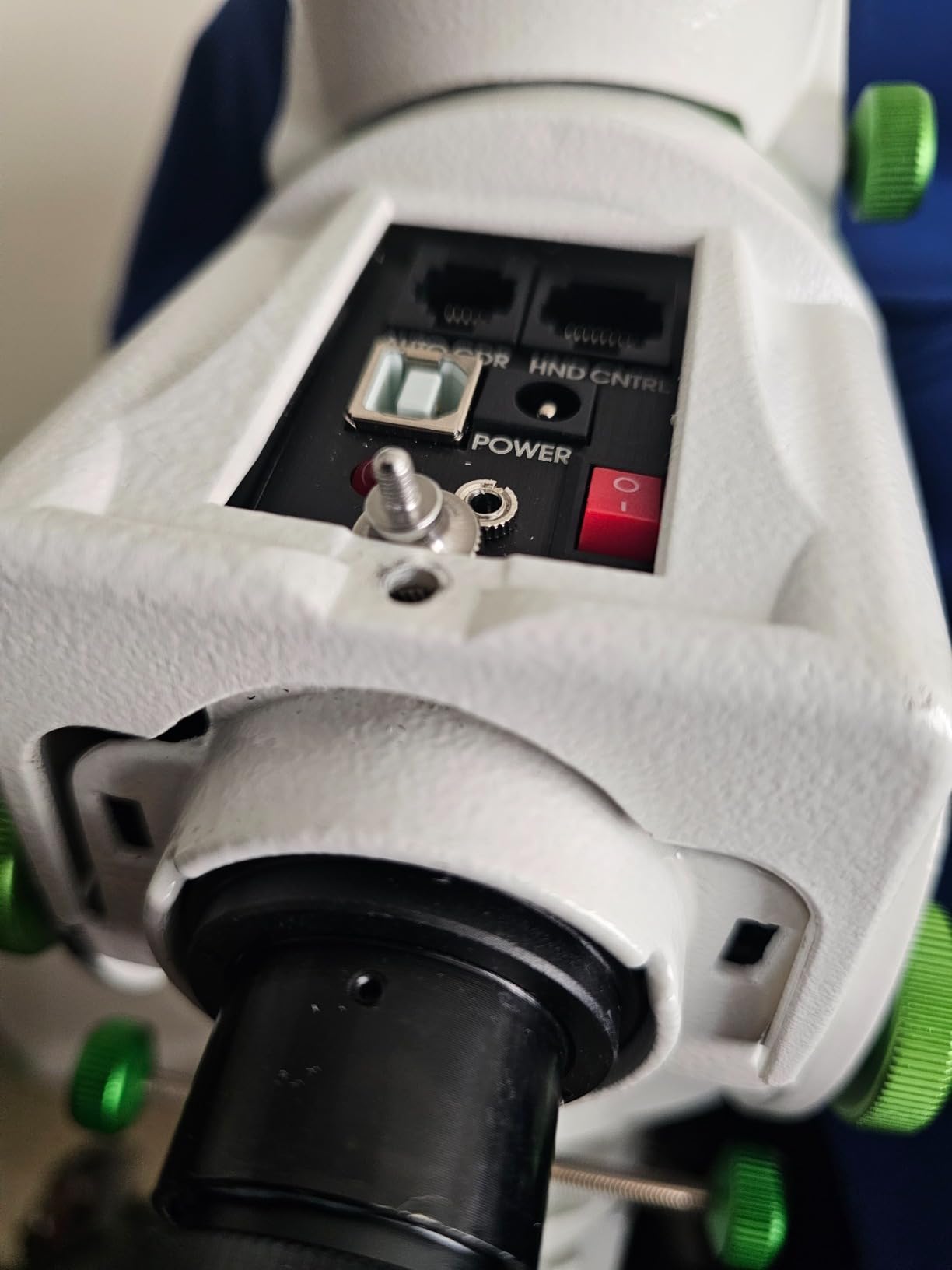
Out of the box you get the tracking head, the deluxe equatorial wedge base, lithium metal batteries and the WiFi module. The wedge is the part people underestimate. It gives you real latitude and azimuth adjustment, which is the difference between a two minute sub and a ten second one when you are aligning by hand in the dark.
The recurring complaint in reviews is not tracking accuracy, it is what the head is sitting on. Lightweight camera tripods flex enough to introduce their own vibration, and the fix costs you a tripod upgrade rather than a tracker upgrade. A second thread that shows up again and again is the separately sold counterweight, which you will want the moment you push past about 50mm.
Roughly 40 hours of runtime on one set of batteries is one owner’s report, which tells you how little power this thing actually draws. Cold weather still cuts into that, so we would still carry spares on a winter night, but nothing here is close to power hungry.
Why the 2i Pro Pack suits nightscape shooters
The wedge and the modular dovetail are what make this a nightscape tracker rather than a bare motor. You can put a camera with a 14mm to 35mm prime on a ball head, frame a foreground, start tracking and get multiple minute subs without a second alignment.
It also has an autoguider port, which no other tracker at this size and weight has. If you ever move toward longer focal lengths, the head is not a dead end the way some ultralight mounts are.
Where the Pro Pack falls short
The SAM Console app is thin. It switches tracking on and off and does little else, so treat it as a shutter convenience rather than a control surface, and expect a fiddly experience with cold fingers at midnight.
It is also a head plus a wedge, not a complete system. Tripod, ball head and any counterweight are all still on your list, which is a meaningful addition to what you set aside for the kit.
2. iOptron SkyGuider Pro for the Most Capable Travel Head
- Brass worm and rubber belt transmission gives a smooth
- accurate drive
- Very compact at 2.2 lb for the head
- Integrated illuminated polar scope aligns fast in the field
- Owners report 2-3 minute exposures from 11mm up to 500mm
- No GoTo
- so you locate targets yourself
- Short 8-inch counterweight bar needs an extension for big rigs
- Polar scope often arrives out of collimation and needs a 1.5mm hex key
If you judge a tracker on how it is made rather than on what the app does, the SkyGuider Pro is the one in this group. The body is all-metal with machined components, the drive is a brass worm with a rubber belt, and at 2.2 lb for the head it is still genuinely small.
The rated payload of 11 lb when balanced is the highest on any pure tracking head we reviewed. That headroom is what lets owners run 2 to 3 minute exposures on lenses from 11mm all the way to 500mm, which is a much wider range than the smaller portable trackers cover.
The AccuAlign illuminated polar scope is built into the base, and that is a real advantage in the field because you are not fumbling with a separate illuminated sight at one in the morning. One recurring detail in reviews: the scope frequently arrives out of collimation, and you need a 1.5mm hex key to fix it, which is not in the box.
Power comes from an internal rechargeable pack rated at up to 20 hours at 20C. Recharge it fully before you leave, and keep a USB cable in the pack as insurance on a long cold night.
What makes the SkyGuider Pro the strongest travel option
The wedge base adjusts latitude from 30 to 65 degrees with plus or minus 5 degrees of azimuth, so it handles a wide range of observing latitudes without swapping parts. That matters if you shoot from home and travel.
At 2.2 lb the head disappears into a camera bag, and the autoguide port plus firmware update port mean the mount can grow with you rather than being a closed system.
What you give up with the SkyGuider Pro
There is no GoTo. Finding targets is entirely on you, which is fine if you already know the sky and tiring if you have just started. Several reviewers specifically asked for GoTo functionality on this class of mount.
The 8-inch counterweight bar is short for a heavy wide field rig. Balance a 70-200mm plus a body and you will want the extension bar, which is a separate purchase.
One practical note for southern hemisphere use. The latitude range is specified as negative 30 to positive 65 degrees, so covering the far south below 30 degrees south means an alternative base or wedge rather than the supplied one.
How the drive behaves over a long night
The belt-and-worm drive is what reviewers describe as smooth, and smoothness shows up as fewer micro-vibrations when you go beyond a minute per sub. If you plan to shoot the same target for four or five hours, that consistency is worth more than any extra feature.
Balance matters more here than on the lighter heads. Reviewers who paired it with a heavy tripod and a counterweight report the cleanest results, and reviewers who put a heavy rig on a light tripod report exactly the flex problems you would expect.
3. Sky-Watcher Star Adventurer GTi Kit for GoTo Pointing Without the Accessory Bill
- GoTo pointing removes the hunt for targets
- Bundles head
- tripod
- pier extension
- counterweight and polar scope
- Built-in WiFi for alignment and target selection
- Higher payload than the smaller Star Adventurer heads
- Heaviest option here at 26 lb
- so it is not travel friendly
- Costs considerably more than the bare 2i head
- Setup and app workflow has a learning curve
The GTi kit answers a question the head-only options leave open. Where the 2i Pro Pack makes you buy the wedge, the counterweight and the tripod separately, this box arrives with the head, tripod, pier extension, counterweight bar and a 5 lb counterweight, plus a built-in polar scope with illuminator.
GoTo is the headline. You plate solve and slew to a target by name rather than scanning the sky with binoculars, which on a cold night with a fast wide lens is a meaningful reduction in wasted time.
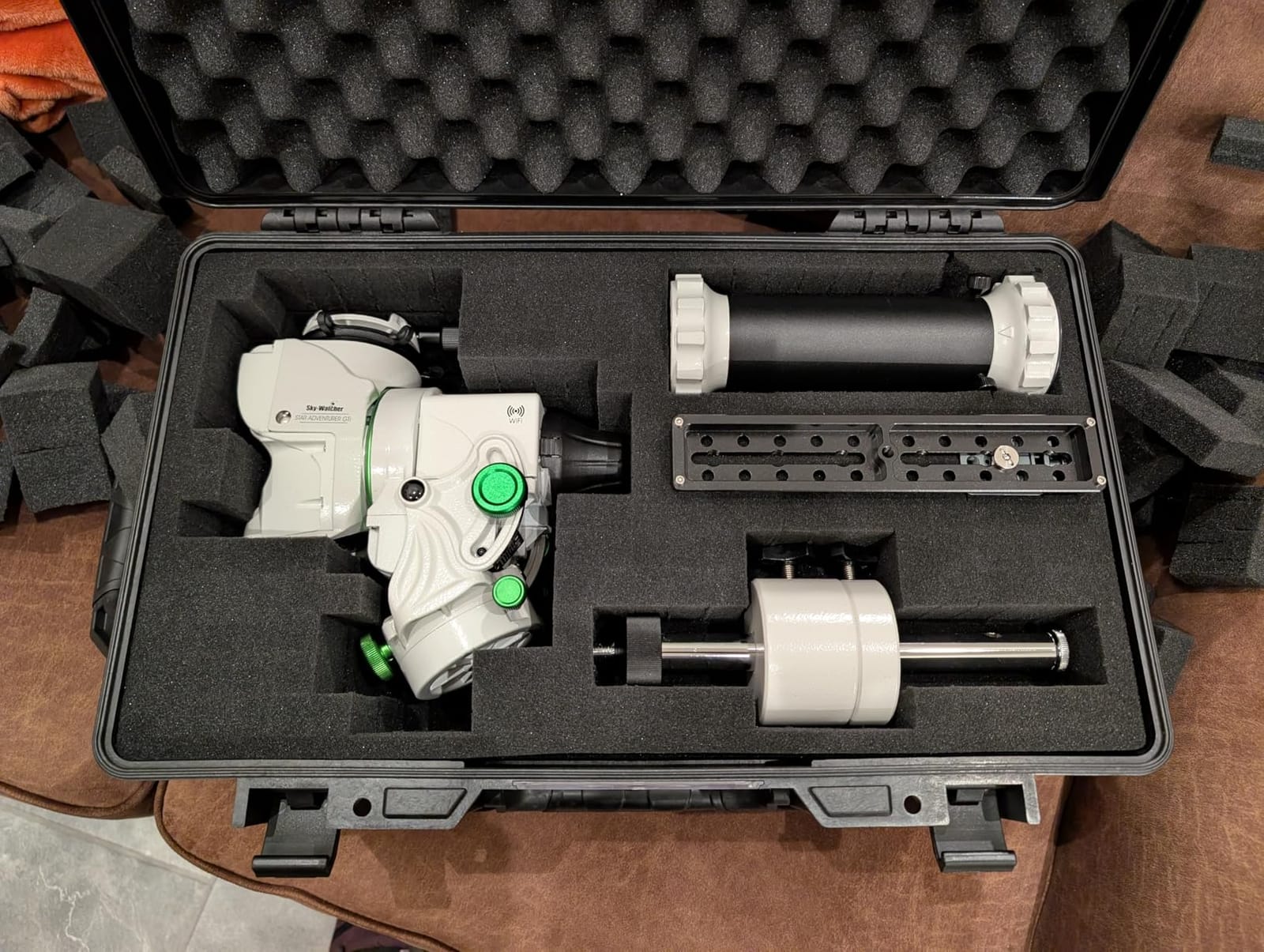
Reviewers rate the completeness highest, and the two-year warranty is longer than the one-year cover on the iOptron heads in this list. Multiple sidereal, solar and lunar rates cover nightscapes, time-lapse and solar work from the same mount.
The trade is bulk. At 26 lb with a 44 inch maximum height, this is the heaviest package here, and that decides where it lives. It suits a driveway, a field or a fixed camp site rather than a backcountry solo trip.
Who should buy the full kit
If you are starting out and want nightscapes with a beginner-friendly workflow, the bundled GoTo, wedge-equivalent alignment and counterweight mean one box gets you to a working wide field rig with far fewer add-ons.
The pier extension is also worth noting. It raises the mount to a working height without you needing a taller tripod, which reduces the leg spread and the resulting vibration.
When the full kit is the wrong call
Travel and airline restrictions rule it out. Nothing in this list gets you a working wide field rig for less to carry than the 2i head and a travel tripod.
GoTo also needs a phone and an app in the field. If you are already comfortable finding targets manually, that capability costs you weight without changing the images you bring home.
4. Explore Scientific iEXOS-100-2 PMC-Eight for Autoguided Wide Field Work
iEXOS-100-2 PMC-Eight Equatorial Tracker System Tripod and Mount for Astrophotography with WiFi and Bluetooth Compatible
- Quiet dual-axis tracking with clutches for smooth balancing
- Users report around 1.5 arcseconds with a guide camera
- GoTo pointing with a large object library
- Works with ASIAIR
- StellarMate and Ekos
- ExploreStars app is buggy with connection failures
- Polar scope and azimuth adjuster sold separately
- Runs on eight C batteries
- Customer support response is criticized
This is the only mount in the group with true dual-axis tracking and heavy counterweighted payload, so it is the natural step up once wide field turns into something more demanding. The PMC-Eight controller runs eight independent processors, which is the architecture behind its pointing accuracy.
Guided, the numbers are genuinely good for the class. Users report around 1.5 arcseconds with a RedCat 51 and a guide camera, which is a level of stability that lets you stack long subs on a small wide field target without trails.
The split rating tells the story. Experienced users who drive it through ASIAIR, StellarMate or Ekos rate it well. Users who rely on the bundled ExploreStars app report crashes and unreliable WiFi connections, which is where most of the 3.9 comes from.
Two practical negatives. The polar scope and azimuth adjuster are sold separately, so the real cost is higher than the listing suggests, and it runs on eight C batteries, which is a lot of cell management when you also have to keep a head torch and intervalometer powered.
Why the iEXOS-100-2 is the one to grow into
It is the only tracker here rated for roughly 19 lb with counterweights, and the clutches on both axes let you balance a heavy camera and lens rig without a fight. If you later want a small refractor, the payload and dual-axis drive are already there.
Guiding compatibility is the real upgrade path. An autoguider port paired with a guide camera keeps stars pinned over multi-minute subs, which widens the focal lengths you can use on the same mount.
Where the PMC-Eight lets you down
The software story is the problem. If your workflow depends on the manufacturer app, you are signing up for the connection complaints that pull this rating down. Check the other software options first.
It is also not a grab and go kit. Tripod, counterweights, polar scope and power handling all sit outside what you get in the box, which adds friction to a first night out.
One more thing that bites in cold weather. Eight C cells already carry a lot of energy, and cold reduces what you get out of them, so a fresh set at the start of a long session is close to essential rather than optional.
Who it fits and who it does not
If you are an experienced imager with software you already trust, or you want to move from fast primes into short refractors, the hardware holds up and the guided accuracy backs it.
If you are a first-time nightscape shooter buying one mount, this is a steep starting point. The accessory list and the app behaviour are both friction you do not need at the start.
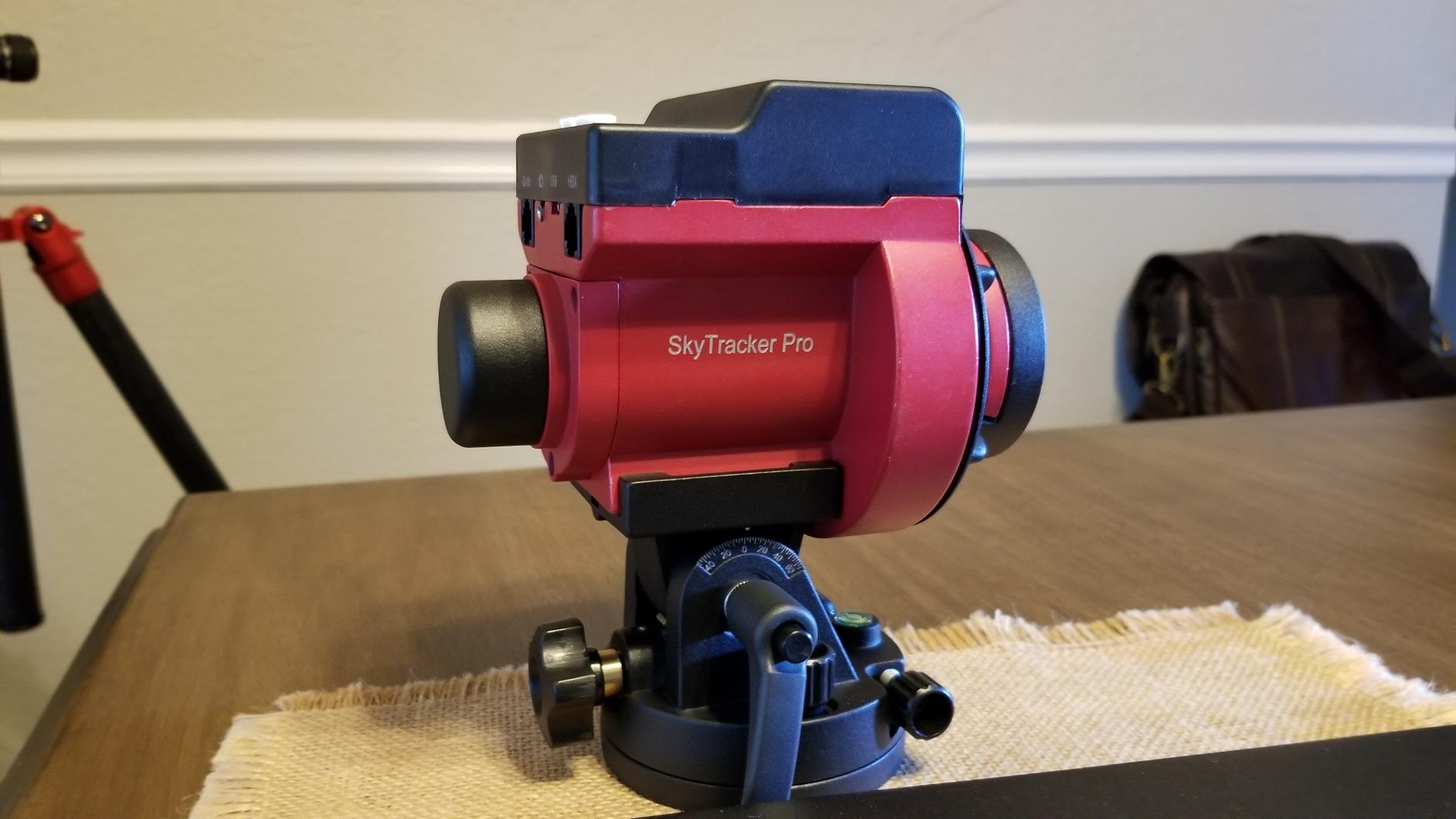
5. iOptron SkyTracker Pro for a No Fuss Budget Wide Field Rig
- Very quiet operation that runs a full session
- Light and compact for a camera bag
- Dimmable polar scope LED and jog button
- Owners report 4-5 minute exposures with fast wide primes
- Only 3 kg payload so telephotos need the counterweight package
- Dovetail base is not Arca-Swiss compatible
- A ball head must be bought separately
The SkyTracker Pro is the simplest tracker here that still does the one job wide field shooters need, and it does it quietly. The DC servo motor drive uses a 600 second worm period with four bearings, and reviewers consistently describe the result as smooth and near silent.
Owners pair it with 11mm to 16mm primes and report four and five minute exposures with no trailing at all. That is beyond what most ultralight heads in this list can manage, and it is the number that matters most for a wide field article.
It comes with the illuminated polar scope and a padded carrying bag, and the battery is internal and rechargeable over Micro USB, reaching 80 percent in about five hours. There is no battery to forget and no external pack to lose in the grass.
The 3 kg payload is the limit to plan around. It is comfortable for a mirrorless body or a light DSLR with a fast prime, which is the wide field sweet spot, and tight for a heavier telephoto setup without the counterweight package.
What you get for a first tracked nightscape
Polar alignment is quick because there are several fine adjustment knobs rather than a single awkward control. Many fine-trim knobs means you can nudge the mount a fraction of a degree at a time, which is exactly what you want at the start.
The forward and reverse jog button and the dimmable polar scope LED are small features that matter more at midnight than they do in a spec sheet. You are not squinting at a bright red light that ruins your dark adaptation.
What to budget for around it
You need a ball head. It is not included, and reviewers repeatedly note that as the main surprise when the box arrives.
The dovetail base is not Arca-Swiss compatible and is described as unstable under heavier loads, and the rubber cushion at the swivel mount can slip. Stay within the 3 kg rating and it behaves itself.
The azimuth screws only move the included base, so it will not work on tripods with fixed index studs. Check your tripod before you commit, because that incompatibility is a common late discovery.
How it fits into a wide field kit
At 3.3 lb including the base, this is a tracker that travels in the same bag as the camera. For a single night of Milky Way core and surrounding constellation work from a campsite, that simplicity is genuinely valuable.
Reviewers also pair it with time-lapse panning, so one head can cover both tracked nightscapes and slow daylight motion sequences.
6. Sky-Watcher Star Adventurer Mini for Backpacking Weight Limits
Sky-Watcher Star Adventurer Mini – Motorized DSLR Night Sky Tracking Mount For Nightscapes, Time-lapse, and Panoramas
- Genuinely pocketable at about the size of a fast prime
- Brass and aluminum gearing tracks cleanly once aligned
- Two AA batteries run a full session with USB backup
- Handles wide field and time-lapse panning
- Sidereal tracking can only be started through the phone app
- App is convoluted and some Android users report crashes
- Some QC reports of units failing to power on or losing WiFi
- Equatorial wedge is not included
At 1.5 lb this is the lightest tracker in the group by a wide margin, and that is the whole point. It is roughly the size of a fast prime lens, which means you can carry a working wide field rig in a daypack without a separate tripod case.
Despite the size, the gearing is brass and aluminum rather than plastic, and reviewers report clean tracking at one to five minute exposures once alignment is done. The included polar scope and illuminator cover the alignment step.
It accepts any ball head through the supplied adapter, which is the right design choice for a travel mount. Power is two AA batteries for up to 24 hours, with a 5V mini-USB external input as a backup for cold nights.
The app dependency is the thing to accept up front. Sidereal tracking can only be started through the SynScan app, and reviewers describe that app as convoluted, with some Android users reporting crashes on launch. Operating a phone in gloves in the dark is part of the deal.
What the Mini changes about a night out
Weight is the deciding factor for anyone hiking in to a dark site. Nothing else in this list gets a full tracking rig down a trail at this mass, and that changes which locations you can reach at all.
Reviewers use it for both wide field astrophotography and time-lapse panning, so the same kit covers two very different kinds of night.
Where the Mini will frustrate you
Without the equatorial wedge, polar alignment is the fiddly version. You are aligning by hand on whatever your tripod head allows, so a travel tripod with limited azimuth adjustment will not get you there cleanly.
Several quality control reports describe units failing to power on or losing the WiFi connection, and Sky-Watcher resolved those with replacements. Test the app and the motor before you leave home, not in a car park at midnight.
Wide field results to expect
The 6.6 lb payload is enough for a mirrorless body with a prime or a light zoom, and comfortably enough that you are not counting grams of camera gear against a limit.
At this weight, tripod rigidity is the limiting factor, not the mount. A 1.5 lb head still needs a solid tripod to resist flex, and that is a different kind of weight to carry.
7. Vixen POLARIE U for Mechanical Rigidity and Guiding Headroom
- Notable mechanical rigidity with no play in the rotation axis
- Near-point stars at 50mm for 2 minutes and 200mm for 1 minute
- USB-C power and autoguide port improve expandability
- Handles mosaics up to around 200mm
- Maximum panning speed of 10x is slow for some users
- Equatorial head sold separately for many setups
- Accessories cost noticeably more than rivals
- Only one 3/8 to 1/4 adapter screw included
The POLARIE U is the tracker in this group that feels machined rather than moulded, and reviewers single out the absence of play in the rotation axis. For a mount that is essentially a single rotating body, rigidity is the spec that predicts long exposure quality.
Even with rough alignment, owners report near-point stars at 50mm for two minutes and at 200mm for one. That 200mm result is the outlier in this list for a body this small, and it is what makes the POLARIE U interesting for moderate focal lengths.
Two upgrades over earlier POLARIE models matter for a modern kit. USB-C external power replaces fiddly batteries, and the ST4 autoguiding port means you can add a guide camera later, which is rare at this weight.
Reviewers are heavily international, and the main gripes are commercial rather than technical. Vixen accessories are noticeably more expensive than rival add-ons, and the supplied adapter hardware is thin for some regions.
Why rigidity matters at 50mm and above
Play in the rotation axis shows up as field curvature and star trailing that looks like drift but is not. A rigid body keeps stars round at longer subs, which is why reviewers push this mount further up the focal length range than its competitors.
It is a good fit for mosaic work up to around 200mm, where several panel sessions mean the mount has to hold the same pointing all night.
What the POLARIE U costs you
Many setups need the separate equatorial head, which adds cost and another part to pack. Plan the full system before buying rather than assuming the box is complete.
The 10x maximum panning and tracking speed is the limit some users hit. If you want fast repositioning between compositions, that feels slow, though it does not affect tracking accuracy at normal speeds.
Power and cold weather behaviour
Running from four AA cells or USB Type-C means you can carry external power instead of cells if you are heading somewhere cold. For winter wide field work that is the better pattern, and it applies to several trackers in this list.
Japanese manufacture and an established camera support lineage show up in the build, and reviewers report responsive support. The five speeds cover celestial, solar, lunar and time-lapse work from the same head.
8. Benro Polaris Astro Edition for Video, Timelapse and Tracking in One Head
- Tracking
- panorama
- timelapse and focus stacking in one unit
- CNC-machined aluminum and stainless steel feels premium
- One owner captured 5 hours of tracked stars successfully
- 24 hour battery and IPX6 water resistance for field use
- Bluetooth and app connection drops repeatedly
- One-star alignment produces poor tracking
- Hardware tilt limit stops tracking near the zenith
- Steep learning curve and firmware or app bugs
- Warranty service reported as difficult
The Polaris Astro Edition is trying to be more than a star tracker. It is a three-axis motorized head with star tracking, motion timelapse, panorama, dynamic exposure timelapse, focus stacking and a people remover mode, driven from a 4.3 inch control screen and a Bluetooth app.
At wide focal lengths the tracking does work. One owner captured five hours of tracked stars successfully, and the 15 lb capacity on a 52mm Arca-type base means it will hold a serious camera and lens rig.
The app does shot preview and direct download, which is genuinely useful if you want to check focus and framing without walking back to the camera. IPX6 water resistance and a 24 hour battery make it the most weather-tolerant head in this list.
Where it loses ground is connectivity. Reviews report repeated Bluetooth drops, with cellular data frequently having to be disabled before the phone will connect, and there are reports of firmware and app bugs that undercut the whole multi-mode experience.
Why the 3-axis design helps wide field work
A conventional tracker only corrects one axis and leaves drift to your alignment. A three-axis motorized head can correct the other two through the app, which is why this one holds up on alignment done only to rough first star level.
The Arca-type base means it drops onto standard travel tripod heads, so you are not tied to one mounting standard or one brand of quick release.
What will test your patience
The approximate plus or minus 80 degree hardware tilt limit means tracking stops as a target approaches the zenith. High targets from lower latitudes, where wide field work often happens, are the weak spot.
At 1.5 kg the head is not really a backpacking option, and the low 3.5 rating reflects 24 percent one-star reviews. Warranty coverage is also reported as difficult to obtain, with Benro declining coverage on Amazon purchases for some buyers.
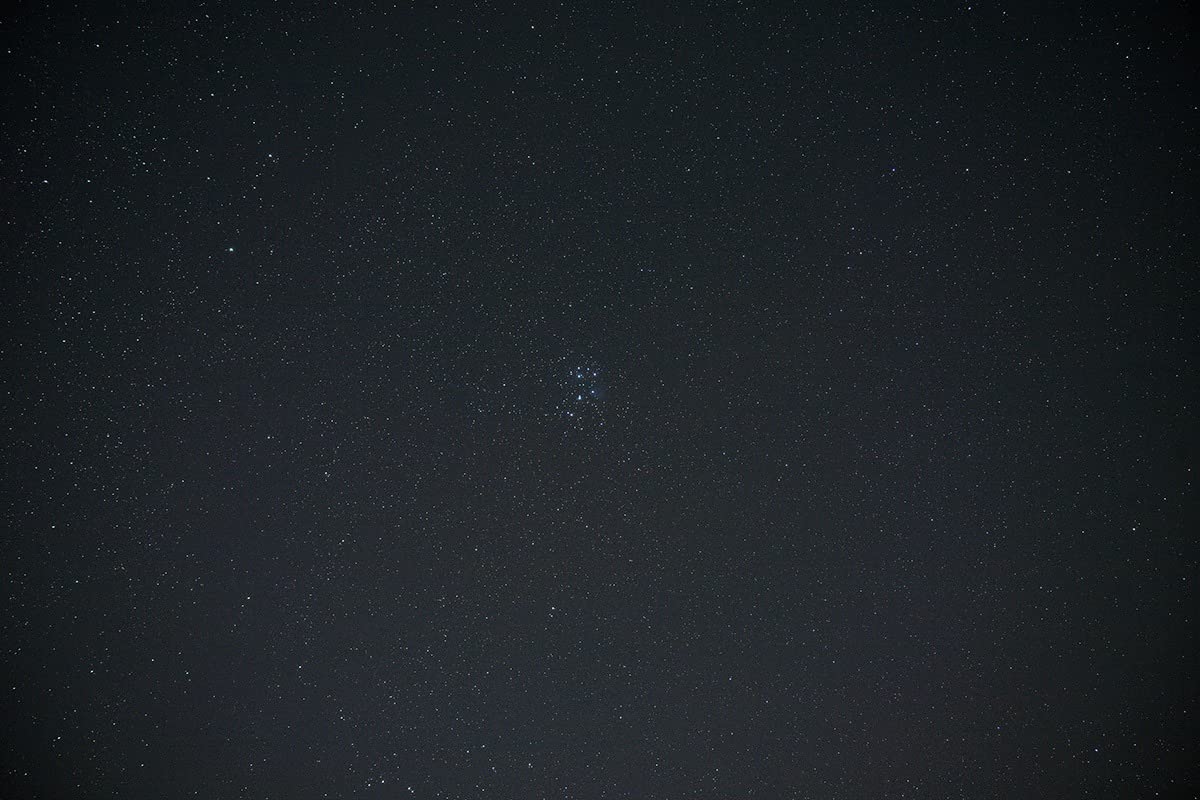
Who this mount is actually for
If your wide field work is part of a larger video and stills setup, the timelapse and motion modes are real value. One head replaces a panning head, a star tracker and a focus stacker.
If you just want clean star photos from a fast lens, the software friction is more than the extra axes give you. The pure tracking heads in this list do the same core job with fewer things to go wrong.
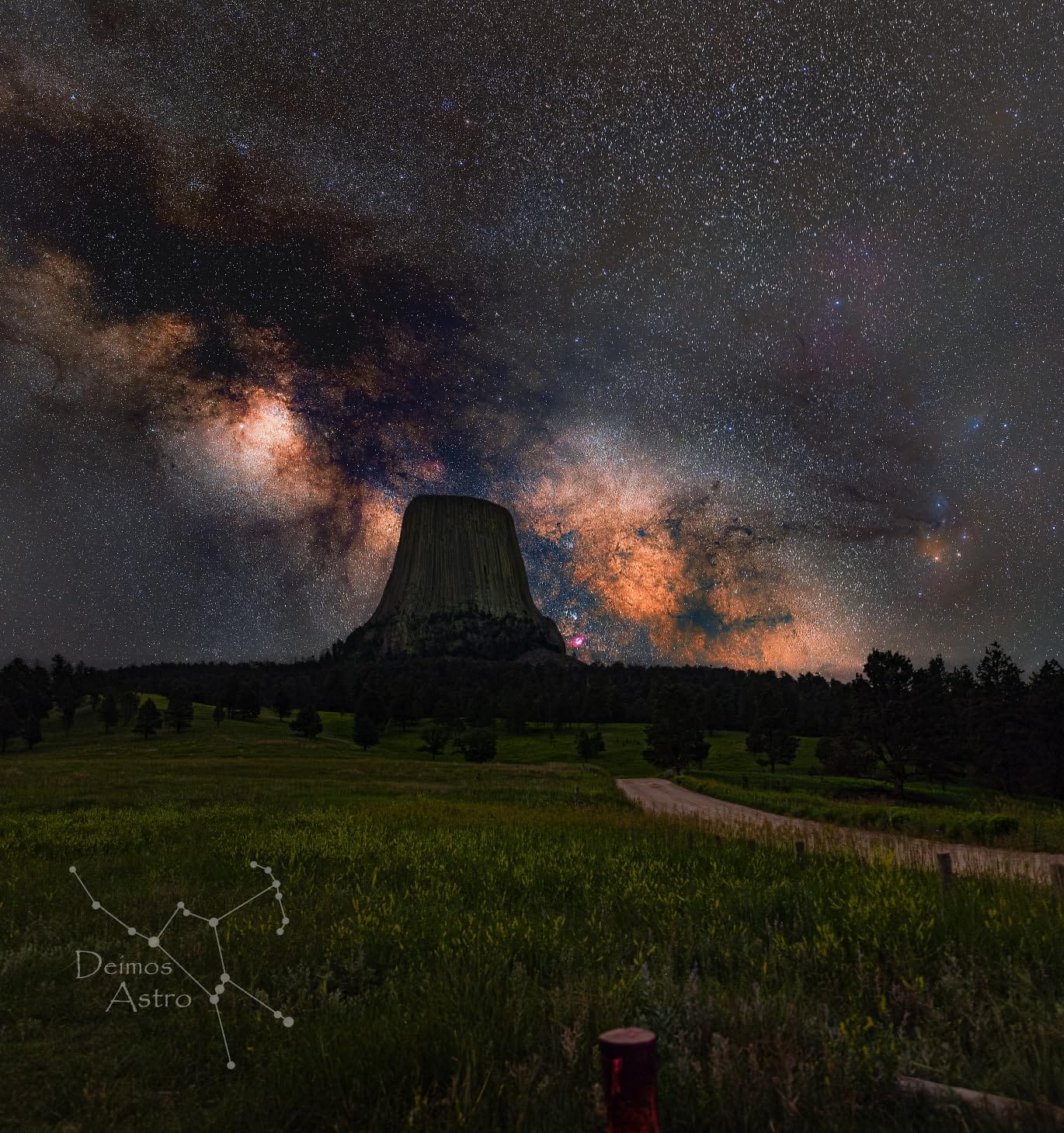
9. Kenko Astro Tracker SKYMEMO T for the Smallest Complete Package
Kenko Astro Tracker SKYMEMO T Portable Tracking Platform Red
- Small and light
- and preferred by users who backpack
- Build quality described as very good for the size
- Tracks effectively with 300mm glass and roughly 1.5 kg of kit
- App control works reliably for most users
- No autoguide port
- No physical controls so the app is required
- Battery life is about five hours on AA cells
- Polar scope red illuminator is small and easy to lose
The SKYMEMO T is the most compact complete package here, at roughly 650 g with the polar telescope and intervalometer built into the body. There are no adapters to lose and no separate controller to forget, which is the appeal.
Reviewers report that it tracks effectively with 300mm glass and about 1.5 kg of equipment, which is a reasonable result for something this size. It is a genuine wide field tool rather than a token entry.
Be clear about the evidence here. There are nine reviews on record, so this is a lightly sampled product. The rating reflects a small but broadly positive set, not a broad testing history, and we would weight it accordingly.
It is Android only, with no physical control buttons, so the app is the entire interface. Most users find that connection reliable, but you are committing to a phone to use the mount.
What a minimalist wide field kit looks like with the SKYMEMO T
Mount, camera, prime lens, small tripod and a ball head. The built-in intervalometer means the tracker also handles the timing side of tracked sequences, so you are not adding a second controller.
Reviewers specifically favour it for backpacking, and at 650 g it is the lightest head in the group by more than half the weight of the next smallest.
What you give up
No autoguide port means no guided option at all. Every exposure is unguided, so alignment quality sets the ceiling on sub length for you.
Battery life of about five hours on AA cells is the shortest here, and that is a real problem on a winter night. The polar scope illuminator is also small and easy to lose in a bag, which is a poor piece of design for dark field use.
Where the evidence is thin
Nine reviews cannot tell you much about long term reliability, which is exactly why our other picks have review counts in the hundreds. Treat this as a compact specialist option rather than a default recommendation.
What the reviews that do exist do support is build quality for the size and solid app behaviour, which is more than enough to justify it if pack weight is your binding constraint.
10. SLIK ECH-630 for Simple Controls With No Phone Required
- Exceptionally compact and light
- packs into carry-on luggage
- Very simple LCD interface with a single on/off switch
- 20 hour AA runtime plus USB external power
- Japanese build with responsive manufacturer support
- Only five reviews on record so reliability is not well documented
- Needs the optional SMH-250 head for comfortable alignment
- At 22.4 oz it still needs a very rigid tripod
The ECH-630 is the only tracker in this list with no app in the chain at all. An LCD menu and a single on or off switch handle the five rates, which means no phone, no WiFi and no pairing ritual in the dark.
At 22.4 oz and about 1.4 lb, it is among the lightest here and packs into carry-on luggage alongside a travel tripod. Reviewers who buy this class of gear are usually backcountry photographers, and that audience is exactly who this suits.
Sighting holes on both sides handle Polaris alignment simply, and the drive covers celestial, lunar, solar, sidereal and time-lapse rates. Power is four AA cells for up to 20 hours, with a USB external input as the cold weather option.
The perfect 5.0 rating comes from five reviews. That is a small, strongly positive sample and we do not treat it as proof of anything beyond build quality and ease of use, but SLIK is an established camera support manufacturer and reviewers report responsive support.
Why no phone is a genuine advantage
Gloved hands, a dark site and a phone with 20 percent battery left is a familiar bad night. A tracker you drive from a physical switch removes an entire category of field failure.
It also means one less device to charge, one less thing to keep dry and one less app that can change behaviour after an update you did not ask for.
What to plan for
The optional SMH-250 micro adjustment head is the sensible addition, because sighting holes alone will not get you a fine enough alignment for long subs at wider apertures.
At 22.4 oz the head still needs a very rigid tripod to avoid vibration, and the light weight can tempt people into a tripod that is too soft. That is the most common way a setup like this disappoints.
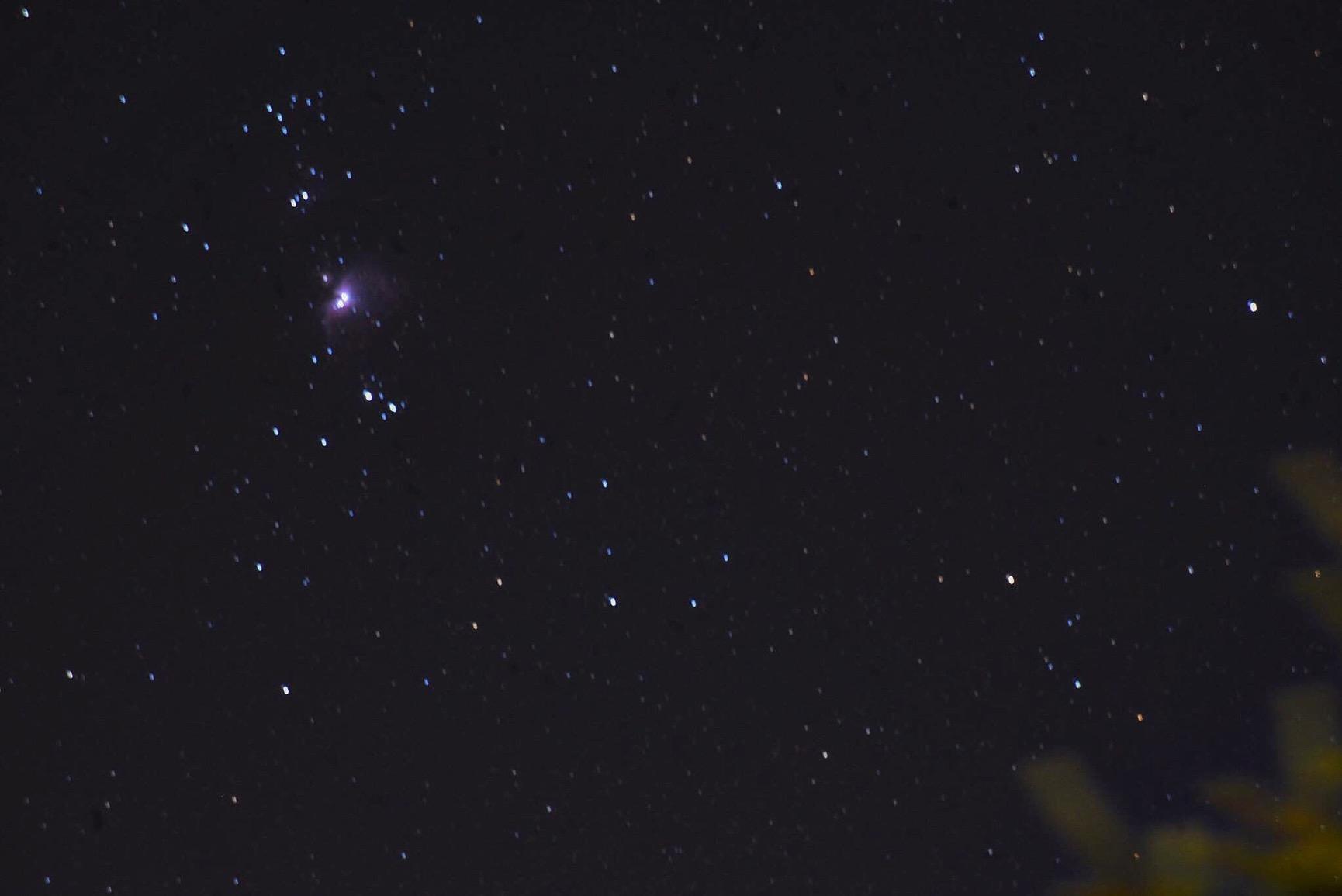
Where it sits against the other ultralights
Against the Star Adventurer Mini, the trade is app complexity for physical controls. Against the SkyTracker Pro, the trade is payload and alignment precision for simplicity and lightness.
If you shoot wide field with a fast prime from a travel tripod and you dislike apps, that trade is worth making. If you want a guide port or counterweighted payload later, this is not the head to buy.
How to Choose a Star Tracker for Wide Field Imaging
Start with focal length, because everything else follows from it. Wide field typically means 14mm to about 50mm on full frame, and at those lengths the accuracy requirement is much more forgiving than the same mount carrying a 200mm lens. Payload capacity matters most when you are pushing past 50mm, where a 70-200mm plus a body will need balancing rather than just clamping.
Next, decide whether you are guiding. Unguided wide field is described as quite common on forums, and with a fast prime it works well. But guided is where reviewers report the biggest quality change, with one of the mounts in this list reaching around 1.5 arcseconds under guiding. Users on r/astrophotography describe the opposite experience, telling us the little tracker does well guided but unguided was a nightmare, with 50 percent of one minute subs discarded with an 18mm lens. If you want reliability, check for an autoguide port.
Power is the section nobody writes about. AA trackers lose capacity below freezing, so a night that starts warm can end with a dead tracker. Heads with internal rechargeable batteries or USB external input give you the option to carry external power, which is the pattern we prefer for winter wide field work.
Then price the whole system, not the head. A tracker that needs a tripod, a ball head, a counterweight, a polar scope and a spare power source can end up costing considerably more than the head alone suggests. The GTi kit and the SkyTracker Pro sit at opposite ends of that calculation, one bundling nearly everything and one bundling almost nothing. If you want a wider look at general purpose gear, our roundup of the best star trackers for astrophotography breaks the choices down by use case.
One community complaint deserves a direct answer, because it is fair. Users on Cloudy Nights have described sub 300 dollar trackers bluntly, and in this group the Explore Scientific and Kenko options are the ones where the software and the review volume give you less to work with. A higher rating with a few hundred reviews is worth more to your nights out than a perfect score with five.
Polar Alignment in Five Steps
Everything above depends on this, and every tracker in this list except the Explore Scientific and the Benro ships with a polar scope or an illuminated sight built in.
Level the tripod first. An out of level tripod cannot be corrected by the mount, and it is the most common reason a careful alignment still drifts.
Set latitude, then azimuth. Most trackers adjust latitude with a wedge or an altitude knob and azimuth at the base. Set both roughly before you look through the scope.
Face the correct way around. Point the polar axis at the celestial pole for your hemisphere. The illuminated reticle makes this a matter of rotating the head until Polaris sits in the correct circle, with the southern hemisphere using the southern pole instead.
Adjust altitude and azimuth with the scope in the reticle. Small movements, checking each time. If your tracker has an azimuth adjuster and you skipped it, you are adding error that no amount of patience will remove.
Fine adjust with a real star. Use a bright star near the meridian, turn tracking on at sidereal rate, and centre it in a magnified view. The offset tells you which knob turns which way.
Two extras that improve results. Balance the rig before you align, and never align with the camera on a nearly balanced mount, because imbalance is what makes a good alignment wander. And run a short test at your intended sub length, because alignment that is good enough for one minute is often not good enough for three.
Unguided Exposure Limits by Focal Length
This is the breakdown the wide field niche was missing. The numbers are practical unguided limits for a well aligned mount with a modern high resolution body, and they are the guide for which tracker you need. Always test your own setup, because payload balance and alignment quality shift the real number.
14mm to 24mm on full frame: 2 to 4 minutes unguided comfortably. This is the range where almost every tracker here performs, including the ultralights.
35mm to 50mm: 1 to 2 minutes. Good alignment and a rigid tripod are what separate a success from a set of rounded stars. The POLARIE U and SkyTracker Pro are reported at the top of this range.
85mm to 135mm: 30 to 90 seconds, and this is where a counterweight and a guided option start earning their cost. Wide field framings are still possible, but alignment has to be good.
200mm and beyond: Under 60 seconds unguided, and we would guide instead. At that point a dual axis equatorial mount is the more honest tool for the job.
Two general rules help. The rule of thumb people quote is that exposure time in seconds should be roughly 500 divided by focal length in millimetres for untracked, and 400 divided by it for tracked, so a 24mm lens gives roughly 20 seconds untracked and about 16 seconds tracked on a fixed tripod. A tracker relaxes both of those numbers dramatically, which is the entire reason to own one.
Accessories You Will Also Need
Most heads in this list are sold without the three things that make them work. A rigid tripod with real azimuth adjustment is the first, and it is the one that most improves results. Users repeatedly report that light camera tripods are the limiting factor, not the mount.
A ball head comes second. The Star Adventurer Mini and the SkyTracker Pro both need one, and the ones that ship with adapters accept standard Arca-style plates. Third, a counterweight, if you plan to go beyond about 50mm, which the Star Adventurer 2i and the SkyGuider Pro both sell separately.
Then the field kit. Spare power, a USB power bank for the heads that accept it, a dew heater band for long wide field sessions, and a red head torch that will not destroy your dark adaptation. If you are building a full kit around one of these mounts, our broader star tracker buying guide covers the supporting equipment in more depth.
Dew deserves its own mention. Wide field sessions run for hours, and dew on a fast prime at wide apertures is a real problem, particularly in the second half of the night. A cheap USB dew band around the lens barrel solves it for less than the cost of a ruined stack.
Frequently Asked Questions
What is the best star tracker?
For wide field imaging the Sky-Watcher Star Adventurer 2i Pro Pack is our top pick, with 610 owner reviews backing its multi minute performance. The iOptron SkyGuider Pro is the stronger build with an 11 lb payload, and the Star Adventurer GTi kit wins if you want GoTo pointing and a complete system in one box.
What is the best star tracker for astrophotography?
It depends on focal length. For wide field primes at 14mm to 50mm, the Star Adventurer 2i Pro Pack or the iOptron SkyGuider Pro both deliver clean two to three minute subs. If you are guiding or moving to 85mm and longer, the Explore Scientific iEXOS-100-2 offers dual axis tracking and roughly 1.5 arcseconds under guiding.
What is a good budget star tracker for astro photography?
The iOptron SkyTracker Pro is the most straightforward budget entry, with a 6.6 lb payload, an integrated illuminated polar scope, an internal rechargeable battery and reported four to five minute exposures on fast wide primes. Budget for a ball head separately, since it is not included.
How accurate are star trackers?
Accuracy depends far more on polar alignment and payload balance than on the head itself. Well aligned unguided wide field setups at 14mm to 24mm commonly hold two to four minute subs, while the same setup at 50mm drops to one or two minutes. Under guiding, the Explore Scientific iEXOS-100-2 is reported at roughly 1.5 arcseconds.
How to do wide field astrophotography?
Level a rigid tripod, mount the tracker, balance the camera and lens, and polar align using the built-in illuminated scope. Run a short test sub at your target focal length before committing. Frame the composition, start sidereal tracking, and shoot multiple minute subs for a 14mm to 35mm lens. Manage dew with a heater band and finish with a dark frame.
What are the best targets for wide-field astro photography?
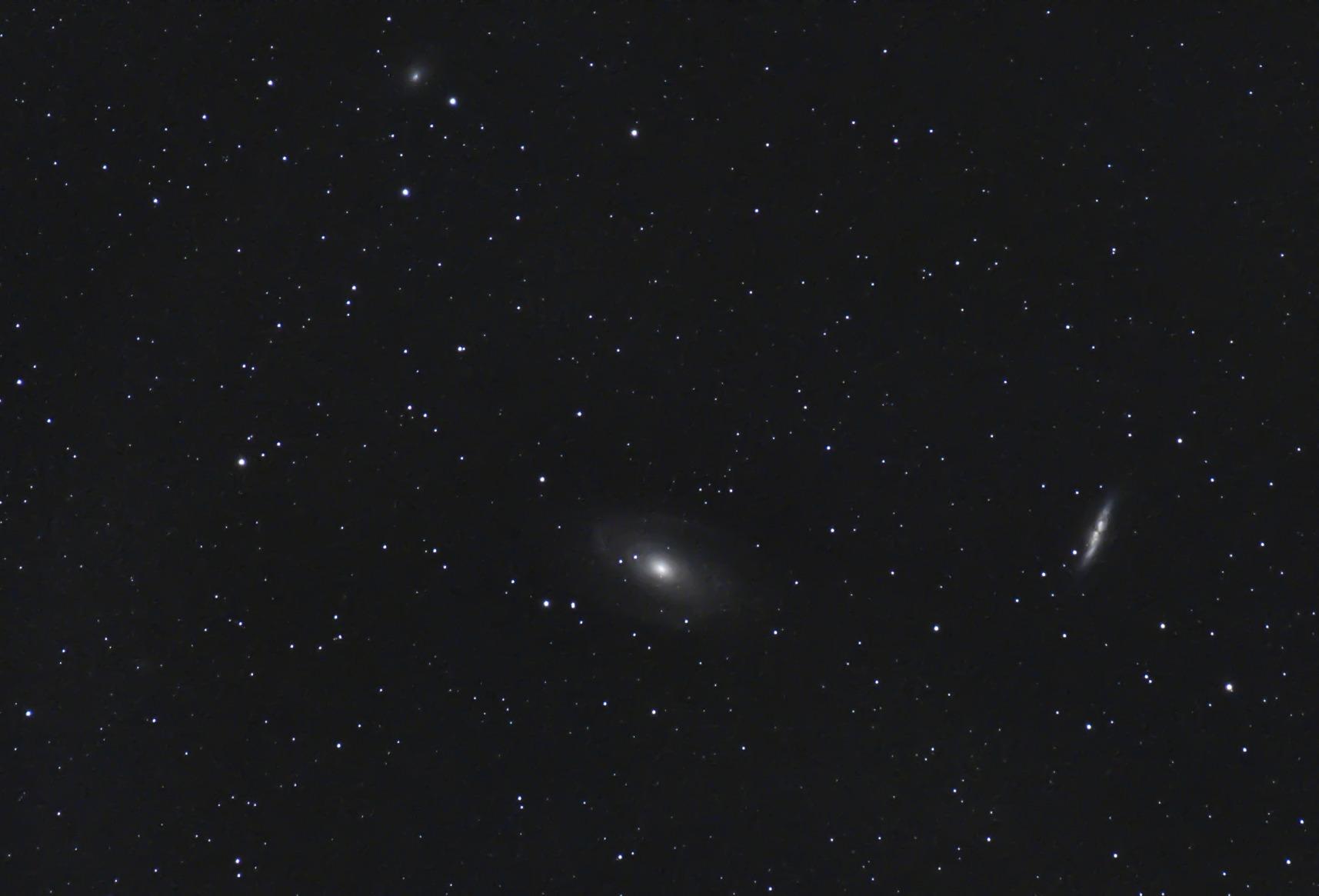
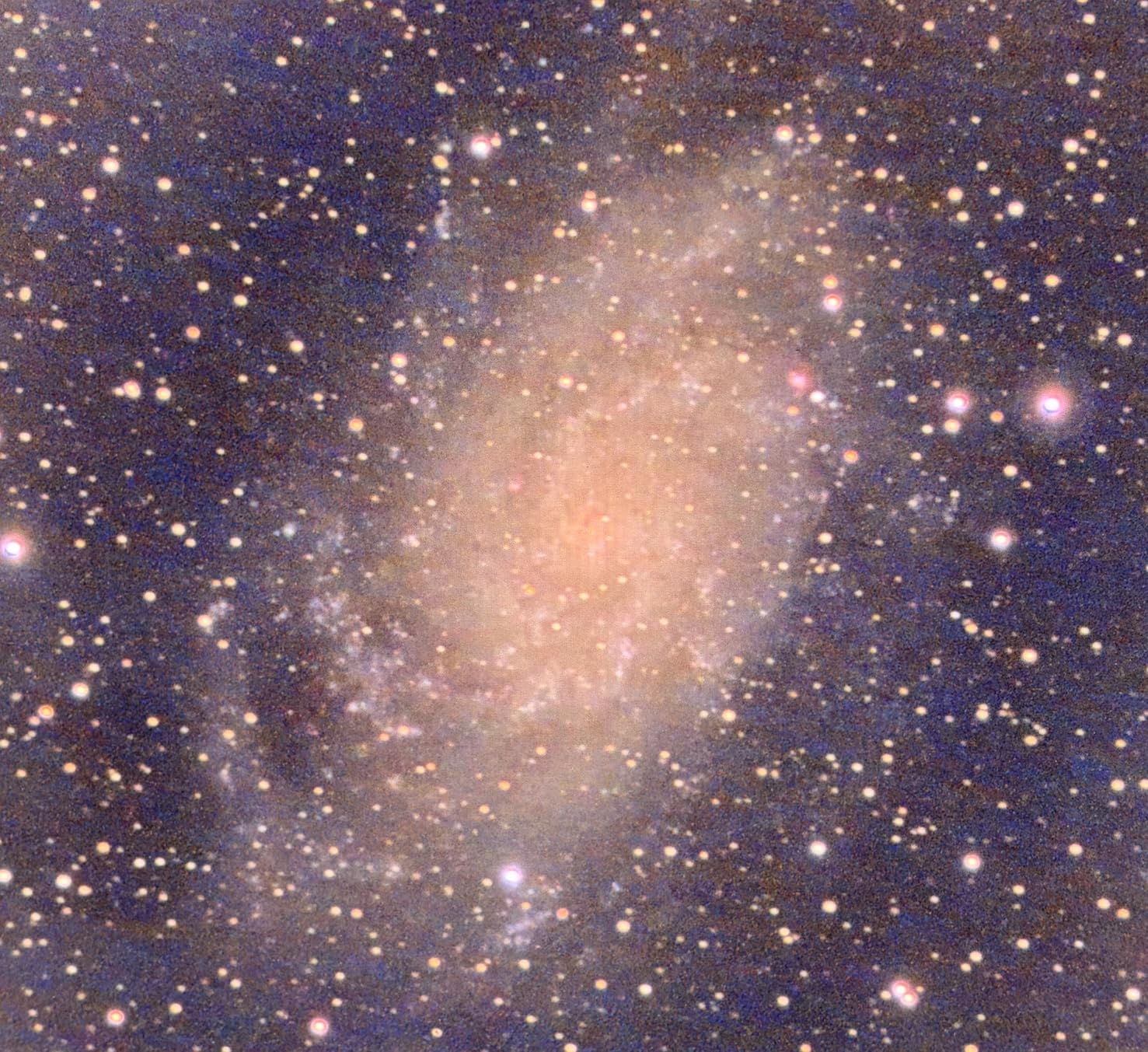
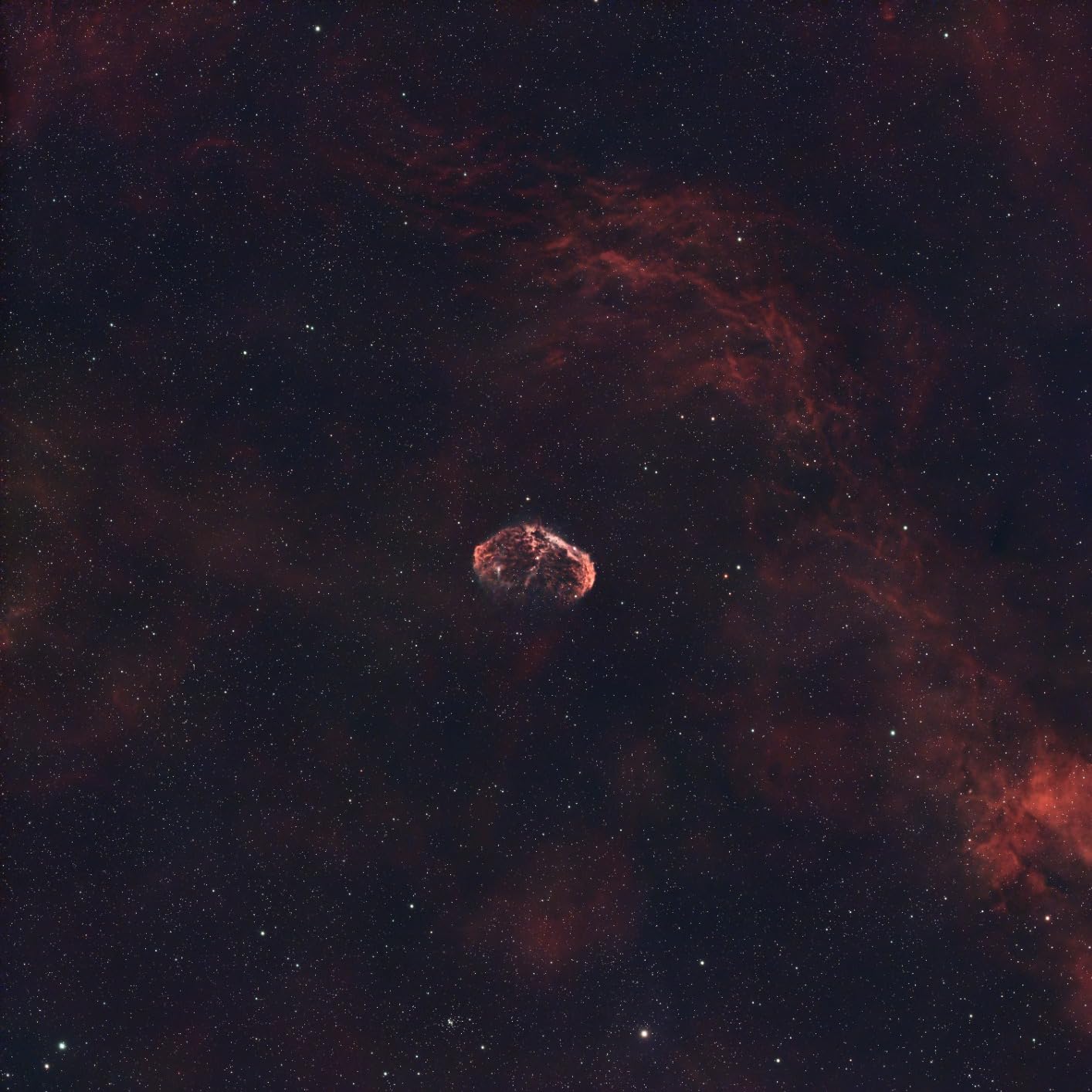
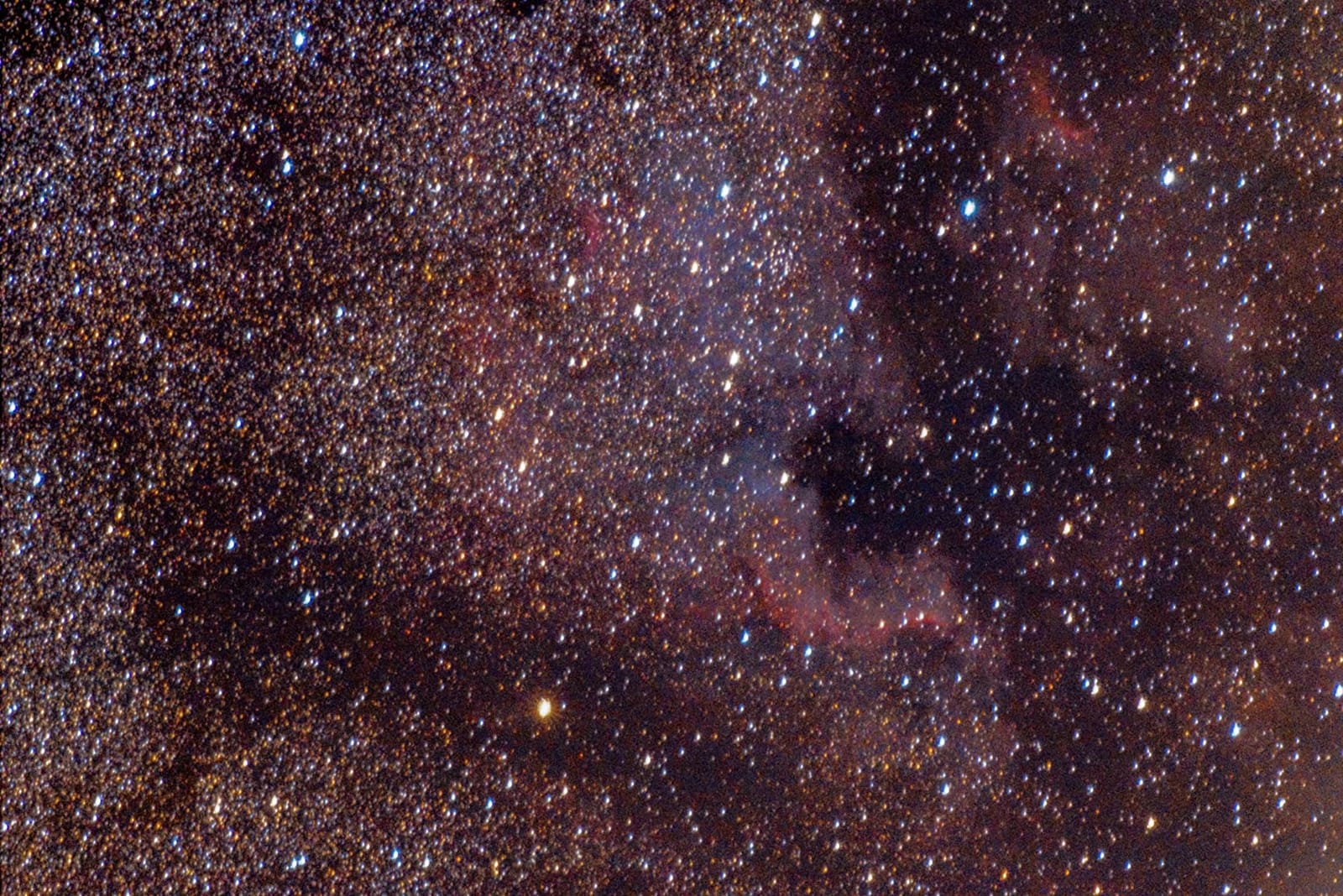
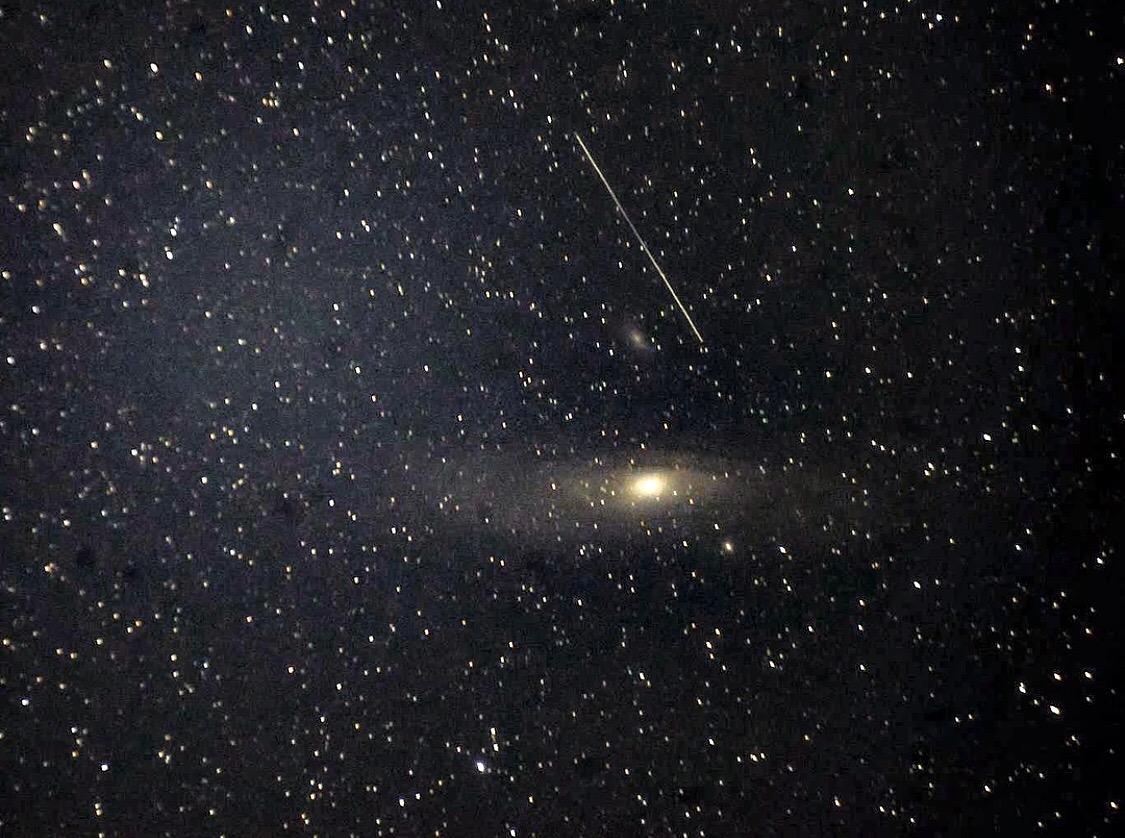
Wide field framing rewards large, structured objects that fill a short focal length. The Milky Way core and its surrounding nebulosity, the Andromeda galaxy, the North America and Veil nebula complexes, large open clusters and the Rho Ophiuchi region are all practical. Choose targets high enough above the horizon to avoid trees, buildings and low atmospheric haze.
What is the 500 rule for astrophotography?
The 500 rule is a quick estimate for untracked exposures: divide 500 by your focal length in millimetres to get the maximum exposure in seconds. A 20mm lens gives roughly 25 seconds and a 50mm lens roughly 10 seconds. It is a conservative starting point, and modern high resolution bodies usually trail a little sooner than the rule suggests.
What is the 400 rule in astrophotography?
The 400 rule applies to tracked exposures and is calculated the same way: 400 divided by focal length in millimetres gives the maximum sub length in seconds. A 24mm lens gives about 16 seconds and a 50mm lens about 8 seconds. It is the guideline we use to decide when a star tracker starts to pay for itself.
Our Final Verdict for Wide Field Trackers in 2026
For the best star trackers for wide field imaging, the Sky-Watcher Star Adventurer 2i Pro Pack takes the top spot. It combines the largest owner review base we could find with consistently round stars at two to three minute exposures, and the deluxe wedge in the box removes the most common cause of frustration. Add a rigid tripod and a ball head and you have a complete wide field rig.
Buy the iOptron SkyGuider Pro instead if you want metal construction, a 5kg payload and room to grow into longer lenses. Buy the Star Adventurer GTi kit if you would rather not assemble the system from parts, and the Explore Scientific iEXOS-100-2 the day guiding becomes important. Whichever you choose, align it carefully, balance it properly and test it at your target focal length before a long night. That habit, more than any spec on this list, decides whether your subs survive the edit.