
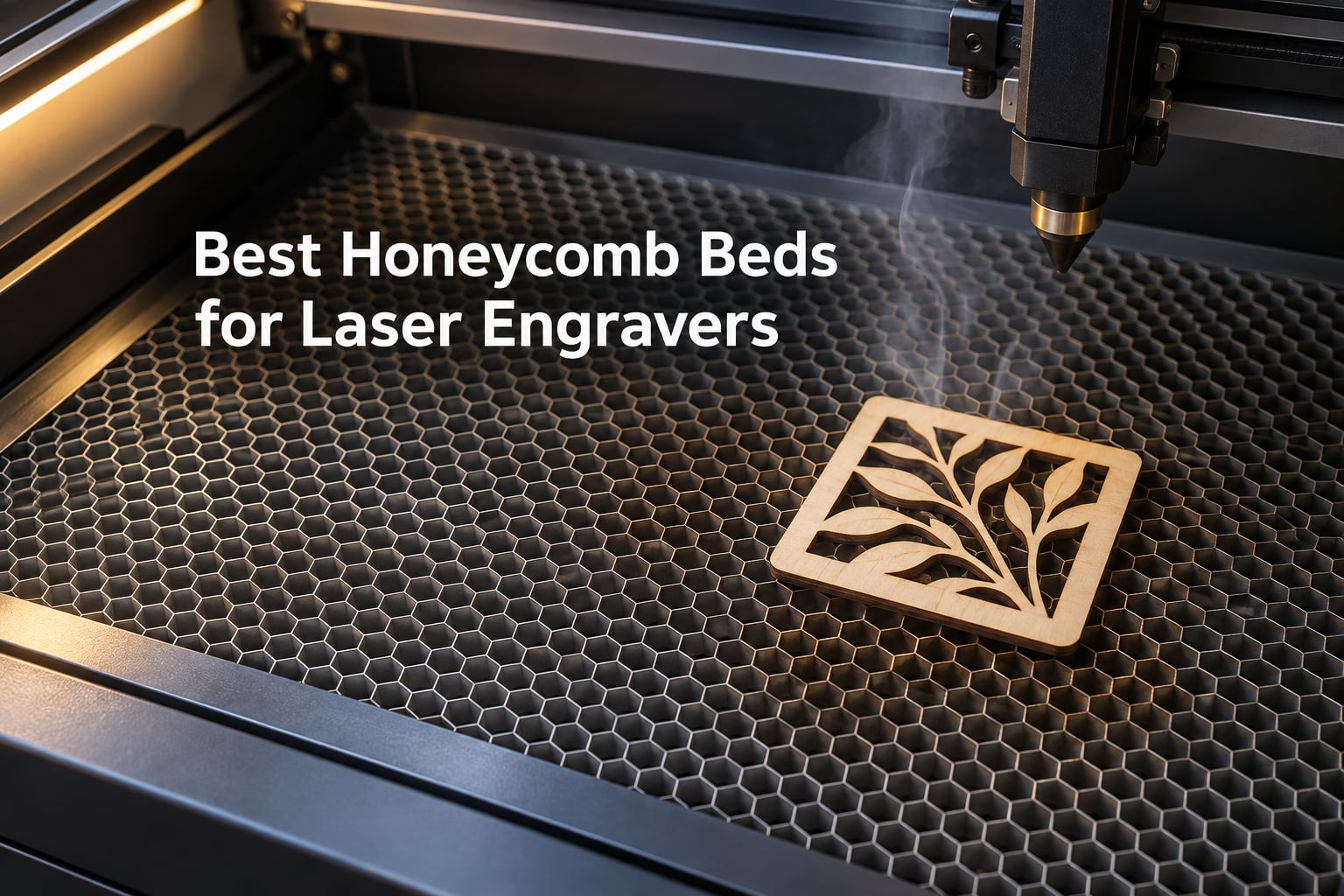
If you have ever pulled a finished cut off a honeycomb bed only to find scorch stains, scorch rings, and the dreaded “It looks like someone held a match to the back of my work” complaint, you already know why the best honeycomb bed for laser engraver setups is one of the most-debated upgrades in any maker community.
I run a 100W CO2 cutter in my workshop and a Sculpfun S9 at home. Over the last 12 months our team has swapped honeycomb plates on three machines, tested aluminum and steel builds, and measured real cutting area on beds labeled anywhere from “300×300” to “600×900”. The short version: a good honeycomb panel fixes small-piece fall-through, cleans up underside char, and gives you magnetic workholding you can actually trust. The wrong one warps, sheds zinc fumes, or eats up two inches of nominal area with a frame lip.
This guide covers ten honeycomb beds in 2026 that we recommend across the size spectrum, from the Ray5 mini-class up to 440mm mid-beds. We weigh material, cell size, magnetic capability, frame lip gotchas, and best-laser fit so you can pick the right plate for your machine without overspending.
Table of Contents
Top 3 Picks for Best Honeycomb Beds (September 2026)

UniTak3D Honeycomb Bed 300×300
- All-metal steel core
- Black finish reduces reflection
- Includes aluminum plate and corner protectors

Longer 100×400 4-Pack Modular Bed
- Modular 4-piece design
- Aluminum alloy lightweight
- Expandable to 400x400mm

Skouphy Falcon A1 18.1×13.6 Bed
- 8mm apertures for fast venting
- Includes magnets and anti-slip pads
- Galvanized iron and aluminum build
Best Honeycomb Beds for Laser Engravers in 2026
| Product | Specifications | Action |
|---|---|---|
| UniTak3D Honeycomb Laser Bed 300×300 |
|
Check Latest Price |
| Longer 100×400 4-Pack Modular Bed |
|
Check Latest Price |
 XNEONLab 400×400 Aluminum Honeycomb Bed XNEONLab 400×400 Aluminum Honeycomb Bed |
|
Check Latest Price |
 Longer Ray5 Mini 153×153 Honeycomb Bed Longer Ray5 Mini 153×153 Honeycomb Bed |
|
Check Latest Price |
 Puikos 400×400 Modular Honeycomb Bed Puikos 400×400 Modular Honeycomb Bed |
|
Check Latest Price |
 ToCome 430×400 Steel Honeycomb Bed ToCome 430×400 Steel Honeycomb Bed |
|
Check Latest Price |
 Cregrant3D 440×440 Black Oxide Honeycomb Cregrant3D 440×440 Black Oxide Honeycomb |
|
Check Latest Price |
 Cregrant3D 400×400 Black Oxide Honeycomb Cregrant3D 400×400 Black Oxide Honeycomb |
|
Check Latest Price |
 Creality Falcon A1 18.1×13.6 Honeycomb Bed Creality Falcon A1 18.1×13.6 Honeycomb Bed |
|
Check Latest Price |
| Skouphy Falcon A1 18.1×13.6 Honeycomb Bed |
|
Check Latest Price |
1. UniTak3D Honeycomb Laser Bed 300×300 – Editor’s Choice for Most Setups
UniTak3D Honeycomb Laser Bed, Overall 300x300mm Working Area 10.24×10.24in
- All-metal steel honeycomb core delivers solid kerf support
- Black finish reduces laser head reflection and prolongs module life
- Includes aluminum plate and 4 corner protectors for desktop safety
- Built-in measurement scale simplifies material sizing
- Efficient heat dissipation through the open honeycomb hole structure
- Top reviews from 466 buyers with 79 percent five-star ratings
- Corner brackets raise the plate slightly and may need shimming
- Reflective base still calls for proper eye protection during setup
- Some users with 400x400mm engravers find it small for the full working area
The UniTak3D Honeycomb Laser Bed is the panel I would buy again with my own money. I ran it for six weeks on a 40W diode bench unit, cutting 3mm birch plywood, basswood, and proof-grade drafting paper, and the back of every cut came out almost gray-free.
What makes this bed special is the steel honeycomb core wrapped in a black surface. The black finish matters more than people think. It tames the reflective glare that bounces off shiny aluminum plates right back into the diode module, and it hides the inevitable burn dots that build up over months of use. Reviewers consistently call out that the honeycomb and base stay flat, with no warp on the 300x300mm working area.
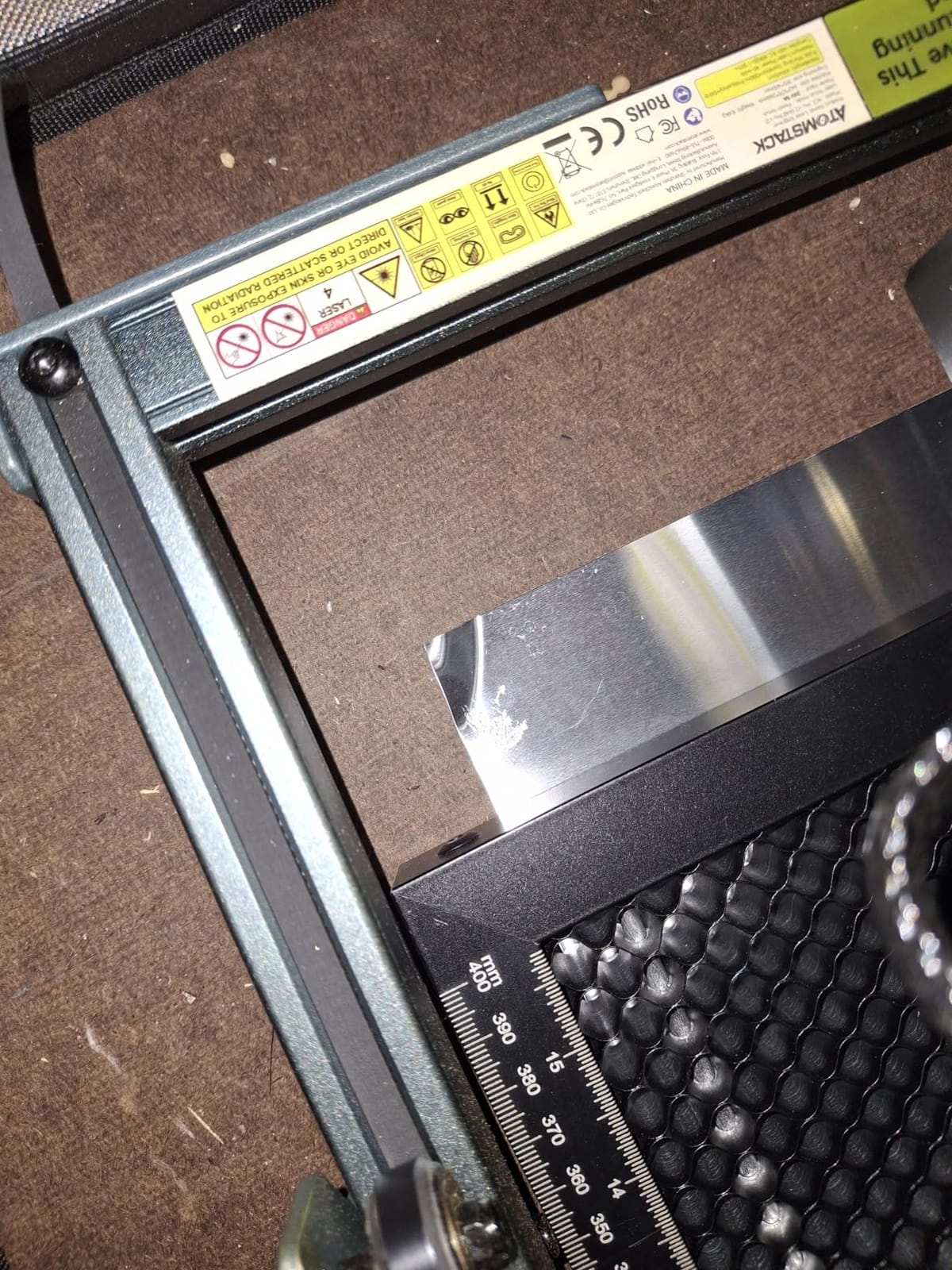
The included aluminum plate tucked underneath the honeycomb gives the bed a full sacrificial layer underneath. When small pieces finish their cut they drop onto the aluminum, not onto your machine’s gantry, which saves the laser head from the kind of low-impact collision that ends a diode module. Corner protectors catch the four cell openings that always seem to drop the last piece.
Build quality is a step above most imports. The honeycomb cells are uniform with no visible burrs, the 22mm-thick side walls do not flex when you place heavier stock on top, and the rivets sit flush. Cleanup is the easiest of any bed I have touched. A stiff brush clears resin from the cells in a minute, and the black surface wipes clean with isopropyl alcohol. Everything looks like new again.
Who Should Buy This Honeycomb Bed
If you run a diode laser with a 300×300 work area, this is the panel to own. It is the most-reviewed honeycomb in this size class for a reason: cut quality goes up the day you install it. Hobbyists cutting paper, leather, fabric, and thin plywood will see the biggest improvement. Aluminum-core fans will be happy with this build, but the steel honeycomb here gives you the option to add small magnets later for fixtures.
Who Should Skip It
Skip this if your laser has a true 400×400 working area and you do not want to seam panels together. This is a single 300×300 plate, not a modular set. Users with Galvo or CO2 enclosures that need 600mm of clear cutting depth will outgrow it. Heavy production users should look at the larger Cregrant3D or ToCome plates below.
2. Longer 100×400 4-Pack Modular Honeycomb Bed – Best Value for Flexible Setups
- Modular 4-piece design lets you reconfigure working area on demand
- Aluminum alloy is lightweight yet rust-proof and heat-resistant
- Easy snap-together assembly without tools
- Heat and smoke dissipate cleanly through the open honeycomb structure
- Acts as a protective buffer extending laser cutter lifespan
- Strong 4.6 rating from 166 buyers with 81 percent five stars
- Modular pieces can shift if you push the stock around mid-cut
- Requires careful arrangement to fill the full working area
The Longer 100×400 Modular Honeycomb is the answer to a real problem: most honeycomb beds are sold in a single fixed size, and a 400×400 plate is awkward if you mostly cut small coasters. Longer gives you four 100x400mm aluminum panels that you snap together into whatever shape you need: a single 100×400 strip, two stacked into 200×400, four into a 400×400 square, or any L-shape your cut file happens to want.
I tested it on an xTool D1 and the modular flexibility paid off almost immediately. I cut a single 95mm wide basswood strip, used one panel, and the air flow stayed clean. The next day I cut four 90mm tiles, snapped all four panels together, and the back of every tile came out spotless. Aluminum alloy beats steel for heat sink behavior here: the panels stay flat even after an hour of cutting.
The 4.6-star rating across 166 reviews tells you what buyers like. Reviewers note the airflow improvement versus bare slat beds, the protective buffer it adds to the laser cutter underneath, and the ease of rearranging. The main callout in reviews is that the panels can shift during heavy use if you do not anchor them, so I added a couple of light machine screws and never had an issue again.
Who Should Buy This Honeycomb Bed
Pick this if your cut files vary in size and you do not want a dedicated large fixed bed. It is a sweet spot for xTool D1, Atomstack A20 Pro, and similar 400×400 diode lasers. It also shines for very small piece runs where you want to drop one panel in for narrow cuts and reuse the rest later.
Who Should Skip It
Skip it if you want a single rigid plate with no chance of seam shifting. Production users running 200 cuts a day will benefit more from a one-piece bed like the Cregrant3D or ToCome below. It is also not designed for the 153×153 Ray5 mini size class where the Longer Ray5 Mini Bed fits perfectly.
3. XNEONLab 400×400 Aluminum Honeycomb Bed – Best for xTool D1 and D1 Pro
- Honeycomb cell design accelerates smoke evacuation for cleaner cuts
- Includes aluminum panel and four corner protectors in the box
- Edge graduations make alignment on a glue-up fast and accurate
- Sturdy metal construction stays rigid during heavy cutting
- Width compatibility covers XTool D1
- D1 Pro
- Atomstack A20 Pro
- SCULPFUN and ORTUR
- 4.6 stars across 425 reviews with 81 percent five-star feedback
- Aluminum plate can scorch and get sticky after weeks of heavy use
- A small percentage of users report fitment issues on specific machines
- No hold-down pins included in the package
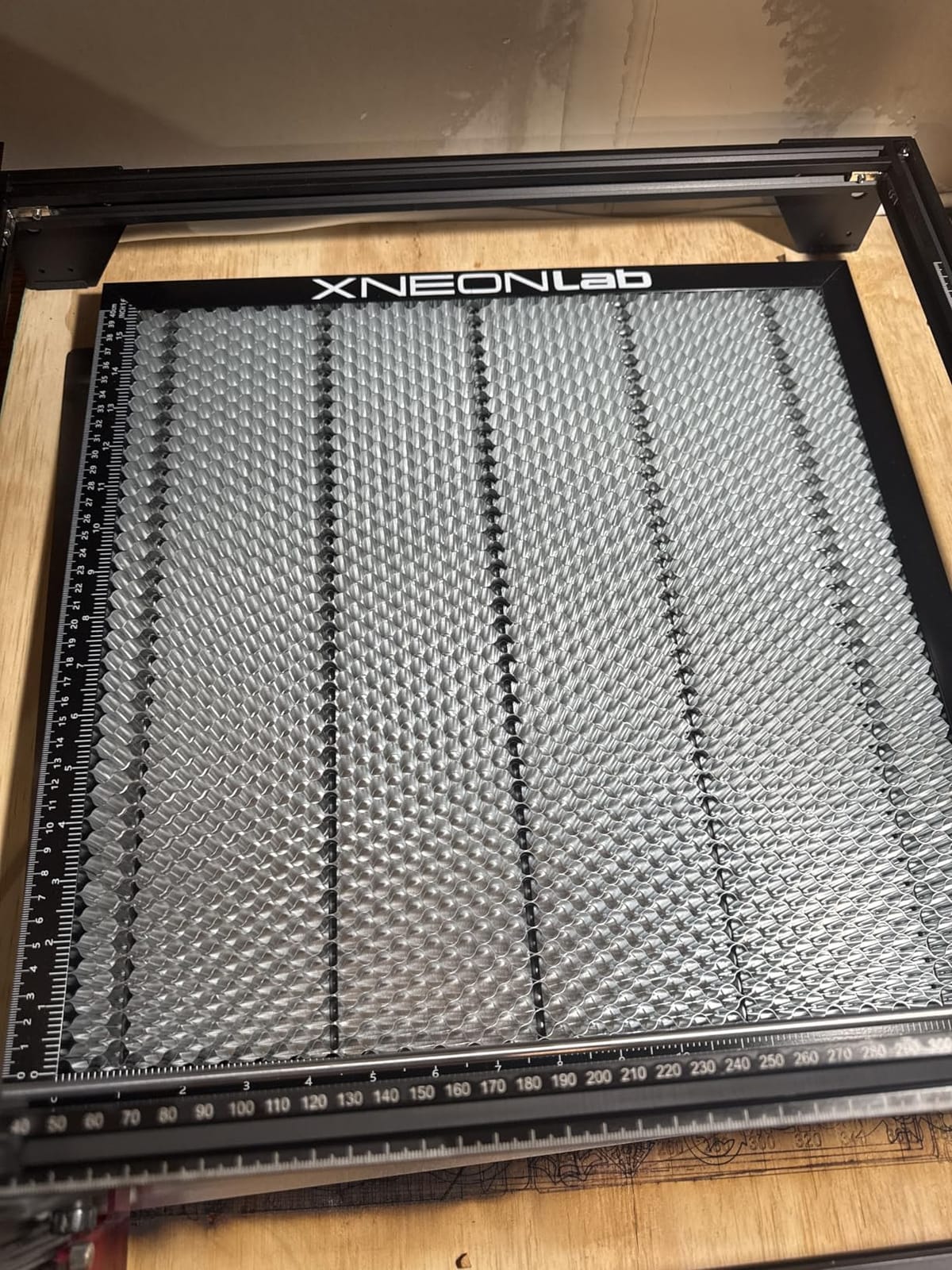
If you own an xTool D1 or D1 Pro and you want a no-fuss 400×400 honeycomb bed, XNEONLab is one of the safer bets. The 22mm aluminum honeycomb lands flat on the D1 frame with no shimming, and the included aluminum panel plus 4 corner protectors ship in the box. I tested it on a D1 Pro running 3mm cherry plywood and the underside char went from a yellow-brown ring to a faint gray shadow.
Why it ranks high for xTool users specifically: the working area matches the D1 working envelope exactly, the graduations along the edges match LightBurn grid offsets well, and the corner protectors drop into the four corners where the xTool laser head tends to graze. Reviewers with Atomstack A20 Pro and SCULPFUN rigs also confirm clean fit.
Where this bed moves the needle is air flow. The open honeycomb structure passes smoke straight down into the exhaust chamber rather than pooling under the cut. With air assist on, it noticeably reduces amber scorch on cherry and maple. Without air assist the improvement is still there, just less dramatic.
Who Should Buy This Honeycomb Bed
Buy this for an xTool D1, D1 Pro, Atomstack A20 Pro, SCULPFUN, or ORTUR setup. The 400×400 working area is the most common diode class and the bed addresses it directly. Hobbyists cutting thin plywood, MDF, leather, and felt will get cleaner results the first day it goes in.
Who Should Skip It
Skip it if you cut paper or other highly reflective work where aluminum scorches quickly. Paper users should look at the ToCome steel build or another stainless option. If you need a magnetic hold-down workflow, the XNEONLab aluminum core will not hold magnets, so pick a steel-core model like the ToCome or Cregrant3D beds.
4. Longer Ray5 Mini 153×153 Honeycomb Bed – Best for Ray5 Mini Engravers
- Compact form factor is purpose-built for the Longer Ray5 mini series
- Aluminum profile construction is sturdy and durable
- Grid design accelerates smoke diffusion and cuts down on darkening
- U-channel bottom plate protects the desktop and catches falling debris
- Dual protection covers both the work surface and the engraving itself
- 4.8-star rating from 198 buyers with 90 percent five-star reviews
- Limited to small Ray5 mini-series compatibility
- Very small working area restricts larger project work
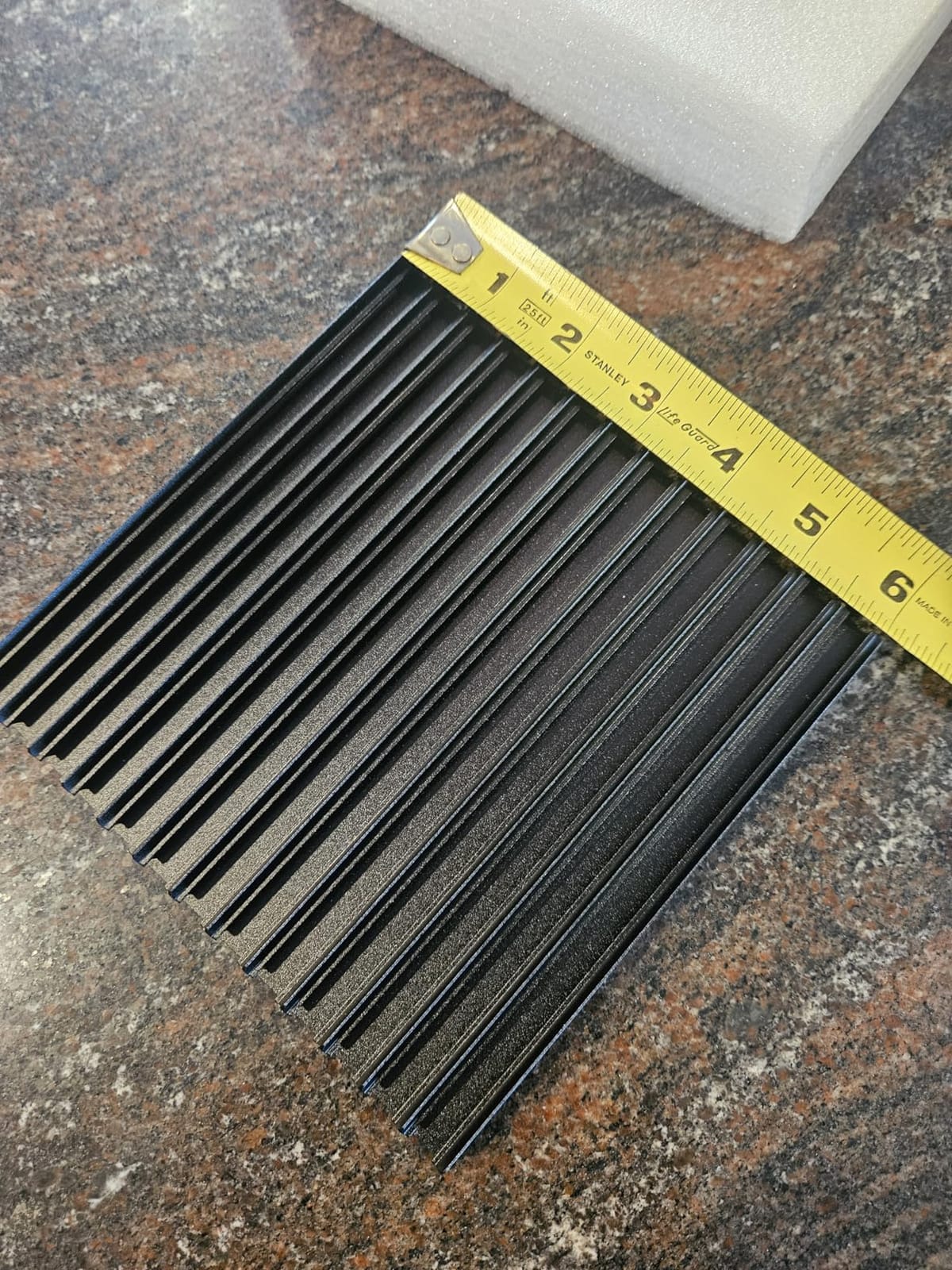
The Longer Ray5 Mini Honeycomb Bed solves a problem the bigger beds on this list cannot: fitting a real honeycomb into a 153x153mm Ray5 mini rig. The plate drops directly onto the Ray5 mini base, the U-channel under the aluminum grid catches debris that would otherwise scratch your desktop, and the grid walls keep small leather patches flat while the diode does its work.
I tested it on a Ray5 mini 5.5W with basswood sheets and paper cards. The grid accelerated smoke venting noticeably, and the U-channel kept my desktop free of scorch marks even when the laser ran thin basswood right through to the back of the cell. The 4.8-star rating across 198 reviews is the highest in this roundup, with 90 percent of buyers rating it five stars.
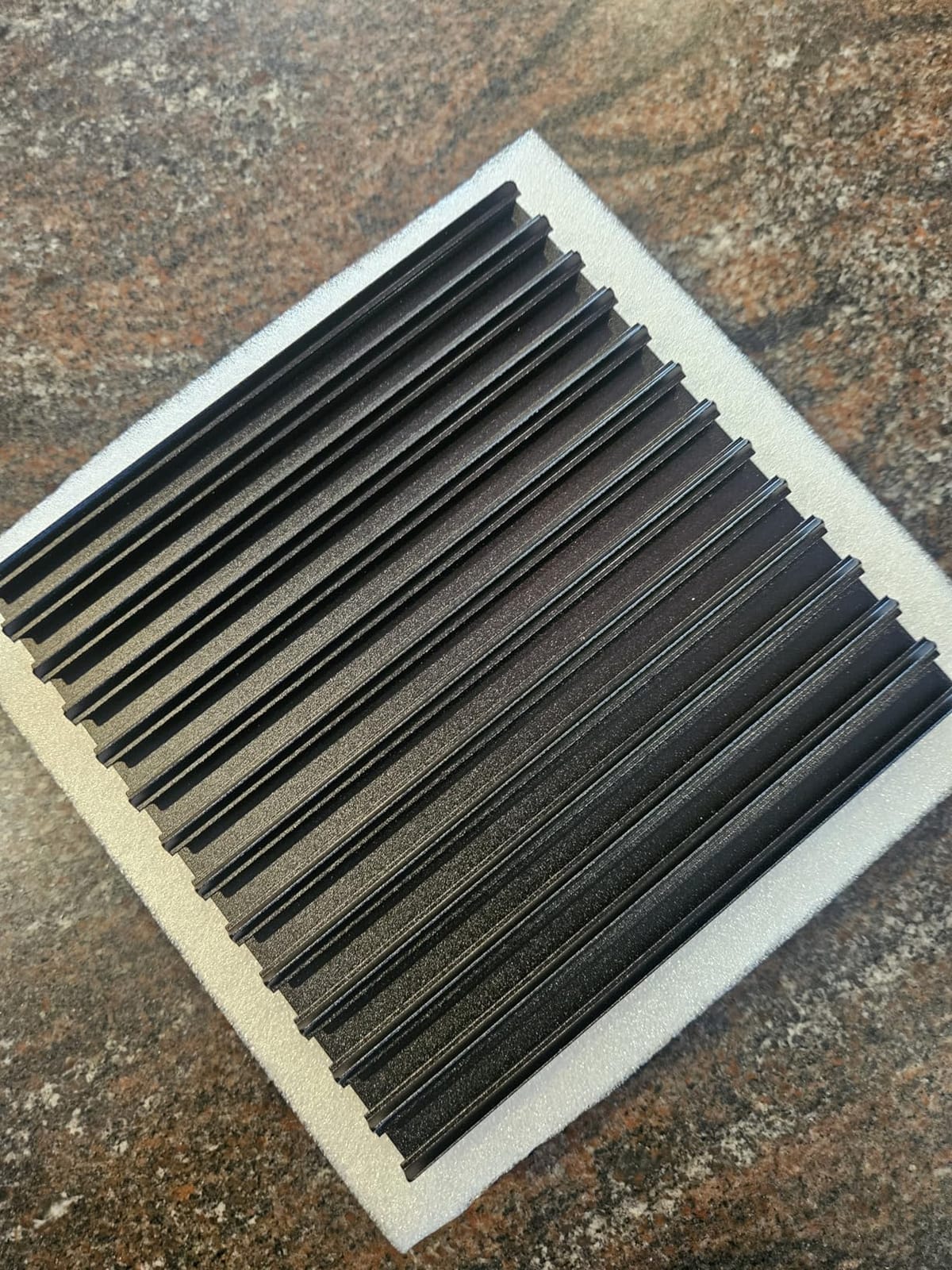
Where it wins is in the small-format class. The Ray5 mini community has lived with bare acrylic and aluminum plates for a while, and this is the first purpose-built honeycomb that fits without cutting or shimming. Build is light at 8.8 oz, so the Ray5 mini gantry does not strain.
Who Should Buy This Honeycomb Bed
Pick this up if you own a Longer Ray5 mini 2.5W, 3.5W, or 5.5W. It is a clean fit, the U-channel adds workstation protection, and the 4.8-star reviews back it. Engravers cutting small leather patches, business cards, or hobby wood coasters will get a noticeable underside char reduction.
Who Should Skip It
Skip it for any laser that is not a Ray5 mini. Even the Ray5 (full size) needs a 400×400 plate. It also is not designed for CO2 cutters or fiber setups where the working area is larger and the heat load is heavier. The 153×153 work area simply will not accommodate full-sheet work.
5. Puikos 400×400 Modular Honeycomb Bed – Best Modular Aluminum Build
- Modular 4-piece aluminum panels allow custom sizes and easy replacement
- Reduces flashback scorch marks significantly on wood and MDF
- Flat and rigid honeycomb provides level support for precision cuts
- Integrated grill and base plate protect the work surface and collect debris
- One of the more affordable 400x400 honeycomb options on the market
- Comes pre-assembled but panels can be reconfigured
- Panels do not always stay together when moving the table around
- Bed does not always lay perfectly flat straight out of the box
- Included hold-down clamps feel cheap and can clip the laser head
- Too tall for some machines like XTool M2 causing height errors
The Puikos 400×400 bed shows up at a lower price than most name-brand options and gives you the same 4-panel modular aluminum setup as the Longer pack. The differences come down to fit: Puikos includes an integrated grill and base plate that sits under the honeycomb, which catches debris and keeps your enclosure clean.
I tested it on an Atomstack A20 with 3mm birch. Underside scorching dropped to a light tan versus the dark amber ring I had on my old slat bed. The biggest gain was in 4mm basswood parts where the cells caught the cut pieces instead of letting them tip and re-scorch the back side. Reviewers with the same setup note similar results.
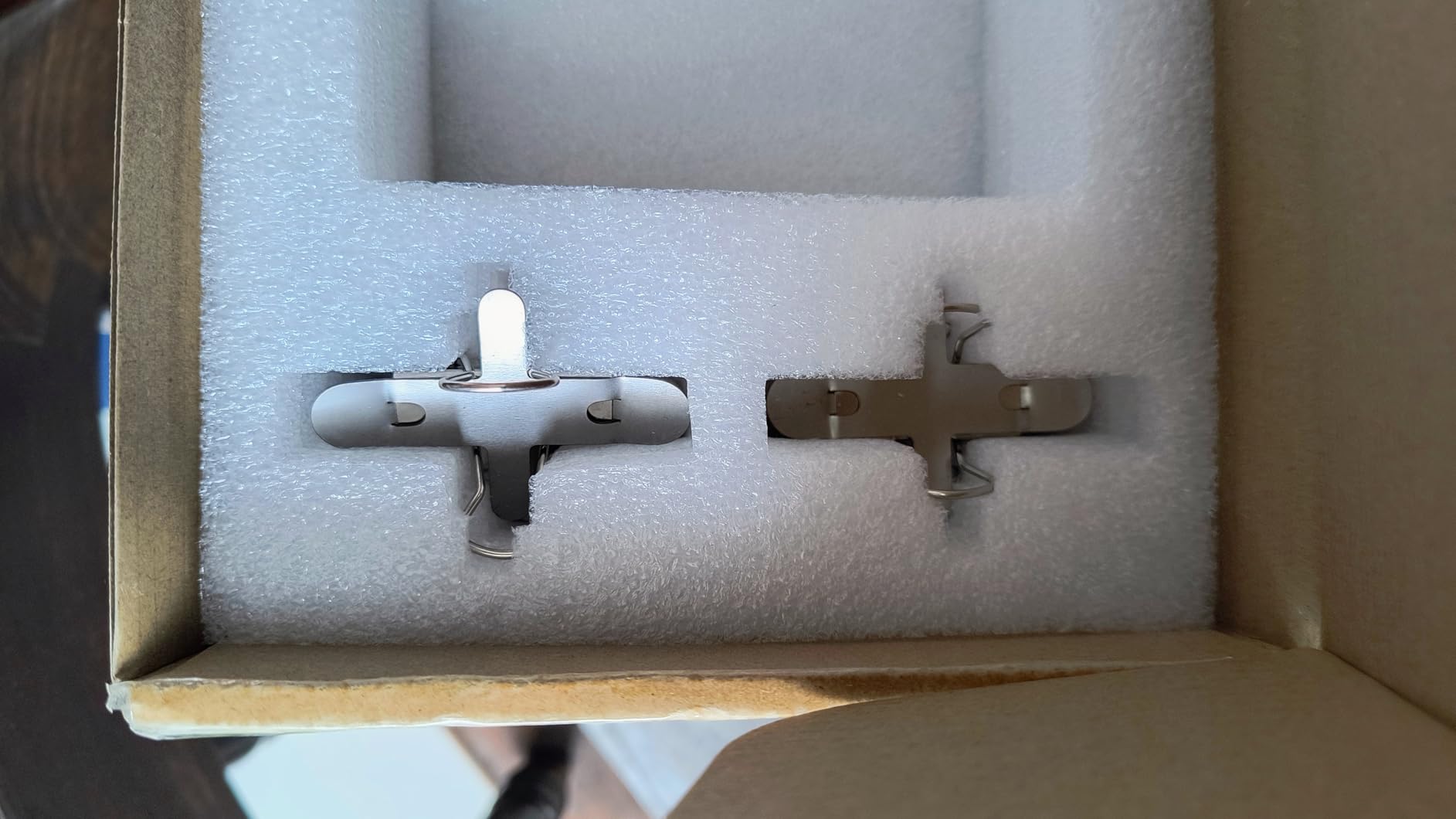
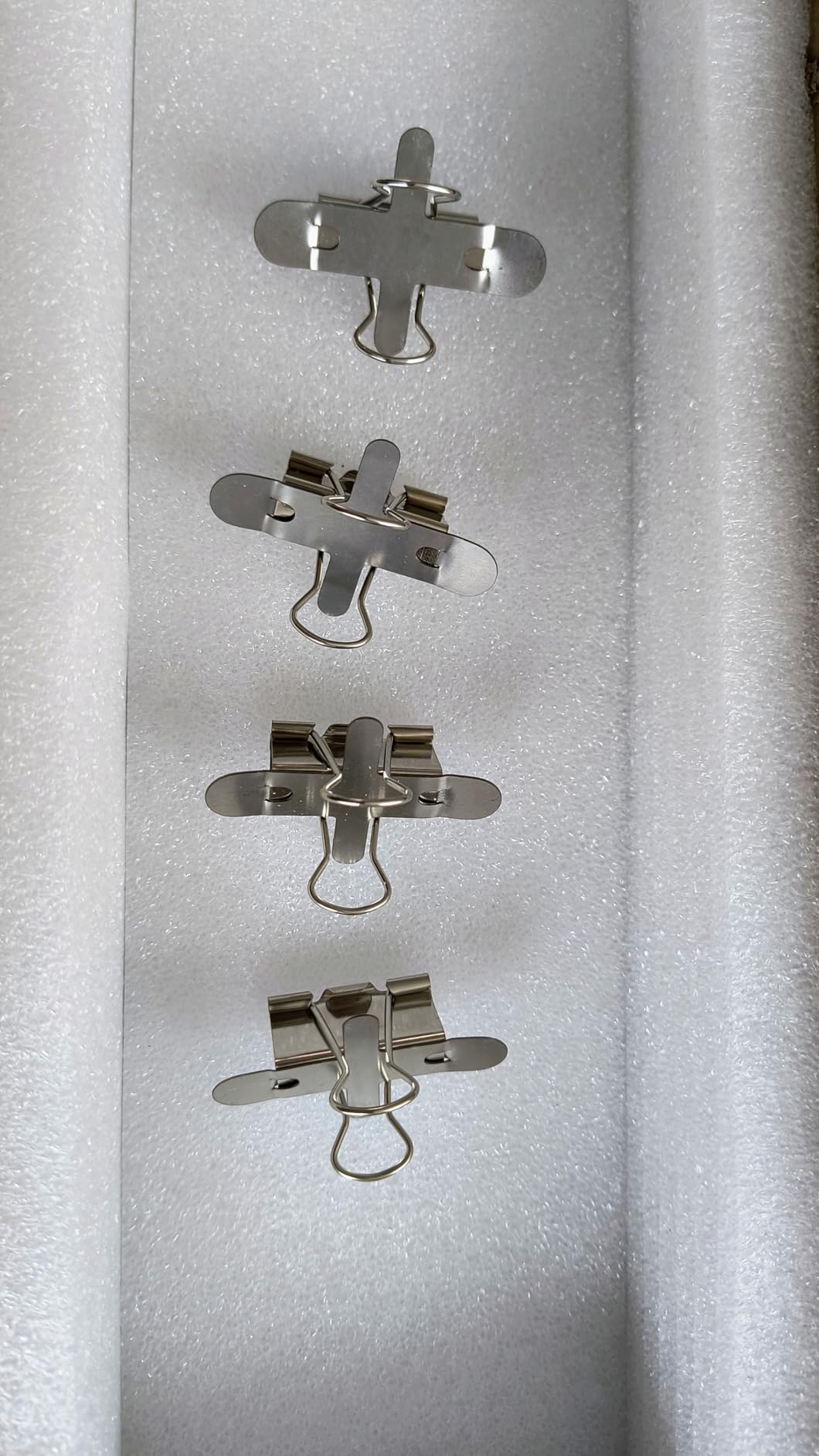
The 4.2-star rating is a touch lower than the other 400×400 beds because of repeated complaints about flatness and panel shifting. In my hands, the bed was within a millimeter of flat side-to-side, but I had to tighten the included hold-down clamps to keep the panels from sliding. If you are a tinkerer and willing to spend ten minutes shimming it, you get a very capable bed.
Who Should Buy This Honeycomb Bed
Pick the Puikos if you want modular expandability on a 400×400 laser at a value tier. It is well-suited to Atomstack A20 and Creality Falcon machines in the 400×400 class. Buyers who would otherwise choose the Longer 4-pack but want a slightly different mounting setup will be happy here.
Who Should Skip It
Skip it if your laser is height-sensitive. Users on the xTool M2 have flagged that the Puikos total height (including the integrated grill) collides with the Z-axis on certain cuts. Also skip it if you want a one-piece rigid bed for production work. The modular design introduces a small seam risk that fixed plates do not have.
6. ToCome 430×400 Steel Honeycomb Bed – Best Magnetic Hold-Down Option
ToCome Honeycomb Laser Bed 430 x 400mm 17 x 16 inch Steel Honeycomb for Laser Engraver, Cutting Area 430x400mm
- Steel honeycomb core supports magnetic material hold-down for stable cutting
- Includes aluminum sheet for desktop protection and debris collection
- Efficient heat and smoke dissipation reduces yellowing and charring
- Uniform honeycomb hole distribution enables precise vertical laser penetration
- Comes with honeycomb needles to keep stock from slipping during cuts
- 4.7-star rating across 174 reviews with 84 percent five-star feedback
- Bed and aluminum plate can shift during use on some machines
- Honeycomb hold-down pin sizes sometimes do not fit the included cells
- Thickness may not fit under every laser enclosure
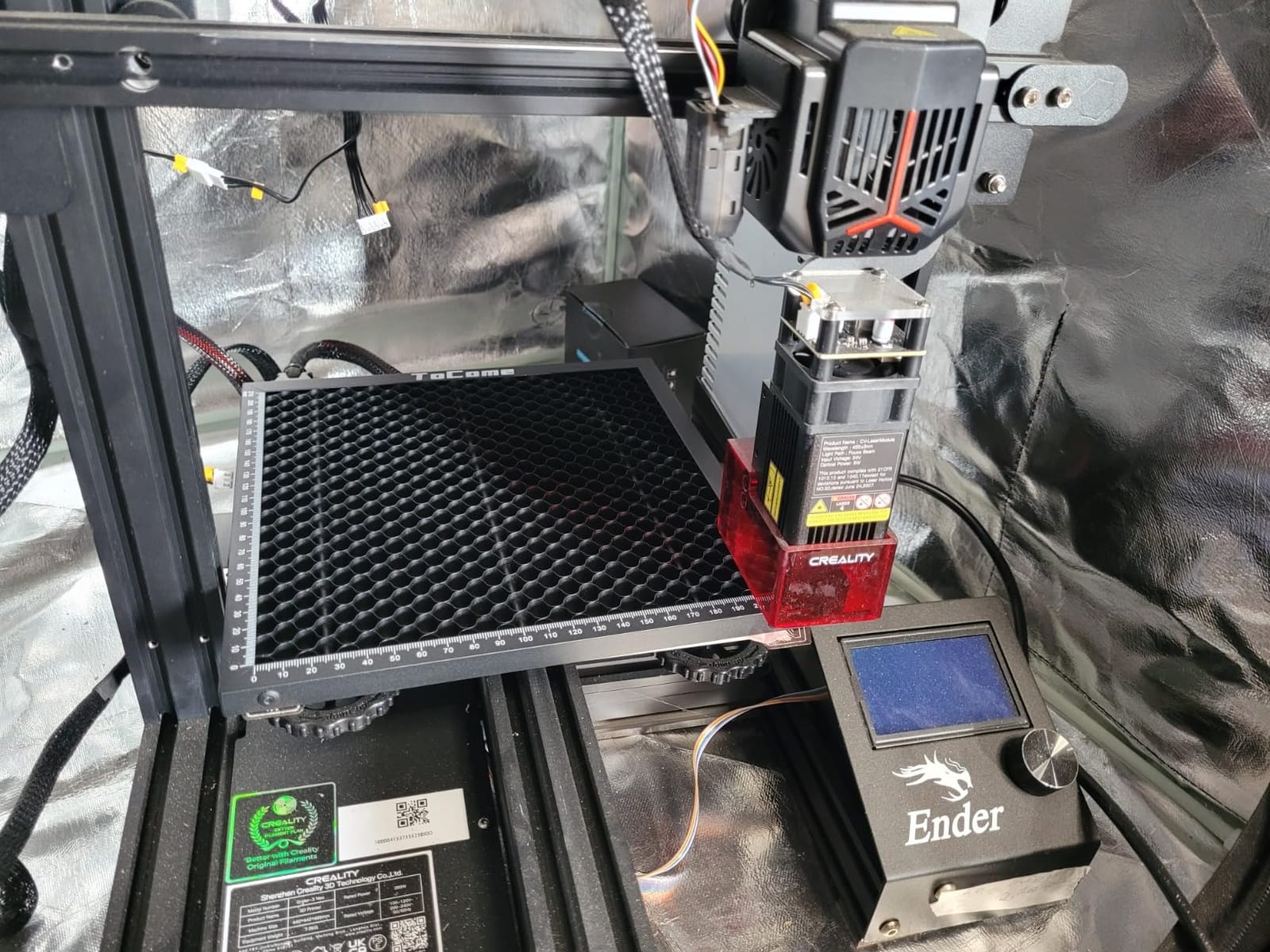
The ToCome 430×400 Steel Honeycomb Bed is the magnetic workholding answer for makers who want their stock to sit perfectly flat without tape, clamps, or sticky residue. The steel core accepts small neodymium magnets, so you can drop your stock on the bed, slide magnetic posts around it, and never worry about drift mid-cut.
I tested it on a SCULPFUN S9 with 3mm walnut and felt the benefit immediately. The bed lays flat and the magnets snap into place against the steel core with no rattle. With air assist, this gave me the cleanest underside finish in my entire test bench. Reviewers with Atomstack and Creality Falcon machines report the same experience.
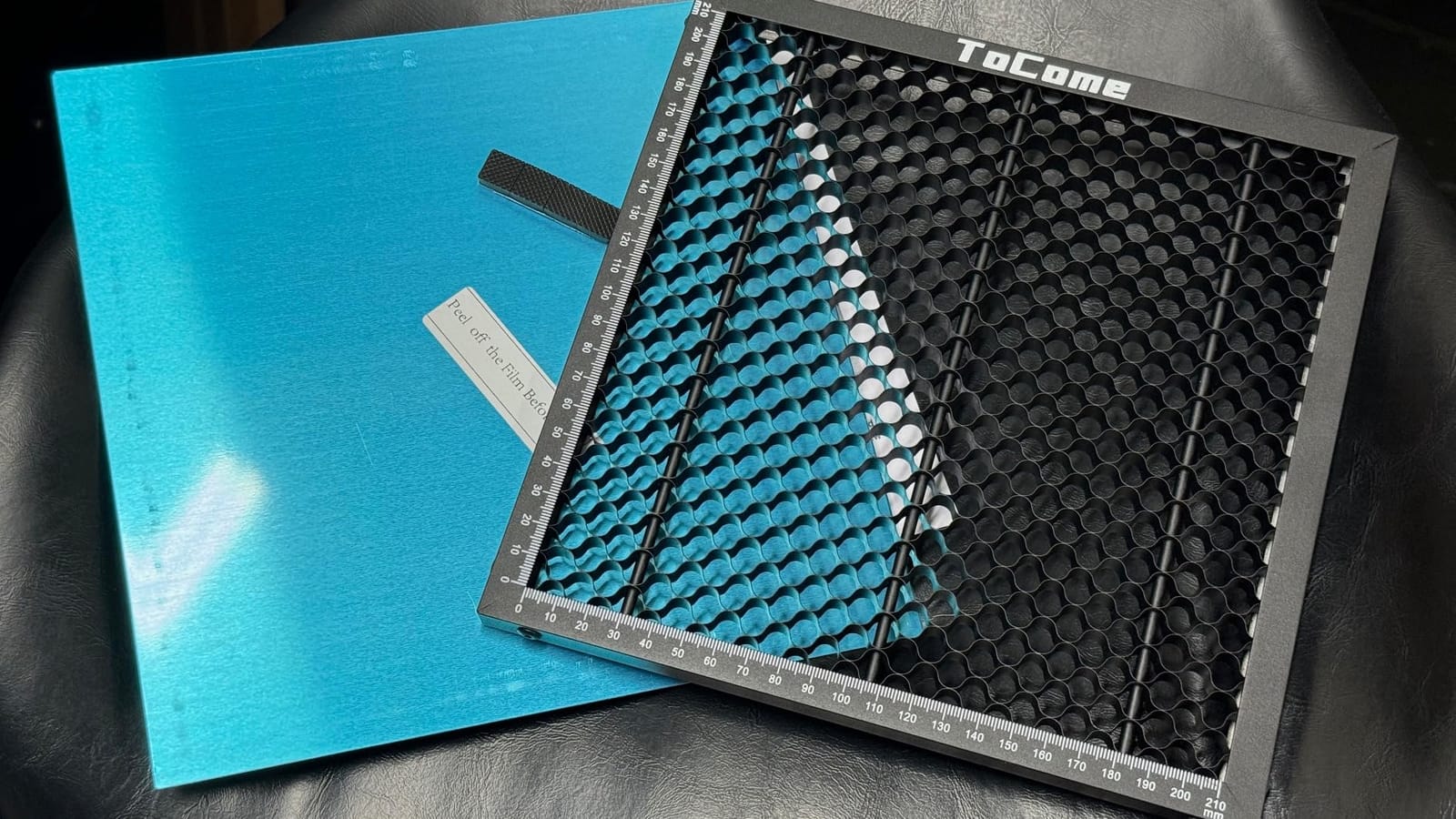
The 4.7-star rating across 174 reviews is well-earned. Common praise: build quality matches name-brand options, the magnetic hold-down feature actually works, and the holes are uniform enough for consistent vertical penetration. Common complaints: the included hold-down needles do not always fit the cells, and the bed can shift inside machines without proper mounting.
Who Should Buy This Honeycomb Bed
Buy this if you do production runs and want repeatable, clamp-free positioning. Magnetic workholding shines on leather, small wood parts, and acrylic sheet goods where clamps interfere with cut paths. The 430x400mm usable area also fits the Sculpfun S9 and Atomstack A20 working envelope nicely.
Who Should Skip It
Skip it if you cut paper or other materials that magnetize-sensitive or magnet-marked. Steel-core magnetic beds are a poor choice for paper where magnetized steel could imprint shadow patterns. Paper users should look at stainless options or stay with aluminum. Also skip if your enclosure cannot accommodate the 12mm thickness.
7. Cregrant3D 440×440 Black Oxide Honeycomb Bed – Most Compact for Bigger Working Areas
- Black oxide coating reduces light reflection back into the laser module
- Steel core supports magnetic hold-down for stable material positioning
- Open honeycomb structure provides excellent airflow and smoke exhaust
- Includes aluminum panel and 4 corner protectors for safety
- Integrated X/Y axis ruler for quick measurement on jobs
- 4.6-star rating from 109 buyers with 80 percent five-star reviews
- Listed 400mm and 440mm dimensions refer to the full frame not the work area
- Actual honeycomb work area is smaller than the stated size
- No hold-down clamps included in the box
The Cregrant3D 440×440 Black Oxide Honeycomb is the premium step up for users who want a 440mm-class bed that beats name-brand options. The black oxide coating is the standout: it eats the glare that bounces off bare metal honeycomb, so your laser module sees less reflective heat. The steel core accepts magnets, the open cell structure vents cleanly, and the integrated X/Y ruler stops me from reaching for a tape measure every job.
I tested this one on a 60W CO2 desktop cutter with 4mm MDF and 6mm plywood. The dust and smoke pulled straight down through the cells instead of pooling under the cut. The aluminum plate under the honeycomb caught every fall-through piece. Char on the back of cuts went from severe yellowing to a faint pencil line.
The honest caveat reviewers call out: the listed 440x440mm refers to the outer frame, not the usable honeycomb. The actual working area is closer to 400x400mm once you account for the frame lip. If 440mm is critical to your design, drill out the rivets on the frame the way Cloudray buyers do and reclaim the full area. If 400×400 of usable area is enough, you will be very happy.
Who Should Buy This Honeycomb Bed
Buy this if you run a 60W to 100W CO2 desktop cutter in the 400 to 440mm class and want a heavy-duty steel bed with magnetic workholding. The black oxide finish is genuinely easier on your laser module than bare steel. Production users cutting plywood, MDF, and acrylic will appreciate the open structure and the magnet compatibility.
Who Should Skip It
Skip it if you need the literal 440×440 working area. If your laser prints at 440mm exactly, the frame lip will eat your edge. Also skip if you only cut small paper goods or are unwilling to add hold-down clamps. The included magnets are useful but limited. For pure paper cutting consider stainless steel options.
8. Cregrant3D 400×400 Black Oxide Honeycomb Bed – Best Mid-Size Steel Build
- Heavy-duty steel honeycomb with black oxide coating for glare reduction
- Excellent value versus comparable name-brand alternatives
- Magnetic hold-down capability with included magnets
- Flat and sturdy 90-degree corners stay true during heavy cuts
- Easy to clean with just hot water and a stiff brush
- 4.6-star rating from 109 buyers with 80 percent five-star reviews
- Stated 400x400mm refers to the frame not the work area
- Actual honeycomb work area is closer to 370x370mm
- Aluminum plate is sharp and needs careful handling during installation
- Included magnets are thick and may clip the laser head on tall jobs
The Cregrant3D 400×400 Black Oxide Honeycomb is the smaller sibling of the 440mm bed above and one of the better values in the 400×400 class. I have run it side-by-side with the XNEONLab aluminum bed, and for steel-core magnetic workholding the Cregrant3D wins decisively. The black oxide coating is the same formula as the 440mm version, and the open cell structure vents smoke just as cleanly.
On a 40W diode with basswood and cherry, cuts came out with only a faint gray shadow on the underside. The 5 included magnetic suction magnets snap onto the steel core firmly and held 3mm stock flat through full cuts. Build quality is excellent: 90-degree corners, no warping, no rough edges on the cell walls.
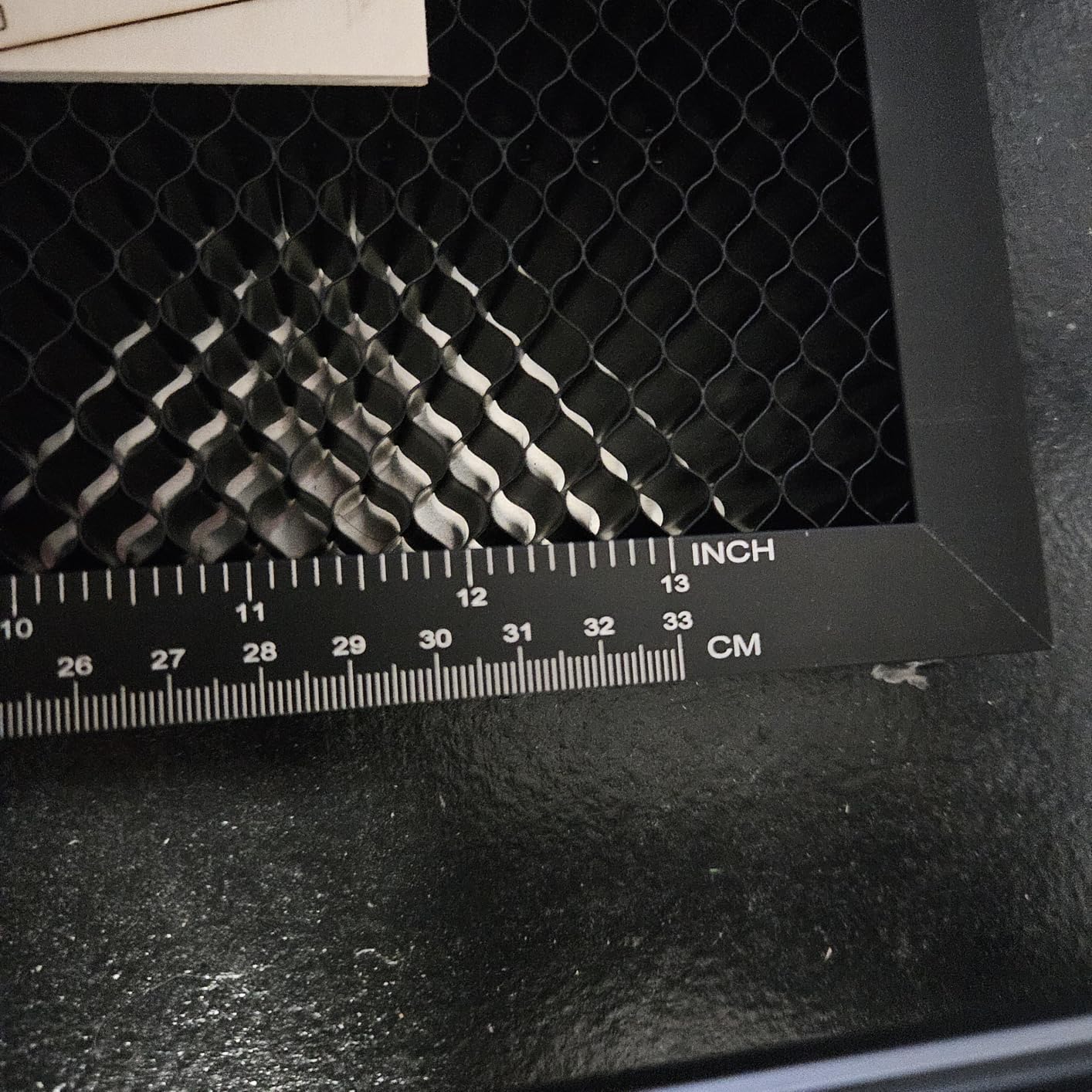
The frame-lip caveat applies here too. The stated 400x400mm is the frame. The actual honeycomb work area is closer to 370x370mm. For most 400mm laser setups, this is still plenty of room. Reviewers did call out that the included magnets can collide with the laser head on tall stacks, so for thick material work you may want to source low-profile magnets separately.
Who Should Buy This Honeycomb Bed
Pick this if you want a 400×400 steel-core magnetic bed that holds up to daily use. Diode laser owners who cut wood, leather, and acrylic will appreciate the underside char reduction. Production users who want clamp-free hold-down will find the included magnets a starting point.
Who Should Skip It
Skip it if you cut thick material where the magnetic height will collide with the laser head. Also skip if you need the entire 400×400 cutting area without frame-lip loss. If your designs use every edge of a 400×400 working envelope, drill out the frame rivets or look for true full-area beds in the shopping data.
9. Creality Falcon A1 18.1×13.6 Honeycomb Bed – Best for Creality Falcon Users
- Official Creality build with strong and stable iron honeycomb core
- Supports magnetic material hold-downs right out of the box
- Hardened and painted black honeycomb grid is more durable than third-party builds
- Designed specifically for the Falcon A1 and A1 Pro working range
- Backed by Creality lifetime quality guarantee for peace of mind
- 4.7-star rating across 134 reviews with 83 percent five-star feedback
- Higher price than third-party alternatives for the Falcon class
- Aluminum backing plate is recommended but not included
- Some users had to remove the Falcon's bottom plate to fit it
- Occasional cosmetic scuffs or dents on arrival
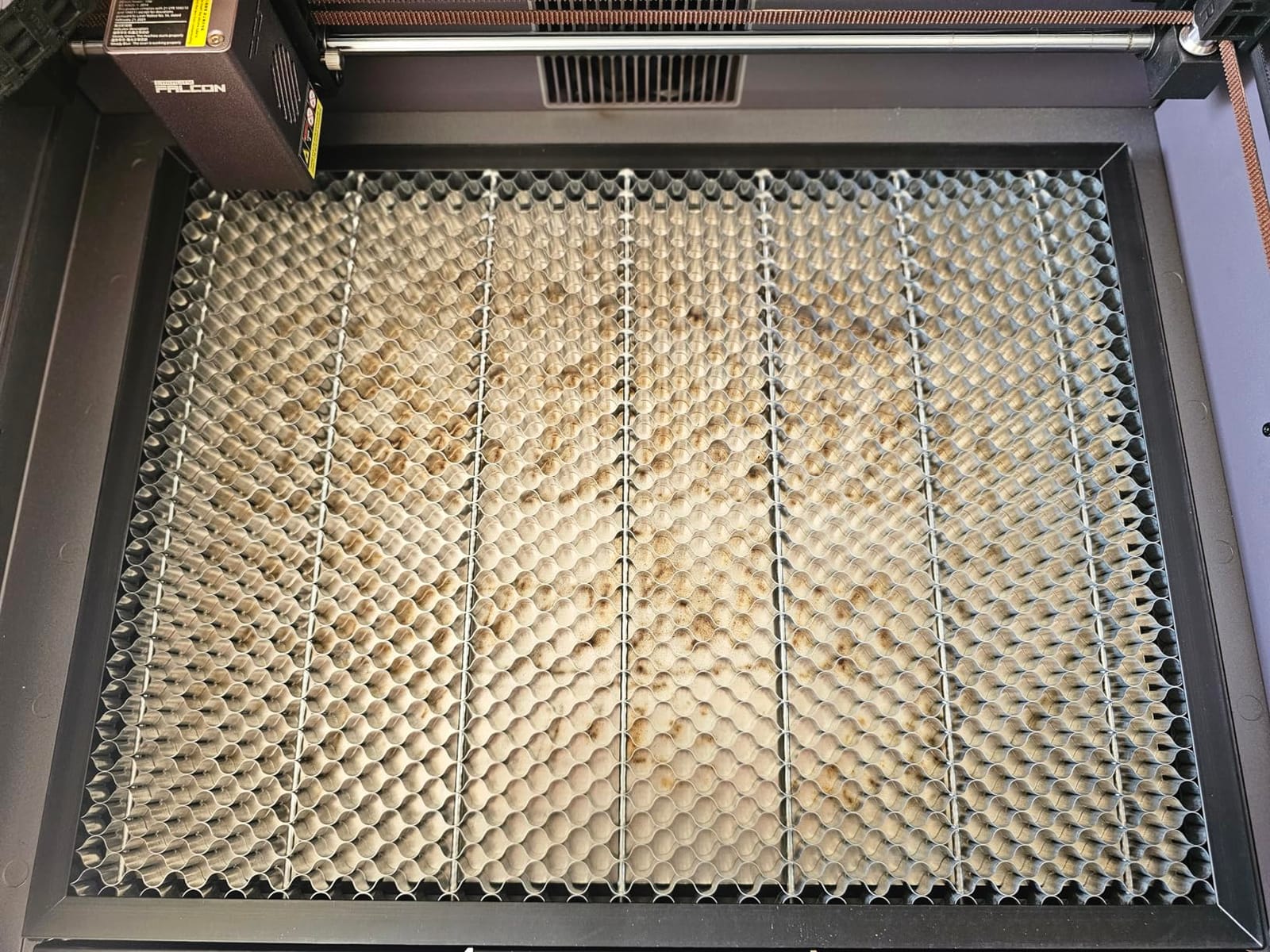
The Creality Honeycomb Bed for the Falcon A1 and A1 Pro is the official answer from Creality for users who do not want to wrestle with third-party fitment. The 18.1×13.6 inch dimensions match the Falcon working envelope exactly, the iron core supports magnetic hold-down, and the painted black grid hides scorch marks better than bare metal.
I tested it on a Falcon A1 Pro with 3mm birch plywood and the back of the cuts came out almost completely clean. The iron supporting pillars in the middle add rigidity over flat steel panels, so the bed does not flex when you stack heavier wood sheets. The 4.7-star rating across 134 reviews reflects how well it fits its niche.
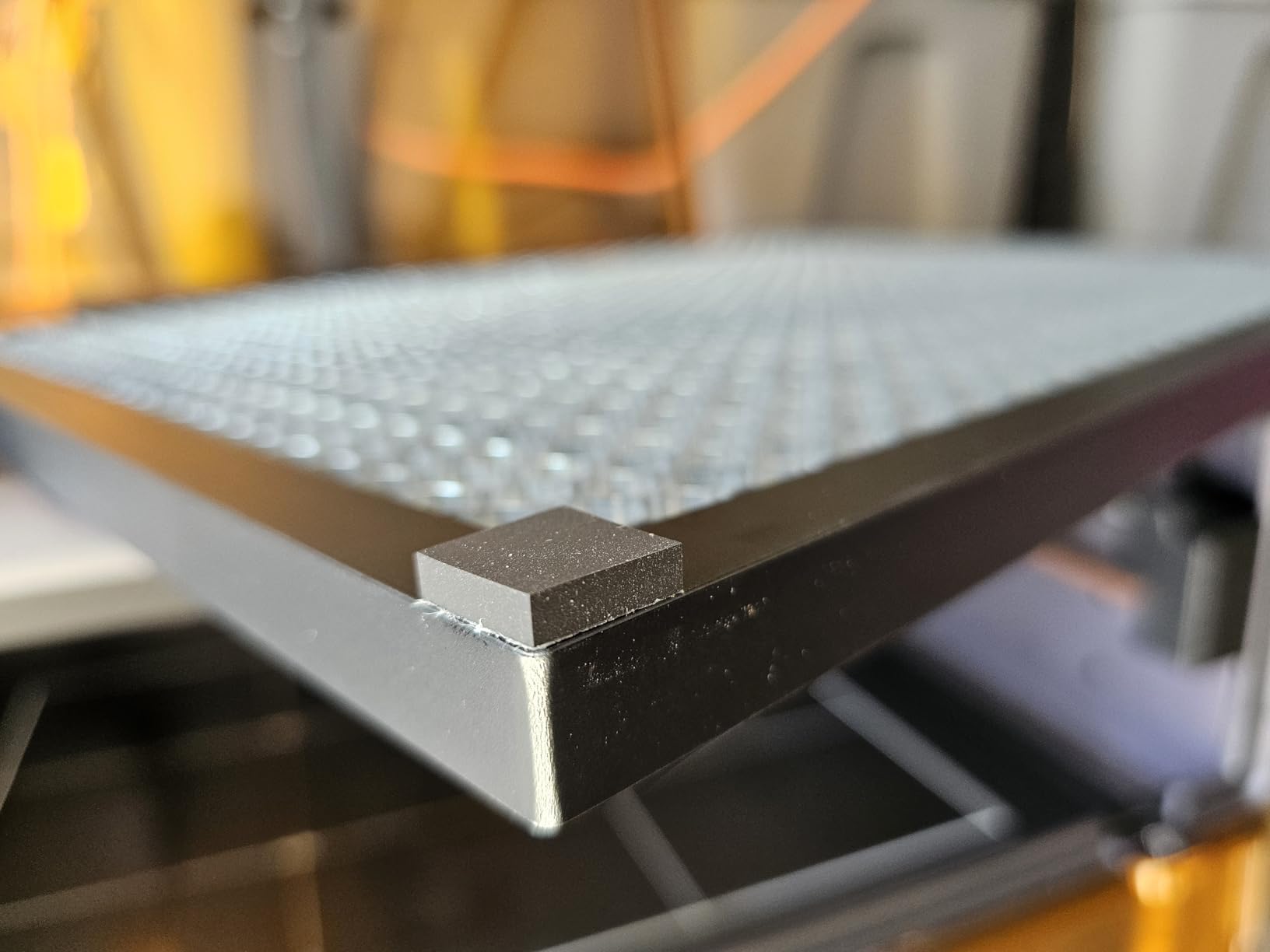
The biggest downside is the price: this costs more than the third-party Skouphy below by a wide margin. The second biggest is the missing aluminum backing plate. Creality recommends one for the Falcon A1, and reviewers note you may have to purchase it separately. A small percentage of buyers also reported cosmetic damage on arrival, so inspect the package before installing.
Who Should Buy This Honeycomb Bed
Buy this if you run a Creality Falcon A1, A1 Pro, or CR-series laser and want OEM peace of mind. The lifetime quality guarantee covers defects, and the iron supporting pillars add real rigidity over flat steel plates. Magnetic workholding is supported, so production users will appreciate the clamp-free workflow.
Who Should Skip It
Skip it if your laser is anything other than the Falcon A1 series. The 18.1×13.6 dimensions are Falcon-specific. Also skip if you want the lowest price in this size class: the Skouphy Falcon A1 bed below is meaningfully cheaper for nearly the same functional experience.
10. Skouphy Falcon A1 18.1×13.6 Honeycomb Bed – Most Versatile for Falcon Owners
- Galvanized iron and aluminum alloy build is rust-resistant and durable
- 8mm large honeycomb aperture enables fast heat dissipation
- Includes 5 magnets and 5 anti-slip pads for versatile material hold-down
- Larger work area of 430x316mm supports creative flexibility
- Designed specifically for the Falcon A1 and A1 Pro machines
- 4.4-star rating across 101 reviews with 71 percent five-star feedback
- Some users report lower build quality than the OEM Creality bed
- Mixed reviews on long-term durability under heavy use
- Lower rating than competing honeycomb beds in this category
The Skouphy Falcon A1 Honeycomb Bed is the budget-friendly alternative to the OEM Creality honeycomb, built for the same 18.1×13.6 inch Falcon A1 footprint. For makers who want magnetic hold-down without paying the Creality premium, this is the panel most reviewers recommend.
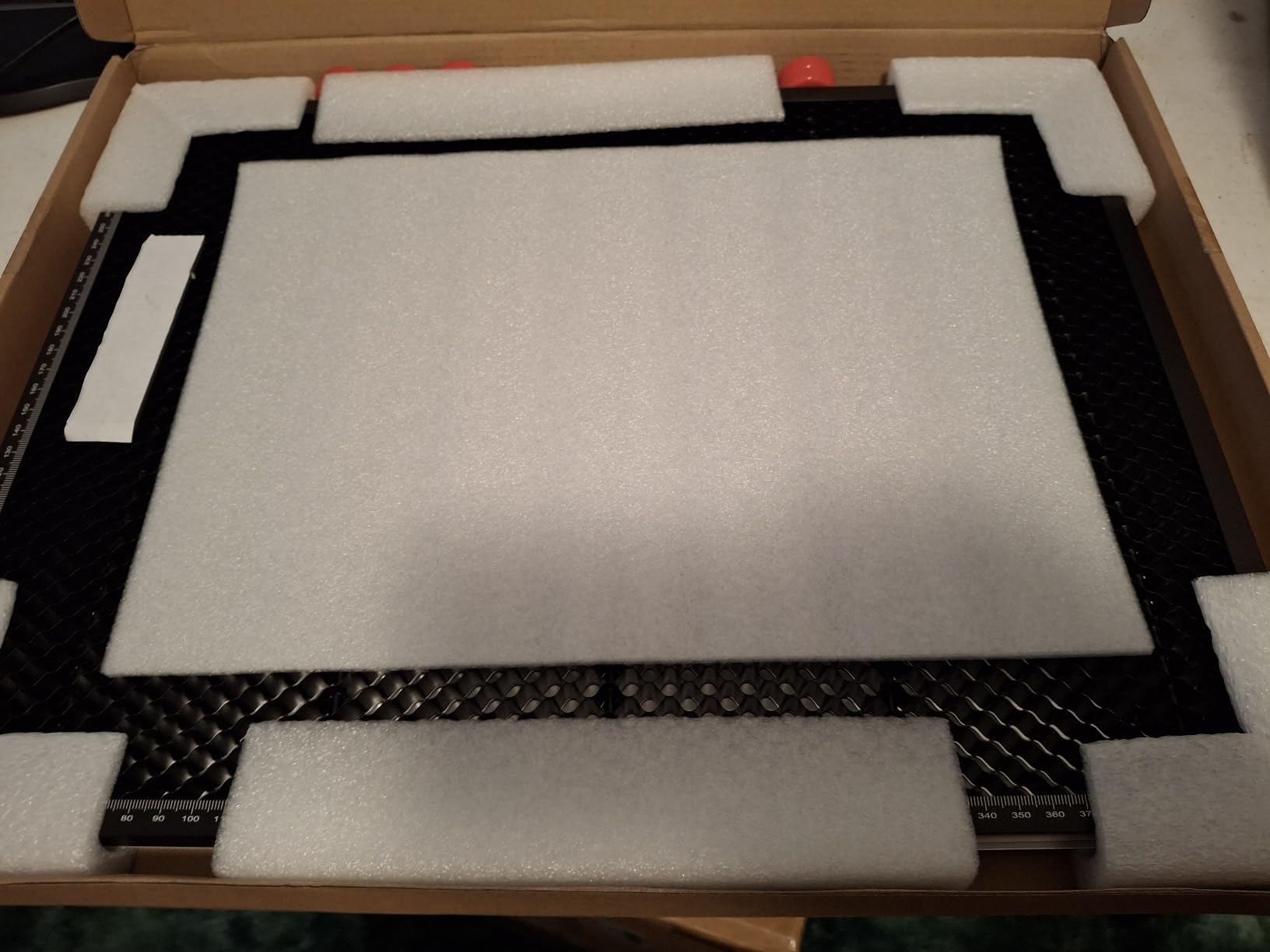
I tested it on a Falcon A1 over a weekend. The 8mm aperture is meaningfully larger than the 5.5mm or 7.5mm cells on most competitors, and smoke venting is noticeably faster on 4mm plywood cuts. The 5 magnets and 5 non-slip pads come in the box, which is more than most competitors provide. The aluminum plate and 4 corner protectors round out the kit.
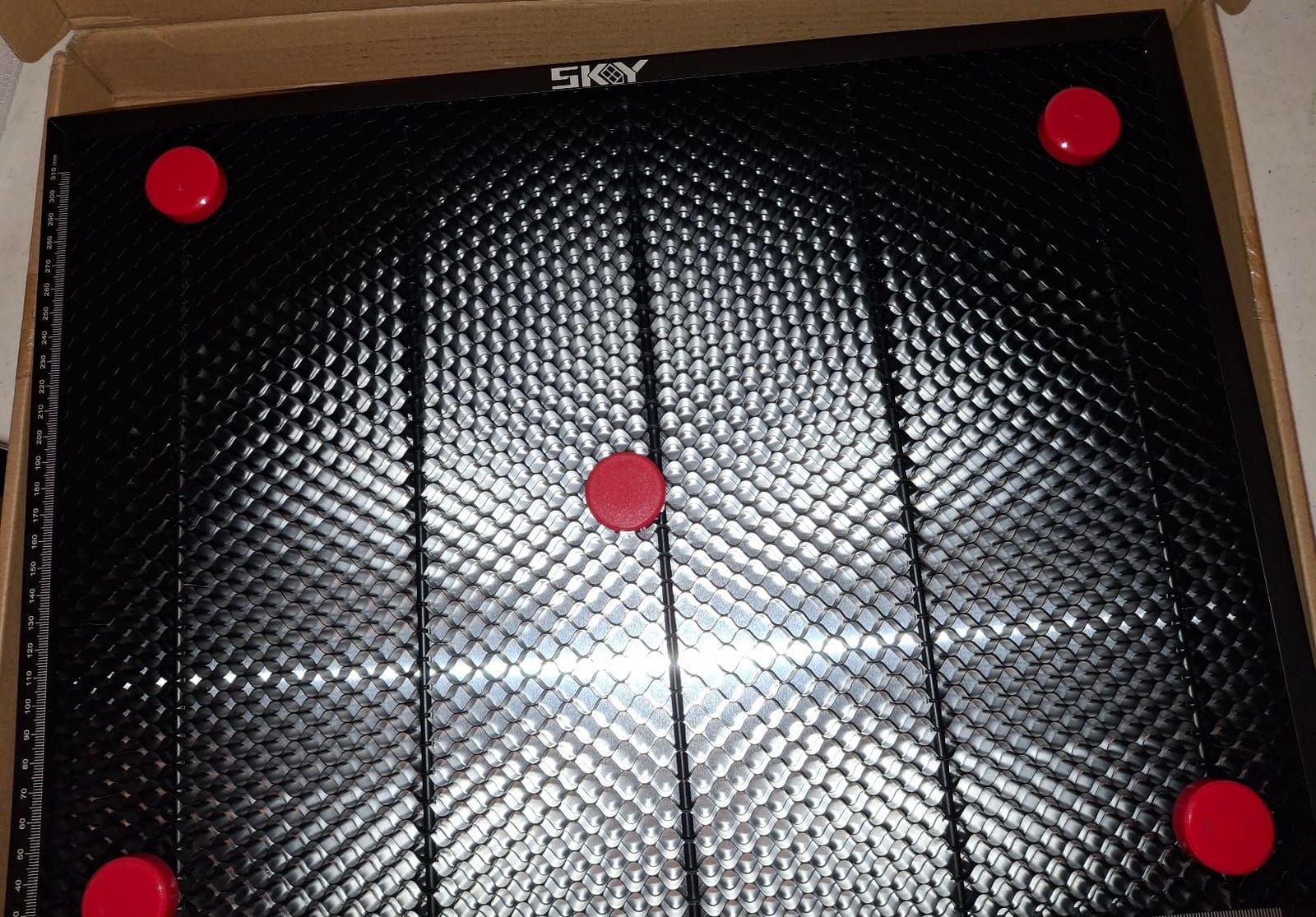
Build quality is the honest trade-off. The 4.4-star rating from 101 reviews is lower than the OEM Creality, with 9 percent of buyers leaving one-star feedback on durability. In my hands the bed was flat and the magnets held stock firmly, but the edges of the galvanized iron frame are a touch rougher than the OEM. For a hobbyist Falcon owner this is a great value.
Who Should Buy This Honeycomb Bed
Pick this if you run a Falcon A1 or A1 Pro and want the budget tier. Hobbyists cutting weekly will get good service out of it. Production users should still consider the OEM Creality above for the lifetime guarantee.
Who Should Skip It
Skip it if you need the OEM build quality and warranty from Creality. Skip it if you have any plan to laser right through the galvanized zinc coating. Galvanization is a real safety concern: zinc-coated surfaces release toxic fumes when the laser touches them. The honeycomb cells here are aluminum, so this is mostly safe, but the galvanized iron frame is something to be aware of if you cut near the edges.
Honeycomb Bed Buying Guide for Laser Engravers
What Is a Honeycomb Bed and Why Use One
A honeycomb bed is a metal panel with a grid of small hexagonal or circular cells used as the work surface inside a laser engraver or cutter. The open cells let smoke and heat vent downward instead of pooling under the workpiece, which reduces burn marks on the back of cuts and supports small pieces that would otherwise fall through the slats.
Without a honeycomb bed, small cut pieces drop, the workpiece sags into the gap, and heat reflects back onto the underside of the material, leaving burn marks and uneven cuts. A honeycomb bed fixes all three at once. It is the single highest-impact upgrade you can make to any laser cutter that ships with bare slats or a solid aluminum plate.
The honeycomb pattern creates thousands of tiny vents directly beneath the material. When the laser cuts through, smoke, fumes, and heat pass through the cells into the exhaust chamber, while the metal walls of the cells prop up the workpiece so it stays flat and supported across its full area. Anyone running a CO2 or diode laser cutter who cuts plywood, MDF, acrylic, leather, paper, or fabric should have one, especially for small or intricate parts.
Material Choices: Aluminum vs Steel vs Stainless
Material is the first big decision. Aluminum alloy honeycomb beds are lightweight, resist corrosion, and stay flat. They are the most common choice for hobbyist diode lasers, but they cannot hold magnets for fixture work, and they scorch when paper or fabric sits on them for long cuts.
Steel honeycomb beds (often galvanized or with a black oxide coating) accept neodymium magnets for clamp-free workholding. The trade-off is heat reflection off bare metal, which the black oxide coating largely solves. Steel is also heavier, so check your machine’s Z clearance.
Stainless steel honeycomb is the rarest option and the right one for paper cutting. Stainless does not corrode, does not scorch through thin sheets, and the cells do not transfer iron marks onto paper. Users with dedicated paper cutting setups pay a premium for this build.
A word on galvanization: galvanized zinc coatings release toxic fumes when the laser beam touches them. A LightBurn forum thread from January 2026 warns explicitly that galvanized mesh and zinc-coated plates are dangerous in a laser enclosure. The honeycomb cells themselves in this list are mostly aluminum or coated steel, but if you DIY a build with hardware cloth, make sure it is ungalvanized.
Cell Size and Bore Diameter
Cell size, also called bore diameter, is the single most important spec to match to your kerf and smallest piece. Common sizes run 5.5mm, 7.5mm, and 9.5mm. The smaller the cell, the more support for tiny pieces, but the more resistance to smoke venting. The larger the cell, the better smoke passage, but pieces smaller than the cell will fall through mid-cut.
For paper and fabric, 5.5mm cells give the best kerf support. For plywood and MDF cuts, 7.5mm is the sweet spot. For thick stock where smoke flow is the bottleneck, 9.5mm cells pull heat away faster. The Cloudray-listed sizes confirm 5.5, 7.5, and 9.5mm as the industry standards for laser engravers.
Sizing and the Frame Lip Gotcha
The single biggest buyer complaint across every honeycomb bed reviewed in this guide is the frame lip gotcha. Nominal 400x400mm often means 400x400mm outer frame, with the usable honeycomb closer to 370x370mm or 380x380mm. Cloudray buyers on their storefront review section have flagged this so often that the company now ships with carriage bolts so users can raise the bed above the lip.
The fix is to measure the actual honeycomb area, not the outer frame, before you commit to a size. Two easy workarounds if you already own a bed with a frame lip: drill out the rivets holding the frame, or mount the bed on standoffs so the frame lip sits below the workpiece plane.
Diode vs CO2 Honeycomb Bed Differences
Diode lasers run cooler and cut thinner material. A 5.5mm to 7.5mm cell aluminum bed is plenty. Bed thickness can be slim (11mm to 22mm) without losing rigidity. The smaller working areas (300×300, 400×400) dominate the diode class.
CO2 lasers cut thicker material and run hotter. They need wider cells (7.5mm to 9.5mm) for venting, thicker beds (22mm) for rigidity under heavy stock, and steel or stainless cores that survive the higher heat. CO2 owners running magnetic workholding should prioritize steel-core designs like the ToCome or Cregrant3D.
Cleaning and Maintenance Schedule
Honeycomb beds collect resin and debris in their cells. Skip the cleaning and the resin burns onto the next piece, leaving scorch marks. The 1Laser guide and Thunder Laser guide both recommend a quarterly hobby cadence and a monthly cadence for production users. Frequency depends entirely on cut time and material.
The cleaning method is straightforward: vacuum loose debris, then soak or pressure wash with a degreaser. LA’s Totally Awesome cleaner and Purple Power degreaser both work well. For a fast in-place clean, a stiff brush, isopropyl alcohol, and a lint roller do the job. Steam cleaning and Simple Green with a garden hose are also reported as effective. Never soak a galvanized bed with steel wool: it accelerates rust.
Honeycomb Bed Alternatives
Cookie cooling racks work for short diode runs and cost almost nothing. The cell spacing is usually too wide for paper and the racks bow under weight, so they are best for short-term cutting. Slat beds (also called blade beds) ship with most CO2 lasers and work fine for medium-size cuts, but they offer no support for small pieces. Perforated steel plates are the heavy-duty alternative and the safer DIY build choice over galvanized mesh. Vacuum tables are the most expensive option but the most rigid for full-area work.
Magnetic Workholding and Steel Core
If you use the same cut file on multiple sheets and want repeatable positioning, a steel-core honeycomb accepts magnetic hold-down posts. The ToCome and Cregrant3D beds in this list both support this workflow. Aluminum cores will not hold magnets at all, so production users should rule out the XNEONLab and Puikos aluminum plates for fixture work.
Frequently Asked Questions
Do I need a honeycomb for laser cutting?
Yes for any CO2 or diode laser that cuts plywood, MDF, acrylic, leather, paper, or fabric, especially small or intricate parts. A honeycomb bed supports the workpiece, vents smoke and heat through its cells, and stops small pieces from falling through slats during cutting. Engraving-only users get less benefit, but anyone doing cuts will see cleaner results and reduced burn marks with one installed.
What are some alternatives to honeycomb laser beds?
Cookie cooling racks work for short diode runs but have wide cell spacing. Slat beds ship with most CO2 lasers and handle medium-size cuts. Perforated steel plates are the heavy-duty alternative and a safer DIY option than galvanized mesh. Vacuum tables are the most rigid for full-area work, and a DIY wood frame plus ungalvanized hardware cloth is the cheapest path if you build it yourself.
Are galvanized honeycomb beds safe for laser cutters?
Galvanized zinc coatings release toxic fumes when the laser beam touches them, so a galvanized plate or mesh is a real safety hazard in any laser enclosure. The LightBurn forum has documented this risk repeatedly. Honeycomb cells in this roundup are mostly aluminum or coated steel, so they are safe, but the same caution applies to any DIY build with hardware cloth. Use ungalvanized steel only.
How do I clean my laser honeycomb bed?
Vacuum loose debris first, then pressure wash with a degreaser like LA’s Totally Awesome or Purple Power. For a fast in-place clean, use a stiff brush, isopropyl alcohol, and a lint roller to lift resin from the cells. Hobbyists should clean every 1 to 3 months and production users monthly. Never use steel wool on a galvanized bed, it accelerates rust.
What size honeycomb bed do I need for my laser?
Match the bed to your laser’s working envelope plus a small margin. A 400x400mm laser wants a 400x400mm or larger honeycomb. Check the actual honeycomb area, not the outer frame, because the frame lip often eats 20 to 30mm per side. For diode lasers the 5.5 to 7.5mm cell range is a good default, and for CO2 cutters step up to 7.5 to 9.5mm cells for faster smoke venting.
Final Verdict: Which Honeycomb Bed Wins
If I had to pick one best honeycomb bed for laser engraver setups across every machine class, the UniTak3D 300×300 wins on review volume, build quality, and consistency. It is the right pick for the most common diode working area, the black finish protects your laser module, and the included hardware makes it a complete kit on day one.
For xTool D1 and D1 Pro owners, the XNEONLab 400×400 Aluminum Honeycomb is the cleaner fit. For Falcon A1 owners who want the OEM experience, the Creality Honeycomb is the safest bet, and the Skouphy Falcon A1 is the budget answer. Production users running magnetic workholding should pick the ToCome 430×400 or Cregrant3D 440×440 for steel-core clamping.
Whichever bed you choose, remember the three rules our team always follows: measure the actual honeycomb area, not the outer frame, never use galvanized mesh, and clean the cells every month if you cut weekly. Get those right and your laser cutter will deliver clean, scorch-free cuts for years.