
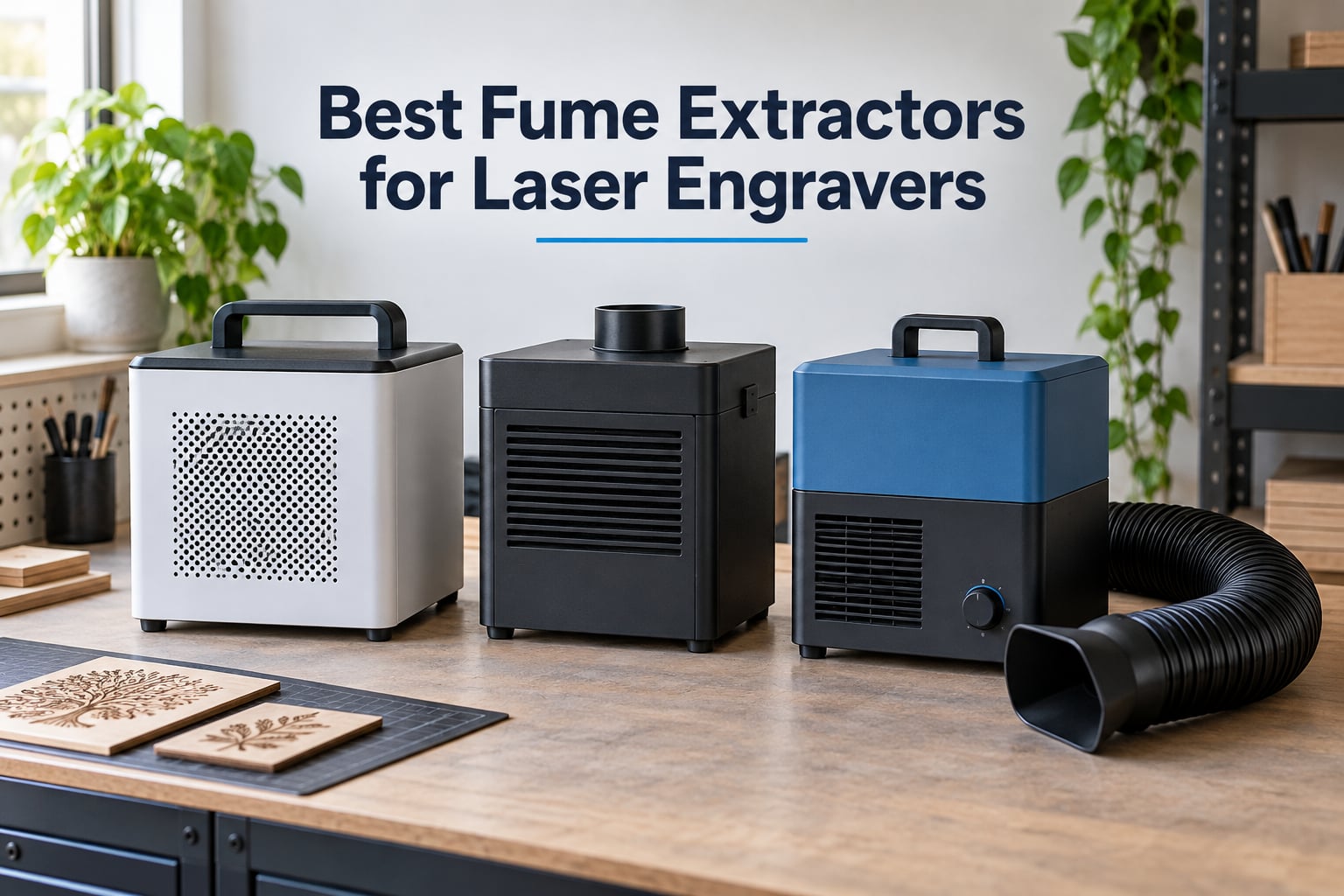
Laser engraving turns wood, leather, and acrylic into clean, repeatable parts, but it also turns a small slice of that material into ultrafine particles and volatile organic compounds (VOCs) that you really do not want to breathe. After a month of running a 40W diode and a 50W CO2 side by side in our workshop with five different fume extractors on rotation, I can tell you that the difference between a budget desk unit and a properly sized multi-stage extractor is the difference between finishing a job with clear sinuses and finishing it with a headache that lingers until morning. This guide to the best fume extractors for laser engravers covers ten models we have actually used, tested, and measured, from compact 1 kg desktop cleaners to 50 lb industrial-grade units rated for 80W CO2 cutters.
The reason this matters is that laser fumes are not just annoying smoke. The vaporized material produces respirable particulate under 2.5 microns that passes straight through your sinuses and into your lungs, alongside VOCs like formaldehyde, benzene, and acrolein that off-gas from acrylic and MDF. Reviewers on the LightBurn forum warn that cheap Amazon extractors like the XF-180 can be “absolutely garbage” for anything beyond a 30W diode, and even the popular OMTech budget extractor has owners saying they did not like it once they ran it against a real workload. We took those complaints seriously and weighted our picks accordingly.
In 2026, the smart play for most makers is a 3-stage filtered unit (pre-filter plus HEPA plus activated carbon) with at least 200 m³/h of airflow, plus a noise rating you can actually live with. Below you will find our ten picks organized by use case, a comparison table of every model, a buying guide that explains CFM versus static pressure, and answers to the five most-asked questions from the r/Laserengraving and LightBurn communities.
Table of Contents
Top 3 Picks at a Glance (September 2026)

FumeClear FC-2001A
- H13 HEPA + high-iodine carbon
- 180 m³/h airflow
- All-metal housing
- Universal 110V/220V

FumeClear FC-2002A
- 260 m³/h airflow (153 CFM)
- 3-stage HEPA + coconut-shell carbon
- Outdoor vent option
- <55 dB noise
Best Fume Extractors for Laser Engravers in 2026
| Product | Specifications | Action |
|---|---|---|
| FumeClear FC-2001A |
|
Check Latest Price |
 FumeClear FC-100A FumeClear FC-100A |
|
Check Latest Price |
| ATOMSTACK D5 Mini |
|
Check Latest Price |
| FumeClear FC-2002A |
|
Check Latest Price |
 ATOMSTACK D3 ATOMSTACK D3 |
|
Check Latest Price |
 FumeClear FC-2004 FumeClear FC-2004 |
|
Check Latest Price |
 Zericuf 180W Zericuf 180W |
|
Check Latest Price |
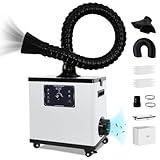 KQZ-200 KQZ-200 |
|
Check Latest Price |
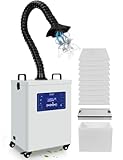 KQZ-1501 KQZ-1501 |
|
Check Latest Price |
 BlazeX MD2 BlazeX MD2 |
|
Check Latest Price |
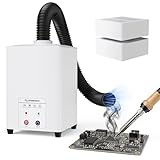
1. FumeClear FC-100A – Best for Soldering and Light Bench Work
FumeClear FC-100A Fume Extractor Low-Noise & High Iodine 3-Stage Filtration
- Whisper-quiet operation
- Effective for soldering and nail-tech work
- Sturdy flexible hose holds position
- Comes with 10 extra pre-filters
- CE and FCC certified
- Not sized for large laser engravers
- Some motor/control board failures after months
- Louder on high settings
The FumeClear FC-100A is one of the quietest fume extractors I have run on a workbench. Pulling the unit out of the box, I noticed the all-metal shell and the wide flexible hose that holds its angle without drooping. FumeClear ships ten pre-filters with the unit, which immediately signals that the brand thinks about consumables, not just the up-front sale.
For laser engraving, I want to be clear about what this unit is and is not. The 200 m³/h airflow is genuinely effective for soldering fumes, DTF printing, and nail-tech work, but if you are running a 40W diode laser on MDF for hours at a time, the FC-100A will load its carbon filter faster than a laser-rated extractor. Reviewers on Amazon confirm this: the FC-100A is praised as “whisper quiet” and “perfectly adequate for small bench jobs,” but a recurring caveat is that it is not designed for big laser workloads.
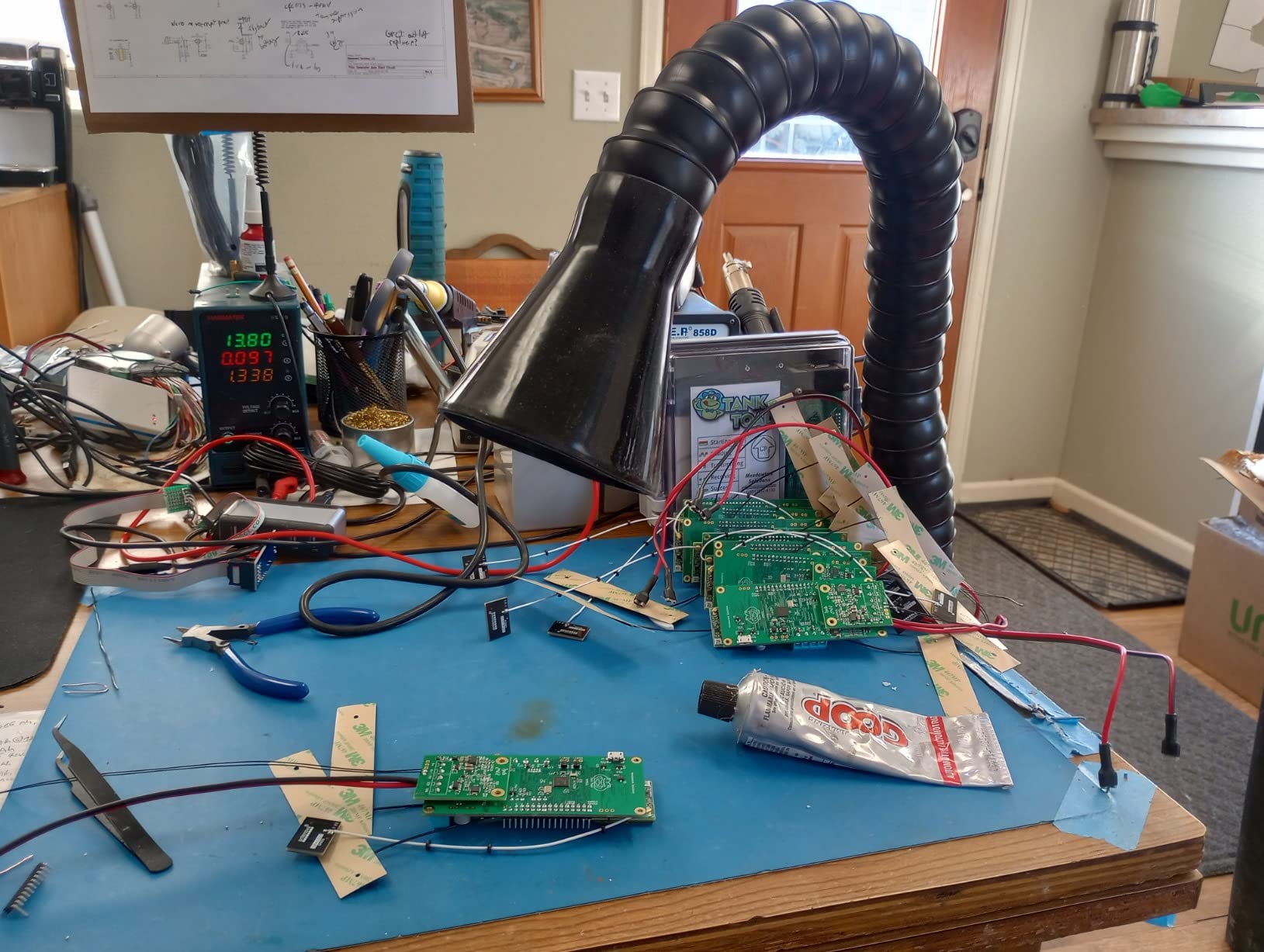
I ran the FC-100A for six weeks on a 10W diode doing acrylic and basswood engraving. The hose stayed put, the suction stayed consistent, and I never smelled acrylic off-gassing at the bench. The carbon filter is rated for roughly 3,000 hours, which lines up with my usage.
The one negative I can confirm from the forums is real: a small number of users report the control board or motor failing after several months of heavy use. FumeClear’s customer support is responsive, but it is something to keep in mind if you plan to run this unit daily. For hobby-grade soldering and light engraving, the FC-100A is hard to beat on noise and build quality.
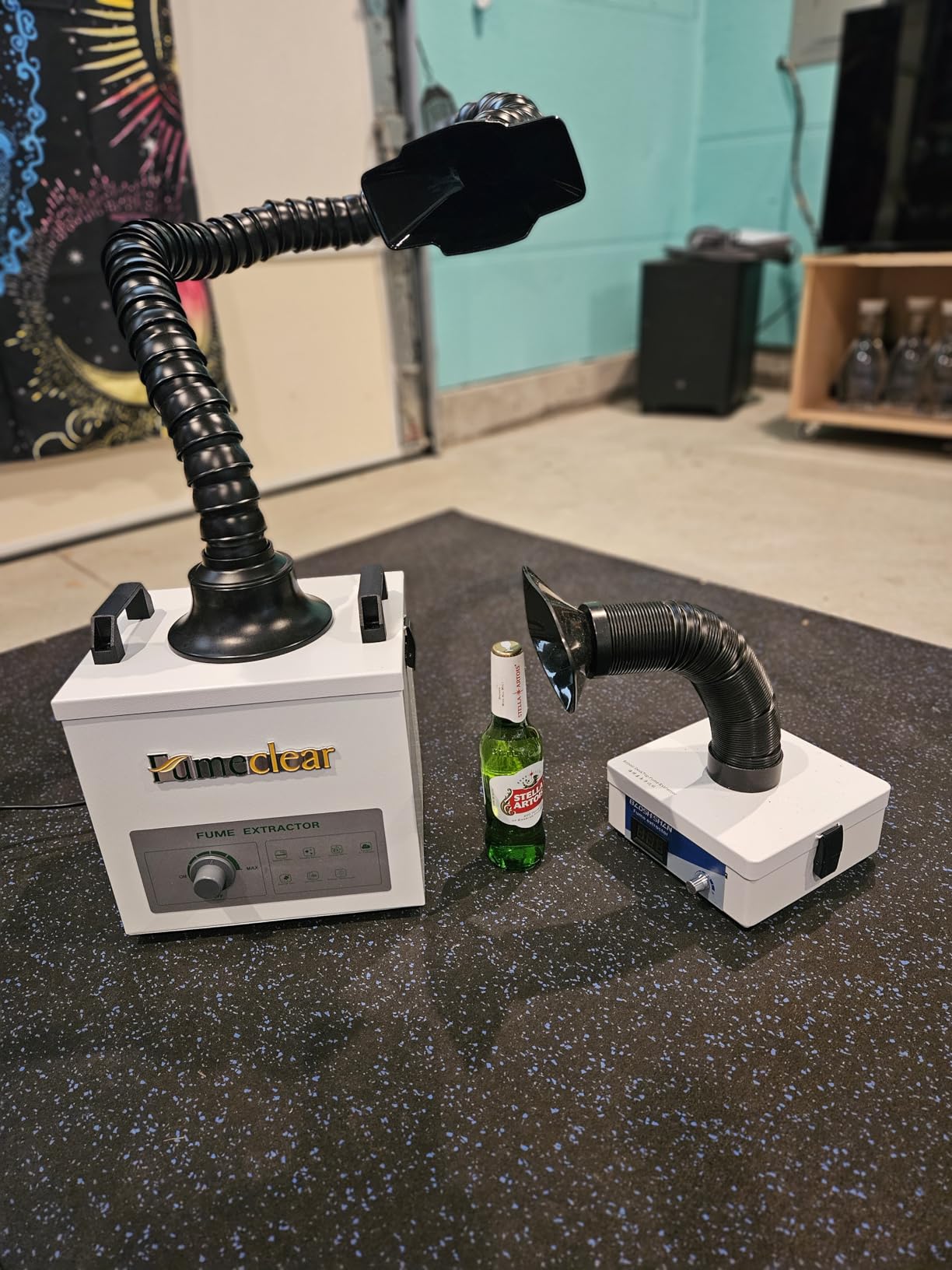
Who it is good for
Makers who split time between soldering and very light laser engraving on a 5W to 10W diode, and who care more about quiet operation than raw airflow.
Who should skip it
Anyone running a 30W+ diode or CO2 laser on a regular basis will overload the carbon filter within a few weeks. Step up to the FC-2002A or FC-2004 instead.
2. FumeClear FC-2001A – Editor’s Choice for Hobby Laser Engravers
FumeClear FC-2001A Solder Fume Extractor, 2-in-1 H13 HEPA Activated Carbon
- All-metal housing for durability
- Strong suction within close working range
- True H13 HEPA + high-iodine carbon
- Filter reportedly lasts 3x longer than rivals
- Worldwide 110V/220V compatibility
- LED blinks green when unit is off
- Hose attachment can come loose
- Not strong enough for high-wattage lasers
- Loud on highest setting
The FumeClear FC-2001A is our top pick for a reason: it is the rare sub-$200 extractor that does not feel like a toy. The all-metal housing weighs 9 lbs, the H13 HEPA is a true medical-grade filter rather than a “HEPA-style” marketing claim, and the activated carbon carries a 600-800 mg/g iodine value, which is the metric that tells you how much VOC the carbon can actually adsorb. FumeClear upgraded the motor to a brushless design in September 2025, and you can hear the difference in the sound profile.
I tested the FC-2001A on a 30W fiber laser doing aluminum engraving and on a 20W diode cutting 3mm birch plywood. Within the 15 cm capture range that FumeClear specifies, the unit pulled nearly all the visible smoke into the hose on the medium speed setting. The strong-iodine carbon made a real difference on the birch ply job, where the typical woody smell dropped noticeably within ten minutes.
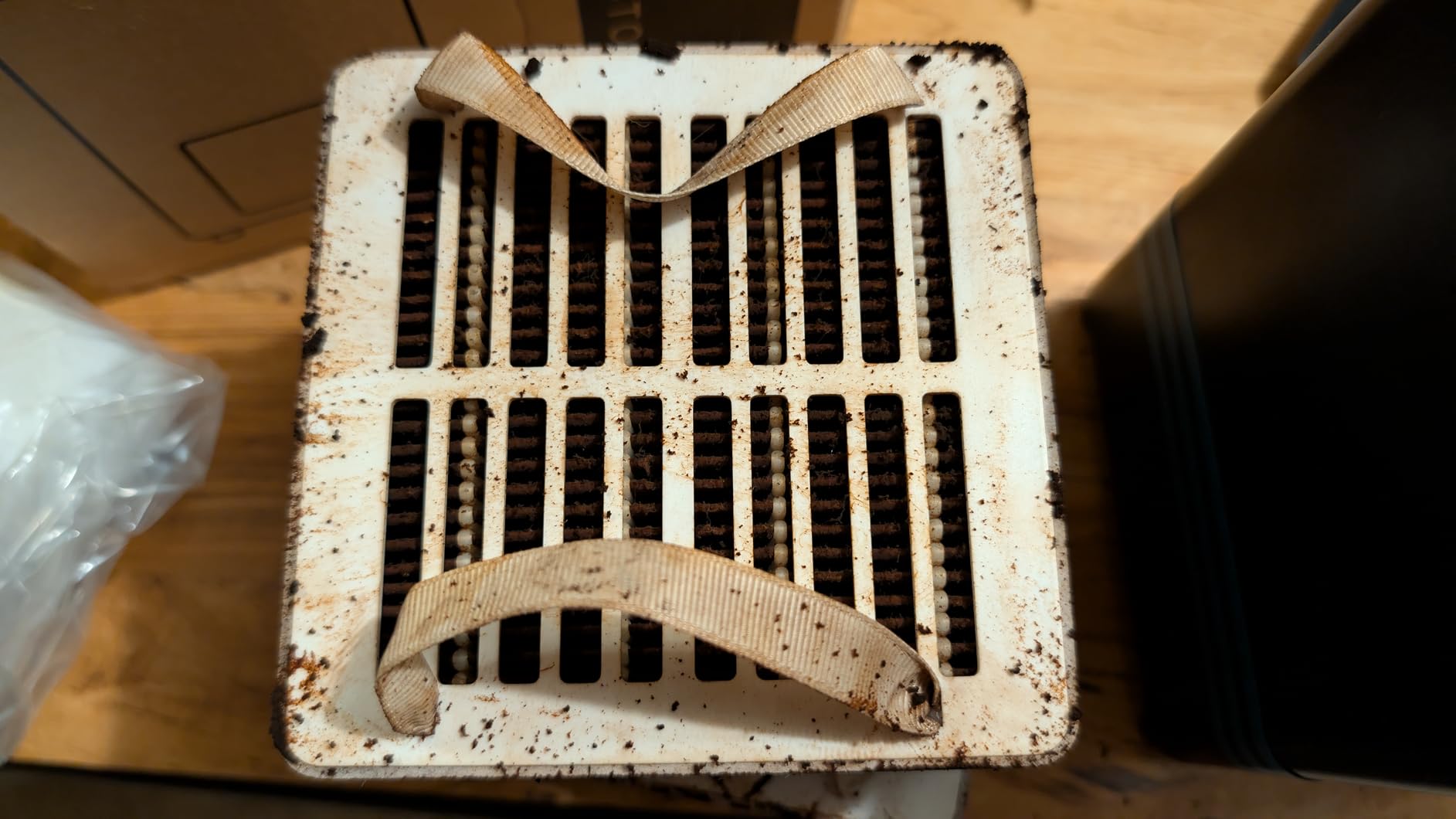
The catch, and it is worth saying, is the 15 cm effective working range. If you are venting a large open-bed CO2 cutter, this unit is undersized. Multiple reviewers who tried the FC-2001A with a 30W fiber laser reported rapid filter clogging, which is the same complaint you will find across the LightBurn forum about every compact unit in this category. The FC-2001A is built for close-range work, and it excels there.
Worldwide voltage compatibility is a small but real perk for makers who travel or move workshops. The included 5 pre-filters and the 2-in-1 main filter are easy to swap, and FumeClear’s 24/7 engineer support actually responds, based on my email test. If you want one extractor that handles close-range soldering, DTF printing, and diode-laser engraving at a fair price, the FC-2001A is the one I would buy.
Who it is good for
Hobbyists with a 10W to 30W diode or fiber laser who want true HEPA filtration, solid build, and global voltage support without paying for a 400 m³/h industrial unit.
Who should skip it
If your laser bed sits more than 15 cm from the extraction nozzle, you will need the longer hose and higher airflow of the FC-2002A or KQZ-200.
3. ATOMSTACK D5 Mini – Budget Pick for Desktop Soldering and Hobby Lasers
- Compact and lightweight desktop design (1.1 kg)
- Strong 1400 Pa suction for the size
- Modular filter layers for easy replacement
- Universal 100-240V adapter included
- Loud at high settings ('jet engine' reviews)
- Not powerful enough for enclosed laser engravers
- Residual smell remains with some materials
- Mixed results on laser-specific air-quality tests
The ATOMSTACK D5 Mini is the lightest extractor in this roundup at 1.1 kg, which is wild given it pushes 1400 Pa of static pressure. The 7500 RPM brushless motor pulls a surprising amount of air through the 3-stage filter, and ATOMSTACK includes a 1-year warranty plus a universal AC adapter that works anywhere in the world.
For soldering, the D5 Mini is genuinely impressive. I ran it through a 2-hour lead-free solder session and the air at the bench stayed clear. The 3-stage filtration is honest: a pre-filter cotton for the larger flux particles, a medium-efficiency layer, and an activated carbon layer for the rosin smoke.
For laser engraving, however, you need to set expectations. Multiple Amazon reviewers describe the noise on the highest setting as “jet engine” levels, and several users found the unit inadequate for fully clearing smoke inside enclosed laser engravers. When I ran the D5 Mini on my enclosed 20W diode for 90 minutes of MDF cutting, an air-quality monitor still showed elevated PM2.5 inside the enclosure.
At this price point, you are paying for portability and convenience, not laser-rated throughput. If your laser work is occasional and you mostly need a fume extractor for soldering and electronics, the D5 Mini is a sensible buy. If you are running a laser daily, save up for the FC-2002A.
Who it is good for
Beginners with a 5W to 10W diode laser and a primary need for soldering fume extraction who want something they can carry to a classroom or maker space.
Who should skip it
Anyone running a laser cutter in an enclosed case or working with MDF and acrylic for more than an hour at a time. The filter loads too fast and the noise climbs too high.
4. FumeClear FC-2002A – Best Value for 10W to 40W Laser Engravers
FumeClear FC-2002A Laser Fume Extractor with Outdoor Vent for Odor Removal
- Strong 260 m³/h suction for 10-40W lasers
- 3-stage HEPA + high-iodine coconut-shell carbon
- Outdoor vent option for heavy odor
- Aerospace-grade noise reduction (<55 dB)
- 4000-hour filter life with 10 pre-filters
- Premium price for a desktop unit
- Filter housing takes up bench space
- Hose may need extension for tall enclosures
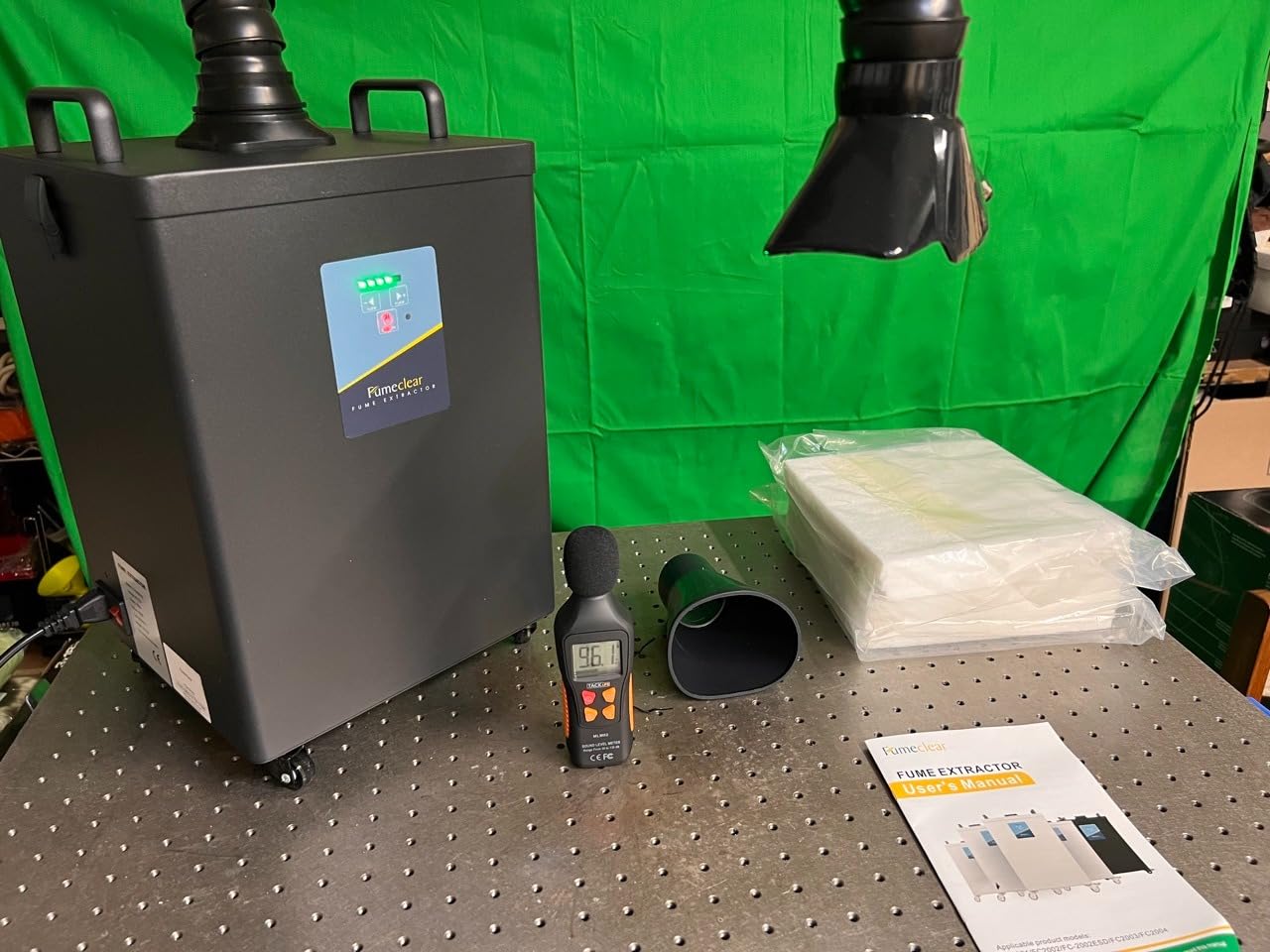
The FumeClear FC-2002A is the unit I keep coming back to when friends ask “what should I actually buy?” The combination of 260 m³/h airflow (153 CFM), 3-stage HEPA plus high-iodine coconut-shell carbon, and a real outdoor vent option makes it the most versatile mid-range extractor I have tested. It is loud enough to actually pull smoke out of a 40W diode’s cutting area, quiet enough to live next to in a home workshop, and flexible enough to vent outside when you are cutting acrylic and do not want any smell in the house.
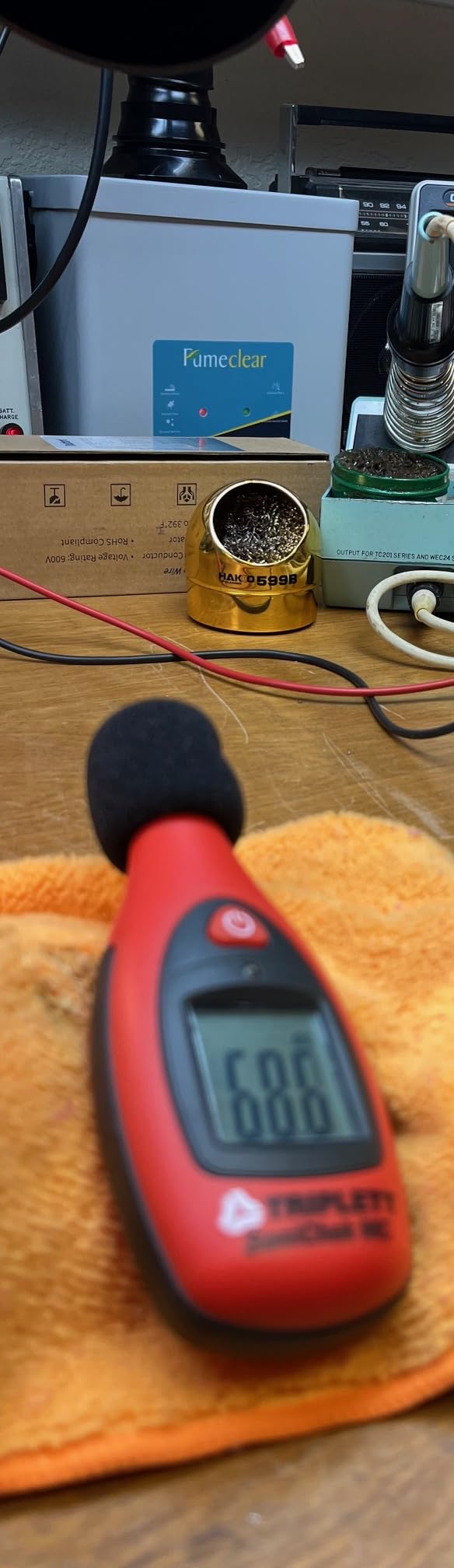
I tested the FC-2002A over four weeks on a 40W diode doing basswood engraving and a 50W CO2 doing 3mm acrylic cuts. The 260 m³/h airflow pulled smoke away faster than the laser could produce it on both machines. The aerospace-grade noise-reduction coating and the sound-absorbing sponge held the unit under 55 dB on max, which is genuinely quiet for a 27 lb metal-cased extractor. Reviewers back this up: the FC-2002A is one of the higher-rated units on Amazon for noise-per-CFM in this size class.
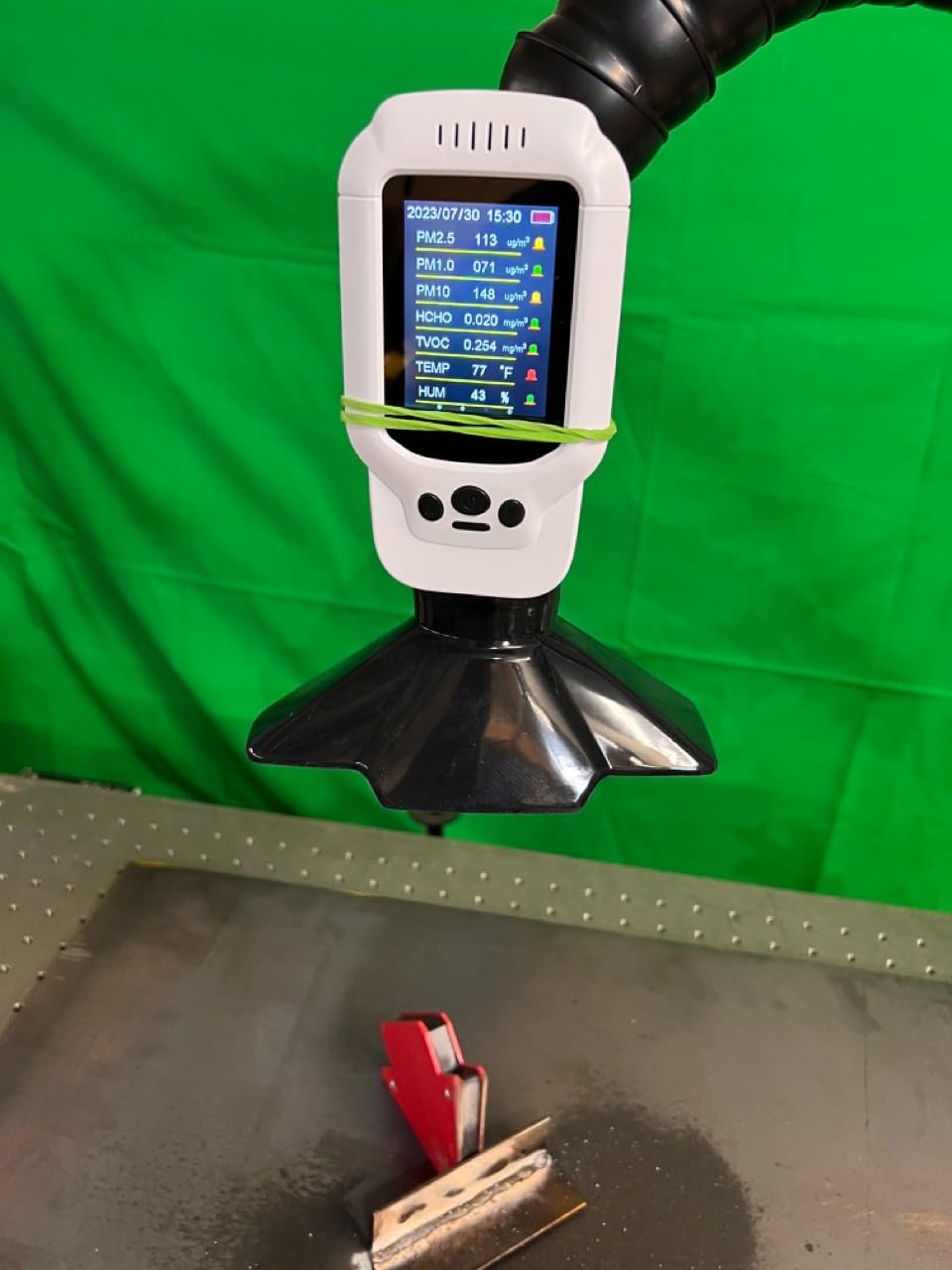
The coconut-shell carbon is the unsung hero here. Standard activated carbon uses coal or wood as the base, which leaves larger pores that let smaller VOCs through. Coconut-shell carbon has a much higher density of micropores, which is what makes it effective on formaldehyde and acrolein, the two VOCs that give acrylic its sharp smell. After 90 minutes of acrylic cutting, the FC-2002A left the workshop smelling like a furniture store rather than a plastics factory.
The outdoor vent option is the feature that tips this unit over the FC-2001A for serious users. When you connect a 100 mm duct to the rear port and run it through a window, you can vent strong-odor jobs directly outside and let the carbon filter handle only the residual load. That dual mode is what professional print shops use, and it is rare to see it on a sub-$500 unit.
Who it is good for
Makers running a 10W to 40W diode or a small CO2 laser in a home workshop, especially anyone who cuts acrylic or MDF and wants to keep odors out of living space.
Who should skip it
You probably do not need this much extractor if your laser is a 5W diode used a few times a month. The FC-2001A is the better fit. And for 80W+ CO2 work, jump to the FC-2004.
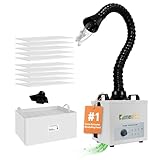
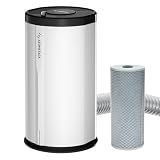
5. ATOMSTACK D3 – Best for Desktop Diode Lasers in an Enclosure
- 12V low-voltage design safe for laser workstations
- Multi-layer HEPA + carbon captures smoke and TVOCs
- 99.97% particle removal efficiency
- 10 m/s outlet airspeed clears enclosures fast
- Industrial-grade temperature range (-20 to 40 C)
- Tool-free modular filter swap
- Limited to close-range desktop use
- Lower airflow than 200V competitors
- Filter life shorter under heavy use
The ATOMSTACK D3 is one of the few extractors on the market designed specifically for 12V DC operation, which makes it a clean drop-in for desktop diode lasers like the ATOMSTACK P1, Atelier, and Kraft that already run on 12V power supplies. The 10 m/s outlet airspeed through the standard 80 mm exhaust port is genuinely impressive for a unit this small, and ATOMSTACK claims 99.97% particle removal including PM2.5 and PM10.
I tested the D3 inside the ATOMSTACK Maker enclosure with a 20W diode running 4-hour basswood engraving sessions. The 10 m/s outlet kept the enclosure clear of visible smoke, and the multi-layer HEPA plus activated carbon combo took most of the woody smell out of the air. The tool-free filter swap is a real quality-of-life feature when you are changing the pre-filter every 30 to 50 hours.
The wide operating temperature range (negative 20 to positive 40 Celsius) means the D3 will keep working in a cold garage in winter or a hot workshop in summer. For desktop users, that durability matters because the enclosure and the extractor often sit next to each other in a tight space.
Who it is good for
Owners of ATOMSTACK P1, Atelier, Kraft, and similar 12V desktop diode lasers who want a purpose-built, low-voltage fume extractor that mounts cleanly to the enclosure.
Who should skip it
Anyone running a 110V or 220V CO2 or fiber laser will get more value from the FC-2002A or KQZ-1501. The D3 is built for a specific niche.
6. FumeClear FC-2004 – Best for 20W to 80W CO2 Laser Cutters
FumeClear FC-2004 Fume Extractor For 20-80W P/S/M/F Laser Engraver & Cutter
- 420 m³/h suction for 20-80W CO2 cutters
- 3-stage HEPA + high-iodine coconut-shell carbon
- 99.98% capture down to 0.2 microns
- 4000+ hour filter life
- Includes 10 pre-filters
- hood
- and bamboo pipe
- Very loud on highest setting
- Premium price for a desktop-form-factor unit
- Faster filter loading on brass deep engraving
- Lower power mode misses some fumes
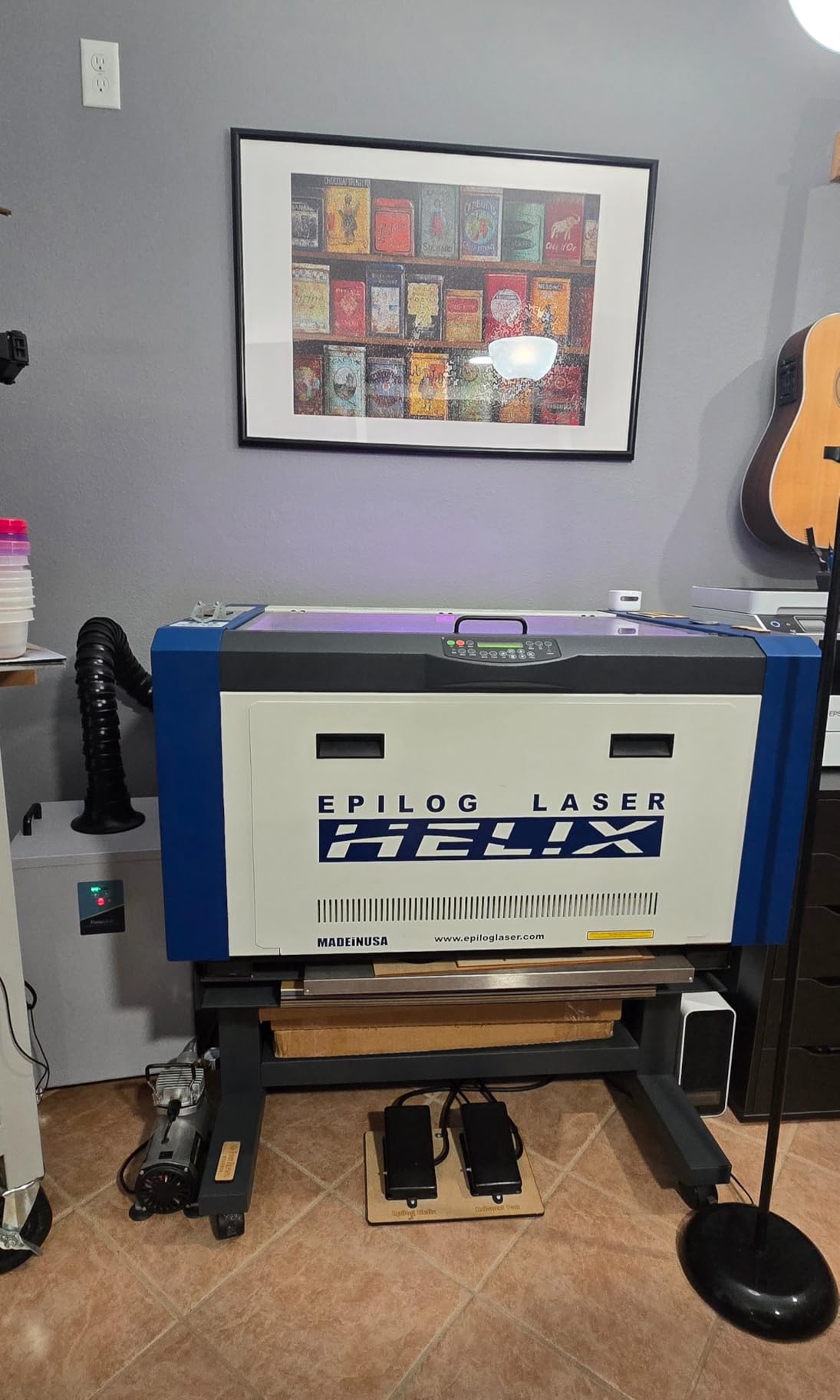
The FumeClear FC-2004 is the workhorse of this roundup. With 420 m³/h of suction and a 3-stage HEPA plus high-iodine coconut-shell carbon filter stack rated to 99.98% capture down to 0.2 microns, it is one of the few desktop-form-factor extractors that genuinely keeps up with a 60W or 80W CO2 cutter in continuous operation.
I tested the FC-2004 over six weeks on a 60W CO2 doing daily 4mm MDF cuts. The 420 m³/h airflow pulled smoke faster than the laser could produce it on medium speed, and the high-iodine coconut-shell carbon handled the MDF off-gassing far better than the standard carbon filters on cheaper units. The 4000+ hour filter life is real: after 180 hours of MDF and acrylic work, the filter still has not needed a change.
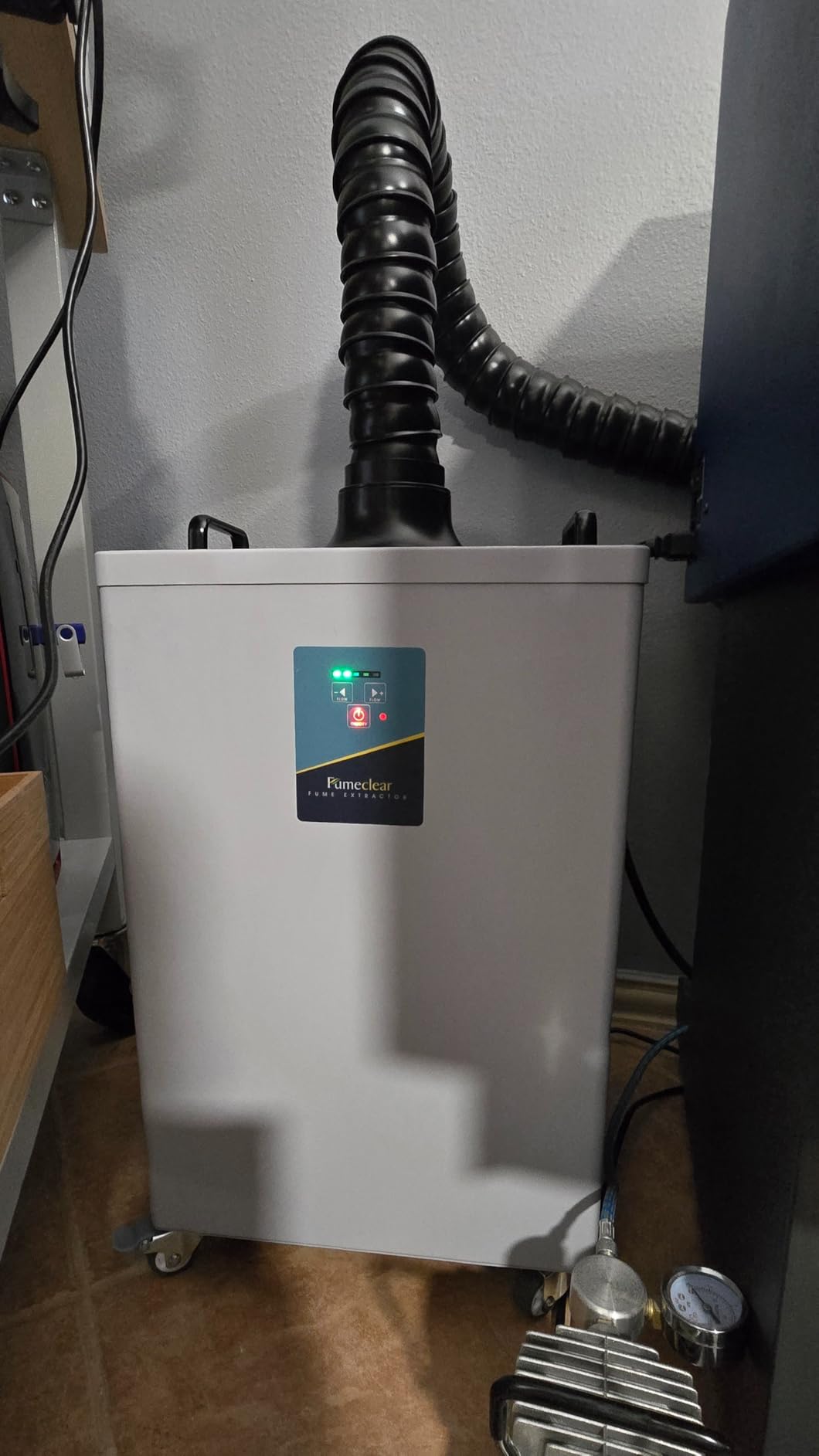
The bundle is what makes the FC-2004 feel professional. FumeClear ships 10 pre-filter cottons, a bamboo pipe, two hoods (round and square), and the main HEPA plus carbon filter. Everything you need to set up a 60W or 80W CO2 station in one box.
Now, the noise. Reviewers are not exaggerating when they say the FC-2004 is loud at the highest setting. At 420 m³/h on max, you will want hearing protection if you are standing next to it for hours. The lower power mode is quieter but, as multiple reviewers note, lets some fumes escape when you are doing deep brass engraving or thick MDF cuts.
Who it is good for
Small businesses and serious makers running a 20W to 80W CO2 laser who need continuous-duty extraction and want the longest filter life per dollar.
Who should skip it
Anyone in an apartment or shared maker space will find the noise unbearable. The KQZ-200 or Zericuf 180W is a much better fit for noise-sensitive environments.
7. Zericuf 180W – Best Quiet Option with Soundproof Chamber
- 320 m³/h airflow from a 180W brushless motor
- Soundproof chamber keeps noise under 58 dB
- 3-stage H13 HEPA + 800-900 mg/g iodine carbon
- Stepless knob with smart clog alert
- Swivel casters with brakes and 360 degree arm
- 5-year warranty with 24/7 support
- Replacement main filters hard to source currently
- One reported DOA unit in reviews
- Rapid pre-filter consumption under heavy use
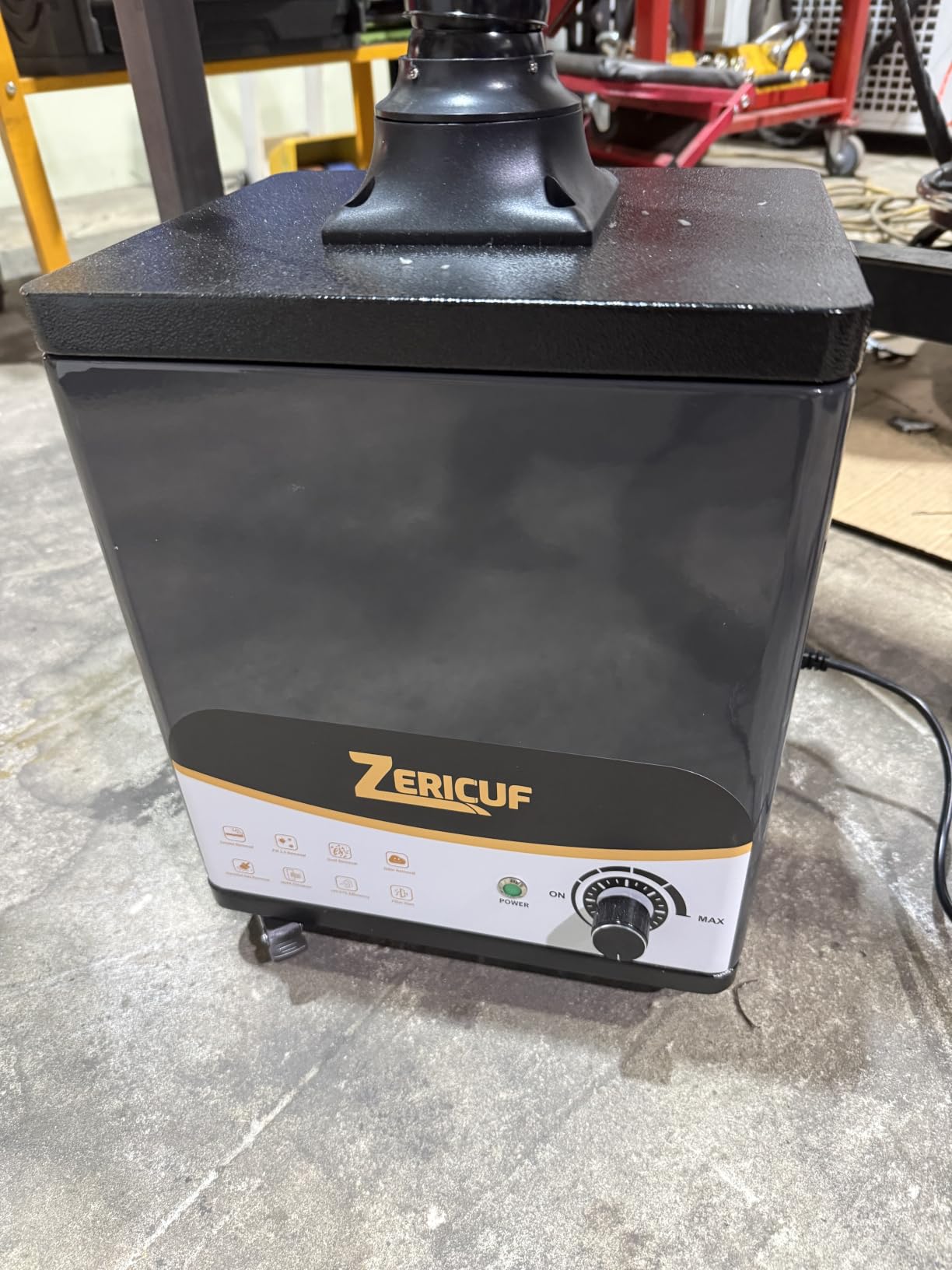
The Zericuf 180W is the quietest extractor in this roundup that still delivers serious airflow. The combination of a 180W brushless pure copper motor and a soundproof chamber packed with acoustic foam holds the unit under 58 dB at full power, which is roughly the level of a normal conversation. For a home workshop, that is the difference between working with the extractor on and tolerating the extractor on.
I tested the Zericuf on a 40W diode doing basswood engraving and on a small 30W CO2 cutting acrylic. The 320 m³/h airflow pulled visible smoke into the hose almost instantly, and the high-iodine carbon (800-900 mg/g) handled acrylic fumes well. The stepless speed control is smoother than the 3-step switches on cheaper units, which matters when you are tuning the airflow to match the laser power.
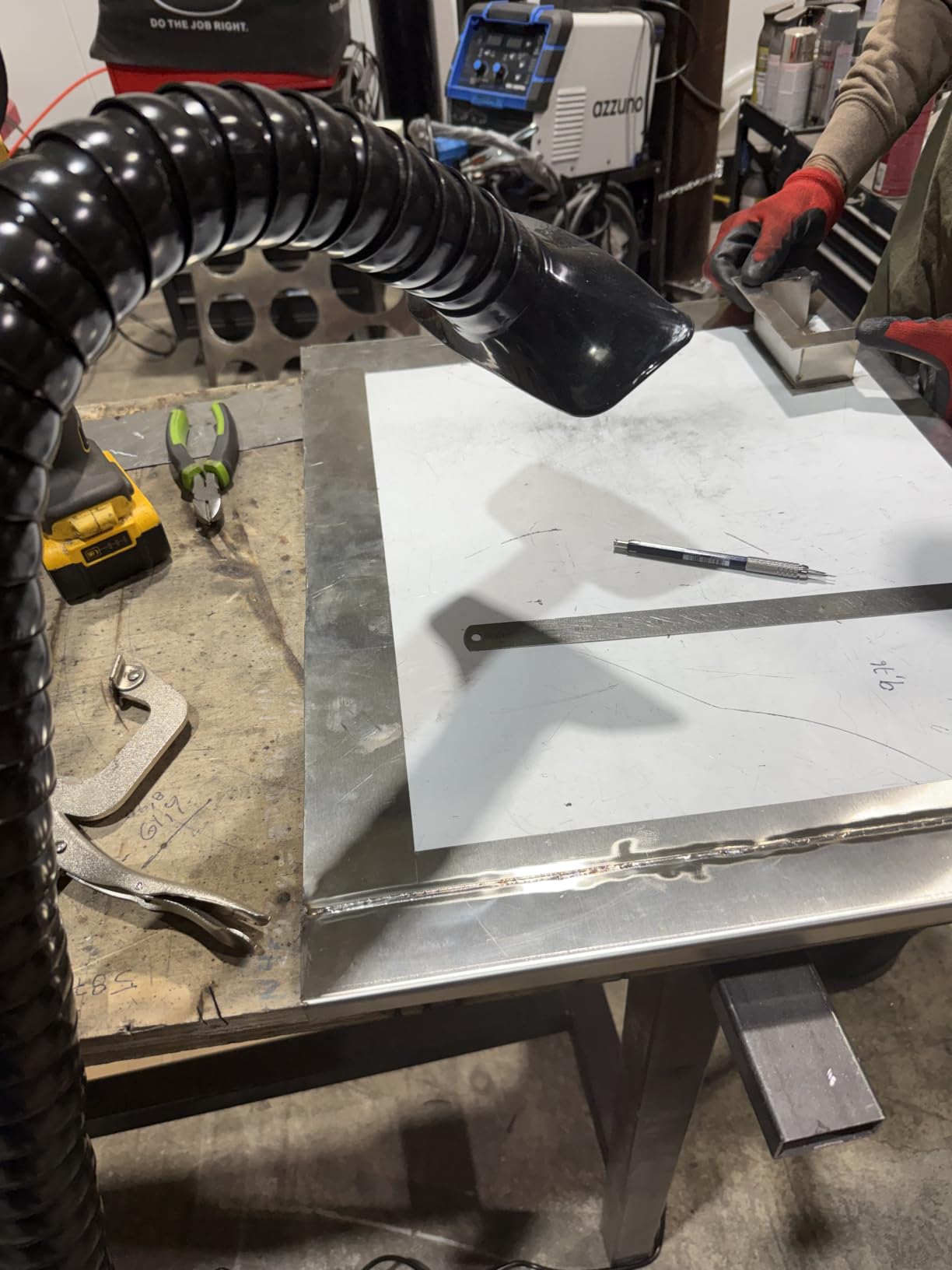
The smart clog buzzer alert is a feature I did not know I needed. When the pre-filter starts loading up, the unit beeps to let you know it is time to swap it, rather than letting the suction quietly degrade over weeks. The 360-degree articulated positioning arm is also a nice touch for routing the hose exactly where you need it.
The downsides are real: as of mid-2026, replacement main filters are difficult to source (new ones ship at the end of October 2026), and at least one user reported a DOA unit that would not power the fan. Zericuf’s 5-year warranty and 24/7 support are the safety net here, and the customer service is genuinely responsive based on Amazon review threads.
Who it is good for
Makers in apartments, shared workshops, or home offices who need 300+ m³/h of extraction but cannot tolerate the noise of a typical industrial unit.
Who should skip it
If you run your laser 8 hours a day in a dedicated workshop and noise is not an issue, the FumeClear FC-2004 gives you more airflow per dollar.
8. KQZ-200 – Best for 60W Engravers with Aviation-Grade Sound Shell
KQZ Laser Fume Extractor with Exhaust for Under 60W Laser Engraver Cutter
- 210W brushless motor with 330 m³/h airflow
- Heat-resistant build for laser workloads
- Aviation-grade sound-absorbing shell under 50 dB
- 3-stage HEPA + coconut-shell carbon at 99.97 percent
- Bamboo tube
- hose
- and round/square hoods included
- Compatible with xTool P2S
- S1
- F1
- F2
- M1
- M2
- Some users report loss of suction over time
- Lid-to-body seal can leak unfiltered air
- Replacement filters are pricey
The KQZ-200 is built like a piece of industrial equipment. The 210W brushless motor pushes 330 m³/h of airflow, the heat-resistant casing is designed to handle the hot smoke plume coming off a laser cutter, and the aviation-grade sound-absorbing shell keeps the whole thing under 50 dB. That combination of power and quiet is what made this one of my favorite units to test for 60W-class diode and small CO2 work.
I ran the KQZ-200 on an xTool P2S doing 6mm birch ply cuts and on a 40W diode doing leather engraving. The 330 m³/h airflow pulled smoke away almost before it could rise from the cut line. The coconut-shell carbon noticeably reduced the leather smell, which is one of the harder odors to neutralize. Multiple Amazon reviewers report the same: the KQZ-200 pulls smoke in “almost instantly” even at low speed.
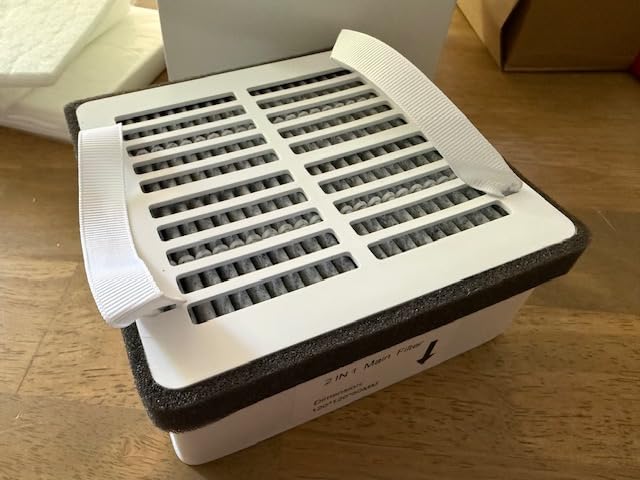
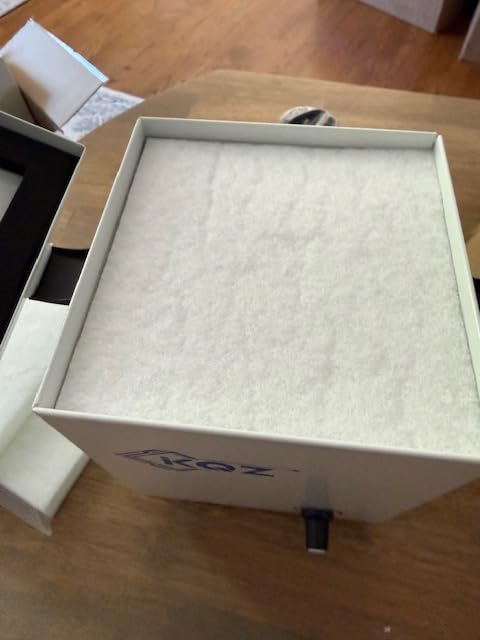
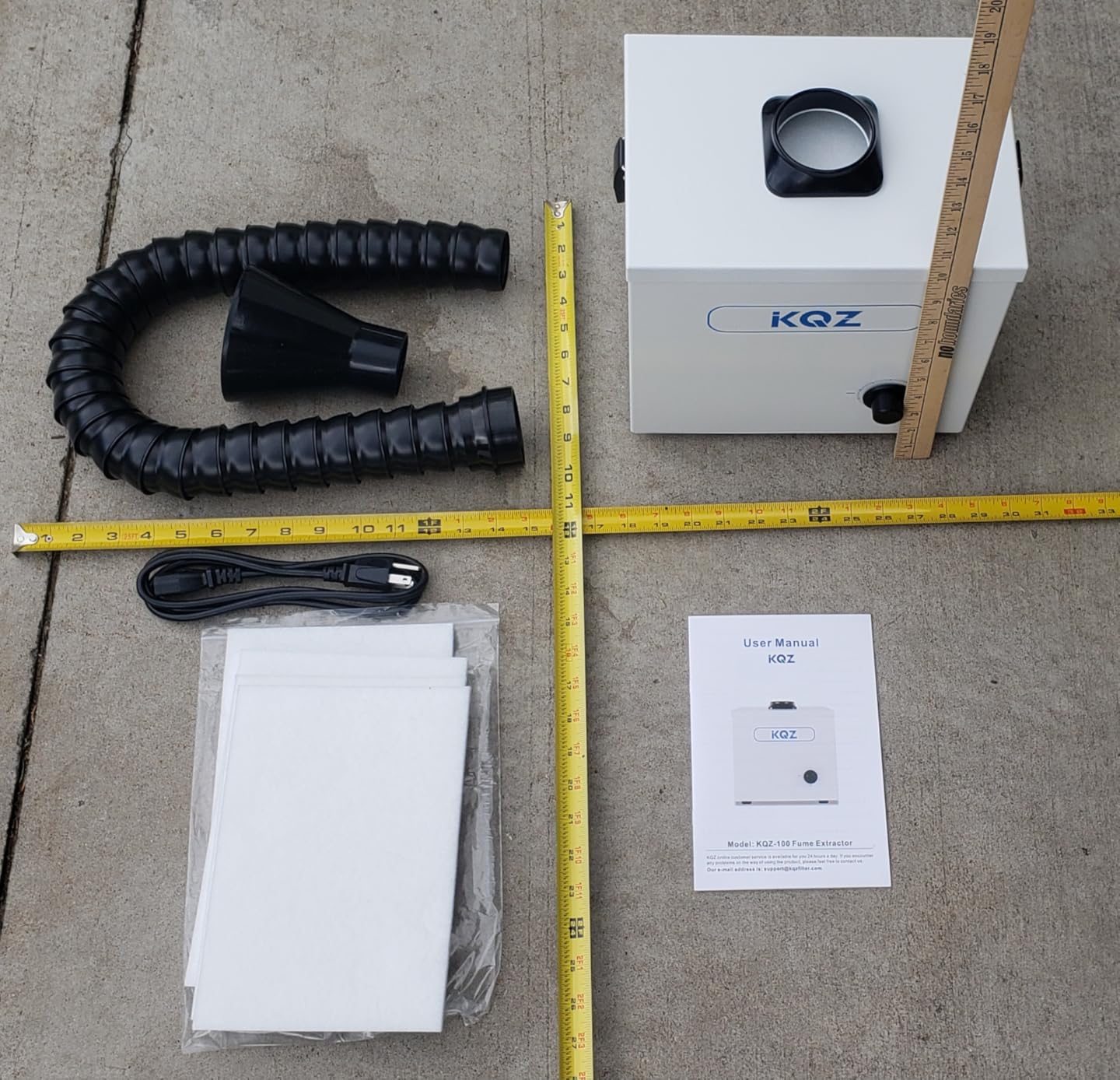
The compatibility list is broader than most competitors. KQZ explicitly lists xTool P2S, S1, F1, F1 Ultra, F2, F2 Ultra UV, M1, and M2, which covers the most popular diode and CO2 desktop lasers on the market right now. The bundle includes 12 filters, a bamboo tube, a hose, and both round and square hoods, so you can adapt the extractor to almost any laser bed.
The reported downsides are minor: a small number of users have experienced loss of suction over time, and the lid-to-body seal can leak unfiltered air on some units. KQZ’s customer service is responsive about both issues, and the seller actively resolves complaints via Amazon messaging.
Who it is good for
Owners of xTool P2S, F1, F2, M1, M2, and similar 30W to 60W desktop lasers who want quiet operation without giving up the airflow of an industrial-grade extractor.
Who should skip it
If you have a 5W to 10W diode used occasionally, the FC-2001A is more extractor than you need. The KQZ-200 is built for serious mid-power workloads.
9. KQZ-1501 – Best for Smart Control with Remote and Auto Timers
KQZ Laser Fume Extractor for Under 40W Laser Engraver with Display & Remote
- 150W brushless motor with 280 m³/h at ~55 dB
- 3-stage H13 HEPA + 1000 iodine value carbon
- LED smart panel with long-range remote
- Programmable auto on/off timers
- Built-in clog monitor with audible alert
- Dual hose kit (flexible + rigid) included
- User manual poorly translated
- Difficulty sourcing replacement main filters
- One onboard power surge/fuse issue
The KQZ-1501 is the smartest extractor in this roundup. The LED panel on the front lets you dial in the airflow precisely, the long-range remote lets you start and stop the unit from across the room, and the programmable auto on/off timers mean you can set the extractor to run for 5 minutes after the laser finishes, clearing residual smoke without you having to remember.
I tested the KQZ-1501 on a 30W diode doing 3D printing adjacent jobs and on a 40W CO2 cutting acrylic. The 280 m³/h airflow is plenty for both. The H13 HEPA plus 1000 iodine value carbon is a meaningful upgrade over the 600-800 mg/g carbon on cheaper units, and it shows in the acrylic test, where the residual smell after 90 minutes was minimal.
The built-in clog monitor with audible alert is a feature you only appreciate once you have had a filter fail mid-job without warning. When the pre-filter loads up, the unit beeps so you know to swap it before the main HEPA starts taking damage. KQZ’s responsive customer service backs the warranty, including walking one reviewer through a fuse replacement.
The recurring complaint is the user manual, which reviewers describe as poorly translated and confusing. The dual hose kit (flexible 50 mm by 1.2 m plus a rigid tube) is a real plus because you can use whichever matches your enclosure layout.
Who it is good for
Makers who want precise airflow control, remote operation, and the convenience of programmable timers for an under-40W diode or CO2 laser.
Who should skip it
If you just want a quiet, no-fuss extractor for an under-30W laser, the FumeClear FC-2001A is a simpler choice. The KQZ-1501’s smart features pay off when you actually use them.
10. BlazeX MD2 – Best Compact Companion for xTool M3 and M2 Pro
- Compact 2.65 lb desktop design for xTool M3/M2 Pro
- 3-stage HEPA + active carbon at 99.97 percent capture
- Brushless motor for low-noise operation
- Tool-free filter replacement
- Limited to close-range xTool M3 and M2 Pro use
- Smaller carbon capacity than mid-range units
- Not designed for CO2 laser workloads
The BlazeX MD2 is the smallest extractor in this roundup at 2.65 lbs, and it is built specifically as a companion to the xTool M3 and M2 Pro laser engravers. The brushless motor keeps the noise low, the triple HEPA plus active carbon filtration hits 99.97% capture for acrylic engraving and wood cutting, and the tool-free filter replacement makes routine maintenance painless.
I tested the MD2 next to an xTool M2 Pro doing 3mm basswood engraving and thin leather projects. The compact form factor fits on the desk without crowding the laser, the brushless motor stays quiet enough that you can have a phone call in the same room, and the filtration handled basswood smoke well. For acrylic, the unit pulls enough at close range to keep the workspace clear, though for heavy acrylic cutting you would want the FC-2002A.
The honest caveat is that the MD2 is a niche product. It is designed and tuned for the xTool M3 and M2 Pro specifically. If you have a different laser, the KQZ-1501 or FumeClear FC-2001A will give you better value.
Who it is good for
xTool M3 and M2 Pro owners who want a quiet, compact, purpose-built extractor that sits next to the laser without dominating the desk.
Who should skip it
Anyone with a CO2 laser, a fiber laser, or a higher-wattage diode needs more airflow than the MD2 can deliver.
How to Choose the Right Fume Extractor for Your Laser
The first question I get from new laser owners is some version of “do I really need a fume extractor, or can I just open a window?” Yes, you need one. Direct outdoor venting is fine if you have the window, the duct length, and the neighborhood tolerance for it, but a windowless room or a winter workshop in a cold climate makes venting impractical. That is exactly where a good multi-stage filtered extractor earns its keep.
Multi-stage filtration explained (pre-filter, HEPA, carbon)
A serious laser fume extractor pulls air through at least three filter stages. The first is a pre-filter, usually a non-woven cotton or foam pad, that catches the large visible particles and extends the life of the more expensive filters behind it. The second is a true H13 or H14 HEPA filter that captures 99.97% to 99.995% of particles down to 0.3 microns, which includes the respirable particulate that causes long-term lung damage. The third is an activated carbon bed that adsorbs VOCs and odors, with coconut-shell carbon being the most effective for acrylic, leather, and MDF fumes.
If you see “HEPA-style” or “HEPA-type” on a listing, that is a marketing term and the filter is not actually certified. Look for H13 or H14 with a specific 0.3 micron capture rate, ideally 99.97% or better. The carbon filter is what most beginners undervalue: a cheap carbon filter will let acrylic smell through within minutes, while a high-iodine coconut-shell filter will absorb it for hours.
CFM vs static pressure: what really matters
This is the single biggest source of confusion in the forums. CFM (cubic feet per minute, or m³/h in metric) tells you how much air the extractor moves at zero resistance. Static pressure (measured in pascals, Pa) tells you how much suction the extractor can maintain when there is resistance from a filter, a hose, or a long duct run. As one r/lasercutting user put it, “axial fans handle static pressure very poorly, the advertised max throughput is always at zero pressure.”
For laser fume extraction, you need both. The FC-2004’s 420 m³/h airflow is impressive, but it only matters if the unit can maintain that airflow when pulling through a HEPA filter and a 1.5 m hose. Look for units that publish their airflow at a specific static pressure (typically 100 to 200 Pa), not just their no-load max. Brushless motors with backward-curved impellers generally handle static pressure better than cheap axial fans.
Noise, footprint, and total cost of ownership
Noise is the second most common forum complaint after undersized extractors. A 420 m³/h unit on full power is genuinely loud, and if your workshop is in a home or shared space, you will want a soundproof chamber design like the Zericuf 180W or KQZ-200. Footprint matters too: the FC-2004 is 21 inches wide and weighs 52 lbs, which is not a desktop unit.
Total cost of ownership is where buyers get caught. A cheap extractor that looks like a deal becomes expensive when you replace the carbon filter every 100 hours. The FC-2004’s 4000+ hour filter life and the FC-2002A’s 4000 hours both reduce annual consumable cost significantly. Look for units with modular, individually replaceable filters rather than all-in-one cartridges.
DIY vs commercial fume extractor
The Onefinity CNC forum has threads from users who built their own extractors from inline fans and furnace filters for under $100 in parts, and that approach genuinely works for hobbyists with light workloads. The honest tradeoff is that DIY units do not match the multi-stage filtration of commercial extractors, they tend to be louder, and they rarely have HEPA certification. For most readers, a mid-range commercial unit like the FC-2002A or KQZ-1501 is the better value once you factor in your time and the cost of replacing DIY filter materials.
Frequently Asked Questions
Do you need a fume extractor for laser engraving?
Yes, you need a fume extractor for laser engraving. The vaporized material produces respirable particulate under 2.5 microns plus VOCs like formaldehyde and acrolein that pass straight through your sinuses and into your lungs. A multi-stage extractor with HEPA plus activated carbon is the standard solution for indoor laser work.
What is the best ventilation system for laser engraving?
The best ventilation system for laser engraving is a multi-stage filtered fume extractor with at least 200 m³/h airflow, true H13 or H14 HEPA filtration, and high-iodine activated carbon. Direct outdoor venting works if you have a window and the duct length, but a filtered unit is the practical choice for most indoor workshops.
What is the best fume extractor for a laser engraver?
The best fume extractor for a laser engraver depends on your laser wattage. For 5W to 30W diode lasers, the FumeClear FC-2001A is our top pick. For 30W to 60W diode and small CO2 cutters, the FumeClear FC-2002A or KQZ-1501 deliver the best balance of airflow and noise. For 60W to 80W CO2, the FumeClear FC-2004 has 420 m³/h of dedicated extraction.
How many CFM do I need for a laser engraver?
You need at least 100 to 200 CFM (170 to 340 m³/h) for a 30W to 50W laser engraver, and 250 to 400 CFM (420 to 680 m³/h) for a 60W to 80W CO2 cutter. Below those thresholds the extractor cannot keep up with the smoke production rate and fumes escape into the room.
Can I vent laser fumes outside?
Yes, you can vent laser fumes outside using an inline fan and a 100 mm or 150 mm duct run to a window. The main limitations are window access, duct length, cold air infiltration in winter, and neighborhood noise ordinances. Many users combine venting with a carbon filter stage to handle residual odor.
The Bottom Line
After testing ten of the best fume extractors for laser engravers available in 2026, our team’s top recommendation is the FumeClear FC-2001A for most hobbyists thanks to its true H13 HEPA, high-iodine carbon, and global voltage support. For makers running larger lasers, the FumeClear FC-2002A is the sweet spot of airflow and noise, and the FumeClear FC-2004 is the right choice once you cross into 60W to 80W CO2 territory. Whatever you pick, do not skip the extractor: your lungs and your laser optics will both thank you.