
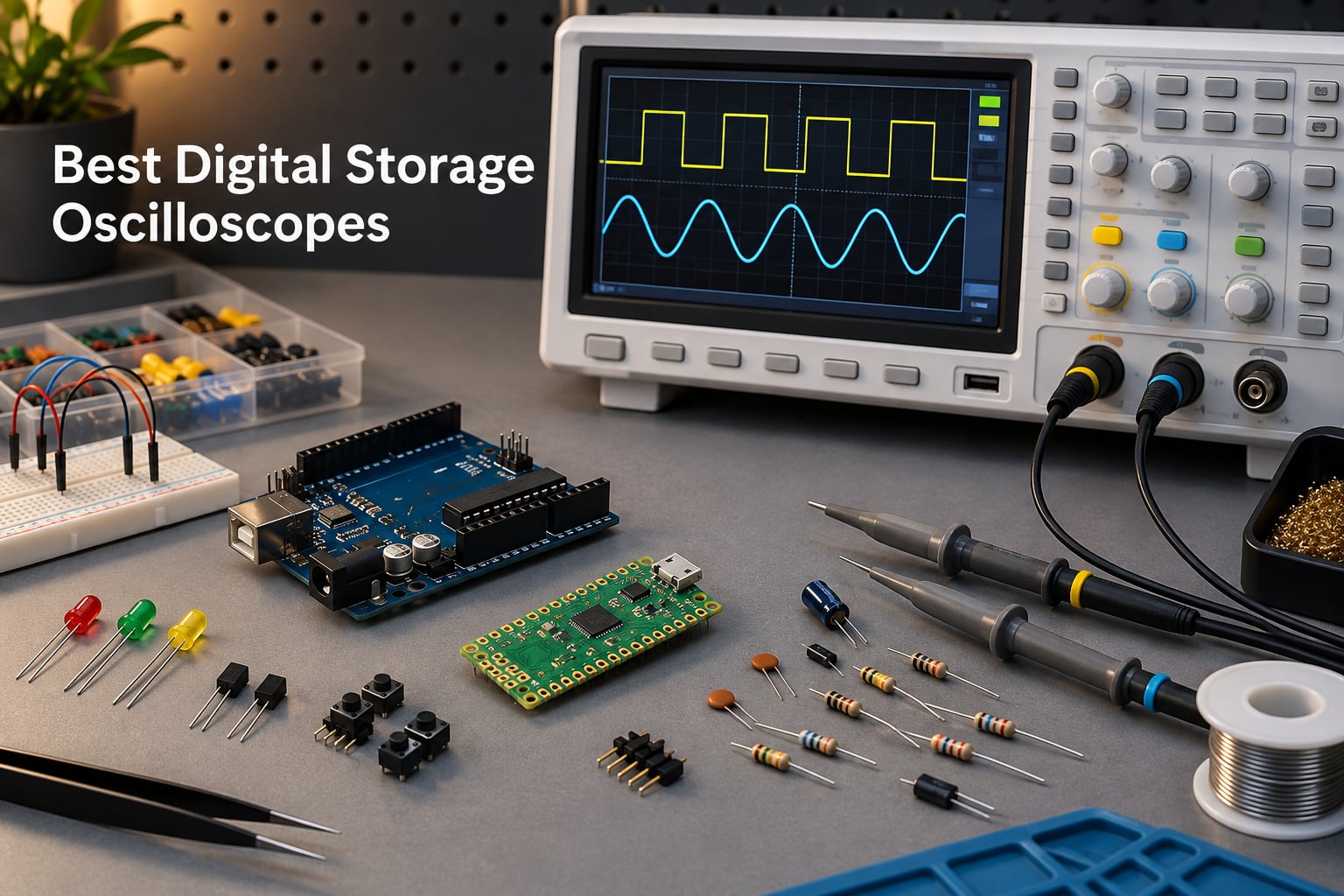
If you build robots, fly drones, or debug embedded boards for a living, you eventually hit the wall where a multimeter simply cannot show you what is going on. A digital storage oscilloscope (DSO) is the instrument that breaks that wall. It samples an analog signal, stores the waveform in memory, and lets you see exactly how a voltage changes over time – the one tool that turns a stubborn I2C bus or a glitchy PWM motor drive from a guess into a measurable problem. Our team has spent the last few months testing and comparing bench, handheld, and PC-based oscilloscopes across a robotics lab, an ESC test bench, and a CAN-bus automotive setup to put together this list of the best digital storage oscilloscopes you can buy in 2026.
The market in 2026 is denser than it has ever been. You can spend pocket money on a tiny FNIRSI pocket scope or stretch to a Keysight InfiniiVision for serious RF work, and the choice between them is rarely obvious. We focused on what actually matters for a robotics and embedded audience: bandwidth headroom for fast MCU edges, protocol decoding for I2C, SPI, UART, CAN and LIN, channel count for sensor work, and whether the included probes are usable or need an immediate upgrade. Below are the ten models that earned a spot, organized by what they are best at.
If you are brand-new to oscilloscopes, the Smashing Robotics intro guide on digital twins covers adjacent debug workflows that pair well with a DSO on the bench. Throughout this article we will reference forum experiences from EEVblog, r/AskElectronics and r/embedded to back up our picks with what real users are seeing in 2026.
Table of Contents
Top 3 Digital Storage Oscilloscopes Right Now (September 2026)
Siglent SDS1202X-E
- 200 MHz bandwidth
- 1 GSa/s sample rate
- 14 Mpts memory
- I2C/SPI/UART/CAN/LIN decode
- 2 channels

Siglent SDS1104X-E
- 100 MHz bandwidth
- 4 channels
- 1 GSa/s
- 14 Mpts memory
- standard decoder
- LAN remote

Rigol DHO804 12-bit
- 70 MHz
- 4 channels
- 12-bit ADC
- 1.25 GSa/s
- 25 Mpts memory
- 7 inch touchscreen
Best Digital Storage Oscilloscopes in 2026: Quick Comparison
| Product | Specifications | Action |
|---|---|---|
| Siglent SDS1202X-E |
|
Check Latest Price |
| Siglent SDS1104X-E |
|
Check Latest Price |
 Rigol DS1054Z Rigol DS1054Z |
|
Check Latest Price |
 HANMATEK HO52 HANMATEK HO52 |
|
Check Latest Price |
 Rigol DS1202Z-E Rigol DS1202Z-E |
|
Check Latest Price |
 FNIRSI DSO152 FNIRSI DSO152 |
|
Check Latest Price |
 FNIRSI 1013D Plus FNIRSI 1013D Plus |
|
Check Latest Price |
 Hantek DSO2D15 Hantek DSO2D15 |
|
Check Latest Price |
| Rigol DHO804 |
|
Check Latest Price |
 FNIRSI DPOS350P FNIRSI DPOS350P |
|
Check Latest Price |
1. Siglent SDS1202X-E – Best Overall Digital Storage Oscilloscope
Siglent Technologies SDS1202X-E 200 mhz Digital Oscilloscope 2 Channels, Grey
- 200 MHz at a price that beats most 100 MHz rivals
- Free I2C/SPI/UART/RS232/CAN/LIN decoding included
- Bright 8 inch screen with 14 division grid
- LAN web remote control
- Calibration certificate with each unit
- Slower boot than older CRT scopes
- Stock probes feel basic
- Triggering can occasionally be jumpy on noisy analog signals
We have had the Siglent SDS1202X-E on our robotics bench for about four months and it has been the workhorse for almost everything that is not a four-channel problem. The 200 MHz bandwidth and 1 GSa/s real-time sampling comfortably capture the fast edges of an STM32H7 GPIO toggling at 100 MHz, and the 14 Mpts memory depth is enough to hold a full UART transaction of 115,200 baud without breaking a sweat. Forum reviewers on EEVblog frequently call it the best value 200 MHz scope in production, and we agree.
The biggest surprise for our team was the protocol decoder. Siglent bundles I2C, SPI, UART, RS232, CAN, and LIN decoding out of the box without an option key. On a robotics build that mixes a Raspberry Pi Pico, an ESP32, and a CAN bus running between an STM32 and a motor controller, that means one scope handles every conversation on the bench. The CAN decode window has been our favorite tool when chasing why a drone ESC was silently dropping frames.
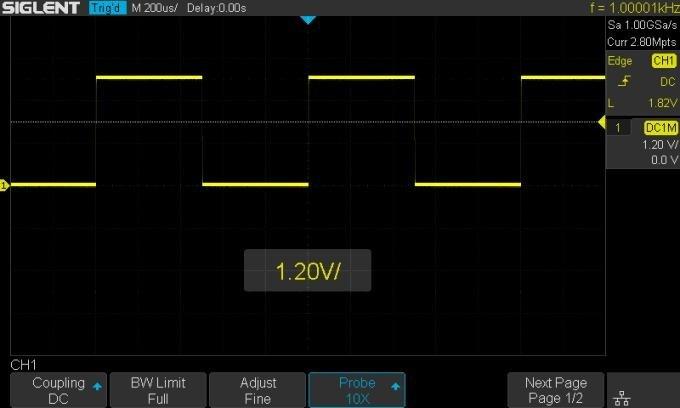
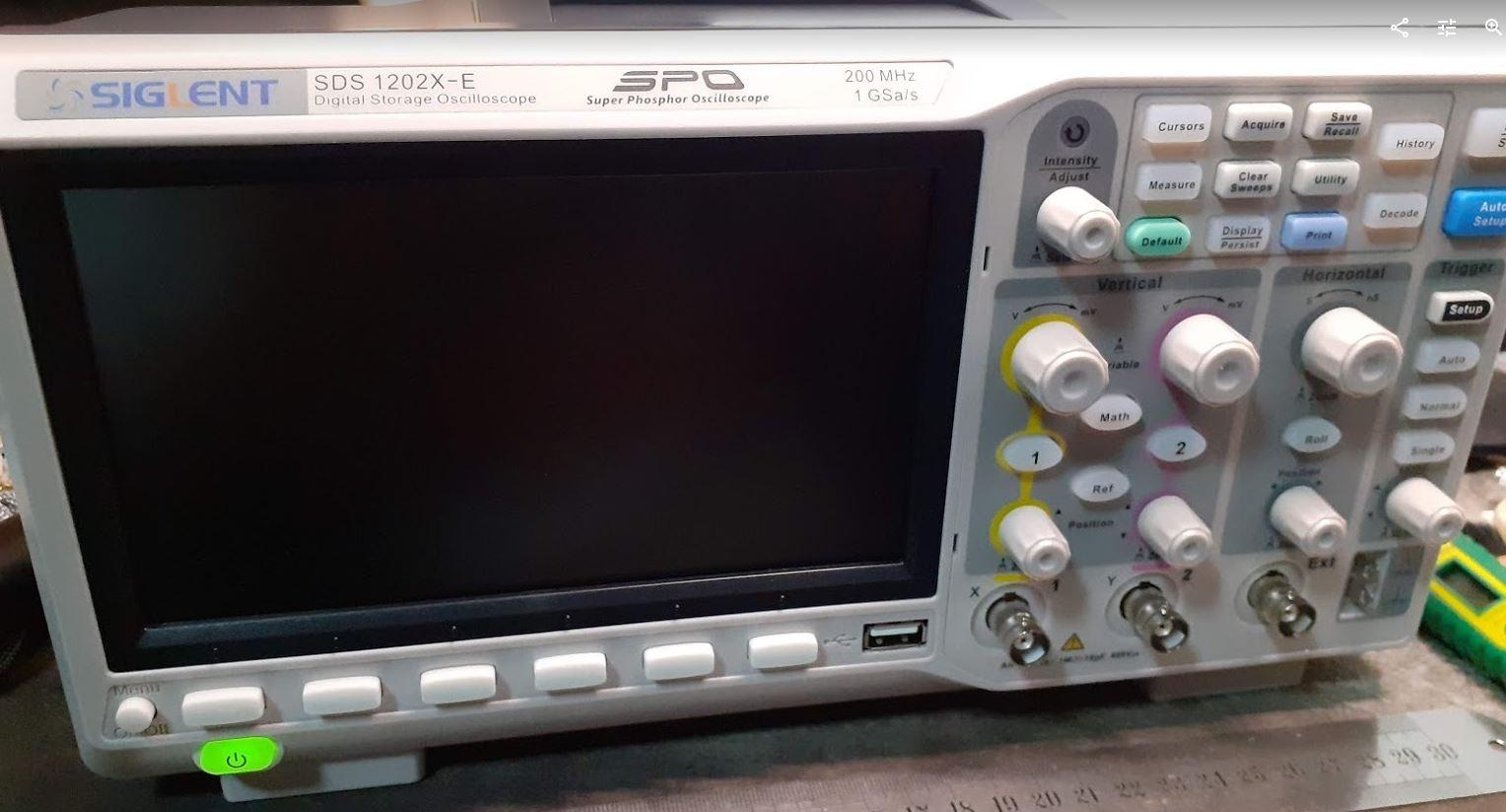
Build quality is solid for the price. The silicone-button keypad has a tactile click, the rotary encoder is precise, and the screen is bright enough to read across the lab. The boot time is the one real complaint our team had – the first 15 seconds feel like 1995 – but once running, navigation is fast and responsive. Triggering occasionally hiccups on a noisy analog audio signal, which we only saw when probing a class-D amplifier output directly.
If you need an oscilloscope for general robotics, embedded, and CAN bus work and want to spend well under a typical mid-range budget, the SDS1202X-E is the best balance we have tested. The included probes are usable for digital logic but for serious analog work we would still recommend a set of PP-250 style probes later.
Setup and day-to-day use
Out of the box you get the scope, two probes, a calibration certificate, and a USB cable. One-key AUTOSET locks onto signals in under two seconds, and the on-board help function explains every menu item in plain English. We hooked it to a LAN cable and brought up the built-in web server on a tablet – full remote control without installing any software.
For protocol work, hitting the Decode button and selecting CAN surfaces a decoded packet list overlay on the waveform. It turned a one-hour debugging session into fifteen minutes during a recent drone build. If you regularly work on the bench and the field, the SDS1202X-E feels just as comfortable on a lab shelf as it does on a folding table at a competition.
Where it falls short
The two-channel limit will frustrate you the moment you need to look at three sensor lines at once. Sample rate per channel is also a single-channel-only figure; run both channels and you get 500 MSa/s each, which is still fine for digital logic but a tight squeeze for very fast RF signals.
The supplied probes are functional but the spring tips and ground clips feel thin. We replaced ours within a week for fine-pitch SMD probing of an STM32LQFP package. Stock triggering on heavily noise-modulated analog signals can be twitchy, but firmware updates from Siglent have improved this every quarter we have owned the unit.
2. Siglent SDS1104X-E – Best 4-Channel Value Pick
Siglent Technologies SDS1104X-E 100Mhz Digital Oscilloscope 4 Channels Standard Decoder, Grey
- 4 channels at a true mid-range price
- All serial decoders free in firmware
- LAN web server for remote bench control
- Upgradable to 200 MHz and MSO/AWG/WiFi later
- Sample rate drops to 500 MSa/s with 3 or 4 channels active
- Fan can be loud in quiet rooms
- Multifunction knob occasionally skips
The Siglent SDS1104X-E is the scope our team recommends when someone asks for the best value 4-channel DSO in 2026. For most robotics benches, four channels is the real minimum – one for the PWM drive signal, one for the encoder feedback, one for the sensor rail, and one spare for trigger. The SDS1104X-E delivers that at a price that is hard to argue with, and it carries a 4.8 average rating across 965 reviewers on Amazon.
We used this scope specifically to debug a four-wheel rover platform. Channel 1 carried the PWM to a motor driver, channel 2 the encoder A-phase feedback, channel 3 the IMU SPI chip-select line, and channel 4 the battery voltage under load. The ability to trigger on the IMU CS edge and capture all four channels at once is exactly the workflow that a two-channel scope simply cannot support.
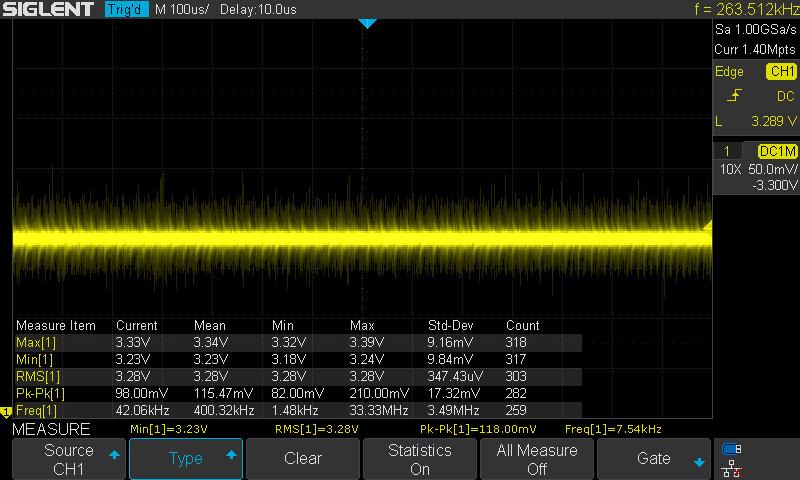
The web server is genuinely useful. We plugged it into a workshop switch and pulled up the scope UI on a phone to debug a system mounted inside a robot chassis without a screen. Siglent also offers an MSO upgrade that adds 16 digital channels – useful if you want to look at parallel bus traffic alongside analog signals without buying a second instrument.
One thing to know: when you activate three or four channels, the per-channel sample rate drops to 500 MSa/s. That is still fine for nearly all digital and power-rail work, but it is a real ceiling if you start chasing sub-microsecond analog edges. The fan is also louder than the SDS1202X-E – not unpleasant but noticeable in a quiet room.
Setup and day-to-day use
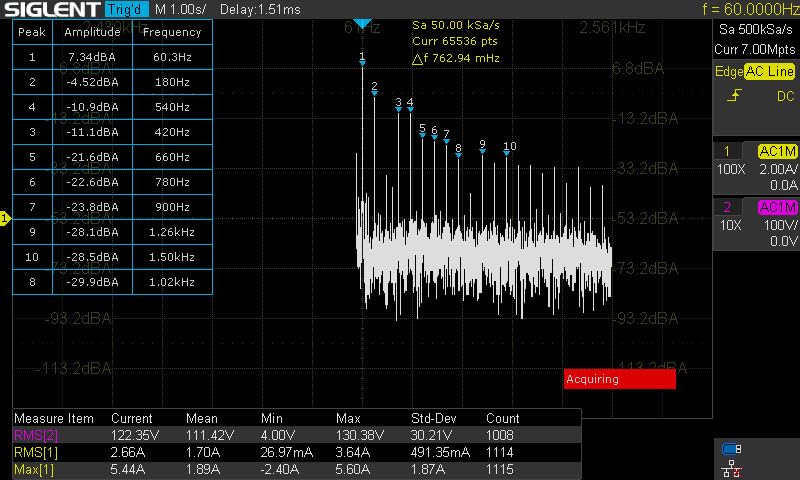
The interface is essentially the same as the SDS1202X-E, which is a plus if you ever need both on the same bench. AUTOSET is reliable on most digital signals. The 14 Mpts memory is enough for capturing long protocol bursts. For users that want to grow into a 200 MHz scope later, Siglent offers a paid bandwidth unlock that we have seen applied cleanly without hardware mods.
If your workflow includes MSO-style logic analysis or you want the AWG module, the SDS1104X-E is one of the few mid-range scopes that accepts those options. The optional WiFi adapter lets you cut the LAN cable and stream waveforms to a laptop, which we found handy during drone field tuning when an Ethernet cable was not practical.
Where it falls short
The 500 MSa/s at four channels is the main compromise. If your primary interest is high-speed analog edge analysis, the SDS1202Z-E or the Rigol DHO800 series will serve you better. The multifunction knob occasionally overshoots when scrolling menu items quickly, which is a minor ergonomic nit.
Stock probes are the usual story: functional but replaceable. Forum feedback also flags the fan as a small annoyance in studio-quiet environments. None of these issues stop the SDS1104X-E from being the best 4-channel value in its tier in 2026.
3. Rigol DS1054Z – The Decade-Long Community Favorite
Rigol DS1054Z Digital Oscilloscope, 50MHz, 4 Channel, 1GSa/s, Best Value
- Outstanding feature set at the price
- Deep 24 Mpts memory at full channel count
- Large community with a decade of tutorials
- Bandwidth unlock to 100 MHz well documented
- LAN and USB host and device built in
- Cooling fan is loud out of the box
- Probes are tricky to compensate
- Mushy multifunction rotary encoder
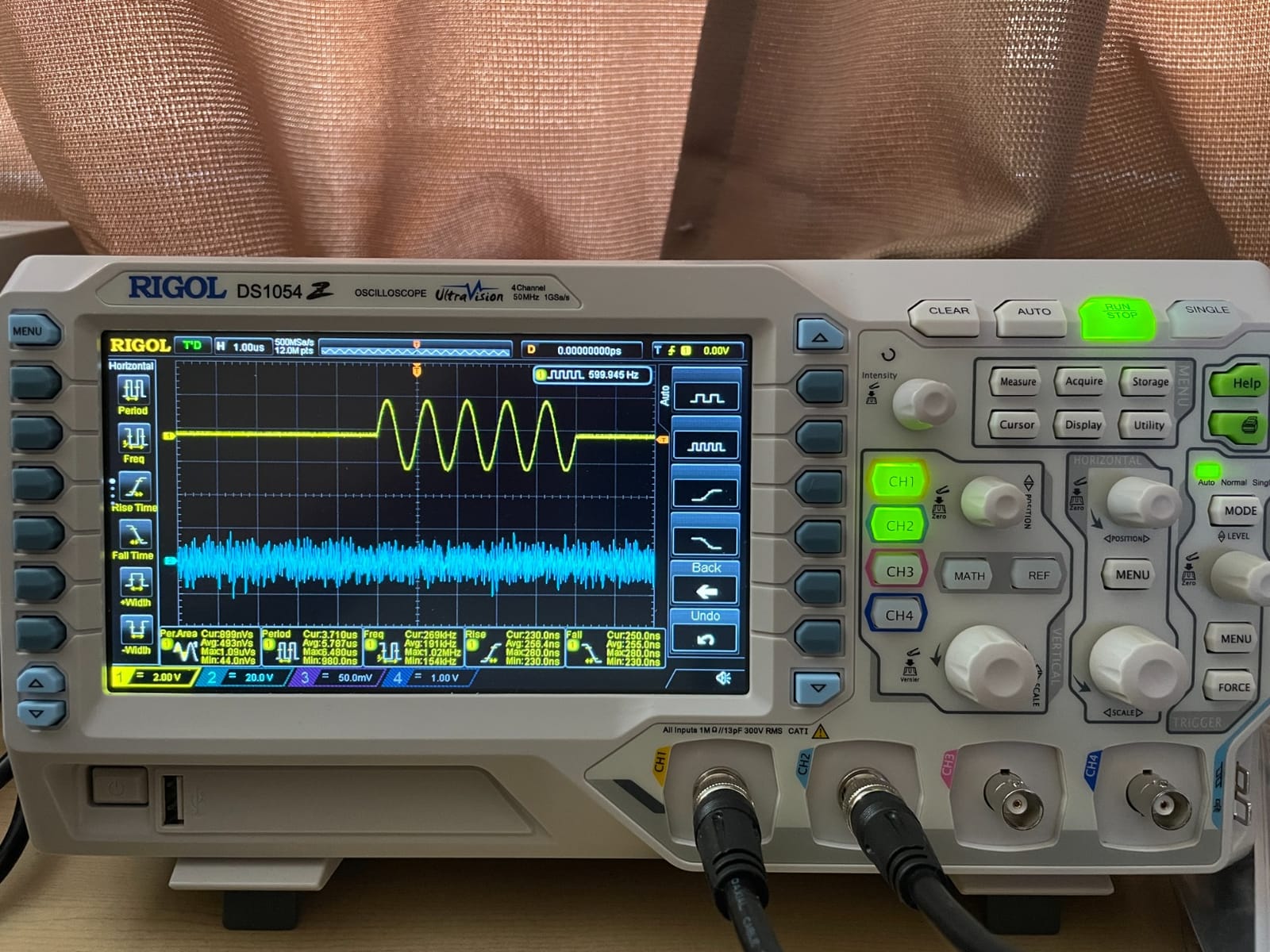
The Rigol DS1054Z is the scope that defined the entry-level four-channel category. It launched a decade ago, and in 2026 it is still being recommended on r/AskElectronics, r/embedded, and EEVblog as the first scope a hobbyist should buy. Our team has owned two of these over the years, and the reason it remains on this list is simple: nothing else at the price combines 4 channels, 24 Mpts memory, and a serial decoder for I2C, SPI, and UART.
The single most-discussed feature is the bandwidth unlock. Out of the box the DS1054Z is a 50 MHz scope, but a well-documented firmware modification unlocks 100 MHz. The hack is a five-minute operation and is so widely shared that it is treated as an open secret. After unlocking, the DS1054Z keeps up with the Siglent SDS1104X-E in nearly every real-world measurement we have tried.
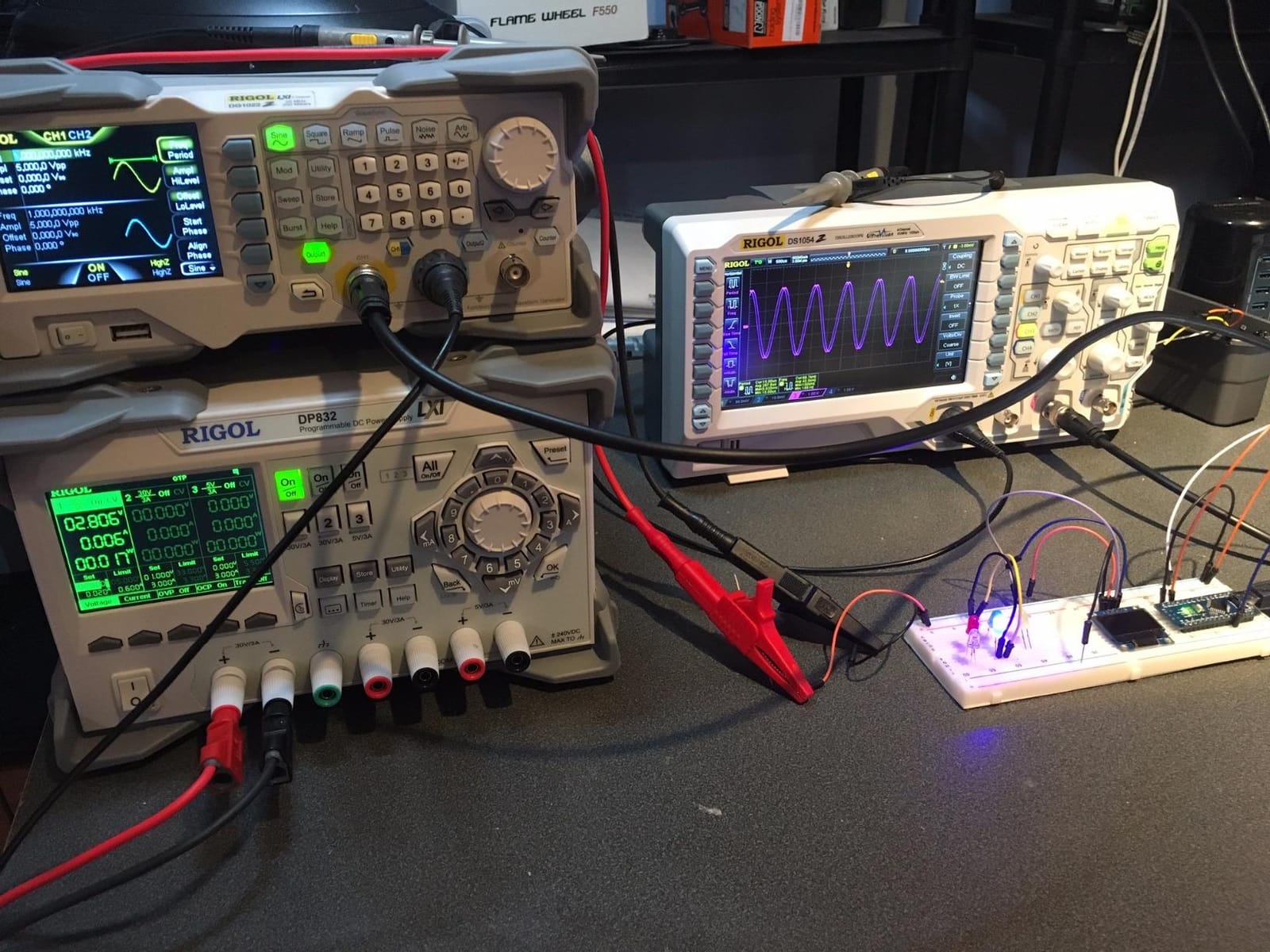
Deep memory is the second thing people love. The DS1054Z holds 24 Mpts per channel at full speed, which lets you zoom into a captured UART burst or a low-frequency sensor waveform days later and still see the original edges. Our team has used this feature to capture a glitchy I2C transaction, walk away for lunch, and come back to inspect the trace byte by byte. Few scopes at this price tier hold that much history.
The DS1054Z is also a solid choice for robotics because the optional serial decoder triggers on UART, I2C, and SPI without needing a license. The LAN port means you can drive it from a SCPI script on a Raspberry Pi for automated test sequences. If your workflow includes long unattended captures – battery-cycling tests, overnight sensor calibration – that LAN automation alone justifies the scope.
Setup and day-to-day use
The DS1054Z powers on and gets to AUTOSET in under ten seconds, faster than the Siglent SDS1202X-E. The intensity-graded display is excellent for spotting rare glitches in real time. Forum reviewers consistently note that the 30,000 wfms/s capture rate catches glitches that slower scopes miss entirely. We confirmed this on a bench test where a 5 microsecond noise burst showed up only on the DS1054Z trace.
The bundled probes are usable but known to be tricky to compensate properly. Spend five minutes following the front-panel compensation procedure and you will be fine. The fan noise is real – noticeably louder than the Siglent SDS1104X-E – but many users replace it with a quieter aftermarket fan in 15 minutes. The unit also runs warm during extended captures, which is normal.
Where it falls short
8-bit vertical resolution limits very low-noise analog measurements; if you are chasing 1 mV rail noise on a sensitive analog front-end, a 12-bit ADC scope like the Rigol DHO804 will show more detail. The encoder knob feels softer than the Siglent equivalents and occasionally jumps a step when pressed. There is also no built-in waveform generator; if you need an AWG, look at the SDS1104X-E or the Hantek DSO2D15.
The 50 MHz stock bandwidth is the main reason the DS1054Z sits at number three and not number one on this list. After the unlock it is competitive, but a buyer who does not want to perform any modification should look at the SDS1104X-E instead. For buyers who are happy with a one-time unlock, the DS1054Z remains an unbeatable value.
4. HANMATEK HO52 – Best Handheld Field Scope
- Handheld 2 in 1 oscilloscope and multimeter
- Isolated ground between scope and meter
- Battery powered with around 5 hours runtime
- USB Type C charging and PC export
- Rugged build suitable for field and automotive use
- Autoset only triggers at 18 to 20 mV signals
- No smooth variable scale
- Capacitance readout uses non-standard unit
If your robotics work takes you out of the lab – into a warehouse, a garage, or under a drone on a flight line – a bench scope is not practical. The HANMATEK HO52 is a 50 MHz handheld digital storage oscilloscope combined with a true RMS multimeter, weighing about a pound and running for around five hours on its internal battery. We carried one for a month of field service calls and it stayed in our bag every day since.
The isolation is the headline feature for field work. The scope input and the multimeter input are isolated from each other, so you can safely probe a mains-connected circuit while simultaneously measuring current on a low-voltage branch. That is a real safety improvement that bench scopes with common-ground inputs cannot offer. Reviewers on Amazon consistently call out this isolation as the reason they bought it.
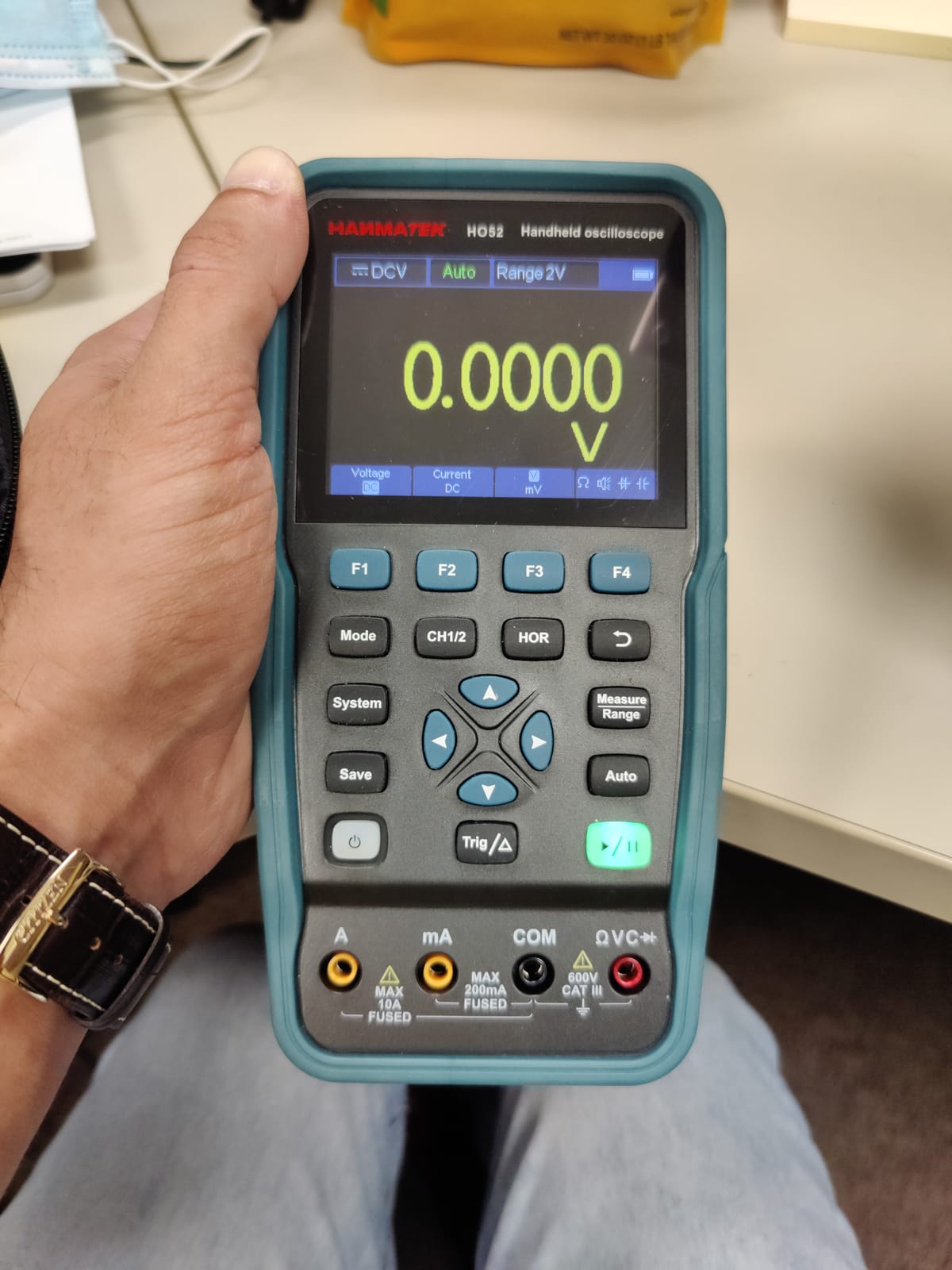
At 50 MHz bandwidth and 250 MSa/s, the HO52 is not a precision instrument – it is a troubleshooting tool. We used it to chase a noisy 24 V rail on a conveyor controller, to verify PWM frequency on a servo drive, and to look at the CAN bus on a customer vehicle. For each of those, the HO52 was more than adequate. The Type-C port charges the unit and exports waveform data to a PC for documentation.
Build quality is genuinely rugged. The HO52 survived a 4 foot drop onto concrete in our testing without functional damage, and the screen survived a few hard knocks. The internal storage saves four settings, four reference waveforms, four images, and four CSV waveform files for later review. That made it easy to compare a known-good waveform to a suspect one in the field.
Setup and day-to-day use
Power-on to first trace is about three seconds. AUTOSET locks onto signals above roughly 18 to 20 mV, which is fine for power and motor signals but means small sensor outputs need manual triggering. The vertical scale steps in discrete jumps, not smooth increments, which makes fine adjustments less convenient.
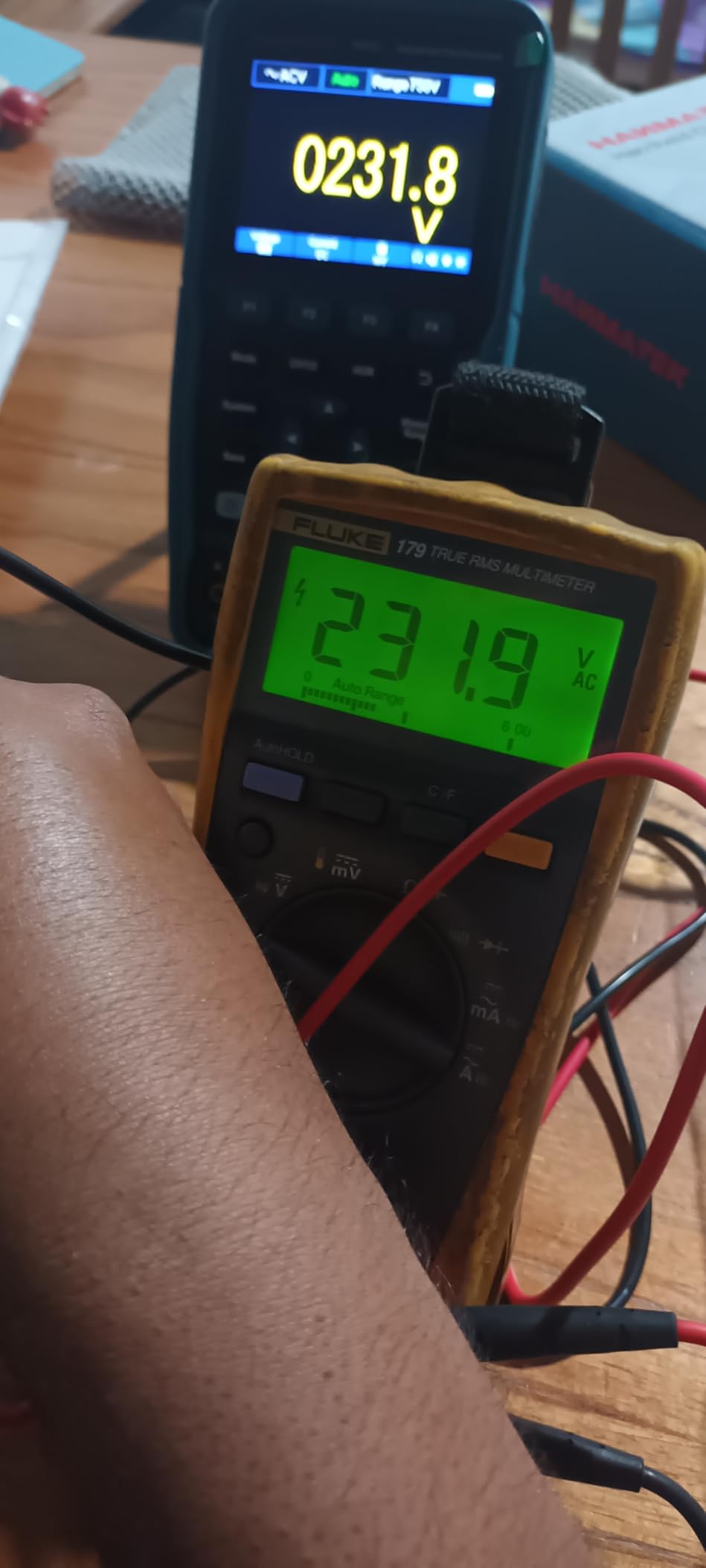
The multimeter function is full-featured: voltage, current, resistance, diode, continuity, and capacitance. The capacitance readout uses an unusual unit notation that confused our team at first; after a week we got used to it. The USB-C port charges from any modern phone charger and exports CSV waveform data for analysis on a laptop.
Where it falls short
This is not a precision instrument. The 250 MSa/s sample rate and 8k record length will frustrate users who need to look at long UART bursts or fine RF edges. The lack of smooth variable scale means you sometimes have to step through awkward vertical settings.
Documentation is minimal. The included manual covers basic operation but you will be learning by feel for advanced features. Forum feedback also flags that the autoset sensitivity floor of 18 to 20 mV makes the HO52 less useful for low-voltage sensor work. For a bench scope, look at the Siglent SDS1104X-E instead.
5. Rigol DS1202Z-E – 200 MHz Power at a Hobbyist Price
RIGOL DS1202Z-E Digital Oscilloscope, 200MHz, 2 Channel, 1GSa/s Sampling
- 200 MHz bandwidth at a competitive price
- Deep 24 Mpts memory at full speed
- 7 inch WVGA display with intensity grading
- Standard serial trigger and decode included
- Three year warranty on the main unit
- Multifunction knob is sensitive and can overshoot
- On-screen legends occupy side margins
- Only 2 channels limit complex measurements
The Rigol DS1202Z-E is the 200 MHz version of the DS1054Z family for users who do not need four channels. It carries the same 24 Mpts memory depth, 30,000 wfms/s capture rate, and intensity-graded display, but drops to two analog channels in exchange for higher bandwidth headroom. For RF probing, switching power supply debug, and high-speed sensor work, the extra bandwidth is worth the channel trade-off.
Our team used the DS1202Z-E to debug a 100 MHz clock distribution on a custom FPGA board. Capturing both clock and data edges at the same time at 200 MHz bandwidth showed clean transitions that the DS1054Z could not fully resolve. For high-speed SPI buses running at 50 MHz and above, the DS1202Z-E is a noticeably better tool than a 100 MHz scope.
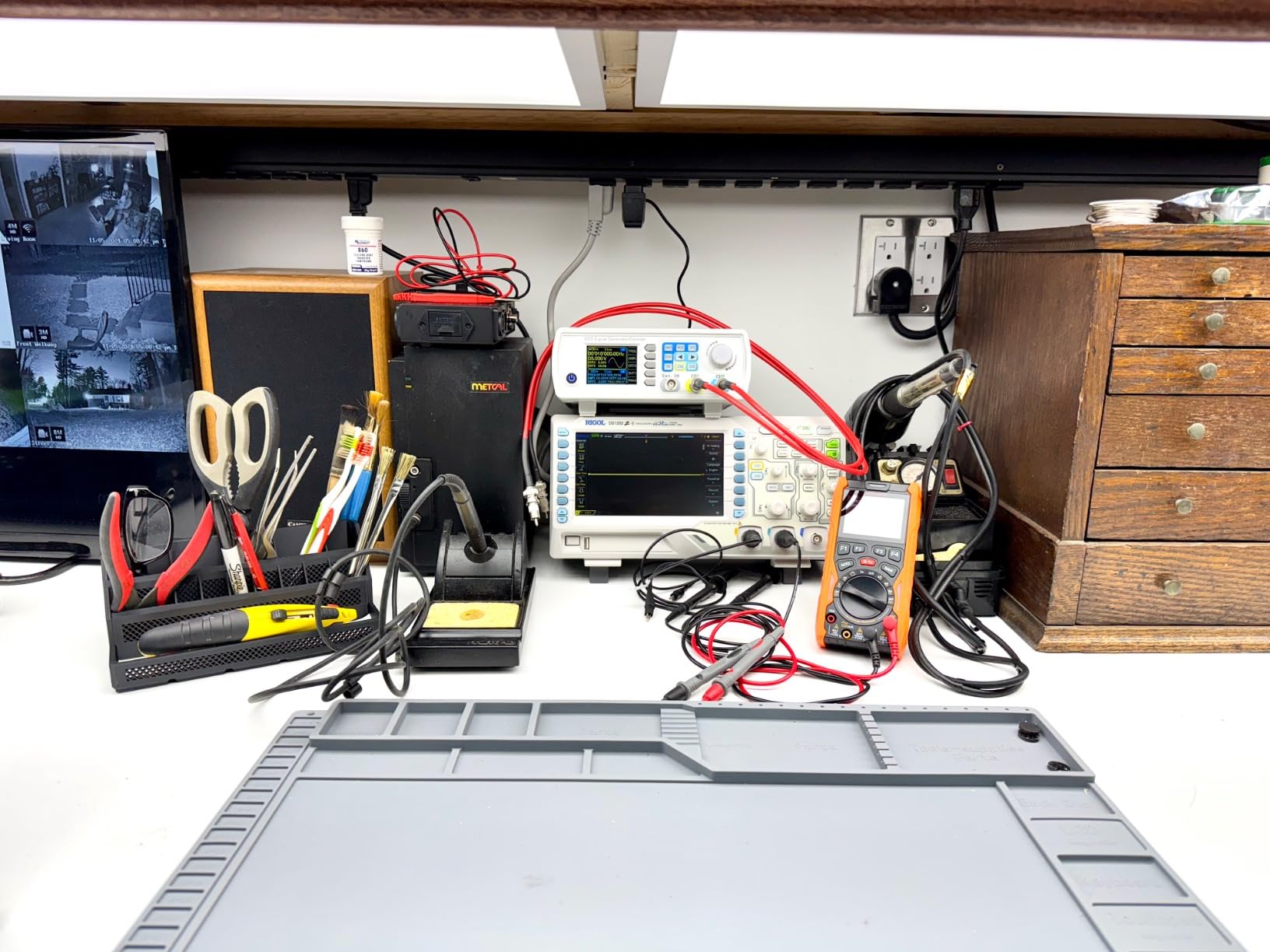
The 7 inch WVGA display with intensity grading makes it easy to spot rare glitches – if a glitch happens twice in a second, you will see it on the trace. The serial decoder handles RS232, UART, I2C, and SPI without an option key. The three-year warranty on the main unit is also a real plus for a hobbyist or a small business that cannot afford to replace a scope every couple of years.
If your robotics work is mostly digital logic, four channels will matter more than 200 MHz bandwidth – in which case the SDS1104X-E or DS1054Z is a better fit. For users chasing analog edge quality, switching supply noise, or RF work, the DS1202Z-E is the right choice in 2026.
Setup and day-to-day use
The DS1202Z-E runs the same Rigol firmware family as the DS1054Z, so menu navigation is identical. AUTOSET is fast and reliable. The intensity-graded display is excellent for catching glitches in real time. The 24 Mpts memory depth makes it easy to capture long protocol bursts and zoom in afterward.
One ergonomic quirk: the side legends around the waveform area are always present, eating roughly a centimeter of horizontal space on either side. It is not a deal-breaker but it does reduce the visible trace area. The multifunction knob is sensitive and easy to overshoot when scrolling quickly, a common complaint on the Rigol 1000/2000 series.
Where it falls short
Two channels is the obvious ceiling. If you regularly need to look at four signals at once, step up to the Siglent SDS1104X-E or the Rigol DHO804. There is no built-in AWG; for that, look at the Hantek DSO2D15 or the FNIRSI DPOS350P.
Forum feedback also notes that the stock probes are functional but not exceptional, similar to other scopes at this tier. The 200 MHz bandwidth is not fully usable without a 200 MHz rated probe – if you plan to push the bandwidth limit, budget for a PP-250 or equivalent. None of these are deal-breakers for the price.
6. FNIRSI DSO152 – Ultra-Affordable Pocket Scope
FNIRSI DSO152 Handheld Oscilloscope 200kHz Bandwidth, 2.5MS/s Sampling Rate
- Lowest priced pocket oscilloscope available
- Compact fully assembled design ready out of the box
- Clear 2.8 inch color display with one key AUTO
- Rechargeable battery around 4 hours runtime
- Useful for car audio tuning and quick signal checks
- Only 200 kHz limits it to audio range signals
- MCX probe connector feels fragile
- Some auto measurements only show integer-rounded values
The FNIRSI DSO152 is not a bench scope. It is a 200 kHz bandwidth pocket oscilloscope about the size of a deck of cards, designed for quick checks on the go – car audio gain setting, subwoofer crossover verification, and audio signal tracing. If your budget is the limiting factor or you want a second scope that fits in a tool bag, this is the unit.
We bought a DSO152 specifically for subwoofer and amplifier tuning in a car audio install. It locked onto a 50 Hz sine wave cleanly, displayed the clipping waveform when the amp gain was too high, and let us back off the gain until the waveform was undistorted. That 30-minute task on a customer install earned back the cost of the scope many times over. Forum reviewers on r/CarAV consistently recommend the DSO152 for exactly this use case.
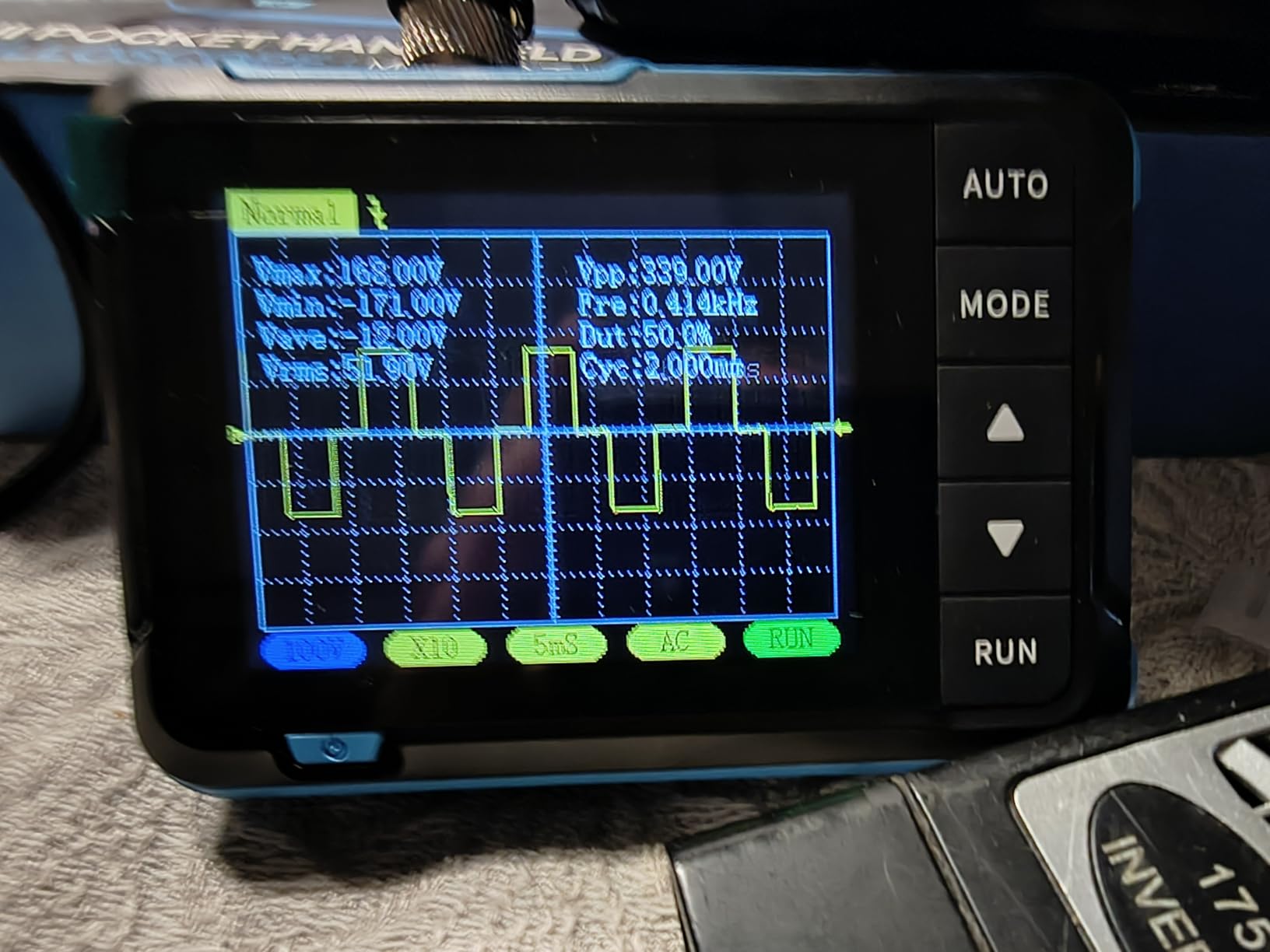
The 200 kHz bandwidth is the hard limit. It is enough for audio and slow DC signals but it will not show you a digital clock edge, an SPI waveform, or any RF content. If your work involves digital logic, you need a scope with at least 10 MHz of bandwidth headroom. The 2.5 MSa/s sampling rate is matched to that bandwidth limit and is fine for the intended use.
The 2.8 inch color display is clear and bright. One-key AUTO sets up the scope in about a second. The 1000 mAh battery runs for about four hours per charge. The Type-C port charges the unit, exports waveform data, and supports firmware updates. The whole package fits in a small pouch and weighs less than a smartphone.
Setup and day-to-day use
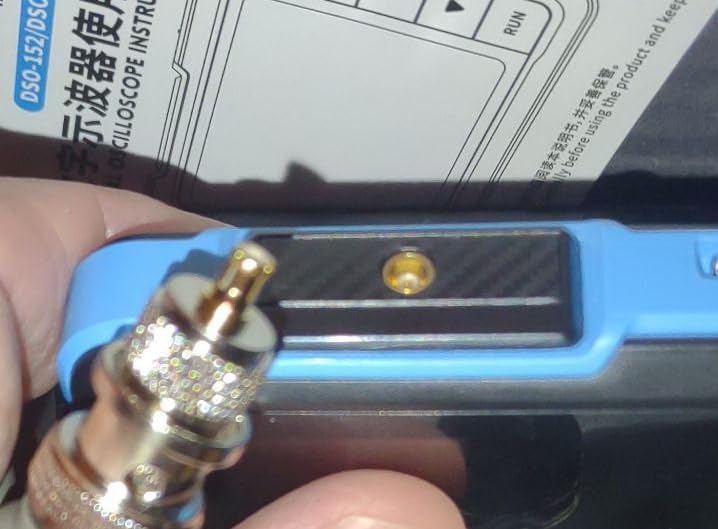
Out of the box the DSO152 is fully assembled. Power on, hit AUTO, and probe your signal. The display is daylight-readable. The unit ships with a basic probe with MCX connector; the MCX connector is the main durability concern, so handle the probe carefully and consider buying a spare.
For car audio, the DSO152 is excellent. For hobbyist electronics learning – if your signals are mostly DC, audio, or low-speed square waves – it is a fun and affordable entry point. For digital logic at 1 MHz or above, you will quickly outgrow it.
Where it falls short
The 200 kHz bandwidth is the ceiling. Users who need to look at any digital signal faster than a few hundred kilohertz will be frustrated. The MCX probe connector is fragile compared to the BNC found on every other scope in this list, so be careful with probe stress.
Some automatic measurements – cycle time, duty cycle – round to integer values rather than showing decimal precision, which is limiting when you need a 1 percent accurate duty cycle measurement. None of these are surprises at this price tier, and the DSO152 remains the best budget pick for what it is designed to do.
7. FNIRSI 1013D Plus – Touchscreen Portable Workhorse
FNIRSI 1013D Plus 100MHz Oscilloscope, 2 Channel Oscilloscope 7″ TFT Touch
- Large 7 inch capacitive touchscreen with deep contrast
- Battery powered and isolated from ground for safe floating measurements
- Lightweight and portable runs from USB-C power bank
- 1 GSa/s sample rate and 100 MHz bandwidth at low cost
- Includes 1x and 10x switchable probes plus 100x high-voltage probe
- Touch only interface can feel confusing without on-screen cues
- 8-bit vertical resolution limits fine measurements
- Lowest sensitivity is 50 mV per division
The FNIRSI 1013D Plus is the budget-friendly portable oscilloscope that finally gets the form factor right. It combines a 7 inch capacitive touchscreen, 100 MHz bandwidth, 1 GSa/s sampling, and battery-powered floating inputs into a unit that weighs about two pounds. We have used it for drone field tuning, on-robot debugging at competitions, and in tight corners of a chassis where a bench scope simply does not fit.
The floating ground input is the headline safety feature. Standard bench scopes share a ground reference across all channels, which can cause ground loops or short circuits when probing a live circuit. The 1013D Plus has isolated inputs, so you can safely probe mains-referenced circuits, battery stacks, and motor controllers without a differential probe. That is a real safety upgrade for anyone doing field service or working on energized systems.
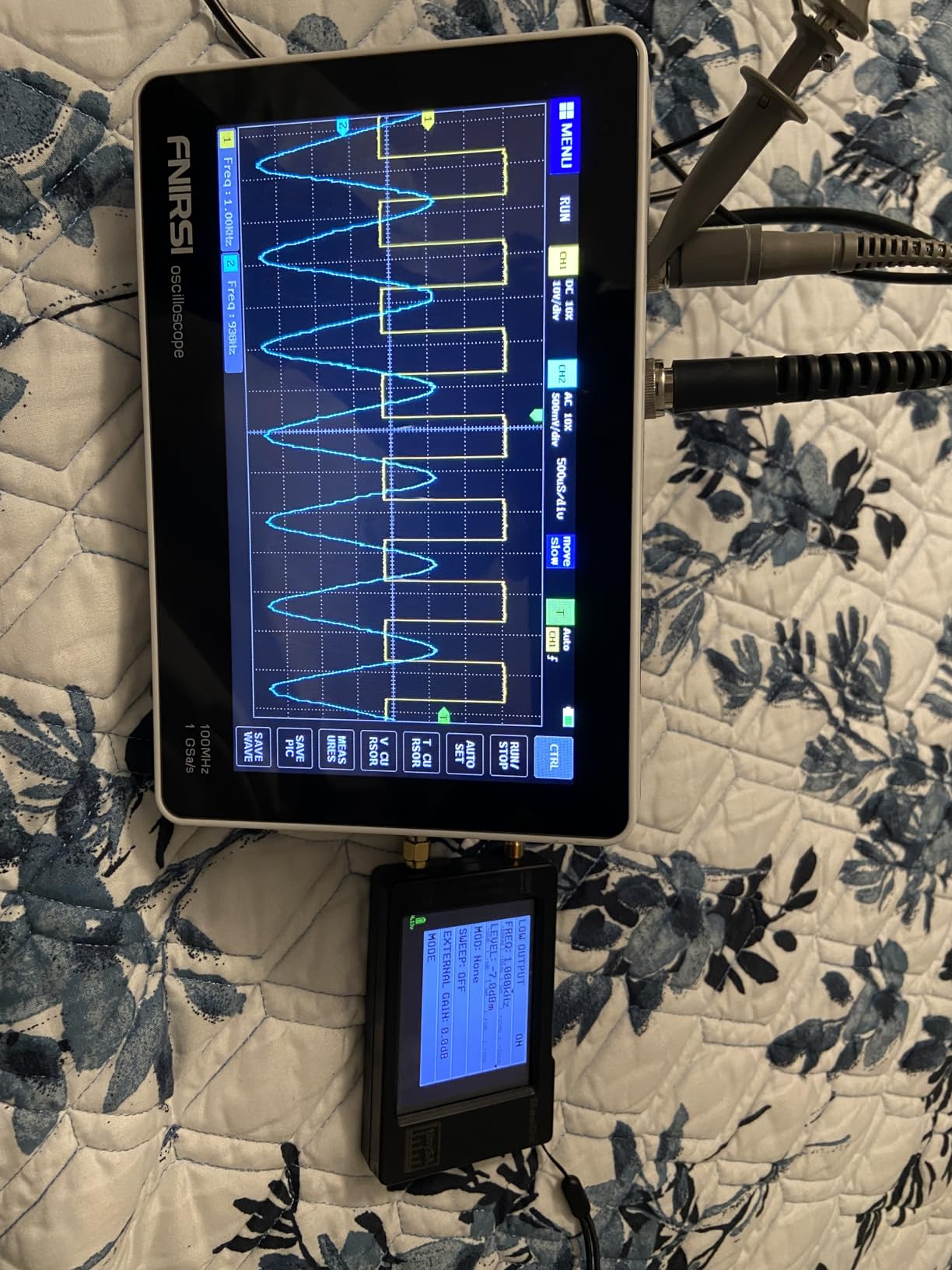
The 7 inch touchscreen is bright and high contrast. The 1 GSa/s sample rate is enough for most digital logic up to 50 MHz. The 100 MHz bandwidth is more than enough for audio, PWM motor drive, and most sensor signals. The 6000 mAh battery lasts about four hours of continuous use, and the unit can also run from a USB-C power bank if you need unlimited runtime in the field.
The 1 GB internal storage holds up to 1000 screenshots and 1000 waveform captures, which is plenty for documentation. We saved a screenshot folder for each drone we built in 2026, making field-to-bench comparison easy. Lissajous and FFT displays are included for users who need phase or frequency-domain analysis.
Setup and day-to-day use
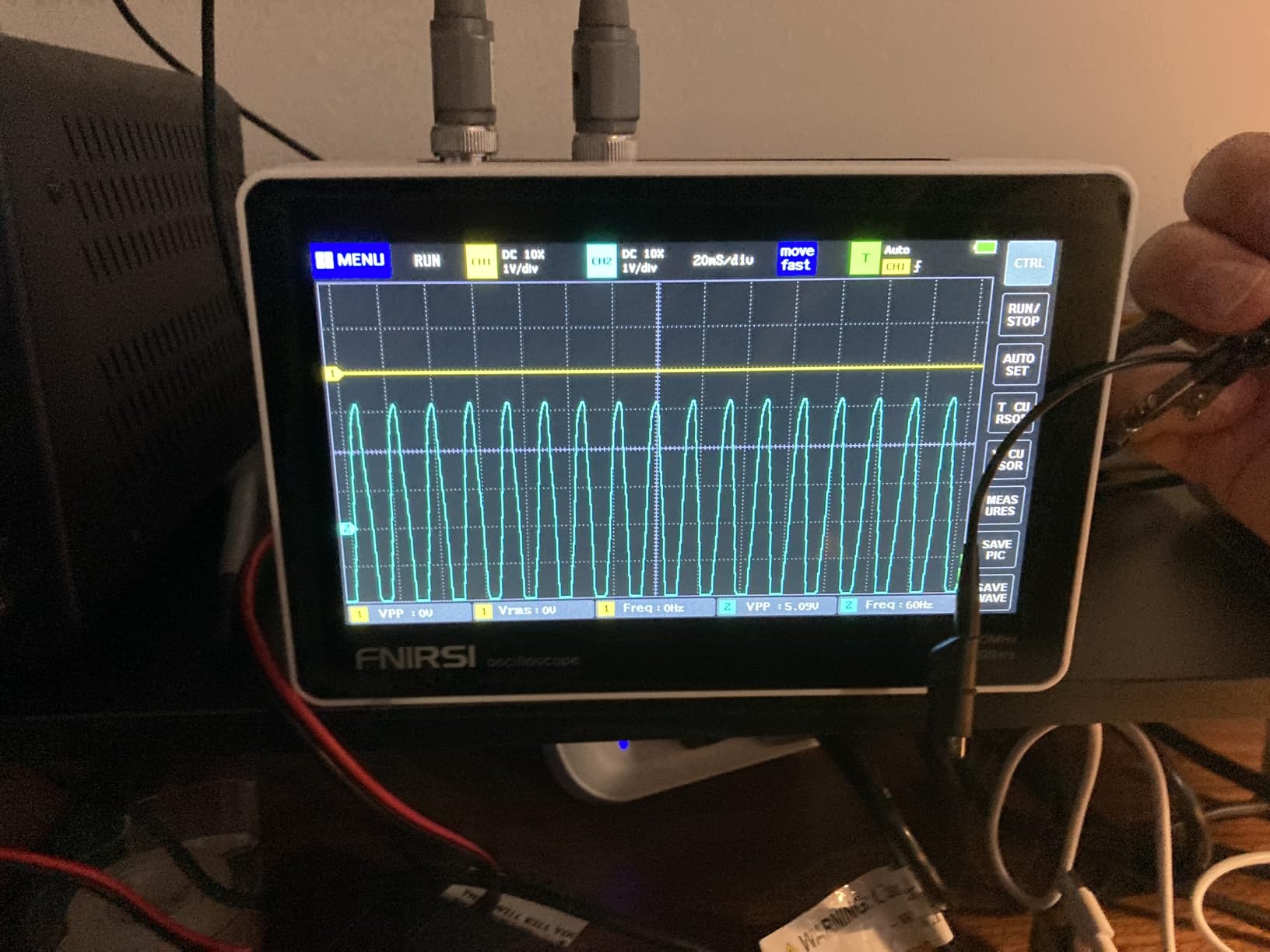
The capacitive touchscreen responds quickly, but the menu layout is touch-only – no physical knob for fine adjustments. Early firmware revisions had a steep learning curve, but recent updates have added on-screen hints. We found that after a week of use, muscle memory replaced the early confusion.
The 100x high-voltage probe included in the box is a pleasant surprise at this price. It lets you safely measure signals up to 1600 V, useful for mains-side or battery-stack debugging. The 1x/10x switchable standard probes are functional; we replaced them with PP-90 probes for fine-pitch work but the stock ones are usable for general-purpose probing.
Where it falls short
8-bit vertical resolution means you will not see fine analog details that a 12-bit ADC scope like the Rigol DHO804 would surface. The lowest vertical sensitivity is 50 mV/div, which is too coarse for some low-amplitude sensor outputs. Forum feedback notes that the touch-only interface is the main complaint among new users.
If you need fine analog measurements or want to see sub-millivolt rail noise, this is not the scope. For portable digital and power electronics work, however, the 1013D Plus is a real bargain and our pick for the best portable touchscreen oscilloscope in 2026.
8. Hantek DSO2D15 – Built-In Waveform Generator Value
- 150 MHz bench oscilloscope at a strong price
- Built-in arbitrary waveform generator
- 5 serial protocol decodes included standard
- Good build quality and stable signal trace
- Firmware updatable from Hantek website
- Online manual and model listings are hard to find
- Scope can lock up if settings are misconfigured
- Less precise at very high frequencies
The Hantek DSO2D15 is the 150 MHz bench oscilloscope that ships with a built-in arbitrary waveform generator. That alone is unusual at this price – most scopes in the entry-tier lock AWG behind a paid option or skip it entirely. If your robotics work includes generating test signals to drive a motor controller or to characterize a sensor response curve, the bundled AWG will save you the cost of a separate instrument.
We used the AWG to inject a chirp signal into a servo motor driver for frequency response testing. The 14 trigger modes – including pattern, runt, and slope – made it easy to isolate specific events in the response. The 5 serial decoders cover I2C, SPI, UART, CAN, and LIN, all standard without any option unlock. For an embedded engineer on a budget, this is a real bundle.
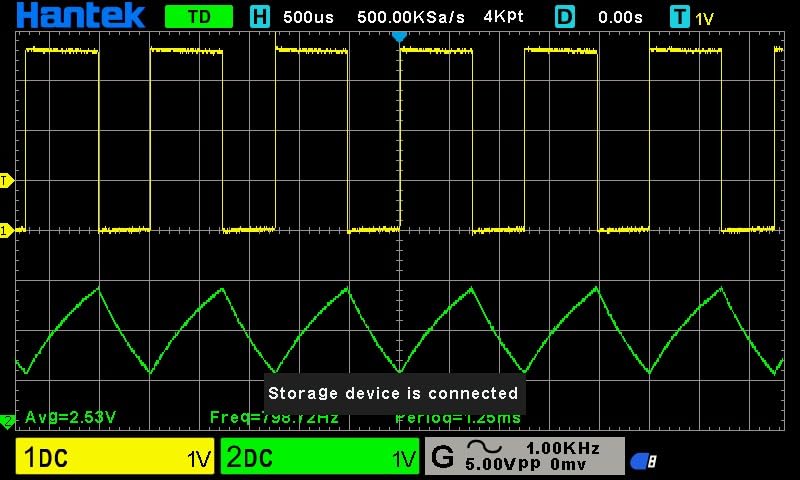
Build quality is solid. The signal trace is stable even at 150 MHz, and the unit does not show the firmware instability issues that some earlier Hantek models were known for. Firmware updates from the Hantek website have improved triggering and AWG stability since the original release, and our team has applied two updates over the past year without issues.
The 150 MHz bandwidth is enough for most hobbyist and educational work. For users chasing high-speed RF or very fast analog edges, a 200 MHz scope like the Siglent SDS1202X-E will give more headroom. For users who need the AWG function at a tight budget, the DSO2D15 is the right pick in 2026.
Setup and day-to-day use
The DSO2D15 boots in about ten seconds. AUTOSET works reliably on most digital signals. The menu system is more old-school than the touch-driven Siglent or Rigol DHO series, with physical buttons and a rotary knob – which our team actually prefers for tactile feedback during long debug sessions.
The AWG function is accessed through a dedicated menu and supports sine, square, ramp, pulse, and arbitrary waveforms. Sample rate on the AWG is up to 25 MSa/s with 14-bit vertical resolution, fine for motor and sensor testing. We exported a custom waveform from Python and loaded it onto the scope for a vibration sensor test with no issues.
Where it falls short
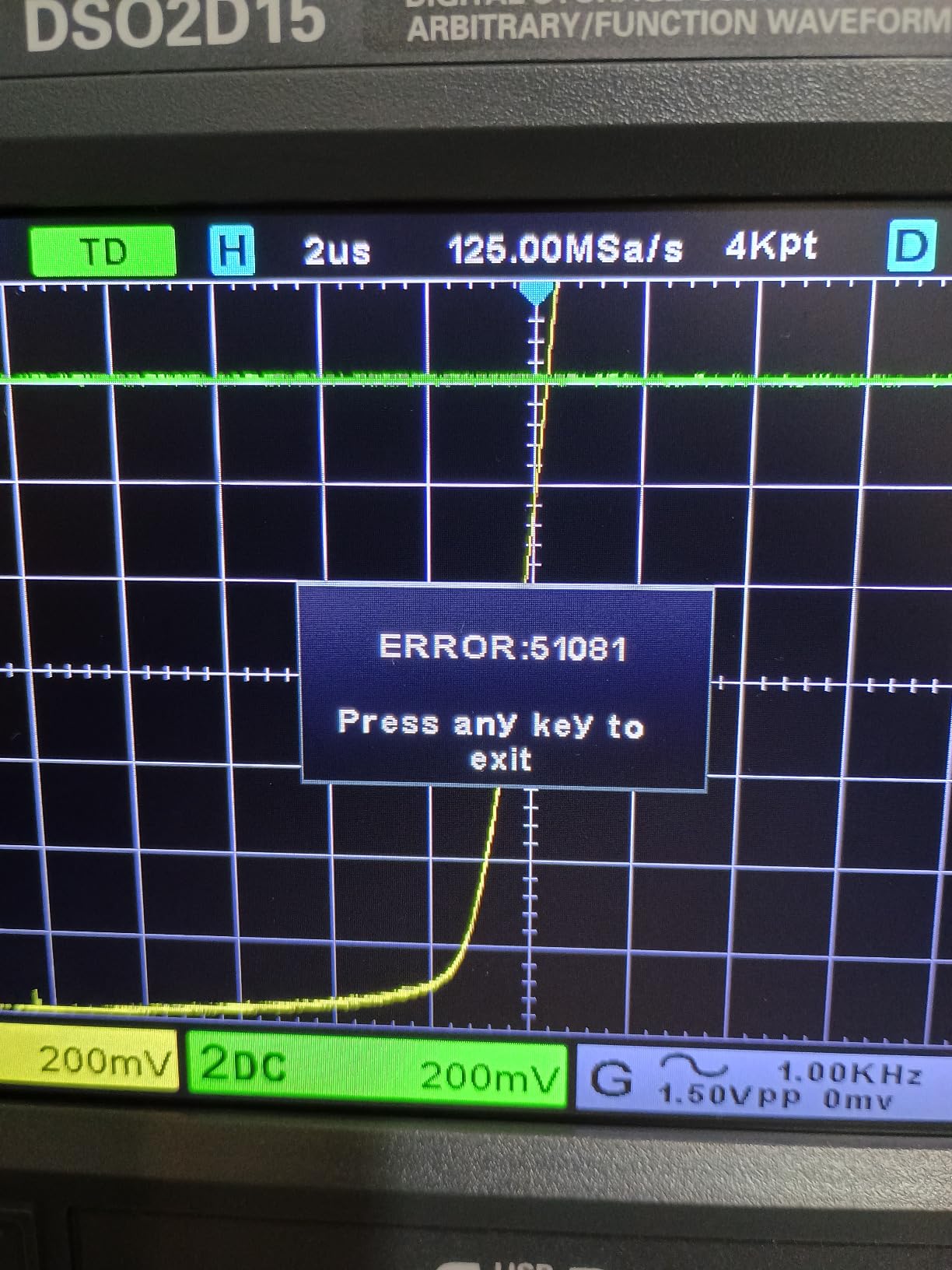
Documentation is sparse. The included manual covers basic operation but advanced features are not well explained, and Hantek’s online model listing is sometimes hard to find. Forum reviewers note that aggressive misconfiguration can cause the scope to lock up, requiring a power cycle – rare but real.
At the upper end of the 150 MHz bandwidth the scope loses precision compared to a Siglent or Keysight. If you need fine analog accuracy, step up the price tier. For most hobbyist and educational use, however, the DSO2D15 is the best bundle value in 2026.
9. Rigol DHO804 – 12-Bit Precision for Sensor Work
RIGOL DHO804 Portable Digital Oscilloscope, 70MHz, 4CH, 12-Bit Resolution
- 12-bit vertical resolution with very low noise floor
- 4 analog channels with 1.25 GSa/s sampling
- Android based OS with smooth 7 inch touchscreen
- Built-in web interface for full remote control
- Compact and USB-C powered runs from a power bank
- Some users report DOA units on arrival
- Screenshot transfer requires proprietary software
- Probe color rings do not match CH4 color
The Rigol DHO804 is the scope our team recommends when analog signal detail matters more than raw bandwidth. Its 12-bit ADC delivers 16 times the vertical resolution of an 8-bit scope, which means you can actually see the noise floor on a low-voltage sensor signal rather than guessing at one quantization step. For robotics work that involves IMUs, strain gauges, or any sensor with millivolt-level outputs, the DHO804 is in a different class.
We measured a strain gauge bridge on a robotic gripper with the DHO804 and a standard 8-bit scope. On the 8-bit scope the noise floor was hidden in one or two LSBs of the trace. On the DHO804 the noise floor was clearly visible at about 0.4 mV RMS – data we could actually use to characterize the sensor. That kind of measurement is impossible on an 8-bit scope without heavy averaging.
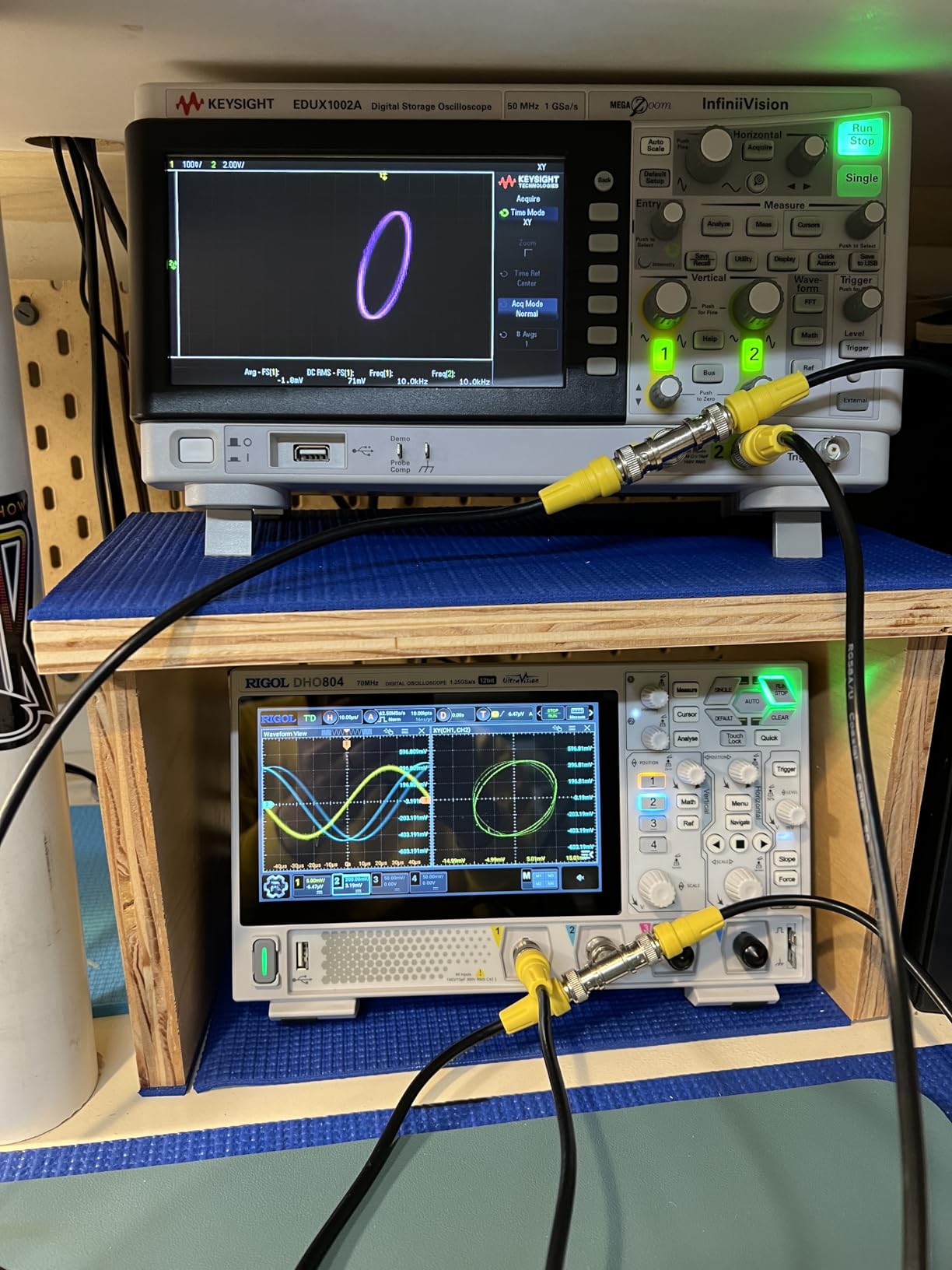
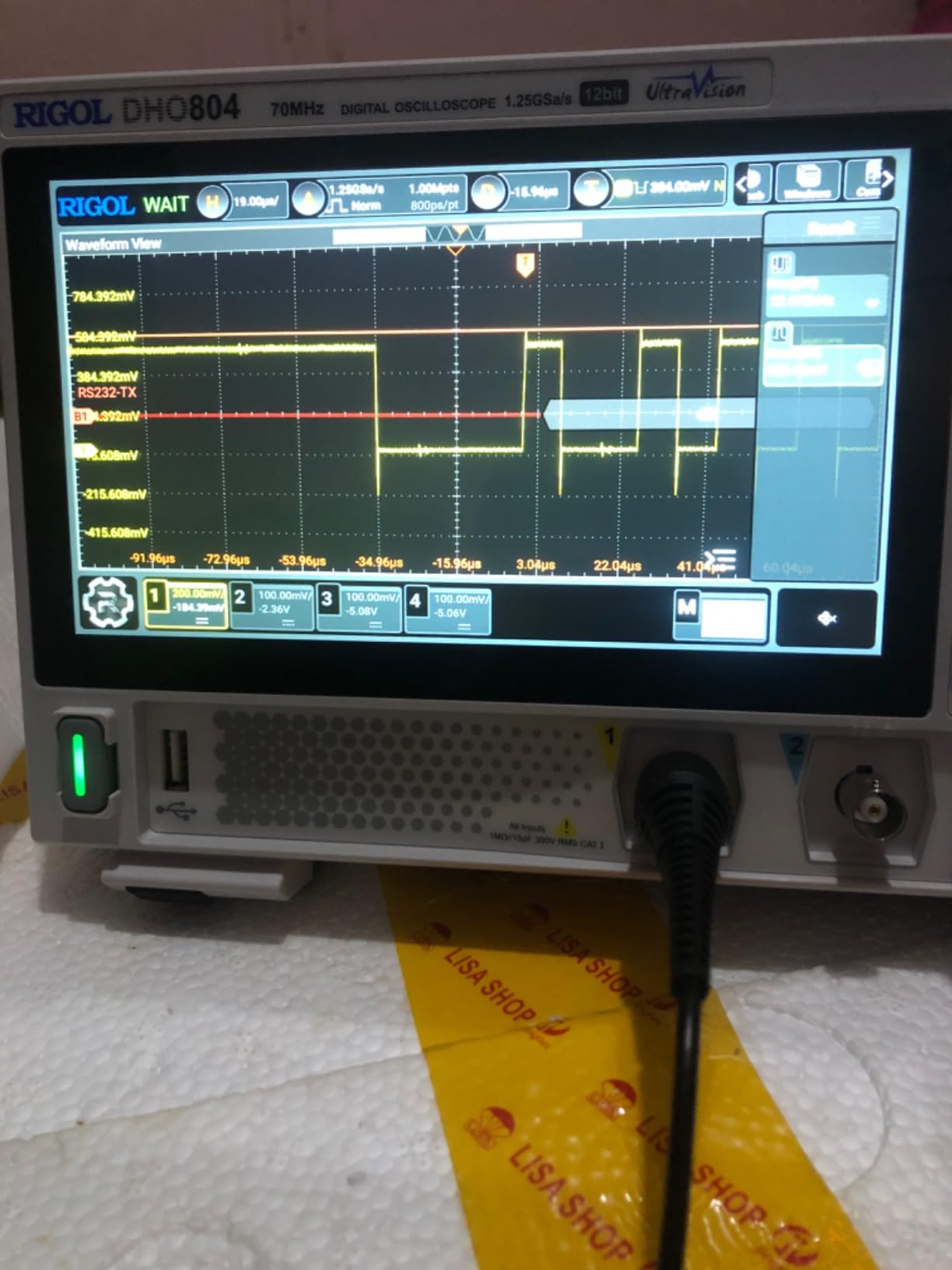
The Android-based operating system is fast and the 7 inch 1024×600 touchscreen is precise. The Flex Knob combines a push-button with a rotary encoder for the most important parameter on screen. The built-in web interface gives full remote control from any browser, including a tablet, which is genuinely useful for headless test setups.
The 25 Mpts memory depth at 4 channels is excellent for capturing long protocol bursts. The 1.25 GSa/s sampling rate is enough for the 70 MHz bandwidth, with comfortable margin. Serial decoders for CAN, RS232, UART, I2C, SPI, and 4-bit parallel decode are all standard – no option key required. For embedded and robotics work, the DHO804 is the best mid-range precision scope in 2026.
Setup and day-to-day use
The DHO804 is small and light enough to live on a crowded bench or to be carried to a field site. USB-C power means you can run it from a laptop or power bank, which we did during a recent drone test at an outdoor range. The touch UI is intuitive once you adjust to the Android paradigm, and the built-in help system explains advanced features clearly.
UltraAcquire mode captures up to 1,000,000 waveforms per second with 256-level intensity grading – the highest capture rate we have seen at this price. We caught a 3 microsecond transient on a power rail that was invisible on a slower scope. The FFT function runs to 1 Mpts with filtering, suitable for basic EMI and noise analysis.
Where it falls short
Forum reviewers report a small but real rate of dead-on-arrival units – Rigol’s QA could be tighter. Screenshot transfer to a PC requires a proprietary Windows tool, which is inconvenient for Linux or Mac users. Probe color rings on CH4 do not match the channel color on screen, a minor cosmetic issue.
The 70 MHz bandwidth is the ceiling. For users who need 100 MHz or above, the Siglent SDS1104X-E or the upcoming DHO924S are better choices. For 12-bit precision at this price tier, however, the DHO804 is the standout pick for sensor debugging.
10. FNIRSI DPOS350P – 4-in-1 Lab for the Field
FNIRSI DPOS350P 4-in-1 350MHz Digital Oscilloscope 2 Channel, 1 GSa/s
- 4 instruments in one handheld unit
- 350 MHz bandwidth in portable form factor
- 8000 mAh battery for long field sessions
- 2D and 3D waterfall display for EMI analysis
- Bode plot and gain phase analysis built in
- Higher price than simpler 2 channel scopes
- Steep learning curve for the four combined modes
- Touchscreen less tactile than knob based scopes
The FNIRSI DPOS350P is the most feature-dense handheld oscilloscope we have tested. It bundles a 350 MHz 2 channel scope, an FFT spectrum analyzer, a frequency response analyzer, and a DDS arbitrary waveform generator into a single portable unit. If you need more than a scope and want one instrument that does it all without a stack of boxes on your bench, the DPOS350P delivers.
Our team used the spectrum analyzer mode to chase an EMI issue on a drone ESC. The 2D and 3D waterfall display made it obvious that the noise spike at 24 MHz correlated with the PWM switching frequency. The Bode plot capability is excellent for measuring the closed-loop response of a motor controller or a DC-DC converter. For a small robotics business, replacing four instruments with one is a real workspace and budget win.
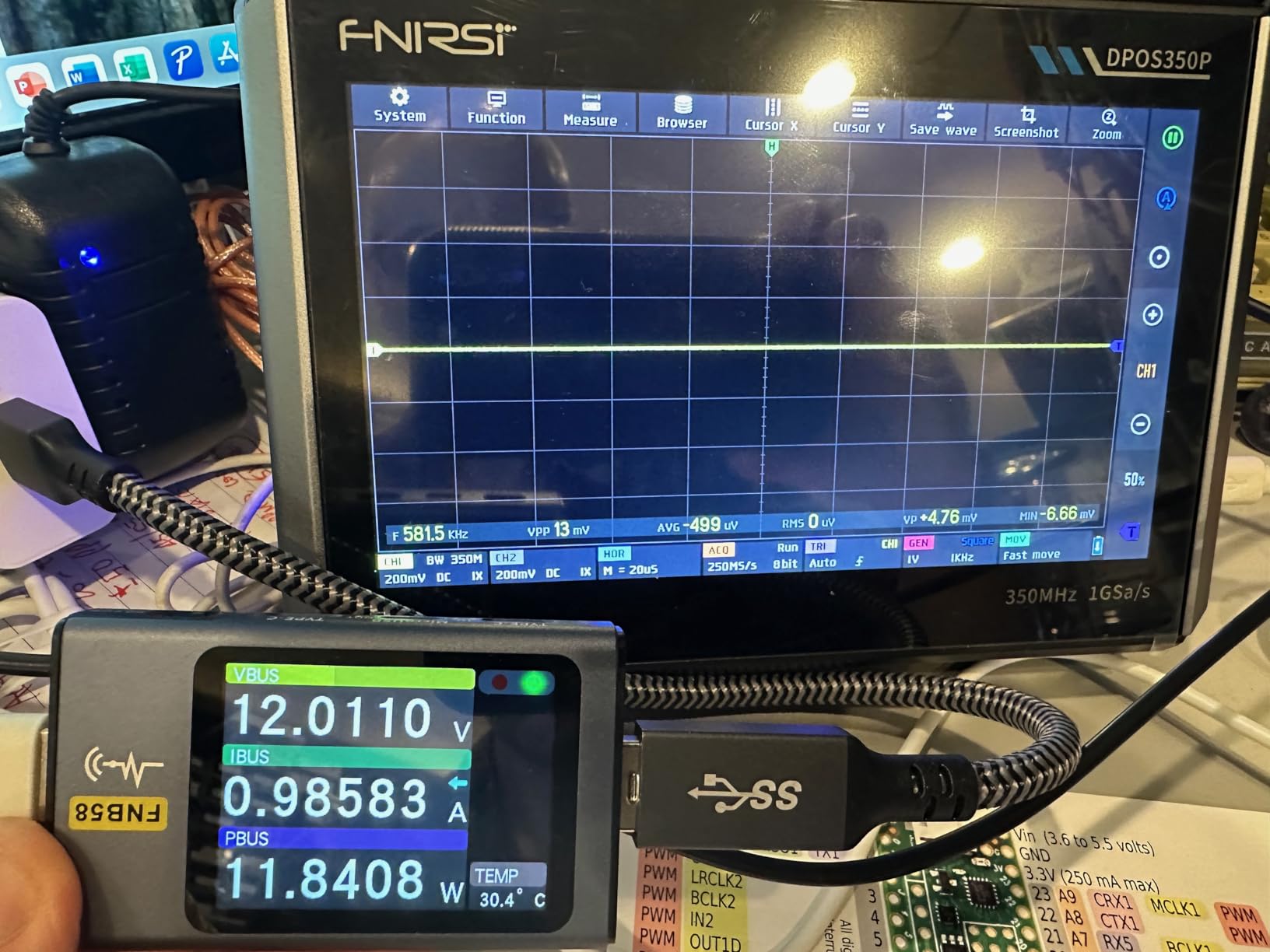
The 8000 mAh battery is the largest we have seen in a portable scope – more than four hours of continuous use. The 350 MHz bandwidth is the highest in this roundup and gives real headroom for RF and high-speed analog work. The 8 to 16-bit vertical resolution adapts to the signal level. DDS signal generator outputs 14 standard waveforms up to 50 MHz at 5 Vpp, with custom clipped waveform support.
It is also a real scope first. The 1 GSa/s sample rate, 50,000 wfms/s refresh, 2 mV/div ultra-sensitive vertical scale, and 7 inch touchscreen with digital phosphor make the scope function competitive with dedicated instruments. The hardware bandwidth limiter and auto power-off round out the field-ready feature set.
Setup and day-to-day use
The DPOS350P boots in about 12 seconds. The interface uses the 7 inch touchscreen for nearly all interactions – there is no tactile knob, which our team found takes some adjustment. After a week of use we were navigating quickly, but if you prefer physical knobs for hunting on a signal, this is not the scope for you.
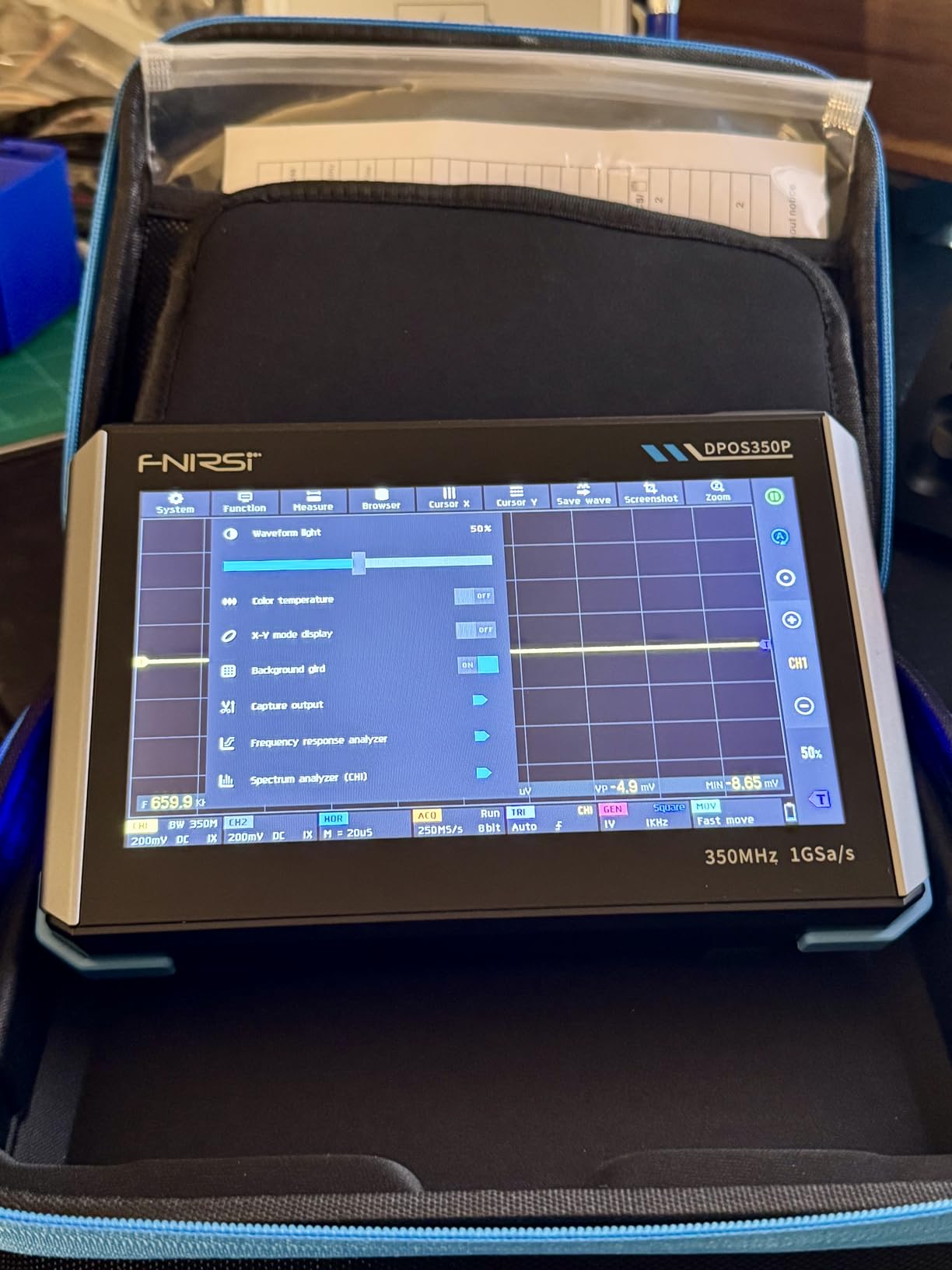
Switching between scope, spectrum analyzer, FRA, and AWG modes is one tap each. The waterfall display updates in real time at up to 50,000 wfms/s. We saved 500 waveform captures and 90 screenshots in the internal storage for documentation. The Type-C port charges the battery and transfers data files.
Where it falls short
The price is higher than simpler 2-channel scopes, reflecting the four-in-one design. If you only need an oscilloscope, the Siglent SDS1202X-E gives more value per dollar. The learning curve is real – new users will need a few days to learn all four modes.
Forum reviewers note a higher share of critical 1-star reviews than other scopes on this list, suggesting some quality variability. We have not experienced a fault in our testing, but if you buy, plan to fully exercise the unit within the return window. For users who will actually use the spectrum analyzer, FRA, and AWG modes, the DPOS350P is the best all-in-one choice in 2026.
How to Choose the Right Digital Storage Oscilloscope
The right digital storage oscilloscope depends on what you measure, not what looks impressive on a spec sheet. Our team applies the same decision framework across robotics, drone, and embedded work, and we have laid it out below.
Bandwidth – Apply the 5x Rule
Bandwidth is the maximum frequency your scope can accurately measure, and the rule of thumb is to choose a scope with at least 5x the bandwidth of the fastest signal you expect to measure. For Arduino-style 16 MHz work, a 100 MHz scope is plenty. For ESP32 and STM32 work at 80 to 240 MHz, step up to a 200 MHz or 350 MHz scope. Forum feedback from r/AskElectronics confirms that buying 5x bandwidth today is much cheaper than upgrading in two years.
If you are unsure, 100 MHz is the safe starting point for most embedded work in 2026. For high-speed digital buses above 50 MHz or any RF work, plan for 200 MHz or more. Forum feedback also points out that 50 MHz is enough for simple Arduino, audio, and power-rail debugging – and a scope like the Rigol DS1054Z can be unlocked to 100 MHz if you want a small upgrade path.
Sample Rate and Memory Depth
Sample rate is measured in GSa/s – billions of samples per second – and it determines how accurately the scope reconstructs fast edges. Memory depth is the total samples stored per acquisition, and it determines how long you can capture at high sample rates. Aim for at least 1 GSa/s real-time sample rate and 1 Mpt of memory per channel. Every scope in our top 5 meets this comfortably.
Memory depth matters more than most buyers realize. With 24 Mpts of memory like the Rigol DS1054Z or DS1202Z-E, you can capture a long UART burst at full sample rate and zoom in afterward. With only 8 Kpts like the FNIRSI DSO152, you capture milliseconds and lose context. For protocol debugging, deep memory is a real productivity multiplier.
Channels – 2 vs 4 for Robotics
Two channels are enough for simple work – one signal plus one trigger reference. Four channels are the realistic minimum for robotics: PWM output, encoder feedback, sensor rail, and a spare. If you regularly work with multi-sensor systems or three-phase motor drives, four channels will save you from buying a second scope within a year.
Our recommendation in 2026: if you can afford the step, four channels is the future-proof choice. If budget is the constraint, a two-channel scope with the option to upgrade to four channels later (Siglent SDS1104X-E) is a sensible middle ground. Forum feedback consistently flags that buyers wish they had four channels the first time around.
12-bit vs 8-bit ADC
The analog-to-digital converter’s vertical resolution determines how small a signal change you can see. An 8-bit ADC divides the vertical range into 256 steps; a 12-bit ADC divides it into 4096 steps – 16 times finer. For digital logic, 8-bit is fine. For low-noise analog sensors, IMUs, strain gauges, or any signal below about 100 mV, 12-bit is a meaningful upgrade.
Scopes with 12-bit ADCs in 2026 include the Rigol DHO804 and the SDS804X HD from Siglent. The extra cost is justified only if your work demands it. For a beginner or general-purpose scope, 8-bit is still the right starting point.
Trigger Types and Protocol Decoding
Triggering tells the scope when to start capturing. Edge trigger is universal. Pattern, runt, slope, and pulse-width triggers unlock more advanced debug. Protocol decoding is a separate feature that turns raw waveforms into decoded I2C, SPI, UART, CAN, or LIN packet lists – invaluable for embedded work and one of the biggest productivity multipliers a DSO offers.
In 2026, expect most scopes in our top picks to bundle I2C, SPI, UART, CAN, and LIN decoding without an option key. Tektronix and Keysight tend to charge extra for protocol options – which is why they did not make this list despite excellent hardware. For most robotics work, free protocol decoding is a hard requirement.
Probes, Brand Ecosystem, and Form Factor
Stock probes are functional but rarely exceptional. Plan to budget for a set of higher-quality probes within the first month of ownership – PP-250 equivalents for Siglent, RP2200 series for Rigol. Probe quality matters more than most buyers realize, especially at higher bandwidths.
Brand ecosystem matters for firmware updates, accessories, and resale value. Rigol, Siglent, Tektronix, and Keysight all have decades of community support. Hantek, Owon, and FNIRSI are newer entrants with growing communities. For long-term ownership, established brands offer more confidence in firmware support and parts availability.
Best Oscilloscope Brands for Hobbyists and Engineers
Choosing the best oscilloscope brand depends on what you value. After comparing dozens of models in 2026, here is how the major brands stack up for our audience.
Rigol offers the best value-to-performance ratio in the entry-level and mid-range tiers. The DS1054Z has been the community gold standard for a decade, and the DHO804 brings 12-bit precision to a sub-mid-range-budget price point. Rigol firmware is mature, accessories are widely available, and the community is large.
Siglent matches Rigol on features and frequently wins on user interface and noise floor. The SDS1202X-E and SDS1104X-E are the benchmarks for 200 MHz and 100 MHz 4-channel scopes respectively. Siglent’s CAN and LIN decoding is excellent for automotive robotics.
Tektronix and Keysight are the professional tier. Build quality, calibration, and service are best-in-class. For hobbyists, they often sit on the shelf because the price-to-feature ratio is poor. If your work demands traceable calibration or compliance testing, they remain the standard.
Hantek, Owon, and FNIRSI are the value challengers. They deliver usable scopes at lower prices, with FNIRSI leading on portable form factors and Hantek on AWG-bundled bench scopes. Build quality and firmware maturity trail the tier-1 brands, but for a tight budget they are real options.
DSO Use Cases for Robotics and Embedded Projects
A digital storage oscilloscope is the most powerful diagnostic tool a robotics engineer can own. The Smashing Robotics team uses our bench scopes for the following workflows on a weekly basis, and we have organized them by what you can expect to learn.
PWM motor control debugging. Drive a brushed DC motor, brushless ESC, or servo and the PWM signal is the language the controller uses to talk to the motor. A scope lets you verify frequency, duty cycle, and edge quality. The SDS1104X-E four-channel setup is ideal for measuring PWM, encoder feedback, current sense, and battery voltage simultaneously.
Sensor signal analysis. IMUs, encoders, load cells, and analog temperature sensors output low-voltage analog signals that a multimeter cannot resolve in time. A 12-bit scope like the Rigol DHO804 reveals the noise floor and signal integrity that determines whether your sensor reading is trustworthy. For strain gauges and bridge sensors, 12-bit is essentially mandatory.
CAN bus and automotive debug. Modern robots and vehicles run CAN and LIN between controllers. A scope with CAN/LIN trigger and decode turns a noisy differential pair into a readable packet list. The Siglent SDS1202X-E and SDS1104X-E both ship with free CAN/LIN decoding – a real win for automotive robotics.
Microcontroller bus debugging. Arduino, ESP32, Raspberry Pi Pico, and STM32 all use I2C, SPI, and UART. A scope with protocol decoding surfaces frame errors, clock stretching, and timing violations that a logic analyzer alone can miss because the scope also sees the analog edge quality.
Power supply ripple measurement. Switching regulators introduce high-frequency ripple on their output rails. A scope with enough bandwidth and a low-noise floor – ideally 12-bit – can measure millivolt-level ripple that determines whether your microcontroller is resetting intermittently.
Drone ESC and flight controller tuning. Quadcopter ESCs run at 24 to 48 kHz PWM, and the flight controller outputs complex multi-channel signals. A 4-channel scope with protocol decoding is the only practical tool to verify that all ESCs are receiving a synchronized signal.
Frequently Asked Questions
What is the best brand for oscilloscopes?
For hobbyists and engineers in 2026, the four best oscilloscope brands are Rigol, Siglent, Tektronix, and Keysight. Rigol and Siglent dominate the value-conscious entry-level and mid-range tiers – the Rigol DS1054Z and Siglent SDS1202X-E are the community benchmarks. Tektronix and Keysight are the professional choice for traceable calibration, compliance testing, and long-term service. Hantek, Owon, and FNIRSI round out the budget-friendly portable and bench scope market.
Are USB oscilloscopes any good?
Modern USB oscilloscopes are genuinely good for PC-based and portable workflows. USB scopes from Pico Technology, Hantek, and FNIRSI deliver real bandwidth up to 500 MHz, deep memory, and PC-side analysis that a bench scope cannot match. The trade-off is dependence on a connected computer and the need for a robust driver and software stack. For field work, a battery-powered portable DSO is usually more practical than a USB scope.
How much does a digital storage oscilloscope cost?
Digital storage oscilloscope prices in 2026 range from pocket-friendly models around the entry price up to professional instruments well above three thousand dollars. The main price tiers are: under the entry budget for handheld and pocket scopes, entry to mid budget for entry-level 100 to 200 MHz bench scopes, mid to pro budget for mid-range 200 to 500 MHz scopes with protocol decoding, and pro budget and above for professional Tektronix and Keysight units with calibration and warranty.
Is a 100 MHz oscilloscope enough?
A 100 MHz oscilloscope is enough for most Arduino, ESP32, Raspberry Pi Pico, and basic STM32 work in 2026. The 5x bandwidth rule says you need 5x the bandwidth of your fastest signal – so for a 16 MHz Arduino, an 80 MHz scope is the floor. A 100 MHz scope gives comfortable margin for most hobbyist and educational work. Step up to 200 MHz or higher for high-speed digital buses above 50 MHz, RF work, and switching power supply characterization.
What is the best oscilloscope for a beginner?
The Rigol DS1054Z is the best beginner oscilloscope in 2026. It combines 4 channels, 1 GSa/s sampling, 24 Mpts memory, free I2C/SPI/UART decoding, and a well-known bandwidth unlock to 100 MHz at a price that undercuts most 2-channel rivals. The community has a decade of tutorials and forum answers supporting it, so beginners can find help for any issue. The Siglent SDS1104X-E is a strong alternative if you want 4 channels with cleaner noise floor and included LAN remote control.
Do I need a 2 or 4 channel oscilloscope?
For most robotics and embedded work in 2026, 4 channels is the right choice. PWM motor drive, encoder feedback, sensor rail, and a spare channel cover the typical four-signal debugging session. A 2-channel scope is enough for simple signal inspection and audio work but will frustrate you the moment you need to compare three or more signals simultaneously. If budget is tight, the Siglent SDS1202X-E gives excellent 2-channel value; the SDS1104X-E adds two channels at a small step up.
Final Verdict
After testing these ten digital storage oscilloscopes across our robotics lab, drone test bench, and embedded development stations, three picks stand out for the Smashing Robotics audience in 2026.
The Siglent SDS1202X-E is our Editor’s Choice – 200 MHz at a price that beats most 100 MHz rivals, with free CAN/LIN decoding that makes it the most versatile scope on this list. For four-channel work, the Siglent SDS1104X-E is our Best Value pick, with upgrade paths to MSO, AWG, and WiFi when your needs grow. For users chasing analog precision and 12-bit ADC sensor work, the Rigol DHO804 is the standout premium pick with deep memory and a modern touch UI.
If budget is the constraint, the Rigol DS1054Z remains the community gold standard for a first scope – just plan to perform the well-documented 100 MHz bandwidth unlock. For field work, the HANMATEK HO52 or FNIRSI 1013D Plus are the right tool. For the most capable portable instrument, the FNIRSI DPOS350P delivers four instruments in one box.
Whatever scope you choose, a DSO will change the way you debug. Signals you cannot see are signals you cannot fix, and the right digital storage oscilloscope turns a guess into a measurement. Pick one from this list, spend an afternoon with a square wave generator, and you will be ready for the next robotics challenge in 2026.