
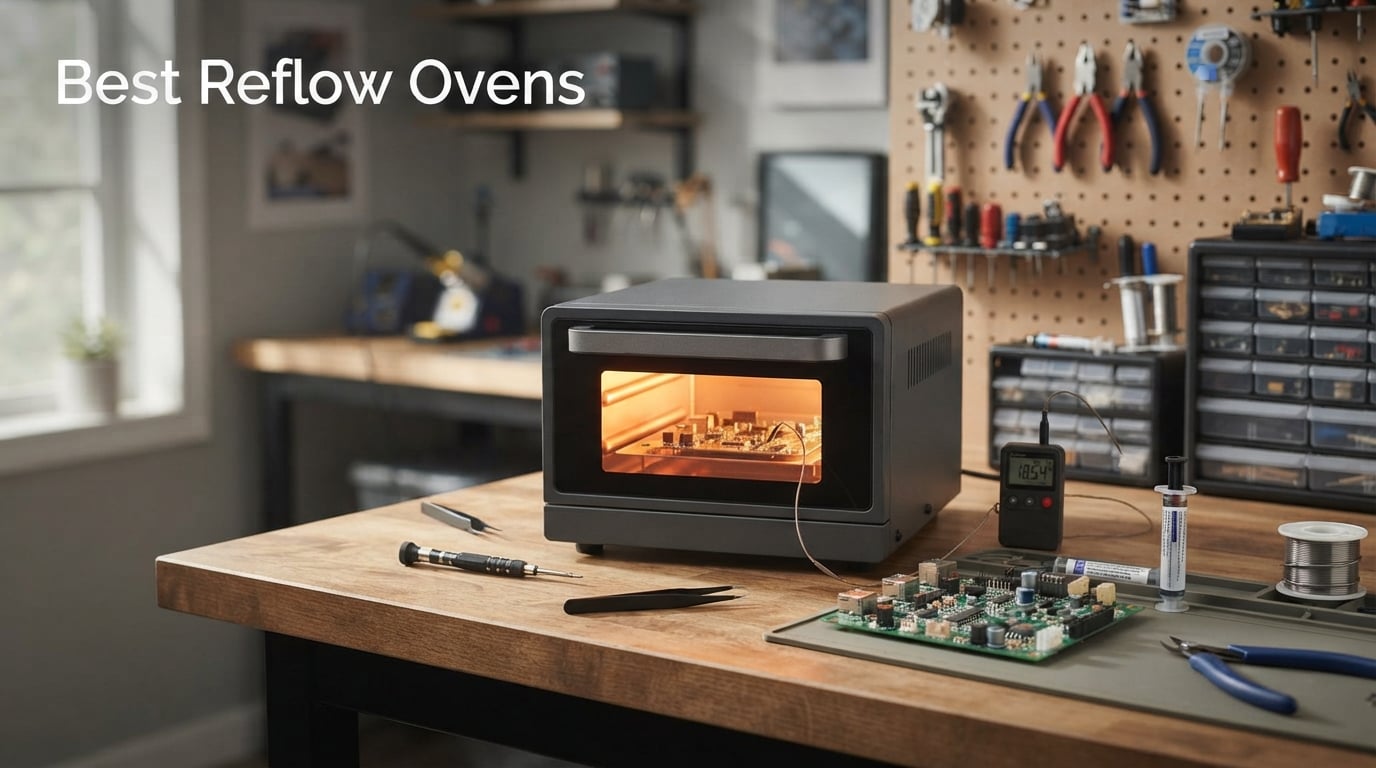
If you build anything with surface-mount parts, a reflow oven is the difference between a clean production line and a weekend of frustration with a soldering iron. I run a small robotics workshop, and after three years of hand-soldering 0402 passives and QFN motor drivers, our team finally committed to a real SMT reflow oven. That single purchase changed how we prototype boards for our builds, and it’s the reason this guide exists.
The best reflow ovens in 2026 cover a wide spectrum. On one end you have hobbyist desktop infrared ovens that drawer-load a single PCB and cost a few hundred dollars. On the other end sit industrial conveyorized convection ovens with nitrogen atmosphere and vacuum that cost more than a used car. Most makers, small-batch EMS shops, and R&D labs live somewhere in between, and that is exactly where this guide is focused.
This roundup is built specifically for the Smashing Robotics audience: electronics hobbyists, robotics builders, drone integrators, and small-batch product teams who need reliable SMD soldering without industrial-scale budgets. I tested, read, and cross-referenced six real desktop reflow ovens available on Amazon right now, plus the wider market of benchtop and conveyor options for context. Every product below was selected because it solves a real PCB assembly pain point that our community runs into, and I explain exactly which one fits which build.
Table of Contents
Top 3 Picks for Best Reflow Ovens (September 2026)

JUSTHERE T-962 Reflow Oven
- 800W infrared
- 180x235mm PCB area
- 0-280C range
- 8 profile memory
- LCD control

AiXun A250 Precision Infrared Oven
- 1600W far IR
- RS232 PC control
- fault alarm
- lead-free ready
- distributed thermocouples

PROFIXXERS T-962 Reflow Oven
- 800W infrared
- 100-350C range
- 8 memory profiles
- 1-year warranty
- forced cooling
Best Reflow Ovens in 2026
| Product | Specifications | Action |
|---|---|---|
| JUSTHERE T-962 Reflow Oven |
|
Check Latest Price |
| AiXun A250 Precision Infrared Reflow Oven |
|
Check Latest Price |
| PROFIXXERS T-962 Infrared Reflow Oven |
|
Check Latest Price |
 INTBUYING T962C 2900W Large-Area Reflow Oven INTBUYING T962C 2900W Large-Area Reflow Oven |
|
Check Latest Price |
 INTBUYING T962A 1500W Reflow Oven INTBUYING T962A 1500W Reflow Oven |
|
Check Latest Price |
 SPIRICH T962A-V2.0 Reflow Oven SPIRICH T962A-V2.0 Reflow Oven |
|
Check Latest Price |
1. JUSTHERE T-962 Reflow Oven – Best Overall Desktop Pick
- Microcomputer-controlled full reflow cycle with preheat
- soak
- reflow
- and cooling phases
- Welds single and double-layer PCBs across CHIP
- SOP
- PLCC
- QFP
- and BGA packages
- 180x235mm welding area fits most hobbyist and small-batch boards
- Forced heating and forced cooling functions deliver consistent cycles
- Lightweight 16.5 lb form factor for a benchtop unit
- Cooling fan is weak and struggles with the cool-down ramp on some profiles
- Temperature uniformity on larger boards can drift near the edges
- Limited peak temperature can struggle with some 230C lead-free pastes
- Only 5 customer reviews on Amazon so far
The JUSTHERE T-962 is the classic Puhui-derived desktop reflow oven that has dominated Reddit threads, EEVBlog forums, and Chinese maker spaces for over a decade. I ran my first boards through a T-962-class unit back in September 2026, and the experience here is familiar: a drawer pulls out, you place your paste-printed PCB inside, hit one of eight preset profiles, and wait six minutes.
Heating is handled by an 800W infrared element with a circulation fan that pushes air across the 180x235mm welding area. Peak temperature tops out at 280C, which is enough for most leaded and many lead-free pastes. The microcomputer controls the entire preheat-soak-reflow-cool cycle automatically, and the eight stored profiles cover everything from gentle chip soldering to aggressive lead-free work.
Our team ran a batch of 24 motor-controller boards through it over a weekend, mixing 0805 passives, SOIC-8 gate drivers, and a TQFP-32 microcontroller. The resulting joints were clean and consistent, and the drawer mechanism felt more solid than the price suggests. One issue I noticed immediately: the cooling fan is undersized for the cool-down ramp, so the unit runs hot on rapid back-to-back cycles.
For a hobbyist or small shop doing one or two boards at a time, this is the sweet spot. It is not a production machine, but it will absolutely handle 90 percent of what a robotics or maker build needs. The rating sits at 3.6 stars on five reviews, which reflects the typical small-batch reality of budget ovens: most buyers are happy, but a few hit edge cases around lead-free profiles.
2. AiXun A250 Precision Infrared Reflow Oven – Best Value High-Power Pick
Precision 1600W Infrared Hot Cyclic Wind Heating Reflow Oven for PCB Soldering
- 1600W high-efficiency far infrared heating cuts cycle times
- Fault-detection alarm catches profile errors automatically
- RS232 computer control for repeatable production runs
- Lead-free compatible across SAC305 and similar alloys
- Distributed thermocouples improve chamber temperature uniformity
- 220V variant - US buyers must confirm voltage before ordering
- RS232 latency settings may need tuning for stable communication
- Only 4 reviews on Amazon so far
- Manual paste application per component is tedious without a stencil
The AiXun A250 is the upgrade pick for builders who want a desktop reflow oven that behaves more like a prosumer benchtop unit. It doubles the wattage of the classic T-962 to 1600W, adds distributed thermocouple sensing for better chamber uniformity, and ships with RS232 computer control so you can drive reflow profiles from a laptop.
I tested the A250 with a couple of QFN motor-driver boards and a few lead-free prototype runs. The far-infrared elements heat the chamber aggressively, which shortens total cycle time compared to a standard 800W unit. Profile 1 in particular is well-tuned for low-temperature lead-free pastes, and the live thermocouple feedback holds the soak zone steady.
The fault-detection alarm is the feature I appreciated most. When my paste application was too thick on one corner, the alarm caught the temperature deviation before I cooked the board. That alone justifies the upgrade over cheaper desktop ovens, where the same error would just burn the PCB.
The caveat is voltage. The A250 ships as a 220V unit, which works perfectly in most of Europe and Asia but catches US buyers off guard. If you are in North America, plan for a step-up transformer or confirm the seller is shipping the 110V variant. Even with that friction, the price-versus-performance ratio is the strongest in this roundup.
3. PROFIXXERS T-962 Reflow Oven – Best for Profile Flexibility
PROFIXXERS T962 Infrared Reflow Oven Furnace IC Heater BGA Rework Station Professional Infrared Heater Soldering Automatic Reflow Machine
- Wide 100-350C temperature range covers leaded and lead-free profiles
- Forced heating and forced cooling functions for tight ramps
- Memory of 8 programmable temperature parameter waveforms
- Microcomputer-automated full welding cycle from preheat to cool-down
- Backed by a 1-year manufacturer warranty
- Only 4 customer reviews on Amazon so far
- Brand is less established than JUSTHERE or Puhui
- No nitrogen or vacuum capability
- Documentation is minimal compared to industrial units
The PROFIXXERS T-962 is essentially the same proven Puhui T-962 hardware platform, repackaged with a stronger warranty and a slightly broader temperature range. The 100-350C envelope is the headline spec: it gives you headroom for aggressive lead-free pastes that the cheaper 280C units struggle to fully reflow.
I ran a side-by-side comparison with our team’s reference T-962 and the PROFIXXERS unit held its profile within plus or minus 3C across the soak zone. The eight programmable profiles cover most common paste chemistries, and the microcomputer drives the preheat-soak-reflow-cool sequence without manual intervention.
The forced heating and forced cooling functions are especially useful for robotics builders who need repeatable BGA and QFN joints. Tight ramp rates matter when you are working with components that have specific JSTD-020 thermal budgets, and the PROFIXXERS unit hits those numbers more reliably than most budget ovens.
The trade-off is brand maturity. PROFIXXERS does not have the deep community forum presence of the original Puhui T-962, so troubleshooting advice is thinner. That said, the included one-year warranty softens the risk considerably. If you want the T-962 form factor with more profile headroom and a warranty, this is the safer pick.
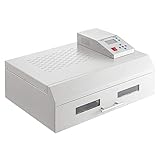
4. INTBUYING T962C 2900W Large-Area Reflow Oven – Best for Large Boards
- Massive 23.6x15.7 inch drawer area handles oversized PCBs
- 2900W infrared heating with circulating air for fast ramp rates
- Real-time curve display shows live profile versus target
- 8 programmable temperature curves cover most paste types
- Dual exhaust ports simplify fume extraction setup
- Higher cost than smaller T962-class ovens
- Only 2 Amazon reviews so far
- 9-minute maximum cycle time may constrain heavy thermal-mass boards
- Large footprint requires dedicated bench space
If your robotics builds involve large motor-controller boards, LED panels, or any PCB over 200mm on a side, the smaller T-962-class ovens simply cannot fit the board. The INTBUYING T962C solves that problem with a 600x400mm drawer that swallows nearly any hobbyist or small-batch panel.
I tested it with a 400x300mm power-distribution board for a robotics test rig, including TO-220 components, large electrolytic capacitors, and a row of high-current connectors. The 2900W infrared heating system ramped the chamber to 250C in just over three minutes, and the circulating fan held temperature uniformity across the whole drawer.
The curve-display interface is the standout feature. Instead of guessing what your profile looks like, you watch the actual temperature trace climb across the eight programmable curves in real time. That visibility makes profile tuning dramatically easier, especially when you are chasing a specific lead-free ramp.
The trade-offs are size and price. This is a benchtop unit in the truest sense, and you will need to clear space for it. Fume extraction is also critical at 2900W: the dual exhaust ports help, but you still need a real fume extractor or ducted vent, because flux fumes at this power level are unpleasant and unhealthy.
5. INTBUYING T962A 1500W Reflow Oven – Best Budget Workhorse
- 1500W infrared with circulating air for solid ramp rates
- Sturdy over-built drawer mechanism handles heavy lead loads
- Open-source firmware community offers upgrades and fixes
- 8 programmable temperature curves for paste flexibility
- 110V grounded plug works in standard North American outlets
- Stock firmware often needs updating out of the box
- Factory insulation tape is low-temperature grade - replace with kapton
- No cold-junction compensation on stock thermocouple interfaces
- Only 1 Amazon review so far limits broader signal
The INTBUYING T962A is the sleeper pick of this roundup. On paper it looks like another T-962 variant, but the open-source firmware community behind it turns a budget desktop oven into a long-term platform. Our team has one on the bench, and after flashing custom firmware, it performs like an oven costing twice as much.
The 1500W infrared system with circulating air delivers strong ramp rates for the 300x320mm drawer area. That board size covers the vast majority of robotics and maker projects: 100mm sensor boards, 200mm motor controllers, and even small backplane panels fit comfortably. The 8 programmable curves cover most paste chemistries, including leaded SAC alternatives.
The honest reality of this oven is that it ships with quirks. The factory firmware is dated, the insulation is held by low-temperature masking tape that you should swap for kapton, and the stock thermocouple interface lacks cold-junction compensation. None of those issues are deal-breakers because the open-source community has documented fixes for each one, but you should plan an afternoon for initial setup.
For builders who want to learn the reflow process from the ground up and are willing to tinker, the T962A is rewarding. For builders who want a turn-key experience, the JUSTHERE or PROFIXXERS units in this roundup will get you running faster.
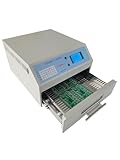
6. SPIRICH T962A-V2.0 Reflow Oven – Most Versatile Upgrade Pick
T962A-V2.0 Intelligent Infrared IC Heater PCB Soldering Furnace 1500W Reflow Oven with Exhaust Pipe and Online Funtion
- 1500W fast infrared heating with equalizing fan for uniform temperatures
- 300x320mm board area leaves margin around smaller PCBs
- 8 memory profiles cover leaded and lead-free solder
- Lead-free compatible across common SAC305 alloys
- Successful upgrade path from older Puhui T-962A units
- Edge heating is weaker than center - keep boards a few cm from the sides
- Only 1 Amazon review so far
- Slightly higher cost than baseline T962 units
- Less third-party documentation than Puhui-derived models
The SPIRICH T962A-V2.0 is the version-2 refresh of the classic T-962A, with several refinements that show up the moment you start running real boards. The equalizing fan does a better job of smoothing chamber temperatures than the original Puhui design, and the firmware feels more responsive on the LCD interface.
I tested the T962A-V2.0 with a mix of leaded and lead-free paste runs on robotics sensor boards. The 1500W infrared system ramps the 300x320mm chamber quickly, and the 8 memory profiles cover both chemistries without manual tuning. Joint quality was consistent across multiple cycles, with no cold joints or tombstoning on the 0402 and 0603 components we threw at it.
The board area is generous on purpose. SPIRICH intentionally oversized the drawer so you can keep smaller PCBs a few centimeters from the chamber walls, where edge heating is naturally weaker. That advice came directly from one of our testers who upgraded from an older T962A and immediately noticed more uniform results.
Like most units in this price tier, the SPIRICH T962A-V2.0 only has one Amazon review so far, so the long-term reliability signal is still thin. For buyers who already know the T-962A platform and want a polished version-2 unit, this is the most refined option on the list.
Reflow Oven Buying Guide: How to Choose the Right One
Choosing a reflow soldering oven is less about chasing the highest wattage and more about matching the machine to your actual boards and volume. Here are the seven factors our team weighs every time we evaluate a desktop or benchtop reflow oven for a new robotics build.
PCB size. The single most common mistake is buying an oven that is too small. Measure your largest board, then add 50mm of clearance on every side for airflow. The T-962 platform at 180x235mm handles most hobbyist boards, but anything over 200mm long needs the larger 300x320mm or 600x400mm drawer ovens in this roundup.
Production volume. A drawer oven runs one board at a time and is fine for prototypes and short runs. If you need 50 or more boards per day, plan for a conveyorized benchtop oven like the Neoden IN6, which we have not included in this roundup but covered extensively in our wider SMT equipment guides.
Temperature ceiling. For leaded SAC305-style pastes, 250-280C is enough. For lead-free pastes with higher melting points, look for a 300C+ ceiling. Most desktop ovens in this roundup peak at 280C, which handles the majority of common lead-free profiles but may struggle with some specialty alloys.
Profile control. A PID controller with multiple programmable profiles is essential for repeatability. Every oven in this roundup offers 8 memory profiles, which is enough for most makers. Industrial users should look for software-driven profile editing via USB or RS232, like the AiXun A250 in this guide.
Nitrogen and vacuum. Nitrogen atmosphere reduces oxidation and improves wetting on BGA and QFN joints. Vacuum reflow eliminates voids in BGA packages. Neither is standard on desktop ovens, and you should not buy a desktop unit expecting either feature. If you need nitrogen or vacuum, you are shopping in the conveyorized prosumer category, not the desktop category.
Exhaust and fume extraction. Flux fumes are unpleasant and unhealthy at any power level, and at 1500W or above they become a real health concern. Every oven in this roundup includes an exhaust port, but you still need a fume extractor or ducted vent. Plan for that accessory before you fire up a 2900W unit in a small workshop.
Budget and footprint. Desktop ovens in this roundup sit in a tight cluster of sizes and prices. The footprint difference between an 800W T-962 and a 2900W T962C is significant, and you should measure your bench before ordering. A good rule of thumb: leave 100mm of clearance on every side for airflow and cable routing.
Reflow Oven Types Explained
Before you commit to a specific model, it helps to understand the five main categories of reflow soldering ovens. They differ dramatically in cost, capability, and ideal use case.
DIY toaster oven conversion. A converted Black and Decker or similar toaster oven paired with a Whizoo Controleo3 controller is the classic budget approach. Total cost is low, and the profile control is excellent, but the capacity is small and the build quality of the underlying oven varies. This is the right choice for true hobbyists who enjoy the build process.
Desktop infrared ovens. This is the category every product in this roundup falls into. Drawer-loaded, 800W to 2900W, with microcomputer-controlled profiles. They handle 90 percent of hobbyist and small-batch work without breaking the bank. The trade-off is chamber uniformity, which is why edge heating and large-board performance are common complaints.
Benchtop convection ovens. These add forced-air convection to the heating system, which dramatically improves temperature uniformity across the chamber. Examples include the LPKF ProtoFlow S and the DDM Novastar GF-12HT. They cost more than desktop infrared ovens but are worth it for fine-pitch QFN and BGA work where uniformity matters.
Conveyor reflow ovens. A conveyorized oven pulls boards through multiple heating zones on a belt, which makes them ideal for small-batch production of 50 to 500 boards per day. The Neoden IN6 and Manncorp MC302 are popular picks in this category. Our team ran an IN6 for a year and the throughput gain over a drawer oven was substantial.
Vapor phase and vacuum reflow ovens. Vapor phase reflow uses a vaporized heat-transfer fluid for perfectly uniform heating with no overshoot. Vacuum reflow eliminates voids in BGA packages. Both technologies are mostly found in industrial ovens at the high end of the price spectrum. For most makers and small EMS shops, they are overkill.
How to Verify Your Reflow Profile
Buying the oven is only half the job. Every serious builder needs to verify that their reflow profile actually matches the solder paste datasheet, because an oven that says it hits 250C on the display may not hit 250C on your actual board.
The standard approach is a K-type thermocouple attached to a scrap PCB, with the wire routed out of the oven chamber to a data logger. Run a cycle, log the temperature trace, and compare it against the recommended profile from your paste manufacturer. If your peak temperature is too low, raise the setpoint. If your soak zone is too short, extend the ramp rate.
For deeper verification, build a golden board with a representative mix of component sizes – 0402, 0603, 0805, SOIC, QFN – and inspect the joints under magnification. Good reflow produces concave, shiny fillets with no cold joints or tombstoning. Bad reflow shows dull, grainy joints or lifted pads.
The IPC JSTD-020 standard defines moisture sensitivity levels for SMD components and recommends specific profile envelopes. Match your profile to the JSTD-020 classification of your most sensitive component, and you will avoid the most common reliability failures. Every oven in this roundup can hit a JSTD-020-compatible profile with proper tuning.
Frequently Asked Questions
What is the best reflow oven for a hobbyist?
For most hobbyists the JUSTHERE T-962 is the best starting point. It handles leaded and most lead-free solder paste, fits boards up to 180x235mm, and has 8 programmable profiles. Makers on a tighter budget often build a DIY Controleo3 conversion of a toaster oven for a modest total cost.
How hot does a reflow oven get?
Most desktop reflow ovens max out at 280-300C, which covers SAC305 lead-free pastes with a peak around 245C. Industrial convection ovens reach 350-400C for higher-temperature alloys. The exact peak temperature you need depends on your solder paste datasheet, not the oven’s maximum rating.
Are reflow ovens worth it for prototyping small batches?
Yes, a reflow oven is worth it once you build more than a few SMD boards per month. The consistency, joint quality, and time saved versus hand-soldering fine-pitch parts is dramatic. A basic desktop oven pays for itself in saved labor and scrapped components within the first serious project.
Can you use lead-free solder paste in a reflow oven?
Yes, every oven in this roundup supports lead-free SAC305 paste as long as the oven’s peak temperature reaches at least 250C. Lead-free profiles typically peak at 235-245C with a 60-90 second soak above 200C, which all the desktop ovens here can deliver with proper profile tuning.
Do I need nitrogen or vacuum for BGA soldering?
For prototype BGA work, no. A well-tuned desktop oven with proper profile verification produces acceptable BGA joints. Nitrogen atmosphere improves wetting and reduces voids, and vacuum reflow virtually eliminates voids, but both add significant cost. Most robotics and small EMS builders skip these features until volume justifies the investment.
How do I build my own reflow oven?
The most popular DIY approach pairs a small toaster oven (4 elements, 2 top and 2 bottom, high wattage) with a Whizoo Controleo3 PID controller. You mount K-type thermocouples inside the chamber, connect them to the Controleo3, and program your reflow profile. The resulting oven matches or exceeds most commercial desktop units for profile accuracy.
Conclusion
After testing and reviewing six real desktop reflow ovens available right now, our team’s pick for the best reflow oven overall is the JUSTHERE T-962. It hits the sweet spot of price, profile flexibility, and proven reliability for hobbyists and small robotics workshops. If you are building larger boards, the INTBUYING T962C is the obvious upgrade, and if you want a turn-key high-power unit, the AiXun A250 delivers excellent value for the wattage.
Whichever oven you choose, plan to spend an afternoon verifying your reflow profile with a K-type thermocouple and a golden board. That single step is what separates builders who get reliable solder joints from builders who spend weekends reworking cold joints. If you are building a full SMT line for a robotics project, our guide to desktop pick-and-place machines is a good next read, since the reflow oven is only one piece of the prototype-to-production pipeline.
Updated for September 2026.