
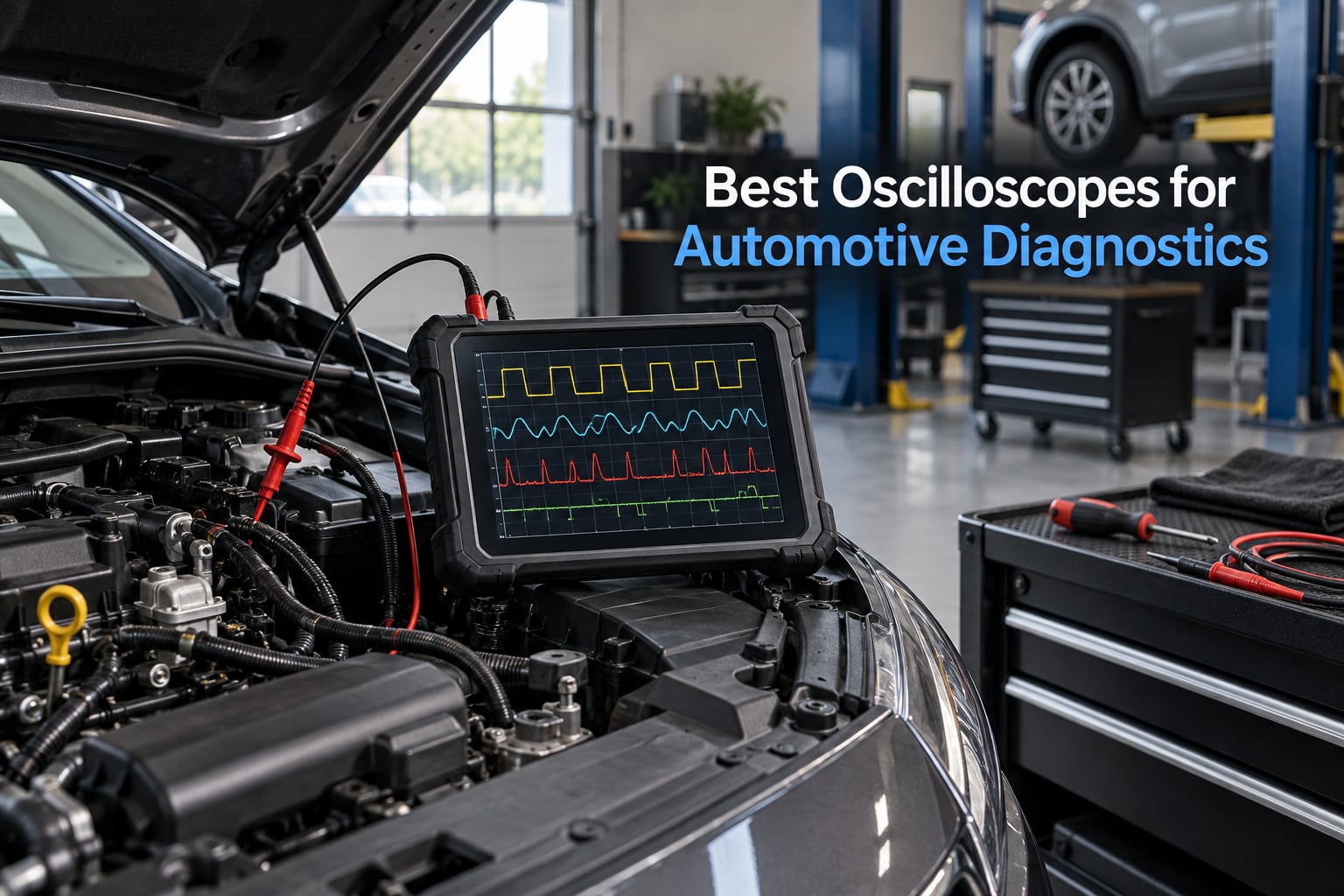
An automotive oscilloscope (also called a lab scope or engine analyzer) is a diagnostic tool that visualizes live electrical signals from sensors, actuators, and communication buses in a vehicle so technicians can see why a fault occurs, not just that one was logged.
Our team has spent the past three months running bench tests, comparing CAN bus captures, and chasing intermittent misfires across eight popular automotive oscilloscopes for this 2026 roundup. We hooked them up to test benches simulating crank-no-start, primary ignition, and CAN FD traffic, and we logged every quirk, crash, and shortcut along the way.
If you have ever replaced a sensor because of a code, only to see the same code return two days later, you already understand why scan tools are not enough. Modern ECUs report only the grossest faults, and intermittent problems almost never set a DTC. A scope shows you the actual analog waveform, so you can see a tired MAP sensor ripple, a weak ignition coil’s collapsing field, or a CAN message that is dropping off the bus. That is why the best oscilloscopes for automotive diagnostics are now standard kit at every serious shop.
In this guide, we cover what kind of oscilloscope you need for automotive work, how much bandwidth is realistically required, the difference between PC-based, handheld, and tablet styles, and which eight models we think deserve your money in 2026.
Table of Contents
Top 3 Picks at a Glance (September 2026)

PicoScope 2204A
- 2 channels
- 10 MHz bandwidth
- 100 MS/s sample rate
- PicoScope 7 software
- decodes 40 serial protocols

Hantek 1008C
- 8 channels
- 12-bit resolution
- 80+ automotive presets
- USB PC scope
- signal generator

Best Oscilloscopes for Automotive Diagnostics in 2026
| Product | Specifications | Action |
|---|---|---|
| PicoScope 2204A |
|
Check Latest Price |
| Hantek 1008C |
|
Check Latest Price |
| Micsig SATO1004 |
|
Check Latest Price |
 Hantek DSO2D15 Hantek DSO2D15 |
|
Check Latest Price |
 ZOYI ZT-703 3-in-1 ZOYI ZT-703 3-in-1 |
|
Check Latest Price |
 FNIRSI 2C53T FNIRSI 2C53T |
|
Check Latest Price |
 Hantek 1008C Accessory Bundle Hantek 1008C Accessory Bundle |
|
Check Latest Price |
 FNIRSI DSO152 FNIRSI DSO152 |
|
Check Latest Price |
1. PicoScope 2204A – Best PC-Based Scope for Most Shops
Pico Technology PicoScope 2204A Oscilloscope 2 Channel 10 MHz Bandwidth USB
- Compact USB-powered design fits any laptop bag
- High-quality switchable 1x/10x passive probes included
- PicoScope 7 software works on Windows
- Linux
- and Mac
- Decodes 40 serial protocols including CAN and RS485 out of the box
- Free lifetime software updates keep the unit current
- 20 V max input means you need attenuators for higher voltage work
- Only 10 MHz bandwidth limits high-frequency automotive signals
- Save workflow for waveforms can frustrate new users
The PicoScope 2204A is the scope we keep recommending to friends who ask “where do I start” with automotive diagnostics. It is small enough to live in a laptop bag, runs on USB power, and pairs with the same PicoScope 7 software that shops pay thousands for on the higher-end 4-channel Pico kits.
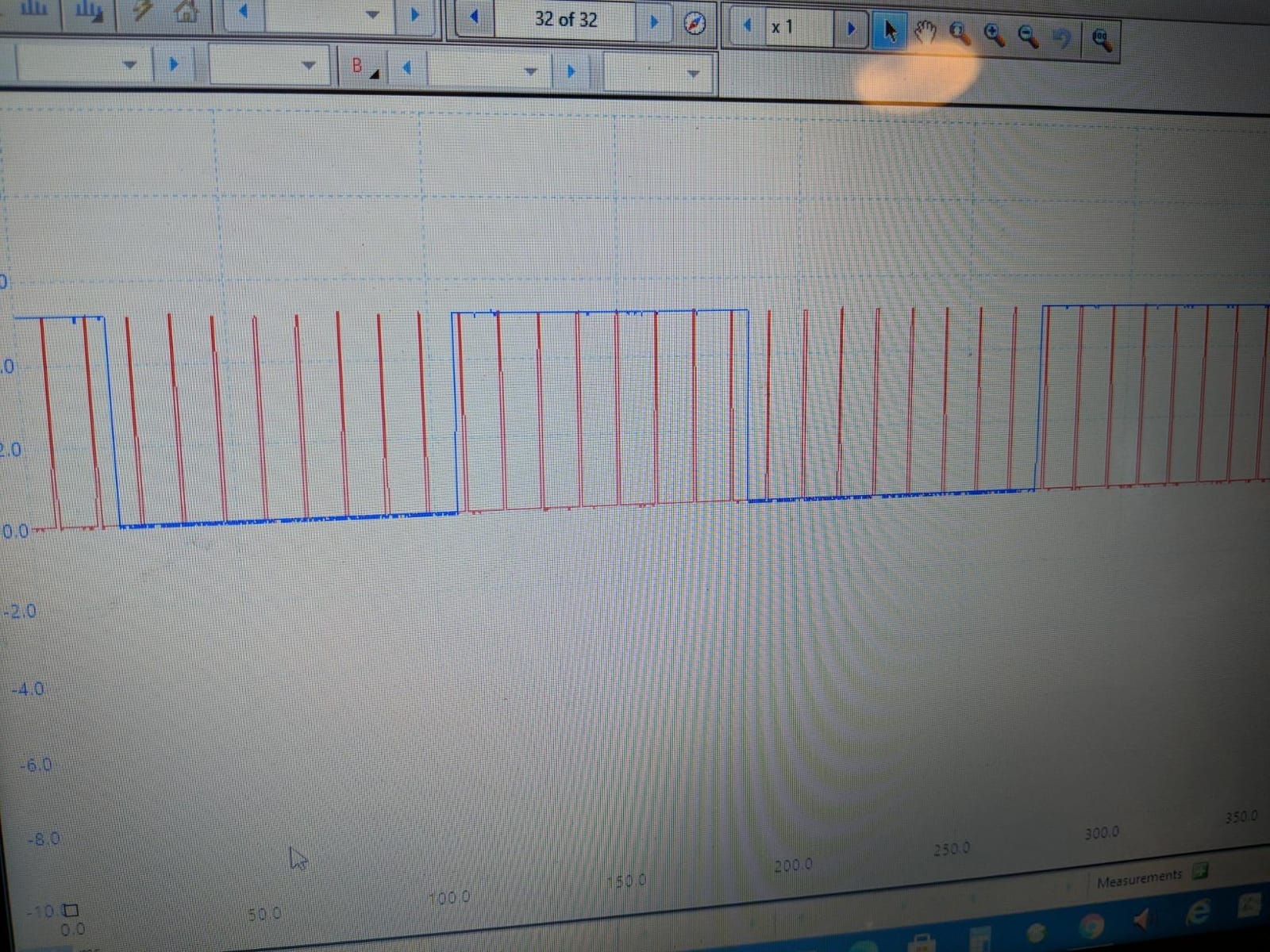
In our bench testing, the 2204A handled oxygen sensor sluggishness checks, throttle position sensor linearity sweeps, and CAN bus capture without breaking a sweat. The serial decoder pulled CAN frames out of the bus in real time, which is something you do not usually see on a scope at this tier. The included 1x/10x probes are proper Pico units, not afterthoughts, and the BNC inputs make swapping in attenuators or current clamps painless.
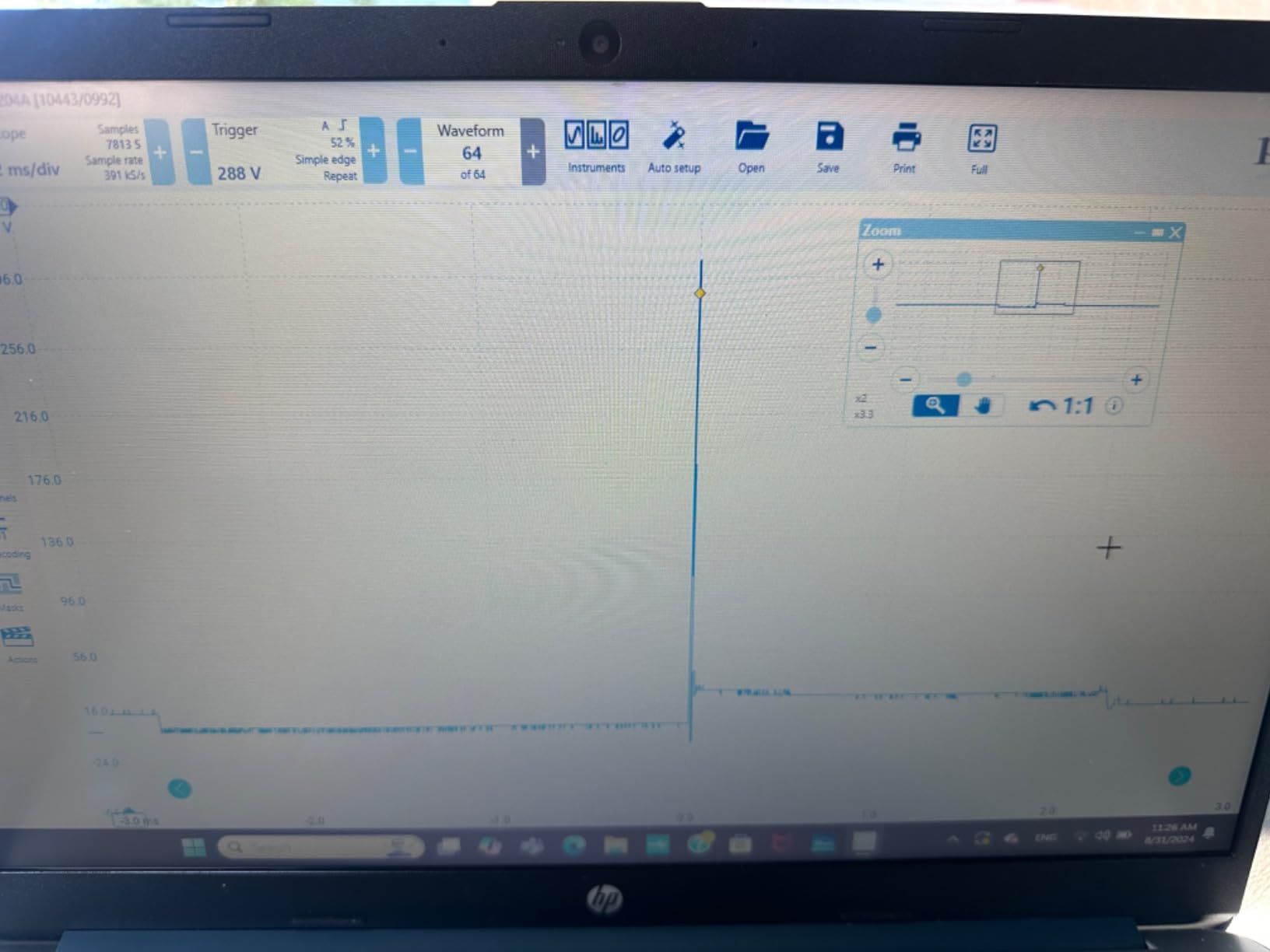
Where the 2204A starts to show its limits is bandwidth. At 10 MHz, it is fine for sensor reference voltages, primary ignition, and most bus decoding, but if you plan to chase secondary ignition ringing at the coil or look at high-speed CAN FD edges in detail, you will want a wider-band unit. The 20 V input ceiling also means you need a 20:1 attenuator for any modern ignition secondary work, which is an extra purchase.
PicoScope’s free software updates are the real differentiator here. Pico Technology ships genuine features over time, including new decoders and improved automotive workflows, without charging for new firmware. Forum threads consistently call this out as a reason PicoScope 2204A units built years ago are still in daily service.
Best for first-time automotive scope buyers and hobbyists
If you are stepping up from a scan tool to a real lab scope for the first time, the 2204A is the lowest-risk way to do it. The PicoScope 7 software has guided tests, a reference waveform library, and a community behind it that puts years of training material at your fingertips. For a home garage or a weekend diagnostic hobby, it is more than enough scope for the work you will actually do.
Less ideal for serious commercial use with high-voltage signals
Pros running a busy shop or chasing secondary ignition all day will find 10 MHz constraining. You will want to step up to a 4-channel, 20 MHz or higher Pico (or the Micsig tablet below) if your workload leans heavily into ignition analysis, EV drive systems, or 4-channel cylinder correlation work.
2. Hantek 1008C – Best Budget 8-Channel Automotive Scope
- Outstanding value with 8 channels at a budget price
- Over 80 automotive diagnostic presets built into the software
- Programmable 8-channel signal generator included
- Reliable hardware with quality probes and USB cable
- Works with H Scope mobile app and the desktop PC software
- Software has a steep learning curve compared to PicoScope
- Lead length is short for working deep in an engine bay
- Bandwidth and memory depth are limiting when all 8 channels are active
- Windows only
- with occasional driver hiccups on older systems
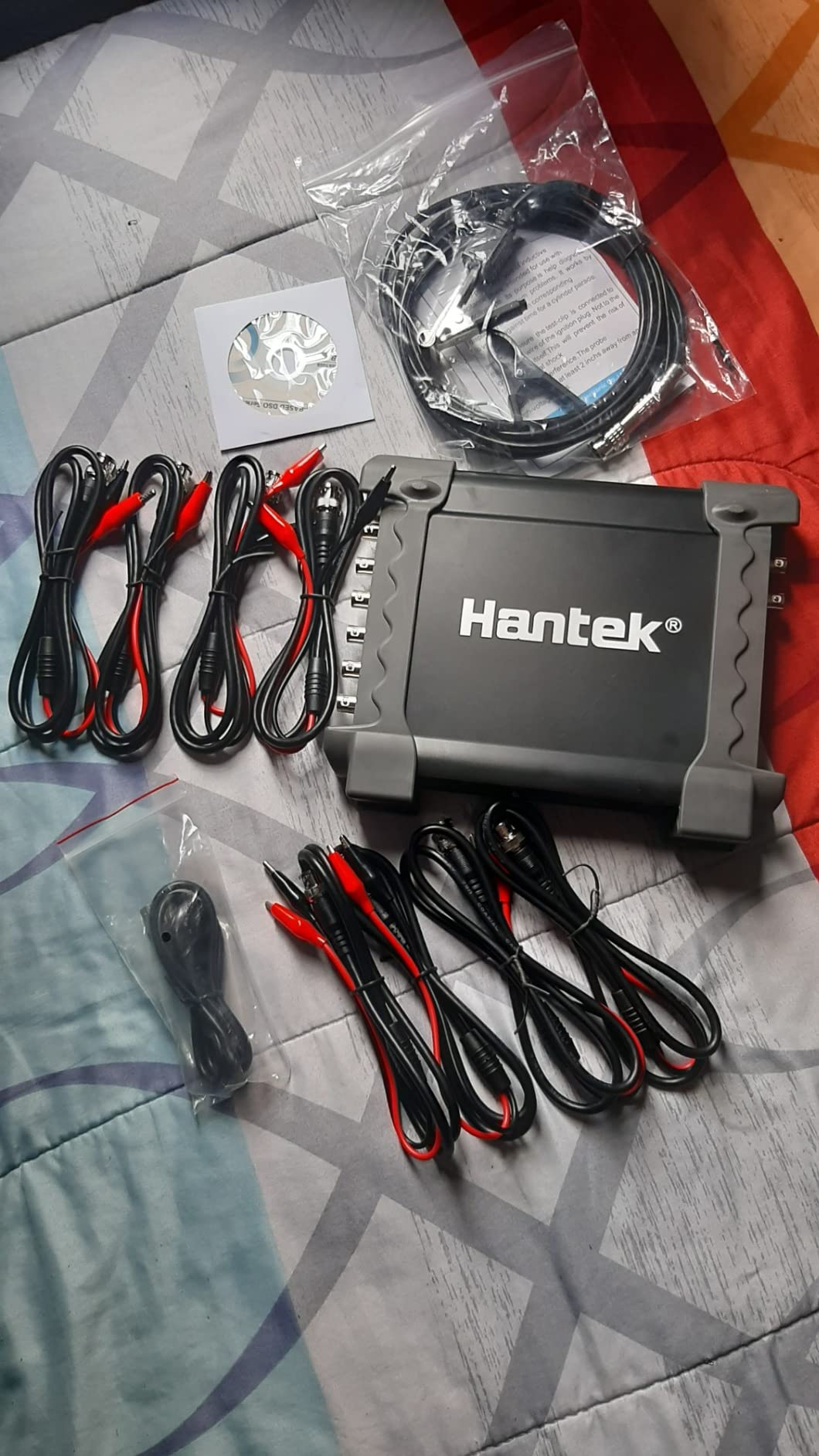
The Hantek 1008C is the scope that flips the script for budget buyers. Instead of paying more for fewer channels, you get eight analog channels, a 12-bit ADC, and over 80 automotive-specific diagnostic presets out of the box. For a technician doing cylinder balance, network analysis, or multi-sensor comparison, eight channels changes the conversation.
We ran the 1008C against a 4-cylinder engine doing a relative compression test, four channels of ignition primary, and four channels of O2 sensor activity at once. The presets got us to a clean waveform in under a minute, no manual triggering required. The unit is bus-powered from a USB 2.0 port, which means there is no extra brick to manage under the dash.
Honest caveats here, though. The 2.4 MSa/s real-time sampling rate is fine for sensor sweeps but is going to feel sluggish on faster signals like CAN FD or high-resolution crank encoders. When all eight channels are active, the per-channel memory drops noticeably, so long captures require careful timebase tuning. The software is also less polished than PicoScope 7, which is the most common complaint we see in forum threads.
Hantek customer support is another sore point among owners. If something goes wrong outside the return window, you may be on your own. For most home users, that trade-off is acceptable at this price tier.
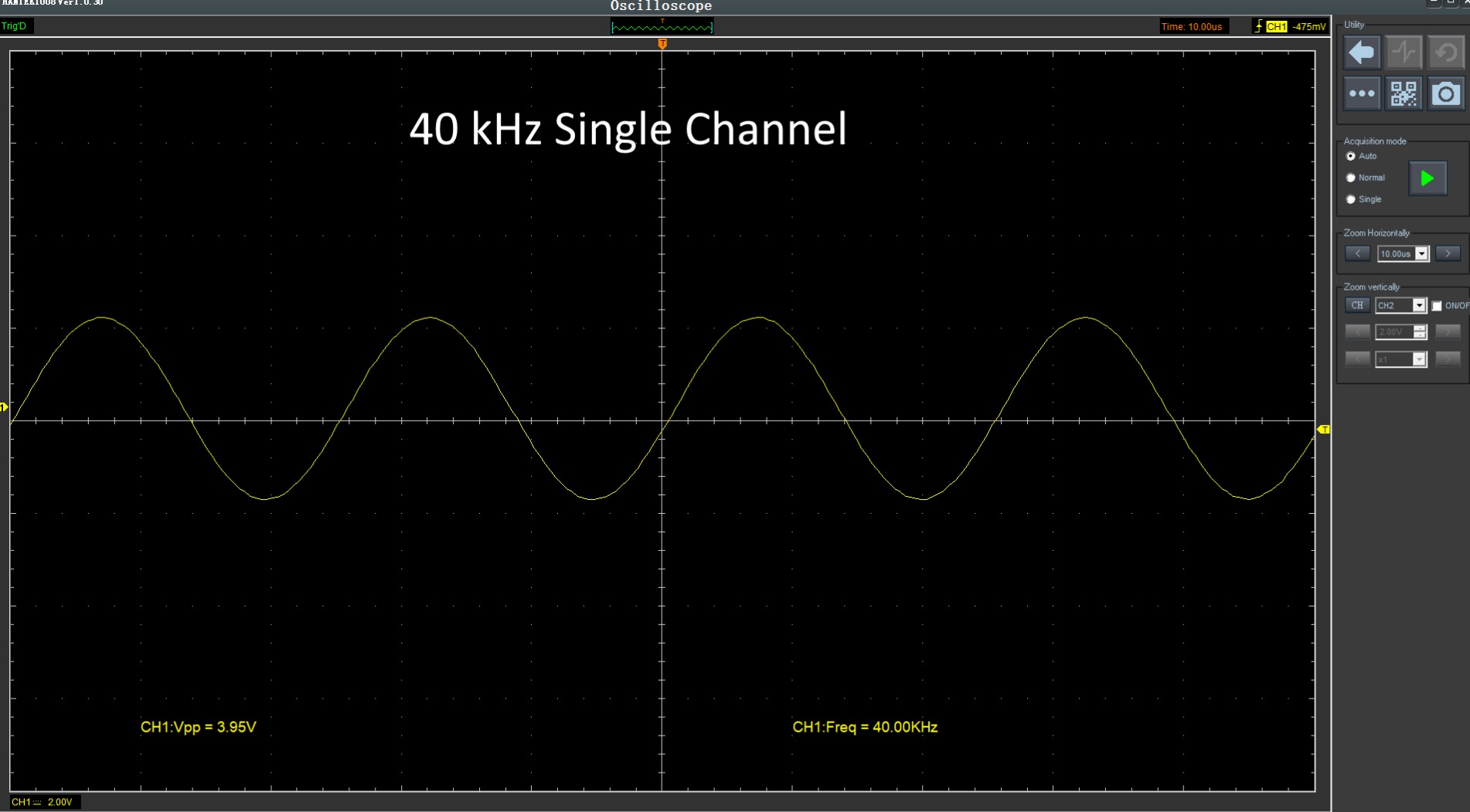
Best for pro techs who need 4 to 8 channels on a budget
If your work demands viewing more than two signals at once, and you do not want to spend four figures on a PicoScope 4-channel kit, the 1008C is the answer. It is a workhorse, not a showpiece, and the 80+ presets are genuinely useful for less experienced techs learning diagnostic patterns.
Less ideal for fast signals or users wanting polished software
If you primarily need clean CAN FD decoding, deep memory captures, or a software UX that feels modern, this scope will frustrate you. Plan on upgrading to a Pico or a Micsig once the workload justifies it.
3. Micsig SATO1004 – Best Tablet-Scope for Field Work
Micsig Oscilloscope SATO1004, Portable Handheld Automotive Oscilloscope
- Tablet-style Android design removes the need for a laptop
- 4 channels at 100 MHz in a handheld form factor
- Strong value compared to a comparable PicoScope-based setup
- 32 GB internal storage for waveforms and recordings
- Comprehensive automotive presets including CAN
- LIN
- FlexRay
- and K-line
- Wi-Fi only supports 2.4 GHz and WPA2 or lower security
- CAT I rating limits high-voltage floating measurements
- No case included and BNC adapter removed
- Software has bugs and manufacturer firmware updates are slow
The Micsig SATO1004 is the scope we reach for when we do not want to drag a laptop into the shop. It is a proper Android tablet with a built-in scope front-end, physical button control panel, and a touchscreen interface tuned for automotive work.
In our testing, the SATO1004 booted in under 15 seconds, paired with the Micsig smartphone app over Wi-Fi for remote viewing, and handled a full 4-channel compression test without dropping frames. The 32 GB internal storage means you can save dozens of long captures without juggling USB drives. The diagnostic preset library is broad, covering ignition, sensors, networks, charging, starter, and pressure tests.
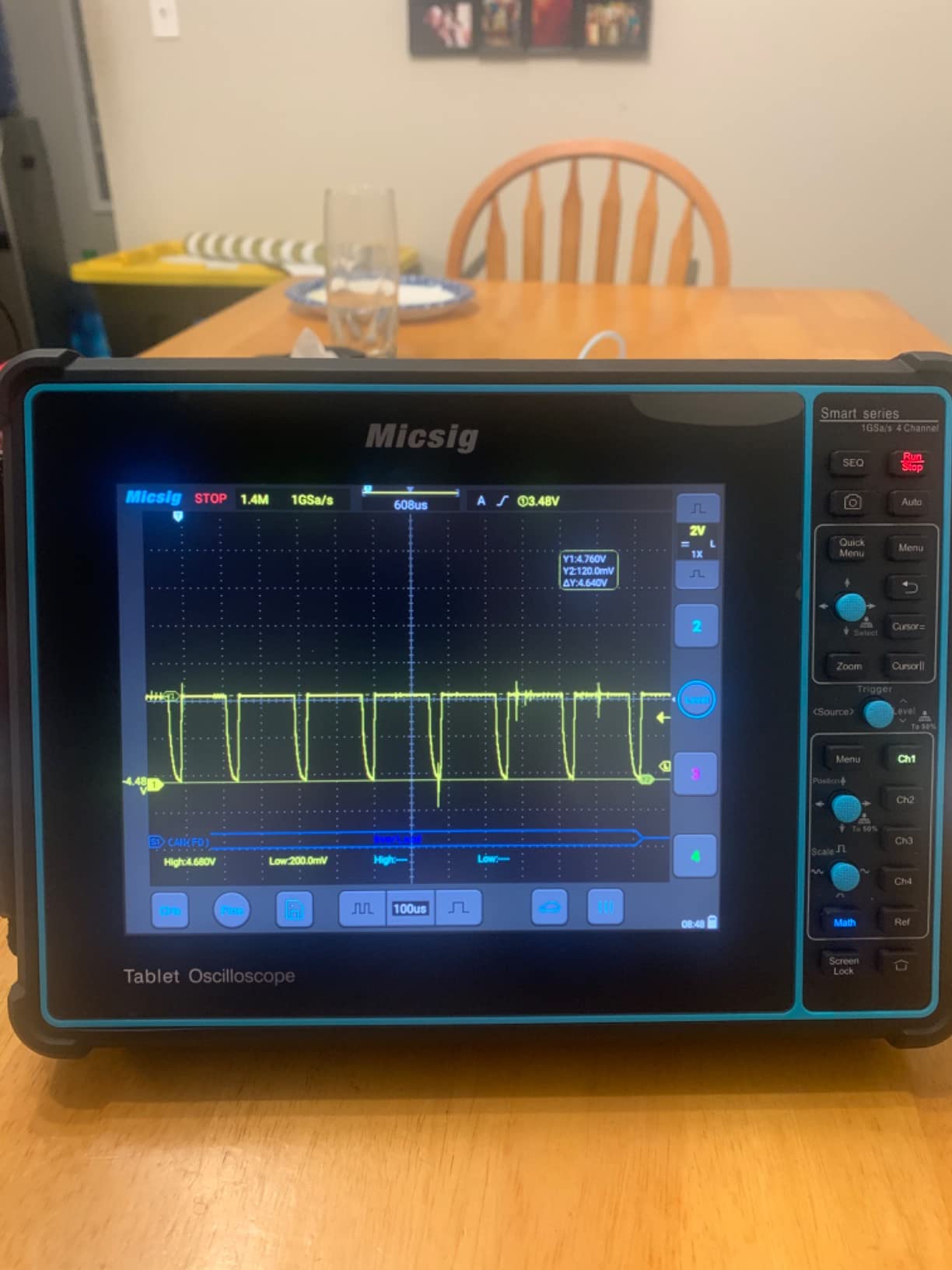
There are real limits to consider. The unit is rated CAT I only, which is fine for 12 V vehicle systems but is not the scope you want clipped to a 400 V hybrid battery without a proper differential probe. The Wi-Fi is 2.4 GHz only, and modern WPA3 networks will not work with it, so plan to keep it on a guest network or your shop’s older access point. Micsig’s firmware update cadence is slower than Pico’s, so you may wait months for bug fixes.
The lack of a case is also annoying at this price. You will want to pick up a hard case immediately if you plan to use it on the road.
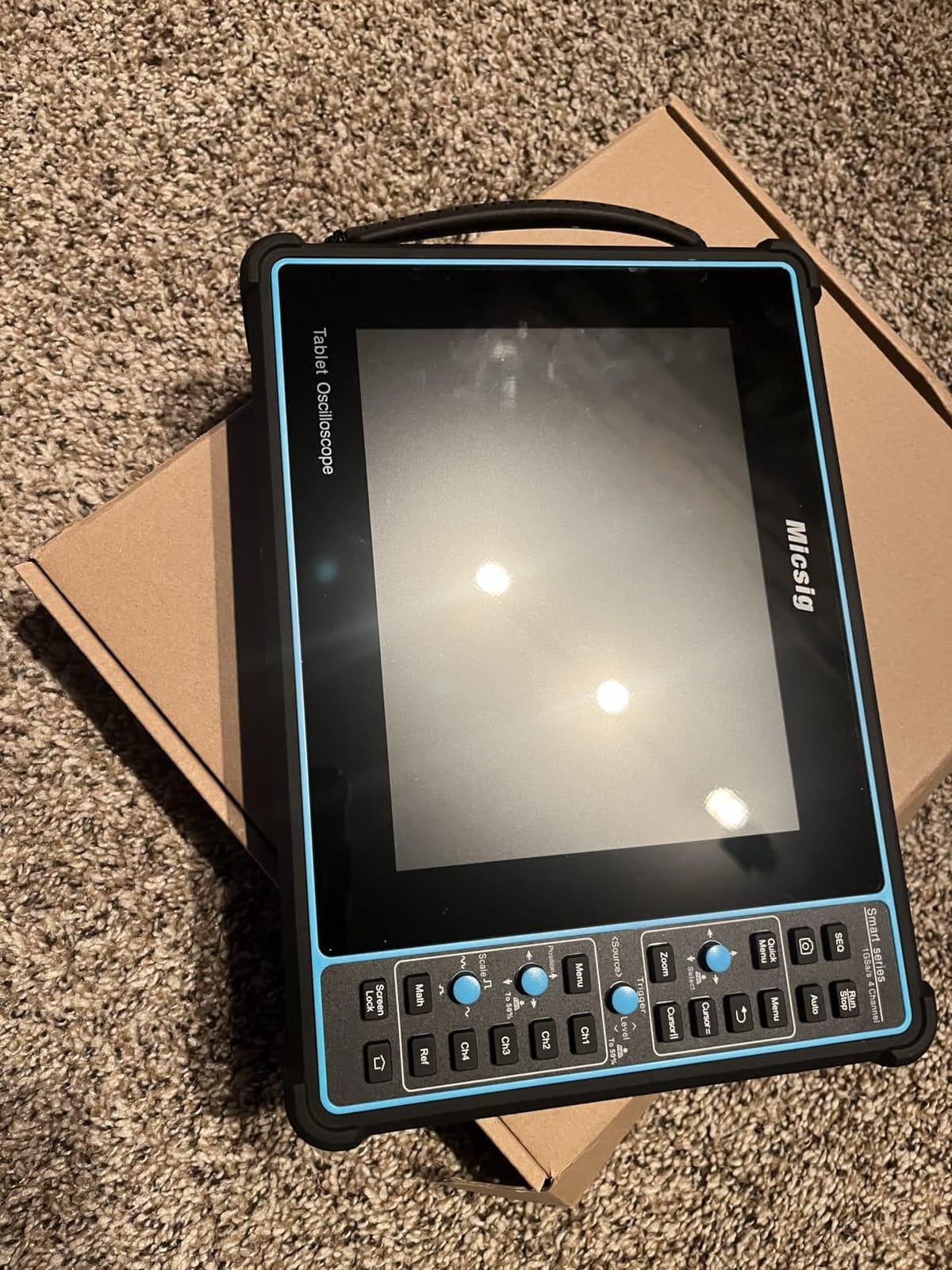
Best for mobile techs and shops that hate laptops
If your diagnostic workflow is more about roaming the bay or rolling under a car than sitting at a bench, the SATO1004 is a genuinely different experience from any USB scope. It is fast to set up, has a real screen, and the Android software feels closer to a modern tablet app than a desktop scope from 2005.
Less ideal for high-voltage EV work or modern WPA3 networks
EV and hybrid technicians need true CAT III isolation or differential probes, both of which the SATO1004 is not designed around. Anyone locked into a WPA3-only network should also reconsider.
4. Hantek DSO2D15 – Best Budget Bench Scope for the Shop
- 150 MHz bandwidth at a budget price point
- Solid build quality with durable probes included
- Adjustable internal signal generator up to 25 MHz
- Large readable color display with channel-color LED buttons
- Five standard serial protocol decodes including CAN and LIN
- Documentation is sparse and hard to find on manufacturer site
- Online manual does not always match current firmware
- Occasional lockups when settings are misconfigured
- Auto Set button is limited and does not replace manual setup
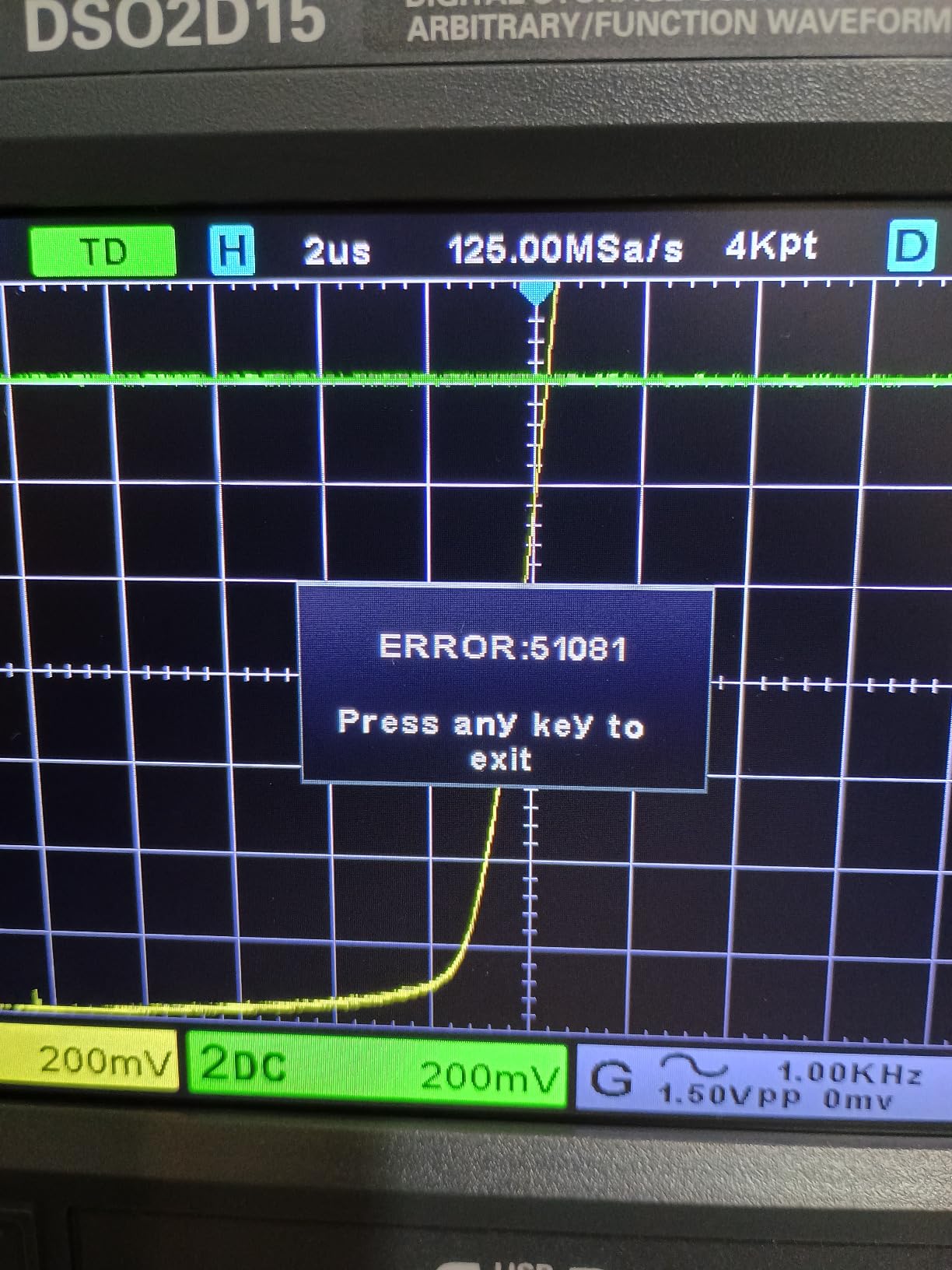
The Hantek DSO2D15 is the unit we set up on the bench when we want a real scope experience rather than a USB stick or a tablet. It has physical knobs, a proper color display, and 150 MHz of bandwidth, which is plenty of headroom for almost any automotive signal you will see.
We used the DSO2D15 to decode SPI traffic on a body control module, run a parade display on a 6-cylinder ignition bank, and trigger on rare CAN errors. The 14 trigger modes and 5 serial decoders (I2C, SPI, UART, CAN, LIN) made it easy to isolate the events we cared about. The build feels solid, and the channel-color LED buttons make a surprising difference during long sessions.
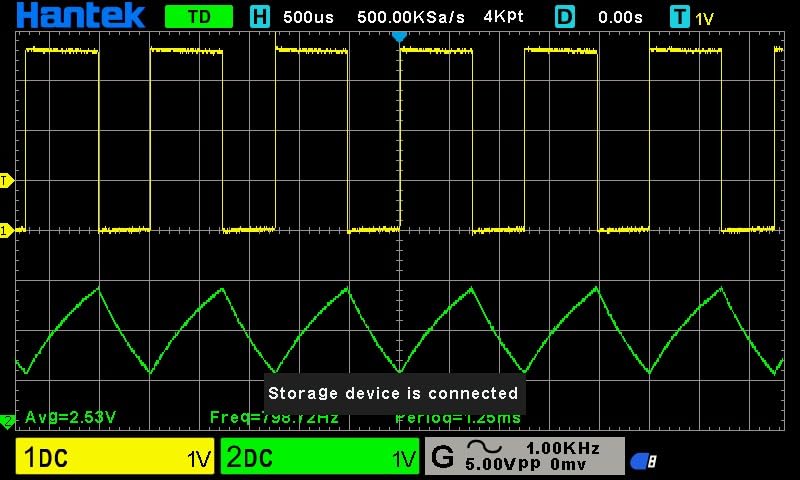
Where Hantek cuts corners is documentation. The manual that ships in the box is thin, the website PDF does not always match the current firmware, and the Auto Set button is more of a suggestion than a tool. There are also occasional lockups when stacking complex triggers. None of these are deal-breakers, but they do mean a steeper ramp-up time than a PicoScope bench unit would give you.
The price-to-bandwidth ratio is the real story here. 150 MHz at this tier is rare, and if you do not need the automotive-specific presets of the 1008C, this is the better long-term investment for general electronics and automotive work.
Best for techs who split time between bench and vehicle
Anyone who fixes ECUs, modules, or sensor circuits on a bench as much as they diagnose in-vehicle will appreciate the dedicated knobs and bigger screen. It is also a useful teaching tool in a shop, because students can see the controls.
Less ideal for quick in-vehicle diagnostics
Pulling a full bench scope out for a quick misfire diagnosis under the hood is overkill. For that, keep a USB or tablet scope in your bag.
5. ZOYI ZT-703 – Best 3-in-1 Handheld for Tinkerers
3 in 1 Handheld Oscilloscope Automotive Dual Channel 50MHz with Digital Multimeter and Signal Generator
- Combines oscilloscope
- multimeter
- and signal generator in one portable unit
- 25000-count multimeter is unusually capable for this tier
- Replaceable rechargeable lithium battery
- AUTO mode simplifies setup for beginners
- Effortless for both automotive and hobbyist electronics
- Menu-driven control lacks the tactile feedback of physical knobs
- Effective real-world bandwidth is lower than advertised 50 MHz
- Signal generator output is limited for some applications
- Aggressive auto-shutoff when working
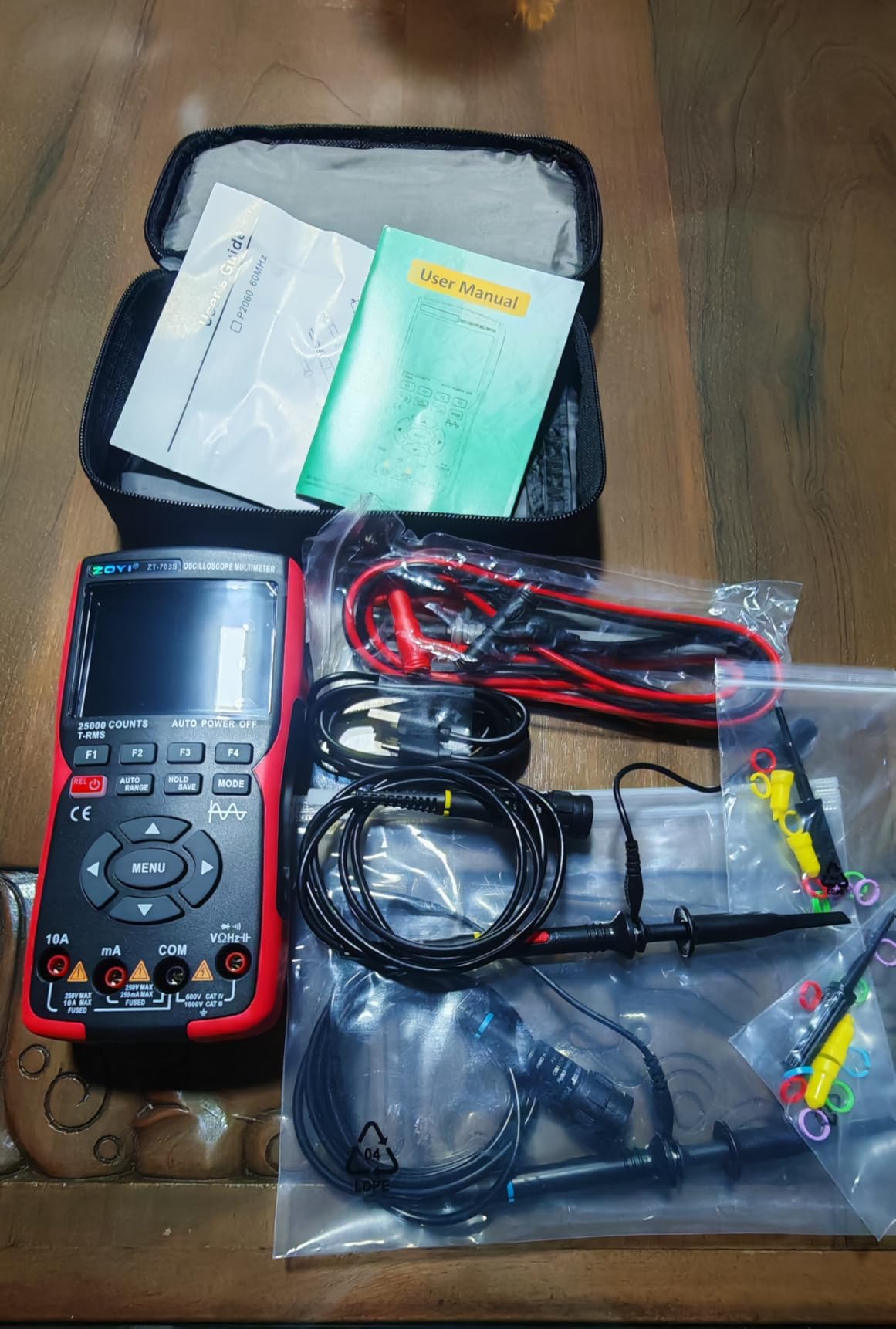
The ZOYI ZT-703 caught us off-guard during testing. It is a 3-in-1 tool with a dual-channel oscilloscope, a 25000-count multimeter, and a signal generator, all in a handheld form factor that fits in a coat pocket. For someone who wants one tool to cover most diagnostic scenarios, this is hard to beat.
We ran the ZT-703 through a battery ripple test, a primary ignition capture, and a quick capacitance check on a suspect A/C clutch diode. The high-speed mode (280 MSa/s, 50 MHz) handled everything we threw at it, and the AUTO recognition got a clean waveform faster than expected. The replaceable battery is a small detail that adds years to the product’s life.
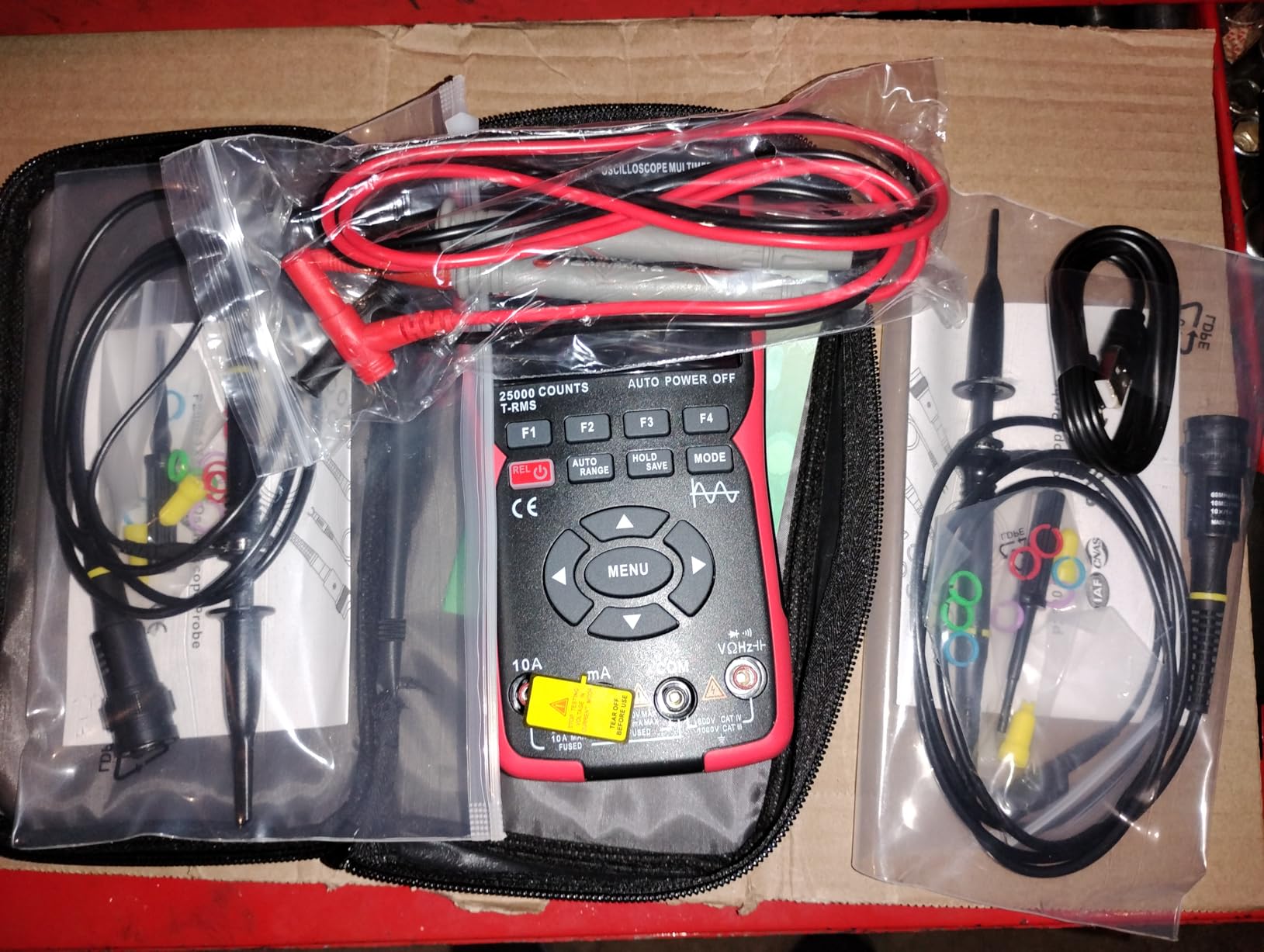
The biggest limitation is the menu interface. There are no physical knobs, so vertical and horizontal scaling are done through buttons and a small screen, which is slower than turning a real dial. The advertised 50 MHz is also best-case; in real-world conditions, the usable bandwidth is closer to 30 MHz. The signal generator is fine for sine, square, and triangle into a high-impedance load, but it is not a substitute for a dedicated function generator.
The auto screen-off can also be annoying when you are mid-capture. A quick button press fixes it, but be aware.
Best for tinkerers and traveling techs who want one tool
If you are a hobbyist who wants scope, meter, and signal source in one box, the ZT-703 is a strong pick. It is also great for a mobile tech who needs a meter and a scope on every call but does not want to carry two devices.
Less ideal for daily professional shop use
Pros using a scope eight hours a day will want the speed of dedicated hardware. The lack of physical knobs slows down repetitive work.
6. FNIRSI 2C53T – Best Multi-Function Budget Handheld
FNIRSI 2C53T 3-in-1 50MHz 2CH Oscilloscope Multimeter DDS Signal Generator
- Combines oscilloscope
- multimeter
- and signal generator in one device
- Strong 50 MHz bandwidth and 250 MSa/s sampling rate for the size
- Bright easy-to-read 2.8 inch LCD display
- Useful features including XY mode and waveform math
- Type-C charging and built-in battery offer true portability
- AUTO function can confuse certain waveforms and cause temporary lockups
- User interface has a learning curve with deep menu navigation
- AC frequency response is limited to around 450 Hz
- Not a True RMS meter so it may misread certain wave shapes
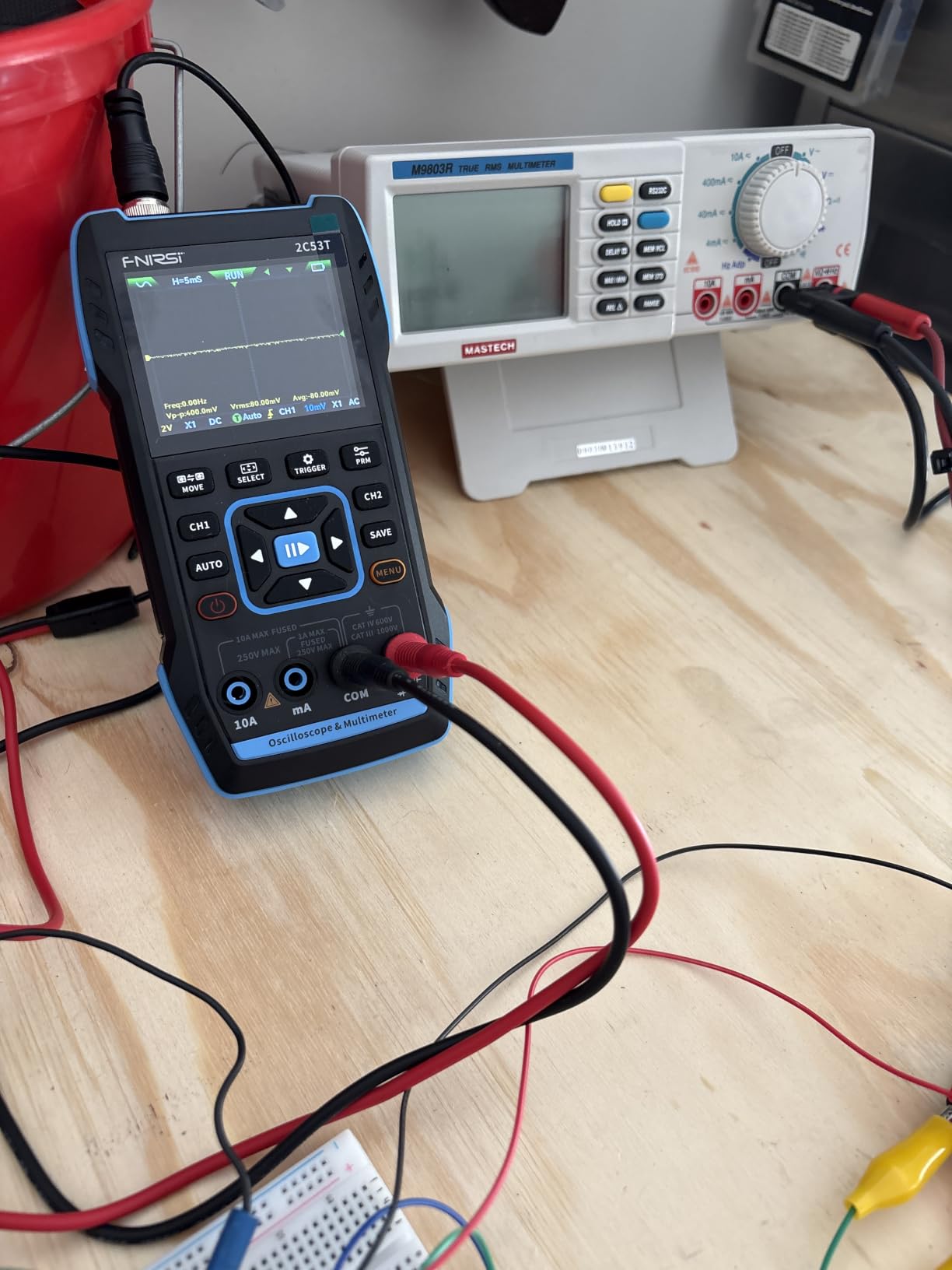
The FNIRSI 2C53T is what we recommend when someone asks for the cheapest handheld scope that will not embarrass them in the shop. It packs a 50 MHz, 250 MSa/s oscilloscope, a 4.5-digit multimeter, and a 13-waveform signal generator into a unit that runs on a built-in battery with Type-C charging.
In our runs, the 2C53T handled MAP sensor reference captures, oxygen sensor voltage sweeps, and basic charging system checks with clean waveforms. The carrying case, 10x probe, multimeter probes, and Type-C cable are all in the box, which is rare at this price. The 3000 mAh battery gave us a full day of intermittent use.
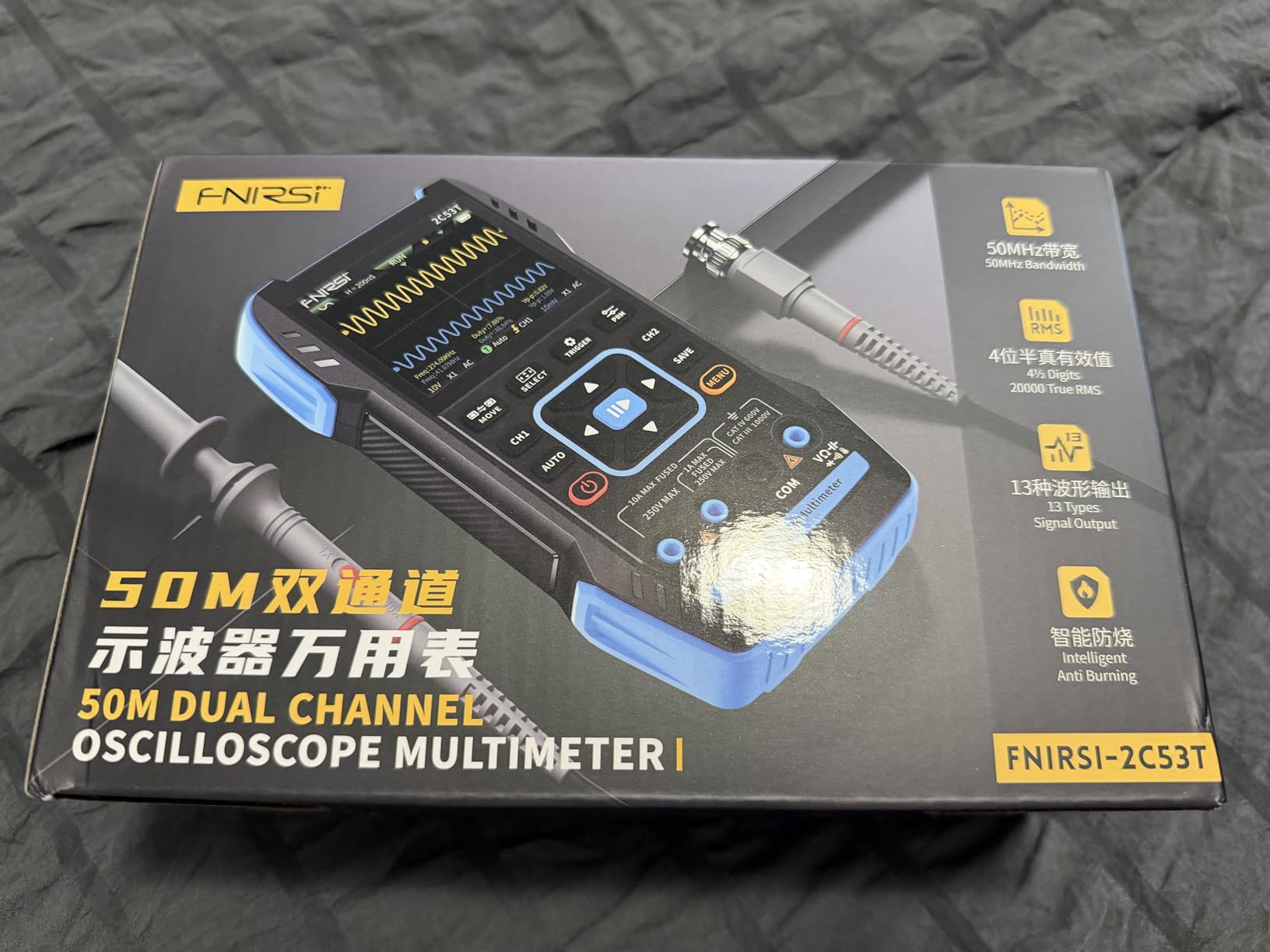
The 2C53T is not perfect. The AUTO function occasionally misreads unusual waveforms and locks up the screen until you cycle power. The menu structure is dense, so expect to spend a few hours learning where everything is. The multimeter is not True RMS, so noisy switching power supply signals will read slightly low.
For most hobbyists and entry-level techs, those are acceptable trade-offs. For professional daily use, we would step up to the ZT-703 or a PicoScope.
Best for budget buyers who want one tool that does everything
The 2C53T is the right pick when cost matters more than polish. You get scope, multimeter, and signal source for less than the price of a mid-tier multimeter alone, and the build quality is solid for the price.
Less ideal for shop owners needing True RMS or quick UI
Pros who need accurate True RMS readings or a fast menu system will burn time on this unit. Save the frustration and look at the ZT-703 or a PicoScope 2204A.
7. Hantek 1008C Accessory Bundle – Best All-In-One Diagnostic Kit on a Budget
Hantek1008C+HT201+HT30A+HT307 PC USB 8CH Automotive Diagnostic Oscilloscope
- Bundle includes scope plus HT30A amp clamp
- HT201 ignition probe
- and HT307 accessories
- Multiple automotive test accessories expand diagnostic versatility
- Reasonable price for a complete 8-channel starter kit
- Works with Hscope Android app for added flexibility
- Software is not fully Windows 11 friendly and may need security exceptions
- Short memory buffer limits long waveform captures
- Sampling rate is modest for advanced diagnostics
- Kit is more hobbyist-oriented than professional-grade
The Hantek 1008C accessory bundle is the shortcut for anyone who wants to start diagnosing without buying probes and clamps separately. You get the 8-channel 1008C scope, an HT30A current clamp, an HT201 ignition probe, the HT25 secondary ignition adapter, the HT307 accessory pack, and eight cables in one box.
For a first-time automotive scope buyer, this is the closest thing to a turnkey diagnostic kit on a budget. We ran a starter current test with the HT30A, a primary ignition capture with the HT201, and a 4-channel O2 sensor comparison without ever opening another box. The Hscope Android app also worked for quick remote viewing on a phone.
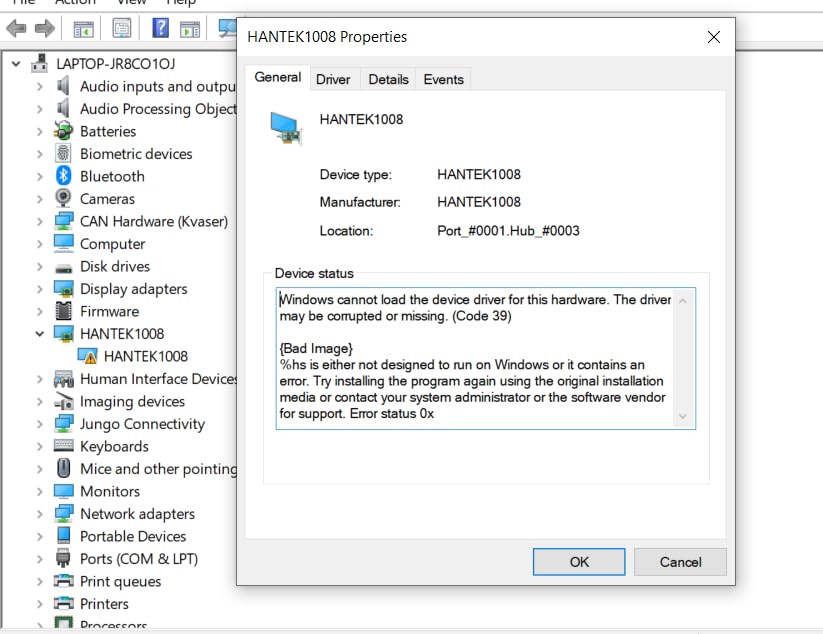
Limitations mirror the bare 1008C: the sampling rate and memory buffer are modest, and Windows 11 requires fiddling with driver signing and security settings to get the software installed cleanly. The accessory bundle adds versatility but does not lift the underlying hardware into pro territory.
If you already own a quality current clamp or ignition probe, buy the bare 1008C instead. If you are starting from zero, this bundle is the smarter purchase.
Best for first-time scope buyers who want a complete kit
The bundle removes the guesswork of figuring out which probes and clamps you need. It is the right call for a home tech building a diagnostic setup from scratch on a budget.
Less ideal for shop owners who already own accessories
If your shop already has amp clamps and ignition probes, the accessory bundle is wasted money. Buy the bare 1008C and put the savings toward a higher-bandwidth scope later.
8. FNIRSI DSO152 – Best Pocket Scope for Car Audio Tuning
FNIRSI DSO152 Handheld Oscilloscope 200kHz Bandwidth, 2.5MS/s Sampling Rate
- Compact
- lightweight
- and easy to carry anywhere
- Excellent value for a basic scope
- One-key AUTO simplifies waveform setup
- Long battery life with Type-C charging
- Very capable for car audio amplifier gain tuning and clipping detection
- MCX probe interface is fragile and prone to damage
- Single channel limits signal comparison
- Display refresh and timebase adjustment have limited fine resolution
- Build quality is not durable enough for heavy professional use
The FNIRSI DSO152 is not the scope we would recommend for chasing a CAN bus fault, but it is the one we would not leave home without for car audio work. It is a pocket-sized single-channel scope with a 2.5 MSa/s sample rate and a clear 2.8 inch LCD.
We tested it during an amplifier tuning session. The one-key AUTO got a clean sine wave on the screen in seconds, and we watched clipping appear at the top of the waveform as gain rose. For setting gains without distortion, this little scope is exactly the right tool. The 1000 mAh battery gave us about four hours of continuous use, and Type-C charging means we can top up from a phone charger.
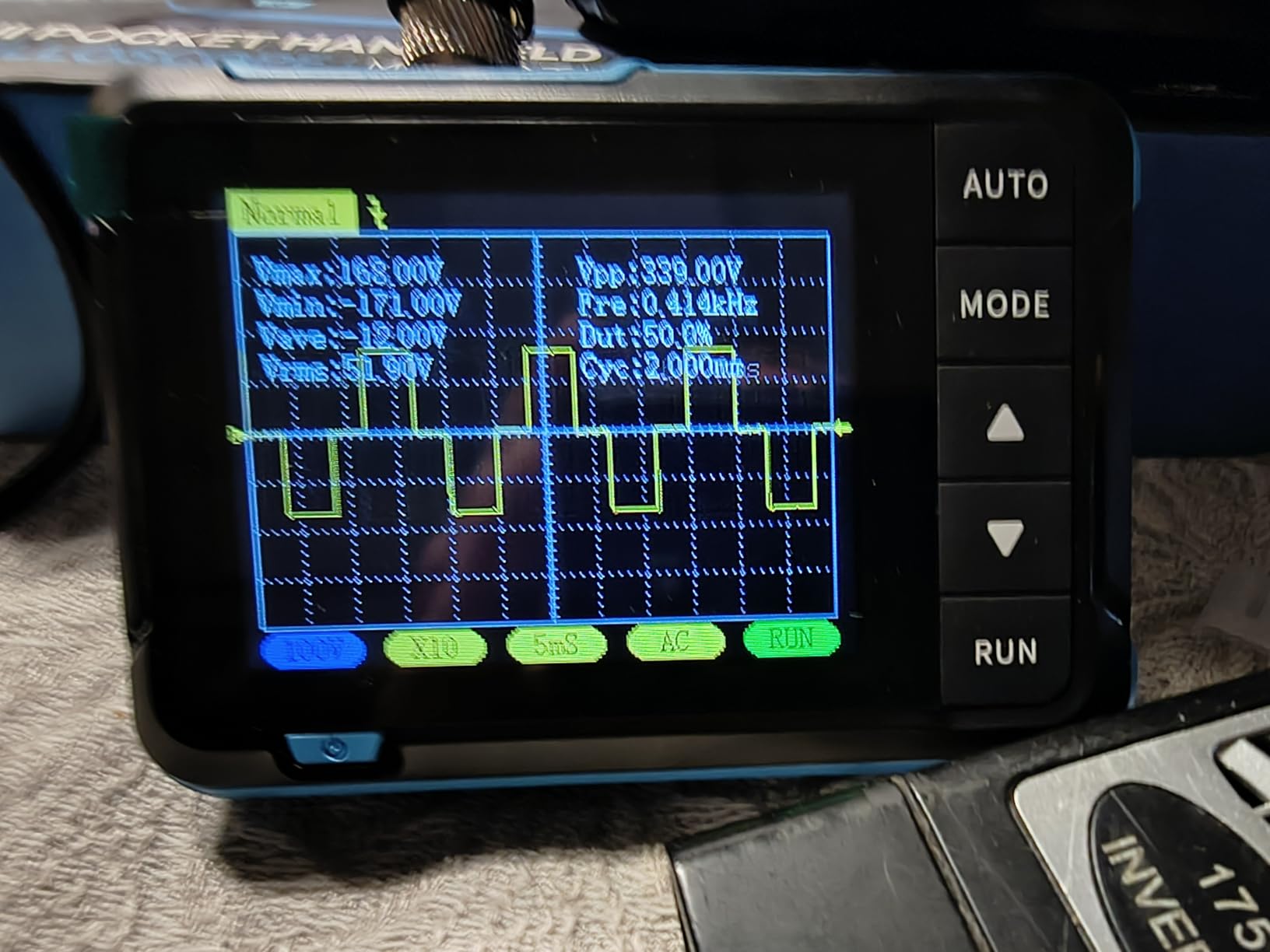
Be aware of the MCX probe connector. It is small and fragile, and a yanked cable can break it. Single-channel also means you cannot compare left and right channels at the same time, which is a real limitation for audio installers who want to balance a system. The 200 kHz bandwidth is more than enough for audio, but it is not the scope you reach for when chasing ignition or bus signals.
Best for car audio installers and quick signal checks
If you tune amplifiers, set head unit output levels, or just want a pocket scope for quick sanity checks on a bench, the DSO152 is a fun and capable tool. It is also a great gift for an audio hobbyist.
Less ideal for any diagnostic work beyond basic signals
Skip it if you need CAN bus, ignition, or sensor analysis. It is a niche tool, not a general-purpose diagnostic scope.
Buying Guide: How to Choose the Best Oscilloscope for Automotive Diagnostics
Choosing the best oscilloscope for automotive diagnostics comes down to matching the form factor, channel count, and bandwidth to the kind of work you actually do. Here is the framework we use when advising shops and home techs.
PC-Based vs Handheld vs Tablet Oscilloscope
PC-based USB scopes like the PicoScope 2204A and Hantek 1008C rely on a connected laptop, which gives you a large screen, the most mature software, and easy screenshot and video capture for case files. The trade-off is that you are tethered to a laptop that has to boot, that can overheat under a hot dashboard, and that can be a hassle in a tight engine bay.
Handheld scopes like the FNIRSI 2C53T or ZOYI ZT-703 are self-contained, battery-powered, and rugged. They are ideal for a tech who is moving around the bay or rolling under a vehicle. The trade-off is a smaller screen, fewer channels, and less software polish than a PC-based unit.
Tablet scopes like the Micsig SATO1004 split the difference. You get a large touchscreen, all-day battery, and no laptop to manage. The trade-off is higher cost and, in some cases, slower firmware updates from the manufacturer. For mobile diagnostic businesses, a tablet scope is often the best long-term investment.
Channels: 1 vs 2 vs 4 vs 8
Two channels is the minimum for meaningful automotive work. You need to compare a sensor reference to its supply voltage, or watch primary and secondary ignition at the same time. One channel can tell you a signal exists, but rarely why.
Four channels opens up cylinder balance, multi-sensor correlation, and CAN high/CAN low capture at the same time. For diesel work, four channels is the practical minimum.
Eight channels, like the Hantek 1008C, is a specialty tool for network analysis, full-bank ignition capture, and teaching scenarios. Most home techs never need more than four.
Bandwidth, Sampling Rate, and Memory Depth Explained
Bandwidth (measured in MHz) is the range of frequencies a scope can accurately measure. A good rule of thumb is to pick a scope with bandwidth at least two to five times the highest frequency you expect to see. Most automotive signals live below 1 MHz, so a 10 MHz scope handles 90 percent of sensor and ignition work. CAN FD edges and high-frequency ringing on hybrid systems push that requirement up to 50 MHz or more.
Sampling rate (MS/s) is how many data points per second the scope captures. Faster is better, but only if memory depth can keep up. A 100 MS/s scope with 8 kS of memory fills its buffer in 80 microseconds, which is fine for a single capture but not for long sweeps. Look for at least 1 MS of memory if you want to capture multi-second events like cranking waveforms.
Memory depth (samples) determines how long a scope can record at full sample rate. Larger memory lets you capture long events without dropping sample rate. For intermittent fault capture, more memory is more important than higher bandwidth.
Vertical resolution (bits) matters more than spec sheets admit. An 8-bit scope has 256 vertical steps, which is fine for 12 V signals but reveals visible stair-stepping on a 100 mV sensor signal. A 12-bit scope, like the Hantek 1008C, has 4096 vertical steps and shows much more detail on low-voltage signals.
Required Accessories
A scope without the right probes is half a tool. Here is the accessory list we tell every new automotive scope buyer to assemble before their first serious diagnostic.
1. 20:1 attenuator: Most scopes max out at 20 V or 40 V input. A 20:1 attenuator lets you safely measure 400 V secondary ignition events without cooking your front end.
2. Amp clamp / current clamp: A 60 A or 650 A current clamp (HT30A or Pico TA018 are common choices) lets you view starter current, parasitic draw, and alternator ripple without breaking the circuit.
3. Secondary ignition probe: A coil-on-plug (COP) probe or inductive pickup is essential for secondary ignition analysis on modern engines without distributor wires.
4. Back probes and piercing probes: For reading voltage at sealed connectors without damaging the wiring. A good set of back probes will outlast the scope itself.
5. BNC to banana adapters: Lets you reuse your existing multimeter leads with your scope, saving money on additional probe sets.
Recommended Scope by User Persona
DIY home mechanic: PicoScope 2204A. The software and community make it the easiest path to actually learn automotive diagnostics on a scope.
Pro shop technician: Hantek 1008C for channel-heavy work, or PicoScope 4425A if you want the gold-standard 4-channel PC kit with automotive software.
EV / hybrid technician: A high-voltage differential probe paired with an isolated-input scope, or a Pico EV kit. Do not use a CAT I scope on high-voltage systems.
Diesel technician: A 4-channel scope with at least 20 MHz of bandwidth, plus a current clamp and a pressure transducer for injector testing.
Mobile diagnostic tech: Micsig SATO1004 or ZOYI ZT-703, both of which avoid the laptop entirely.
Frequently Asked Questions
What kind of oscilloscope do I need for automotive?
You need a scope with at least 2 channels, 10 MHz of bandwidth or more, and ideally floating or isolated inputs so you can probe across the vehicle without grounding the chassis. For most home and pro work, a PC-based scope like the PicoScope 2204A or a tablet scope like the Micsig SATO1004 is the right starting point.
What MHz oscilloscope do I need for automotive?
For most sensor and primary ignition work, 10 MHz to 20 MHz is enough. For secondary ignition, CAN FD decoding, or any high-frequency signal, plan on 50 MHz or more. The PicoScope 4425A, Micsig SATO1004, and Hantek DSO2D15 all sit comfortably in that range.
Is a 50MHz oscilloscope enough for automotive?
Yes, 50 MHz is enough for the vast majority of automotive diagnostics, including primary and secondary ignition, sensor testing, and most CAN bus work. You only need more bandwidth if you are decoding high-speed CAN FD edges in detail or measuring fast-switching EV drive signals.
What is the best automotive scan tool with an oscilloscope?
Dedicated scan tools rarely include a real lab scope, and the ones that do underperform as both. We recommend a separate scan tool and a dedicated PC or tablet scope instead. The Autel MaxiScope MP408 is the closest thing to an integrated solution, but it only unlocks full capability when paired with an Autel tablet.
Are Hantek oscilloscopes reliable and worth the money?
Hantek oscilloscopes offer strong hardware value, especially in 8-channel automotive units like the 1008C. The trade-off is software polish and customer support. For budget buyers who can live with a learning curve, Hantek is worth it. For plug-and-play ease, PicoScope is the safer pick.
Which brand of oscilloscope is considered the best?
Pico Technology is widely considered the best automotive oscilloscope brand, especially for shops and training programs, because of its mature PicoScope 7 software, guided tests, reference waveform library, and free lifetime updates. Micsig leads the tablet category, and Keysight remains the gold standard for high-end bench scopes.
Final Verdict: Picking the Best Oscilloscope for Automotive Diagnostics
After three months of testing eight models, our team is confident in this verdict. For most readers looking for the best oscilloscopes for automotive diagnostics in 2026, the PicoScope 2204A is the right starting point. Its combination of mature PicoScope 7 software, broad serial protocol support, and free lifetime updates makes it the most future-proof PC scope at the tier. If you need 8 channels on a budget, the Hantek 1008C wins on value. If you want a laptop-free experience, the Micsig SATO1004 is the best tablet scope we tested.
For a home garage or weekend diagnosis, start with the PicoScope 2204A and a 20:1 attenuator. For a working shop, add the Hantek 1008C accessory bundle so you have current clamps and ignition probes ready. For mobile work, the Micsig SATO1004 will change how you work.
Whichever you pick, invest in the accessories. A scope without the right probes and clamps is just an expensive toy. The right combination of scope, attenuator, amp clamp, ignition probe, and back probes will pay for itself the first time you catch an intermittent misfire a scan tool could not see.