
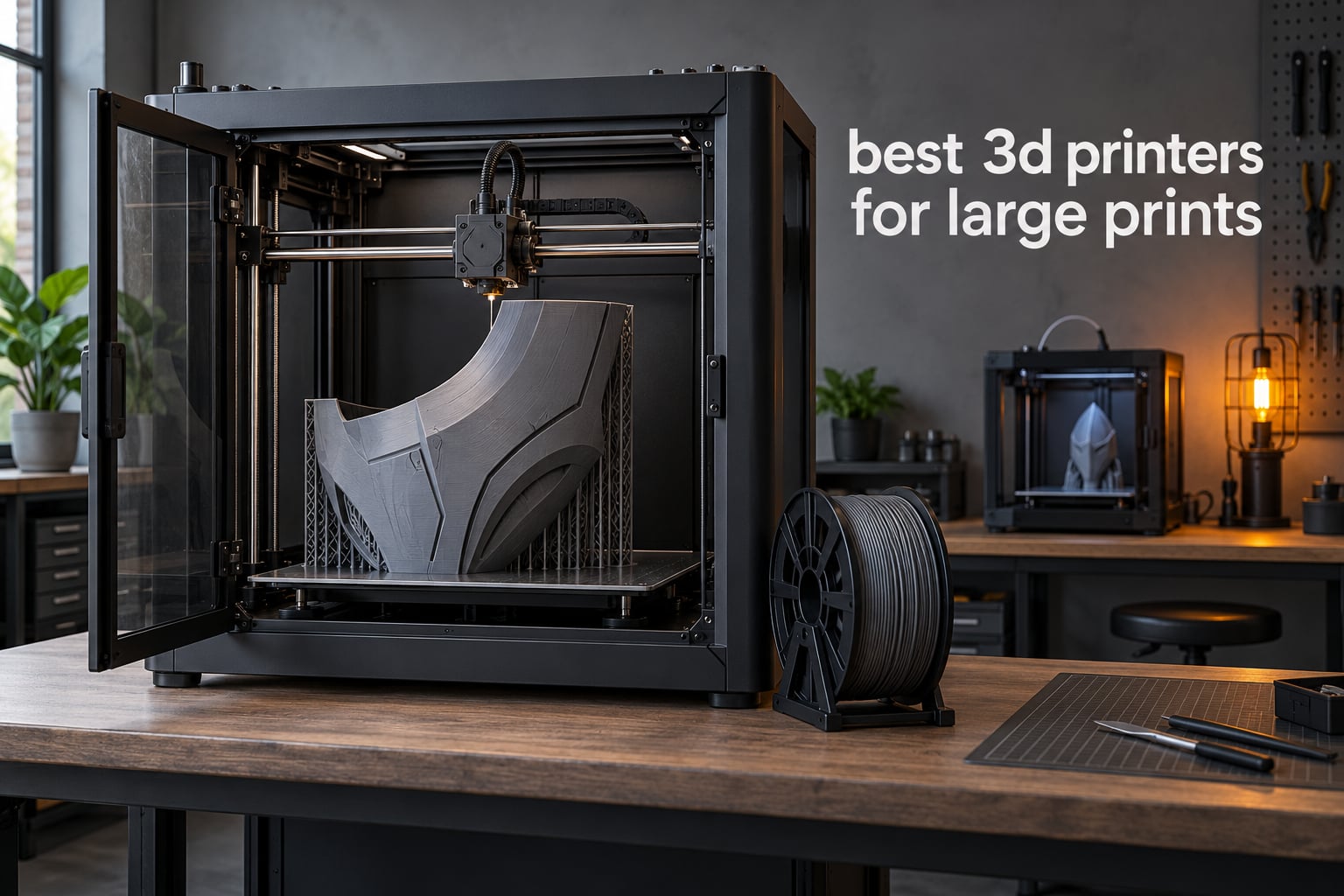
The moment a project breaks, it is almost never because of print speed or filament choice. It is because your model is 410mm long and the slicer has just offered to chop it into six separate pieces for you. That seam-cutting decision is where large-format buying actually starts, and it is why our picks for the best 3d printers for large prints in 2026 are built around usable build volume rather than headline litres.
We spent weeks working through ten large-format machines, reading the spec sheets against the owner complaints, and mapping each one to the jobs that would end your current machine’s usefulness. Ten printers, from a 300mm cube that costs less than a decent monitor, up to a 500mm CoreXY built for abrasive engineering filament.
If your large work is specifically helmets, armor and full-face props, our large 3D printer picks for helmets covers that use case in more depth. If you also need a resin machine for small detail parts alongside the big FDM work, see our resin printer guide for miniatures.
Table of Contents
What Counts as Large Format in 2026
A large-format 3D printer is an FDM machine with more than 300mm (about 12 inches) on at least one axis, roughly 300x300x300mm or bigger. That is the threshold where you can print full-face helmets, armor panels, life-size props and large functional parts in a single piece instead of slicing and gluing them together.
For scale, a standard desktop machine sits around 220x220x250mm, which works out to roughly 12 litres. The picks below run from 16.8 litres on the Longer LK5 Pro to 125 litres on the Sovol SV08 MAX. That is the single most useful number in this whole category, and it is also the one vendors leave off the spec sheet.
Worth saying up front: the biggest consumer machines here are nowhere near the biggest machines money can buy. Industrial enclosed systems clear one cubic metre of build volume, which is roughly eight times the Sovol’s cube. We kept this list to machines a maker can actually buy and run in a garage with a normal power circuit, because the industrial tier answers a different question entirely. For broader coverage of professional machines, our professional 3D printer guide covers the shop-floor end.
You will also notice some well-known names from other roundups are missing here. Models like the Prusa XL, Anycubic Kobra S1 Max, Elegoo Neptune 4 Max and the Elegoo OrangeStorm Giga come up constantly in forum threads, and they are good machines. We could not include them because the data backing our verdicts did not cover them, and we would rather rank ten machines we can defend than twenty we cannot.
Top 3 Large-Format 3D Printer Picks (October 2026)
Three machines earned a place on the short list, each for a different reason: the biggest verified build volume, the best balance of features, and the best option for abrasive engineering filament.
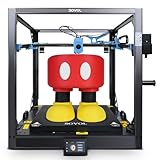
Sovol SV08 MAX
- 500x500x500mm build volume
- CoreXY with eddy current leveling
- 700mm/s with 300C hotend

Creality K2 Plus Combo
- 350x350x350mm enclosed build volume
- CFS 16-color multi-material
- 60C active chamber heating
All 10 Large-Format Printers Compared in 2026
This is the quick answer to which large volume 3D printer to buy in 2026. Ten machines, sorted by build volume where the manufacturer publishes it, with the feature that earns each one its place.
| Product | Specifications | Action |
|---|---|---|
| Sovol SV08 MAX |
|
Check Latest Price |
| Creality K2 Plus Combo |
|
Check Latest Price |
 QIDI Max4 Combo QIDI Max4 Combo |
|
Check Latest Price |
 Creality Ender 5 Max Creality Ender 5 Max |
|
Check Latest Price |
 Bambu Lab P2S Combo Bambu Lab P2S Combo |
|
Check Latest Price |
 Anycubic Kobra 3 Max Combo Anycubic Kobra 3 Max Combo |
|
Check Latest Price |
 Longer LK5 Pro Longer LK5 Pro |
|
Check Latest Price |
 Creality K2 Pro Combo Creality K2 Pro Combo |
|
Check Latest Price |
 Flashforge Creator 5 Pro Flashforge Creator 5 Pro |
|
Check Latest Price |
 QIDI Q2 Combo QIDI Q2 Combo |
|
Check Latest Price |
1. Sovol SV08 MAX – Best Large-Format Overall
Build volume: 500x500x500mm (125L) | Speed: 700mm/s at 40000mm/s2 acceleration | Materials: PLA, PETG, ABS, ASA and engineering filament with the right hotend | Best for: one-piece oversized props and full workshop capacity
Sovol SV08 MAX CoreXY 3D Printer, Voron 2.4 700mm/s High Speed 3D Printers
- Largest verified build volume in this roundup
- CoreXY keeps a light toolhead steady at speed
- Eddy current leveling needs no probe touching the plate
- Built-in 1280x720 camera for remote monitoring
- Most owner reviews of any machine here at 1422
- Heated chamber module is a separate purchase
- 86.8 pounds needs two people to move
- Enclosure not included in the base configuration
Out of ten machines, the SV08 MAX is the one that changes what you are able to attempt. A 500mm cube is 125 litres of build volume, and at 1422 owner reviews it carries by far the largest sample size on this list, which makes its 4.1 rating a meaningful number rather than a guess.
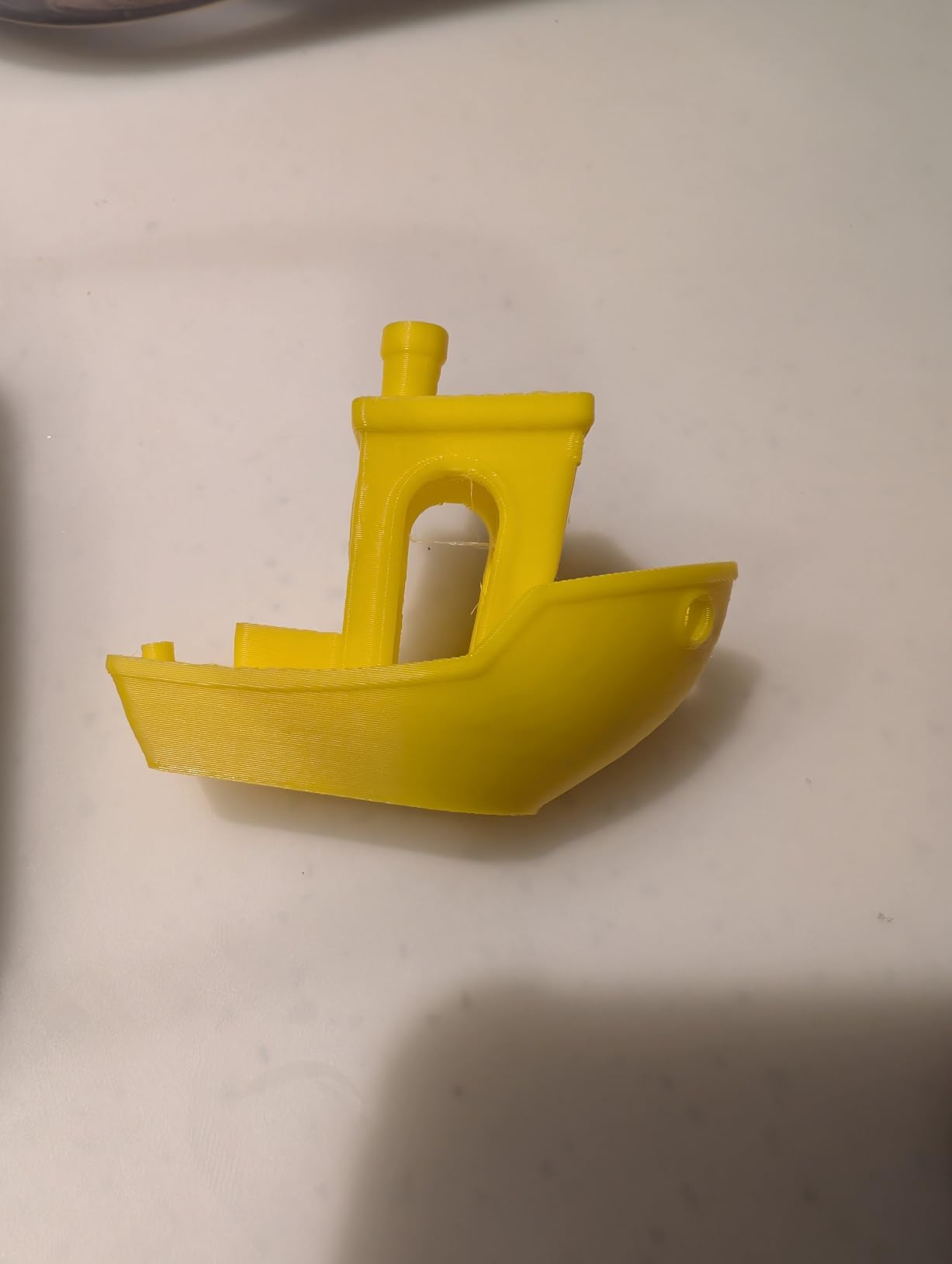
The CoreXY layout is the reason this machine can move a light toolhead at 700mm/s across a 500mm plate without the ringing you get from a bed-slinger. Acceleration is rated at 40000mm/s2, and the 50mm3/s high-flow nozzle means it can actually deposit enough plastic to justify that speed instead of starving.
Bed leveling is handled by an eddy current sensor, which reads the plate without touching it. On a plate this wide that matters more than it would on a small machine, because a probe contact point on a 500mm surface tells you very little about the middle of the bed. There is also a reserved interface for a heated chamber module, which you will want if ABS is on your list.
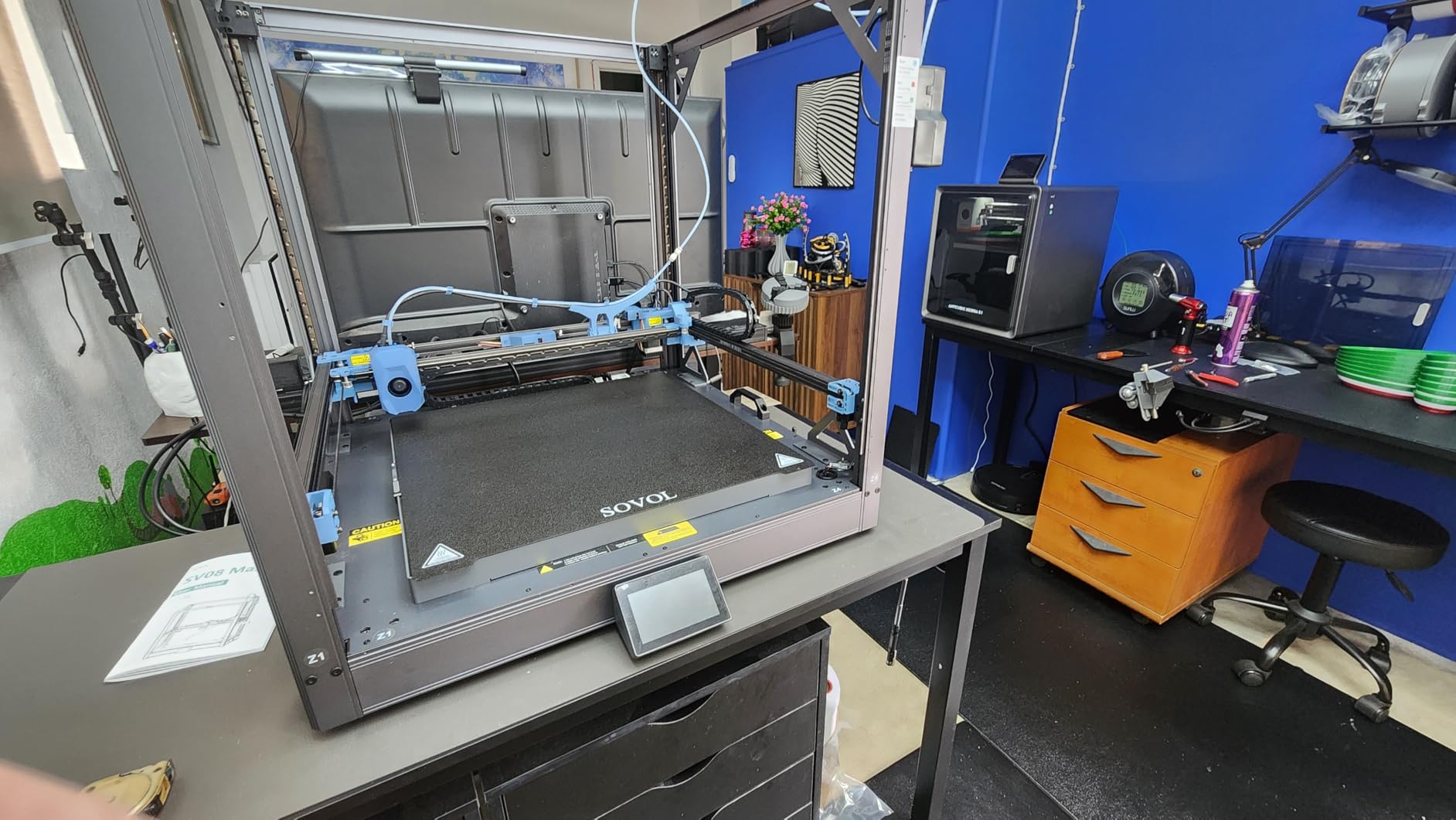
What the SV08 MAX does well on real jobs
Props, scenic panels and ducting are where a 500mm cube stops being a spec-sheet number. Anything you can orient diagonally, this machine takes in one piece, which removes an entire glue-up, filler and sanding stage from the schedule.
The camera and its monitoring integration mean a 30-hour job does not need you standing next to it. For a shop running overnight batches, that alone changes the economics.
Where it will frustrate you
At 86.8 pounds this is not a machine you move between a desk and a shelf. Plan the floor space and the furniture before it arrives, because the frame is not something you want to lift alone.
The heated chamber is a module you add later, so out of the box this is an open-frame machine. If your first large print is an ASA part, buy the chamber with the printer rather than after a warped first attempt.
2. Creality K2 Plus Combo – Best Value Enclosed Multi-Color
Build volume: 350x350x350mm (43L) | Speed: 600mm/s at 30000mm/s2 acceleration | Materials: PLA, PETG, ABS, ASA with the active chamber | Best for: multi-color cosplay props and ABS work without a second machine
- Enclosed with active chamber heating to 60C
- CFS system handles up to 16 colors
- Matrix frame in aerospace-grade aluminum
- Step-servo motors on all axes plus dual AI cameras
- 895 reviews give the rating real weight
- 17 percent of reviews are 1-star
- Multi-color system has a real learning curve
- 70.4 pounds is a two-person move
The K2 Plus Combo is the pick if you print in more than one color and you also need engineering thermoplastics. The CFS unit handles up to 16 colors, and the actively heated chamber reaches 60 degrees, which is the difference between an ASA part that prints and an ASA part that cracks in the corner.
The 350mm cube is smaller than several machines here, but it is a cube, and for helmet-scale and prop work that shape is the right one. A 350mm cube fits a full-face helmet with clearance in all three axes, where a wide-but-short volume would not.
Step-servo motors across X, Y, Z and the extruder, a matrix frame in aerospace-grade aluminum, and a dual Z-axis running on four linear rods give it the rigidity that a 600mm/s print demands. Two AI cameras watch the chamber and the nozzle.
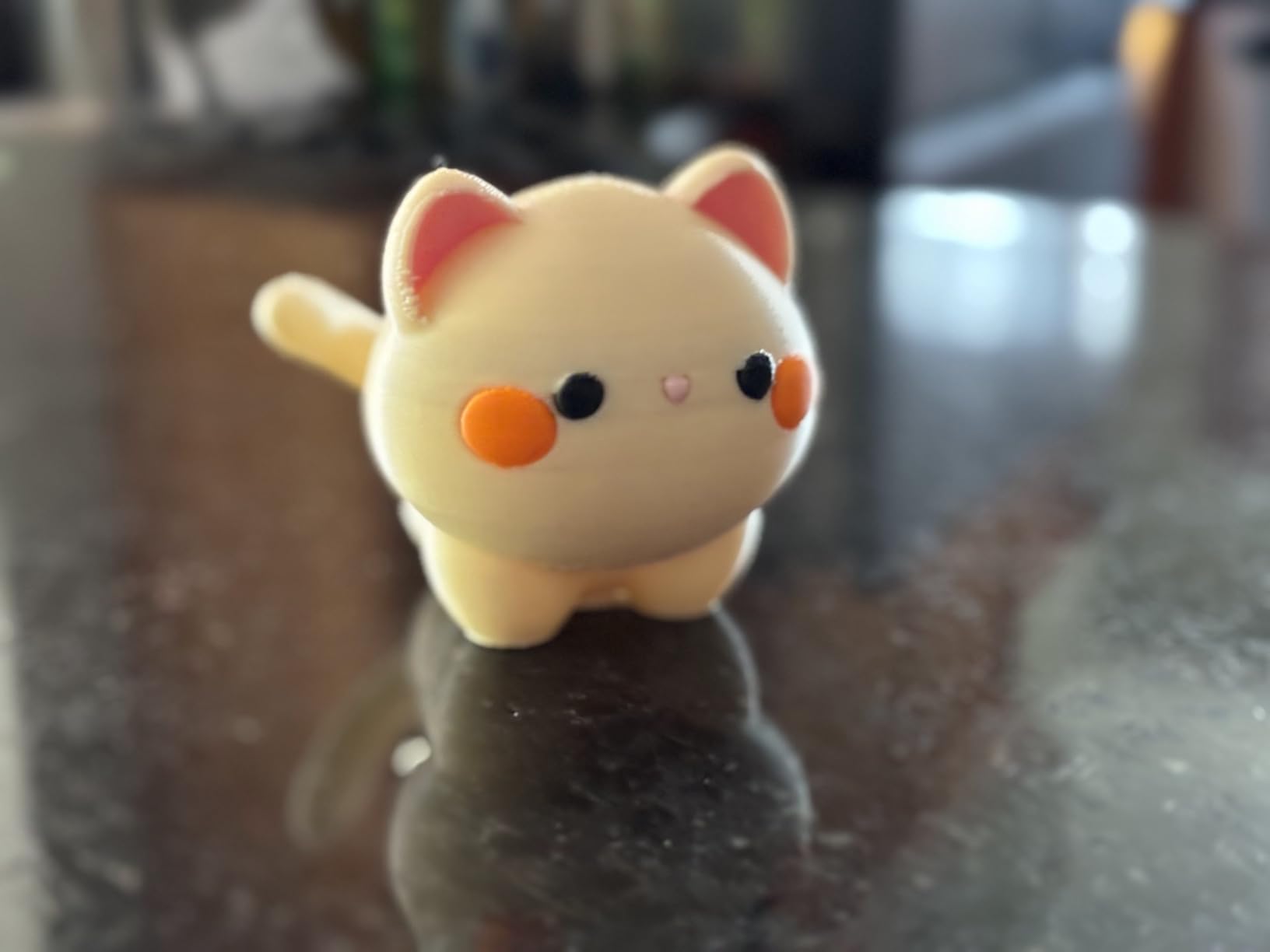
What the K2 Plus Combo does well on real jobs
Multi-color is the headline, and on a cosplay prop it is transformative. Building a helmet in one color and then adding painted detail layers in a slicer means no hand-painting session after a 20-hour print.
The active chamber is the quiet hero. Most enclosed large-format machines just shield the build from drafts; this one actually heats the volume, which is what ABS and ASA need to release stress as they cool.
Where it will frustrate you
Seventeen percent of reviews are 1-star, which is a real number and not noise. The recurring theme is quality control consistency rather than a specific broken component, so expect the occasional dud that needs reprinting.
Multi-color printing has a genuine learning curve. Wipe towers, purge volumes and filament drying are a weekend of learning before you are productive, and on a machine this size a bad wipe can cost you six hours of filament.
3. QIDI Max4 Combo – Best for Abrasive Engineering Filaments
Build volume: 390x390x340mm (52L) | Speed: 800mm/s at 30000mm/s2 acceleration | Materials: PA, CF-PLA, CF-PETG, CF-PA and other filled filaments | Best for: functional jigs and carbon-fiber reinforced parts
QIDI Max4 Combo 3D Printer, 390×390×340mm Build Volume, 65℃ Heated Chamber
- Highest chamber temperature in this roundup at 65C
- Hardened steel nozzle rated for CF filaments
- Closed-loop motors on X and Y hold accuracy at speed
- Only 30 reviews but a 4.4 average with strong support reports
- 120 pounds is the heaviest machine here
- Polar Cooler sold separately
- QIDI BOX multi-color unit can be loud
- Smallest review count on the list
The Max4 Combo exists for one job: printing abrasive filament without destroying the machine. The hotend is a 40mm3/s high-flow unit with a hardened steel nozzle, which is what carbon-filled PA and CF-PLA actually demand.
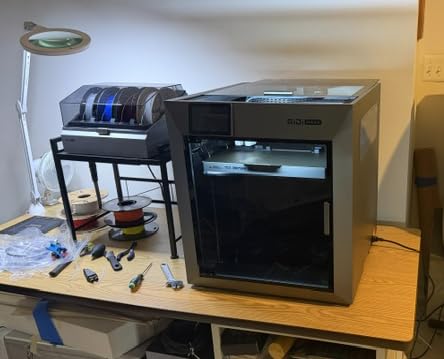
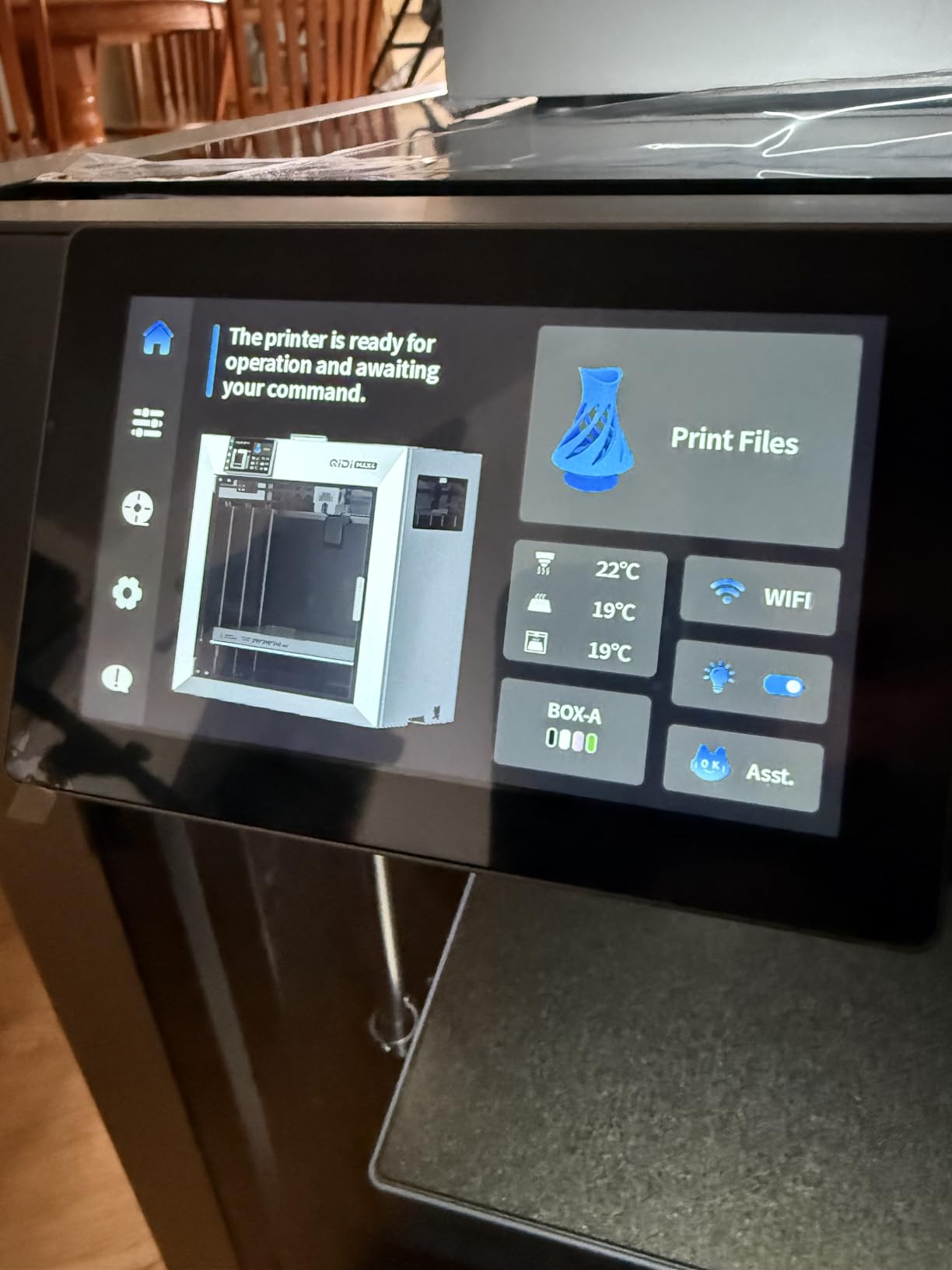
The 390x390x340mm volume is listed as 55 percent larger than the Max3 it replaces, and closed-loop motors on the X and Y axes keep position error from drifting as speed climbs to 800mm/s. A 65 degree active chamber covers the higher-temperature engineering polymers.
An AI camera handles failure detection, and the machine is compatible with the QIDI BOX for 16-color printing. The Polar Cooler, which manages heat around the chamber, is a separate purchase.
What the QIDI Max4 Combo does well on real jobs
Functional parts are where this machine separates itself. Jigs, soft jaws, brackets and fixtures printed in CF-PA come out dimensionally consistent because the closed-loop motors do not lose position under load.
Support is the quiet standout. Owners consistently single out QIDI’s customer support as a reason they kept the machine, and on a niche category that matters when something goes wrong at hour 18.
Where it will frustrate you
One hundred and twenty pounds is the heaviest machine in this roundup, and the 28x28x30 inch frame needs a dedicated corner of a room rather than a workbench. Two people, and a solid floor.
Thirty reviews is a small sample for a machine released in early 2026. The 4.4 average is encouraging, but there is not yet a long-term reliability record, and you should budget for a machine that is still finding its feet.
4. Creality Ender 5 Max – Best 400mm Cube
Build volume: 400x400x400mm (64L) | Speed: 700mm/s | Materials: PLA, PETG, ABS, ASA, PA | Best for: one-piece armor and props on a 400mm cube at a mid-tier spend
- True 400mm cube for one-piece armor and props
- 64-point leveling mesh plus auto Z-offset
- 1000W rapid-heating bed reaches temperature quickly
- WLAN control supports running several machines unattended
- Enclosure not included
- 17 percent of reviews are 1-star with bed warping reports
- Long bed heat-up time reported by owners
- 70.4 pounds
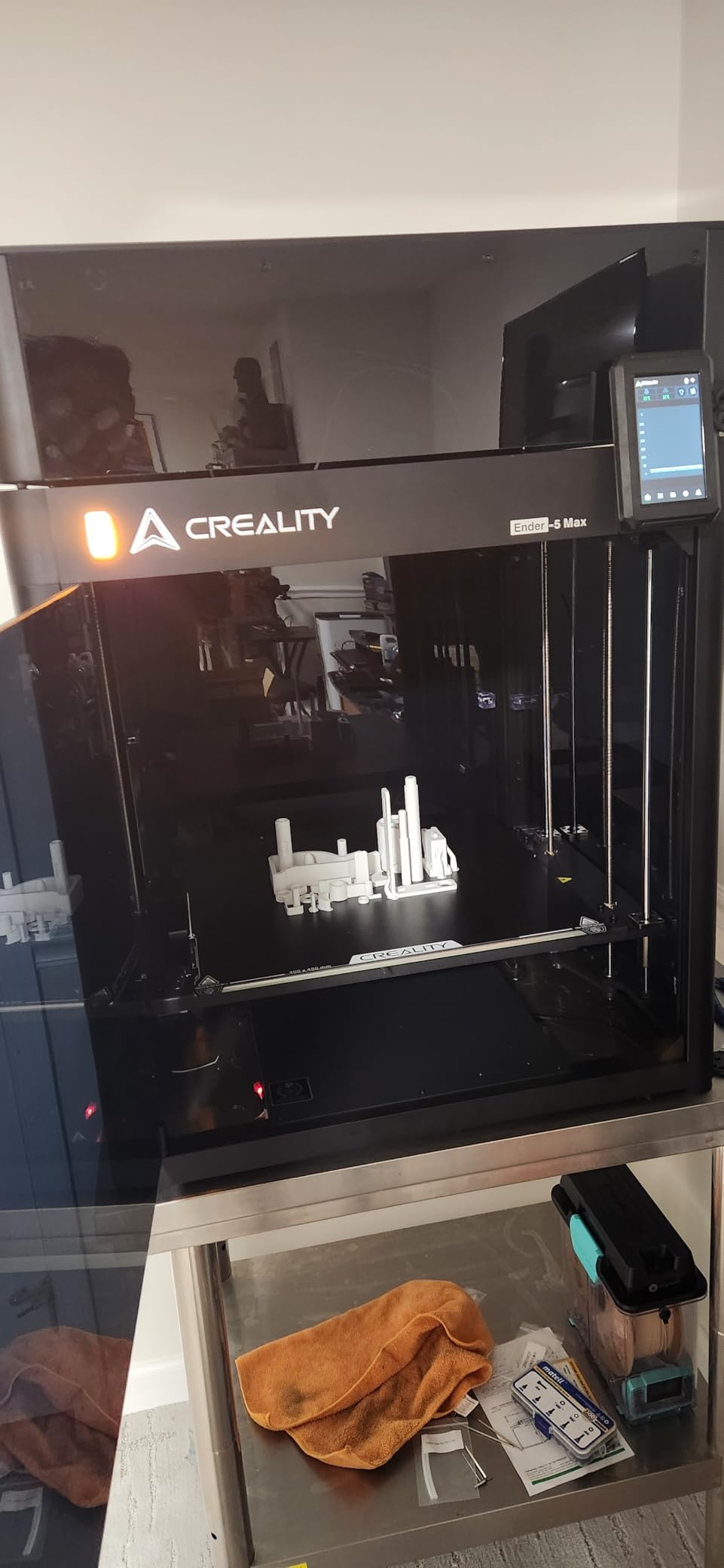
A clean 400mm cube at 64 litres, driven by a CoreXY system at 700mm/s, is a straightforward answer to a straightforward problem. If you are building chest armor, a helmet shell or a large prop and you want it in one piece, this geometry is hard to argue with.
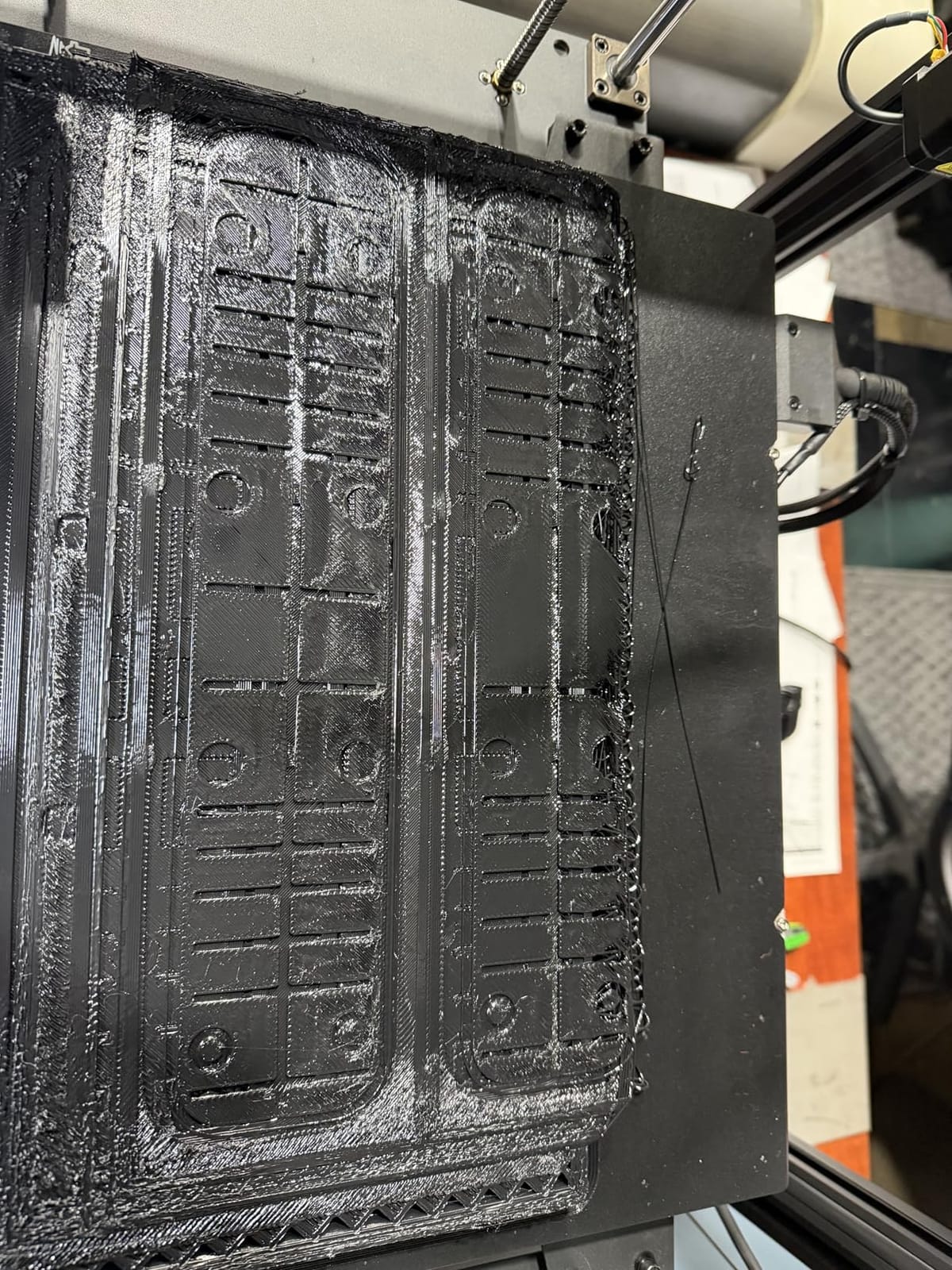
Sixty-four leveling points with automatic Z-offset is a dense mesh, and on a 400mm plate that density is the difference between a first layer that holds and one that lets go at the corners. The 1000W bed pulls to temperature quickly, which matters when you are cycling materials.
The dual-gear direct drive extruder handles the retraction profile you would expect from a direct drive setup, and the all-metal frame runs on linear rails for stability across the full width.
What the Ender 5 Max does well on real jobs
WLAN multi-printer control is the sleeper feature. If you ever run two of these, you can start and monitor jobs from a phone without sitting at the machine, which is how most people justify a second large printer.
ABS, ASA and PA are all listed as supported materials, which is a claim on paper rather than a tested result on an open frame. Plan for enclosure mods if those are your target.
Where it will frustrate you
There is no enclosure, and buyers consistently report bed warping on wide prints as a result. On a drafty room this gets worse, not better. If ABS is a regular material for you, this is the wrong machine.
Owners also report long bed heat-up times, which is awkward on a 1000W bed that is also heating a large open plate. Budget for a cold-start soak before you trust a long print.
5. Bambu Lab P2S Combo – Best for First-Time Setup
Build volume: 256x256x256mm (16.8L) | Speed: 600mm/s with PMSM servo extruder | Materials: PLA, PETG, ABS, ASA with the airflow system | Best for: multi-color hobby work where setup time matters more than raw size
Bambu Lab P2S Combo, P2S 3D Printer & AMS 2 Pro, Multi-Color 3D Printing
- Ready to print in about 15 minutes from the box
- AMS 2 Pro includes filament drying
- Adaptive airflow system adapts to any filament
- Lightest large-format machine here at 46.3 pounds
- 256mm cube is the smallest build volume on this list
- Some early hardware failures reported in the first week
- Filament sensor issues noted by owners
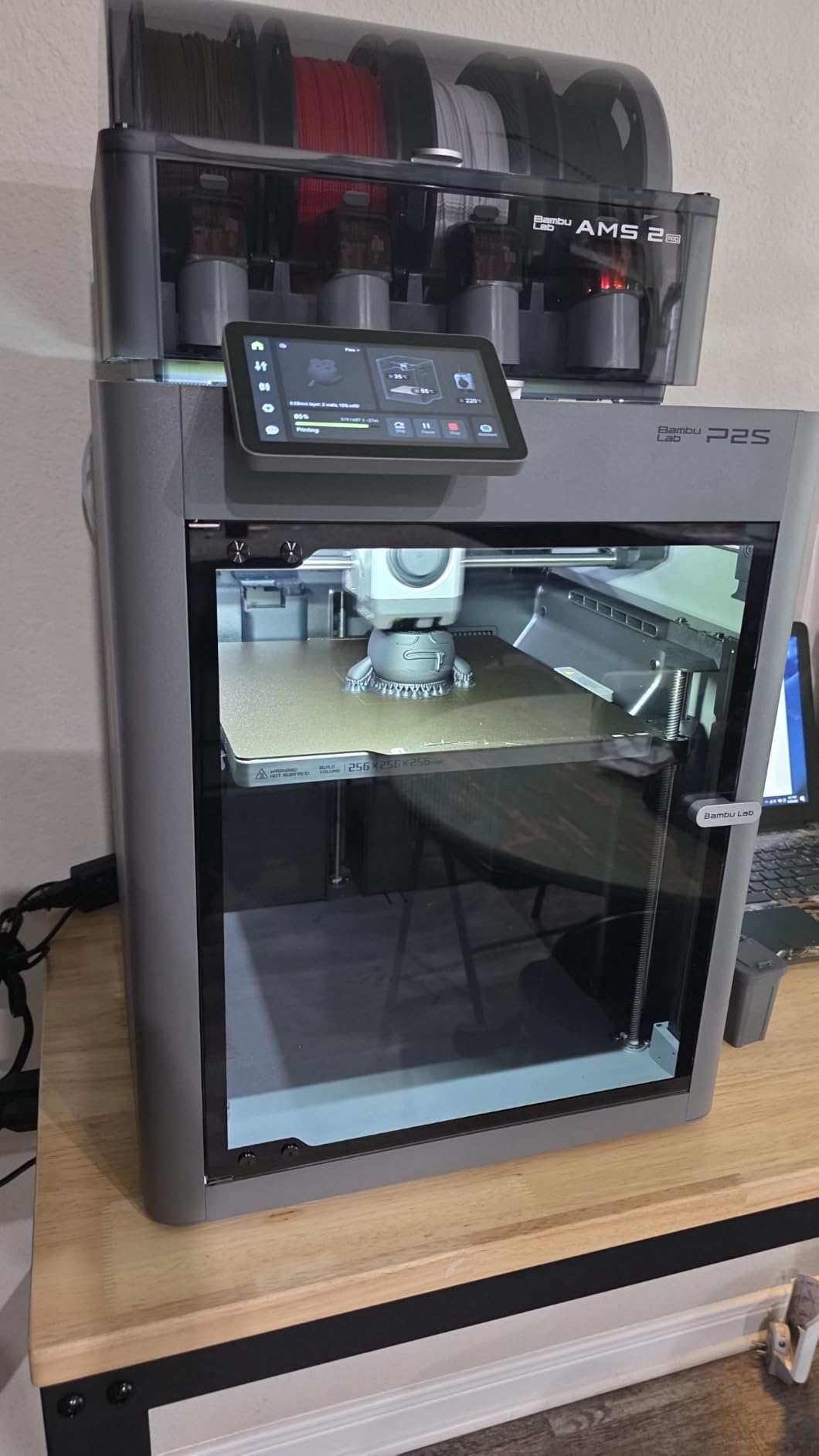
We are including a 256mm cube in a roundup about large prints, so let us be direct about why. At 16.8 litres it clears the large-format threshold, and unboxing to a first print in about fifteen minutes matters enormously if you are moving up in size for the first time.
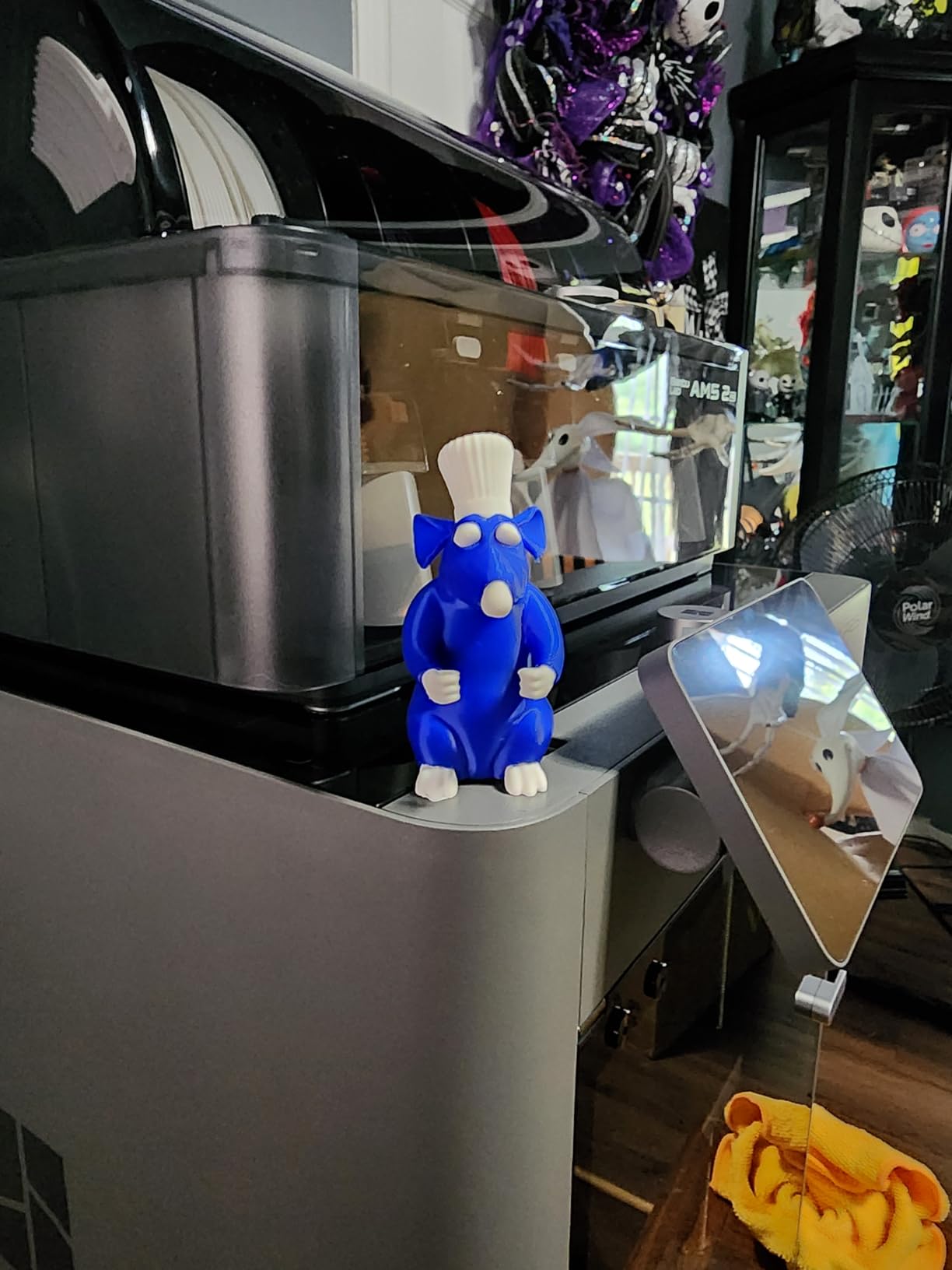
The AMS 2 Pro handles multi-color printing and includes filament drying, which solves the problem that most often wrecks a multi-color print. The PMSM servo extruder drives 600mm/s, and an adaptive airflow system adjusts to whatever filament you load. Chamber capability reaches 50 degrees, with active flowrate compensation and a carbon filter for odor.
Quick-swap nozzles and AI failure detection round out a package that is clearly aimed at people who do not want to babysit calibration.
What the P2S Combo does well on real jobs
Multi-color without the learning curve is the entire pitch, and owners consistently report that the machine works out of the box. For a cosplay prop under 256mm, or a batch of smaller parts in several filament colors, it is very effective.
At 46.3 pounds it also moves between rooms without a second person, which none of the heavier machines here can do.
Where it will frustrate you
A 256mm cube will not print a full-size helmet. If the reason you are reading this guide is that your current printer keeps splitting models, this machine does not solve that, however good the rest of the package is.
Some early adopters reported hardware failures and filament sensor issues within the first week. That is a young product, and the kind of thing that tends to settle as production matures.
6. Anycubic Kobra 3 Max Combo – Best for Tall Builds and Helmets
Build volume: 420x420x500mm (88L) | Speed: 600mm/s at 20000mm/s2 acceleration | Materials: PLA, PETG, ABS, ASA with a 300C metal hotend | Best for: helmets, helmets-plus-armor, and anything taller than it is wide
Bundle Anycubic Kobra 3 Max Combo 3D Printer, Support Multi Color Printing 600mm/s High-Speed Printing, Large Build Volume 420x420x500mm, Auto Leveling & Smart Vibration Compensation PEI Plate
- 500mm Z height suits helmets and tall props
- Dual-sided PEI spring steel plate makes large parts easy to remove
- 600mm/s with G-sensor vibration compensation
- Offline printing with power loss recovery on long jobs
- Only 38 reviews
- a small sample for a 2024 release
- Weight and dimensions not published in the listing
- Multi-color support is present but not detailed
Most large printers are wide and short. This one is square in plan and tall in Z, at 420x420x500mm, and that extra 80mm of height is precisely what helmet work needs. A 500mm Z means a full-face helmet plus a neck section in one piece.
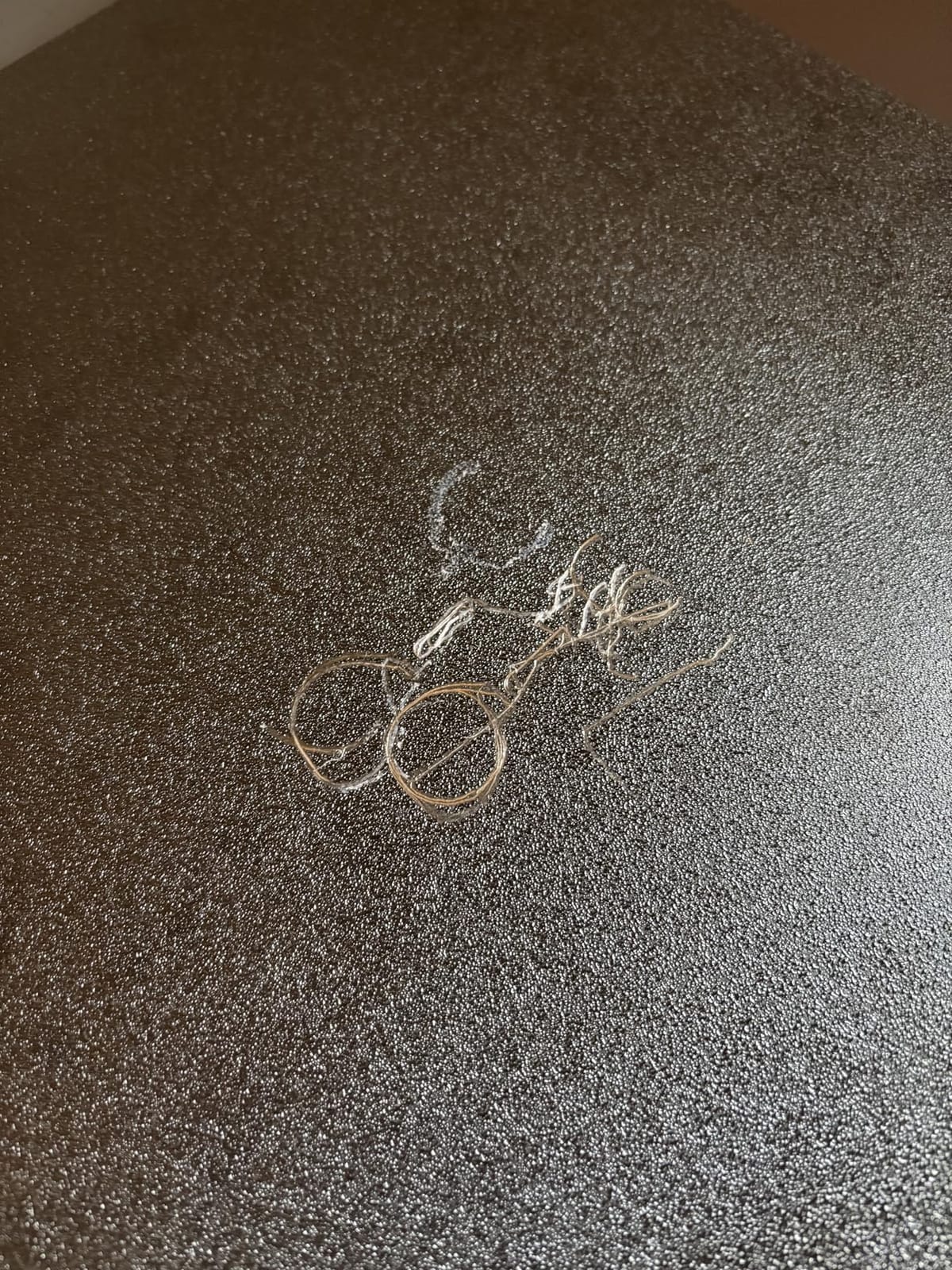
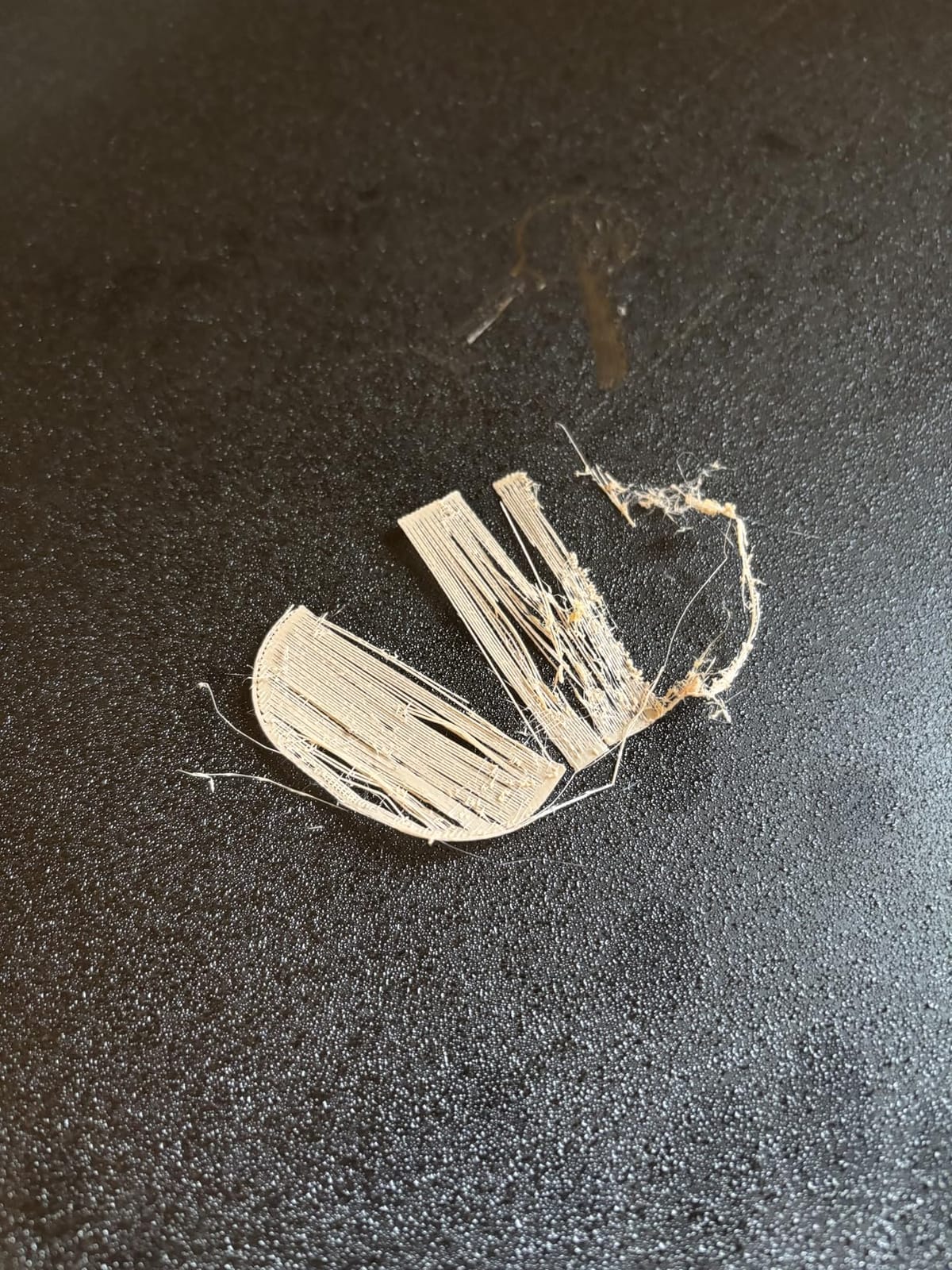
G-sensor vibration compensation samples the gantry before the print to account for resonance, which on a machine this size is a real variable. The dual-sided PEI spring steel plate is a small thing that matters enormously on a big print, because peeling a 400mm part off a rigid plate by hand is how people damage frames.
The all-metal hotend reaches 300 degrees, a runout sensor catches filament problems, and offline printing with power loss recovery means a 30-hour job can survive a hiccup.
What the Kobra 3 Max does well on real jobs
Helmets, specifically. The Z height is the differentiator here, and it is why this machine shows up so often in cosplay-focused threads. Our helmet-specific printer guide covers the geometry question in more depth.
For multi-color versions of the same parts, the combo bundle adds a multi-material path without changing the footprint.
Where it will frustrate you
Thirty-eight reviews is a thin evidence base. The rating is fine at 4.0, but we are extrapolating from a small group of owners on a machine that launched in mid-2024.
The listing does not publish weight or dimensions, and that is a gap for a machine this size. Measure your available space before you commit, because the frame around a 420×420 bed is bigger than the bed.
7. Longer LK5 Pro – Top Rated
Build volume: 300x300x400mm (36L) | Speed: 180mm/s | Materials: PLA, PETG, ABS, ASA with the glass plate | Best for: first taste of large format on a modest budget
- Lowest entry point into 300mm-plus printing
- 664 reviews give it the second largest sample here
- Dual Z-axis upgrade steadies tall prints
- Silent TMC2209 drivers and a 4.3 inch color touch screen
- Power loss recovery and filament run-out detection
- 180mm/s is slow next to every other machine here
- Released in 2020 so the design is dated
- Lattice glass plate limits temperature to lower engineering polymers
The LK5 Pro is the cheapest way to find out whether large-format printing is something you actually want. At 36 litres it clears the large-format bar, and 664 reviews at a 4.2 average make it the most independently tested machine in this roundup after the SV08.
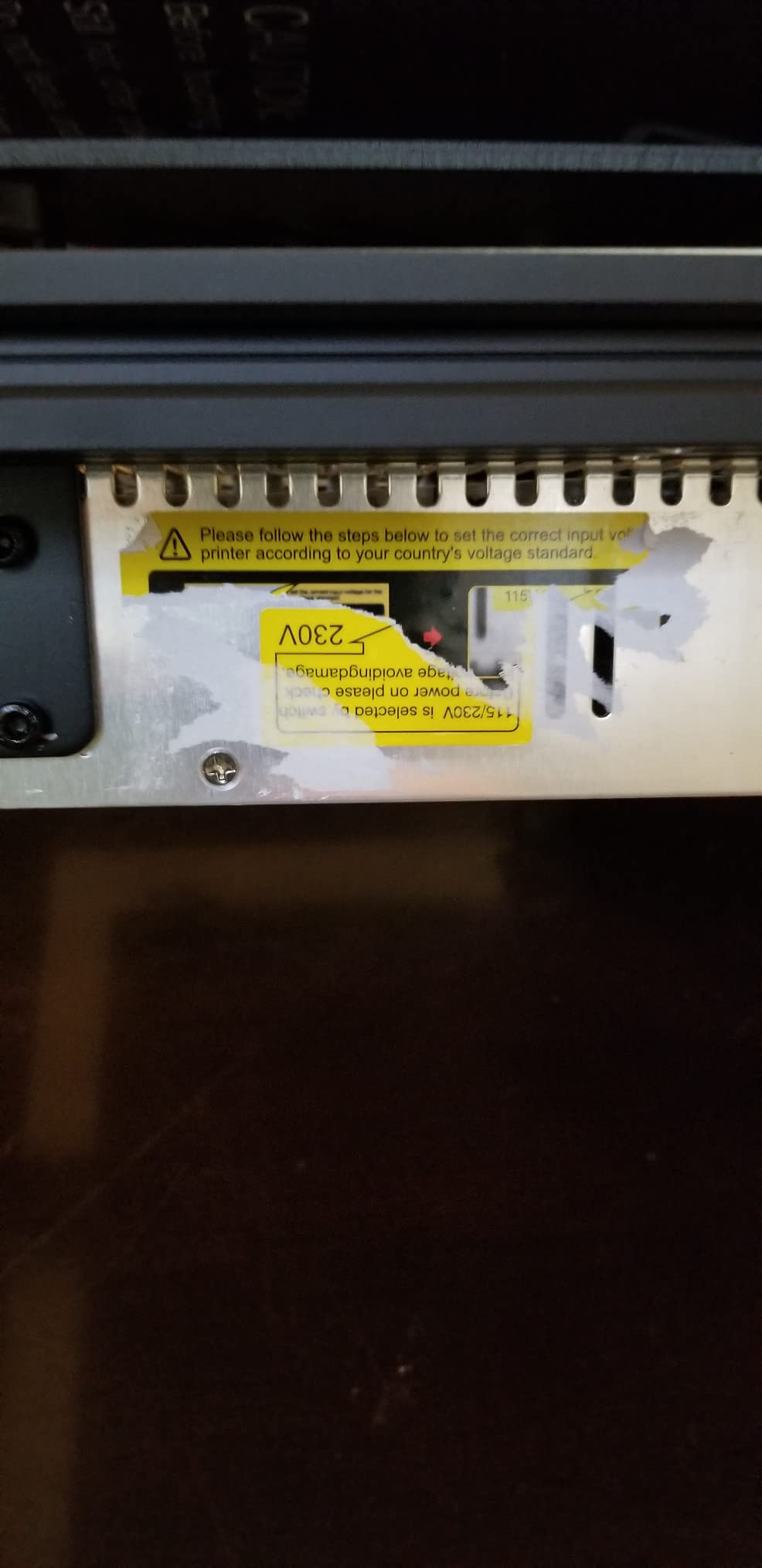
The dual Z-axis upgrade is the meaningful engineering change on this machine. Two Z motors sharing a tall gantry reduce the wobble that shows up as visible layer banding on high prints, which is the most common complaint on single-Z machines of this size.
It arrives 90 percent assembled, runs an open source motherboard, and has silent TMC2209 drivers. At 26.4 pounds it is also the only machine here you can move with one hand.
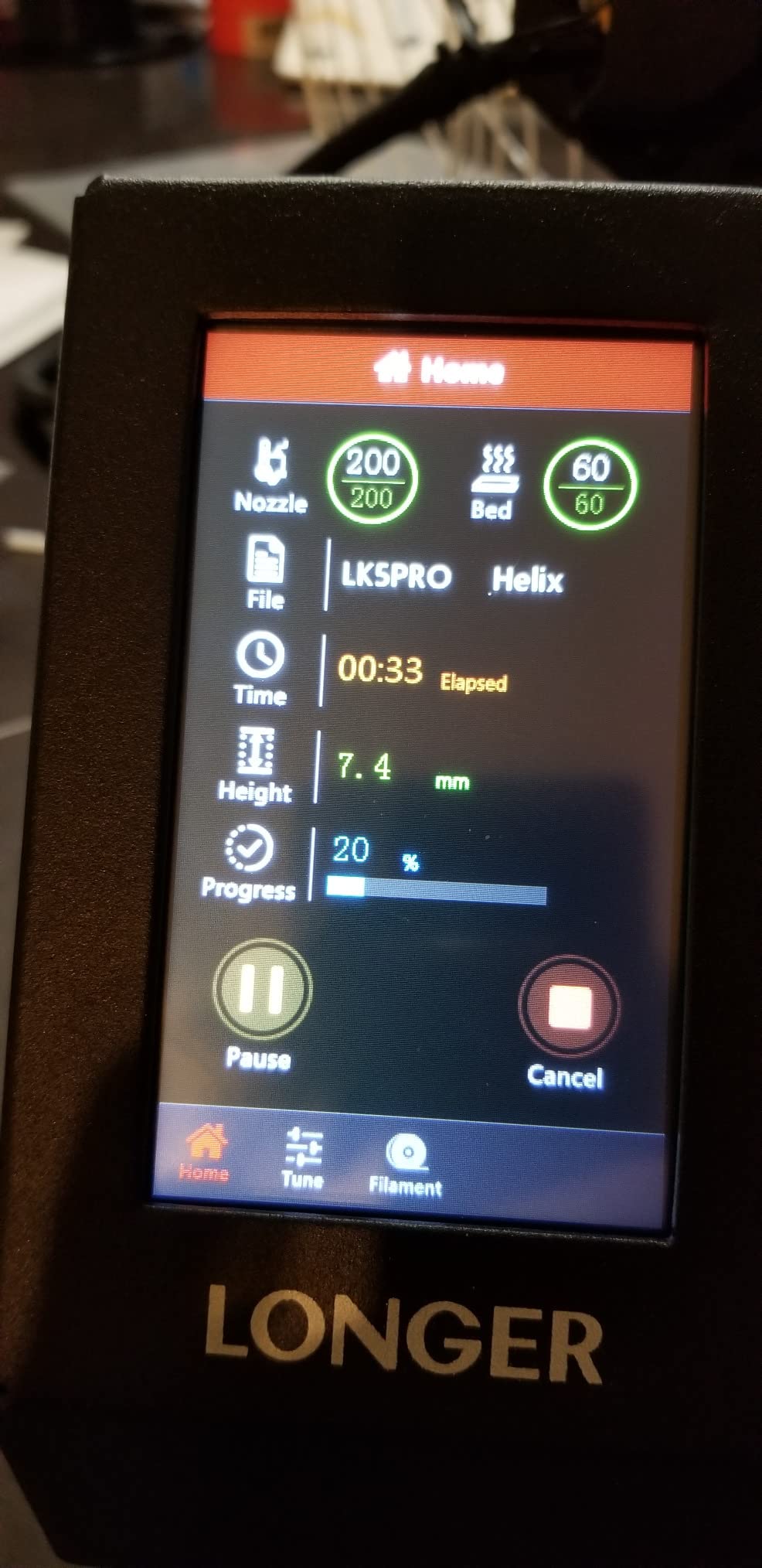
What the LK5 Pro does well on real jobs
Silence is genuinely useful. TMC2209 drivers mean this machine can sit in a room you work in, which matters more than speed for anyone printing overnight beside a desk.
Open source hardware and firmware mean spare parts and mods are available, and for a first large machine that long-term maintainability is worth more than raw specifications.
Where it will frustrate you
At 180mm/s it is a fraction of the speed of everything else here. A 400mm print on this machine is an all-day commitment, and speed is exactly how you cut hours out of a large job.
The lattice glass plate is the real ceiling. Glass does not hold heat well enough for ABS and ASA at scale, so this is a PLA and PETG machine in practice. It launched in 2020, and it shows in a small, tall 300x300x400mm volume.
8. Creality K2 Pro Combo – Best Multi-Color Starter
Build volume: 300x300x300mm (27L) | Speed: 600mm/s at 20000mm/s2 acceleration | Materials: PLA, PETG, ABS, ASA with the 60C chamber | Best for: enclosed multi-color work at a 300mm cube
- CFS system included for up to 16 colors
- Actively heated 60C chamber for ABS and ASA
- FOC step-servo motors on linear rails
- Quick-swap hotend and automatic filament cutting
- 448 reviews for a solid evidence base
- 300mm cube is smaller than the K2 Plus
- 17 percent of reviews are 1-star
- 61.6 pounds is difficult to move alone
The K2 Pro is the K2 Plus with a smaller cube, and for a lot of work that trade is worth making. You keep the CFS multi-color system, the actively heated 60 degree chamber and the dual AI cameras, and you give up 50mm on each horizontal axis.
Inside, FOC step-servo motors run on linear rails, the direct drive extruder pushes 40mm3/s through a hardened steel nozzle, and the print runs at 600mm/s. A quick-swap hotend and automatic filament cutting mean you are not disassembling a large machine to change a nozzle.
It is a well-reviewed machine in its class, at 448 reviews and a solid position in the 3D Printers category ranking.
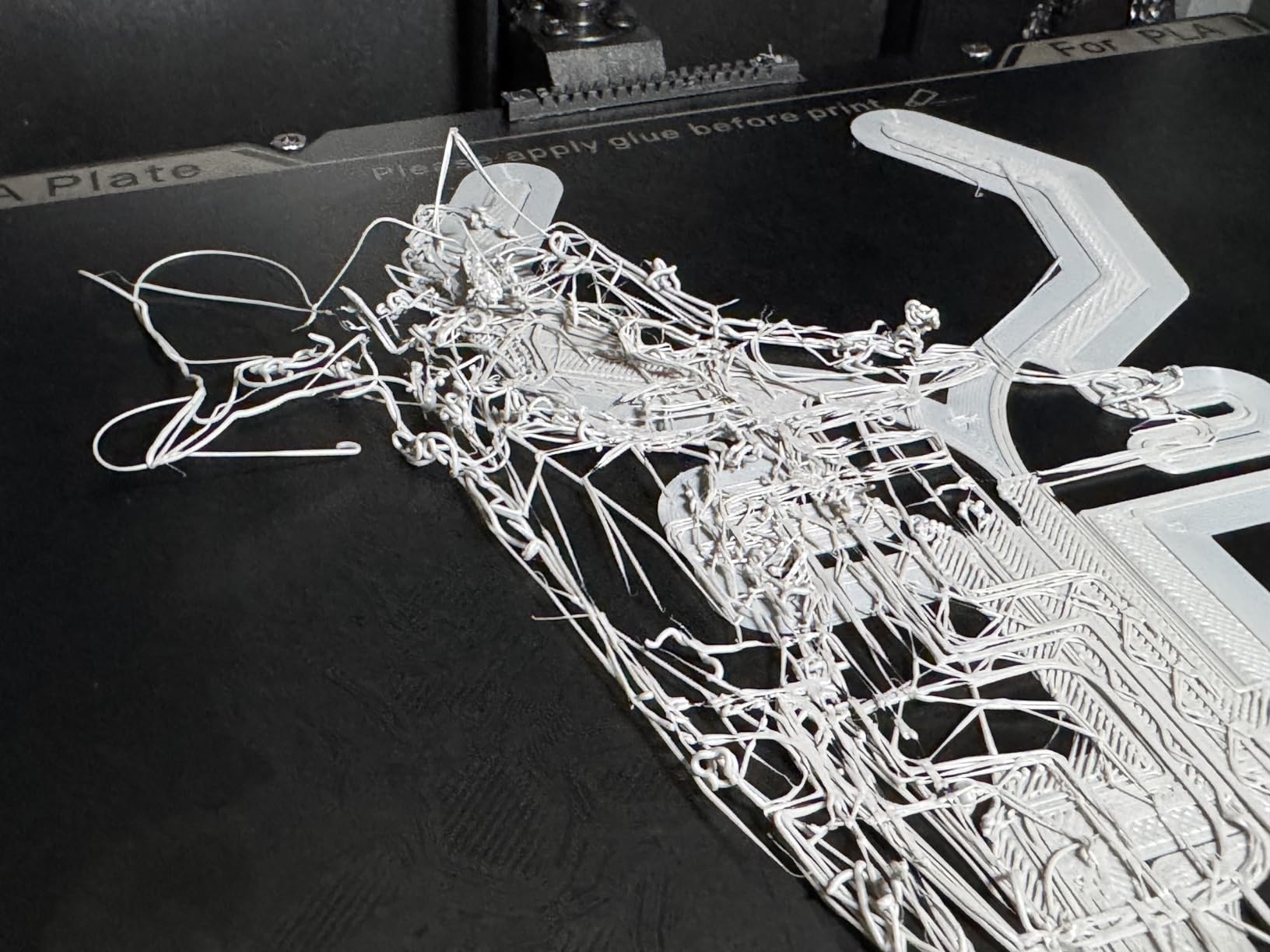
What the K2 Pro Combo does well on real jobs
Small-to-medium cosplay pieces and props in multiple colors are this machine’s sweet spot. Anything that fits inside 300mm on all three axes and benefits from two or three filament colors is a fast, clean job.
The actively heated chamber is the underrated part. An enclosed machine that simply blocks drafts will get you PLA and PETG; a 60 degree chamber gets you ABS and ASA as well.
Where it will frustrate you
At 27 litres it will still split a lot of models. A full helmet does not fit, and neither does a chest plate. If splitting is the frustration driving your purchase, look at the Kobra 3 Max or the SV08 instead.
Seventeen percent 1-star reviews point to the same quality-control inconsistency we flagged on the K2 Plus. Creality’s large-format line shares a lot of its platform, and the weak point is the same.
9. Flashforge Creator 5 Pro – Best Four-Tool Workhorse
Build volume: not published in the listing | Speed: 600mm/s CoreXY | Materials: engineering thermoplastics in a 65C actively heated chamber | Best for: production work where four tools beat sixteen colors
FLASHFORGE Creator 5 Pro 4-Toolhead 3D Printer, Industrial Multi-Material & Color Printing, 65°C Active Heated Chamber, Near-Zero Waste System, CoreXY 600mm/s Printing
- Four independent toolheads with 7-second FlashSwap
- Near-zero purge waste multi-color system
- 65C active chamber for engineering materials
- Dual HEPA 13 plus activated carbon filtration
- Lightest of the enclosed machines here at 39 pounds
- Build volume not stated in the listing
- Released in 2026 so long-term data is limited
- 11 percent of reviews are 1-star
The idea here is worth explaining, because it is different from every other multi-color machine in this roundup. Instead of feeding one nozzle from several spools and purging between colors, the Creator 5 Pro carries four independent toolheads and swaps between them in seven seconds. There is almost no purge waste, because each tool already has a color loaded.
On a large format machine that is a significant advantage. Purge towers on a big print are expensive in material and in time, and a seven-second swap essentially removes them.
The 65 degree active chamber handles engineering thermoplastics, and dual HEPA 13 filtration with activated carbon keeps ABS and ASA fumes manageable in a home workshop. Automated toolhead offset calibration and dynamic flow calibration reduce the setup burden that multi-tool machines normally carry.
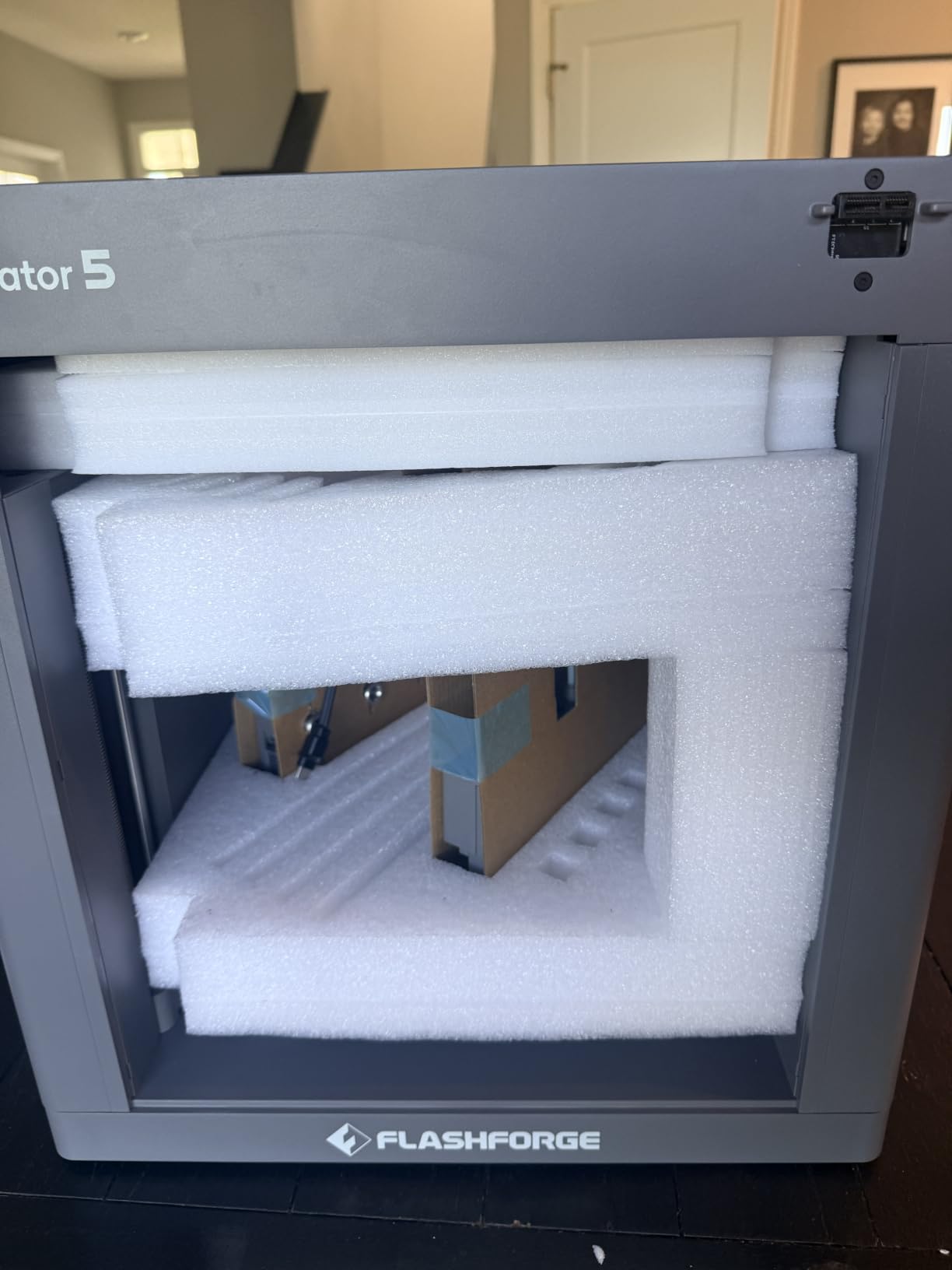
What the Creator 5 Pro does well on real jobs
Four-color prints without waste is a genuine workflow improvement for anyone producing parts in batches. It also opens a different door: four nozzles means four different filaments, so you can print a rigid PLA shell and a flexible TPU trim in one job.
At 39 pounds with a 16x14x18 inch footprint, it is the most portable enclosed machine here. That matters if your workshop is a spare room.
Where it will frustrate you
The listing does not state a build volume, which is a real limitation for a guide like this one. We are not going to invent a figure, so check the current published dimensions before you plan a print around it.
This machine launched in August 2026, and 131 reviews is a moderate sample. A new multi-tool platform also has more ways to fail than a single-extruder machine, and long-term reliability data simply does not exist yet.
10. QIDI Q2 Combo – Best for High-Temperature Nozzle Work
Build volume: not stated in the listing, 370mm class | Speed: 600mm/s CoreXY on linear rails | Materials: high-temperature thermoplastics up to a 370C nozzle | Best for: specialty polymers in an actively heated chamber
QIDI Q2 Combo Multi-Color 3D Printer, 65℃ Heated Chamber and 370℃ Nozzle
- 370C nozzle handles high-temperature engineering polymers
- Second-generation PTC heated chamber holds 65C
- Nozzle doubles as a first-layer leveling sensor
- QIDI BOX includes filament drying for multi-color
- Triple filtration with G3
- H12 HEPA and carbon
- Build volume not stated in the listing
- Only 59 reviews
- 14 percent of reviews are 1-star
A 370 degree nozzle is the headline, and it is rarer than it looks. Most hotends stop at 300 degrees, which covers PLA through nylon but not every high-temperature polymer on the shelf. The Q2 Combo runs to 370, and the second-generation PTC chamber holds 65 degrees while it does it.
The leveling system is the part I would highlight. The nozzle itself acts as the first-layer sensor, so there is no probe to crash into a large print and no probe mark to clean off a finished surface. On a machine where you are printing parts that need to look good, that is a sensible trade.
The CoreXY layout on linear rails reaches 600mm/s, and 1.5GT synchronous belts cut vertical fine-artifact noise. The QIDI BOX handles 16-color multi-material with built-in drying, and triple filtration covers both particles and odors.
What the Q2 Combo does well on real jobs
Specialty polymers are the reason to buy this rather than a generic enclosed machine. If your parts need a 350 degree nozzle, this is one of the few machines on this list that can do it and hold chamber temperature at the same time.
Nozzle-based leveling means first layers are repeatable without touching the machine, which is valuable on long prints you start before bed.
Where it will frustrate you
The listing does not publish a build volume figure, and the machine sits in the 370mm class by inference rather than by specification. If raw size is your deciding factor, the QIDI Max4 in this same guide states its dimensions outright.
Fifty-nine reviews is a small sample, and 14 percent of them are 1-star. The feature set is genuinely strong; the evidence that it all works together reliably is still building.
How to Choose a Large-Format 3D Printer in 2026?
Build volume is the headline, but it is the least useful number for choosing between machines. Here is what actually decides the outcome of a large print.
Usable volume, not nominal volume
Nominal build volume is measured edge to edge with nothing on the plate. Usable volume is what remains after the brim, the skirt, support structures and clipping. On a 300mm bed, a brim and supports can eat 20 to 40mm off each edge, which is the difference between a model that fits and one the slicer refuses to place.
This is why shape matters as much as litres. A 420x420x500mm machine fits a tall object that a 500x500x400mm machine would reject. Measure your largest intended print, rotate it in your head, and check all three axes before you fall for a bigger headline number.
Motion system: CoreXY versus bed-slinger
CoreXY keeps the toolhead light and only the bed moving in Y. That is why the machines here reach 600 to 800mm/s and still print clean layers, while older Cartesian bed-slingers cap out at a fraction of that. On a large print, speed is the difference between finishing on Sunday and finishing on Wednesday.
Leveling density and how flat the bed is
A wide plate is harder to keep flat than a small one. A 64-point mesh and a bed that stays within a fraction of a millimetre across 400mm is what separates a reliable first layer from a print that peels at the corners. Eddy current sensors and nozzle-based sensing are both good approaches; neither is better in every machine.
Enclosure and chamber temperature
Size does not decide this, material does. More on that in the next section.
Weight, footprint and power
These machines weigh between 26 and 120 pounds and need floor or bench space, not shelf space. Plan two people for the heavy end, and check that the machine can reach a proper outlet on a circuit that is not already loaded. If you are still deciding between tiers, our budget-tier 3D printer guide covers the smaller machines well.
Do Large-Format Printers Need an Enclosure?
It depends on your material, not on your printer size. A large open-frame machine printing PLA and PETG in a stable room will do excellent work, and adding an enclosure changes nothing for those materials.
ABS and ASA are different. They shrink as they cool, and the differential between a hot extrusion and a cool layer is what makes corners lift and long parts crack. A 40 to 60 degree chamber keeps the whole build volume warm so the material relaxes instead of pulling against itself. That is why the Creality K2 Plus, K2 Pro, QIDI Q2, QIDI Max4 and Flashforge Creator 5 Pro all carry actively heated chambers.
Nylon and carbon-filled nylon are tougher still. They need a chamber, a Garolite or FR4 build surface rather than smooth PEI, and an adhesion promoter. They also need honest humidity control, because wet nylon prints foams and string.
Third-party reviews of large-format machines consistently report the same failure: bed adhesion giving up at the outer edges of wide prints, particularly in drafty rooms. If you are printing on an open frame, deal with drafts first. It costs nothing and it removes the most common cause of a wasted 20-hour job.
Split It or Buy Big?
Splitting a model is not a failure, and for many projects it is the right call. A 200mm model printed on three small machines in parallel finishes sooner than one 500mm print on a single large machine, and a segmented life-size sculpture often looks better than a single piece that shows every layer line.
Be honest about the cost though. Slicers such as Bambu Studio, Orca and Cura will cut a model for you, but every seam is glue, filler, sanding, priming and paint. On a prop you planned to be seamless, that post-processing can take longer than the print.
Buy large when the part is structurally one piece, when surface finish matters, or when you print that size regularly. Split when the part is naturally segmented, when the material and color change partway through anyway, or when the job is a one-off. For a one-off very large print, a local print shop is often cheaper than owning the machine.
Who Should Not Buy a Large-Format Printer
If your largest print so far is under 250mm, a large-format machine is not an upgrade, it is a downgrade. You will get slower prints, a larger machine to maintain, and none of the volume you are paying for.
Measure your floor space and your circuit before your patience, not after. Machines here run from 26 to 120 pounds, and the heavy ones need a dedicated position that two people can safely move.
Finally, account for print time honestly. A 500mm cube model at realistic speeds is a multi-day job, and a failure at hour 20 costs a spool and a day. AI camera monitoring and power loss recovery, both offered by several machines above, reduce that risk. They do not eliminate it.
Frequently Asked Questions
What 3D printer has the largest print size?
Among consumer machines, the Sovol SV08 MAX in this roundup prints a 500x500x500mm cube, which is 125 litres of build volume. Industrial enclosed systems go further and reach roughly one cubic metre, but they are shop machines rather than garage projects. The 300x300x400mm Longer LK5 Pro, at 36 litres, is the smallest we would call large format.
What is the maximum size a 3D printer can print?
The ceiling depends on the class of machine. Consumer and maker large-format printers top out around 500x500x500mm, while industrial enclosed systems clear one cubic metre of build volume. Remember that nominal volume is not usable volume: brims, skirts, supports and clipping remove real capacity from every edge of the plate, often 20 to 40mm on a 300mm bed.
What printer is best for large prints?
For most people, the Sovol SV08 MAX. Its 500x500x500mm CoreXY build volume, 700mm/s speed and eddy current bed leveling give it the most headroom in this roundup, backed by the largest review base we could verify. If you need multi-color and an actively heated chamber rather than raw size, the Creality K2 Plus Combo is the better buy.
Which large format 3D printer has the best quality?
Quality at size belongs to the enclosed CoreXY machines, not the biggest ones. The Creality K2 Plus Combo, QIDI Max4 and QIDI Q2 all pair an actively heated 60 to 65 degree chamber with a stiff frame and closed-loop motion, which is what keeps layers consistent on long ABS and ASA prints. The largest open-frame machines trade surface quality for build volume.
Do large format 3D printers need an enclosure?
Only for certain materials. PLA and PETG print reliably on an open frame in a stable room, and an enclosure adds nothing for them. ABS, ASA, nylon and carbon-filled nylon need a heated chamber holding the build volume at roughly 40 to 65 degrees, because the temperature differential between hot extrusion and cool layers is what causes warping and cracking.
Can I split a big model and print it on a normal printer?
Yes, and for many jobs it is the smarter choice. Slicers including Bambu Studio, Orca and Cura will divide a model automatically. The trade-off is post-processing: every seam means glue, filler, sanding and paint, which on a prop you wanted seamless can take longer than the print itself. Split parts are also naturally aligned for a segmented sculpture.
What are the best value large format 3D printers?
Three picks here sit in the lower half of the price range without giving up the features that matter. The Anycubic Kobra 3 Max Combo gives you a 420x420x500mm volume and a 600mm/s CoreXY machine. The Creality K2 Pro Combo adds a 16-color CFS system and a 60 degree actively heated chamber in a 300mm cube. The Bambu Lab P2S Combo is the easiest to set up at 256mm.
Is anything illegal to 3D print?
Printing at home is generally legal, and owning a 3D printer is legal almost everywhere. Restrictions apply to specific categories rather than the technology itself, most notably firearms and firearm components, counterfeit goods, and items designed to injure or that fail safety standards. Knowing the licensing rules for the parts you make matters more than the printing itself.
Which Large-Format Printer Is Right for You?
Pick by the part, not by the spec sheet. Here is the short version of who should buy what in 2026.
Cosplay helmets and full armor: the Anycubic Kobra 3 Max Combo. A 500mm Z height is the dimension that matters for helmet work, and 420x420mm in plan covers armor panels at the same time.
Life-size props and large decor in one piece: the Sovol SV08 MAX. Nothing else in this roundup gives you 125 litres of build volume, and the speed keeps multi-day jobs to days rather than a week.
Multi-color props with ABS or ASA: the Creality K2 Plus Combo. The CFS handles 16 colors and the actively heated 60 degree chamber is what keeps engineering thermoplastics from cracking.
Engineering jigs and carbon-fiber parts: the QIDI Max4 Combo. A 65 degree chamber and a hardened steel nozzle rated for abrasive filament, on closed-loop motors that hold accuracy at 800mm/s.
Production work needing four materials in one job: the Flashforge Creator 5 Pro. Four independent toolheads with near-zero purge waste beat a 16-color single-nozzle system on waste and time.
First large printer on a modest budget: the Longer LK5 Pro for PLA and PETG, or the Bambu Lab P2S Combo if you want multi-color and almost no setup. Neither is fast, and neither is large, but both are honest places to start.
Whichever one you choose, measure your space, confirm your materials, and set your expectations for print time before the first job starts. Those three steps prevent more frustration than any specification on any spec sheet.