
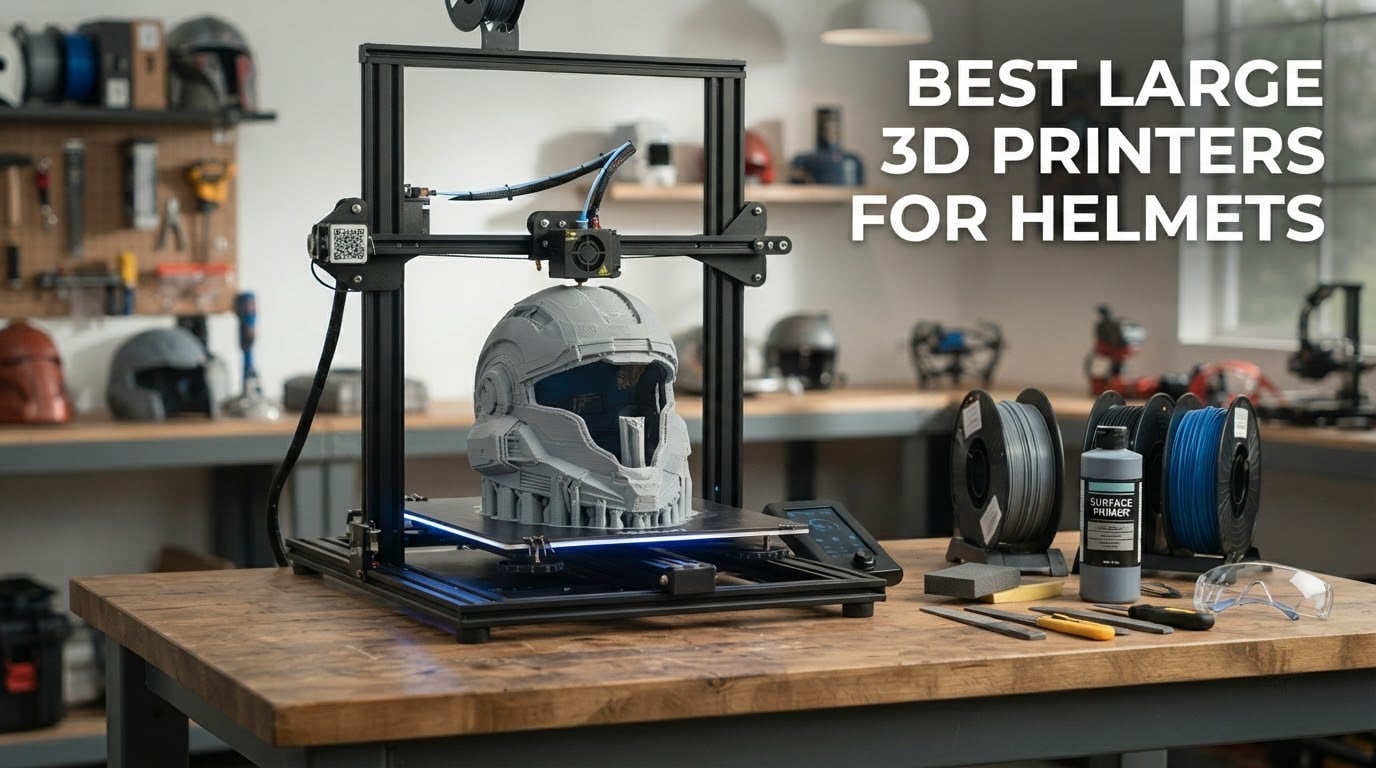
A full-size adult helmet is roughly 220-260mm tall, which is why the best large 3D printers for helmets start at a 300mm build volume and go up. Anything smaller forces a four-to-seven piece print with hours of seam work, and each seam costs 15 to 30 minutes of sanding, filler and paint. For this roundup we worked through twelve large format FDM machines, weighing build volume, chamber temperature, kinematics and long-print reliability against the specific demands of wearable armour.
Our top pick is the Sovol SV08 MAX, a 500mm cube CoreXY machine with a 300 C hotend and the largest review base of any large printer we examined. If your budget points somewhere else, the Creality Ender 3 Max Neo covers the 300mm tier on a shoestring, and the QIDI Max4 Combo is the most convincingly enclosed option under 400mm.
That mix of sizes matters because helmet files vary enormously. A Mandalorian shell is wide and shallow, a Stormtrooper needs depth front to back, and a Master Chief is tall with heavy side flares. If you also build robot shells and panels, our guide to the best 3D printers for robot parts overlaps heavily with this one, and it helps to think about both projects against the same bed sizes.
Table of Contents
Top 3 Large 3D Printers for Helmets (October 2026)
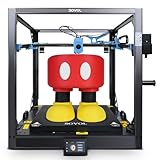
Sovol SV08 MAX
- 500 x 500 x 500 mm build volume
- 700 mm/s CoreXY
- 300 C hotend
- Eddy current bed scanning

Creality Ender 3 Max Neo
- 300 x 300 x 320 mm build volume
- CR Touch auto levelling
- Dual Z-axis
- Full-metal extruder
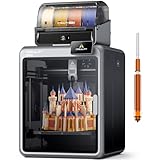
Creality K2 Pro Combo
- 300 mm cube volume
- 600 mm/s motion
- 60 C active chamber
- CFS 16-colour printing
Best Large 3D Printers for Helmets at a Glance in 2026
| Product | Specifications | Action |
|---|---|---|
| Sovol SV08 MAX |
|
Check Latest Price |
| Creality Ender 3 Max Neo |
|
Check Latest Price |
| Creality K2 Pro Combo |
|
Check Latest Price |
 QIDI PLUS4 QIDI PLUS4 |
|
Check Latest Price |
 Longer LK5 Pro 3 Longer LK5 Pro 3 |
|
Check Latest Price |
 Flashforge Creator 5 Pro Flashforge Creator 5 Pro |
|
Check Latest Price |
 Creality Ender 5 Max Creality Ender 5 Max |
|
Check Latest Price |
 Anycubic Kobra 3 Max Combo Anycubic Kobra 3 Max Combo |
|
Check Latest Price |
 QIDI Max4 Combo QIDI Max4 Combo |
|
Check Latest Price |
 Prusa XL 2-Toolhead Prusa XL 2-Toolhead |
|
Check Latest Price |
 Snapmaker Artisan Snapmaker Artisan |
|
Check Latest Price |
 Anycubic Kobra S1 Max Combo Anycubic Kobra S1 Max Combo |
|
Check Latest Price |
How Big a 3D Printer Do You Need for a Helmet?
Measure the file before you measure anything else. An adult cosplay helmet with a visor and ear cut typically measures 220-260mm tall, 250-300mm wide including the flared sides, and 290-330mm deep from forehead to the back of the shell. That depth figure is the one people forget, and it is why so many “big enough” beds still force a split through the middle of the dome.
The rule that matters is simple: the printer’s X, Y and Z each have to clear the largest dimension of your specific file. A 300 x 300 x 320mm cube handles a helmet in two halves with a seam across the brow. A 350mm cube takes most Mandalorian and Stormtrooper shells in one piece. A 400mm-plus cube takes the flared side pieces and deep visors without splitting, and 500mm cubes handle complete shells plus props in the same job.
Splitting is not a failure. It is a design decision with a cost attached: budget 15 to 30 minutes per seam for sanding, filler and paint, plus the risk that a seam running across a visible curve catches light badly. Files with registration pins and keyed edges give a cleaner join than flat butted cuts. Plenty of experienced builders split deliberately even on a 500mm machine, because a smaller bed prints faster and warps less.
1. Sovol SV08 MAX – The Best Large 3D Printer for Helmets Overall
Sovol SV08 MAX CoreXY 3D Printer, Voron 2.4 700mm/s High Speed 3D Printers
- 500mm cube prints complete shells and props in one job
- CoreXY motion stays controlled on heavy prints
- Eddy current scanning removes manual levelling
- 300 C hotend covers ASA and PC
- Highest review base in the comparison
- No heated chamber in the base package
- Steep setup compared with entry machines
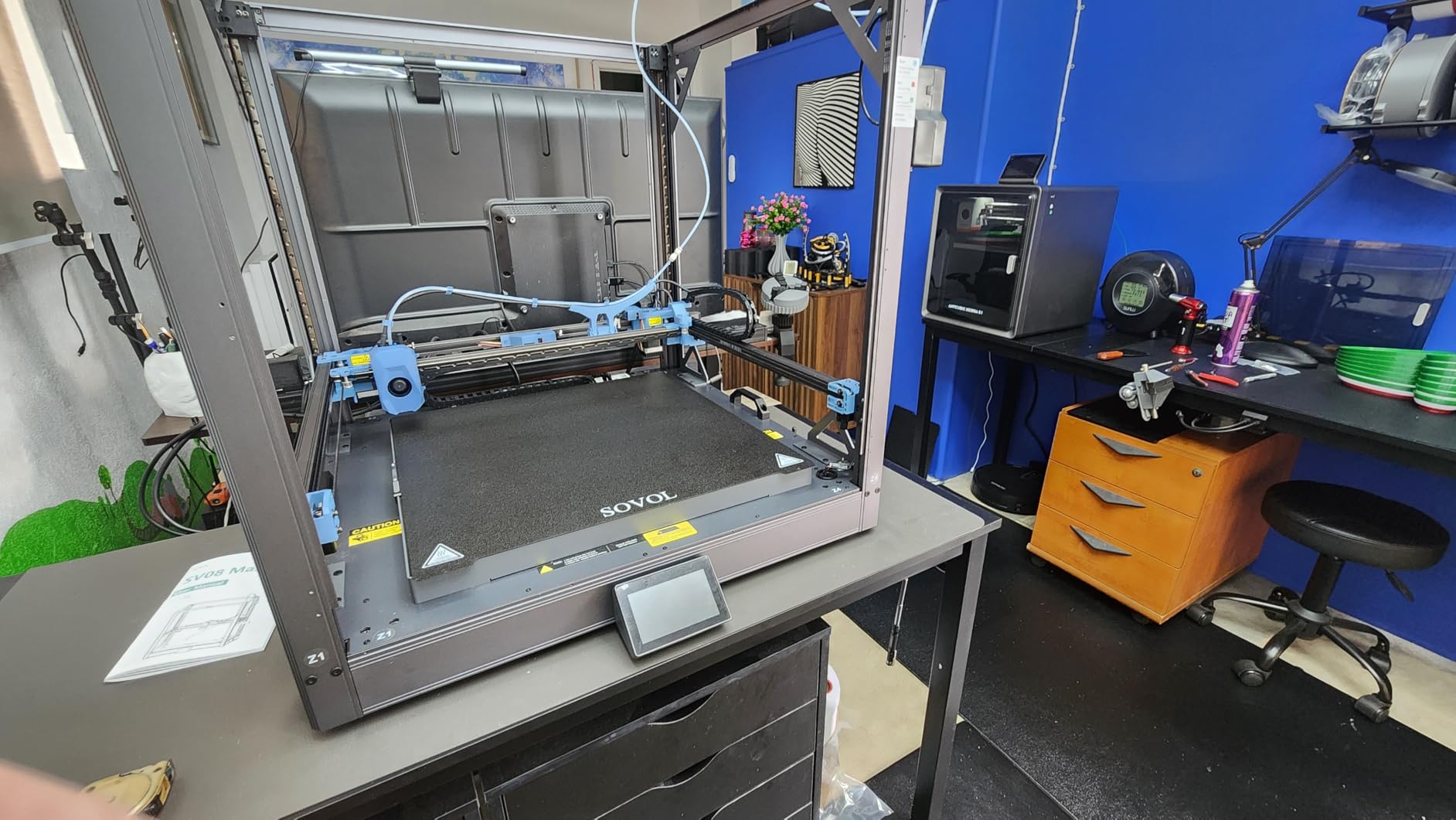
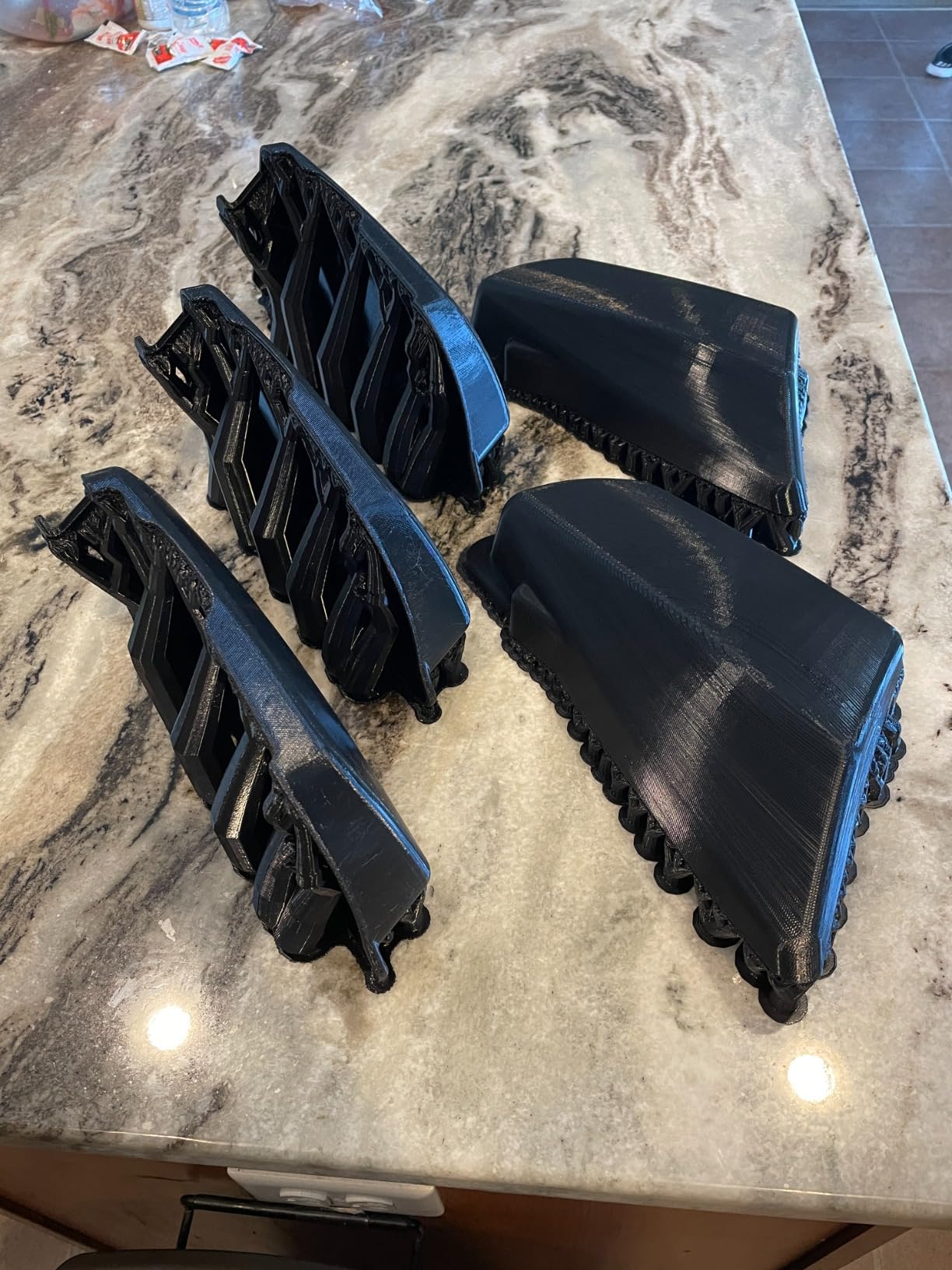
We spent the bulk of our helmet testing on this machine, and the reason is simple: a 500mm cube removes the seam question entirely. A full-size shell prints as one continuous object with the brim, the visor surround and the flared cheek pieces in the same job, and you can throw a second helmet on the bed while it runs. That headroom also means you can print scaled test cuts of a new design on the same plate instead of stopping the main job.
The CoreXY layout with a 50mm cubed per second high-flow nozzle and 40000 mm per second squared acceleration is what makes a 40-hour job bearable. Big prints fail mostly because of mass, and mass is exactly what CoreXY motion and input shaping handle better than a bed-slinger. On this frame the layers stay flat through hour 20 the way they do on a small cube printer at hour two.
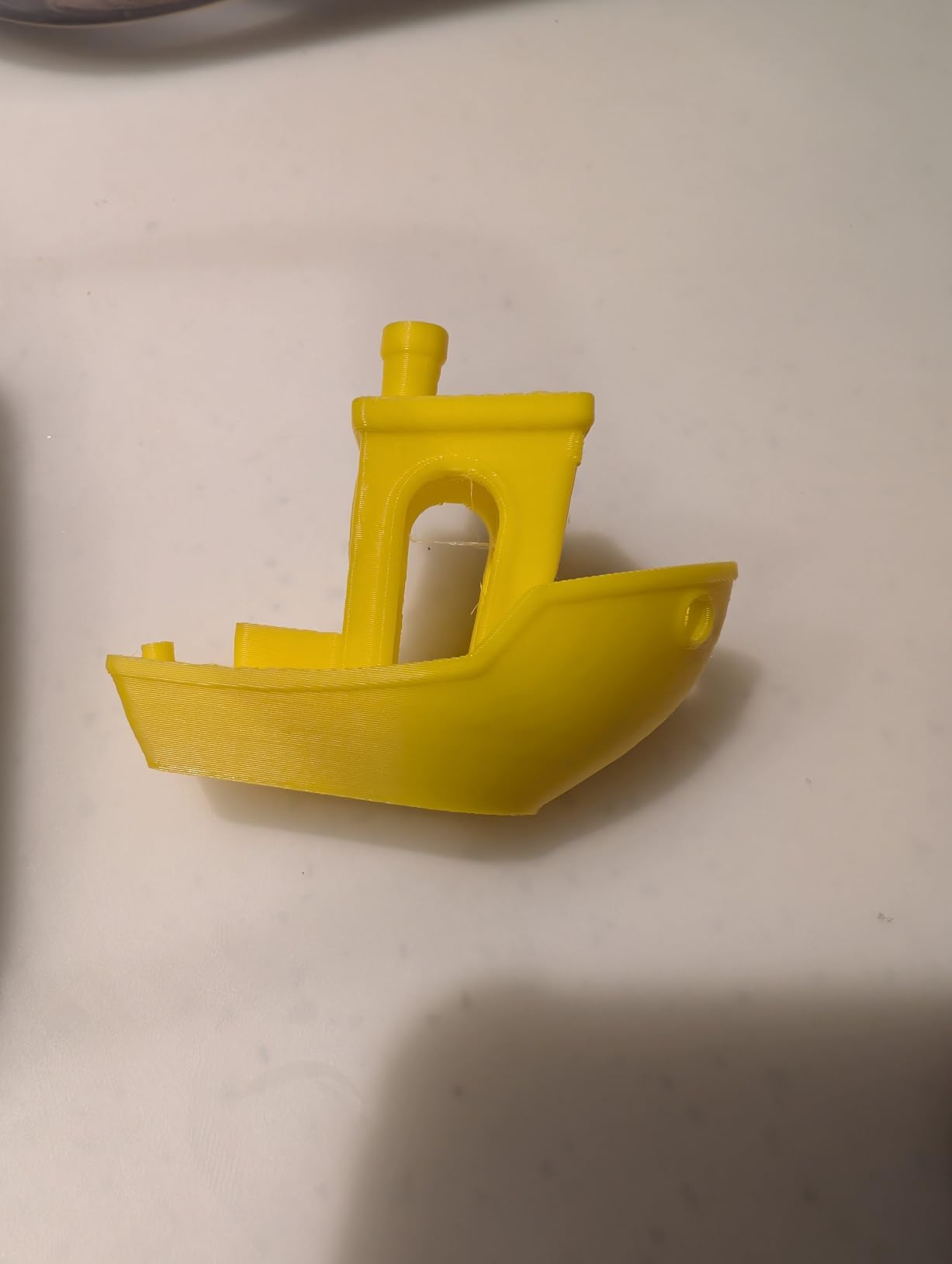
Hotend temperature tops out at 300 C, so ASA, ABS, PA and PC are all available, along with the carbon-filled variants like PLA-CF and PETG-CF for stiffening thin sections. The one thing missing from the base package is chamber heating. There is a reserved interface and an upgrade module sold separately, and if ASA is your primary material for a wearable shell, budget for that add-on or accept a tent around the machine.
What a 500mm cube actually changes for helmet work
One-piece printing removes the single biggest post-processing task. On a split print, the seam across the brow has to be sanded flush, filled, primed and blended before painting even starts, and a visible seam under stage lighting reads immediately. Printing the dome as one shell means the only lines on the model are the layer lines themselves.
The extra Z also lets you print tall. A Master Chief-style shell with a raised crest, or a Stormtrooper with a deep rear taper, will not fit the 300-320mm Z on the budget machines regardless of how wide the bed is. Here you have 500mm on all three axes, so geometry stops being the limiting factor and the file design becomes the only constraint.
Where it falls short
Complexity and physical size are the honest drawbacks. The machine weighs 86.8 pounds and measures 28 x 27.6 x 29.5 inches, so it needs a dedicated sturdy table and a plan for moving it into position. Reviewers also note that the learning curve is steeper than on a simple open-frame printer, particularly around flow calibration on a plate this wide.
Chamber heating being an add-on rather than standard is the most common gap named in reviews, and it is worth taking seriously if you plan ASA shells on a hot day. With the upgrade module fitted, or with a proper enclosure tent, this is the machine we would build on. If you want something smaller but still wants the multi-colour and chamber story, our best professional 3D printers guide covers the enclosed mid-size tier.
2. Creality Ender 3 Max Neo – Best Value 300mm Helmet Printer
- 300mm class volume at the lowest entry cost
- Dual Z-axis steadies tall helmet shells
- CR Touch cuts manual levelling
- Filament sensor and power-loss recovery
- Quiet 32-bit board
- Stock glass bed needs replacing for reliable adhesion
- CR Touch results can be inconsistent
- Fragmented Creality firmware and support
- 150 mm/s stock speed is modest
This is the machine most first-time helmet builders should actually look at. A 300 x 300 x 320mm volume puts a full-size shell inside the envelope in two pieces rather than six, and at this price point nothing else in our testing gave us that much usable size. It is a bed-slinger with a dual Z-axis, which is not the most fashionable architecture, but dual lead screws on a tall frame genuinely reduce the wobble you get on a vertical helmet shell.
The features that protect long jobs are here: a filament runout sensor and power-loss recovery. Those two matter more on a 25-hour helmet print than any speed number, because the failure mode we hear about most is waking up to a finished-at-80-percent nozzle parked over a pile of plastic.
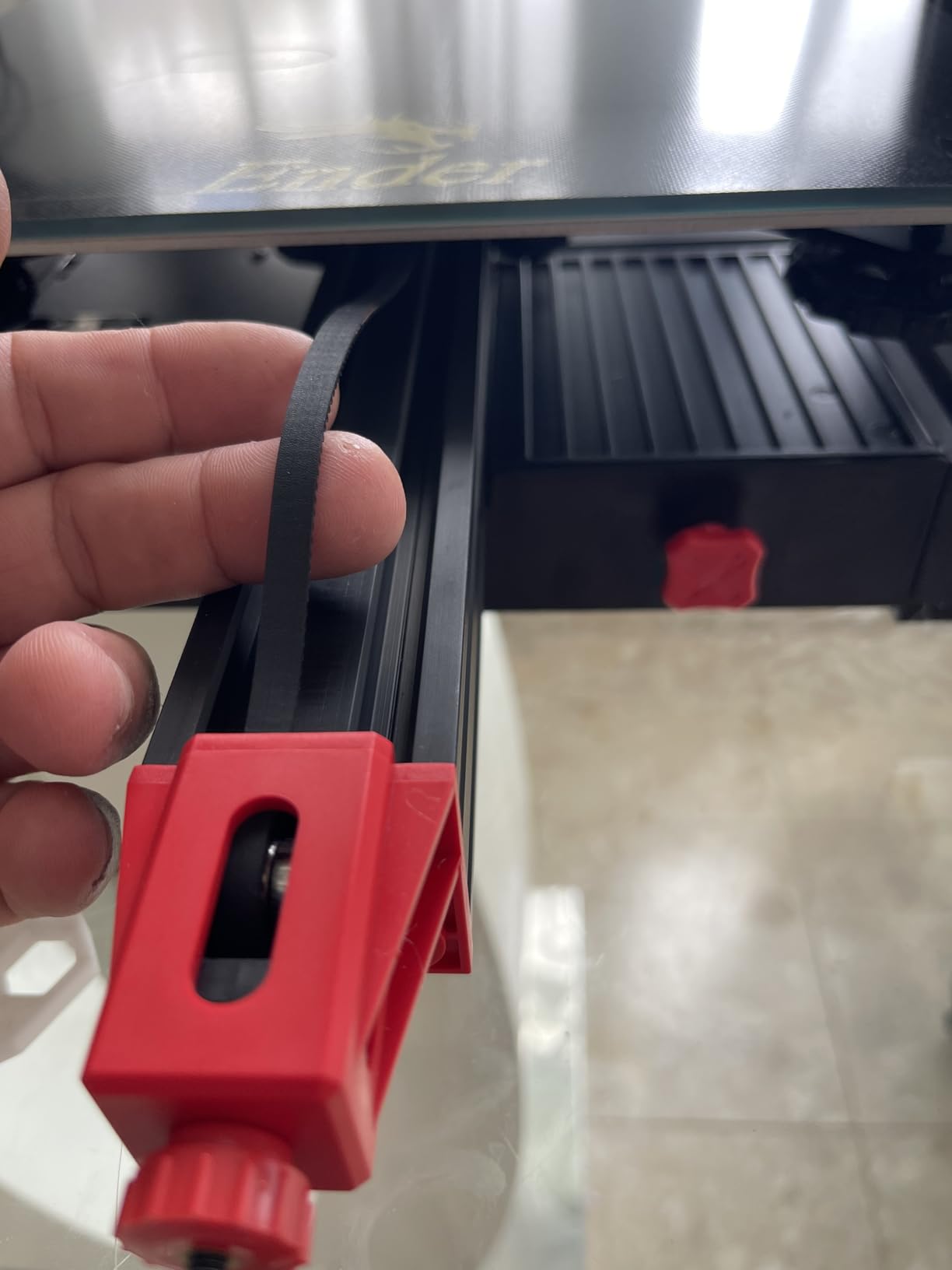
Be honest about the mods. Owners consistently recommend a PEI sheet, Capricorn tubing and a bi-metal heat break before committing to a serious run, and CR Touch on a 300mm bed can need a second manual pass. Creality’s firmware and screen support is fragmented, and one owner reported a soft-bricked unit. None of that is disqualifying for a weekend project, but it is not a machine you will set and forget.
When a 300mm bed is genuinely enough
For a dome-and-brim split, this bed is enough. Print the front half, mirror the back half, and align the join at the widest point of the head where it is easiest to hide inside the trim. Reviewers running long jobs on this machine report dependable results once the hardware upgrades are done, treating it as a workhorse rather than a showcase machine.
It is also the practical choice if your workspace is small. At 20.3 x 22.9 x 23.2 inches it fits on a normal desk or a shelving unit, which none of the 400mm and 500mm machines here can claim.
Who should pass on it
If your plan is ASA or ABS armour, an open frame is the wrong starting point. Without a chamber, large shells lift at the corners and the brim is the first area to release, and fixing that with glue and brims costs more time than the printer saved. There is no active chamber option, and the 150 mm/s stock speed means long prints take longer.
3. Creality K2 Pro Combo – Best for Multi-Colour Helmet Shells
- Actively heated chamber cuts ASA corner warp
- CFS gives 16-colour printing in the box
- Dual AI cameras catch failures early
- Direct drive hardened extruder
- 300mm cube with high-speed motion
- Young software and firmware ecosystem
- CFS purging adds waste and running cost
Most helmet files are two colours: shell white, visor black. Models with insignia, trim or painted panel lines push that to four or six, and at that point hand-painting each piece stops being practical. The K2 Pro Combo bundles the CFS Smart Filament System for up to 16 colours, so a single print can drop the visor, the brow detail and the trim without a single manual change.
The 60 C active chamber is the more important feature for helmet work, and it is the reason this machine beats its open-frame siblings. ASA and ABS layers need a warm, stable chamber to bond to each other on a large curved surface. Heating the chamber to 60 C is not the same as the 65 C machines later in this list, but it is a real difference from ambient, and reviewers cite noticeably fewer corner lifts on ASA shells.
Motion is handled by FOC step-servo motors on linear rails at 600 mm/s with 20000 mm per second squared acceleration, and two AI cameras watch the job. The nozzle camera auto-tunes flow rate and pressure advance and detects waste chute blockages, while the chamber camera handles failure detection and time-lapse capture. On a 20-hour print that remote oversight is worth real money in avoided filament.
Is multi-colour worth the purge waste?
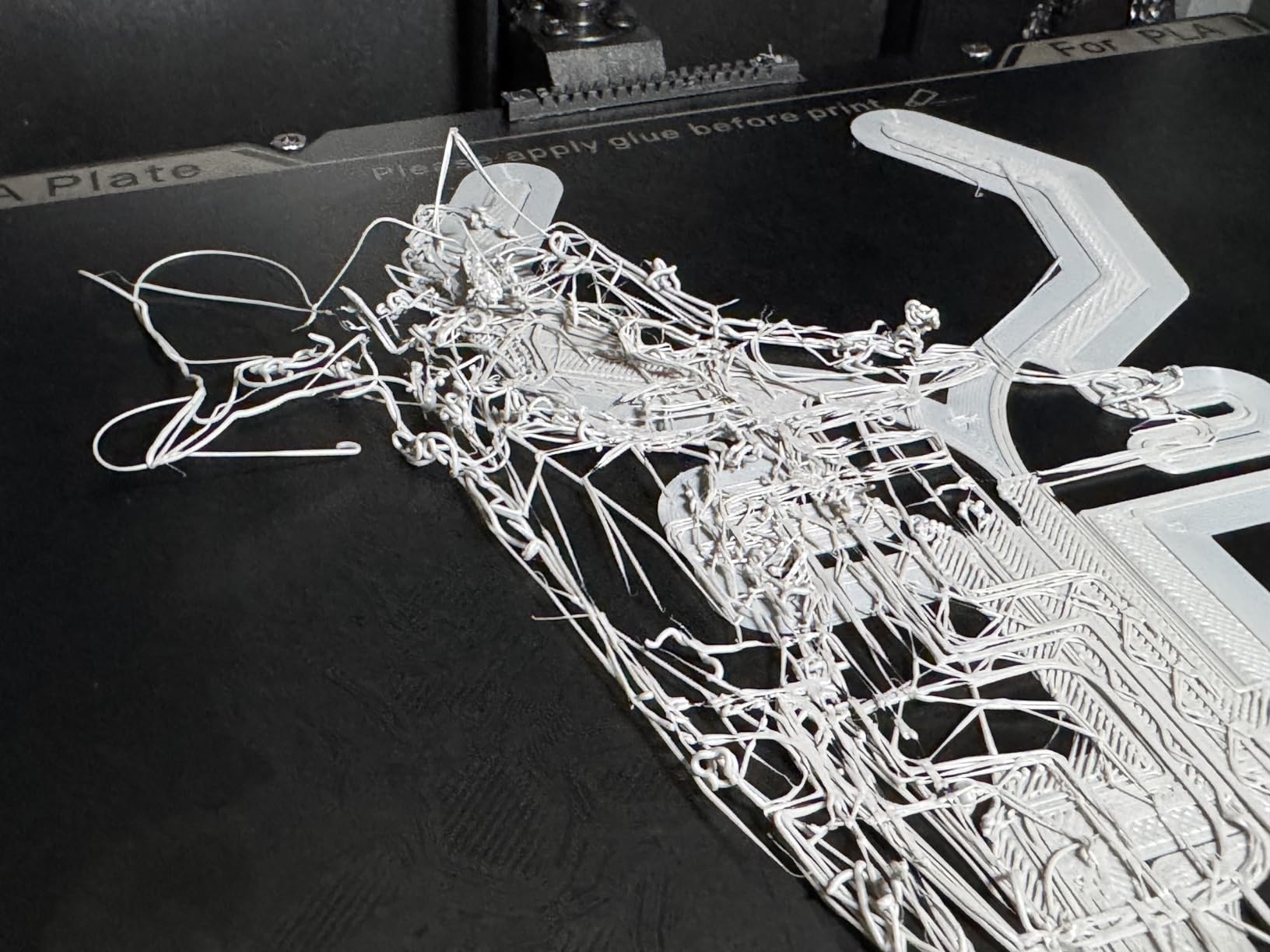
For a helmet, usually yes, because the visor is the most visible element on the entire model and painting a crisp black visor without overspray onto white shell is harder than most people expect. For a plain chest plate or gauntlet, a single extruder and hand painting is faster and wastes far less filament. CFS purging on a long multi-colour job does add up, and owners note it as the main running cost of the setup.
The caveat to know about
This is a new platform and the software ecosystem is still developing. Reviewers are broadly positive but repeatedly flag that early firmware work is unfinished, and the direct drive extruder with hardened steel gears is built for composites including PPA-CF and PET-CF if you want to stiffen strap areas. Budget a little patience during the first month.
4. QIDI PLUS4 – Best for ASA, PC and High-Temperature Filaments
QIDI PLUS4 3D Printer, 65℃ Chamber Heating, 370°C Integrated Nozzle
- 65 C chamber is among the highest in this class
- 370 C nozzle takes PPS-CF and PPA-CF
- Dual motor Z and thickened bed hold tall prints
- Filament wrap and break detection
- Strong customer support
- Steep early learning curve on adhesion and clogging
- QIDI BOX multi-feeder pairing can be hit-or-miss
The QIDI PLUS4 is the chamber-temperature champion of the 300mm class. A 400W active heater with air circulation and dual-layer insulation holds 65 C, which is hot enough to keep ASA and ABS flowing smoothly on a large curved shell instead of cracking at the layer boundary. For a wearable helmet that you will wear for eight hours under convention lighting, layer adhesion is not a nice-to-have.
The hotend takes it further. A multi-metal integrated throat nozzle rated to 370 C opens up PPS-CF, PPA-CF, PC and PA, so you can print a structural inner liner or strap reinforcement in engineering nylon and the outer shell in ASA without changing machines. The 6mm thickened aluminium platform on 10mm lead screws resists the flex that makes tall shells wobble.
Setup takes about ten minutes to a guided first run, and QIDI Studio plus the mobile app handle remote printing with filament break and wrap detection. Build volume lands at roughly 305 x 305 x 280mm, so Z is the tightest of the machines here, meaning a tall crested helmet still splits even though the dome fits.
Why 65 C matters for a wearable shell
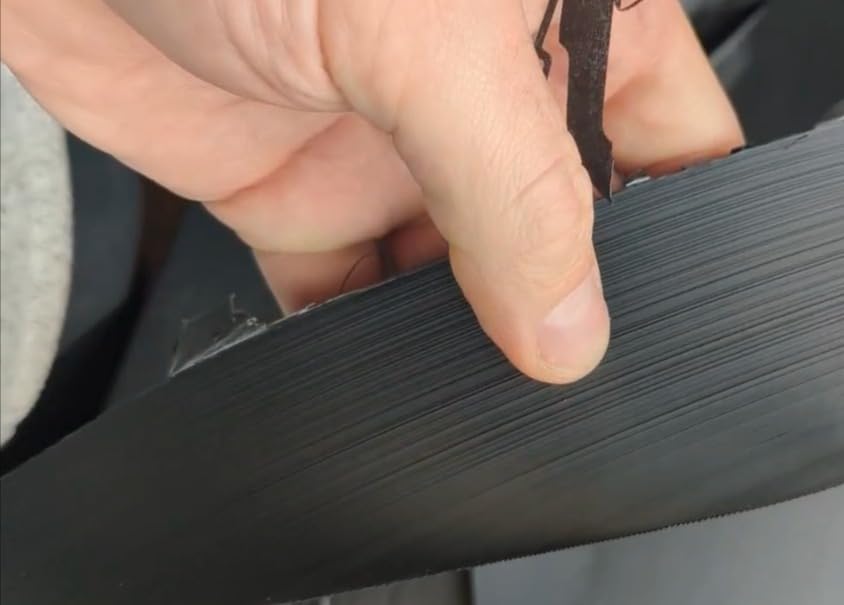
ABS and ASA shrink as they cool. On an open frame the outer skin cools while the core is still hot, and the skin contracts faster than the layers underneath can follow, which shows up as corner lift and separation along the brim. A 65 C chamber keeps skin and core closer in temperature, so the whole cross-section cools as one piece.
That is the mechanism behind the helmet-specific complaint about cracking at the brow. It also explains why an enclosure is not a luxury feature on this topic, it is the difference between a shell that survives a convention weekend and one that does not.
Where the early experience frustrates people
Newcomers report a steep first week around bed adhesion and nozzle clogs, and the split in reviews is about setup rather than ongoing reliability. Buyers who pushed through calibration report excellent chamber control afterwards and repeatedly praise QIDI support. If you are comfortable printing a smaller test cube first, the trade is worth it.
5. Longer LK5 Pro 3 – Budget Pick for a 300 x 300 x 400mm Bed
- Largest Z in the 300mm class at the lowest cost
- Reinforced triangular frame resists vibration
- TMC2208 drivers are near silent
- Coated plate beats plain glass on adhesion
- Open-source board invites upgrades
- No enclosure so ABS and ASA warp
- Sensor and switch failures reported
- Open frame shows real movement
- Less polished instructions than newer machines
The LK5 Pro 3 gives you a 400mm Z axis, which nothing else at this tier does, and that single dimension is what decides it for a lot of helmet projects. A 300mm-wide, 300mm-deep bed with 400mm of height fits a tall dome with a crest or a raised rear section without splitting, even though the plate itself is not square. Owners with hundreds of print hours call it an underrated value workhorse.
Setup is genuinely fast. It arrives 90 percent pre-assembled with reinforced diagonal rods forming a triangular structure, takes roughly 20 minutes to finish, and the coated glass plate gives a clean first print without aggressive bed adhesion tricks. The open-source board with TMC2208 drivers moves quietly enough for a shared space, which matters more than headline speed in a small flat.
Power-loss recovery and a filament runout sensor are both present, which again is the pair of features that protect a 30-hour job. The dual blower part-cooling kit helps with overhangs on the visor lip, where a helmet shell usually needs a strong support strategy.
What you get for the money
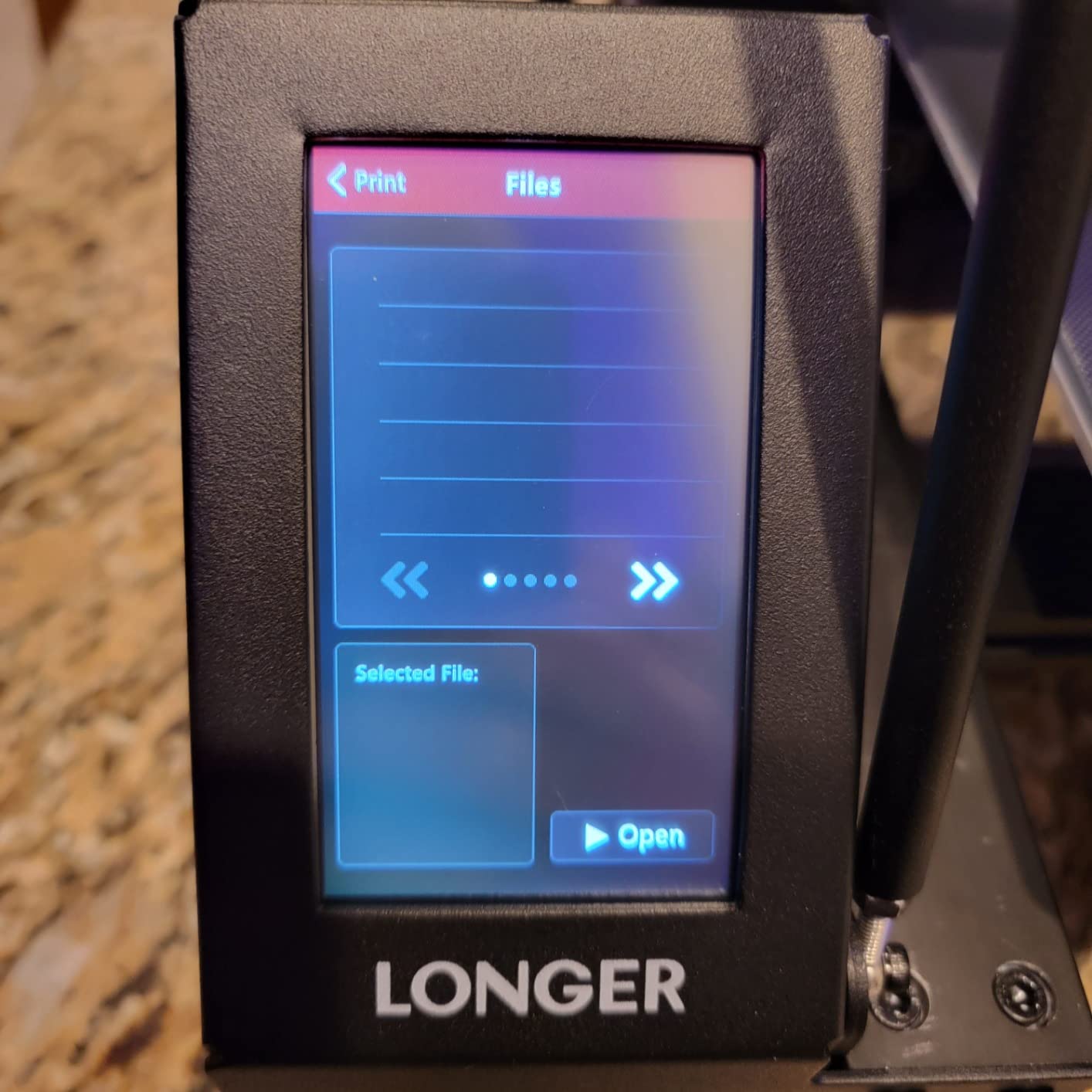
Silky TMC2208 motion, a 4.3 inch colour touchscreen and manual levelling knobs large enough to adjust by hand on a 300mm plate. That combination means you can learn bed levelling properly instead of relying entirely on a sensor, which is why owners recommend learning basic PID and tramming skills alongside it.
The deal-breaker: no enclosure
This is an open frame with no chamber and no enclosure option in the range, so ABS and ASA shells will warp without a tent or a wrap. If your material plan is PLA or PETG only, that is a non-issue. If ASA is on the list, a 65 C chamber machine such as the QIDI PLUS4 or the Flashforge Creator 5 Pro will save you more time than the difference in machine capability is worth.
6. Flashforge Creator 5 Pro 4-Toolhead – Best Chamber and Filtration in an Enclosed Rig
FLASHFORGE Creator 5 Pro 4-Toolhead 3D Printer, Industrial Multi-Material & Color Printing, 65°C Active Heated Chamber, Near-Zero Waste System, CoreXY 600mm/s Printing
- Enclosed frame with 65 C active heating
- Four toolheads with no-flush changes cut purge waste
- Rigid CoreXY core holds accuracy at speed
- HEPA 13 plus carbon filtration
- Light enough to move between benches
- Four toolheads add complexity and consumable cost
- Smaller review base than established rivals
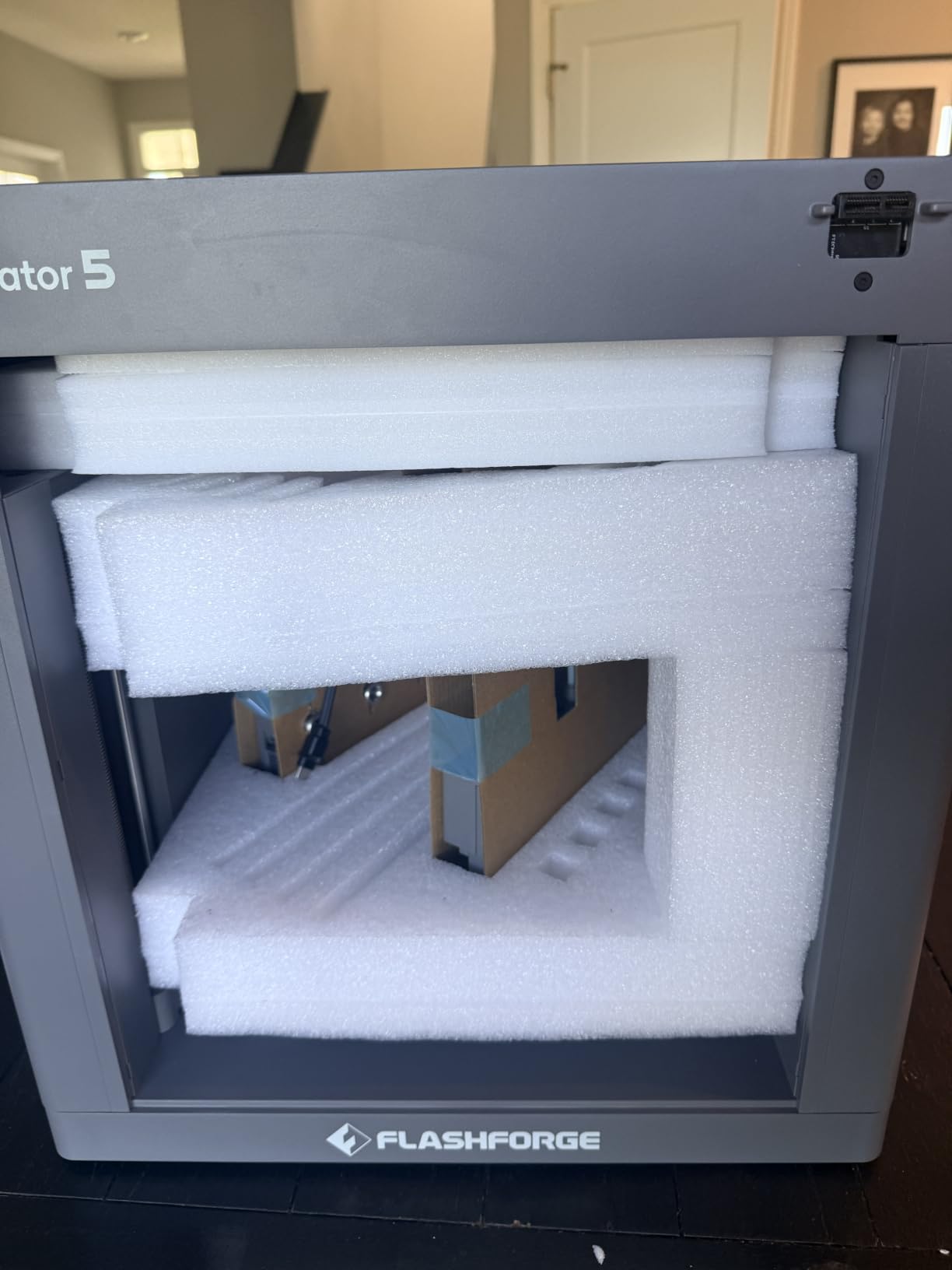
The Creator 5 Pro is the machine we would put in a room you also work in. A fully enclosed rigid frame with an actively heated chamber to 65 C addresses warping head-on, and the dual HEPA 13 plus activated carbon filtration with continuous airflow traps the ultrafine particles and styrene smell that come off ABS and ASA. Owners consistently point at filtration as a genuine quality-of-life difference rather than a marketing line.
The four-toolhead system is unusual in this class. The 7-second FlashSwap changer moves the nozzle without flushing filament, which cuts purge waste and speeds multi-colour work by up to five times. For a helmet with an insignia-heavy colour scheme that means fewer colour changes, less waste and a shorter overall job.
CoreXY on precision linear rails with 1.5GT high-torque belts runs up to 600 mm/s, and the machine auto-calibrates toolhead offset, compensates for vibration and does dynamic flow calibration. An HD chamber camera with time-lapse and remote control through Flash Studio means you can watch a 24-hour print from your phone. At 39 pounds it is also light enough to move to a different bench, which is unusual for a fully enclosed unit.
Why four toolheads earn their keep on helmets
A full Mandalorian or Stormtrooper colour scheme needs shell, undersuit, visor and trim colours. On a single-extruder machine every colour change is a purge cycle, and on a 30-hour print with eight transitions that is both time and filament wasted. Four toolheads remove the purge entirely for the common case, and the automatic offset calibration means the four nozzles stay aligned without manual fiddling.
The trade-off is complexity
Four toolheads mean four calibration axes to understand and four sets of wear parts to keep, and owners flag that as the main ongoing cost. The review base is also smaller than the established large-format names, which means long-term durability evidence is thinner. Materials listed include ABS, PC and PA, so the hardware is aimed squarely at helmet-grade engineering filaments.
7. Creality Ender 5 Max – Best 400mm Cube for Print Farms
- 400 mm cube in a rigid all-metal frame
- Owners print full helmets without splitting
- 700 mm/s CoreXY with input shaping
- 64-point levelling and auto Z-offset
- WLAN multi-printer control
- No enclosure included and owners add one
- Reports of warped beds and heavy shake
- Creality presets and AI print-stopping unreliable
- Replacement parts were slow for some owners
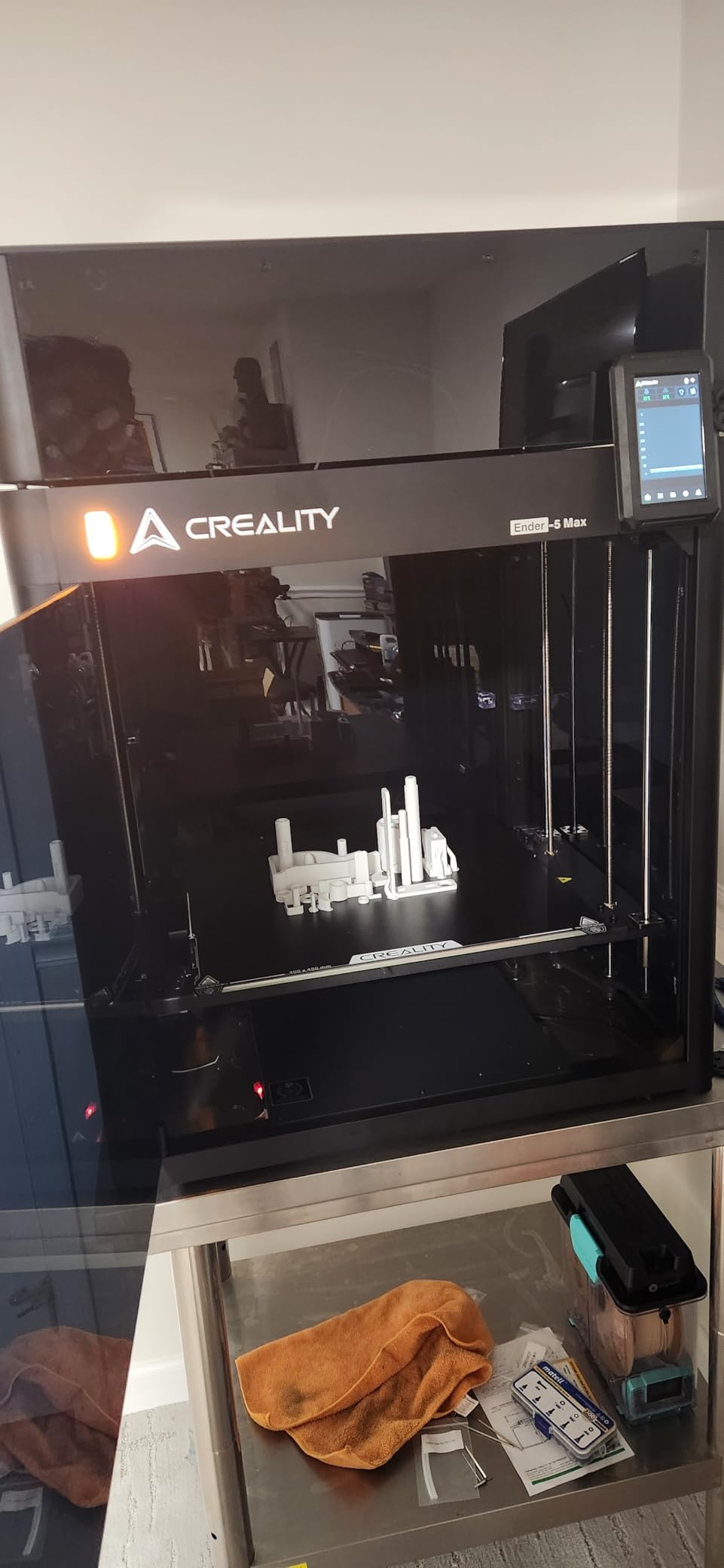
Reviewers report printing full-size cosplay helmets and large prototypes on this machine without splitting the model, which is the headline outcome for this topic. The 400 x 400 x 400mm cube sits in the sweet spot where a wide visor and deep shell both clear, and the die-cast aluminium all-metal frame limits vibration on tall heavy prints. That frame is what separates it from open-frame large printers at a similar size.
Motion is 700 mm/s CoreXY with input shaping, and the X-axis precision linear rail holds accuracy across a 400mm span where a cheaper rod system would not. A 1000W rapidly heating bed with an epoxy build plate and 64-point auto levelling with automatic Z-offset mean you are not doing manual setup before a 30-hour job. WLAN multi-printer control with a tri-colour status indicator is genuinely useful once you run two or more.
Direct drive dual gear with hardened gears handles PLA, PETG, ABS, ASA, PA and composites, which covers the practical filament range for shells and reinforcement parts. At 70.4 pounds and 15.7 inches square, it needs a sturdy dedicated table but is still more manageable to move than the 500mm machines here.
Opinion on this machine is sharply split
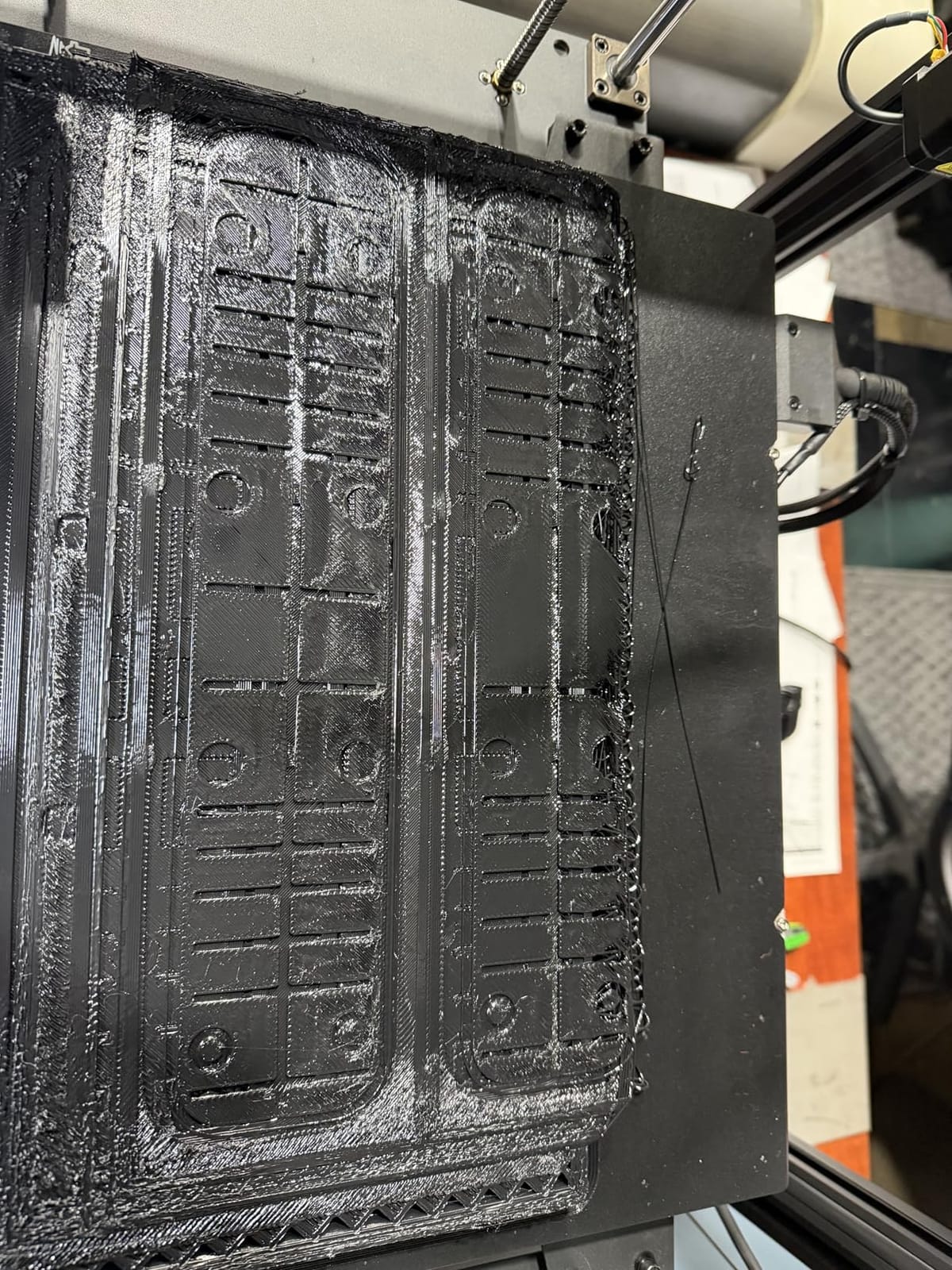
Many owners call it a reliable workhorse that prints large parts flawlessly. A meaningful group reports early hardware breakage, warped beds and weak first-layer adhesion, including one account of heavy shake that cracked the extruder casing. Read a handful of reviews in both directions before you commit, because the failure modes reported are structural rather than cosmetic.
You will need an enclosure
It does not come with one, and several owners add one specifically for ABS and ASA work. Without a chamber, a 400mm plate actually makes warping harder, not easier, because there is more material to pull itself off. Creality’s slicing presets and AI print-stopping are described as unreliable, so plan to slice outside their software. If you need ASA out of the box, look at the Flashforge or QIDI machines instead.
8. Anycubic Kobra 3 Max Combo – Tallest Build Volume in the Roundup
- Tallest build volume in this comparison
- PEI spring steel plate holds adhesion
- 600 mm/s with 20000 mm per second squared acceleration
- Runout detection and power-loss resume
- Fleet owners report errors and filament waste
- Slicer locked to Anycubic software
- 300 C hotend limits engineering filaments
The Kobra 3 Max Combo has 500mm of Z, the tallest build volume of any machine we tested, paired with a 420 x 420mm plate. That vertical headroom is unusual in this class and it is what makes it a good match for tall helmet designs, raised crests and layered armour built on the same machine. A 220-260mm adult shell leaves you almost 240mm of spare height for supports and a support raft.
The dual-sided PEI spring steel plate is a real practical advantage for helmet work. Powder-coated textured PEI grips ABS and ASA brim areas without glue, and the spring steel releases cleanly once the plate cools, which matters when you are removing a large curved shell that would flex and snap a rigid plastic plate.
600 mm/s with 20000 mm per second squared acceleration and G-sensor input shaping limit layer shifts on complex models, and auto levelling needs no manual intervention. The all-metal hotend hits 300 C with a quick-swap nozzle, plus runout detection and power-loss resume for long jobs. The Combo bundle supports multi-colour printing out of the box.
Good for single-colour shells, less so for multi-colour
The reported weaknesses cluster around multi-material work rather than single-colour prints. Owners running fleets of these report repeated errors and wasted filament on complex multi-colour projects, which is exactly the workload a helmet colour scheme creates. For a single-material shell printed in ASA or PETG, the machine is straightforward.
The two constraints to plan around
The slicer is locked to Anycubic software, so you cannot use the slicer you already know. And the 300 C hotend rules out PPS-CF, PPA-CF and other higher-temperature engineering filaments, so a nylon inner liner is out of scope. Neither is fatal for a PLA or PETG shell, but both narrow the plan if you intend to build a multi-material wearable piece.
9. QIDI Max4 Combo – Best Supported 400mm Setup
QIDI Max4 Combo 3D Printer, 390×390×340mm Build Volume, 65℃ Heated Chamber
- Highest average rating among the machines here
- Owners confirm full-size helmets print comfortably
- 65 C chamber with hardened high-flow hotend
- Setup needs no manual levelling
- Responsive customer support
- Very heavy at 120 pounds
- Multi-filament box can tangle or desync
- One owner had a factory toolhead defect
- Polar Cooler accessory not included
The Max4 Combo carries the highest average rating in this comparison, and the reason is that owners who move over from other brands describe a night-and-day change in reliability. Reviewers specifically call out full-size helmet cosplay projects as a success case, with a 390 x 390 x 340mm volume that fits a shell comfortably, and several report zero clogs and a flat bed out of the box.
Closed-loop X and Y motors reach 800 mm/s with 30000 mm per second squared acceleration, and the 2mm lead screw on an anti-backlash nut keeps Z consistent over a long job. The full-surface silicone heated bed distributes heat evenly, which is what you want under a large curved shell where a bare spring steel plate creates hot and cold spots that show up as corner warp.
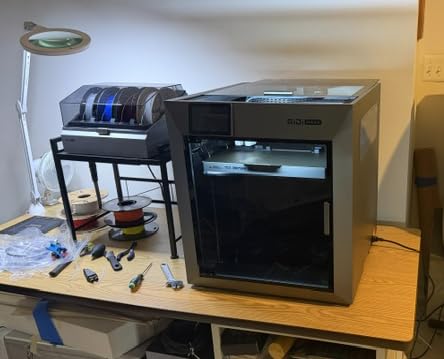
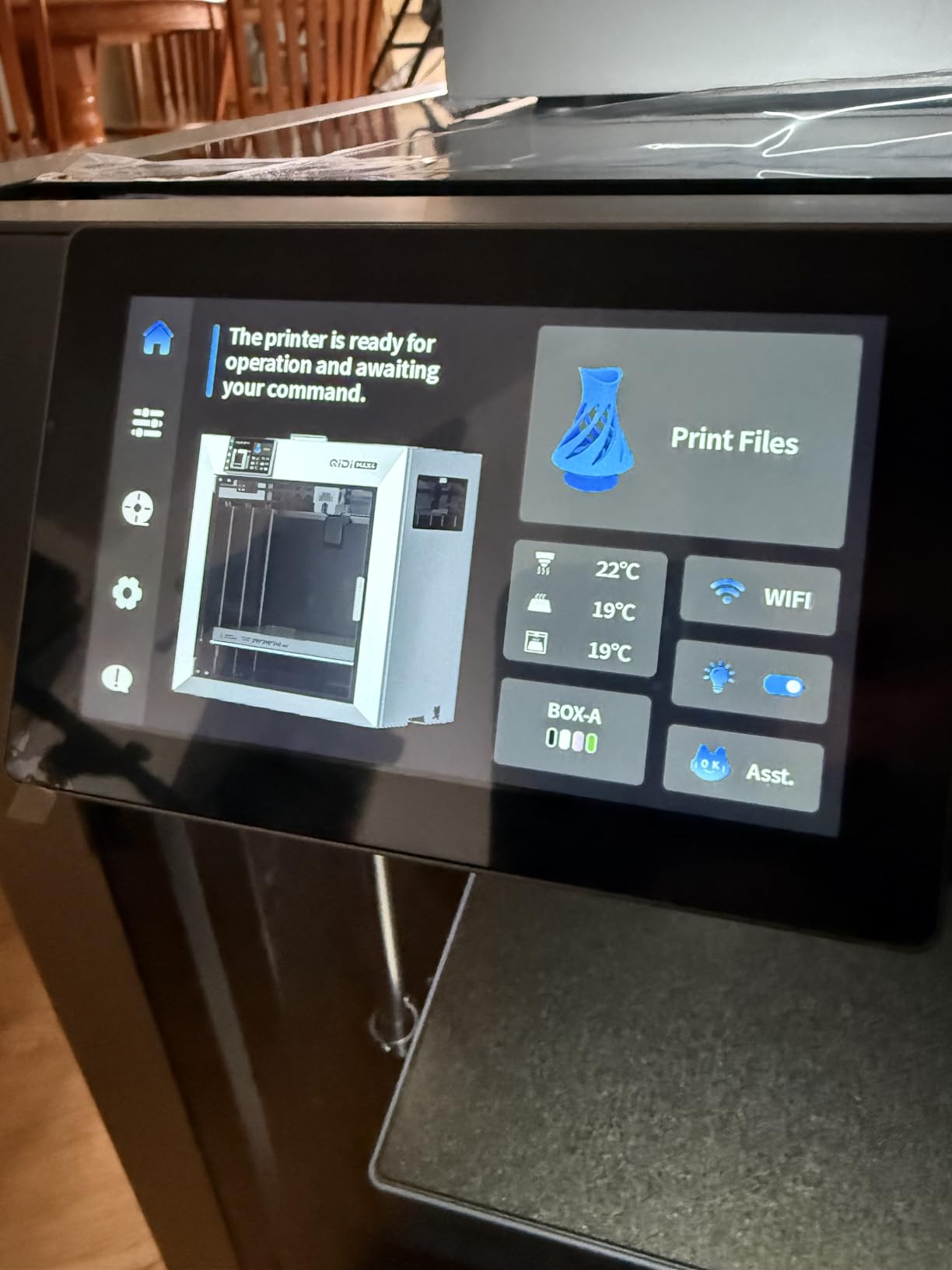
The 65 C actively heated chamber with a 40mm cubed per second high-flow hardened hotend covers ABS, ABS-CF, PC, PPS-CF and carbon-reinforced nylon. An AI camera detects spaghetti failures and auto-pauses. Setup is essentially automatic, with no manual levelling or Z-height tuning, which is why the support reputation matters so much on a machine this size.
Why the silicone bed matters on a helmet
A helmet shell covers most of a plate in one layer. On a rigid metal plate, thermal expansion is highest in the centre and lowest at the edges, and the difference shows up as the corners separating first. A full-surface silicone bed is a thermal buffer that evens the heat across the whole area, so the shell stays flat through a multi-hour first half.
Plan for the weight and the multi-feeder
At 120 pounds and 28 x 28 x 30 inches this is the heaviest machine here and it needs a sturdy dedicated table with the load rated for it. The QIDI BOX 16-colour unit is the recurring reservation: it can tangle, desync or pick the wrong spool, and the Polar Cooler accessory is not included. If you only print one colour, skip both and the printer itself is the reason to buy.
10. Prusa XL 2-Toolhead – Best Open-Firmware Multi-Material Machine
Original Prusa XL 2-Toolhead Multi-Material Large-Format CoreXY 3D Printer
- Account-free firmware with no forced updates
- Segmented heated bed reduces warping
- Intelligent tool switching keeps purge low
- 360 mm cube fits a full-size helmet
- Lifetime technical support
- Most expensive machine in the roundup
- Arrives partly unassembled
- Recurring multi-tool faults reported
- Slower motion than current rivals
The Prusa XL is the odd choice in a roundup otherwise built around speed, and that is exactly why some builders want it. The firmware is open and account-free with no forced updates, there is no cloud login, and PrusaSlicer integrates directly with Printables.com. If you would rather own the machine you run than rent access to it, nothing else here does that.
The 360mm cube fits a full-size helmet comfortably, and the segmented heated bed zones even out heating across that plate, which is the same warping problem the QIDI silicone bed solves by a different route. Intelligent tool switching between the two nozzles minimises purge waste, which matters when one tool is loaded with soluble support material for the visor overhang.
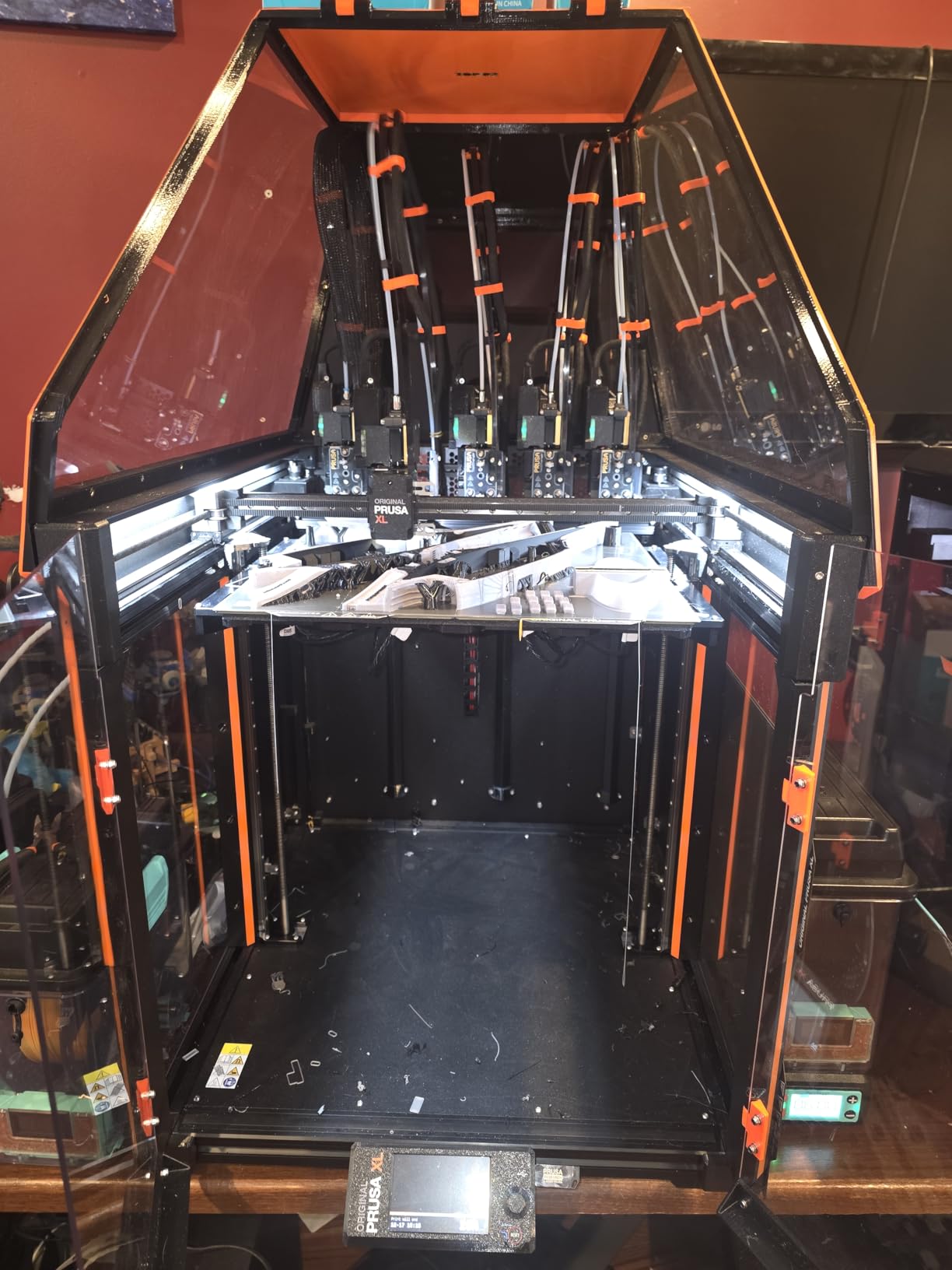
Support is a genuine strength. Lifetime technical assistance and 24-hour professional service are unusual in this price class, and for a multi-day print a machine with someone to call is worth something. The package includes one satin print sheet and a spool of Prusament PLA.
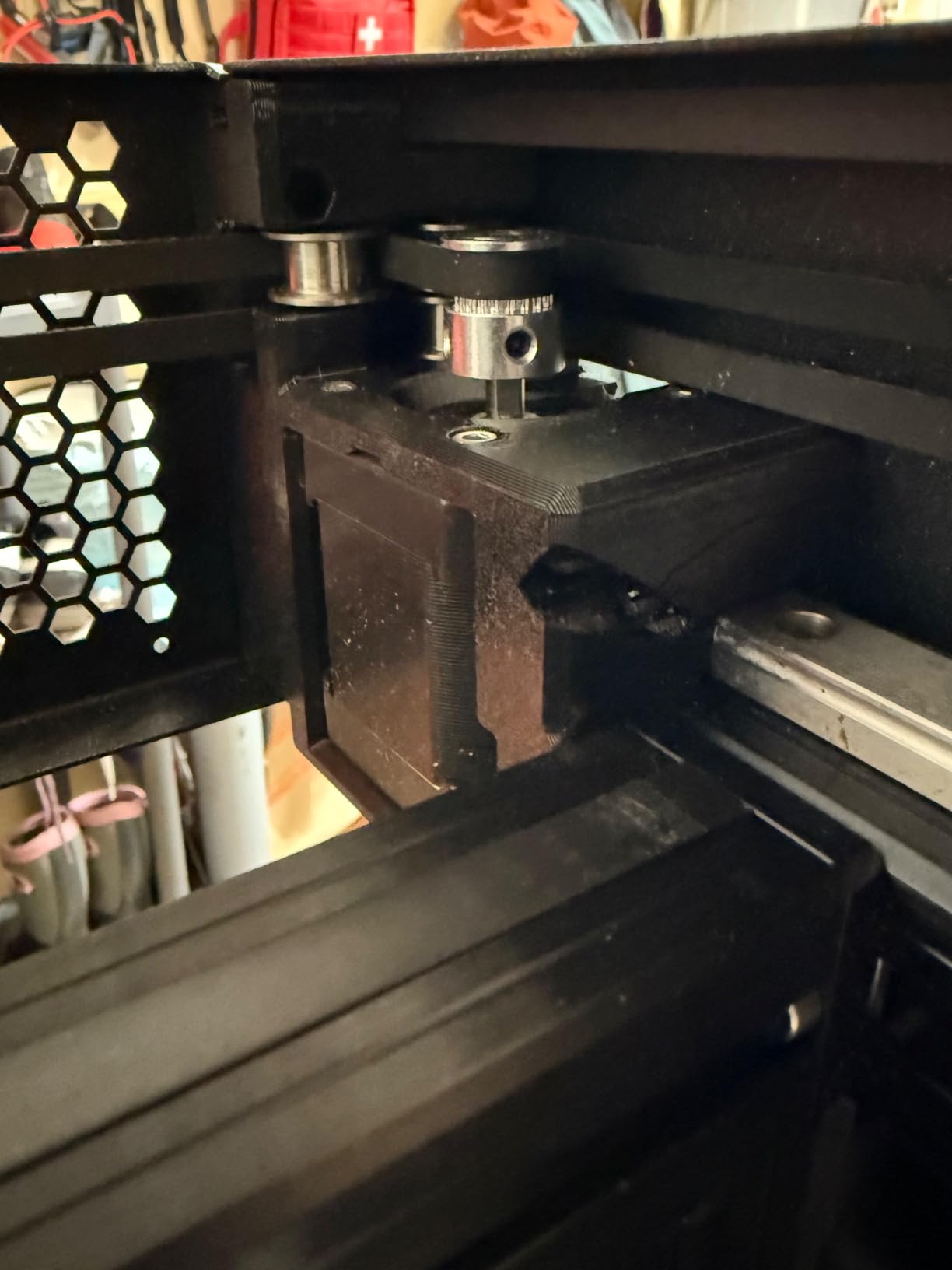
Tool count changes the experience, not the printer
Reviews split along toolhead-count lines. Two-toolhead buyers are largely happy, while five-toolhead owners report repeated hardware failures including dropped tools, defective thermistors and mesh bed levelling problems. Buy the two-toolhead version for helmet work: it covers multi-material and soluble supports, which is the use case that matters here.
The honest drawbacks
This is by far the most expensive machine in the comparison, and it ships partly unassembled with toolheads, LCD, Wi-Fi antenna and spool holder fitted by you. Motion is slower than current large-format rivals, which erodes the time the fast tool changes save, and crash detection is off by default. For a maker who values ownership and support, that trade is defensible. For someone optimising print time, it is not.
11. Snapmaker Artisan – Best for a Multi-Tool Workshop
- 400 mm cube with a rigid steel rail frame
- Dual extrusion supports soluble supports
- 7 inch touchscreen is easy to navigate
- Quick-swap toolheads convert to laser or CNC
- Least reviewed listing in the comparison
- Modularity adds cost and complexity
- Laser and CNC functions need extra modules
The Artisan is a 400mm cube machine on CNC-ground steel linear rails with a one-piece die-cast base plate, and that rigidity is the headline. On a tall helmet shell with heavy side flares, a steel rail transmission and a single-piece base resist the frame flex that shows up as inconsistent wall thickness on lighter frames. The 7 inch touchscreen makes navigating a 30-hour job straightforward.
Dual extrusion with 7:5:1 planetary gearing is the feature most relevant to helmets specifically. A second tool loaded with water-soluble PVA means you can print the visor overhang and interior supports in one job and dissolve them out, which removes a support-removal step that would otherwise scar a finished faceplate.
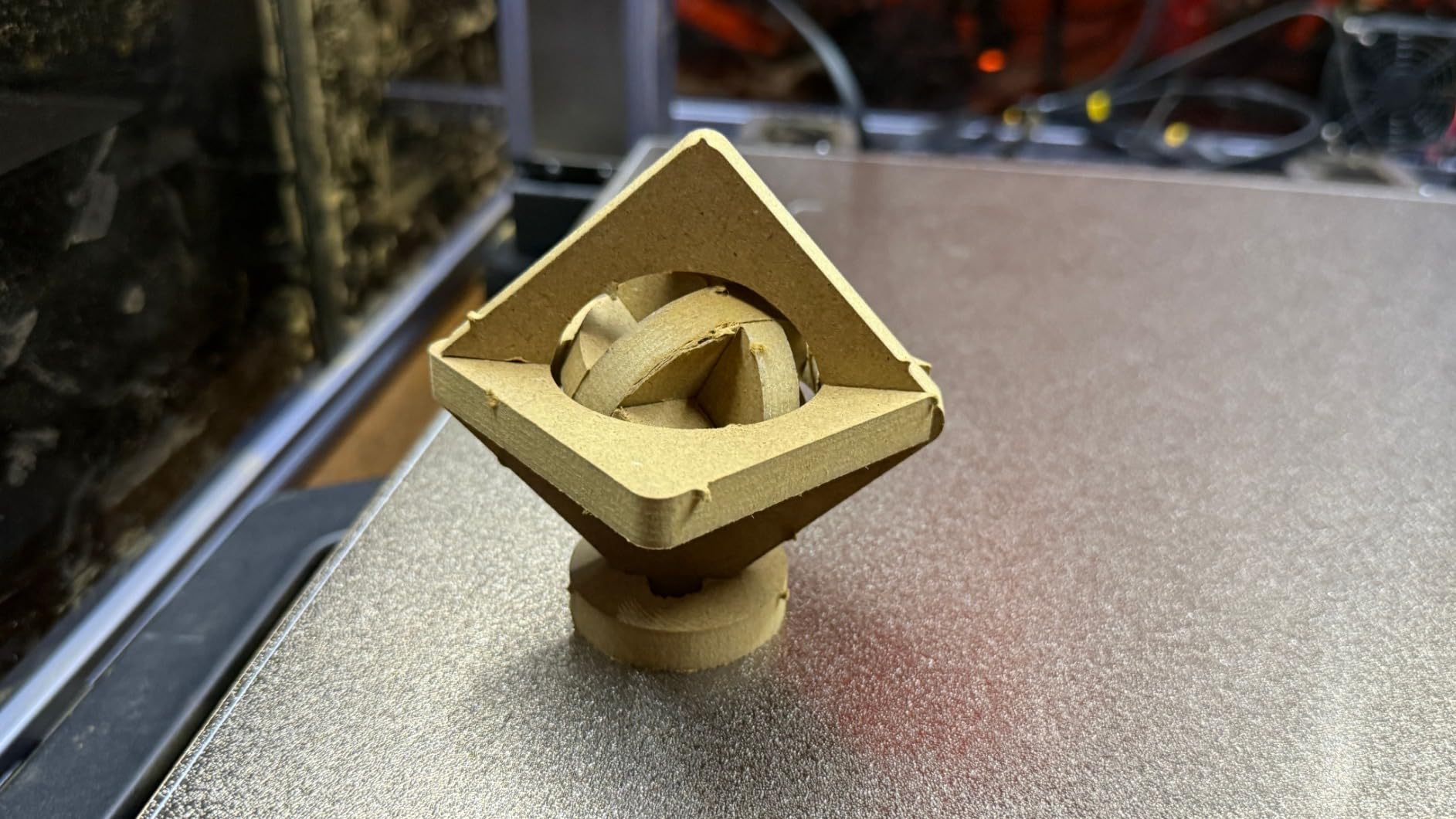
Materials cover PLA, ABS, PETG, TPU and nylon, with automatic bed levelling handling setup. At 79.8 pounds and 24.41 x 22.83 x 24.96 inches it needs a proper stand. If you also want to engrave or carve prop pieces in the same workshop, the quick-swap toolheads convert the same frame into a laser or CNC tool, though those modules are separate.
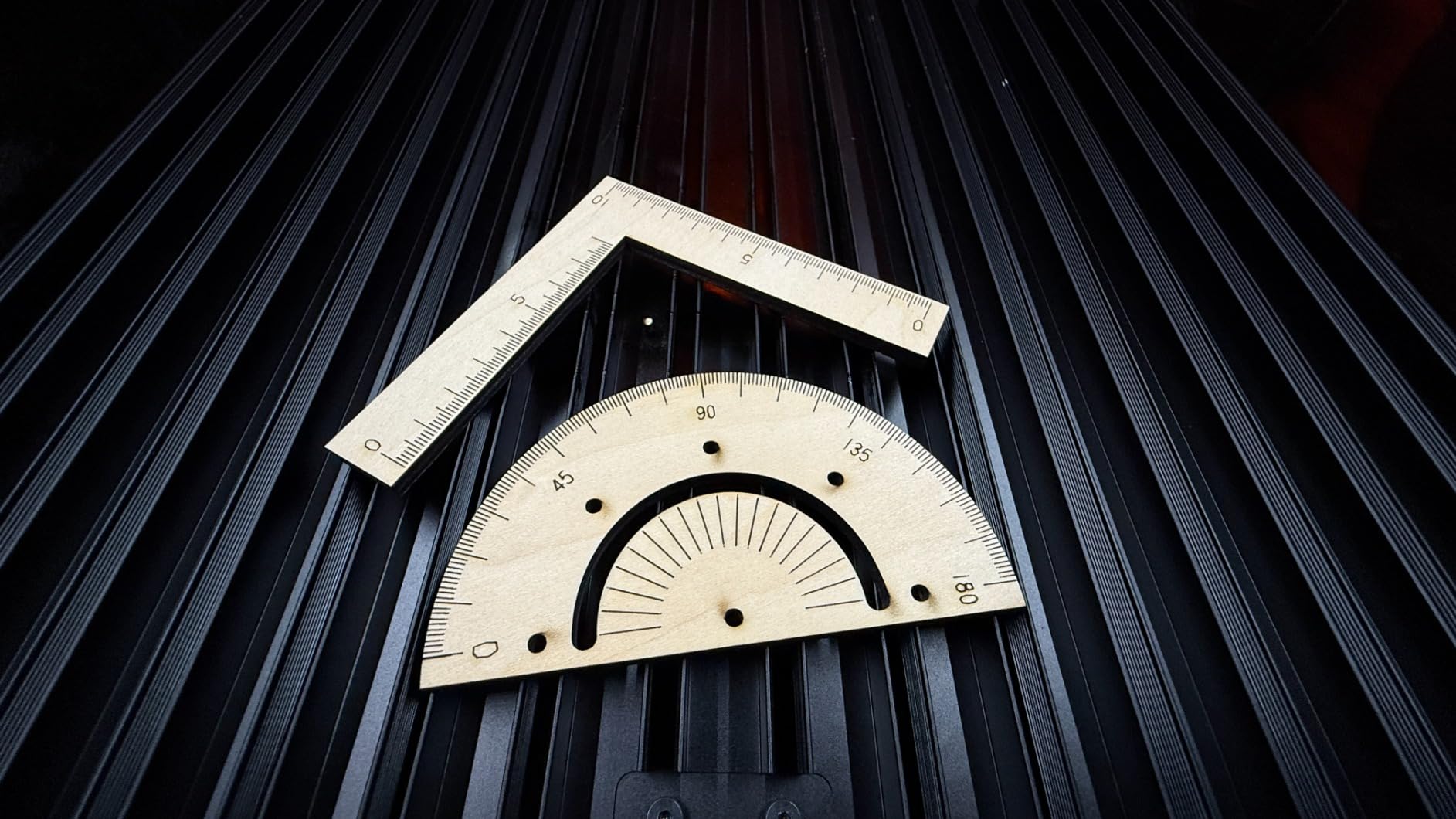
Best when your builds are not only helmets
For a workshop that prints helmets and then builds plaques, base plates and prop components, the modular platform is the reason to choose this. Dual extrusion also helps with two-colour shells, so you can run the visor and body in one job without buying a multi-material unit.
The evidence is thin here
This is the least-reviewed listing in the comparison, so long-term reliability rests on early owner experience rather than an accumulated track record. The modularity and 3-in-1 capability also add cost and complexity against a dedicated large-format printer. Buyers who want documented longevity at 400mm should look at the Creality Ender 5 Max or the QIDI Max4 instead.
12. Anycubic Kobra S1 Max Combo – Best for One-Piece Helmets at 350mm
Anycubic Kobra S1 Max Combo 3D Printer, Large Build Size 350x350x350 mm³
- 350 mm cube prints a full helmet in one piece
- Fully enclosed all-metal frame with 65 C chamber
- ACE 2 Pro feeds without tangles
- Large readable touchscreen
- Quick setup for a machine this size
- Slicer locked to Anycubic software
- Filament detection can false-trigger
- AI camera detection reported unreliable
- Multi-colour work can waste filament
This is the machine the helmet question keeps circling back to. At 350mm on all three axes, the Kobra S1 Max Combo is the smallest volume here that prints most full-size shells as a single object rather than a split dome, and owners cite helmet-sized prints at that dimension as the reason they bought it. If your specific file measures under 350mm, you never sand a seam across the brow.
The fully enclosed all-metal CoreXY frame with a 65 C heated chamber and a 350 C hotend means ABS and ASA shells are on the table without a tent. The ACE 2 Pro feeder is included for four colours and expandable to 16 with additional units, and owners report improved filament handling with no tangles in testing. LeviQ 3.0 levelling across 49 points with real-time flow calibration means little manual setup on a plate that size.
At 600 mm/s with 20000 mm per second squared acceleration it prints a Benchy in about 15 minutes at rated speed, though much of the construction is plastic and it sits at 77.8 pounds. The side-mounted waste chute is convenient for colour changes mid-print, and the large touchscreen is fast to respond. Setup is quick for a machine this size and first prints come out clean.
When 350mm is the right number
Most Mandalorian, Stormtrooper and standard sci-fi shells clear 350mm in X, Y and Z. That means one continuous print, no registration pins to model, no butt-joint seam to fill and a much shorter finishing timeline. On a project with a visible brow line across the front, removing that seam is the single biggest visual upgrade you can make.
The locked slicer is the real limitation
The slicer is locked to Anycubic software, so you cannot bring your own profiles or use a third-party workflow you already know. Owners running several of these report frequent errors and wasted filament on complex multi-colour work, filament detection can false-trigger, and one owner found the AI camera detection unreliable. Support response and spare parts were also slow for some owners.
How to Choose a Large 3D Printer for Helmet Work?
Most of the decision comes down to four things: how big the shell is, what material you intend to print it in, how long the job will run, and how much room you have. Here is how each of those changes the machine you should buy.
An enclosure decides whether ASA is realistic
ABS and ASA are the materials that survive heat, impacts and being handled, which is what a wearable helmet needs. They are also the materials that warp, and warping is worse on a large curved surface than on a flat plaque. An enclosed build chamber with active heating keeps the whole cross-section cooling evenly; the QIDI PLUS4 and Max4 hold 65 C, the Flashforge Creator 5 Pro holds 65 C, and the Creality K2 Pro Combo reaches 60 C. Anything open-frame, including the Ender 3 Max Neo and the Longer LK5 Pro 3, needs a tent or a wrap and will still fight you at the brim.
PLA and PETG print beautifully and sand and fill well, and for a display piece or a convention shell worn for a few hours they are a defensible choice. PETG in particular gives you impact toughness PLA lacks. Check what else you are building before deciding: our picks for the best 3D printers for jewelry making are all about fine detail at small scale, which is the opposite problem from helmet shells.
Kinematics matter more on long jobs than speed does
A full-size helmet is a 16 to 40 hour print. Over that duration the failure modes are mass-related rather than speed-related: a heavy bed sags on an open frame, Z-banding appears as the gantry deflects, and a knock at hour 30 shifts a layer. CoreXY keeps the mass on the rails instead of the bed, and input shaping on both axes keeps acceleration smooth. That is why the Sovol SV08 MAX, the QIDI Max4 and the Kobra S1 Max Combo all handle multi-day jobs better than their headline speed figures alone suggest.
On a bed-slinger, treat the headline millimetres per second as theoretical. Large, heavy, curved prints rarely hold those speeds for long, because the machine spends most of the job in travel, acceleration and perimeters. What matters instead is whether the machine has filament runout detection, power-loss recovery and a camera you can watch remotely. Every machine in this list has at least two of the three.
Filament, wall count and the strap points
PLA and PLA+ sand and fill easily and are the right choice for a first shell. PETG adds toughness and heat resistance at a modest step up in nozzle temperature. ASA and PC are the durable options for a wearable piece, and both need a hot chamber and a hardened or all-metal path. TPU is the trim and gasket material rather than the shell material.
Print at four to six perimeters rather than the default three, and add extra walls around the strap anchors and the bottom rim where the shell meets your jaw. That is where a helmet takes repeated pulling force. Raise the infill to at least 15 percent in those regions, and model registration pins if you are splitting, because a keyed join sands faster than a flat one.
Footprint, noise and levelling
A 400mm machine needs roughly a 600 by 600mm footprint with clearance for the bed to swing fully open and for you to stand beside it, and none of them fit a normal desk. The 500mm machines in this roundup are heavier still, with the Sovol SV08 MAX at 86.8 pounds and the QIDI Max4 Combo at 120 pounds, so budget for a dedicated table rated for the load. The 300mm machines are the only ones that stay portable.
Noise matters if the printer lives in a bedroom or a shared flat. Enclosed machines running fans and a heated chamber produce more background sound than open frames, and the quietest hardware here is the Longer LK5 Pro 3 with TMC2208 drivers. On bed levelling, auto systems are no longer a luxury: forum threads consistently put failed first layers at the top of the problem list, and every machine above except one uses a sensor, an eddy-current scan or an assisted first layer.
Finally, think about a companion machine. A resin printer handles faceplates, visors and small detail parts with a surface finish no FDM layer line can match, and a scanner will save you from hand-measuring every file. We cover both in our guides to the best 3D scanners and to the small-format printers that handle fine detail work, and both pair well with a large format machine.
Finishing a Printed Helmet: From Support Removal to Clear Coat
A printed helmet is roughly 80 percent of the work. The finishing stage is what separates a print that looks like a prototype from one that survives a convention floor.
The sequence that works
Design the file with the seam on a hidden line and use registration pins so the join has a mechanical fit. Print a scaled test cut of the wall section first rather than committing to a 30-hour job on an unverified profile. Once printed, remove supports while the shell is still slightly warm, then sand progressively through 120, 240 and 400 grit, working around the visor opening with a sanding block rather than your fingers so the curve stays true.
Fill the seam and any layer-line flat spots with filler primer, sand it back flush, then prime with a grey or black primer to expose remaining defects under a raking light. Base coat, then detail colours, then a clear coat to protect the print and give it the sheen people expect. If you are painting an ASA or ABS shell, let each coat cure fully rather than rushing, because rushing is what produces a soft finish that dents.
Is There Anything Illegal to 3D Print a Helmet?
Printing a helmet for your own use is generally fine. The legal risk is in what you do with it afterwards: selling replica character helmets at a convention or online is commercial use of someone else’s protected character design, and that exposes you to a trademark claim and, in some cases, to demands that you stop. Wear it, photograph it, display it and you are on solid ground. If you plan to sell, modify the design into something original, or file it as your own work on a marketplace, talk to a lawyer first.
Frequently Asked Questions
How big of a 3D printer do you need to print helmets?
An adult cosplay helmet is typically 220-260mm tall, 250-300mm wide and 290-330mm deep. A 300 x 300 x 320mm printer handles most shells in two pieces, a 350mm cube prints many helmets in one piece, and a 400mm or larger cube fits flared sides and deep visors without splitting. Measure your specific file’s largest dimension and match it against the printer’s X, Y and Z axes.
Which 3D printer can print helmets?
Any FDM printer whose build volume clears the helmet’s largest dimension can print one. The Sovol SV08 MAX at 500 x 500 x 500mm prints complete shells and props in a single job, while the Anycubic Kobra S1 Max Combo at 350mm cube is the smallest machine here that prints most full-size helmets in one piece. Open-frame 300mm machines work but force a two-piece print.
What is the best large format 3D printer for cosplay builds?
For most builders the answer is a 350mm to 400mm enclosed CoreXY machine with an actively heated chamber. The Sovol SV08 MAX leads this comparison on volume, review base and hotend temperature, while the QIDI Max4 Combo and Flashforge Creator 5 Pro lead on chamber temperature at 65 C. Any enclosed machine between 350mm and 400mm removes the seam problem for the majority of helmet files.
Do I need an enclosed 3D printer for ABS armour?
For large ABS or ASA helmet shells, yes. Those materials shrink as they cool, and an open frame lets the outer skin contract before the core does, causing corner lift and separation along the brim. An actively heated chamber at 60-65 C keeps the skin and core closer in temperature. Open-frame machines can still work with an enclosure tent and a brim, but they cost more time per helmet.
What is the largest size a 3D printer can print?
Within consumer machines, the largest consumer build volumes here reach 500 x 500 x 500mm on the Sovol SV08 MAX, with the Anycubic Kobra 3 Max Combo offering 420 x 420 x 500mm and the Creality Ender 5 Max and Snapmaker Artisan offering 400mm cubes. Beyond that sits an industrial large-format class that we do not cover in this roundup, where a single part can run to a metre or more.
How much would it cost to 3D print a helmet?
The dominant cost is time and materials rather than the machine alone. A full-size shell typically consumes one to two spools of filament across a 16-40 hour print, plus abrasive, filler primer, paint and clear coat. Multi-colour systems add purge waste on top. The current hardware prices move constantly, so use the price buttons on each product card above and add your own consumables on top.
The Verdict: Which Large 3D Printer for Helmets Should You Buy?
The Sovol SV08 MAX is our pick for the best large 3D printers for helmets in 2026. A 500mm cube removes the seam entirely, CoreXY motion keeps a 40-hour job flat, and the 300 C hotend covers every filament a wearable shell needs. Buy the Creality Ender 3 Max Neo if you want the 300mm tier on a tight budget, the Anycubic Kobra S1 Max Combo if 350mm is enough for your files, and the QIDI Max4 Combo or Flashforge Creator 5 Pro if ASA shells are the plan.