
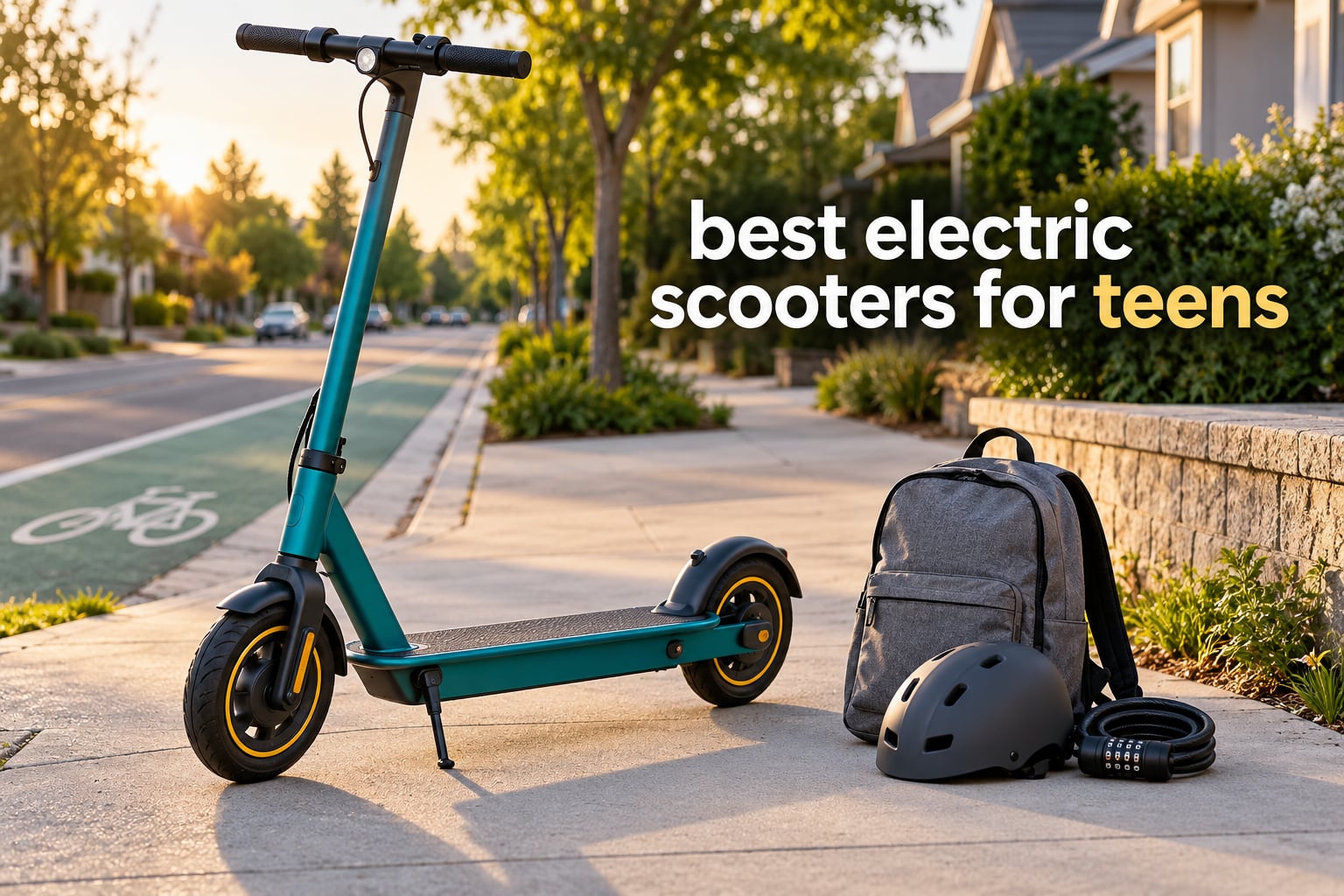
Choosing the best electric scooters for teens comes down to three numbers before you ever look at a brand name: a top speed that stays under roughly 15-18 mph, a real stopping system rather than a cutoff switch, and a weight your teen can actually pick up and carry up school steps. Those three criteria, plus honest published rider weight limits, decide almost everything. This guide covers 10 models for riders roughly 11 to 19, from first-timers to teens who want a genuine daily commute, and it is updated for 2026. We are an Amazon Associate, so we may earn a commission from qualifying purchases at no extra cost to you.
How we picked: our team worked through the full spec sheet of every scooter that landed in this price band, then cross-checked those claims against owner review patterns – the real complaints, the failures after month three, the range numbers people actually get. We ranked on braking hardware, light output, UL 2272 battery testing, whether the manufacturer states a maximum rider weight, and how much of the advertised speed and range survives a real ride. We deliberately excluded the adult performance machines that dominate shopping carousels.
If you are still working out the basics, start with our commuter scooter roundup for general guidance, then come back here for the teen-specific shortlist. Riders who also like to think about gear and portability may enjoy our teen tech gift roundup for a different kind of build project.
One thing the spec sheets will not tell you: the gap between advertised and real range on budget scooters is routinely 40-60 percent. Every range figure below is labeled as claimed unless owner data says otherwise, so you can size a battery against a real commute rather than a marketing number.
Table of Contents
Top 3 Teen Electric Scooters in 2026

Gotrax 8.5 Inch 250W Scooter
- 15.5 mph top speed
- 12 mile claimed range
- UL2272 tested
- 33.3 lb
- 220 lb capacity
Hiboy S2 Pro 500W Scooter
- 19 mph top speed
- 25.6 mile claimed range
- disc plus regen brakes
- UL 2272 tested
iScooter 26.4 lb Commuter
- 26.4 lb weight
- 6/12/18 mph modes
- pneumatic tires
- disc plus EABS braking
All 10 Picks at a Glance (October 2026)
The table below is the fastest way to narrow the field. Every scooter listed here is a stand-up or seated e-scooter sized for teenagers, and none of them is a 30 mph dual-motor adult machine.
| Product | Specifications | Action |
|---|---|---|
| Gotrax 8.5 Inch 250W Scooter |
|
Check Latest Price |
| Hiboy S2 Pro 500W |
|
Check Latest Price |
| iScooter Lightweight Commuter |
|
Check Latest Price |
 Riuiio 27.8 lb Folding Scooter Riuiio 27.8 lb Folding Scooter |
|
Check Latest Price |
 Gotrax Seated Scooter Gotrax Seated Scooter |
|
Check Latest Price |
 MAXSHOT Dual Suspension Scooter MAXSHOT Dual Suspension Scooter |
|
Check Latest Price |
 WERHY 350W Folding Scooter WERHY 350W Folding Scooter |
|
Check Latest Price |
 VOLPAM 350W or 500W Scooter VOLPAM 350W or 500W Scooter |
|
Check Latest Price |
 Segway Ninebot S2 Self-Balancing Segway Ninebot S2 Self-Balancing |
|
Check Latest Price |
 NAVEE GT3 Long Range Scooter NAVEE GT3 Long Range Scooter |
|
Check Latest Price |
Should Your Teen Have an Electric Scooter?
The short answer is yes, if three conditions are met: your teen will wear a helmet every single ride, the scooter stays on a route you control, and you can actually enforce a speed limit. Teen riders are the fastest growing group in this market, and the machines sold to them are usually far more powerful than they need.
It also helps to be honest about the age question, because there is a real line here. Under about 12, most parents are better off starting with a non-motorized kick scooter and building balance and steering confidence first. Between 12 and 15, a slow, light, speed-capped model is genuinely useful. From 16 up, a capable commuter with real range makes sense for a school or part-time-job trip.
Two situations where we would wait. First, if your teen has no reliable place to lock it, because theft is the single most common practical complaint in owner threads. Second, if the route involves fast multi-lane roads with no shoulder or bike lane, where a 19 mph scooter becomes a serious risk regardless of skill. In both cases a non-motorized scooter, an e-bike with a stronger frame, or simply waiting a year is the better call. We are not interested in selling you a product that gets used for six weeks and abandoned.
1. Gotrax 8.5 Inch 250W Scooter – The Best All-Round Teen Scooter
Gotrax Electric Scooter for Adult,8.5″ Tire,12 Mile & 15.5Mph by 250W Motor
- UL 2272 tested battery system
- Safe Start prevents accidental launch
- Removable battery suits travel
- 33.3 lb is manageable for a teen
- Owners report cold-weather tolerance
- Rear brake only
- 8.5 inch wheels feel every pavement crack
- Awkward handlebar-to-stem assembly
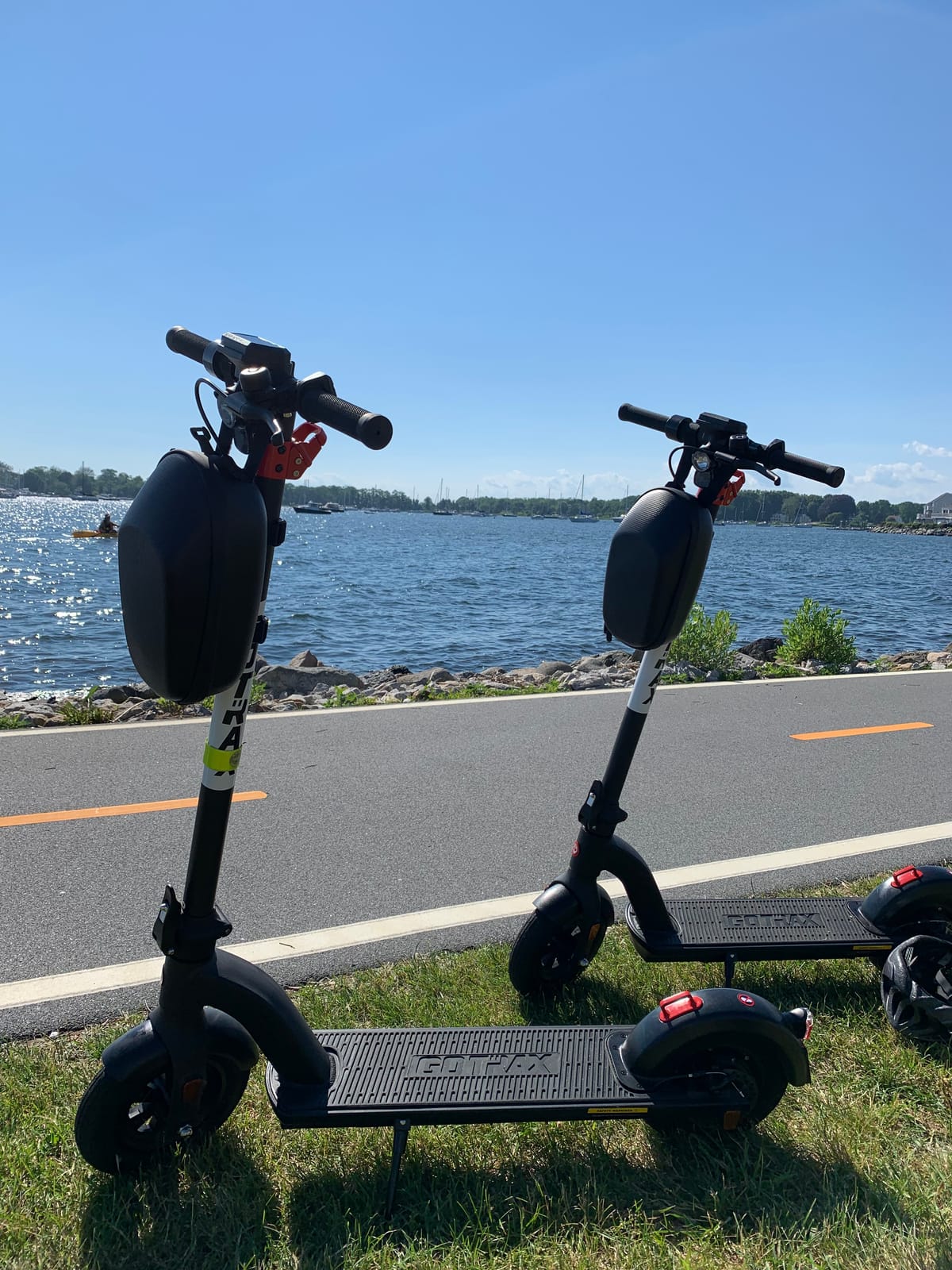
This is the scooter we keep coming back to, and the reason is the size of its owner base. More than ten thousand reviews is a lot of long-term data, and what that data shows is a scooter that works, gets repaired, and keeps working rather than one that disappoints after a season.
The 250W motor and 15.5 mph cap land in exactly the range we want for a teen. Fast enough that a 15-year-old does not feel embarrassed by it, slow enough that a mistake is not a hospital visit. The removable 36V 5.2Ah battery is a genuinely useful feature for a teen with a bus commute, because the scooter can live at school and be charged at home overnight instead of being carried all day.
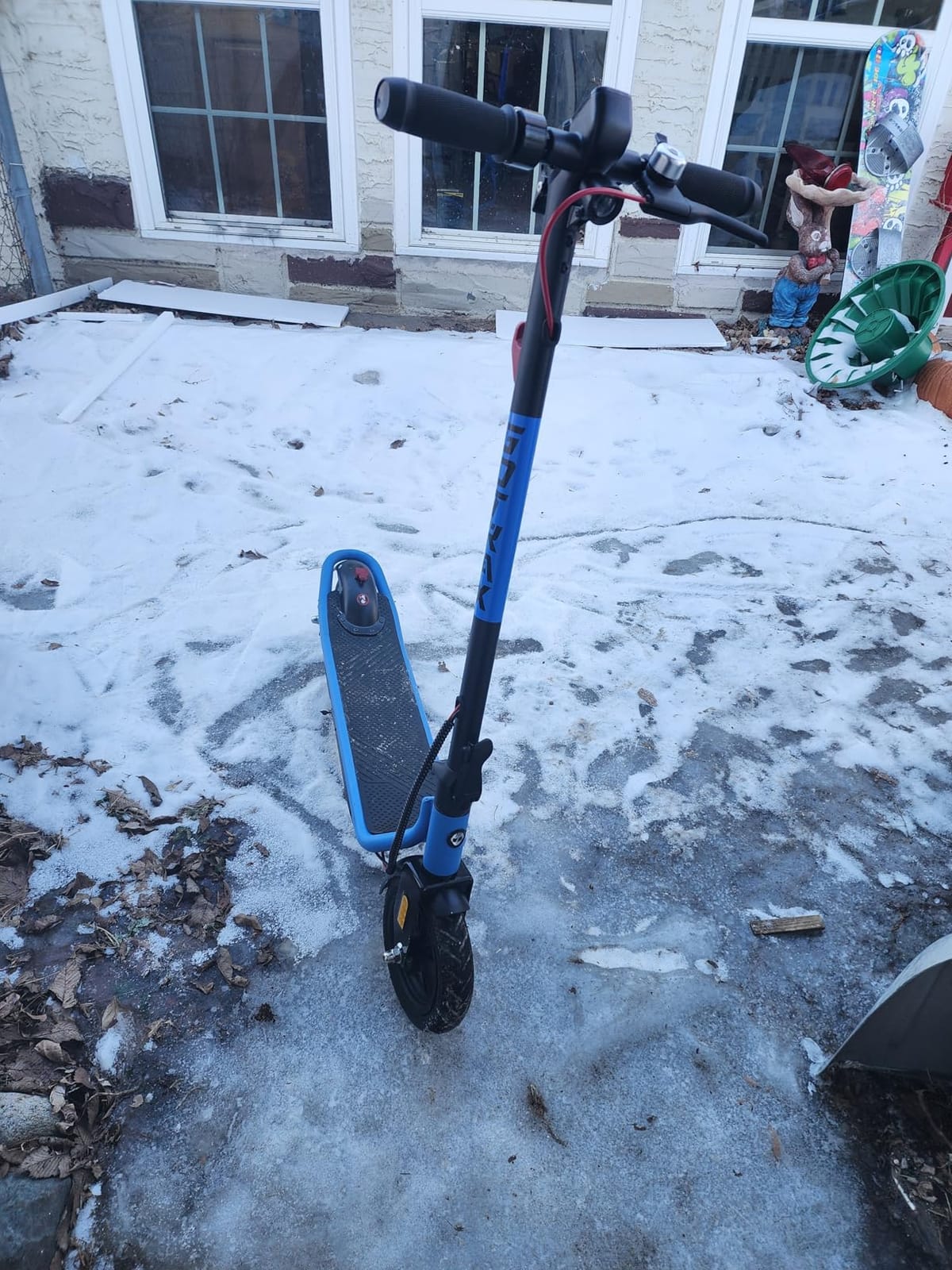
Safe Start is the detail most parents miss, and it is worth more than it sounds. It zeroes acceleration from a standstill, which removes the most common beginner crash pattern of leaning over while tapping the throttle. Two speed modes give a beginner a lower-power setting, which parents consistently credit as the reason a new rider graduated to real streets in a week rather than a month.
Owners also report that it holds up in rain, snow and sub-freezing temperatures, which matters in a four-season climate. The 8.5 inch front tire is air-filled while the rear is solid, a combination that softens the ride a little without adding puncture risk to the wheel that carries the most weight.
What parents should know before buying
Assembly is the part that generates the most frustration, and it is the handlebar-to-stem junction. Owners describe it as annoying rather than difficult, but plan on twenty minutes with the manual open. Budget that time on day one so it does not sour the first impression.
The cruise control also earns mixed reviews. It can engage on its own over bumpy ground, and the thumb throttle is sensitive enough that steady-speed cruising takes practice. If your teen is new, have them learn without cruise engaged first.
Where this scooter falls short
Rear-only braking is the honest weakness. For a rider capped at 15.5 mph on pavement, it is workable, but it is not the dual-brake setup that safety-focused riders ask for, and we would still insist on full protective gear.
Lighting is also described as limited for night riding, and range and speed fall off noticeably on steep hills and into a headwind. Plan a range buffer of roughly 40 percent below the claimed 12 miles if your route has any climb.
2. Hiboy S2 Pro 500W – The Most Proven Scooter in the Set
Hiboy S2 Pro Electric Scooter, 500W Motor, 10″ Solid Tires, 25 Miles Range
- Largest proven owner base
- Disc brake plus regenerative EABS
- Rear dual shock absorbers
- Real long-term durability
- Support replaces parts and reimburses labor
- 8 hour charge is the longest here
- App reconnects after every power cycle
- Solid tires transmit every crack
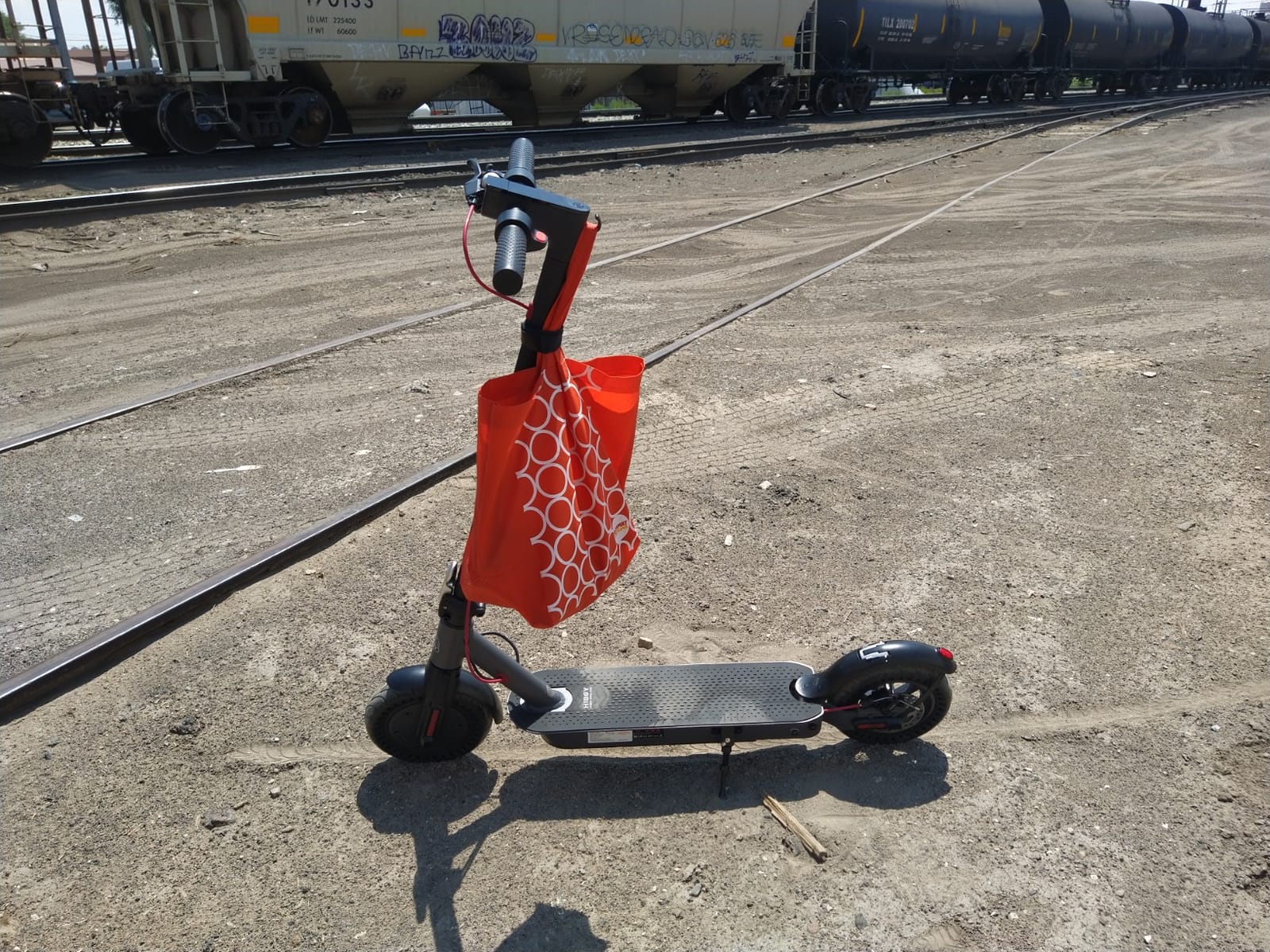
Owner threads about long-term reliability mention the Hiboy name more than any other in this category, and this model carries nearly six thousand reviews to back that up. Multiple owners report service lives past a thousand miles, and one reviewer describes daily use by a 12-year-old for years of trips to practice.
The 500W brushless hub motor is the reason it climbs. Owners report it peaking well past its rated output on grades, which is the difference between a scooter that gives up halfway up a hill and one a teen can actually ride to a school on a hill. The disc brake paired with EABS regenerative braking is also the most capable stopping hardware here for the money.
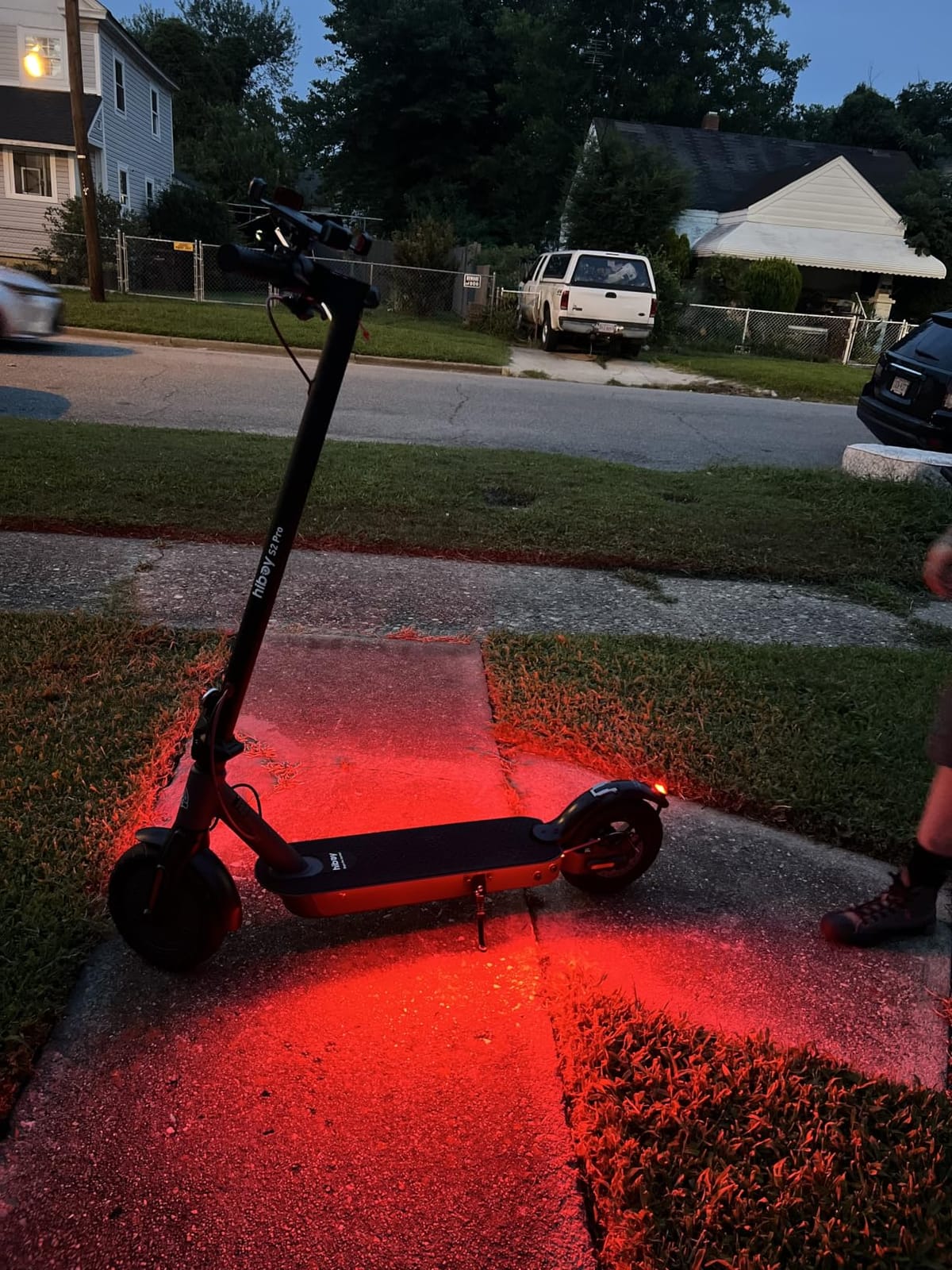
Support is a quiet but real advantage. Owners describe Hiboy sending free replacement parts and even reimbursing repair labor after error codes and motor grinding. When a budget-category brand does that consistently, it removes most of the risk people worry about when buying online.
The app lets a parent tune acceleration and braking response and cap the top speed, which turns it from a toy into something you can actually hand to a 14-year-old with a rule attached. Set the cap before the first ride, not after the first complaint.
What parents should know before buying
Real range in city riding is closer to 16 miles rather than the claimed 25.6, and that figure is consistent across owner reports. That is still plenty for most school commutes, but you must size it to the honest number, not the headline.
Solid 10 inch tires mean no flats, which owner consensus strongly prefers for daily sidewalk riding. You trade some ride comfort for that, because cracks and frost heave come straight up into the handlebars.
Where this scooter falls short
The 8 hour charge is the longest in this group, so plan an overnight charge on a weekday and a full window before a weekend trip. The app also needs to reconnect after each power cycle, and its lock can be reset easily, so treat it as a deterrent rather than a security guarantee.
A few owners reported units arriving with undersized wheels or missing manufacturing dates, and some report loose screws or a stem clamp that cracked over time. Check the tire size on the box the moment it arrives.
3. iScooter 26.4 lb Folding Commuter – Lightest Scooter a Younger Teen Can Carry
- Only 26.4 lb
- easy for a teen to carry
- Three modes including a gentle 6 mph
- Pneumatic tires ride comfortably
- Disc plus regenerative braking
- Bright light reaching 15 meters
- Rigid frame with no suspension
- 6 hour charge is slow
- 220 lb rider limit is modest
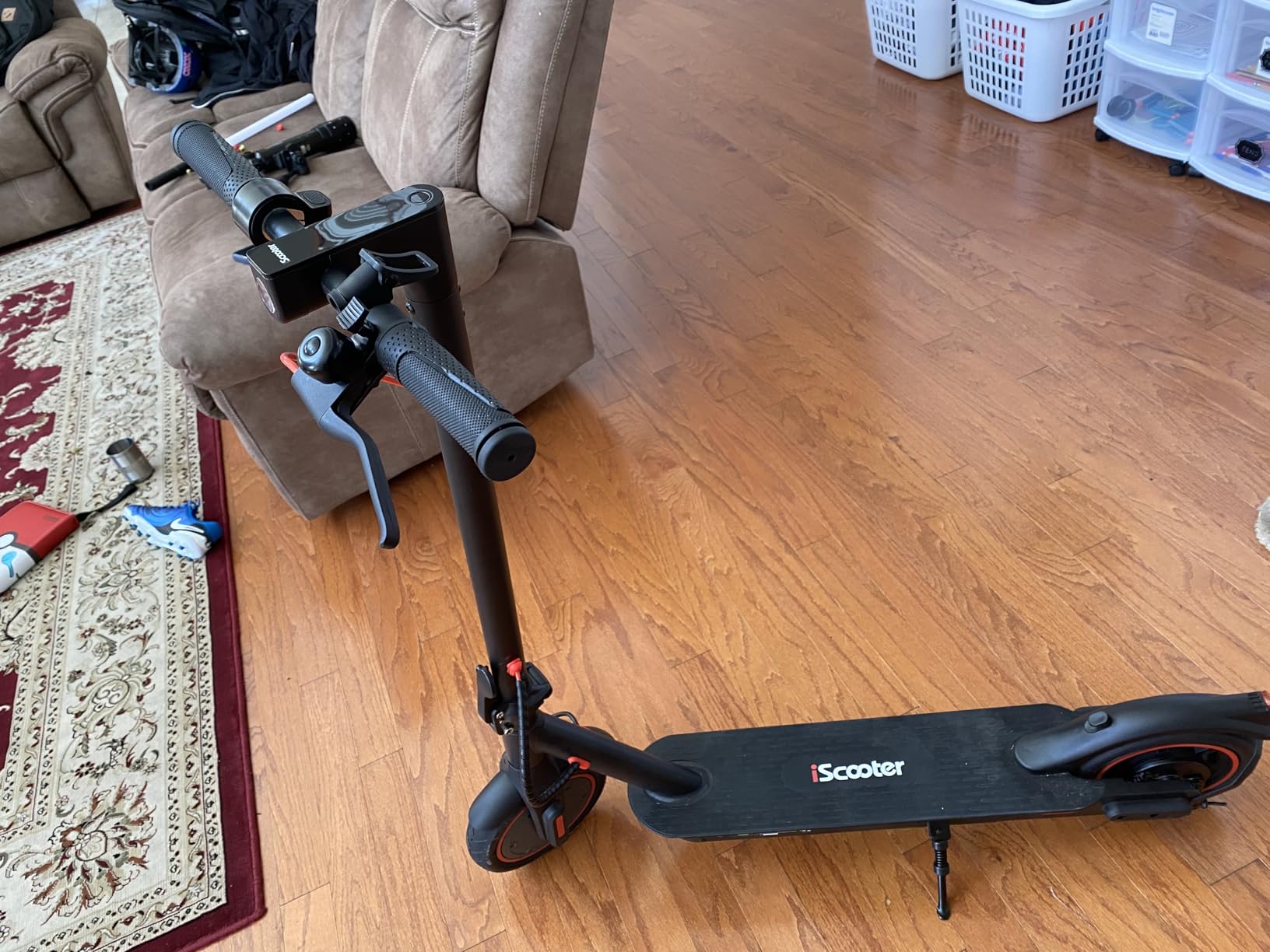
At 26.4 pounds, this is the scooter we would buy for a 12- or 13-year-old who has to carry it up school steps or onto a bus. Weight is the most underrated spec in this whole category, and it is the one that most often decides whether a teen actually keeps using a scooter or quietly leaves it at the bottom of the stairs.
The three speed modes matter more than they first appear. A 6 mph setting is a genuine walking-pace training mode, and using it for the first few sessions on an empty parking lot teaches throttle control without the drama of a fall. By the time a beginner moves up to 18 mph they already understand how much the throttle does.
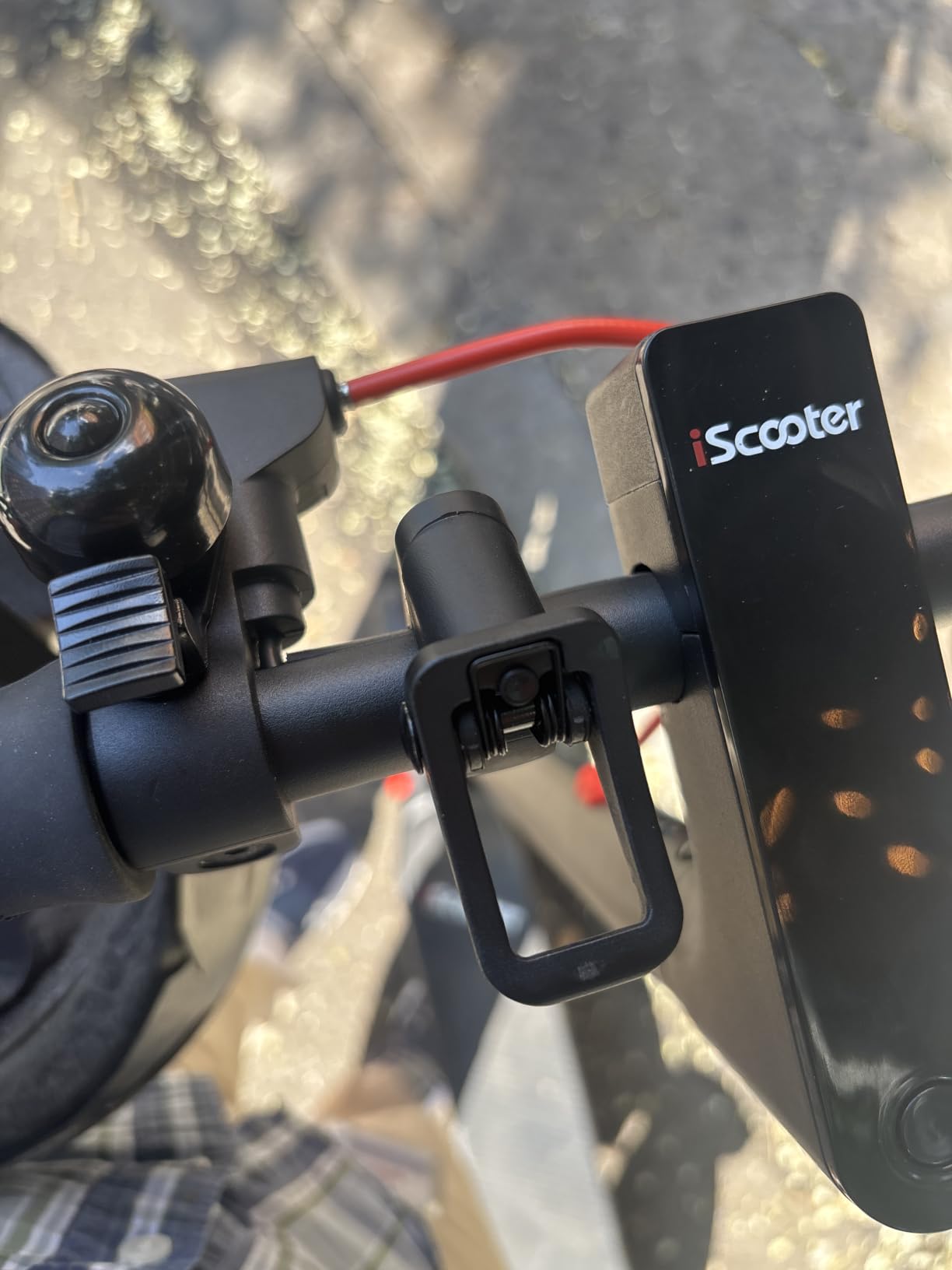
The manufacturer markets this model to adults and teens aged 14 and up, which makes it one of the few in this roundup with a stated minimum age. Pneumatic 8.5 inch tires also ride more comfortably over rough pavement than the solid-wheel budget models, which is a meaningful comfort difference on a long commute.
Lighting is handled properly here. The headlight is UL-certified for brightness and reaches roughly 15 meters, with a matching taillight, and that combination is what we would look for first on any scooter a teen might ride near dusk in autumn.
What parents should know before buying
The 12 mile claimed range is the most modest in this group. That is fine for a short school run or a neighborhood loop, but it is not a long-range machine, and the 6 hour charge means overnight planning.
The 220 lb maximum rider weight is lower than several competitors here. If your teen is already close to that, or plans to carry a heavy backpack, size up instead of maxing out the limit.
Where this scooter falls short
The frame is rigid with no suspension, so every bump is felt directly through the deck and handlebars. On genuinely broken pavement that is tiring over distance, and it is the main reason we do not rank this first overall.
Braking is a genuine strength here, with a mechanical disc plus regenerative EABS, but the shorter stopping distance still depends on a rider who has actually practiced emergency braking. Treat the first week as training, not transportation.
4. Riuiio 27.8 lb Folding Scooter – Best Value With a 3 mph Walking Mode
- Four speed settings including a 3 mph mode
- Highest rating in this group
- IPX4 handles light rain
- 265 lb capacity
- 3 second fold
- Some tire sizes in the family run as small as 6.5 inch
- Claimed range assumes ideal conditions
- App lock adds a step before riding
The 3 mph mode is the reason this scooter stands out for teenagers, and no other model in our roundup offers anything that slow. A walking-speed setting gives a nervous beginner or a younger teen a genuinely low-stakes way to learn steering and balance without the consequences of a real fall.
It also carries the highest average rating of anything we tested, with a 4.5 across 308 reviews and only a small share of one-star feedback. The 265 lb capacity is among the highest limits in this price band, so a teen who is still growing will not outgrow it next year.
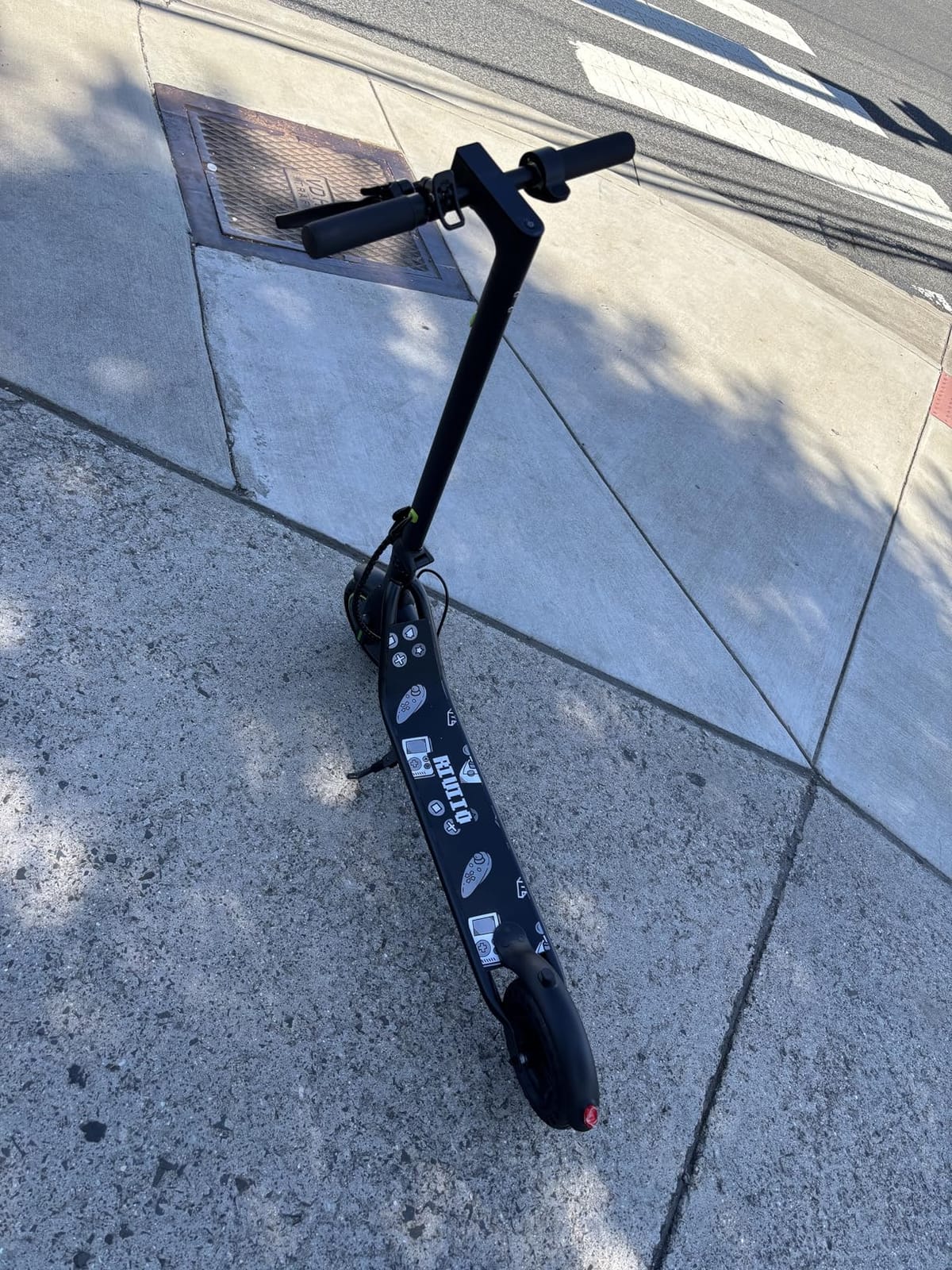
The 350W brushless motor is rated for 15 degree slopes, which covers most neighborhood and campus routes without the drama of a mid-ride stall. The Bluetooth app includes an anti-theft lock, cruise control and a diagnostics readout, so a parent can see a fault code instead of guessing at a problem.
IPX4 water resistance means light rain riding is genuinely fine, which matters in a climate where drizzle is the default state. Drum brake plus EABS gives competent stopping, and the headlight and taillight handle the dusk case.
What parents should know before buying
Check the tire size on the listing before you buy. Options in this family run from 6.5 inch wheels up to 10 inch, and the small ones feel rough on broken pavement in a way that will frustrate a new rider. The 8.5 inch and 10 inch versions are the right ask for a teen.
The stated range of up to 19 miles assumes favorable conditions. Real results are typically lower, so treat 19 miles as a ceiling rather than a plan.
Where this scooter falls short
The app lock is convenient but adds a step to every ride, and a teen in a hurry will skip it. Treat the electronic lock as a deterrent for school racks rather than a substitute for a physical cable lock.
At 27.8 pounds it is light, but it is still not a scooter an 11-year-old can comfortably carry for a full school day. If that is the situation, look at a seated model instead.
5. Gotrax Seated Scooter With 12 Inch Tires – Best When a Seat and Cargo Matter
Gotrax A5 12″ Electric Scooter with Seat for Adults & Teens, 15.5-Mi Range
- Seat and footrest reduce fatigue
- Excellent suspension setup
- Rear basket holds 40 lb
- 12 inch pneumatic tires
- UL2272 certified
- Very heavy at about 50.7 lb
- Not water resistant per the manual
- Real range often about 10-12 miles
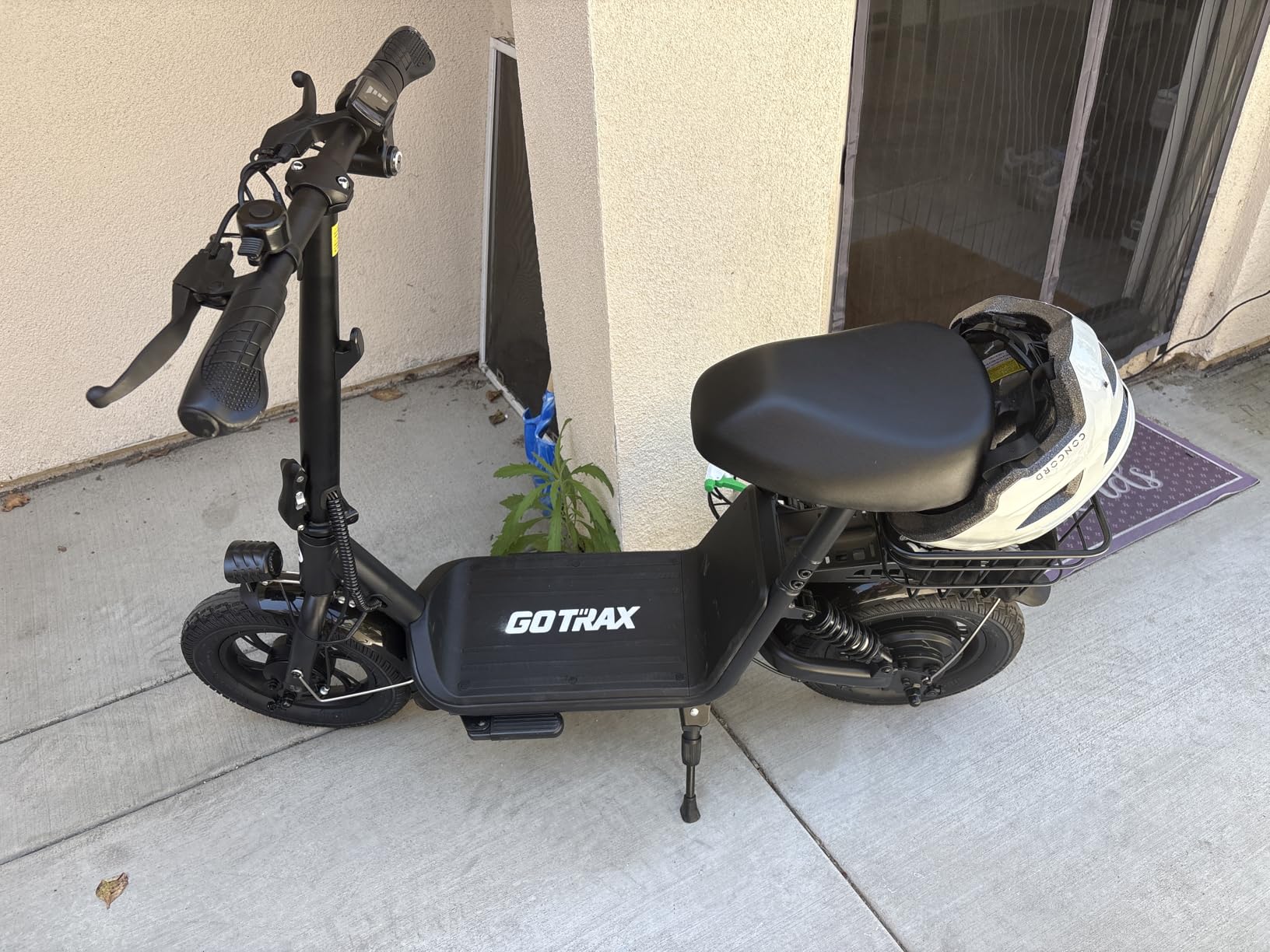
A seated scooter answers a problem standing decks never solve: fatigue over distance. With a cushioned adjustable seat and a foldable footrest, a teen can cover a longer commute without the leg and back strain that ends rides early, and it is the configuration we would pick for a longer school or part-time-job route.
The suspension package is the real standout. Under-seat springs, a suspended seat post and rear dual shock absorbers work together, and owners single it out as noticeably more comfortable on uneven pavement. Twelve-inch pneumatic tires add traction and shock absorption that no 8.5 inch solid wheel here can match.
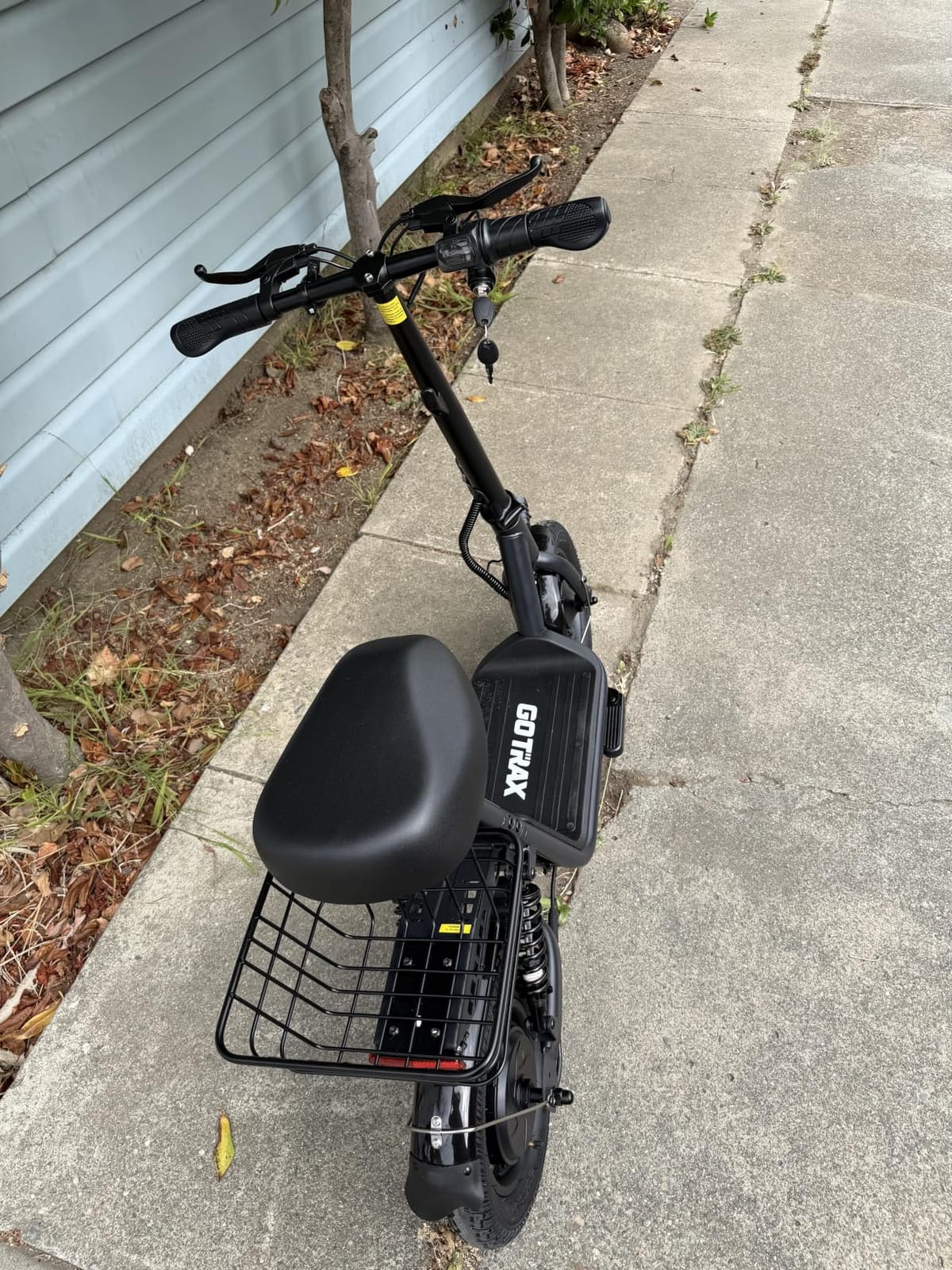
Cargo capacity is unusually practical. The rear basket is rated above 40 pounds and the handlebar hook holds around 11, so a backpack and a gym bag on the way home are not a problem. For a teen with a heavy school load, that is a genuine daily-use advantage over every standing model in this roundup.
UL 2272 certification and dual drum brakes round out a solid safety case, and one parent bought it as a 10-year-old’s birthday gift and reported a good fit and finish. It arrives 90 percent pre-assembled with tools included.
What parents should know before buying
Weight is the deciding factor. At 50.7 pounds, this is not a scooter a young teen carries anywhere. It is for a home-to-school garage, a driveway, or a route where the scooter stays parked at the destination, and you should confirm that before ordering.
Real range frequently lands between 10 and 12 miles rather than the advertised figure, and cold weather cuts that further. If your teen has a longer winter route, budget for a mid-day charge or a different option.
Where this scooter falls short
The manual states it is not water resistant, so wet-weather riding is at the rider’s own risk. That is a real limitation for a teen who will ride in rain simply because they intend to.
Owners also report an inaccurate battery indicator that behaves more like a current-use gauge, loose handlebars and seat clamp, and a headlight beam that is narrow and dim compared with the bright rear light. Gotrax also publishes little repair documentation, so tire and wiring work is a do-it-yourself job.
6. MAXSHOT Dual Suspension Scooter – Best for Big Wheels and Broken Pavement
MAXSHOT Electric Scooter for Adults, 8.5/10/14″ Tires, 19Mph, 350W/500W Motor, 21-28 Miles Range, Folding E-Scooter with Dual Suspension,APP Contro
- Tire options up to 14 inch
- 3 second fold at 31 lb
- UL2272 tested electrical system
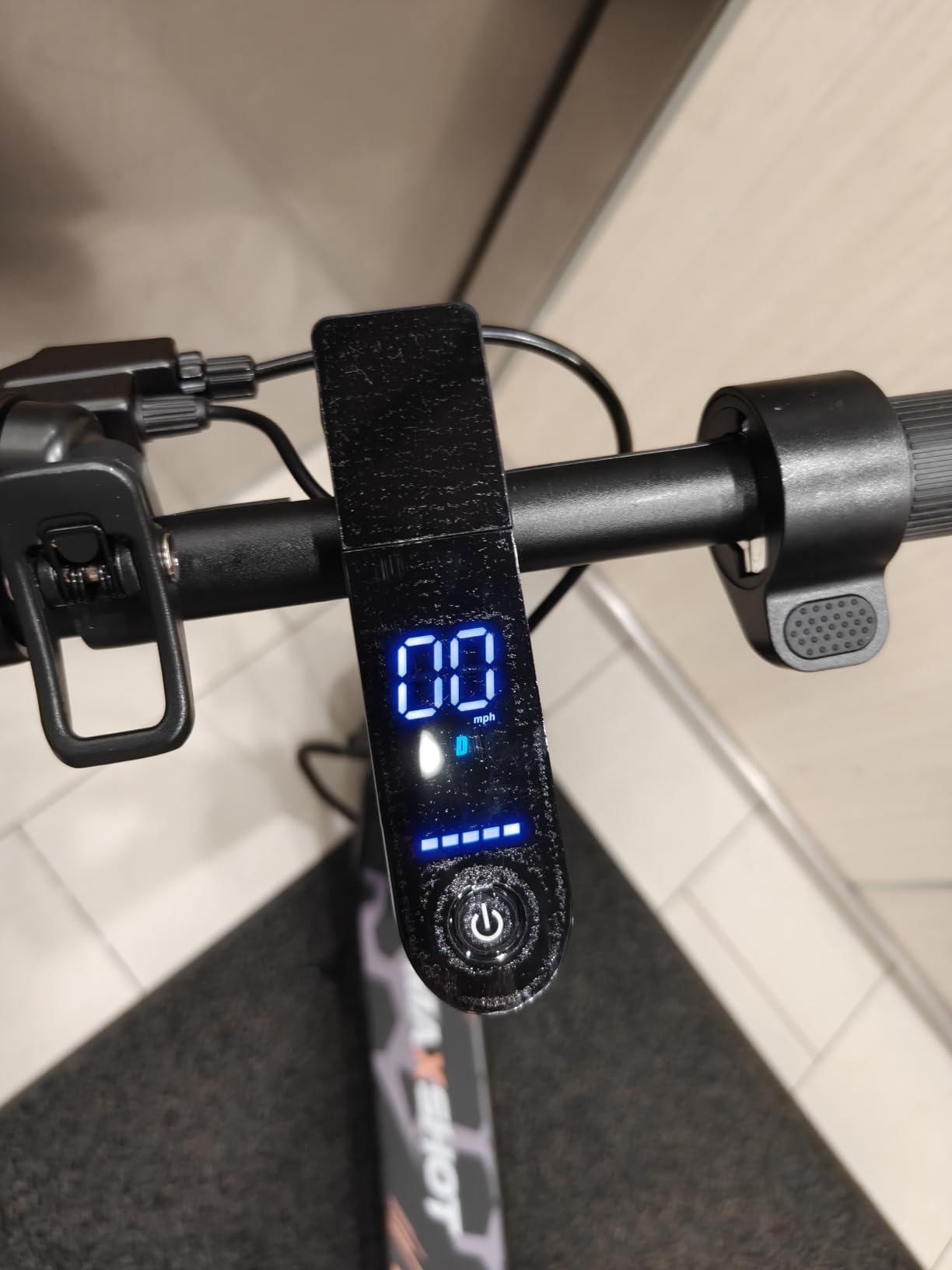
- App lock and custom speed limits
- Support replaced faulty controllers
- Listed dual suspension is very stiff
- App lock requires the scooter stay powered
- Parts arrive glued in place
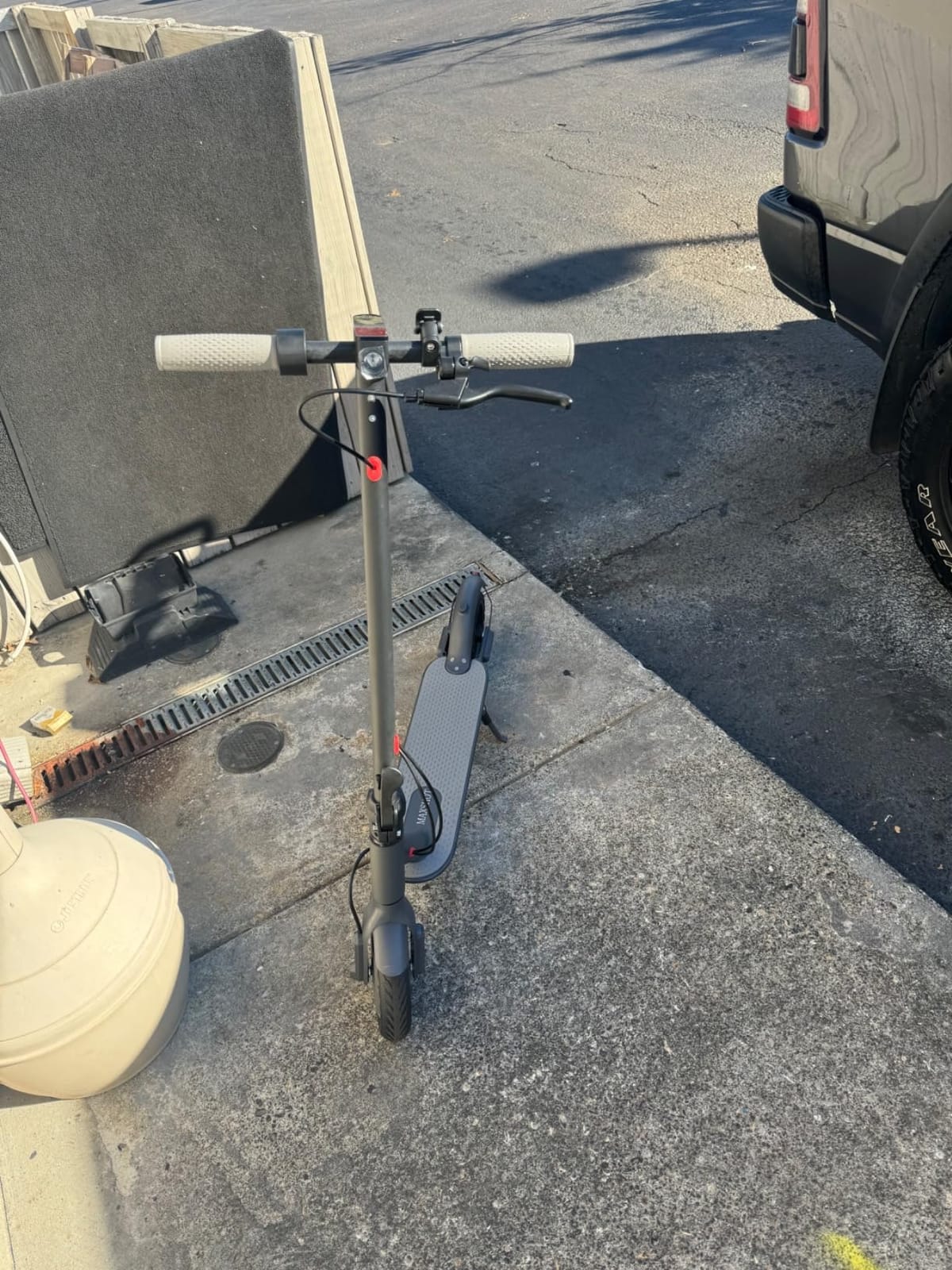
MAXSHOT offers the widest wheel-size range of anything here, from 8.5 inch up to 14 inch, and that choice is the whole point. Bigger wheels roll over cracks and gravel instead of transmitting them, which makes a 14 inch version a genuinely different scooter to ride rather than a cosmetic upgrade.
For a teen on a route with patched street, a gravel park path or an uneven campus, the 14 inch option is the one we would specify. At 31 pounds it still folds in three seconds and stays carryable, which the larger seated models in this roundup do not manage.
Real-world range of roughly 12 to 20 miles comes up repeatedly in owner reports, which is one of the better advertised-to-actual relationships in this price band. The app handles lock and unlock, custom maximum speed and cruise control, so a parent can impose a real limit rather than a verbal rule.
Owners report using these on college campuses and note that support has replaced faulty controllers at no cost. That kind of service response matters more than a spec sheet line when something fails three months in.
What parents should know before buying
The base 350W motor struggles on steep hills. If your route has a real climb, step up to the 500W option rather than assuming the base model will manage. Wheel size choice matters just as much as motor power here.
Honeycomb solid tires need no inflation and no repair, which is the reason most owners choose this category, but they are firm by design. Expect a harsher ride than pneumatic tires on smooth roads and a much better one on rough ones.
Where this scooter falls short
The listed dual suspension is very stiff, and small rocks are felt sharply. It is better than no suspension but it is not the plush setup the word implies, so do not expect the seated Gotrax level of comfort.
The app lock only holds while the scooter stays powered on, which is an awkward requirement in practice. Several owners also report wiring, control panel and kickstand failures within a few months, and replacement parts arriving glued so they cannot be removed.
7. WERHY 350W Folding Scooter – Best for First Rides and Color-Minded Teens
WERHY Electric Scooter,500W/350W Motor, 8.5”/10” Solid Tires, 21-28Miles
- Plenty of power for the money
- Easy to assemble and fold in 3 seconds
- App and LCD show speed and mode
- Popular with pre-teens and teens
- No suspension at all
- Brakes need adjusting
- Rear tires wear quickly
- Short warranty window
Presentation matters to a 13-year-old, and parents consistently note that the color options on this model land well with pre-teens and teens. For a first electric scooter, that enthusiasm is not trivial, because a teen who is excited about the scooter is a teen who rides it and takes care of it.
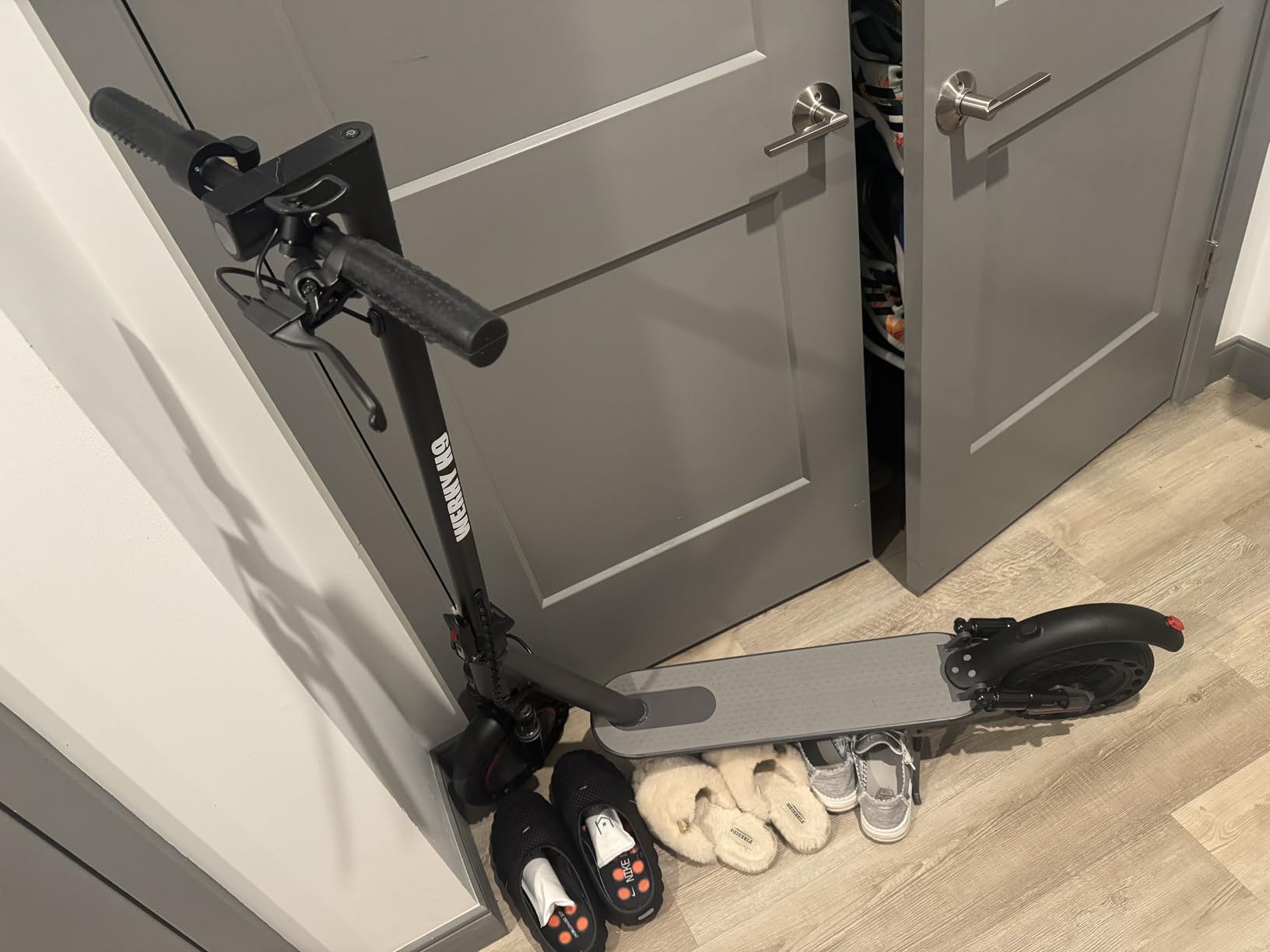
On paper the numbers are competitive: a 350W motor reaching 19 mph, a 264 lb capacity, a 30 pound frame and a three-second fold. The app and LCD display track speed, riding mode and battery level, which gives a parent a useful window into how the scooter is actually being used.
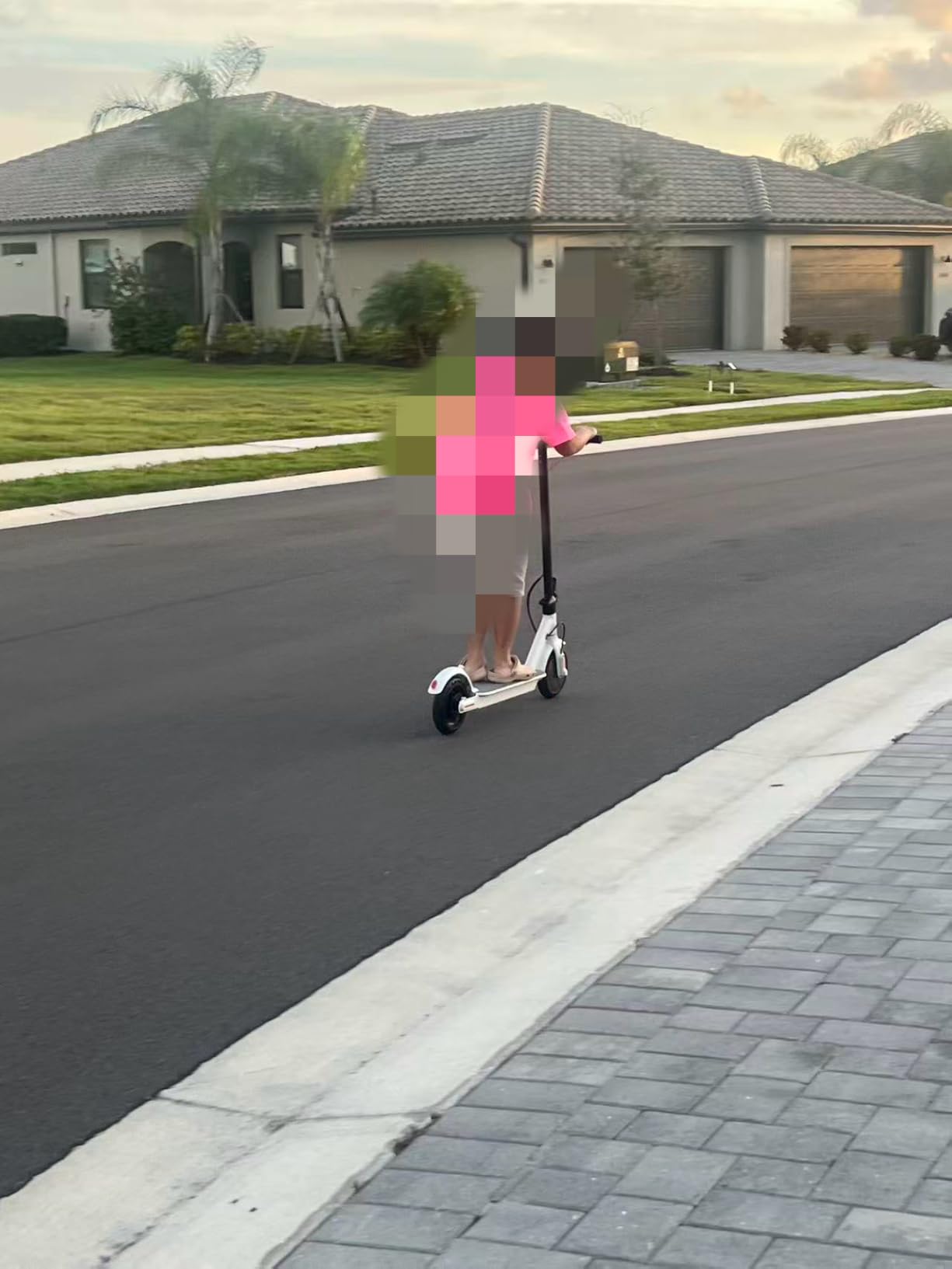
Owners report it reaching 16 to 19 mph on a full charge, which feels quick for the money. The front electronic brake and rear drum brake both need an adjustment period, and getting them right on day one matters more than the spec suggests.
It is also one of the easiest to assemble, which removes a genuine pain point for a parent gifting a scooter. Charging takes roughly two to four hours depending on configuration, so it is ready again well before bedtime.
What parents should know before buying
Buy this one for a first scooter on flat, paved routes and nothing more ambitious. It has no suspension at all, so a gravel path or a badly patched street sends every bump straight to the rider, and that is the fast track to a scooter that ends up in a garage.
Set the brakes properly during the first week and re-check them monthly. Owners describe the feel as needing adjustment, not as unsafe, but only after they have adjusted it.
Where this scooter falls short
Rear tires reportedly wear out quickly and may need replacing within a few months, which is a recurring maintenance cost nobody budgets for. The short warranty window also means failures tend to arrive just outside coverage.
Several owners report units simply stopping working around the one-month mark, and this set has the highest share of one-star reviews of anything we looked at. That pattern is a durability signal worth weighing before you commit.
8. VOLPAM 350W or 500W Scooter – Best When the Route Has Hills
VOLPAM Electric Scooter, 350W/500W Motor, 21/28/40 Miles Long Range
- 500W option handles hills well
- Compact folded size fits a trunk or bus
- App setup is straightforward
- Responsive brakes
- Good value for the power
- Stiff suspension
- Real range well below the claim
- Gaskets around wiring and charging port loosen
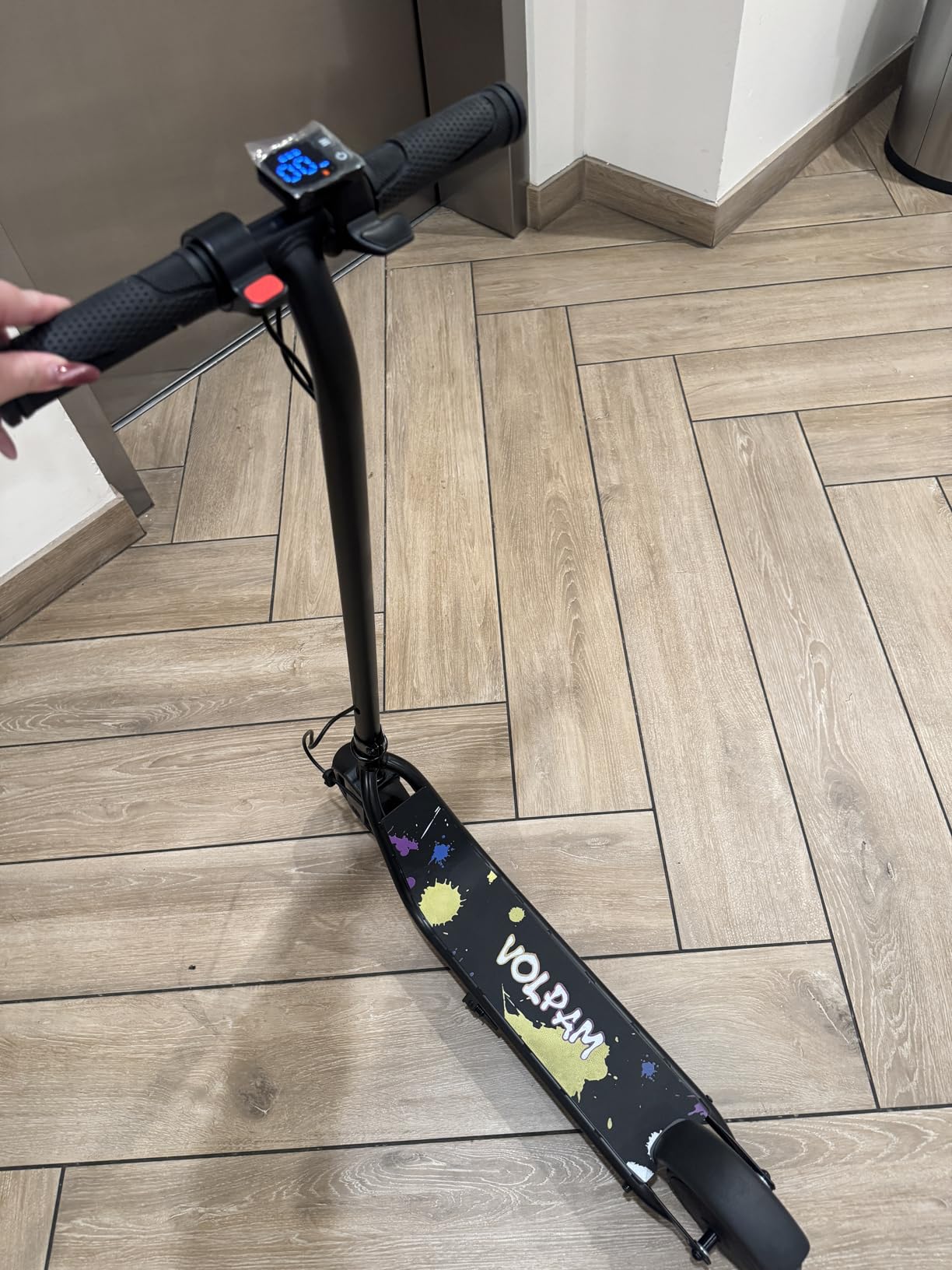
VOLPAM is the one to look at when a teen’s route has genuine elevation change. The 500W option handles hills noticeably better than the 8.5 inch version, and parents buying for short school commutes with a slope on the map rate that upgrade as the reason it works for them.
The 264 lb weight capacity is high for this class, which means a growing teen will not outgrow it next year. Dual braking and LED lighting are both present as standard, and owners describe the brakes as responsive once set.
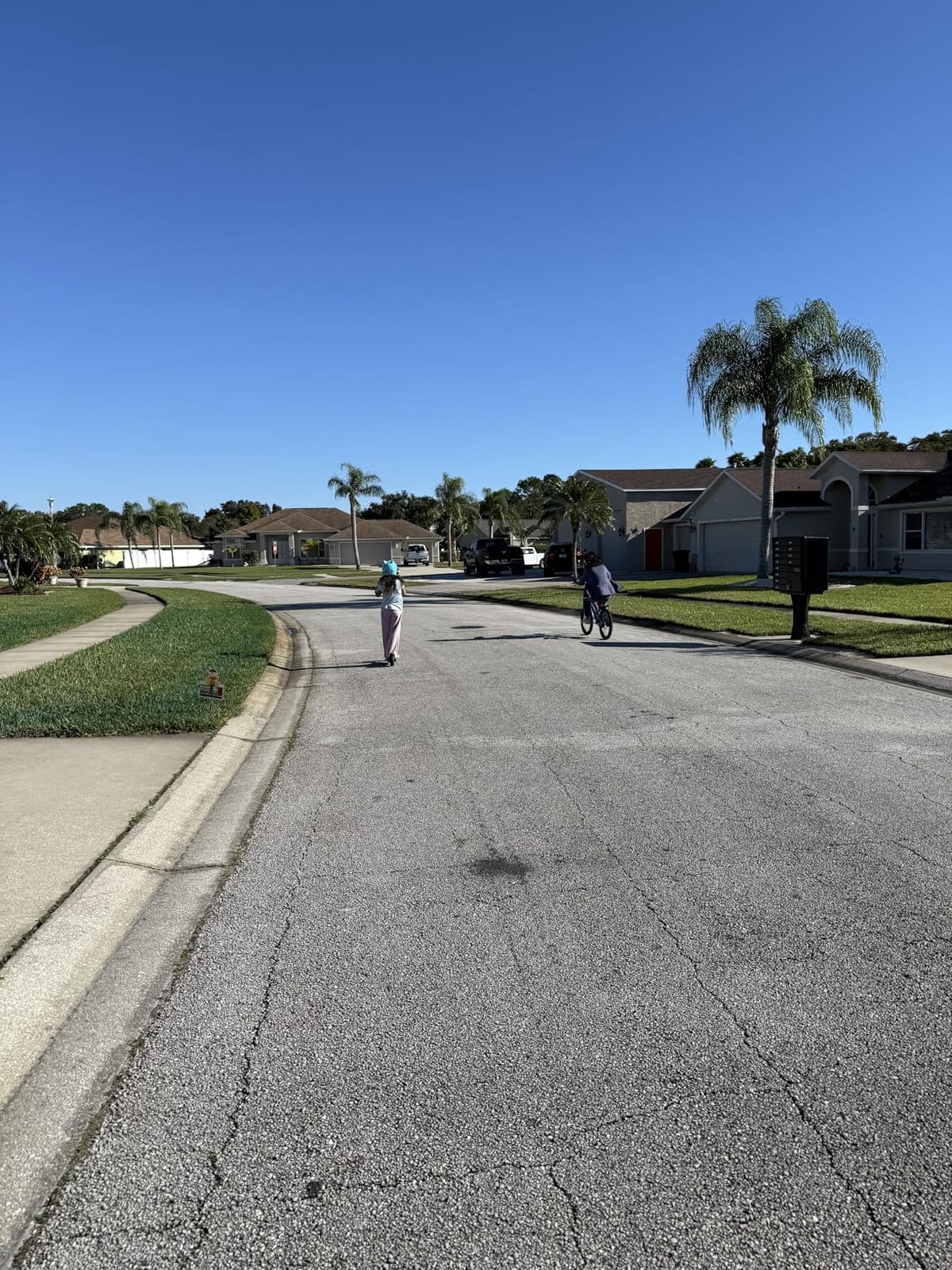
App setup is one of the easier ones here, with clear speed and battery readouts, and cruise control is included. Owners like that the folded size fits in a car trunk or on a bus, which matters for a teen who combines riding with transit.
Customer service is described as responsive, including a case where a motor problem was resolved by return. For a brand without a large service network, that responsiveness is worth more than an extra mile of claimed range.
What parents should know before buying
Range is where the marketing and the experience diverge most. Buyers should assume meaningfully less than the stated 21 to 40 mile figures, and riders near the 218 to 264 lb ceiling report reduced range on top of that. Size the battery against a conservative number.
If your teen is near the weight ceiling or is a larger rider, the lightweight construction feels awkward to carry, and you should weigh that against the climb ability you are buying it for.
Where this scooter falls short
Suspension is stiff and bumps come straight through on rough paths, which is the opposite trade from the seated Gotrax. If comfort is the priority, choose a different model.
Some owners report the gaskets sealing the internal wiring and the charging port loosening and letting moisture in, and a brake light that flickers when the handbrake is pulled. In a wet climate, store it covered and check the seals.
9. Segway Ninebot S2 Self-Balancing Scooter – Best for New Riders Learning Balance
Segway Ninebot S2 Electric Self-Balancing Scooter, UL Certified
- Self-balancing design shortens the learning curve
- Learning mode for new riders
- Height adjustable from 4 foot 3 to 6 foot 6
- 10.5 inch tubeless pneumatic tires
- UL-2272 certified
- Slowest top speed in this roundup
- Unforgiving if balance is lost
- Awkward to carry over distance
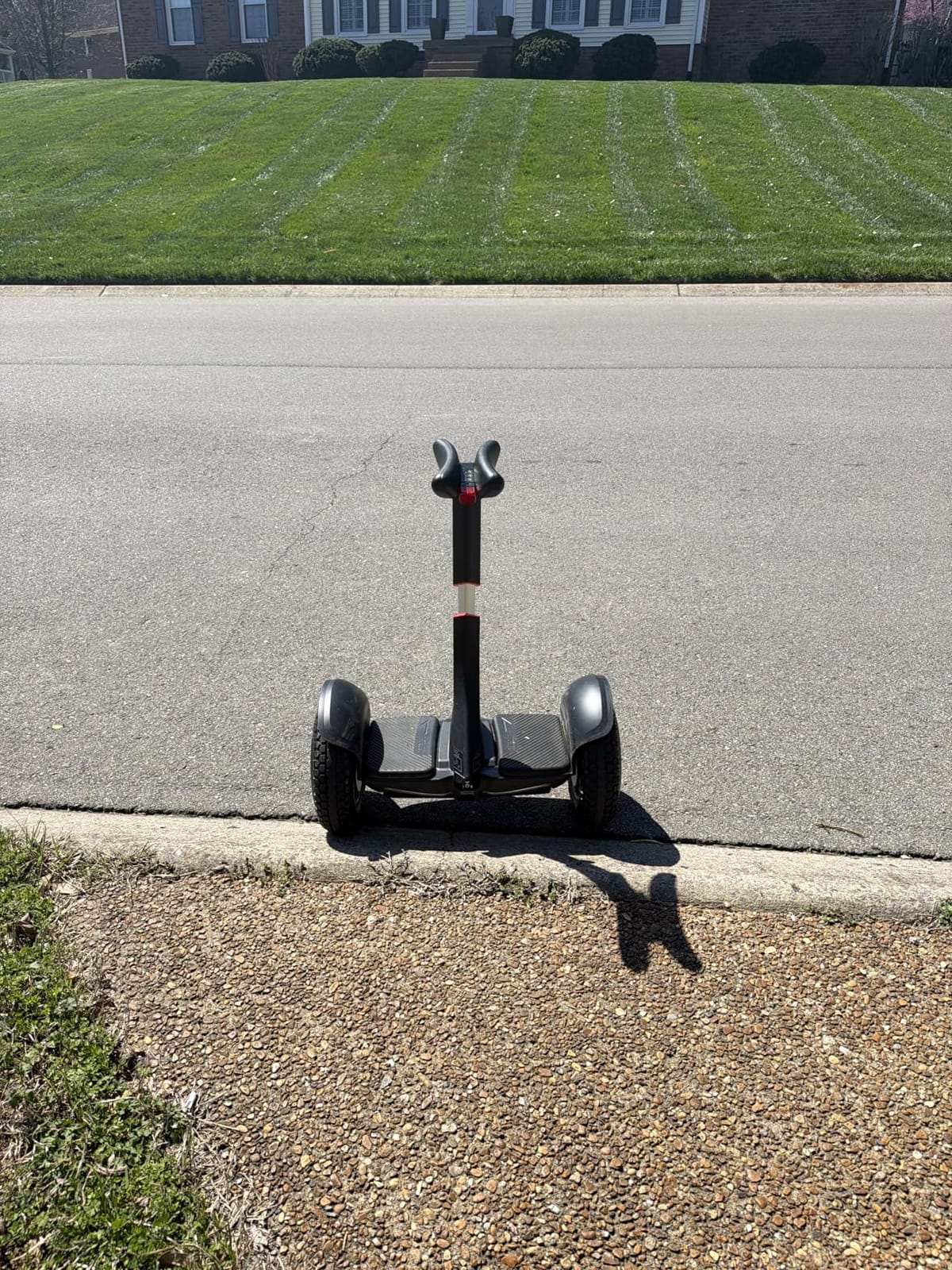
This is a different category of machine and it deserves a different question. Instead of asking how fast it goes, ask whether a self-balancing platform is easier to learn. For a nervous beginner or a younger teen, the answer is often yes, because there is no balancing act while stationary to fall over.
The learning mode is designed specifically for riders new to this, and the height adjustment spanning 4 foot 3 to 6 foot 6 means the same scooter can stay useful as a teenager grows. The 10.5 inch tubeless off-road pneumatic tires handle uneven surfaces well and need pressure checks but carry less puncture risk than a tube tire.
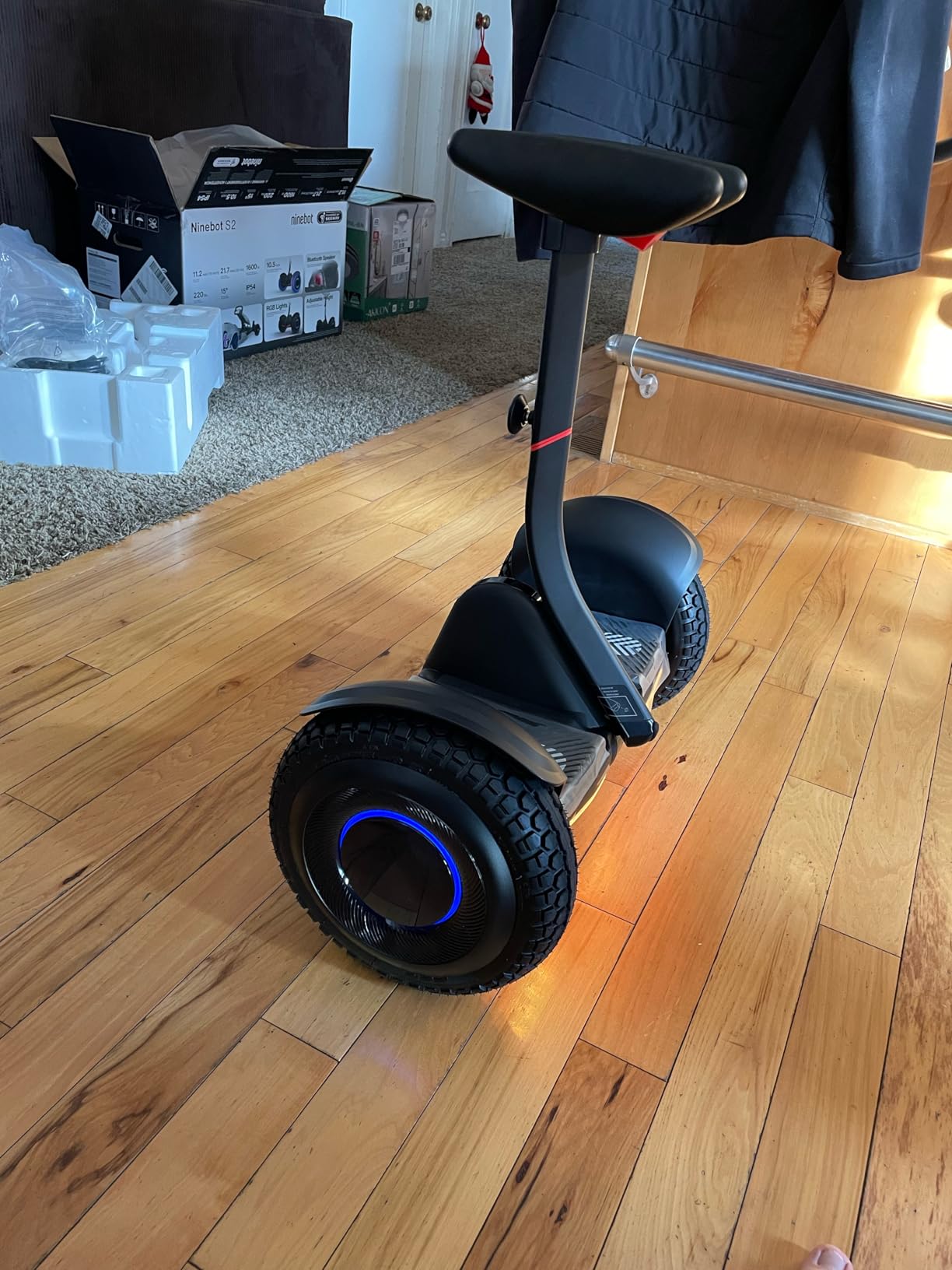
Range is a genuine strength at 21.7 miles with a 4.5 hour charge, and it handles 15 degree slopes while holding 220 lb. The 335 Wh battery with a smart battery management system and UL-2272 certification give a parent two specific things to check off the safety list.
One note on this listing: it aggregates several variants in the Ninebot S2 family, so the 11.2 mph speed and 21.7 mile range shown may not apply to every configuration sold under the same parent page. Verify the exact variant before ordering.
What parents should know before buying
The 11.2 mph cap is the slowest in this roundup, which is a feature for a first scooter and a limitation for a teen who wants a real commute. Treat it as a neighborhood and campus machine, not a distance machine.
The two-wheel self-balancing design is stable when moving but unforgiving if balance is lost, and it is awkward to carry over a longer distance. If your teen needs to carry it regularly, a conventional folding model is a better fit.
Where this scooter falls short
Pneumatic tires still need regular pressure checks and can take a puncture, and the stem is awkward to carry. It is also the heaviest and most expensive option in the set, which is a real consideration for a first scooter.
Because the page covers multiple variants, treat the listed speed and range as a starting point rather than a guarantee. Ask for the specific configuration in writing before a purchase.
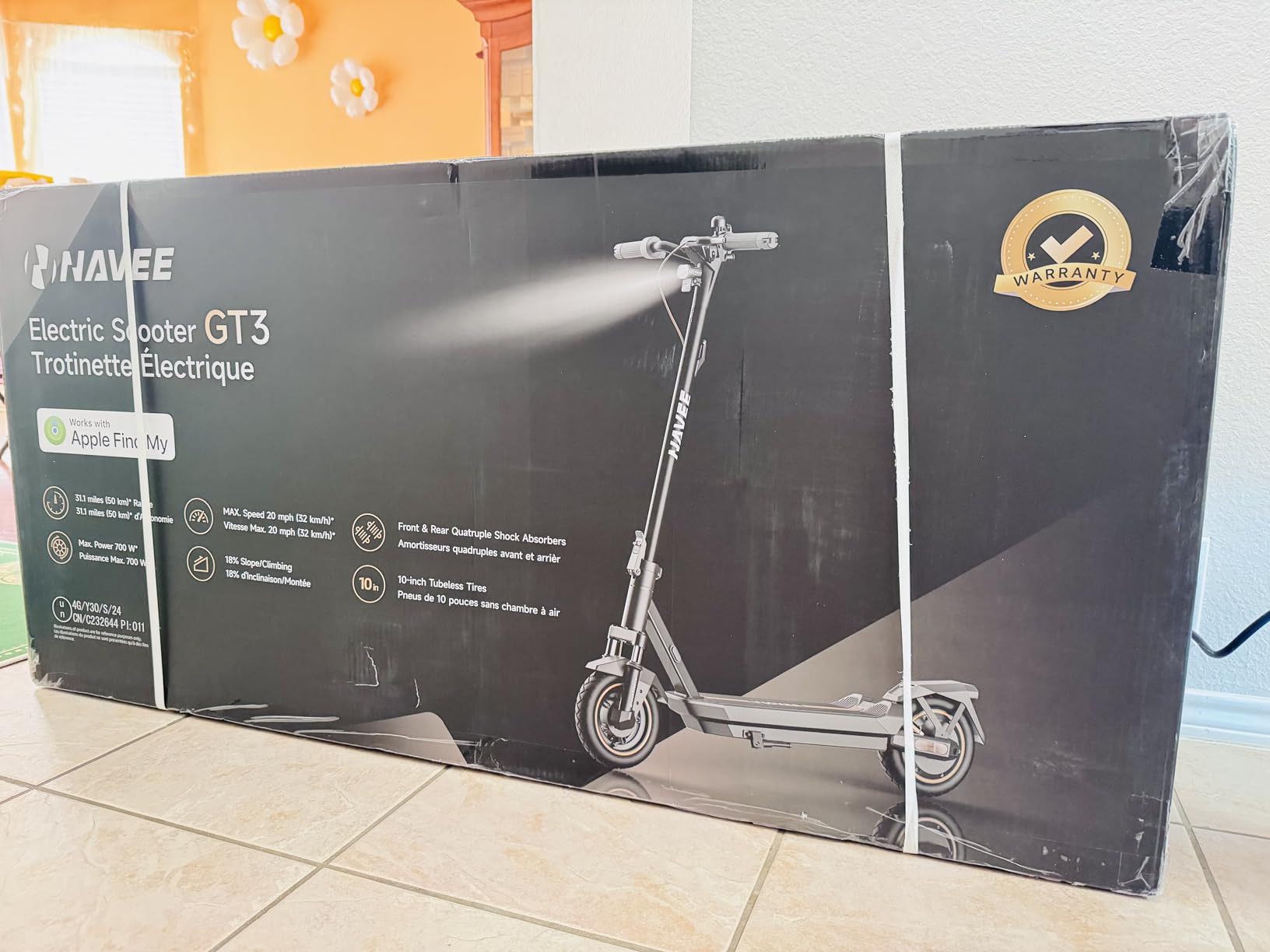
10. NAVEE GT3 Long Range Scooter – Best for Long Commutes and Rough Ground
- Smoothest dual suspension ride in the set
- 700W motor climbs 20 percent grades
- 31 mile range between charges
- Handles gravel and grass well
- Two-year warranty
- Apple Find My integration
- Dim and narrowly focused headlight
- Brakes feel weak on descents
- 46 lb is heavy for a teen to carry
The NAVEE GT3 is the most capable machine in this roundup, and the honest question is whether a teen needs that capability. If the answer is a long commute, rough ground, or a route with real hills, then nothing else here serves it as well.
The 700W motor in this configuration climbs 20 percent grades and holds about 20 mph, and the automotive-grade quadruple suspension is the smoothest ride here on rough pavement by a clear margin. Owners report roughly 30 miles of real-world range, which turns the scooter from a school-run device into a genuine transport option.
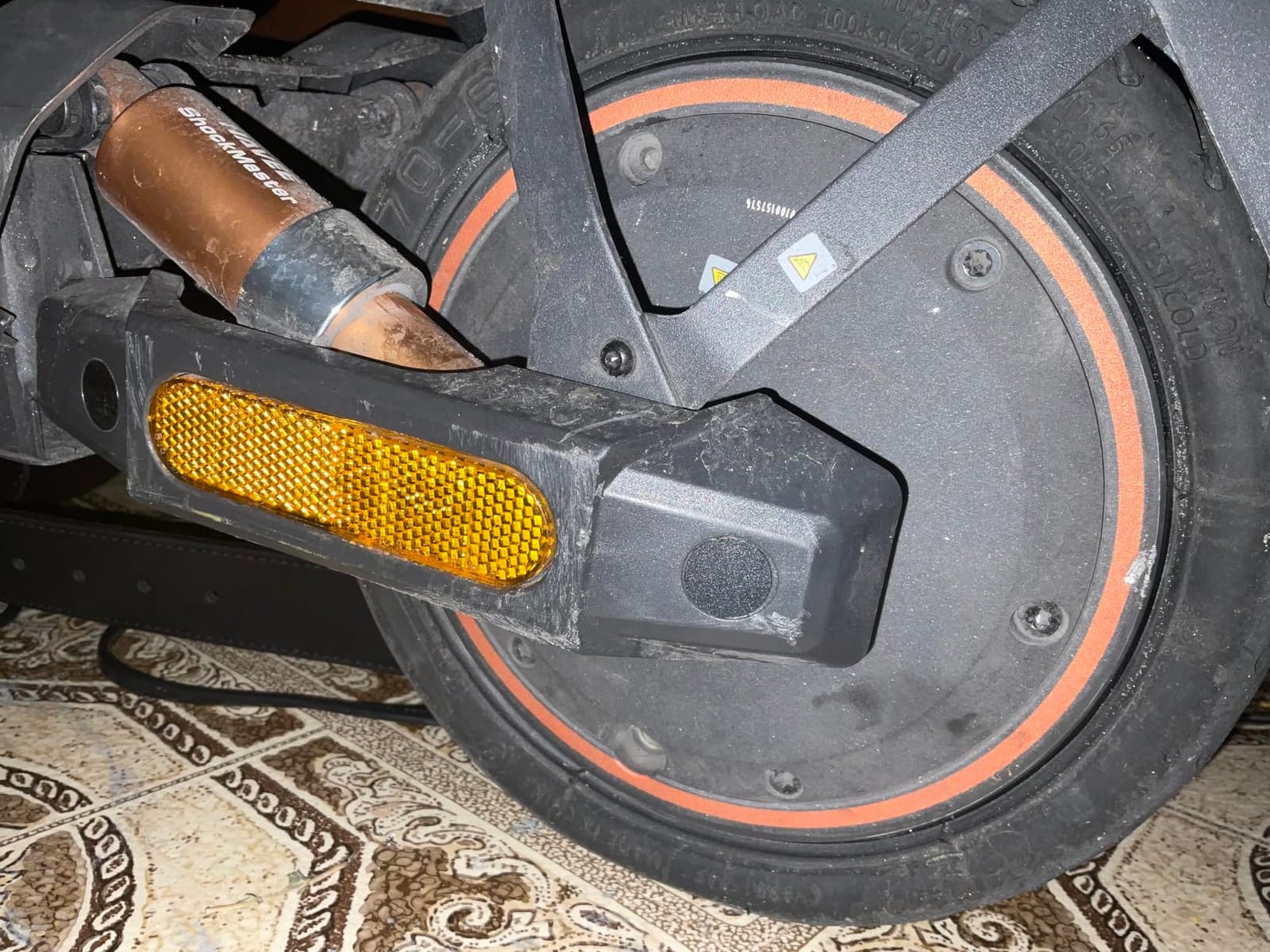
Three-layer braking with a front drum, rear disc and electronic brake assist is the most comprehensive stopping hardware in the set. The IPX5 waterproofing and UL 2272 certification cover the two weather and safety items parents ask about most.
For a teen with a part-time job or a long campus spread, parents report it being used without complaint for getting to and from practice and camp. The Apple Find My integration in the app is a genuine anti-theft feature for a machine at this price level.
What parents should know before buying
It carries 46 pounds, which is heavy for a teen to bring upstairs. Confirm that the scooter has a home at both ends of the trip before committing, because carrying it is the main objection owners raise.
Also check that your teen is comfortable with a 20 mph machine. It is within reason for a 17- or 18-year-old on a bike lane and a poor match for a 12-year-old, regardless of how well the scooter performs.
Where this scooter falls short
The headlight is dim and narrowly focused, which one owner flagged after a night crash. If the route includes unlit stretches, buy a proper lighting accessory rather than relying on the built-in lamp.
Brake performance is only adequate on flat ground and feels sketchy on descents, and auto park mode after several seconds of standing still confuses new riders. Tire pressure needs frequent checking, and one owner moved to a Segway after repeated tire and battery problems.
What to Check Before You Buy?
Here is the short version of how to compare these without drowning in spec sheets. Work through these seven checks in order, and most of the decision is already made by the time you reach the third one.
1. Can your teen actually pick it up?
Compare the listed weight against what your teen can comfortably carry in one hand. In this roundup the spread runs from 26.4 pounds to 50.7 pounds, and the heaviest model is not a carryable scooter for anyone under about 15. If the scooter must live at school, weight matters far less than range.
2. Does the range match the real route?
Multiply your one-way commute by 1.5, then add a 40 percent buffer to that figure and compare it to the real-world number rather than the claimed one. A 2 mile school run needs roughly 5 miles of genuine range; anything under 10 miles of real range is fine for that. Headwind, cold weather and hills all cut range further, so a steeper route needs more headroom.
3. What is the braking hardware?
Dual braking is the most commonly praised safety feature in owner threads, and it is the one spec we would refuse to compromise on for a teen. A mechanical disc or drum plus electronic or regenerative braking gives you two independent ways to slow down. A single rear brake works at 15 mph on flat pavement and stops being reassuring at 19.
4. Solid or pneumatic tires?
This is the trade most parents agonize over, and owner consensus favors solid tires because zero maintenance matters more than ride comfort. Solid honeycomb or airless wheels never go flat and need no inflation. Pneumatic tires ride more comfortably and grip better, but need pressure checks and can take a puncture. For daily sidewalk riding, solid wins. For rough ground, pneumatic wins.
5. How fast should it go?
Ten to 15 mph is the right band for a first scooter or a younger teen, and 18 to 20 mph only makes sense for riders 16 and up on a protected route. Anything advertising 25 or 30 mph belongs in the adult category, and a parent who buys one has created a problem rather than solved one.
6. Does the app actually hold a speed limit?
Several models here let you cap maximum speed through the app, which is genuinely useful. But read the owner feedback: on some the lock resets after a firmware update, on some it requires the scooter to stay powered on, and on some the app reconnects after every power cycle. Set the limit, test it on the first ride, and confirm it holds.
7. Is the battery UL 2272 tested?
UL 2272 is the electrical-system safety standard for e-scooters, and it is the single certification we would insist on. ASTM F2211 covers scooter design. Look for both in the listing, and treat an unbranded listing with no certification as a paperweight regardless of the star rating.
Are Electric Scooters Safe for Teens?
Electric scooters are reasonably safe for teenagers when the rider wears a helmet, the scooter has real braking hardware, and the speed is matched to experience. Every serious risk factor here is about behaviour and setup, not about the machines themselves. Pediatric trauma units do warn parents about e-scooter injuries in teens, and those warnings are about speed, distraction and lack of protective gear.
Your checklist should be short. A properly fitted helmet meeting a multi-impact standard, wrist guards and knee pads for the first months, a bright headlight and working taillight, dual brakes, and a speed cap set before the first street ride. The CPSC guidance is consistent: head protection matters more than anything else a rider can add.
Set the parental speed limit before the first ride. On the app-capable models in this roundup, open the app, set a custom maximum speed, and then verify it on an empty parking lot. If the app is unreliable, treat the lowest physical riding mode as the real limit and discuss it as a rule rather than a setting.
Theft deserves its own paragraph because it is the most common reason a scooter ends up unused. Pair the app electronic lock with a physical cable lock, and if the scooter lives at a school rack, an inexpensive GPS tracker on the deck gives a real recovery chance. Many parents find that simply keeping the scooter at home and charging overnight removes the problem entirely.
E-Scooter Laws for Teens
Is it legal for a 14-year-old to ride an e-scooter? It depends on where you live, and most of the rules restrict riding by age and location rather than ownership. Many states set a minimum riding age in the mid-teens, several cities ban e-scooters on sidewalks entirely, and speed caps for minors are common. Check your state and city rules before your teen’s first commute.
A practical way to sort the state rules is into three groups. States that permit e-scooters with a minimum age around 12 tend to treat them like small vehicles, allowed on sidewalks and bike lanes with a modest cap. States with a minimum age closer to 14 or 16 usually restrict riding to bike lanes and trails, and often require helmets for riders under 18. A small number of cities and states prohibit the machines for minors altogether.
Helmet rules for under-18 riders are common and enforced most often through school and property rules rather than roadside stops. Where you may ride is usually the bigger practical question: sidewalks, bike lanes, and private property are the normal answers, while riding in a traffic lane is rarely permitted and is dangerous regardless.
Two further distinctions matter. A local ordinance can be stricter than the state code, so a teen can be legal in your state and illegal two towns over. And speed caps for minors are often written as a number well below the machine’s capability, which is precisely why you should buy one whose app lets you enforce that cap rather than relying on the rider.
What Not to Buy for a Teen?
Shopping carousels are full of adult machines, and it is worth naming the categories to skip. Dual-motor 30 mph off-road scooters are built for riders who can absorb a bad fall, and their weight and power make them unmanageable for most teenagers. Adult hydraulic-suspension models with long-range claims have the same problem in a different form.
Anything advertising 40 miles of range or a 1000W motor is an adult performance machine, not a teen commuter, and the range figure depends on a 180 lb adult riding slowly on flat ground. Scooters over 40 pounds are a problem unless the scooter has a home at both ends of the trip. And any unbranded listing with no UL 2272 marking, no stated maximum rider weight, and no service information is a purchase you should decline regardless of the review count.
What you want instead is a 250W to 500W motor, a stated maximum rider weight, a certification line, a top speed you can cap, and a frame light enough to move. That is a short list, and every recommended model in this roundup clears it.
Your Teen’s First Week on a New Scooter
Most of the bad outcomes we heard about happened in the first hour. A short plan fixes that, and it takes an empty parking lot rather than a street.
Day one, assembly and controls only. Set the brake, check the throttle return, confirm the headlight and taillight work, and inflate any pneumatic tires to the printed pressure.
Day two, walking pace in an empty lot. Use the lowest speed mode and go nowhere. The goal is learning to stop with the brake, not going anywhere.
Day three, add throttle control. Practice starting from a standstill, which is where Safe Start models earn their place, and practice turning at walking speed.
Day four, emergency braking. Ride at a slow, controlled speed and practice stopping hard on both the mechanical and the electronic brake so the rider knows which one bites harder.
Day five onward, a real route in daylight only, on a quiet street or paved path, with the speed cap set where the parent wants it and the helmet on every single ride.
After the first week, check the brakes monthly and the tire pressure weekly if the wheels are pneumatic. That is genuinely the whole maintenance routine most of these scooters need, and it is small enough for a teenager to handle alone.
Frequently Asked Questions
Which electric scooter is best for a 13 year old?
For a 13-year-old we would pick a light, slow model with a genuine low-speed mode. The iScooter at 26.4 pounds carries a 6 mph setting, disc plus regenerative braking and bright lighting, and it is the easiest to carry up school steps. The Riuiio is the alternative if you want a 3 mph walking mode, a 265 lb capacity and a higher average rating. Cap the speed before the first street ride and keep the route flat and paved.
Should a 14 year old have an electric scooter?
Yes, if three things are true: a helmet goes on every ride, the route is one you control, and you can enforce a speed limit. At 14 a teen has enough coordination and judgment for a 15 mph scooter, and models with an app speed cap or a low riding mode let you set the boundary in hardware rather than in an argument. Skip it for another year if there is nowhere to lock it or the route runs beside fast multi-lane traffic.
What is the best electric scooter for a 14-year-old?
The Gotrax 8.5 inch 250W model is our pick for a 14-year-old because it is the most proven option we tested, with more than ten thousand reviews, a 15.5 mph cap, two riding modes, Safe Start against accidental launches and a removable battery. It is UL2272 tested and holds 220 lb. If your teen can carry a heavier frame, the Hiboy S2 Pro adds rear suspension and much stronger hill climbing for a long commute.
What is the safest electric scooter for teenagers?
The safest teen scooter is any model with dual braking hardware, a bright headlight and taillight, a speed cap you can actually enforce, and a UL 2272 tested battery. In this roundup the Gotrax 8.5 inch and Hiboy S2 Pro both combine UL 2272 testing with a manufacturer-stated maximum rider weight. Safety comes from hardware plus a helmet and a route you control; no specification on a product page replaces that.
Is it legal for a 14 year old to ride an electric scooter?
It depends on your state and city. Minimum riding ages commonly fall between 12 and 16, many states restrict riding to bike lanes and paved trails rather than sidewalks, and speed caps for riders under 18 are widespread. Some cities ban e-scooters on sidewalks completely, and local ordinances can be stricter than state code. Before your teen’s first commute, check both the state rules and your city or town rules.
What range does a teen need for a school commute?
Double your one-way commute and add a 40 percent buffer, then compare that with the real-world range rather than the advertised figure. A 2 mile school run needs about 5 miles of genuine range, so almost every model here covers it. A 4 mile route with hills needs closer to 12 miles of real range, which rules out the 12 mile claim on some budget models once you apply the shortfall owners actually report.
Final Verdict
The best electric scooters for teens are the ones that stay modest on speed and honest on weight. The Gotrax 8.5 inch 250W scooter is our editor’s choice because it has the deepest proven owner history, a 15.5 mph cap, Safe Start, a removable battery and a 33 pound frame a teenager can manage. For a younger or lighter rider, take the iScooter at 26.4 pounds. For a long commute and real hills, the Hiboy S2 Pro. For a seat, the seated Gotrax. For new riders who need balance help, the self-balancing Ninebot S2.
Whatever you choose, set the speed cap before the first ride, buy a real lock, and run the first week in an empty parking lot. Our commuter scooter guide covers the adults’ side of the category, and riders who also want a buildable project can start with our robot kit roundup for teens.