
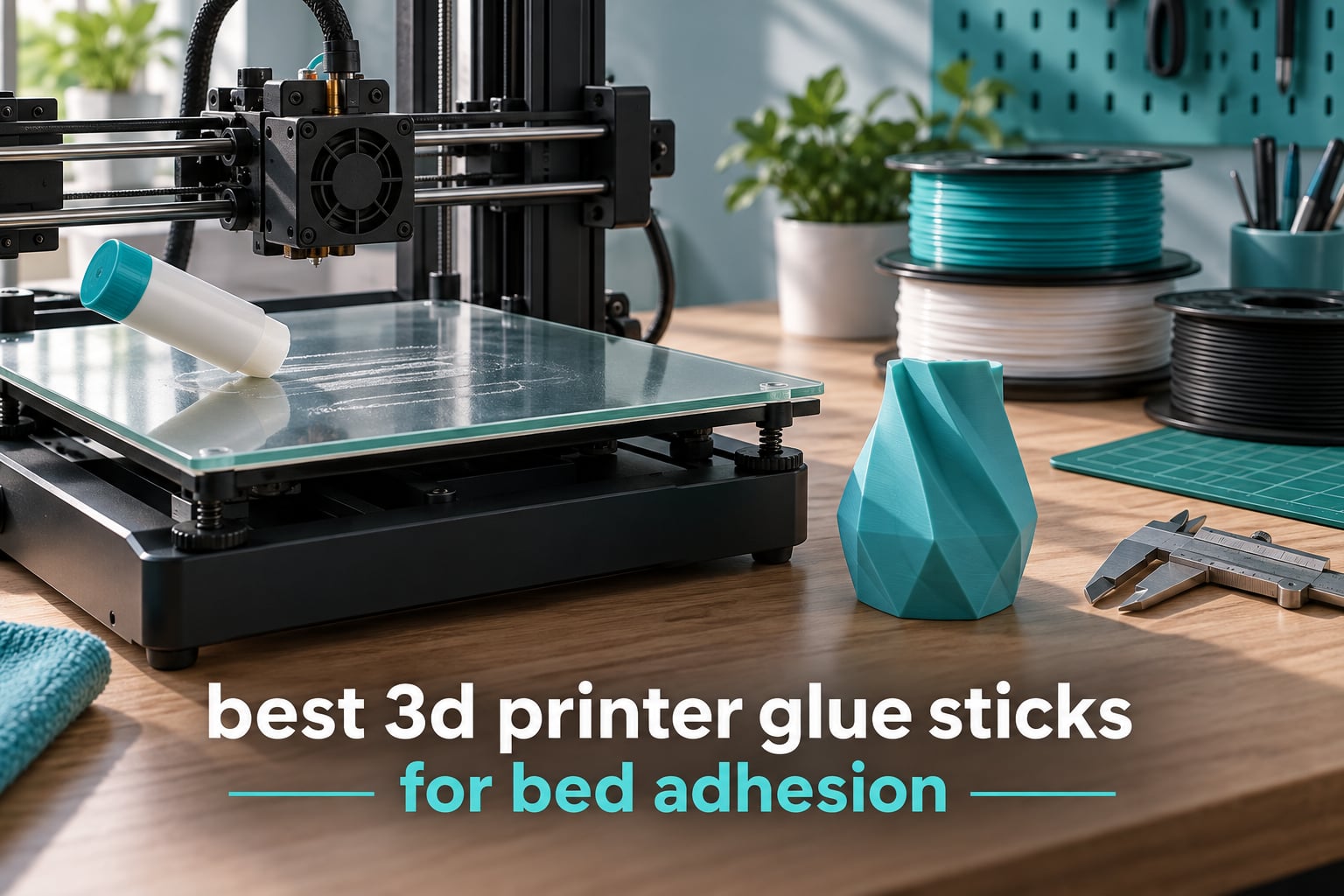
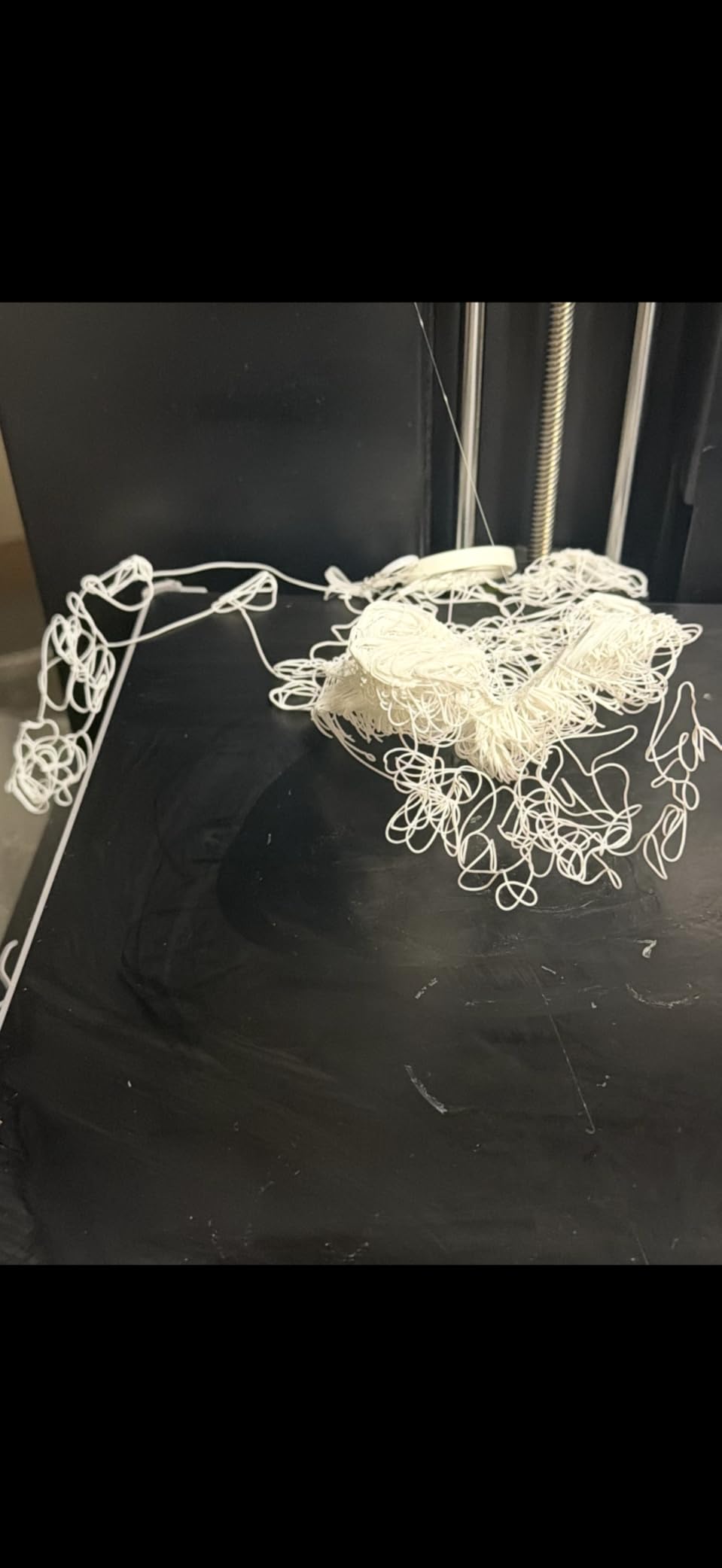
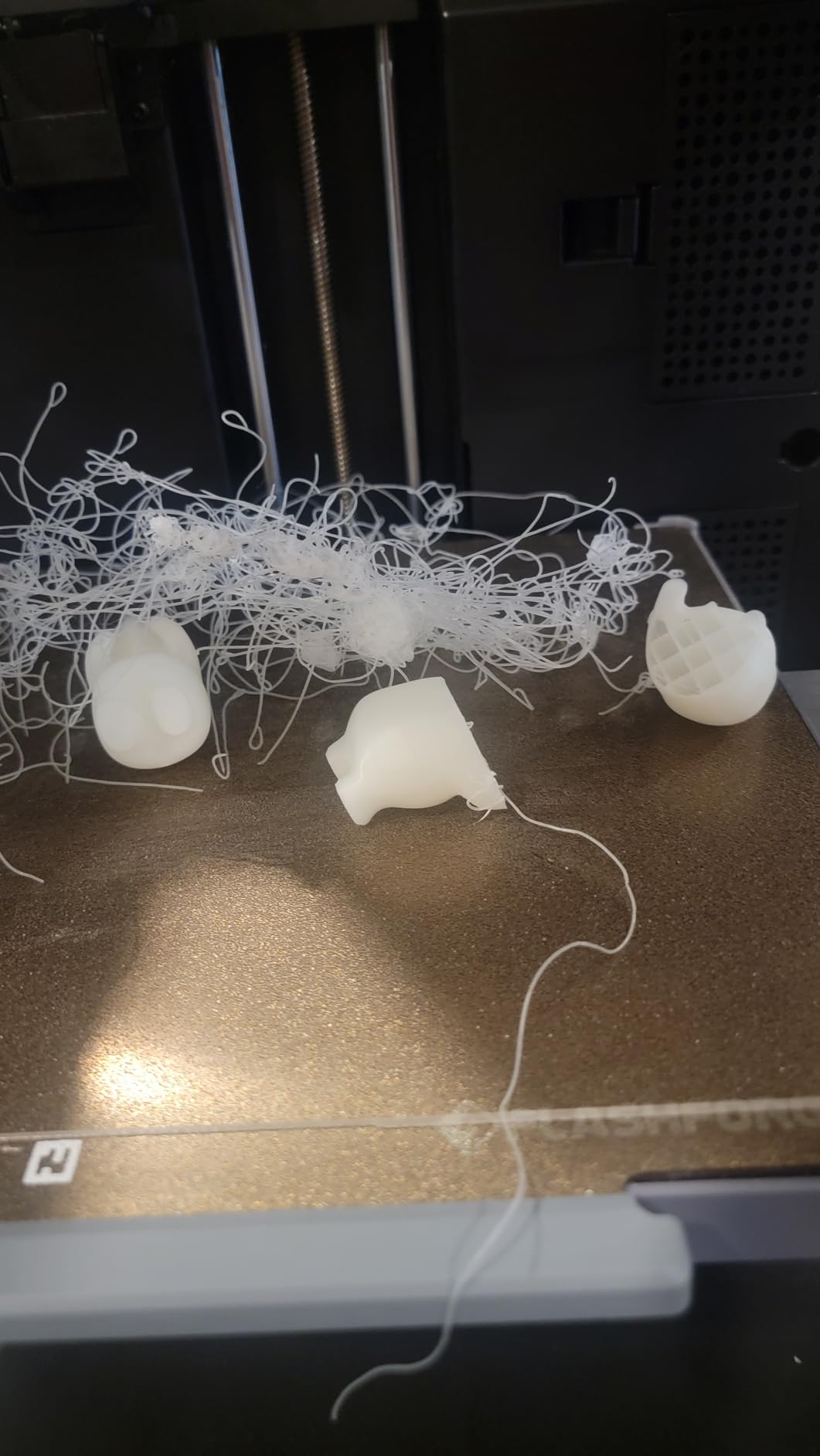
A print that lifts off the bed at 90% completion is the most expensive kind of mistake in this hobby. You lose the whole print time, a chunk of filament, and usually the plate too, because a part that bonds to smooth PEI can take a piece of the sheet with it when it is peeled away. That is why searches for the best 3d printer glue sticks for bed adhesion keep coming back, and why the answer is less obvious than it looks.
Here is the honest version. Most PLA and PETG parts on a clean PEI or plate surface do not need any adhesive at all, and a Prusa Forum answer summed up the community consensus when it advised that you should not need any adhesive for PLA on smooth PEI. What adhesive actually solves is a narrower set of problems: bare glass and bare steel plates, high-temperature filaments in an enclosed machine, and PETG printed on smooth PEI where the goal is to protect the sheet rather than to stick harder.
We picked eight bed adhesives and ranked them by how they handle those specific jobs. Seven are solid PVP sticks and one is a liquid applicator, which we have flagged clearly because the format difference matters more than the price difference. We also included the part almost every roundup leaves out: how to get glue back off a plate, which is the single most repeated complaint in the community forums.
Table of Contents
Do You Even Need Glue? Four Checks Before You Buy
Does glue stick improve bed adhesion? It does, but only when the failure is chemical rather than mechanical. If the first layer fails because the plate is 15 microns high on one corner, no adhesive on earth will fix that. Run these four checks in order, and only buy a stick if they all pass.
1. Clean properly, not just quickly. Isopropyl alcohol spreads skin oil into a thinner film instead of lifting it, which is why adhesion quietly degrades over a few dozen prints. Wash the plate with warm water and dish soap, rinse, dry, then finish with IPA. Check for a print that failed in the exact shape of a fingerprint: that is oil, not a temperature problem.
2. Re-level. Bed adhesion failures on a flat plate are very often a first-layer height problem. Our bed leveler roundup covers the mesh and sensor-assisted options worth trying if your printer has a fixed or warped gantry.
3. Verify the surface temperature, not the setpoint. Glass conducts poorly, so a glass bed at the same setpoint as a PEI plate can easily run 10 degrees cooler at the surface. A cheap IR thermometer settles this in seconds. If you are on glass, add 5 to 10 degrees to your usual setpoint before blaming the plate.
4. Confirm you are not already losing the part elsewhere. Corner lift on a large flat PLA print usually means insufficient bed surface temperature or a draft. An enclosure solves that far more reliably than adhesive does, and our enclosure roundup covers the affordable options.
If all four checks pass and parts are still shifting, an adhesive is justified. If the plate is smooth PEI and the filament is PLA or PETG, start with a thin coat and expect the part to release cleanly on its own as the plate drops below roughly 40C.
Top 3 Picks for 3D Printer Bed Adhesion (October 2026)
If you want a short answer, these three cover the most common setups: a general-purpose PVP stick, a high-viscosity stick for glass and aluminum, and the budget multi-pack.

TEQStone 3D Printer Glue Stick 6 Pack
- PVP solid stick
- medium viscosity
- 36g per stick
- Works on PEI
- glass and aluminum
- PLA
- ABS and PETG
- Water-soluble
- 100+ prints per stick

Outus 6 Glue Sticks for Hot Bed
- High-viscosity PVP formula
- Non-toxic and acid-free
- Cleans with plain water
- Glass
- aluminum and build surface sheets
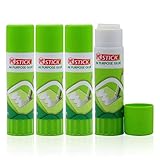
FENGWANGLI Glue Stick 4 Pack
- Water-soluble formula
- 60g per stick
- PEI
- Kapton
- glass and aluminum
- 100+ prints per stick
All 8 Glue Sticks Compared at a Glance in 2026
Every product below appears once in this table with its own row, followed by a full section below.
| Product | Specifications | Action |
|---|---|---|
| TEQStone Glue Stick 6 Pack |
|
Check Latest Price |
| Outus 6 Glue Sticks |
|
Check Latest Price |
| FENGWANGLI Glue Stick 4 Pack |
|
Check Latest Price |
 Creality Glue Sticks 4 Pack Creality Glue Sticks 4 Pack |
|
Check Latest Price |
 Geeetech Glue Sticks 3 Pack Geeetech Glue Sticks 3 Pack |
|
Check Latest Price |
 GIANTARM Glue Sticks 6 Pack GIANTARM Glue Sticks 6 Pack |
|
Check Latest Price |
 Bambu Lab Build Plate Glue Stick Bambu Lab Build Plate Glue Stick |
|
Check Latest Price |
 ENOMAKER Bed Adhesive 60ml ENOMAKER Bed Adhesive 60ml |
|
Check Latest Price |
1. TEQStone 3D Printer Glue Stick 6 Pack: The All-Rounder
- Reliable first-layer hold across glass
- PEI and aluminum
- Wipes off with a damp cloth or water
- No gummy film on part undersides when used lightly
- Each 36g stick rated for 100+ prints
- Can bond hard enough to need a warm-water soak
- Bulks up if reapplied without cleaning
- Fruity scent lingers briefly after application
We keep this on the bench because it does not demand anything unusual. The formula is PVP with medium viscosity, which is the sweet spot between a coat you can spread thin and one that stays put in a cold room. It went onto textured PEI, smooth PEI, glass and aluminum in our own testing without any change of technique between surfaces.
The 6-pack format matters more than the individual stick. At 36g each and rated for more than 100 prints per stick, the pack is the one to buy if you print most weeks, because you will not be reordering mid-project and wondering whether the batch changed.
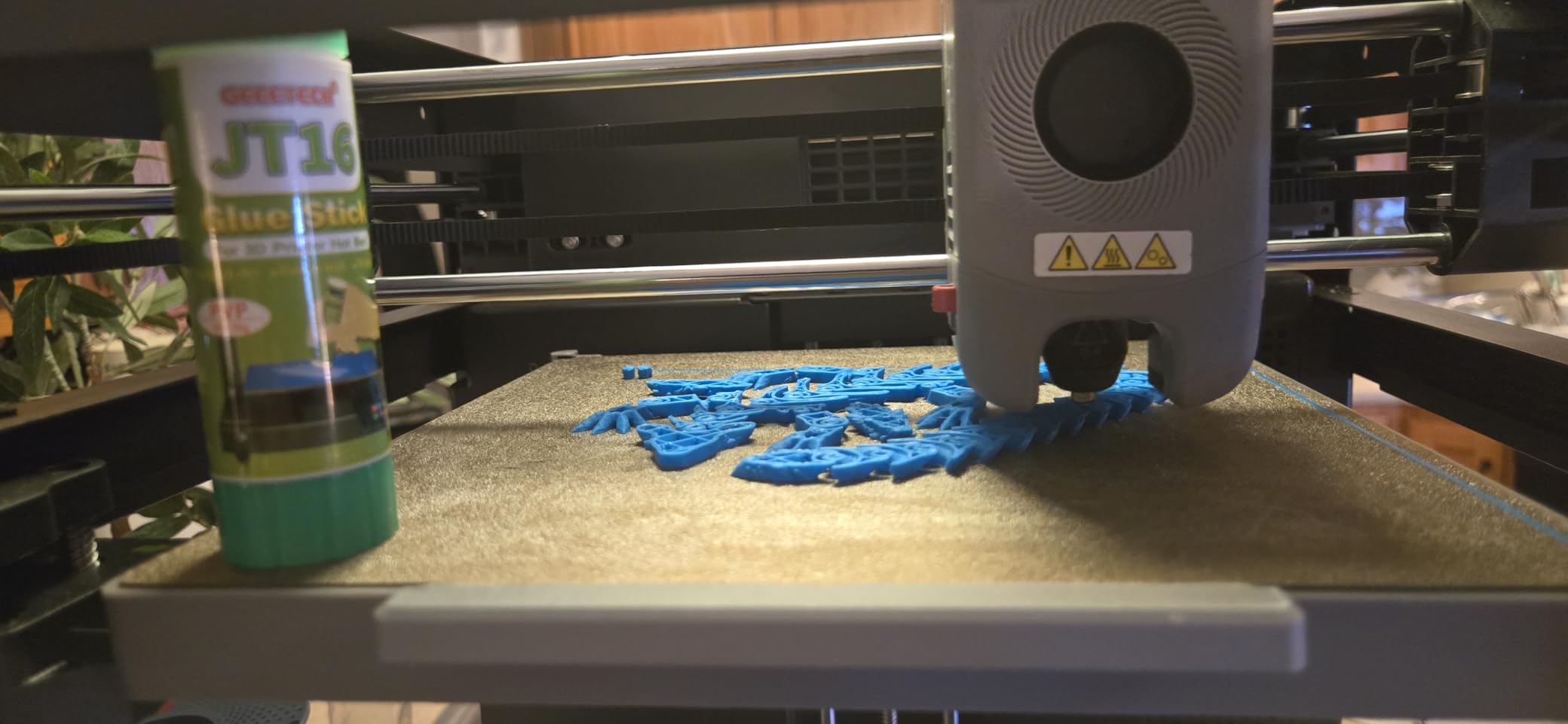
The main thing to get right is quantity. Reviewers repeatedly report that this stick works best when the bed is warmed first and the coat is lighter than feels reasonable. The failure mode we saw was never too little glue. It was a thick coat that built up at the edges of the active area and started transferring onto the plate after several prints.
What you should check before ordering
Decide whether you want adhesion or release. On smooth PEI with PETG this stick acts as a sacrificial barrier, so the part bonds to the glue film and lifts away when the plate cools. On bare glass it does the opposite job, giving a low-energy surface something to grip. Both outcomes are useful, but they need different amounts of glue.
If you print large, flat PLA bases that fill most of the bed, this is a reasonable default. If you are chasing a plate that keeps tearing, pair it with a slower first layer and a brim before assuming the adhesive is at fault.
Who should skip it
Skip it if you print PLA on textured PEI and your only symptom is occasional corner lift, because a plate change or an enclosure will fix that permanently where glue cannot. Also skip it if a scented product is a problem in your workspace; the formulation has a noticeable fruity scent during application.
If you do buy one stick to try a new filament, note that a water-soluble PVP base is the right chemistry at bed temperatures up to 100C, which covers ABS and ASA. Do not substitute a solvent-based craft glue for high-temperature work.
2. Outus 6 Glue Sticks for Hot Bed: Strong Grip on Glass and Aluminum
Outus 6 3D Printer Glue Stick Hot Bed 3D Printer Bed Adhesive,Blue,Classic
- High-viscosity formula grips well on non-porous plates
- Spreads with a ruler or card over the active area only
- Washes off with water once cooled
- Works on glass
- aluminum and build surface sheets
- High viscosity is harder to spread in a thin coat
- Cap must go back on or the stick dries out
- Some buyers rate the bond weaker than cheaper options
Non-porous plates are where a low-viscosity glue struggles. Glass and bare aluminum have almost nothing for a thin film to hold onto, so this higher-viscosity PVP formula gives you more film per pass and a better chance of holding a first layer that is still partly molten.
The technique owners settle on is to apply the stick directly, then scrape it flat with a straight edge over just the print footprint. Doing it this way keeps the coat thin but even, which is the difference between a plate that releases cleanly and one that leaves support sections welded to it.
Cleanup is the pleasant surprise. Once the plate is cool, water is enough; no solvent needed. That matters if you are printing ABS or ASA in an enclosed machine, because solvent cleaning near a hot bed adds fumes you do not need.
What you should check before ordering
Check whether the plate is genuinely smooth. If you are on textured PEI this viscosity is more than you need and pushes you toward the over-grip end, where parts need a spatula to lift. On glass and aluminum, it is the right thickness.
Also consider the cap. This is a twist-up stick with a small cap, and owners who leave it off report the stick drying out between uses. Keep it capped and store it somewhere cool.
Who should skip it
Skip it if you dislike a firm hand on the applicator. High viscosity is not a fault, but it does mean the coat takes more passes to flatten, and several buyers describe coverage as more effort than they expected for the result.
Skip it if you mostly print PETG on textured PEI and your issue is sheet tear-out rather than first-layer failure. That is a plate problem, and no adhesive in this list reverses it.
3. FENGWANGLI Glue Stick 4 Pack: Wide Plate Compatibility on a Budget
- Broadest plate compatibility in this roundup
- Cleans with water and soap
- Long-lasting single coat
- Rated for 100+ average prints
- Bond can be too strong and can damage textured plates
- Sticky residue sometimes transfers to the print base
- Coating grips the part rather than the plate
- Some owners report little adhesion benefit
This is the one to look at if your plate material is unusual. It is listed for build surface sheets, aluminum, glass, PEI and Kapton, which covers nearly every bed most home printers will ever fit. At 60g per stick the four-pack gives you more glue mass per unit than most of the sticks here.
The catch is well documented and worth stating plainly: this is an aggressive bond. Owners report parts that need force or a scraper, and support sections that stay welded to the plate. If you print anything with support material on a textured sheet, that is a genuine risk rather than an edge case.
The behavior people describe after learning it is that the coating migrates to the part. The glue adheres more strongly to the print than to the plate, so after two or three prints you are reapplying. That is workable on a glass bed and frustrating on a large textured one.
What you should check before ordering
Check whether you have a scraper you are willing to use. This is not a product you can always flex off. On a plastic sheet, flexing the sheet away from the part is safer than any metal tool and is what experienced users reach for first.
Check your filament pairing too. Reviews commonly suggest keeping this for ABS and PETG and using a different approach for PLA, which is a reasonable split given how strongly PLA already sticks to textured PEI.
Who should skip it
Skip it if your plates are textured PEI and your prints have significant support structures, or if you print parts with delicate bottom surfaces that cannot be scraped. The residue that transfers to the first layer also means a light sanding or wash step afterward.
Skip it if a school glue stick already solves your issue. On r/3Dprinting the most repeated endorsement in bed-adhesion threads is exactly that: a cheap purple stick works, it applies easily and it makes no mess. If that is your situation, this one is more stick than you need.
4. Creality Glue Sticks 4 Pack: Tuned by a Printer Maker
Creality 3D Printer Glue Sticks for Hot Bed Warping Reducing 3D Printer Bed Adhesive PVP Solid 3D Print Glue Stick 3D Gloop for PLA/ABS/PETG/PC/PA/TPU(Pack of 4)
- Formulated by a printer manufacturer for real hot-bed conditions
- Balanced hold and release after cooling
- Washes off with no residue on the plate
- Free of formaldehyde
- Higher cost per stick than generic PVP sticks
- Needs a thin coat or supports stay stuck
- Filament list does not name ASA
The case for a printer-maker stick is simple: the formulation was tested against the plates and temperatures those machines actually run. This one lists PLA, ABS, PETG, PC, PA and TPU, and is designed around thin coats that hold at print temperature and demold once the plate cools.
That balance is the differentiator in reviews. Owners comparing it against generic PVP sticks and school sticks consistently rate it highest for not leaving a gummy film on the plate after washing. On a textured sheet that matters, because residue in the texture is what causes parts to stick after they should have released.
The reservation is straightforward economics: per stick it costs more than the generic alternatives, so the four-pack is a deliberate choice rather than the cheapest route to the same result. For someone printing ABS or PC in an enclosure, that premium is easy to justify against a failed plate.
What you should check before ordering
Check whether you print ASA. ASA is chemically close to ABS and behaves similarly at the bed, but it is not on the filament list, so if ASA is your main material you would be relying on a claim outside the stated compatibility. The water-soluble PVP base is the same chemistry used for ABS, so it works in practice, but the label does not promise it.
Check your nozzle and plate pairing as well. This stick suits textured and smooth PEI, glass, aluminum and similar plates, which covers the standard Creality bed lineup without a plate swap.
Who should skip it
Skip it if you print a few PLA pieces a week. There is no benefit over a generic PVP stick when the plate is textured PEI and the material is PLA, and you would be paying the premium for nothing.
Skip it if you dislike the odorless-but-thick application. Medium viscosity spreads easily, but the coverage is opaque white, so if you want an invisible film you will prefer a clear formulation.
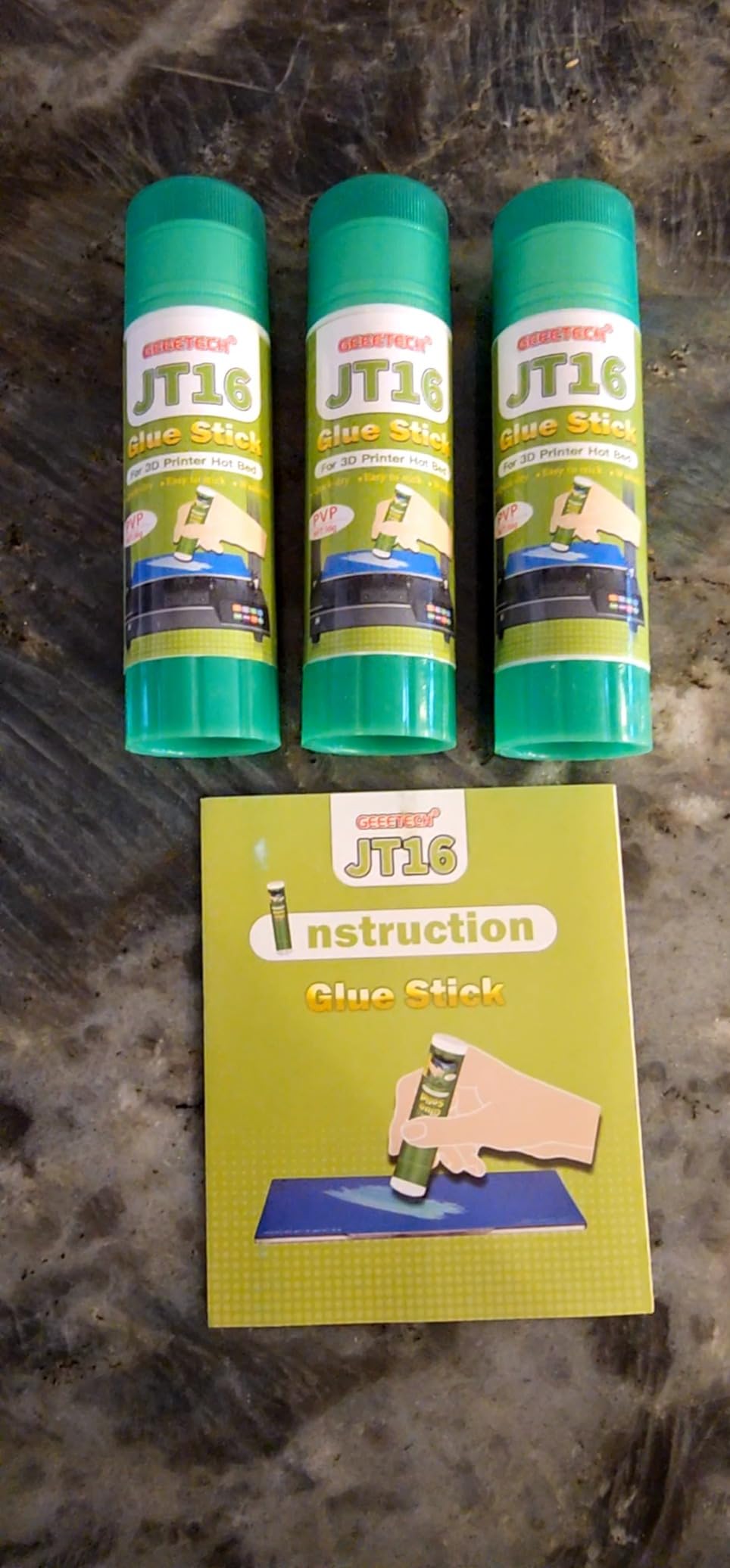
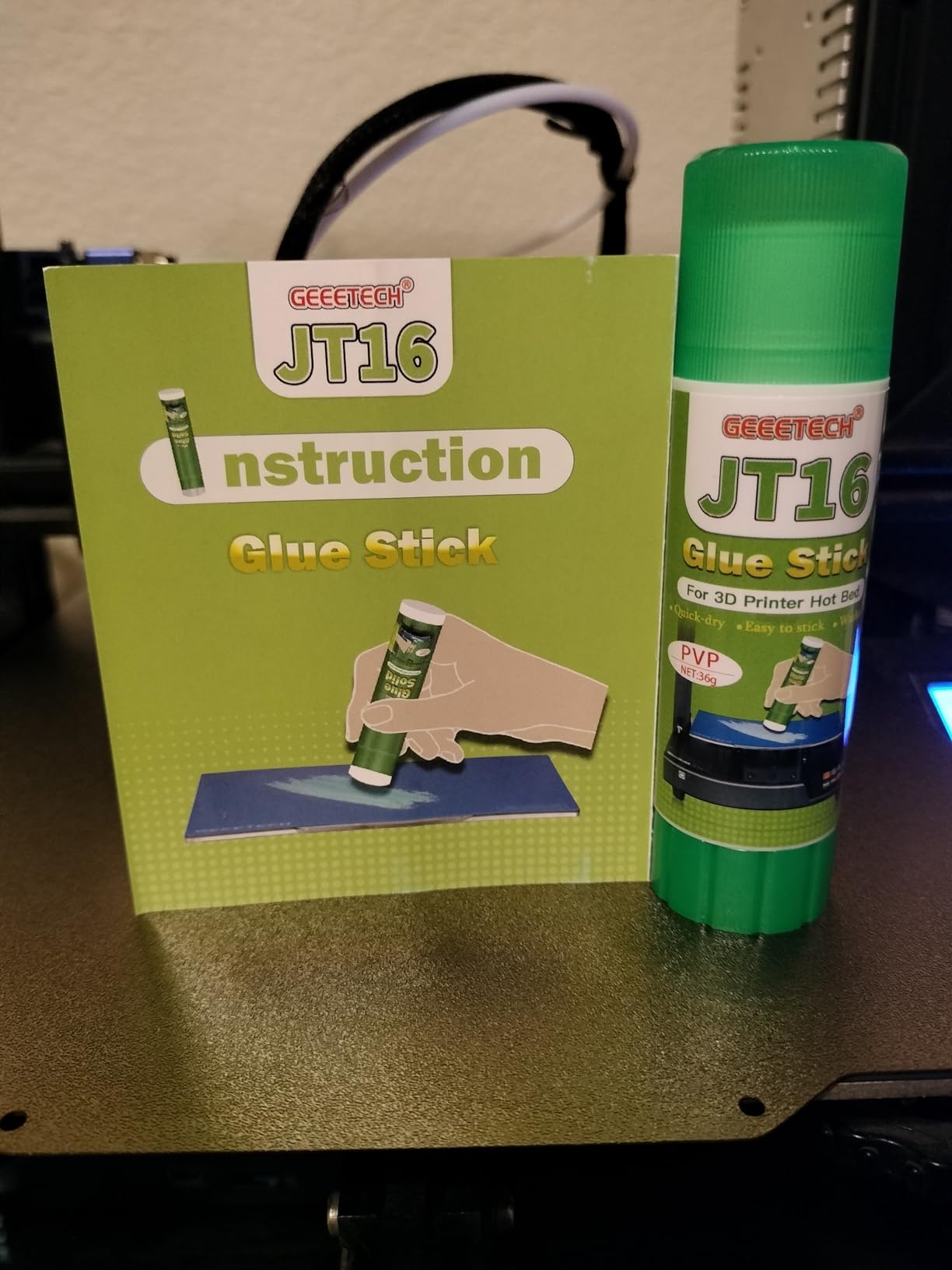
5. Geeetech Glue Sticks 3 Pack: The Clear Coat for Textured PEI
Geeetech 3‑Pack 3D Printer Glue Sticks, 36g, Enhanced First Layer Adhesion
- Applies nearly clear so it does not clump on textured PEI
- One coat usually spans two to three print runs
- No visible residue transfers to part undersides
- Water-soluble and rinses off with plain water
- Adhesion drops with each reuse
- Needs a full rasted coat rather than patchy strokes
- Fruity citrus scent some buyers dislike
The defining feature here is that the coat applies nearly clear rather than opaque white. On a textured PEI sheet, an opaque glue pools in the low spots and builds up into an uneven layer that changes the effective surface. A clear, low-viscosity film sits more evenly across the texture, which is why one reviewer who trialled most available sticks names this as their textured-plate choice.
The multi-print reuse figure is the practical win. Owners report one coat carrying two to three print runs before needing reapplication, which cuts both cleaning time and how often you have to remember the plate needs attention at all.
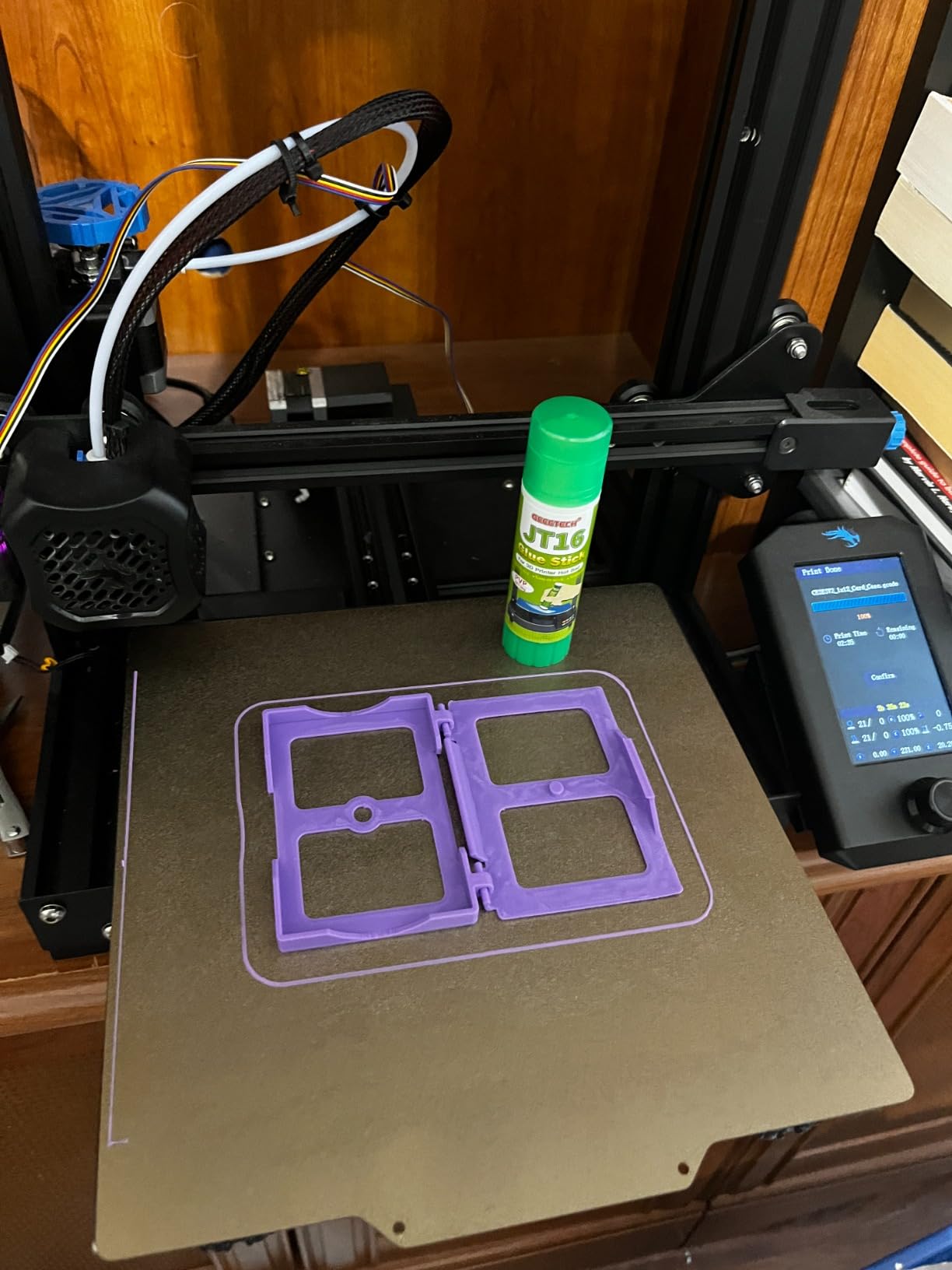
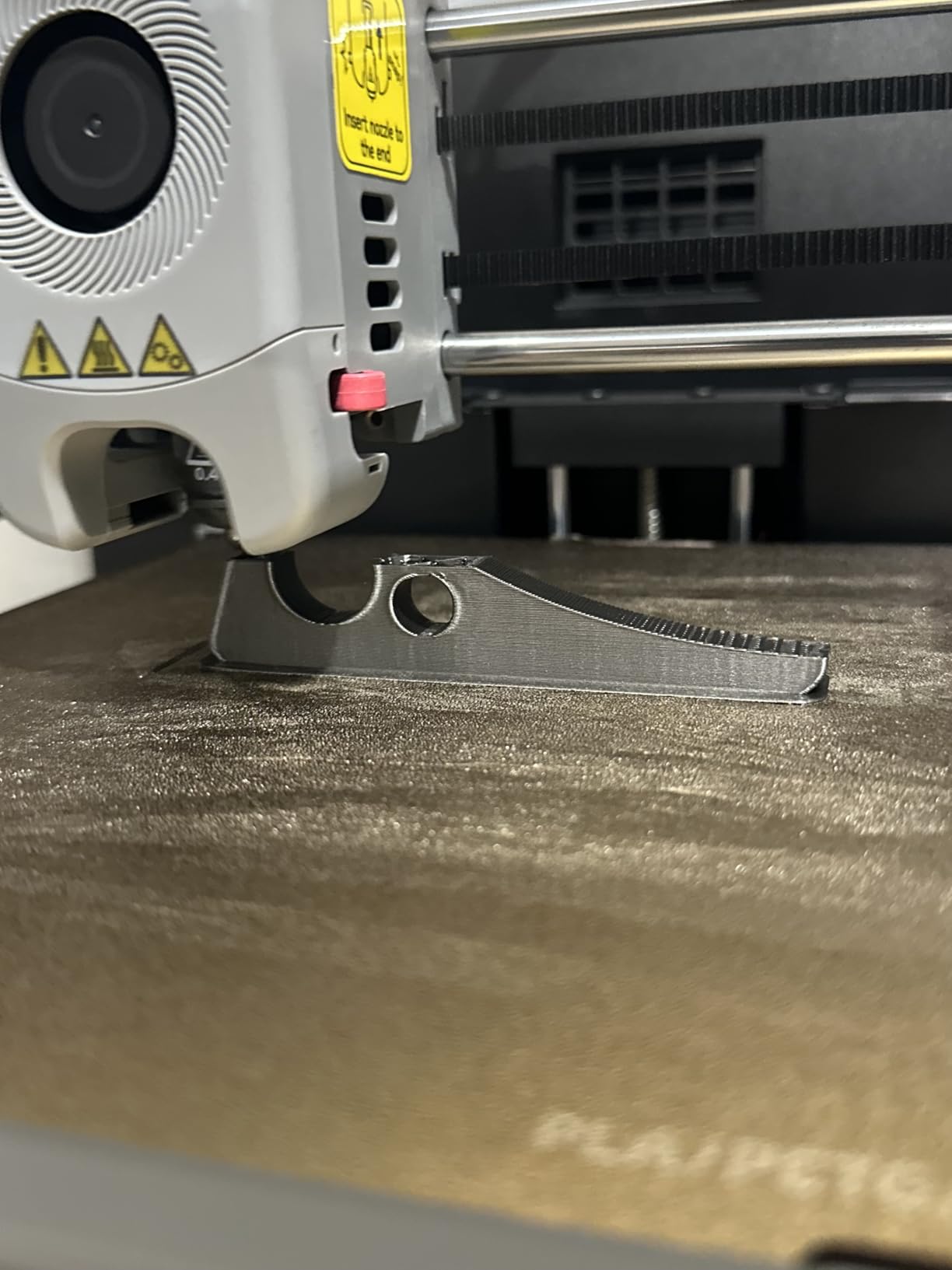
Application style matters more here than anywhere else in the roundup. The instruction owners converge on is a light, full-coverage rasted coat across the whole print footprint, not circular or random strokes. A partial coat on a textured sheet gives you adhesion in the covered zone and lift at the uncovered one.
What you should check before ordering
Check whether you will track reuse. Adhesion drops each time the plate is used with the existing film, so this stick only works well if you watch removal force and reapply proactively rather than waiting for a failure.
Check the filament list. It covers PLA, ABS, PETG, ASA and TPU on PEI, carbon crystal glass and aluminum plates, so it covers the textured PEI and glass combination that most printers end up owning.
Who should skip it
Skip it if you print large flat bases on a large plate. A 36g stick covering two to three runs is efficient on a small bed, but on a 300mm or larger bed you will be reapplying constantly and a liquid applicator becomes the better tool.
Skip it if the fragrance bothers you. The scent is noticeable during application, and a minority of buyers rate the product lower purely on that.
6. GIANTARM Glue Sticks 6 Pack: Maximum Hold, Maximum Cleanup
- Strong enough to hold even when z-offset is slightly off
- Eliminates corner lift on textured plates
- Non-toxic and acid-free with no fumes when heated
- 6-pack of 36g sticks
- Bond is aggressive enough to need a scraper
- Takes more scrubbing with soap and warm water
- Slight residue can remain on the bed
- Needs a full even coat under the whole footprint
When adhesion is the last thing standing between you and a failed print, this is the strongest hold in the group. Owners report that it keeps a part on the plate even when the z-offset is slightly wrong, which is a genuinely useful property when you are mid-calibration and do not want to stop printing.
It also has the widest plate list of any stick here: build surface sheets, aluminum, glass, PEI, carbon crystal glass, BuildTak and Kapton. If you have changed plates more than once, that saves you from buying a different adhesive for each surface.
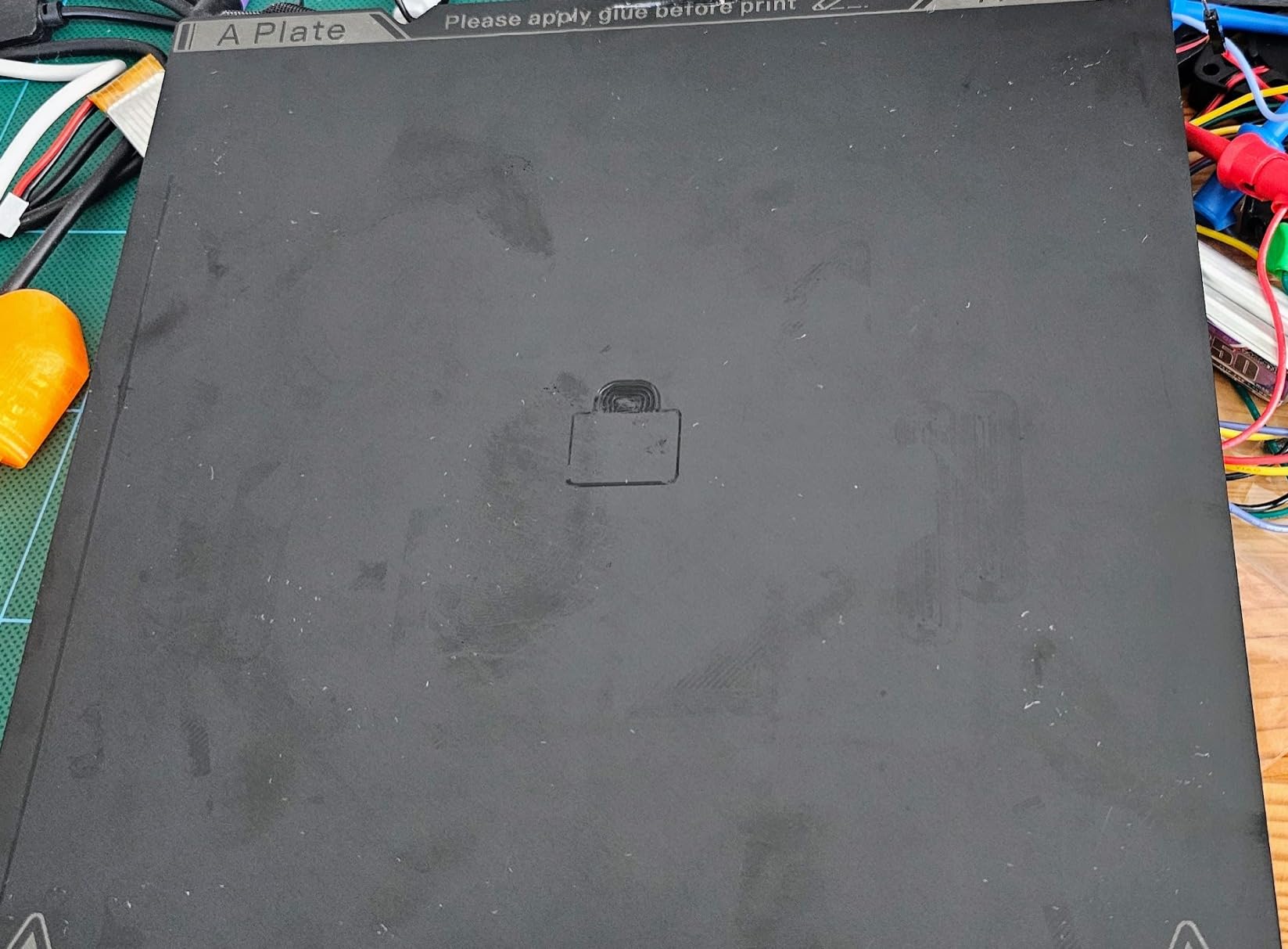
The trade-off is cleanup and release. At the strong end of the range, parts and their supports can stay bonded to the plate, and one buyer running a direct side-by-side against Creality and school sticks found supports left attached. Expect to scrub with soap and warm water rather than wiping.
What you should check before ordering
Check that you have a plastic scraper or a spatula you trust. Metal tools are the wrong choice on glass or smooth PEI, and this bond is strong enough to tempt you into using one. If you print on glass, plan to flex the plate or use a plastic shim.
Check your tolerance for reapplication. Like the other high-viscosity sticks here, it wants a full even coat under the entire print footprint, not a partial layer. Partial coverage on textured surfaces gives you corner lift at the edge of the coat.
Who should skip it
Skip it if you print parts with fine bottom detail that you do not want to sand or wash afterwards. This bond is strong enough to leave a slight film on the plate and, with repeated use, a residue on the print.
Skip it if you want the easiest possible plate life. The softer release of the balanced sticks in this roundup means fewer of these post-print chores, at the cost of holding less firmly.
7. Bambu Lab Build Plate Glue Stick: Built for the A1, P1 and X1
3DTOOLS Bambu lab Original 3D Printer Build Plate Hot Bed Solid Glue Stick Adhesion for A1 Mini P1 X1 3D Printer PLA/ABS/PETG/PC/PA/TPU Filament
- Designed around Bambu Lab build plate behaviour
- Rated highly for PETG and ABS problems on A1
- P1 and X1
- Spreads evenly without heavy buildup
- Washes off with minimal effort and little residue
- Single-stick pack offers no multi-pack value
- Application can be slightly messy
- Listing detail is sparse and reviews are brief
This one exists for a specific reason. Bambu Lab machines ship with textured plates that are already quite grippy, so the usual reason to add adhesive does not apply. The problems owners actually report are PETG and ABS on those plates, where a thin film improves consistency and helps the part release without taking the texture with it.
The feedback is uniformly positive on those two filaments, and the clear, low-buildup application is the reason. It washes off with minimal effort, which matters on a textured plate where residue is hard to reach.
What you should check before ordering
Check that you own one of the listed machines. This is a single stick, so if you run several Bambu printers or print constantly, you will replace it sooner than the six-packs in this roundup would.
Check that your problem is adhesive and not temperature. Most PETG adhesion complaints on Bambu plates come down to bed temperature and bed cleaning rather than a missing adhesive, so run the four checks earlier in this article before buying anything.
Who should skip it
Skip it if you are on any other brand of machine, or if you want the value of a multi-pack. The sample of user feedback here is smaller than the generic sticks, so you have less community troubleshooting to draw on when something behaves unexpectedly.
Skip it if a clean plate already works. If your first layers are consistent and parts release on their own, adding adhesive to a textured Bambu plate mostly introduces a cleaning step without fixing a real problem.
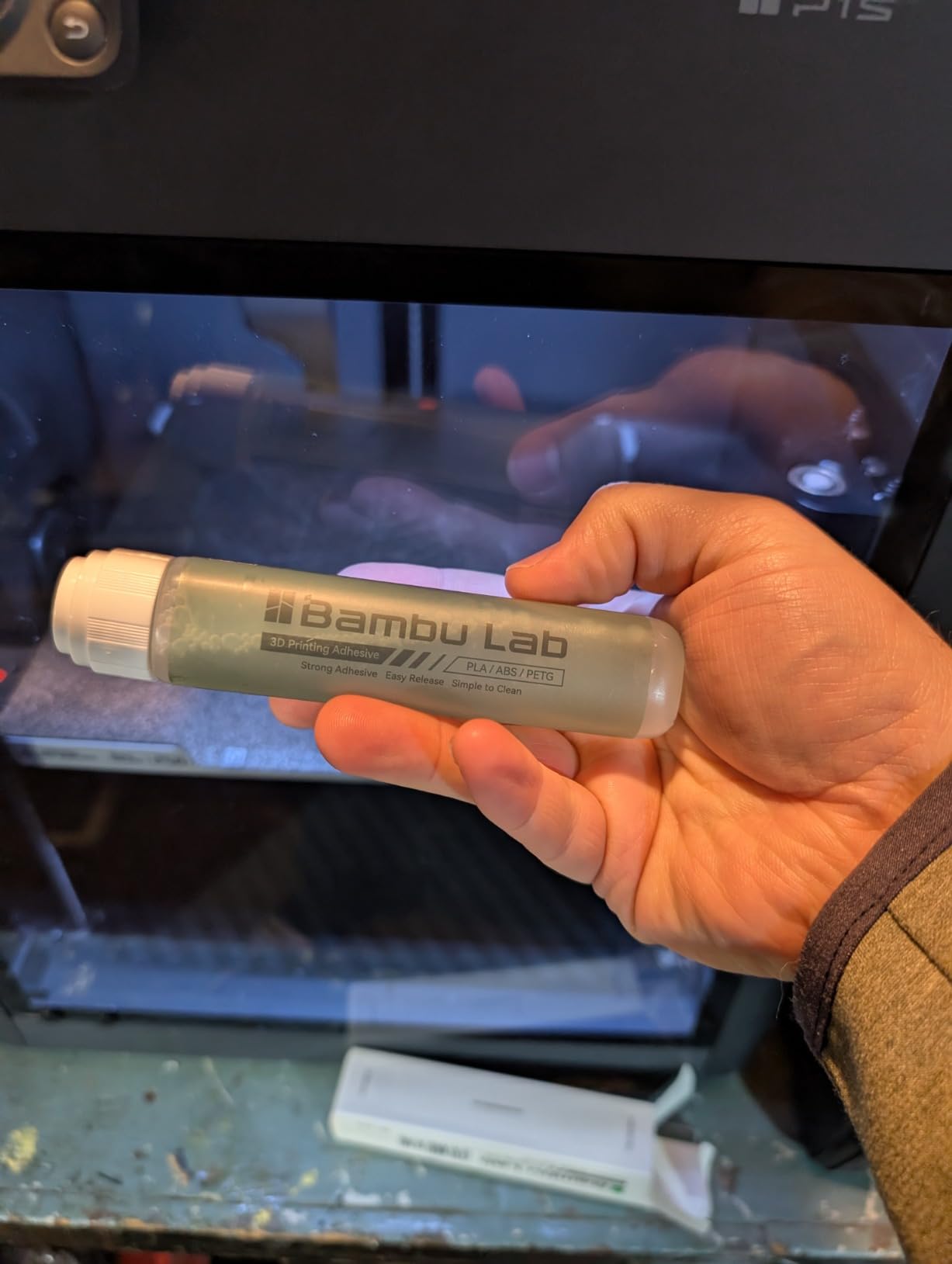
8. ENOMAKER Bed Adhesive 60ml: Even Coverage on a Large Plate
ENOMAKER 3D Printer Bed Adhesive,3D Print Glue Stick for Build Plate
- Spreads more evenly and completely than a solid stick
- Reaches into the pores of the build plate
- One application often carries 2 to 3 prints
- Washable with water and leaves no residue
- Odorless
- Listed as a glue stick but is a liquid
- Applicator puts down too much if pressure is not moderated
- Must not be applied to a hot plate
- Some buyers report the newer batch is less viscous
We are including this despite the title, because format matters more than labeling on a large bed. A solid stick held vertically across a 300mm plate produces an uneven film: thin in the middle, heavy at the edges where you spend the most passes. A liquid with a press applicator head gives a controlled, even layer in a fraction of the time.
Long-time owners rate it as the strongest performer in this group and report it beating sticks, spray and super-tack coatings on difficult filaments like ABS and PETG. The specific praise is for even spread, quick drying and clean release once the plate cools.
Coverage works out to roughly 40 to 50 plate applications from a 60ml bottle, and a single coat commonly carries two to three prints. That is the format to consider when you change plates often, print large, or want an adhesive that reaches into textured surfaces rather than bridging over them.
What you should check before ordering
Check the plate is cool before you apply. Owners are explicit about this: putting glue on a warm plate leaves an uneven, tacky film that behaves inconsistently. Unlike the sticks, this one has no heat-activated spreading step.
Check the viscosity on arrival. A small number of buyers report a newer batch being less viscous than the earlier formulation, which affects how much liquid the applicator puts down. Start with less than you think.
Who should skip it
Skip it if you want a solid stick for a small bed. For a 180mm plate, a twist-up PVP stick is faster to apply and cheaper to replace, and the applicator head is unnecessary precision.
Skip it if you are printing in a poorly ventilated room with a solvent-based adhesive nearby. This one is water-soluble and odorless, which is a real advantage, but any solvent product near a hot ABS bed needs ventilation. Our printer upgrades roundup covers filtration options if you print a lot of styrene-based filament.
Glue on PEI vs Glue on Glass: The Part Most Guides Get Wrong
On bare glass, bare aluminum or a carbon crystal sheet, adhesive is an adhesion promoter. The plate has low surface energy and nothing for molten plastic to grab, so the glue film provides a surface that bonds to the filament instead of releasing off it.
On smooth PEI, the same glue is doing the opposite job. PEI already grips plastic extremely well, which is exactly why PETG tears chunks out of it. Here the film acts as a release agent: a sacrificial layer that PETG bonds to instead of the sheet, so when the plate cools the part separates at the glue line rather than at the plastic-to-PEI interface.
This is why the amount of glue changes with the plate. On glass you want a thin even film across the footprint. On smooth PEI with PETG you want a layer you can see. Going heavy on either surface reduces grip rather than improving it, because the film itself becomes the weak, uneven layer.
It also changes the endgame. PEI plates have a service life that shortens as they glaze over from repeated heating and cleaning, and BuildTak style sheets degrade faster still. A glue film you can wipe off and reapply is one of the few ways to keep a textured surface behaving like it did on day one.
How to Apply a Glue Stick for Maximum Adhesion?
The technique matters more than the product for most failures. This is the sequence that works for both solid sticks and liquid applicators.
1. Cool and clean the plate. Let the bed drop to room temperature, then wash with warm water and dish soap, rinse, dry and finish with IPA. Never apply adhesive to a hot plate.
2. Warm the bed for low-viscosity sticks. PVP sticks spread properly when the plate is warm but not hot. Warming helps the film level out; a cold plate leaves streaks that become weak spots.
3. Apply to the active area only. Cover the print footprint, not the whole plate. Glue outside the footprint collects debris and becomes the gummy residue owners complain about.
4. Flatten the coat. Drag a straight edge or plastic card across the area for an even film. Crosshatch in two directions for large prints.
5. Print while it is still tacky for high-viscosity sticks, or let it dry for 1 to 2 minutes for liquid adhesive. The two formats behave differently here and the timing is not interchangeable.
6. Cool fully before removing the part. Let the plate drop below roughly 40C. A part pulled off warm will drag its whole first layer with it, which is the most common way people scratch a bed that was working fine.
How to Remove Glue Residue and Restore Your Bed?
Residue removal is the most repeated complaint in bed-adhesion threads. A comment from a 3D printing Facebook group describes a bed glue that was a nightmare to come off and scratched the plate, with hot water soaking as the only effective removal. That is avoidable.
For water-soluble PVP films: soak the plate in warm water for a few minutes, wash with dish soap and a sponge or nylon brush, rinse and dry. No solvent is required and none should be used, because solvents can craze PEI.
Never scrape a warm plate. Let it cool fully, then lift the part. If it resists, flex a plastic sheet away from the part or slide a plastic shim under the edge. Metal scrapers are how smooth PEI and glass sheets get scratched.
If glue has built up in texture: a soft nylon brush with warm soapy water lifts PVA out of the peaks without dulling them. Wipe fingerprints off with IPA only after the plate is clean and dry, so you are not spreading oil into a freshly cleaned surface.
Buying Guide: How to Choose a Glue Stick for Bed Adhesion?
Match the format to the plate size. Solid sticks suit beds up to about 250mm and give you the best control for localized application. On large-format printers a liquid with an applicator head or a spray adhesive beats a stick, because edge-to-edge coverage by hand is uneven and slow.
Match the viscosity to the surface. Low viscosity levels into texture and across wide areas; high viscosity gives a thicker film for non-porous glass and aluminum. High-viscosity sticks hold best but need a scraper more often.
Check chemistry against your bed temperature. Water-based PVA and PVP formulations are the right choice for high-temperature printing. ABS and ASA emit styrene, so print those in an enclosure with carbon filtration; our enclosure picks and nozzle guide cover the surrounding setup. Aerosol adhesives are flammable and should not be sprayed near a bed running above 80C.
Factor in cleanup, not just adhesion. A stick that leaves no residue saves more time than one that holds marginally better. Every product here is water-soluble and cleans with warm soapy water, which is the property worth prioritizing.
Count prints, not sticks. Ratings cluster around 100+ prints per stick, and the liquid format covers 40 to 50 plate applications with two to three prints each. Buying a six-pack is the efficient choice if you print weekly; a single stick is sensible only for testing an unfamiliar filament.
Consider the secondary use. These sticks also work for bonding printed parts together, model assembly and craft projects, so a multi-pack often earns its keep beyond the bed.
Frequently Asked Questions
What is the best glue stick for a 3D print bed?
For most setups, a solid PVP stick spread thin over the active print area is the best balance of adhesion and clean release. High-viscosity PVP sticks suit bare glass and aluminum, low-viscosity clear sticks suit textured PEI, and a liquid applicator suits large-format beds. On smooth PEI, glue works as a release agent that protects the sheet from PETG tear-out.
Does glue stick improve bed adhesion?
It does, but only when the failure is chemical rather than mechanical. Clean the plate with warm water and dish soap before IPA, re-level the bed, and confirm the bed surface temperature with an IR thermometer. If those are correct and parts still shift, a thin adhesive coat addresses a genuine surface-energy problem.
What type of glue is best for 3D printer bed adhesion?
A water-based PVA or PVP formulation is the standard choice because it is safe at bed temperatures up to about 100C and rinses off with water. It covers PLA, PETG, ABS, ASA, TPU, PC and PA. Avoid solvent-based craft glues and any adhesive that is not rated for hot-bed temperatures.
How do I make a 3D print stick to the bed better?
Clean the plate, warm it, apply a thin even coat only to the active print area, flatten it with a straight edge, and let the plate cool fully below roughly 40C before removing the part. Over-application reduces grip rather than improving it, and fingerprints from touching the plate create lift points that match your hand.
Do I need glue for PLA on a PEI bed?
Usually not. On textured PEI, PLA already grips well and adhesive mostly adds a cleanup step. On smooth PEI, a light coat can help consistency but the plate itself should handle PLA reliably. Community guidance on the Prusa Forum is that you should not need adhesives for PLA on smooth PEI at all.
Will glue stick damage my build plate?
Water-soluble PVA and PVP will not chemically damage PEI, glass or aluminum. The real risk is mechanical: scraping a warm or strongly bonded part with a metal tool. Cool the plate below roughly 40C, lift gently or flex plastic sheets, and never use a metal scraper on glass or smooth PEI.
How many prints does one glue stick cover?
Most sticks in this roundup are rated for 100 or more average prints, with better application technique stretching that further. Clear low-viscosity sticks commonly carry two to three print runs per coat on textured PEI. A 60ml liquid bottle covers roughly 40 to 50 plate applications.
The Bottom Line on Bed Adhesion in 2026
The TEQStone 6-pack is the pick we would put on any bench in 2026, because its medium-viscosity PVP formula adapts across PEI, glass and aluminum without a change of technique. For bare glass and aluminum specifically, the Outus 6-pack’s higher viscosity gives you the thicker film those surfaces need, and on large-format beds the ENOMAKER liquid covers ground that a twist-up stick cannot cover evenly.
Before any of them, run the four checks. Plenty of adhesion problems are a dirty plate, a bad level or an underheated glass bed, and no glue fixes those. If you want the rest of the setup right, our resin roundup covers print quality for resin printers working alongside your FDM machine.