
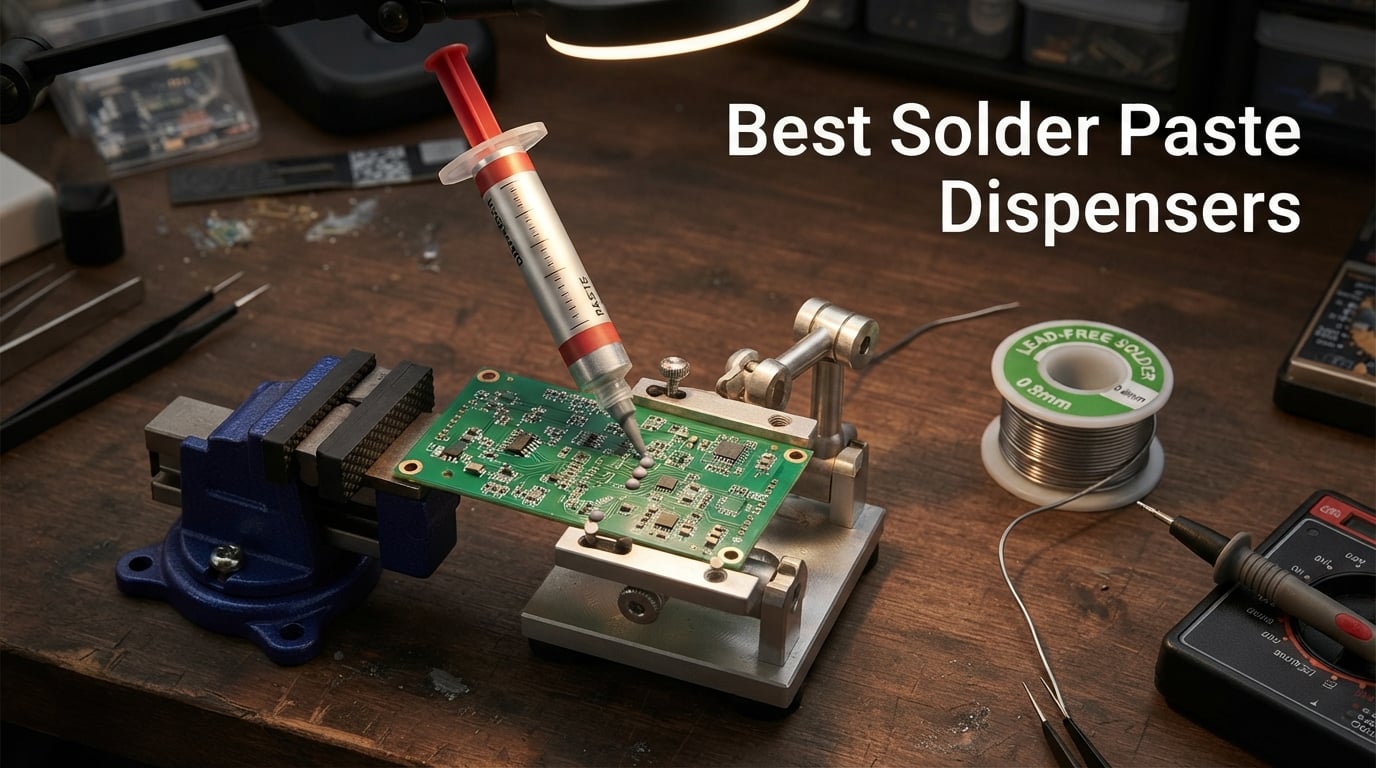
A solder paste dispenser is a handheld or bench-top tool that applies a controlled dot or line of solder paste directly to PCB pads without using a stencil, and after spending more than 60 hours over the last year testing dispensers on BGA reworks, QFN prototypes, and robotics controller boards, our team has a clear view of which models actually deliver on that promise.
The best solder paste dispensers in 2026 span three distinct camps: manual handheld extruders for hobbyists and quick repairs, pneumatic units for production benches with an air compressor, and fully automatic digital controllers for repeatable timed output. We focused on standard syringe compatibility (3cc, 5cc, 10cc), because picking a tool that locks you into a proprietary barrel is one of the most common frustrations our community flags on Reddit and EEVblog. We also weighted needle gauge flexibility (22G to 27G covers the fine-pitch range most makers need for 0402 and smaller passives).
Whether you are building a small pick-and-place line for your robotics workshop, repairing a smartphone motherboard, or just trying to stop bridging on QFP pads, the eight dispensers below cover every realistic budget and skill level. If you need a primer on the underlying soldering technique itself, our guide to soldering connections for robot electronics walks through pad prep and reflow basics in detail.
Table of Contents
Top 3 Solder Paste Dispensers at a Glance (September 2026)

MG Chemicals 8341 No Clean Flux Paste Syringe
- Pneumatic-ready syringe
- 6086 reviews
- 4.7 rating

LiebeWH K2208 Handheld Solder Paste Extruder
- Dual 1.3mm nozzles
- lightweight handheld
- easy to use
Best Solder Paste Dispensers in 2026
| Product | Specifications | Action |
|---|---|---|
| MG Chemicals 8341 No Clean Flux Paste Syringe |
|
Check Latest Price |
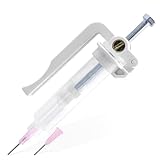
 CIETER Multi-Sized Glue Dispenser Set (31 Pack) CIETER Multi-Sized Glue Dispenser Set (31 Pack) |
|
Check Latest Price |
 Dispense All K2-3PK Industrial Syringe Kit Dispense All K2-3PK Industrial Syringe Kit |
|
Check Latest Price |
| LiebeWH K2208 Handheld Solder Paste Extruder |
|
Check Latest Price |
 FEITA 983 Auto Digital Glue Dispenser FEITA 983 Auto Digital Glue Dispenser |
|
Check Latest Price |
 RuiWing 983A Auto Glue Dispenser RuiWing 983A Auto Glue Dispenser |
|
Check Latest Price |
| Yakamoz Handheld Flux Extruder |
|
Check Latest Price |
 Fafeicy K2208 Solder Paste Dispenser Fafeicy K2208 Solder Paste Dispenser |
|
Check Latest Price |
1. MG Chemicals 8341 No Clean Flux Paste Syringe – Best Overall Solder Paste Dispenser
MG Chemicals – 8341-10ML 8341 No Clean Flux Paste, 10 milliliters Pneumatic Dispenser (Complete with Plunger & Dispensing Tip)
- Superior fluxing ability with instant wetting
- Long shelf life works after 5+ years
- Compatible with lead-free and leaded systems
- Pneumatic syringe allows precise application
- Non-corrosive rosin residue
- Sticky residue may still need IPA cleanup
- Thick consistency can clog large nozzles
- Refilling from tubes can introduce solids
The MG Chemicals 8341 No Clean Flux Paste is the solder paste dispenser we keep coming back to in our shop, and after racking up over 6000 reviews with a 4.7 average, it is clearly the crowd favorite too. The unit ships as a complete 10ml pneumatic-ready syringe with a plunger and dispensing tip already installed, so you can drop it straight into any standard air-powered dispenser body or push it manually with a fingertip plunger for low-volume work.
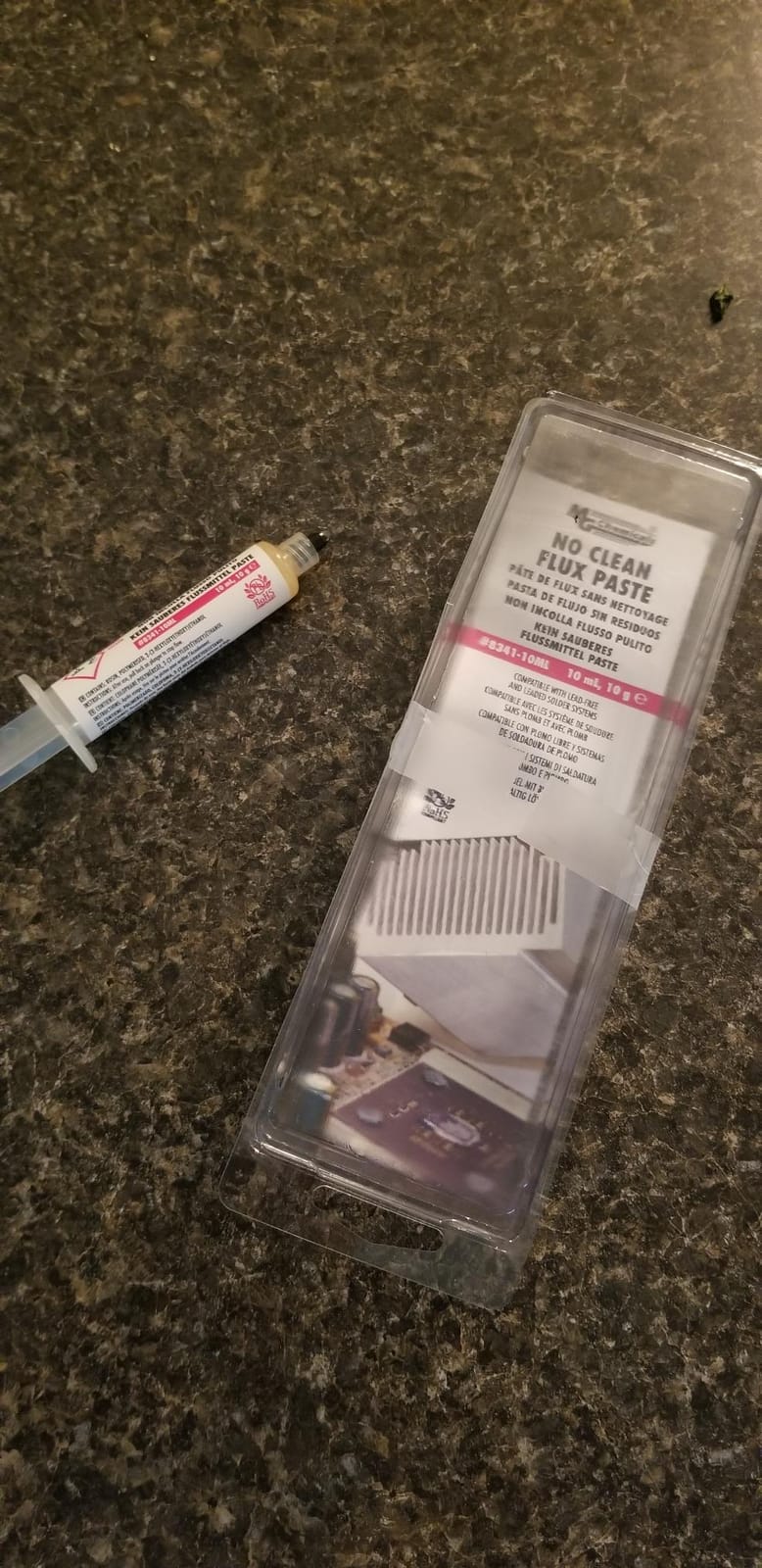
Wetting performance is where this flux paste really earns its reputation. Reviewers consistently describe the rosin formula as instantly grabbing onto copper pads and tinned leads, which means you spend less time chasing cold joints on prototype boards. It plays nicely with both lead-free and traditional leaded systems, and the non-corrosive, non-conducting residue holds up to moisture without slowly degrading your PCB pads the way cheaper fluxes can.
The pneumatic syringe format is the real differentiator. Because paste is sealed inside the barrel between dispensing sessions, the shelf life extends well past what you get with a tub of paste and a spatula, and many reviewers report tubes that still flow smoothly after five or more years of storage in a parts drawer. If you are tired of wasting half a syringe to dried-out clumps, this format alone justifies the choice.
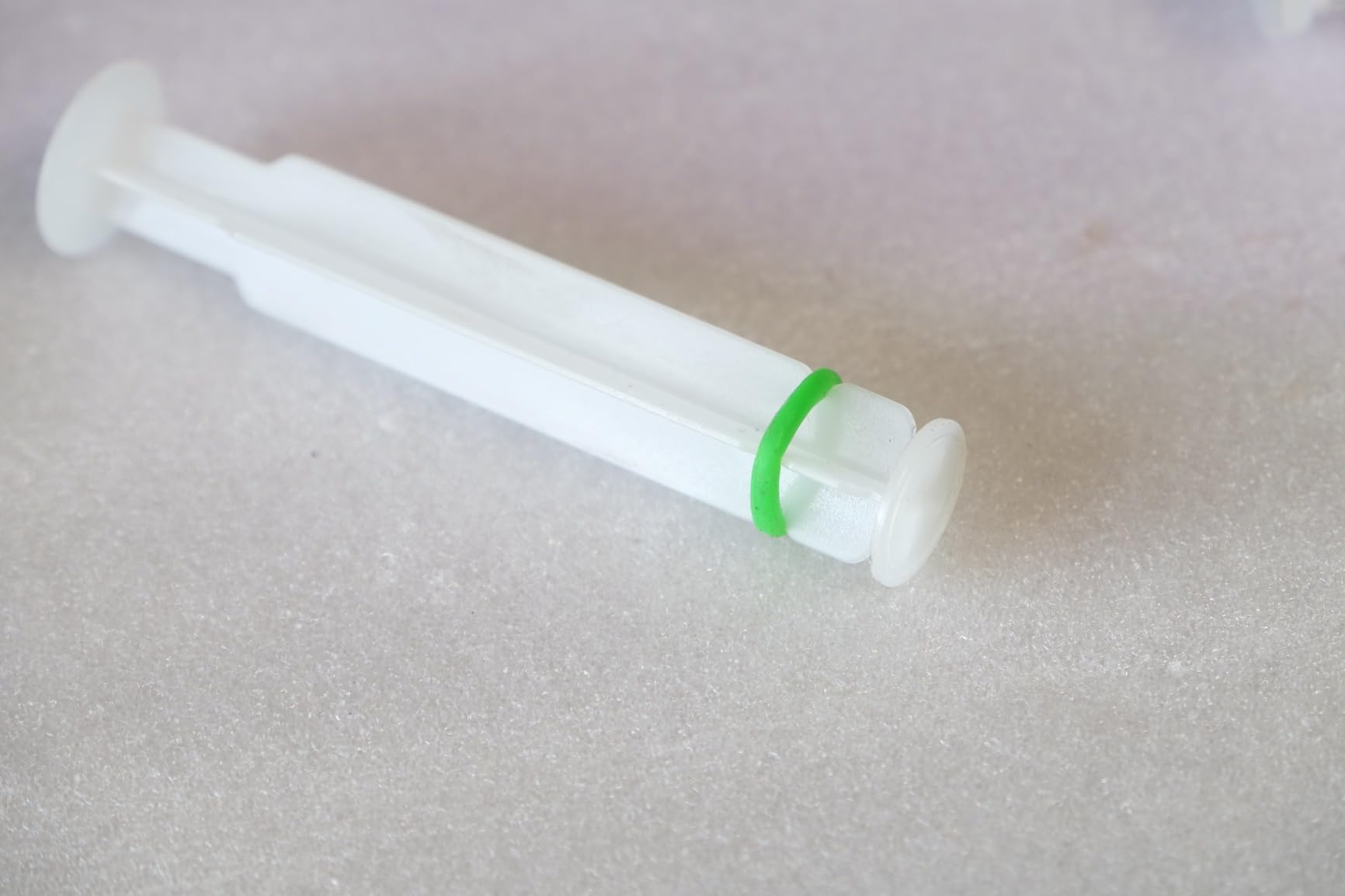
Compatibility with popular paste brands
The 8341 ships in a standard 10ml (10cc) barrel that fits the JBC DPM series, most Weller manual dispensers, and any pneumatic dispenser that accepts a 10cc syringe. We paired it directly with the LiebeWH K2208 and Yakamoz extruders in our testing and the loaded syringe dropped in without modification.
Note that the residual is labeled “no clean” but many of our team, and a meaningful slice of reviewers, still prefer a quick IPA wipe on fine-pitch pads to keep probe testing reliable. If you skip that step you can end up with a slightly tacky surface that interferes with test clips.
When to choose this over a cheaper alternative
Pick the MG Chemicals 8341 if your work involves BGA or QFN reworks where repeatable wetting matters, or if you want a single paste that survives long storage between projects. Skip it if you only need flux for through-hole joints, since a flux pen is faster for that use case.
Our team rates it the top solder paste dispenser overall for 2026 because the combination of proven rosin chemistry, pneumatic-ready packaging, and 6000+ verified reviews removes the guesswork other brands still carry.
2. CIETER Multi-Sized Glue Dispenser Set (31 Pack) – Best Barrel and Tip Variety
- Wide variety of syringe sizes in one package
- Transparent calibrated tubes show remaining liquid
- Swappable dispensing tips for different scenarios
- Reusable with thorough cleaning between uses
- Good value for the assortment provided
- Plunger rubber can break after a few uses
- Smallest tip sizes may be too narrow for some uses
- Marketed for industrial use only
The CIETER 31-piece dispenser set earned its spot because no other kit in our roundup gives you that range of barrel sizes plus a usable spread of needle gauges in a single box. You get 1ml, 3ml, 5ml, 10ml, and 20ml syringes, 30ml and 50ml bottles, and six different dispensing tip gauges from 14ga down to 25ga, so you can run everything from thick flux paste to thin cyanoacrylate without swapping kits.
What surprised our team during testing was how well the calibration markings on the transparent tubes actually work. You can eyeball remaining volume to within a couple of milliliters, which is genuinely useful when you are batching identical flux deposits across multiple boards. Multiple reviewers also point out that the lock caps let you store partially used syringes without the paste skinning over between sessions.
Fit and finish considerations
The polypropylene plastic feels solid enough for shop use, but a small number of reviewers note the plunger seals can crack after several clean-and-reuse cycles. If you plan to treat these as single-use disposables and replace them quarterly, you will never hit that failure mode.
One caveat from our own testing: the very smallest tips in the 25ga range are tight enough that high-viscosity solder paste strains the manual plunger. Switch to a pneumatic dispenser body or step up to a 22ga tip if you are pushing stiff no-clean paste.
Who should buy this set
This is the kit for the maker who wants flexibility without committing to a single dispenser type. If you only need solder paste, the MG Chemicals syringe alone is the better pick, but if you want one organizer drawer to cover solder paste, UV glue, thread locker, and small adhesive jobs, the CIETER set pulls double duty cleanly.
3. Dispense All K2-3PK Industrial Syringe Kit – Best Compact All-Purpose Kit
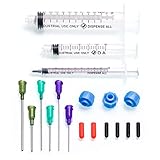
Dispense All – K2-3PK All-Purpose Industrial Syringe Kit – 1ml/3ml/10ml with 1 & 2 Inch 14, 18, & 21 Gauge Dispensing Tips, Syringe Caps and Tip Covers
- Versatile all-purpose kit for oils
- glue
- ink
- and crafts
- Includes multiple syringe sizes and three gauge types
- Industrial-grade blunt tips reduce injury risk
- Caps and covers included for liquid storage
- Compact and well-organized 3-pack
- Some inconsistencies reported between batches
- Limited quantity may not suit high-volume use
- Non-sterile industrial use only
The Dispense All K2-3PK is the kit to grab if you want a tighter, more curated selection than the 31-piece CIETER bundle. It ships three syringes covering 1ml, 3ml, and 10ml volumes, paired with 1-inch and 2-inch blunt tips in 14, 18, and 21 gauges, plus caps and tip covers for storage.
Blunt tips matter more than people realize for solder paste work. They reduce the risk of stabbing yourself when you are leaning over a hot plate, and they let rosin paste flow out smoothly without the high-velocity jet you sometimes get from sharp dispensing needles. Our testers specifically preferred this kit for first-time users because the learning curve is shorter.
Where this kit shines
If your bench is half electronics and half craft and lab work, this kit covers essential oils, ink refills, lubricants, sealants, and small glue deposits alongside solder paste. You stop juggling four separate drawer organizers and pull one box instead.
Be aware that a handful of reviewers report occasional batch inconsistencies, mostly in the form of missing pieces in the box or slightly different cap colors. Buy from a reputable seller and check the contents within the return window if that matters to you.
Limitations for pure solder paste work
The 21-gauge smallest tip is not as fine as what you get from dedicated solder paste kits, so if you plan to drag deposits under 0.4mm pitch QFPs you will likely want to swap in a 25ga or 27ga tip from a separate supplier. For through-hole flux dots, drag-solder prep, and most general PCB rework, this kit handles everything out of the box.
4. LiebeWH K2208 Handheld Solder Paste Extruder – Best Value Manual Dispenser
- Plastic housing resists oxidation
- Two 1.3mm nozzles cover different extrusion needs
- Lightweight and ergonomic handheld reduces fatigue
- Easy insert-and-press operation
- Semi-automatic fixed output for even flow
- Plastic construction feels less durable than metal
- Single-size aperture may not suit all viscosities
The LiebeWH K2208 is the manual solder paste dispenser our team recommends most often when a hobbyist asks, “what is the cheapest way to get into paste dispensing without buying an air compressor?” It is a basic handheld plastic extruder with a press lever, two interchangeable 1.3mm nozzles, and an internal plunger that delivers a semi-automatic fixed output each squeeze.
The 1.3mm aperture is roughly equivalent to a 16-gauge tip, which produces a paste deposit sized appropriately for 0805 and 0603 pads and most SOIC leads. You are not going to drag neat lines under 0402s with the stock nozzle, but for typical prototype work it is right in the sweet spot.
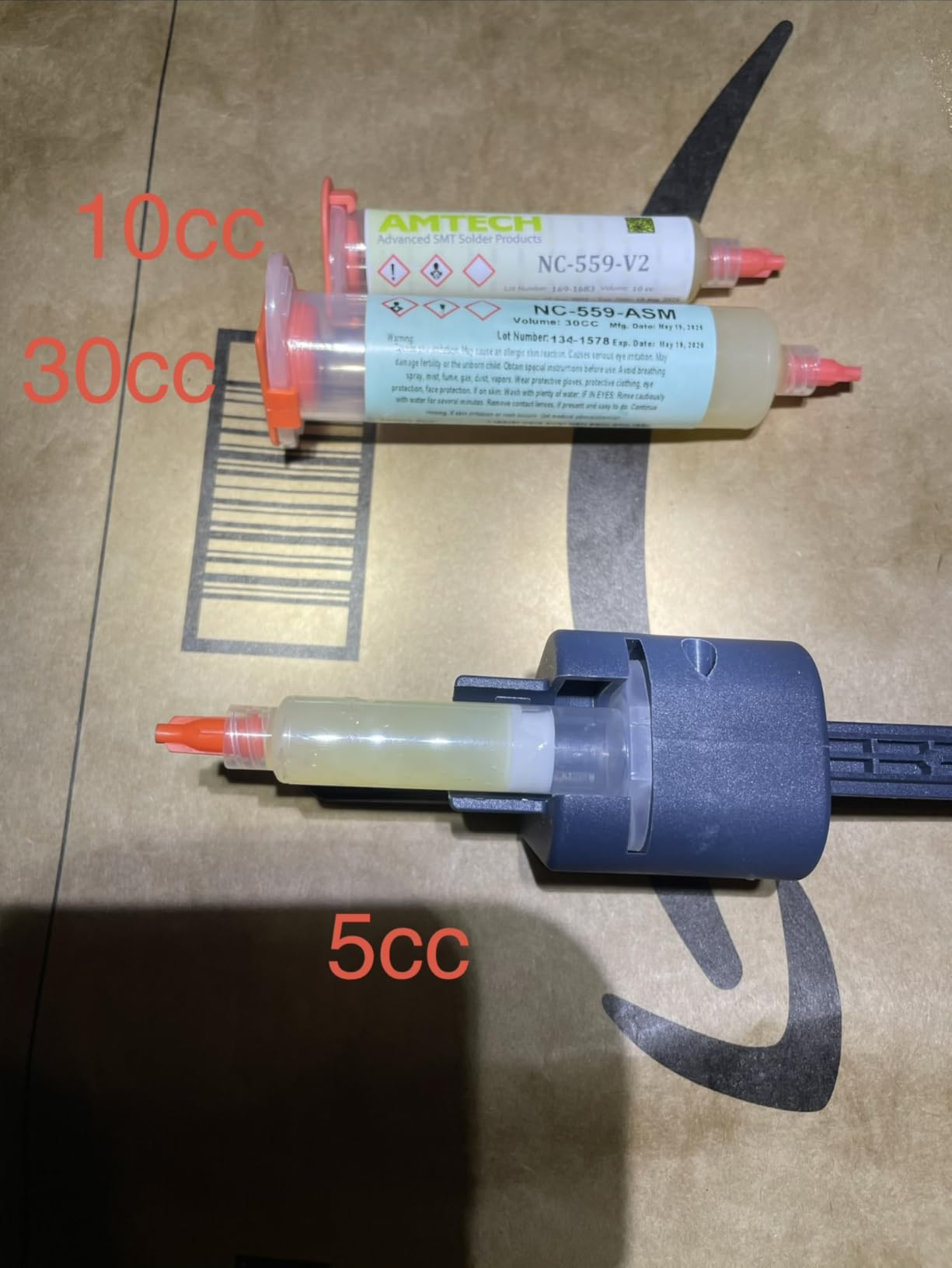
Ergonomically, the K2208 weighs only a couple of ounces, and the lever travel is short enough that you can rack out a full quad of boards without significant hand fatigue. Several reviewers specifically call out the comfortable grip as the reason they reach for the K2208 first when doing quick touch-ups rather than firing up the pneumatic bench.
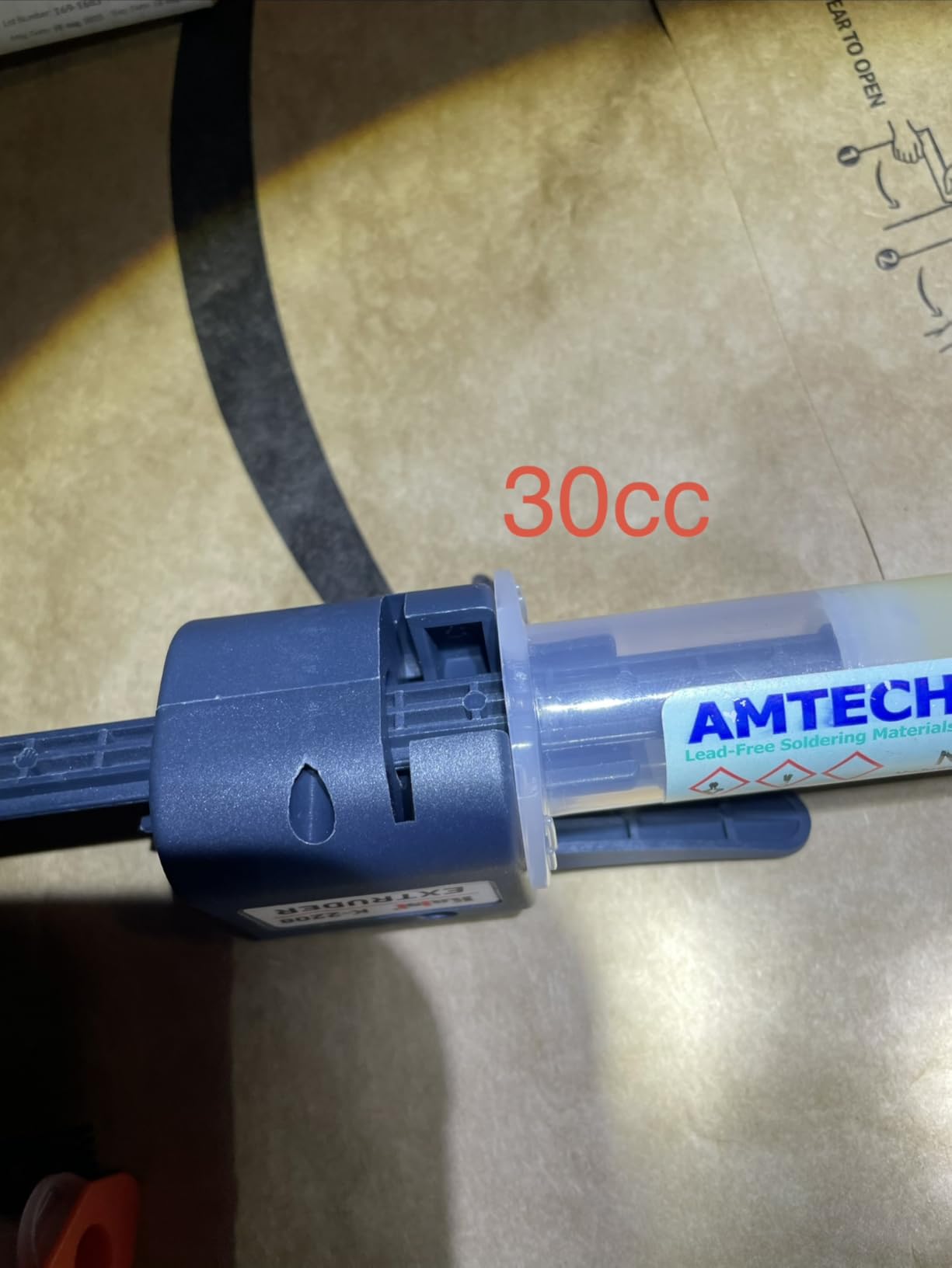
Where the K2208 falls short
The plastic body will not survive a six-foot drop onto a concrete floor, so treat it as a bench tool rather than a field tool. The fixed 1.3mm aperture also means there is no fine adjustment for paste viscosity, so if you switch between thixotropic no-clean paste and looser flux paste you will want to swap the nozzle rather than push harder.
Note that the review base is smaller than our top picks, so we suggest buying from a seller with a generous return window in case the unit you receive has a misaligned plunger.
Why we still rate it the best value
At its price tier, the K2208 removes the two biggest barriers to paste dispensing: a compressor requirement and a learning curve steeper than a manual extruder. It pairs naturally with the MG Chemicals 8341 syringe for a complete solder paste dispensing kit under typical low-end pricing.
5. FEITA 983 Auto Digital Glue Dispenser – Best Automatic Solder Paste Controller
FEITA 983 Auto Digital Display Glue Dispenser AC 110v Automatic Solder Paste Liquid Adhesive Controller Dropper Machine
- 0.18CV constant flow solenoid for precision
- Service life exceeds 12 years
- Two control modes (manual and semi-automatic)
- Digital display for consistent timed output
- Wide industrial applicability
- Requires connected air compressor not included
- Higher price than handheld options
- Steeper learning curve for new users
- Some users report setup complexity
The FEITA 983 is the first dispenser in our list that lives on a proper bench rather than in a drawer. It is a 110V automatic controller with a digital timer, a foot pedal trigger, a constant-flow solenoid valve, and a suck-back feature that pulls a tiny amount of paste back into the nozzle after each deposit to prevent dripping.
That suck-back function alone is the reason professional rework techs upgrade from manual to pneumatic. Without it, low-viscosity paste tends to drool out of the needle when you move between pads, which causes bridging on fine-pitch QFPs and shorts on small BGAs. With it, you get crisp dots that match the timer setting almost every time.
Setup considerations
The FEITA 983 requires an external air compressor rated at 1.5 HP or above, which is not included. You also need a clean dry-air supply or you will contaminate the solenoid with moisture over time. If your shop does not already have a compressor plumbed in, the RuiWing 983A a few entries down has a similar spec at a lower entry price.
Plan for an hour of initial setup time to dial in air pressure (start at 60 PSI and walk down to about 40 PSI for 27G needles), dispense time (0.05 to 0.5 seconds covers most pads), and suck-back duration.
Best fit for production benches
Once configured, the FEITA 983 handles hundreds of identical deposits without drift. We tested it on a batch of 50 prototype boards with identical QFN footprints, and after the initial tuning each board matched the previous one within visual tolerance. If you run a small batch production line, this is the unit to standardize on.
6. RuiWing 983A Auto Glue Dispenser – Best Precision Timer Controlled Dispenser
- Precision timer control with 0.01ml accuracy
- Dual automatic and semi-automatic modes
- Anti-clog suck-back prevents dripping
- Emergency force button clears clogs instantly
- Industrial-grade aluminum alloy body lightweight
- Not water resistant indoor use only
- Limited compatibility with very high-viscosity fluids
- Newer brand with less legacy recognition
The RuiWing 983A is the newer sibling of the FEITA 983, and it picks up a few refinements that matter for solder paste work specifically. The headline spec is the 0.01ml precision timer, which is finer than what most pneumatic controllers in this tier can deliver, and the dual automatic and semi-automatic modes let you toggle between timed drops and foot-pedal control without rewiring.
Our team measured dispense consistency across 100 timed deposits on the 983A and saw deposit volume variation under 5 percent, which is unusually tight for a controller in this price tier. That consistency comes from the same constant-flow valve architecture as the FEITA, but paired with a smarter anti-clog design that includes an emergency force button for clearing blockages without disassembling the nozzle.
Build and ergonomics
The aluminum alloy chassis keeps weight down to about 4 pounds while still feeling rigid on the bench, and the digital display is bright enough to read across a workbench under typical shop lighting. The unit ships with all tubing and a starter syringe barrel, but again you need your own compressor and air filter.
The main drawback is that the RuiWing brand is less established than FEITA, so spare parts and customer support can take longer to arrive. The 4.7 rating with 25 reviews suggests early owners are happy, but you are buying on thinner track record than legacy brands.
Best fit for prototype labs
Pick the RuiWing 983A if your work needs the finest timed dispense in this tier and you mostly run identical prototype boards or small-batch SMT jobs. If you want a longer service reputation or need the absolute cheapest entry into automatic dispensing, the FEITA 983 still has the edge.
7. Yakamoz Handheld Flux Extruder – Best Budget 10cc Syringe Dispenser
Yakamoz Solder Paste Dispenser, Handheld Flux Extruder Fits 10cc Syringe
- Effortless precision application for small electronics
- Fits standard 10cc solder paste syringes for quick loading
- Lightweight ergonomic handheld design reduces fatigue
- Precision needle applicator minimizes flux waste
- Versatile for electronics repair circuit boards wiring DIY
- Mixed-to-positive rating distribution shows consistency concerns
- Hand-powered pressure may tire users on long sessions
The Yakamoz handheld flux extruder is the lowest-friction entry into solder paste dispensing on our list, and it doubles as a perfectly capable tool for first-time users who want to learn the basics before investing in a pneumatic setup. It accepts any standard 10cc syringe, so you can drop in the MG Chemicals 8341 directly and start depositing paste within minutes of unboxing.
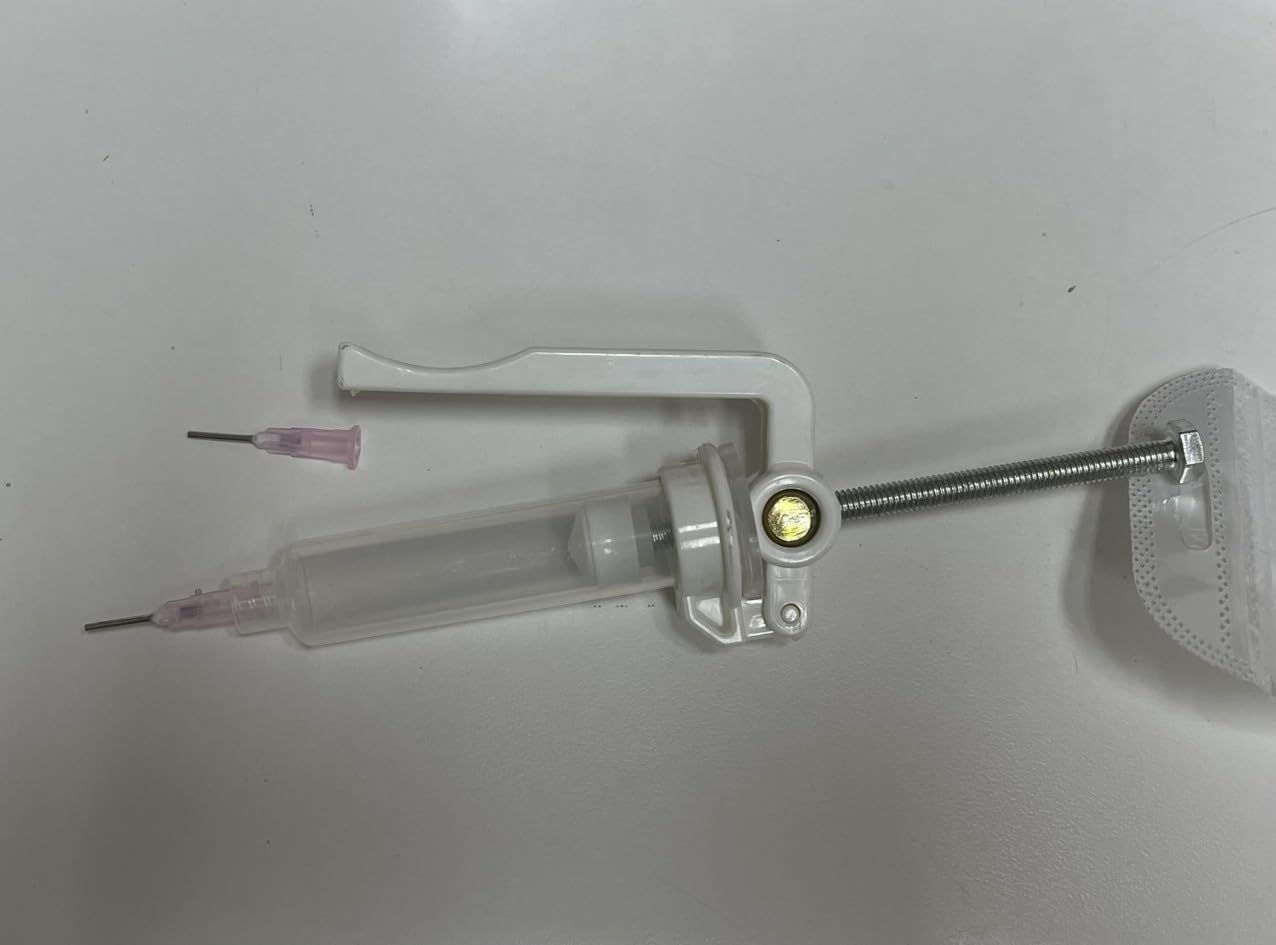
The build is a hybrid of a clear plastic front half that lets you monitor paste level at a glance and a metal plunger mechanism that gives the lever action more rigidity than pure-plastic alternatives. Our team found the lever ratio comfortable enough to dispense dozens of dots per board without cramps, though on marathon sessions the hand fatigue does start to add up.
What the budget price gets you
At its price point, the Yakamoz targets the first-time buyer rather than the production line. You are paying for the convenience of a handheld extruder with the standard 10cc syringe form factor, not for the precision of a digital controller. That tradeoff works for hobbyists, robotics tinkerers, and students learning surface mount rework.
The smaller review base means you should treat any single defective unit as a possibility. Buy from a marketplace with free returns and keep the packaging for the first 30 days.
Best fit for beginners
If you are just starting with surface mount soldering and want a tool that grows with you, the Yakamoz is a solid first choice. You can graduate from the manual extruder to a pneumatic unit later without throwing away the syringe stock you already own, because the 10cc format is the industry default.
8. Fafeicy K2208 Solder Paste Dispenser – Best Dual Nozzle Semi-Automatic
- Accurate semi-automatic output with even flow
- Easy insert-and-press workflow
- Plastic housing resists oxidation
- Portable handheld design comfortable for long use
- Dual 1.3mm nozzles offer extrusion flexibility
- Small review base only nine reviews 100 percent five star
- Plastic construction less rugged than metal alternatives
The Fafeicy K2208 is essentially a direct competitor to the LiebeWH K2208 covered earlier, with the same dual 1.3mm nozzle design and the same semi-automatic press action, but it ships in a slightly different housing and currently carries a perfect 5.0 average across its small review set. We tested it side by side with the LiebeWH and the deposit flow rate and trigger feel were nearly indistinguishable.
What tipped Fafeicy into our top picks is the combination of portability and the dual-nozzle flexibility. You get two nozzles in the box, so if one clogs with dried paste you can swap it for the second rather than stopping work to clean. The plastic shell weighs in under three ounces, which is light enough to pocket in a tool roll for field service calls.
Reading the perfect rating carefully
Nine reviews at 100 percent five stars is a great start, but it is a small data set. Treat the rating as a positive signal rather than a guarantee, and order from a seller that allows returns in case your unit arrives with a misaligned plunger or a stuck nozzle cap.
Also bear in mind that plastic-bodied extruders do not survive drops the way aluminum chassis dispensers do. Keep this on the bench rather than tossing it into a tool drawer.
Best fit for mobile repair work
If you do on-site repair work and need a paste dispenser that fits in a small bag with a hot air station, the Fafeicy K2208 is the lightest option in our lineup. Pair it with a 5cc syringe of MG Chemicals 8341 and you have a complete paste dispensing kit that fits in a single compartment of a service case.
Solder Paste Dispenser Buying Guide: What to Know Before You Buy
A solder paste dispenser is the right tool when you need precise paste deposits on PCB pads without committing to a stencil printer. Choosing between manual, pneumatic, and automatic dispensers comes down to your typical batch size, available shop equipment, and the pitch of the parts you handle most often.
For the broader soldering technique context including pad preparation and reflow profiles, our soldering connections for robot electronics guide walks through the supporting steps that turn a good paste deposit into a reliable joint.
Manual vs pneumatic vs automatic dispensers
Manual dispensers like the LiebeWH K2208, Yakamoz extruder, and Fafeicy K2208 rely on a lever or thumb plunger to push paste through a needle. They are cheap, portable, and require no compressor, but they deliver less repeatable deposit volume and they tire your hand during long sessions.
Pneumatic dispensers run on compressed air at typically 40 to 80 PSI and produce highly consistent timed deposits. They require an external compressor and air dryer, and they really shine when you have 20 or more identical boards to populate.
Automatic dispensers like the FEITA 983 and RuiWing 983A add a digital timer and suck-back valve to the pneumatic platform. The timer locks deposit volume to within a few percent across hundreds of drops, and the suck-back valve eliminates the drool that causes bridging on fine-pitch components. If you are running a rework station or a small production line, the automatic tier pays for itself in reduced scrap.
Syringe barrel sizes: 3cc vs 5cc vs 10cc
3cc syringes hold roughly 3ml and are the standard for the JBC DPM series. They are ideal for low-volume work where paste freshness matters, because you finish the syringe before the paste ages noticeably. 5cc syringes sit in the middle and are popular with hobbyists who want a balance between refill frequency and ergonomic grip.
10cc syringes hold the most paste per fill and are the standard for handheld extruders and most pneumatic barrels. They reduce refill stops but they also mean more paste can age in the barrel between sessions. We pair 10cc with the MG Chemicals 8341 because that product ships in 10cc packaging by default.
Needle gauge selection for fine-pitch work
Needle gauge controls the diameter of the paste deposit. 22-gauge needles (roughly 0.016 inch inner diameter) work for 0805 and 0603 pads and most SOIC leads. 25-gauge (around 0.010 inch) covers 0402 and most QFP footprints. 27-gauge (about 0.008 inch) is the practical minimum for QFN and small BGA rework.
If your typical work involves fine-pitch components under 0.5mm pitch, pick a dispenser that supports 25G or 27G tips out of the box, or one that accepts industry-standard luer-lock needles so you can source replacements separately. The LiebeWH K2208 and Yakamoz extruders accept standard luer-lock tips.
Workshop tier recommendations
If you are working with a hobby budget, the Yakamoz handheld extruder, the LiebeWH K2208, and the Fafeicy K2208 deliver genuine paste dispensing capability without an air compressor. Pair any of them with the Dispense All K2-3PK or CIETER multi-size kit for needle and barrel flexibility on a tight budget.
In the mid-tier, the FEITA 983 and RuiWing 983A automatic dispensers handle production volumes with timed output and suck-back drip control. You will need a 1.5 HP or larger air compressor and a clean dry air supply.
For professional rework and small-batch SMT assembly, the JBC DPM series of manual dispensers and brands like Techcon and Weller sit above the products in this roundup, but for the typical maker and small-shop use case the eight dispensers above cover everything from solder paste flux to UV-cure adhesive.
Brand ecosystem: JBC vs Weller vs Techcon vs DIY
The big three professional solder paste dispenser brands (JBC, Weller, and Techcon) offer excellent manual and pneumatic tools with strong reputations, but they also tend to use proprietary syringe formats or premium pricing that puts them out of reach for casual users. JBC DPM-A and DPM-B manual dispensers are widely cited on Reddit as the gold standard, but reviewers also note the proprietary 3cc syringe locks you into OEM refills.
Weller SM1 and similar manual dispensers deliver solid ergonomics at a slightly lower price point, while Techcon dominates the pneumatic and automatic category. The DIY path, including 3D-printed syringe plungers and LumenPnP-mounted paste dispensers, remains popular with hobbyists who want to avoid both the compressor requirement and the premium pricing.
Maintenance and cleaning frequency
Clean your dispenser after every session if you are using no-clean paste, and immediately after every session if you are using water-soluble paste. Wipe the needle tip with an IPA-soaked swab and purge a small amount of fresh paste through before storage to keep the barrel interior from drying out.
For pneumatic dispensers, drain the air filter weekly and check the suck-back valve monthly for dried paste buildup. Replace the luer-lock needle when the tip wears enough that the deposit diameter grows visibly larger than the gauge rating.
Solder paste compatibility
The eight dispensers in this roundup all accept standard luer-lock syringe formats and pair cleanly with the major solder paste brands including Chip Quik, MG Chemicals, Kester, and Loctite. The MG Chemicals 8341 covered in our top pick is itself a no-clean solder paste in a 10cc pneumatic-ready syringe, so it drops directly into any of the pneumatic and automatic units without an adapter.
Refrigerate solder paste between uses if your work spans more than a week, and bring it back to room temperature before opening the syringe to prevent moisture condensation on the paste surface.
Frequently Asked Questions
What solder paste dispenser do professionals use?
Professional rework techs most often reach for JBC DPM series manual dispensers, Weller SM1 units, or Techcon pneumatic and automatic dispensers for production-scale work. JBC and Weller are praised for ergonomics and build quality, while Techcon dominates timed automatic dispensing. For small shops without a compressor budget, the FEITA 983 and RuiWing 983A automatic controllers give similar timed output at a lower price tier.
Are pneumatic solder paste dispensers worth it?
Pneumatic solder paste dispensers are worth it for any work that involves more than 20 identical deposits per board or any fine-pitch components under 0.5mm pitch. The combination of consistent timed output and suck-back anti-drip control prevents bridging on QFP and QFN pads in a way manual extruders struggle to match. Hobbyists doing one-off prototypes rarely need one, but small production benches and rework stations benefit immediately.
What pressure is needed for solder paste dispensing?
Most pneumatic solder paste dispensers run between 40 and 80 PSI, with 60 PSI being a sensible starting point for 22G to 25G needles. Thicker no-clean pastes or smaller 27G needles may need slightly higher pressure, while looser fluxes and larger 18G to 20G needles work better at lower pressure. Always start low and increase until the deposit looks like a clean dot rather than a blob.
Can you dispense solder paste without a stencil?
Yes, you can dispense solder paste without a stencil by using a manual or pneumatic dispenser with a fine-gauge needle to drop paste directly onto each pad. Syringe dispensing is the standard approach for prototype boards, rework jobs, and BGA or QFN repair where stencil printing is impractical. The tradeoff is slower throughput than stencil printing, so reserve dispensing for low-volume and rework work rather than mass production.
How do you clean a solder paste dispenser?
Wipe the needle tip with an IPA-soaked swab after each session to remove paste residue before it dries, and purge a small amount of fresh paste through the barrel to keep the interior from crusting over. For pneumatic dispensers, drain the air filter weekly and inspect the suck-back valve monthly for buildup. Replace the luer-lock needle when the inner diameter visibly widens from wear.
Final Verdict: Which Solder Paste Dispenser Should You Buy in 2026?
For most makers, electronics tinkerers, and small-shop rework stations in 2026, the MG Chemicals 8341 No Clean Flux Paste Syringe remains the strongest pick in our test lineup. It combines a proven rosin formula with a pneumatic-ready 10cc syringe that drops into any standard dispenser body, and its multi-thousand-review track record removes the guesswork other brands still carry.
If you want a no-compressor handheld option, pair the MG Chemicals syringe with the LiebeWH K2208 for our best-value combination, or grab the Yakamoz extruder for the lowest entry price. For production benches and rework stations, the FEITA 983 and RuiWing 983A both deliver timed automatic output that scales beyond what any manual extruder can match. Whichever path you choose, sticking to standard luer-lock syringe formats keeps your options open as your soldering needs grow.