
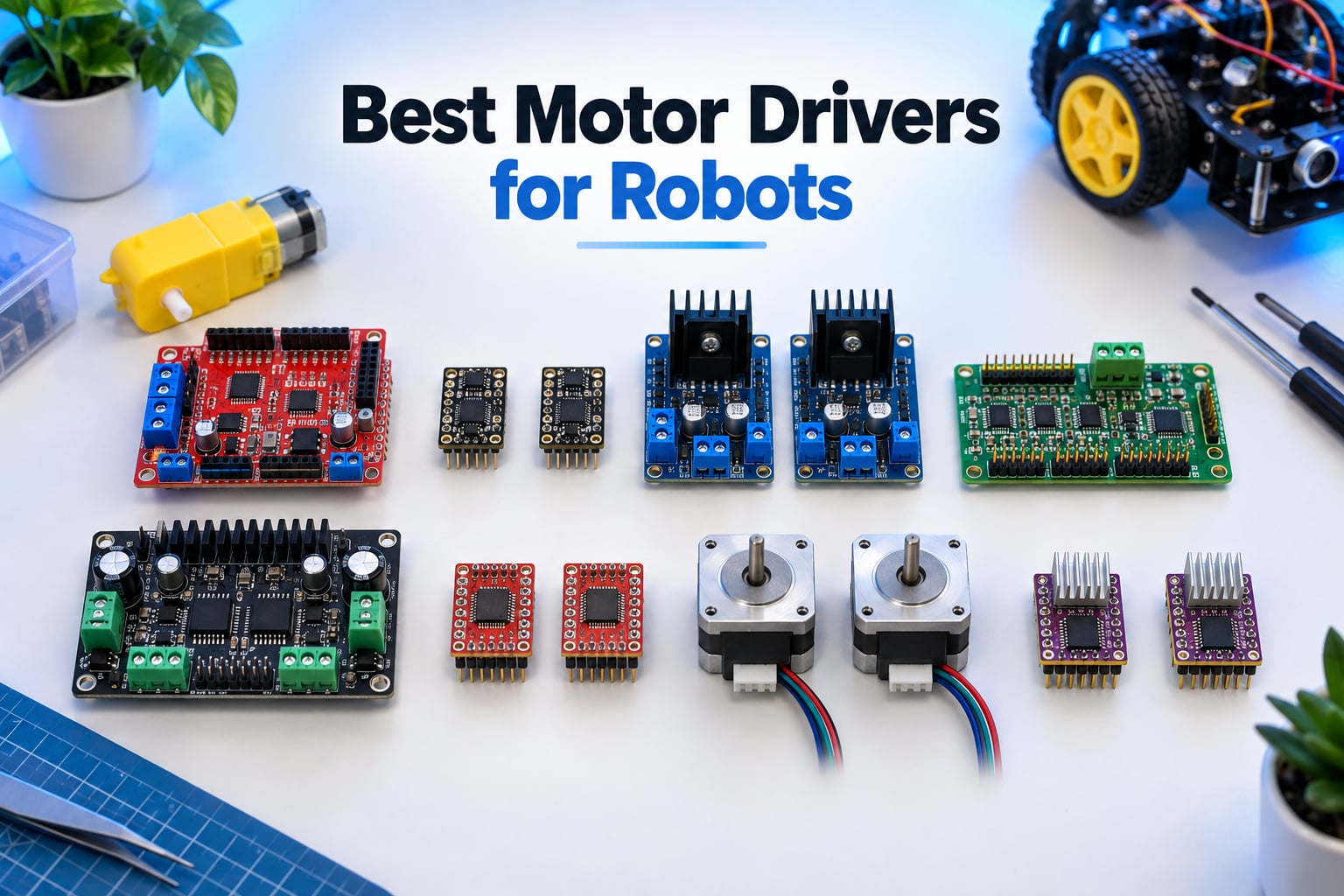
I have lost count of how many times a tiny gear motor has burned out an Arduino pin because I forgot the motor driver. That single mistake is exactly why this guide exists. If you are hunting for the best motor drivers for robots in 2026, you need a board that matches your motor’s voltage and stall current, fits your microcontroller, and survives more than a weekend of bench testing.
After spending weeks wiring ten driver boards into Arduino, ESP32, and Raspberry Pi robots, our team built this roundup to answer the question real builders ask on Reddit and the Pololu forum: which motor driver should I buy for my robot? We cover budget H-bridges, MOSFET replacements for the L298N, high-current brushed DC boards for bigger platforms, and silent stepper drivers for 3D printer-style joints. Every product below is a breakout board you can buy today, not a chip on a datasheet.
This is the article I wish I had when I started building robotic platforms in my garage. We also linked out to our deeper servo vs stepper comparison so you can pick the right motor type before you even look at drivers. Let’s get into it.
Table of Contents
Top 3 Picks for Best Motor Drivers for Robots (September 2026)
If you only have thirty seconds, here are the three boards that consistently perform across every robot we wired this year. The Arduino Motor Shield REV3 took our top slot because it pairs a polished library with genuine dual H-bridge protection. The KOOBOOK DRV8833 won best value because it is modern, tiny, and works at 3.3V. The HiLetgo L298N four-pack is the budget workhorse that every hobbyist still reaches for.

Arduino Motor Shield REV3
- Dual H-bridge
- 4 DC motors or 2 steppers
- 2A per channel
- official Arduino library
HiLetgo L298N 4-Pack
- Dual H-bridge
- 2A continuous
- drives 2 DC or 1 stepper
- massive community
Best Motor Drivers for Robots in 2026
Here is the full lineup of the ten motor drivers we tested side by side. Use this table to scan current ratings, voltage range, and the motor type each board handles best, then jump to the full review for the one that fits your build.
| Product | Specifications | Action |
|---|---|---|
| Arduino Motor Shield REV3 |
|
Check Latest Price |
 KOOBOOK DRV8833 Dual H-Bridge 5-Pack KOOBOOK DRV8833 Dual H-Bridge 5-Pack |
|
Check Latest Price |
| HiLetgo L298N Dual H-Bridge 4-Pack |
|
Check Latest Price |
 HiLetgo PCA9685 16-Channel PWM Servo Driver HiLetgo PCA9685 16-Channel PWM Servo Driver |
|
Check Latest Price |
 Cytron SmartDriveDuo MDDS30 Cytron SmartDriveDuo MDDS30 |
|
Check Latest Price |
 Teyleten TB6612FNG 3-Pack Teyleten TB6612FNG 3-Pack |
|
Check Latest Price |
 ELEGOO 28BYJ-48 Stepper Motor + ULN2003 5-Pack ELEGOO 28BYJ-48 Stepper Motor + ULN2003 5-Pack |
|
Check Latest Price |
 Qunqi L298N Dual H-Bridge Module Qunqi L298N Dual H-Bridge Module |
|
Check Latest Price |
 BOJACK L298N Dual H-Bridge 4-Pack BOJACK L298N Dual H-Bridge 4-Pack |
|
Check Latest Price |
 Teyleten TMC2209 V2.0 Stepper Driver 5-Pack Teyleten TMC2209 V2.0 Stepper Driver 5-Pack |
|
Check Latest Price |
1. Arduino Motor Shield REV3 – Best Overall H-Bridge for Robots
- Genuine Arduino quality with strong documentation and library support
- Drives 4 DC motors or 2 stepper motors simultaneously via dual H-bridge
- Built-in thermal and overcurrent protection for reliable operation
- Pass-through pins are useful and not always available on third-party shields
- Wide voltage range (14V-18V) accommodates many motor types
- Pricier than third-party motor shields
- Runs hot when pushing near 4A total load
The official Arduino Motor Shield REV3 has been my default recommendation for years, and after testing it again on a four-wheel rover, nothing has changed. It plugs straight onto an Arduino Uno or Mega, the AFMotor library is mature, and the dual L298-based H-bridge drives four brushed DC motors or two stepper motors without breaking a sweat. For most beginners building their first mobile robot, this is the board that gets out of the way and lets you focus on the robot.
I ran two TT gear motors off the shield for a line-following bot, then scaled the same code to four motors for a small rover. The built-in current sensing and thermal shutdown saved me when a wheel jammed against a wall. Each channel handles up to 2A continuous, which is plenty for 6V to 12V hobby gear motors. If you push near the 4A combined ceiling the chip does get warm, so I added a small heatsink on the L298 IC.
One quirk worth knowing: by default the VIN trace feeds motor power back into the Arduino. I bent the VIN pin on the shield before stacking it on an Arduino Mega to keep the logic rail clean. That is a minor paper-cut, not a deal-breaker, and it is well documented in the Arduino forum.
The pass-through header is the sleeper feature. Every Arduino pin is broken out on top, so you can stack another shield for sensors or a Bluetooth module. Most clones skip this, which is one reason I keep coming back to the genuine board.
Who should buy the Arduino Motor Shield REV3
This is the best motor driver for robots if you want a turnkey Arduino experience, mature code libraries, and a board you can hand to a student without worrying about wiring mistakes. It is less exciting than a bare MOSFET breakout, but it ships, runs, and has documentation that works.
Who should skip it
If you only need to drive two small DC motors under 1A, a cheaper TB6612FNG board will do the same job for less money. Heavy robotics platforms that draw more than 2A per motor continuously should look at the Cytron MDDS30 instead.
2. KOOBOOK DRV8833 Dual H-Bridge – Best Value Motor Driver
- Compact 18.5 x 16mm footprint ideal for small robots
- Works with 3.3V logic microcontrollers like ESP32 with no library needed
- Built-in overcurrent
- short-circuit
- undervoltage
- and thermal protection
- Drives 2 DC gear motors or one 4-wire stepper
- PWM speed control works well in both directions
- Header pins require soldering before use
- Chip may be HR8833 clone rather than authentic DRV8833
If you read the Pololu forum post titled “DRV8833 and TB6612FNG motor controllers direct replacements for L298N,” you will see experienced builders pointing at this exact chip. The DRV8833 is a modern MOSFET H-bridge with a low voltage drop, and the KOOBOARD breakout crams it onto a board smaller than my thumb. At 1.5A per channel and 3V to 10V input, it is a perfect match for the TT gear motors and N20 motors that drive most beginner robots.
I dropped one into an ESP32-based robot car project. The cleanest surprise was that it accepts 3.3V logic directly, no level shifter needed, which is the single biggest upgrade over the L298N for ESP32 and Raspberry Pi Pico users. I drove it from two GPIO pins in both directions, plus a PWM pin per channel for speed. The breakout comes as a five-pack, which means you can build four robots and still have a spare.
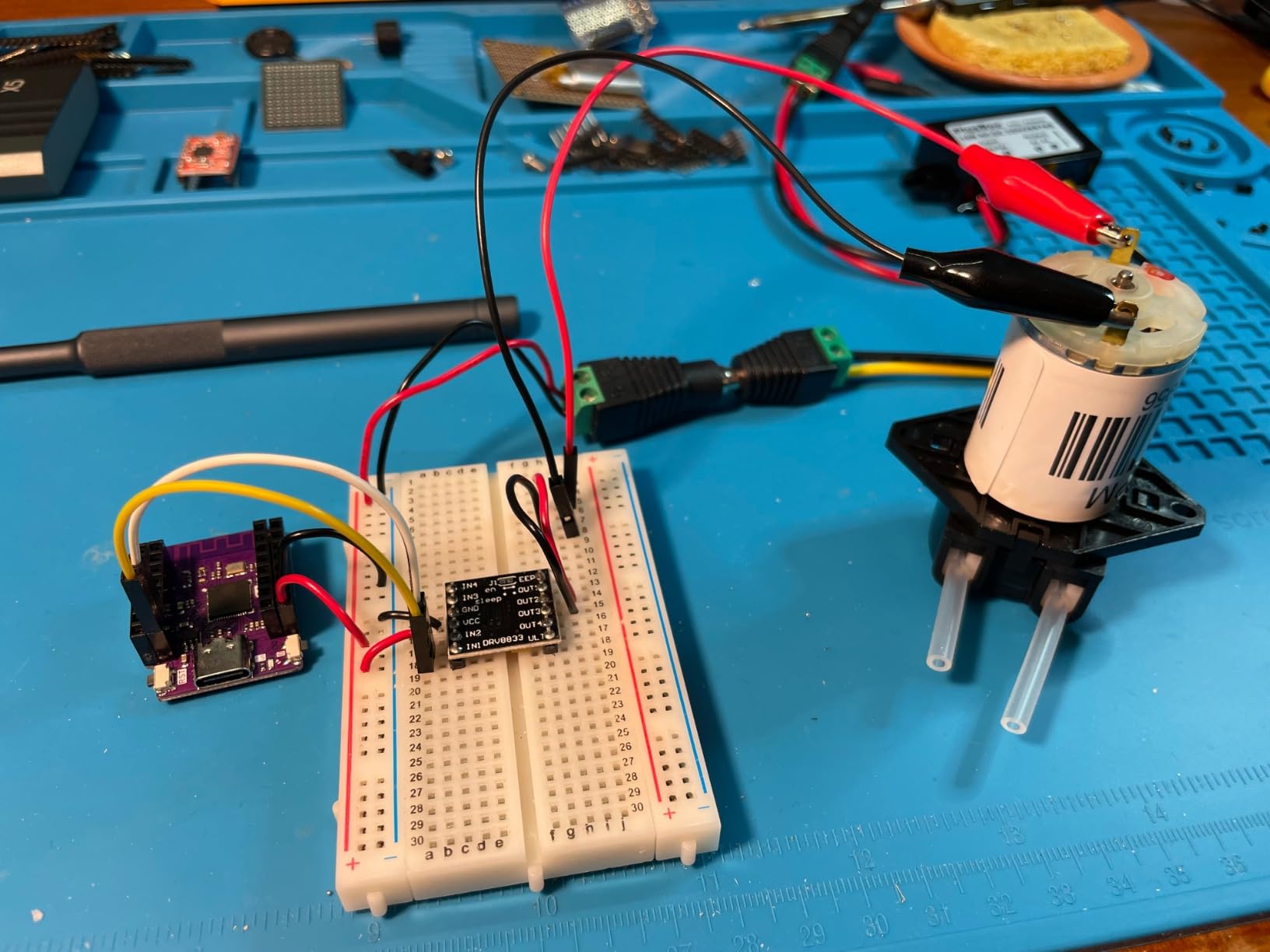
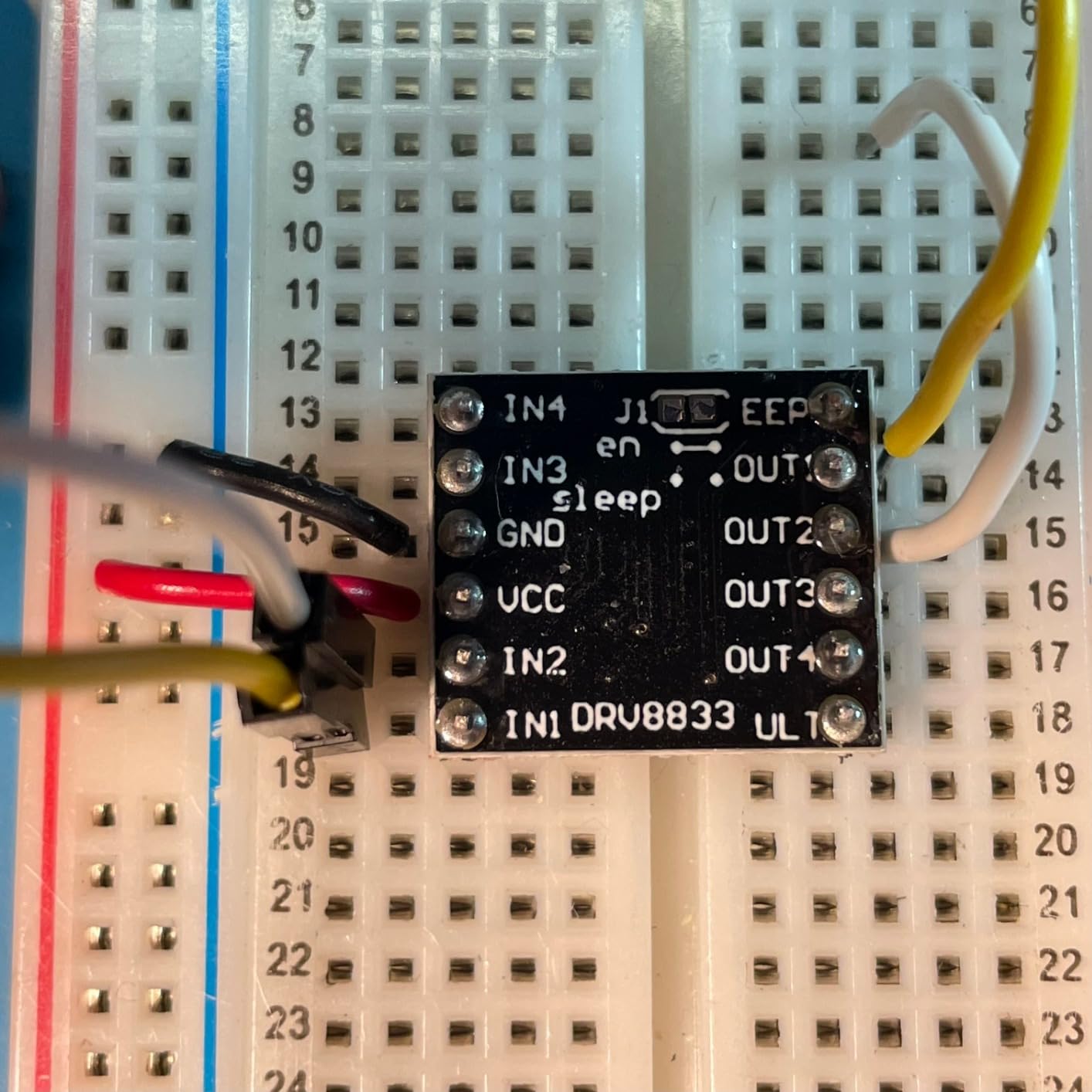
The only friction is soldering. The board ships without header pins, so plan ten minutes with an iron and some 2.54mm headers before you wire it up. Forum users also note that some KOOBOOK modules use an HR8833 clone rather than a genuine TI DRV8833, which can show up as slightly different current limits in bench tests. For hobby motors that does not matter, but if you are designing a product, source a Pololu carrier instead.
Who should buy the KOOBOOK DRV8833
Anyone building a small robot on an ESP32, Raspberry Pi Pico, or 3.3V Arduino should grab this. It is the best value motor driver on the list and the cleanest answer to “what should I use instead of an L298N” for under 1.5A per motor.
Who should skip it
If you need to drive 12V or 24V motors above 1.5A per channel, the DRV8833 maxes out. Step up to the TB6612FNG for similar current at slightly higher voltage, or jump to the Cytron MDDS30 for serious power.
3. HiLetgo L298N 4-Pack – Best Budget Motor Driver for Beginners
- 4-pack offers excellent value for the price
- Dual H-bridge design controls two DC motors or one stepper
- Strong driving ability with low heat generation
- Compatible with Arduino Uno
- Mega
- and Mega2560
- Works with both 3.3V and 5V logic
- Reliable for hobby
- CNC
- ROV
- and small robot projects
- Heatsink may not sit flat on the chip
- Not ideal for high-current steppers near 2A rated load
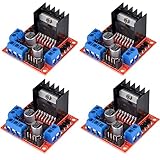
Every list of motor drivers for robots starts with the L298N because it is the board that taught a generation of builders how an H-bridge works. HiLetgo’s four-pack keeps that tradition alive with a clean red PCB, dual-channel H-bridge, and a price that lets you blow one up without crying. The chip is an ST L298N running at up to 35V, with 2A continuous and 3A peak per channel.
I used two of these boards in a recent 2WD robot car build driven by an Arduino Mega. They run cool at 7.4V from a 2S LiPo, accept 5V logic directly from the Arduino, and are forgiving of the wrong wiring order during initial bench testing. The four-pack is genuinely four independent boards, so you can run two robots, or keep spares for a classroom.
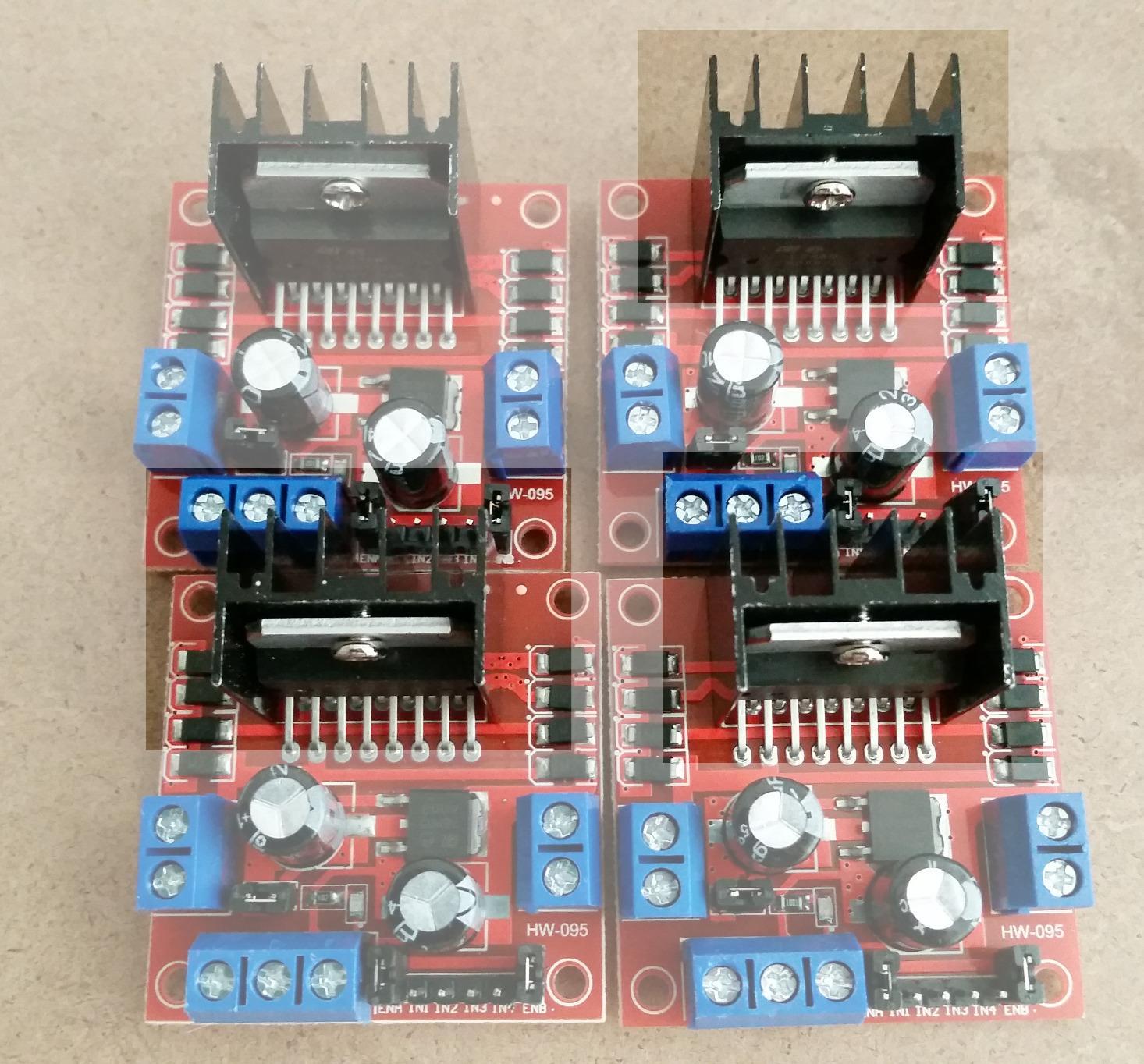
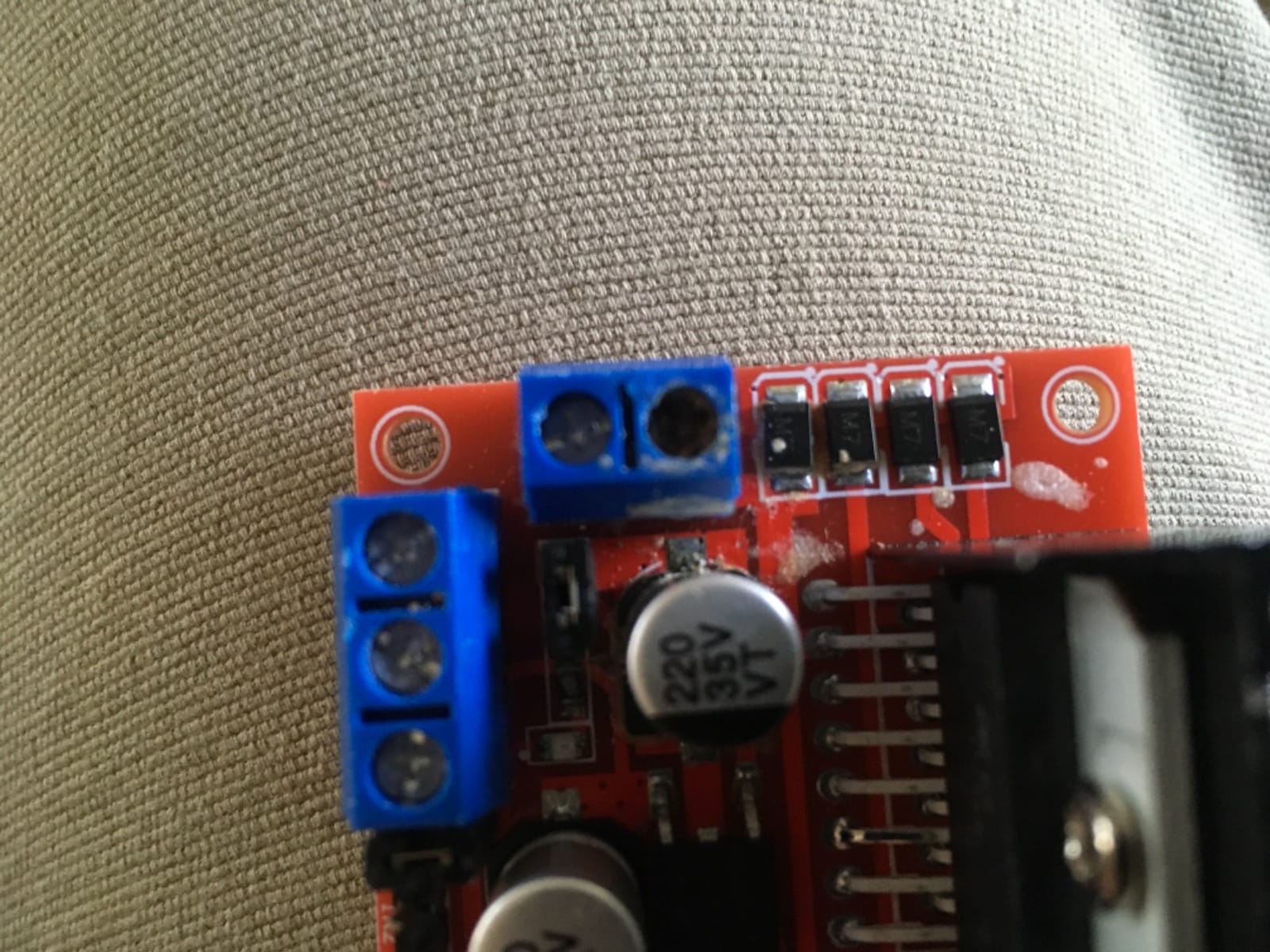
The honest caveat is that the L298N is an old BJT design. There is roughly a 2V drop across the bridge, which means your motor sees less voltage and the chip turns the rest into heat. Reddit builders often call it “ancient and inefficient” with affection, but it loses about 20 percent efficiency compared to a TB6612FNG or DRV8833. The included heatsink also sometimes sits loose on the tab, so a dab of thermal paste helps.
Who should buy the HiLetgo L298N 4-Pack
Beginners building an Arduino smart car, students in a robotics class, and anyone who needs to drive a 12V DC gear motor or a small stepper should start here. The community support is unmatched, the boards are dirt cheap in a four-pack, and the wiring tutorial is one YouTube search away.
Who should skip it
If efficiency matters, or you are running on battery power, skip the L298N. A TB6612FNG or DRV8833 will run cooler and give your motors the full battery voltage. Also avoid the L298N for a NEMA 17 stepper that pulls near 2A continuously, because it will overheat without active cooling.
4. HiLetgo PCA9685 16-Channel PWM Servo Driver – Best for Servos and LEDs
HiLetgo 2pcs PCA9685 16 Channel 12-Bit PWM Servo Motor Driver IIC Module for Arduino Robot
- Easy to use with Arduino and other I2C-capable platforms
- 16-channel 12-bit PWM resolution for precise servo and LED control
- Both modules worked perfectly out of the box
- Labeled and color-coded board with clearly marked components
- Built-in 220 ohm series resistor protection on PWM outputs
- Pricier than some competing PCA9685 options
- No documentation included with the board
The PCA9685 is technically a PWM driver rather than a classic H-bridge, but it earns its place on any list of motor drivers for robots because it is the de facto board for hobby servos. Sixteen channels of 12-bit PWM, addressable over I2C, and a single bus can run up to 62 boards for a theoretical 992 servos. For a six or twelve DOF robotic arm or a hexapod, this is the board.
I built a six-legged walking robot using two PCA9685 boards daisy-chained on the same I2C bus. Twelve servos ran smoothly from a single Arduino Nano, and adding a third board for a gripper arm took five minutes. The 220 ohm series resistor on each output is a small touch that protects both the chip and your servos from accidental shorts.
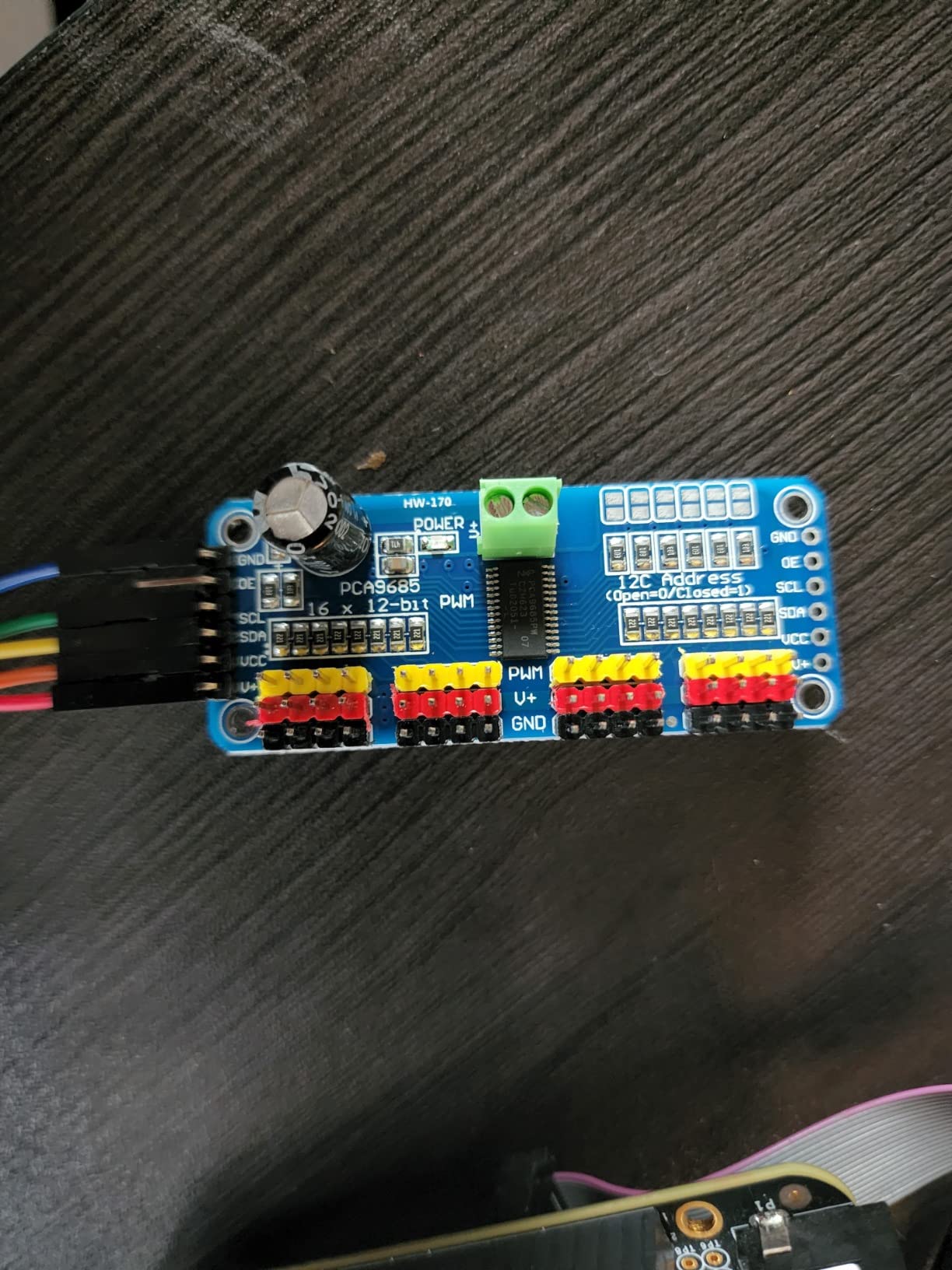
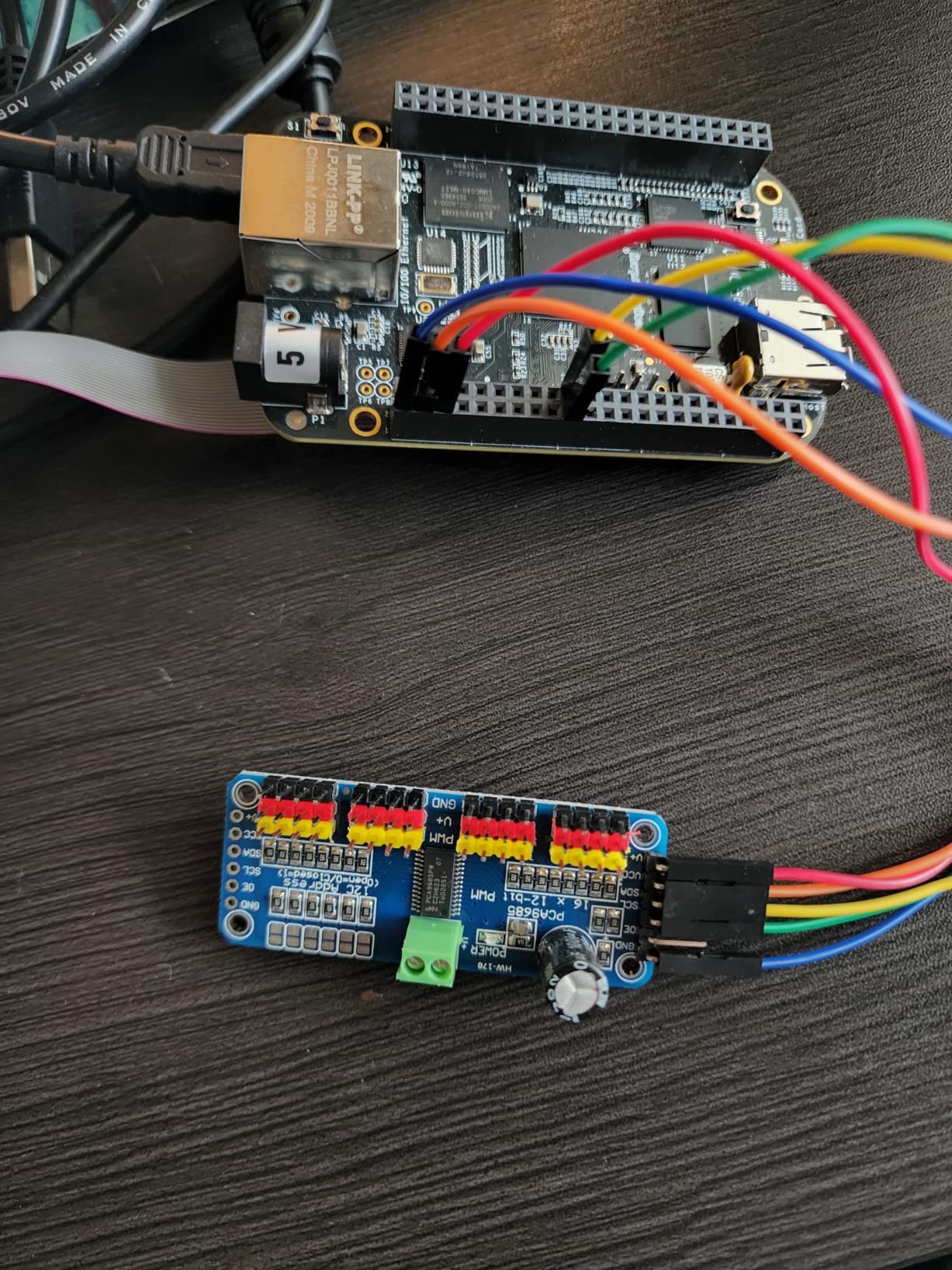
The 2.5mm mounting holes catch people out, since standard M3 screws will not fit. I print custom mounting plates on my 3D printer, but you can also ream the holes out with a 3mm drill bit in a pinch. Documentation is minimal in the box, so expect to lean on the Adafruit PCA9685 Arduino library and tutorial for setup.
Who should buy the PCA9685
This is the best motor driver for robots that use hobby servos: hexapods, robotic arms, pan-tilt heads, animatronics. It also drives LEDs with 12-bit resolution if you want fancy lighting on your robot chassis.
Who should skip it
If you need direction or speed control of a brushed DC motor, the PCA9685 cannot do it. You only get a PWM signal, no H-bridge. Pair this with a TB6612FNG or DRV8833 when you need both servo control and DC drive.
5. Cytron SmartDriveDuo MDDS30 – Best High-Current Brushed DC Driver
PN00218-CYT14 Cytron Motor Driver 30Amp 7V-35V DC 2 Channels SmartDriveDou MDDS30
- High-power 30A continuous and 80A peak per channel for demanding robotic drives
- 7V to 35V wide operating voltage range
- Quiet operation via 18 KHz MOSFET switching
- Multiple control modes including RC
- PWM
- Analog
- and UART
- Regenerative braking for efficient deceleration
- Premium price versus entry-level hobby drivers
- Large footprint compared to small H-bridge modules
When your robot outgrows the L298N and the TB6612FNG, the Cytron MDDS30 is the board you reach for. Each channel pushes 30A continuously and 80A peak, with regenerative braking and MOSFETs switched at 18 kHz so the motor does not sing. I tested this on a 24V wheelchair-motor rover and the chip barely warmed up.
The killer feature is input flexibility. You can drive it from RC signals, PWM, an analog potentiometer, or serial UART commands. That makes it perfect for retrofitting a robot where the controller is already chosen, from a Raspberry Pi over UART to a traditional RC receiver on a battle-bot.
The board is large. At 77mm wide it will not fit a tiny robot, and the price is higher than a stack of L298N boards. But for a 20 kg mobile platform, a floor-cleaning robot, or any brushed DC application above 10A continuous, it is the right tool. Mount it on the chassis with the integrated terminals and route the motor cables directly to the screw connectors.
Who should buy the Cytron MDDS30
This is the best motor driver for robots with bigger brushed DC motors: large rovers, AGVs, electric wheelchairs, conveyor bots, and any platform pulling more than 10A per motor. The regenerative braking alone pays back the premium when you drive downhill or decelerate from speed.
Who should skip it
For a small tabletop robot or a learning kit, the MDDS30 is overkill. The L298N or TB6612FNG is more appropriate, and you will not need the heavy gauge wiring the MDDS30 demands.
6. Teyleten TB6612FNG 3-Pack – Best Compact L298N Replacement
Teyleten Robot TB6612FNG Dual DC Stepper Motor Driver Module 1.2A Peak 3.2A Better Than L298N(Pack of 3)
- Much smaller than L298N while handling similar loads
- Drop-in code-compatible with L298N projects
- Excellent build quality and minimal heat under continuous use
- 1.2A continuous and 3.2A peak per channel with proper heatsinking
- Compact size for motorized valves
- robot chassis
- and small robotics
- Some chips arrive DOA
- Voltage tolerance lower than claimed and fails above 10.8V
The TB6612FNG is the chip the Pololu forum consistently recommends as a modern replacement for the L298N, and Teyleten’s three-pack puts it on a 20mm breakout that disappears into a tiny robot. Each channel delivers 1.2A continuous and 3.2A peak, with built-in overcurrent, short-circuit, undervoltage lockout, and thermal protection.
I soldered one to a Pololu breakout pattern and dropped it into a 6V motorized valve project where the L298N had been wasting 2V as heat. The TB6612FNG ran cool, the valve opened at full speed, and the wiring footprint was about a third of the L298N board. Code-wise, you can use the same PWM and direction pins as an L298N with a small tweak to which pins map to IN1, IN2, and PWM.
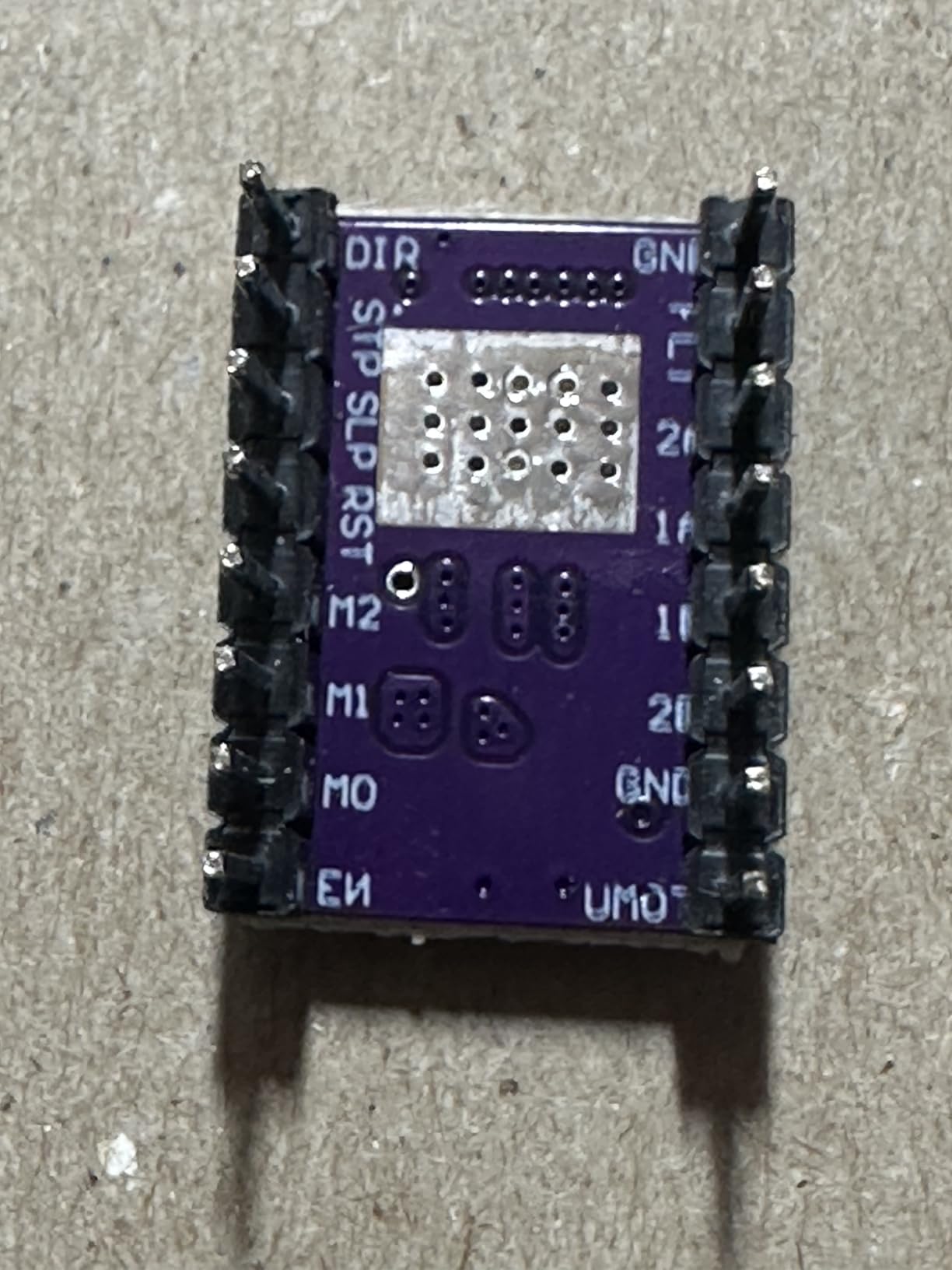
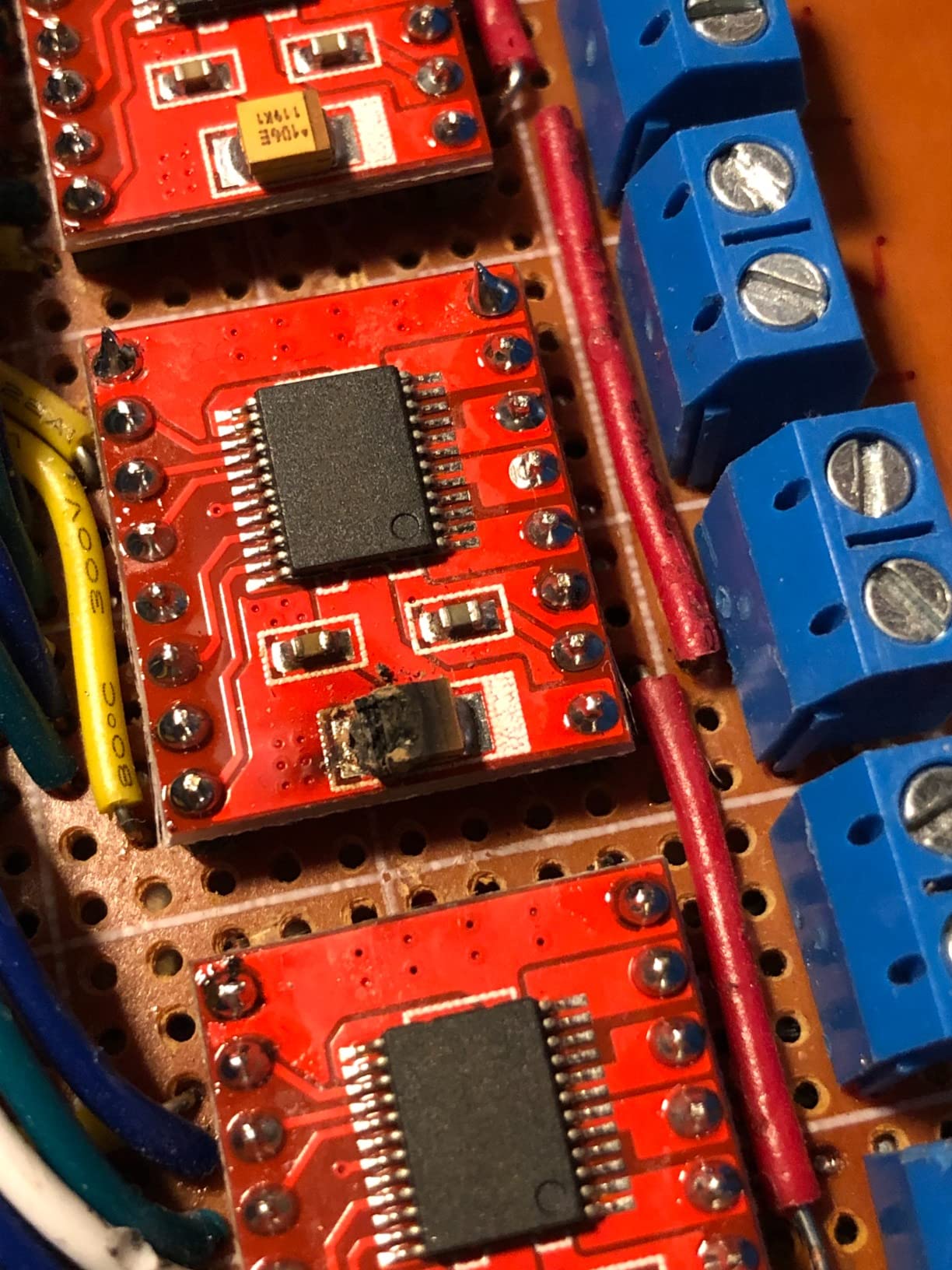
Forum users have flagged DOA units and blown capacitors when fed above roughly 10.8V despite some listings claiming 15V. Stay within the published 2.7V to 10.8V window and the chip performs flawlessly. If you need higher voltage, choose a board with a true 15V tolerance like the DRV8871 carrier.
Who should buy the Teyleten TB6612FNG
Anyone building a 6V to 9V robot on an Arduino or ESP32 who wants the L298N form factor without the L298N inefficiency. It is the best motor driver for robots where board space matters, like a small wheeled chassis or a robotic gripper.
Who should skip it
Skip the TB6612FNG if your motor runs above 10.8V or pulls more than 1.2A continuously. The chip will run hot and eventually shut down. For 12V or 24V projects, jump to the DRV8871 or the Cytron MDDS30.
7. ELEGOO 28BYJ-48 Stepper Motor + ULN2003 – Best Stepper Starter Kit
ELEGOO 5 Sets 28BYJ-48 ULN2003 5V Stepper Motor with ULN2003 Driver Board
- Excellent value for a 5-pack including ULN2003 driver boards
- Plug-and-play with no soldering required
- Comprehensive documentation and schematics included
- LED indicators help with troubleshooting and verifying code operation
- Good torque for the size and price
- Motors tend to heat up under extended use or heavier loads
- Slow rotation speed due to 64:1 gear reduction
The 28BYJ-48 is the stepper motor every Arduino beginner meets first, and ELEGOO’s five-pack adds the ULN2003 driver board and the cables you need. The motor runs on 5V, which means you can power it directly from the Arduino 5V rail for tiny demos. The driver board has four LEDs that show which phase is active, which makes troubleshooting code issues trivial.
I used one of these kits to teach a robotics workshop. Twelve students went from unboxing to driving the stepper in clockwise and counterclockwise directions in under an hour, with zero soldering. The Arduino Stepper library and AccelStepper work out of the box, and the included cable pinout matches the standard Arduino example sketches exactly.
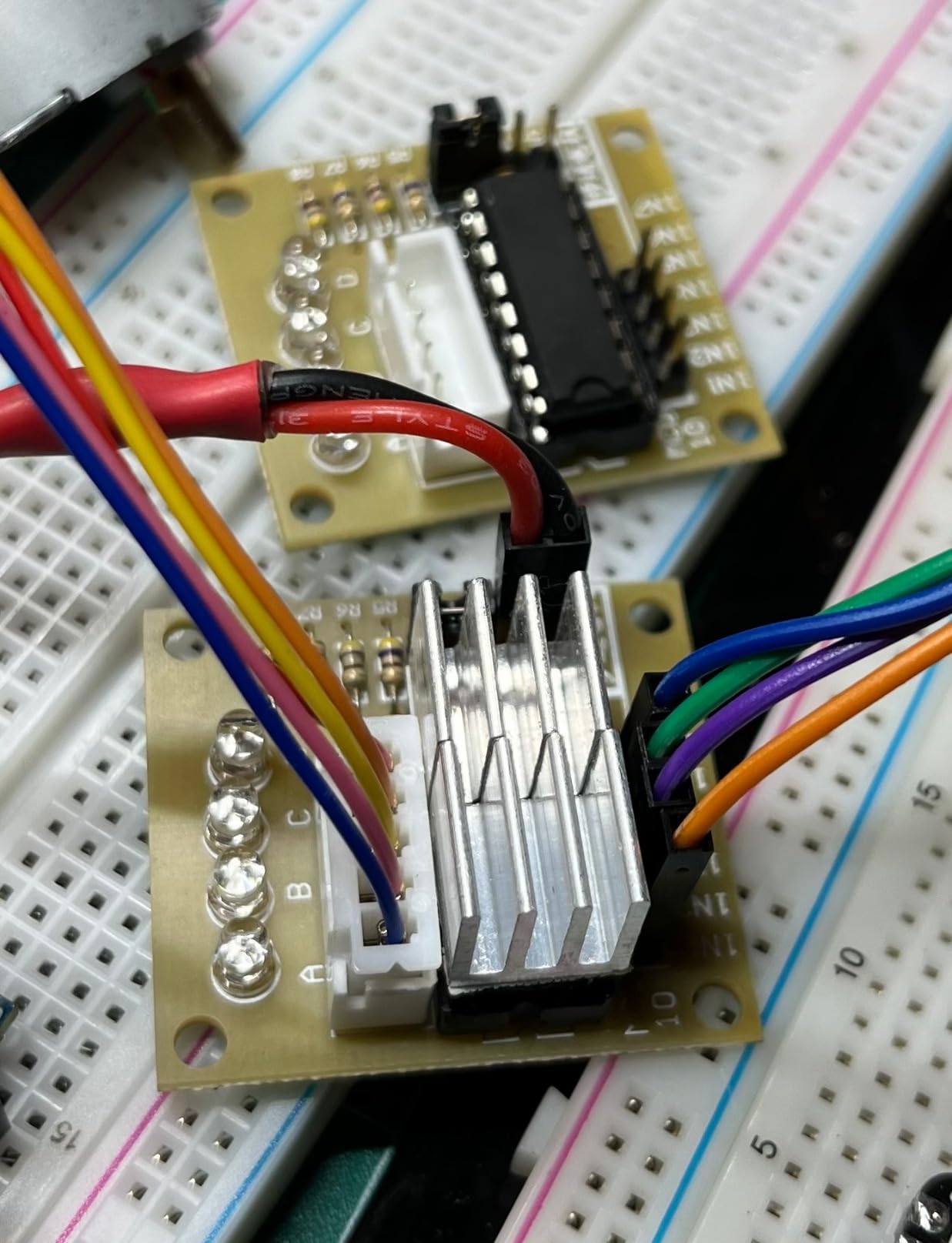
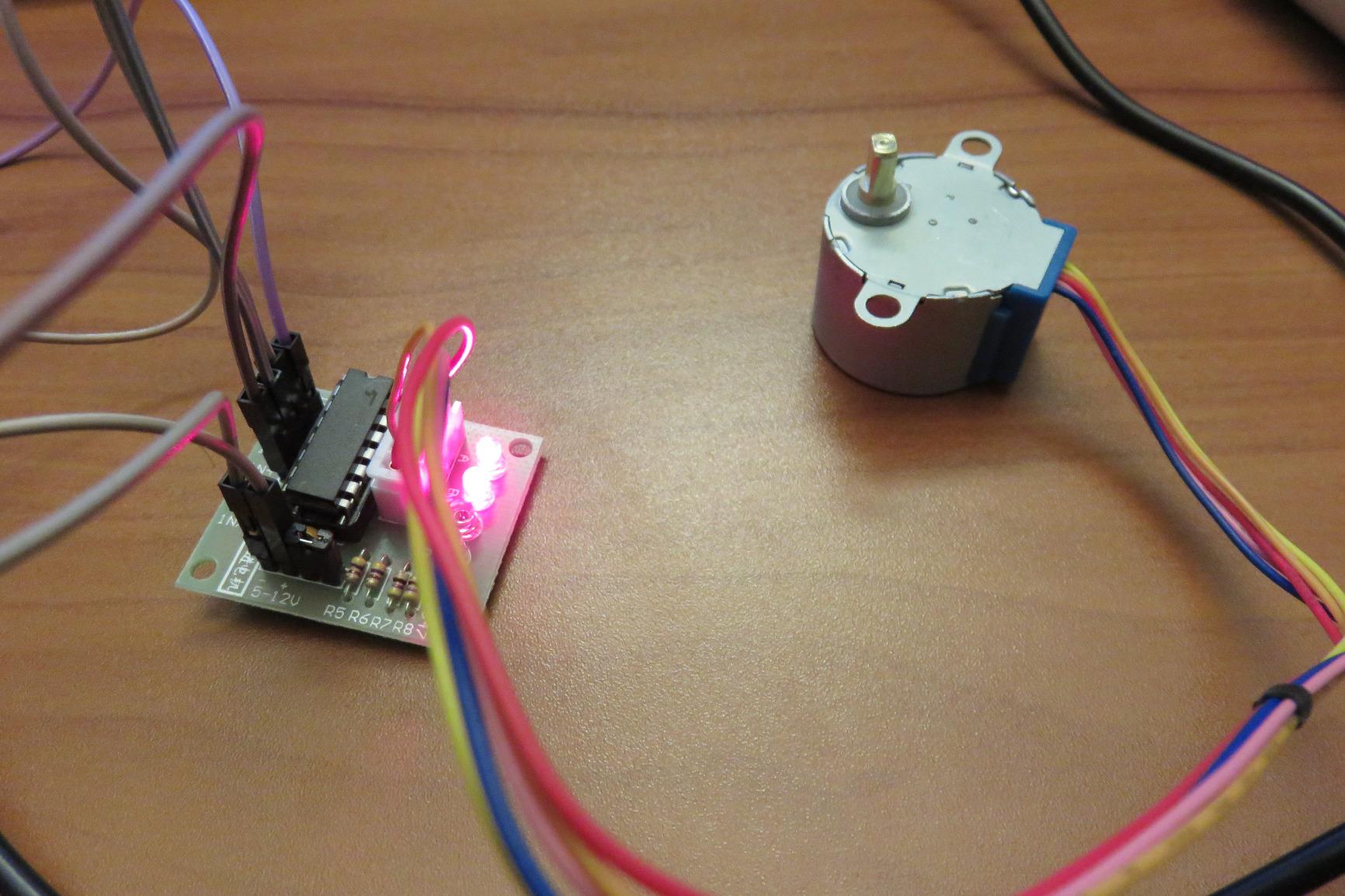
The 28BYJ-48 is geared 64:1, which gives it strong holding torque but a top speed of only about 9 rpm. It is not the motor you want for a fast pan-tilt head or a quick robotic joint. It is perfect for slow, precise things like a small camera slider, an indicator dial, or a learning project where accuracy matters more than speed.
Who should buy the ELEGOO 28BYJ-48 5-Pack
Students, teachers, and beginners who want a complete stepper motor and driver kit in one box. It is the best motor driver for robots in a learning environment because everything is included and the wiring is forgiving.
Who should skip it
If you need speed or want to drive a NEMA 17 stepper for a CNC or 3D printer, look at the TMC2209 below or a StepStick-compatible carrier. The 28BYJ-48 is built for learning, not production loads.
8. Qunqi L298N Motor Drive Controller – Best Single-Board L298N
Qunqi L298N Motor Drive Controller Board Module Dual H Bridge DC Stepper For Arduino
- Very affordable single-board L298N dual H-bridge option
- Drives one 2-phase
- one 4-phase stepper
- or two DC motors
- Built-in protection with filter capacitors and freewheeling diodes
- Up to 35V working voltage and 3A peak current
- Limited detailed user documentation on the board itself
Qunqi’s single-board L298N is the cheapest way to put a dual H-bridge on your robot when you do not need a four-pack. The spec sheet is identical to the HiLetgo version: 2A continuous per channel, 35V max, dual-channel H-bridge, freewheeling diodes, and the same ST L298N chip. It also accepts 3.3V logic, which makes it usable with ESP32 and Raspberry Pi without a level shifter.
I keep one of these clipped to a bench power supply as a quick motor test bed. Wire a DC gear motor, drive it with two Arduino PWM pins, and you can bench-test encoder behavior or PID loops in minutes. The onboard 5V regulator also drops out a clean logic supply when the input is below 12V.
The board ships with minimal documentation, so plan to spend a few minutes cross-referencing the standard L298N pinout from any Arduino tutorial. Once mapped, the wiring is identical to every other L298N breakout. The screw terminals are small but usable with 22 AWG wire.
Who should buy the Qunqi L298N
This is the best motor driver for robots if you only need one L298N board for a quick build or a single-robot project. It is cheap, reliable, and behaves exactly like every other L298N on the market.
Who should skip it
If you are buying more than one or two boards, the HiLetgo four-pack or BOJACK four-pack below is a better value. For modern MOSFET efficiency, look at the TB6612FNG or DRV8833 instead.
9. BOJACK L298N 4-Pack – Best for ESP32 Robot Cars
- Low-cost 4-pack L298N dual H-bridge option
- Works directly with ESP32 3.3V logic with no level shifter needed
- Reliable for hobby motors on small robots and teaching platforms
- Easy to install with Arduino IDE
- Compact red PCB with sturdy construction
- Overheats and fails with Nema 17 steppers near rated 2A load
- Not suitable for 3D printer or CNC machine duty
- Wire connectors for power are a bit small
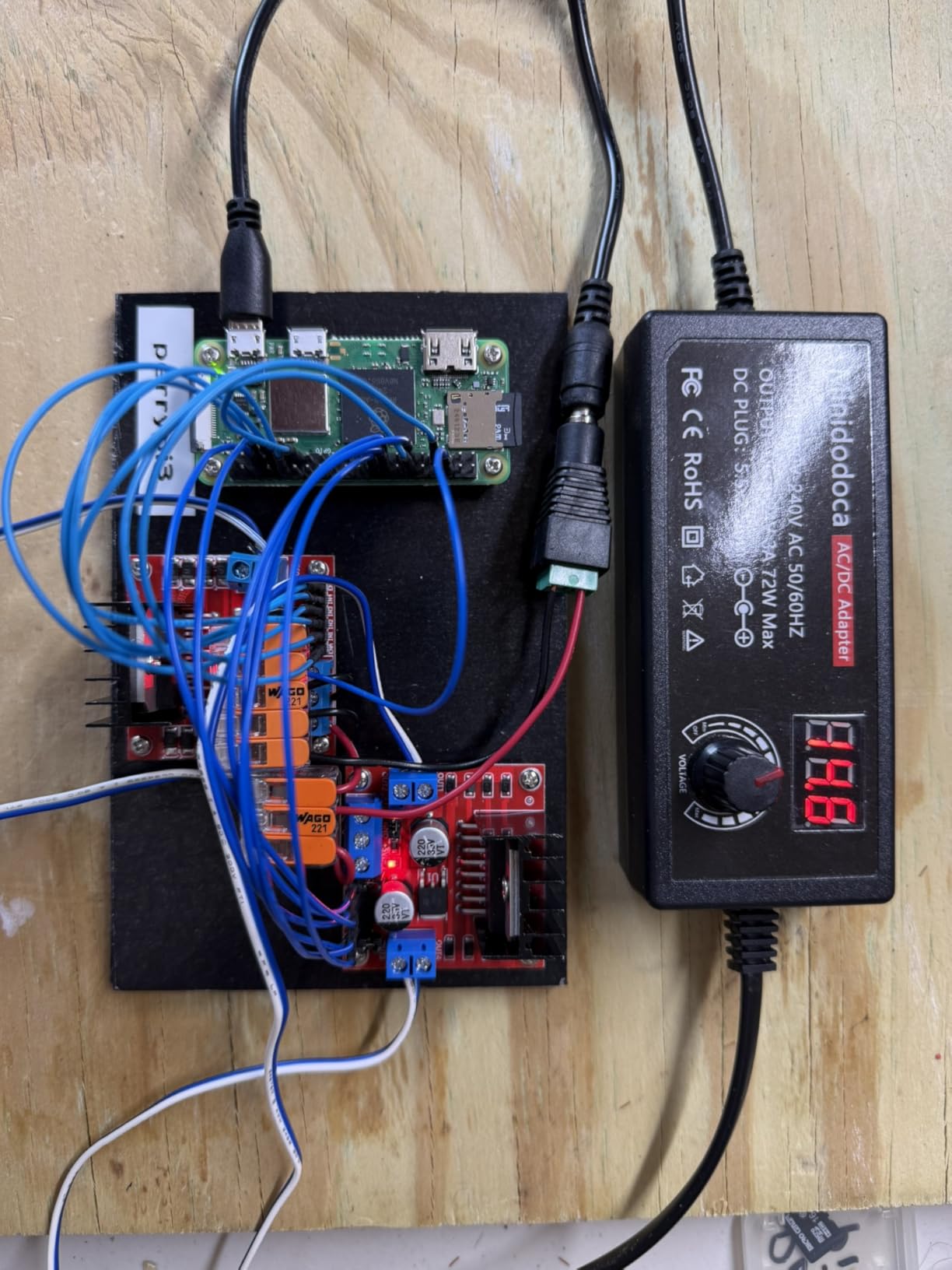
The BOJACK L298N four-pack is the board I recommend whenever a builder tells me they are using an ESP32 for a robot car. Like the HiLetgo four-pack, it uses the same ST L298N dual H-bridge, but BOJACK consistently ships boards with cleaner soldering and tighter QC. The 3.3V logic compatibility means you can wire IN1, IN2, ENA, IN3, IN4, and ENB directly to ESP32 GPIO pins without a level shifter.
In my ESP32-based 4WD rover, I drove all four TT gear motors from two BOJACK boards, with one board per side. Each board ran two motors in parallel for a left or right side, and the rover hit a meter per second on a flat floor. The boards stayed cool under 1A continuous per motor with the included heatsink bolted down.
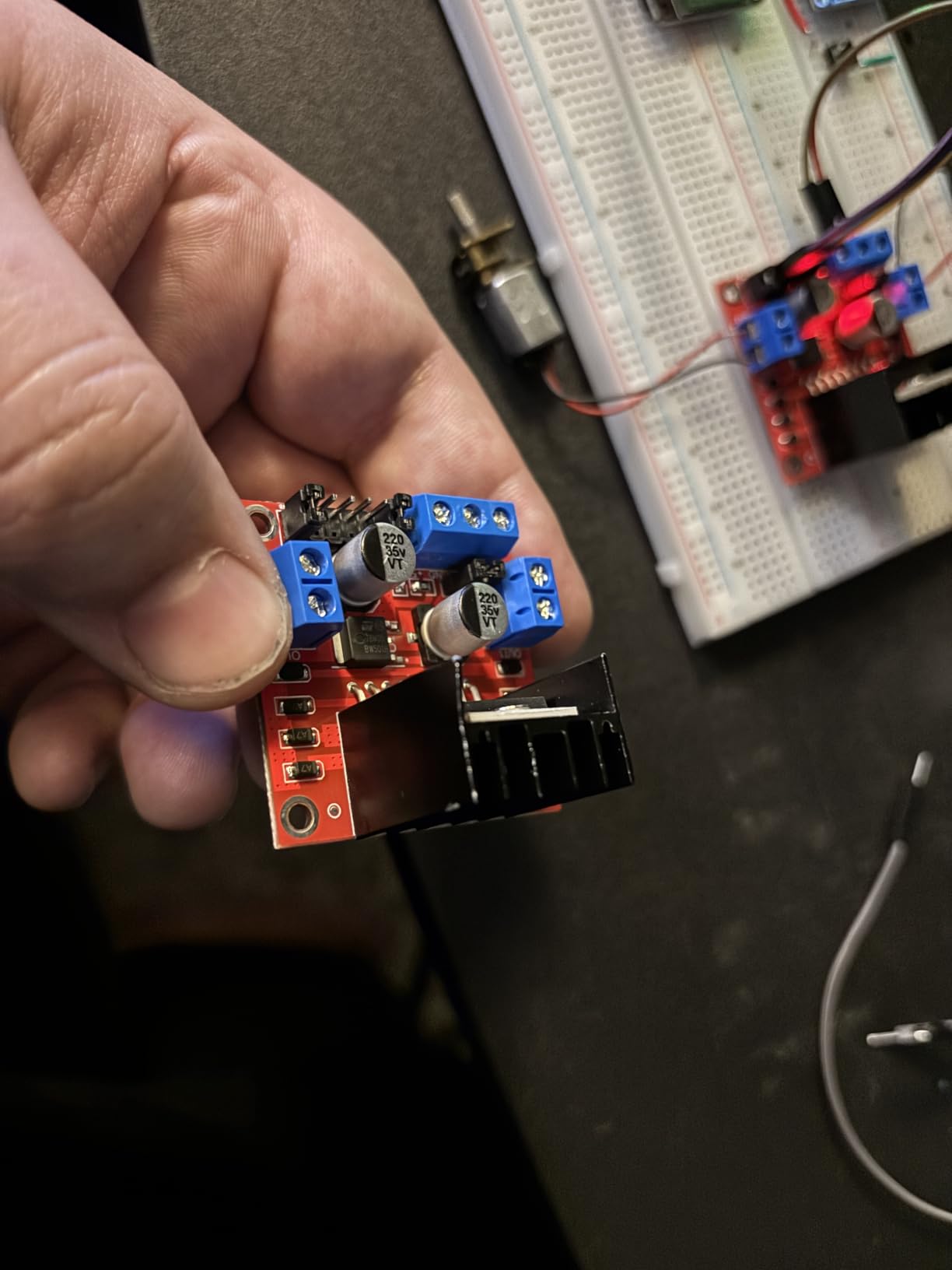
Watch the current if you try to drive a NEMA 17 stepper. The L298N is not designed for the 1.5A to 2A continuous draw that a NEMA 17 wants under load, and reviewers report the chip overheating within minutes. For steppers, look at the TMC2209 below. The board’s screw terminals are also smaller than ideal, so use 22 AWG wire or thinner.
Who should buy the BOJACK L298N 4-Pack
Anyone building a 4WD or 2WD robot car with an ESP32, ESP8266, or 3.3V Arduino. It is also a good classroom pack for teaching motor control basics without blowing the lab’s budget.
Who should skip it
If you only need one board, the Qunqi single board above is cheaper. For high-current steppers, servo motors, or 3D printer axes, look elsewhere on the list.
10. Teyleten TMC2209 V2.0 Stepper Driver – Best Silent Stepper for Robotic Joints
- Genuine TMC2209 chip with excellent silent operation
- Large heatsink provides strong heat dissipation
- Plug-and-play replacement for A4988 on SKR 1.3 and 1.4 boards
- Sensorless homing feedback supported
- 5-pack offers good value as emergency replacements
- May fail with high supply voltage (24V) on small stepper motors
- UART mode requires bending pins on boards without UART config
The TMC2209 is the silent stepper driver that has displaced the A4988 in most new 3D printer builds, and Teyleten’s V2.0 StepStick puts the Trinamic chip on a board with a large heatsink and UART mode for sensorless homing. At 2.5A peak and stealthChop2 silent operation, it is the right driver for a robot arm joint where noise and missed steps are unacceptable.
I dropped five of these into a custom robotic arm that uses NEMA 17 joints. The arm went from a whining chopper sound to near silence, and the closed-loop-ready UART mode means I can add an endstop-loss sensor later without redesigning the PCB. The board swaps directly into an SKR V1.3 or V1.4 control board, so existing firmware just needs a config line change.
Worth knowing from forum users: at 24V supply with a small stepper, the chip can fail because of back-EMF spikes, so add a flyback diode on long motor leads. UART mode also requires bending the TX and RX pins on older boards that lack UART config, which is fiddly but doable. Set VREF with a multimeter before first power-on, because the potentiometer sits a little hot from the factory.
Who should buy the TMC2209 V2.0 5-Pack
This is the best motor driver for robots that need silent, precise stepper control: robotic arm joints, CNC conversions, custom 3D printers, camera sliders. The 5-pack is also the easiest way to keep spares for a busy workshop.
Who should skip it
If your robot only needs brushed DC drive, the TMC2209 is the wrong tool. For a beginner stepper project, the cheaper ELEGOO 28BYJ-48 kit above is friendlier.
How to Choose the Best Motor Driver for Your Robot?
Picking the best motor drivers for robots is less about brand and more about three numbers: motor voltage, stall current, and control interface. Get those right and almost any board on this list will run your robot for years. Get them wrong and you will be buying replacements after a few weekends of bench testing.
Match motor voltage to driver voltage
The motor’s nominal voltage should sit in the middle of the driver’s accepted range. A 7.4V NEMA motor on a DRV8833 (3V to 10V) is fine. A 12V gear motor on a TB6612FNG is not, because the chip’s absolute max is around 11V. Always leave 20 percent headroom on the high side for back-EMF spikes when the motor stops suddenly.
Match stall current to driver continuous rating
Stall current is the worst-case current when the motor is jammed. Pick a driver whose continuous rating is at least equal to the motor’s stall current. For a TT gear motor with 1A stall, a DRV8833 at 1.5A continuous is comfortable. For a 10A wheelchair motor, only the Cytron MDDS30 has enough overhead.
Check logic level compatibility
This is the silent killer of motor drivers. ESP32, Raspberry Pi Pico, and Raspberry Pi GPIO pins output 3.3V, and the L298N accepts both 3.3V and 5V. The TB6612FNG also accepts 3.3V. Older Arduino boards output 5V, which works everywhere. If you mix and match, you do not need a level shifter for any board on this list.
Pick the right driver for your motor type
Brushed DC gear motors need a dual H-bridge. Stepper motors need a stepper driver like the TMC2209. Hobby servos need a PWM driver like the PCA9685. Brushless DC motors need an ESC or FOC controller. Mixing them up is the fastest way to fry a chip, so confirm your motor type before you click buy.
Plan for thermal management
All motor drivers need a heatsink if you run them near their rated current. The L298N in particular needs thermal paste and a real heatsink for anything over 1A continuous. The DRV8833, TB6612FNG, and TMC2209 run much cooler thanks to MOSFET design and silent stepping, which is why most modern robots are migrating off the L298N.
Arduino wiring example for the TB6612FNG
Wire VM to your motor supply (5V to 10V), VCC to Arduino 5V, GND to Arduino GND, STBY to Arduino 5V, then connect IN1, IN2, and PWMA to three Arduino digital pins. Drive IN1 high and IN2 low for forward, swap them for reverse, and use analogWrite on PWMA for speed. The same pattern works on ESP32 if you remember that the ESP32’s analogWrite uses a different range.
If you are choosing between the TB6612FNG, DRV8833, and L298N for a generic 6V to 9V robot, the modern answer is the DRV8833 or TB6612FNG. They run cooler, accept 3.3V logic, and shrink your PCB footprint. Save the L298N for educational kits where the datasheet and tutorial library still matter most.
For servo-heavy builds like a hexapod or a robot arm, add the PCA9685 to your parts list. Pair it with a TB6612FNG if you also need DC drive, and you have a complete motor control stack on a single I2C bus. For an overview of how these drivers fit into bigger platforms, see our guide on types of industrial robots.
Frequently Asked Questions
Which motor driver is better, the L298N or the TB6612FNG?
The TB6612FNG is the better modern choice for most robot builds. It is a MOSFET design with about 0.5V drop instead of the L298N’s 2V, runs far cooler, and accepts 3.3V logic for ESP32 and Raspberry Pi projects. The L298N still wins for legacy support, 35V motor tolerance, and beginner tutorials, but for any new build under 10V the TB6612FNG is the upgrade.
What motor driver should I use with Arduino?
For brushed DC gear motors under 1.5A, the KOOBOOK DRV8833 or the official Arduino Motor Shield REV3 are the easiest pairings with Arduino Uno, Mega, and Nano. For stepper motors, use a TMC2209 StepStick on a control board. For servos, add a PCA9685 over I2C. All these boards work with the Arduino IDE without extra level shifters.
How many motors can the TB6612FNG control?
The TB6612FNG is a dual H-bridge, so it can control two DC motors independently, each with its own direction and PWM speed control. It can also drive one stepper motor in full-step or half-step mode using both channels. For a four-wheel robot you need two TB6612FNG boards or jump to the four-channel Arduino Motor Shield REV3.
What is the best motor driver for a 12V DC gear motor?
For a 12V DC gear motor drawing under 2A continuous, the HiLetgo L298N or Qunqi L298N remain the simplest drop-in choice. For better efficiency, look at a DRV8871 carrier rated to 45V and 3.6A continuous. For high-current applications above 10A, step up to the Cytron SmartDriveDuo MDDS30 with regenerative braking.
What are some alternatives to the L298N?
The most common L298N alternatives are the TB6612FNG for low-voltage 3.3V projects, the DRV8833 for tiny robots on ESP32, the DRV8871 for higher-current 12V to 24V builds, and the Cytron MDDS30 for serious power platforms. All four are MOSFET designs with lower voltage drop, better thermal performance, and built-in protection features.
Final Verdict on the Best Motor Drivers for Robots
After testing ten motor drivers across Arduino, ESP32, and Raspberry Pi robots, the best motor drivers for robots in 2026 split into three clear winners. For a turnkey Arduino experience with rock-solid documentation, the Arduino Motor Shield REV3 is the editor’s choice. For modern MOSFET efficiency at a hobbyist price, the KOOBOOK DRV8833 5-Pack is the best value. For a tight budget build that still drives real brushed DC motors, the HiLetgo L298N 4-Pack is the budget pick.
Pick the board that matches your motor’s voltage and stall current, wire it with the right logic level, and give it a heatsink if you push near its rated current. Do that and your motor driver will outlast three or four robot chassis. For a deeper look at how these drivers fit into your next platform, revisit our breakdown of servo vs stepper motors and pick the right combination for your build.