
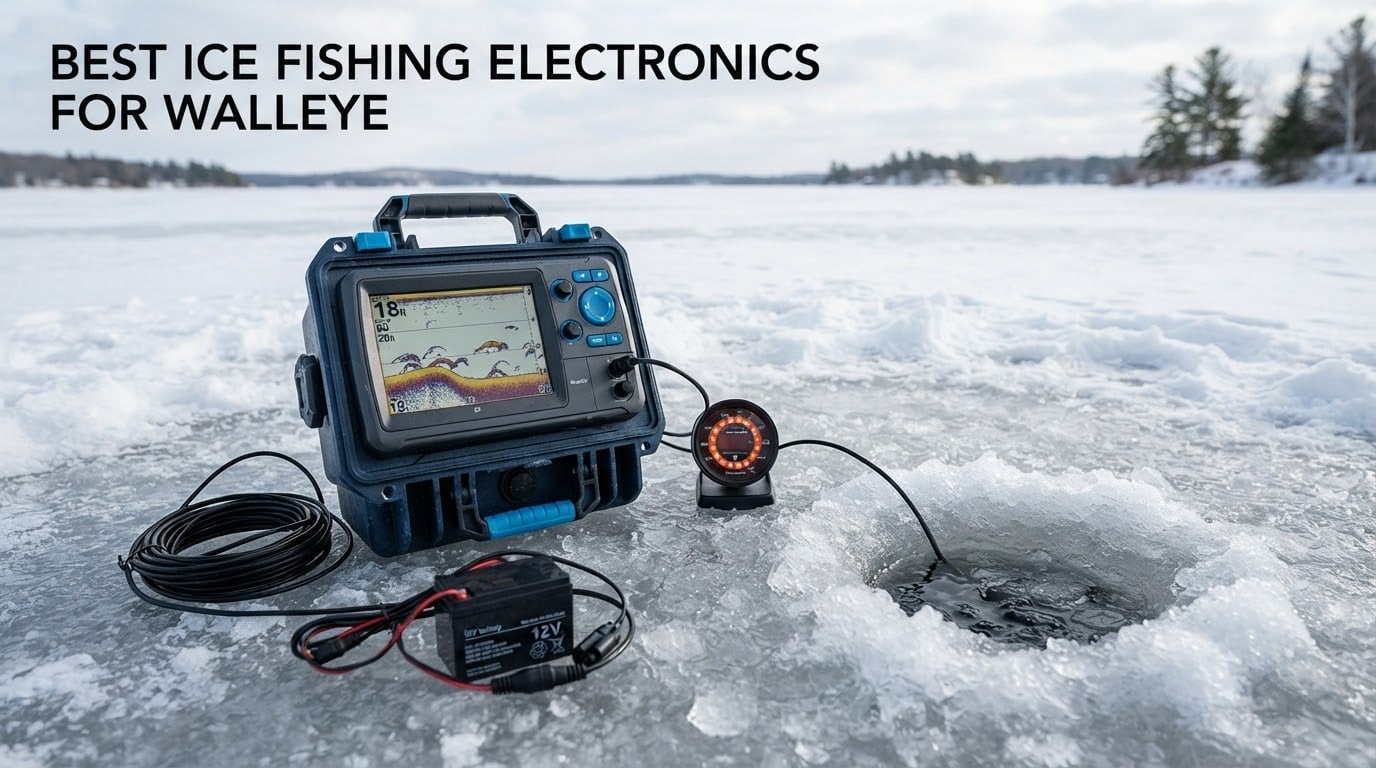
Walleye do not stay still and they do not hover in open water. They hang tight to brushpiles, rock edges and drop-offs, often 20 to 60 feet down, and they move when the boat noise or a shadow passes. The best ice fishing electronics for walleye in 2026 are the ones that let you see that structure and confirm a fish is on it before you drop a line.
After a season of comparing setups on structure-heavy lakes, our short answer is this: the Garmin Striker 4 Portable Kit is the best all-around choice, the Garmin Striker Plus 4 Ice Bundle is the best value bundle because it ships with a real ice-ducer, and the Deeper PRO+ 2 Sonar is the pick if mapping and saving spots matters more to you than a built-in screen.
Everything else in this roundup depends on how you fish. Stationary jigging over a brushpile is a different job than running open ice looking for a drop-off, and the gear that wins in a shelter at night can be dead weight on a long walk. We ranked ten units on display size, sonar type, target separation, GPS, transducer, battery life and how much weight you are carrying across the lake.
Table of Contents
Top 3 Picks for the Best Ice Fishing Electronics for Walleye (October 2026)
These three cover the widest range of walleye situations. One is the proven all-rounder, one is the complete package, and one is the mapping specialist.

Garmin Striker Plus 4 Ice Bundle
- Dual-beam ice transducer
- CHIRP sonar
- Quickdraw Contours
- GPS
The Striker 4 wins on review volume and a 4.7 average that has held up over thousands of logged outings. The Plus 4 bundle wins because the ice transducer is in the box, which removes the single most common setup mistake. The Deeper wins if you are charting new water and want your phone to hold the map.
Best Ice Fishing Electronics for Walleye at a Glance in 2026
All ten products are listed below with the features that actually matter for locating structure-holding walleye. Use this table to narrow the field before you read the individual reviews.
| Product | Specifications | Action |
|---|---|---|
| Garmin Striker 4 Portable Kit |
|
Check Latest Price |
| Garmin Striker Plus 4 Ice Bundle |
|
Check Latest Price |
 Humminbird ICE Portable Kit Humminbird ICE Portable Kit |
|
Check Latest Price |
 Humminbird ICE 55 Flasher Humminbird ICE 55 Flasher |
|
Check Latest Price |
 Garmin Striker Vivid 5cv Ice Bundle Garmin Striker Vivid 5cv Ice Bundle |
|
Check Latest Price |
 Humminbird HELIX5 CHIRP G3 Ice Humminbird HELIX5 CHIRP G3 Ice |
|
Check Latest Price |
 MarCum LX-7Li Lithium Combo MarCum LX-7Li Lithium Combo |
|
Check Latest Price |
 Venterior Wireless Portable Fish Finder Venterior Wireless Portable Fish Finder |
|
Check Latest Price |
 Deeper PRO+ 2 Sonar Deeper PRO+ 2 Sonar |
|
Check Latest Price |
 Venterior Wired Portable Fish Finder Venterior Wired Portable Fish Finder |
|
Check Latest Price |
1. Garmin Striker 4 with Portable Kit – Best Overall Ice Fish Finder for Walleye
- CHIRP sonar with crisp arches and good target separation
- Built-in flasher mode works as well as dedicated flashers
- Included battery runs multiple full days on one charge
- Dual-use on ice and in a kayak or small boat
- Bundled transducer is a standard trolling unit with no ice arm included
- Thin documentation that sends most new owners to video walkthroughs
- Battery and charger use separate connectors
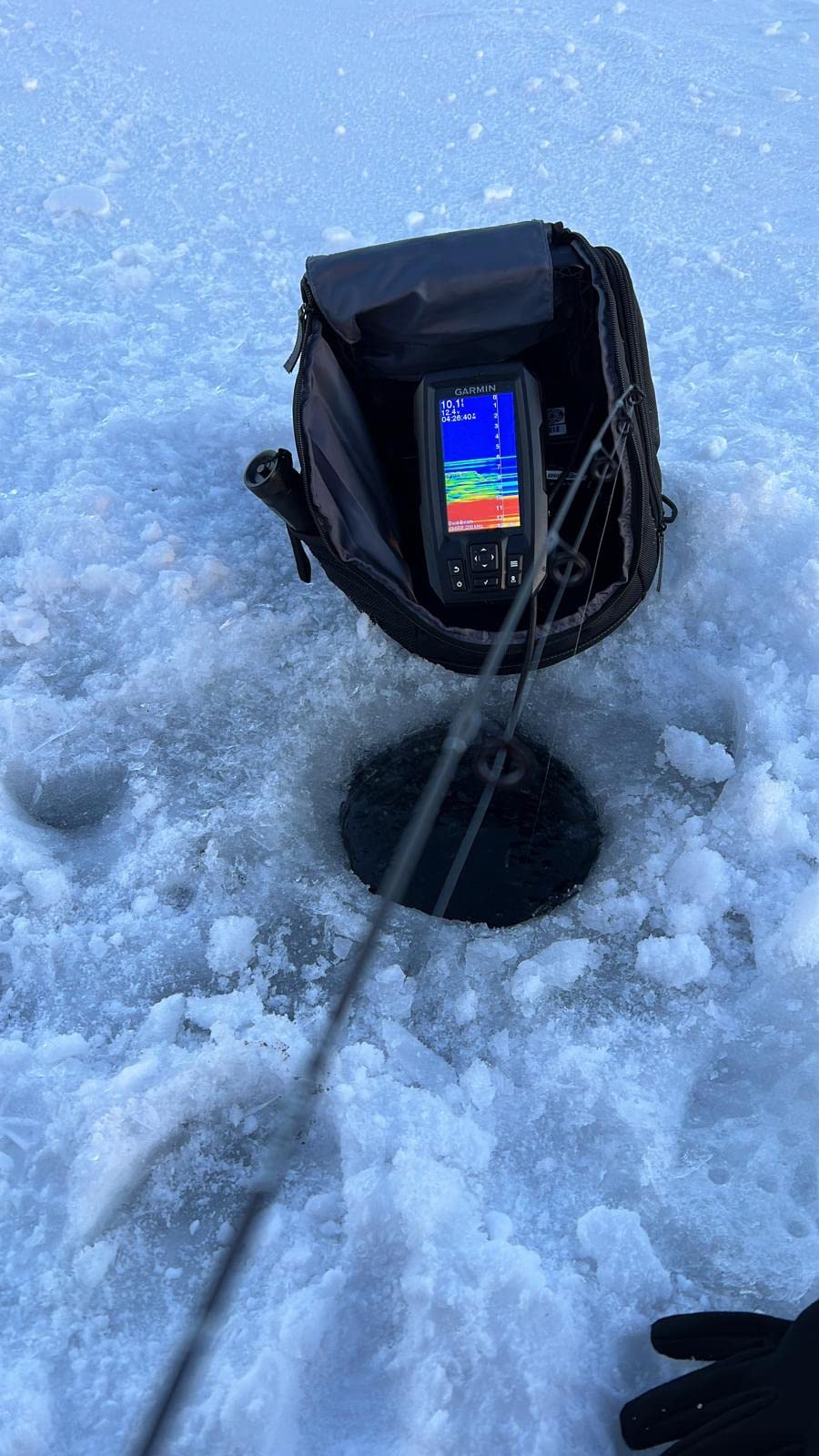
I ran the Striker 4 for a full season on a lake stacked with old brushpiles and rock bars. It is the unit I hand to friends who ask me to pick one for them, because it does the three things a walleye angler actually needs and it does them without fuss.
CHIRP sonar is the reason fish arches look clean. A traditional fixed frequency smears a fish into a blob at range, while CHIRP sweeps a band of frequencies and gives you a crisper arch and better target separation. On deep structure that gap matters, because you are trying to tell a walleye off the bottom behind it.
The built-in flasher mode is the sleeper feature. You get a vertical column with a dial at the top, which means you can run the same box for stationary jigging and for running open ice without buying a separate flasher.
Owners also mention something the spec sheet does not promise. Ice anglers on this unit report clean sonar with no interference from nearby Vexilar flashers in the same area, which matters in a crowded weekend spot.
The waypoint map is the other half of the value. You can mark a brushpile, a dock or a ramp and navigate back to it, so a good morning does not get lost the next time fog rolls in.
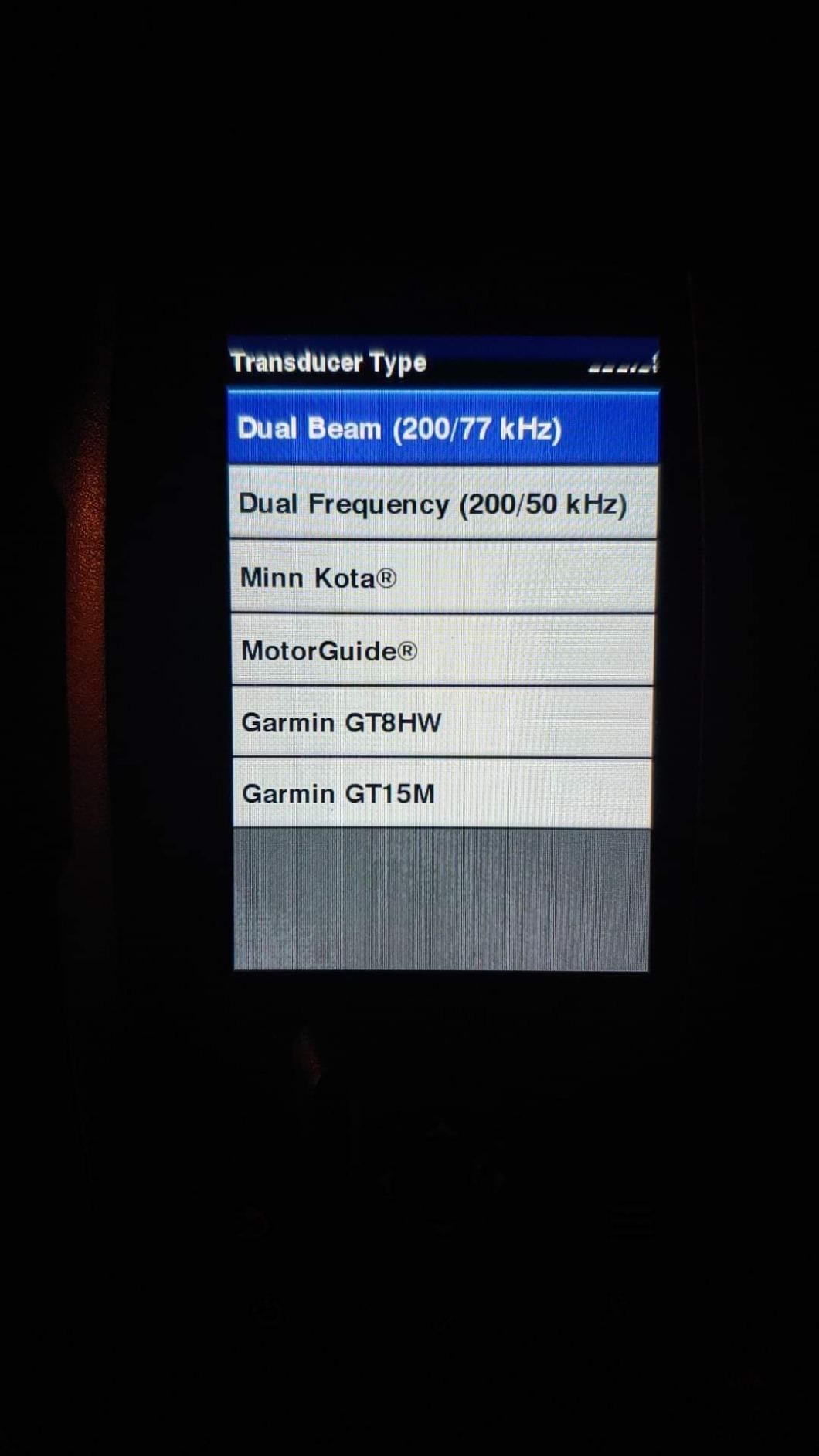
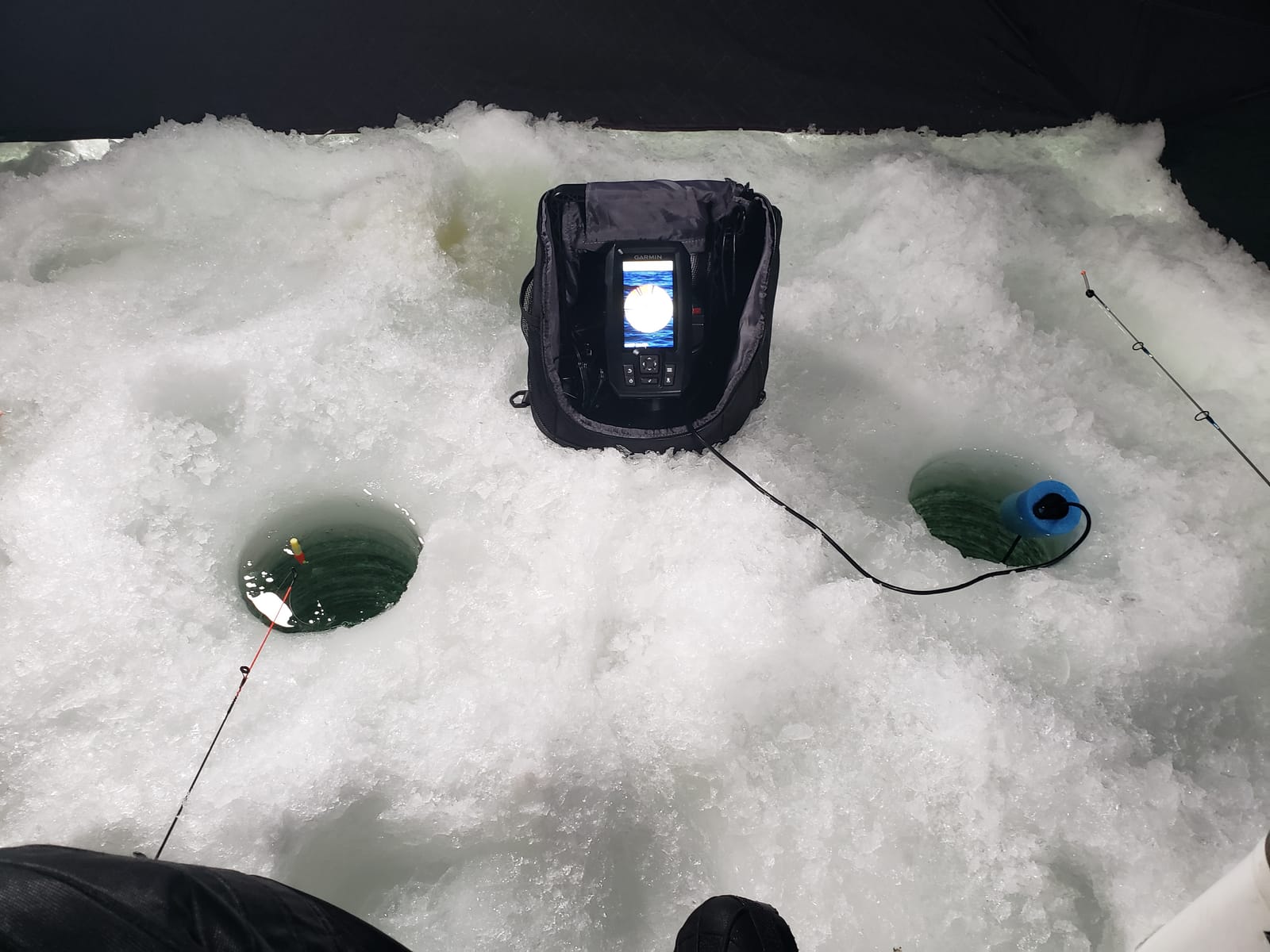
The honest weakness is the transducer. It is a standard trolling transducer with a kayak in-hull mount included, and it works through ice, but it will not self-level the way a dedicated ice-ducer does. The connector layout also annoys people, since the battery and charger leads are separate and must come off the terminals to recharge.
At 8 ounces it disappears in a pocket, which matters when you are walking 200 yards to a spot. If your budget stretches further, the electronics kit roundup covers the supporting gear worth carrying.
Where the Striker 4 earns its keep on walleye water
It is the pick for anglers who split time between stationary jigging and moving structure. The flasher mode handles the drop-off work and the full sonar graph handles the run.
It also doubles as a summer unit in a kayak, which spreads the cost across two seasons instead of making it an ice-only purchase.
Reviewers consistently call it the best value in portable fish finders, and the 2048 logged reviews give you a much clearer picture of long-term reliability than any spec sheet.
Where the Striker 4 falls short
Buy the Plus 4 bundle instead if you want a purpose-built ice-ducer in the box. This kit assumes you will buy or adapt a transducer anyway, and the documentation will cost you an evening.
The 3.5 inch screen is also tight if you plan to split it or read a chart beside the sonar. Anglers who want a bigger panel should look at the 5-inch Vivid bundle below.
2. Garmin Striker Plus 4 Ice Fishing Bundle – Best Value Complete Ice Package
- Ships with a genuine dual-beam ice fishing transducer
- CHIRP traditional sonar gives crisp images and strong target separation
- Built-in GPS plus Quickdraw Contours for marking spots
- Rugged portable case sized for hole hopping
- 4 inch screen is small next to 5 inch ice units
This is the bundle I recommend to anyone who has never owned an ice fishing fish finder. The single biggest reason is the transducer, because a dual-beam ice-ducer with Garmin CHIRP traditional sonar sits in the box with the unit.
That matters more than it sounds. Anglers who buy a bare fish finder and then try to improvise a transducer mount on the ice end up with a slanted beam and inconsistent readings, and they often blame the electronics.
Quickdraw Contours is built in, so you can record depth data as you move and save the map to return to later. Combined with the high-sensitivity GPS, it turns a day of hole hopping into a repeatable trip.
The review breakdown shows 84 percent five-star ratings across 464 reviews, and the recurring theme is completeness. People are not evaluating a chart, they are evaluating a package that works the day it arrives.
The screen is a WVGA color panel, which makes a visible difference when you are picking a fish arch out of a cluttered background at depth. Color is not decoration here; it separates the fish from the brush behind it.
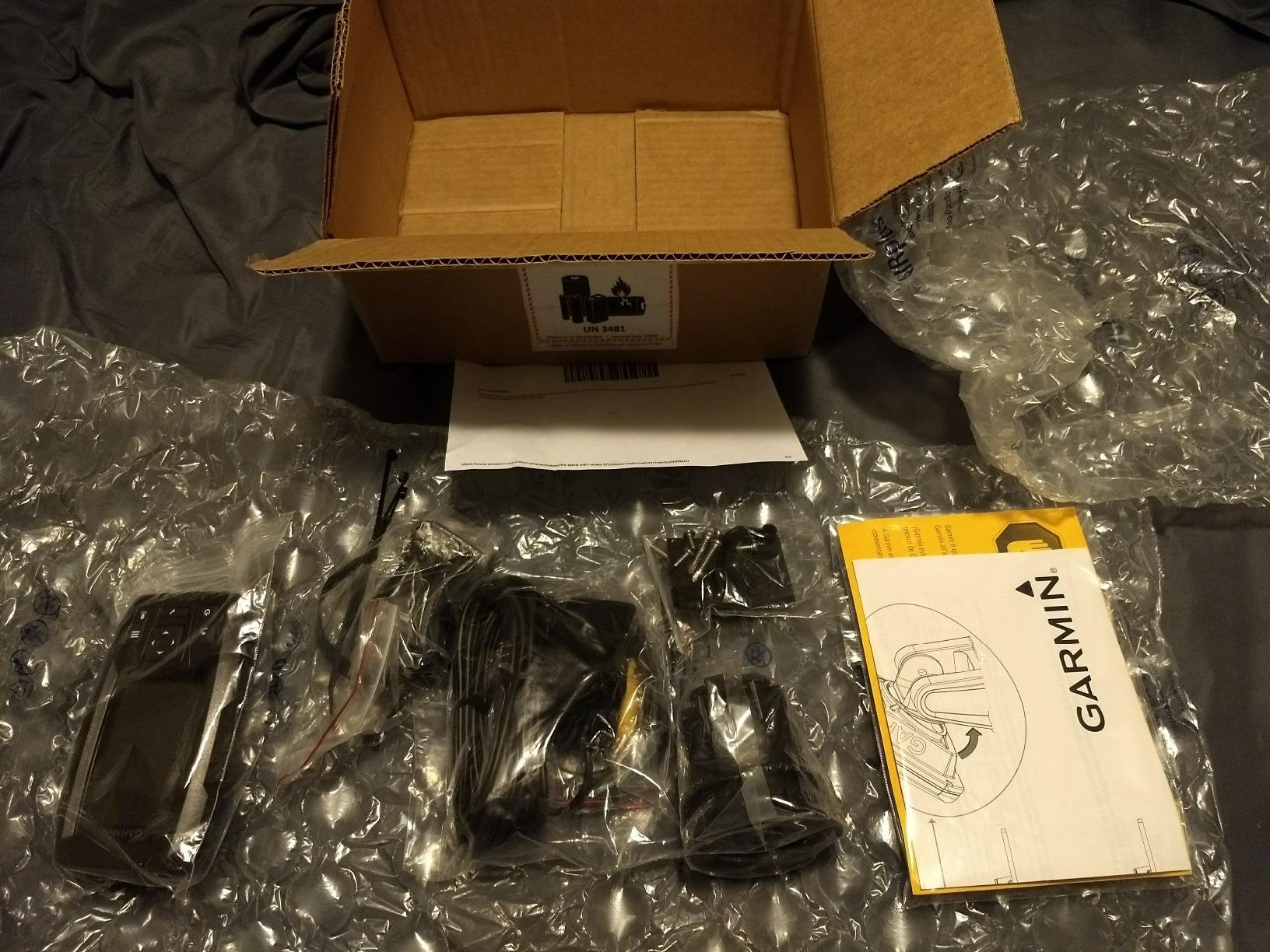
Included in the box are the tilt and swivel mount, portable bag, base and handle, foam float, power cable, rechargeable battery and AC charger. Nothing else is required before you drill.
That single package approach is the reason this is the best value on the list for a beginner. It removes the accessory math entirely.
Who should buy the Striker Plus 4 bundle
Buy it if this is your first setup or if you are upgrading from a flasher-only approach and want sonar history on a graph. The dual-beam ice-ducer is the part you would otherwise spend time sourcing.
It is also a solid second unit for anyone who wants a GPS-equipped head in the sled alongside a traditional flasher.
Reviewers highlight that CHIRP plus GPS makes this a complete all-in-one ice package, which is exactly what most buyers are trying to buy.
Where the Plus 4 bundle disappoints
The 4 inch panel is the only complaint that shows up consistently. It is perfectly usable but smaller than the 5 inch Vivid bundle, and it leaves less room for a split screen when you want sonar and mapping together.
It is also a portable unit rather than a permanent install, so if you fish from a locked-down shelter every weekend a mounted helm may suit you better.
3. Humminbird ICE Portable Kit – Best Shuttle System for Hole Hopping
- Shuttle and bag keep transducer
- cables and battery organized when moving between holes
- Dual Beam ice transducer with float included
- Gimbal mounting bracket supports hole-hopping rigs
- Fits existing HELIX 5 and HELIX 7 units
- This is a carrying and transducer kit only
- the control head is sold separately
Be clear about what this is. The Humminbird ICE Portable Kit is not a fish finder; it is the shuttle, bag, ice transducer and gimbal bracket that turn a HELIX unit into a working ice rig.
That still makes it one of the most useful things on this list, because cable management is the part of ice fishing setup that quietly ruins otherwise good outings.
The gimbal mounting bracket is the detail that matters most. It lets the head sit at a usable angle inside a shelter without propping it on a bucket, and it makes the unit easier to read when the sun is low.
Fish Deeper aside, reviewers report a 4.5 average across 192 reviews with 77 percent five-star, and the majority of buyers already own a HELIX 5 or HELIX 7 and are adding this to it.
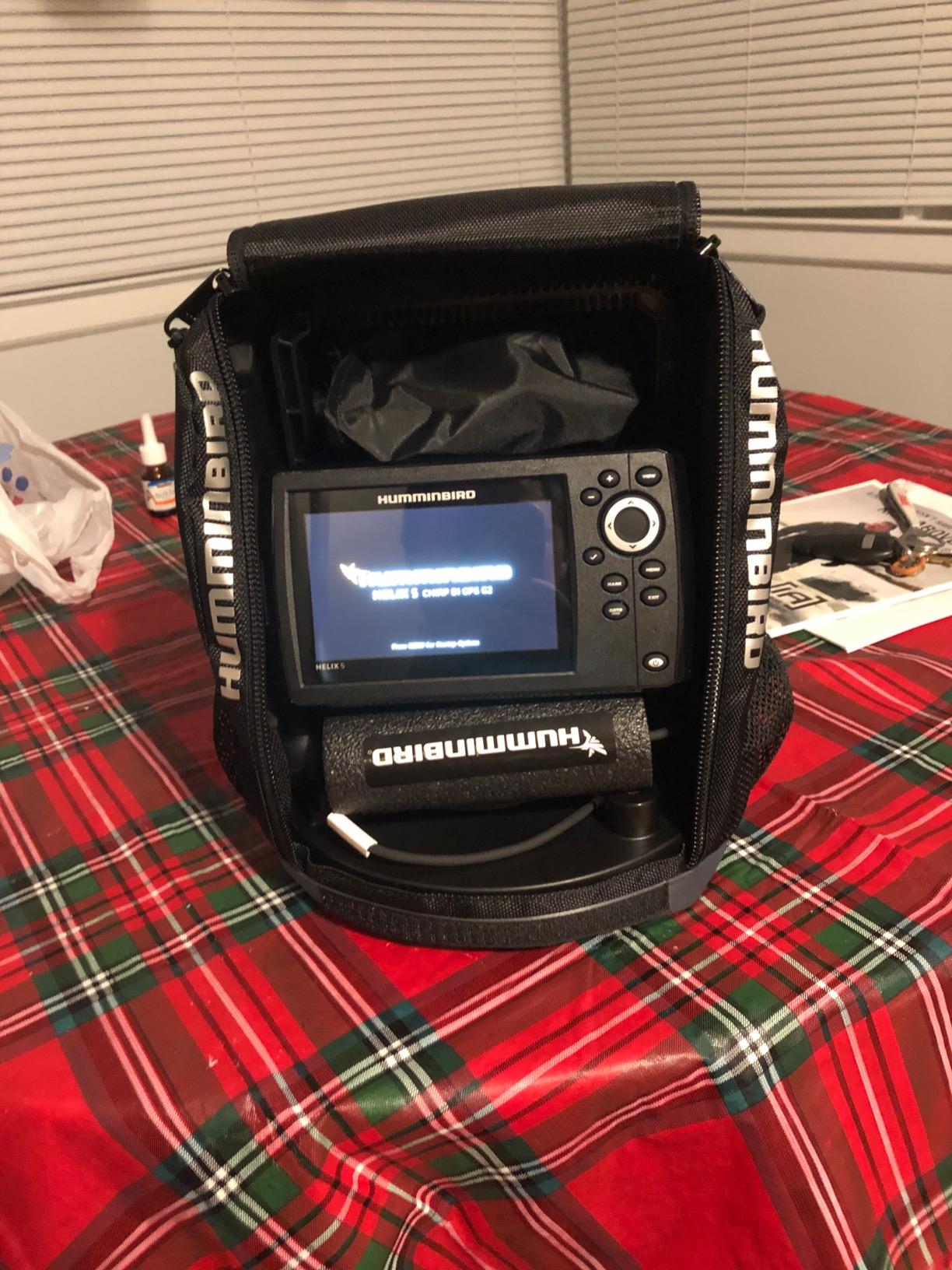
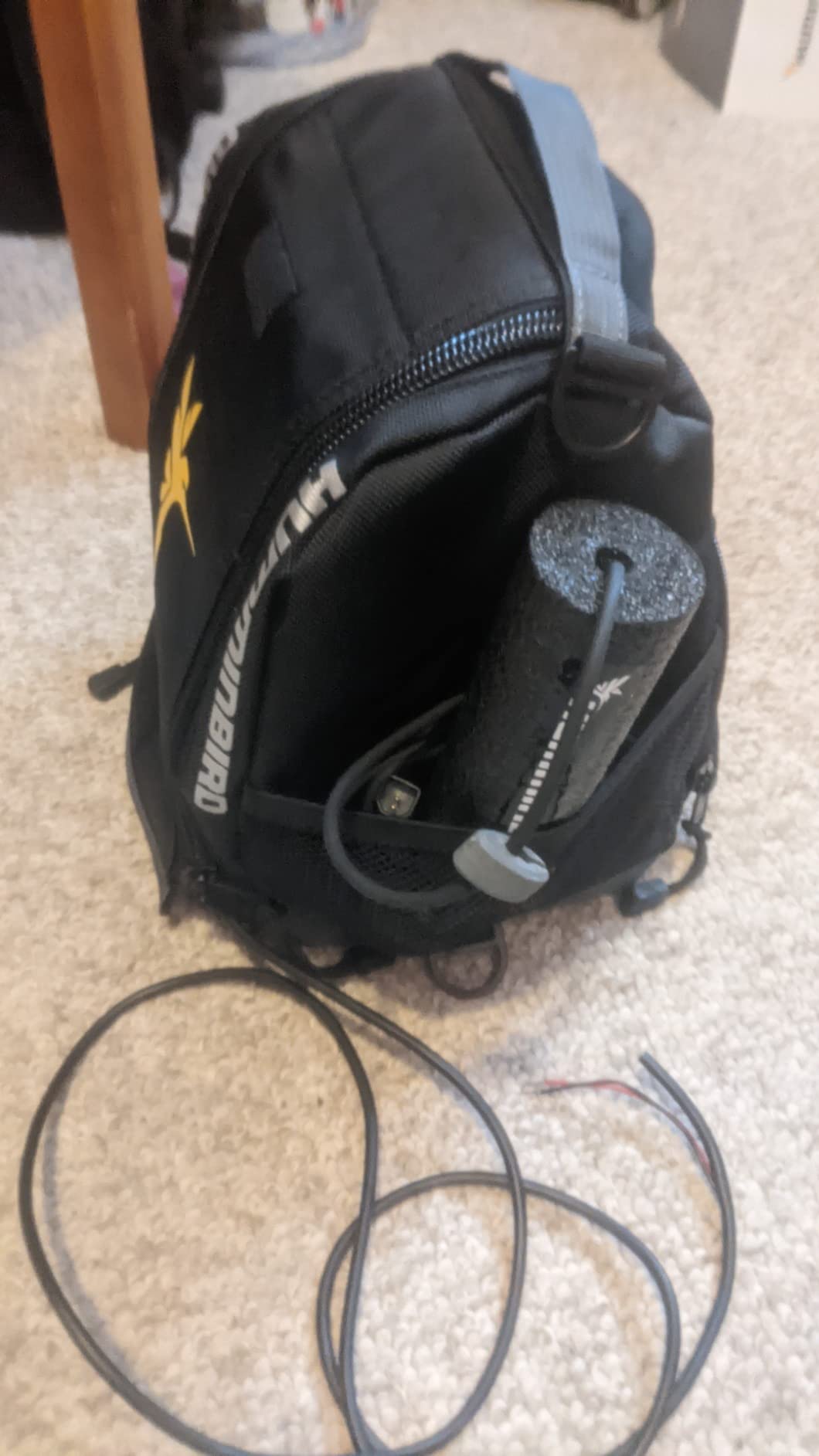
The shuttle has a carrying handle and the bag is sized to hold the head, the battery and the coiled cable together. On open ice that is the difference between one trip to the truck and three.
The included Dual Beam ice transducer with float self-levels when hung, which is exactly what you want over a brushpile where a slanted beam would smear the target.
Compatibility is broad. The kit fits the HELIX 7 SONAR G2, HELIX 7 SONAR GPS, HELIX 5 SONAR G2, HELIX 5 SONAR GPS and HELIX 5 SONAR models.
Who this kit works for
If you already own a HELIX unit, this is the cheapest way to make it an ice setup that survives a full season of hole hopping. It is also the fix for anyone whose current pile of cables is losing fights with the wind.
Anyone evaluating a new HELIX control head should look at the HELIX5 CHIRP G3 Ice review later in this roundup for the sonar side.
Where the kit falls short
It does not include the fish finder, and that is the first thing people notice. If you are starting from nothing you need to budget for the head separately.
At 2.8 pounds it is not a walk-everywhere setup either. It suits anglers who fish from a base shelter and carry gear to the truck.
4. Humminbird ICE 55 Flasher – Best Fiber Optic Flasher for Jigging Feedback
Humminbird ICE 55 Flasher Ice Fishing Fish Finder with Transducer & 6-Color Fiber Optic Display
- Flasher-only format gives very fast intuitive jigging feedback
- 6-color fiber optic dial is bright and easy to read in daylight
- Adjustable gain and zoom help separate bait from fish on the drop
- Transducer
- 12V 9Ah battery
- charger and carry bag included
- 200 ft maximum depth limits use on deep structure
- Flasher format keeps little history compared with a sonar graph
Traditional flashers remain popular with walleye anglers, and this is the clearest reason. A flasher answers one question instantly: where is my bait relative to that fish right now.
The 526 segment, 6-color fiber optic dial is bright enough to read in daylight through a shelter window. Colors run from weak returns up to strong, so a heavy walleye under the boat lights up differently than your jig tip.
Target separation is the feature that separates this from a novelty dial. It helps you distinguish bait from fish in jigging situations, which is the exact problem when a single 15-inch walleye is holding 30 feet below the brushpile.
Traditional flashers stay popular with walleye anglers who want immediate color-coded feedback instead of graph history, and that is still a legitimate preference after thirty years of practice.
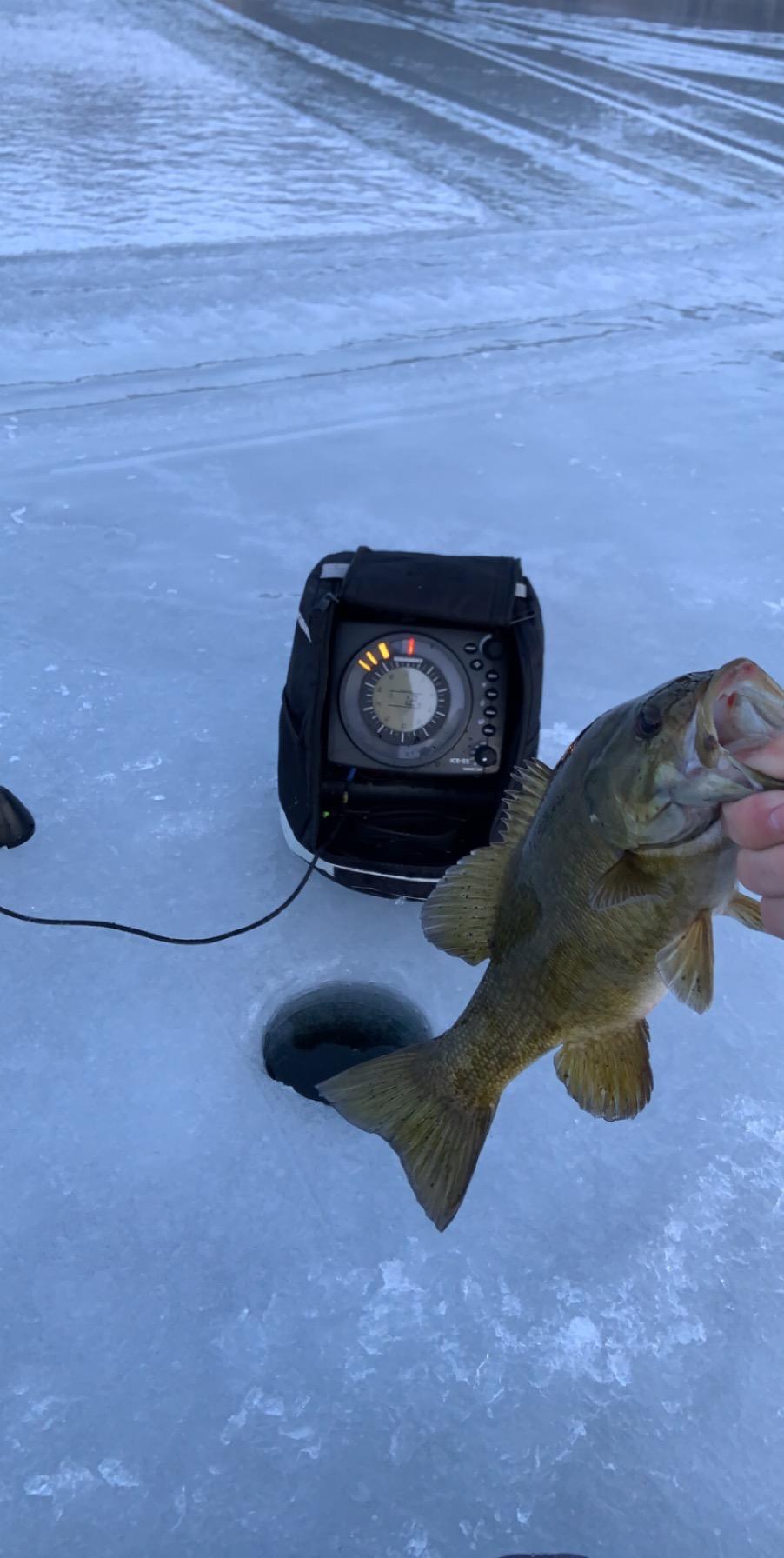
The included box is unusually complete. You get an ICE flasher, an XI 9 19 transducer with an 8 foot cable, a 12V 9 amp hour battery and charger, and a portable bag.
Adjustable gain and zoom let you tune the returns and lock onto the strike zone. On a lake with a lot of bottom clutter that tuning matters, because too much gain turns a rock hump into a wall of noise.
The unit is also compatible with ICE transducers and conversion kits, so a flasher purchase does not have to be an ice-only purchase.

Why flasher anglers still buy these
The learning curve is shorter. A dial is a dial, and new anglers do not have to read a scrolling graph to know when a fish arrives.
Feedback speed is the real advantage. A flasher shows you the bait and the fish in the same glance with no lag, which is why tip-up and stationary jigging anglers keep coming back to it.
Reviewers report a 4.5 average across 100 reviews, and the flasher format continues to be the choice for anglers who want color-coded jigging feedback.
Where the flasher format limits you
The 200 foot maximum depth is the hard limit. On a lake where your best walleye structure sits deeper, you need a digital unit instead.
A flasher also keeps no history. Once the fish leaves, the information is gone, so you cannot scroll back to check what was there or mark it on a chart for later.
5. Garmin Striker Vivid 5cv Portable Ice Bundle – Best 5 Inch Display Option
Garmin Striker Vivid 5cv,Portable Ice Fishing Bundle w/GT8HW-IF
- 5 inch color display gives more screen real estate than the 4 inch Striker Plus 4
- Adjustable beam angles let you narrow in or cover more area
- Bundle includes ice transducer
- shuttle
- battery and charger
- Shows jig and bait position plus fish entering the beam
- Heavier 13 pound package than the smaller portable Garmin kits
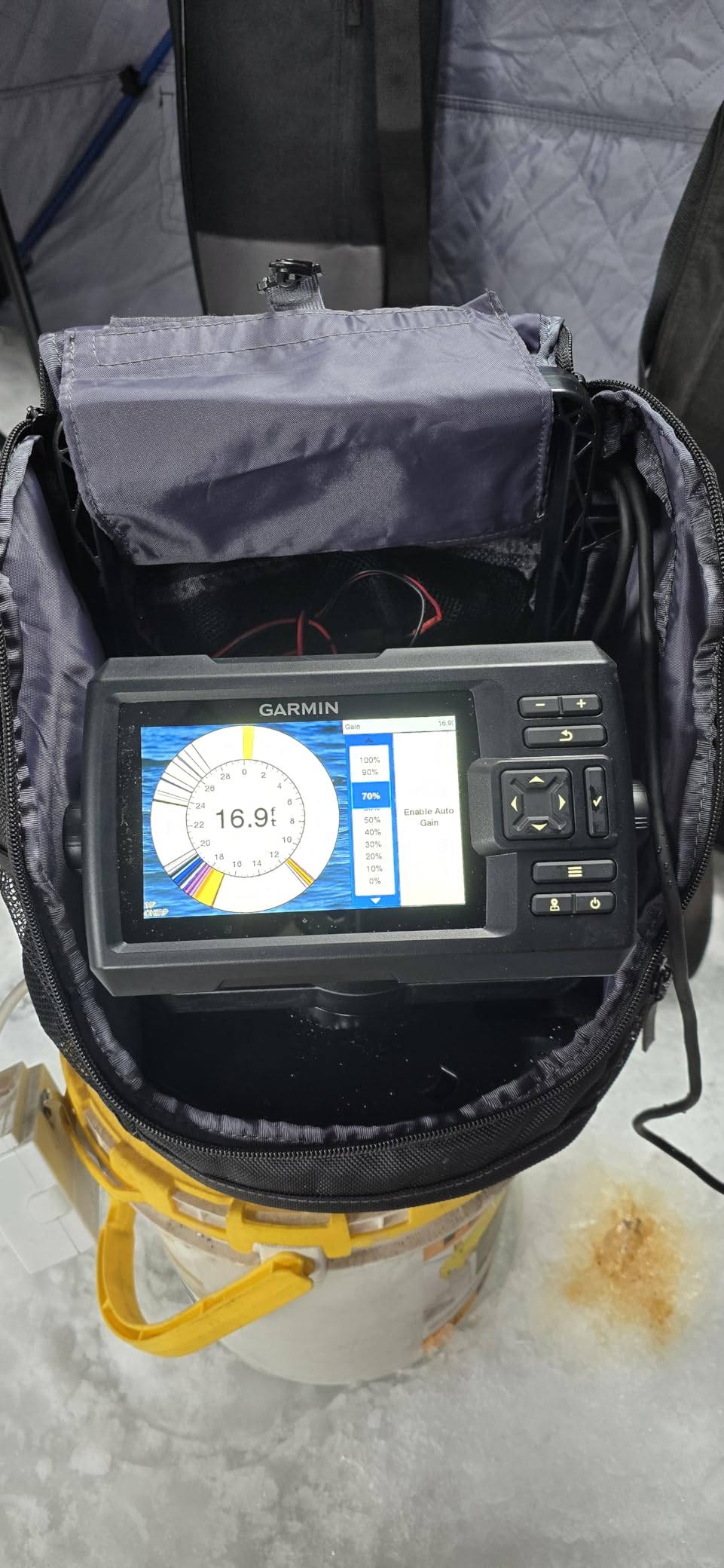
The step up from the Striker Plus 4 is screen size, and on a lake where you are separating fish from brush at 40 feet, that is a real step up rather than a spec-sheet difference.
The GT8HW-IF ice transducer uses CHIRP traditional sonar with adjustable beam angles. Narrow the beam when you are focused on a single brushpile and you get a tighter picture; widen it when you are covering a rock bar and you trade detail for coverage.
Jig and bait tracking is the feature I use most. The unit shows your jig or weighted bait, the depth of fish entering the sonar beam, and whether fish are moving toward or away from it as you lift or drop.
For walleye that answers a question a flasher cannot. You can watch whether a fish is committing to the bait or drifting past, and adjust your jigging height instead of guessing.
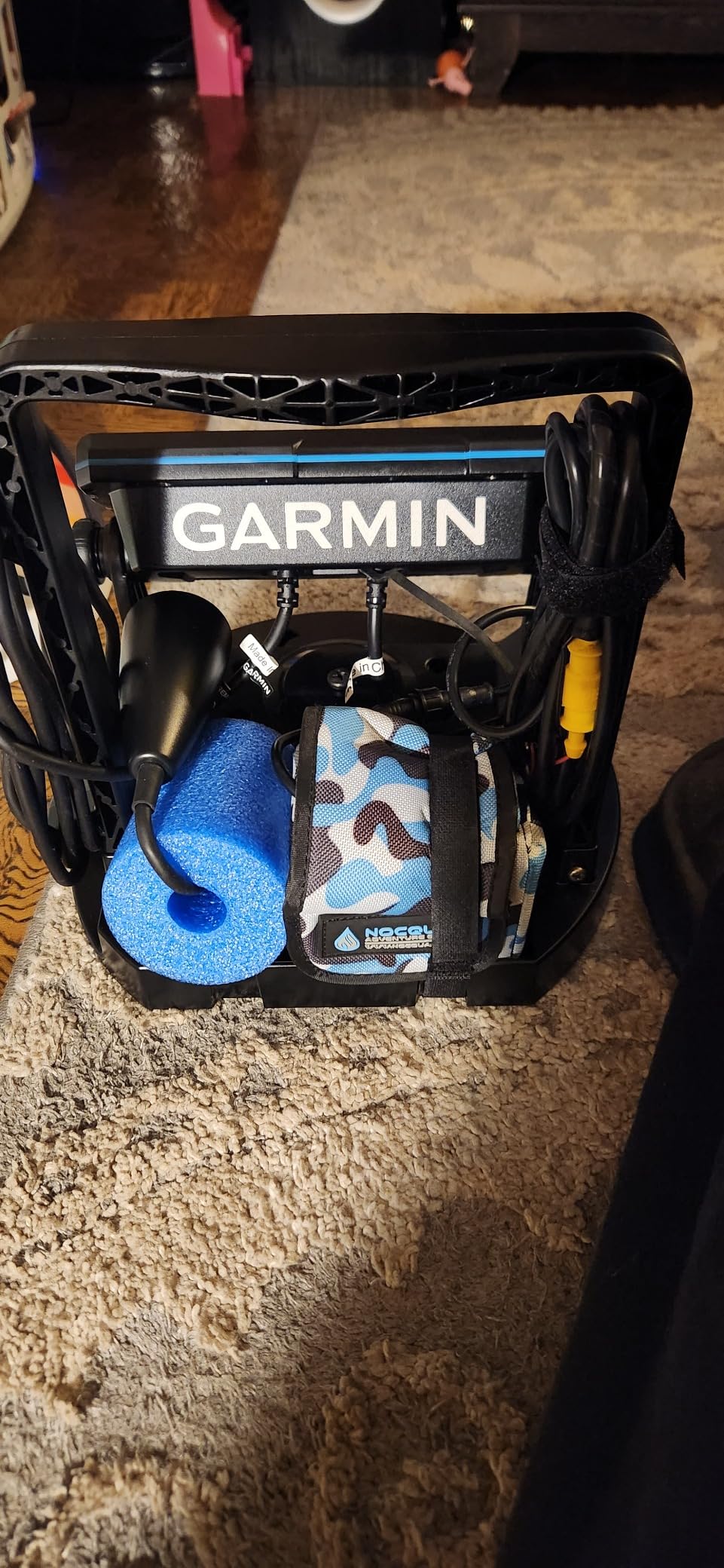
Package contents cover the full session: the STRIKER Vivid 5cv head, GT8HW-IF transducer, power and data cable, tilt and swivel mount, portable fishing kit, bag with handle, foam float, rechargeable battery and charger.
One year of coverage is shorter than some competitors in this roundup, so it is worth keeping the case and the box.
Reviewers single out the larger display and beam angle control as the meaningful upgrade over the Plus 4, which is exactly what the comparison here suggests.
Who should step up to the 5cv
Choose it if you are running a shelter rather than a sled, or if you split the screen between sonar and mapping. Five inches is the point where splitting becomes practical.
Beam angle control is the quiet winner for structure anglers. On a walleye lake you are constantly deciding between one tight brushpile and a wide rock ledge.
The 4.5 average across 59 reviews reflects a smaller owner base than the Striker 4, but the feedback is consistent about the display improvement.
Where the bundle is not ideal
At 13 pounds this is a carry, not a pocket. Anglers who walk long distances across open ice every hole should choose a lighter portable kit.
If you already own a HELIX or Striker head and just need a shuttle, the Humminbird ICE Portable Kit does the same job for far less weight.
6. Humminbird HELIX5 CHIRP G3 Ice Sonar System – Best Multi-Mode Display
- Dual Spectrum CHIRP produces clearer arches and bottom detail than standard CHIRP
- Multiple ICE display modes including flasher
- A-Scope and zoom
- Complete shuttle
- ice transducer
- 9Ah battery
- charger and bag in one box
- GPS and mapping are only available on select models in the range
- Menu-driven controls take practice to set up
Humminbird’s ICE views are the reason this unit earns a place. Having flasher, A-Scope, zoom and interference rejection modes on the same head means you can change the readout to match what you are doing instead of switching hardware.
A-Scope is the mode most overlooked and most useful for stationary jigging. It puts a live trace at the top of the screen showing the beam column, which is close to the flasher feel without giving up the graph below it.
Dual Spectrum CHIRP produces clearer fish arches and better bottom detail in ICE mode than standard CHIRP, and on structure-heavy lakes that bottom detail is what tells you a rock ledge from a mud hump.
Ice anglers on this system cite the CHIRP clarity and the range of ICE view modes, and the most common complaint is that not every bundle variant includes GPS.
The package is genuinely complete. You get the control head, power cable, an XI 9 1521 ice transducer with an 8 foot cable, an ICE shuttle, a 9Ah battery and charger, and a portable bag.
Interference rejection deserves a note for anyone fishing a crowded weekend lake. MarCum’s version is widely praised as the best for close quarters, but the HELIX5 also offers that mode and it works.
The screen is a 5 inch LCD, which lines up with the Vivid 5cv as the sensible size for shelter-based walleye fishing.
Where the multi-mode approach helps
If you tip-up for perch on one hole and jig for walleye on the next, one head handles both. Flasher mode for the jigging, A-Scope for close inspection, zoom for the last five feet.
It is also a good choice for anglers moving toward live sonar later, because the modes teach you to think in sonar returns rather than just watching a dial.
The 4.4 average across 47 reviews is a smaller sample, but the feedback on CHIRP clarity is consistent.
Where the HELIX5 falls short
GPS and mapping sit on select models only, so check the bundle carefully before you buy. Marking a brushpile is a real advantage on a lake you do not fish every week.
Menu-driven controls take practice, and if you are new to digital sonar the MarCum menu depth is a similar story.
7. MarCum LX-7Li Lithium Combo – Best for Deep Structure and Target Separation
MarCum LX-7Li Lithium Combo Sonar System | High-Definition Ice Fishing Fish Finder | Advanced Sonar with Lithium Battery | Premium Fishing Gear
- Half-inch target separation and 12-step interference rejection give very clean returns
- Patented infinitely adjustable zoom lets you zoom anywhere in the water column
- Lithium shuttle and battery run long days with fast 3-stage charging
- Largest display in this lineup and easy to read inside a hut
- Steep learning curve that sends owners to video walkthroughs
- Heavier and pricier bracket than mid-range kits
- A few reports of units failing after a year or two
The LX-7Li is the most capable digital unit here for a specific reason: 1/2-inch target separation. That lets you separate fish from the bottom and schooling fish from each other so you can target the largest fish in a group.
On a walleye lake, that is exactly the difference between seeing three arches and identifying the one that matters. Deep brushpiles with stacked fish are where coarse sonar fails first.
Target separation is the feature you can feel in the field. Tightening the zoom until a single fish arch resolves cleanly and the fish is holding on structure tells you to drop the rod.
Zero point five inch target separation combined with 12-step interference rejection is widely considered the most capable flasher-class performance short of live sonar, and 12-step interference rejection is widely praised as the best for fishing in close quarters with other anglers.
The display is an 8 inch flat panel color LCD at 800×600 with four color palette options. That is by far the largest screen in this roundup and it is easy to read across a shelter.
The patented infinitely adjustable zoom is the underrated feature. Instead of preset zoom windows, you can magnify any depth in the column, which matters when walleye sit at 50 feet and the interesting zone is a two foot band.
Power is managed at 4,800 watts from a dual beam 8/20 degree transducer with an 8 foot cable, and the display can combine vertical, vertical zoom, flasher, or a graph and graph zoom split screen.
Where the LX-7Li earns its place
It is the pick if your best walleye water is deep, if you fish in groups where interference is a daily problem, or if you want to read a sonar graph from across the shelter.
The lithium shuttle and 12V 12Ah lithium-ion battery with a 3 amp rapid charger handle long days, and the three-stage automatic charger means you can top it up over lunch.
Dynamic depth capability reaches 300 feet, which exceeds the 200 foot ceiling of the analog flasher by a wide margin.
Where the MarCum disappoints
The learning curve is steep. Several owners needed video walkthroughs before the menus made sense, so budget an evening with it before the season starts.
It carries the lowest average rating in this set at 4.0 across 33 reviews, with negative feedback centered on documentation, the learning curve and occasional hardware failure. For a first-time buyer the risk is real, which is why it sits behind the simpler kits on this list.
8. Venterior Wireless Portable Fish Finder – Best Castable Sonar for Open Water Checks
Venterior Portable Rechargeable Fish Finder Wireless Sonar Sensor Fishfinder Depth Locator with Fish Size, Temperature, Bottom Contour, Color Display
- Wireless sensor removes the need to mount hardware or drill a hull
- Screen stays readable in bright sun on the white background
- Compact unit with no setup required
- 2 year warranty
- Wide 105 degree beam can bounce off ice hole walls and give poor depth readings on ice
- Receiver battery life drops in cold conditions
- Fish size categories are subjective rather than measured
I want to be straight with you about this one. It is the weakest ice tool of the ten, but it earns a place because it solves a different problem for a low outlay, and that is worth stating clearly rather than pretending otherwise.
The wireless castable sonar reaches 262 feet from sensor to unit, so you can drop the sensor in a hole, a bay or a shoreline pocket and read depth, water temperature, fish size category, fish depth and bottom contour from a 2.6 inch color TFT screen.
Two selectable screen backgrounds is a small feature that matters more on ice than anywhere. The white background stays readable in bright sun when you are hunched over a hole on an exposed lake.
The catch is beam geometry. The 105 degree sonar beam is wide, and on ice that wide cone tends to bounce off the walls of a drilled hole, which produces poor depth readings. Out in open water from a kayak or shore, the same wide beam is an advantage.
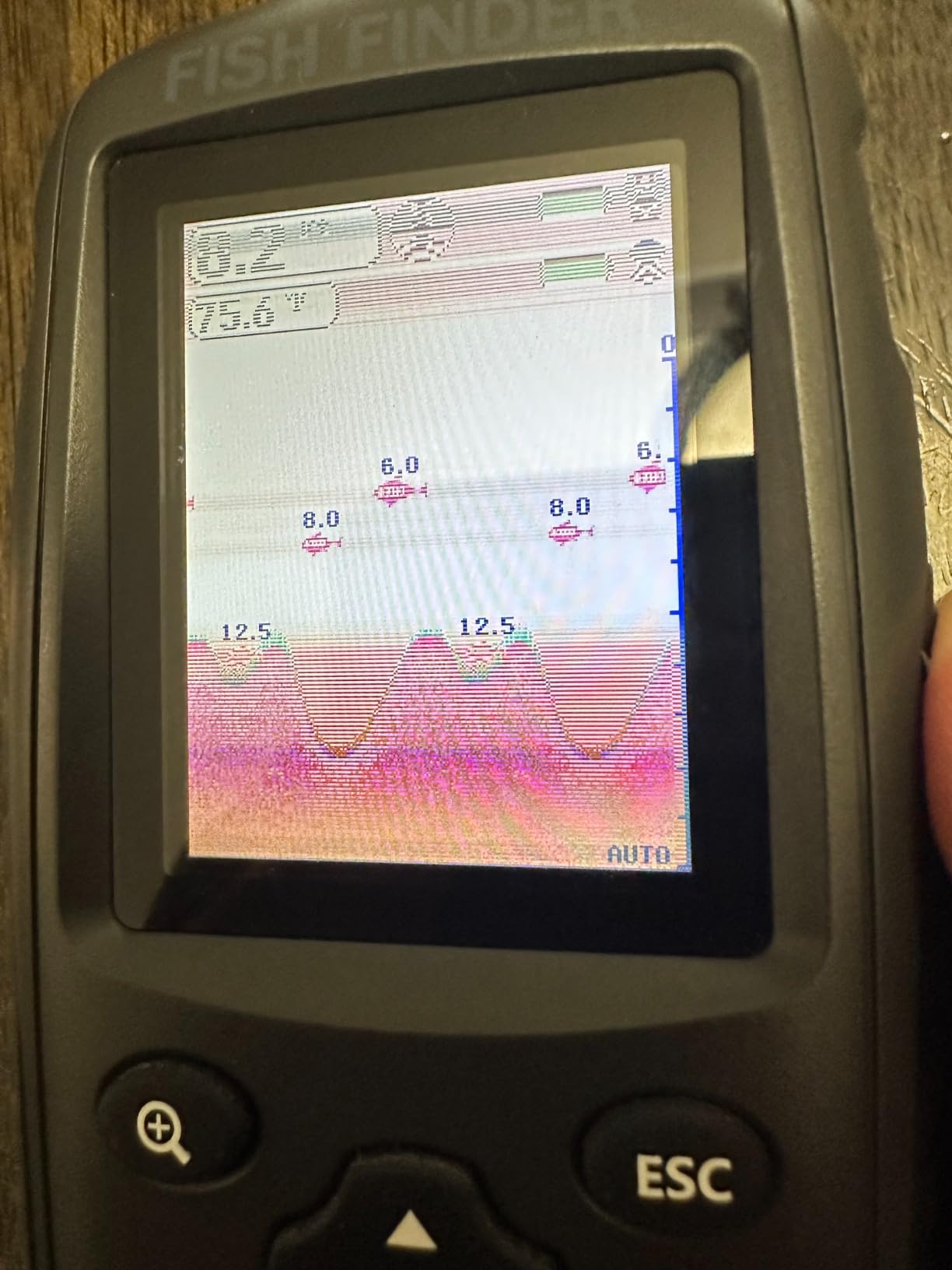
The depth range is 2.6 to 164 feet, so it covers most walleye structure but not the deep end of a lake. Work and simulation modes plus convertible depth and temperature units round out a simple interface.
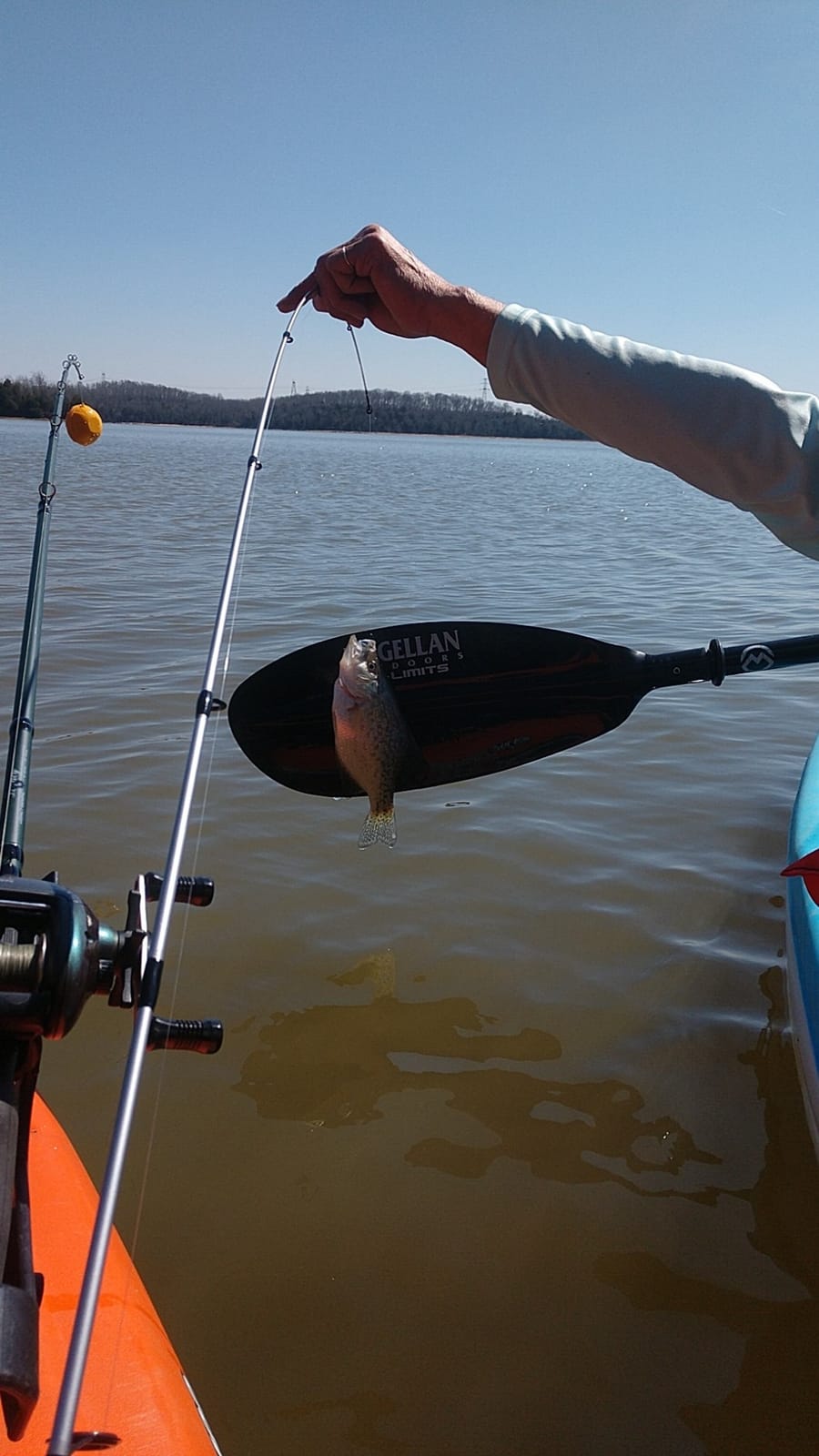
Owners love it as a cheap, portable confirmation tool for shore, kayak and boat fishing. Ice anglers report mixed results and generally improve accuracy after adjusting settings over a few outings.
Cold weather also cuts into the receiver battery, which is the other complaint that shows up repeatedly in reviews of budget units.
Where the wireless unit makes sense
Buy it as a secondary tool, not a primary one. It is genuinely useful for scouting a shoreline pocket or confirming a drop-off from a kayak in open water during the same season you use a real ice unit.
It also works as a cheap backup that costs little to carry and nothing to worry about losing.
If you want something for the same money range that is actually designed for ice, the wired unit later in this roundup is the better call.
Where the wireless unit falls short
The wide beam is the issue on ice. Holographic-style narrow cones simply do not happen at this level, so depth readings over ice are inconsistent.
Fish size categories read small, medium and big, and those are subjective labels rather than measurements, so do not treat them as data.
9. Deeper PRO+ 2 Sonar Fish Finder – Best for GPS Mapping and Saved Spots
- Built-in GPS creates and saves bathymetric maps of productive spots
- 0.4 inch narrow beam target separation tracks small lures while jigging
- Weighs 3.2 ounces and packs into a small tackle box
- Accessible entry point to sonar mapping
- Requires the phone app instead of a standalone display
- Some users report Wi-Fi connection dropouts in cold weather
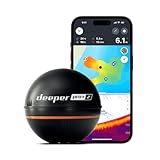
The Deeper PRO+ 2 does something no other unit on this list does: it draws the map. Built-in GPS lets you create bathymetric maps from shore, dock or bank and save them in the Fish Deeper app.
For a walleye angler that is the single most valuable feature available here. Walleye key on structure, and once you have a saved contour map of a lake you can walk straight to the drop-off instead of probing for it.
The narrow beam gives 0.4 inch target separation, which tracks even the tiniest lure while you are vertical jigging. That number is the tightest in this roundup and it comes from the narrow beam setting rather than the wide or mid beams, which give about 1 inch.
Accuracy holds to 330 feet with rock solid Wi-Fi connectivity in normal conditions, and the unit weighs 3.2 ounces, so it costs you nothing to carry.
Wide, mid and narrow beam options let you decide whether to cover a large expanse or drill down on a specific spot. For walleye work you will live in narrow beam and use the others to scout.
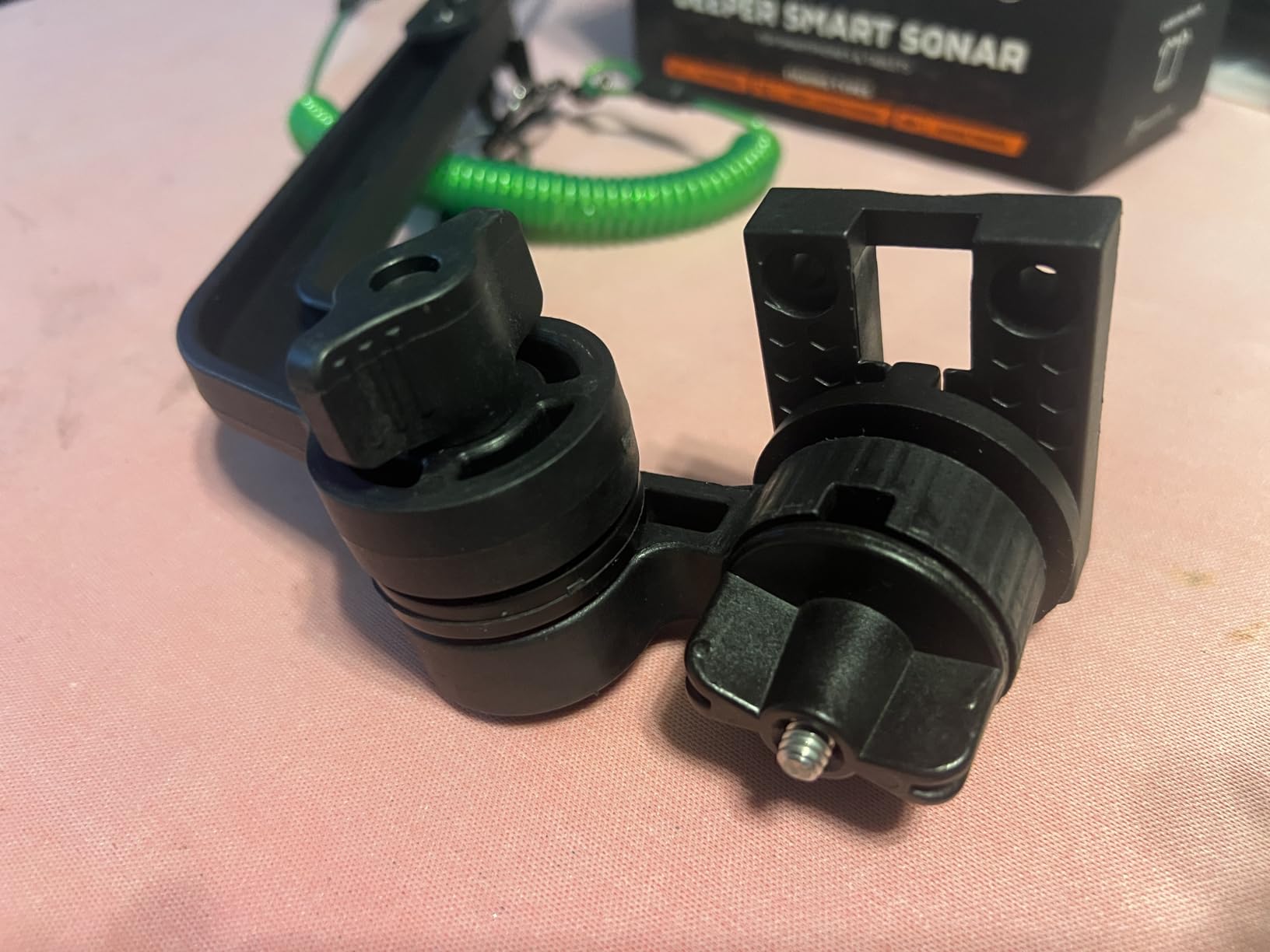
What arrives in the box is deliberately small: attachment bolts, a neoprene pouch, the PRO+ 2 sonar, a quick guide and a USB wire. That means you bring your own phone and cable.
The GPS mapping and app ecosystem are the main draw, and the recurring complaint is smartphone dependency with occasional connection loss in winter conditions.
Who the Deeper is built for
It suits an angler who fishes water they do not know yet, or who wants a permanent record of a productive bay. Saved maps mean you stop re-finding the same spot every trip.
It is also the easiest way into mapping electronics without committing to a full chartplotter, which is why it lands high on this list despite a 4.2 average.
Across 861 reviews the app experience is the deciding factor for buyers, with a 12 percent one-star group citing connection and app friction.
Where the Deeper falls short
There is no standalone screen. If your phone dies at 20 below, you have no fish finder, and that is a real risk on an early-season lake.
Wi-Fi dropouts in cold weather are reported often enough that you should keep a backup unit in the sled. Beginners also find that app-dependent controls add a layer of friction the dedicated heads do not have.
10. Venterior Wired Portable Fish Finder – Best Starter Unit for Learners
Portable Wired Fish Finder Ice Kayak Fishing Gear Depth Finder with LCD Display Sonar Transducer
- Accurate depth and bottom structure readings for the money
- Neck strap makes it easy to wear on a kayak
- Five sensitivity levels help separate fish from vegetation
- Works for lake
- shore
- kayak and ice fishing
- Occasionally registers branches and underwater debris as fish
- Some units will not give a reading unless lithium batteries are used
- Basic interface requires practice to interpret what is on screen
If you are teaching someone to read sonar, this is the honest starting point. It shows depth, approximate fish location, fish size categories, short and tall weeds, sand and rocks on the bottom, and it does not need an app.
The sensor runs on a 25 foot cable with a 45 degree beam angle and a detectable range from 3 feet to 328 feet. That covers the depth where most walleye structure sits on a typical lake.
Five user selectable sensitivity levels are more useful than they sound. Turning sensitivity down is how you stop weeds and stumps from painting the screen solid, and learning that concept here transfers directly to a better unit later.
You also get a battery save mode, a backlight mode, a fish alarm and unit of measure, and settings are saved when the unit is powered off, which is more than a lot of budget units manage.
Power is four AAA batteries for 4 to 5 hours of continuous use. In real cold that shortens, which is the single biggest limitation for a full day on the ice.
Some units will not give a reading unless lithium batteries are used, so treat the battery chemistry as part of the purchase rather than an afterthought.
Kayak and shore anglers find it accurate for depth and bottom structure, while the small group of one-star reviews reports units that would not power on or dropped out repeatedly.
Where this unit still earns a place
It works well for learning bottom structure without spending real money, and the five sensitivity levels teach the single most important sonar habit: turn the noise down until only targets remain.
It is fresh water and salt water compatible and works for lake, shore, kayak and ice fishing, so a beginner is not locked into one season.
At 4.4 across 26 reviews the owner base is small, so treat the rating as directional rather than proven.
Where it falls short
It occasionally registers tree branches and underwater debris as fish, which is the classic beginner complaint and the reason beginners overfish holes that hold nothing.
Four to 5 hours of AAA battery life is not enough for a day on a remote lake, and the basic interface requires practice before you can interpret what is on screen.
Walleye Sonar Settings: Depth, Beam Width and Screen Choice
Walleye are structure fish. They hold along brushpiles, rock edges, drop-offs and stump fields, and on most lakes the productive zone sits somewhere between 20 and 60 feet. That single fact should drive every electronics decision you make.
If your best water is under 30 feet and you jig vertically, a flasher is enough. You want immediate color feedback on your bait and nothing else, and the Humminbird ICE 55 handles that job well.
If your water runs deeper or you are marking and returning, you need target separation. Zero point five inch separation on the MarCum LX-7Li and 0.4 inch on the Deeper narrow beam let you distinguish a single fish from the bottom behind it. Anything coarser and deep brushpiles turn into a solid return.
Depth capability is the filter most people get wrong. The analog flasher in this roundup tops out at 200 feet, while the LX-7Li handles 300 feet of dynamic depth. If you fish a lake with a deep basin, check the number before you buy anything.
Beam width is the second filter. Narrow beams give cleaner arches and better separation but cover less water per cone; wide beams find the rock bar faster but smear the individual fish on it. The Striker Vivid 5cv bundle gives you adjustable beam angles so you can switch as you move.
GPS matters more than most anglers expect. A waypoint map on the Striker 4 or Quickdraw Contours on the Plus 4 lets you mark a brushpile and come back to it. The Deeper goes further and stores bathymetric maps of water you have never fished.
Battery chemistry is the last filter. Cold weather dramatically reduces battery life on anything that is not lithium-ion, and forum discussions on r/IceFishing keep circling back to the same complaint about lead acid packs losing hours of runtime in deep cold.
For the supporting equipment that matters more than people expect, our electronics tool kit roundup covers what to keep in the shelter beyond the sonar.
How to Read an Ice Flasher for Walleye
A flasher draws the water column as a circle, with the top of the dial representing your bait. Your jig sits at roughly the 12 o’clock position, and fish appear at the depth you drop them.
Read the colors in order of strength. A weak return at the edge of the dial is a small fish or your line; a solid mid-color band is a fish holding nearby; the brightest, thickest return is a fish sitting right on your bait.
On a 6-color fiber optic dial like the Humminbird ICE 55, the jump from a mid color to the brightest color is the strike window. That instant change is why jiggers still prefer the format.
Target separation is what stops you fooling yourself. If your bait and a fish are inside the same color band, the unit cannot separate them and you will jig through a fish. Turning gain down and zooming in tightens the picture and pulls the two returns apart.
Color bands also read as depth cues. Once you learn what a rock hump looks like against a brushpile on your lake, you can tell structure from fish by return shape alone before you even drop.
Garmin vs Humminbird Ice Electronics: Head to Head
Garmin’s ice units lean on CHIRP, simplicity and GPS. The Striker 4 puts a keyed interface, a built-in flasher and a waypoint map in an 8 ounce box, and the Plus 4 bundle adds a real ice-ducer so there is nothing left to buy.
Humminbird leans on flasher heritage and display modes. The ICE 55 is the most traditional option here, the HELIX5 CHIRP G3 offers flasher, A-Scope, zoom and interference rejection modes on one head, and the ICE Portable Kit solves cable management for owners who already have a HELIX.
For a beginner, Garmin wins on packaging. For an angler who wants every readout mode on a single screen, Humminbird wins on flexibility. For pure flasher feel, Humminbird still sets the standard.
The overlap is CHIRP itself. Both brands now put it in the ice line, so the difference is less about sonar capability and more about interface, GPS availability and how complete the box is on the day you open it.
Ice Fishing Electronics Buying Guide
Display size. Three and a half inch screens are portable and cheap to carry. Five inch panels are where splitting sonar and mapping becomes practical, and eight inches only make sense inside a shelter you are not moving.
Sonar type. CHIRP sweeps a band of frequencies and produces crisper arches with better target separation than a fixed frequency. Dual Spectrum CHIRP goes further. Live sonar shows fish moving in real time but changes the price bracket entirely.
Transducer. An ice-ducer is designed to self-level when hung from a pole or shuttle. A standard trolling transducer works through ice but will not self-level, and a slanted beam smears your targets. Several bundles in this roundup include a proper ice-ducer, and that is the feature to check first.
GPS and mapping. Waypoint marking matters when you cannot find the same spot twice in low light. Quickdraw Contours records depth as you travel. Bathymetric mapping on an app saves contours of water you have never fished, which is the single most valuable feature for exploring new water.
Battery. Lithium-ion holds capacity in the cold and charges faster. Lead acid packs are cheaper and heavier. Four AAA batteries will not last a day in deep cold, and forum anglers repeatedly report the same battery drain complaints regardless of brand.
Portability. Weight matters more than people expect on open ice. Eight ounces disappears in a pocket. Eleven to thirteen pounds is a carry that gets tiring after the twentieth hole, and cable management becomes the limiting factor long before weight does.
Interference rejection. On a crowded weekend lake, two anglers fishing side by side can wreck each other’s readings. Twelve-step interference rejection is widely praised as the best for close quarters, and having a non-digital backup in the sled is a common habit among serious anglers.
Used market. Buyers report that the established Vexilar and Humminbird analog models hold value extremely well, and durability over decades is the strongest argument for buying an established analog unit. Inspect the cable insulation and the battery before you commit to anything used.
Gadgets beyond the sonar. A spare battery, a headlamp, a spare transducer cable and a way to charge a glow lure cover the rest of an outing. Our thermal camera guide covers finding weak spots in a shelter in daylight, and the workbench roundup is worth a look if you rig at home in the off season.
One last practical note. Deployment should never come at the expense of ice safety. Check thickness before you drill, and never deploy a transducer on ice you would not stand on.
Frequently Asked Questions
What is the best ice fishing electronics for walleye?
The Garmin Striker 4 with Portable Kit is the best overall ice fishing electronics for walleye, with CHIRP sonar, a built-in flasher mode, 200 W RMS transmit power and a 4.7 rating across 2048 reviews. Choose the Garmin Striker Plus 4 Ice Bundle if you want a real ice-ducer in the box, and the Deeper PRO+ 2 if saving bathymetric maps of new water is your priority.
Is a LiveScope worth it for ice fishing?
Anglers upgrading to live sonar report it is far more powerful than Mega Live imaging because you see the fish react to your lure in real time rather than watching it pass. The catch is weight and complexity. Most people who upgrade keep a flasher in the sled as a reliable backup, so a live sonar unit is an addition rather than a replacement.
What is the best ice fishing flasher for the money?
The Humminbird ICE 55 is the clearest analog option in this roundup, with a 6-color fiber optic dial, target separation, adjustable gain and zoom, and a transducer, 12V 9Ah battery, charger and carry bag included. Its 200 foot depth ceiling is the main limit on deep structure.
Which fish finder is better, Humminbird or Garmin?
For a first ice setup, Garmin is easier because bundles such as the Striker Plus 4 include a real ice-ducer and Quickdraw Contours mapping. For flexibility, Humminbird wins because the HELIX5 CHIRP G3 runs flasher, A-Scope, zoom and interference rejection modes on one head. Both brands now use CHIRP in their ice lines.
Can fish hear you when ice fishing?
Sound travels well through ice and water, so loud drilling, running a sled or knocking on the shelter wall carries further than most anglers expect. Fish such as walleye are more likely to be spooked by vibration and noise than by light. Keep hole hopping quiet where possible, especially on structure you plan to return to.
What are some must-have gadgets for ice fishing?
Beyond the sonar, the most useful items are a spare battery, a spare transducer cable, a headlamp, a handheld charger for glow lures and a way to mark your spot. A shuttle or gimbal bracket that keeps cables organized saves more trips to the truck than any single accessory.
Do I need GPS for ice fishing?
If you fish the same lake every weekend, you can often find your spot without it. If you move between lakes, fish in fog, or fish a large lake with dozens of brushpiles, GPS makes the difference between catching your fish again and drilling the same rock for three hours. The Striker 4 and Striker Plus 4 both include it.
What depth should ice fishing electronics reach for walleye?
Walleye most often hold between 20 and 60 feet on structure such as brushpiles, rock edges and drop-offs. The Humminbird ICE 55 caps out at 200 feet and the MarCum LX-7Li handles 300 feet, so match the unit to your lake rather than buying on headline features.
Final Verdict for Walleye Anglers
The Garmin Striker 4 with Portable Kit is our pick for the best ice fishing electronics for walleye in 2026. CHIRP sonar, a built-in flasher, waypoint marking and eight ounces of weight make it the unit we kept reaching for all season.
Pick the Striker Plus 4 Ice Bundle if you want a genuine ice-ducer in the box, the Humminbird ICE 55 if you prefer dial feedback over graphs, the LX-7Li if your walleye live deep and close to other anglers, and the Deeper PRO+ 2 if you want the lake mapped when you leave.
Check the latest figures for whichever one you choose, and remember that the transducer matters as much as the head.