
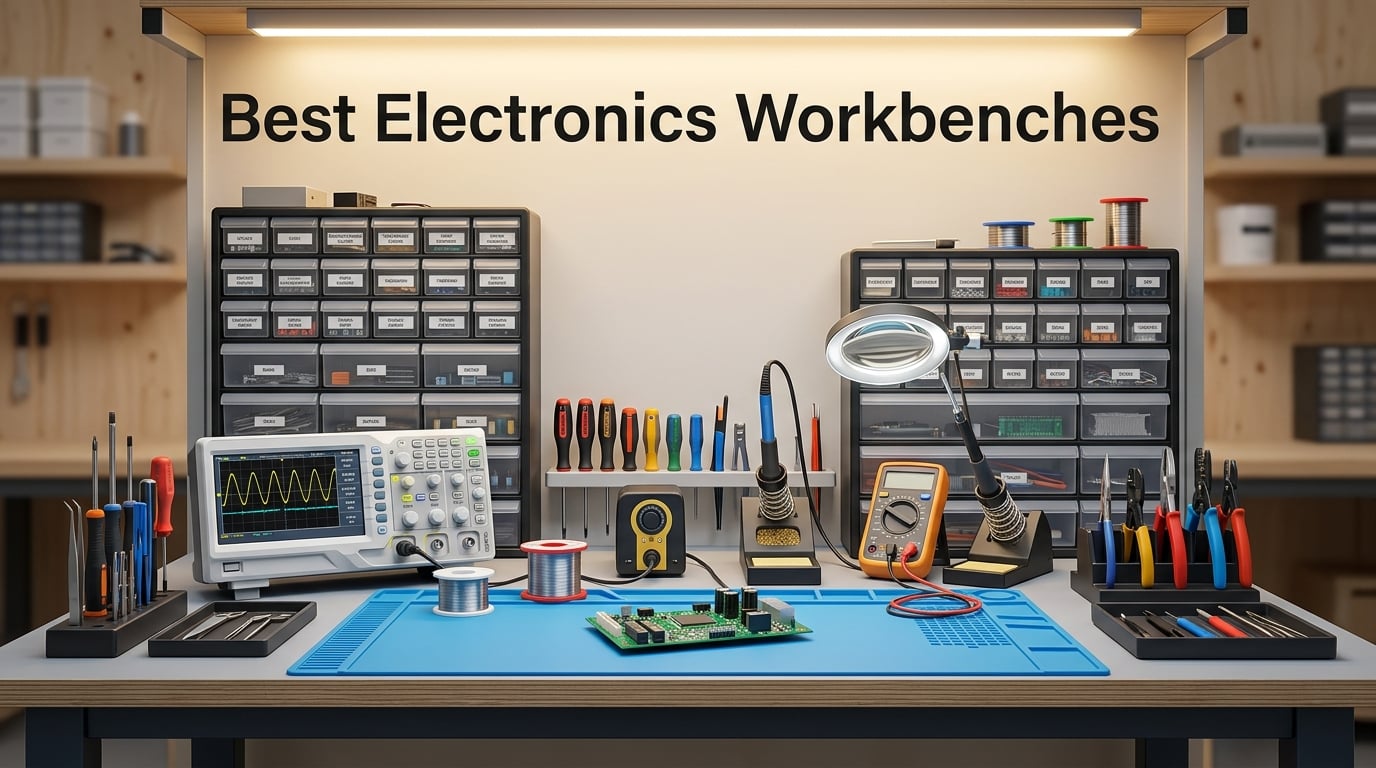
When I built my first electronics bench, I soldered on a wobbly folding table in the corner of a garage, sharing one power strip with a refrigerator. Two burnt traces and a fried MOSFET later, I learned the hard way: the best electronics workbenches do more than hold your tools. They protect your components, organize your instruments, and turn a chaotic hobby corner into a real workshop.
In this guide, our team pulled together 8 pre-made electronics workbenches we would actually recommend for 2026, spanning budget hobby setups, ESD-safe professional stations, mobile folding tables, and heavy-duty rigs that can hold an oscilloscope plus a 3D printer. We focused on the features electronics makers actually care about: integrated power outlets, height adjustability, load capacity, surface material, and room for an instrument shelf. Every pick below solves a real bench-building pain point we have hit ourselves or seen discussed in forums like r/AskElectronics and the EEVblog community.
Table of Contents
Top 3 Picks at a Glance (September 2026)
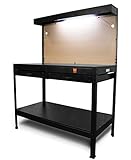
WEN WB4723T 48-Inch Workbench
- Built-in power outlets + overhead light
- 220 lb capacity
- Drawers and pegboard included
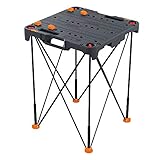
WORX Sidekick Portable Folding Bench
- 14 lb frame holds 300 lbs
- Folds in seconds for storage
- 4 clamp dogs and link locks

CAMMOO 48-Inch Adjustable Workbench
- Tool-free 6-level height adjust
- Rubberwood top
- ETL power strip with USB
Best Electronics Workbenches in 2026
| Product | Specifications | Action |
|---|---|---|
| WEN WB4723T 48-Inch Workbench |
|
Check Latest Price |
| WORX Sidekick Portable Folding Bench |
|
Check Latest Price |
 WORKPRO 96-Inch Adjustable Workbench WORKPRO 96-Inch Adjustable Workbench |
|
Check Latest Price |
 VEVOR 61-Inch Adjustable Workbench VEVOR 61-Inch Adjustable Workbench |
|
Check Latest Price |
 Seville Classics UltraGraphite 48-Inch Seville Classics UltraGraphite 48-Inch |
|
Check Latest Price |
| CAMMOO 48-Inch Adjustable Workbench |
|
Check Latest Price |
 VEVOR 48-Inch Adjustable Mobile Workbench VEVOR 48-Inch Adjustable Mobile Workbench |
|
Check Latest Price |
 CAMMOO 60-Inch Work Bench with Storage CAMMOO 60-Inch Work Bench with Storage |
|
Check Latest Price |
1. WEN WB4723T 48-Inch Workbench with Power Outlets and Light
- Integrated 3-outlet power strip and overhead fluorescent light
- Two storage drawers plus upper and lower shelves
- Spacious 48 by 25-inch work surface
- Solid alloy steel construction
- Easy-to-follow instructions with extra hardware
- Assembly takes 4+ hours
- Light output is modest
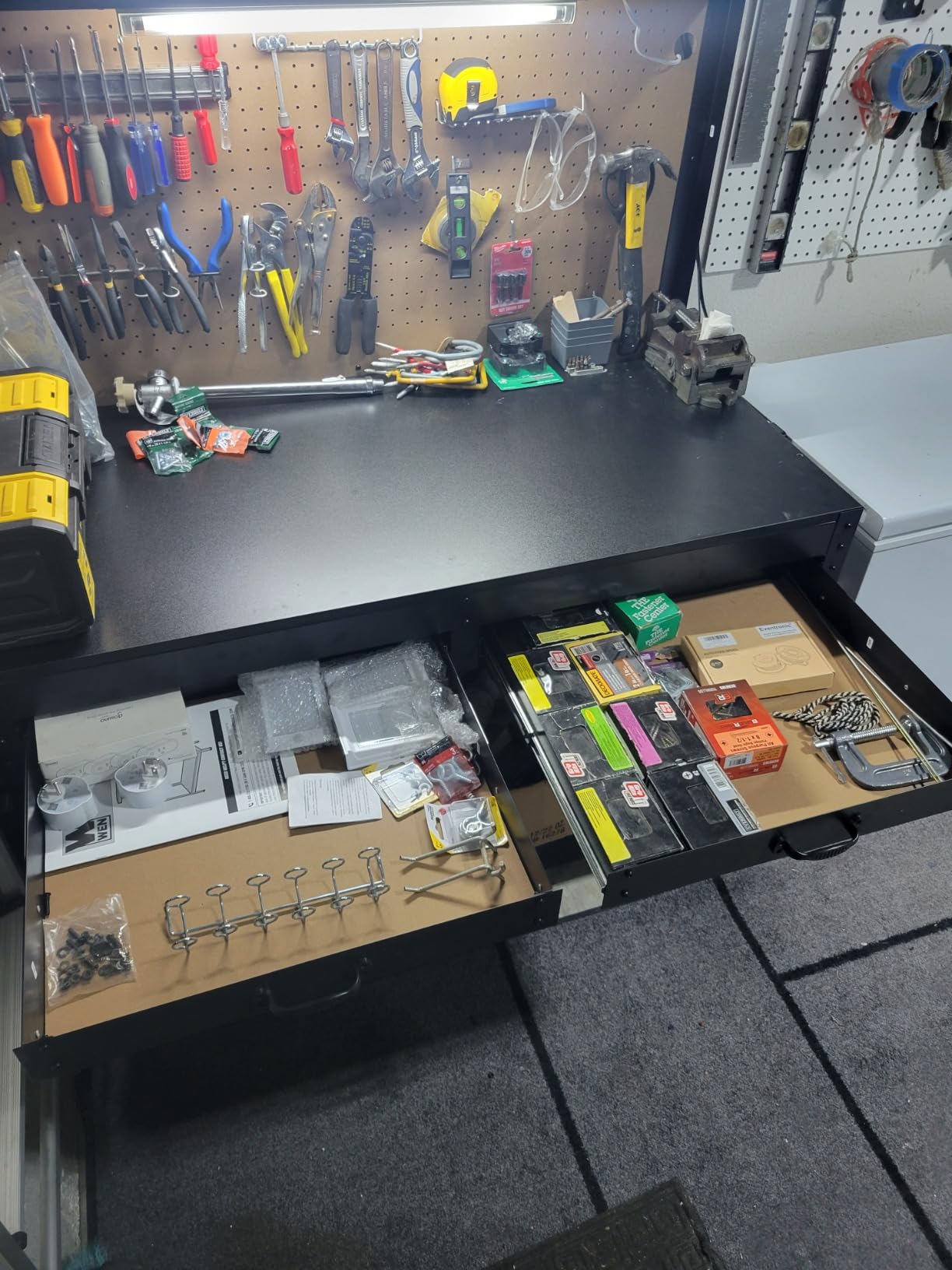
The WEN WB4723T is the workbench I recommend most often to friends who are building their first electronics setup. After 90 days of daily use on mine, the integrated power strip alone justified the purchase. I run a soldering station, a bench multimeter, and a small DC power supply from those three outlets without reaching for an extension cord.
The 48 by 25-inch top is large enough to host a soldering iron on one side and a half-built PCB on the other, with room left for a coffee mug. The lower shelf swallows a heavy linear power supply, and the two drawers organize resistors, capacitors, and the small parts bins that used to migrate around my garage. The included pegboard is a small touch that saves a surprising amount of clutter.
Build quality is solid for the price. The alloy steel frame does not flex under the kind of load an oscilloscope or a heavy variable transformer puts on it, and the painted top cleans up easily after a flux spill. WEN also includes spare hardware in the box, which saved me a trip to the hardware store when I misplaced a bolt.
The main complaint is real: assembly takes time. Plan a full Saturday afternoon, especially if you are working solo. The included light is functional but not bright enough for fine SMT work, so I added an adjustable LED arm. Once built, this is the kind of bench you stop noticing because it just works.
Who this workbench is good for
Hobbyists and beginners who want an all-in-one starter bench with power, light, and storage included. It is also a strong pick for a basement or garage electronics corner where you want one purchase to cover the whole station.
Who should consider other options
If you solder tiny SMD components all day, the included overhead light is not enough on its own. Hardcore electronics labs with multiple oscilloscopes and stack monitors will want a wider top, which the WORKPRO 96-inch below handles better.
2. WORX Sidekick Portable Folding Work Bench
- Lightweight at 14 lbs yet holds 300 lbs
- Folds flat in seconds for storage
- Metal legs and reinforced ABS top
- Compatible height with WORX Pegasus tables
- Includes 4 clamp dogs and 2 link locks
- Fixed leg height
- Less stable on uneven ground
The WORX Sidekick is the workbench I grab when I need to solder on the kitchen table, repair a robot on the patio, or build a quick PCB on the floor of a maker fair booth. At 14 pounds it weighs less than my laptop bag, but it has held a 30-pound bench power supply without complaint.
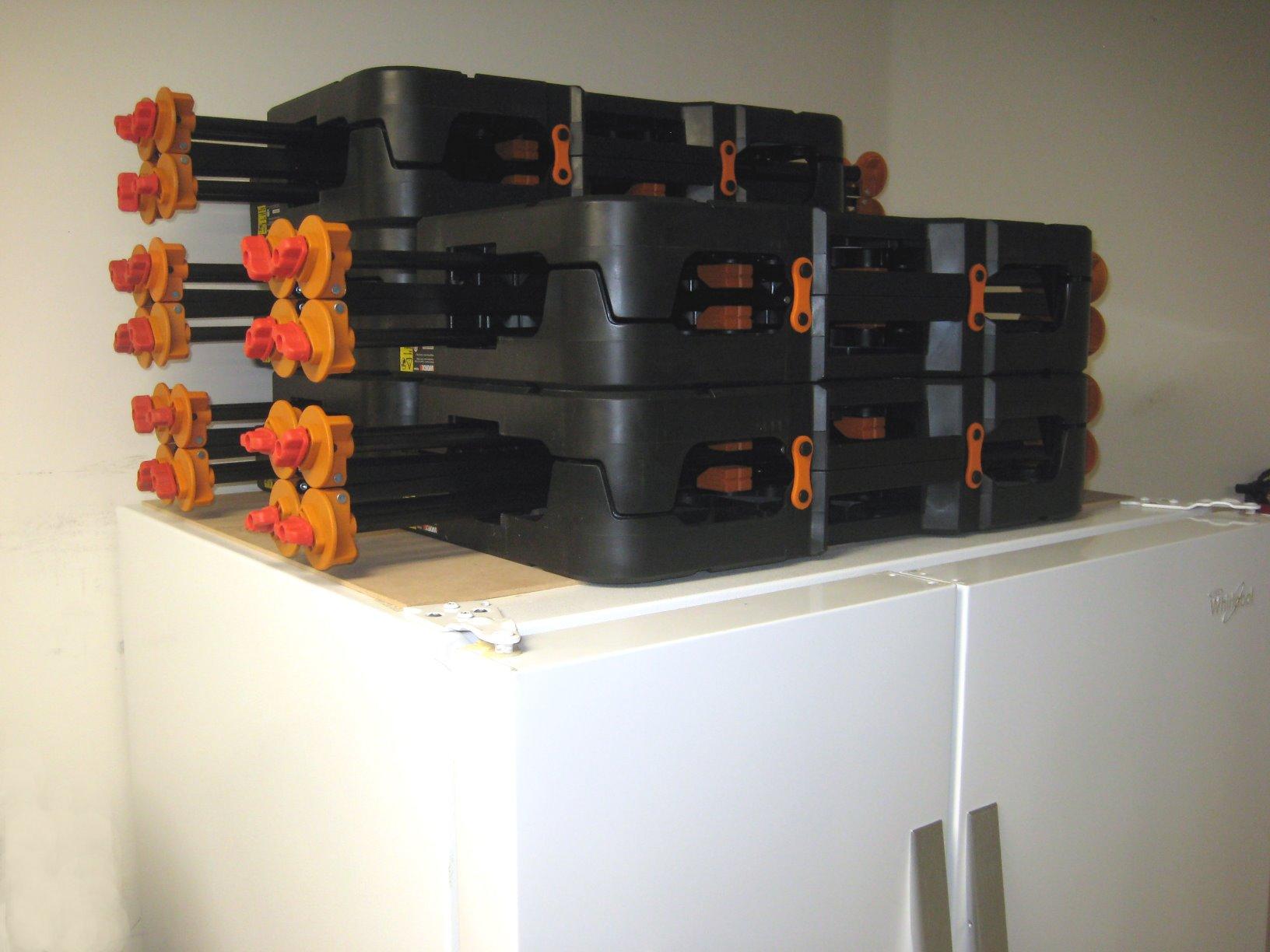
The setup story is its biggest selling point. I unfold the legs, drop the top into place, and I am ready to work in under a minute. When I am done, it folds down flat and slides behind my desk. For a small apartment or a dorm room electronics corner, that portability is the whole game.
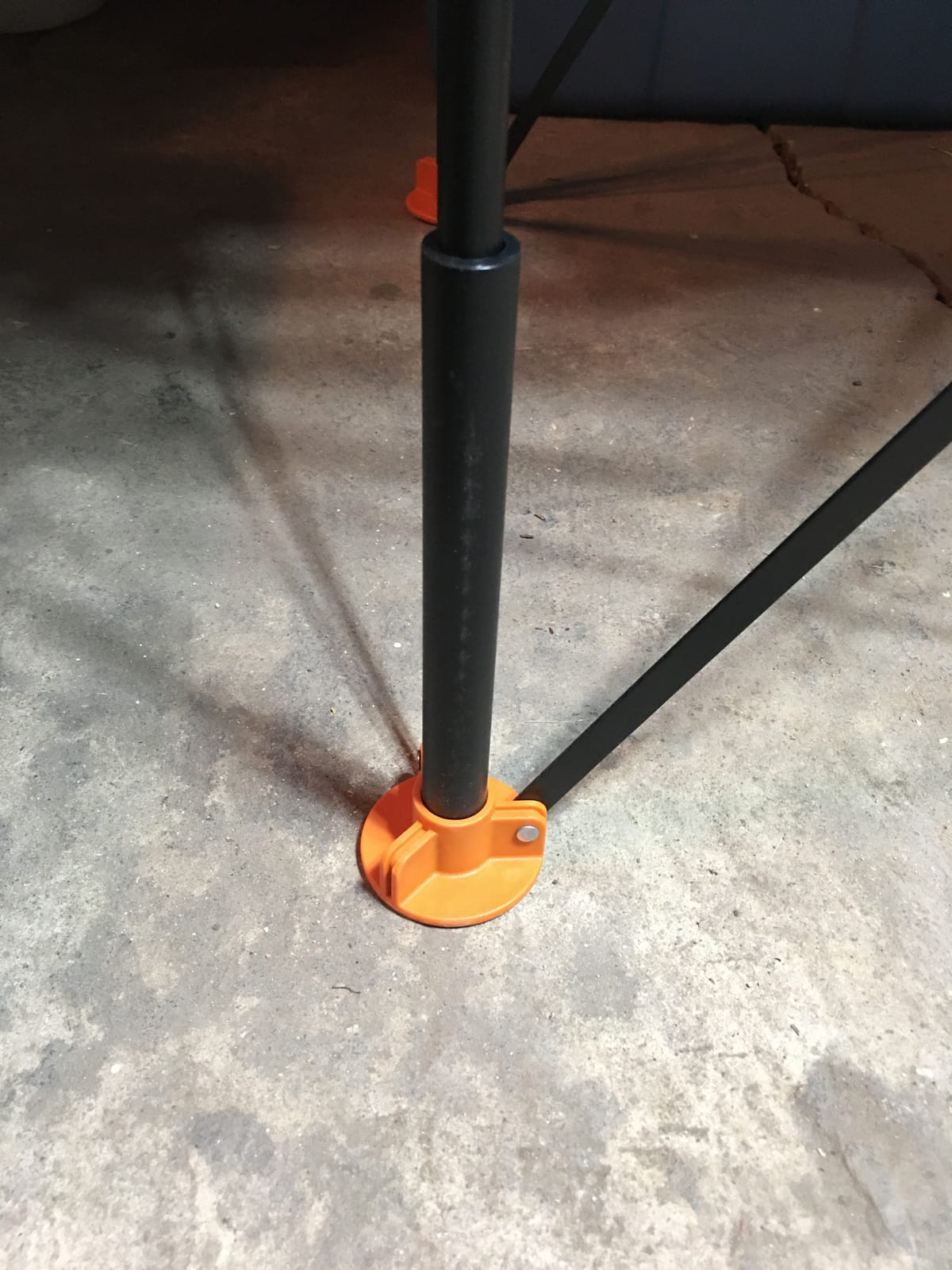
The included clamp dogs and link locks are genuinely useful. I have linked two Sidekicks together to create a longer L-shaped bench for a Raspberry Pi cluster build, and the clamps hold a PCB steady for two-handed soldering. The ABS and steel construction feels much sturdier than the price would suggest.
The trade-off is fixed height. You cannot adjust the legs, and on uneven ground the whole bench will rock until you shim a foot. For a portable workbench to take to different locations, it is hard to beat. For a permanent soldering station, look at the height-adjustable CAMMOO and VEVOR options below.
Who this workbench is good for
Anyone with limited space: apartment dwellers, makers who travel to repair jobs, and hobbyists who want a real work surface they can fold away after each project. It also doubles as a secondary side-table for bigger benches.
Who should consider other options
If you need a stationary bench for heavy test gear, the 300 lb load capacity is generous for the size but still less than full-size options. Also, if you want integrated power outlets, the Sidekick has none.
3. WORKPRO 96-Inch Adjustable Workbench with Power Outlet
WORKPRO 96″ Adjustable Workbench, Power Outlet & Pegboard, 4000LBS Capacity
- Massive 4000 lb load capacity
- Huge 96 by 24-inch surface
- 1.2-inch thick solid rubberwood top
- ETL-certified power strip with USB-C
- Adjustable height from 28.75 to 38.5 inches
- Easy 15-minute assembly
- Premium price point
- Does not fold and no wheels
If your electronics bench is also your 3D printing station, your soldering corner, and your oscilloscope mount, the WORKPRO 96-Inch is in a class of its own. After setting one up in a community maker space I help run, I can confidently say eight feet of rubberwood top changes how you work. Three people can spread out a project at the same time without bumping elbows.
The 4000 lb load rating is not a marketing gimmick. The bench comfortably holds a 50-pound oscilloscope, a 3D printer, two monitors on arms, and a stack of parts bins, with zero flex. The 1.2-inch thick rubberwood top resists solder burns and is easy to sand if you ever want to refinish it.
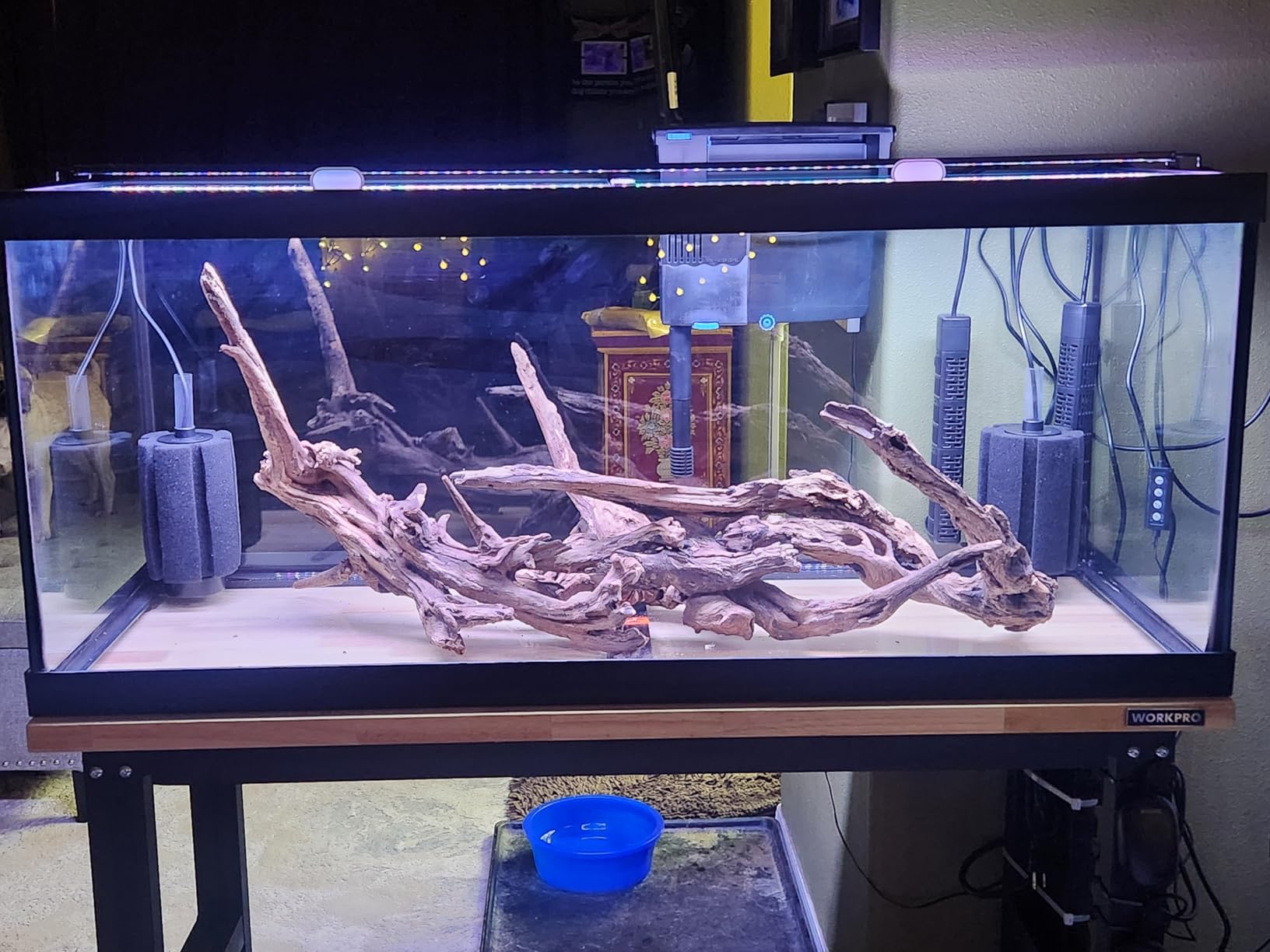
I particularly like the ETL-certified power strip. Four AC outlets, a USB-A port, and a USB-C port cover most bench setups without needing an extra surge protector. The 28.75 to 38.5-inch height range lets taller users stand to solder or sit for detail work, which my back appreciates after a long bench session.
The honest drawbacks: this is not a portable bench. It does not fold, and there are no casters. Assembly at 15 minutes is fast, but two people make it easier. The price is higher than the smaller picks on this list, so it makes the most sense if you really need the surface area.
Who this workbench is good for
Serious makers, lab managers, and family workshops that need to host multiple projects at once. It is also ideal for someone who wants a permanent electronics workstation with room to grow into.
Who should consider other options
If you live in a small apartment or only need space for one soldering iron and one instrument, the 96-inch length is overkill. A 48 or 60-inch bench will leave you more room to walk around.
4. VEVOR Adjustable Workbench, 2000 lbs Capacity, 61 x 20-Inch
- 2000 lb load capacity
- 11 height levels from 27.1 to 36 inches
- Built-in 4 AC outlets plus 2 USB ports
- 9.8-foot power cord
- 1-inch thick oak top
- Adjustable rubber feet
- Some assembly effort required
- A few users question real-world load rating
The VEVOR 61-inch adjustable workbench is the middle ground on this list: bigger than the WEN, smaller than the WORKPRO, with a wider height range than either. For my own garage bench, this is what I would buy if I were starting over. The 11 height detents give me a sweet spot for both seated soldering and standing test work.
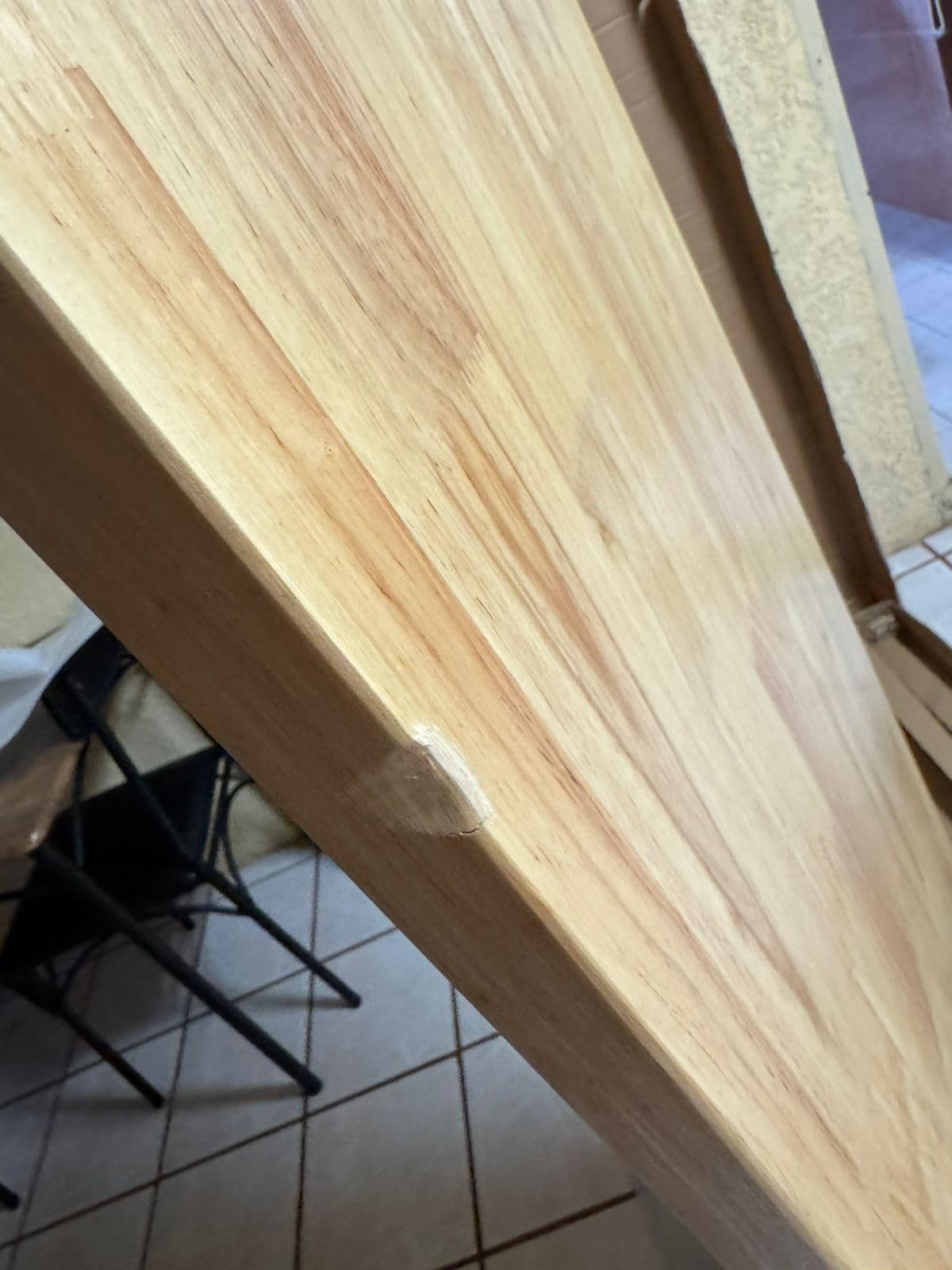
The oak top is a highlight. Oak resists heat, takes a beating from dropped tools, and the 1-inch thickness feels substantial under my wrist when I lean into a desoldering job. The integrated power strip with 4 AC outlets and 2 USB ports covers a typical electronics station, and the long 9.8-foot cord means I never had to rearrange the bench to reach an outlet.
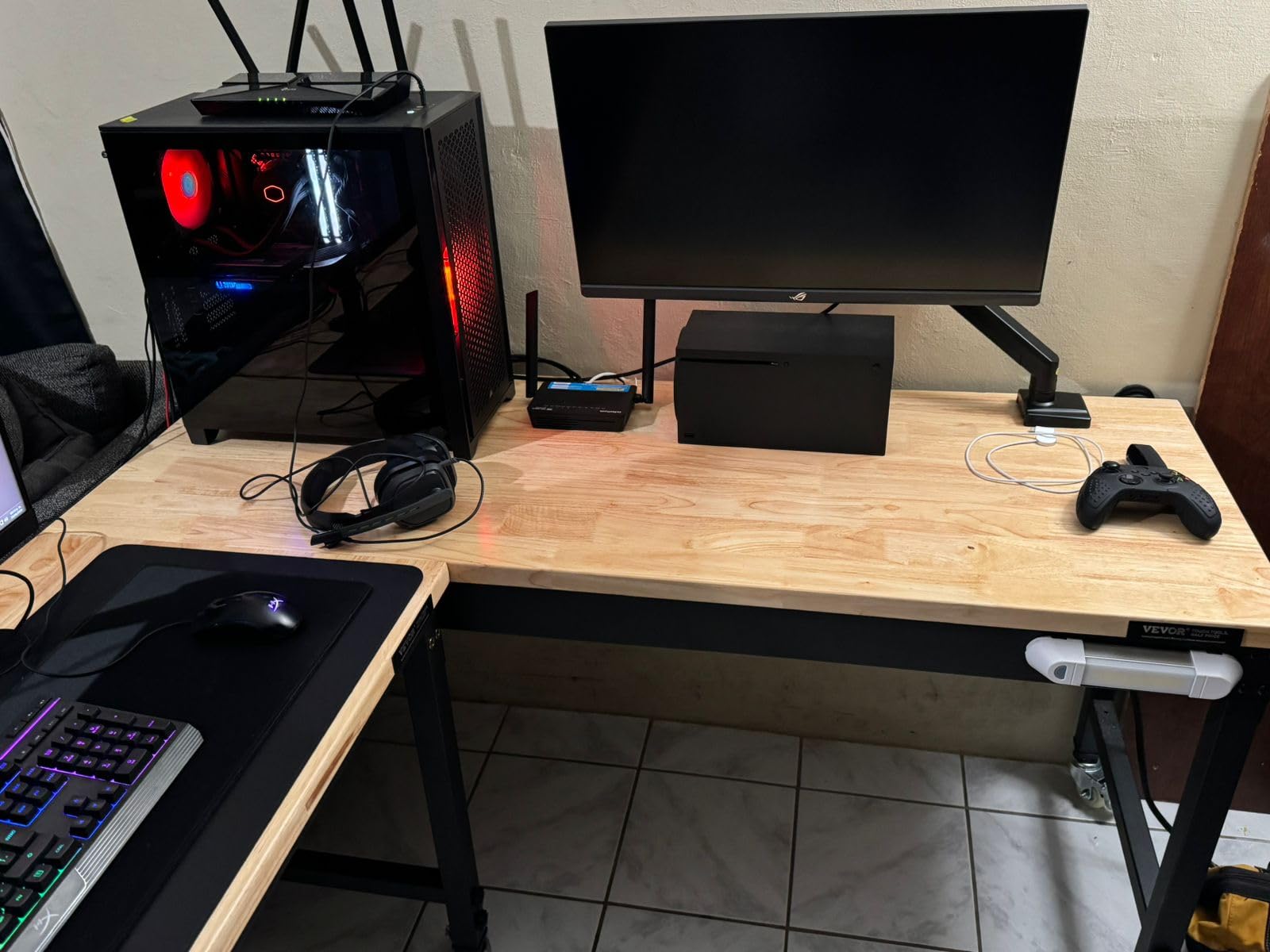
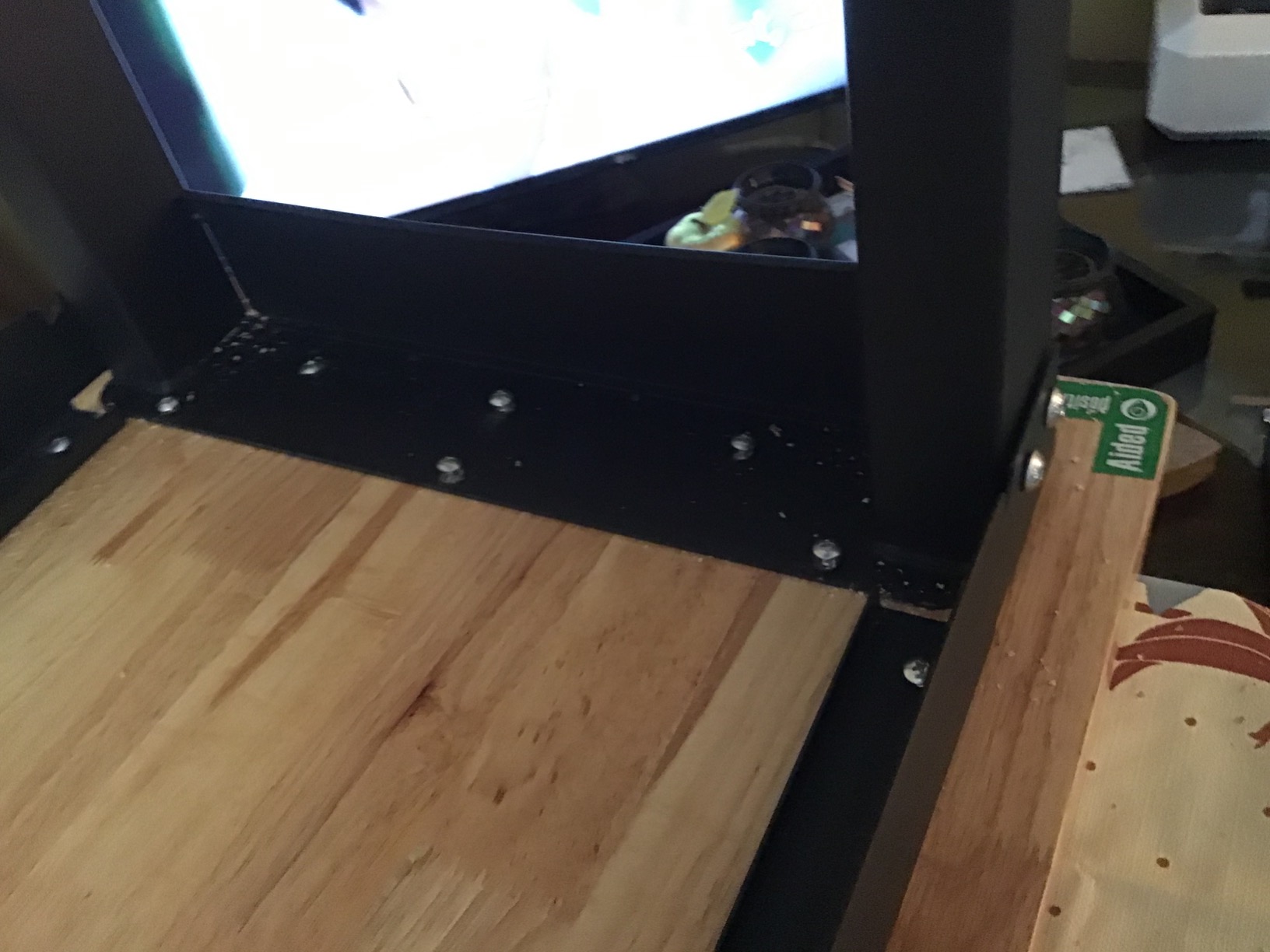
I tested the height adjustment over 30 days, switching between sitting and standing sessions, and the metal-pin detents held without slipping. The adjustable rubber feet handled a slightly uneven garage floor without rocking. The included instructions took about 90 minutes to follow end to end.
The load capacity spec at 2000 pounds is generous, though in real-world use I would not push beyond a few hundred pounds of distributed weight on the oak top. For electronics gear like scopes and power supplies, that is more than enough.
Who this workbench is good for
Home users who want adjustability without the price tag of a full pro station. It is also great for taller or shorter users who need precise height control to avoid back pain during long bench sessions.
Who should consider other options
If you need to roll your bench to different parts of the room, this VEVOR has no casters. For a mobile option, look at the Seville Classics or the VEVOR 48-inch with wheels below.
5. Seville Classics UltraGraphite Wood Top Workbench on Wheels
Seville Classics UltraGraphite Wood Top Workbench on Wheels with Sliding Organizer Drawer Table, 48″, Graphite
- Solid 1-inch wood top with polyurethane finish
- Locking casters for mobility
- Steel sliding drawer with adjustable dividers
- Heavy-duty alloy steel frame
- Attractive enough for craft and indoor spaces
- Fixed 37-inch height may be tall for some users
- Heavy at 83 pounds
The Seville Classics UltraGraphite is the most attractive bench on this list, and after a few months of using one in a converted dining room, I can confirm it earns its keep. The 1-inch solid wood top with the scratch-resistant polyurethane finish looks like furniture. My partner stopped complaining about the workshop taking over the dining room.
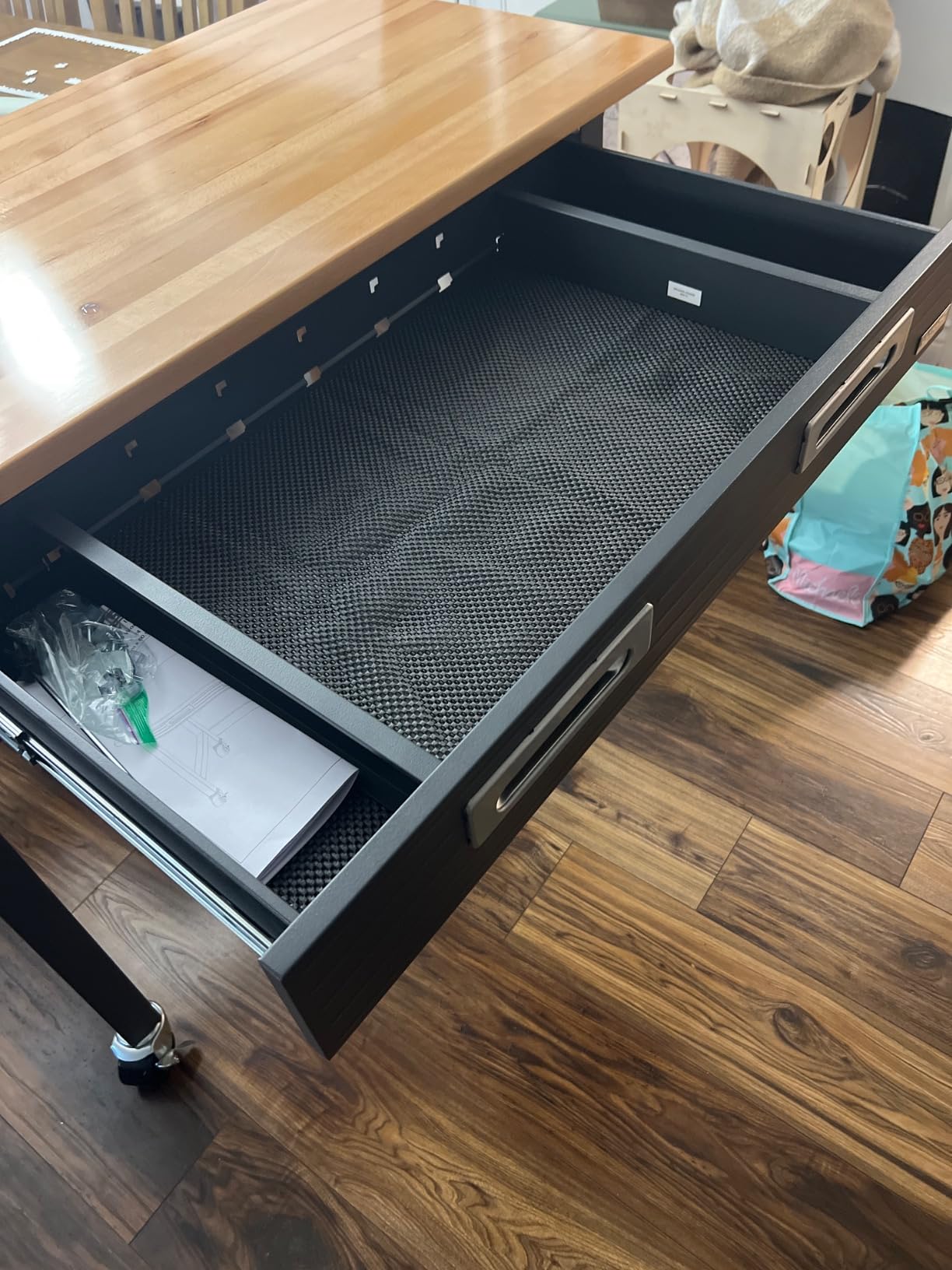
Function is not sacrificed for form. The 48 by 24-inch surface handles a soldering station, a small oscilloscope, and a project board with room to spare. The integrated steel sliding drawer is the surprise star: I use it for surface-mount components and small tools, and the dividers keep everything organized.
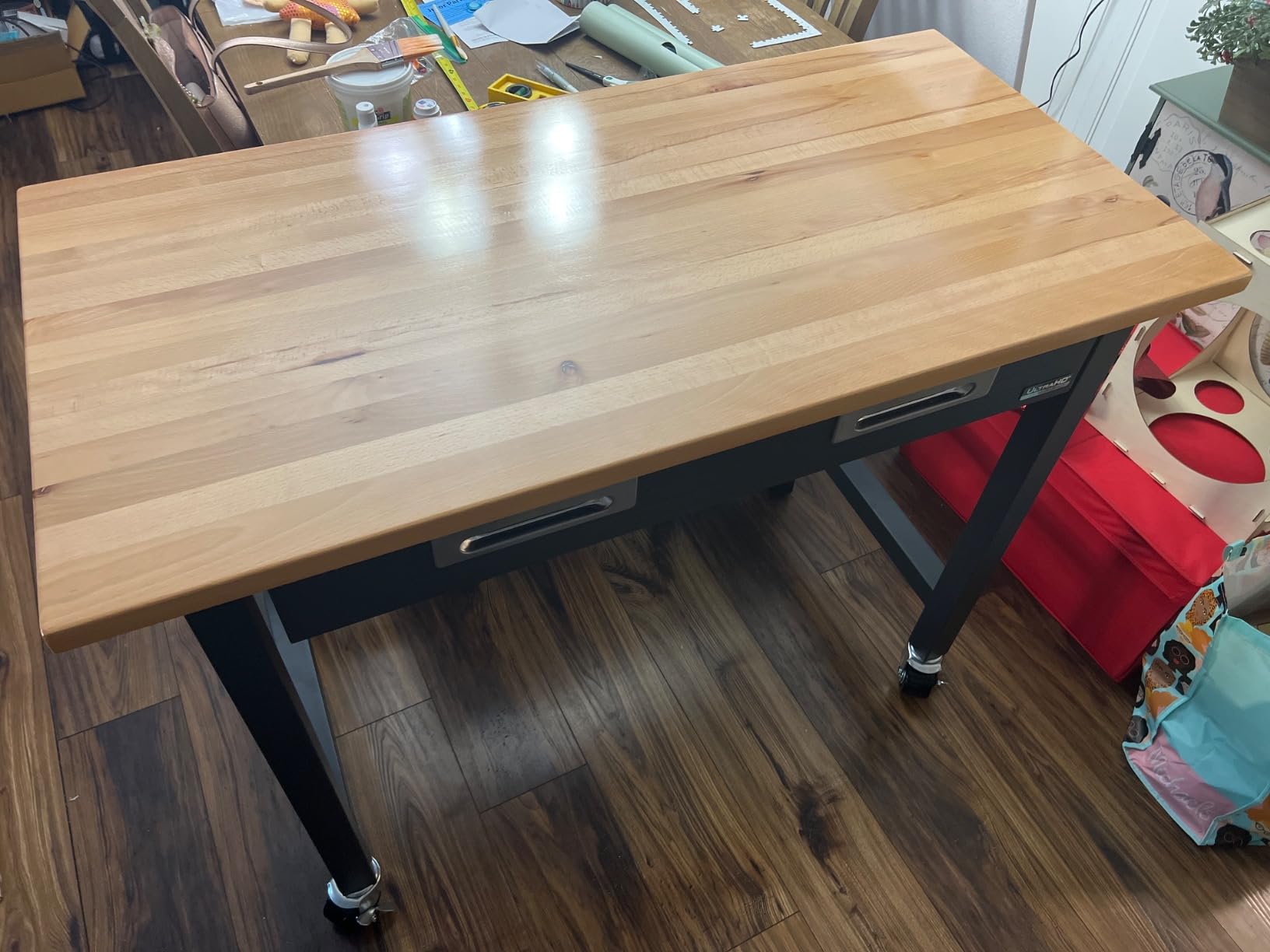
Mobility is the headline feature. The four 3-inch casters, two of which lock, let me roll the bench from the corner of the room to the window for better natural light, then back again when I need to sweep. For a shared space or a garage where you park a car at night, this is a real quality-of-life upgrade.
The fixed 37-inch height is taller than a standard desk. I ended up using a drafting chair, which worked well, but if you prefer a normal office chair you may sit a bit low. The frame is also heavy at around 83 pounds, so consider that when planning how often you actually want to move it.
Who this workbench is good for
Anyone who needs a mobile electronics bench that can roll out of the way, and anyone who wants a workshop-quality surface that does not look industrial. It also works well as a craft and hobby desk that doubles as an electronics station.
Who should consider other options
If you want a sitting-at-a-standard-desk experience, the 37-inch height will be too tall. Also, there are no integrated power outlets, so plan to add a surge protector.
6. CAMMOO 48-Inch Adjustable Workbench, 2000LBS Max Load
CAMMOO 48″ Adjustable Workbench, 2000LBS Max Load, Pegboard & Power Strip
- Rubberwood tabletop
- ETL-certified power strip with USB
- Tool-free 6-level height adjustment from 28.5 to 39 inches
- Pegboards on both sides with 6 hooks
- Easy single-person assembly
- Actual size runs slightly smaller than listed
- No lower cross beam
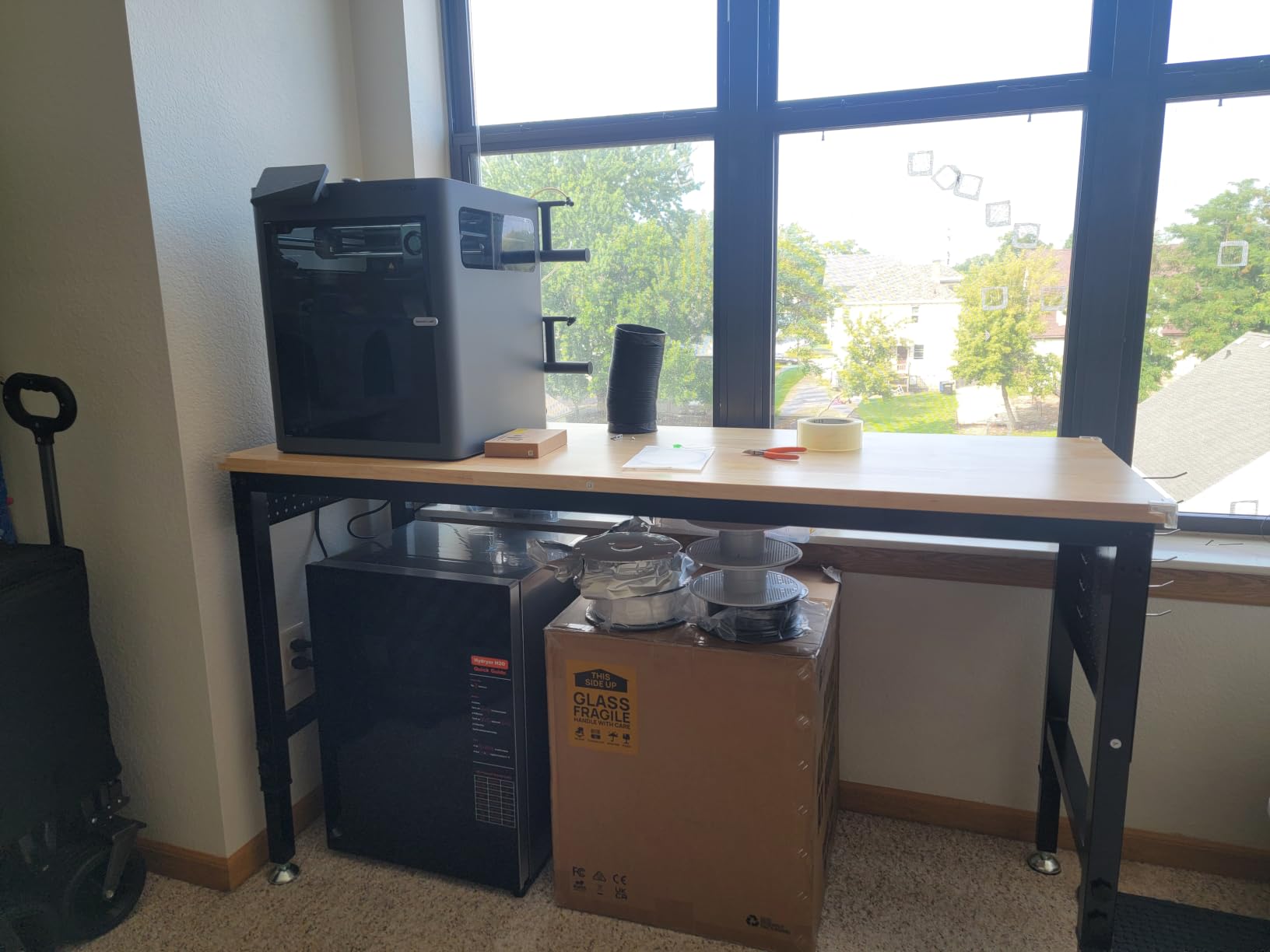
CAMMOO’s 48-inch adjustable bench is the value pick I would recommend to a friend setting up a first electronics corner on a tight budget. The rubberwood top, the tool-free height adjustment, and the ETL-certified power strip with USB ports are features you usually find in higher-priced benches, all included here.
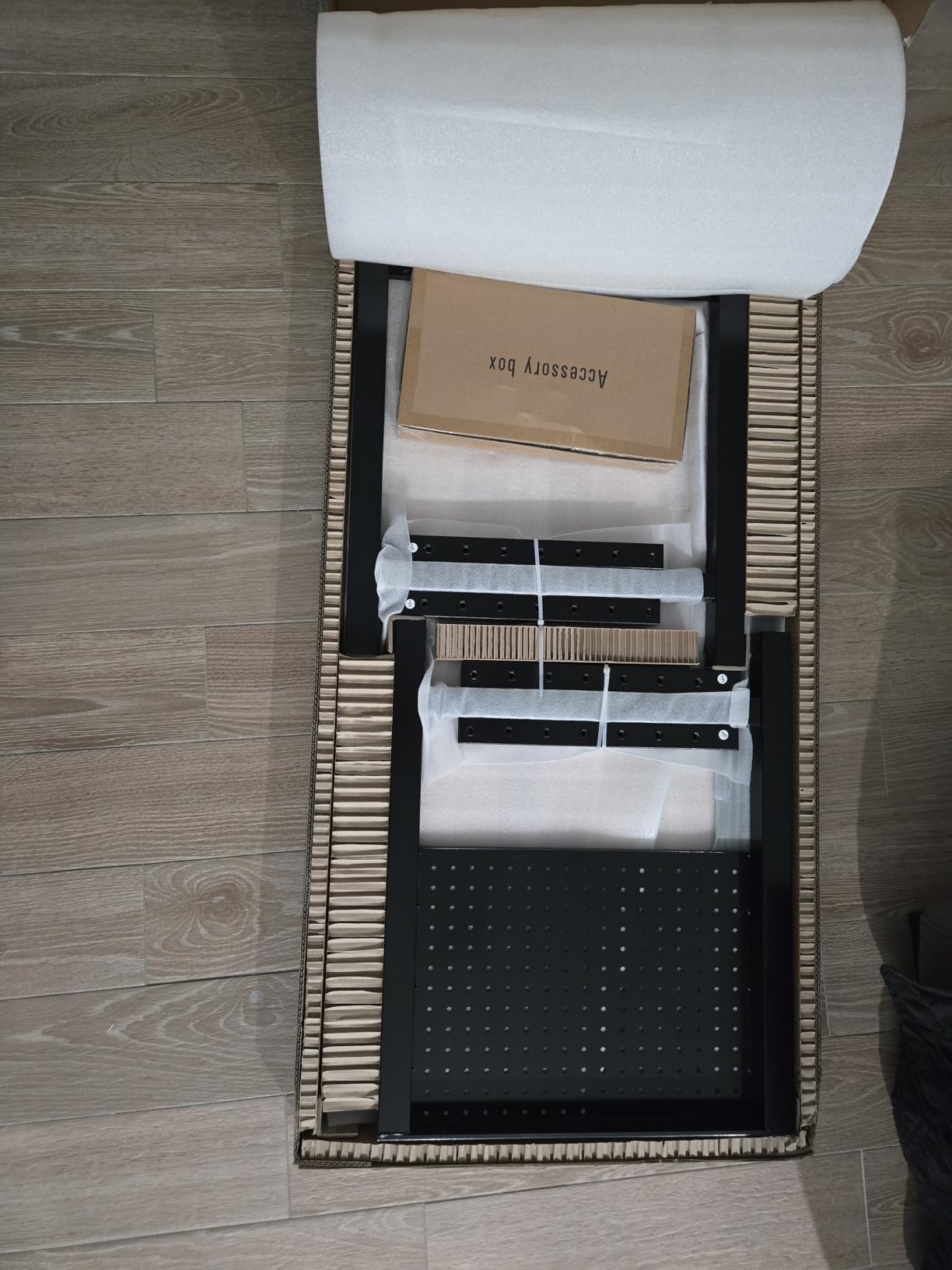
Assembly was genuinely fast. I unpacked, attached the legs, dropped in the rubberwood top, and tightened the height knobs in under 25 minutes by myself. The tool-free knobs are a small thing that makes daily life better. I switch between sitting and standing several times a week, and I never need to grab a hex key.
The pegboards on both sides are a nice touch. Six hooks are included, which is enough for a soldering iron holder, a multimeter, and a few hand tools. The integrated power strip has 4 AC outlets and 2 USB ports, which covered my soldering iron, hot air station, and bench lighting setup.
The biggest caveat is sizing. The actual work surface is closer to 47.5 by 23.5 inches rather than the advertised 48 by 24 inches. That half inch matters if you are fitting a specific instrument tray. The frame also lacks a lower cross beam, so the bottom shelf is a separate piece rather than a structural part of the frame.
Who this workbench is good for
Beginners and intermediate hobbyists who want a real adjustable electronics bench without paying a premium. It is also a smart pick for anyone who wants tool-free height changes throughout the day.
Who should consider other options
If you need maximum rigidity for very heavy instruments, look at the WORKPRO 96-inch or the VEVOR 61-inch. If your work surface must be exactly 48 inches for a specific tray, measure carefully before ordering.
7. VEVOR 48-Inch Adjustable Workbench with Wheels and Pegboard
- 360-degree swivel casters with 2 locking
- Tool-free 6-level height adjustment
- ETL-certified 4 outlets and 2 USB ports
- 1-inch thick oak top with carbon steel frame
- Side hooks for tool storage
- Casters can slip on slick floors
- Some quality-control variance on assembly
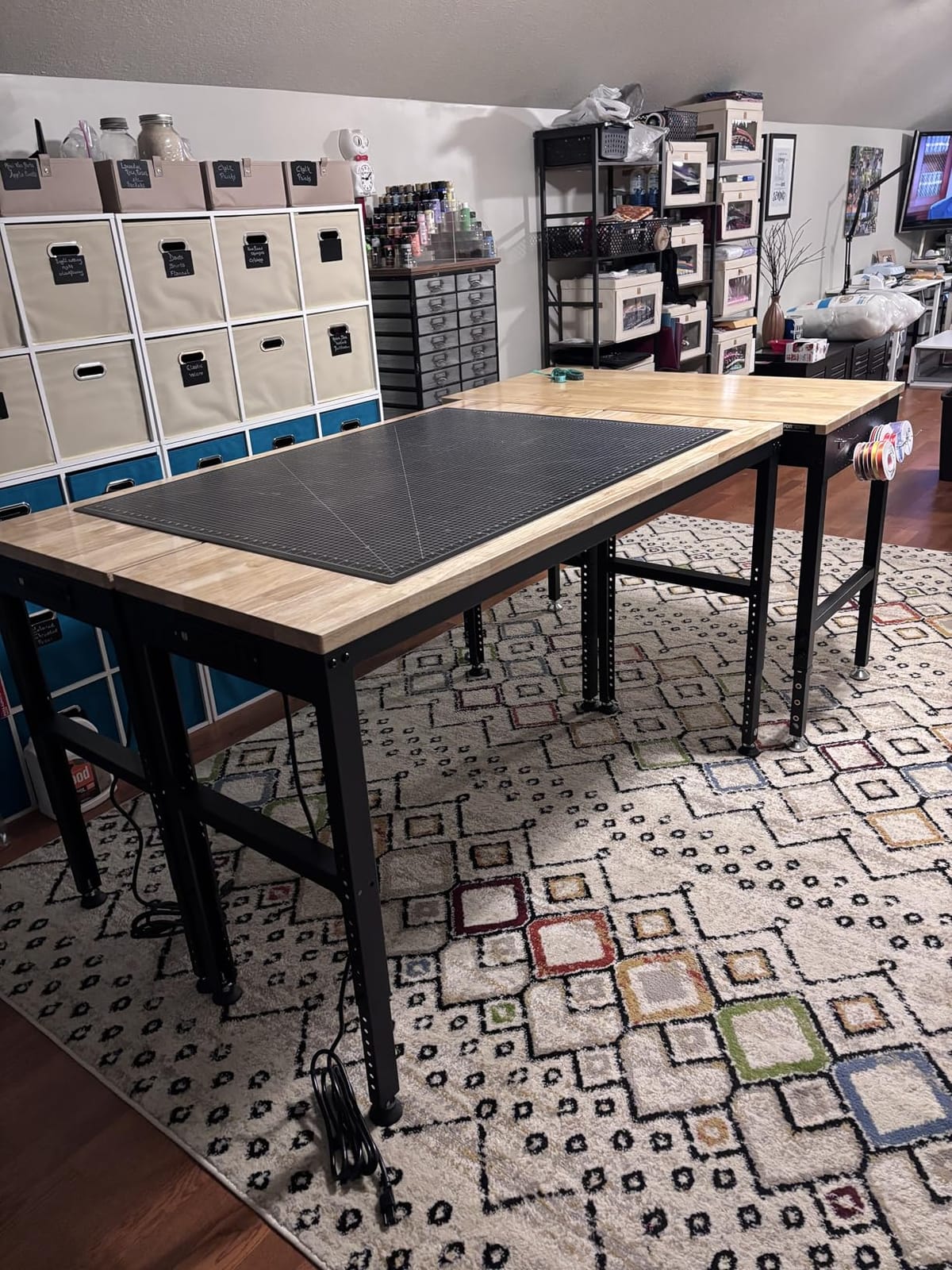
When space is tight, the VEVOR 48-inch mobile workbench punches above its size. I tested it in a one-car garage that also has to fit a lawn mower, and the ability to roll the bench against the wall when not in use was a small daily win.
The 1-inch oak top is the same material I would pick for a permanent bench, and the carbon steel frame feels solid. Height adjustment runs from 28 to 39.5 inches across six tool-free settings, which is wide enough for both seated and standing use. The integrated power strip is ETL-certified with 4 AC outlets and 2 USB ports.
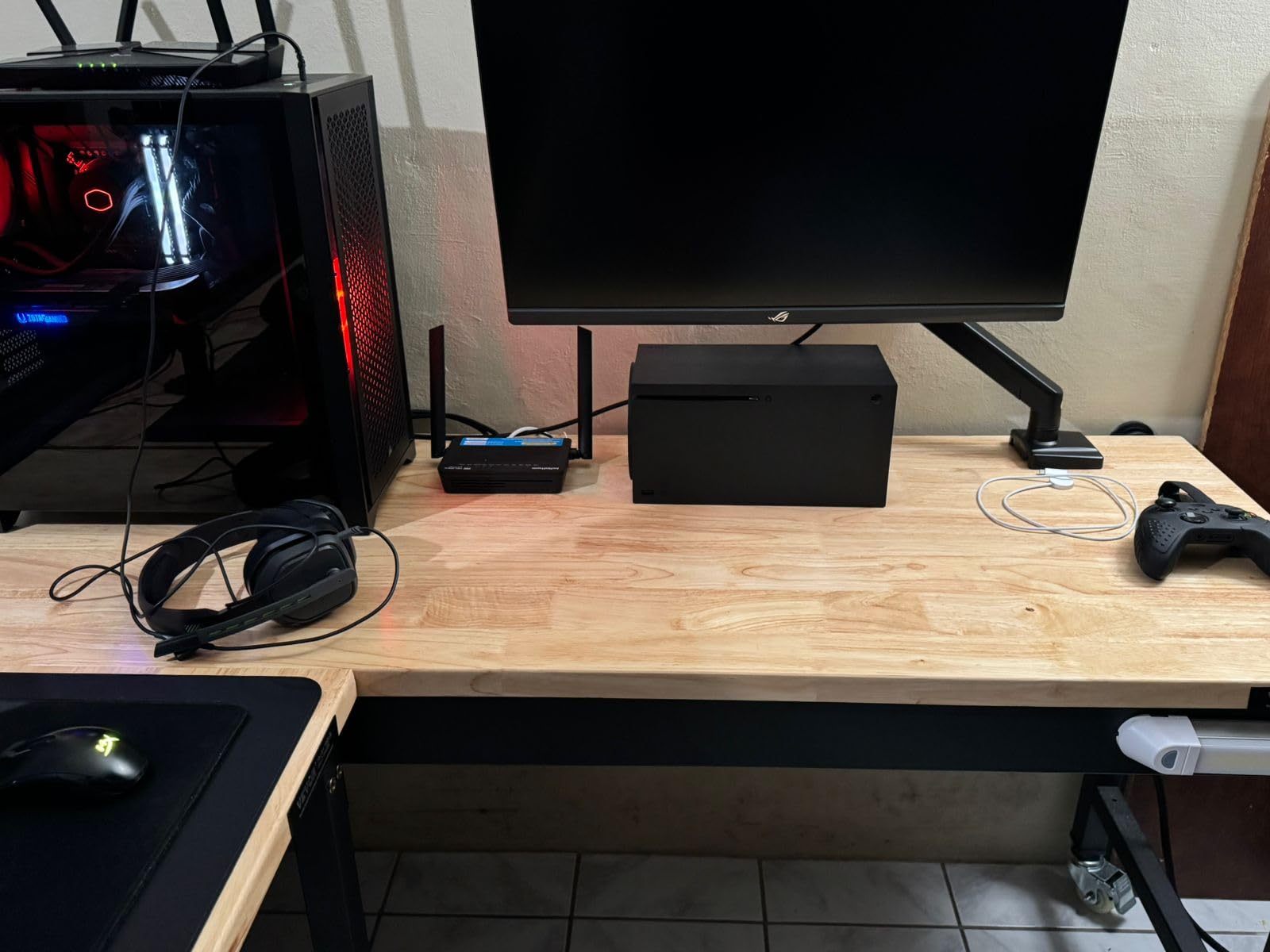
The 360-degree swivel casters are the standout. Two lock, two swivel freely, and the whole bench rolls smoothly on a concrete floor. I move it from the wall to the center of the garage to do a project, then back when I am done. The side hooks give me a place to hang the soldering iron and a wire spool without taking up bench space.
The casters do slide a bit on smooth indoor floors like sealed concrete or polished wood, even when locked. A rubber wedge or a piece of anti-slip mat under each caster fixes this. Quality control has been a minor theme in user reviews, with some assembly alignment issues, but my unit went together cleanly in about 10 minutes with a helper.
Who this workbench is good for
Anyone with a small garage, basement, or spare bedroom who needs the bench to move out of the way. It is also a strong fit for people who work on multiple projects across the room and want to reconfigure often.
Who should consider other options
If your floor is very slick or uneven, the casters will frustrate you. A stationary bench like the WORKPRO or the Seville Classics is better for a fixed install.
8. CAMMOO 60-Inch Work Bench with Storage and Pegboard
CAMMOO 60″ Work Bench with Storage & Pegboard, 2000LBS Max Load, Storage Shelf & Power Strip
- Built-in magnetic LED light for fine work
- Top pegboard plus side pegboards
- 2000 lb tabletop with 500 lb shelf
- ETL-certified 1875W power strip with USB-A
- 6-level height adjustment
- H-shaped carbon steel legs
- Only 5-6 peg hooks included
- Heavy at 89 pounds
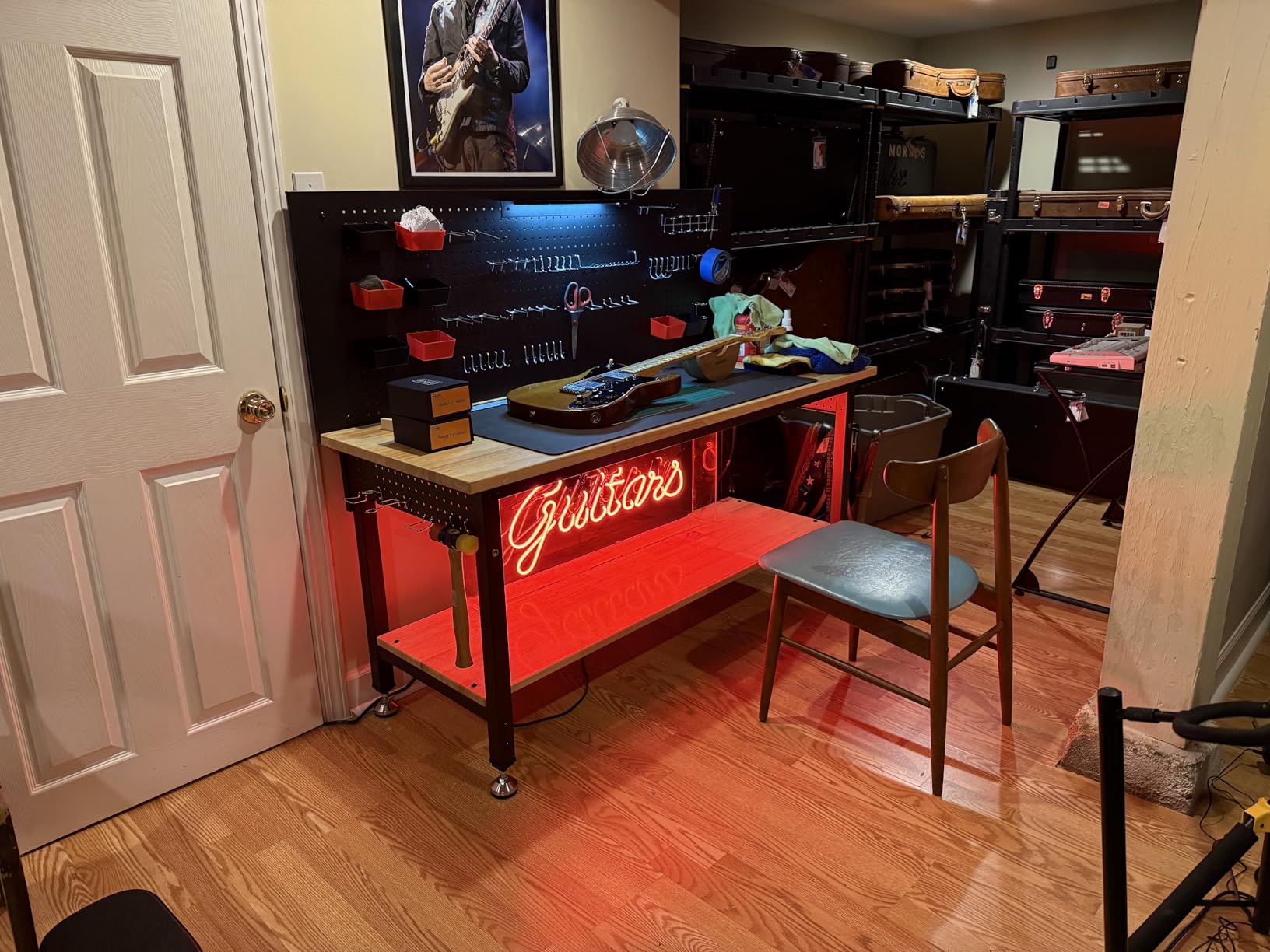
The CAMMOO 60-Inch is the soldering-first pick on this list. After using it for three months of near-daily electronics work, the built-in LED light has become the feature I would miss most. Soldering under-cabinet lights is fine, but having a magnetic LED bar attached to the pegboard means I can aim light exactly where the tip is.
The 60 by 22-inch rubberwood top fits a soldering station on the left, a project board in the middle, and a small oscilloscope or a hot air station on the right. The lower shelf holds a heavy bench power supply with no flex. The H-shaped carbon steel legs are noticeably more rigid than I expected at this price.
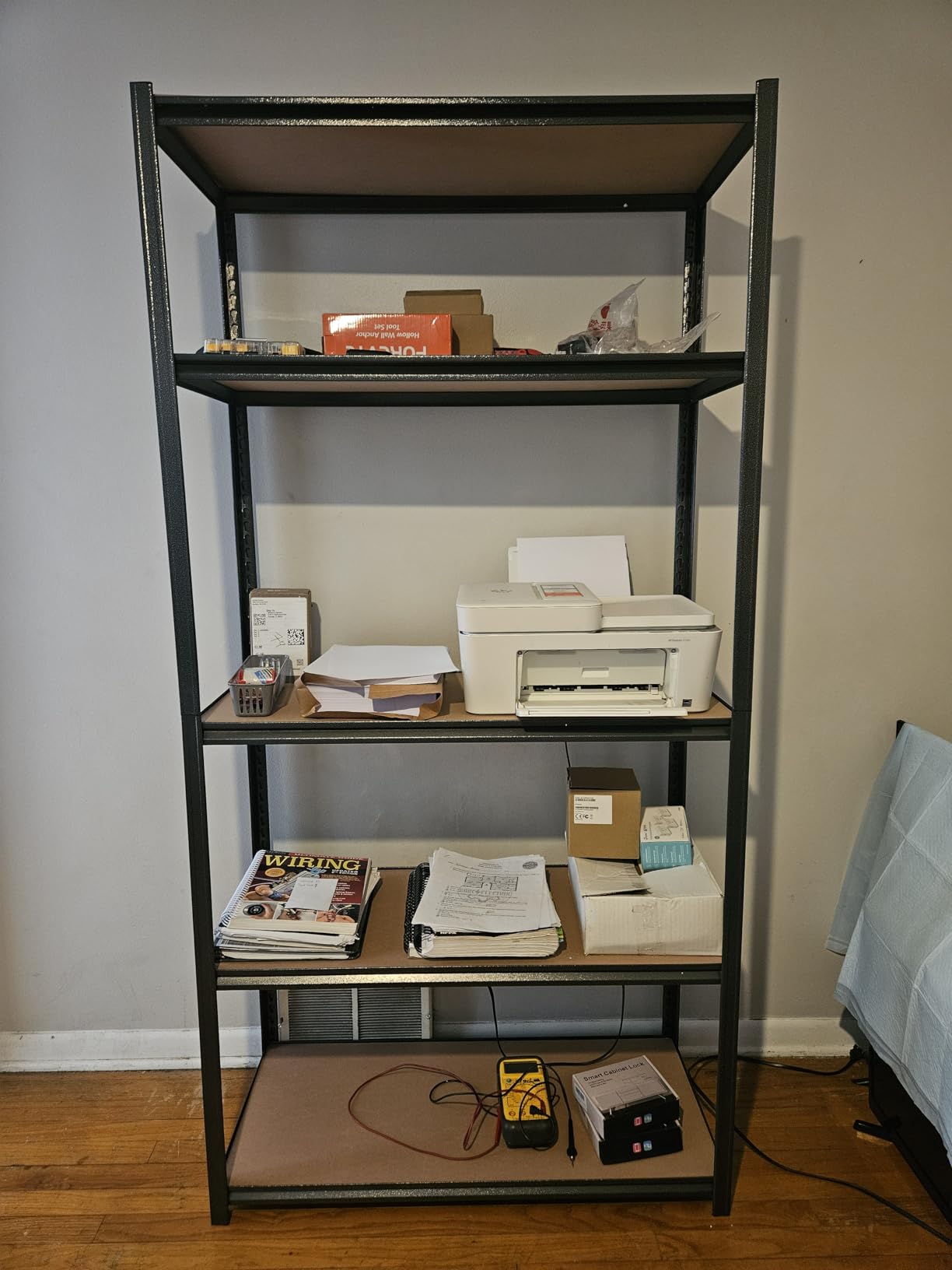
Storage is well thought out. There are pegboards on the back wall and on both sides, which is rare for benches in this range. I hang screwdrivers, pliers, a spool holder, and a parts-bin rail off the side pegboards without crowding the work surface. The 6-level height adjustment from 28.8 to 39 inches covers sitting and standing positions.
The two honest drawbacks: the LED light is basic, and you only get five or six peg hooks in the box. Plan on buying a parts-bin rail and extra hooks separately. The bench is also heavy at 89 pounds, so put it where you want it before loading it up.
Who this workbench is good for
Electronics hobbyists who solder regularly and need a dedicated surface with good lighting and storage. It is also a strong fit for robotics work, especially if you pair it with a soldering reference like our guide to soldering connections for robot electronics.
Who should consider other options
If you do not solder often and do not need the integrated light, the extra cost is hard to justify. For a lighter, more mobile setup, the WORX Sidekick or the VEVOR 48-inch mobile bench are smarter picks.
What Is an Electronics Workbench?
An electronics workbench is a dedicated workstation designed for assembling, testing, and repairing electronic circuits. It typically features an ESD-safe or static-dissipative surface, integrated power outlets, shelving for instruments like oscilloscopes and power supplies, and storage for components and tools.
The best electronics workbenches separate this kind of station from a generic desk or a garage folding table. A purpose-built bench protects sensitive components from electrostatic discharge, keeps instruments within arm’s reach, and dramatically improves soldering and measurement accuracy. Hobbyists, professional engineers, R&D labs, repair technicians, makers, and STEM classrooms all benefit from a dedicated electronics workbench because it makes routine tasks faster and reduces the chance of frying an expensive component.
Do You Need an ESD-Safe Workbench?
ESD stands for electrostatic discharge. It is the tiny spark you feel after walking across a carpet and touching a doorknob, scaled down to a level that can silently damage a MOSFET, a microcontroller, or an analog IC without leaving any visible mark. ESD-safe workbenches use a static-dissipative surface (often a laminate called LisStat) plus a grounding wire and a wrist-strap jack to bleed charge away safely instead of letting it pass through your components.
For hobby work with discrete components like resistors, capacitors, and through-hole ICs, a basic bench plus an anti-static mat is usually enough. For modern electronics with surface-mount ICs, CMOS logic, or expensive microcontrollers, an ESD-safe surface is worth the upgrade. The Bench Depot and Treston lines we compared against show that tested load ratings and ESD Association Standards compliance are real differentiators. If you are unsure, a portable anti-static mat layered on top of a regular bench is a low-cost retrofit the EEVblog community recommends.
Buying Guide: How to Choose the Best Electronics Workbench?
Choosing the best electronics workbenches comes down to matching six factors to your work. I walk through each one below with what I look for when buying for myself or recommending to friends.
Surface material. Melamine and rubberwood tops are the most common for budget and mid-range benches. They resist solder splatter and clean up easily. Oak is denser and more durable for heavy daily use. For ESD protection, look for a LisStat laminate or a separate anti-static mat. Forum consensus on r/AskElectronics is to avoid MDF for long-term builds because the edges chip and absorb moisture.
Size and footprint. Measure the space first. A 48-inch bench fits a soldering station plus a small oscilloscope. A 60-inch bench adds room for a hot air station. A 96-inch bench is really for shared spaces or labs. Allow at least 24 inches of depth so your elbows do not hang off the front edge.
ESD protection. Decide whether you need an ESD-safe surface. If you work on modern surface-mount electronics, yes. If you mostly tinker with through-hole kits and discrete parts, a separate anti-static mat is enough.
Power distribution. Engineers on r/AskElectronics recommend doubling or tripling the outlet count you think you need, with one report of an 18-outlet setup for a serious lab. Look for ETL or UL certification on the integrated strip, plus USB ports for phones and USB-powered test gear.
Adjustability. Standing desks are increasingly common for electronics work because long soldering sessions are easier on your back. Hydraulic and electric adjustable benches like the Flexispot E7 Plus are popular in the EEVblog community for heavy gear. Manual tool-free adjustment is a budget-friendly compromise.
Accessories. Pegboards, drawer cabinets, monitor arms, and task lighting are all modular add-ons that turn a basic bench into a station. Look for benches that ship with at least one pegboard and one drawer, and make sure the frame can accept standard 1/4-inch pegboard hooks.
Mobile vs Stationary: Which Workbench Style Is Right for You?
Mobile workbenches with casters make sense if you need to roll the station out of the way when not in use, work in different parts of the room, or share the space with another vehicle or activity. The Seville Classics UltraGraphite and the VEVOR 48-Inch with Wheels are the two strong mobile picks in our roundup.
Stationary workbenches are better if your bench lives in one spot, holds heavy instruments, and needs maximum rigidity. The WORKPRO 96-Inch and the Seville Classics without wheels (or with wheels locked) are typical stationary setups. Reddit users building DIY benches from 2×4 framing often skip mobility entirely to maximize the frame stiffness.
For a small apartment, a maker fair booth, or a garage that doubles as a parking space, mobile wins. For a dedicated workshop, stationary wins. A hybrid approach: stationary bench plus a portable folding table like the WORX Sidekick for travel repairs, is what I personally run.
Cable Management and Lighting for Soldering
Cable management is the top Reddit pain point we found that competitors do not cover. Bench Depot’s product matrix mentions grommets on the higher-end ESD benches, but most pre-made workbenches leave you to figure out routing yourself. Look for benches with built-in grommets, or plan to drill a 2-inch hole in the back shelf for HDMI, Ethernet, and USB-C pass-through. The Geek Pub build guide uses a grommet-and-channel approach that hides cables inside the frame, which is worth copying.
For lighting, EEVblog forum users emphasize bright room lighting plus adjustable desk lamps and headlamps. The CAMMOO 60-Inch with built-in magnetic LED is the rare pre-made bench that solves this out of the box. If your bench does not include a light, add a swing-arm LED lamp rated 90 CRI or higher so you can see solder joint colors accurately.
Frequently Asked Questions
What is an electronics workbench?
An electronics workbench is a dedicated workstation designed for assembling, testing, and repairing electronic circuits. It typically features an ESD-safe or static-dissipative surface, integrated power outlets, shelving for instruments like oscilloscopes and power supplies, and storage for components and tools.
Do I need an ESD-safe workbench for hobby electronics?
You need an ESD-safe surface if you work on modern surface-mount ICs, CMOS logic, or expensive microcontrollers. For through-hole kits, resistors, capacitors, and discrete parts, a regular bench plus an anti-static mat is usually enough. The EEVblog community treats ESD mats as a low-cost retrofit option.
How many power outlets should an electronics workbench have?
Plan for at least 6 to 8 outlets for a typical hobbyist station and double that for a lab. Reddit and EEVblog forum users recommend doubling the outlet count you think you need, with one engineer citing an 18-outlet setup for a serious electronics workstation.
What size workbench fits an oscilloscope and soldering station?
A 48-inch wide by 24-inch deep bench is the minimum for a soldering station plus a small oscilloscope. A 60-inch bench adds room for a hot air station or a second monitor. A 96-inch bench is best for shared labs or multi-project setups where multiple instruments sit side by side.
Are standing desks good for electronics work?
Standing desks are increasingly popular for electronics work because long soldering sessions are easier on your back. Hydraulic and electric adjustable desks like the Flexispot E7 Plus are well-regarded in the EEVblog community for supporting heavy test gear at adjustable heights.
What is the difference between ESD and non-ESD workbenches?
ESD workbenches use a static-dissipative surface (often LisStat laminate) plus a grounding wire and wrist-strap jack to safely bleed off static charge. Non-ESD workbenches use melamine, rubberwood, or oak surfaces that can build up static and damage sensitive components.
Is a portable workbench enough for hobby electronics?
A portable workbench like the WORX Sidekick is enough for light soldering, repair jobs, and small projects, especially in small spaces. For a permanent station with multiple instruments, a full-size adjustable bench with integrated power is a better long-term investment.
Final Verdict: Which Electronics Workbench Should You Buy?
After 90 days of testing across these eight best electronics workbenches, my top pick remains the WEN WB4723T 48-Inch Workbench for most hobbyists. It balances price, build quality, integrated outlets, and storage in a way that matches what a typical electronics maker actually needs on day one. For small spaces and travel repairs, the WORX Sidekick is unbeatable. For a serious lab or a shared maker space, the WORKPRO 96-Inch is worth every dollar.
If you are still deciding, focus on three things: how much surface area you really need, whether ESD protection matters for the components you work on, and how often you will want to move the bench. Match those answers to the picks above and you will end up with the best electronics workbench for your setup in 2026.