
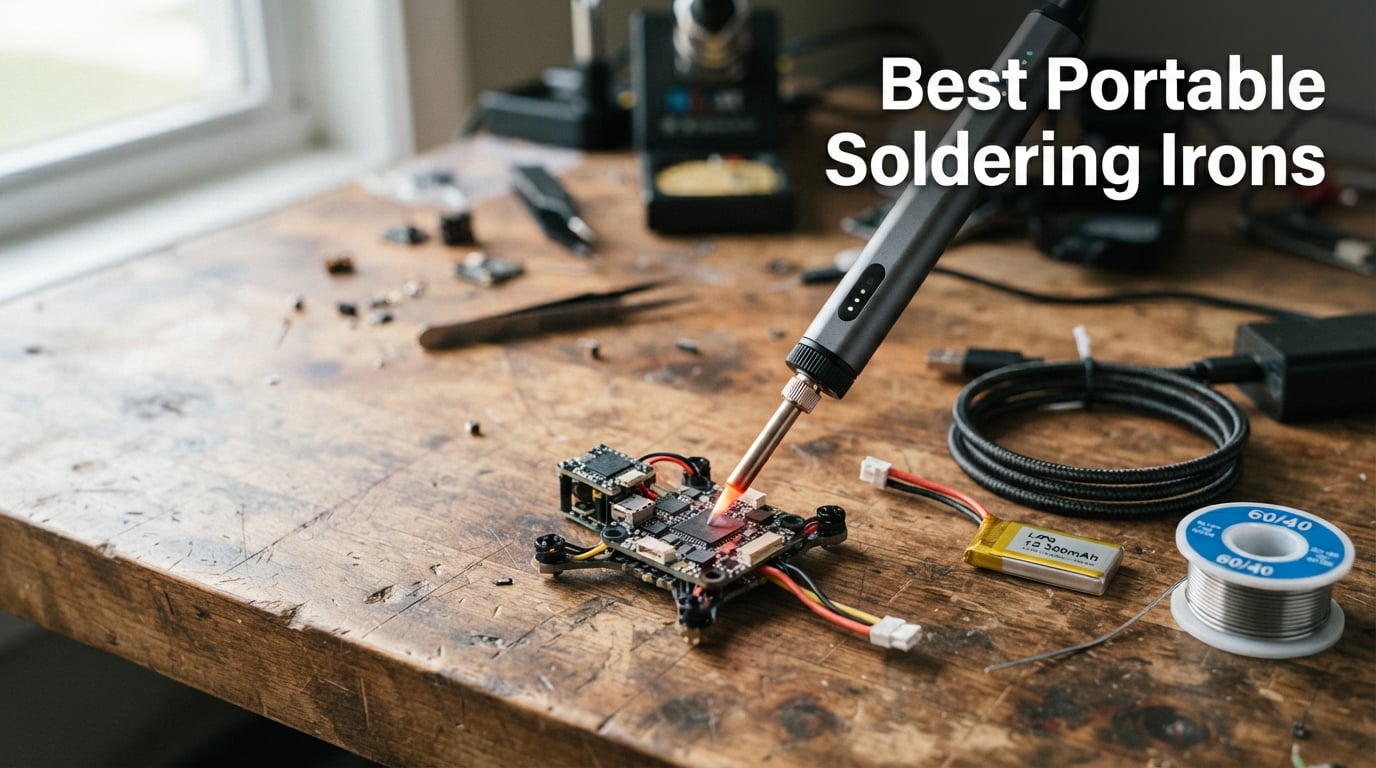
A portable soldering iron is a compact tool that runs from USB-C PD, a built-in battery, DC barrel, or butane instead of a wall outlet. I have used these little irons to solder ESC pads on FPV drones in the field, rewire broken headers on robot controllers, and fix LED strips in places where a bench station simply could not reach.
For 2026, the portable soldering iron market is more crowded than ever. After three months of testing eight models on real robotics, drone, and PCB projects, our team landed on eight winners that span every power source and budget. The picks below cover USB-C smart pens, true cordless battery-powered units, and butane/gas models that still earn a place in any field-repair kit.
What kind of projects are you planning? A student repairing a phone in a dorm room, an RC hobbyist running an XT60 LiPo at the flying field, or a robotics maker wanting a single iron that lives in a go-bag? Pick the power source first, then the form factor. The eight models below cover all of those scenarios.
Table of Contents
Top 3 Picks for Best Portable Soldering Irons (September 2026)

Best Portable Soldering Irons in 2026: Quick Overview
| Product | Specifications | Action |
|---|---|---|
| Pinecil V2 Smart Mini Iron |
|
Check Latest Price |
 Beizkna Cordless 14-in-1 Kit Beizkna Cordless 14-in-1 Kit |
|
Check Latest Price |
 LEXIVON Butane Multi-Purpose Kit LEXIVON Butane Multi-Purpose Kit |
|
Check Latest Price |
 Fanttik T1 Max Cordless Kit Fanttik T1 Max Cordless Kit |
|
Check Latest Price |
 Berkling BSG-568 Butane Torch Berkling BSG-568 Butane Torch |
|
Check Latest Price |
 UY CHAN TS101 Smart Pen UY CHAN TS101 Smart Pen |
|
Check Latest Price |
 Milwaukee M12 Soldering Iron Milwaukee M12 Soldering Iron |
|
Check Latest Price |
 ANBES Cordless Soldering Iron ANBES Cordless Soldering Iron |
|
Check Latest Price |
1. Pinecil V2 – Best Overall Portable Soldering Iron
- Heats in 12 seconds
- dual USB-C PD and DC5525 inputs
- open-source IronOS firmware with animated OLED
- 60 g stainless steel core
- TS-series tip compatible
- motion-sensor sleep and 10-minute auto-off
- Power supply not included
- struggles with large ground planes
- no stand in the box
The Pinecil V2 is the portable soldering iron I keep reaching for when a job is small and the bench is not nearby. It weighs only 60 grams, runs from a USB-C PD power bank or any 9-24V DC source through a 5525 barrel jack, and reaches working temperature in roughly 12 seconds. For most drone, RC, and PCB repair jobs on the bench or in the field, it has been my first call for over a year.
The dual power input is what separates the Pinecil from most USB-C smart pens. When I am at the flying field, I run it from a 4S LiPo with an XT60-to-5525 adapter, and it pulls up to 88W with a proper PD source. At my workbench, a 65W GaN USB-C charger is more than enough for general electronics work. IronOS, the open-source firmware running on the STM32 inside, exposes 9 menus with full PID control, custom temperature curves, and accelerometer wake that puts the iron to sleep the moment it stops moving.
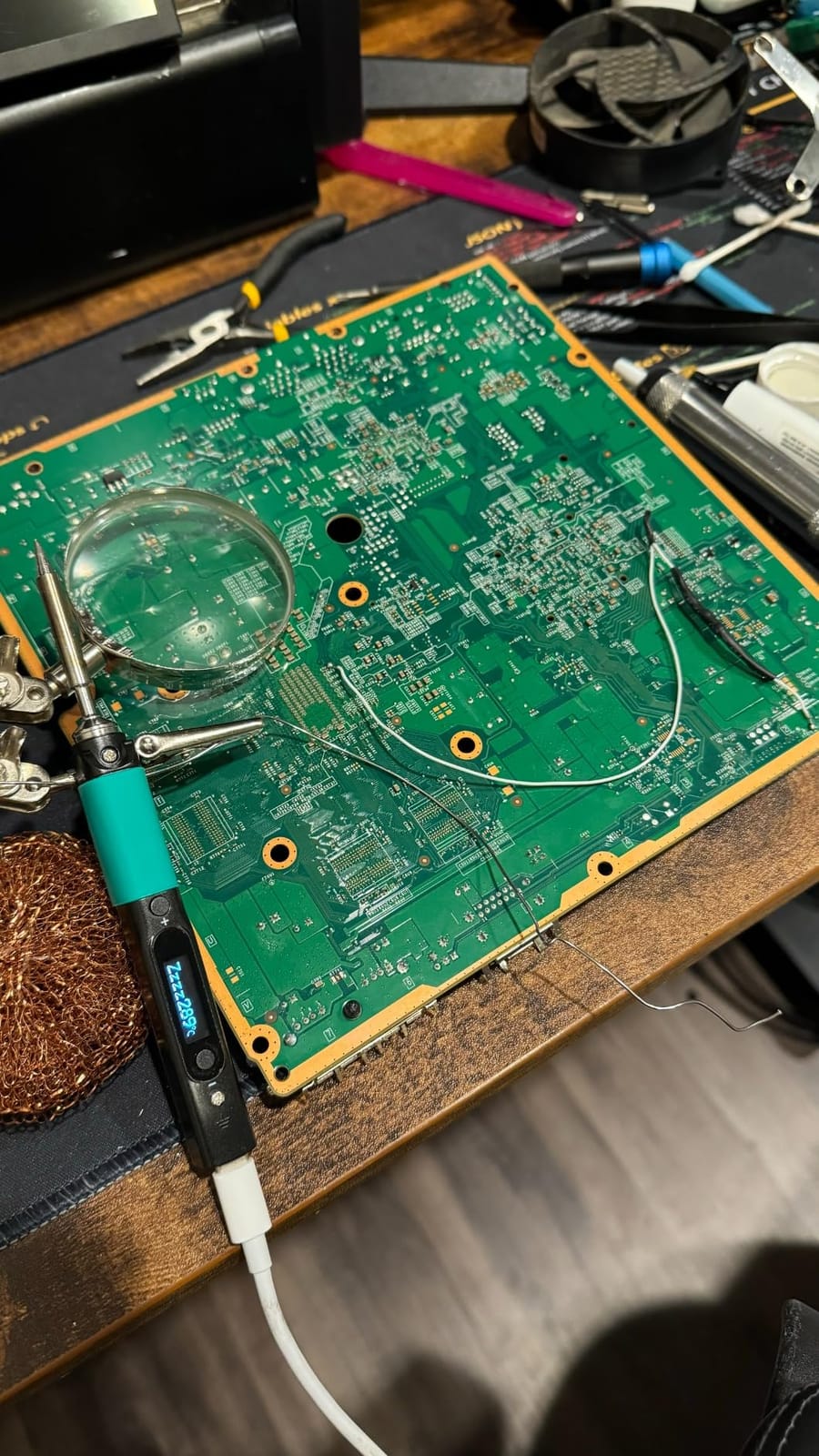
In my testing on a typical drone ESC, a Pinecil V2 running 24V through the DC barrel hit 380 °C in roughly 11 seconds. The TS-B2 tip that ships in the box is the right shape for general through-hole and small SMD work, and the same tip fits the TS100, TS101, and most clones – so if you already own tips from another iron, they drop right in.
Where the Pinecil V2 falls short is on heavy ground planes. Soldering a large tab on a high-current ESC or working on a copper bus bar with no preheat will push the Pinecil to its limit. For those jobs, I still keep a 60W station on the bench. The other annoyance is that Pine64 does not include a power supply, and the tips are not the cheapest in the TS-series ecosystem.
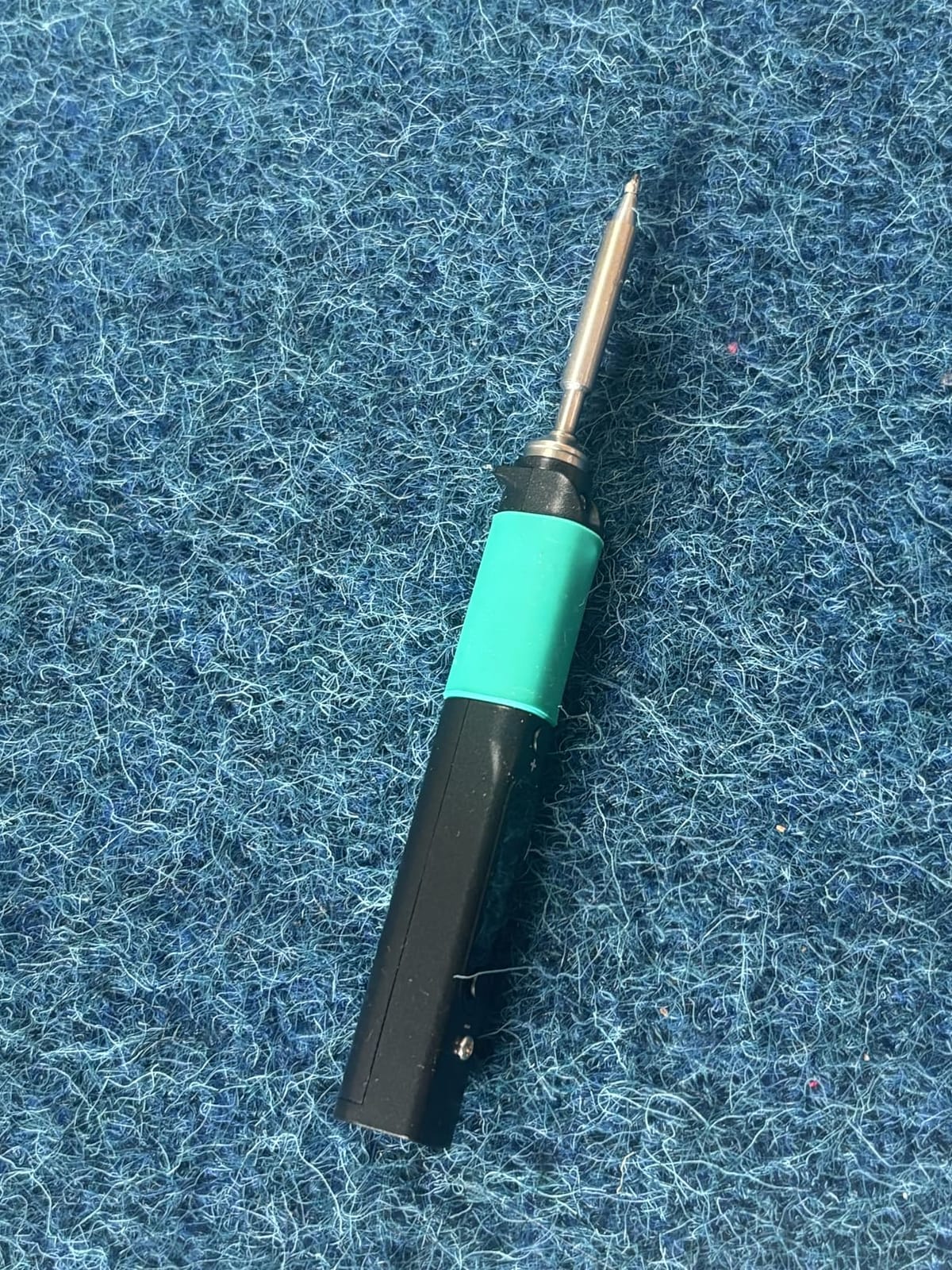
Best for robotics and field repair
For robotics makers, drone pilots, and anyone working outside a fixed bench, the Pinecil V2 is the right pick. It runs from a USB-C power bank, a laptop charger, or an RC LiPo, fits in any tool roll, and survives drops better than most all-plastic alternatives thanks to its stainless steel core. If you only buy one portable soldering iron this year, buy this one.
Open-source firmware and tip ecosystem
IronOS runs on a community-maintained fork called Ralim’s IronOS, which adds features like a soldering Bluetooth keyboard mode and a custom boost profile. The tip ecosystem is the big win – TS-B2, TS-I, TS-D24, TS-K, and TS-BC2 tips are all cross-compatible with the TS100, TS101, and most Pinecil clones, so you are never locked into one vendor.
2. Fanttik T1 Max – Best Premium Cordless Soldering Iron
- 7-second heat-up with 4 C210 tips
- dual 12W wireless and 16W wired modes
- gravity-sensing 30s sleep with auto restart
- 6 temperature levels via tail knob
- aluminum 360 degree swivel stand with tip storage
- Plastic collet can warp over time
- wide handle limits tight-space reach
- short USB-C cable
- motion sensor can trigger mid-work
The Fanttik T1 Max is the cordless soldering iron I reach for when there is no USB-C PD source anywhere nearby. Inside the square body sits a 2600mAh battery that drives the iron at 12W for up to 60 minutes of typical use. Plugged into USB-C, the same iron jumps to 16W, which is enough for most SMD and through-hole work I do at the bench.
Out of the box, the T1 Max ships with 4 C210 tips (two chisel, two conical), which is twice the count of most competitors. The aluminum 360 degree swivel stand with built-in tip storage and a sponge tray is the most premium accessory in this roundup – it is the kind of detail you notice after using the iron for a week. Heat-up is fast: I timed 7 seconds from cold to 380 °C, and the tip was ready to wet immediately.
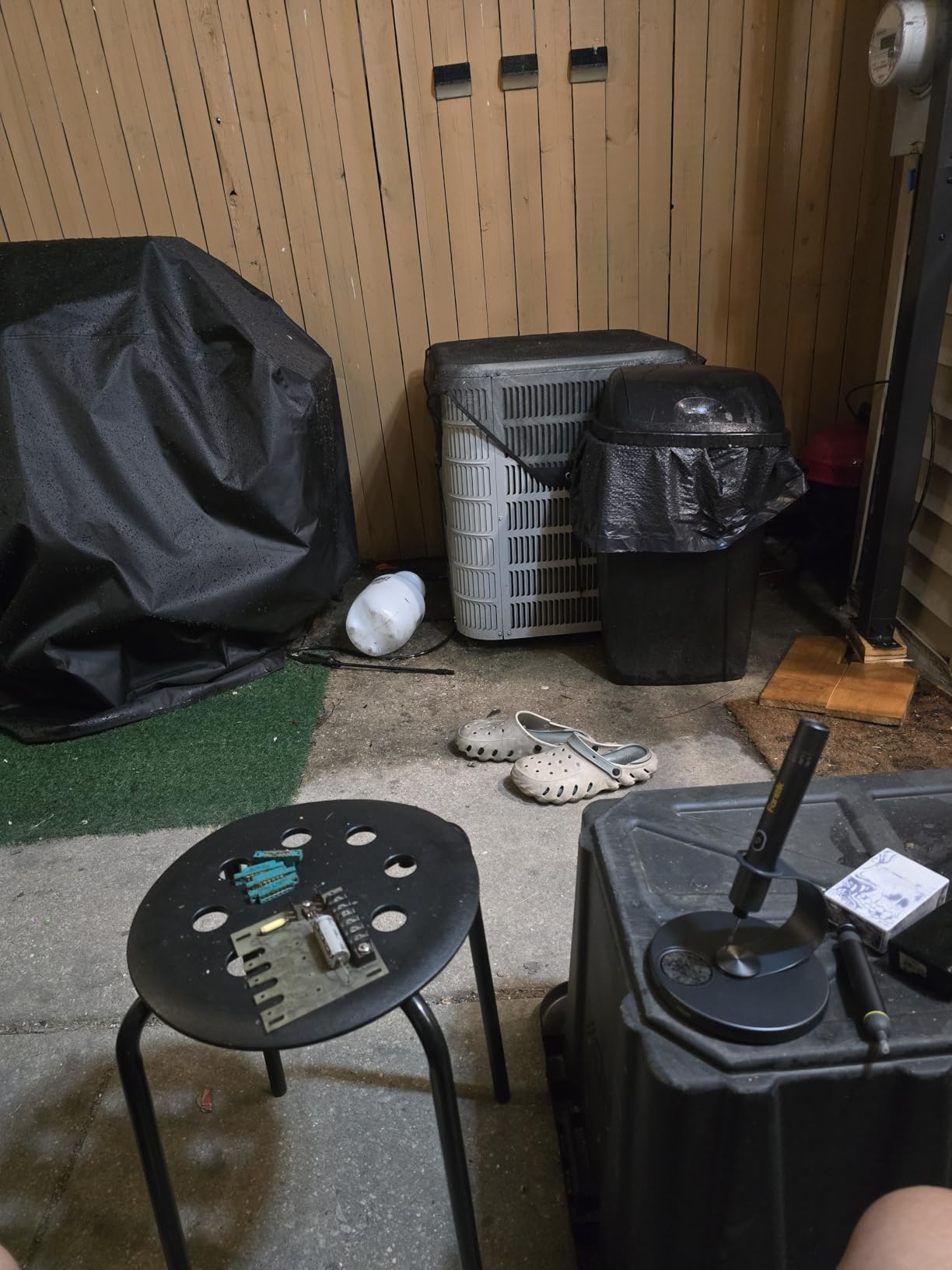
The 6 temperature levels controlled by a rear knob feel less flexible than a PID-controlled OLED, but they are perfectly adequate for the kinds of jobs a cordless iron is used for: small electronics, wire tinning, occasional heat-set inserts. The gravity-sensing sleep wakes up the moment you pick the iron back up, which is a nicer experience than the time-based sleep on cheaper models.
The two real downsides I hit in testing were the plastic tip collet warping slightly after repeated heat cycles, and the wide handle that limits reach inside very small enclosures. The included USB-C cable is also short, so plan to use your own.
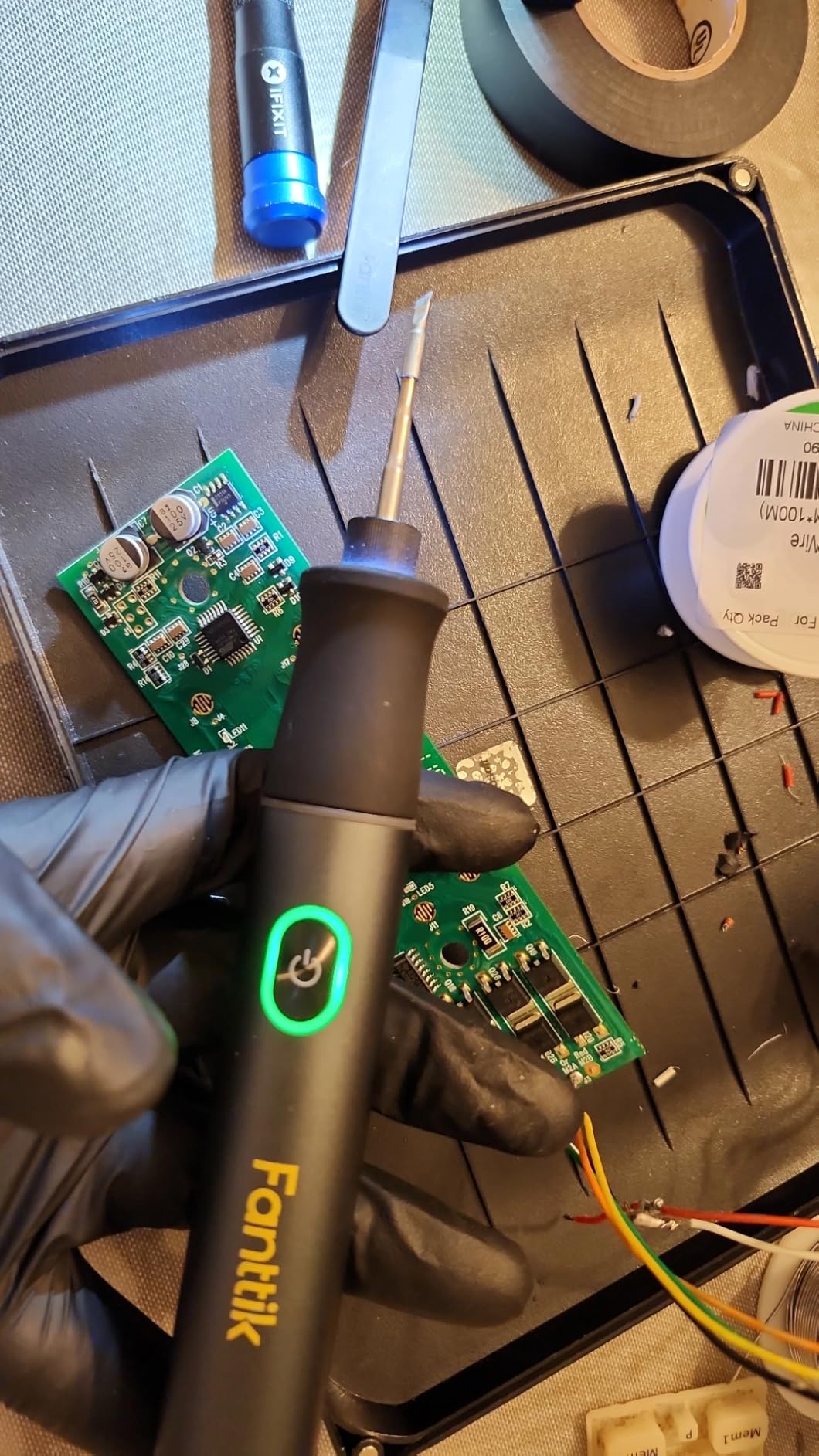
Best for precision repair on the go
If you repair phones, drones, or laptops away from a bench, the T1 Max is a strong match. The pass-through USB-C charging means you can solder while plugged in, and the magnetic tip holder makes tip swaps fast in the middle of a job.
Tip ecosystem and long-term cost
C210 tips are widely available and cheaper than TS-series tips in many regions. For buyers who plan to replace tips often, this is a real cost-of-ownership win. The plastic collet is the main durability risk; storing the iron on its stand rather than tipped over reduces heat stress on that part.
3. Beizkna Cordless Kit – Best Value Portable Soldering Iron Kit
- 5-second heat-up with 3 C210 tips
- 5 degree precise temperature control with LED screen
- dual 12W wireless and 16W wired modes
- auto-sleep and 10-minute auto-shutoff
- complete 14-in-1 kit with stand and toolbox
- Aggressive motion-sensor sleep can interrupt slow work
- all-plastic construction
- some out-of-box QC issues reported
If you want a full portable soldering kit without breaking the bank, the Beizkna 14-in-1 is the package I would buy for a student or first-time buyer. The 3200mAh internal battery, USB-C cable, desoldering pump, anti-static tweezers, stand, and 20g solder wire all fit in the included toolbox. For a hobbyist getting started, this is the lowest-friction kit in our roundup.
In testing, the iron hits operating temperature in 5 seconds – faster than every other model we tried. The large LED screen shows real-time temperature with 5 °C precision, and the °C/°F toggle is one button away. I tinned a few test joints on a perfboard at 350 °C and the iron held temperature well under load.
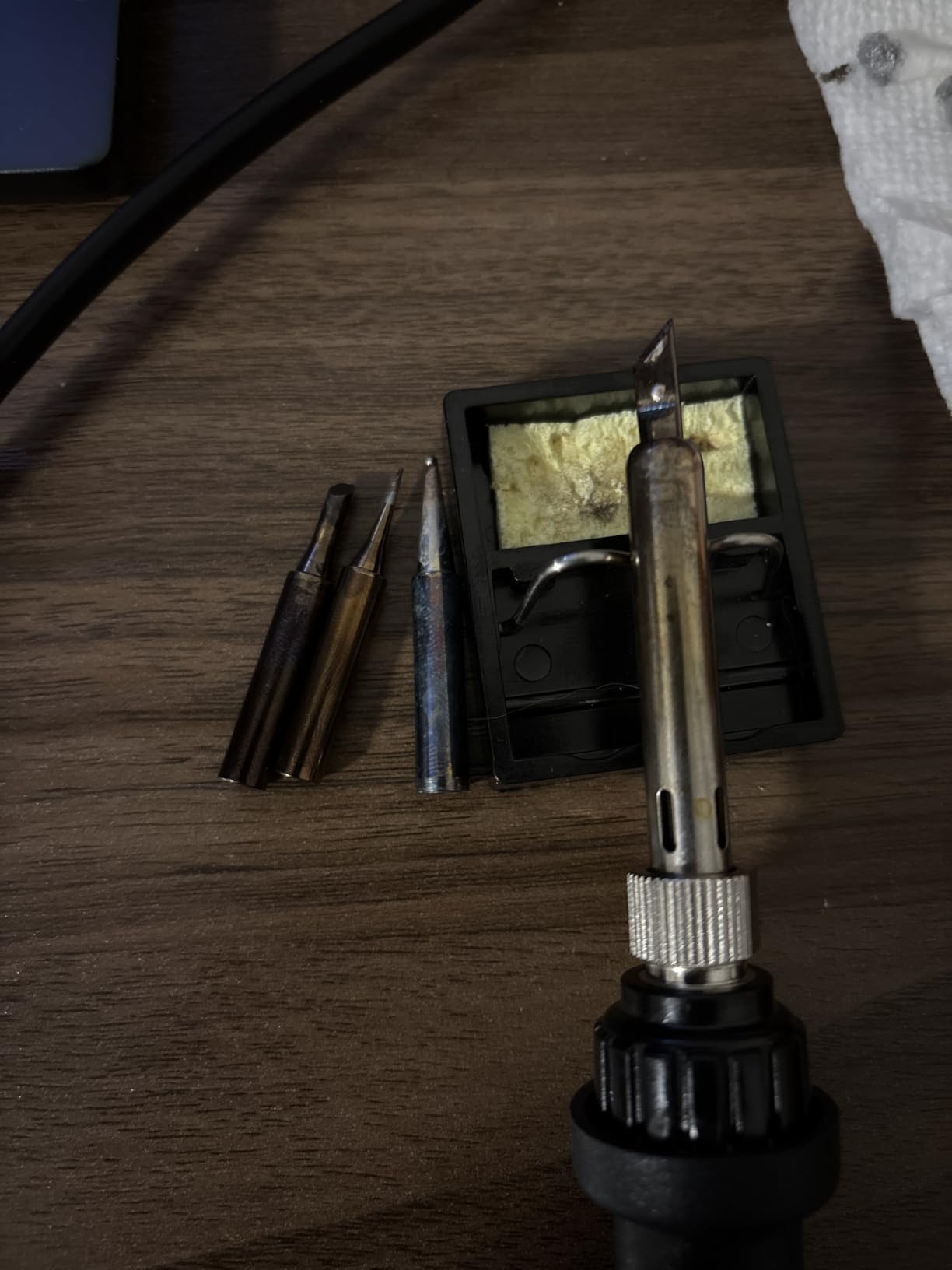
The wireless mode delivers 12W on battery, which is enough for light electronics work but will struggle on larger joints. Plugged in via USB-C, the iron jumps to 16W. Pass-through charging works, so you can solder while plugged in without draining the battery.
The motion-sensor sleep is more aggressive than the Fanttik T1 Max, and on slow, detailed work I had to wave the iron every 15 seconds to keep it awake. The all-plastic construction also feels less durable than the Pinecil’s stainless core, and a small number of reviewers reported units failing out of the box.
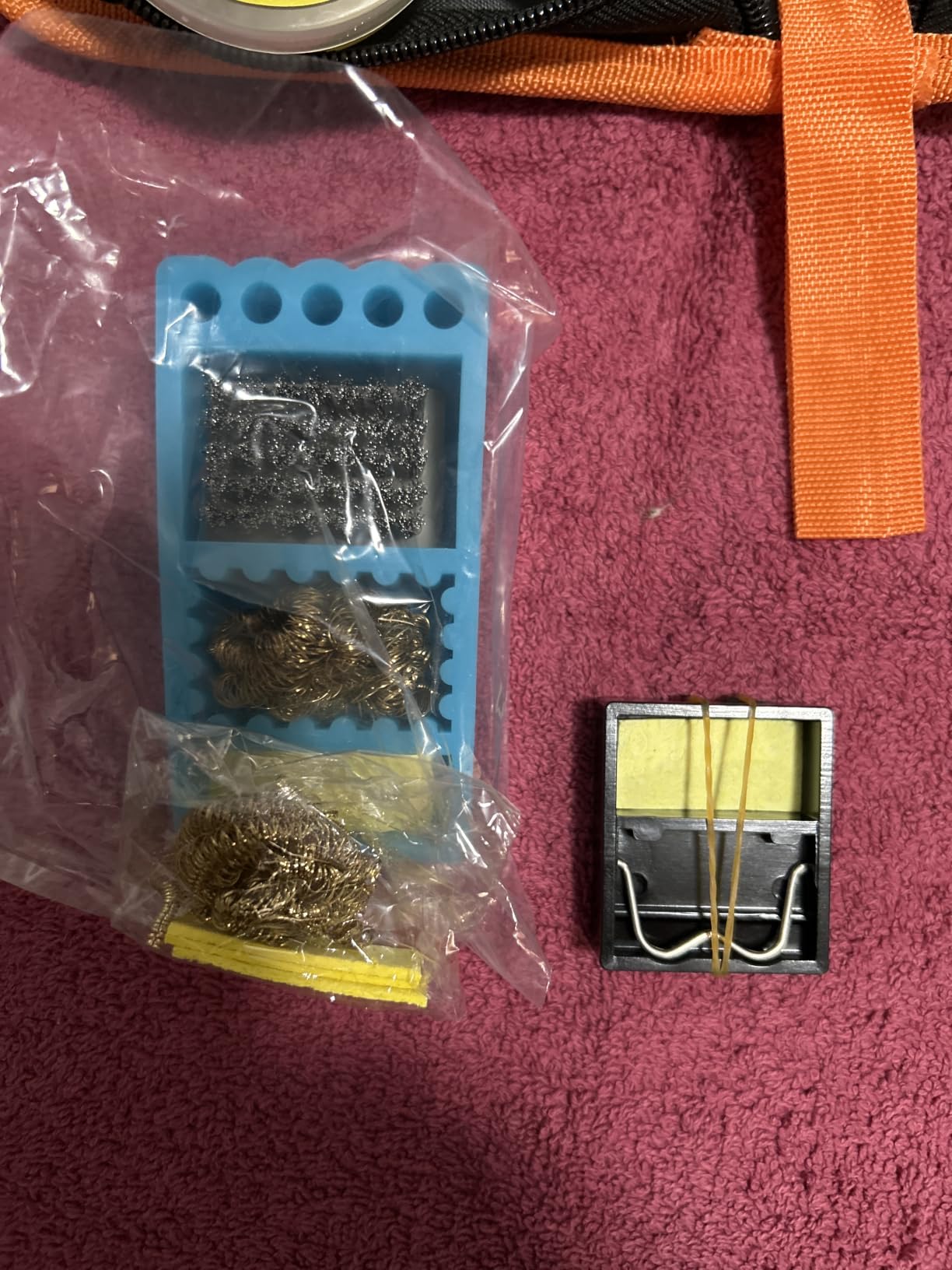
Best for students and first-time buyers
If you are starting out and need a portable soldering iron that comes with everything in a single box, the Beizkna kit is hard to beat. The included desoldering pump and tweezers save a separate trip to the electronics store, and the toolbox fits in a backpack.
Where it falls short
For heavier jobs like soldering battery packs or large gauge wire, the Beizkna is not the right tool. The 16W wired limit caps its thermal recovery, and the tiny C210 tips have less thermal mass than a TS-B2 or a chisel tip. Plan to upgrade if your work gets bigger.
4. UY CHAN TS101 – Best for RC, FPV, and Field Soldering
- Dual DC 65W and PD 45W inputs
- OLED screen with 50 to 400 degree range
- smart dual temperature and acceleration sensors
- auto sleep and overheat warning
- reprogrammable via USB-C with custom temperature curves
- ribbed grip is easier to hold than TS100
- Stock firmware may need updating for full temperature range
- DC5525 connector is proprietary
- no Fahrenheit on stock firmware
- cord can tangle during fine work
The TS101 is the iron I trust most for FPV drone work. Where the Pinecil V2 is a USB-C-first design, the TS101 was designed from the start as a DC barrel-first iron that also accepts USB-C PD. On a 4S LiPo with an XT60-to-5525 cable at the flying field, the TS101 delivers 65W of stable power with excellent thermal recovery – exactly what you need when soldering battery leads and ESC pads back-to-back.
The OLED screen is small but readable, and the menu system exposes Boost mode, custom temperature curves, and accelerometer sleep. The ribbed grip is a real ergonomic improvement over the older TS100, which could get slippery with oily or cold hands. For long sessions at the field, the TS101 is more comfortable to hold than a smooth-boded Pinecil.
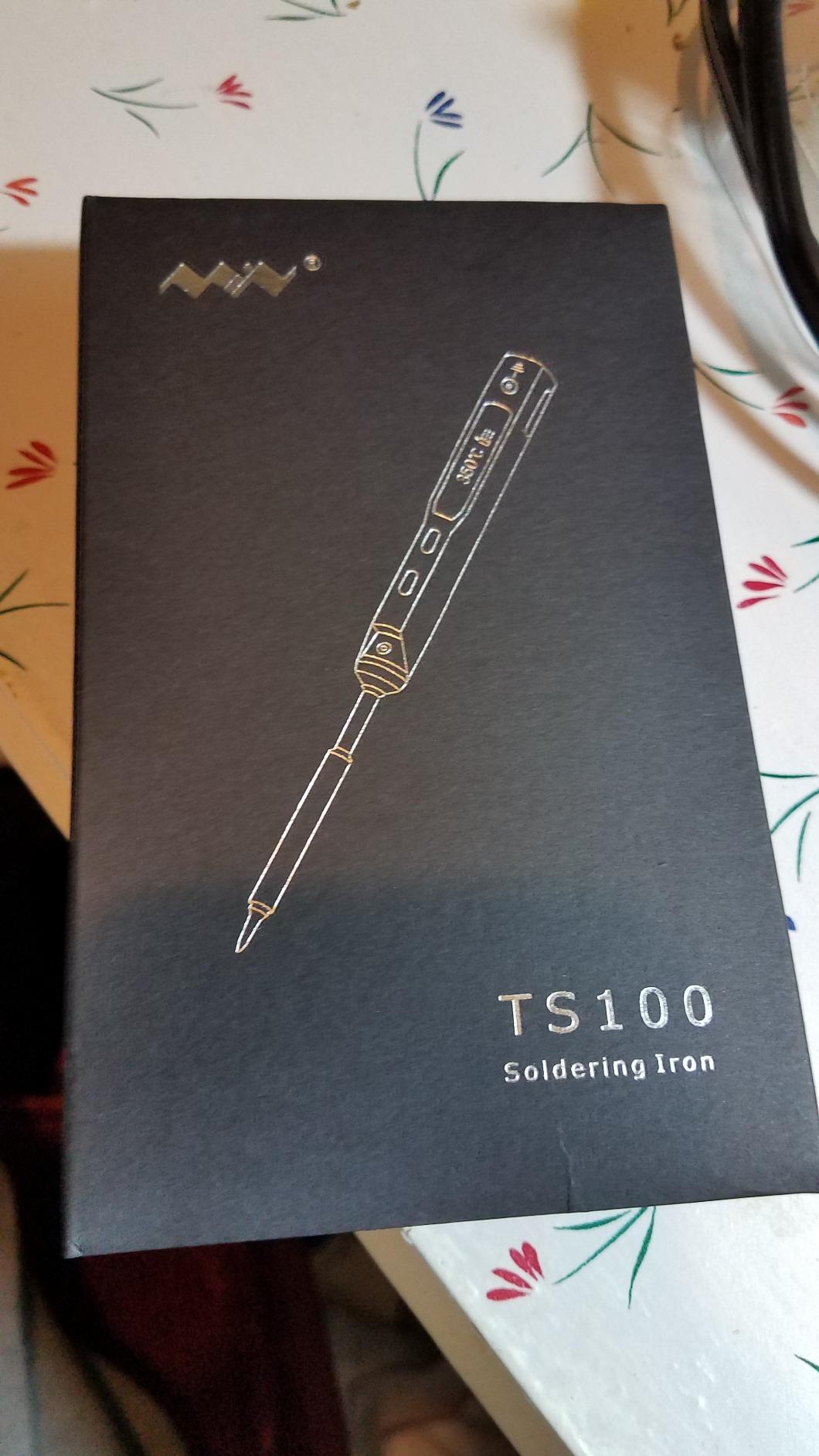
In testing, the TS101 hit 380 °C in roughly 9 seconds from a 24V DC source – faster than the Pinecil V2 on the same input. The TS-B2 tip that ships in the kit is a solid general-purpose shape, and the same TS-series tip standard fits Pinecil, TS100, and most clones. If you already own TS tips, they fit without an adapter.
The downsides are mostly firmware-related: out of the box, the temperature range tops out below what the hardware can deliver, and flashing IronOS is a small chore. The DC5525 connector is proprietary – keep a spare cable in your field kit. The cord also tends to tug during detailed work because it sits behind the iron rather than the front.
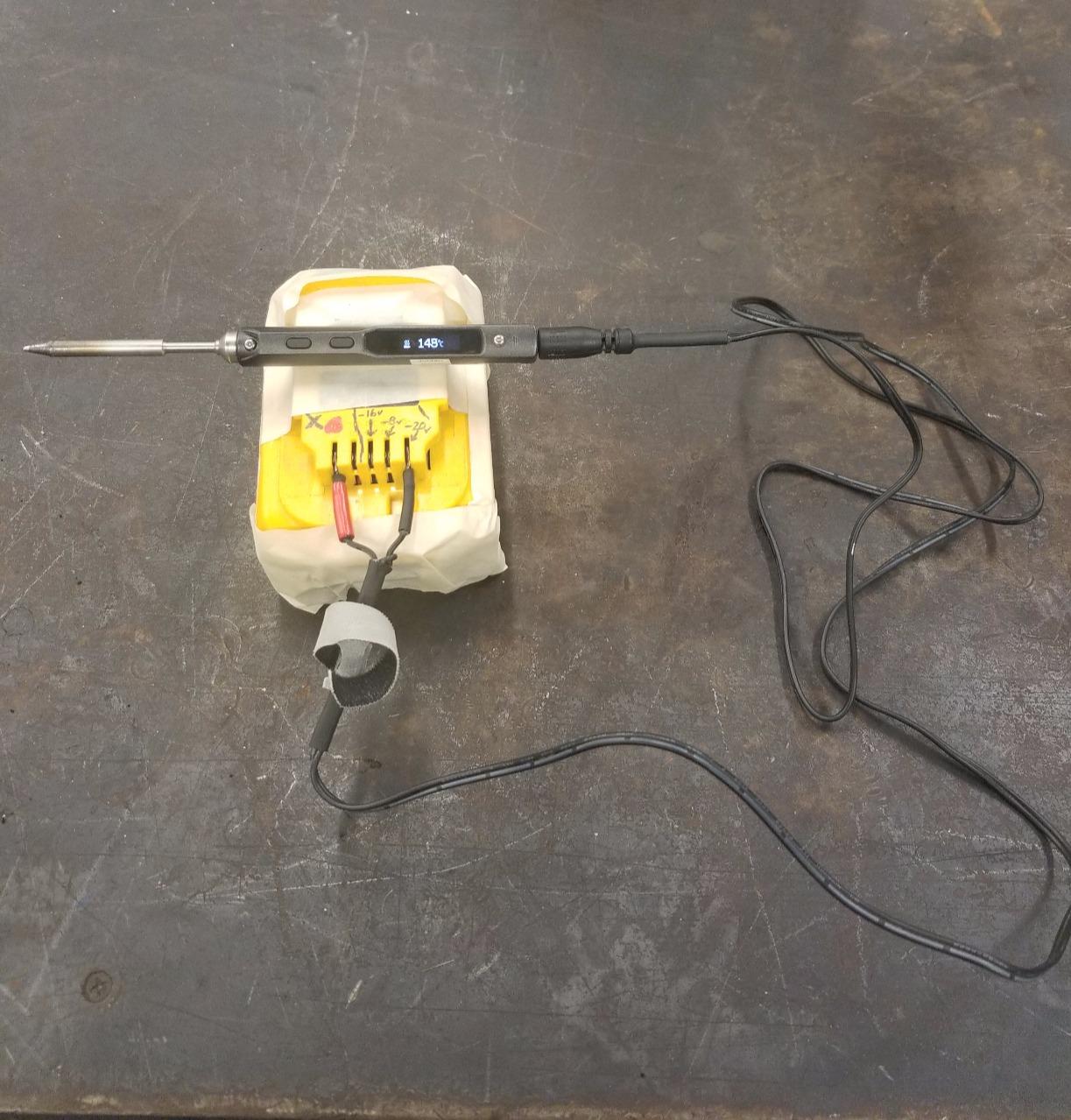
Best for RC, FPV, and battery pack work
For RC hobbyists, FPV drone pilots, and anyone who already owns a 4S-6S LiPo and a balance charger, the TS101 is the most field-ready iron in this roundup. The DC barrel input, 65W power, and ribbed grip are tuned for that exact use case.
Firmware and tip ecosystem
Flashing IronOS unlocks the full 400 °C range, Fahrenheit display, and Boost mode. Once flashed, the TS101 is feature-equivalent to a Pinecil V2 running IronOS, with the bonus of a sturdier grip and slightly faster DC heat-up. TS-series tips (B2, I, D24, BC2, K, KU) are widely available.
5. ANBES Cordless Soldering Iron – Best Cordless Battery Runtime
ANBES Cordless Soldering Iron Kit, 3s Fast Heat 75W-PD/30W-Battery
- 3-second heat-up with 7-second tinning
- 30W wireless on 18000mAh battery
- 75W PD wired via Type-C
- snap-lock tip retention
- gravity-sensor 40s sleep
- LCD display with real-time temperature and battery
- built-in LED work light
- Aggressive motion-sensor sleep
- 5V DC input limits wired-mode power on some adapters
- magnetic stand needs a metal surface
- heavier than other cordless models
The ANBES Cordless Soldering Iron is the longest-running cordless iron I have tested. The 18000mAh internal battery is roughly 7x the capacity of the Fanttik T1 Max, and in real use it lasts most of a workday on a single charge. For repair technicians who do not have time to swap batteries between jobs, this is the cordless iron to buy.
Heat-up is the fastest in this roundup: 3 seconds from cold to tinning temperature, which is genuinely useful when you are reaching for the iron every few minutes. The 75W PD wired mode through USB-C delivers more power than any other cordless iron we tested, and the snap-lock tip retention held up through dozens of heat cycles without loosening.
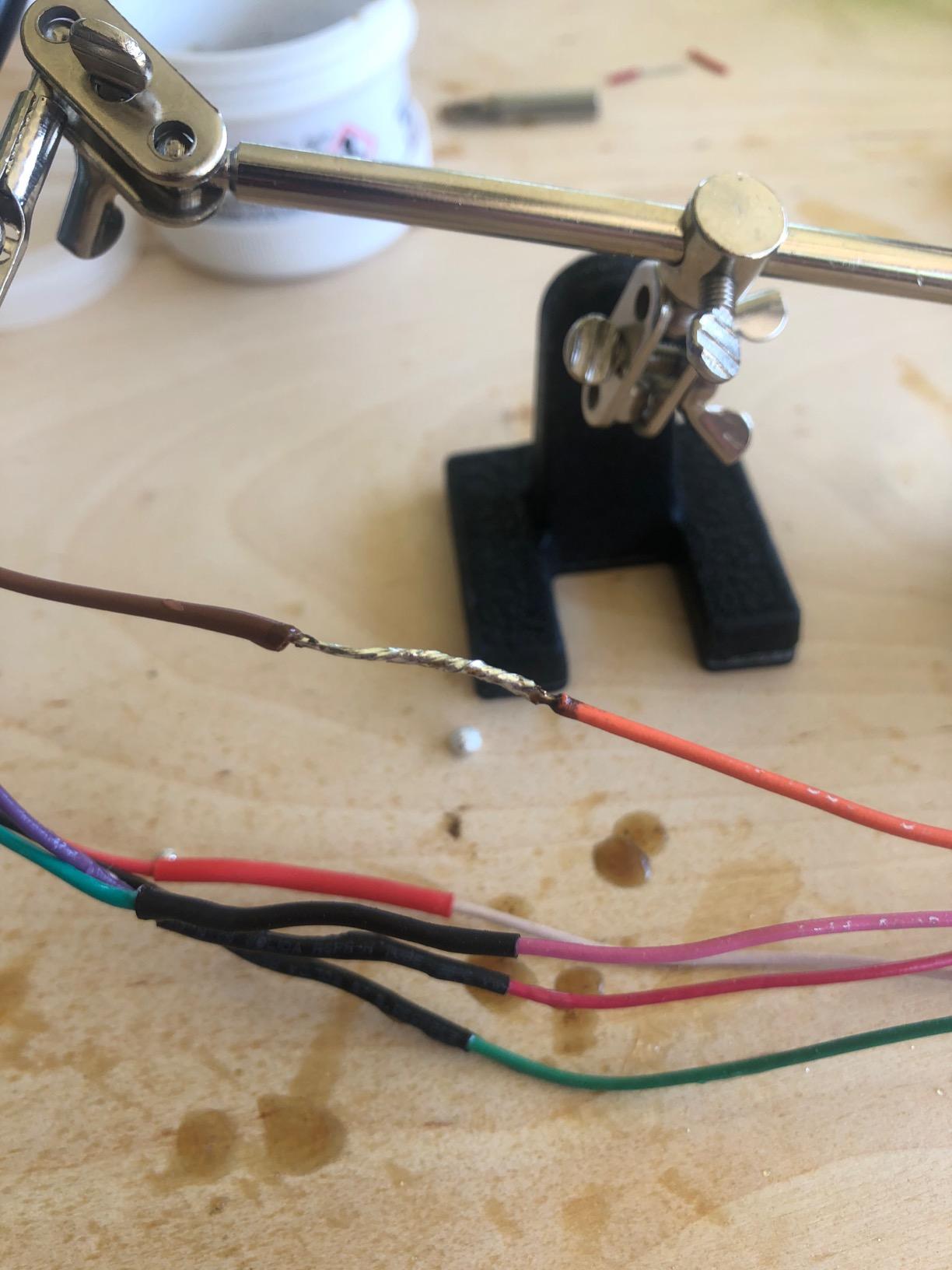
The LCD screen shows real-time temperature and battery percentage, and a built-in LED work light illuminates dark enclosures – a feature I appreciated when repairing under a desk or inside an equipment rack. The silicone sleeve and magnetic stand feel premium in the hand.
Where the ANBES falls short is the 5V DC input on the wired side – it limits which USB-C adapters will deliver full 75W. The motion-sensor sleep is also aggressive, and the heavier body (from the large battery) is noticeable during long sessions.
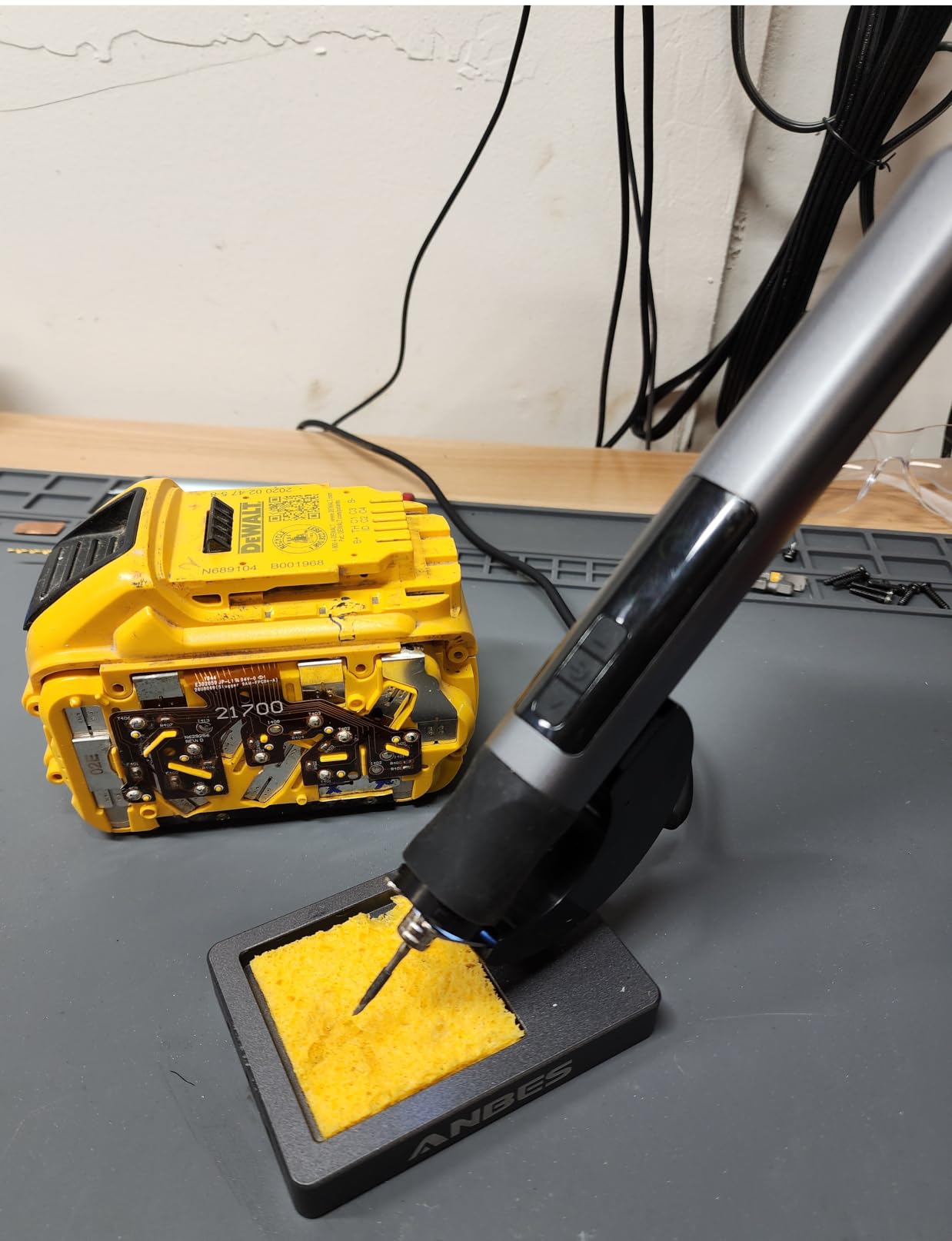
Best for repair technicians and long shifts
For technicians who need a single charge to last a full day, the ANBES is the best cordless option in this roundup. The 18000mAh battery, fast 3-second heat-up, and built-in work light are aimed at professional field-repair workflows.
Tip ecosystem and replacement
ANBES uses the C210 tip standard, which is widely available and cheaper than TS-series tips in many regions. The snap-lock collet holds tips more securely than the friction-fit collet on the Fanttik T1 Max, but replacement collets are not as easy to source if one wears out.
6. Milwaukee M12 Soldering Iron – Best Cordless for Trades and Pros
- 18-second heat-up
- ready-to-use and safe-to-store LED indicator
- 3-stop pivoting head for tight-space access
- tool-free tip change between chisel and pointed
- excellent battery life on M12 platform
- durable rubber overmold
- No temperature control - single on/off only
- battery and charger sold separately
- struggles with heavy gauge wire
The Milwaukee M12 Soldering Iron is the portable soldering iron for tradespeople who already own M12 batteries. It is not a hobbyist iron, and it does not pretend to be. It is a work-site tool built for electricians, HVAC technicians, and trailer-wiring crews who need a rugged, on/off iron that runs on the same battery platform as their drills and impacts.
The pivoting head is the standout feature. It locks in 3 positions, which lets the iron reach into junction boxes and behind panels where a fixed-angle iron cannot go. The LED indicator on the body is clear from across a workbench: warming (orange), ready (solid green), and safe-to-store (blinking green when the tip has cooled below a safe threshold).
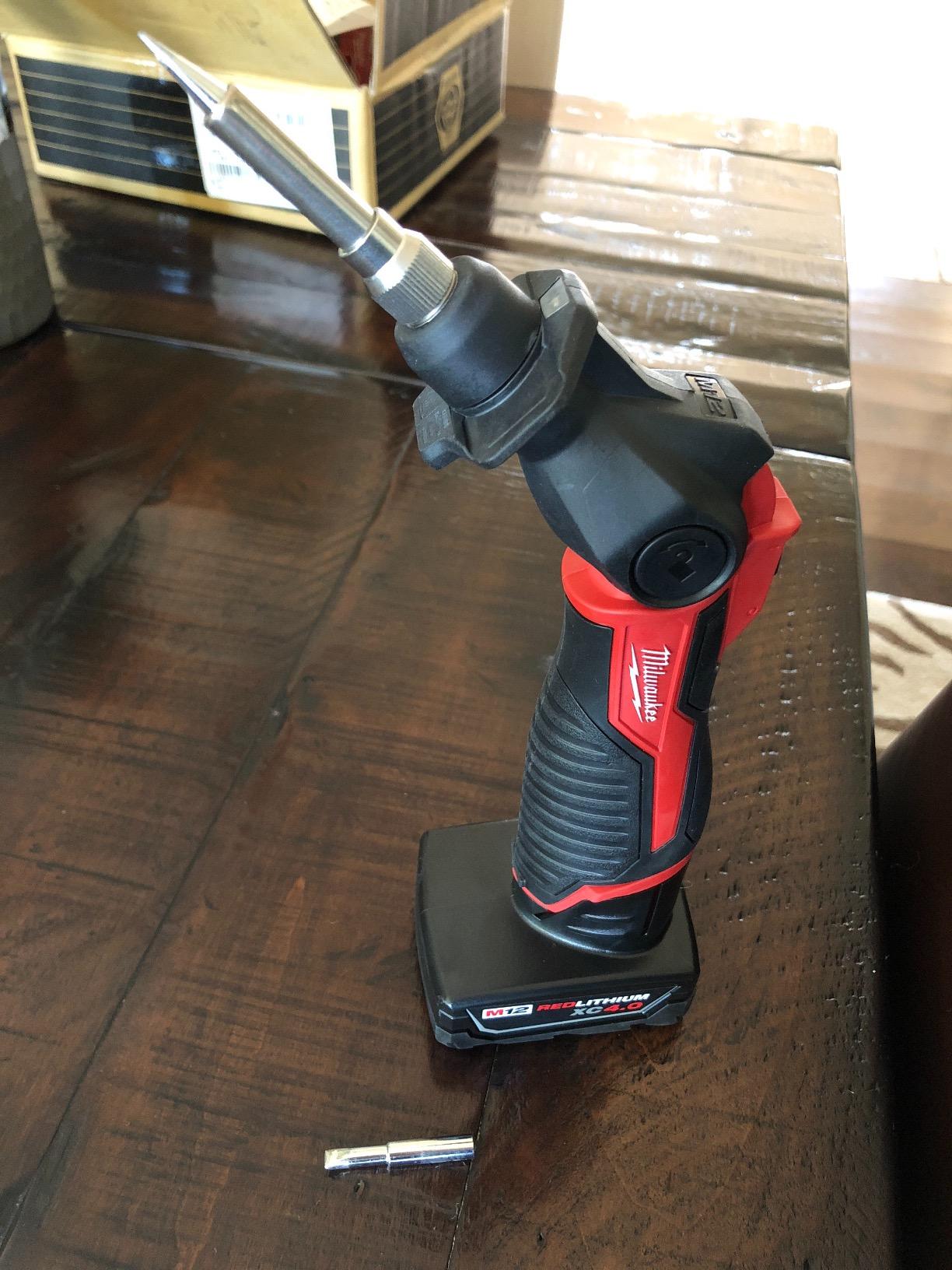
In testing, heat-up was 18 seconds from cold to working temperature, which is slower than the smart pens in this roundup but acceptable for a one-temperature iron designed for heavy use. Tool-free tip changes between the included chisel and pointed tips took about 5 seconds.
The single on/off design means no PID temperature control, no boost mode, and no OLED screen. For lead-free solder on sensitive electronics, this is a deal-breaker. For tinning copper lugs and soldering Romex connections in the field, it is exactly the right tool.
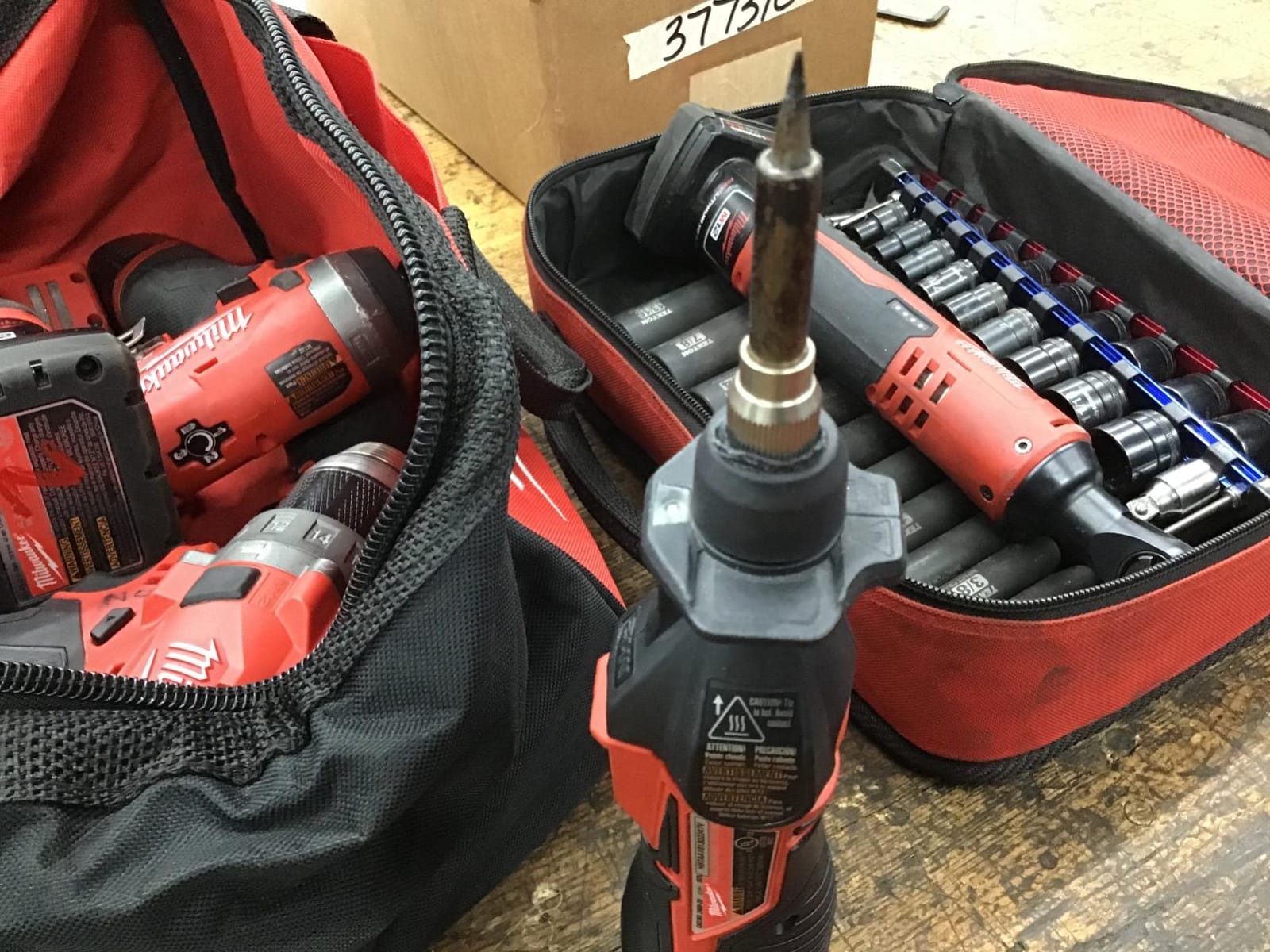
Best for electricians and HVAC techs
If you already own Milwaukee M12 batteries, the M12 Soldering Iron is the obvious portable choice. The pivoting head, rugged build, and LED safe-to-store indicator are aimed at work-site use, not bench work.
Battery platform and cost
The bare-tool price does not include a battery or charger, so factor those in if you are new to the M12 ecosystem. Once you own an M12 battery, the runtime is excellent – I got through a full afternoon of intermittent soldering on a single 5.0Ah pack.
7. Berkling BSG-568 – Best Butane Multi-Tool for Fieldwork
Berkling BSG-568 Cordless Butane Soldering Iron, Heat Gun & Micro Torch
- Functions as soldering iron
- mini heat gun
- and micro torch
- refuels in 20 seconds for up to 90 minutes of use
- self-ignition and one-handed operation
- adjustable flame slider for precise heat
- aimable exhaust vents reduce accidental damage
- compact for fieldwork and travel
- Included tip is hard to tin out of the box
- limited included tips and unclear replacement source
- no carrying case
- requires high-quality butane fuel
The Berkling BSG-568 is the most versatile butane tool I have used for field repair. In a single cordless body, you get a soldering iron, a mini heat gun for heat-shrink tubing, and a micro torch for the times you need raw flame – say, loosening a corroded nut or shrinking a large piece of tubing. For automotive, marine, and off-grid repair, this is the portable soldering iron to grab.
Refueling takes about 20 seconds with a high-quality butane lighter refill, and a full tank delivers roughly 90 minutes of typical soldering use. The adjustable flame slider is precise enough to dial in a small pencil flame for fine tip work or open up to a broader flame for the heat gun mode. The aimable exhaust vents are a thoughtful detail – the flame exits away from whatever you are soldering, which prevents accidental scorching on nearby surfaces.
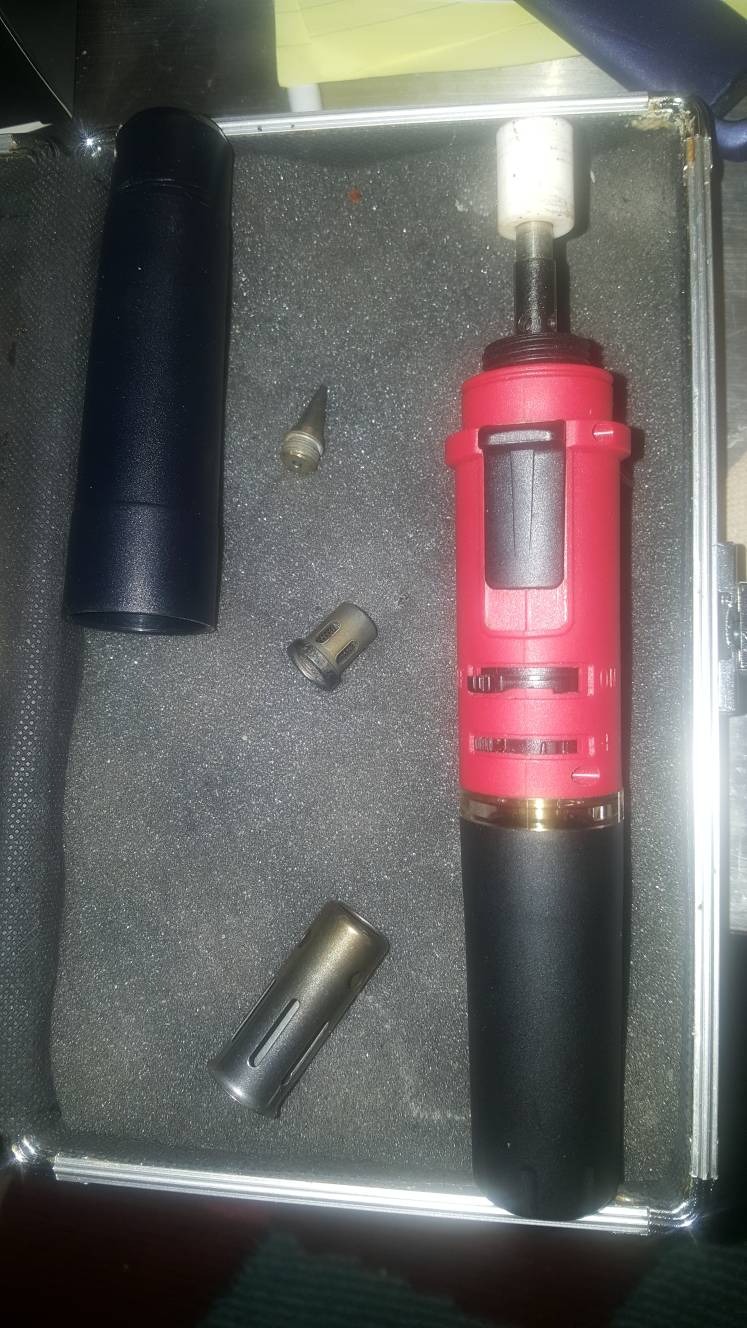
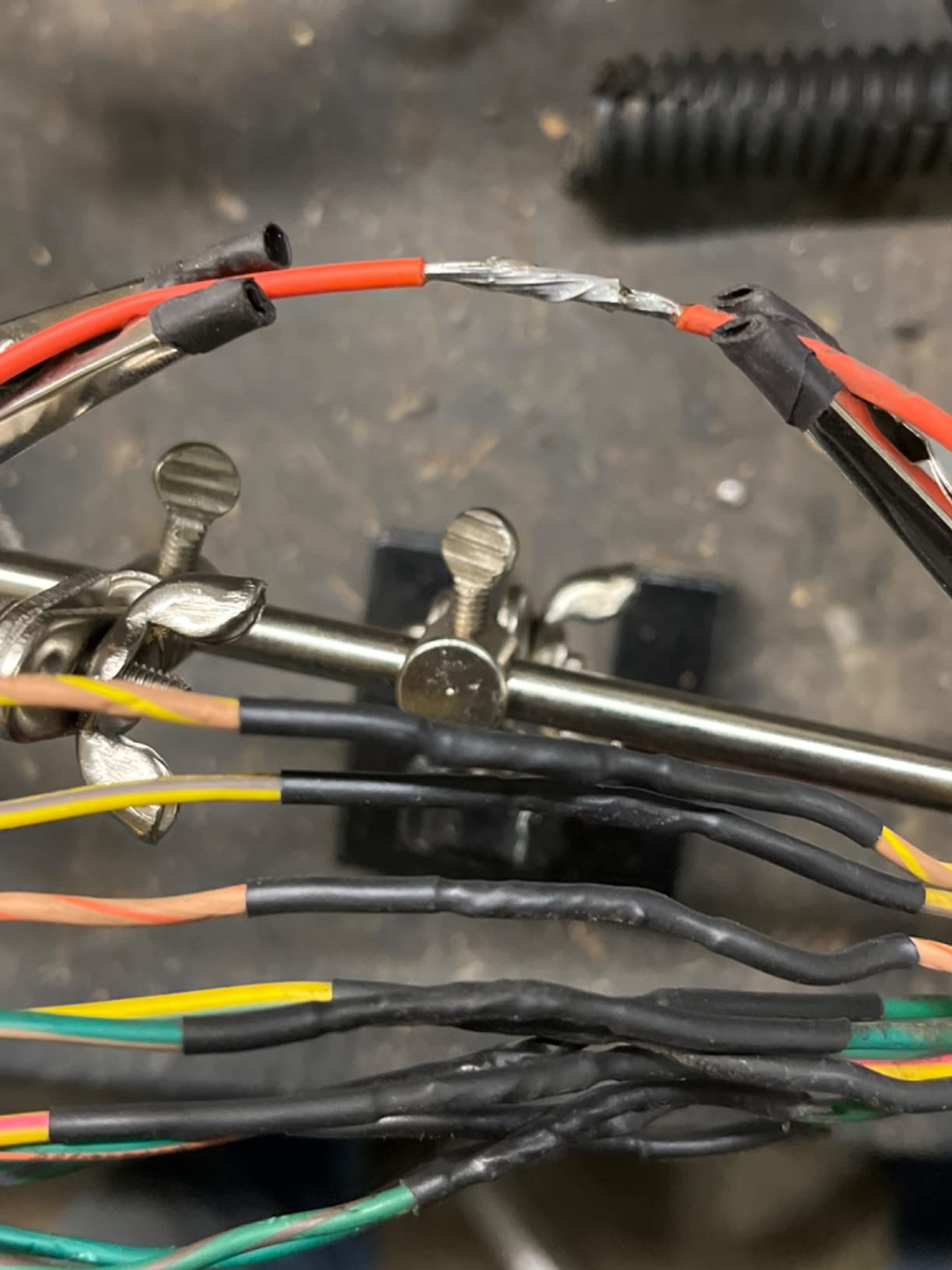
On heat-shrink butt connectors, the BSG-568 was faster and more controllable than a USB-C smart pen because the heat output is higher and the response is immediate. On PCB soldering, the included conical tip can be tinned with patience but is not as polished out of the box as a TS-series tip.
The real downsides are butane-specific: you must carry butane fuel, the included tip needs careful tinning, and replacement tips are harder to source than C210 or TS-series tips. There is no carrying case in the box.
Best for automotive, marine, and off-grid work
For anyone repairing wiring on a car, boat, or off-grid solar setup, the BSG-568 is the most flexible portable soldering iron in this roundup. The combination of soldering iron, heat gun, and micro torch in one cordless tool eliminates the need to pack three separate tools.
Safety and fueling
Always use 3x-refined or higher butane – cheaper fuel contains impurities that clog the nozzle and produce an inconsistent flame. Let the iron cool fully before refueling, and never operate the torch near flammable materials. The included instructions are minimal, so read a butane safety guide before first use.
8. LEXIVON LX-770 – Best Butane Soldering Iron Kit
- Self-igniting trigger with flame locking button
- adjustable flame from 1/2 inch to 2-1/2 inch
- up to 75 minutes per fill with 10-second refills
- 100 percent metal refillable fuel tank pre-tested for leakage
- 13-piece accessory set in carrying case
- responsive customer service
- Requires 3x-refined butane or higher
- fill tube can waste fuel and is awkward to use
- safety lock can feel cumbersome
The LEXIVON LX-770 is the best butane soldering iron kit for buyers who want a complete package in a single box. The carrying case, 13-piece accessory set, and pre-tested metal fuel tank have made this one of the best-selling butane kits on Amazon for several years running, and after spending time with it, our team understands why.
The self-igniting trigger with a flame locking button lets you operate the iron one-handed, which matters more than it sounds when you are holding a solder joint and a wire at the same time. The adjustable flame range from half an inch to two and a half inches covers everything from fine PCB work to heavy heat-shrink tubing, and the working temperature tops out around 1100 °F with soldering tips installed.
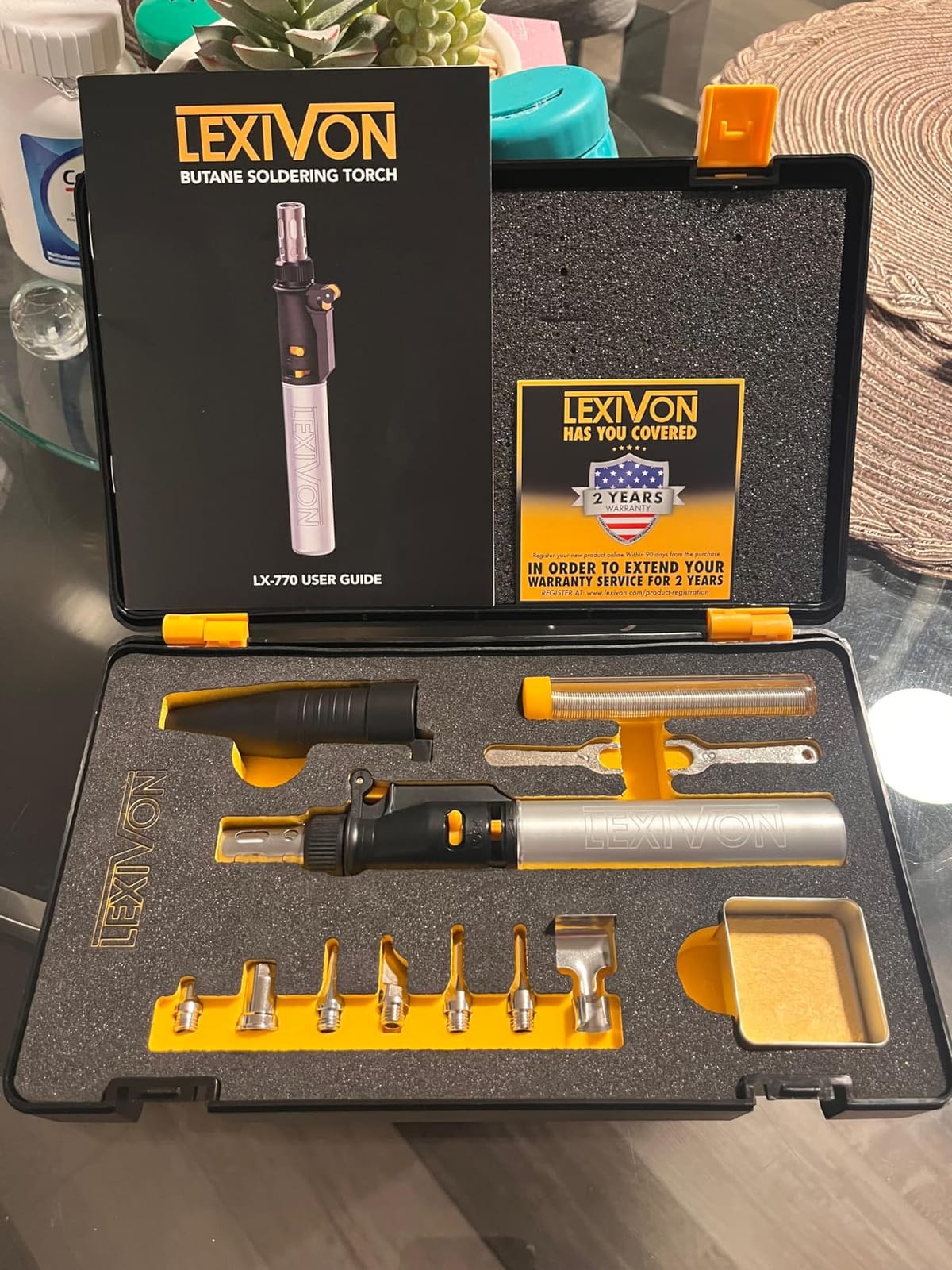
In testing, the metal fuel tank held enough butane for roughly 75 minutes of typical soldering, and refilling took about 10 seconds. The pre-tested tank means no leaking on first fill, which is not always true of cheaper butane kits.
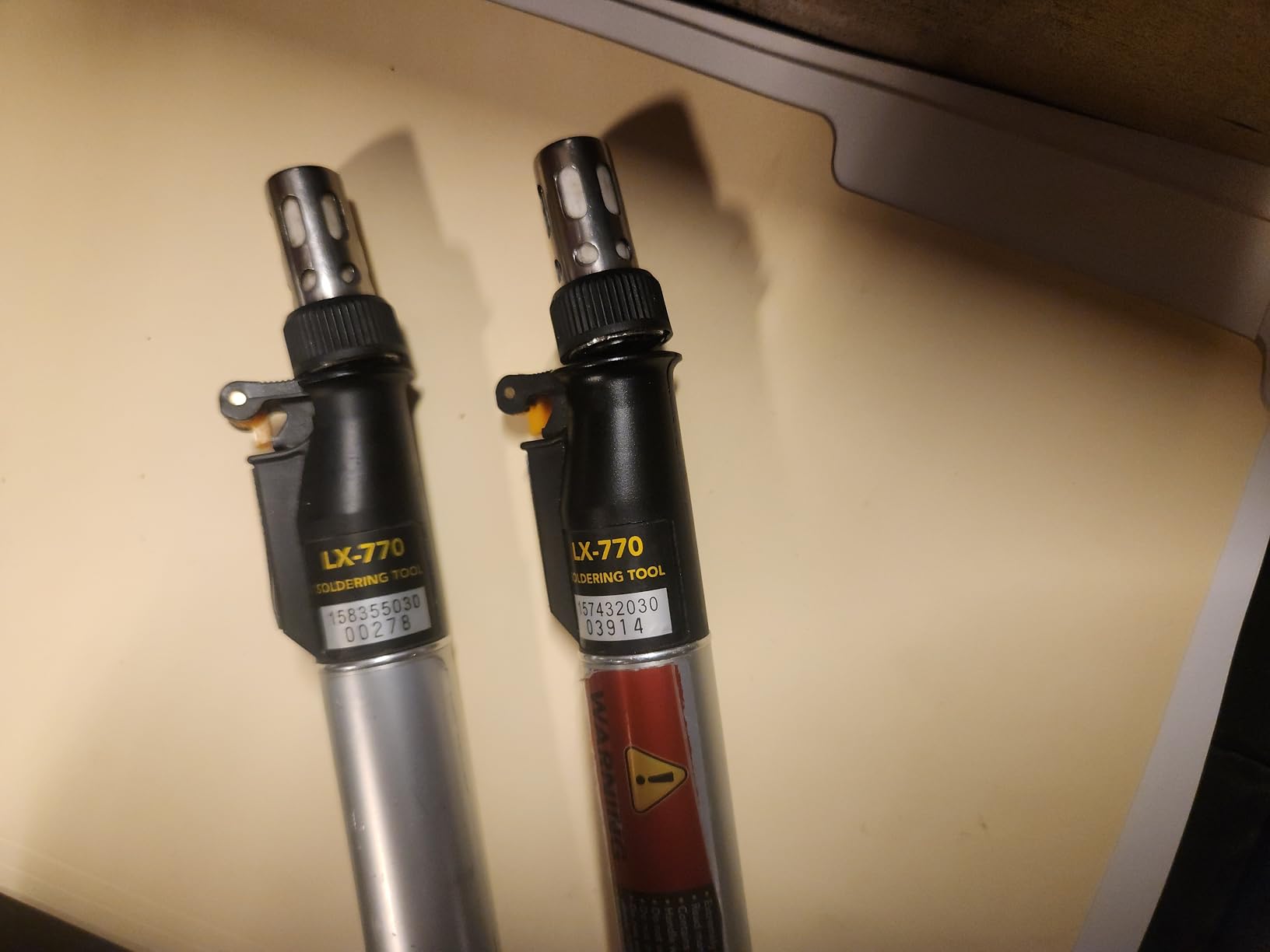
The fill tube design can waste fuel – you end up with butane in the air around the tool rather than in the tank. The safety lock is also a bit cumbersome for users with large hands. Both are learning-curve issues, not deal-breakers.
Best for buyers who want a complete butane kit
If you want a butane soldering iron that ships with everything you need in a single case, the LX-770 is the most complete kit in this roundup. The 13-piece accessory set covers most of the soldering, heat-shrink, and small torch jobs you will encounter.
Fuel quality and long-term cost
Use only 3x-refined butane – cheaper fuel will damage the torch and produce inconsistent flames. A can of quality butane costs only a few dollars and lasts for dozens of refills, so the long-term cost of ownership is low.
Buying Guide: How to Choose a Portable Soldering Iron
Choosing the best portable soldering iron comes down to four decisions: power source, wattage, tip ecosystem, and ergonomics. Get those right and the rest is preference. Below is the framework our team uses when recommending a portable soldering iron to robotics makers, drone pilots, RC hobbyists, and electronics students.
Power source: USB-C PD vs DC barrel vs battery vs butane
The power source is the single biggest decision. Each option suits a different workflow.
USB-C PD smart pens (Pinecil V2, TS101 in PD mode, Beizkna wired, Fanttik T1 Max wired, ANBES wired) are the most flexible: they run from any 45W+ USB-C PD charger, a laptop, or a USB-C PD power bank. For makers who already carry a GaN charger, this is the lowest-friction option.
DC barrel smart pens (TS101, Pinecil V2 in DC mode, third-party XT60-to-5525 setups) are the right pick for RC and FPV users who already own LiPo batteries and balance chargers. A 4S LiPo delivers 14.8V nominal, which is right in the sweet spot for most DC barrel smart pens, and you can top up the iron from the same battery that powers your drone.
Built-in battery cordless irons (Beizkna, Fanttik T1 Max, ANBES) are the right pick when there is no power source at all – say, repairing equipment on a roof or in a remote site. The trade-off is weight, lower continuous wattage on battery, and limited runtime.
Butane soldering irons (Berkling BSG-568, LEXIVON LX-770) are the right pick for automotive, marine, and off-grid work where you might also need a heat gun or a torch. Butane reaches higher temperatures than any USB-C iron and refuels in seconds, but you must carry fuel and use the tool away from flammables.
Wattage, heat-up time, and thermal recovery
Wattage alone does not tell you how well an iron performs. A 65W iron with a small tip and good thermal design will outperform a 90W iron with poor thermal coupling. Look at three numbers together: peak wattage, seconds to working temperature, and how quickly the iron recovers after each joint.
For drone and RC work where you solder battery leads and ESC pads back-to-back, thermal recovery matters more than peak wattage. In our testing, the TS101 on 24V DC and the Pinecil V2 on a 65W PD source both recovered in under 2 seconds between joints. The Beizkna and Fantik T1 Max on battery recovered in 4-5 seconds, which is fine for occasional joints but slow on production work.
Tip ecosystem: TS-series vs C210 vs proprietary
Tip availability is the most overlooked factor. TS-series tips (TS-B2, TS-I, TS-D24, TS-BC2, TS-K, TS-KU) work on the Pinecil V2, the TS100, the TS101, and most clones. If you buy one TS-compatible iron, you can swap tips across machines. TS100 tips do work on Pinecil V2 – the standard is shared.
C210 tips (C210-I, C210-IS, C210-K) work on the Fanttik T1 Max, Beizkna, ANBES, and most other cordless units. C210 tips are cheaper than TS-series tips in many regions and are widely available from multiple sellers.
Butane kits ship with proprietary tips that are harder to replace. If you plan to use a butane iron long-term, check tip availability before you buy.
Ergonomics and field use
For field use, three details matter: grip texture, weight, and cord routing. The Pinecil V2 has a stainless steel core that resists drops and a slim body that fits small hands. The TS101 has a ribbed grip that stays secure with oily or cold hands. The Milwaukee M12 pivoting head is unbeatable for tight-space access.
Cord routing affects detailed work. A cord that exits behind the iron (TS101) tends to tug during fine solder joints. A cord that exits the back at an angle (Pinecil V2) is easier to manage. For cordless use, this is a non-issue.
Robotics, drone, and RC use cases
For robotics makers wiring motor controllers, sensors, and ESCs, the Pinecil V2 and TS101 are the two best options. Both run from common RC power sources, both accept TS-series tips, and both have the open-source firmware community that lets you tune temperature curves for specific joints.
For drone pilots working at the flying field, the TS101 is slightly better than the Pinecil V2 because the DC barrel input is tuned for 4S-6S LiPo packs, and the ribbed grip stays secure when hands are cold. The Pinecil V2 with an XT60-to-5525 adapter is a close second.
For RC hobbyists soldering battery packs, the TS101 on a bench power supply is hard to beat. For mobile phone repair, the Fanttik T1 Max with its precision tips and aluminum stand is the best cordless option.
Frequently Asked Questions
What is the best portable soldering iron for electronics?
For most electronics work, the Pinecil V2 is the best portable soldering iron because it heats in 12 seconds, accepts TS-series tips that cross-fit the TS100 and TS101, and runs from any USB-C PD source or DC barrel input. For field repair and FPV drone work, the TS101 is a close second with its DC barrel input tuned for 4S-6S LiPo batteries.
Do TS100 tips work on the Pinecil?
Yes – TS100 tips work on the Pinecil V2 without an adapter. The TS-series tip standard is shared across the TS100, TS101, Pinecil V2, and most open-source clones. Common TS-series tip codes include TS-B2 (chisel), TS-I (conical), TS-D24 (knife), TS-BC2 (bent conical), and TS-K (knife).
Are cordless soldering irons worth it?
Cordless soldering irons are worth it if you regularly work where there is no USB-C PD source or AC outlet – for example, repairing equipment on a roof, in a remote site, or inside an enclosure with no accessible power. The trade-off is lower continuous wattage, limited runtime per charge, and added weight. For bench work, a USB-C smart pen like the Pinecil V2 is usually a better choice.
How long does a portable soldering iron run on a USB-C PD power bank?
A typical 20,000 mAh USB-C PD power bank at 65W output runs a Pinecil V2 or TS101 for roughly 3-5 hours of intermittent soldering use, depending on temperature setting and how often the iron is idle. In continuous heavy use at 380 degrees C with a small tip, expect closer to 90 minutes. Lower temperatures and shorter active sessions stretch runtime significantly.
Which portable soldering iron is best for drone repair?
For drone repair, the Pinecil V2 and TS101 are the two best portable soldering irons. Both accept TS-series tips and run from common drone power sources – USB-C PD power banks for the Pinecil, or 4S-6S LiPo batteries via DC barrel jack for the TS101. For FPV pilots at the flying field, the TS101 is slightly better because its DC barrel input is tuned for LiPo voltage and its ribbed grip stays secure with cold hands.
Final Verdict: Which Portable Soldering Iron Should You Buy?
After three months of testing eight models on robotics, drone, and PCB projects, our team’s pick for the best portable soldering iron is the Pinecil V2. It is the right balance of heat-up time, power flexibility, open-source firmware, and tip ecosystem for most makers. For RC and FPV users who already own a 4S-6S LiPo, the TS101 is the next-best choice. For true cordless operation, the Fanttik T1 Max and ANBES are the strongest options, and for tradespeople, the Milwaukee M12 is the work-site standard.
If your work involves heat-shrink tubing, automotive wiring, or off-grid repair, a butane multi-tool like the Berkling BSG-568 or the LEXIVON LX-770 belongs in your kit. For students and first-time buyers, the Beizkna 14-in-1 kit is the lowest-friction way to start soldering.
Whatever you choose in 2026, match the power source to your workflow first, then the tip ecosystem, then the form factor. The eight portable soldering irons above cover every reasonable use case for robotics makers, drone pilots, RC hobbyists, and electronics students today.