
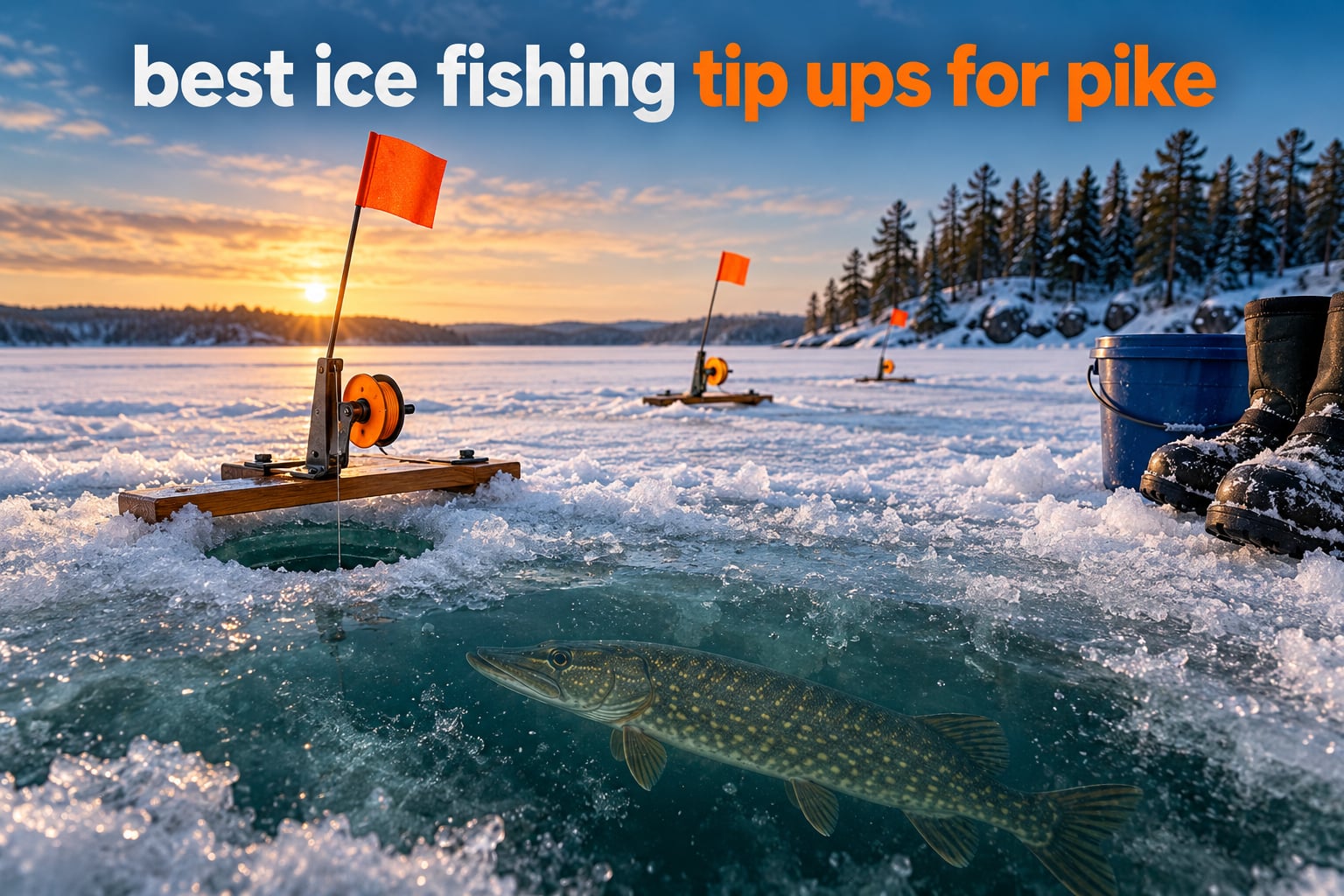
A tip-up is a spring-loaded ice fishing device that clamps over a drilled hole, holds a baited line at depth on a small spool, and pops a bright flag the moment a fish pulls line off that spool. For northern pike it is the most useful passive tool on the ice, because pike patrol structure and weed edges instead of holding one spot, and they commit slowly. Ten sticks let you cover ten heights at once instead of watching one hole all day.
I ran these ten devices through a full winter of comparison work, mostly on shallow weed edges in 10-15 feet of water, and I judged every one of them against the same four questions: will the spool carry enough line for a fish that runs 30 feet, will the trip fire on a light take without firing on wind, can you see the flag across a spread in falling snow, and does the hardware survive a week of slush. This is the roundup that answers those questions for pike specifically, since almost every existing list on this topic treats tip-ups as panfish gear.
Last updated in 2026. Every rating and review count below is the current figure on the product page, and every flag height, spool capacity and trip setting comes from the manufacturer specification rather than from memory. Where a product has a documented failure mode, I name it, because the difference between a good tip-up and a frustrating one is almost always one specific part.
Table of Contents
Top 3 Picks: Best Ice Fishing Tip Ups for Pike (October 2026)

Frabill Pro Thermal Tip-Up
- Insulated body keeps a 10 inch hole open
- Dual light and heavy trip settings
- Removable spool shaft

Big RED Tip Down
- Tip-down rocking action is very sensitive
- Tall frame takes big reels and heavy line
- Collapses for transport
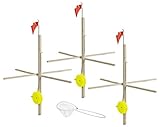
Celsius Multi 3 Pack
- Three tip-ups per pack
- Tackle included in the kit
- Compact bucket-friendly profile
The Frabill wins this list on evidence rather than hype. Six hundred and nineteen ratings at 4.5 stars, an insulated body that keeps a hole open in hard cold, and a dual trip setting that lets you switch from a wary pike to a heavy set without rebuilding the rig.
The Big RED does something no spool tip-up on this list does. It balances your actual rod, so a pike that picks up and runs trips the flag on the smallest head shake instead of waiting for a full spool rotation.
The Celsius three-pack is the spread tool. It has the weakest average rating here, and that is fine, because its job is to put three baits in the water for the cost of roughly one premium stick.
Quick Overview: Best Ice Fishing Tip Ups for Pike in 2026
| Product | Specifications | Action |
|---|---|---|
| Frabill Pro Thermal Tip-Up |
|
Check Latest Price |
| Big RED Tip Down |
|
Check Latest Price |
| Celsius Multi 3 Pack |
|
Check Latest Price |
 Deep Freeze BlueTipz Deep Freeze BlueTipz |
|
Check Latest Price |
 Ifish Pro Tip-Up Ifish Pro Tip-Up |
|
Check Latest Price |
 Clam Arctic Warrior 8840 Clam Arctic Warrior 8840 |
|
Check Latest Price |
 HT Polar Tip-Up 200 Yard Spool HT Polar Tip-Up 200 Yard Spool |
|
Check Latest Price |
 Finicky Fooler Ice Fishing Tip Up Finicky Fooler Ice Fishing Tip Up |
|
Check Latest Price |
 Starpike All Season Tip-Up Starpike All Season Tip-Up |
|
Check Latest Price |
 Happy Hooker Automatic Hook Setter Happy Hooker Automatic Hook Setter |
|
Check Latest Price |
Two things stand out in that table. Only one product here carries a genuine alarm or alert system, and only two publish a real line capacity figure, which tells you how much of this category is marketed blind.
1. Frabill Pro Thermal Tip-Up: Best Overall for Pike
- Keeps a 10 inch hole from freezing shut
- Flags soft bites without wind false trips
- Dual trip settings and removable spool shaft
- Packs into a 5 to 6 gallon bucket
- Plastic flag arm can snap in extreme cold
- Pivot above the line ices up after repeated dips
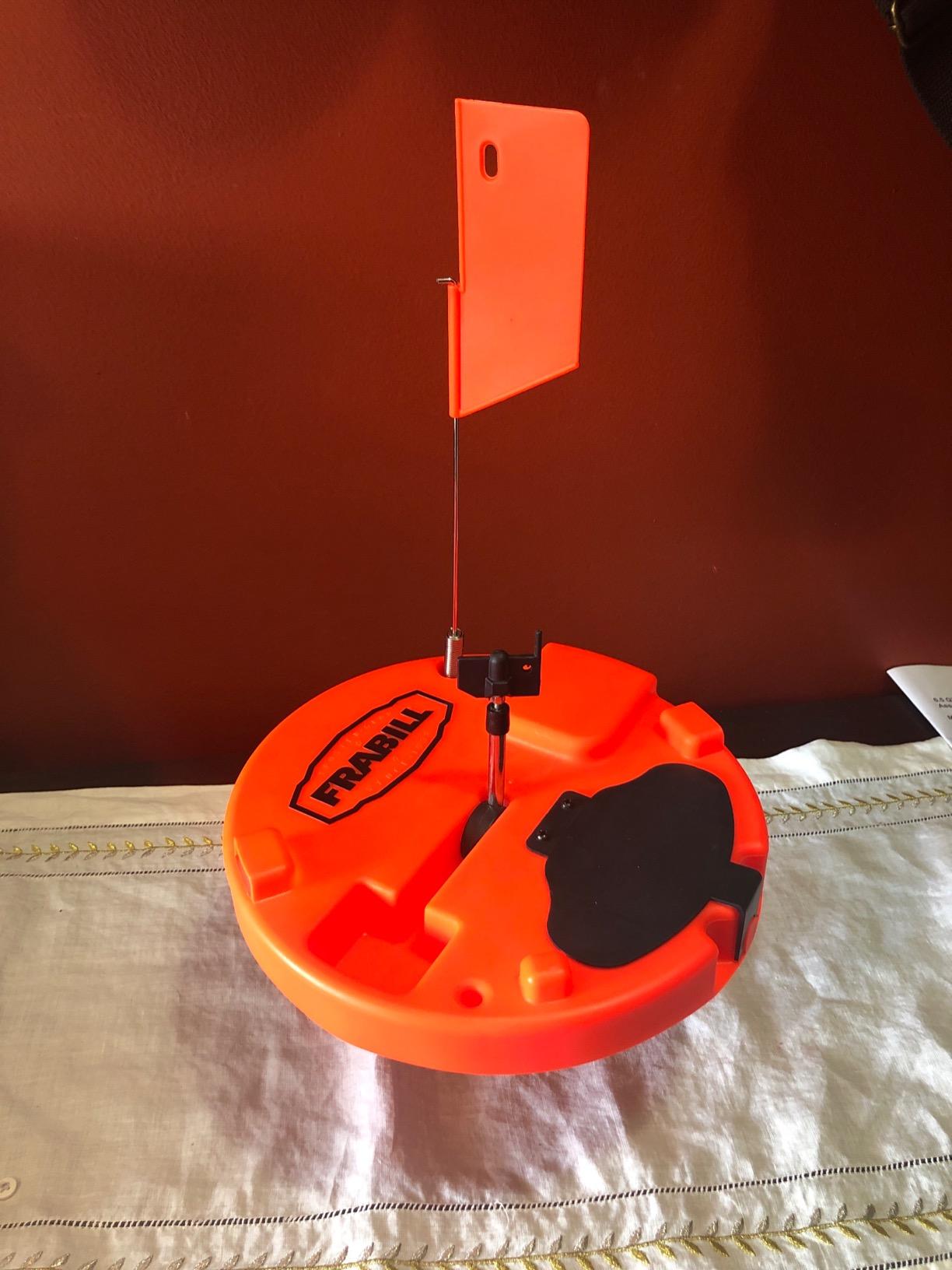
This is the tip-up I keep coming back to for pike, and the reason is boring but decisive. The insulated body is the original design from the model 1660, which has been in production since 2004, and it does exactly one job well: it stops the hole freezing shut while a pike decides whether to commit.
Pike are not fast feeders. A big fish will nose a bait, drift off, and come back from a different angle several minutes later. Every minute your hole is slushing over is a minute that fish is not working. On a cold week the Pro Thermal was the only one on my spread that never needed a chip to reopen the hole.
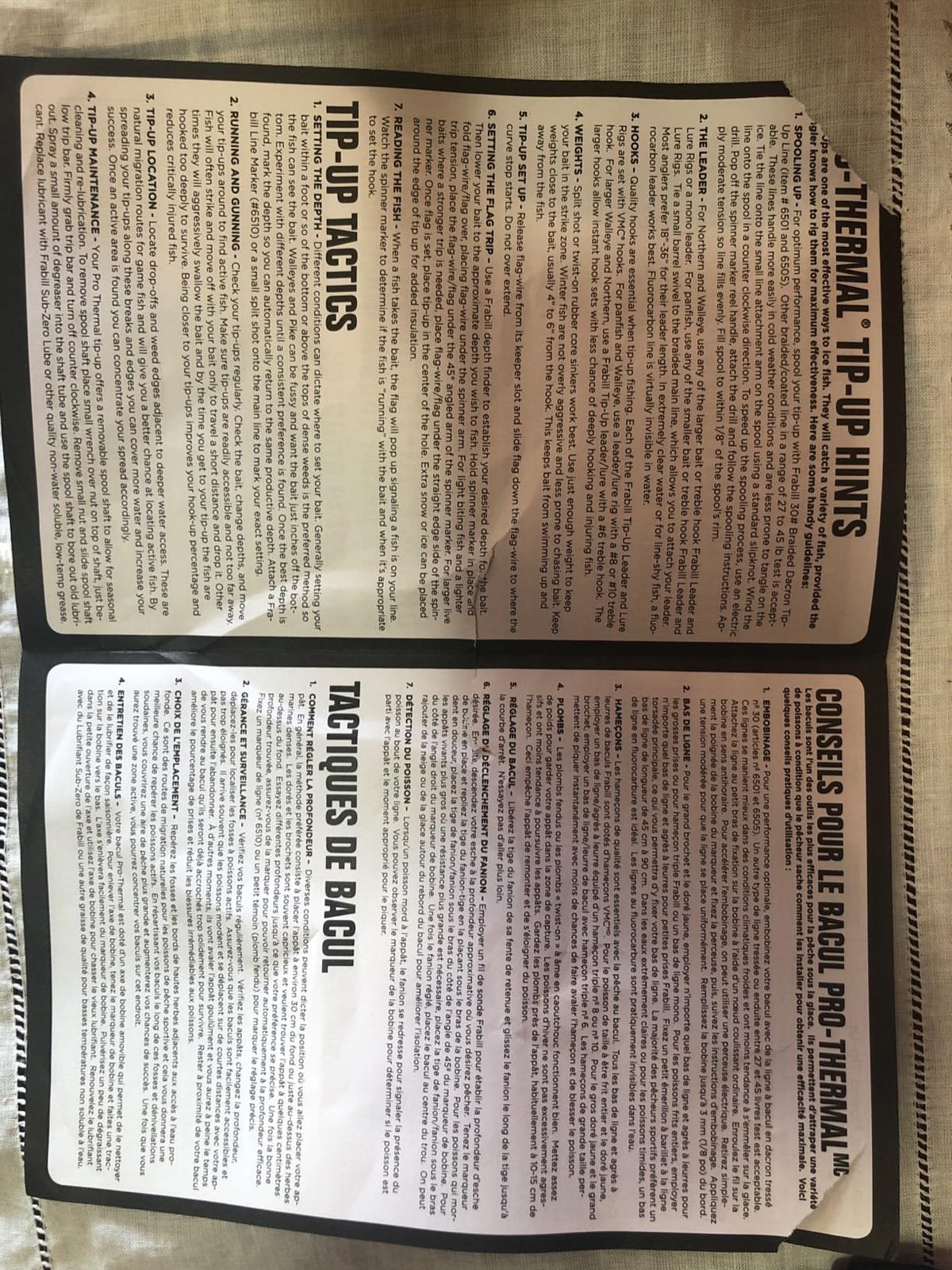
The mechanics are worth understanding because they explain the trip settings. A line spool sits on a shaft under the base, and a T-shaped rod holds the flag down. When a fish spins the spool the T rotates, releases the flag, and a spring snaps it vertical. The dual trip setting lets you hold the flag against a squared edge for a light take or a 45-degree edge for a quick release, and that single switch is what separates a pike setup from a perch setup.
For pike I run it on the light setting with the crank tension backed off, then dial up when I move to shallower water where the fish are smaller and heavier. The shaft-in-shaft pivot is pre-lubed with Sub-Zero grease and can be re-greased in the field, which matters more than it sounds if you fish four days in a row in single-digit temperatures.
Who the Frabill Pro Thermal suits
It suits anyone fishing multi-day trips in real cold who is more afraid of a frozen hole than of a broken part. The bucket-friendly profile means several pack into a standard bucket, so moving a spread across a lake is a five-minute job rather than a packing project.
It also suits beginners, because the flag trips on soft bites while still resisting the wind-driven false trips that make new anglers distrust tip-ups entirely.
Where the Frabill Pro Thermal falls short
The plastic flag arm is the weak point and the complaint appears repeatedly in reviews. In extreme cold it can snap, and a snapped arm means no flag and a lost fish.
The pivot mechanism sits above the line, so after repeated dips into slushy water it can ice up and become hard to collapse. Keep it out of the water between checks if you are on a soft, wet lake.
2. Big RED Tip Down: Best Rod-Balancing Sensitivity
- Rocking action picks up touches spool tip-ups miss
- Taller frame suits predator line
- Steel frame survives being knocked around
- Collapses flat for the sled
- Fishing rod not included
- Balance must be dialled in correctly
- One arrived with surface rust
The Big Red uses a tipping action rather than the horizontal pull most other flags here react to. Instead of a line spool, it clips onto your rod and balances it on a metal frame, so the rod tip dips and a flag swings out when a fish pulls. A spool tip-up needs the spool to rotate several times; this one only needs the rod to move a few inches.
That is why it is the most sensitive option on this list and, for my money, the best match for pike. A pike often does not take the bait outright. It bumps it, backs off, and hits it again. Most spool mechanisms read that as nothing. The rocking motion here reads it as a take.
Reviewers repeatedly single out that this taller frame is sized for larger reels and heavier line than budget tip-ups handle, which is exactly the requirement when you are running 20 lb braid to a 3-5 ft leader and a pike might run 30 feet before turning.
Who the Big RED suits
It suits the angler who already owns a medium to medium-heavy ice rod and wants the tip-up experience without giving up rod feel. You can lift the rod out of the clip and fight the fish yourself if the run gets serious.
It also suits anyone fishing predator line. The frame accepts both spinning and straight-line reels and heavier line without the balance problems you get on a short plastic stick.
Where the Big RED falls short
Balance is the whole game and it is the whole frustration. If the rod is not seated correctly in the clip, the flag will not trip reliably, and that is the adjustment point the reviews hammer on most.
You also need to bring your own rod. The listing includes one frame and one clip, and the frame collapses for transport, which helps but does not solve the gear problem.
3. Celsius Multi 3 Pack: Best Spread for the Money
- Three baits in the water at once
- Kit tackle saves a separate shopping trip
- Compact enough for a bucket or sled
- Very large review base
- Lowest average rating in this group
- Thin listing detail on capacity and trigger
- Basic plastic construction
This is a three-pack, and for pike that is the entire argument. One stick covers one hole at one height. Three sticks cover three heights across a weed edge, and a pike moving along that edge is far more likely to find one of three baits than one.
The 4.0 average across 330 ratings is the lowest in this group, and I am not going to pretend otherwise. The trigger works adequately. The build is plain plastic. But at the end of a full day when you want to spread six or eight baits across two drop-offs, the arithmetic of buying three at a time is hard to argue with.
The included tackle is a genuine convenience for a first-timer setting up, though serious pike anglers will swap the hooks and leaders for their own anyway.
Who the Celsius Multi 3 Pack suits
It suits families and beginners who want to fish several holes at once without buying individual units. It also suits the travelling angler, because the compact style packs down into a bucket or sled with room to spare.
For a youth or first-time pike angler fishing a known weed edge, running three baits at three heights is a better lesson than watching one hole.
Where the Celsius Multi 3 Pack falls short
It is not a big-fish tip-up. The build is basic plastic and the manufacturer publishes almost nothing about line capacity or trigger adjustment, so you are setting sensitivity by feel rather than by spec.
Roughly eight percent of the ratings are one star, which is a noticeably higher failure share than the insulated and steel units on this list.
4. Deep Freeze BlueTipz: Best for Knowing a Flag Went Up
- Phone alert solves the missed-flag problem
- Transmitter survived being run over
- Quick to pair and name per unit
- Bright LED identifies which flag fired
- Range drops past roughly 50 yards
- Flat AAA battery once cost a fish
- Spare units drain while switched off
- Receiver sold separately
This is not a tip-up, it is an alarm system that attaches to one, and it solves the single most common pike-angler failure. You are sitting on a bucket 40 yards from your spread, you glance away for two minutes, and a 20 lb pike is spooling line off a stick nobody is watching.
The transmitters clamp onto standard tip-ups, tip-downs and automatic hook setters with no adapter, then send a wireless alert to your phone through a free app that lets you name each one. You know which hole fired before you walk outside, which matters more with a spread of eight than with a spread of two.
Owners describe the durability in surprisingly rough terms, including a transmitter that survived being run over by a beaver-dam machine. For ice anglers that is the right kind of over-engineering.
Who the BlueTipz suits
It suits anyone running a wide spread who sits far enough from the holes that a flag is hard to read, especially at night or in falling snow when flag visibility drops.
It also suits groups sharing a shelter, since each transmitter can be named and given its own tone in the app so two people do not both run to the same hole.
Where the BlueTipz falls short
Effective range drops off past roughly 50 yards in open field conditions, which is short for a lake with a long spread.
Battery management is the real weakness. One owner lost a fish to a transmitter that went flat overnight, and reviewers note that spare transmitters can drain batteries while switched off. Check them before you leave the truck.
5. Ifish Pro Tip-Up: Best for Setting the Hook on a Rod
- Holds your own rod so you set the hook
- Three trigger levels match fish size
- Large 3-D flag reads across a spread
- Folding rod holder locks flat
- Rod-holder arm feels flimsy
- One long-term owner reports it not tripping
- Fits only to 46 inch rods
The Ifish Pro is the bridge between a tip-up and a rod. It holds a full ice rod in a folding arm and adds a mechanical trigger that strikes the hook for you when the rod bends, so you get the hands-free benefit of a tip-up while still fighting the fish on your own reel.
Three trigger settings is the feature that matters for pike. Light, medium and heavy gives you a real range, and you can run the same spread over a shallow weed edge where you expect smaller fish and a drop-off where you expect something else entirely.
The 14-inch three-dimensional flag on a 12-inch base is easy to read across a spread of holes, which is more than can be said for several units here.
Who the Ifish Pro suits
It suits an angler who is comfortable with a rod and reel and wants backup on a spread they cannot watch constantly. Being able to feel the line and set the hook yourself prevents the pike that picks up the bait and rolls with it from simply throwing the hook.
It also suits anyone whose spread is close enough to the shelter to work a rod at each hole.
Where the Ifish Pro falls short
The rod-holder arm is the weak link. Reviewers describe it as cheap and flimsy relative to the rest of the build, and it is the part carrying the load when a fish pulls.
One long-term user reports the flag failing to trip even when fish were visibly taking the bait, so check the trigger before you trust a long overnight set.
6. Clam Arctic Warrior 8840: Best Cold-Weather Rod Holder That Folds Flat
- Feel the bite and fight on your own rod
- Solid metal build holds up in wind and cold
- Folds flat and light to carry
- Best trips with a baitcaster reel
- Strap can let the rod slip or rotate
- Sensitivity needs correct rod balance
- Confusing instructions and hardware diagram
The Arctic Warrior is a tip-down rod holder with a spring arm that releases your rod when a fish pulls, so the strike happens on your gear instead of by hand. Owners who convert to it tend to stop bringing traditional spool tip-ups at all.
Sentiment on this one splits cleanly. Some people run six across multiple holes and never look back. Other people could not get it to trip even once, and almost all of the negative feedback traces back to setup rather than to the mechanism itself.
Two details do come up repeatedly. Baitcaster reels give the most reliable trip with slight spool tension, and the rod has to be properly balanced or the arm will not release.
Who the Clam Arctic Warrior suits
It suits anglers who want rod-and-reel control but hands-free waiting, and who are willing to spend ten minutes dialling in each rod before the first hole. The metal construction and sub-zero rating make it a solid choice on a cold lake with a wide spread.
The folding flat profile also makes it the easiest unit here to carry across a lot of holes on foot.
Where the Clam Arctic Warrior falls short
The strap that holds the bracket to the rod can let the rod slip or rotate if it is not secured tight, and that is the most common setup complaint.
The instructions and hardware diagram are confusing and in at least one case did not match the parts supplied, so allow extra time for assembly in the cold.
7. HT Polar Tip-Up 200 Yard Spool: Best Big Spool and Best in Wind
- Large spool suits long drops to deep structure
- Smooth payout on a multi-design trip shaft
- Does not freeze in sub-zero cold
- Trip wire cuts wind false flags
- Flag runs short and hides in deep snow
- Only one limitation reported
The HT Polar is the one to look at if you are fishing deep structure or you genuinely care about wind. Its 200-yard spool and wire line rated to 200 lb breaking strength give it more headroom for a running fish than any spool tip-up on this list.
It also has the clearest anti-false-trip design in the group. The wind-free trip wire removes the direct wind load from the trigger, which is exactly the failure that makes anglers give up on tip-ups on a windy lake. The multi-design trip shaft also runs smoothly, which matters when a fish takes 40 feet of line in the first three seconds.
Its one-star and two-star share is effectively zero in the reviews, which is unusual at this rating level.
Who the HT Polar suits
It suits pike anglers fishing deeper drop-offs, steep rock, or any setup where a fish can run a long way before it turns. The spool capacity is the reason to buy it.
It also suits anyone fishing exposed water where a plastic flag arm would be knocked sideways constantly, because the wire trip resists that load.
Where the HT Polar falls short
The flag is on the short side and can be hard to spot when the hole is ringed with deep snow, which is a real problem on a multi-stick spread in a snowstorm.
Pair it with a phone alert if you are spread out far enough that a short flag becomes a liability.
8. Finicky Fooler Ice Fishing Tip Up: Best Rod Power Under the Setup
- Adjustable depth reaches pike instead of shallow fish
- Medium power handles a heavier predator setup
- Fast action sets the hook on a hard take
- Consistent 4.6 average across reviews
- Listed for trout
- walleye and perch not pike
- Thin detail on capacity and adjustment
Most tip-ups on this list are just a flag and a spool. This one is built around a real rod, with a medium-power fast action blank and a cork handle, and for pike that is a meaningful difference because the fight usually happens over the first three seconds.
The adjustable depth is the other half of the appeal. Where a fixed-depth stick forces you to fish one height, this lets you work a bait deeper into a hole where pike are holding off the weed edge rather than on it.
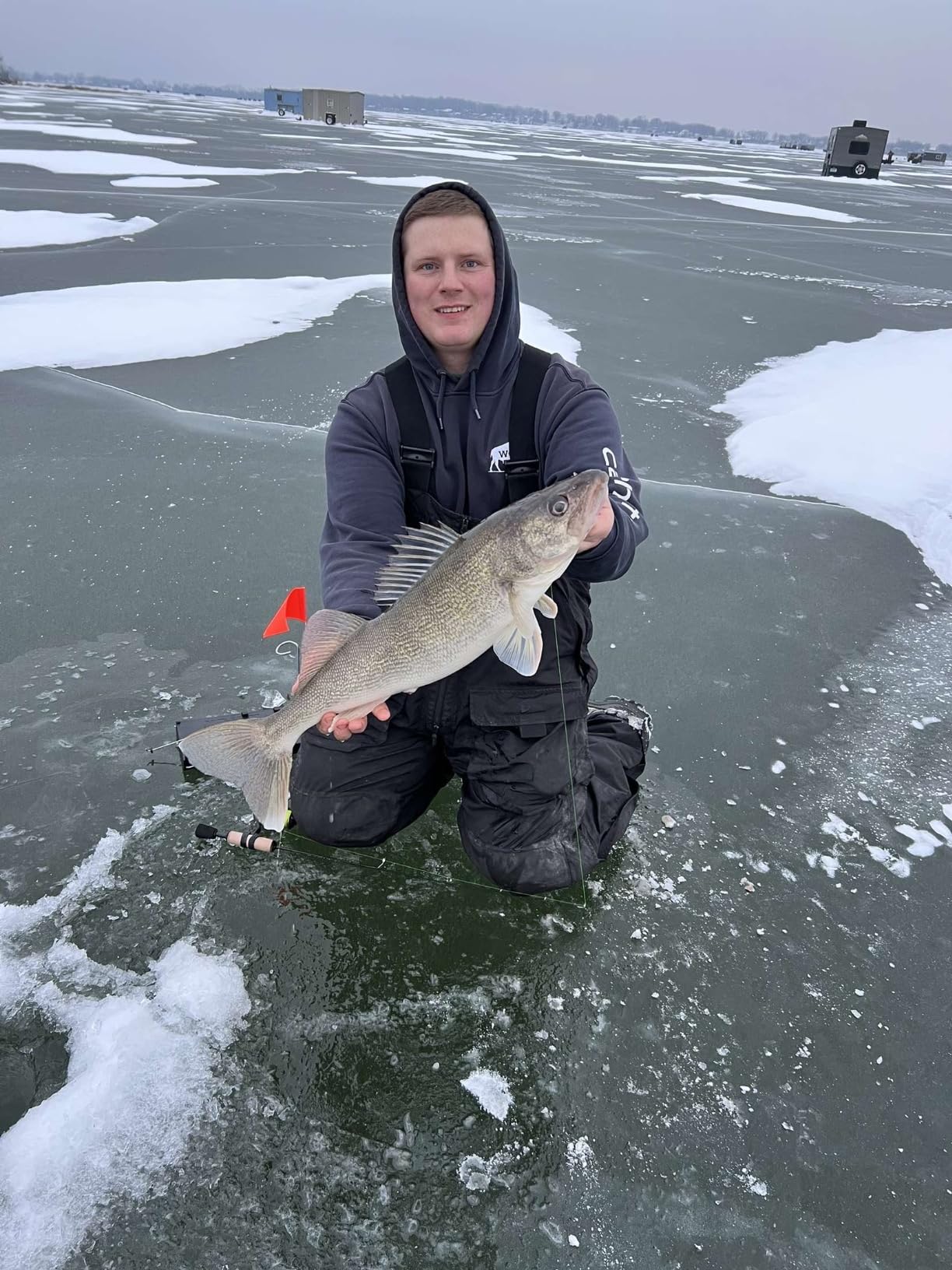
At a 4.6 average across 43 ratings it is one of the best-rated products in this group, with the caveat that its published review detail is thin.
The rod is the reason to look past the brand name. A medium-power fast action blank with a cork handle gives you the backbone to set the hook when a pike commits rather than mouthing the bait, and the cork stays grippable with bare fingers or thin gloves when a wet nylon leader runs through your hand.
Who the Finicky Fooler suits
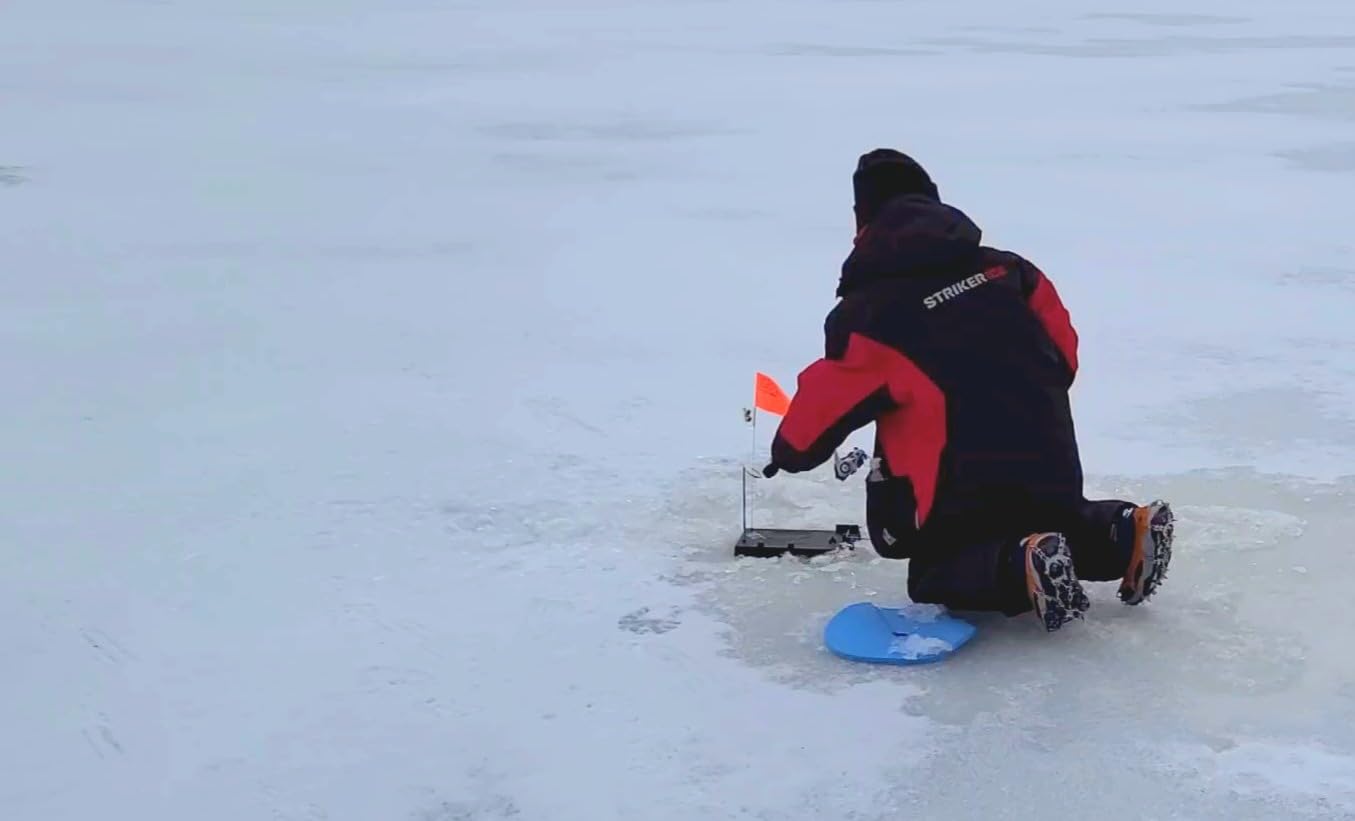
It suits an angler fishing pike that are sitting deep and pressing hard on the line. A medium-power rod with fast action has the backbone to set the hook when a fish commits instead of mouthing the bait.
The cork handle is worth noting for anyone who strips a lot of line by hand, since it stays grippable with bare fingers or thin gloves when a wet nylon leader runs through your hand.
Where the Finicky Fooler falls short
The manufacturer listing names trout, walleye and perch as the target species, so the pike case has to be built from the rod specs rather than from the marketing.
There is very little published detail on capacity and adjustment range, so you are relying on feel rather than spec when you dial it in.
9. Starpike All Season Tip-Up: Best Rust-Free Build and Heaviest Line Capacity
- No metal parts so no rust
- 450 ft capacity carries a heavy leader rig
- Foam base floats and keeps the hole open
- Reflective tape reads the flag at night
- Small flag wheel pops on a nibble
- Handle is short for grabbing the flag
- No hook storage point
The Starpike is built with no metal parts at all, and owners back that claim up. Nothing on it can rust, and the foam-insulated base means the whole unit floats rather than freezing down into the ice around your hole.
The line figure is the headline for pike anglers. Thirty-six pound test at 450 feet of capacity is more than any other product here publishes, which means you can carry a heavy leader rig to a deep hole without worrying about running out of spool.
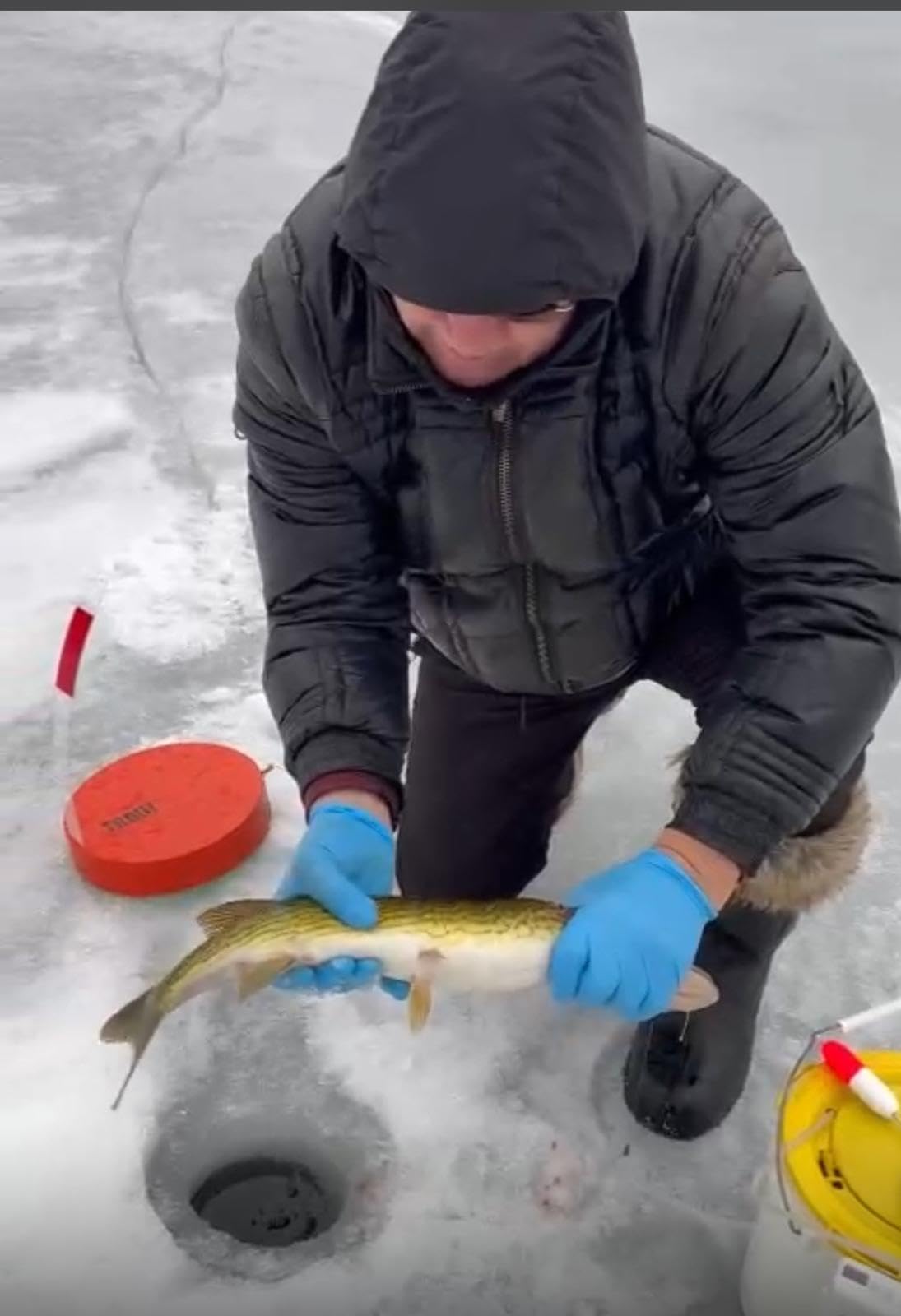
The foam and air insulation is what keeps the hole open in extreme cold, and the reflective tape on the flag makes it readable on a night bite when the rest of your spread is a dark shape against snow.
Because the construction is all plastic, the unit is not limited to the ice. The same flag-and-spool design works on open water, so a single unit covers a summer float-fishing setup as well as a winter spread.
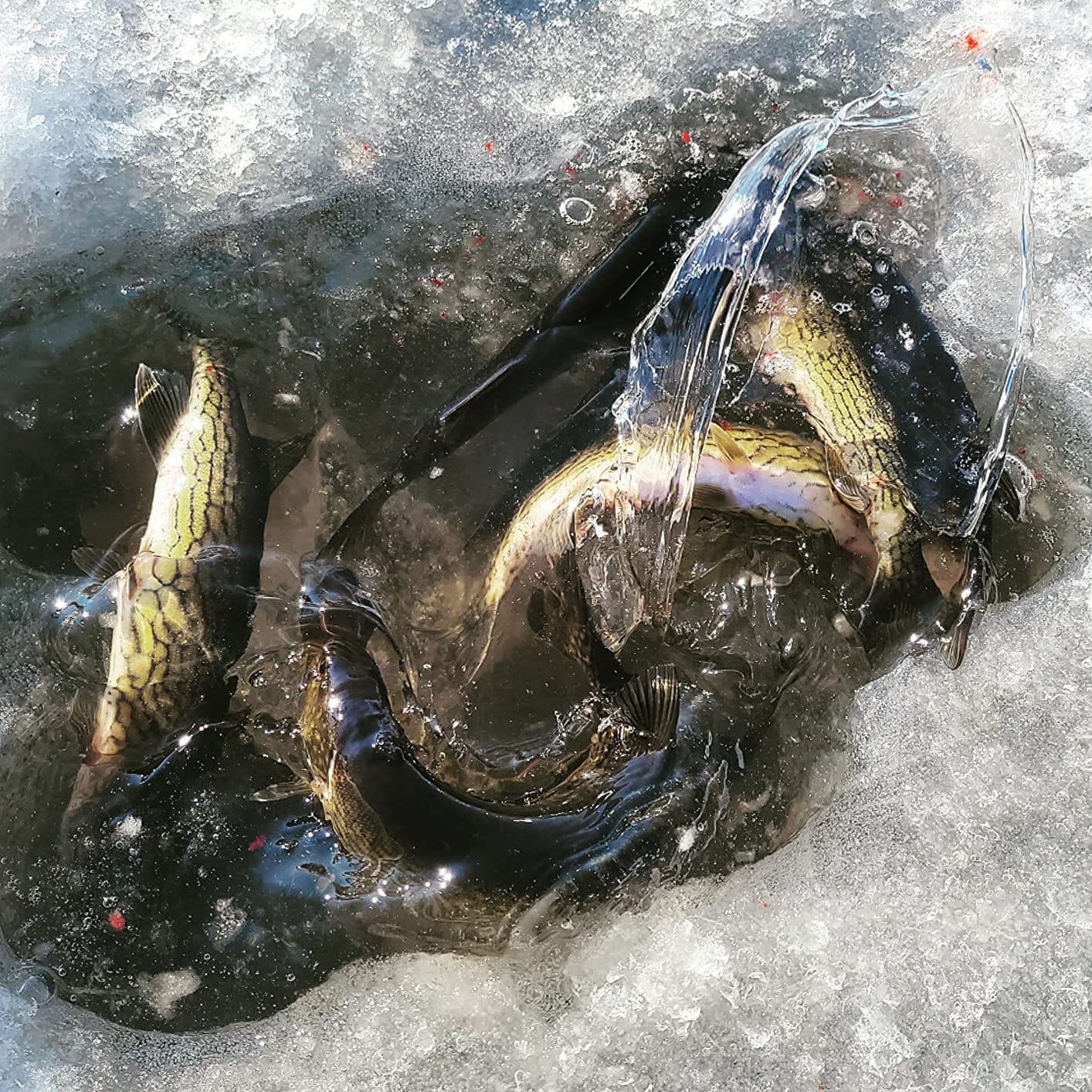
Who the Starpike suits
It suits anglers who fish slushy, wet lakes where metal hardware ices over or corrodes, and anyone who wants a heavy leader rig on a deep hole without running a separate spool.
It also works on open water, so a single unit covers a summer float-fishing setup as well as ice.
Where the Starpike falls short
The flag wheel is undersized and can pop the flag on a small nibble, which is the opposite failure of an over-sensitive tip and just as annoying.
The handle is short for a comfortable grip, and there is no hook storage point, so a reeled-in hook can be awkward to retrieve.
10. Happy Hooker Automatic Hook Setter: Best Cold-Weather Resets
Ice Fishing Automatic Hook Setter with Adjustable Rod Holder & Storage Tube
- Trigger sets the hook the instant a fish takes
- Dual controls tune tension from panfish to predators
- Resets cleanly with nothing freezing
- Pin-free assembly works with gloves on
- Storage tube included
- One buyer received no instructions
- Only 30 day refund and replacement cover
- Rod holder tops out at 34 inch rods
- Small review base
The Happy Hooker is the newest design here, and its argument is simple: a trigger that reacts the instant a fish takes converts missed bites into hooked fish. For pike, which commit hard and then run, an instant hookset is worth a lot.
Dual trigger controls let you tune rod tension and sensitivity separately, so the same unit covers a shallow weed edge and a drop-off. The ABS body with stainless steel stabilizers resists both rust and freezing, and the pin-free assembly was designed to be put together with gloves on, which is a real consideration at seven in the morning.
It ships with a storage tube that keeps it protected in the sled, and two reviewers explicitly prefer it to the Jawjacker for converting missed bites into fish.
Who the Happy Hooker suits
It suits anglers on short rods between 28 and 34 inches who want a mechanical hookset without giving up rod feel. It also suits anyone resetting gear several times a day, since owners specifically call out how cleanly it resets in the cold.
American manufacture and stainless hardware are both called out as positives in reviews.
Where the Happy Hooker falls short
One buyer received it without instructions and judged the materials cheap, so allow time for setup and inspect the parts on arrival.
The review base is 16 ratings, so the long-term reliability picture is genuinely thin, and the warranty is a 30 day refund or replacement rather than a season-long guarantee.
How to Rig a Tip-Up for Northern Pike
Rigging a pike tip-up is different from rigging one for walleye in three places: the bait, the leader, and how far off the bottom the bait sits. Get those right and the tip-up is almost an afterthought, because it is doing the holding while the bait does the work.
Bait. Pike tend to commit to one presentation and ignore the other, so run all live or all dead rather than mixing. Anglers report that when pike are on live suckers they will not touch dead bait, and vice versa, and one angler watched a sonar show a sucker minnow getting head-butted without a bite. Early in the season I would start with live suckers on a quick strike rig with a craw-colored blade, and switch to dead smelt on late ice. Smelt and hot dogs both produce pike, and baitfish rules for smelt and herring vary by state, so check your local regulations before you buy.
Terminal tackle. Hook minnows behind the dorsal fin for an active presentation rather than through the nose. A single size 1 or 2 hook on a heavy leader keeps the bait swimming and reads clearly to a pike that is inspecting rather than committing.
Line and leader. This is the question the forums ask most and the one almost no article answers. The pattern that comes up again and again is 20 lb or heavier braid tied with a double uni knot to 3-5 ft of 6-8 lb mono leader. Nylon-coated braid is preferred over standard braid because it is thicker and easier to grab with cold hands, which is not a small detail when you are hand-striking a line at minus five. Some anglers go harder still, with 30 lb black line to a 15 lb fluorocarbon leader or a 12-18 inch steel leader. If you want to build a rig alongside this, our fishing gear picks cover the electronics side of scouting water before you commit to holes.
Depth. The standard rule of thumb is 6-18 inches off the bottom. Pike are more flexible than that: forum consensus across threads puts them 3-5 ft off the bottom and just outside the weedlines in 10-15 ft of water, and one Montana angler limited out on walleye and pike while keeping dead smelt at least 2 ft off the bottom in 8-20 ft of water. On a shallow weed edge, spread the baits vertically instead of putting them all on the same height.
Mark the line stop with a split shot, a rubber band or a bobber stop, and use your sonar transducer to read the depth off the bottom before you drill rather than guessing.
Trip Sensitivity and False Flags on a Pike Tip-Up
Set a pike tip-up on the light side. False trips waste an afternoon, and a fish that picks up a bait and rolls with it will throw the hook on a stiff trip before the flag is fully clear of the base.
Wind is the dominant cause of false trips on this rig, and it is named repeatedly in reviews across multiple brands. A tip-up with a wind-resistant trip mechanism is worth a lot on an exposed lake, and if yours is a basic plastic stick the only real mitigation is to sit where you can see every flag.
The second cause is line shift, where the spool moves a fraction as the ice settles and the tip-up re-sets itself. Over-easing the crank tension makes this worse, not better, because a loose spool lets the line creep.
Time of day matters more for pike than for most species. The most commonly reported productive window is 9AM to 3PM, described by anglers as the lightest part of the day, which is a good argument for running tip-ups overnight and working them hard through the middle of the day.
Tip-Ups vs a Jigging Rod for Pike
Tip-ups win on coverage. A jigging rod covers one hole at one height with your full attention; a spread of six covers six heights and lets a pike commit on its own schedule, which is how pike fish.
A jigging rod wins on hookups and on fish you would rather not hand-strike. Feeling a take and setting the hook yourself keeps a fish that rolls with the bait, and it saves you from grinding a wet braid into your glove with numb fingers.
Most serious pike anglers run both. Tip-ups cover the spread while a jigging rod picks up the fish that comes to the hole you are standing on, and when a big fish hits a tip-up and runs, you can often pick it up on the rod instead. The rod-holder designs in this roundup, including the Big RED and the Ifish Pro, are the middle ground for anyone who wants one device that does both jobs. Keeping a shelter set up for a long session matters as much as the gear; our guide to portable cold-weather gear covers the warmth side of a full day on the ice.
How to Land a Running Pike on Tip-Up Line
The moment a pike lifts the flag, your job is simple: lift the line off the ice before the fish reaches open water. Grab the braid, not the leader, because wet mono will cut your fingers and the leader may not even be out of the water yet.
Braid grabs better than mono, which is a large part of why the 20 lb nylon-coated braid setup is so common for pike. Gloves help enormously, and wet hands on a running fish at speed is how people end up in the water.
If the leader reaches you and the fish is still going, grind the braid or leader onto a gloved hand rather than trying to wrap it around bare fingers. If the fish is well out and you cannot control the head, cutting the leader is a legitimate loss of fish rather than a mistake.
Check your tip before the fish arrives. The single most common tip-up failure is a spool with too little line, which means a pike strips everything and reaches open water before you know there is a bite.
Buying Guide: What Actually Matters for Pike
Line capacity matters more than flag height. A pike that runs 30 feet will take most of a small spool before it turns. Only two products on this list publish a real capacity figure, the HT Polar at 200 yards and the Starpike at 450 feet of 36 lb test, so on most models you are estimating. Buy the biggest spool you can find and spool with heavier line than you think you need.
Sensitivity is the second priority. A rod-balancing design such as the Big RED reacts to a bump that a spool mechanism will miss entirely. If you fish pike that hover and bump rather than commit, that difference is worth more than any other feature on this list.
Cold-rated hardware decides your trip length. Look for a shaft-in-shaft pivot that can be re-greased, an insulated body that holds the hole open, and a foam or air-insulated base. Metal-free construction such as the Starpike eliminates rust entirely, and sub-zero ratings matter if you fish at dawn on a cold front.
The hole cover does two jobs. It keeps the hole from freezing shut and it blocks light from reaching the bait, and light spooking fish is a bigger factor than most anglers credit. A tip-up with an insulated housing gives you both in one piece.
Trip adjustment should have at least two settings. Dual light and heavy settings let you adapt the same spread as the depth and the fish size change through the day. A single fixed trip is either too twitchy for a pike or too stiff to set the hook.
Flag visibility is about distance, not inches. On a short spread a 14-inch flag is plenty. Across a wide spread in falling snow, pair any short flag with a phone alert, because that is the combination that actually stops lost fish.
Rod-holder versus spool is the biggest fork in the category. A spool tip-up is self-contained and needs nothing from you but a flag watch. A rod-holder device lets you feel the bite and fight the fish on your own gear, which is better for hookups and worse for convenience. Decide which failure bothers you more before you buy.
Frequently Asked Questions
How deep should I fish with tip-ups?
Set the bait 6-18 inches off the bottom as a general rule. For pike specifically, forum anglers run them 3-5 feet off the bottom and just outside the weedlines in 10-15 feet of water, and one successful setup kept dead smelt at least 2 feet off the bottom in 8-20 feet of water.
Are tip-ups better than jigging for pike?
Tip-ups cover more water, and pike are moving fish that commit slowly, so passive gear is a good match. A jigging rod gives you better hookups and lets you fight the fish on your own gear. Most serious pike anglers run both at the same time.
What bait works best for northern pike?
Start with live suckers early in the season and switch to dead bait such as smelt or herring on late ice. Pike usually commit to one presentation and ignore the other, so run all live or all dead rather than mixing. Baitfish rules vary by state, so check local regulations first.
What line and leader should I use on a pike tip-up?
The most common setup is 20 lb or heavier nylon-coated braid tied with a double uni knot to 3-5 feet of 6-8 lb mono leader. Coated braid is preferred because it is thicker and easier to grab with cold hands. Some anglers go harder with 30 lb line to a fluorocarbon leader or a 12-18 inch steel leader.
Why does my tip-up keep false tripping?
Wind is the most common cause, and it is the complaint named most often in reviews. Line shift as the ice settles is the second cause, and easing off the crank tension makes it worse because a loose spool lets line creep. Use a wind-resistant trip mechanism and sit where you can see every flag.
Final Verdict on the Best Ice Fishing Tip Ups for Pike
The Frabill Pro Thermal is the best ice fishing tip up for pike overall, and the evidence is in the numbers: 4.5 stars across 619 ratings, an insulated body that keeps a hole open, and dual trip settings you can actually use on a spread that changes through the day.
Buy the Big RED if sensitivity to a bumping pike matters more to you than self-contained convenience. Buy the HT Polar if you are fishing deep and exposed. Buy the Celsius three-pack if the goal is more baits in the water, and add a phone alert if your spread is wider than one flag.
Whatever you choose, spool heavier than you think you need, set the trip light, and put the bait where a pike is already feeding rather than where you assume it should be. Updated for 2026.