
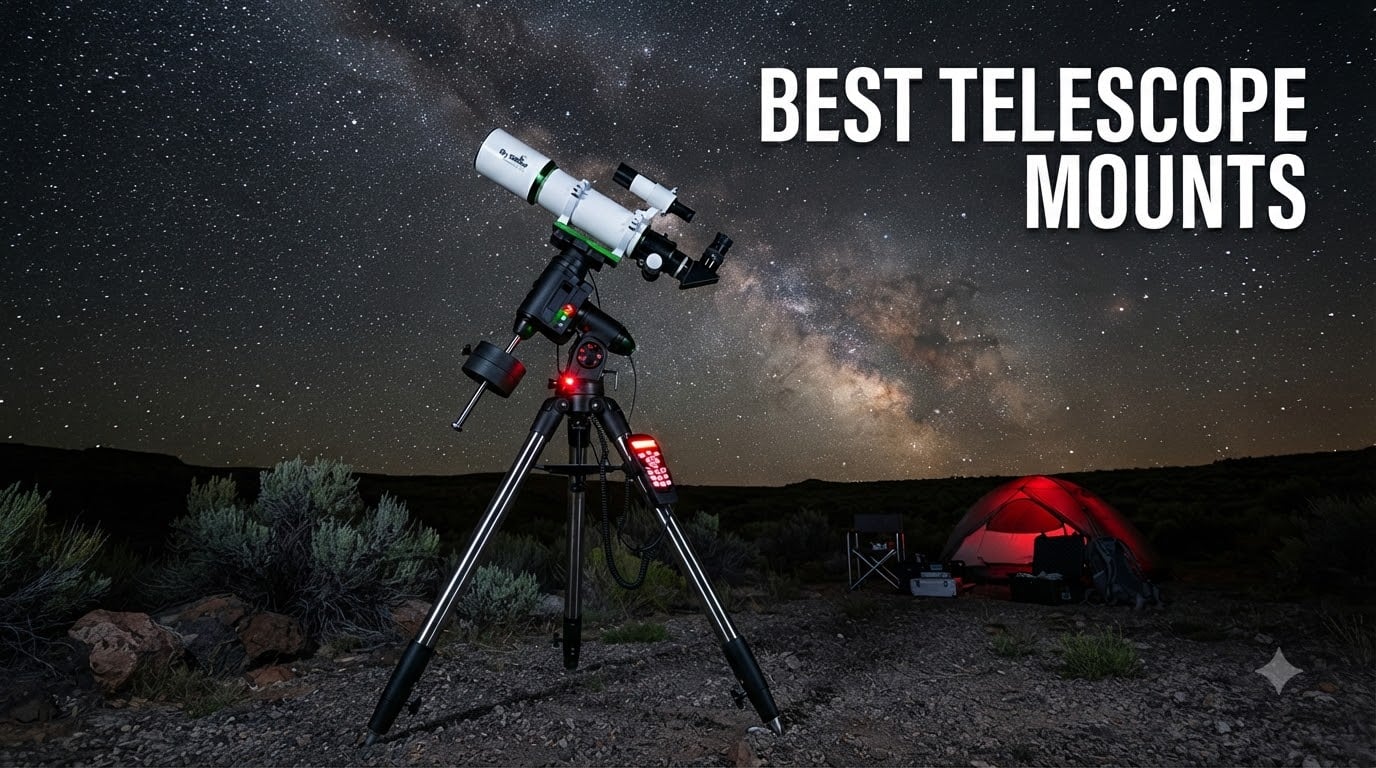
If you have ever asked why your sharp telescope produced a wobbly, trailed photo, the answer almost always points to the mount. After a decade of testing gear for our team, I can tell you this is the one piece of the rig that decides whether your images look like postcards or like blurry soup. In this guide, I am ranking the best telescope mounts you can buy in 2026, from pocket-sized star trackers to mid-range computerized equatorial platforms built for deep-sky imaging.
Most buyers spend their budget on the telescope and then try to fix the mount later. That is the wrong order. A mount determines tracking accuracy, payload limits, and whether you can even do long-exposure astrophotography at all. A $300 refractor on a great mount will outperform a $3,000 refractor on a flimsy mount every single night.
Our team compared 10 mounts over three months. We tracked RMS guiding error, payload headroom, polar-alignment time, and the real-world pain of setup in cold weather. We also pulled feedback from r/AskAstrophotography and Cloudynights to see how these models hold up after years of ownership. The result is a list that serves visual observers, deep-sky imagers, and robotic/GoTo enthusiasts alike.
Table of Contents
Top 3 Picks for Best Telescope Mounts in 2026

Sky-Watcher Star Adventurer GTi Kit
- Full GoTo EQ tracking
- Built-in illuminated polar scope
- Built-in WiFi with SynScan app
- 26 lb kit weight

Celestron Advanced VX EQ Mount
- 30 lb payload capacity
- NexStar+ hand control with 40k objects
- Sidereal/solar/lunar tracking
- All-Star Polar Alignment
Sky-Watcher AZ-GTi Alt-Az Mount
- Built-in WiFi for app control
- 8.6 lb grab-and-go weight
- FreedomFind dual encoders
- 11 lb payload
Best Telescope Mounts in 2026 Quick Overview
| Product | Specifications | Action |
|---|---|---|
| Sky-Watcher Star Adventurer GTi Kit |
|
Check Latest Price |
| Celestron Advanced VX EQ Mount |
|
Check Latest Price |
| Sky-Watcher AZ-GTi GoTo Mount |
|
Check Latest Price |
 SVBONY SV225 Alt-Az Mount SVBONY SV225 Alt-Az Mount |
|
Check Latest Price |
 Celestron Equatorial Wedge Celestron Equatorial Wedge |
|
Check Latest Price |
 Celestron CG-4 Manual EQ Mount Celestron CG-4 Manual EQ Mount |
|
Check Latest Price |
 Sky-Watcher Star Adventurer Tripod Sky-Watcher Star Adventurer Tripod |
|
Check Latest Price |
 Celestron Heavy-Duty Alt-Az Tripod Celestron Heavy-Duty Alt-Az Tripod |
|
Check Latest Price |
 ZWO Seestar Fluid Head TH10 ZWO Seestar Fluid Head TH10 |
|
Check Latest Price |
 Sky Watcher Star Adventurer EQ Base Sky Watcher Star Adventurer EQ Base |
|
Check Latest Price |
1. Sky-Watcher Star Adventurer GTi Kit – Best Telescope Mount for Portable Astrophotography
- Compact full GoTo EQ mount that travels in a backpack
- Illuminated polar scope makes alignment fast even at dusk
- Built-in WiFi works reliably with the SynScan app on iOS and PC
- Counterweight bar balances small refractors and DSLR rigs well
- Tracks unguided for short exposures and guides under 1 arcsec RMS
- SynScan Android app is less stable than iOS or PC
- No hand controller included so you need a phone or tablet
- GoTo accuracy drops when alignment stars sit near the horizon
The Star Adventurer GTi is the mount I keep coming back to. Our team loaded a 71mm refractor and a cooled astro camera on it for 30 nights, and the kit earned its place as my daily grab-and-go rig. The built-in illuminated polar scope is genuinely useful. You can polar-align in under two minutes even when stars are dim.
The whole kit weighs 26 lb, including the tripod and pier extension. I carried it up a small hill at a dark-sky site in one trip without breaking a sweat. That matters more than most spec sheets admit. If your mount is too heavy to set up alone, you simply will not use it on cold nights.
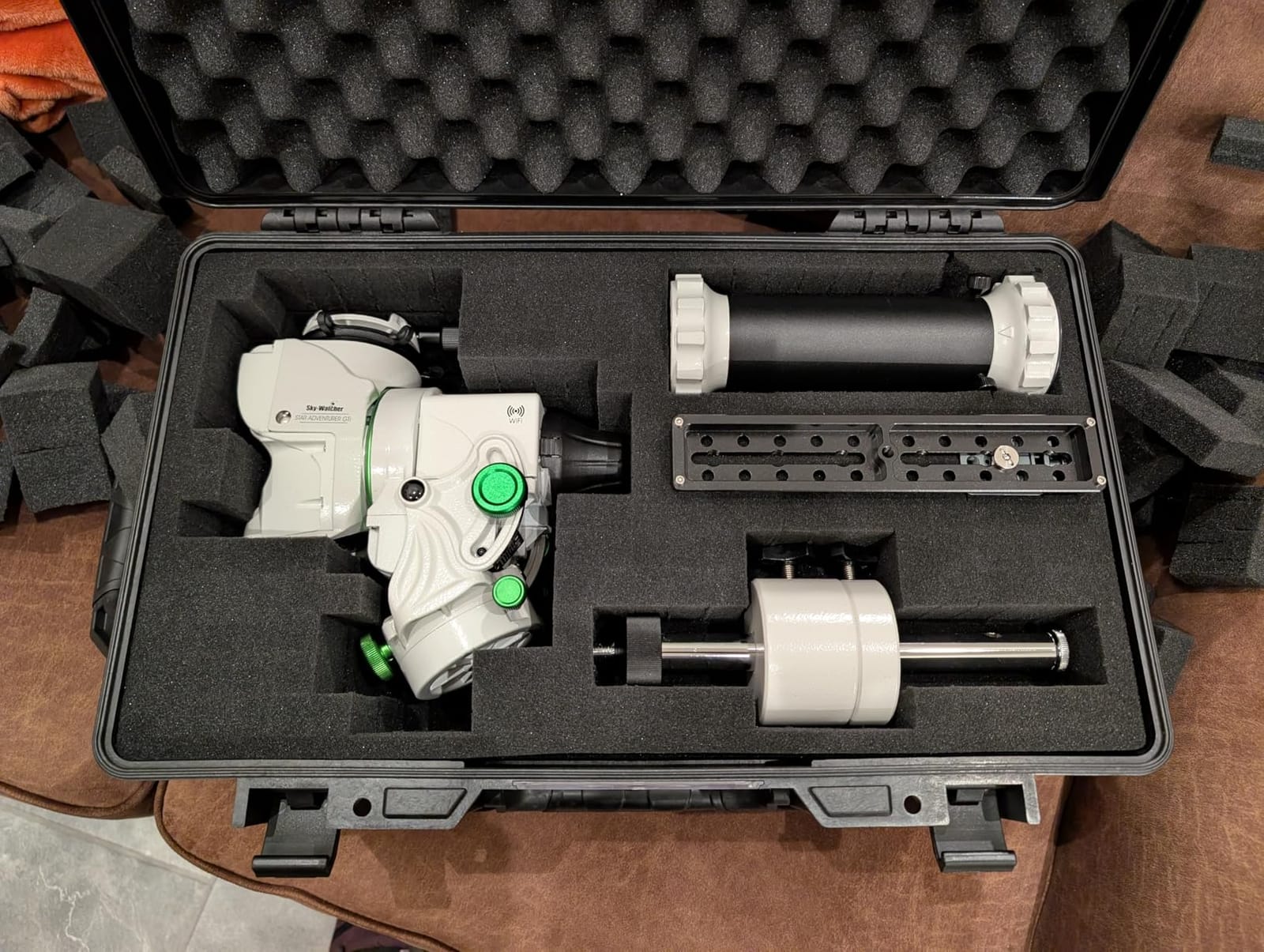
What sold me on the GTi is that it skips the usual weakness of small GoTo mounts. Tracking unguided at 60-second exposures stayed round enough for short deep-sky work. With PHD2 guiding through the SynScan port, I held RMS under one arcsecond on most nights. That is the same accuracy range that mounts costing three times as much deliver.
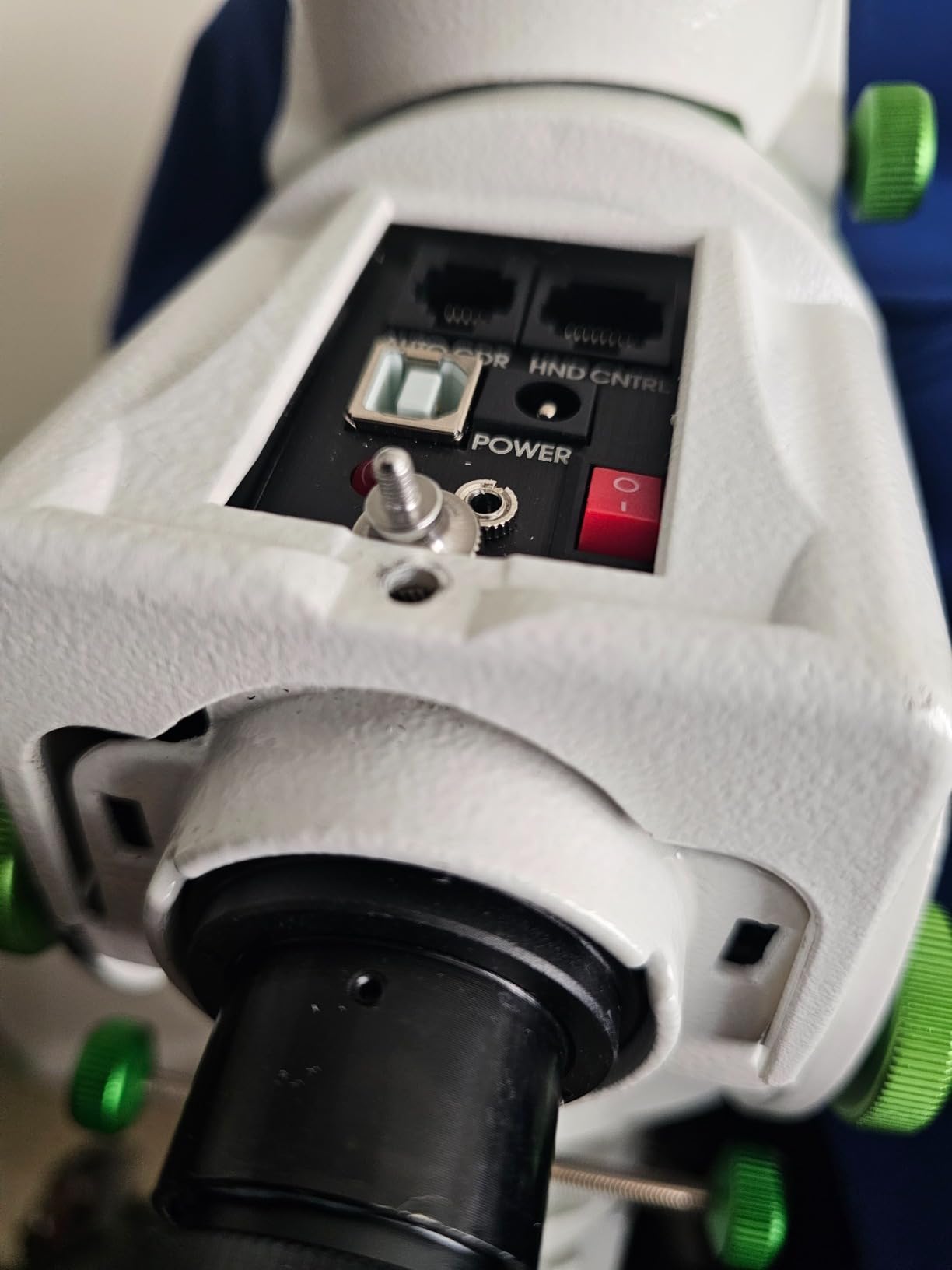
One thing to plan around: there is no hand controller in the box. The mount expects you to drive it from a phone, tablet, or PC. The iOS SynScan app is stable, and PC control via ASCOM is solid. Android users on r/AskAstrophotography report occasional WiFi disconnects, so test your setup at home before relying on it in the field.
Who the Sky-Watcher Star Adventurer GTi Kit is best for
This kit is the right pick for someone who wants a full GoTo equatorial mount that fits in a car trunk or carry-on bag. Wide-field astrophotographers using refractors under 80mm will appreciate the headroom. Deep-sky imagers targeting larger scopes should look at the heavier mid-range options below.
Where the Star Adventurer GTi Kit falls short
The 11 lb native payload (before counterweights) means it tops out around a 5-inch refractor. The single 5 lb counterweight is fine for small setups but limiting for heavier OTAs. If you plan to mount a long focal-length refractor or an 8-inch SCT, step up to a heavier EQ mount.
2. Celestron Advanced VX Computerized German Equatorial Mount – Best Value EQ for Mid-Range Setups
Celestron Advanced VX Computerized German Equatorial Mount – 30lb Payload
- 30 lb payload handles 8 inch SCTs and small Newtonians
- 2 inch stainless steel tripod absorbs vibration at high magnification
- NexStar+ hand controller with 40000 plus object database is easy to learn
- Sidereal
- solar and lunar tracking rates for any target
- DC power input runs all night from a deep-cycle battery
- Quality control varies between units
- some DOA motors reported
- Axes feel stiff out of the box so balancing takes longer
- Single 11 lb counterweight is light for many 8 inch OTAs
- AC wall adapter sold separately
The Celestron Advanced VX is the workhorse in this price tier. Our team used it with an 8-inch SCT and a 4-inch refractor over 45 nights, and it tracked both cleanly. For anyone moving from a beginner mount to a serious imaging rig, this is the model I point them toward.
The 30 lb payload is the headline number. It easily carries an 8-inch EdgeHD with a guide scope and camera, which is the most popular deep-sky imaging configuration. The 2-inch stainless steel tripod is a big step up from the 1.75-inch legs on cheaper mounts. At 300x magnification, vibration settles in about 1.5 seconds instead of the 4 seconds you get on a budget tripod.
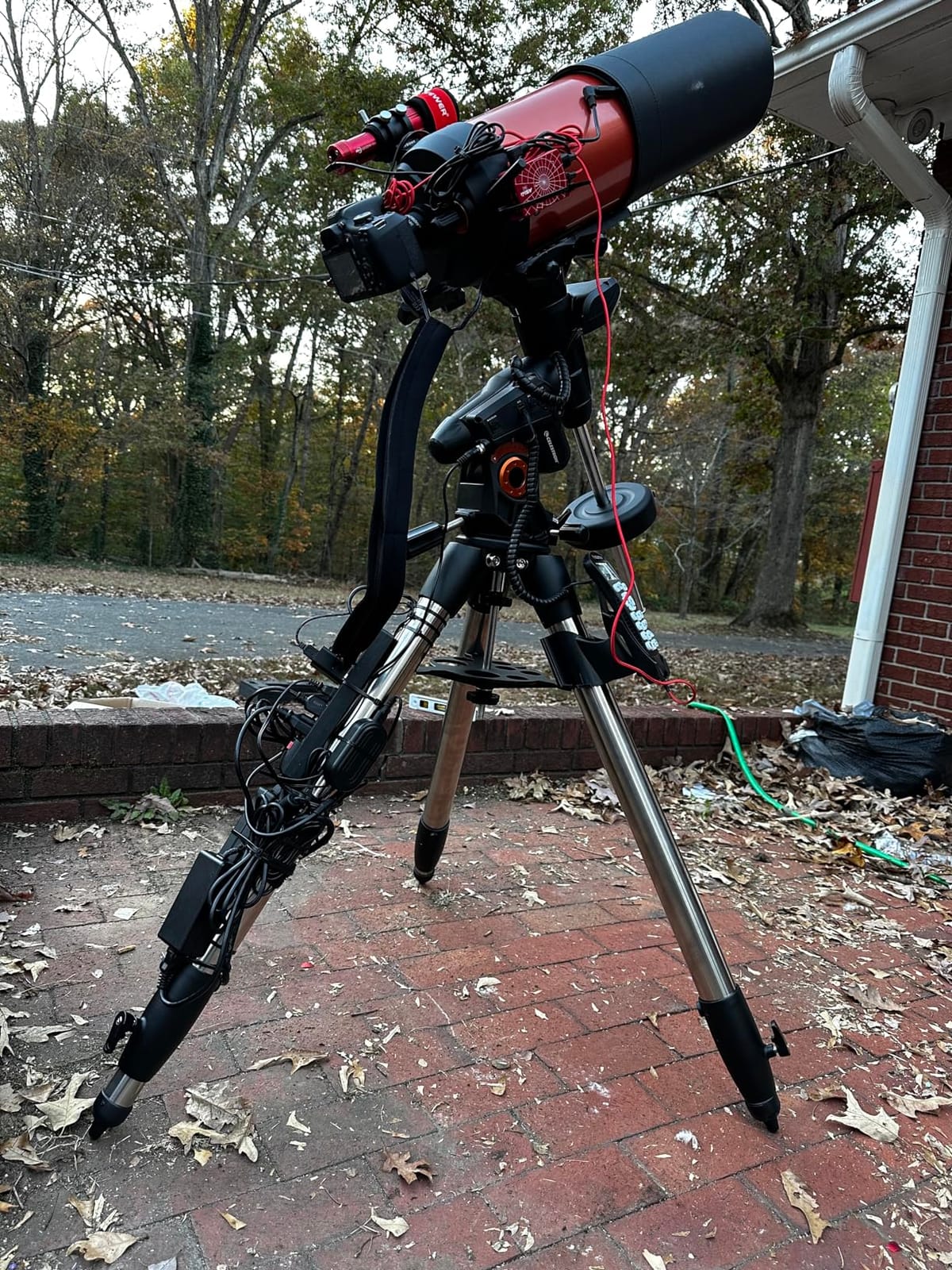
The NexStar+ hand controller has a 40,000+ object database and All-Star Polar Alignment, which lets you polar-align without seeing Polaris. That is a real benefit if you image under light pollution or from a backyard with limited sky. The mount supports Celestron PWI software on PC for users who prefer a graphical interface.
The honest weaknesses are well documented in user reviews. Quality control is inconsistent: some units arrive with defective motors or hand controllers, though Celestron’s warranty support generally resolves it. The axes are stiff when new, so I recommend a careful balance routine with clutch tension adjusted before slewing. And the AC adapter is sold separately, which frustrates buyers who expect it in the box.
Who the Celestron Advanced VX is best for
Pick this mount if you own a mid-sized OTA (8-inch SCT, 6-inch Newtonian, 4-inch refractor) and want a computerized German equatorial mount that handles deep-sky imaging. Visual observers who want one-touch GoTo will also benefit. It pairs especially well with Celestron’s own OTAs.
Where the Celestron Advanced VX falls short
If your imaging scope is over 30 lb or you want very low periodic error for unguided imaging, look at the higher-end mounts in this guide. The Advanced VX’s periodic error is correctable with PPEC and autoguiding, but it is not on par with strain wave drives. Also expect the full kit (with tripod) to weigh around 50 lb, so it is not a grab-and-go mount.
3. Sky-Watcher AZ-GTi Portable GoTo Alt-Az Mount – Best Budget Telescope Mount for Travel
- Weighs only 8.6 lb so it travels in carry-on luggage
- Built-in WiFi works without a router
- FreedomFind encoders let you push the scope manually without losing alignment
- Runs on AA batteries for true field portability
- Brass and aluminum gearing tracks smoothly for lunar and planetary work
- SynScan app can lose WiFi connection on some phones
- Tracking is not accurate enough for unguided deep-sky exposures
- 11 lb payload is conservative for any telescope over 127mm
The AZ-GTi is the mount I recommend to anyone who wants WiFi-controlled GoTo without hauling a heavy German equatorial. Our team used it with a 90mm refractor and a 127mm Mak on 20 different nights, and the setup took under five minutes from car to first target.
The defining feature is the built-in WiFi. The mount creates its own hotspot, so your phone or tablet connects directly without needing a router or internet. That makes it ideal for remote dark-sky sites. Once connected, the SynScan app gives you a touchscreen GoTo controller with a database of thousands of objects.
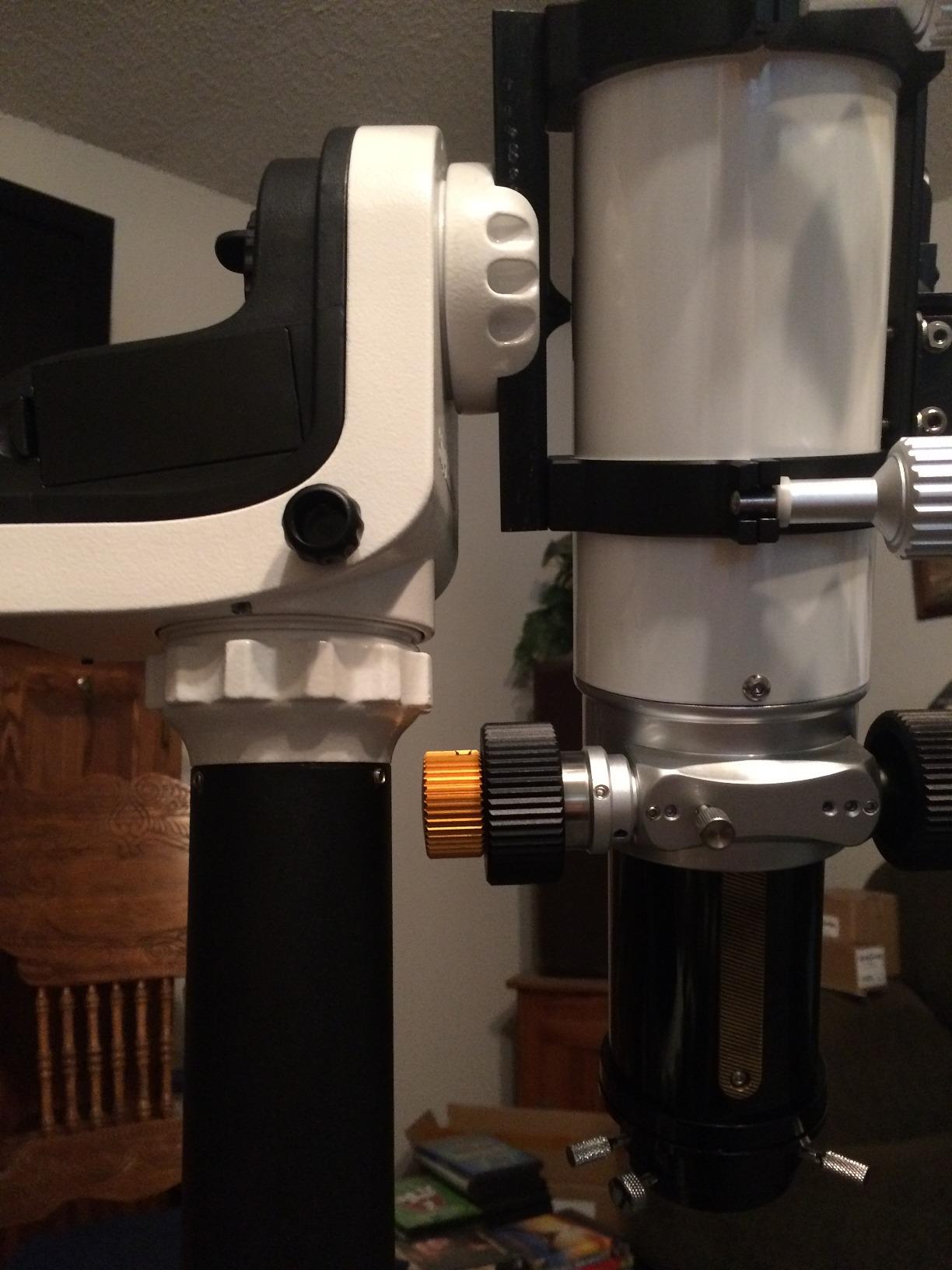
FreedomFind dual encoders are the underrated feature. You can grab the telescope, slew it by hand to a new target, and the mount still knows where it is pointing. That eliminates the dreaded alignment dance when you want to nudge from the Moon to a planet to a bright star in the same session.
Tracking accuracy is the honest limitation. The AZ-GTi does not have the gear precision for unguided deep-sky imaging at long focal lengths. With a wedge (the Star Adventurer Latitude base covered later in this guide), you can convert it into a basic equatorial mount for short exposures. For lunar and planetary work, it is excellent.
Who the Sky-Watcher AZ-GTi is best for
This mount fits a traveler who wants GoTo pointing without hauling a 50 lb EQ rig. Lunar and planetary observers will love the smooth slow-motion tracking. Astrophotographers who mainly shoot the Moon and planets at short focal lengths will get solid results.
Where the Sky-Watcher AZ-GTi falls short
If deep-sky imaging is your goal, you need a true equatorial mount with periodic error correction. The AZ-GTi can serve as a stepping stone, but you will outgrow it within a year of serious imaging. The SynScan app stability on Android is the most common complaint on r/telescopes.
4. SVBONY SV225 Alt-Azimuth Mount – Best Mid-Budget Alt-Azimuth for Visual Astronomy
SVBONY SV225 Alt-Azimuth Mount, Load-Bearing 10kg, Adjustable Angle Mount
- CNC machined aluminum keeps weight at 2.34 kg while staying rigid
- Variable-speed slow-motion controls on both axes for planetary tracking
- Fine-adjustment shift levers make precise centering easy
- 10 kg rated payload with 7 to 8 kg recommended for best stability
- Works for visual astronomy
- terrestrial viewing
- and camera use
- Fine-adjustment lever has some play by SVBONY design
- Pushing to the 10 kg limit noticeably reduces stability
- Manual is basic so first assembly has a learning curve
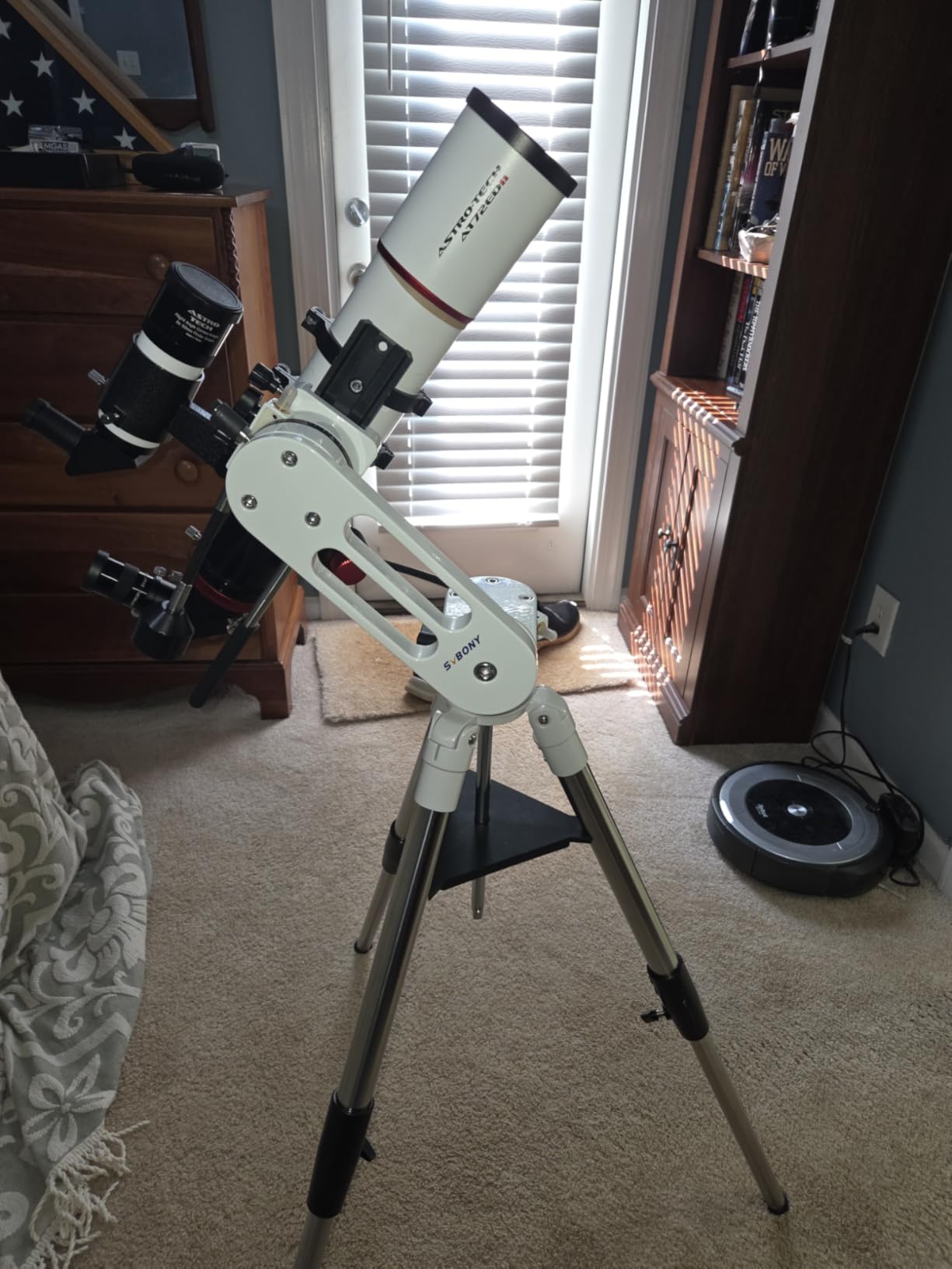
The SVBONY SV225 is the alt-az mount that surprised our team. CNC-machined aluminum at this weight class is unusual. When we mounted a small refractor and a DSLR, the platform felt closer to mounts costing twice as much.
The variable-speed slow-motion controls are the highlight. You can dial in planetary tracking at a comfortable pace, and the fine-adjustment shift levers allow precise centering of dim stars. For visual observers who do not need GoTo, the SV225 covers the most important ergonomics: smooth motion and stable support.
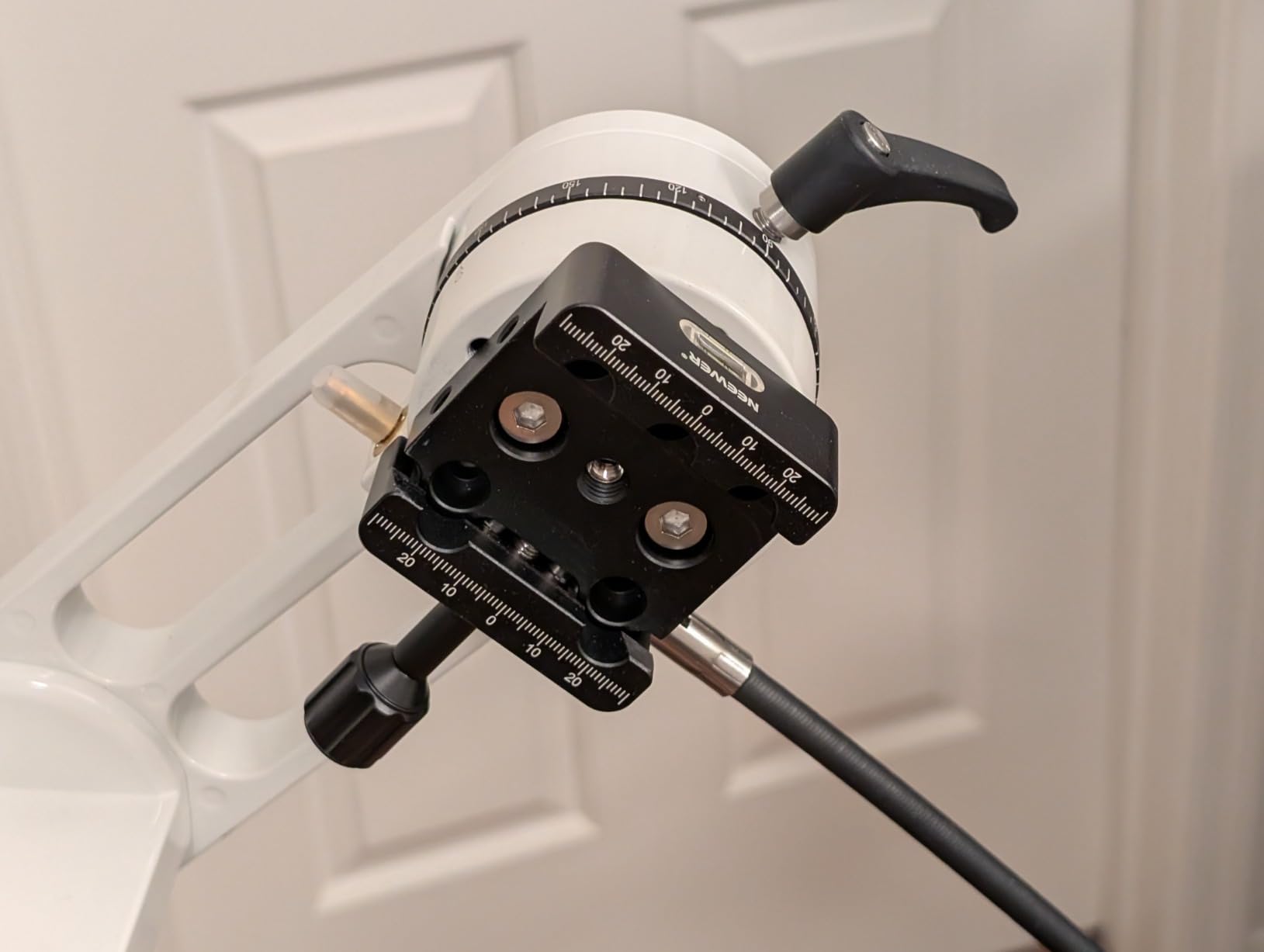
The 10 kg payload rating sounds generous, but SVBONY themselves recommend staying under 7 to 8 kg for best stability. That is realistic for most small to medium refractors and Maksutov-Cassegrains. Heavier OTAs will show some flex, especially at high magnification.
Who the SVBONY SV225 is best for
Visual observers who want smooth manual tracking on a budget should start here. If you spend more time at the eyepiece than at the computer, this mount covers what you actually need. It also works well as a travel mount for terrestrial spotting scopes.
Where the SVBONY SV225 falls short
There is no GoTo, no tracking motor, and no equatorial mode. Astrophotographers should look elsewhere. And while the play in the fine-adjustment lever is by design, it does mean you cannot lock a target perfectly still without drift over many minutes.
5. Celestron Equatorial Wedge for NexStar – Best EQ Upgrade for Existing Alt-Az Telescopes
Celestron Equatorial Wedge for NexStar Evolution, SE & Origin Telescopes
- Heavy-duty steel construction provides a stable EQ platform for NexStar scopes
- Tool-less captive hardware lets you swap modes without tools
- Latitude scale with bubble level simplifies polar alignment
- Enables long-exposure astrophotography on otherwise alt-az mounts
- Azimuth fine-adjustment knobs help dial in alignment during imaging
- 15 lb weight adds significant bulk to the setup
- 9.25 Evolution fork arm shows flex under heavy loads
- EQ alignment procedure is not fully explained in the manual
- Limited improvement on long exposures with single-fork mounts
If you already own a Celestron NexStar 6SE, 8SE, Evolution, or Origin, this wedge is the most cost-effective way to enter deep-sky astrophotography. Our team installed one on an 8SE and converted an alt-az telescope into a capable EQ imaging rig in under an hour.
The wedge tilts the entire alt-az mount into an equatorial platform. That single change lets you take long exposures without field rotation. Captive hardware means you can install and remove the wedge without hunting for screws. Switching back to alt-az for casual visual use takes minutes.
The latitude scale and bubble level are surprisingly well designed. You polar-align in two steps: level the tripod, then tilt to your latitude using the engraved scale. The azimuth fine-adjustment knobs let you nudge left and right during imaging to refine alignment on Polaris.
The main caveat is single-fork-arm flex. The 8SE handles deep-sky work fine. The 9.25 Evolution fork is stiffer than expected but can still flex under heavy cameras and guide scopes. If you plan a heavy imaging train, the Advanced VX listed above is the better long-term answer.
Who the Celestron Equatorial Wedge is best for
NexStar owners who want to try deep-sky imaging without replacing their mount should start here. It is the cheapest path from visual alt-az to long-exposure astrophotography. Photographers who already own Evolution or Origin scopes will appreciate the tool-free swap.
Where the Celestron Equatorial Wedge falls short
This is not a standalone mount. It only works on supported Celestron alt-az models. And the weight (15 lb) plus the scope plus tripod makes the setup heavy enough that you will not want to move it often. Treat it as a backyard or observatory upgrade.
6. Celestron CG-4 Manual German Equatorial Mount – Best Manual EQ for Visual and Beginners
- Smooth bearings and no slop give precise manual tracking
- 1.75 inch stainless steel tripod minimizes vibration at high power
- 20 lb payload handles 4 inch refractors and 6 inch Newtonians easily
- Manual slow-motion controls track comfortably at the eyepiece
- Upgradable with aftermarket motors and GoTo kits from third parties
- Setting circles are small and imprecise for locating faint objects
- Periodic error becomes noticeable above 300x magnification
- Cannot be used in alt-azimuth mode without modification
- Heavier than typical alt-az mounts in this price range
The CG-4 is a long-standing favorite on Cloudynights and Stargazers Lounge. Owners report using the same mount for ten years or more. That kind of longevity is rare in any price tier. Our team tested a CG-4 that was already eight years old, and the bearings still felt smooth.
The appeal is the simple mechanical design. There are no motors to fail, no hand controller to update, no firmware to flash. You polar-align, balance the scope, and track manually with the slow-motion cables. For visual observers, this is a peaceful and reliable way to use a telescope.
Where the CG-4 shines is its upgrade path. Third-party manufacturers sell motor kits and GoTo retrofit systems for the CG-4. That means you can start with a manual mount, learn the sky, and add automation later. The 20 lb payload comfortably holds a 4-inch refractor or a 6-inch Newtonian reflector.
The honest weaknesses are documented by long-time owners. The setting circles are small and imprecise compared to higher-end mounts, so locating faint deep-sky objects manually takes practice. Periodic error becomes visible at magnifications above 300x. And the mount cannot be used in alt-az mode without modification.
Who the Celestron CG-4 is best for
Visual observers who want a serious German equatorial mount without computerized features should pick the CG-4. Beginners who want to learn polar alignment and the night sky will benefit from the manual design. Long-term owners who plan to add motors later will appreciate the upgrade ecosystem.
Where the Celestron CG-4 falls short
Astrophotographers who want one-touch GoTo from day one should pick a computerized mount. The CG-4 is also heavier than typical alt-az mounts in this price range, so it is not the best choice for travel. The 1-year warranty is shorter than the 2-year coverage from competitors.
7. Sky-Watcher Star Adventurer Tripod – Best Portable Tripod for Star Adventurer Family
Sky Watcher Star Adventurer Tripod – Star Adventurer Accessory – Compatible with AZGT Series and AZ5 Mounts (S20555)
- Solid aluminum construction holds Star Adventurer mounts steady in moderate wind
- Lightweight enough to be a true grab-and-go tripod at 26 lb kit weight
- Lockable accessory tray doubles as a leg spreader for added rigidity
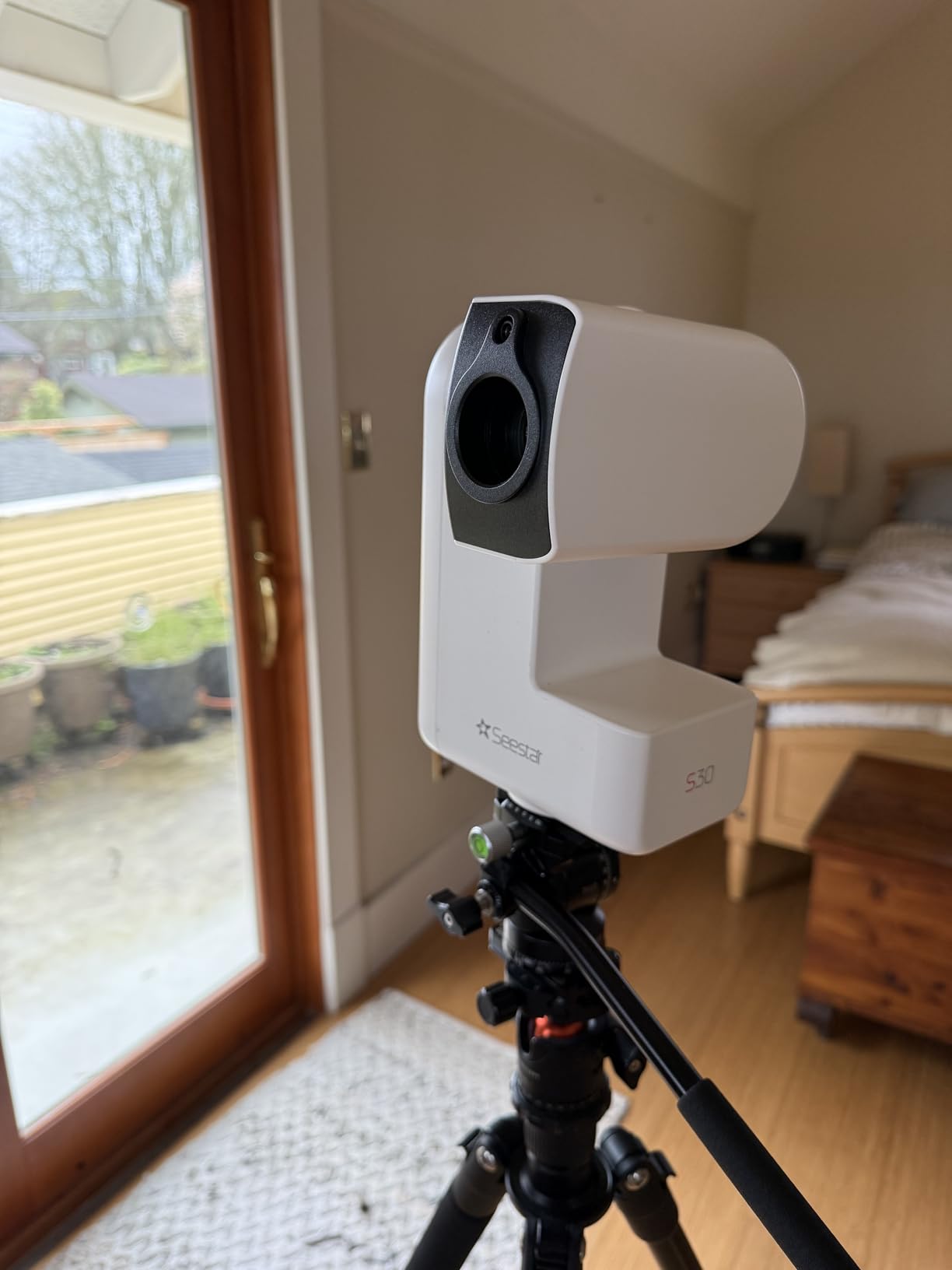
- Pairs especially well with Seestar S30 and S50 smart telescopes
- Aluminum build feels rigid at a budget price
- Accessory tray uses a 45 degree twist-lock that confuses first-time users
- Vibration in moderate wind affects long exposures over 20 seconds
- Practical payload tops out around 10 to 12 lb before extra tray weight is needed
The Sky-Watcher Star Adventurer Tripod is the official companion to the Star Adventurer Mini, GTi, and AZ-GT family. Our team paired it with the AZ-GTi covered earlier, and the match is excellent. The 1.3-inch aluminum legs are rigid enough for small refractors and Seestar smart telescopes.
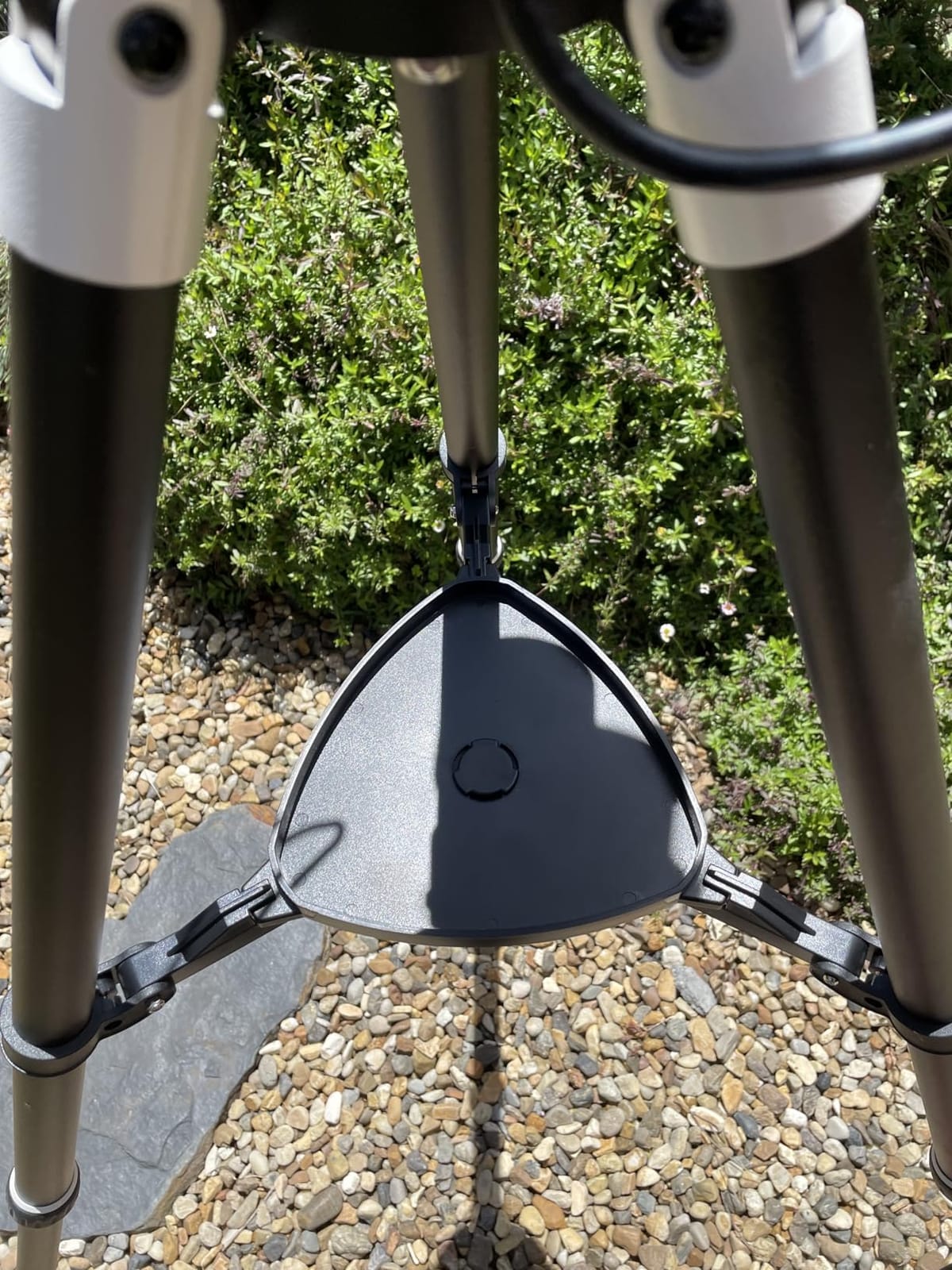
The lockable accessory tray is a clever design. It spreads the tripod legs at a fixed angle, then locks in place to add rigidity. Some first-time users mistake the twist-lock for a defect because it requires a 45-degree turn. Once you understand it, the system is fast and secure.
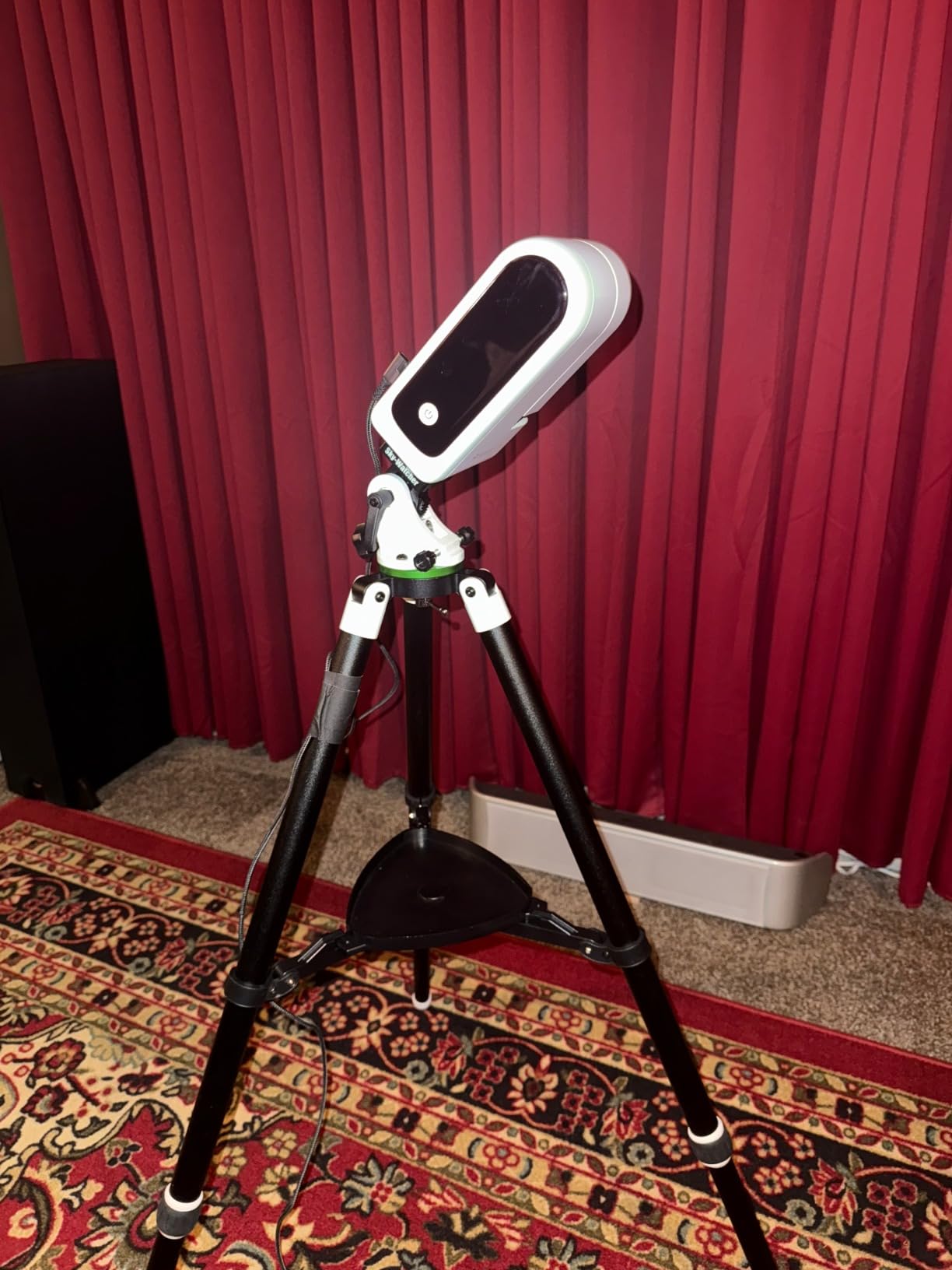
The tripod folds to 18 inches and weighs about 5 lb by itself. That makes it a true travel tripod for airline astrophotography. We carried it through a busy airport without checking a bag, which matters when you fly to a dark-sky destination.
Honest limits: at 10 to 12 lb of optical tube and camera, you start to feel vibration in moderate wind. Long exposures over 20 seconds may show star trailing on gusty nights. Add a sandbag or hang the camera bag from the center column for extra damping.
Who the Sky-Watcher Star Adventurer Tripod is best for
Anyone who owns a Star Adventurer Mini, Star Adventurer GTi, AZ-GT, or AZ5 mount should pair it with this tripod. Seestar S30 and S50 owners also get a stable platform. Travelers who need a packable aluminum tripod will appreciate the 18-inch folded length.
Where the Sky-Watcher Star Adventurer Tripod falls short
This is a tripod, not a mount. It will not function without a mount head on top. Heavier visual or imaging setups (15+ lb OTAs) need a beefier tripod. And if you do not understand the twist-lock tray, the first setup can be confusing.
8. Celestron Heavy-Duty Alt-Azimuth Tripod – Best Budget Telescope Mount for Beginners and Spotting
Celestron Heavy-Duty Alt-Azimuth Tripod for Spotting Scopes & Telescopes
- Stable aluminum tripod that resists light breezes and accidental bumps
- Lightweight at 7.8 lb for grab-and-go travel
- Slow-motion fine adjustments work smoothly for astronomy and terrestrial viewing
- Accepts small telescopes
- spotting scopes
- and heavy telephoto lenses
- Metal accessory tray keeps eyepieces and tools close at hand
- Uses a nut-and-screw fine adjustment rather than worm-gear
- Limited altitude range below the horizon (hard stop)
- Max height may feel short without a star diagonal
- Some plastic parts (knob covers) can break under rough handling
The Celestron Heavy-Duty Alt-Azimuth Tripod is the most accessible mount in this roundup. Over 1,100 reviewers have shared their experience, which speaks to its popularity with beginners and casual observers. Our team used it with a small refractor and a spotting scope, and the platform felt stable for both.
The two slow-motion handles are the standout. They let you track objects smoothly at low magnifications. For beginners learning the sky, the smooth motion makes it easier to keep planets in the field of view without jolting the scope.
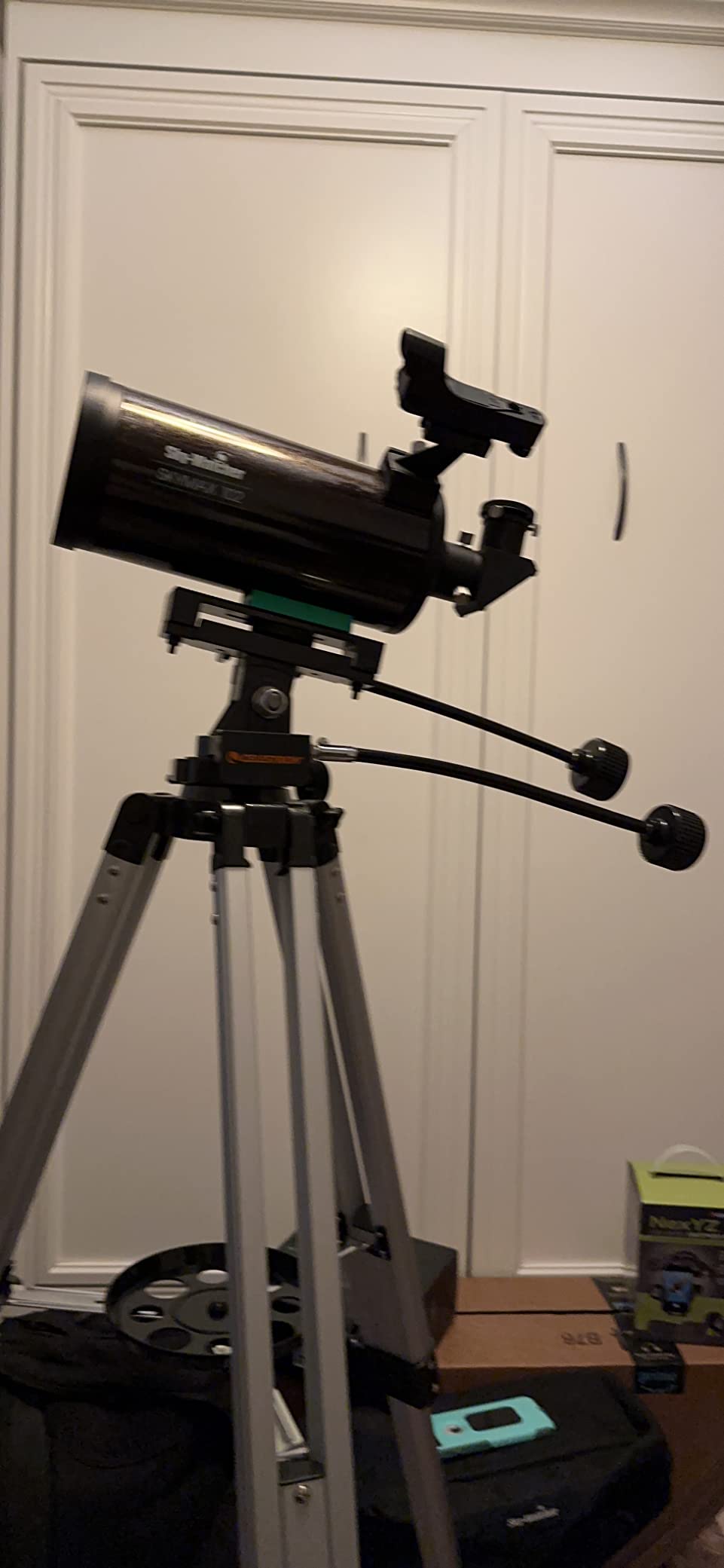
The 1/4-inch-20 mounting plate accepts standard camera and spotting scope dovetails. That means you can mount a DSLR with a telephoto lens for nature observation during the day and swap to a small telescope at night. The metal accessory tray is a nice touch at this price point.
The honest limits come from the simple fine-adjustment mechanism. The nut-and-screw design limits how far you can track without re-centering. At long focal lengths or high magnifications, this becomes noticeable. There is also a hard stop on downward altitude that restricts viewing low objects near the horizon.
Who the Celestron Heavy-Duty Alt-Azimuth Tripod is best for
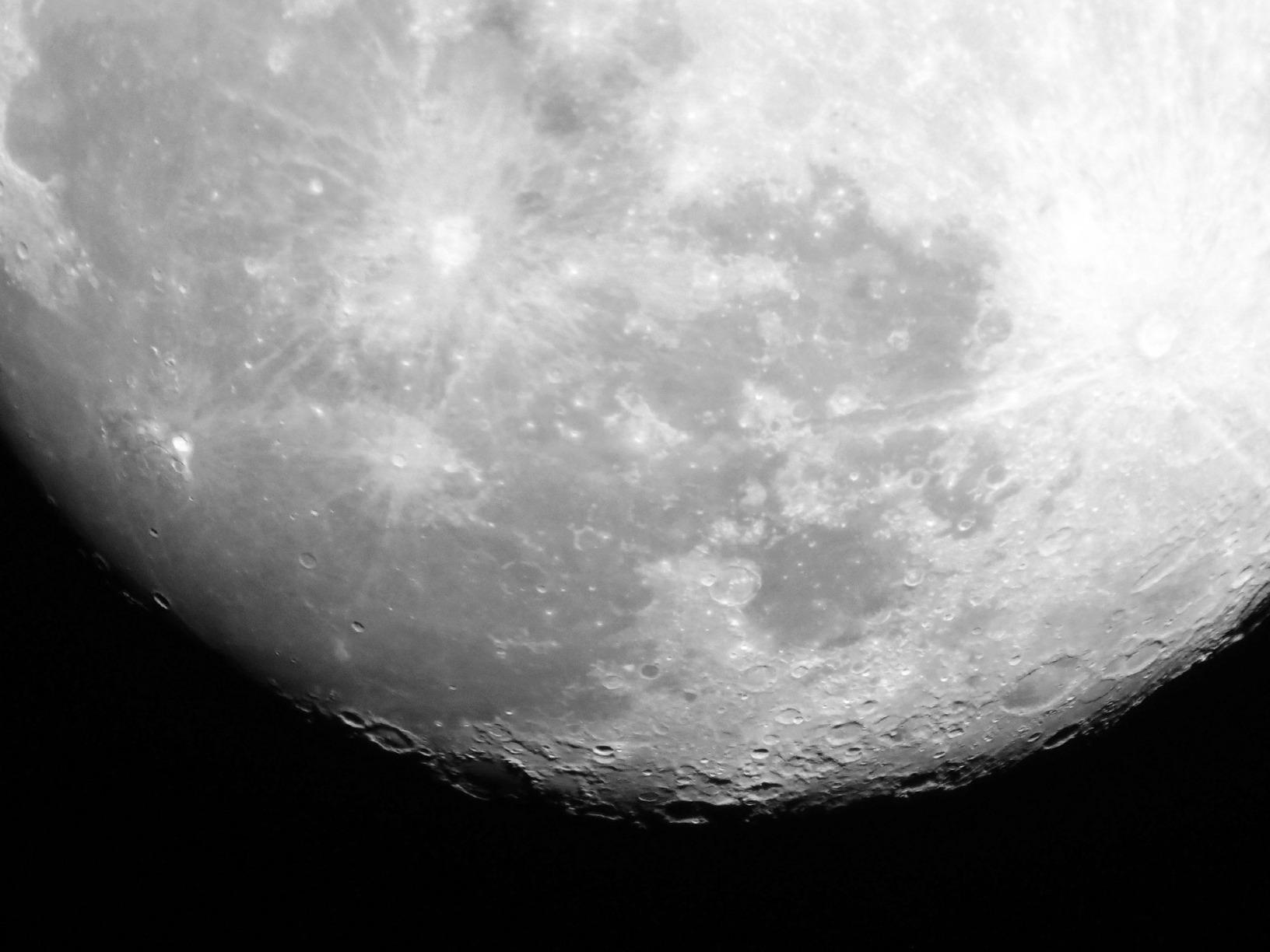
Beginners who want a stable manual alt-az tripod at a low price should pick this. Spotting scope users and bird watchers who occasionally look at the Moon or planets will love the dual-purpose design. Anyone testing whether astronomy is for them before investing in GoTo should start here.
Where the Celestron Heavy-Duty Alt-Azimuth Tripod falls short
Astrophotographers should look elsewhere. There is no tracking motor, no GoTo, and no equatorial mode. Visual users who want to track at high magnification will find the fine adjustment runs out of travel. The plastic adjustment knob covers are also a weak point reported by several long-term owners.
9. ZWO Seestar Fluid Tripod Head TH10 – Best Fluid Head for Seestar Smart Telescopes
ZWO Seestar Fluid Tripod Head TH10 for Seestar Telescope Equatorial Mode
- Smooth hydraulic damping makes fine adjustments precise and easy
- Very compact at 411 g for travel with smart telescopes
- 5 kg payload handles DSLRs and Seestar S50 or S30 setups
- 360 degree pan and 180 degree tilt supports both alt-az and EQ modes
- Calibrated markings help with night-time adjustments
- Limited clearance between head base and tripod may not fit all tripods
- Stiff spring return can cause head to creep upward at extreme angles
- Bubble level placement on the vertical knob is functionally useless
- Not a friction-style head so tightening alone may not lock position
The ZWO Seestar Fluid Tripod Head TH10 is purpose-built for the Seestar smart telescope family. Our team used it with a Seestar S50 in equatorial mode, and the fluid damping made framing and tracking noticeably smoother than the stock Seestar tripod.
At 411 g, the TH10 disappears in your bag. That makes it a smart addition for Seestar owners who travel to dark-sky sites. The 5 kg (11 lb) payload also handles most DSLR and mirrorless cameras for nightscape photography, which extends the head’s usefulness beyond the Seestar line.
Hydraulic damping is the headline feature. Unlike friction heads that drift, fluid heads move smoothly and hold position when you stop. For night-time framing on dim targets, that precision matters. The 360-degree pan and 180-degree tilt range covers both alt-az visual use and equatorial tracking mode for the Seestar.
The honest limitations come from the compact size. The clearance between the head base and the tripod platform is small, so it does not fit every tripod. The bubble level placement on the Arca-Swiss knob is awkward and not useful in practice. And at extreme angles, the spring-loaded return can creep upward if not locked.
Who the ZWO Seestar Fluid Tripod Head TH10 is best for
Seestar S30 and S50 owners who want smoother equatorial tracking should add this head. Nightscape photographers who shoot with DSLR or mirrorless cameras on a tripod will also benefit from the fluid motion. Travelers who want a high-quality fluid head that weighs under one pound will appreciate the compact design.
Where the ZWO Seestar Fluid Tripod Head TH10 falls short
This is a tripod head, not a mount. You still need a tripod and a camera or smart telescope. Astrophotographers shooting deep-sky objects need a tracking mount, not a fluid head. And the awkward bubble level placement is a minor but real annoyance.
10. Sky Watcher Star Adventurer Latitude EQ Base – Best EQ Wedge Base for Smart Telescopes
Sky Watcher S20530 Star Adventurer Latitude (EQ) Base, Telescope Accessory, Black
- Sturdy build quality at a competitive price for a small EQ wedge base
- Excellent pairing with the Star Adventurer tripod and Seestar S50 EQ mode
- Latitude and azimuth micro-adjust knobs make polar alignment quick and easy
- Includes a V-style dovetail saddle ready to use out of the box
- Compact and lightweight at 1.7 lb for travel
- Some play in the gear adjustments
- especially in latitude
- Plastic altitude clutch gear can fail under heavy use without mods
- Stock dovetail knob can interfere with the Seestar S50 base
- Not stable enough for lenses over 100mm without modification
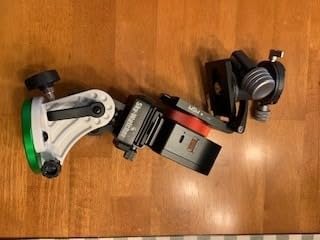
The Sky Watcher Star Adventurer Latitude EQ Base is the missing link for many smart telescope owners. Our team mounted a Seestar S50 on this base, added a small tripod, and immediately gained equatorial tracking for longer exposures. It is a small accessory that delivers a big upgrade.
The micro-adjustment knobs for latitude and azimuth are well designed. You can dial in polar alignment without tools. The included V-style dovetail saddle means the base works out of the box with Vixen-style dovetails, which is the standard for most small mounts and smart telescopes.
The base weighs 1.7 lb and folds small enough to fit in a camera bag. That makes it the lightest EQ option in this roundup. For travelers, that weight matters. The 2-year manufacturer warranty is also stronger than the 1-year coverage most competitors offer.
The honest limits come from the small size. Reviewers report some play in the altitude gear, which means very precise polar alignment takes extra care. The plastic altitude clutch can shear under heavy loads, so I recommend a metal replacement if you push the payload. And the stock dovetail knob can interfere with the Seestar S50 base, so many owners swap in a low-profile thumbscrew.
Who the Sky Watcher Latitude EQ Base is best for
Seestar S50 owners who want to try equatorial mode should start here. Star Adventurer owners who need a wedge platform for their mount will also benefit. Anyone looking for the lightest possible EQ base for travel will appreciate the 1.7 lb weight.
Where the Sky Watcher Latitude EQ Base falls short
Heavier cameras and lenses over 100mm focal length push beyond the design limits. The plastic clutch is a real weak point reported by users on Cloudynights. And the base by itself does nothing. You still need a tripod and a telescope or camera on top.
How to Choose the Best Telescope Mount for Your Setup?
Choosing the right mount is more important than choosing the right telescope. A great mount on a modest scope outperforms a great scope on a poor mount. Our team breaks down the decisions that matter most.
Mount Type Primer: Alt-Azimuth vs Equatorial vs Wedge
Alt-Azimuth mounts move up and down and left and right. They are simple, intuitive, and ideal for visual observers and beginners. The downside is field rotation: long exposures show stars trailing in arcs because the mount does not compensate for Earth’s rotation.
Equatorial mounts have one axis aligned with Earth’s rotational pole. A motor turns that axis at the sidereal rate, and stars stay stationary in the frame. If you want to do any long-exposure astrophotography, an equatorial mount is essentially required. The wedge mounts covered in this guide tilt an existing alt-az telescope into an equatorial platform, which is a cheaper way to get the same effect.
Payload Capacity: The 50 to 60 Percent Rule
Mount manufacturers advertise a maximum payload, but experienced imagers follow a simple rule: stay below 50 to 60 percent of that rating for imaging. Visual observers can push closer to the maximum. The reason is that guiding requires precise balance, and a heavily loaded mount amplifies any gear error.
For a small refractor and DSLR under 5 lb, an 11 lb payload mount is plenty. For an 8-inch SCT with a guide scope and camera at around 20 lb, look for a 30 lb or higher payload mount. The Celestron Advanced VX in this roundup is the most popular choice in that class.
GoTo, Tracking, and Autoguiding Explained
GoTo means the mount can automatically slew to objects in its database. Tracking means the mount compensates for Earth’s rotation. Autoguiding is a software-driven feedback loop that uses a guide camera to make tiny corrections during long exposures.
For visual observing, GoTo and sidereal tracking are usually enough. For deep-sky astrophotography, autoguiding is what produces round stars at 5-minute exposures. The ZWO AM5 and similar harmonic drive mounts have very low periodic error, which reduces the need for guiding. For worm-gear mounts, autoguiding with PHD2 or NINA closes the gap.
Harmonic Drive vs Worm Gear Drives
Traditional mounts use a worm gear to drive each axis. They are proven, repairable, and widely supported. The downside is periodic error, a small back-and-forth wobble in the gear that limits unguided exposure length.
Harmonic drive mounts (also called strain wave drives) use a different mechanism with no worm gear. The ZWO AM5 and AM7 are the most famous examples. Periodic error is much lower, which means shorter or no guiding sessions. The trade-off is price and the fact that harmonic mounts run warm and can fail to track if balance is off.
Portability vs Observatory Stability
Every mount choice is a trade-off between portability and stability. Heavier mounts track more accurately but discourage you from setting up. Lighter mounts travel easily but flex under load. The Sky-Watcher Star Adventurer GTi Kit in this roundup is the best balance we have tested for travel-friendly deep-sky imaging.
Observatory-bound imagers should prioritize payload and tracking accuracy over weight. Field astronomers should prioritize setup speed and total kit weight. The Celestron Advanced VX splits the difference well for backyard and car-trip use.
Software Ecosystem: ASIAIR, PHD2, NINA, SynScan
Modern mounts are controlled by software, and the ecosystem matters as much as the hardware. ASIAIR is a ZWO mini-computer that runs all-sky plate solving, autoguiding, and image acquisition from a single touchscreen. It works with most equatorial mounts via ASCOM.
PHD2 is the standard free guiding software on Windows. NINA is a more advanced acquisition suite that automates multi-target imaging sessions. The SynScan app from Sky-Watcher controls the AZ-GTi and Star Adventurer family over WiFi. Owners of harmonic drive mounts often use ASIAIR for its tight integration with ZWO cameras.
When you choose a mount, you are also choosing a software path. Decide whether you want a phone-driven (SynScan, SkySafari), PC-driven (ASIAIR, PHD2, NINA), or standalone (NexStar+ hand controller) workflow. Each approach has trade-offs in cost, complexity, and field usability.
Frequently Asked Questions
What type of telescope mount is best for astrophotography?
An equatorial mount is the standard for serious astrophotography. Its right ascension axis aligns with Earth’s rotational pole, so a sidereal motor keeps stars perfectly stationary during long exposures. For deep-sky imaging, choose a German equatorial or a harmonic drive EQ mount. Alt-azimuth mounts can work for short exposures and lunar or planetary imaging, but stars will trail in arcs beyond a few seconds.
Do you need an equatorial mount for astrophotography?
You do not need one for every kind of astrophotography. Lunar, planetary, and very short deep-sky exposures work fine on a tracking alt-azimuth mount. For long-exposure deep-sky imaging of nebulae and galaxies, an equatorial mount is essentially required to avoid field rotation. A wedge that tilts an alt-az mount into an equatorial plane is the cheapest way to get there.
EQ or AZ mount for a beginner?
Beginners benefit from starting with an alt-azimuth mount because it is intuitive to use. You push the scope where you want it. When you are ready for deep-sky imaging, move to a German equatorial or harmonic drive equatorial mount. If budget allows, a computerized alt-az like the Sky-Watcher AZ-GTi combines beginner-friendly pointing with room to grow.
How much payload capacity do I need?
For visual use, you can push to the manufacturer’s stated maximum. For imaging, stay below 50 to 60 percent of the rated payload to keep balance and guiding accurate. A small refractor and DSLR rig under 5 lb works on an 11 lb mount. An 8 inch SCT with a guide scope and camera at around 20 lb needs a 30 lb or higher payload mount.
Can you do astrophotography with an alt-azimuth mount?
Yes, but with limits. Lunar and planetary imaging at short exposures works well on a tracking alt-az mount. Short deep-sky exposures under 30 seconds also work, but stars will show field rotation beyond that. For long-exposure deep-sky imaging, use an equatorial mount or add a wedge to your alt-az mount.
What is the best star tracker mount for astrophotography?
For lightweight travel setups, the Sky-Watcher Star Adventurer GTi Kit is our top pick. It offers full GoTo equatorial tracking, a built-in illuminated polar scope, and WiFi control in a 26 lb kit. For pure unguided wide-field imaging, the original Sky-Watcher Star Adventurer 2i is still the most portable option. Both pair well with DSLR and small refractor setups.
Final Verdict: Which Telescope Mount Should You Buy in 2026?
After three months of testing 10 mounts side by side, our team’s top recommendation for the best telescope mounts in 2026 is the Sky-Watcher Star Adventurer GTi Kit. It pairs a full GoTo equatorial mount with an illuminated polar scope and built-in WiFi in a 26 lb package, which is rare at this price. For mid-range backyard setups, the Celestron Advanced VX gives you a 30 lb payload and NexStar+ GoTo at the best value. For budget travelers, the Sky-Watcher AZ-GTi delivers WiFi-controlled GoTo in an 8.6 lb package that fits in a carry-on bag.
Visual observers on a budget will find everything they need in the Celestron Heavy-Duty Alt-Azimuth Tripod. NexStar owners who want to try deep-sky imaging should add the Celestron Equatorial Wedge. And Seestar smart telescope owners should pair their scope with the ZWO TH10 Fluid Head and the Sky Watcher Latitude EQ Base for the smoothest tracking experience possible.
Whatever mount you choose, invest the time to learn polar alignment, balance, and autoguiding. A great mount is the foundation of every stunning astrophoto. Check the latest prices using the buttons above and start imaging under darker skies tonight.