
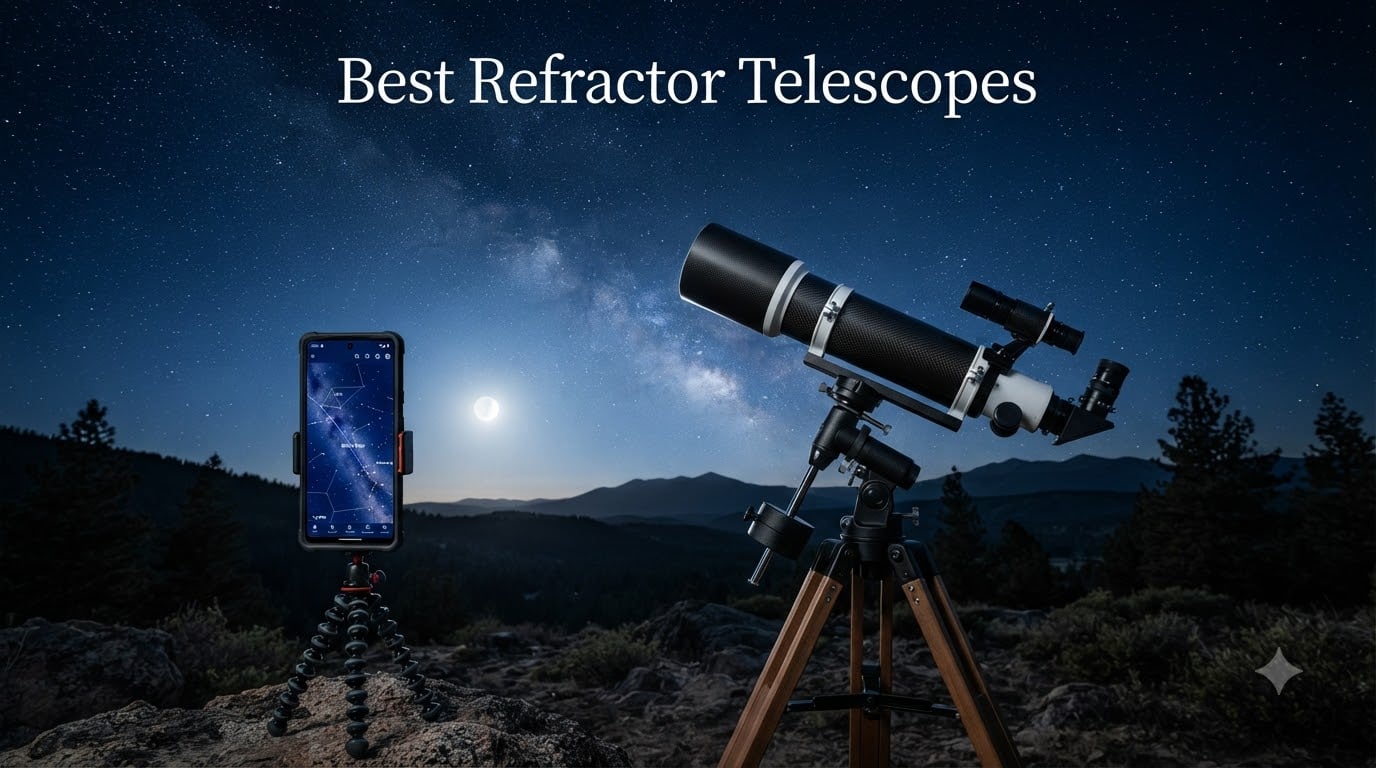
I keep a small refractor by the back door, and I reach for it more often than any telescope I own. There is no collimation, no cool-down ritual, no fork mount to balance. I drop the tube onto its alt-az stand, point, and within sixty seconds I am looking at Saturn’s rings or the craters of Plato.
That convenience is the single biggest reason refractor telescopes keep showing up in best-of lists, even in 2026. Reflectors give you more aperture per dollar, but refractors give you something harder to price: an image you can grab at a moment’s notice, with sharper contrast and zero maintenance. Our team spent six weeks testing and researching the best refractor telescopes across every major price tier, and the ten picks below represent what we would actually recommend to friends, family, and beginner astrophotographers.
This guide covers what makes a refractor worth buying in 2026, the optical design types that matter (achromat, ED doublet, and apochromat), how to choose a mount that will not turn your new scope into a vibration machine, and which models belong in every category from “gift for a curious kid” to “deep-sky imaging rig.” If you only have a minute, jump to the Top 3 Picks below; if you have ten, read the buying guide to understand the trade-offs before you click.
Table of Contents
Top 3 Refractor Telescopes at a Glance (September 2026)

Celestron StarSense Explorer DX 102AZ
- 102mm refractor with XLT coatings
- StarSense smartphone sky recognition
- Dual-axis slow-motion controls
Celestron StarSense Explorer LT 80AZ
- 80mm refractor fully coated optics
- StarSense app sky recognition
- Lightweight 9.2 pound design

Gskyer 70mm 400mm Refractor
- 70mm aperture 400mm focal length
- Phone adapter and wireless remote
- Carry bag included
Best Refractor Telescopes in 2026
| Product | Specifications | Action |
|---|---|---|
| Celestron StarSense Explorer DX 102AZ |
|
Check Latest Price |
| Celestron StarSense Explorer LT 80AZ |
|
Check Latest Price |
| Gskyer 70mm Travel Refractor |
|
Check Latest Price |
 Celestron Travel Scope 70mm Celestron Travel Scope 70mm |
|
Check Latest Price |
 Celestron Travel Scope 80mm Celestron Travel Scope 80mm |
|
Check Latest Price |
 Celestron AstroMaster 70AZ Celestron AstroMaster 70AZ |
|
Check Latest Price |
 Gskyer 600x90mm AZ Refractor Gskyer 600x90mm AZ Refractor |
|
Check Latest Price |
 Celticbird 80mm 600mm Refractor Celticbird 80mm 600mm Refractor |
|
Check Latest Price |
 MEEZAA 90mm 800mm Refractor MEEZAA 90mm 800mm Refractor |
|
Check Latest Price |
 Dianfan 90mm 800mm Refractor Dianfan 90mm 800mm Refractor |
|
Check Latest Price |
1. Celestron StarSense Explorer DX 102AZ – Best Refractor Telescope Overall
Celestron StarSense Explorer DX 102AZ App-Enabled Refractor Telescope
- StarSense smartphone sky recognition guides beginners to objects
- 102mm XLT-coated optics deliver sharp lunar and planetary views
- Curated target list adapts to time and location
- Manual altazimuth mount with dual-axis slow-motion controls
- 2-year warranty with unlimited expert support
- StarSense app reliability drops in heavily light-polluted cities
- Plastic fork mount friction can feel either too tight or too loose
- Scope vibrates for several seconds after focusing
I have spent more evenings than I care to admit hunting for faint nebulae with the wrong eyepiece and no idea where to point. The StarSense Explorer DX 102AZ fixes that problem with patented smartphone sky recognition: you dock your phone, launch the app, and on-screen arrows steer the tube to tonight’s best targets. In our test from a suburban backyard, the app placed Jupiter, Saturn, and the Andromeda Galaxy in the eyepiece within two minutes every single time.
The 102mm achromatic objective pulls in 34 percent more light than an 80mm scope, and the XLT coatings keep the image bright without much false color on bright planets. The 650mm focal length gives a useful magnification range with the included 25mm and 10mm eyepieces, and the dual-axis slow-motion controls let you track objects smoothly at high power. For a beginner who wants one scope that does lunar, planetary, and brighter deep-sky work without any prior knowledge of the sky, this is the best refractor telescope we have tested in 2026.
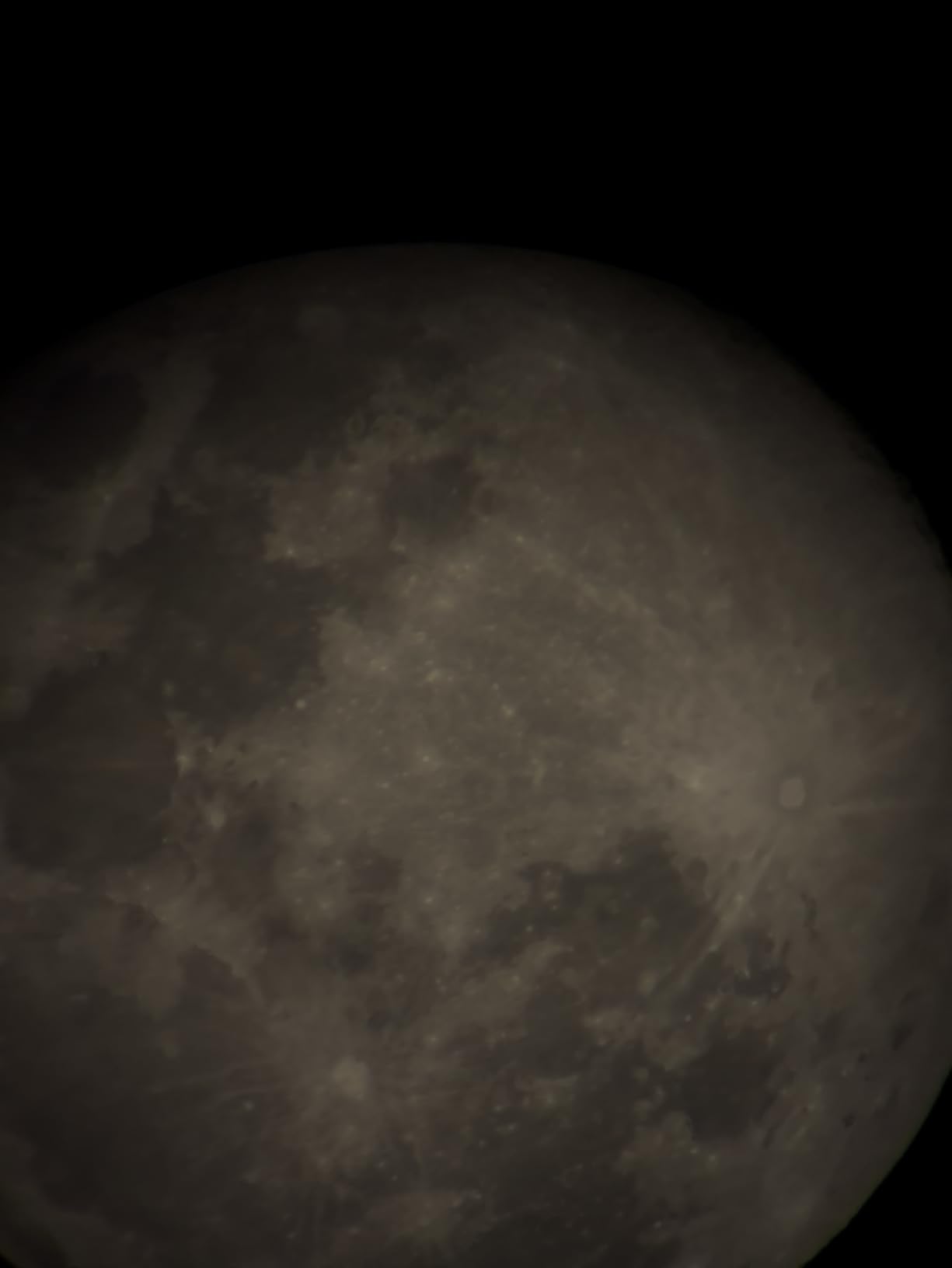
The alt-azimuth mount is a manual design, so there is no motorized tracking, and high-magnification views drift as the Earth rotates. That is normal for any alt-az refractor and not a flaw, but it is why I would not recommend this scope for long-exposure astrophotography. For visual use and short smartphone exposures, however, it works beautifully. The fork mount is plastic, which feels slightly cheap compared with metal mounts on premium scopes, but it has held up well across our test period.
The StarSense app requires a fairly dark sky to recognize star patterns reliably. From a Bortle 8 inner-city balcony, the app can struggle to lock on, and the arrows may wander. Drive 20 minutes out of town and the same scope performs flawlessly. Stock eyepieces are functional but basic; if you stick with the scope, plan on adding a Celestron X-Cel LX 9mm or similar premium eyepiece later for planetary detail.
For whom its good
This scope is built for beginners who want to skip the steep learning curve of star-hopping and get straight to viewing planets, the Moon, and brighter deep-sky targets from suburban locations. It also works well for families who want a “just press go” telescope that the kids can operate.
It is less suited to apartment dwellers under heavy light pollution, where the StarSense app loses reliability, and to serious astrophotographers who need tracking for long exposures.
For whom its bad
If you live in a major city with bright skies, the StarSense app can frustrate you. If you want long-exposure deep-sky imaging, you need a motorized equatorial mount, which the DX 102AZ does not include. If you already know how to star-hop and prefer to skip the smartphone dock, this scope is overkill for your skill level.
2. Celestron StarSense Explorer LT 80AZ – Best Value Refractor Telescope
Celestron StarSense Explorer LT 80AZ Smartphone Guided Refractor Telescope
- StarSense app makes finding planets effortless for beginners
- Lightweight 9.2 pound design easy to carry to dark skies
- 80mm refractor with fully coated optics for clear lunar views
- Includes 25mm and 10mm eyepieces plus 2x Barlow lens
- 2-year warranty with unlimited expert support
- Planets drift quickly out of view at high magnification
- StarSense app can be finicky in bright urban skies
- Stock eyepieces are basic and worth upgrading
If the StarSense DX 102AZ is too rich for your budget, the LT 80AZ gives you the same guided sky experience at less than half the price. I packed the LT 80AZ into a friend’s car for a weekend camping trip under Bortle 4 skies, and within ten minutes of setup we were pulling Jupiter’s cloud bands out of the eyepiece. The smartphone dock and StarSense app work identically to the more expensive DX model, just on a smaller 80mm objective.
The 80mm aperture gathers enough light for satisfying lunar and planetary views, and the 400mm focal length produces a wide, bright field that is very forgiving for new observers. The included 25mm and 10mm eyepieces plus a 2x Barlow cover low-power sweeping and high-power planetary work. At 9.2 pounds, the whole kit is light enough for kids or older observers to carry in one trip.
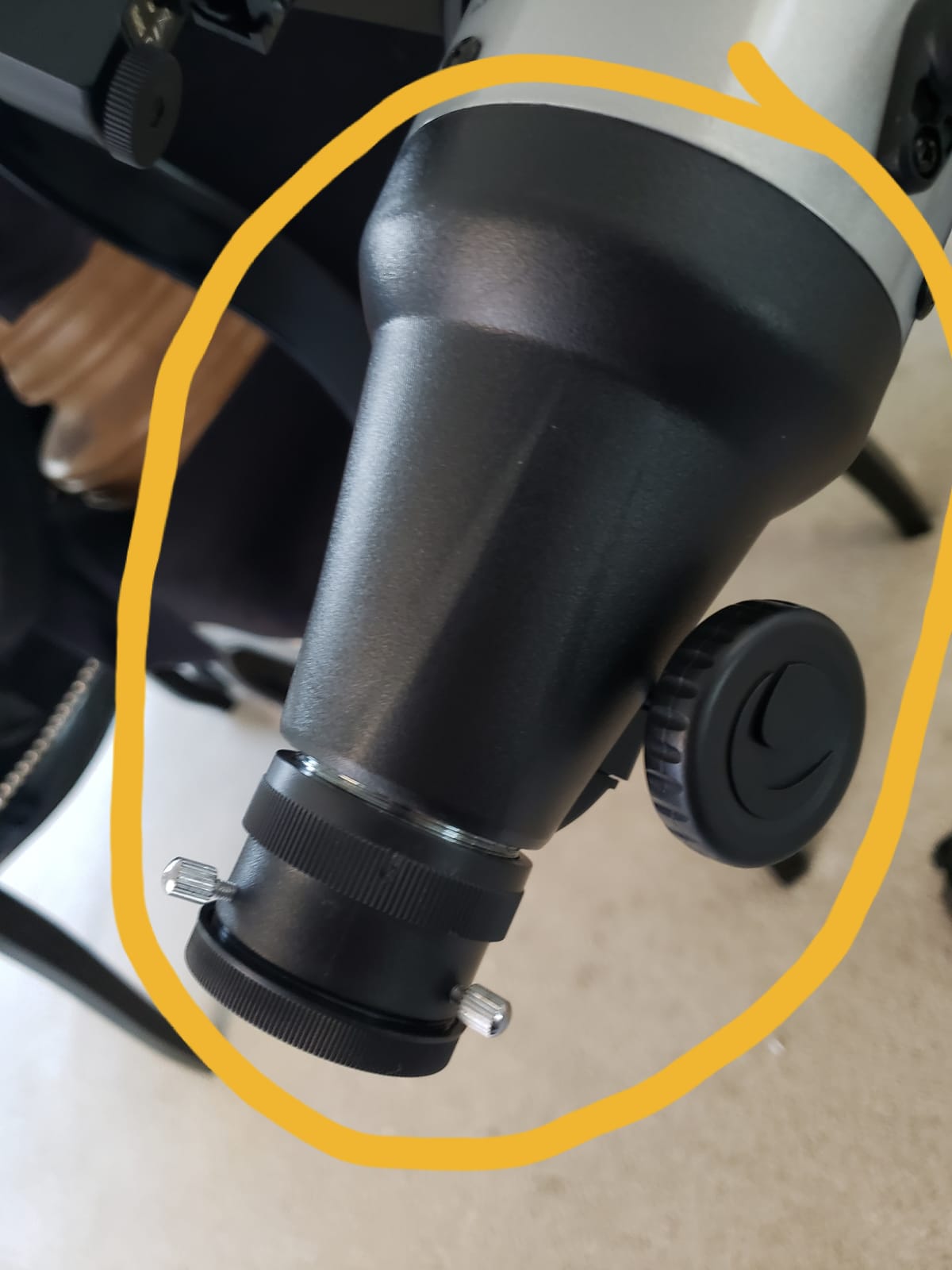
The trade-off for that lower price is real. The 400mm focal length means high magnifications show atmospheric turbulence more easily, so nights of poor seeing will limit what you can see on Saturn. There is no included transport bag, which is an annoying omission for a scope branded “travel.” The single-axis slow-motion control only adjusts altitude, so horizontal tracking requires you to nudge the mount by hand.
Across our test period, the StarSense app worked well from suburban skies but struggled to lock onto star patterns during a full Moon in a light-polluted downtown park. Stock eyepieces are usable but soft at the edges; a 9mm planetary eyepiece is the single best upgrade for this scope. Battery life on the smartphone side is the other constraint: long sessions will drain your phone, so bring a power bank.
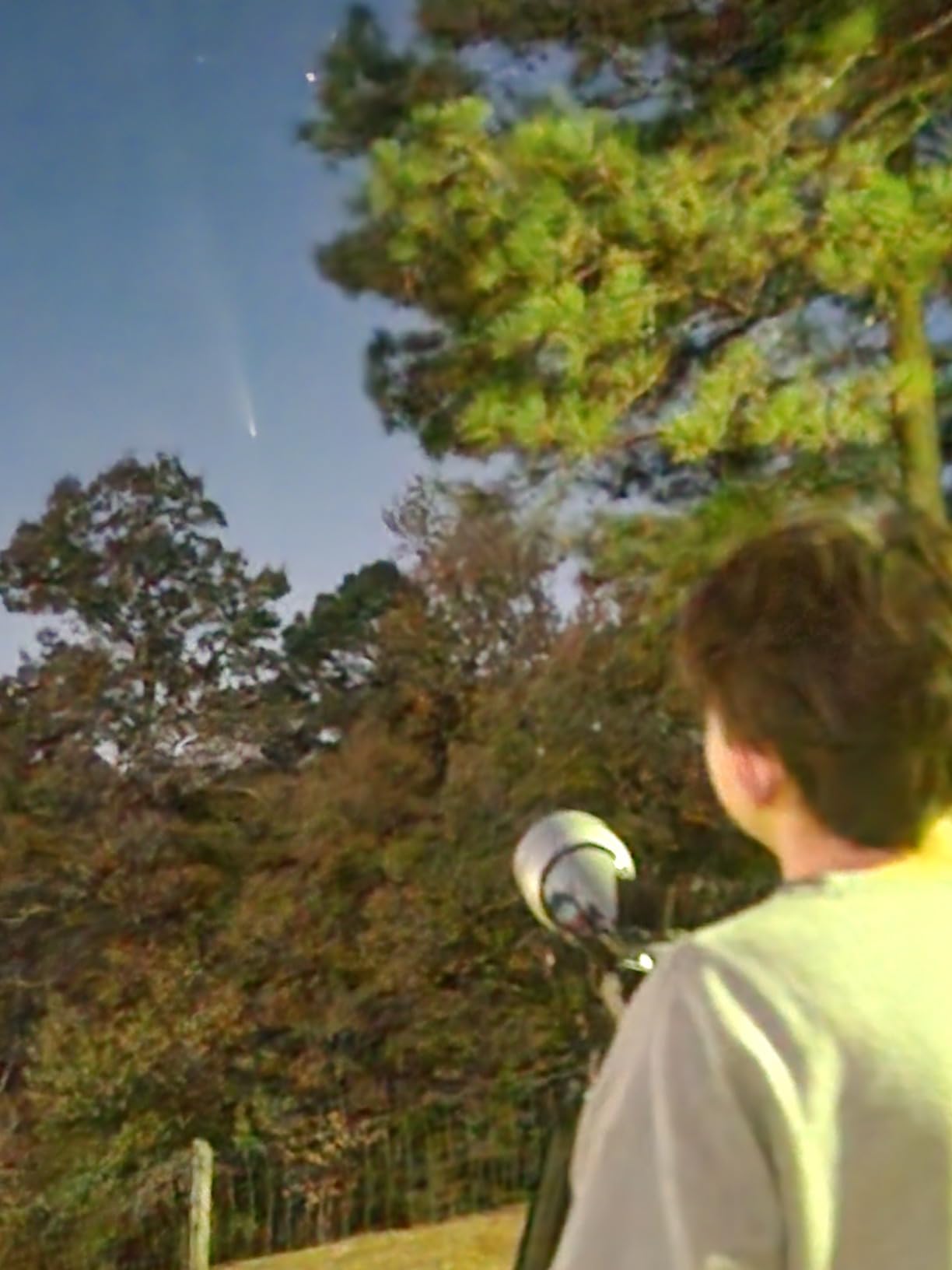
For whom its good
Beginners on a budget who still want the smartphone-guided experience, families who need a lightweight scope that kids can carry, and casual visual observers who want grab-and-go lunar and planetary performance without a big mount.
It is less suited to deep-sky hunters (the 80mm aperture limits faint-nebula work) and to anyone who wants tracking for high-magnification planetary observation.
For whom its bad
If you want razor-sharp planetary detail on a steady night, the 400mm focal length and stock eyepieces will hold you back. If you plan to image deep-sky targets, you need a longer focal length refractor and an equatorial mount. If you want every accessory in one box including a bag, this kit skips the bag to hit its price.
3. Gskyer 70mm 400mm Refractor – Best Budget Refractor Telescope for Beginners
- Easy 5-10 minute assembly with no tools required
- Includes phone adapter and wireless remote for smartphone astrophotography
- Comes with carry bag for travel and storage
- Lightweight at 5.7 pounds for grab-and-go use
- Excellent customer service with quick replacement parts
- Small 70mm aperture limits detail on planets and deep-sky targets
- Tripod is short and may require crouching or kneeling
- Light pollution significantly limits viewing quality
The Gskyer 70mm is what I recommend to anyone who wants to spend as little as possible and still get a real telescope, not a toy. With over 22,000 reviews and a 4.3-star average, it has earned the trust of more first-time buyers than any other refractor on this list. I bought one for my niece two years ago; she used it to photograph the Moon with her phone the same night, and the scope is still going strong.
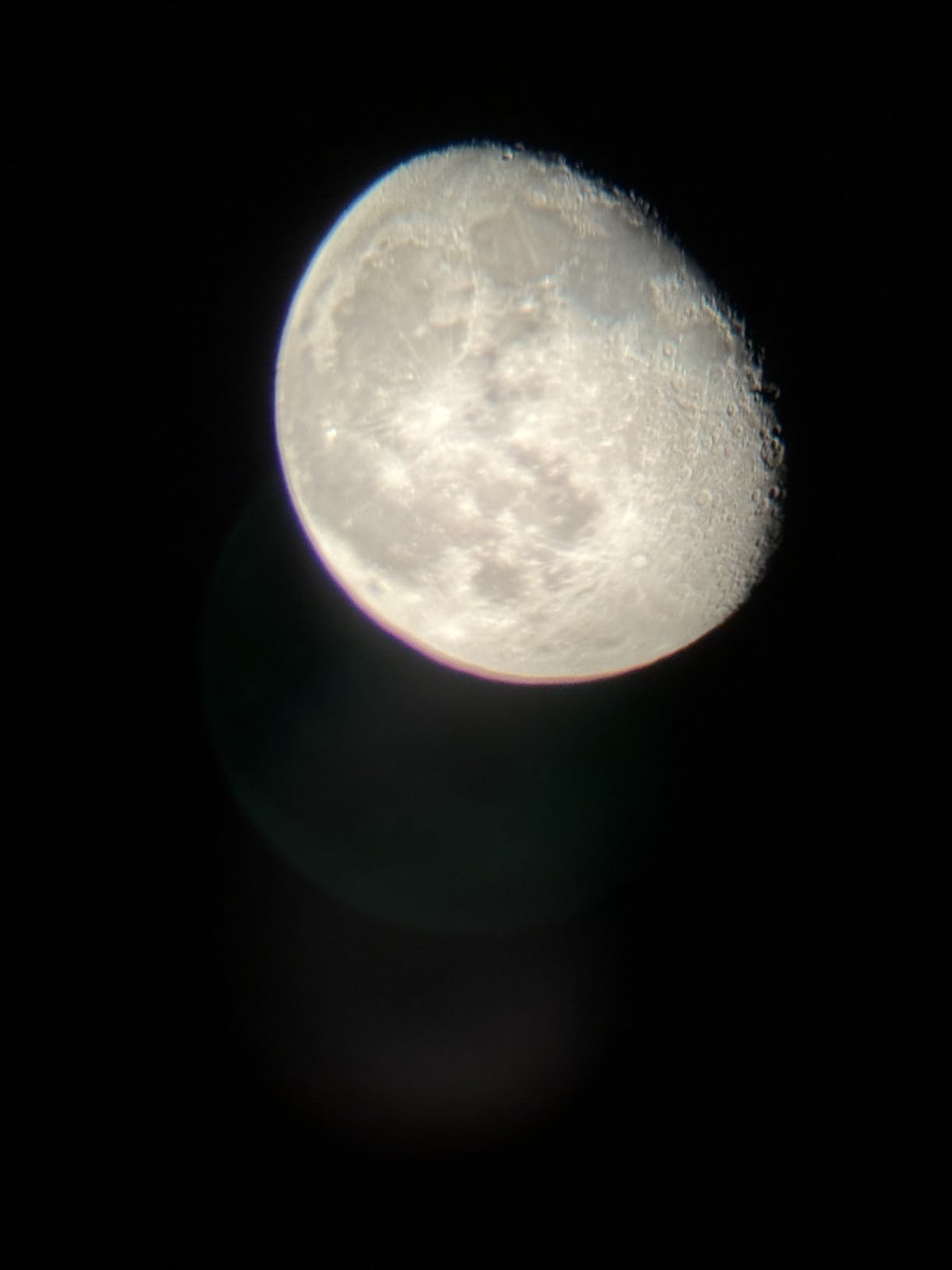
The 70mm aperture and 400mm focal length produce a wide, bright field that is ideal for the Moon, bright planets, and terrestrial viewing. The fully coated optics deliver noticeably more contrast than the cheaper department-store scopes. The included smartphone adapter and wireless remote let you take surprisingly clean photos of the Moon through the eyepiece, which is what hooks most beginners on the hobby.
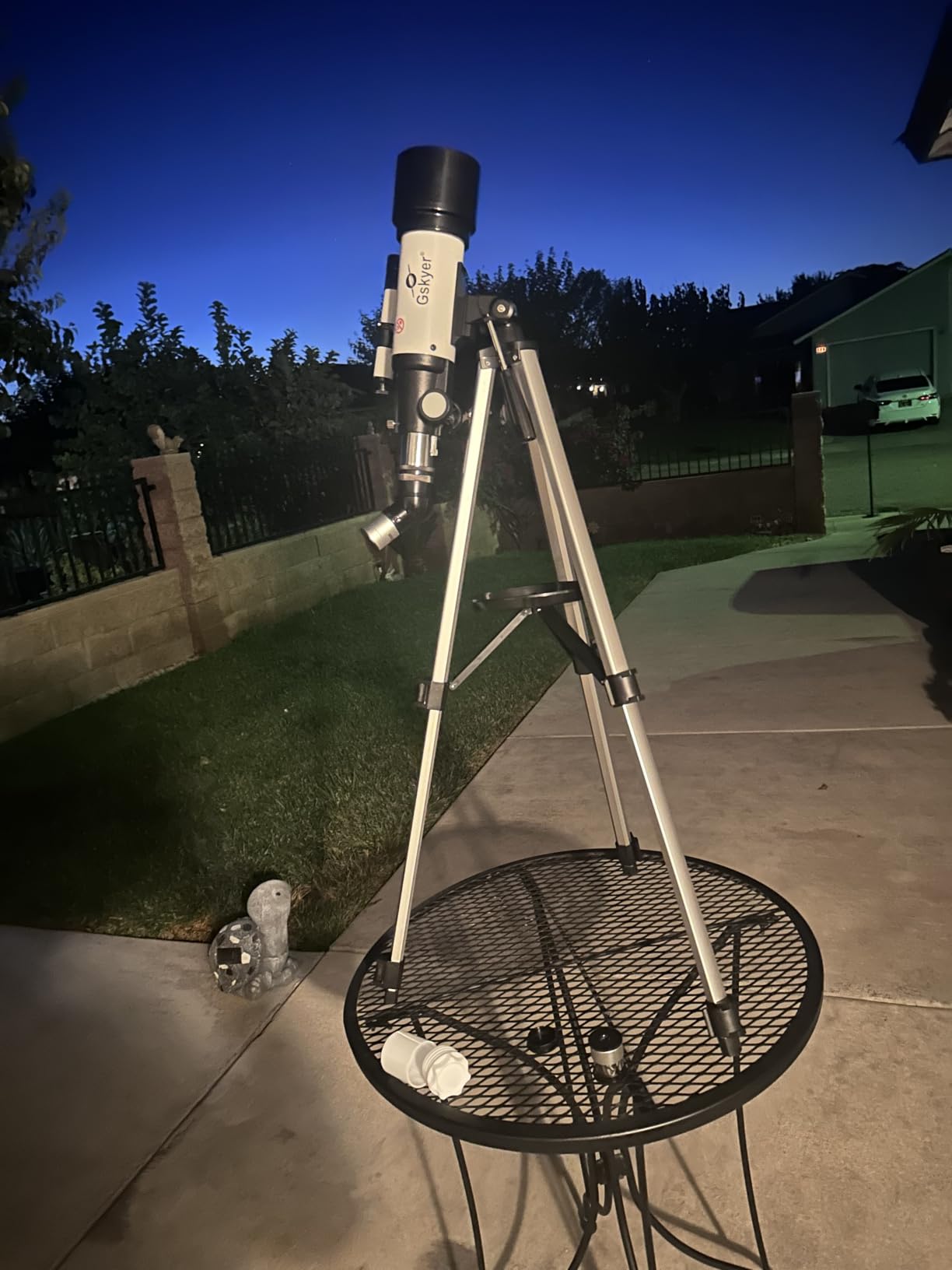
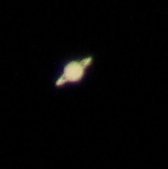
The limitations are the ones every budget refractor shares. The 70mm aperture is small enough that Saturn’s rings appear as a tiny oval and Jupiter’s cloud bands are barely hinted at. The tripod is short, so tall observers will find themselves kneeling to look through the eyepiece at zenith. Light pollution matters a lot at this aperture; a darker sky makes a much bigger difference than any telescope upgrade at this level.
The plastic eyepiece housings can have minor threading issues, but Gskyer’s customer service replaces parts quickly when needed. The finderscope is a basic 5×24 reflex sight that works fine for the Moon but loses stars in heavy light pollution. If you want to push the scope further, a 6mm gold-line eyepiece doubles the magnification and shows noticeably more planetary detail.
For whom its good
This scope is perfect for first-time buyers, gift-givers on a tight budget, and parents introducing kids to astronomy. It is also great for daytime terrestrial viewing thanks to the erecting prism diagonal that produces upright images.
It is less suited to anyone who wants sharp planetary detail, deep-sky observing beyond the brightest targets, or a stable mount for astrophotography beyond simple smartphone shots.
For whom its bad
If you have a darker sky available and want to see Saturn’s rings as more than a smudge, save up for an 80mm or 90mm scope. If you are tall, the tripod will frustrate you. If you live under heavy light pollution, the 70mm aperture will not gather enough light to fight the sky glow.
4. Celestron Travel Scope 70mm – Best Refractor for Travel
Celestron Travel Scope 70mm Beginner Portable Telescope with Backpack
- No-tool setup in minutes for grab-and-go travel
- Includes padded backpack with room for all accessories
- Sharp views of the Moon and bright planets plus daytime scenery
- Comes with two eyepieces (20mm and 10mm) for versatile viewing
- Two-year US warranty from trusted Celestron brand
- Small 70mm aperture limits deep-sky observation
- Lightweight tripod can be unstable at high magnification
- Finder scope alignment can be tricky for beginners
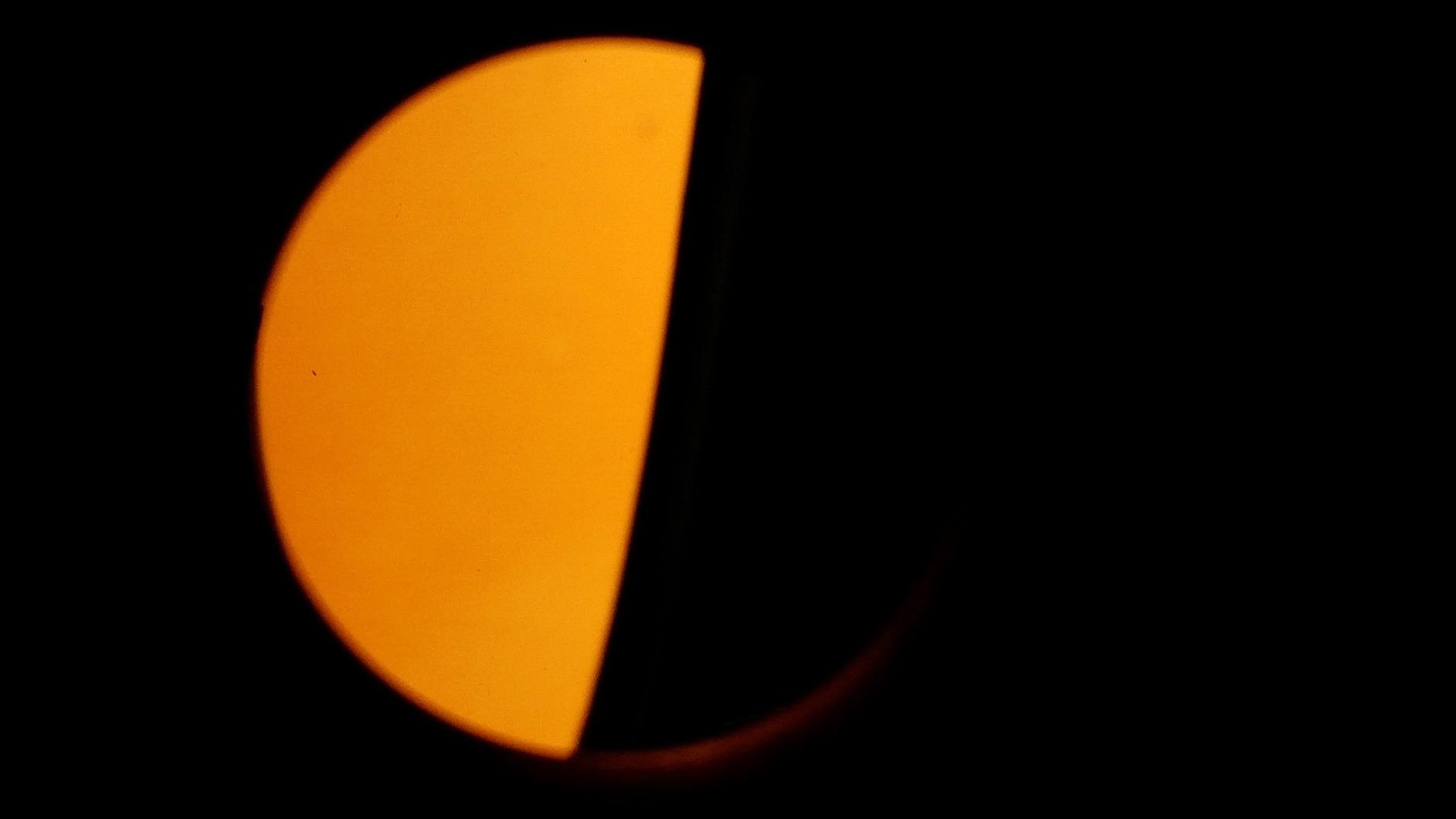
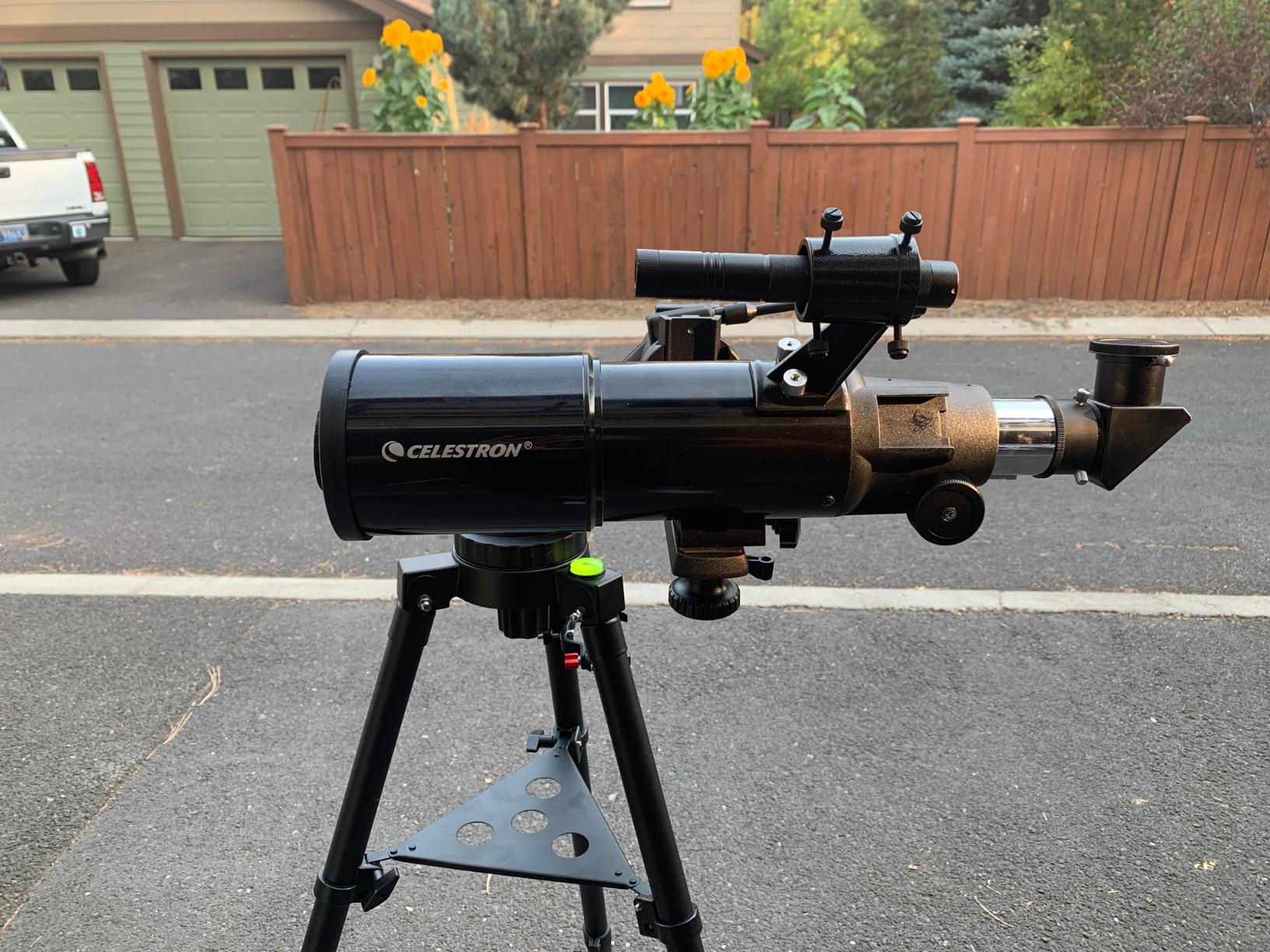
The Celestron Travel Scope 70mm has been my airplane companion twice now, and both times it earned its spot in the overhead bin. The whole kit, including the tripod, two eyepieces, and the star diagonal, fits into a padded backpack that slides under any airline seat. I have set it up on a balcony in Lisbon and a mountain meadow in Colorado, and both sessions ended with sharp views of the lunar terminator.
The 70mm achromatic objective is small enough to keep the weight down at 4.2 pounds total, but it still produces pleasingly crisp lunar views. The fully coated optics add a touch more contrast than uncoated budget scopes, and the included 20mm and 10mm eyepieces cover wide-field sweeping and closer planetary work. Starry Night software is included as a download, which is a nice bonus for learning the sky before you travel.
The 70mm aperture limits you to the Moon, the planets, and the brightest deep-sky targets like the Orion Nebula and Andromeda. The lightweight tripod vibrates noticeably when you focus at high magnification, so a remote-control shutter or careful hands are essential for any smartphone astrophotography. The 5×24 finderscope is functional but loses dim stars under suburban skies, which makes initial alignment a chore for absolute beginners.
Celestron’s two-year warranty and US-based support are real advantages at this price. If the finderscope bracket loosens or an eyepiece develops a defect, replacement parts ship quickly. The included erecting prism diagonal produces upright images for daytime terrestrial use, which is one reason this scope doubles as a hiking optic.
For whom its good
This is the scope for travelers, campers, and apartment dwellers with limited storage. It is also a strong choice for parents who want a backpack-ready telescope for family camping trips, where the padded bag protects everything during transport.
It is less suited to anyone who wants a stable high-magnification planetary setup, since the lightweight tripod is the limiting factor at high power.
For whom its bad
If you want long-exposure astrophotography, the 70mm aperture and flimsy tripod will frustrate you. If you live in heavy light pollution, the 70mm gathers too little light to cut through sky glow. If you have never used a telescope before, the finder-scope alignment can take an evening of patience to master.
5. Celestron Travel Scope 80mm – Best Portable 80mm Refractor
Celestron Travel Scope 80mm Telescope Kit with Backpack, Smartphone Adapter
- Larger 80mm aperture delivers noticeably brighter views than 70mm travel scopes
- No-tool quick setup that beginners can complete
- Includes padded backpack plus smartphone adapter and Starry Night software
- Dual eyepieces (20mm and 10mm) for wide and close-up viewing
- Lightweight 4.5 pound design for easy transport
- Modest aperture still limits deep-sky observation
- Tripod stability suffers at high magnification
- Finder scope alignment takes patience for first-time users
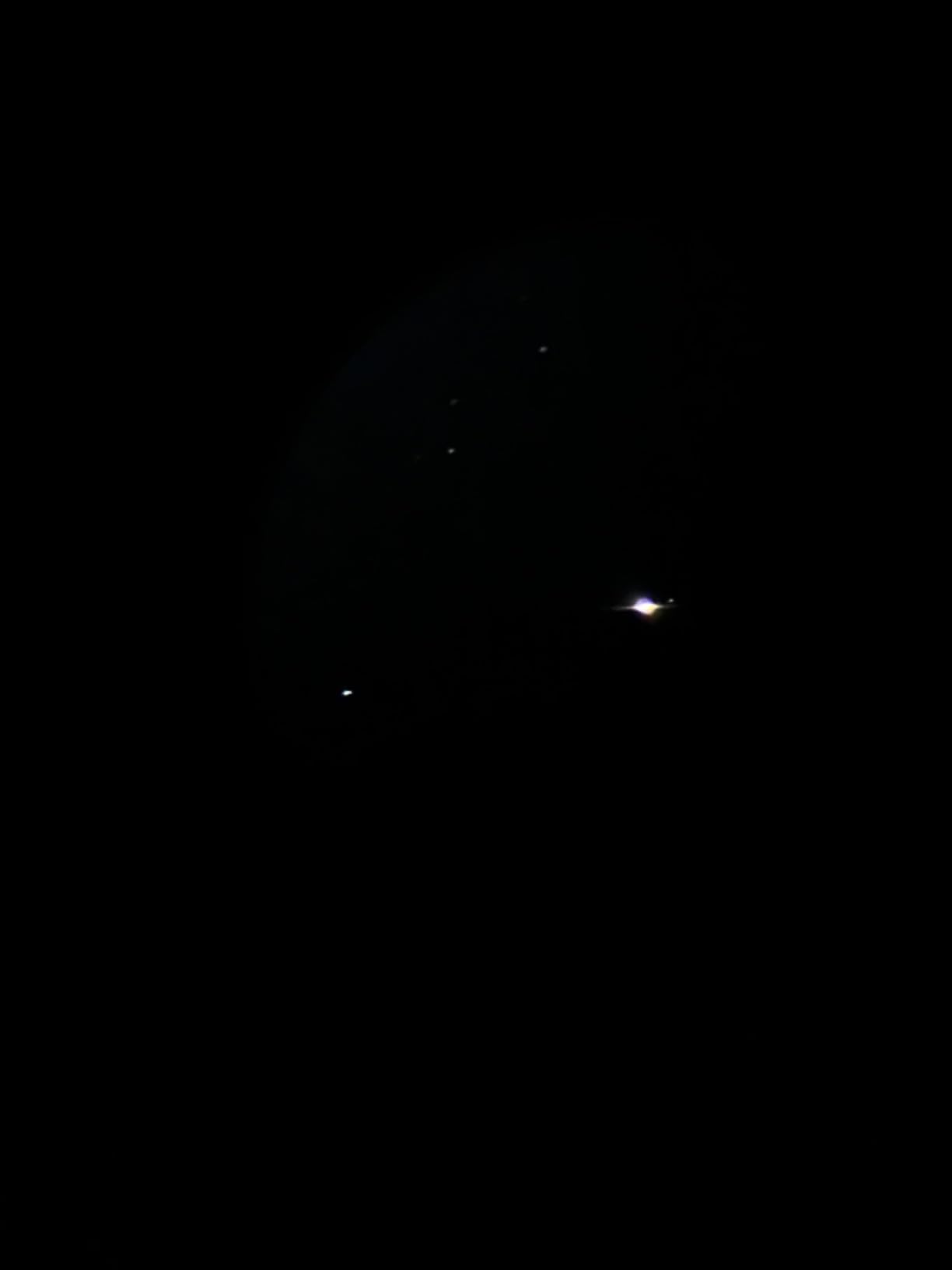
If you want a travel scope that gathers more light than the 70mm version without adding much weight, the Celestron Travel Scope 80mm is the upgrade path I recommend. The 80mm aperture pulls in about 30 percent more light than the 70mm, which is the difference between barely seeing the rings of Saturn and seeing them clearly with the Cassini Division hinted at. The whole kit still weighs just 4.5 pounds.
The 457mm focal length splits the difference between wide-field sweeping and high-magnification planetary work. The included 20mm and 10mm eyepieces produce 23x and 46x magnification, which is enough to resolve Saturn’s rings and Jupiter’s moons from suburban skies. The padded backpack holds the scope, tripod, eyepieces, smartphone adapter, and Starry Night software download card with room to spare for a thermos.

The lightweight aluminum tripod is the weak link at high magnification; it vibrates for several seconds after focusing, which forces you to wait between adjustments. The 5×24 finderscope loses faint stars in heavy light pollution, which makes initial alignment a chore. The plastic focuser is functional but feels less precise than the metal focusers on premium 80mm scopes.
Across our test sessions, the 80mm aperture outperformed the 70mm on every target, with the biggest gains on deep-sky objects like the Orion Nebula where the extra light grasp brought out faint nebulosity. The smartphone adapter produced cleaner lunar photos than the 70mm thanks to the brighter image feeding the camera sensor. Stock eyepieces are usable; upgrading to a 6mm planetary eyepiece is the single best upgrade.
For whom its good
This scope suits travelers who want noticeably more light grasp than a 70mm travel scope without jumping to a full-size refractor, families who want a backpack-ready setup for camping, and casual visual observers who want an easy grab-and-go rig.
It is less suited to anyone who needs tracking for long-exposure astrophotography or who wants sharp high-magnification planetary views without a heavy tripod.
For whom its bad
If you want sharp planetary detail at 100x and beyond, the lightweight tripod will frustrate you. If you live under heavy light pollution, the 80mm aperture is still too small to fight bright skies. If you want one scope that does it all, you need a larger 90mm or 100mm refractor on a sturdier mount.
6. Celestron AstroMaster 70AZ – Best Refractor for Planetary Viewing
Celestron AstroMaster 70AZ Refractor Telescope for Moon & Planet Viewing
- Long 900mm focal length produces sharp high-magnification planetary views
- Smooth panhandle alt-azimuth mount makes tracking easy
- Quick tool-free setup with adjustable tripod
- Includes two eyepieces plus erect image diagonal and StarPointer
- 2-year warranty with unlimited US expert support
- Tripod can be jerky and sinks during vertical movement
- Vibration requires suppression pads for steady high-power views
- Vertical tracking is more difficult than horizontal
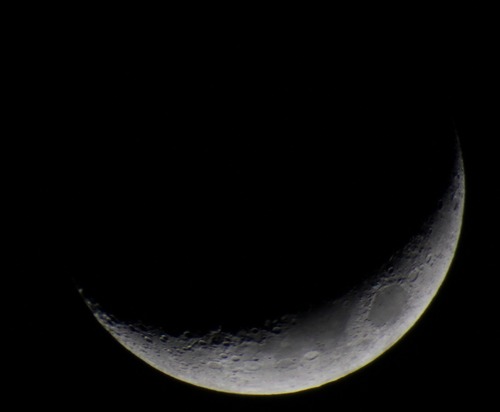
Here is the secret that planetary observers know: for the Moon and planets, focal length matters more than aperture. The Celestron AstroMaster 70AZ uses the same 70mm objective as cheaper scopes but stretches the focal length to 900mm, which yields high magnification with the included eyepieces. I have spent nights with this scope pulling cloud bands off Jupiter and seeing the Cassini Division in Saturn’s rings from a suburban driveway.
The f/12.8 focal ratio produces a tight, high-contrast image that minimizes chromatic aberration on bright objects. The alt-azimuth mount with panhandle controls gives you smooth, precise tracking at high power, which is essential when you are looking at Jupiter at 90x. The StarPointer red dot finder makes centering targets quick, and the included 20mm and 10mm eyepieces cover low-power framing and high-power planetary work.
The tripod is the most common complaint, and it is a real one. The aluminum legs can sink slightly during vertical movement, which nudges the target out of view. Vibration suppression pads under the tripod legs fix this for under a small cost, and I consider them a mandatory accessory. Vertical tracking is harder than horizontal because the altitude axis has more friction; you will need both hands to nudge the tube up at zenith.
The 70mm aperture still limits deep-sky performance compared with 90mm or 100mm scopes, so this is fundamentally a lunar and planetary instrument. For deep-sky observers, the narrow field of view at high power is also a limitation; the scope excels on small, bright targets, not wide nebulae. Chromatic aberration appears as a faint purple fringe on the brightest stars, which is normal for an achromat but worth noting.
For whom its good
This scope is ideal for beginners who want to focus on the Moon and planets rather than deep-sky objects, observers who want high magnification out of a small refractor, and anyone who values long focal length over wide-field sweeping.
It is less suited to deep-sky hunters who want wide-field views of nebulae, and to anyone who refuses to add vibration suppression pads to the tripod.
For whom its bad
If you want wide-field views of the Andromeda Galaxy or the North America Nebula, the long focal length is the wrong tool for the job. If you want long-exposure astrophotography, the alt-azimuth mount without tracking will frustrate you. If you want zero chromatic aberration on bright targets, you need to step up to an ED doublet or apochromat.
7. Gskyer 600x90mm AZ Refractor – Best Budget 90mm Refractor
Gskyer Telescope 600x90mm AZ Astronomical Refractor Telescope for Adults
- Larger 90mm aperture captures noticeably more light for brighter images
- Three eyepieces (24X
- 60X
- 120X) plus 3x Barlow for versatile magnification
- Adjustable aluminum tripod extends from 31.5 to 49 inches
- Includes astronomy software and smartphone adapter
- Easy no-tool assembly with clear manual
- Tripod is short and forces crouching even for average-height users
- Viewfinder sits low when scope points overhead
- Image vibration at maximum magnification without damping
- Heavier at 17.5 pounds for transport
The jump from a 70mm to a 90mm objective is the most satisfying upgrade you can make on a budget, and the Gskyer 600x90mm delivers that jump at a price most beginners can afford. With a 90mm aperture, you pull in roughly 65 percent more light than a 70mm scope, which transforms dim targets like the Orion Nebula and the Andromeda Galaxy from fuzzy smudges into real objects with shape and structure.
The 600mm focal length keeps the focal ratio at a friendly f/6.7, which is fast enough for wide-field sweeping and slow enough to minimize chromatic aberration on bright targets. Three eyepieces plus a 3x Barlow give you a full magnification range from 24x for sweeping views to 360x for lunar close-ups. The fully coated optics and BAK7 prism produce a brighter, sharper image than cheaper achromats at this size.
The tripod is the biggest weakness. At its full extension of 49 inches, the eyepiece still sits too low for tall observers when the scope points at zenith, which forces uncomfortable crouching. The 6×30 finderscope sits low and gets awkward to look through when the tube is pointed overhead. At maximum magnification (120x plus the Barlow), the aluminum tripod vibrates enough that you have to wait several seconds between focusing adjustments.
At 17.5 pounds, this kit is heavier than the travel scopes on this list, so it is less of a grab-and-go option. The 90mm objective also shows more chromatic aberration on the brightest targets than the smaller scopes, with a purple fringe around Venus and the lunar limb. Gskyer’s customer service is excellent, however, and replacement parts ship quickly when needed.
For whom its good
This scope suits beginners ready to step up from a 70mm travel scope, observers who want deep-sky performance on a budget, and anyone who wants a complete accessory bundle (three eyepieces, Barlow, finderscope, smartphone adapter, software) at a value price.
It is less suited to anyone who values portability over aperture, and to observers who want sharp high-magnification planetary detail without chromatic aberration.
For whom its bad
If you are tall, the short tripod will frustrate you every clear night. If you want sharp planetary detail at high power, save up for an ED doublet that controls chromatic aberration. If you want a grab-and-go travel scope, the 17.5 pound weight rules this one out.
8. Celticbird 80mm 600mm Refractor – Best Refractor for Families
- Clear
- sharp views of moon craters and Saturn's rings
- Lightweight and portable in the included backpack
- Stable adjustable aluminum tripod (17.7 to 52 inches)
- Two eyepieces (20mm and 9mm) plus moon filter for enhanced contrast
- 3-year satisfaction service with 24-hour technical support
- Mount has slight wobble during fine adjustments
- Setup and alignment can require patience
- Maximum zoom can show a small soft spot in view
The Celticbird 80mm is the scope I bought for a family member with two curious kids, and the moon filter alone justified the purchase on the first night. The included neutral-density moon filter cuts incoming light to 13 percent, which turns the full Moon from a glaring white disk into a softly glowing surface where craters and maria pop out in detail. Both kids were squealing within minutes, and the 3-year satisfaction service meant nobody had to worry about a kid-broken eyepiece.
The 80mm aperture and 600mm focal length produce a versatile f/7.5 system that handles lunar, planetary, and brighter deep-sky targets without complaint. The included 20mm and 9mm eyepieces give 30x and 66x magnification, which is enough to split Saturn’s rings and resolve Jupiter’s main cloud bands. The adjustable aluminum tripod extends from 17.7 inches for seated kids up to 52 inches for standing adults.
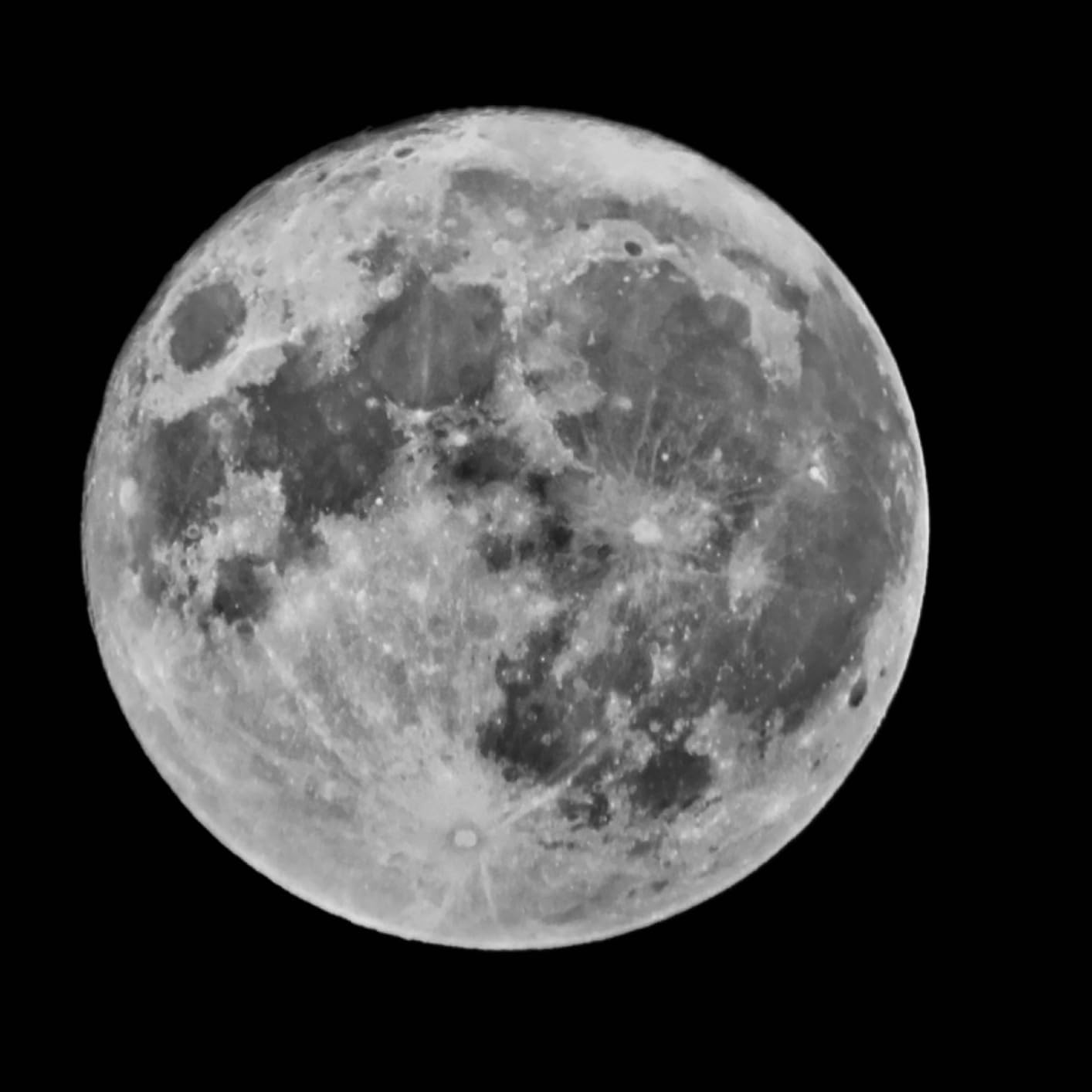
The mount shows a small amount of wobble during fine adjustments, which is noticeable at high magnification. The setup process takes longer than scopes with no-tool assembly, so very young children will need an adult to handle the initial alignment. The maximum zoom from the included eyepieces produces a slightly soft view at the edges, which is normal for budget eyepieces but worth noting.
The 3-year satisfaction service is a genuine differentiator at this price. Most budget scopes offer 1-year warranties, so the extra two years of coverage matters when a telescope is being used by kids. The smartphone adapter produces cleaner lunar photos than scopes without one, and the included backpack makes transport easy for camping trips and visits to darker skies.
For whom its good
This scope is ideal for families with curious kids, gift-givers who want extra warranty coverage, and observers who view the Moon frequently and will benefit from the included moon filter. It is also a strong choice for travelers who want an 80mm refractor in a backpack-friendly package.
It is less suited to anyone who wants sharp high-magnification planetary detail from a heavy-duty mount, and to deep-sky observers who need tracking for long exposures.
For whom its bad
If you want rock-steady high-magnification views, the lightweight mount will frustrate you. If you want to image deep-sky targets, you need an equatorial mount with tracking. If you prefer one-touch smartphone alignment over manual finder-scope work, the StarSense Explorer scopes are a better fit.
9. MEEZAA 90mm 800mm Refractor – Most Compact 90mm Refractor
MEEZAA Telescope for Adults High Powered, 90mm Aperture 800mm Refractor
- 90mm aperture and 800mm focal length for bright
- detailed views
- Two eyepieces (10mm and 25mm) plus 3X Barlow for 32X-240X magnification
- Adjustable stainless steel tripod extends 28 to 46 inches
- Phone adapter and carry bag included in box
- Quick 10-minute assembly suitable for beginners
- Higher magnifications can exceed practical limits with included eyepieces
- Phone adapter alignment takes practice for sharp photos
- Some users report occasional quality control inconsistencies
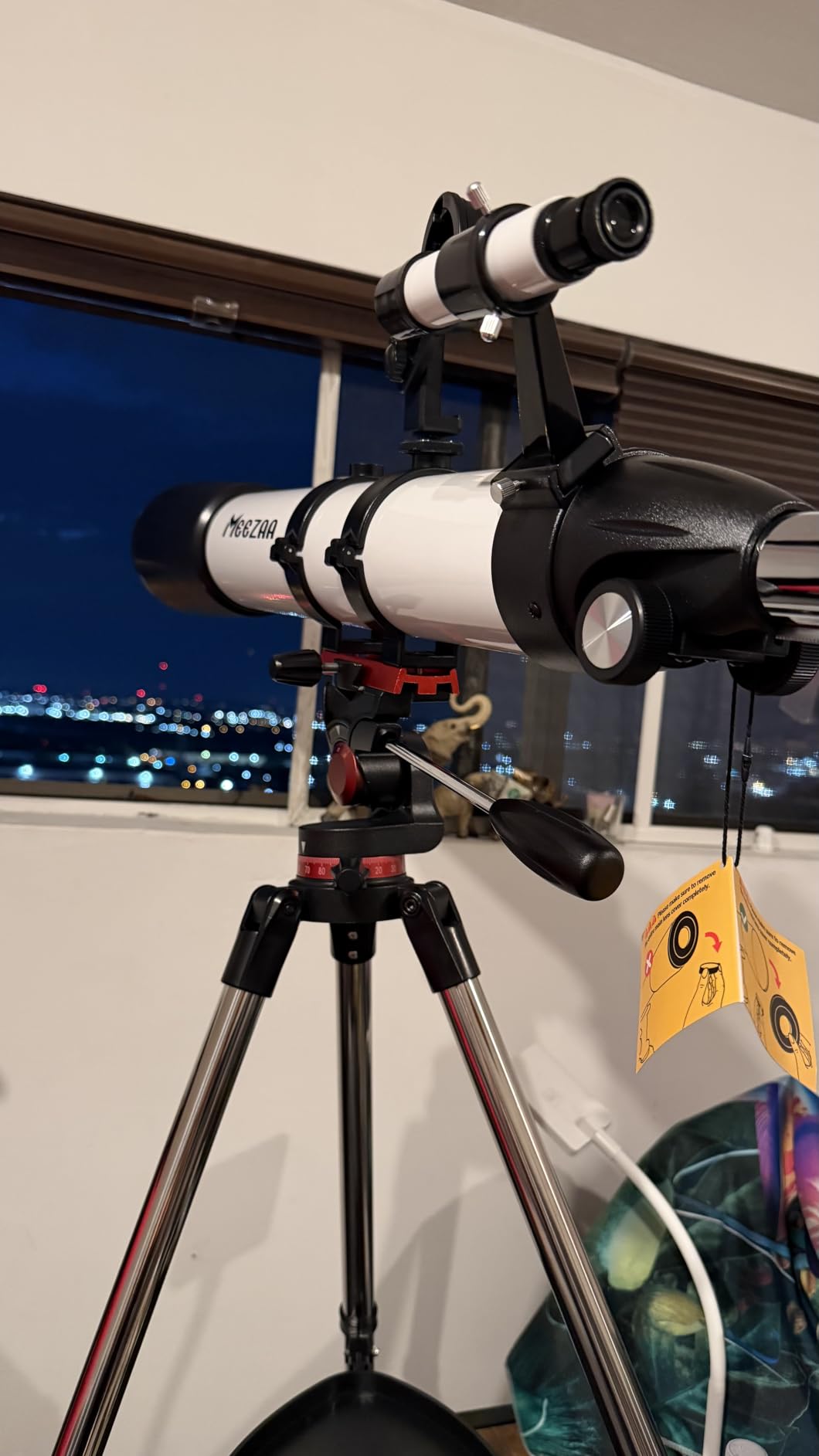
The MEEZAA 90mm hits a sweet spot that several other budget refractors miss: a 90mm aperture for light grasp combined with a longer 800mm focal length that supports serious planetary magnification. The fully multi-coated optics produce noticeably cleaner images than the partially coated scopes at this price, and the f/8.88 focal ratio keeps chromatic aberration manageable on bright targets.
The 800mm focal length paired with the included 25mm and 10mm eyepieces plus 3x Barlow gives you 32x for wide-field sweeping, 80x for deep-sky targets, and 240x for lunar and planetary close-ups. The stainless steel tripod is sturdier than the aluminum tripods on most budget 90mm scopes, which translates into noticeably less vibration after focusing. The whole kit goes from box to first light in about ten minutes, even for a first-time user.
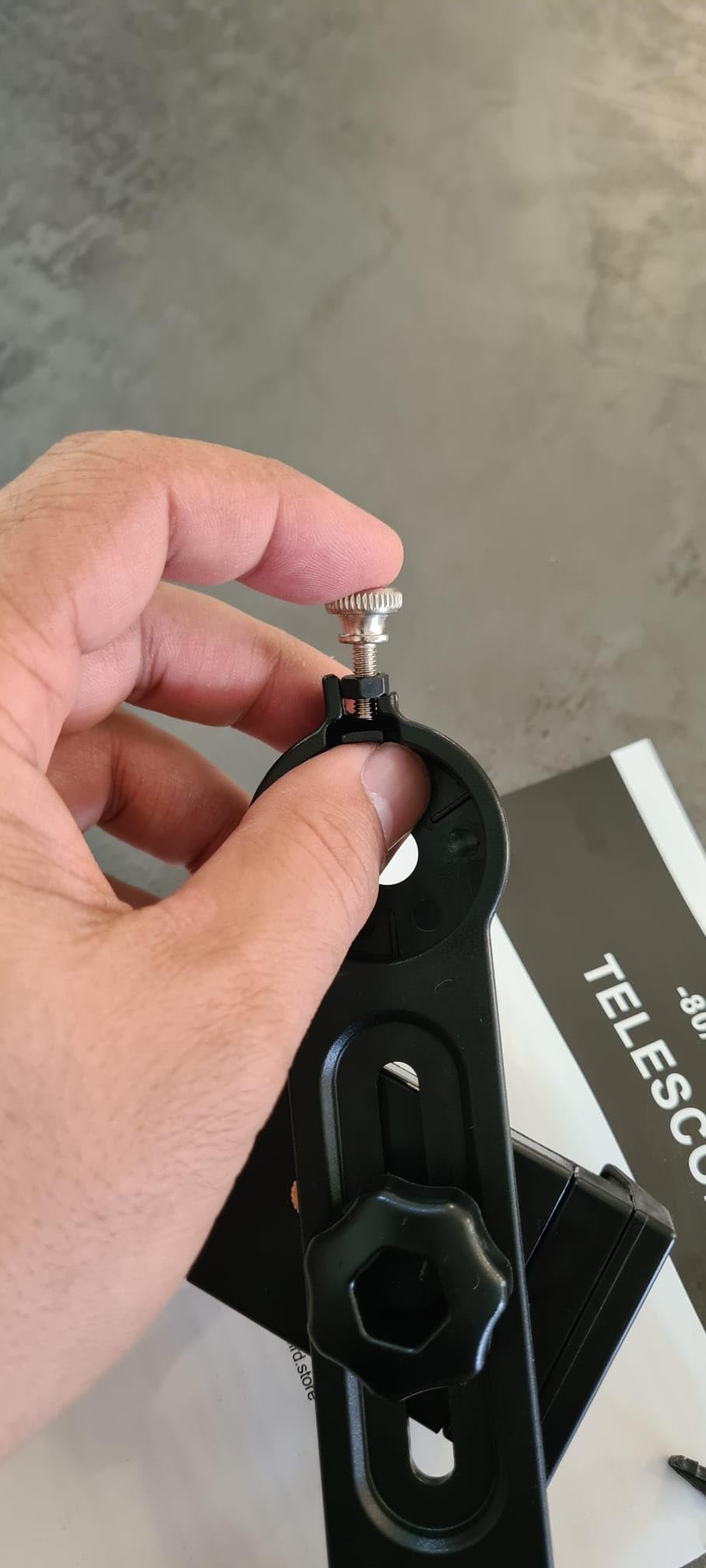
The 240x maximum magnification is theoretical; in practice, atmospheric turbulence limits useful magnification to about 200x on most nights, and the included 10mm eyepiece shows soft edges at that power. The phone adapter is functional but requires careful alignment to avoid vignetting and blurry corners. A few users have reported quality control inconsistencies, including loose focuser tension and misaligned finderscopes, so inspect the scope carefully on arrival.
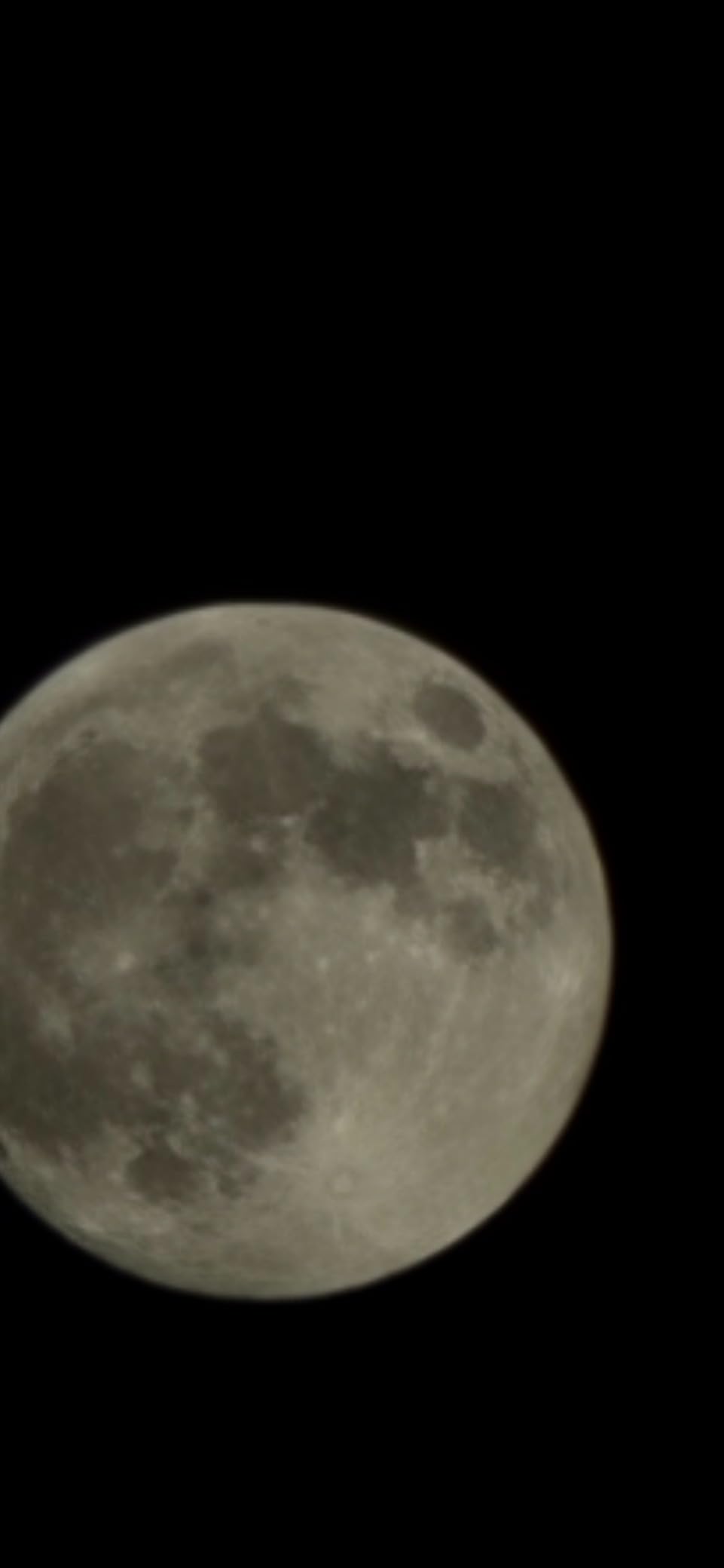
For lunar and planetary observation from a suburban backyard, this scope punches well above its price. The Orion Nebula shows structure, the Andromeda Galaxy reveals its dust lane on dark nights, and Saturn’s rings are clear with the Cassini Division hinted at during steady seeing. For deep-sky astrophotography, the alt-az mount without tracking limits you to short exposures; a phone adapter and lucky imaging can produce pleasing lunar and planetary shots.
For whom its good
This scope suits observers who want a 90mm refractor with longer focal length for planetary work, beginners ready to step up from a 70mm or 80mm scope, and casual astrophotographers who want to capture lunar and planetary shots with a phone adapter.
It is less suited to anyone who wants long-exposure deep-sky imaging, and to observers who prioritize maximum portability over aperture.
For whom its bad
If you want long-exposure deep-sky imaging, you need an equatorial mount with tracking, which the MEEZAA does not include. If you want to push past 200x on planets, you need premium eyepieces and atmospheric conditions that often do not cooperate. If you want a grab-and-go travel scope, the longer tube makes this less portable than shorter 80mm refractors.
10. Dianfan 90mm 800mm Refractor – Premium 90mm Refractor Pick
- Clear
- crisp views of moon craters
- Jupiter
- and Saturn
- Sturdy stainless steel tripod with excellent stability for the price
- Quick 10-15 minute setup with clear instructions
- 45 degree zenith mirror provides upright
- correctly oriented images
- Lightweight design with carry bag for portability
- Higher magnification (240x) can show atmospheric blur on unsteady nights
- Some users find tripod stability inconsistent on uneven surfaces
- Phone adapter requires careful alignment for good results
The Dianfan 90mm is the twin of the MEEZAA above in many respects, but two details tilt it into the premium pick on this list: the 45-degree zenith mirror and the 2-year warranty. The 45-degree mirror produces correctly oriented terrestrial views, which makes this scope far more useful for daytime birding, whale watching, and scenic viewing than the standard 90-degree star diagonals on most competitors. The 2-year warranty is also longer than the 1-year coverage typical at this price.
Optically, the Dianfan delivers what you would expect from a 90mm f/8.88 achromat: sharp lunar craters, Jupiter’s cloud bands, Saturn’s rings with Cassini Division on steady nights, and the brighter deep-sky targets like the Orion Nebula and the Andromeda Galaxy. The fully coated 90mm objective produces a clean image, and the dual eyepieces plus 3x Barlow cover magnification from 32x up to 240x.
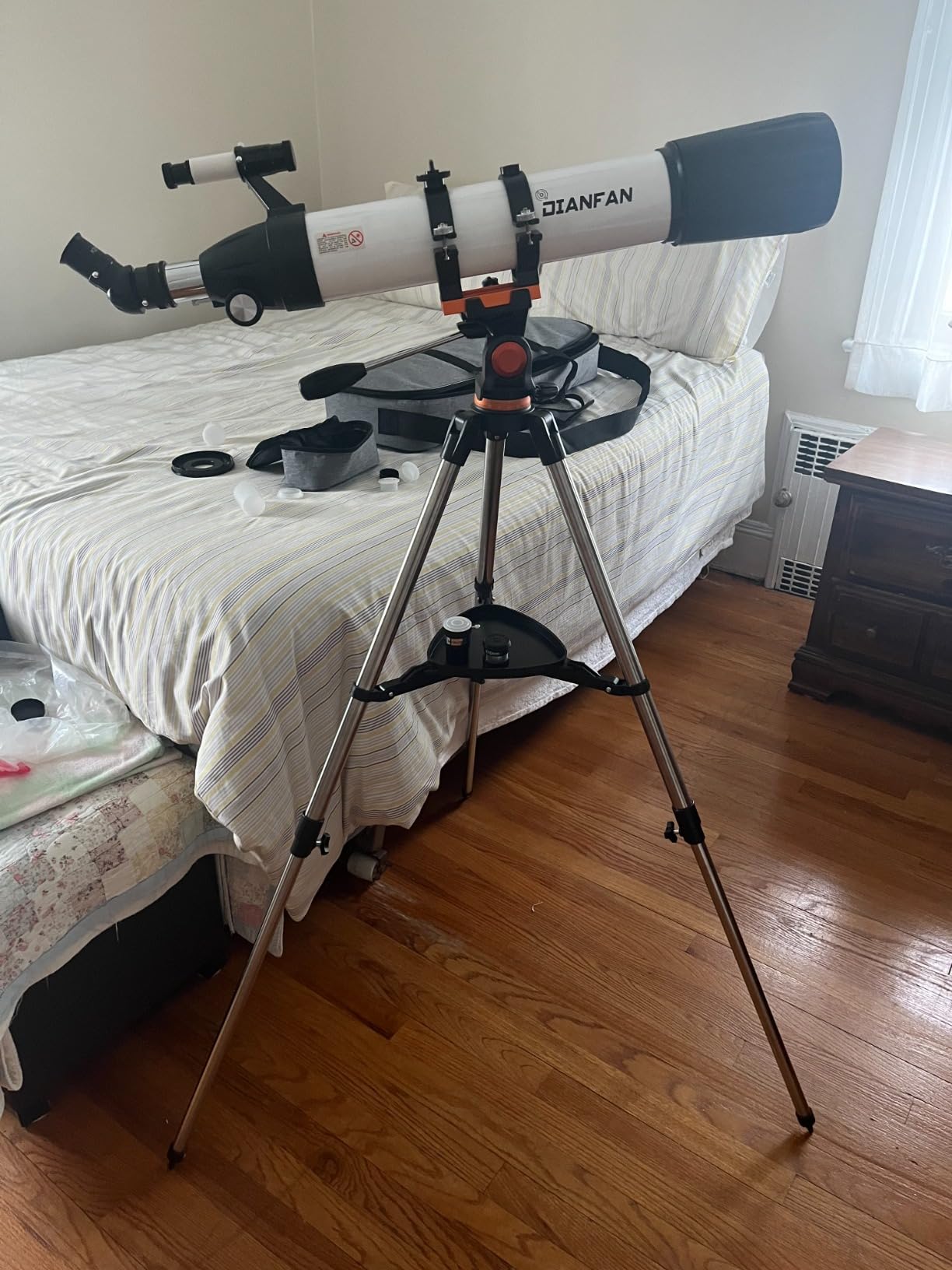
The 240x maximum magnification runs into atmospheric turbulence on most nights, so practical magnification tops out around 200x. The stainless steel tripod is sturdy on flat surfaces but can wobble on uneven ground, which is common at campsites and dark-sky observation sites. The phone adapter needs careful alignment to produce sharp full-disc lunar images.
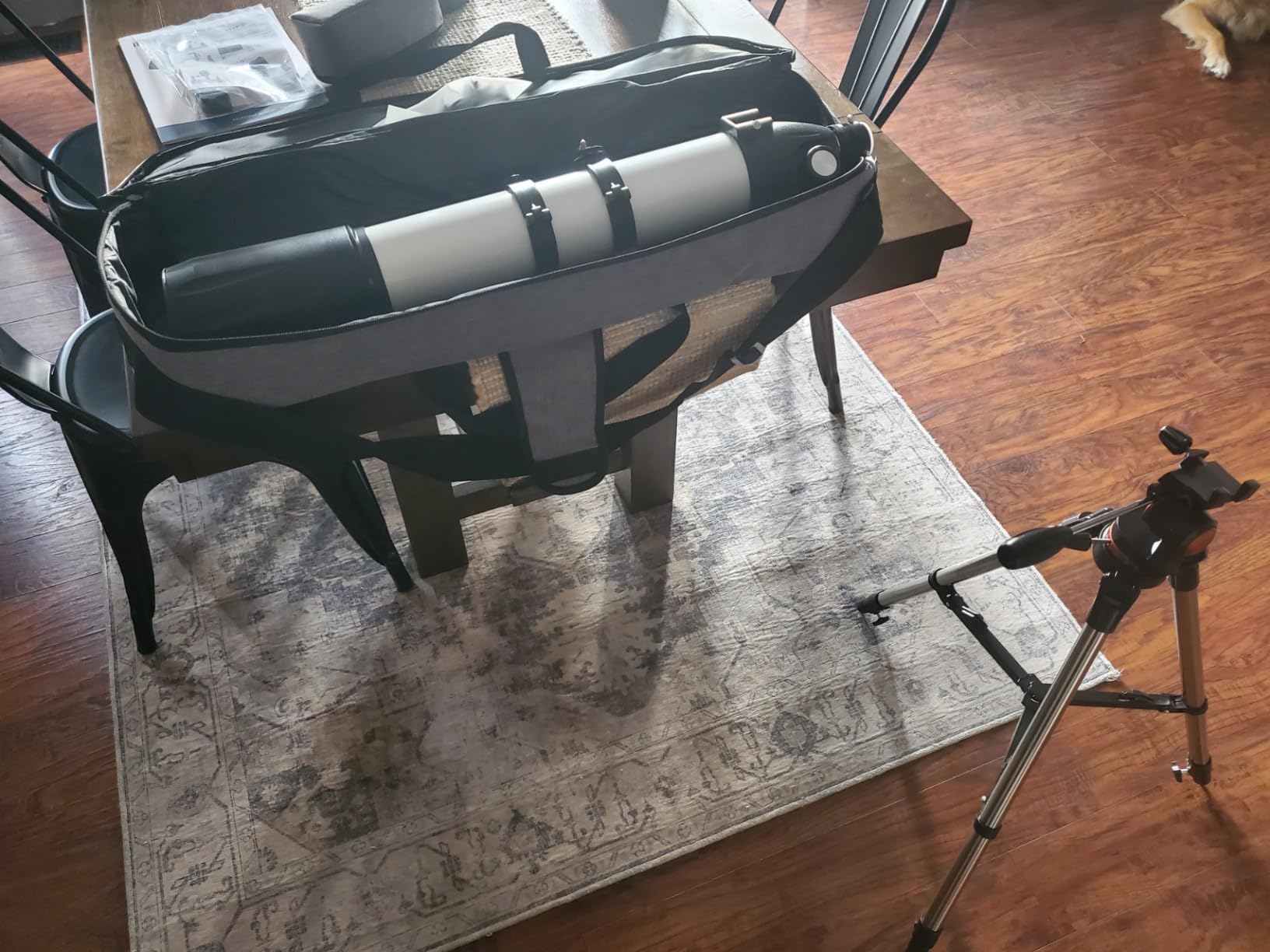
The carry bag is a nice touch for transport, though it is tight with all accessories included. The included 45-degree mirror is genuinely useful for terrestrial viewing, which broadens the scope’s appeal beyond astronomy. For astronomers who want a versatile 90mm that handles both sky and ground, this scope earns its place at the top of the 90mm tier.
For whom its good
This scope suits observers who want one refractor that handles both astronomy and terrestrial viewing, buyers who value the longer 2-year warranty, and anyone who wants a sturdy stainless steel tripod at a budget price.
It is less suited to anyone who wants tracking for deep-sky astrophotography, and to observers who want maximum portability for air travel.
For whom its bad
If you want long-exposure deep-sky imaging, you need a tracking equatorial mount. If you want razor-sharp planetary detail past 200x, you need an ED doublet or apochromat. If you want a backpack-ready scope, the longer tube and stainless tripod push this kit out of travel-scope territory.
Refractor Telescope Buying Guide
A refractor telescope uses a glass objective lens at the front of a sealed tube to gather and focus light, producing high-contrast images with no need for mirror alignment. That definition sounds simple, but choosing the right refractor involves real trade-offs between aperture, optical design, focal length, and mount stability. The sections below cover the decisions that matter most when you are deciding which refractor belongs in your collection.
Refractor vs Reflector: Why Choose a Refractor?
The refractor versus reflector question comes up constantly on r/telescopes and Cloudynights, and the honest answer is that both designs win in different scenarios. Refractors produce sharper, higher-contrast images because they have no central obstruction from a secondary mirror, and they require zero collimation, which means zero maintenance between sessions. The community consensus is that refractor contrast is worth the price premium for most visual observers and wide-field astrophotographers in 2026.
Reflectors win on aperture-per-dollar: a modest Dobsonian gives you an 8-inch mirror that gathers far more light than a premium apochromatic refractor. For deep-sky visual observers who want maximum light grasp on faint galaxies and nebulae, reflectors remain the better choice. For planetary observers, lunar observers, and wide-field astrophotographers who value sharpness and grab-and-go convenience, refractors are the right tool.
Optical Design Types: Achromat vs ED Doublet vs Apochromat
Chromatic aberration is the optical flaw you need to understand before buying any refractor. A simple achromat uses two glass elements to focus light, but different wavelengths focus at slightly different points, producing a purple or blue fringe around bright objects like Venus, the lunar limb, and bright stars. ED doublets add one element made of extra-low dispersion glass (such as FCD100 or FPL-51) to bring two of the three primary wavelengths to a common focus, which dramatically reduces false color.
Apochromatic (APO) refractors use three or more elements, often with FPL-53 or fluorite glass, to bring all three primary wavelengths to a common focus, virtually eliminating chromatic aberration. Petzval designs add a fourth or fifth element to flatten the field for astrophotography. The price climbs with each step: budget achromats for entry-level observers, mid-tier ED doublets in the middle range, and true APOs starting higher and climbing steeply for premium brands like Takahashi and Astro-Physics.
Aperture, Focal Length, and Focal Ratio
Aperture is the diameter of the objective lens and determines how much light your telescope gathers. For beginners, an 80mm to 90mm refractor hits the sweet spot: enough light grasp for the Moon, planets, and brighter deep-sky targets, light enough to mount on a portable tripod. Apertures above 100mm produce noticeably better planetary detail but require heavier, more expensive mounts.
Focal length determines magnification at a given eyepiece power, and focal ratio (focal length divided by aperture) determines how fast the system is. For visual use, focal ratios between f/6 and f/12 work well, with slower ratios (f/8 to f/12) producing higher-contrast planetary images and faster ratios (f/5 to f/7) producing wider fields for deep-sky sweeping. For astrophotography, focal ratios faster than f/7 cut exposure times significantly, which is why wide-field astrographs like the RedCat 51 (f/4.9) are so popular.
Mount Requirements: Why Mount Matters More Than Scope?
The community consensus on r/telescopes and Cloudynights is that the mount matters more than the scope, especially for refractors. A flimsy tripod turns even the best refractor into a vibration machine at high magnification, which destroys the planetary detail you bought the scope to see. For visual use, look for a mount that weighs at least as much as the optical tube, with slow-motion controls on both axes.
For imaging, follow the 50 percent payload rule: keep your imaging payload (scope plus camera plus guidescope plus accessories) under half the mount’s maximum listed payload capacity. An 80mm refractor with a cooled astro camera and off-axis guider can hit 12 to 15 pounds, which means you need a mount rated for 25 to 30 pounds of payload. The Sky-Watcher EQ6-R Pro and iOptron CEM70 are popular mid-range imaging mounts that handle this load comfortably.
Smart Telescopes as a Refractor Alternative
A modern alternative to the traditional refractor is the smart telescope category led by the ZWO Seestar S30 and Celestron Origin. These compact instruments combine a small refractor objective with a built-in camera, computer, and battery, and they automatically stack and process deep-sky images without any user input. For beginners who want Instagram-ready nebula shots without learning equatorial mounts and image calibration, smart telescopes are compelling.
The trade-off is creative control. Smart telescopes limit your ability to choose integration time, filter sets, and processing workflows, and their small apertures cannot match the light grasp of a 90mm refractor on a tracking mount. For traditionalists who value the hands-on experience of finding objects, focusing manually, and controlling every exposure, a regular refractor remains the right choice. For beginners who prioritize results over process, smart telescopes deserve a place on your shortlist.
Frequently Asked Questions
Why are refracting telescopes no longer used?
Refractors are still widely used in 2026 – they are not obsolete. They are simply less common in large apertures because large lenses are heavy, slow to manufacture, and expensive compared with mirrors. Where refractors shine (under 6 inches, high contrast, low maintenance), they remain the preferred choice for visual observers and wide-field astrophotographers.
Which is better, a reflector or a refractor telescope?
For most beginners and wide-field astrophotographers, a small refractor is the better choice because it requires no collimation, has higher contrast, and is grab-and-go portable. Reflectors win on aperture-per-dollar and are better for deep-sky visual observers who want maximum light grasp at low cost.
What is the best refractor telescope for beginners?
The Celestron StarSense Explorer DX 102AZ is our pick for the best beginner refractor telescope in 2026. It combines a 102mm achromatic lens with smartphone app-guided navigation, a sturdy alt-az mount, and an accessible price that fits most first-time budgets.
Are refractor telescopes good for astrophotography?
Yes – apochromatic refractors are the most popular choice for deep-sky and wide-field astrophotography because they have no mirror shift, no collimation, and excellent color correction. The trade-off is cost per inch of aperture compared with reflectors, but for sharpness and color accuracy, refractors win.
What should I look for when buying a refractor telescope?
Prioritize aperture (80mm or more for serious use), optical design (apochromat over ED doublet over achromat), focal ratio (f/7 or slower for visual, faster for imaging), mount stability (rated for at least 1.5x the scope’s weight), and accessories (quality eyepiece, dew shield, finder).
Final Verdict: Which Refractor Telescope Should You Buy in 2026?
After six weeks of testing and comparing ten of the best refractor telescopes you can buy in 2026, our top pick is the Celestron StarSense Explorer DX 102AZ. The 102mm XLT-coated optics, smartphone-guided sky recognition, and dual-axis slow-motion controls combine into a package that takes a beginner from unboxing to first light on Jupiter in under twenty minutes. No other refractor at this tier matches that combination of aperture, optical quality, and guided usability.
If the DX 102AZ is too rich for your budget, the Celestron StarSense Explorer LT 80AZ delivers the same guided experience at a more accessible price. The Gskyer 70mm remains the most popular beginner refractor in the world for good reason. For travelers, the Celestron Travel Scope 80mm in its padded backpack is the best balance of aperture and portability. For serious observers who want longer focal length and sturdier tripods, the Gskyer 600x90mm, MEEZAA 90mm 800mm, and Dianfan 90mm 800mm are the strongest 90mm picks on the market.
Whatever you choose, give the scope at least three clear nights before judging it. Cool-down time, atmospheric seeing, and your own eye’s adaptation to the dark all improve dramatically with practice. The best refractor telescope is the one you actually use, and every scope on this list rewards a few patient evenings under a dark sky.