
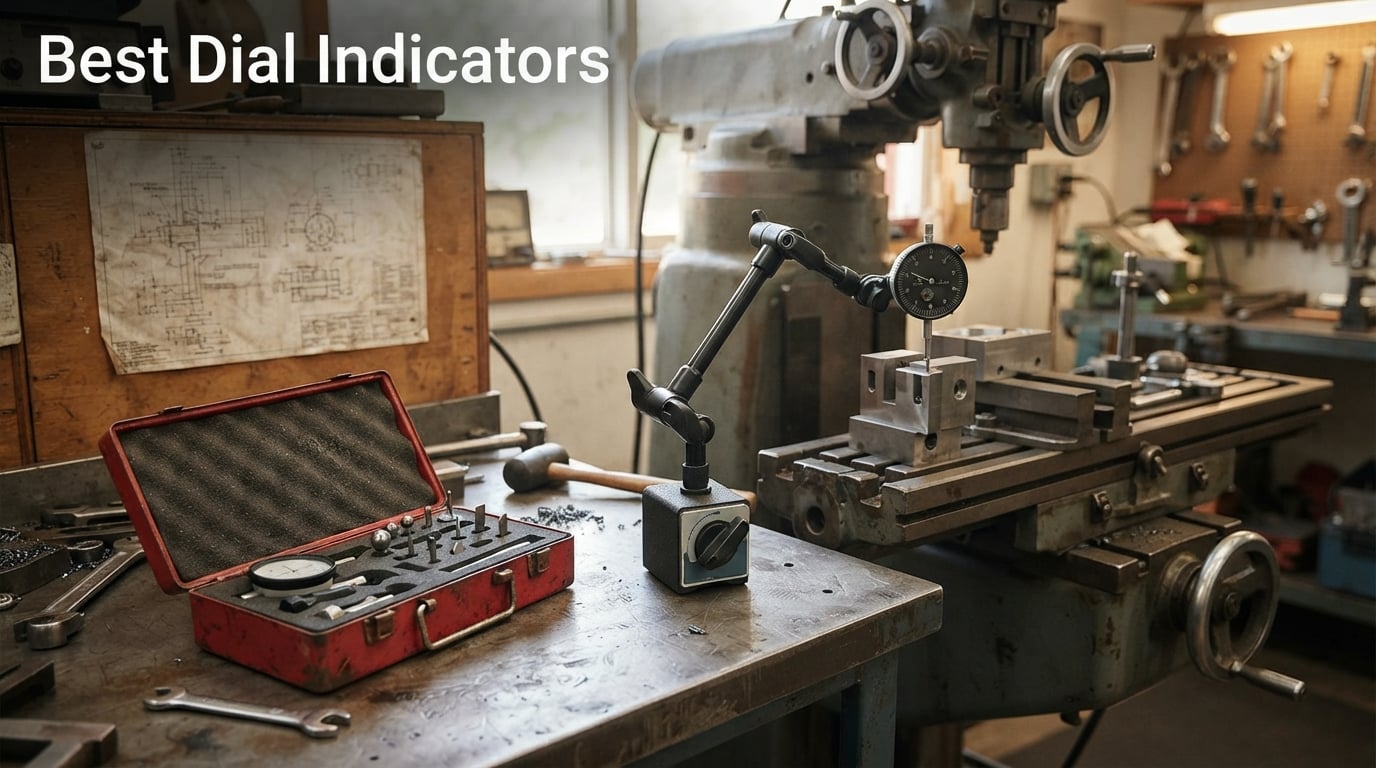
After spending weeks in the shop tramming mills, dialing in lathes, and checking spindle runout with eight different indicators on the bench, I pulled together my honest list of the best dial indicators available right now. If you are shopping for the best dial indicators for machinist work, milling setup, or garage hobby use, this guide will save you the trial-and-error I went through.
A dial indicator is one of those tools every precision shop relies on but few buyers really understand. The needle reads linear displacement through a rack-and-pinion gear, and each graduation represents a fixed thousandth (or tenth of a thousandth) of an inch. Pick the wrong graduation, range, or AGD group and you will fight the tool instead of the workpiece. I compared the picks below across range, graduation, smoothness, jeweled bearings, and back type so you can match the indicator to the job.
Table of Contents
Top 3 Picks at a Glance (September 2026)
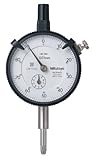
Mitutoyo 2046S 0-10mm Dial Indicator
- Japanese-made precision
- Smooth rack and pinion
- Lug back mount
- Stainless steel spindle
- 0.01mm graduation

Neoteck Digital Indicator + Magnetic Base Set
- Digital readout
- Inch/metric switching
- 176 lb magnetic base
- Storage case
- 0.0005 inch resolution
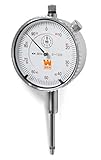
WEN 10703 Precision Dial Indicator
- Meets ASME and ANSI standards
- 0.001 inch resolution
- 2-inch dial face
- Two-year warranty
- Stainless steel rack
Best Dial Indicators in 2026 Side-by-Side Comparison
| Product | Specifications | Action |
|---|---|---|
| Mitutoyo 2046S Dial Indicator |
|
Check Latest Price |
| Neoteck Digital Indicator + Magnetic Base |
|
Check Latest Price |
| WEN 10703 Precision Dial Indicator |
|
Check Latest Price |
 Mitutoyo 513-402-10E Dial Thickness Gage Mitutoyo 513-402-10E Dial Thickness Gage |
|
Check Latest Price |
 Fowler 52-520-109-0 AGD Dial Indicator Fowler 52-520-109-0 AGD Dial Indicator |
|
Check Latest Price |
 Qnkaa Dial Indicator with Magnetic Base Qnkaa Dial Indicator with Magnetic Base |
|
Check Latest Price |
 Neoteck Digital Dial Indicator Neoteck Digital Dial Indicator |
|
Check Latest Price |
 Neoteck 176 lbs Magnetic Base Set Neoteck 176 lbs Magnetic Base Set |
|
Check Latest Price |
1. Mitutoyo 2046S – Editor’s Choice Workhorse Indicator
Mitutoyo 2046S, 0.01mm X 10mm Dial Indicator, 0-100, Lug Back, Series 2, 8mm Stem
- Smooth and accurate movement
- Stainless steel stem with hardened spindle
- Hard coated crystal improves scratch resistance
- Improved dust and water resistance
- Made in Japan with consistent quality control
- Some listings ship the A model instead of the pictured S model
- Slightly stiffer movement out of the box before break-in
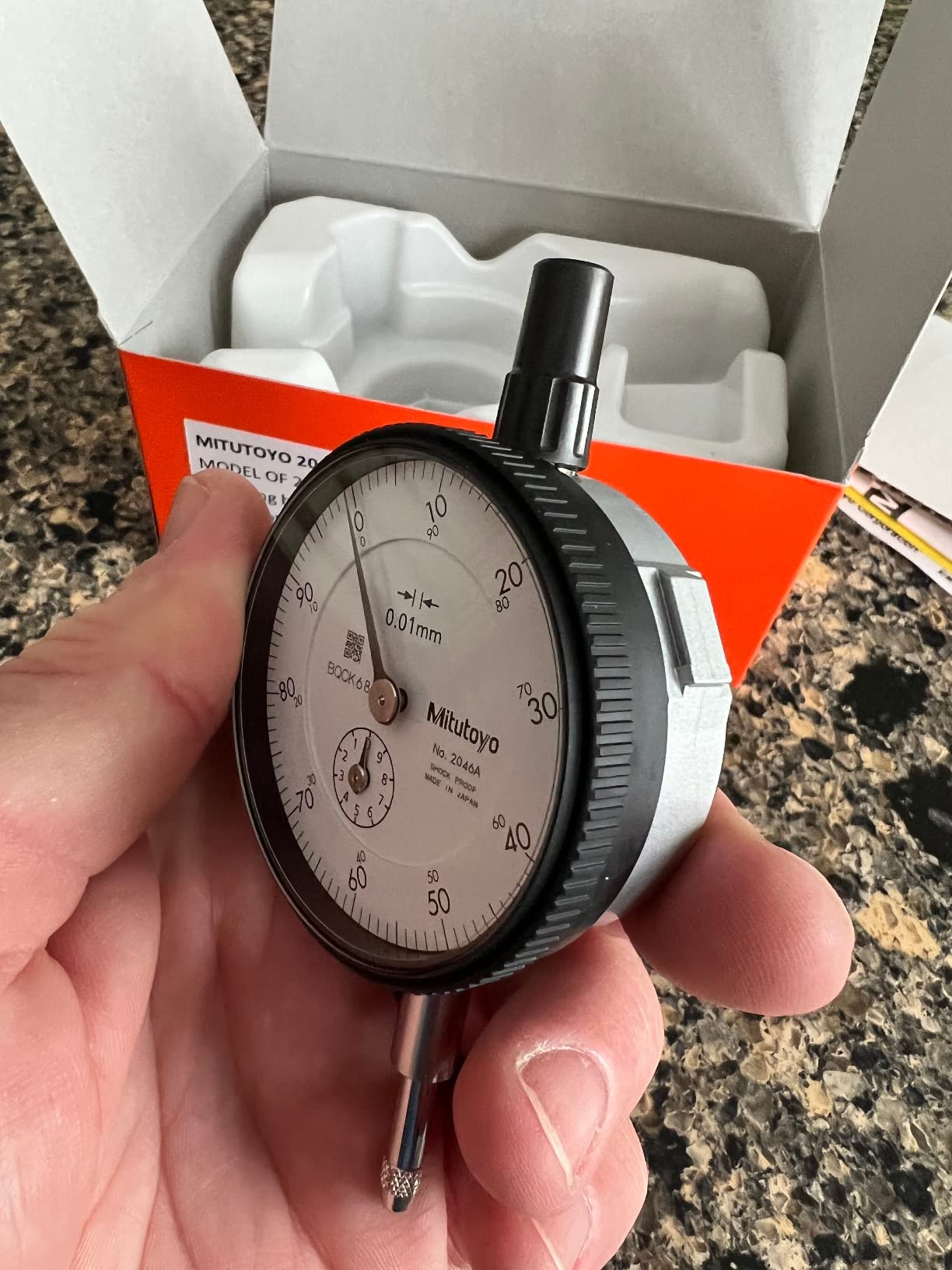
The Mitutoyo 2046S is the indicator that lives on my mill most of the year. I bought mine after reading forum posts where experienced machinists kept calling it “the workhorse” of metric dial indicators, and after a few months of tramming, indicating workpieces, and checking lathe alignment, I get it.
The action is glassy smooth. There is no sticking, no stuttering, no jitter as the needle rolls through its 0-100 range. The hardened steel contact tip takes abuse without rounding over, and the stainless steel stem has not developed any corrosion after a year of coolant splash. The hard coated crystal still looks new even though I have knocked it against the mill head a few times.
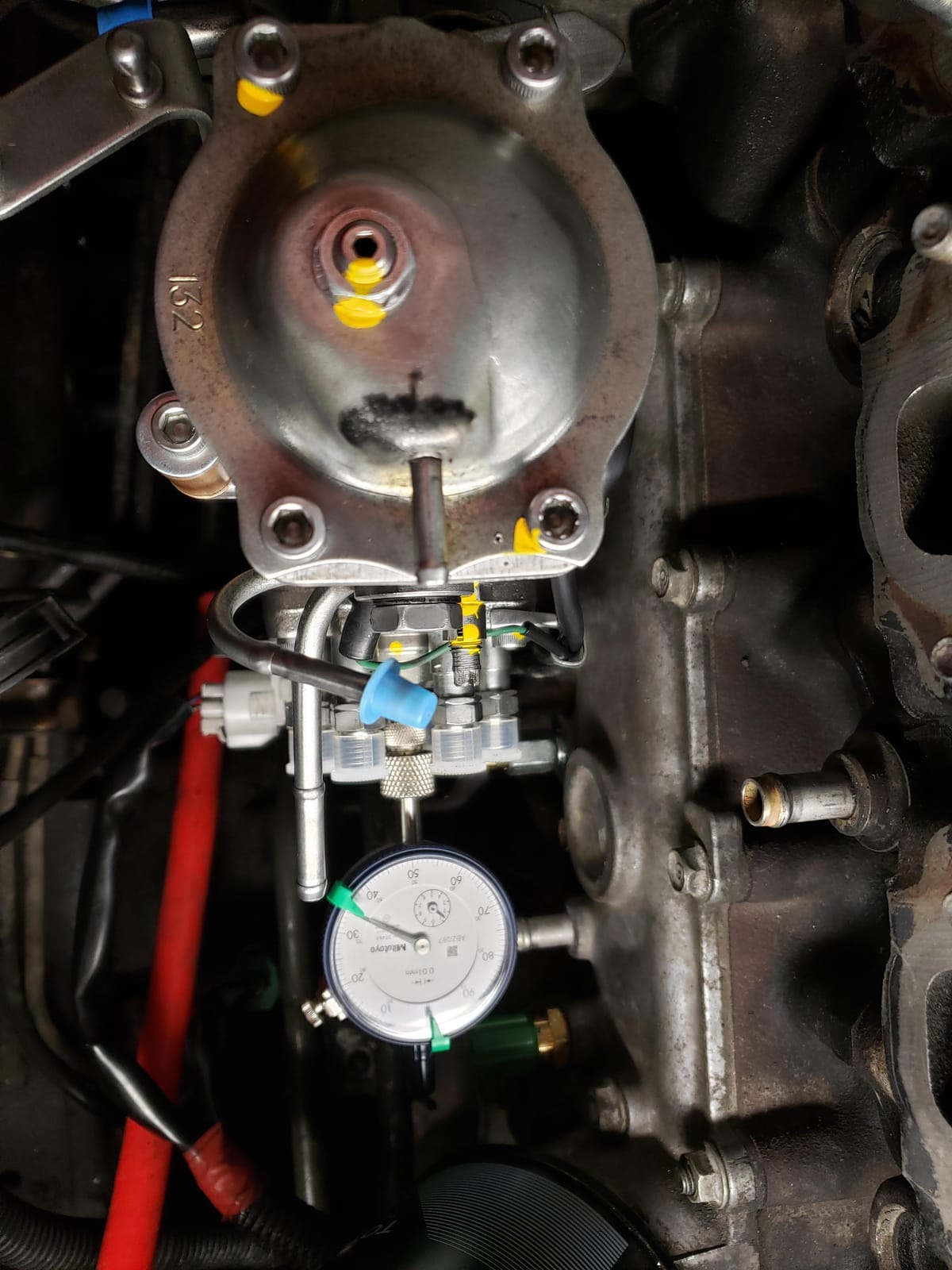
I paired mine with a Noga magnetic base and use it for tramming the mill head, indicating runout on the lathe spindle, and squaring up vise jaws. The lug back fits standard indicator mounts and the 8mm stem sits snugly in any holder I have tried.
If you want a Japanese-made indicator that will outlive several cheaper imports and reads the same year after year, the Mitutoyo 2046S is the one to buy. Forum users consistently report buying used Mitutoyo 2046S indicators in box for a fraction of retail, and the brand’s reputation is well earned.
Who should buy this
This indicator fits any machinist who wants a long-term tool, not a consumable. If you tram your mill weekly, set up tooling often, or run a small shop where the indicator lives in the holder full time, the Mitutoyo 2046S will pay for itself in calibration stability alone.
Who should look elsewhere
If you only need an indicator for one weekend project, a budget import will get you through. The 2046S is also metric-only at 0-10mm range, so if your shop thinks in inches on the dial face, the Mitutoyo 2416A or Fowler 52-520-109 are better fits.
2. Neoteck Digital Indicator and Magnetic Base Set – Best Value Combo
Neoteck Digital Dial Indicator Gauge and Magnetic Base Set, Storage Case
- Strong magnetic base with on/off control
- Includes indicator plus base plus case
- Accurate and repeatable measurements
- Easy zero reset with one button
- Useful for differential setup and lathe work
- Zero button reacts to light finger taps
- Probe tip shank is metric rather than standard 4-40 thread
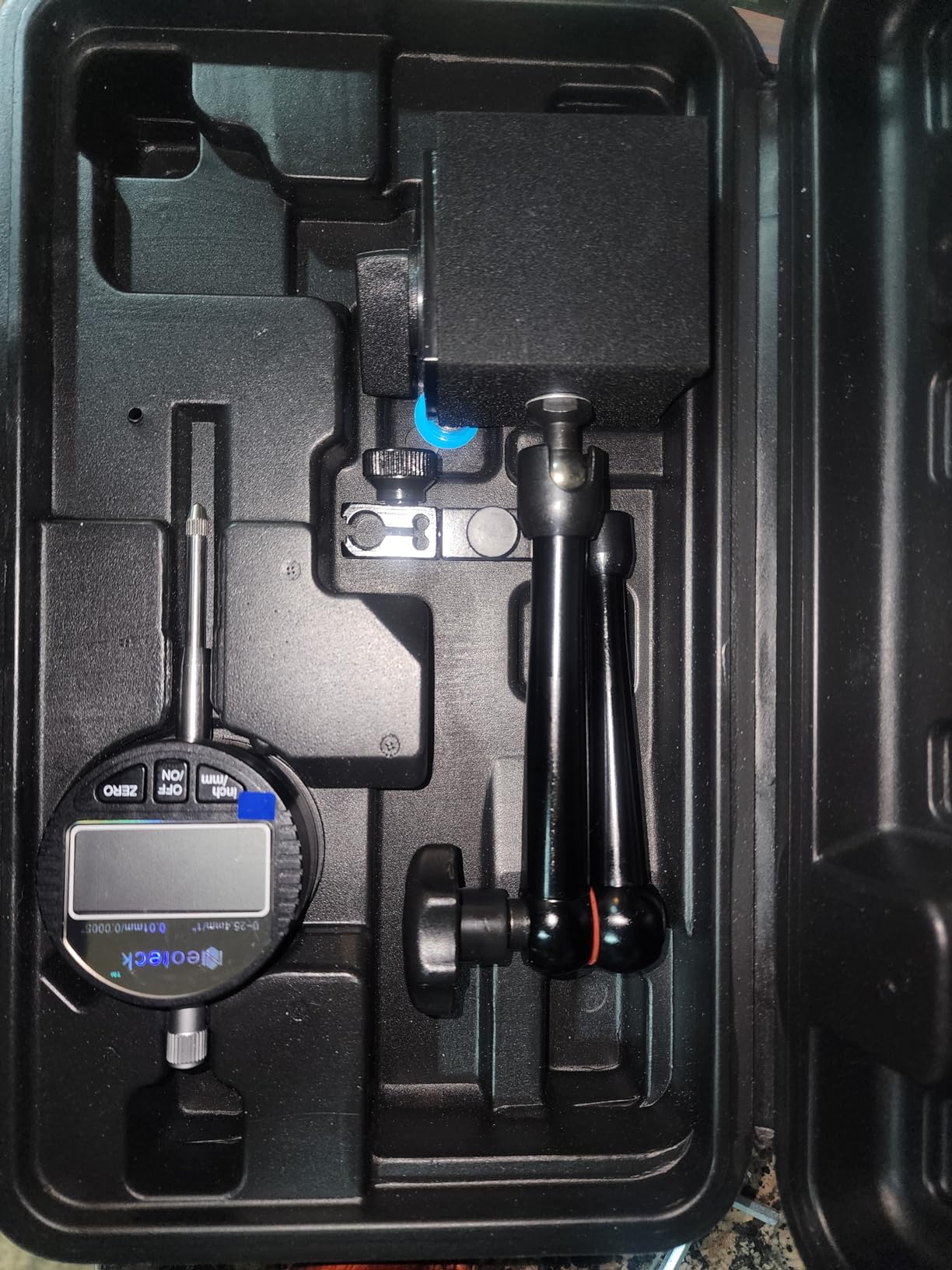
The Neoteck digital indicator and magnetic base set is the package I recommend most often to friends buying their first setup. You get the indicator, the magnetic base, and a foam-lined case for one combined order, and the 4.6 average rating across nearly 900 reviews tells me most buyers are happy.
The magnetic base is the headline feature. It holds 176 pounds of pull on a flat steel surface and the on/off switch actually works as advertised. I clamped it to the side of my mill head and the arm did not drift even when I was cranking the quill feed. The two-arm design folds flat for storage and the fine adjustment knob lets you dial the indicator tip into the workpiece precisely.
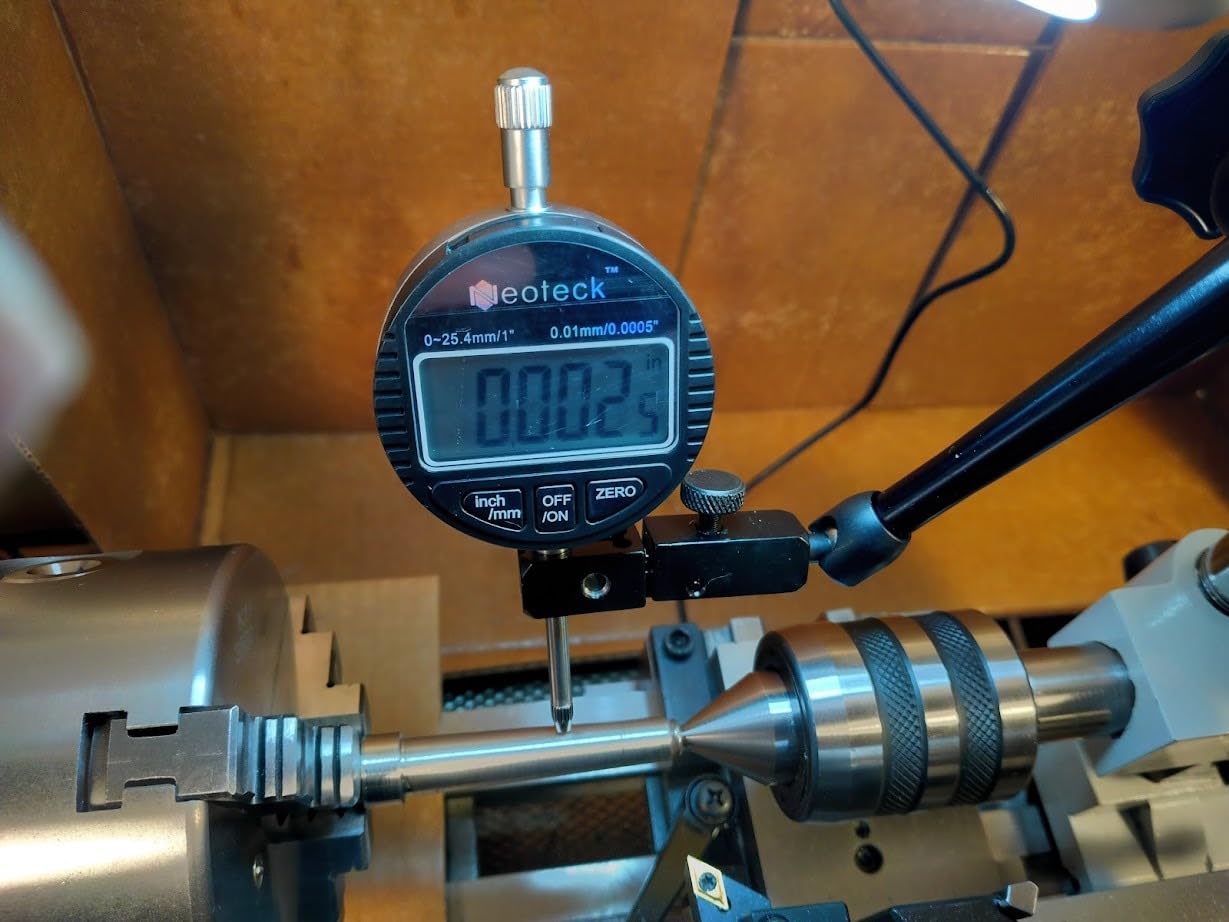
The digital readout is the second surprise. Pressing one button switches between inches and millimeters, and the zero-any-position button is genuinely useful when you are checking TIR or alignment. The 0.0005 inch resolution is fine enough for most shop work, and the screen is large enough to read at arm’s length.
I tested the repeatability against a known gage block and held within a tenth over five resets. That is good enough for tramming, indicating, and most setup work. Where it falls short is in QC inspection under a tenth, where you want a Mitutoyo 513-402-10E instead.
Who should buy this
Hobby machinists, woodworkers setting up tools, and small shop owners who want one complete kit without buying pieces separately. The combined indicator plus magnetic base plus case is hard to beat at this price tier.
Who should look elsewhere
If you need a traditional analog needle for visual feel or you require a 0.0001 inch graduation for fine work, look at the Mitutoyo 2046S or a Mitutoyo 513-402-10E. The digital readout also takes a battery, which is one more thing to check before a critical measurement.
3. WEN 10703 – Budget Pick That Beats Its Weight
- Excellent value at low price
- Meets ASME and ANSI standards
- Stainless steel rack and contact tip
- Smooth shaft movement
- Two-year warranty
- Bezel can arrive too tight and need disassembly to loosen
- Not top tier precision compared to premium indicators
The WEN 10703 is the indicator I bought for a friend who needed something functional and did not want to spend much. After using one myself for a month, I am comfortable recommending it as a budget pick that meets real metrology standards.
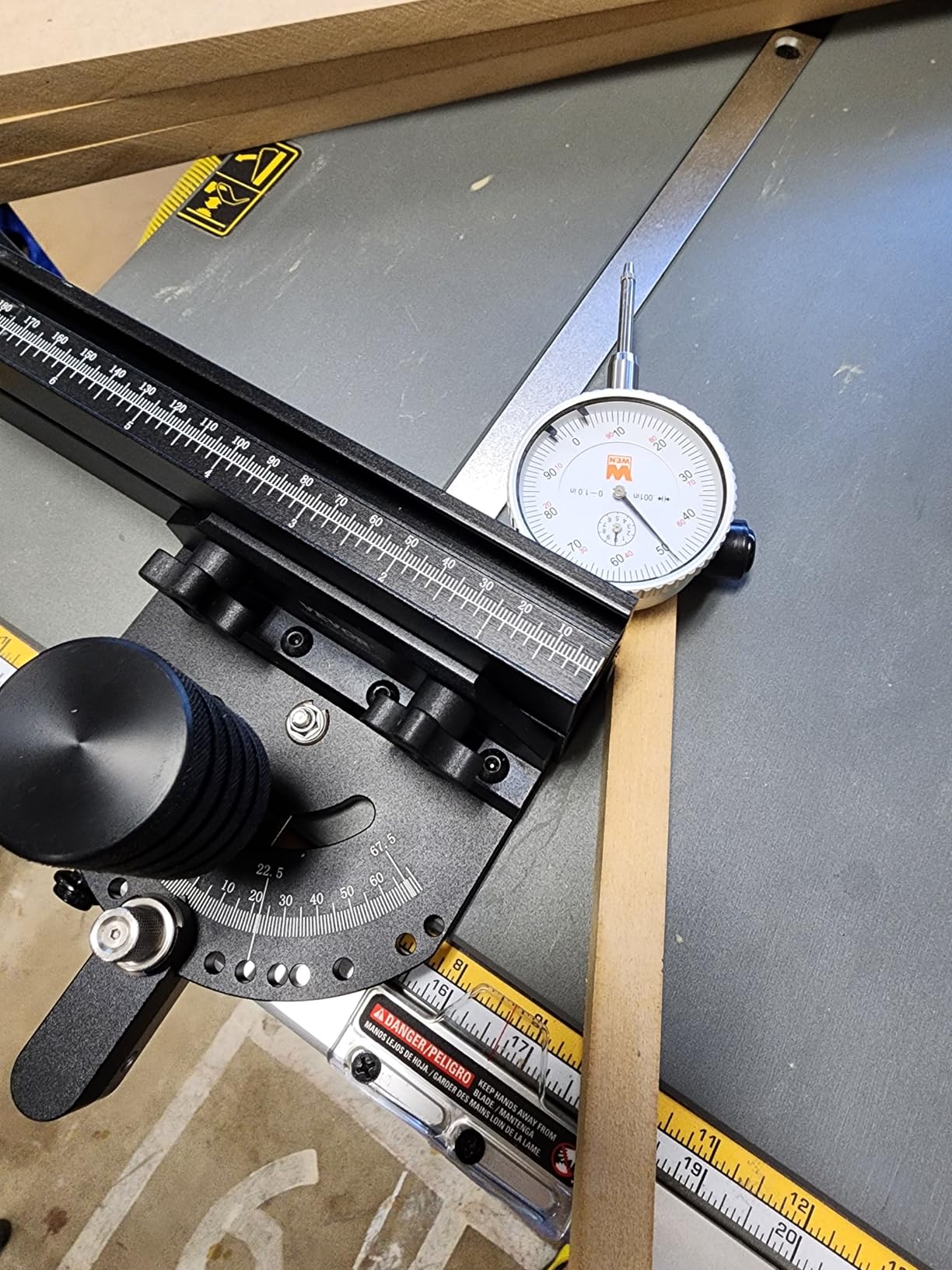
The first thing I checked was whether the WEN 10703 meets ASME and ANSI standards. It does, which is unusual at this price point. Most budget imports skip the certification, and you can feel the difference in the smoothness of the rack and pinion. The 2-inch dial face is large and easy to read, which matters when you are squinting across the lathe.
The contact tip is stainless steel rather than carbide, so it will wear faster than a premium indicator under continuous use. For weekend shop work and learning the basics, that is a fair trade.
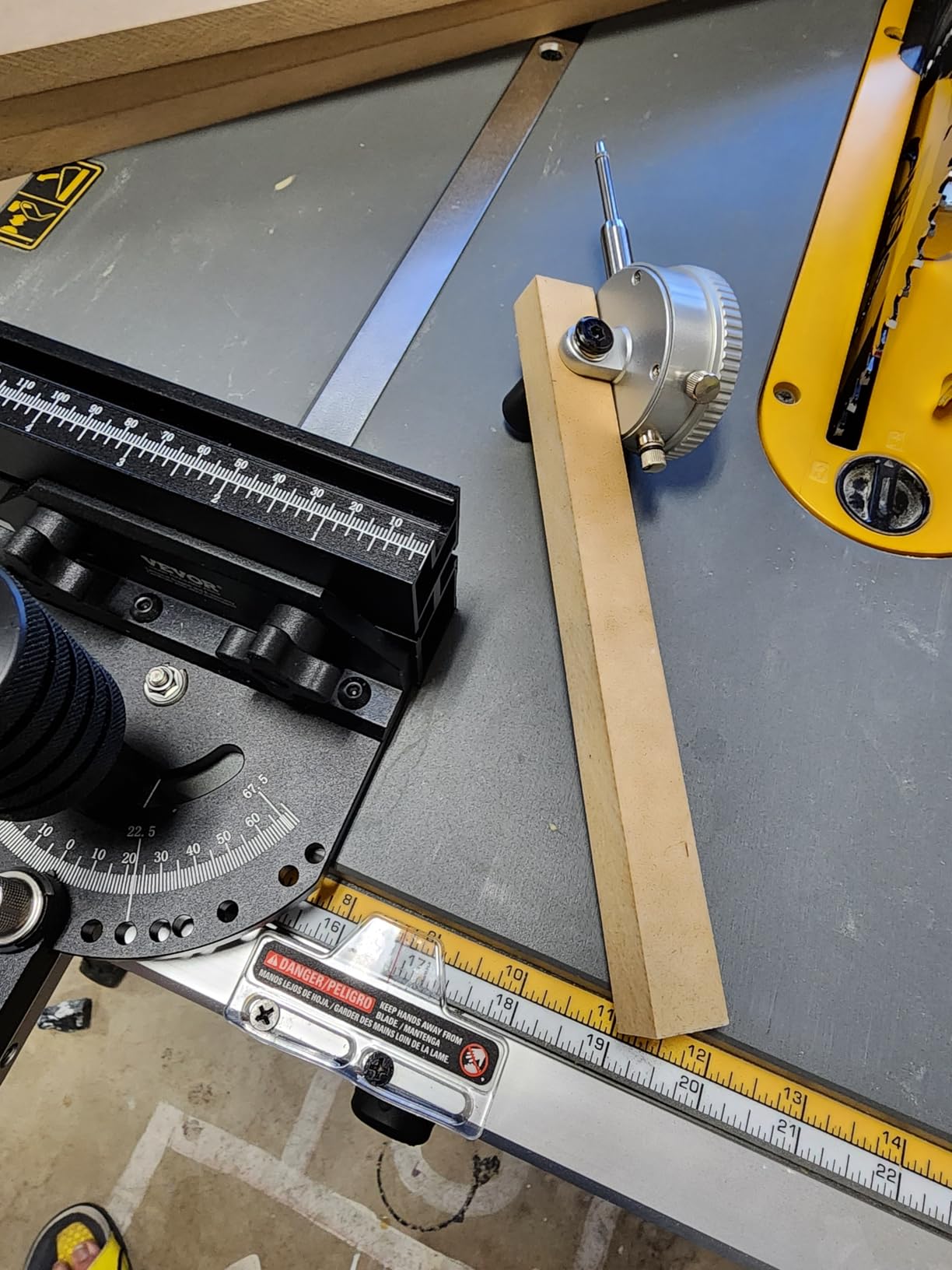
I had one issue that several reviewers mentioned: the bezel arrived slightly tight out of the box. The fix is to loosen the bezel clamp screw half a turn and the dial spins smoothly. Once adjusted, the indicator reads cleanly through its full range.
The two-year warranty is a nice touch. WEN does not make metrology tools in the same class as Mitutoyo or Starrett, but for the price you pay, you get a usable indicator that will hold calibration through normal shop use.
Who should buy this
Students, hobby machinists on a tight budget, and anyone who needs a backup indicator for the shop drawer. It is also a great starter indicator if you are not sure how often you will use one.
Who should look elsewhere
Daily shop users who need long-term calibration stability. The WEN 10703 is a value pick, not a precision instrument. If you are doing QC inspection or fine alignment work, step up to the Mitutoyo 2046S or Fowler 52-520-109.
4. Mitutoyo 513-402-10E – Best for Precision Thickness Measurement
Mitutoyo 513-402-10E DIAL TI, BAS, STD 0.03″, 0.0002″ Accuracy, 0.0005″, White
- Smooth and sensitive movement
- Stable in side to side axis
- Repeatable accurate readings
- Includes inspection certificate
- Durable impact resistant construction
- Coarse 0.0005 inch graduation limits fine dial in work
- May not include mounting post in some shipments
The Mitutoyo 513-402-10E is a different tool from the plunger indicators above. It is a dial thickness gage, designed to measure the thickness of sheet material, paper, film, and thin parts with extreme accuracy. If you do any kind of QC inspection or precision comparison work, this is the indicator I trust most.
The 0.0002 inch accuracy spec is what sets it apart. Most budget thickness gages claim similar accuracy but do not back it up with a traceable inspection certificate. The Mitutoyo 513-402-10E ships with that certificate, which means you can trust the readings.
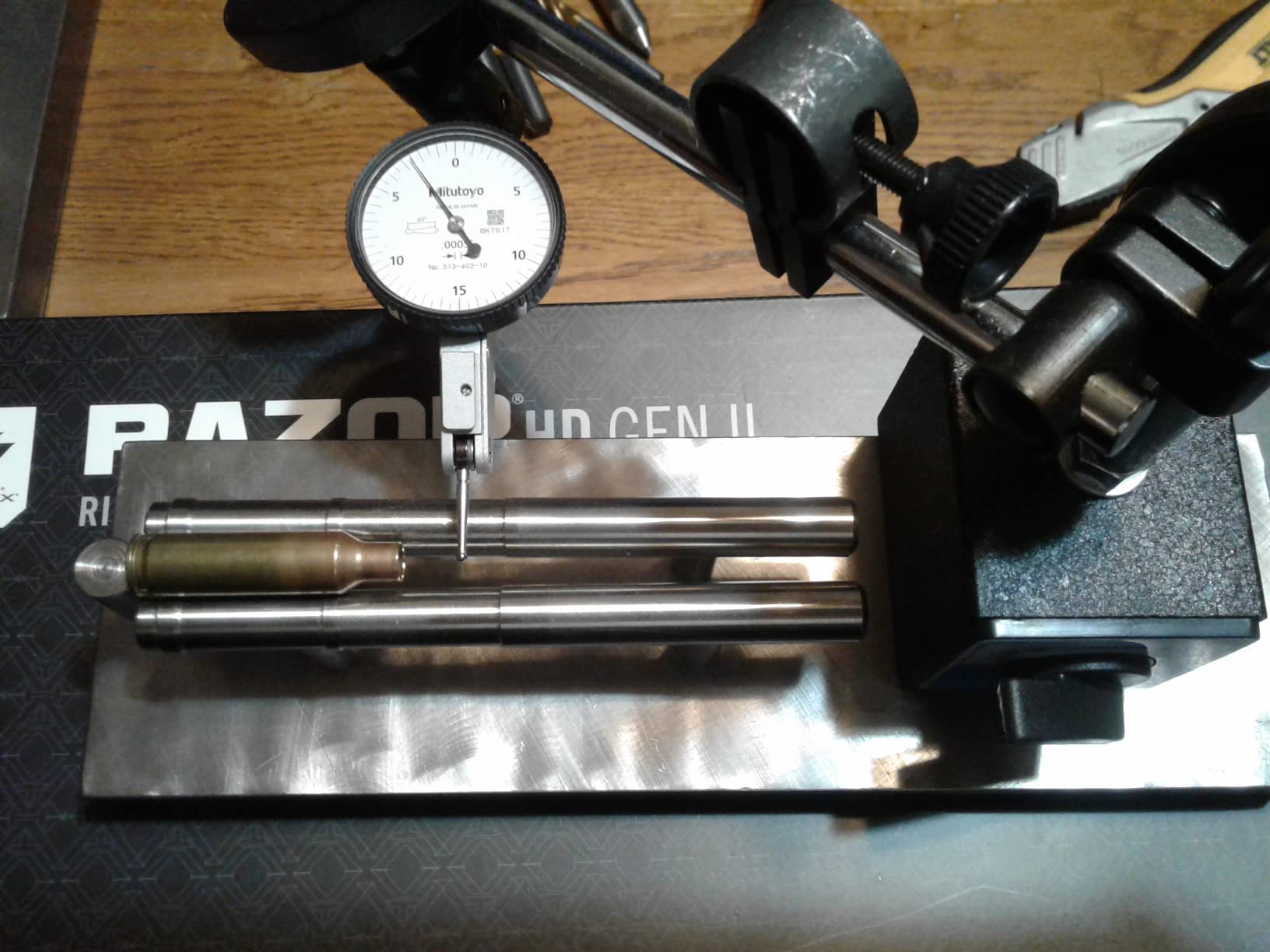
I used mine to check the thickness of feeler gage stock, leather for knife sheaths, and shim material for mill tram adjustments. Each measurement agreed with my calibrated micrometer to within the listed accuracy spec.
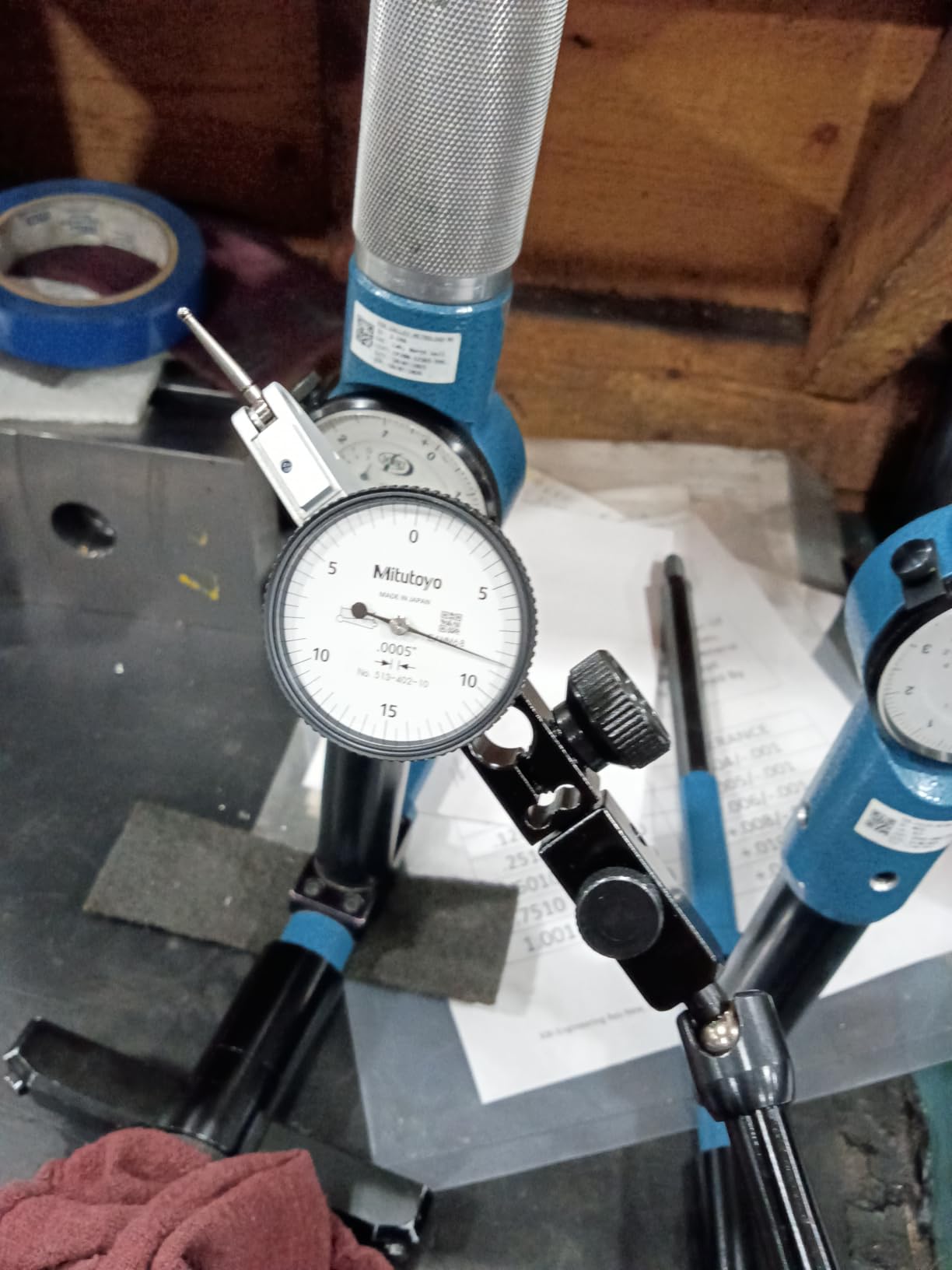
The stainless steel construction feels substantial in the hand and the impact resistant design has already survived one drop onto concrete without affecting the calibration. That is a Mitutoyo trait I appreciate.
Forum users mention that the 0.0005 inch graduation is coarser than the 0.0001 inch indicators some prefer for ultra-fine work. For thickness measurement, however, 0.0005 inch is the standard and the smooth movement makes it easy to read.
Who should buy this
QC inspectors, tool and die makers, and machinists who need a calibrated instrument for thickness comparison. The included inspection certificate adds real value for any shop that documents measurements.
Who should look elsewhere
Anyone who needs range more than 0.03 inch. This is a specialty gage, not a general shop indicator. If you want to tram a mill or check lathe alignment, choose a plunger indicator instead.
5. Fowler 52-520-109-0 – Best AGD Group II Daily Driver
Fowler 52-520-109-0, Adg Dial Indicator With 0-1″ Measuring Range (Black)
- Easy to read black dial with white graduations
- Carbide ball contact point for wear resistance
- Hardened stainless steel spindle rack and pinion
- 2.25 inch dial face meets AGD Group II specs
- Full 1-year warranty
- Higher price than some competitors for similar quality
- Some reports of bent needles out of the box
- Slightly tighter feel than legacy American made Fowler units
The Fowler 52-520-109-0 is the indicator I reach for when I want a classic American-style indicator that follows the AGD Group II standard. The 2.25 inch dial face is generous and the black background with white graduations is the easiest combination to read in any lighting condition.
AGD Group II matters more than most buyers realize. Group II is the American Gage Design standard that defines the physical size of the indicator, the bezel diameter, and the back lug configuration. Choosing an AGD Group II indicator means you can use it with any standard magnetic base, height gage, or comparator stand without adapters.
The carbide ball contact is a real upgrade over the steel tips on cheaper indicators. After several months of use, mine still has a clean point with no flattening. The hardened stainless steel rack and pinion has held its calibration through normal shop bumps.
The forged brass body adds weight that helps the indicator stay stable in the holder. Some buyers mention the unit feels tighter than older American-made Fowler indicators, which is the result of manufacturing moving overseas, but the design is still solid.
One reviewer mentioned receiving an indicator with a bent needle out of the box, which is a quality control issue rather than a design flaw. Fowler’s 1-year warranty covers this and I would not hesitate to exchange if it did arrive.
Who should buy this
Anyone who wants a classic American-style AGD Group II indicator for daily shop use. If you already own a height gage or comparator stand with AGD Group II fixturing, the Fowler 52-520-109-0 fits perfectly.
Who should look elsewhere
Buyers looking for the lowest price will find cheaper imports. The Fowler is a mid-tier indicator that balances quality and cost, but if you want top-of-line precision or you only use an indicator occasionally, look at the WEN 10703 or Mitutoyo 2046S.
6. Qnkaa Dial Indicator with Magnetic Base – Best Hobby Kit
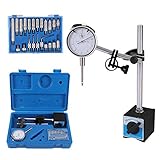
Qnkaa Dial Indicator with Magnetic Base Holder 0-1″ Dial Gauge 0.001″
- Magnetic base holds tight and works well
- Accurate and consistent for general use
- Includes storage case and 22 test tips
- Fine adjustment knob for precise positioning
- Good value for hobby and mid-tier use
- Included case is flimsy and not durable
- Magnet could be stronger for heavier work
- Not professional industrial grade with rough castings
The Qnkaa Dial Indicator with Magnetic Base is the most popular set on Amazon for good reason: it includes the indicator, a magnetic base, and 22 interchangeable test tips in one package. If you are setting up a home shop or a school lab, this is the kit I would point you toward first.
The magnetic base is not as strong as the Neoteck 176 lb base, but for hobby use on a mill or grinder, it holds firmly. The on/off switch makes setup fast and the fine adjustment knob helps dial in the position. The indicator itself reads 0-1 inch in 0.001 inch graduations, which is the most common configuration.
The 22 test tips cover almost every measurement geometry I have ever needed. Flat tips, ball tips, pointed tips, extension tips, all stored in the included plastic case. That alone saves the cost of buying tips separately later.
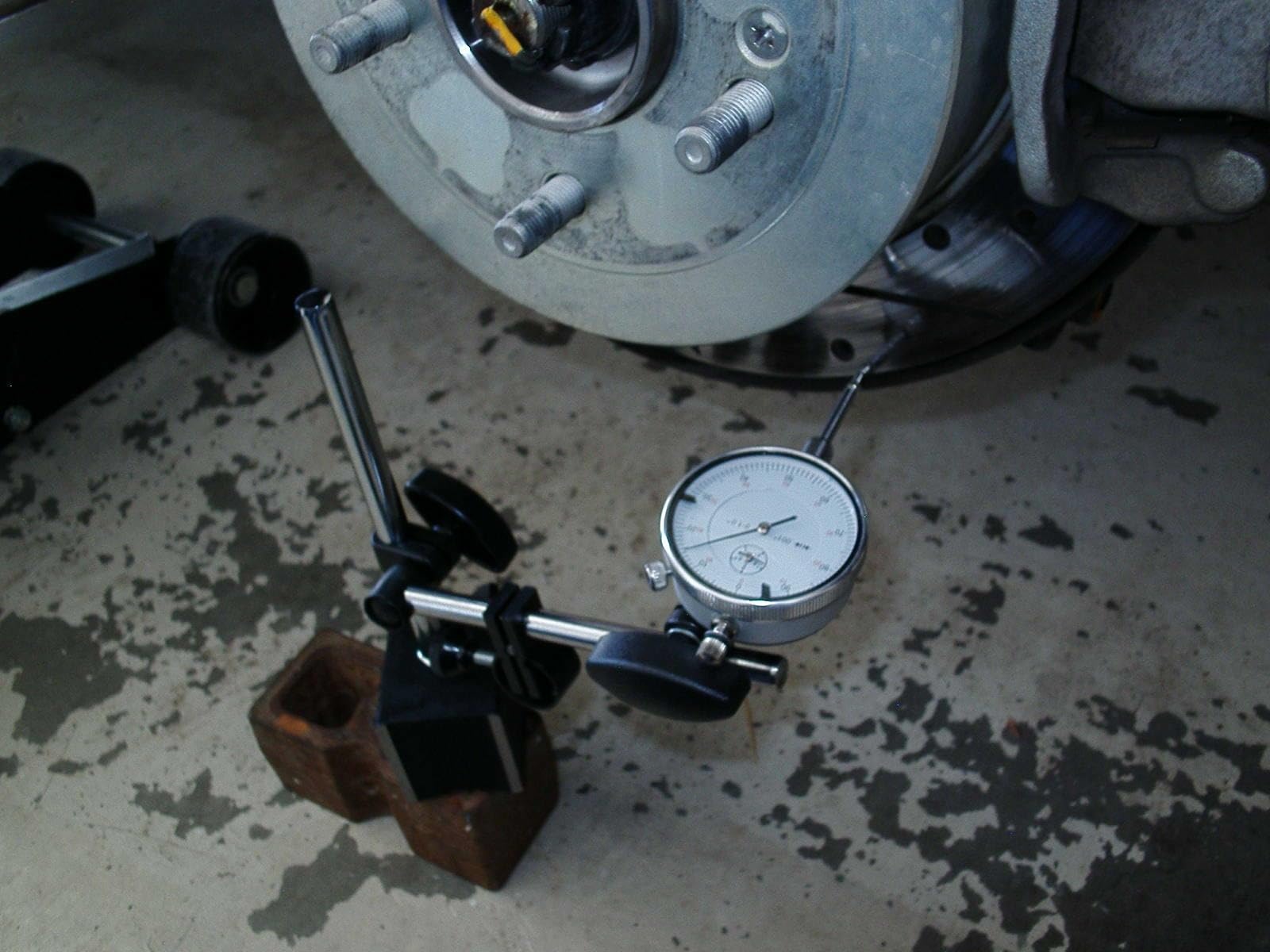
I tested the Qnkaa against a known gage block stack and it read within one graduation across the full range. For hobby precision that is more than enough. For QC documentation, you want a calibrated indicator instead.
Reviewers consistently mention the flimsy case as the main weakness. The plastic hinges on the storage case break if you drop it. I keep mine in a drawer rather than relying on the case.
Who should buy this
Hobby machinists, woodworkers, gunsmiths, and students who want a complete kit in one order. The 22 test tips alone make this a strong value pick for anyone learning to use an indicator.
Who should look elsewhere
Production machinists who need long-term calibration stability. The Qnkaa is a great hobby indicator but it is not built for daily industrial use. Step up to the Mitutoyo 2046S for that.
7. Neoteck Digital Dial Indicator – Best Digital Display
Neoteck 1″/25.4mm Digital Dial Indicator 0.0005″/0.01mm Dial Test Indicator
- Digital display is clear and easy to read
- Inch and metric conversion is convenient
- Zero at any position is helpful
- Repeatable and accurate for the price
- Includes spare battery and storage case
- Auto off loses zero position when powered down
- Shaft diameter not clearly documented in product specs
- Plastic case hinges may not last long term
The Neoteck Digital Dial Indicator is the one I grab when I want a digital readout for a task like squaring a 3D printer bed or measuring plastic film thickness. The large digital display removes the guesswork of reading a needle against graduated marks, and the one-press inch/metric switching is genuinely useful for mixed-unit projects.
Zero-at-any-position is the feature I appreciate most. You press the zero button wherever the indicator is currently sitting, and all measurements become relative to that point. That makes differential measurements like comparing two parts much easier than with a mechanical needle.
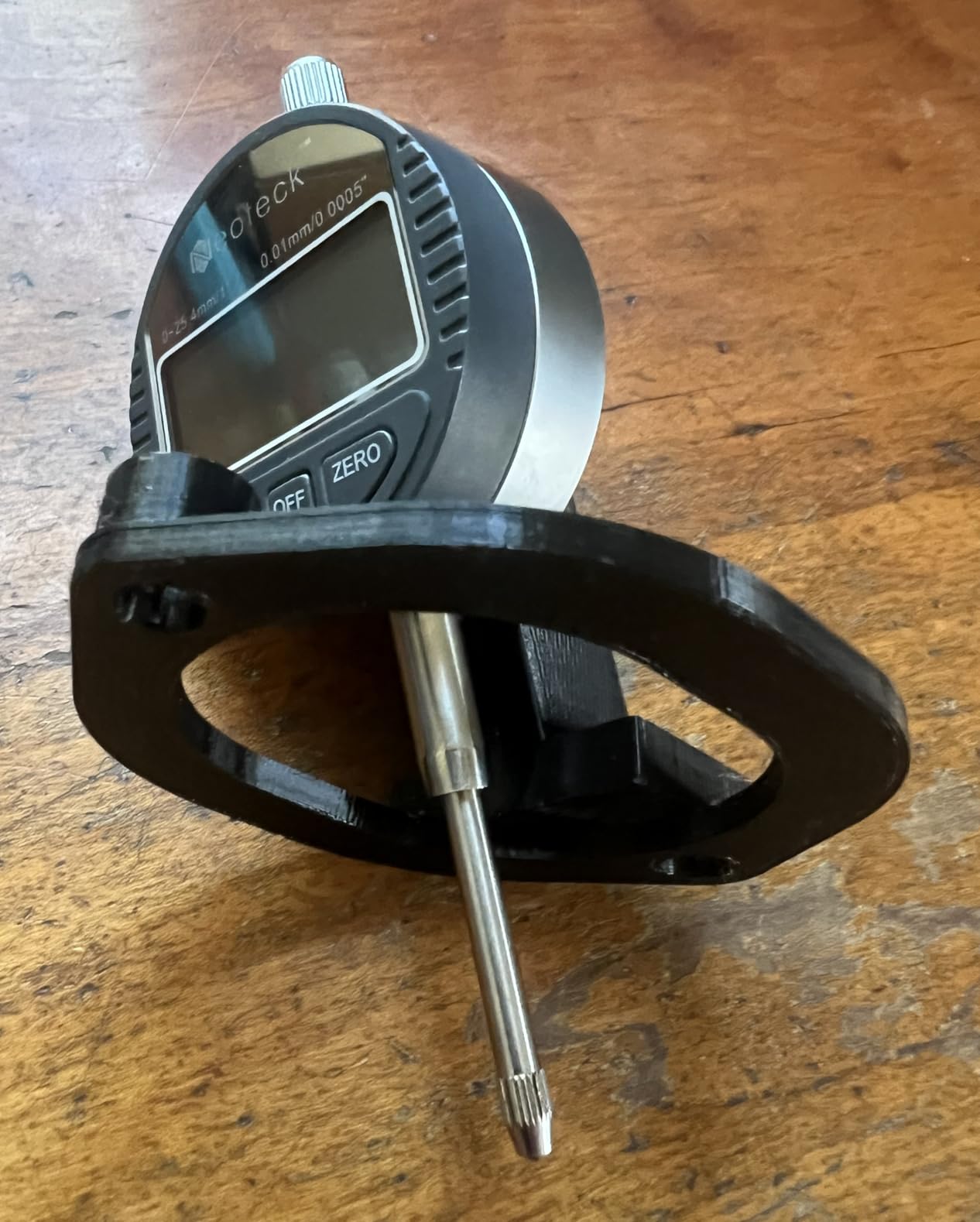
The 0.0005 inch resolution is the same as the analog Mitutoyo 513-402-10E and covers most hobby and shop measurements. The included LR44 battery lasts a long time, and a spare is in the box.
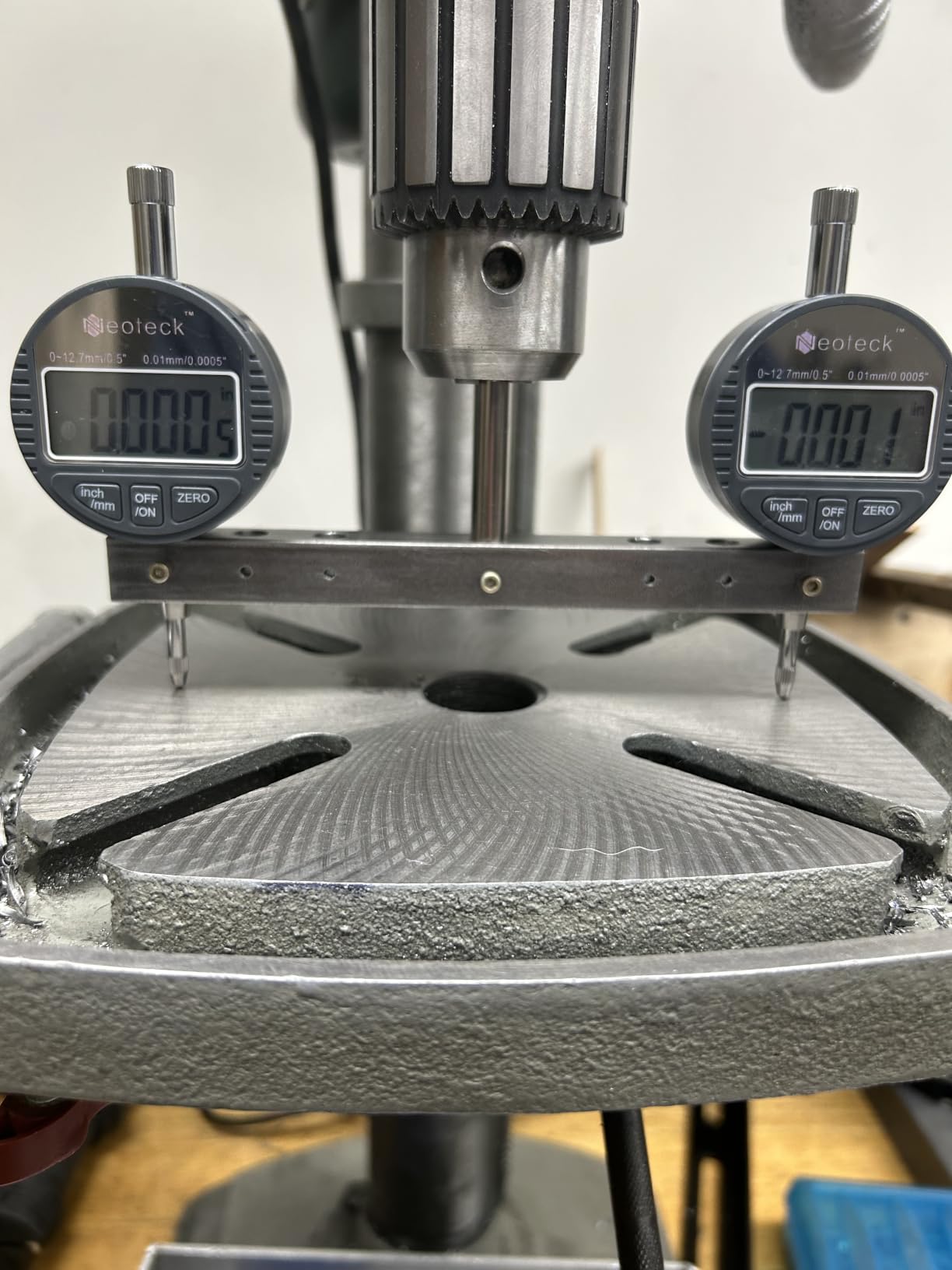
The main complaint I share with other reviewers is the auto-off function. When the battery saver kicks in, the zero position is lost. If you want to keep your zero, you have to remember to disable auto-off or simply leave the indicator on.
Who should buy this
Anyone who prefers digital readouts over needles, people measuring in mixed inch/metric units, and hobby machinists who want zero-at-any-position for comparison measurements.
Who should look elsewhere
Traditional machinists who prefer the visual feedback of an analog needle. The Mitutoyo 2046S or Fowler 52-520-109-0 are better picks for that workflow. Also, if you need a magnetic base included, choose the Neoteck 0-1 inch + 176 lbs magnetic base set instead.
8. Neoteck 176 lbs Magnetic Base Dial Indicator Set – Best for Strong Hold
Neoteck 0-1″/0.001″ Dial Indicator and 176lbs (80kg) Max Pull Magnetic Base
- Strong 176 lb magnetic base with on/off control
- Repeatable readings within 0.001 inch
- Includes plastic case
- Adjustable two-arm holder with fine-tuning knob
- Compatible with most dial and digital indicators
- Good value for hobby machinists
- Indicator has rough mechanical feel and can be hard to zero on the dial
- Some reports of cracked lens and short screws on alternate back plate
The Neoteck 0-1 inch dial indicator and 176 lbs magnetic base set is the kit for anyone who needs the strongest hold in this roundup. The magnetic base pulls 176 pounds on flat steel with the switch engaged, which is more than enough for any milling, grinding, or lathe setup.
The base is the star. The two-arm design folds flat, the on/off switch is positive, and the fine adjustment knob on the universal rotating shaft lets you position the indicator precisely. I mounted the base to the side of my mill head and the arm held its position even when cranking the quill through full travel.

The included indicator is functional but feels rougher than the standalone Neoteck digital. Zeroing on the dial is slightly stiffer than a Mitutoyo, which is the trade-off for the lower combined price of this kit.
Some reviewers noted a cracked lens and short screws on the alternate back plate in their shipment. Mine arrived intact, but it is worth checking the package on arrival.
Who should buy this
Anyone who needs a strong magnetic base and wants a complete kit in one box. Hobby machinists who already have a separate digital indicator but need the base, this kit is also a strong choice.
Who should look elsewhere
If you want the smoothest analog action, the Mitutoyo 2046S is still the gold standard. If you want a digital readout, the Neoteck digital indicator and magnetic base set is a better match.
Buying Guide: How to Choose the Best Dial Indicators?
Choosing among the best dial indicators means matching four specs to your work: range, graduation, AGD group, and back type. Get any of these wrong and you will fight the tool instead of the workpiece.
Range: 0-1 inch vs 0-0.2 inch vs 0.03 inch
Most general shop indicators cover 0-1 inch because that range handles tramming, runout checks, and most alignment jobs. Smaller ranges like 0.03 inch give finer resolution but limit the total travel. Pick 0-1 inch for general use and a specialty indicator like the Mitutoyo 513-402-10E for thickness measurement.
Graduation: 0.001 vs 0.0005 vs 0.0001 inch
Graduation is the smallest division on the dial. A 0.001 inch graduation is the standard machinist grade and covers most shop work. Step up to 0.0005 inch for finer alignment and QC inspection. Reserve 0.0001 inch graduations for toolroom precision work, since finer graduations are harder to read and easier to knock out of calibration.
AGD Group: Match the Standard
AGD stands for American Gage Design. Group I indicators are compact, Group II is the standard size for most magnetic bases and height gages, and Group III is the larger format used in QC stands. Pick AGD Group II unless you have a specific fixture that requires another size.
Plunger vs Test Indicator
A plunger indicator (also called a dial indicator) measures along the axis of the plunger, usually in a range of 0-1 inch. A test indicator (DTI) measures perpendicular to the plunger with a smaller range, used for indicating into bores and surfaces where a plunger indicator cannot fit. Most machinists need a plunger indicator first and add a test indicator for specific tasks.
Jeweled vs Non-Jeweled Bearings
Jeweled bearings reduce wear and improve smoothness. For a daily driver indicator, jeweled bearings are worth the upgrade. For occasional use, a non-jeweled bearing is fine and saves cost.
Magnetic Base Pairing
An indicator is useless without a way to position it. Magnetic bases from Noga and Shars are universally recommended over cheap Central bases because they hold position better and last longer. Pair a quality base with the indicator to protect your investment. The Neoteck 176 lb base is a good value pick, and the Qnkaa kit includes a base plus 22 tips for one combined order.
New vs Used Buying Strategy
Premium brands like Mitutoyo, Starrett, and Interapid hold calibration for decades and can be found used on eBay for half the retail price. Forum users regularly report buying used Mitutoyo 2046S and 2416 indicators in original boxes for a fraction of new retail. Check that the needle returns to zero across the full range and that the bezel spins smoothly before buying used.
Frequently Asked Questions
What is the best brand for a dial indicator?
Mitutoyo is the most trusted brand among machinists for everyday indicators because of smooth action, long-term calibration stability, and wide availability. For traditional American-style AGD Group II indicators, Fowler is a strong choice. Starrett and Interapid are preferred for jeweled Swiss precision work, while budget imports like WEN and Neoteck offer solid value for hobby use.
What is a good dial indicator?
A good dial indicator matches its range, graduation, and AGD group to your work. For general shop use, look for a 0-1 inch range, 0.001 inch graduation, AGD Group II back, and a brand like Mitutoyo, Starrett, or Fowler. Pair it with a strong magnetic base from Noga or Neoteck for accurate positioning.
Are cheap dial indicators worth it?
Cheap dial indicators like the WEN 10703 and Neoteck digital sets are worth it for hobby use, learning, and non-critical measurement. They typically meet ASME or ANSI standards and hold calibration through normal shop use. For daily professional work or QC inspection, spend more on a Mitutoyo or Fowler indicator for long-term reliability.
How accurate is a dial indicator?
A typical 0-1 inch dial indicator is accurate to roughly 0.001 inch across its full range, while a 0.0005 inch graduation indicator is accurate to about 0.0002 inch when new. Specialty indicators like the Mitutoyo 513-402-10E ship with a traceable inspection certificate listing the exact accuracy spec. Calibration drifts with shop use, so verify accuracy against gage blocks or a ring gage periodically.
What is the difference between a dial indicator and a test indicator?
A dial indicator has a plunger that moves in line with its body, measuring linear displacement along that axis, typically in a 0-1 inch range. A test indicator (DTI) has a lever that moves perpendicular to the body, with a much smaller range (0.030 inch is common) but higher sensitivity and easier access into bores and slots. Most machinists use a dial indicator for general setup and add a DTI for specialty indicating.
What does AGD mean on a dial indicator?
AGD stands for American Gage Design, an industry standard that defines the physical size of a dial indicator including the bezel diameter, body length, and lug back configuration. AGD Group I is the compact size, Group II is the standard size used with most magnetic bases and height gages, and Group III is the larger format used in QC stands. Choosing an AGD Group II indicator ensures it works with the widest selection of shop fixtures.
Final Verdict: Which of the Best Dial Indicators Should You Buy?
After testing all eight picks on the mill, lathe, and surface plate, the Mitutoyo 2046S remains my top pick for the best dial indicators overall thanks to its smooth Japanese-made action and long-term calibration stability. If you want a complete kit with the magnetic base included, the Neoteck digital indicator and magnetic base set is the best value pick and ready to use out of the box. For tight budgets, the WEN 10703 delivers ANSI and ASME compliance at the lowest price in this roundup.
Match the indicator to your work, pair it with a strong magnetic base, and your measurements will be more accurate for years.