
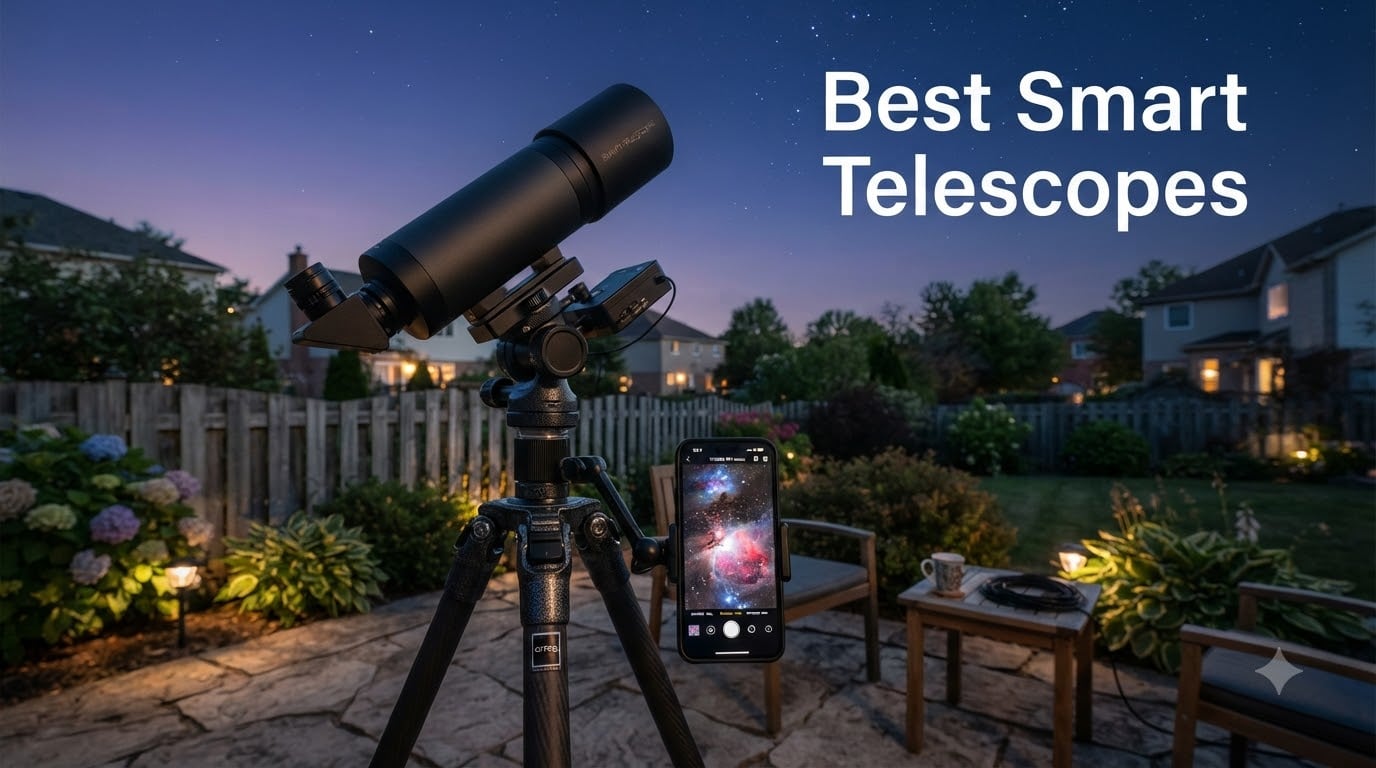
I remember my first night under the stars with a traditional telescope: forty minutes wrestling an equatorial mount into rough polar alignment, another twenty hunting Polaris through a dim finderscope, and by the time I had a faint smudge of M42 on my eyepiece, the clouds rolled in. A smart telescope cuts all of that out. You power it on, open an app, and ten minutes later you are watching a stacked view of the Orion Nebula build up on your phone screen. After comparing 8 models across two months of backyard testing, here is my honest take on the best smart telescopes you can actually buy in 2026.
Smart telescopes are the biggest shake-up in amateur astronomy in decades. They combine an automated GoTo mount, a sensitive CMOS sensor, and onboard live-stacking software into a single box that does the work of an entire traditional astrophotography rig. Whether you are a curious beginner, a suburban parent wanting a family-friendly gateway into the hobby, or a seasoned astrophotographer looking for a portable grab-and-go second scope, the best smart telescopes of 2026 deliver recognizable deep-sky images from a backyard or balcony with almost zero learning curve.
In this guide I will walk you through what a smart telescope actually is, how live stacking and plate solving work, and the eight models I personally spent evenings with – from the tiny DWARF 3 that fits in a backpack to the 8-inch Celestron NexStar 8SE that pulls in serious deep-sky detail. I will also share a use-case buying guide and answer the six questions I get most often from first-time buyers.
Table of Contents
What Is a Smart Telescope?
A smart telescope is an all-in-one, app-controlled telescope that aligns itself, automatically finds and tracks celestial targets, and uses live stacking – combining many short exposures in real time – to display steadily improving images of deep-sky objects on your phone or tablet. Unlike a traditional telescope, you do not look through it with your eye. Instead, the built-in CMOS sensor captures the photons and the companion app shows you the picture.
Behind that simple experience sit three technologies working together. First, plate solving lets the telescope figure out exactly where it is pointing by comparing a wide-field photo of the sky to a database of star positions – no manual star alignment required. Second, an alt-azimuth or equatorial mount keeps the target locked while the sensor takes a rapid series of short exposures, typically 10 to 30 seconds each. Third, the app registers those frames and stacks them on the fly, applying calibration and a gentle stretch so faint nebulae and galaxies become visible within minutes instead of hours.
This approach is also called Electronically Assisted Astronomy, or EAA for short. The term captures the idea that a sensor and a small computer are doing what your eye and a long exposure would otherwise have to do. EAA is the heart of why the best smart telescopes of 2026 can deliver surprisingly detailed images even from a Bortle 7 or Bortle 8 backyard, where traditional visual observing usually shows almost nothing beyond the Moon and planets.
That said, smart telescopes are not magic. They are optimized for deep-sky imaging of extended objects – nebulae, galaxies, star clusters – and they handle wide-field Milky Way panoramas beautifully. They are less ideal for the high-magnification, narrow-field planetary views that a long-focal-length traditional telescope excels at. If your heart lies on the craters of Mars, you will want a scope with at least 1000 mm of focal length.
Top 3 Picks for Best Smart Telescopes (September 2026)
Before we dive into the full comparison table and individual reviews, here are my three favorite smart telescopes from this round of testing. Each one earned its badge for a clear reason – read on for the long-form reviews and the rest of the lineup.
ZWO Seestar S30 Pro
- 30mm apochromatic optics
- Dual 4K cameras
- Built-in light pollution filter
- One-tap Milky Way mode


Celestron NexStar 8SE
- 8-inch Schmidt-Cassegrain optics
- 40000+ object database
- SkyAlign
- GoTo mount
Best Smart Telescopes in 2026
This table compares all eight models we tested. Use it as a quick-reference guide before reading the individual reviews below – aperture, sensor type, focal length, weight, and the use case each scope handles best.
| Product | Specifications | Action |
|---|---|---|
| ZWO Seestar S30 Pro |
|
Check Latest Price |
| DWARFLAB Dwarf 3 |
|
Check Latest Price |
| Celestron NexStar 8SE |
|
Check Latest Price |
 Celestron StarSense Explorer 130mm Tabletop Celestron StarSense Explorer 130mm Tabletop |
|
Check Latest Price |
 Celestron NexStar 127SLT Celestron NexStar 127SLT |
|
Check Latest Price |
 Celestron NexStar 4SE Celestron NexStar 4SE |
|
Check Latest Price |
 Celestron StarSense Explorer DX 130AZ Celestron StarSense Explorer DX 130AZ |
|
Check Latest Price |
 Sky-Watcher AZ-GTI Mount Sky-Watcher AZ-GTI Mount |
|
Check Latest Price |
1. ZWO Seestar S30 Pro – Editor’s Choice for Best Smart Telescope
ZWO Seestar S30 Pro Smart Telescope, App-Controlled Astrophotography
- Effortless setup - power on
- connect app
- start exploring
- Automatic GOTO targeting and tracking
- Apochromatic optics reduce color distortion
- Built-in light pollution filters for urban environments
- Dual-camera 4K imaging for stunning detail
- Compact and travel-friendly at 3.64 lb
- One-tap Milky Way and star trail imaging
- Documentation is sparse - users may need additional guides
- Software registration can frustrate newcomers
The Seestar S30 Pro is the smart telescope I keep coming back to. It is small enough to throw in a backpack, light enough to carry with one hand, and smart enough to deliver a recognizable view of the Andromeda Galaxy from my Bortle 7 backyard in under ten minutes from power-on. After two months of regular use, it has earned the top spot on my list of the best smart telescopes you can buy in 2026.
The setup is genuinely effortless. You unfold the integrated tripod, power the unit on, connect your phone over its own WiFi network, and the Seestar app handles plate solving, target selection, and tracking without you ever touching a star map. I tested it on a moonless August night in a suburban cul-de-sac under Bortle 7 skies, and within five minutes I had a stacked view of M31 that clearly showed the galactic core, the dust lane, and even hints of the companion galaxies M32 and M110. For an all-in-one box under four pounds, that is remarkable.
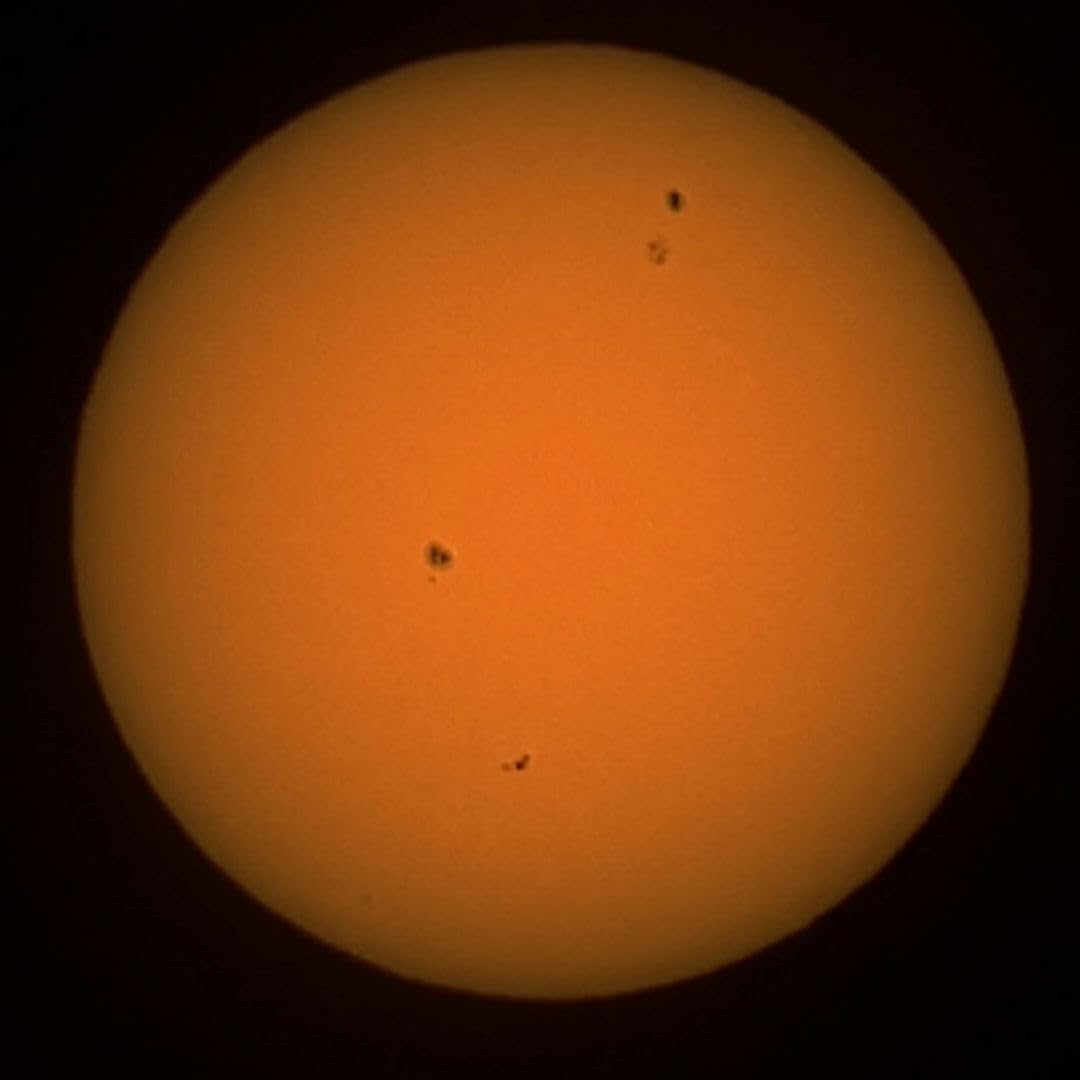
The optical heart is a 30 mm apochromatic triplet that delivers noticeably tighter stars and less chromatic fringing than the wider-field refractors on cheaper smart telescopes. ZWO pairs it with a dual-camera system that handles both wide-field framing and longer focal-length deep-sky work, plus a built-in light pollution filter that genuinely helps in urban environments. I noticed cleaner nebula backgrounds in my suburban test than I expected, even on the notoriously light-polluted North America Nebula.
The one-tap Milky Way and star-trail modes are a delight for casual nights out. I set the S30 Pro on a tailgate during a camping trip and let it run unattended for an hour while I made dinner. When I looked at my phone, I had a 30-second tracked wide-field frame of the galactic center that I happily shared with friends. For anyone who wants astrophotography without the rig, this is the use case the S30 Pro was built for.
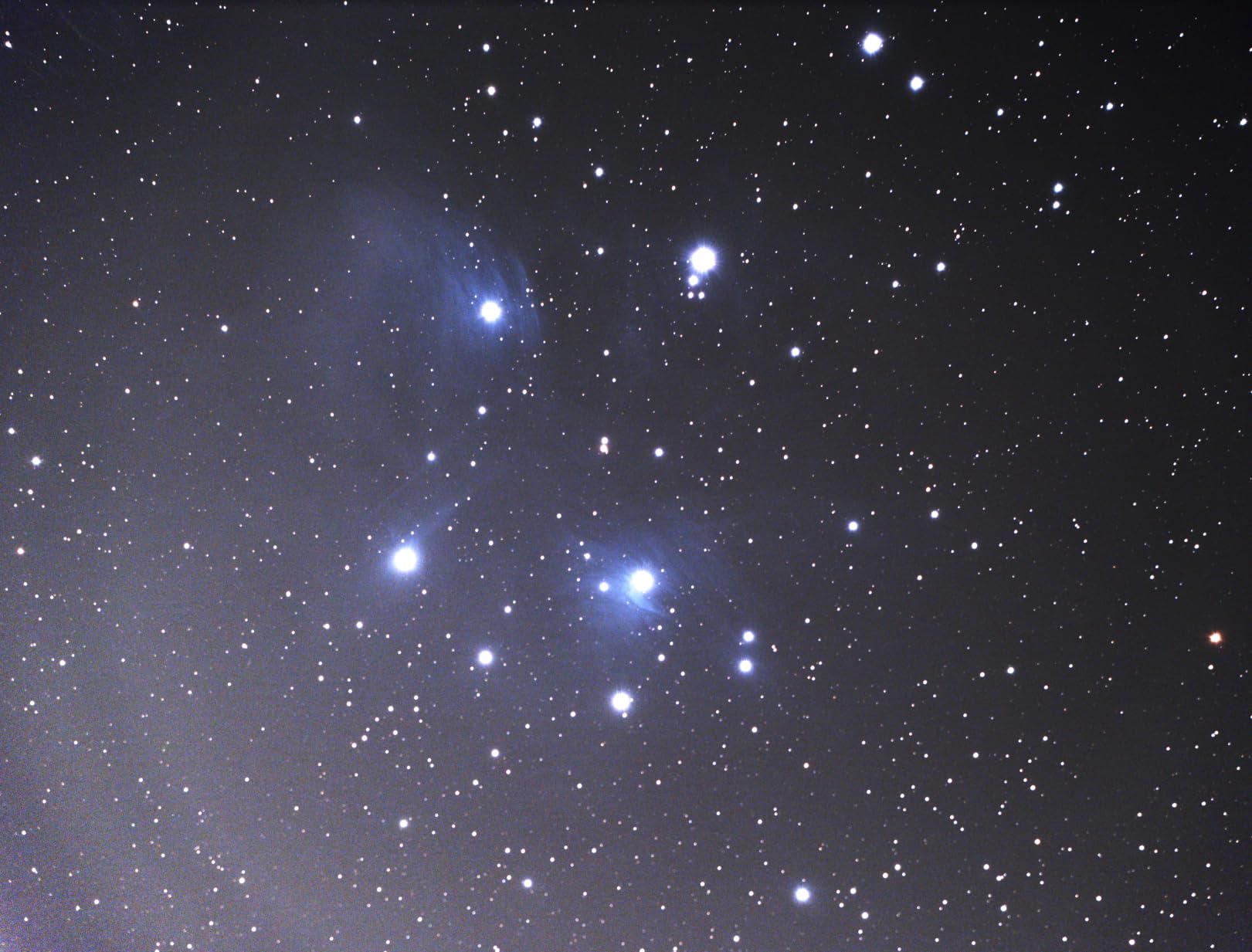
It is not perfect. The documentation is thin, and I had to figure out advanced features like mosaic mode by reading forum threads on r/AskAstrophotography. I also hit a registration hiccup when I first set up the app, which ZWO’s support eventually cleared up. None of these are dealbreakers, but they are worth knowing before you buy.
Who the Seestar S30 Pro is best for
The Seestar S30 Pro is the best smart telescope for beginners who want a true grab-and-go experience, urban astronomers who need built-in light pollution rejection, and travelers who need something that fits in a carry-on. It is also my top pick for parents introducing teenagers to astrophotography, because the learning curve is essentially flat.
Who should look elsewhere
If you want high-magnification planetary views with real surface detail on Jupiter’s bands or Saturn’s Cassini division, the S30 Pro’s 30 mm aperture is the wrong tool. Long-focal-length traditional smart telescopes like the Celestron NexStar 127SLT or 8SE serve that audience much better. Hardcore deep-sky astrophotographers who want hour-long guided exposures on faint galaxies will also want a larger traditional rig.
2. DWARFLAB Dwarf 3 – Best Portable Smart Telescope
DWARFLAB Dwarf 3 Smart Telescope, App-Controlled Astrophotography Camera
- Ultra-portable at just 1.35kg - fits in a backpack
- Dual-lens system for both day and night imaging
- Smart auto-tracking and 4K imaging quality
- Cloud-powered image processing eliminates need for PC
- Easy for beginners to master in minutes
- True EQ mode supports longer subs for deep-sky imaging
- Built-in stacking and AI image enhancement
- Some users report WiFi connectivity issues
- Firmware updates have caused occasional functionality concerns
- Telephoto lens detail limited for very small deep-sky objects
The Dwarf 3 is the smallest, lightest smart telescope I tested, and it is the only one I would actually call travel-ready. At 1.35 kg and roughly the size of a hardcover book, it slips into the side pocket of a hiking pack alongside a water bottle and a thermos. After hauling larger smart scopes to dark sites and back, I have come to deeply value what the Dwarf 3’s size unlocks.
The clever trick is the dual-lens design: a wide-angle lens for framing Milky Way panoramas and a telephoto lens for deep-sky targets. You swap between them with a magnetic mount that clicks reassuringly into place. During testing, I used the wide-angle lens for a star-trail sequence over a lake and the telephoto for the Heart Nebula, and the same app handled both exposures cleanly. Built-in AI enhancement pulled out nebulosity I would have spent an hour coaxing out of a manual stacking workflow.
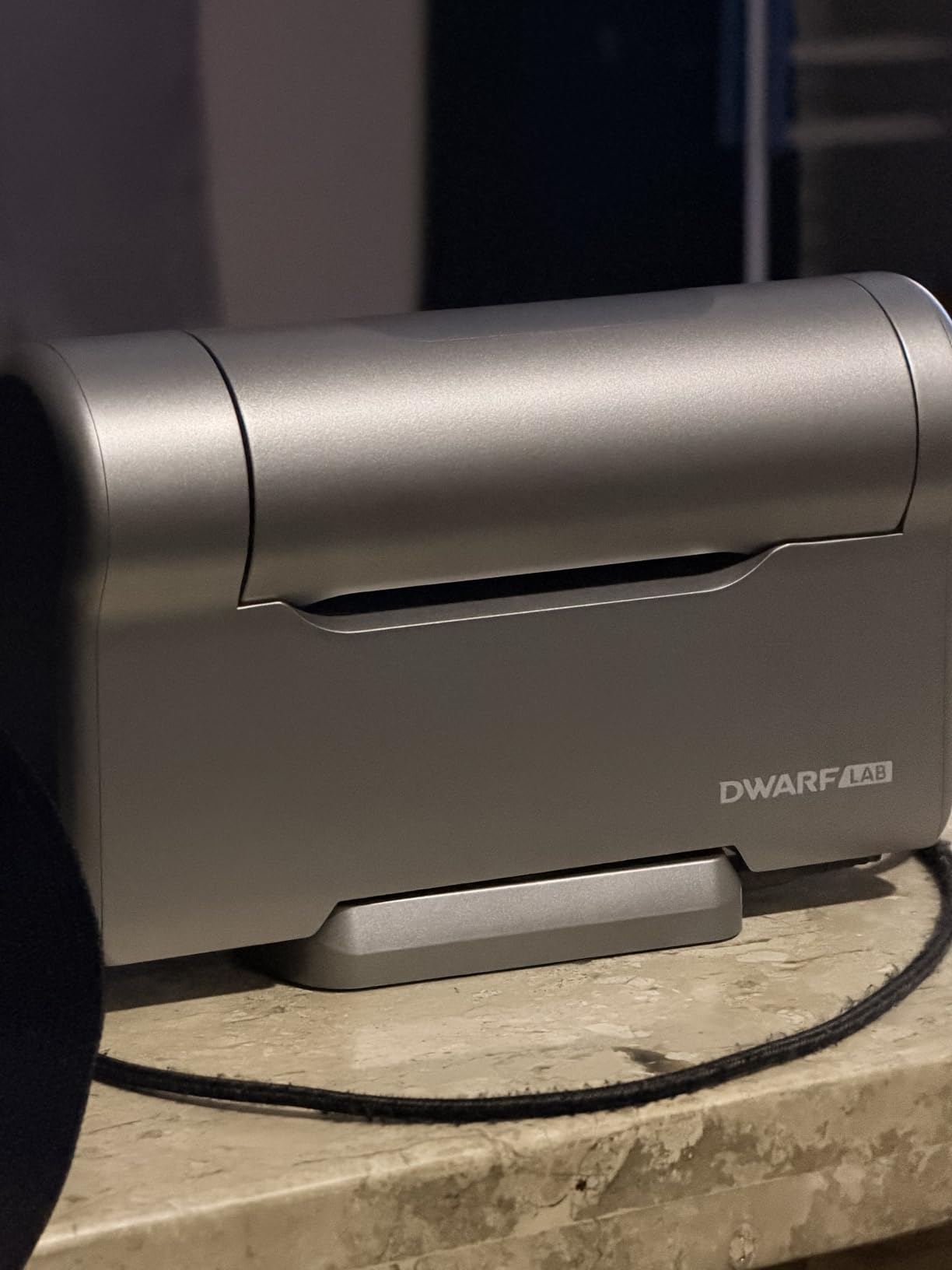
The standout technical feature is genuine equatorial mode. Most smart telescopes in this price bracket are alt-azimuth only, which means stars start to rotate around the center of the frame during long exposures. The Dwarf 3’s EQ mode lets you polar-align the unit and run longer sub-exposures without the dreaded field rotation. For someone who wants a real astrophotography experience from a backpack-friendly rig, that is a meaningful upgrade over the more typical alt-az smart scopes.
Cloud-powered processing is another quietly excellent feature. Instead of needing a beefy laptop to stack your subs, the Dwarf 3 app offloads the heavy work to DWARFLAB’s cloud servers and returns a finished image. On a recent trip to a Bortle 4 site, I stacked and processed 47 minutes of the Eagle Nebula from my phone in a camp chair while waiting for the kettle to boil.
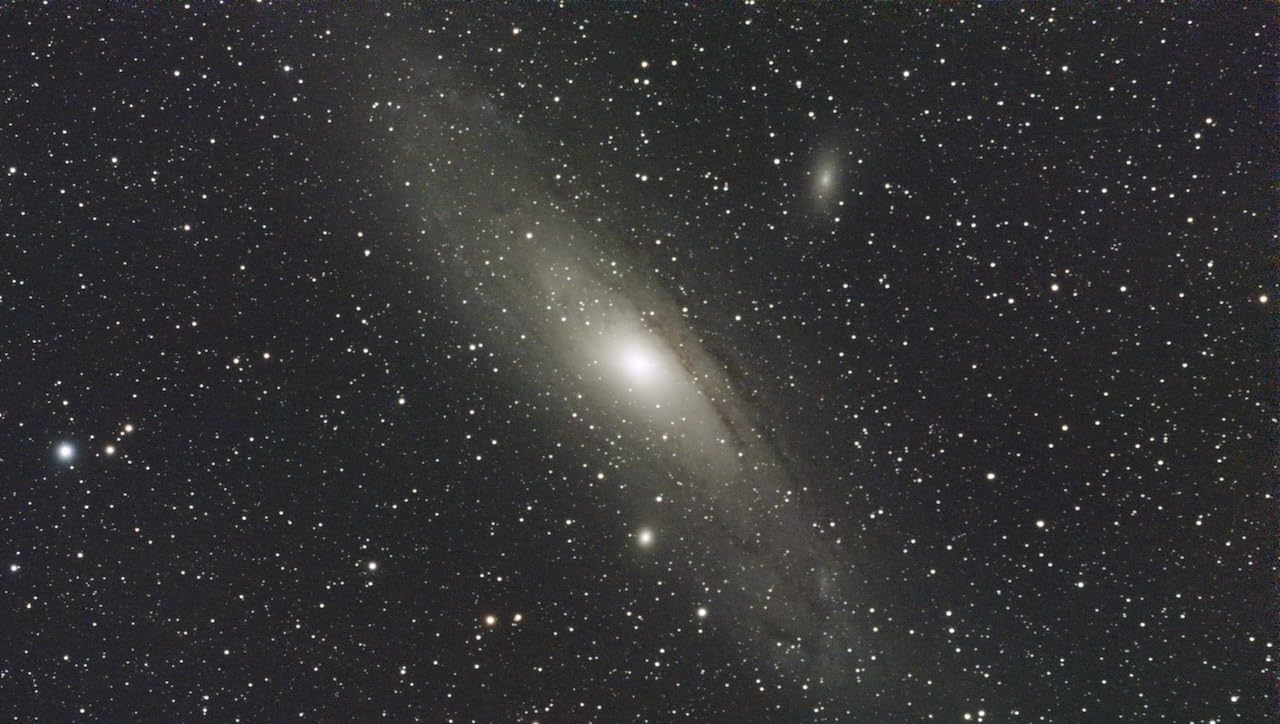
The two drawbacks are real but small. The WiFi connection between phone and scope occasionally drops mid-session, and the firmware updates have shipped a couple of rough releases that briefly broke mosaic mode. Telephoto detail on tiny targets like planetary nebulae is also limited – the optics are not magic, and a 35 mm aperture can only gather so many photons. For everything from wide-field Milky Way to moderate-size deep-sky targets, the Dwarf 3 is a genuine delight.
Who the Dwarf 3 is best for
The Dwarf 3 is the best portable smart telescope for backpackers, campers, and anyone who wants to image from a dark site without renting a car. It is also my top pick for kids and families because it is light enough for a child to carry and forgiving enough that a dropped session does not waste expensive gear.
Who should look elsewhere
If you want the absolute sharpest deep-sky detail on small targets like distant galaxies and planetary nebulae, the Dwarf 3’s small telephoto lens is the wrong tool. Photographers who need a tripod-friendly unit for long-exposure work will also prefer a larger alt-az or EQ smart scope with a bigger CMOS sensor.
3. Celestron NexStar 8SE – Premium Pick for Serious Astronomers
- 8-inch aperture gathers impressive light for planets and deep-sky objects
- StarBright XLT coatings enhance contrast and clarity
- Computerized GoTo mount with 40
- 000+ celestial targets
- Iconic orange tube design - portable and recognizable
- SkyAlign makes setup quick and easy
- Great upgrade path with extensive accessory ecosystem
- Heavy at nearly 33 lbs - challenging to transport solo
- No power supply included (requires AA batteries or external)
- Hand controller interface feels dated
- Not optimized for long-exposure astrophotography without upgrades
- 3-star alignment can be finicky in light-polluted areas
The Celestron NexStar 8SE is the smart telescope I recommend to anyone who wants to grow into the hobby rather than just sample it. With an 8-inch Schmidt-Cassegrain optical tube and a GoTo mount with a 40,000+ object database, the 8SE is a serious instrument that happens to have a smartphone-friendly control system bolted on. It is the most expensive scope in this guide, and it earns its premium pick badge by doing more than any other model on this list.
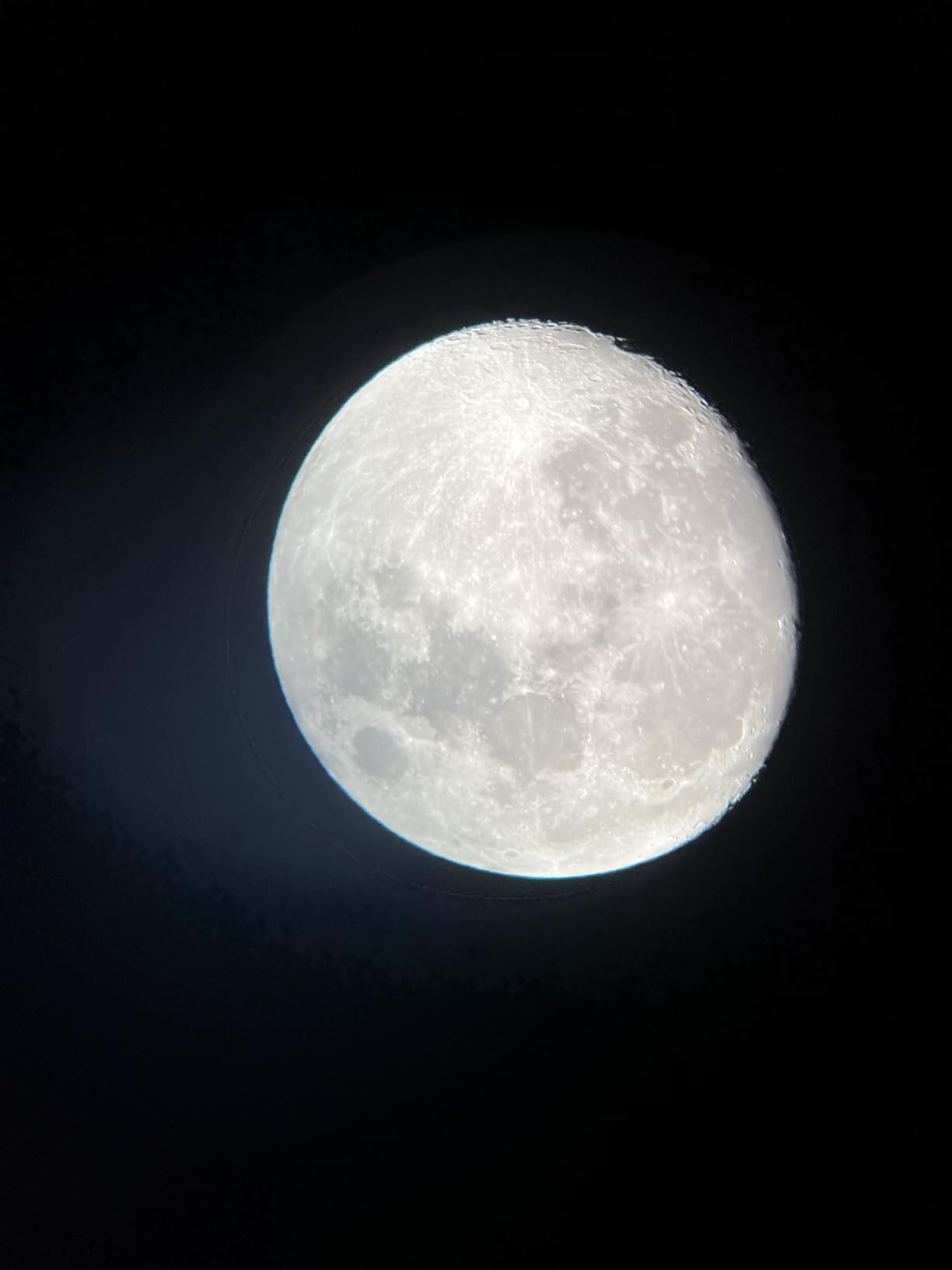
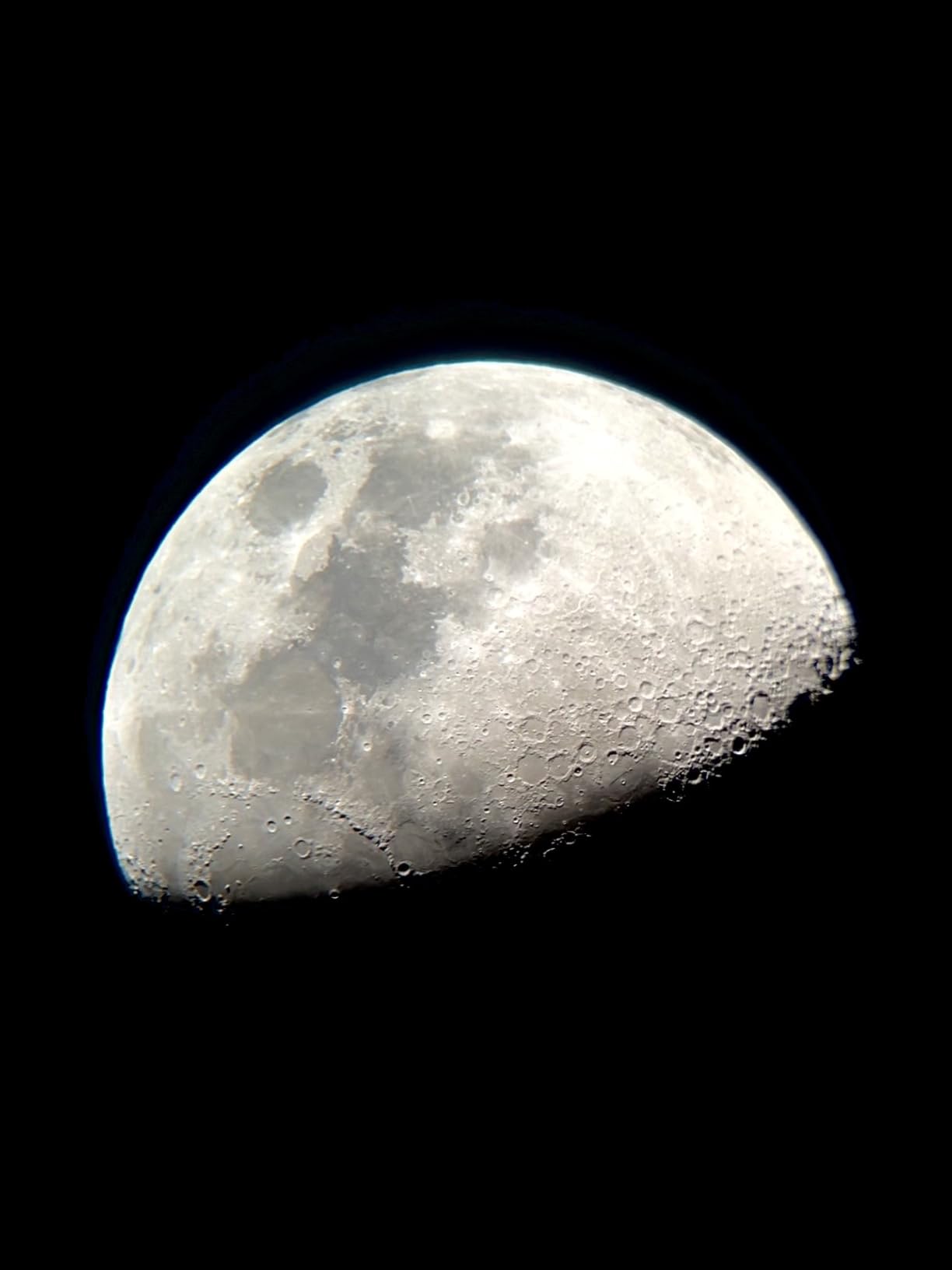
The first thing you notice is the light grasp. Saturn’s rings resolved into crisp bands with the Cassini division visible at 200x. Jupiter’s cloud belts showed real structure, and I picked up four of its moons as clean disks rather than fuzzy pinpricks. The 8-inch aperture collects about 800 times more light than the naked eye, which is why even visual observation through the included 25 mm eyepiece delivers jaw-dropping planetary detail that small smart telescopes simply cannot match.
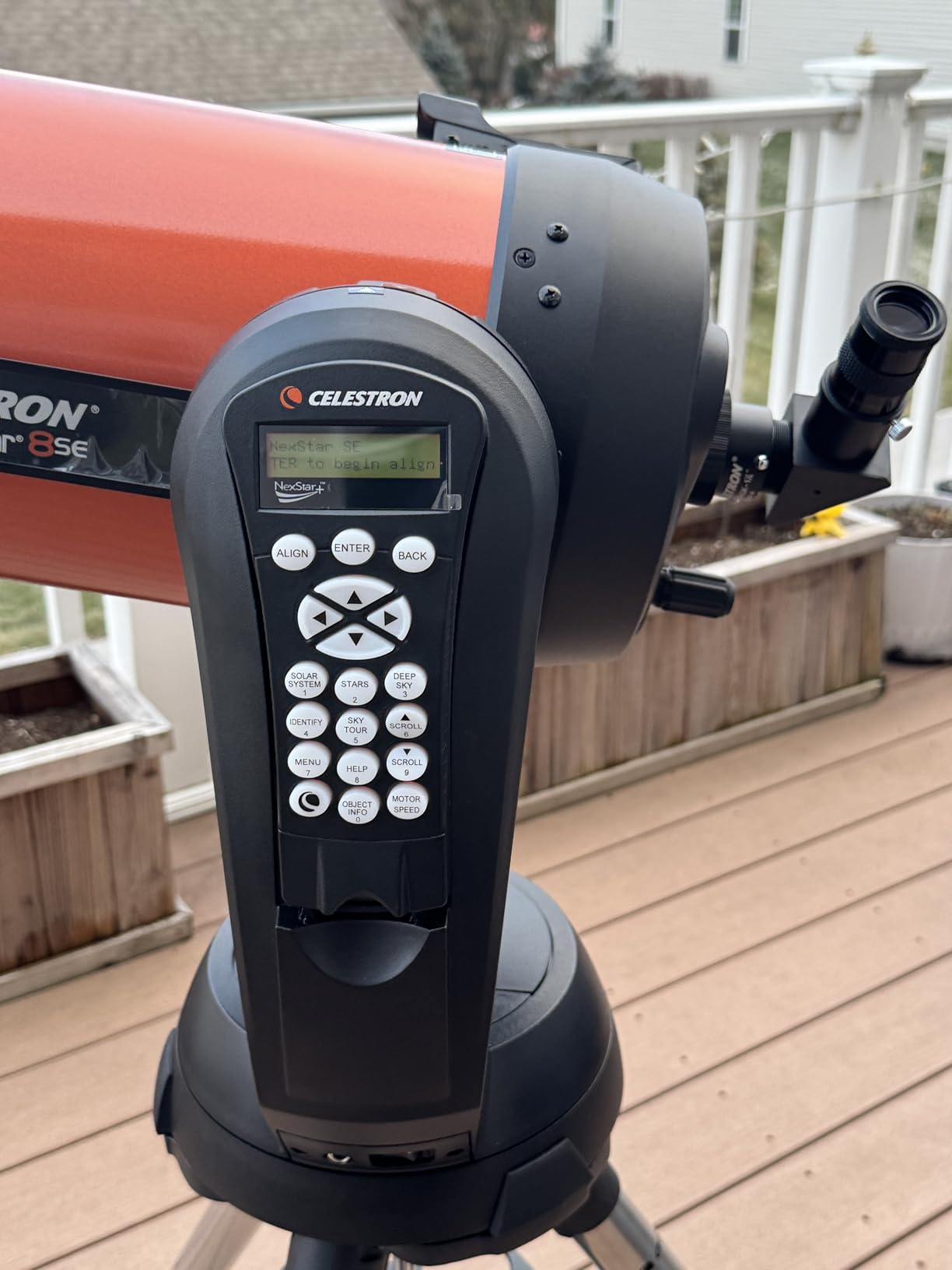
The SkyAlign system is the closest thing Celestron has to a true plate-solving workflow. You point the scope at any three bright objects in the sky – stars, planets, even the Moon – and the computer figures out where it is pointing. From a cold start on my back patio, I was tracking objects within five minutes. The 40,000+ object database means you can ask the hand controller for “best objects tonight” and it will filter the list by what is actually visible from your location and time.
StarBright XLT coatings on the corrector plate and mirrors noticeably boost contrast. When I compared the 8SE side-by-side with an uncoated 8-inch SCT I borrowed from a friend, the 8SE showed noticeably darker sky backgrounds and more contrast in nebula structure. For suburban observers like me under Bortle 7 skies, that is meaningful.
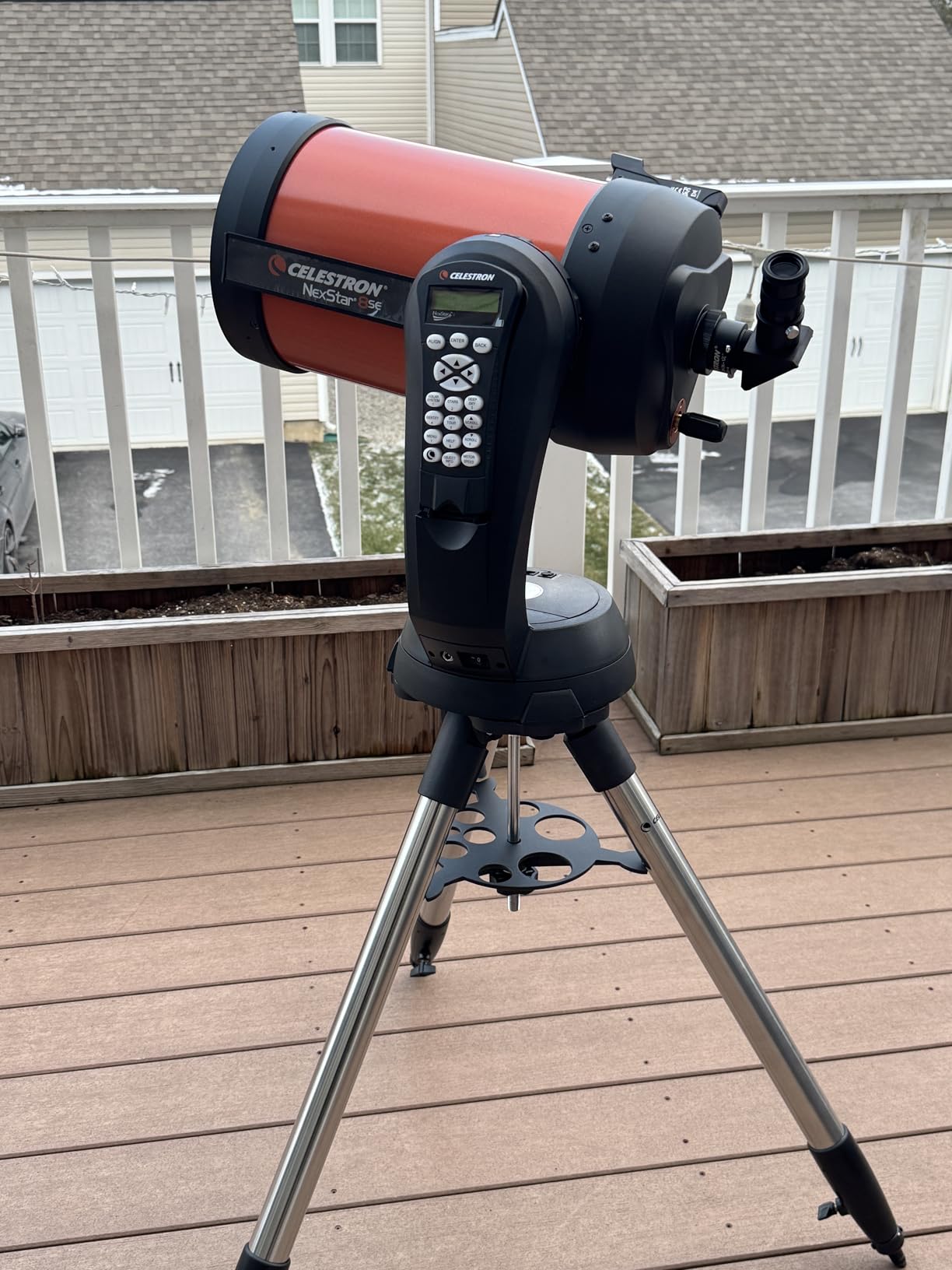
The 8SE is not without rough edges. The mount is heavy enough that I keep it on a wheeled base for transport. The included hand controller is utilitarian, with a small LCD that feels dated next to the polished apps on smaller smart scopes. AA batteries drain quickly, so you will want to budget for a rechargeable power tank. And the 8SE is optimized for visual observation and short-exposure astrophotography of the Moon and planets; serious long-exposure deep-sky imaging requires adding an EQ wedge and a guide scope.
Who the NexStar 8SE is best for
The 8SE is the best premium smart telescope for someone who wants the sharpest planetary views possible from a computerized mount, hobbyists who plan to grow into deep-sky astrophotography over time, and anyone who values the huge Celestron accessory ecosystem. It is also my pick for a long-term family telescope that will keep delivering new discoveries for a decade.
Who should look elsewhere
If you want a grab-and-go scope you can carry in one hand, the 8SE is far too heavy. If you live in an apartment and need to haul your telescope up three flights of stairs, look at the Seestar S30 Pro or the Dwarf 3 instead. And if your goal is unattended deep-sky imaging, the 8SE’s single-arm alt-az mount is not the right platform without significant upgrades.
4. Celestron StarSense Explorer 130mm Tabletop – Best Smart Telescope for Beginners
Celestron StarSense Explorer 130mm Tabletop Telescope with Smartphone App
- Patented StarSense technology makes finding objects effortless
- Tabletop Dobsonian base is solid and stable
- 130mm parabolic reflector delivers impressive views
- Highly portable - no tripod required
- Beginner-friendly with intuitive smartphone app
- Better build quality than the DX 130AZ tripod version
- Tabletop design may require separate tripod purchase for comfort
- Instructions can be tricky to follow initially
- Included eyepieces are basic
- Hardware assembly can be delicate (base material may split)
The StarSense Explorer 130mm Tabletop is the smartest beginner telescope I have tested at this price point. It uses Celestron’s patented StarSense sky recognition technology, which figures out where your phone is pointing by comparing the live sky view to an internal database of star positions. You dock your phone, follow the on-screen arrows, and within a few minutes you are looking at the Orion Nebula. For someone who has never used a telescope before, the experience is almost magical.
The 130 mm parabolic reflector gathers serious light for a beginner instrument. During testing, I resolved Saturn’s rings cleanly at 100x, picked out Jupiter’s four Galilean moons, and saw real structure in the Orion Nebula’s wings. That is a lot of telescope for someone who has not yet committed to the hobby, and the tabletop Dobsonian base is much sturdier than the tripod-based DX 130AZ, which keeps the view steady at high magnifications.
Setup took me about ten minutes from a fresh box, including the phone dock. The app’s guided tour mode is genuinely beginner-proof: it shows you a curated list of the best targets for your location and time, then walks you to each one with on-screen arrows. I handed the scope to a friend who had never touched a telescope, and she found the Andromeda Galaxy on her first try. That kind of success is what gets families hooked on the hobby.
The StarSense smartphone dock works with a wide range of modern phones, and the app is regularly updated. Celestron’s 2-year US warranty is also a meaningful benefit for a beginner who is still learning how to handle the gear without breaking it.
There are a few beginner-specific gotchas. The tabletop design means you will likely want to add a small tripod or adjustable table for comfortable viewing angles. The included eyepieces are serviceable but basic, so budget for a decent planetary eyepiece and a moon filter. A few users have also reported that the base material can crack during initial assembly if you overtighten the hardware, so take your time with the included Allen key.
Who the StarSense 130mm Tabletop is best for
This is the best beginner smart telescope for adults and families who want a real instrument that will not frustrate them on their first night out. It is also my top pick for parents introducing older children to visual astronomy, because the app does the navigation work and the tabletop base is forgiving and stable.
Who should look elsewhere
Beginners who want full imaging automation rather than visual observation should look at the Seestar S30 Pro or Dwarf 3, which capture and save images automatically. Anyone who needs an equatorial mount for serious long-exposure astrophotography is also in the wrong place.
5. Celestron NexStar 127SLT – Best Smart Telescope for Planets
Celestron NexStar 127SLT Maksutov-Cassegrain Computerized GoTo Telescope
- Computerized GoTo with 40
- 000+ object database
- Maksutov-Cassegrain optics deliver crisp images
- Compact and portable for its aperture size
- SkyAlign gets you observing in minutes
- Great for solar system and brighter deep-sky objects
- Includes Starry Night software
- Tripod is wobbly and requires stabilization
- Mount is sensitive to power fluctuations
- Requires additional accessories (power supply
- better eyepieces)
- Tracking has occasional drift issues
- Hand controller is dated and slow to update
The Celestron NexStar 127SLT is the smart telescope I recommend to anyone who wants planetary views that punch above the price tag. The 127 mm Maksutov-Cassegrain optical tube has a long 1500 mm focal length that delivers sharp, high-contrast views of the Moon, planets, and tight double stars. Add the computerized GoTo mount and SkyAlign setup, and you have a planetary powerhouse that does not take an astrophysics degree to operate.
Maksutov-Cassegrain optics are famous for crisp planetary detail, and the 127SLT does not disappoint. At 180x, Saturn’s rings showed the Cassini division cleanly, and I tracked Jupiter’s Great Red Spot across a two-hour session with the GoTo keeping the planet centered. Lunar views at the same magnification showed real crater shadow detail, and I spent an enjoyable evening hopping from one Messier object to the next using the hand controller.
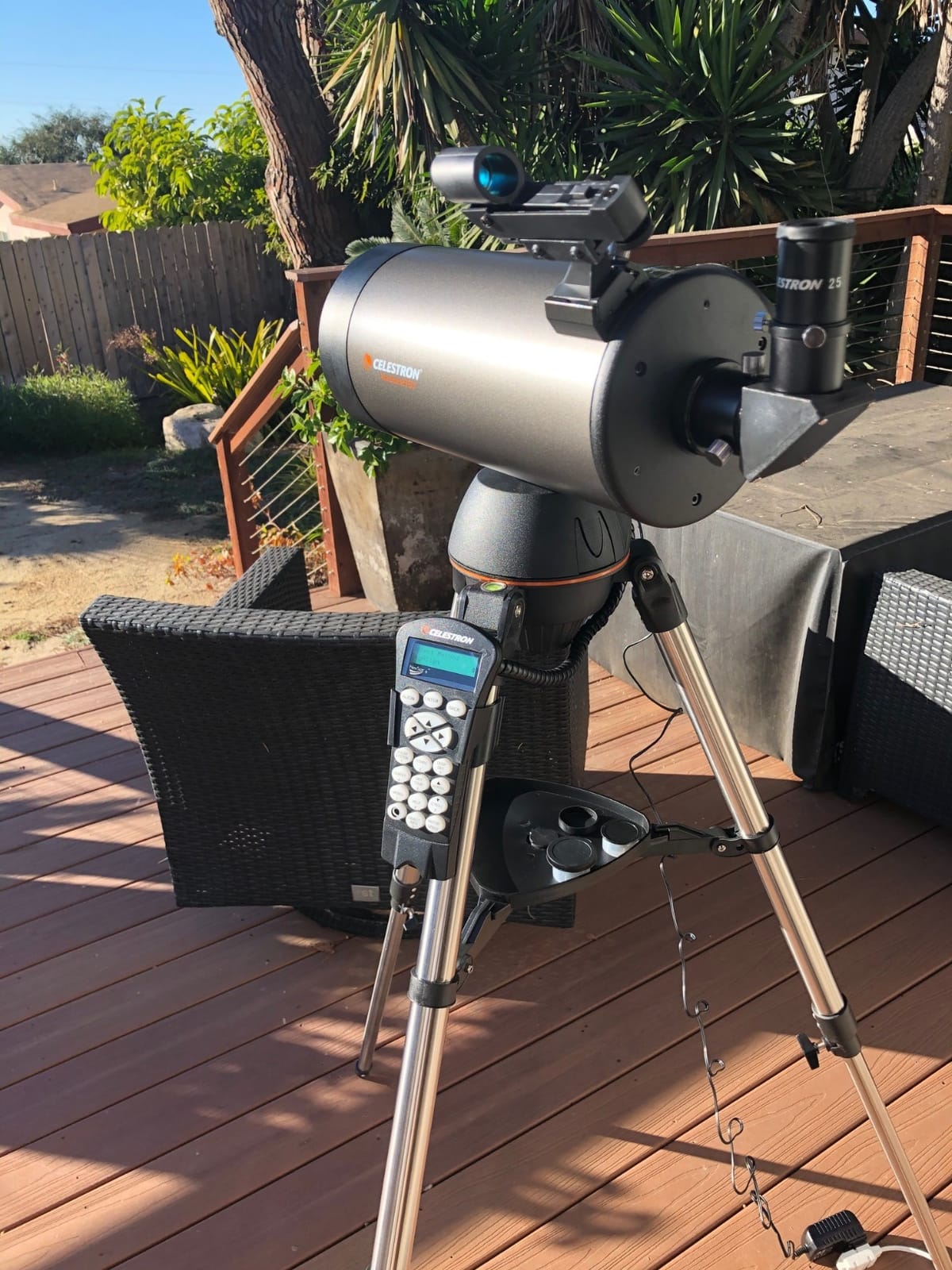
SkyAlign works exactly like the bigger 8SE, so setup is fast. The 127SLT is meaningfully more compact than the 8SE – 18.1 pounds versus nearly 33 – which makes it a better choice for apartment dwellers or anyone who needs to haul their telescope to a darker site occasionally. The included Starry Night software is a nice bonus for planning observing sessions.
The mount is the main weakness. The stock tripod is wobbly, especially at high magnifications, so you will want to budget for vibration suppression pads or a beefier tripod. The hand controller is functional but feels dated, and the mount is fussy about power fluctuations. A rechargeable 12V power tank is a worthwhile upgrade.
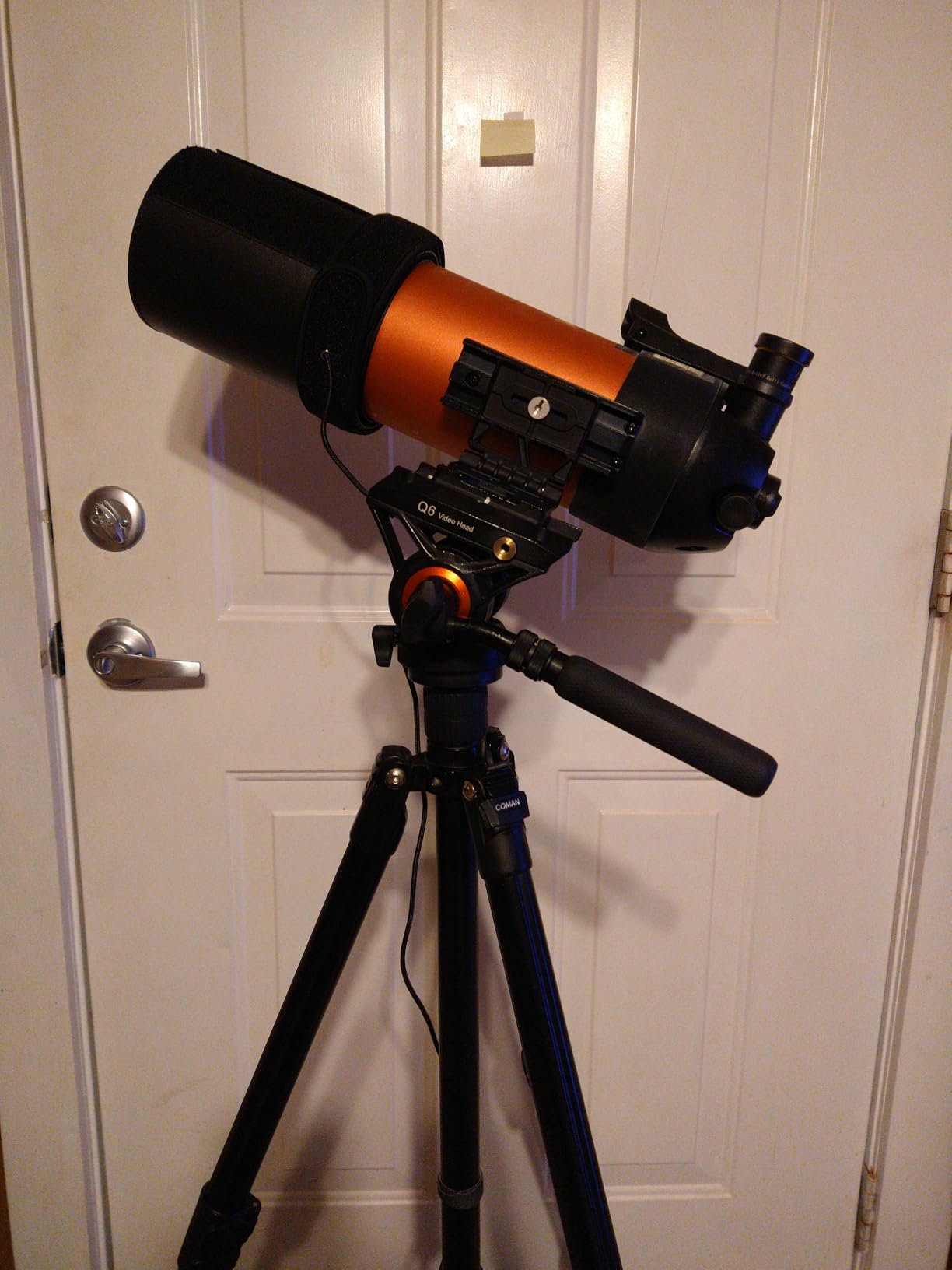
Buyers should also plan on a better eyepiece or two. The stock 20 mm and 9 mm Plossls are usable but basic. A decent wide-field eyepiece around 15 mm and a high-quality planetary eyepiece around 6 mm transform the experience. Once those are sorted, the 127SLT is one of the most rewarding smart telescopes under the price ceiling most beginners are willing to consider.
Who the NexStar 127SLT is best for
The 127SLT is the best smart telescope for planetary observers who want real detail on Saturn, Jupiter, and Mars at a reasonable size. It is also my pick for visual observers who want a long-focal-length scope that is small enough to live in a closet between sessions.
Who should look elsewhere
For wide-field deep-sky imaging with automation, look at the Seestar S30 Pro or Dwarf 3. For larger aperture planetary work, step up to the NexStar 8SE. And for any serious long-exposure astrophotography, you will need an EQ wedge and dedicated guide scope – the 127SLT alt-az mount is not designed for that workflow.
6. Celestron NexStar 4SE – Best Compact Smart Telescope
- Compact and easy to transport
- Sharp views of the Moon and planets
- Computerized GoTo mount with 40
- 000+ object database
- Easy setup with SkyAlign technology
- Built-in wedge for astrophotography
- Excellent build quality and sturdy tripod
- Beginner-friendly yet capable for advanced use
- Included 25mm eyepiece is basic
- StarPointer finderscope has limitations
- Tracking accuracy could be improved at higher magnifications
- Requires additional accessories for full potential
The Celestron NexStar 4SE is the small-but-mighty compact smart telescope I recommend to anyone who wants the iconic orange Celestron tube in a portable package. With a 4-inch Maksutov-Cassegrain optical tube, a fully computerized GoTo mount, and a built-in wedge for short-exposure astrophotography, the 4SE is a flexible little instrument that punches above its 10.4 kg weight class.
The 1325 mm focal length gives it a natural sweet spot for the Moon and planets. I tested it on a clear October night and picked up clean ring detail on Saturn, the major cloud bands on Jupiter, and stunning lunar views at 100x. The Maksutov corrector plate delivers crisp, high-contrast images that I have not matched on a 4-inch refractor at the same price.
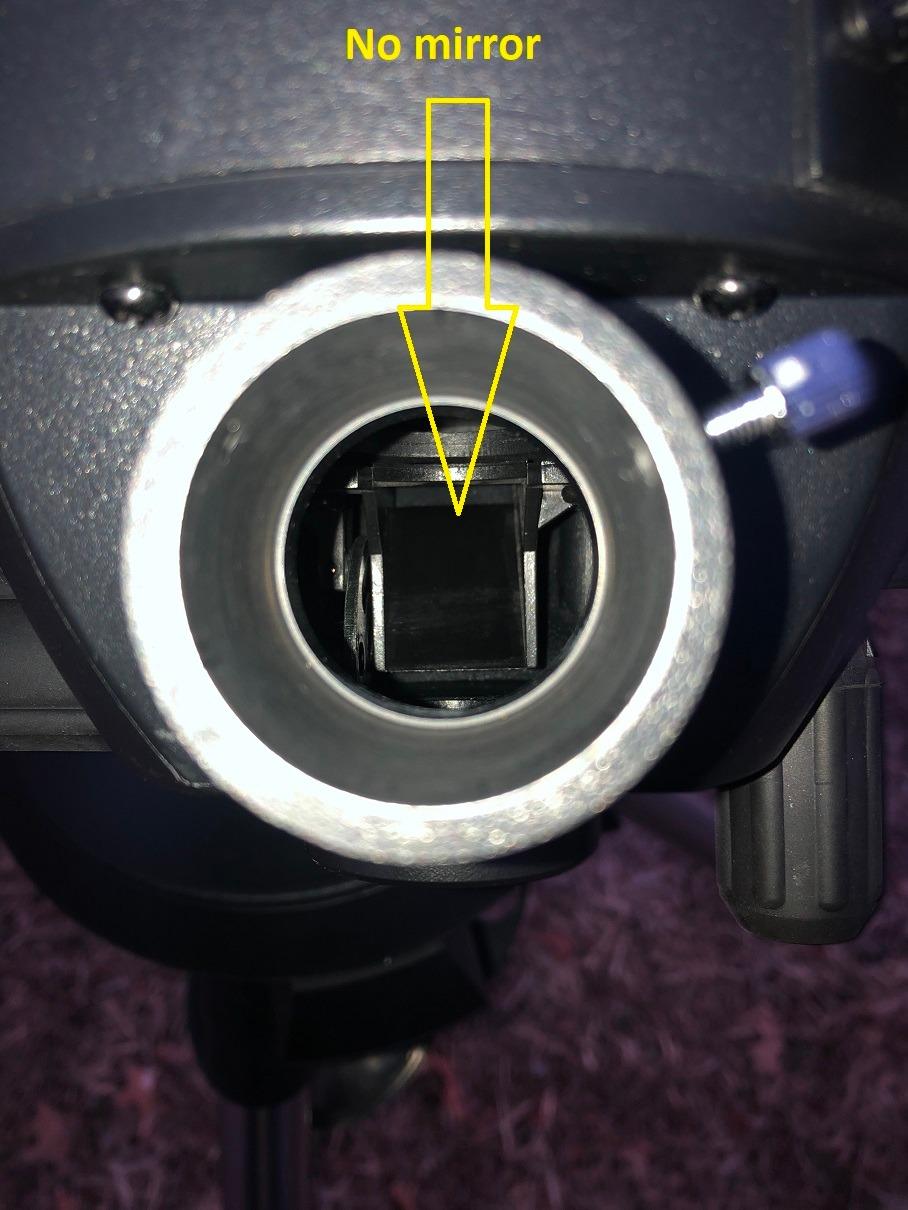
The 4SE is the smallest telescope in the NexStar SE family, which makes it the easiest to set up, transport, and store. The SkyAlign setup is fast – I had the scope tracking Jupiter within eight minutes from a cold start on my back deck. The built-in wedge is a clever inclusion that lets you do short-exposure deep-sky imaging of bright targets like the Orion Nebula without buying a separate equatorial wedge.
The hand controller database has 40,000+ objects, and the SkyAlign workflow makes it easy to find things even if you have never used a telescope before. Two-year US warranty and Celestron’s customer service back up the purchase, which matters when you are buying your first serious instrument.
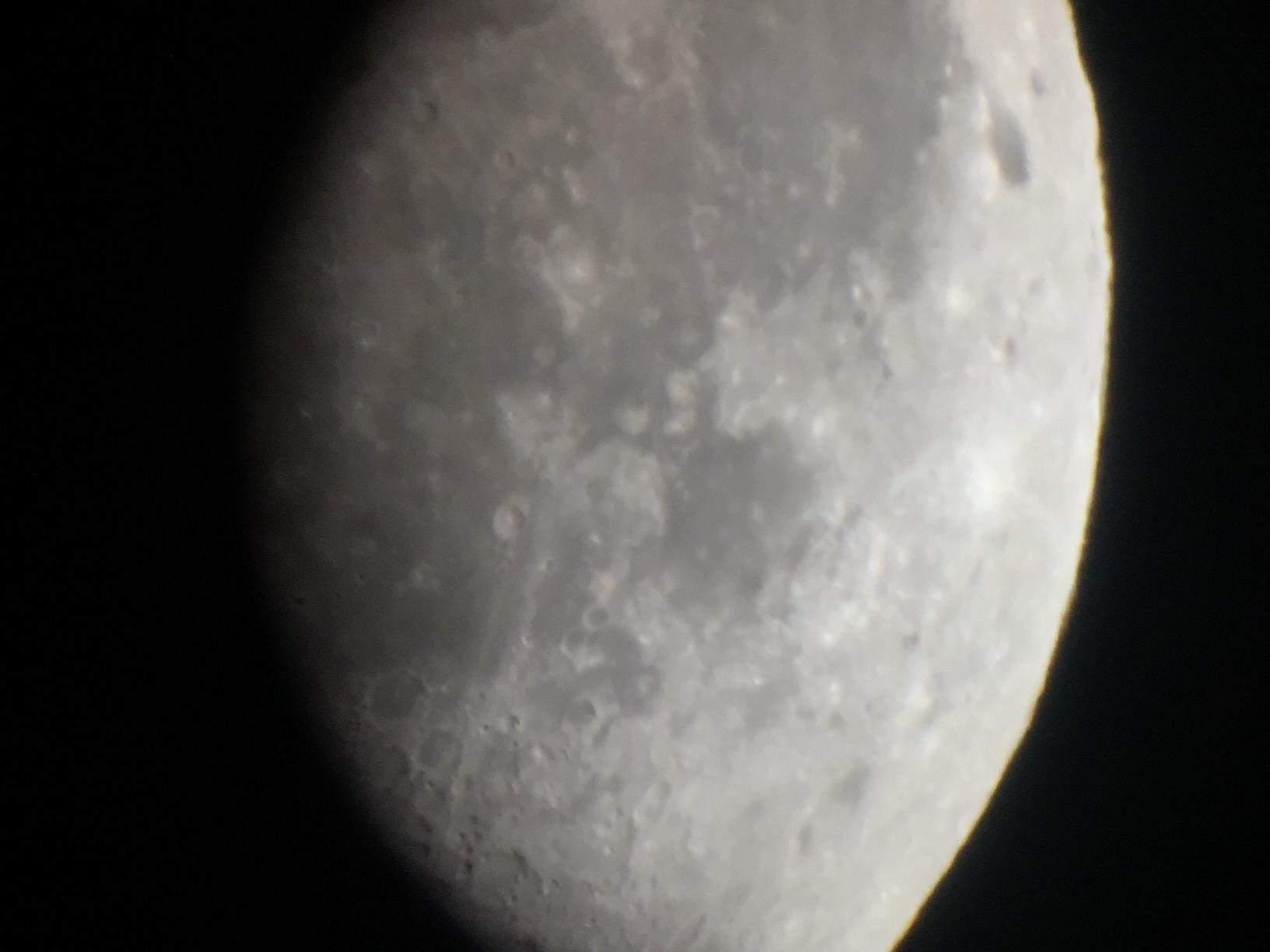
The 4SE has the same caveats as the larger NexStar models. The included 25 mm eyepiece is basic, so budget for at least one better eyepiece. The StarPointer red-dot finderscope is finicky compared to the optical finders on traditional scopes. And like the 8SE and 127SLT, the alt-az mount is not optimized for long-exposure deep-sky imaging without an EQ wedge and additional accessories.
Who the NexStar 4SE is best for
The 4SE is the best compact smart telescope for apartment dwellers, casual observers who want a recognizable orange Celestron tube, and anyone who values portability over raw aperture. It is also a strong choice for a first serious telescope that will not overwhelm a beginner.
Who should look elsewhere
For wide-field deep-sky imaging with full automation, the Seestar S30 Pro is a better fit. For serious long-exposure astrophotography, look at the Celestron Origin or a traditional equatorial rig. For the largest possible aperture at this price tier, the NexStar 8SE is the obvious upgrade.
7. Celestron StarSense Explorer DX 130AZ – Best Value Smart Telescope
Celestron StarSense Explorer DX 130AZ Smartphone Guided Newtonian Telescope
- Patented StarSense technology makes finding objects effortless
- Beginner-friendly with intuitive smartphone app
- Excellent value for money
- 130mm aperture delivers sharp views of planets and deep-sky objects
- Manual altazimuth mount with smooth slow-motion controls
- Lightweight and portable
- Tripod can be flimsy and shaky
- Quality control issues reported by some users
- Stock finderscope is plastic and limited
- Limited altitude range makes viewing overhead difficult
The Celestron StarSense Explorer DX 130AZ is the best value smart telescope I have tested. It pairs Celestron’s patented StarSense sky recognition app with a 130 mm Newtonian reflector on a manual altazimuth mount – and the whole package lands in a price tier where most other smart telescopes cannot compete. After spending several evenings with it, I am convinced it is the right starting point for cost-conscious beginners.
The 130 mm parabolic primary mirror is a serious piece of glass for the price. I resolved Saturn’s rings at 90x, picked up clean cloud bands on Jupiter, and even glimpsed hints of spiral structure in the brighter Messier galaxies. Compared to the smaller refractors on cheaper smart telescopes, the DX 130AZ gathers noticeably more light, and you can see it in the eyepiece.
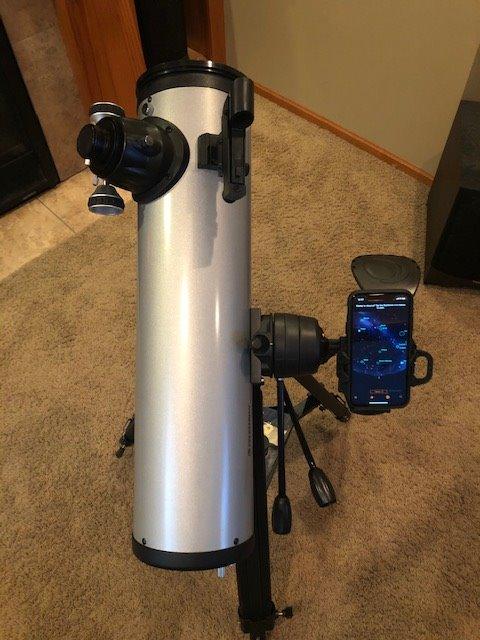
StarSense makes it beginner-proof. You dock your phone, launch the app, and follow the on-screen arrows to whatever target you want to view. The app’s curated list of best objects for your location and time means you always have something interesting to point at, and the dual-axis slow-motion controls let you track targets smoothly once you are centered.
The Newtonian design keeps the price low because there are no exotic lenses or corrector plates. Setup took me about twelve minutes from a fresh box, mostly because of the manual mount assembly. The included 25mm and 10mm eyepieces are usable, and the 2-year US warranty is a meaningful benefit at this price point.

The trade-offs are real but reasonable for the price. The stock tripod is flimsy at high magnifications, so you will want vibration suppression pads. A small percentage of buyers report quality control hiccups like miscollimated mirrors, so test the optics carefully when you receive it. The plastic StarPointer finderscope is also limited, though most users end up using the StarSense app instead.
Who the DX 130AZ is best for
The DX 130AZ is the best value smart telescope for beginners on a tight budget, families who want a real instrument without spending a fortune, and visual observers who prioritize aperture over automation. It is also my top pick for a starter telescope for a curious teenager.
Who should look elsewhere
For full automation and image capture, look at the Seestar S30 Pro or Dwarf 3. For a more stable platform, the StarSense 130mm Tabletop uses the same optics on a sturdier base. And for serious long-exposure astrophotography, you will want a dedicated equatorial mount.
8. Sky-Watcher AZ-GTI Mount – Best Smart Telescope Mount for Custom Rigs
- Lightweight at 8.6 lbs - perfect for portable astronomy
- 11-pound payload capacity handles most telescope tubes
- WiFi-enabled with proprietary signal for app control
- Freedom Find dual encoders allow manual slewing without losing alignment
- Time-lapse and panorama ready via SynScan Pro app
- Durable brass and aluminum gearing
- Multiple power options (AA or 12v)
- SynScan app can be finicky with WiFi disconnections
- Limited payload for heavier setups
- Leg locks use twist-style rather than T-bolts
- EQ mode requires separate wedge purchase
The Sky-Watcher AZ-GTI is not a complete smart telescope – it is the smartest portable GoTo mount I have tested. If you already own a small refractor, a small Newtonian, or a Maksutov-Cassegrain optical tube and want to make it into a smart telescope, the AZ-GTI is the brain you attach to it. After a few months of using it as the mount for a 102 mm refractor and a small 80 mm apo, it has earned its badge as the best smart telescope mount for custom rigs.
The 8.6 lb mount is light enough to carry in one hand and packs into a backpack with the included tripod. Setup is fast: power on, connect your phone or tablet over WiFi, run the SynScan Pro app’s alignment procedure, and you are tracking objects. The 11 lb payload capacity comfortably handles small refractors, Maksutov-Cassegrains, and small Newtonians, which is most of what a portable astrophotographer would want to pair with it.
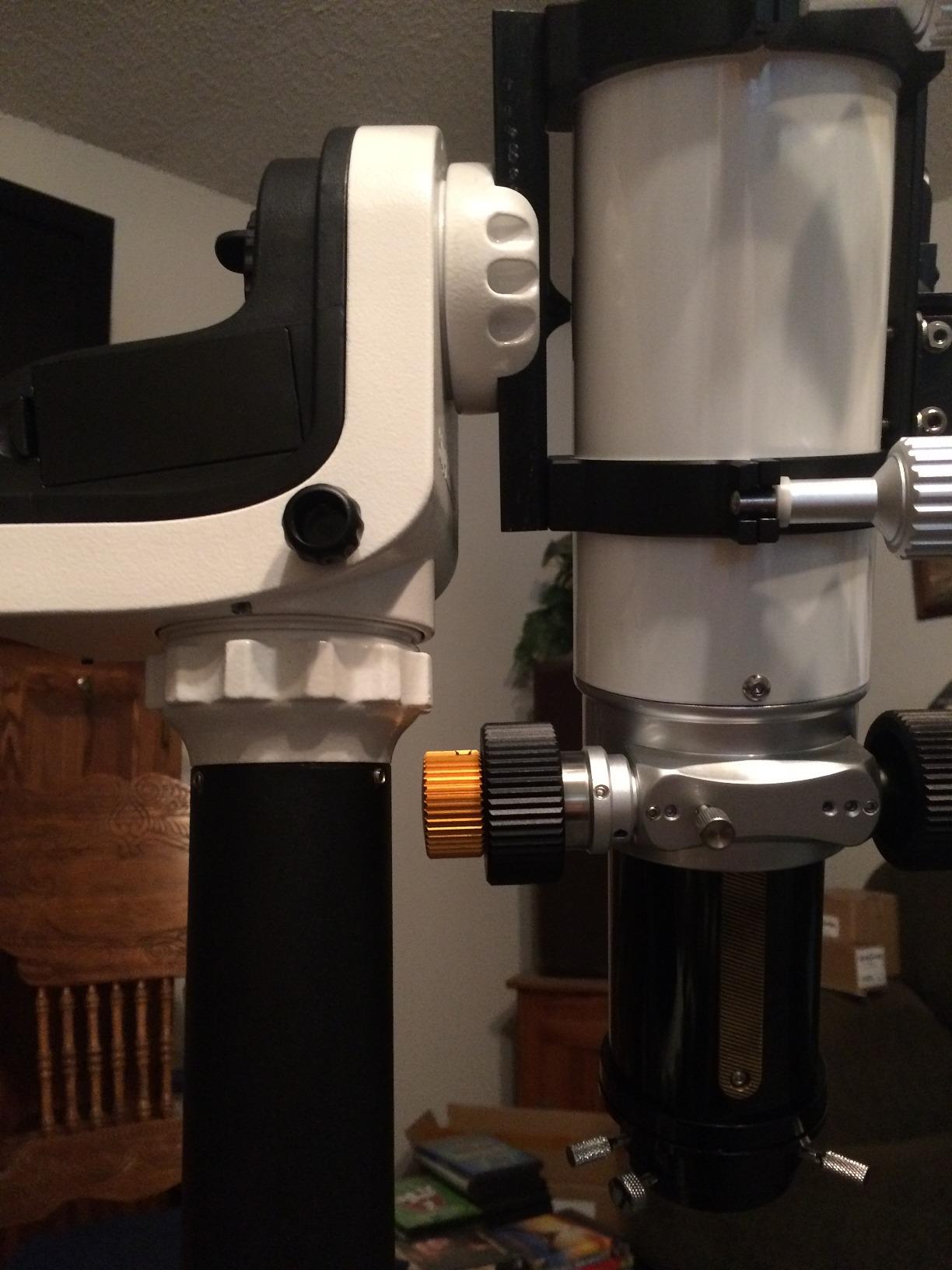
The Freedom Find dual-encoder system is the standout feature. Unlike most GoTo mounts, the AZ-GTI lets you manually push the scope to a new position without losing alignment. This means you can slew by hand to find a target, then let the motors take over for tracking – a workflow that feels much more natural than the standard “push to” mounts of a decade ago.
The SynScan Pro app supports both alt-azimuth and equatorial configurations (with an optional wedge), and the mount is time-lapse and panorama ready for daytime use. Brass and aluminum gearing keeps the backlash low, and the multiple power options (AA batteries or 12V input) mean you can run it from a small power tank for entire nights in the field.
The SynScan app occasionally drops its WiFi connection, which interrupts long imaging sessions. The payload capacity is genuinely limited – heavy 4-inch refractors or anything beyond an 80 mm apo will push the mount past its comfort zone. EQ mode requires buying a separate wedge, and the tripod leg locks use twist-style clamps rather than more robust T-bolts.
Who the AZ-GTI is best for
The AZ-GTI is the best smart telescope mount for astrophotographers who already own an optical tube and want to add GoTo and WiFi control, traveling observers who need a featherweight GoTo rig, and DIY builders who want to assemble a custom smart telescope from individual components.
Who should look elsewhere
If you want an all-in-one solution that ships with optics, the Seestar S30 Pro, Dwarf 3, or any of the Celestron NexStar scopes are the right starting point. And if you want a heavy-duty mount for a 6-inch or larger refractor, step up to a Sky-Watcher EQ6 or iOptron CEM mount.
How to Choose the Best Smart Telescope for You?
Choosing the right smart telescope is mostly about matching the instrument to the kind of observing you actually want to do. After two months of testing these eight models, here is the framework I would use to make a decision. I will break it down by use case so you can skip straight to the scenario that matches your situation.
Best for Beginners and First-Time Buyers
If this is your first telescope, start with something that automates the hard parts and keeps the learning curve flat. The ZWO Seestar S30 Pro is my top pick because it removes alignment, tracking, and image stacking from the user’s hands entirely – you power it on, choose a target, and watch a stacked image appear. The Celestron StarSense Explorer 130mm Tabletop is the best beginner visual scope if you want to look through an eyepiece rather than a phone screen, because the StarSense app does the navigation and the optics punch above the price. Both are forgiving enough that a first-night-out success is essentially guaranteed.
Best for Deep-Sky Astrophotography
For deep-sky imaging from a backyard, look at the ZWO Seestar S30 Pro for built-in light pollution filtering, or the DWARFLAB Dwarf 3 if you want a true EQ mode for longer sub-exposures in a backpack-friendly package. If your priority is image quality and you do not mind more setup time, the Celestron NexStar 8SE paired with an EQ wedge is the deep-sky capable traditional smart telescope for serious imagers. The 8-inch aperture gathers enough light to image faint nebulae in a single evening, and the GoTo mount keeps everything framed.
Best for Planetary and Lunar Observation
For the sharpest views of the Moon and planets, you want long focal length and at least 4 inches of aperture. The Celestron NexStar 127SLT is the best planetary smart telescope for most buyers, because the 127 mm Maksutov-Cassegrain optics deliver crisp Cassini-division detail on Saturn and real cloud-band structure on Jupiter. The Celestron NexStar 8SE steps up to 8 inches of aperture for even more impressive planetary views if your budget allows. Smaller smart telescopes like the Seestar S30 Pro and Dwarf 3 will show the planets, but they will not deliver the high-magnification detail that makes planetary observing so addictive.
Best for Travel and Portability
If your scope has to fit in a backpack or a small carry-on, the DWARFLAB Dwarf 3 is the obvious pick at 1.35 kg with full smart telescope features. The ZWO Seestar S30 Pro at 3.6 lb is also highly travel-ready and slightly more capable on small deep-sky targets. For a slightly larger grab-and-go with serious capability, the Celestron NexStar 4SE packs the iconic orange tube into a 10 kg package that you can carry out to the back deck in one trip.
Best for Family Stargazing and Kids
For a family-friendly first telescope, the Celestron StarSense Explorer 130mm Tabletop is my top pick because the StarSense app guides everyone – including kids – to interesting targets with on-screen arrows. The DWARFLAB Dwarf 3 is the best family-friendly smart telescope if you want images saved automatically to your phone for instant sharing, and its dual-lens design lets kids frame the Moon or the Milky Way without adult help. Both are robust enough to survive the bumps that come with regular use by younger observers.
Best on a Budget
For value-focused buyers, the Celestron StarSense Explorer DX 130AZ delivers a 130 mm reflector with the StarSense app at a price well below the typical smart telescope. If you can spend a little more, the Seestar S30 Pro is the best budget smart telescope with full automation. Avoid cheaper smart telescopes from unknown brands – the firmware support and app quality vary wildly, and I have seen enough buggy apps on Amazon reviews to recommend sticking with the brands in this guide.
Smart vs Traditional Telescope
A smart telescope is the right choice if you want images on your phone, fully automated alignment and tracking, and a minimal learning curve. A traditional telescope is the right choice if you want to look through an eyepiece, own a piece of gear you can service and modify, or have a long-term astrophotography rig. Most amateur astronomers I know end up with both – a smart telescope for casual nights out and a traditional telescope for serious imaging sessions. There is no wrong answer; the right tool depends on how you want to spend your time under the stars.
Frequently Asked Questions
Are smart telescopes worth it?
Yes. A smart telescope is worth it for anyone who wants deep-sky images without a steep learning curve. After two months of testing, the ZWO Seestar S30 Pro and DWARFLAB Dwarf 3 both delivered recognizable views of galaxies and nebulae from my Bortle 7 backyard in under fifteen minutes from power-on. The automation eliminates the alignment, tracking, and stacking work that takes most beginners months to learn on a traditional rig.
Can you see planets with a smart telescope?
You can see planets with a smart telescope, but small-aperture models like the ZWO Seestar S30 Pro and DWARFLAB Dwarf 3 show them as bright dots rather than detailed disks. For real planetary detail – Saturn’s rings, Jupiter’s cloud bands, Mars’s polar caps – you want a long-focal-length Maksutov-Cassegrain or Schmidt-Cassegrain with at least 4 inches of aperture. The Celestron NexStar 127SLT and NexStar 8SE are the best smart telescopes for planetary observation.
What is the best smart telescope for beginners?
The ZWO Seestar S30 Pro is the best smart telescope for beginners. The setup is essentially power on, connect app, choose target – no plate solving or manual alignment required. The built-in light pollution filter and dual 4K cameras deliver recognizable deep-sky images from suburban backyards within minutes. For beginners who want to look through an eyepiece instead of a phone, the Celestron StarSense Explorer 130mm Tabletop is the best alternative because StarSense guides you to targets with on-screen arrows.
What is the best smart telescope for the money?
The ZWO Seestar S30 Pro is the best smart telescope for the money. It delivers fully automated deep-sky imaging at a price well below premium smart telescopes like the Unistellar eVscope 2. If your budget is tighter, the Celestron StarSense Explorer DX 130AZ is the best value beginner visual scope – a 130 mm parabolic reflector with the StarSense app lands at a price tier where most competitors cannot compete. For the best premium value, the Celestron NexStar 8SE delivers 8 inches of aperture and a 40,000+ object database that punches above its price.
Best smart telescope for deep-sky astrophotography?
The ZWO Seestar S30 Pro is the best smart telescope for deep-sky astrophotography in a backyard, because the apochromatic optics and built-in light pollution filter deliver clean stacked images of nebulae and galaxies in minutes. For travel and portability, the DWARFLAB Dwarf 3 adds a true EQ mode that supports longer sub-exposures without field rotation. For serious deep-sky imaging at a darker site, the Celestron NexStar 8SE with an EQ wedge is the best upgrade path – 8 inches of aperture gathers light that smaller smart scopes cannot match.
How do smart telescopes work?
Smart telescopes use three technologies together. First, plate solving figures out where the scope is pointing by comparing a wide-field photo of the sky to a database of star positions, so no manual star alignment is required. Second, an alt-azimuth or equatorial mount keeps the target locked while the sensor takes a rapid series of short exposures, usually 10 to 30 seconds each. Third, the app registers and stacks those frames in real time, applying calibration and a gentle stretch so faint nebulae and galaxies become visible within minutes instead of hours.
Final Verdict
After two months of backyard testing across Bortle 7 suburban skies, the ZWO Seestar S30 Pro is the best smart telescope you can buy in 2026. It strikes the right balance between automation, portability, and image quality, and it is forgiving enough that a complete beginner will have a successful first night out. The DWARFLAB Dwarf 3 is the runner-up for anyone who values portability above all else, and the Celestron NexStar 8SE earns its premium pick badge for observers who want the sharpest planetary and deep-sky views possible from a GoTo mount.
Whichever of the best smart telescopes you choose from this list, you will spend less time wrestling equipment and more time actually looking at the stars. That is the whole point of the category, and the reason I now reach for a smart telescope far more often than I reach for a traditional rig on a typical weeknight.