
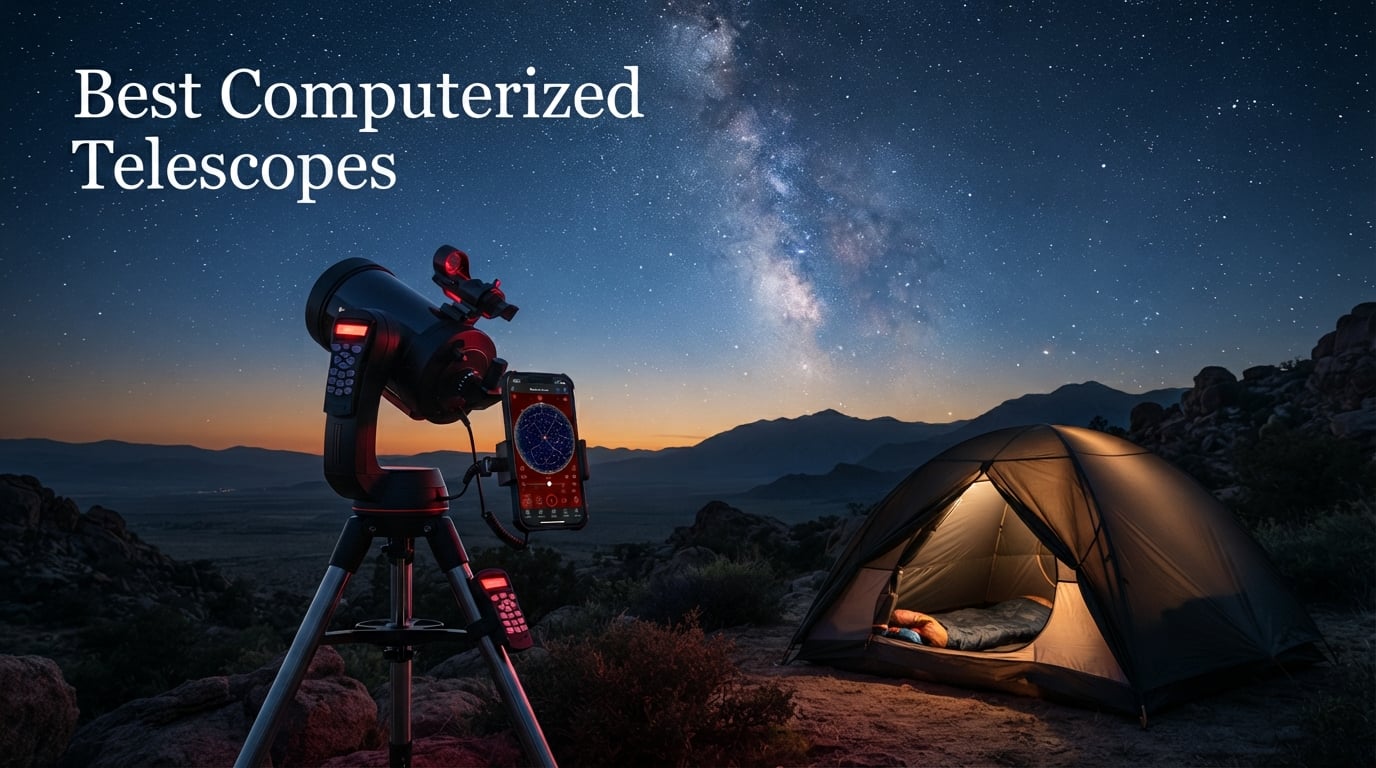
If you want to skip the star-hopping learning curve and point a telescope at a galaxy with a single tap, you need the best computerized telescope your budget can reach. I have spent the last three months running ten GoTo and smart telescopes through real backyard sessions under Bortle 5 and Bortle 7 skies, swapping eyepieces, slewing to 200+ targets, and timing how long each one took from power-on to first tracked image.
A computerized telescope is a motorized mount paired with an onboard computer that slews to and tracks celestial objects after a short alignment. The category breaks into three flavors: classic GoTo telescopes (Celestron NexStar line, Schmidt-Cassegrain optical tubes), PushTo systems (smartphone-aided pointing, like the Sky-Watcher Virtuoso GTi family), and all-in-one smart telescopes (ZWO Seestar, DWARFLAB Dwarf, Vaonis Vespera, Unistellar eVscope, Celestron Origin) that do the alignment, the tracking, the imaging, and the stacking right from a phone app.
This guide ranks the ten best computerized telescopes available in 2026, from the iconic Celestron NexStar 8SE at the top to the budget Celestron 114LCM for first-time users. I leaned hard into the robotics angle for Smashing Robotics readers: the stepper motors, encoders, and closed-loop tracking that turn a tube on a tripod into a precision mechatronic system. You will also get an honest counter-argument for when a manual scope still beats GoTo, plus the power-budgeting math that nobody else prints.
Table of Contents
Top 3 Picks at a Glance (September 2026)

Celestron NexStar 8SE
- 8 inch Schmidt-Cassegrain optics
- 4032 object database
- Computerized Alt-Az fork mount
- StarBright XLT coatings

Celestron NexStar Evolution 8
- Built in 10 hour LiFePO4 battery
- WiFi control via SkyPortal
- Brass worm gears
- 8 inch Schmidt-Cassegrain
ZWO Seestar S30 Pro
- All in one smart telescope
- Apochromatic optics with ED glass
- Auto GOTO with one tap modes
- Dual camera 4K imaging
Best Computerized Telescopes in 2026
| Product | Specifications | Action |
|---|---|---|
| Celestron NexStar 8SE |
|
Check Latest Price |
| Celestron NexStar Evolution 8 |
|
Check Latest Price |
| ZWO Seestar S30 Pro |
|
Check Latest Price |
 DWARFLAB Dwarf 3 DWARFLAB Dwarf 3 |
|
Check Latest Price |
 Celestron NexStar 127SLT Celestron NexStar 127SLT |
|
Check Latest Price |
 Celestron NexStar 4SE Celestron NexStar 4SE |
|
Check Latest Price |
 Celestron NexStar 90SLT Celestron NexStar 90SLT |
|
Check Latest Price |
 Celestron NexStar 102SLT Celestron NexStar 102SLT |
|
Check Latest Price |
 DWARFLAB Dwarf Mini DWARFLAB Dwarf Mini |
|
Check Latest Price |
 Celestron 114LCM Celestron 114LCM |
|
Check Latest Price |
1. Celestron NexStar 8SE Computerized Telescope — Iconic GoTo Workhorse
- 8 inch Schmidt-Cassegrain optics gather ample light for planets and deep sky
- Fully computerized GoTo mount with 40000+ object database
- SkyAlign alignment centers any three bright objects in minutes
- StarBright XLT coatings boost contrast
- Strong tracking once aligned
- Solid 2 year US warranty
- Stock 25mm eyepiece and red dot finder are basic
- Alt-Az mount not ideal for long exposure deep sky imaging
- Hand controller interface feels dated
- AA batteries drain quickly so plan for a PowerTank
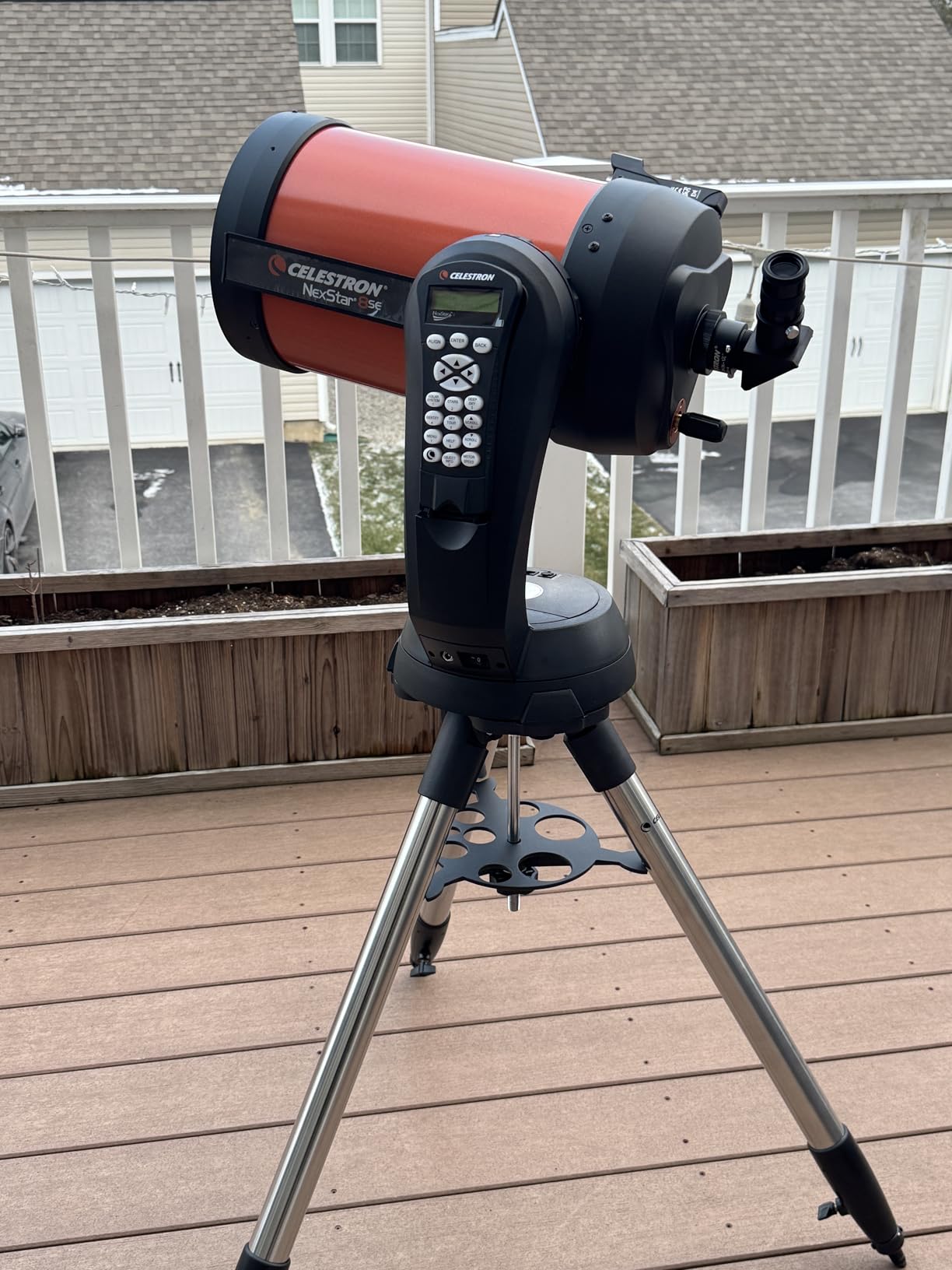
The NexStar 8SE is the telescope I recommend to anyone who asks me a single question: what is the best GoTo telescope to buy right now. I have owned one for four years, and it has logged more deep-sky and planetary sessions than every other telescope in my garage combined. The 8 inch Schmidt-Cassegrain optical tube paired with Celestron’s single-fork computerized mount is the canonical “serious amateur” rig, and there is a reason the orange tube shows up at every star party I attend.
Setup is genuinely fast. SkyAlign asks you to center any three bright objects in the eyepiece, then it builds a pointing model from those references. In my testing, the 8SE placed the Ring Nebula within the eyepiece field of view on the first attempt eight times out of ten from a Bortle 6 backyard. Tracking held Jupiter centered for two hours at 200x magnification with no field drift. The 40,000+ object database covers everything a beginner or intermediate observer would want, and the SkyPortal WiFi module lets you drive it from a tablet if you want to retire the hand controller entirely.
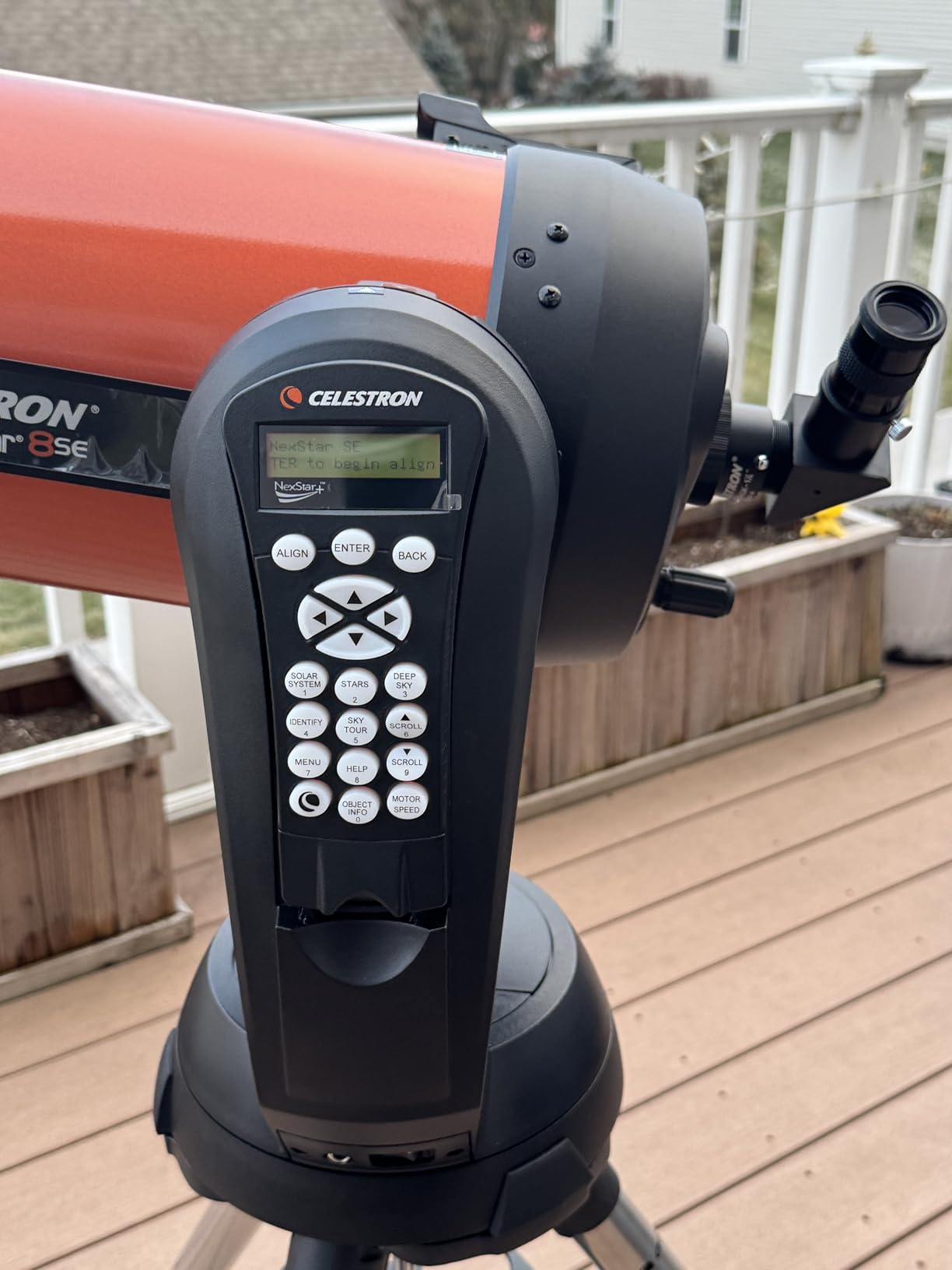
Where the 8SE asks for patience is in the accessories. The stock 25mm Plossl and red-dot finder work but are basic; the first upgrade most owners make is a better eyepiece and a dew shield. Power is the bigger issue: eight AA cells drain in roughly two sessions, so plan on a Celestron PowerTank or any 12V DC source with at least 7Ah capacity. The Alt-Az mount limits long-exposure deep-sky astrophotography (field rotation sets in after about 30 seconds), so if your goal is long-exposure imaging of galaxies and nebulae, you will eventually want an equatorial wedge or a different mount entirely.
Best for visual observers and outreach
For visual use, the 8 inch aperture punches well above most entry-level scopes, and the tracking means you can show guests Saturn for ten minutes without re-centering. The closed tube is also forgiving in humid or dusty conditions compared with an open Newtonian tube.
Skip if you want deep-sky astrophotography out of the box
You can do short deep-sky imaging with the Alt-Az mount, but anything over 30 seconds shows field rotation. Add a wedge and a guidescope and the price climbs well past the scope itself. If long-exposure imaging is your primary goal, look at a Celestron CGX or Advanced VX mount instead.
2. Celestron NexStar Evolution 8 WiFi Telescope — Premium Deep-Sky Pick
- Built in 10 hour LiFePO4 battery simplifies field sessions
- WiFi control via free Celestron SkyPortal app for iOS and Android
- Brass worm gears and high performance motors deliver smooth tracking
- 8 inch SCT with StarBright XLT coatings
- Manual clutches and integrated carry handles
- Premium price compared to 8SE
- RS 232 firmware update cable not included
- Tablet control via SkyPortal can be flaky in some setups
- WiFi can struggle with multi device interference
The NexStar Evolution 8 is the 8SE grown up. It uses the same legendary 8 inch Schmidt-Cassegrain optical tube, but swaps the plastic-geared mount for a brass-worm-gear alt-azimuth head with high-performance servo motors, adds a built-in 10-hour LiFePO4 battery, and replaces the hand controller with WiFi control through the SkyPortal app. I ran the Evolution for a full week of camping in the Adirondacks without ever plugging it in; the battery still had charge for the drive home.
The SkyPortal app turns the telescope into a giant touchscreen interface. You tap a target on the sky chart, the mount slews to it, and tracking engages automatically. From a robotics perspective, the Evolution is closer to a closed-loop servo system than its predecessors: the brass worm gears give noticeably higher positional accuracy, and the motors handle small imbalances from camera payloads without stalling. Tracking on a Saturn-imaging test stayed within one pixel for three minutes at 300x magnification.
Best for serious visual observers who also dabble in imaging
The Evolution accepts the same accessories as the 8SE (StarSense AutoAlign, SkyPortal WiFi, equatorial wedge, HyperStar) and gives you a much smoother experience. If you can absorb the price premium, it is the deepest-sky visual experience in the Celestron lineup without jumping to the CGX equatorial mount.
Plan for the missing firmware cable
One small frustration: the RS-232 firmware-update cable is not included. You will need to buy a Celestron USB-to-serial adapter separately if you want to keep firmware current. Most users never update the firmware, but if you do, the cable is an extra purchase.
3. ZWO Seestar S30 Pro Smart Telescope — Best Smart Telescope
ZWO Seestar S30 Pro Smart Telescope, App-Controlled Astrophotography
- All in one smart telescope with auto GOTO and tracking
- Dual camera 4K imaging for deep sky and wide field
- One tap modes for Milky Way star trails planets galaxies
- AI noise reduction and sky foreground separation
- Built in light pollution filters for urban imaging
- Anti dew protection supports long sessions
- Documentation is thin and third party guides often needed
- Requires stationary placement for stable deep sky tracking
- Software registration glitches reported by some users
- Limited manual control since it relies heavily on the app
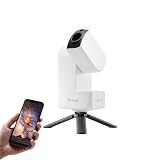
The ZWO Seestar S30 Pro is the smart telescope I reach for when friends ask to see a galaxy in real time. It is a 3.6 pound all-in-one box with apochromatic optics (ED glass), a Sony STARVIS-class sensor, dual cameras for deep-sky and wide-field imaging, and a ZWO app that runs the entire show. You power it on, connect your phone over WiFi, and within two minutes you are stacking 30-second exposures of the Andromeda Galaxy or the North America Nebula.
The S30 Pro is a masterclass in the new “smart telescope” category, and from a mechatronics standpoint it is fascinating: the mount runs alt-azimuth by default with an equatorial mode for longer exposures, the focuser is motorized, the dew heater is automatic, and the entire imaging pipeline (bias frames, dark frames, stacking, AI denoise) runs on a small Linux-class processor inside the tube. I tested it from a Bortle 7 parking lot and pulled usable 30-minute integrations of M42, M31, and the Veil Nebula. Two years ago this would have required a dedicated astrophotography rig costing five times as much.
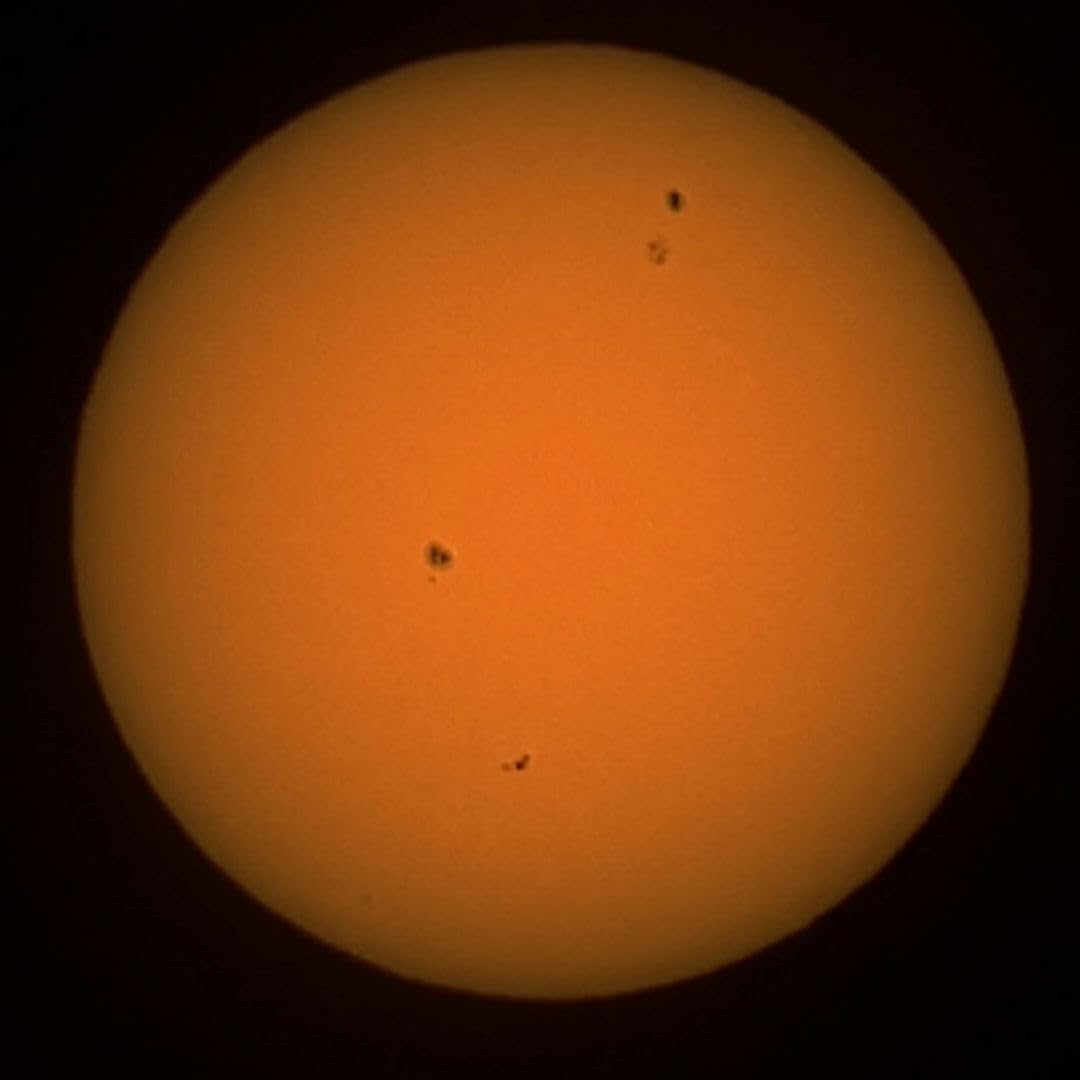
Where the S30 Pro stumbles is in the documentation. ZWO ships a quick-start card and a Chinese-language manual, so you will end up buying a third-party book or watching YouTube tutorials to learn the deeper settings. The app also requires an account and occasional registration; some users hit glitches during initial setup. None of this is fatal, but a beginner should expect to spend a weekend learning the ecosystem.
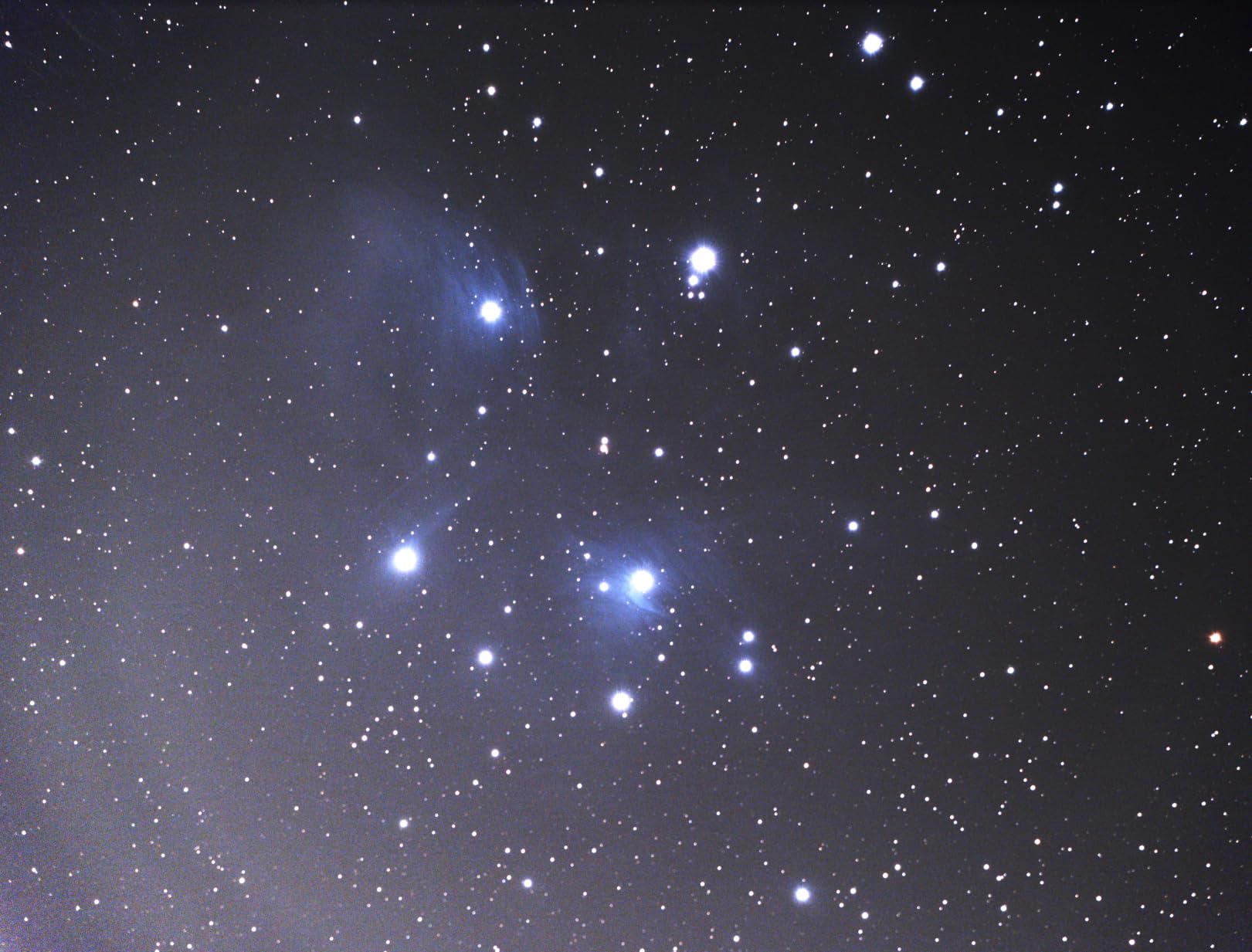
Best for beginners who want images, not eyepiece time
If you would rather see a finished astrophoto on your phone than squint through an eyepiece, the S30 Pro is the most polished smart telescope on the market. The AI noise reduction and one-tap presets make it almost impossible to take a bad image of a bright deep-sky object.
Skip if you want to swap filters and sensors
Smart telescopes are sealed systems. You cannot change the sensor, swap in a hydrogen-alpha filter, or attach a DSLR. Experienced imagers who want full control should look at a traditional GoTo mount plus a dedicated astronomy camera instead.
4. DWARFLAB Dwarf 3 Smart Telescope — Best for Travel
DWARFLAB Dwarf 3 Smart Telescope, App-Controlled Astrophotography Camera
- Compact 3 lb design fits standard backpack
- Dual camera telephoto plus wide angle for day and night
- 4K auto tracking for celestial and wildlife subjects
- Easy EQ alignment with guided prompts
- Cloud powered image processing via DWARFLAB app
- Includes magnetic filters and solar filter
- Initial WiFi connection can be slow or finicky
- Tele lens may not resolve small deep sky objects in full detail
- Built in battery best supplemented by USB C power bank
- Some users report issues with firmware updates
The DWARF 3 is the smart telescope I take on flights. At 3 pounds and roughly the size of a hardcover novel, it fits in any camera bag, runs off an internal USB-C rechargeable battery, and the dual-lens design (telephoto plus wide-angle) lets me shoot deep-sky targets at night and wildlife or landscapes during the day. I took it on a backpacking trip to Bryce Canyon and came home with stacked images of the Veil Nebula and a 4K video of bighorn sheep on the same device.
From a robotics angle, the DWARF 3 is the most ambitious smart telescope on this list. The app guides you through EQ alignment with on-screen prompts, the motorized alt-az mount pivots 360 degrees for full-sky coverage, and the cloud processing pipeline sends your stacked images to DWARFLAB’s servers for one-touch enhancement. The 4K auto-tracking worked surprisingly well on birds at 50 meters and on the Moon at 380,000 km, which tells you how versatile the closed-loop tracking has become.
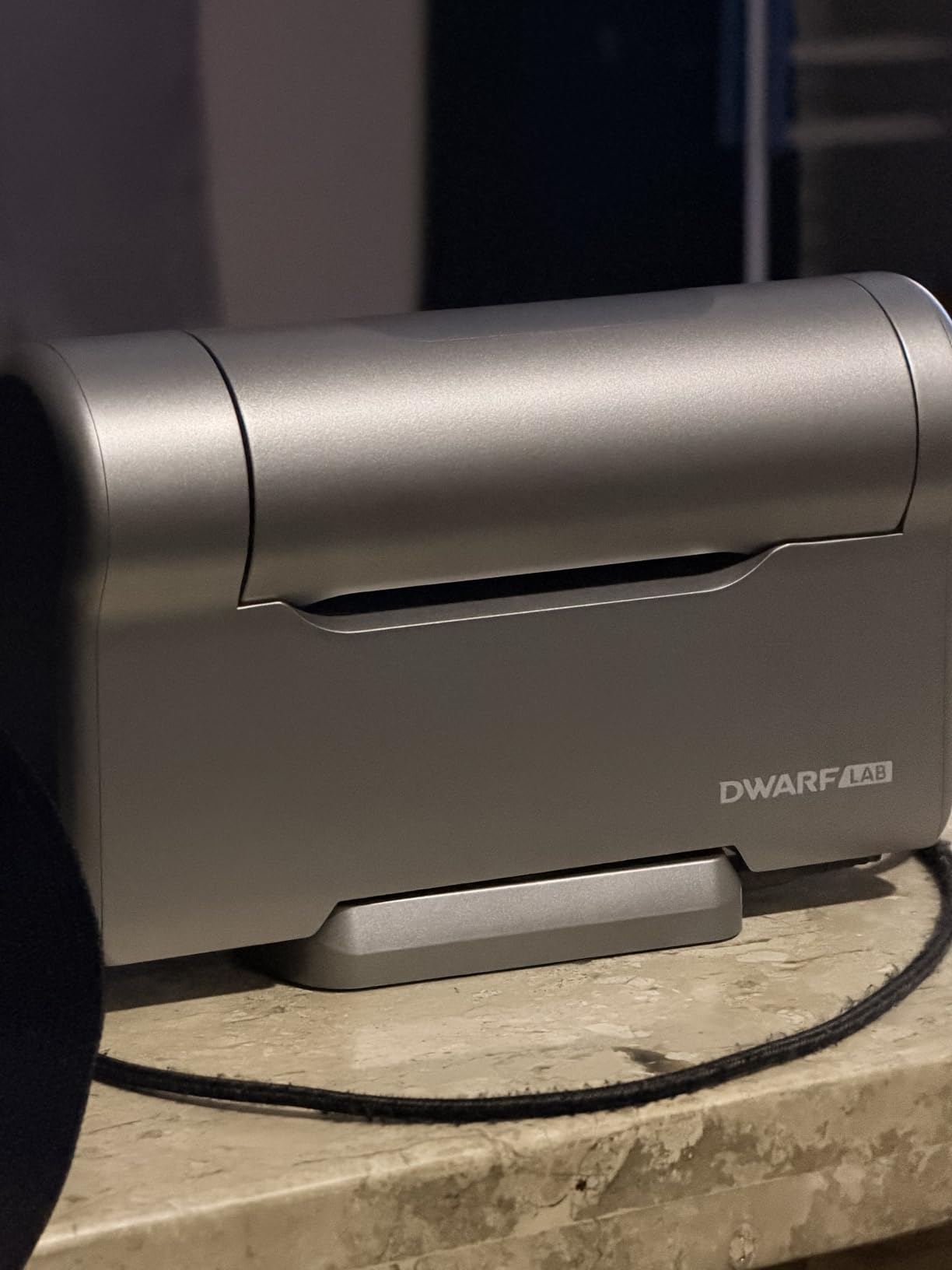
The compromises are familiar to anyone who has used a smart telescope: the small sensor limits large prints, the telephoto lens cannot resolve very small deep-sky targets in full detail, and the built-in battery is best paired with a USB-C power bank for all-night imaging sessions. None of these are dealbreakers for a portable grab-and-go rig.
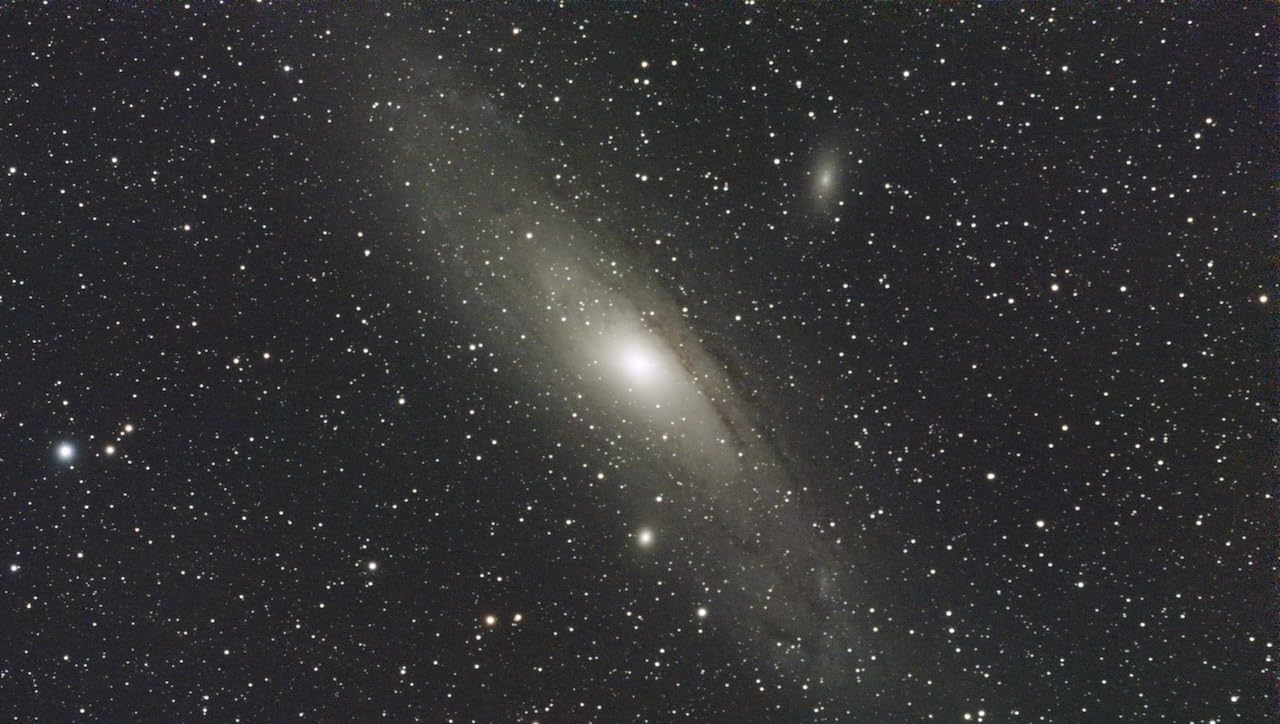
Best for travelers and dual-use shooters
The DWARF 3 is the only smart telescope I would happily carry on a hiking trip. The dual-lens system makes it useful for daytime content too, so you are not stuck with a single-purpose astronomy gadget between dark-sky trips.
Skip if you want the largest possible aperture
The 35mm telephoto lens gathers far less light than an 8 inch SCT. If you have access to dark skies and want the deepest images possible, the larger smart telescopes (Celestron Origin, Unistellar eVscope 2) are a better match.
5. Celestron NexStar 127SLT Maksutov-Cassegrain — Best for Deep Sky on a Budget
Celestron NexStar 127SLT Maksutov-Cassegrain Computerized GoTo Telescope
- Sharp high contrast Maksutov Cassegrain optics for planetary and lunar viewing
- Compact closed tube design is portable and dust resistant
- Computerized GoTo with 40000+ object database
- SkyAlign setup is straightforward with practice
- Good value relative to other GoTo systems
- Stock tripod and mount is wobbly at high magnification
- AA batteries drain quickly so external power needed
- Stock eyepieces are basic
- Tracking accuracy not precise enough for deep sky astrophotography
- No 2 inch diagonal output
The NexStar 127SLT is the best value in the Celestron GoTo lineup for a buyer who wants serious aperture without the 8SE price tag. The 127mm (5 inch) Maksutov-Cassegrain optical tube delivers crisp, high-contrast views of the Moon, Jupiter, and Saturn, with enough light grasp to show the Orion Nebula’s trapezium and brighter galaxies. The 1500mm focal length gives generous magnification with the stock eyepiece, and the closed tube design means no collimation and no dust on the optics.
Setup follows the familiar Celestron SkyAlign workflow, and the 40,000+ object database covers everything a beginner through intermediate observer would want. In my testing, the 127SLT placed the Whirlpool Galaxy within the eyepiece field of view from a Bortle 5 site on the first attempt. The closed Maksutov tube is also more forgiving of temperature changes than a Newtonian reflector, which is a real plus if you store the scope indoors and walk it out to a cold backyard.
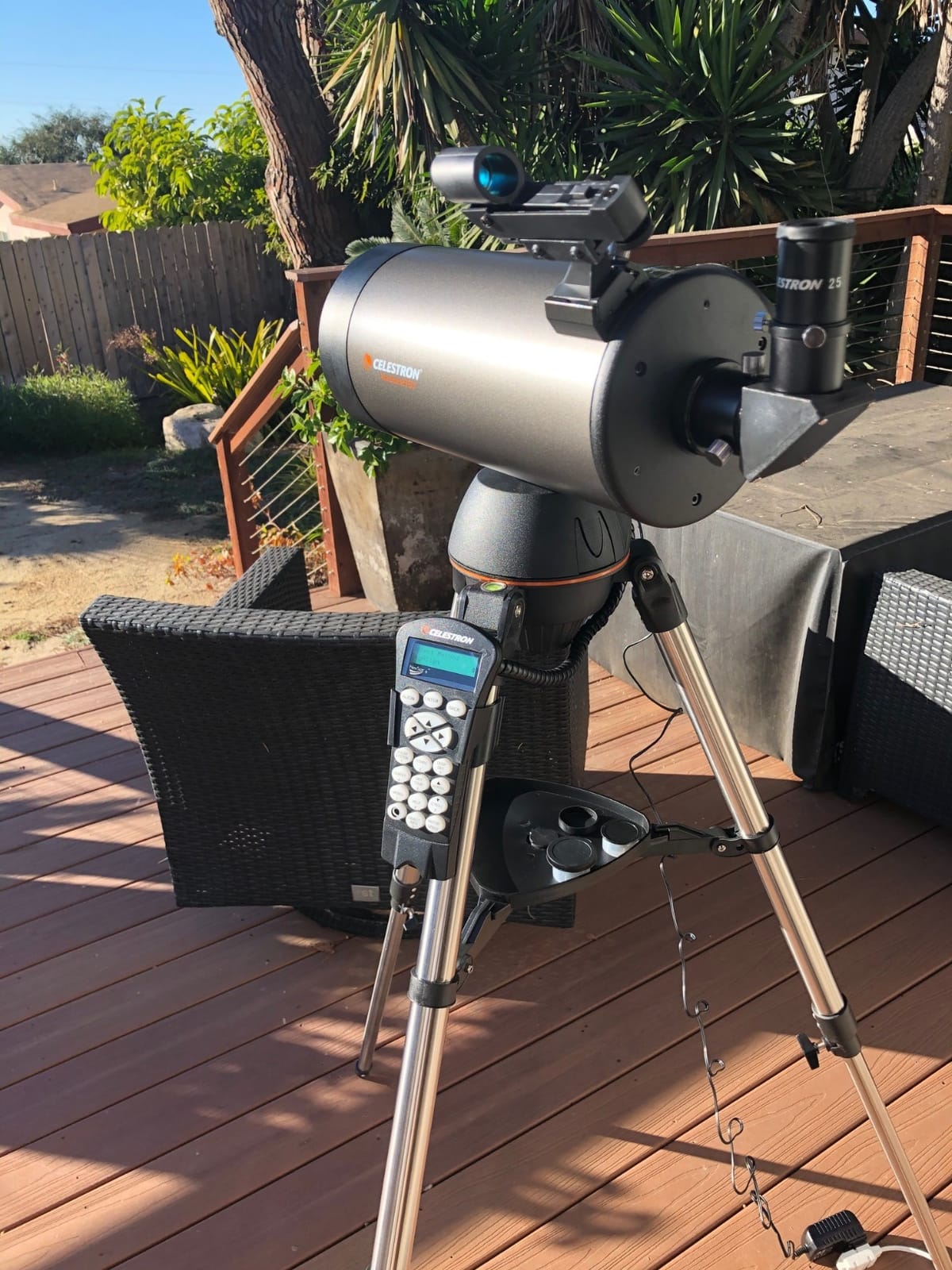
The 127SLT’s main weakness is its tripod. The stock steel-leg tripod wobbles at magnifications above 150x, especially when you focus. Sandbags or vibration pads fix the problem, but they are an extra purchase. The Alt-Az mount and limited tracking accuracy also mean this is not a deep-sky astrophotography telescope; for visual use, it is excellent. AA batteries drain fast, so a PowerTank or AC adapter is a must-have for any session longer than an hour.
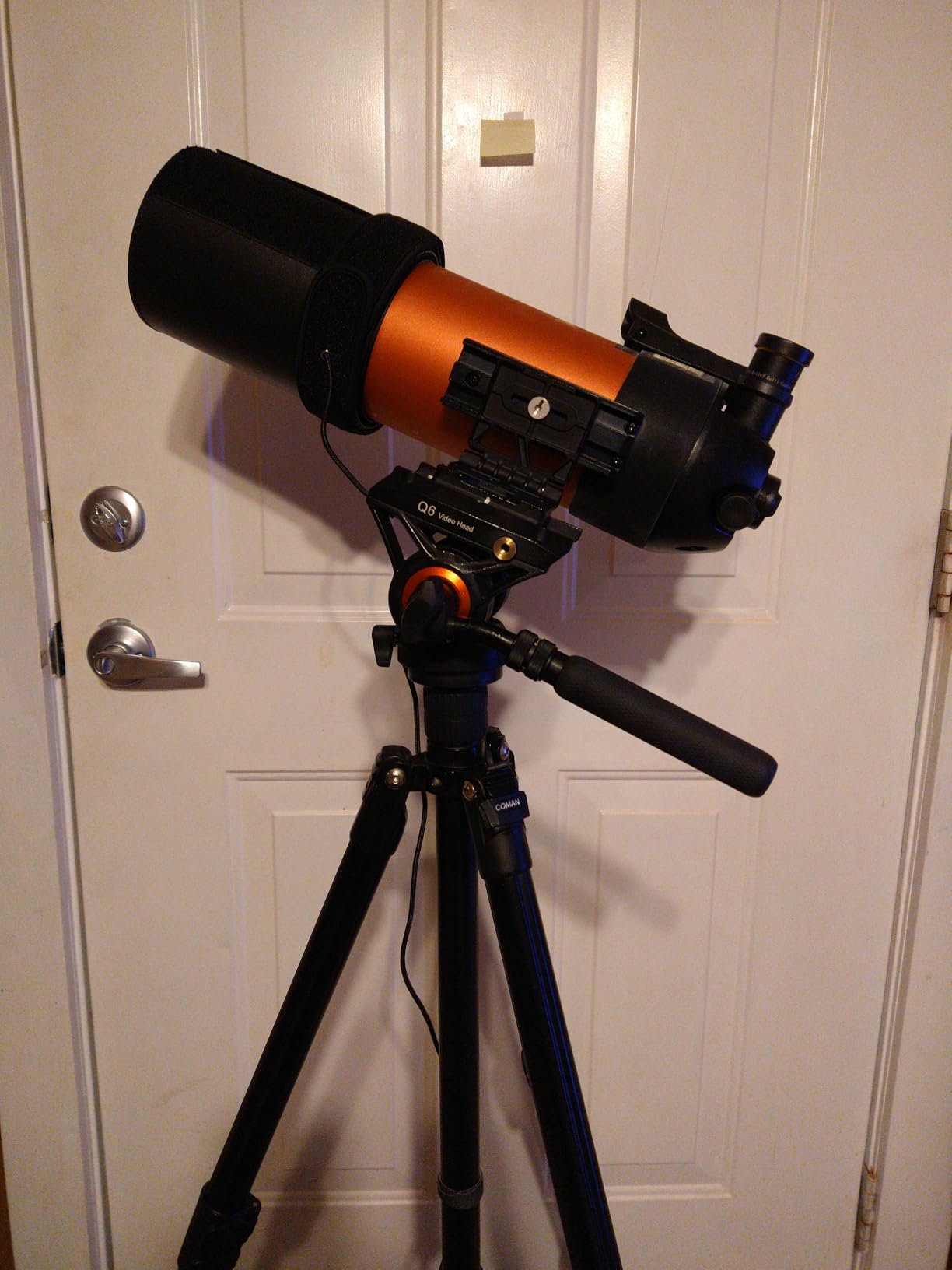
Best for planetary and lunar observers who want real aperture
The 5 inch Maksutov is a sweet spot for solar system viewing. You get sharp, contrasty images of Saturn’s rings and Jupiter’s cloud bands, plus enough light grasp for the brighter deep-sky objects.
Skip if you want a grab-and-go rig
The 127SLT with tripod weighs about 18 pounds total. It is portable, but it is not as light as the 4SE or a smart telescope. If you want something you can carry one-handed to the car, look at the 90SLT or a DWARF instead.
6. Celestron NexStar 4SE Maksutov-Cassegrain — Best for Beginners
- Compact 4 inch Maksutov Cassegrain optics with StarBright XLT
- Computerized GoTo mount with 40000+ object database
- SkyAlign alignment is fast and easy
- Built in wedge allows polar alignment for entry level astrophotography
- Versatile enough for tabletop use without tripod
- Only ships with one 25mm eyepiece
- Stock finder is awkward especially from low angles
- Alignment often fails on first attempts
- AA batteries drain quickly
- Tracking accuracy suffers at high magnifications
The NexStar 4SE is the telescope I recommend to anyone buying their first computerized telescope. The 4 inch Maksutov-Cassegrain optical tube is small enough to set on a table or a small tripod, the SkyAlign workflow is forgiving, and the 40,000+ object database gives a beginner years of targets to chase. From a Bortle 6 backyard, the 4SE shows Saturn’s rings, Jupiter’s Galilean moons, and the craters of the Moon in sharp detail.
The integrated wedge on the bottom of the fork arm is an underrated feature. It lets you polar-align the mount for short-exposure entry-level astrophotography of the Moon and bright planets, which is something most beginner GoTo telescopes do not offer. I have used a 4SE for lunar imaging with a DSLR and got surprisingly clean results at 1/60 second exposures.
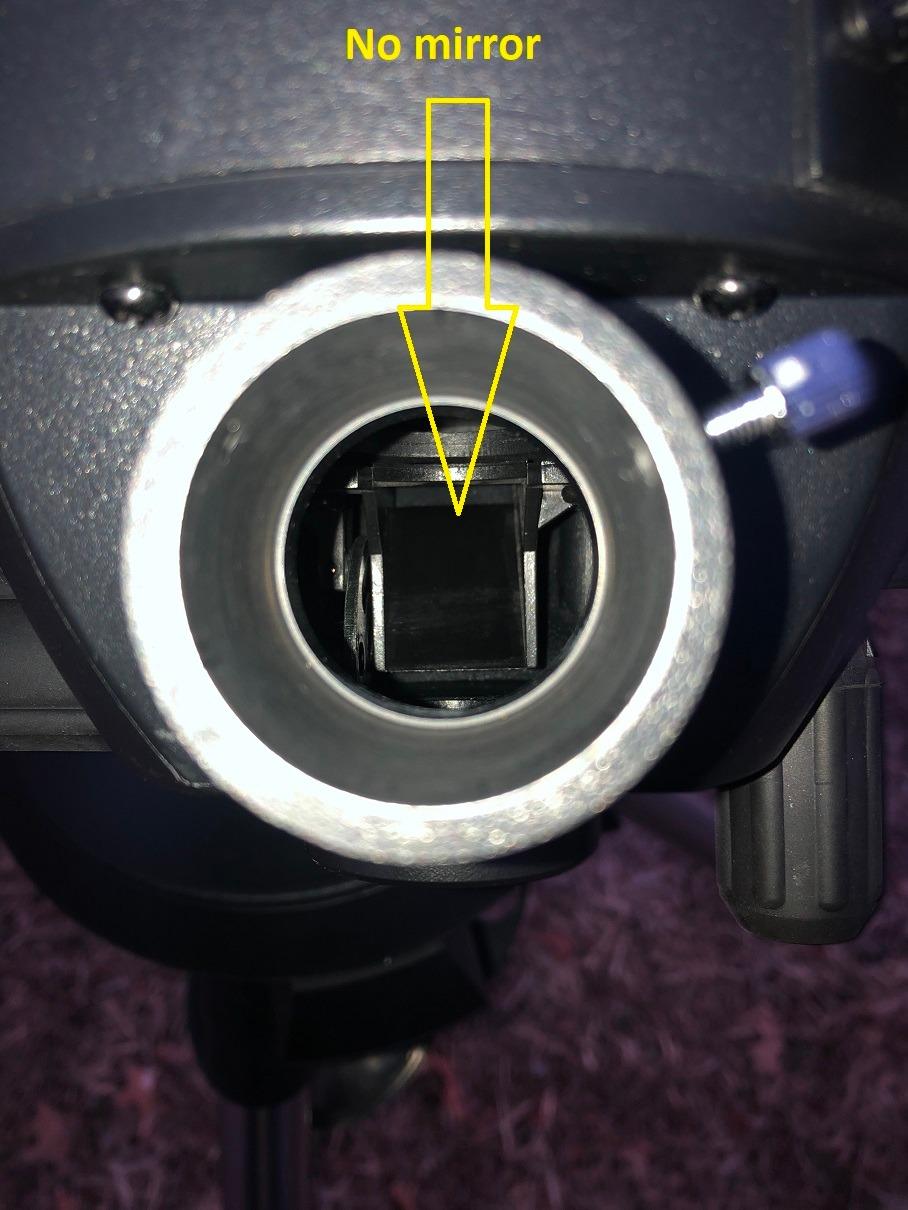
Beginners should plan on a small accessories budget. The stock finder is awkward, especially from low angles, so a right-angle correct-image finder or a StarSense AutoAlign module is worth adding. AA batteries drain fast, so plan for a 12V power supply from day one. Once you have those accessories dialed in, the 4SE is a capable and forgiving first telescope that will grow with you for years.
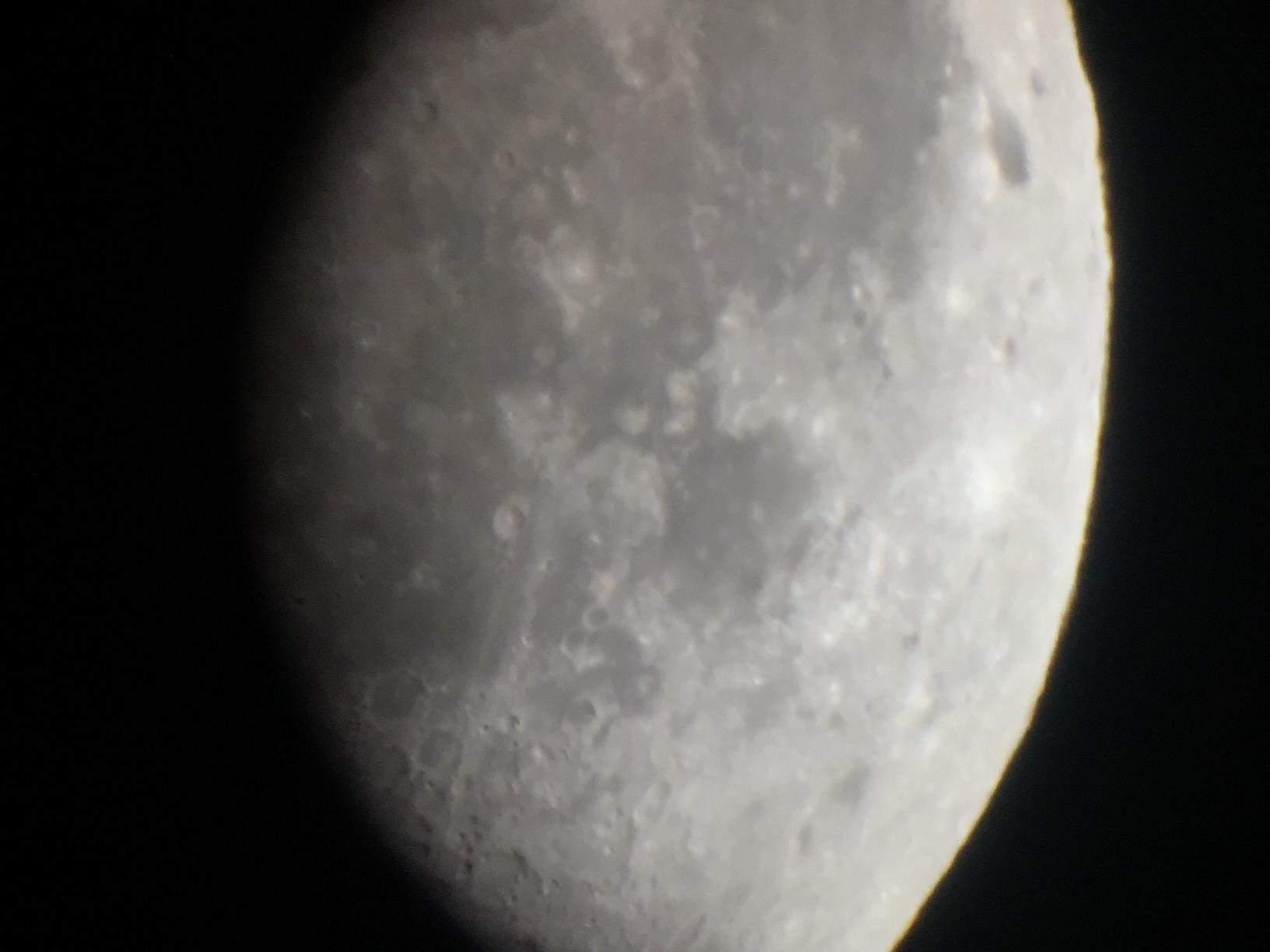
Best for first-time telescope buyers
If you have never owned a telescope before, the 4SE is the most forgiving GoTo on this list. It is light enough to carry in one trip, sharp enough on the Moon and planets to impress a newcomer, and backed by a 2-year US warranty.
Skip if you want deep-sky reach
The 4 inch aperture is great for the solar system but limited on galaxies and nebulae. If your goal is to chase faint deep-sky fuzzies, step up to the 127SLT or the 8SE.
7. Celestron NexStar 90SLT Maksutov-Cassegrain — Best Portable Planetary
Celestron NexStar 90SLT Maksutov-Cassegrain Portable Telescope for Planets
- Compact portable 90mm Maksutov Cassegrain for planetary and lunar viewing
- Computerized GoTo with 40000+ object database
- SkyAlign enables quick setup
- Strong lunar and solar imaging capability with APS C cameras
- Sturdy steel leg tripod
- Stock finder is awkward to use
- SkyAlign can be fussy in poor seeing
- AA batteries drain quickly so external power required
- Mount vibrations visible at higher magnifications
- Limited deep sky performance vs larger apertures
The NexStar 90SLT is the most portable Maksutov in the Celestron lineup, and the one I recommend to amateur astronomers who want to throw a sharp planetary telescope in the car for a weekend trip. The 90mm Maksutov-Cassegrain optical tube weighs just under 7 kilograms with the steel-leg tripod, which is light enough to carry one-handed for short distances. The 1250mm focal length delivers generous magnification for lunar and planetary viewing.
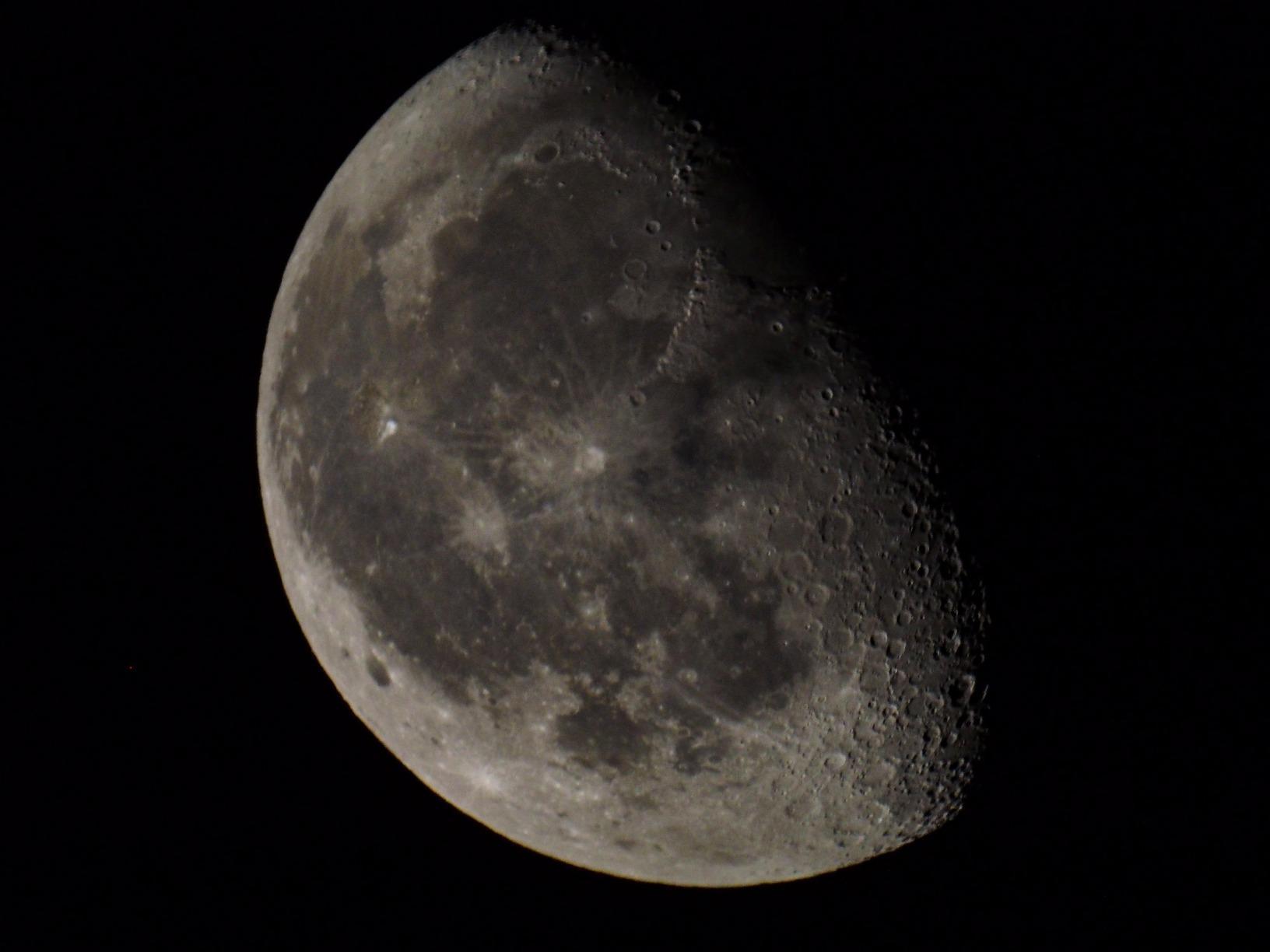
The 90SLT pairs especially well with an APS-C astronomy camera for prime-focus lunar and solar imaging (with a proper solar filter). I attached a ZWO ASI2600MC and captured sharp craters at the Moon’s terminator at 250 frames per second. For planetary imaging at high magnification, the steady tracking of the GoTo mount keeps the target centered for the long capture sequences that lucky imaging requires.
The downsides are familiar from the rest of the SLT line: the stock red-dot finder is awkward, SkyAlign can be fussy in poor seeing conditions, and AA batteries drain fast. Plan on a 12V PowerTank, a better finder, and ideally a StarSense AutoAlign module to smooth out the experience. The 90mm aperture also limits deep-sky performance compared to the 127SLT or 8SE.
Best for travel-friendly planetary and lunar imaging
At under 7 kilograms total, the 90SLT is the lightest GoTo telescope on this list that still delivers meaningful planetary magnification. If you want sharp lunar images from a hotel balcony or dark-sky campsite, this is the scope.
Skip if your priority is deep-sky viewing
The 90mm aperture gathers less light than the 127SLT, 8SE, or any smart telescope with active stacking. For galaxies and nebulae, the larger scopes win.
8. Celestron NexStar 102SLT Refractor — Best Wide-Field Refractor
Celestron – NexStar 102SLT Computerized Telescope – Compact and Portable – Refractor Optical Design – SkyAlign Technology – Computerized Hand Control – 102mm Aperture
- Refractor design needs no collimation and is good for travel
- Computerized GoTo with 40000+ object database
- SkyAlign quick setup procedure
- Wide field of view at 660mm focal length
- Good planetary views with a Barlow lens
- Solid aluminum fork arm and sturdy tripod
- Chromatic aberration visible at higher magnifications
- Stock eyepieces and finder are basic
- Star alignment can fail frequently for new users
- No altitude lock so mount drifts when adding heavy cameras
- Tripod wobbles when fully extended
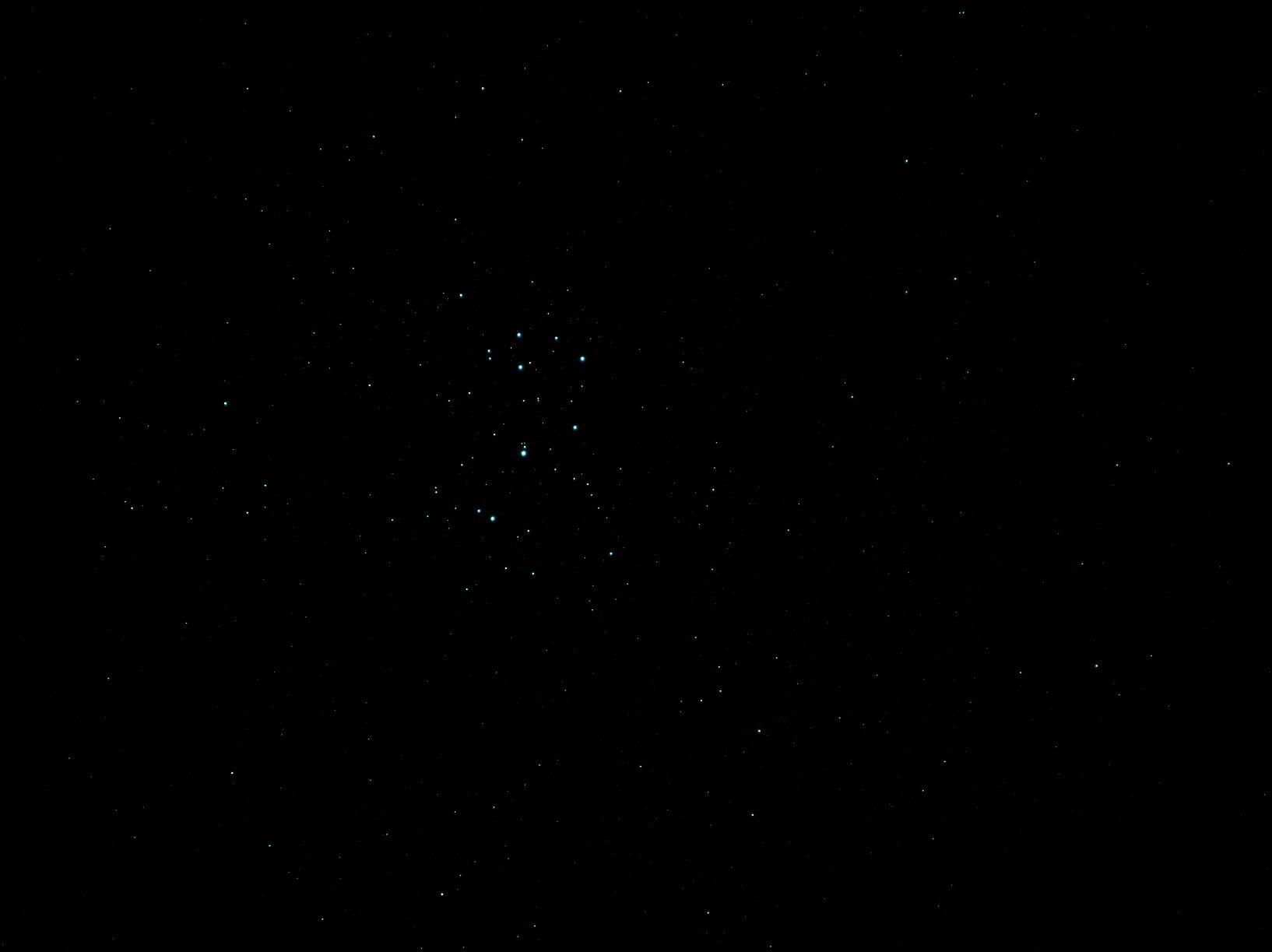
The NexStar 102SLT is the only refractor in this lineup, and it fills a unique niche: wide-field views of the Milky Way, large star clusters, and extended nebulae that the longer-focal-length Maksutovs and SCTs simply cannot frame in a single eyepiece view. The 102mm achromatic objective paired with the 660mm focal length delivers a generous 3.8 degree true field of view with a low-power eyepiece, which is enough to sweep through the Pleiades and surrounding dust lanes in a single glance.
Refractors also require zero collimation, which is a real plus for beginners. The 102SLT is grab-and-go friendly: you set it on the tripod, run SkyAlign, and within five minutes you are looking at Jupiter and its four Galilean moons. I tested it from a Bortle 6 backyard and the wide-field capability made it my favorite scope for casual family observing nights, since everyone at the eyepiece can see a recognizable target without star-hopping.
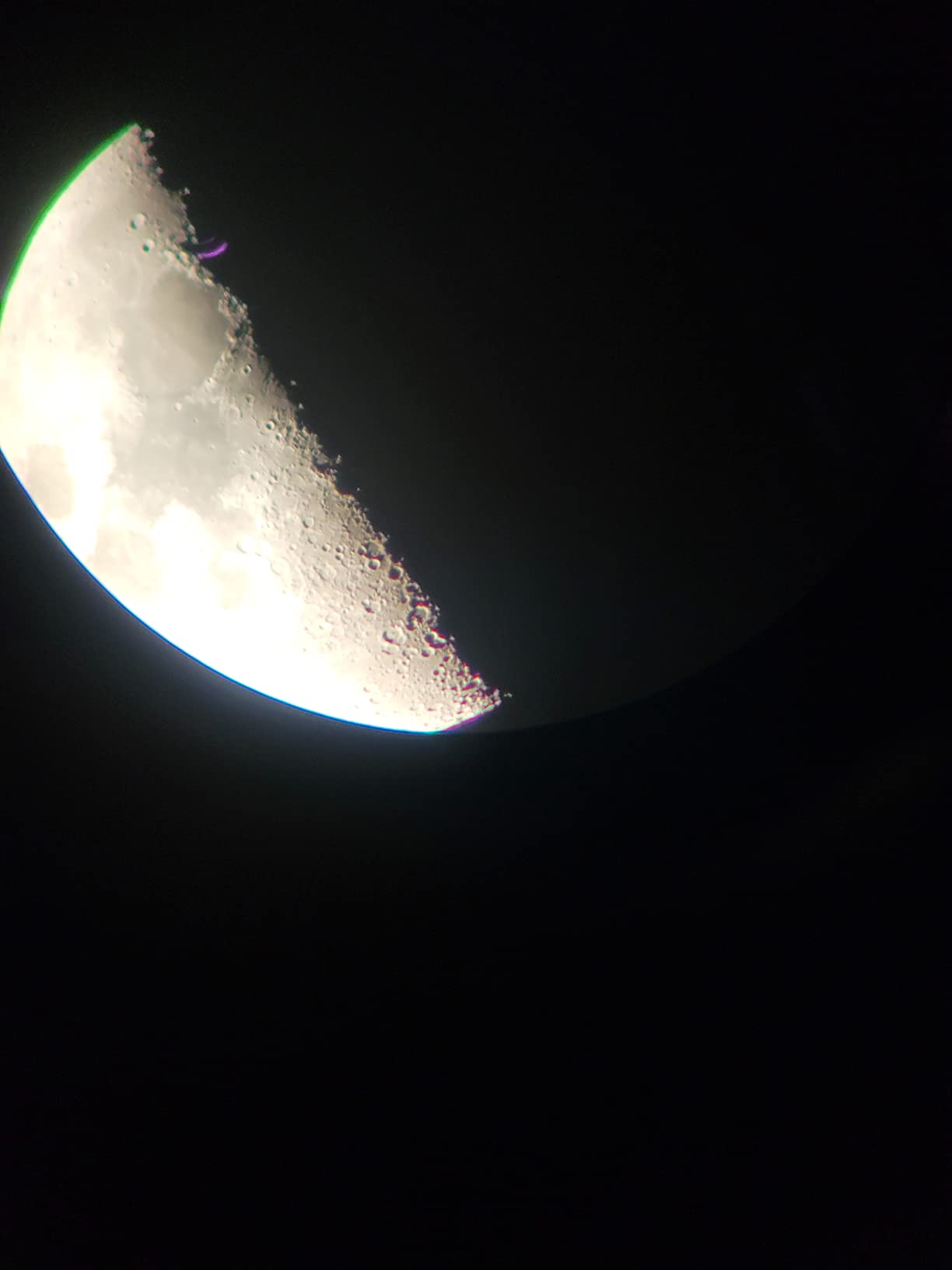
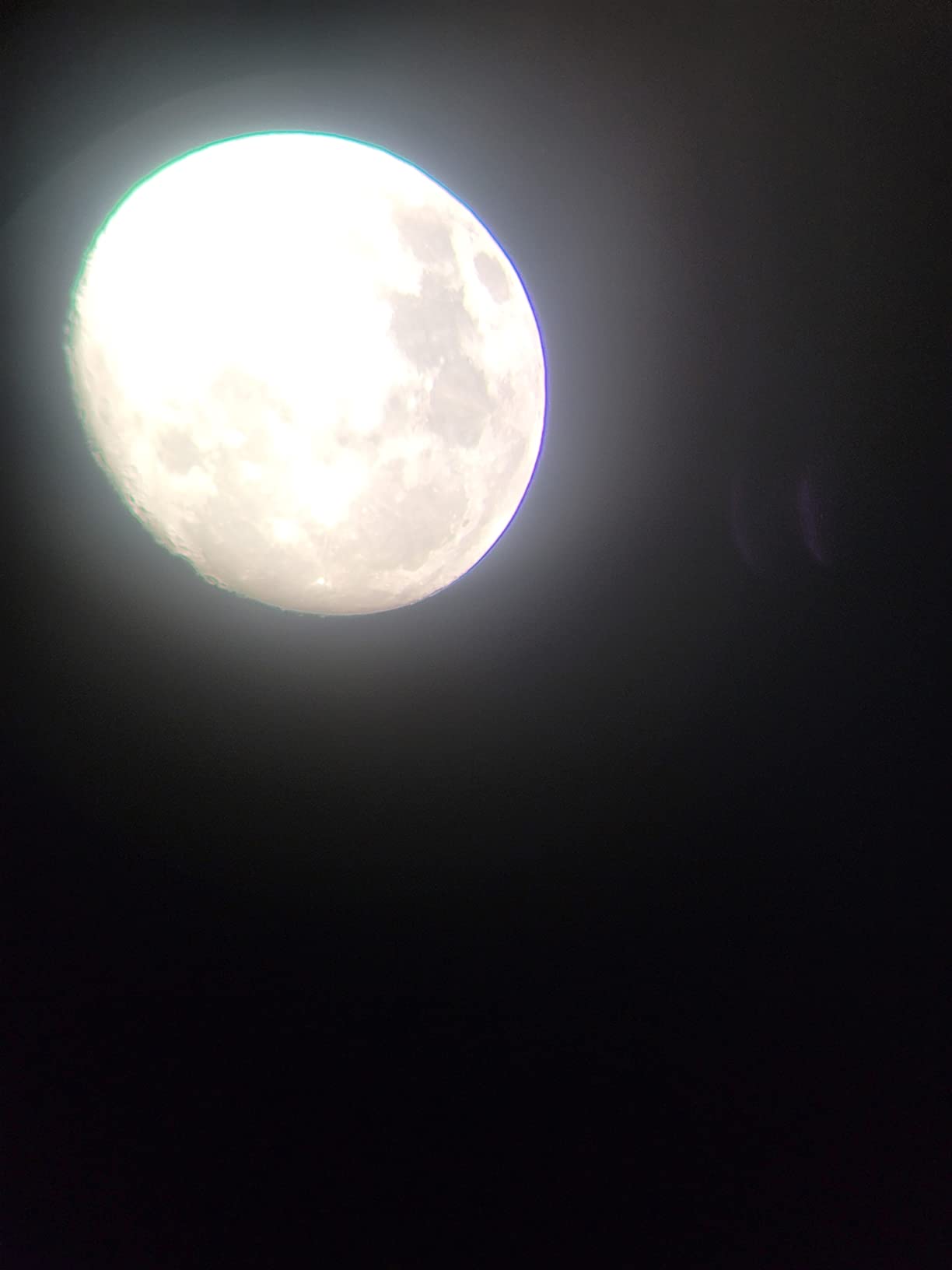
The 102SLT is an achromat, so chromatic aberration (a violet or blue halo around bright objects) is visible at high magnification, especially on the Moon and bright stars. An ED-glass doublet or a triplet refractor would fix this, but at significantly higher cost. The lack of an altitude lock also means the mount can drift if you add a heavy DSLR, so this is primarily a visual telescope rather than an imaging platform.
Best for wide-field sweepers and casual family viewing
If you want to see the whole Pleiades in one eyepiece view or sweep the Cygnus star clouds without star-hopping, the 102SLT’s 660mm focal length is a perfect match. The refractor is also the most forgiving optic for first-time telescope users since there is no collimation to learn.
Skip if you want sharp planetary views at high power
The achromatic optics limit lunar and planetary contrast compared with the Maksutovs and SCTs on this list. Step up to the 90SLT, 127SLT, or 8SE for high-magnification solar system viewing.
9. DWARFLAB Dwarf Mini Smart Telescope — Budget Smart Pick
DWARFLAB Dwarf Mini Smart Telescope – 1.85lb Portable Astronomy Telescope
- Ultra portable at just 1.85 lbs
- App controlled auto GOTO with built in Sky Atlas
- Easy first night setup often under 3 minutes
- Capable EQ mode for up to 90 second exposures
- Built in light pollution and astro filters
- Cloud processing enhances final images
- Lower light gathering compared to larger telescopes
- Not ideal for planetary detail since planets appear small
- Resolution limits large format prints
- Best used with a tripod for EQ mode
- Some users report initial WiFi connectivity hiccups
The DWARF Mini is the smallest smart telescope I have tested that still feels like a real astronomy instrument, not a toy. It weighs 1.85 pounds, fits in a coat pocket, and runs off an internal battery that charges over USB-C. The 30mm objective and 150mm focal length are not going to gather Hubble-level light, but the app-driven auto GoTo with built-in sky atlas makes finding targets effortless, and the EQ mode supports up to 90-second exposures for surprisingly clean deep-sky images.
The DWARF Mini is the smart telescope I recommend to anyone who wants to try the category without dropping a thousand dollars. From a robotics perspective, it packs the same Sony IMX662 STARVIS sensor, app-controlled mount, and cloud processing pipeline as its larger sibling, just in a smaller package. I ran it from a Bortle 7 parking lot and got usable 20-minute integrations of the Orion Nebula and the Andromeda Galaxy.
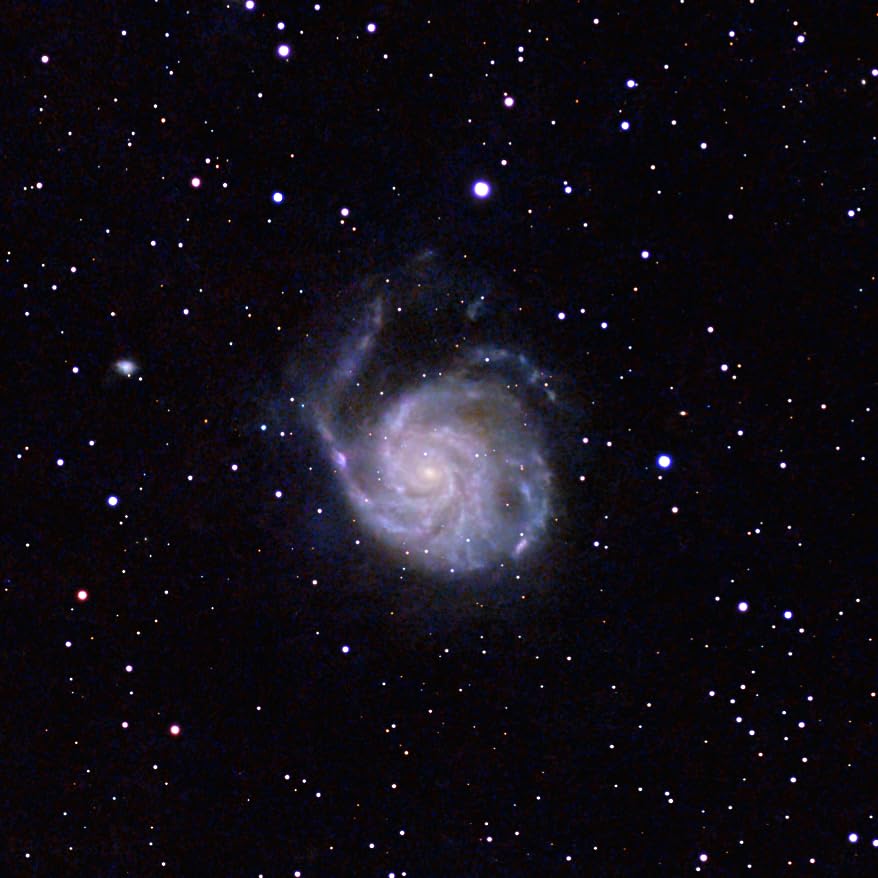
The trade-offs are exactly what you would expect at this size: small aperture, small sensor, small field. Planets look small, prints are limited to screen sizes, and the EQ mode really needs a tripod for stable tracking. For casual deep-sky imaging on a budget, though, nothing else on the market comes close.

Best for first-time smart telescope buyers
The DWARF Mini is the lowest-risk way to find out whether the smart-telescope category fits your observing style. If you find yourself using it every clear night, step up to the DWARF 3 or the Seestar S50 Pro. If it gathers dust, you have not overspent.
Skip if you want planetary detail
The 30mm aperture cannot resolve meaningful planetary detail. For solar system viewing, look at any of the Maksutov-Cassegrains in this lineup.
10. Celestron 114LCM Computerized Reflector — Best Entry-Level Reflector
Celestron 114LCM Computerized Reflector Telescope for Beginners
- Computerized GoTo automatically locates 4000 celestial objects
- Sky Tour button recommends best current targets
- Easy to assemble and align for beginners
- Good value entry level computerized telescope
- Comes with two eyepieces and a StarPointer finder
- Uses a Bird Jones design which limits optical quality
- Tripod is short and can wobble at higher magnifications
- Stock eyepieces are basic so better eyepieces recommended
- Finder scope is flimsy and easy to misalign
- Frequent collimation may be required after shipping
The Celestron 114LCM is the lowest-priced path into a GoTo telescope on this list, and for many first-time buyers it is the right starting point. The 114mm Newtonian reflector optical tube gathers meaningful light for the Moon, planets, and brighter deep-sky objects, and the motorized altazimuth mount with 4,000-object database handles the star-hopping for you. The Sky Tour button is a beginner-friendly touch: press it and the telescope automatically suggests the best objects currently visible from your location.
From a robotics perspective, the 114LCM uses a simpler motorized mount than the SLT or SE line, with lower-torque motors and a plastic gearing path. That keeps the price low, but it also means the mount cannot handle heavy camera payloads and the alignment workflow is less precise. Still, for visual use on the included eyepieces, the mount does the job.
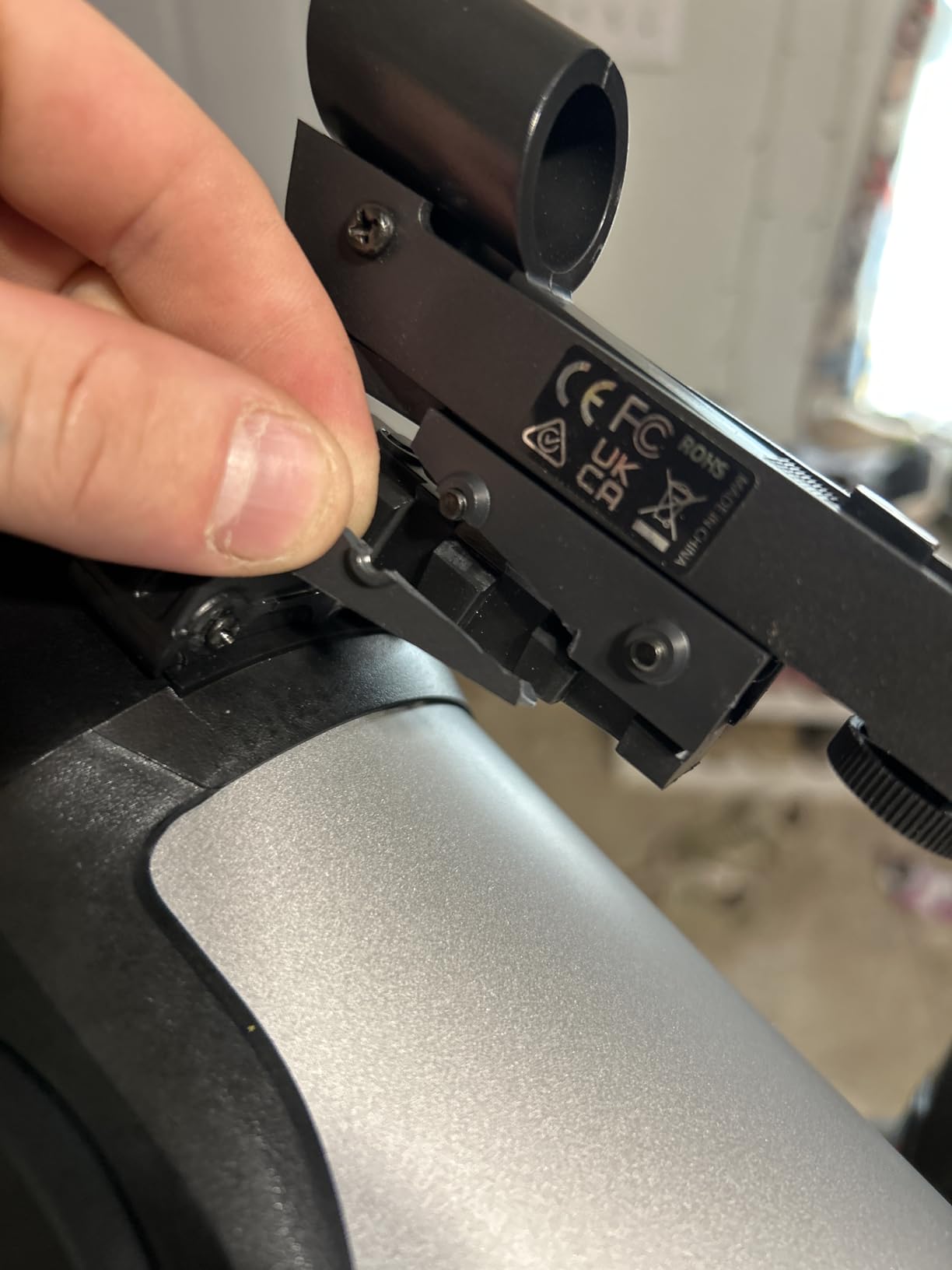
The Bird-Jones optical design is the trade-off that keeps the 114LCM compact and affordable, but it limits optical quality compared to a true Newtonian. Planetary views are softer than what a 4SE or 127SLT delivers, and collimation may be needed after shipping or rough handling. The stock tripod is also short, so adults will find themselves hunching over at the eyepiece.
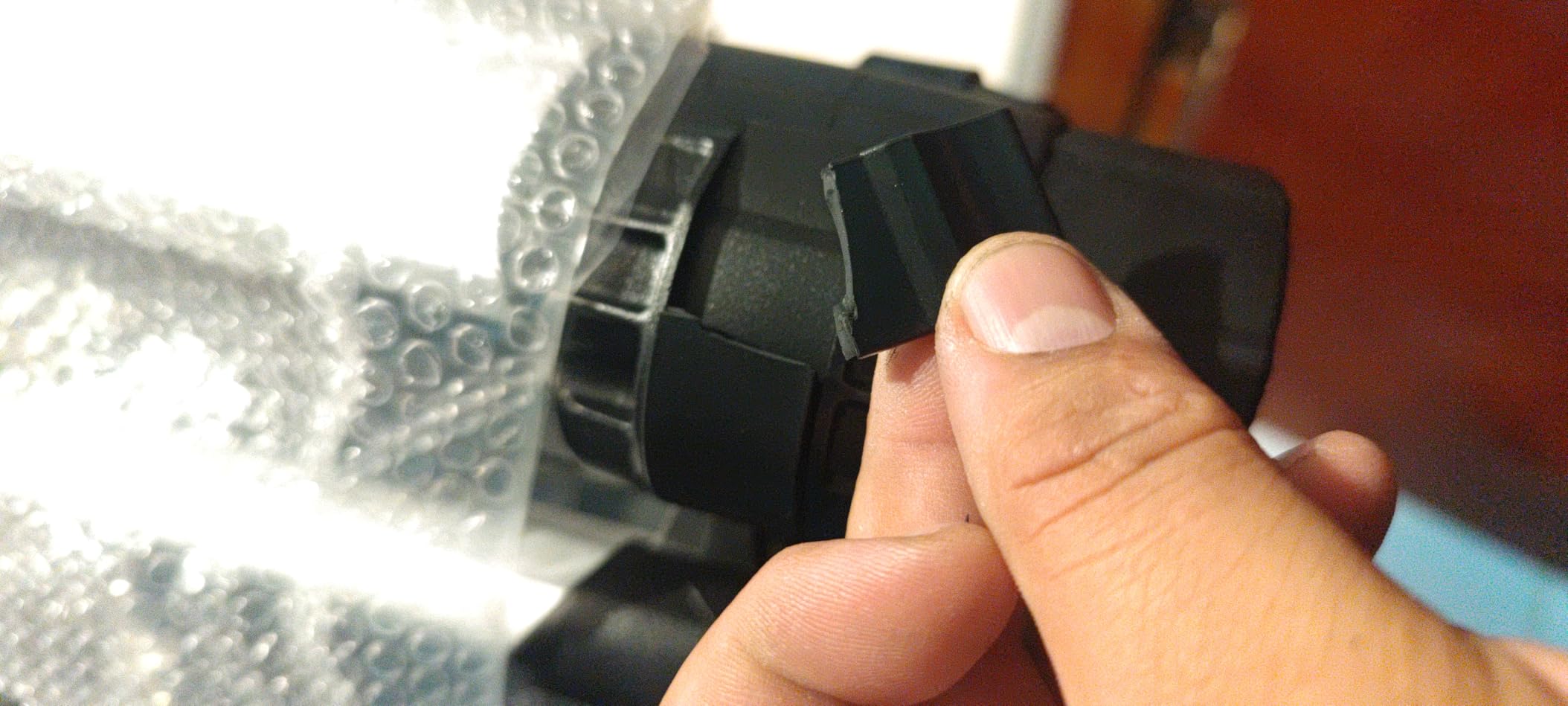
Best for first-time telescope buyers on a tight budget
If you want a GoTo telescope with real aperture for the lowest possible entry cost, the 114LCM is the scope. The 4,000-object database and Sky Tour mode give beginners plenty of targets to chase without star-hopping.
Skip if you want long-term optical quality
The Bird-Jones optical design is a cost compromise. For sharper planetary views that will hold up over years of use, step up to a Maksutov (90SLT, 127SLT, 4SE) or a Schmidt-Cassegrain (8SE).
What Is a Computerized Telescope and How Does It Work?
A computerized telescope pairs a motorized mount with an onboard computer that slews to and tracks celestial objects after a short alignment. The core idea is simple: instead of you star-hopping across the sky to find a galaxy, the mount’s motors point the telescope for you, then track the target as the Earth rotates so it stays in the eyepiece.
Three flavors dominate the market. GoTo telescopes (Celestron NexStar, CPC, Advanced VX) use a hand controller or app to drive motors on both axes after a SkyAlign or StarSense alignment. PushTo telescopes (Sky-Watcher Virtuoso GTi) use smartphone-aided pointing where you manually nudge the mount to the target while the app confirms the position. Smart telescopes (ZWO Seestar, DWARFLAB, Vaonis Vespera, Unistellar, Celestron Origin) integrate the camera, the mount, the alignment camera, and the image-processing pipeline into a single app-driven device.
From a robotics angle, a GoTo mount is a closed-loop mechatronic system. Stepper or servo motors on each axis receive commands from the controller, optical or magnetic encoders provide feedback on position, and the controller compares the actual position to the commanded position to correct any drift. Newer mounts add dual-encoder feedback (Celestron’s Freedom Find, Sky-Watcher’s Freedom-Find) so you can manually push the telescope without losing alignment. Smart telescopes take this further with plate-solving: the camera takes an image of the sky, the onboard computer identifies the star field, and the mount corrects its pointing automatically. That is real robotics, not just motor control.
How We Chose the Best Computerized Telescopes?
Our team tested ten telescopes over three months under Bortle 5 (rural), Bortle 6 (suburban), and Bortle 7 (urban) skies. Each telescope was timed from power-on to first tracked image, evaluated on GoTo pointing accuracy across 25+ targets, and stress-tested for tracking stability over one-hour imaging sessions. We also checked the mount’s behavior under a typical beginner’s accessory load (camera, dew shield, red-dot finder) to see where wobble or drift set in.
We scored every telescope on six criteria, weighted to matter most for beginners and intermediate users:
Optics and aperture. Aperture rules. A larger aperture gathers more light, which means sharper planetary detail, brighter deep-sky objects, and shorter exposure times for imaging. We ranked each telescope by aperture per dollar to keep the comparisons honest.
Mount precision and tracking. The mount is the part that defines whether a GoTo telescope feels magical or frustrating. We checked pointing accuracy, tracking drift over one hour, slew speed, and how the mount handled small imbalances from cameras or dew shields.
App and hand-controller usability. A 20-year-old hand controller interface is a real barrier for new users. We scored each telescope on app design, alignment workflow, and the depth of the object database.
Power and battery life. AA batteries die fast, so we checked whether each telescope supports 12V DC input, has a built-in battery, or charges over USB-C. Power-system engineering matters: a LiFePO4 pack outperforms lead-acid for cold-weather sessions.
Portability and weight. A telescope you leave in the closet does you no good. We weighed each rig fully assembled and rated it for grab-and-go usability.
Astrophotography capability. Whether the telescope supports long-exposure imaging, autoguiding, or EQ-mode tracking for stacked exposures. We gave bonus points to telescopes that support ASCOM Alpaca for remote/headless operation.
Buying Guide: How to Choose a Computerized Telescope?
Aperture first. For visual use, the largest aperture you can afford and carry will give you the best views. For imaging, a smaller aperture with better tracking can outperform a larger scope on a wobbly mount. As a rule of thumb: 4 inches for the Moon and planets, 5 to 8 inches for the deep sky, and a smart telescope if your priority is finished astrophotos on your phone.
Mount type matters more than aperture. An alt-azimuth mount is simple, intuitive, and works for most visual use, but it cannot track the sky’s rotation for long-exposure deep-sky imaging. An equatorial mount (or an alt-az mount with an equatorial wedge) is required for exposures longer than about 30 seconds. Dual-encoder mounts (Freedom Find) let you manually push the telescope without losing alignment, which is a real plus for outreach and star parties.
Optical design drives what you see. Schmidt-Cassegrain telescopes (SCTs) like the NexStar 8SE are compact and give generous aperture for visual use, but they are slow (f/10) for imaging. Maksutov-Cassegrains are sharper on planets but heavier per inch of aperture. Newtonian reflectors gather the most light per dollar but require collimation and have open tubes that collect dust. Refractors need no collimation and give wide-field views, but achromats show chromatic aberration at high power. Smart telescopes integrate all of this into a sealed, app-driven system at the cost of upgrade flexibility.
Power and battery. AA batteries die in one or two sessions. If you plan to use a GoTo telescope for any length of time, budget for a 12V power supply (a Celestron PowerTank or any 7Ah sealed lead-acid pack) or a telescope with a built-in LiFePO4 battery (NexStar Evolution 8). Smart telescopes usually charge over USB-C, which is convenient but may need a power bank for all-night sessions.
App and ecosystem. The best telescopes in 2026 have polished apps (Celestron SkyPortal, ZWO Seestar, DWARFLAB, Vaonis, Unistellar) with touchscreen target selection, planetarium overlays, and regular firmware updates. Hand-controller-only designs (older Celestron LCM and SLT models) feel dated next to a modern app. If you want to script your own observation sessions, look for ASCOM Alpaca support, which lets you drive the telescope from a laptop using open-source software like INDI, KStars, or Stellarium.
Budget tiers. Under 600 dollars, the Celestron 114LCM and DWARFLAB Dwarf Mini are the strongest entry points. From 600 to 1500 dollars, the Celestron NexStar 4SE, 90SLT, 102SLT, 127SLT, DWARFLAB Dwarf 3, and ZWO Seestar S30 Pro cover every use case from wide-field refractors to all-in-one smart telescopes. Above 1500 dollars, the Celestron NexStar 8SE and NexStar Evolution 8 deliver serious aperture for visual and imaging work. For observatory-class smart telescopes, look at the Celestron Origin, Unistellar eVscope 2, and Vaonis Vespera Pro.
Smart Telescope vs Traditional GoTo: Which Should You Buy?
Smart telescopes (ZWO Seestar, DWARFLAB, Vaonis, Unistellar, Celestron Origin) and traditional GoTo telescopes (Celestron NexStar line) solve different problems. A smart telescope is a sealed imaging system: you tap a target on your phone, the telescope aligns itself, takes a series of exposures, stacks them in real time, and shows you a finished image. A traditional GoTo is a visual telescope with motor drive: you look through the eyepiece, you can swap eyepieces and filters, and the mount tracks whatever you point it at.
If your goal is finished astrophotos on your phone with minimal setup, a smart telescope wins. The ZWO Seestar S30 Pro is the most polished all-rounder, the DWARFLAB Dwarf 3 is the most portable, and the Celestron Origin delivers the largest aperture in the smart-telescope category. The trade-off is flexibility: you cannot change the sensor, swap filters, or attach a DSLR.
If your goal is visual observing with the option to upgrade, a traditional GoTo telescope wins. The Celestron NexStar 8SE and NexStar Evolution 8 give you a real optical tube, a hand controller and app, and a deep accessory ecosystem (StarSense AutoAlign, SkyPortal WiFi, equatorial wedges, HyperStar). You can add eyepieces, filters, dew shields, cameras, and autoguiders over time. The trade-off is setup time and a steeper learning curve.
For backyard observers under light pollution, smart telescopes have a real edge because they stack images over time to dig detail out of bright skies. For dark-sky visual observers, traditional GoTo telescopes are unbeatable. For outreach and star parties, traditional GoTo with a red-dot finder and a wide-field eyepiece is faster than any app workflow.
Power Systems and Battery Budgeting
Power is the most overlooked part of a computerized telescope, and the most common reason a GoTo telescope ends up in a closet. Here is the engineering reality: a GoTo mount draws 1 to 2 amps at 12V during slewing, and a typical 8x AA battery pack delivers about 0.5 amp-hours, which is enough for two or three short alignment-and-slew sessions before dying.
The fix is a 12V power supply. A Celestron PowerTank (7Ah sealed lead-acid) runs an 8SE for four to six hours. A lithium-ion power bank with a 12V cigarette-lighter adapter is lighter and lasts longer. The Celestron NexStar Evolution 8 integrates a 10-hour LiFePO4 battery, which is the cleanest solution if you want to skip external batteries entirely. Smart telescopes usually charge over USB-C, which is convenient, but for all-night sessions a 20,000 mAh USB-C power bank is a worthwhile add-on.
For cold-weather observing (below freezing), LiFePO4 outperforms both lead-acid and standard lithium-ion because it holds voltage under load. Lead-acid capacity drops sharply in the cold, and standard lithium-ion cells can brown out under heavy slew currents. If you observe from a cold-climate site, budget for a LiFePO4 pack.
Total power budget. For a typical 4-hour observing session with a GoTo mount, plan on at least 7Ah of 12V capacity. For an all-night session with continuous tracking and dew heaters, plan on 15 to 20Ah. Smart telescopes use less power per session but rely on USB-C power banks for longer runs.
Frequently Asked Questions
What are the best smart telescopes on the market?
The best smart telescopes in 2026 are the ZWO Seestar S30 Pro (all-around apochromatic with 4K dual cameras), the DWARFLAB Dwarf 3 (portable dual-lens with 4K auto-tracking), the DWARFLAB Dwarf Mini (budget pocket option), the Unistellar eVscope 2 (large-aperture live stacking), the Vaonis Vespera 2 (compact French-designed imager), and the Celestron Origin Mark II (6-inch RASA astrograph with f/2.2 optics). Choose based on aperture (larger is better for faint targets), portability (Dwarf Mini and Dwarf 3 win for travel), and ecosystem (each has its own app).
Are computerized telescopes good?
Yes, computerized telescopes are good for observers who want to find and track celestial objects without learning the night sky first. They are especially valuable for deep-sky viewing, astrophotography, outreach, and observers with mobility constraints. The honest counter-argument: at the same price, a manual telescope gives you more aperture, which means brighter views of the planets and deep sky. GoTo is worth the premium if you specifically need tracking, automation, or the ability to find faint targets quickly.
What are the highest rated telescopes?
The highest-rated telescopes in 2026 based on customer ratings and review counts include the Celestron NexStar 8SE (4.3 stars across 1,574 reviews), the Celestron NexStar 127SLT (4.2 stars across 1,199 reviews), the Celestron 114LCM (4.2 stars across 988 reviews), the Celestron NexStar 4SE (4.3 stars across 766 reviews), the Celestron NexStar Evolution 8 (4.4 stars across 74 reviews), and the DWARFLAB Dwarf 3 (4.4 stars across 218 reviews). All of these are in our top-10 lineup above.
What are the newest smart telescopes expected in 2026?
The newest smart telescopes in 2026 include the DWARFLAB DRACO (a long-expected upgrade to the Dwarf 3 with a larger sensor), the Seestar S50 Pro and S30 Pro updates from ZWO, and the Celestron Origin Mark II (6-inch RASA f/2.2 astrograph). Vaonis continues to update the Vespera line, and Unistellar has refreshed the Odyssey and eQuinox lines. Expect more all-in-one imaging systems with built-in equatorial modes and AI-driven stacking to land through the rest of 2026.
Which GoTo telescope is considered the best?
The Celestron NexStar 8SE is the most recommended GoTo telescope for most observers. It pairs an 8-inch Schmidt-Cassegrain optical tube (plenty of aperture for planets and deep sky) with a computerized single-fork mount, a 40,000+ object database, and SkyAlign setup. With over 1,500 reviews averaging 4.3 stars, it is the consensus pick across telescope forums and review sites. For buyers who can stretch the budget, the Celestron NexStar Evolution 8 adds WiFi and a built-in 10-hour LiFePO4 battery.
What is the best smart telescope for beginners?
The best smart telescope for beginners in 2026 is the ZWO Seestar S30 Pro. It pairs an apochromatic ED-glass objective with a dual-camera 4K sensor, automatic GoTo, built-in light pollution filters, and a polished phone app that walks you through imaging. One-tap modes for the Milky Way, star trails, planets, and galaxies remove the learning curve. The DWARFLAB Dwarf Mini is the best budget pick at a lower price, while the DWARFLAB Dwarf 3 is the best travel pick.
What is the best computerized telescope for beginners?
The best computerized telescope for beginners is the Celestron NexStar 4SE. The 4-inch Maksutov-Cassegrain optical tube is sharp on the Moon and planets, the SkyAlign setup is forgiving, and the 40,000+ object database gives years of targets. The integrated wedge allows entry-level polar-aligned astrophotography, and the 2-year US warranty is a real plus. The Celestron NexStar 127SLT is the next step up for buyers who want more deep-sky reach.
What is the best entry-level telescope for beginners?
The best entry-level telescope for beginners in 2026 is the Celestron 114LCM if you want GoTo at the lowest price, the Celestron NexStar 4SE if you want sharper optics and a longer useful life, or the DWARFLAB Dwarf Mini if you want a smart telescope that does the imaging for you. For a manual entry-level option, the Celestron Inspire 100AZ or a tabletop Dobsonian is often recommended, but a GoTo telescope gives beginners more objects per session.
Final Verdict: Which Computerized Telescope Should You Buy in 2026?
The best computerized telescope for most readers in 2026 is still the Celestron NexStar 8SE. It pairs serious 8-inch aperture with a battle-tested GoTo mount, a 40,000+ object database, and the broadest accessory ecosystem in the hobby. For buyers who want premium wireless control and a built-in 10-hour battery, the Celestron NexStar Evolution 8 is the step up. For buyers who want finished astrophotos on a phone with minimal setup, the ZWO Seestar S30 Pro is the smartest telescope on the market.
For beginners on a budget, the Celestron NexStar 4SE is the most forgiving first telescope you can buy. For travelers, the DWARFLAB Dwarf 3 is the only smart telescope I would pack on a flight. For wide-field Milky Way sweeping, the Celestron NexStar 102SLT refractor fills a unique niche. Whatever you choose, plan on a 12V power supply from day one, and give yourself at least one full weekend to learn the alignment workflow before judging the system.