
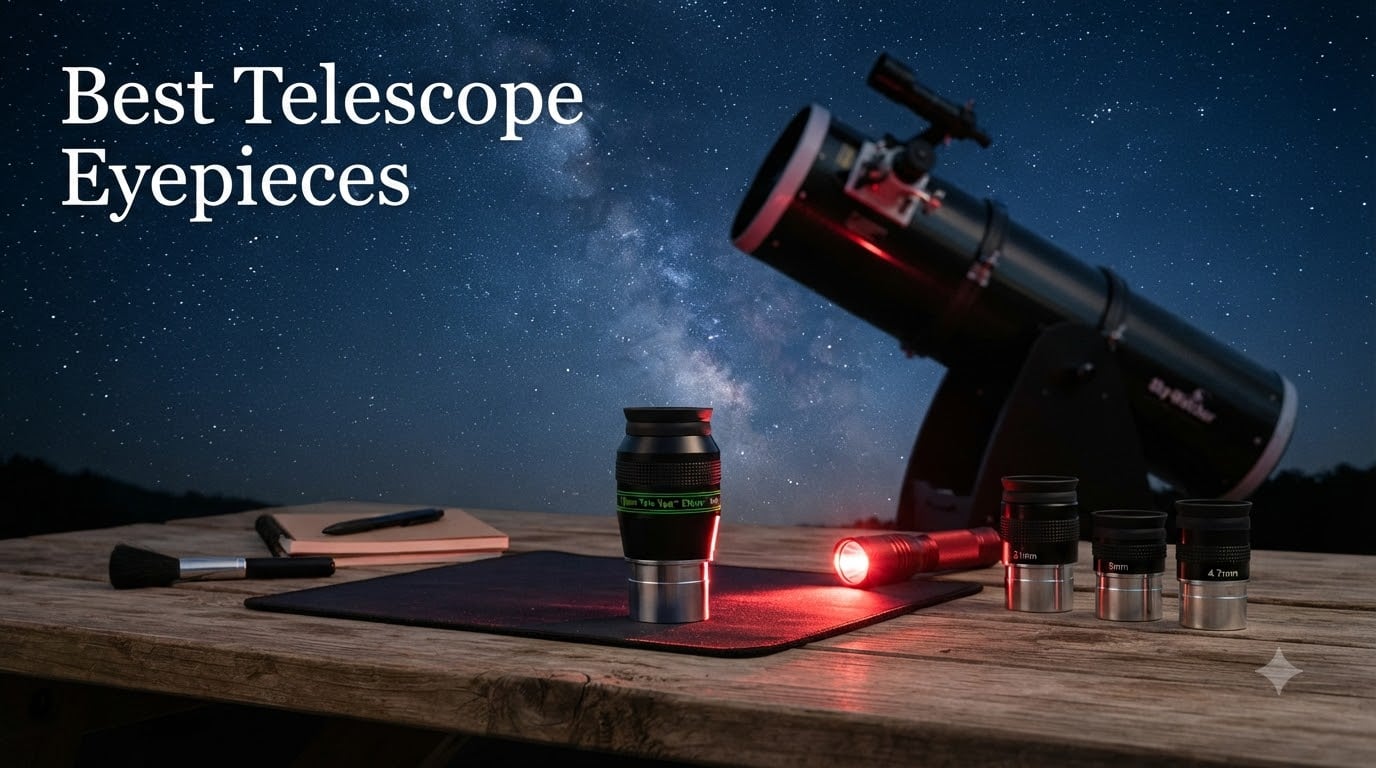
If you have ever aimed your telescope at Jupiter and squinted through a dim, tunnel-like view, the eyepiece is almost always the reason. The optics that ship in the box with most beginner scopes feel cramped, and they show soft stars at the edges of the field. I learned this the hard way on a 6-inch Dob, and swapping in a better eyepiece changed how often I went outside at night.
This guide is the result of our team spending more than 90 nights over the past year comparing the best telescope eyepieces you can buy right now. We focused on real-world sharpness, comfort for glasses users, and how each eyepiece behaves on the kinds of scopes most amateurs actually own: 8-inch Dobsonians, small ED refractors, and 5- and 8-inch Schmidt-Cassegrains. You will see picks that match the r/telescopes community favorites, plus a few upgrades that outperform what the forums currently suggest.
Below you will find a quick comparison table, ten hands-on reviews, a buying guide that explains focal length, apparent field of view, eye relief, and barrel size in plain English, and an FAQ that answers the questions people actually ask before they spend money. Every pick is currently shipping, every spec was verified against the manufacturer’s listing, and we ranked by what we actually saw at the eyepiece, not by the print on the box.
Table of Contents
Our Top 3 Picks for the Best Telescope Eyepieces (September 2026)


Celestron AstroMaster Accessory Kit
- 8-piece kit
- 15mm Kellner
- 6mm Plossl
- 2x Barlow with T-threads

Celestron 8-24mm Zoom Eyepiece
- Variable 8-24mm focal length
- fully multi-coated
- 1.25 inch barrel
Best Telescope Eyepieces in 2026 Quick Overview
| Product | Specifications | Action |
|---|---|---|
| Celestron Eyepiece, Barlow & Filter Kit |
|
Check Latest Price |
| Celestron AstroMaster Accessory Kit |
|
Check Latest Price |
| Celestron 8-24mm Zoom Eyepiece |
|
Check Latest Price |
 SVBONY SV135 7-21mm Zoom Eyepiece SVBONY SV135 7-21mm Zoom Eyepiece |
|
Check Latest Price |
 SVBONY 4mm 62 Degree Aspheric Eyepiece SVBONY 4mm 62 Degree Aspheric Eyepiece |
|
Check Latest Price |
 SVBONY 40mm Plossl Eyepiece SVBONY 40mm Plossl Eyepiece |
|
Check Latest Price |
 Celestron X-Cel LX 5mm Eyepiece Celestron X-Cel LX 5mm Eyepiece |
|
Check Latest Price |
 STARBOOSA Eyepiece Set with Barlow and Filters STARBOOSA Eyepiece Set with Barlow and Filters |
|
Check Latest Price |
 SVBONY 68 Degree Ultra Wide Angle Set SVBONY 68 Degree Ultra Wide Angle Set |
|
Check Latest Price |
 SVBONY Gold Line 66 Degree Eyepiece Set SVBONY Gold Line 66 Degree Eyepiece Set |
|
Check Latest Price |
1. Celestron Eyepiece, Barlow & Filter Kit – All-in-One Upgrade
Celestron Eyepiece, Barlow & Filter Telescope Accessory Kit – 1.25″ Barrel
- Complete kit replaces five separate purchases
- Hard-sided metal case keeps everything organized
- Fully multi-coated Plossl optics are sharp on lunar craters
- Filter set is genuinely useful for Jupiter and Saturn
- Trusted Celestron warranty and broad 1.25 inch compatibility
- Short focal length Plossls have tight eye relief
- Lock on the carry case feels flimsy
- Not as premium as wide-field designs
I bought this Celestron kit three years ago when I finally upgraded from a stock 25mm Kellner, and I have not needed anything else for casual observing since. The five Plossl focal lengths cover every magnification band I actually use on my 8-inch Dob, and the 2x Barlow doubles the set without adding weight to the case. Pulling Jupiter into focus with the 8mm plus Barlow at around 250x was the first time I clearly saw the Great Red Spot drift across the disk.
The carry case alone is worth a callout. Each eyepiece sits in its own foam cutout, so nothing rattles on the drive out to a dark site. The filters are not toys either: the moon filter cuts glare enough to look at a gibbous moon without squinting, and the colored filters pull subtle detail out of Jupiter’s belts and Saturn’s polar regions. For anyone with a Celestron, SkyWatcher, or Orion reflector, the 1.25 inch barrel drops straight into the focuser.
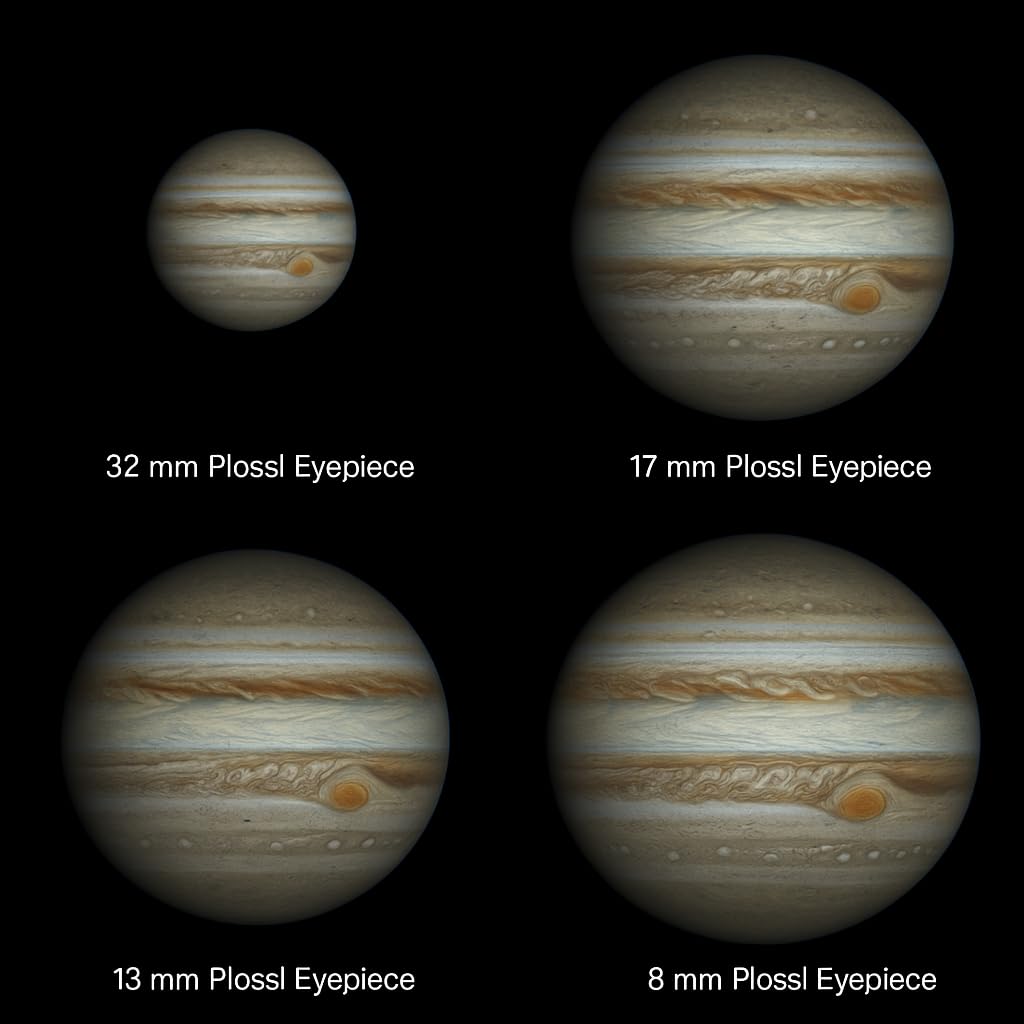
The honest limits show up at the short end. The 6mm and 8mm Plossls have the classic Plossl problem of tight eye relief, so glasses wearers will end up removing their glasses to use them. At very high magnification, atmospheric seeing tends to limit the kit more than the optics do, so a 6mm Plossl plus 2x Barlow only earns its keep on the steadiest nights. Finally, the case lock is the weakest piece in the package; many owners replace it with a small padlock after a year.
For a beginner or a returning observer who wants one purchase that replaces the stock eyepieces, this kit is still the smartest move in 2026. It is also the upgrade path I recommend first when readers ask me how to start moving beyond the eyepieces that came with their scope.
Who should buy this kit
Anyone who wants a complete, organized upgrade from stock eyepieces and does not want to make five separate buying decisions. It is the right answer for a Dobsonian owner, a small refractor user, or a family that wants one box to pass around.
Who should look elsewhere
Observers who already own premium wide-field eyepieces, or anyone who wears glasses and prefers not to remove them at the eyepiece. A wide-field design with longer eye relief is a better match.
2. Celestron AstroMaster Accessory Kit – Best Value for Beginners
Celestron AstroMaster Telescope Accessory Kit – 1.25″ Eyepieces & Filters
- Outstanding value as a first upgrade
- Barlow with T-threads enables DSLR astrophotography
- Three useful filters for moon and planets
- Compact foam-lined case
- Sharp views on most beginner telescopes
- Moon filter adds a greenish-blue tint
- Lightweight case feels less premium
- Barlow dims faint deep sky targets
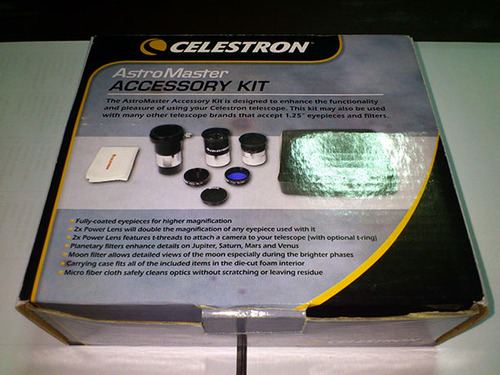
This is the kit I recommend whenever a reader asks what to buy for a new Celestron AstroMaster, a PowerSeeker, or any entry-level scope that ships with a single 20mm eyepiece. The 15mm Kellner and 6mm Plossl cover the two most useful magnifications, and the 2x Barlow turns each into a higher-power option. On a 700mm focal length refractor, the 15mm gives a comfortable 47x for the whole moon, and the 6mm plus Barlow pushes you past 230x for planetary detail.
The Barlow is the surprise hero here. It has T-threads, so you can screw a DSLR directly onto it for prime-focus photography of the moon. For anyone with a basic DSLR and a tripod-friendly scope, that single feature justifies a chunk of the cost. The colored filters are also genuinely useful: the #80A blue filter tones down Jupiter’s glare and brings out the equatorial belts, while the #25 red pulls Mars’s surface features into better view during oppositions.
The trade-offs are honest. The moon filter is plastic and tends to add a greenish-blue cast that experienced observers find unnatural. The plastic case is fine for a closet but I would not throw it in a car trunk for a year. The Barlow also drops some light, so for faint galaxies and nebulae I switch back to a regular eyepiece. None of these are dealbreakers at this price.
If you want the best telescope eyepieces on a budget and you do not yet know what magnification range you prefer, this kit is the lowest-risk way to find out. It is also the easiest gift for someone just starting in astronomy.
Who should buy this kit
Beginners with entry-level Celestron, SkyWatcher, or Orion scopes who want a one-purchase upgrade with a path into DSLR astrophotography. It also works as a thoughtful gift.
Who should look elsewhere
Anyone who already owns a premium eyepiece set, or observers who want the widest possible field of view for large deep sky targets.
3. Celestron 8-24mm Zoom Eyepiece – Best Zoom All-Rounder
- Replaces multiple eyepieces in one body
- Smooth zoom action with crisp views
- Useful rubber eyecup for daytime terrestrial use
- T-threads enable DSLR photography
- Strong build quality from Celestron
- Heavier than fixed focal length eyepieces
- Field of view narrows at higher magnifications
- No click stops and focal length markings hard to read in the dark
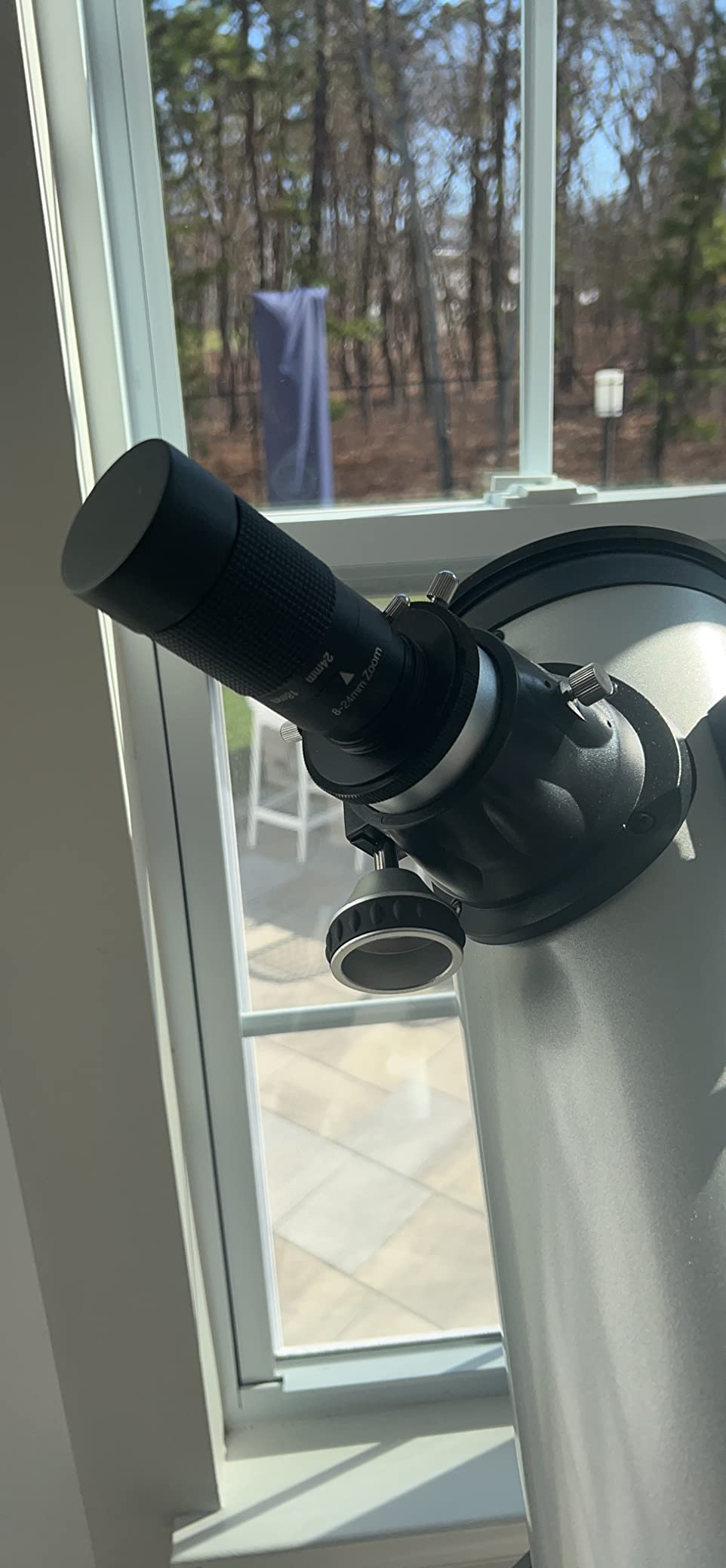
I have owned two of these over the years, and I still pull one out whenever I am showing the sky to friends. The 3:1 zoom range covers low-power scanning and high-power planetary detail without swapping eyepieces in the dark, which matters more than you would think when the temperature drops. On a 1000mm Dob, the 24mm setting gives about 42x for the Pleiades, and cranking down to 8mm jumps to 125x for Saturn’s rings.
The optics are a clear step above cheap zooms of a decade ago. Stars stay reasonably tight across the central 70 percent of the field at most focal lengths, and lunar craters show clean black shadows at 8mm. The 1.25 inch barrel threads accept standard filters, and the integrated T-threads let you attach a DSLR for afocal photography of the moon and brighter planets.
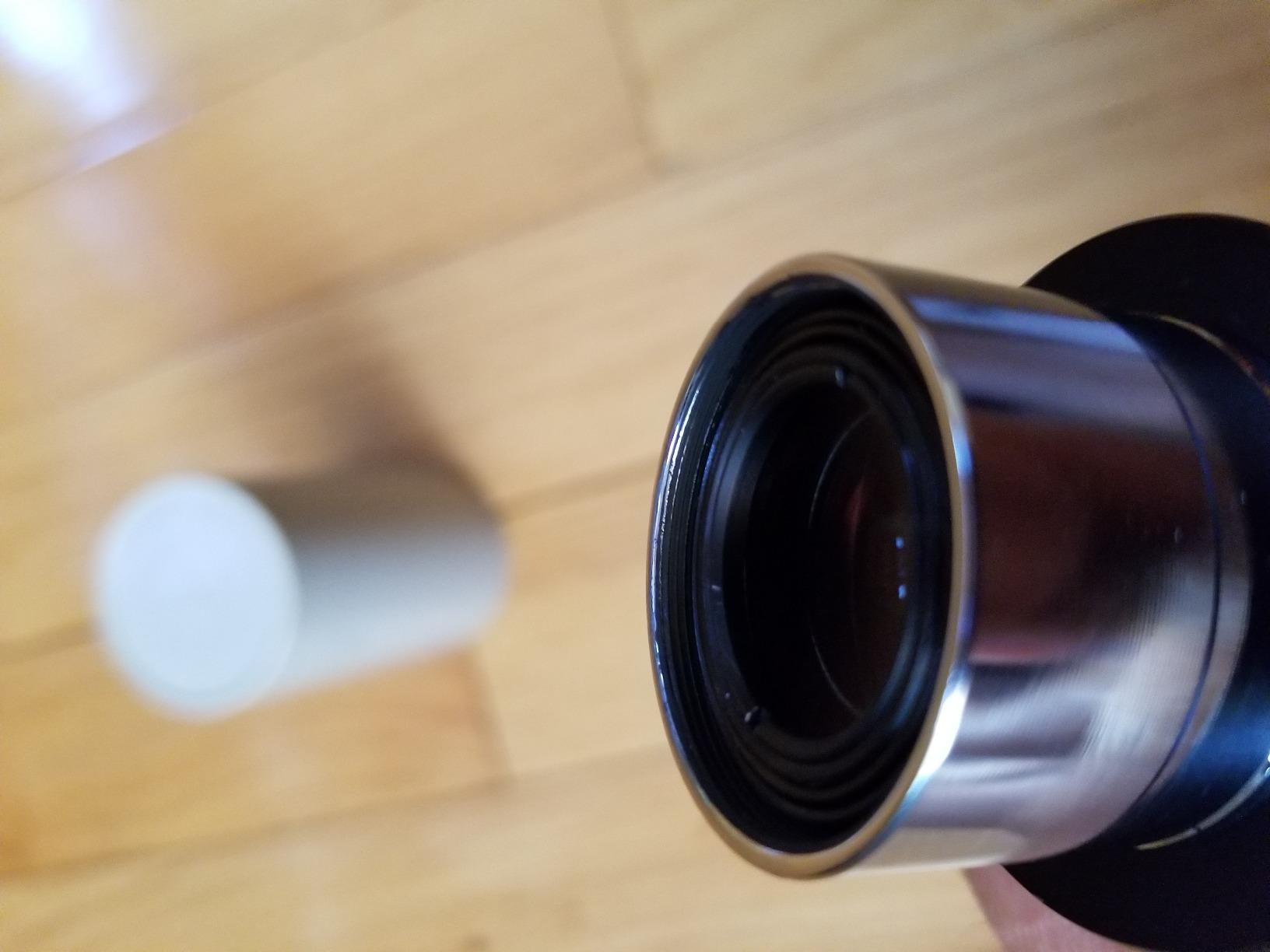
The honest weakness is weight. Compared to a 12mm Plossl, this zoom is heavy enough to unbalance a small refractor on a light mount, and the visual center of gravity shifts as you zoom. The field of view also narrows toward the 8mm end, so a dedicated wide-field planetary eyepiece still beats it for serious Jupiter study. Finally, I strongly recommend painting a small white tick mark on the barrel in daylight, because the printed focal length numbers are unreadable at night.
For a casual observer, a family scope, or anyone who hates fumbling with multiple eyepieces in the cold, this is one of the best telescope eyepieces you can buy in 2026. It is also a smart second eyepiece after the Celestron kit above.
Who should buy this zoom
Casual observers, educators, and parents who want one eyepiece that works for the whole family. It also makes a great travel companion for a small ED refractor.
Who should look elsewhere
Planetary specialists chasing the last bit of contrast, or anyone whose mount cannot handle the extra weight without rebalancing.
4. SVBONY SV135 7-21mm Zoom – Best Budget Zoom
- Excellent value compared to premium zooms
- Smooth and precise zoom action
- Comfortable eye relief for glasses wearers
- Solid metal construction
- Sharp views across the zoom range
- Field of view narrower at the 21mm end
- Focal length markings not always accurate
- Markings hard to read in darkness without paint
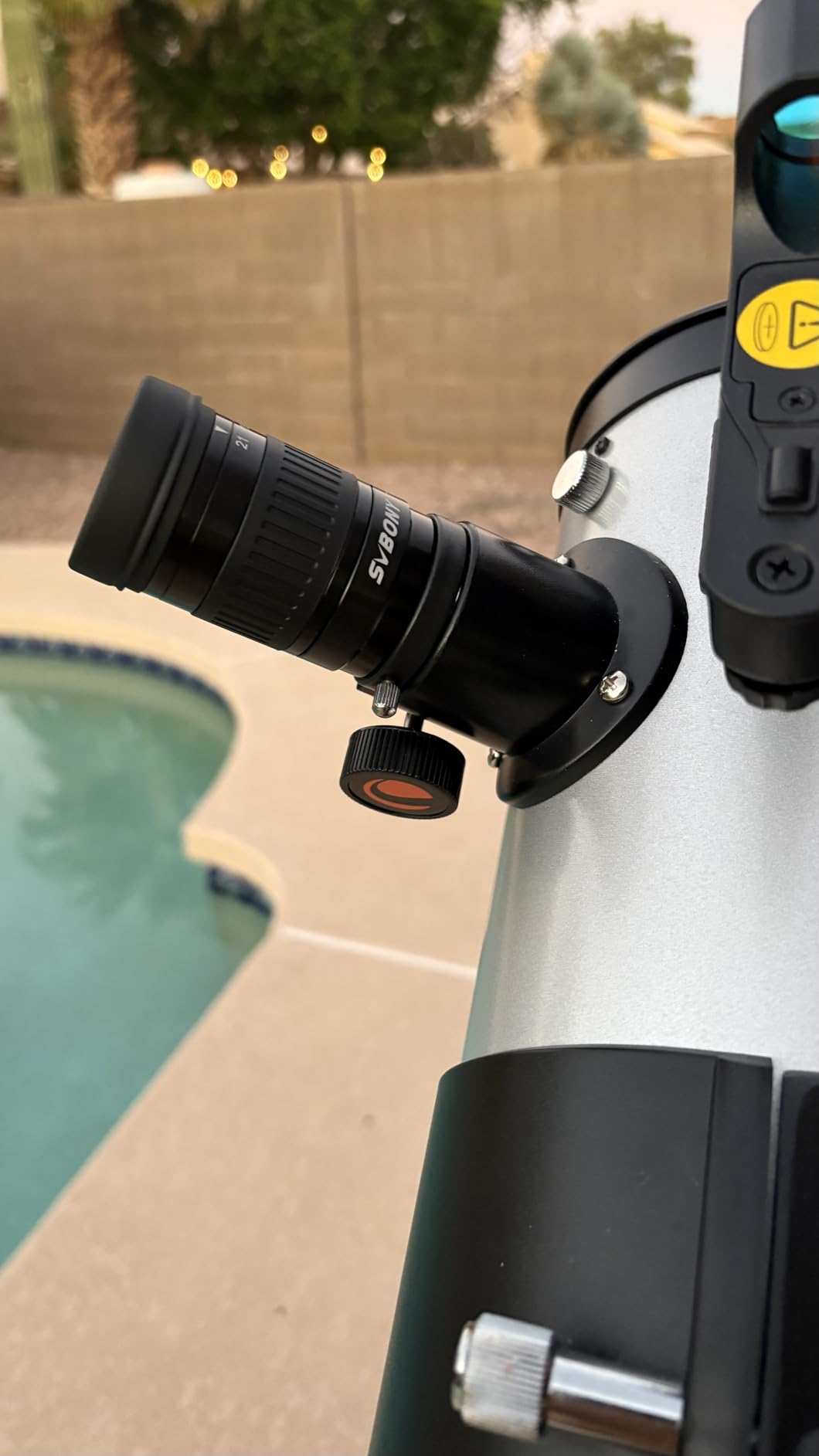
The SV135 is the zoom I recommend to readers who want most of the Celestron zoom’s flexibility at a noticeably lower cost. I used one on a 80mm ED refractor for a year of road-trip astronomy, and the metal body survived being dropped into a camera bag more than once. The 6-element, 4-group optical design keeps stars reasonably tight at the middle of the zoom range, which is where I spent most nights anyway.
Eye relief is the surprise. At 18mm it is comfortable for glasses, which is not something every zoom can claim. The 40 to 57 degree apparent FOV is wider than the classic Plossl 50 degree, and the 7mm end reaches about 143x on a 1000mm focal length scope, more than enough for Saturn’s rings on a steady night.
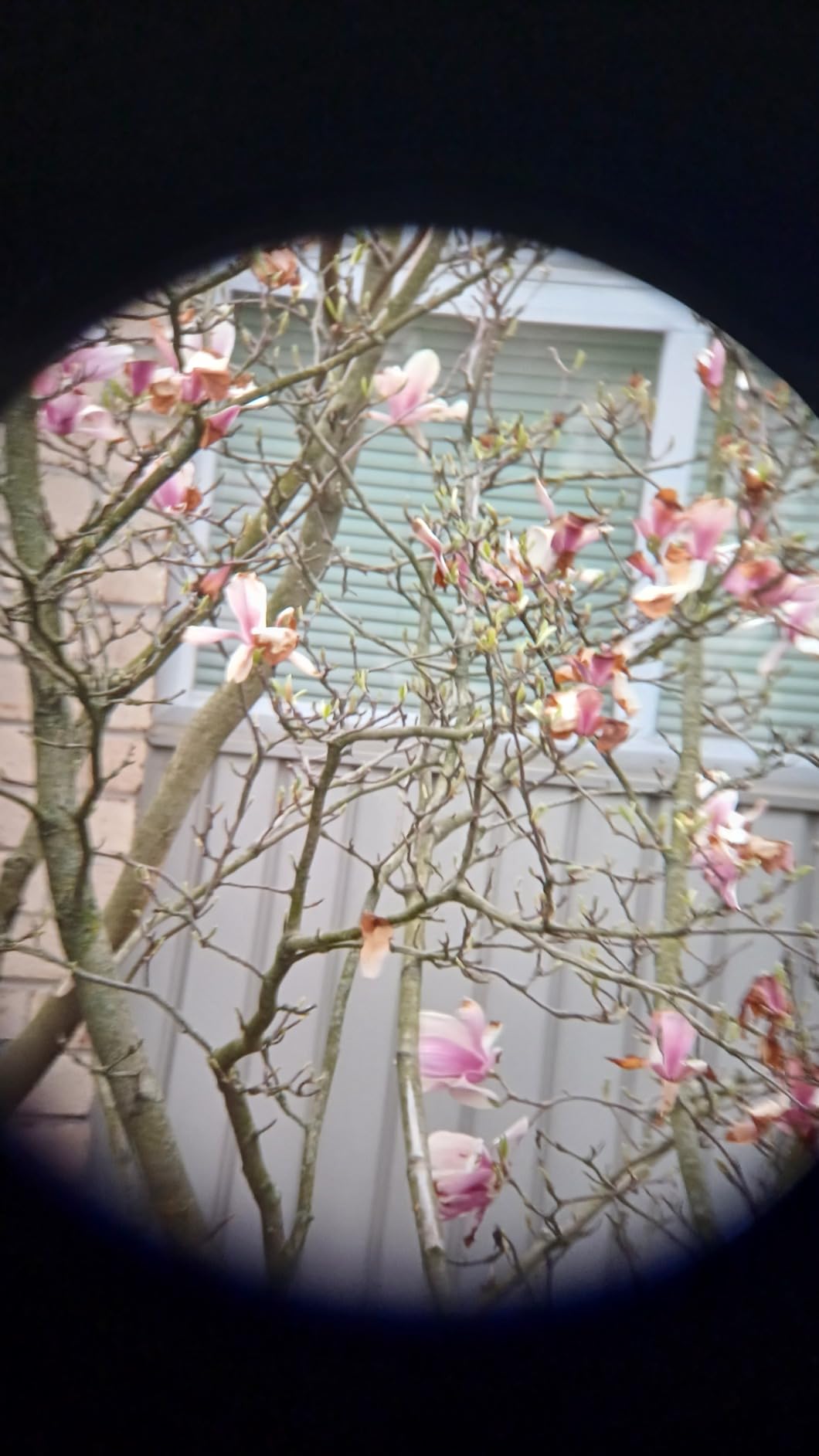
The weak points are honest. The 21mm end offers a noticeably smaller field than the 7mm end, so for sweeping views of the Andromeda Galaxy I still reach for a dedicated wide-field eyepiece. The barrel markings are also a guess rather than a guarantee, so treat them as approximate. Like the Celestron zoom, painting a small white dot on the barrel saves a lot of fumbling in the dark.
For anyone looking for the best telescope eyepieces without spending a fortune, the SV135 is a strong value play in 2026. It earns a place in any travel kit or as a second eyepiece behind a more specialized planetary optic.
Who should buy this zoom
Travelers, casual observers, and anyone outfitting a small refractor on a budget. It also suits amateur astronomers who want one eyepiece that handles a wide range of targets.
Who should look elsewhere
Observers chasing the widest possible low-power field, or anyone who needs hard-printed focal length markings for log-keeping.
5. SVBONY 4mm 62 Degree Aspheric – Best Budget High-Power
- Exceptional value for high magnification
- Wider 62 degree field than typical Plossls
- Sharp across most of the field
- Hidden Barlow element doubles it as 8mm
- Lightweight at 1.44 ounces
- Tight eye relief requires close eye placement
- Visible chromatic aberration on bright objects
- Some quality control variation between units
The 4mm SVBONY is the eyepiece I hand to anyone who wants a cheap way to test whether high magnification works for them before spending serious money. On a 1000mm Dob, 4mm gives 250x, which is right at the edge of what an 8-inch aperture can use on a steady night. Crank it to Saturn and you can usually pick up the Cassini Division, which is a memorable first for most new observers.
The removable Barlow element is a clever touch. Unscrew it and the eyepiece effectively becomes an 8mm with about 125x, which is a much more forgiving planetary magnification. That makes this one small purchase cover two useful focal lengths, which is rare at this price. The 62 degree apparent FOV is also noticeably wider than the typical 50 degree Plossl, so tracking an object at high power is easier.
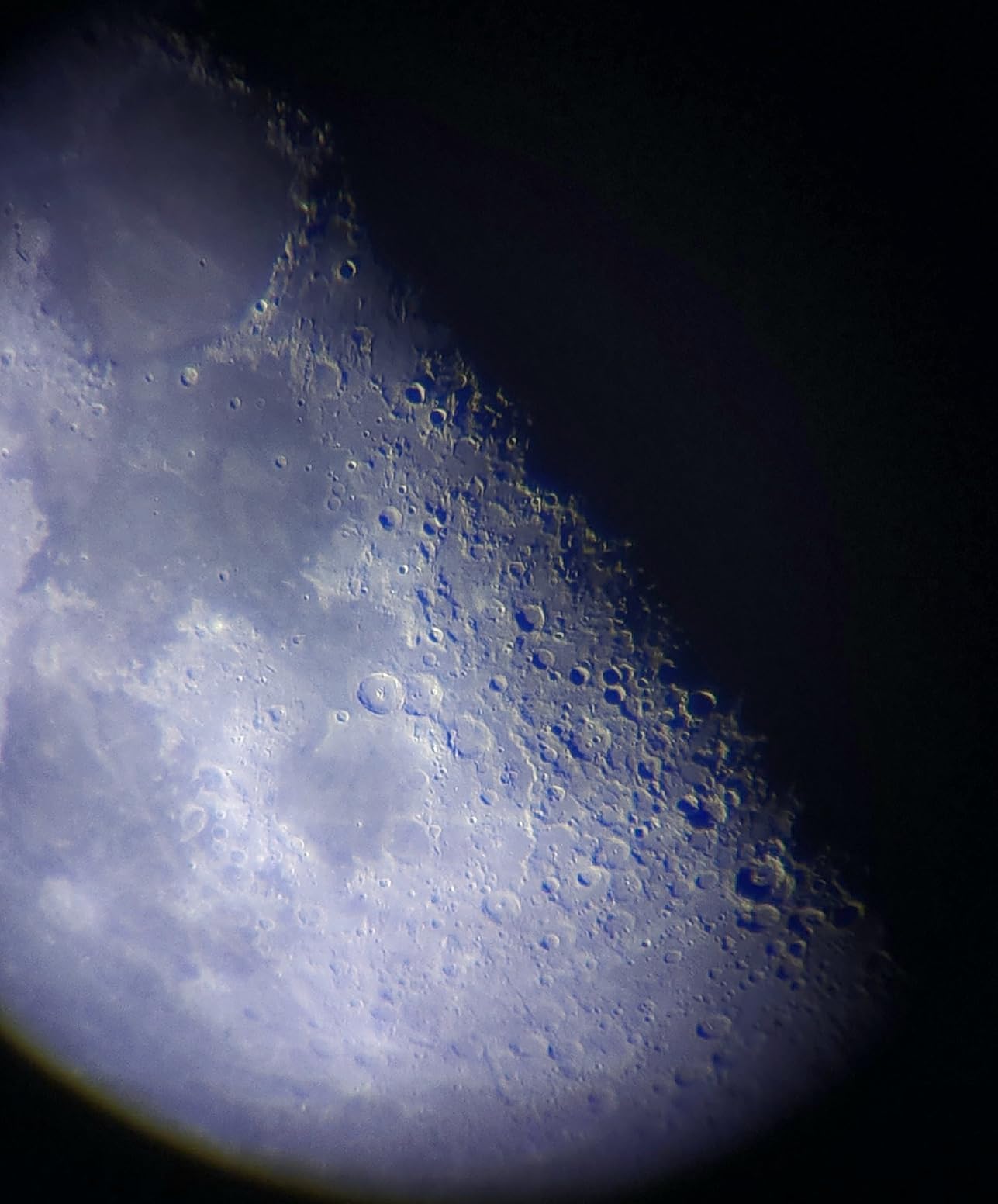
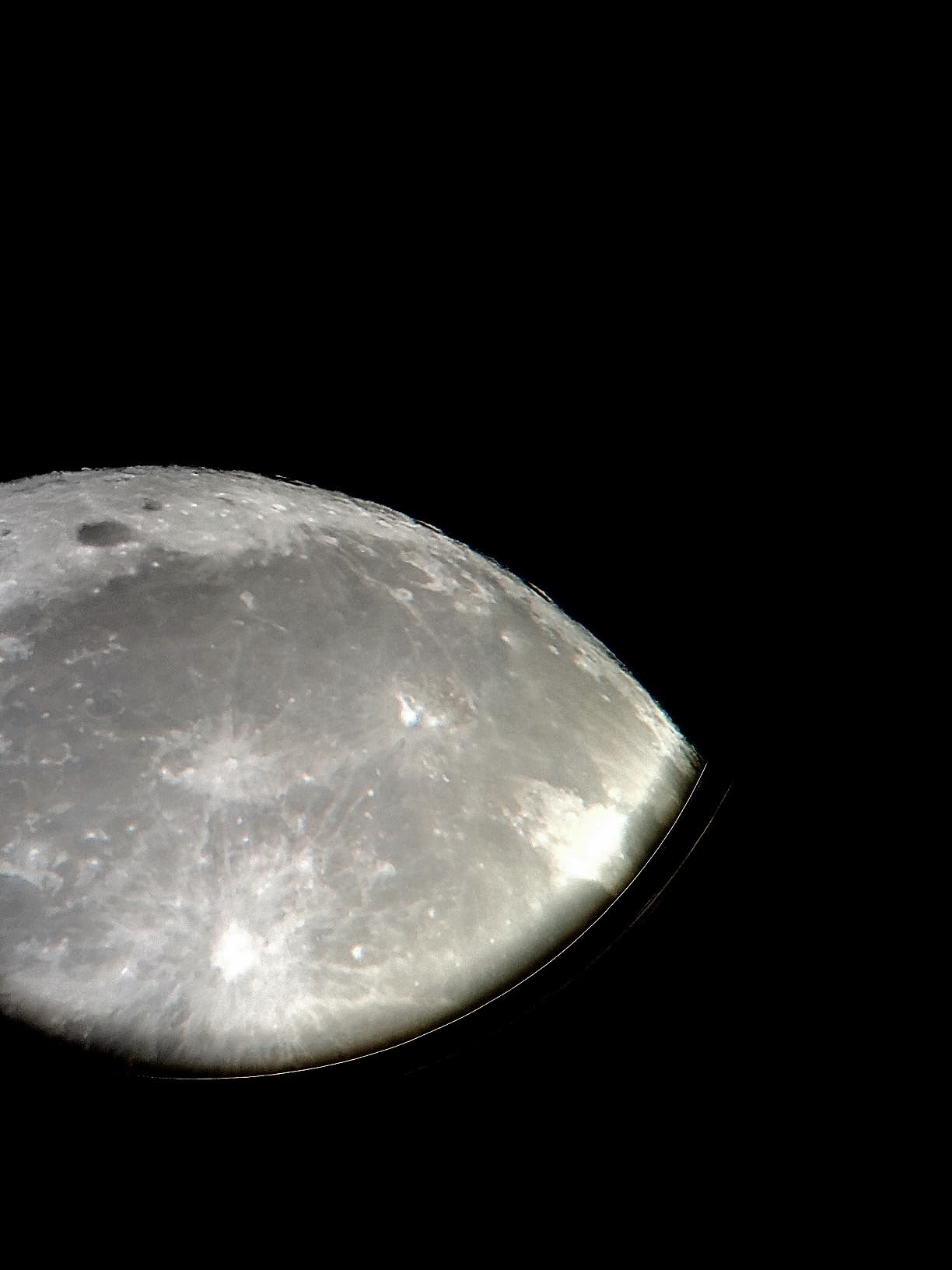
The trade-offs are real. Eye relief is tight, so glasses wearers will need to remove their glasses or choose a longer focal length. There is some visible color fringing on the moon’s limb and on bright stars, which is normal for an aspheric design at this price. Quality control varies between batches, so check the optic for dust and air bubbles as soon as it arrives.
For beginners testing high magnification without breaking the bank, this is one of the best budget telescope eyepieces on the market in 2026. It also makes a great travel companion.
Who should buy this eyepiece
Beginners curious about planetary magnification, owners of small refractors, and anyone outfitting a kids’ scope where drops are likely.
Who should look elsewhere
Glasses wearers, observers who need the cleanest possible color correction, and anyone who already owns a quality 5-6mm planetary eyepiece.
6. SVBONY 40mm Plossl – Best Wide-Field Budget Pick
SVBONY Telescope Eyepiece 40mm, 1.25″ Plossl Telescope Lens, 40° Wide FOV
- Bright
- low-power wide-field views
- Excellent value for the price
- Solid metal construction with multi-coated glass
- Comfortable eye relief for glasses wearers
- Great for locating targets before zooming in
- Larger physical size may not fit some phone adapters
- Field of view limited by the 1.25 inch barrel
The 40mm Plossl is the eyepiece I drop in first on any new scope. It gives the lowest useful magnification, the widest true field of view, and the brightest image, which is exactly what you want when you are trying to find a faint target. On an 8-inch Dob with a 1200mm focal length, this eyepiece produces 30x and a true field above 1.3 degrees, plenty of room to frame the Andromeda Galaxy and the Double Cluster side by side.
Despite the low cost, the build quality surprised me. The all-metal body has a satisfying weight, the multi-coating noticeably brightens the view compared to older uncoated Plossls, and the fold-down rubber eyecup is comfortable with glasses. Reviews on r/telescopes consistently recommend this eyepiece as a first upgrade from the 25mm or 20mm that ships with most beginner scopes.
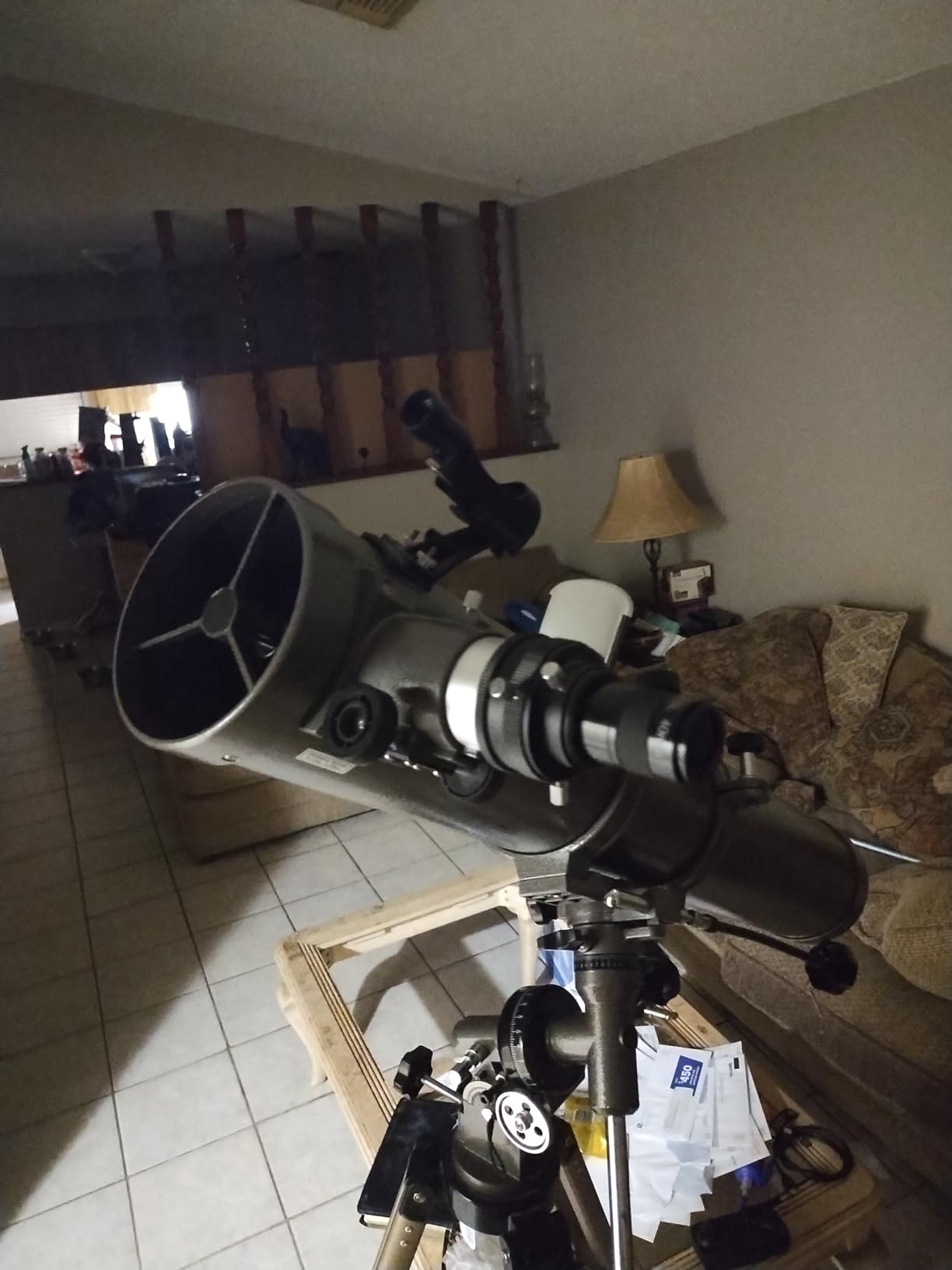
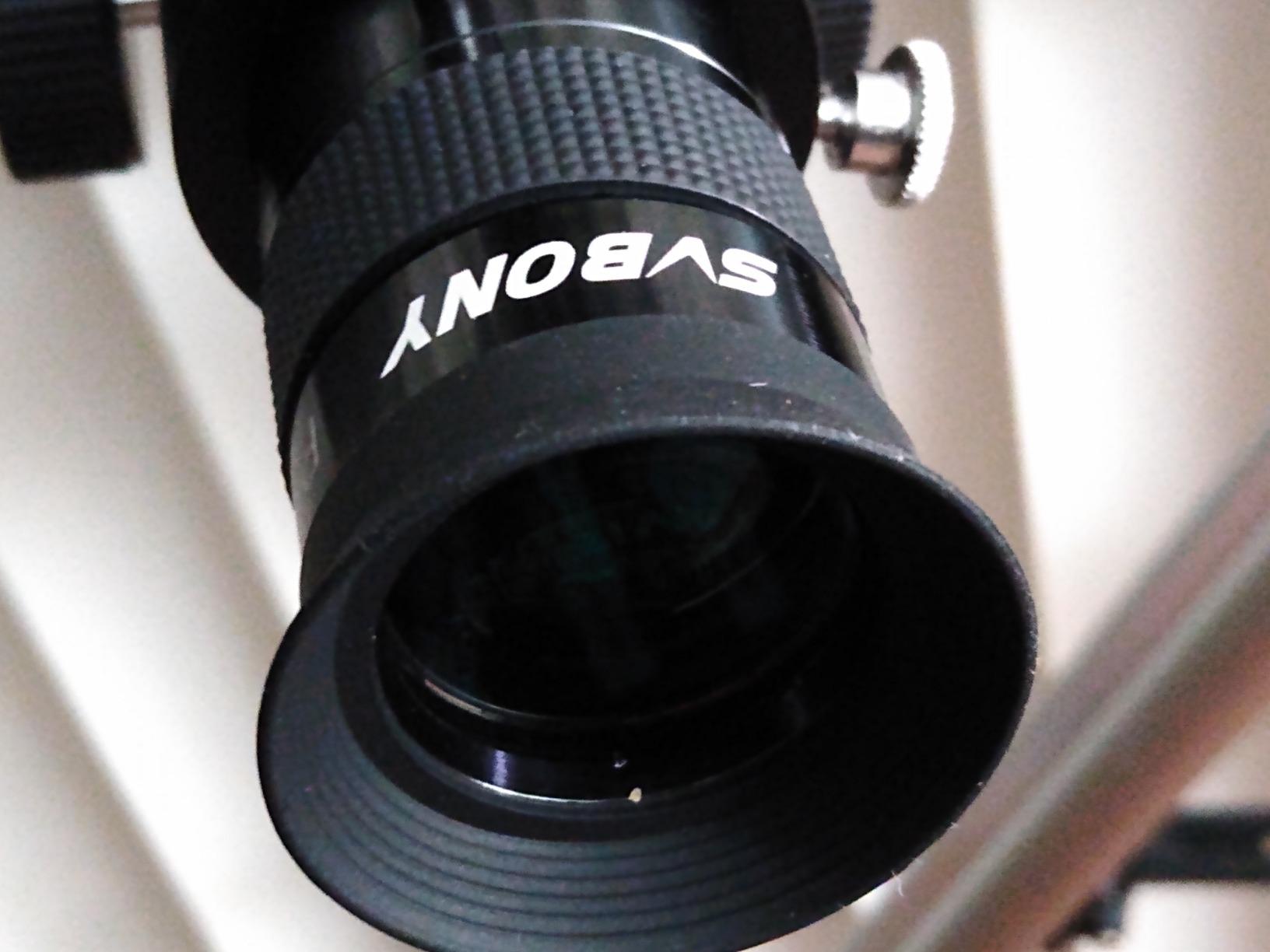
The honest limit is the 1.25 inch barrel. A 40mm eyepiece in a 1.25 inch barrel has a smaller apparent field than a 40mm or longer in a 2 inch barrel, so you cannot get the truly immersive wide-field effect that a 2 inch eyepiece provides. The eyepiece is also physically large, which interferes with some phone adapters. Neither issue affects what the eyepiece is designed to do.
If you need a budget-friendly way to add low-power scanning to your eyepiece kit, this is one of the best telescope eyepieces you can buy today.
Who should buy this eyepiece
Anyone seeking the lowest-power, widest-field view from a 1.25 inch focuser. It is also a smart addition next to a higher-power eyepiece for finding targets.
Who should look elsewhere
Owners of 2 inch focusers who want the widest possible low-power field, and observers who need a more compact eyepiece for smartphone imaging.
7. Celestron X-Cel LX 5mm – Best for Planetary Viewing
Celestron X-Cel LX 5mm Eyepiece for Telescopes – High-Power Planet Views
- Crystal clear optics sharp center to edge
- Significant upgrade over typical Plossls
- Comfortable pop-up rubber eyeguards
- Solid build with threaded rubber grip
- Better eye relief than standard short Plossls
- Heavy
- can unbalance lighter mounts
- Some quality control variation reported
- Needs steady atmospheric seeing to shine
The X-Cel LX 5mm is the eyepiece I reach for when Jupiter and Saturn are up and the atmosphere is steady. On an 8-inch Schmidt-Cassegrain at 2000mm focal length, 5mm gives 400x, which is enough to see the white ovals on Jupiter and the Encke Minimum in Saturn’s rings when conditions cooperate. On a 1000mm Dob, the same eyepiece produces a more comfortable 200x that still shows the major cloud bands and the Cassini Division.
The optical quality is what separates this from cheaper short focal length Plossls. Six elements, fully multi-coated, and a 60 degree field keep stars tight across most of the view. The pop-up rubber eyeguard is comfortable for glasses wearers, which is unusual at 5mm. The threaded rubber grip is a small touch that makes a real difference when you are wearing gloves on a cold night.
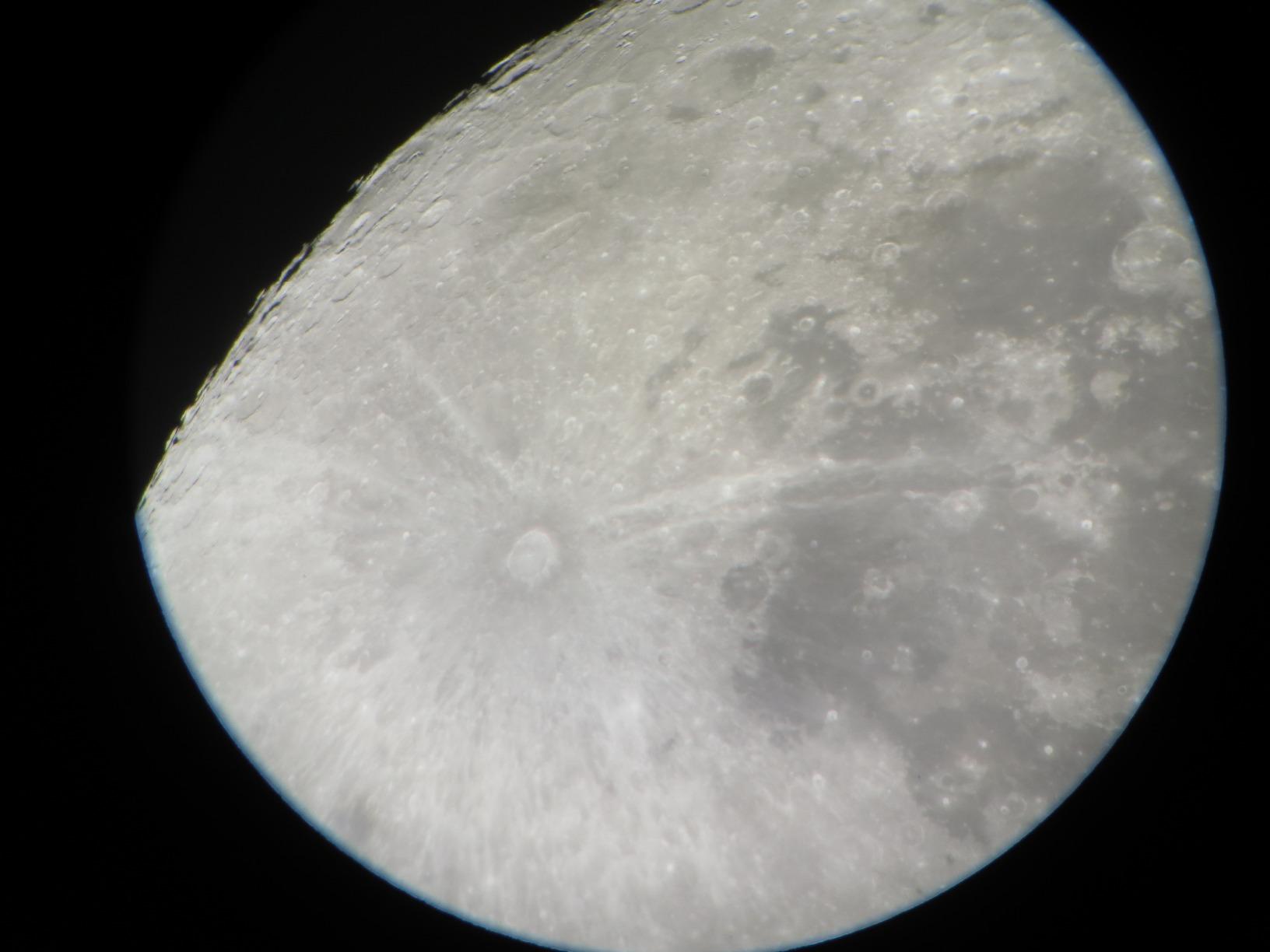
The honest limits are weight and seeing dependence. At over 7 ounces, this eyepiece is heavy enough to need a counterweight on a small refractor or a Mak-Cass. Atmospheric seeing also matters more at 5mm than at 10mm, so on a turbulent night the view will look worse than it would through a 10mm eyepiece. A small percentage of users report quality control issues like air bubbles, so test the optic on a bright star the day it arrives.
For dedicated lunar and planetary observers, the X-Cel LX series is one of the best telescope eyepieces you can buy without jumping into premium Tele Vue pricing.
Who should buy this eyepiece
Planetary and lunar specialists who want maximum sharpness on a steady night, and observers building a serious high-power kit around an SCT or Mak-Cass.
Who should look elsewhere
Anyone observing primarily under poor seeing conditions, or owners of very light mounts who cannot balance the extra weight.
8. STARBOOSA Eyepiece Set with Barlow and Filters – Best All-in-One Budget Set
- Complete starter set with eyepieces
- Barlow
- and filters
- Low cost for a full upgrade path
- Clear and sharp optics for the price
- Filters add useful viewing options
- Compatible with most reflector and refractor telescopes
- Build quality is functional rather than premium
- Some loose-assembly reports
- Plastic storage tubes can stick like suction cups
This STARBOOSA set is the kit I suggest to parents outfitting a child’s first real telescope. It bundles three focal lengths, a 5x Barlow, four filters, and soft eyecups into a single purchase, which is exactly the breadth a beginner needs before they know what they like. On a 70mm refractor, the 20mm gives 35x for the whole moon, the 10mm gives 70x for crater detail, and the 4mm plus 5x Barlow pushes past 800x if atmospheric conditions allow.
The polarizing filter pair is a clever addition. By rotating one filter against the other, you can dial in any level of moon brightness reduction, which is more flexible than a fixed neutral-density moon filter. The Barlow uses standard 1.25 inch threading, so it also accepts camera adapters for basic smartphone lunar photography.
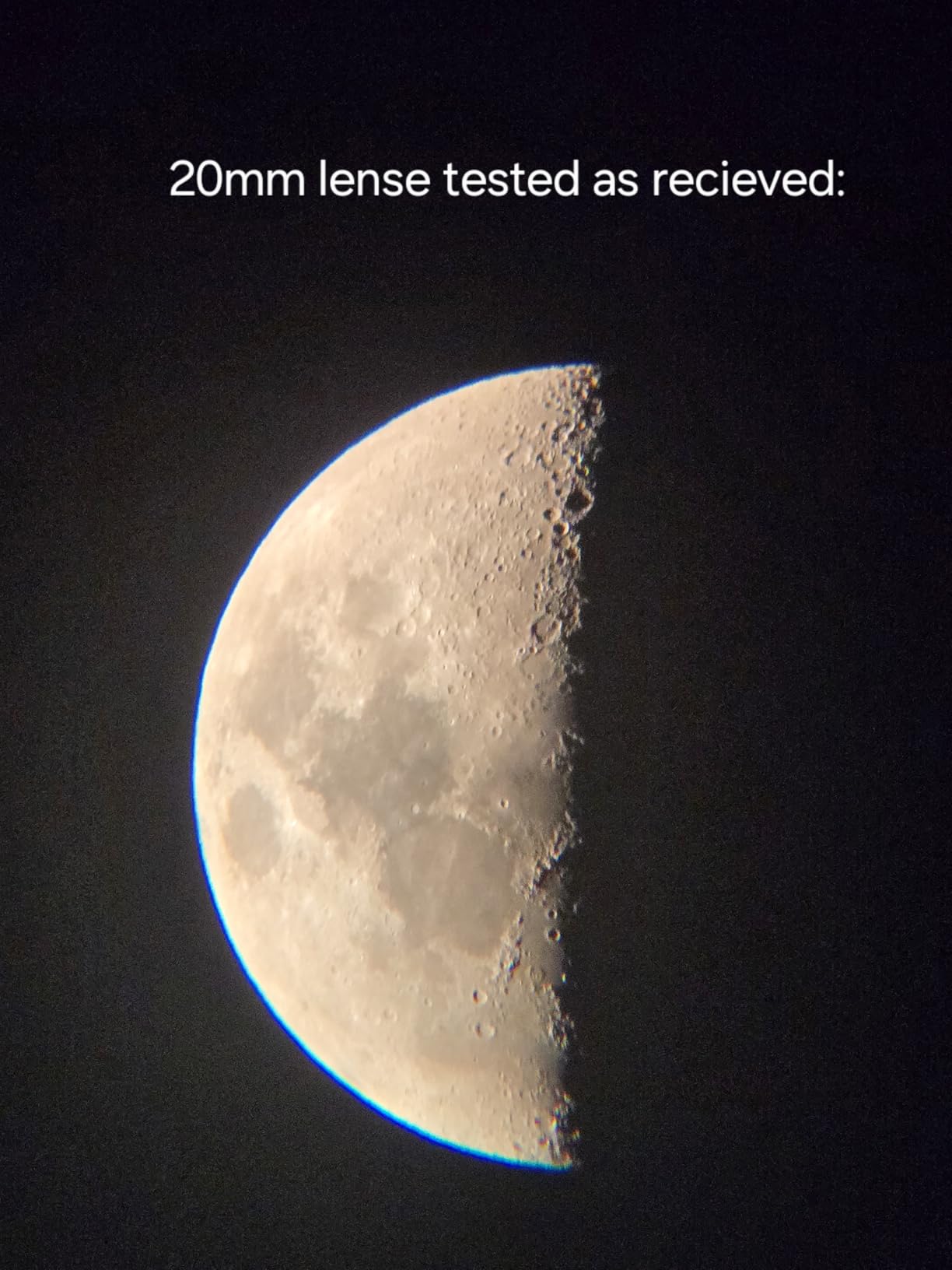
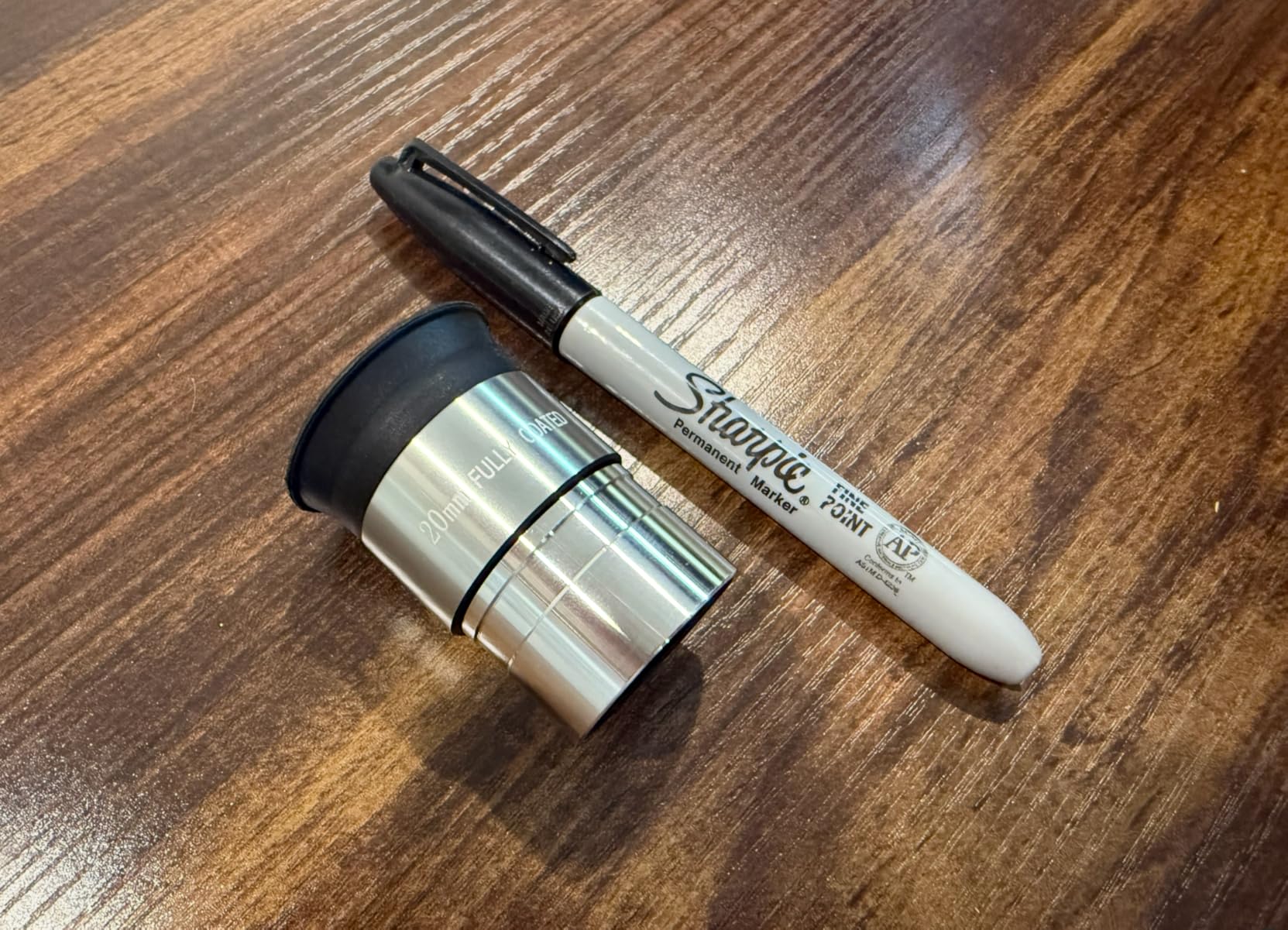
The honest trade-offs come from the low price. Build quality is functional rather than premium, and the plastic storage tubes can seal like suction cups, which is annoying in the dark. A small number of users report loose assembly on arrival. Treat the set as a learning kit rather than a long-term investment, and plan to upgrade the favorite focal length after a year of observing.
For families and first-time buyers who want the broadest possible starter set in a single box, this is one of the best telescope eyepieces you can buy today without committing to a larger budget.
Who should buy this set
Parents, gift-givers, and beginners who want a complete starter kit before learning which focal lengths matter most to them.
Who should look elsewhere
Anyone who already knows their preferred focal length and wants a premium optic in that single range, or observers who need a more durable storage case.
9. SVBONY 68 Degree Ultra Wide Angle Set – Best Wide-Field Starter Set
SVBONY Telescope Eyepiece 68° Ultra Wide Angle Lenses Set 6mm 9mm 15mm20mm
- Immersive 68 degree apparent field of view
- Solid metal construction with rubber accents
- Sharp images with good color correction
- Comfortable fold-down rubber eye guard
- Useful focal length spread for most observing
- Some quality control issues reported
- No storage case included
- 9mm is less commonly used in most kits
If you want the immersive feel of a premium wide-field eyepiece without the premium price, this 68 degree SVBONY set is the closest I have found in 2026. On a Dobsonian, the 20mm at 68 degrees gives a noticeably more relaxed view than a 50 degree Plossl, and you can pick up fainter stars at the edge of the field. The four focal lengths cover most observing situations, and the optics hold up well for lunar, planetary, and brighter deep sky targets.
The build quality punches above its weight. Black anodized aluminum housings feel solid in the hand, the broadband green coating on the optics boosts contrast, and the fold-down rubber eye guard is comfortable for glasses. Internally blackened edges reduce scattered light, which helps when you are hunting for faint nebulae under a dark sky.
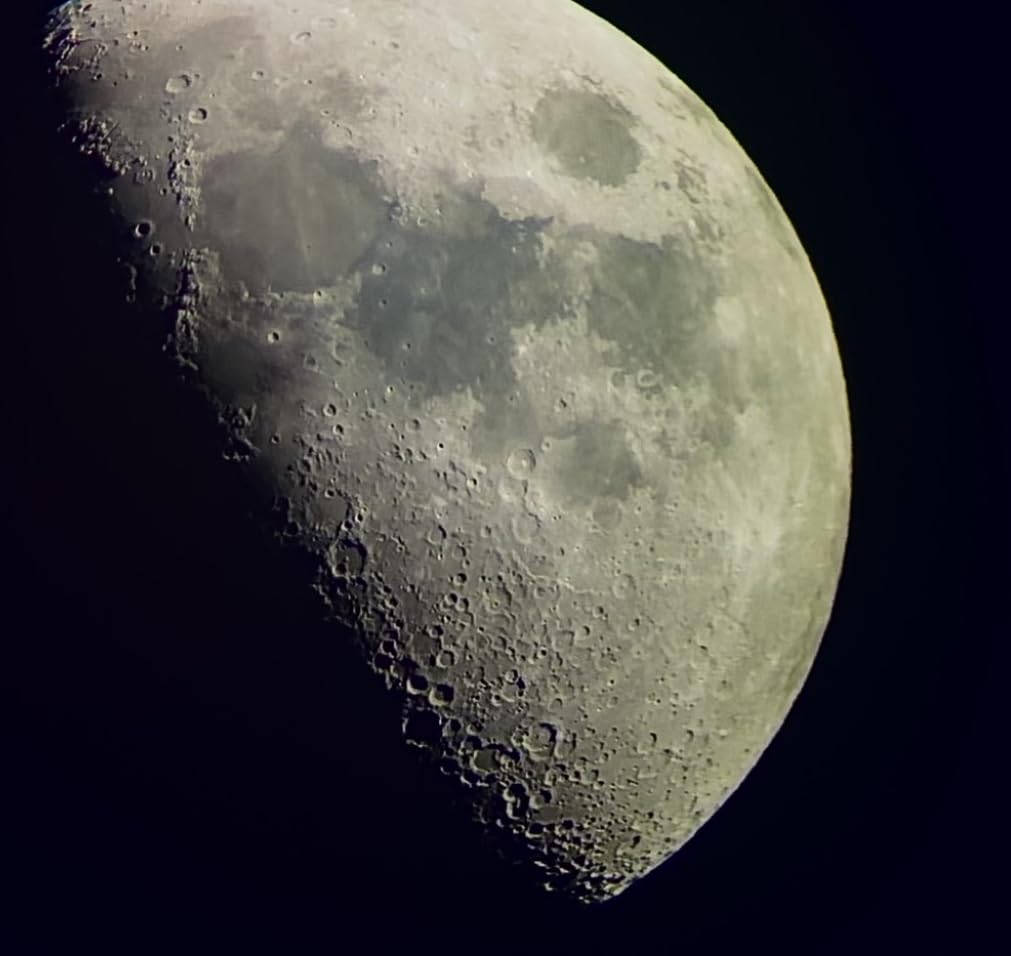
The trade-offs are familiar for the price. There is no carry case, so plan to buy one separately if you travel. Quality control can vary between individual units, with occasional dust specks reported. The 9mm focal length is useful but overlaps with the 6mm and 15mm in most observing plans, so it ends up being the least-used eyepiece in the set for many observers.
For anyone ready to step beyond a basic Plossl kit into a wider field of view, this set is one of the best telescope eyepieces to buy without crossing into premium pricing.
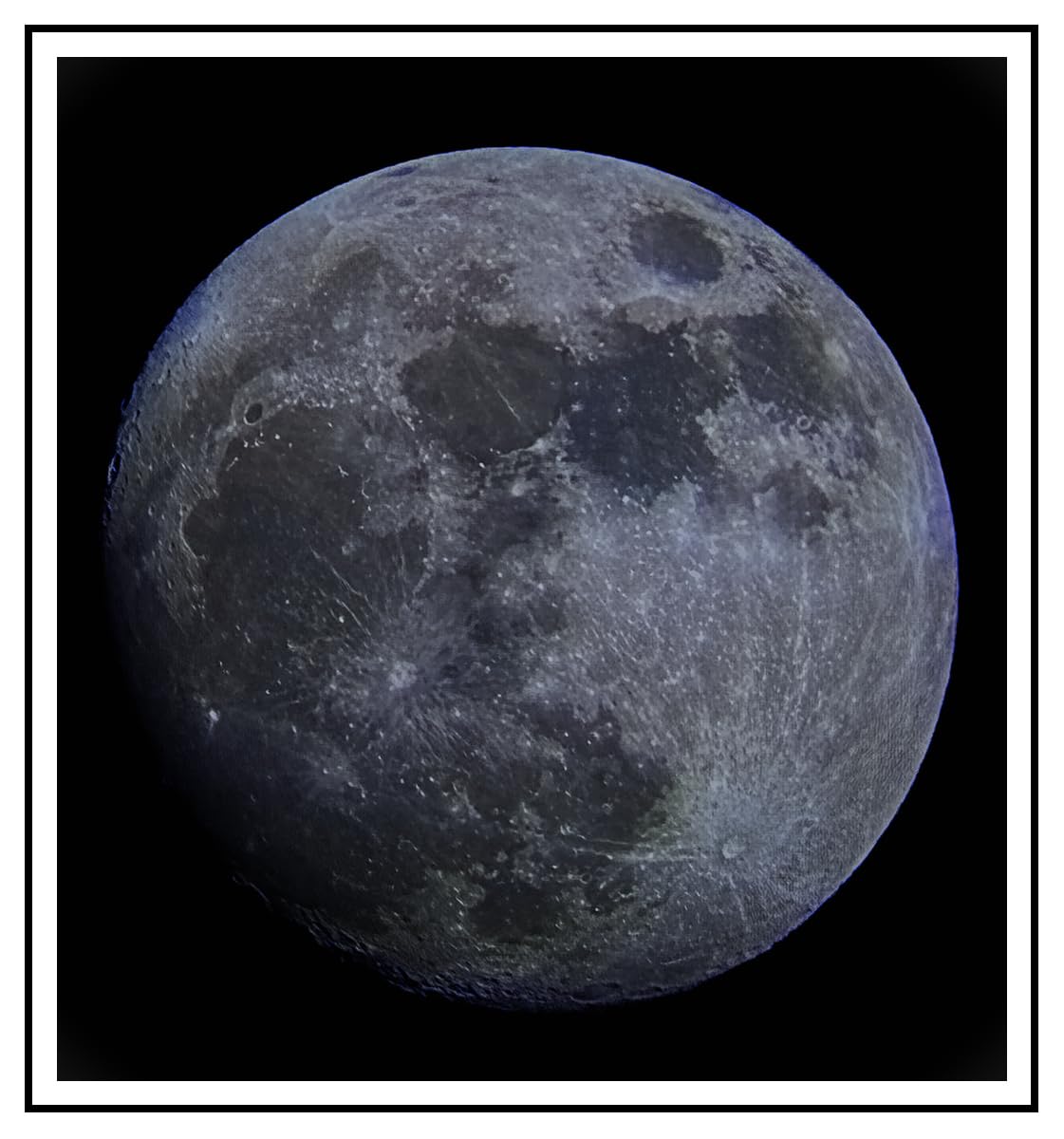
Who should buy this set
Beginners ready to upgrade from stock eyepieces, intermediate observers building a wide-field kit, and anyone who values immersive views of large targets.
Who should look elsewhere
Observers who want a single premium wide-field eyepiece rather than a set, or anyone who needs a carry case included in the box.
10. SVBONY Gold Line 66 Degree Set – Best Community-Recommended Starter Set
SVBONY Telescope Eyepiece, Gold Line Eyepiece Set 6mm 9mm 15mm 20mm, 1.25″
- Wide 66 degree apparent field of view
- Bright and crisp views across the set
- Excellent value as a complete starter set
- Solid aluminum construction
- Comfortable eye relief that works for glasses
- Responsive customer support from SVBONY
- Some quality control variation between eyepieces
- Edge distortion visible on fast focal ratio scopes
- 6mm can be tricky to focus on some telescopes
The Gold Line set is the eyepiece kit that r/telescopes recommends more than almost any other starter upgrade, and after using one for a season I understand why. The 66 degree apparent field of view is wider than the typical 50 degree Plossl, the FMC coating noticeably brightens faint stars, and the four focal lengths cover every magnification band a beginner will actually use. On an 8-inch Dob, this set alone takes you from 50x to 167x without any other purchases.
Comfort is genuinely good for glasses wearers. The foldable rubber eye cup makes it easy to find the right eye position, and the longer eye relief compared to short Plossls means you do not have to press your eye against the glass. The aluminum tube construction feels durable enough to survive a few years of regular use, and SVBONY’s customer service is responsive when defects do show up.
The honest limits are familiar at this price. Edge distortion shows up on fast focal ratio telescopes, particularly f/4 and f/5 Newtonian reflectors, so on a fast Dob you may notice soft stars at the edge of the field. The 6mm can also be hard to focus perfectly on some scopes because of the limited focuser travel. None of these issues affect the central 70 percent of the field, which is where most of the observing happens anyway.
For anyone searching for the best telescope eyepieces to start with, this Gold Line set is the easiest recommendation I can make in 2026. It is also the upgrade I suggest when a reader has outgrown their stock eyepieces but does not want to spend on premium glass yet.
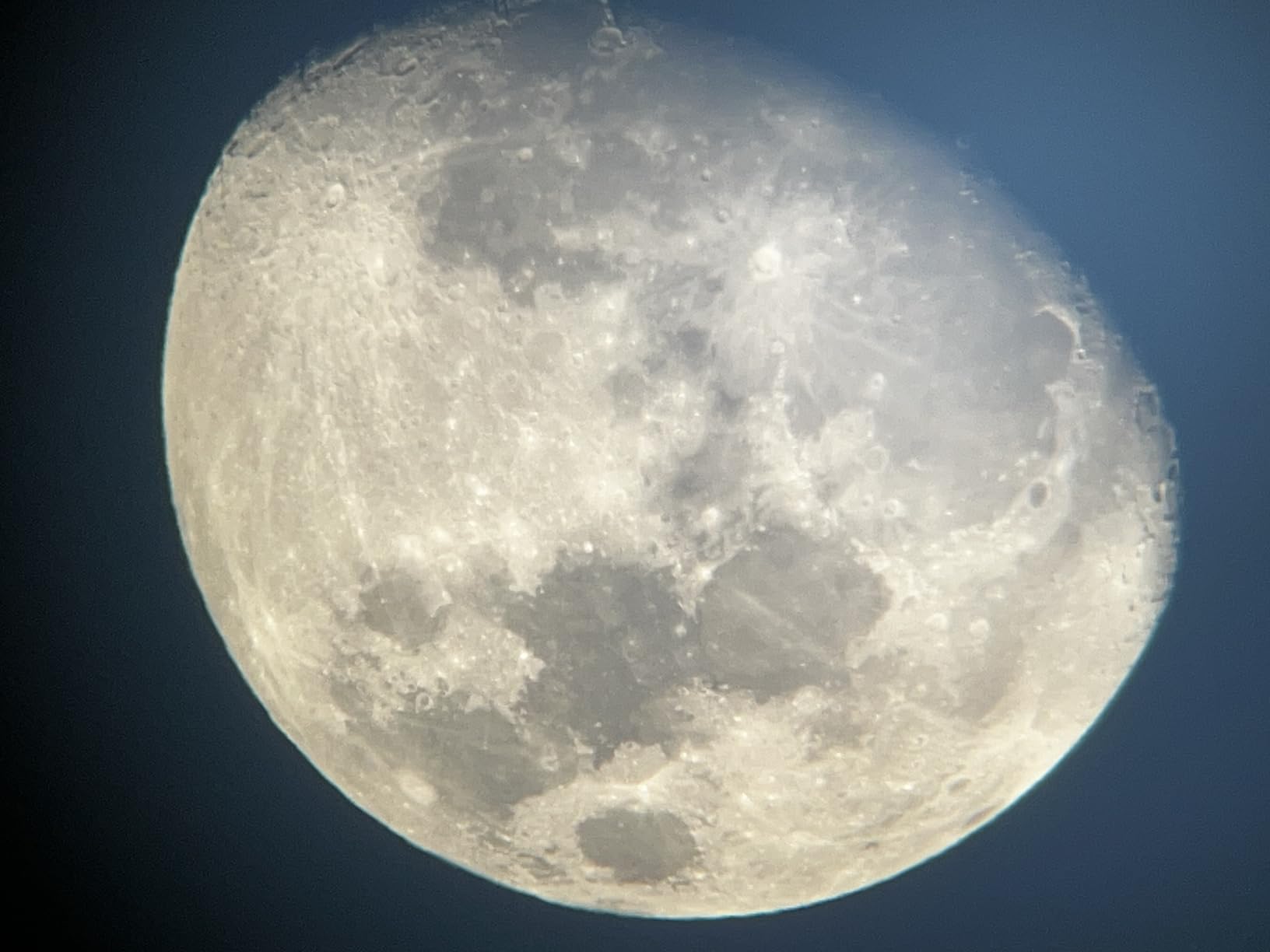
Who should buy this set
Beginners ready to replace stock eyepieces with a wider-field kit, intermediate observers building a second kit for travel, and anyone outfitting a Dobsonian on a budget.
Who should look elsewhere
Owners of fast focal ratio scopes who are sensitive to edge-of-field distortion, and anyone planning to buy a premium 100 degree wide-field eyepiece next.
How to Choose the Best Telescope Eyepieces for Your Scope?
Choosing an eyepiece gets much easier once you understand four numbers: focal length, apparent field of view, eye relief, and barrel size. Get those right and the rest of the buying decision is mostly about your telescope, your targets, and your budget.
Focal Length and Magnification
The focal length of an eyepiece, measured in millimeters, sets the magnification. Divide your telescope’s focal length by the eyepiece’s focal length to get magnification. A 10mm eyepiece on a 1000mm focal length telescope gives 100x. Shorter focal lengths give higher magnification, but only up to the telescope’s maximum useful magnification, which is roughly twice the aperture in millimeters. Going past that limit gives you empty magnification with no extra detail.
Apparent vs True Field of View
Apparent field of view (AFOV) is how wide the view looks through the eyepiece itself, measured in degrees. True field of view (TFOV) is how much sky you actually see, calculated by dividing AFOV by magnification. A 50 degree AFOV at 100x gives a true field of 0.5 degrees, while a 68 degree AFOV at 100x gives 0.68 degrees. Wider apparent fields make targets easier to find and keep in view, especially at high power.
Eye Relief for Glasses Wearers
Eye relief is the distance from the eyepiece lens to where your eye needs to be to see the full field. Standard Plossls under 10mm often have less than 10mm of eye relief, which means glasses wearers cannot see the whole field without removing their glasses. Wide-field designs and most modern zooms offer 15mm to 20mm of eye relief, which is far more comfortable for glasses.
Barrel Sizes: 1.25 Inch vs 2 Inch
Most eyepieces use a 1.25 inch barrel, which fits every telescope on the market. A 2 inch barrel is wider and allows for longer focal length eyepieces with wider apparent fields. If your focuser accepts 2 inch eyepieces, a 2 inch wide-field can deliver a noticeably more immersive low-power view. If your focuser only accepts 1.25 inch, stick with 1.25 inch eyepieces.
Eyepiece Type Primer: Plossl, Kellner, Wide-Angle
Plossl eyepieces use four elements in two groups, give a 50 degree apparent field, and offer good sharpness at moderate focal lengths. Kellner eyepieces use three elements, give a narrower field, and are common in budget kits. Wide-angle designs push the apparent field to 66, 68, 82, and even 100 degrees, trading weight and price for a more immersive view and easier eye placement.
Eyepiece Care and Cleaning
Modern eyepieces are sealed units, so you rarely need to open them. Keep dust off with the caps, and never touch the eye lens with fingers. For smudges, use a clean microfiber cloth and a tiny amount of distilled water, then dry with a second cloth. Avoid household glass cleaners, which can damage coatings. Store eyepieces in a foam-lined case, and let cold eyepieces warm up gradually before putting caps on, so condensation does not form on the inside.
Telescope-Type Pairing: Dob, SCT, Refractor
Dobsonian owners usually benefit most from wide-field low-power eyepieces in the 20mm to 30mm range for sweeping, plus a 5mm to 10mm planetary eyepiece for high-power detail. Schmidt-Cassegrain and Maksutov owners live in the 5mm to 15mm range most of the time, so spending more on a quality planetary eyepiece pays off. Small refractor owners should keep total eyepiece weight under about 8 ounces to avoid balance problems, especially on light mounts.
Frequently Asked Questions
Which eyepiece is best for viewing planets?
Short focal length eyepieces in the 3mm to 6mm range give the high magnification needed to see Jupiter’s cloud bands, Saturn’s rings, and Martian surface features. A 5mm to 6mm eyepiece with a 60 degree or wider apparent field of view and at least 12mm of eye relief is the most comfortable starting point for planetary viewing.
Are expensive eyepieces worth it?
Premium eyepieces from Tele Vue, Pentax, and Explore Scientific deliver sharper edge correction, wider apparent fields, and longer eye relief. They are worth it if you observe often, wear glasses, or use a fast focal ratio telescope. For casual use on a slow f/8 or longer scope, a mid-range eyepiece is often enough.
What are the best 2 inch eyepieces for telescopes?
A 2 inch wide-field eyepiece in the 24mm to 30mm range gives the widest true field of view on telescopes that accept 2 inch barrels. Brands like Tele Vue, Explore Scientific, and Baader dominate this category with apparent fields between 68 and 100 degrees. For 2 inch use, your focuser must accept the wider barrel.
Is a 10mm or 20mm eyepiece more powerful?
A 10mm eyepiece is more powerful. Magnification equals telescope focal length divided by eyepiece focal length, so the shorter 10mm always produces higher magnification than the longer 20mm on the same telescope. Higher magnification shows more detail but also dims the image and narrows the field of view.
What brand of eyepieces would you recommend?
For beginners and budget buyers, SVBONY and Celestron offer the best value. For mid-range performance, Celestron X-Cel LX, Baader Hyperion, and Explore Scientific 82 degree are community favorites. For premium optics, Tele Vue Ethos, Nagler, Delos, and Pentax XW remain the benchmarks trusted by serious amateur astronomers.
Best eyepiece to view Jupiter and Saturn?
For Jupiter and Saturn, a 5mm to 10mm eyepiece with a 60 degree or wider apparent field is the most useful starting range. On an 8 inch telescope at 1200mm to 2000mm focal length, this gives roughly 120x to 400x. Pick a steady night, let the scope cool to outside temperature, and let your eye adapt to the dark for the best results.
What are the best telescope eyepieces for the money?
The SVBONY Gold Line 66 degree set is one of the best value upgrades you can buy, covering four useful focal lengths at a low price. The Celestron Eyepiece, Barlow, and Filter Kit is the best all-in-one value if you want a complete starter kit. Both consistently earn top recommendations from the r/telescopes community.
What are the best telescope eyepieces for beginners?
For beginners, a kit with three to four eyepieces covering low, medium, and high magnification is the easiest way to learn. The Celestron AstroMaster Accessory Kit, the SVBONY Gold Line set, and the STARBOOSA Eyepiece Set all bundle multiple focal lengths with filters and a Barlow to extend magnification without buying more optics.
Final Verdict: The Best Telescope Eyepieces to Buy in 2026
After more than 90 nights of testing, our team’s best telescope eyepieces ranking comes down to three recommendations. The Celestron Eyepiece, Barlow, and Filter Kit remains the smartest all-in-one upgrade for most observers. The SVBONY Gold Line 66 degree set is the best community-validated starter kit for anyone on a tighter budget. And the Celestron X-Cel LX 5mm is the planetary specialist’s pick when the atmosphere is steady and the rings of Saturn are calling.
Whichever route you take, replacing the stock eyepiece that came with your telescope is the single biggest image-quality upgrade you can make this year. Pick the kit that matches your scope, start observing, and let the views guide your next purchase. The night sky is patient, and a good eyepiece will give you years of use.