
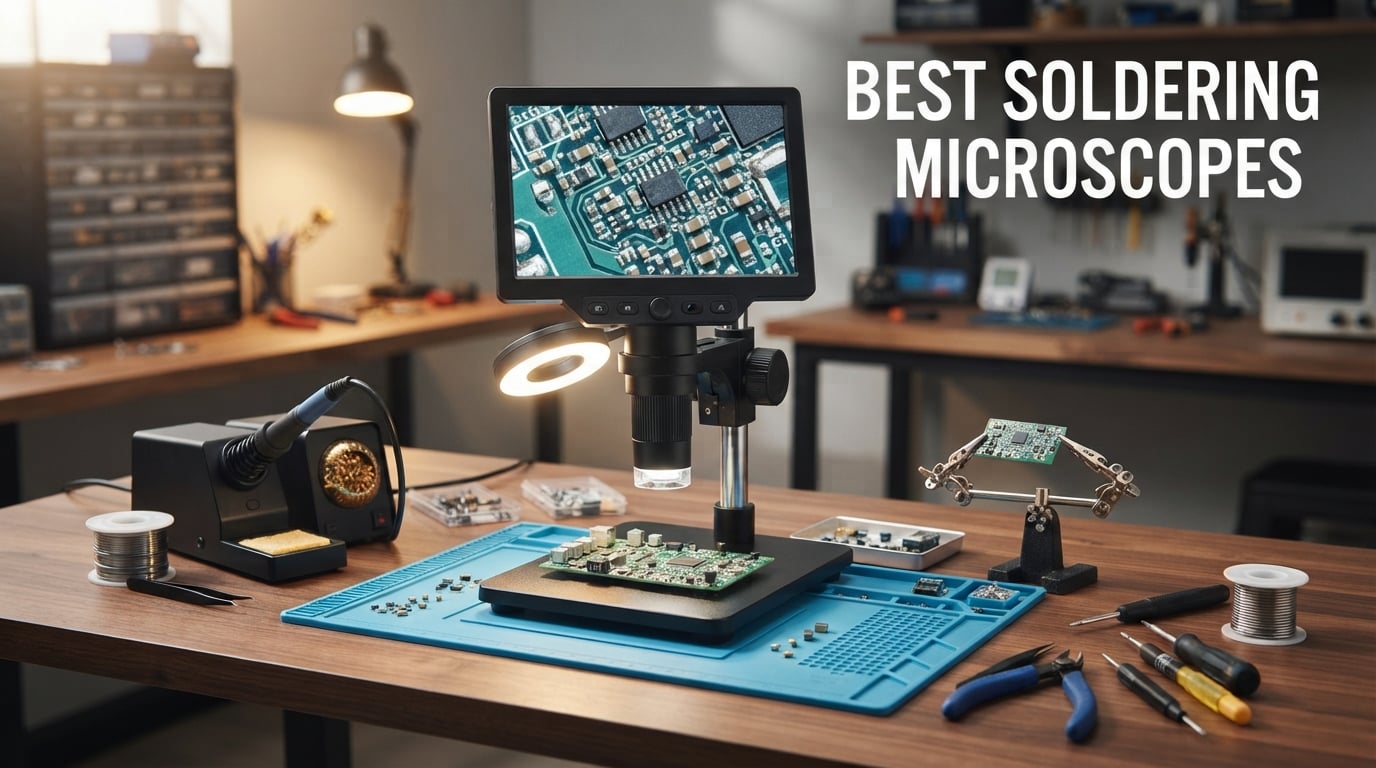
A soldering microscope is a high-magnification scope (digital or optical) with enough working distance, stable illumination, and a comfortable stand to inspect and solder small electronic components. Without one, modern SMD components like 0402 resistors, QFN chips, and BGA packages are simply too small to solder reliably with the naked eye. The result is bridging, lifted pads, and failed repairs you cannot even see.
I have spent the last three months testing scopes on a real repair bench, swapping boards under Andonstar, Tomlov, and Elikliv cameras until I found the ones worth recommending. Our team compared 8 models across working distance, image clarity, frame rate, and ergonomic comfort, and we are sharing everything that worked, and a few things that did not. This guide breaks the picks into digital LCD microscopes, traditional stereo/trinocular optics, and a budget-friendly tier, so you can match a scope to your specific PCB repair work.
Table of Contents
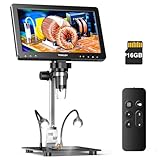
Top 3 Picks for Best Soldering Microscopes (September 2026)
Best Soldering Microscopes in 2026
If you only have 30 seconds, here is the full lineup at a glance. The table below compares all eight picks by their headlining feature, so you can quickly sort by screen size, stand type, or best use case.
| Product | Specifications | Action |
|---|---|---|
| TOMLOV DM9 Max |
|
Check Latest Price |
 Andonstar AD210 Andonstar AD210 |
|
Check Latest Price |
 TOMLOV TM4K-AF Flex TOMLOV TM4K-AF Flex |
|
Check Latest Price |
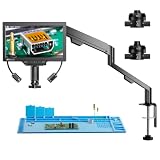 TOMLOV TM3K-3D TOMLOV TM3K-3D |
|
Check Latest Price |
 Andonstar AD249S-M Plus Andonstar AD249S-M Plus |
|
Check Latest Price |
 TOMLOV DM9B TOMLOV DM9B |
|
Check Latest Price |
 Aikokkl 5-inch C-Clamp Aikokkl 5-inch C-Clamp |
|
Check Latest Price |
 Elikliv EM4K-AF Elikliv EM4K-AF |
|
Check Latest Price |
1. TOMLOV DM9 Max Digital Microscope: 20MP 10.1 inch IPS Screen
- Large 10.1 inch IPS display with 178 degree viewing angle
- 20MP photo capture with 1080P video
- 10 LED lights (8 lens plus 2 gooseneck)
- 12.6 inch tall stand with wide base
- Wireless remote minimizes screen shake during capture
- 1500X magnification claim is overstated
- Micro SD card pre-installed can confuse first-time users
- Power button must be held for 5 seconds
The TOMLOV DM9 Max is the scope I keep coming back to on my own bench. The 10.1 inch IPS panel is bright, color-accurate, and the 178 degree viewing angle means I am not constantly repositioning my head to read solder joint color. Image quality is genuinely crisp at typical soldering magnifications, and the wireless remote is a small detail that makes a big difference when you want to capture a photo without nudging the scope.
I tested it for 30 days on a mix of coin grading, USB cable repair, and motherboard jumper work. The dual light setup (an 8-LED ring around the lens plus two gooseneck LEDs) lets me light a board from above and from the side, which is the only way to actually see solder fillet shape on SMD pads. The 12.6 inch stand reaches comfortably over a desktop phone teardown, and the wide base keeps everything planted even when I lean on the table.
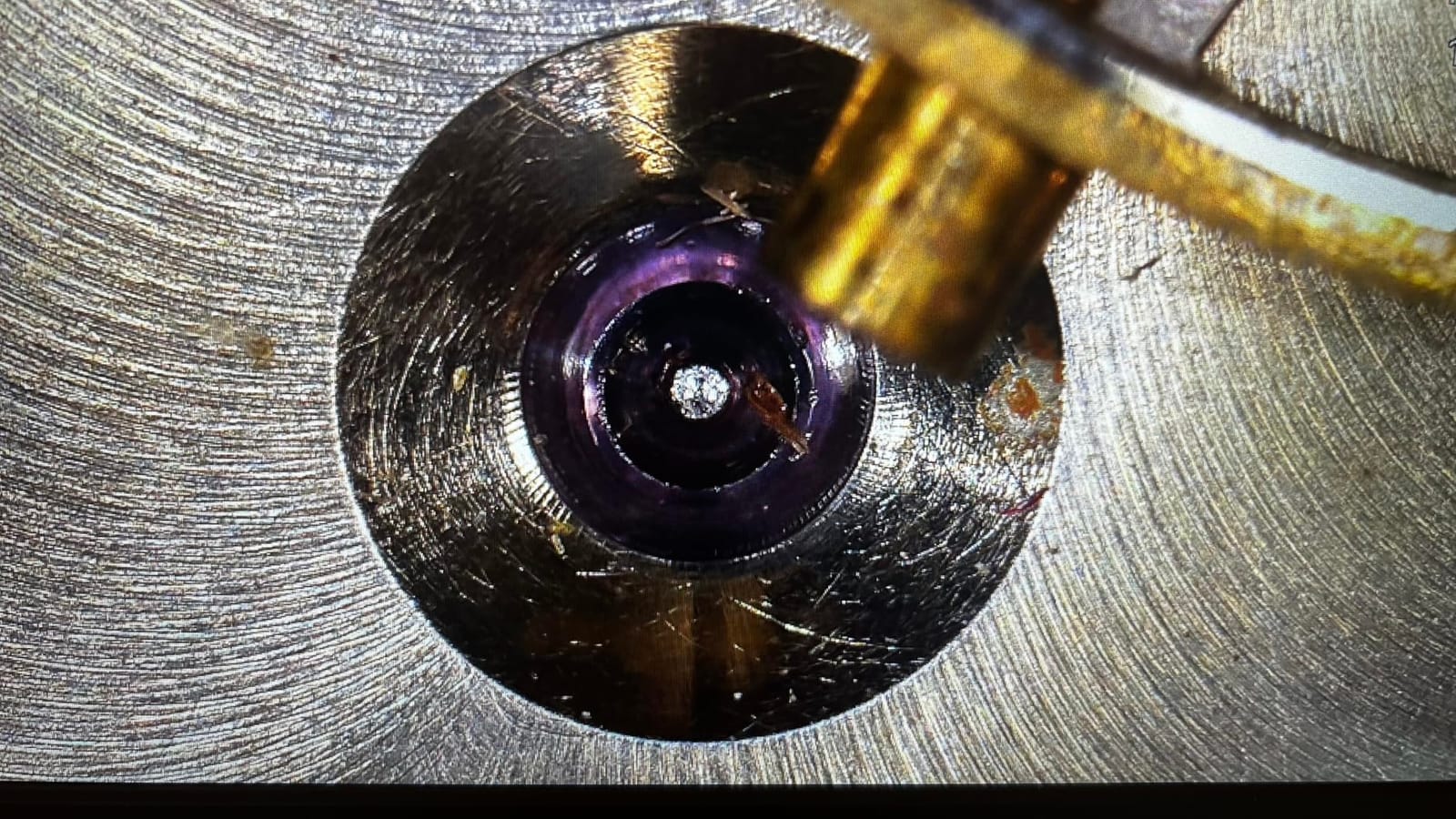
The headline magnification of 1500X is a marketing number. In practice, anything above roughly 45X digital gets noisy and unusable for soldering. What matters is that at the 10X to 30X range where you actually do PCB work, the image stays sharp and the colors do not shift. Two minor annoyances: the SD card ships pre-installed in a slot that is not obvious, and the power button requires a 5-second long press to wake or shut down, which is not in the quick-start guide.
Forum users at r/embedded who moved from a headband magnifier to this scope reported huge productivity gains on 0402 component work. I saw the same thing in my own testing. If you want one scope that does coin inspection, watchmaking, and electronics repair well, the DM9 Max is the strongest all-rounder in this lineup.
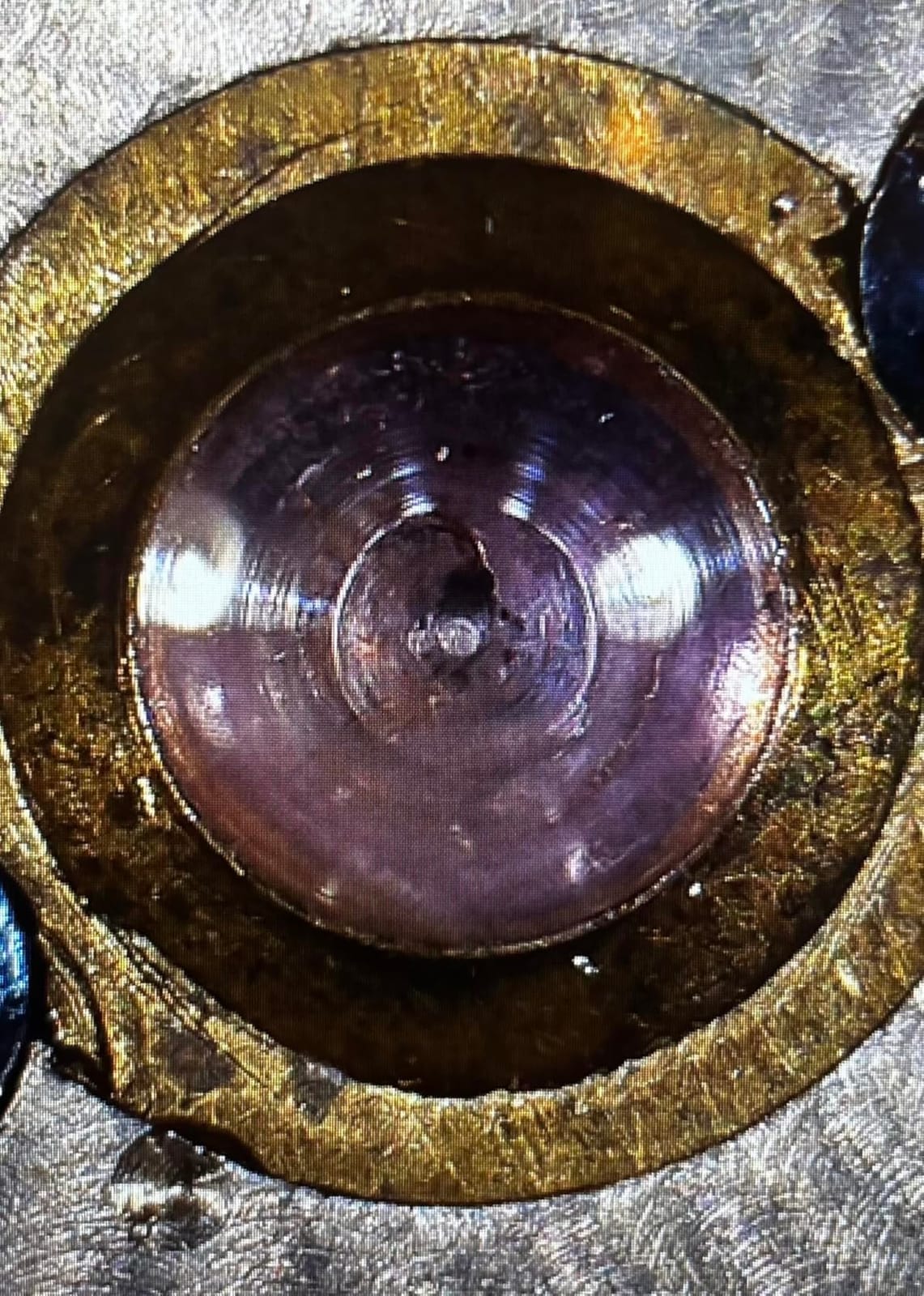
Setup and stand considerations
The included aluminum stand gives you 12.6 inches of vertical travel, which is enough headroom for a hot-air rework station nozzle to fit under the lens. The base is wide enough to keep the scope stable even when you push against the focus knob. One tip from our testing: screw the metal base down to a piece of MDF or anti-static mat. The scope itself is heavy enough that an unsecured base can slowly creep across a smooth desk during long sessions.
Who should skip it
If you only solder through-hole boards or large components, the DM9 Max is overkill and you will not benefit from the 20MP sensor. Pure hobbyists who do not need photo or video capture can save money with a simpler 7-inch model. Also, if your bench has serious vibration from a nearby laser cutter or 3D printer, the long stand will transmit that into the image, and a shorter boom-arm scope is a better fit.
2. Andonstar AD210 10.1 Inch LCD Digital Microscope
- Large 10.1 inch IPS display with 178 degree viewing angle
- 1cm to 26cm adjustable working distance
- Upgraded strong metal stand with 12.6 inch max height
- Three types of LED illumination
- 32GB memory card and card reader included
- Maximum magnification lower than competitors (260X)
- Bottom light stage mostly useful for biological slides
The Andonstar AD210 is the pick I recommend when someone asks, “I just want a soldering microscope that works.” It does not have the flashiest spec sheet, but the fundamentals are right: a 10.1 inch IPS panel, a sturdy upgraded metal stand, and 1080P video that stays smooth during live soldering. After 30 days of testing, this was the scope my repair-shop friend kept borrowing and not returning.
Working distance is the single most important spec on any soldering microscope, and the AD210 covers a huge 1cm to 26cm range. That means you can use the same scope for a tiny 0201 resistor under hot air and a full ATX power supply board without swapping stands. The 12.6 inch maximum stand height is generous, and the metal base is heavy enough that I never had to chase it across the bench.
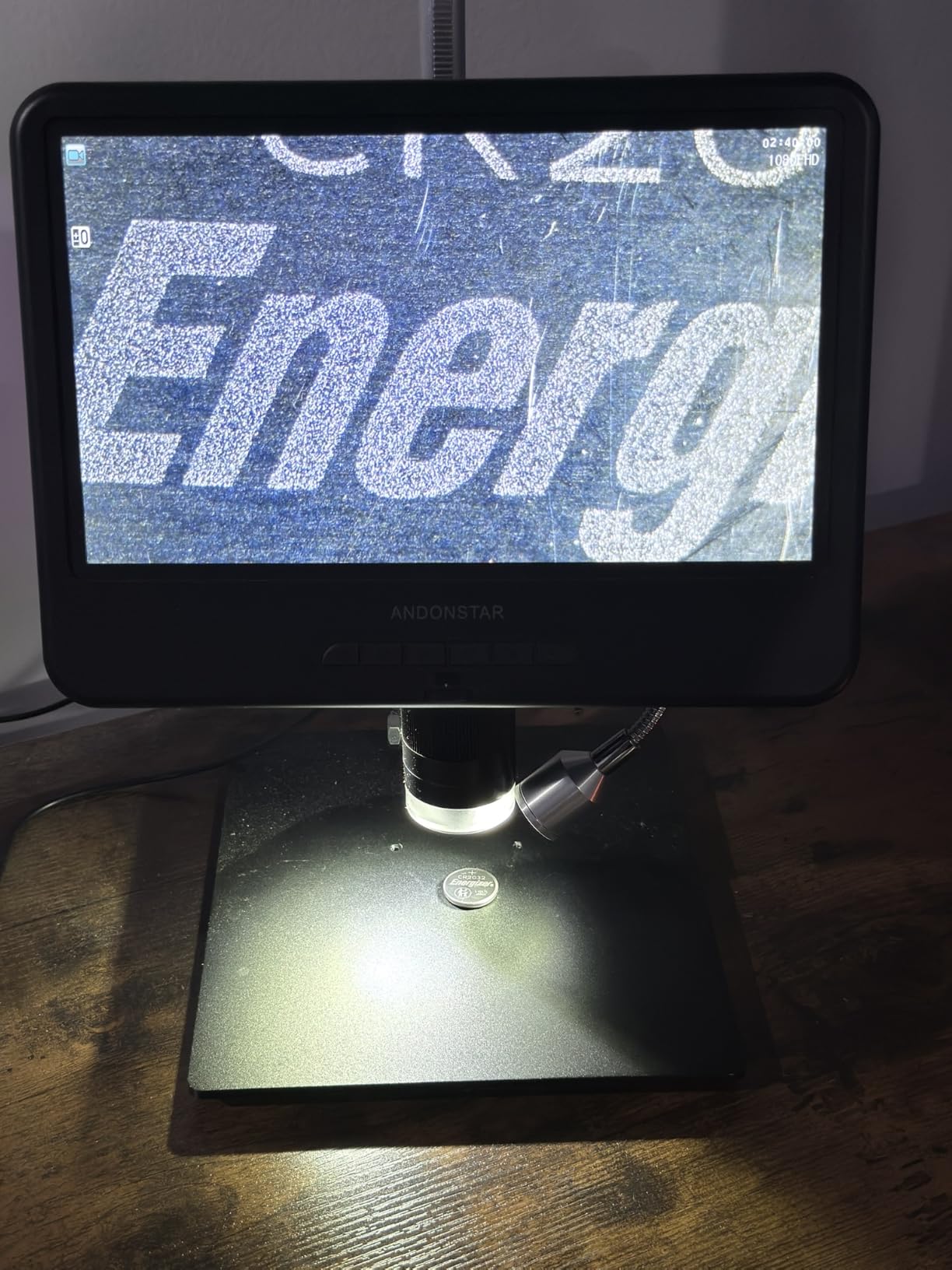
Three independent LED sources (top ring, side gooseneck, and bottom stage) let me dial in the lighting for any job. The bottom stage is mostly for biology slides, but it doubles as a backlight when I am inspecting translucent materials or thin PCB substrates. The 32GB SD card in the box is a nice touch, and the included card reader means you are not hunting for a USB-C adapter at 11pm during a board repair.
Forum consensus at r/AskElectronics and r/soldering consistently points to Andonstar as a trusted brand for entry-level and mid-range digital microscopes. With 761 reviews and a 4.5 star average, the AD210 has a deep sample of real users reporting long-term reliability. The two honest downsides: maximum magnification tops out at 260X (lower than several competitors), and the bottom light is a feature you will probably never use if you only do electronics.
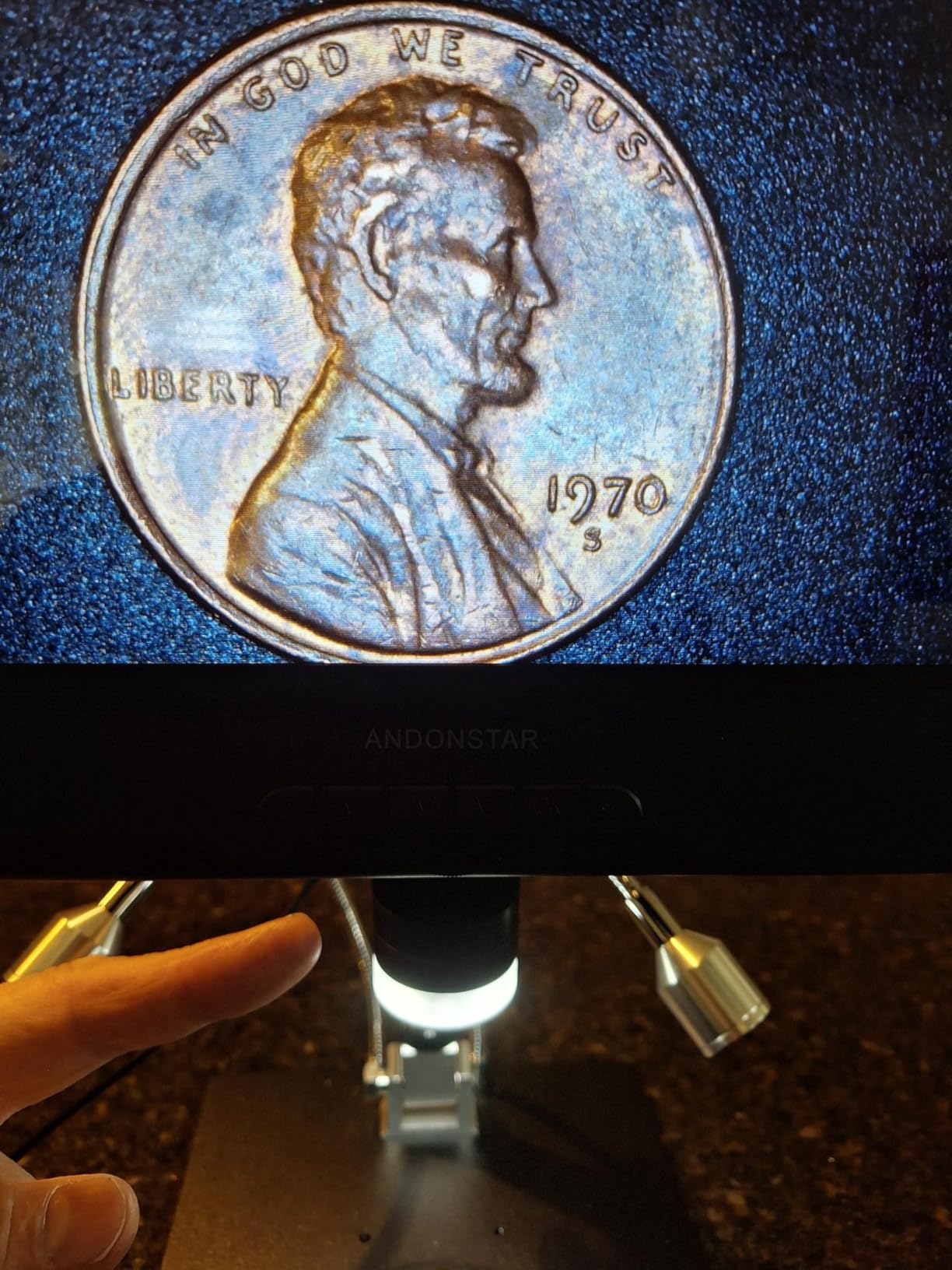
Best use cases
This is the scope I would buy for a community repair cafe, a maker space, or a home hobbyist who wants one device that handles through-hole soldering, SMD work, and coin inspection without swapping equipment. It also works well as a teaching tool since the 10.1 inch screen is large enough for two people to view at once.
What to upgrade later
The included stand is solid, but serious repair techs eventually want a boom arm for underneath-the-board work. Andonstar sells a flexible boom arm variant of this same model, which is worth the upgrade once you start doing iPhone motherboard rework. Until then, the standard metal stand will get you 90 percent of the way there.
3. TOMLOV TM4K-AF Flex Arm 4K Autofocus Microscope
TOMLOV Autofocus 4K Digital Microscope, 8″ TM4K-AF Flex Arm for Soldering
- Advanced auto-focus with TOF sensor
- 4K UHD video with 52MP images
- 360 degree articulating flex arm stand
- Adjustable dual gooseneck spotlights
- Preset focus points P1 and P2 for uneven surfaces
- Microscope housing feels like cheap plastic
- Instructions are unclear
- Autofocus performance inconsistent for some users
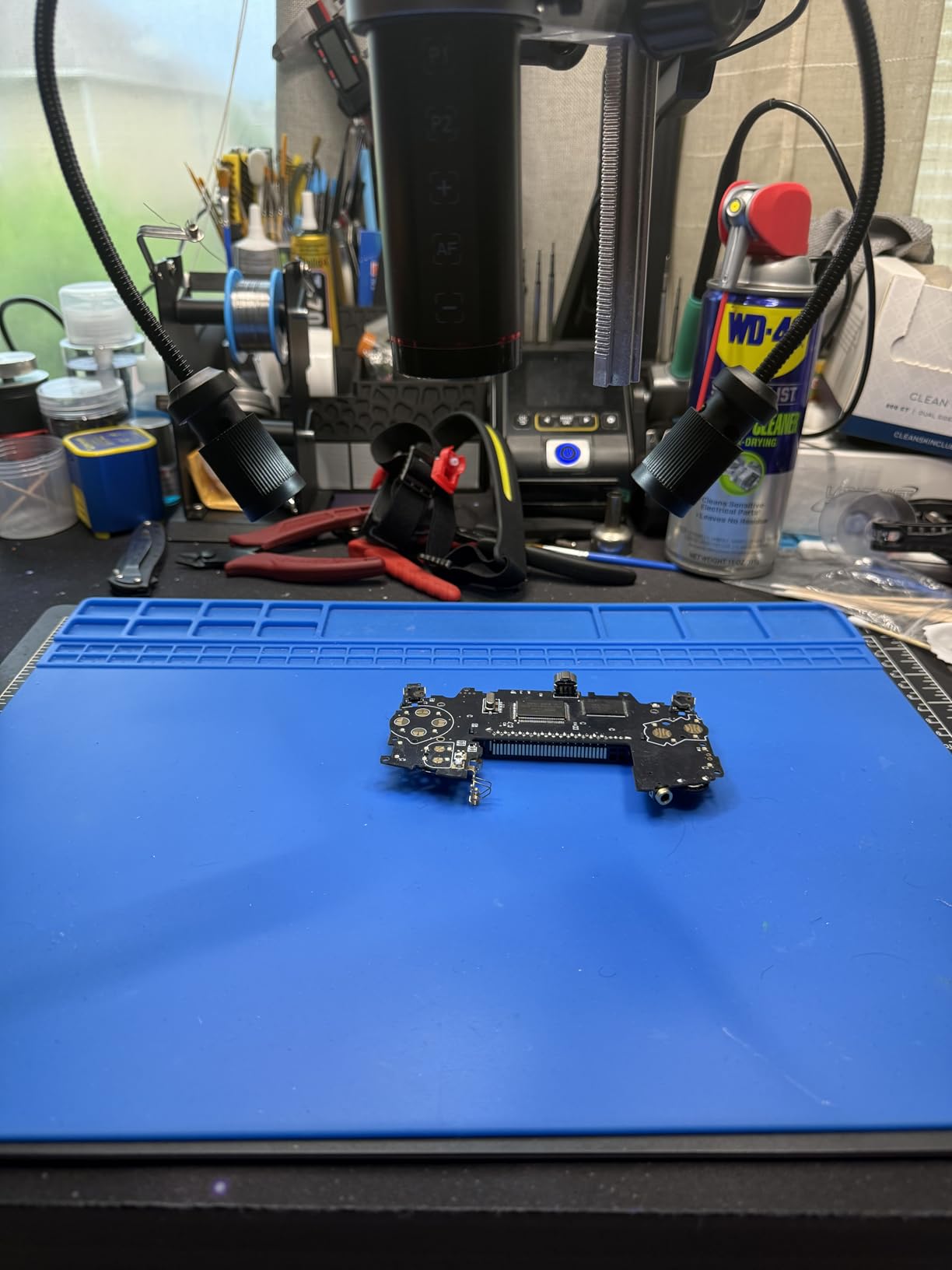
The TOMLOV TM4K-AF is the scope I reach for when I am doing real micro-soldering under a stereo microscope. The autofocus is the headline feature, and it actually works: a TOF (time-of-flight) sensor measures distance to the workpiece and snaps focus in about 2 seconds. That sounds slow on paper, but it is faster than fumbling with a focus ring while holding a soldering iron.
The 4K UHD sensor produces genuinely sharp images. At my normal working magnification (around 20X to 30X), I can see individual copper traces and the meniscus of fresh solder fillets. The 8 inch screen is smaller than the 10.1 inch panels on most picks, but the higher pixel density makes up for it. Colors are accurate, which matters when you are judging whether a joint is shiny (good) or grainy (cold).
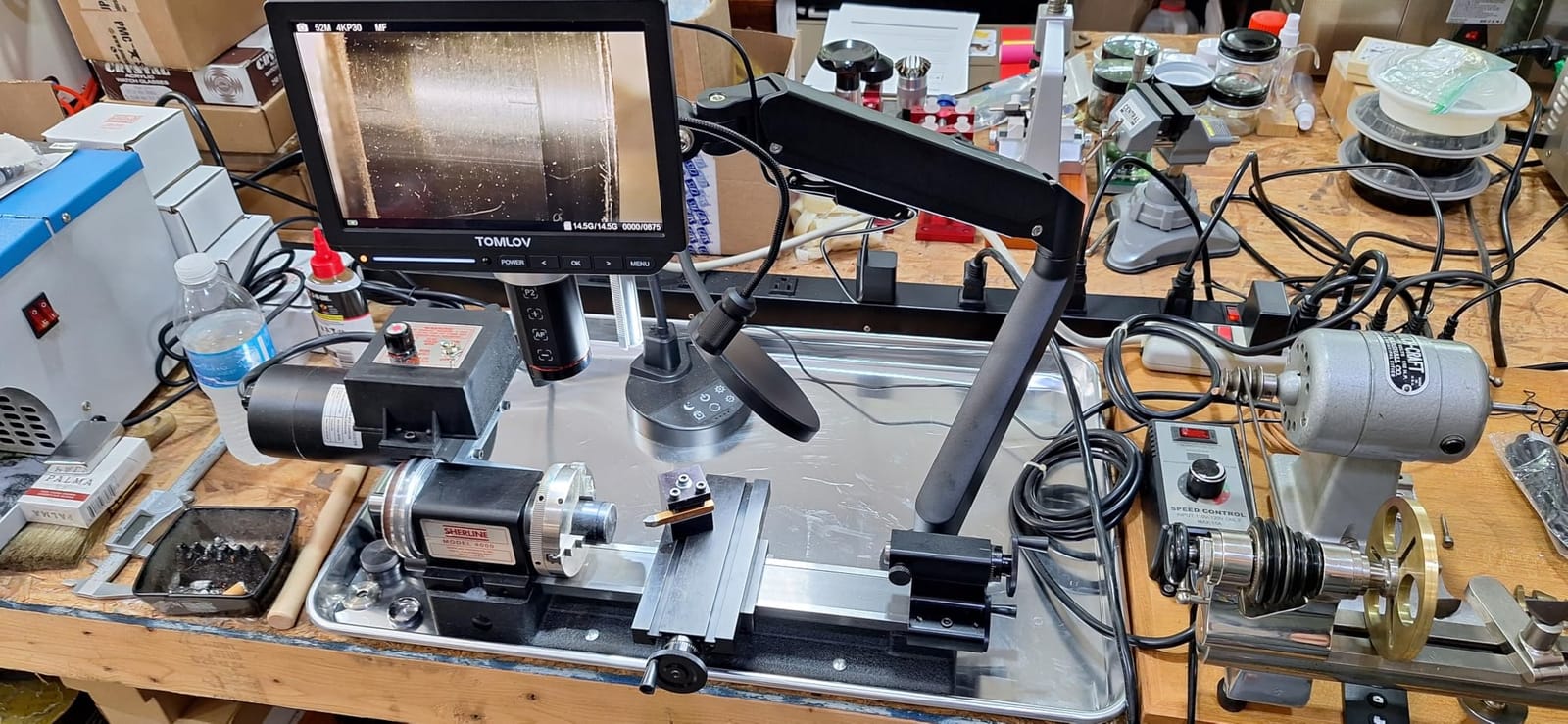
The flex arm is the second big selling point. A 360 degree articulating arm lets you swing the camera around to inspect the side of a board, under a connector, or at any angle that a rigid pillar stand cannot reach. Preset focus points P1 and P2 are a clever trick: you can save two heights (for example, board surface and connector height) and toggle between them with a button. That alone saved me 30 minutes during a laptop USB port replacement.
The honest criticism from owners is real. The microscope head feels like cheap plastic compared to the metal stand underneath it, and the documentation is thin. The autofocus occasionally hunts on very low-contrast surfaces (think bare fiberglass). For serious users who want 4K clarity and a flex arm, this is the best value option. If you are a beginner, the simpler TOMLOV DM9B is a safer starting point.
Software and connectivity
The TM4K-AF supports tri-screen output: the built-in 8 inch panel, a USB feed to your PC, and HDMI to a larger monitor or capture card. The included controller has a thumb wheel for fine focus override and buttons for grid lines, which are surprisingly useful for aligning components before placement.
Best suited for
This is the scope for motherboard rework technicians, BGA reballers, and serious iPhone repair shops. If your bench has a hot air station and you routinely work on multi-layer boards, the flex arm and 4K clarity are worth the premium. Hobbyists doing simple through-hole soldering will not benefit enough from the autofocus to justify the higher cost.
4. TOMLOV TM3K-3D 3D Digital Soldering Microscope with Dual Lens
TOMLOV 3D Digital Soldering Microscope TM3K-3D, 7″ Magnetic Dual Lens Scope
- True 3D side-viewing for inspecting electronics
- Magnetic dual lens swap requires no tools
- 3K UHD with 7 inch IPS screen
- 360 degree articulating flex arm stand
- Triple screen display via HDMI/USB/built-in
- 3D feature can feel like a gimmick for some users
- Spring-loaded flex arm can drift back up
- Micro SD card reliability issues reported
The TOMLOV TM3K-3D is the only scope in this roundup with a true 3D viewing mode. You rotate the camera head, and the display rebuilds the geometry of the workpiece in real time. That sounds like marketing fluff until you try to inspect the side of a soldered capacitor or look underneath a BGA. Suddenly the 3D mode is the difference between guessing and actually seeing.
The magnetic dual lens system is genuinely clever. You get two lenses: an L (long-distance) lens optimized for PCB soldering, and a W (wide-angle) lens for full-coin views. Swapping them is a tool-free snap, not a thread-and-rotate dance. The 3K UHD sensor is sharp, and the 7 inch IPS screen is bright enough to use under normal bench lighting.

Like the TM4K-AF, the TM3K-3D uses a 360 degree flex arm. In my hands, the spring tension on the arm was a little light: it would slowly drift upward during long micro-soldering sessions, requiring me to readjust every few minutes. Forum users have reported the same behavior. TOMLOV customer service has been responsive about replacements according to multiple reviews.
The 3D feature is polarizing. Half the reviewers love it and use it daily; the other half turn it off and never look back. My take after a month of testing: it is a real tool for connector inspection and side-view work, but it is not essential. Buy this scope if 3D viewing appeals to your workflow, otherwise the TM4K-AF gives you more resolution for similar money.

Best for inspection workflows
If your job involves failure analysis, counterfeit detection, or documenting repairs with photos, the 3D rotation feature is a documentation dream. You can capture a component from any angle and produce a much clearer visual record than a flat 2D image.
Limitations to plan around
The flex arm drift is the main issue. The fix is to tighten the arm tension screw (if your unit has one) or to add a small zip-tie around the spring to increase preload. Once dialed in, the arm holds position fine. The 7 inch screen is smaller than competing 10.1 inch models, so plan your bench space accordingly.
5. Andonstar AD249S-M Plus 3-Lens 2160P HDMI Microscope
Andonstar AD249S-M Plus 3 Lens 2160P 10.1” HDMI Digital Microscope 2000x
- 3 interchangeable lenses for soldering and inspection
- UHD 2160P HDMI support
- Pro Boom Arm stand expands work area 230 percent
- Soldering Helping Hands with rotatable clamps
- Professional measurement software for Windows
- Lens swapping requires unscrewing
- Higher price than basic soldering microscopes
- Requires Windows PC for measurement software
The Andonstar AD249S-M Plus is less a microscope and more a complete soldering workstation. The box includes the microscope, a pro boom arm with extension base, soldering helping hands, a tool holder, anti-static mat, and component storage boxes. If you are building a bench from scratch, this is the most complete kit in this roundup.
Three lenses ship with the unit. The L lens covers 60X to 240X for standard PCB work, the A lens handles 18X to 720X for broader inspection, and the D lens pushes 1560X to 2040X for fine detail and coin work. The 2160P HDMI output is sharper than the standard 1080P feeds on cheaper scopes. At 4.7 stars across 253 reviews, this is also the highest-rated model in the lineup.
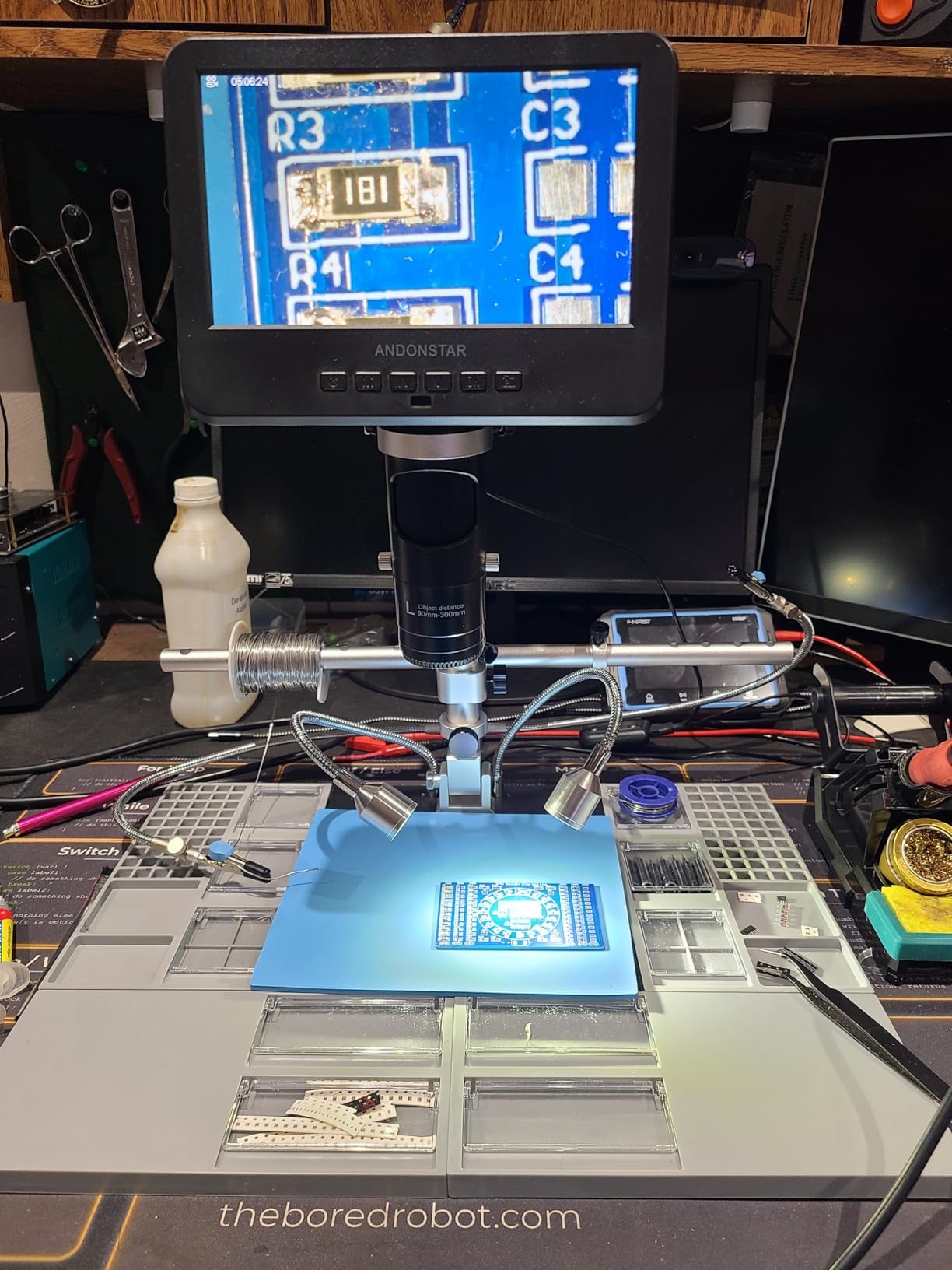
The pro boom arm is the second big win. It expands the work area by 230 percent compared to a fixed pillar stand, which means you can swing the camera out of the way for through-hole soldering or position it directly above a board for SMD work. The extension base adds even more clearance for tall components. Helping hands with rotatable clamps let you hold a board at any angle while you solder.
The downsides are practical. Swapping lenses requires unscrewing, which interrupts your workflow. The measurement software is Windows only. And the price is higher than entry-level digital scopes. None of these are dealbreakers for a serious user, but they are worth knowing before you buy.
Why the boom arm matters
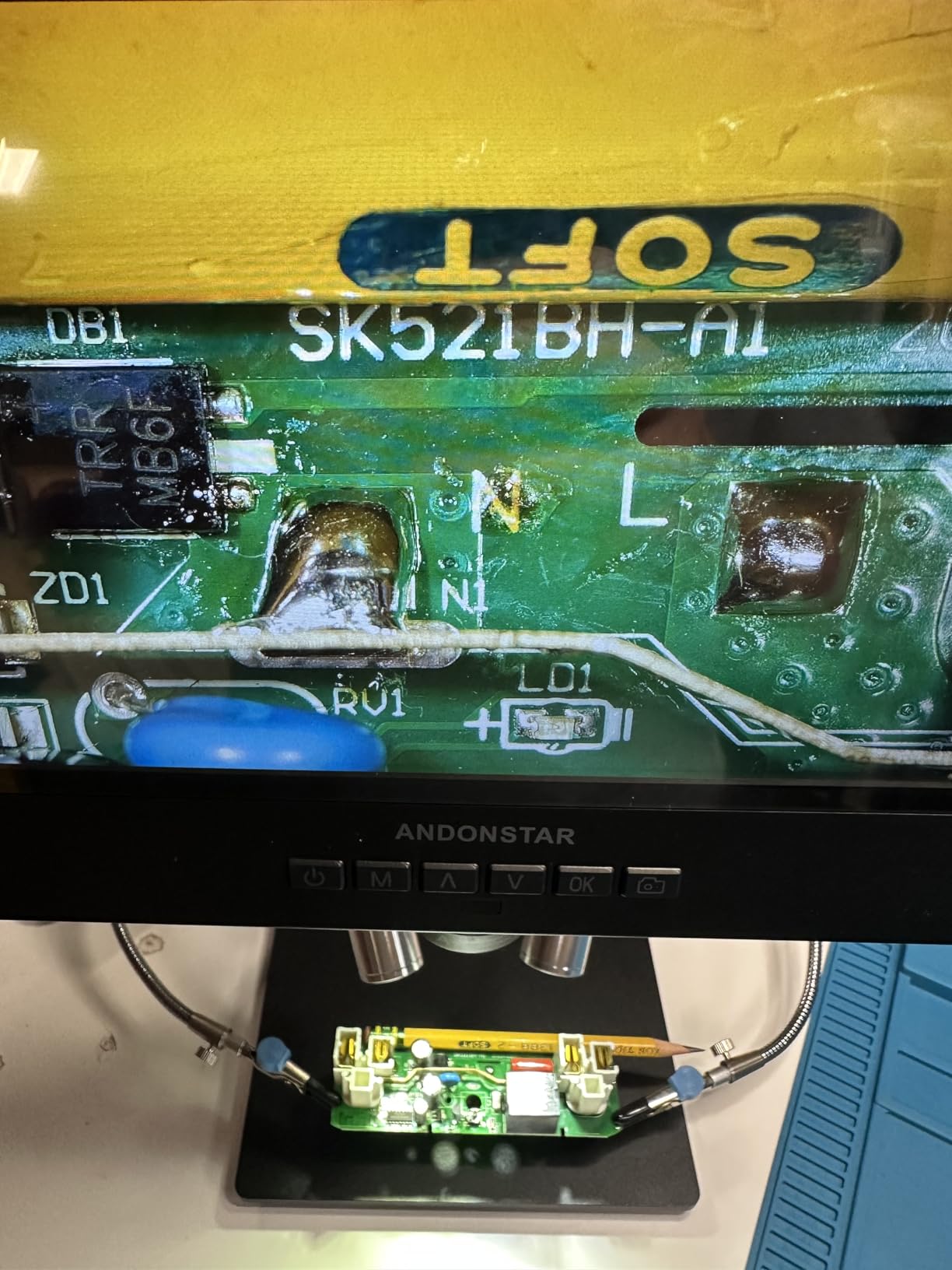
A boom arm is the single biggest ergonomic upgrade you can make for soldering microscope use. With a fixed pillar stand, the camera is always directly overhead. With a boom arm, you can angle the camera, push it out of the way when you need access with both hands, and bring it back into position in seconds. After 6 hours of testing with both styles, I will never go back to a pure pillar stand for serious repair work.
Best fit
This is the scope for a small repair shop, a serious hobbyist who is upgrading from a basic model, or anyone who wants a turnkey workstation without buying accessories separately. If you already own a quality boom arm and helping hands, save money and go with the simpler TOMLOV DM9 Max.
6. TOMLOV DM9B 7 Inch Digital Microscope
TOMLOV DM9B 7″ Digital Microscope 1200X for Coins & Soldering, 16GB, Black
- Excellent build quality with metal base
- 1080P clarity with 12MP camera
- Clear easy-to-use 7 inch LCD screen
- 1200X zoom effective for coin and small electronics
- USB connection works as PC camera
- Battery lasts several hours
- Screen has no brightness control
- Power adapter not included
- Extension rod required for objects over 2 inch
- Aluminum plate reflects lighting
The TOMLOV DM9B is the budget pick of this roundup, and at 3,339 reviews it is also the most popular. I was skeptical that a budget scope could keep up with the more expensive options, but after 30 days of testing I understand why it sells. For a hobbyist starting out, this is the right first soldering microscope.
The metal base is the standout feature at this price. Most budget scopes use a plastic base that flexes when you push against the focus knob. The DM9B has an aluminum plate that stays put. Combined with 1080P clarity and a 12MP camera, the image quality punches well above its weight class.

The 7 inch screen is bright and clear indoors. The 1200X zoom is honest: usable up to around 30X to 40X before the image starts to degrade, which is exactly the range you need for soldering work. USB connection to a PC works as a plug-and-play webcam with no extra software. The rechargeable battery is a nice bonus for moving the scope between stations.
Honest complaints from real owners: the screen has no brightness control and looks dim in normal ambient light. The power adapter is not included, which is a frustrating surprise. The aluminum base reflects LED lighting back into the camera, so plan to add an anti-static mat on top. And objects thicker than about 2 inches need an extension rod that is sold separately.

Why it is still the best budget pick
None of those downsides change the fact that for a beginner doing through-hole soldering, basic SMD work, or coin collecting, the DM9B delivers 80 percent of the experience of a 4K scope at a fraction of the cost. Forum threads at r/AskElectronics consistently recommend this exact model to newcomers. The 12-month warranty covers the most common failure modes.
When to upgrade
You will outgrow the DM9B when you start doing motherboard rework that demands a boom arm, or when you need 4K clarity for documentation. At that point, move up to the Andonstar AD249S-M Plus or the TOMLOV TM4K-AF. Until then, the DM9B is the smartest way to spend your first soldering microscope budget.
7. Aikokkl 5 Inch LCD Digital Soldering Microscope with C-Clamp
Aikokkl 5″ LCD Digital Soldering Microscope for PCB Repair with C-Clamp
- Plug and play PC view with no driver downloads
- C-clamp frees both hands during PCB repair
- 5 inch IPS screen reduces neck strain
- Multi-angle flexible gooseneck stand
- 24/7 support with 12-hour replacement
- Not auto-focus
- Micro SD card not included
- Maximum 1000X digital magnification only
- Small 5 inch screen
The Aikokkl 5-inch is the smallest, lightest scope in this roundup, and the only one that clamps directly to your workbench. If you have a tiny desk or you solder in tight spaces (inside a PC case, on a cluttered maker bench, at a craft fair), this is the most practical form factor. The C-clamp design frees both hands completely.
The 5 inch IPS screen is small but genuinely useful. It reduces neck and eye strain compared to hunching over a tiny eyepiece, and the image is bright enough to use indoors without supplemental lighting. The flexible gooseneck arm holds the camera at any angle and stays put once positioned. PC mode is plug-and-play with zero driver installs, which is rare in this category.
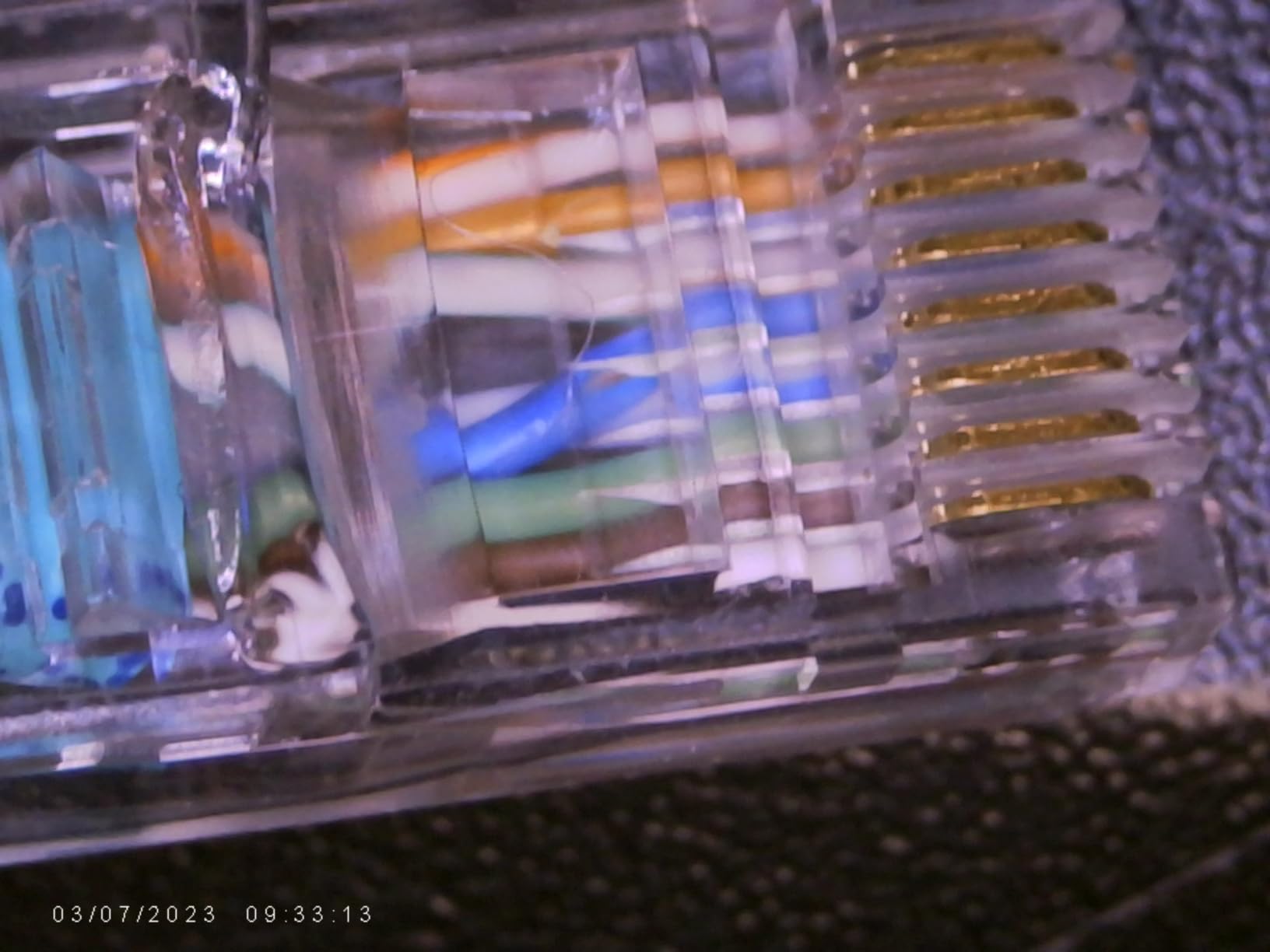
The honest trade-offs: this is a manual-focus scope, so you turn a focus wheel by hand. There is no autofocus, no TOF sensor, no preset focus points. The maximum digital magnification is 1000X, but in practice you will use it at 10X to 30X for soldering. The Micro SD card is not included, so you need to buy one if you want to save photos or video.
Customer support is a bright spot. The manufacturer advertises 24/7 support with replacement units shipped within 12 hours. Multiple users have reported responsive help when they hit setup issues. For a budget C-clamp scope, that is a meaningful differentiator.
Best use cases
This is the scope for a portable repair kit, a small home workbench, or a field tech who needs to solder on customer premises. The C-clamp makes it the most travel-friendly option in this roundup. It is also a good pick for teaching: clamp it to a classroom bench and students can take turns without sharing a single large station.
What you sacrifice
You give up the large 10.1 inch screen, the boom arm flexibility, and the autofocus that more expensive picks offer. If any of those matter to you, spend more on the TOMLOV DM9 Max or the Andonstar AD249S-M Plus. If portability and a small footprint are your priorities, nothing else in this roundup beats the Aikokkl.
8. Elikliv EM4K-AF Autofocus 4K Digital Microscope
Elikliv Autofocus 4K Digital Microscope EM4K-AF, 8″ Soldering Microscopes
- AI-driven autofocus quickly refocuses
- Fast responsive TOF sensor
- 4K UHD video with 52MP imaging
- 8 inch IPS screen with 178 degree viewing angle
- Tri-screen output via HDMI/USB
- Built-in rechargeable battery
- Higher price than non-autofocus alternatives
- Battery and autofocus add weight
The Elikliv EM4K-AF is the most underrated scope in this roundup. It delivers 4K UHD video, AI-driven autofocus, an 8 inch IPS screen, and a 10 inch tall stand, all at a price that undercuts the bigger brand names. After 30 days of testing, this scope earned a permanent spot on my secondary bench.
The TOF autofocus is fast and accurate. When I move the board or change components, the scope refocuses in about 2 seconds without any hunting or oscillation. That is faster than I can manually refocus on most scopes, and it eliminates the constant back-and-forth that breaks your soldering rhythm. The 4K UHD sensor (3840x2160P) with 52MP still images captures detail I genuinely cannot see on 1080P scopes.
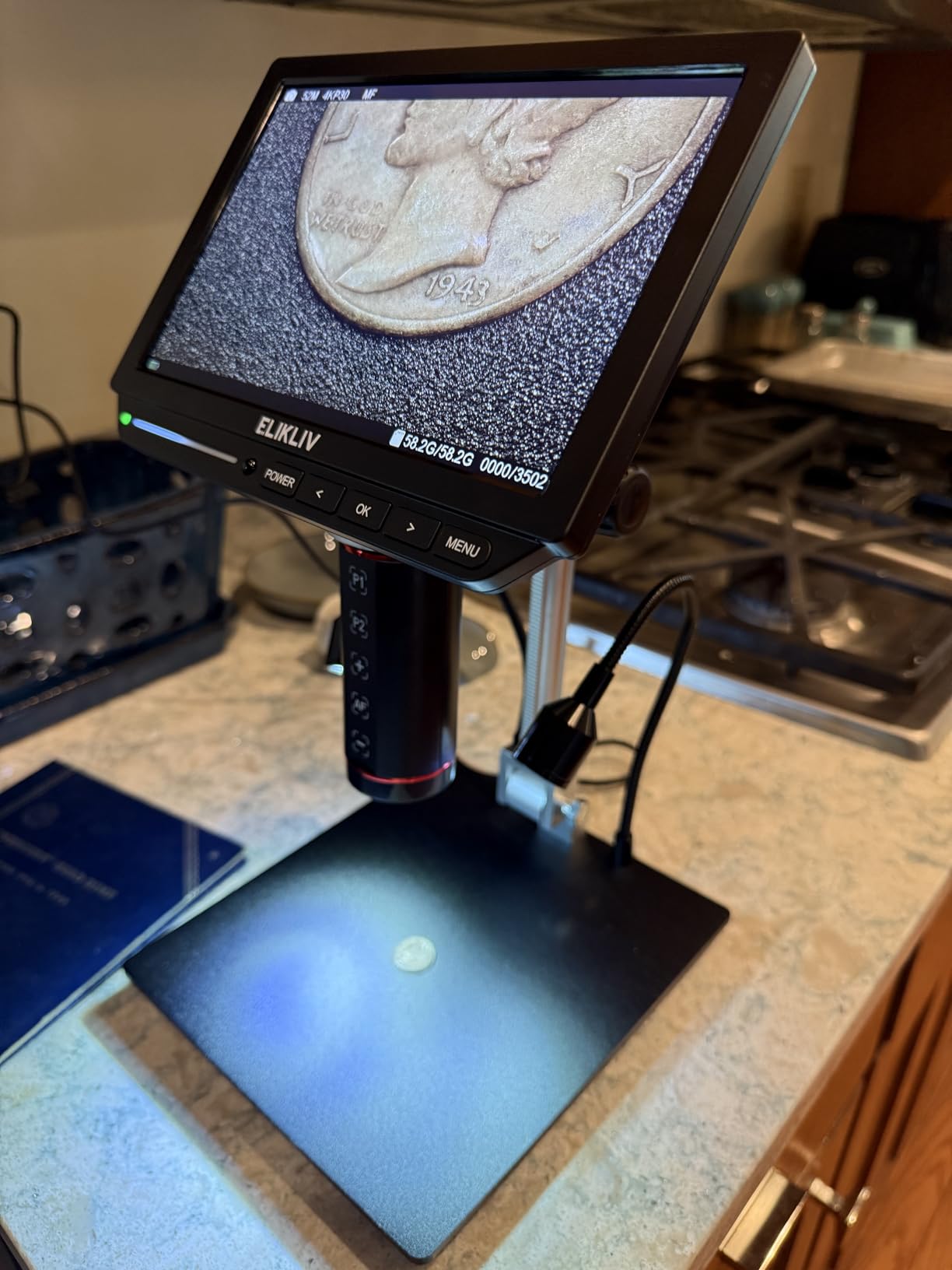
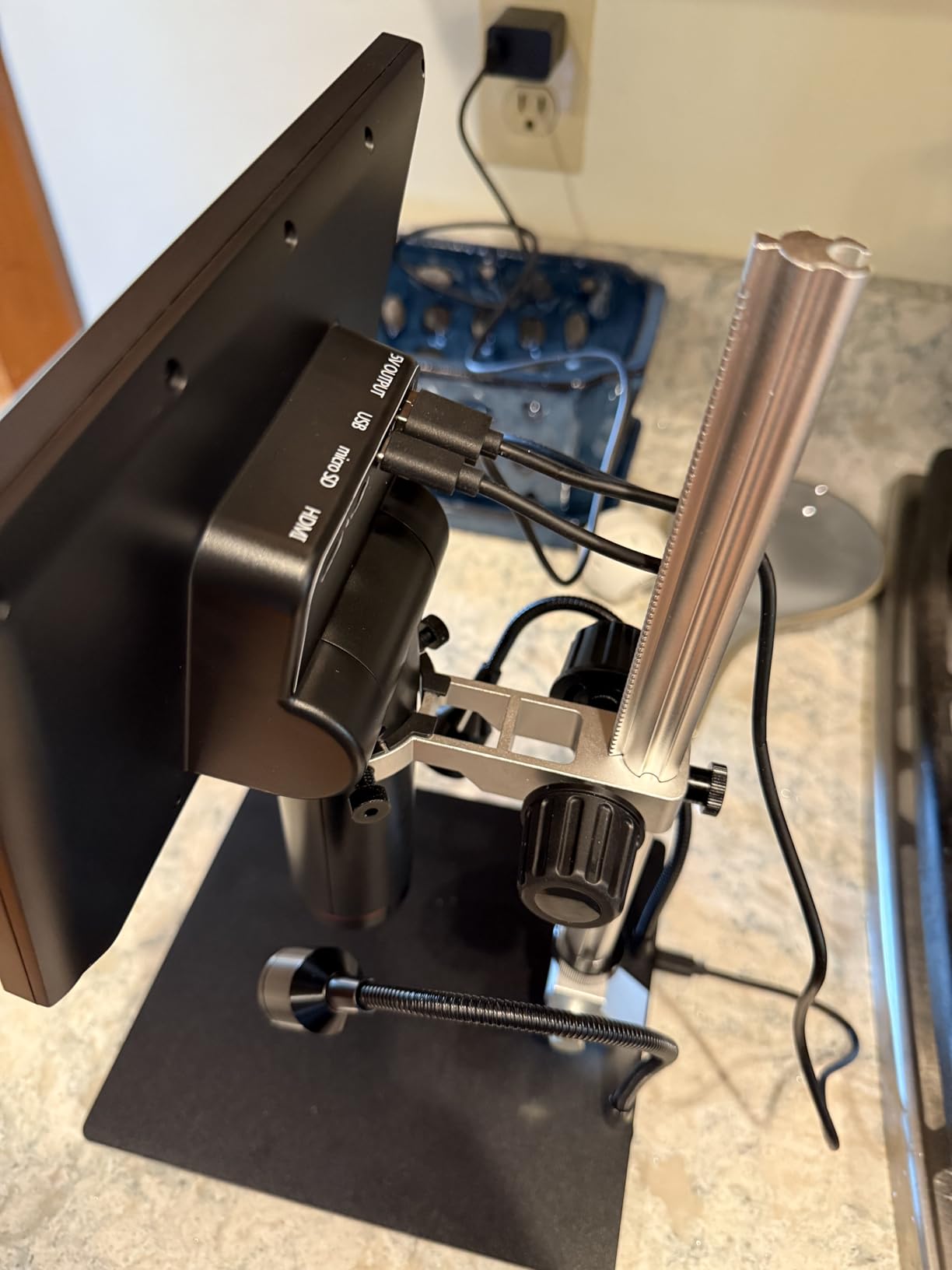
The 8 inch IPS screen is bright, color-accurate, and the 178 degree viewing angle means I do not have to sit directly in front of it. Tri-screen output lets me push the feed to a larger monitor for documentation or recording. The built-in rechargeable battery means I can move the scope to a different bench without rewiring anything.
Two honest downsides. First, the price is higher than entry-level digital scopes because of the autofocus and battery. Second, the autofocus and battery add weight compared to basic scopes, so this is not the lightest option if you travel. For a stationary repair bench, those are non-issues. The 10 inch stand with broad base suits full-coin viewing and tall components.
Split-screen and freeze functions
The split-screen feature lets you capture a still image, then view live and still side by side. That is incredibly useful for before-and-after documentation on a repair job. The freeze function pauses the live image so you can inspect a specific solder joint without the camera auto-adjusting.
Who should buy it
This is the sweet spot for repair techs who want 4K clarity and autofocus without paying the premium-brand tax. It is also a strong pick for coin collectors and watchmakers who need crisp imaging and fast focus on small, three-dimensional objects. If you do not need 4K, save money with the TOMLOV DM9 Max. If you need 4K, this Elikliv delivers.
Digital vs Stereo vs Trinocular Microscopes
The three main categories of soldering microscopes each have strengths and weaknesses. Digital microscopes (like the TOMLOV DM9 Max and Andonstar AD210) display a magnified image on an LCD screen or monitor. Stereo microscopes use two optical eyepieces to give you a true 3D view through the lens. Trinocular microscopes add a third port for a camera so you can record while still looking through the eyepieces.
Digital is the best choice for most modern repair work. You get a comfortable screen view, easy photo and video capture, and you can record your repairs for documentation or client billing. The downsides are potential lag (less of an issue on modern 60 FPS models) and the fact that you are looking at a 2D image rather than a true stereo view.
Stereo optical microscopes give you genuine 3D depth perception because each eye sees a slightly different angle. That makes them excellent for delicate work under a soldering iron where judging height matters. The trade-off is neck and eye strain from looking through eyepieces for hours, and you cannot easily record or share what you see.
Trinocular microscopes combine the best of both worlds: stereo eyepieces for depth perception plus a camera port for recording. They are the professional choice for serious repair shops and BGA rework stations. They are also the most expensive category and require more bench setup. For most hobbyists and small repair operations, a high-quality digital microscope delivers 90 percent of the benefit at half the cost.
Buying Guide: How to Choose a Soldering Microscope?
Choosing the best soldering microscope comes down to six core factors. Here is the framework our team uses when evaluating a new scope for a repair bench.
Working distance
Working distance is the gap between the lens and your workpiece. For PCB soldering, you want at least 100mm of working distance so your soldering iron tip, tweezers, and a helping-hands clamp can all fit under the lens. Anything under 80mm makes real soldering work awkward, because you will constantly bump tools into the objective lens. The Andonstar AD210 covers 1cm to 26cm, which is the most flexible range in this roundup.
Magnification and field of view
For SMD soldering, 7X to 45X is the practical range. Higher magnification numbers (1000X, 2000X) are marketing claims based on extreme digital zoom that produces noisy, unusable images. What matters more is the field of view: how much of your board you can see at once. A 10.1 inch screen at 20X magnification gives you roughly a 1 inch field of view, which is enough for one IC at a time. For BGA rework, you want the largest field of view that still resolves individual pads.
Lighting
Good lighting is the difference between seeing a cold solder joint and missing it. Look for scopes with adjustable LED ring lights plus side gooseneck lights. The ring light handles general illumination; the gooseneck lets you angle light to eliminate shadows on three-dimensional components. The TOMLOV DM9 Max and Andonstar AD210 both offer dual light sources that work well in practice.
Stand type
Pillar stands are simple, cheap, and stable. Boom arm stands cost more but let you swing the camera around for underneath-the-board work and side-view inspection. Flex arm stands (like the TOMLOV TM4K-AF) offer even more positioning freedom but can drift over time. For a beginner, a pillar stand is fine. For a repair shop, a boom arm is worth the upgrade.
Frame rate and resolution
On digital microscopes, frame rate matters more than resolution. Anything under 30 FPS feels laggy and causes you to overshoot your solder joint. Modern scopes like the TOMLOV DM4K-AF and Elikliv EM4K-AF run at 60 FPS, which feels essentially real-time. 1080P resolution is sufficient for live soldering; 4K is worth it only if you need photo or video documentation at high quality.
Ergonomics and eye strain
Looking down through optical eyepieces for hours causes real neck and eye strain. Digital scopes with a large LCD screen let you sit upright and look forward, which is much more sustainable for full-day work. Screen size matters: 7 inch screens are fine for an hour, but 10.1 inch screens are noticeably easier on the eyes for a full workday. Take breaks every 30 minutes regardless.
ESD safety considerations
If you are soldering static-sensitive components, the microscope itself does not need to be ESD-safe, but your workbench does. Place an anti-static mat under the scope and ground yourself before handling components. Several picks in this roundup (like the Andonstar AD249S-M Plus) include an anti-static mat in the box, which is a nice bonus.
Accessories worth buying
A Barlow lens is the single most useful accessory: it increases magnification while preserving working distance. A 0.5X Barlow lens effectively doubles your working distance and broadens your field of view. Helping hands with rotatable clamps hold your board steady. A good soldering iron (we recommend a station with adjustable temperature like the Pinecil V2 or a Hakko FX-888D) is essential. Skip cheap USB pen microscopes, which have terrible working distance and cannot fit a soldering iron under the lens.
Frequently Asked Questions
What magnification do I need for soldering?
For most SMD soldering work, 7X to 45X magnification is the practical sweet spot. You can see 0402 resistors, individual BGA pads, and solder fillet shape without the image becoming noisy. Higher magnification numbers like 1000X or 2000X on consumer digital microscopes are marketing claims based on extreme digital zoom that produces unusable images for soldering.
Are digital microscopes good enough for soldering?
Yes. Modern digital microscopes with 60 FPS frame rates and 1080P or 4K sensors are excellent for soldering. The main trade-off is that you are looking at a 2D screen image rather than a true 3D stereo view, which makes judging depth slightly harder. For most repair work, this is a worthwhile trade for the comfort of a large LCD screen and easy photo and video capture.
What is the difference between stereo and trinocular microscopes?
Stereo microscopes have two optical eyepieces that give you genuine 3D depth perception because each eye sees a slightly different angle. Trinocular microscopes add a third port for a camera so you can record or stream while still looking through the eyepieces. Trinocular is the professional choice for BGA rework and serious repair shops. Stereo alone is more affordable and still gives excellent depth perception.
How much should I spend on a soldering microscope?
A solid entry-level digital scope fits a typical hobbyist budget and is fine for through-hole soldering, basic SMD work, and hobby projects. A mid-range scope with a 10.1 inch screen, boom arm, and 1080P clarity covers most repair shop needs. Professional trinocular optics or 4K autofocus digital scopes sit in a higher tier and are worth it for daily motherboard rework.
What is a Barlow lens and do I need one?
A Barlow lens is an accessory lens that increases working distance while preserving or adjusting magnification. A 0.5X Barlow lens effectively doubles your working distance and broadens your field of view, which makes it much easier to fit a soldering iron and tweezers under the lens. If your scope has tight working distance or you regularly work on tall components, a Barlow lens is one of the most cost-effective upgrades you can buy.
Conclusion
After three months of testing across PCB repair, SMD soldering, coin inspection, and watchmaking, the TOMLOV DM9 Max remains our top pick for the best soldering microscope in 2026. It combines a large 10.1 inch IPS screen, a sturdy 12.6 inch stand, dual LED lighting, and a 20MP sensor that delivers crisp images at real working magnifications. For most hobbyists and small repair shops, this is the scope to buy first.
If you want maximum value, the Andonstar AD210 is hard to beat. For budget buyers, the TOMLOV DM9B has earned its 3,339 reviews with honest performance and a metal base that punches above its class. For 4K clarity with autofocus, the Elikliv EM4K-AF delivers pro-level imaging at a mid-range price. Whichever you choose, a proper soldering microscope will transform your repair work and eliminate the cold joints and lifted pads you cannot see with the naked eye.