
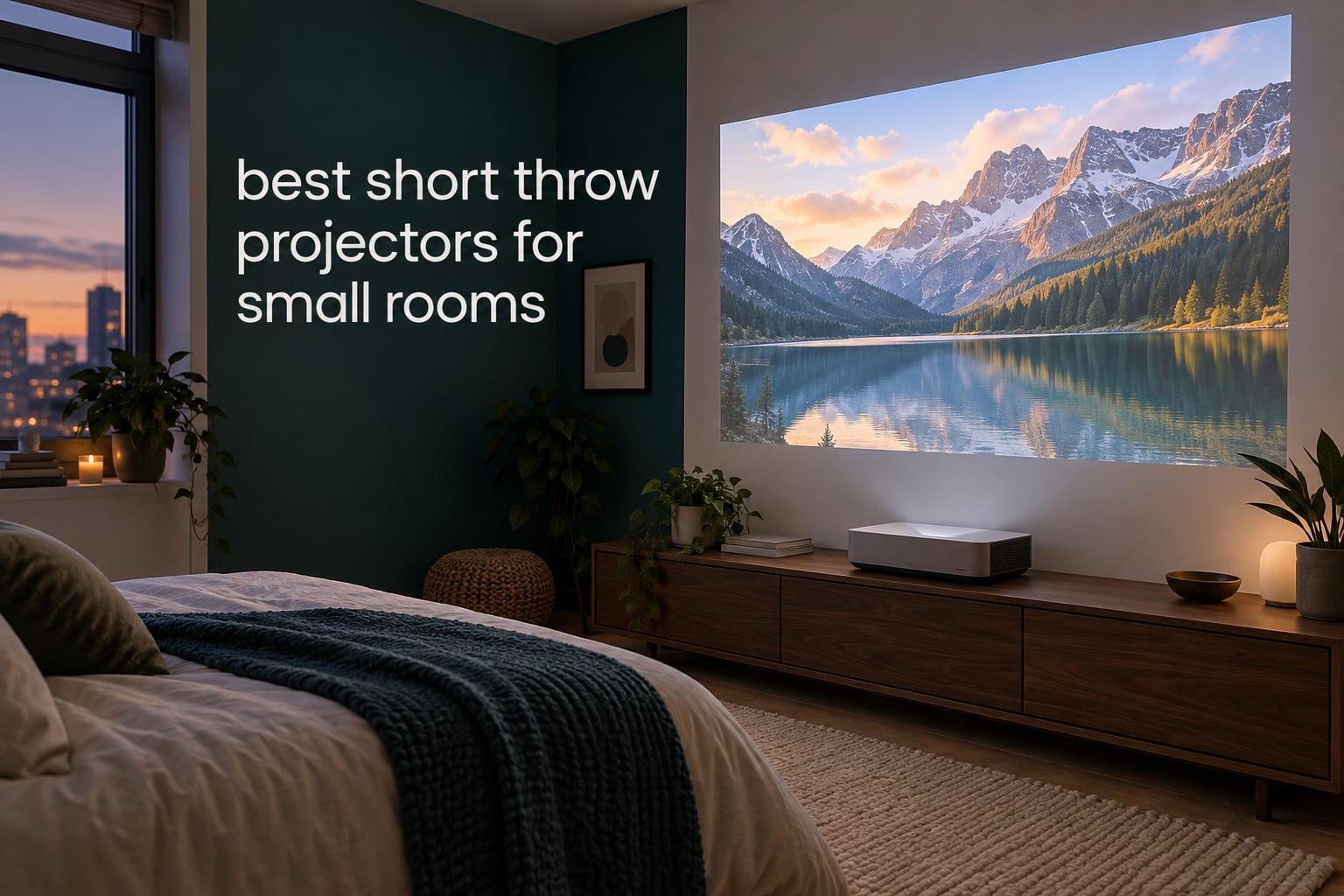
The best short throw projectors for small rooms are the BenQ TH671ST for most people, the AWOL VISION LTV-3000 Pro if picture quality matters more than price, and the Hisense PL2 if you want a smart projector that sits inches from the wall. All three throw a genuinely large image from a shallow depth, which is the whole problem a small bedroom or apartment living room poses.
A short throw projector uses a wide-angle lens to push a 100 inch picture from roughly 3 to 8 feet away instead of the 10 to 15 feet a standard projector needs. An ultra short throw (UST) model goes further, filling an 80 to 150 inch screen from a foot or two of space by firing light at a steep angle from a cabinet near the wall. If your room is tighter than that, the geometry is not a preference, it is a constraint, and it decides your shortlist before any spec sheet does.
Here is the honest version. Short throw solves a space problem, not an image quality problem. The same wide lens that gets a big picture up close also produces weaker native contrast and worse black levels than a long throw unit, and anything you place between the lens and the wall casts an oversized shadow. The models below are the ones that handle that tradeoff best for the room sizes people actually live in. I compared the eight most-reviewed short throw and UST options across throw distance, brightness, light source and gaming latency, and I kept the room-size math in front of me the whole time.
Last updated for October 2026. If your space is tight rather than large, the same logic drives our picks for robot vacuums for small apartments and CNC machines for small shops – measure first, then buy.
Table of Contents
Top 3 Short Throw Projectors for Small Rooms (October 2026)

All 8 Short Throw Projectors Compared in 2026
| Product | Specifications | Action |
|---|---|---|
| BenQ TH671ST |
|
Check Latest Price |
 AWOL VISION LTV-3000 Pro AWOL VISION LTV-3000 Pro |
|
Check Latest Price |
 Hisense PL2 Hisense PL2 |
|
Check Latest Price |
 Optoma GT1090HDR Optoma GT1090HDR |
|
Check Latest Price |
 Optoma GT2000HDR Optoma GT2000HDR |
|
Check Latest Price |
 ViewSonic PS502W ViewSonic PS502W |
|
Check Latest Price |
 XGIMI AURA 2 XGIMI AURA 2 |
|
Check Latest Price |
 BenQ X500i BenQ X500i |
|
Check Latest Price |
1. BenQ TH671ST – Best Overall Short Throw Projector for Small Rooms
BenQ TH671ST 3000 Lumens 1080p Short Throw Home Entertainment Projector
- Very bright for the class at 3000 lumens
- Projects a 100 inch image from about 5 feet
- Low input lag and high refresh for console gaming
- Onboard speakers are stronger than most projectors
- 3 year warranty and 10000 hour lamp
- 1080p native resolution and not 4K
- Zoom only narrows and cannot widen past the fixed lens range
- Exposed lens is easy to scratch
This is the model I keep coming back to because it does the boring arithmetic well. At 3000 lumens it is bright enough for a bedroom with a blackout blind and a dim lamp on, and its fixed short throw lens puts a 100 inch image on the wall from about 5 feet of depth. That is the sweet spot for a room where the projector shelf sits against the same wall as the screen.
The panel is native 1920×1080 DLP with a stated 10000:1 contrast ratio, and BenQ rates the lamp at 10000 hours. Reviewers repeatedly report units still going strong after four years of regular use with no repairs, which is unusual in a category where buyers often expect early trouble. The 5.9 pound weight and 11.65 by 9.5 by 4.6 inch body make it easy to move between rooms.
Where this projector shows its age is picture refinement. It is a lamp-based 1080p DLP unit, so what you get is a clean, punchy image rather than a reference-grade one, and at very large image sizes some owners report a visible rainbow effect. There is also no optical lens shift – positioning is handled by keystone, digital zoom and physical placement.
Gamers are the other reason this one keeps ranking high. The low input lag and high refresh rate are the numbers the brand leads with, and owners using it for console play report the response feels immediate. It is not a 4K gaming projector, but at 1080p it is one of the more responsive short throw units you can get.
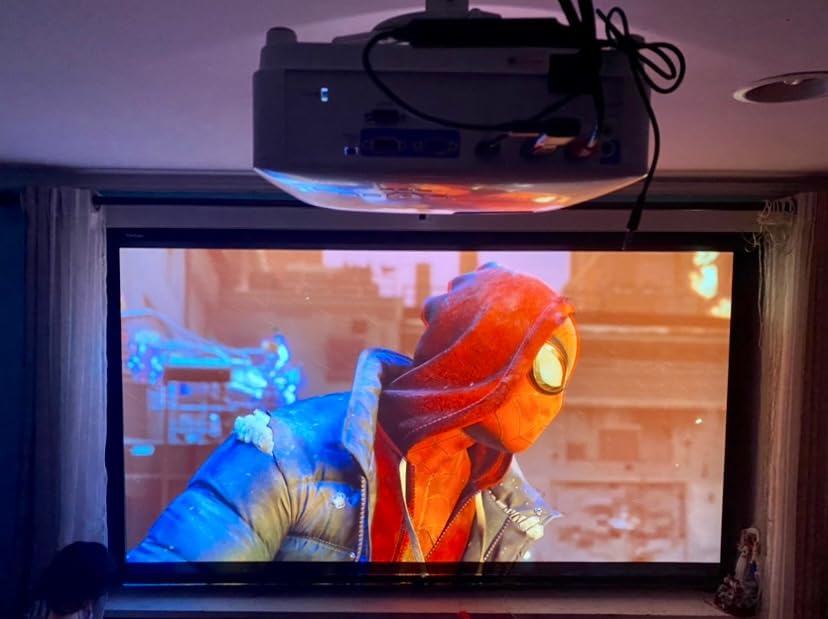
How much wall you need for a 100 inch image
This is the number most listings bury. A 100 inch diagonal 16:9 image measures about 87 inches wide, which is 7.3 feet. If your projection wall is under about 8 feet wide, a 100 inch picture physically will not fit, and the 300 inch maximum image size this projector advertises is a ceiling for large rooms, not a small one.
The 5 foot throw figure is the practical anchor instead. Plan the projector on a shelf roughly 5 feet in front of the wall, centered, and you land close to 100 inches. Measure your wall width before you order anything, because a 100 inch image on an 87 inch-wide wall is the single most common disappointment in this category.
Is 1080p still good enough for streaming in 2026
Yes, for most small-room viewing. Streaming services deliver 4K to compatible screens, but a 1080p DLP panel at 100 inches in a dim bedroom still looks sharp to a seated viewer. The gap opens up on a 150 inch image or when you sit within a few feet of the screen, which is the trade you make by choosing 1080p over 4K.
What you give up is visible pixel structure at close range and the headroom for future 4K content. If your room is a dedicated media space you will use for years, the AWOL VISION LTV-3000 Pro and the BenQ X500i both deliver native 4K. If it is a bedroom you will upgrade in a few years, the TH671ST is the smarter spend.
2. AWOL VISION LTV-3000 Pro – Best Picture Quality in a Cabinet-Style UST Setup
- Native 4K triple laser with Dolby Vision and HDR10+
- 107 percent BT.2020 and 147 percent DCI-P3 color
- Fixed 0.25:1 ratio fills 80 to 150 inch screens
- Built-in center channel speaker mapped to the screen
- 25000 hour light source with no color wheel
- PJ Link IP control for home automation
- Image size capped at 80 to 150 inches
- 28 pound body needs cabinet depth to focus
- 2000 lumens needs a dark room or an ALR screen
If your small room can accept a piece of furniture against the screen wall, this is the best image in the group. It is a native 4K triple laser UST unit with Dolby Vision, HDR10+ and 3D support, and the color coverage figures – 107 percent of BT.2020 and 147 percent of DCI-P3 – are the widest we saw among the short throw options at any price band.
The fixed 0.25:1 throw ratio is the number that makes it work in a small space. Technical details list a 0.5 foot minimum and 1.68 foot maximum throw distance, so the unit sits right against the wall and still delivers an 80 to 150 inch image. The laser light source is rated 25000 hours with no color wheel, so you avoid the rainbow effect that DLP single-laser units can show.
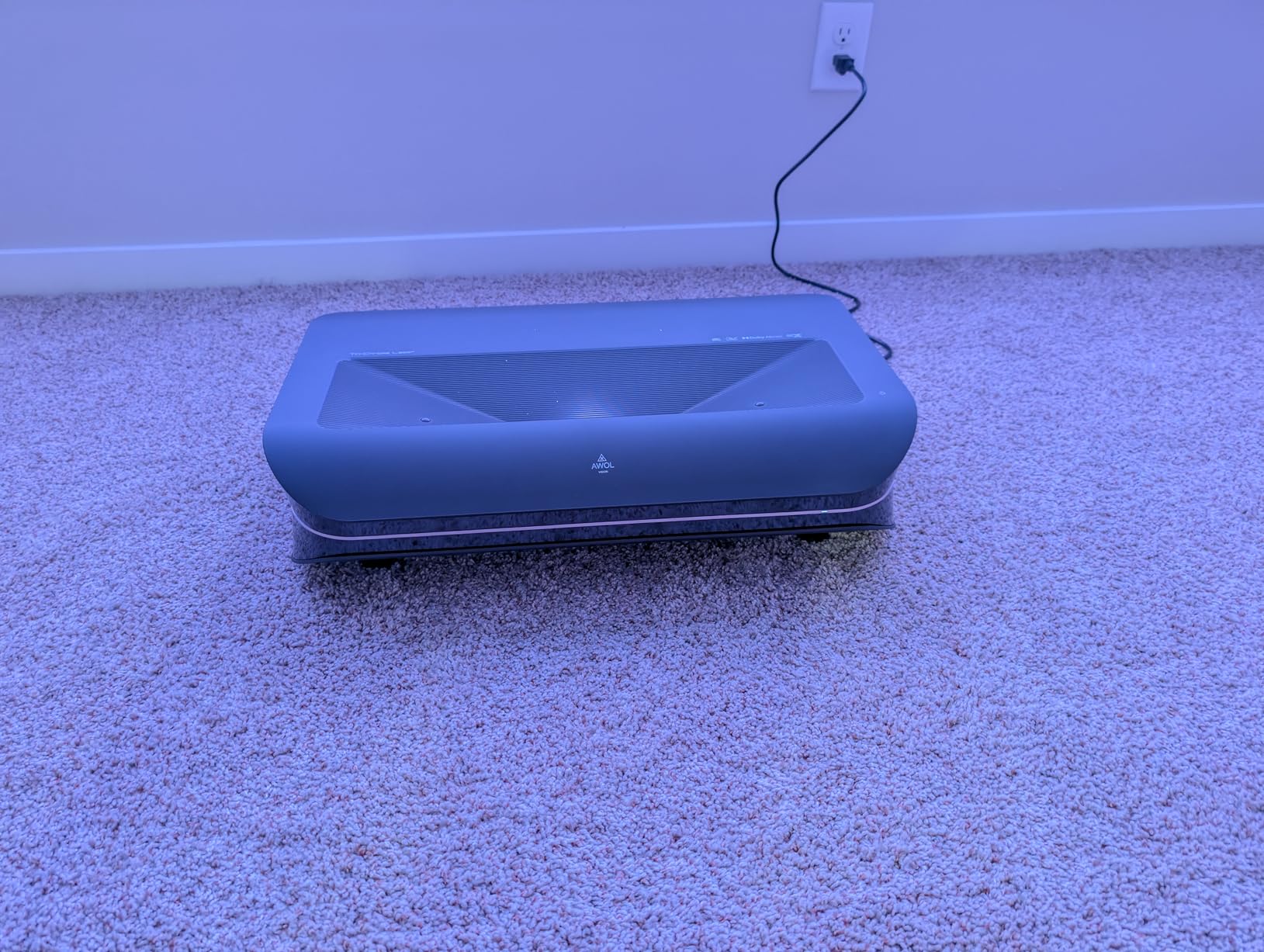
Owners single out the built-in center channel speaker, which is mapped to the screen position so dialogue lands where the characters are. That is a genuinely clever addition for a small room where fitting a soundbar is hard, and it replaces the usual thin projector audio.
The limits are real. The image ceiling is 150 inches with a floor of 80, so this is not a projector for a bare wall you want to fill completely. At 28 pounds and 23.6 by 21.5 by 5.5 inches, it needs a real cabinet with depth for focus, and 2000 lumens means a dark room or an ALR screen to look its best.
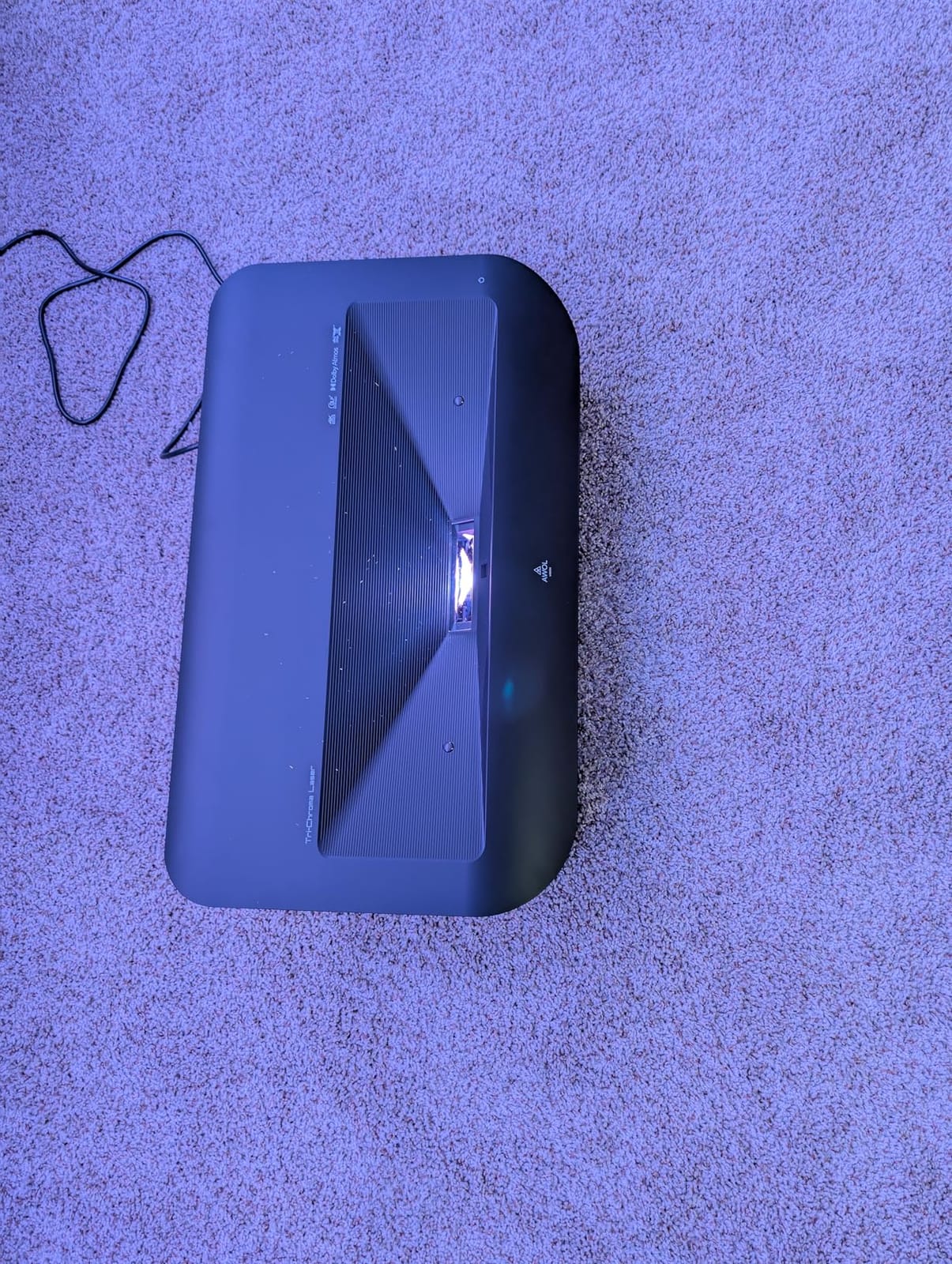
Whether your room can take a UST cabinet
Measure the space along the screen wall before anything else. A UST projector of this size is about 22 inches deep, and unlike a traditional short throw unit it fires light diagonally upward across the whole image – so the cabinet has to be shallow and low, and the ceiling above it has to stay clear. On a narrow wall with a deep window ledge, that space is often the thing that decides the purchase.
Owners on AV Forum note the same constraint when comparing cabinet-style UST models: placement geometry is decisive, and a unit that cannot sit centered in front of the screen forces keystone, which shrinks and dims the picture. A UST model buys you floor space and a near-TV appearance. It does not buy you flexibility.
Why you may want a screen with this one
At 2000 lumens the picture is competitive on a plain wall in a dim room, but the triple laser color engine has more to give with a proper surface. Owners report the biggest jump when pairing it with an ALR or ambient light rejecting screen, which lifts perceived contrast and cuts the washed-out look that plagues a white wall in any ambient light.
Check the screen minimum throw distance before you commit, because ALR screens vary a lot in how close the projector must sit. A unit that throws from 20 inches can conflict with a screen designed for a 40 inch throw distance, and that mismatch shows up as an uneven or dim image rather than an obvious error message.
3. Hisense PL2 – Best Smart Ultra Short Throw Projector with Google TV
- Sharp 4K image with strong color and contrast
- 2700 lumens stays bright for everyday streaming
- Google TV interface is fast and responsive
- Simple leveler plus keystone and focus adjustment
- Bluetooth 5 plus HDMI and USB 3.0
- Rainbow effect is visible from very close seating
- Auto keystone workflow requires a phone and a hosted website
- Placement conflicts with most standard AV cabinets
The Hisense PL2 is the pick for anyone who wants a big picture and does not want to attach a streaming box. Google TV with WiFi 6E is built in, and owners upgrading from 1080p describe the picture jump as dramatic. Brightness sits at 2700 lumens, which is higher than most UST units in this roundup and is what keeps it usable with a lamp on.
Throw distances run from 0.22 feet to 1.5 feet for an 80 to 150 inch image, so it lives at the base of the wall. The X-Fusion laser light source is rated 25000 hours, and the 4K AI upscaler drives 2.07 million DLP micro-mirrors over a palette of more than 1.07 billion colors.
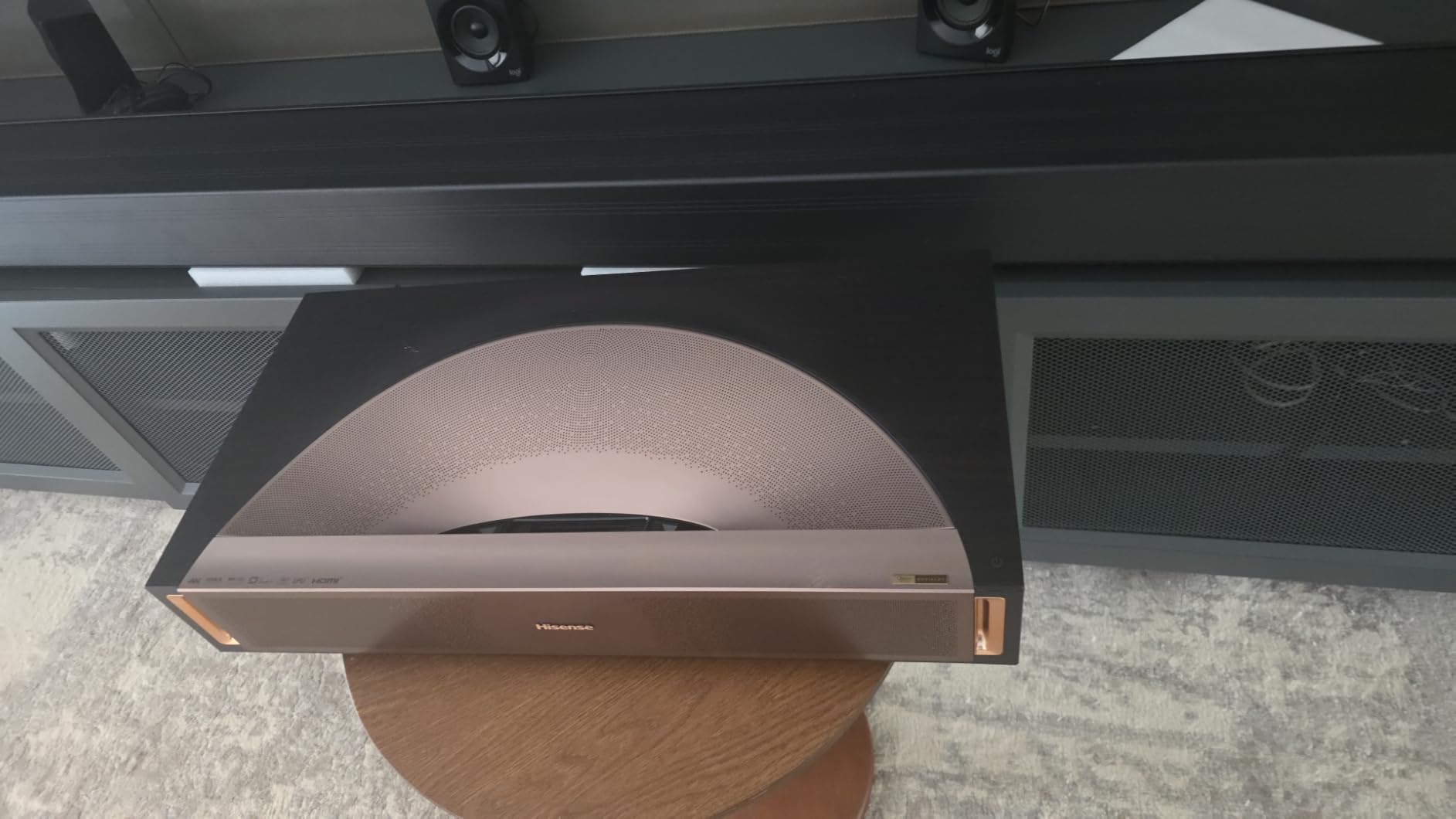
Setup is where the compromises show. The automatic keystone function requires photographing the screen with a phone and uploading the result to a device-hosted website, which owners describe as clunky. Settings for keystone and related options are also split between the main settings menu and a remote button, which is not intuitive the first few times.
There is a second practical issue. A UST unit at 20.9 inches long and 18.7 pounds does not fit neatly into a standard AV cabinet, so many owners end up placing it on the floor where the leveler adjustment is awkward. If your media console has a deep top surface, check the fit before you commit.
Whether 2700 lumens is enough for a lit room
For a bedroom or a room with curtains drawn, 2700 lumens is comfortable. For a living room where people walk through during a daytime game or a midday match, you want a screen that rejects ambient light, because no UST projector at this brightness overcomes a bright white wall. The honest answer is that a UST plus ALR screen pair beats a brighter projector in most apartments.
Owners confirm the pairing works well, and several describe the picture holding up on a plain white wall better than they expected. The brightness notation on this model is listed as 2700 ASIN lumens, which is the standardized measure – treat that as directly comparable with the ANSI figures on the BenQ and Optoma units in this list.
Rainbow effect and close seating
This is a single-laser DLP engine, so some buyers sitting within a few feet of the screen report a visible rainbow effect on fast-moving content. Move up a normal viewing distance and it largely disappears. It is worth checking the panel in person if you plan to sit on the floor in front of the screen, which is exactly where a UST unit often goes.
Triple laser models like the AWOL VISION LTV-3000 Pro avoid this entirely because there is no color wheel spinning at speed. If rainbow sensitivity runs in your household, that is a meaningful reason to spend more rather than less.
4. Optoma GT1090HDR – Best Short Throw Projector for Daylight and High-Ambient Rooms
Optoma GT1090HDR Short Throw Laser Home Theater Projector | 4K HDR Input | Lamp-Free Reliable Operation 30,000 hours | Bright 4,200 lumens for Day and Night | Short Throw
- Brightest engine in this roundup at 4200 lumens
- Laser light source rated 30000 hours with no lamp or filter changes
- 120 inch image from just 4 ft 4 in
- Whisper quiet at 32dB in eco mode
- Full 120Hz 3D support with high refresh gaming mode
- Native 1080p with 4K input only
- Digital image shift has coarse jumpy steps and softens the image
- No HDMI ARC or optical audio output
- Small awkward menu system
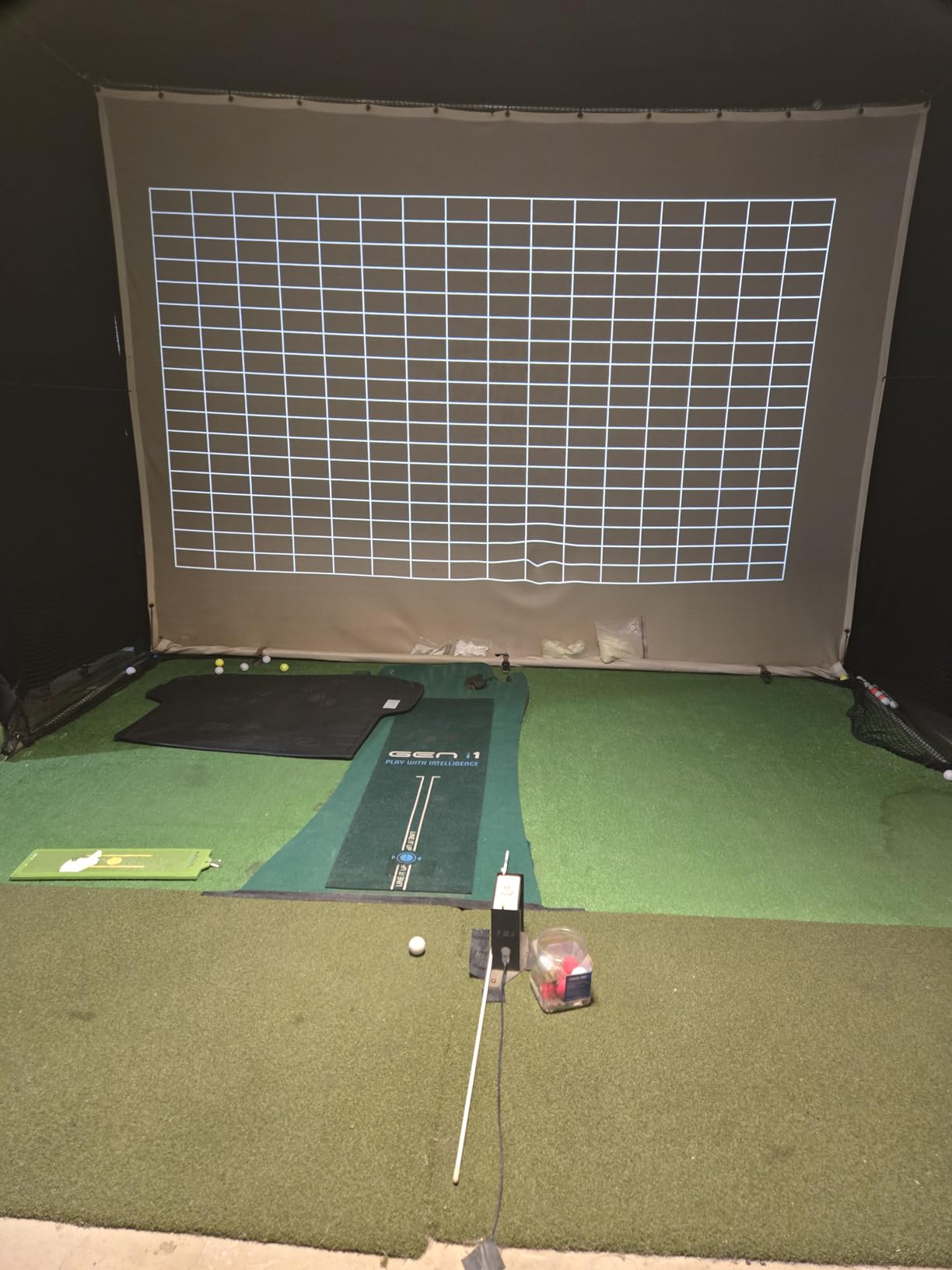
Brightness is the entire argument for this projector. At 4200 lumens it is the brightest unit here by a wide margin, and that number is what lets it work with lights on, blinds open, or in a room that doubles as an office during the day. Golf simulator owners in particular gravitate to it, because a tracking system needs a bright, even image to read accurately.
The short throw lens throws a 120 inch image from 4 feet 4 inches, which is remarkable for a unit that is not a UST. The DuraCore laser light source is rated 30000 hours with IPX6 dust resistance, so there is no lamp and no filter to replace over the life of the unit.
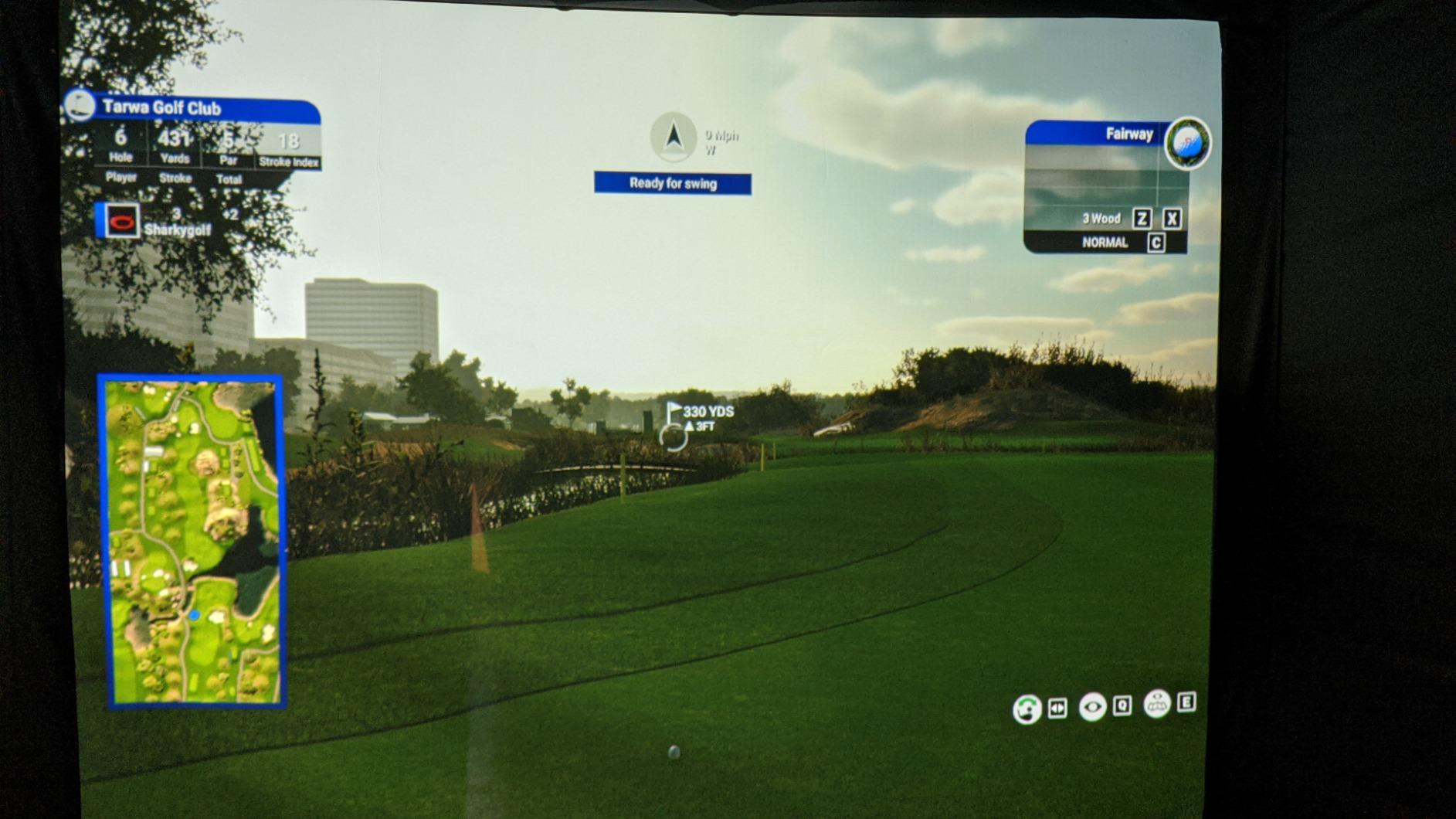
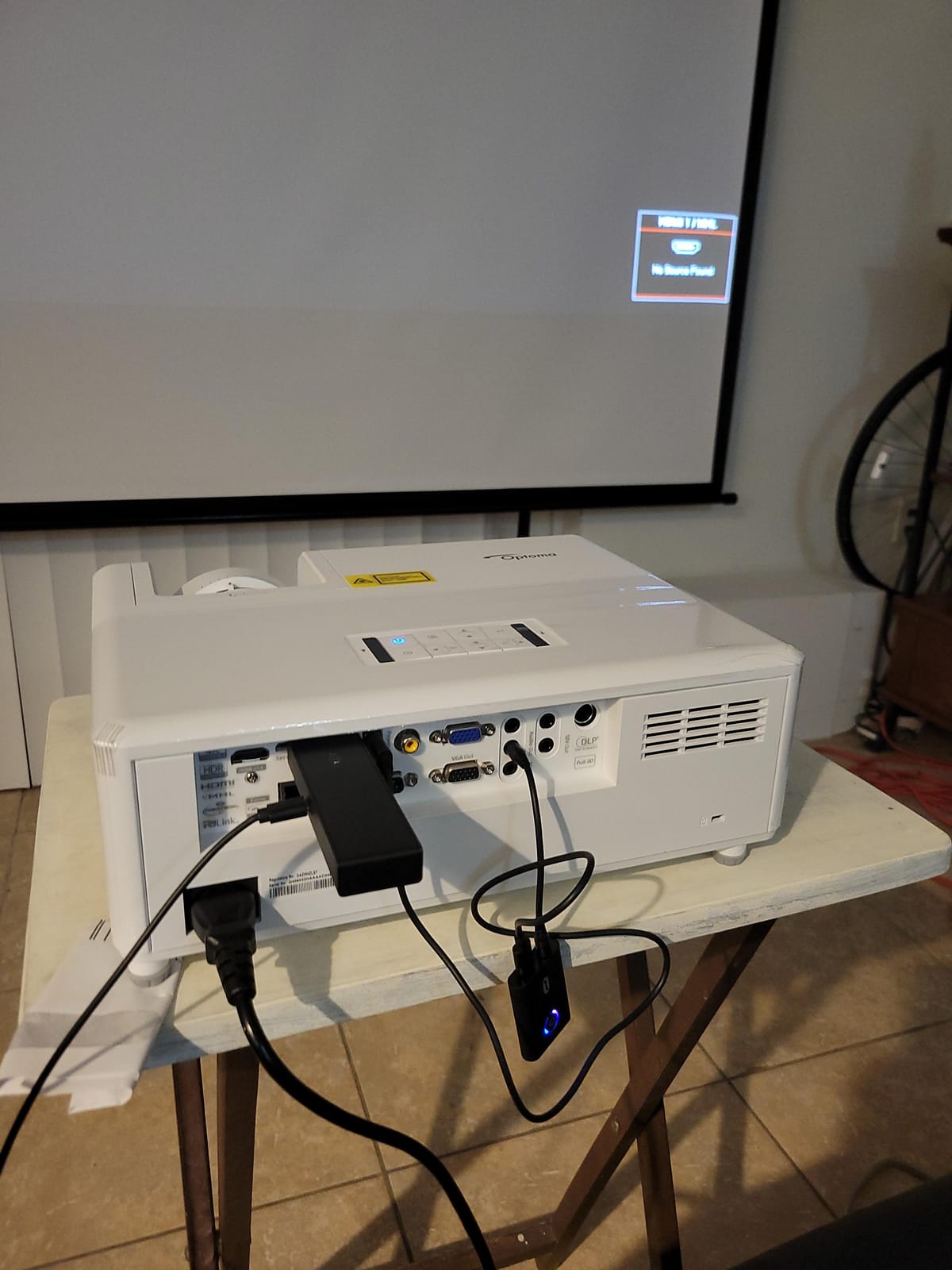
Image adjustment is the weak point. Owners report that the digital image shift has coarse, jumpy steps and softens the picture when used, the manual focus ring is very sensitive and hard to dial in, and digital zoom feels limited and depends on the mounting angle. In a small room where placement is already awkward, those are real frictions.
There is also an audio integration issue. There is no HDMI ARC and no optical output, so many soundbars need a 3.5mm-to-optical adapter. A small number of owners report signal dropouts, color shifts or early laser failure, and support response was not always satisfying.
How 4200 lumens changes your screen choice
High brightness changes the calculus on screens. A 4200 lumen projector on a plain white wall is watchable with ambient light because there is simply more light to lose. That also means a standard white or grey screen will show more of the wall texture and any wall color cast, so if your wall is painted a warm tone, a neutral grey screen corrects it.
Buyers using it for sports and daytime viewing pair it with a larger image than most small rooms allow – 120 inches needs about 105 inches of wall width, which is close to 8.75 feet. In a genuinely small room you will be running it at 80 to 100 inches instead, where the extra brightness is less necessary but never wasted.
What the 300,000:1 contrast figure really means
That number is a dynamic contrast rating, not a native one. Dynamic contrast is measured by pulsing or modulating the light source, and it flatters the result enormously compared with a steady-state measurement. Treat it as a marketing figure and judge black level by eye in a dark scene instead.
This is the notation trap buyers complain about on forums. ANSI lumens, ISO lumens and raw LED lumens are three different standards, and the advertised contrast number is often the least reliable spec on the page. Only the lumen figure on this list is directly comparable across all eight models.
5. Optoma GT2000HDR – Best Compact Short Throw for the Tightest Shelf
Optoma GT2000HDR Ultra-Compact Short Throw Full HD Home Laser Projector
- Very compact body that fits genuinely tight spaces
- 3500 lumens from a slim chassis
- Laser light source rated 30000 hours with no lamp replacement
- External power supply keeps the footprint and depth small
- Low power consumption at 98W
- 1080p only with no 4K input handling
- Lowest rated in this group at 4.1 stars
- Some owners report fan noise and manual keystone correction
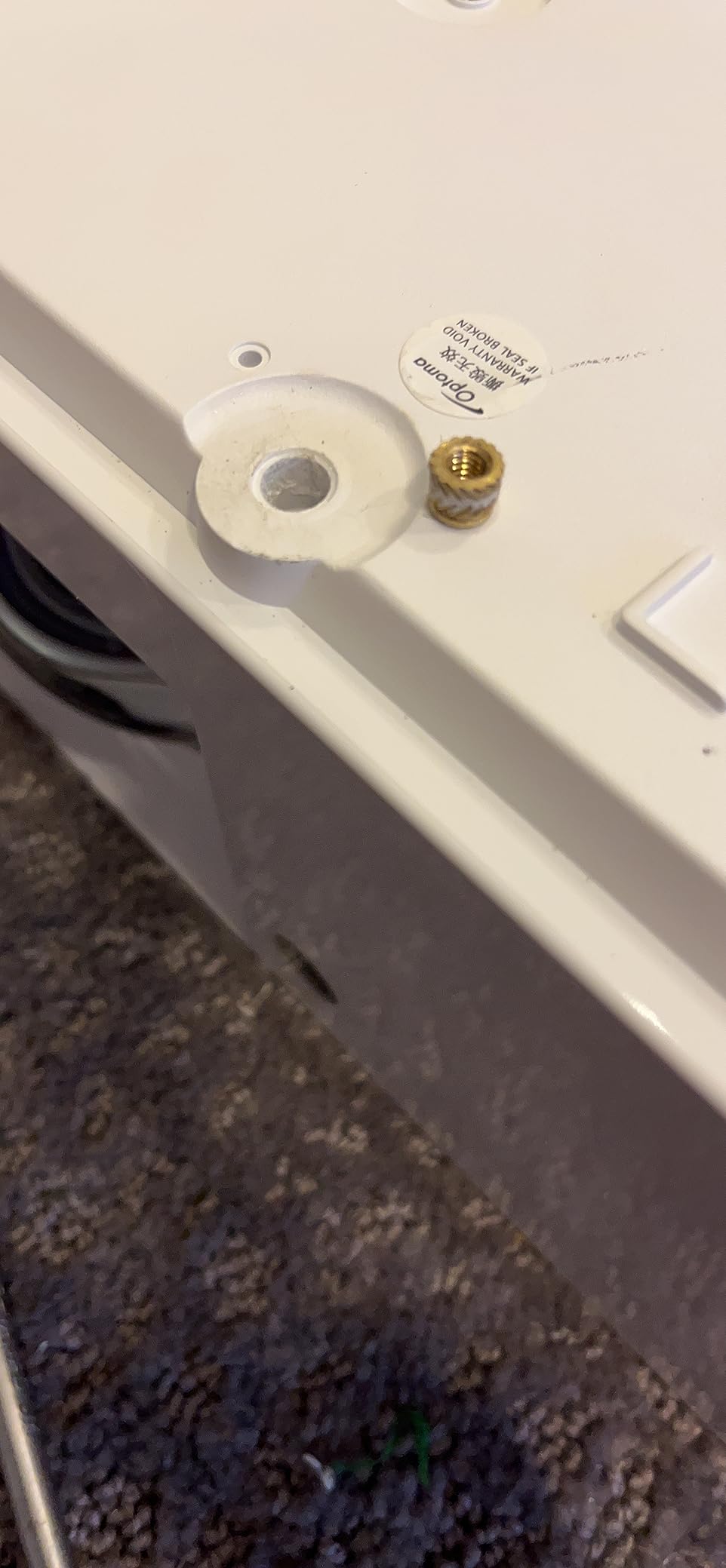
The GT2000HDR is built for the specific case where a normal short throw projector is simply too deep. At 4.49 inches deep and 9.6 pounds, with the power brick outside the chassis, it is the slimmest unit in this group and it slots onto a shallow shelf without stealing your viewing space.
Brightness holds up better than the dimensions suggest. The figure is 3500 lumens from a laser light source rated 30000 hours, and the listed contrast ratio is 300,000:1. It also carries a 5-year or 12000 hour light source warranty, which is longer coverage than most competitors offer on the laser engine.
Be clear about what the size means for the picture, though. The listed image size range runs from 214 inches to 300 inches with a 1 meter minimum throw distance, so this is a projector for a wall that is genuinely large. In a small room you will want to use the lower end of its range or position it very close, and that is the trade for the slim chassis.
Owners also report fan noise, and setup plus keystone needing manual correction rather than handling it automatically. It is the lowest rated of these eight at 4.1 stars, with a 12 percent one-star share pointing at noise, brightness expectations and the limits of 1080p.
When a compact body matters more than resolution
Depth is the reason to buy this. If your only option is a 5 inch deep alcove, a 4.5 inch body is the difference between a projector and a paperweight. The external power supply is what makes that possible, and it also means fewer heat vents in a tight enclosure where airflow is already compromised.
Resolution is the trade. This is a 1080p DLP panel with no 4K input handling, so it will not accept a 4K signal. For sports, gaming at 1080p and daytime viewing in a bright room it does the job. For 4K streaming on a large screen, choose the BenQ X500i or the AWOL VISION LTV-3000 Pro instead.
How it compares with the other Optoma in this list
The GT1090HDR is the brighter, larger, longer-throw sibling: 4200 lumens, a 120 inch image from 4 feet 4 inches, a 10 pound body and 32dB operation. The GT2000HDR gives up 700 lumens and image flexibility in exchange for roughly half the depth and an external power supply.
Choose the GT1090HDR if you want the biggest image and the most daylight capability. Choose the GT2000HDR if the shelf is shallow and depth is the binding constraint. Both carry the same 30000 hour laser platform, so the reliability story is identical.
6. ViewSonic PS502W – Best Budget Short Throw Projector for Classrooms and Small Rooms
- 4000 ANSI lumens handles moderate ambient light
- 0.5 throw ratio gives 100 inches from 4.5 feet
- Lowest cost in this roundup while still rated 4.4 stars
- Vertical auto keystone and digital zoom simplify setup
- Three year parts and labor warranty
- WXGA 1280x800 resolution is the lowest here
- Conventional lamp with roughly 4000 hour life
- Not a 4K or home theater projector
At 4000 lumens with a 0.5 throw ratio, this is the value pick and the brightness pick in one. A 100 inch image lands from 4.5 feet, and owners highlight near-instant power on and off along with how straightforward the vertical auto keystone and digital zoom make first-time setup.
The throw distances are listed as 0.75 meters minimum and 3.76 meters maximum, which covers a 60 to 300 inch image range. SuperColor technology provides a wide color gamut for a projector at this level, and the three-year parts and labor warranty with first-year Express Exchange is better coverage than most of the field.
The compromise is written into the panel. WXGA 1280×800 is the lowest native resolution of the eight, which is fine for a classroom, a meeting room or casual viewing and noticeably not fine for 4K content on a large screen. Buyers describe it as a value pick for presentations rather than a cinema unit.
It is also the only lamp projector left in this group, with a light source life of roughly 4000 hours. That means an eventual lamp replacement, which is the main ongoing cost that separates it from the laser models. In exchange you avoid laser dust concerns and the initial outlay is the lowest here.
Who the WXGA panel is good enough for
Presentation work, spreadsheets, whiteboard replacement in a meeting room, and casual streaming on a 60 to 80 inch image. The pixel count is legible at those sizes and from normal meeting-room distances. It is also the right pick for a dorm room where the projector gets used an hour a day and picture fidelity is not the priority.
Where it stops making sense is a movie night wall. At 100 inches the 1280×800 pixel structure starts to read, and streaming in 4K gains you nothing. If your main use is watching films, the step up to a 1080p short throw model such as the BenQ TH671ST costs little and the difference is obvious.
Whether to buy a screen for this one
At 4000 lumens, a plain white wall is genuinely usable and this is the one projector here where that is easy to say. It is bright enough to overcome a wall color that would wash out a UST image, and the 0.5 throw ratio means you can place it on a low table close to the screen wall.
One practical note: ViewSonic lists compatibility with the PJ-WMK-305 and PJ-WMK-007 mounts, so if your setup needs to be out of the way of foot traffic, a compatible wall mount is available rather than a generic one you have to adapt.
7. XGIMI AURA 2 – Best UST for Automatic Setup and Built-In Audio
XGIMI AURA Ultra Short Throw 4K Laser Projector, 2300 ISO lumens, Google TV
- Outstanding 4K picture with rich color and deep contrast
- Intelligent Screen Adaption 5.0 handles focus and keystone on power up
- Harman Kardon speakers strong enough to skip a soundbar
- 0.177:1 throw ratio means the shortest wall distance here
- 20ms low latency with MEMC for gaming
- Android TV in some regions rather than Google TV
- Some owners report eARC handshake problems with AV receivers
- Occasional screen dropouts with audio continuing
- Only a 1 year warranty
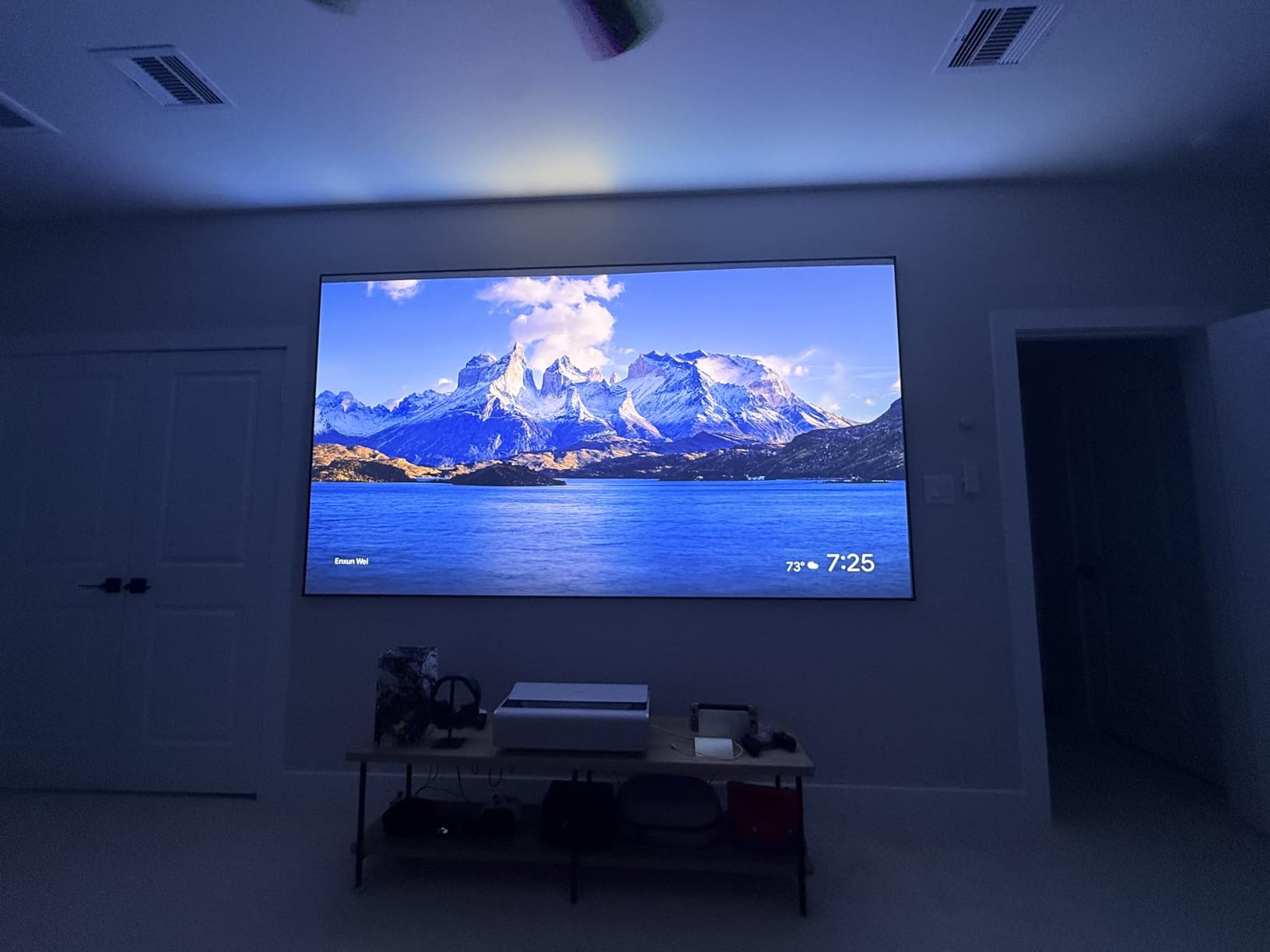
This is the model to buy if you hate fiddling with geometry. Advanced Intelligent Screen Adaption 5.0 runs on power up and handles auto focus, auto keystone and wall flatness correction, which in a small room where you are constantly moving furniture is worth more than another 300 lumens.
It also has the shortest wall distance here. The throw ratio is 0.177:1 with a maximum throw distance of 2 feet, so the unit sits essentially against the wall and still fills up to 150 inches. Brightness is 2300 ISO lumens with a 1,000,000:1 dynamic contrast ratio through the Dual Light 2.0 engine.
The audio is the sleeper feature. Harman Kardon built-in speakers with Dolby Atmos are described as strong enough to skip a soundbar for casual viewing, and reviewers who compared UST models side by side single this one out for the best built-in sound as well as the quietest fan.
The reliability of the software is the catch. Owners report eARC handshake problems with AV receivers that force a direct HDMI connection, occasional screen-darkening dropouts while audio continues, and firmware bugs including units not powering on via remote and brightness resetting to maximum. A small share also report missing native Netflix in regions where it runs Android TV instead of Google TV.
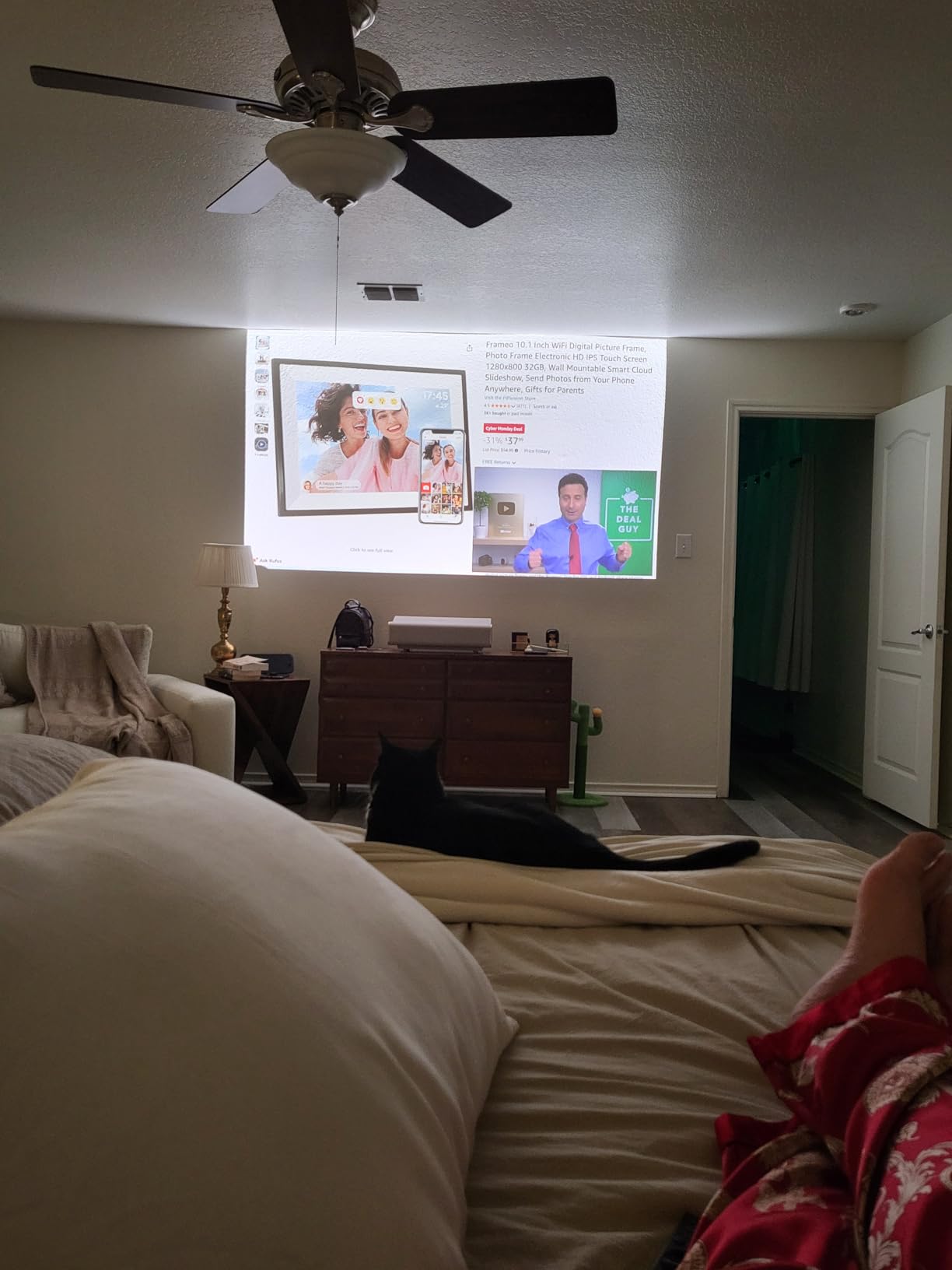
Whether automatic keystone is worth the resampling
Automatic geometry correction is convenient and it is not free. Digital keystone shrinks the usable image and reduces effective resolution, and this is the single most common complaint on projector forums – owners describe correcting the picture and then finding the image is smaller and dimmer than the projector advertised. The XGIMI just does that step for you at startup, which is convenient and also permanent.
If you can mount the projector square to the wall and level, lens geometry problems largely disappear instead of being corrected in software. The auto setup is a safety net for a room you cannot control, not a substitute for careful placement. A digital zoom on top of keystone compounds the loss.
Best pairing for a small apartment living room
Owners report that it shines best in a dark room or with a dedicated UST and ALR screen, and at 2300 ISO lumens a white wall in a bright apartment will look washed out. If the room is used during the day, either accept dimmer daytime viewing or plan on an ALR screen from the start.
Only a 1 year warranty is the other thing to weigh, and there is no IR receiver for third-party universal remotes. For a bedroom or a rental where you want the auto setup to handle everything and the warranty length matters less, it is a strong pick.
8. BenQ X500i – Best Short Throw Projector for 4K Console Gaming
- 4.2ms low latency with 240Hz refresh rate
- True 4K panel with a 4LED light engine
- Auto detects PS5 and Xbox and tunes the picture
- Google certified Android TV with AirPlay and Chromecast
- TreVolo audio with eARC and S/PDIF for surround setups
- Noticeable high pitched fan and actuator hum around 40 to 42dB
- 2200 lumens is dimmer than competing short throw models
- HDMI 2.0 only with no Ethernet port
- Limited zoom range
If gaming is the main event, this is the one. The headline figures are 4.2ms low latency and a 240Hz refresh rate at 1080p, on a true 3840×2160 panel driven by a 4LED light engine with no bulb to replace. The short throw range throws 100 inches from about 6.5 feet, with minimum and maximum throw distances listed at 4.9 and 10 feet.
It also recognizes a PS5, Xbox or Switch and auto-adjusts the picture for the game type, which is a small touch that saves setup time. Google-certified Android TV is built in with AirPlay and Chromecast, and TreVolo audio supports eARC and S/PDIF if you want to wire out to a real system.
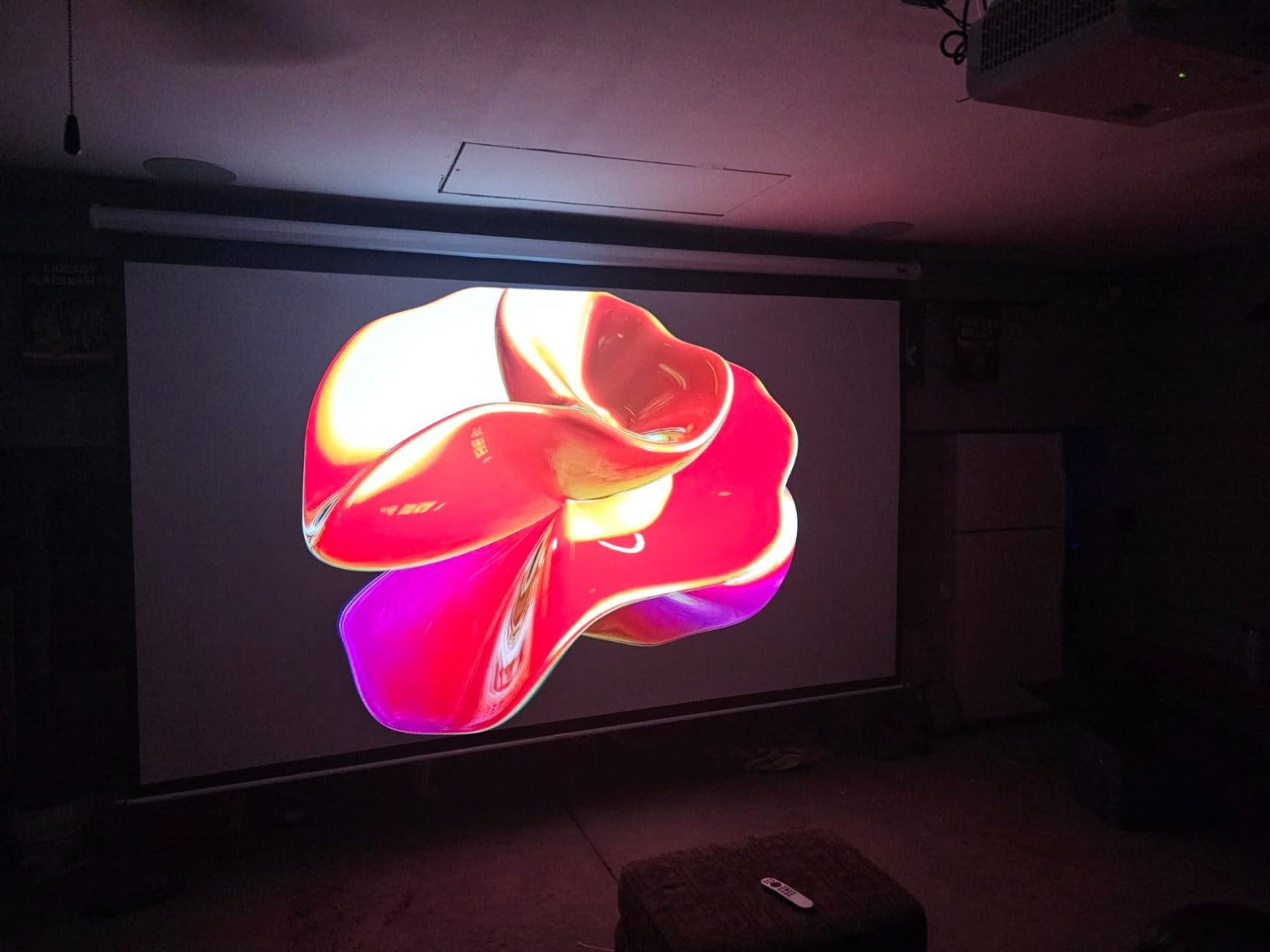
The acoustic problem is the one that shows up in reviews most often. Owners measure a high pitched whir from the pixel-shifting actuator at around 40 to 42dB in eco mode, and some found it unbearable enough to return the unit. If you watch in a silent room at night, this is a genuine risk rather than a minor irritation.
Brightness is another limit at 2200 lumens, which is on the dim side against the Optoma and ViewSonic models here. Connectivity is HDMI 2.0 only with no Ethernet port, so a high-speed internet connection over WiFi is recommended if you stream, and the zoom range is narrow – one owner returned it because the image would not fit the space.
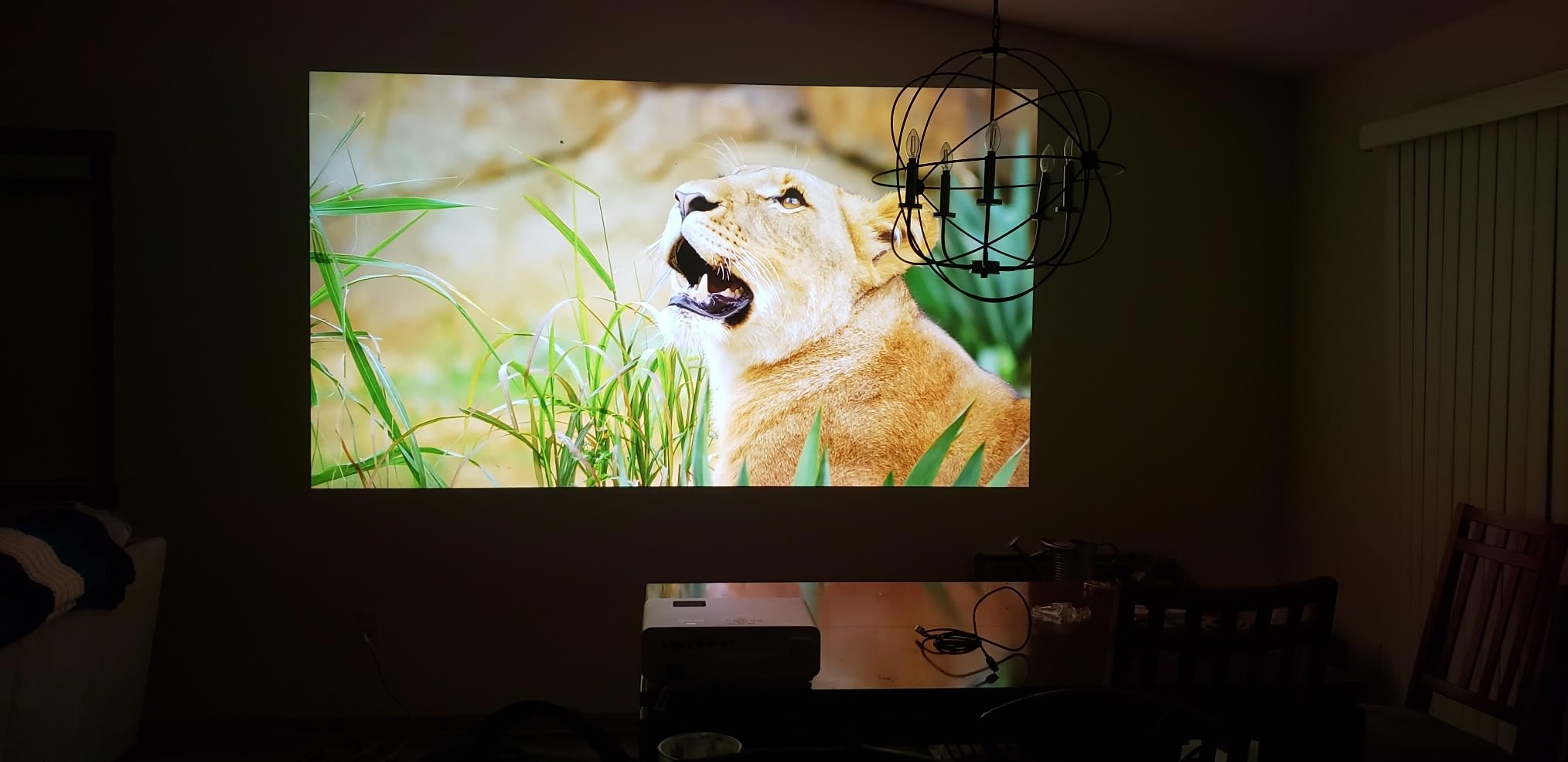
Whether 4.2ms latency is worth the fan noise
For competitive console play, latency matters more than almost any other spec. At 4.2ms the input delay is effectively invisible, and the 240Hz refresh rate at 1080p is what makes the number meaningful. For single-player story games and a cinematic 4K setup on a large screen, the advantage shrinks considerably.
Pair that against 40 to 42dB of high pitched actuator hum and the decision becomes about when you watch. Evening gaming in a room with background sound is fine. Late-night gaming in a silent bedroom is where owners report reaching for the return button. Audition it if you can.
Room fit and the zoom range problem
With a throw range from 4.9 to 10 feet, this projector needs more depth than the tightest options here. In a room with about 7 feet of usable depth it lands close to 100 inches, which suits most small bedrooms. In anything shallower, the limited zoom and digital zoom can leave you unable to reach a comfortable size.
Diorama and setup take real effort to dial in, and using keystone plus digital zoom reduces effective resolution on a panel whose main selling point is 4K. Square it to the wall if you can and the 4LED HDR-PRO color is genuinely strong for the money.
Are short throw projectors worth it?
Yes, if your room is the constraint. A short throw projector is worth it precisely when a long throw unit would either need 12 or more feet of depth or throw an image far too small for the wall, and the price you pay in contrast and black level is a fair exchange for a picture you can actually watch.
They are not worth it if you have a dedicated room with 12 feet of depth and a ceiling mount. In that case a long throw projector delivers noticeably better native contrast and black level for less money, and the short throw advantage disappears. The same floor-space logic shows up in our guides to the best robot lawn mowers for small yards and the best laser engravers for small businesses, where the footprint of the machine matters as much as the spec sheet.
How to Choose a Short Throw Projector for a Small Room
Five measurements decide this purchase before any brand does: your projection wall width, the depth available from that wall, ceiling height, how much ambient light the room gets, and where your outlets are. Forum regulars open with their room dimensions for exactly this reason – every other spec is moot if the image does not fit.
Work out your image width before you shop
Throw ratio is the number that converts distance into image size. Multiply the distance in inches from the lens to your wall by the throw ratio to get the image width in inches, then multiply by 9/16 for the height of a 16:9 image. A 1.2 throw ratio at 60 inches of distance gives a 72 inch wide image, which is about 80 inches diagonal.
Then check the wall. A 100 inch diagonal 16:9 image needs about 87 inches – just over 7.25 feet – of wall width. If your wall is 8 feet wide you can do it. If it is 6 feet, the largest 16:9 image that fits is roughly 80 inches diagonal, and pushing past that means cropping or black borders.
Short throw or ultra short throw
Traditional short throw uses throw ratios around 0.4 to 0.8 and needs 3 to 8 feet of depth. Ultra short throw uses roughly 0.2 to 0.3 and needs about 10 to 20 inches. Short throw is more flexible with placement and better on contrast; UST frees up floor space by living in a cabinet against the screen wall.
AVS Forum owners consistently point out that UST models trade away contrast and black level, and recommend targeting 120 to 150 inches on a UST so the image is big enough to look right. If your wall is narrow, a traditional short throw unit placed on a shelf is the safer choice.
Reading brightness numbers honestly
Trust ANSI lumens above everything else. ISO lumens are a different standard and raw LED lumens are not comparable to either, and retailers mix all three freely. For a dark room with a screen pulled, 1500 ANSI lumens is workable. For a room with ambient light, 3000 ANSI lumens is the useful starting point.
Ignore dynamic contrast ratios like 300,000:1 or 1,000,000:1. They are measured with the light source modulating, so they describe an ability the projector does not have in a steady state. Judge black level by looking at a dark scene instead.
Screen or plain white wall
A plain white wall is fine for a bright projector in a dim room, and the ViewSonic PS502W at 4000 lumens is a good example of when that holds. It is not fine for a UST unit at 2000 to 2700 lumens in a room with ambient light, where the picture washes out no matter how good the projector is.
Check the screen minimum throw distance before buying an ALR screen. Screens have their own required distance from the lens, and a unit that throws from 20 inches can conflict with a screen designed for 40 inches. Owners on AVS Forum threads report exactly this pairing failing and the image looking uneven as a result.
Keystone, lens shift and the black border problem
Digital keystone correction shrinks the usable image, dims it, and leaves black borders around the picture. It is the most common complaint in projector forums and almost nobody warns you about it before you buy. Optical lens shift and physical placement avoid it entirely, so mount square to the wall wherever you can.
Watch for shadowing too. On a very short lens-to-wall path, anything between the lens and the screen – a plant, a speaker, a shelf edge – throws an oversized shadow across the image. In a small room that is easy to avoid, but only if you plan where the unit sits.
Gaming latency and light source life
For console gaming, input lag below about 40ms is the threshold where delay becomes noticeable, and the BenQ X500i’s 4.2ms at 240Hz is the standout number here. Anything above 100ms feels distinctly laggy, and most short throw projectors in this roundup are fine below that.
On light source, laser units rated 25000 to 30000 hours mean no lamp replacements and no lamp aging over the life of the projector. Lamp-based models here run about 4000 to 10000 hours and eventually need a bulb. The catch with lasers is dust, which is why IPX6 sealing and cleaning filters are worth checking.
Frequently Asked Questions
What is the best projector for a small room?
A short throw projector is the right answer for most small rooms because it produces a large image from a shallow depth instead of the 10 to 15 feet a standard projector needs. For most buyers the BenQ TH671ST is the balance point at 3000 lumens and a 100 inch image from about 5 feet. The AWOL VISION LTV-3000 Pro leads on picture quality, and the Hisense PL2 leads on smart features.
Are short throw projectors worth it?
They are worth it when the room is the constraint. A short throw projector is the answer when a long throw unit would need 12 or more feet of depth or produce an image far too small for your wall. They are not worth the contrast penalty if you have a dedicated room with 12 feet of depth and a ceiling mount, because a long throw projector delivers better native contrast and black level for less money.
What are the disadvantages of short throw projectors?
The main disadvantages are weaker native contrast and worse black levels than long throw projectors, a visible rainbow effect on some single-laser DLP models, and oversized shadows from anything placed between the lens and the wall. Digital keystone correction is the hidden cost – it shrinks the usable image, dims it, and leaves black borders. None of these are dealbreakers, but all of them are real.
How far away does a short throw projector need to be?
A traditional short throw projector needs roughly 3 to 8 feet to produce a 100 inch image, and most specific models quote a figure around 4.5 to 6.5 feet. An ultra short throw projector needs only 10 to 20 inches. To work it out yourself, multiply the lens-to-wall distance in inches by the throw ratio to get image width, then multiply by 9/16 for the height of a 16:9 image.
Do short throw projectors need a special screen?
No, not always. A plain white wall works well with a bright projector in a dim room, and a 4000 lumen model like the ViewSonic PS502W is usable that way. A lower-brightness ultra short throw unit at 2000 to 2700 lumens really does benefit from an ALR screen in a room with ambient light. If you do buy one, check the screen minimum throw distance matches how close your projector throws.
Conclusion
The best short throw projectors for small rooms come down to one measurement: the distance between your wall and wherever the unit can sit. With about 5 feet of depth, take the BenQ TH671ST for a bright, responsive 1080p picture that owners keep for years. With 20 inches of depth and a cabinet, take the AWOL VISION LTV-3000 Pro for native 4K triple laser color, or the Hisense PL2 if built-in Google TV matters more than peak brightness.
Measure the wall width before anything else, because a 100 inch 16:9 image needs about 7.25 feet of it. Bright rooms push you toward the Optoma GT1090HDR or the ViewSonic PS502W, gamers toward the BenQ X500i, and the tightest shelves toward the slim Optoma GT2000HDR. Whichever you choose in 2026, place it square to the wall and you avoid the keystone black borders that cause most early returns.