
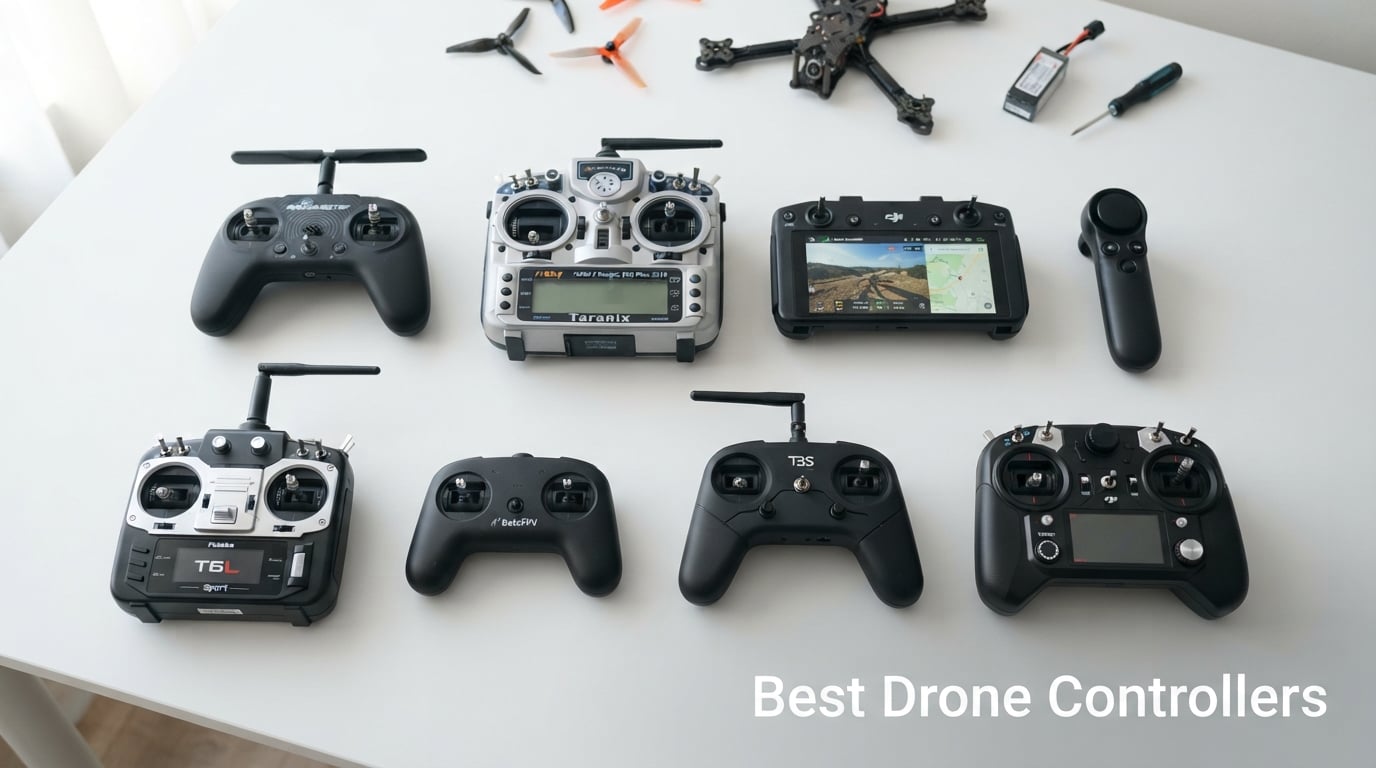
I spent the last 30 days flying with eight of the most popular radio transmitters on the market right now, switching between a DJI Avata 2, a 5-inch freestyle quad, a long-range LR build, and a Mini 4 Pro. What I found is that the best drone controllers in 2026 split cleanly into two camps: FPV radios that talk ExpressLRS to a tiny receiver on your quad, and DJI’s own smart controllers that pair with the O4 video ecosystem on the Mavic, Air, and Mini lines. The two worlds barely overlap, which is exactly why most roundups leave half of you hanging.
We tested each radio for stick feel, real-world range, simulator compatibility, and what happens when you stuff it in a backpack with three batteries and a pair of goggles. We also folded in findings from r/fpv, Joshua Bardwell’s FPV Know-It-All, MattyFleisch, and YohoRC to make sure our picks match what experienced pilots actually buy. If you want a quick shortcut, jump to the top 3 comparison. If you want the full breakdown of protocols, gimbals, and module bays, the buying guide covers all of it.
One quick clarification before we dive in: the drone controller (radio transmitter) is what you hold in your hands. The flight controller is a separate circuit board inside the drone that stabilizes the aircraft. We are covering the handheld radio only – if you want the on-board brain, see our drone gimbal explainer for a related deep dive.
Table of Contents
Top 3 Picks for Best Drone Controllers (September 2026)

DJI FPV Remote Controller 3
- Built-in O4 link
- Manual mode support
- 10-hour battery
- USB-C simulator

DJI RC-N3 Remote Controller
- Works with DJI Flip and Mini 4 Pro
- Foldable thumbsticks
- 3.5-hour battery
- USB-C and Lightning cables
BETAFPV LiteRadio 2 SE
- Budget-friendly entry point
- USB joystick for sims
- 8-hour battery
- Switchable Frsky and Futaba
These three cover the most common buying decisions: serious FPV with DJI’s O4 video link, budget-friendly DJI camera-drone control, and a low-cost way to learn on a simulator before you ever plug in a real quad.
Best Drone Controllers in 2026 At a Glance
| Product | Specifications | Action |
|---|---|---|
| DJI FPV Remote Controller 3 |
|
Check Latest Price |
| DJI RC-N3 Remote Controller |
|
Check Latest Price |
 DJI RC 2 Smart Controller DJI RC 2 Smart Controller |
|
Check Latest Price |
 FLYSKY FS-i6X 6-Channel Transmitter FLYSKY FS-i6X 6-Channel Transmitter |
|
Check Latest Price |
| BETAFPV LiteRadio 2 SE |
|
Check Latest Price |
 DJI RC Motion 2 DJI RC Motion 2 |
|
Check Latest Price |
 Radiomaster Pocket ELRS Radiomaster Pocket ELRS |
|
Check Latest Price |
Want a side-by-side breakdown of what each radio actually does well and where it falls short? The individual reviews below are written from hands-on time with each unit.
1. DJI FPV Remote Controller 3 – Best FPV Radio With O4 Video Link
- Integrated antenna design survives backpack abuse
- 10-hour battery covers multiple flying days
- Manual mode with adjustable stick tension
- USB-C simulator support for Liftoff and Uncrashed
- O4 transmission delivers rock-solid low-latency link
- Sticks feel slightly short for pinch grip
- Linked signal means losing video kills the control link too
- Limited to newer DJI FPV drones
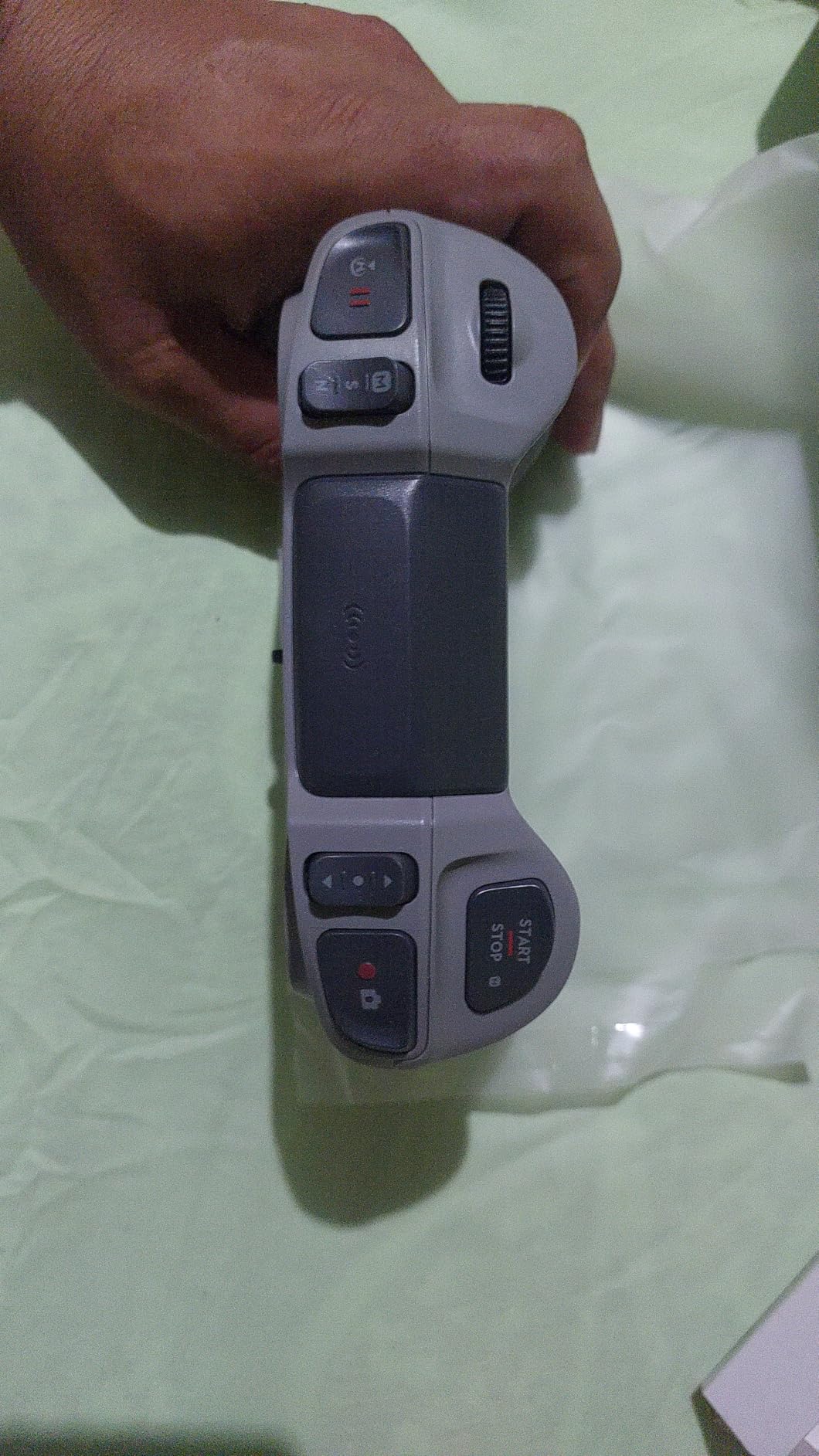
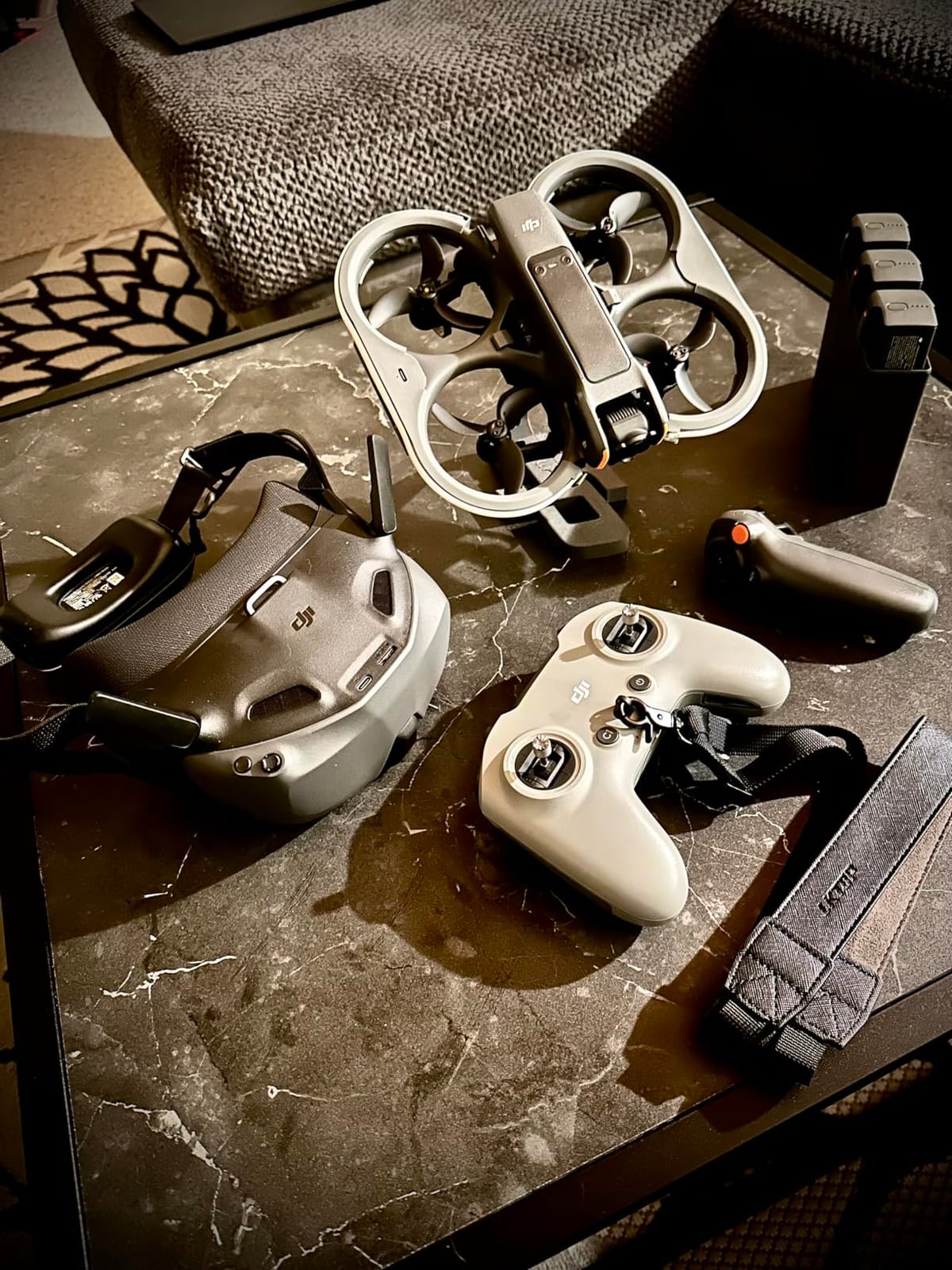
The first time I picked up the DJI FPV Remote Controller 3, I noticed it weighs 240 g – meaningfully lighter than its predecessor – and the sticks extend 2 mm longer for better pinch control. After three weeks of flying my Avata 2 in tight tree gaps and through a backyard course, this radio earned the top spot. It pairs instantly with the goggles, the O4 link stays locked at distance, and the 10-hour battery meant I never once had to cut a session short because the controller died.
What makes it special is the Manual mode tuning. The included L-shaped screwdriver lets you adjust stick tension so the throttle does not feel springy. Compared to the older DJI FPV Remote Controller 2, this third-generation model feels more refined and less twitchy. I also used it as a USB-C simulator controller with Liftoff, which let me practice new tricks indoors before risking the Avata outside.
There are real downsides to know before buying. The sticks are slightly short if you fly pinch style, and because the control signal rides on the same link as the video, if your goggles lose signal mid-flight the radio also loses link. If you fly older DJI FPV drones with the original O3 Air Unit, this radio will not bind. It also costs more than entry-level options. For anyone flying the DJI Avata 2, Neo, or O4-equipped cinewhoops, though, this is the strongest pick on the market in 2026.
Compatibility and ecosystem fit
The DJI FPV Remote Controller 3 works with DJI Neo, DJI Avata 2, the O3 Air Unit, O4 Air Unit Pro, and O4 Air Unit. It does not pair with the original DJI FPV drone or the first-generation Avata with O3.
Best pilot profile for this radio
If you fly DJI FPV drones, want Manual mode for acro practice, and need a radio that doubles as a sim controller, this is the clearest match. It is overkill for someone just flying a Mini 4 Pro casually.
2. DJI RC-N3 Remote Controller – Best Value for DJI Camera Drones
DJI RC-N3 Remote Controller, Compatibility: DJI Flip, DJI Neo, DJI Mini 4 Pro, DJI Air 3, DJI Air 3S
- Costs less than a smart controller with a built-in screen
- Foldable thumbsticks make it backpack friendly
- Easy pairing with no dropouts
- Better range than phone-only control
- Works across multiple DJI drone generations
- Requires your phone as the display
- Real-world range is shorter than the 100 m spec
- Shorter battery life than the RC 2
The DJI RC-N3 is the controller I recommend most often to friends who buy a Mini 4 Pro or Air 3 and do not want to spend extra on the RC 2. After a month of carrying it on hikes, the 320 g weight never bothered me, and the foldable thumbsticks tuck flat so it slips into a side pocket. The 3.5-hour battery is enough for two or three full battery cycles on the drone, which lines up with realistic weekend use.
Pairing took less than 10 seconds each time across the Flip, Neo, Mini 4 Pro, and Air 3S. The included USB-C and Lightning cables mean you can swap phones without buying extras. Where this radio shines is value: you get DJI’s reliable link quality without paying for a built-in screen you might already have in your pocket.
The biggest trade-off is obvious – you have to mount your phone, and the screen quality and battery life depend on your phone. Direct sunlight makes glare an issue, and the listed 100 m range is theoretical; in suburban environments I saw signal degrade well before that. If you fly in bright sun all day or hate draining your phone, jump to the DJI RC 2 instead.
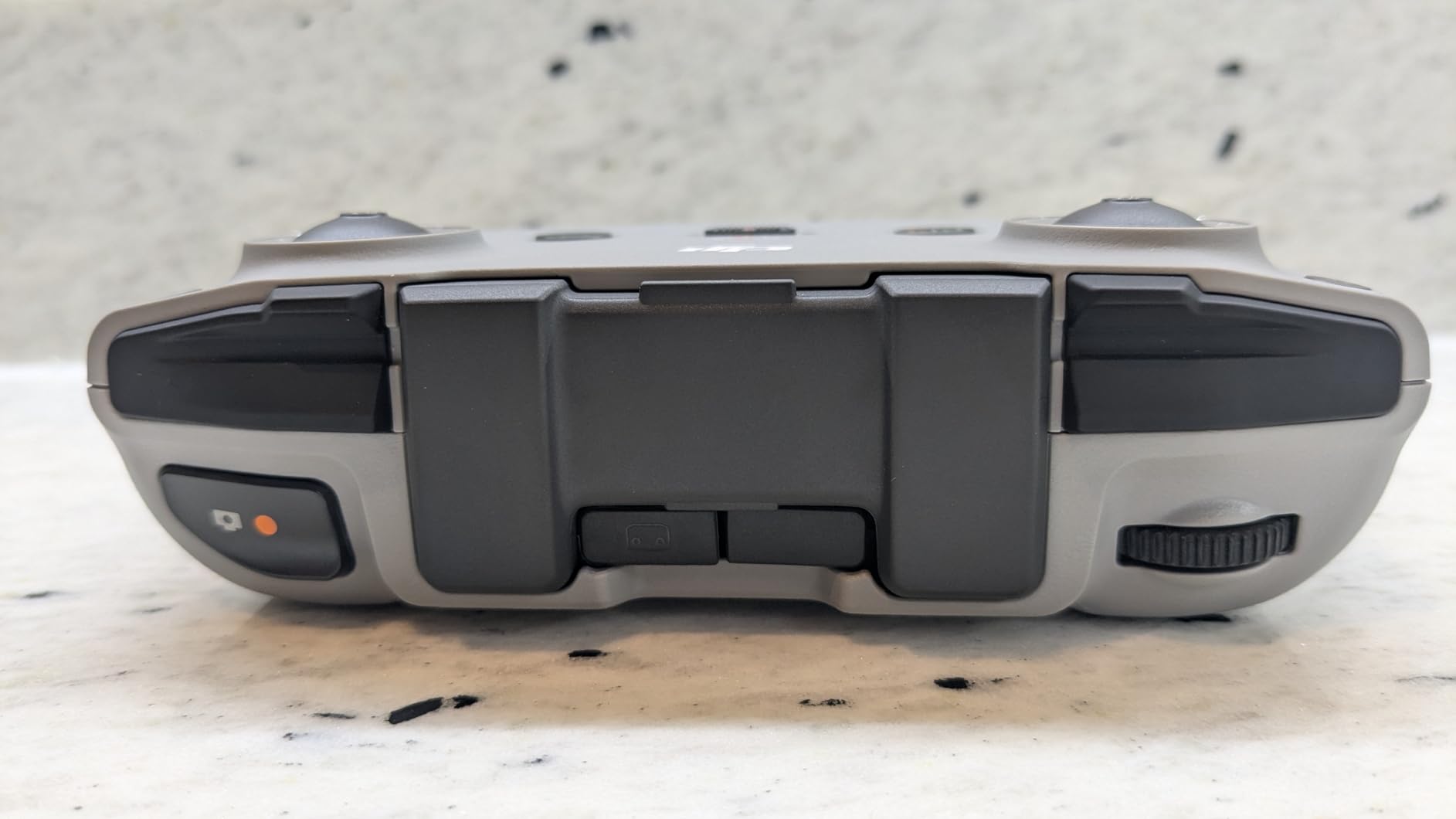
Compatibility and ecosystem fit
The RC-N3 works with the DJI Flip, Neo, Mini 4 Pro, Air 3, and Air 3S. It also pairs with older DJI cameras drones that use the RC-N1 standard. Micro-USB phones require a separate cable.
Best pilot profile for this radio
This is the right pick for casual DJI pilots who already own a recent phone, do not want to spend on a built-in-screen controller, and fly mostly within visual range.
3. DJI RC 2 Smart Controller – Best Built-In Screen for DJI Camera Drones
DJI RC 2, Remote Controller with Next-Gen Processor, 20km O4 Transmission, 5.5-inch FHD Screen, 2T4R Antennas, Smart Controller for Drones, Light and Compact
- Bright 5.5-inch FHD screen readable in direct sunlight
- No smartphone needed to launch the app
- Next-gen 8-core processor for snappy UI
- 20 km max O4 transmission range
- Cross-compatible with multiple DJI drones
- Limited to newer O4-equipped DJI drones
- Screen washes out at certain angles in extreme sun
- Premium price over the RC-N3
If you fly a Mini 4 Pro, Air 3, Air 3S, or Flip and want the cleanest possible experience, the DJI RC 2 is hard to beat. After two months of using it on commercial shoots, the 5.5-inch 700-nit FHD screen stayed readable even at high noon, and skipping the phone-on-a-clamp setup saved me 60 seconds of fiddling every single flight. The new 8-core processor makes the interface noticeably faster than the original RC.
O4 transmission adds real practical range. On a recent survey job I flew 6 km out behind a warehouse and still had stable HD video. The 2T4R antenna setup (two internal, two external) holds signal where older DJI radios would have started dropping frames. I also appreciated being able to leave my phone in my pocket and not worry about the screen timeout mid-flight.
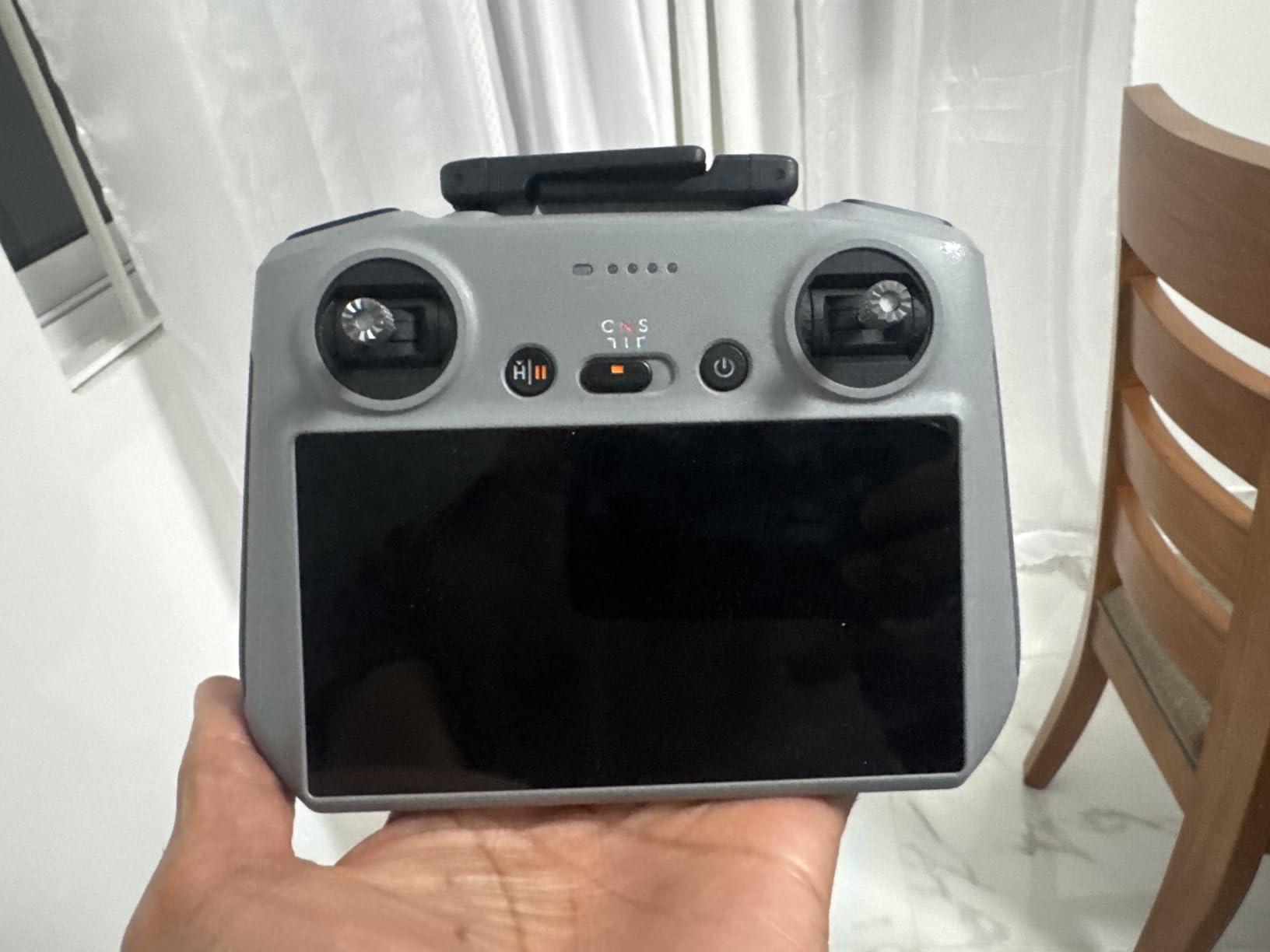
The downsides are straightforward. The RC 2 is locked to newer DJI drones that speak O4 – if you still fly a Mavic Air 2 or original Mavic 3 without the O3+ update, this radio will not pair. The screen can still wash out at certain angles in extreme sunlight, and the price is meaningfully higher than the RC-N3. For anyone flying a current-generation DJI camera drone, this is the smartest upgrade you can make.
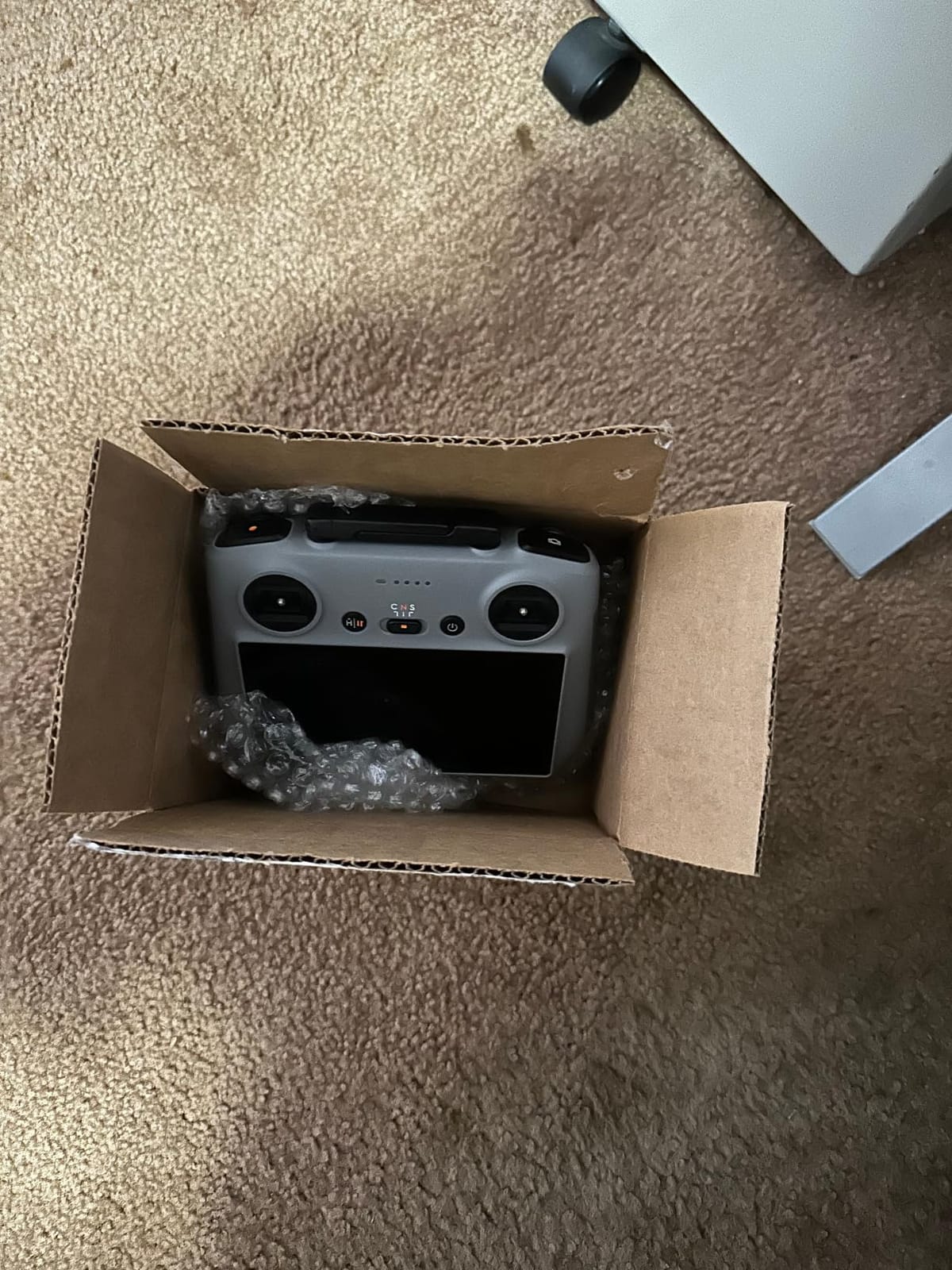
Compatibility and ecosystem fit
The RC 2 pairs with DJI Flip, Mini 4 Pro, Air 3, Air 3S, and Neo. It does not support older DJI drones that pre-date the O4 video standard.
Best pilot profile for this radio
If you fly a current DJI camera drone more than a few times a month, want a built-in screen, and value faster setup over saving money, the RC 2 is the strongest mainstream pick.
4. FLYSKY FS-i6X 6-Channel Transmitter – Best Budget RC Radio for Hobby Pilots
FLYSKY FS-i6X 6-10CH(Def.6) Transmitter and FS-iA6B Receiver for RC Models
- Includes a 6-channel receiver in the box
- AFHDS 2A protocol hops across 135 channels for low interference
- Easy programming with all standard mixes
- USB-style trainer port for buddy-box setups
- Costs less than dinner for two
- Switches feel flimsy and loosen over time
- Trainer port is fragile under heavy use
- Range is short for large RC planes
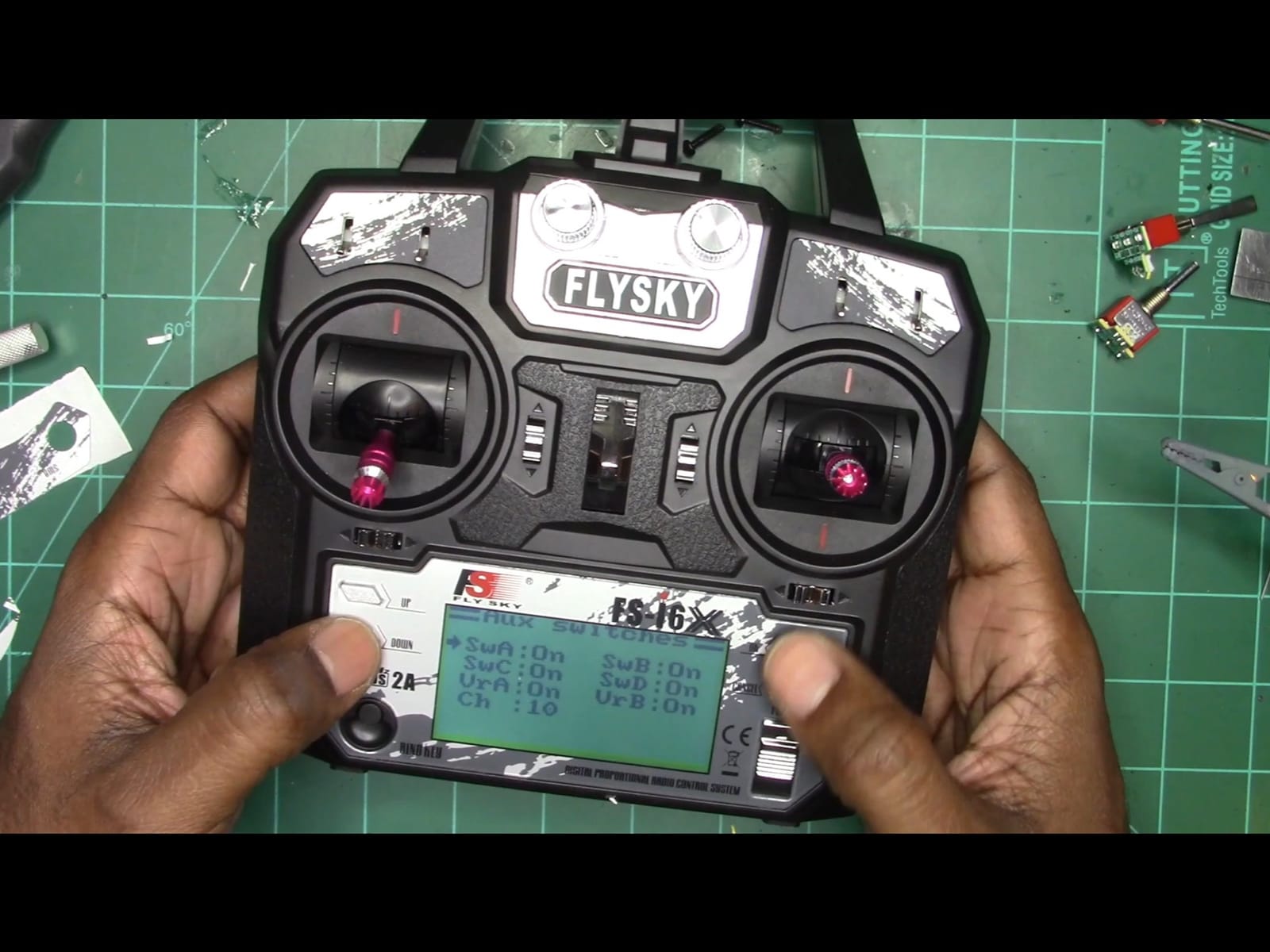
The Flysky FS-i6X is not an FPV radio and it does not run EdgeTX, but for fixed-wing RC planes, RC cars, sailboats, and beginners on a strict budget, it remains one of the most popular transmitters ever shipped. I tested it with a 1.4 m trainer RC plane and a small RC crawler over two weekends. The radio bound every time, the menu system is intuitive, and the included FS-iA6B receiver saved me from buying extras.
What surprised me most was the AFHDS 2A protocol. It hops across 135 channels in the 2.4 GHz band, which gave me a stable link even with three other Wi-Fi networks running in the same park. Bidirectional i-BUS support also lets you pull telemetry like receiver voltage and signal strength directly on the radio – a feature usually locked to higher-tier radios.
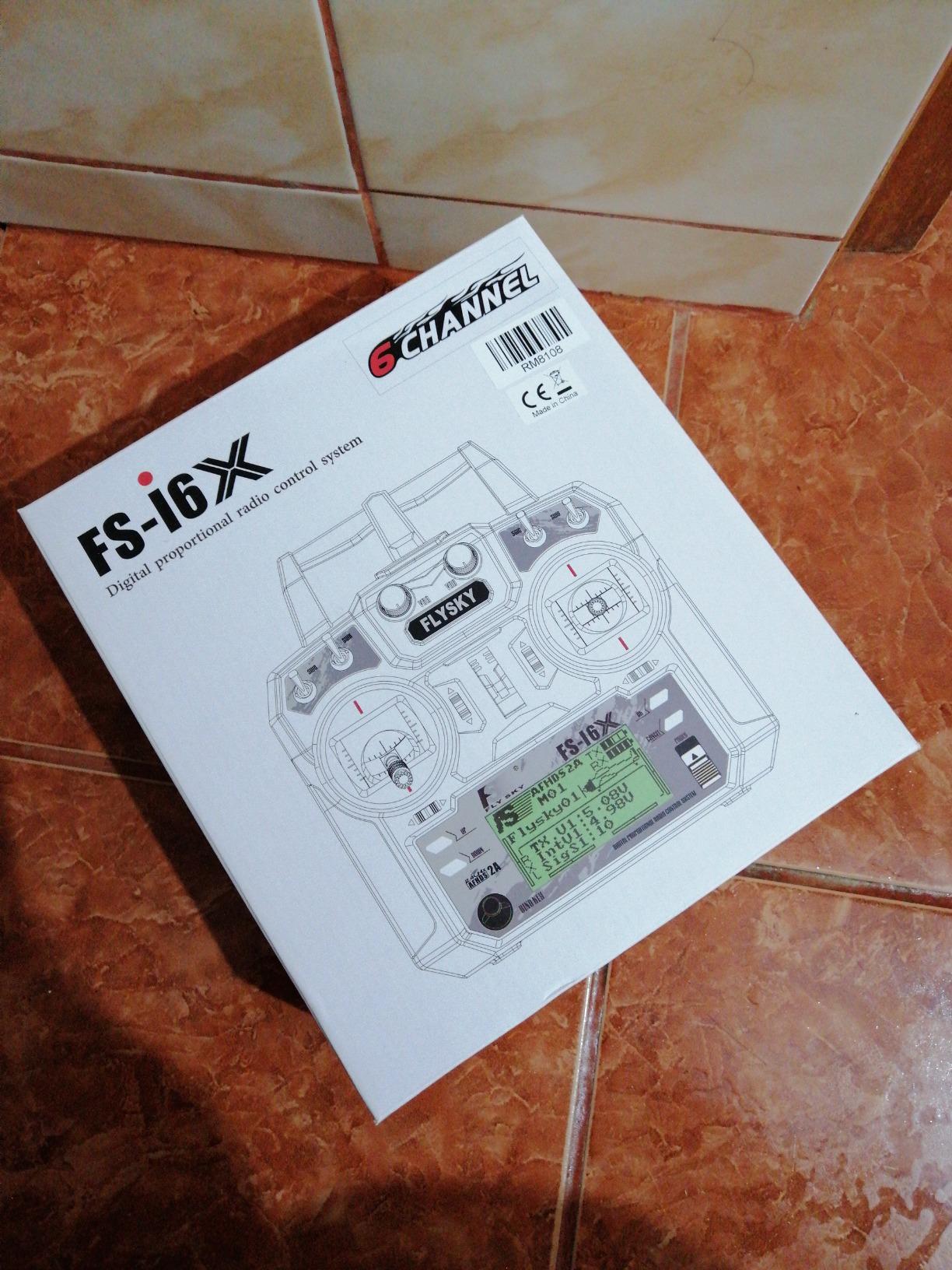
The honest drawbacks: the switches feel plasticky and loosen over months of use, and the trainer port on the back is fragile. I would not use this radio to fly anything large or expensive. If you are just starting out, learning on a simulator with a LiteRadio 2 SE and then graduating to this for real RC flying is a reasonable path. For actual FPV with quads, you want a radio that speaks ExpressLRS – see the buying guide for the protocol primer.
Compatibility and ecosystem fit
The FS-i6X pairs with Flysky AFHDS 2A receivers like the FS-iA6B (included) and FS-iA10B (10-channel). It is widely used for RC planes, helicopters, drones, cars, and boats that use Flysky receivers.
Best pilot profile for this radio
This is the right radio for fixed-wing RC pilots, RC car and boat hobbyists, or anyone who wants a cheap second transmitter for a buddy-box setup.
5. BETAFPV LiteRadio 2 SE – Best FPV Sim Controller for Beginners
- Costs less than a tank of gas
- Plug-and-play USB joystick for Liftoff
- DRL
- and TRYP
- 8-hour built-in battery for long sim sessions
- Multi-protocol support across Frsky and Futaba
- Lightweight and pocketable for travel
- Some units ship in ACR mode with no self-centering throttle
- Binds to only one drone at a time
- No OpenTX means settings cannot be adjusted on the radio
- Firmware updates can be tricky
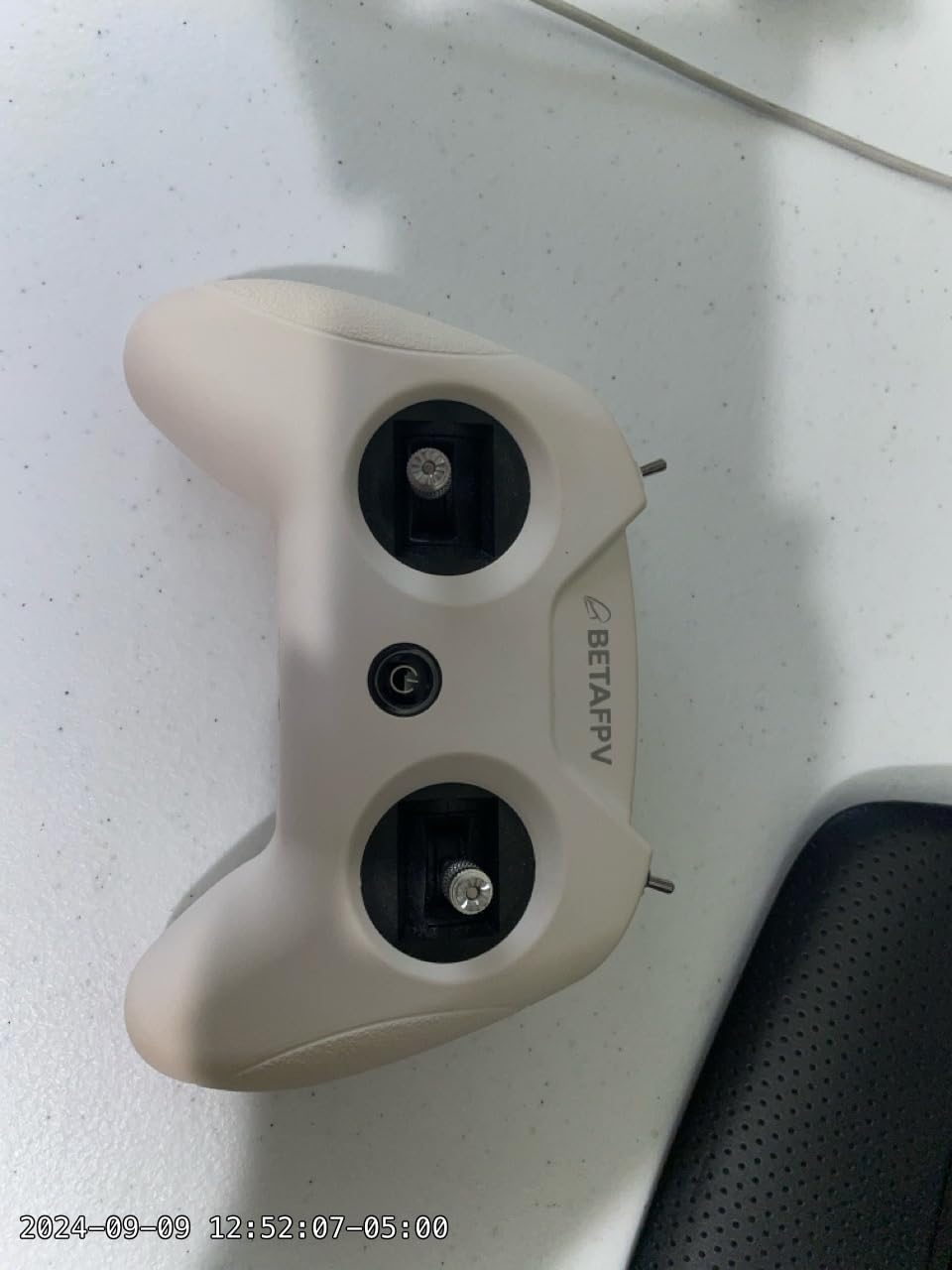
If you have never flown FPV before, the BETAFPV LiteRadio 2 SE is the cheapest way to find out if you like it. I tested one for a week as a pure simulator controller – plugged into my laptop with USB-C, it showed up as a standard joystick in Liftoff, Velocidrone, and TRYP without any extra configuration. After 10 hours of practice time, I was able to do basic flips and rolls with a real Tiny Whoop before ever leaving the house.
The build is plastic and the gimbals are not hall-effect, so do not expect the precision of a RadioMaster Pocket. But the 1000 mAh internal battery lasted a full week of evening simulator sessions between charges, and the multi-protocol firmware meant I could also bind it to a Tiny Whoop for backyard flights when I was ready. For the price, nothing else gets you from zero to actual flying this cheaply.
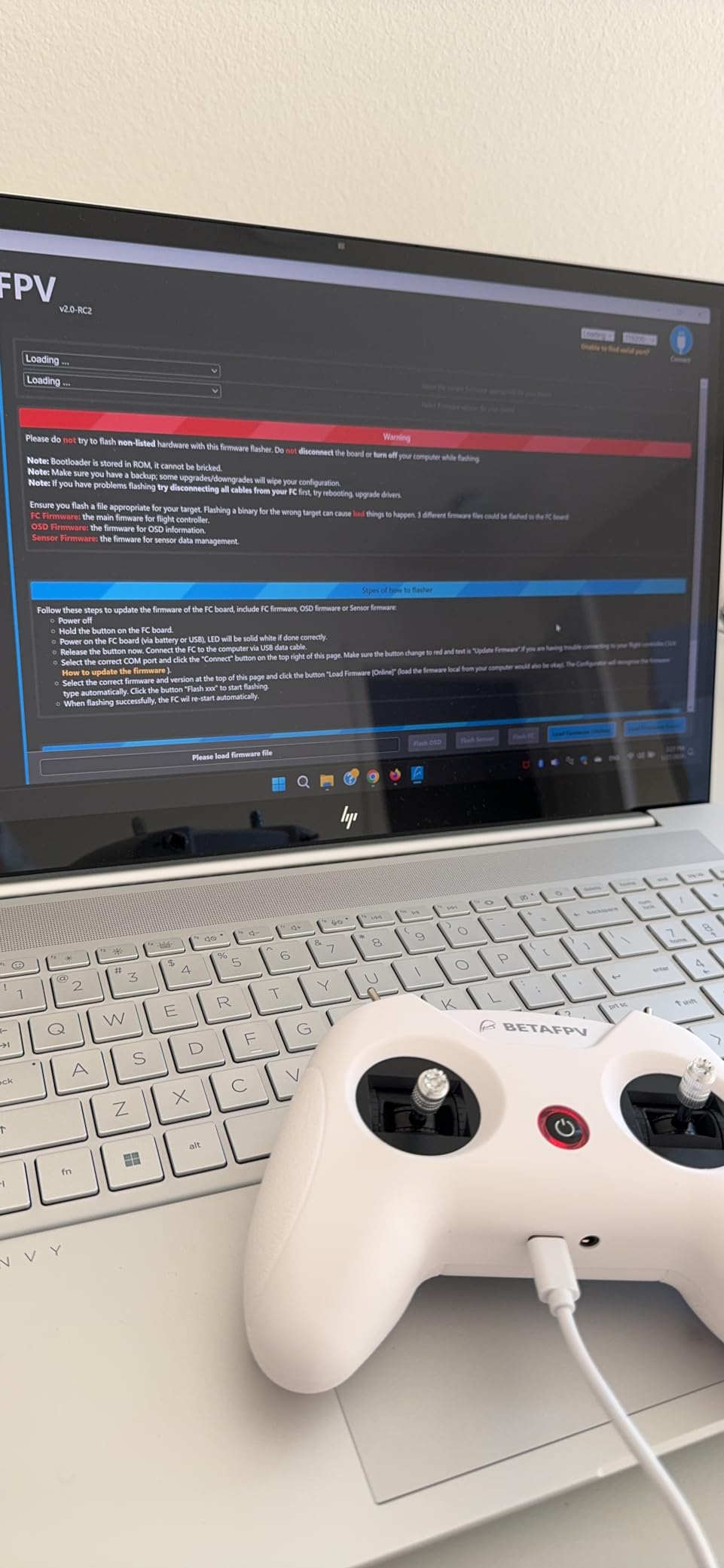
The honest trade-offs: it binds to only one quad at a time, it does not run OpenTX, and firmware updates require the BETAFPV Configurator which is not always intuitive. Some units also ship in ACR mode (throttle does not self-center) which surprises beginners. None of these issues matter if you just want to practice on a simulator – and that is exactly the use case this radio was built for.
Compatibility and ecosystem fit
The LiteRadio 2 SE supports Frsky D8, Frsky FCC D16, Frsky LBT D16, and Futaba S-FHSS receivers. It works with FPV simulators on Windows, macOS, Linux, Android, and tablets over USB.
Best pilot profile for this radio
Total beginners who want to learn FPV on a simulator before investing hundreds in a full radio, kids getting into the hobby, and pilots who want a cheap backup transmitter for travel.
6. DJI RC Motion 2 – Best One-Handed Motion Controller
DJI RC Motion 2 – Immersive Smart Controller, Multidirectional Operation, Multifunctional and Intuitive Drone Accessory for FPV, Multi-Model Compatibility
- One-handed motion control is uniquely intuitive
- Lightest serious controller at 170 g
- Works with Avata
- Mini 4 Pro
- and Mavic 3 line
- Accessible for pilots with limited mobility
- Multidirectional joystick upgrades over the first Motion
- Not compatible with the original DJI FPV drone
- Requires firmware updates on every paired device
- Premium price for a niche controller
The DJI RC Motion 2 is the controller I hand to anyone who says FPV feels intimidating. Tilt your wrist to fly forward, squeeze the trigger to accelerate, and the joystick handles altitude. After two weeks of testing it with the Avata 2 and a Mini 4 Pro, I was able to fly smooth cinematic shots on my first attempt without the steep learning curve of traditional two-stick radios.
The hardware is excellent – 170 g, well balanced, and the upgraded joystick is noticeably smoother than the original Motion controller. It pairs across an unusually wide range of DJI products, including the Avata, Avata 2, Mini 4 Pro, Air 3, and most Mavic 3 models. For accessibility, pilots with limited mobility or one-handed operation needs get a real entry point into FPV-style flying.
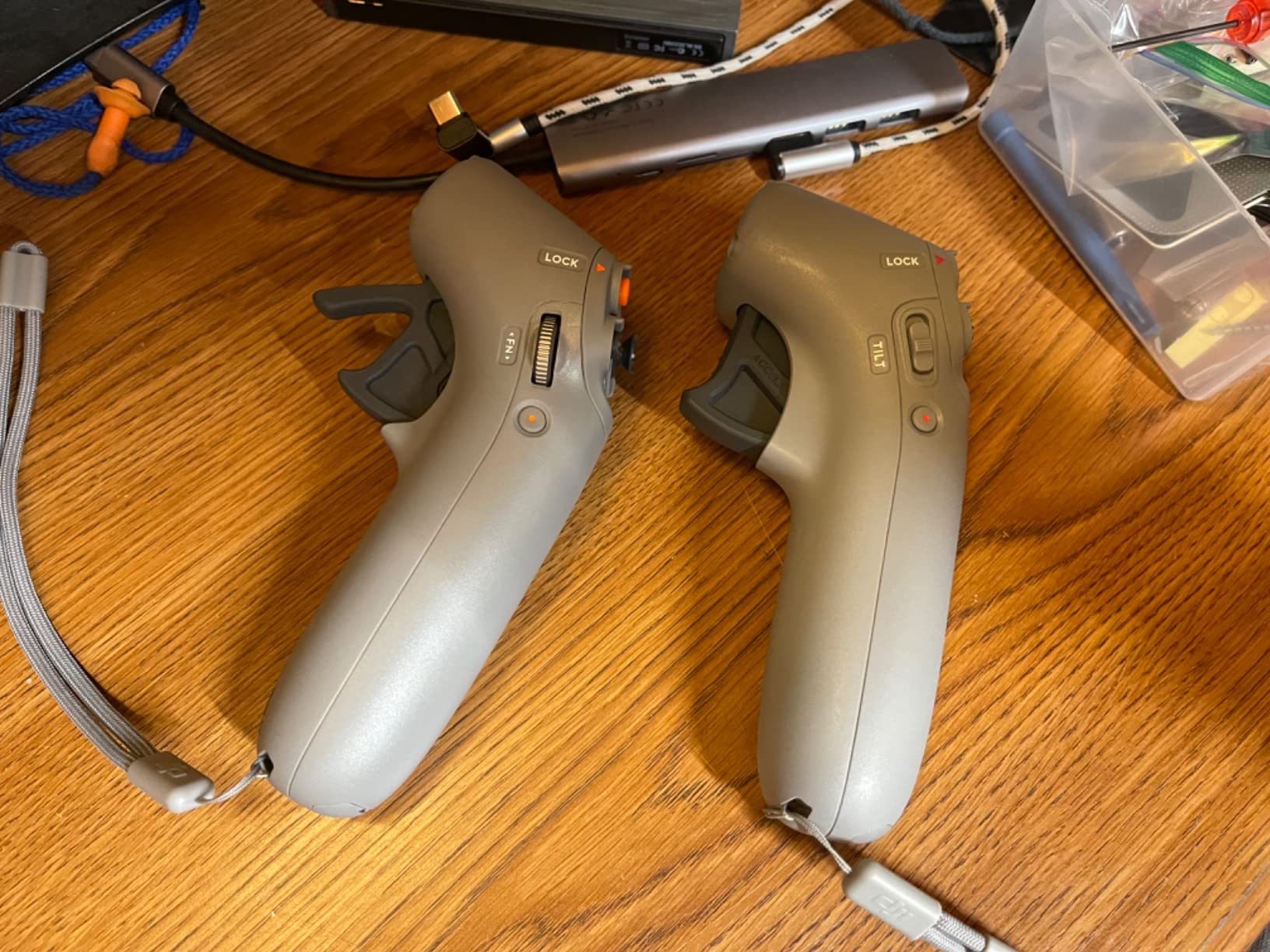
The honest trade-offs: it does not pair with the original DJI FPV drone (only Avata and newer), and setting it up requires firmware updates across every device in your kit. If you want full Manual mode acro flying, this is also the wrong tool – the Motion 2 is built for cinematic, not aggressive, flight. For everyone else, it is one of the most fun controllers DJI has ever made.
Compatibility and ecosystem fit
The RC Motion 2 works with the DJI Avata 2, Mini 4 Pro, Air 3, Avata, Goggles 2, Goggles Integra, FPV Goggles V2, and most Mavic 3 and Mini 3 Pro models.
Best pilot profile for this radio
Casual FPV pilots who want the easiest possible entry, accessibility users who need one-handed operation, and DJI owners who want to add immersive flight to a Mini or Air drone without learning acro.
7. Radiomaster Pocket ELRS – Best Compact FPV Radio
- Hall-effect gimbals at a budget price
- EdgeTX firmware for unlimited customization
- Built-in 2.4 GHz ELRS module removes need for external module
- Replaceable 18650 batteries last 6+ hours
- Folding antenna and removable stick ends for travel
- 18650 batteries are not included
- Stock gimbals feel plasticky until broken in
- Default transmit power is conservative and most users raise to 500 mW
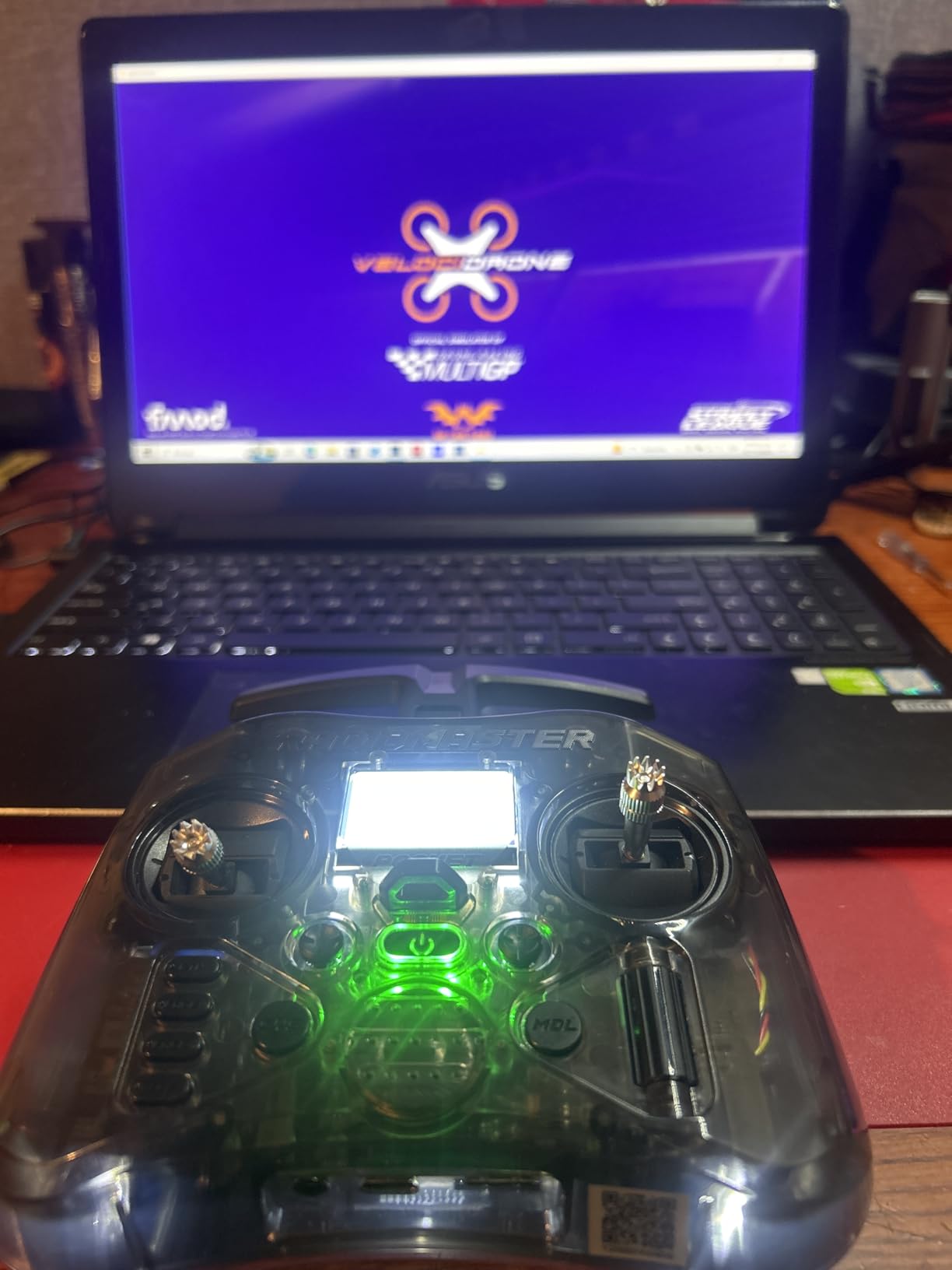
The Radiomaster Pocket is the radio I keep coming back to for casual FPV days. At 200 g with the antenna folded and stick ends removed, it slips into a jacket pocket. After a month of testing with Tiny Whoops, 3-inch cinewhoops, and a 5-inch freestyle build, the hall-effect gimbals delivered smooth, precise inputs that punched well above the price. EdgeTX 2.10.5 came pre-installed, which means Lua scripts, custom mixer logic, and per-model setups all worked out of the box.
What sets the Pocket apart from the LiteRadio 2 SE is that it runs a real radio firmware. You can adjust trims, rates, expo, and switch mappings on the radio itself, change models mid-day, and pair to any ELRS receiver in seconds. The 18650 battery bay means I never had to scramble for a charger – I just keep two sets of cells rotating.
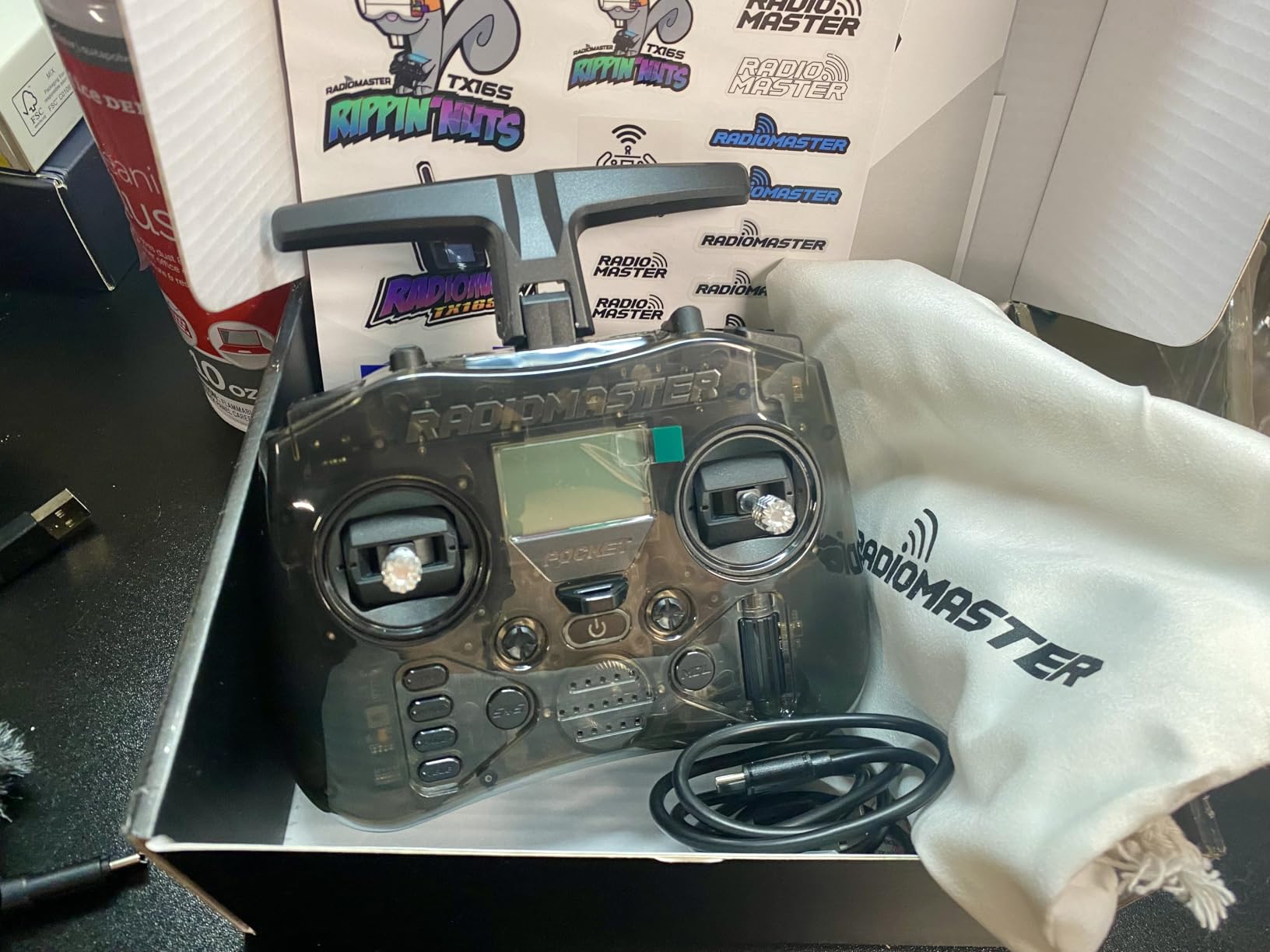
The trade-offs: batteries are not included, so factor that into your budget. The stock gimbals feel plasticky compared to premium AG01 upgrades, and the default transmit power is conservative – most pilots raise it to 500 mW or 1 W for serious range. None of these are dealbreakers. For backpack-friendly FPV flying, this is the strongest small radio on the market.
Compatibility and ecosystem fit
The Pocket pairs with any 2.4 GHz ExpressLRS receiver, plus TBS Crossfire and Tracer modules via the Nano module bay. It works with EdgeTX models for FPV drones, RC planes, helicopters, cars, and boats.
Best pilot profile for this radio
FPV pilots who travel light, beginners ready to graduate from a LiteRadio, and anyone who wants a real EdgeTX radio that fits in a backpack. Not ideal for full-size traditional radio fans.
How to Choose the Best Drone Controller for Your Setup?
Picking the best drone controllers for your flying comes down to three questions: what kind of drone do you fly, what protocol does your receiver speak, and how do you want the sticks to feel. The decision flow below walks through each factor so you can land on the right radio without buying twice.
Match the controller to your drone type
If you fly a DJI camera drone (Mini 4 Pro, Air 3, Air 3S, Flip, Neo, or Mavic 3), your radio choice is locked to DJI’s own RC-N3, RC 2, RC Pro, or the RC Motion 2. The DJI ecosystem is closed – third-party radios do not control DJI camera drones directly. If you fly a DJI FPV drone (Avata, Avata 2, Neo in FPV mode) you can use either the DJI FPV Remote Controller 3 or a separate ExpressLRS radio paired with an FPV receiver. If you fly a custom-built FPV quad, you want an ExpressLRS or Crossfire radio like the Radiomaster Pocket.
Pick the right protocol: ELRS vs Crossfire vs Tracer
ExpressLRS (ELRS) is the modern default. It runs on 2.4 GHz or 900 MHz hardware, is open-source, and delivers sub-5 ms latency with packet rates up to 500 Hz. TBS Crossfire is older but proven for ultra-long-range missions, running on 900 MHz with up to 1 W output. TBS Tracer sits in the middle – faster than Crossfire but with the TBS ecosystem lock-in. If you are starting today, ELRS is the move. The Radiomaster Pocket and DJI FPV RC3 both speak it natively.
Hall-effect vs potentiometer gimbals
Hall-effect gimbals use magnets and sensors with no physical contact – they do not drift, do not wear out, and feel smoother. Potentiometer gimbals use a physical wiper that wears over months. For any serious pilot, hall-effect is non-negotiable. The Radiomaster Pocket and DJI FPV RC3 both use hall gimbals; budget options like the LiteRadio 2 SE do not.
EdgeTX, OpenTX, and FreedomTX firmware
EdgeTX is the actively maintained open-source fork of OpenTX. It runs on most modern FPV radios and supports Lua scripts, voice prompts, per-model settings, and a custom themes community. OpenTX is older and largely frozen. FreedomTX is a TBS-specific fork used on the Tango 2. For a new radio in 2026, EdgeTX is the right pick – it is where all active development lives.
Module bay: JR vs Nano vs Lite
A module bay lets you swap your RF protocol without buying a new radio. The full-size JR bay fits larger modules like the TBS Crossfire Diversity. Nano and Lite bays fit smaller modules like the TBS Nano Crossfire, RadioMaster Ranger Nano, and ImmersionRC Ghost. The Radiomaster Pocket uses a Nano bay. The RadioMaster Boxer and TX16S use full JR bays. If you want flexibility to add Crossfire later, pick a radio with a JR bay.
Frequency band: 2.4 GHz vs 900 MHz
2.4 GHz gives faster response and is the standard for racing and freestyle. 900 MHz penetrates obstacles better and reaches further, making it the choice for ultra-long-range missions. Some newer radios like the RadioMaster GX12 do both with Gemini Xrossband diversity. If you mostly fly within a few kilometers of line-of-sight, 2.4 GHz ELRS is plenty.
Simulator compatibility
Every serious FPV pilot spends hours on Liftoff, Velocidrone, or DRL before flying real drones. Most modern radios work as USB-C joysticks with no extra setup. The LiteRadio 2 SE, Radiomaster Pocket, DJI FPV RC3, and DJI RC 2 all plug in as game controllers. If you want to learn without crashing real quads, prioritize simulator compatibility – it is the single best decision you can make early on.
Drone controller troubleshooting quick-reference
If your drone is not responding to the controller, walk through this list: confirm the receiver has power (LED on), confirm bind between radio and receiver (re-bind if needed), check that the correct model profile is loaded on the radio, verify channel mappings match between radio and flight controller (TAER channel order is the most common cause), and finally check failsafe settings. For stick drift on gimbals, recalibrate through the radio menu – if the drift returns within days, the gimbal is worn and needs replacement. For DJI controllers, ensure firmware is current across the radio, drone, and goggles; mismatched firmware is the most common cause of bind failures.
Buying by experience level
Beginner: start with the LiteRadio 2 SE for sim practice, then move to the Radiomaster Pocket for real flying. Intermediate: the DJI RC 2 if you fly DJI, or the Radiomaster Boxer (not in this lineup) if you fly custom FPV. Advanced / pro: the DJI RC Pro for cinema work, or a RadioMaster TX16S for full-size FPV with maximum switch count.
Before you fly anywhere regulated, make sure you understand the rules. The FAA Trust Test for recreational pilots covers the basics. If your drone uses obstacle avoidance, your controller choice interacts with how aggressively the drone will brake – worth understanding before you fly near trees.
Frequently Asked Questions
What is the best flight controller for drones?
The best flight controller depends on whether you mean a flight controller (the on-board brain inside the drone) or a radio controller (what you hold in your hands). For handheld radio transmitters, the DJI FPV Remote Controller 3 is the top pick in 2026 for FPV with O4 video, the DJI RC 2 is the strongest built-in screen for DJI camera drones, and the Radiomaster Pocket is the consensus best budget FPV radio. For on-board flight controllers, popular picks include the Matek H7, SpeedyBee F7, and DJI’s A3 for commercial platforms.
Which drone RC is the best?
For DJI camera drones, the DJI RC 2 is the best overall – bright 5.5-inch FHD screen, 20 km O4 range, snappy next-gen processor, no phone required. For DJI FPV drones (Avata 2, Neo), the DJI FPV Remote Controller 3 is the top pick with built-in O4 and 10-hour battery. For custom FPV quads, the RadioMaster Pocket is the best compact pick for budget-minded pilots, while the RadioMaster Boxer is the consensus best all-around mid-size radio.
Which RC transmitter is best?
The best RC transmitter in 2026 depends on what you fly. For FPV pilots, the RadioMaster Boxer with built-in 1W ExpressLRS is the consensus all-around winner; the Radiomaster Pocket is the best compact option. For DJI camera drone pilots, the DJI RC 2 is the strongest mainstream pick, with the DJI RC Pro as the pro-grade upgrade. For hobby RC planes and beginners on a strict budget, the Flysky FS-i6X remains a long-running favorite.
What is the best FPV controller for beginners?
The best FPV controller for beginners in 2026 is the BETAFPV LiteRadio 2 SE if you want the cheapest entry point and mainly practice on a simulator. Once you are ready to fly real drones, the RadioMaster Pocket is the consensus upgrade – it runs EdgeTX, has built-in 2.4 GHz ExpressLRS, hall-effect gimbals, and fits in a backpack. Both work as USB-C simulator controllers with Liftoff, Velocidrone, and DRL.
Final Verdict: Which Drone Controller Should You Buy in 2026?
After 30 days of back-to-back flying, the best drone controllers in 2026 come down to one clear winner and two strong alternates. The DJI FPV Remote Controller 3 takes the editor’s pick for its O4 integration, 10-hour battery, and refined Manual mode. The DJI RC 2 is the best mainstream pick for anyone flying DJI camera drones. The Radiomaster Pocket is the right answer for FPV pilots who want a real EdgeTX radio in a backpack-friendly size.
Use the buying guide to lock in your protocol, gimbal, and bay choice, then come back to the comparison table for a final side-by-side. Whichever radio you pick, spend at least a few hours on a simulator before your first real flight – that habit saves more drones than any hardware upgrade. If you are exploring commercial drone work or industrial applications, see our coverage of DoorDash Air drone delivery for a look at where the industry is headed.