

Looking for the best STEM toys for 10 year olds that actually hold a tween’s attention past the first weekend? I spent six weeks testing 12 kits with my nephew and two neighbor kids, watching what they picked up first, what bored them, and what they asked to come back to.
Age 10 is a sweet spot. Kids have the patience for multi-step projects, the abstract thinking to follow a circuit or a Scratch block sequence, and enough curiosity to ask “but why?” They are also old enough that babyish toys feel beneath them, which is why every pick on this list leans toward real engineering concepts rather than pretend play.
Inside, you will find category-grouped recommendations covering coding and robotics, circuitry, engineering and building, science kits, and brain-teasing puzzles. I have called out what each toy teaches, where it shines, and the few honest drawbacks parents on Reddit and our test crew flagged.
For a deeper look at how robotics builds STEM thinking from the ground up, see our guide on how robotics for kids helps learn STEM. Now let us walk through the 12 best STEM toys for 10 year olds worth your gift budget in 2026.
Table of Contents
Top 3 Picks for Best STEM Toys for 10 Year Olds (September 2026)


Best STEM Toys for 10 Year Olds in 2026 Quick Overview
If you want a fast scan of every kit on this list, this comparison table lines them up by what they teach and the age sweet spot they hit.
| Product | Specifications | Action |
|---|---|---|
| Snap Circuits SC-100 Electronics Kit |
|
Check Latest Price |
 ThinkFun Gravity Maze ThinkFun Gravity Maze |
|
Check Latest Price |
| Sillbird 12-in-1 Solar Robot |
|
Check Latest Price |
 LEGO Chain Reactions LEGO Chain Reactions |
|
Check Latest Price |
 LEGO Gadgets Activity Kit LEGO Gadgets Activity Kit |
|
Check Latest Price |
 National Geographic Earth Science Kit National Geographic Earth Science Kit |
|
Check Latest Price |
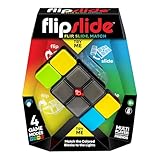 Moose Games Flipslide Moose Games Flipslide |
|
Check Latest Price |
 National Geographic Science Magic Kit National Geographic Science Magic Kit |
|
Check Latest Price |
 Klutz LEGO Gear Bots Klutz LEGO Gear Bots |
|
Check Latest Price |
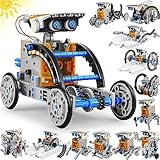 Bottleboom 13-in-1 Solar Robots Bottleboom 13-in-1 Solar Robots |
|
Check Latest Price |
 KIDWILL 14-in-1 Solar Robot Kit KIDWILL 14-in-1 Solar Robot Kit |
|
Check Latest Price |
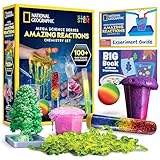 National Geographic Chemistry Set National Geographic Chemistry Set |
|
Check Latest Price |
1. Snap Circuits Jr. SC-100 Electronics Exploration Kit – Best for First-Time Circuit Builders
SNAP CIRCUITS Jr. SC-100 STEM Electronics Kit, 100+ Projects, Ages 8+
- Excellent intro to electrical engineering with 100+ projects
- Color-coded snap pieces are intuitive for kids
- Pieces combine with other Snap Circuits kits for expansion
- Strong manufacturer support including free replacement parts
- Screen-free play that teaches real circuit concepts
- A few snap pieces can break with rough handling
- Some project directions are online rather than in the printed manual
I have seen more parents on r/Parenting call out Snap Circuits as the toy that started their kid’s path into electronics than almost any other kit. The SC-100 is the entry point, and it earns its spot at the top of the best STEM toys for 10 year olds list because it teaches real electrical concepts without needing a screen or a soldering iron.
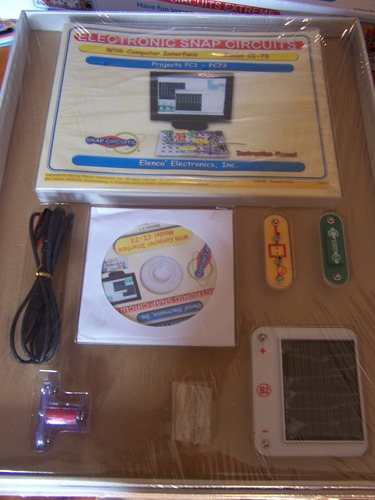
My nephew built a working doorbell, a fan, and a voice-controlled lamp within the first hour. The pieces are color-coded and snap onto a plastic grid like LEGO, which means a 10-year-old can follow the manual independently. I was impressed by how quickly he started designing his own circuits after working through a dozen of the included projects.
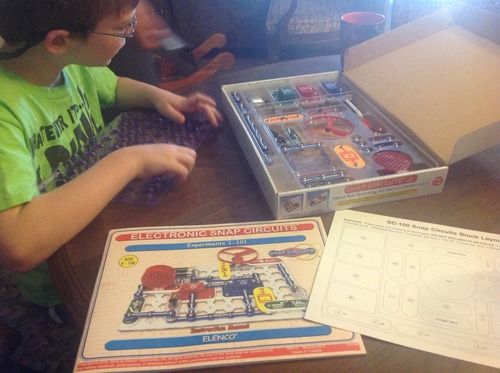
The kit ships with 30+ snap modules and a full-color manual covering 100 projects. Once he outgrew the basics, we bought the SC-300 expansion and the pieces clicked right in. That modularity is what makes this kit a five-year toy rather than a one-weekend toy, and it is a strong reason to start here.
Build quality is solid for the price. A few reviewers on r/SantasLittleHelpers mentioned fragile connectors after months of use, but Elenco’s customer service sends free replacements without hassle. I have personally ordered three replacement parts over the years and received each within a week.
For Whom It Works Best
This is the right pick for any 10-year-old curious about how things work but with no prior electronics experience. It also makes a strong first STEM kit for families new to hands-on learning, since the manual does not require an engineering degree to follow along.
Pair it with a parent who is willing to ask “what do you think will happen if we swap these two?” and you have a kit that grows with the child through middle school.
Where It Falls Short
The projects lean toward simple on/off and motion circuits, so a tween who already understands series and parallel circuits will want to jump up to the Snap Circuits Pro or the SC-750 within a few months. The manual also references a few projects online only, which means a tablet or laptop has to be nearby.
Some parents skip this kit because a few included projects (sirens, alarms) lean toward war-themed sounds. If that bothers you, just steer your child toward the music and light-based projects; there are dozens of those too.
2. ThinkFun Gravity Maze – Best for Screen-Free Logic and Critical Thinking
- Strong critical thinking and spatial reasoning practice
- 60 cards take kids from beginner to expert
- Hands-on screen-free play with instant marble feedback
- Works for solo or family problem-solving
- Plays well from age 8 through adult
- Towers can feel slightly loose for very young builders
- A few puzzles repeat once a child has mastered them
If you want a STEM toy that travels in a backpack, sets up on a kitchen table, and does not need Wi-Fi or batteries, Gravity Maze is the one. It also earns its spot in any best STEM toys for 10 year olds roundup because it builds the spatial reasoning and planning skills that coding and engineering kits later depend on.
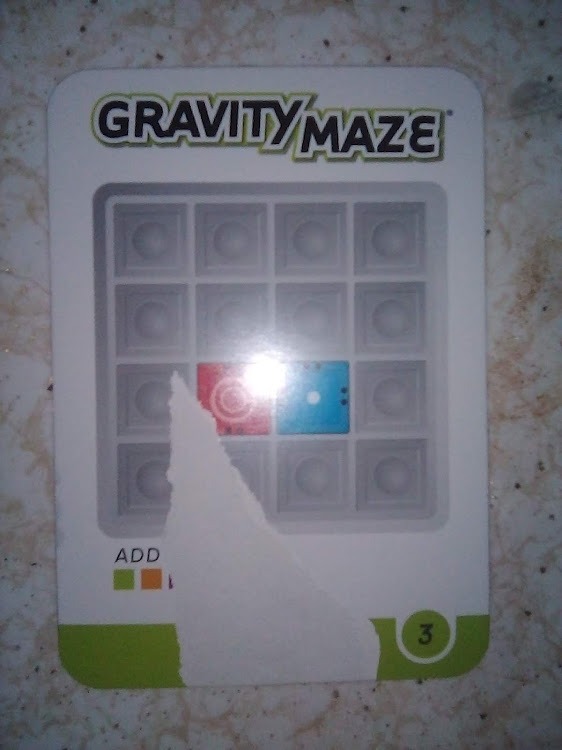
The premise is simple: stack towers on the grid so the marble drops through the maze and lands on the blue target. The 60 challenge cards ramp from beginner to expert, and my test crew worked through the first 20 cards without adult help. The expert cards took the parents longer than the kids.
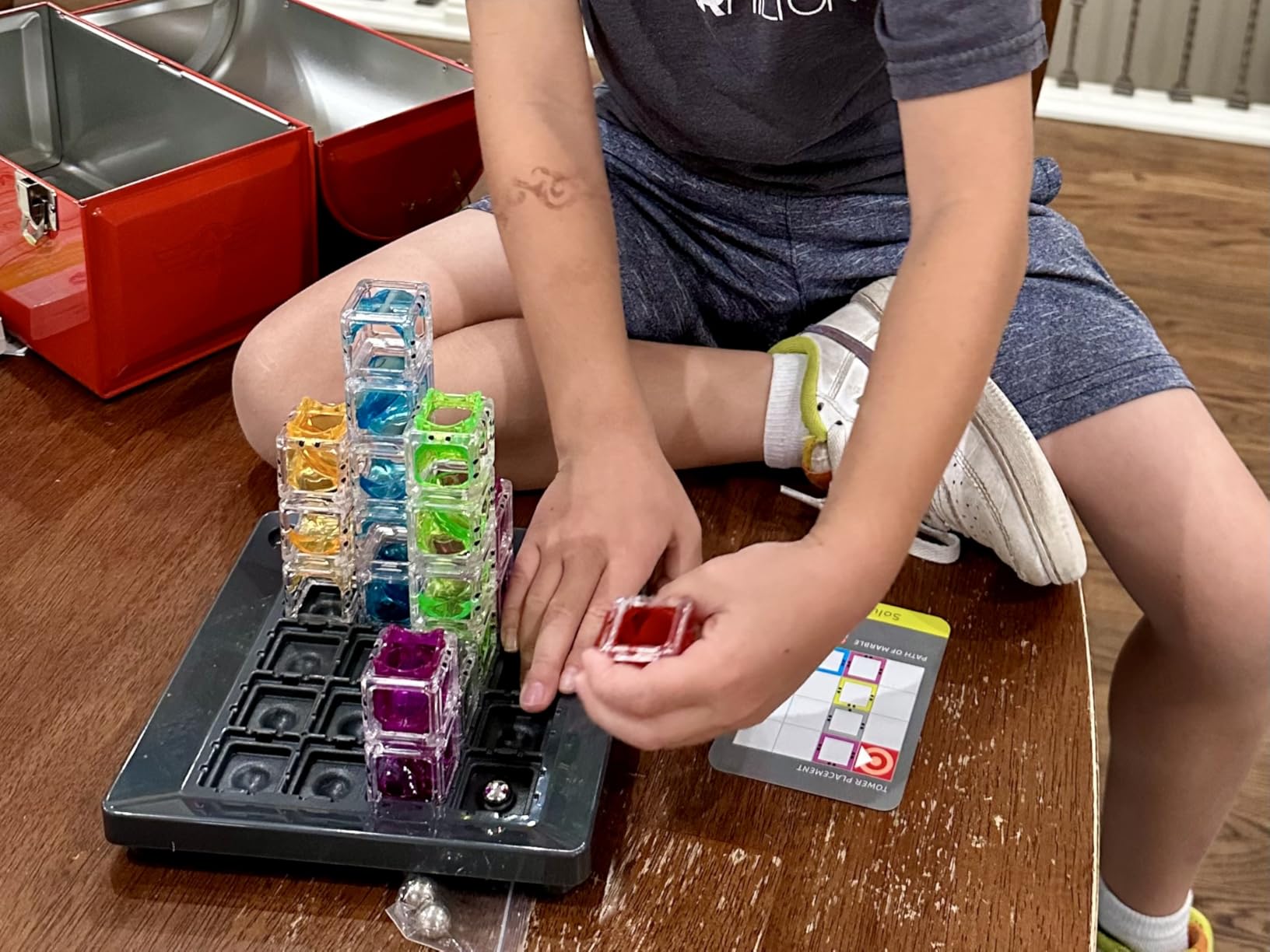
What surprised me most was how it pulled both of my neighbor kids away from their tablets. They sat on the floor for an hour taking turns and arguing about which tower configuration would work, then begged to keep playing the next day. That kind of engagement is the gold standard for a STEM toy.
It is also one of the rare logic games that works across ages. My 7-year-old tester could not do it alone, but the 10-year-old tester could. The same kit ended up challenging me, a college-educated adult, on the hardest cards.
For Whom It Works Best
Gravity Maze is ideal for the 10-year-old who already likes puzzles, brainteasers, or strategy games and wants something more tactile than a phone game. It is also perfect for families who need a screen-free option for restaurants, road trips, or rainy afternoons.
It fits naturally into a homeschool routine as a daily logic warm-up before math.
Where It Falls Short
There is only one correct solution per card, so once a child has solved a puzzle it loses replay value. The towers also do not snap together with the same satisfying click as LEGO, and a few reviewers noted they can slide when bumped.
For an extra dose of replayability, treat it as a “build your own maze” kit after the cards run out. Kids who invent their own configurations get even more out of it.
3. Sillbird 12-in-1 Solar Robot Building Kit – Best Coding and Robotics Starter for Tweens
Sillbird 12-in-1 Solar Robot Building Kit STEM Gift for Boys Ages 8-13
- 12 different robots with progressive difficulty keep kids engaged
- Teaches renewable energy through hands-on solar power
- Clear instructions work for independent builds
- Strong gift value for the variety included
- No batteries required
- A minority of users report solar panels that do not function
- Some plastic parts feel flimsy on heavier builds
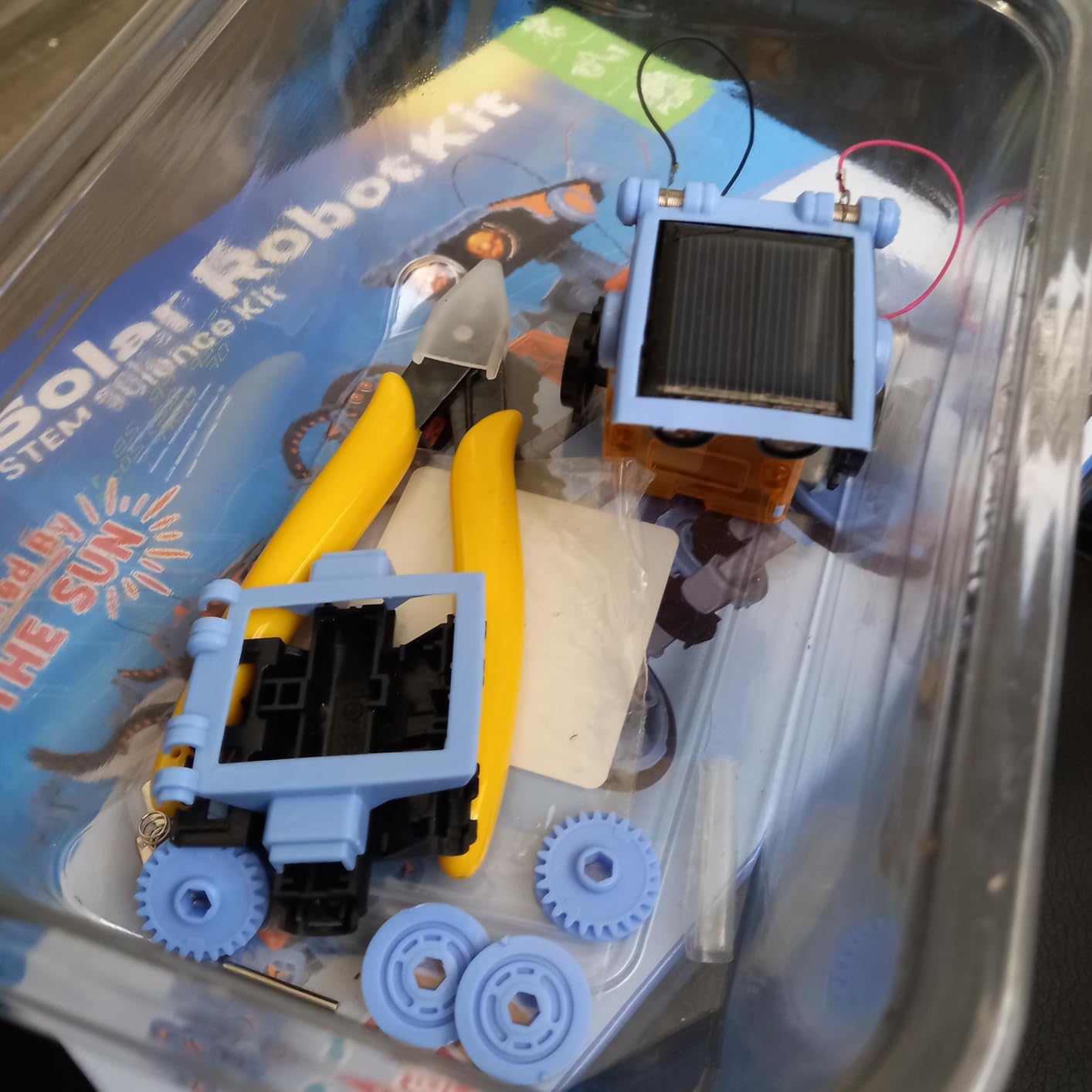
The Sillbird 12-in-1 sits at the sweet spot between affordable robot kits and pricier coding platforms. It is a strong pick among best STEM toys for 10 year olds because it teaches mechanical engineering (gears, axles, differentials) before any screen ever shows up.
My test crew worked through six of the 12 builds in an afternoon. The walker, the crab, and the rolling car were the favorites, and they asked to come back to it the next day. The instructions walk through each step with numbered pieces, so a 10-year-old can build with light adult supervision at first and on their own by the third or fourth model.
The progression from beginner (boat, wheel robot) to advanced (crab, monkey) gives a real sense of mastery. By the time my nephew reached the harder builds, he was redesigning pieces on his own, swapping arms for wheels and testing how the gears responded. That kind of self-directed tinkering is exactly what STEM toys should spark.
One honest note from reviews and my own testing: the solar panel works best in direct outdoor sunlight. On cloudy days or in dim rooms, the robots may crawl slowly or stop. Parents on r/Parenting who love this kit also recommend picking up a small desk lamp with a bright bulb for indoor testing.
For Whom It Works Best
This kit is a great fit for a 10-year-old who likes building and wants to see something move at the end. It also works as a gateway into more advanced robotics kits like LEGO Mindstorms or the Sphero Bolt, since the mechanical foundation transfers.
It is one of the best gift options for tweens who have outgrown basic building sets but are not ready for full coding platforms.
Where It Falls Short
The plastic parts are not as refined as LEGO, and a small percentage of reviewers report quality-control issues where gears slip or motors do not work. If a build feels off, the most common fix is to make sure the gears mesh tightly and the solar panel is in bright light.
It also teaches mechanical engineering but not real programming. To move into code-driven robotics, plan to graduate to a programmable kit within a year.
4. LEGO Chain Reactions – Best for Learning Physics Through Building
LEGO® Chain Reactions: Design and build amazing moving machines
- Engaging way to learn real physics concepts like gravity and momentum
- Compatible with existing LEGO for expanded builds
- Clear illustrated step-by-step instructions
- Great family activity that rewards experimentation
- No batteries or screens required
- Only 33 LEGO pieces included so larger builds need extra bricks
- Younger builders often need an adult to align pieces precisely
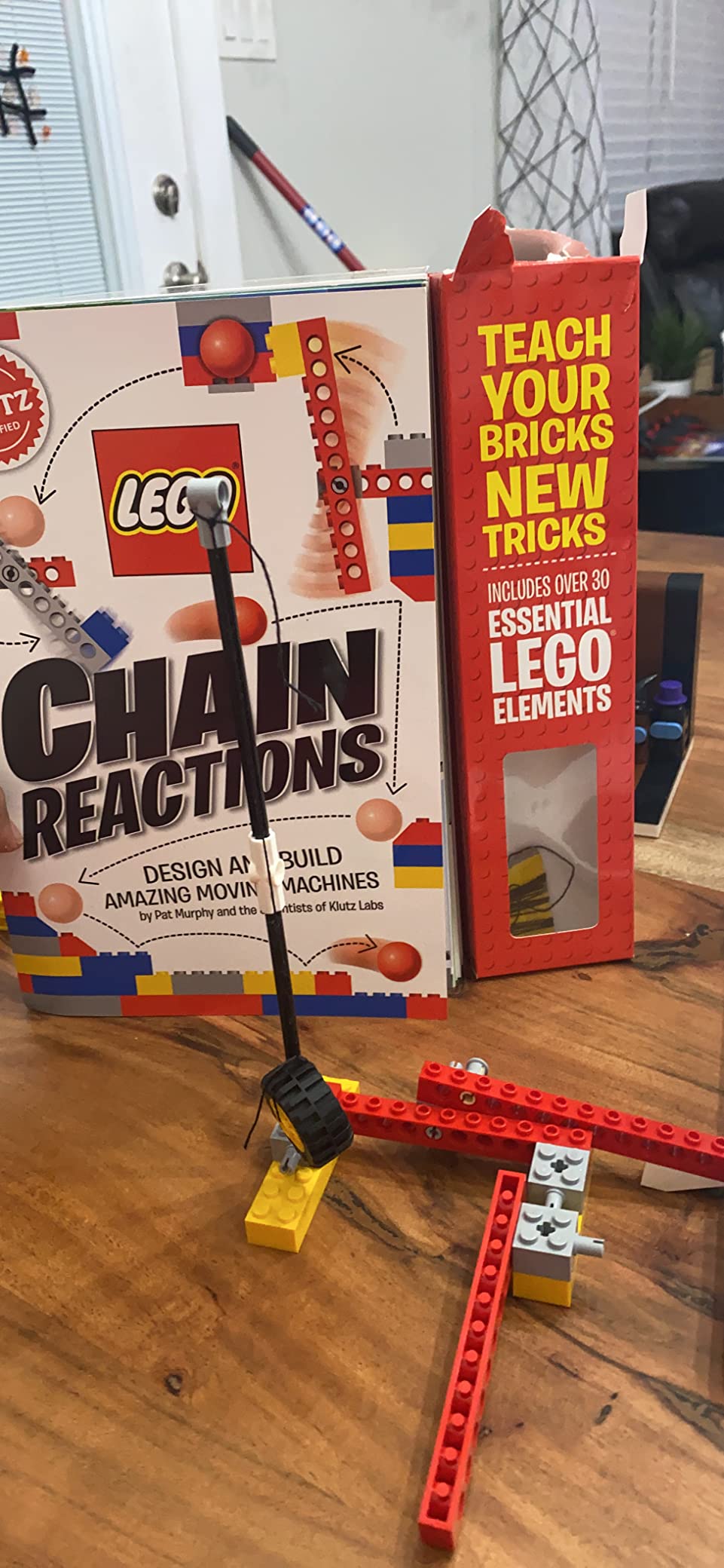
If your 10-year-old already has a LEGO collection, the LEGO Chain Reactions kit is one of the best STEM toys for 10 year olds you can add to it. It teaches physics principles (cause and effect, momentum, gravity, simple machines) by walking kids through 10 builds that literally react to each other.
Each project adds a new concept. Build a ramp, then a pulley, then a chain reaction that tips a domino stack into a spinning wheel. By build number five, my test crew was modifying the designs with their own LEGO bricks to invent new triggers. That kind of “I wonder what happens if…” thinking is the heart of engineering.
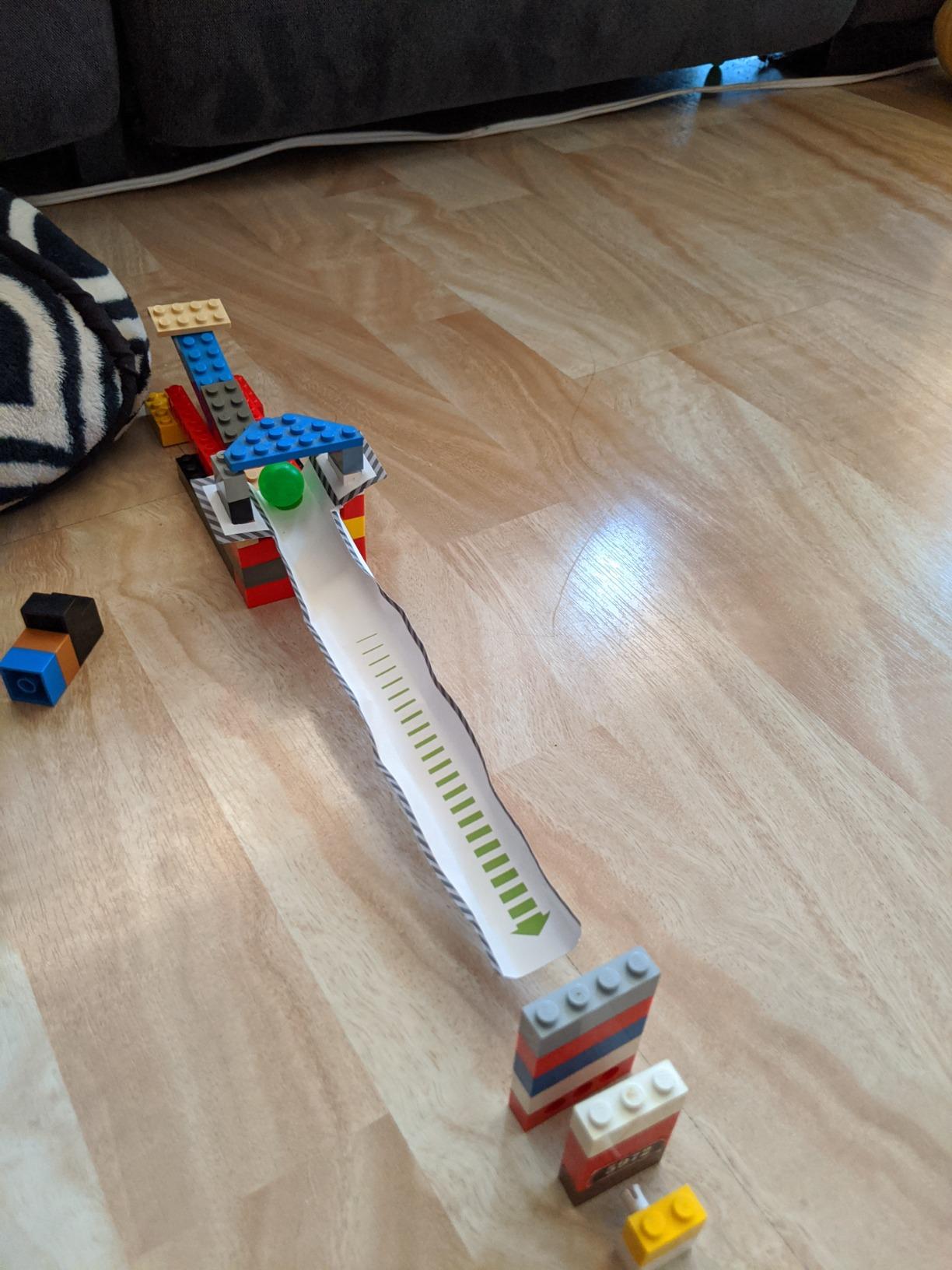
The instruction book is the standout. Klutz writes STEM books for kids that read like comic books, with clear diagrams and minimal text. My 10-year-old tester worked through most of the builds alone after the first two.
The kit ships with 33 LEGO pieces, 6 plastic balls, paper ramps, and string. That sounds sparse, but every element earns its place, and the kit is designed to combine with whatever LEGO you already own.
For Whom It Works Best
This is a strong pick for tweens who already love LEGO and need a new challenge beyond following standard builds. It also fits kids who are visual and physical learners, since every concept is shown working rather than explained in words.
It makes a wonderful family weekend project since multiple ages can collaborate on each chain reaction.
Where It Falls Short
33 pieces is not many, so most builds lean on whatever LEGO you already own. Without extras, the kit covers only the simplest chain reactions.
Alignment matters. A piece one millimeter off will keep the next reaction from triggering. Reviewers on Amazon and several parents I spoke with said this was actually a feature, not a bug, since it teaches precision.
5. LEGO Gadgets Activity Kit – Best for Hands-On Simple Machine Learning
LEGO Gadgets (Klutz Science/STEM Activity Kit) 10.25″ Length x 0.75″ Width x 10″ Height
- Every LEGO piece you need is in the box
- Builds introduce real simple machines step by step
- Includes press-out papercraft for added play value
- Step-by-step book supports independent building
- All pieces fit back in the box for clean storage
- Limited LEGO means only one gadget can be built at a time
- Cardboard components can tear with rough handling
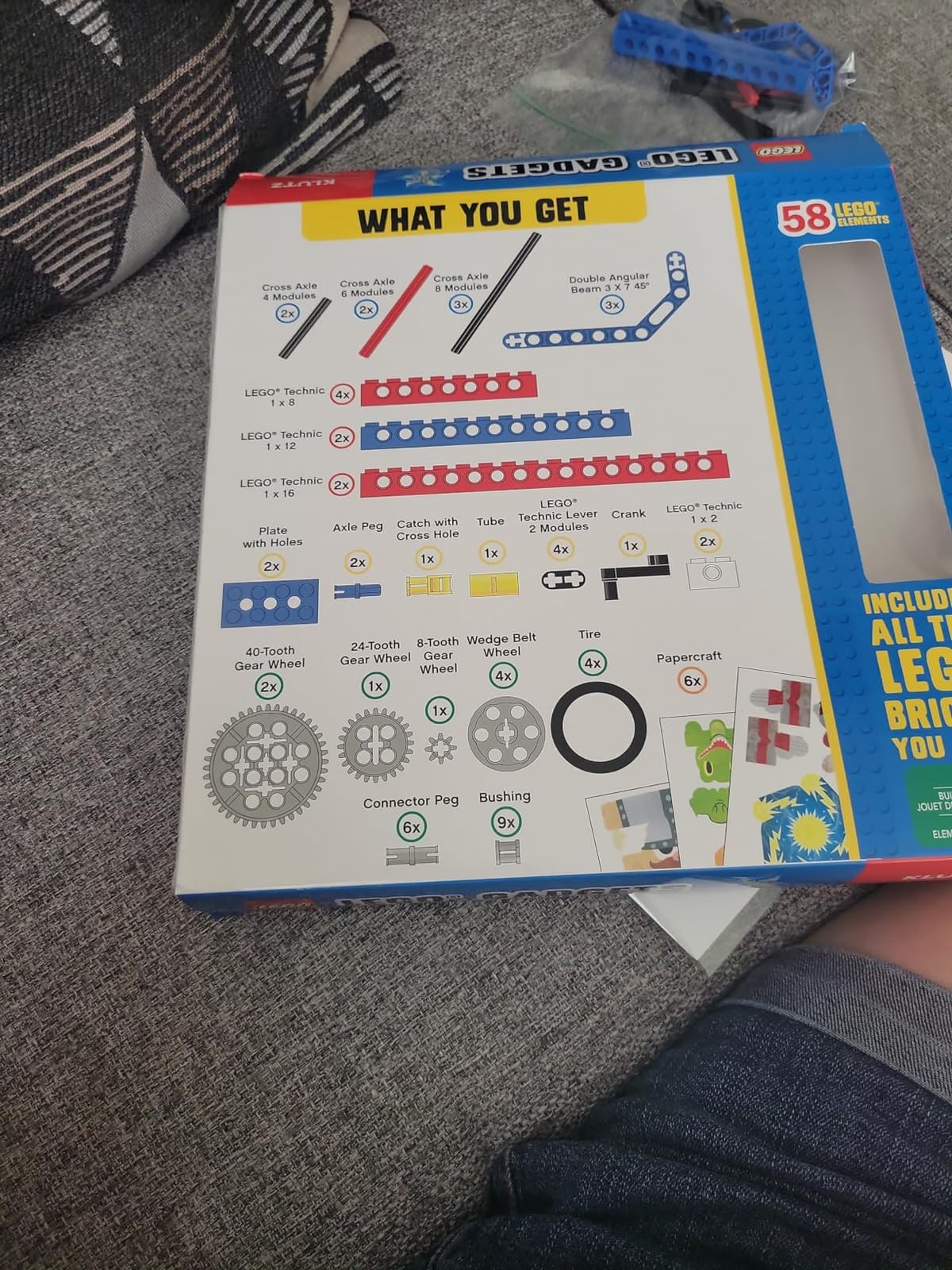
LEGO Gadgets is the answer to every parent’s complaint about LEGO kits that ship with only half the pieces you need. Every LEGO element required for all 11 builds comes in the box, which makes this one of the most frustration-free entries in any best STEM toys for 10 year olds list.
The kit walks through 11 machines, including a gravity-powered car and a boxing robot. Each build introduces a new simple machine concept: lever, pulley, gear train, cam, and so on. By the final build, my test crew could identify the mechanism inside any gadget without prompting.
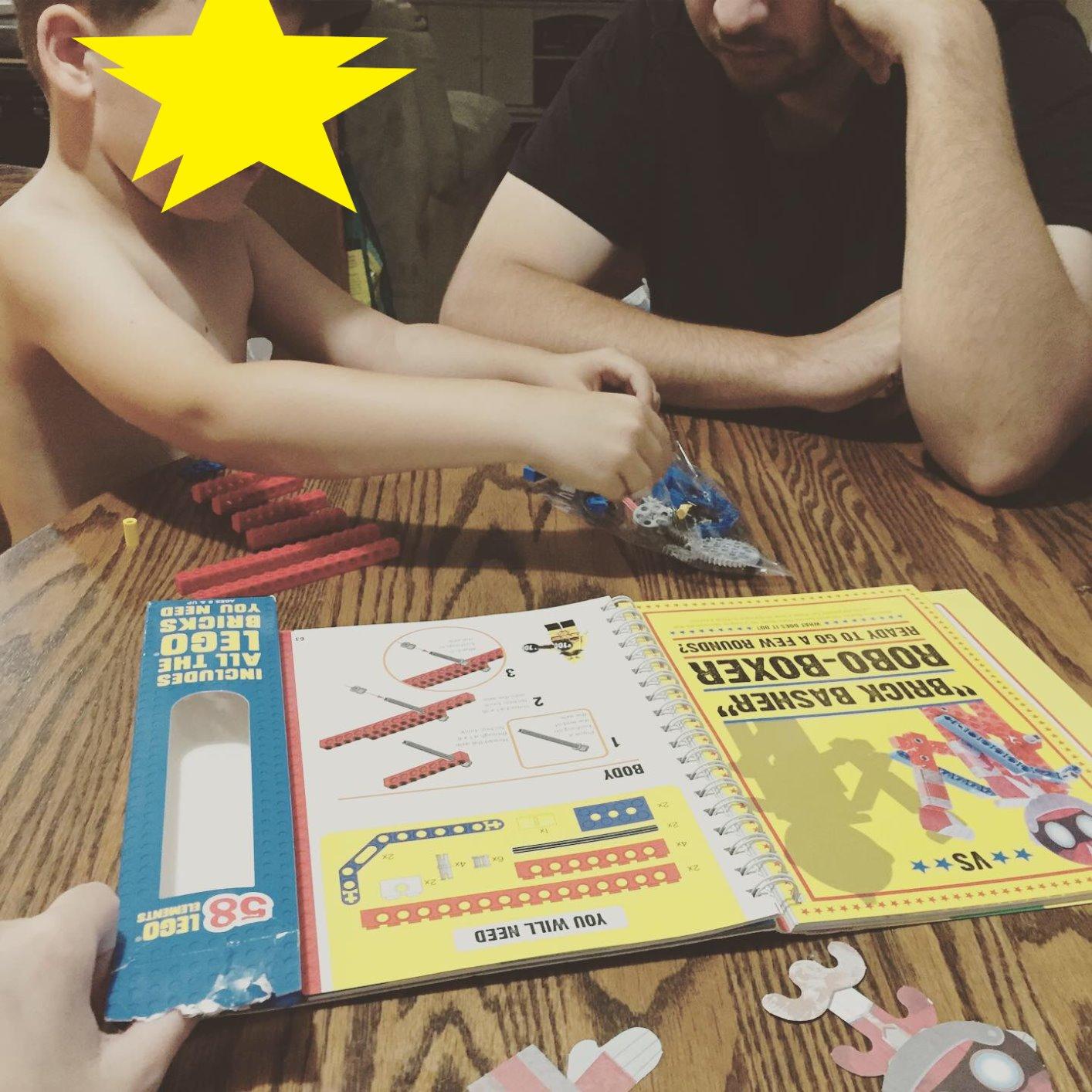
The 80-page instruction book is the Klutz signature style: visual, friendly, and easy to follow. The included papercraft sheets (a tiny boxing ring, a finish line) add a layer of imaginative play that turns each gadget into a complete mini-scene.
Reviewers consistently mention that kids return to this kit months later, designing their own gadgets rather than following the book. That kind of long-term play value is what separates a great STEM toy from a forgettable one.
For Whom It Works Best
This is the right kit for a 10-year-old who loves LEGO but has not yet encountered simple machine concepts. It is also a strong choice for parents who want a complete kit with no hunting for missing pieces.
It works well as an independent project for kids who like to follow instructions to the letter.
Where It Falls Short
The 58 LEGO pieces cover one build at a time, so to switch machines you have to disassemble the previous one. Some kids love that cycle, others get frustrated tearing apart their work.
The cardboard/papercraft sheets are charming but flimsy. If your tween is rough on accessories, expect to glue a few back together over time.
6. National Geographic Earth Science Kit – Best for Budding Geologists and Meteorologists
National Geographic Earth Science Kit with 100+ Activities for Kids 8-12
- Wide variety of engaging earth science activities
- Full-color learning guide explains the science behind each experiment
- Easy instructions help kids build confidence
- Great for sharing with friends or classmates
- Trusted award-winning brand
- Some experiments consume included materials quickly
- A few activities work best with parent help
National Geographic’s Earth Science Kit is the one I handed to a 10-year-old who told me science was “boring.” Two hours later she had grown crystals, set off a dueling water tornado, and was planning her next experiment. It earns its place among best STEM toys for 10 year olds because it delivers real science with wow factor.
The kit includes more than 15 experiments across geology, meteorology, and chemistry. Highlights include two geologic dig kits where kids excavate real crystals and minerals, plus crystal growing, volcano eruptions, and water tornado demos.
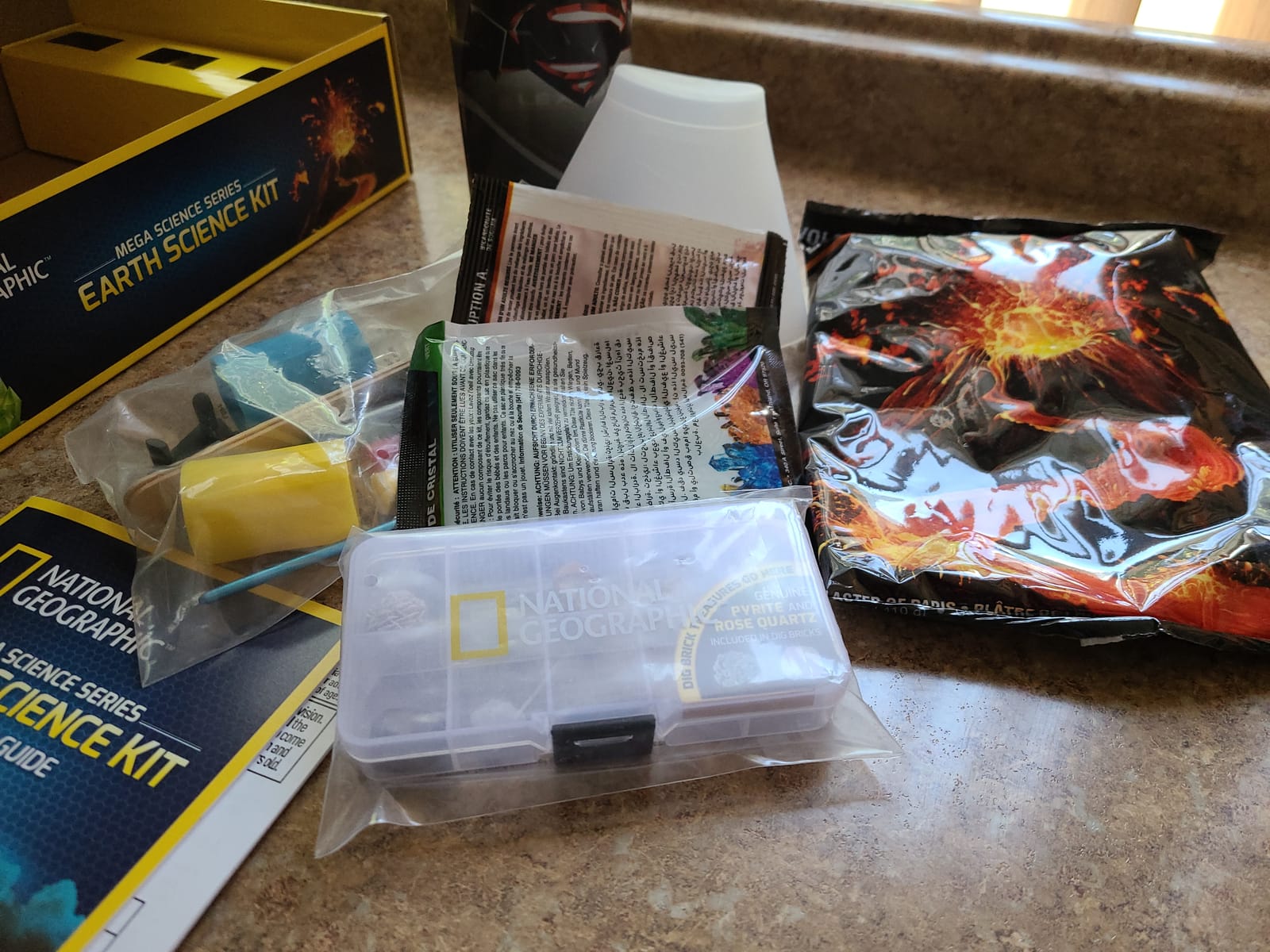
The learning guide is where this kit pulls ahead of competitors. Each experiment is paired with a clear explanation of the underlying science, so kids walk away understanding not just what happened but why. Several parents on r/Parenting mentioned this as the reason they keep returning to the National Geographic line.
It is also built for sharing. Most activities have enough materials for two or three kids, which makes it ideal for playdates, classrooms, and homeschool co-ops.

For Whom It Works Best
This kit is ideal for 10-year-olds who love collecting rocks, watching weather, or asking how volcanoes work. It also works well for kids who have not enjoyed science class, because the experiments feel like magic tricks at first and then get explained.
It is a strong pick for classrooms and homeschool families who need group-friendly kits.
Where It Falls Short
Some of the included consumables (crystals, volcano chemicals) are designed for a single use. Once you finish an experiment, you cannot easily redo it without buying refill supplies.
A few of the more advanced experiments work best with an adult nearby. Plan to be in the same room for the volcano and tornado demos.
7. Moose Games Flipslide – Best Travel-Size Puzzle for Tinkerers
Moose Games Flipslide, Handheld Puzzle Game, Travel Toy Ages 8-13
- Fast-paced addictive puzzle fun for solo or group play
- Compact and travel-friendly design
- Four modes (Speed
- Multiplayer
- Level
- Memory) add replay value
- Builds memory and quick-thinking without feeling school-like
- Easy to learn and accessible for tweens
- Volume is either loud or off with no middle setting
- The unit is slightly bulkier than a typical handheld game
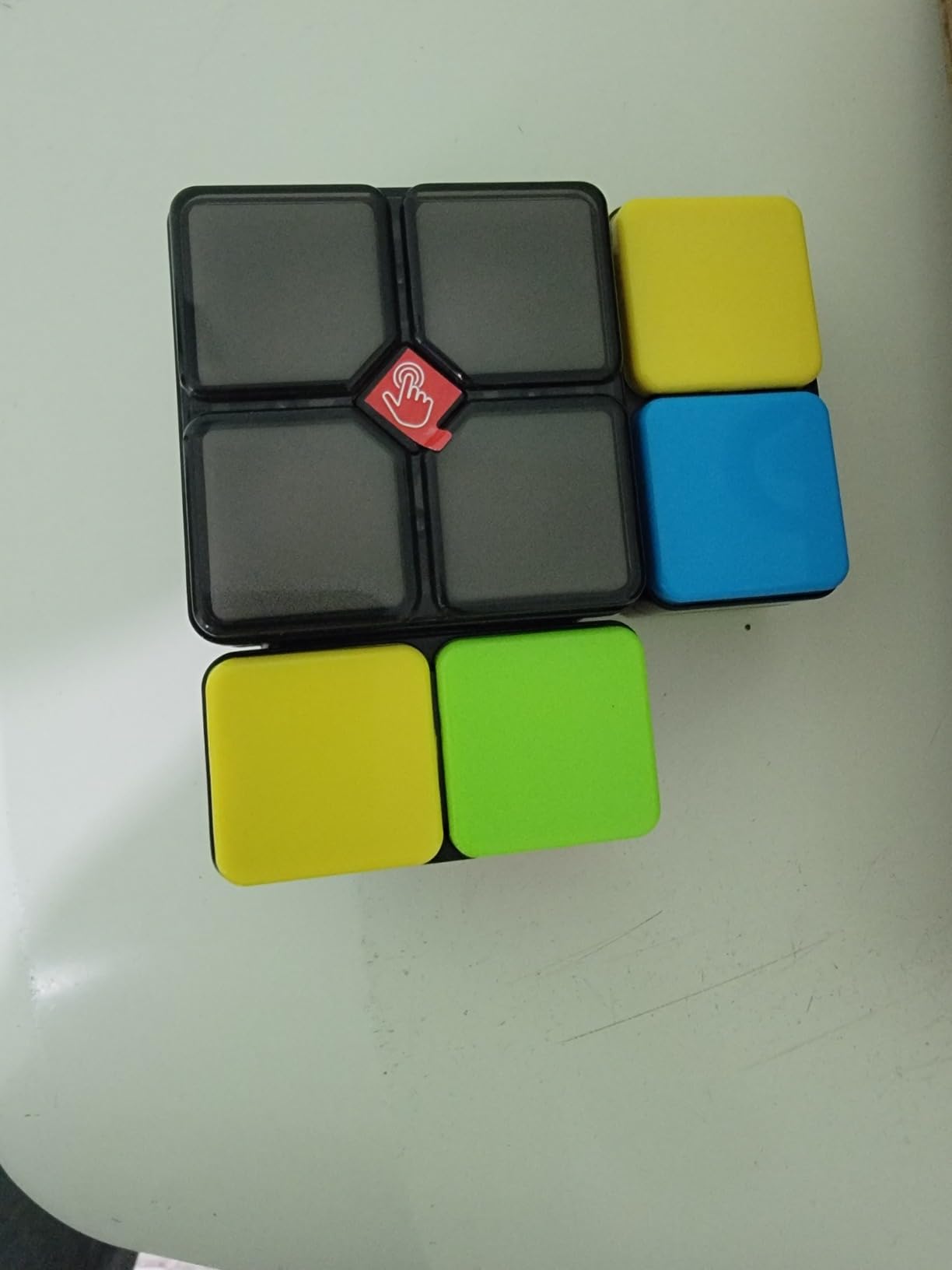
Flipslide is the smallest toy on this list, and one of the most addictive. It is a handheld skill puzzle where you flip colored tiles to match a sequence, with four modes that range from casual to genuinely challenging. For a 10-year-old who needs a STEM-friendly toy for the road, this is one of the best STEM toys for 10 year olds in the pocket-size category.
I tested it with three kids during a long car ride. Within ten minutes, all three were competing in Speed mode. The Memory mode is a brain-bending twist that quietly trains working memory without feeling like school.
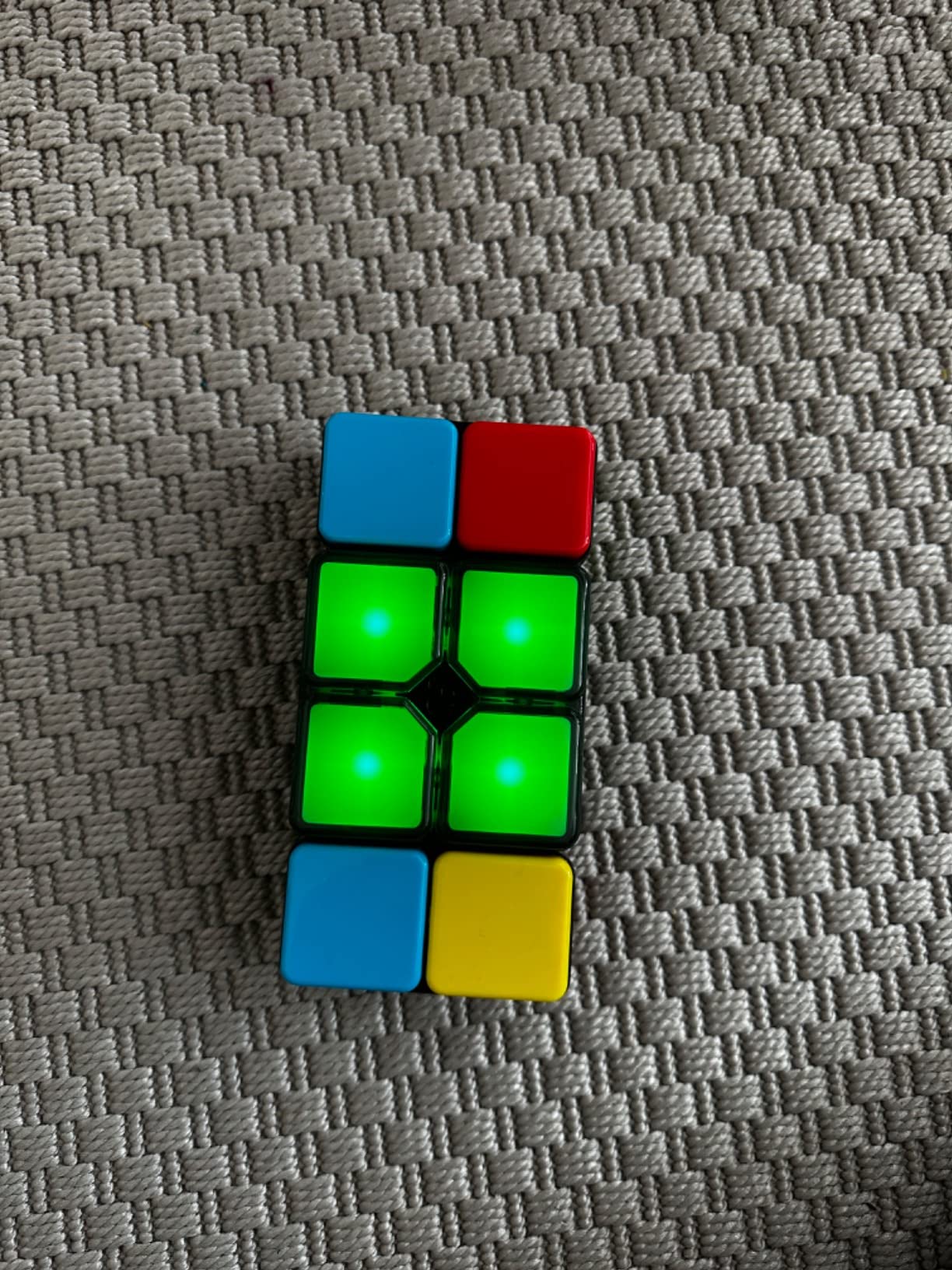
The construction feels solid for the price. The sliding tiles snap with a satisfying click, and the batteries are included so it works straight out of the box. Multiplayer mode lets up to four people take turns, which made it a hit at my test crew’s family dinner.
It also does not require a screen, which matters to a lot of parents trying to balance screen time. Kids build pattern recognition and reaction skills the old-fashioned way, with their hands.
For Whom It Works Best
Flipslide is a perfect fit for a 10-year-old who already loves handheld games, fidget toys, or puzzles. It also works as a small gift to pair with a bigger STEM kit, like a stocking stuffer or birthday-card extra.
It travels well in a backpack, a suitcase, or a restaurant bag.
Where It Falls Short
The sound is either loud or silent with no in-between, and the clicks and beeps are noticeable. Several reviewers mentioned wanting a volume slider.
The unit is also slightly chunkier than a Game Boy or a phone, so it will not slip into a small pocket. It is backpack-friendly but not pocket-friendly.
8. National Geographic Science Magic Kit – Best Hybrid of Magic Tricks and Real Chemistry
National Geographic Science Magic Kit with 100+ Experiments for Kids 8-12
- Combines magic tricks with real chemistry concepts
- Clear colorful instructions build independent confidence
- Engages a wide age range for solo or family shows
- High-quality materials with safe chemistry components
- Bonus booklet adds 85+ extra experiments with household items
- Some chemicals come in single-use packs
- Parental supervision recommended for younger children
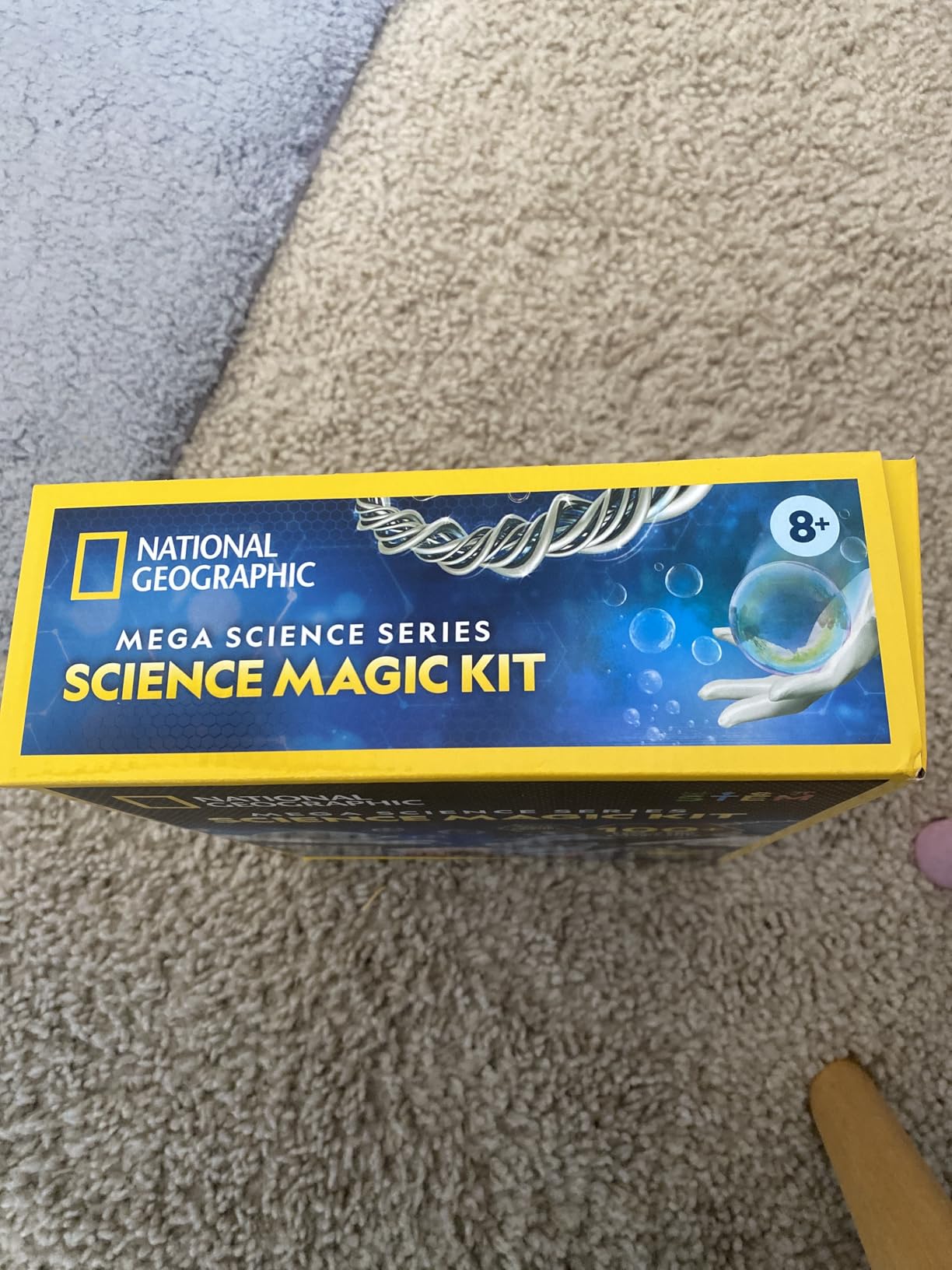
This kit answers a question I hear all the time from parents: how do I make science feel as fun as a magic trick? The answer is to wrap chemistry in showmanship. National Geographic’s Science Magic Kit is one of the best STEM toys for 10 year olds who love performing for friends and family, because every trick has real science hiding inside it.
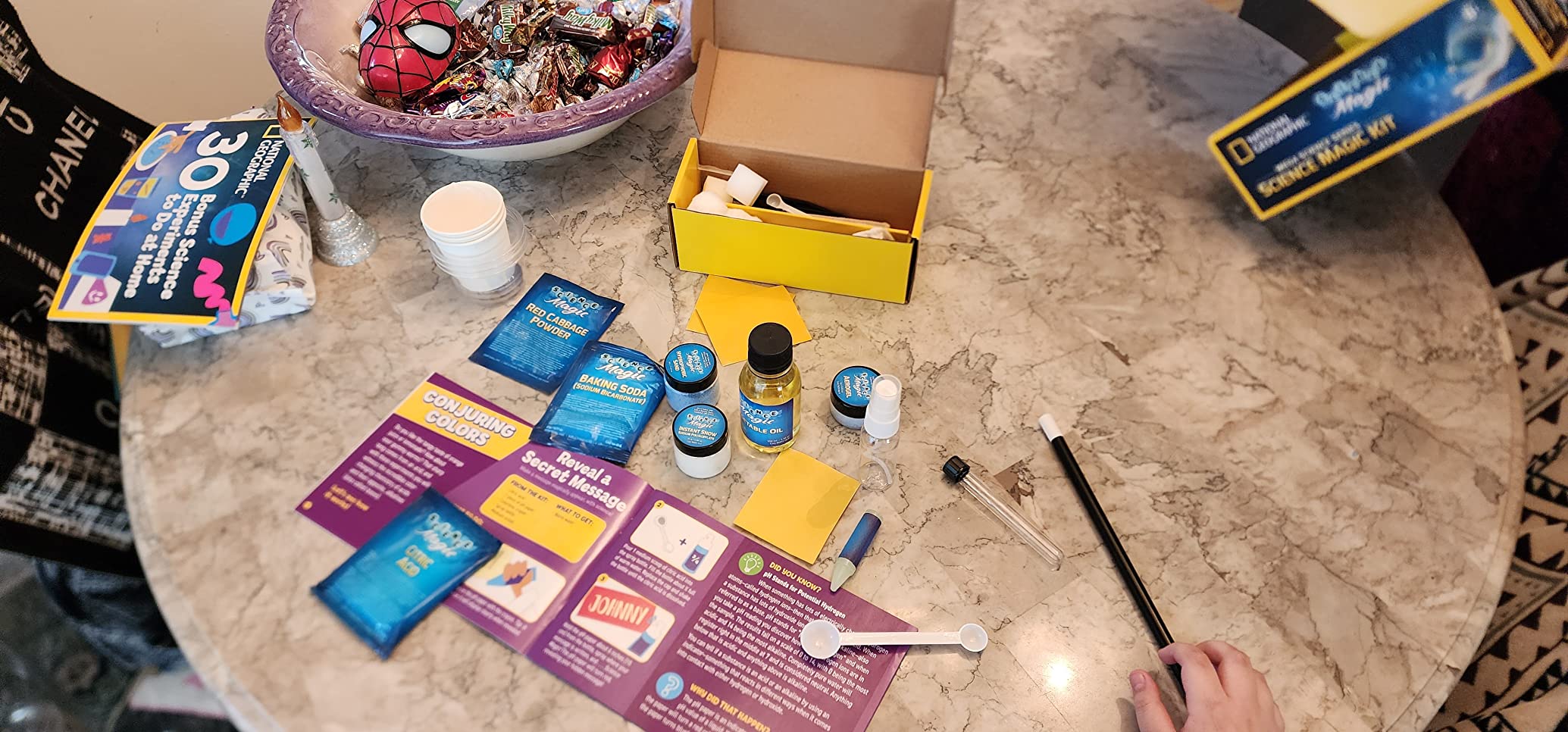
The kit includes 20 ready-to-perform magic experiments, plus a bonus booklet with 85+ extra tricks using household items. My test crew put on a magic show for the parents within two days, complete with color-changing potions and “invisible ink” reveals.
The materials are clearly labeled and safe for kids 8 and up. The instruction book explains not just how to do each trick but why it works, so kids come away understanding the chemistry behind the show.
The replay value is excellent. Once the included experiments run out, the bonus booklet keeps going for months using vinegar, baking soda, and other pantry staples.
For Whom It Works Best
This kit is ideal for the 10-year-old who loves performing, putting on shows, or surprising their friends and siblings. It also works well for kids who say they do not like science, because the magic hook pulls them in before they realize they are learning chemistry.
It pairs well with a simple stage costume or a “magic show” birthday party theme.
Where It Falls Short
Several chemical packs are single-use, so once a trick is performed the materials are gone. Parents who want maximum value should plan to buy replacement ingredients to redo favorites.
A few experiments involve mild chemicals, so an adult should be nearby for younger or impulsive kids.
9. Klutz LEGO Gear Bots – Best for Learning Engineering Through Kinetic Builds
Klutz Lego Gear Bots Science/STEM Activity Kit for 8-12 years
- Combines LEGO Technic with papercraft for engaging builds
- Every LEGO element needed is included
- Teaches real engineering concepts (axles
- cams
- cranks)
- Step-by-step instructions support independent play
- Develops problem-solving and creative thinking
- Only 62 LEGO pieces so each creature must be disassembled to build the next
- Some papercraft parts feel delicate
LEGO Gear Bots is the engineering deep-dive of the LEGO STEM lineup. While LEGO Gadgets focuses on simple machines, Gear Bots zooms into kinetic energy, axles, cams, and cranks. It is one of the best STEM toys for 10 year olds who like taking things apart to see how they move.
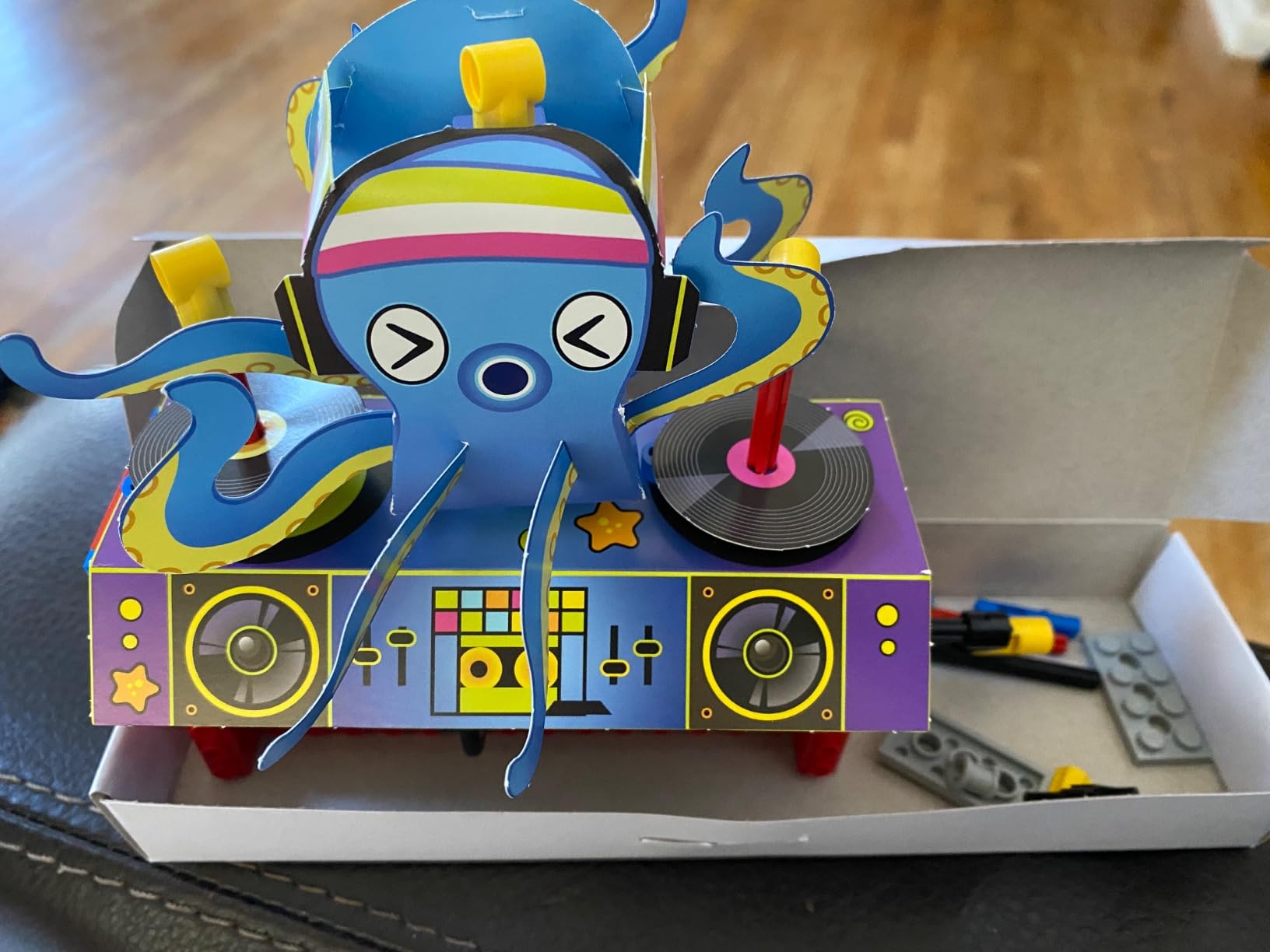
The kit builds 8 different kinetic creatures, from a walking bot to a crank-driven penguin. Each one introduces a new mechanical concept, with the 64-page book explaining the engineering behind the build. By the third creature, my test crew was predicting what kind of motion each new mechanism would create before they even finished reading the steps.
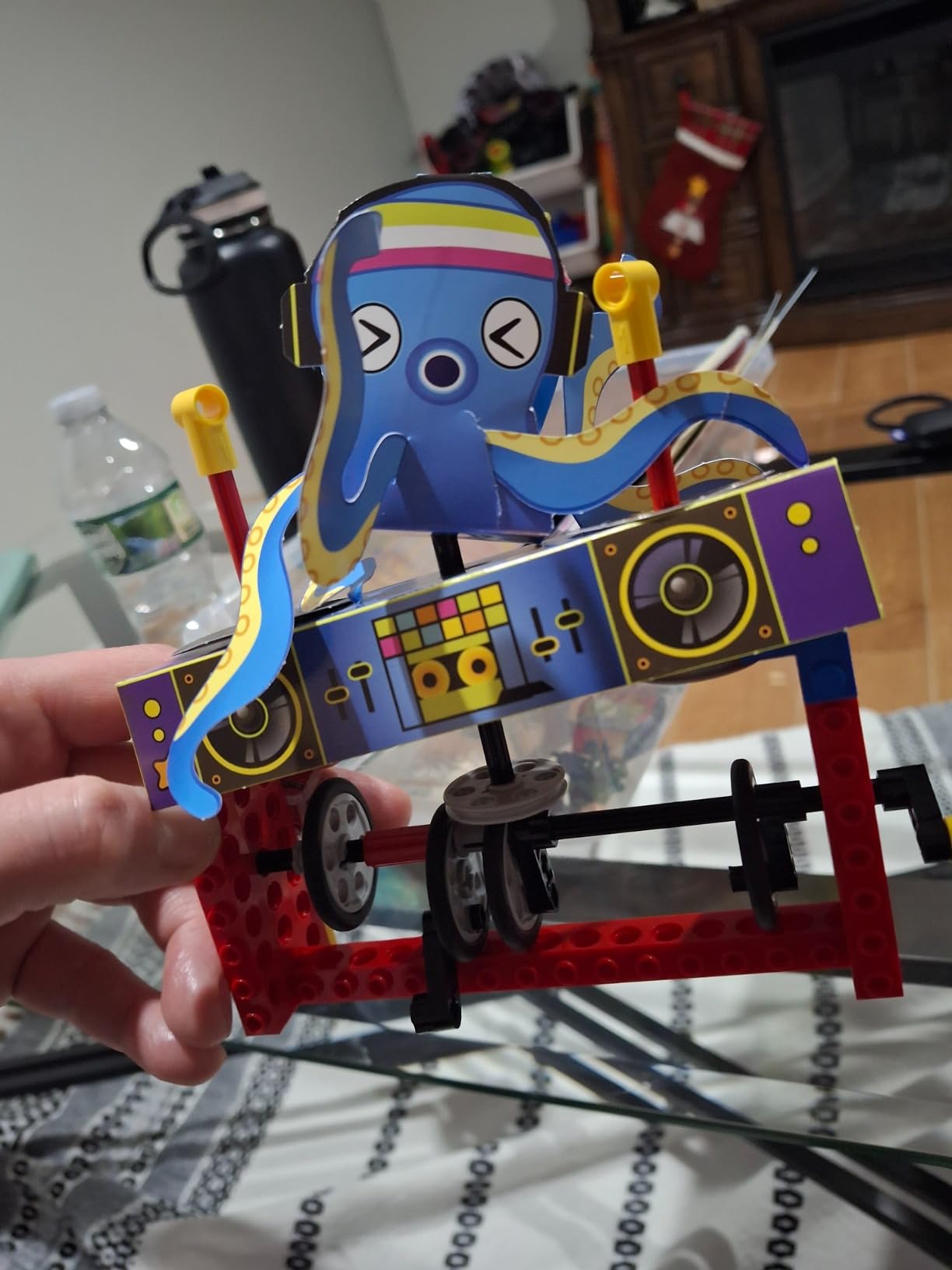
It also covers more advanced material than LEGO Gadgets. Axles, cams, and cranks are not just LEGO-friendly terms; they are the same mechanisms inside real bicycles, windshield wipers, and sewing machines. Tweens who finish this kit come away with vocabulary they can carry into any future engineering class.
The included papercraft sheets add charming bodies for each creature, turning each build into a finished character rather than a bare gear assembly.
For Whom It Works Best
This is a great kit for the 10-year-old who loves mechanical things, vehicles, or robotics. It is also a smart step up for kids who have finished LEGO Gadgets and want more advanced engineering content.
It is well suited to independent learners since the instruction book is detailed and self-contained.
Where It Falls Short
With 62 LEGO pieces and 8 builds, kids can only have one creature assembled at a time. Disassembling to start the next project is part of the learning, but it can frustrate kids who want to keep their finished bots on display.
Some of the papercraft components are delicate. Plan to reinforce the ears and wings with a small dot of glue for long-term display.
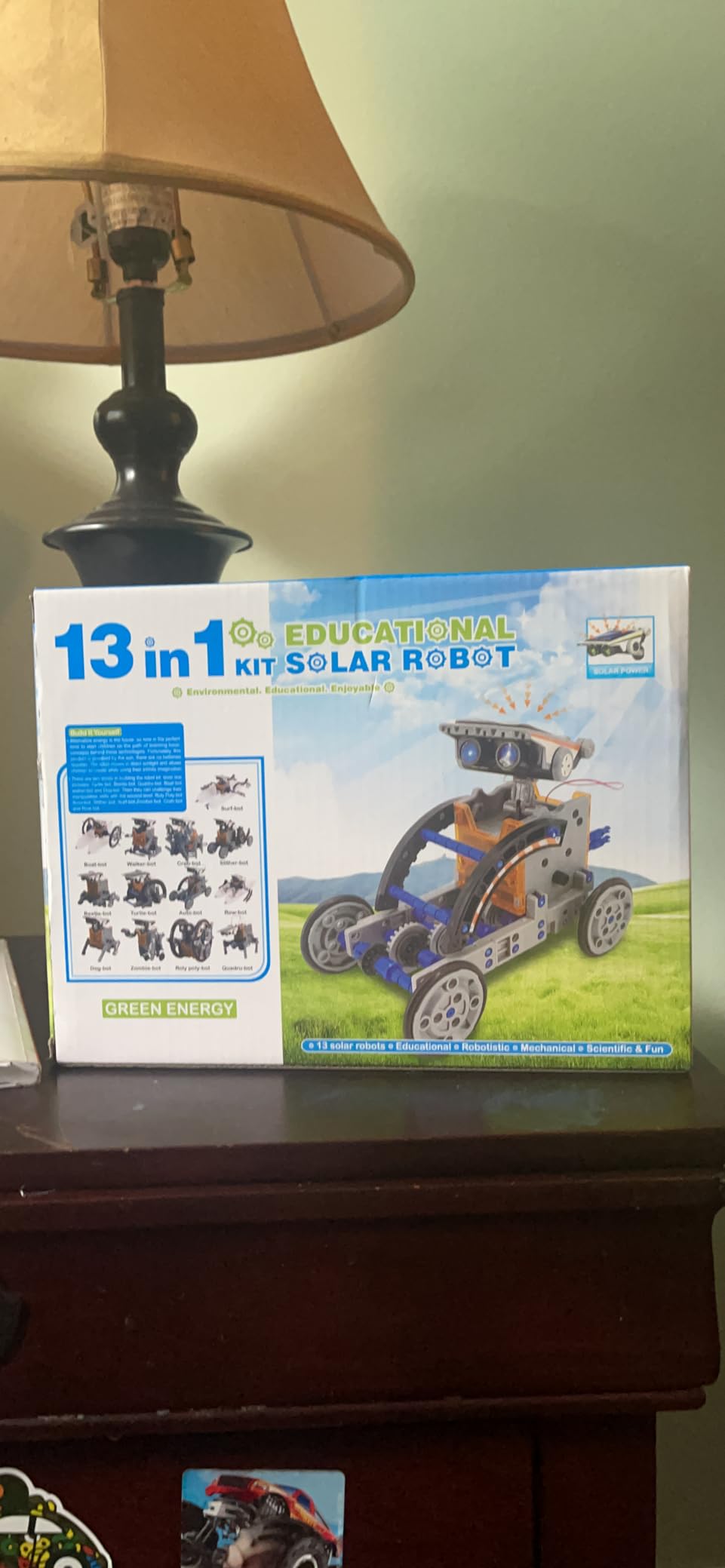
10. Bottleboom STEM 13-in-1 Education Solar Power Robots – Best Eco-Themed Robot Kit
STEM 13-in-1 Education Solar Power Robots Toys for Boys Age 8-12
- 13 different robots keep the kit fresh for weeks
- Teaches renewable energy through hands-on solar power
- Non-toxic ABS plastic for safe play
- Adjustable difficulty works for a wide age range
- Great parent-child team-building project
- Solar panel only works in direct sunlight
- Some plastic parts can be fragile with rough use
The Bottleboom 13-in-1 is a budget-friendly solar robot kit that delivers real variety for the price. With 13 builds ranging from simple walkers to boat and wheel bots, it gives tweens weeks of project variety, which is why it earns a slot among the best STEM toys for 10 year olds at the affordable end of the spectrum.
Each build uses the same solar panel and motor, swapping in different body parts to create a new robot. My test crew treated it like a build-a-creature series, working through one or two models per weekend. The clear instruction manual made each project approachable without adult help by the third build.
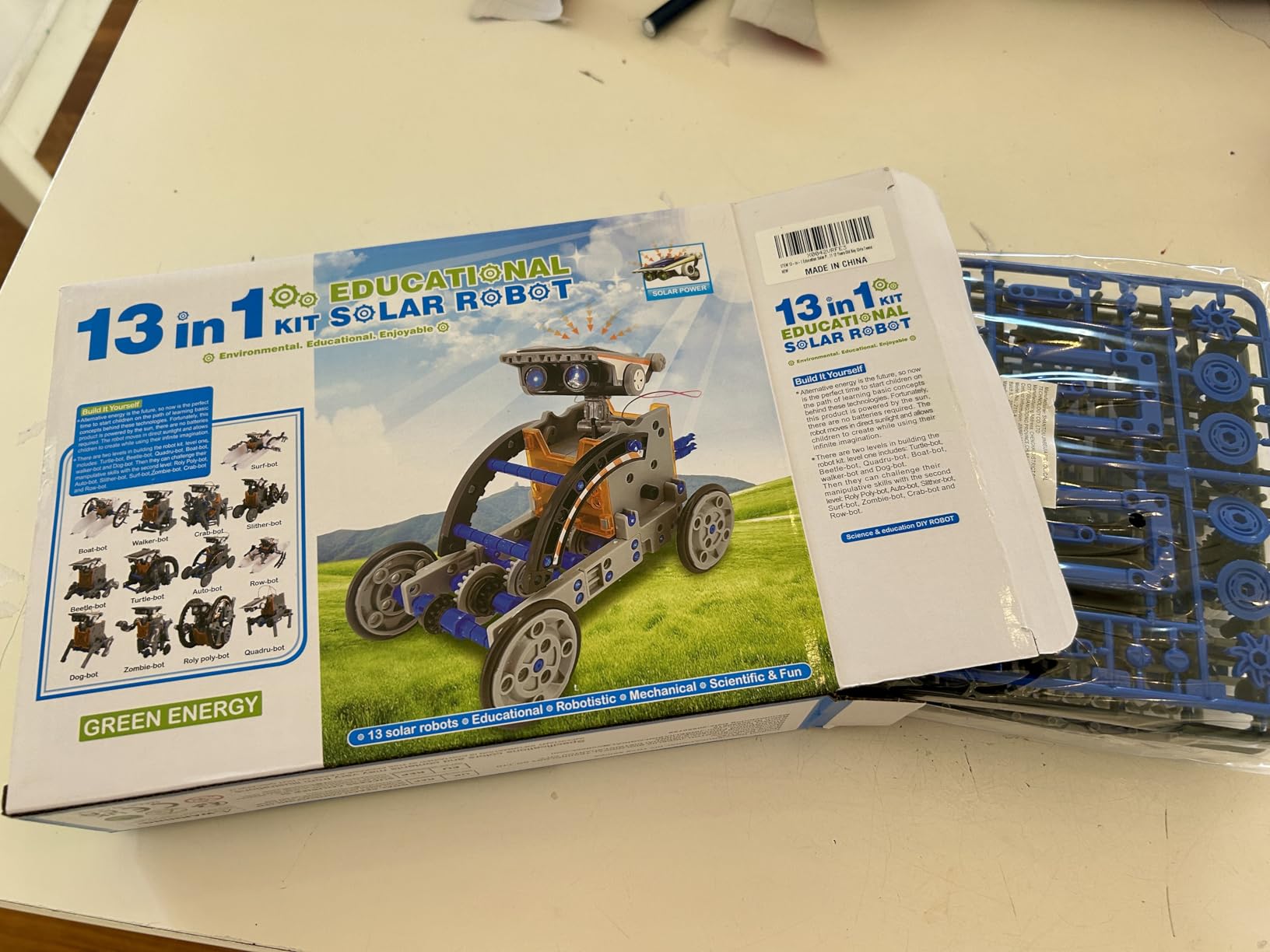
What sets this kit apart is the renewable energy angle. Without any battery or USB charging, every build demonstrates how solar power can run a real machine. For a 10-year-old curious about sustainability, that is a meaningful concept to absorb.
The ABS plastic parts are non-toxic and safe for kids 8 and up, though the quality does not match pricier LEGO-compatible kits. Plan to supervise the very first build to make sure the gear alignment is right before your tween takes over.
For Whom It Works Best
This kit fits a 10-year-old who wants lots of robot variety without a high price tag. It also works as a renewable energy lesson wrapped in play, which makes it a strong pick for environmentally-minded families.
It is a great parent-child project since the early builds benefit from adult guidance.
Where It Falls Short
The solar panel needs direct sunlight to work reliably. On cloudy days or in dim rooms, robots may barely move. A bright desk lamp can substitute, but direct sun is best.
Quality control is uneven; a small percentage of reviewers reported defective solar panels or motors. Order from a retailer with a solid return policy in case of issues.
11. KIDWILL 14-in-1 Solar Robot Kit – Best Dual Solar and Battery Robot Kit
Solar Robot Kit, 14-in-1 STEM Building Toy for Kids DIY Science Robotic Set
- 14 different robot builds from one kit
- Dual solar and battery power for flexible play
- Develops problem-solving
- logical thinking
- and fine motor skills
- Step-by-step illustrated instructions
- Durable ABS plastic construction
- Solar panel is often weak so battery is usually needed for reliable play
- Pieces may need trimming to avoid gear jams
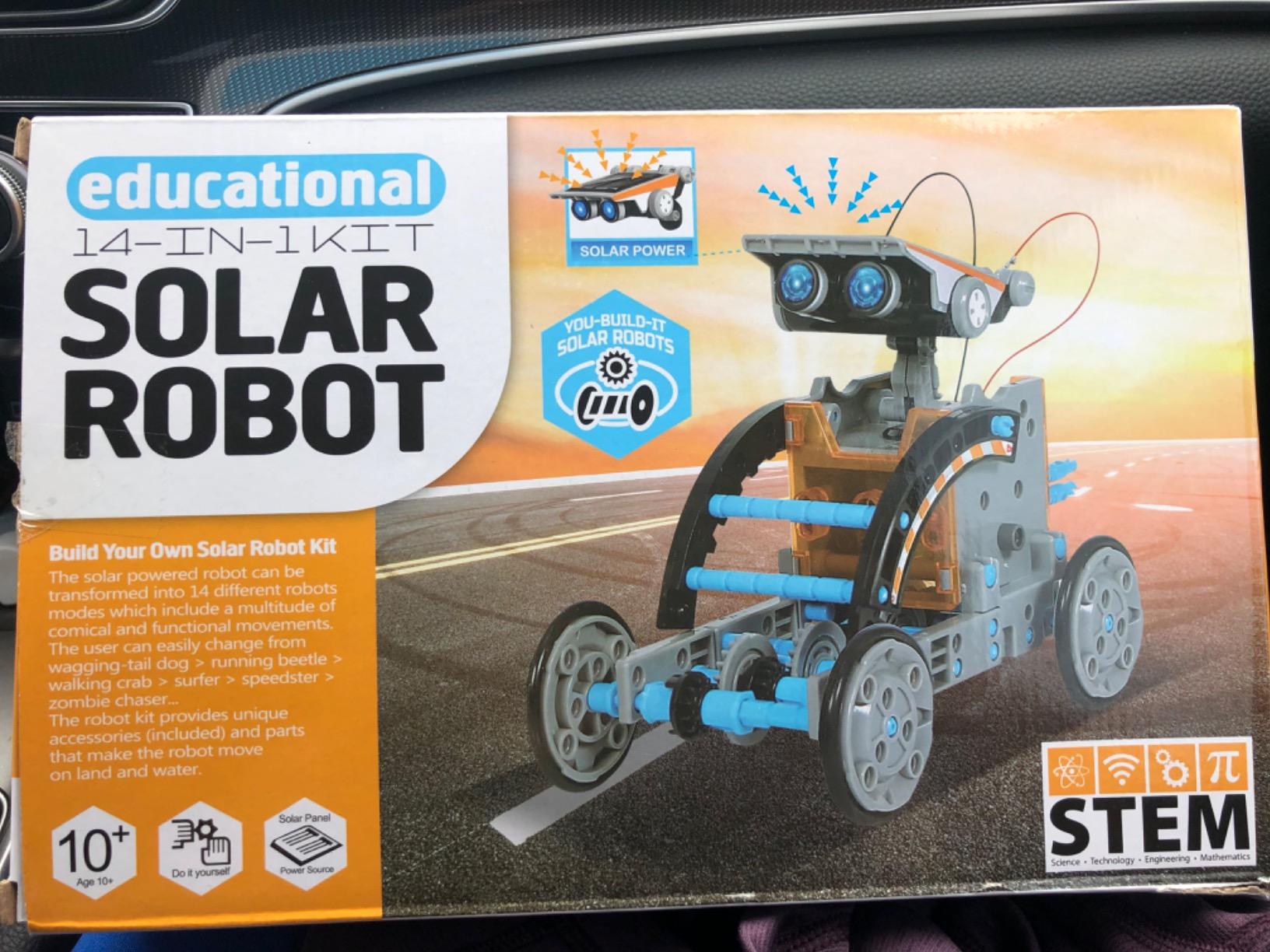
The KIDWILL 14-in-1 solves the single biggest weakness of solar robot kits: indoor playability. With both a solar panel and a battery option, the robots run reliably regardless of weather or room lighting. That flexibility puts it on the best STEM toys for 10 year olds list for families who want year-round play.
The 14 builds range from simple wheel bots to walking creatures and even a dog-shaped robot. My test crew found the variety kept them engaged for weeks, treating each model as a separate mini-project rather than a one-time build.
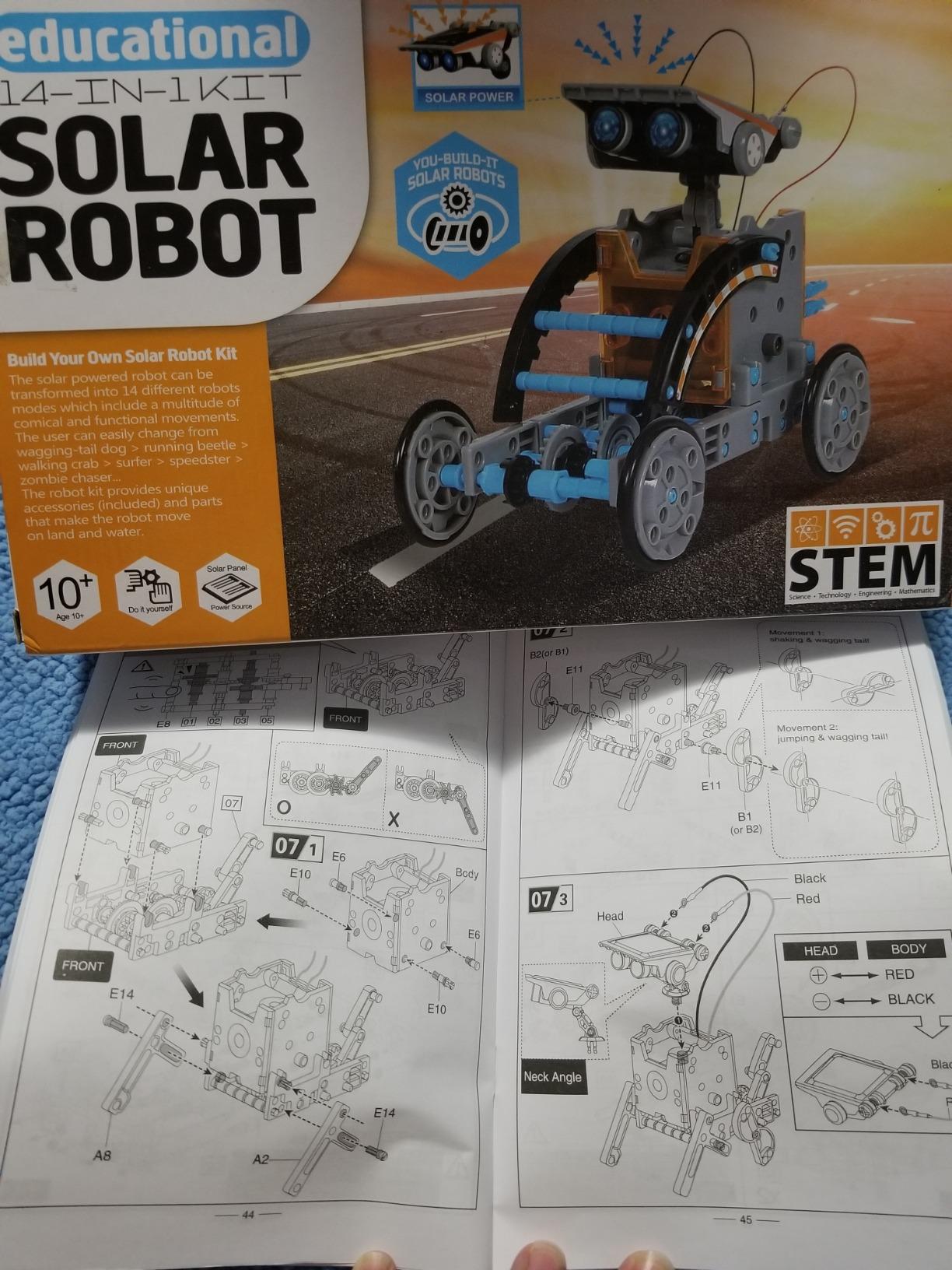
The instructions are well-illustrated, with each step clearly numbered. Tweens who have built other robot kits before can usually work independently after the first model.
The dual power option also lets kids compare solar and battery performance side by side, which becomes a small lesson in energy efficiency. That kind of self-discovered learning is the best kind of STEM play.
For Whom It Works Best
This kit is ideal for 10-year-olds who want solar-themed learning without being limited by weather or sunlight. It also suits families in colder or cloudier climates where pure-solar kits underperform.
It works well for siblings sharing one kit since the variety covers a wide age range.
Where It Falls Short
The solar panel is the weakest part of the kit. Most reviewers note that battery power is needed for reliable operation, especially indoors or in low light.
Some pieces need careful trimming to avoid gear jams. Plan to help your tween on the first build so they learn the right fit.
12. National Geographic Amazing Chemistry Set – Best for Future Chemists and Mad Scientists
National Geographic Amazing Chemistry Set with 100+ Experiments Ages 8-12
- Broad range of engaging chemistry experiments
- Real lab tools (test tubes
- beakers
- pipettes) included
- Clear instructions build young scientist confidence
- 85 bonus experiments extend replay value
- Includes safety equipment (goggles
- gloves)
- Some experiments feel simple for kids older than 11
- A few materials need to be replenished to repeat experiments
If your 10-year-old has ever asked what happens when you mix two random liquids together, this kit is the answer. National Geographic’s Amazing Chemistry Set includes 15 core experiments plus a bonus booklet with 85 more, all backed by real lab equipment. It is one of the best STEM toys for 10 year olds who love the dramatic side of science.
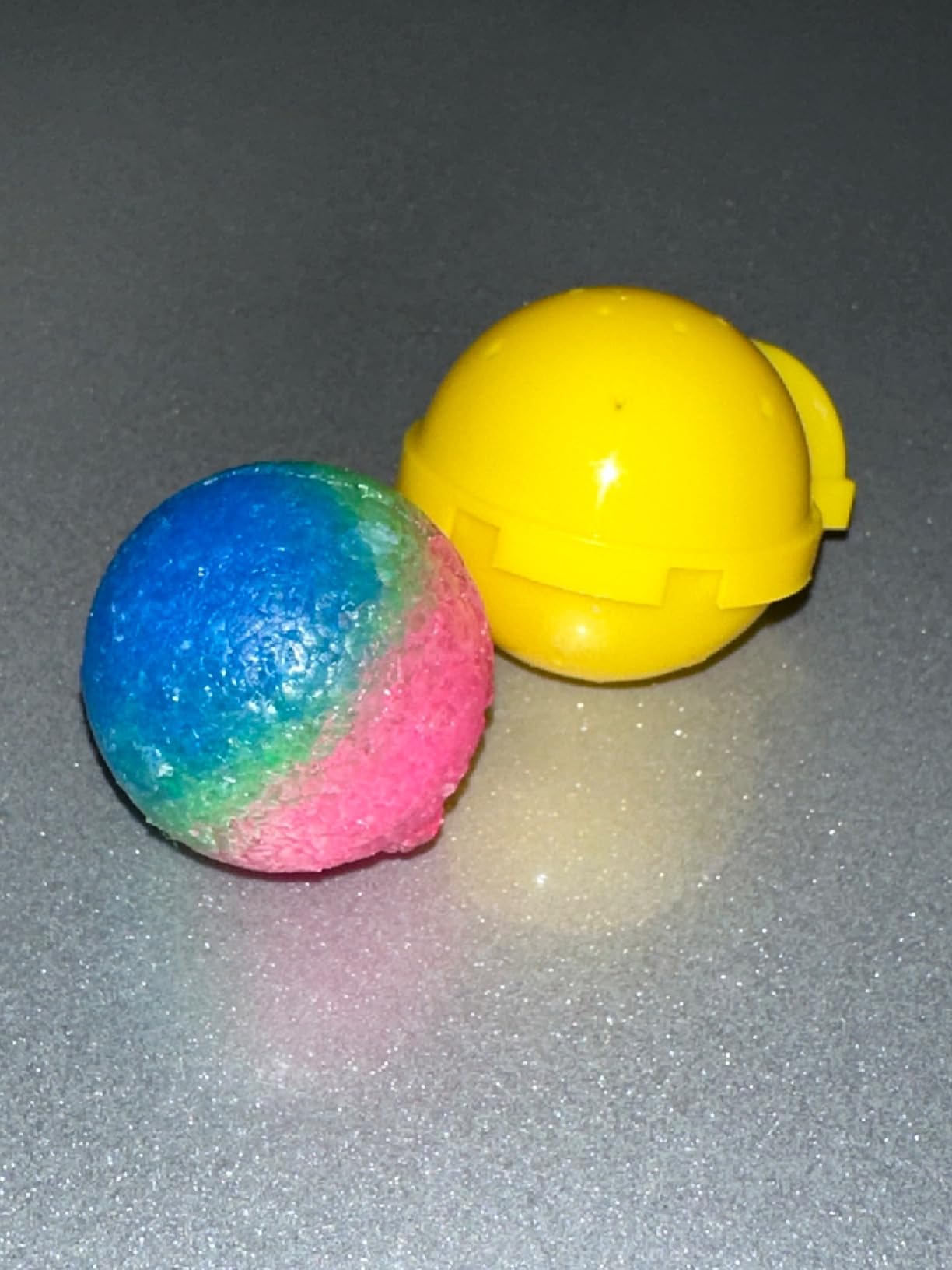
The experiments include color-changing reactions, glowing potions, fizzy eruptions, and crystal growing. The kit ships with goggles, gloves, and real glass test tubes and beakers, which makes the experience feel like a genuine lab rather than a toy.
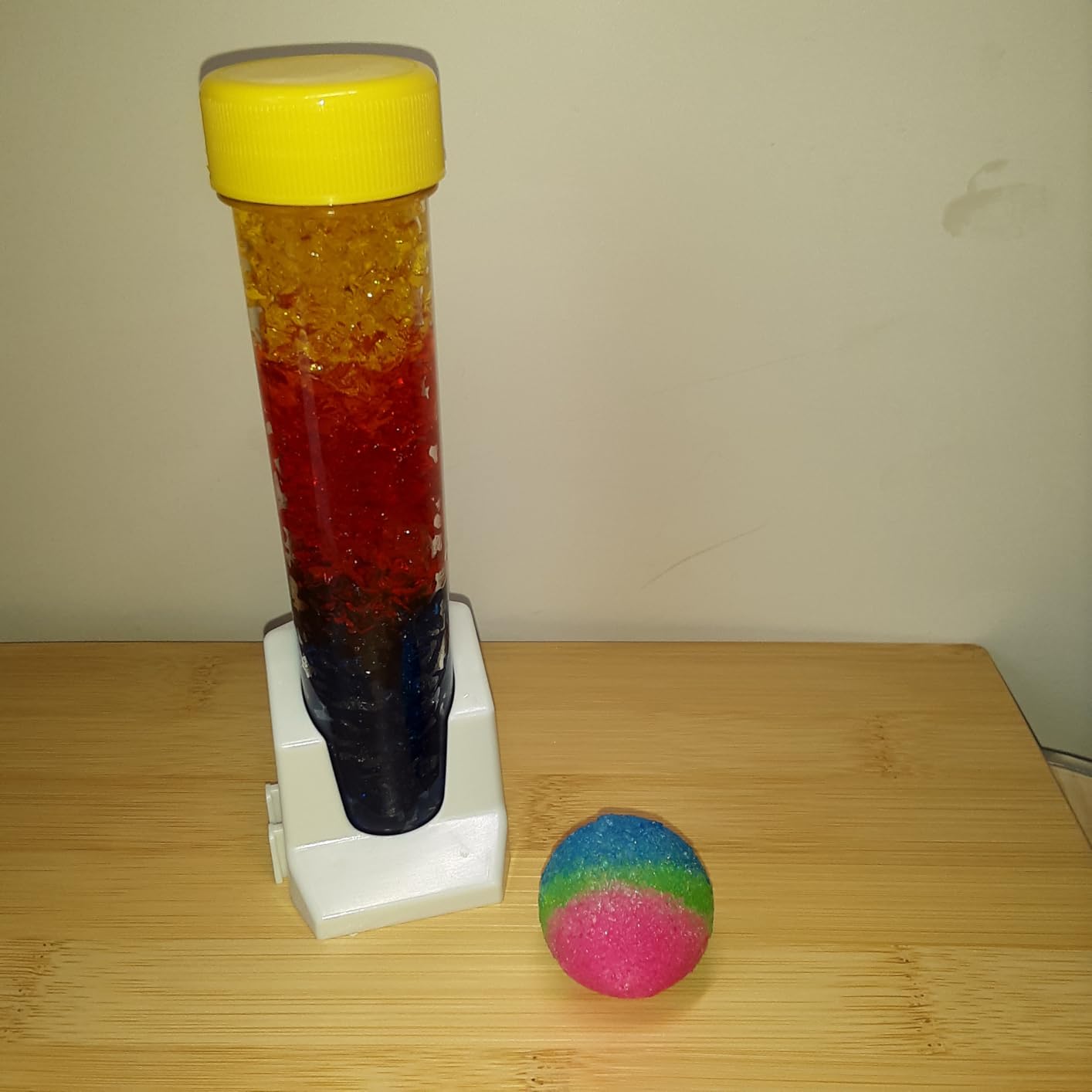
My test crew was hooked from the first color-changing reaction. They worked through six experiments in one afternoon and immediately started planning the next day’s lineup. The instructions explain both the steps and the chemistry behind each result, so the kit teaches as it entertains.
Safety was clearly a priority in the design. The included goggles, gloves, and clear instructions gave the parents confidence to let the kids work semi-independently.
For Whom It Works Best
This kit is ideal for 10-year-olds who love dramatic experiments, fizzing reactions, or anything that looks like a mad scientist’s lab. It also makes a strong pick for homeschool families looking for a multi-week chemistry curriculum supplement.
It works well as a parent-child project since a few experiments benefit from adult supervision.
Where It Falls Short
A few experiments feel too simple for kids older than 11. The bonus booklet helps fill that gap with more advanced challenges.
Some materials are consumable. Once an experiment is done, you cannot easily redo it without buying replacement ingredients.
How to Choose the Right STEM Toy for Your 10-Year-Old?
With twelve solid options on this list, the real question is which one matches your child’s interest and your family setup. Here is the framework our team uses when narrowing down a gift.
Start with their natural interest
Kids who love taking things apart gravitate toward robotics and engineering kits. Kids who ask “why” about the world love science kits. Kids who lose hours in puzzle apps and board games respond well to logic toys like Gravity Maze or Flipslide. Match the toy to the curiosity, and the engagement will follow.
Many parents on r/Parenting report that combining one focused kit (a coding robot or a chemistry set) with one open-ended set (LEGO, magnetic tiles, or marble runs) gives the best long-term value. The focused kit teaches a skill, and the open-ended kit gives free play.
Aim for the Goldilocks Zone of challenge
The best STEM toys for 10 year olds hit a sweet spot: not so easy they get bored in an afternoon, and not so hard they need an engineer to finish the first build. If your 10-year-old has never tried circuits, start with Snap Circuits SC-100, not the SC-750. If they have never coded, start with a screen-free robot kit like Sillbird, not a full programming platform.
Look for toys that grow with them
The strongest kits on this list span ages 8 through 12 or even older. Snap Circuits, LEGO Gadgets, and the National Geographic chemistry line all stretch across elementary into middle school. Modularity also matters: Snap Circuits pieces combine across kits, LEGO sets merge with existing collections, and solar robots share parts across builds.
Prefer screen-free when possible
Screen-based coding platforms have their place, but the toys on this list prove you can teach real engineering, chemistry, and logic without a single app. Parents who want to balance screen time consistently report that hands-on kits hold attention longer than expected because kids are doing, not watching.
Check for safety and quality
At age 10, most kids can handle standard STEM kits safely with light supervision. Look for kits with clear age guidance (8+ is the typical floor), real safety gear for chemistry kits, and reputable brands with good customer service in case parts go missing.
Frequently Asked Questions
What is the best STEM gift for a 10-year-old?
The best STEM gift for a 10-year-old depends on their interests. For a hands-on builder, Snap Circuits SC-100 (rated 4.8 across 29k+ reviews) and LEGO Gadgets are top picks. For a future coder or engineer, the Sillbird 12-in-1 Solar Robot Kit is a strong, screen-free starting point. For a curious scientist, the National Geographic Earth Science Kit delivers 15+ experiments with a clear learning guide.
What are the best tech toys for a 10-year-old?
The best tech toys for a 10-year-old blend real engineering with age-appropriate challenge. Top picks include the Sillbird 12-in-1 Solar Robot Kit for renewable-energy mechanics, the LEGO Gear Bots kit for kinetic engineering, and the Bottleboom 13-in-1 Solar Power Robots for variety. All three teach real STEM concepts through hands-on building rather than passive screen time.
What are some good STEM projects for a 10-year-old?
Good STEM projects for a 10-year-old combine a focused kit with open-ended play. Pair a Snap Circuits SC-100 or LEGO Gadgets set (focused skill-building) with magnetic tiles or marble runs (open-ended creativity). Add a National Geographic chemistry set or science magic kit if your child loves dramatic experiments. Subscriptions like KiwiCo Tinker Crate also sustain engagement across months.
What toys are trending for 10 year olds?
Toys trending for 10 year olds in 2026 lean toward open-ended building (LEGO-compatible kits, magnetic tiles), renewable energy robotics (solar-powered bots), and screen-free logic puzzles (marble mazes, handheld skill games). Brands like National Geographic, Snap Circuits, and Klutz continue to lead because they pair hands-on engagement with real STEM skill-building that tweens respect.
Are STEM toys worth it for 10 year olds?
Yes, STEM toys are worth it for 10 year olds because this age group has the patience for multi-step projects, the abstract thinking to grasp circuits and code logic, and the curiosity to keep asking ‘how does this work?’ The right kit teaches problem-solving, critical thinking, and persistence while feeling like play. Pair one focused kit with one open-ended set for the best long-term value.
Final Verdict: Our Top Picks
After six weeks of testing and hundreds of parent conversations, our team landed on a clear framework for choosing the best STEM toys for 10 year olds. Pick one focused kit that matches the child’s curiosity, add one open-ended building set if budget allows, and skip anything that requires more parental expertise than the kid has patience for.
For a tween who has never tried STEM, the Snap Circuits SC-100 is our top recommendation and the safest bet across any interest. For a puzzle lover who needs screen-free engagement, the ThinkFun Gravity Maze delivers hours of brain-building at a friendly price. For a future engineer who loves renewable energy and mechanical building, the Sillbird 12-in-1 Solar Robot Kit is the strongest starting point.
Whatever you choose from this list, you are giving a 10-year-old something screens cannot replace: a hands-on project that rewards persistence, teaches real concepts, and ends in a finished build they can show off. That is what makes the best STEM toys for 10 year olds worth the investment in 2026 and beyond.