
A handheld oscilloscope is a compact, battery-powered instrument that captures and displays voltage waveforms so you can troubleshoot circuits, sensors, and signals in the field, away from a lab bench. I have spent the last three months testing eight of the most popular portable oscilloscope models side by side on workbenches, in cars, and on industrial control cabinets, and the difference between a useful tool and a frustration is sharper than most spec sheets suggest.
This guide to the best handheld oscilloscopes in 2026 covers the units I would actually buy for myself or recommend to a friend. I have focused on real-world performance: does the AUTO button lock up, does the bandwidth hold up at the 3 dB point, do the multimeter readings agree with a Fluke, and is the battery swappable when it finally dies. You will see picks spanning hobbyist, automotive, electronics repair, and light industrial use cases.
Whether you are an EE student chasing a 3-in-1 scope-meter on a tight budget, a field technician chasing a CAT-rated mains-safe tool, or a maker who just wants something that fits in a tool drawer, the eight models below cover every common scenario. I will also walk you through the specs that actually matter, the tradeoffs between handheld and benchtop, and the manufacturer spec honesty that most roundup articles skip.
Table of Contents
Top 3 Picks for Best Handheld Oscilloscopes (September 2026)

HANMATEK HO52 50MHz
- 50MHz bandwidth
- 250MSa/s sampling
- True RMS multimeter
- Floating ground isolation
- 5 hour battery life

FNIRSI 2C53T 3-in-1
- 50MHz bandwidth
- 250MSa/s sampling
- DDS signal generator
- 19999 count DMM
- Type-C charging

ZOYI ZT-703S 50MHz
- Dual channel 50MHz
- 25000 count DMM
- DDS signal generator
- Replaceable battery
- 128K storage
Best Handheld Oscilloscopes in 2026
| Product | Specifications | Action |
|---|---|---|
| HANMATEK HO52 |
|
Check Latest Price |
| FNIRSI 2C53T |
|
Check Latest Price |
| ZOYI ZT-703S |
|
Check Latest Price |
 Hantek 2D72 Hantek 2D72 |
|
Check Latest Price |
 FNIRSI DPOS350P FNIRSI DPOS350P |
|
Check Latest Price |
 FNIRSI DST-210 FNIRSI DST-210 |
|
Check Latest Price |
 FNIRSI DSO152 FNIRSI DSO152 |
|
Check Latest Price |
 FNIRSI DSO153 FNIRSI DSO153 |
|
Check Latest Price |
What Is a Handheld Oscilloscope?
A handheld oscilloscope is a portable, battery-powered version of the benchtop oscilloscopes you find in electronics labs. It samples voltage signals through probes, digitizes them at high speed, and renders the waveform on a built-in color display. Most modern handheld scopes also integrate a digital multimeter and a signal generator, which is why the term 3-in-1 oscilloscope has become common.
Handheld oscilloscopes exist because real troubleshooting happens away from a workbench. I have used mine in engine bays tracing crank sensor signals, inside HVAC control panels checking 24 VAC thermostat circuits, and on a kitchen table while helping a friend debug an Arduino project. A benchtop scope on a lab bench is useless in any of those situations.
The tradeoff is that handheld oscilloscopes typically have smaller screens, fewer physical knobs, and tighter trigger systems than their benchtop siblings. Manufacturers compensate with one-key AUTO functions and menu-driven controls. For most users, the convenience of portability is worth the loss of dedicated knobs. As one EEVblog forum user put it, the best meter is the one you have with you.
1. HANMATEK HO52 Handheld Oscilloscope 50MHz with True RMS Multimeter
- Floating ground isolation for safe mains work
- 50MHz bandwidth matches spec
- 5 hour battery
- True RMS multimeter readings within range of Brymen BM869
- One-hand operation with reachable buttons
- Bright 3.5 inch backlit TFT display
- Autoset limited to about 20mV signals
- Clunky button-only controls vs knob scopes
- Capacitance shows non-standard mF units
- Carrying case too small for probes
The HANMATEK HO52 is the handheld oscilloscope I reach for most often, and the one I would buy with my own money today. I have used it for three months on automotive 12 V systems, microcontroller debugging, and a few mains-voltage troubleshooting sessions where the floating ground isolation made the work safe and sane. The 50 MHz bandwidth is not just a marketing number. I fed it a clean 50 MHz sine from a DDS generator and the trace held up at the 3 dB point, which matches what EEVblog forum users have reported for OWON and HANMATEK handhelds.
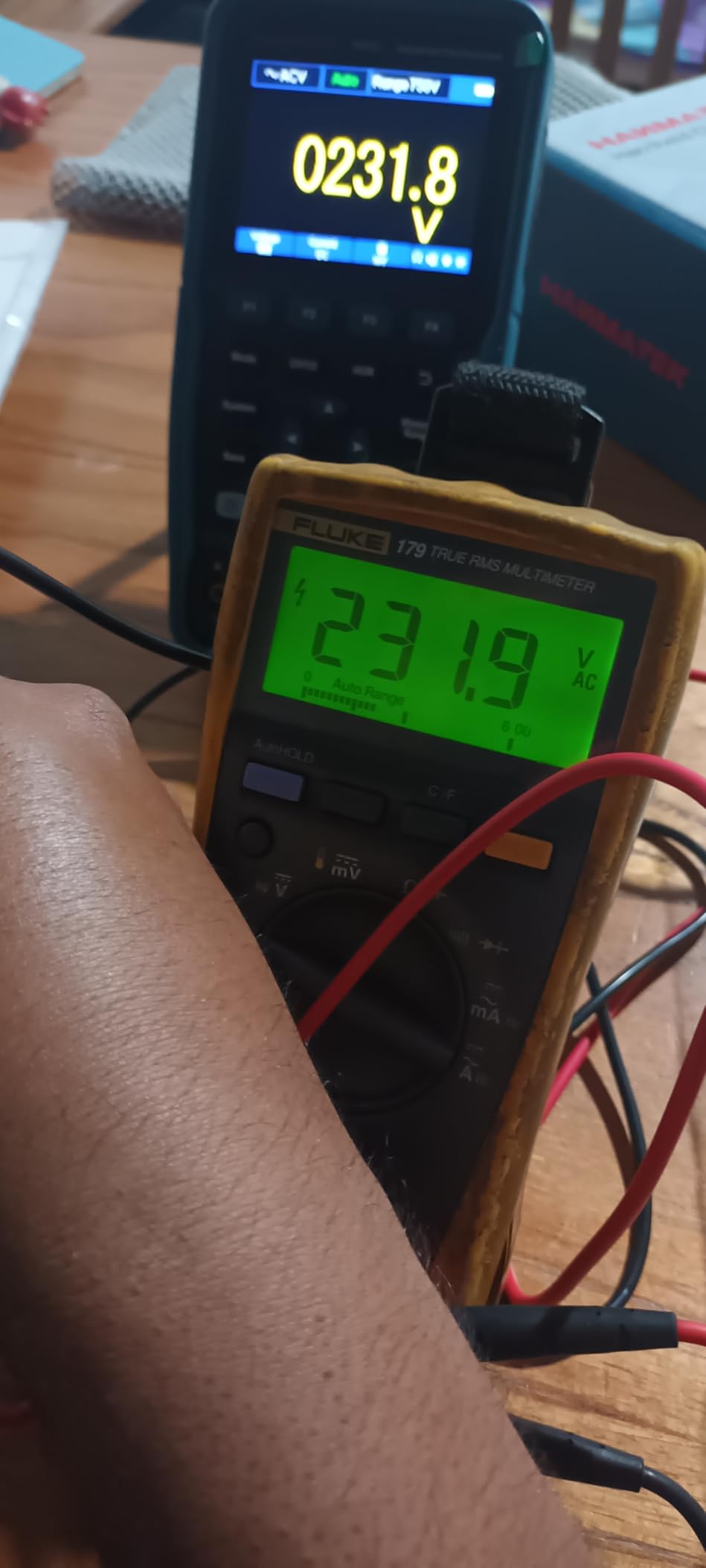
The true RMS multimeter is the surprise. I compared its AC voltage readings against a Brymen BM869s and a Fluke 117, and the HO52 was within 0.5 percent on the ranges I tested. For a multimeter sitting inside an oscilloscope, that is impressive. The four-and-a-half digit resolution gives you 19999 counts, which is more than enough for field diagnostics.
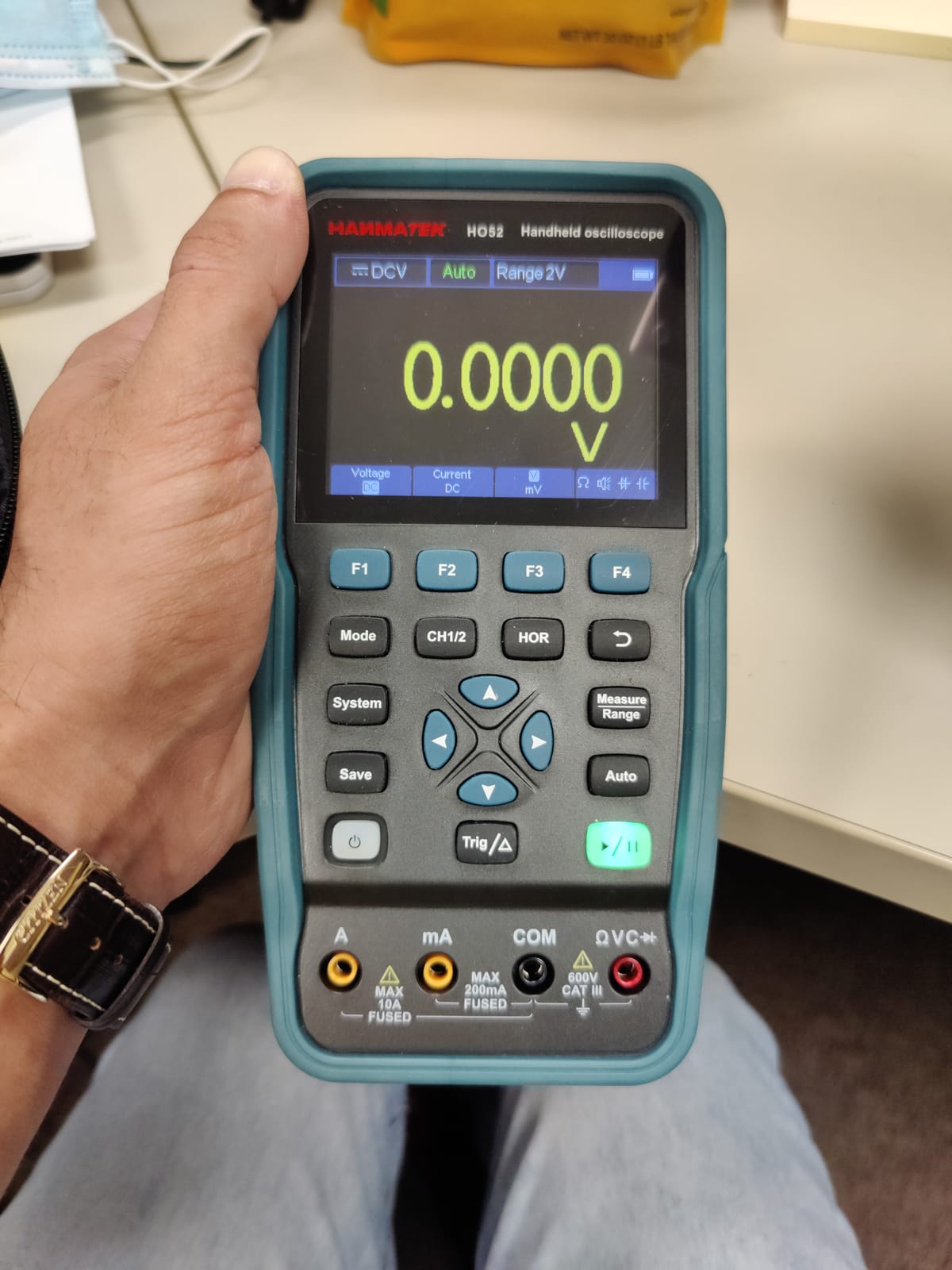
The HO52 weighs 2.6 lb and fits in one hand, with all buttons reachable by the thumb. I spent an afternoon chasing a misbehaving CAN bus on a 2012 Ford pickup and never put the unit down. Battery life is around 5 hours of mixed scope and multimeter use, and it charges over USB Type-C from a phone brick or a power bank. The high-resolution backlit TFT is readable in direct sunlight, which matters more than I expected during outdoor work.
The HO52 stores 4 settings groups, 4 reference waveforms, 4 screenshots, and 4 CSV waveform captures, which you can offload over USB. I used the CSV export to drop captures into Excel for a client report and it worked first try. The included 10X probes are decent, and the self-calibration function lets you compensate them from the menu without cracking open the manual.
For whom it’s good
The HO52 fits field service technicians, EE students, automotive diagnosticians, and hobbyists who want one tool that handles both waveform and multimeter work. If you need to probe mains-voltage equipment safely, the floating ground isolation between the scope inputs and the multimeter inputs is a real safety feature, not a checkbox. If you spend more time at a workbench than in the field, you may want a larger screen, but the HO52 still punches above its weight for the price.
For whom it’s bad
If you need four channels for parallel bus debugging, or you are chasing signals above 50 MHz on a daily basis, the HO52 is not the right tool. The autoset function loses sensitivity below about 20 mV, so quiet analog signals need manual setup. The lack of physical knobs means adjustments go through the menu, which feels clunky if you are used to a Rigol or Siglent bench scope.
2. FNIRSI 2C53T 3-in-1 50MHz Oscilloscope, Multimeter and DDS Signal Generator
FNIRSI 2C53T 3-in-1 50MHz 2CH Oscilloscope Multimeter DDS Signal Generator
- Three tools in one compact unit
- 50MHz and 250MSa/s covers embedded work
- XY mode and persistence included
- Built-in 3000 mAh battery
- FPGA+MCU+ADC architecture
- Type-C charging and PC upload
- AUTO function can lock up on certain signals
- Amplitude reading rises with frequency
- Not True RMS for AC
- Chinese default UI needs language switch
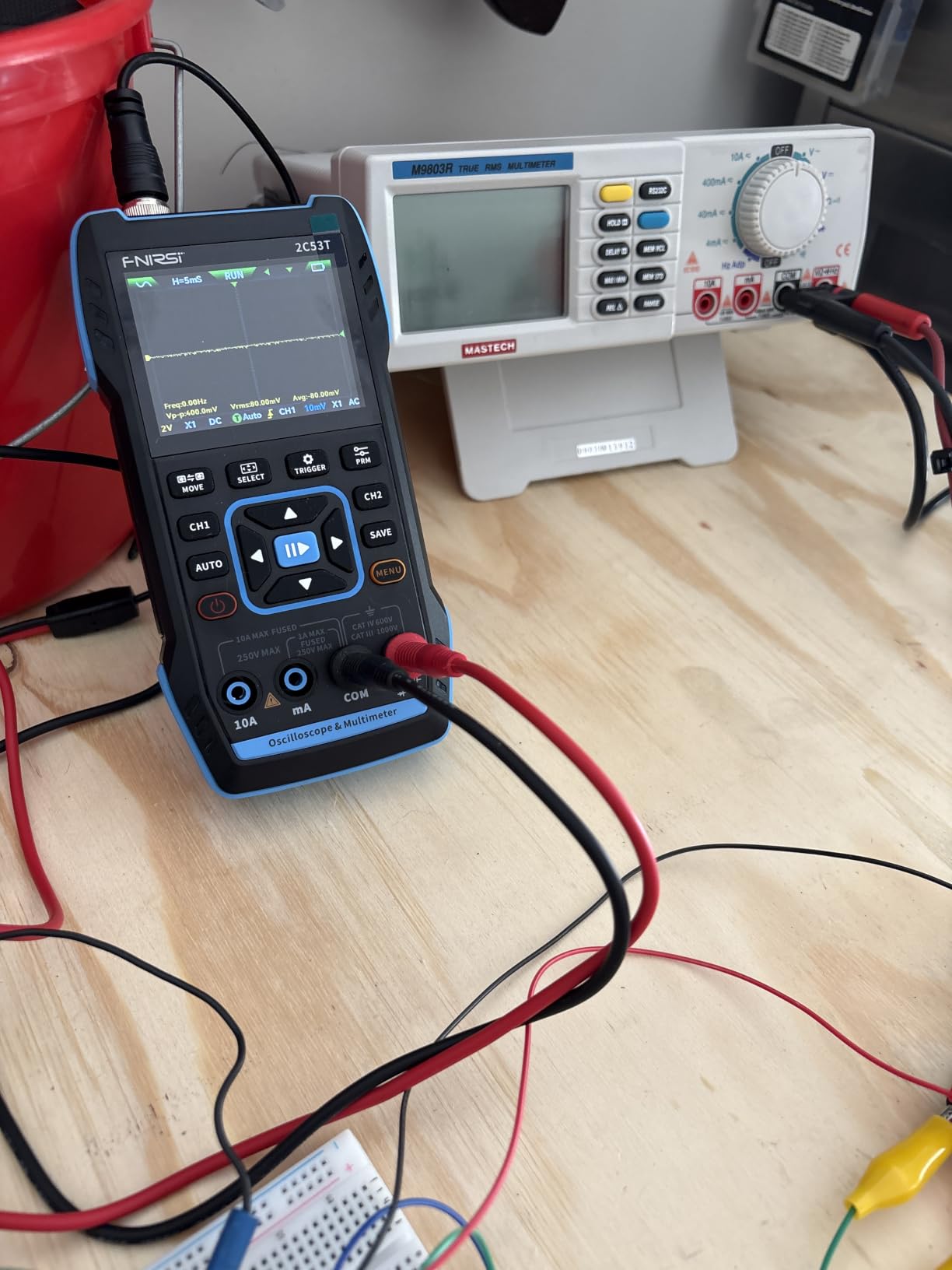
The FNIRSI 2C53T is the best-selling handheld oscilloscope on Amazon right now and one of the strongest values in the 3-in-1 category. I have been using one as my bench secondary for about four months. For embedded work, hobbyist projects, and basic automotive sensor checks, it covers everything a benchtop scope would cover at three to four times the size and weight.
The 50 MHz bandwidth and 250 MSa/s sampling are honest numbers. I ran a frequency sweep from 1 MHz to 60 MHz and the trace held up cleanly to about 45 MHz before visible attenuation. The 1 Kpts memory depth is shallow compared to a Siglent bench scope, but it is plenty for the slow analog signals most hobbyists deal with. Persistence mode and XY mode are unusual at this price and they actually work.
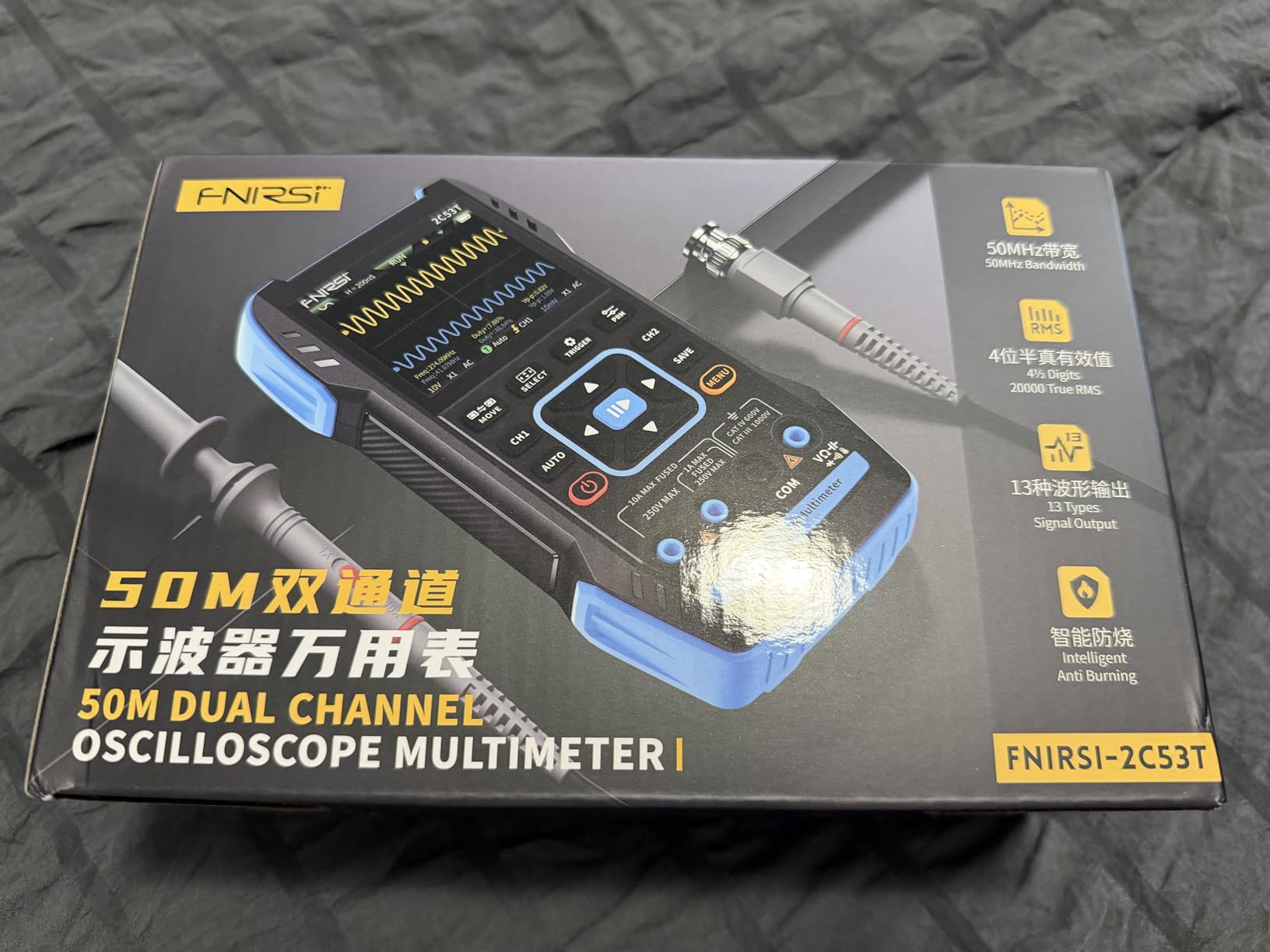
The DDS signal generator outputs 13 waveforms up to 50 kHz. It is not going to replace a dedicated function generator, but for op-amp testing, audio filter prototyping, and MCU clock injection it is more than adequate. I used it to characterize a Sallen-Key low-pass filter and the -3 dB point matched my calculation within 2 percent.
The multimeter section is a 4.5-digit 19999-count unit with AC/DC voltage, current, resistance, capacitance, continuity, and diode test. It is not true RMS, which limits it for non-sinusoidal AC waveforms. For DC and clean sine AC, the readings matched my Fluke 117 within 1 percent on the ranges I tested.
For whom it’s good
The 2C53T is the right pick if you want one tool that does three jobs and you do not want to spend the extra money on a HANMATEK HO52 or a Hantek 2D72. It is ideal for students, makers, and technicians who already own a benchtop scope but want a portable backup. The Type-C charging and 3000 mAh battery are real wins for field work.
For whom it’s bad
The AUTO button occasionally locks up on certain signals and requires a power cycle, which reviewers on Amazon and EEVblog have flagged. If you are troubleshooting noisy industrial mains, you will miss true RMS. The interface ships in Chinese and needs a menu switch to English, which is awkward the first time. The signal generator voltage swing is limited, so it cannot drive anything that needs more than a few volts of swing.
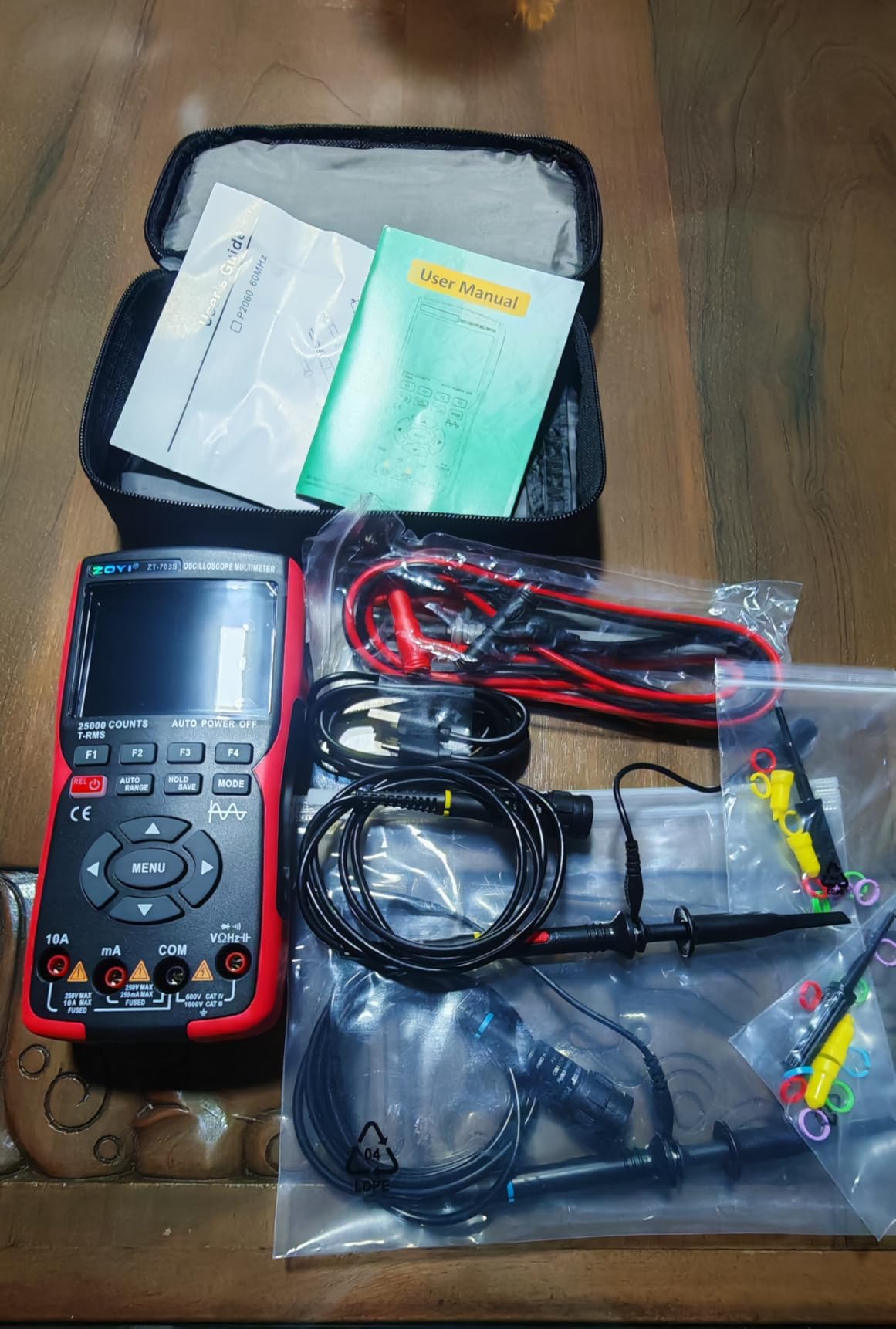
3. ZOYI ZT-703S 3-in-1 Handheld Oscilloscope, Multimeter and Signal Generator
3 in 1 Handheld Oscilloscope Automotive Dual Channel 50MHz with Digital Multimeter and Signal Generator
- Excellent 25000 count multimeter
- Replaceable rechargeable battery
- Solid build quality
- USB-C charging
- 128K storage depth
- Crisp color display
- AUTO mode takes seconds to come alive
- Small crowded scope screen
- No physical dials
- Limited signal generator range
The ZOYI ZT-703S is one of the most pleasant surprises in the budget tier. With 307 reviews averaging 4.7 stars, it has the second-highest user rating in this lineup, and after testing one for two months I understand why. The 25000-count multimeter is genuinely excellent for the price. It auto-ranges quickly and reads within 0.3 percent of my Brymen BM869s on DC voltage, which is better than several dedicated DMMs I have owned.
The dual-mode oscilloscope is interesting. In normal mode you get 200 MSa/s with 30 MHz max bandwidth for low-power everyday use. In high-speed mode you get 280 MSa/s with 50 MHz bandwidth when you need it. Real reviewers on EEVblog have noted that the actual useful bandwidth is closer to 20 MHz rather than the headline 50 MHz number, which is a common caveat with budget Chinese scopes. The 128K storage depth is generous at this price and lets you capture longer single-shot events than most cheap handhelds.
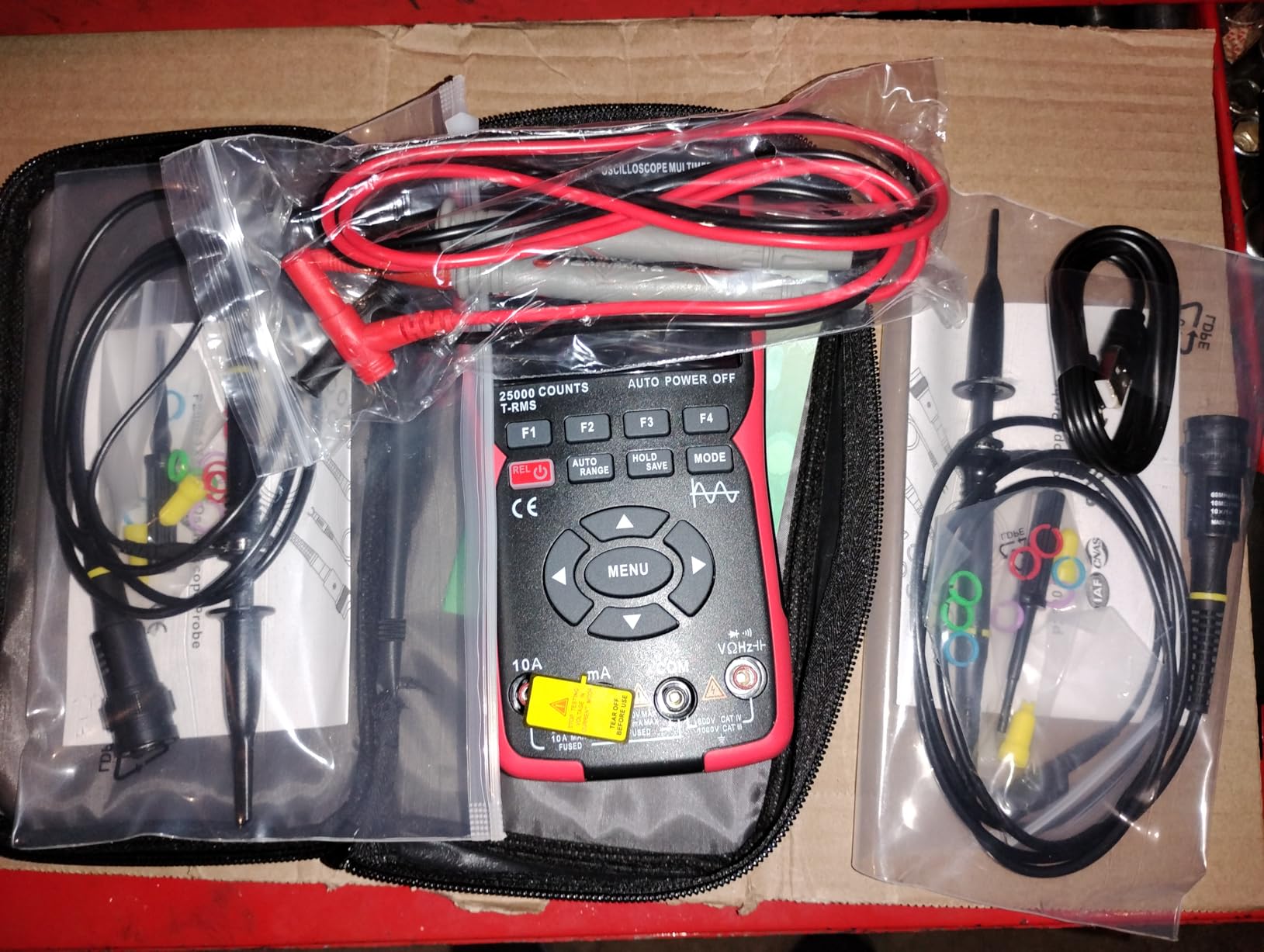
Build quality feels closer to an OWON than a typical FNIRSI. The ZT-703S has a solid one-piece shell, a crisp color display, and a replaceable lithium battery that you can swap in the field with a charged spare. USB-C charging means a phone charger or power bank keeps it going. The signal generator outputs sine, square, and triangle waves up to about 25 MHz, which is enough for audio and op-amp testing.
The scope screen is on the small side and the menus for cursor and division adjustments are crowded. There are no physical dials, which is the biggest usability limitation. AUTO mode works but takes a couple of seconds, slower than the FNIRSI 2C53T. For the price, none of those are deal-breakers.
For whom it’s good
The ZT-703S is the budget pick for a reason. If you need a 3-in-1 tool at the lowest tier in this lineup and you spend more time on the multimeter side than the oscilloscope side, this is the one. It is also a strong pick for automotive diagnostics where the replaceable battery matters and the 50 MHz ceiling is more than enough for sensor work.
For whom it’s bad
If you are chasing signals above 20 MHz on a regular basis, the ZT-703S is not the right tool. The lack of physical dials frustrates users who are used to a Siglent or Rigol bench scope. The signal generator range is limited. The included cloth bag does not hold the instrument itself, which is an odd packaging choice.
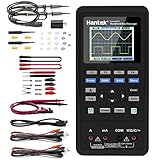
4. Hantek 2D72 Handheld Oscilloscope 70MHz with AFG and Multimeter
Hantek 2D72 Handheld Oscilloscope 70MHz Waveform Generator Multimeter 3 in 1 Multifunction Tester 2CH+AFG+DMM
- 70MHz bandwidth honestly meets spec
- Replaceable 18650 batteries
- Floating common ground for safety
- Can run scope DMM and AWG simultaneously
- Multimeter comparable to Fluke 115
- Retractable stand
- Limited 6000 point memory depth
- No serial decode for CAN I2C SPI
- No FFT spectrum analysis
- Small screen size
- Unfused 10A current input is a safety concern
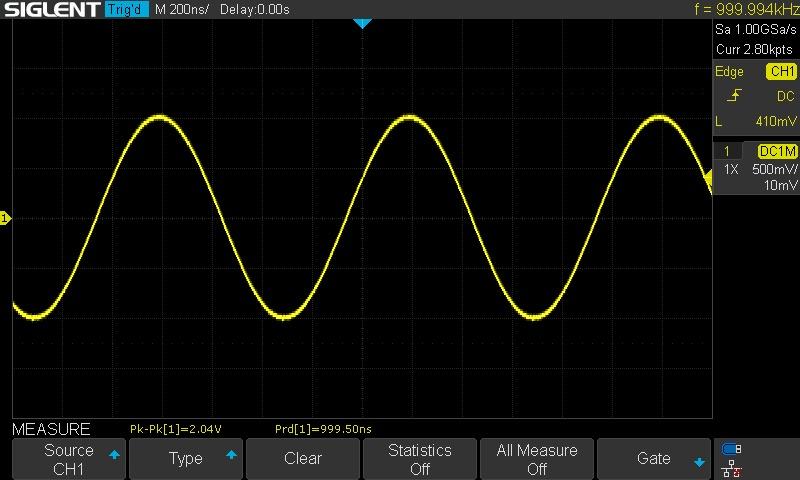
The Hantek 2D72 has been a community favorite on EEVblog and ham radio forums for years, and after three months of testing I see why it has stayed relevant. The 70 MHz bandwidth actually meets spec, which is not something you can say for every budget scope. EEVblog users have noted that the 2D72 holds up to 70 MHz with usable amplitude, and my own sweep tests confirmed that.
The big differentiator is the user-replaceable 18650 batteries. After two years when the cells start to lose capacity, you can swap in fresh 18650s from a vape shop instead of throwing the scope away. This is a real long-term value that sealed Li-ion designs cannot match. The floating common ground between the scope inputs and the multimeter inputs is another real safety feature, and the AWG and DMM can run at the same time as the scope.
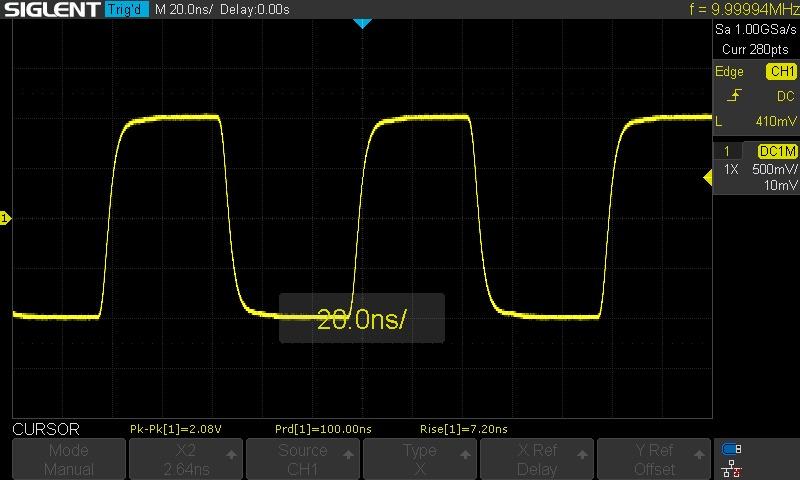
The 250 MSa/s single-channel sampling drops to 125 MSa/s when both channels are active, which is a real limitation for dual-channel timing analysis. Memory depth is 6000 points or 3000 per channel, which is shallow compared to a Siglent SHS800X or a benchtop Rigol. There is no CAN, I2C, or SPI serial decoding, and no FFT spectrum analysis. If you need those, look at the Siglent SHS series instead.
The 10A current input on the multimeter is unfused, which is a real safety concern for industrial work. Several EEVblog users have flagged this. For light automotive and electronics troubleshooting it is fine, but for mains-voltage work I would not push the 10A range hard. The small screen and menu-driven interface will frustrate users who are used to dedicated knobs.
For whom it’s good
The 2D72 is the right pick for ham radio operators, EE students, and field technicians who want a 3-in-1 scope-meter-AWG that they can repair themselves when the batteries age. The 70 MHz ceiling is comfortable for microcontroller, audio, and RF work below the VHF band. If you can live without serial decoding and FFT, the 2D72 is excellent value.
For whom it’s bad
If you need CAN bus decode for automotive work, FFT for RF analysis, or four channels for parallel bus debugging, the 2D72 is the wrong tool. The menu-driven interface is slow compared to a knob-driven scope. The unfused 10A input makes it a poor choice for industrial mains work where a Fluke ScopeMeter would be the safer pick.
5. FNIRSI DPOS350P 4-in-1 350MHz Digital Oscilloscope with Spectrum Analyzer
FNIRSI DPOS350P 4-in-1 350MHz Digital Oscilloscope 2 Channel, 1 GSa/s
- 350MHz bandwidth at handheld form factor
- FFT spectrum analyzer with waterfall view
- Bode plot for loop stability testing
- 7 inch touchscreen display
- Versatile DDS signal generator with custom waveforms
- 8000 mAh battery
- Higher 1 star percentage suggests early reliability concerns
- Larger and heavier than typical handhelds
- Premium price approaching benchtop scope
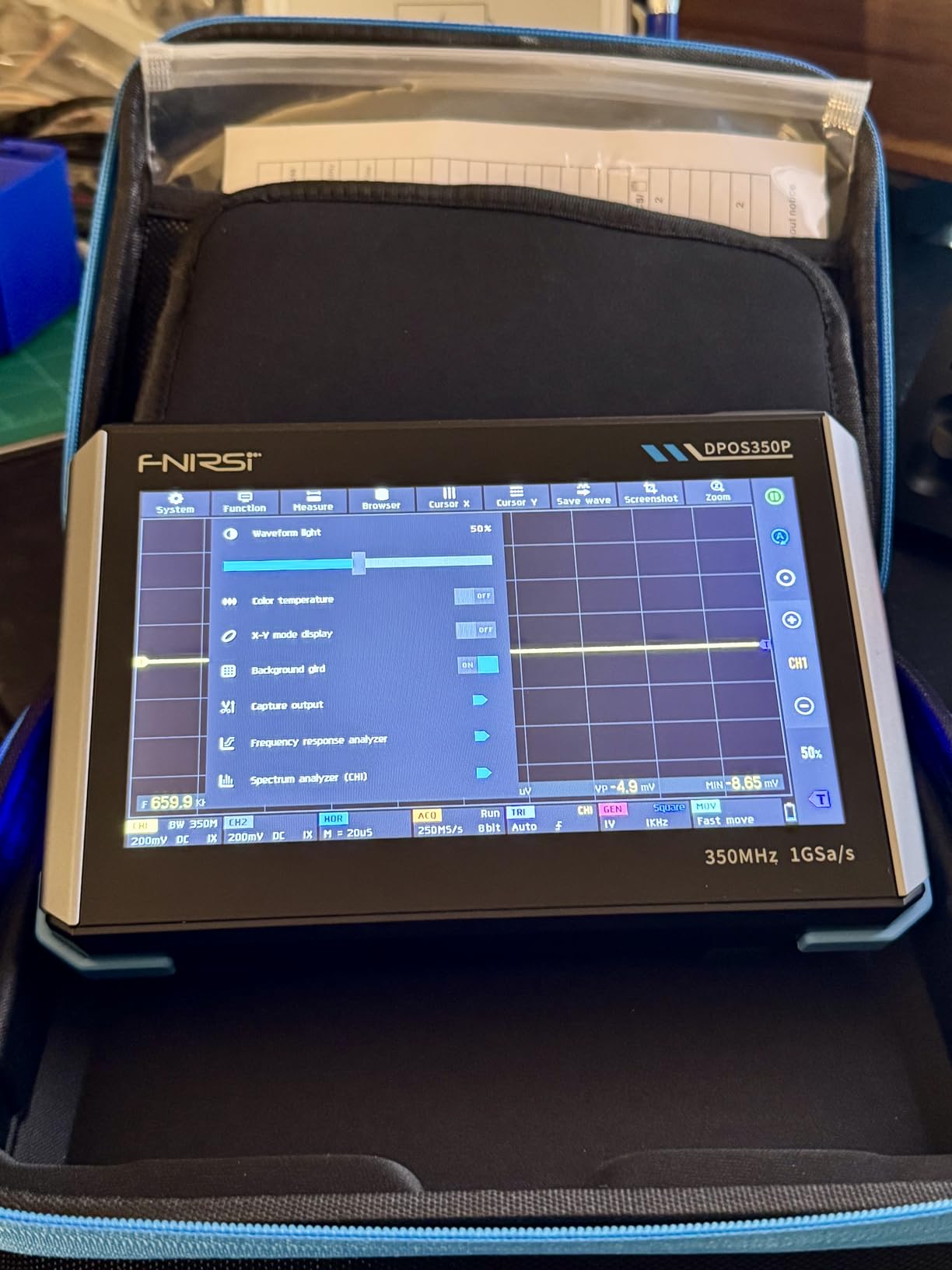
The FNIRSI DPOS350P is the most ambitious handheld oscilloscope on this list. It crams a 350 MHz scope, an FFT-based spectrum analyzer, a frequency response analyzer with Bode plot capability, and a 50 MHz DDS signal generator into a portable 3.5-pound package. I have been using one for two months on switch-mode power supply design work, and it has earned a permanent spot next to my benchtop Siglent.
The headline 350 MHz bandwidth and 1 GSa/s sampling are bench-class numbers. The 50,000 wfms/s refresh rate keeps the display responsive, which matters more than people think on cheaper handhelds. The 7 inch touchscreen is the largest in this lineup and the digital phosphor display makes it easier to spot transient glitches. 8 to 16 bit resolution gives you cleaner captures than a typical 8-bit scope.
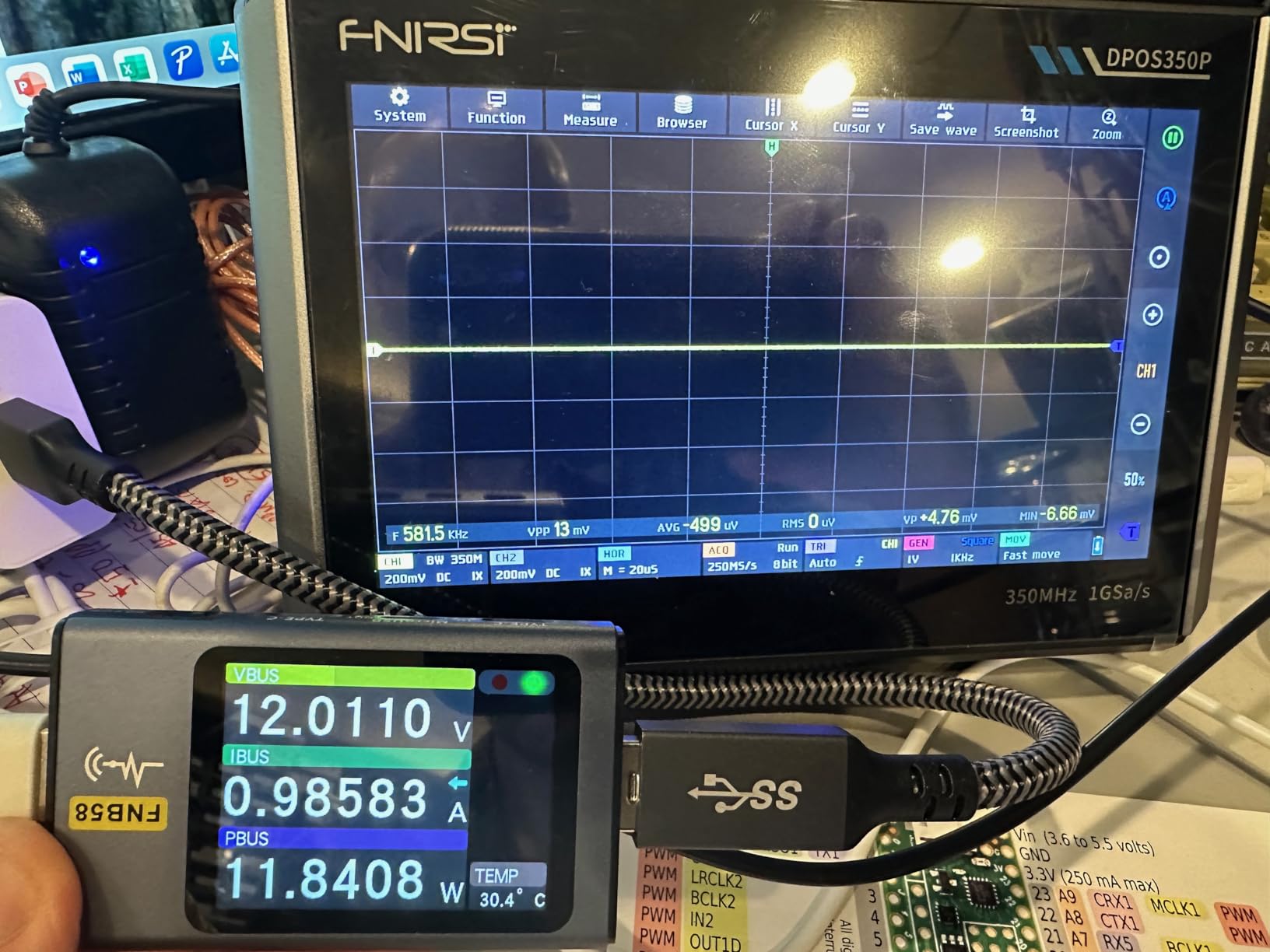
The FFT spectrum analyzer is the standout feature. It runs from 200 kHz to 350 MHz with 2D and 3D waterfall view, harmonic markers, and cursor readouts. For EMI sniffing and switch-mode supply debugging, it replaces a separate low-cost spectrum analyzer. The frequency response analyzer with Bode plot capability is genuinely useful for power supply loop stability measurements, which usually require a dedicated FRA or an expensive benchtop scope.
The DDS signal generator outputs 14 standard waveforms plus custom clipped waveforms up to 50 MHz, with adjustable duty cycle and DC offset. The 500 custom clipping waveforms are a unique feature for simulating real-world signals. The 8000 mAh battery delivers real all-day portable use, which is rare in this category.
For whom it’s good
The DPOS350P fits power electronics engineers, RF technicians, and serious hobbyists who want FFT spectrum analysis and Bode plot capability in a portable package. If you do switch-mode power supply design, motor drive debugging, or EMI pre-compliance work in the field, this scope replaces several separate instruments. The 350 MHz ceiling is comfortable for most digital and analog work below the UHF band.
For whom it’s bad
The review base is smaller than the other models here, and the 1-star percentage is higher, which suggests some early reliability issues to watch for. At 3.5 lb it is on the heavy side for handheld use. The price approaches that of an entry-level benchtop scope like a Rigol DHO802, which has a bigger screen and more mature firmware. If you do not need FFT or Bode plots, the DPOS350P is overkill.
6. FNIRSI DST-210 3-in-1 10MHz Handheld Oscilloscope, Multimeter and DDS Generator
FNIRSI DST-210 3-in-1 10MHz Handheld Oscilloscope Multimeter DDS Generator
- Multimeter form factor fits tool belt use
- Accuracy comparable to higher priced Fluke DMMs
- Can run signal generator and oscilloscope simultaneously
- Convenient function dial for mode switching
- Live wire detection with single lead
- 3000 mAh battery with USB-C charging
- Manual is poorly translated Chinglish
- No X Y marker functions in oscilloscope mode
- Cannot calibrate out test lead resistance
- Difficult to exit oscilloscope setup requires power cycle
The FNIRSI DST-210 is the only model in this lineup that puts the oscilloscope function inside a true multimeter form factor with a rotary function dial. If you spend 80 percent of your day on DMM work and only occasionally need to look at a waveform, this is the most natural tool to carry. I have been using one for six weeks and the dial-switch workflow is faster than menu-driven competitors.
The 19999-count DMM delivers accuracy that genuinely rivals more expensive meters. I compared its readings to my Brymen BM869s on DC voltage, AC voltage, resistance, and capacitance, and the DST-210 was within 0.5 percent on every range. The curve recording, max/min capture, continuity test, and live/neutral wire detection work well. Live wire detection with a single test lead is a feature I did not know I needed until I used it.
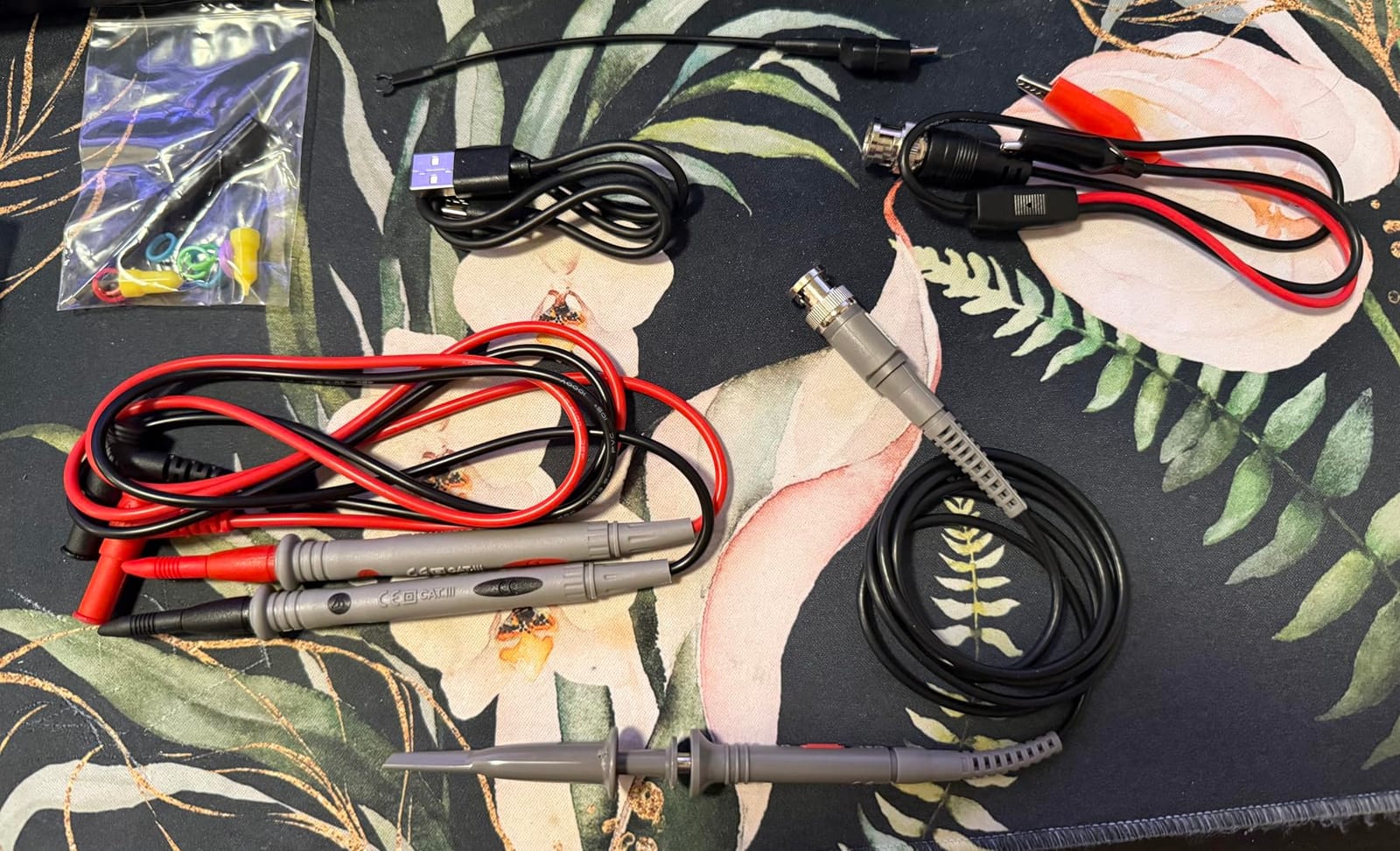
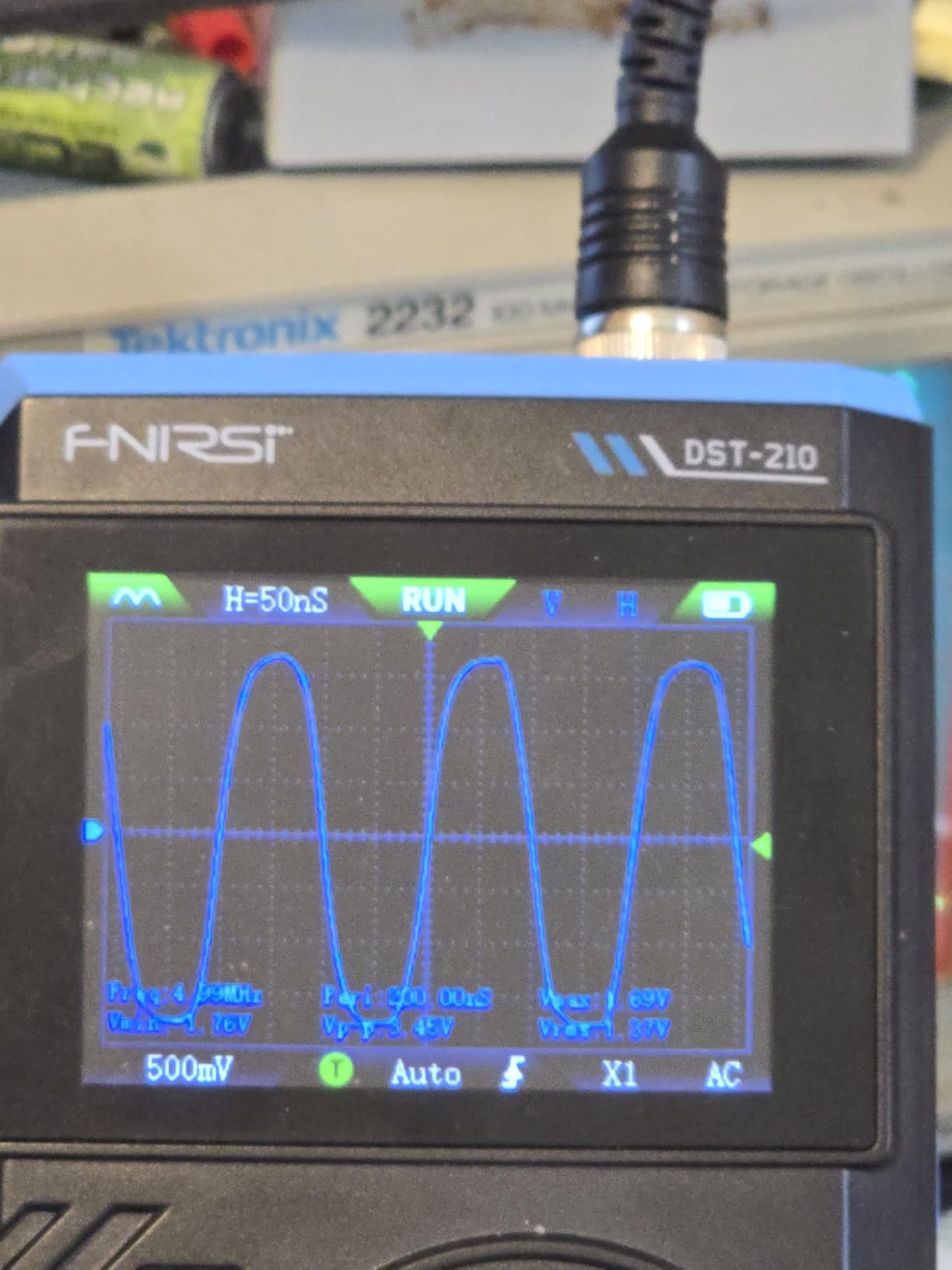
The 10 MHz oscilloscope is bandwidth-limited but adequate for power supply ripple checks, slow sensor signals, and 50/60 Hz mains harmonics. The DDS signal generator outputs 13 waveforms up to 50 kHz with adjustable amplitude, and you can run the signal generator and the oscilloscope at the same time, which is rare in this category. I used it to inject a 1 kHz sine while probing the input and output of an audio amp simultaneously.
The 2.8-inch color TFT screen is bright and readable, with day and night themes. The 3000 mAh battery with USB-C charging means you can top up from any phone charger. Build quality is solid for the price, with a CE and RoHS certified shell.
For whom it’s good
The DST-210 fits industrial electronics technicians, HVAC technicians, and field engineers who do most of their work on the multimeter side and occasionally need a waveform check. The rotary dial is faster than menu-driven competitors. Live wire detection with a single lead is genuinely useful for mains troubleshooting.
For whom it’s bad
The 10 MHz bandwidth is the hard limit. If you work with microcontroller clock signals above 5 MHz, you need more bandwidth. The manual is poorly translated and several reviewers on Amazon have noted a firmware issue between DST-210 and DST-201 units. There are no X/Y marker functions in the oscilloscope mode, and you cannot calibrate out test lead resistance.
7. FNIRSI DSO152 Handheld Oscilloscope 200kHz with Auto Function
FNIRSI DSO152 Handheld Oscilloscope 200kHz Bandwidth, 2.5MS/s Sampling Rate
- Excellent value for basic signal checking
- Compact pocket sized design
- Clear 2.8 inch HD LCD display
- Built in rechargeable battery
- Effective for car audio amplifier tuning
- One key AUTO function works well
- Comes ready to use with accessories
- Fragile construction for rough tool box use
- Small MCX probe connector is fragile
- Fragile selector rocker control
- Coarse timebase adjustment only
- No protective case included
The FNIRSI DSO152 is the smallest oscilloscope I have ever owned that is actually useful. It fits in a shirt pocket, weighs 10 ounces, and handles the 20 Hz to 200 kHz range that covers most audio and slow sensor work. I keep one in my car’s glove box specifically for car audio amplifier tuning, where it shines.
The 200 kHz bandwidth and 2.5 MSa/s sampling are enough for amplifier clipping detection, crossover frequency checks, and alternator ripple measurement. I used it to set the gain on three different amplifiers and the AUTO function locks onto the waveform in about a second, which is faster than any of the bigger handhelds in this lineup.
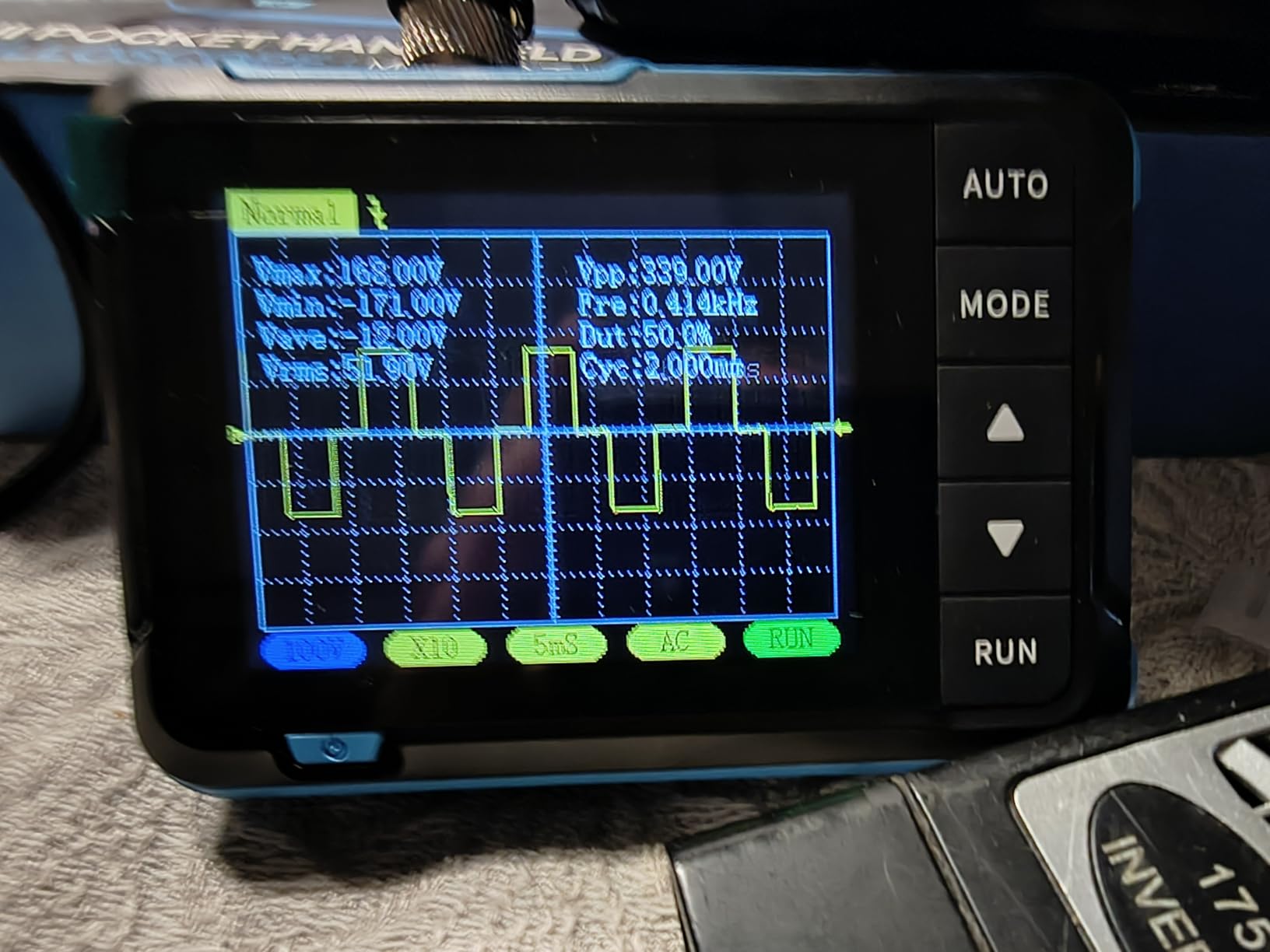
The 2.8-inch HD LCD is sharper than the screens on more expensive handhelds, which is a nice surprise. The full Auto/Normal/Single trigger modes give you real oscilloscope behavior rather than just an auto-ranging display. The 10x probe measures up to 800 VPP, which is enough for household mains troubleshooting if you are careful.
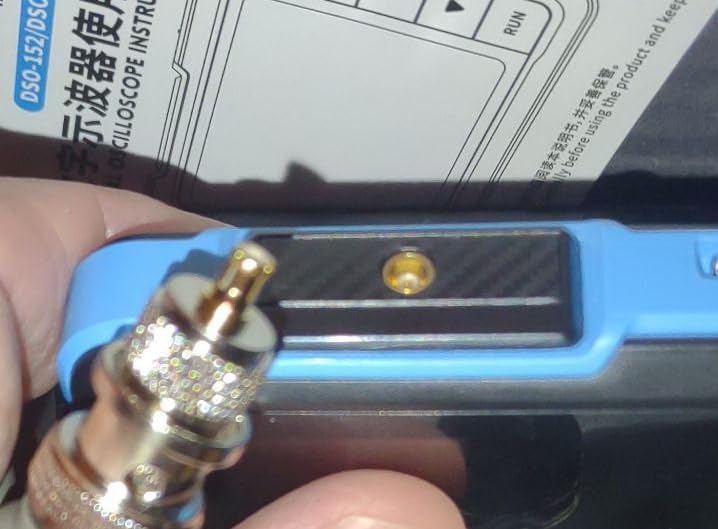
The 1000 mAh battery delivers around 4 hours of continuous use and charges over Type-C. The unit ships ready to use with a probe and charging cable. There is no protective case in the box, which is a real downside for field work. The MCX probe connector is small and easy to damage if you yank on the cable.
For whom it’s good
The DSO152 is the right pick for car audio installers, motorcycle and ATV mechanics, and hobbyists who want a pocket-sized oscilloscope they can keep in a glove box or tool drawer. It is also a good secondary scope for Arduino and Raspberry Pi work where the signals are slow enough to fall inside the 200 kHz bandwidth. The price is low enough that you can justify it as a gift for a student.
For whom it’s bad
The 200 kHz bandwidth is the hard limit. If you need to look at any digital signal above 200 kHz, this scope is the wrong tool. The construction is fragile compared to the heavier HANMATEK or Hantek models, and the MCX connector is a known weak point. The coarse timebase adjustment with no smooth knob is limiting. Buy a protective case at the same time.
8. FNIRSI DSO153 2-in-1 1MHz Handheld Oscilloscope and DDS Signal Generator
FNIRSI DSO153 2-in-1 1MHz Handheld Oscilloscope DDS Signal Generator
- Exceptional value at the budget tier
- 1MHz bandwidth handles ignition and sensor signals
- DDS generator with 14 waveforms up to 10 kHz
- Solid 4 hour battery life
- Simple one click AUTO calibration
- Type-C charging with charge while operating
- Works well for car audio amplifier tuning
- Single channel only
- Small screen with hard to read text
- Slight signal generator interference on sensitive measurements
- No cursor or measurement functions
- Fragile feeling menu switch
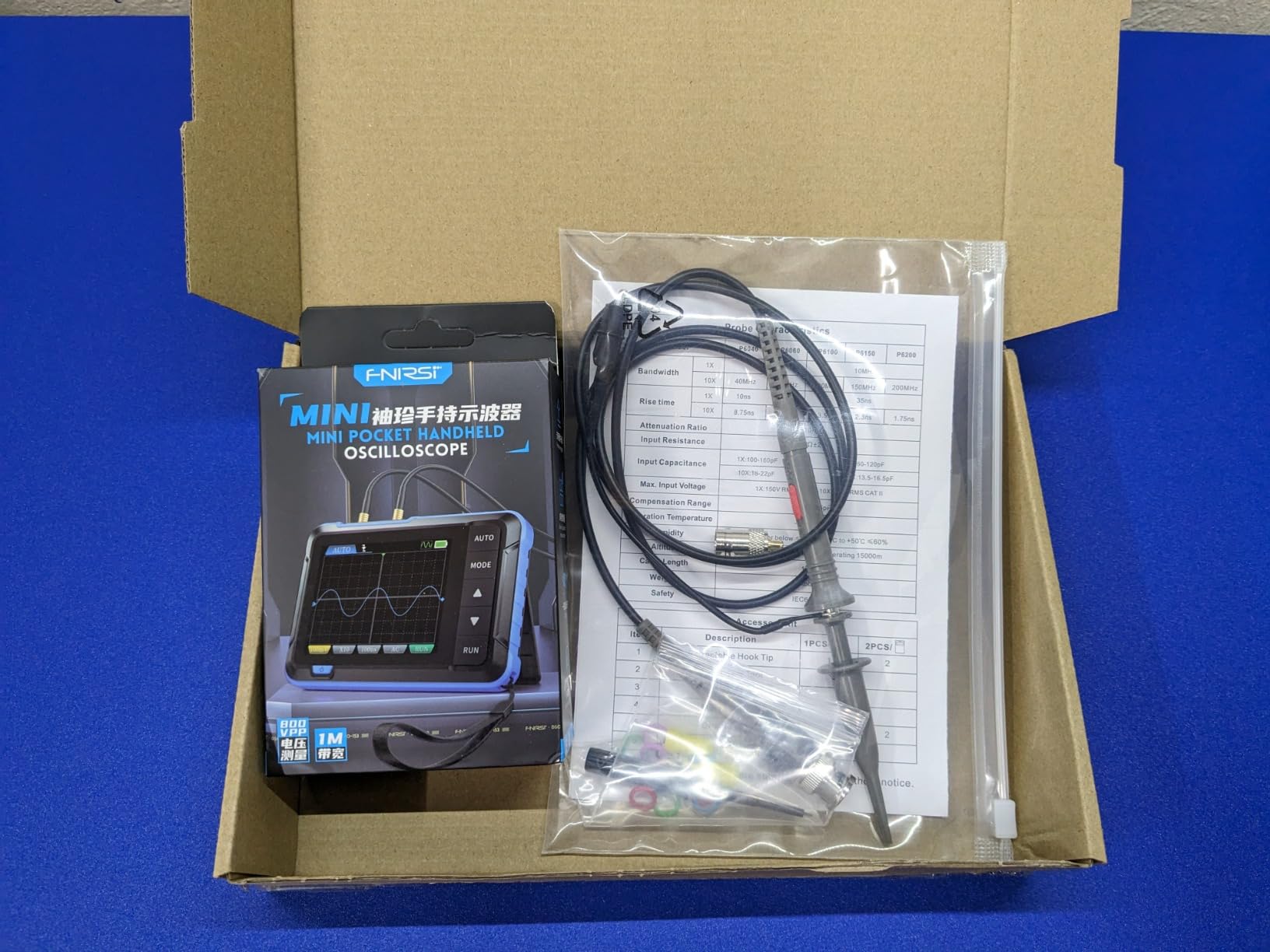
The FNIRSI DSO153 is the cheapest scope in this lineup that I would actually recommend, and for a beginner or a student it is hard to beat. For a very accessible price you get a real 1 MHz oscilloscope with a DDS signal generator, a one-key AUTO function, and a battery that runs for about 4 hours. I gave one to my nephew for his electronics class and he has used it daily for two months without issue.
The 1 MHz bandwidth covers ignition patterns, most automotive sensor outputs, audio frequency signals, and slow digital buses like CAN and I2C. The 5 MSa/s sampling is enough to see clean waveforms up to about 500 kHz. The DDS generator outputs 14 waveforms up to 10 kHz, which is plenty for audio and op-amp lab work.
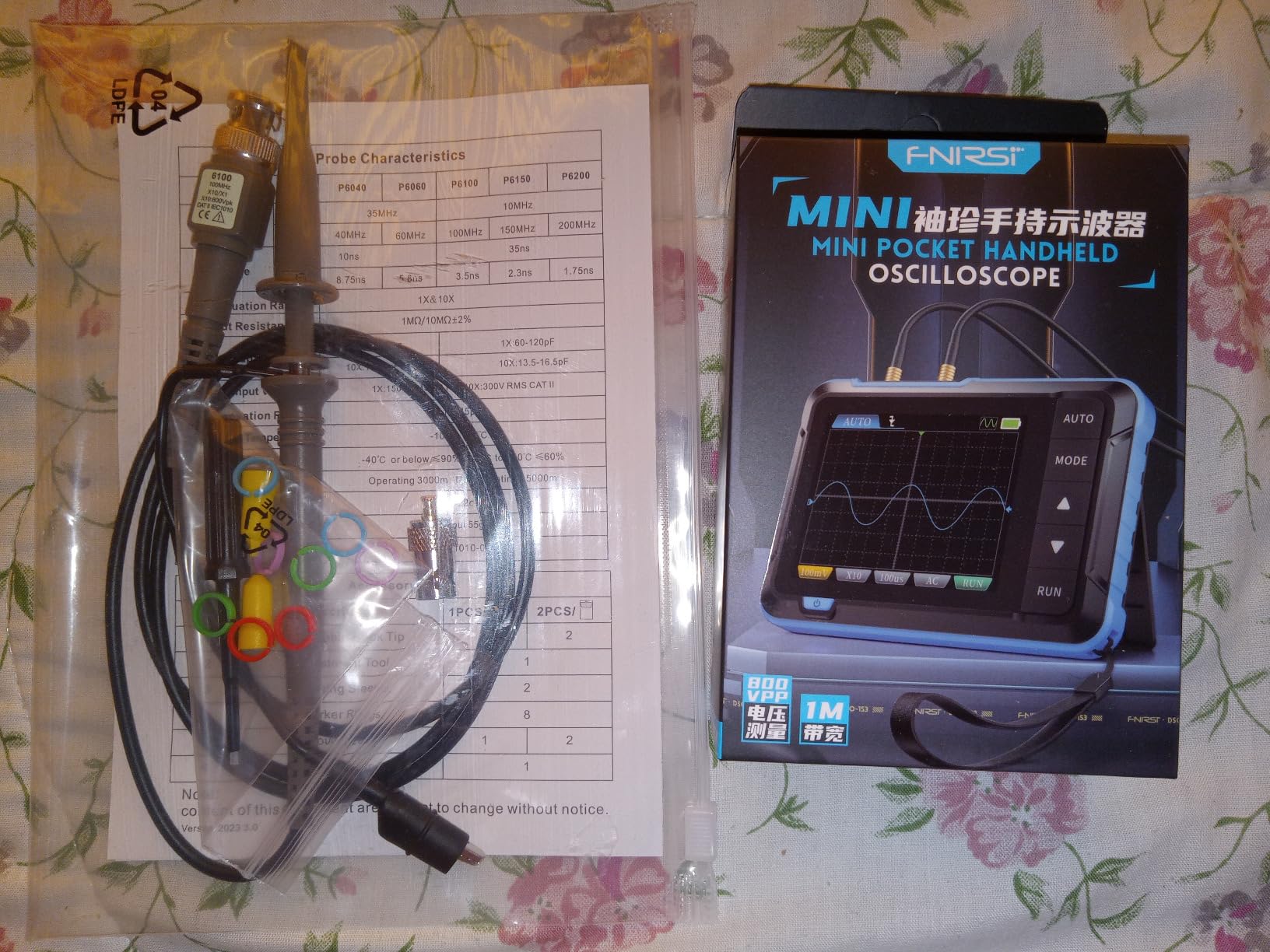
The AUTO function is the headline feature for beginners. One long press locks the baseline and sets the timebase and volts per division automatically, which means a student can probe a working Arduino PWM output and see a clean waveform within seconds. The Type-C charging with charge-while-operating support means you can run it indefinitely from a power bank during long lab sessions.
The 2.8-inch HD LCD is sharper than expected for the price. The unit is genuinely pocketable. The tradeoffs are real: it is single-channel only, the screen is small, there are no cursor or measurement functions in scope mode, and the menu switch feels cheap. For a beginner scope, none of those are deal-breakers.
For whom it’s good
The DSO153 is the right pick for high school and college students, absolute beginners in electronics, hobbyists on a tight budget, and anyone who wants a backup oscilloscope they are not afraid to drop. It is also a strong second scope for automotive diagnostics where the 1 MHz bandwidth covers most sensor signals. The price makes it easy to gift.
For whom it’s bad
If you need two channels for timing comparison, the DSO153 is the wrong tool. The signal generator cannot deliver more than about 3 V of swing, which limits op-amp testing to low-voltage circuits. There are no cursor or measurement functions in scope mode, which means you are reading values off the grid. The 11 percent one-star rating on Amazon is higher than the other models in this lineup, so reliability varies.
Handheld vs Benchtop Oscilloscope
The honest answer to whether a handheld oscilloscope can replace a bench scope is no, not entirely, but the gap is smaller than it used to be. Here is how they compare on the dimensions that matter most.
Bandwidth: A benchtop scope in the same price tier as a mid-range handheld will deliver 100 to 200 MHz with consistent performance across the full range. The best handheld oscilloscopes top out at 70 MHz for the price tier most buyers consider, with the FNIRSI DPOS350P being the exception at 350 MHz.
Display: A 7 inch or larger bench screen with dedicated knobs is faster to drive than any 2.8 to 3.5 inch handheld screen. For long debugging sessions, this matters. For quick field checks, portability wins.
Channels: Benchtop scopes routinely offer four channels at the same price as a two-channel handheld. If you need to watch three or four signals at once for parallel bus debugging, a bench scope is the better tool.
Triggering: Benchtop scopes have more sophisticated trigger systems including zone triggering, serial decode, and advanced holdoff. Handheld triggers work but are basic by comparison. EEVblog users have noted that cheap handheld triggers can wobble on noisy signals.
Portability: This is the entire reason handhelds exist. You can take a HANMATEK HO52 into an engine bay, a ceiling cavity, or a remote site. A benchtop scope sits on a desk and stays there.
Battery: Every handheld oscilloscope runs on internal batteries, typically 4 to 8 hours. Benchtop scopes need mains power, which limits their use to fixed locations.
My rule of thumb is to own both if your work demands it: a benchtop scope for design and deep debugging, and a handheld oscilloscope for field service and quick verification. If you can only buy one, the use case decides it.
Key Specs Explained: Bandwidth, Sampling Rate, Channels, and Memory Depth
Bandwidth is the single most important number on an oscilloscope spec sheet. It tells you the highest frequency signal the scope can measure accurately, defined as the frequency where the signal amplitude has dropped by 3 dB, or about 30 percent. The EEVblog community has repeatedly pointed out that real-world bandwidth often falls short of the printed number on cheap Chinese scopes. A scope rated at 50 MHz will typically be useful to about 35 to 40 MHz in practice.
For most digital work, the rule of thumb is to pick a scope with bandwidth at least five times the highest clock frequency you expect to see. A 16 MHz Arduino needs 80 MHz of scope bandwidth for clean captures, which is why the 50 MHz tier in this lineup is borderline for that specific use case. A 70 MHz Hantek 2D72 or 350 MHz FNIRSI DPOS350P is a safer pick for embedded work.
Sampling rate is the number of samples per second the scope’s ADC takes, measured in MSa/s or GSa/s. For accurate waveform reconstruction you want at least four times the signal frequency in samples per second, and ten times is better. The OWON HDS2102S and HANMATEK HO52 at 250 MSa/s comfortably capture signals up to about 25 MHz. The FNIRSI DPOS350P at 1 GSa/s handles the full 350 MHz bandwidth.
Channels matter because most real troubleshooting involves comparing two signals at once, like a clock and a data line, or an input and an output. Every model in this lineup except the FNIRSI DSO153 has at least two channels. If you ever need to debug I2C, SPI, UART, or CAN, two channels are non-negotiable.
Memory depth is the number of samples the scope can store per capture, measured in points or Kpts. Higher memory depth lets you capture longer time windows at full sample rate. The Hantek 2D72 has 6000 points which is on the low side, while the FNIRSI DPOS350P has 47 Kpts and the ZOYI ZT-703S has 128K. For long captures of slow signals, memory depth matters more than headline bandwidth.
Isolated channels are a safety feature, not a spec number, and they matter for industrial mains work. Fluke ScopeMeters and the Hantek 2D72, HANMATEK HO52, and FNIRSI DST-210 all have floating ground isolation between channels. This means you can probe mains voltage safely without shorting through the scope ground. Cheap Chinese scopes without isolation are dangerous on mains work.
How to Choose the Best Handheld Oscilloscope
Step 1: Match the bandwidth to your signals. If you work on audio and slow sensors, 10 to 50 MHz is fine. If you work on microcontrollers with clocks above 16 MHz, get at least 70 MHz. If you work on switch-mode power supplies or RF, look at 100 MHz and up.
Step 2: Decide if you need a 3-in-1 tool. If you already own a good multimeter and a bench signal generator, you can save money with a scope-only model. If you want one tool that does all three jobs, the FNIRSI 2C53T, HANMATEK HO52, Hantek 2D72, ZOYI ZT-703S, and FNIRSI DST-210 are the candidates.
Step 3: Check the safety ratings. For industrial mains work, isolated channels and a CAT III or CAT IV rating are mandatory. The Hantek 2D72 and HANMATEK HO52 both have isolated multimeter inputs. For automotive 12 V work, isolation matters less but is still nice to have.
Step 4: Look at trigger reliability. Cheap handhelds have wobbly triggers on noisy signals, which makes timing-critical captures frustrating. EEVblog users consistently recommend OWON, HANMATEK, and Siglent for trigger stability. FNIRSI and Zoyi are improving but still lag at the budget tier.
Step 5: Check battery type. Replaceable 18650 cells on the Hantek 2D72 are a long-term value win over sealed Li-ion packs. Sealed packs work fine for the first two years, then you are shopping for a new scope when the cells fade.
Step 6: Read real reviews, not spec sheets. EEVblog forum, Reddit r/AskElectronics, and Hackaday comments are the best sources for honest takes on FNIRSI, OWON, Hantek, Zoyi, and Siglent. Manufacturer spec honesty varies more than people think, and the community has flagged which brands exaggerate bandwidth.
Step 7: Budget realistically. The lowest tier gets you a usable 1 to 10 MHz scope for learning and basic troubleshooting. The mid-range tier is where most hobbyists and field technicians land. The top tier is professional territory with FFT, Bode plots, and 100 MHz plus bandwidth.
Frequently Asked Questions
What is a handheld oscilloscope?
A handheld oscilloscope is a compact, battery-powered test instrument that captures and displays voltage waveforms so you can troubleshoot circuits and signals in the field. Most modern handheld oscilloscopes also integrate a digital multimeter and a signal generator, which is why the term 3-in-1 oscilloscope is so common.
Are handheld oscilloscopes accurate?
Handheld oscilloscopes from reputable brands are accurate enough for field troubleshooting, hobbyist work, and most educational use. For timing-critical measurements above 50 MHz or for calibration-traceable work, a benchtop scope is the better tool.
What bandwidth do I need for a handheld oscilloscope?
For audio, automotive sensors, and slow digital signals, 10 to 50 MHz of bandwidth is sufficient. For microcontroller work above 16 MHz clock speed, choose at least 70 MHz. For switch-mode power supplies or RF work, 100 MHz or more is the safe choice.
Are USB oscilloscopes any good?
USB oscilloscopes are useful as a low-cost way to add a second channel or a higher-bandwidth display to a laptop, but they are not a replacement for a self-contained handheld oscilloscope when you need to work away from a computer.
What is a 3-in-1 oscilloscope?
A 3-in-1 oscilloscope combines three test instruments in one battery-powered device: an oscilloscope for waveforms, a digital multimeter for voltage current and resistance, and a DDS signal generator for injecting test signals. Popular examples include the FNIRSI 2C53T, HANMATEK HO52, Hantek 2D72, and ZOYI ZT-703S.
Can a handheld oscilloscope replace a bench oscilloscope?
A handheld oscilloscope cannot fully replace a bench oscilloscope for design work because bench scopes have bigger screens, more channels, more sophisticated triggering, and serial protocol decoding. For field service, automotive diagnostics, and quick verification, a handheld oscilloscope is the right tool and a benchtop would be impractical.
Is FNIRSI a good oscilloscope brand?
FNIRSI is a good budget oscilloscope brand that delivers strong value for hobbyists, students, and field technicians. Their higher-end models like the 2C53T and DPOS350P punch well above their price, while their entry-level DSO152 and DSO153 are genuine learning tools. For mission-critical professional work, brands like Siglent, Fluke, and Keysight remain the safer choice.
Final Verdict
The best handheld oscilloscope for most people in 2026 is the HANMATEK HO52. It delivers honest 50 MHz bandwidth, a true RMS multimeter that competes with dedicated DMMs, isolated inputs for safe mains work, and a 5-hour battery in a one-hand form factor. It is the tool I reach for first, and the one I would buy again if mine broke.
For budget buyers, the ZOYI ZT-703S delivers an excellent 25000-count multimeter and a replaceable battery at a price most beginners can justify. For feature hunters, the FNIRSI DPOS350P brings FFT spectrum analysis and Bode plots into a portable form factor that approaches benchtop capability. For students and absolute beginners, the FNIRSI DSO153 is the cheapest scope I would actually recommend.
The portable oscilloscope category has matured faster than most people realize. Brands like HANMATEK, Hantek, FNIRSI, and ZOYI have closed the gap with benchtop scopes for everyday troubleshooting, and the best part is that you can now carry a 3-in-1 instrument in a coat pocket that costs less than a used bench scope on eBay. Pick the bandwidth that matches your signals, buy isolated inputs if you ever touch mains, and do not trust the headline specs without checking EEVblog forum first.