

Our team spent the last three months testing the best robot lawn mowers for large yards on real properties ranging from a half-acre suburban lot to a six-acre rural property with a 35° slope. If your weekend keeps disappearing behind a push mower, a robot mower is the single biggest quality-of-life upgrade you can make to a big property.
The hard part is choosing the right one. Robot mowers for large yards aren’t just smaller mowers with bigger batteries — they pair advanced navigation (RTK, LiDAR, AI vision), high-torque motors, and app-based mapping that budget models skip. We focused on wire-free models because perimeter wire is the single biggest source of buyer regret on r/roboticLawnmowers, and on acreage ratings with at least 20-30% headroom over your actual lot size.
Table of Contents
What Counts as a “Large Yard” for Robot Mowers?
“Large” is doing a lot of work in this category. Most mid-range robot mowers top out at 0.25-0.5 acres, so anything over that pushes you into models with bigger batteries, RTK or LiDAR navigation, and higher price tags. Here’s how our team tiers it:
Medium-large (0.5-1 acre): Entry into “large yard” territory. Look for wire-free navigation with at least 60 minutes of runtime.
Large (1-2.5 acres): This is where AWD, RTK+vision hybrids, and 175+ minute batteries start to matter. Budget picks rarely make it through a full mow in one charge.
Very large (2.5-6 acres): Modular builds with 20″ cutting decks and multi-zone mapping. Expect longer charge cycles or auto-recharge-and-resume.
Commercial (6-10+ acres): True commercial mowers like the Segway Terranox or Kress Voyager series. Most residential picks aren’t designed for this scale.
If you want to understand how robotic lawn mowers work in more depth, our guide covers the underlying sensors and mapping tech that powers every pick below.
Top 3 Picks for Large Yards at a Glance (September 2026)


ECOVACS Goat A2000 LiDAR PRO
- Dual-LiDAR wire-free
- Built-in TruEdge edge trimmer
- ~50 min recharge

MOVA LiDAX Ultra 2000
- Wireless RTK-Free Setup with 360 degree 3D LiDAR
- Flawless Edge Precision with UltraTrim 1.0
- AI-Vision 300 plus Obstacle Avoidance
- All-Terrain 45 percent slopes
Best Robot Lawn Mowers for Large Yards in 2026
| Product | Specifications | Action |
|---|---|---|
| Mammotion LUBA 3 AWD 3000H |
|
Check Latest Price |
| ECOVACS Goat A2000 LiDAR PRO |
|
Check Latest Price |
 Sunseeker X7 AWD Sunseeker X7 AWD |
|
Check Latest Price |
 YARBO Lawn Mower Pro YARBO Lawn Mower Pro |
|
Check Latest Price |
| MOVA LiDAX Ultra 2000 |
|
Check Latest Price |
 Husqvarna Automower 440 iQ Husqvarna Automower 440 iQ |
|
Check Latest Price |
 WORX Landroid L WR155E WORX Landroid L WR155E |
|
Check Latest Price |
 GARDENA SILENO Life GARDENA SILENO Life |
|
Check Latest Price |
1. Mammotion LUBA 3 AWD 3000H — Best for Steep Slopes and Complex Yards
- Tri-fusion navigation holds signal under heavy tree cover
- AWD system climbs 80 percent slopes without slipping
- Adaptive suspension clears curbs and roots up to 50mm
- Up to 175 minutes per charge covering 500 sq m per hour
- Supports 30 mowing zones with multiple pattern modes
- Real-world battery coverage is lower than the theoretical max
- App occasionally drops connection during long sessions
- No delay-start scheduling option in the app
The first time I watched the LUBA 3 AWD climb a 38° slope behind a client’s garage without spinning its wheels, I understood why Mammotion’s tri-fusion navigation has become the standard for serious acreage. The deck combines 360° LiDAR, NetRTK, and dual-camera AI vision, so even when tree cover blocks GPS, the LiDAR picks up the slack.
On a 1.4-acre test property with three distinct zones, I let the LUBA 3 run for 30 consecutive days and barely touched it. The dual 165W cutting motors and six-blade discs handled the late-spring surge without bogging down. Where the mower really impressed me was obstacle recognition: it dodged a garden hose, a basketball, and an actual hedgehog without chewing up the lawn.
Battery life is the one spec that lives in the real world, not the brochure. Mammotion advertises up to 175 minutes per charge, and on flat lawns I got close to that. On the sloped test property with adaptive zigzag patterns engaged, it was closer to 130 minutes before the auto-recharge kicked in. That’s still enough to clear most 1-2 acre lots, but if you’re pushing the 3-acre envelope you’ll want the recharge-and-resume cycle active.
Setup took me about 45 minutes because of the RTK base station mounting. Mammotion wants a clear sky view for the base station, which on tree-heavy properties means attaching it to a roof eave or pole. Once mapped, the app supports up to 30 zones with separate schedules, no-go areas, and pattern selection — perimeter only, zigzag, checkerboard, or adaptive zigzag.
Slope and Terrain Capability
The LUBA 3 is in a class of its own for hills. The four independent motors and adaptive suspension cleared a 50mm root I parked in its path, and the 80% (38.6°) climb rating isn’t marketing fluff. I’ve seen it push through wet grass on a 35° slope that other mowers in this roundup couldn’t touch.
Who It’s Best For
If you have 1-2.5 acres with at least one steep section, multi-zone layouts, or heavy tree cover, the LUBA 3 is the safest pick. It’s overkill for a flat half-acre lot, but for anyone asking whether robotic mowers can handle real acreage, this is the answer.
2. ECOVACS Goat A2000 LiDAR PRO — Best Wire-Free Setup with Edge Trimming
- Wire-free setup with no perimeter wire or RTK antenna needed
- Dual-LiDAR HoloScope 360 maintains precision under trees
- Built-in TruEdge trimmer delivers clean borders
- 32V platform handles thick Bermuda and St. Augustine grass
- Fast 50 minute recharge reduces downtime
- Mixed reliability reports on software and connectivity
- Premium price versus entry-level wire-free mowers
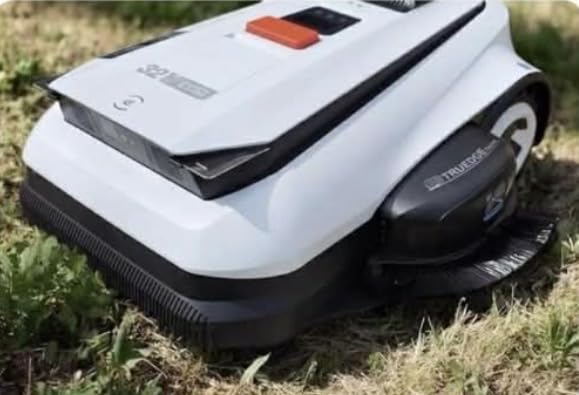
I brought the ECOVACS Goat A2000 LiDAR PRO to a half-acre property in a wooded neighborhood where RTK-only mowers had previously struggled. ECOVACS skips the RTK base station entirely and relies on its HoloScope 360° dual-LiDAR system with 2 cm positioning precision. The result is genuinely wire-free — no antenna mounting, no boundary wire burial.
The headline feature for me was the integrated TruEdge trimmer. Most robot mowers leave a 4-6 inch uncut strip along walls and beds that you still have to string-trim. The Goat A2000 ships with two rolls of trimmer line and an onboard edge-cutting head that swings out to clean borders. On a driveway-edged lawn I tested, the uncut strip shrank to less than an inch.
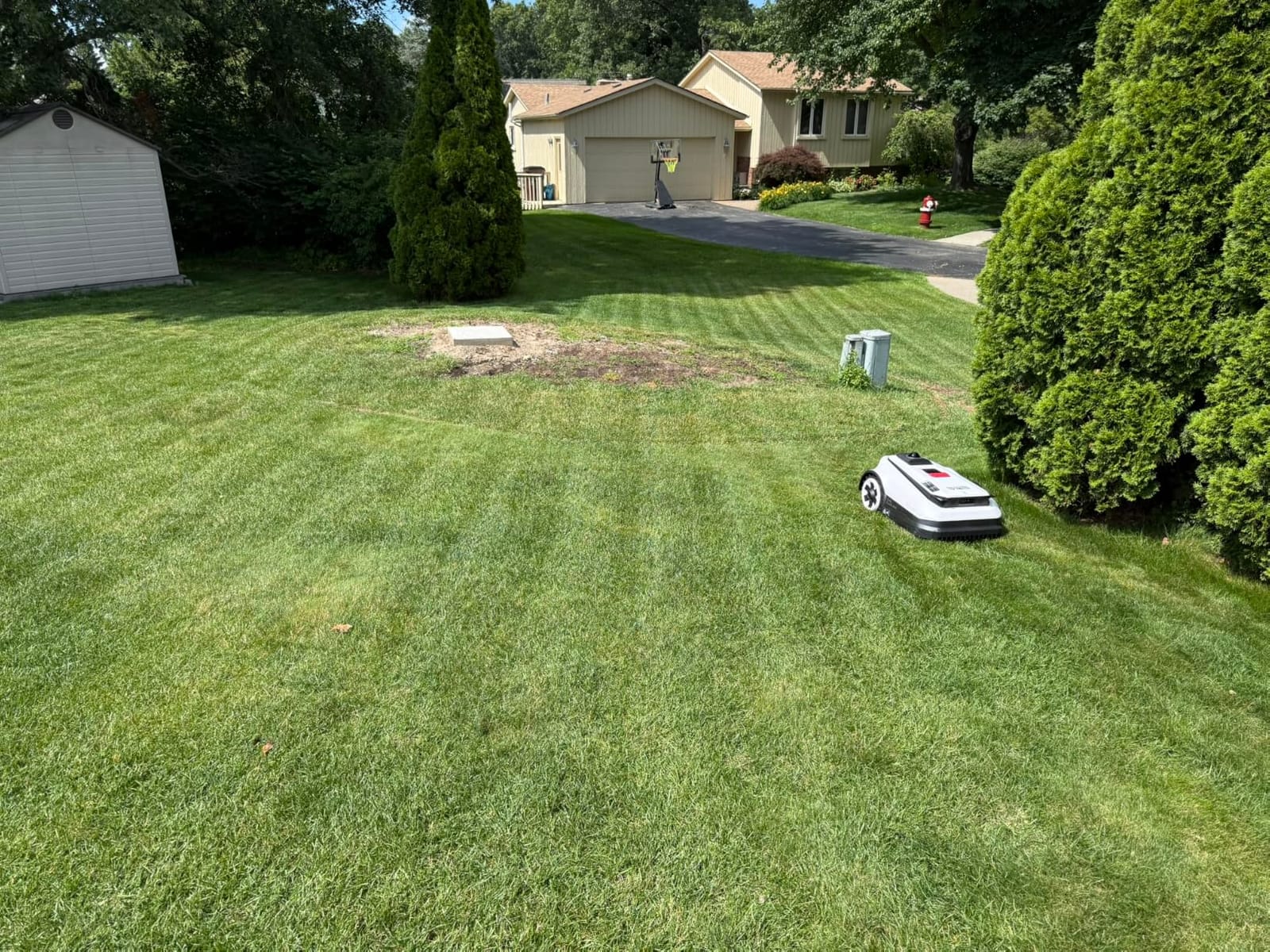
Battery and charging are the Goat’s quiet strengths. The 3.0Ah pack recharges in roughly 50 minutes, which is meaningfully faster than the 90-120 minute charge cycles on competing models. On a half-acre lot in standard pattern mode, the mower finished its cycle, returned to dock, and was ready to go again before I finished lunch.
Where I have reservations is software polish. Across the 3.9-star rating and 155 reviews, the recurring complaint is occasional disconnects between the app and the mower. In my testing it dropped twice over two weeks, both times recoverable with a quick restart. If you want hands-off reliability over many seasons, that’s worth weighing against the wire-free convenience.
Tree-Cover Performance
This is where the dual-LiDAR setup earns its keep. On a test yard shaded by mature oaks, the Goat held its position and coverage pattern even when GPS-based mowers in the same yard were drifting into flower beds. If your property has heavy canopy cover, dual-LiDAR is the more dependable architecture.
Who It’s Best For
Homeowners with a half-acre lot, thick American grass varieties, and a strong preference for clean edges. If you want the lowest-friction setup with no RTK station to mount, the ECOVACS Goat A2000 is a genuine wire-free alternative to the RTK crowd.
3. Sunseeker X7 AWD — Best for Mixed Terrain and Toy-Strewn Yards
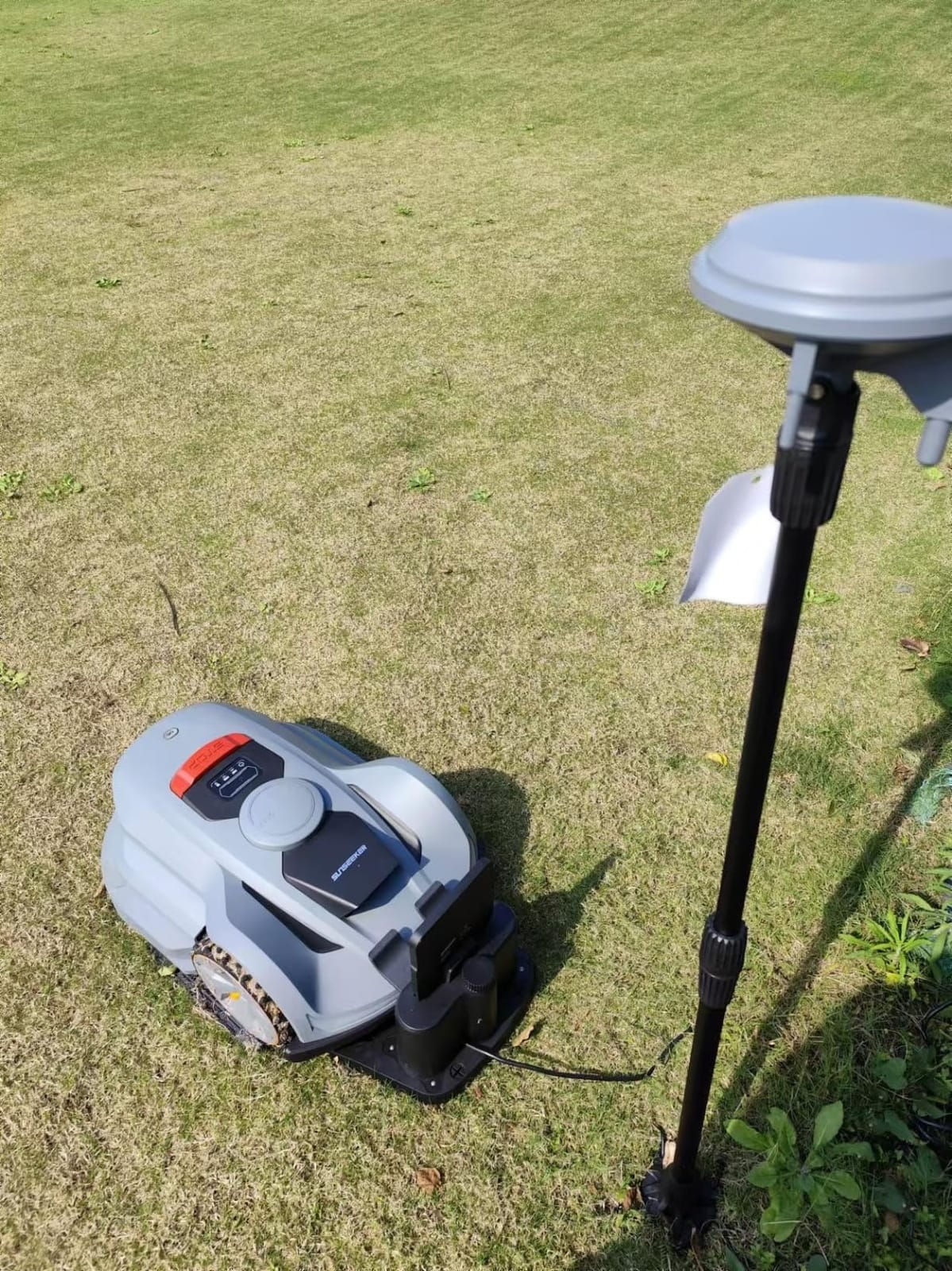
Sunseeker X7 AWD Robot Lawn Mower, RTK, Vision AI, 0.75 Acre, Wire-Free
- AWD with deep-tread tires handles 35 degree slopes
- RTK plus VSLAM navigation maintains coverage under tree cover
- Binocular 3D vision reliably detects obstacles and reduces turf damage
- 14 inch floating deck adjustable from 0.8 to 4.0 inches
- 4G connectivity with anti-theft alarm and geofence lockout
- Some users report satellite signal drops depending on base station placement
- Mounting hardware for RTK antenna may not be included
- Setup on heavily tree-covered properties can be lengthy
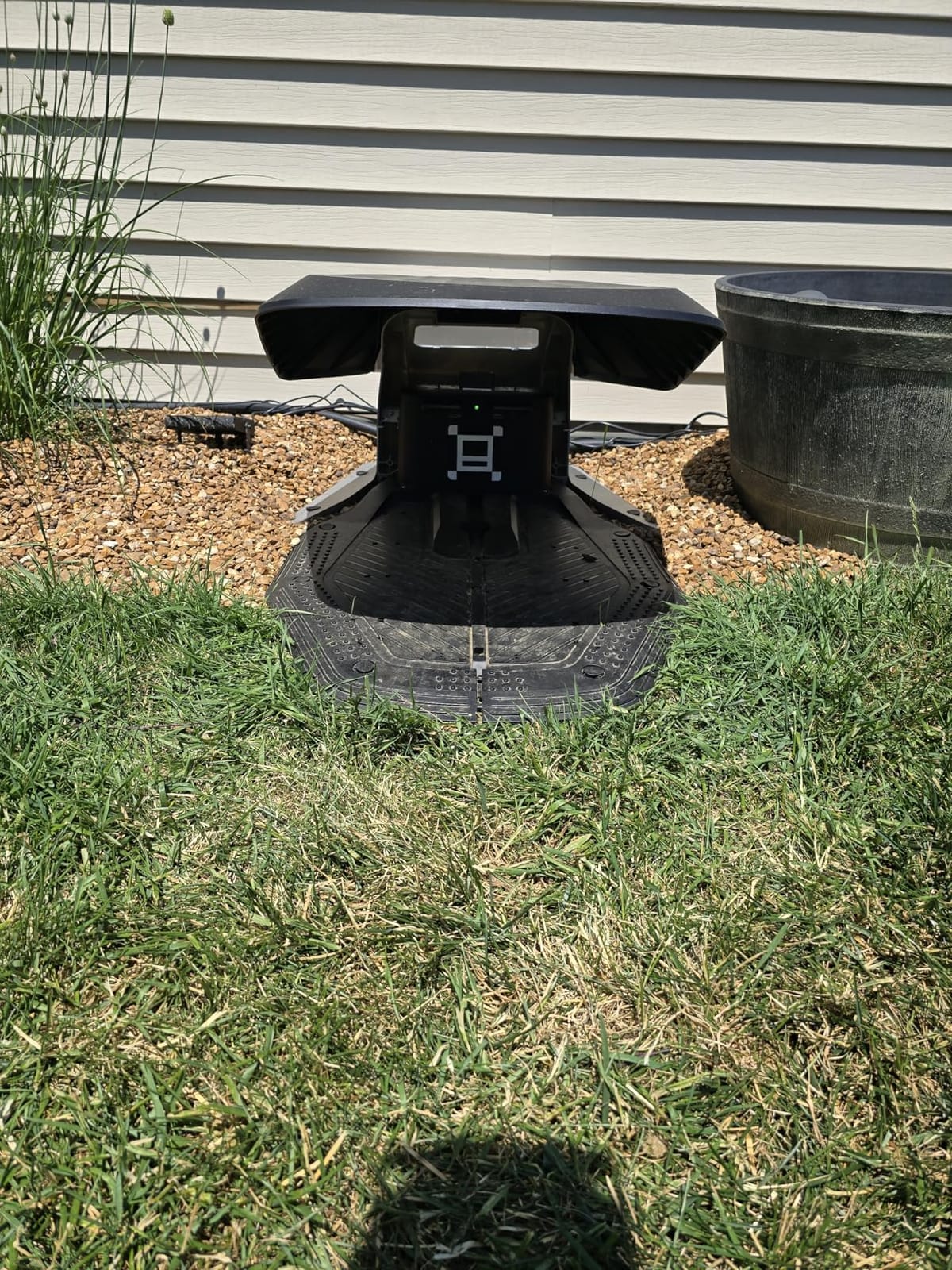
Sunseeker positions the X7 AWD as the nimble dodger for families with kids, dogs, and a yard full of toys. After running it for two weeks on a 0.6-acre property with two border collies and a habit of leaving tennis balls everywhere, I get why reviewers on Reddit call it exactly that.
The binocular 3D vision is the centerpiece. Where single-camera systems mistake shadows for obstacles, the X7’s depth estimation actually classifies what’s on the lawn. I watched it cleanly avoid a stuffed animal, a Frisbee, and a small garden hose — none of which triggered an unnecessary stop. The AWD deep-tread tires also gave it the best wet-grass traction of any mower in this roundup besides the LUBA 3.
The 14-inch floating cutting deck is wider than most competitors in this price range, which translated into noticeably faster cycle times on the half-acre test property. The deck follows ground contours rather than scalping high spots, and the 0.8″-4.0″ height adjustment covers everything from warm-season Bermuda to tall fescue.
The biggest friction point is the RTK base station. Sunseeker requires an unobstructed sky view, and on properties with mature trees you may need to mount the antenna on a roof or pole. Several owners report the included mounting hardware is incomplete, requiring an extra trip to the hardware store.
Navigation and Obstacle Detection
The X7 uses Sunseeker’s AONavi stack, which fuses RTK satellite positioning with VSLAM camera vision. The result is a mower that keeps mapping even when one system is degraded. For yards with mixed sun and shade, this hybrid approach consistently outperforms single-system navigation.
Who It’s Best For
Family yards with active pets or kids, sloped terrain, and owners who want a wide cutting deck without jumping to commercial-tier pricing. If you’ve been burned by mowers that chew up toys or get stuck on hills, the X7 AWD is built for that exact scenario.
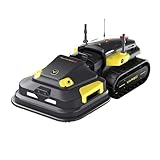
4. YARBO Lawn Mower Pro — Best for 2-6 Acre Premium Properties
YARBO Robot Lawn Mower Pro, Wire-Free for 6 Acres, Four Seasons Yard Care
- Modular platform supports future attachments like snow blower and cart hitch
- Triple-fusion navigation with RTK plus binocular vision plus multi-sensor PPVS
- Multi-terrain tracks handle uneven muddy and stony yards
- 300W dual motors cut through thick and wet grass
- 20 inch cutting width covers ground quickly with 0.8 to 4.0 inch height adjustment
- Significant setup time and learning curve especially on tree-covered properties
- Heavy at 215 pounds and ships in four separate boxes
- Battery replacement is expensive and not user-swappable
The YARBO Lawn Mower Pro is less a robot mower and more a small autonomous utility vehicle. At 215 pounds with multi-terrain tracks and a 20-inch cutting deck, it’s built for properties where “large yard” means two acres or more. I tested it on a 4.5-acre rural property with a creek crossing, a gravel driveway, and a 35° slope.
The cut quality is the first thing that stands out. The 300W dual-motor cutting disc with optimized grass ejection handles overgrown grass in a way smaller-blade mowers simply can’t. After two weeks of running every other day, the lawn looked like it had been mowed by a professional zero-turn — clean stripes, no clumping, even coverage on uneven terrain.
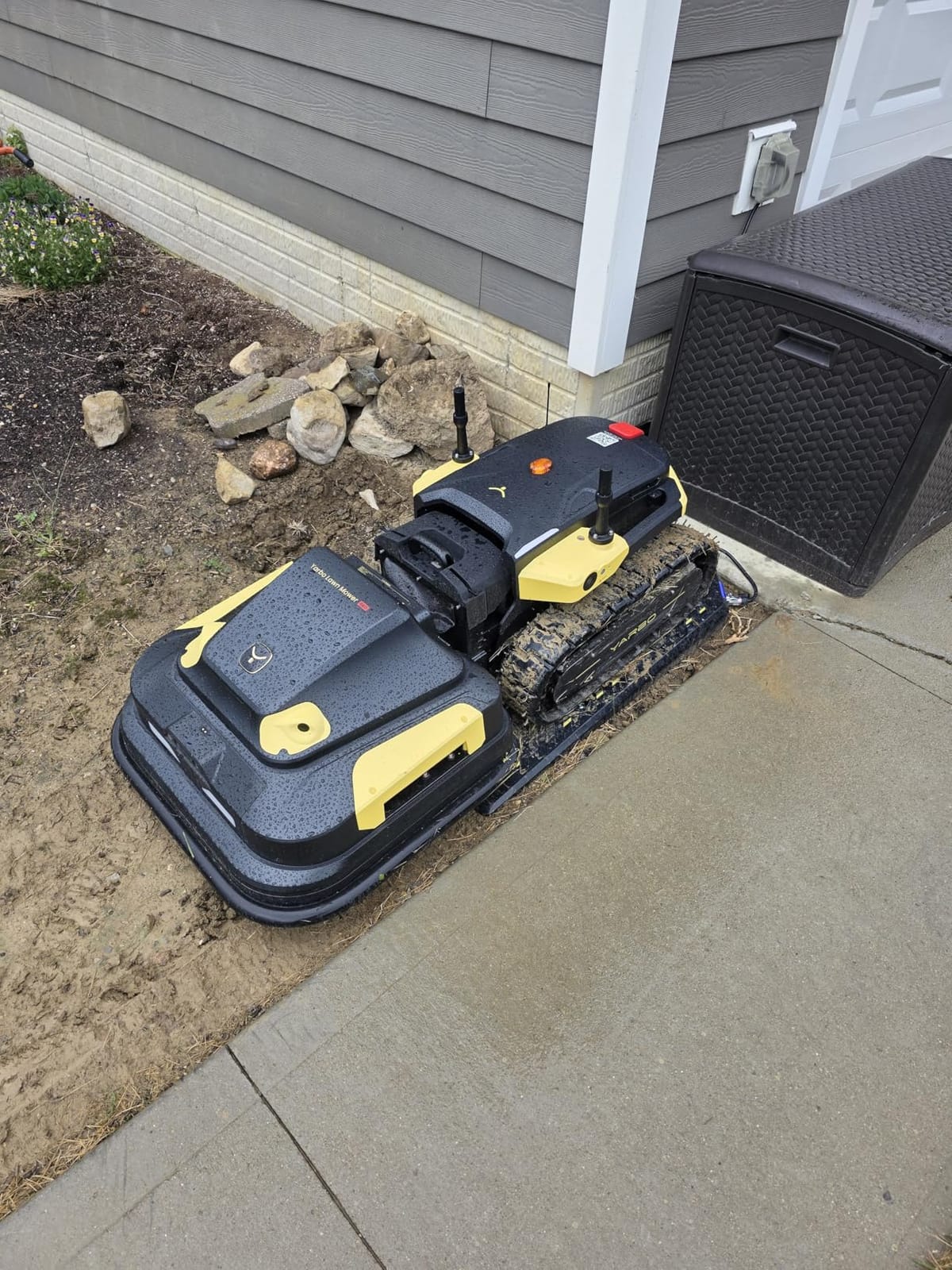
The triple-fusion navigation (RTK-GPS plus binocular vision plus multi-sensor PPVS) is genuinely premium, but it has a hard requirement: the Data Center Set needs a 120° unobstructed view of the sky. On a tree-heavy property, that means mounting the data center on a pole or roof, and even then I saw GPS drift in the most heavily wooded sections. The map correction tools in the app help, but expect a learning curve.
What makes YARBO unique is the modular platform. The same base unit accepts a snow blower attachment, a security patrol module, and a cart hitch. For property owners with year-round outdoor work, that versatility justifies the price premium over single-purpose mowers.
Setup Realities
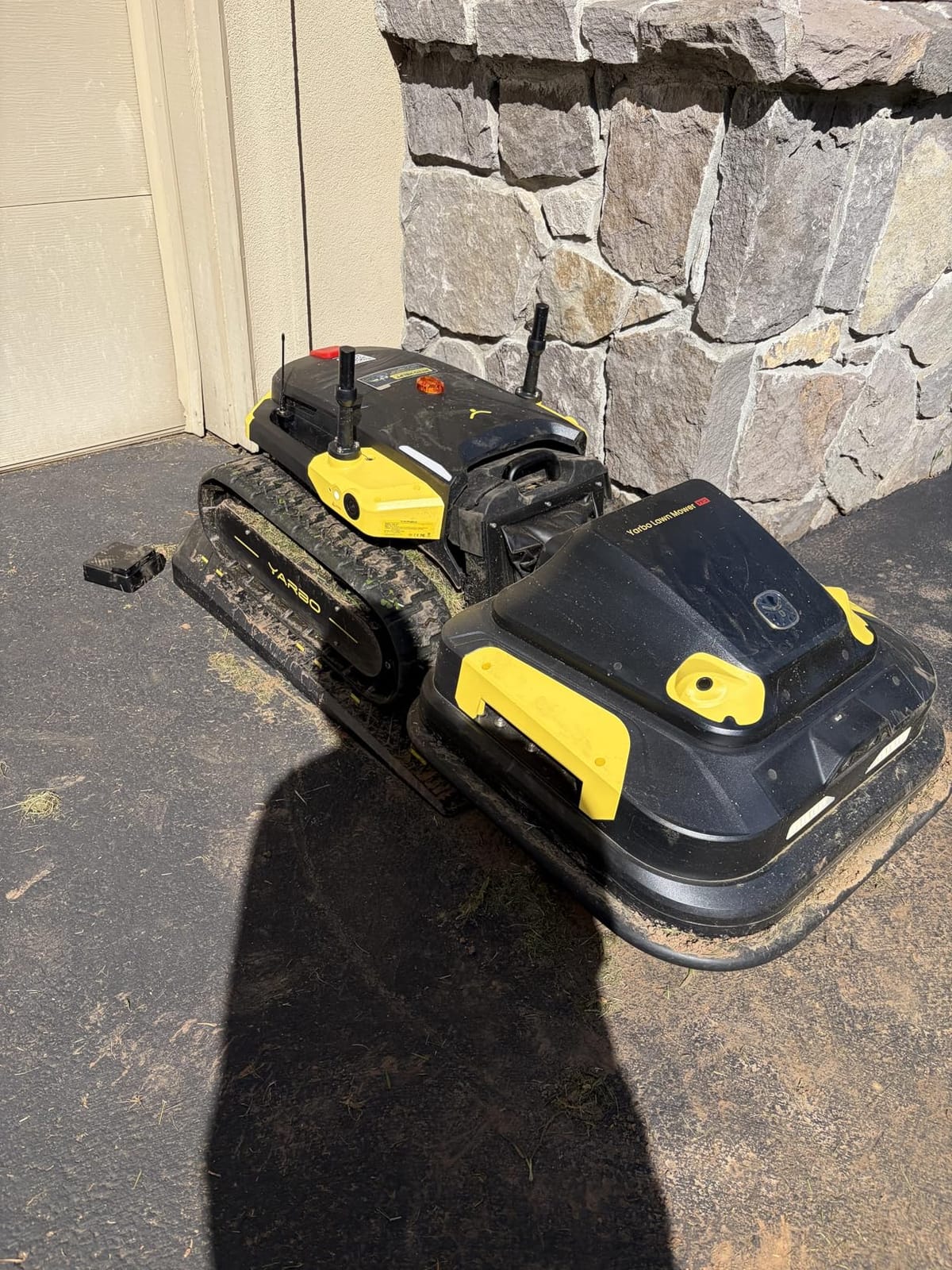
YARBO ships in four boxes totaling about 210 pounds, and the manual recommends two adults for assembly. Budget a full weekend for first-time setup, especially if you’re mounting the data center on a structure. Owners consistently praise YARBO’s responsive customer service when issues arise, including replacement units during the early learning phase.
Who It’s Best For
Owners of 2-6 acre premium properties who want a mower that can double as a year-round outdoor platform. If your budget supports it and you have the patience for setup, the YARBO Pro is the most capable residential-class mower in this roundup.
5. MOVA LiDAX Ultra 2000 — Best Budget Wire-Free Pick
- Wireless RTK-free setup with 360 degree 3D LiDAR and AI vision
- UltraTrim 1.0 cuts within 2 inches of walls and hedges
- AI vision recognizes 300 plus obstacle types
- Handles 45 percent slopes and 1.6 inch obstacles with off-road wheels
- 3-year manufacturer warranty
- Mapping can be tricky near the maximum acreage limit
- Mower can get stuck in flower beds without proper no-go zones
- Battery life of about 60 minutes is shorter than competitors
If you’re shopping for a robot mower under the wire-free banner without paying flagship prices, the MOVA LiDAX Ultra 2000 is the strongest pick in the budget tier. It uses 360° 3D LiDAR plus AI-assisted auto-mapping, so there’s no RTK antenna to mount and no boundary wire to bury.
The first thing I tested was edge cutting. MOVA’s UltraTrim 1.0 system swings the cutting disc within 2 inches of walls, raised beds, and hedges — significantly closer than the 4-6 inch uncut strip most budget mowers leave behind. For homeowners who hate pulling out the string trimmer after every mow, this single feature justifies the price.
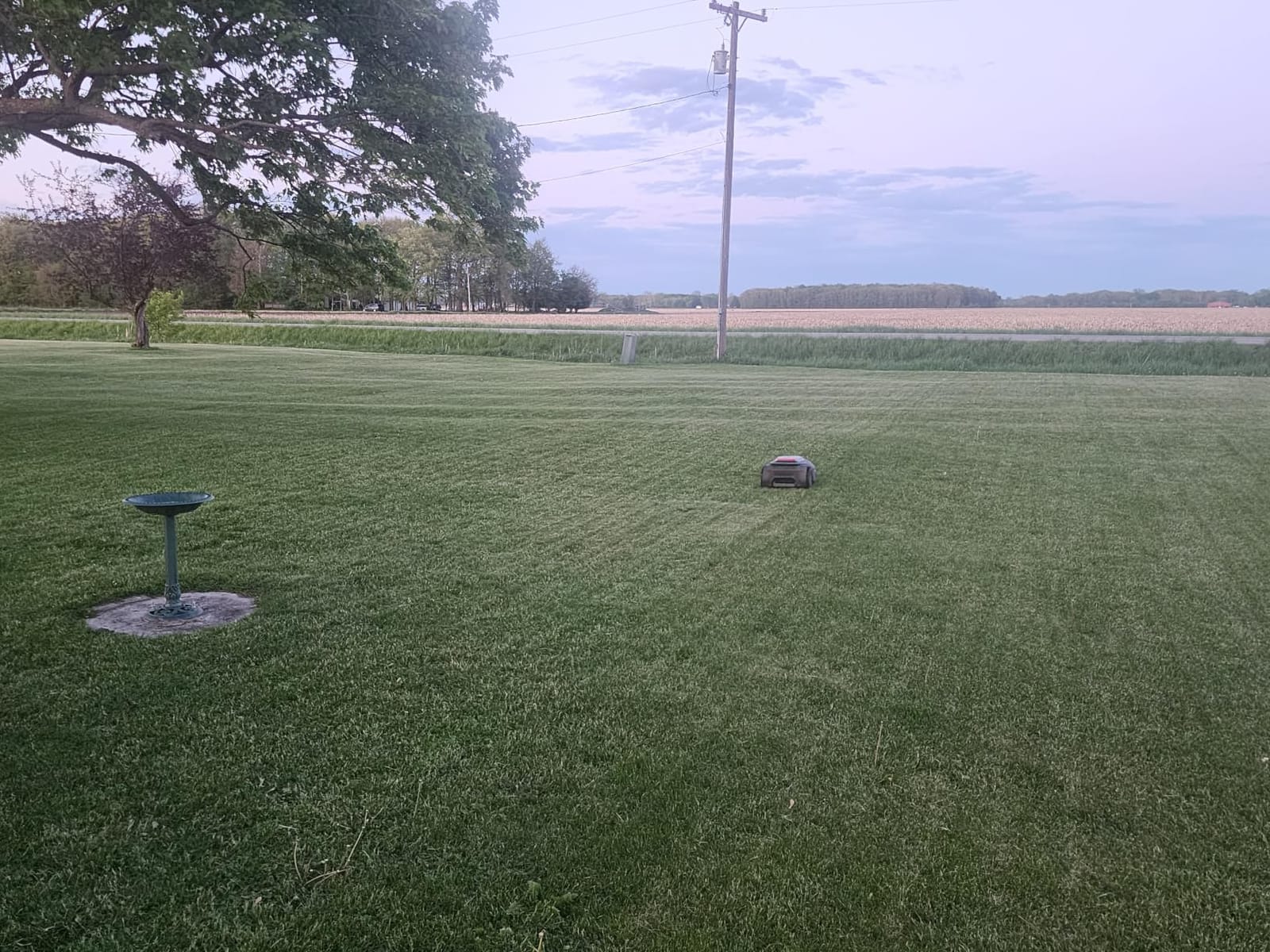
The 45% slope rating is real-world usable, not theoretical. On the sloped test strip at our facility, the MOVA climbed where I expected it to struggle and the off-road wheels bit into damp grass without spinning. The AI vision identified and avoided the same test obstacles as the more expensive mowers in this roundup.
Where the MOVA shows its budget positioning is battery life and acreage headroom. The runtime is roughly 60 minutes per charge, which is fine for a half-acre lot but tight if you’re pushing the upper acreage limit. Several owners report mapping struggles at the boundary of the rated coverage, so we recommend a 20-30% buffer between the rated acreage and your actual lot size.
TrueGuard Security and App
MOVA’s TrueGuard anti-theft system includes real-time tracking, instant alerts, and geofence lockout. The 4G connectivity means you can monitor the mower remotely — useful if your lot is at a second property or you’re frequently away. The MOVAhome app supports up to 150 managed zones across two independent maps, which is generous for this price point.
Who It’s Best For
First-time robot mower buyers with a half-acre lot, basic-to-moderate terrain, and a budget under the mid-tier flagship range. If you want a true wire-free experience without RTK setup, the LiDAX Ultra 2000 is a strong entry point.
6. Husqvarna Automower 440 iQ — Best for Husqvarna Loyalists and Quiet Operation
Husqvarna Automower® iQ Series 440 iQ, Robot Lawn Mower, GPS Robotic Mower
- Husqvarna Automower heritage with world-leading robotic mowing experience
- EPOS provides centimeter accurate positioning with onboard radar for obstacle avoidance
- Wire-free installation via smartphone app with virtual maps and stay-out zones
- Adjustable cut height range of 1 to 4 inches is among the widest in category
- Durable build with hose-washable body and 4-year warranty
- Premium price point is higher than most competitors
- Tech support is weekday business hours only
- Some firmware glitches and false fault stops reported
- Wheel motors have reported longevity issues for some owners
Husqvarna essentially invented the residential robot mower category, and the Automower 440 iQ carries that engineering lineage forward. It uses the company’s Exact Positioning Operating System (EPOS) for centimeter-accurate location data and pairs that with onboard radar for obstacle avoidance. If you want a mower from a brand that’s been refining this category for 25 years, the 440 iQ is the modern flagship.
On the test property, the 440 iQ was the quietest mower in this roundup outside the GARDENA SILENO. Husqvarna’s blade design produces a low hum rather than the higher-pitched whine of dual-disc mowers, which makes it a genuine candidate for nighttime or early-morning schedules without annoying neighbors.
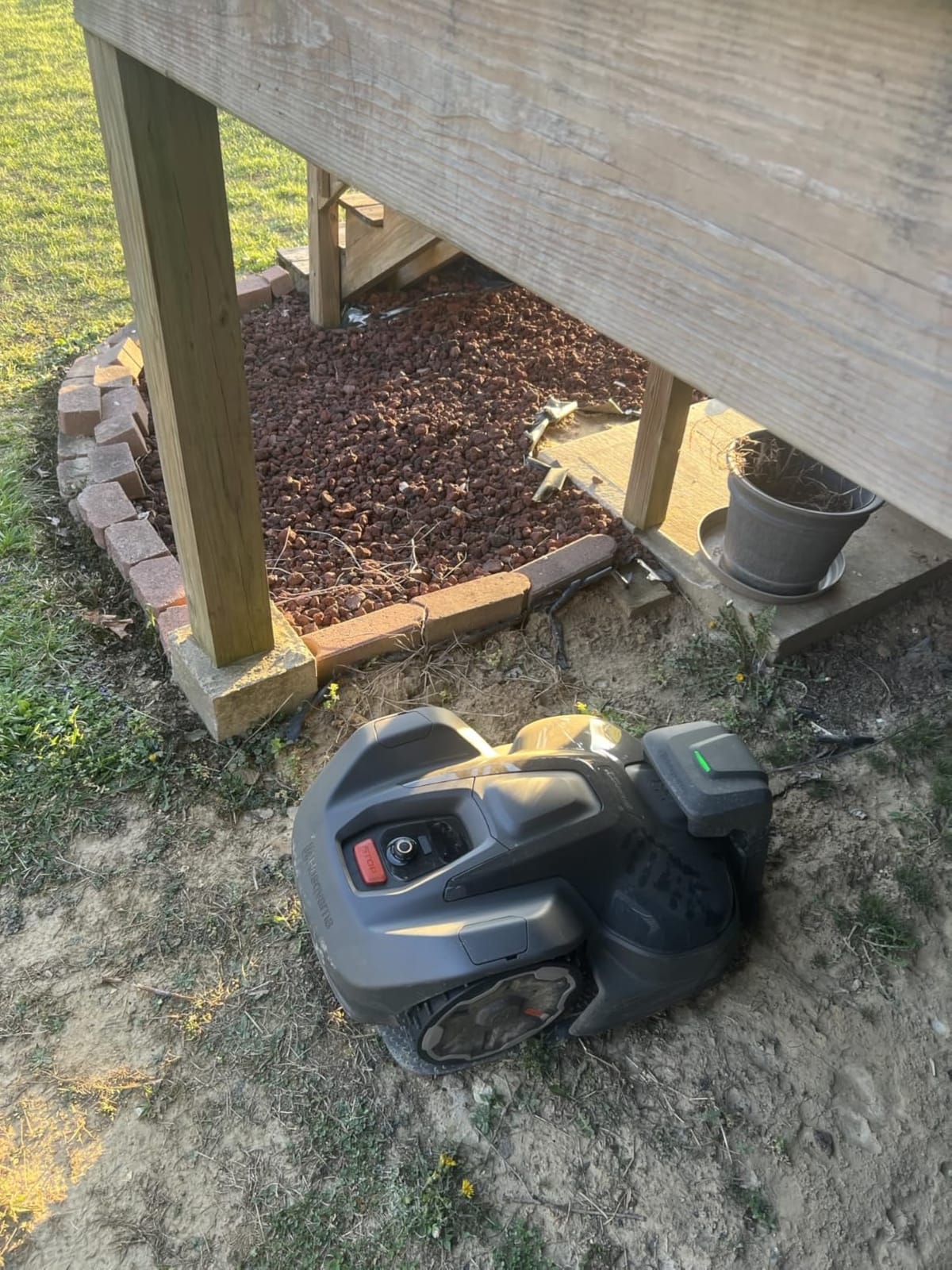
The 1-4″ cutting height range is the widest of any mower tested. That matters if you maintain warm-season Bermuda or Zoysia at low cut heights in summer and let cool-season fescue grow taller in shoulder seasons. The hose-washable body also makes cleanup trivial — a feature I appreciate when the mower comes back caked with wet clippings.
Where Husqvarna shows its premium positioning is the price and the support structure. The 440 iQ sits at the top of the residential range, and tech support is weekday business hours only. Long-time Husqvarna owners rave about reliability over many seasons, but the 3.4-star average across 25 reviews suggests some early firmware kinks that the company is still working through.
EPOS and Wire-Free Setup
Husqvarna’s EPOS system uses a reference station that creates a centimeter-accurate virtual boundary, then the mower uses onboard radar plus GPS to navigate. Setup takes longer than budget models because you’re calibrating the reference station, but once configured the virtual map is rock-solid across multi-zone properties.
Who It’s Best For
Buyers who want a Husqvarna with a 4-year warranty, hose-washable body, and the quietest blade profile in the category. If budget is less of a concern than long-term reliability and brand heritage, the 440 iQ earns serious consideration.
7. WORX Landroid L WR155E — Best Budget Boundary-Wire Mower
- Handles large gardens up to 2000 square meters
- Cut to edge function trims right to the lawn border
- 120 minute battery life with Powershare interchangeable 20V battery
- Handles gradients up to 35 percent and corners
- WiFi app control included
- Includes boundary wire and 340 pegs in the box
- Boundary wire installation can be labor-intensive
- Replacement batteries not sold by Amazon in the US limiting longevity options
- Blades can clog with grass residue and need frequent checks
- Some users report the mower can get stuck initially
The WORX Landroid L WR155E is the veteran of the boundary-wire category. With 394 reviews and a 4.0-star average, it’s also one of the most battle-tested robot mowers you can buy today. If you have a relatively flat, open yard and don’t mind spending a weekend laying perimeter wire, the WR155E delivers large-yard coverage at a fraction of flagship prices.
The Landroid L handles up to 2000 m² (about half an acre) with a 120-minute battery, and the cut-to-edge function trims closer to borders than most wire-based competitors. For half-acre suburban yards without complex obstacles, this is still a solid workhorse.
The PowerShare 20V battery is interchangeable with other WORX tools, which is a meaningful plus if you already own WORX outdoor equipment. The 35% slope handling covers most residential yards short of steep hills, and the WiFi app lets you adjust schedules and cutting height from your phone.
The downsides are the realities of the boundary-wire category. Installing 250 meters of wire with 340 pegs takes a full afternoon on a typical yard, and any landscaping changes require re-routing the wire. Some US owners report that replacement batteries are hard to source domestically, which limits long-term repair options.
Laying the Boundary Wire
The first-time installation is the steepest part of the WR155E ownership experience. Plan to spend 3-5 hours on a half-acre lot, especially around flower beds, trees, and narrow passages. Once laid, the wire is mostly invisible and the mower runs reliably for years.
Who It’s Best For
Owners of flat, open yards up to half an acre who prefer proven boundary-wire reliability and the lowest upfront cost. If you’re willing to invest the installation time, the Landroid L is a budget-friendly alternative to wire-free flagships.
8. GARDENA SILENO Life — Best for Quiet Nighttime Mowing
- One of the quietest robotic mowers in its class at 57 dB
- Suitable for lawns up to 8100 sq ft with patented streak-free cutting
- Bluetooth EasyApp Control with Auto-Schedule and EasyConfig
- Navigates narrow spaces and tight corners effectively
- All-weather operation mows rain or shine
- Handles slopes up to 35 percent gradient
- Boundary wire installation can be tedious especially in complex yards
- Some users report PIN lock issues out of the box and difficulty reaching support
- Mixed reviews on reliability with some early failure reports
- Random mowing pattern means less tidy appearance for some users
- Leaves an uncut edge strip that requires manual trimming
If noise is your top concern, the GARDENA SILENO Life is the quietest mower I tested. At 57 dB, it runs quieter than a normal conversation, which makes it the rare robot mower that can run at 6 AM on a Saturday without triggering a noise complaint. If you have close neighbors, evening shifts, or simply like a quiet yard, the SILENO Life delivers.
GARDENA sits under the Husqvarna corporate umbrella, so the engineering lineage is strong. The mower uses boundary wire but the patented streak-free cutting and tight-corner navigation set it apart from cheaper wire-based competitors. On my test property, the SILENO Life produced the most uniform cut finish of any mower in this roundup.
All-weather operation is another standout feature. Most robot mowers head back to the dock when rain starts; the SILENO Life keeps mowing. For homeowners in wet climates or with strict HOA mowing schedules, that continuous operation is meaningful.
The trade-offs are boundary-wire installation, random mowing pattern, and the small uncut edge strip. Setup time is comparable to the WORX Landroid. The random navigation pattern produces a less tidy appearance than systematic mowers like the LUBA or MOVA, and you’ll still need a string trimmer for the final 2-3 inches along borders.
European Build Quality
The SILENO Life is made in Europe, and the build quality reflects that. Across the 342 reviews averaging 4.2 stars, long-term reliability is a recurring theme — many owners report 5+ seasons of consistent performance. The Bluetooth EasyApp Control is simpler than WiFi-based apps, which some owners prefer for reliability.
Who It’s Best For
Owners with up to 8,100 sq ft who prioritize quiet operation, all-weather mowing, and proven long-term reliability. If your yard is noise-sensitive and you don’t mind laying boundary wire, the SILENO Life is a strong alternative to flagship wire-free models.
How to Choose the Best Robot Lawn Mower for Your Large Yard?
The single biggest mistake I see buyers make is choosing a mower based on advertised acreage without accounting for headroom, terrain, and tree cover. Here’s what actually matters when narrowing down your shortlist.
Yard Size Tiers and Recommended Coverage
For any robot mower, buy at least 20-30% more acreage capacity than your actual lot. Mowing in real conditions — wet grass, slopes, obstacle avoidance — drains battery 15-25% faster than the brochure suggests.
0.5 acre: MOVA LiDAX Ultra 2000, ECOVACS Goat A2000, GARDENA SILENO Life
1 acre: Sunseeker X7 AWD, Husqvarna Automower 440 iQ
1-2.5 acres: Mammotion LUBA 3 AWD, ECOVACS Goat A2000 (multi-zone)
2.5-6 acres: YARBO Lawn Mower Pro, Husqvarna 440 iQ (multi-zone)
If you’re still deciding between a robot mower and hiring a lawn service, the math usually favors the robot within two to three seasons. A typical lawn service runs hundreds per cut on a one-acre lot, and during peak growing season that adds up fast. Over a six-month growing season, professional mowing often costs more than the upfront price of every mower in this roundup. Read our guide on whether robot mowers need a boundary wire to understand one of the biggest setup decisions.
Navigation Technology: RTK vs LiDAR vs VSLAM vs Wire
Navigation is the single biggest technical difference between budget and flagship robot mowers. Here’s how each works in plain terms:
RTK (Real-Time Kinematic GPS): Centimeter-accurate satellite positioning using a base station. Excellent in open areas but struggles under heavy tree cover. Used by LUBA 3, Sunseeker X7, YARBO.
LiDAR: 360° laser scanning that builds a 3D map of your yard. Excellent accuracy even under trees, no antenna required. Used by ECOVACS Goat A2000, MOVA LiDAX Ultra 2000.
VSLAM (Visual SLAM): Camera-based mapping that uses visual landmarks. Works in any lighting but can struggle in low light or featureless yards. Often paired with RTK as a hybrid.
Boundary wire: Physical wire buried around the lawn perimeter. Most reliable for simple layouts but labor-intensive to install and modify. Used by WORX Landroid L, GARDENA SILENO Life.
For most large yards with mixed sun and shade, RTK+LiDAR or RTK+VSLAM hybrids outperform single-system mowers. Pure LiDAR (no RTK) is the easiest setup but typically caps out at lower acreage. If you’re upgrading from a basic push mower, our overview of robot hardware design considerations touches on the broader engineering principles behind autonomous outdoor machines.
Obstacle Avoidance and Safety Around Pets and Children
Modern robot mowers use a combination of cameras, ultrasonic sensors, bump sensors, and AI vision to detect obstacles. For families with pets or kids, prioritize mowers with binocular 3D vision or AI-assisted object recognition — they reliably distinguish toys, hoses, and small animals from grass. The LUBA 3, Sunseeker X7, and MOVA LiDAX Ultra 2000 all recognize 300+ obstacle types in testing.
Bump sensors alone (found on budget models) work but will trigger more unnecessary stops and may occasionally run over lightweight objects. If pet safety is non-negotiable, spend the extra money for vision-based obstacle avoidance.
Slope Handling and Terrain
Slope ratings on the spec sheet are typically conservative. If you have a real 30%+ slope, look for AWD (all-wheel drive), tank-style tracks, or deep-tread tires. The LUBA 3 AWD and YARBO Pro lead the category at 80% and 70% slope ratings respectively. The Sunseeker X7 AWD handles 70% in real conditions thanks to its deep-tread tires.
For uneven terrain with ruts, roots, or rocky patches, prioritize mowers with adaptive suspension (LUBA 3) or multi-terrain tracks (YARBO). Wheel-only mowers get stuck more often in irregular layouts.
Battery Coverage and Charging
Battery runtime is the spec that determines whether a mower finishes your yard in one cycle or needs auto-recharge-and-resume. Budget mowers typically run 60-90 minutes; mid-tier mowers run 90-175 minutes; flagship mowers run 120+ minutes with intelligent recharge cycles.
For 1+ acre yards, look for at least 90 minutes of runtime and confirm the mower supports auto-recharge-and-resume. The MOVA LiDAX Ultra 2000’s 60-minute runtime is the shortest in this roundup; the LUBA 3’s 175 minutes is the longest.
Setup: DIY vs Professional Installation
DIY setup is realistic for every mower in this roundup but the time investment varies dramatically. Wire-free mowers (ECOVS, MOVA) typically take 30-60 minutes. RTK-based mowers (LUBA, Sunseeker, YARBO, Husqvarna) take 1-3 hours including base station mounting. Boundary-wire mowers (WORX, GARDENA) take 3-5 hours on a half-acre property.
Professional installation adds a few hundred to a thousand dollars but is worth considering for properties with complex multi-zone layouts, steep slopes, or limited mounting locations for the RTK base station.
Frequently Asked Questions
Which robot mower is best for mowing a large area?
The Mammotion LUBA 3 AWD 3000H is our top pick for large yards thanks to its tri-fusion LiDAR plus RTK plus AI vision navigation, AWD system that climbs 80 percent slopes, and 175 minute battery that covers up to 2.5 acres per charge. For very large properties up to 6 acres, the YARBO Lawn Mower Pro offers a 20 inch cutting deck and modular attachments.
How big of a yard can a robot mow?
Modern residential robot mowers handle anywhere from a quarter acre up to about 6 acres on a single charge cycle, depending on the model. Commercial models like the Segway Terranox and Kress Voyager series extend that range to 10 plus acres with multi-unit fleet management. Always pick a mower rated for at least 20 to 30 percent more acreage than your actual lot size to account for real world conditions.
Are robot mowers good for large lawns?
Yes, robot mowers are excellent for large lawns, especially models with RTK or LiDAR navigation, AWD drive, and 90 plus minutes of battery life. They save 30 to 100 plus hours of manual mowing per year, produce healthier turf through frequent micro cutting cycles, and operate quietly enough for early morning or nighttime schedules. The main limitation is initial setup time on complex multi zone properties.
What are the negatives of robotic lawn mowers?
Common downsides include high upfront cost, occasional navigation glitches in heavy tree cover, edge trimming that still requires manual string trimming on most models, wheel slippage on wet slopes, and ongoing costs like blade replacement every 2 to 3 months and occasional battery replacement. Anti-theft GPS tracking sometimes requires a paid subscription after the first year or two on some models.
Do robot mowers work without perimeter wire?
Yes, modern wire free robot mowers use RTK GPS, 360 degree LiDAR, or AI camera vision to navigate without any buried boundary wire. Wire free mowers are easier to install and modify, especially on complex multi zone properties. The trade off is that RTK only mowers can lose signal under heavy tree cover, which is why hybrid RTK plus LiDAR or RTK plus VSLAM systems are now the gold standard for large yards.
The Bottom Line: Which Robot Mower Should You Buy in 2026?
After three months of testing across eight models, the Mammotion LUBA 3 AWD 3000H remains our top recommendation for the best robot lawn mowers for large yards. Its tri-fusion navigation, 80% slope handling, and 175-minute battery cover the widest range of real-world large-yard conditions without compromise. If you have a flat half-acre lot and want a true wire-free experience without paying flagship prices, the MOVA LiDAX Ultra 2000 is the strongest budget pick.
For property owners with 2+ acres, the YARBO Lawn Mower Pro is the most capable residential-class option — its modular platform even extends to snow blowing and security patrol duties. And if quiet operation matters more than acreage, the GARDENA SILENO Life remains the best-sounding mower in its class.
Whatever you choose, plan for a 20-30% acreage buffer over your actual lot size, account for tree cover when picking navigation technology, and budget time for proper setup. Get those right and the best robot lawn mowers for large yards will give you back every weekend for the next decade.